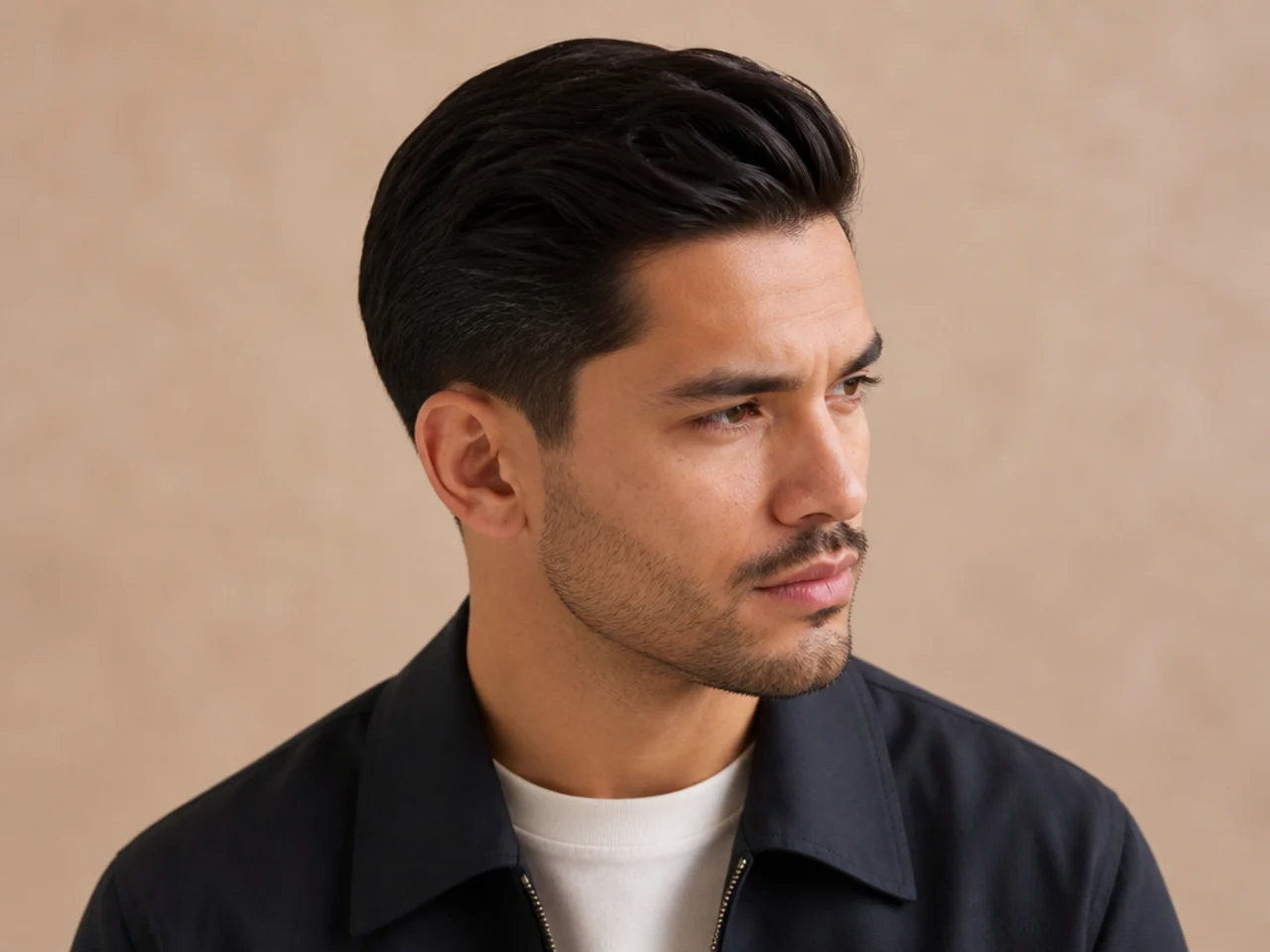
30 Classic Men's Haircuts That Never Age
The classic mens haircut collection — 30 timeless cuts with face-shape notes, exact barber language, and the routine that keeps each one sharp.
In this article · 35
- What Is a Classic Men's Haircut?
- How to Choose Your Classic Cut
- The 30 Classic Men's Haircuts
- Ivy League
- Side Part
- Comb Over
- Crew Cut
- Buzz Cut
- Caesar
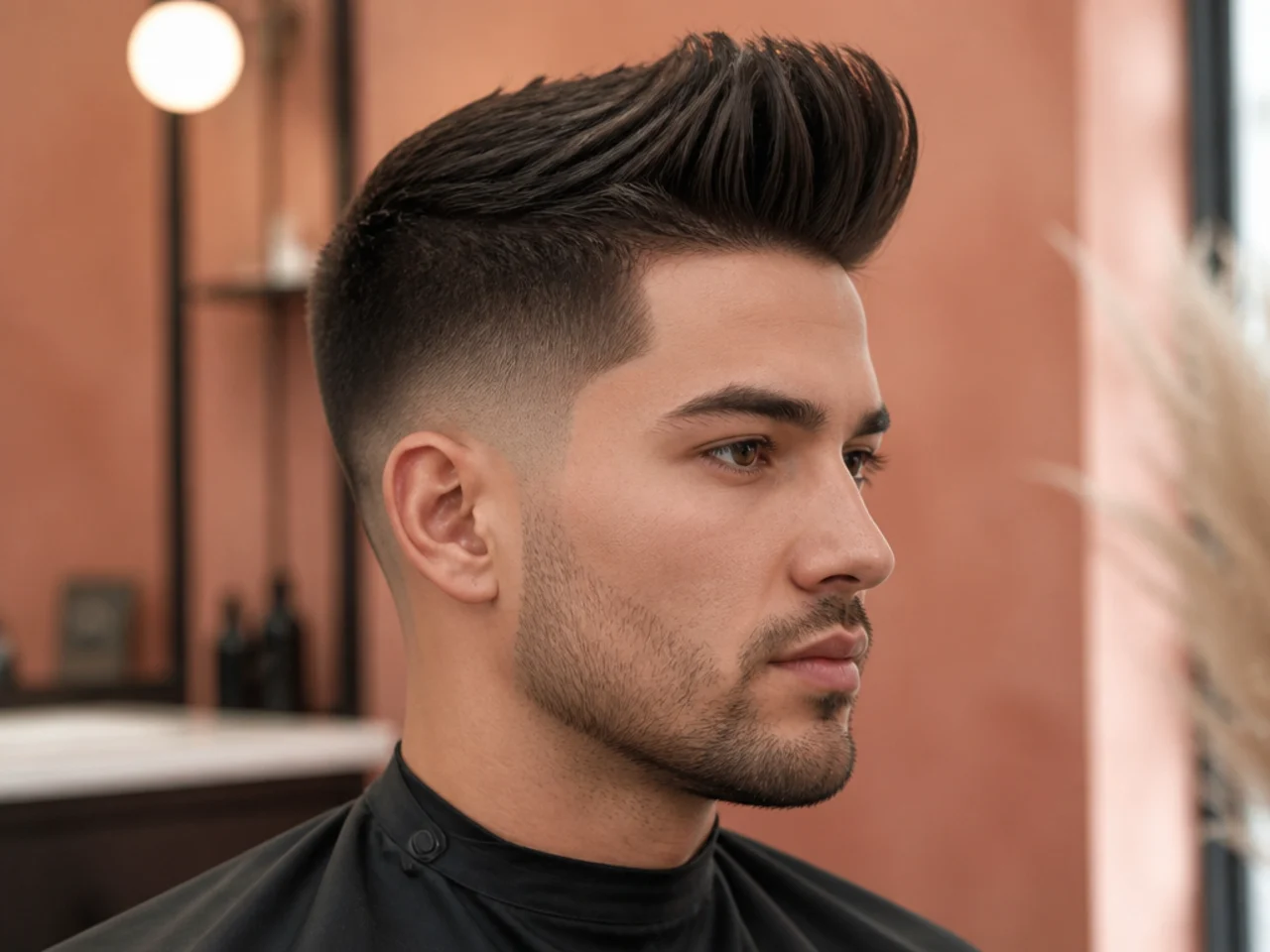
- Pompadour
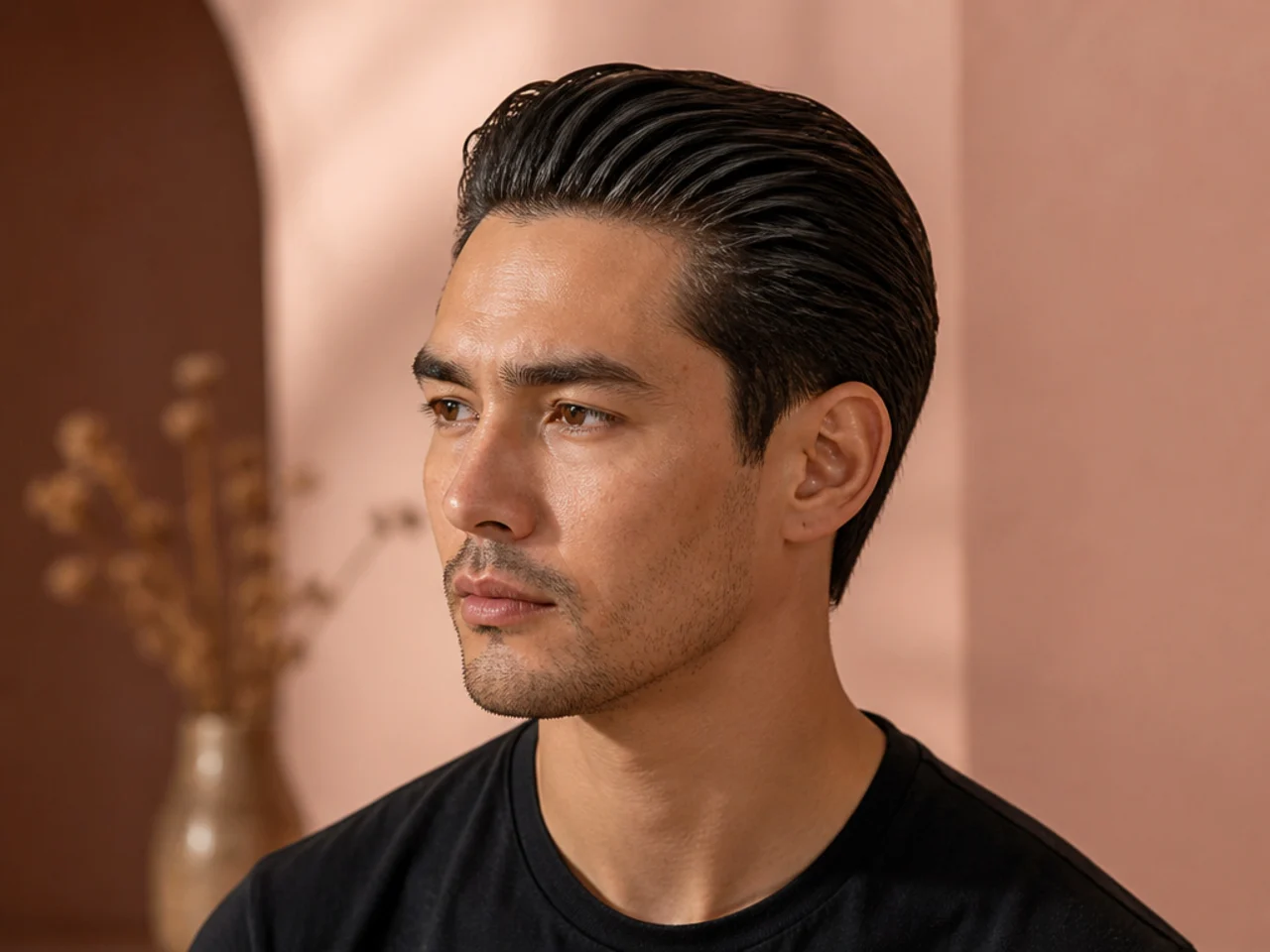
- Slick Back
- Tapered Classic
- Quiff
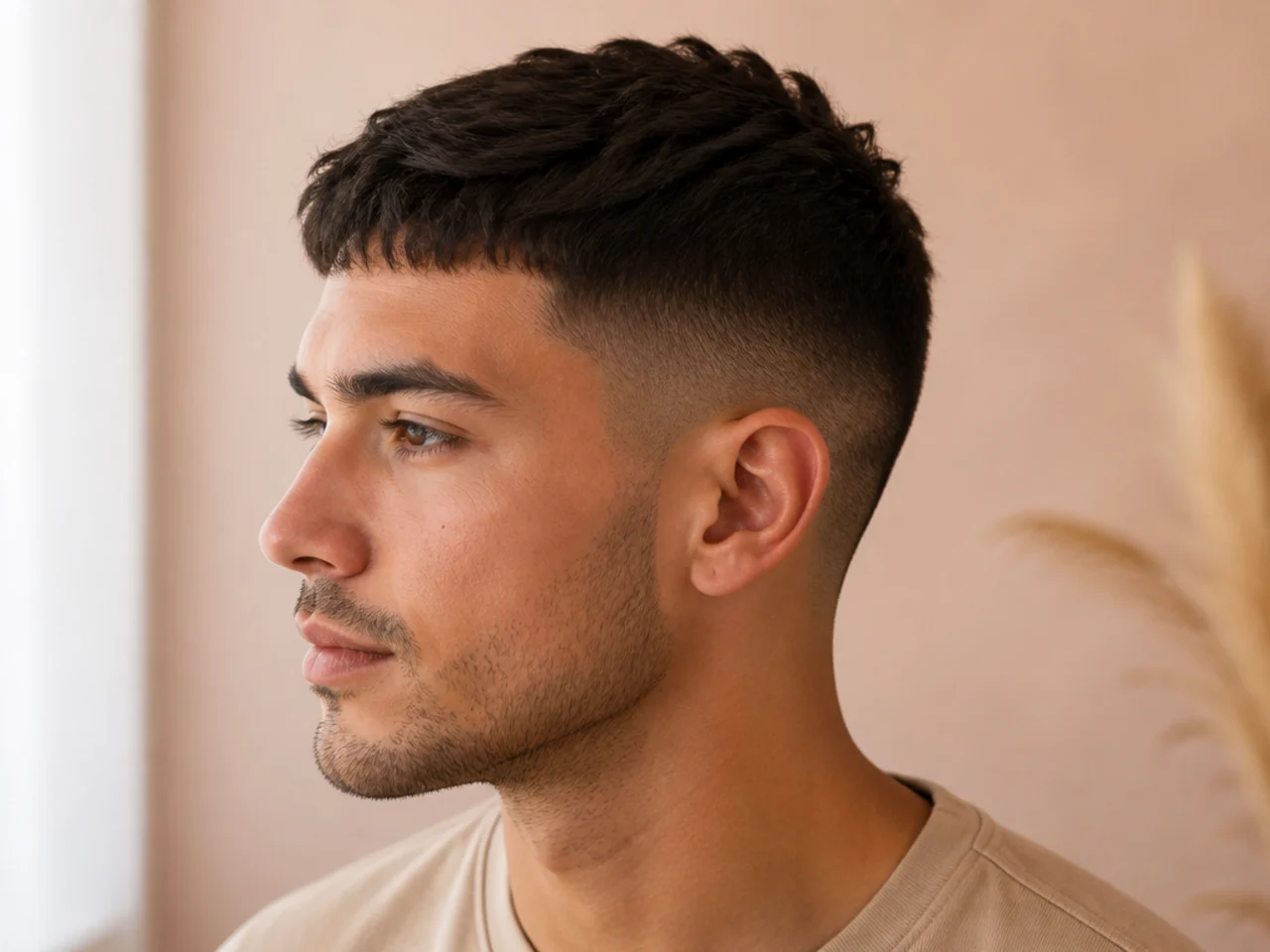
- French Crop
- Executive Contour
- Brush Up
- Tailored Crop
- Gentleman's Cut
- Banker Cut
- Prep
- Undercut Classic
- Disconnected Classic
- High-and-Tight
- Regent
- Textured Ivy
- Slick Side Part with Beard
- Businessman
- Editor Cut
- Longer Classic
- Brushed Back
- Low-Key Military
- Classic Brush Over
- Sculpted Side Part
- How to Ask Your Barber
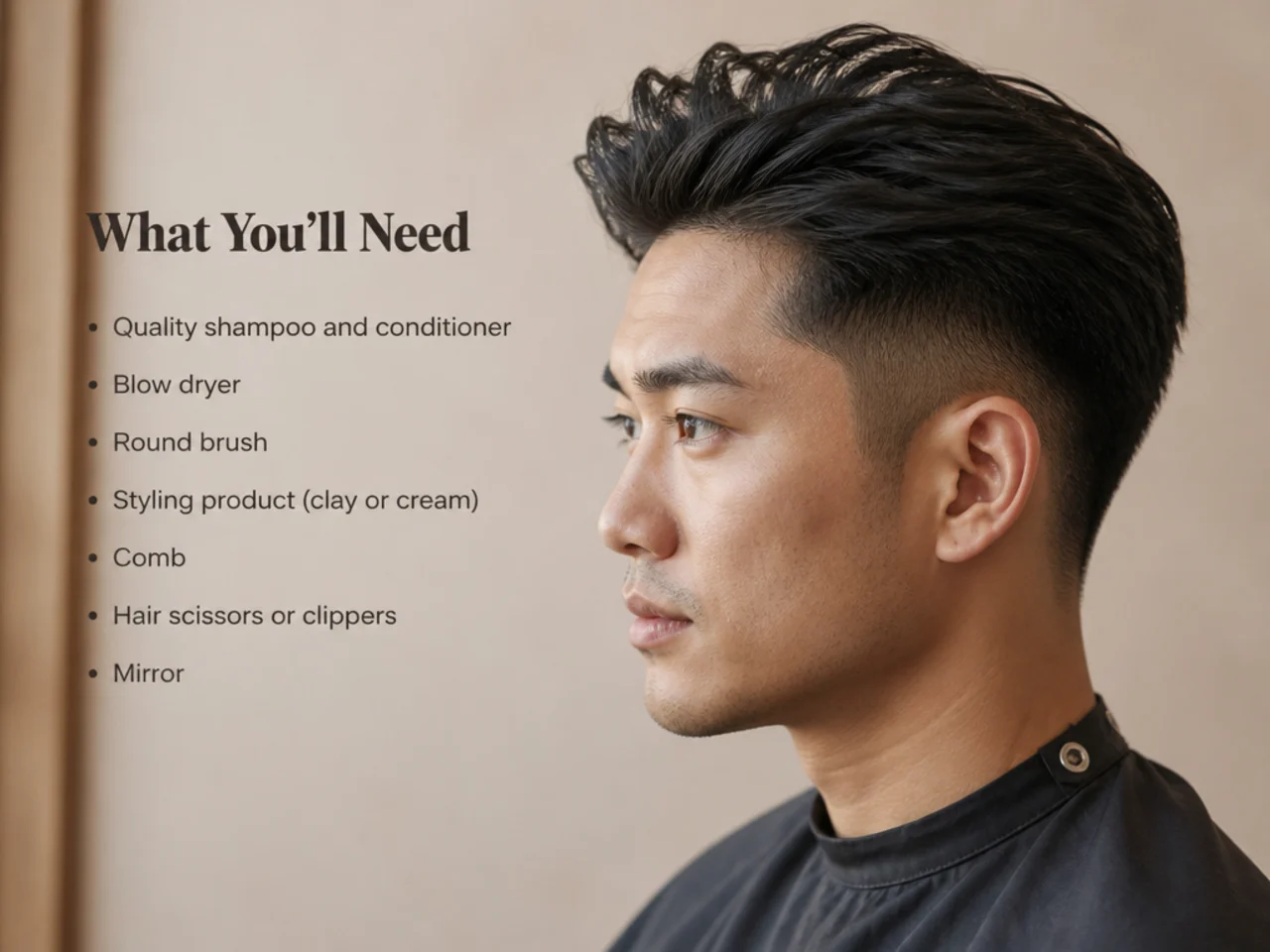
- Styling and Maintenance
A classic mens haircut is the one no one regrets in a photograph. The cuts below have survived every trend since the 1950s because the geometry works — short sides, a controlled top, a shape that flatters the face instead of fighting it. This guide covers thirty timeless variations, who each one suits, and the exact language to hand your barber so you leave with the cut you had in mind.
What Is a Classic Men's Haircut?
A classic men's cut is any style that has held its position in the barber's playbook for at least fifty years. That's the working definition — it beat the trend cycle. The crew cut, the ivy league, the side part, the comb over, the slick back, the pompadour, and the buzz all fit. So do their less-famous cousins — the caesar, the french crop, the regent, the executive contour, the high-and-tight. They share three things: short sides that don't fight the face, a top length that respects the head shape, and a silhouette that reads sharp in a suit and casual in a t-shirt. Nothing about a classic cut is loud, and that's the point.
How to Choose Your Classic Cut
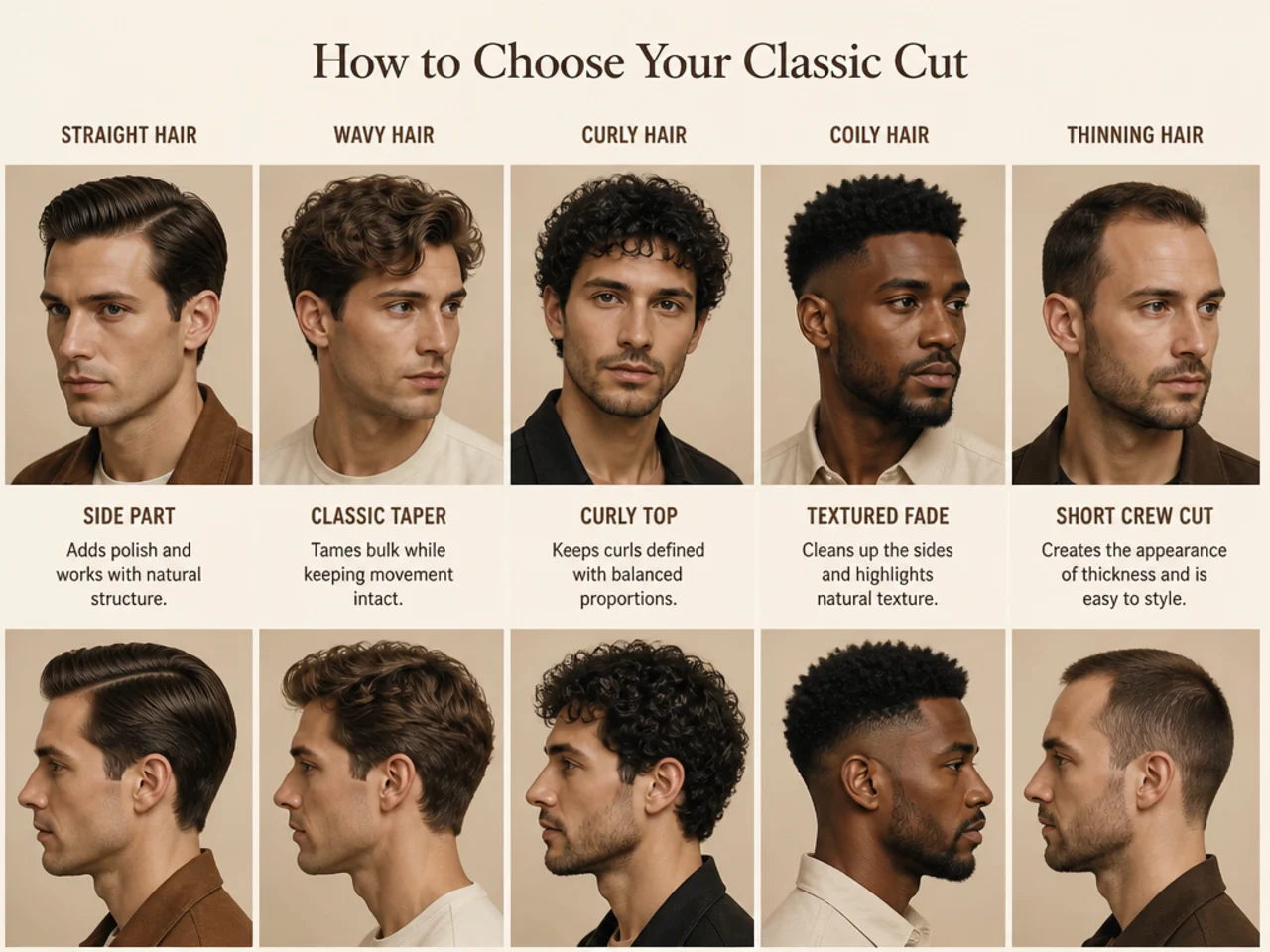
Start with your face shape. Oval and square faces are the easiest to cut for — almost every style in the category of men's cuts below works. Round faces want vertical lift on top and short sides — pompadour, quiff, brush up, or a tall side part. Long or narrow faces want the opposite — a caesar, french crop, or crew cut adds width and cuts the visible face length. Square jaws with strong angles do best with softer edges — an ivy league, a scissor-tapered side part, or a longer classic. For a full breakdown, see haircuts for square faces.
Then think about your hair and your morning. Fine hair needs matte product and a shorter top so it doesn't collapse. Thick or coarse hair holds any shape you cut into it — you get pompadour, brush up, and regent options that fine hair can't sustain. Curly hair reads best in a slightly longer top with defined sides. Give your barber ninety seconds on how you actually style your hair on a Tuesday morning — that answer is more useful than any photo.
The 30 Classic Men's Haircuts
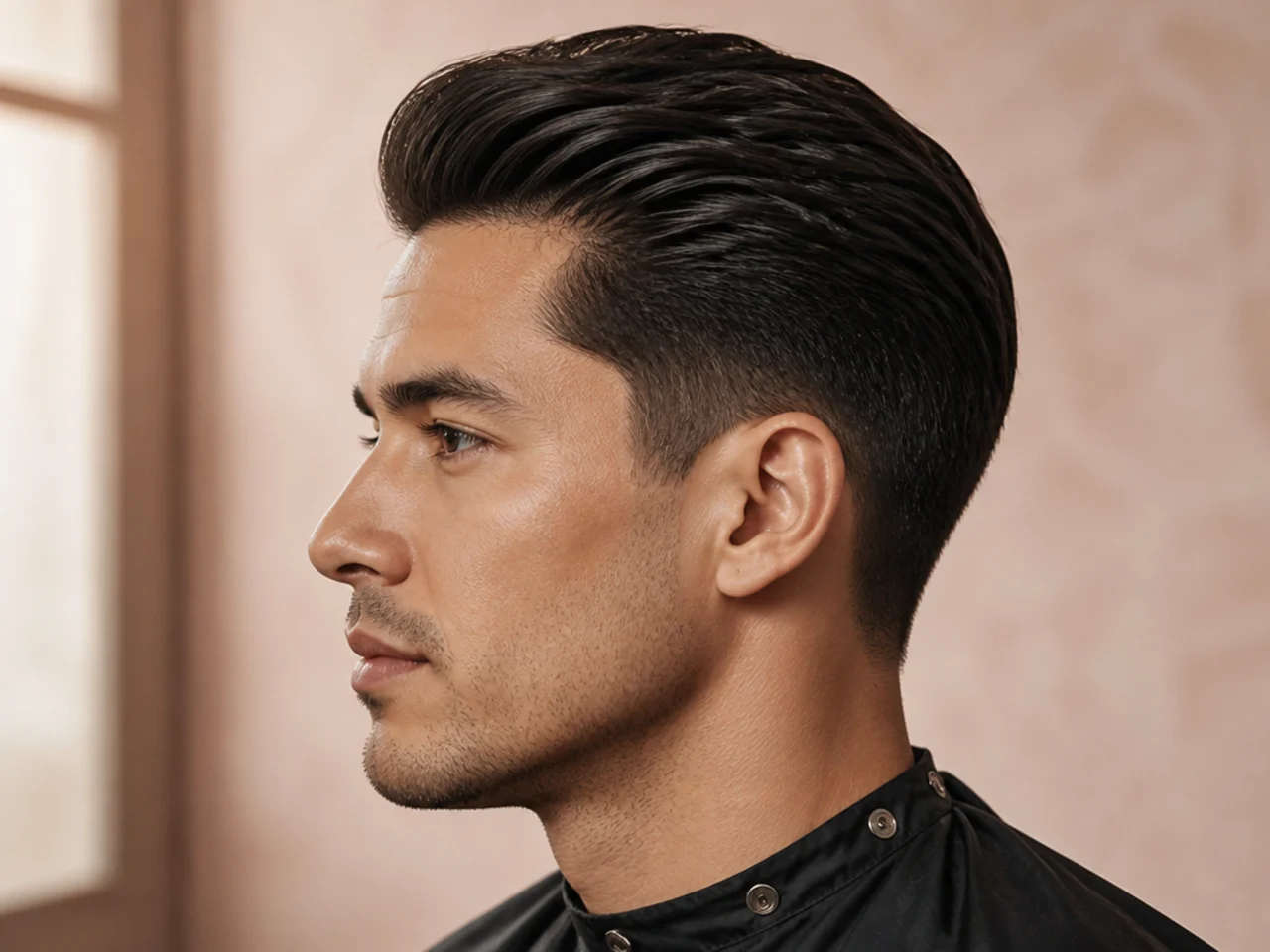
Thirty cuts, one per photo below. Each entry tells you what makes the shape different from its neighbors, who it suits by face and hair type, the exact words to say when you sit in the chair, and one styling tip that actually matters.
Ivy League
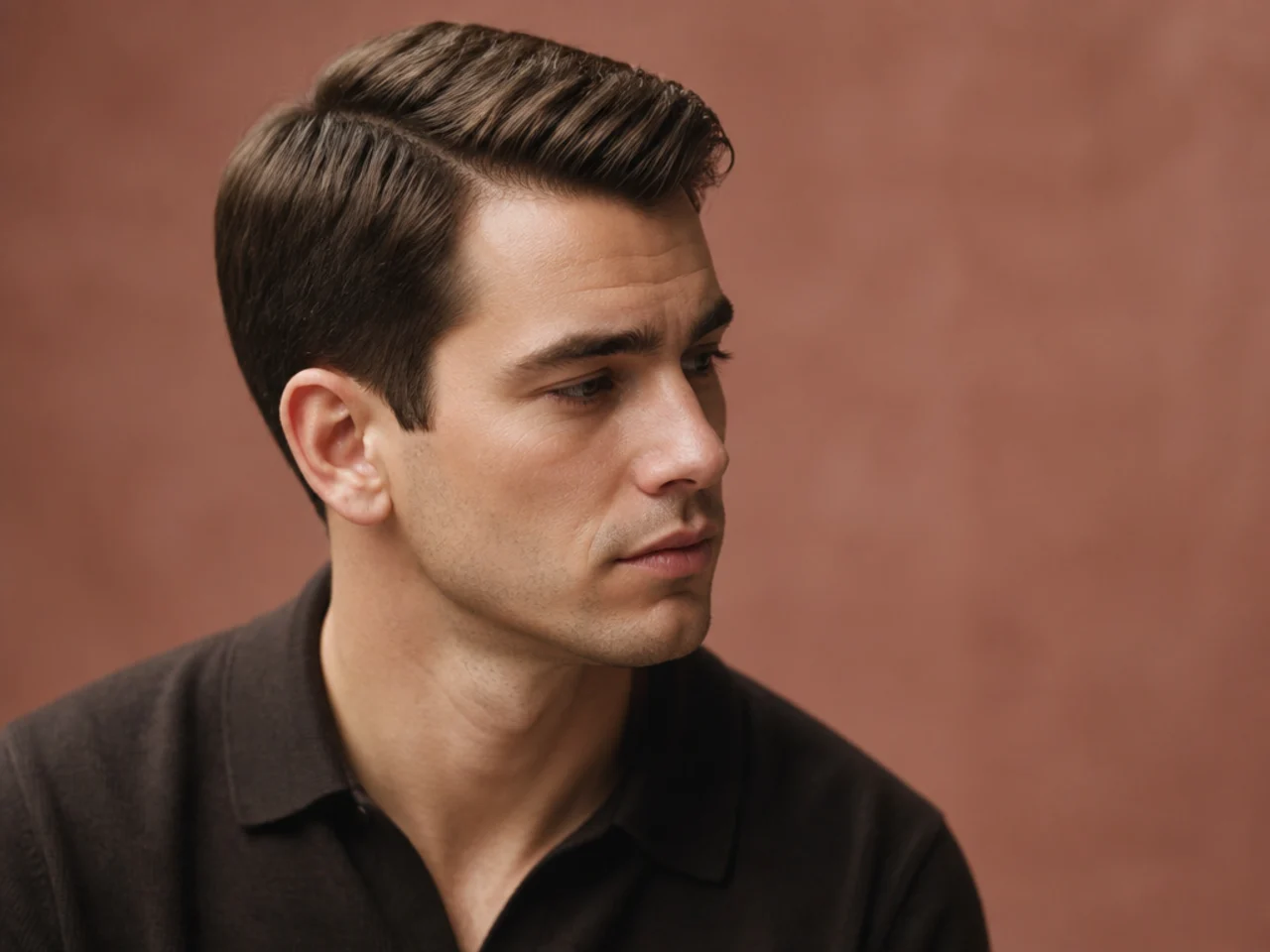
The Ivy League is a long crew cut. Top hair sits at two to three inches — long enough to comb, part, and sweep back — with sides scissor-tapered close to the head. It came out of Yale, Princeton, and Harvard in the 1950s and never left the barber's chair. Suits every face shape and reads formal enough for a wedding, casual enough for a beach house. Ask for 2.5 inches on top, a scissor taper down to a #2 on the sides, and a natural side part on your dominant side. Style with a pea of light pomade combed through damp hair. See the full guide to the ivy league haircut for twenty variations.
Side Part
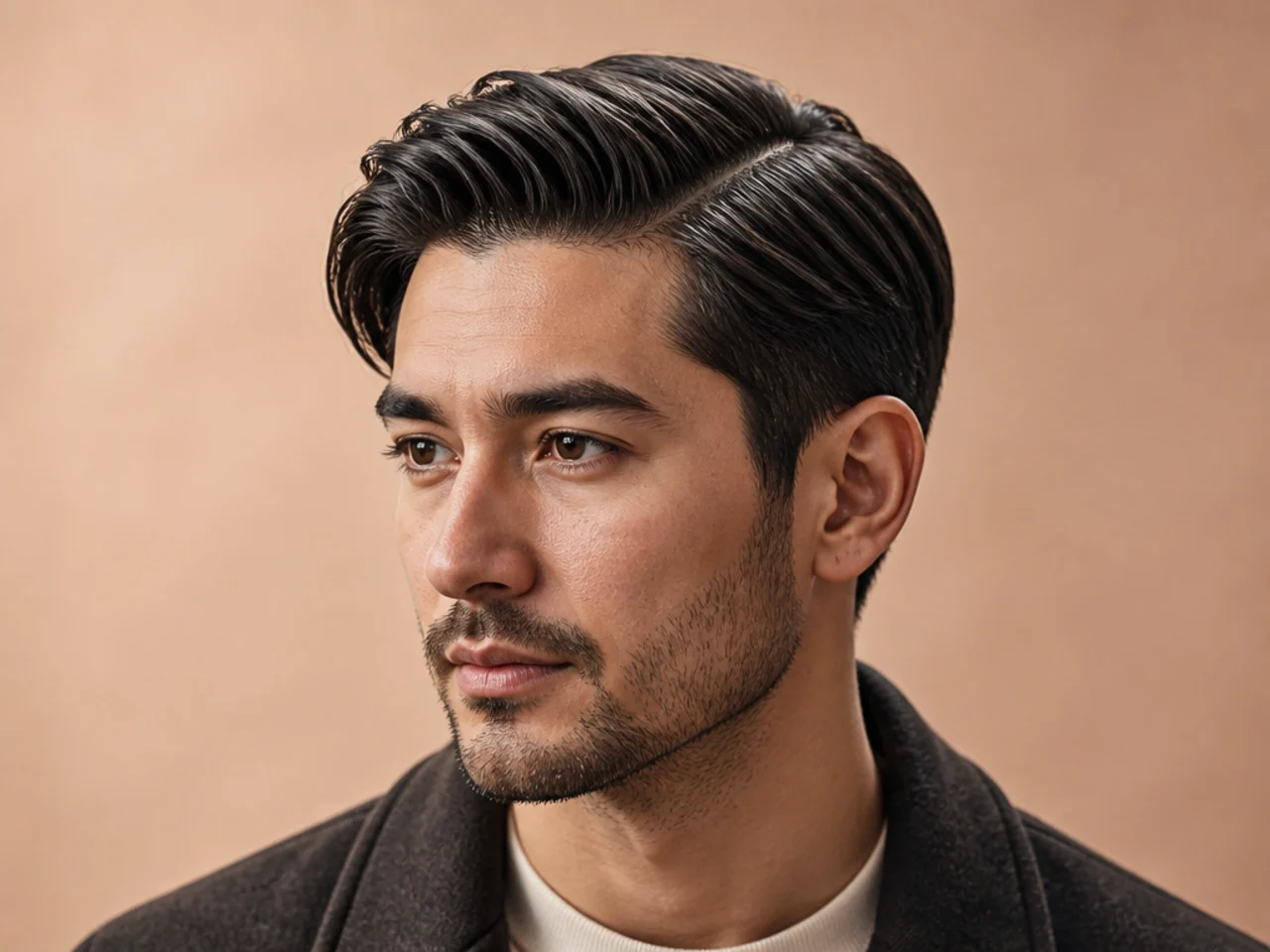
The oldest men's cut still standing. Barbers have been parting hair with a comb since the 1920s, and the shape hasn't left the chair since. Two to three inches on top, scissor-tapered sides, hair combed cleanly along a natural break to one side. Suits every face shape because the ratios are conservative — nothing extreme, nothing loud. Ask for a scissor taper on the sides, 2 to 3 inches on top, and a natural side part along your dominant cowlick. Style with a light pomade combed once with a fine-tooth comb. The full range of side part hairstyles for men covers every fade and length variation.
Comb Over
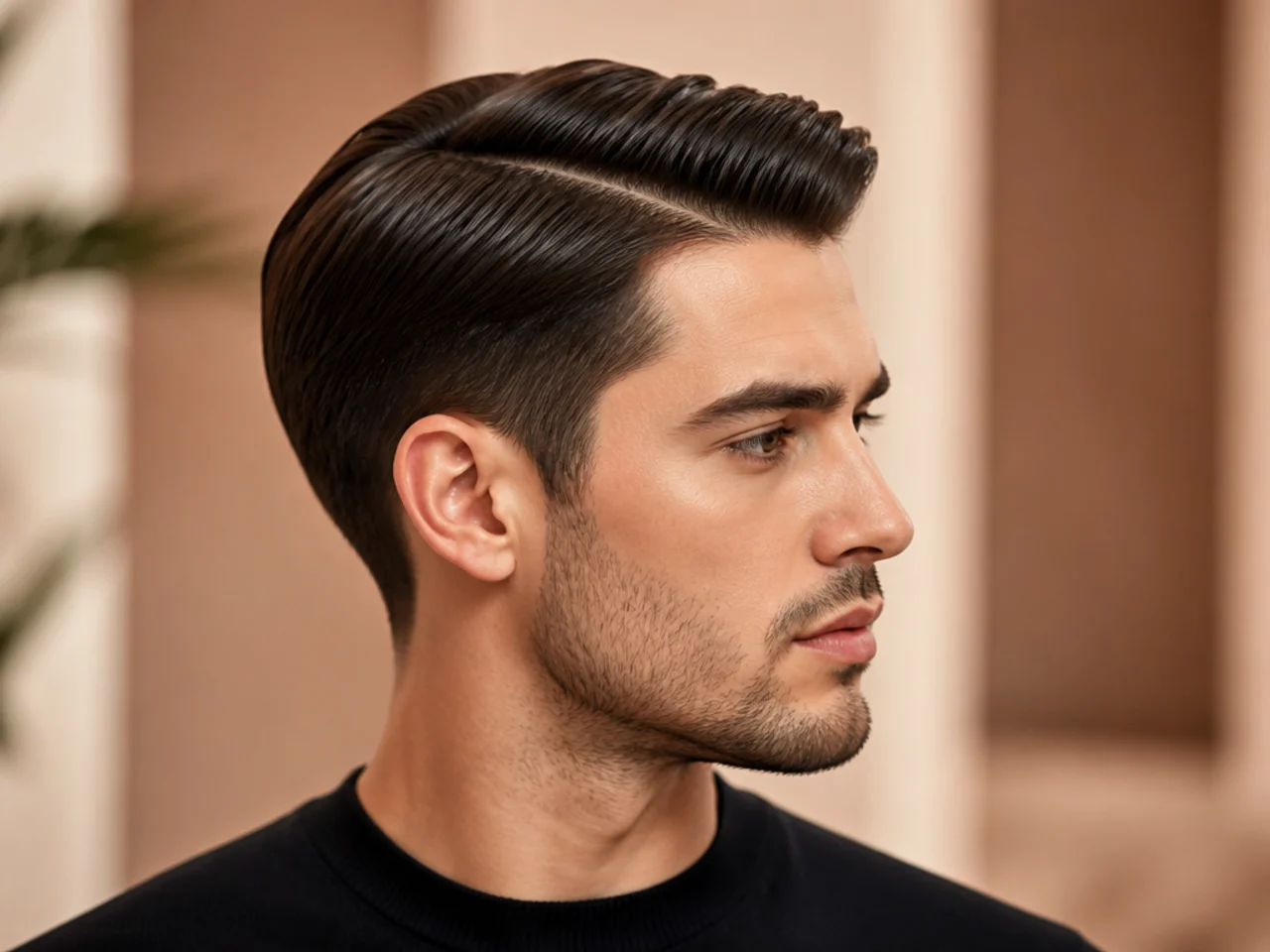
Long top swept from a low, defined part all the way across to the opposite side. This is not a scalp-coverage move — it's one of the cleanest men's cuts of the last decade. Suits oval, square, and heart-shaped faces because the diagonal sweep widens narrow foreheads and softens strong jaws. Ask for a "traditional side-part comb over, scissor sides, no fade, top left long enough to fall over the part" — that's the classic version. Style with medium-hold pomade combed from the part outward. Blow-dry against the sweep for lift, then set the direction with one pass of the comb.
Crew Cut
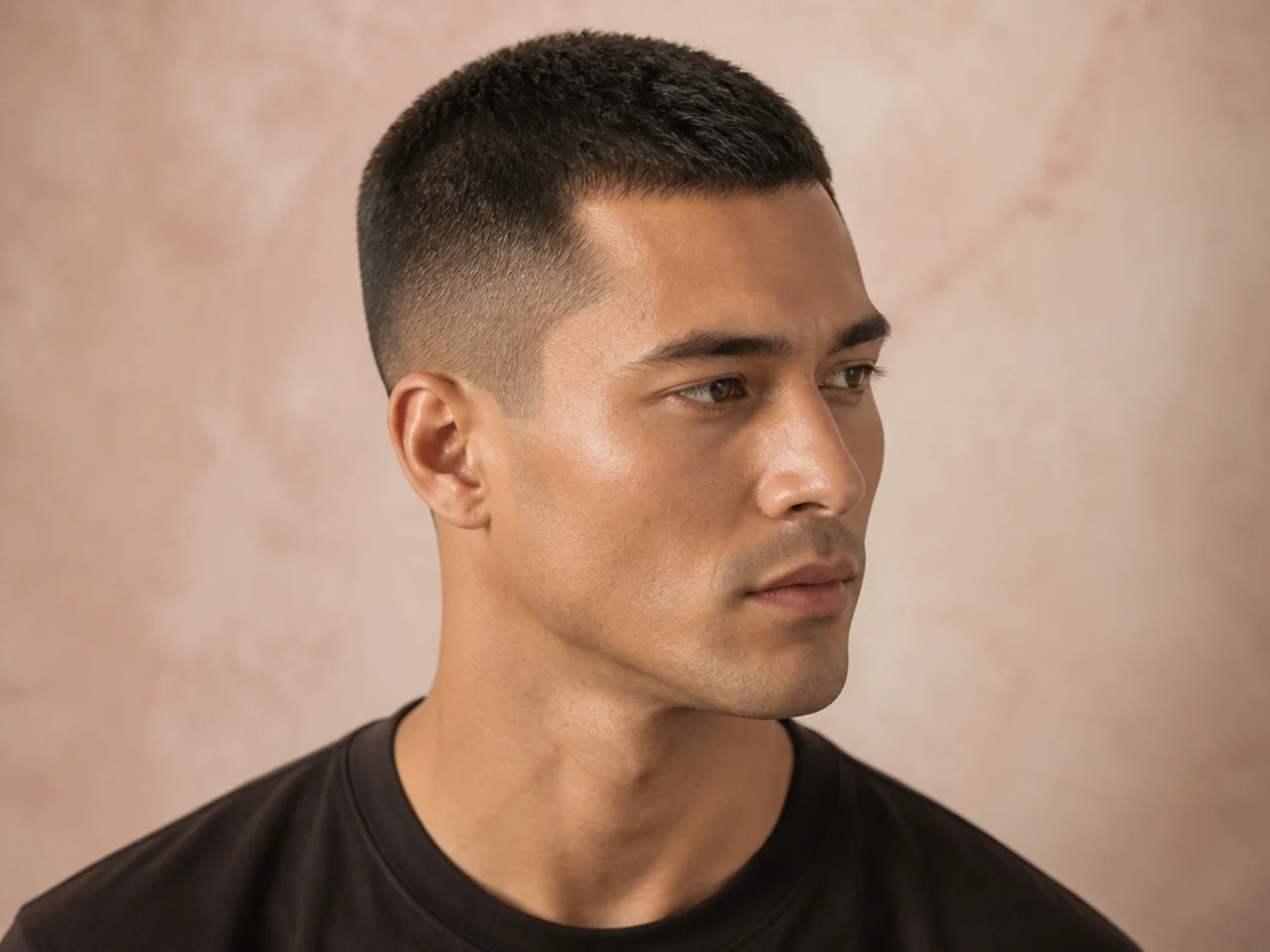
The timeless American short cut. Half an inch to three-quarters on top, sides tapered from a #2 down to a #1 at the perimeter, and the front sits a hair longer than the back. That graduation is what separates a crew from a plain buzz. Suits oval, square, and diamond faces — round faces want a little extra length at the front so the crown reads taller. Ask for "half inch to three-quarters on top, graduated shorter to the back, #2 tapered sides, scissor blend at the top." Style with a pea of matte clay pressed through dry hair with your fingertips. The crew cut hairstyles guide has twenty-five modern versions.
Buzz Cut
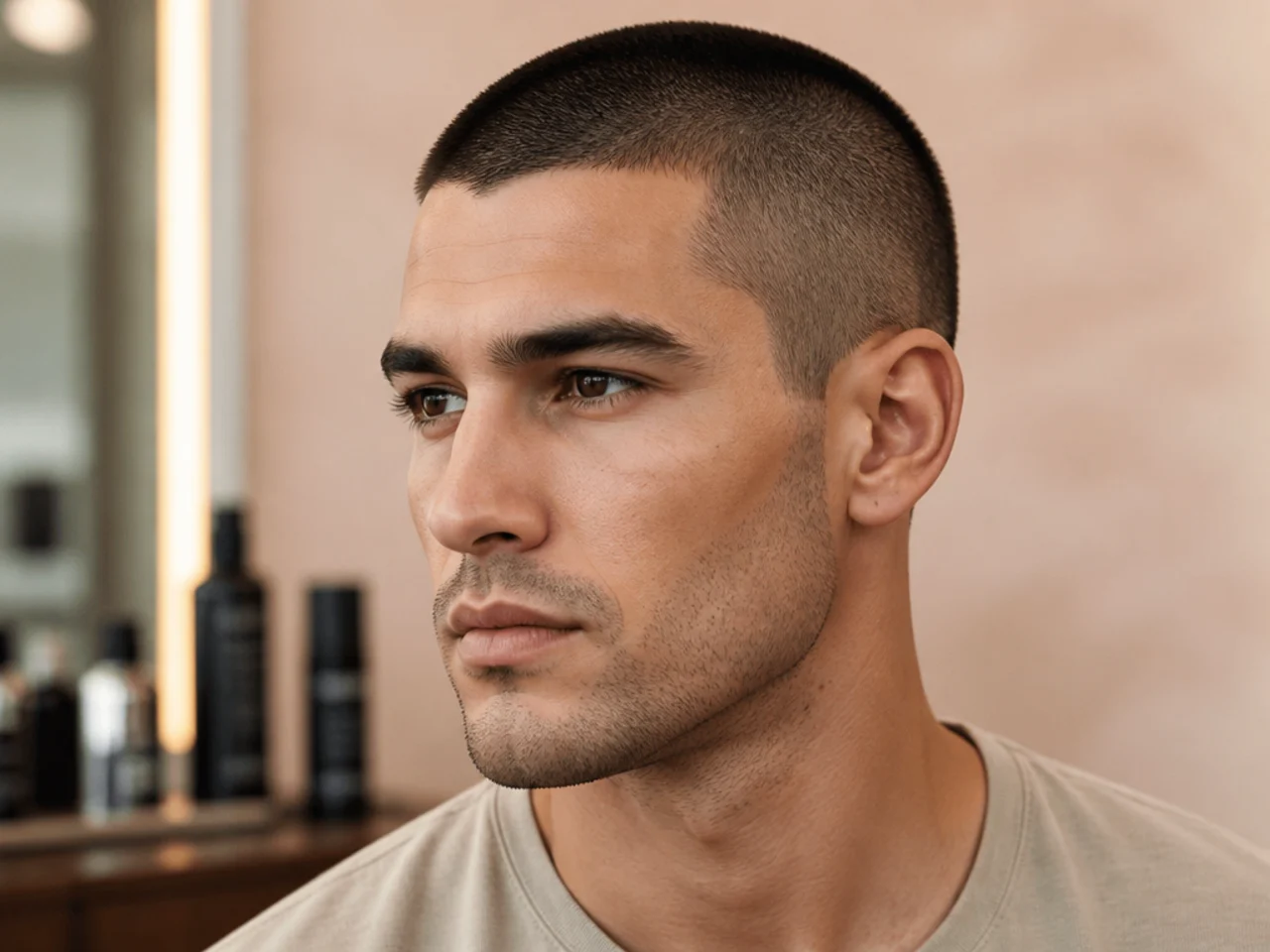
One length all around, cut with a clipper guard — usually a #1, #2, or #3. Zero styling. All shape. It's the cut that flatters strong bone structure and stubbornly resists bad hair days. Best on oval and square faces with defined jawlines and cheekbones. Round faces should size up to a #3 with a slight scissor taper for a softer read. Ask for a #2 all over with a natural taper at the neckline and a clean line above the ears. Skip product entirely — the buzz cut is a wash-and-go cut by definition. Re-buzz every two to three weeks with your own trimmer.
Caesar
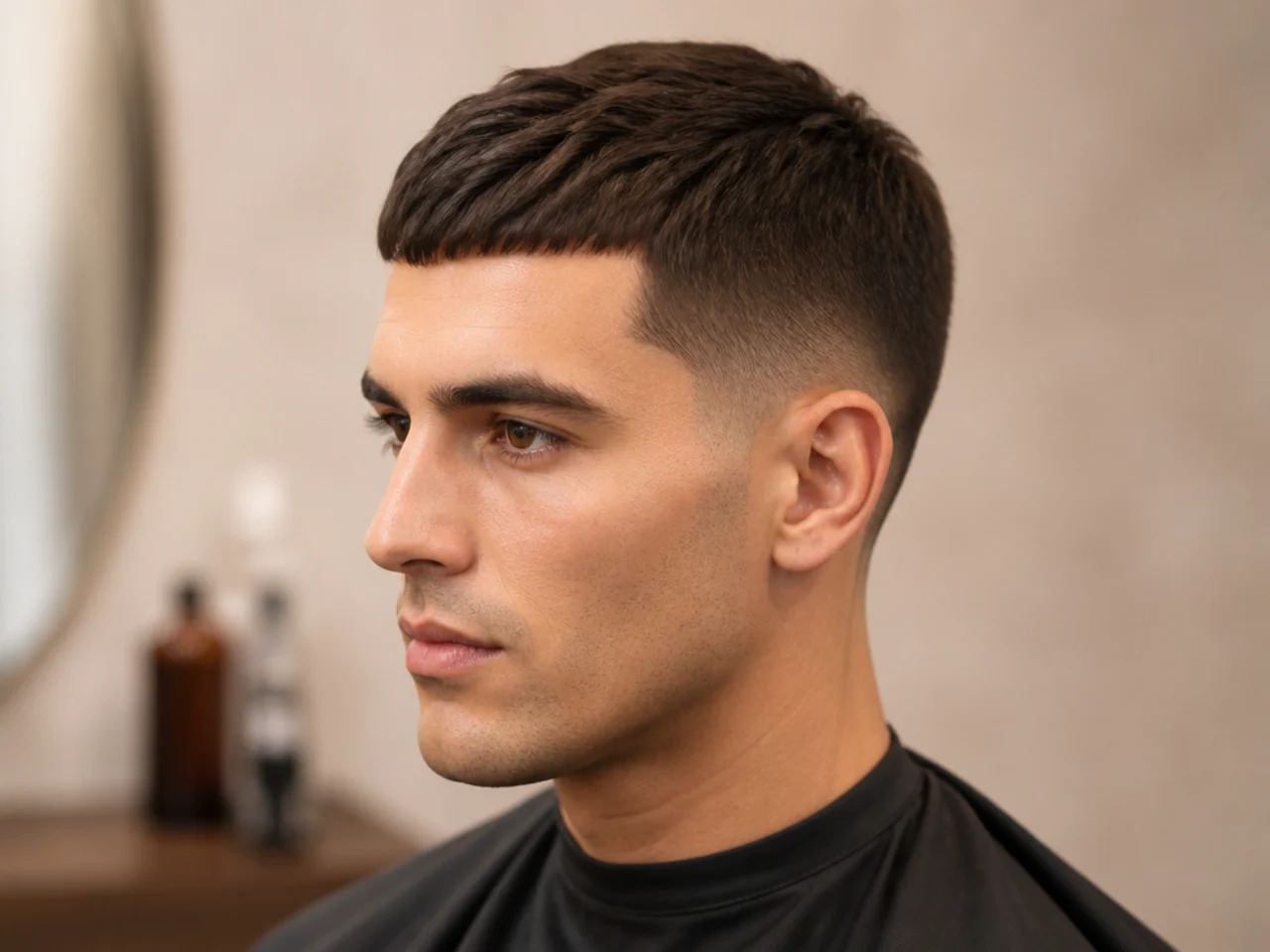
Short, blunt fringe cut horizontally across the forehead, top around one to two inches, sides the same length or a hair shorter. Named for the man on the coin — the shape hasn't changed in two thousand years. The forward-swept fringe shortens the visible face, which is why it works so well on long or oval faces and men with high foreheads. Ask for a Caesar cut, 1.5 inches on top, a straight fringe at the eyebrow line, and scissor-blended sides at the same length. Style with a matte paste rubbed between your palms and pressed forward through dry hair. No comb needed.
Pompadour
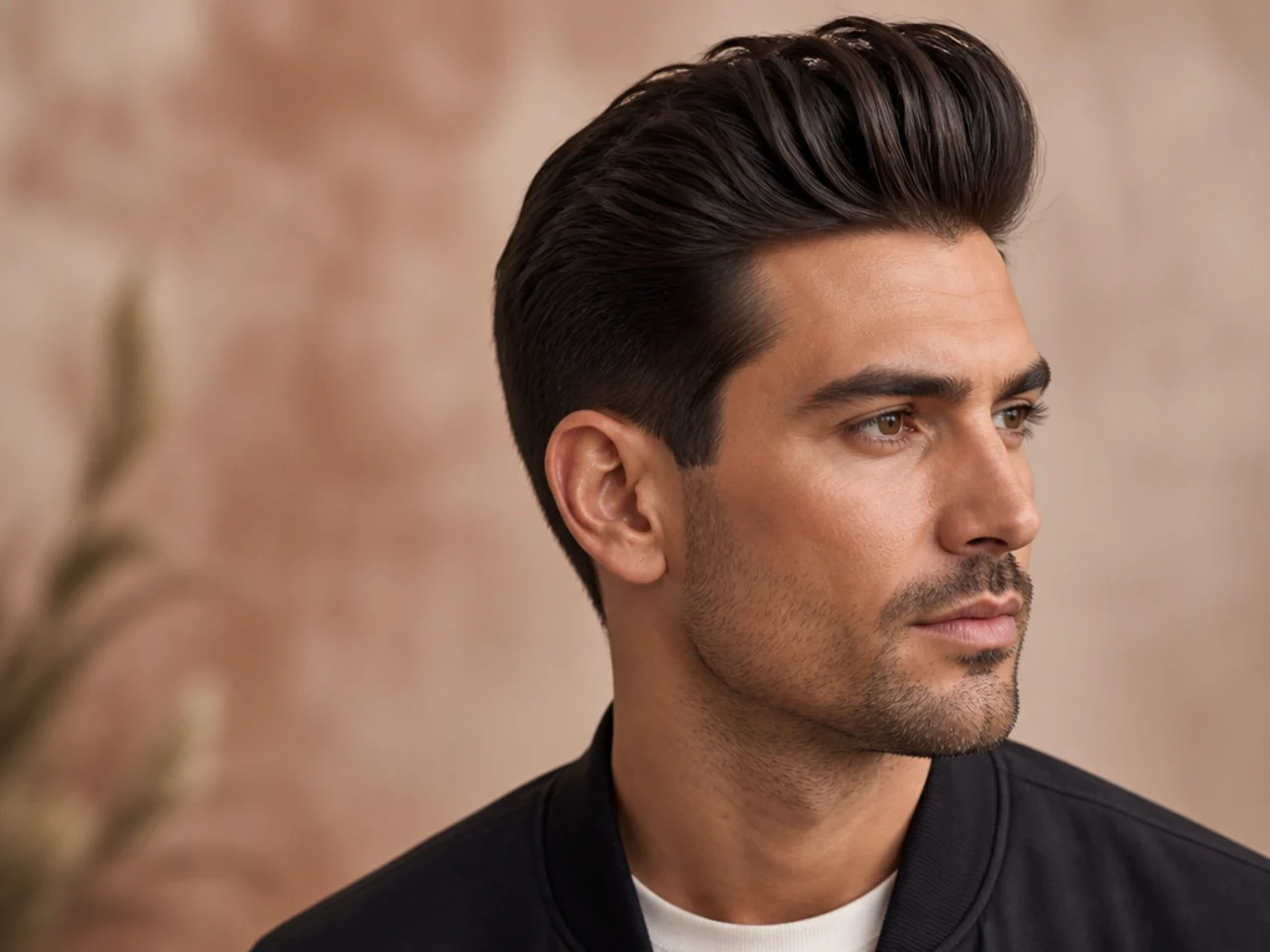
Height at the front, volume that sweeps up and back off the forehead, tapered or faded sides that push all the visual weight to the top. From Elvis through Bruno Mars, the pompadour has never fully left. Suits oval and diamond faces best — round faces gain elongation, but square jaws can compete with the top volume. Ask for a classic pompadour with 4 to 5 inches on top, scissor-tapered sides no shorter than a #2, and a soft transition at the corners. Style with mousse on damp hair for volume, blow-dry back and up with a round brush, then set with a firm-hold pomade.
Slick Back
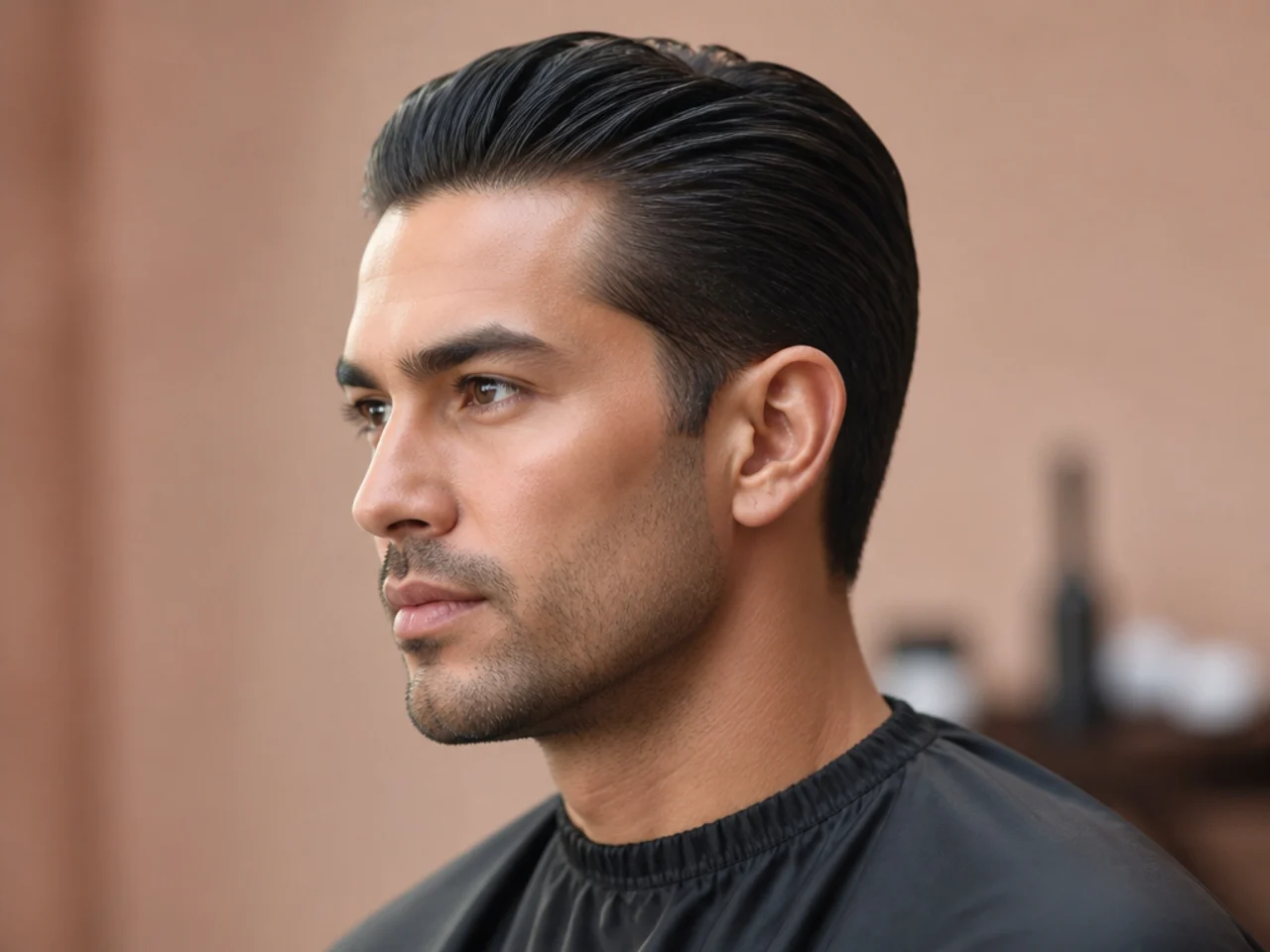
Everything combed straight back off the forehead — no part, no lift, no fringe. High shine, tight control, a shape you don't move once it's set. Suits oval and square faces with medium-to-thick hair; fine hair reads greasy under shine pomade. Best when you have at least four inches on top and cooperative growth patterns. Ask for a slick back haircut with 4 inches on top, scissor-tapered sides down to a #2, and no defined part. Style with a shine or strong-hold pomade on damp hair, comb straight back, then a low blow-dry to set the shape.
Tapered Classic
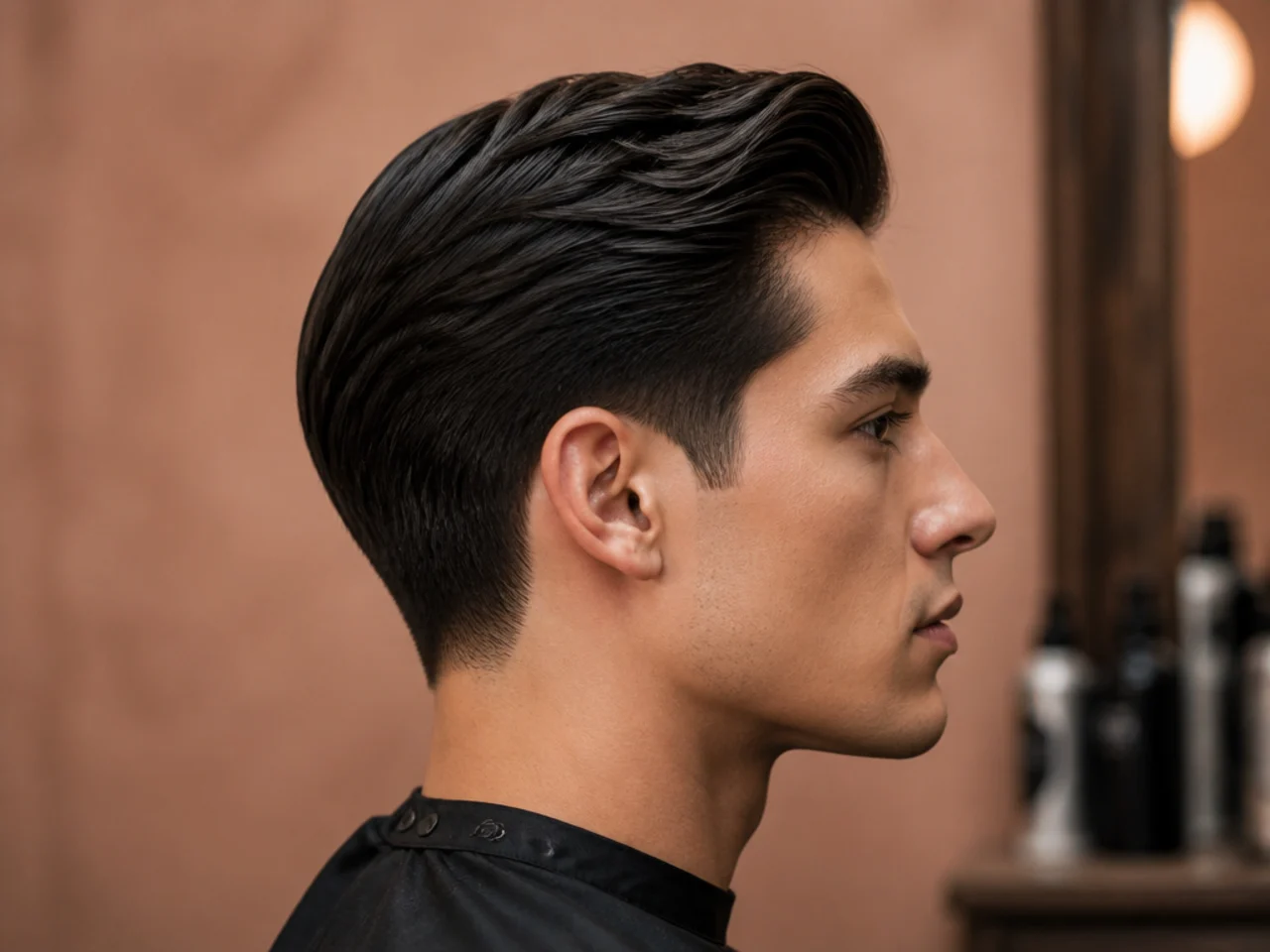
The tapered classic is what a traditional barber cuts by default. Sides that graduate from a longer length at the top of the head down to shorter length above the ear, all done with scissor-over-comb rather than clippers on skin. Top sits at a conservative 2 inches. It's the safest, most flattering silhouette in the entire men's playbook. Suits every face shape and every hair type. Ask for a classic scissor taper haircut with 2 inches on top, tapered sides from a #4 down to a #2 above the ear, and a natural side part. Style with a matte cream worked through with your fingers, combed once.
Quiff
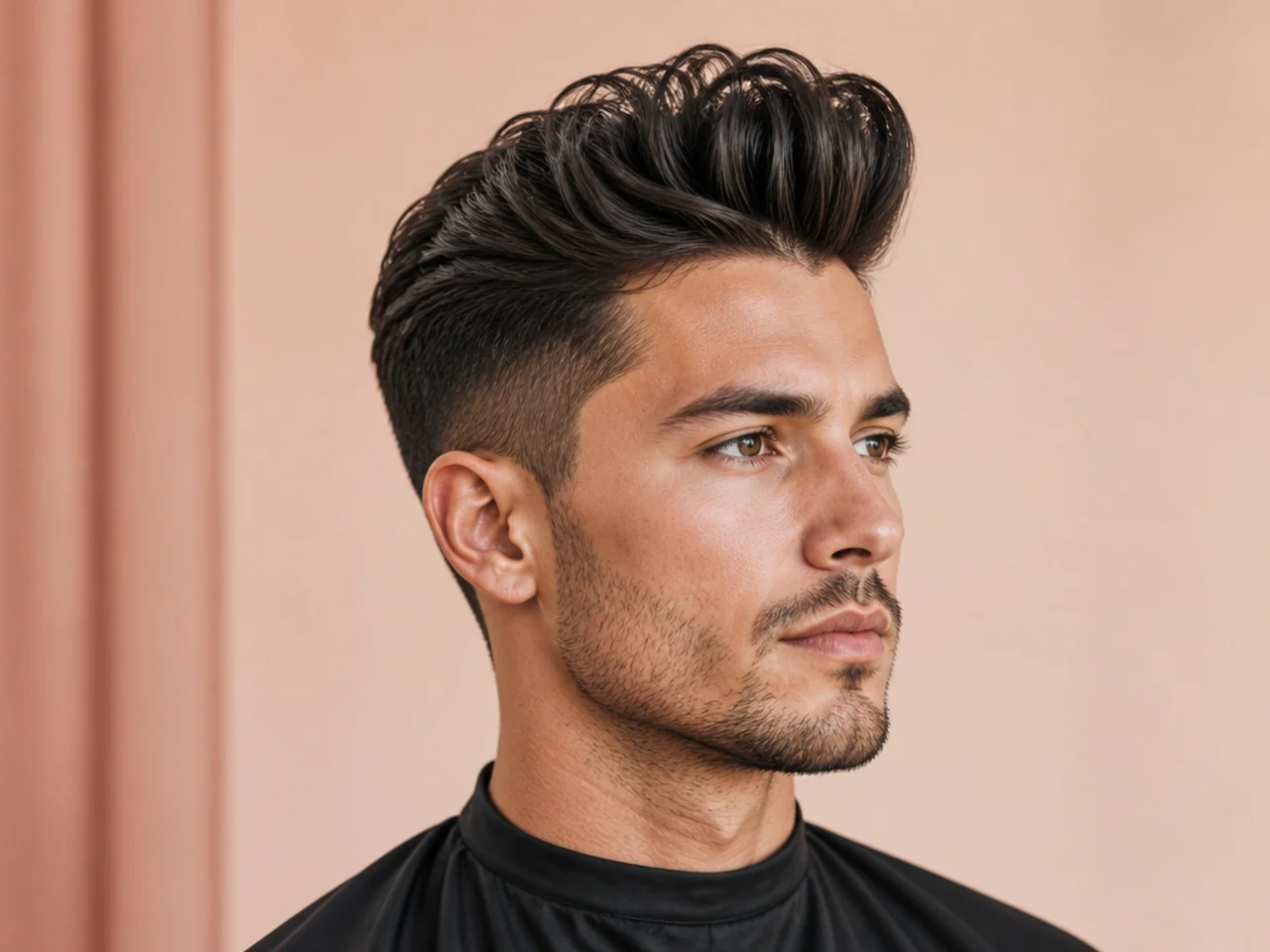
The quiff sits between the pompadour and the brush up — volume concentrated at the very front, pushed back and slightly up, with less overall height than a pomp and more shape than a brush. Sides stay short with a taper or a low fade. Suits round, oval, and square faces because the front lift lengthens the visible face. Ask for a quiff hairstyle with 3 to 4 inches at the front tapering shorter to the back, scissor-tapered sides, and no defined part. Style with mousse on damp hair, blow-dry with a round brush lifting the front, then finish with matte clay.
French Crop
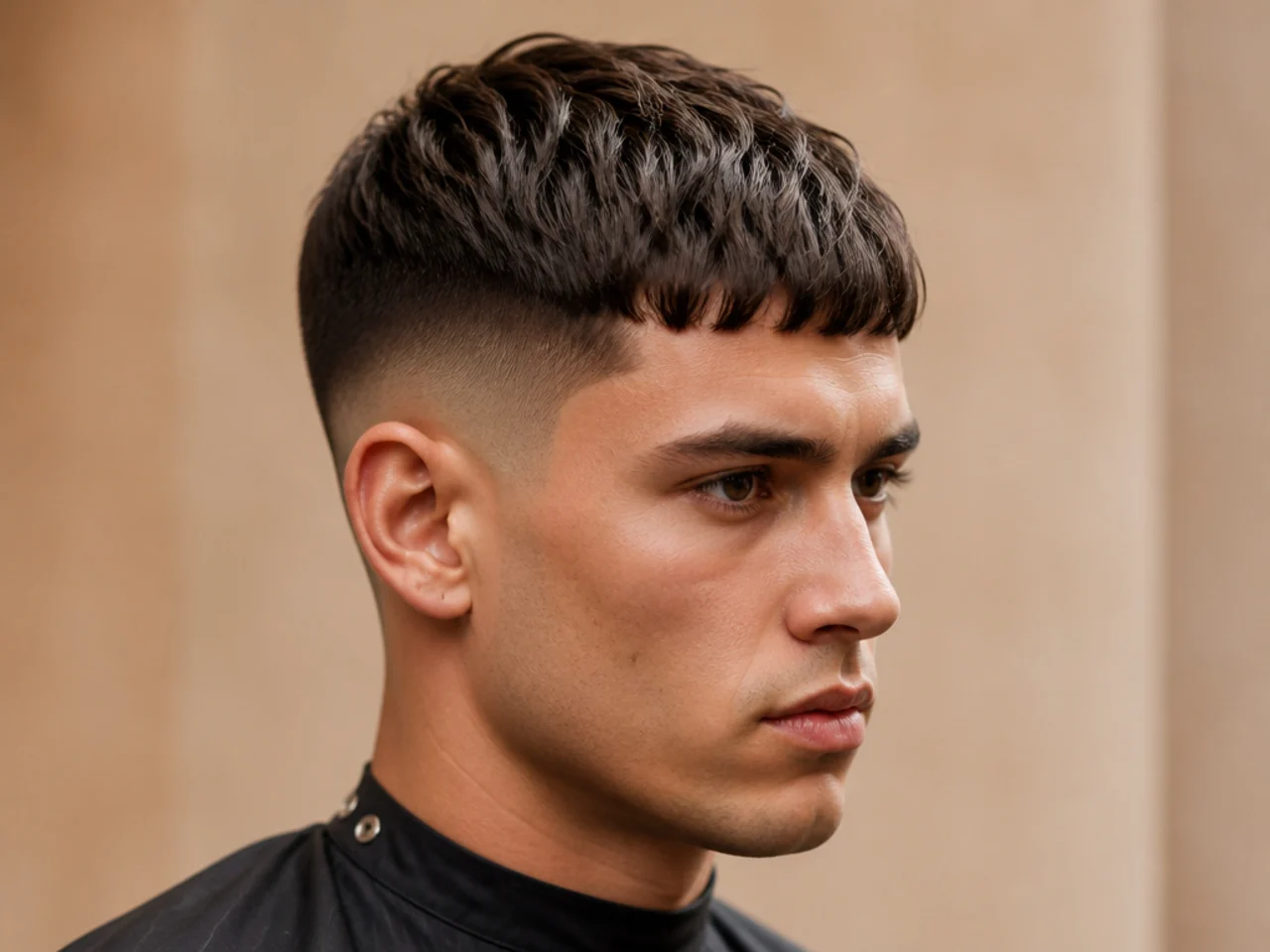
France's answer to the caesar. Short fringe pushed forward and slightly down over the forehead, top textured with point-cut ends for movement, and sides tight — usually a low fade or a short scissor taper. Reads modern-classic in almost any office. Suits round, oval, and long face shapes — the horizontal fringe shortens face length and adds width. Ask for a french crop haircut with 2 inches on top, point-cut texture, a low fade on the sides, and a fringe that sits at the eyebrow. Style with matte paste pressed forward through dry hair with your fingertips.
Executive Contour
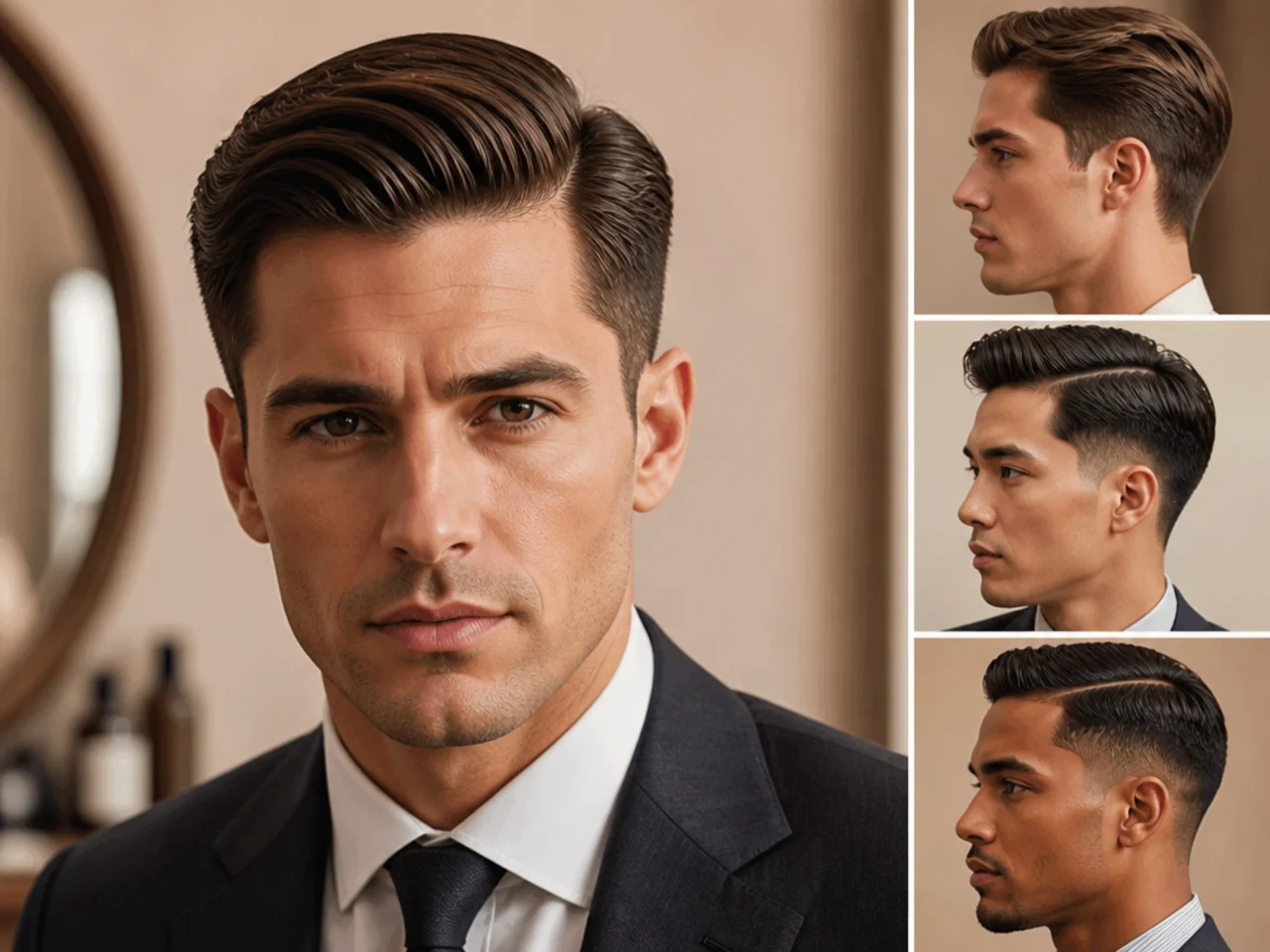
Business-formal, calendar-ready. Sides clipped short with a #2 or #3 guard, top around 1.5 to 2 inches, combed clean to one side along a defined part. Nothing textured, nothing loud — the point is polish. The executive contour is what a C-suite candidate should wear to a final-round interview. Suits every face shape because it's built to disappear into a suit rather than make a statement. Ask for a #2 clipper taper fading up to about #4 at the top of the head, 1.5 to 2 inches on top, and a defined side part. Style with medium-hold pomade combed once, blow-dry to set.
Brush Up
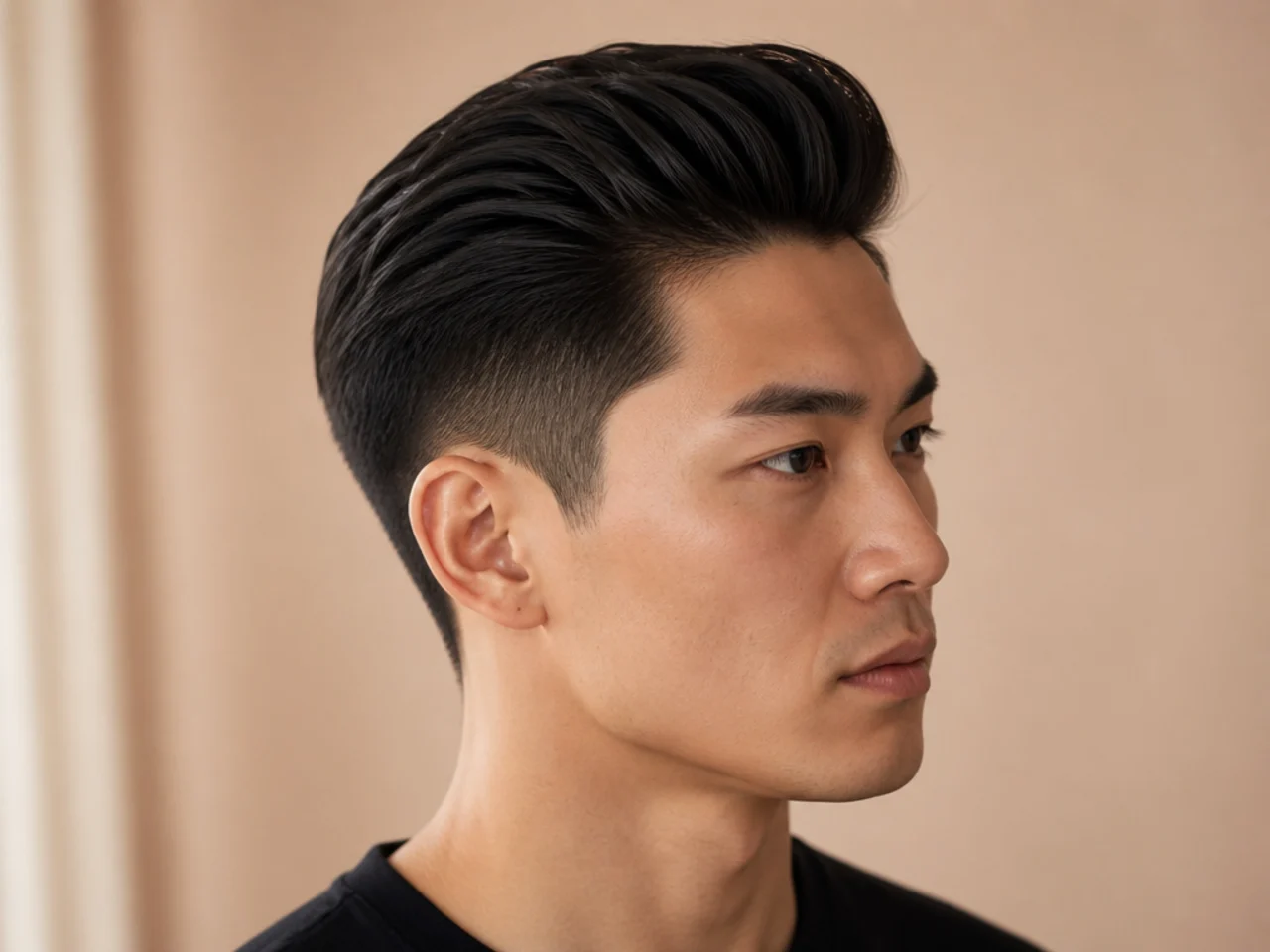
A casual pompadour. Short sides with a taper or low fade, 2 to 3 inches on top, and everything pushed straight up and slightly back with no defined part. Reads modern-classic on almost every face shape but especially good on square jaws and round faces that need vertical lift. Best on thick or coarse hair — fine hair won't hold the shape past mid-morning. Ask for a brush up with 2.5 inches on top point-cut for texture, a low or mid taper on the sides, and no part. Style with matte clay worked through dry hair from root to tip, then push up with your fingers.
Tailored Crop
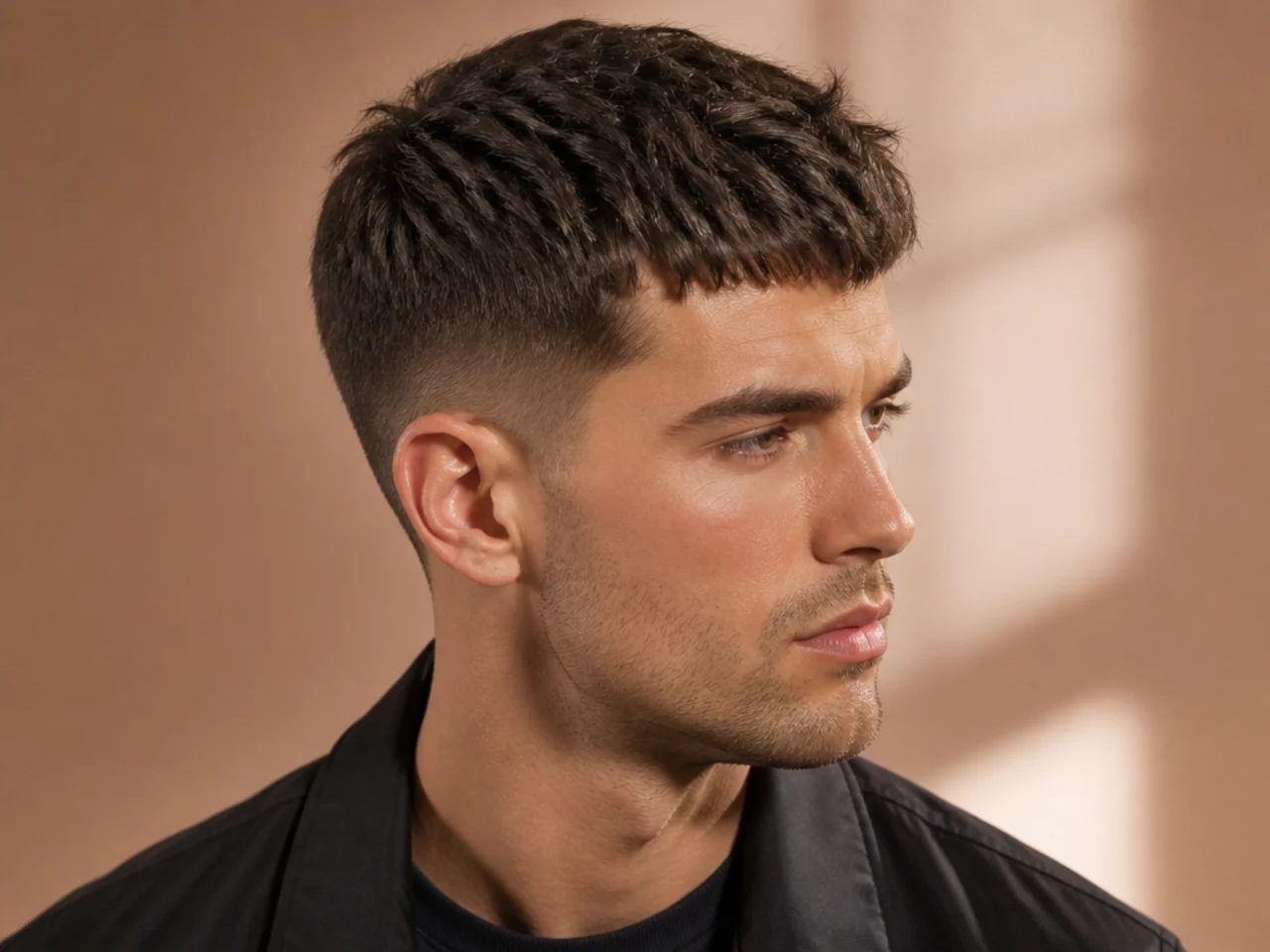
The refined French crop. Top precision-cut with point-cutting and slide-cutting to create controlled texture, fringe kept horizontal but softer at the edges, sides tapered or faded to a clean line. Reads sharper than a standard crop because the barber invests time in the top rather than just chopping to length. Suits round and oval faces best. Ask for a tailored crop, 2 inches on top, precision texture with a soft horizontal fringe, and a low fade on the sides. Style with a texturizing cream rubbed between your palms and pressed forward with your fingertips.
Gentleman's Cut
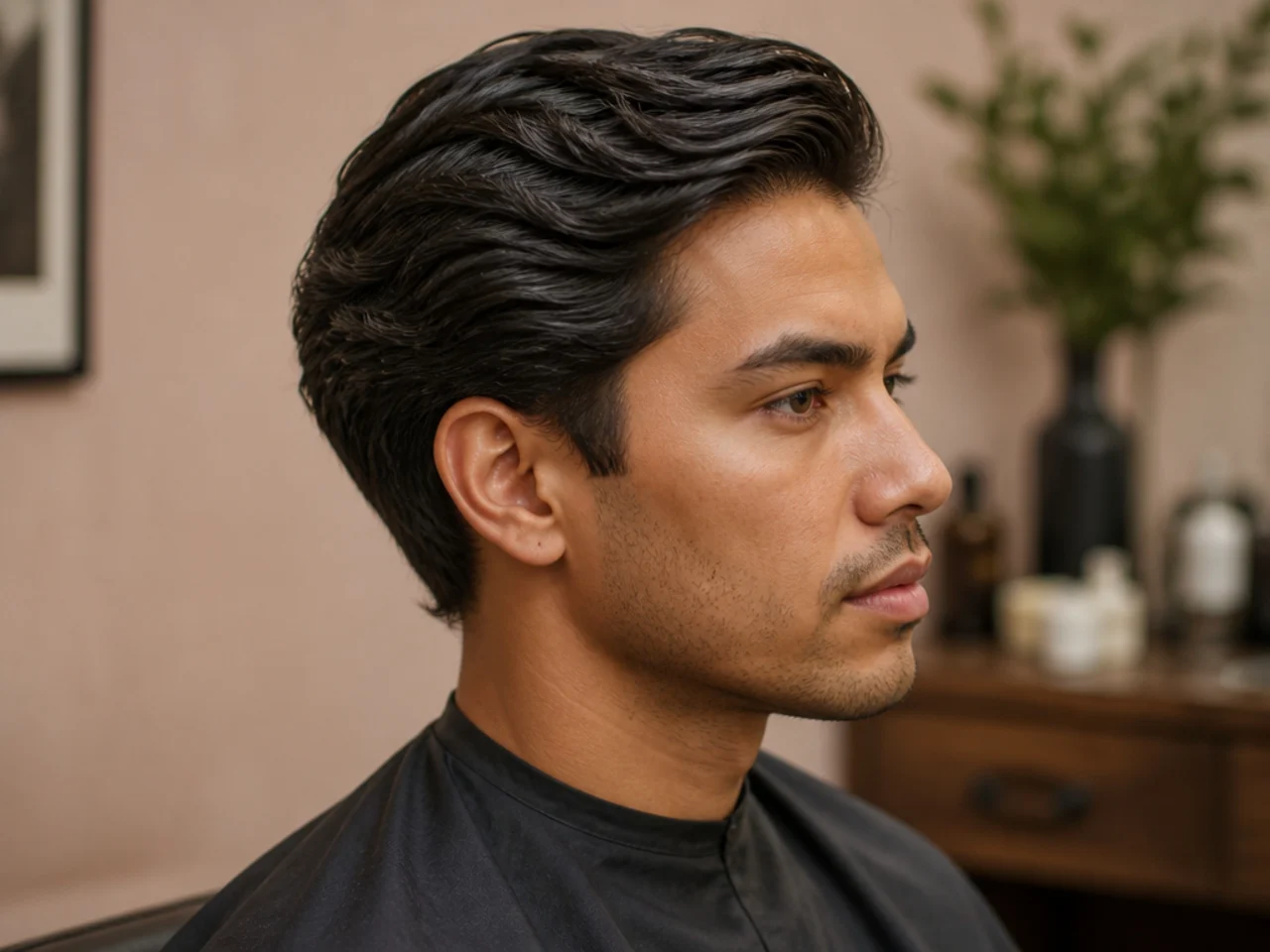
An umbrella name for the softest classic silhouette a barber can cut. Scissor-tapered sides (no clippers), 3 inches on top, a shallow side part, and a soft finish — no shine, no product-heavy hold. This is what a Savile Row tailor would ask for. Suits every face shape and skews older-appropriate — perfect for men over forty who want to look sharp without looking trendy. Ask for a gentleman's cut with 3 inches on top, a scissor-cut soft taper down to a #3 above the ear, and a natural side part. Style with cream pomade combed through damp hair, then air-dry.
Banker Cut
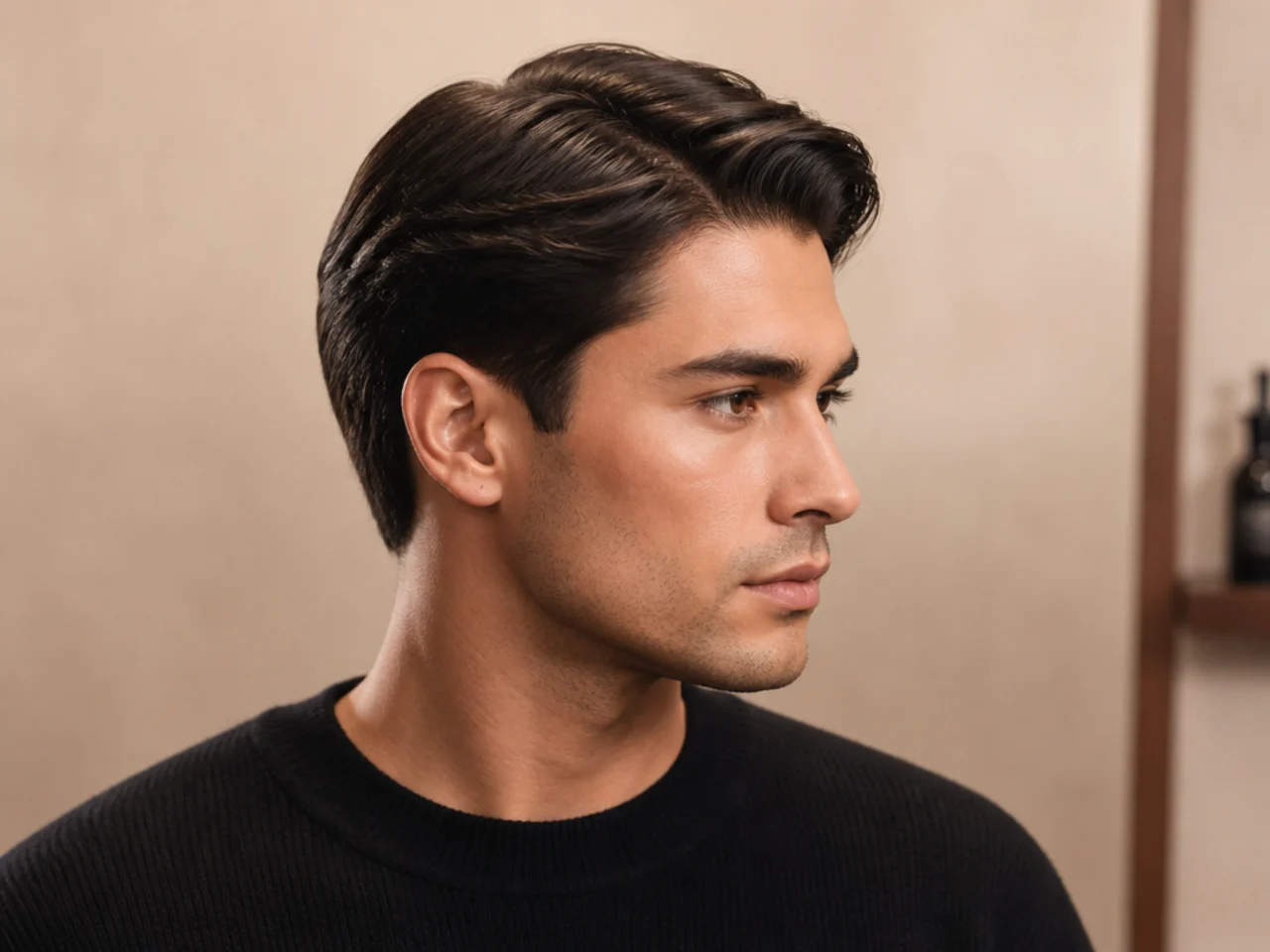
Similar to the executive contour but with a slightly harder edge — skin-close taper on the sides and a more defined finish. Top sits at 1.5 to 2 inches with a clean part. This is the cut worn by managing directors, senior lawyers, and anyone whose job title has "partner" in it. Suits square and oval faces best. Ask for a banker cut with a low taper down to skin at the neckline, 2 inches on top, and a hard defined side part. Style with a firm-hold pomade combed once, then hit it with a low blow-dry to set the part before it can move.
Prep
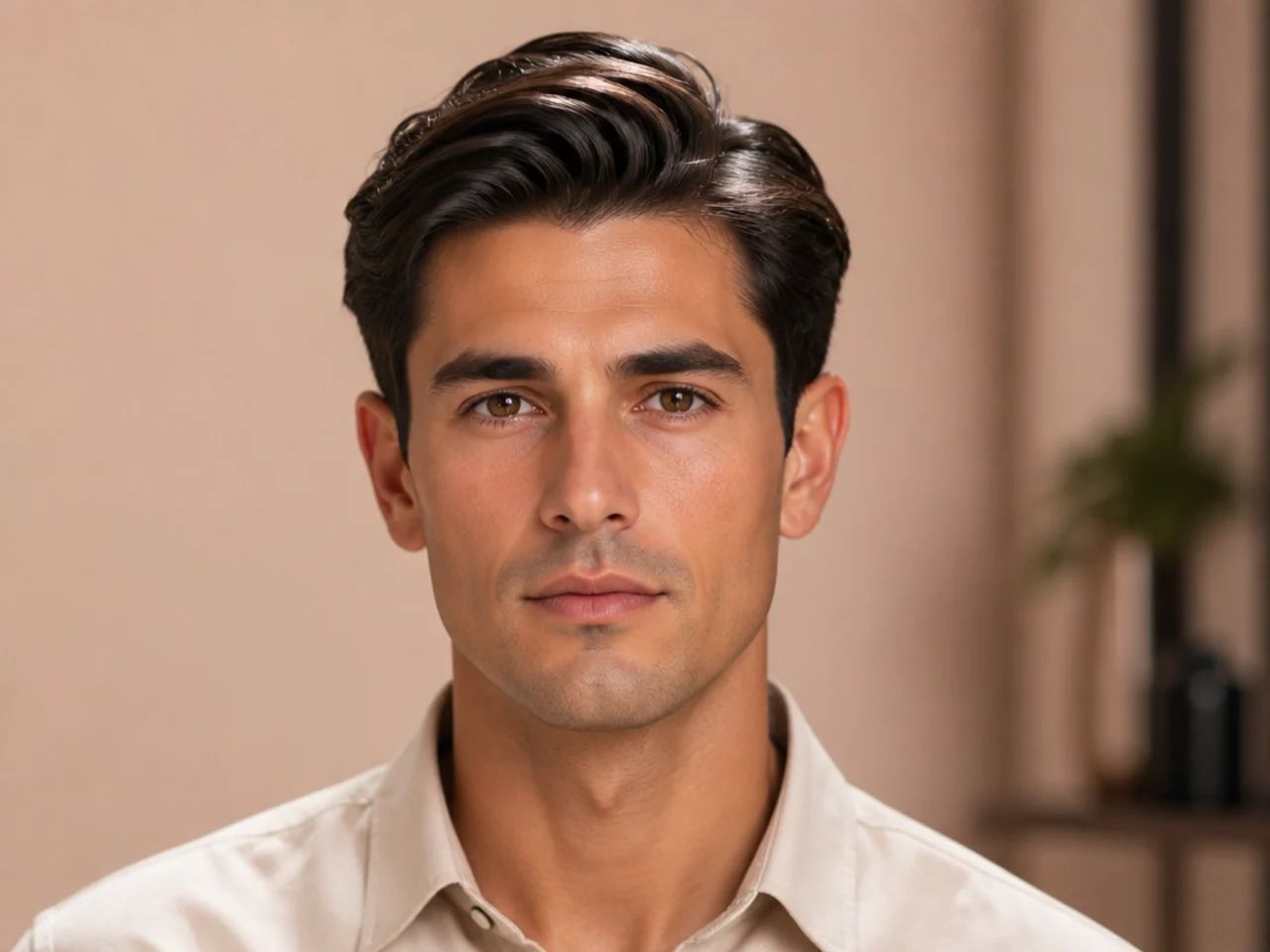
The prep-school version of the ivy league. Slightly longer top — 3 inches — with a deep side part on the natural break, hair combed cleanly back off the forehead in one sweep. Think Kennedy in a boat shoe. Suits fine to medium hair; too thick and the shine reads greasy. Best on oval and square faces. Ask for a prep cut with 3 inches on top, a scissor taper down to a #2 on the sides, and a deep defined side part. Style with a shine pomade on damp hair, combed straight back from the part, then let the front piece fall naturally over the temple.
Undercut Classic
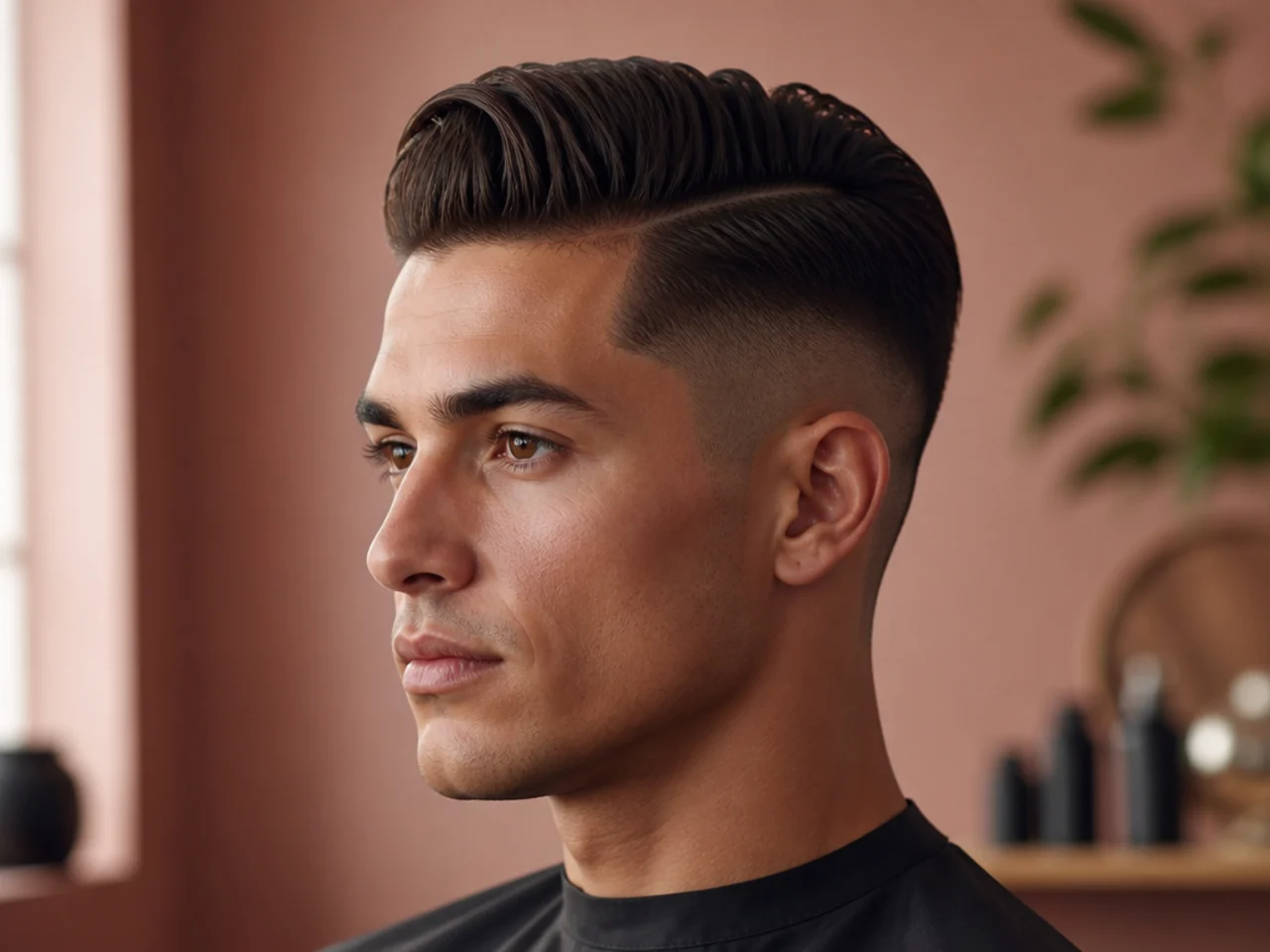
Disconnected sides clipped to one uniform length (usually a #1 or #2), top left at classic length and combed back or side-parted over the top. It's a 1920s cut that came back hard in the 2010s and never left. Suits every face shape but reads especially strong on oval and square jaws. The disconnection carries the whole look. Ask for a classic undercut fade with a #1 on the sides and back, 4 inches on top, and a hard side part. Style with a firm-hold pomade combed straight back or across the part.
Disconnected Classic
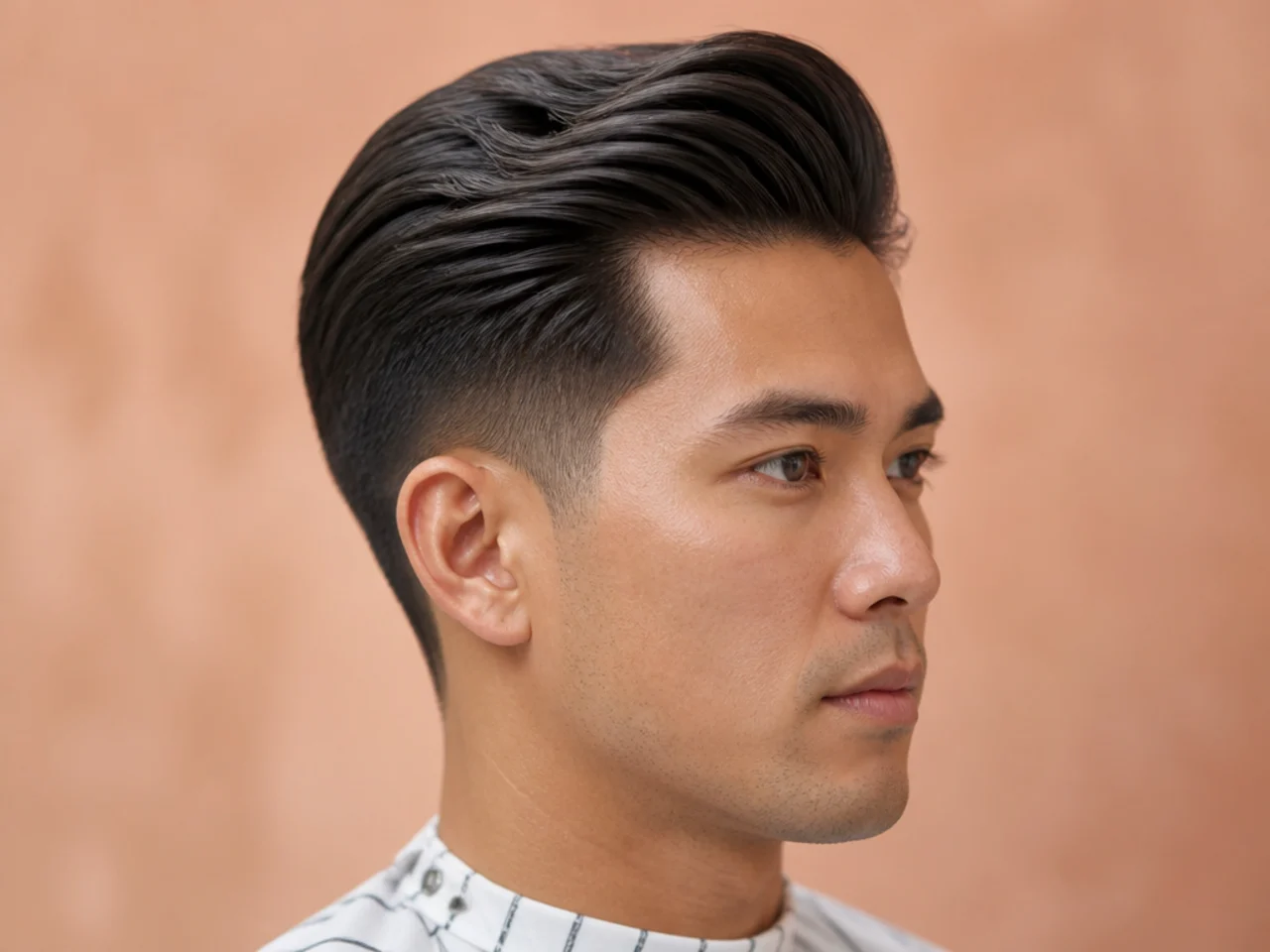
A cousin of the undercut with a sharper visual break — the top length meets the shaved side at a defined line rather than a gradient. No fade transition, just a full stop. Reads dramatic and modern-classic at the same time. Best on oval faces with thick straight hair — the disconnection needs volume to sit right. Ask for a disconnected cut with a #0.5 on the sides and back, 3 to 4 inches on top, and a razor-drawn transition line. Style with matte clay worked through the top, pushed back or to one side, no attempt to bridge the disconnection.
High-and-Tight
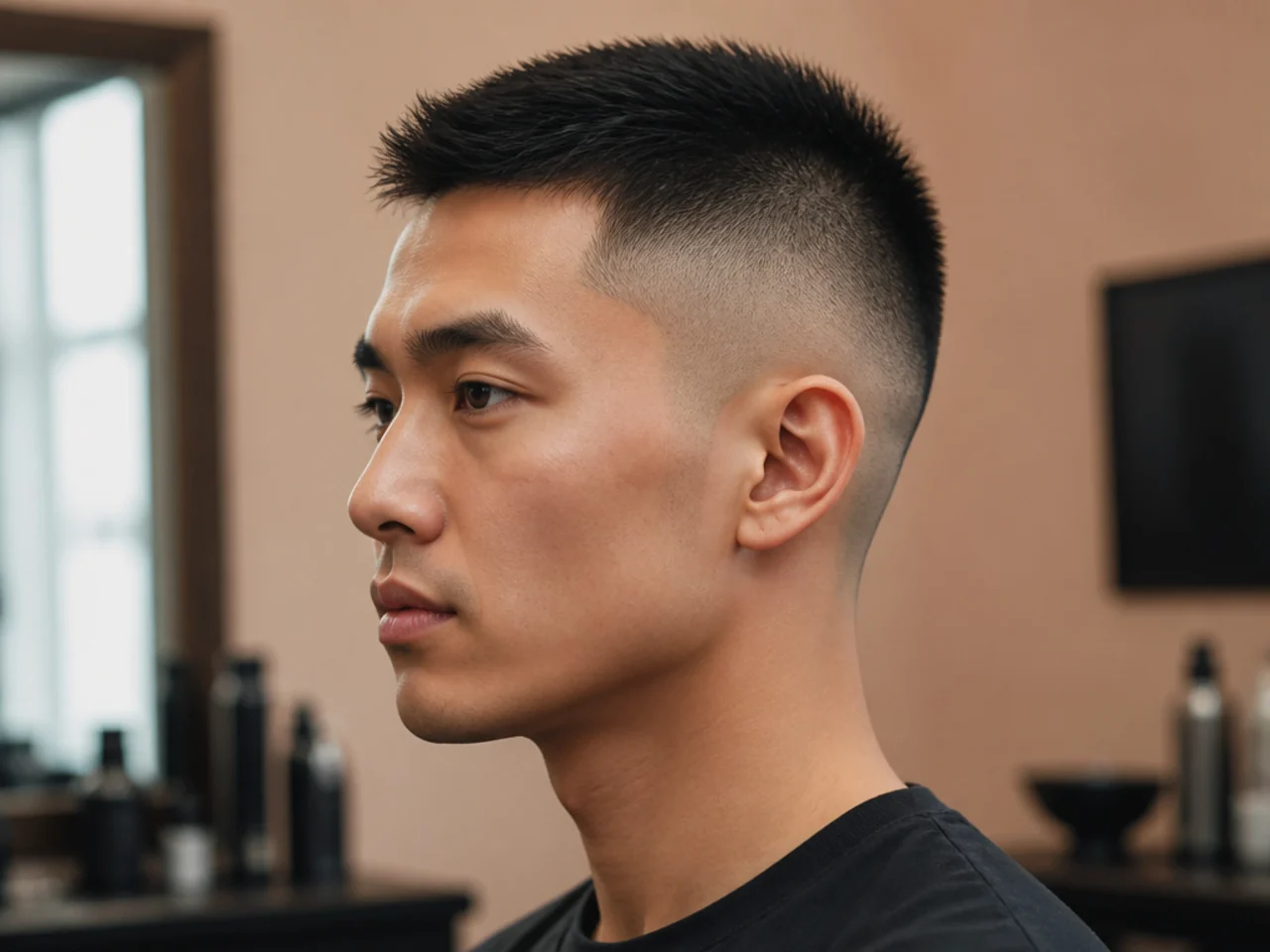
The Marine Corps cut. Sides and back clipped skin-close from the parietal ridge down, top left at half an inch and kept flat. There's no styling — the geometry is the whole look. Suits square and oval faces with clean bone structure. Best on straight to gently wavy hair. Ask for a high-and-tight, #0.5 or skin on the sides and back with a hard line at the parietal ridge, and half an inch on top cut flat. Style with your palm — no product needed. This is the shortest cut in the classic playbook that isn't a straight buzz.
Regent
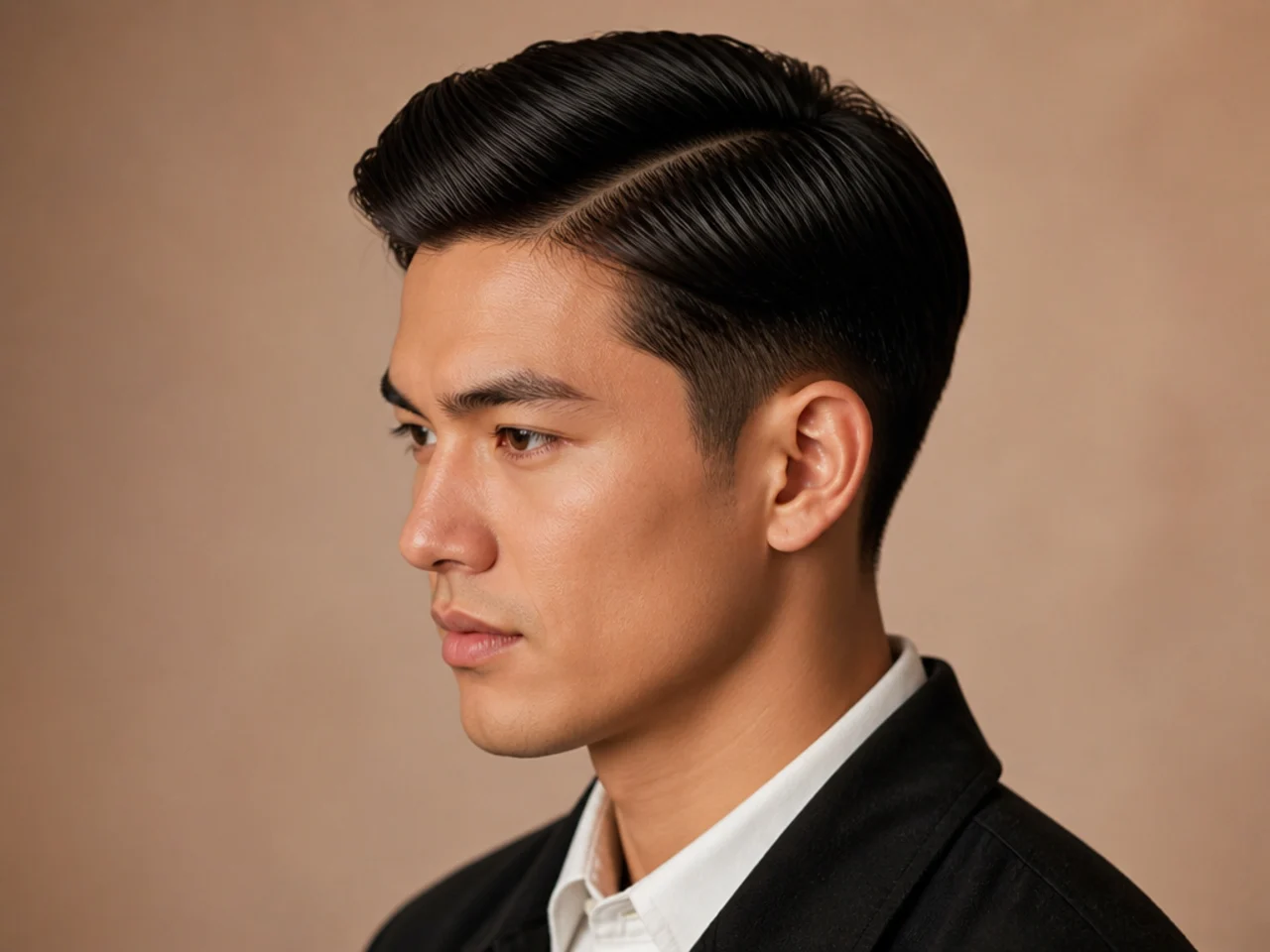
The British 1950s side part. Deep defined parting, thick top left long enough to build genuine height on the comb-back, and glossy pomade holding everything in place. Think Peaky Blinders without the drama. Suits square and oval faces with thick, straight, cooperative hair. Ask for a Regent with 4 inches on top, scissor-tapered sides down to a #2, and a razor-drawn hard side part on your dominant side. Style with a firm-hold, high-shine pomade on damp hair, combed straight back from the part with a fine-tooth comb, then set with a low blow-dry against the direction of the comb.
Textured Ivy
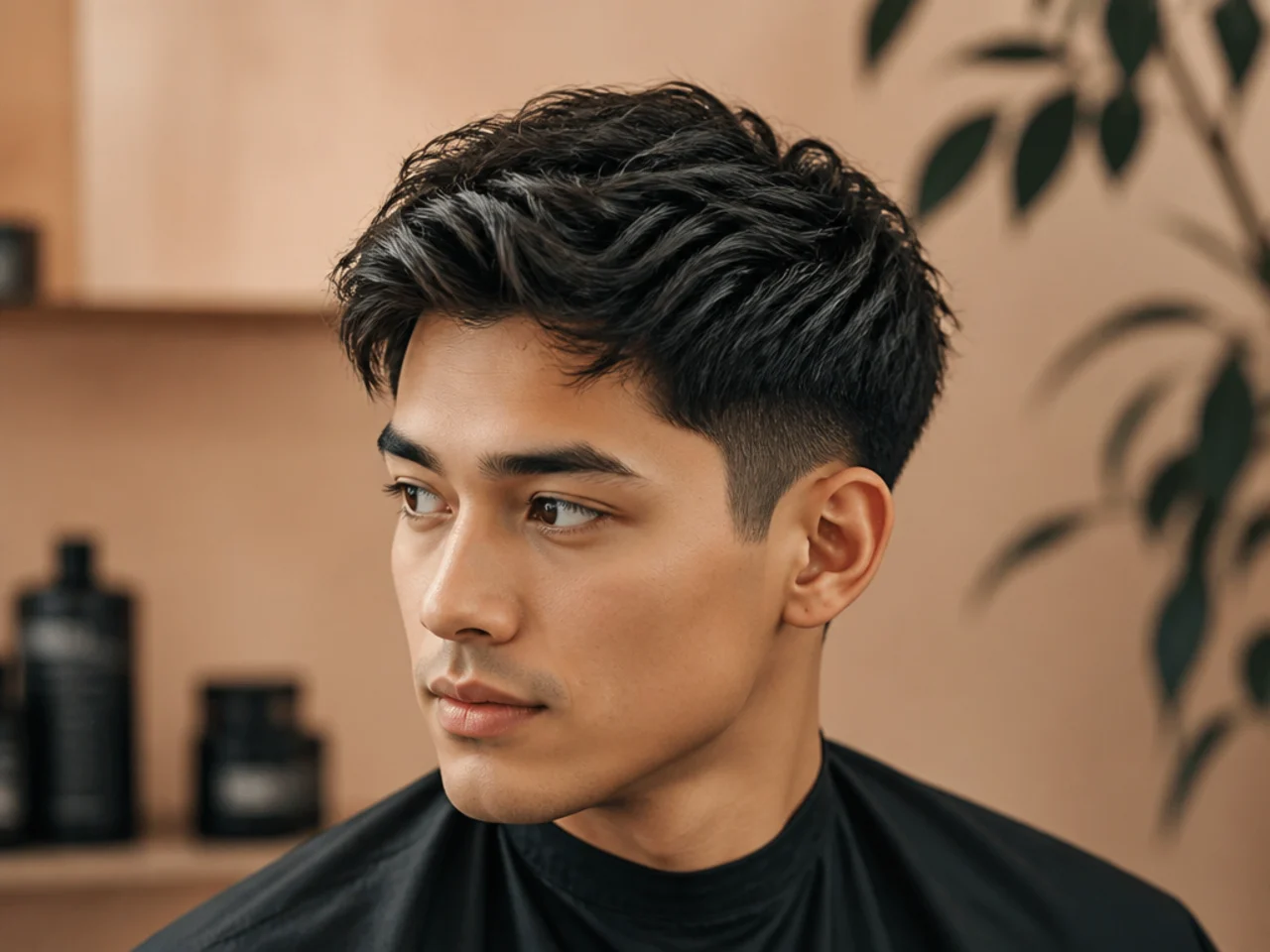
An Ivy League with the top point-cut so the ends move independently instead of lying in one blunt sheet. Same silhouette, more life. Best for thick, coarse, or slightly wavy hair — fine hair reads stringy under point-cut ends. Suits guys in creative offices where nobody wears a tie. Ask for a textured Ivy League, 2.5 to 3 inches on top with point-cut ends, a taper fade to a #1, and a soft side part. Style with texture cream on damp hair, then rough-dry with your fingers before sweeping to the side. Pair with stubble for a modern-classic combination. See more textured haircuts for men for adjacent shapes.
Slick Side Part with Beard
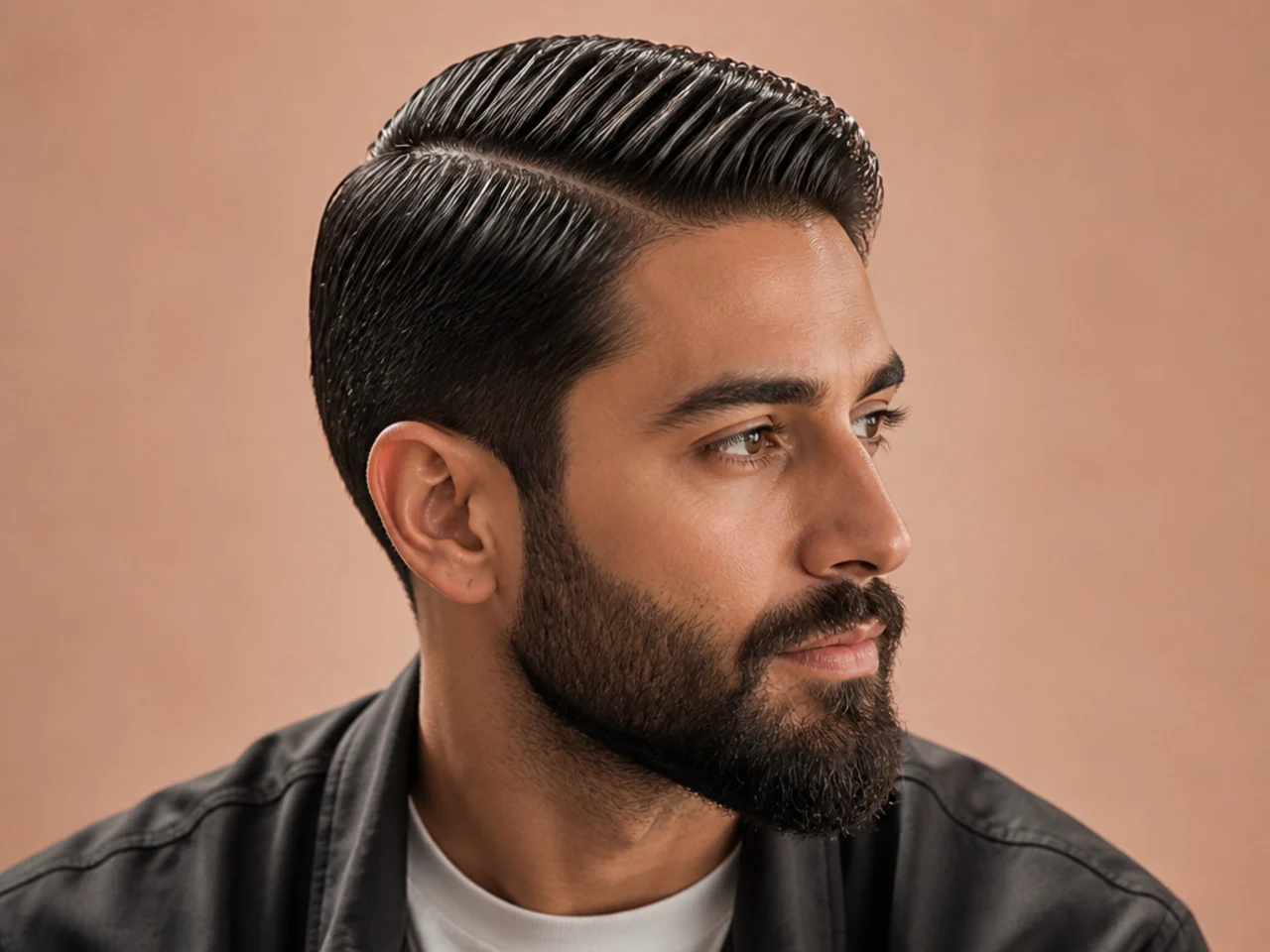
A slicked-and-parted top paired with a full or two-week beard is one of the most photographed modern-classic combinations of the decade. The top follows the standard side-part rules — 2 to 3 inches, deep part, shine pomade — while the beard adds weight to the lower half of the face and balances the polish above. Suits oval and heart-shaped faces best. Ask for a classic side part cut and blend the beard sideburn into the taper so there's no visible line. Style the top with a firm-hold shine pomade, brush the beard down with a boar-bristle brush and a light beard oil.
Businessman
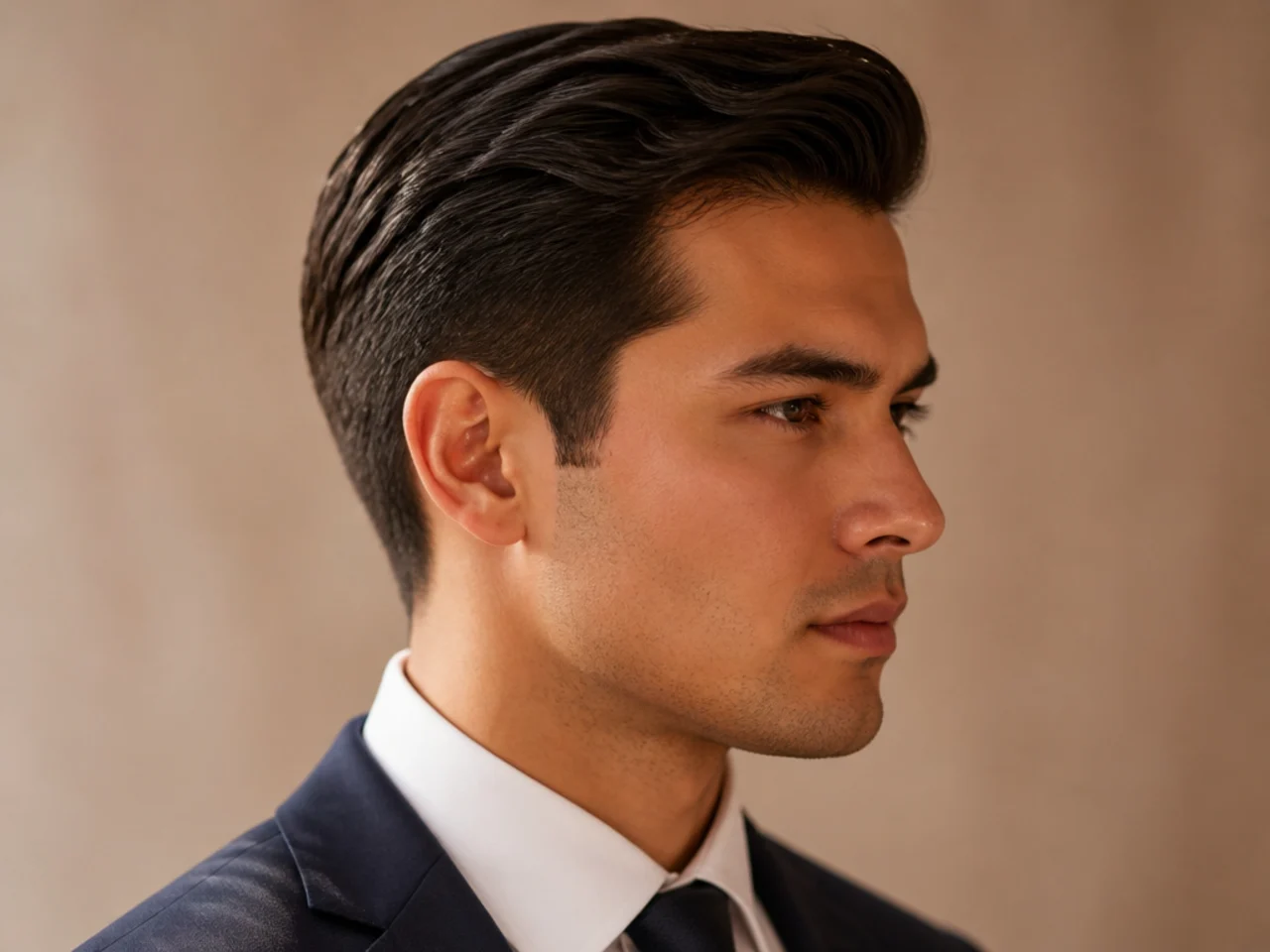
The eight-hour cut. Short-to-medium top around 1.5 to 2 inches, scissor-tapered sides, styled to survive a long day in a suit without touch-ups. Every choice here is about looking sharp at 6 PM the way you did at 8 AM. Suits every face shape — it's built to disappear into any dress code from banking to hospitality. Ask for a professional hairstyle for men — top at 2 inches, low taper sides, a defined but not extreme side part. Style with medium-hold matte pomade combed once, then blow-dry with a paddle brush for controlled shape. Skip shine products — matte holds cleaner through the day.
Editor Cut
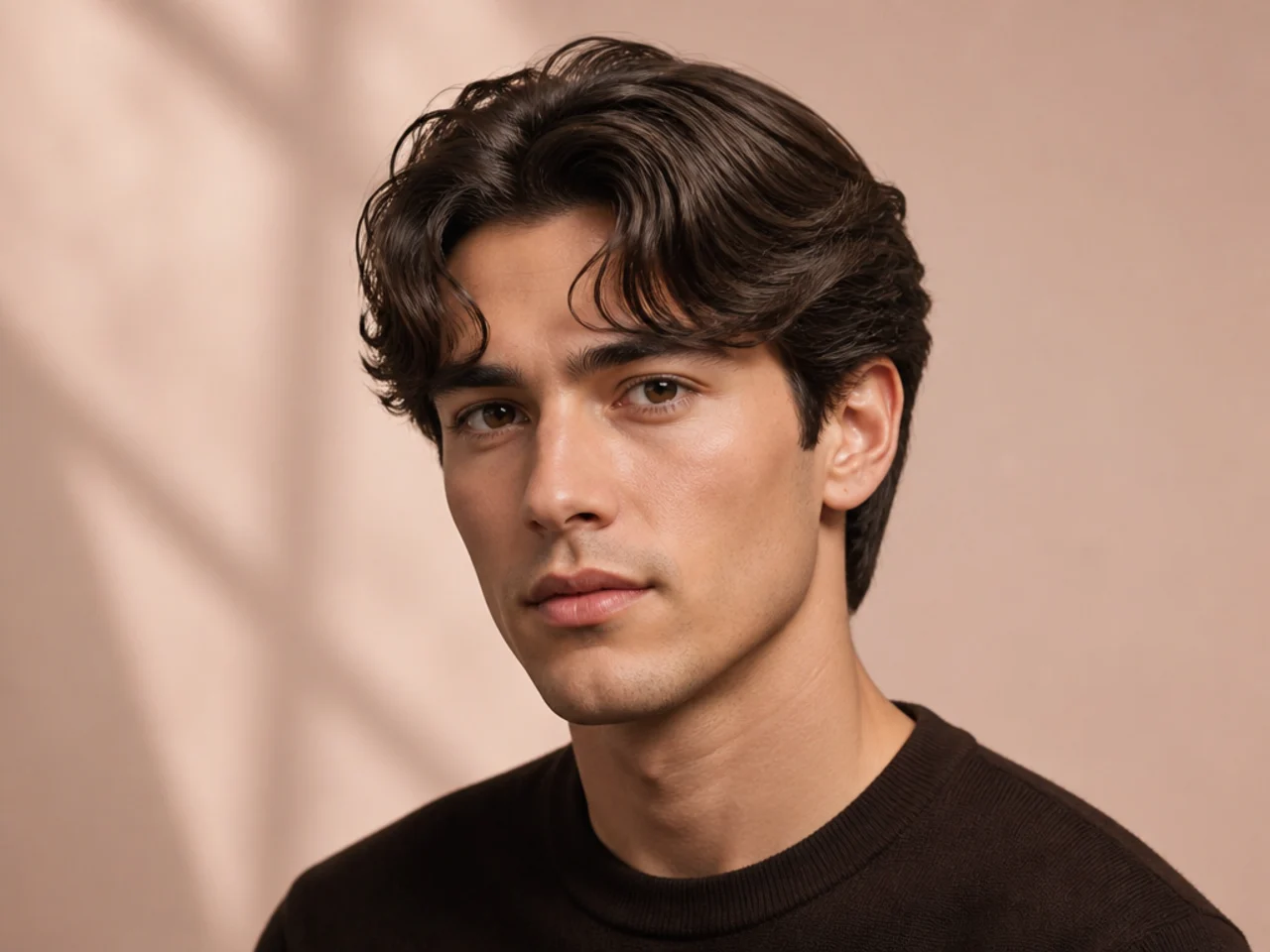
Fashion-magazine masculine. Slightly longer than the businessman — 3 inches on top with a soft side sweep and gently scissor-tapered sides that leave more length than an executive cut would allow. Reads considered rather than corporate. Suits creative professionals — art directors, editors, architects, senior designers. Best on oval and square faces with medium-to-thick hair. Ask for an editor cut with 3 inches on top, a longer soft scissor taper on the sides down to a #3, and a shallow side part. Style with a light cream pomade worked through damp hair with your fingers, no comb, then air-dry or blow-dry with your hands.
Longer Classic
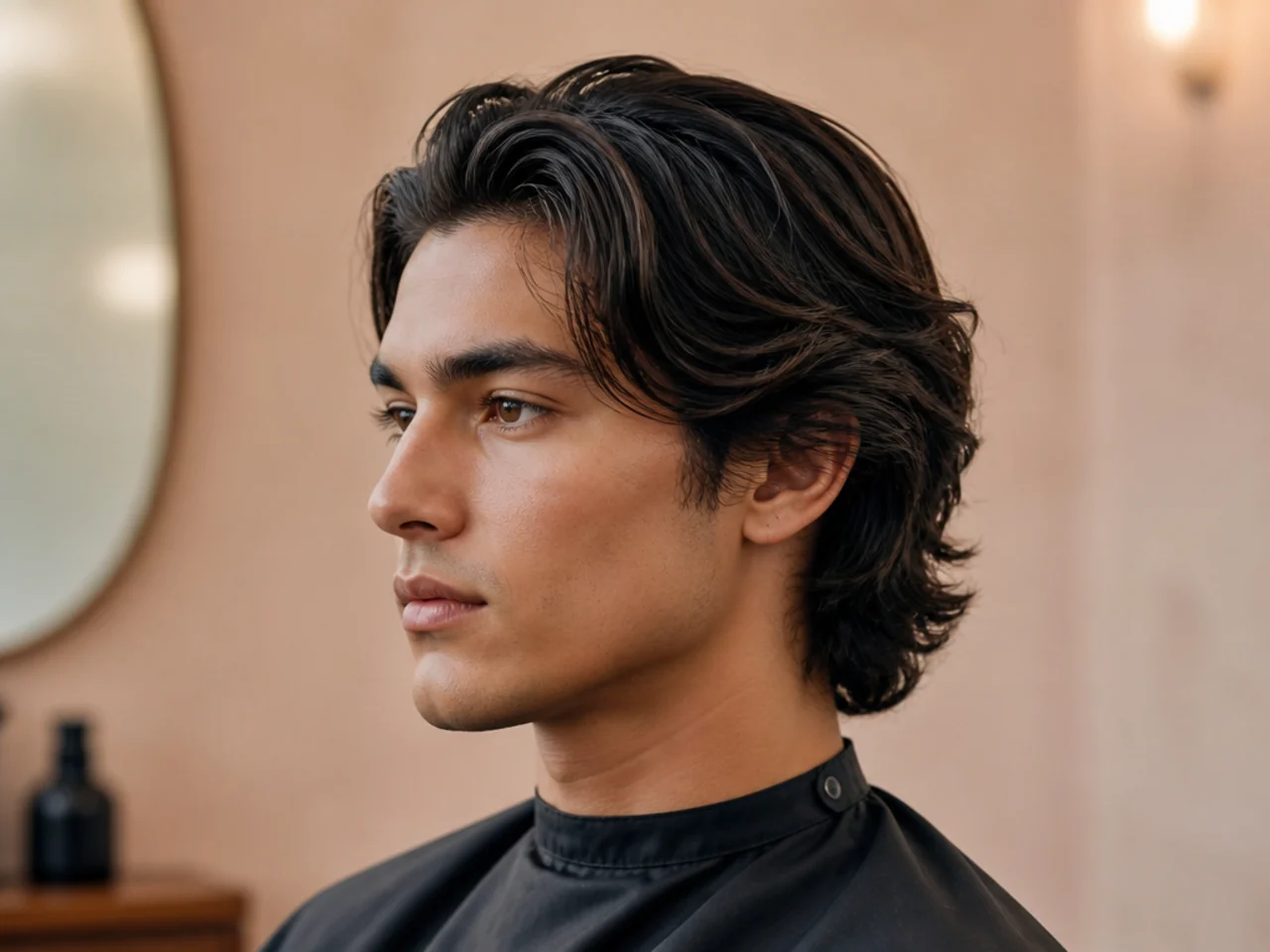
Same shape as the classic side part, pushed to the edge of what still qualifies. Top at 4 to 5 inches, sides scissor-tapered to a longer length that tucks behind the ear, a deep side part along the natural break. Great for anyone growing out from a shorter cut who wants to stay presentable in the middle stage. Suits oval and square faces with thick healthy hair. Ask for a longer classic with 4 inches on top, a longer scissor taper on the sides, and a deep side part. Style with a cream pomade on damp hair, combed back and to the side, then blow-dried with a paddle brush.
Brushed Back
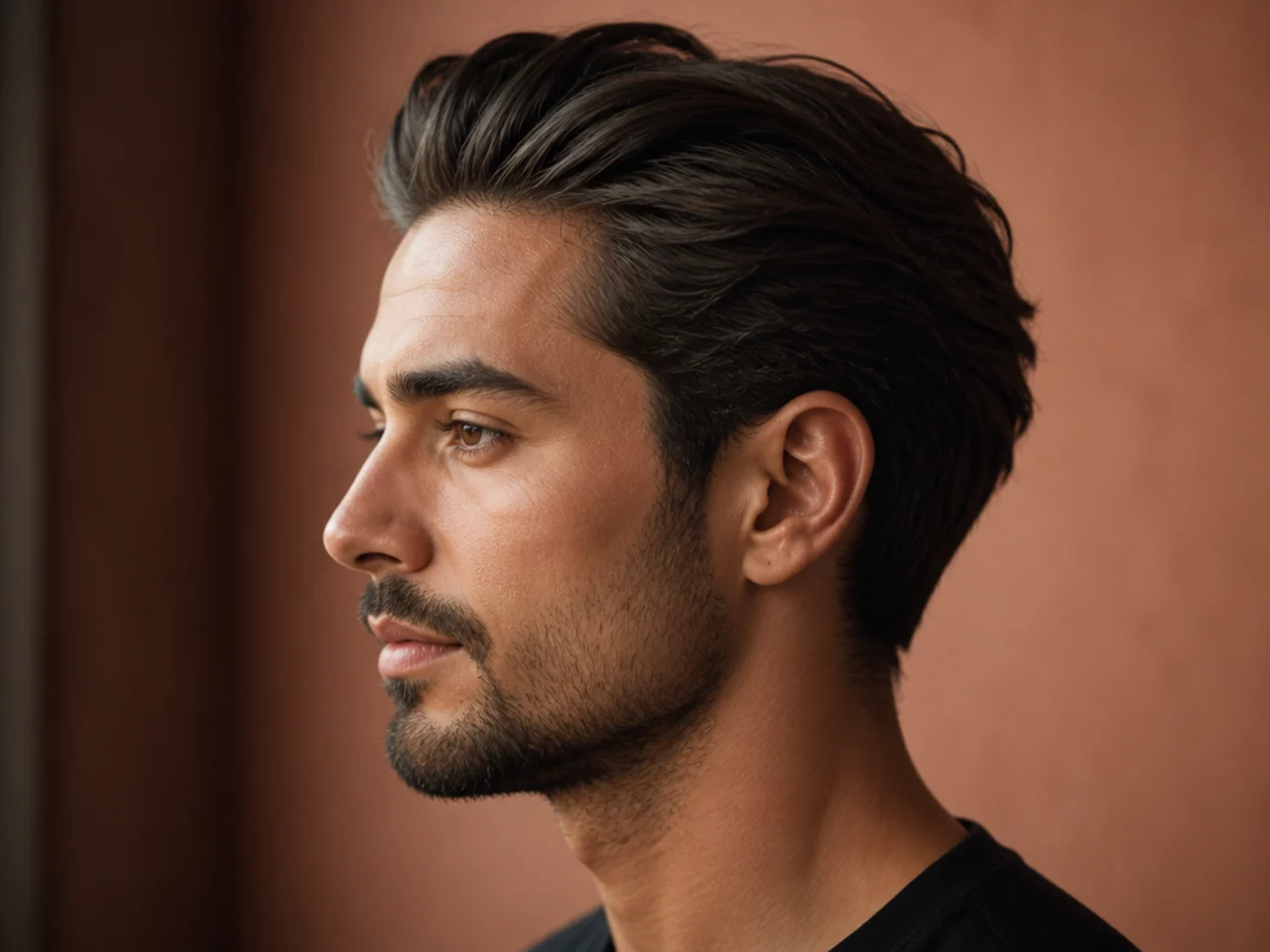
Everything blown back and off the forehead without a defined part — softer than a slick back, less product, more natural movement. Top sits at 3 to 4 inches. Suits oval, square, and diamond faces with straight to wavy hair. Best on medium-to-thick density. Ask for a brushed-back cut with 3 inches on top, scissor-tapered sides down to a #2, and no part. Style by working a matte clay through damp hair with your fingers, then blow-drying straight back with a paddle brush and following the airflow with your other hand. The unfinished part is what keeps it from looking greasy.
Low-Key Military
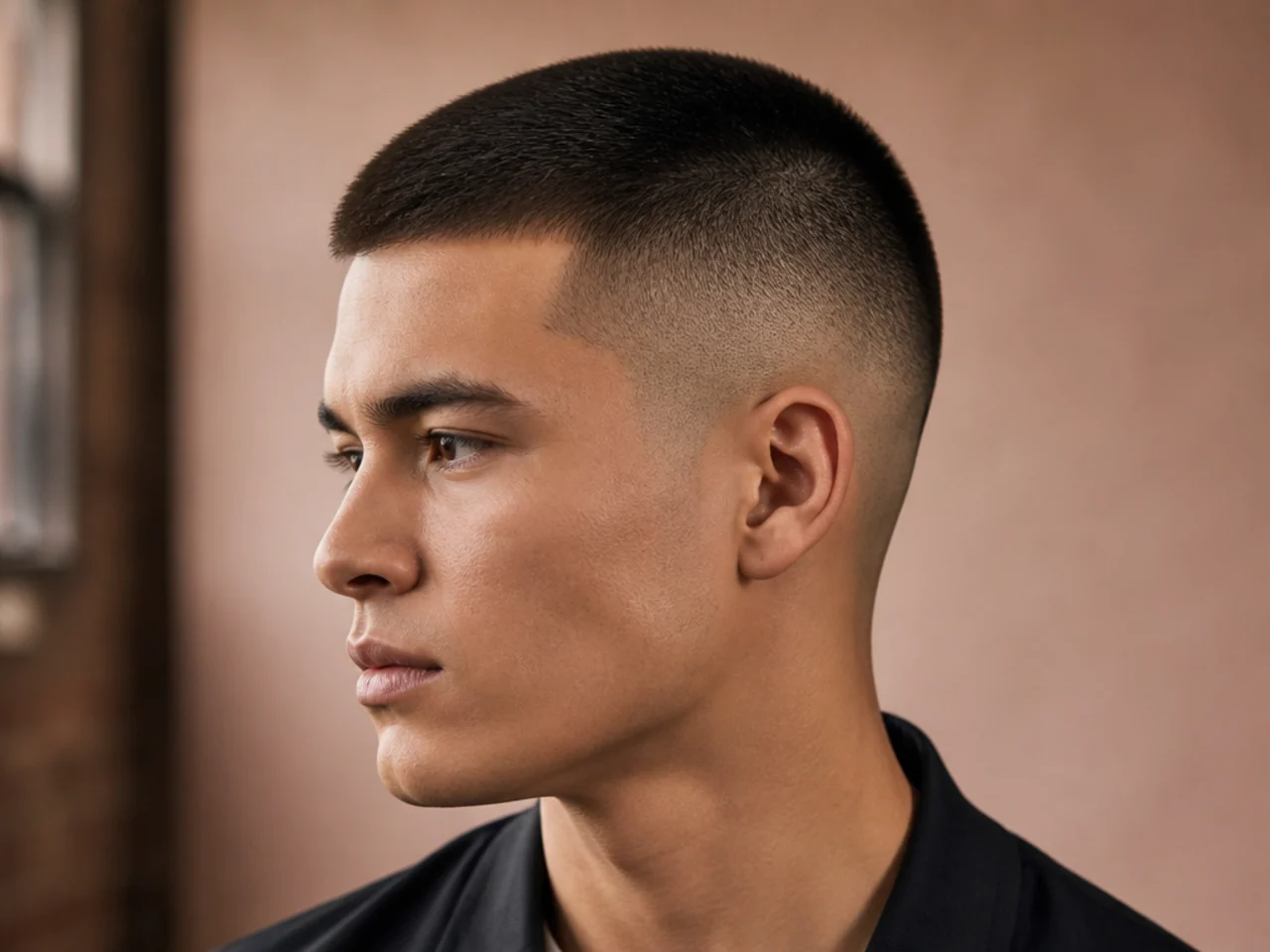
A modernized flat top. Buzzed sides at a #1 or #2, top at one inch cut with slight texture rather than a straight blunt platform. Reads structured and clean without the '80s squareness of a full flat top. Suits square and oval faces with straight hair — curl fights the geometry. Ask for a low-key military cut with #1 sides fading to skin at the neckline, 1 inch on top point-cut for texture, and a clean line at the temples. Skip the styling — it holds its own shape. This one lives comfortably in the low-maintenance men's haircuts rotation.
Classic Brush Over
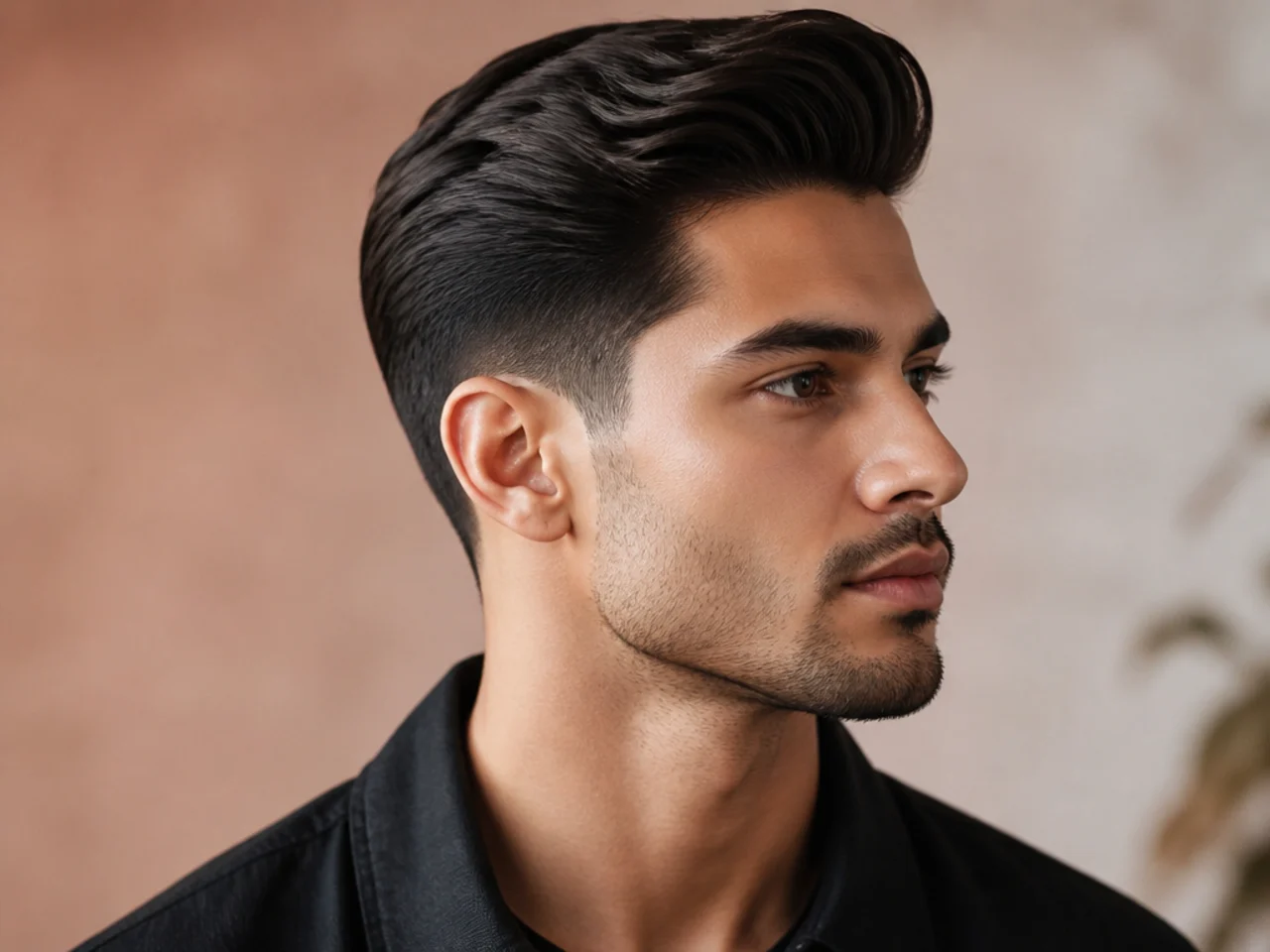
Longer top brushed diagonally over the forehead — softer than a hard comb over, without the razor-line part. Reads casual-classic rather than executive. Suits oval, square, and heart-shaped faces because the diagonal sweep breaks up the vertical line of the face. Best on straight to wavy hair with medium density. Ask for a classic brush over with 3 to 4 inches on top, a scissor taper on the sides down to a #3, and no drawn-in part. Style with a matte paste worked through damp hair, then push the front diagonally across with your palm before a low blow-dry to set the direction.
Sculpted Side Part
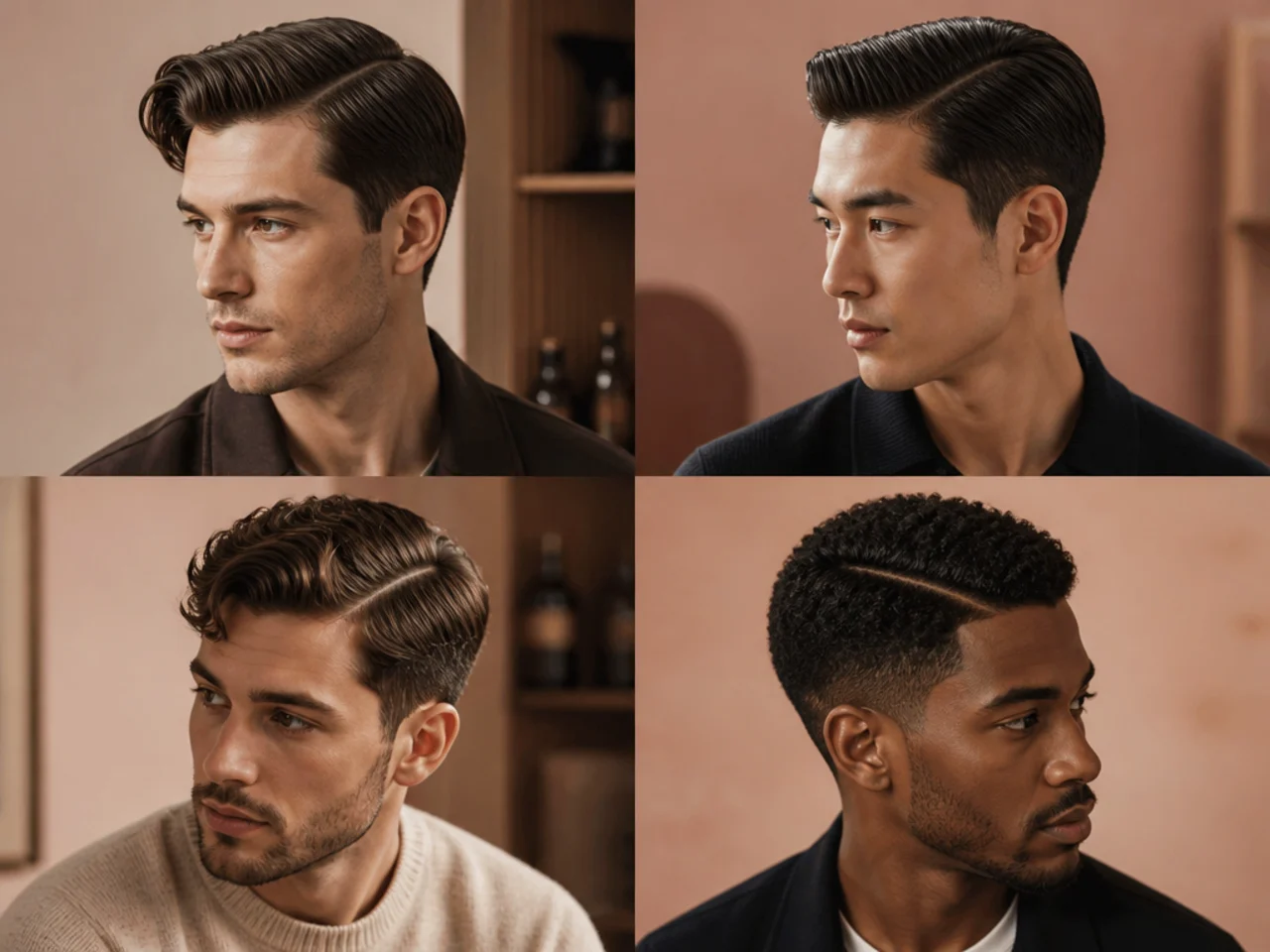
The most photographed 2020s take on the classic side part. Sharp razor-drawn parting, high-precision skin taper or clean low fade on the sides, and a controlled 2- to 3-inch top combed away from the part. The precision is the whole point — every edge does work. Suits every face shape but skews photogenic on square jaws and oval faces. Ask for a sculpted side part with a low fade to skin, 2.5 inches on top, and a razor-shaved hard part along the natural break. Style with medium-hold pomade combed once with a fine-tooth comb. See the full fade haircut guide for fade-height options.
How to Ask Your Barber
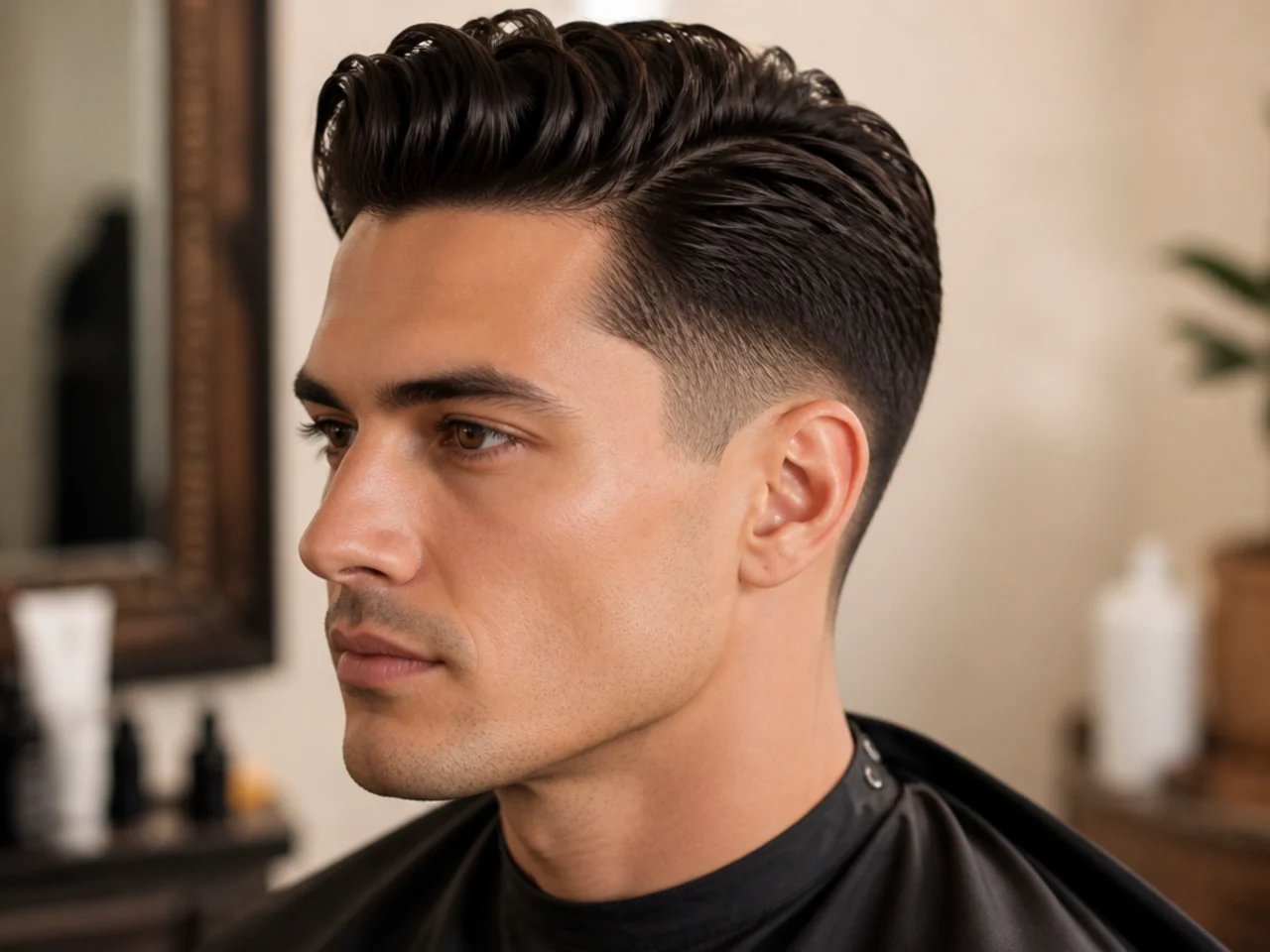
Bring one photo. Not five. Barbers work faster and more accurately from a single clear reference than from a mood board. Then read them these five specifics before they pick up the clippers:
- Name the cut. "Classic ivy league," "banker cut," "executive contour," "high-and-tight." The name sets the mental picture — everything else refines it.
- Give the top length in inches. Say "2.5 inches on top" rather than "medium length." Inches remove ambiguity from the conversation.
- Name the side finish. Choose one of three: scissor taper (softest), clipper taper (cleaner), or fade (sharpest). If you want a fade, say the height — low, mid, high, or skin.
- Point to your part. Say "natural side part on the left" and tap the spot. Your natural cowlick decides the placement — don't fight it. For a harder look, say "razor-drawn hard part along the natural break."
- State the finish. Matte or shine. This determines the product bracket — clay/paste for matte, pomade/gel for shine — and the entire read of the cut.
If you want to see a wall of proven short cuts to reference at the chair, the short simple men's haircuts guide is the fastest way to browse the classics on real heads.
Styling and Maintenance
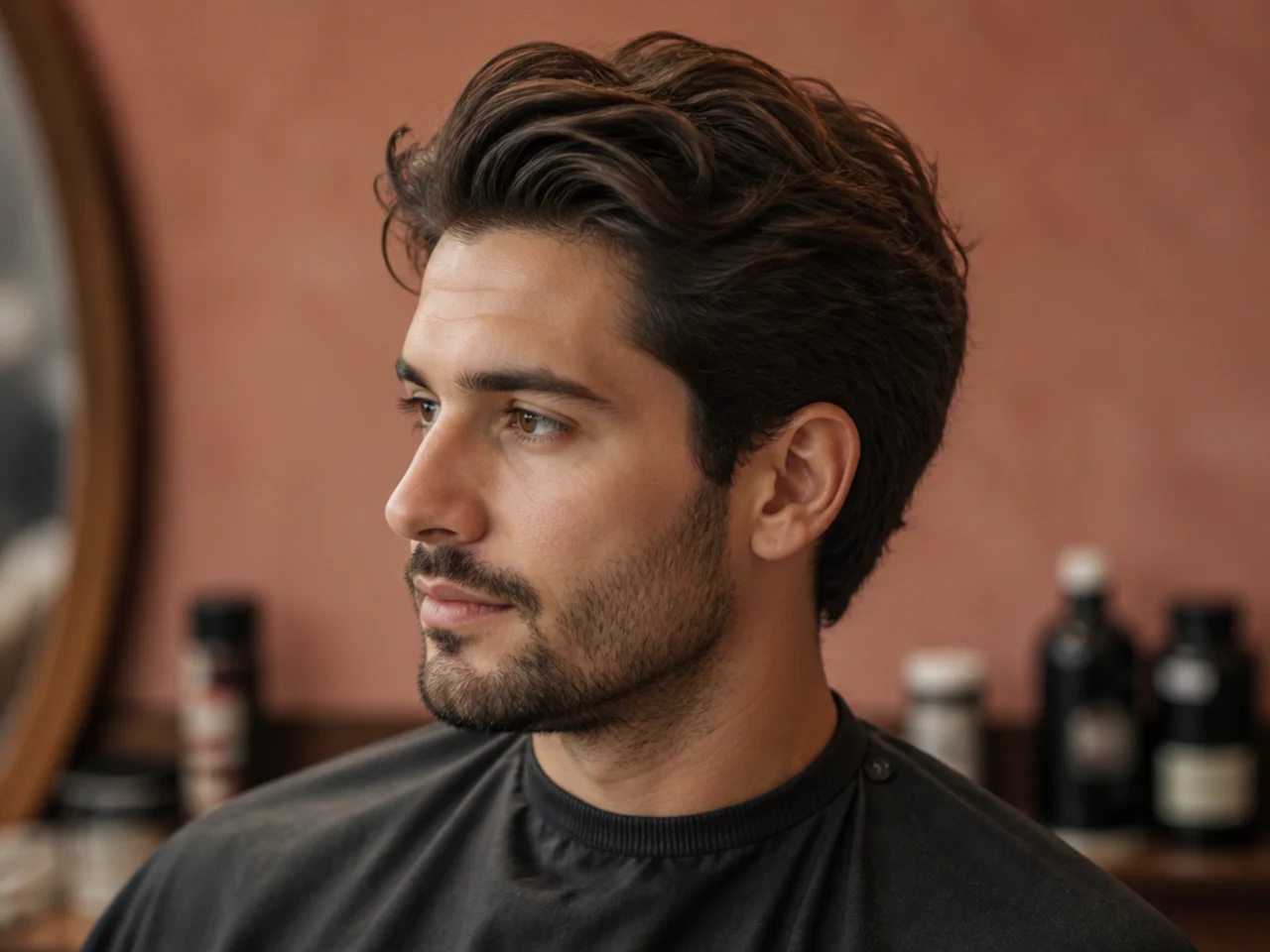
Classic cuts survive fifty years for a reason — the styling routine is thirty seconds if you use the right product for the finish.
For shine styles (slick back, pompadour, regent, prep, banker cut, sculpted side part): apply a nickel-sized scoop of medium- or firm-hold pomade to damp — not soaking — hair. Warm it in your palms until it goes clear, then rake it front to back with your fingers. Comb in the part with a fine-tooth comb. Blow-dry on low for twenty seconds if you want the shape to hold past lunch. Cool shot at the end locks it.
For matte styles (ivy league, brush up, textured ivy, editor cut, french crop, tailored crop, brushed back, longer classic): apply a pea of matte clay or paste to dry hair. Work it between your palms first, then press it into the roots with your fingertips before pulling it through to the ends. No comb. Push the shape into place with your palm.
For buzz and crew length (buzz, crew, high-and-tight, low-key military): skip product entirely. Wash, towel-dry, walk out the door. The geometry is the whole look.
Cadence. Buzz, crew, caesar, and high-and-tight need re-cutting every two to three weeks. Ivy league, side part, comb over, and businessman hold their shape for four weeks. Longer classics — pompadour, brushed back, editor cut, slick back — stretch to five or six weeks between cuts. Waiting past that point, the silhouette softens and the cut stops reading classic.
If you cut yourself between visits, invest in one solid clipper set — the best hair clippers for men guide lays out what to buy for buzzes, cleanups, and neckline maintenance. Every classic cut in this guide can be extended by a week if you clean up your own neckline halfway between appointments.
The classic mens haircut you pick from the thirty above will look as sharp in ten years as it does the day you leave the barber's chair. That's the whole point of picking one. Book the appointment. Bring the photo. Give the five specifics. The rest is just growing out and doing it again.