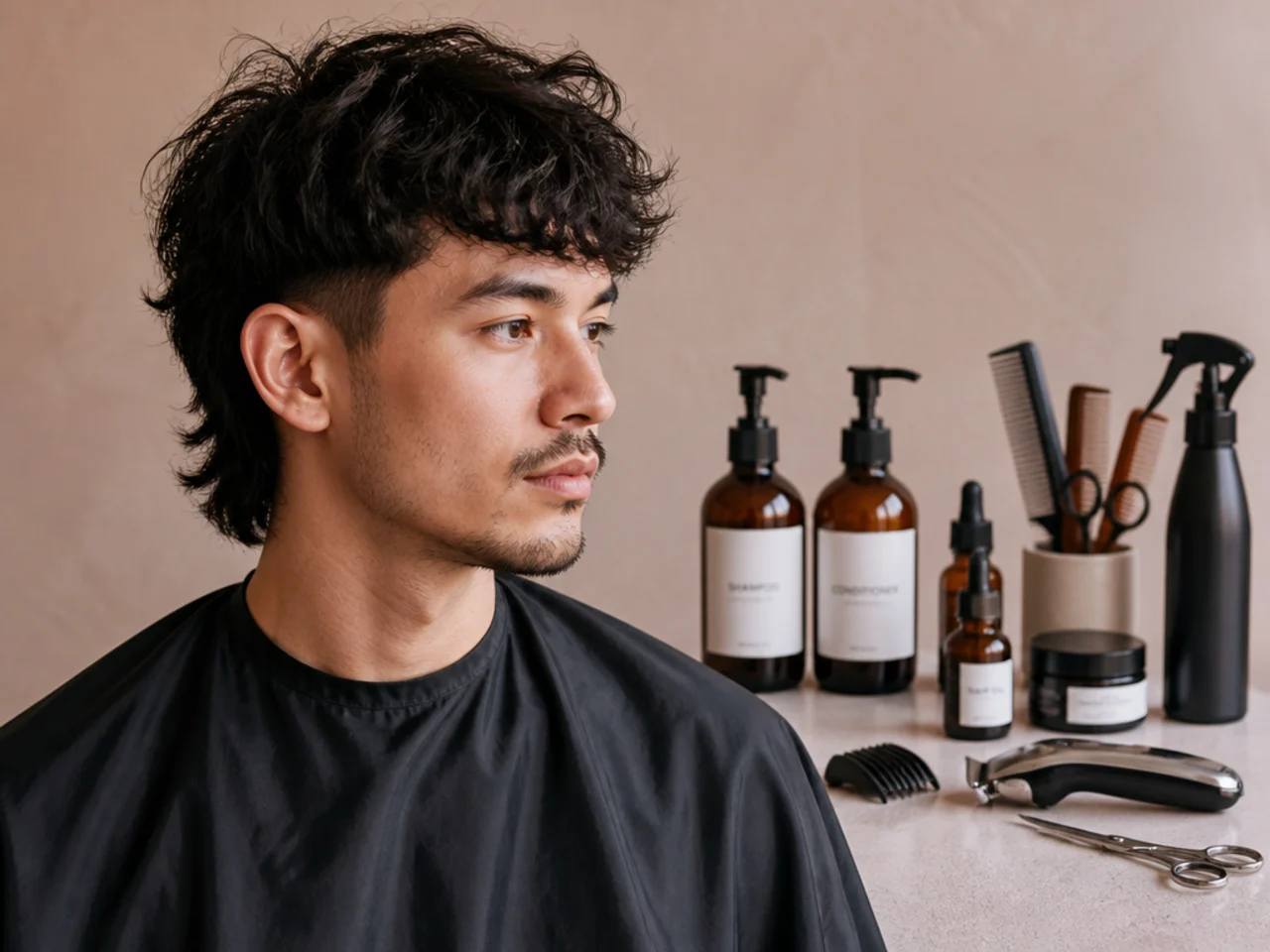
7 Steps to Maintain a Short Mullet at Home
Short mullet maintenance in seven steps — wash rhythm, blow-dry direction, neckline cleanup, taper touch-ups, and the exact products and tools you need at home.
In this article · 16
- What You Will Need
- Step 1: Set a Weekly Wash-and-Prep Rhythm
- Step 2: Rough-Dry in the Right Direction Every Morning
- Step 3: Style with Matte Product on Damp Hair
- Step 4: Sleep on Silk to Protect the Cut Overnight
- Step 5: Clean Up the Neckline Every 7 to 10 Days
- Step 6: Touch Up the Tapered Sides with Clippers
- Step 7: Dust the Nape and Fringe with Scissors (Optional)
- Troubleshooting: Common Short Mullet Problems
- FAQ
- How often should I re-cut a short mullet at the barber?
- Can I clean up my own neckline between barber visits?
- What products do I actually need for short mullet maintenance?
- How do I stop my short mullet from looking flat at the crown?
- Is it safe to touch up the tapered sides at home with clippers?
- How do I keep the nape from creasing or fluffing overnight?
A short mullet earns its rotation slot the same way a sharp fade does — with a weekly rhythm, the right product on damp hair, and a five-minute cleanup between barber visits. Skip the routine and the two-length silhouette blurs into a grown-out crop within three weeks. Follow the seven steps below and the cut reads as sharp in week five as it did the day you walked out of the chair.
What You Will Need
Short mullet maintenance runs on a small kit. You do not need a salon shelf — you need the right five items and a hand mirror.
- Sulfate-free shampoo and a lightweight conditioner — sulfates strip the ends and turn the feathered nape into fluff by week two. A conditioning wash keeps the perimeter soft.
- Matte clay or molding paste — one tin does every version except Korean and comma-styled cuts, which want a glossy cream.
- Sea-salt spray — for straight and wavy hair. Skip it on curly and coily textures; use a leave-in and a curl cream instead.
- A hand-held blow-dryer with a concentrator nozzle — the nozzle is what gives you directional root lift at the crown.
- A battery trimmer plus a hand mirror — for the neckline cleanup in step five and the side touch-up in step six. See our best hair clippers for men guide for a chart-topping starter model that carries a taper without heating up.
- A silk or satin pillowcase — the single overnight change that protects the nape more than any product.
Match the tools to the specific variation you asked for at the shop — the modern mullet family covers a lot of ground and the styling notes shift with each shape. If you are new to the short-mullet family, our 25 short mullet variations breakdown maps each shape to its at-home routine.
Step 1: Set a Weekly Wash-and-Prep Rhythm
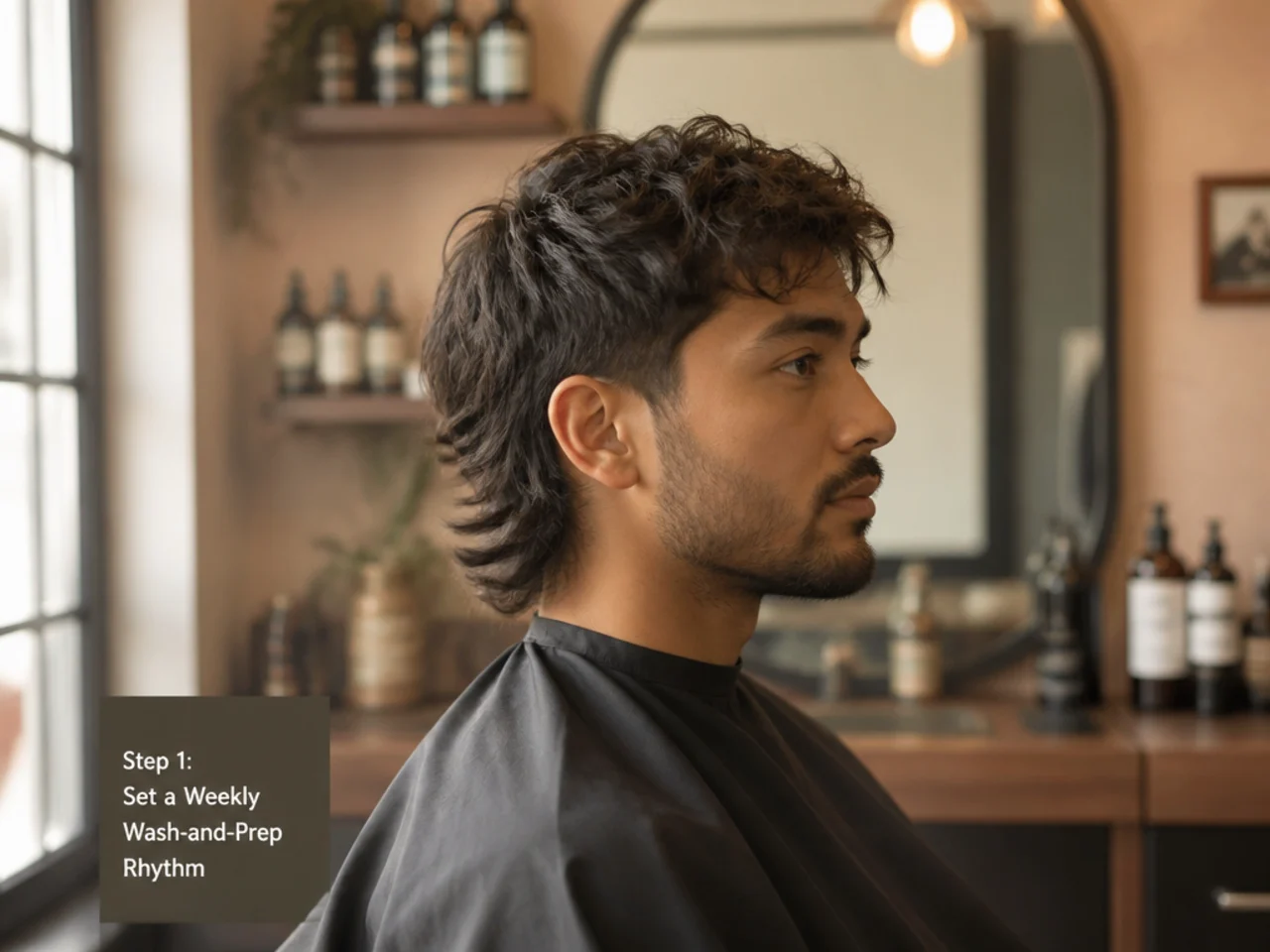
The short mullet lives or dies on how clean the ends are. Product built up in the nape drags the feather down and reads greasy from behind — the one angle you do not check in the mirror.
Wash three to four times a week if your hair is straight or wavy, twice a week for curly, and once a week for coily hair. Every wash gets conditioner — the feathered nape and internal layers show damaged ends faster than a blunt cut because the ends are so exposed. Focus the conditioner on the last two inches of the nape and the top layers, never at the roots.
The common mistake: using a heavy 2-in-1 shampoo out of habit. It weighs down the crown, kills the root lift, and turns the whole silhouette flat by day two. Switch to a lightweight sulfate-free wash and you get an extra day between shampoos.
Towel-dry by pressing, not rubbing. Rubbing the nape with a rough cotton towel breaks the feathered ends and creates the fuzz halo you spend the rest of the week fighting. A microfiber towel or a plain cotton t-shirt does the job without the friction.
Step 2: Rough-Dry in the Right Direction Every Morning
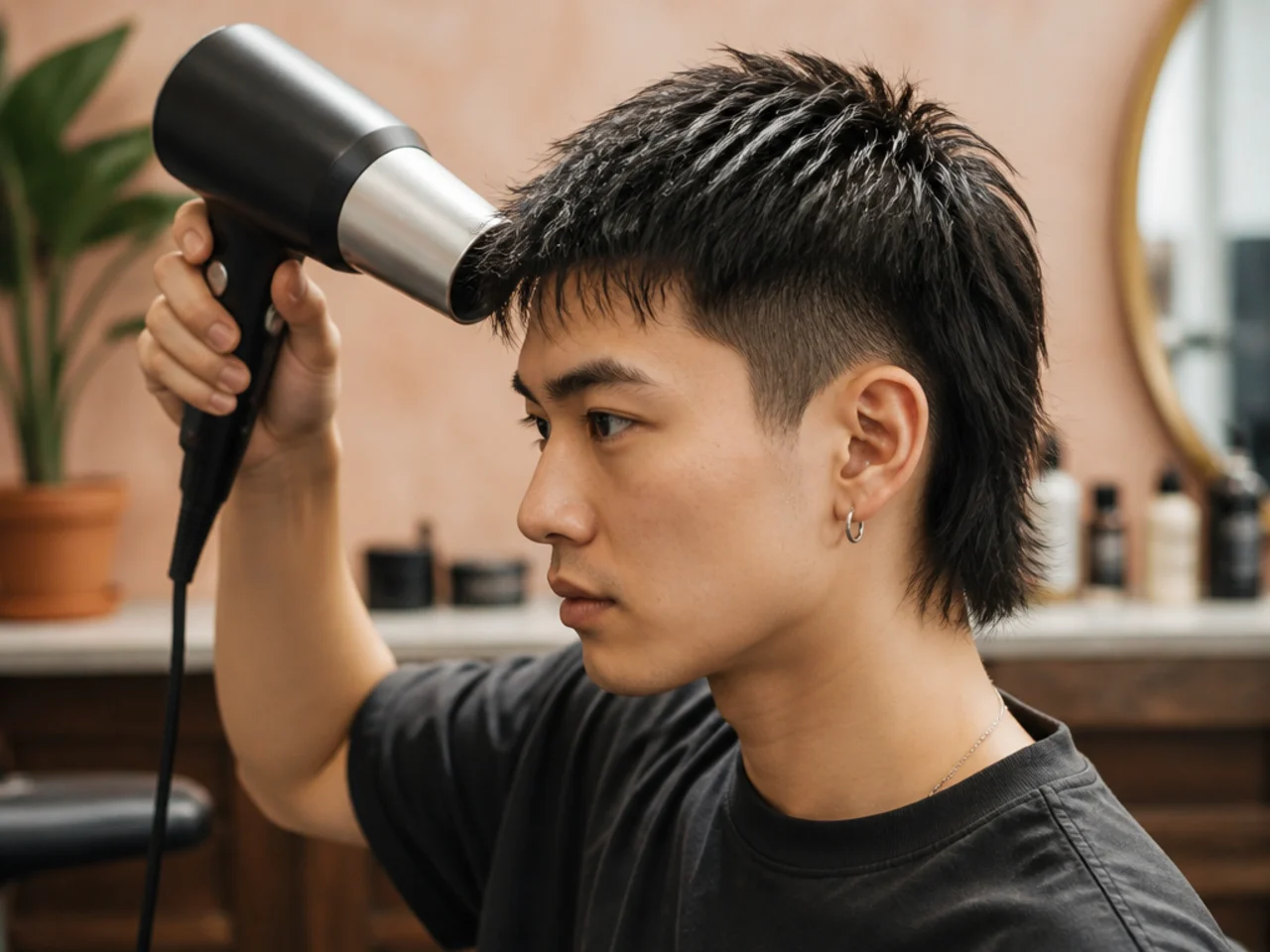
Damp hair is where the shape sets. Wet hair holds product on the surface where it drips; bone-dry hair rejects it altogether. Aim for eighty percent dry before any product touches your head.
Point the concentrator nozzle the direction you want the finish. Backward for a swept-back read. Forward for a fringe. Straight up at the crown for lift on the layered top. The nape can air-dry from here — never blow it straight down or you flatten the feather.
The common mistake: using a round brush. Round brushes are for blowouts, not mullets. They stack the layers and turn the compact silhouette into a helmet shape. Use your fingers instead. Lift the roots at the crown with your fingertips while the airflow hits — that ten seconds of root lift is what gives the shape its bounce.
For curly mullet and coily variations, skip the dryer entirely. Squish leave-in conditioner and curl cream into soaking-wet hair, then plop into a microfiber towel for fifteen minutes. Air-dry from there.
Step 3: Style with Matte Product on Damp Hair
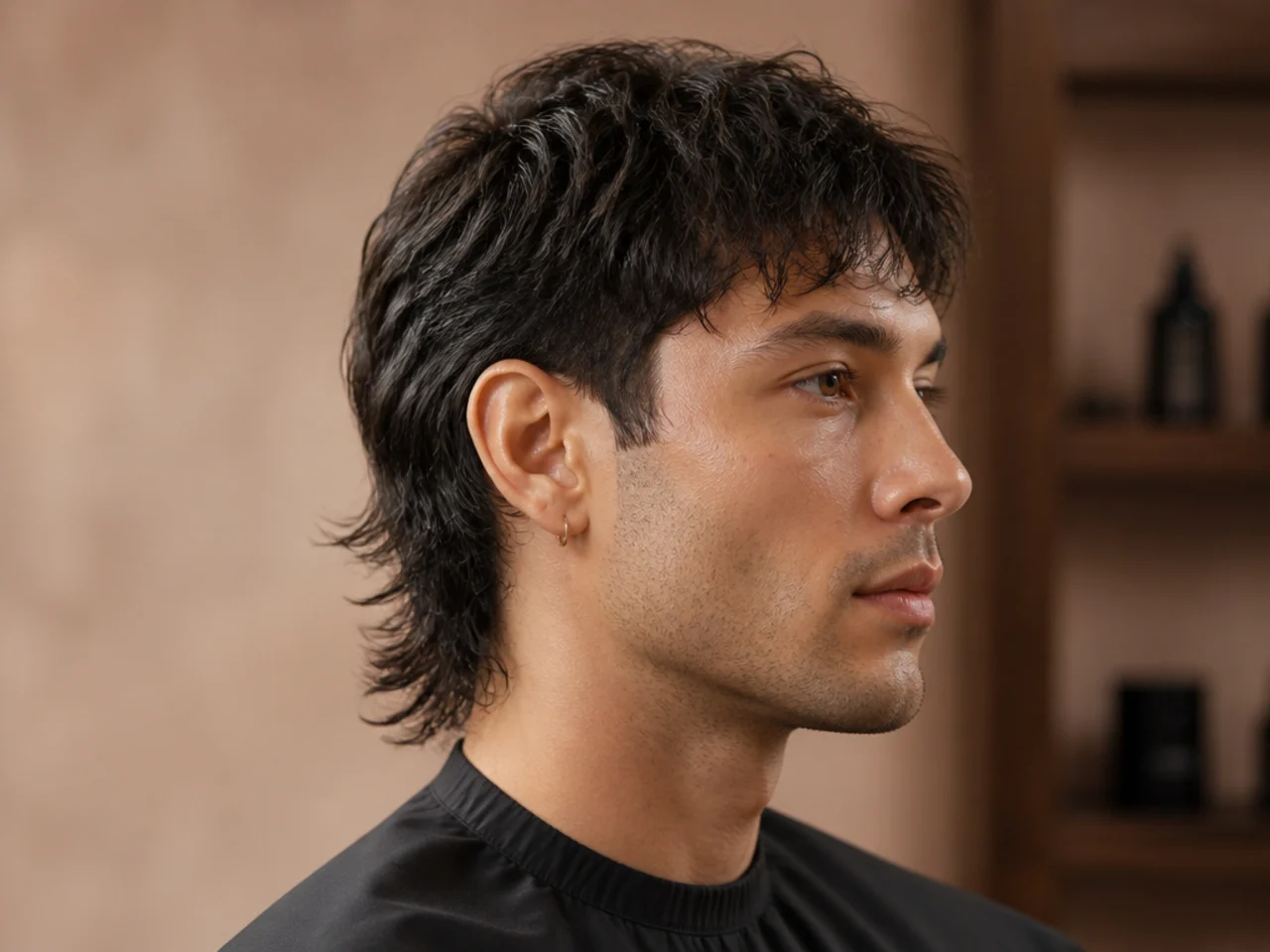
Product goes on damp — around eighty percent dry — not wet, not bone-dry. Damp hair pulls the product into the strand instead of sitting on the surface. That absorption is why the finish looks styled instead of coated.
Warm a pea-sized amount of matte clay between your palms until it disappears. If you can still see the product, it is too much and you will get clumps at the nape. Work it from the roots of the layered top outward — not the ends inward. That direction gives the crown lift while spreading enough product through the length for the feathered nape to catch light.
For straight hair, prime the crown with a two-second mist of sea-salt spray before the clay for extra grip. For wavy hair, use a light styling cream instead of clay if the wave is soft. For the stylish mullet family, a molding paste with slight sheen carries a bit more polish without going glossy.
The common mistake: applying styling product to dry hair. Dry application locks in whatever shape the hair set in during the day — usually flat, usually greasy. Rewet with a spray bottle if you missed the damp window, then start over.
Step 4: Sleep on Silk to Protect the Cut Overnight

The overnight step most guys skip. Cotton pillowcases drag across the nape and create the crease line that shows up in every morning selfie. Silk and satin let the hair slide, which is why every stylist recommends them for anyone with a layered cut.
Buy a silk or satin pillowcase — the pillowcase, not the whole bedding set. Twenty to forty dollars once and the whole cut sleeps better for a year. If you nap in the afternoon or take a long-haul flight, a silk-lined beanie does the same job on the go.
For longer mullet variations, add a leave-in conditioner mist before bed on days two and three. Damp fibers reset overnight more easily than dry ones, and by morning the nape sits back where it was the day before.
The common mistake: sleeping on a wet mullet. Wet hair on cotton is the worst case — every fiber compresses into the shape the pillow wants, and the crown wakes up flat. Blow the crown eighty percent dry before bed if you shower at night.
Step 5: Clean Up the Neckline Every 7 to 10 Days
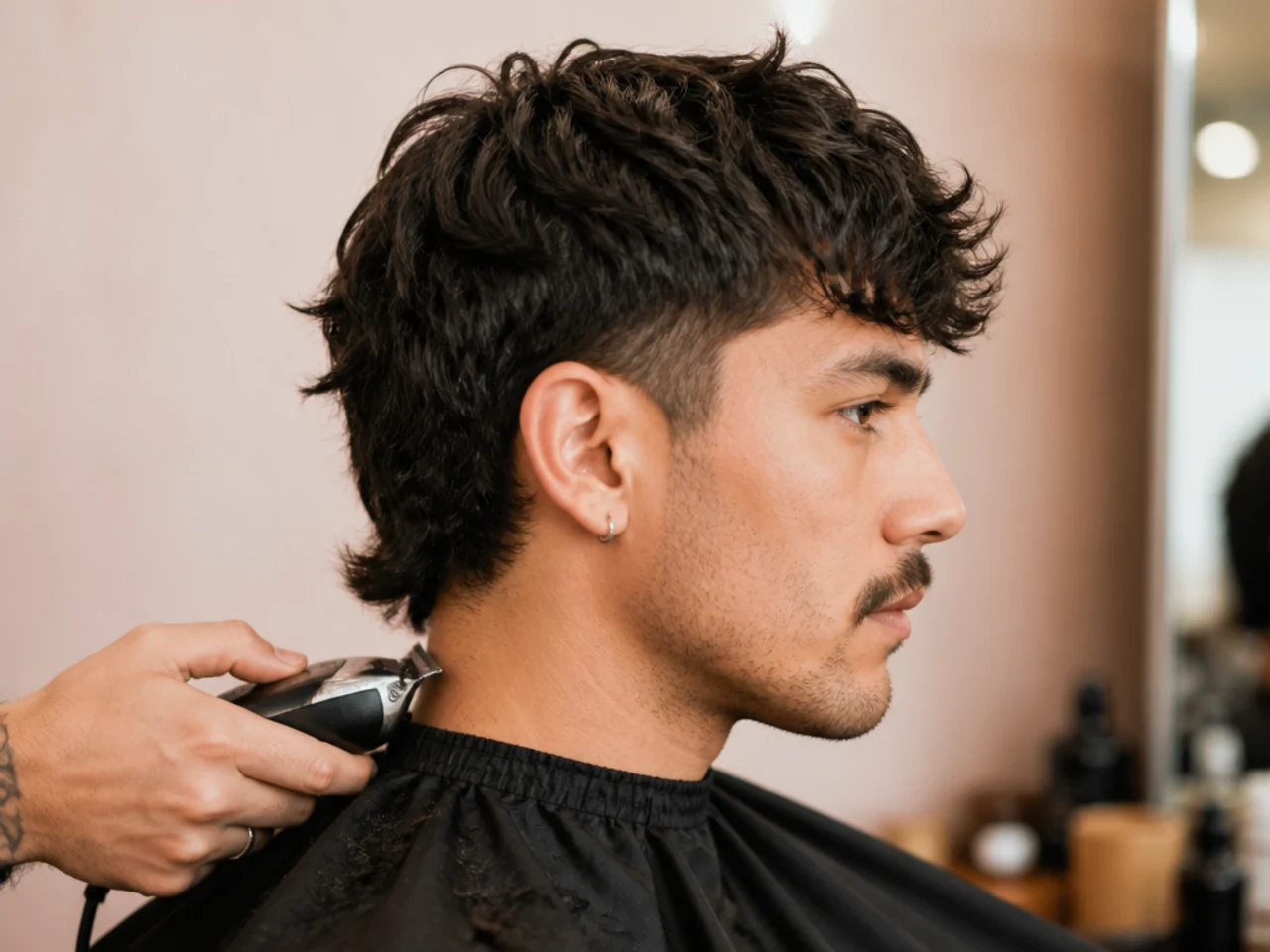
Neckline fuzz shows first. Between barber visits the small hairs below your natural nape line grow in fastest, and they read messy from behind — even when the mullet itself still looks sharp. A ten-minute cleanup every seven to ten days keeps that back angle clean.
Stand with your back to a large mirror and hold a hand mirror in front of you so you can see the reflection of the reflection. That is the only angle that shows what people behind you see. Use a bare-blade battery trimmer — no guard — and remove only the fuzz that sits below the natural nape hairline. Follow the curve your barber cut. Never trim into the mullet length itself.
The common mistake: going too high. If in doubt, stop. The mullet's identity depends on the nape length being visibly longer than the sides. One rushed swipe with the trimmer can shorten your nape by half an inch and kill the two-length silhouette for a month while it grows back.
For guys who want to skip this step entirely, our how often should men get a haircut guide breaks down when to book versus when to DIY across every cut family.
Step 6: Touch Up the Tapered Sides with Clippers
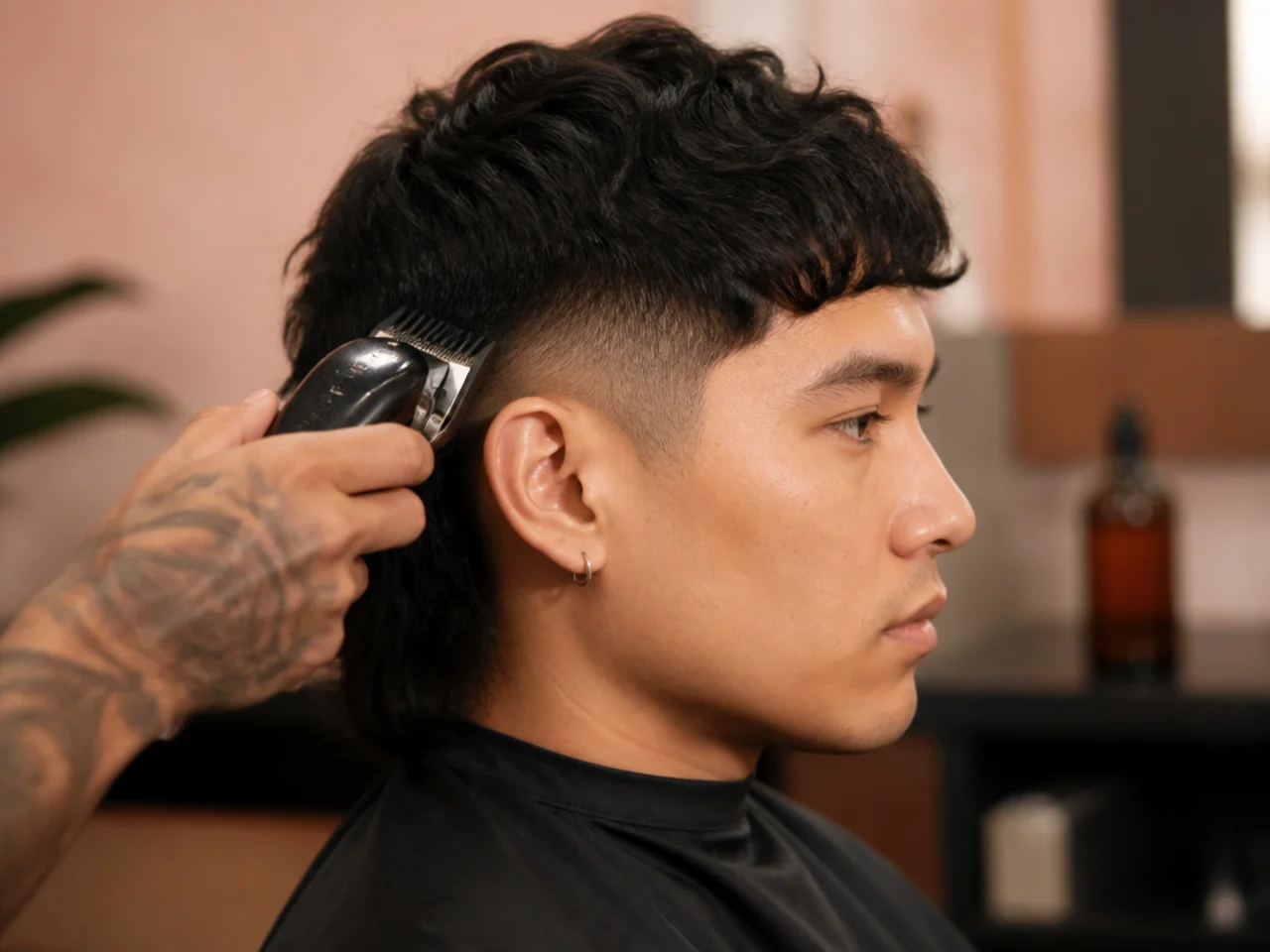
The sides grow fastest and blur the shape first. If your short mullet has a scissor-blended finish, book the barber every four to six weeks and skip this step — scissor blends do not touch up cleanly with clippers at home. If your sides run on a low taper or a low taper fade, you can extend the barber cadence by one to two weeks with a careful home touch-up.
Ask your barber what guard length they used at the top of the taper — usually a guard 2 or 3 — and buy that clipper. On week three of the cut, run the guard up the sides from the sideburn to the temple in one smooth pass with the grain, never against it. Do not touch the fade area below the taper — that is where DIY goes wrong. If your version has a low fade mullet finish or any skin work, skip the clippers entirely and book the shop.
The common mistake: using a lower guard than the barber. Every guard number down removes an eighth of an inch you cannot put back. Start one guard higher than the target and only step down if the length still looks too long. You have days to keep trimming; you have weeks to grow out a mistake.
Step 7: Dust the Nape and Fringe with Scissors (Optional)
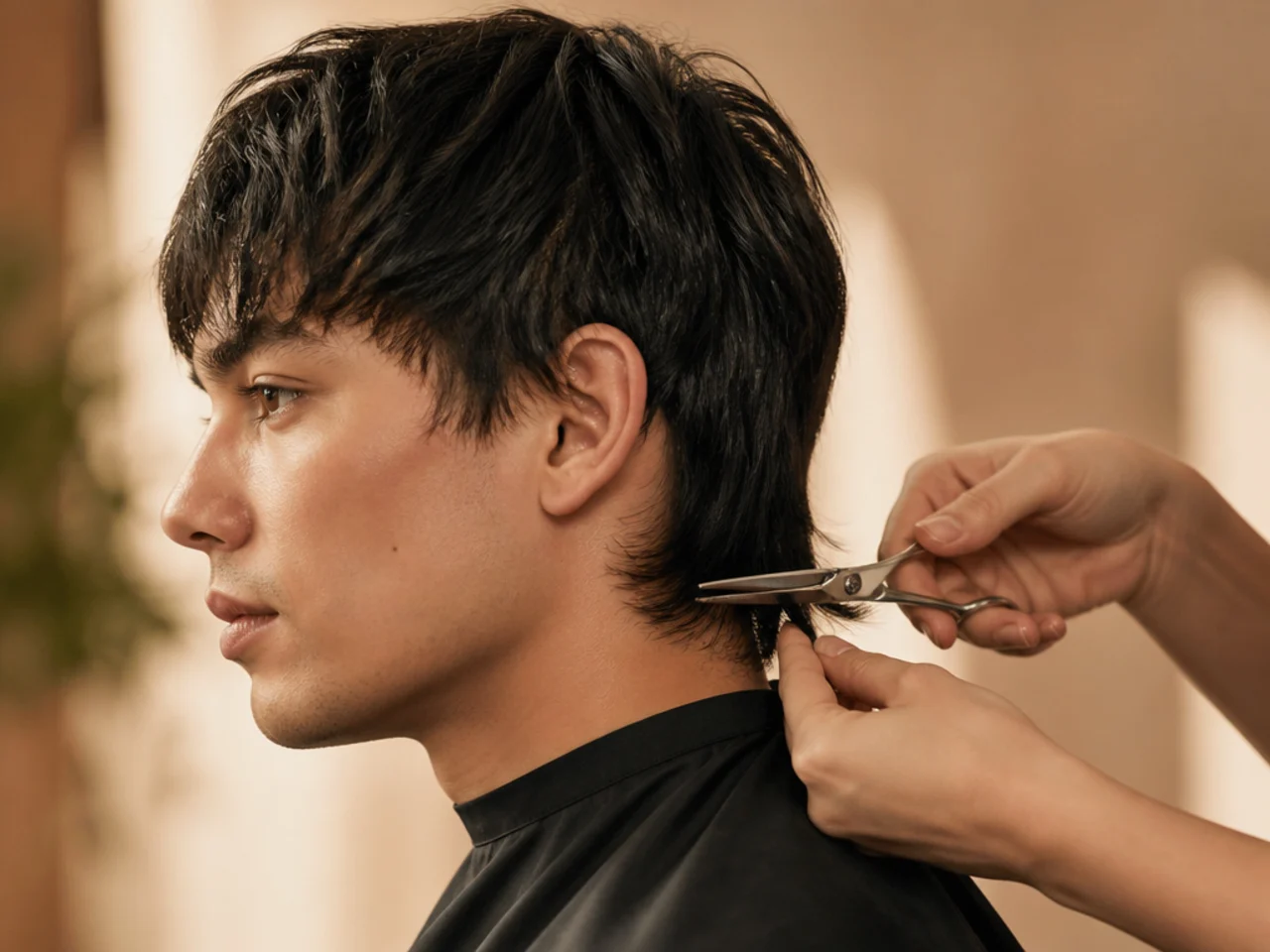
Dusting is the barber term for taking a millimeter off the tips to remove split ends without shortening the cut. Done right, it buys you two extra weeks between real trims. Done wrong, it wrecks the feather.
You need real hair shears — not craft scissors, not kitchen scissors. Small, sharp, and dedicated to hair. Section the nape into three panels. Grab a one-inch bundle at a time, point the shears vertically into the tips at a forty-five-degree angle, and snip three small nicks. You are not cutting length — you are breaking the blunt line that forms when split ends develop.
For the fringe, do the same thing. Hold two-inch sections between your index and middle finger, tilt the shears vertically, and point-cut three small snips into the very tips. Never cut horizontally across the fringe. Horizontal cuts create the hard blunt line that turns a textured fringe into an accidental Edgar.
The common mistake: cutting when tired or rushed. Dust in the morning under bright light, sober, with the shears you use only for this. If any of those four conditions is missing, put the scissors down and wait a day.
For guys with a full mullet or a longer variation, the dusting frequency drops to every three to four weeks because there is more length to hide small mistakes. On the short mullet, less often — the nape is exposed and every millimeter shows.
Troubleshooting: Common Short Mullet Problems
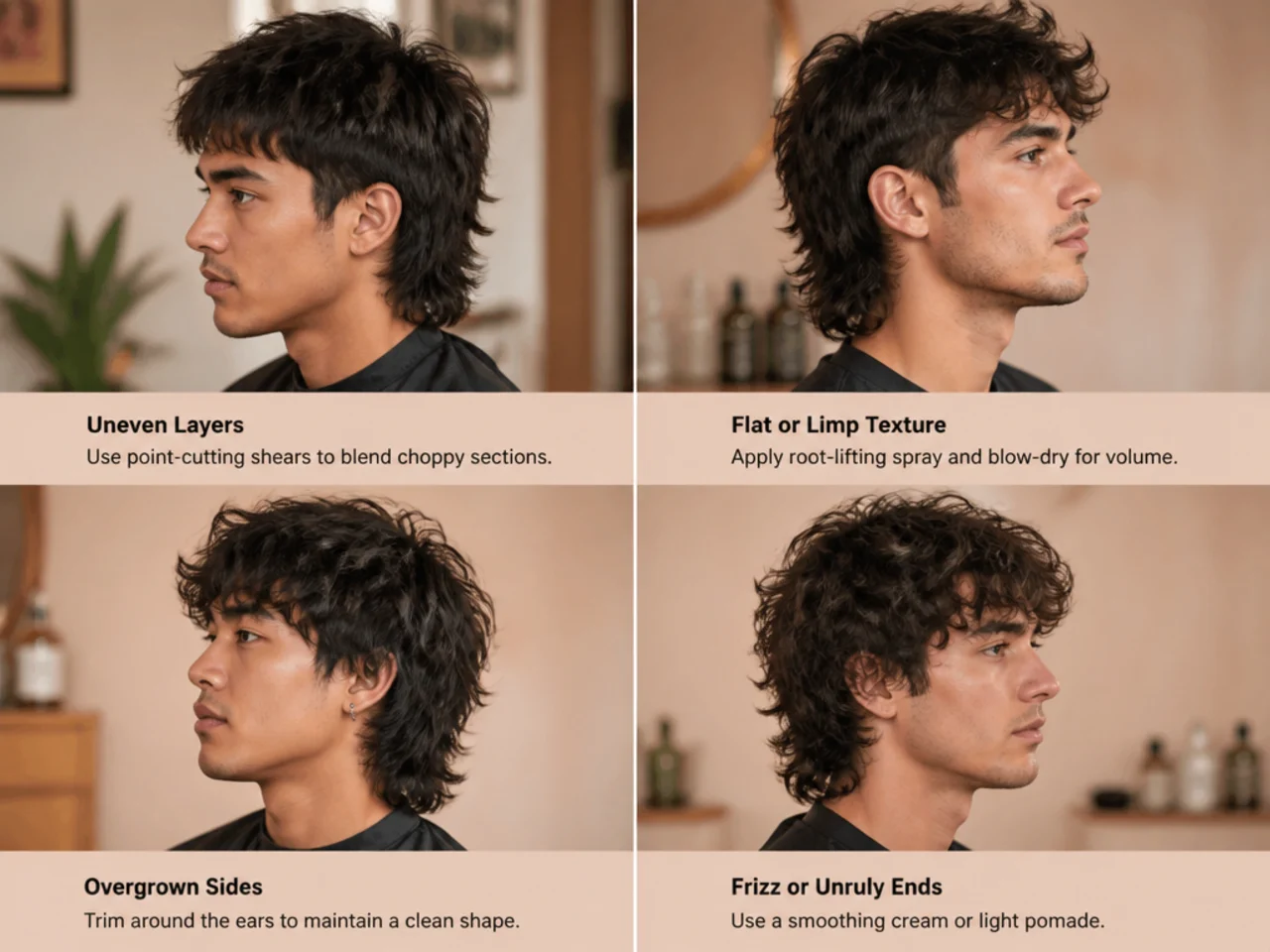
Every mullet has a bad-hair-day mode. The fix is almost always one product swap or one reset step away.
- Crown looks flat by mid-morning: you skipped the damp-hair styling window. Spritz the crown with a plant mister until damp, work half a pea of matte clay in with your fingertips pointing up at the roots, and rough-dry for thirty seconds. Full reset in under two minutes.
- Nape fluffing out instead of feathering down: dry ends. Rub a single drop of lightweight hair oil between your palms and press the very tips of the nape — nothing higher. Turns fluff into shine without weighing the feather down.
- Feathered nape creased overnight: cotton pillowcase or wet-hair sleeping. Silk pillowcase and a full blow-out of the crown before bed fix both. In the morning, spritz the nape damp, run your palms down the length toward the shirt collar, and let it re-set for a minute.
- Sides look bushy at week three: either a home taper touch-up per step six, or book the fade separately from the layered cut. Some shops charge $10-15 for a "fade refresh" without cutting the top.
- Fringe won't hold shape: apply a pea of styling cream to the fringe alone — not the whole head. Blow-dry with a small round brush for K-drama and comma variations; finger-shape and let air-dry for textured and Edgar variations.
- Cowlick pushing the top layer up on one side: flip the part before you dry, so you comb the cowlick down with the airflow instead of against it. Two minutes of directional drying settles a cowlick that gel and hairspray never fix.
Keep a plant mister and a small tin of matte clay in your bathroom kit. Ninety percent of short mullet touch-ups are one of those two items.
FAQ
How often should I re-cut a short mullet at the barber?
Every four to six weeks for the layered top and nape. The sides grow fastest — if your version has a fade or a taper, book those separately every two to three weeks. Waiting eight weeks between visits turns the compact two-length silhouette into a slightly grown-out crop.
Can I clean up my own neckline between barber visits?
Yes. A battery trimmer, a hand mirror, and ten minutes buys you an extra week of clean edges. Trim only the fuzz below the natural nape line, following the curve your barber cut, and stop the second you feel unsure. Never trim into the mullet length itself — that shortens the nape and kills the shape for a month.
What products do I actually need for short mullet maintenance?
Five items: a sulfate-free shampoo, a lightweight conditioner, a matte clay or molding paste, a sea-salt spray for texture, and a silk pillowcase. Curly and coily hair swap the salt spray for a leave-in and a curl cream. Skip anything glossy unless you are specifically styling a Korean or comma-inspired variation.
How do I stop my short mullet from looking flat at the crown?
Rough-dry damp hair with your fingers pointing up at the roots, then work matte clay in from the roots outward — never from the ends inward. That direction is what gives the crown lift. If the crown still falls by mid-morning, spritz damp and reset in two minutes with half a pea of clay.
Is it safe to touch up the tapered sides at home with clippers?
Yes on a scissor-taper or low-taper finish. No on skin fades, burst fades, and disconnected undercuts — those need a barber's blend and lever technique. When you do touch up at home, match the guard your barber used at the top of the taper, work with the grain, and start one guard longer than the target so you have room to step down if needed.
How do I keep the nape from creasing or fluffing overnight?
Sleep on a silk or satin pillowcase — the single most cost-effective step on the list. Cotton drags across the nape and creates the crease line most guys wake up with. A silk-lined beanie does the same job on flights and naps. In the morning, spritz any residual fluff damp and press it down with your palms.