20 Curly Hair Mullet Haircuts for Men
20 curly hair mullet men variations across 3A to 4C — with face-shape notes, dry-cut instructions, and the exact language to hand your barber for each.
In this article · 32
- What Is a Curly Hair Mullet?
- How to Choose Your Curly Mullet
- The 20 Curly Mullet Variations
- 1. Classic Curly Mullet
- 2. Modern Soft Curly Mullet
- 3. Loose 3A Curly Mullet
- 4. Bouncy 3B Curly Mullet
- 5. Tight 3C Curly Mullet
- 6. Coily 4A Mullet
- 7. Coily 4B Mullet
- 8. Coily 4C Mullet
- 9. Short Curly Mullet
- 10. Long Curly Mullet
- 11. Curly Mullet with Low Taper Fade
- 12. Curly Mullet with Mid Fade
- 13. Curly Mullet with Burst Fade
- 14. Curly Mullet with Skin Fade
- 15. Curly Mullet with Disconnected Undercut
- 16. Curly Mullet with Two-Block
- 17. Curly Mullet with Curtain Fringe
- 18. Curly Mullet with Textured Fringe
- 19. Curly Mullet with Rat Tail
- 20. Curly Mullet with Full Beard
- How to Ask Your Barber for a Curly Mullet
- Styling and Maintenance for a Curly Mullet
- FAQ
- What is a curly hair mullet for men?
- Which curl type suits a mullet best?
- Should my barber cut curly hair wet or dry for a mullet?
- How do I keep my curly mullet from turning into a triangle?
- Will a curly mullet grow out well?
- Is a curly mullet workplace-appropriate?
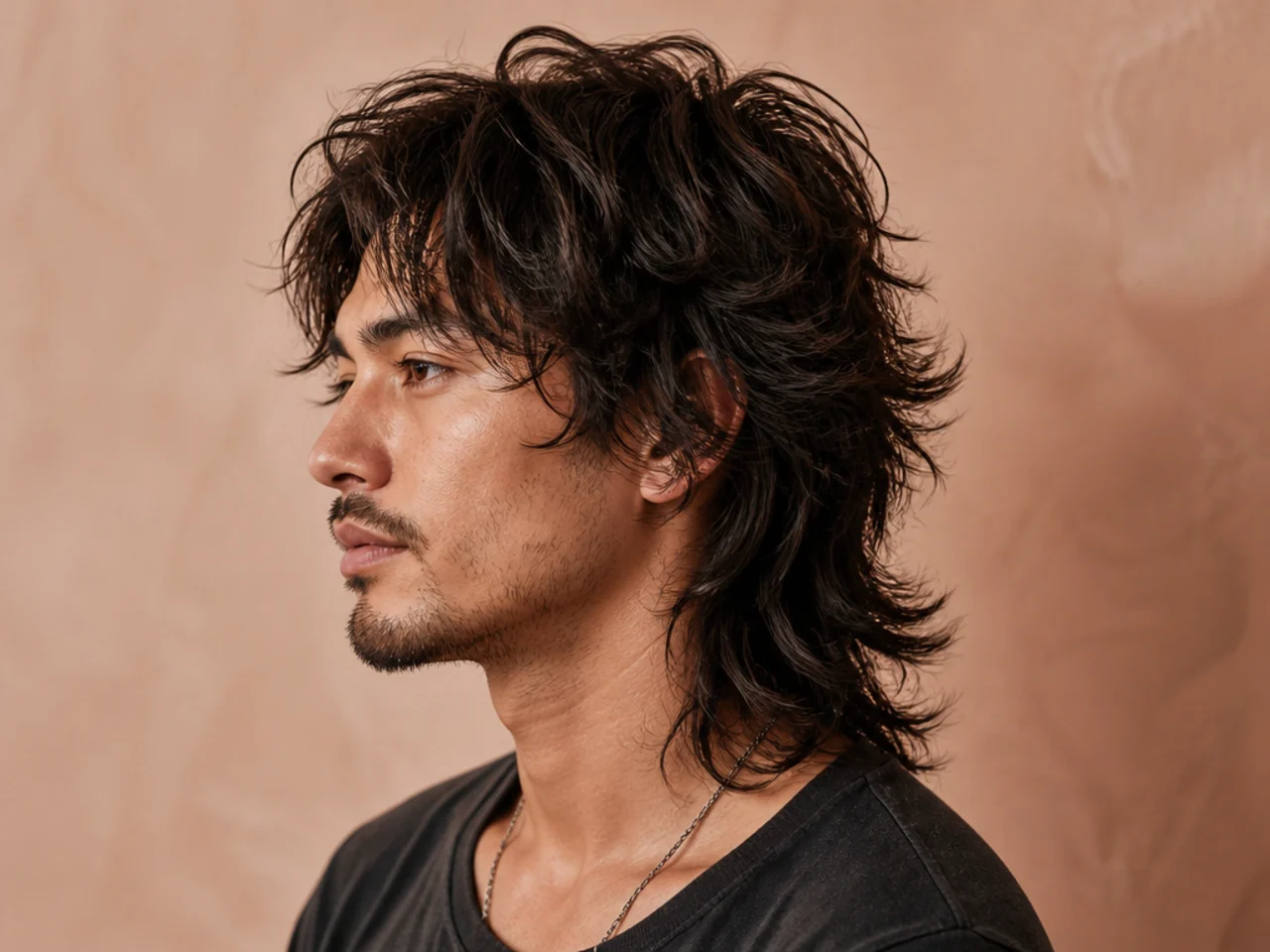
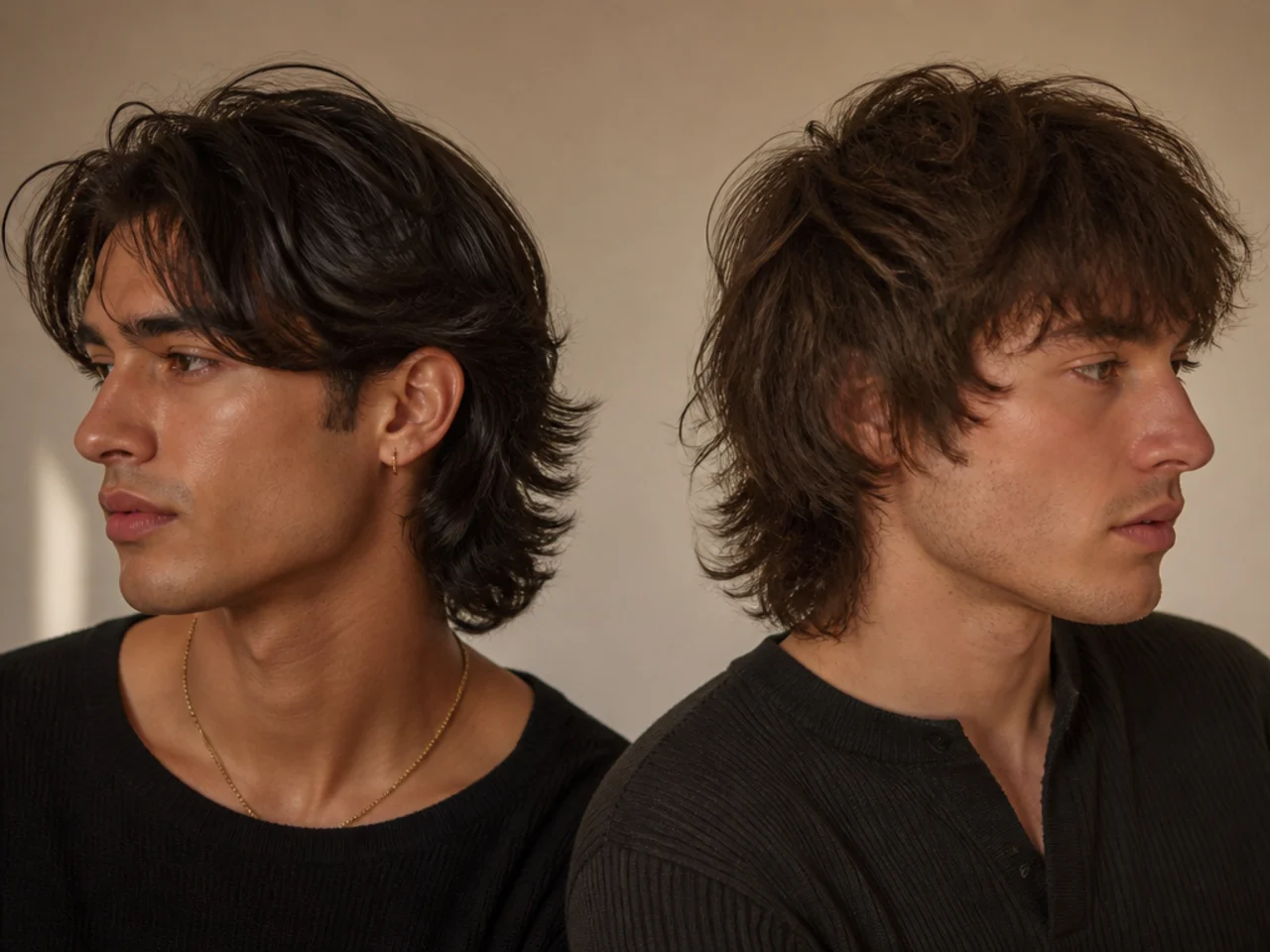
The mullet was already having a revival — curls take it somewhere new. The pattern breaks up the harsh top-to-back line that made the eighties version read dated, and the back length hangs in defined coils instead of one flat sheet. This guide covers 20 curly hair mullet men variations across 3A, 3B, 3C, and coily patterns, with the dry-cut instructions and exact chair language for each one.
What Is a Curly Hair Mullet?
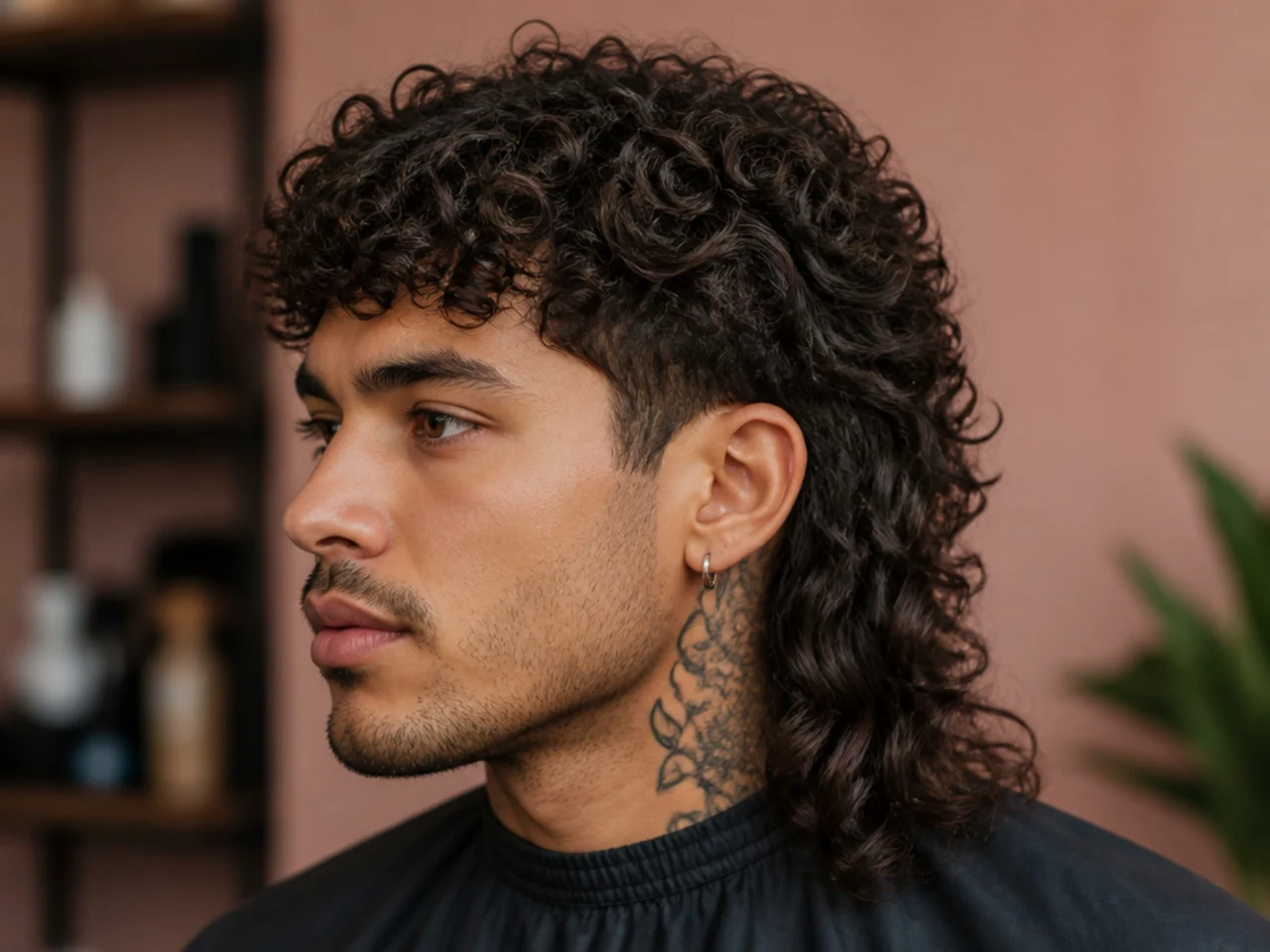
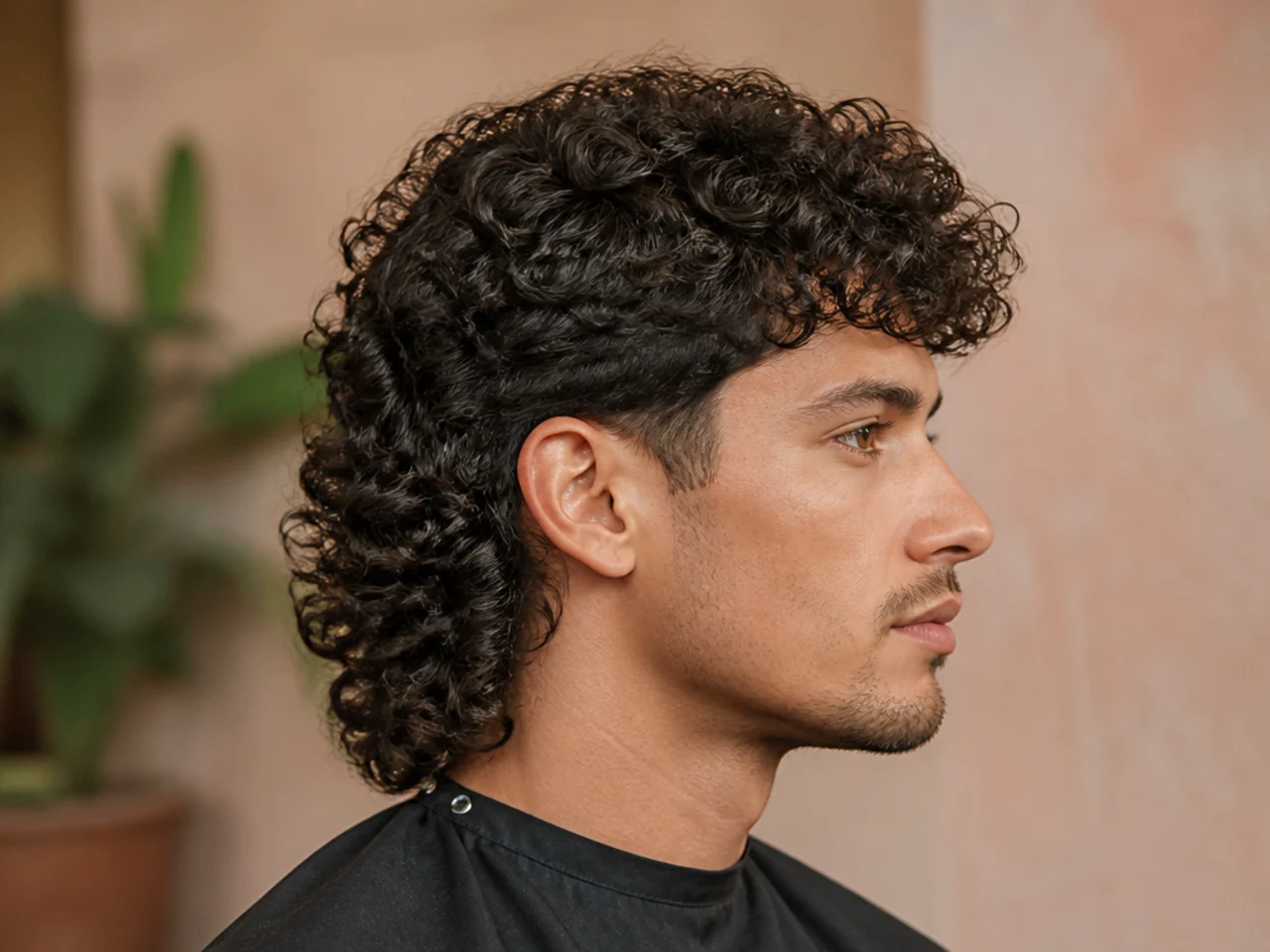
A curly hair mullet is the classic short-on-top, long-in-back mullet silhouette cut specifically for curl patterns from 3A through 4C. The anatomy is the same as any modern mullet haircut for men — shorter top and sides, longer back that hangs past the collar, and a soft or hard transition between the two. What changes is the technique. Curls get dry-cut, section by section, so the barber can see how each coil sits before deciding what to remove.
Dry-cutting matters more here than on any other mullet variation. Wet-cutting stretches curl out — a length that looks clean wet snaps back two or three inches shorter once the hair dries. The mullet lives or dies on the length differential between top and back. Cut wet, and the back can shrink up to the collar before you leave the chair. Cut dry, and the finished shape matches the reference photo.
Curl also softens what "mullet" reads as. The eighties silhouette had a hard visual line between short top and long back. Curl breaks that line naturally, so even the most aggressive length differential reads modern rather than dated. See the parent curly hair men haircut guide for the full curl-cut vocabulary.
How to Choose Your Curly Mullet
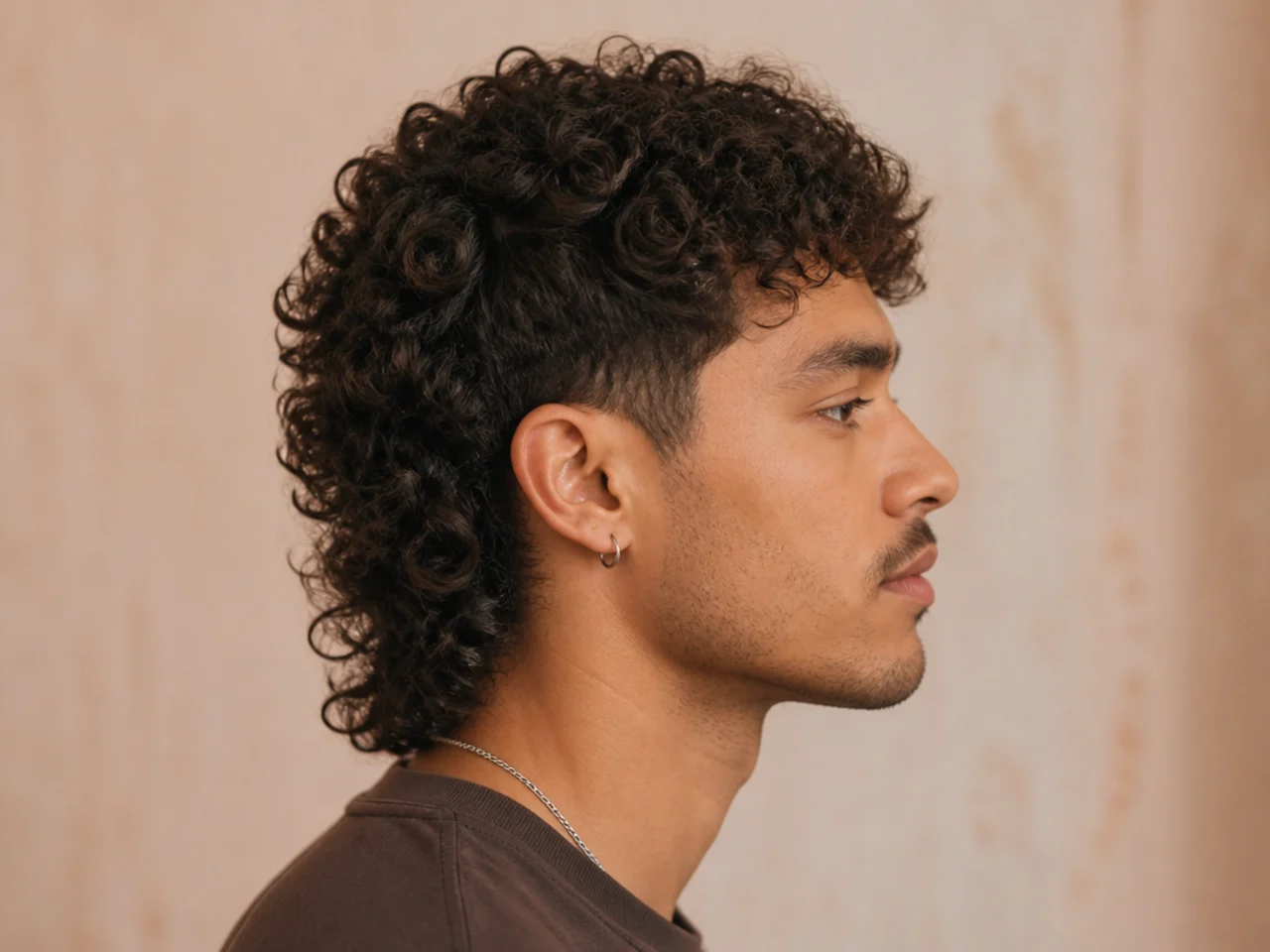
Curl type sets the length rules. Loose 3A curls form S-waves that need extra back length so the wave still reads by the collar — cut too short and the pattern disappears halfway down. Springy 3B corkscrews build the classic curly mullet look with the cleanest visual read. Tight 3C spirals stack denser and need a slightly heavier interior thinning to prevent the back from mushrooming out. Coily 4A, 4B, and 4C patterns need aggressive internal weight removal and dry scissor work with the coils fully sprung so the back drop reads defined rather than puffy. If you're unsure which pattern you have, see our curl types guide first.
Face shape sets the top height and fringe choice. Oval and heart faces suit almost any curly mullet variation. Round faces want extra crown lift or a soft side fringe so the back-heavy silhouette adds vertical rather than horizontal weight. Square faces read best with softer perimeter finishes and blended sides. Long faces need a fuller front and shorter back so the profile doesn't stretch further. Diamond faces get the cleanest visual on nearly every version because the bone structure carries the top-to-back contrast.
Lifestyle sets the sides and the drop. Blended and softly tapered sides with a back that just brushes the collar read clean at any office. A low taper fade adds sharpness without pulling focus. Skin fades, disconnected undercuts, and any back length past the shoulder blade read as statement cuts — great for creative work, tricky for traditional corporate. Match your side treatment to how loud you want the whole cut, and browse the mullet and wolf cut hub for adjacent shapes.
The 20 Curly Mullet Variations
Each variation below tells you what makes it different from the baseline, who it flatters, and the exact language to hand your barber. Bring a photo of your hair worn loose and hydrated so the pattern is visible before the first scissor pass.
1. Classic Curly Mullet
The baseline every other version is riffing on. Two dry inches through the top with soft internal layers, sides blended into the top, and a back that hangs three to four sprung inches past the crown to brush the collar. Reads mullet from the profile, curly from the front.
Suits oval, heart, and diamond faces. Works best on 3B and 3C curls but adapts across the full curl spectrum.
Ask for: "Classic curly mullet, dry-cut throughout, two inches on top with soft internal layers, blended sides, back length hanging three inches past the crown to brush the collar."
Styling tip: Leave-in conditioner on soaking-wet hair, then a nickel of curl cream scrunched through the back and top, then air-dry undisturbed.
2. Modern Soft Curly Mullet
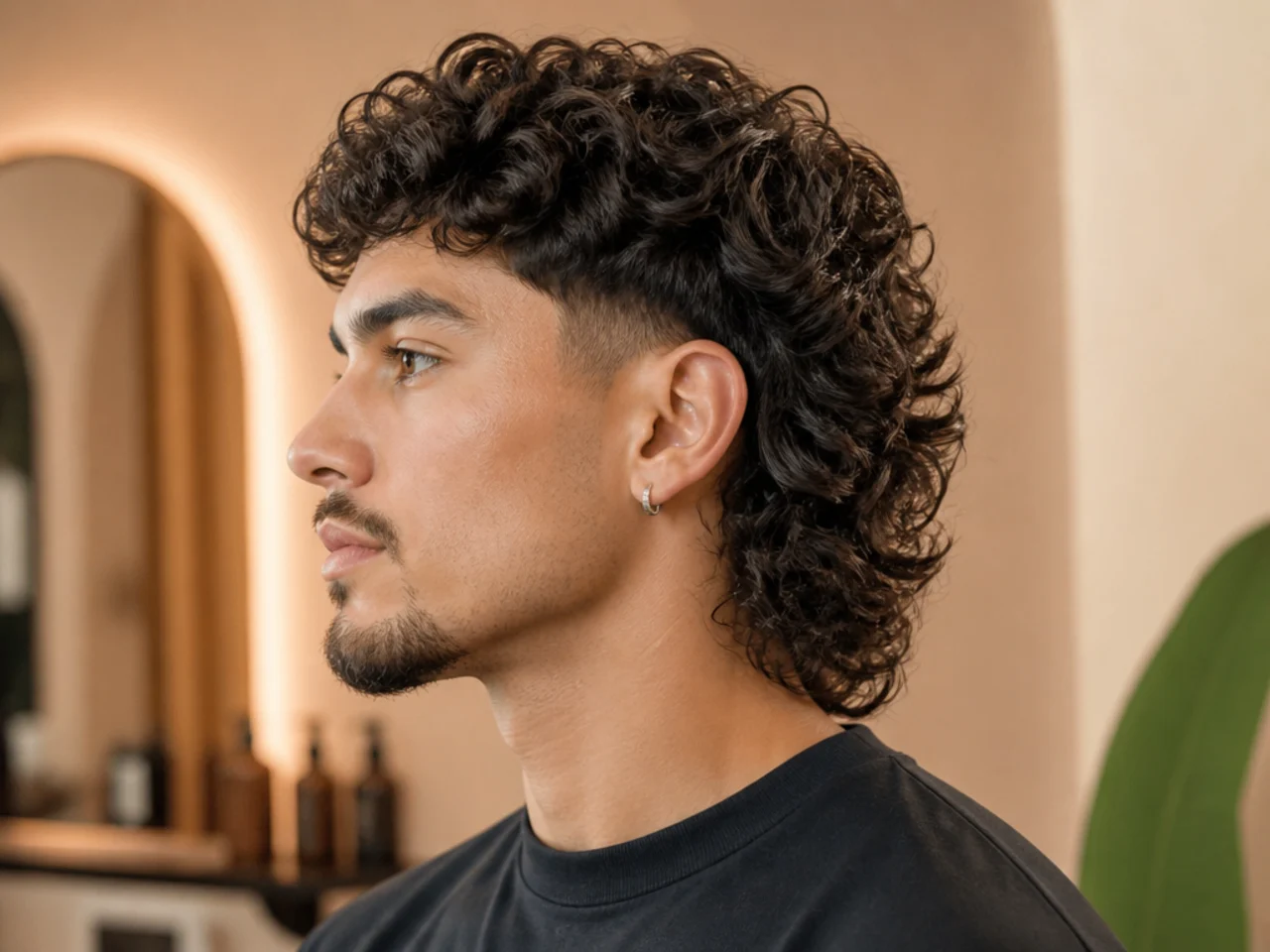
The version that erases the visual line between top and back. Layers gradually descend from the crown to the nape, so the mullet drop feels like natural growth rather than a designed cut. The softest read on the list — reads long haircut with a mullet tendency rather than pure mullet.
Suits oval, square, and long faces. Best on 3B and 3C curls where the gradient reads without effort.
Ask for: "Modern soft curly mullet, dry-cut throughout, two-and-a-half inches on top, gradual internal layering from crown to nape, back length two inches past the collar, softly blended sides — no fade."
Styling tip: A light curl cream and air-drying — the shape is built to look effortless, so don't diffuse.
3. Loose 3A Curly Mullet
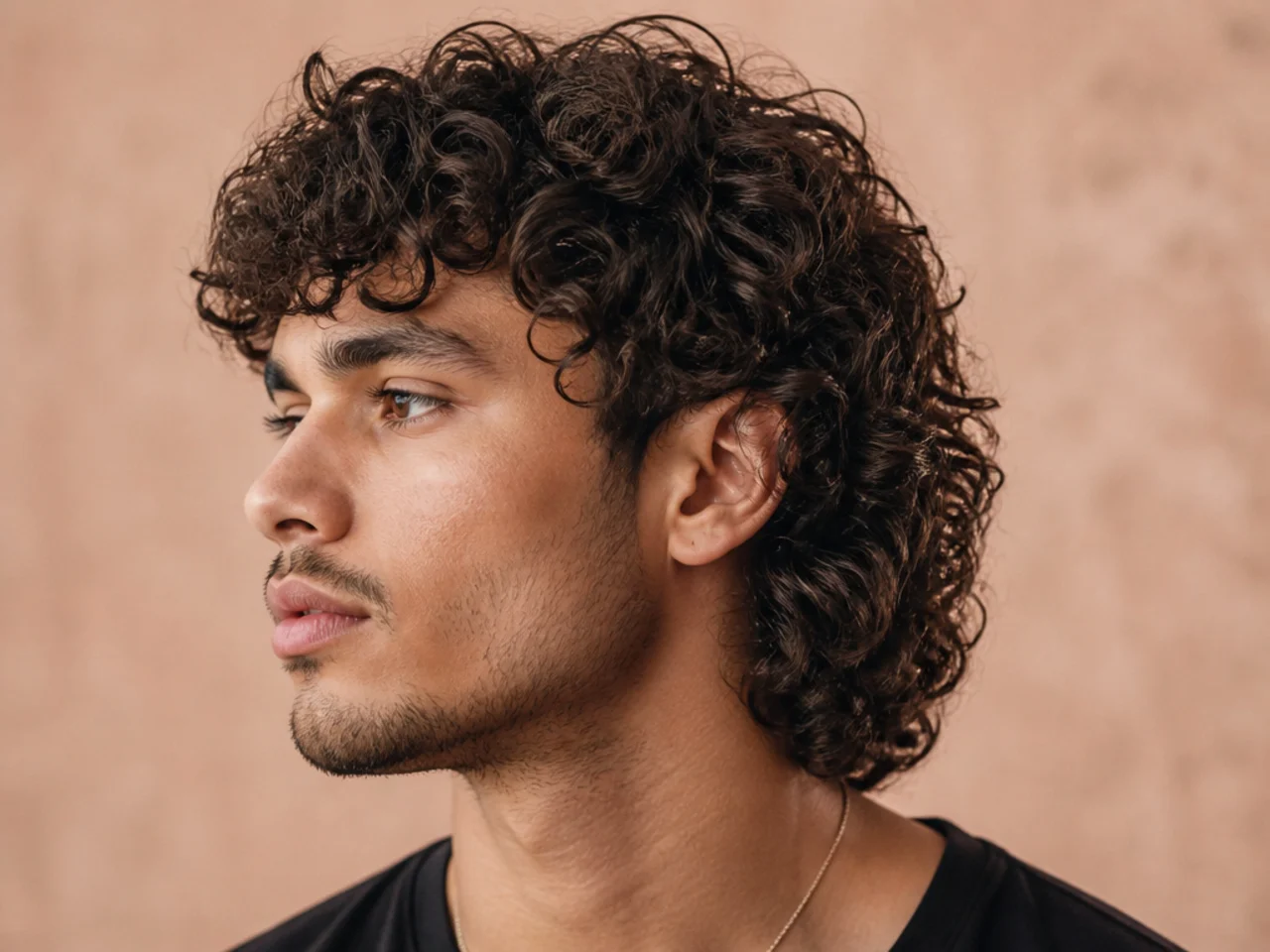
The mullet for 3A hair that reads closer to waves than spirals. The back needs extra length here — five to six sprung inches past the crown — so gravity still shows the S-wave pattern by the time it reaches the shoulder blade. Top stays around three inches so the front still reads shorter than the back.
Suits oval, heart, and long faces. Best when the wave carries defined through the mid-length.
Ask for: "Loose 3A curly mullet, dry-cut throughout, three inches on top with soft internal layers, back length five inches past the crown past the shoulders, blended sides."
Styling tip: A styling cream and a diffuser on low heat for two minutes to encourage the wave without over-defining it.
4. Bouncy 3B Curly Mullet
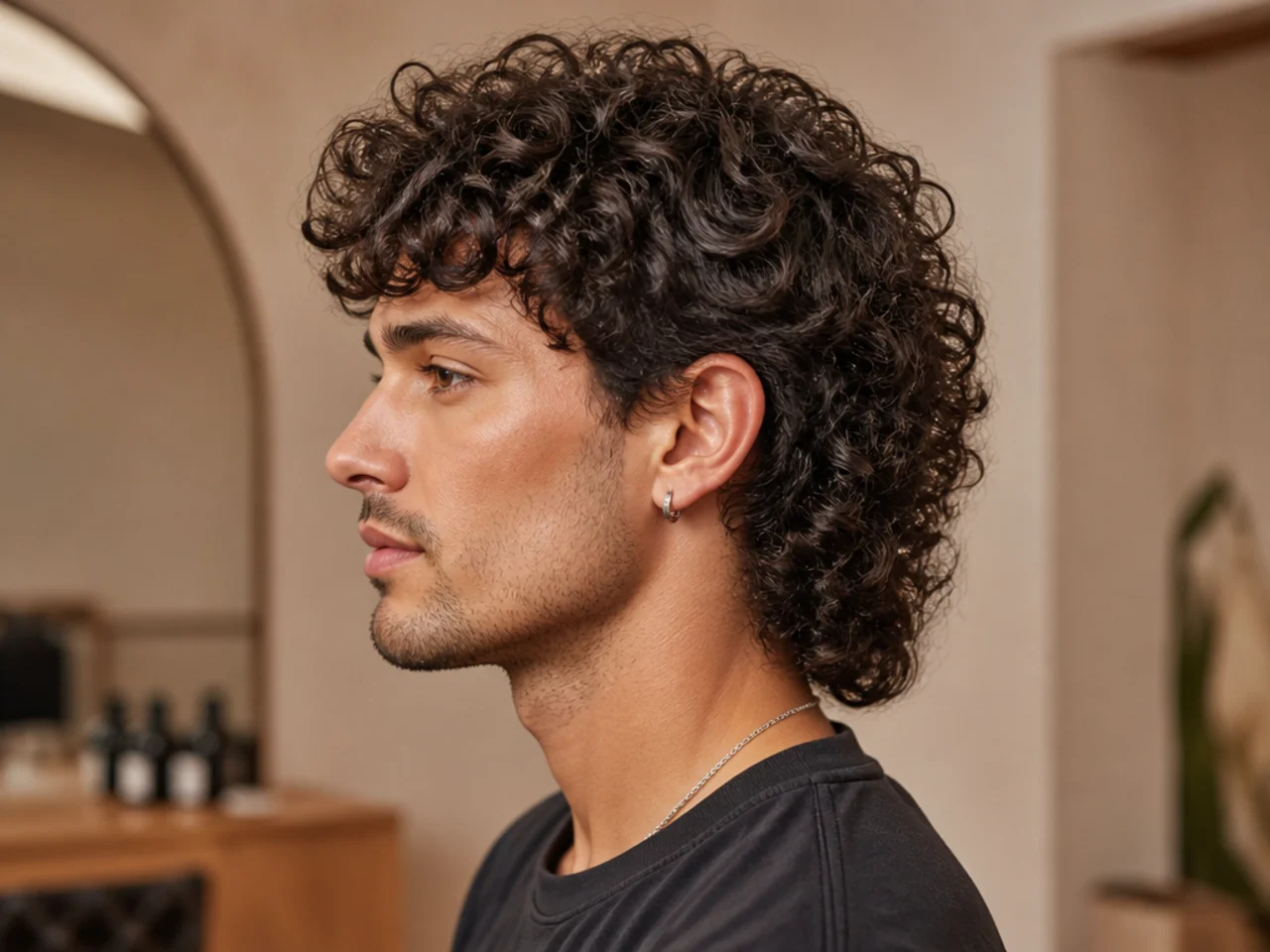
The version most reference photos are actually wearing. Springy 3B corkscrews carry the mullet drop cleaner than any other type — the coils separate visually, so even a modest back length reads dramatic. Top sits shorter than baseline to maximize the contrast; back hangs full-mass past the collar without needing extra styling.
Suits oval, heart, diamond, and square faces. The 3B pattern is what the whole cut was built around.
Ask for: "Bouncy 3B curly mullet, dry-cut throughout, one-and-a-half inches on top with soft internal layers, back length hanging four sprung inches past the collar with visible coil separation, softly blended sides."
Styling tip: Curl cream on soaking-wet hair, praying-hands to smooth the cuticle, then scrunch upward and air-dry.
5. Tight 3C Curly Mullet
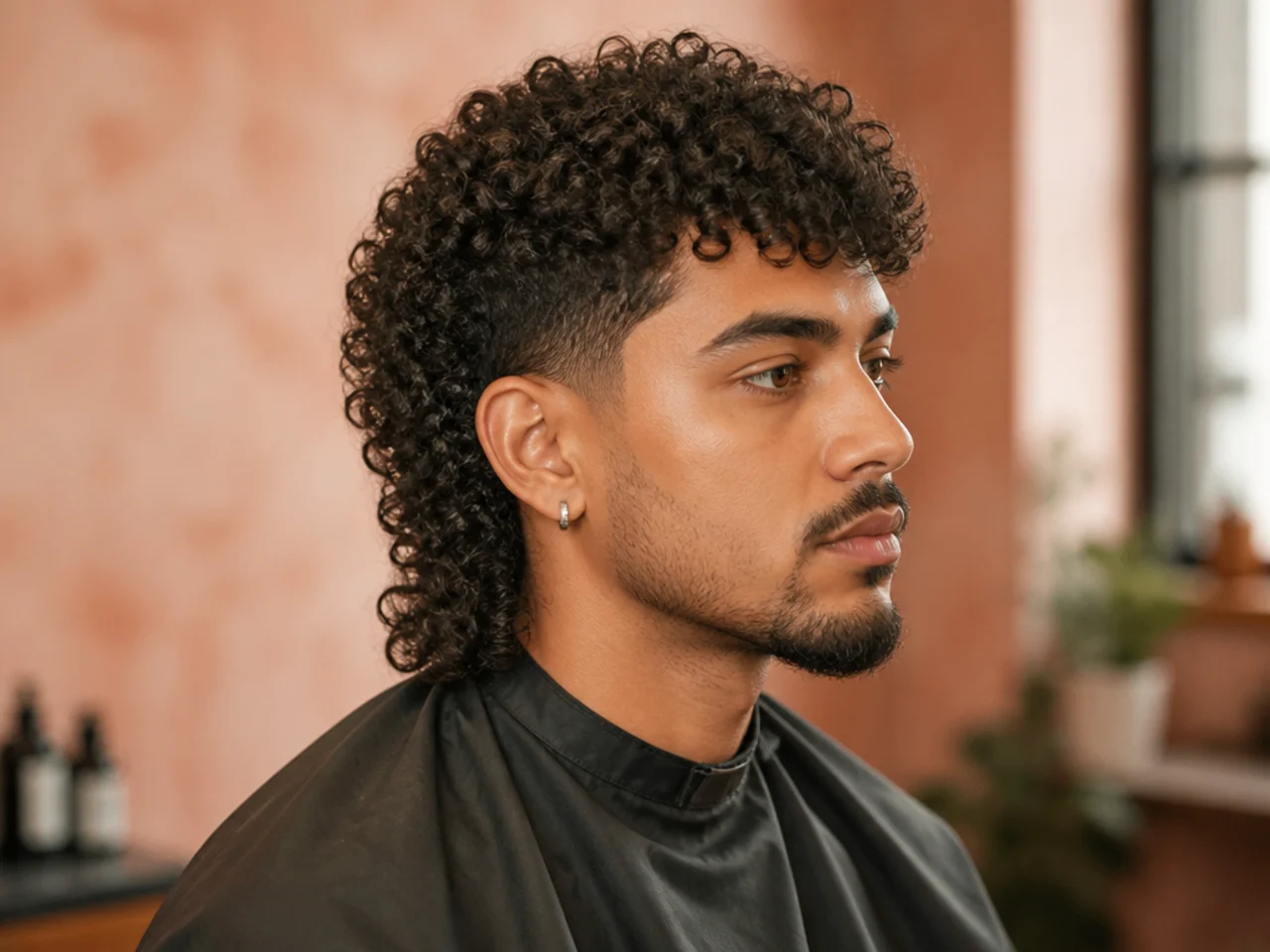
Tight 3C spirals stack denser than 3B, so the back can turn into a solid mass without aggressive interior work. Ask for heavy internal thinning through both top and back, plus a slightly longer top than the 3B version so the front reads balanced against the dense back. The mullet drop still reads clearly — the density just needs managing.
Suits diamond, oval, and heart faces where the crown volume balances the jaw.
Ask for: "Tight 3C curly mullet, dry-cut, two inches on top with aggressive internal thinning, back length three sprung inches past the collar with heavy interior weight removal, low taper on the sides."
Styling tip: A stronger-hold curl gel over leave-in, scrunched in and left to air-dry — no diffuser.
6. Coily 4A Mullet
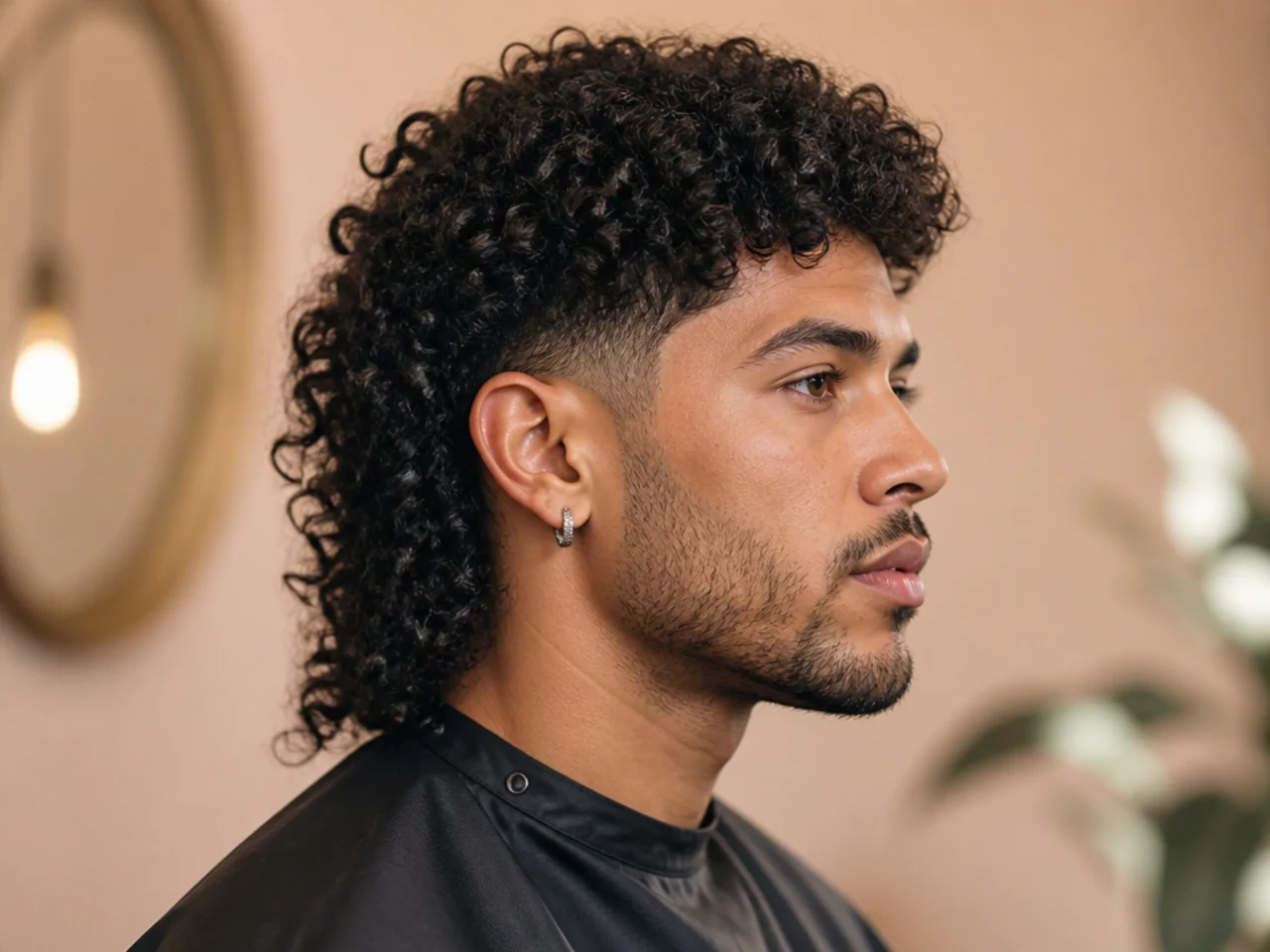
The mullet translated for 4A coils. The S-loop pattern reads defined but shrinks dramatically, so the barber has to cut with coils fully sprung and hydrated. Top stays short and sculpted; back carries three sprung inches of length past the crown with defined coil separation. Reads modern and cultural rather than throwback.
Suits round, oval, and diamond faces. The coily mullet builds fuller top height than any 3-pattern version because the pattern lifts on its own.
Ask for: "Coily 4A mullet, dry scissor-cut with coils fully sprung, one-and-a-half inches of sprung length on top, back length three sprung inches past the crown, feathered coil perimeter, skin taper on the sides."
Styling tip: Leave-in conditioner while soaking, then a curl butter or defining cream, then finger-shape and air-dry — never touch it while it dries.
7. Coily 4B Mullet
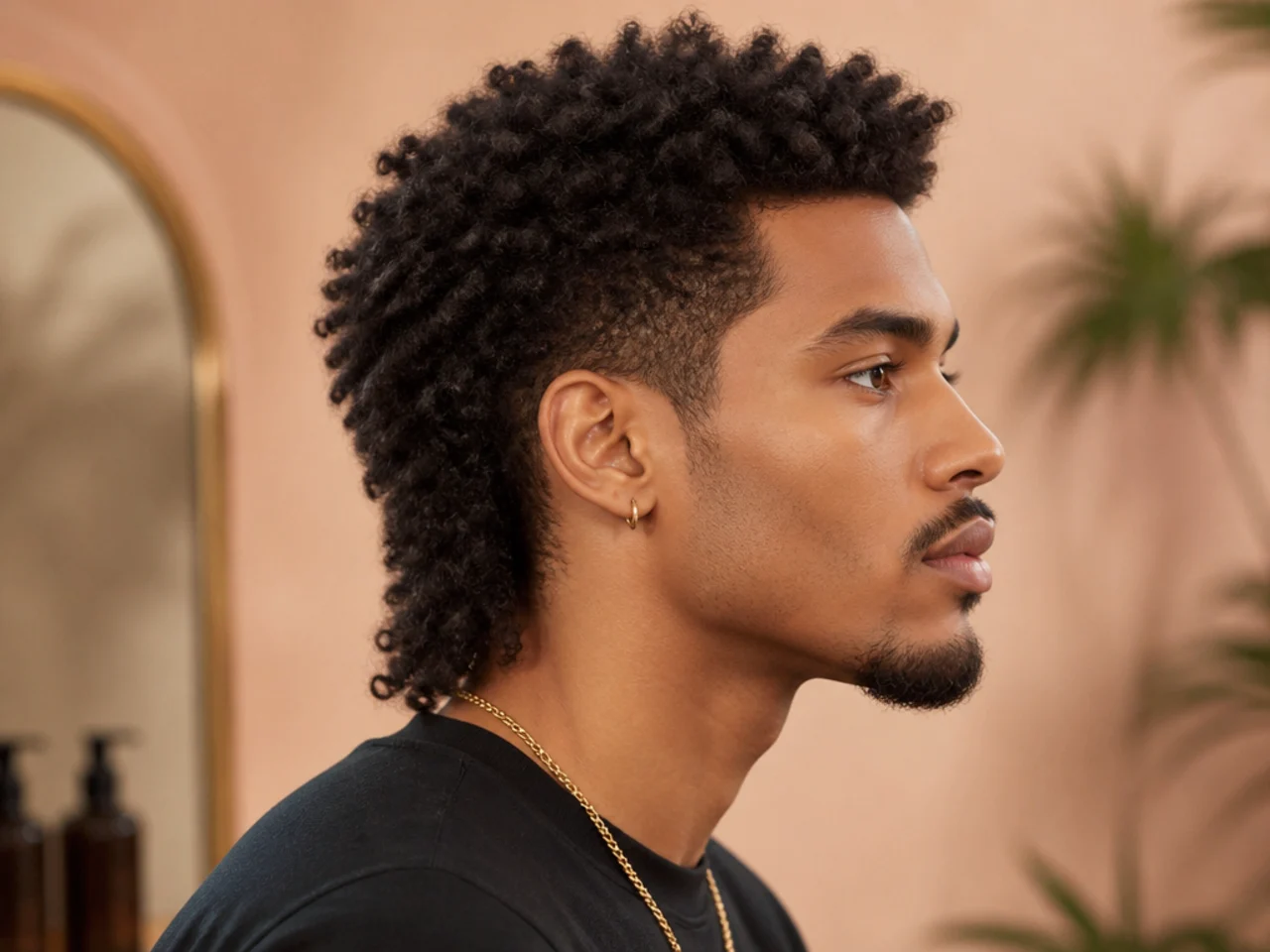
4B coils form a Z-pattern rather than a spiral, which changes how the mullet drop reads. The back length doesn't hang the way a 3B corkscrew hangs — it sits, holds volume, and needs generous internal thinning to prevent the whole back from reading as a fluffy block. Ask for weight removal, not layer creation.
Suits oval, diamond, and heart faces. Works especially well with a defined side taper for contrast.
Ask for: "Coily 4B mullet, dry scissor-cut with coils sprung, two inches of sprung length on top, back length three sprung inches past the crown with generous internal thinning, soft rounded perimeter, mid taper on the sides."
Styling tip: A moisture-heavy leave-in and a hydrating curl custard applied with the shingling method — smooth section by section — then air-dry.
8. Coily 4C Mullet
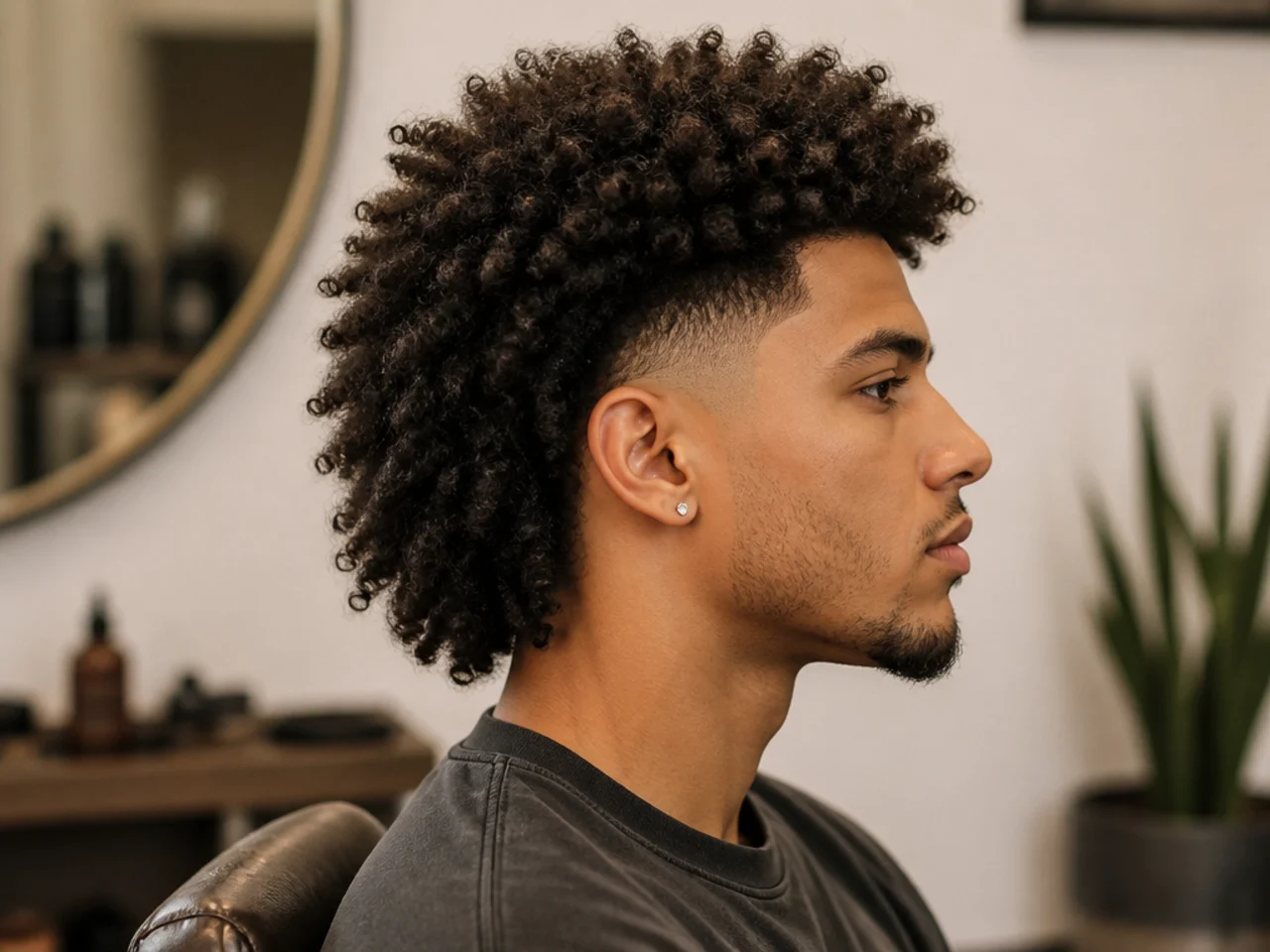
The tightest coil pattern gets the most sculpted mullet silhouette. 4C coils shrink up to 75%, so the barber has to cut with the coils fully hydrated and sprung. Top stays short and shaped; back carries two to three sprung inches of coil past the crown with a defined outline. The look is architectural rather than shaggy.
Suits round, oval, square, and diamond faces. Nearly universally flattering because the shape hugs the head.
Ask for: "Coily 4C mullet, dry scissor-cut with coils fully hydrated and sprung, one-and-a-half inches of sprung length on top, back length two-and-a-half sprung inches past the crown with defined coil outline, skin taper on the sides with a soft line-up."
Styling tip: Water-based moisturizer, then a curl butter, then a defining gel — layered in that order — and either finger-coil or air-dry.
9. Short Curly Mullet
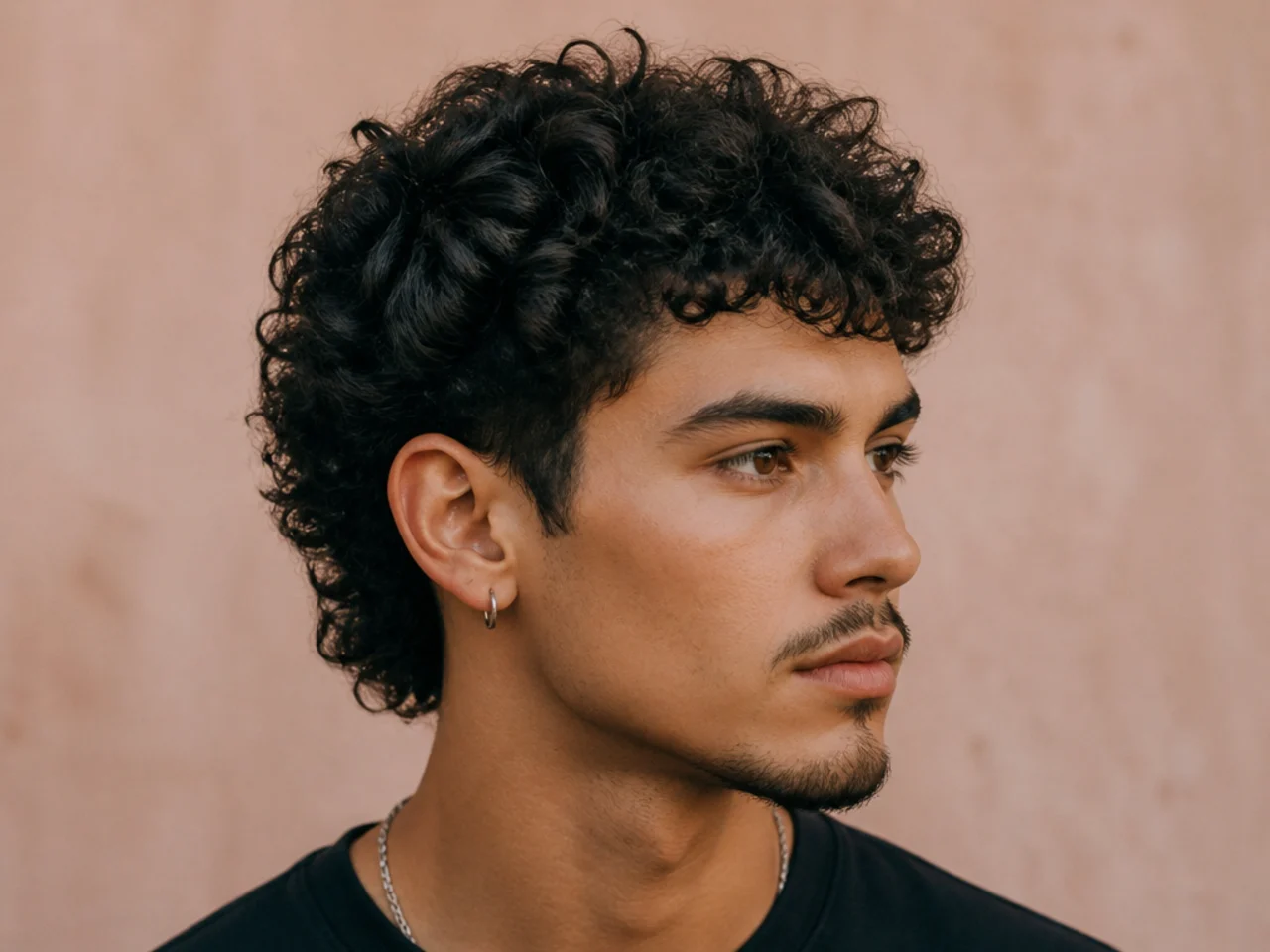
The whole silhouette compressed. Top sits at one inch dry; back hangs just two sprung inches past the crown to graze the collar. The mullet identity is present but subtle — reads modern short haircut with an intentional back drop, not a statement cut. See our full short mullet haircut men breakdown for more short-length variations.
Suits every face shape. Works with any 3-pattern curl and light 4A coils.
Ask for: "Short curly mullet, dry-cut, one inch on top with soft internal layers, back length two sprung inches past the crown grazing the collar, blended sides at a guard 2."
Styling tip: Leave-in and a nickel of curl cream — scrunch, air-dry, done in under three minutes.
10. Long Curly Mullet
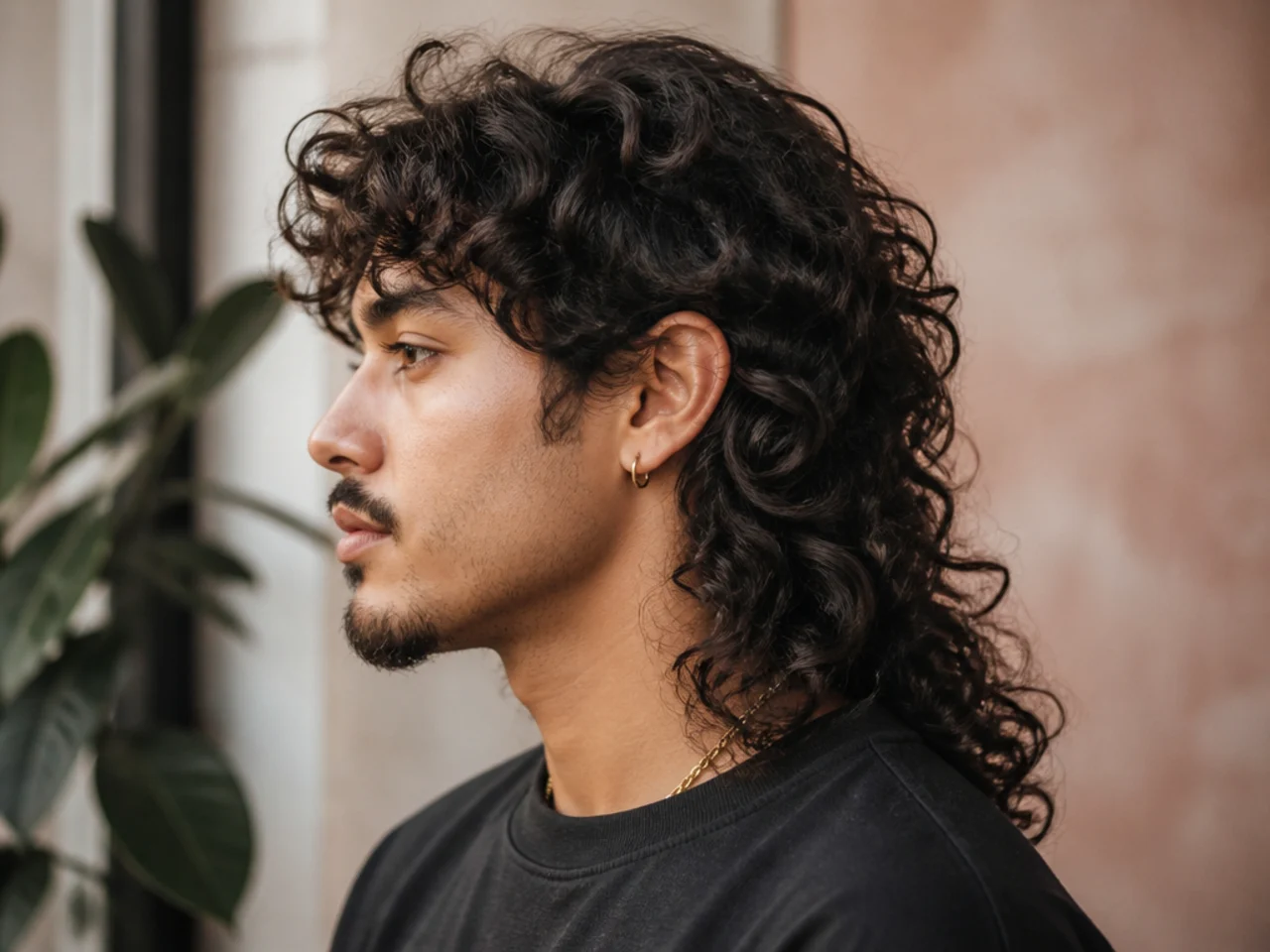
The maximum commitment version. Top sits at three inches, but the back hangs six or more sprung inches past the crown to reach mid-back. Reads long haircut with a defined mullet identity rather than pure mullet. The back needs heavy internal layering here — without it, the mass gets triangle-heavy and starts to overwhelm the top.
Suits oval, heart, and diamond faces. Best on 3A, 3B, or 3C curls with moderate density; too much density plus this length equals volume overload.
Ask for: "Long curly mullet, dry-cut throughout, three inches on top with soft internal layers, back length six sprung inches past the crown to mid-back with heavy interior weight removal, blended sides — no fade."
Styling tip: Deep condition weekly, curl cream and gel every wash day, and pineapple the hair overnight on a satin pillowcase to preserve the pattern.
11. Curly Mullet with Low Taper Fade
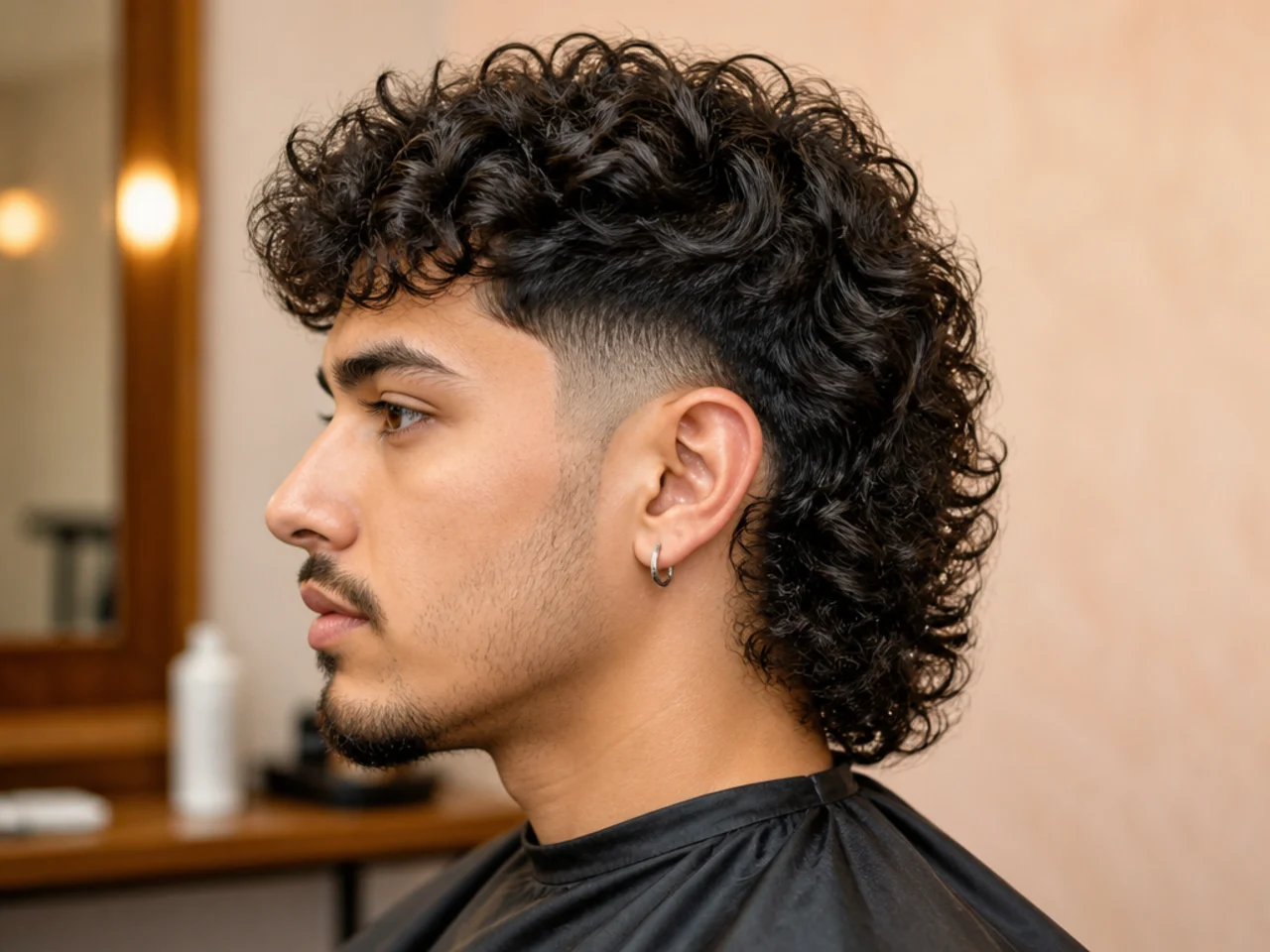
The office-safe fade version. A low taper fade starts just above the ear and fades cleanly into the sideburn without pulling focus from the mullet drop. The tight sides keep the whole silhouette from spreading wide, and the mullet back stays visually intact.
Suits every face shape. Works across all curl types from 3A to 4C. See low taper fade mullet for the dedicated deep-dive.
Ask for: "Curly mullet on top — two inches with soft internal layers — back length three sprung inches past the crown — low taper fade on the sides starting at the sideburn ending at a guard 1, softly tapered nape leading into the back length."
Styling tip: Curl cream on top and back, edge control on the fade line, and a defining gel scrunched through the length.
12. Curly Mullet with Mid Fade
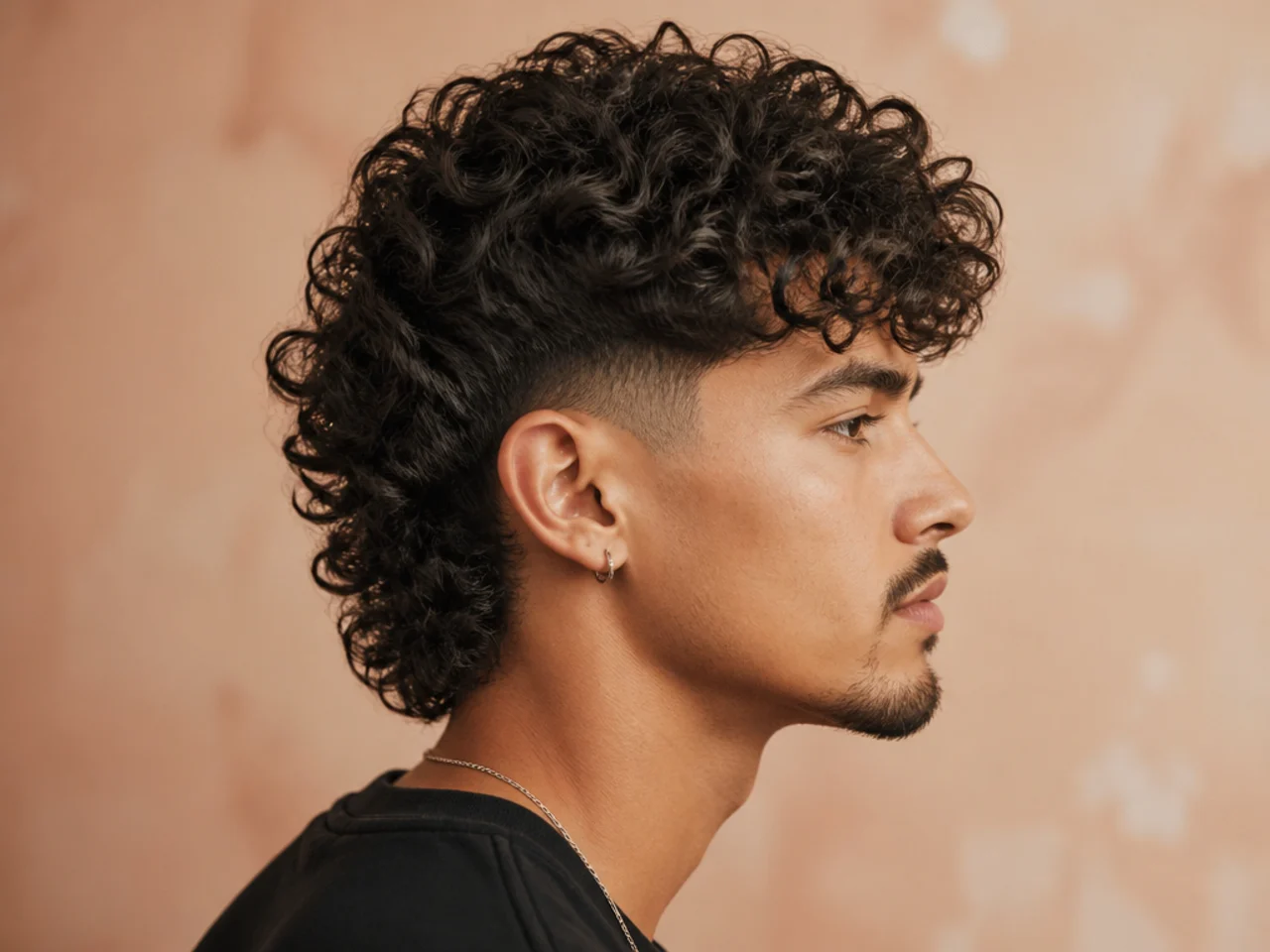
The mid fade puts the transition at the temple line, which draws visual weight upward and makes the contrast between short top and long back read louder. Louder than a low taper but not as statement as a skin fade.
Suits square, oval, and heart faces. Best on 3B, 3C, or 4A patterns where the top volume balances the temple fade.
Ask for: "Curly mullet with a mid fade, two-inch layered curly top, back length three sprung inches past the crown, mid fade blending at the temple line ending at a guard 0.5, feathered curly nape leading into the back."
Styling tip: Diffuse the crown for 60 seconds after applying curl cream and gel, then hit the fade edges with a firm-hold styling wax.
13. Curly Mullet with Burst Fade
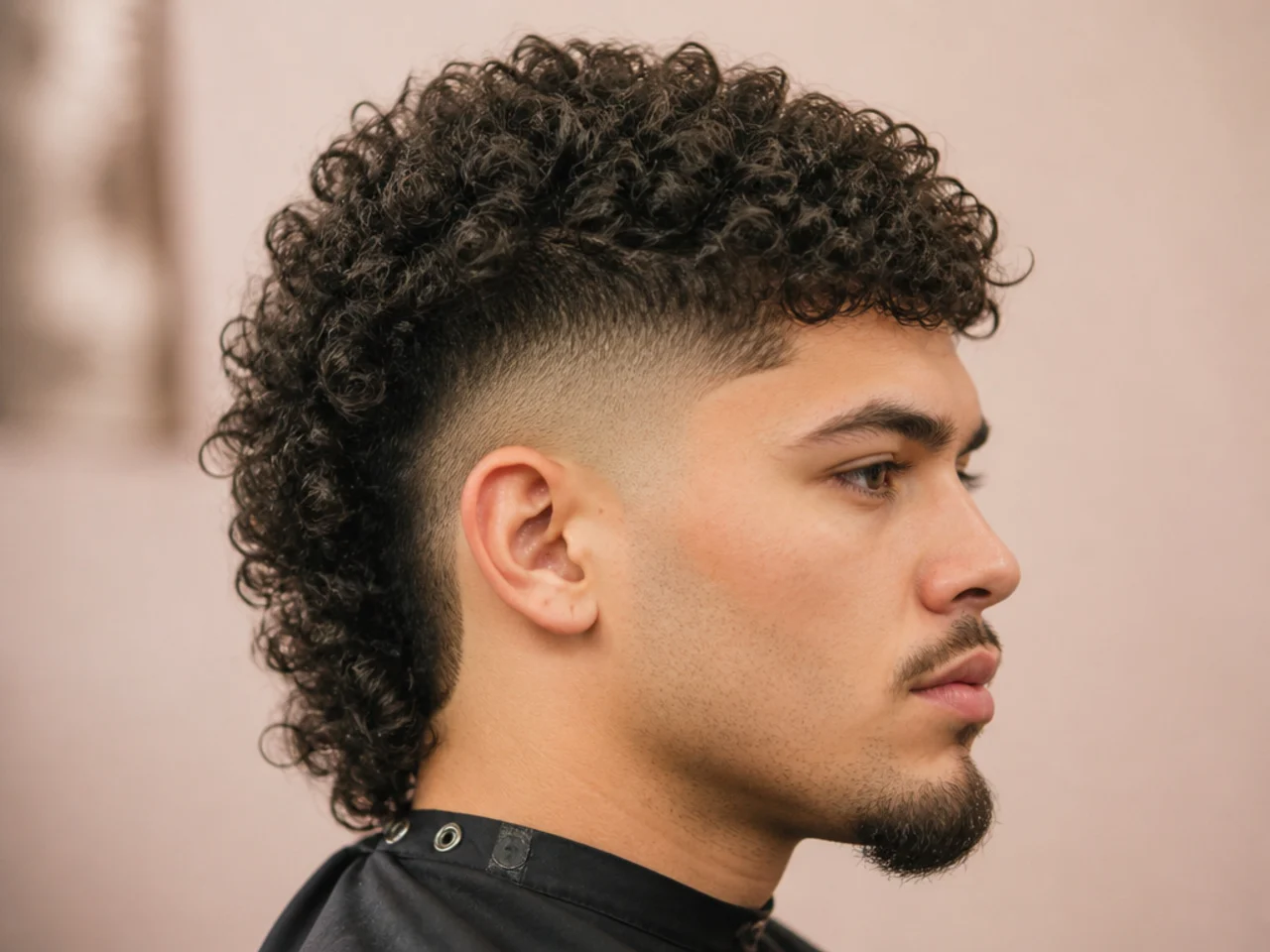
The burst fade curves in a semicircle around each ear and leaves the nape and back length untouched — which is exactly what a curly mullet wants. The back drop flows out of the burst without getting cut off, and the coil pattern reads all the way down. One of the strongest fade choices for this cut.
Suits oval, heart, and diamond faces. Especially strong on 3C, 4A, and 4B textures where the crown builds height and the back builds mass.
Ask for: "Curly mullet with a burst fade, two-inch layered curly top, back length three sprung inches past the crown, burst fade to a guard 0.5 curving around each ear, nape and back length untouched."
Styling tip: A firm-hold curl gel scrunched through, then a shot of finishing spray to hold the crown lift and the back drop.
14. Curly Mullet with Skin Fade
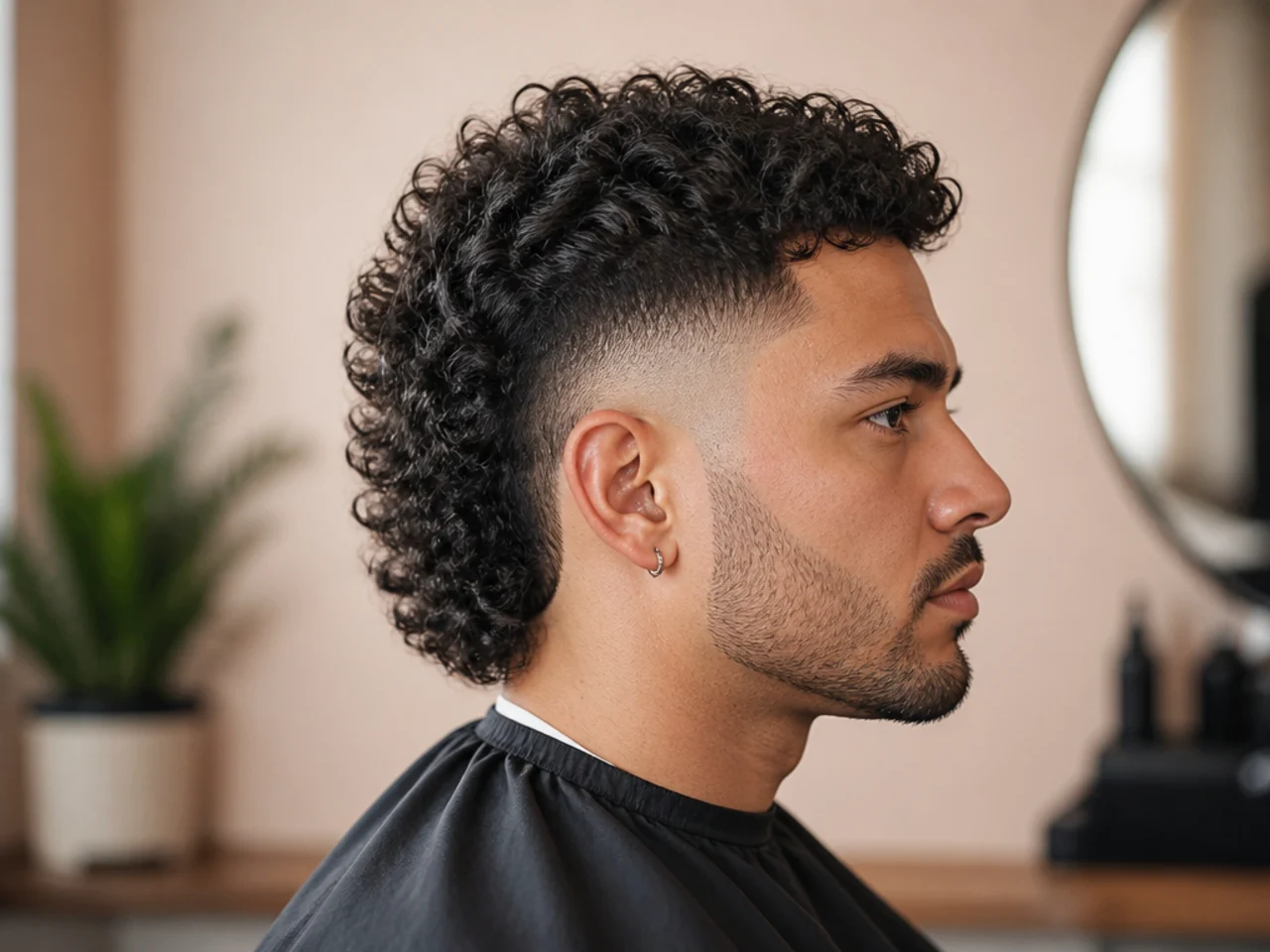
The high-contrast statement version. Sides taper down to bare skin — usually at a low or mid position — creating a hard visual gap between the tight fade and the curly top-plus-back mass. Reads editorial and confident.
Suits diamond, oval, square, and long faces where the extreme contrast flatters bone structure. Works across every curl type but shines on 3C through 4C where the volume can hold its own against the fade.
Ask for: "Curly mullet with a skin fade, two-inch layered curly top with internal weight removal, back length three sprung inches past the crown, skin fade on the sides fading to bare skin at a low position, back length preserved."
Styling tip: A leave-in, curl butter, and defining gel layered on the top and back; use a soft brush around the fade line to keep transition edges clean.
15. Curly Mullet with Disconnected Undercut
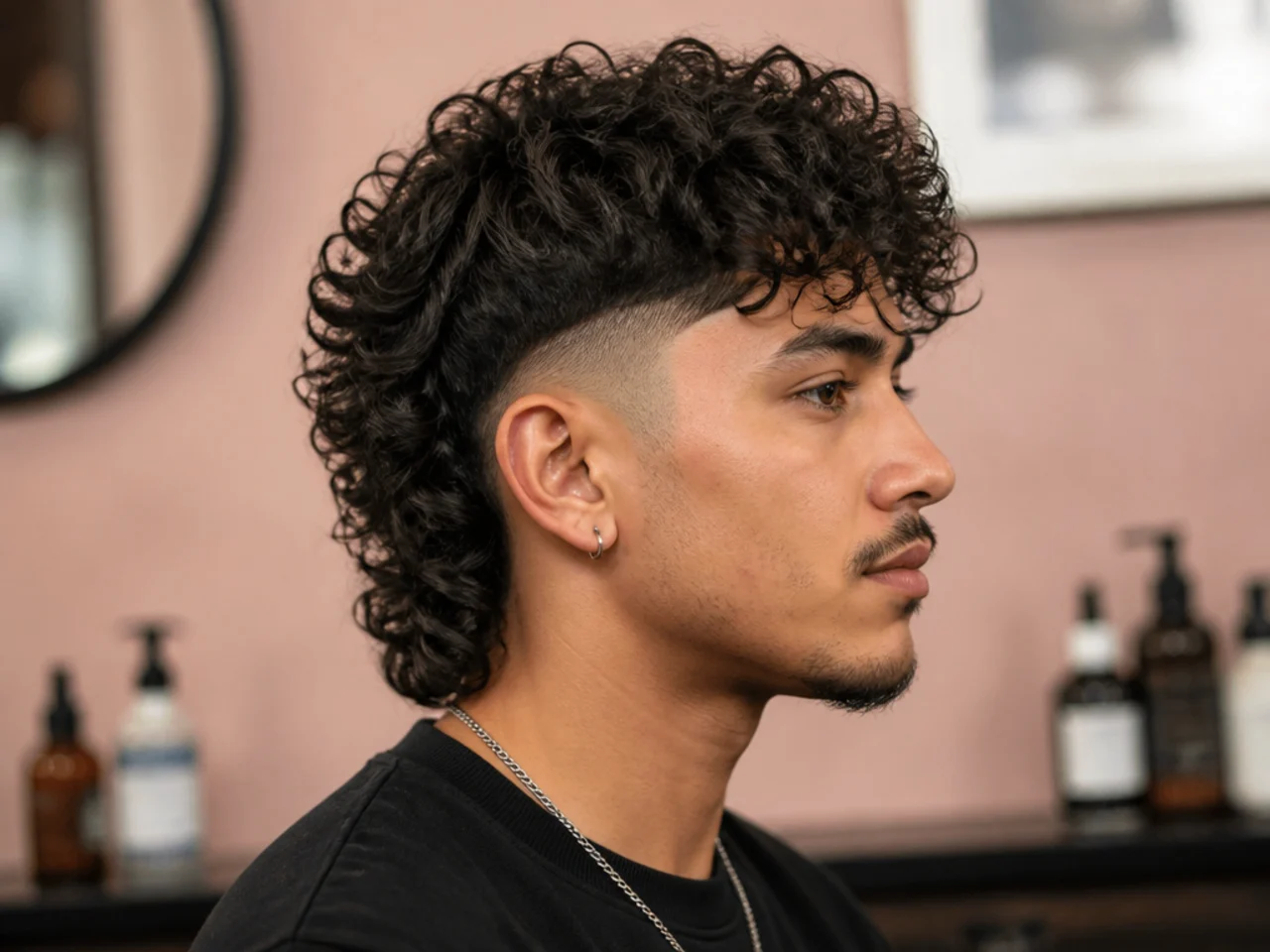
No blend. A clear disconnection line runs around the parietal ridge, with a curly top-and-back mass sitting over a buzzed undercut base. The two lengths meet at a hard edge rather than transitioning. Reads statement and modern — the loudest version on the list.
Suits oval, diamond, and long faces where the vertical drop of the disconnect flatters proportion. Best on dense 3B, 3C, and 4A curls where the top mass can hold the shape.
Ask for: "Disconnected curly mullet, three inches on top with heavy internal layering, back length four sprung inches past the crown, half-guard undercut on the sides and back beneath the disconnect line, keep the disconnect clean and hard."
Styling tip: A stronger-hold curl gel over leave-in, scrunched aggressively so the top and back read as one sculpted piece against the undercut.
16. Curly Mullet with Two-Block
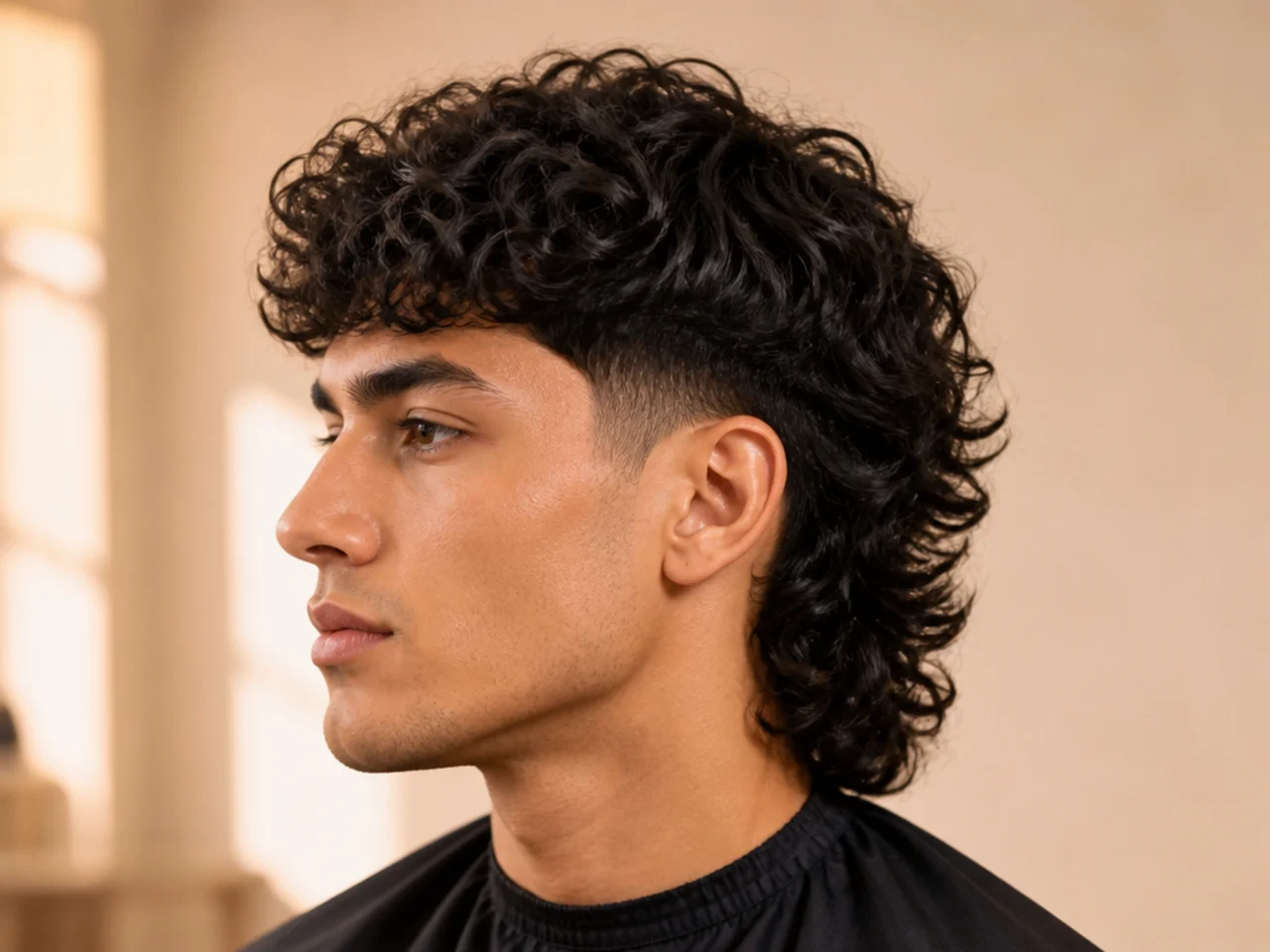
The K-pop two-block applied to a curly mullet. A short undercut hides underneath the top mass and around the back-of-ear, and the visible curly mullet silhouette reads as one clean shape until the wearer lifts the top and reveals the block beneath. See our asian mullet haircut men breakdown for the Korean context.
Suits oval, heart, and long faces. Best on 3B, 3C, and 4A curls with moderate to high density.
Ask for: "Two-block curly mullet, half-guard undercut on the sides and back-of-ear, two-inch curly top, back length three sprung inches past the crown left as one layered mass, keep the disconnect clean but hidden."
Styling tip: Scrunch curl cream and gel through the top and back, let the curls fall to hide the block; lift the top by hand to reveal it for photos.
17. Curly Mullet with Curtain Fringe
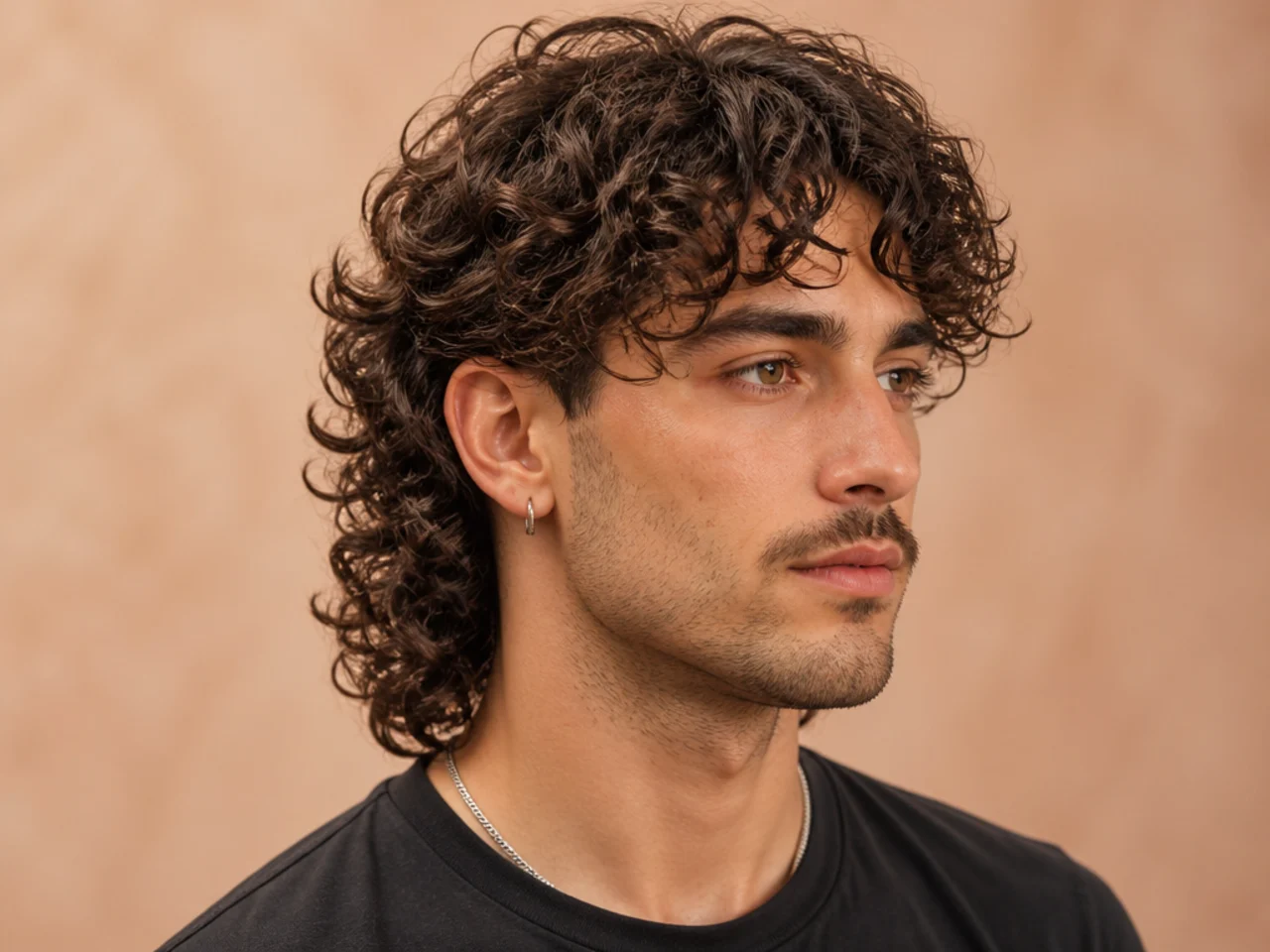
The fringe becomes the focal point. Two curly panels sweep out from a center part and frame the forehead, while the mullet back drops behind them. Reads soft and approachable — the friendliest version on the list.
Suits round, oval, and heart faces where the curtain fringe softens the top of the face. Best on 3A, 3B, or looser 3C curls where the fringe can hang without springing back too far.
Ask for: "Curly mullet with a curtain fringe, three-inch layered curly top, fringe cut long enough to meet at a center part and curl outward at the temples, back length three sprung inches past the crown, low taper on the sides."
Styling tip: Diffuse the fringe pieces downward from a center part for 30 seconds, then let the back air-dry undisturbed.
18. Curly Mullet with Textured Fringe
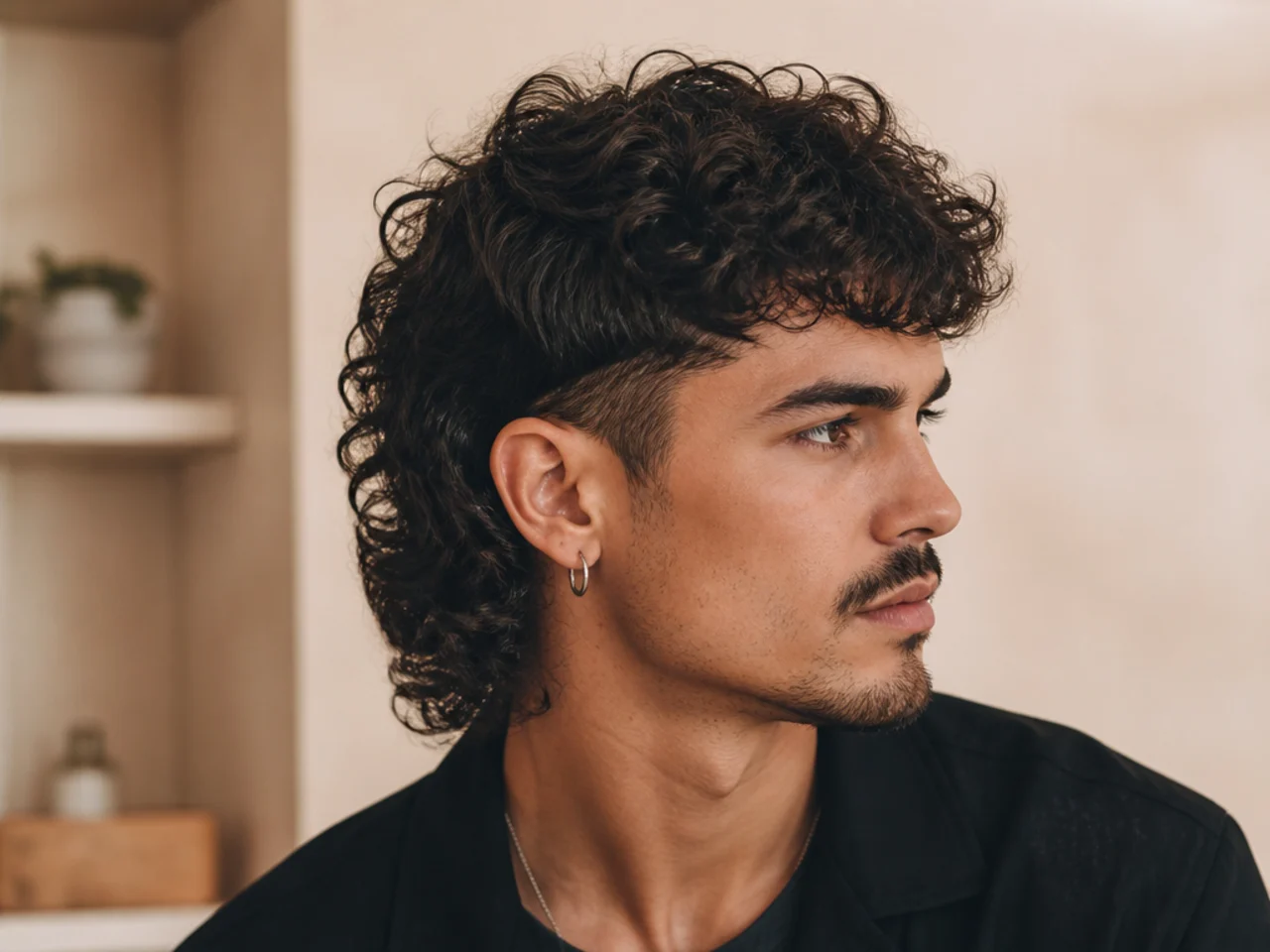
A choppy curly fringe drops forward onto the forehead in defined piecey sections. The short curly top holds the mullet identity from the profile, and the fringe adds forward movement that softens the hairline. Reads current and Gen Z without leaning full comma-hair.
Suits round, oval, and square faces. Works across 3B through 4B textures where the pieces stay defined.
Ask for: "Curly mullet with a textured fringe, two-inch top with soft internal layers, fringe dry-cut into piecey defined coil pieces falling to the brow, back length three sprung inches past the crown, blended sides."
Styling tip: Scrunch curl gel through the fringe first, separate the pieces with a fingertip of curl paste, then let the rest air-dry.
19. Curly Mullet with Rat Tail
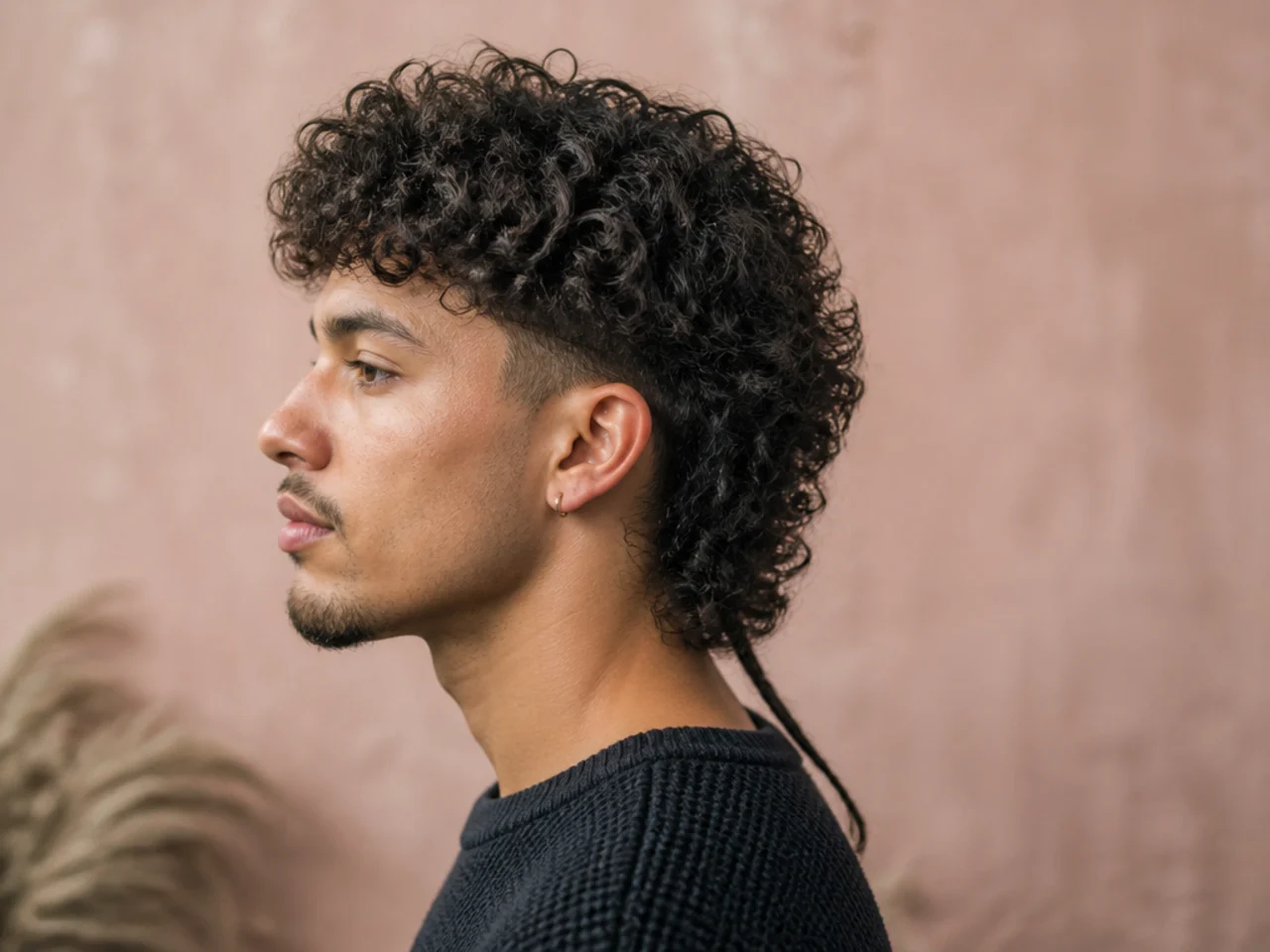
A rat tail concentrates the mullet length into a single narrower section at the center-back rather than distributing it across the full nape. The rest of the back tapers cleanly; the tail hangs five or more sprung inches below the crown as a defined coil column. The most obviously mullet variation on the list.
Suits oval and heart faces where the profile can carry the extension. Best on 3B and 3C curls where the coil pattern reads clearly on a narrow section.
Ask for: "Curly mullet with a rat tail, two-inch layered curly top, back tapered clean below a defined center-back rat tail hanging five sprung inches with a coil-cut point, low taper on the sides."
Styling tip: Curl gel on the tail so the coil pattern reads all the way down; deep condition the tail weekly since it's the oldest hair on the head.
20. Curly Mullet with Full Beard
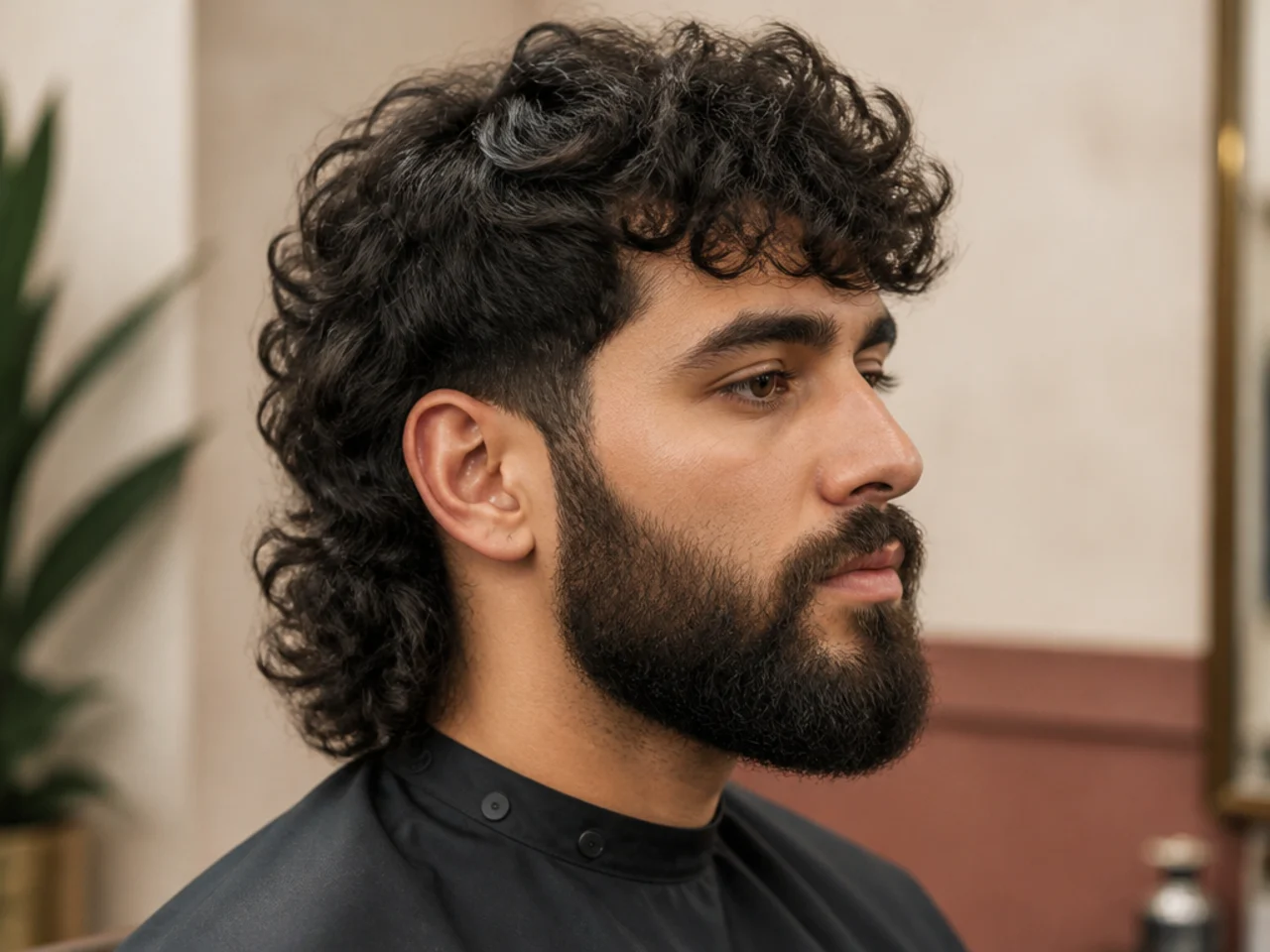
The beard grounds the whole shape. Where the top layers move and the back drops, a full beard adds a hard visual base — the two together make the curly mullet read as an adult cut rather than a Gen Z-only trend. Matched-density beard works best; a patchy beard reads unbalanced against a curly mullet.
Suits diamond, oval, and square faces where the beard balances a wider forehead. Best on 3B, 3C, and 4A textures where the beard curl matches the hair curl.
Ask for: "Curly mullet with a full beard, two-inch layered curly top, back length three sprung inches past the crown, mid taper on the sides connecting into a matched-grade full beard, hard line at the sideburn."
Styling tip: Beard oil daily to keep the beard coil pattern defined and moisturized in the same rhythm as the hair — the two textures should read as one continuous shape.
How to Ask Your Barber for a Curly Mullet
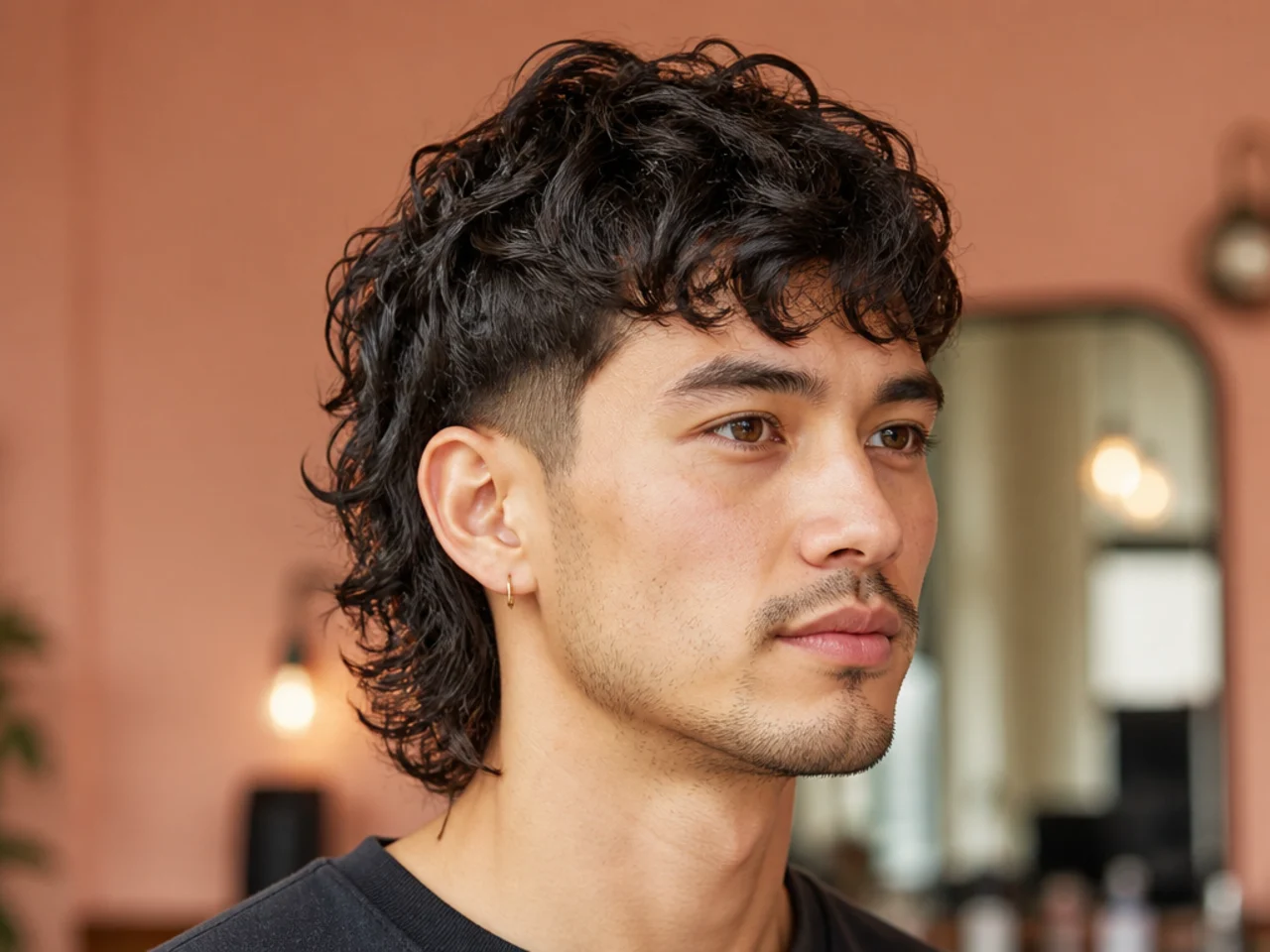
The chair conversation matters more with curls than with any other hair type. A straight-hair mullet can be lengthened or shortened after the fact — a curl cut cuts what you keep. Bring a photo of your hair worn loose and hydrated so your true pattern is visible.
- Say "curly mullet" and specify your curl type by number. 3A, 3B, 3C, 4A, 4B, or 4C. If you don't know, ask the barber to look and tell you before cutting. The technique changes at every step.
- Ask for a dry cut, not a wet cut. This is the single most important instruction. Wet-cutting stretches curls, so the finished back length snaps back one to three inches shorter than the reference photo. Dry-cutting shows the true finished shape.
- Set the top length in dry inches. One inch for a short compressed mullet, two inches for baseline, three inches for a modern soft version.
- Set the back length in sprung inches. Sprung means the length once the curl contracts — not stretched. Two inches past the crown for a subtle drop, three to four for a defined mullet, five or more for a long or rat-tail version.
- Set the transition. Blended (soft gradual layers from top to back), hard (disconnected undercut), or hidden (two-block). The transition is what makes the mullet read as a defined shape versus a length choice.
- Set the side treatment. Scissor-blended, low taper, mid taper, burst fade, mid fade, skin fade, disconnected undercut, or two-block. Match the loudness to how much attention you want the whole cut pulling.
- Ask for internal layers cut for weight removal, not surface layers cut for texture. Curls already have texture — they need weight removed from underneath so the top lifts and the back reads defined rather than mushroomed. This one line separates good curly mullets from puffy back-heavy disasters.
Once you have those seven answers, your barber can start cutting without a single guess. Show the photo one more time and confirm the sprung back length before the first scissor pass.
Styling and Maintenance for a Curly Mullet
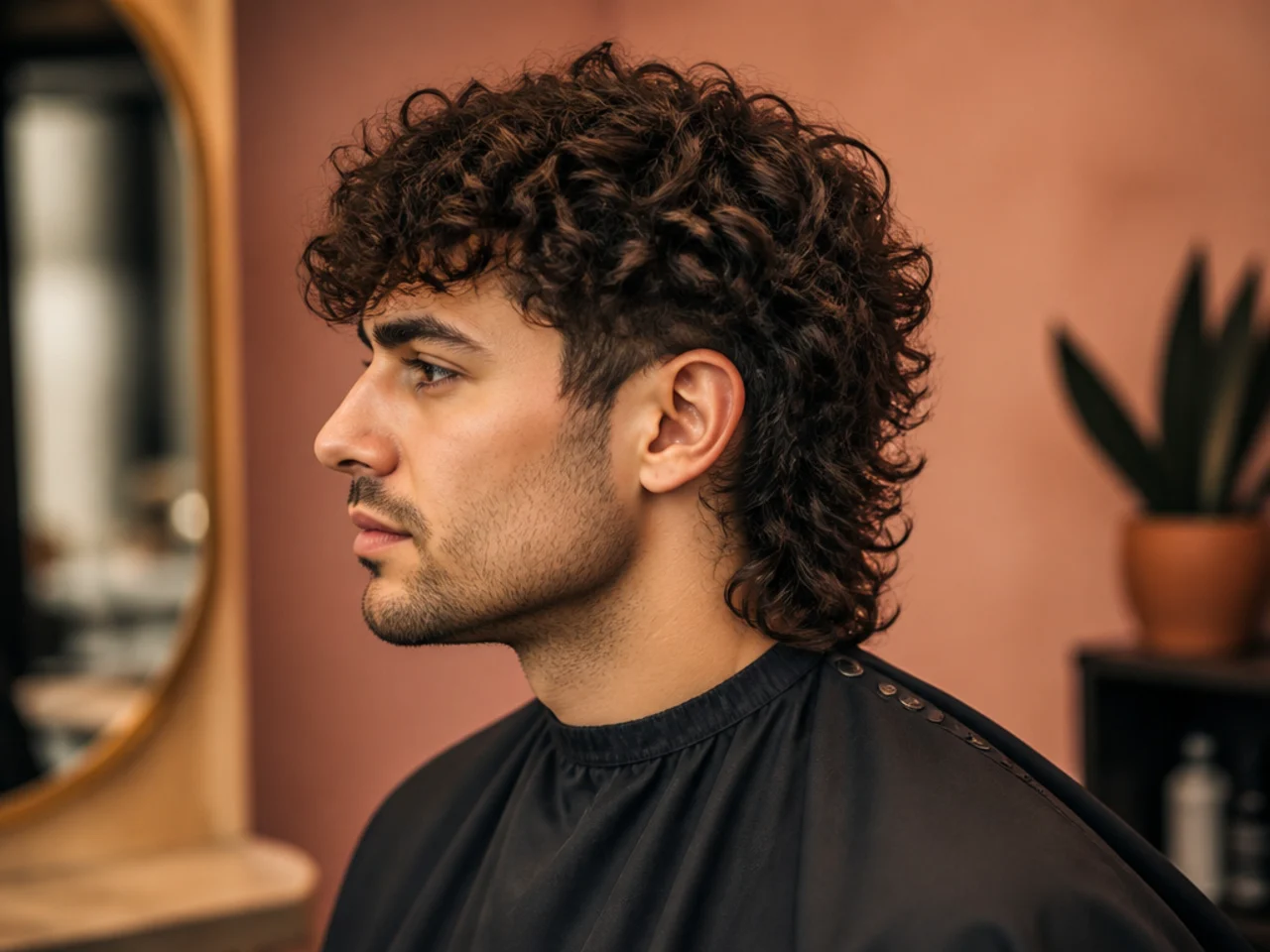
Curls need moisture more than any other hair type, and a curly mullet needs the pattern defined every wash day so the top-to-back silhouette reads the way the barber intended.
Wash with a sulfate-free shampoo two to three times a week. Sulfates strip the oils curls rely on, and daily washing flattens the pattern and dries the ends. Follow with a rich conditioner every wash, and once a week swap in a deep conditioner or a hair mask to keep the back length hydrated — it's the oldest hair on the head and dries out first.
Apply product to soaking-wet hair, not damp. Start with a leave-in conditioner, then a curl cream for definition, then a curl gel for hold. Scrunch each product upward toward the scalp on the top and downward through the back — never comb through, because combing snaps the pattern. For 4A through 4C coils, use the shingling method — smoothing product through section by section — instead of scrunching.
Diffuse or air-dry. A diffuser on low heat and low speed for 60 to 90 seconds sets the top volume and shortens drying time. Air-drying takes 30 to 60 minutes but preserves the truest curl pattern. Whichever you pick, do not touch the hair while it dries — every touch breaks a curl and creates frizz, especially in the back where the length is most vulnerable.
Sleep on a satin or silk pillowcase, or wrap the hair in a satin bonnet. Cotton absorbs moisture and creates friction, which flattens the pattern by morning. For the longer back length, pineapple the hair — a loose high ponytail at the crown — so the back coils don't crush against the pillow. See our best products for wavy and curly hair breakdown for specific recommendations.
Re-cut the layered top every six to ten weeks. Curls hide grow-out longer than any other hair type, so the mullet silhouette holds. Fade or taper sides need a re-cut every three to four weeks; between visits, ask the barber to trim wispy split ends at every appointment — split curls unravel the pattern faster than any other kind of grow-out. For the full pattern reference, browse our curly hair haircuts hub, and for the layered-crown cousin of this cut, see our 20 curly wolf cut haircuts for men guide or the broader mullet haircut for men roundup.
FAQ
What is a curly hair mullet for men?
A curly hair mullet is the classic short-on-top, long-in-back mullet silhouette cut specifically for curl patterns from 3A through 4C. The top and sides sit shorter, the back keeps length past the collar, and every step is executed dry so the barber cuts to the sprung curl length rather than the wet-stretched one. The curl pattern breaks up the harsh top-to-back line of the eighties original, so even aggressive length differentials read modern.
Which curl type suits a mullet best?
Every pattern works. 3B and 3C carry the mullet drop cleanest because the corkscrew pattern holds the back length without collapsing. 3A curls need slightly longer back length so gravity keeps the S-wave visible past the collar. 4A, 4B, and 4C coils need aggressive internal weight removal so the back reads as a defined mullet shape rather than a puff. Check our curl types guide if you're unsure of your pattern.
Should my barber cut curly hair wet or dry for a mullet?
Dry. Wet-cutting stretches curls, so the back length snaps back one to three inches shorter once the hair dries — a problem for the mullet especially, since the whole shape depends on the length differential between top and back. Dry-cutting shows the true silhouette at every step. If your barber insists on wet-cutting curls, find a barber who specializes in curl work.
How do I keep my curly mullet from turning into a triangle?
Ask for internal layers cut for weight removal, not surface layers cut for texture. The triangle happens when weight builds up in the mid-length back and pushes the sides out — internal thinning takes weight from inside the shape so the top lifts and the back drops as a defined column instead of a fluffy block. Also request a slight taper on the sides; that pulls the visual line vertical rather than horizontal.
Will a curly mullet grow out well?
Yes — better than any straight-hair equivalent. Curls hide grow-out because the pattern breaks up the visual line between old and new growth. The mullet's short top and long back grow at the same rate, so the silhouette stays defined for eight to ten weeks between cuts. Trim wispy split ends at every appointment; split curls unravel the pattern faster than a lost inch of length ever would.
Is a curly mullet workplace-appropriate?
The short, blended, and low-taper versions read clean in most offices. The short curly mullet with a back that just grazes the collar is the safest workplace choice. Skip the disconnected undercut, the two-block, the skin fade, the rat tail, and any long back length in traditional corporate settings. Creative offices can wear any variation on this list; the shag haircuts family covers lower-key alternatives, and our modern mullet haircut men pillar covers the full mullet spectrum. For a softer curly cousin without the back drop, see our curly hairstyles for men roundup.