30 Mullet Haircuts for Men That Look Bold
30 bold mullet haircuts for men — modern, classic, curly, faded, Korean, punk, reverse. Photos, face-shape notes, and barber-ready cutting terms.
In this article · 44
- What Is a Mullet Haircut for Men?
- How to Choose Your Bold Mullet
- The 30 Bold Mullet Variations
- 1. Modern Mullet
- 2. Classic 80s Mullet
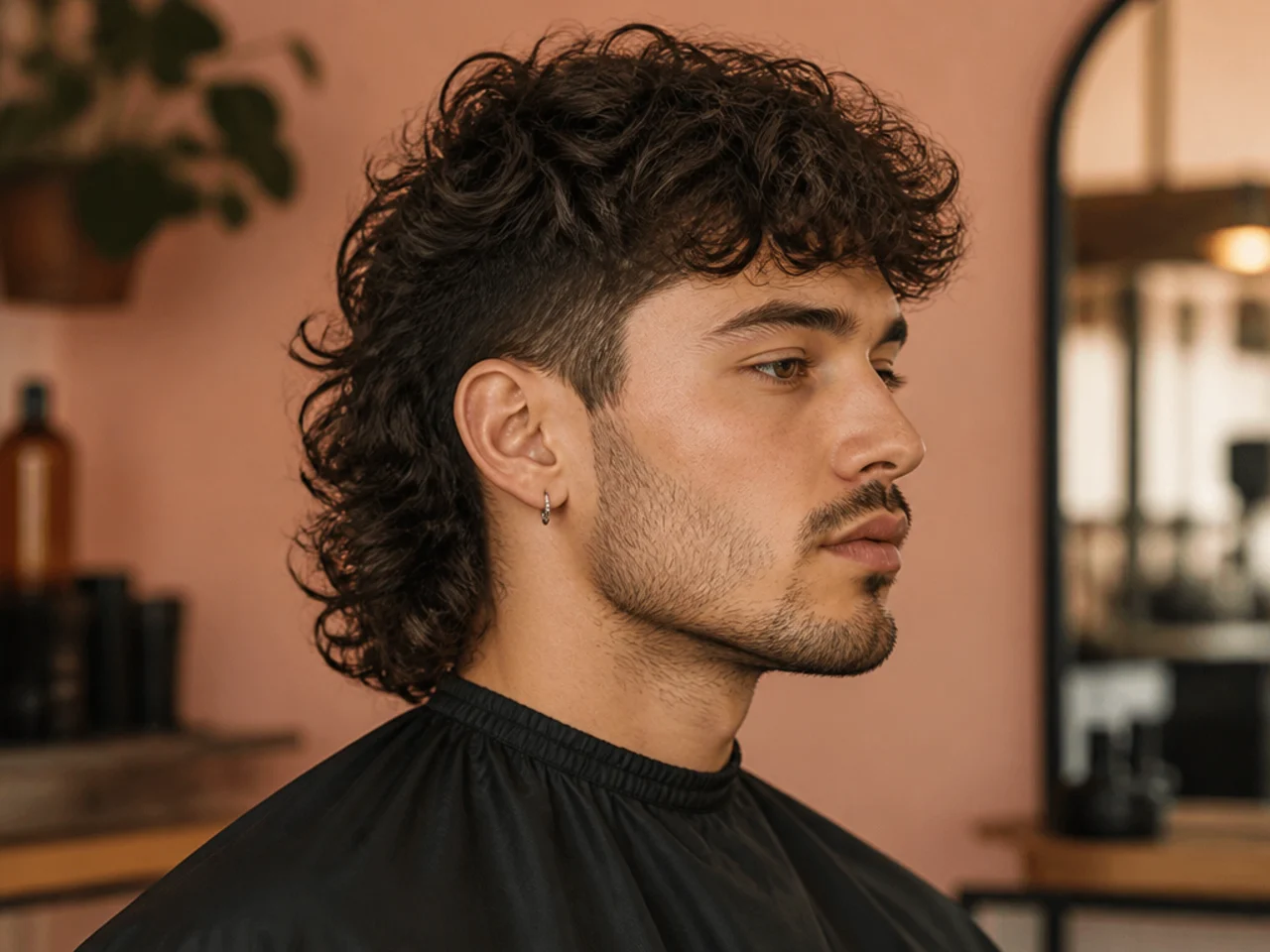
- 3. Curly Mullet
- 4. Wavy Mullet
- 5. Straight Hair Mullet
- 6. Long Mullet
- 7. Short Mullet
- 8. Faded Mullet
- 9. Burst Fade Mullet
- 10. Low Taper Fade Mullet
- 11. Skin Fade Mullet
- 12. Disconnected Mullet
- 13. Undercut Mullet
- 14. Textured Mullet
- 15. Layered Mullet
- 16. Shaggy Mullet
- 17. Wolf Cut Mullet
- 18. Korean Mullet
- 19. Asian Mullet
- 20. Mullet with Fringe
- 21. Mullet with Curtain Bangs
- 22. Mullet with Comma Hair
- 23. Mullet with Edgar
- 24. Mullet with Beard
- 25. Punk Mullet
- 26. Reverse Mullet
- 27. Mullet with Line-Up
- 28. Mullet with Hair Design
- 29. Business Mullet
- 30. Coily Afro Mullet
- How to Ask Your Barber for a Bold Mullet
- Styling and Maintenance for a Bold Mullet
- FAQ
- Is the mullet haircut for men still in style in 2026?
- What face shape suits a mullet haircut for men best?
- How do I ask my barber for a bold mullet?
- How is a mullet different from a wolf cut?
- Can I get a mullet with curly, coily, or Asian hair?
- How often do I need to re-cut a bold mullet?
- How much does a bold mullet cost?
- Is a mullet workplace-appropriate?
The mullet is the most-requested men's silhouette on Pinterest right now, and the current version has nothing to do with the 1980s. Modern mullets sit short on top, textured through the crown, tapered at the sides, and controlled at the nape — bold on purpose, not by accident. This guide covers 30 mullet variations men are asking for in 2026, who each one flatters, and the exact language to hand your barber so you leave with the shape you had in mind.
What Is a Mullet Haircut for Men?
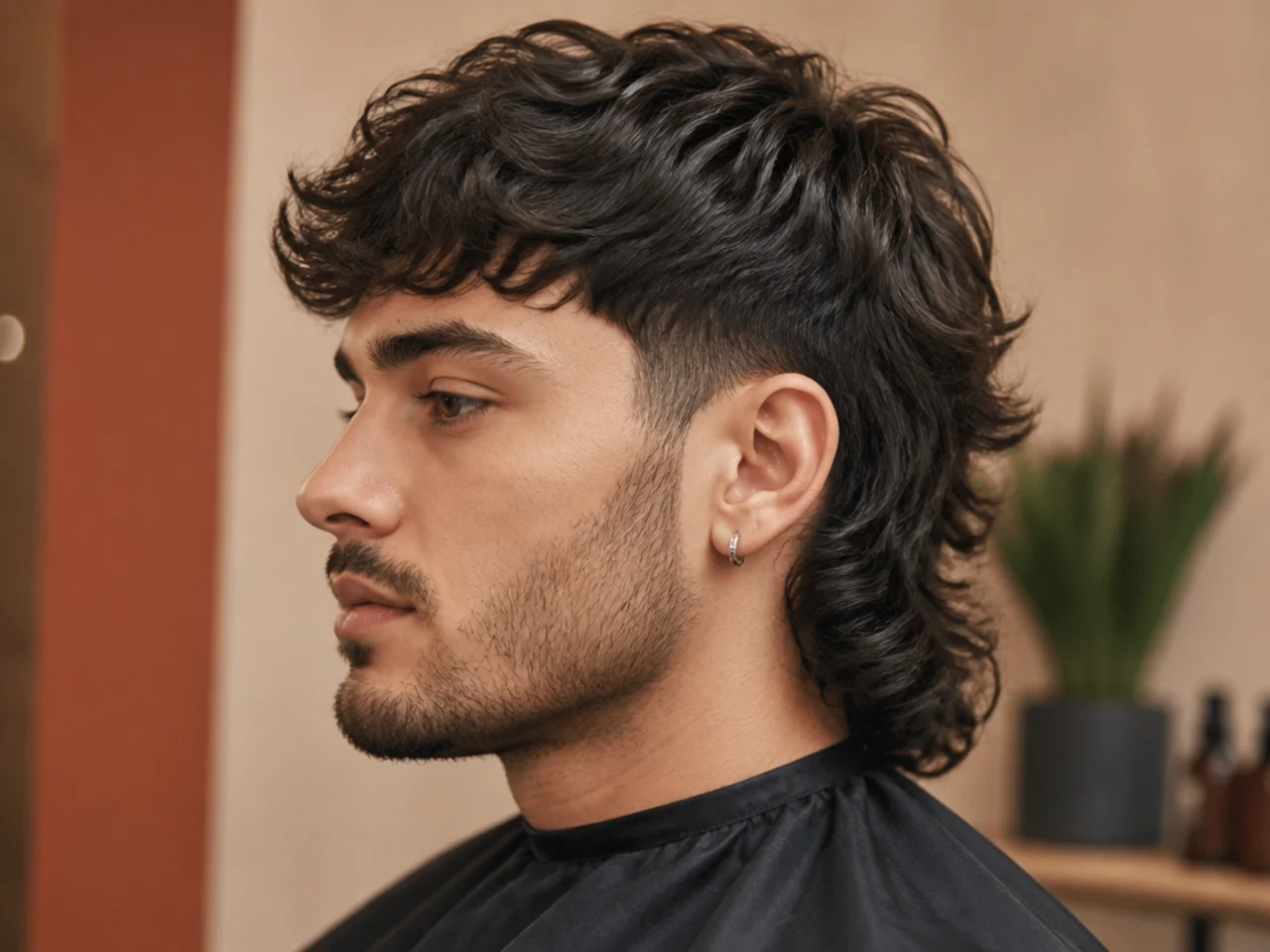
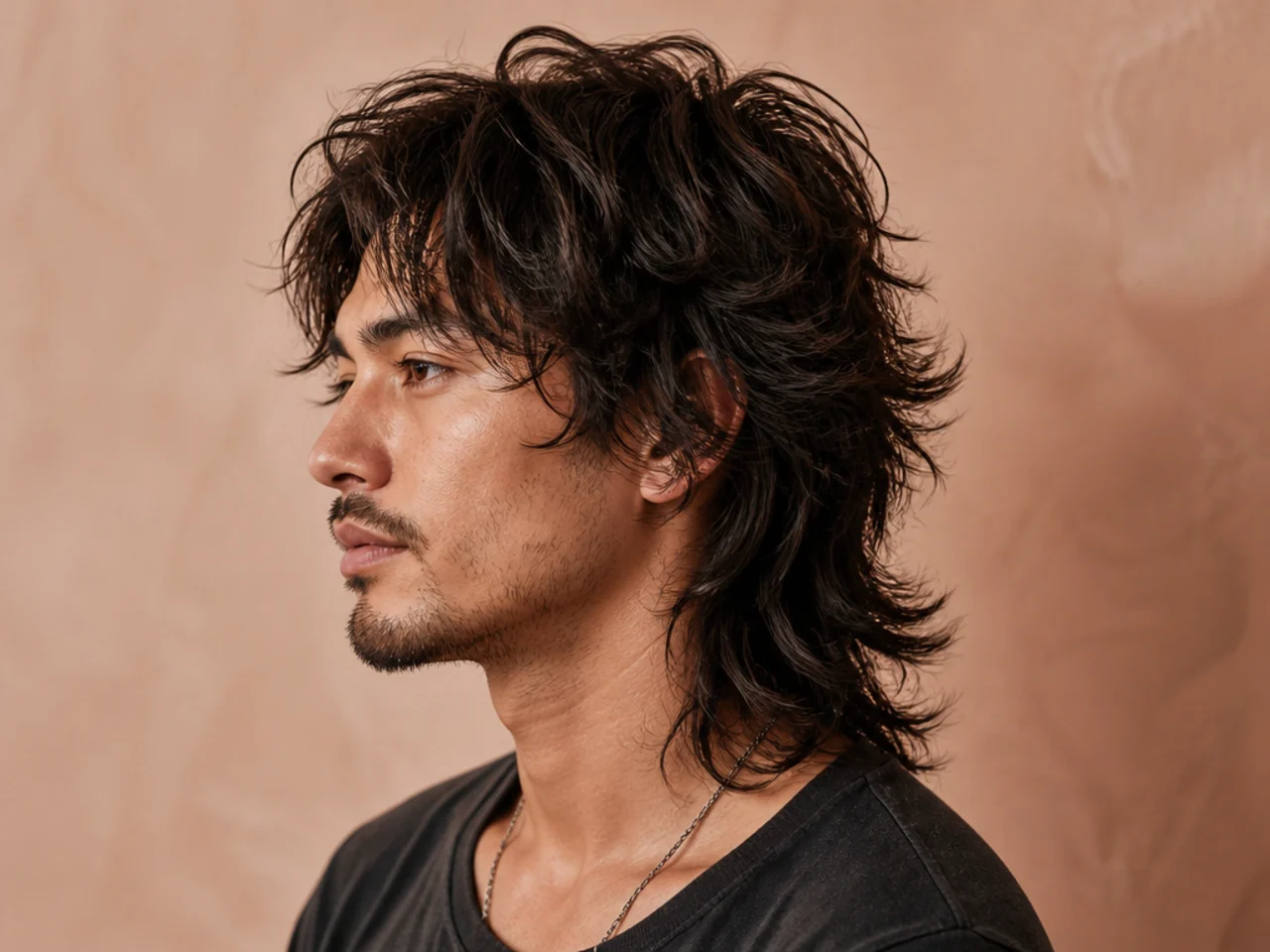
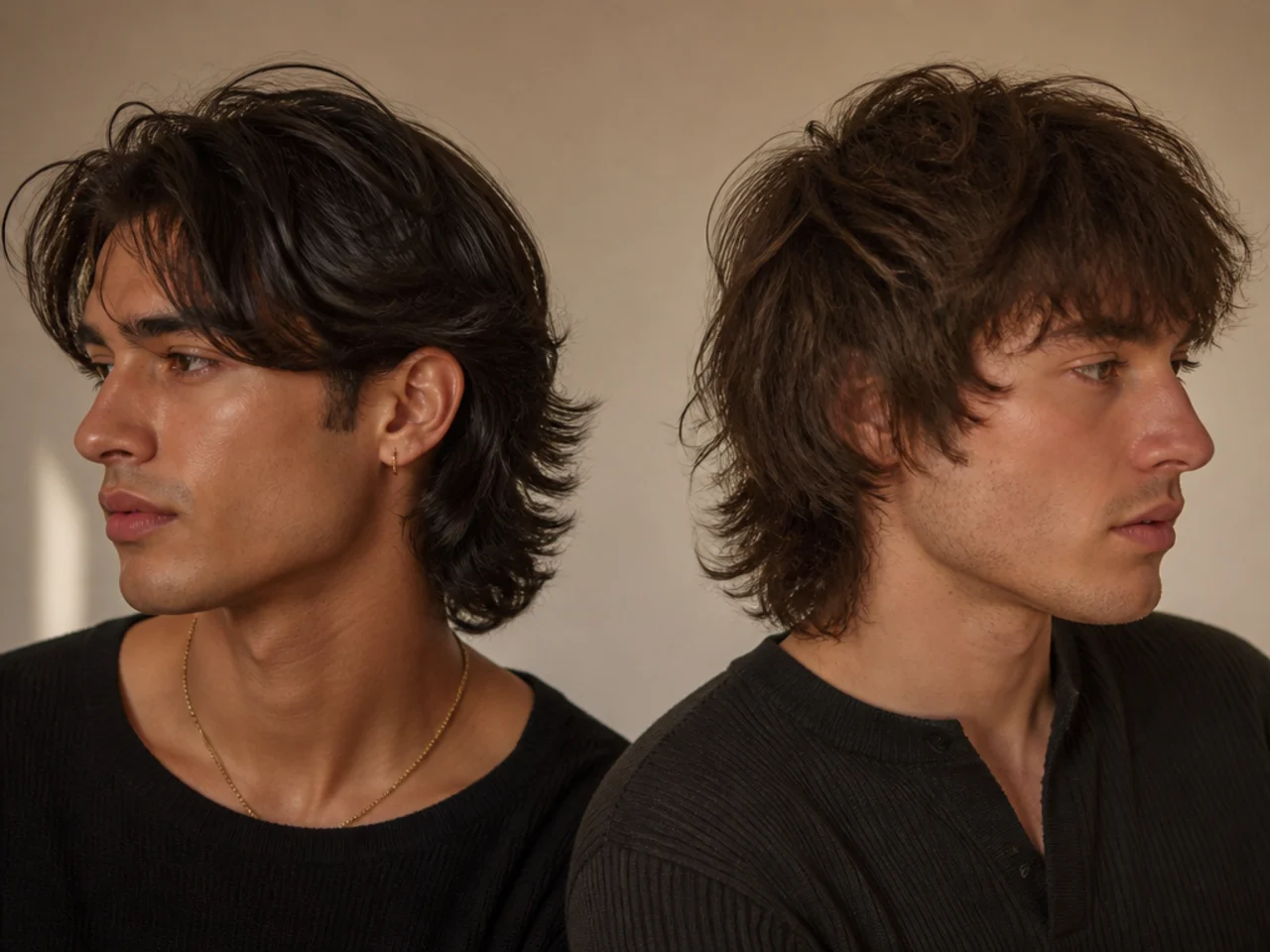
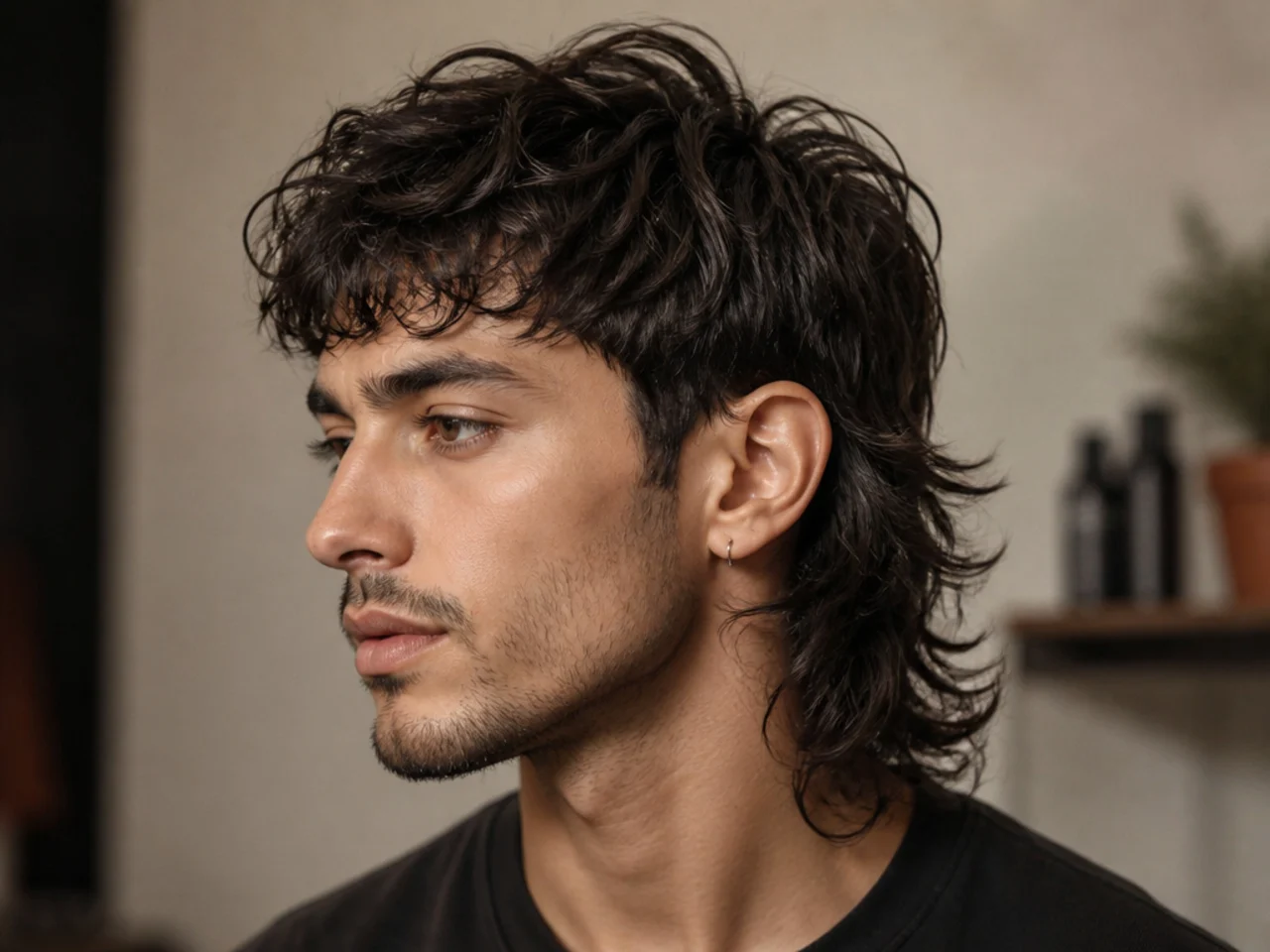
A mullet is a men's cut built on a two-length silhouette — short on top and at the sides, deliberately longer at the nape. The modern version keeps the top between one and three inches with internal layers for movement, blends the sides through a taper or fade, and drops the nape to somewhere between two and six inches depending on how bold you want it. The two lengths meet through soft internal layering, not a hard line.
That layering is what separates the 2026 mullet from the 80s version. The classic mullet let the top and back grow independently, so the transition read as flat and unfinished. The modern mullet point-cuts through the crown and feathers the perimeter, so the eye reads texture and movement instead of a rigid step-down. The silhouette is the same — the finish is different.
The mullet's cultural spread is also different. Where the 80s version belonged to rock musicians and country singers, the current version belongs to footballers, tennis pros, K-drama leads, indie musicians, off-duty actors, and streetwear kids. That range is why any barber worth booking already knows five different mullet references without being told.
How to Choose Your Bold Mullet
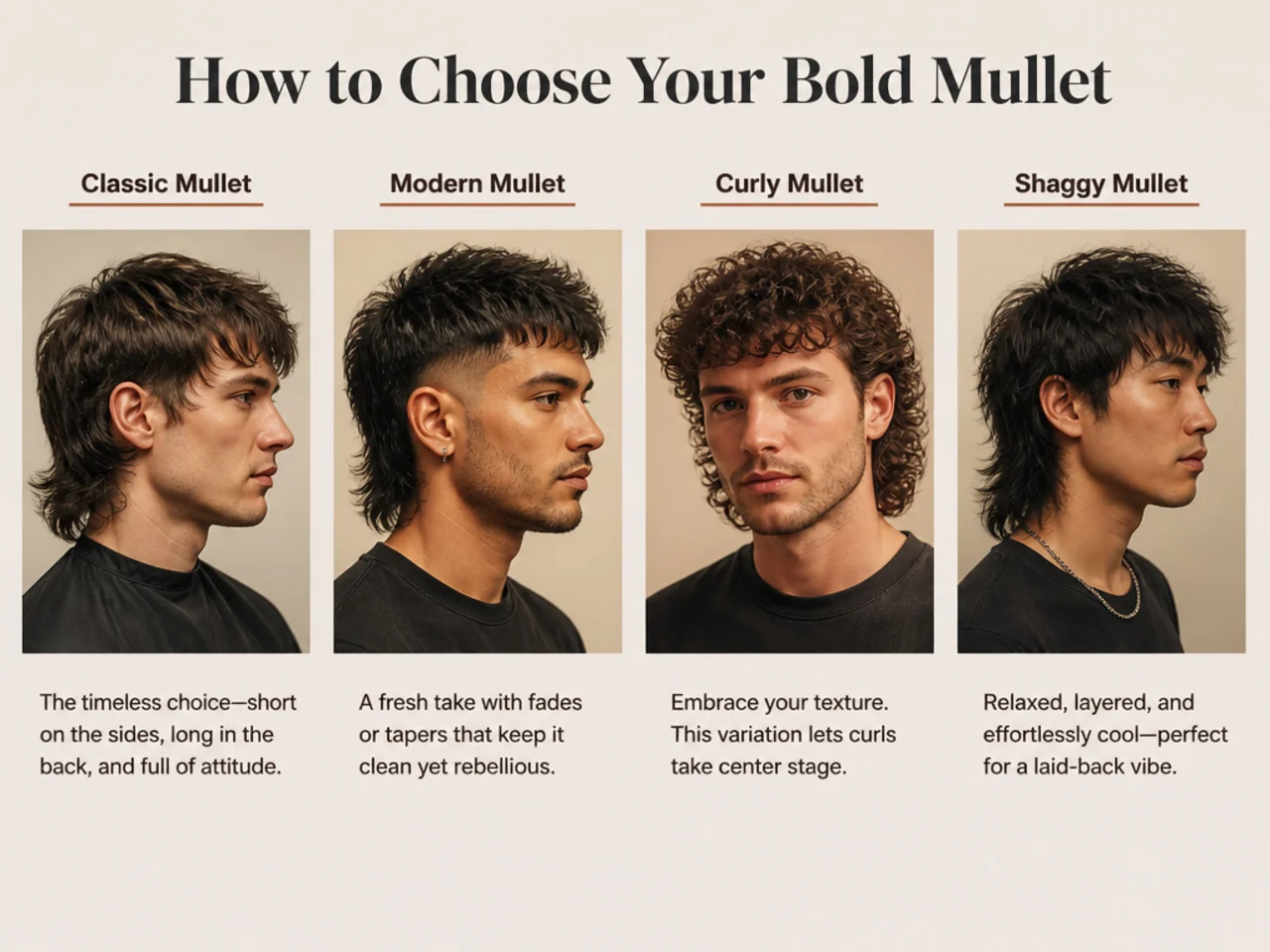
Face shape sets the top length and fringe. Oval faces suit every variation on the list — one, two, or three inches all work. Square and diamond faces want a cropped top of one to two inches so the jawline stays the visual anchor. Round faces need lift — two to two-and-a-half inches on top with a low taper for vertical line. Long faces stay with a shorter crown and a forward fringe so the head does not stretch further.
Hair type sets the layering rhythm and the styling load. Straight hair reveals every layer line, so it needs heavy point-cutting to build texture the strands cannot build on their own. Wavy hair sits best with soft internal layers cut in the direction of the wave. Type 3 curls build the mullet's shape without any effort — request a dry cut. Coily 4a-4c textures work with the same principle plus a shape-up around the perimeter.
Lifestyle sets the side treatment and nape length. Scissor-blended sides with a two-inch nape pass in most offices. A low taper fade with a three-inch nape reads intentional without shouting. A burst fade or high skin fade with a four-plus-inch nape turns the mullet into a statement cut. For the full family, browse the mullet and wolf cut hub or compare with our men's wolf cut haircuts guide.
The 30 Bold Mullet Variations
Each variation below tells you what makes it different, who it flatters, and the exact language to hand your barber. Show a photo, then hand over the numbers. That combination is how you leave the chair with the mullet you pictured.
1. Modern Mullet
The current baseline. Two inches on top with soft internal layers, scissor-blended sides that transition without a hard line, and a three-inch nape that feathers at the ends. Reads intentional and current — this is what most barbers cut when a client says "modern mullet" without qualifying it further.
Suits every face shape and every hair type. The safest bold mullet you can ask for.
Ask for: "Modern mullet, two-inch top with internal layers, three-inch feathered nape, scissor-blended sides with a soft taper — no fade line." Style with a matte clay worked through damp hair, finger-comb backward.
2. Classic 80s Mullet
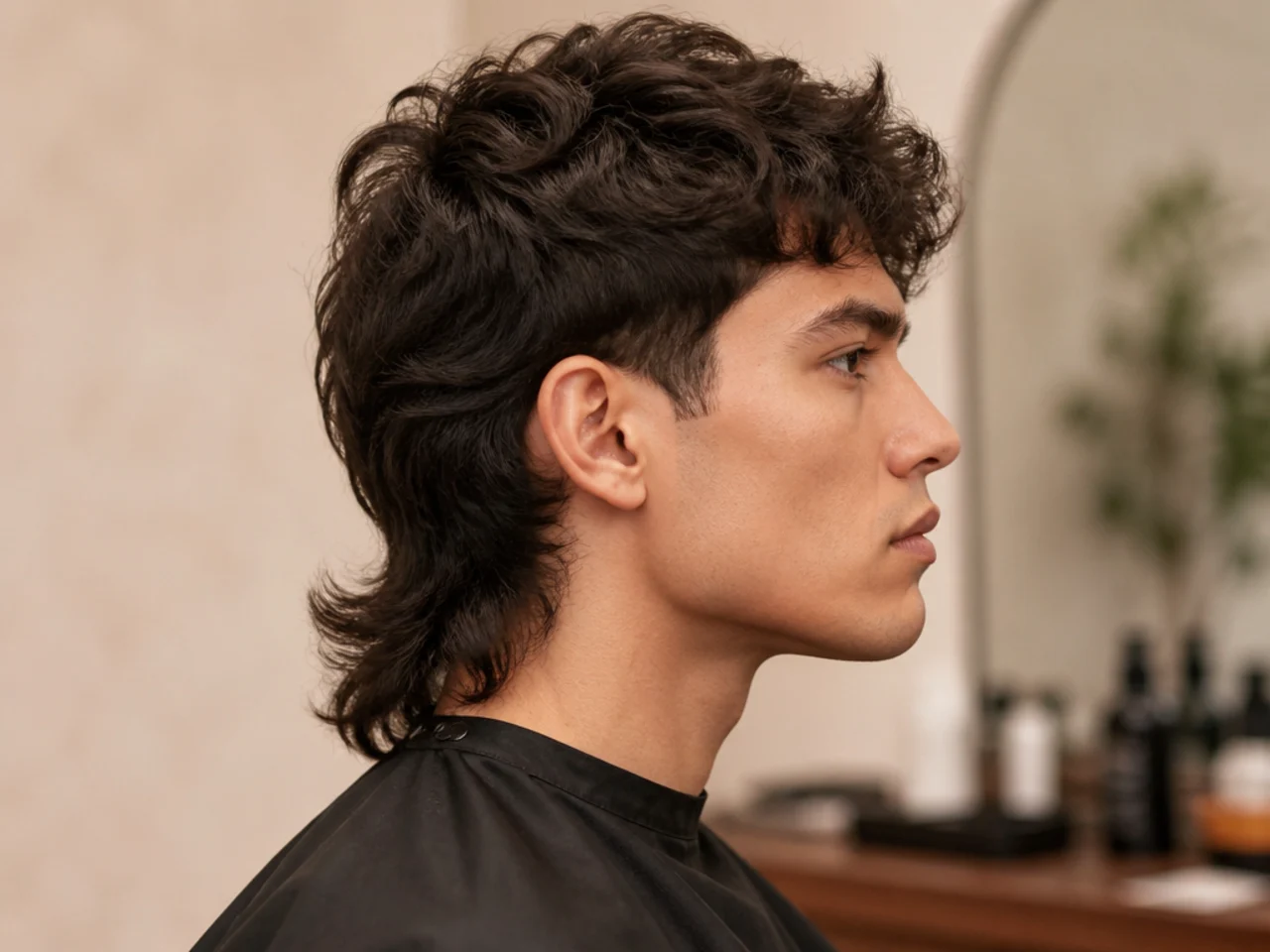
The original. Short on top and at the sides, dramatically longer at the back — six to eight inches of nape length, minimal internal layering, and a defined step where the top and back meet. Reads costume-loud on purpose. Guys wear this one because they want the reference to land immediately.
Suits oval and square faces where the strong two-length step flatters bone structure. Best on straight or slightly wavy hair.
Ask for: "Classic 80s mullet, one-and-a-half inches on top, six-inch back length, defined step between top and back, sideburns kept full." Style with a light styling cream combed backward through the top.
3. Curly Mullet
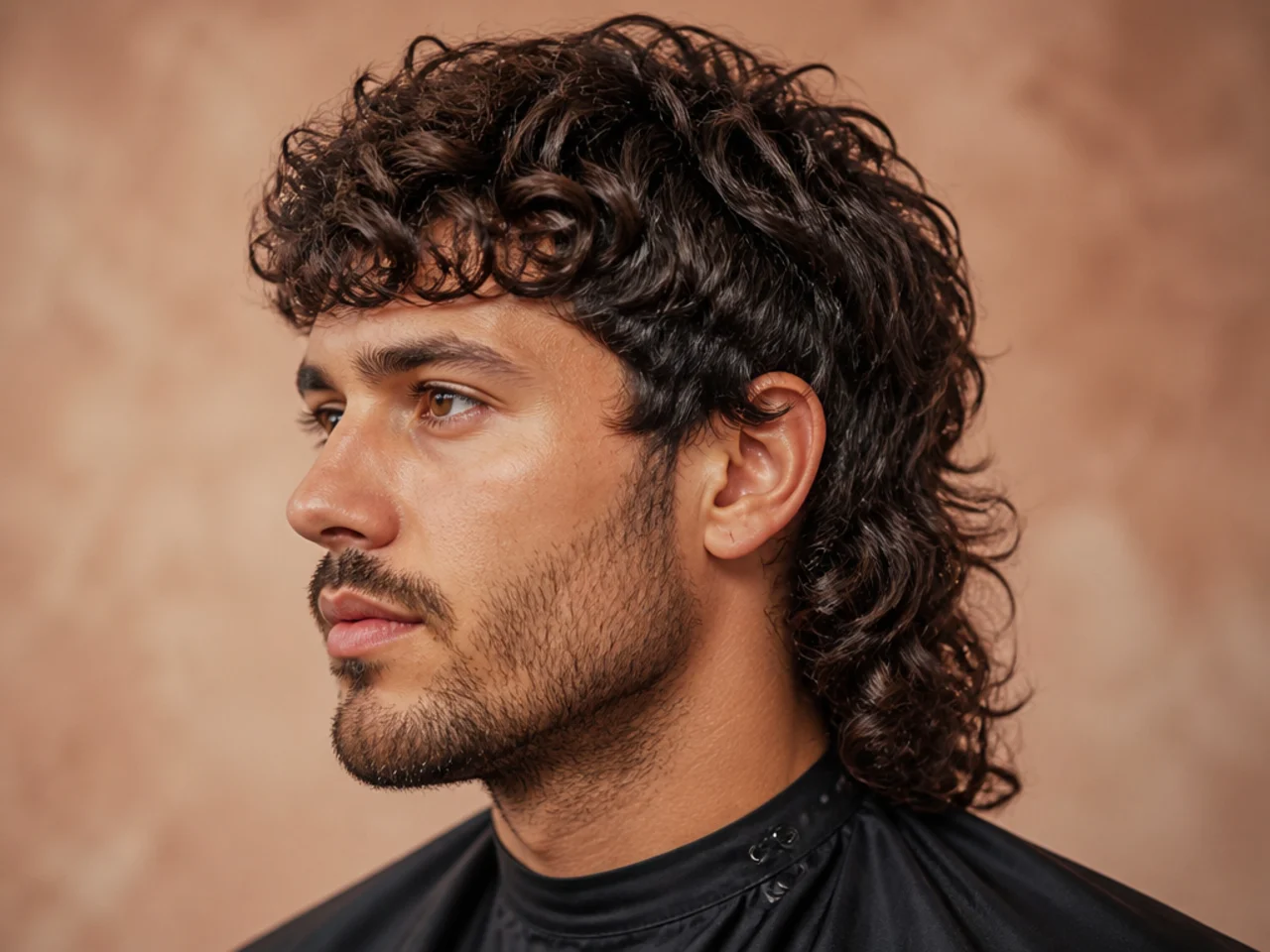
Type 3 curls build the mullet's shape on their own. Spiral pattern at the nape creates natural back weight, crown coils build textured layering, and the perimeter forms without much cutting. Ask for a dry cut so the barber can see the pattern before scissors touch hair.
Best on 3a-3c curls. Suits oval, heart, and diamond faces where the volume balances a narrower lower face.
Ask for: "Curly mullet, dry-cut throughout, two-inch top with internal layers to remove bulk, four-inch coiled nape, tapered sides that follow the curl pattern." See our curly hairstyles for men guide for related shapes.
4. Wavy Mullet
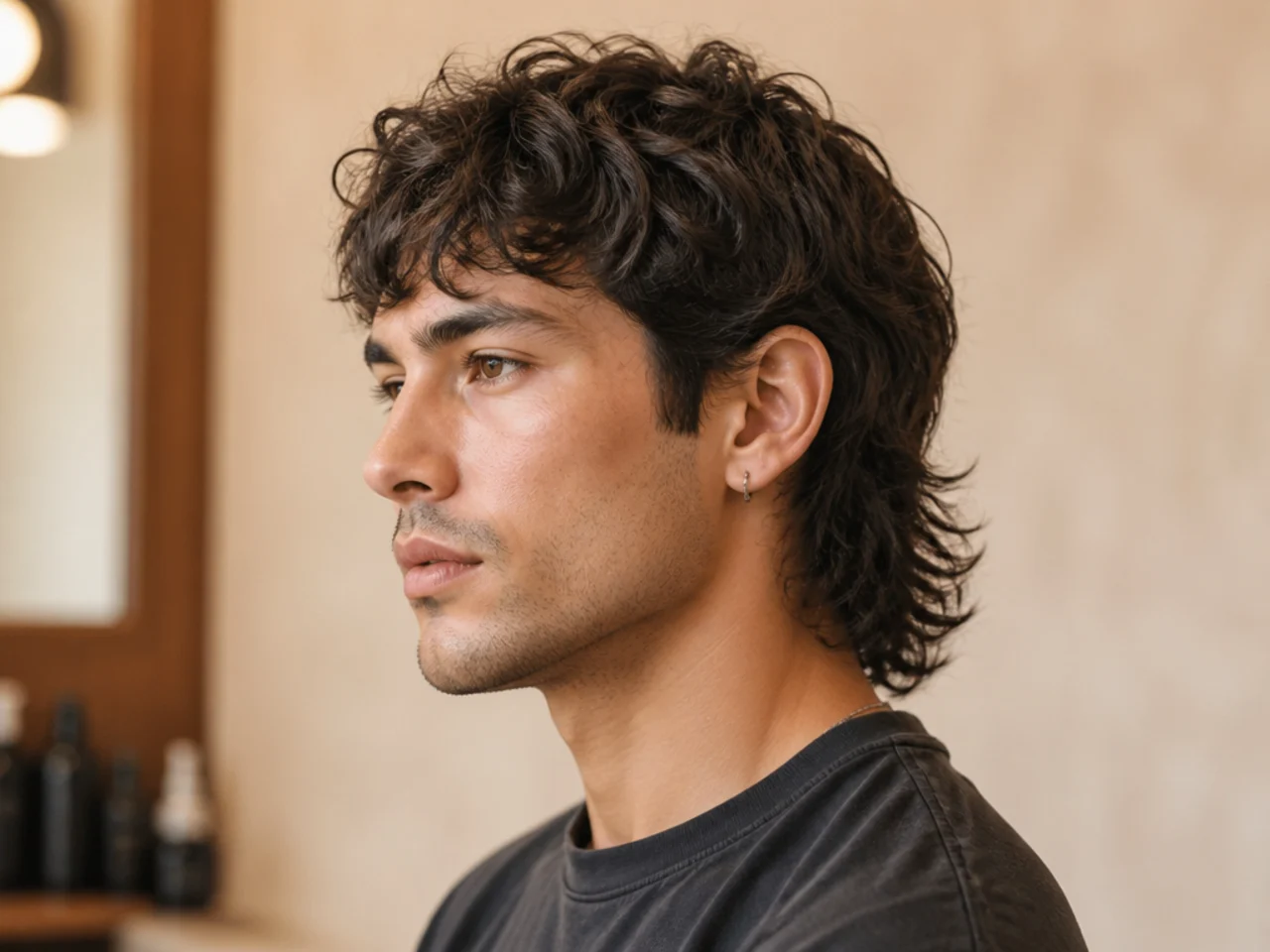
Wavy hair sits between straight's need for cutting texture and curly's built-in shape. The wavy mullet lets the wave lead — soft internal layers cut in the direction of the wave, minimal point-cutting, a nape that catches natural movement rather than fighting it.
Suits oval, heart, and diamond faces. Best on 2a-2c waves.
Ask for: "Wavy mullet, two-and-a-half-inch top with soft internal layers cut in the direction of the wave, three-inch feathered nape, blended sides with a low taper — no fade." Salt spray on damp hair, scrunch with fingers, air-dry.
5. Straight Hair Mullet
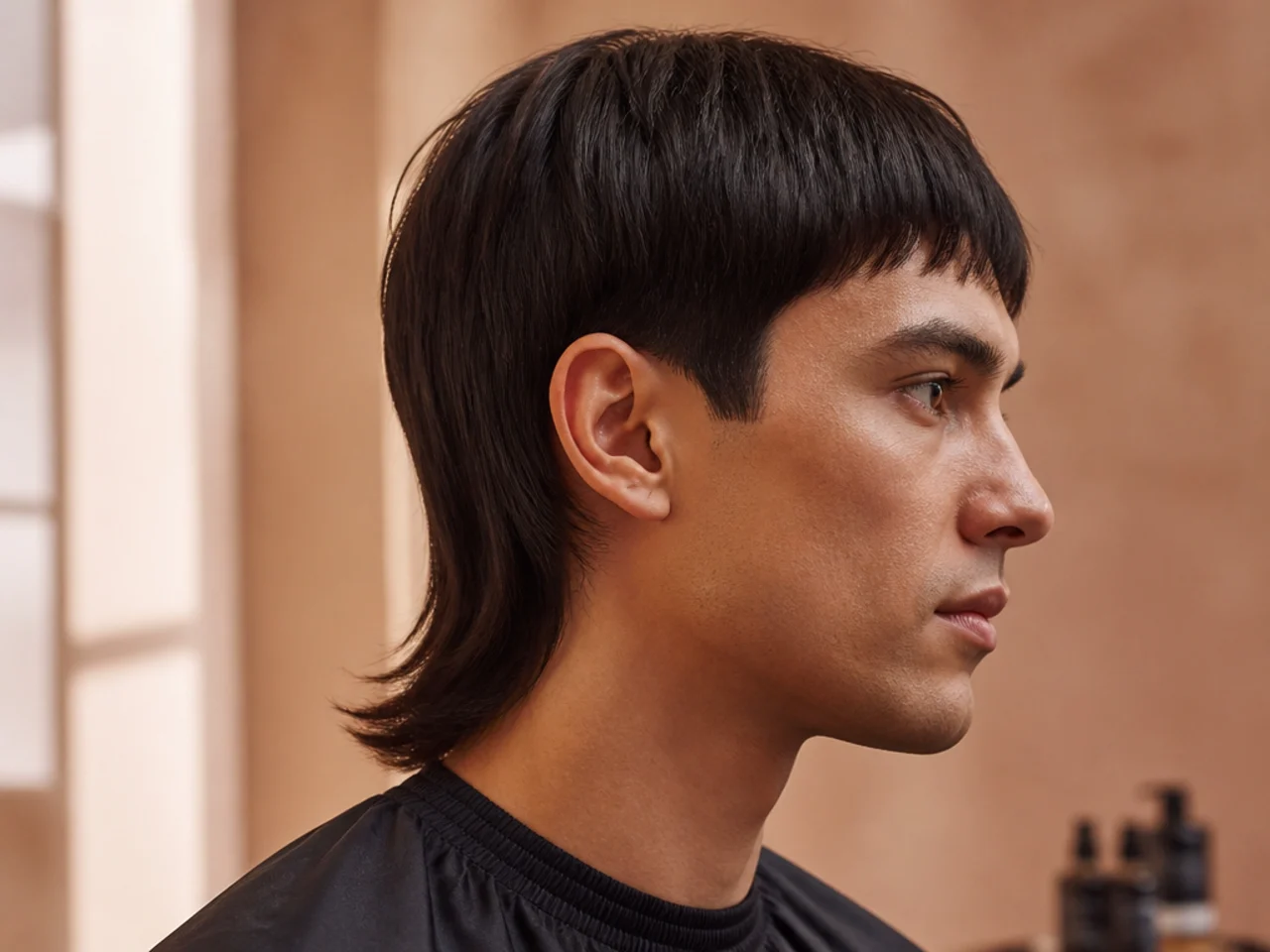
Straight hair reveals every layer line, so this mullet leans on aggressive point-cutting for the texture the hair cannot build on its own. The shape reads sharpest on straight hair because nothing softens the internal work — every layer and every point-cut edge is visible.
Suits square, heart, and oval faces. Best on dense straight hair that holds shape.
Ask for: "Straight hair mullet, two-inch top point-cut aggressively for texture, three-inch feathered nape with razor-thinned ends, low taper on the sides." Molding paste through damp hair, blow-dry forward and up, spike lightly at the crown.
6. Long Mullet
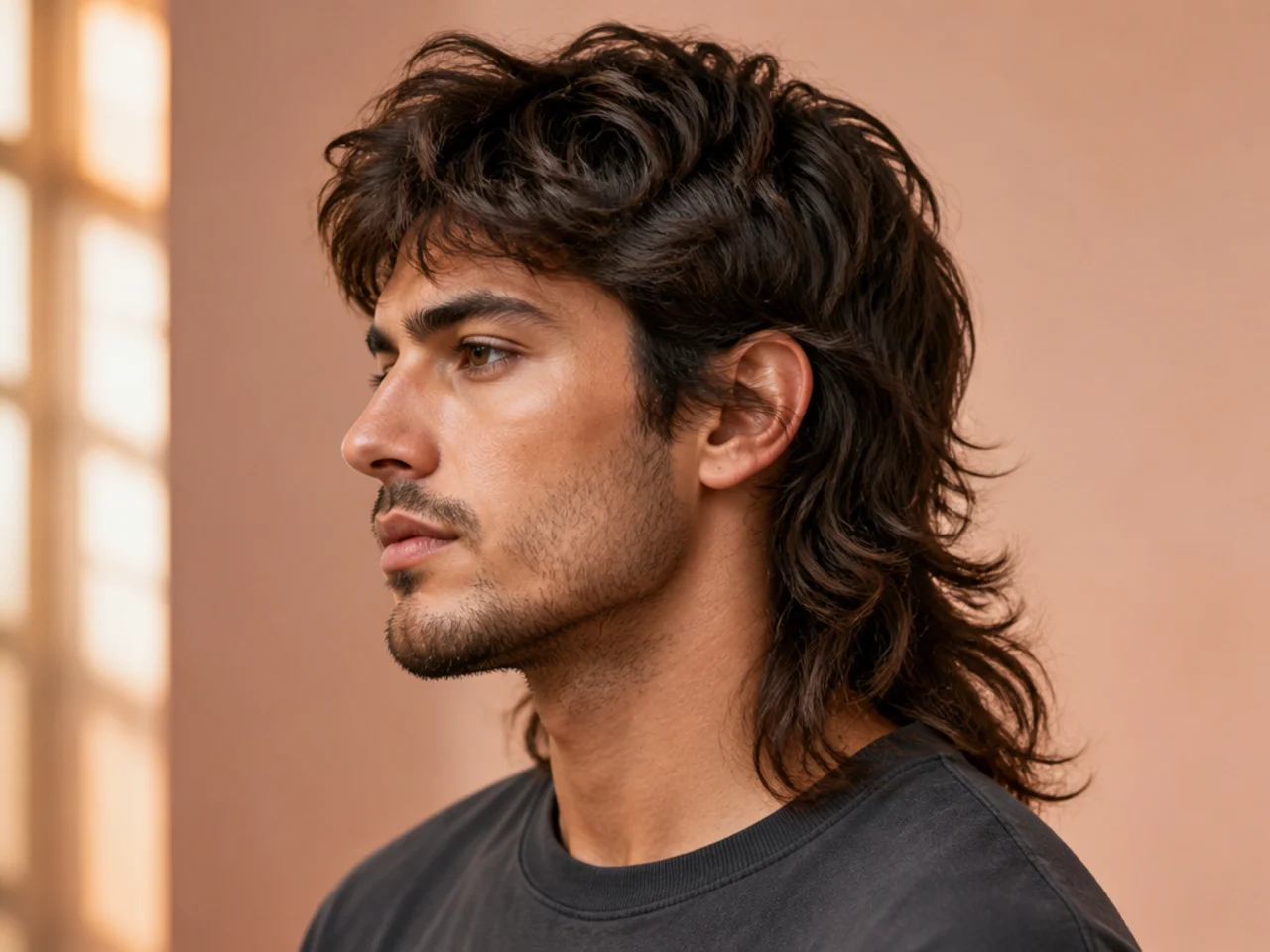
The longest end of the range. Three to four inches on top, six-plus inches at the nape, and enough side length to keep the whole silhouette flowing. Reads bold, romantic, and slightly rock-adjacent — you commit to this one, you commit fully.
Suits oval and square faces. Best on straight or wavy hair with enough density to hold length without going flat.
Ask for: "Long mullet, three-and-a-half-inch top with internal layers, six-inch nape with layered ends, sides scissor-cut to about two inches, feathered perimeter." Style with a light cream or a sea-salt spray to keep movement without weight.
7. Short Mullet
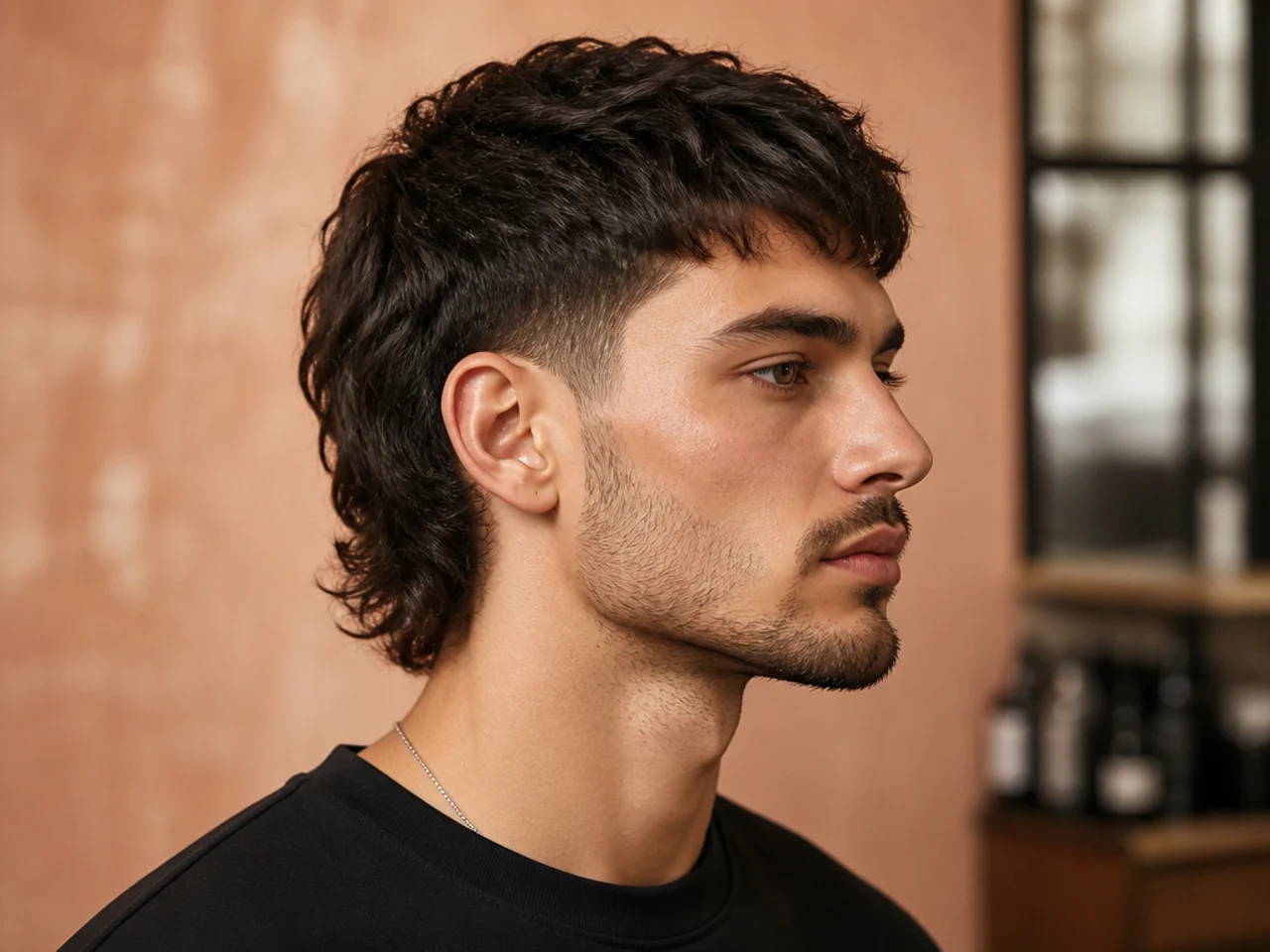
The mullet compressed into a workplace-safe footprint. One-and-a-half inches on top, one-and-a-half-inch nape, softly tapered sides — the two-length silhouette still reads clearly from the side but nothing hangs off the collar.
Suits every face shape. Best for guys who want the shape without the barbershop conversation.
Ask for: "Short mullet, one-and-a-half-inch top with soft layers, one-and-a-half-inch feathered nape, scissor-blended sides — no fade line." See our full short mullet haircut men breakdown for 25 more variations at this length.
8. Faded Mullet
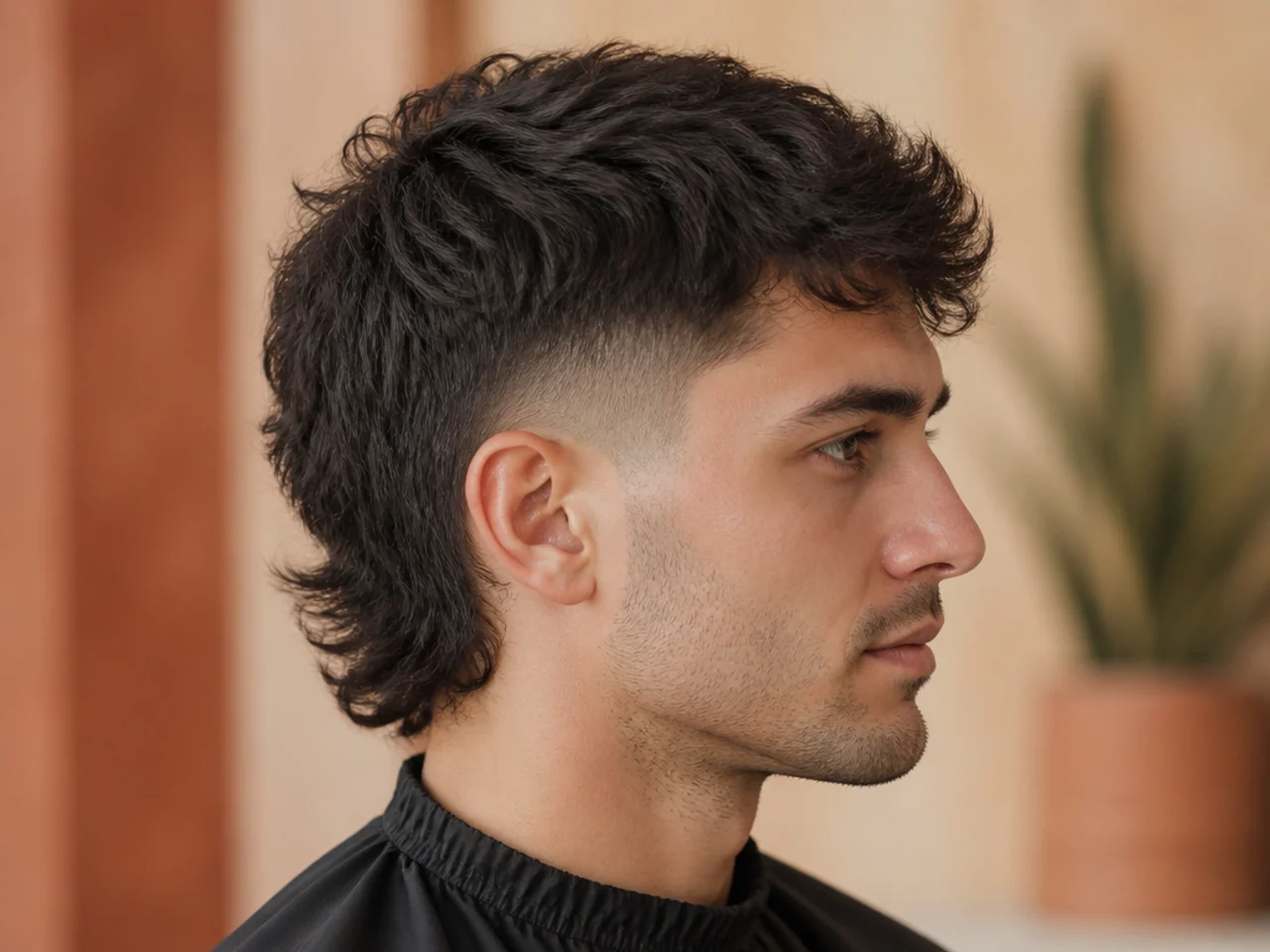
A clean fade replaces the scissor-blended sides — most commonly a mid fade that starts around the temples and drops to skin at the sideburn. The fade sharpens the whole shape, gives the mullet a clear vertical line, and reads modern without leaning punk.
Suits square, oval, and diamond faces where the fade line adds jaw definition.
Ask for: "Faded mullet, two-inch textured top, three-inch feathered nape, mid fade dropping to skin at the sideburn and blending up to a guard 2 at the temple." See our mid fade haircut guide for a full breakdown of the fade line.
9. Burst Fade Mullet
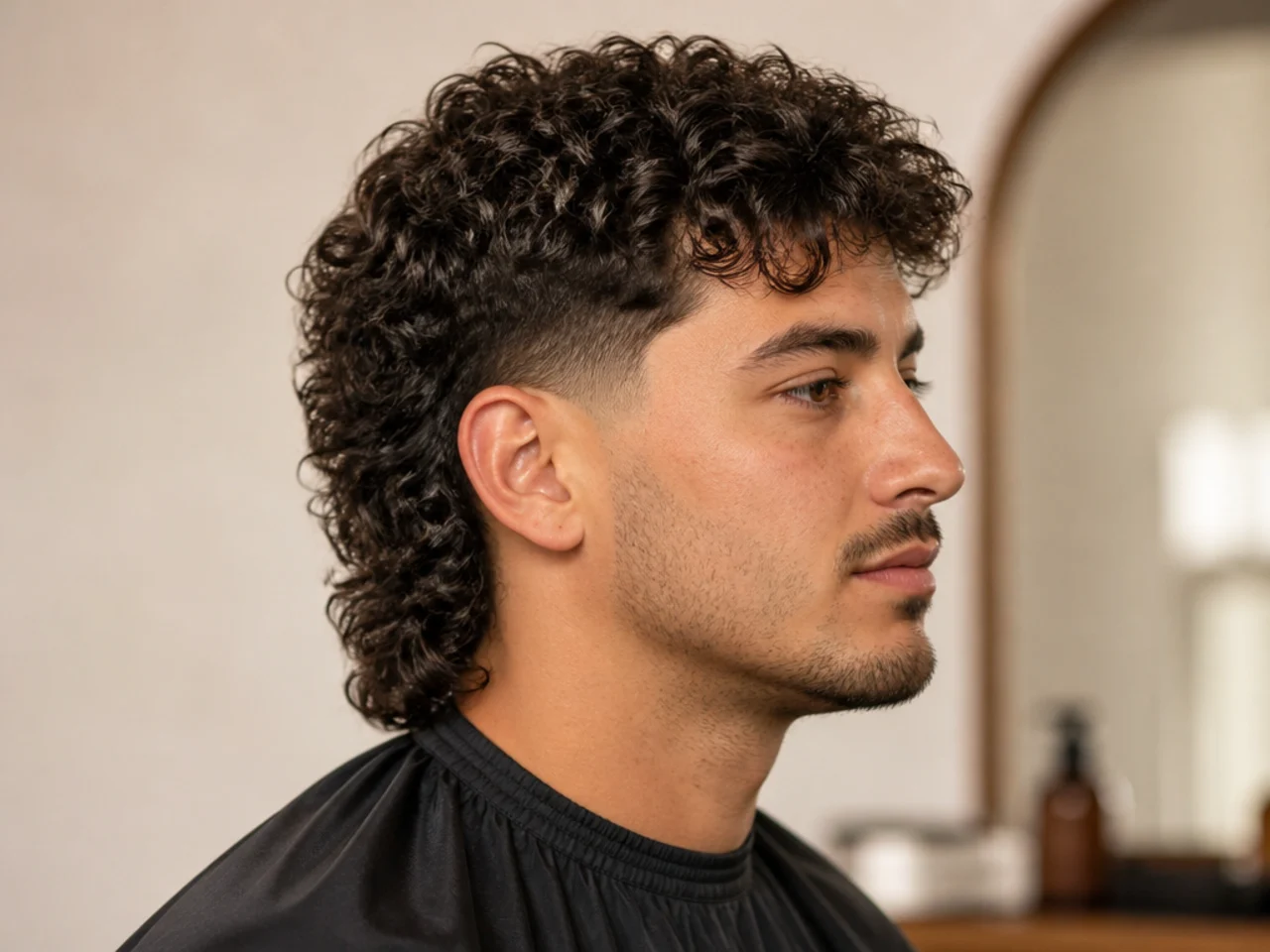
The burst fade curves in a semicircle around each ear, leaving the nape section untouched at full length. That leaves a strip of length behind the ear that flows straight into the mullet's back — a signature you do not see on many other cuts.
Suits oval, square, and diamond faces. Works with any hair type but shines with a bit of wave or curl.
Ask for: "Burst fade mullet, two-and-a-half-inch top with soft layers, burst fade to a guard 1 curving around each ear, keep the nape full length and feathered." See our burst fade mullet guide for the deep-dive.
10. Low Taper Fade Mullet
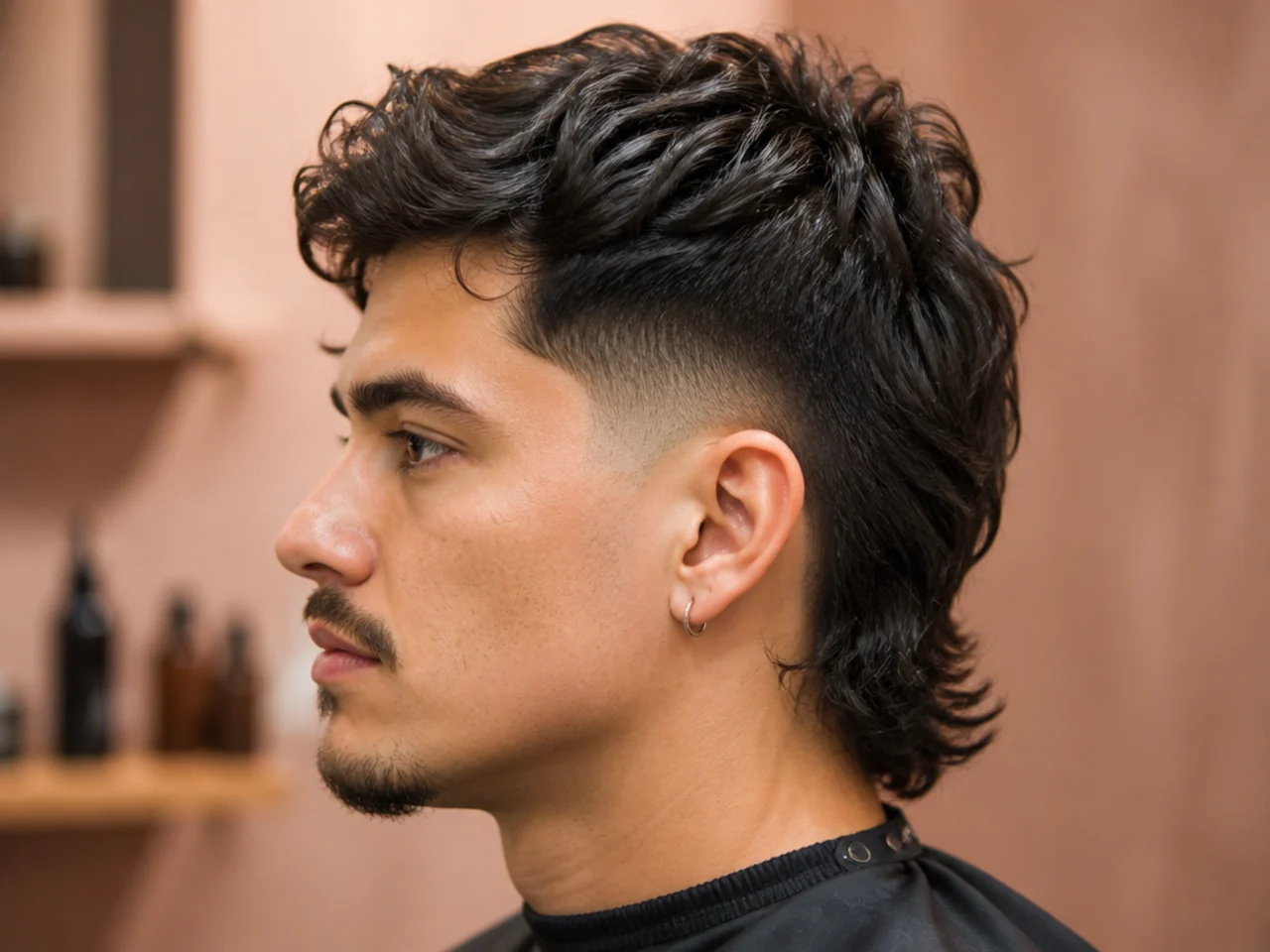
The subtlest fade option. The low taper fade hugs the sideburn and drops just above the ear, leaving most of the side length intact and letting the mullet shape lead the read. Sharp without shouting.
Suits every face shape. Best for guys who want a fade signature without the visual weight of a mid or high fade.
Ask for: "Low taper fade mullet, two-inch textured top, three-inch feathered nape, low taper fade dropping to skin at the sideburn." See our full low taper fade mullet guide for the complete breakdown.
11. Skin Fade Mullet
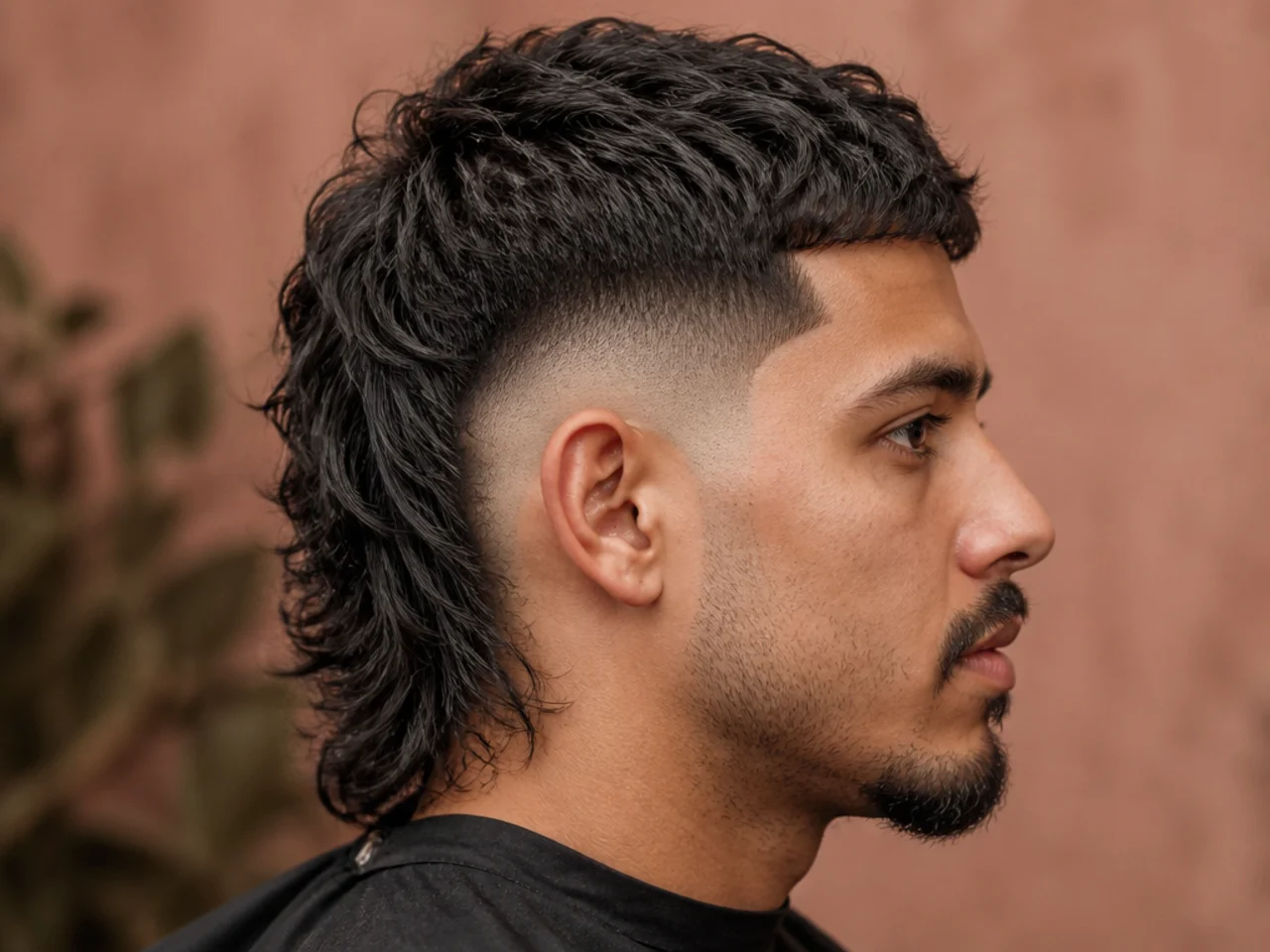
The loudest fade option. The sides drop to bald skin from the sideburn up to the parietal ridge, then blend into the layered top over a short vertical stretch. The nape sits over that fade with maximum contrast — nothing on the side, everything at the back.
Suits oval, square, and diamond faces. Best on guys who want the mullet to read as a statement cut from the first glance.
Ask for: "Skin fade mullet, two-and-a-half-inch textured top, four-inch feathered nape, skin fade from the sideburn up to the parietal ridge, hard line-up at the temples." Style with a strong-hold clay pushed backward.
12. Disconnected Mullet
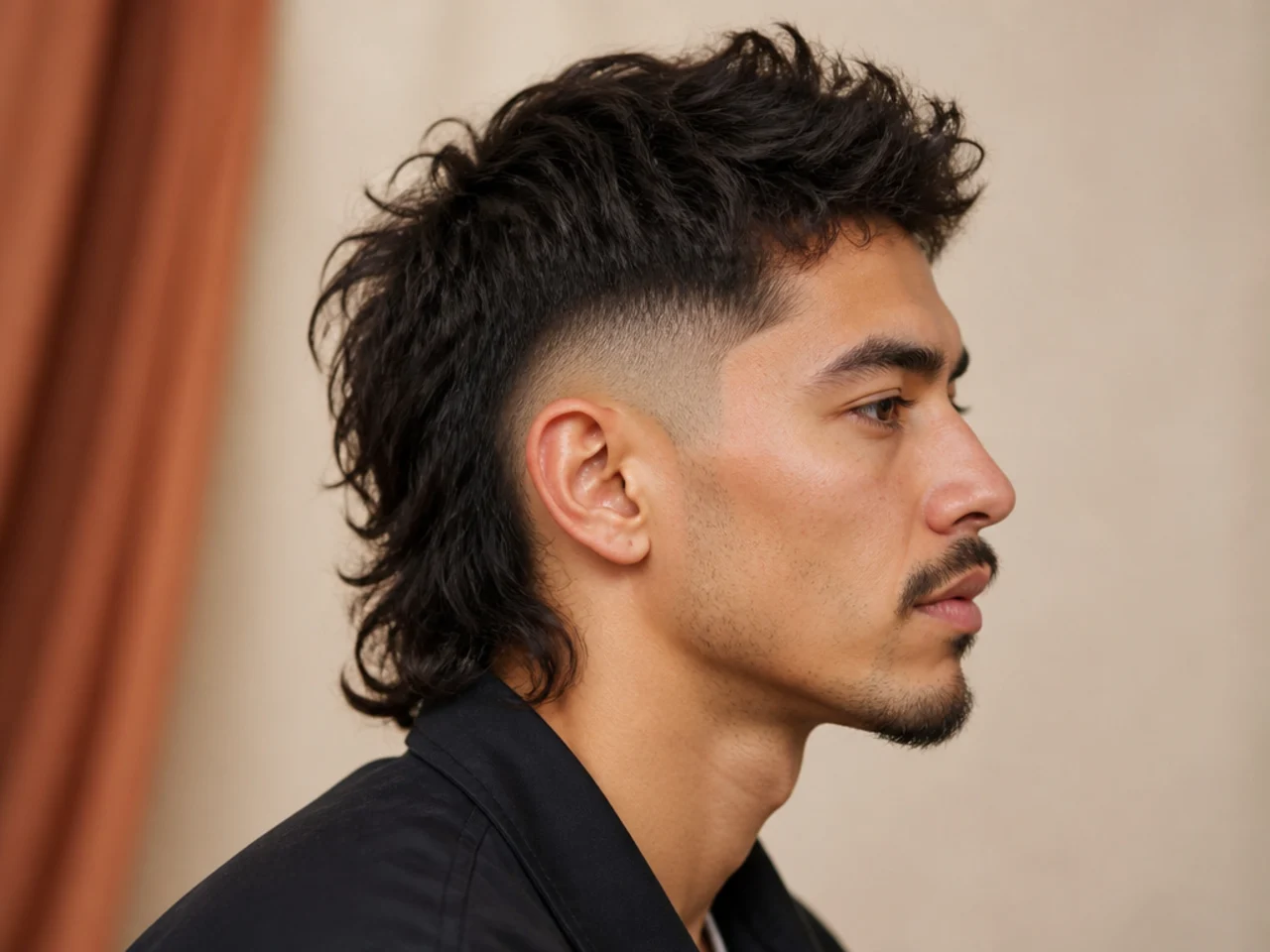
No blend. A hard disconnection line runs around the parietal ridge, with the layered top and mullet nape sitting over an undercut base. The two lengths meet at a clean edge instead of transitioning through a fade — architectural and deliberate.
Suits oval, long, and diamond faces where the vertical drop of the disconnect flatters the profile.
Ask for: "Disconnected mullet, three-inch textured top, half-guard undercut on the sides, four-inch nape sitting over the disconnect line, keep the disconnection line clean and hard." Blow-dry the top backward so the disconnect stays visible.
13. Undercut Mullet
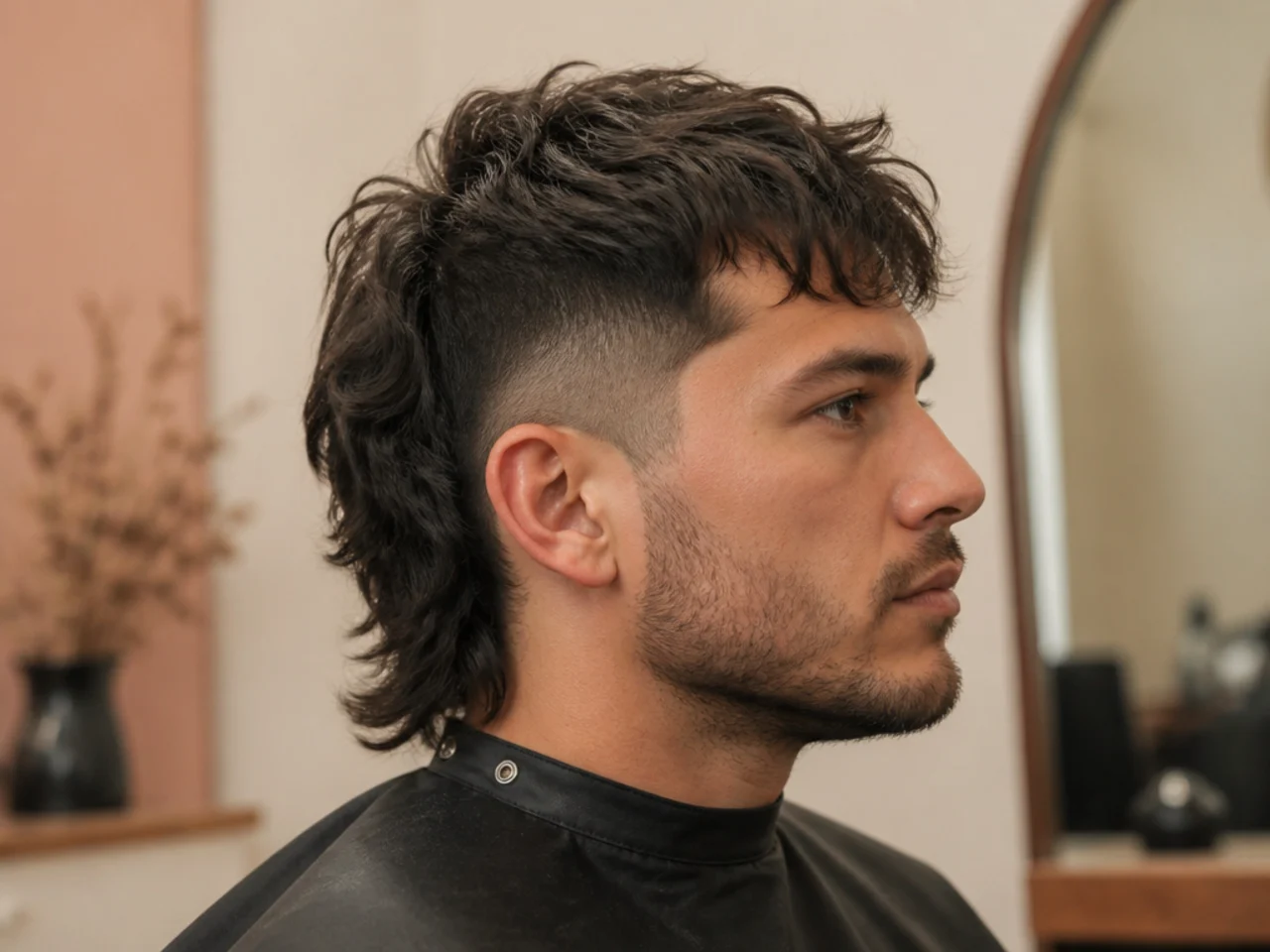
A softer cousin of the disconnected version. Sides clipper-cut to a single short length with no fade and no hard line, top and nape kept fully long — the visual language is "long-on-short" rather than "step-down." Reads modern and workwear-adjacent.
Suits oval, square, and heart faces. Best on straight to wavy hair that flows without going puffy.
Ask for: "Undercut mullet, three-inch top with internal layers, guard 2 or guard 3 undercut on the sides taken to a single length — no fade — four-inch feathered nape." Style with a light styling cream, comb backward.
14. Textured Mullet
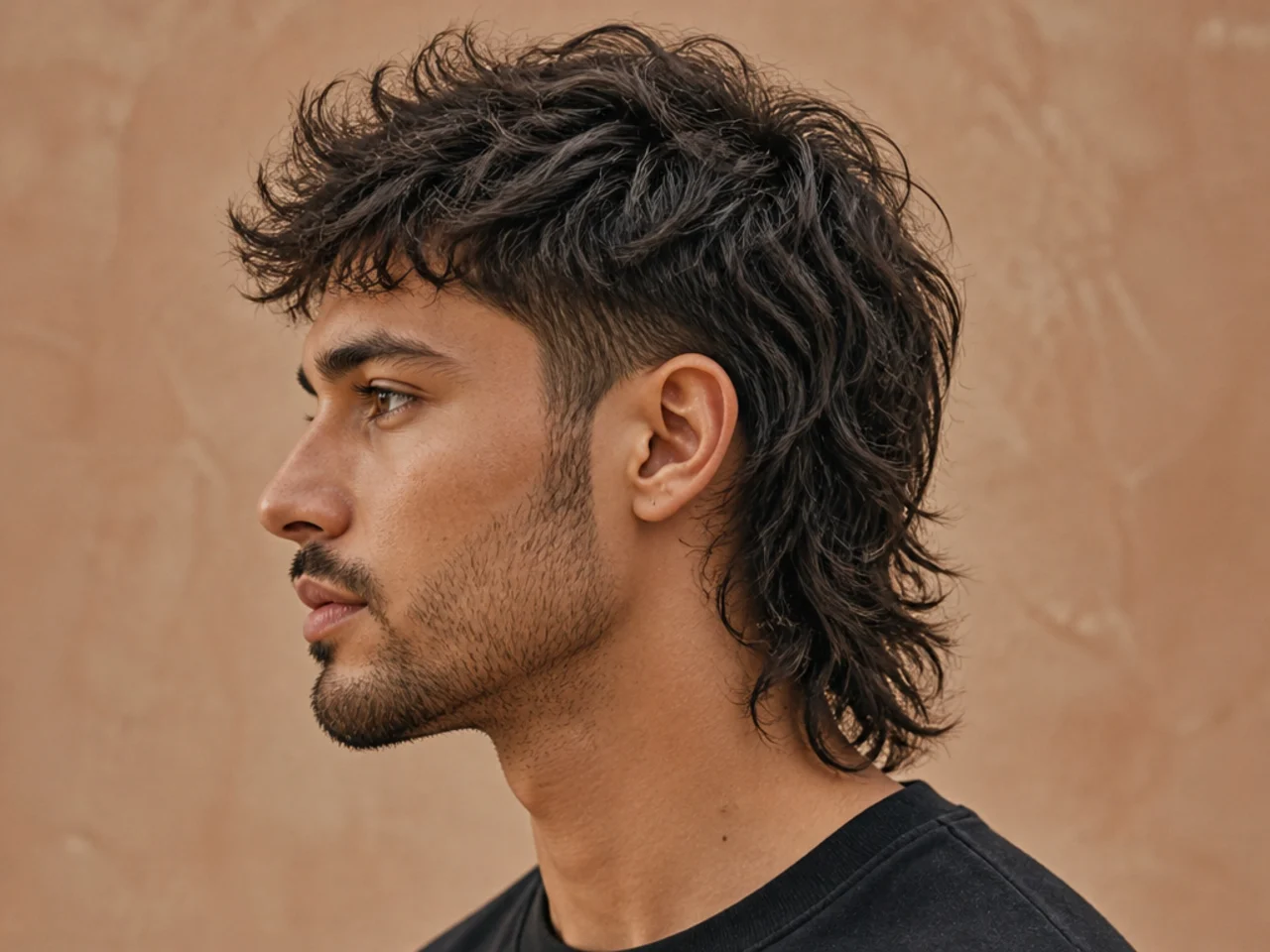
Every layer visible. The top gets point-cut heavily so each section falls in a defined piece rather than blending into a mass. The nape mirrors the top — piecey rather than feathered — so the whole cut reads as continuous texture from front to back.
Best on medium-thick straight or wavy hair. Suits oval, heart, and square faces.
Ask for: "Textured mullet, two-and-a-half-inch top with aggressive point-cutting, three-inch piecey nape, razor-thinned perimeter, blended low taper on the sides." Salt spray plus a matte paste worked through damp hair, twist pieces for definition.
15. Layered Mullet
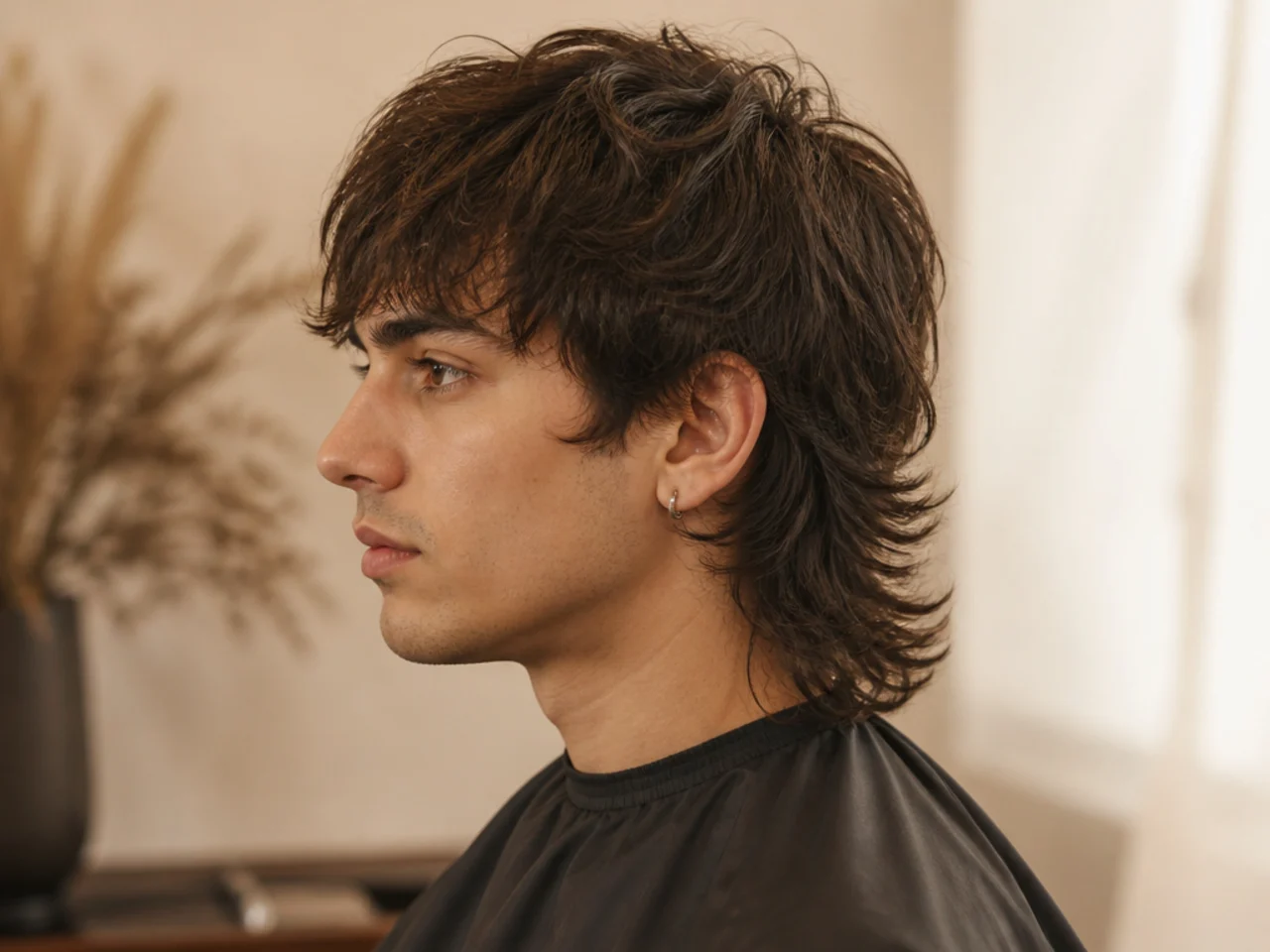
Stacked internal layers add lift through the crown and cascade into the nape. Where the textured mullet reads piecey and separated, the layered mullet reads continuous and rolling — long enough at the back to swing with head movement.
Suits oval, heart, and diamond faces. Best on medium-density straight or wavy hair.
Ask for: "Layered mullet, three-inch top with stacked internal layers building crown lift, four-inch cascading nape, softly blended sides." Blow-dry with a round brush at the crown for lift, air-dry the nape.
16. Shaggy Mullet
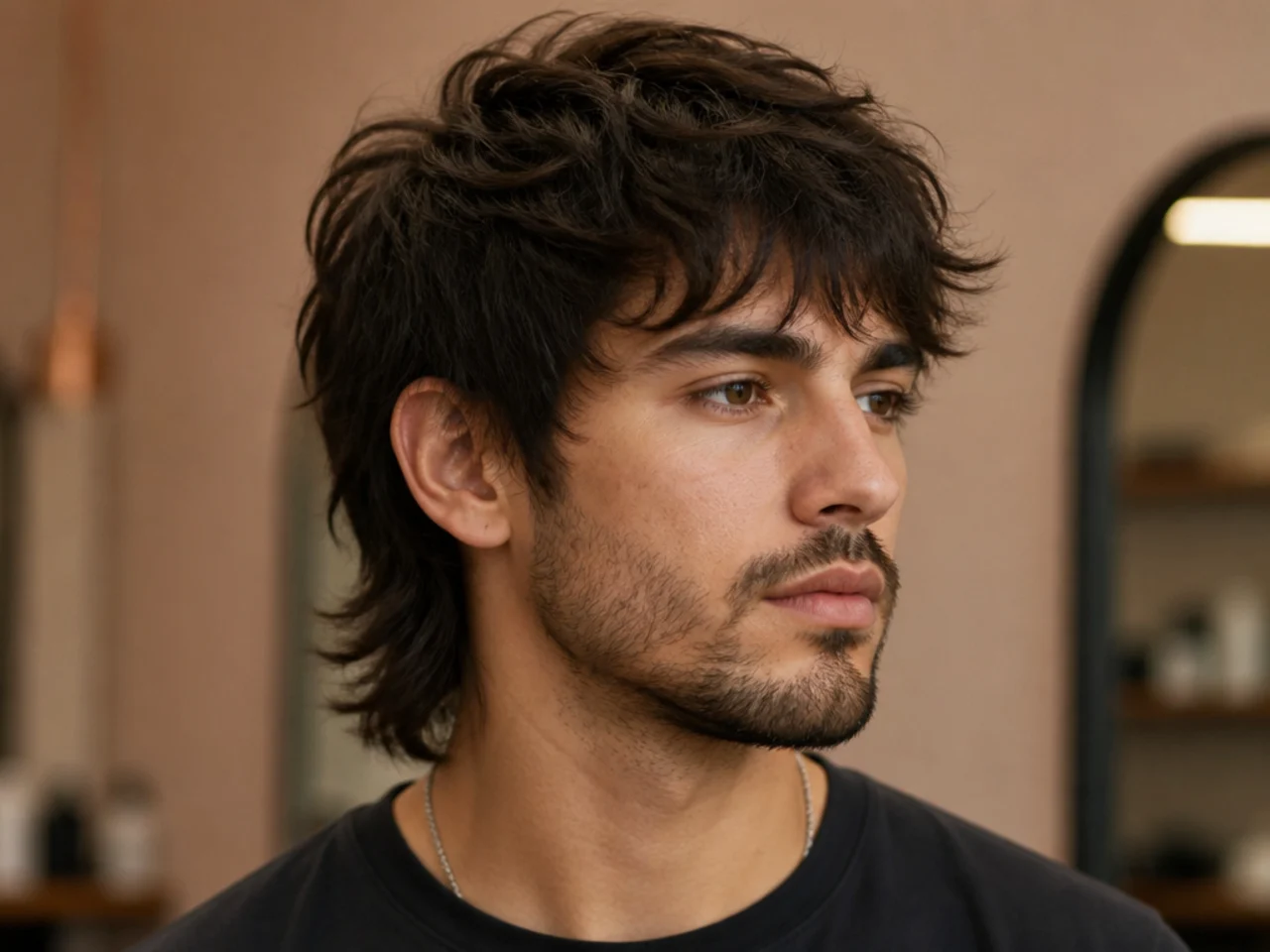
The mullet's blur-into-shag cousin. Softer top layering, longer side length, and a wispy nape that feathers instead of dropping in a defined line — the shape reads organic and grown-out rather than architectural.
Suits oval and heart faces. Best on wavy hair that carries its own texture.
Ask for: "Shaggy mullet, three-inch top with wispy internal layers, sides scissor-cut to about two inches, four-inch wispy feathered nape, razor-thinned perimeter." See our shag haircuts guide for the deeper shag family.
17. Wolf Cut Mullet
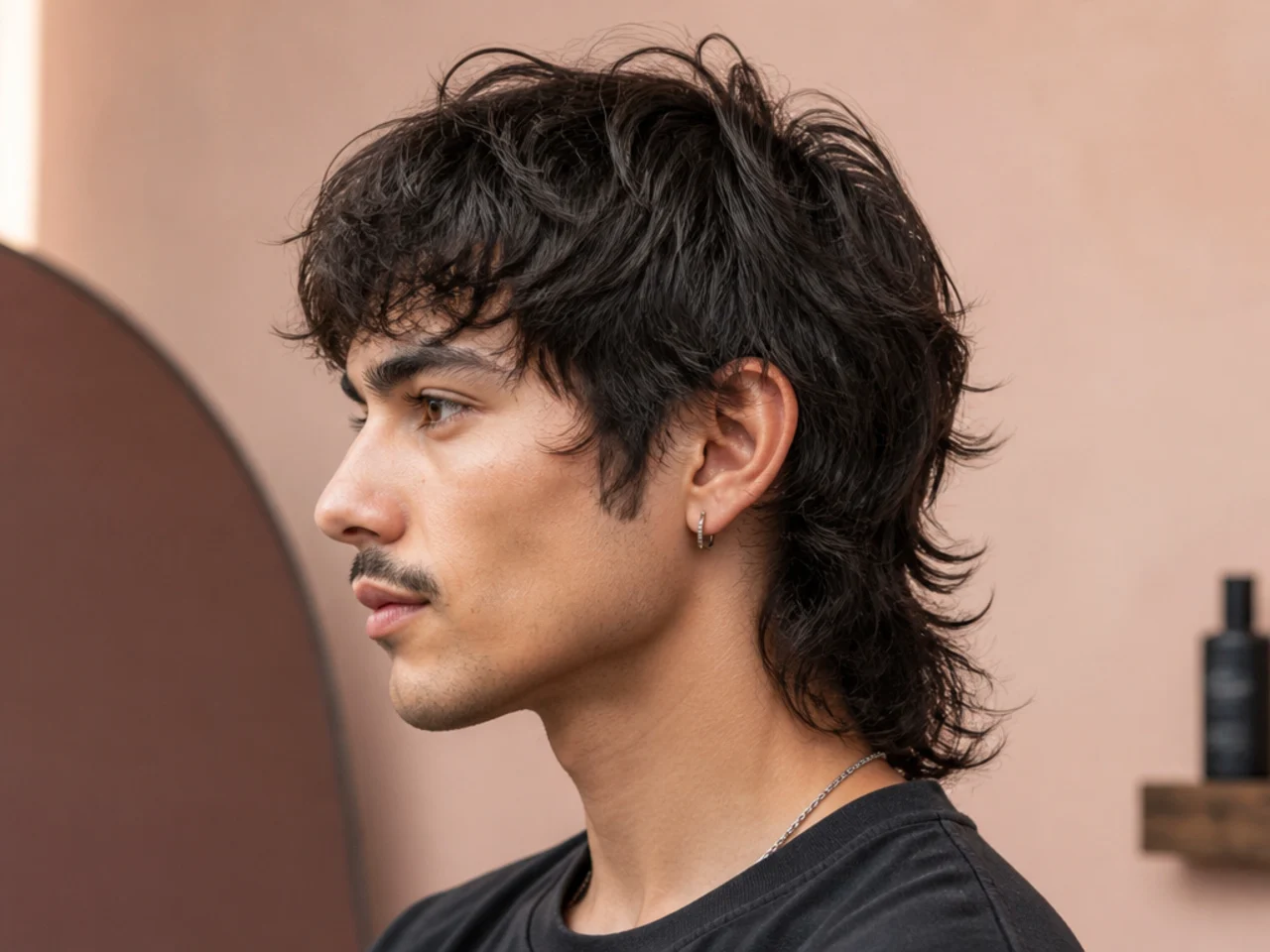
The hybrid. Wolf cut layering runs through the crown with face-framing pieces at the cheekbones, the nape holds mullet-length back weight, and the two systems blend through the sides. Reads bolder than a straight wolf cut, softer than a straight mullet.
Suits oval, heart, and diamond faces. Best on wavy or curly hair.
Ask for: "Wolf cut mullet, three-inch layered top with face-framing pieces at the cheekbones, four-inch feathered nape with mullet-length back weight, softly blended sides." See our wolf cut hair men breakdown for the pure wolf cut for comparison.
18. Korean Mullet
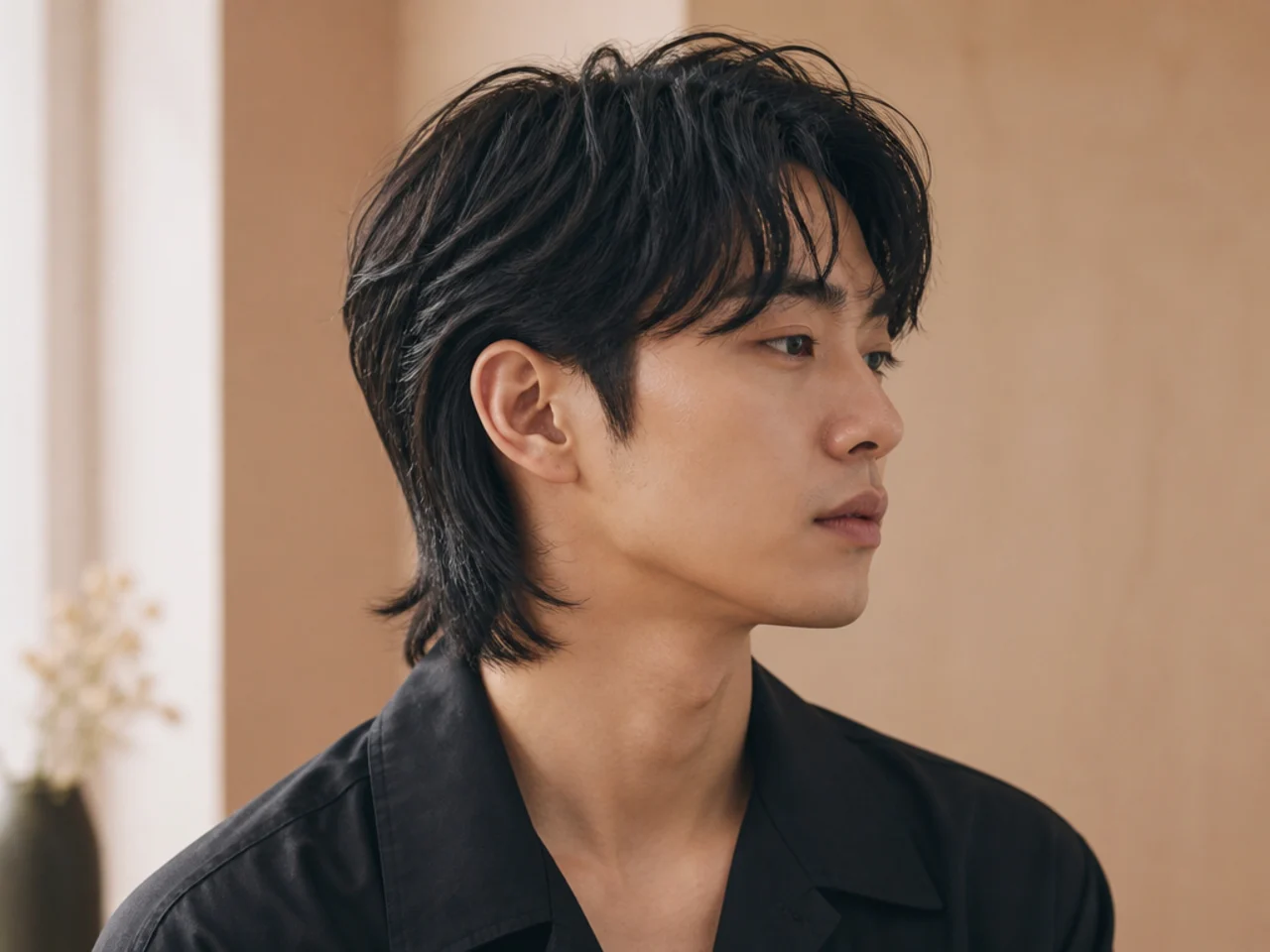
Soft, deliberate, camera-ready. The Korean-inspired mullet builds rounded internal layers into the crown, keeps a soft forward fringe, and finishes glossy rather than matte. It is what most K-drama leads are wearing when the storyline calls for a slightly moody cut.
Suits oval and long faces. Best on straight to slightly wavy hair.
Ask for: "Korean mullet, three-inch top with soft rounded internal layers, forward fringe to just above the eyebrows, three-inch feathered nape, softly blended sides." See our Korean haircut men guide for the full K-styling direction.
19. Asian Mullet
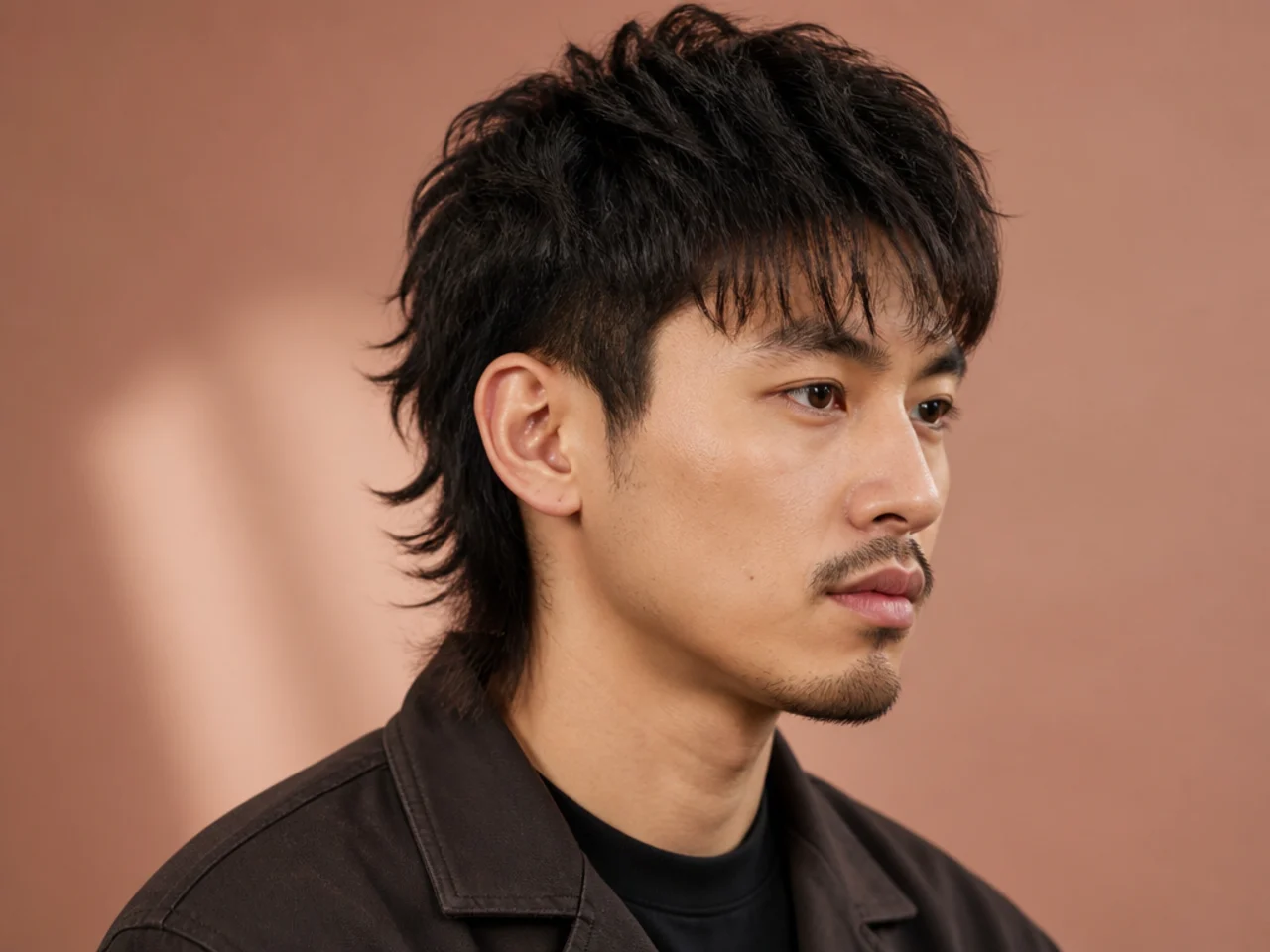
The streetwear-heavy Asian version — bolder than the Korean cousin. Sharp low fade or clean disconnection at the sides, more defined nape length, and a fringe pushed to the side or forward with grip. Reads modern-city rather than K-drama.
Suits oval, square, and heart faces. Best on dense straight hair.
Ask for: "Asian mullet, two-and-a-half-inch top with textured internal layers, four-inch feathered nape, low fade or clean disconnection on the sides, side-swept or forward fringe." See our asian mullet haircut men guide for the full styling walkthrough.
20. Mullet with Fringe
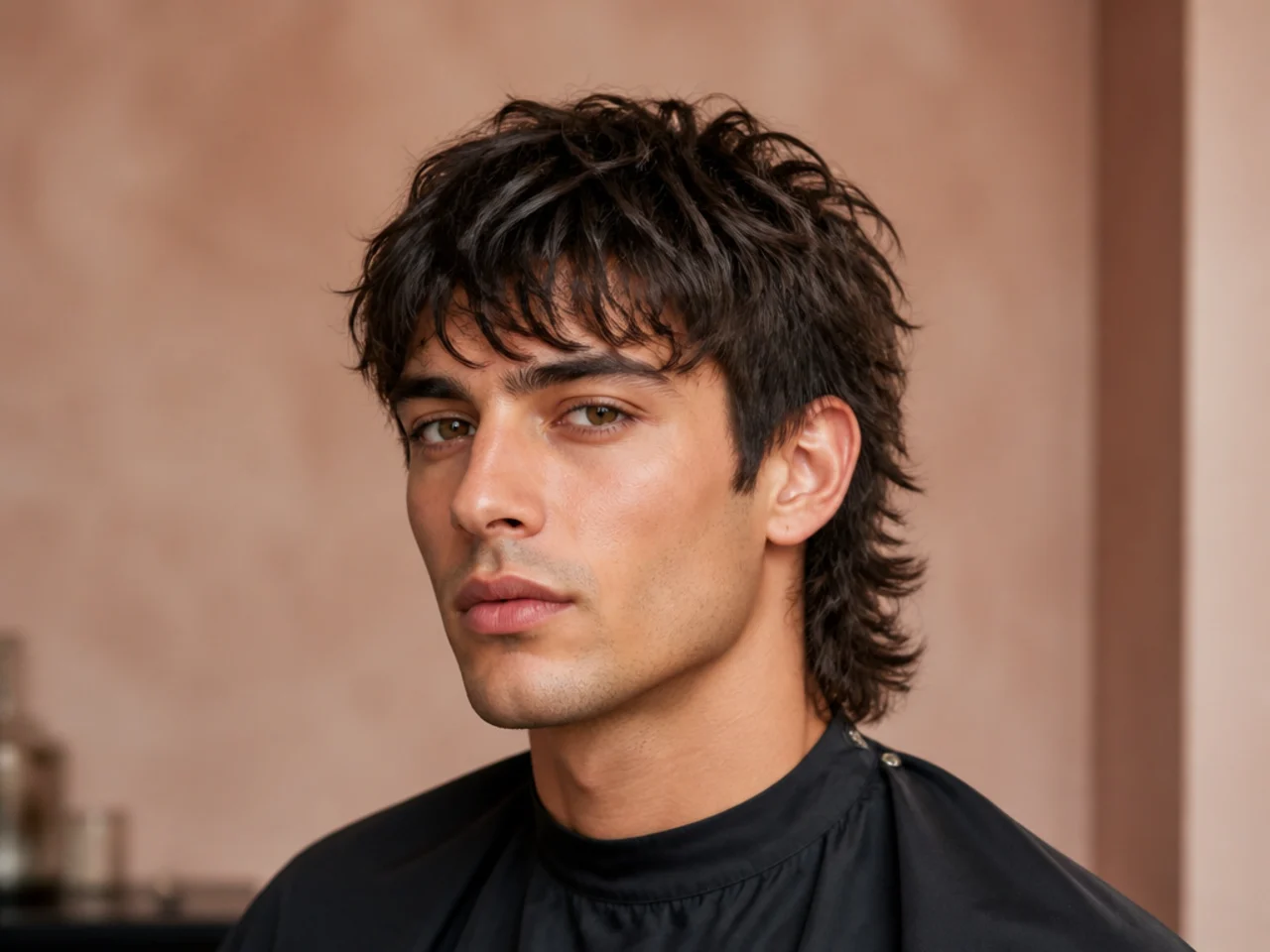
A forward fringe drops onto the forehead in piecey sections, balancing the length ratio — nape weight behind, fringe weight in front. Reads modern and approachable, and softens a strong or high forehead.
Suits round, oval, and heart faces where the fringe shortens the visual top of the face.
Ask for: "Mullet with a textured fringe, two-and-a-half-inch top with internal layers, fringe point-cut to fall in piecey pieces to the brow, three-inch feathered nape, softly blended sides." See our textured fringe men roundup for related fringe shapes.
21. Mullet with Curtain Bangs
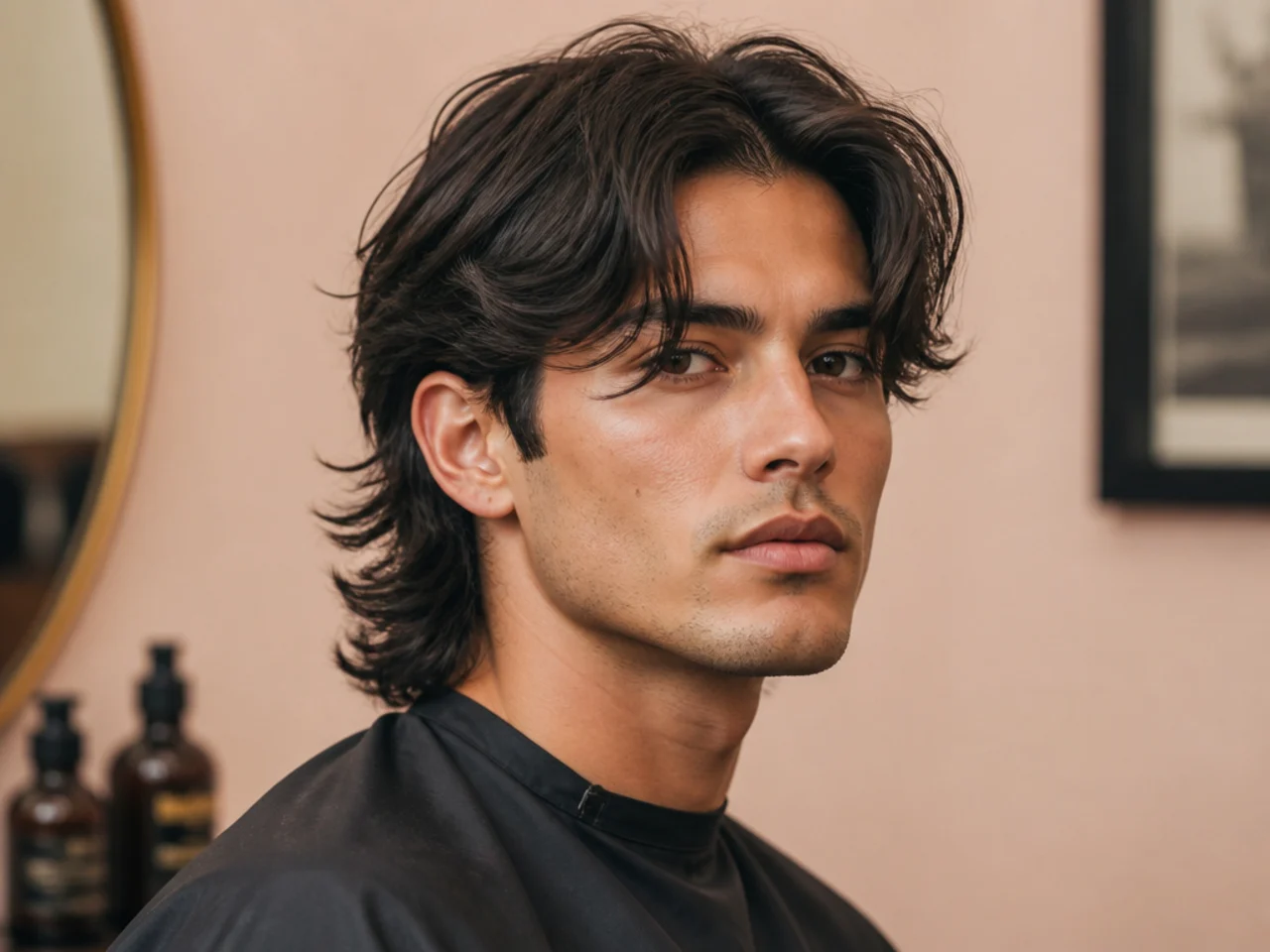
Center-parted curtain bangs frame the face in two soft sweeps, meeting the mullet's back weight for a full-length silhouette. Reads romantic and confident — think 70s rock reference filtered through 2026 styling.
Suits oval, heart, and square faces. Best on straight to slightly wavy hair.
Ask for: "Mullet with curtain bangs, three-inch top with a defined center part, curtain bangs blow-dried outward from the part to just below the cheekbone, four-inch feathered nape, softly tapered sides." Blow-dry the bangs over a round brush to set the curtain shape.
22. Mullet with Comma Hair
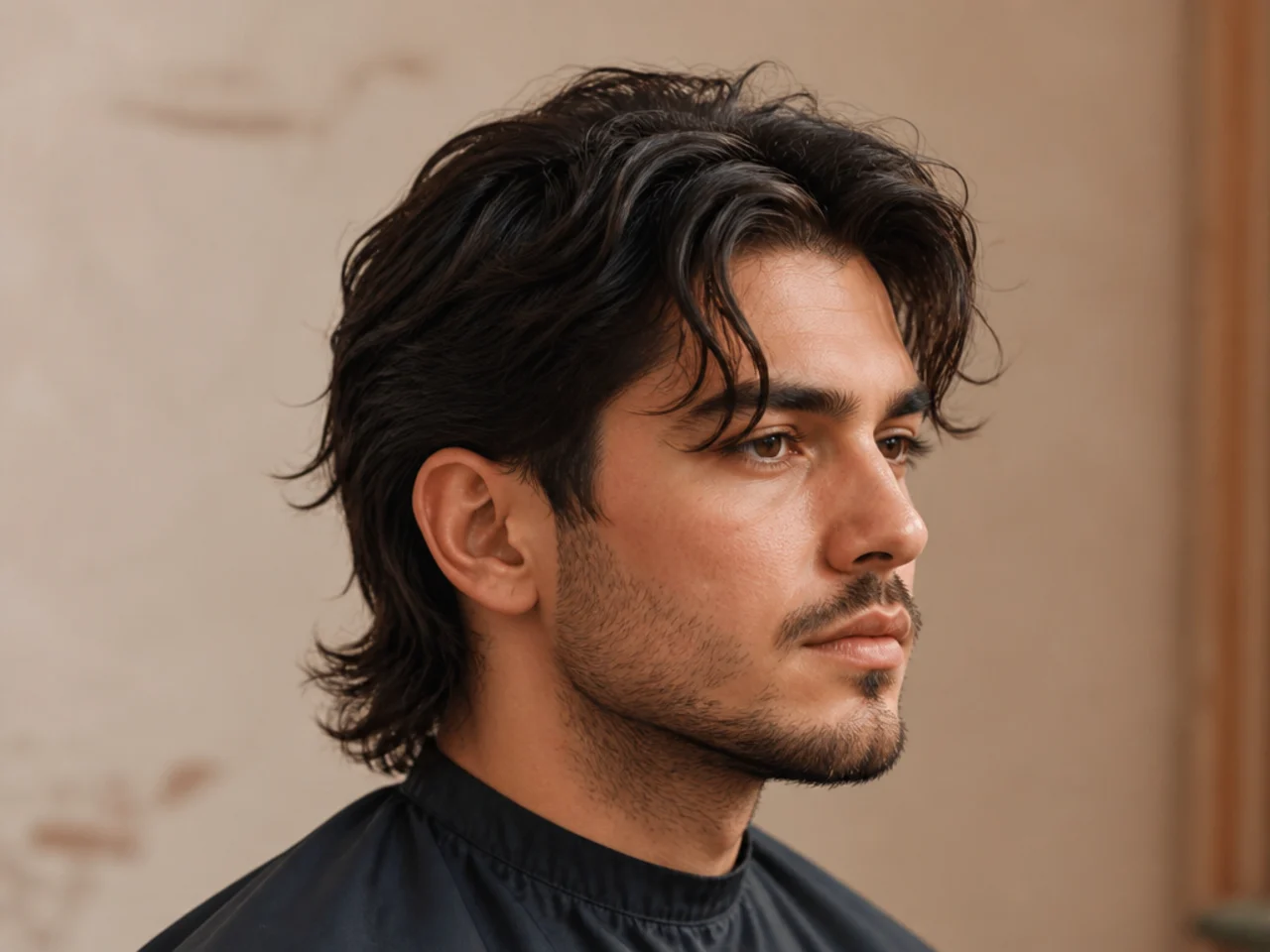
The comma is the styling move that turns a fringe into a curved punctuation mark at the forehead. Combined with a mullet, the front reads glossy K-drama and the back reads confident silhouette. Popular with guys who want two style languages in one cut.
Suits oval, long, and heart faces. Best on straight to slightly wavy hair.
Ask for: "Mullet with a comma fringe, two-and-a-half-inch top with soft internal layers, fringe long enough to curl inward with a small round brush, three-inch feathered nape, low taper on the sides." Blow-dry the fringe over a round brush and roll inward at the ends.
23. Mullet with Edgar
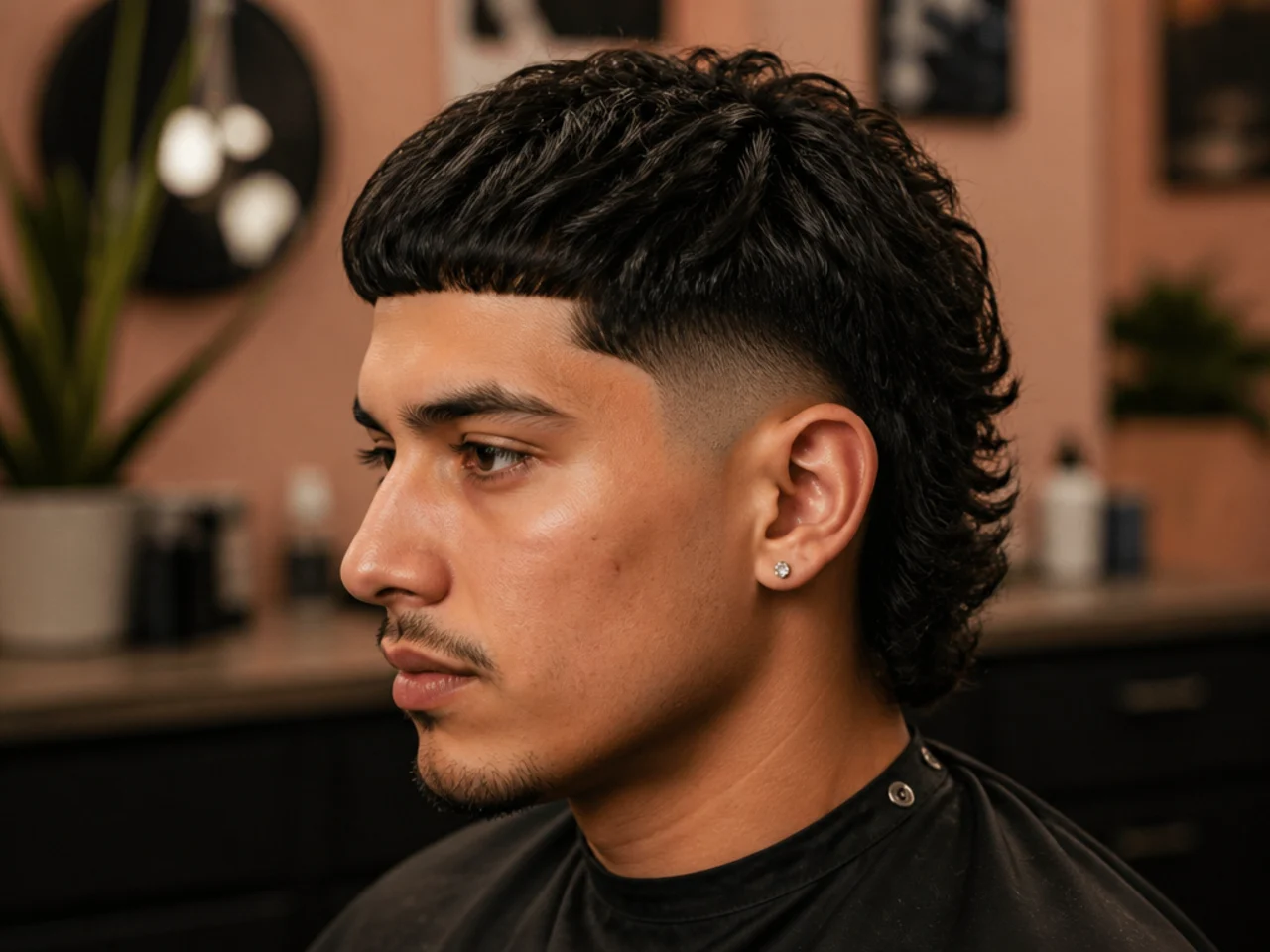
The Edgar cut's blunt straight-across fringe combined with the mullet's back length. The front reads sharp and geometric — a hard blunt line across the forehead — while the back drops into a soft feathered nape. Two visual languages meeting in one cut.
Suits square, oval, and heart faces. Best on straight to slightly wavy hair.
Ask for: "Mullet with an Edgar fringe, two-inch top, hard straight-across fringe cut at brow level, three-inch feathered nape, low skin fade on the sides." Comb the fringe straight down with a light styling mist.
24. Mullet with Beard
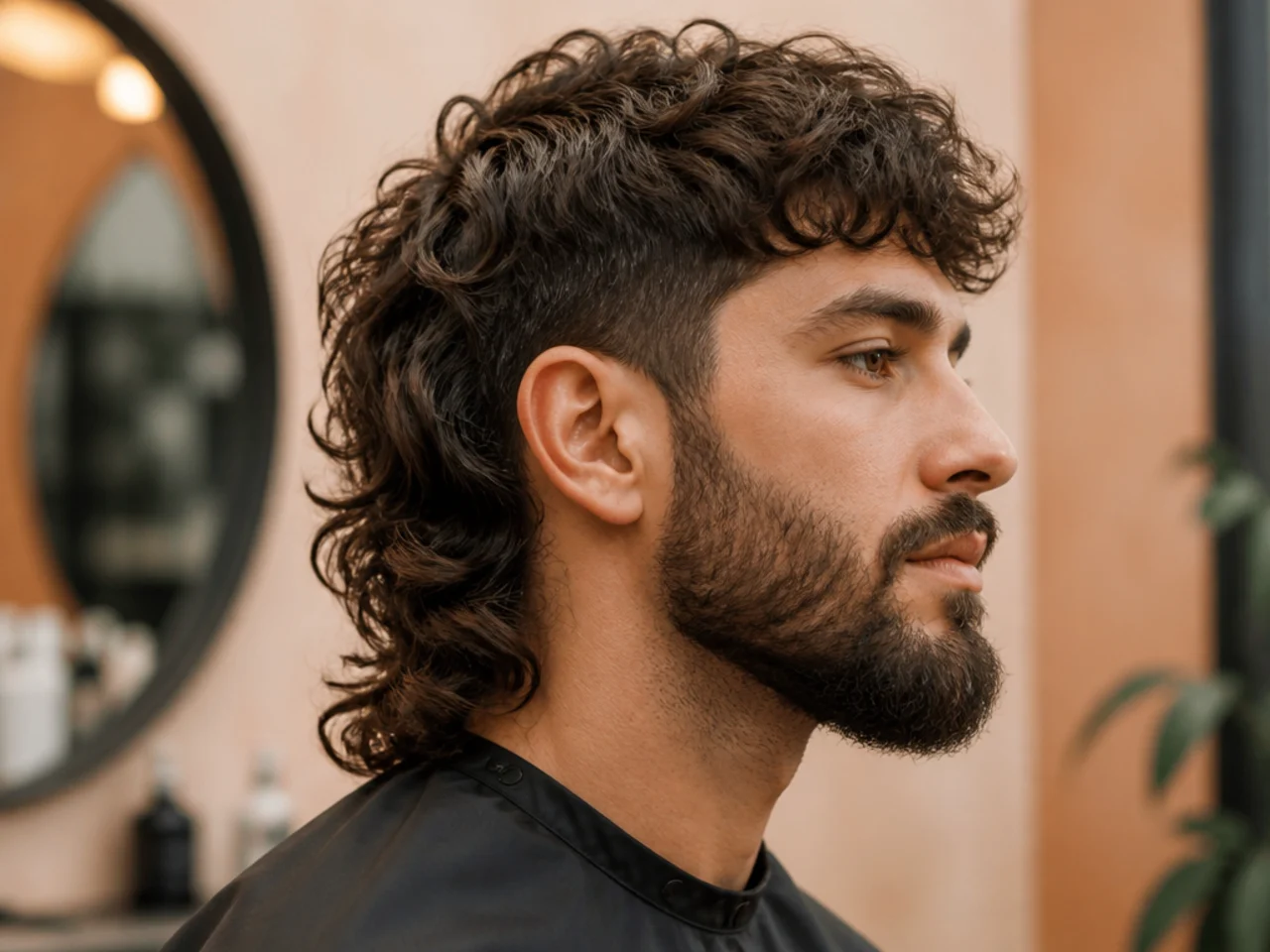
The beard grounds the shape. Where the top layers move and the nape feathers, the beard adds a hard visual base — the two together make the mullet read as an adult cut instead of a teen-only style. Match the beard grade to the taper for a connected look.
Suits diamond, oval, and square faces where the beard balances a wider forehead.
Ask for: "Mullet with a matched beard, two-and-a-half-inch top with internal layers, three-inch feathered nape, mid taper on the sides connecting into a matched-grade full beard, hard line at the sideburn." Trim the beard yourself every three days to keep the connection sharp.
25. Punk Mullet
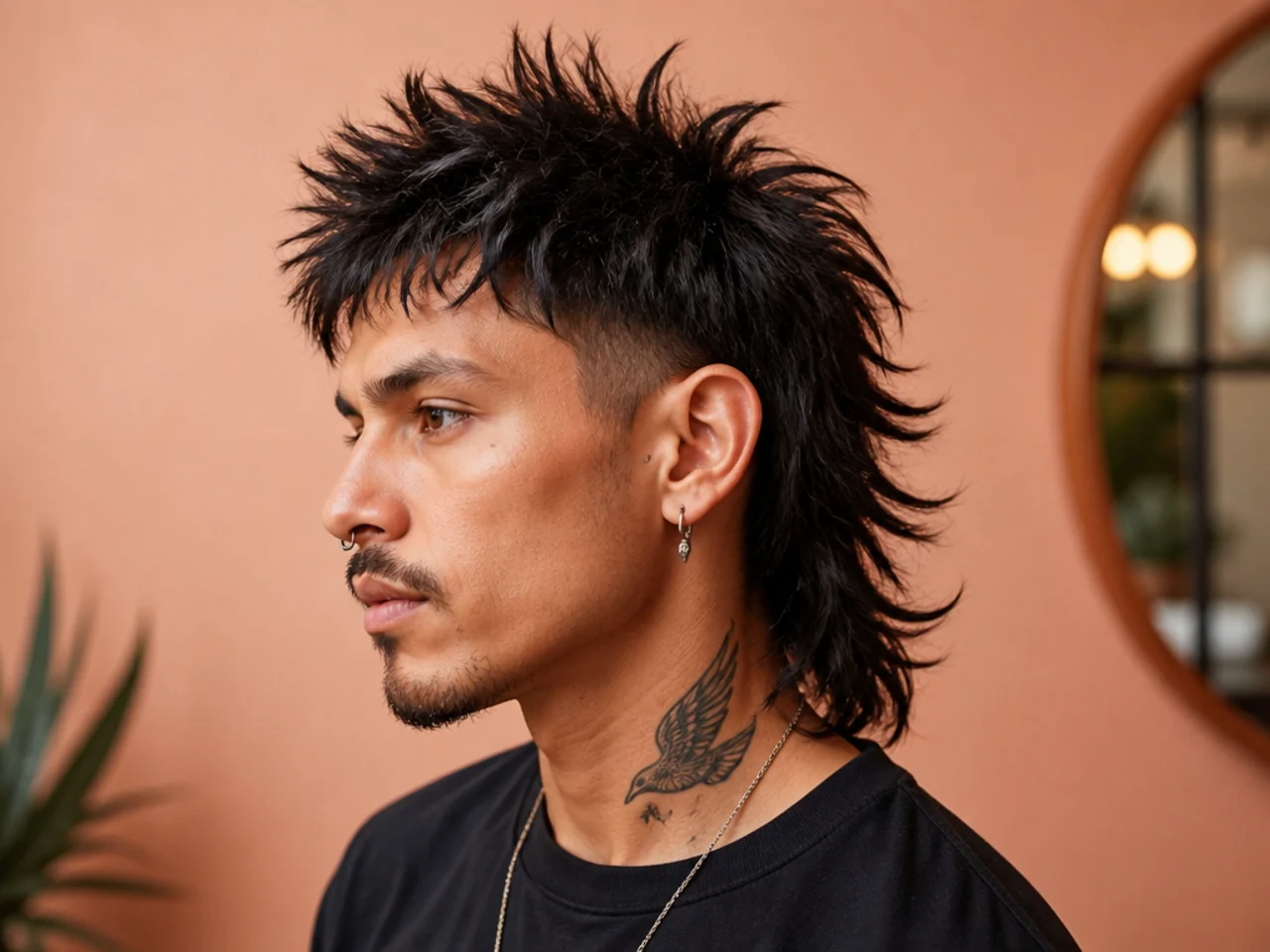
The loudest mullet on the list. Aggressive point-cutting turns the top into raw texture, the nape stays choppy rather than feathered, and the sides drop to a hard undercut or high skin fade. Every element leans in — nothing polished, nothing softened.
Suits oval, square, and diamond faces. Best on medium-thick hair that holds jagged edges.
Ask for: "Punk mullet, three-inch top aggressively point-cut for raw texture, four-inch choppy nape — no feathering — high skin fade or half-guard undercut on the sides." Strong-hold clay pushed forward and up, then hairspray to lock the mess.
26. Reverse Mullet
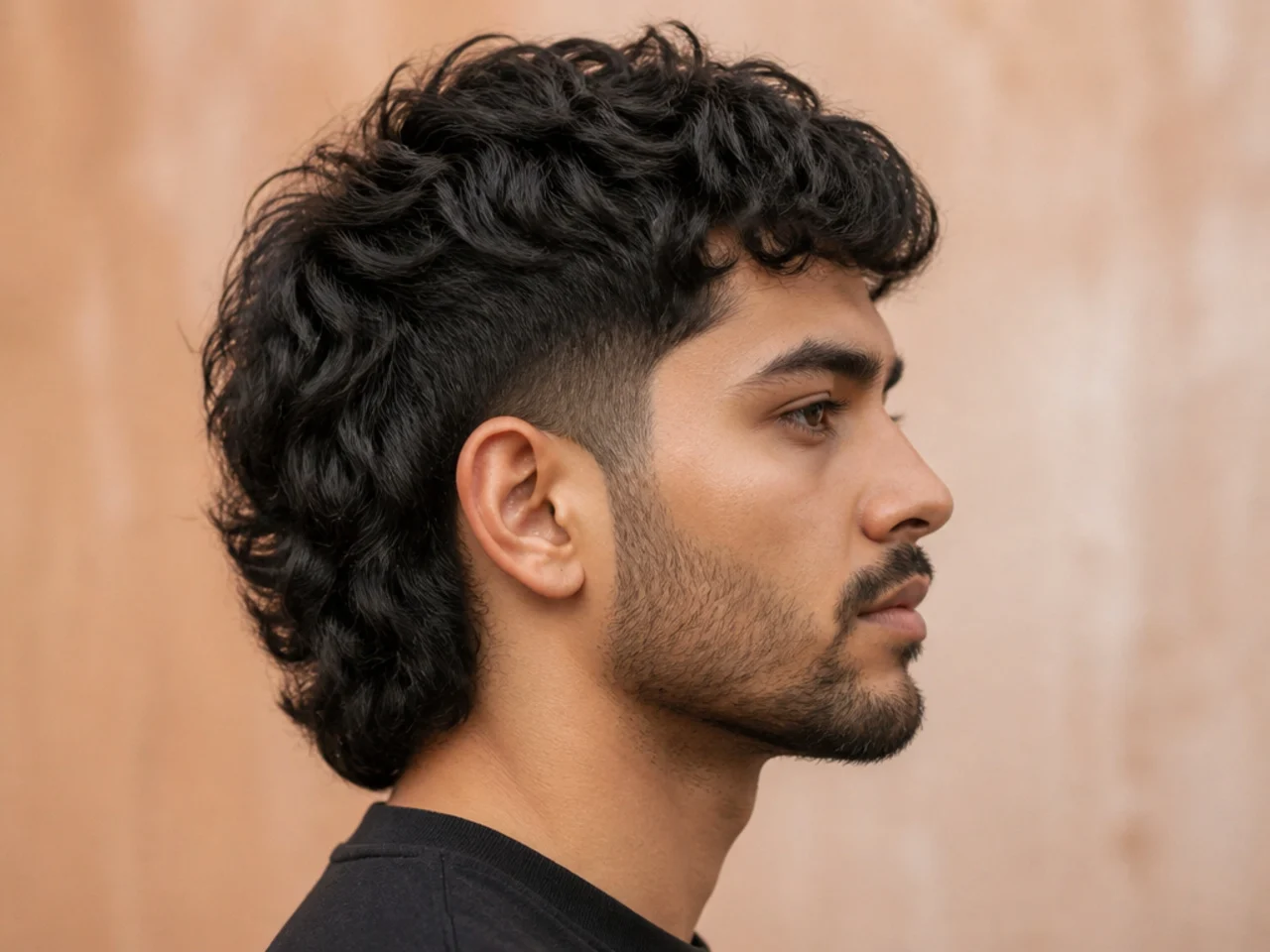
The mullet flipped. Long length lives on top and at the front, cropped short at the back and nape — the exact opposite of the classic ratio. Reads modern-fashion and unusual, and works for guys who want a mullet-adjacent statement without any back length.
Suits oval, heart, and long faces where the length up top balances a strong jaw.
Ask for: "Reverse mullet, four-inch top with internal layers swept forward, half-guard undercut through the back and nape, softly blended sides." Style with a matte clay through damp hair, sweep forward with a comb.
27. Mullet with Line-Up
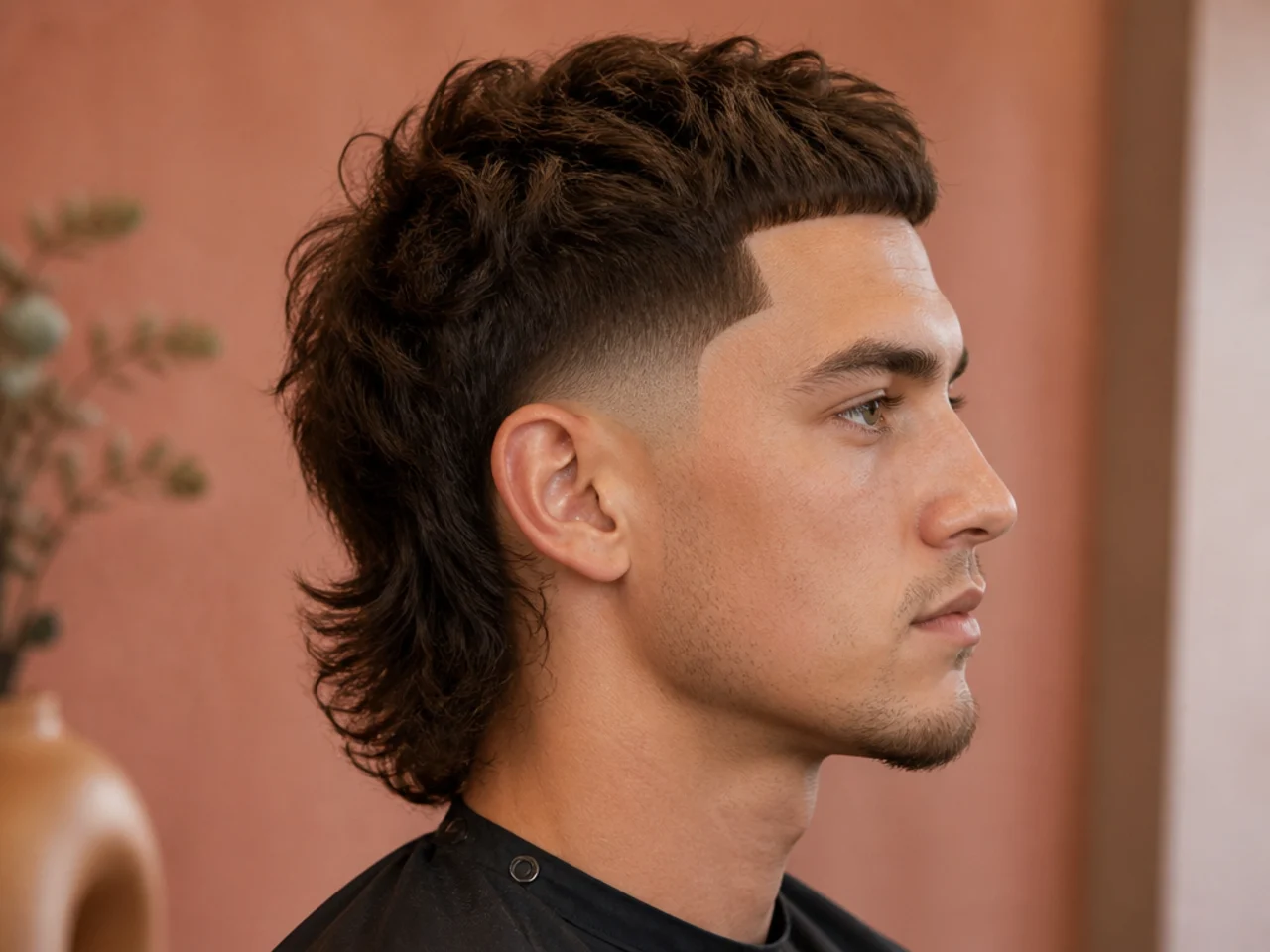
A razor line-up at the front hairline, temples, and sideburns turns the mullet into a geometry piece. The rest of the cut can be soft or textured — the line-up sharpens the whole read. Popular with guys who want a barbershop-fresh look every time they leave the chair.
Suits every face shape but strongest on square and diamond faces.
Ask for: "Mullet with a razor line-up, two-and-a-half-inch textured top, three-inch feathered nape, low taper on the sides, razor-line the front hairline, temples, and sideburns." Book touch-ups every two weeks to keep the line-up crisp.
28. Mullet with Hair Design
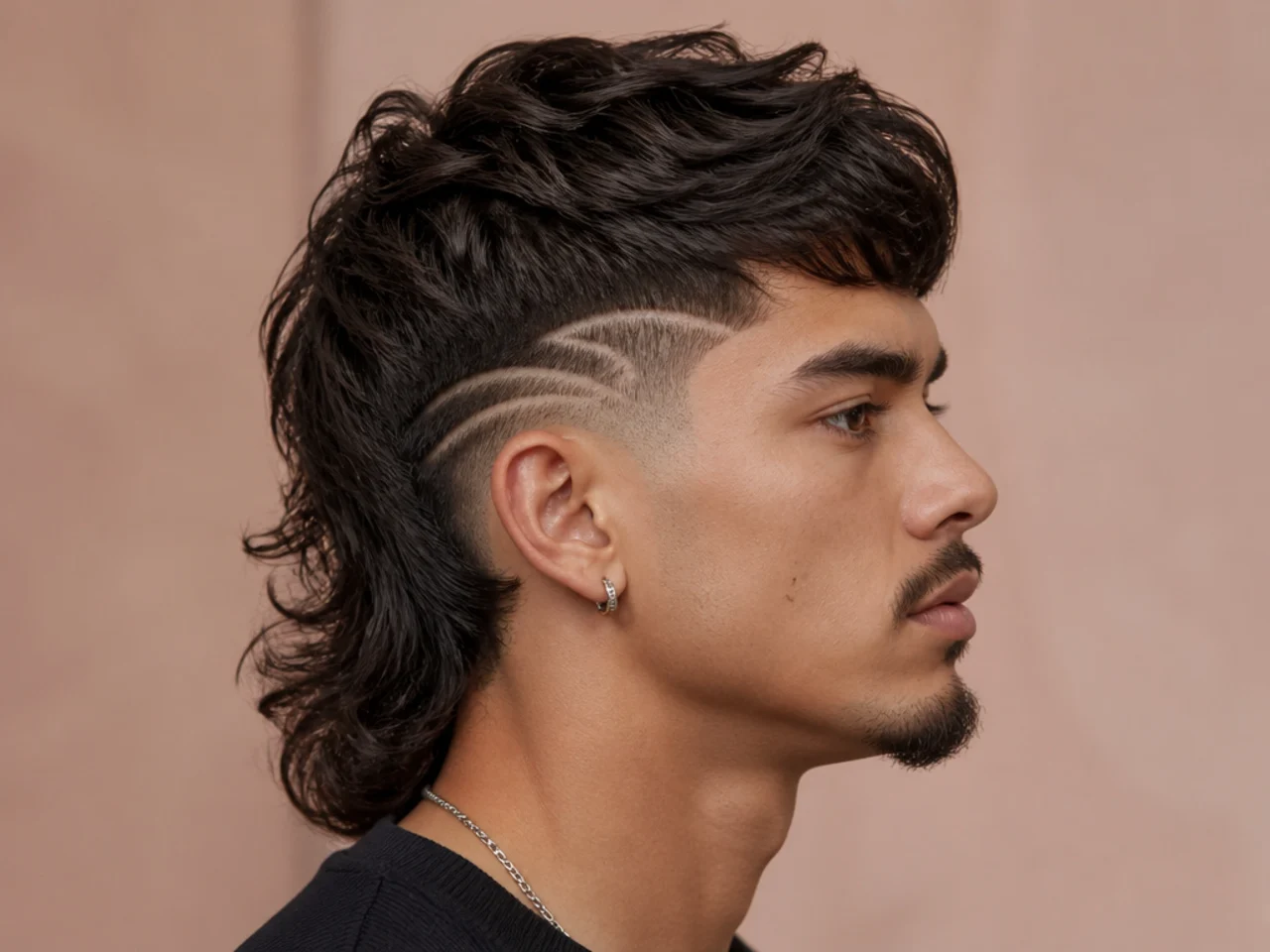
A shaved design cut into the taper or fade — a single line, a lightning bolt, a repeating geometric pattern along the side. Combined with the mullet's soft back, the design adds a personal signature without disrupting the mullet shape itself.
Suits every face shape. Best on dark hair against skin — that contrast reads the design cleanest.
Ask for: "Mullet with a hair design, two-and-a-half-inch textured top, three-inch feathered nape, mid taper on the sides, cut a [design description] into the taper above the ear." Book design touch-ups every two weeks — the line blurs fast.
29. Business Mullet
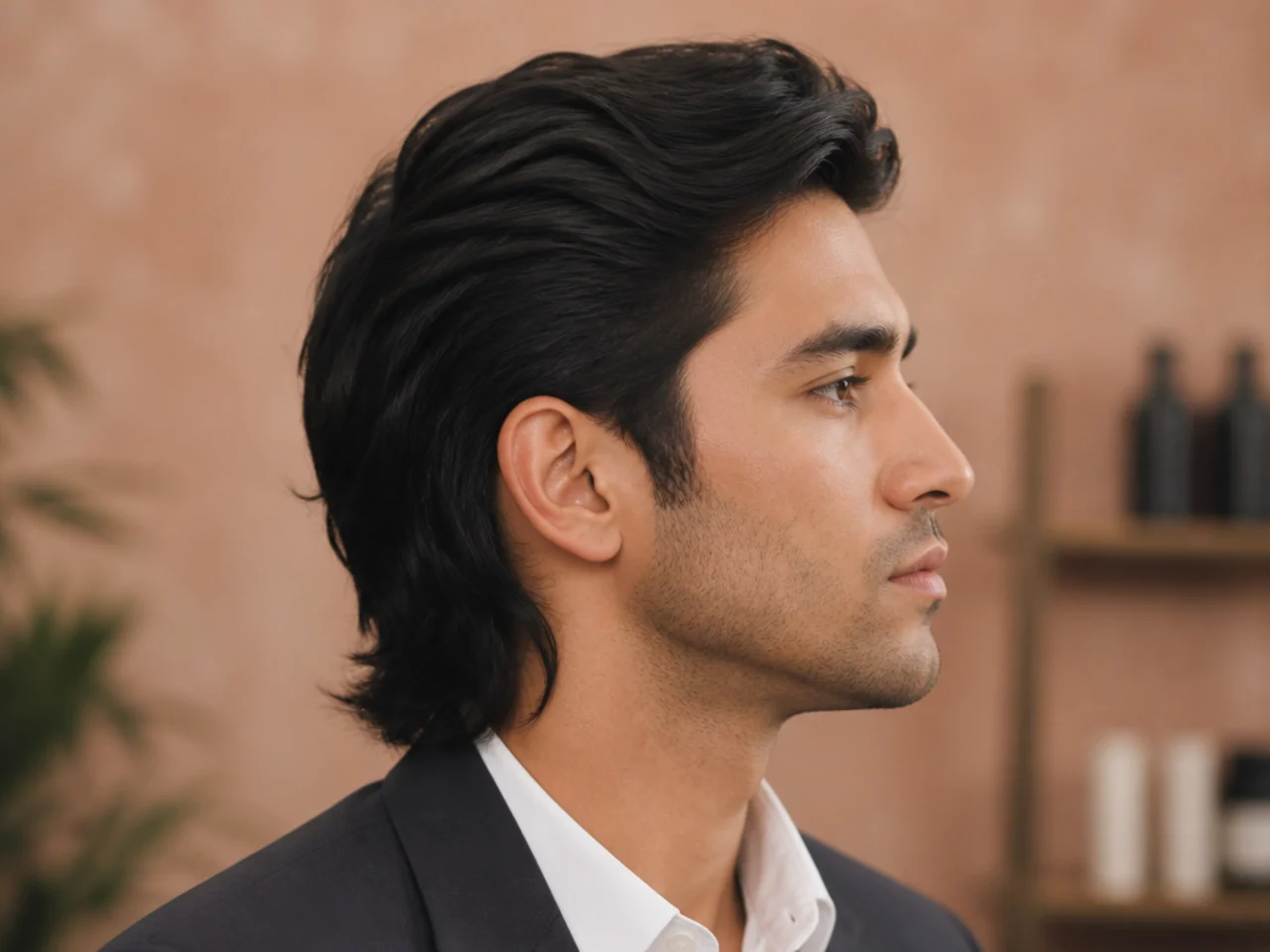
The most workplace-appropriate mullet. Softer point-cutting, no aggressive texture, blended scissor sides — none of the mullet-adjacent choppiness reads at a glance. From the front it looks like a clean side-swept cut; from the side, the subtle mullet structure comes through.
Suits every face shape. Best for guys in traditional offices who want the shape without the shop conversation.
Ask for: "Business mullet, one-and-a-half-inch top with subtle internal layers, two-inch softly feathered nape, side-swept fringe, clean scissor-blended sides." Style with a light styling cream, comb through, done.
30. Coily Afro Mullet
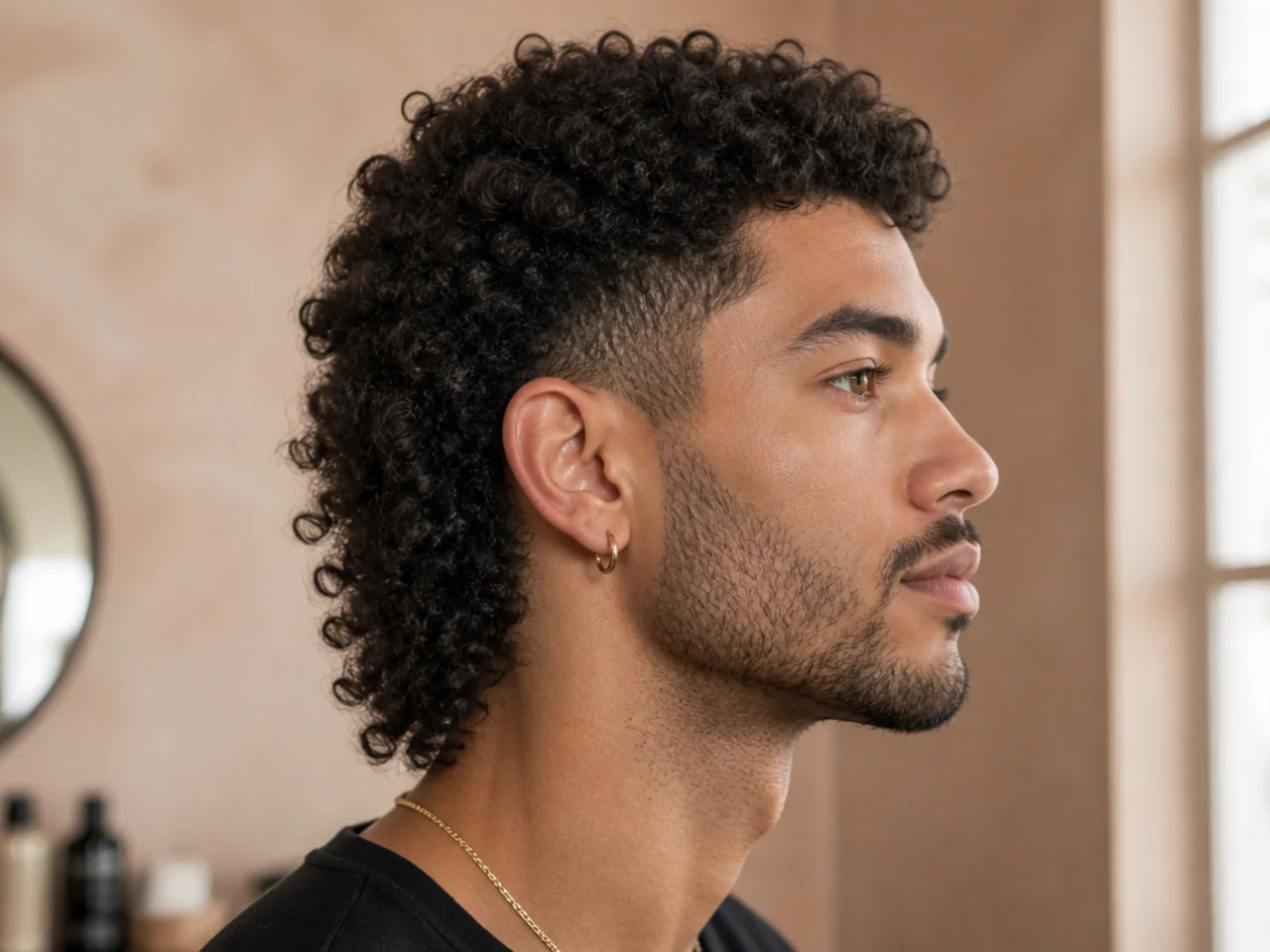
The mullet built around 4a-4c coily texture. Density and pattern do all the work — the top holds volume without any styling, the back drops with the coil pattern, and the perimeter is defined by cutting rather than product. Sides taper or fade for a clean edge against the natural volume.
Suits oval, heart, and diamond faces. Best on natural 4a-4c hair.
Ask for: "Coily afro mullet, dry-cut throughout, two-and-a-half-inch top with the coil pattern intact, four-inch defined back length, low or mid taper fade on the sides with a clean perimeter shape-up." Moisturize with a leave-in daily and pick out at the crown for lift.
How to Ask Your Barber for a Bold Mullet
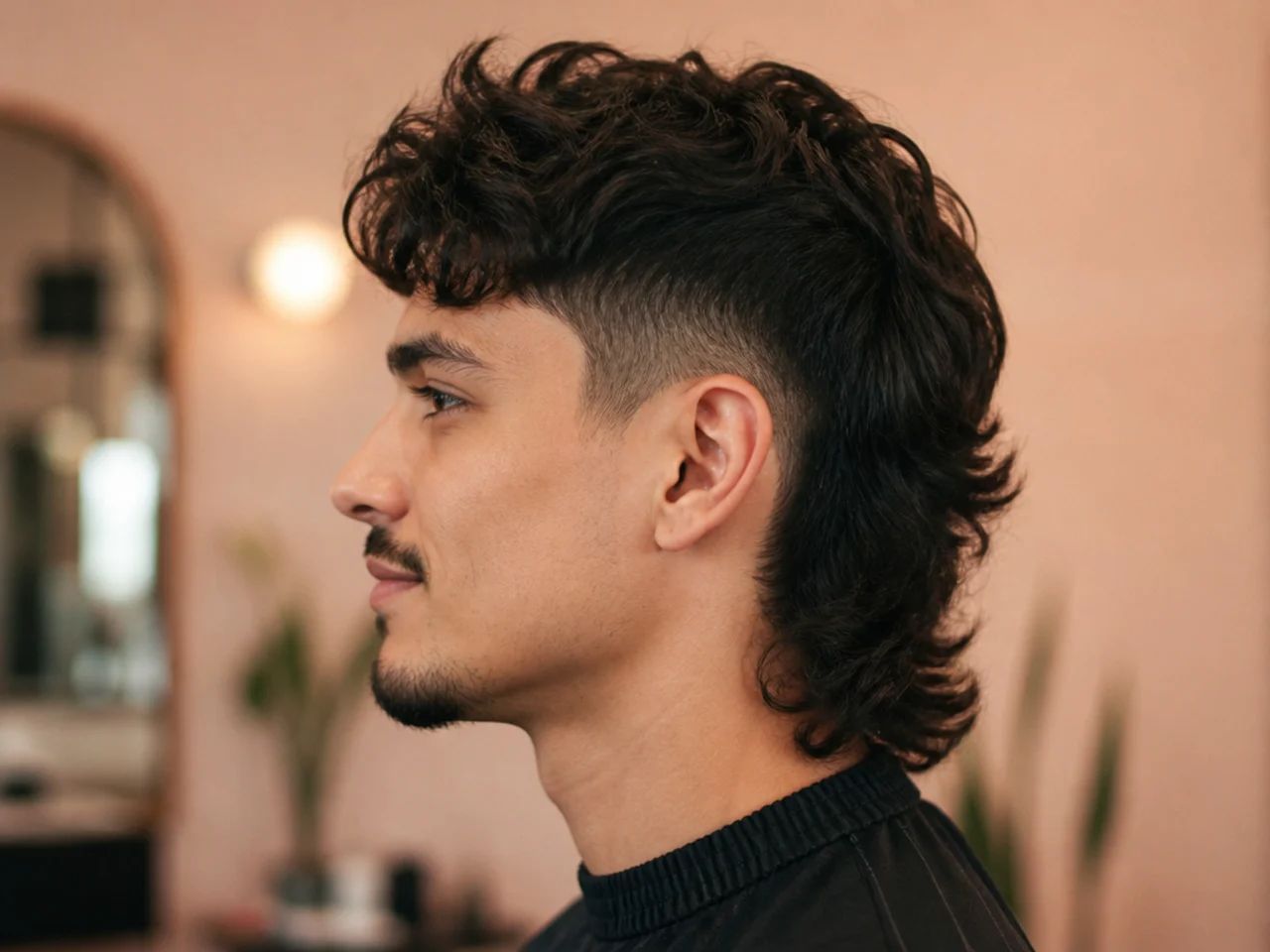
Bring a photo. That is rule one for any layered cut, and doubly true for the mullet because thirty different silhouettes all answer to the same name.
- Say "modern mullet" if you want the 2026 shape. Say "classic mullet" only if you want the true 80s reference. The two are different cuts — modern uses internal layering and a feathered nape; classic uses a defined step and minimal layering. Getting this wrong is how guys leave the chair with the wrong decade.
- Set the top length in inches, not clipper guards. One to one-and-a-half inches for the short and business variations. Two to two-and-a-half for the modern zone. Three to four for the long, layered, curtain-bang, and reverse variations. Guards read differently on different hair types — inches are universal.
- Set the nape length in inches. Two inches for the short and business versions. Three inches for the classic modern zone. Four-plus for the burst fade, disconnected, punk, curly, and aggressive variations. The nape has to sit visibly longer than the sides for the mullet to register.
- Set the perimeter finish at the nape. Feathered (soft and wispy) is the default. Point-cut (piecey and defined) reads more textured. Choppy (nothing cleaned up) reads punk. Blunt reads retro. The finish changes the whole personality of the back.
- Set the side treatment. Scissor-blended, low taper, mid taper, low fade, mid fade, burst fade, high skin fade, disconnected undercut. Match the loudness of the sides to how much attention you want the cut pulling. Loud sides plus a bold nape reads statement-first.
- Set the fringe. Forward and textured, curtain, side-swept, Edgar-blunt, comma-styled, or none. The fringe sets the front personality; the mullet sets the back. Guys who skip this step end up with default fringes they did not ask for.
- Ask for internal layering, not stacked layers. Internal keeps the shape close to the head. Stacked adds volume that turns the top into a helmet on thick hair and a triangle on curly hair. Say "internal layers only" unless you specifically want the layered mullet variation.
Once you have those seven answers, your barber can start cutting without a single guess. Show the reference photo again to confirm the shape before scissors touch hair. Compare with the modern mullet haircut men pillar guide if you want the pure baseline reference.
Styling and Maintenance for a Bold Mullet
Wash and towel-dry so hair is damp, not wet. Damp hair absorbs product; wet hair holds it on the surface where it drips or crunches. For straight hair, prime with a sea-salt spray for grip and body. For wavy hair, use a light styling cream applied root to tip. For curly and coily hair, apply a leave-in conditioner while the hair is soaking wet and let it reach damp naturally.
Rough-dry with fingers, not a comb. Point the airflow the direction you want the finish to sit — backward for a swept read, forward for a fringe, upward for lift at the crown. The nape can air-dry from here. For straight hair, spend ten extra seconds lifting the roots at the crown with your fingertips — that root lift is what gives the layered shape its bounce.
Finish with a matte hold product for most variations. Matte clay for textured tops. Molding paste for structured tops with a hint of sheen. Skip anything glossy unless you are going Korean, comma, or curtain-bang styled — most bold mullet variations read best matte and dry. Use a light hairspray only if the wind or humidity is going to fight the shape.
Re-cut the mullet's layered shape every five to eight weeks. The mullet depends on the length ratio between top, sides, and nape — the sides grow fastest and blur the silhouette first. Fade or taper sides need re-cuts every two to three weeks; between visits, run a beard trimmer over the neckline yourself to buy an extra week of clean edges. The nape can also be trimmed at home to keep it above the collar for work.
Wash the top three to four times a week and condition every wash — mullets show damaged nape ends more than blunt cuts because the ends are so exposed. Sleep on a silk or satin pillowcase to preserve the perimeter shape and stop the nape from creasing overnight. For cadence across every silhouette, see our how often should men get a haircut guide.
For the right home clipper setup, our best hair clippers for men breakdown covers what to buy for at-home neckline trims. For product recs across textures, our best wavy hair products guide covers matte clays, sea-salt sprays, and leave-in conditioners in detail.
FAQ
Is the mullet haircut for men still in style in 2026?
Yes. The modern mullet is the most-requested silhouette on Pinterest for men's cuts right now, and it has been building for four straight years. The current version reads sharp, not retro — cropped tops, textured internal layers, tapered sides, and a controlled nape drop. Nothing about it references the 1980s except the name. For a broader look at the family, browse our mullet and wolf cut hub.
What face shape suits a mullet haircut for men best?
Oval and square faces get the sharpest read — the two-length silhouette flatters strong jawlines without adding width. Round faces work with a cropped top and a low taper for vertical lift. Long faces stay with a forward fringe and a shorter nape so the profile does not stretch further. Heart and diamond faces suit the softer variations like the modern, boy, curly, and Korean versions.
How do I ask my barber for a bold mullet?
Bring a photo and hand your barber four numbers — top length in inches, nape length in inches, side treatment (taper, fade, or scissor-blended), and any fringe or beard specification. Say "modern mullet" if you want the current shape and "classic mullet" only if you want the true 80s version. Then let the barber talk you through internal layering, perimeter finish, and any line-up detail.
How is a mullet different from a wolf cut?
A mullet keeps the length concentrated at the nape — short top, longer back, defined two-length ratio. A wolf cut layers weight through the crown and adds face-framing pieces at the cheekbones. If you want back weight, ask for a mullet. If you want crown texture and face framing, ask for a wolf cut. If you want both, ask for the wolf cut mullet hybrid at variation 17.
Can I get a mullet with curly, coily, or Asian hair?
Yes — every texture works, and each one gets its own variation on the list. Curls and coils build the mullet's back weight and layered top on their own, so ask for a dry cut. Straight Asian hair reads especially clean with the Korean and Asian mullet variations — soft rounded layers, glossy finish, and a forward fringe. See our layered wolf cut men guide for a related shape if you want more crown movement.
How often do I need to re-cut a bold mullet?
Every five to eight weeks for the layered shape. Fade or taper sides need re-touching every two to three weeks to hold the silhouette. The nape can be trimmed between visits with a beard trimmer to keep it above the collar. Skip re-cuts past ten weeks and the two-length ratio blurs into a grown-out shag.
How much does a bold mullet cost?
Between $45 and $110 at most independent barbershops, higher at style-focused salons. The layered work adds ten to fifteen minutes over a standard men's cut — expect 45 to 60 minutes for the first cut and 30 to 40 minutes for follow-up trims. Fade or taper sides add another ten to fifteen dollars.
Is a mullet workplace-appropriate?
Most modern variations are. The business mullet, short mullet, subtle modern mullet, Korean mullet, and low taper fade mullet all pass in traditional offices. Skip the punk, disconnected, high skin fade, classic 80s, and long variations in conservative settings — save those for creative environments or the weekend. If in doubt, ask for a scissor-blended side and a two-to-three-inch nape.