30 Wolf Cut Haircuts Every Guy Should See
Thirty wolf cut haircuts men are asking for in 2026 — every length, texture, and fade pairing, with face-shape notes and exact phrasing for your barber.
In this article · 42
- What Is a Wolf Cut?
- How to Choose Your Wolf Cut
- Wolf Cut Styles Worth Asking For
- Classic Wolf Cut
- Korean Wolf Cut
- Shag Wolf Cut
- Mullet Wolf Cut
- Curtain Wolf Cut
- Wolf Cut with Fringe
- Textured Wolf Cut
- Layered Wolf Cut
- Feathered Wolf Cut
- Mid-Length Wolf Cut
- Long Wolf Cut
- Short Wolf Cut
- Curly Wolf Cut
- Straight Wolf Cut
- Wavy Wolf Cut
- Tapered Wolf Cut
- Burst Fade Wolf Cut
- Drop Fade Wolf Cut
- Undercut Wolf Cut
- Disconnected Wolf Cut
- Edgar Wolf Cut
- Tapered Nape Wolf Cut
- High-Volume Wolf Cut
- Subtle Wolf Cut
- Punk Wolf Cut
- Indie Wolf Cut
- Boy Wolf Cut
- Messy Wolf Cut
- Slick Wolf Cut
- Wolf Cut with Beard
- How to Ask Your Barber
- Styling and Maintenance
- FAQ
- Is a wolf cut the same as a mullet?
- Which face shape suits a wolf cut best?
- Can I get a wolf cut with curly hair?
- How long does hair need to be for a wolf cut?
- How much does a men's wolf cut cost?
- Will a wolf cut work for straight hair?
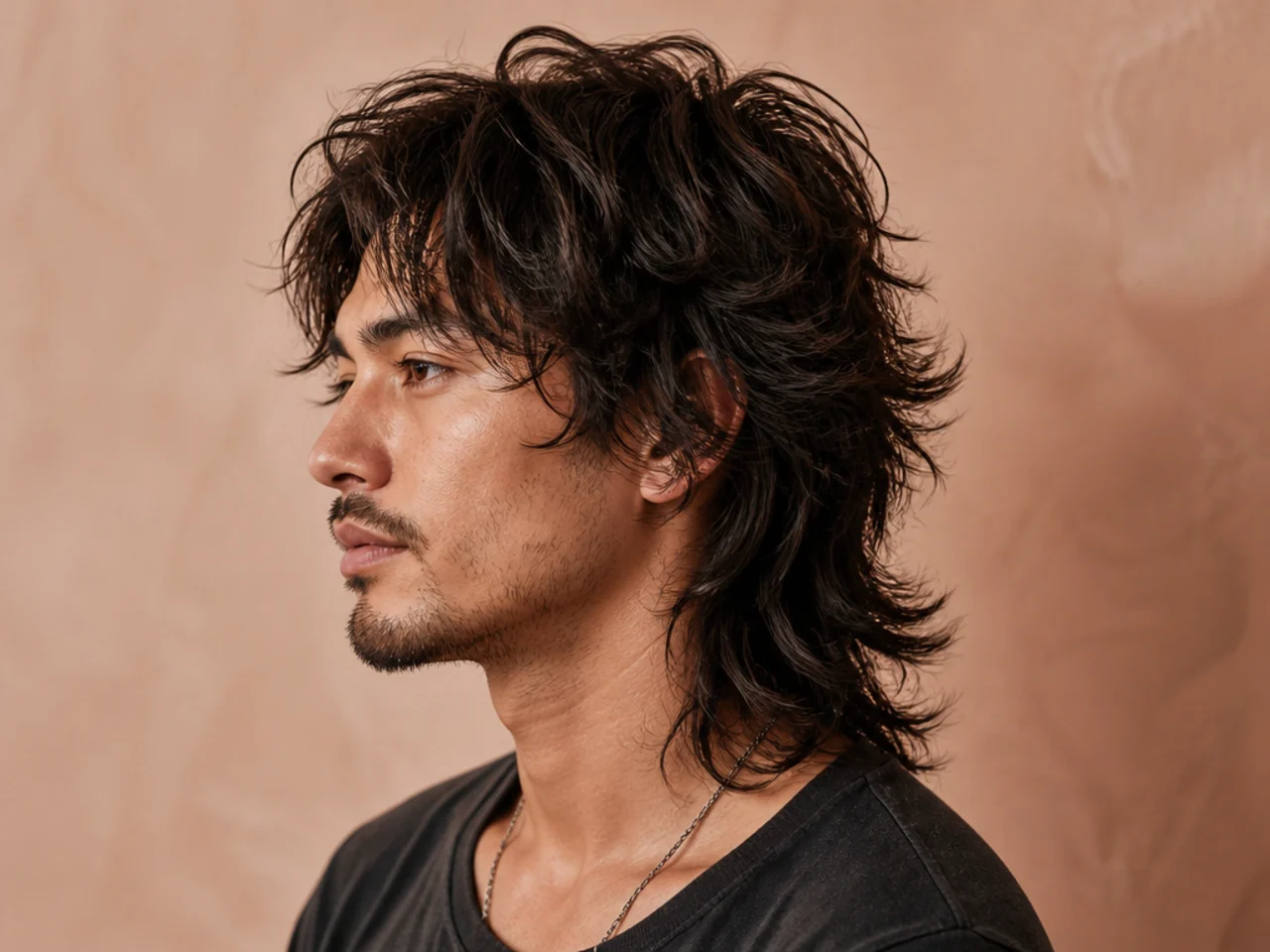
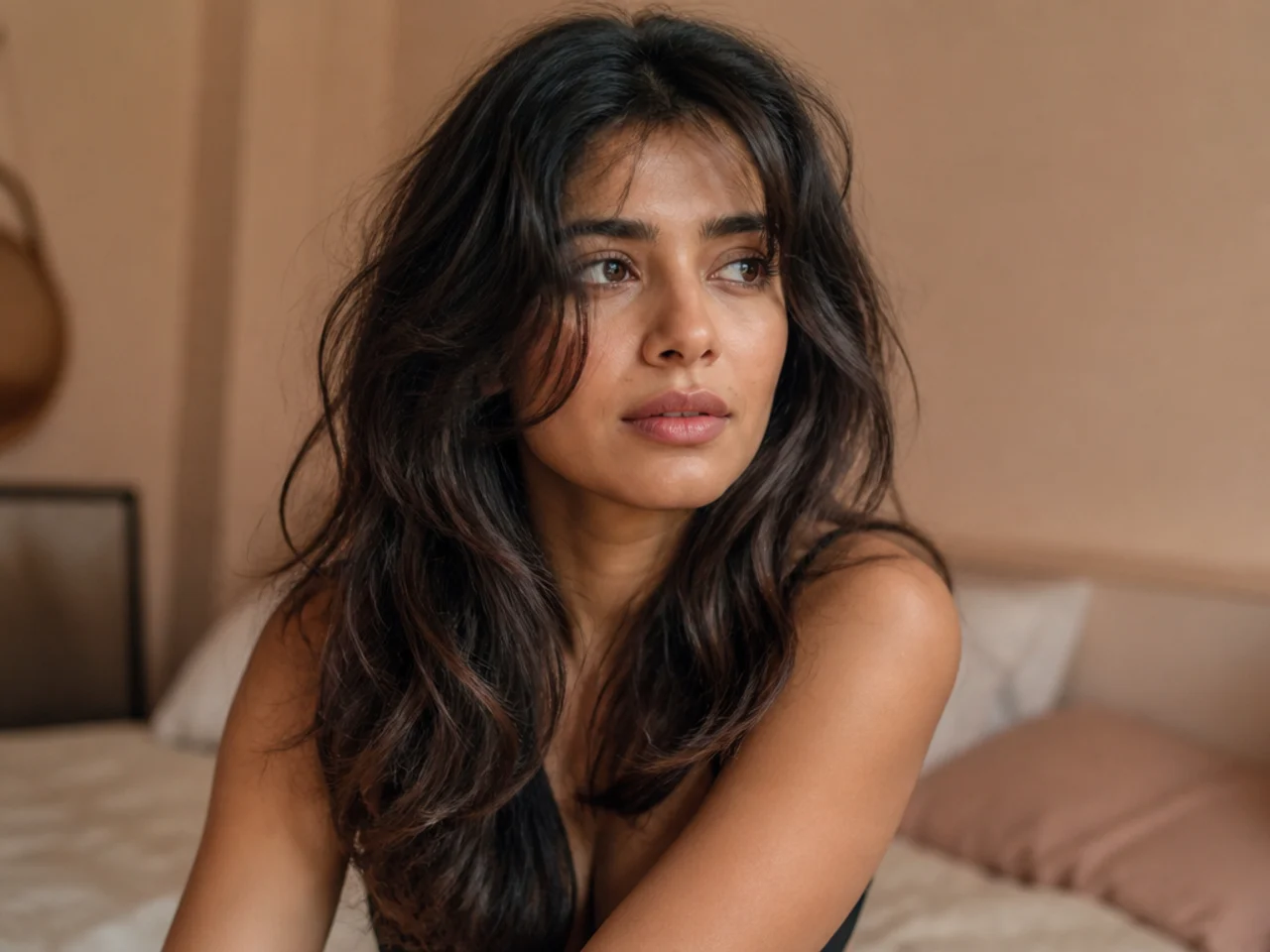
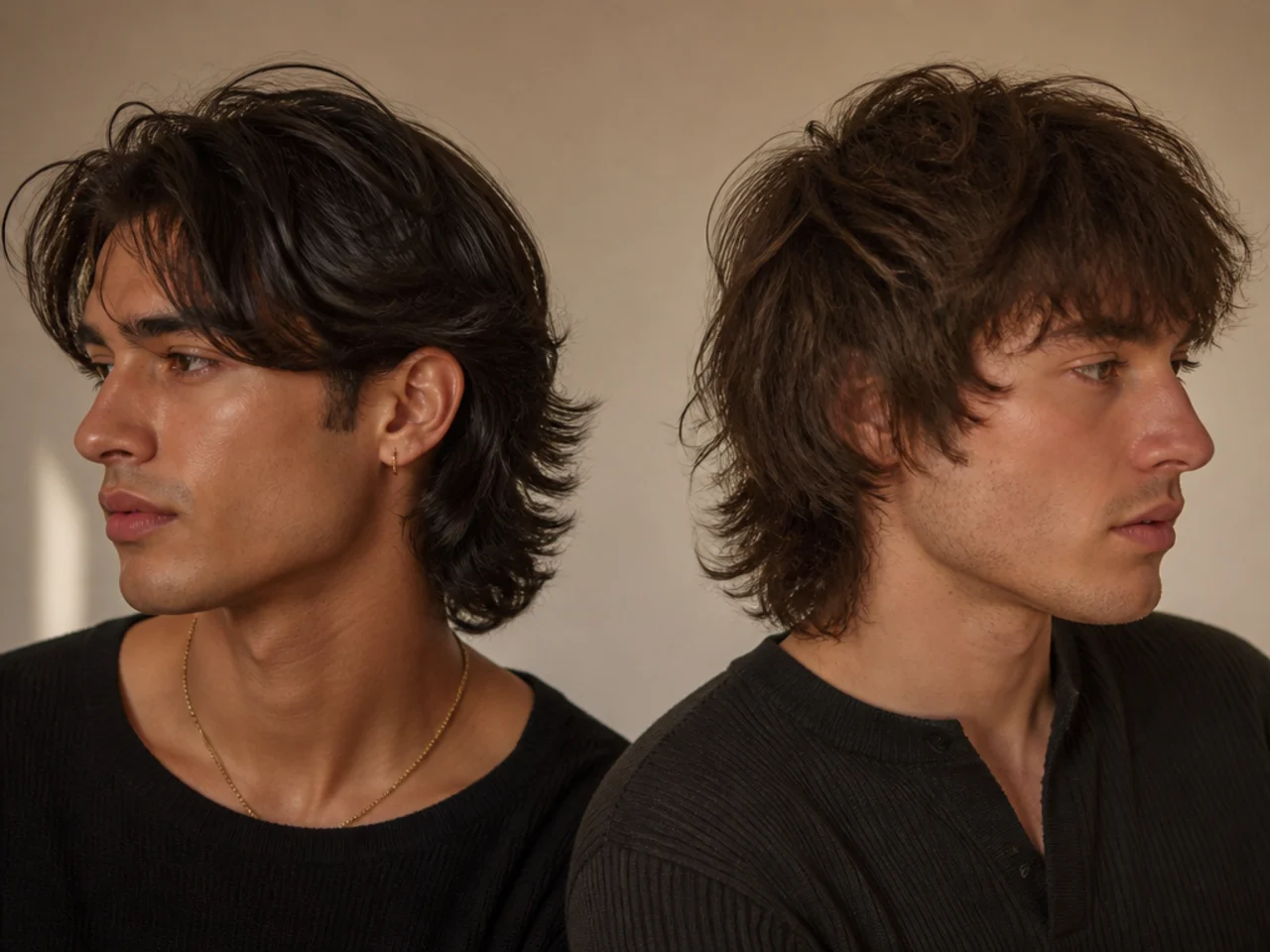
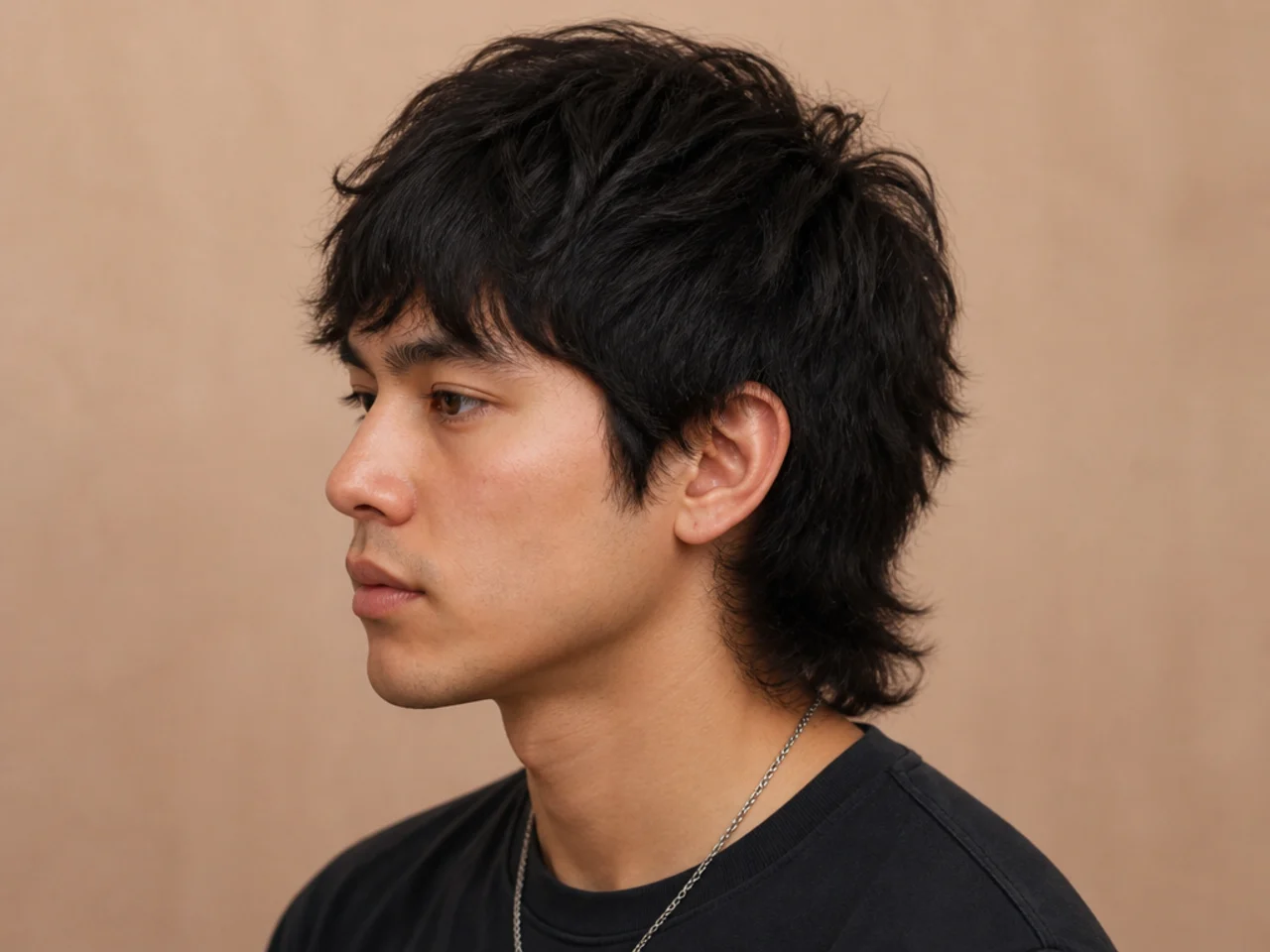
The wolf cut is the shag-mullet hybrid that keeps redefining the men's mid-length category. Layers pile up around the crown and face, the back sits somewhere between the collar and the shoulders, and the sides can go anywhere from close-tapered to fully faded. Below are 30 wolf cut haircuts men are wearing in 2026 — every length, texture, and fade pairing — with what makes each one different, who it suits, and exactly what to say when you sit in the chair.
What Is a Wolf Cut?
A wolf cut is a men's layered haircut that combines the crown volume of a shag with the length concentration of a modern mullet. Layers stack around the top and cheekbones, the back stays long enough to move, and the sides taper or fade to keep the whole shape from spreading wide. The signature is that lived-in, slightly windblown silhouette — sharp when it needs to be, shaggy when it doesn't.
Every men's wolf cut has three parts working together. Internal layers through the crown remove weight and let the top stand up. Face-framing pieces starting at the cheekbone soften the front. A longer, textured back that either grazes the collar or drops past it. The proportions shift depending on the version, but the anatomy is always the same.
What separates the modern men's wolf cut from the 2021 TikTok version is precision. The layer transitions are cleaner. The sides are usually tapered or faded rather than blunt. And the whole cut is engineered to look intentional rather than grown-out. That's why barbers keep booking it — the shape reads sharp on a real head, not just in a filter.
How to Choose Your Wolf Cut
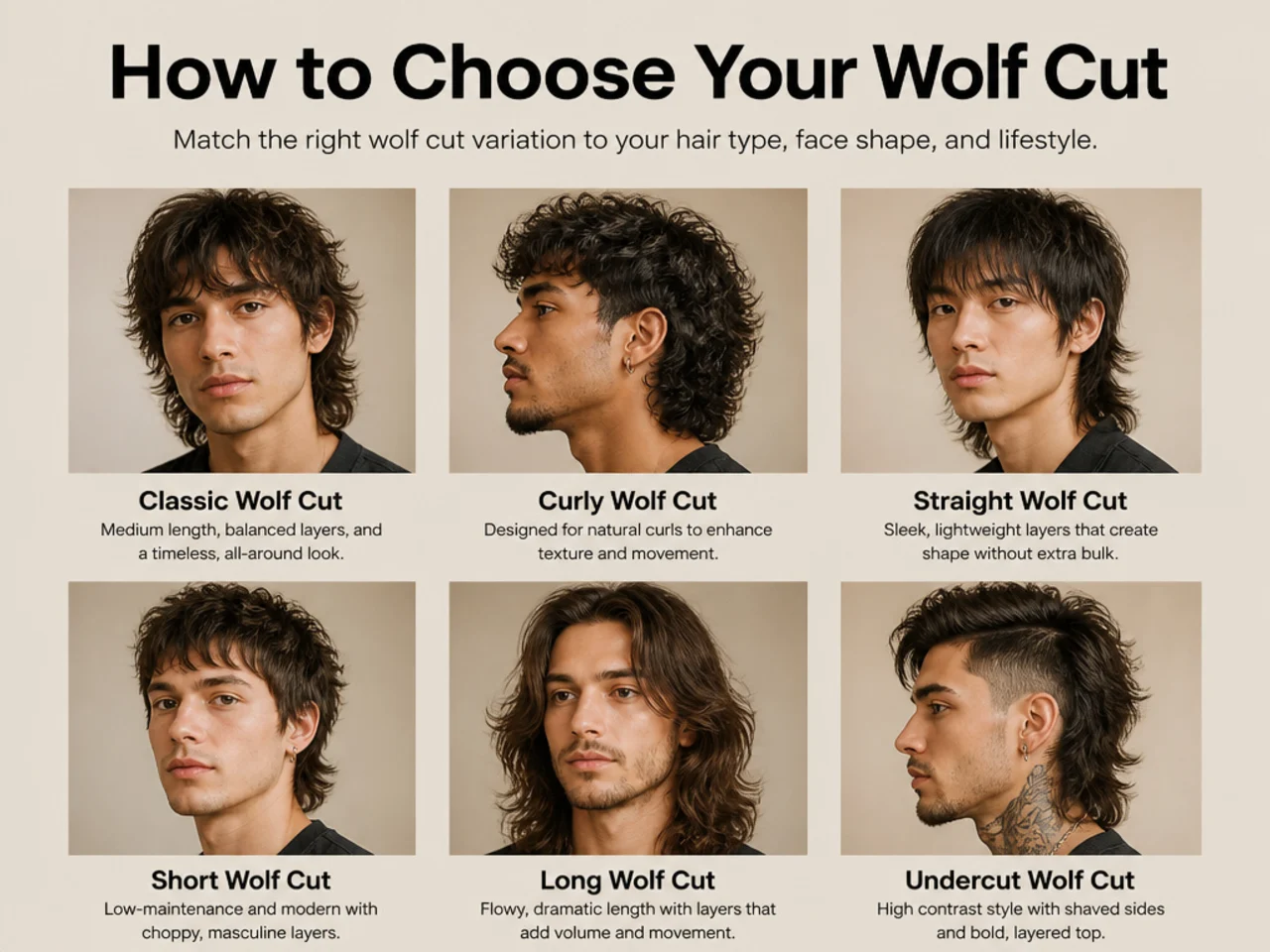
Face shape and hair type do most of the choosing. Oval and heart faces suit almost every wolf cut variation. Round faces want the version with vertical lift — the high-volume wolf or the mullet-wolf — to narrow the profile. Square faces read best with softer, layered edges rather than disconnected ones. Long faces get better balance from a fringed or curtain wolf cut, which breaks up vertical space.
Hair type sets the ceiling on how the shape will read. Straight hair shows layer lines cleanly, so ask for heavy point-cutting to build texture. Wavy hair is the perfect canvas — the natural bend does half the work. Curly and coily hair gets the fullest wolf silhouette without any styling, but the cut needs to be done dry so the barber can see how each coil sits. Fine hair benefits from a shorter back and denser layers to build volume; thick hair wants internal thinning so the shape doesn't turn into a helmet.
Finally, ask yourself how much styling time you'll actually spend. The subtle and short wolf cuts are close to zero maintenance. The punk, high-volume, and long wolf cuts need daily product to hold shape. Match your version to your morning routine, not to the reference photo you saved at midnight.
Wolf Cut Styles Worth Asking For
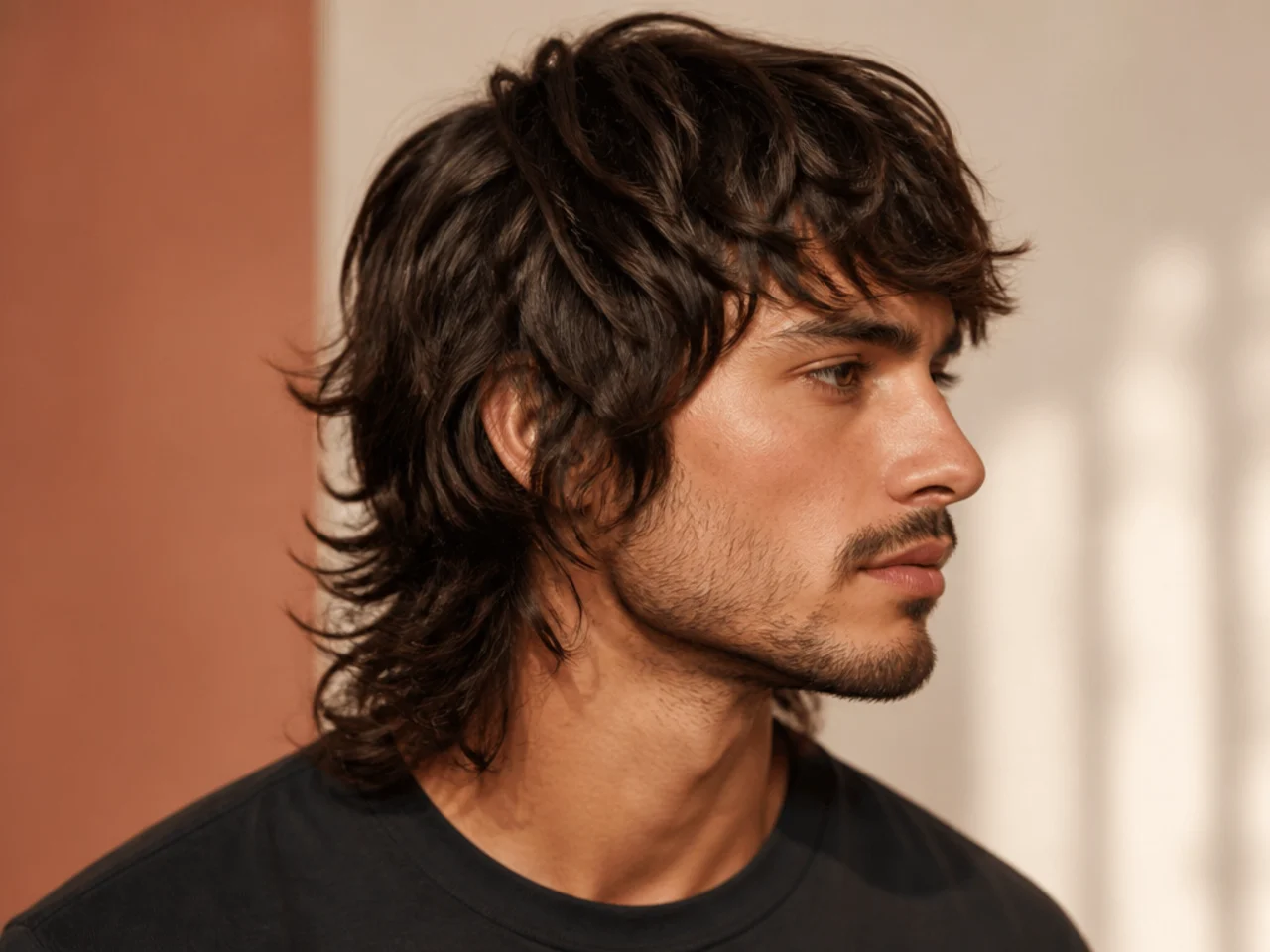
These 30 wolf cut variations move from clean and workplace-safe to fully committed. For each one, you get what makes it different from the baseline, who it flatters, exactly what to say in the chair, and one styling move that keeps the shape holding. The wolf cut lives inside a wider family of layered men's shapes — expect crossover with shags, mullets, and the jellyfish haircut as the sections progress.
Classic Wolf Cut
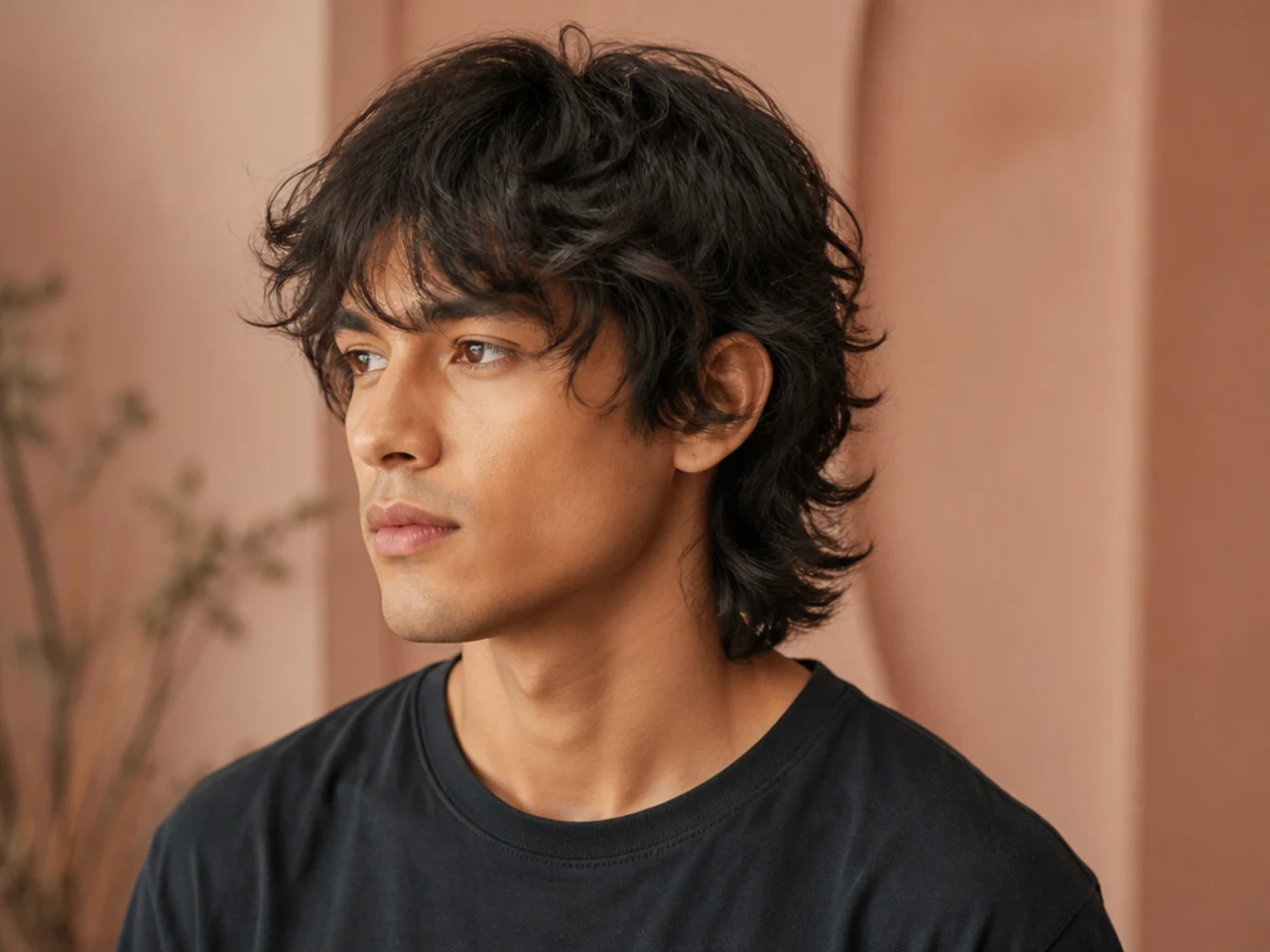
What sets it apart: this is the baseline everyone else is riffing on. Layers stack around the crown and cheekbones, the back sits at the collar, and the sides taper softly into the top with no hard break.
Who it suits: nearly anyone. Straight or wavy hair, oval or heart faces, and any styling appetite from once-over to full routine.
Ask for it: "Classic wolf cut, three inches through the crown with internal layers, back to the collar, face-framing at the cheekbone, tapered sides — no fade line."
Styling tip: rough-dry with fingers, a pea of matte cream through the top, and let the back air-dry. Total time: under five minutes.
Korean Wolf Cut
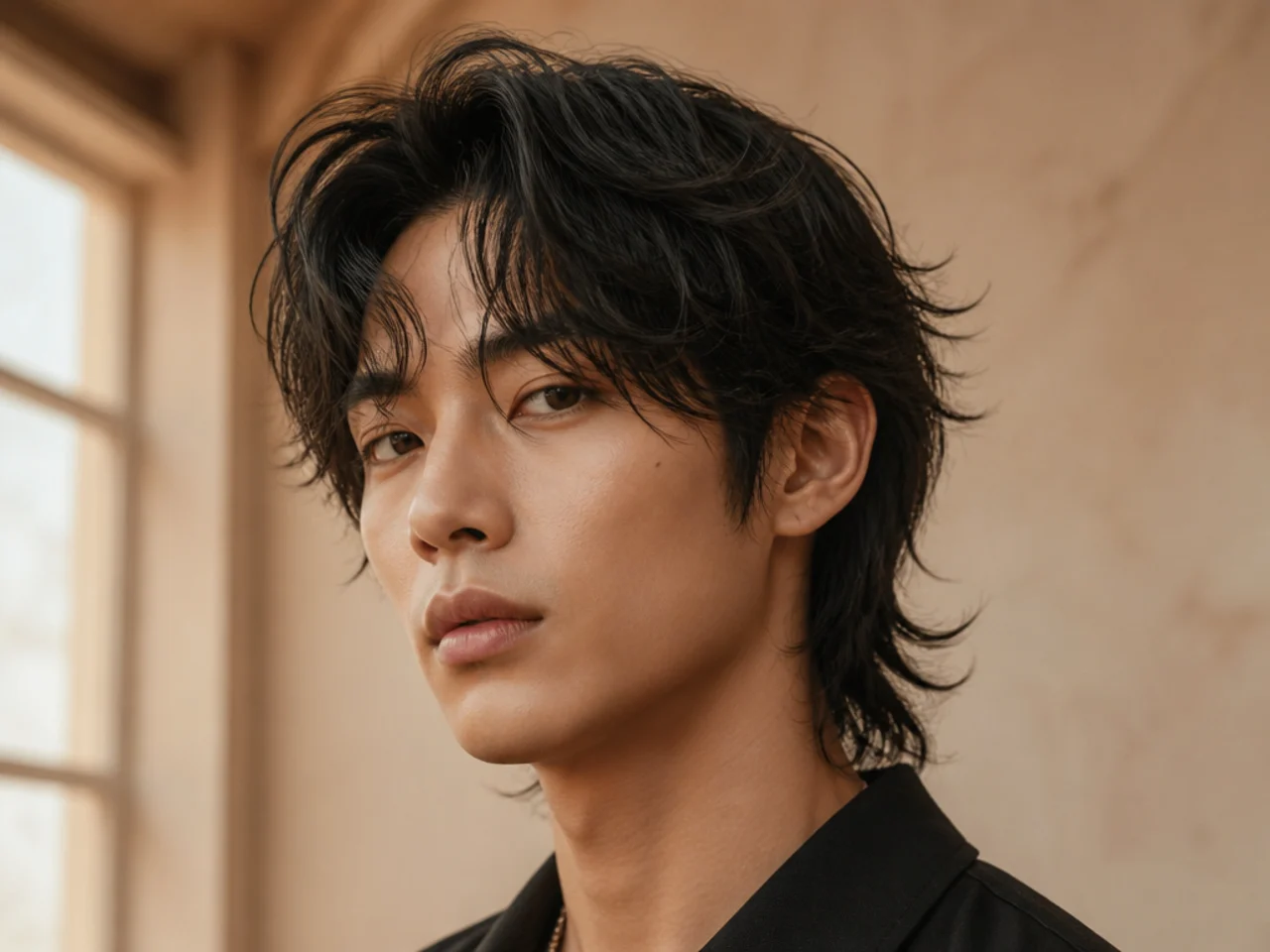
What sets it apart: this is where the modern wolf cut started, and the layering is softer than the Western versions. Curtain-style bangs sweep to either side of the middle part, and the whole cut reads polished rather than shaggy.
Who it suits: straight hair reads best. Suits oval, long, and heart faces. A staple in the wider Korean haircuts for men category.
Ask for it: "Korean wolf cut, soft layers through the top, curtain bangs to the cheekbone, tapered sides, keep the back three inches with wispy ends."
Styling tip: blow-dry the front pieces down and slightly outward with a round brush, then leave the rest untouched.
Shag Wolf Cut
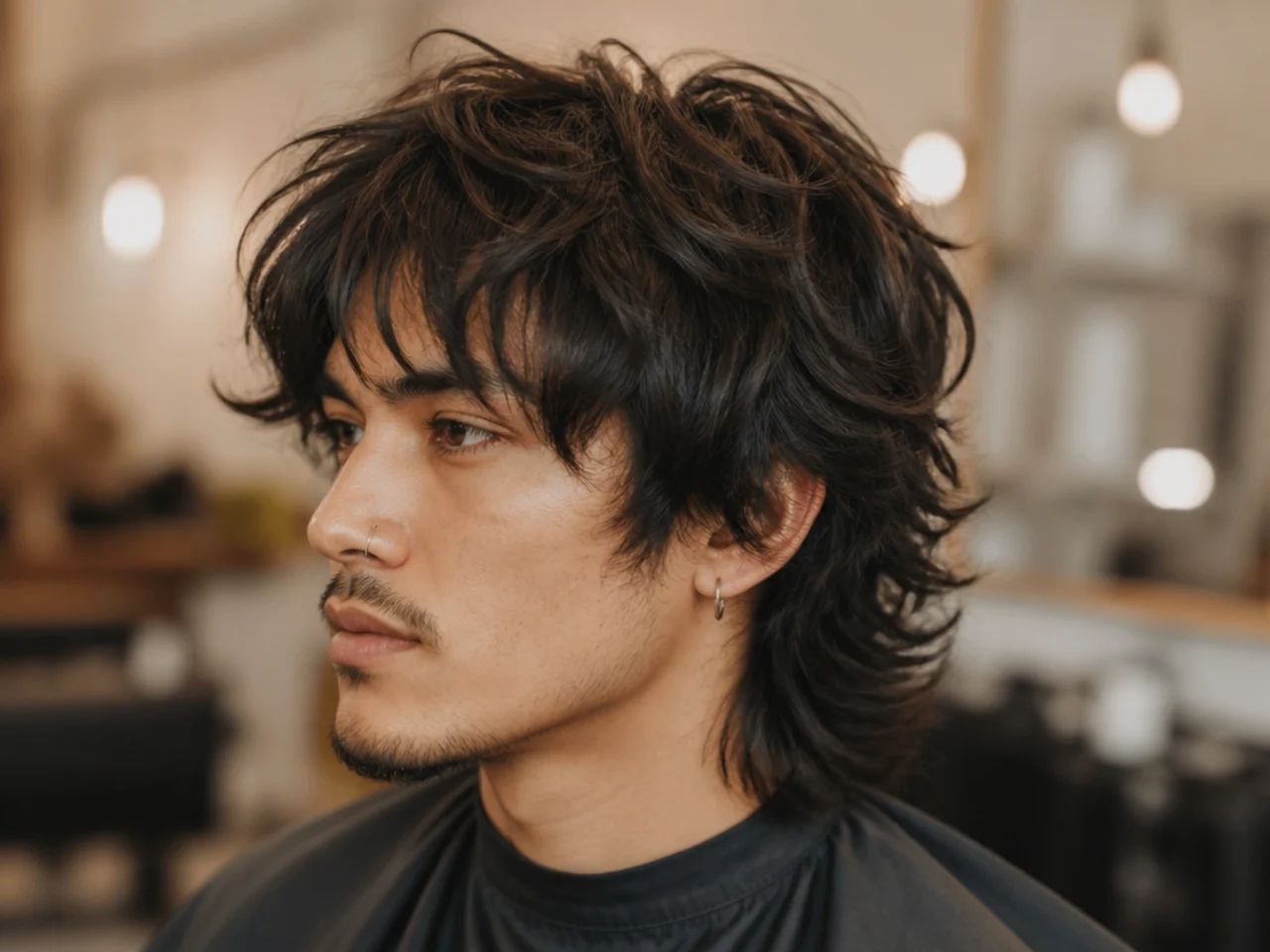
What sets it apart: it borrows from the shag haircut family — heavier internal layering all over and choppier ends. The shape reads more textured and less concentrated at the back than a standard wolf.
Who it suits: fine or medium hair that needs body. Best on oval and heart faces because the added texture balances proportions.
Ask for it: "Shag wolf cut, aggressive internal layers throughout, wispy point-cut ends, blended sides, back four inches with heavy texture at the perimeter."
Styling tip: sea-salt spray on damp hair, scrunch upward from the ends, and let the layers fall where they want.
Mullet Wolf Cut
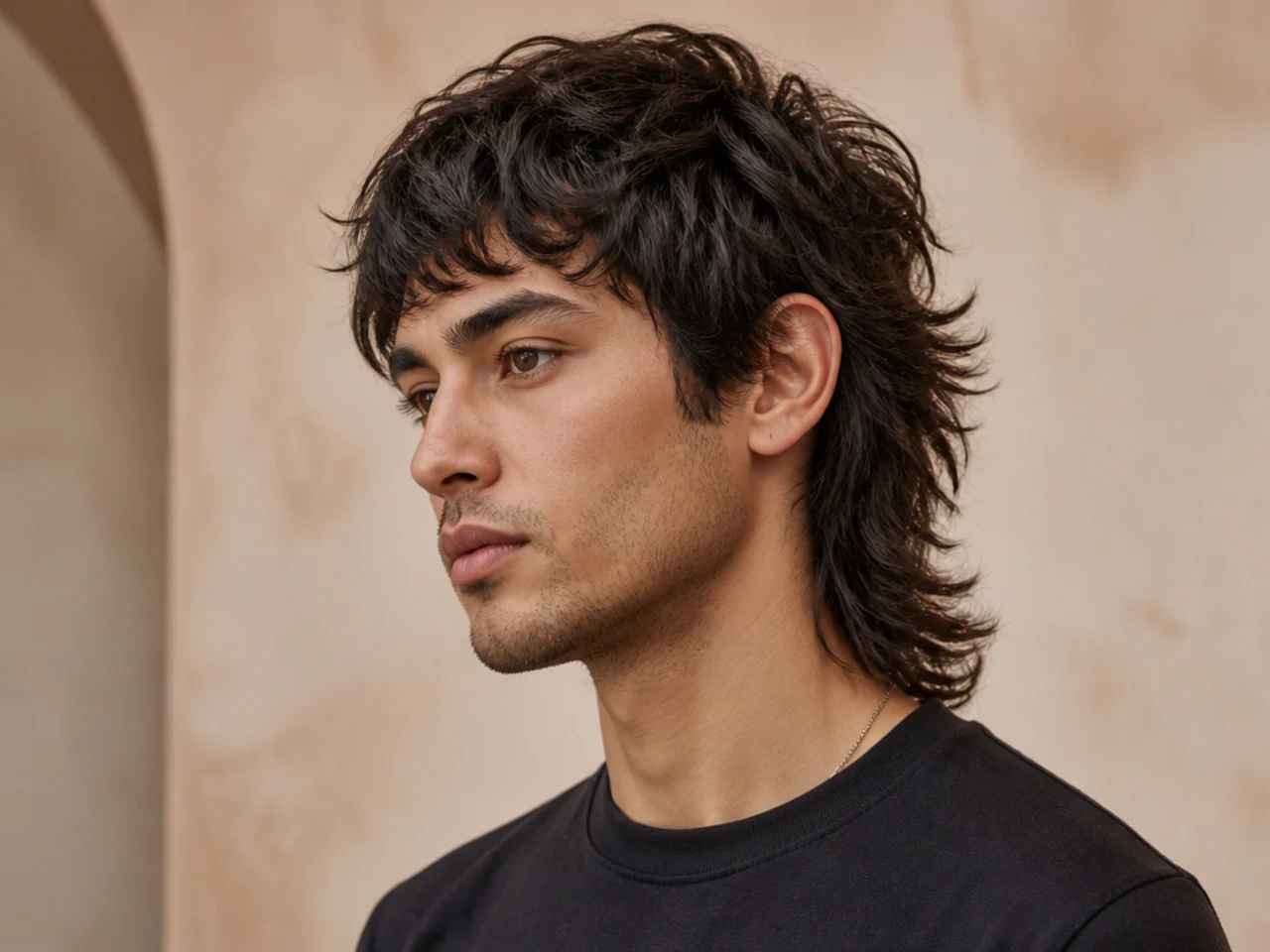
What sets it apart: this hybrid leans into the mullet's back-length concentration while keeping the wolf's crown volume. The result is a dramatic silhouette — full on top, shaggy at the back, with sharper contrast than a classic wolf.
Who it suits: guys who want statement over subtlety. Works with straight or wavy hair on oval and square faces.
Ask for it: "Mullet wolf cut, three inches through the crown, back five inches with layered texture, low fade or tight taper on the sides, keep the perimeter feathered."
Styling tip: matte clay through the top, then a hit of hairspray on the back to keep the length from separating flat.
Curtain Wolf Cut
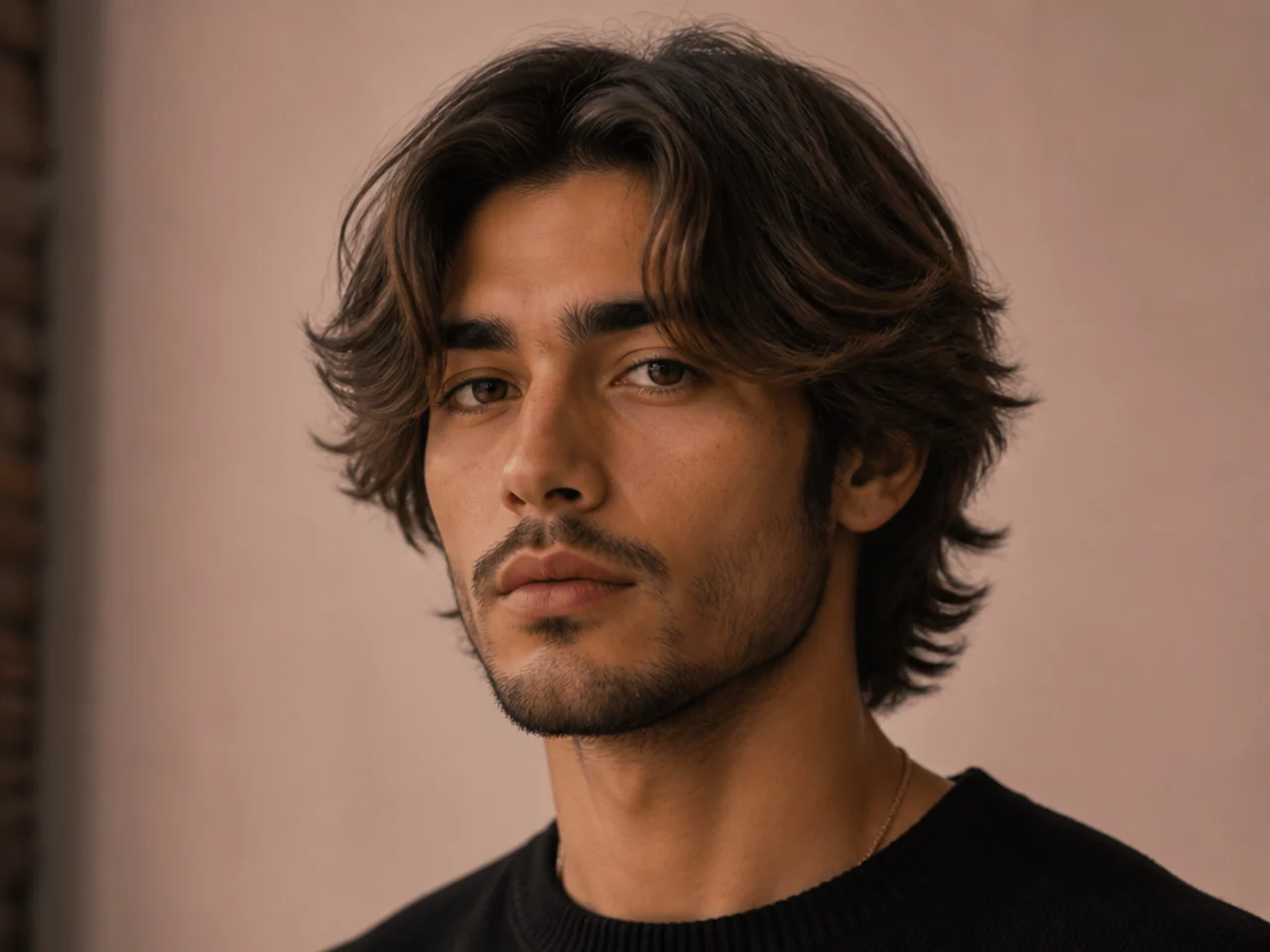
What sets it apart: the curtain bangs are the focal point. Two symmetrical fringes fall from a middle part and frame the face, blending into the wider wolf silhouette. It's the softest, most editorial-leaning variation.
Who it suits: straight to wavy hair, and faces with symmetrical proportions. Especially strong on oval, round, and heart shapes.
Ask for it: "Curtain wolf cut, center-parted bangs to the cheekbones, three-inch crown layers, tapered sides, four-inch back with soft internal texture."
Styling tip: blow-dry the fringe outward on either side of the part with a round brush, then twist the ends between your fingers to set the shape.
Wolf Cut with Fringe
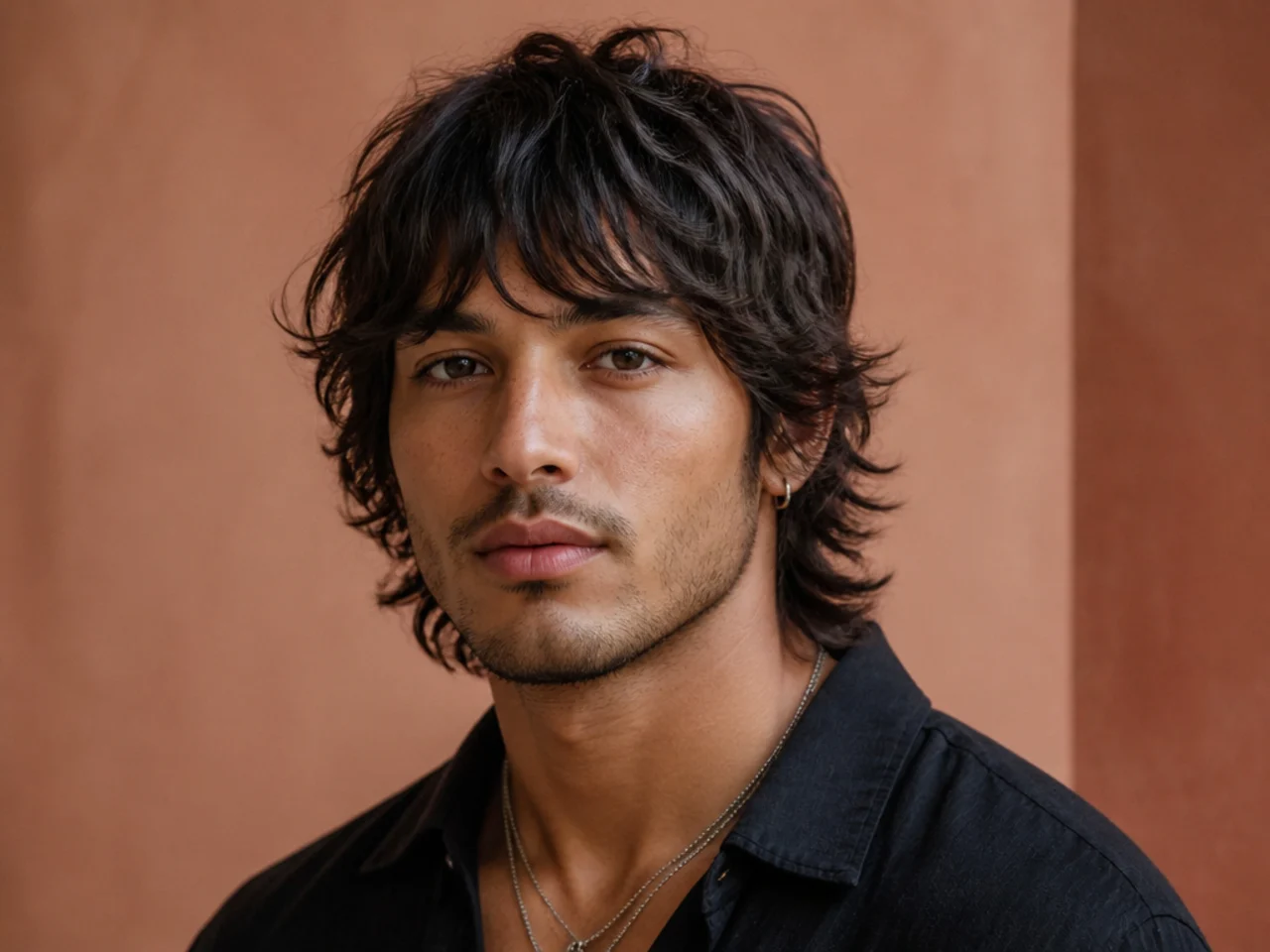
What sets it apart: instead of a center-parted curtain, this version keeps the fringe as one heavy sweep across the forehead — closer to a textured fringe sitting on top of the wolf's layered back.
Who it suits: long or oblong faces that need horizontal balance. Works best on straight or slightly wavy hair.
Ask for it: "Wolf cut with a textured fringe to the eyebrows, keep it heavier than a curtain, three-inch crown, tapered sides, four-inch back with layered movement."
Styling tip: blow-dry the fringe forward and down with your fingers, then press it into place with a small dab of matte paste.
Textured Wolf Cut
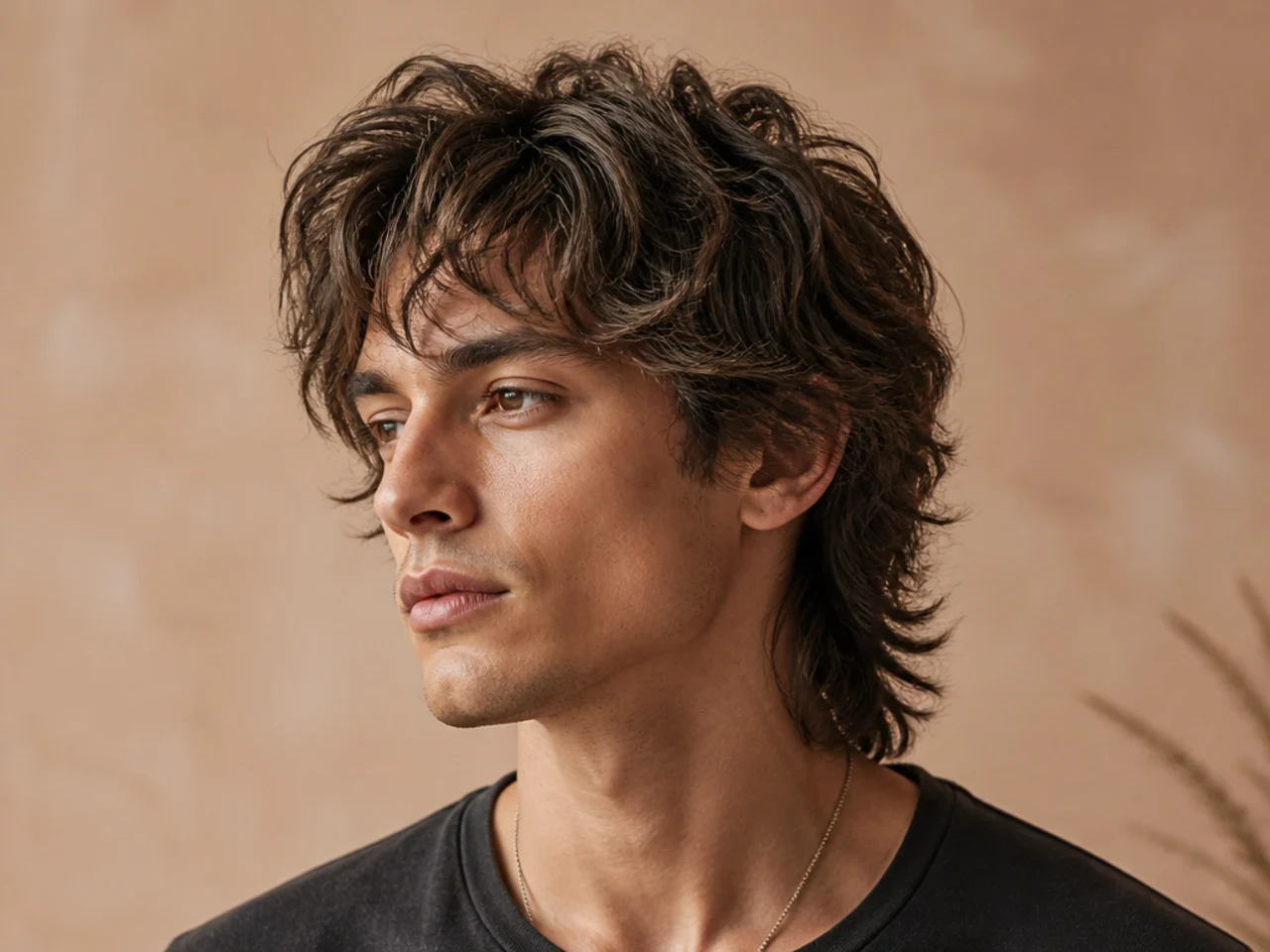
What sets it apart: point-cutting is the whole point. Every layer is broken at the ends so nothing sits blunt. The silhouette looks similar to the classic version but reads far more piecey up close.
Who it suits: fine and medium hair that needs the illusion of density. Best on oval and diamond faces.
Ask for it: "Textured wolf cut, point-cut throughout, three-inch top layers, wispy face-framing, tapered sides, back to the nape with heavy texture."
Styling tip: work texturizing spray through damp hair, tousle with fingers, and skip the comb entirely.
Layered Wolf Cut
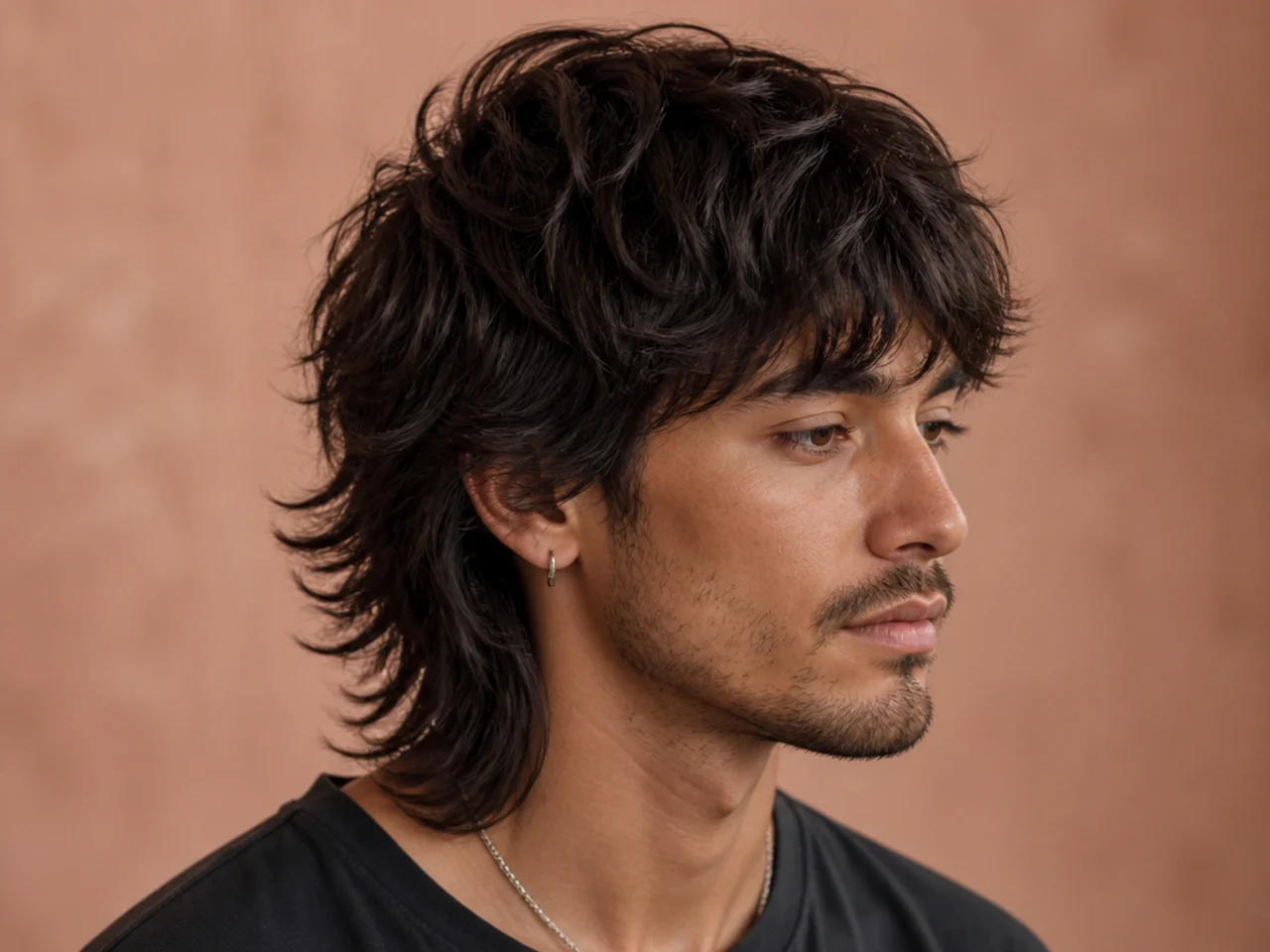
What sets it apart: the layer lines are visible on purpose. Instead of blending everything smooth, this version stacks distinct layers around the crown so the shape reads structured, almost architectural.
Who it suits: thick, straight hair that can carry defined lines. Suits oval and square faces.
Ask for it: "Layered wolf cut, three visible stacked layers through the crown, cleaner cutting rather than heavy point-work, tapered sides, back to the collar."
Styling tip: leave-in conditioner, blow-dry with a round brush lifting each layer, then a light hairspray finish.
Feathered Wolf Cut
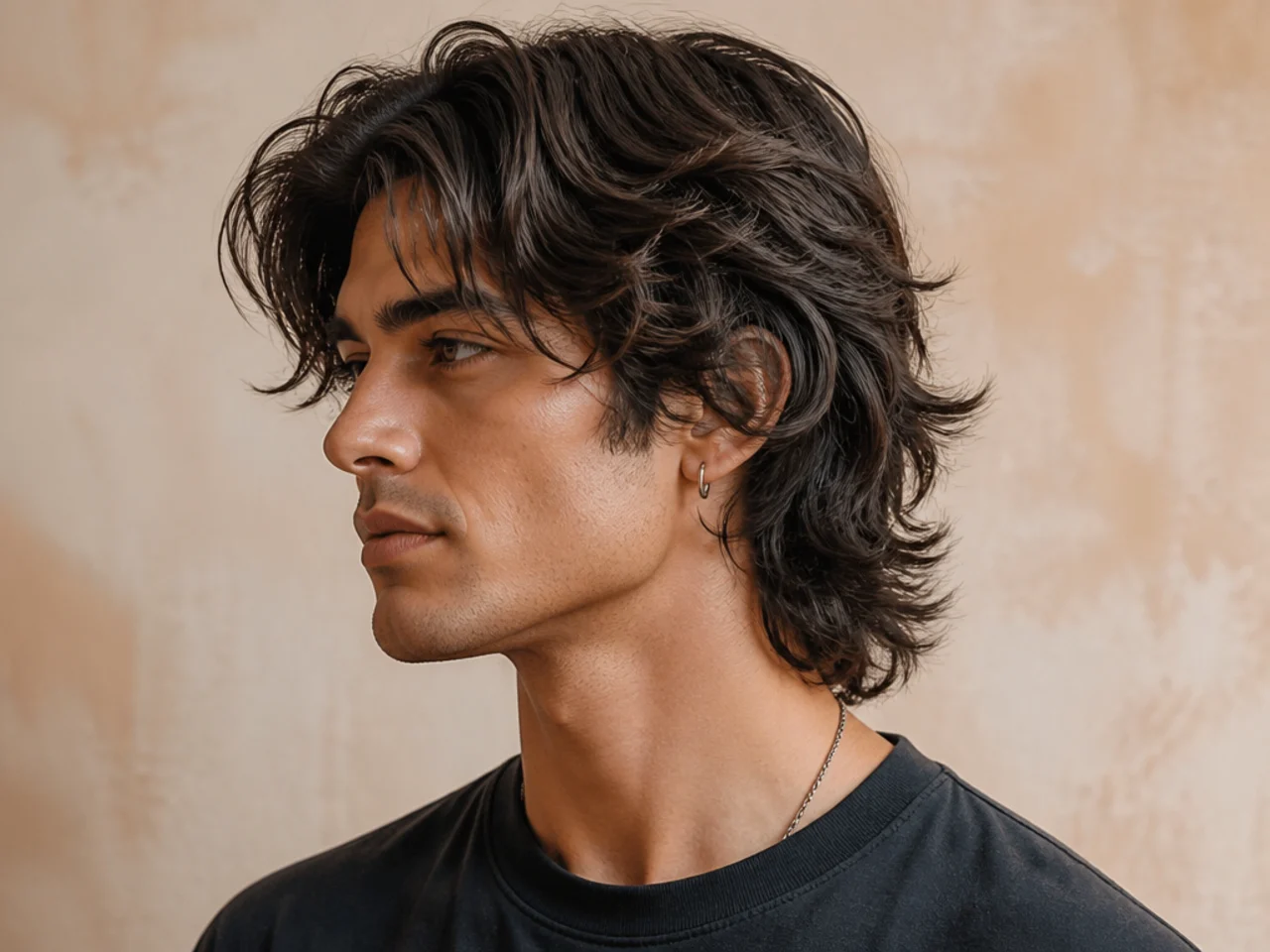
What sets it apart: every end feathers outward, giving the shape a 70s Farrah Fawcett quality translated for men. The layers are softer and less choppy than a shag wolf, and the finish is glossier.
Who it suits: medium-thick straight or wavy hair, and heart or oval faces that suit softer edges.
Ask for it: "Feathered wolf cut, soft outward-flicking layers throughout, keep the ends smooth rather than choppy, tapered sides, four-inch back with a feathered perimeter."
Styling tip: round-brush the ends outward while blow-drying, then finish with a shine spray for the polished feather look.
Mid-Length Wolf Cut
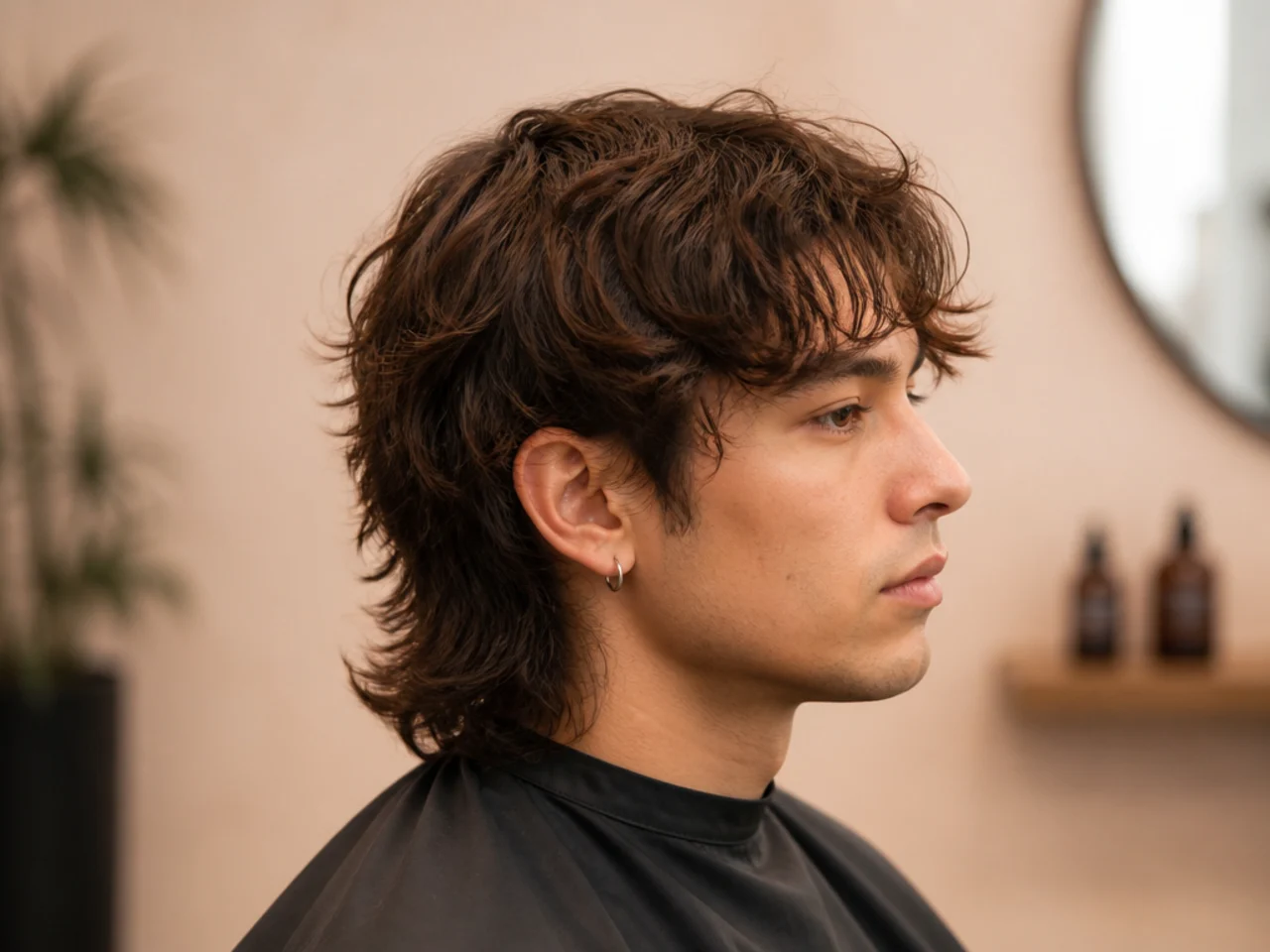
What sets it apart: this is the sweet-spot version — long enough to swing, short enough to stay out of your collar. The back hits between three and four inches, and the top holds real volume without collapsing under its own weight.
Who it suits: guys new to the wolf cut who want a version they can grow out or trim shorter without a full reset. Works with all hair types and most face shapes.
Ask for it: "Mid-length wolf cut, back to just past the collar, three-inch crown layers, tapered sides, face-framing at the jaw."
Styling tip: air-dry with a leave-in cream applied to damp hair, and finger-brush the top backward once dry.
Long Wolf Cut
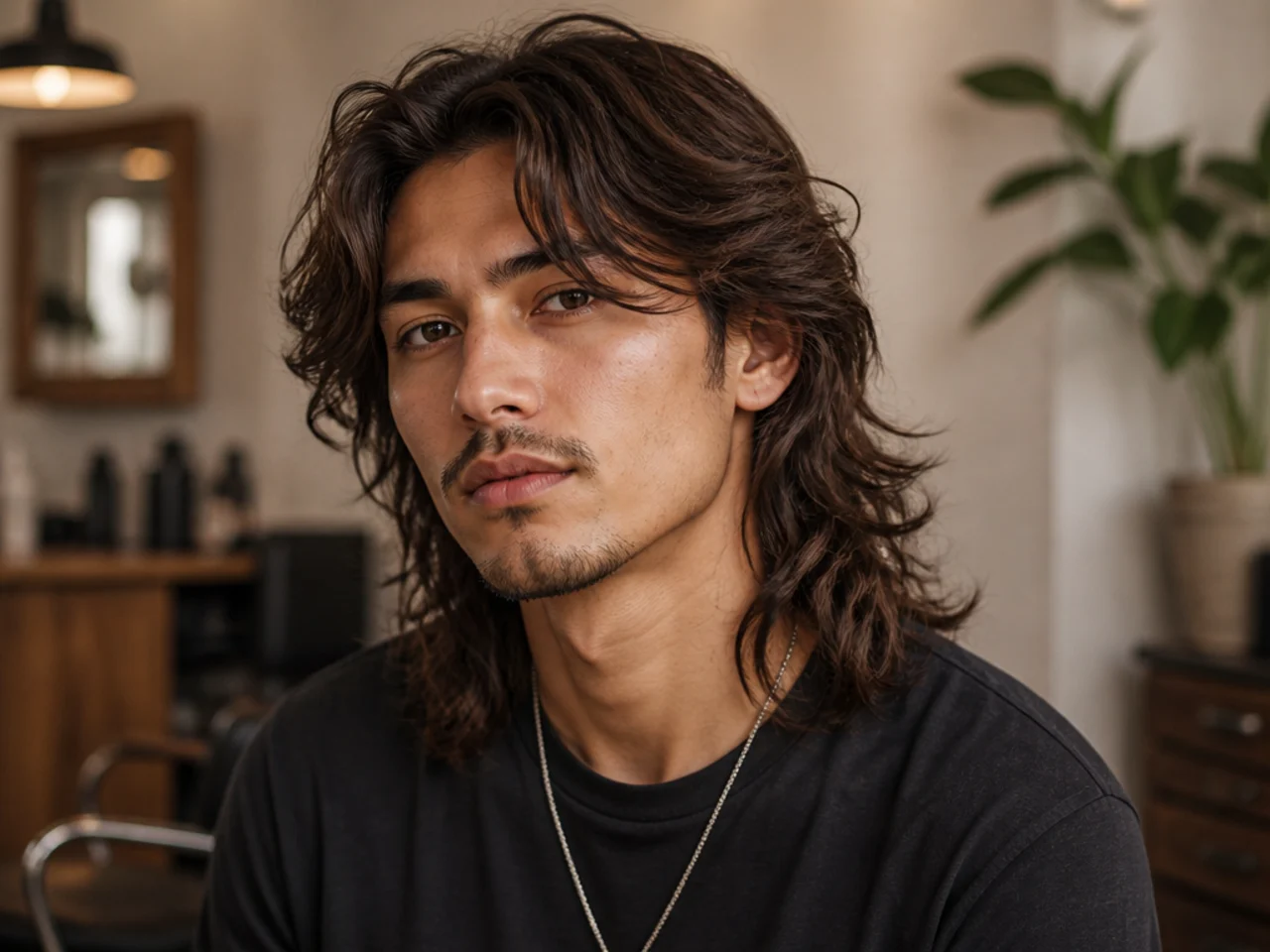
What sets it apart: length is the point. The back drops past the shoulders, and the layers run from the cheekbone all the way down. It's the closest men's version to what you'd see on a women's wolf cut.
Who it suits: guys who've committed to growing hair for a year or more. Best on oval, long, and heart faces with wavy or curly texture.
Ask for it: "Long wolf cut, past the shoulders, layers starting at the cheekbone and continuing through the length, soft tapered sides, keep the perimeter feathered."
Styling tip: sea-salt spray on damp hair, plop with a T-shirt for ten minutes, then diffuse the ends on low heat.
Short Wolf Cut
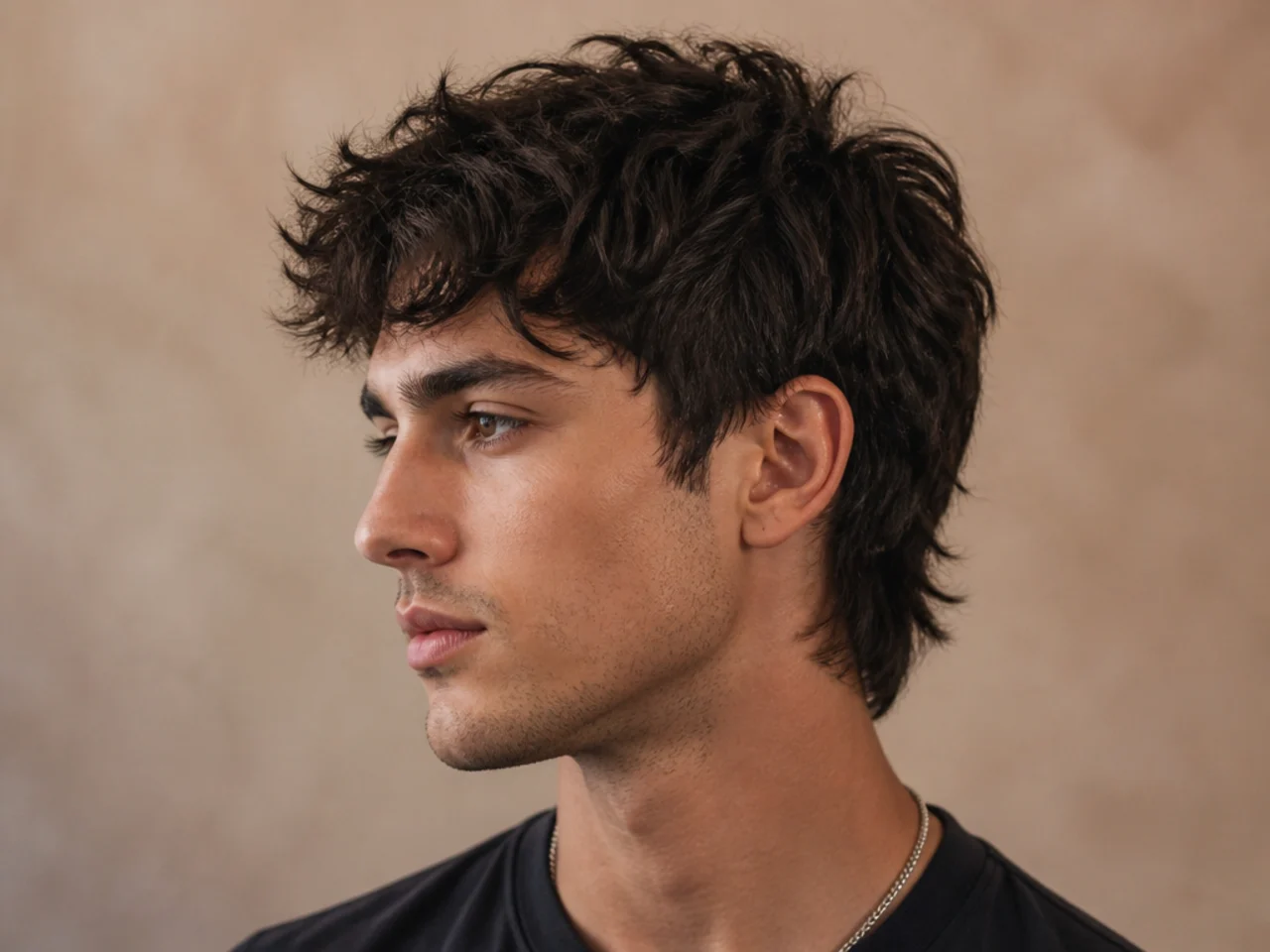
What sets it apart: this is the wolf cut at its most workplace-friendly. The back barely brushes the collar, the sides sit close, and the whole silhouette stays compact. Volume comes from the layered top, not the length.
Who it suits: guys who want the reference without the commitment, and offices that read length as unprofessional. Best on fine to medium hair and round faces.
Ask for it: "Short wolf cut, back just under two inches, crown layers with real texture, tight tapered sides, keep face-framing pieces at the jaw."
Styling tip: matte paste worked into damp roots, blow-dry upward, and let the back fall naturally.
Curly Wolf Cut
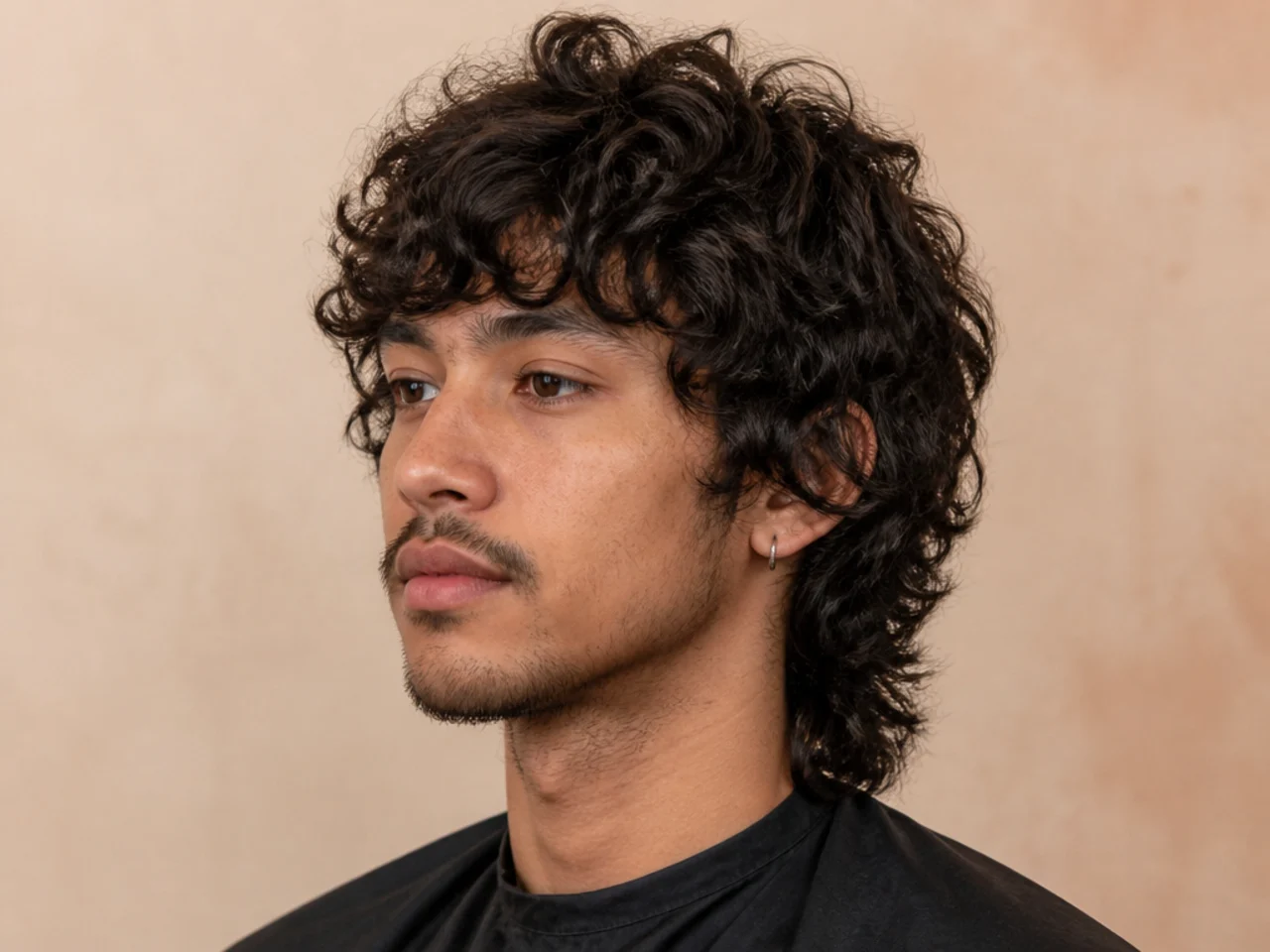
What sets it apart: the curls build the shape, so layering is about removing weight rather than creating movement. The back can sit slightly shorter than usual because coils give the illusion of length.
Who it suits: type 2c through 4a curls. Any face shape works — the crown volume balances a long face particularly well.
Ask for it: "Curly wolf cut, cut dry so you can see how each curl sits, internal layers to remove bulk, keep the perimeter intact, three-inch back, tapered sides that follow the curl pattern."
Styling tip: apply curl cream to soaking-wet hair, plop for ten minutes, then diffuse on low heat with the head tipped forward.
Straight Wolf Cut
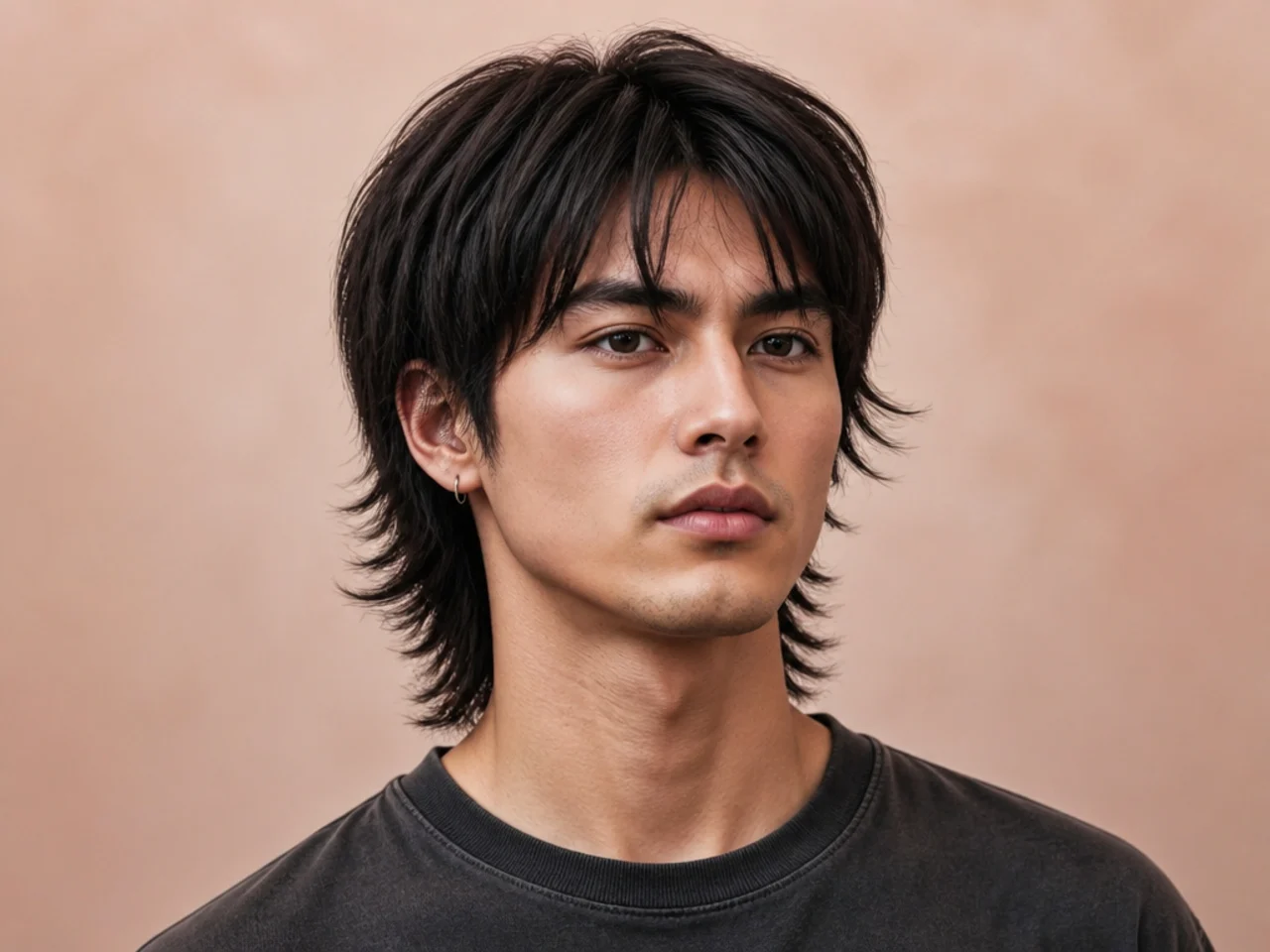
What sets it apart: straight hair reveals every layer line, so the cut has to be precise. Point-cutting builds the movement that texture would normally provide, and the finish reads sleeker than the wavy or curly versions.
Who it suits: straight hair on oval, square, or diamond faces. Fine straight hair benefits most because the layers create false volume.
Ask for it: "Straight wolf cut, heavy point-cutting through the crown and back to create texture, tapered sides, back three to four inches, face-framing to the cheekbone."
Styling tip: texture spray through damp hair, blow-dry with a paddle brush lifting the roots, then finish with a light matte cream.
Wavy Wolf Cut
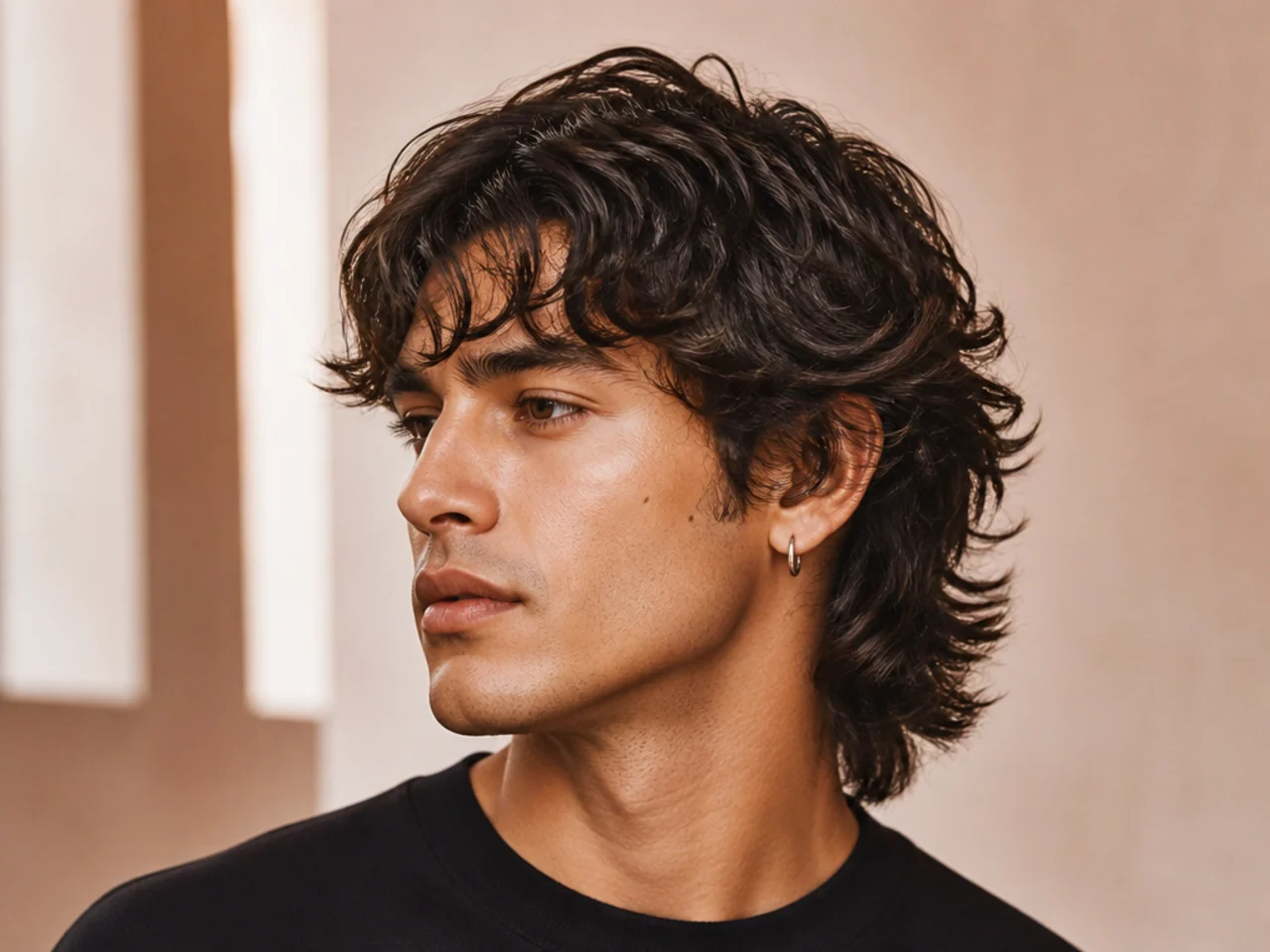
What sets it apart: the natural wave does half the work. The layers respect the existing bend, so the whole cut air-dries into shape without much intervention. It's the lowest-effort version on the list.
Who it suits: wavy hair on almost any face shape. Especially strong on heart and oval faces.
Ask for it: "Wavy wolf cut, work with the natural wave pattern, internal layers to reduce bulk, three-inch crown, tapered sides, back four inches with a soft perimeter."
Styling tip: rough-dry with fingers, apply a lightweight cream mid-lengths to ends, and scrunch once. Done.
Tapered Wolf Cut
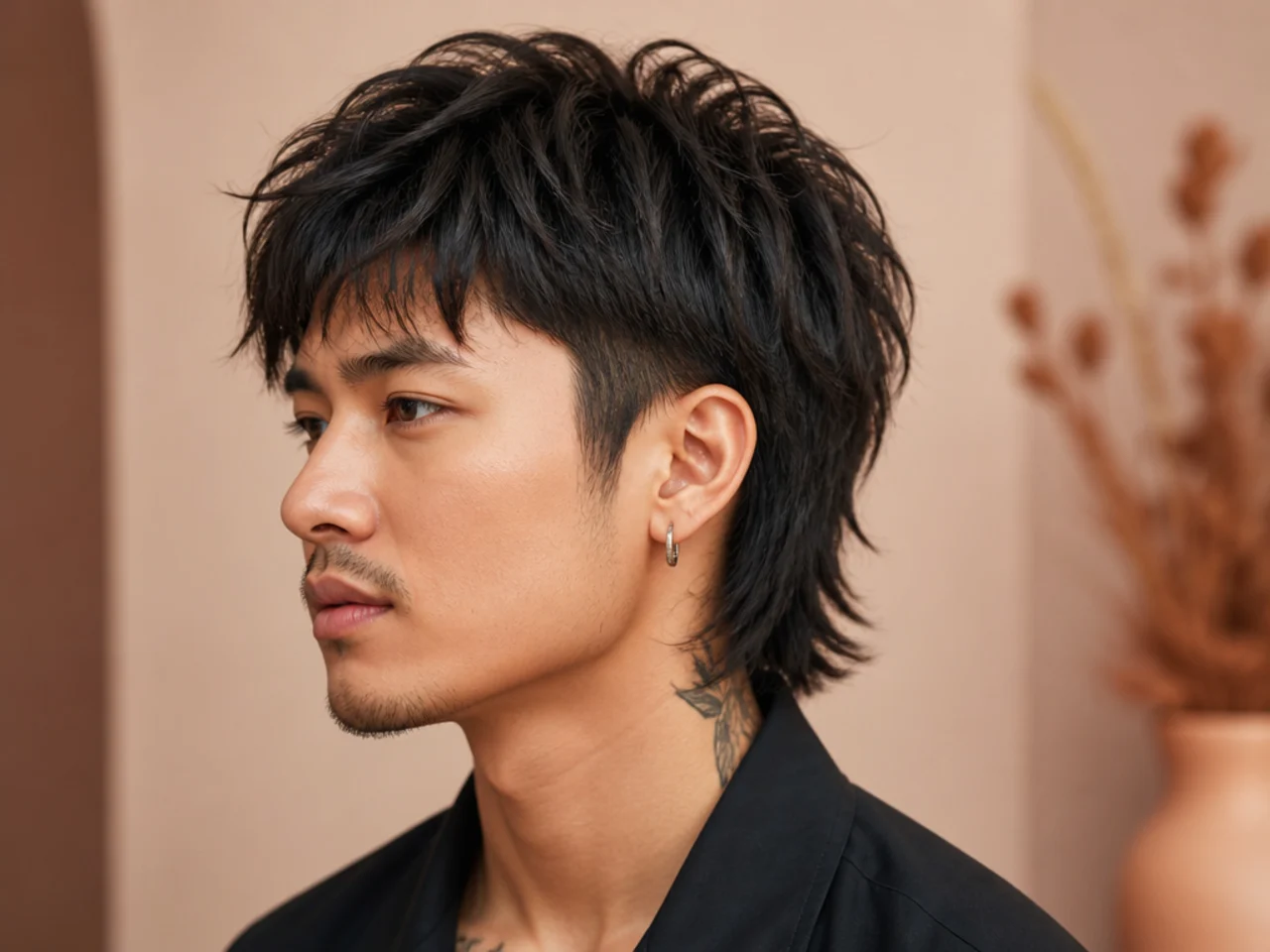
What sets it apart: this is the wolf cut cleaned up with a scissor taper — no clipper lines, no hard fade, just a gradual reduction from top to sideburn. It reads modern and professional in a way the shaggier versions don't.
Who it suits: guys in dress-code offices who want the wolf without looking like they're trying to remind you it's the weekend. Works on oval, square, and heart faces.
Ask for it: "Tapered wolf cut, scissor-tapered sides from one-and-a-half inches down to half an inch at the sideburn, three-inch crown, back to the collar with soft layers."
Styling tip: a small dab of pomade through the top, comb back with a wide-tooth comb, air-dry the rest.
Burst Fade Wolf Cut
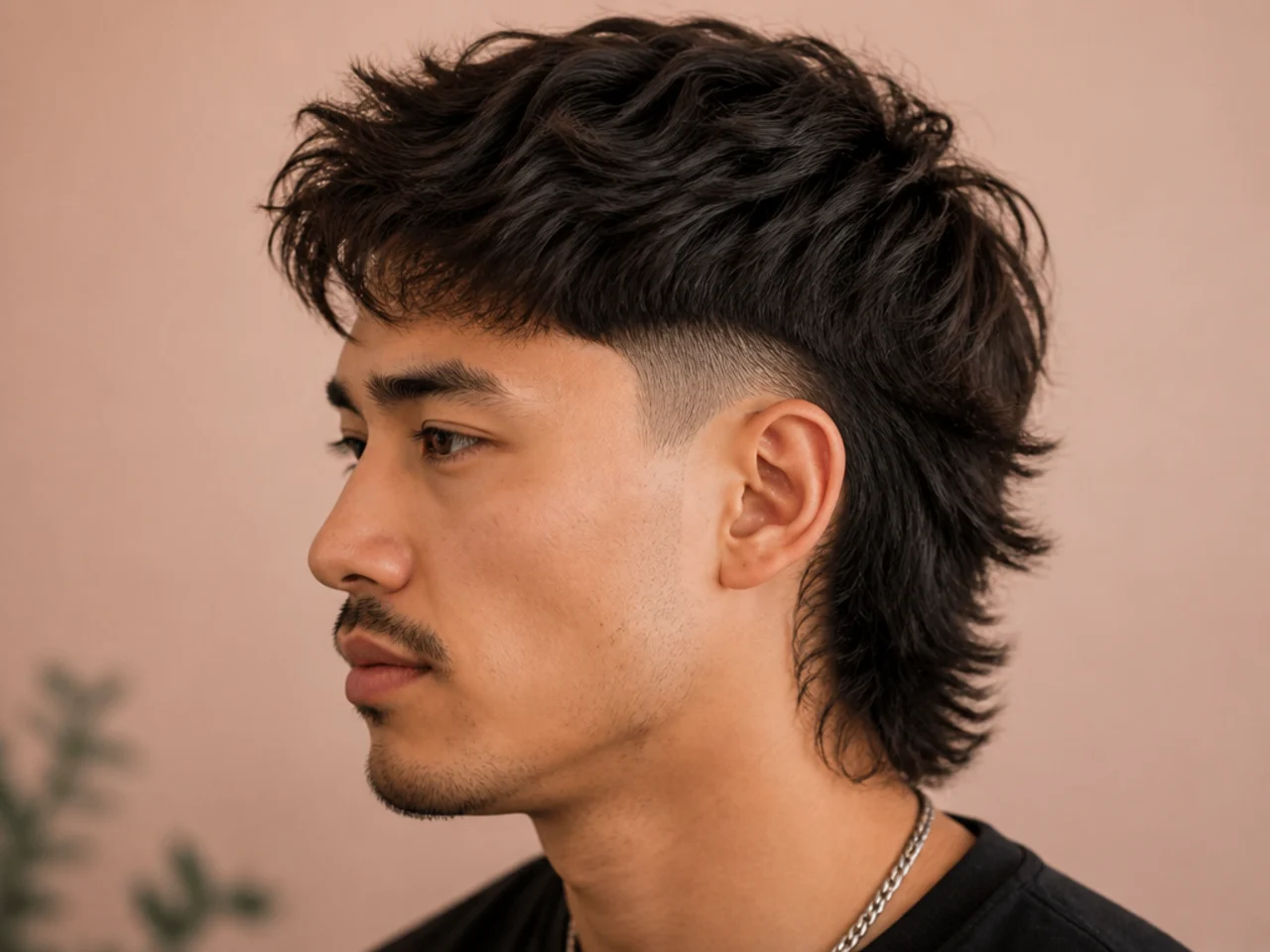
What sets it apart: the burst fade curves around the ear in a semicircle rather than dropping straight down, leaving length behind the ear untouched to flow into the wolf's back section. It's a signature move borrowed from the burst fade mullet.
Who it suits: guys who want a visual signature. Works with all hair types but shines on wavy or curly. Suits oval, square, and diamond faces.
Ask for it: "Wolf cut with a burst fade around each ear, blend up to three inches through the top and back, textured layers, keep the nape soft, not blunt."
Styling tip: lightweight cream through the top for hold, and leave the back to move on its own.
Drop Fade Wolf Cut
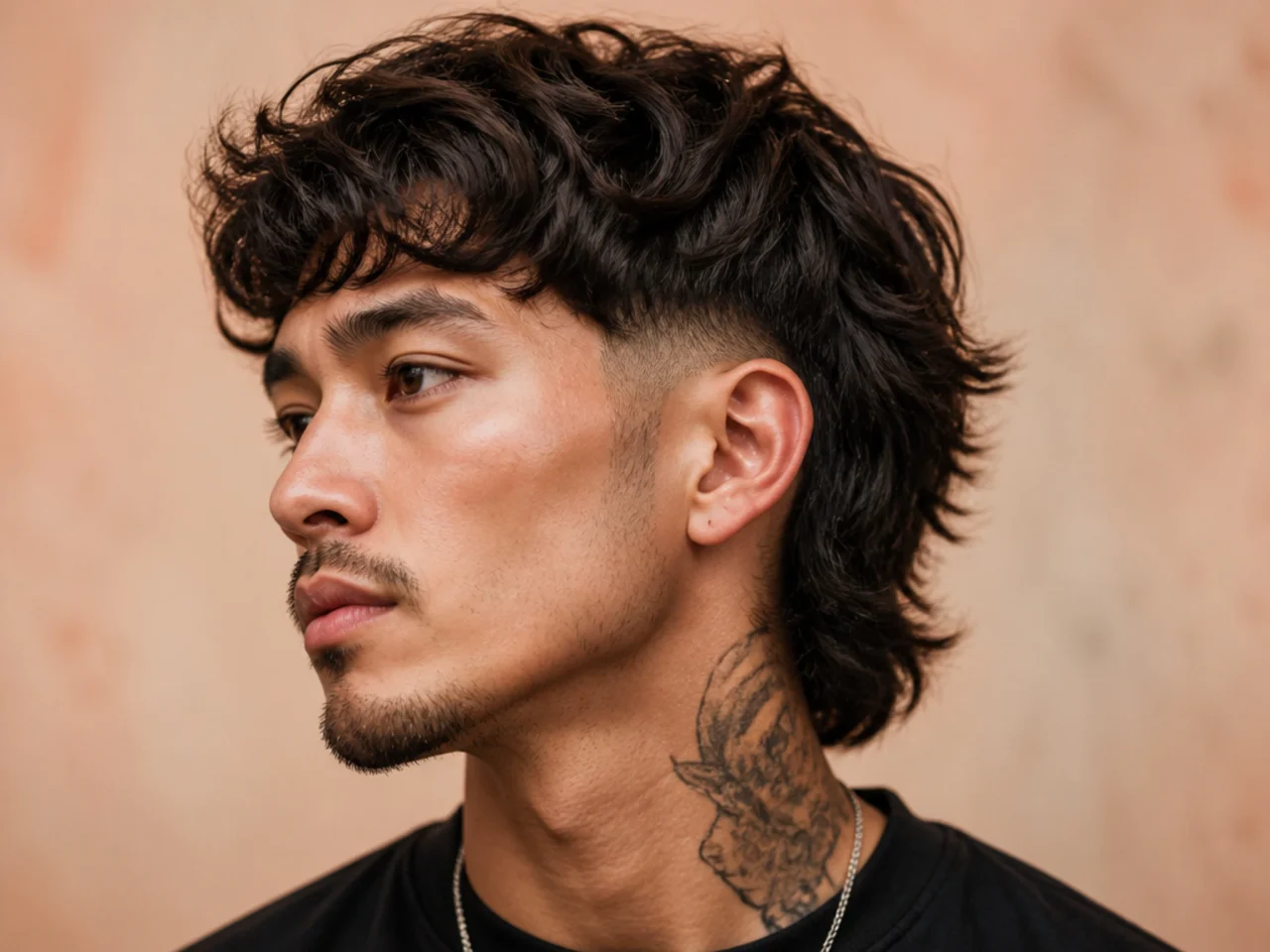
What sets it apart: the drop fade curves down behind the ear rather than staying level, following the natural curve of the head. Paired with the wolf's back length, it creates a clean architectural line that separates the fade zone from the layered mass.
Who it suits: guys with medium to thick hair. Best on oval and diamond faces that suit angular lines.
Ask for it: "Wolf cut with a low drop fade, arc the fade down behind the ear, blend up into three-inch crown layers, back to the collar with soft internal texture."
Styling tip: fiber pomade worked through the top for hold, and hairspray the fringe if you have one.
Undercut Wolf Cut
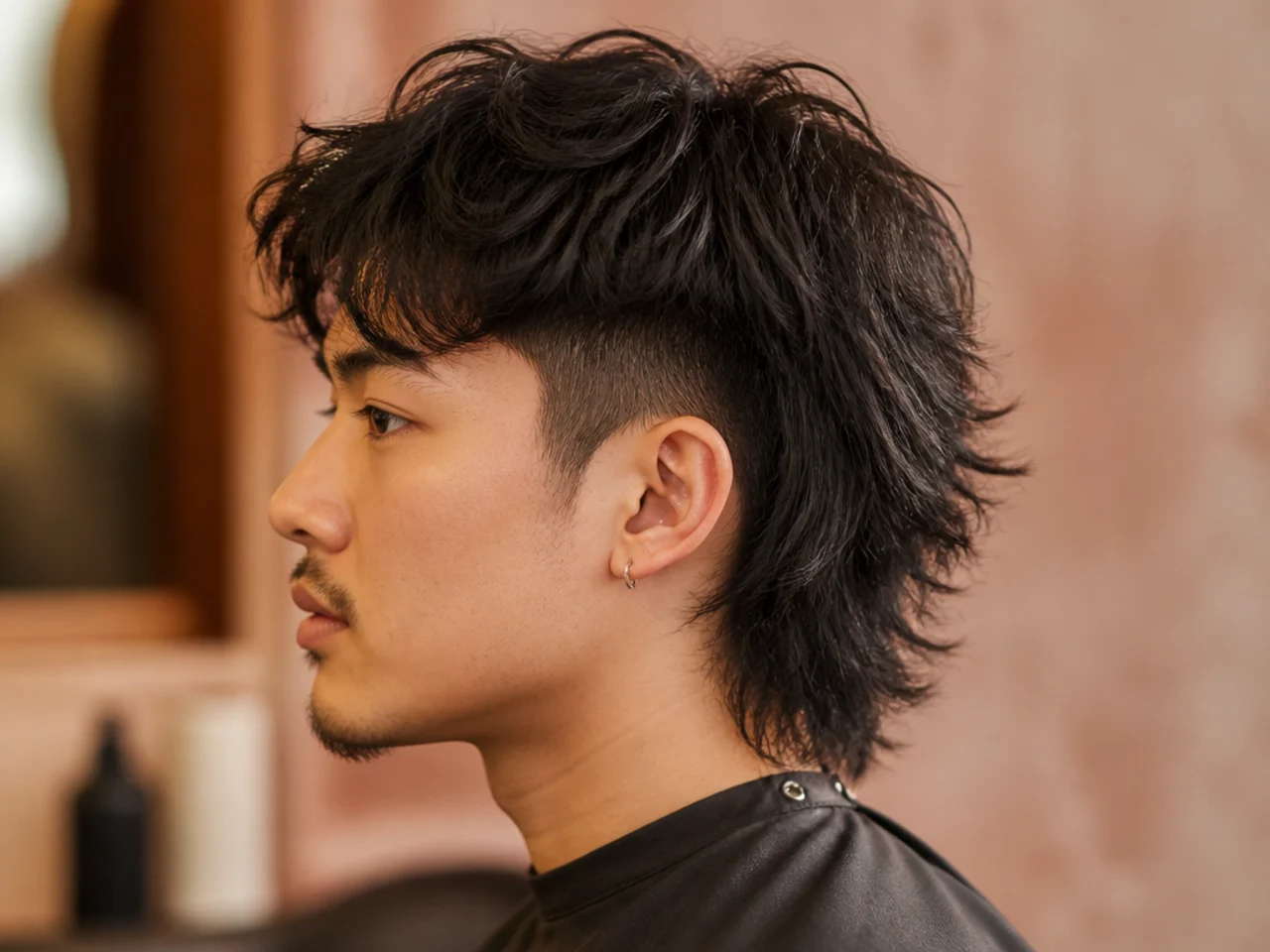
What sets it apart: the sides drop to a single short guard with no blending — the disconnected line is the feature, not the transition. The layered top and back sit above the undercut like a separate piece of hair.
Who it suits: bold personalities and thick hair that needs bulk removed. Best on oval, square, and diamond faces.
Ask for it: "Wolf cut with a one-guard undercut on the sides and back to the crown, no blending, keep four inches on top and back with heavy layers."
Styling tip: strong-hold clay through damp hair, sweep back with fingers, and let the disconnection do the visual work.
Disconnected Wolf Cut
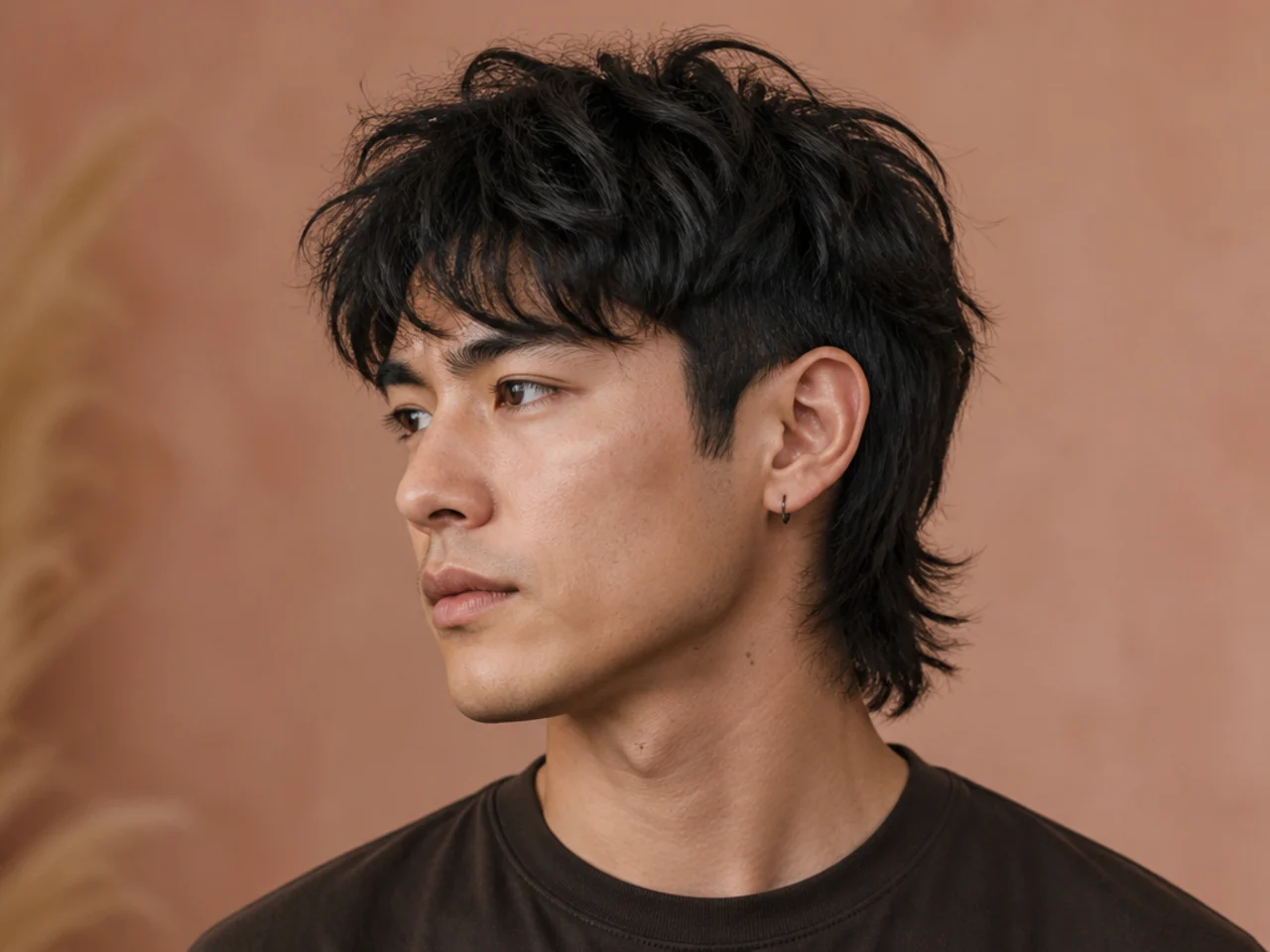
What sets it apart: shorter than an undercut but sharper than a tapered version — the sides are cropped close but stay long enough to still read as "hair," and the transition to the layered top is a visible line rather than a fade. It's the middle ground for guys who want architecture without a full shave.
Who it suits: thick straight or wavy hair. Suits oval, square, and diamond faces.
Ask for it: "Disconnected wolf cut, sides at half an inch with no blending into the top, four inches through the crown, back to the collar with layered ends."
Styling tip: matte pomade through the top, comb back, and let the disconnection define itself.
Edgar Wolf Cut
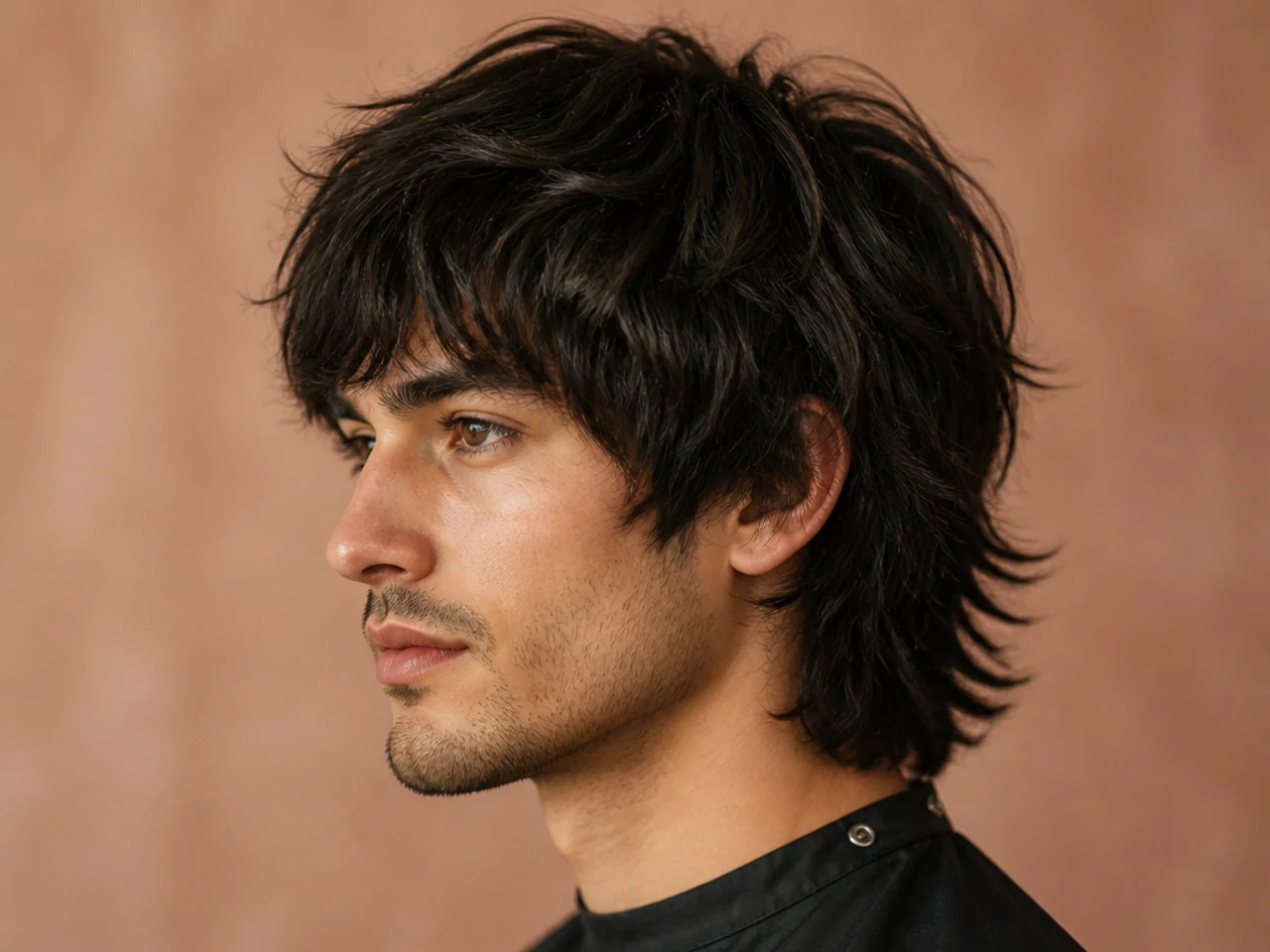
What sets it apart: it borrows the edgar haircut's straight-line fringe and pairs it with the wolf's layered back. The bluntness of the front edge contrasts hard with the shaggy texture behind it — a punchy, distinctive combination.
Who it suits: guys wanting a statement look. Suits oval and square faces on straight to slightly wavy hair.
Ask for it: "Edgar wolf cut, straight-line fringe to the eyebrows, keep the sides tapered short, three-inch crown, back to the collar with layered texture."
Styling tip: blow-dry the fringe flat and down, then a small dab of pomade to lock the edge.
Tapered Nape Wolf Cut
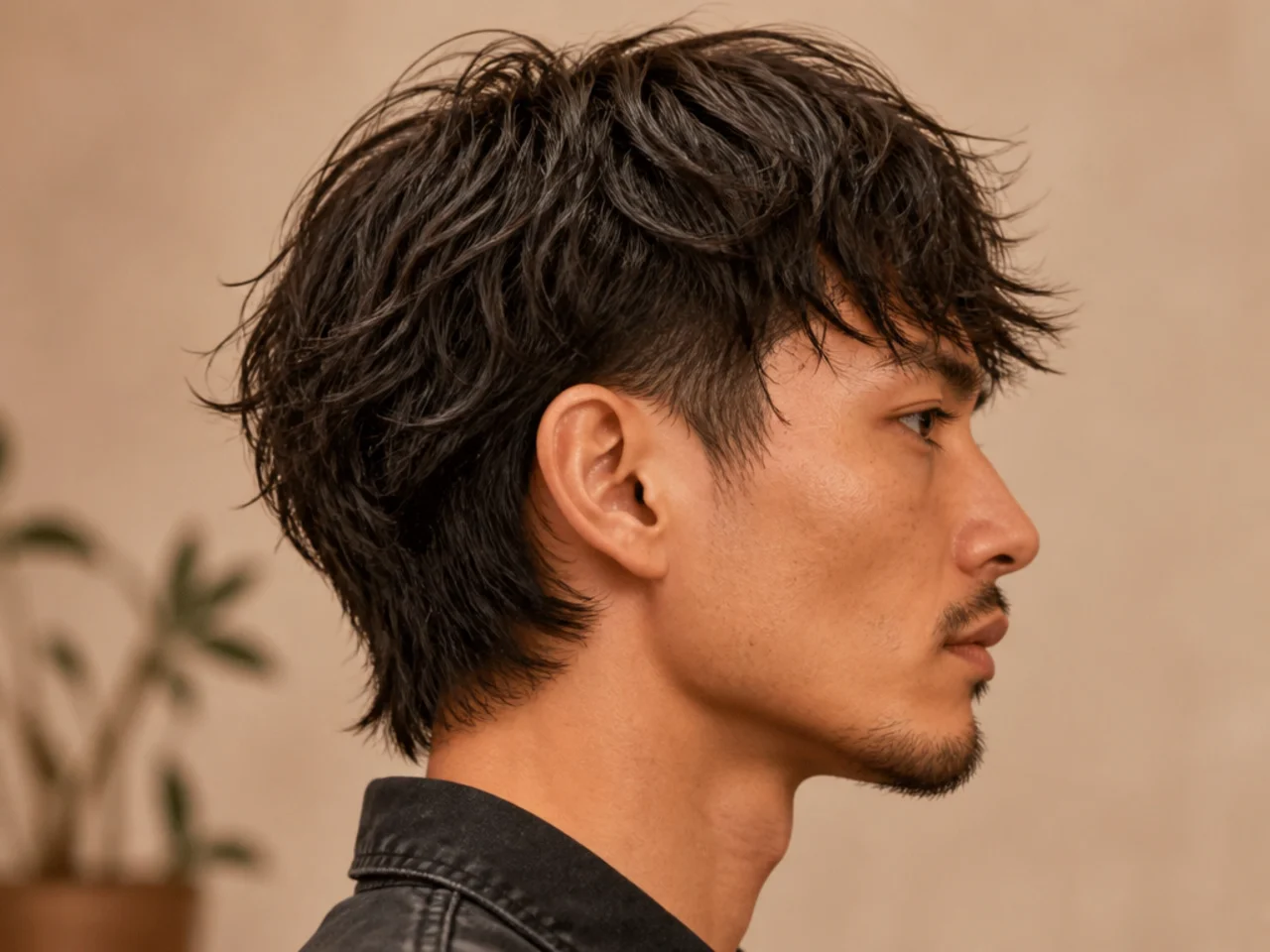
What sets it apart: the nape is the focal point. Instead of leaving the back length blunt at the collar, the barber tapers the last inch above the neck into a clean point or arc. The rest of the wolf cut stays full — the taper just refines the finish.
Who it suits: guys who want the wolf silhouette without a scraggly nape. Works with any hair type and face shape.
Ask for it: "Wolf cut with a tapered nape, back four inches with layered texture, arc the last inch above the neck into a clean taper, tapered sides."
Styling tip: no special product — just book a nape touch-up every three weeks to keep the line sharp.
High-Volume Wolf Cut
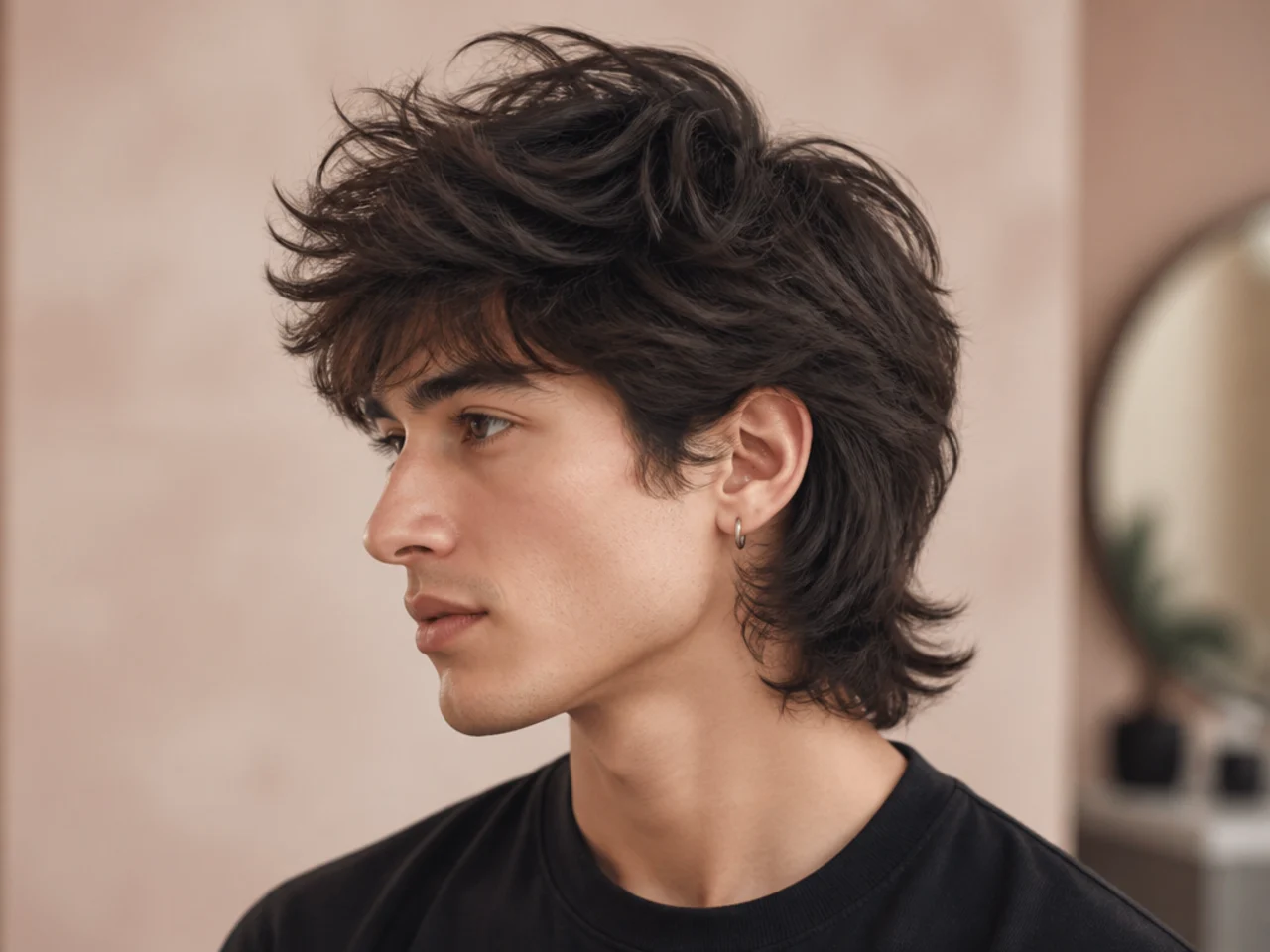
What sets it apart: the crown is engineered to stand up as tall as possible. Layers are cut shorter through the top and longer through the mid-lengths, so the hair naturally pushes upward. It's the wolf cut for guys who want visible vertical shape.
Who it suits: thick, coarse straight or wavy hair that holds height. Best on round and square faces because the lift narrows the profile.
Ask for it: "High-volume wolf cut, keep the crown short — two inches — with heavy internal layers, mid-lengths four inches through the back, tapered sides."
Styling tip: mousse into damp roots, blow-dry upward with a round brush at the crown, then finish with strong-hold hairspray.
Subtle Wolf Cut
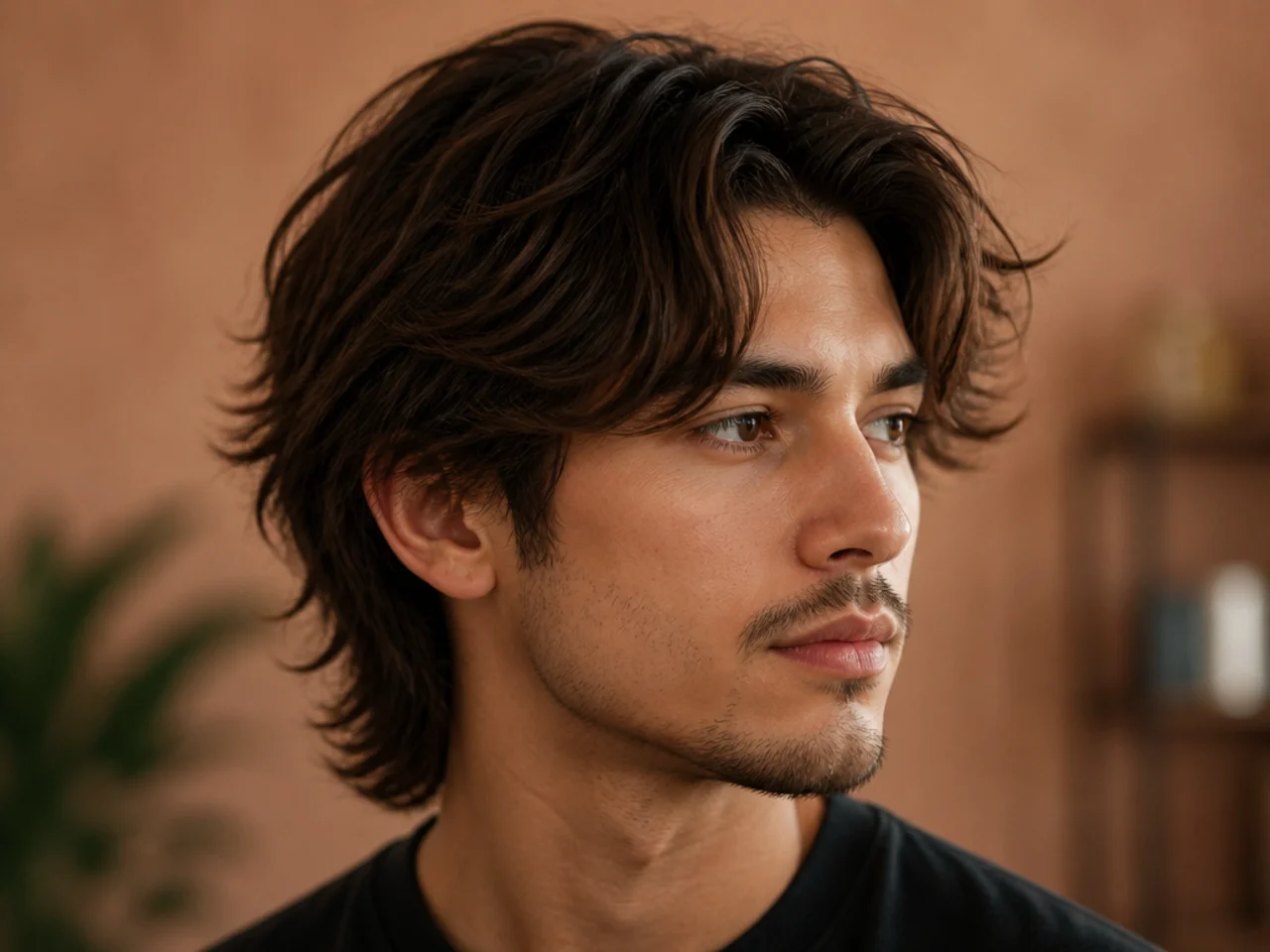
What sets it apart: it's the wolf cut for guys who don't actually want to look like they got a wolf cut. Layer differences are minimal, the back stays close to two inches, and the whole shape reads as "a nicer version of your usual haircut" rather than a trend piece.
Who it suits: professionals in strict environments, and anyone testing the waters before going bolder. Works on any hair type and face shape.
Ask for it: "Subtle wolf cut, minimal layer contrast, two-inch back, tapered sides, keep the perimeter clean rather than feathered."
Styling tip: whatever you already do — the cut is built to work with your existing routine.
Punk Wolf Cut
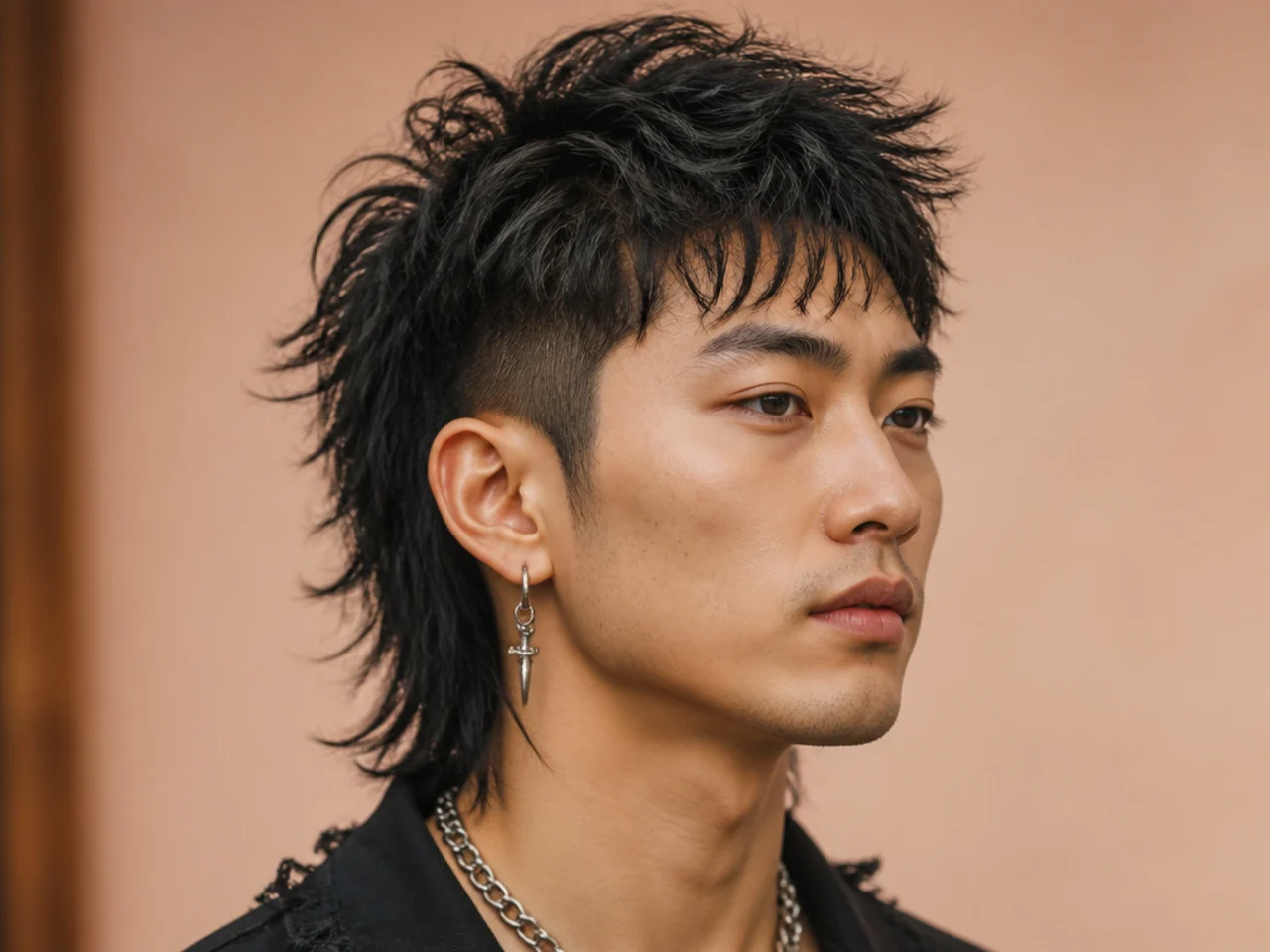
What sets it apart: this version pushes toward mohawk territory. The top is spiked or razored into sharp points, the sides are undercut, and the back stays long and choppy. It's the loudest version on the list and demands full commitment to the look.
Who it suits: dedicated aesthetic guys and anyone with dense, coarse hair that holds spikes. Best on oval and square faces.
Ask for it: "Punk wolf cut, razored layers through the top for spike shape, half-guard undercut on the sides, four-inch back with heavy choppy texture."
Styling tip: strong-hold gel or clay worked through damp roots, spike with fingertips, and lock with hairspray. Refresh mid-day if needed.
Indie Wolf Cut
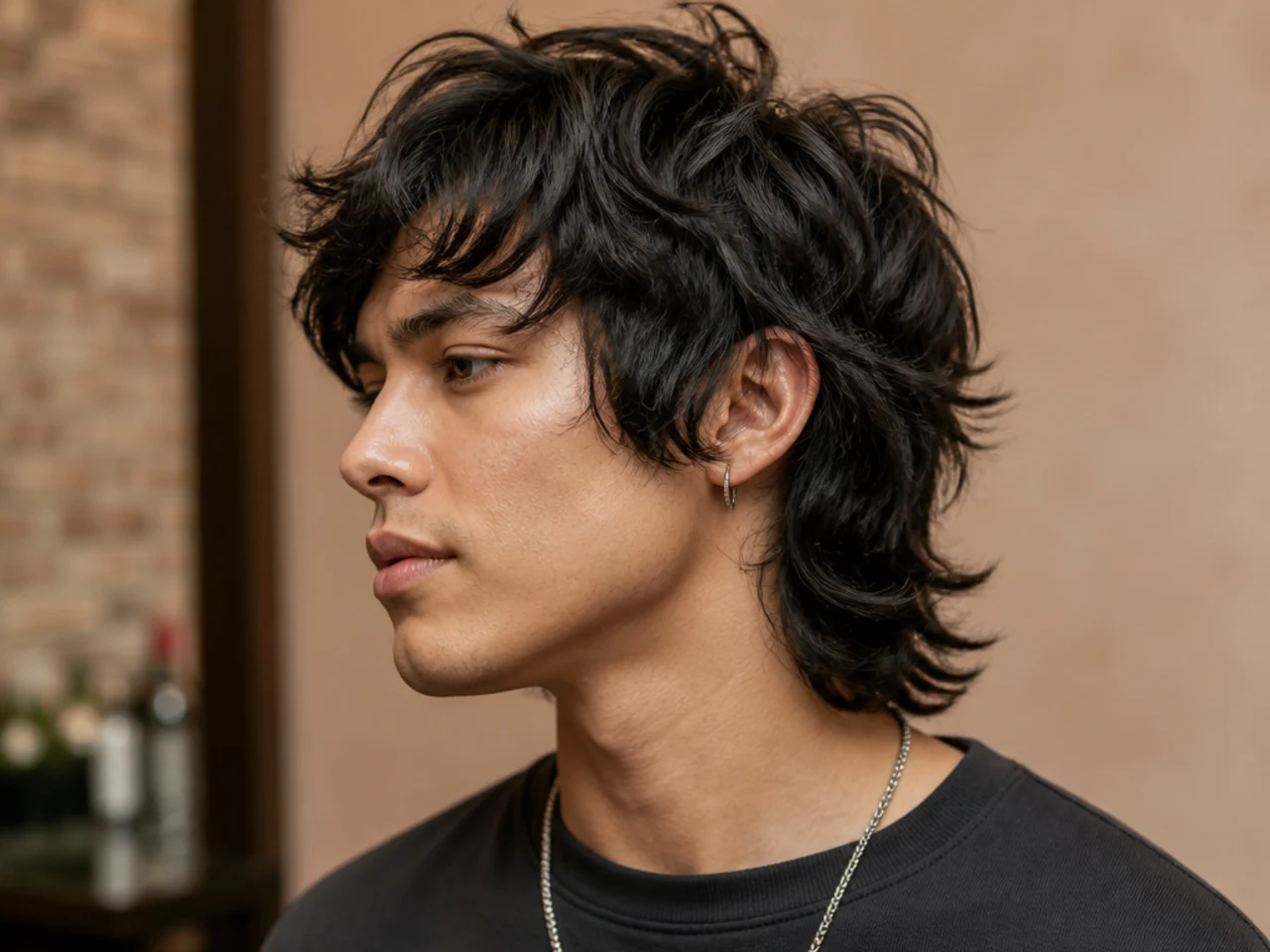
What sets it apart: this is the wolf cut styled as if you don't know what a wolf cut is. Everything is slightly grown-out, the fringe hangs a little too long, the back is intentionally uneven. Reads music-scene rather than barbershop.
Who it suits: guys with wavy or slightly curly hair and a laid-back personal style. Best on oval, heart, and long faces.
Ask for it: "Indie wolf cut, keep it deliberately overgrown, heavy fringe past the brows, four-inch back with uneven layers, blended — not tapered — sides."
Styling tip: dry shampoo at the roots for grip, tousle with fingers, and never touch a comb.
Boy Wolf Cut
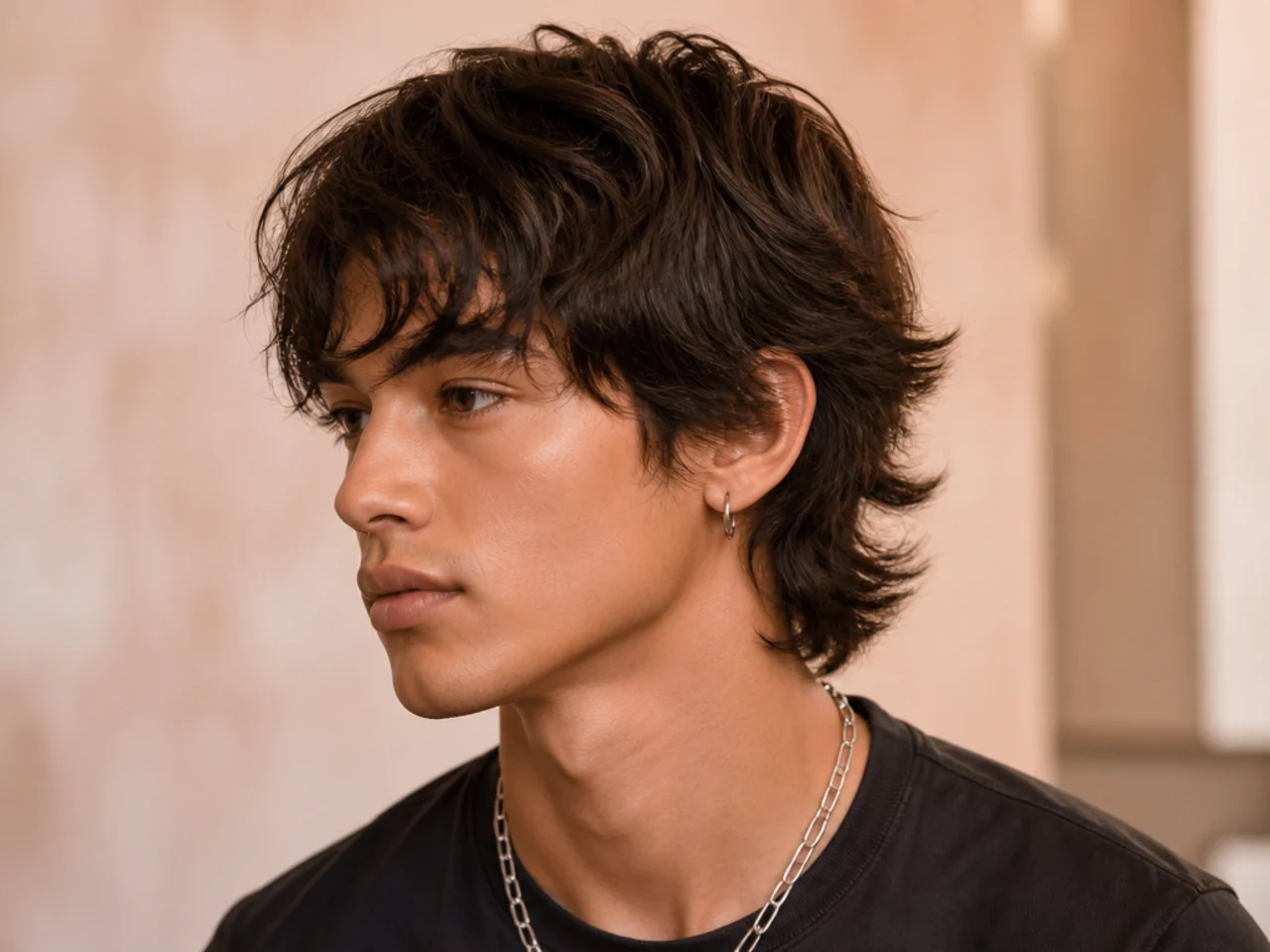
What sets it apart: this is the version for younger guys and teens — softer layering, a manageable back length, and a fringe that flops naturally without daily styling. Also holds up as a first-time wolf cut for adults who want lower stakes. Pairs well with the wider boys' teenage haircut category.
Who it suits: teens and college guys with straight to wavy hair. Suits round, oval, and heart faces.
Ask for it: "Boy wolf cut, soft layered top, floppy fringe to the eyebrows, tapered sides, back just past the collar with clean layers."
Styling tip: matte cream through damp hair, finger-comb the fringe forward, and let it air-dry.
Messy Wolf Cut
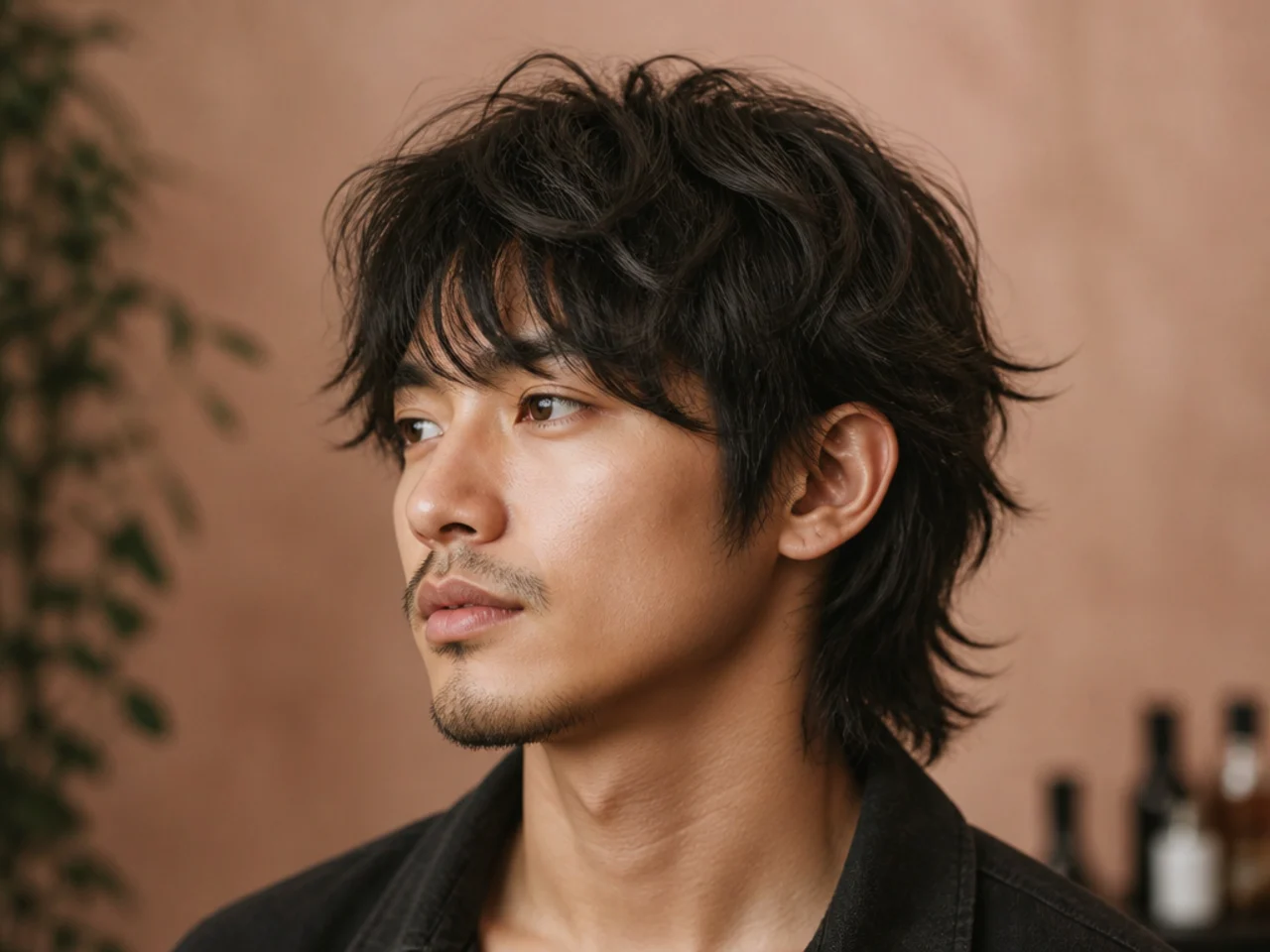
What sets it apart: it looks like you woke up and shook your head twice. Every layer sits at a slightly different angle, nothing is symmetrical, and the whole shape reads deliberately unstyled. Feels adjacent to the messy hairstyles for men family.
Who it suits: guys with wavy or slightly curly hair. Best on oval, heart, and square faces.
Ask for it: "Messy wolf cut, asymmetric layers throughout, heavy point-cutting for lived-in texture, blended sides, back four inches with an uneven perimeter."
Styling tip: sea-salt spray, twist random sections, air-dry, and finger-tousle before you leave the house.
Slick Wolf Cut
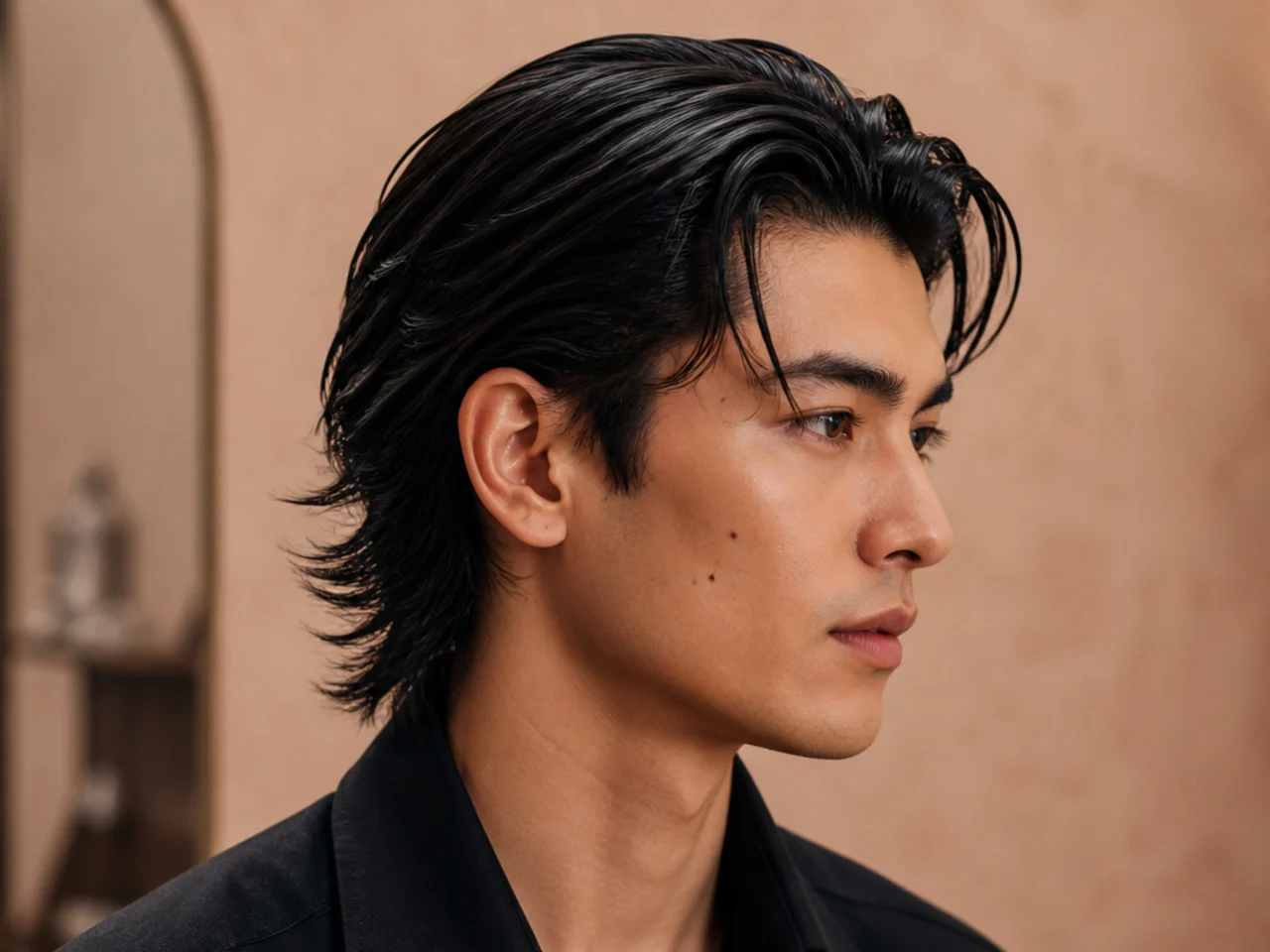
What sets it apart: the wolf cut styled backward with product, not tousled forward. The layers still exist — they're just combed into a sleeker shape. Works as a Friday-night version of the classic wolf you wear the rest of the week.
Who it suits: any hair type, any face shape. Especially strong for professional-to-evening transitions.
Ask for it: "Slick wolf cut, classic three-inch crown with internal layers, tapered sides, back to the collar — but designed to comb backward cleanly with pomade."
Styling tip: heavy pomade or wet-look gel through damp hair, comb straight back with a wide-tooth comb, and let it set for two minutes before you leave.
Wolf Cut with Beard
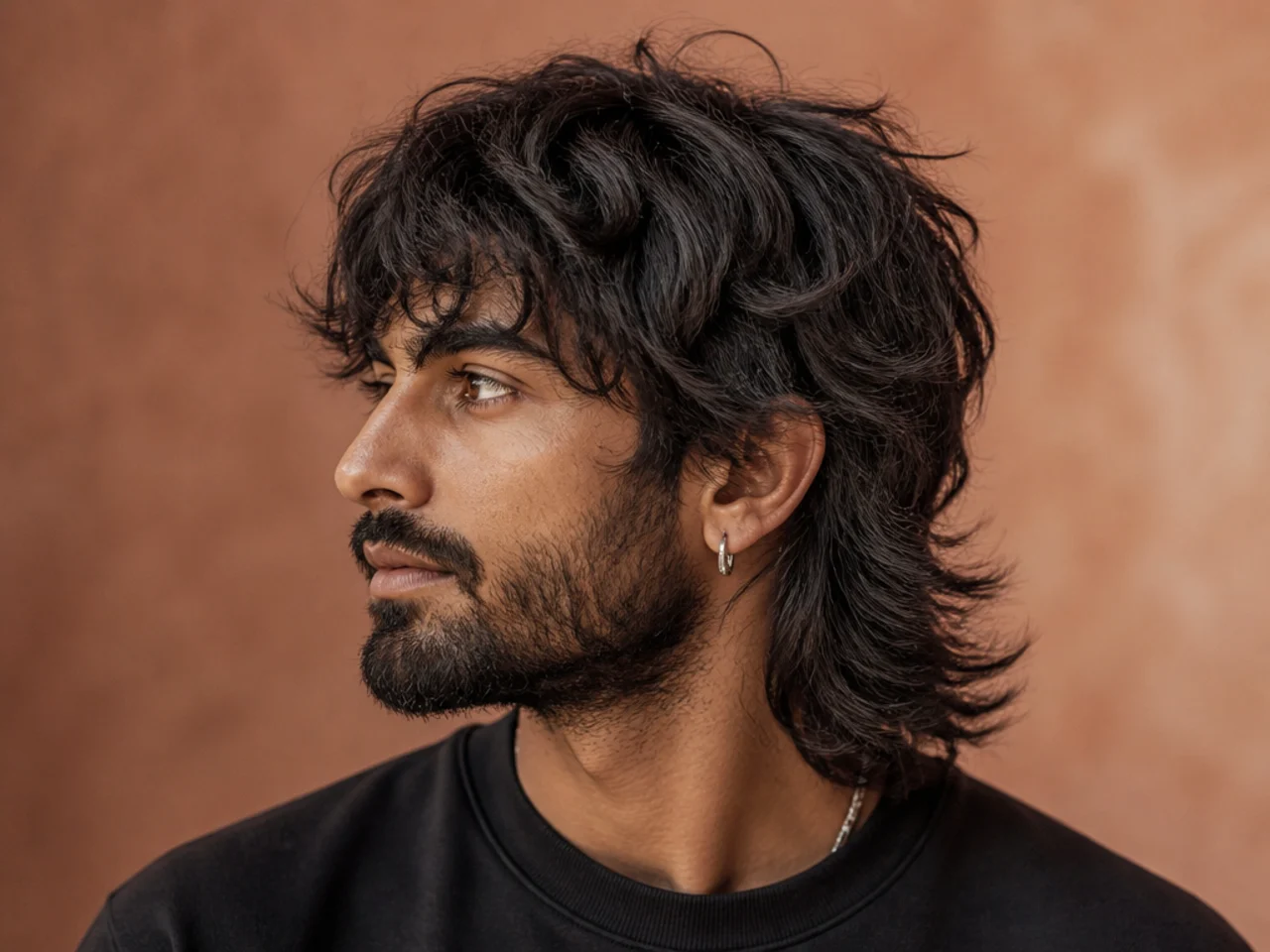
What sets it apart: the beard becomes part of the silhouette. The tapered sideburns of the wolf cut blend directly into a groomed beard, so the whole head reads as one continuous shape. It's the most mature version of the wolf and works best when both are trimmed on the same schedule.
Who it suits: guys who already wear a beard and want their haircut to match its density. Suits oval, square, and heart faces on any hair type.
Ask for it: "Wolf cut blended into a full beard, tapered sideburns fading directly into the beard line, three-inch crown, back to the collar with layered texture."
Styling tip: beard oil daily to keep the transition looking smooth, and get the beard and hair trimmed the same day so the shape stays balanced.
How to Ask Your Barber
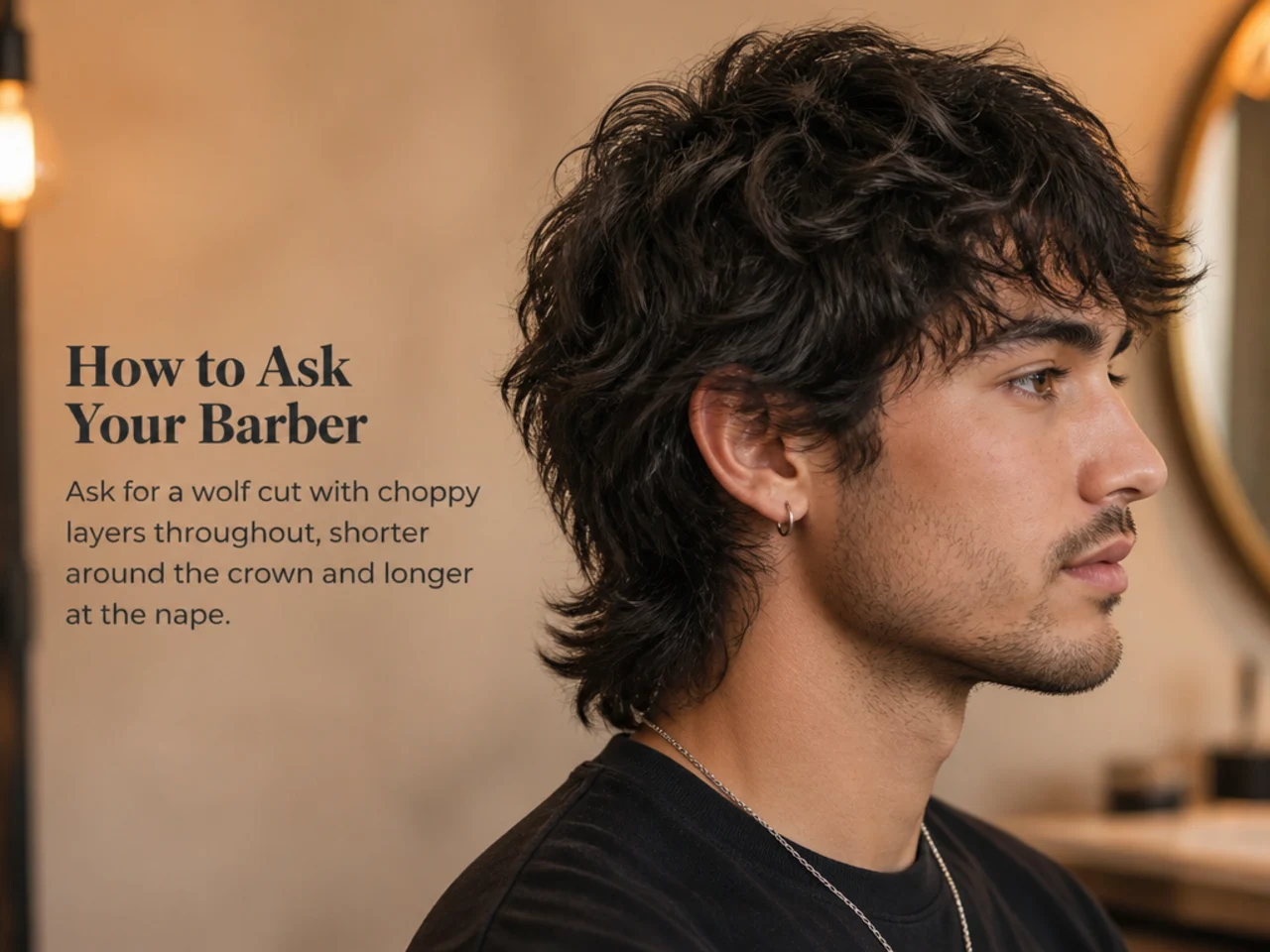
Walking in and saying "wolf cut" isn't enough — the family covers 30 variations, and half of them contradict each other. The consultation is where the cut is really made.
- Bring three reference photos — front, side, and back. If you only have front shots, the barber will guess at the back length and often go shorter than you wanted.
- Name the length in inches, not just "medium." Say "three inches through the crown, four at the back" instead of "not too long."
- Specify the side treatment: tapered, faded, undercut, or blended. This one word changes the whole silhouette.
- Mention your hair type honestly. If your hair is finer than the reference photo, the barber will adjust layer density so the shape still holds volume.
- Point out any face-shape concerns you want the cut to address — narrowing a round face, softening a strong jaw, breaking up length on a long face.
- Ask about maintenance cadence before you leave. Wolf cuts need five- to eight-week trims to stay in shape. If that doesn't fit your calendar, choose a shorter variation.
- Confirm the finish — should the perimeter be feathered, blunt, or arced? Small choice, big visual difference.
If your barber hasn't done many wolf cuts, ask to see photos of their work first. The layer transitions are what separate a good wolf cut from a bad one, and not every barber has practice with the technique. Any of the classic-family variations pair well with a modern shag haircut reference for context.
Styling and Maintenance
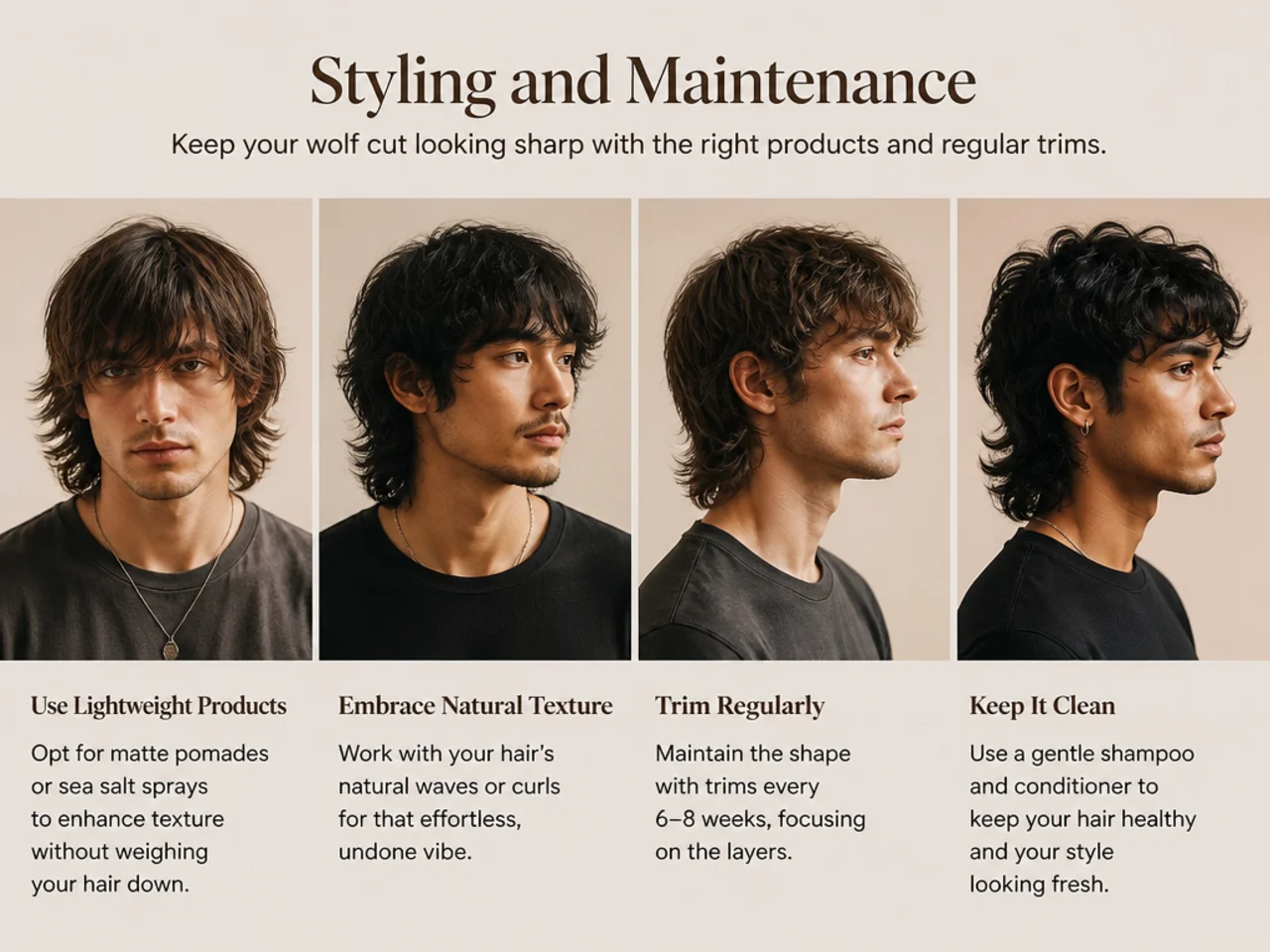
The wolf cut is designed for low-effort styling — the layered structure does most of the work. Under five minutes daily is the standard for the classic version.
- Rough-dry with fingers. Blot with a towel, then blow-dry on medium heat while lifting the roots at the crown and back with your fingers. This builds the volume everything else sits on.
- Add texture product to damp hair. A pea of matte cream for hold, or a two-pump sea-salt spray for movement. Work it through with your fingers — a comb pulls the layer texture straight out.
- Scrunch the back. Grab the back length and scrunch upward toward the scalp. This encourages the layers to fall in defined pieces rather than a flat curtain.
- Air-dry or diffuse. Wavy and curly hair benefits from a diffuser on low heat with the dryer held close to the scalp. Straight hair can finish air-drying from here.
- Finish with a light hairspray. A quick mist locks the shape without stiffness. Focus on the fringe and crown, where drop happens first.
Product-wise, keep it simple. A matte clay or cream for daytime hold, a sea-salt spray for the beach-hair days, a lightweight hairspray for lockdown, and a sulfate-free shampoo to avoid stripping the layered movement. Curly and coily hair adds a leave-in conditioner and a diffuser to the rotation.
Trim cadence is non-negotiable. Book every five to eight weeks for classic, short, and tapered versions. Long and layered versions can stretch to eight weeks, but the perimeter starts looking untidy after that. Fade and burst-fade sides need touch-ups every two to three weeks on their own schedule. Skip a trim cycle and the layers stack into a triangle — no styling product fixes that. Getting a consistent haircut cadence is what keeps the wolf cut looking intentional.
FAQ
Is a wolf cut the same as a mullet?
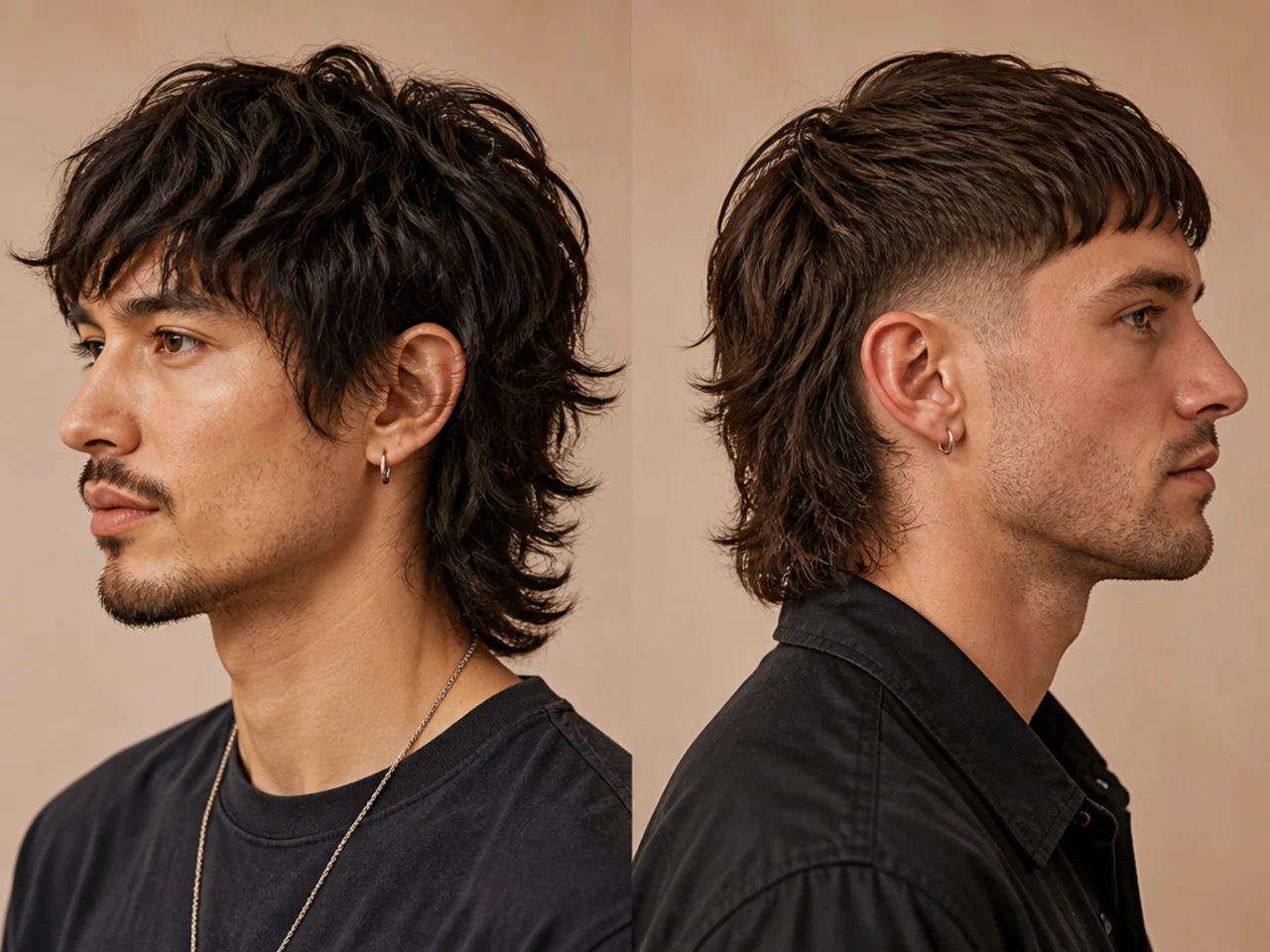
No — though they're related. A mullet stacks length at the back with shorter, closer sides and top. A wolf cut spreads layers around the crown and face too, so the shape has volume from every angle rather than a single-length rear panel. The mullet-wolf hybrid variation splits the difference for guys who want elements of both.
Which face shape suits a wolf cut best?
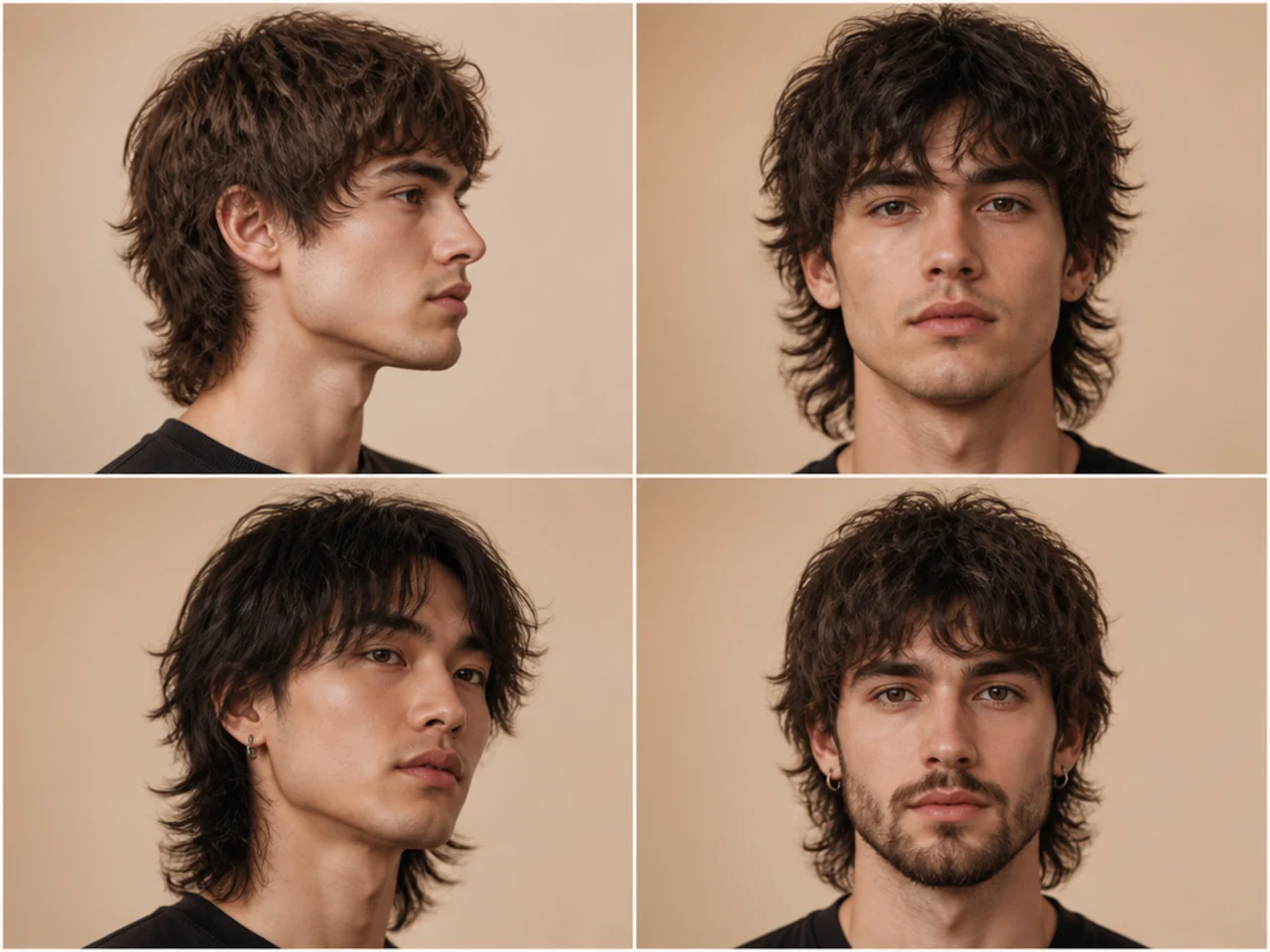
Oval and heart faces work with almost any wolf cut. Round faces suit high-volume, mullet, or fringed versions that add vertical line. Square faces read best with the softer, layered variations rather than disconnected or undercut versions. Long faces benefit from the curtain wolf or wolf with fringe to break up vertical space.
Can I get a wolf cut with curly hair?
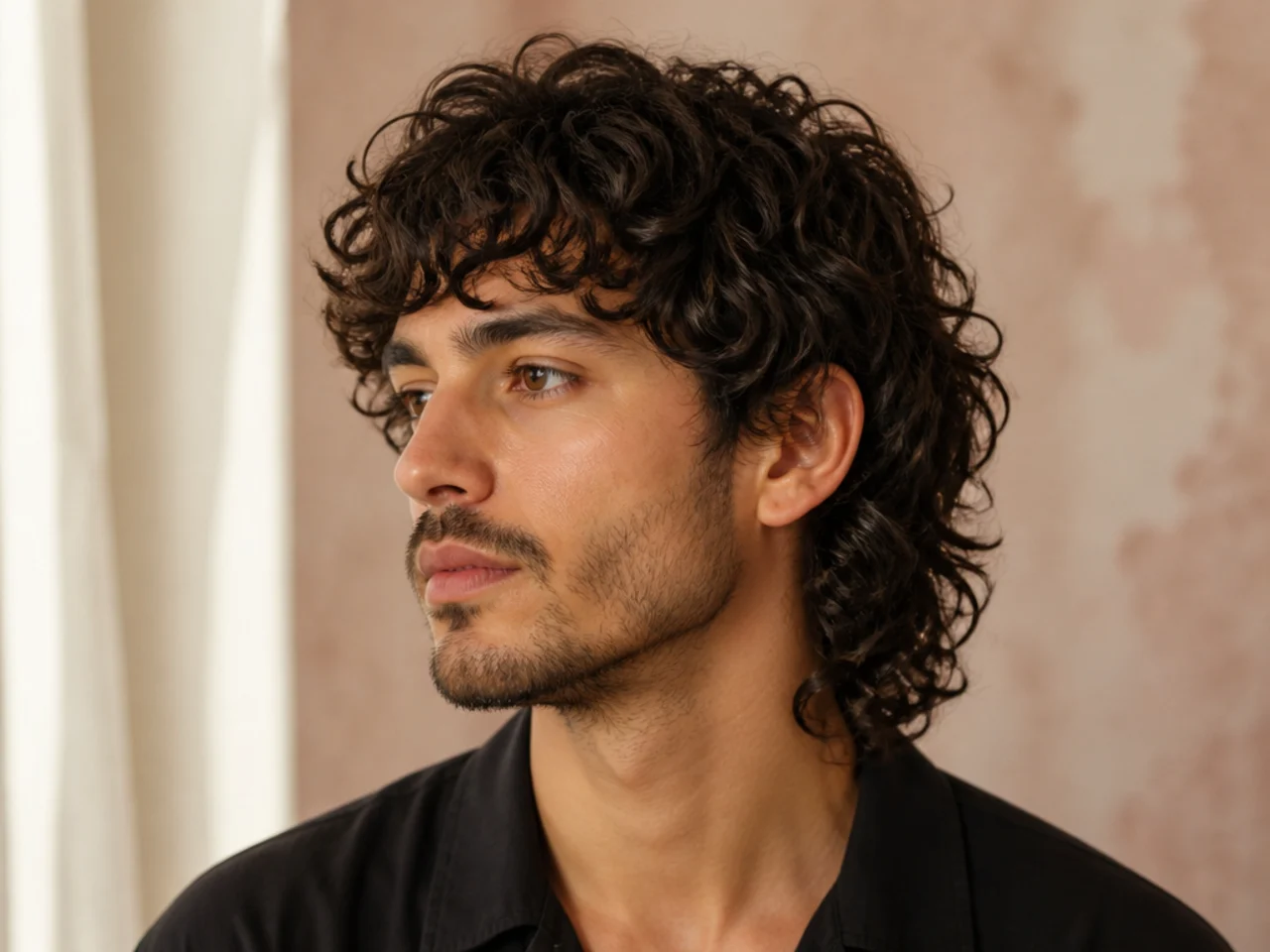
Yes — curly and coily hair build the wolf silhouette without any styling, which is why it's one of the strongest hair types for the shape. Ask for the cut to be done dry so the barber can see how each coil sits, and request internal layers to remove bulk without cutting the perimeter short. Explore more options in the curly hair men haircut guide.
How long does hair need to be for a wolf cut?
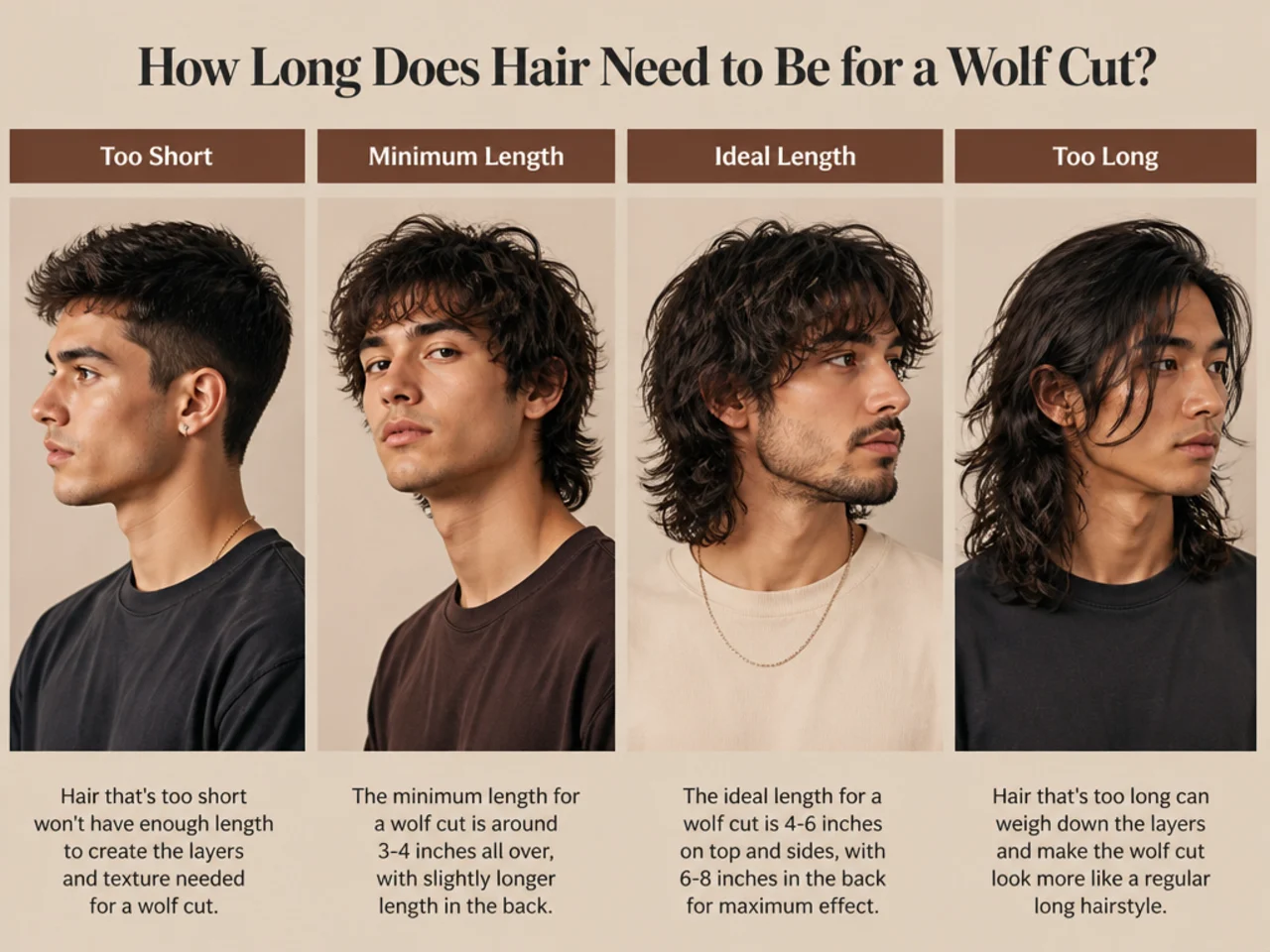
The shortest workable men's wolf cut needs about three inches on top and two at the back. Anything shorter loses the layered silhouette. If you're growing out from a fade or crop, plan for three to five months before the cut is realistic.
How much does a men's wolf cut cost?
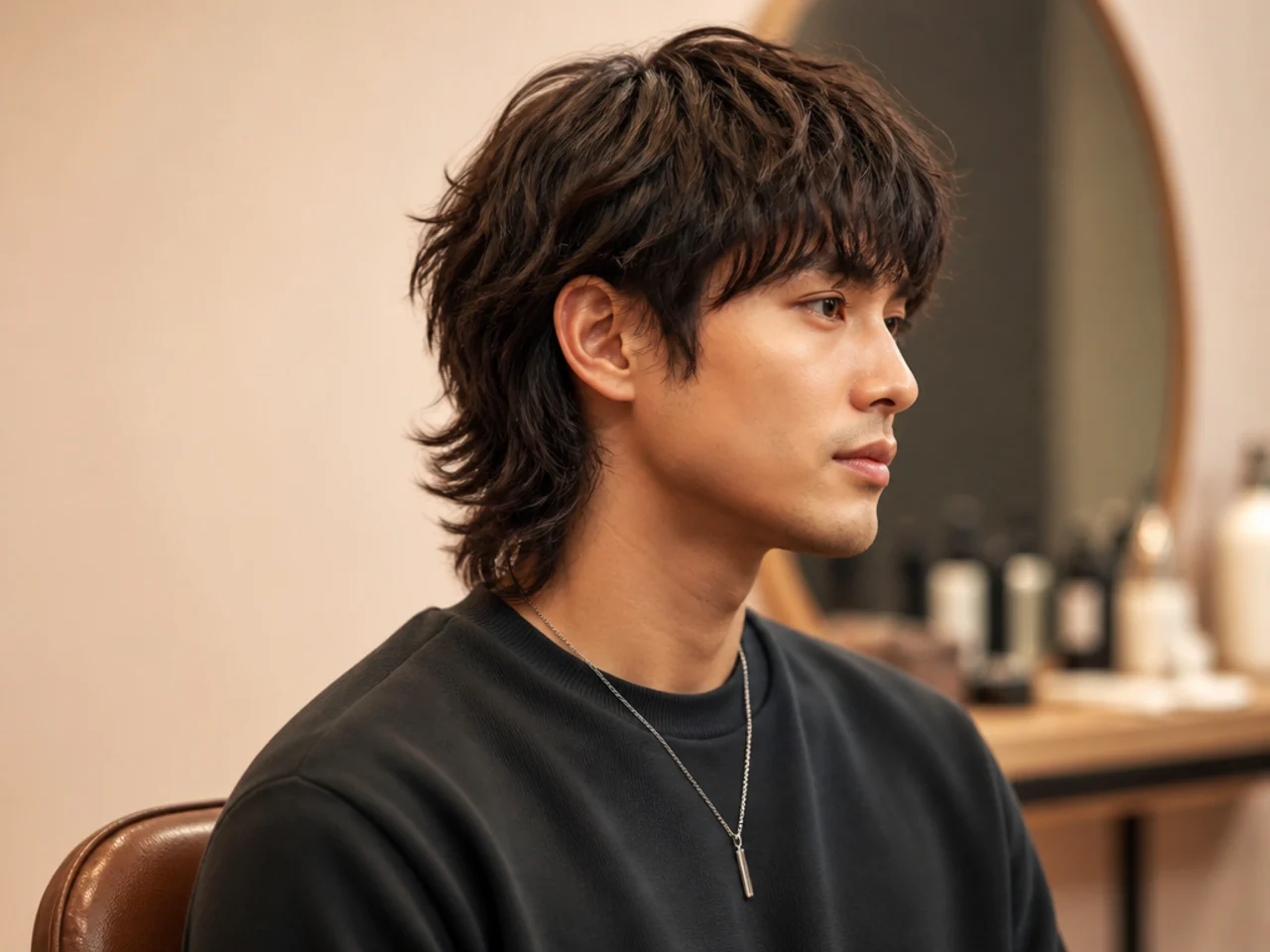
Expect $45 to $90 at a standard barbershop, and $90 to $180 at a specialty salon that markets layered men's cuts. The price is higher than a standard fade because the layer work takes 45 minutes to over an hour. Book with a barber who has visible wolf cut examples on their portfolio.
Will a wolf cut work for straight hair?
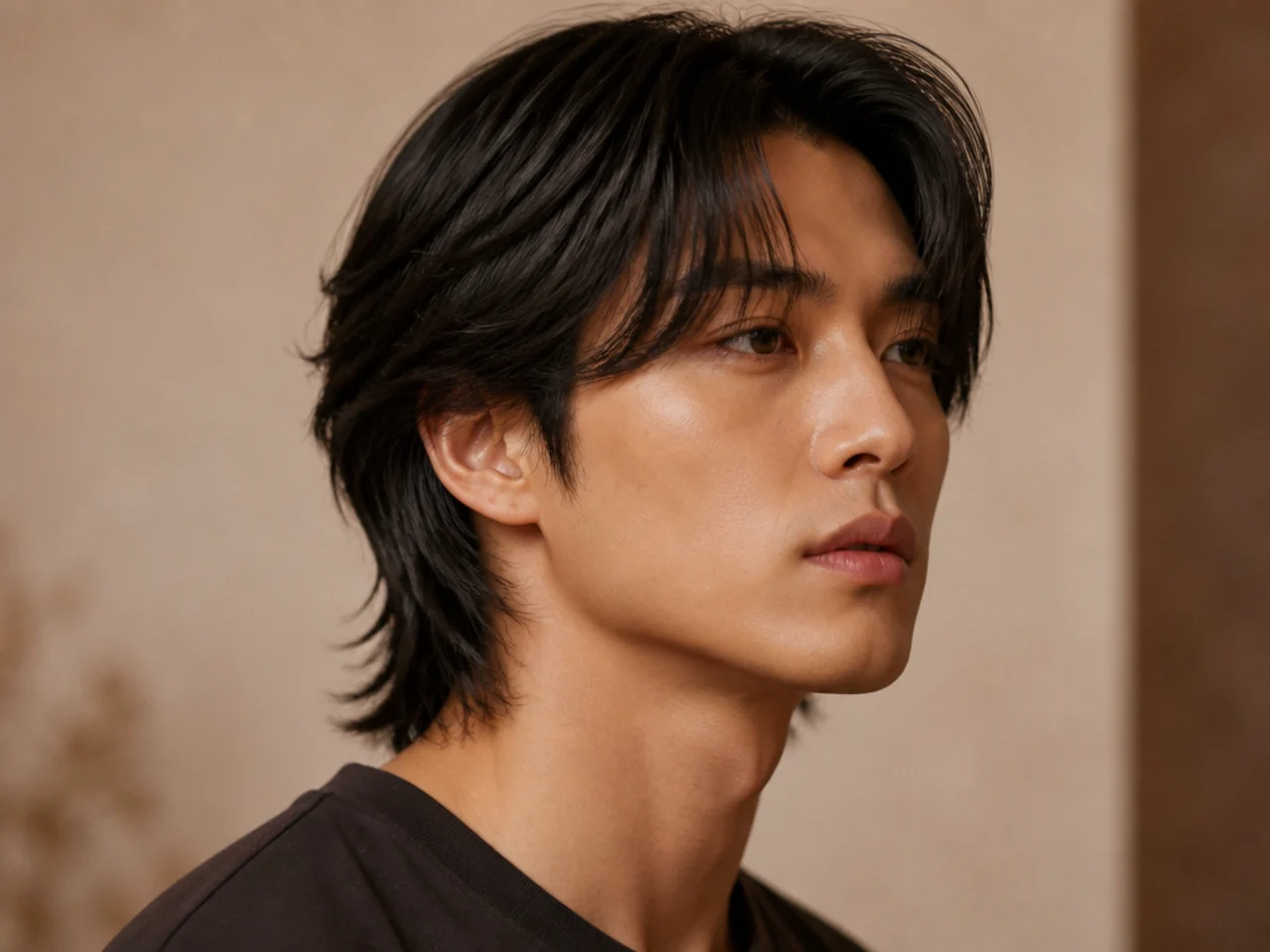
Yes — straight hair actually shows the layer lines the cleanest of any hair type. Ask for heavy point-cutting through the crown to build the texture that texture-heavy hair provides naturally, and use a sea-salt spray at home to keep the movement visible.