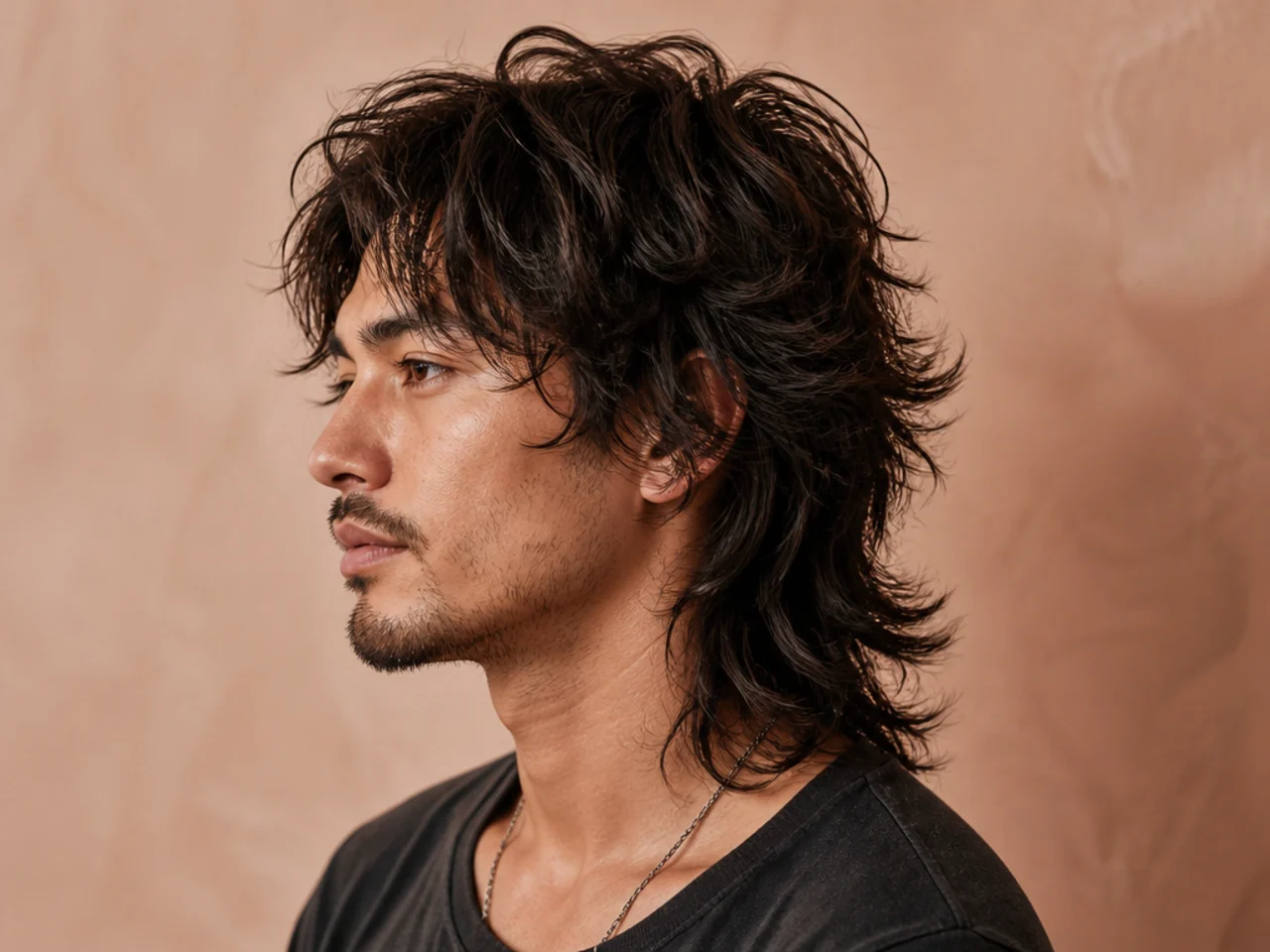
20 Wolf Mullet Haircuts for a Wild Look
The wolf mullet haircut men are asking for in 2026 — 20 wild, layered variations with photos, face-shape notes, and the exact language for your barber.
In this article · 32
- What Is a Wolf Mullet Haircut?
- How to Choose Your Wolf Mullet Haircut
- Wolf Mullet Haircut Ideas for a Wild Look
- 1. Wild Wolf Mullet
- 2. Long Wolf Mullet
- 3. Shag Wolf Mullet
- 4. Rockstar Wolf Mullet
- 5. Punk Wolf Mullet
- 6. Spiky Wolf Mullet
- 7. Skater Wolf Mullet
- 8. Choppy Wolf Mullet
- 9. Textured Wolf Mullet
- 10. Feathered Wolf Mullet
- 11. Curly Wolf Mullet
- 12. Permed Wolf Mullet
- 13. Wavy Wolf Mullet
- 14. Curtain Bang Wolf Mullet
- 15. Fringe-Forward Wolf Mullet
- 16. Burst Fade Wolf Mullet
- 17. Mid Fade Wolf Mullet
- 18. Undercut Wolf Mullet
- 19. Korean Wolf Mullet
- 20. Wolf Mullet with Full Beard
- How to Ask Your Barber for a Wolf Mullet Haircut
- Styling and Maintenance
- FAQ
- Is a wolf mullet the same as a mullet?
- Which face shape suits a wolf mullet best?
- Can I get a wolf mullet if my hair is fine or thin?
- How long does hair need to be for a wolf mullet?
- How much does a wolf mullet cost?
- Will a wolf mullet grow out well?
The wolf mullet haircut is what the mullet becomes when a wolf cut gets involved — layered crown, face-framing at the cheekbones, and a longer, shaggier nape drop that stays intentionally untamed. It reads wilder than a modern mullet and sharper than a straight wolf cut, and it's the shape barbers are getting asked for by musicians, athletes, skaters, and off-duty guys who want a cut with visible attitude. This guide covers 20 wolf mullet haircut men are wearing in 2026, with the clipper numbers, layer specs, and finish notes to hand your barber.
What Is a Wolf Mullet Haircut?
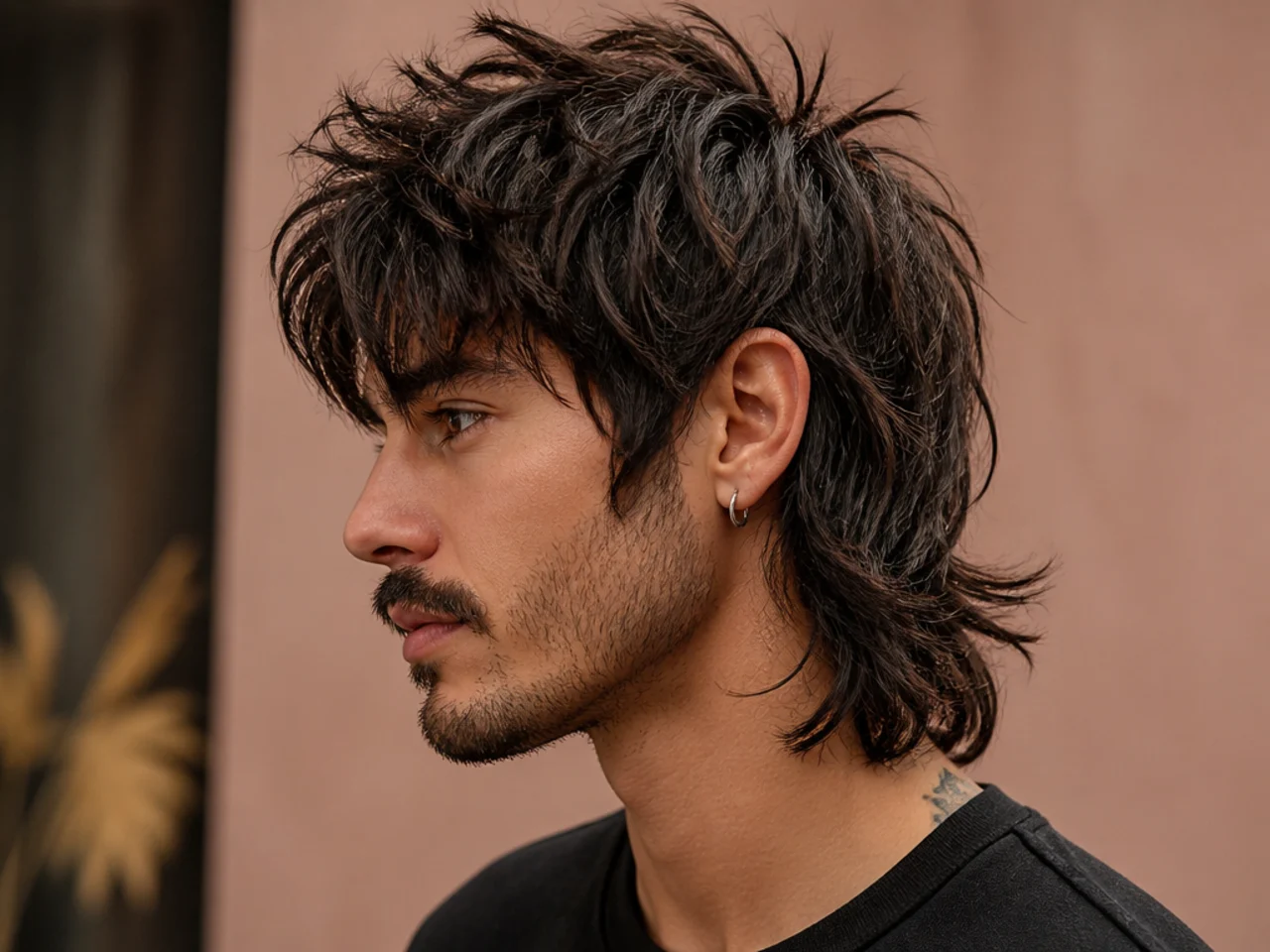
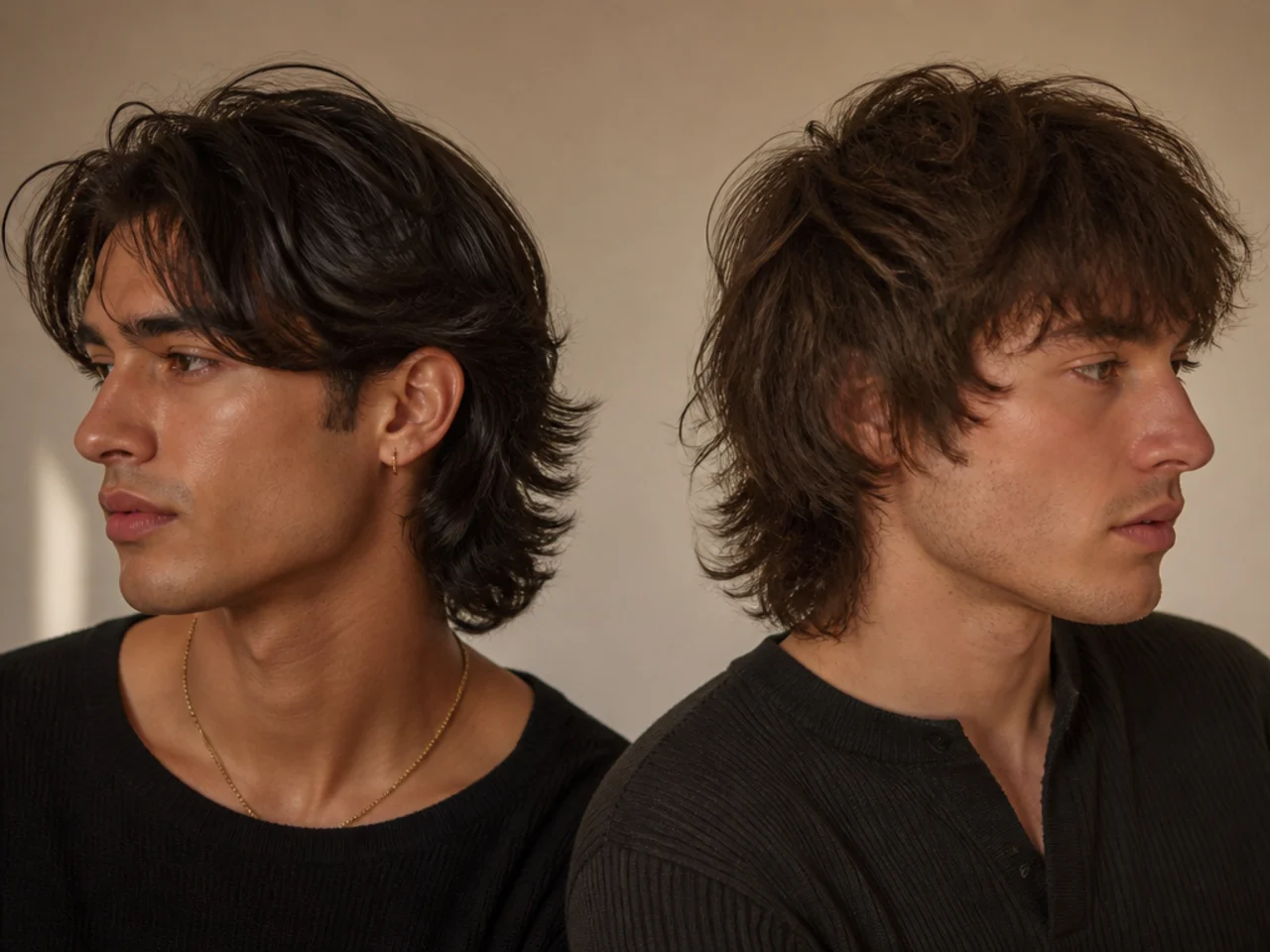
A wolf mullet is a hybrid men's cut that stacks three sections into one wild silhouette. The crown carries internal layers built for lift — two to five inches of textured top that stands on its own. The mid-section drops face-framing pieces from the cheekbone down, so the whole front reads soft and shaggy. The nape extends three to six inches past the collar, feathered or point-cut at the perimeter so nothing hangs blunt.
That third section is what pushes the wolf mullet past a standard wolf cut. A wolf cut for men stops around the collar with a balanced perimeter. A modern mullet keeps the top compressed and lets the back carry the length. The wolf mullet takes the top structure from one and the back drama from the other, then loosens both — every section moves, and none of them sit clean.
The wild read comes from the layering. Blunt cuts flatten under their own weight; heavily point-cut layers stay lifted and separated for weeks past the fresh-cut date. That's the technical reason the wolf mullet has taken over Pinterest boards, K-drama style pages, and half the tunnel walks on any given Sunday — it holds its shape longer than any other layered men's cut this decade.
How to Choose Your Wolf Mullet Haircut
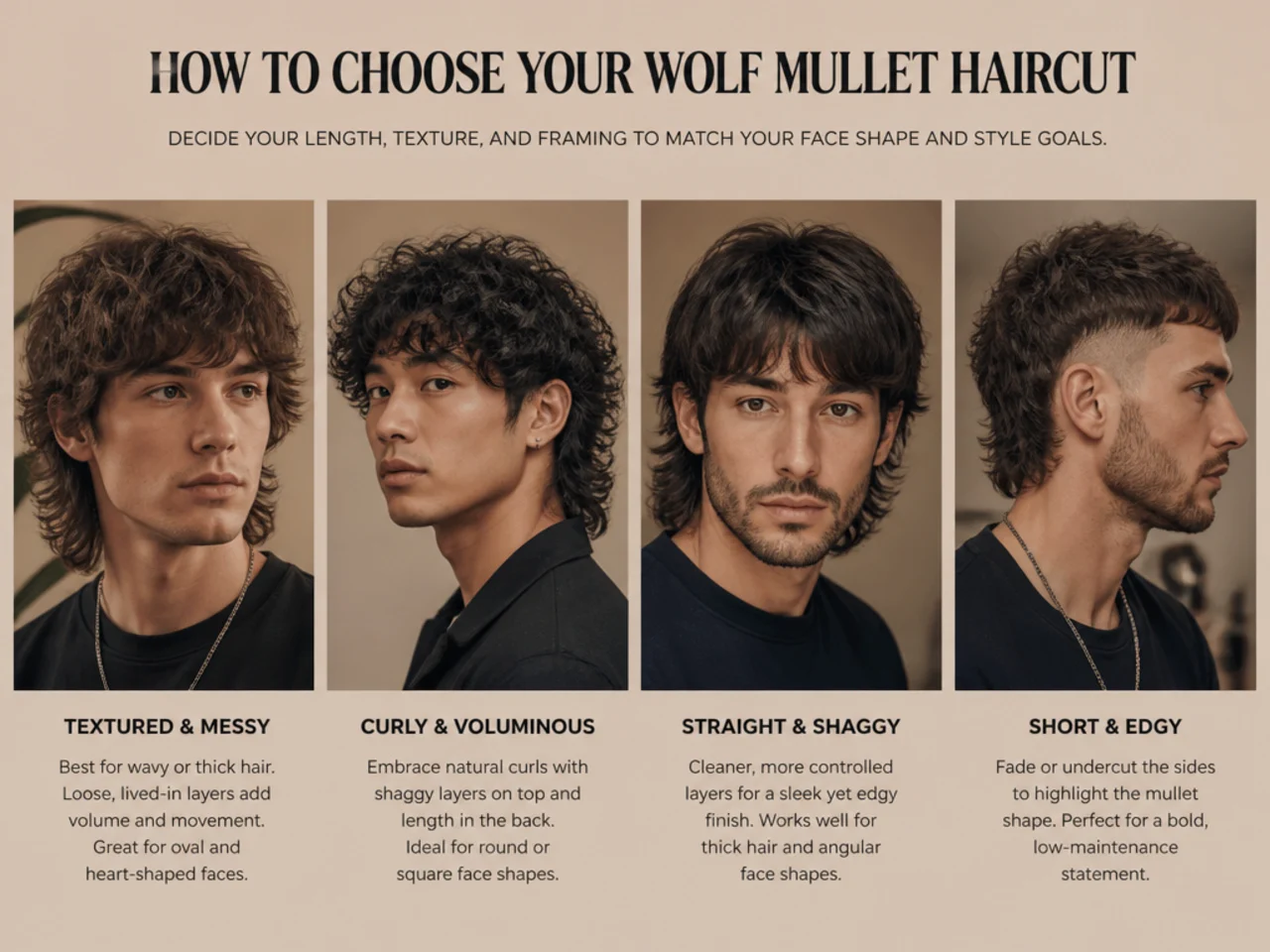
Face shape sets the crown-to-nape ratio. Oval, heart, and diamond faces carry the whole range — go long on both or keep them balanced. Round and square faces want a lifted crown and a shorter nape drop, plus a tapered side so the vertical line does the visual work. Long faces stay with a compressed crown, a forward fringe or curtain bang, and a nape that stops around two to three inches so the profile doesn't stretch further. Diamond faces handle the wildest versions because sharp cheekbones absorb heavy layered texture cleanly.
Hair type sets the layer rhythm. Straight hair needs heavy point-cutting through the crown and back — the layers are the only thing building movement. Wavy hair sits best with softer internal layers that follow the natural bend. Curly and coily hair barely needs cutting effort; the pattern builds the shape on its own. Fine hair benefits from a denser layer stack for the illusion of density; thick hair wants internal thinning so the shape doesn't turn into a helmet.
Lifestyle sets the sides. Blended scissor sides keep the wolf mullet workplace-ready. A low taper or low taper fade reads sharp without hard lines. A full fade or undercut pushes the cut into statement territory. Match the sides to the room you spend most of your time in — you can always take it bolder next visit.
Wolf Mullet Haircut Ideas for a Wild Look
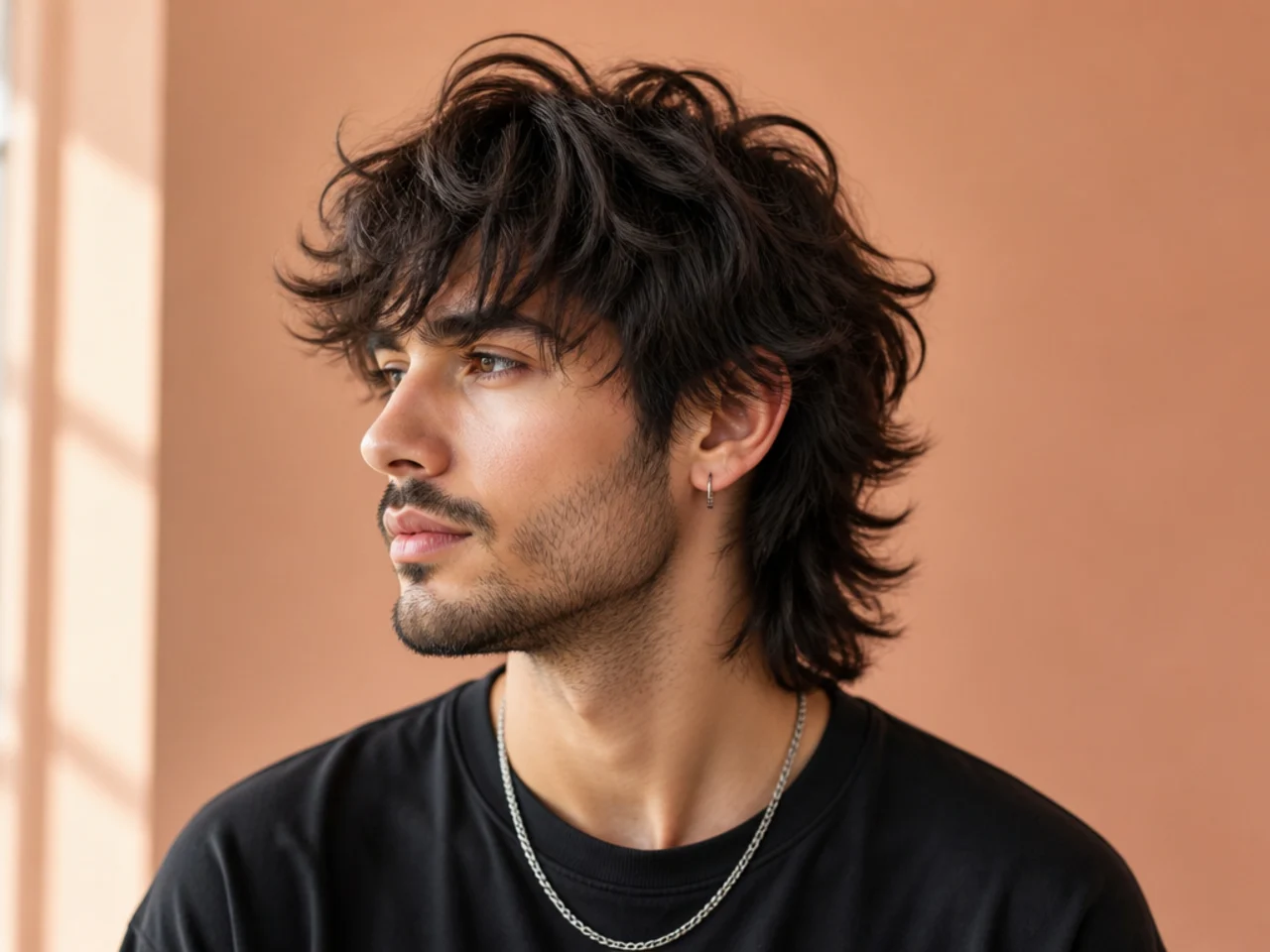
The 20 wolf mullet variations below run from lightly wild to full statement cut. For each one, you get what makes it different, who it flatters, the exact line to hand your barber, and one styling move that keeps the shape holding. The wolf mullet borrows freely from adjacent shapes — expect crossover with pure shags, straight mullets, and the jellyfish haircut as the sections progress.
1. Wild Wolf Mullet
The baseline. Three inches through the crown with heavy internal layers, cheekbone face-framing, and a four-inch nape drop with a feathered perimeter. Sides taper softly, no fade line. Every variation on this list is a tweak on this template — start here if you're not sure which version fits.
Suits oval, heart, and diamond faces. Works with straight, wavy, or curly hair.
Ask for: "Wild wolf mullet, three inches through the crown with heavy internal layers, back four inches with a feathered perimeter, face-framing at the cheekbone, tapered sides — no fade line." Style with a pea of matte cream through damp hair, then finger-tousle the crown and let the back air-dry.
2. Long Wolf Mullet
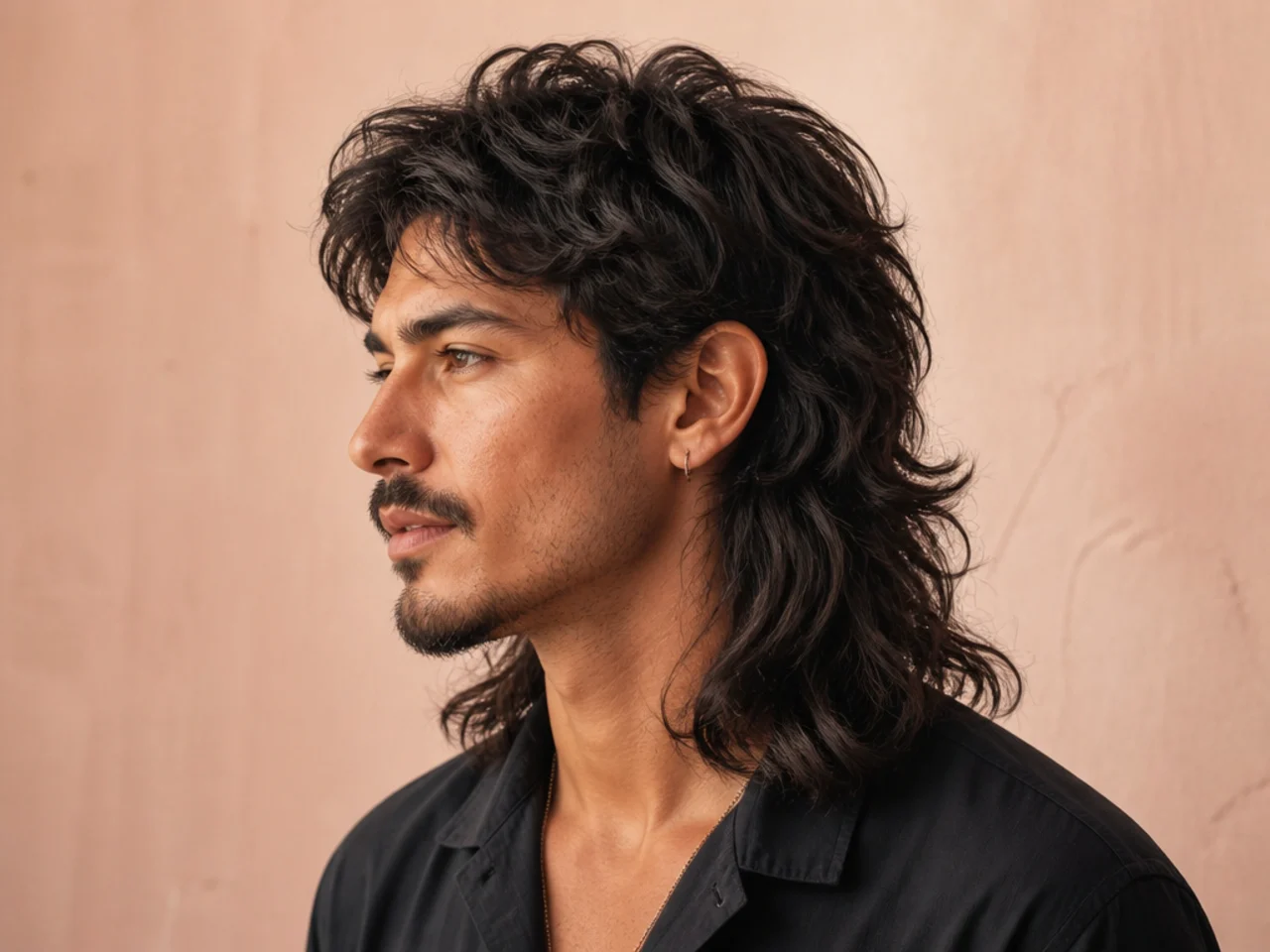
Length everywhere. Five inches through the crown, seven at the nape, and face-framing that drops to the jaw. The whole silhouette reads borderline feral — heavy movement in every direction — which is why this is the version most commonly seen on musicians and off-duty athletes.
Best on straight-to-wavy hair and oval, heart, or diamond faces that carry length without crowding. Cross-reference the long wolf cut for men family for adjacent silhouettes.
Ask for: "Long wolf mullet, five inches on top, seven inches at the back, jaw-length face-framing, heavy internal layers, tapered sides — leave the perimeter feathered." Sea-salt spray on damp hair, air-dry, then scrunch the back once dry to break up any weight.
3. Shag Wolf Mullet
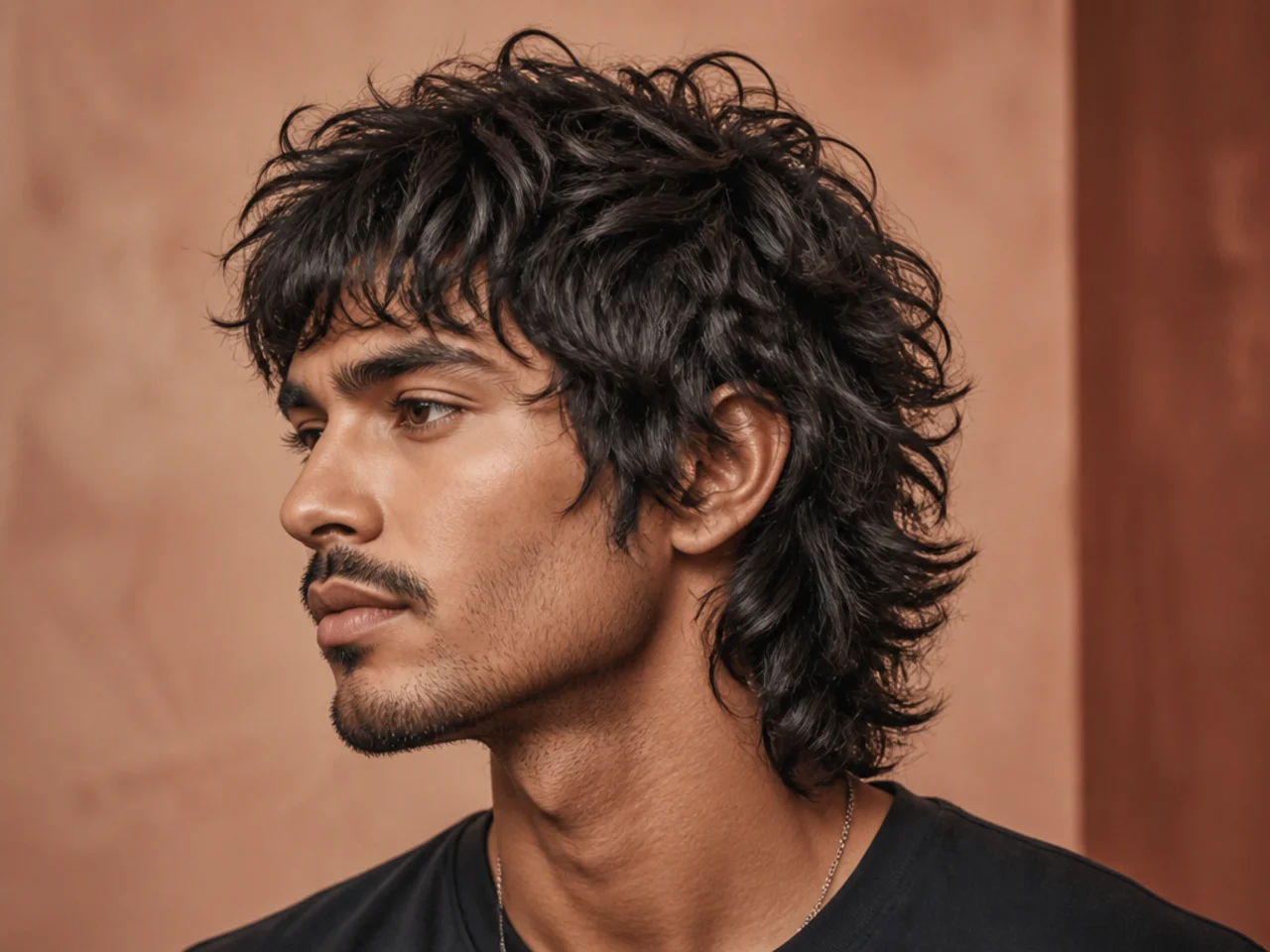
Turns the layer density up to full. Heavy internal layers stack around the entire crown, the fringe drops choppy to the eyebrows, and the back sits shaggier than the wild baseline. It borrows structure directly from the shag haircut family — same layered chaos, elongated at the nape.
Best on fine or medium hair that needs body. Suits oval, heart, and diamond faces.
Ask for: "Shag wolf mullet, heavy stacked layers around the crown, choppy fringe to the brows, four-inch back with a shaggy perimeter, blended sides — no fade." Texture spray, scrunch, air-dry. Skip the comb entirely.
4. Rockstar Wolf Mullet
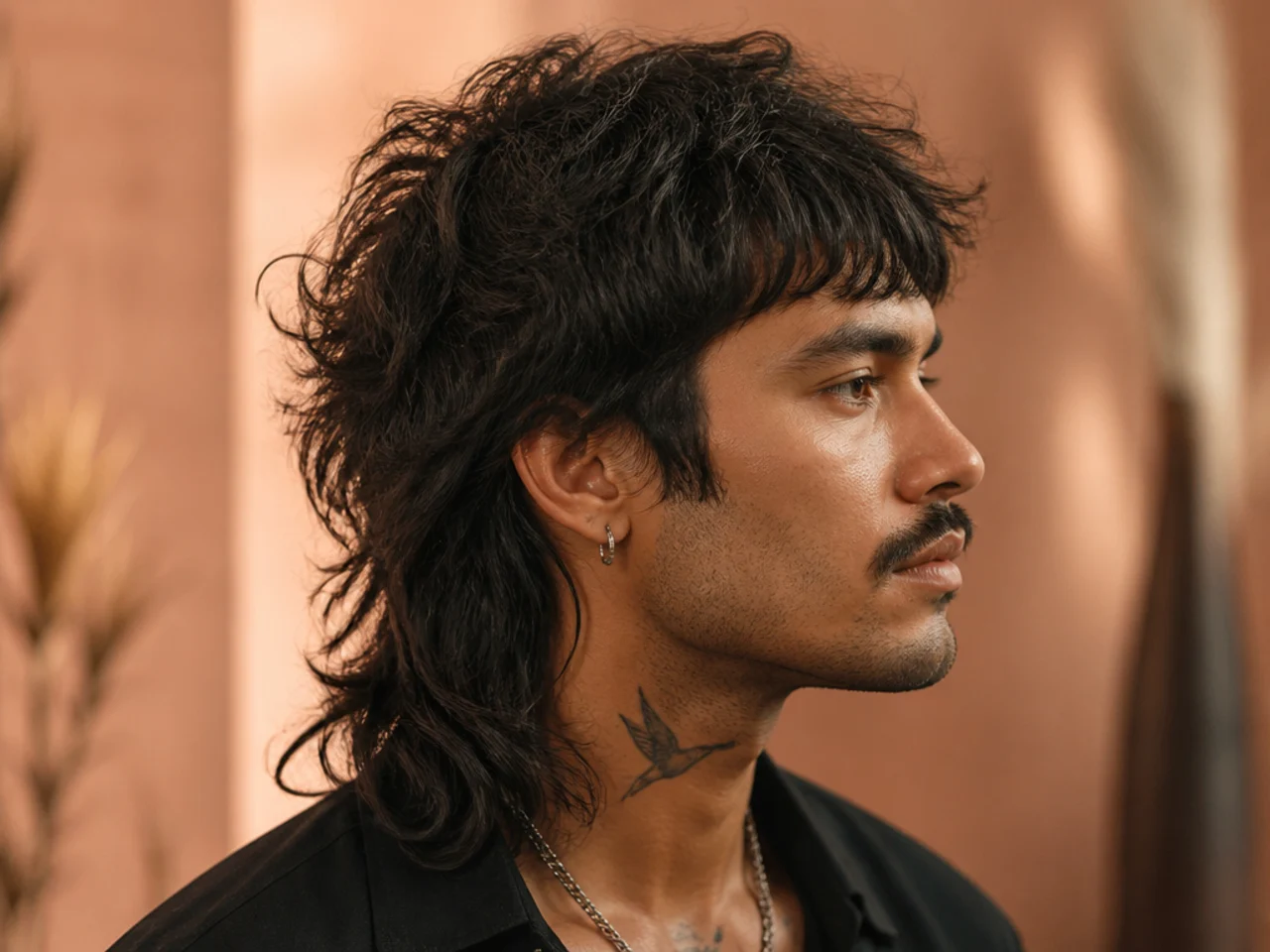
The 70s glam-rock reference. The crown volumizes with heavy backcombing, the fringe splits into a soft center part, and the nape drops five inches with feathered ends. It's the version that reads onstage even in a coffee shop, and it needs some hair-history awareness to pull off without leaning costume.
Best on medium-thick straight or wavy hair. Suits oval and diamond faces that carry theatrical shapes.
Ask for: "Rockstar wolf mullet, backcombed crown for volume, soft center-parted fringe, five-inch feathered back, layered face-framing to the jaw, tapered sides that soften into the top." Volumizing mousse into damp roots, blow-dry with a round brush lifting the crown, hairspray to finish.
5. Punk Wolf Mullet
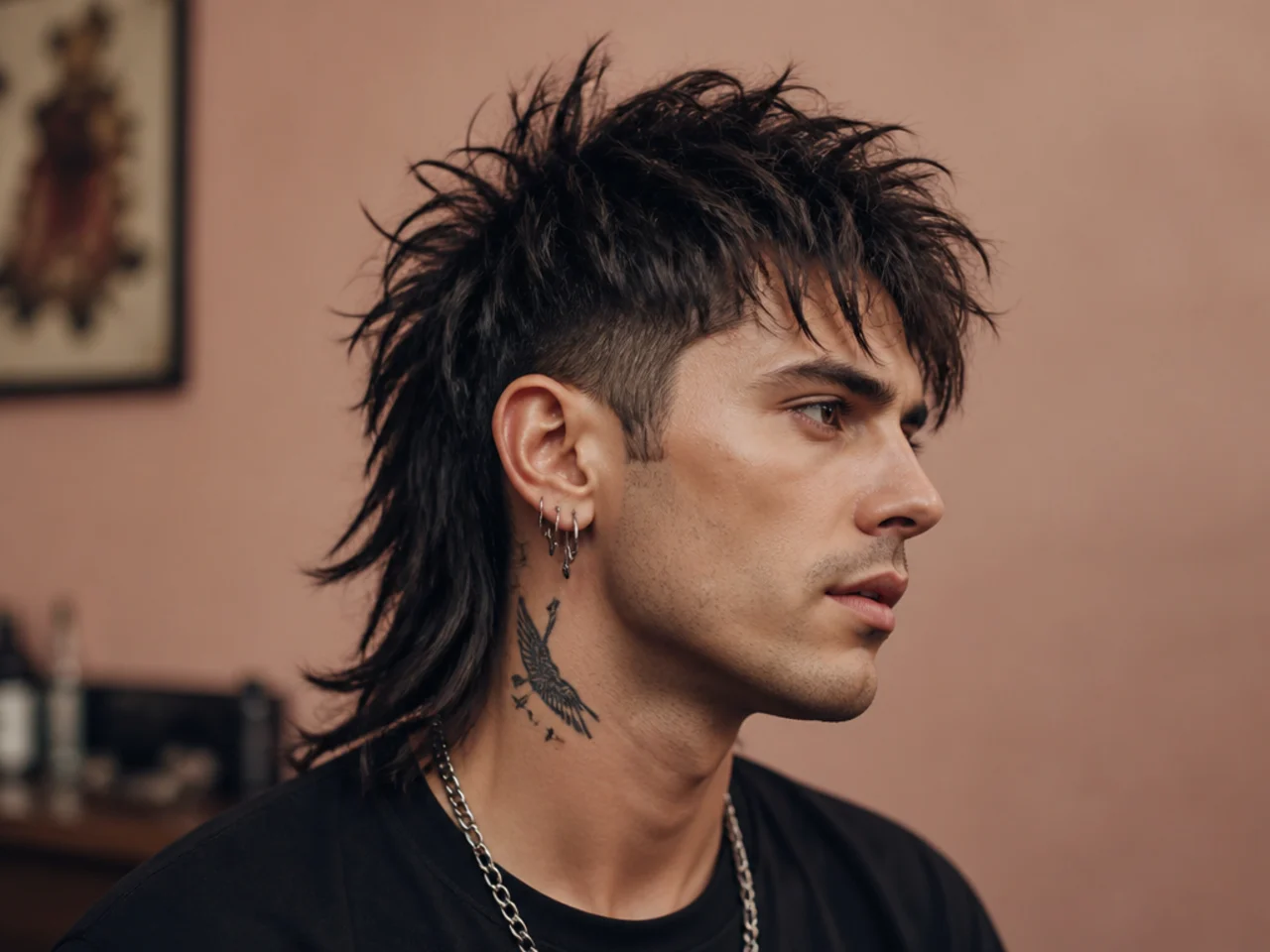
The loudest cut on this list. Razored spikes through the crown, a disconnected undercut on the sides, and a five-inch choppy nape with no perimeter cleanup. Needs daily product and a face that carries aggressive shape — this isn't the version to try mid-career pivot.
Best on dense, coarse hair. Suits oval and square faces.
Ask for: "Punk wolf mullet, razored spikes through the crown, half-guard undercut on the sides — no blending — five-inch back with heavy choppy texture, no perimeter trim." Strong-hold gel through damp roots, spike with fingertips, lock with hairspray. Refresh mid-day if needed.
6. Spiky Wolf Mullet
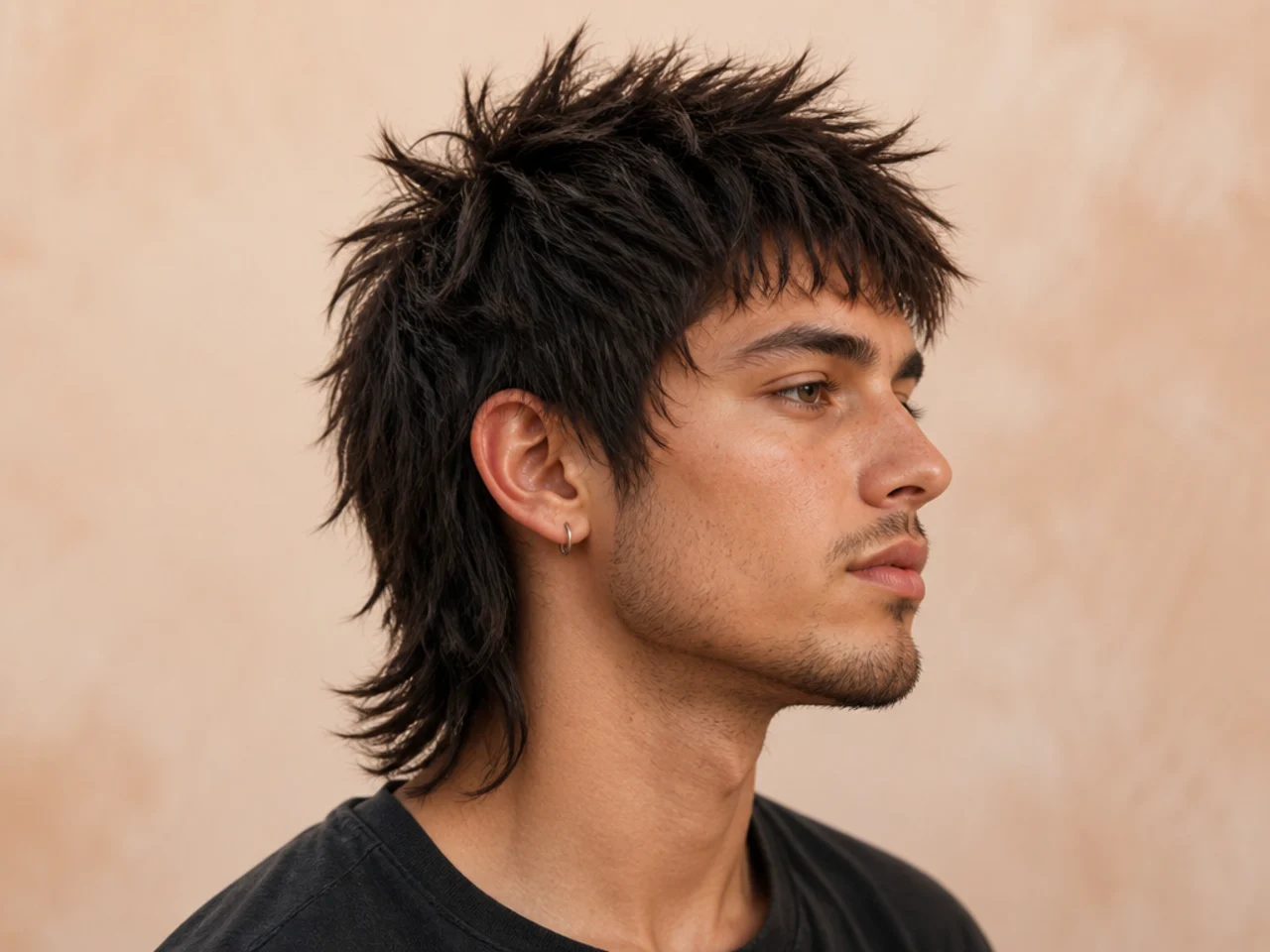
Softer than the punk version, still bold. The spikes rise vertically from the crown at two to three inches, the mid-section keeps face-framing, and the back drops four inches with layered texture. Reads as intentional peak-and-drop rather than full mohawk chaos.
Best on thick, straight hair that holds spikes. Suits square or diamond faces that carry vertical lines.
Ask for: "Spiky wolf mullet, three inches through the crown for spike shape, mid or low taper sides, four-inch back with soft layers, keep the face-framing." Matte clay through damp roots, blow-dry upward, spike with fingertips, spray to hold.
7. Skater Wolf Mullet
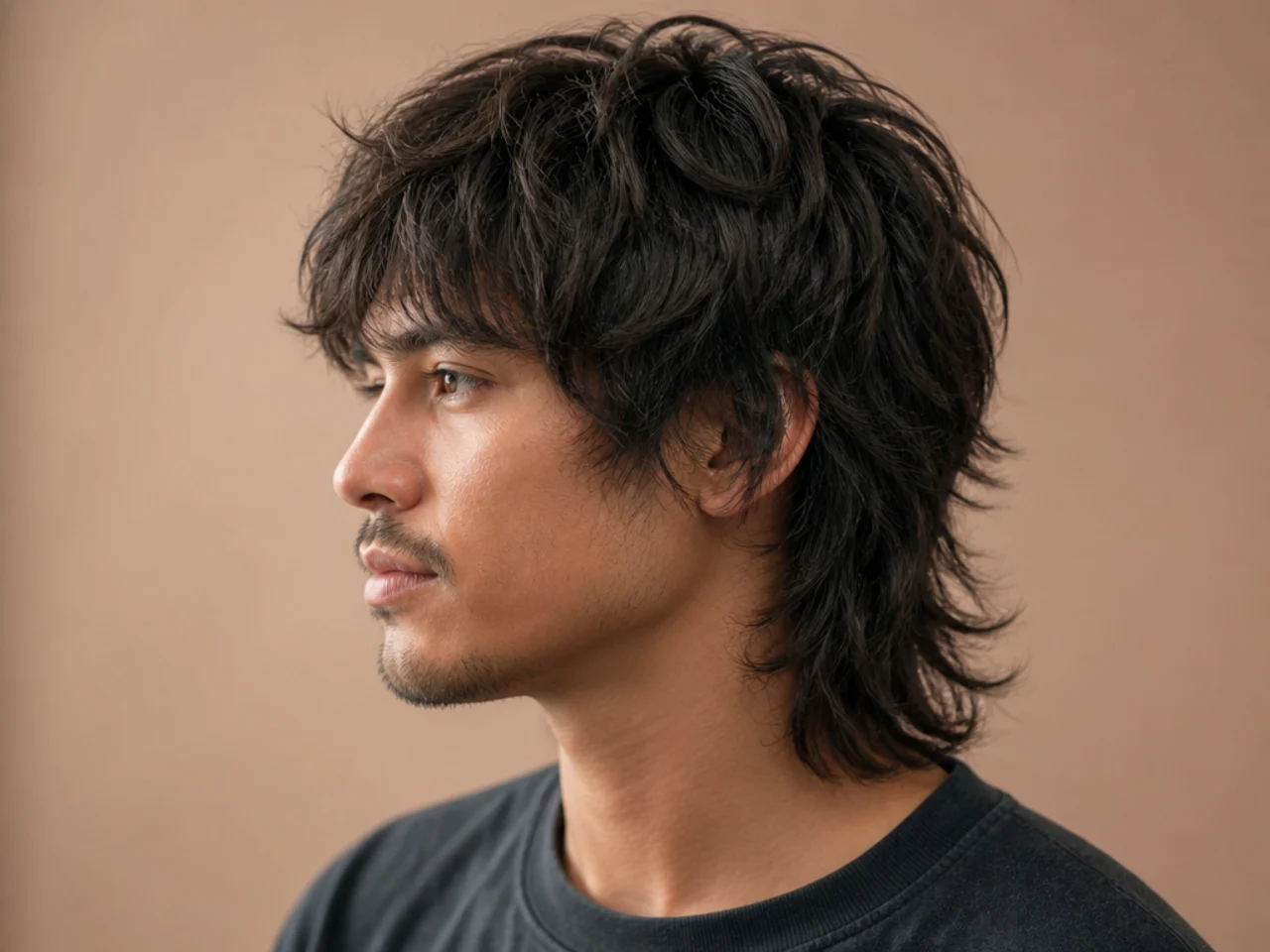
The version you'll see under a helmet at the skate park. Heavy fringe to the brows, tousled crown volume, and a nape that grazes the shoulder blade. Blended scissor sides, no fade — this cut leans lived-in, not sharp.
Best on straight-to-wavy hair. Suits oval, heart, and long faces.
Ask for: "Skater wolf mullet, heavy tousled crown, fringe to the brows, six-inch back with feathered ends, blended scissor sides — nothing tight." Rough-dry with fingers, salt spray on damp mid-lengths, air-dry. Product only for evenings out.
8. Choppy Wolf Mullet
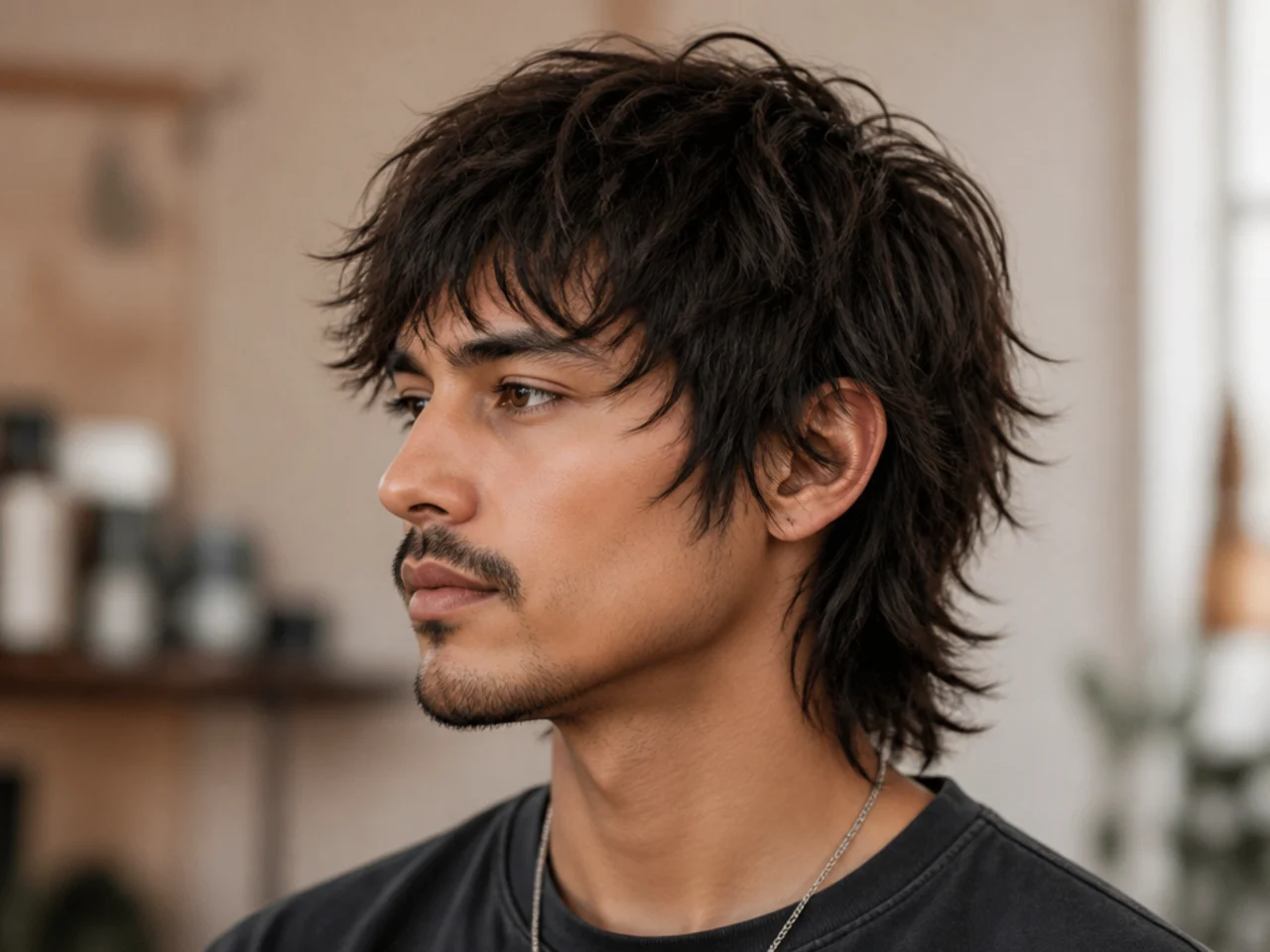
Every layer breaks at the ends. Razor-cut sections give the whole cut a piecey, deliberately raw finish, and the sideburns disconnect slightly from the tapered sides for extra visual jag. Reads editorial, borderline wolf-shag hybrid.
Best on medium-thick hair that carries razor work. Suits oval and heart faces.
Ask for: "Choppy wolf mullet, razor-cut piecey layers through the crown and back, disconnected sideburns from the taper, three-and-a-half-inch top, four-and-a-half-inch back." Salt spray, twist damp sections, air-dry, finger-comb to separate.
9. Textured Wolf Mullet
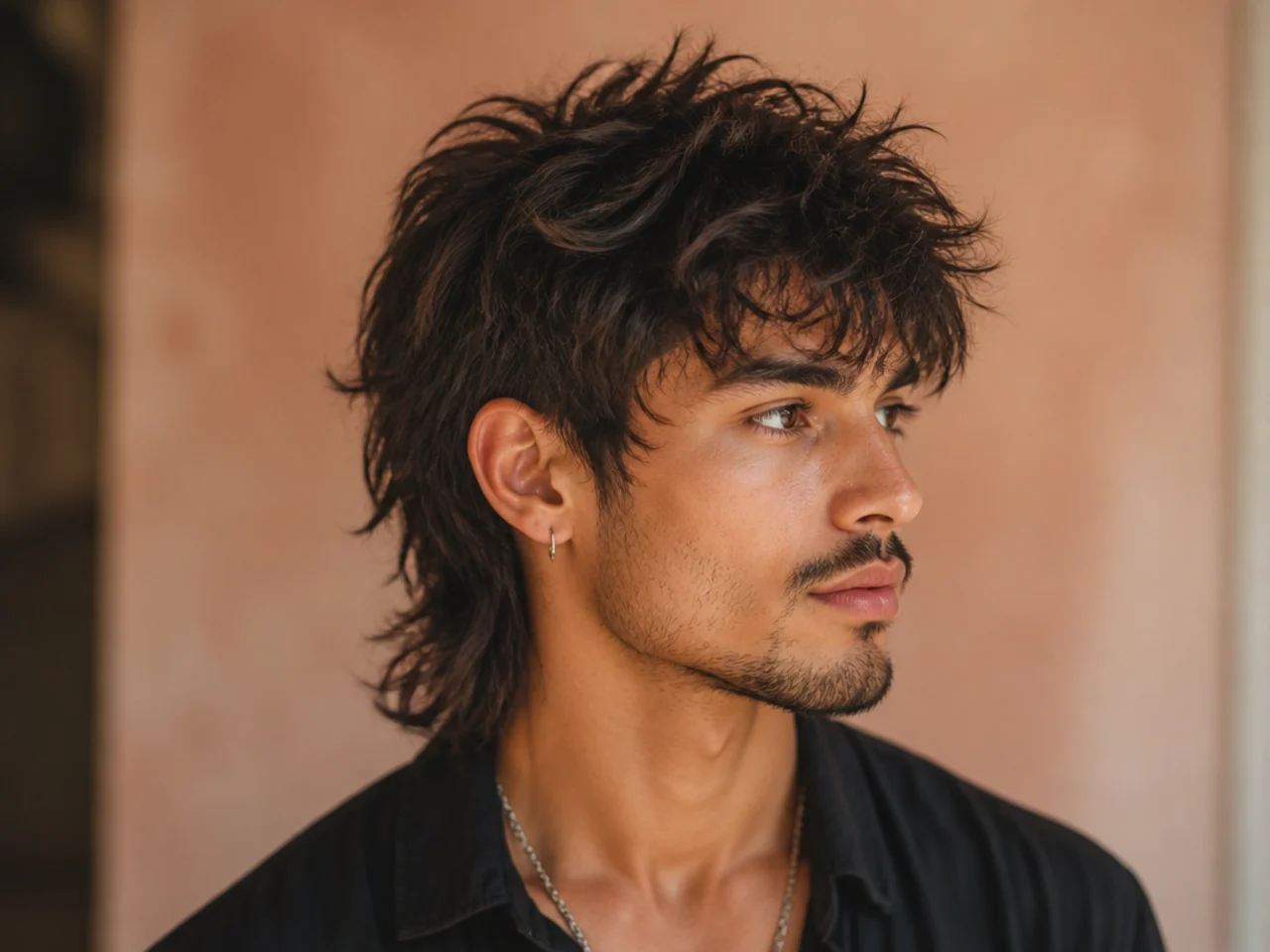
Point-cutting is the entire technique. Every layer gets broken at the ends so nothing sits blunt, from crown through back. The silhouette matches the wild baseline but reads far more piecey up close — density is the difference, not shape.
Best on fine and medium hair that needs the illusion of thickness. Suits oval and diamond faces.
Ask for: "Textured wolf mullet, heavy point-cut through the crown and back, three-inch top, four-inch nape with wispy ends, tapered sides." A two-pump texturizing spray on damp hair, tousle with fingers, skip the comb.
10. Feathered Wolf Mullet
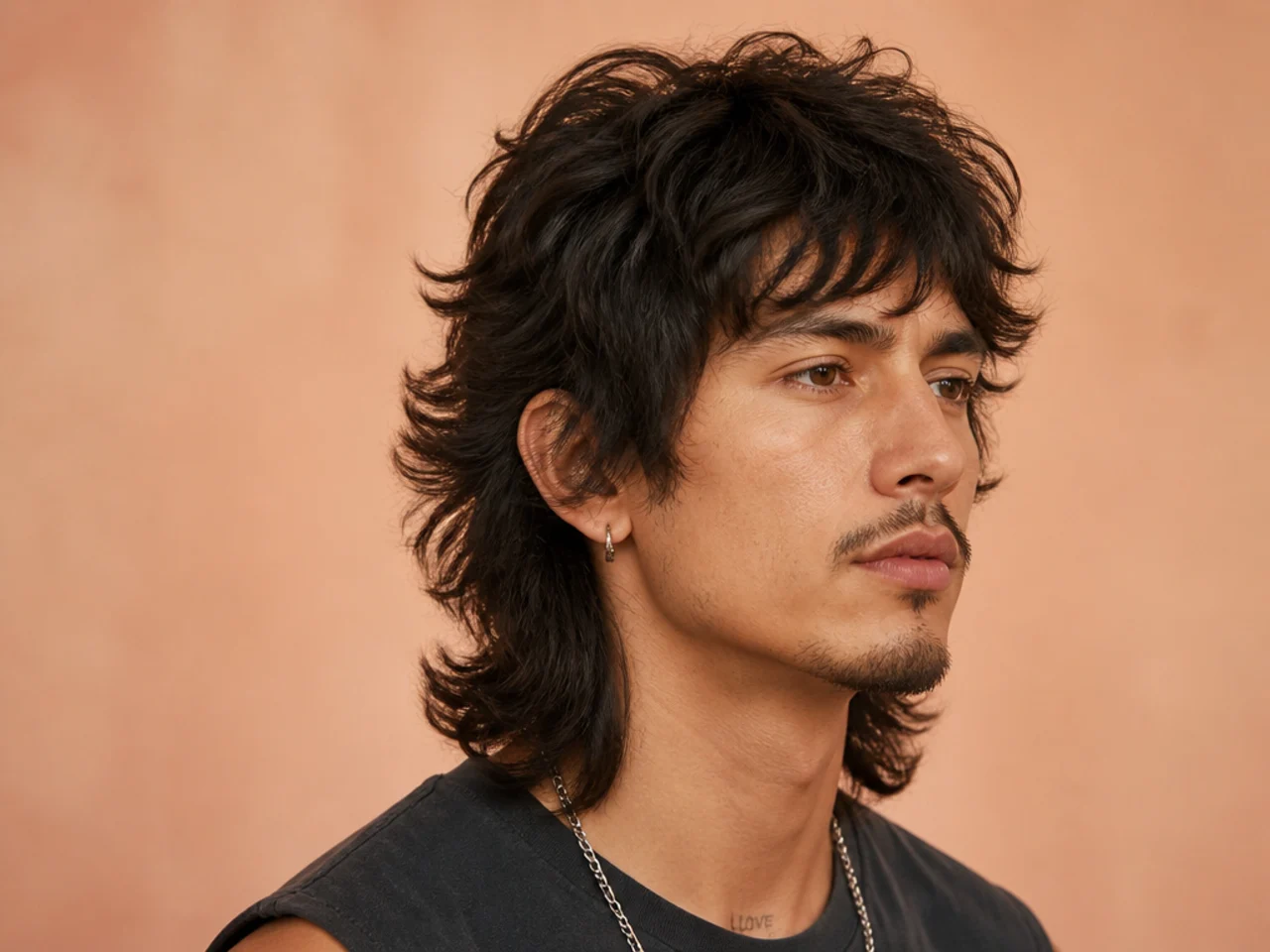
Softer than the textured version. Every end flicks outward, the layers stay smooth rather than choppy, and the finish reads glossy. Adds a slight 70s editorial quality — retro reference, modern shape.
Best on medium-thick straight or wavy hair. Suits heart or oval faces that suit softer edges.
Ask for: "Feathered wolf mullet, soft outward-flicking layers throughout, keep ends smooth not choppy, three-inch crown, four-and-a-half-inch back with a feathered perimeter, tapered sides." Round-brush the ends outward while blow-drying, finish with a shine spray.
11. Curly Wolf Mullet
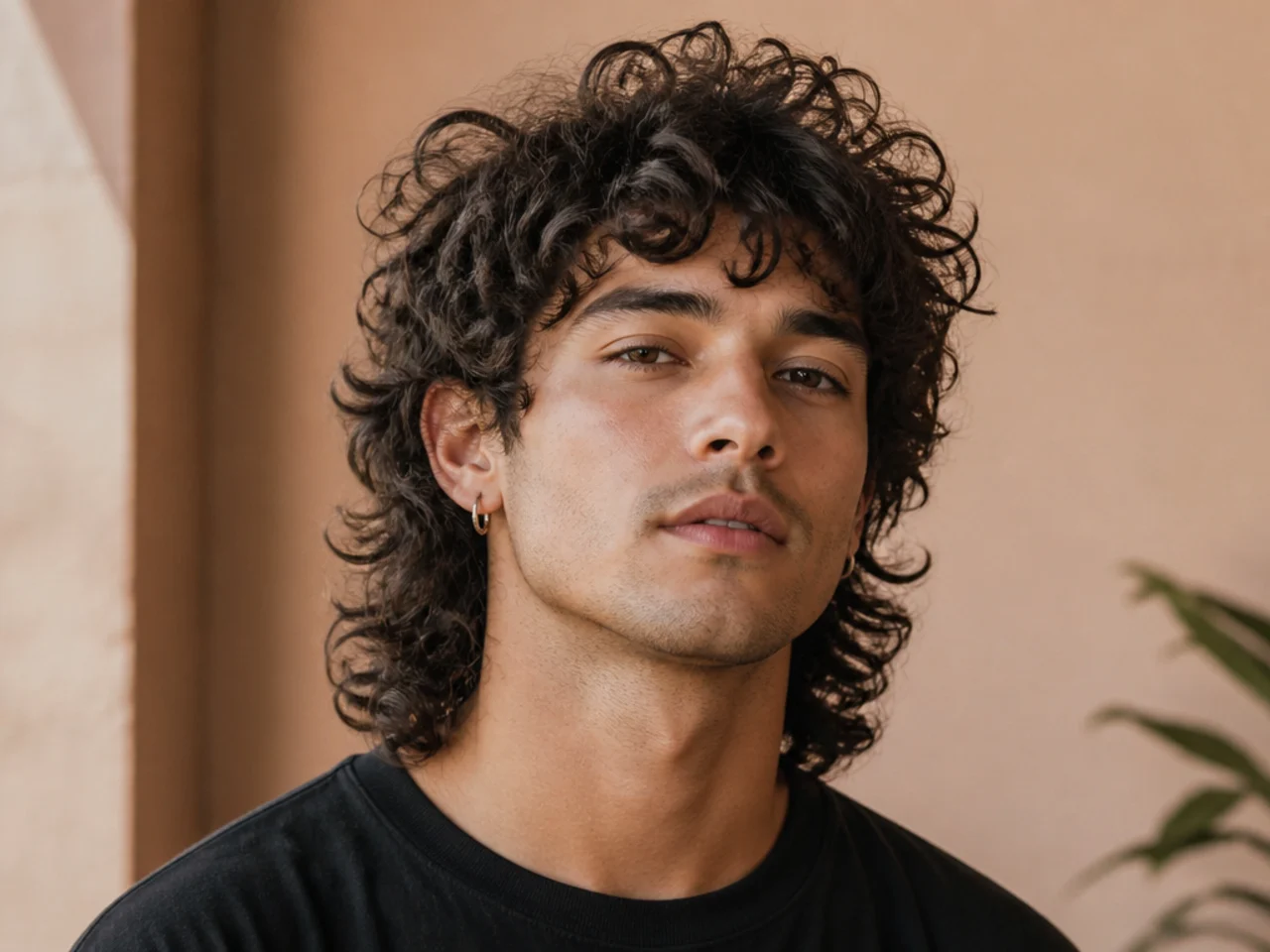
Curls carry the shape. Cutting is about removing weight, not creating movement, so the whole visit is faster than the straight versions. The back can sit shorter than the baseline because coils give the illusion of length. Ask for a dry cut so the barber shapes the pattern rather than fighting it — for a deeper look at the curl-first family see the curly wolf cut for men guide.
Best on type 2c through 4a curls. Any face shape works; crown volume flatters a long face particularly well.
Ask for: "Curly wolf mullet, dry-cut so you can see how each curl sits, internal layers to remove bulk without cutting the perimeter, three-inch back, tapered sides that follow the curl pattern." Curl cream into soaking-wet hair, plop with a T-shirt for ten minutes, diffuse on low heat.
12. Permed Wolf Mullet
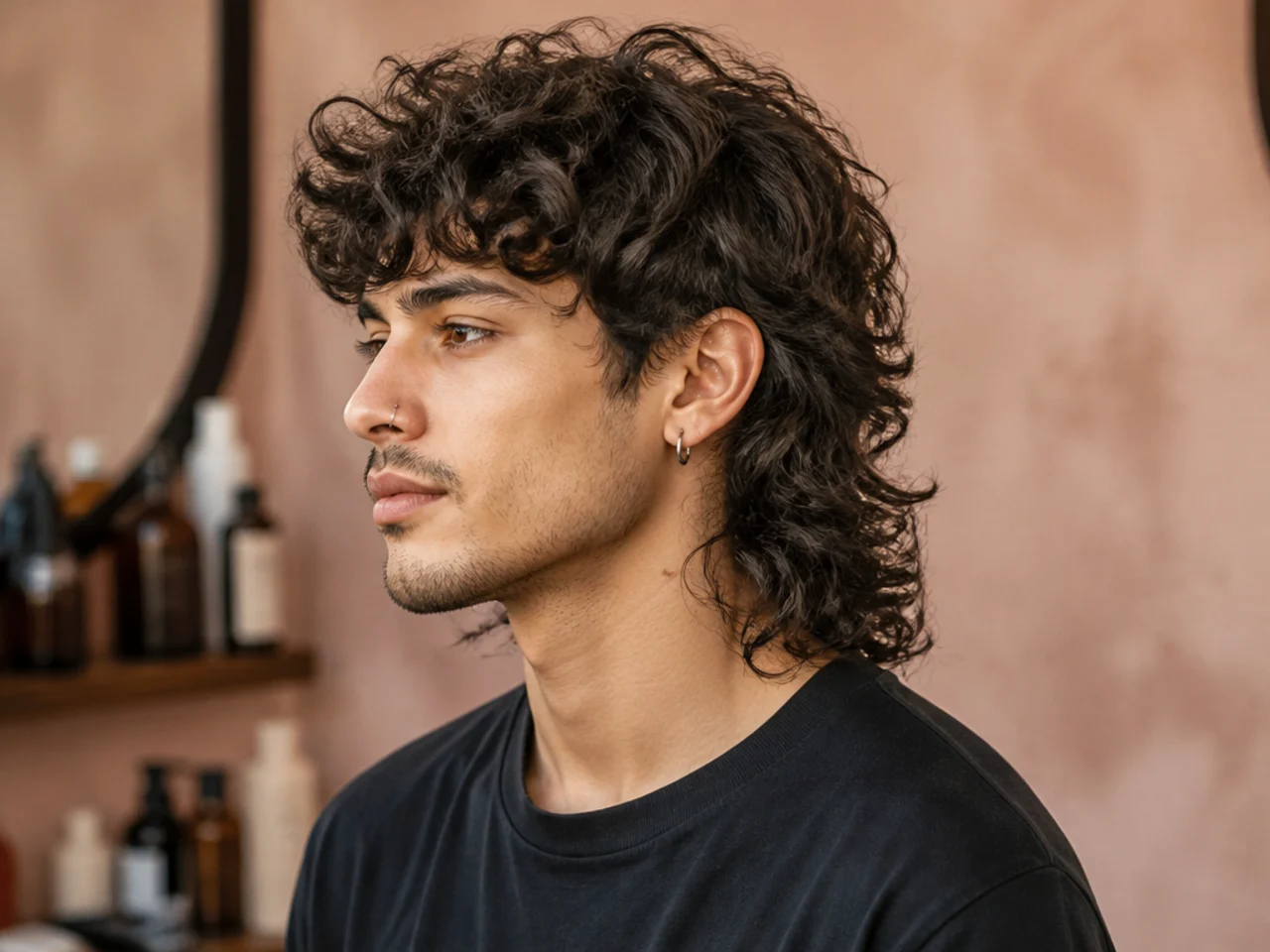
A perm creates coil where none exists naturally. The wolf mullet's layered structure means the perm has to be paired with careful dry-cutting after the chemical sets — permed hair reveals every layer line, and the texture becomes the whole shape. Popular in K-pop and adjacent men's style.
Best on straight-to-wavy hair. Suits oval, round, and heart faces because the volume balances proportions.
Ask for: "Permed wolf mullet, low taper fade, three inches through the top and back, dry-cut the layers after the perm sets, leave the perimeter to move." Curl cream on damp hair, scrunch, diffuse on low heat. Refresh with a spray bottle of water and cream on non-wash days.
13. Wavy Wolf Mullet
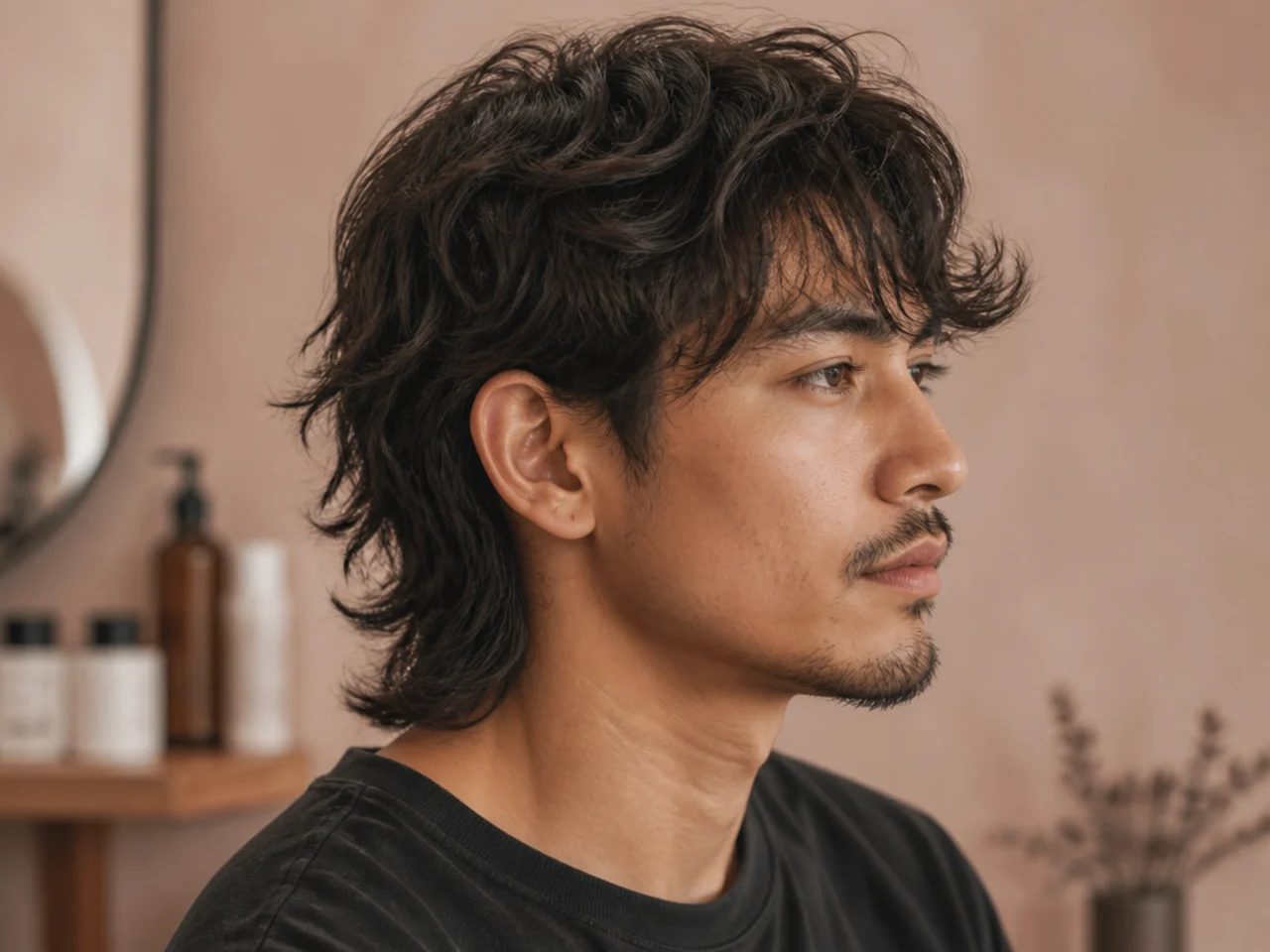
The lowest-effort version on this list. Natural wave does half the work — layers respect the existing bend, so the whole cut air-dries into shape. Fastest to grow into if you're transitioning from a shorter cut.
Best on wavy hair and almost any face shape. Especially strong on heart and oval faces.
Ask for: "Wavy wolf mullet, work with the natural wave pattern, internal layers to reduce bulk, three-inch crown, four-inch back with a soft perimeter, tapered sides." Rough-dry with fingers, apply a lightweight cream mid-lengths to ends, scrunch once, done.
14. Curtain Bang Wolf Mullet
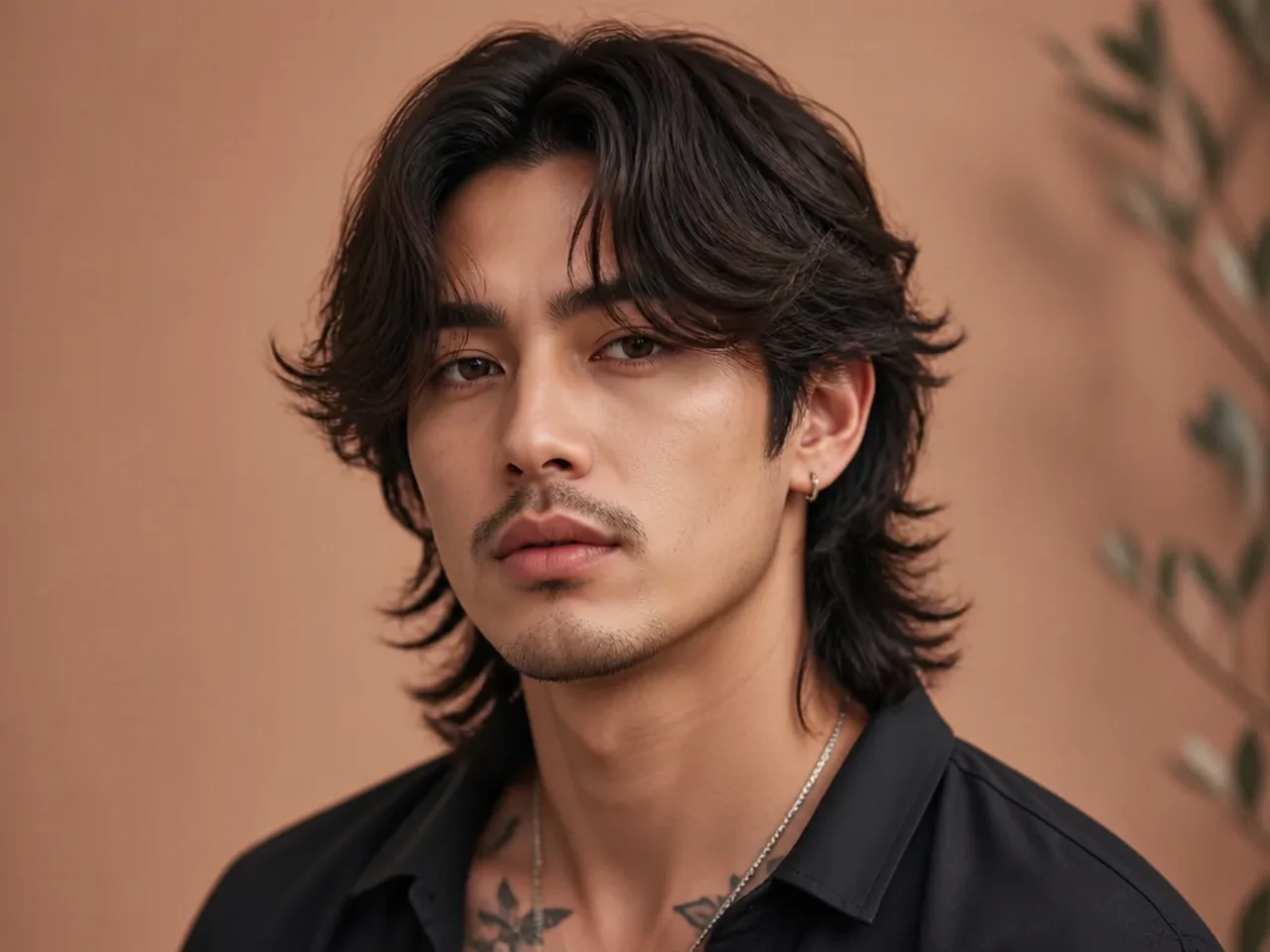
Curtain bangs frame the face. Two symmetrical fringes fall from a middle part, blend into face-framing pieces at the cheekbone, and connect into the wider wolf mullet silhouette. The softest, most editorial-leaning variation on the list.
Suits straight-to-wavy hair on oval, round, and heart faces.
Ask for: "Curtain bang wolf mullet, center-parted bangs to the cheekbones, three-inch crown layers, tapered sides, four-inch back with soft internal texture." Blow-dry the fringe outward on either side of the part with a round brush, then twist the ends between your fingers to set the shape.
15. Fringe-Forward Wolf Mullet
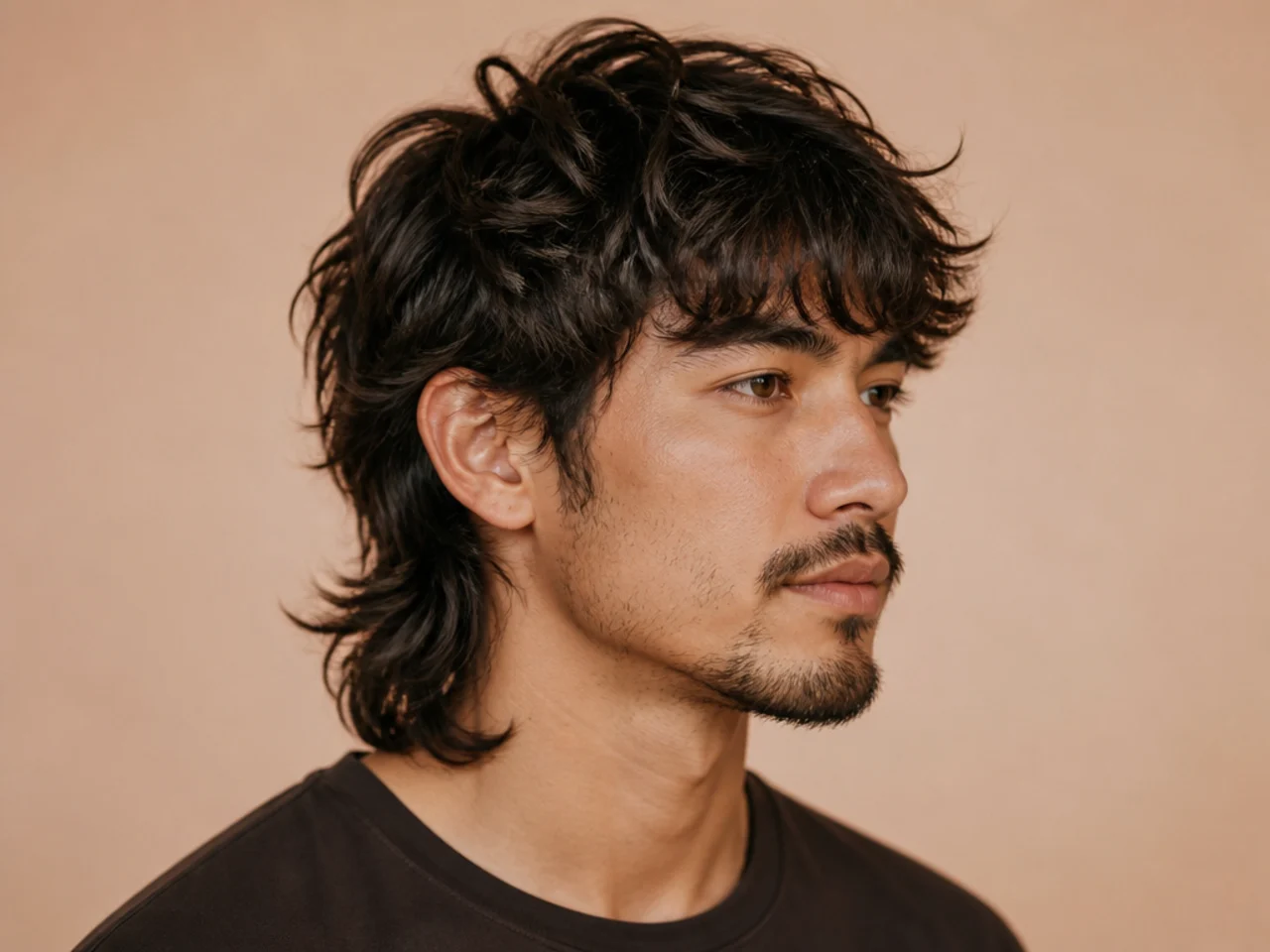
Instead of a center-parted curtain, this version keeps the fringe as one heavy sweep across the forehead — a textured forward fringe sitting on top of the wolf mullet's back section. The horizontal fringe line balances long faces that would look stretched by a curtain.
Best on long or oblong faces. Works with straight or slightly wavy hair.
Ask for: "Fringe-forward wolf mullet, textured fringe to the eyebrows heavier than a curtain, three-inch crown, tapered sides, four-inch back with layered movement." Blow-dry the fringe forward and down with your fingers, then press it into place with a small dab of matte paste.
16. Burst Fade Wolf Mullet
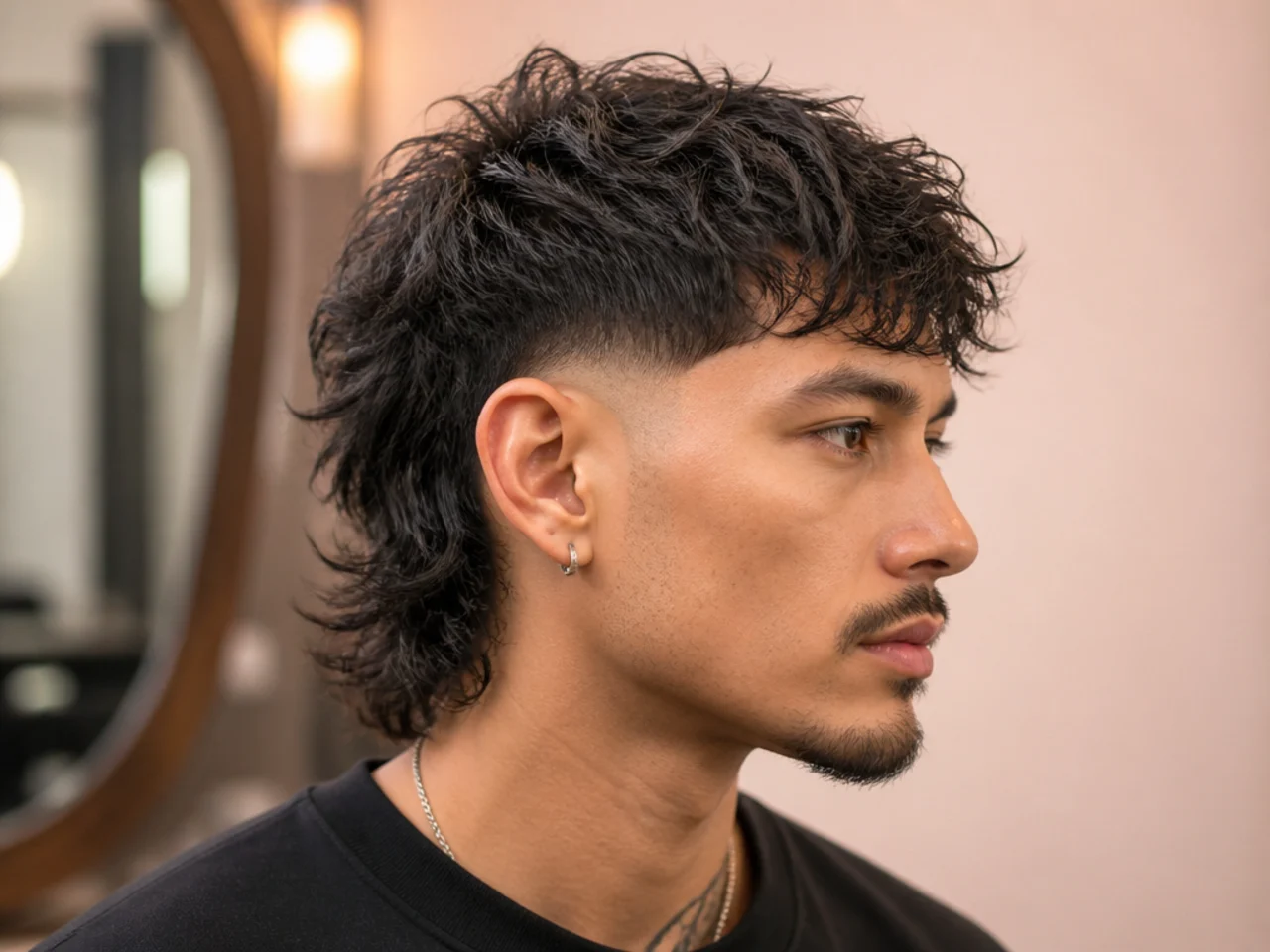
The burst fade curves around the ear in a semicircle and leaves the length behind the ear untouched, which flows straight into the mullet nape. A visible arc that turns the fade into a design element — the signature move from the burst family, adapted to the wolf mullet silhouette.
Best on guys who want a visual signature. Works with all hair types but shines on wavy or curly. Suits oval, square, and diamond faces.
Ask for: "Wolf mullet with a burst fade around each ear, blend up to three inches through the top and back, keep the nape soft and feathered, no straight fade line." A lightweight cream through the top for hold; the back styles itself.
17. Mid Fade Wolf Mullet
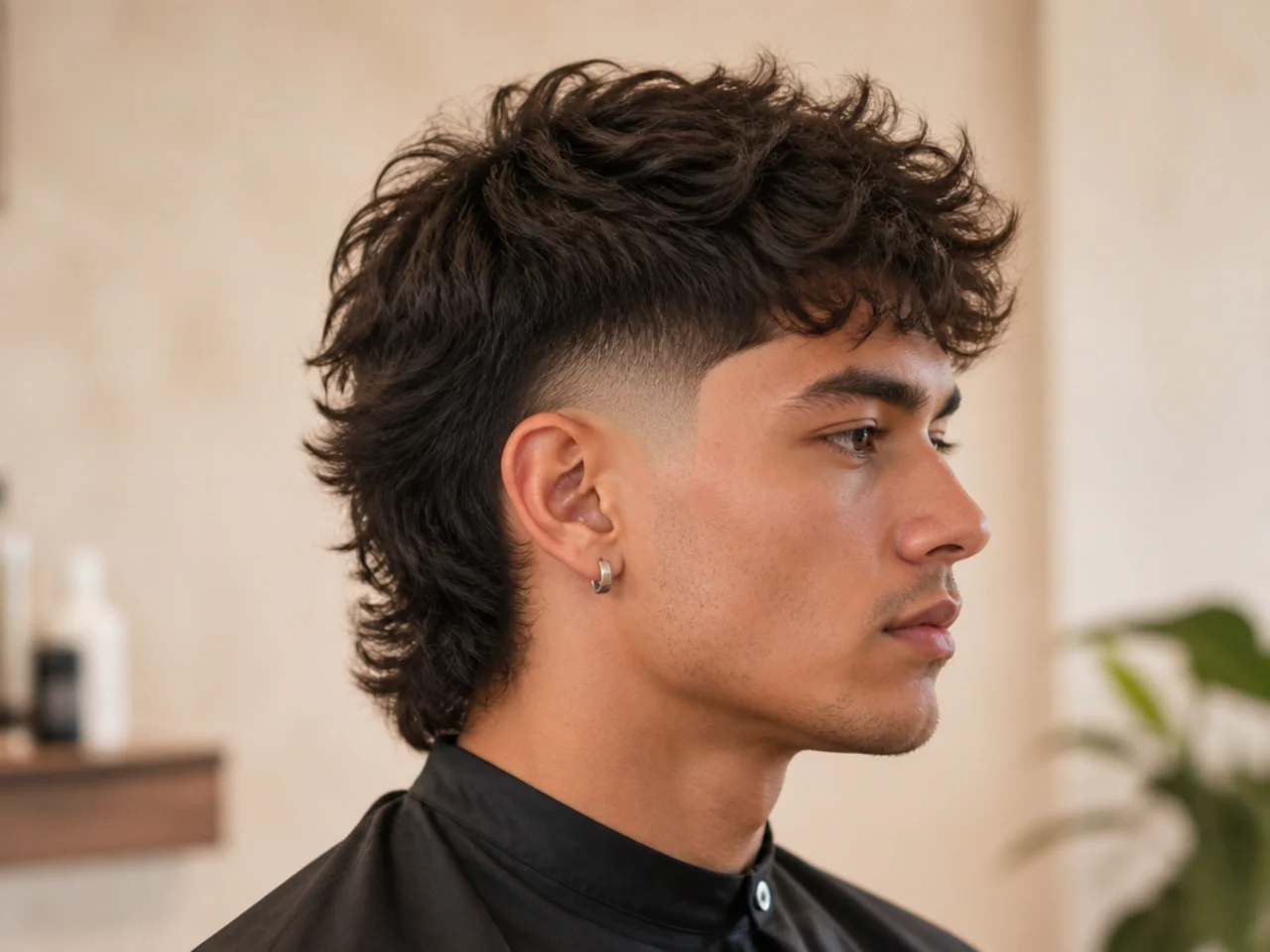
The fade climbs to the temple, which sharpens the contrast between the tight sides and the wild crown. Reads bolder than a low version without crossing into shaved-side territory. This is the version most barbers reach for when a client says "wild but clean."
Best on oval, square, and diamond faces. Works with straight, wavy, or curly hair.
Ask for: "Wolf mullet with a mid fade at the temple, blend from a zero at the ear up to a two guard where it meets the top, three-inch crown, four-inch back with feathered ends." Matte clay through damp roots holds the top; leave the back to move on its own.
18. Undercut Wolf Mullet
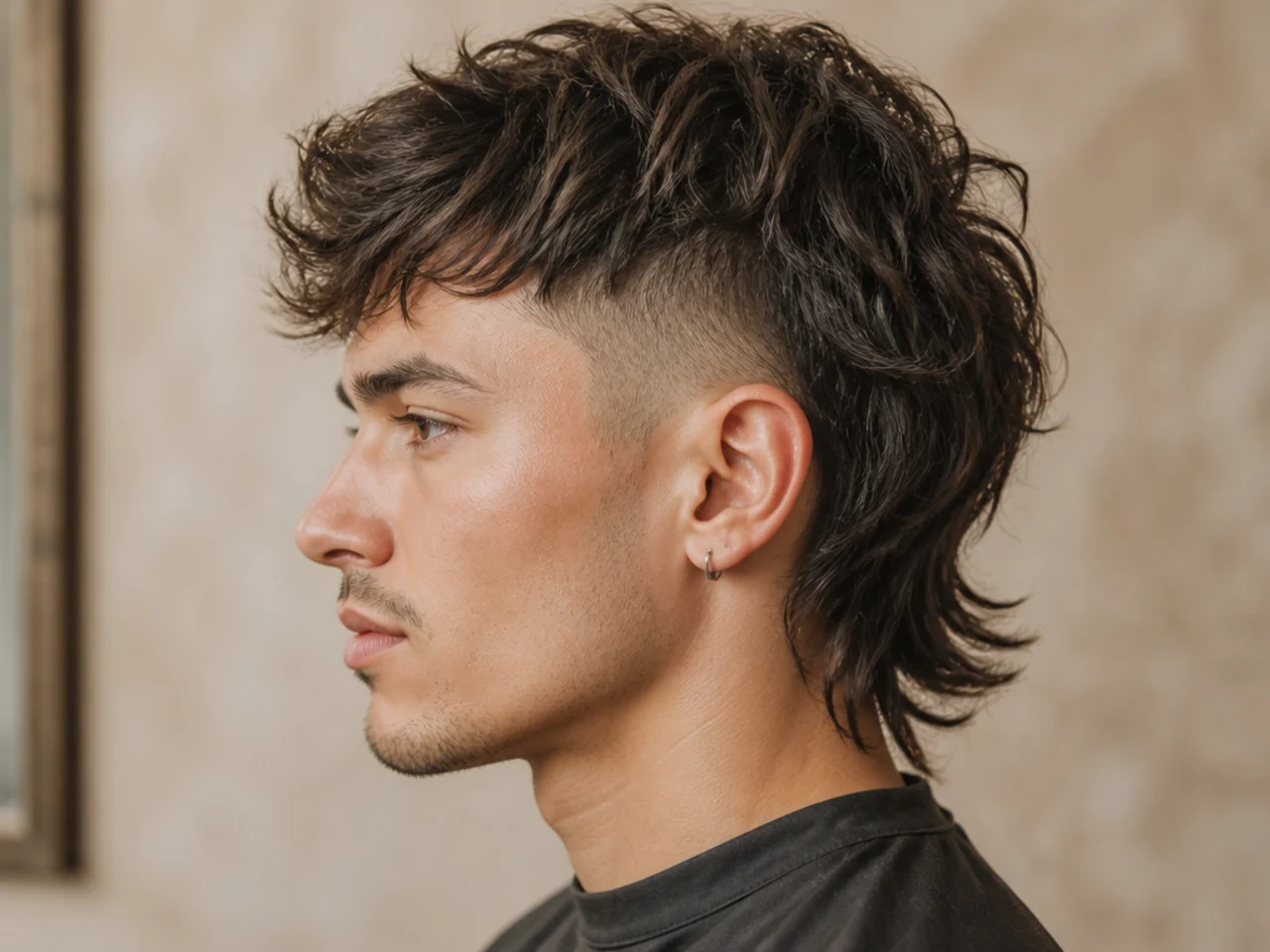
The sides drop to a one-guard undercut with no blending — the disconnected line is the feature. The wild top and mullet back sit above the undercut like a separate piece of hair, and the two-length contrast reads sharper than any fade version on this list.
Best on bold personalities and thick hair that needs bulk removed. Suits oval, square, and diamond faces.
Ask for: "Wolf mullet with a one-guard undercut on the sides and back to the crown, no blending, four inches on top with heavy layers, five-inch nape with feathered ends." Strong-hold clay through damp hair, sweep back with fingers, let the disconnection carry the shape.
19. Korean Wolf Mullet
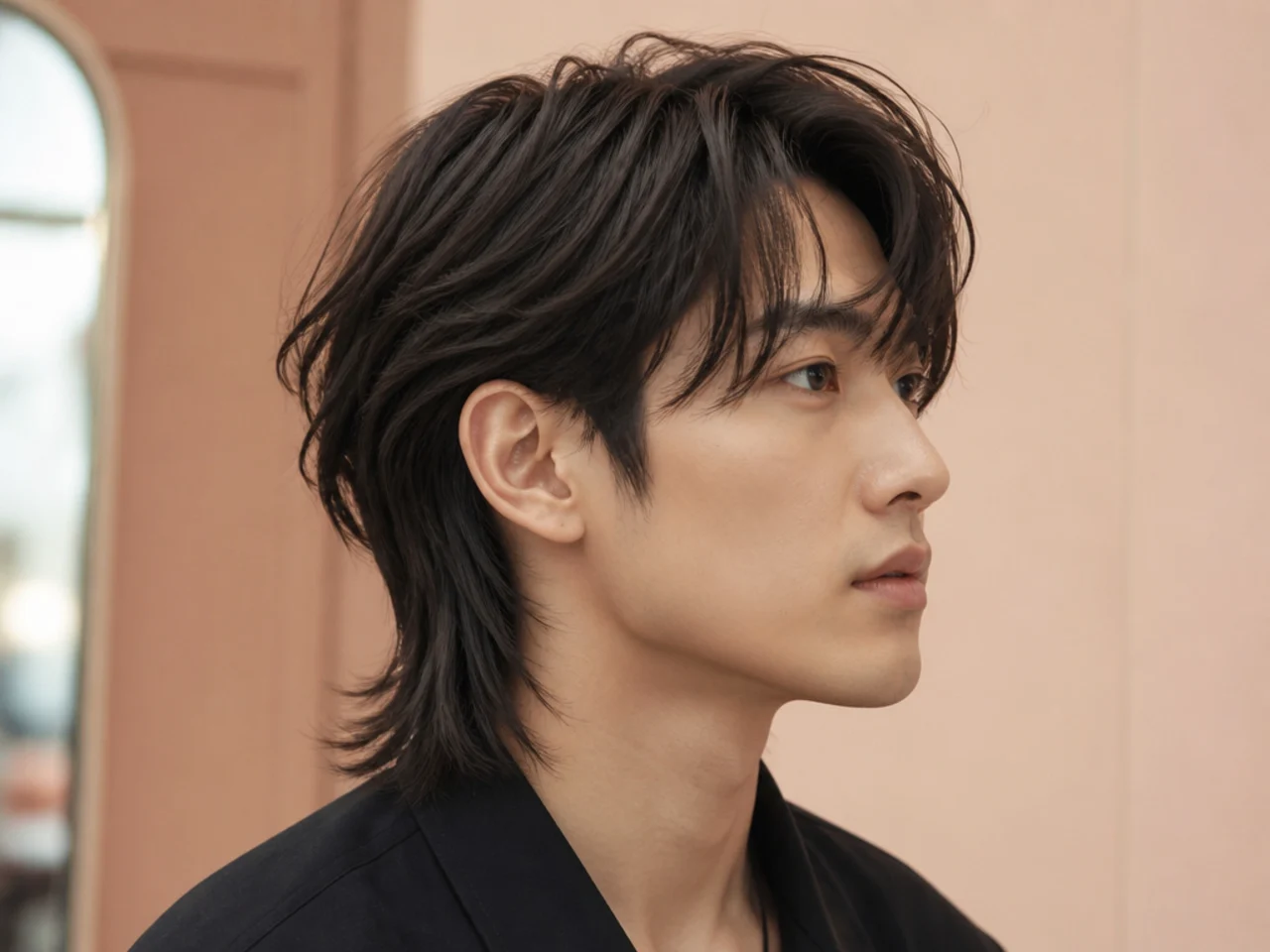
Softer than the Western versions. Layering is gentle, curtain-style bangs sweep to either side of a middle part, and the finish reads polished rather than shaggy. The mullet nape trims cleaner too — a wispy point rather than a feathered spread. A staple in the wider Korean haircut for men category.
Best on straight hair. Suits oval, long, and heart faces.
Ask for: "Korean wolf mullet, soft layers through the top, curtain bangs to the cheekbone, tapered sides, three-inch nape with a wispy trimmed point." Blow-dry the front pieces down and slightly outward with a round brush, then leave the rest untouched.
20. Wolf Mullet with Full Beard
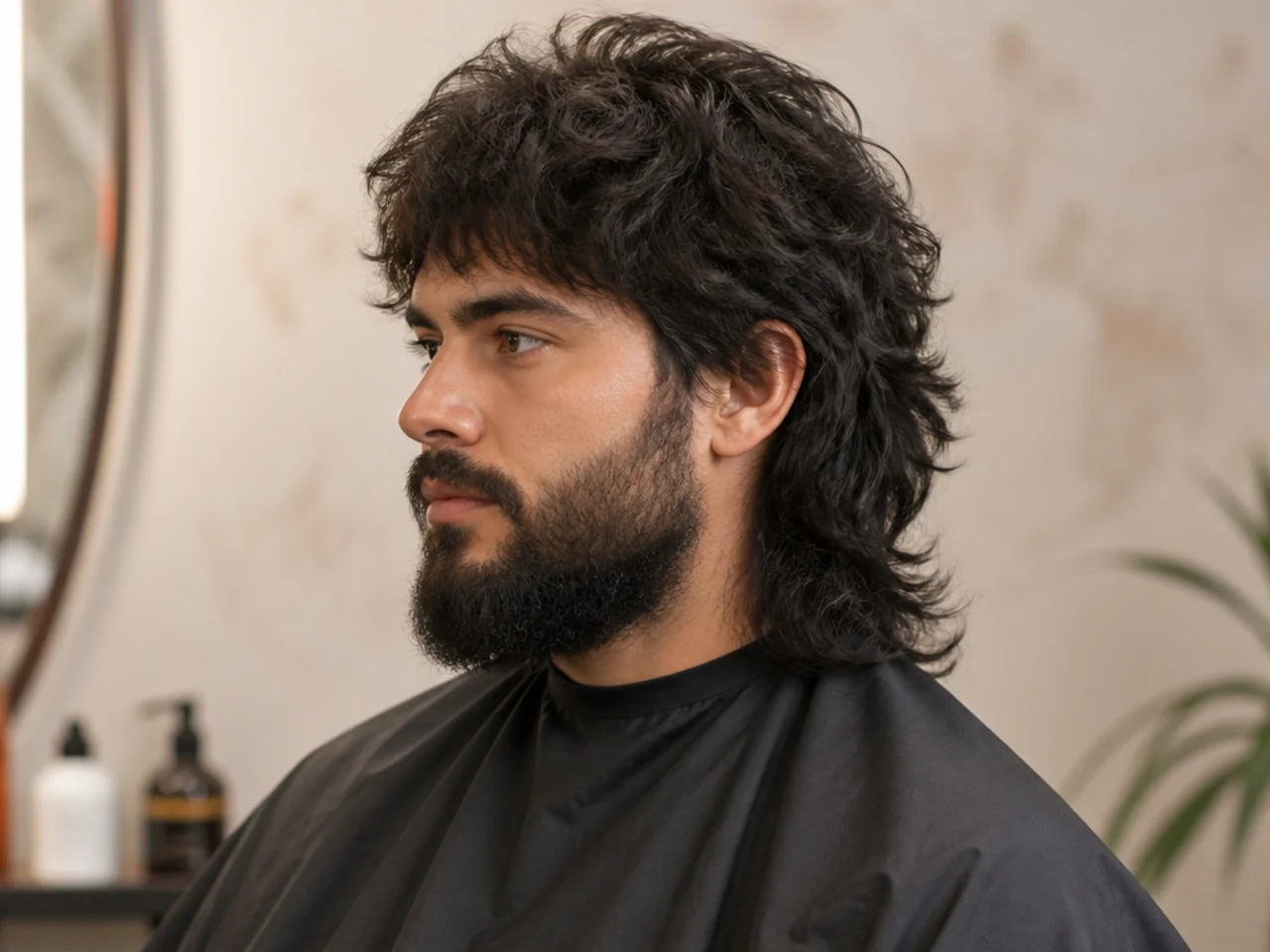
The beard becomes part of the silhouette. Tapered sideburns blend directly into a full beard, so the whole head reads as one continuous wild shape. The most mature version of the wolf mullet — works best when both are trimmed on the same schedule.
Best on guys who already wear a beard and want the cut to match its density. Suits oval, square, and heart faces on any hair type.
Ask for: "Wolf mullet blended into a full beard, tapered sideburns fading directly into the beard line, three-inch crown, four-inch back with layered texture." Beard oil daily to keep the transition smooth, and get both trimmed the same day so the shape stays balanced.
How to Ask Your Barber for a Wolf Mullet Haircut
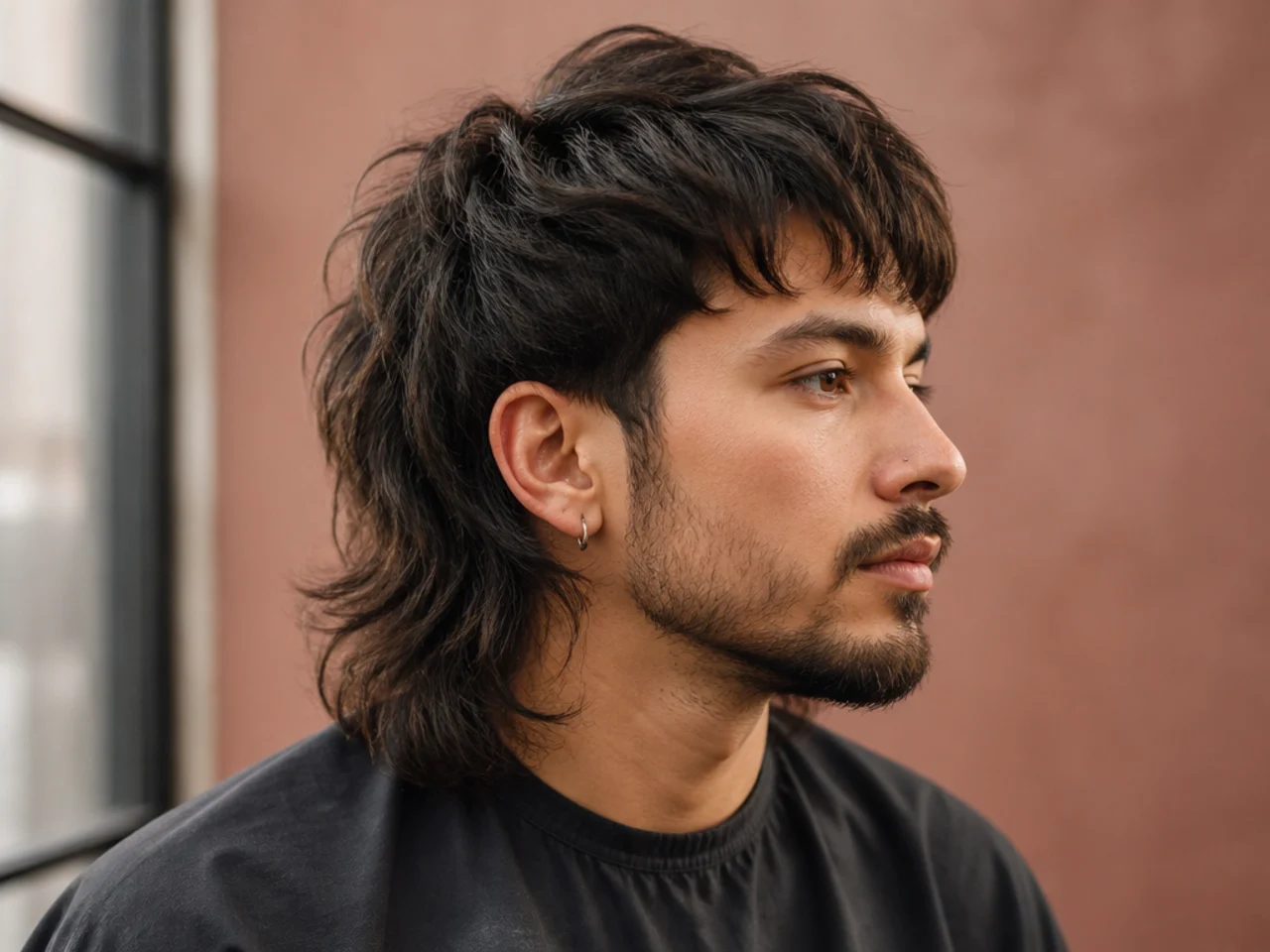
Walking in and saying "wolf mullet" gets the general idea across, but the version you get depends on twenty small choices your barber will otherwise make for you. Own the consultation, and the cut leaves the chair matching what's in your head.
- Bring three reference photos — front, side, and back. Front-only shots leave the mullet drop up to the barber, and they will almost always go shorter than you wanted.
- Name the crown length in inches. "Three inches through the top with heavy internal layers" beats "medium volume" every time.
- Name the nape length in inches. Say "four inches at the collar" or "six inches past the collar" instead of "a bit longer at the back."
- Choose the side treatment: blended scissor, low taper, mid fade, burst fade, or undercut. This one word shifts the entire silhouette.
- Pick the fringe: none, curtain bang, or forward-textured. The fringe is what pushes the read from mullet-forward to wolf-forward.
- Confirm the perimeter finish — feathered, point-cut, or blunt. Small choice, big visual difference on the mullet drop.
- Ask to see wolf mullet work in the barber's portfolio before you commit. Layer transitions and the wolf-to-mullet ratio separate a clean hybrid from a shape that reads unfinished, and not every barber has practice with the technique yet.
The photos matter more than the words. Barbers who see the target from three angles cut toward it; barbers who only see the front hedge their bets and take extra off the back. Screenshot two or three of your top picks from this guide into a phone album labeled "wolf mullet target" and bring the album to every appointment. For adjacent silhouettes in the same family, browse the mullet and wolf cut hub or the wolf cut mullet men roundup for extra reference range.
Styling and Maintenance
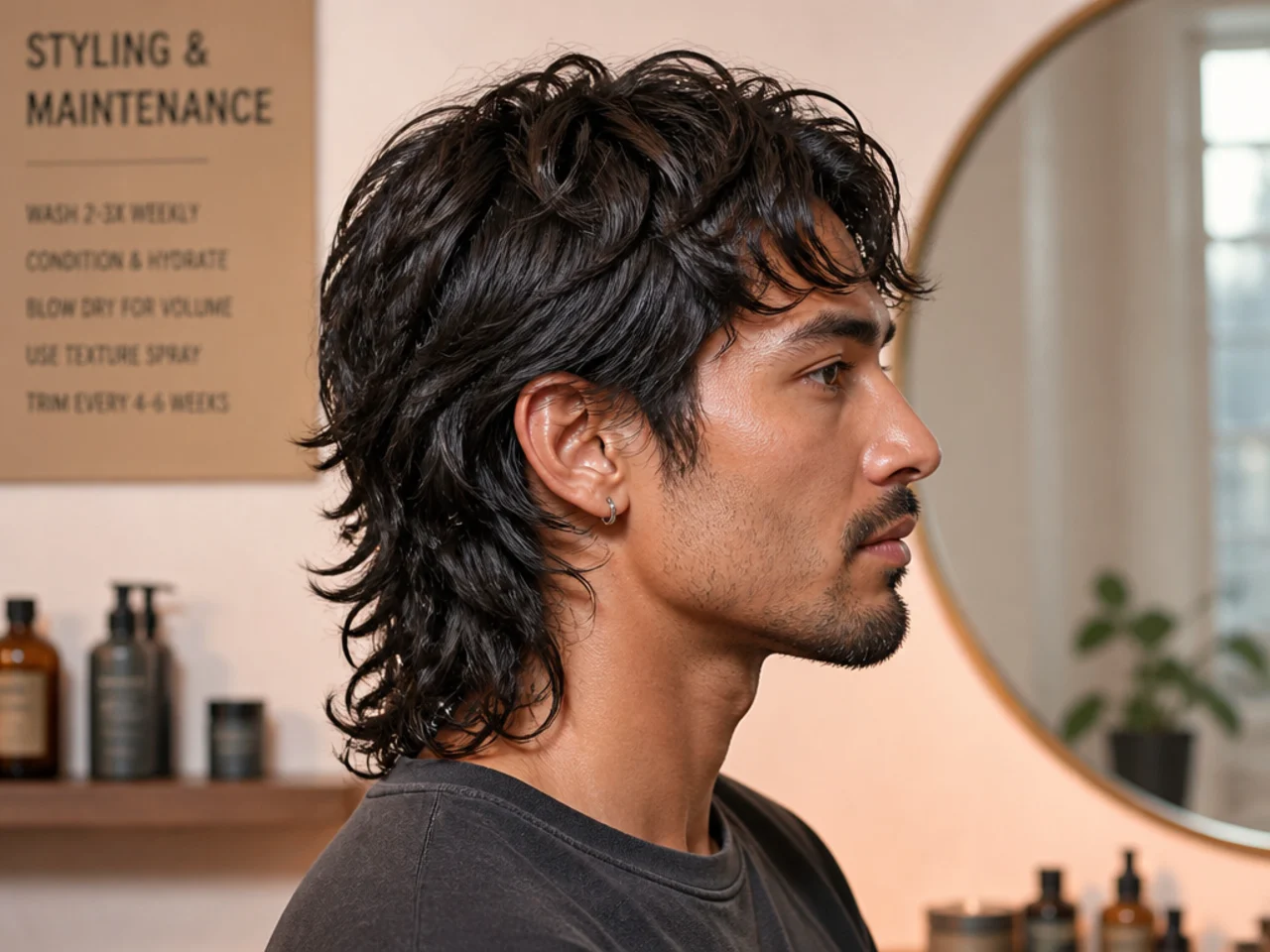
The wolf mullet is engineered to work light. The cut does most of the styling — under five minutes daily is the standard for the wild, wavy, and curly versions, and even the punk version rarely needs longer than seven. Follow the sequence below and the shape holds for the whole day.
- Rough-dry with fingers. Blot with a towel, then blow-dry on medium heat while lifting the roots at the crown and back with your fingers. This builds the volume everything else sits on.
- Add texture product to damp hair. A pea of matte cream for hold, or a two-pump sea-salt spray for movement. Work it in with your fingers — a comb pulls the layer texture straight out.
- Scrunch the nape. Grab the back length and scrunch upward toward the scalp. This encourages the mullet drop to fall in defined pieces rather than sitting flat.
- Air-dry or diffuse. Wavy and curly hair benefits from a diffuser on low heat held close to the scalp. Straight hair can finish air-drying from here without further intervention.
- Finish with a light hairspray. A quick mist locks the crown and fringe. Skip the back — you want it to keep moving.
Product-wise, keep the rotation simple. A matte clay or cream for daytime hold, a sea-salt spray for the wilder days, a lightweight hairspray for lockdown on long evenings, and a sulfate-free shampoo to protect the layered movement. Curly and coily hair adds a leave-in conditioner and a diffuser. Fine hair benefits from a volumizing mousse worked into damp roots before styling. Skip high-shine pomade and wet-look gel — both flatten the layered separation the wolf mullet depends on.
Trim cadence is non-negotiable. Book every five to eight weeks for the wild, textured, and taper versions. Longer variations can stretch to eight weeks, but the perimeter starts looking untidy after that. Fade and burst-fade sides need touch-ups every two to three weeks on their own schedule — the taper grows out fast. Keeping a consistent haircut cadence is what keeps the wolf mullet reading wild-on-purpose rather than accidentally overgrown.
FAQ
Is a wolf mullet the same as a mullet?
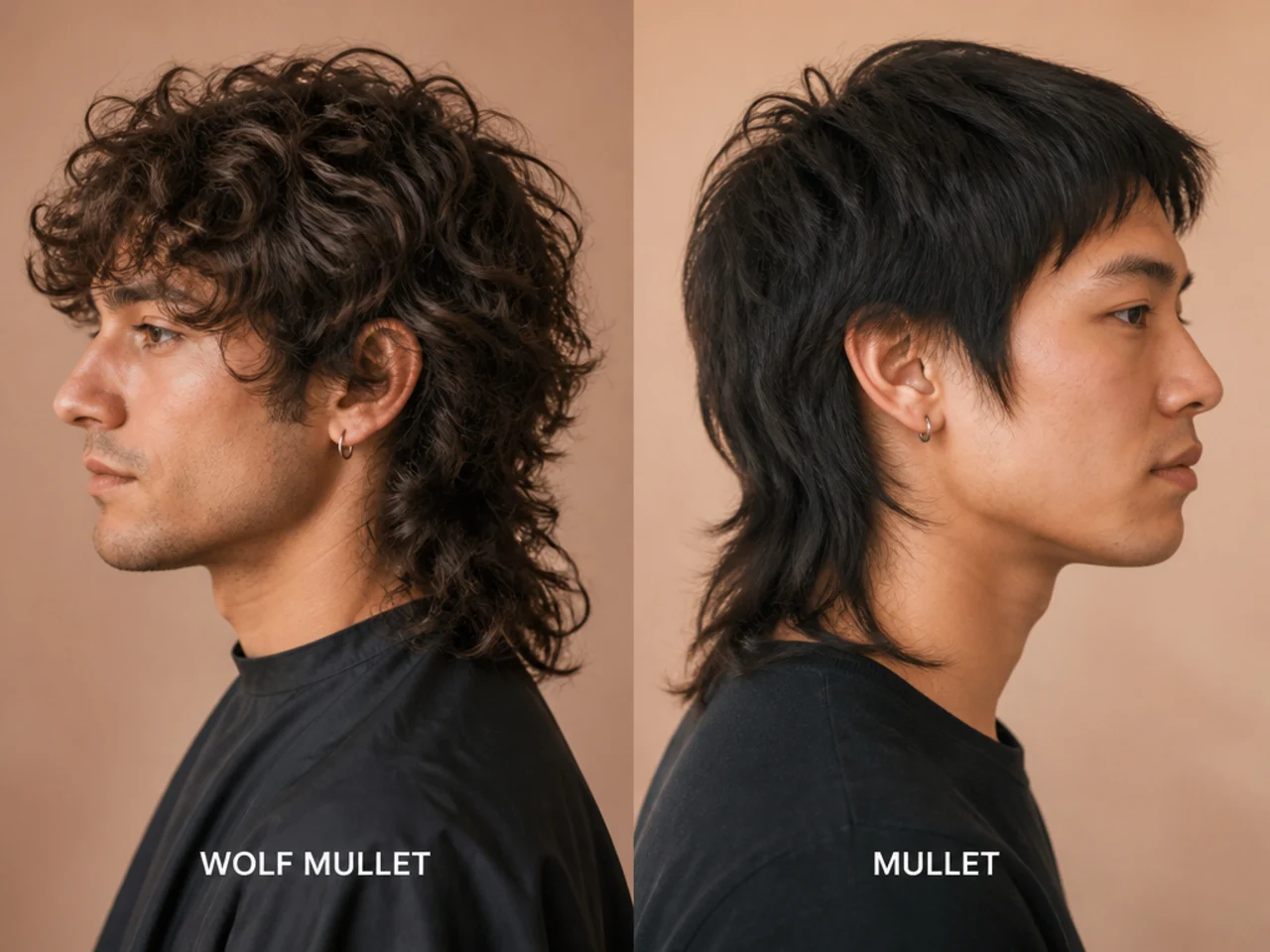
No. A classic mullet keeps the top compressed and lets the back carry all the length, with a hard contrast between the two sections. A wolf mullet stacks internal crown layers, adds face-framing at the cheekbones, and softens the perimeter so every section carries visible texture. It reads shaggier, wilder, and more editorial than the traditional cut — closer to a modern mullet crossed with a wolf cut than either family alone.
Which face shape suits a wolf mullet best?
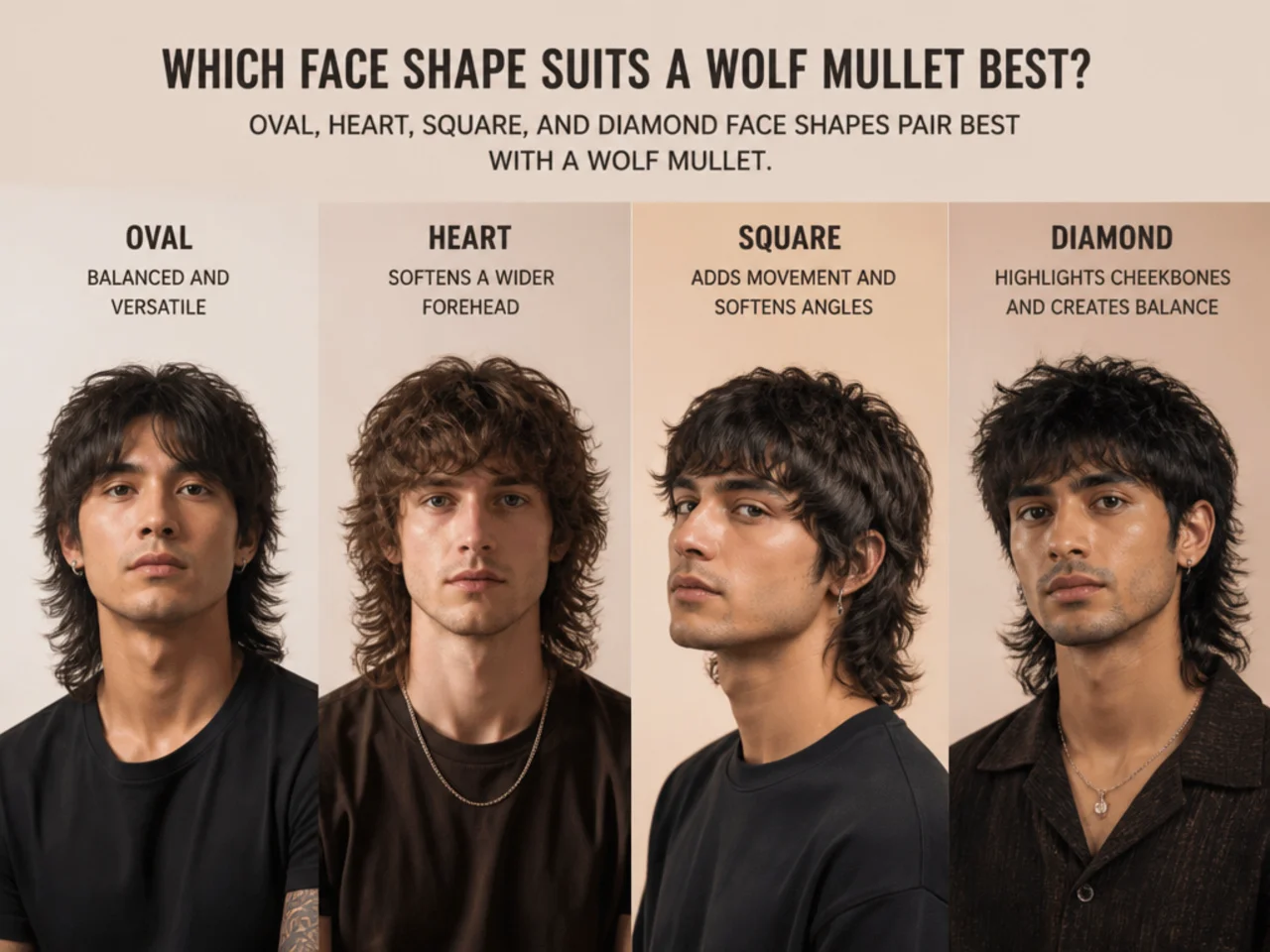
Oval, heart, and diamond faces work with almost any wolf mullet variation on this list. Round and square faces read best with the mid fade, spiky, or short-crown versions that add vertical line and narrow the profile. Long faces benefit from the curtain bang or fringe-forward variations, which break up vertical space and keep the silhouette balanced. When in doubt, take the version with a slightly shorter nape — length always draws the eye downward.
Can I get a wolf mullet if my hair is fine or thin?
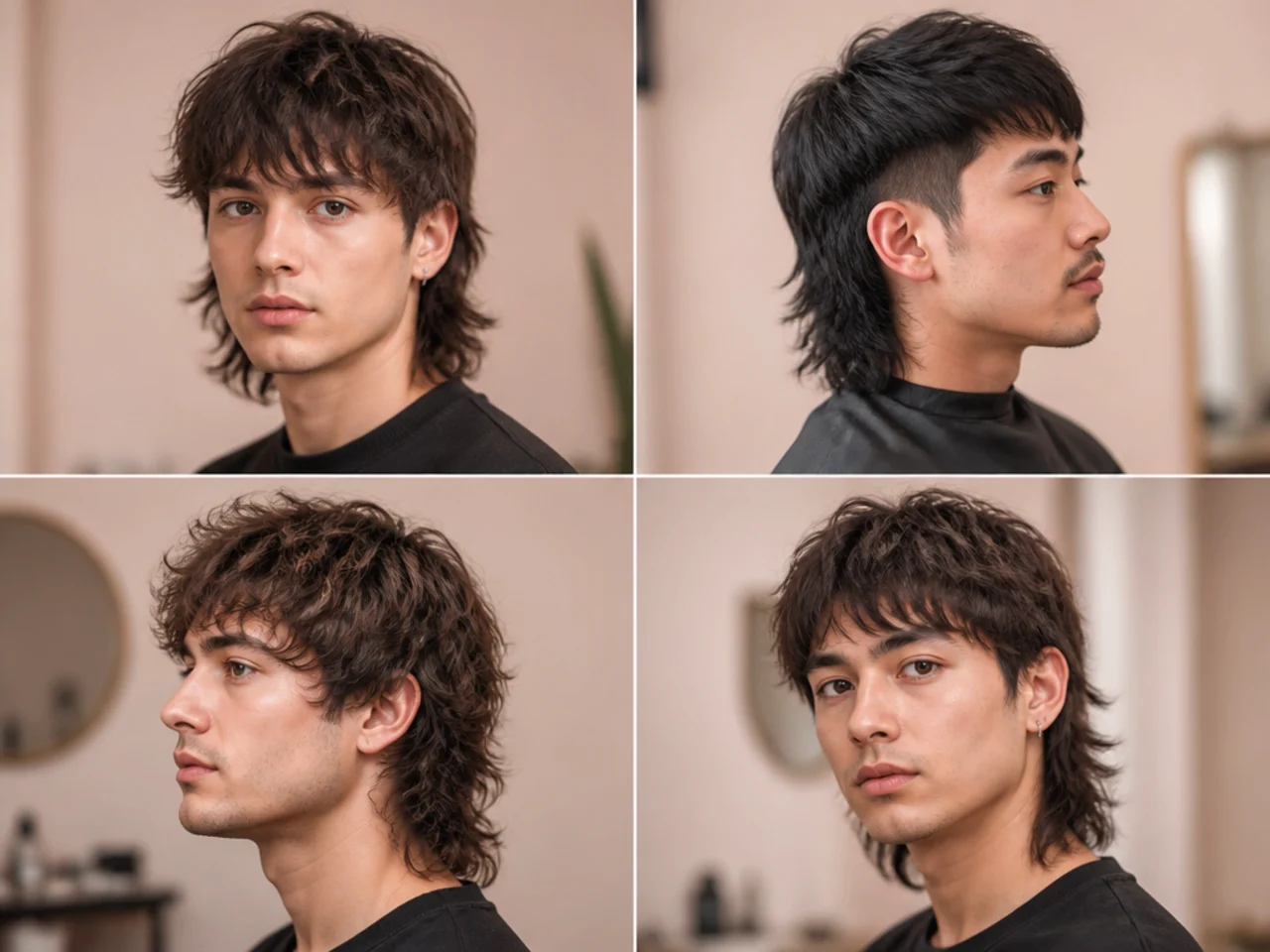
Yes — the layered structure creates the illusion of density. Ask for a denser layer stack through the crown and heavier point-cutting on the ends, both of which build texture that fine hair doesn't have on its own. Skip the punk and undercut versions; they need bulk on top to hold shape. The feathered, textured, and shag variations flatter fine hair the most.
How long does hair need to be for a wolf mullet?
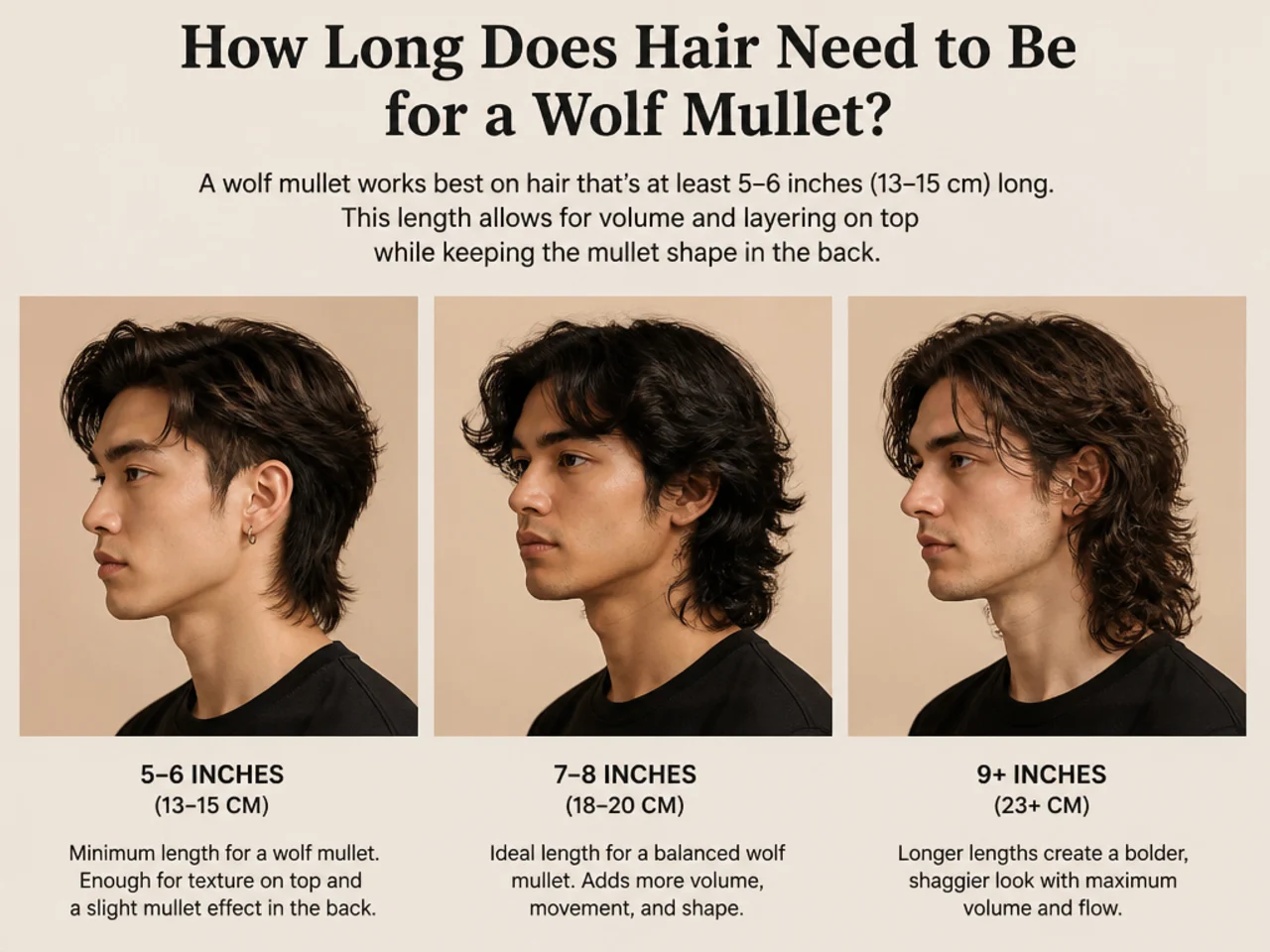
The shortest workable version needs about two inches on top and three at the back. Anything shorter loses the layered wolf structure and the mullet drop, and the cut reads as a plain shag or a short mullet instead. If you're growing out from a fade or crop, plan on four to six months before the cut is realistic. A curly or coily texture reaches the minimum sooner because the pattern reads longer than the actual measurement.
How much does a wolf mullet cost?
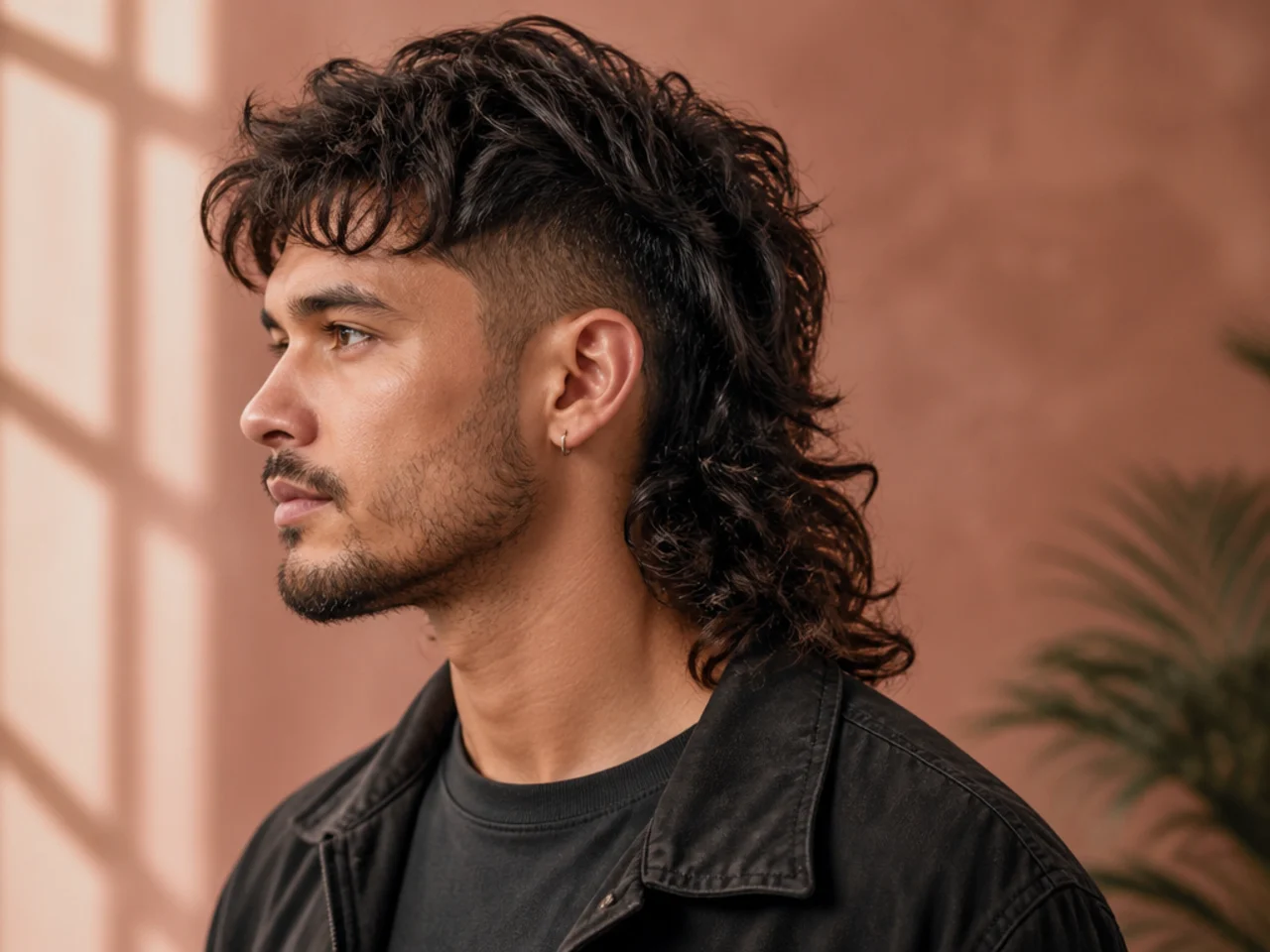
Expect $50 to $95 at a standard barbershop and $95 to $190 at a specialty salon that markets layered men's cuts. The price runs higher than a standard fade because the layer work takes 45 minutes to over an hour, and the mullet nape adds another step. Book with a barber who has visible wolf mullet or shaggy wolf cut examples in their portfolio — not just wolf cuts and not just mullets.
Will a wolf mullet grow out well?
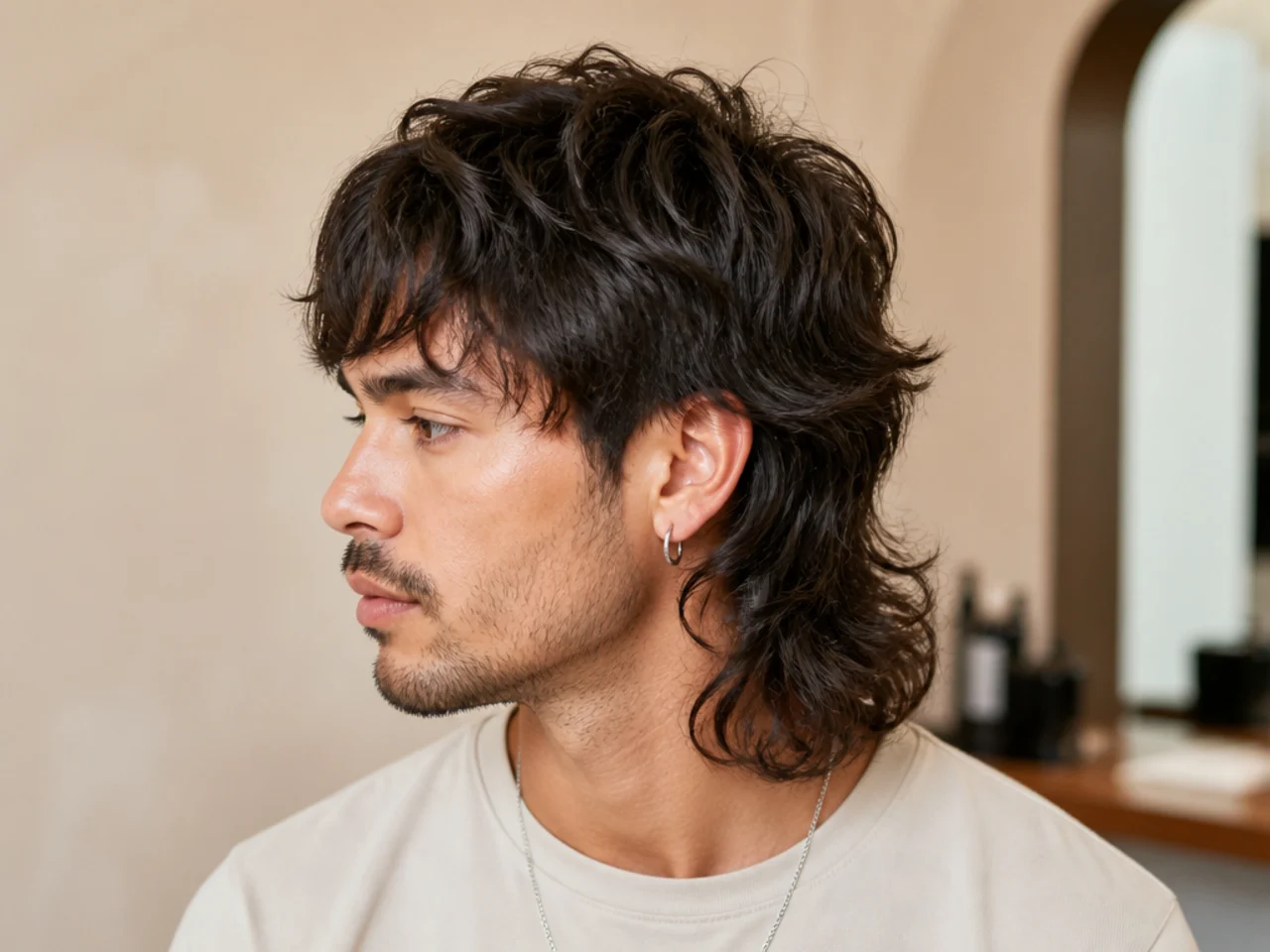
Better than most layered cuts. The crown layers relax into a fuller shag as they grow, and the mullet nape simply extends further past the collar. At eight weeks the shape reads softer but still intentional. Past twelve weeks it starts looking grown-out and needs a re-cut to sharpen the wolf-to-mullet ratio. If you can't commit to a five-to-eight-week trim cadence, pick the Korean, wavy, or short-nape version and reset every ten weeks instead.