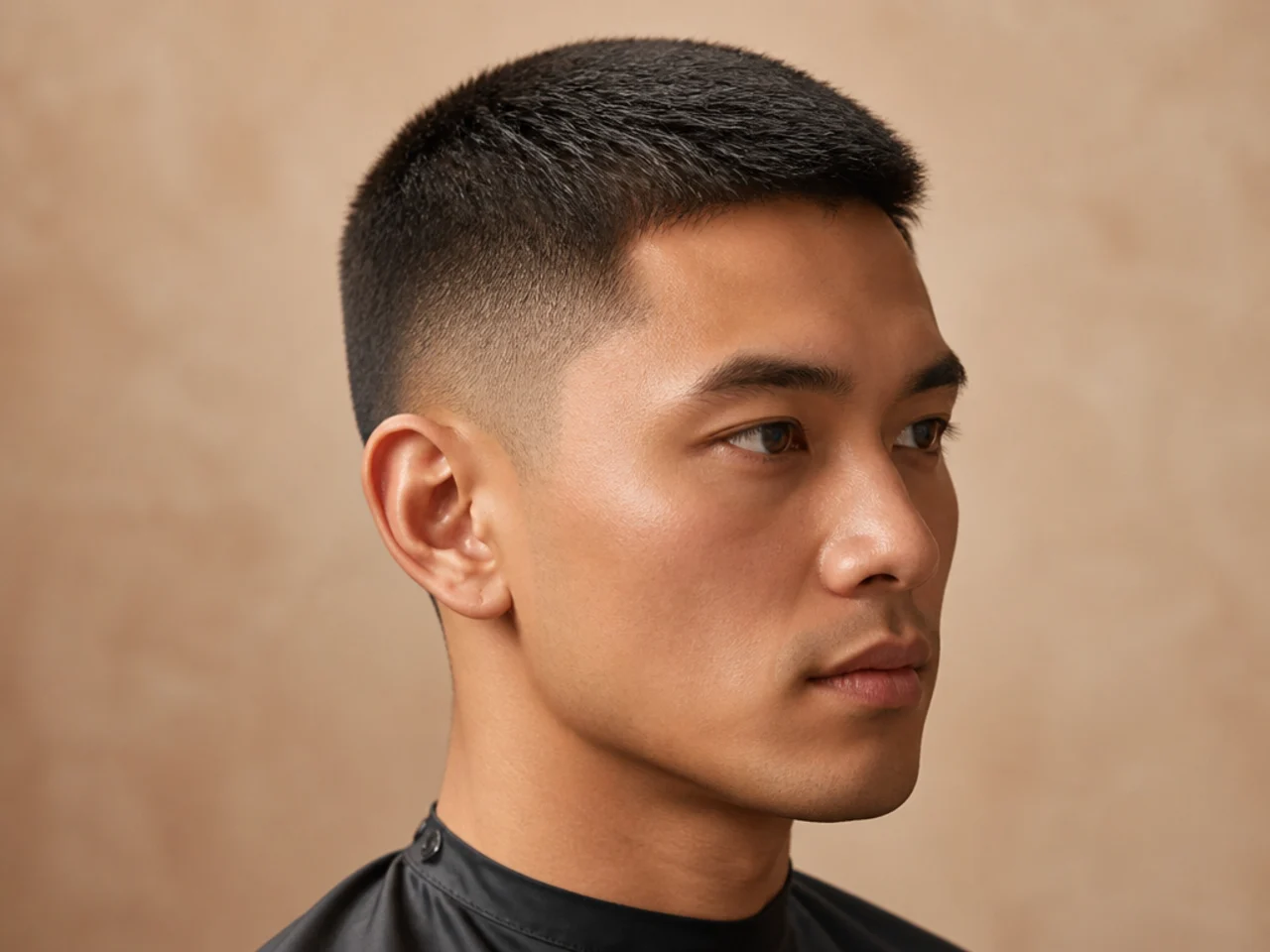
20 Classic Short Haircuts for Men
Twenty classic short haircut men options — from the buzz to the Ivy League — with face-shape notes, clipper numbers, and the exact language for the chair.
In this article · 32
- What Is a Classic Short Haircut?
- How to Choose Your Classic Short Cut
- The 20 Classic Short Haircut Variations
- 1. Classic Crew Cut
- 2. Ivy League
- 3. Buzz Cut
- 4. Butch Cut
- 5. High and Tight
- 6. Caesar Cut
- 7. French Crop
- 8. Short Side Part
- 9. Classic Comb Over
- 10. Short Pompadour
- 11. Classic Taper
- 12. Short Quiff
- 13. Regulation Cut
- 14. Executive Contour
- 15. Short Slick Back
- 16. Businessman Cut
- 17. Regular Boy's Cut
- 18. Prep School Part
- 19. Short Textured Crop
- 20. Short Brush Up
- How to Ask Your Barber
- Styling and Maintenance
- FAQ
- What counts as a classic short haircut for men?
- How short is a classic short haircut?
- Which classic short cut suits my face shape best?
- How often should I re-cut a classic short haircut?
- What product should I use for a classic short haircut?
- Do classic short haircuts work at the office?
A classic short haircut men can rely on is the one that reads sharp in a boardroom, at a wedding, and on a Tuesday morning school run. The twenty cuts below have earned their place in the barber's chair for at least fifty years each — no trend cycle required, no fifteen-step styling routine, no product graveyard on the bathroom counter. This guide covers each variation with the face shapes it flatters, the exact clipper numbers to hand your barber, and the sixty-second routine that keeps it sharp.
What Is a Classic Short Haircut?
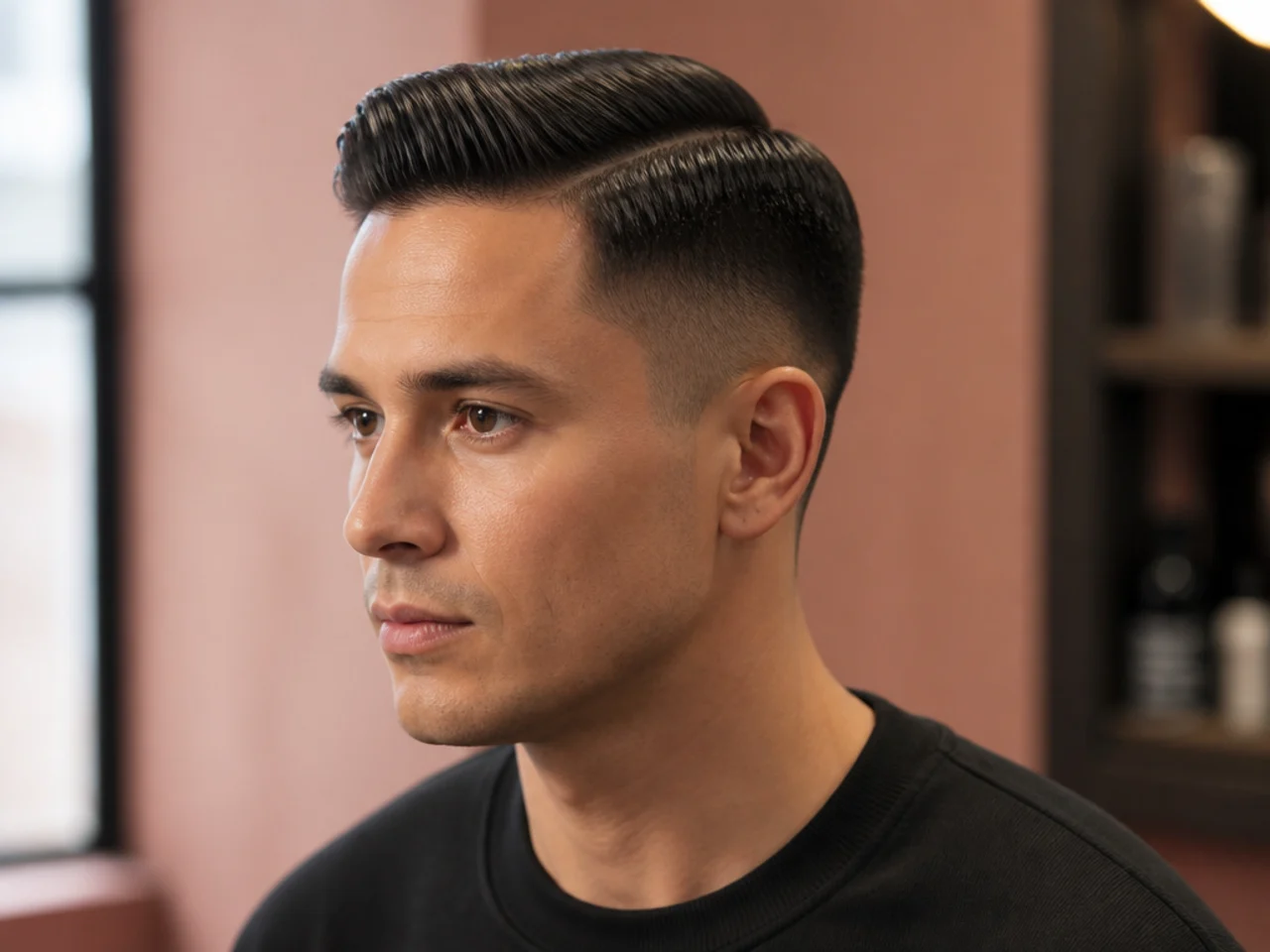
A classic short haircut for men keeps the top between a shaved #0 and about two inches, with the sides cut shorter than the top and finished with a taper, a subtle fade, or a scissor blend. The silhouette is controlled — nothing flops, nothing spikes, nothing calls attention to itself.
The word "classic" carries weight. Every cut on this list was already in the barber's playbook when your father sat in the chair. The crew cut came out of the military barbershops of the 1940s. The Ivy League settled into place at east-coast prep schools around the same time. The Caesar goes back to Rome, gets a modern update in the 1990s, and still cuts clean today. These shapes survived because they flatter almost every face and read as intentional rather than trendy.
The tools are simple. A quality clipper with guards #0 through #4, a pair of shears, and a fine-tooth comb cut every style in this guide. The products are equally basic — matte clay for texture, medium-shine pomade for polish, nothing at all for the shortest cuts. If you keep one clipper, one comb, and one tin of clay on the shelf, you can wear any classic short haircut in this article for the rest of your life.
How to Choose Your Classic Short Cut
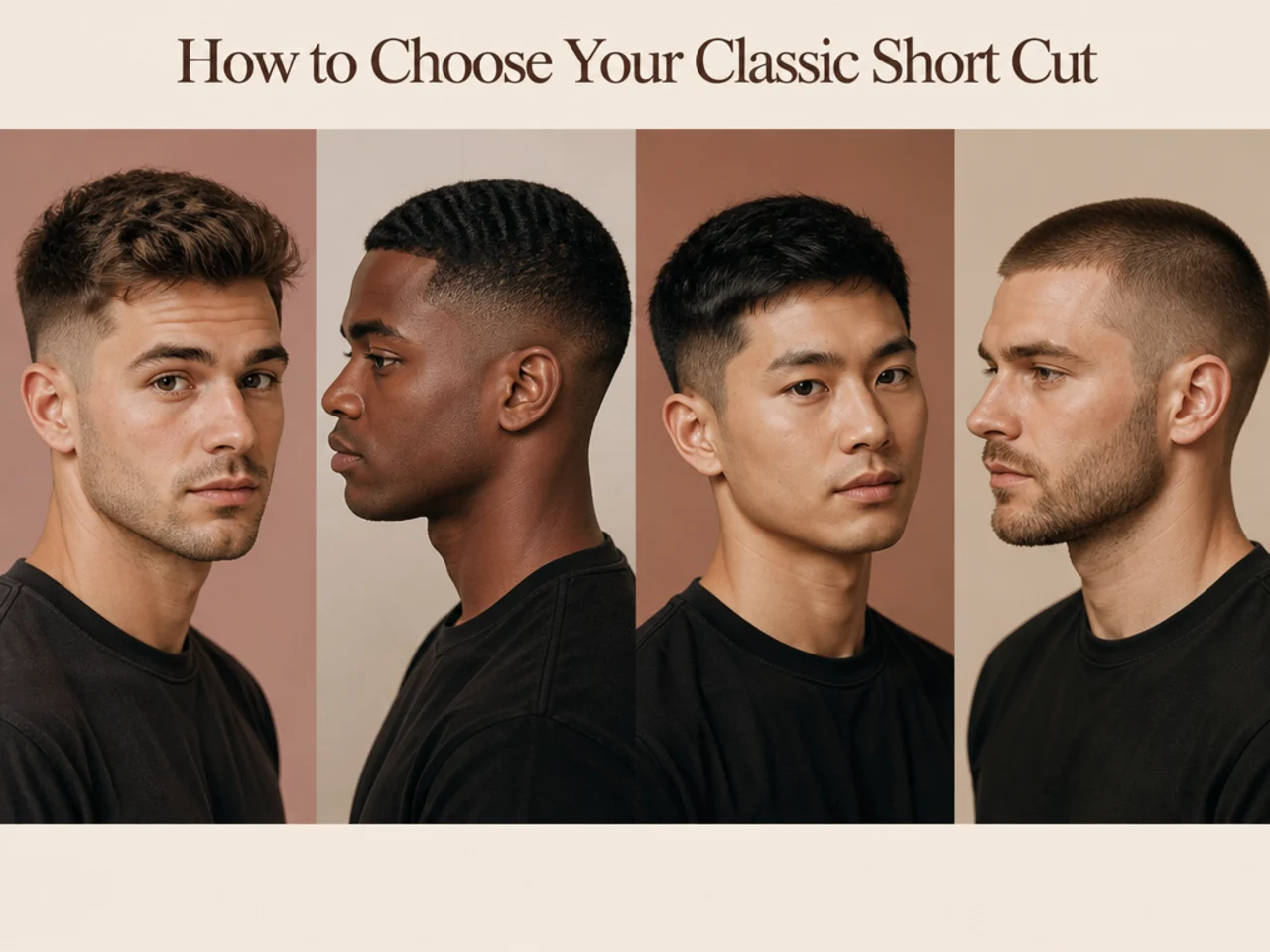
Face shape sets the top. Round faces want vertical lift and short sides — a short quiff, short pompadour, or brush up adds height that lengthens the visual read of the face. Square jaws pair well with the softer classics — an Ivy League, a scissor-tapered side part, or a low-key comb over. Long or narrow faces gain from horizontal cuts — a Caesar, French crop, or a squared-off crew cut adds width across the forehead. Oval and heart faces have the easiest time — almost every classic on this list works. For a deeper face-shape breakdown, browse haircuts for square faces.
Hair type sets the finish. Fine hair wants a shorter top and a matte product so the shape does not collapse — a crew cut, Caesar, or French crop reads best. Thick and coarse hair holds any shape you cut into it, so you get access to the taller variations — pompadour, brush up, and quiff. Curly and coily hair reads classic with a slightly longer top left for the natural pattern — a curly Caesar, a scissor-shaped crew, or a short afro with a low taper all sit inside the classic tradition.
Lifestyle sets the maintenance. A traditional office rewards the polished cuts — Ivy League, side part, comb over, businessman. A trade, gym, or active-duty schedule wants the shortest variations — buzz, butch, high and tight. A creative or casual environment can carry any of them. Give your barber ninety honest seconds on how you actually style your hair on a Tuesday morning — that answer is more useful than any photo. For the broader shortlist, see the pillar guide on short simple mens haircuts and the roundup of low-maintenance mens haircuts.
The 20 Classic Short Haircut Variations
Each variation below covers what makes it different, who it flatters, the exact language for your barber, and the honest styling time at home.
1. Classic Crew Cut
The crew cut is the default answer to "what should I get?" and has been for eighty years. One inch to one-and-a-half inches on top, tapered sides, front left slightly longer for a soft forward push. It reads sharp in a suit and easy on a weekend.
Suits every face shape and every hair type. Best on straight to slightly wavy hair, but curly hair works with a two-inch scissor version.
Ask for: "Classic crew cut, inch and a half on top with the front slightly longer, low taper at the sides, square the neckline." Matte clay run through with fingertips, that's the entire routine.
2. Ivy League
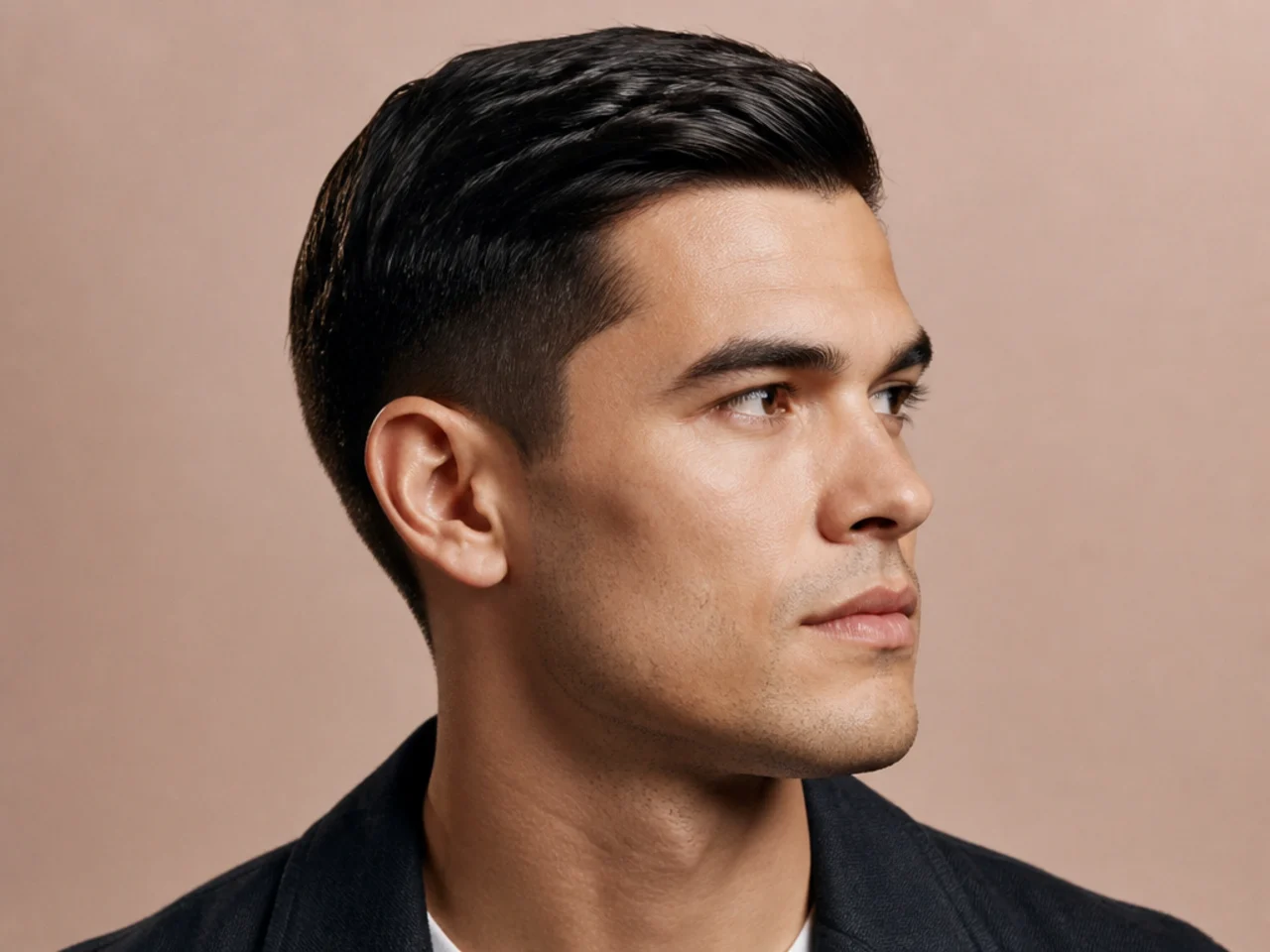
The Harvard clip, the prep, the Ivy League — same cut, three names. Two to three inches on top with enough length to hold a side part, scissor-tapered sides that hug the head. Reads intelligent without trying.
Suits oval, square, and long faces. Best on straight to slightly wavy hair. The safest office cut on the list.
Ask for: "Ivy League, two-and-a-half inches on top with a natural side part, scissor-tapered sides — no clipper work above the temple." Medium-shine pomade combed to the part, one blow-dry pass.
3. Buzz Cut
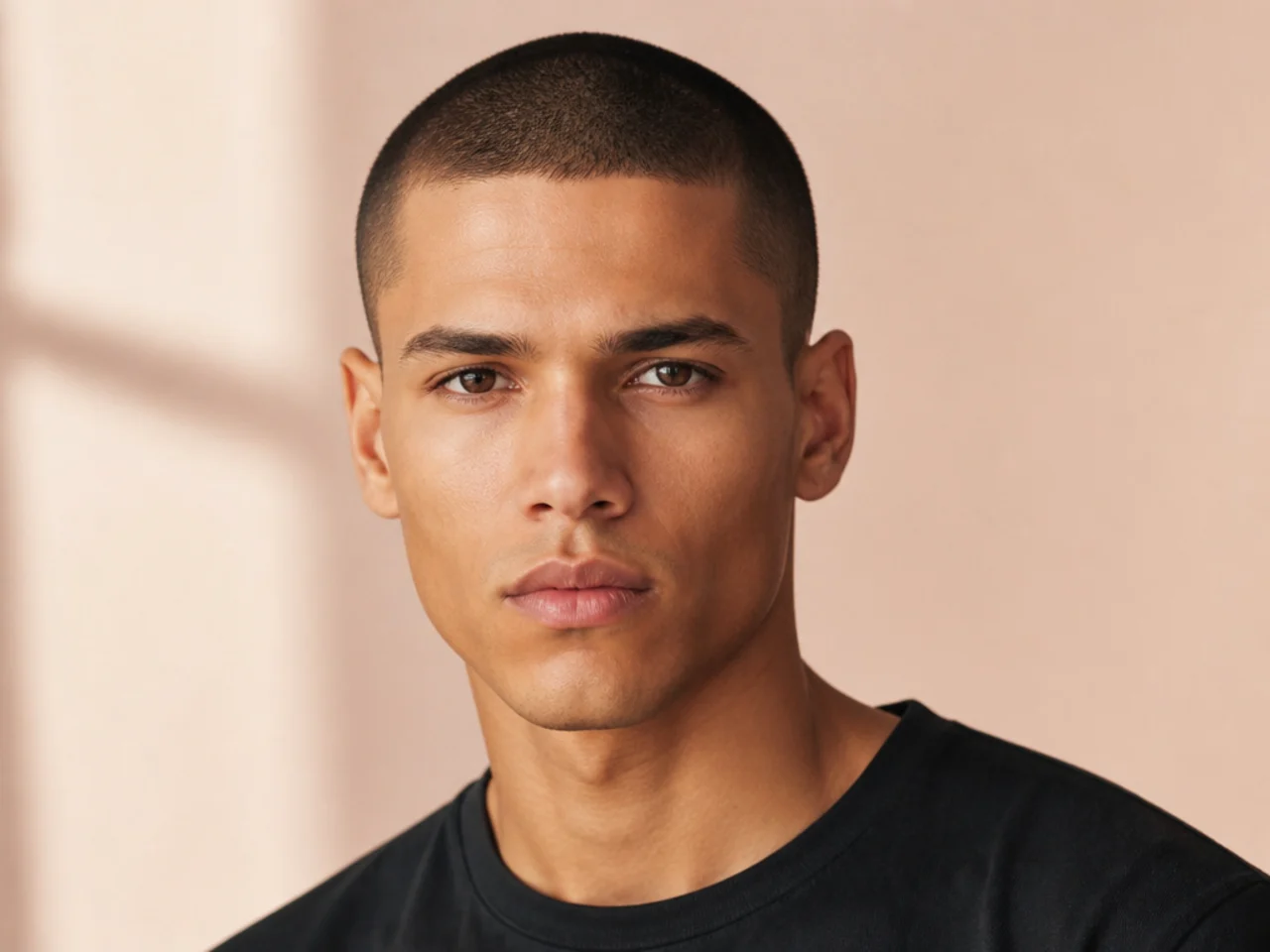
The buzz cut is one length all over — typically a #1, #2, or #3 clipper guard. It is the shortest classic on this list, the honest one, and the one that carries the least maintenance.
Suits guys with a strong jaw, an even hairline, and a scalp shape that reads well without cover. Every face shape can wear a buzz, but a #3 flatters more than a #1 for most.
Ask for: "Number two buzz, blend into the neckline, square the sideburns." Zero styling — splash, dry, walk out. Rebook every three weeks for a truly clean line.
4. Butch Cut
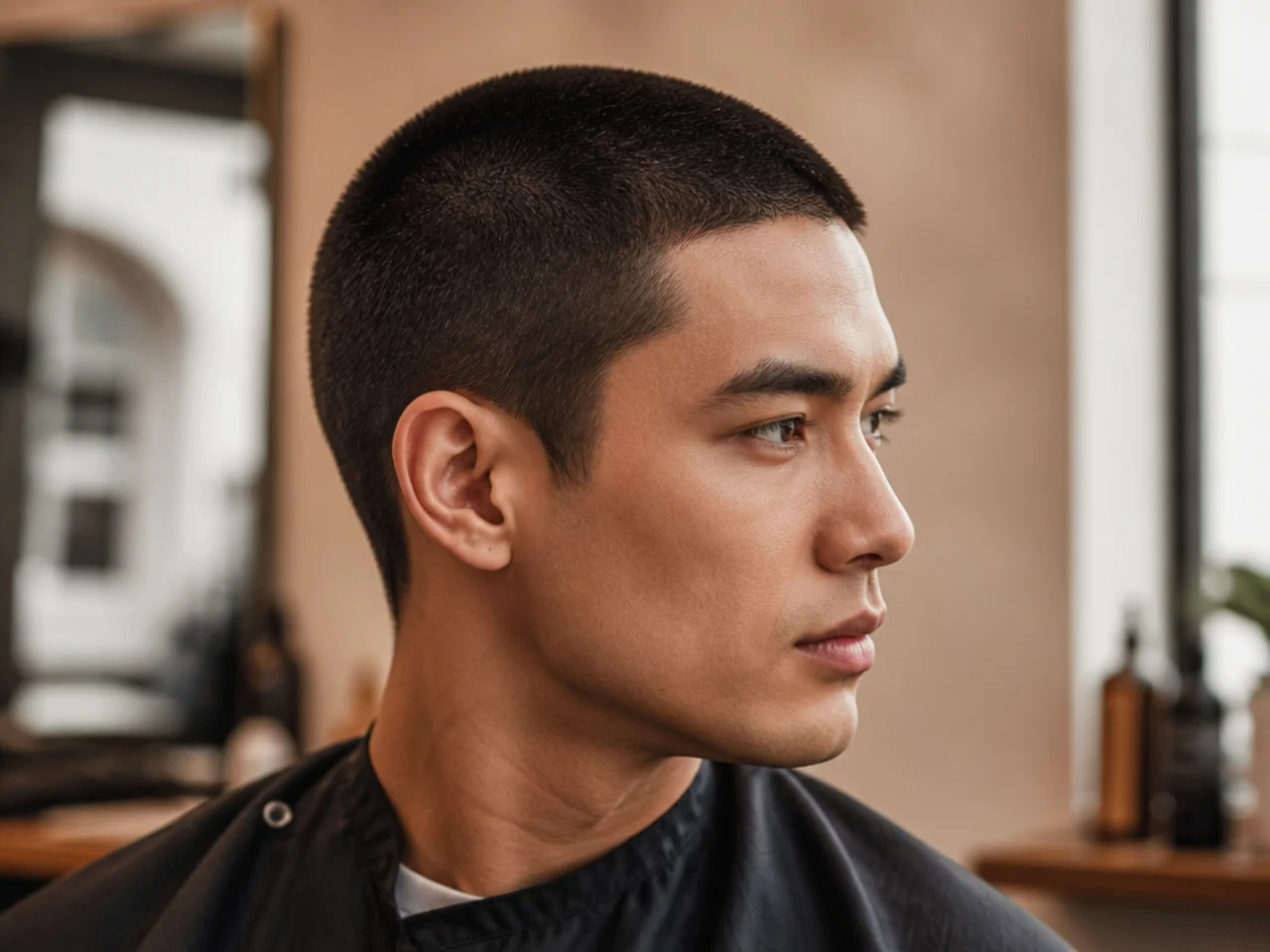
The butch is a half-step above the buzz. One length on top at a #3 or #4 guard, with a low or skin fade at the sides. Enough hair to read as intentional, not enough to require any styling.
Best for guys with athletic lifestyles, thinning hair, or anyone testing the waters before going full buzz. Works on every face shape.
Ask for: "Butch cut, number four on top, low skin fade at the sides, square neckline." Towel-dry and go. A drop of light cream adds sheen if you want it.
5. High and Tight
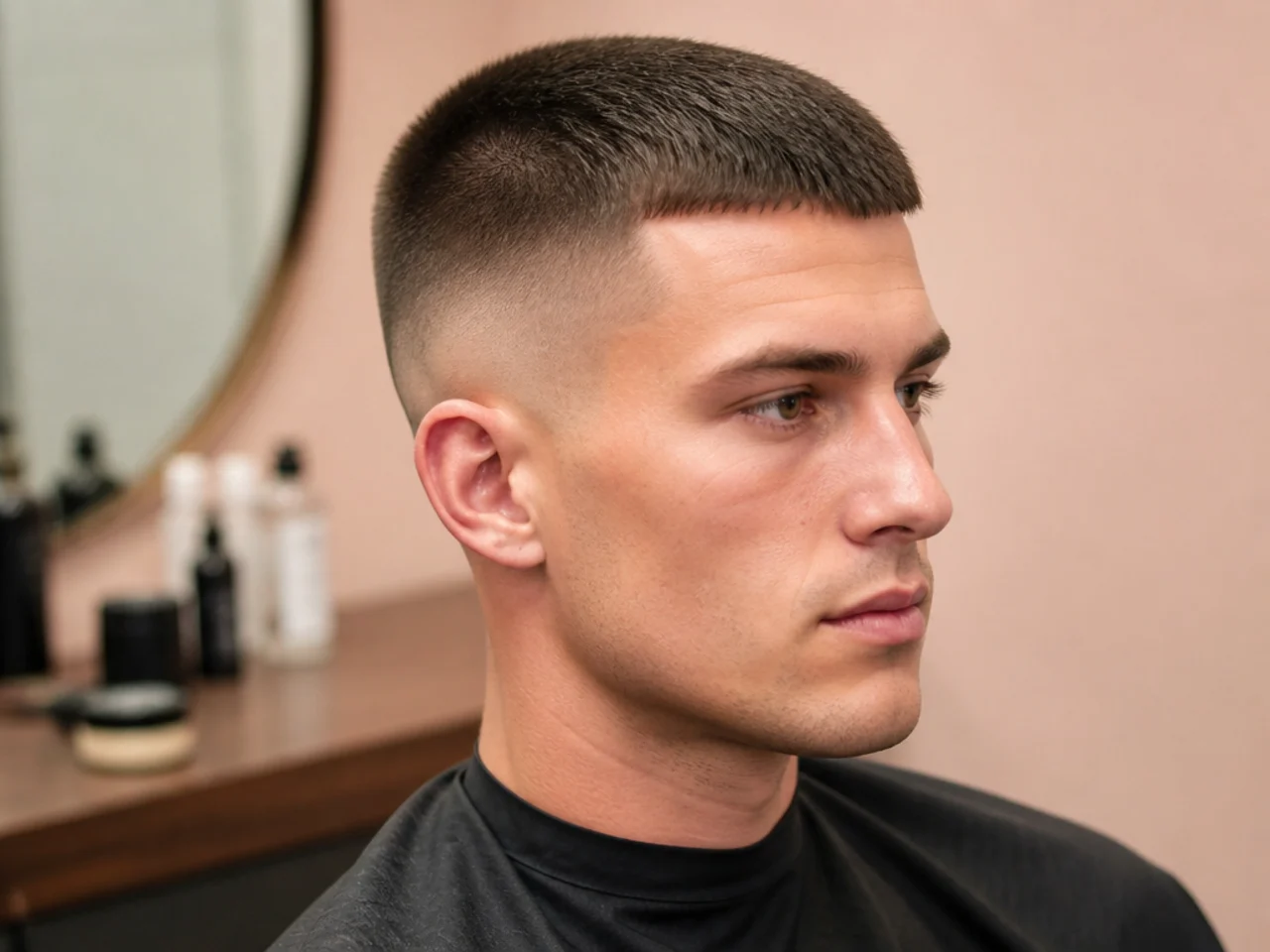
The high and tight leaves a short top — usually a #2 or #3 — with a skin or #0 fade that jumps in high above the temples. Military discipline in a civilian silhouette. Reads clean at every age.
Suits guys with strong features and thick, straight-to-wavy hair. Works well in workplaces that respect a tidy line — trades, uniformed roles, and offices that value structure.
Ask for: "High and tight, number three on top, skin fade jumping in high above the temple, square neckline." If you want a shaved part line, mention it upfront so the fade plans around it.
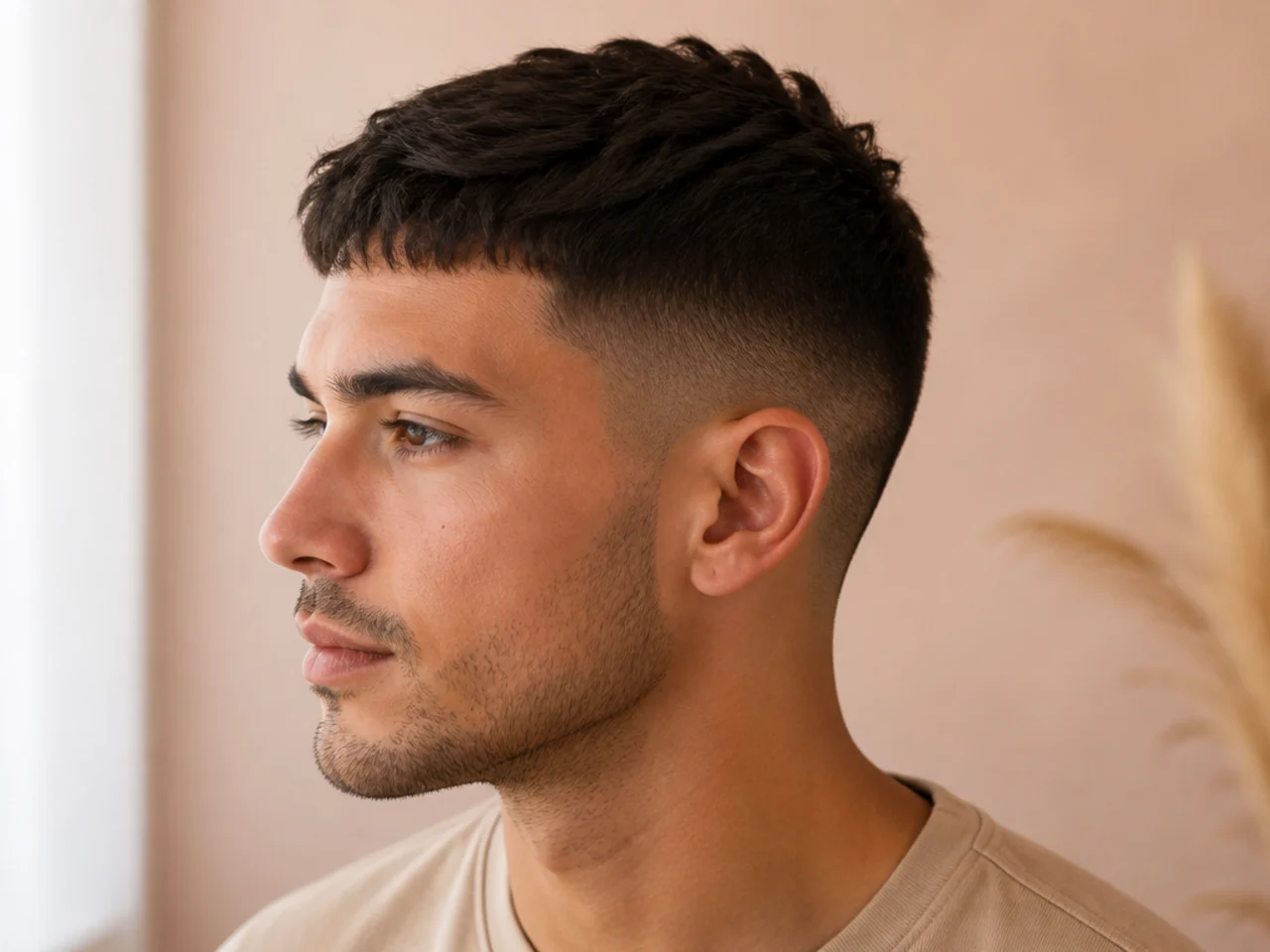
6. Caesar Cut
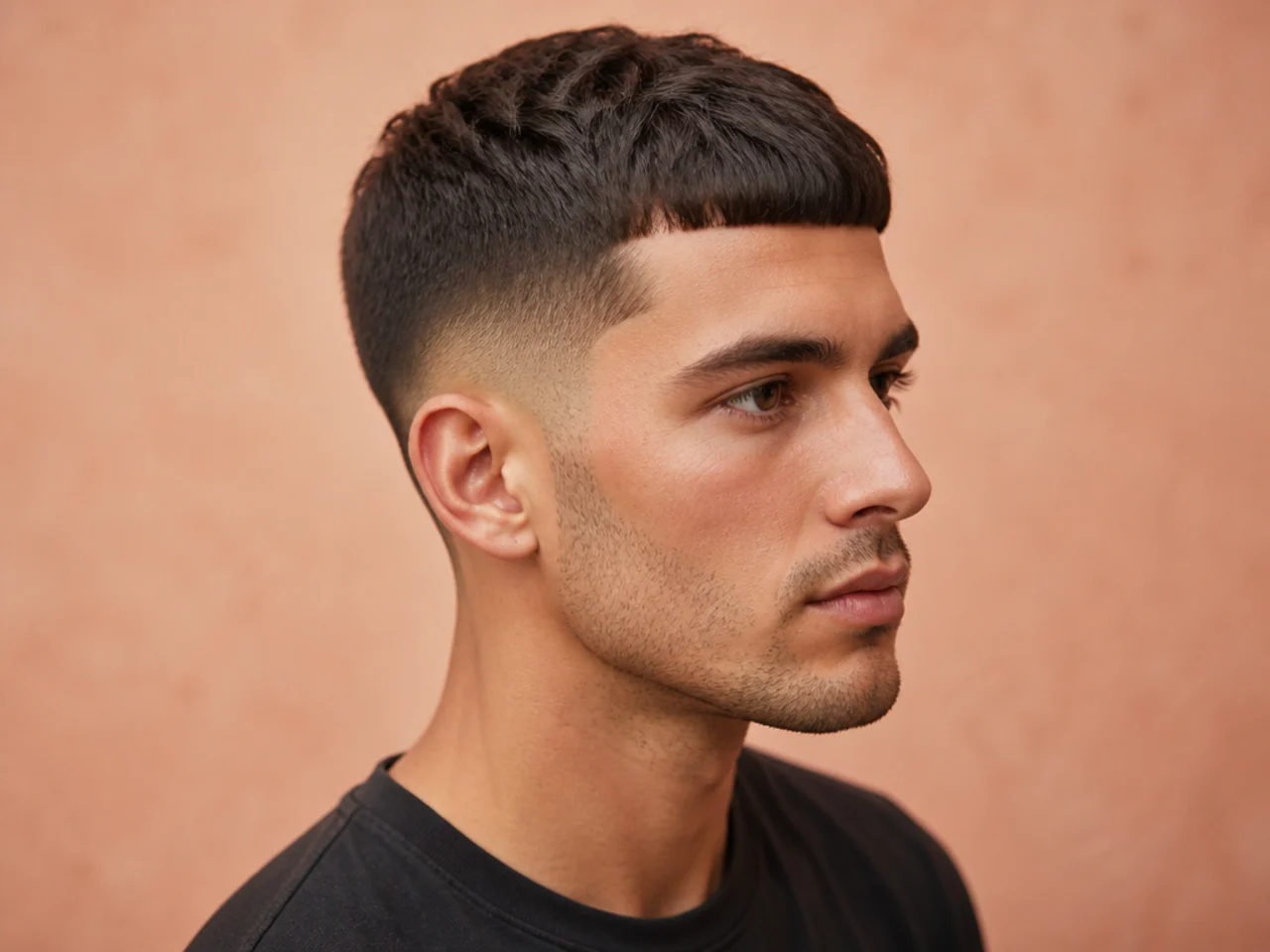
The Caesar keeps one to one-and-a-half inches on top, cut forward from the crown into a short blunt fringe that sits straight across the brow. Sides tapered short, top swept forward with fingers. A cut with two thousand years of history and none of the fuss.
Suits round, oval, and long faces because the horizontal fringe shortens the visible forehead. Best on straight hair with density — the fringe needs weight to lay flat.
Ask for: "Caesar cut, one-and-a-half inches on top, blunt fringe just above the brow, low taper at the sides." Matte paste pushed forward with fingertips.
7. French Crop
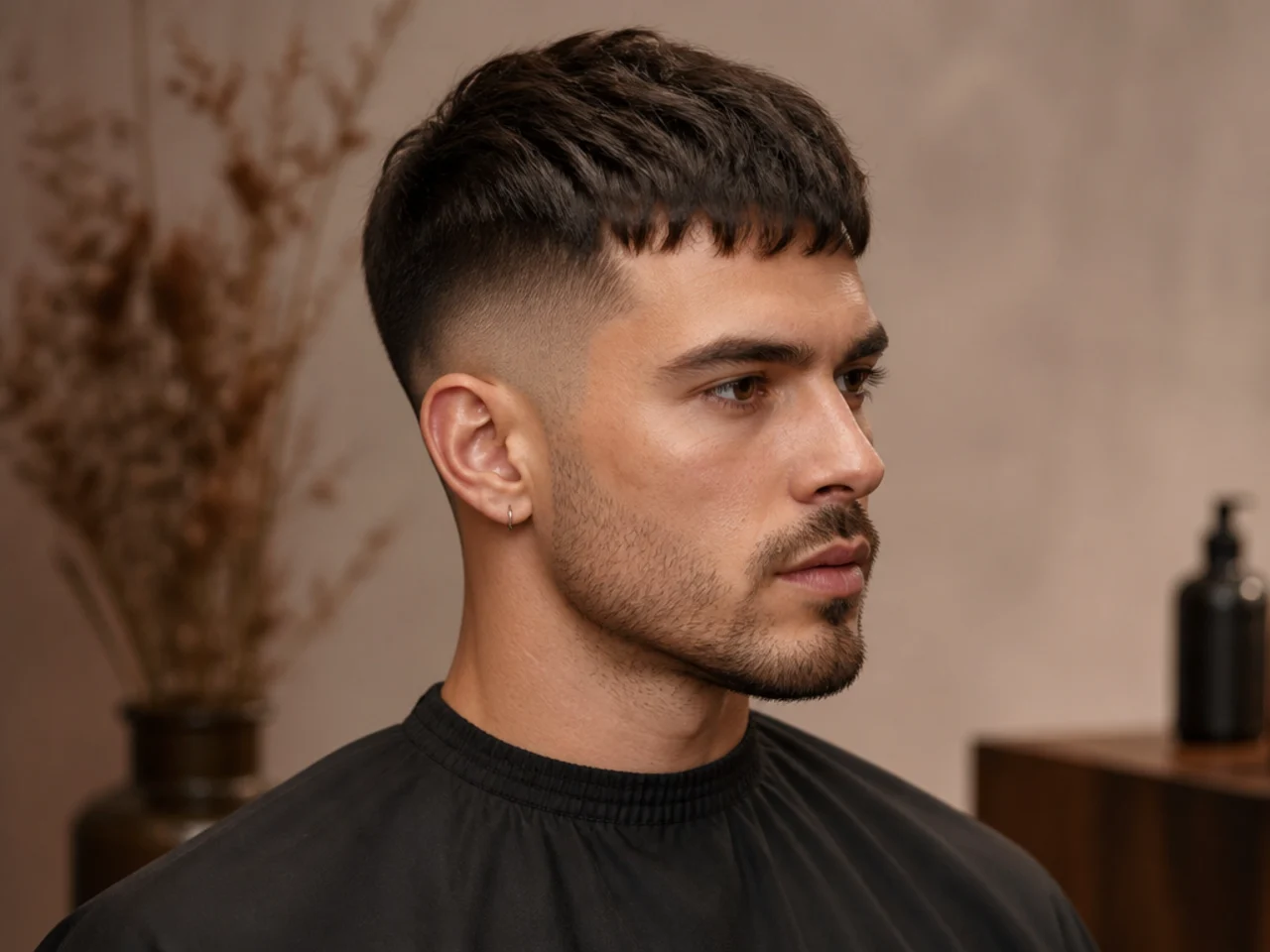
The French crop is the Caesar's dressier European cousin. One-and-a-half to two inches on top with a short, textured fringe falling forward across the brow, paired with a mid fade or a low taper at the sides.
Perfect if you have a receding hairline — the forward fringe covers the temples honestly. Works on straight, wavy, and lightly curly hair. Skip it if your hair is very thick or coarse.
Ask for: "French crop, blunt fringe just above the brow, mid fade at the sides, point-cut the top for texture." Matte paste worked forward with fingers, sixty seconds total.
8. Short Side Part
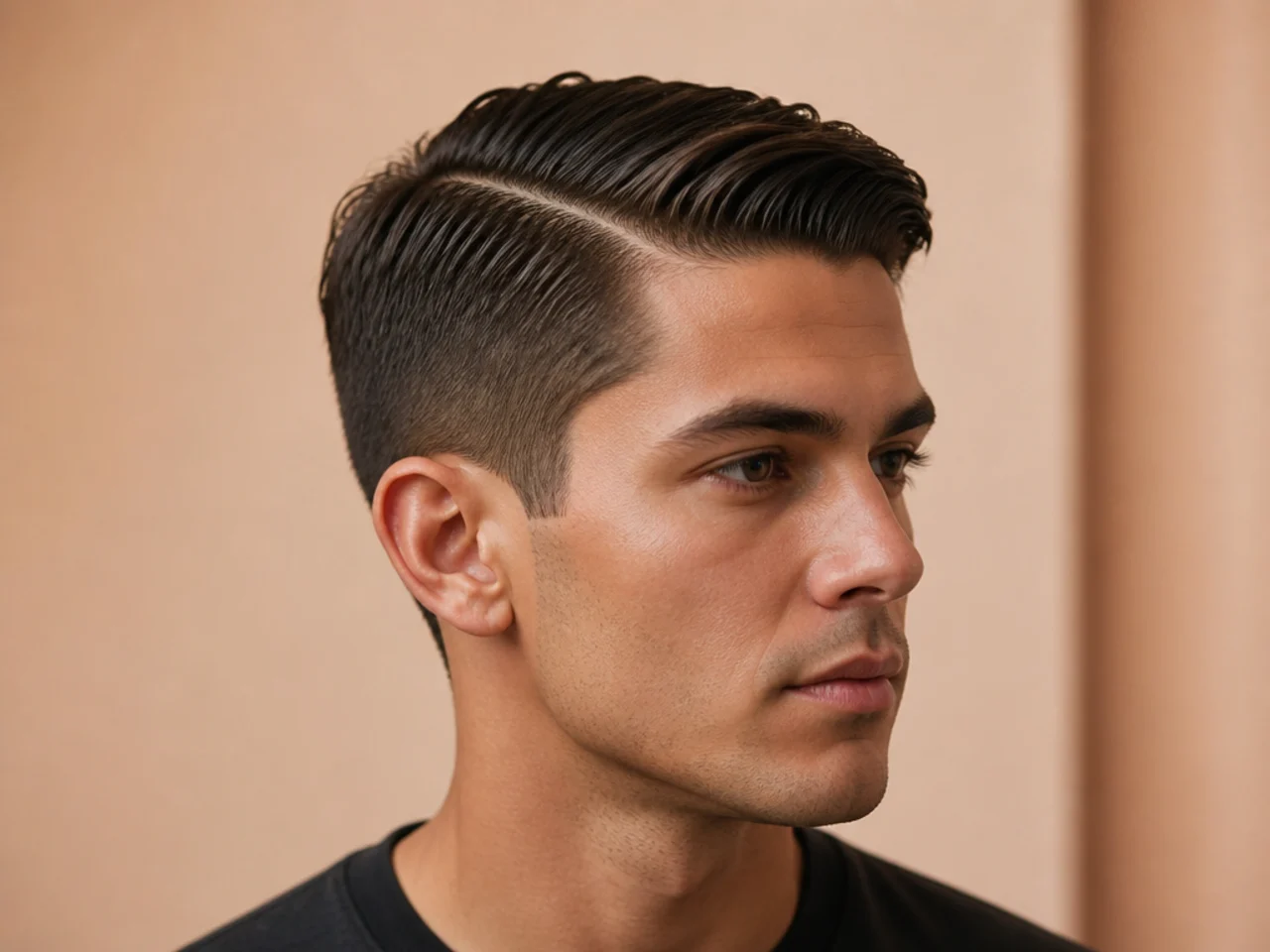
The side part in its shortest form. Two inches on top, parted along your natural fall line, sides tapered clean. Nothing about it should look fussed over — the part itself does the sharpening.
Suits every face shape and works especially well on square and oval faces. Best on straight to slightly wavy hair. The safest business-casual cut on this list.
Ask for: "Short side part, two inches on top, low taper at the sides, natural part line on the [left/right]." Light pomade combed to the part, one blow-dry pass in the shower.
9. Classic Comb Over
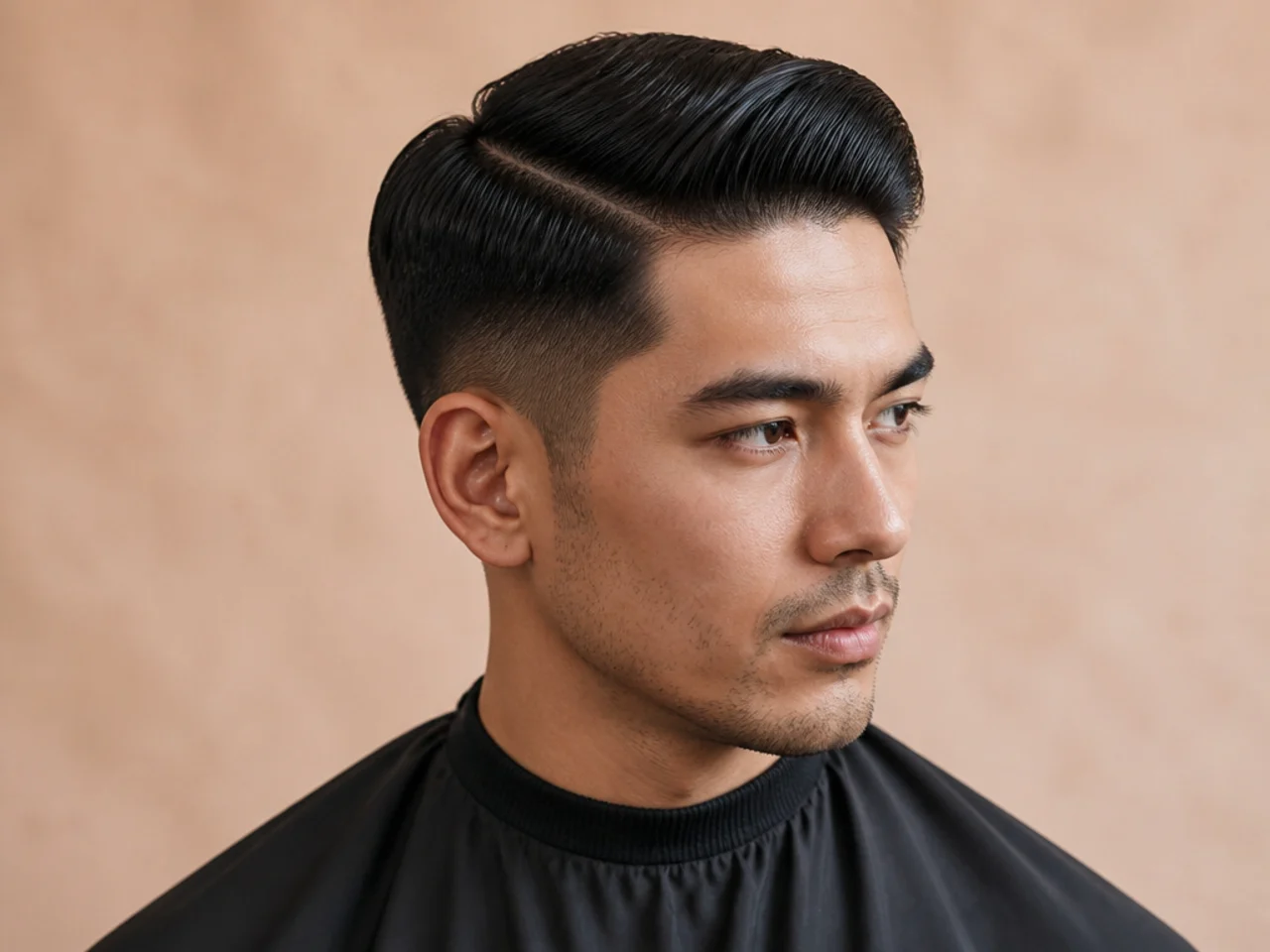
The classic comb over is the polished older brother of the side part. Two to three inches on top, brushed across from a defined part, with the sides tapered short. Reads formal without a suit.
Best on oval and square faces, and on straight-to-wavy hair with enough weight to lay flat. Skip it if your hair is very coarse — it will fight the sweep.
Ask for: "Classic comb over, three inches on top, part on the [left/right], low taper at the sides, blend the neckline." Medium-shine pomade combed across, blow-dried in the direction of the sweep.
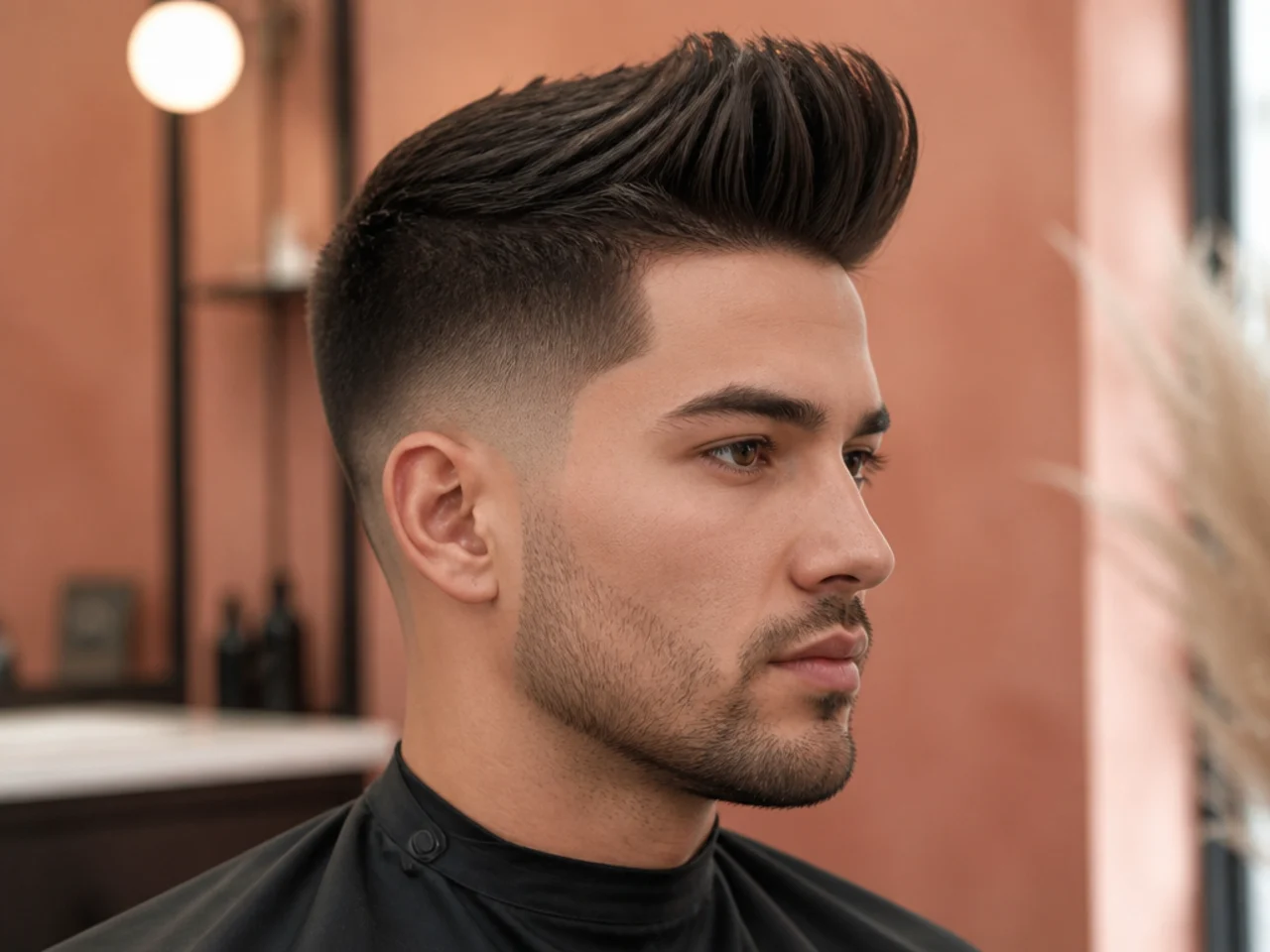
10. Short Pompadour
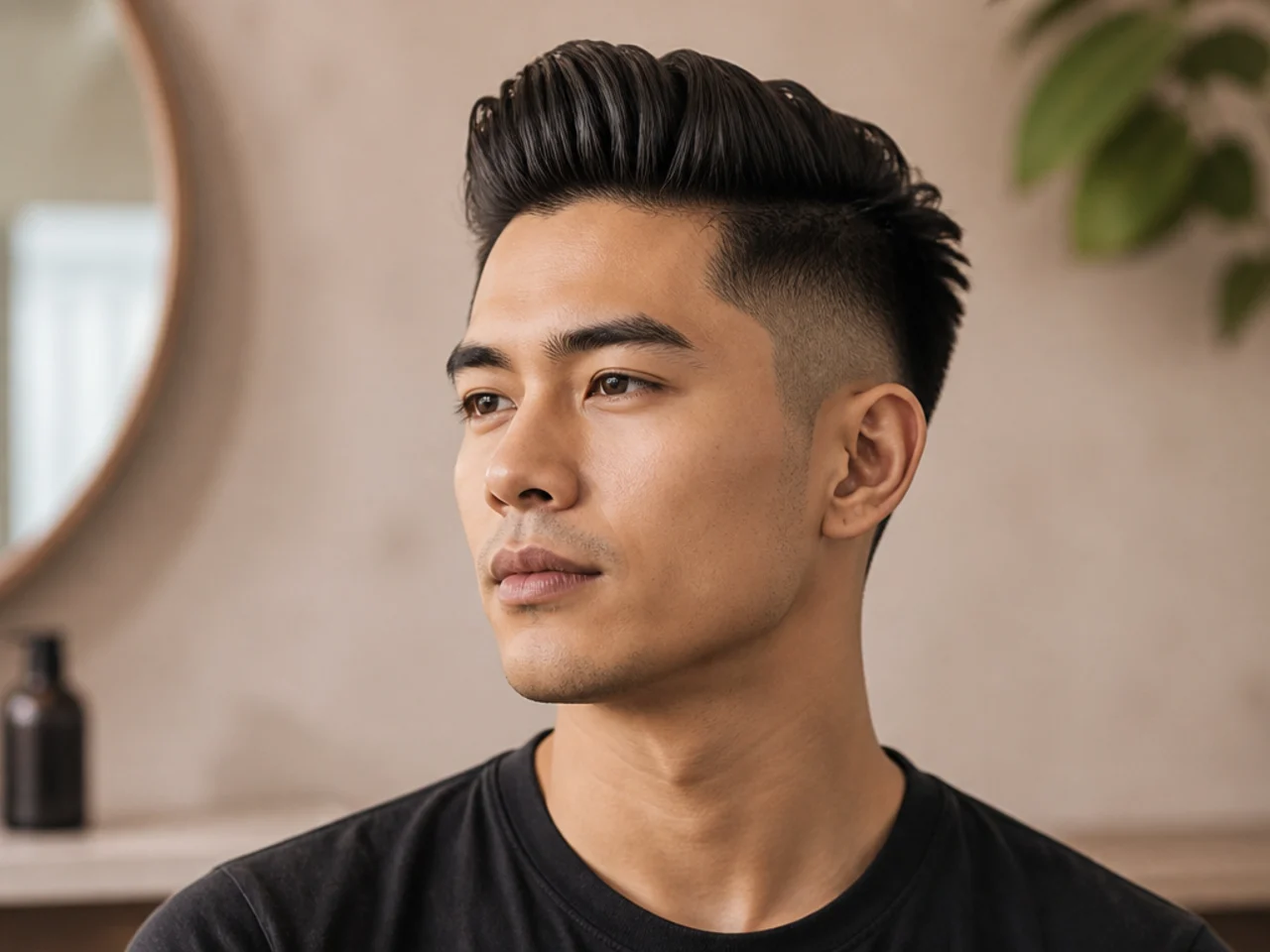
The pompadour dialed to its shortest workable length. Two to two-and-a-half inches on top with the front lifted straight up and slightly back, tapered short sides for contrast. Reads confident without going costume.
Best on oval, square, and round faces. Suits thick, straight-to-wavy hair — fine hair collapses under the front lift without a blow-dryer.
Ask for: "Short pompadour, two-and-a-half inches on top with the front longest for lift, low taper at the sides, square the neckline." Blow-dry the front up and back, medium-hold pomade combed through.
11. Classic Taper
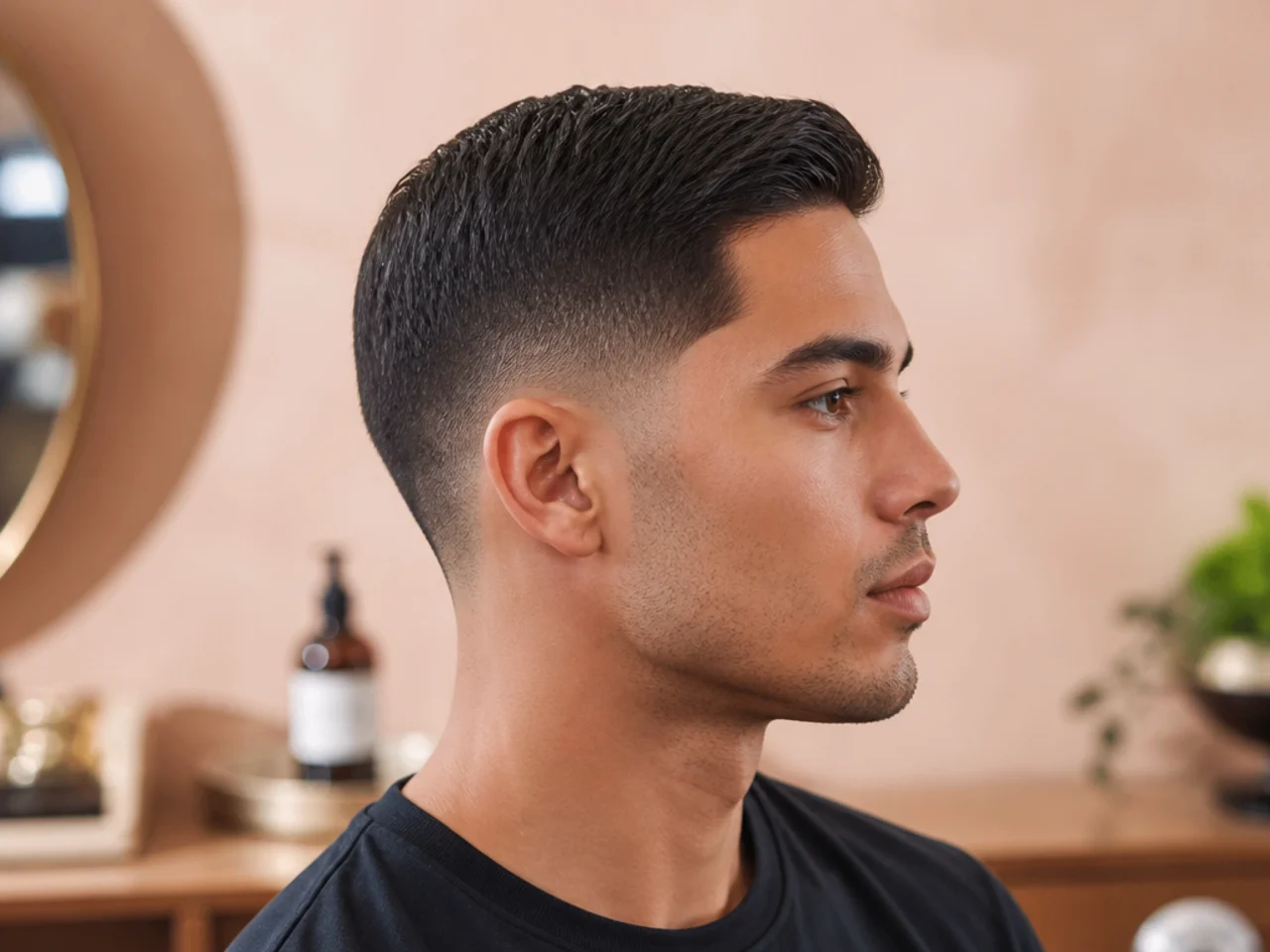
The taper haircut is the shape that makes almost every other cut on this list work. Two inches on top, sides gradually shortening from around a #3 at the top of the ear to a #1 at the neck — no dramatic contrast, no visible line. A quiet cut that reads intentional.
Suits every face shape and every hair type. The universal safety option when you want short but not aggressive.
Ask for: "Classic taper, keep the top at two inches, taper the sides from a guard three down to a guard one at the neckline." Light matte cream worked through and combed.
12. Short Quiff
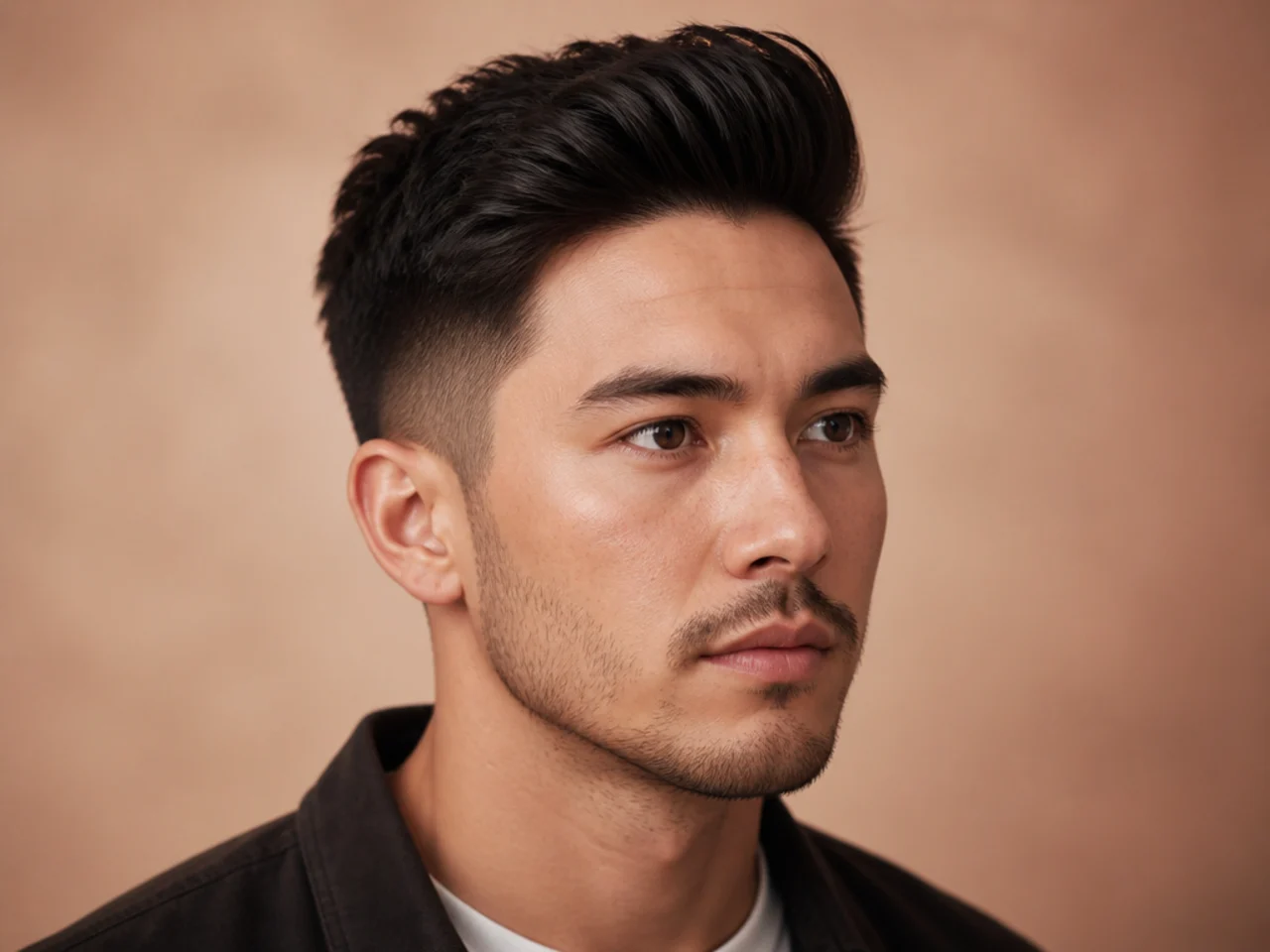
The quiff in its shortest form. Two inches on top with the front lifted slightly up and forward, point-cut for texture, tapered short sides. Reads modern without being trendy.
Suits oval, round, and heart-shaped faces because the front lift adds vertical length. Best on straight to wavy hair with body.
Ask for: "Short quiff, two inches on top with the front longest, point-cut for texture, low fade at the sides." Blow-dry the front up and back, matte paste tousled through with fingers.
13. Regulation Cut
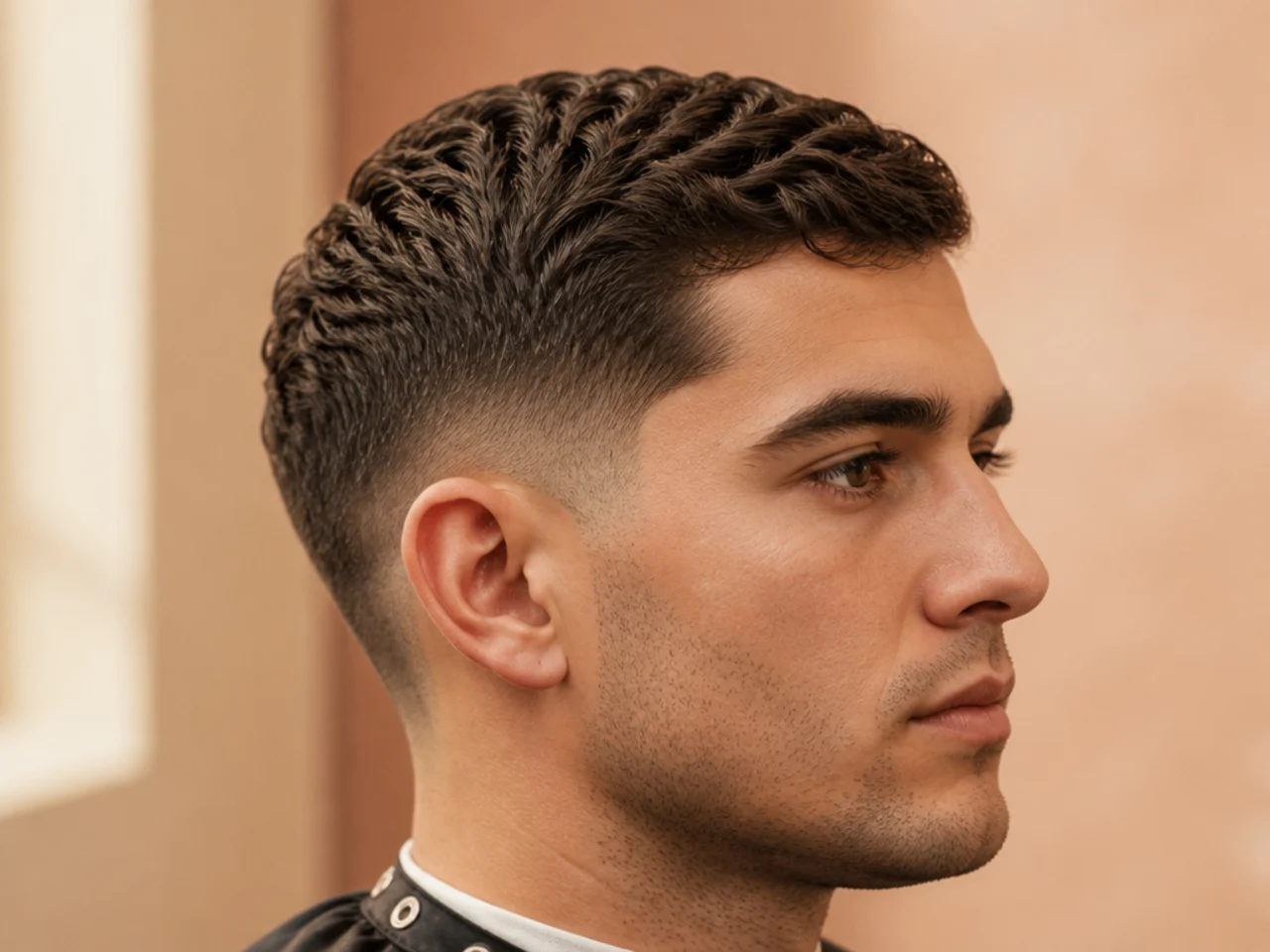
The military regulation cut — an inch on top, sides tapered from a #2 down to a #0.5 at the bottom, hard neckline, hard hairline. Nothing decorative, nothing wasted. This is the cut that predates the trend cycle by a century.
Suits every face shape. Ideal for guys in uniformed roles, but reads well in any professional setting that respects a clean silhouette.
Ask for: "Regulation cut, one inch on top, taper the sides from a guard two down to a half-guard, hard neckline, hard hairline." Zero styling — towel-dry and go.
14. Executive Contour
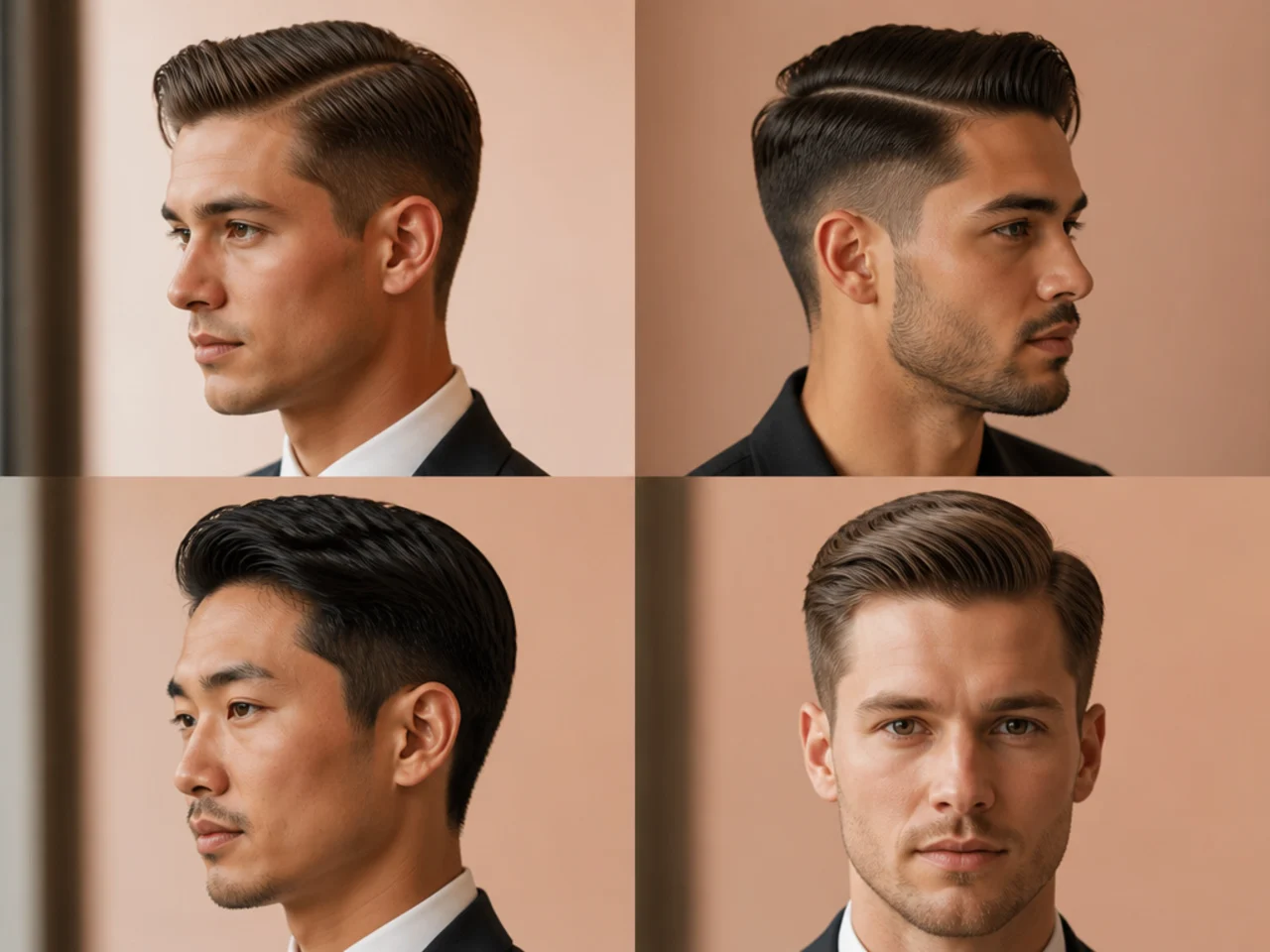
The executive contour is the barbershop name for the boardroom cut. Two to three inches on top, swept back off the forehead, sides scissor-tapered to sit flat against the head. The silhouette reads authority.
Suits oval, square, and long faces. Best on straight-to-wavy hair with enough length to hold the sweep. The dressiest classic on this list — see the professional hairstyles for men roundup for related shapes.
Ask for: "Executive contour, three inches on top swept back off the forehead, scissor-tapered sides, blend the neckline." Blow-dry back with a round brush, medium-shine pomade combed through.
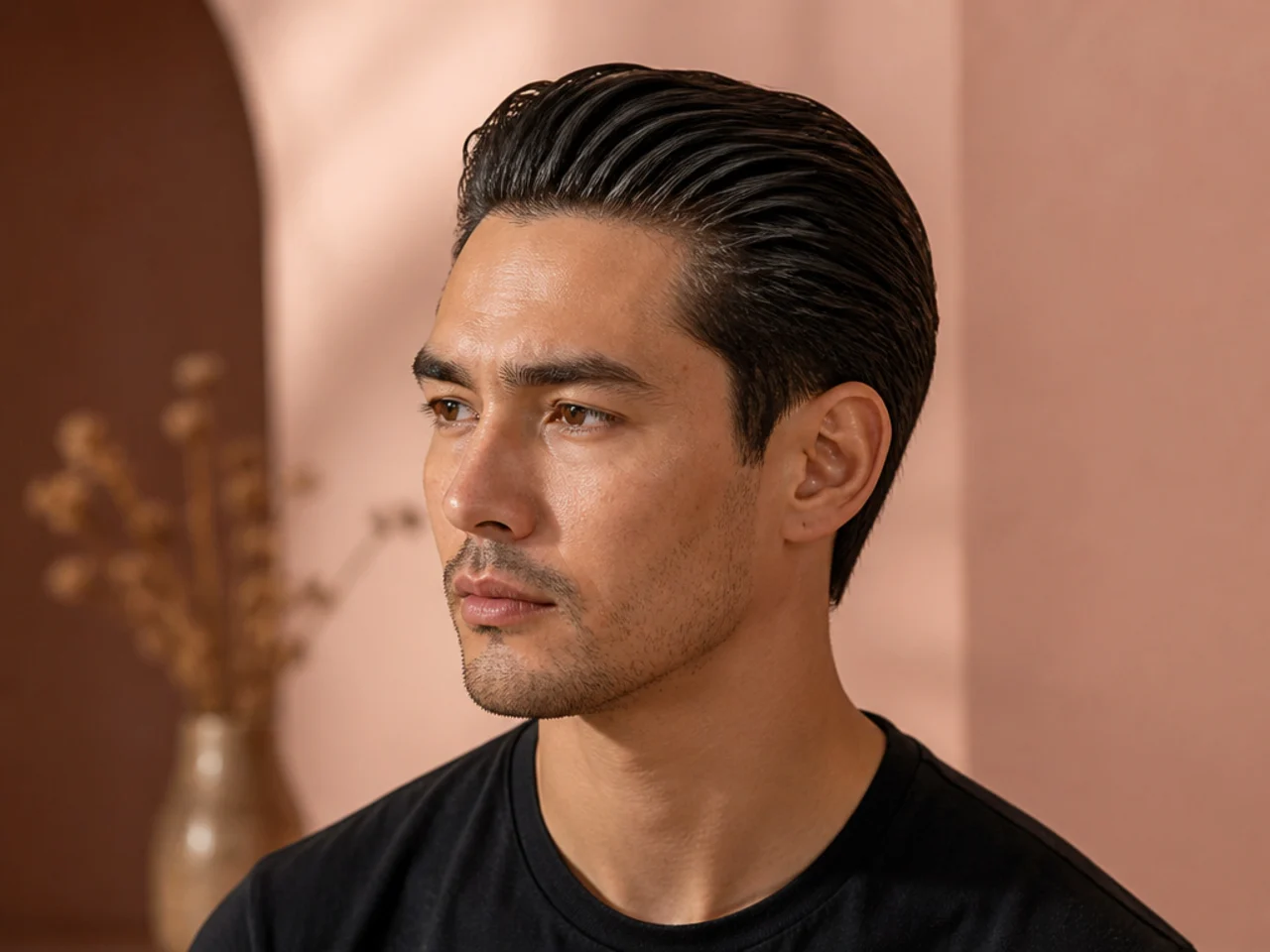
15. Short Slick Back
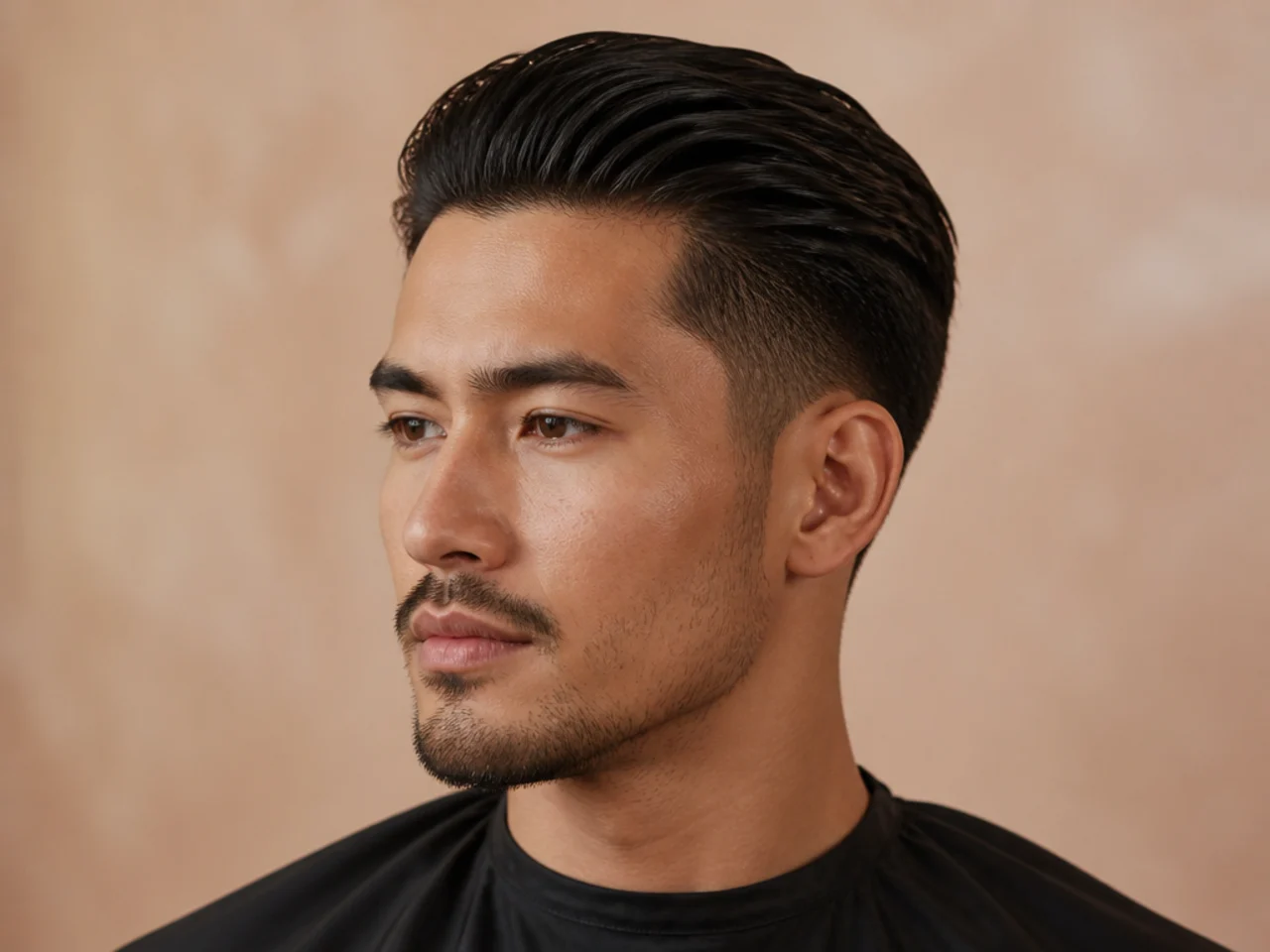
The slick back at its shortest workable length. Two-and-a-half inches on top brushed flat and back, low taper at the sides, high shine finish. Reads formal, reads Prohibition, reads timeless.
Best on oval, square, and rectangular faces. Suits straight-to-wavy hair with weight — thin hair collapses under a slick back and reads sparse.
Ask for: "Short slick back, two-and-a-half inches on top with the front longest, low taper at the sides." Blow-dry back with fingers, high-shine pomade combed through, finish with a spritz of light-hold spray.
16. Businessman Cut
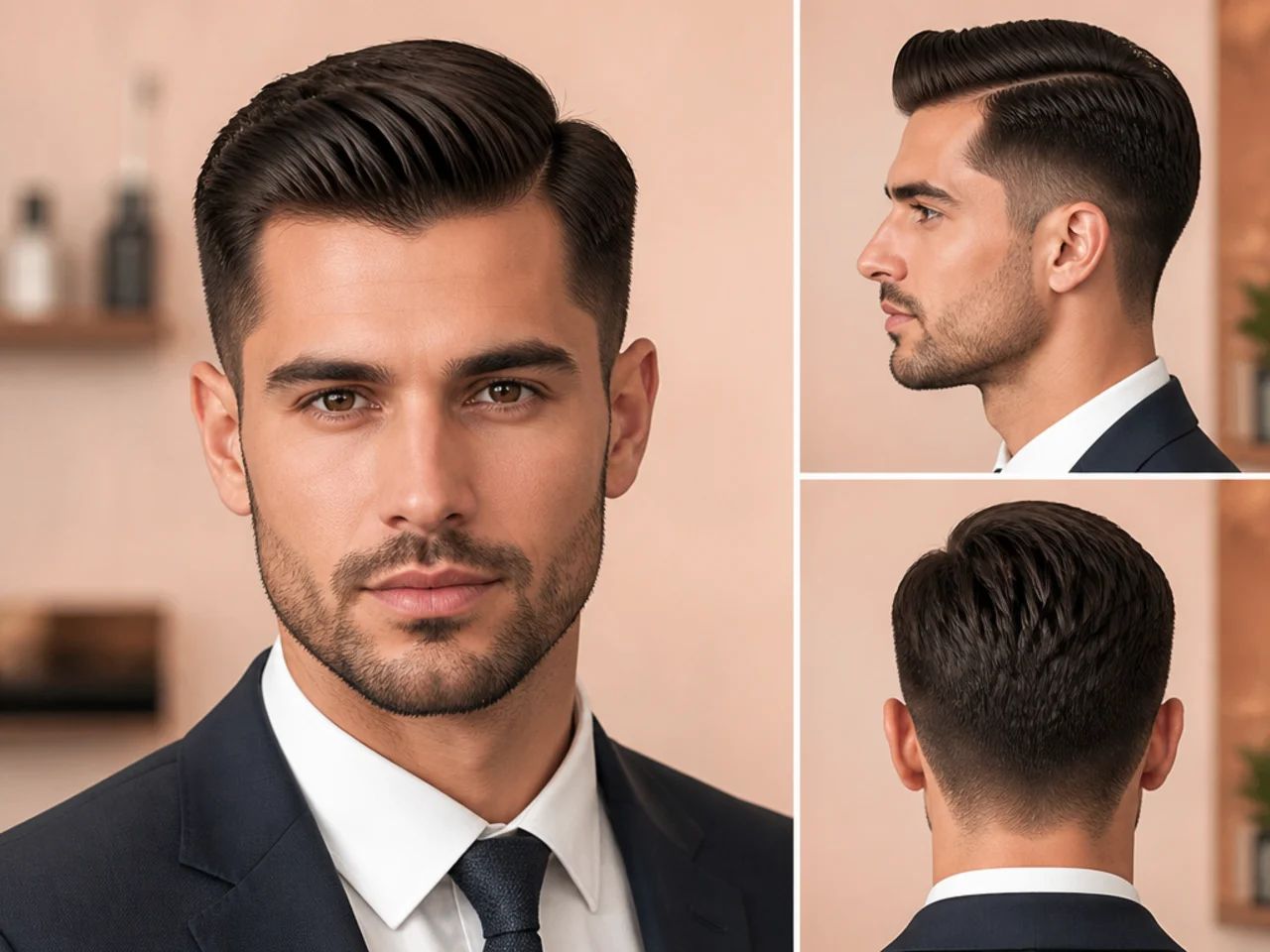
The businessman cut is the corporate default. One-and-a-half inches on top with a clean side part, scissor-tapered sides that never touch skin. It is what every generic office HR photo showed until about 2015 — and it still works. Related to the classic side part men hairstyles family and the business hairstyles men roundup.
Suits every face shape. Ideal for traditional offices, banking, law, and any environment where "safe" is the compliment you want.
Ask for: "Businessman cut, inch and a half on top with a clean side part, scissor-tapered sides — nothing shorter than a guard two above the temple." Light pomade combed to the part.
17. Regular Boy's Cut
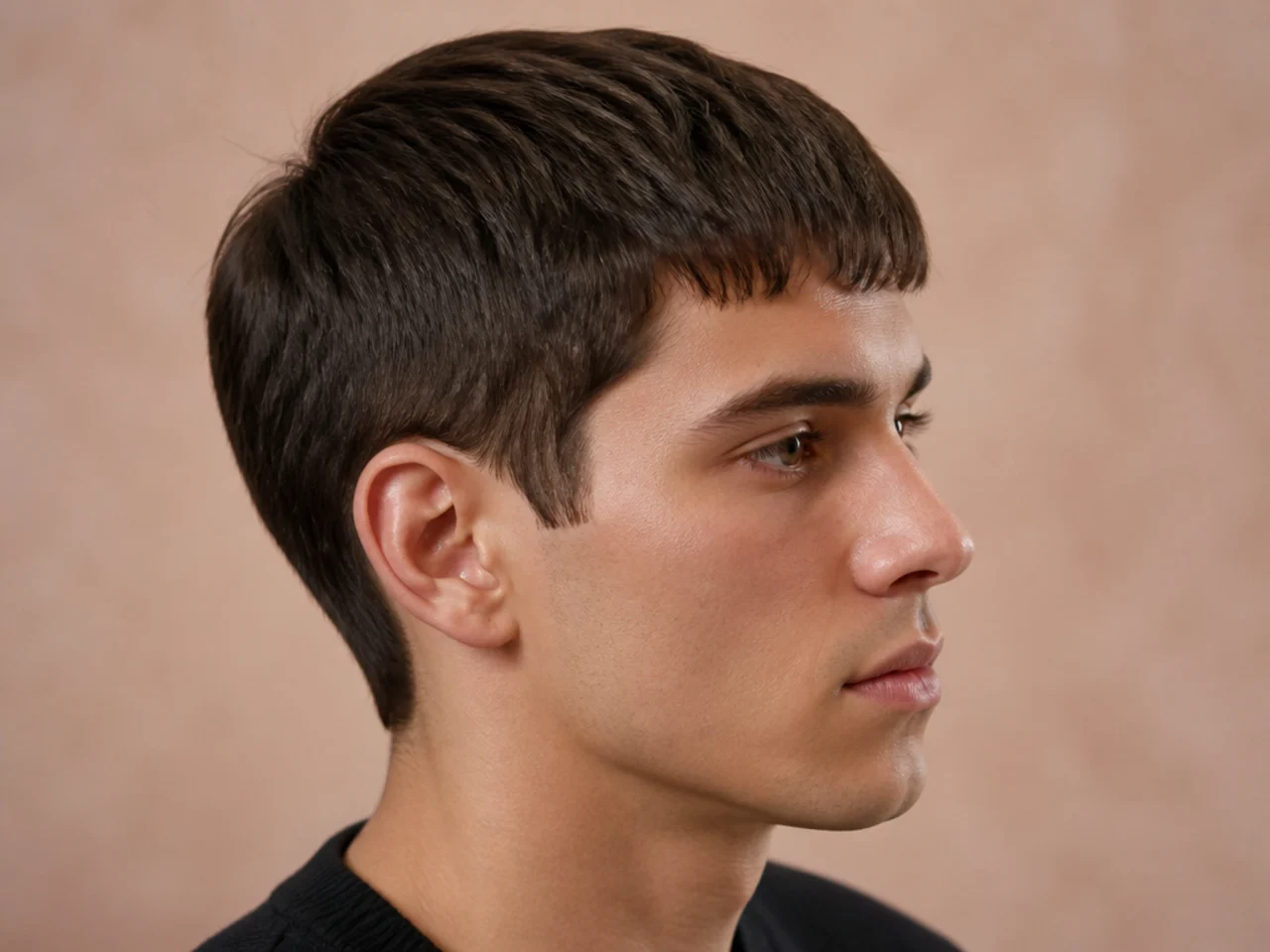
The regular cut is what every barber cuts when no one asks for anything specific. Two to three inches on top with the front slightly longer, low fade or low taper at the sides, neckline squared or blended. The safest first haircut at a new barber — hard to mess up, easy to describe.
Suits every face shape and every hair type. The universal starting point.
Ask for: "Regular cut, two-and-a-half inches on top with the front longer, low taper at the sides, square the neckline." Point-cutting on top for softness, matte cream worked through.
18. Prep School Part
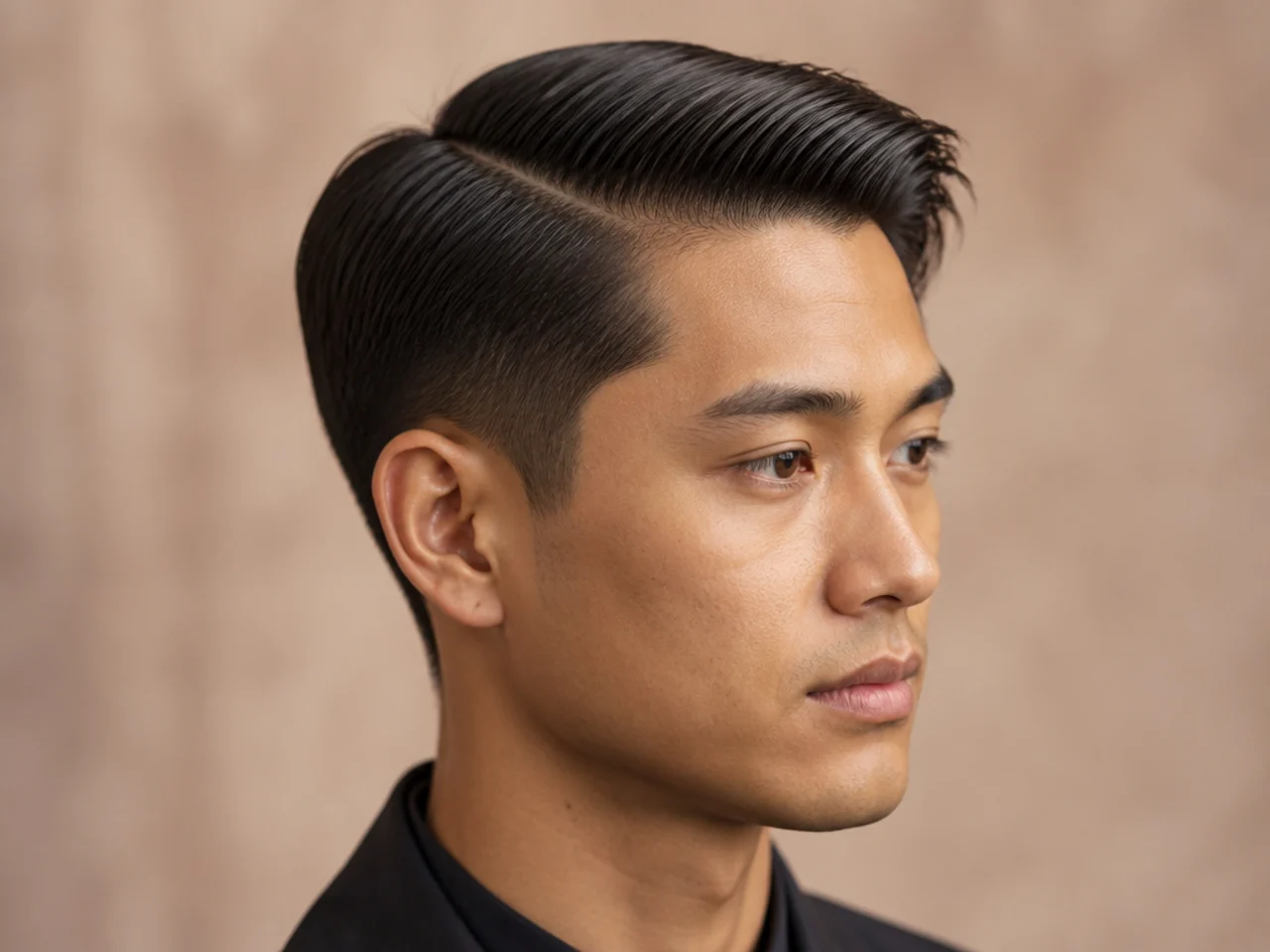
The prep school part is the crisper younger cousin of the businessman cut. Two inches on top with a hard-defined part line — combed in, not razored — and scissor-tapered sides. Reads collegiate without being costume.
Best on younger guys sixteen to thirty. Suits oval and square faces. Best on straight to slightly wavy hair.
Ask for: "Prep school part, two inches on top with a hard-defined natural part line on the [left/right], scissor-tapered sides." Light pomade combed cleanly to the part.
19. Short Textured Crop
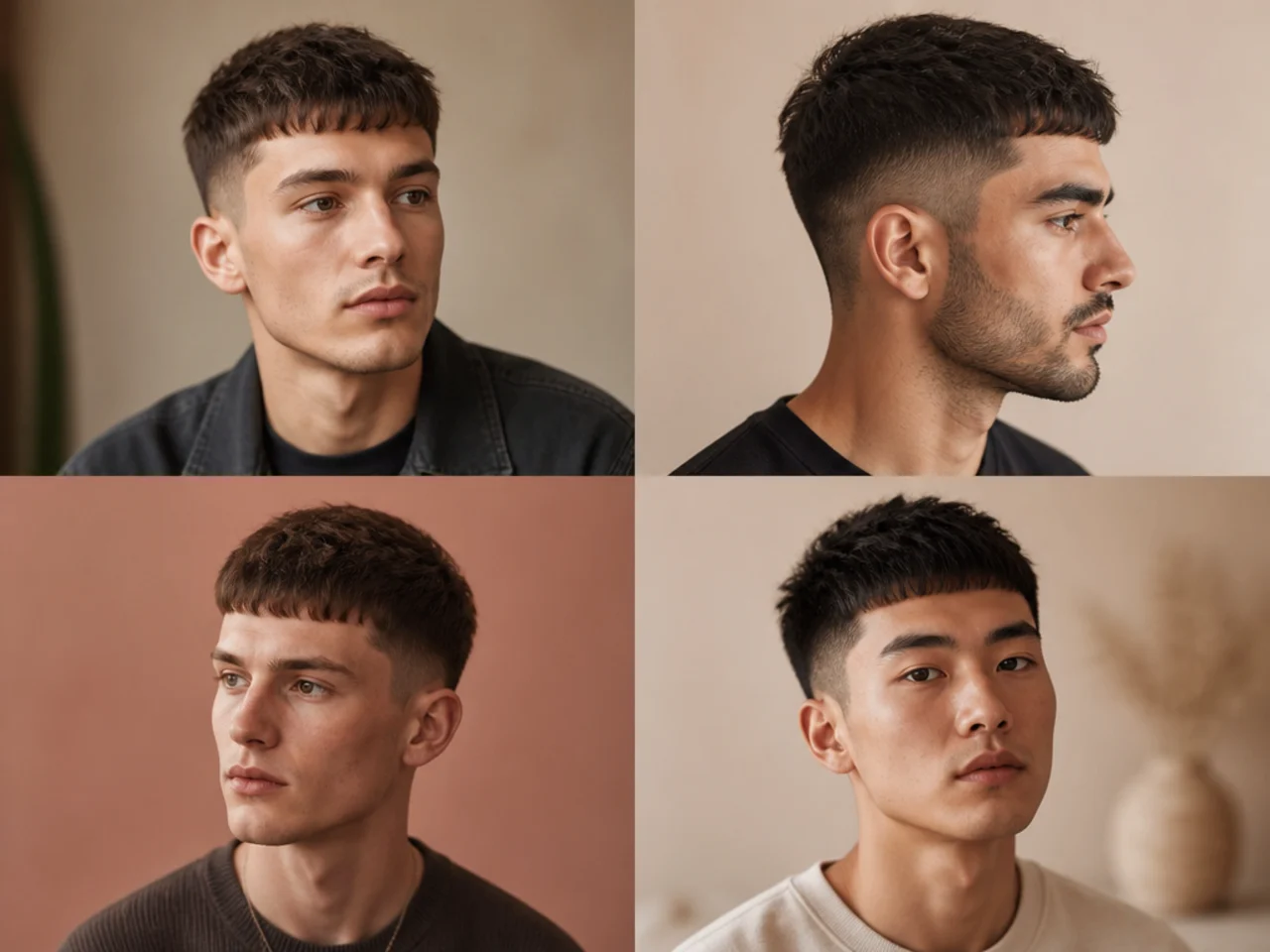
The short textured crop is the crop for guys who want texture without a fringe. One-and-a-half inches on top with aggressive point-cutting for movement, sides tapered short. Reads modern-classic — a shape that has held up for the last two decades. Sits inside the broader textured haircuts for men family.
Suits every face shape and every hair type. Best on straight to wavy hair, but works with a slightly longer version on curly hair.
Ask for: "Short textured crop, one-and-a-half inches on top with heavy point-cutting, low taper fade at the sides." Matte clay through damp hair, tousled with fingers.
20. Short Brush Up
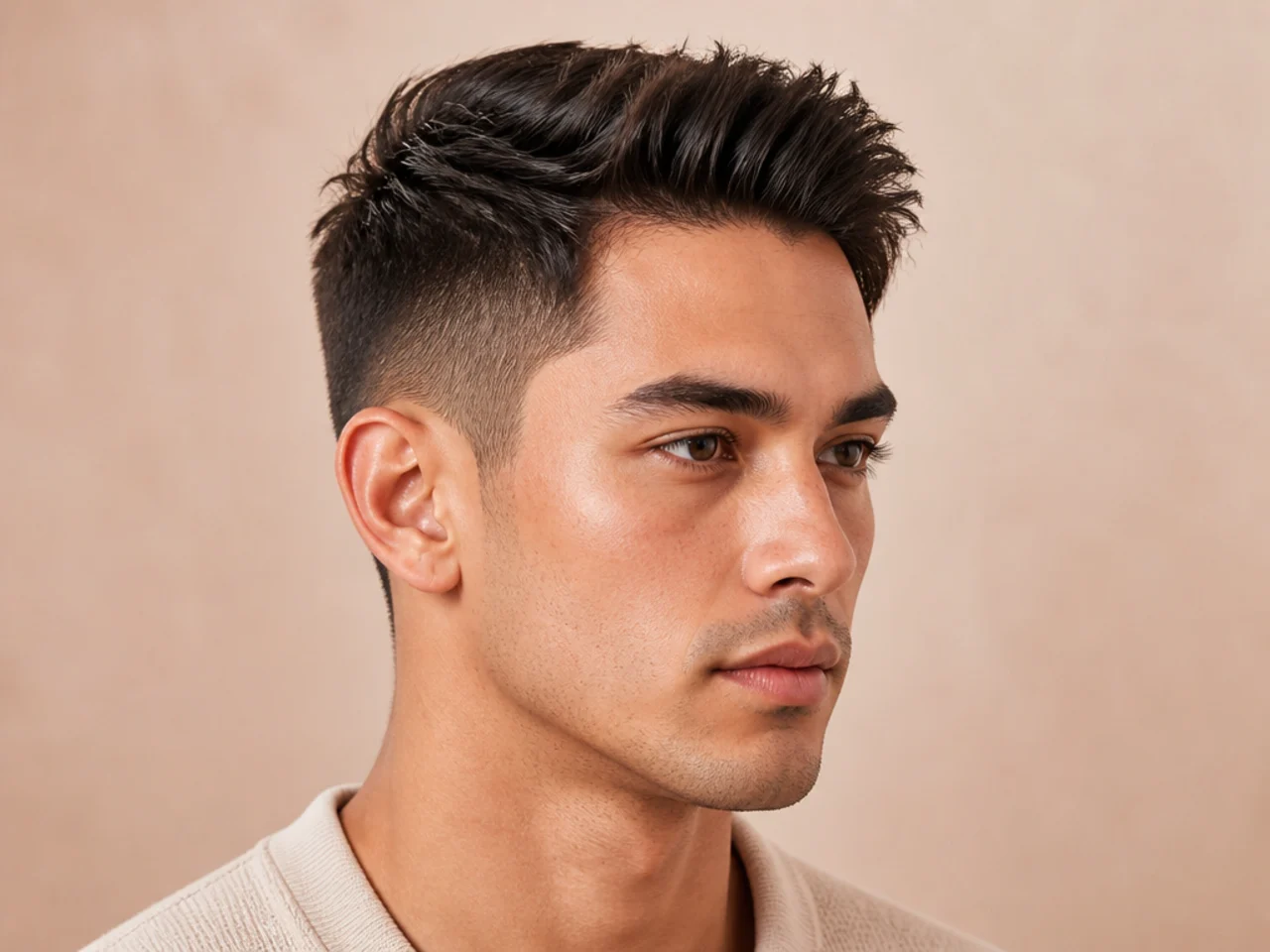
The brush up keeps two inches on top brushed straight up and slightly forward, with a low fade at the sides. Reads energetic and lifts the whole face upward. Related to but shorter than the quiff.
Suits round and heart-shaped faces because the vertical lift adds length. Best on straight-to-wavy hair with natural body — fine hair collapses without a blow-dryer.
Ask for: "Short brush up, two inches on top with the front longest, low fade at the sides, square the neckline." Blow-dry the roots up with cold air, matte clay pinched vertical with fingertips.
How to Ask Your Barber
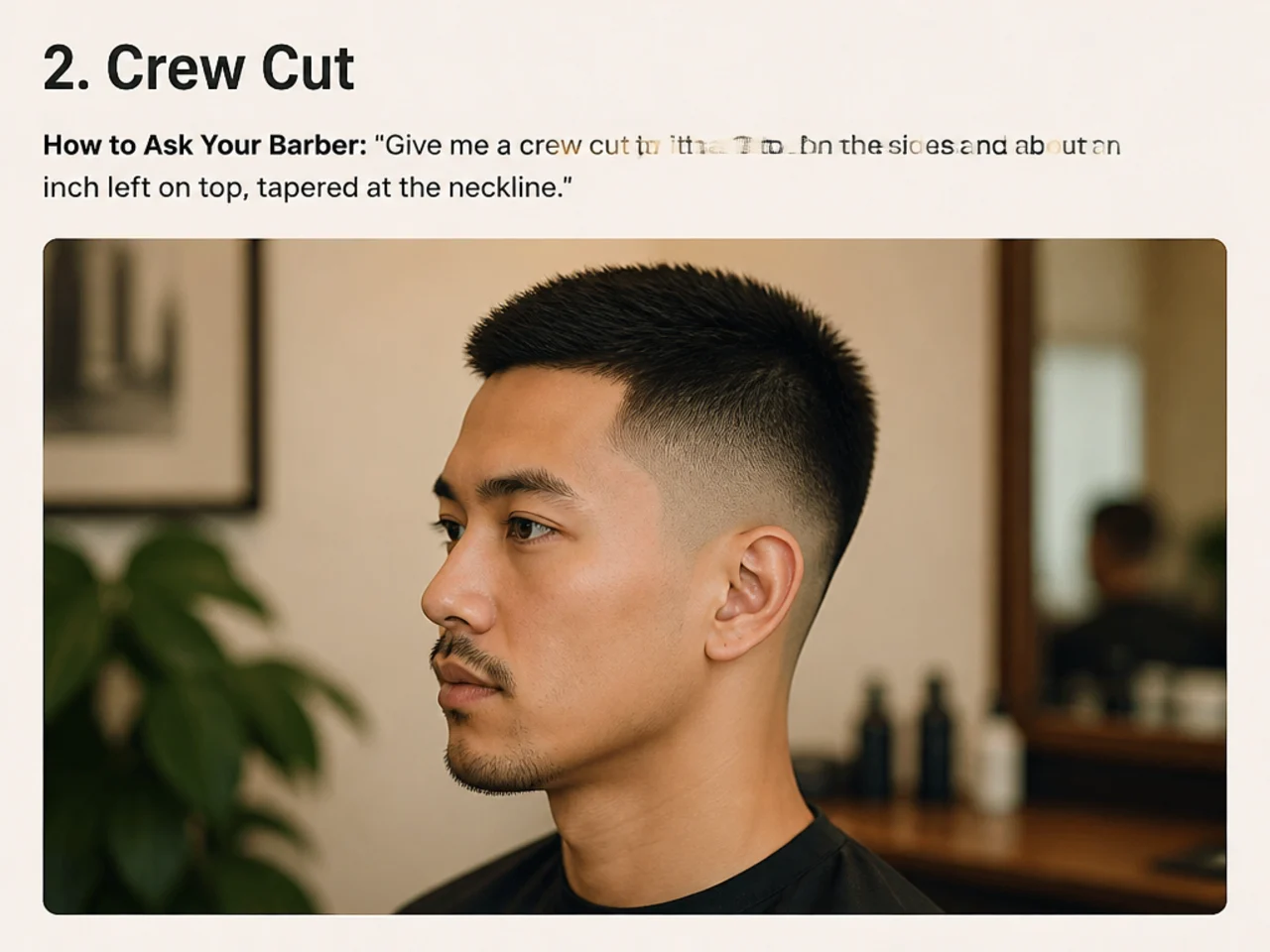
Every barber cuts a slightly different "classic short" — the language below pins down which of the twenty you want.
- Name the cut, not the vibe. Say "Ivy League" or "crew cut" or "French crop" — not "something classic and clean." The named cut lives in every barber's mental catalog.
- Set the top length in inches, never in guard numbers. Top length is scissor work. One inch reads Caesar or crew. Two inches reads side part, comb over, or quiff. Three inches reads executive contour or short pompadour.
- Set the side treatment. Scissor taper for the dressiest classics (Ivy League, businessman, executive contour). Low taper for standard classics (crew cut, side part, French crop). Skin fade for the shortest variations (buzz, high and tight, butch).
- Choose your part. Left, right, or center. Choose the side your hair naturally falls to, not the side you wish it fell to. A part fought all week reads worse than an honest one.
- Pick the neckline. Squared reads sharper. Rounded reads softer. Blended reads modern. Squared is the safest default for classic short cuts.
- Confirm the finish. Matte for textured cuts (crew, French crop, textured crop, brush up). Medium-shine for polished cuts (side part, comb over, Ivy League). High-shine for slick backs and pompadours.
- Show a photo before the scissors move. Even after all six steps above, a reference photo prevents most disappointments. Bring one taken from the front and one from the side.
Styling and Maintenance
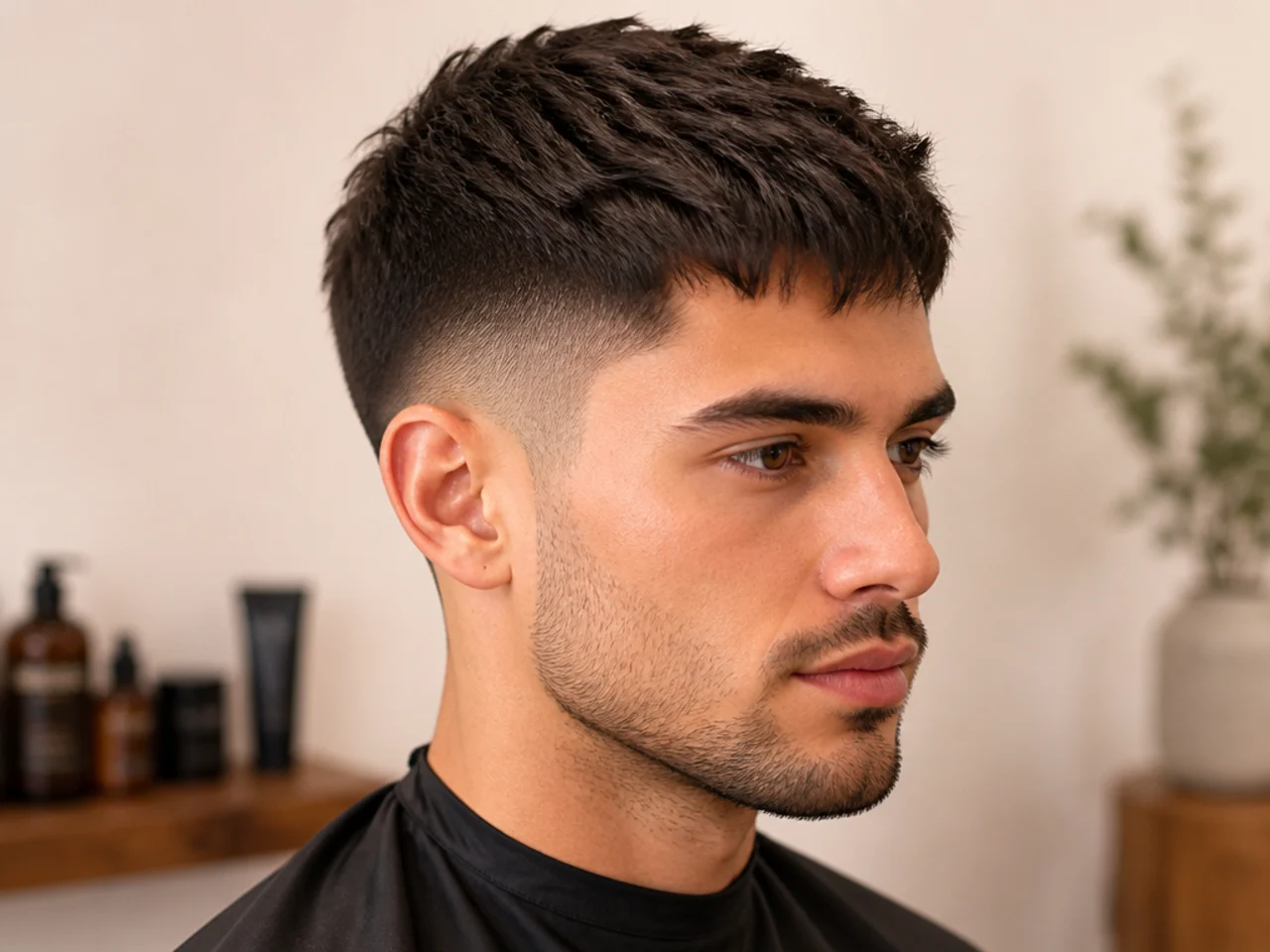
Match the product to the finish, not the cut. Matte clay does everything textured — crew, French crop, Caesar, brush up, textured crop. Medium-shine pomade does everything polished — side part, comb over, Ivy League, businessman, prep school part. High-shine pomade does the slick back and short pompadour. Nothing at all does the buzz, butch, and high and tight. Three products cover every classic on this list, and most guys only need one at a time.
Wash and towel-dry so the hair is damp — not soaking, not dry. Damp hair grips product; dry hair pushes it to the surface where it fails by lunch. Warm a pea to nickel-sized dab between the palms, work it through with fingertips first, then finish with a fine-tooth comb for the parts and a blow-dryer for the lifts. Skip the gel — gel stiffens the shape into a helmet and reads dated on every cut in this guide.
Rebook every three to four weeks for the shortest cuts (buzz, butch, high and tight, crew, Caesar) and every four to six weeks for the medium classics (Ivy League, side part, comb over, quiff, pompadour, executive contour). The moment the shape softens is the moment to book — waiting past that just doubles the cutting time and hides the geometry that makes each cut work.
Between visits, keep the neckline honest. Run a beard trimmer at a #1 around the nape and behind the ears yourself to buy an extra week of clean edges — that ten-second habit stretches a haircut's life more than any styling product ever will. Wash three to four times a week with a mild shampoo, condition every wash, and let your scalp keep the natural oils that give short hair its grip and shape. For a broader list of related short options, browse the mens haircuts short hub, the cool mens haircuts short roundup, or the pillar guide on the classic mens haircut.
FAQ
What counts as a classic short haircut for men?
A short cut with at least fifty years in the barber's playbook — buzz, crew, Ivy League, Caesar, French crop, side part, comb over, high and tight, and their close cousins. The shape does the work, not the styling. Every cut on this list was already in the playbook when your father sat in the chair, and they will still be there when your grandchildren sit in it. For the broader tradition, see our guide on classic side part men hairstyles and the mens haircuts hub.
How short is a classic short haircut?
Anywhere from a shaved #0 to about two inches on top. Sides run shorter than the top — usually a #1 to #3 clipper guard, or a scissor taper on the dressier variations. Longer than two inches shifts into medium territory and out of the "short" definition. The buzz, butch, and high and tight sit at the shortest end. The Ivy League, comb over, and short pompadour sit at the longer end of the range.
Which classic short cut suits my face shape best?
Oval faces work with almost any variation. Round faces gain from vertical lift — a short quiff, brush up, or short pompadour adds height that lengthens the visual read of the face. Square jaws suit softer classics like the Ivy League or side part. Long or narrow faces benefit from a Caesar, French crop, or crew cut that adds width across the forehead. For a deeper breakdown, our haircuts for square faces guide covers the shape logic in detail.
How often should I re-cut a classic short haircut?
Every three to four weeks for buzz, crew, high and tight, and Caesar — the shortest cuts lose their shape fastest. Every four to six weeks for Ivy League, side part, comb over, and short pompadour — the medium-length classics grow out with more grace. Faded sides need touch-ups every two to three weeks to stay crisp. If you cannot commit to that schedule, ask for a taper instead of a fade — a taper softens as it grows and reads clean for an extra couple of weeks.
What product should I use for a classic short haircut?
Match the product to the finish. Matte clay for textured cuts like the crew, French crop, Caesar, and short brush up. Medium-shine pomade for polished cuts like the side part, comb over, Ivy League, and businessman. High-shine pomade for the short slick back and short pompadour. Nothing at all for the buzz, butch, and high and tight. One tin or tube on the shelf is enough for every cut in this guide — you do not need a product library to wear a classic haircut.
Do classic short haircuts work at the office?
They were built for it. The Ivy League, side part, comb over, businessman cut, and executive contour are the safest office cuts on any list — most corporate dress codes were written around them. A clean squared neckline and a trimmed beard finish the look. If you want to see how they scale to more formal settings, browse the professional hairstyles for men roundup and the business hairstyles men guide.