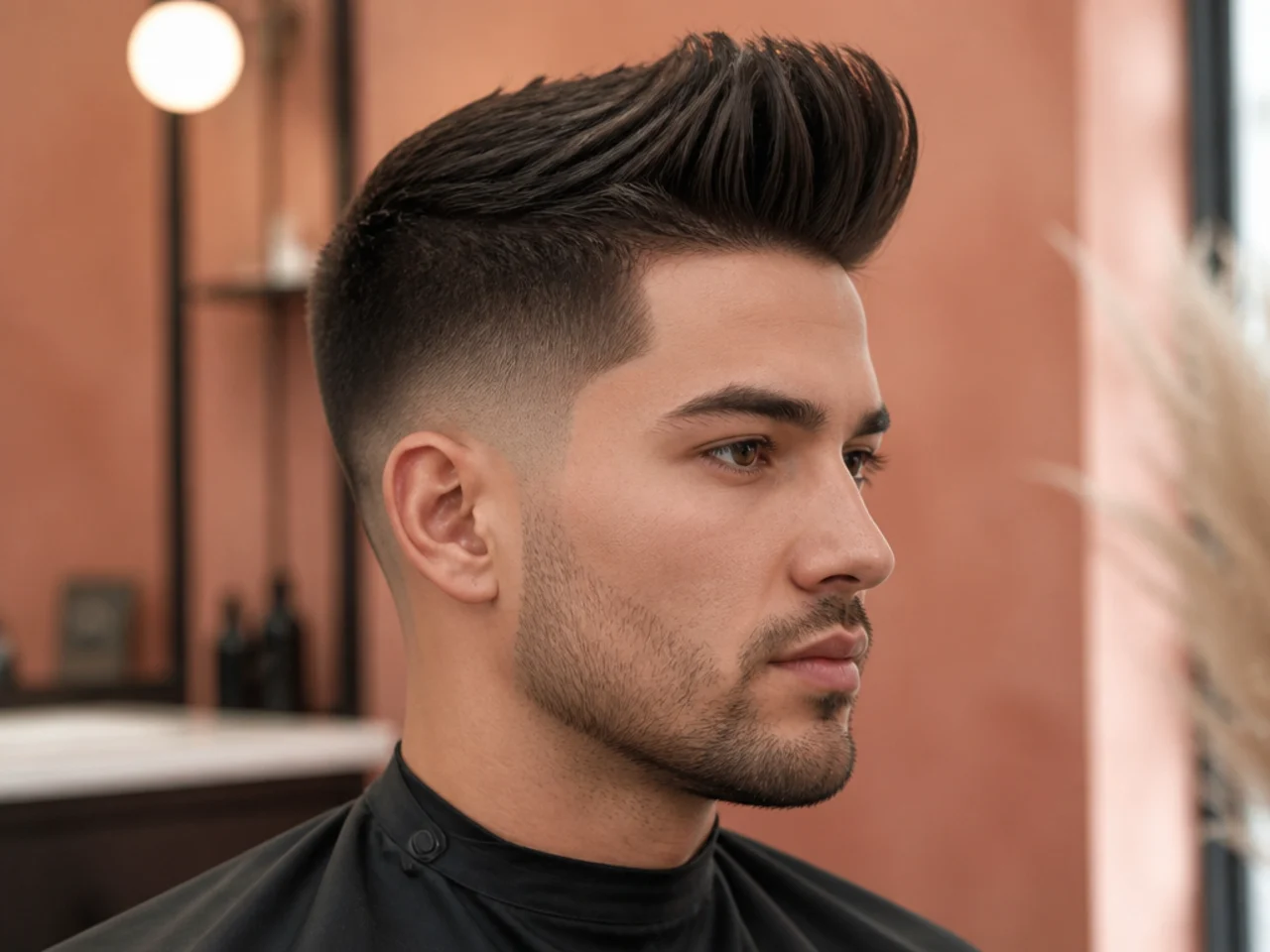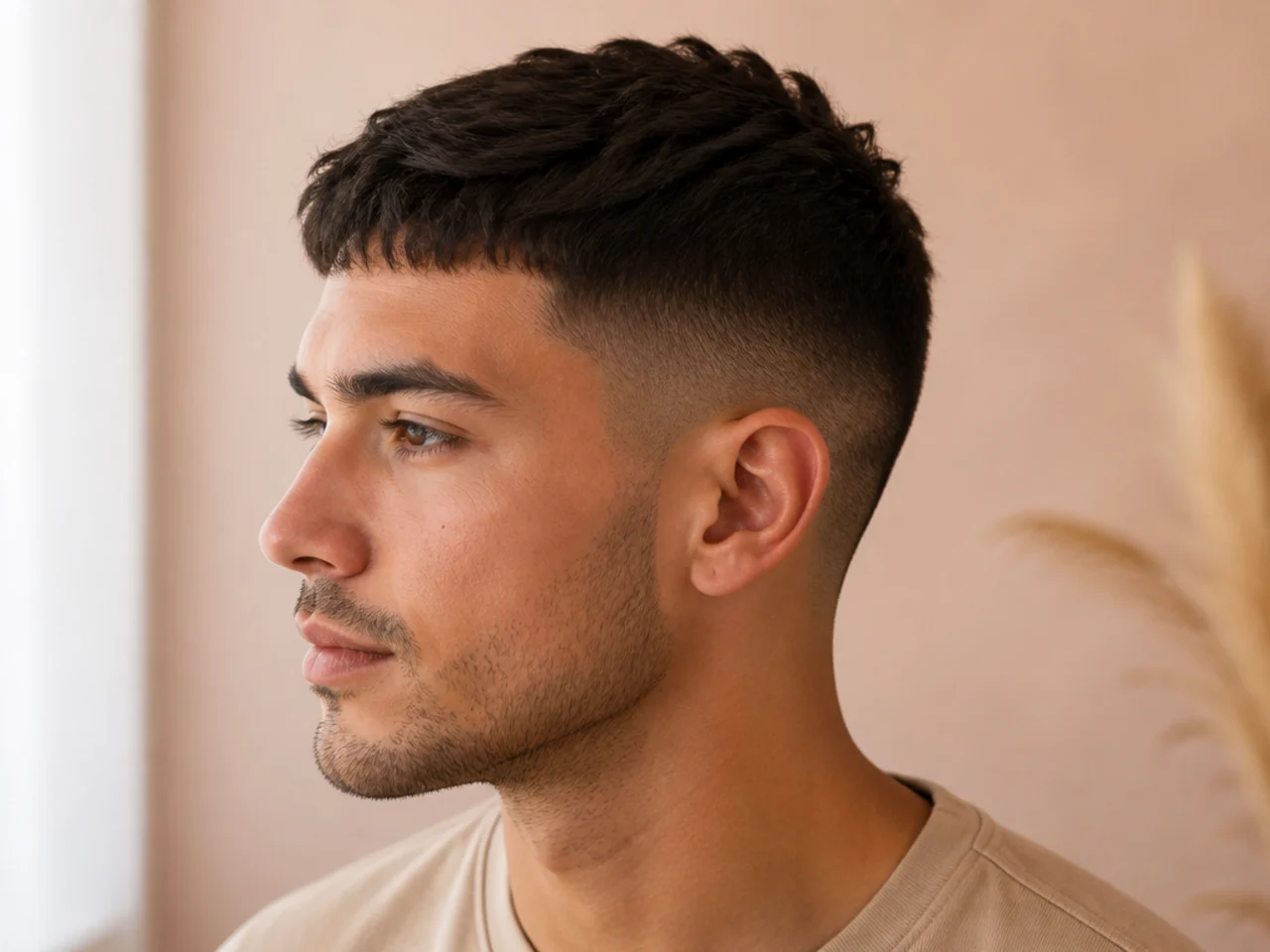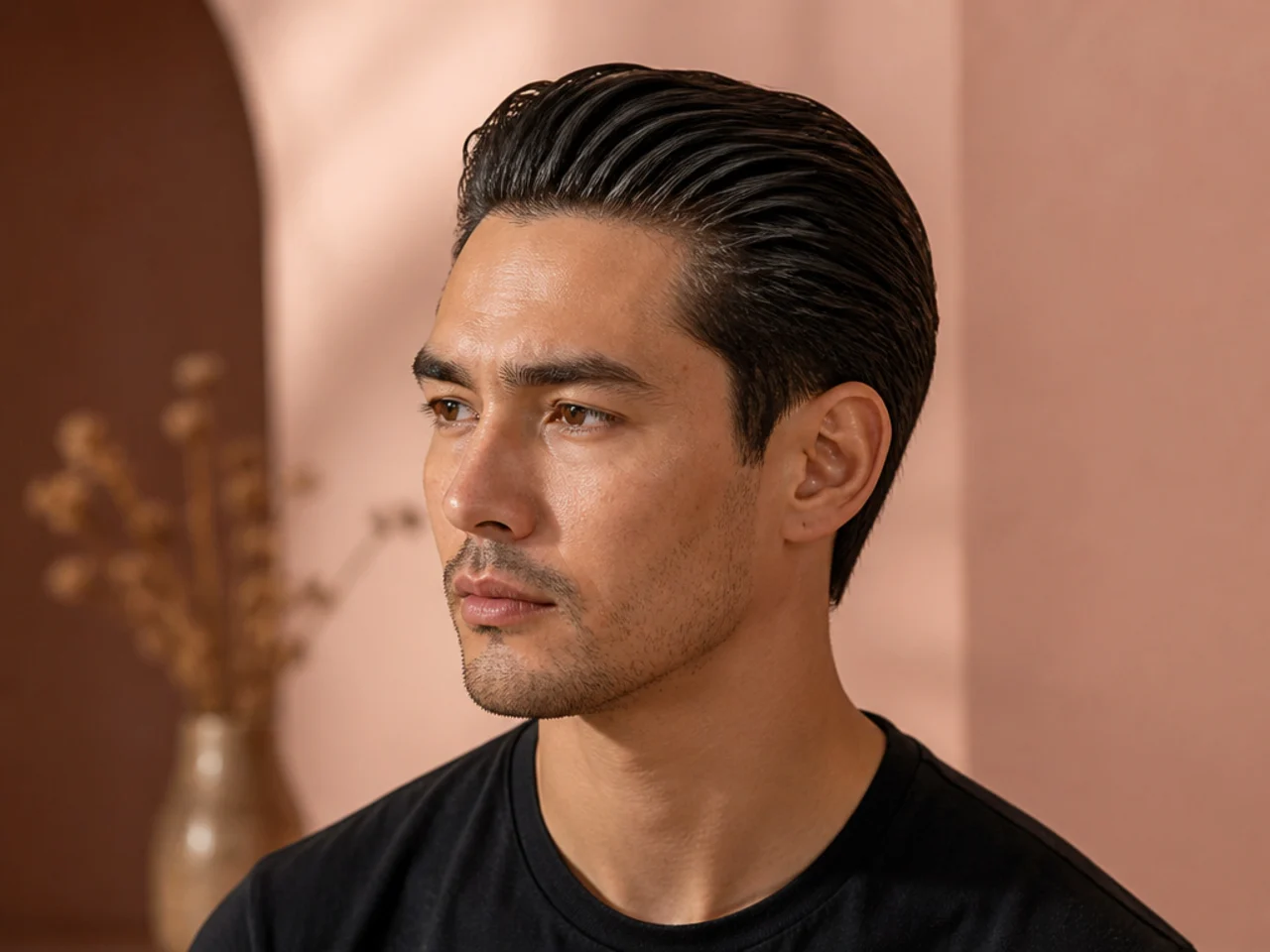
5 Reasons the Classic Slick Back Never Dies
The classic slick back timeless silhouette has anchored menswear for a century — five stylist-backed reasons the shape survives every trend cycle.
In this article · 12
- The One-Line Answer
- What Is a Classic Slick Back?
- Reason 1: The Silhouette Anchors Every Decade
- Reason 2: It's the Original Boardroom-Proof Cut
- Reason 3: It Photographs Well in Any Era
- Reason 4: The Sides Adapt to Every Modern Update
- Reason 5: It Grows Out Gracefully
- Classic Slick Back vs Modern Slick Back
- Who Should Ask for a Classic Slick Back
- How to Ask Your Barber
- Styling and Maintenance
- FAQ
The slick back is the shape that keeps coming back — not because it is trendy, but because barbers have been drawing it since the 1920s and it has never looked out of place. Gordon Gekko wore it. Robert De Niro wore it. Timothée Chalamet still wears it. Here are the five reasons the classic slick back timeless silhouette earns its chair time in 2026, plus how to ask for the version that actually works on your head.
The One-Line Answer
The classic slick back looks timeless because the silhouette sits in a permanent sweet spot — enough length on top to fall against the crown, short scissor-blended sides that never date, and a comb sweep that follows the natural line of the head. Trends push at the edges: the sides get faded, the pomade goes matte, hard parts get shaved in. But the underlying geometry — five to six inches of length combed straight off the forehead with a shine-forward finish — has been in menswear editorial for a hundred years without looking pegged to any decade. Barbers keep cutting some version of this shape because nothing else in the medium-length family reads as universally sharp.
What Is a Classic Slick Back?
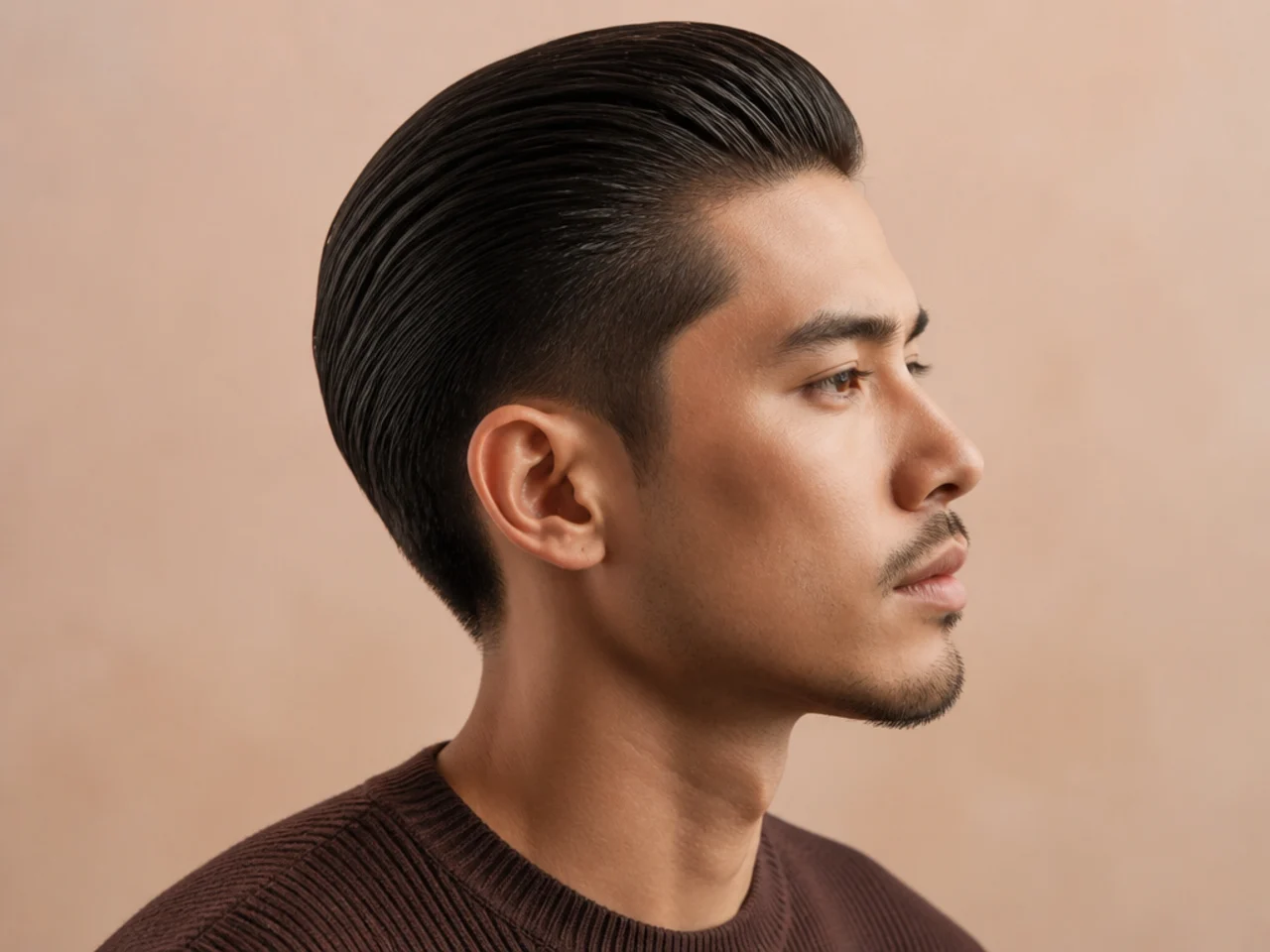
The classic slick back is the scissor-cut, oil-pomade version of the wider slick back haircut family. Five to six inches on top, scissor-blended short sides that finish just above the ear, and a comb sweep that carries every strand straight back over the crown. No fade line at the temple. No matte texture up top. No visible clipper work anywhere.
That absence of clipper contrast is what makes the shape read as classic rather than modern. Fades and skin blends date a slick back to the decade it was cut in — the 1990s pompadour-fade, the 2020s version with a high skin panel at the temple. Scissor tapers do not carry a decade stamp. They just look like a man sat in a barber's chair and asked for a proper cut.
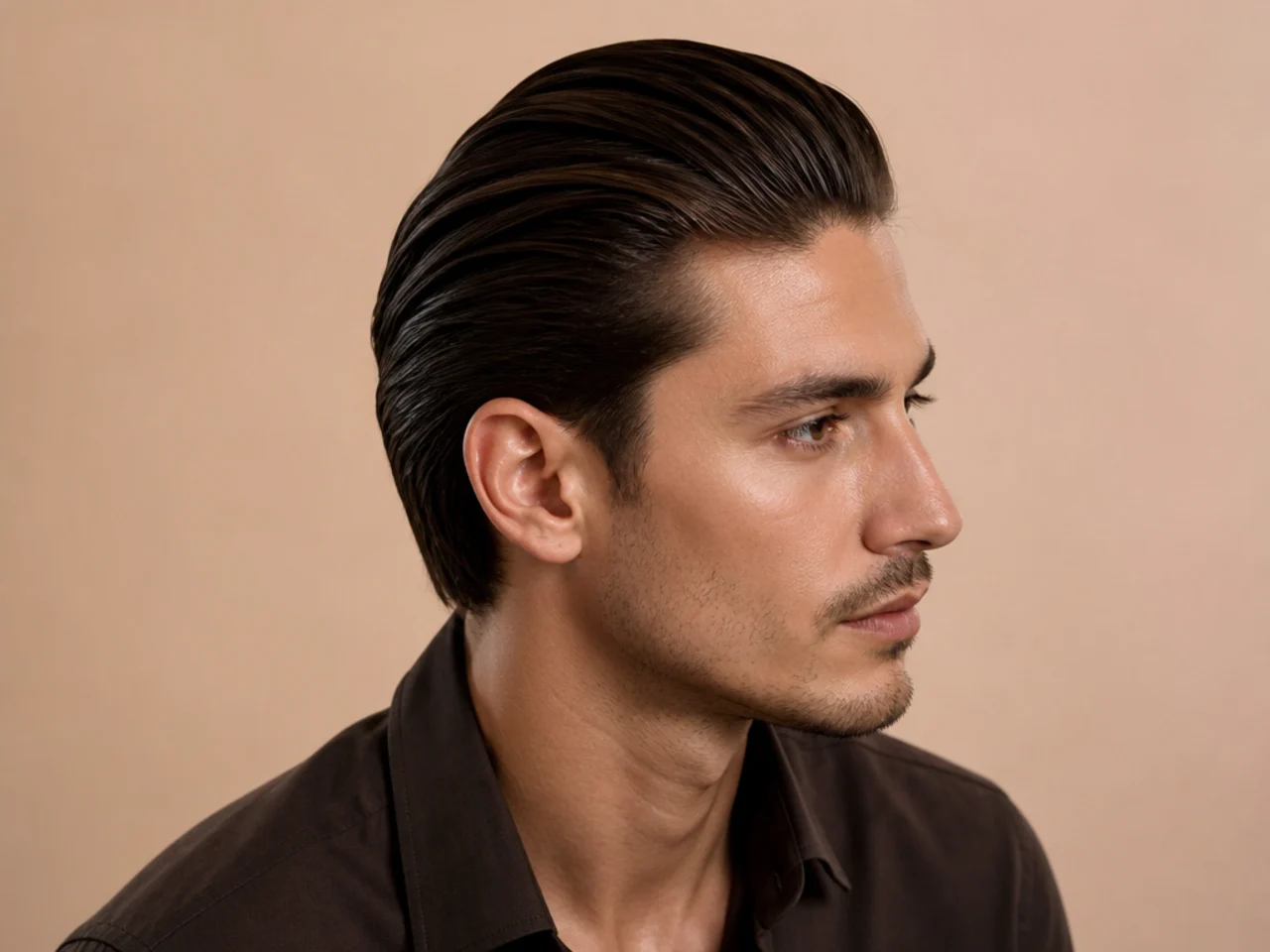
The length on top matters more than most guys realize. Five inches is the floor — anything shorter and the front section pops up in the middle of the day instead of lying flat against the head. Six inches is where the shape sits cleanest at the crown, and where the sweep reads as intentional rather than combed-over. Ask for the length in inches, not in guard numbers, because a scissor-cut top does not measure the same way clipper work does.
Reason 1: The Silhouette Anchors Every Decade
The single reason a classic slick back keeps coming back is that the outline works with almost every face shape and every era's tailoring. The volume sits on top, the sides stay narrow, and the crown line reads as one continuous curve from the front hairline to the nape.
Oval faces get the easiest result. The proportions match the face's natural balance — the top adds a small amount of height without stretching, and the tight sides do not add width at the cheek. Almost anything works on oval, and the classic slick back is the safest medium-length option.
Long faces suit the shape better than you might guess. The trick is keeping the top laid down flat rather than lifted at the front — a big pomp-forward front only stretches the face further. Ask for a low, tight comb rather than a lifted sweep, and the length reads as balanced.
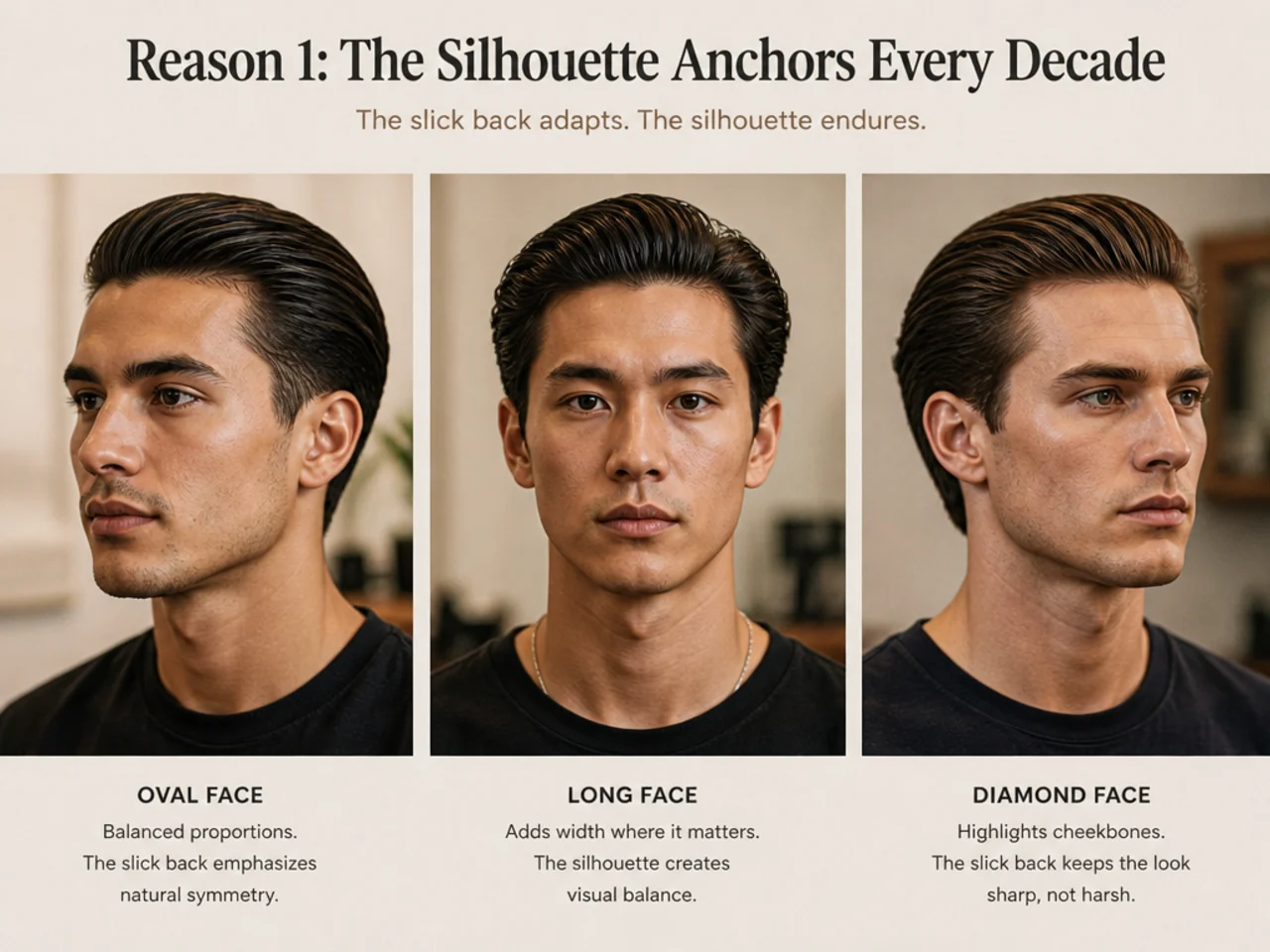
Diamond faces love the shape because the top volume rebalances the narrow forehead. If you have wide cheekbones and a narrow chin and forehead, this cut adds visual weight where you need it.
Round faces work if the sides stay tight and the top is combed slightly higher at the crown. The vertical illusion offsets the width. Avoid pushing the sides out — that widens the face.
Square faces need a small tweak. A perfectly polished slick back can amplify a square jaw. Ask for a slightly looser, more textured finish on top — the shape still reads slick back, but the finish softens the block. If your jaw is the strong feature, our haircuts for square faces roundup covers what balances the block.
Reason 2: It's the Original Boardroom-Proof Cut
The classic slick back went into offices in the 1930s and never left. That nine-decade run in professional environments is why the cut still reads as neutral in every dress code — including the ones that reject any hint of a style statement.
Banking, law, finance, courtroom-facing sales, executive corporate — none of these rooms register a classic slick back as anything other than "clean." It sits somewhere between an ivy league haircut and a properly combed side part in how it reads to older colleagues: like a man got a proper haircut, styled it, and moved on with his day.
That neutrality is a superpower most modern medium-length cuts do not have. A messy version of the same cut reads casual. A textured crop reads current. A high fade reads style-forward. A classic slick back reads invisible — and invisible is what conservative professional environments actually reward.
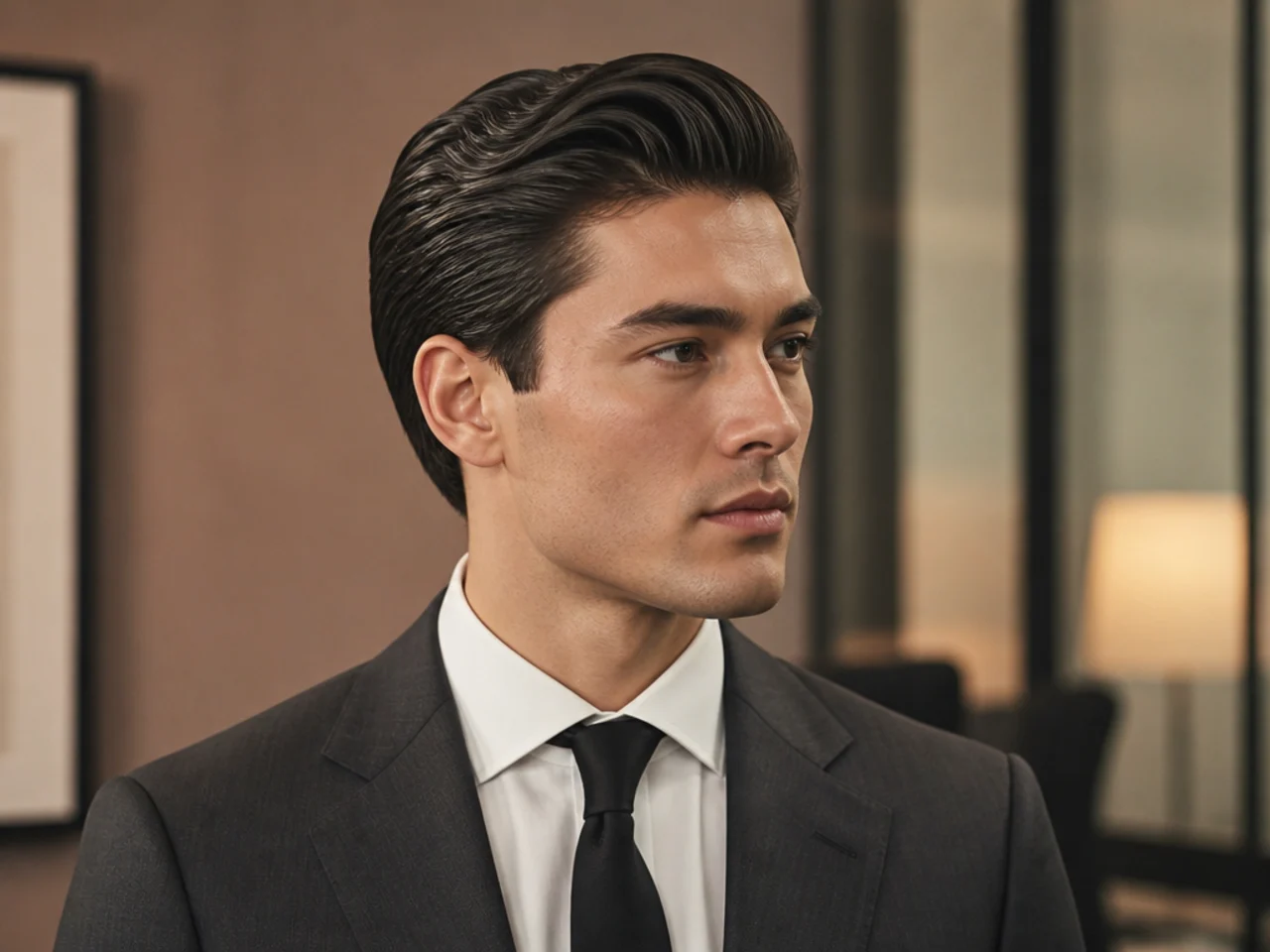
It also plays down without changing product. The same cut that reads sharp under a suit on Wednesday reads Friday-casual with a t-shirt and jeans, because the shape does the work — the outfit around it just changes context. That range is what makes it worth the styling time. You do not have to change your hair for the room you are walking into.
If your workplace leans traditional, this is the medium-length shape that will not pull attention in the wrong direction. Style it once in the morning, leave it alone, and you have a cut that reads sharp in any room without asking anything of you the rest of the day.
Reason 3: It Photographs Well in Any Era
Every well-dressed man from the last century has been photographed with some version of this shape. Cary Grant, Humphrey Bogart, Robert De Niro in Goodfellas, Christian Bale in American Psycho, Leonardo DiCaprio in The Wolf of Wall Street, and Timothée Chalamet at half the awards he has walked into. Different decades. Different suits. Same silhouette.
That visual continuity is not coincidence. The classic slick back photographs well because the shape catches light along one continuous line from front to crown, without the hard shadows that a fade or a heavy textured top can cast. The scissor-blended sides fade into skin softly under diffused light. The polished finish adds a subtle highlight along the sweep.
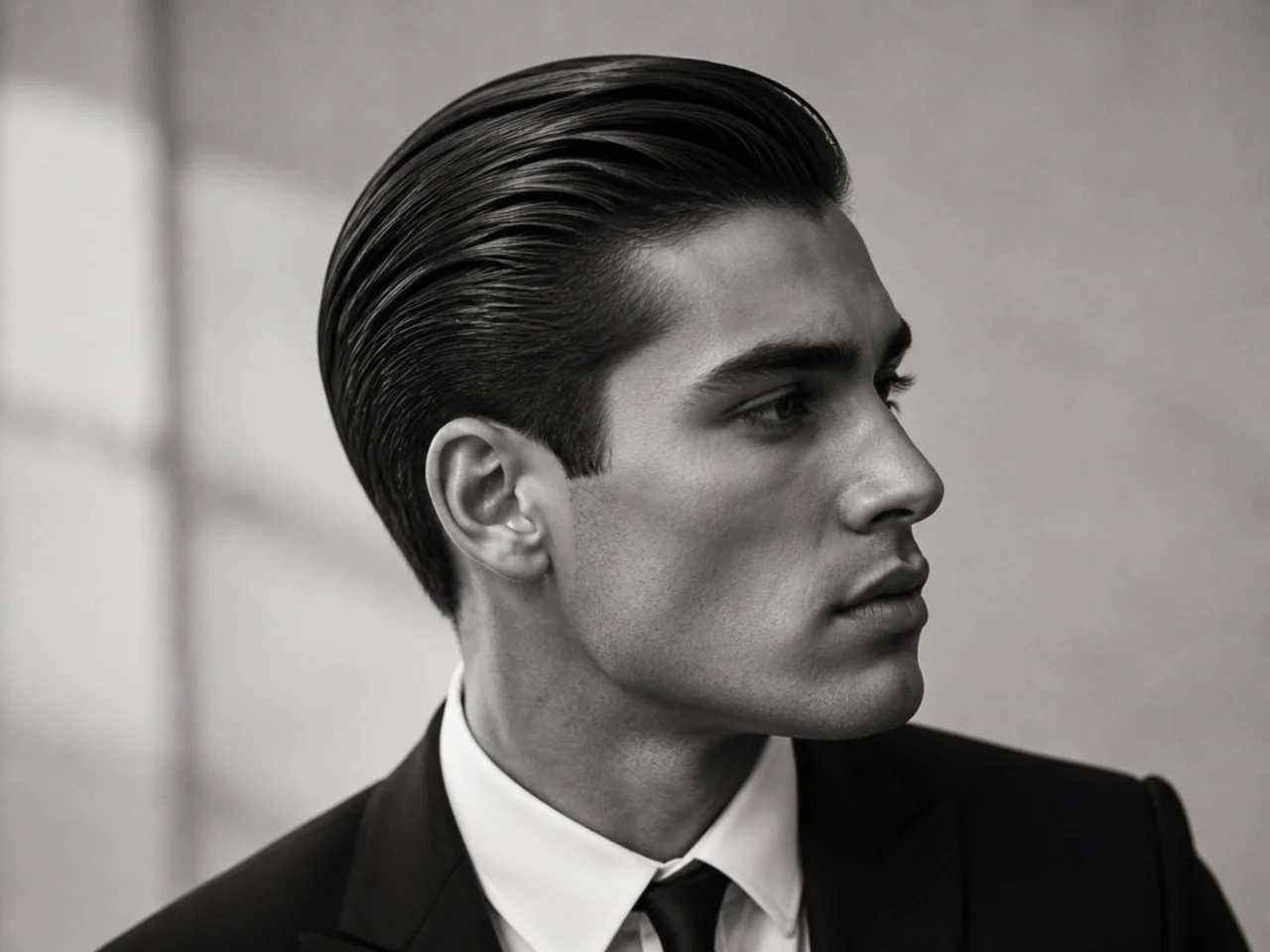
Faded cuts photograph differently. High contrast between skin and hair creates a sharp visual boundary that reads severe under overhead light and worse under flash. Textured tops read as "of the moment" — which is precisely what makes them look dated a decade later. A slick back reads timeless in photos because nothing about the shape pegs it to a year.
If you look at wedding photos, headshots, LinkedIn refreshes, or anything you will still be looking at in 2036, the classic slick back is the safest medium-length bet on the board. It will not read as dated when you scroll past it in ten years — because it has not read as dated in any of the ten decades before it.
Reason 4: The Sides Adapt to Every Modern Update
The base of the classic slick back — the top length and the comb sweep — is fixed. What has changed over the decades is what happens on the sides. And the fact that the base survives every side treatment is why the cut stays relevant.
The 1940s version had scissor-tapered sides that faded softly to skin at the sideburn. The 1980s Wall Street version pushed the sides a little longer and slicker to match the volume up top. The 2010s version added a hard part shaved along the parting. The 2020s version — trending now — pairs the classic top with a low taper fade on the sides, which reads modern without touching the ratios up top. If you want the higher-contrast fade version, look at the high fade slick back haircut mens — same top, different side story.
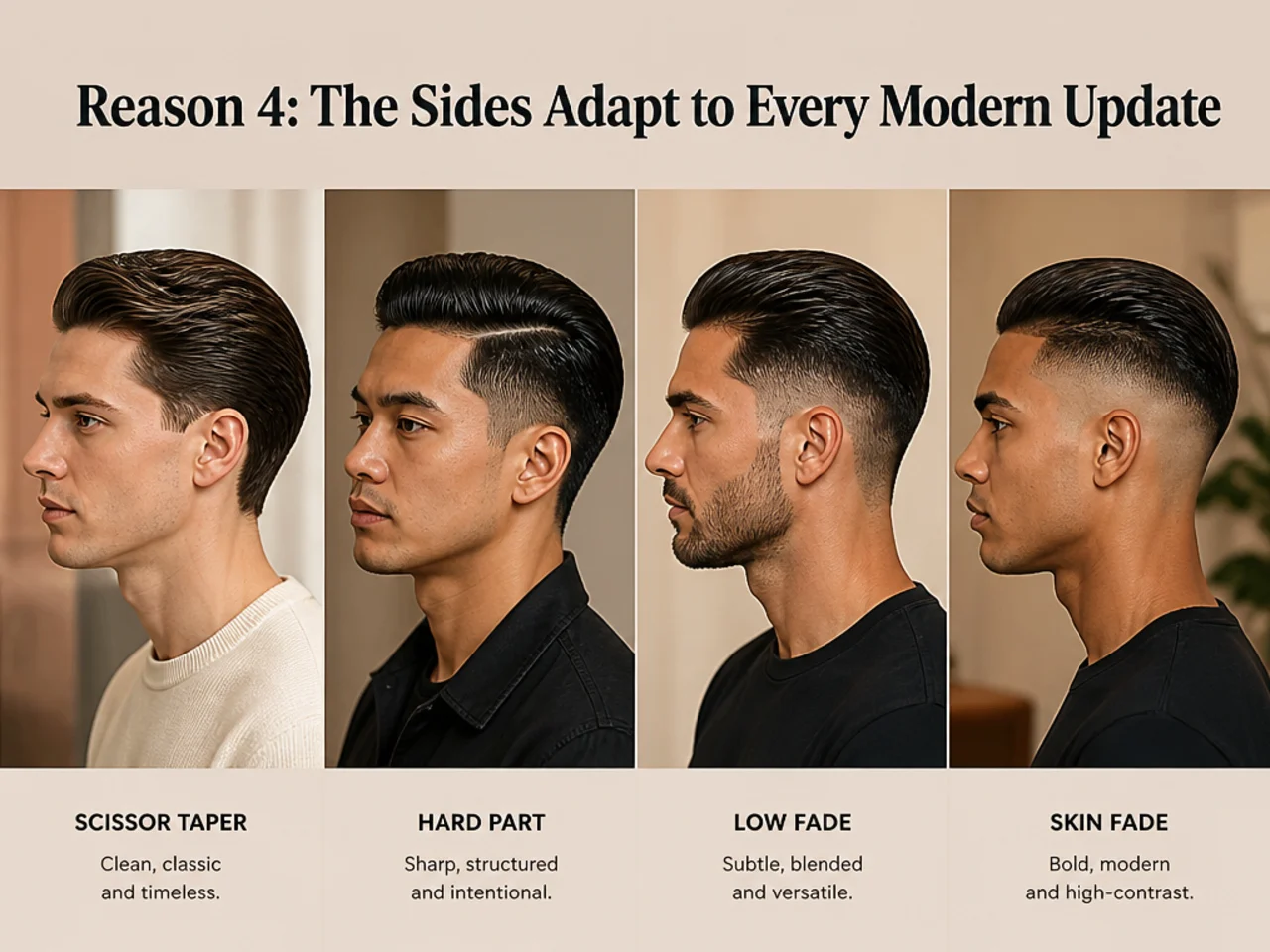
That flex is what separates a cut that lasts from a cut that dates. If you want the most conservative version, keep the scissor taper. If you want a hint of modern edge, ask for a low fade at the temple. If you want the statement, take it to a full skin fade or a disconnected undercut. The top does not change — you are just updating the sides.
Modularity is why barbers will still be cutting this shape in twenty years. The floor plan stays put; the finishes rotate. It is the same reason a well-tailored suit lasts through fifty seasons — the lapel width and the trouser break change, but the two-button jacket over a white shirt is still there.
Reason 5: It Grows Out Gracefully
Every haircut has a grow-out curve, and a scissor-cut classic slick back has one of the flattest ones in the medium-length family. Fades collapse when the transition zone loses definition — usually by week three. Buzz cuts stop reading intentional the moment stubble grows back — often by week two. A short textured crop starts fighting itself by week four.
The classic slick back just gets slightly longer. The sweep still reads. The comb still catches. The sides fuzz softly instead of losing their line. You can push five to six weeks between cuts without the shape falling apart — and most men can push seven if the schedule slips and the sides get a light home trim.
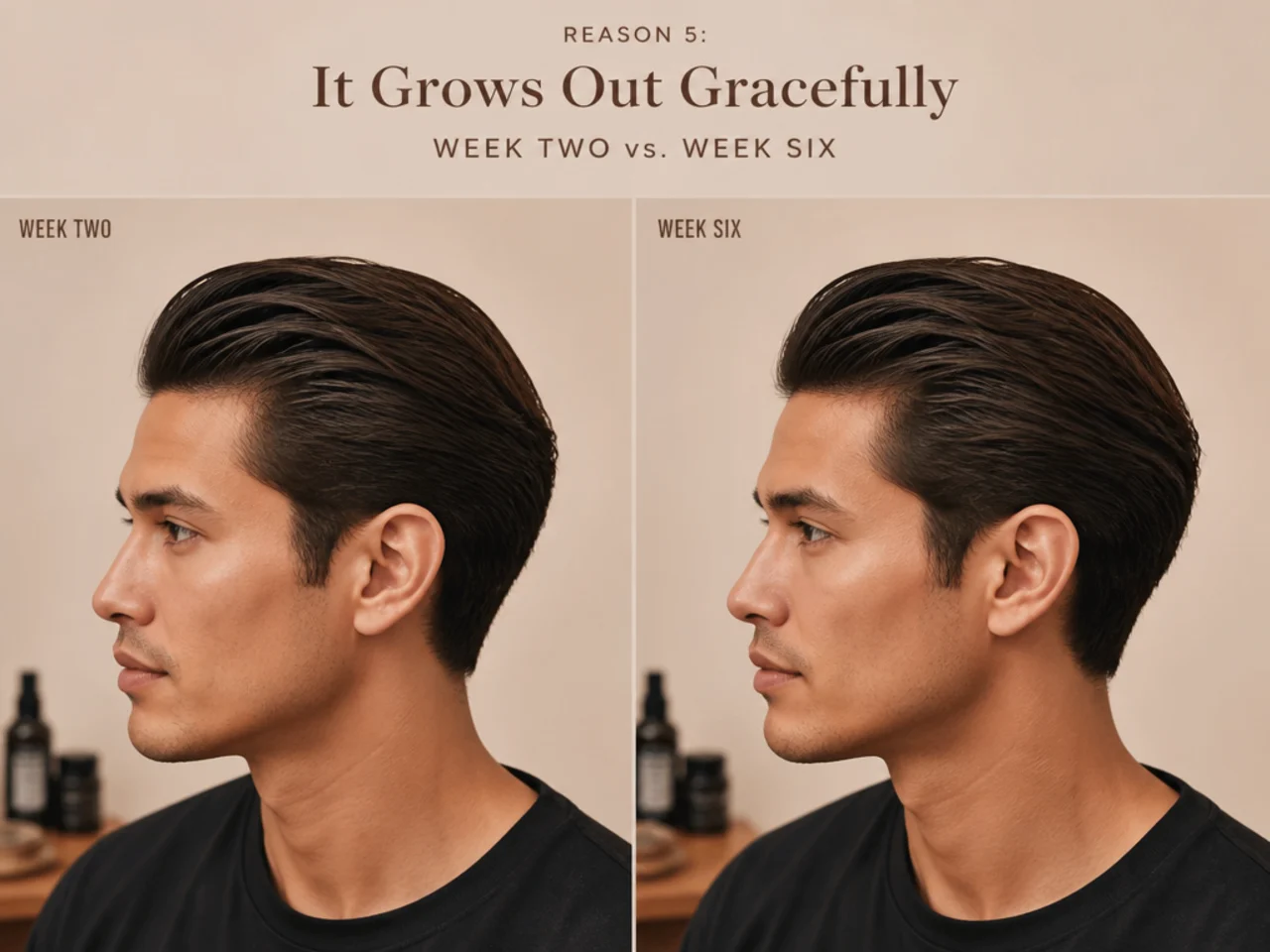
That grow-out tolerance is what makes it a low-effort cut in the long run. A high fade needs a chair every two weeks — non-negotiable. That works out to twenty-six haircuts a year. A classic slick back is happy with eight to ten. Multiply that by your barber's rate and the classic quietly pays for itself over any modern trend cut within a year.
It also survives travel and missed appointments. Stuck on a three-week work trip? A classic slick back still looks like a haircut when you land — a fresh fade in the same scenario reads like a bad decision. That resilience is what makes the shape work for guys with unpredictable calendars, frequent flyers, and anyone who does not want their hair on the priority list every fortnight.
Classic Slick Back vs Modern Slick Back
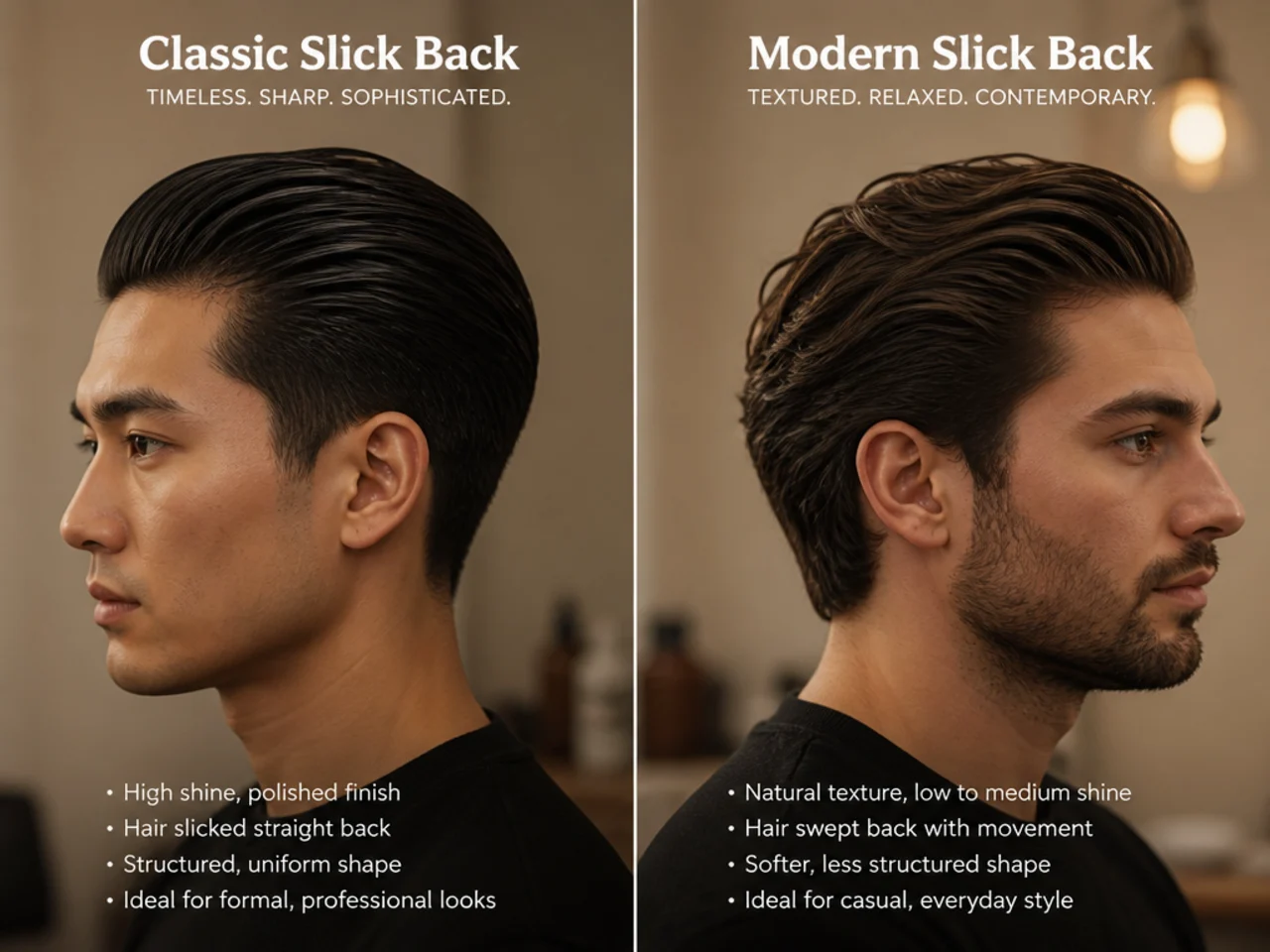
The two versions share the same base move — hair combed straight back off the forehead — but they diverge on the finish, the sides, and the maintenance calendar. Here is how to pick between them.
The short read: pick the classic if you want a cut you can wear anywhere, forget about between appointments, and still look sharp when the calendar slips. Pick the modern if you want the higher-contrast look and can hold a chair every two to three weeks. Both start from the same base shape — you are trading grow-out tolerance for a sharper daily line.
If you land in the middle, look at the low taper slick back haircut — it keeps the classic top with a soft taper on the sides instead of a full fade, and sits at four-week maintenance. That hybrid is where most guys settle after trying both extremes.
Who Should Ask for a Classic Slick Back
The classic slick back is the safest medium-length cut on the board, which is what makes it the right pick for a specific type of guy. It is the answer if any of these apply.
You work in a conservative dress-code environment. Finance, law, medicine, government, executive corporate. The classic slick back with a shine-forward finish reads polished in these rooms and does not signal a style choice.
You do not want to be in the chair every two weeks. If your schedule cannot hold a haircut closer than five weeks apart, a fade will look overdue for most of the month. A classic slick back will still look intentional at week six.
You have four to six inches on top already, or you are willing to grow to that length. Anything shorter and the shape does not hold — the top has to reach the crown when combed back for the classic to work properly. Guys coming from a short crop should plan on three to four months of grow-out first.
You are photographed often. Wedding season, work headshots, court appearances, LinkedIn refresh, family photos — anywhere the image outlives the trend cycle. The classic slick back will not read as dated in ten years.
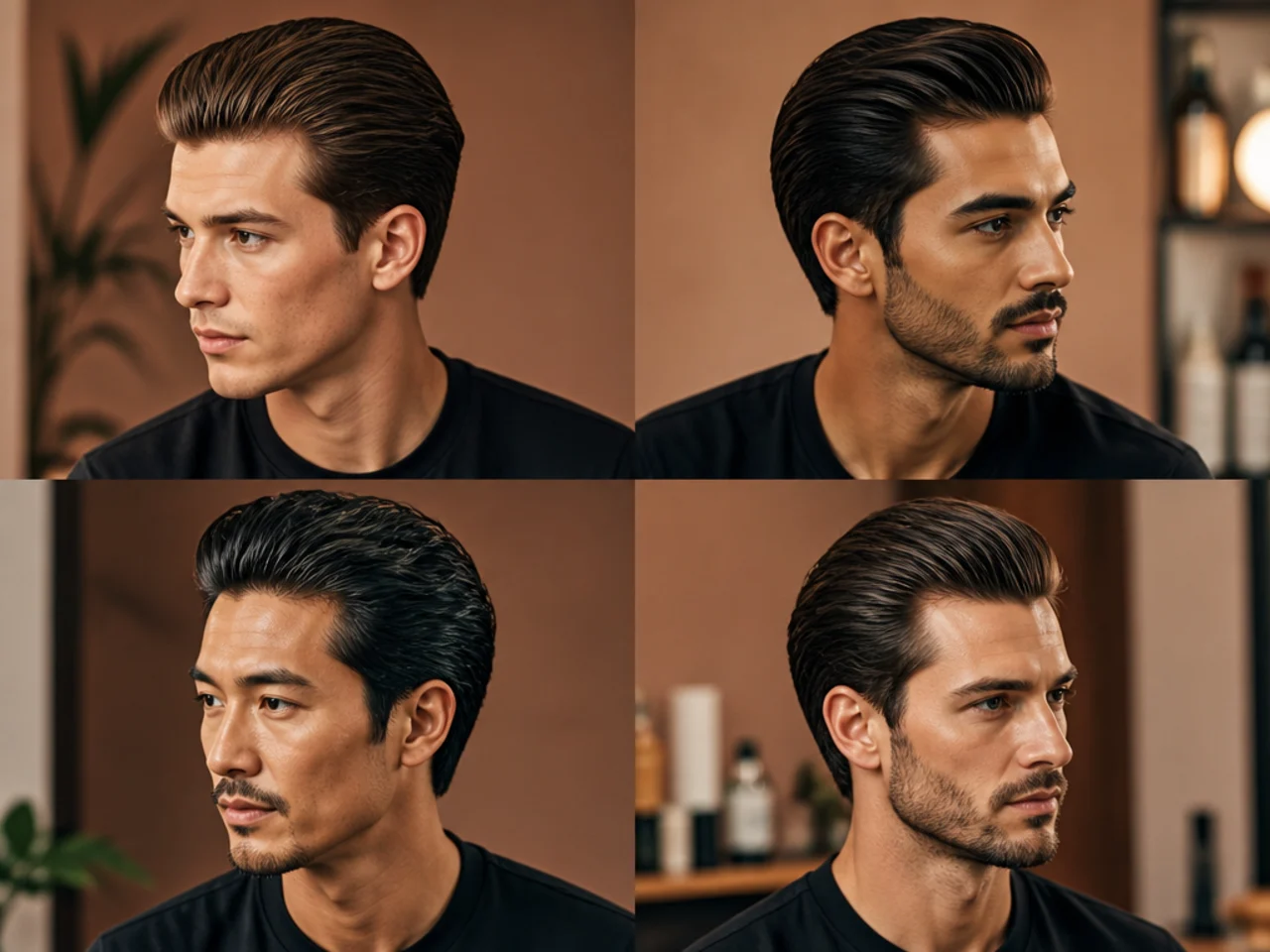
You have straight to slightly wavy hair. Straight hair is the easiest — one pass with pomade and the shape holds all day. Wavy hair softens the sweep into something that reads natural. Curly and coily hair can wear a version of this shape, but the classic combed finish usually needs a blow-dry pre-shape or a switch to a modern version — check the mens slick back haircut roundup for the curly-friendly variations.
Guys with fine hair should ask for the length on the shorter end — closer to five inches — so the top does not read stringy under pomade. Thick hair can take the full six inches without going bulky, because the weight of the hair holds the shape down against the head.
How to Ask Your Barber
Bring a photo. Every request in this section lands cleaner when the reference sits in front of both of you. Then work through these five specs in order.
- Ask for a scissor-blended taper on the sides, not a fade. This is the phrase that keeps the cut classic. "I want scissor tapered sides — no fade line, no clipper guards, blend the sides soft to about half an inch above the ear." Barbers default to clippers on a slick back request if you do not specify.
- Specify the top length in inches. Five to six inches is the classic range. Say the exact number: "five and a half inches on top." Guard numbers do not translate for scissor work, and "medium length" gets you whatever the barber decides that means today.
- Confirm the top reaches the crown. "When you comb it back, I want the tips to just reach the crown line." This is the single most important geometry check on the cut — the shape only works if the length carries all the way over.
- Say what finish you want. "Sleek, wet-look, high-shine — like an oil-based pomade finish, not a matte clay." Finish drives product choice, and if your barber sends you home styled with the wrong one, you will fight the shape every morning.
- Ask about the front section. The front is where the sweep starts, and it needs to be long enough to lay against the head rather than pop up. "Keep the front the same length as the crown — do not point-cut it shorter." Front sections cut shorter than the crown are the number-one reason a slick back does not hold.
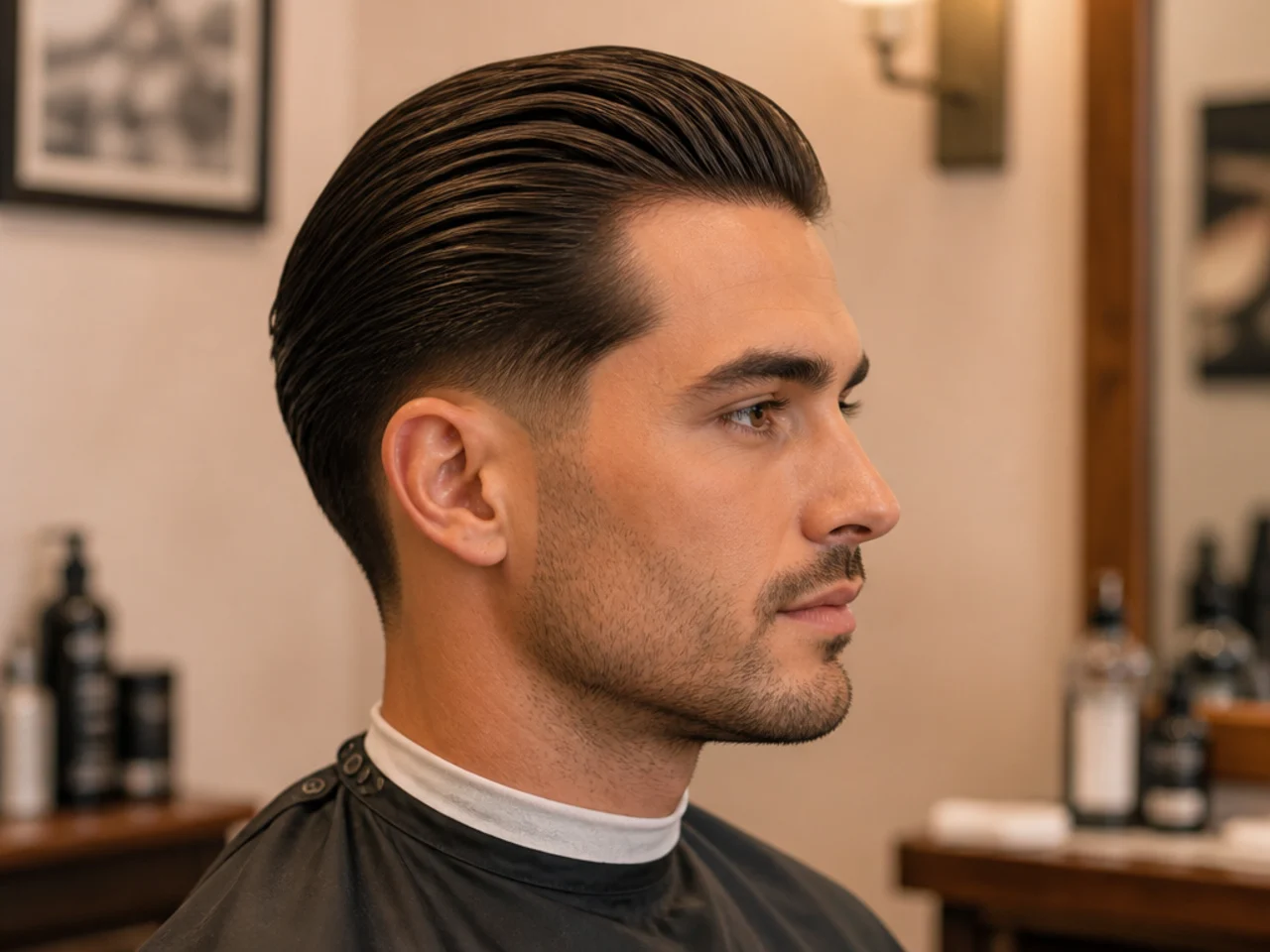
If your barber suggests a fade instead — and most will — that is fine, but hold the line if you want the true classic. "I want the timeless version, no fade line, scissor tapered." A good barber will nod and pick up the shears. For the broader family of cuts that pair well with a classic finish, our short simple mens haircuts hub covers the sibling shapes worth knowing about.
Styling and Maintenance
The classic slick back is a two-minute morning cut once you have the shape. Two products, one comb, three moves.
Wash with a sulfate-free shampoo two or three times a week — never every day. Daily washing strips the natural oil that gives a slick back its shine, and a bone-dry base will not hold pomade cleanly. On off days, rinse with water and towel-dry.
Style on damp hair, not dry. Dry hair fights the comb and lifts back up an hour later. Damp hair — towel-dried, not soaking — accepts the sweep cleanly and holds through the day. If your hair air-dries fast, spritz with a little water before you start.
Warm a nickel-sized dab of oil-based pomade between your palms until it goes clear. Work root to tip, front to back, starting at the hairline. Comb once with a fine-tooth comb along the sweep — one pass, not five. Over-combing breaks the shine and turns the surface streaky.
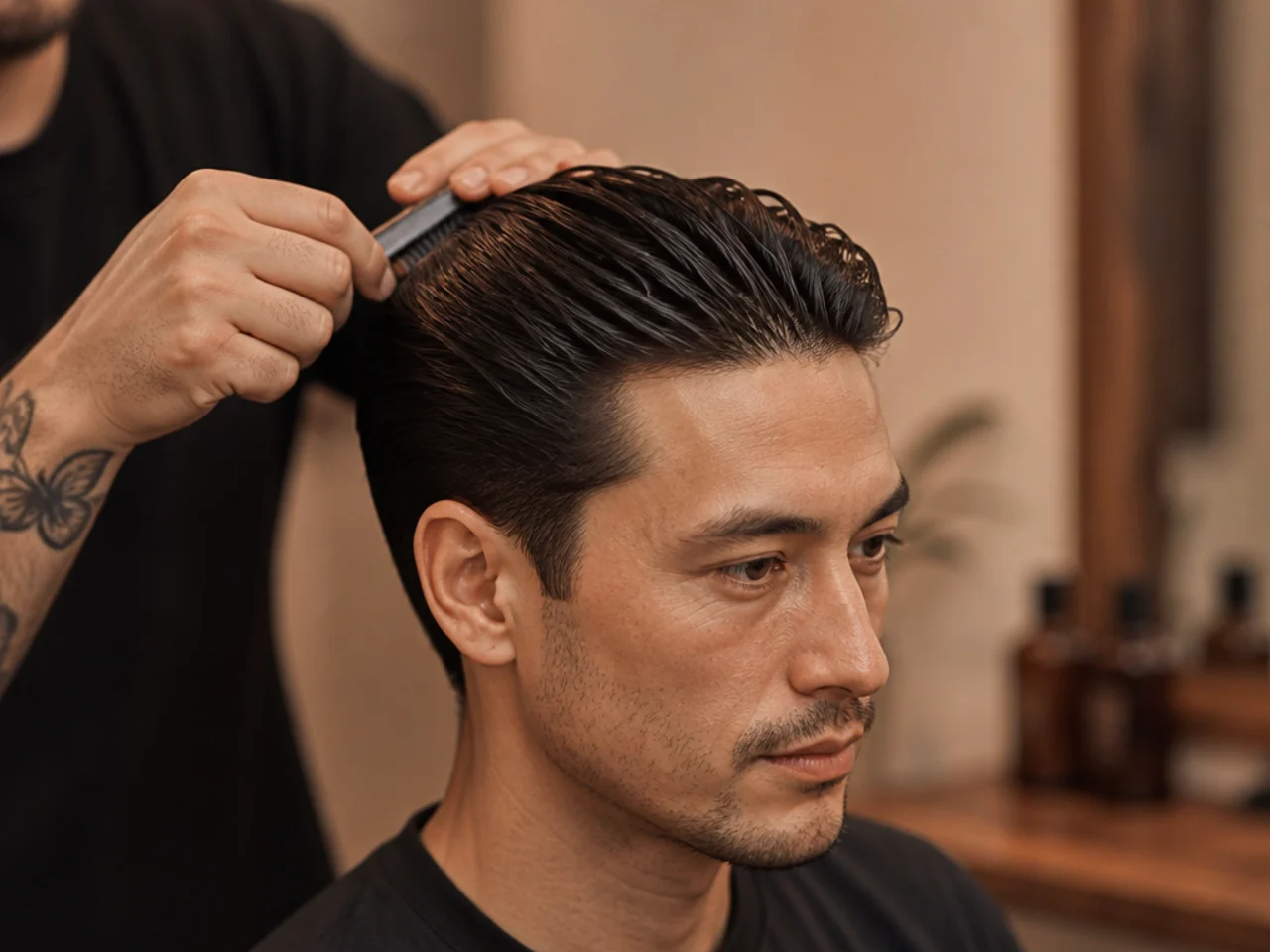
If you want the highest possible shine, layer a light-hold pomade over an oil-based one — the base holds the shape, the top coat adds glass. Skip matte clays and wax pastes for the classic; both fight the shine finish this cut is built around. If you want the matte look, you are asking for the modern version.
For the sides, run a soft brush over the tapered area after the top is combed. That catches any strays and finishes the line cleanly against the ear.
Book every five to six weeks. The top can push seven if the sides get a light home trim between visits. A pair of thinning shears at home lets you tidy the sideburn area without recutting — nothing else. Leave the actual taper alone. That is barber territory. If you cut your own hair between visits, invest in a decent pair of shears and check the best hair clippers for men roundup for the gear that will not butcher the sides.
FAQ
What makes the classic slick back timeless? The classic slick back timeless silhouette survives every era because five to six inches on top, combed straight back, and scissor-blended sides reads sharp in any decade. Trends shift the sides and the pomade brand — the underlying shape has stayed constant since the 1920s and photographs well in every generation.
Which face shape suits a classic slick back best? Oval, long, and diamond faces suit the classic slick back most naturally because the volume sits on top rather than at the sides. Round faces work if the sides stay tight. Square faces should ask for a slightly less polished finish so the block up top softens against the jaw.
How do I ask my barber for a classic slick back? Bring a photo, then say five to six inches on top, scissor-blended short sides with no visible fade line, and a natural taper at the neck. Confirm the top length reaches the crown when combed back — anything shorter and the front section pops up mid-day instead of laying flat against the head.
Can I get a classic slick back with wavy or curly hair? Wavy hair is the easiest — one pass with a heavier pomade holds all day. Loose curls work with an oil-based pomade combed while damp. Tight curls and coils need to be blow-dried straight before the sweep will hold, so the modern matte version usually reads better than the classic for those textures.
How often should I re-cut a classic slick back? Every five to six weeks. The classic version is one of the most grow-out-friendly medium-length cuts on the board — the shape still holds at week six as long as the sides get a light trim. Push to seven if the schedule slips, but the front will start flopping forward past that point.
Is the classic slick back still professional in 2026? Yes — it is one of the safest medium-length cuts for conservative dress codes when styled with a shine-forward pomade. Banking, law, finance, courtroom-facing sales, and executive corporate all read a polished slick back as sharp. The modern matte version reads a shade more casual, so save it for less formal environments.