20 Fringe Mullet Haircuts for Men
A fringe mullet men guide covering 20 fringe-first variations — textured, curtain, comma, and burst-fade — with face-shape notes and the ask for your barber.
In this article · 26
- What Is a Fringe Mullet?
- How to Choose Your Fringe Mullet
- The 20 Fringe Mullet Variations
- 1. Classic Textured Fringe Mullet
- 2. Wispy Fringe Mullet
- 3. Blunt Fringe Mullet
- 4. Curtain Fringe Mullet
- 5. Side-Swept Fringe Mullet
- 6. Piecey Fringe Mullet
- 7. Long Fringe Mullet
- 8. Short Choppy Fringe Mullet
- 9. Comma Fringe Mullet
- 10. Curly Fringe Mullet
- 11. Wavy Fringe Mullet
- 12. Two-Block Fringe Mullet
- 13. Low Taper Fade Fringe Mullet
- 14. Mid Fade Fringe Mullet
- 15. Burst Fade Fringe Mullet
- 16. Edgar Fringe Mullet
- 17. Broccoli Fringe Mullet
- 18. Peso Pluma Fringe Mullet
- 19. Korean Straight Fringe Mullet
- 20. Grown-Out Fringe Mullet
- How to Ask Your Barber
- Styling & Maintenance
- FAQ
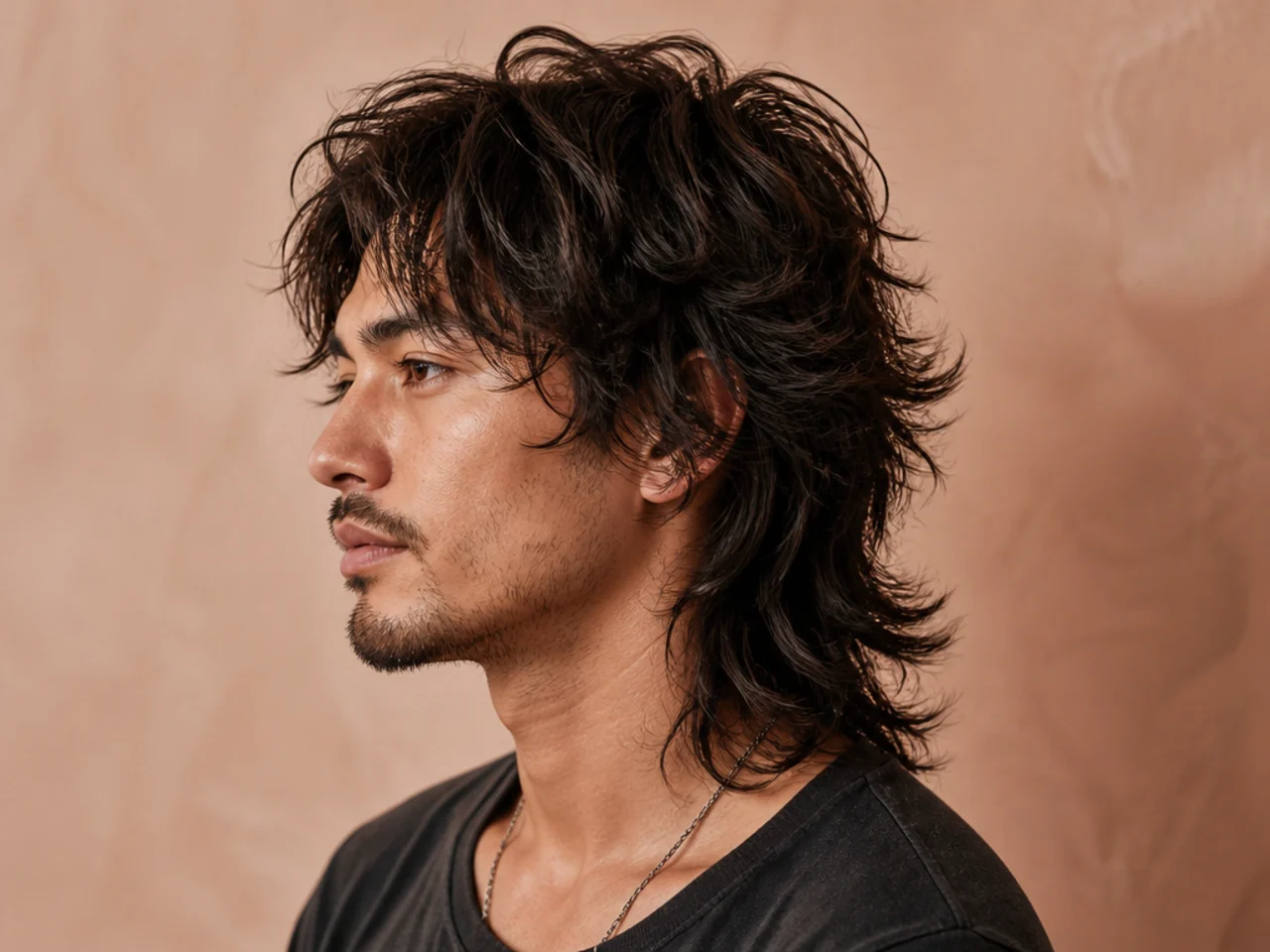
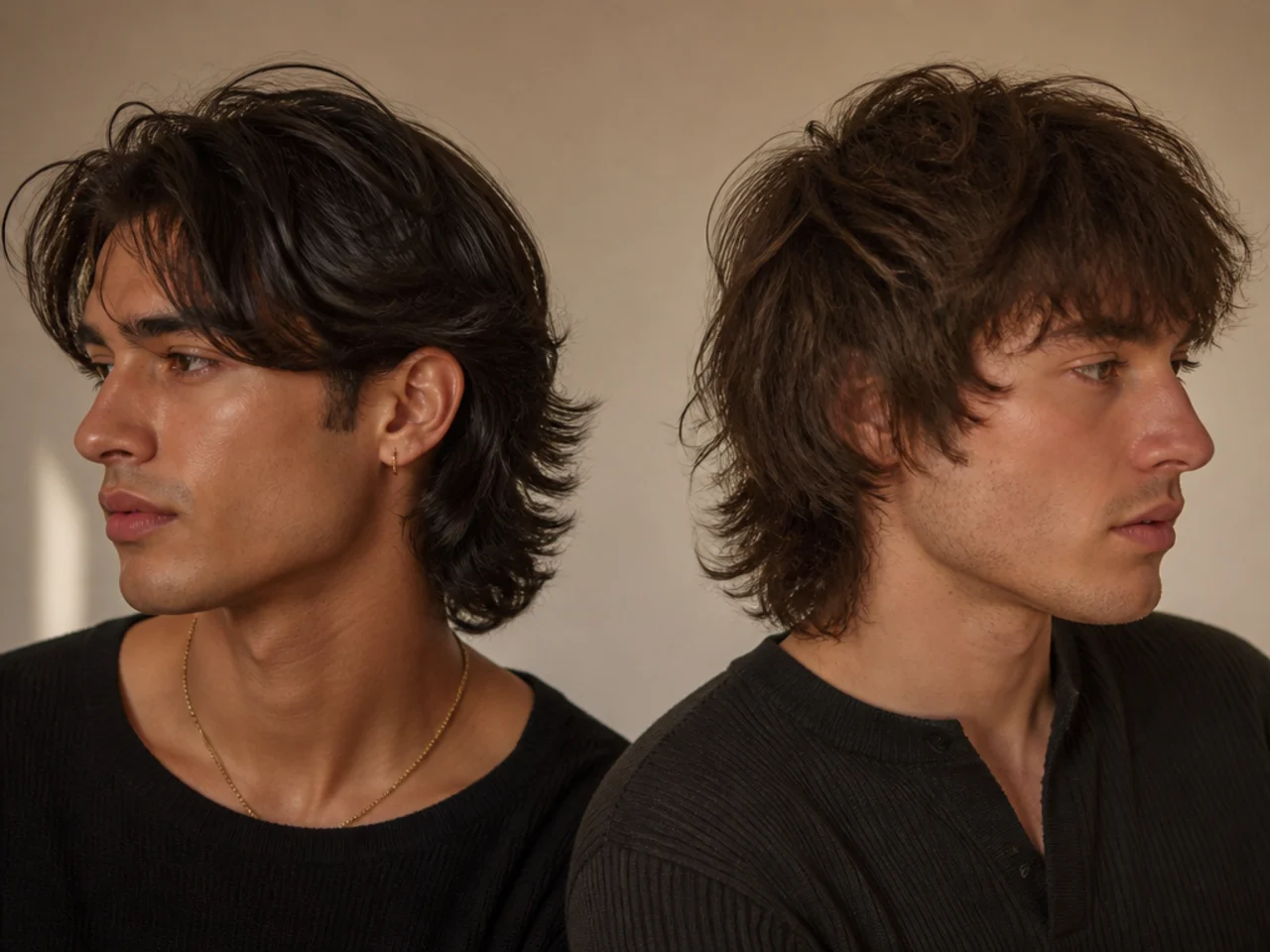
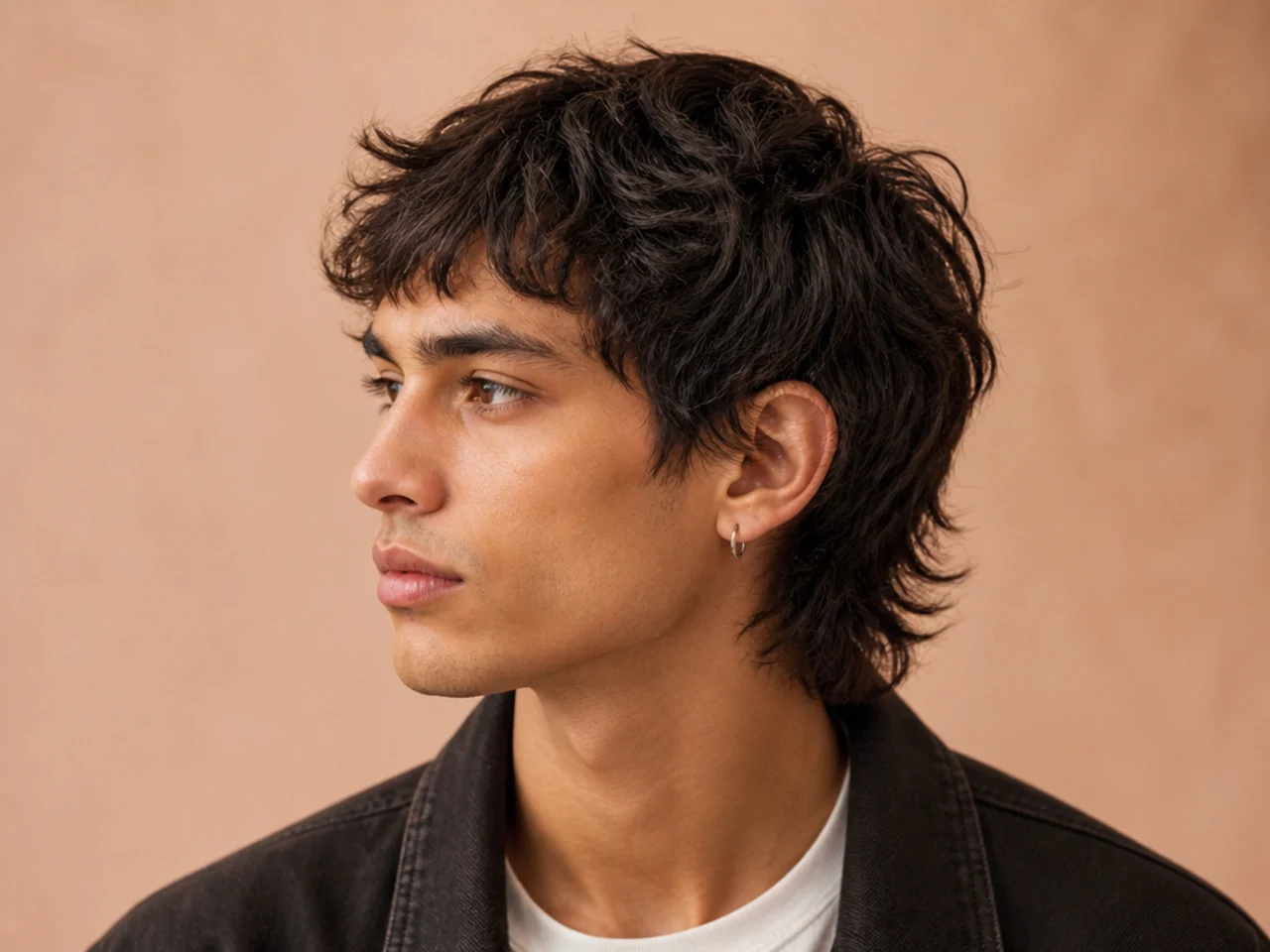
The fringe mullet does two things at once. The hair at the front frames your face — comma, curtain, or brow-length wall — and the mullet at the back moves independently, layered enough to swing. This guide covers 20 fringe mullet variations men are asking for right now, who each one flatters, exactly what to hand your barber, and how to style each finish in under three minutes.
What Is a Fringe Mullet?
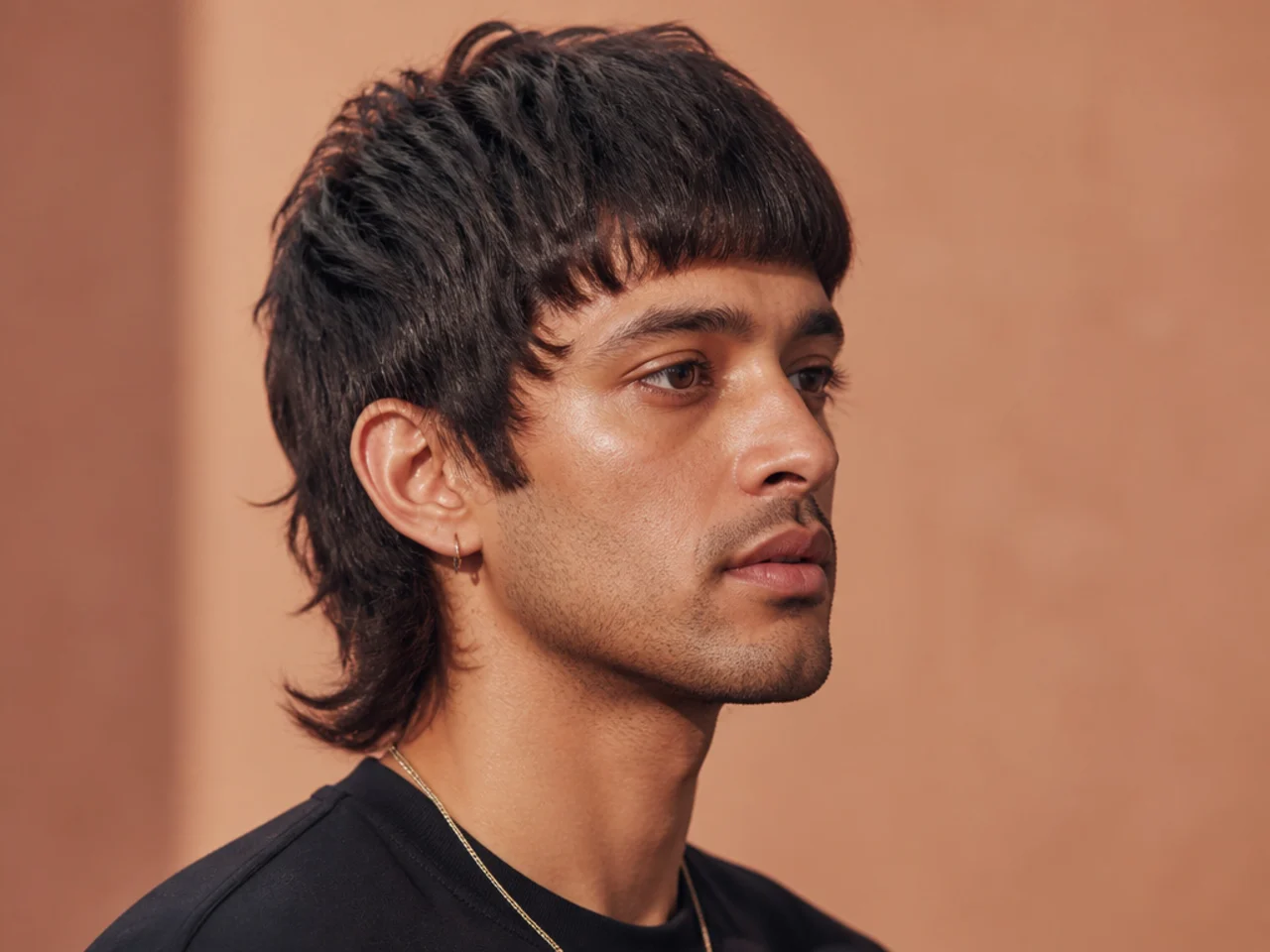
A fringe mullet is a men's cut with two signatures — a deliberate forward fringe at the front and a layered mullet at the back. The fringe sits anywhere from mid-forehead to below the brow. The back runs two to four inches, cut with internal layers so it moves as one piece. Sides taper, fade, or scissor-blend into the top so nothing looks disconnected. The result reads sharp from the front, editorial from the side, and intentional from every angle.
The modern mullet is the base. What the fringe adds is a second focal point — a front frame that carries as much of the cut as the length behind it. Without the fringe, you get a plain mullet. Without the mullet, you get a plain fringe haircut. Together, the two details create the silhouette that has been trending across football tunnels, indie music, and skate culture since 2023.
The look is not a costume reference to the 80s. Every element is engineered — the fringe is point-cut for softness, the back is thinned from the inside so it swings instead of hanging, and the sides carry a barber-clean grade rather than a grown-out fringe of their own. That precision is the difference between a fringe mullet a stylist can shoot and one that reads like a bad growing-out phase.
How to Choose Your Fringe Mullet
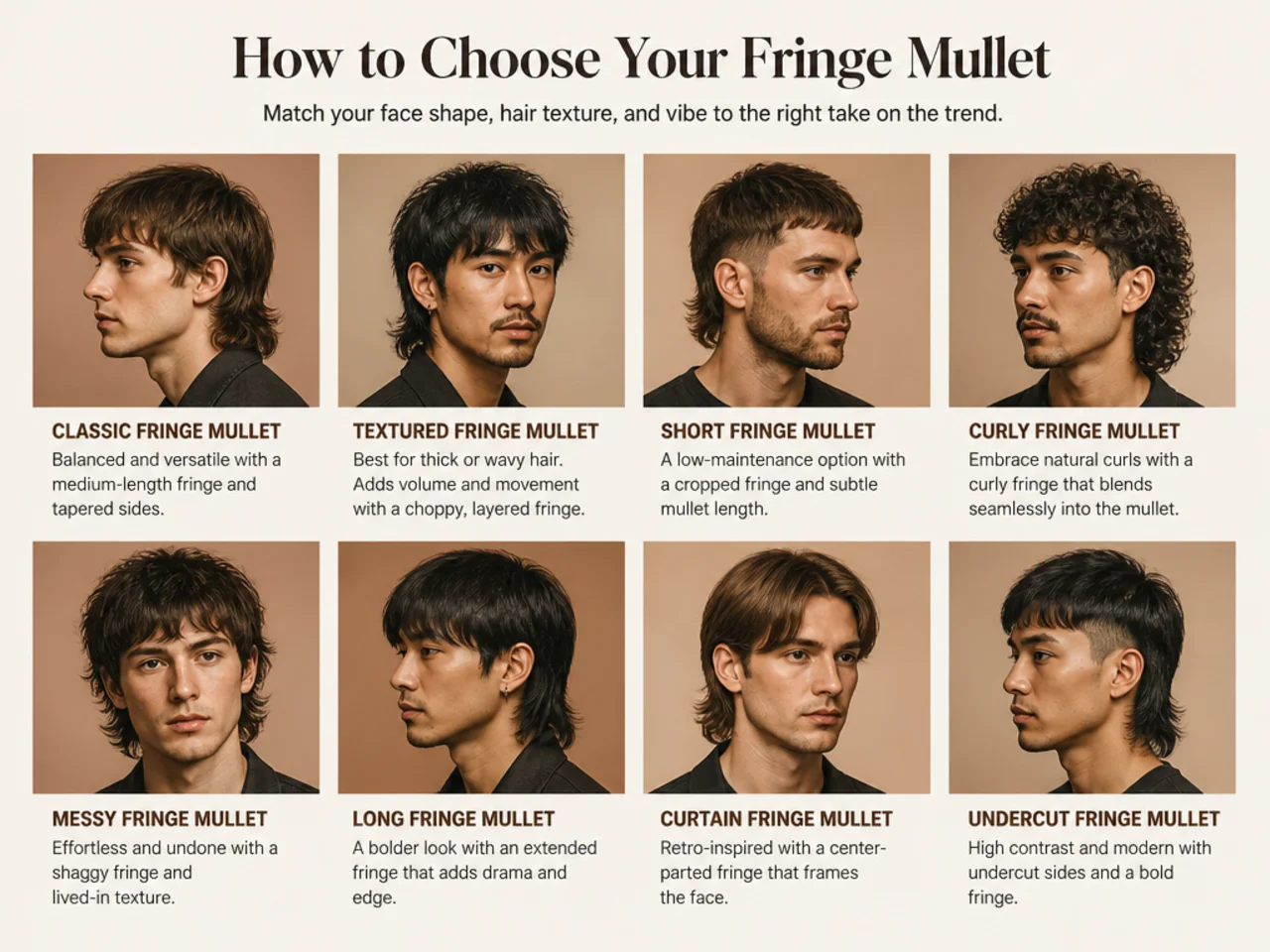
Face shape sets the fringe. Oval and heart faces get the widest menu — any fringe works, so choose on hair type instead. Round faces want a curtain fringe or a side-swept angle with vertical lift at the crown to lengthen the profile. Square and diamond faces soften with a wispy, piecey, or comma-hooked fringe rather than a blunt straight wall. Long or oblong faces stay shorter on top and heavier at the brow — a full curtain or blunt fringe shortens the vertical read of the face.
Hair type sets the fringe weight. Straight hair holds a blunt fringe cleanly, so lean into a full brow-length wall or a Korean comma. Wavy hair sits best with soft point-cut fringes that catch the natural bend. Curly and coily textures build their own shape — ask for a dry cut and let the fringe fall in a soft frame rather than a defined line. Fine or thinning hair benefits from a piecey or feathered fringe that stacks visual density where it counts.
Lifestyle sets the side treatment. Scissor-blended sides pass in any office. A low taper fade reads sharp without a hard line. A full fade, burst, or two-block undercut turns the fringe mullet into a statement. For sibling silhouettes across the family, browse the mullet and wolf cut hub — or if you want the mullet without the fringe commitment, the short mullet haircut men roundup covers lower-effort versions of the same base cut.
The 20 Fringe Mullet Variations
Each variation below reads as a distinct build — different fringe shape, different back length, different side treatment. Save two or three that speak to your face and hair type, then bring the numbers with you. Barbers read numbers cleaner than adjectives.
1. Classic Textured Fringe Mullet
The baseline fringe mullet — the version every other cut on this list edits from. Three inches on top, point-cut forward fringe at the brow, three-inch feathered back, scissor-blended sides. No fade line, no hard part, no styling tricks. The shape carries itself.
Best on straight-to-wavy hair with medium density. Oval, oblong, and heart faces get the sharpest read.
Ask for: "Classic textured fringe mullet — three inches on top point-cut forward, brow-length fringe, three-inch feathered nape, scissor-blended sides." Matte cream through damp hair, rough-dry with fingers, no comb.
2. Wispy Fringe Mullet
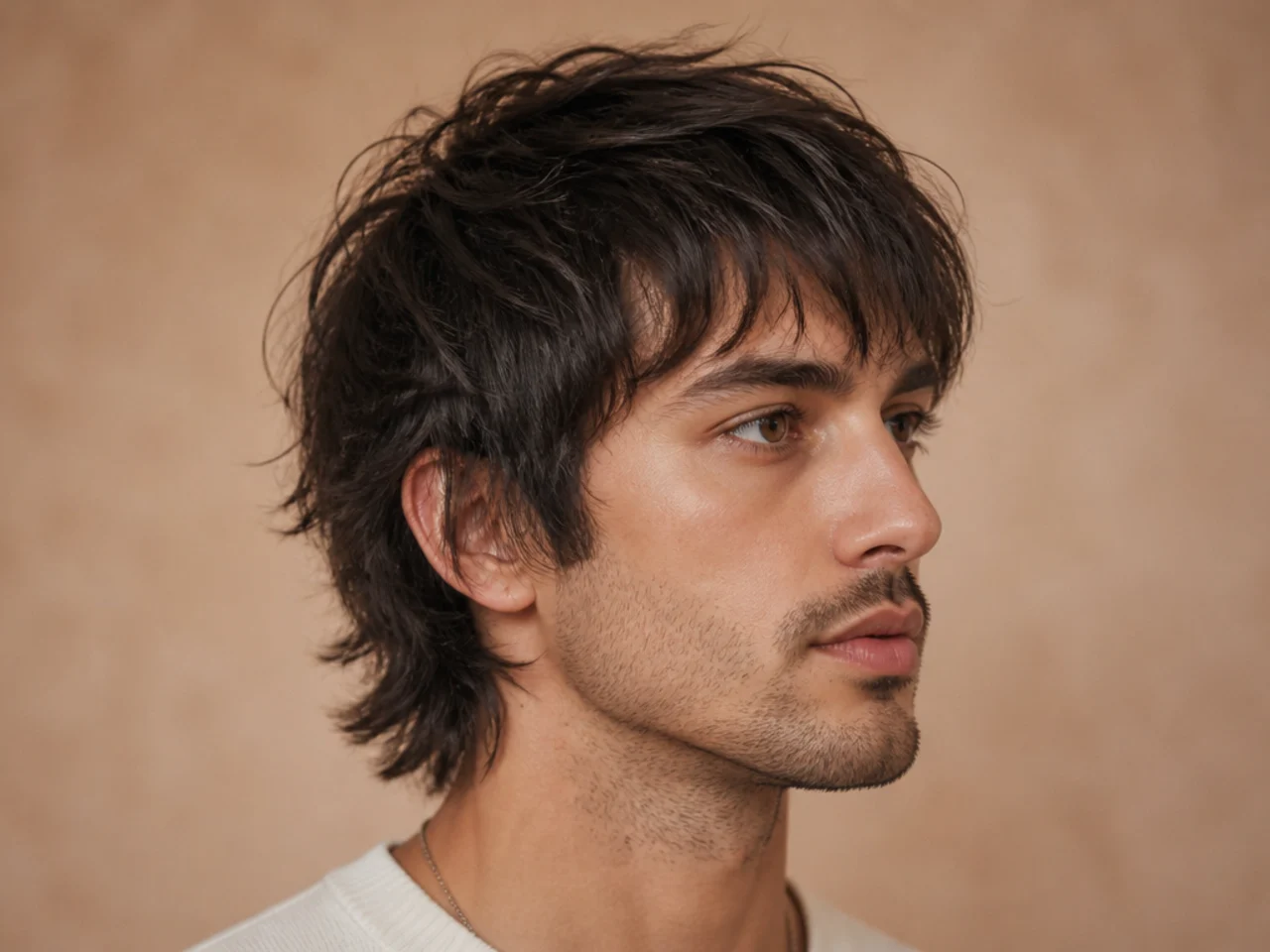
The fringe is broken into airy wisps rather than a solid wall. Individual pieces fall to mid-forehead, catching light through the gaps. Reads softer than a blunt cut and photographs light even on straight hair.
Best on fine to medium hair — the wisps build the illusion of density. Suits round, square, and heart faces because the broken line avoids adding weight to the forehead.
Ask for: "Wispy fringe mullet — two-and-a-half inches on top, heavily razored wispy fringe at mid-forehead, two-inch feathered nape, tapered sides." A pea-sized amount of texture powder at the roots, no product on the fringe itself.
3. Blunt Fringe Mullet
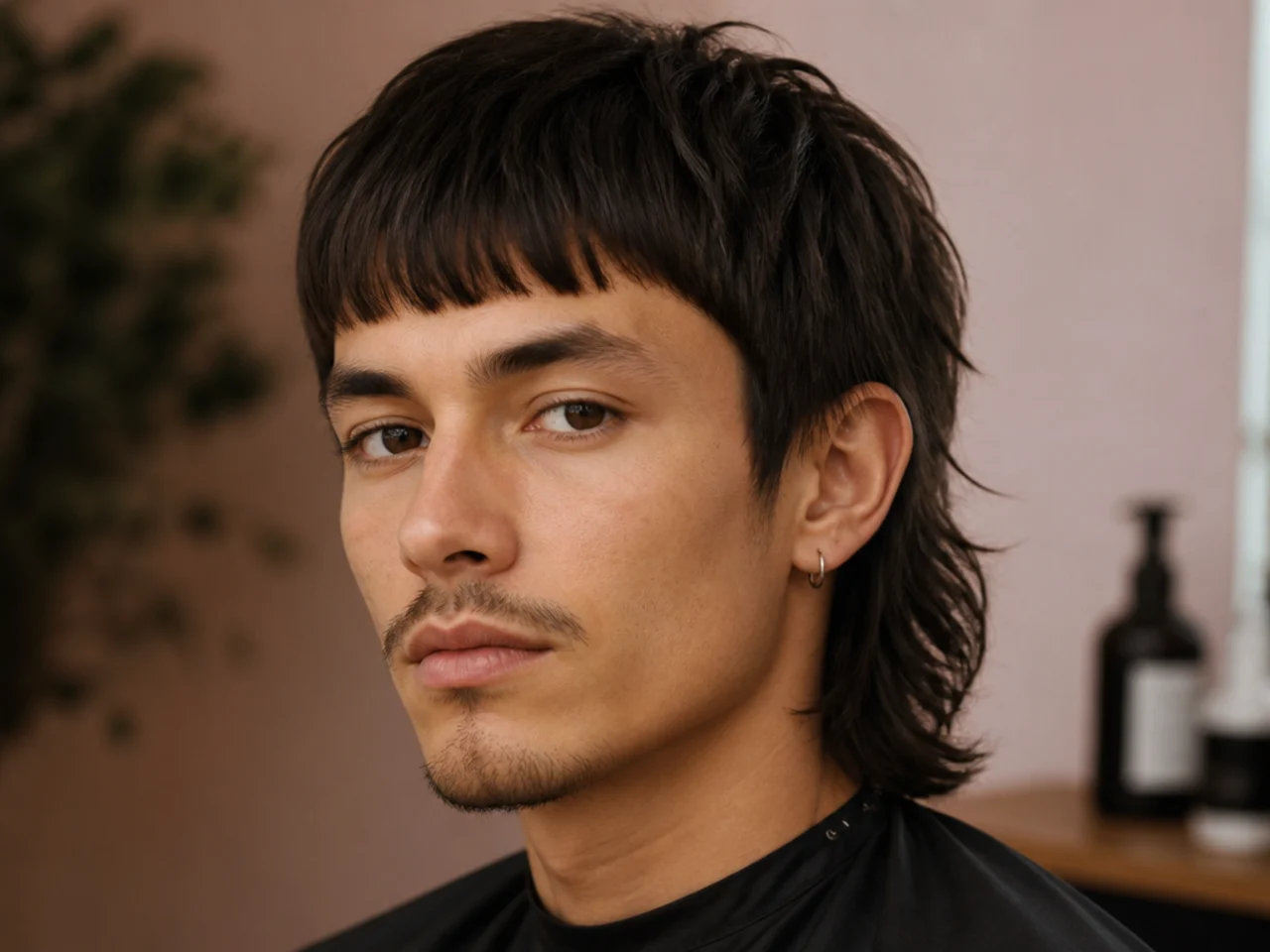
The fringe is a solid horizontal line right above the brow. Nothing broken, nothing feathered — the top edge of the fringe reads as a graphic slash across the face. The back stays long and layered for balance.
Best on thick, straight hair that can hold the horizontal line without breaking. Oval and oblong faces carry it cleanest.
Ask for: "Blunt fringe mullet — four inches on top, straight-across fringe at the brow line, four-inch layered back, guard 2 tapered sides." Flat-iron the fringe on low heat, brush straight down, spritz with light-hold spray.
4. Curtain Fringe Mullet
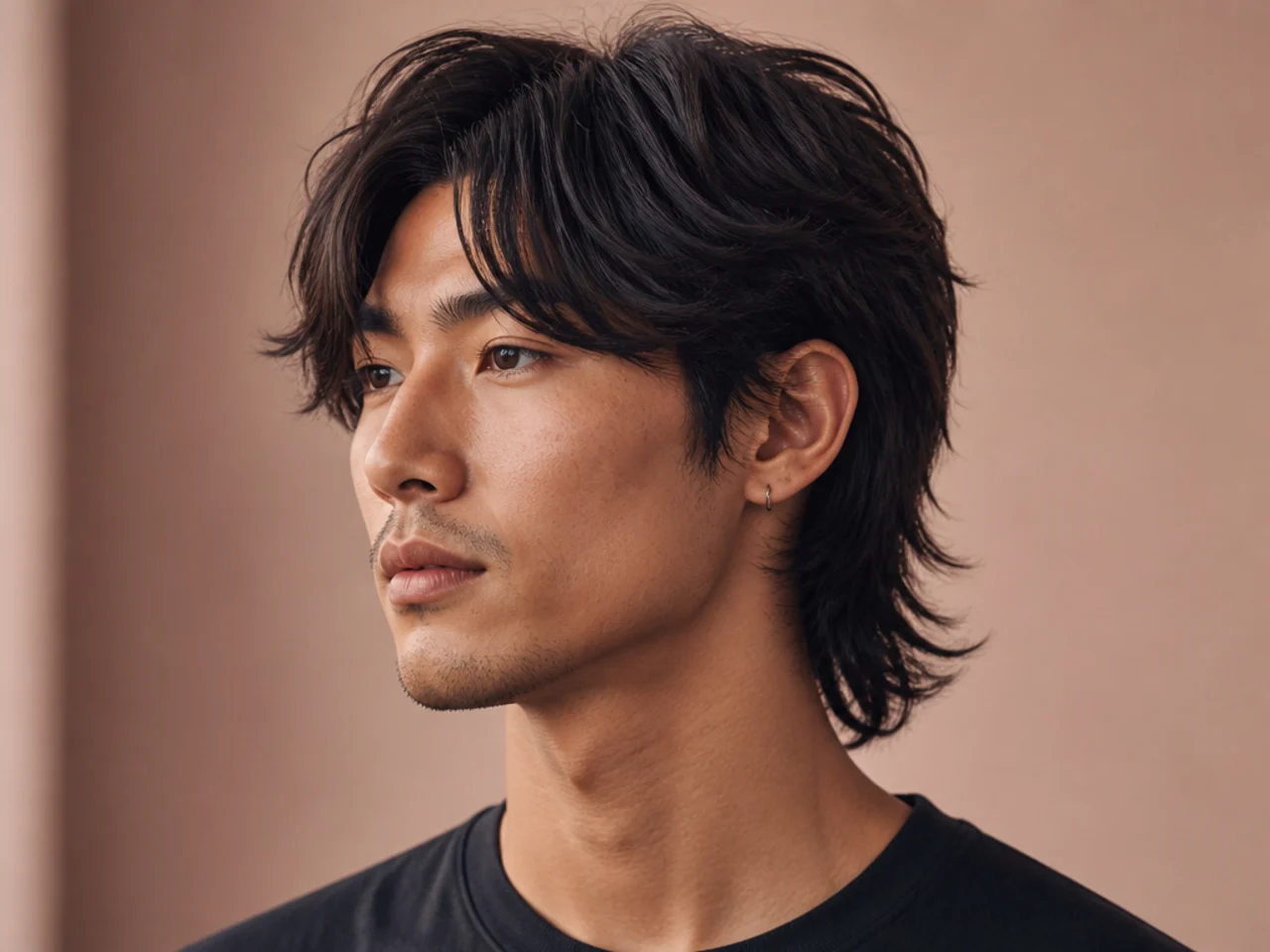
The fringe parts down the middle and drops in equal curtains across the temples. The 90s reference lands modern because the back is a mullet, not a shag. Reads warm, romantic, and slightly unbothered.
Best on medium-thick straight or wavy hair. Suits round, square, and heart faces — the vertical drop of the curtain narrows the profile.
Ask for: "Curtain fringe mullet — four inches on top with a center part, curtain fringe to cheekbone, three-inch layered nape, scissor-blended sides." Blow-dry the fringe forward and split with fingers, no comb line.
5. Side-Swept Fringe Mullet
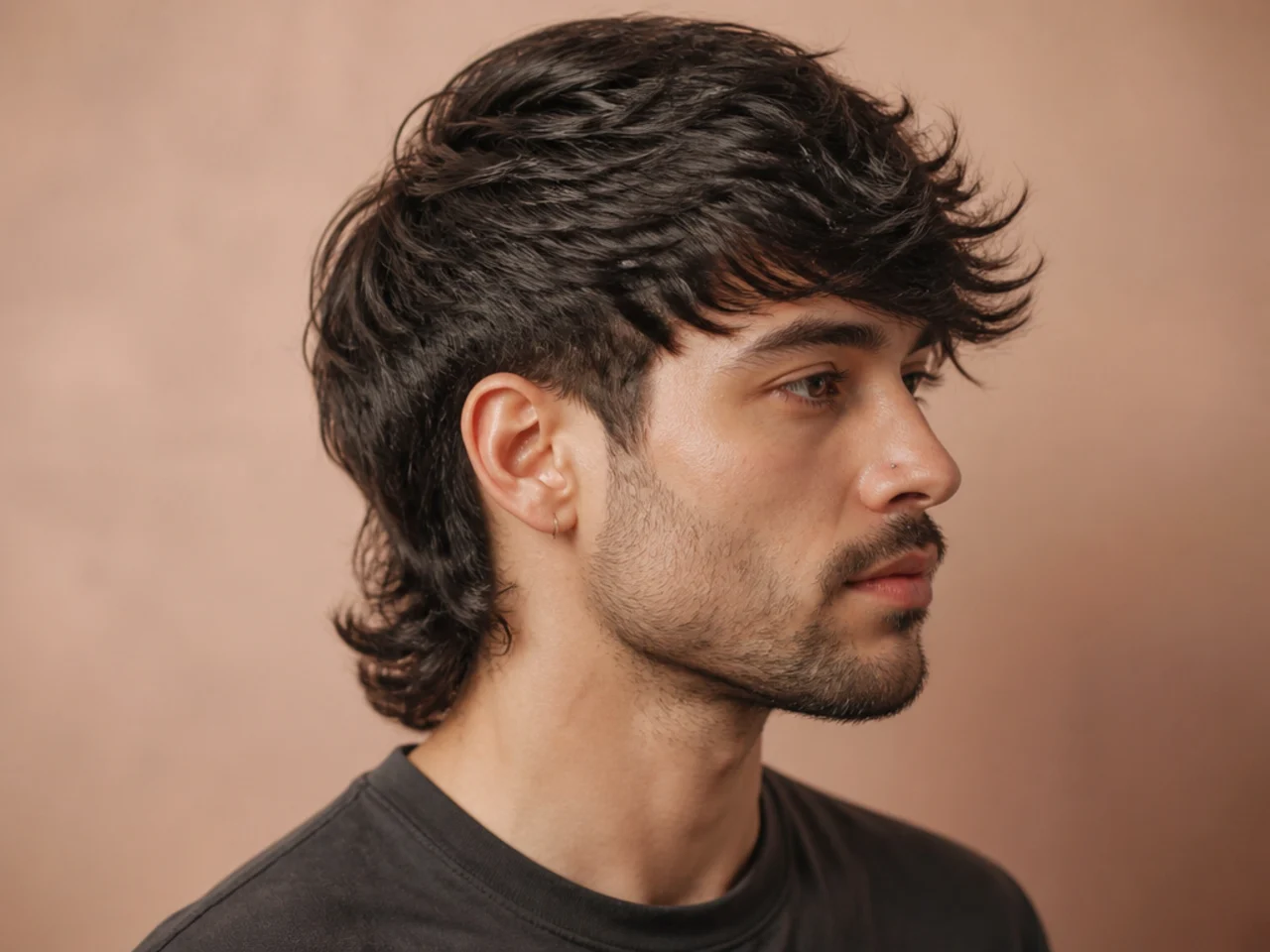
The fringe is cut long on one side and short on the other, then swept across the forehead in one clean angle. The angle carries the eye diagonally, which flatters faces that need visual balance on one side.
Best on straight and wavy hair with any density. Round, square, and heart faces where you want to break symmetry.
Ask for: "Side-swept fringe mullet — three inches on top, angled fringe sweeping across the forehead from left to right, two-and-a-half-inch nape, low taper sides." Light hold pomade on the fringe, comb one direction, lock with spray.
6. Piecey Fringe Mullet
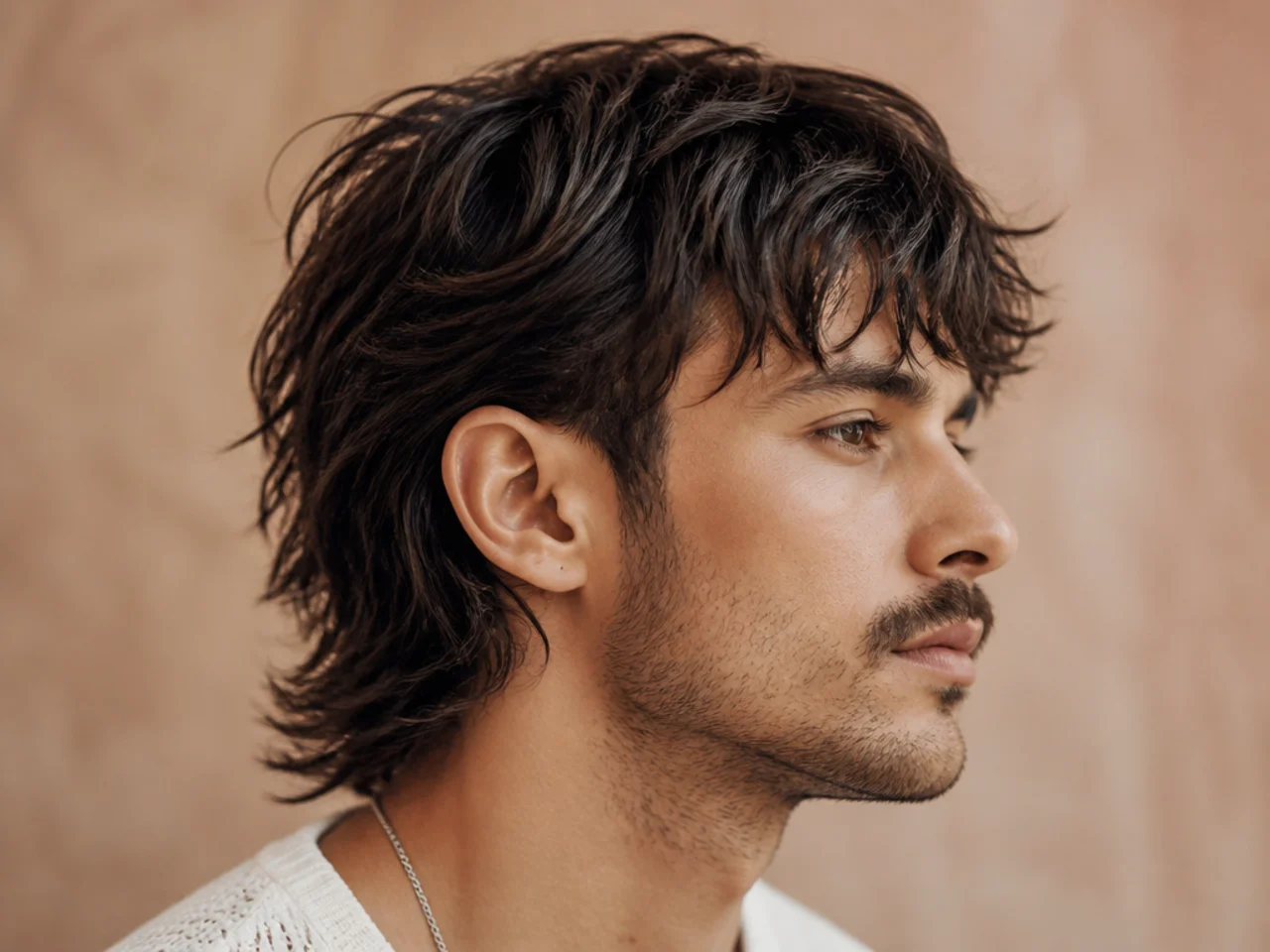
The fringe is cut into deliberate separated pieces — some at the brow, some at the temples, some falling forward as strays. Reads slightly undone in the best way, like the fringe has been slept in and combed with fingers.
Best on medium density hair with a bit of natural texture. Oval, heart, and diamond faces.
Ask for: "Piecey fringe mullet — three inches on top with point-cut pieces at the fringe, two-inch choppy nape, guard 1.5 tapered sides." Matte paste worked between fingertips, pinched into individual pieces at the front.
7. Long Fringe Mullet
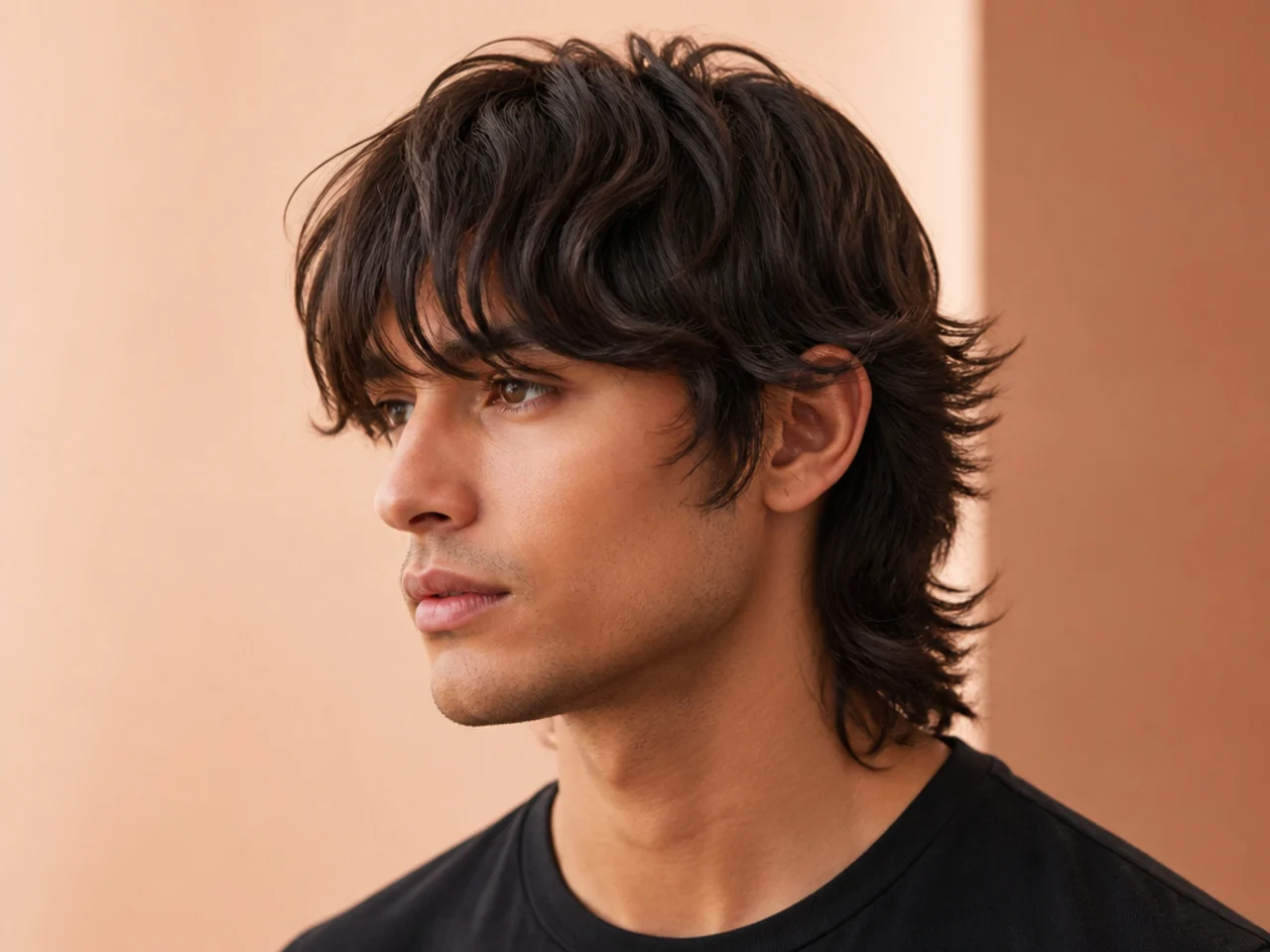
The fringe drops past the brow, sometimes covering the eyes at rest. The back matches at four inches for balance. This is the fringe mullet at its most committed — a real length statement front and back.
Best on straight or wavy hair with strong density. Oval, oblong, and heart faces where the extra length reads intentional rather than heavy.
Ask for: "Long fringe mullet — five inches on top, fringe cut to the tip of the nose, four-inch layered nape, scissor-blended sides." Push the fringe forward when wet, air-dry, and part it out of the eyes with fingers as needed.
8. Short Choppy Fringe Mullet
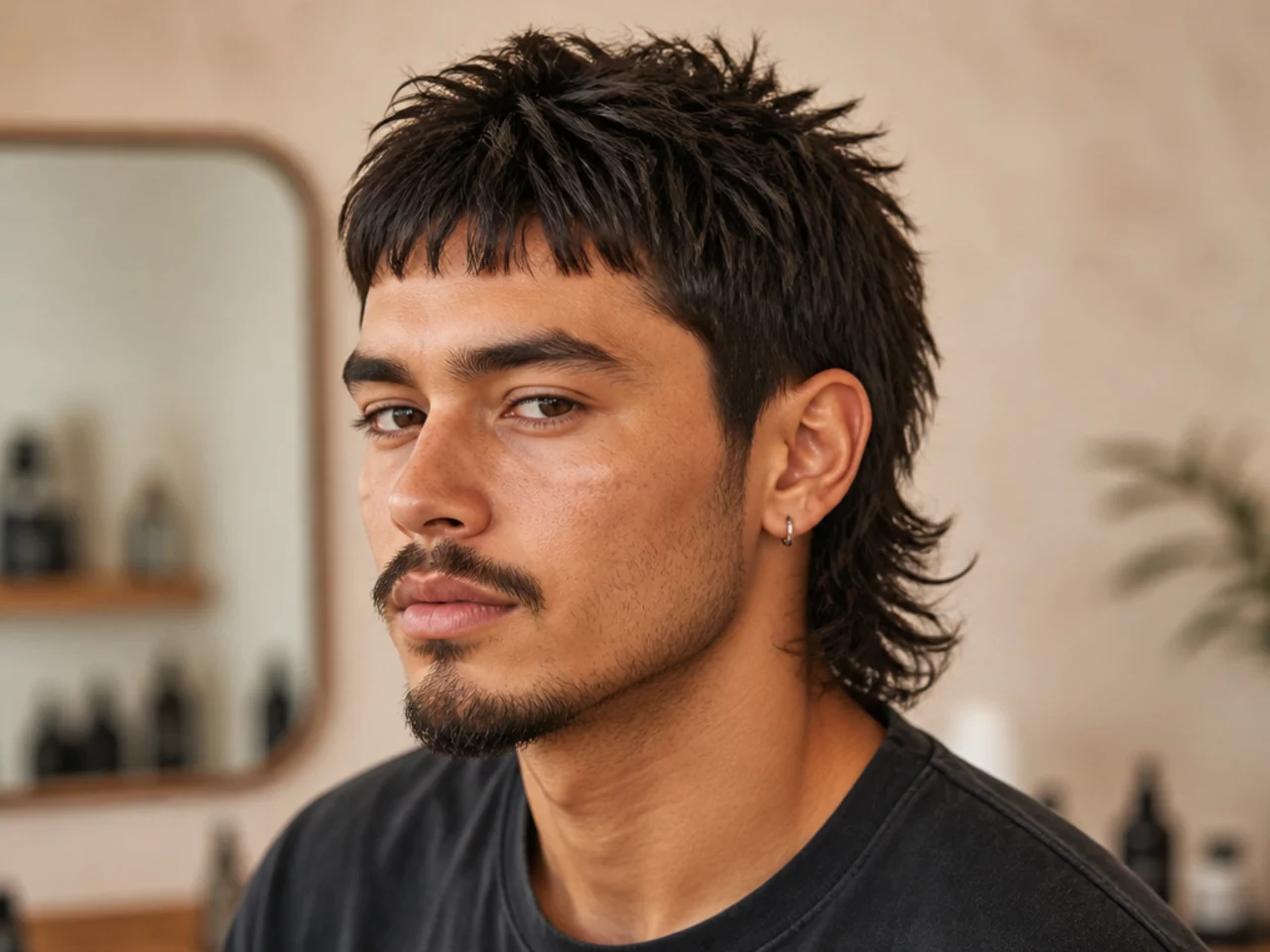
The fringe sits high on the forehead, cut choppy with heavy point-work so the ends read broken and light. Reads French crop from the front — until you catch the mullet sweep at the back.
Best on straight and fine hair that needs visible texture. Round, oval, and square faces where the compact fringe shortens the forehead read.
Ask for: "Short choppy fringe mullet — one-and-a-half inches on top heavily point-cut, fringe sitting one finger-width above the brow, one-and-a-half-inch nape, tapered sides." Texture spray, tousle with fingers, done.
9. Comma Fringe Mullet
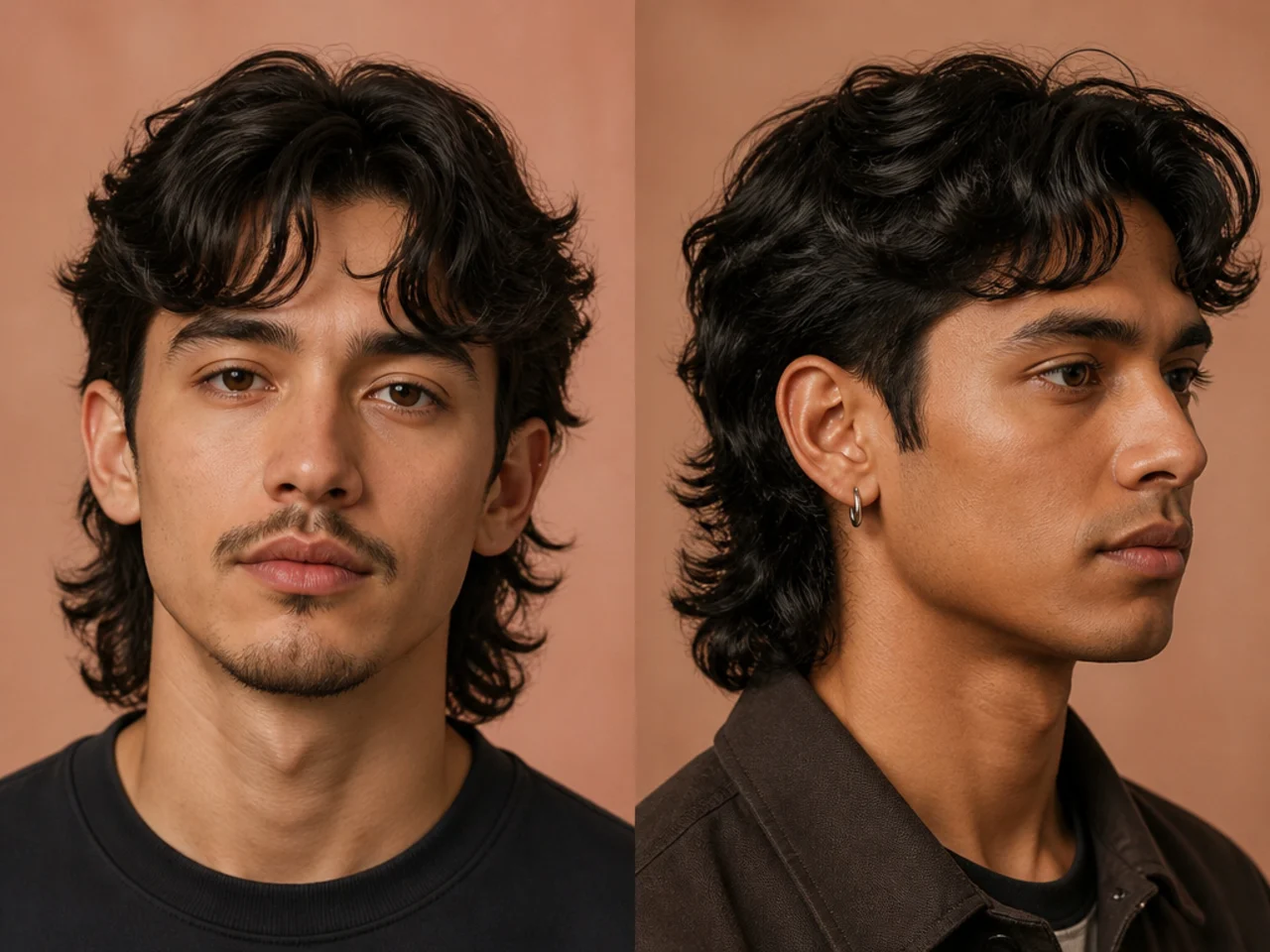
The K-pop signature. The fringe hooks into a comma shape over one brow — soft curl at the tip, longer through the length. Reads clean, sculpted, and specifically Korean. Pairs cleanly with the mullet's soft nape drop.
Best on straight to lightly wavy hair. Oval, heart, and diamond faces because the sweep carries the eye up and out.
Ask for: "Comma fringe mullet — three inches on top, comma-hook fringe curling over the right brow, two-inch nape, low taper sides." Blow-dry the fringe with a round brush, curl the tip inward with a flat iron, lock with hairspray. For the fringe-first version of this cut, see the textured fringe men roundup.
10. Curly Fringe Mullet
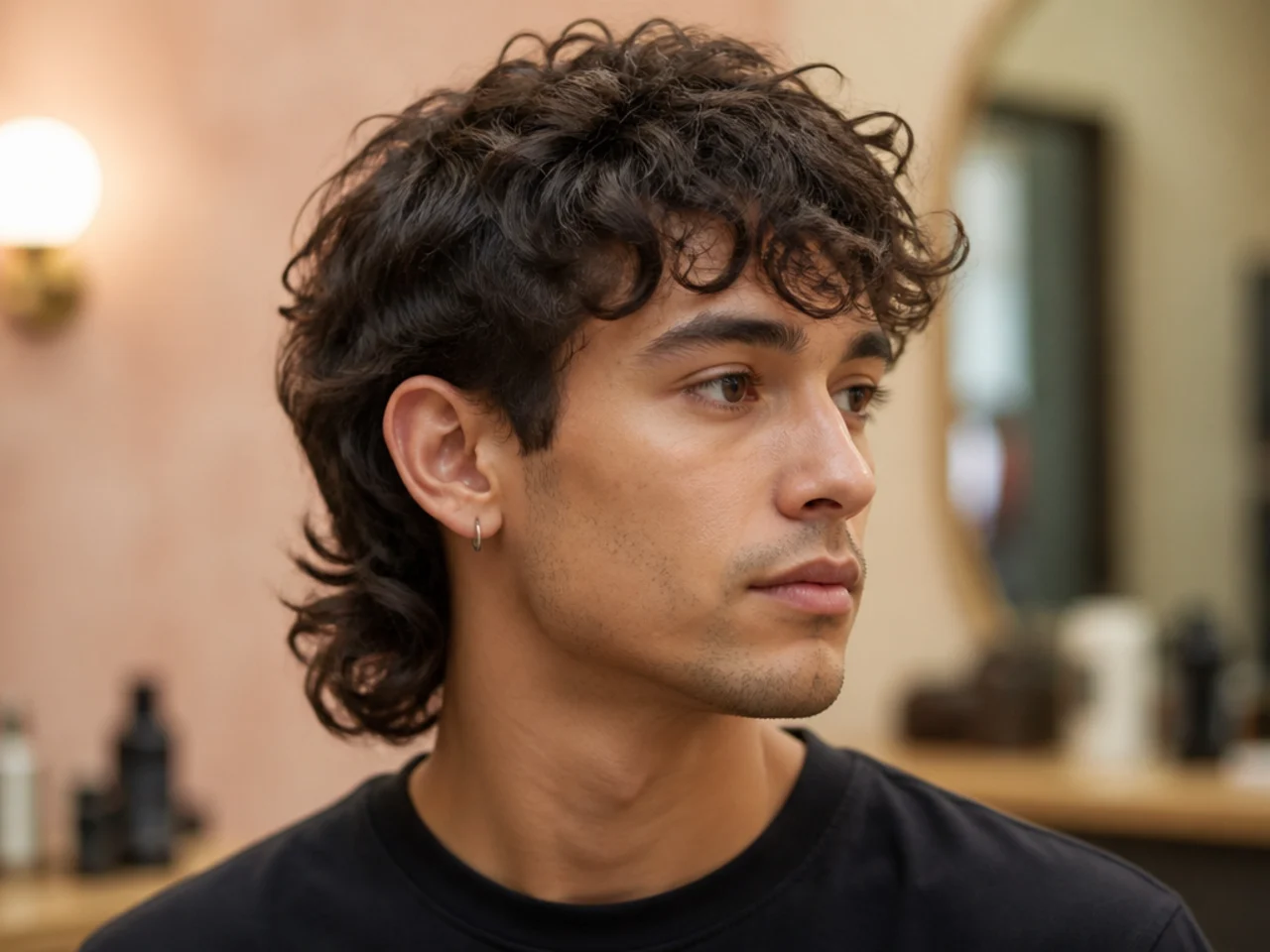
The natural curl at the front becomes the fringe. No cutting into shape — the pattern falls forward and settles as a soft frame across the forehead. The back keeps the same curl carried into a layered mullet.
Best on type 3 curls and coily hair. Any face shape works because the curls build width and height where the face needs them.
Ask for: "Curly fringe mullet — dry-cut only, internal layers to remove bulk, keep the fringe pattern intact at brow length, three-inch curly nape, tapered sides that follow the curl." Curl cream on soaking-wet hair, plop with a T-shirt, diffuse on low heat. For a curly-first mullet with the fringe as a supporting detail, cross-check the curly hair men haircut mullet roundup.
11. Wavy Fringe Mullet
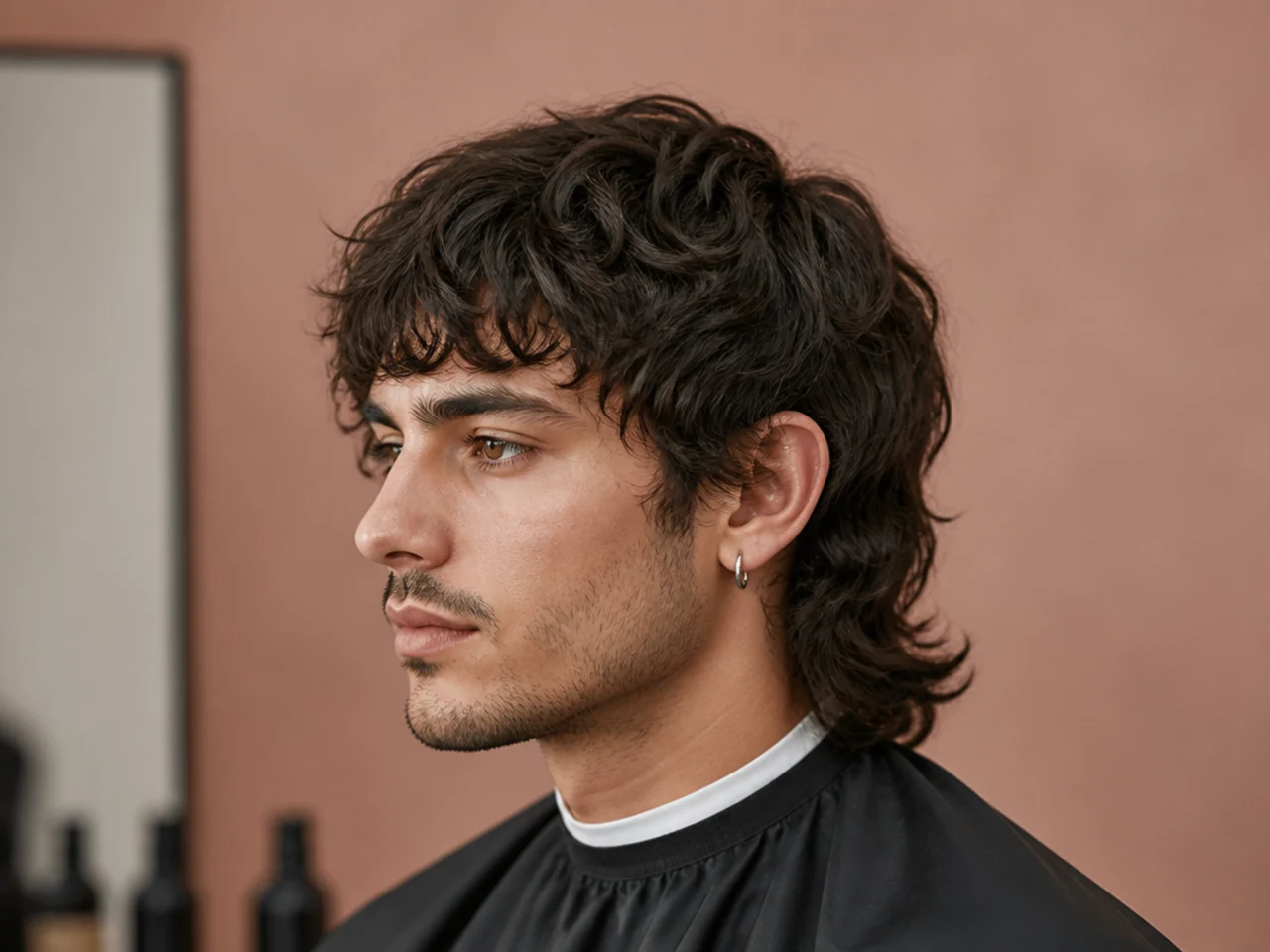
Beachy S-waves through the fringe and the back. Every strand carries visible bend, which builds the shape without any product weight. Reads warm and coastal — the surfer haircut evolved into a mullet.
Best on natural wavy hair with medium to thick density. Suits oval, heart, and oblong faces where the movement adds visual softness.
Ask for: "Wavy fringe mullet — four inches on top cut in the direction of the wave, fringe at mid-brow, three-inch wavy nape, scissor-blended sides." Sea-salt spray on damp hair, scrunch upward, air-dry.
12. Two-Block Fringe Mullet
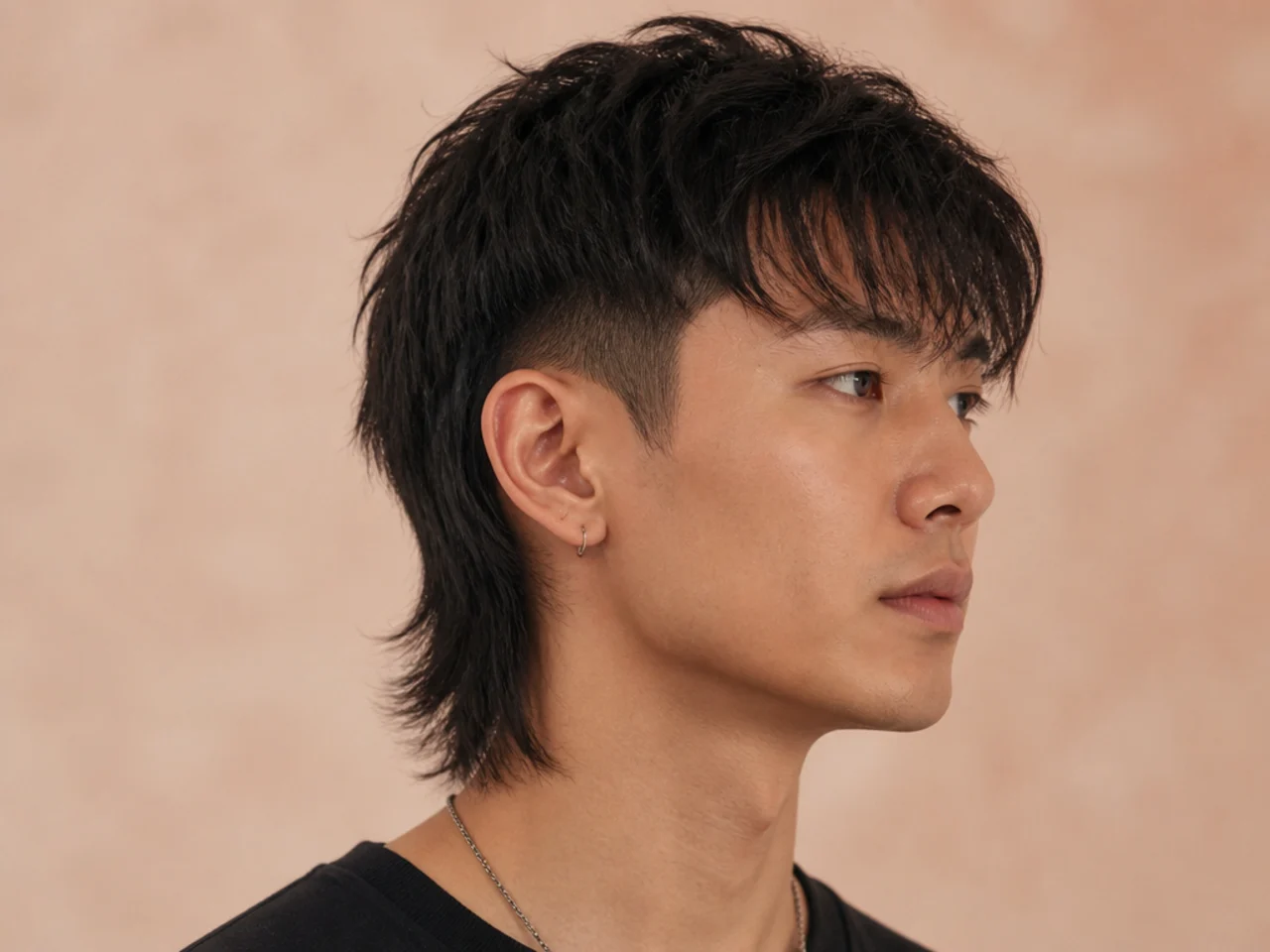
The two-block silhouette — long top and back over an undercut side — with a heavy fringe on the front. The sides sit hidden underneath, so the whole visible cut reads as fringe and mullet. K-pop meets rock.
Best on straight to wavy hair with strong density. Oval and long face shapes because the compact side profile narrows the head.
Ask for: "Two-block fringe mullet — undercut the sides to half an inch, keep four inches on top connecting into a three-inch nape, blunt fringe at the brow." Blow-dry the top backward, split the fringe forward with fingers, finish with hairspray.
13. Low Taper Fade Fringe Mullet
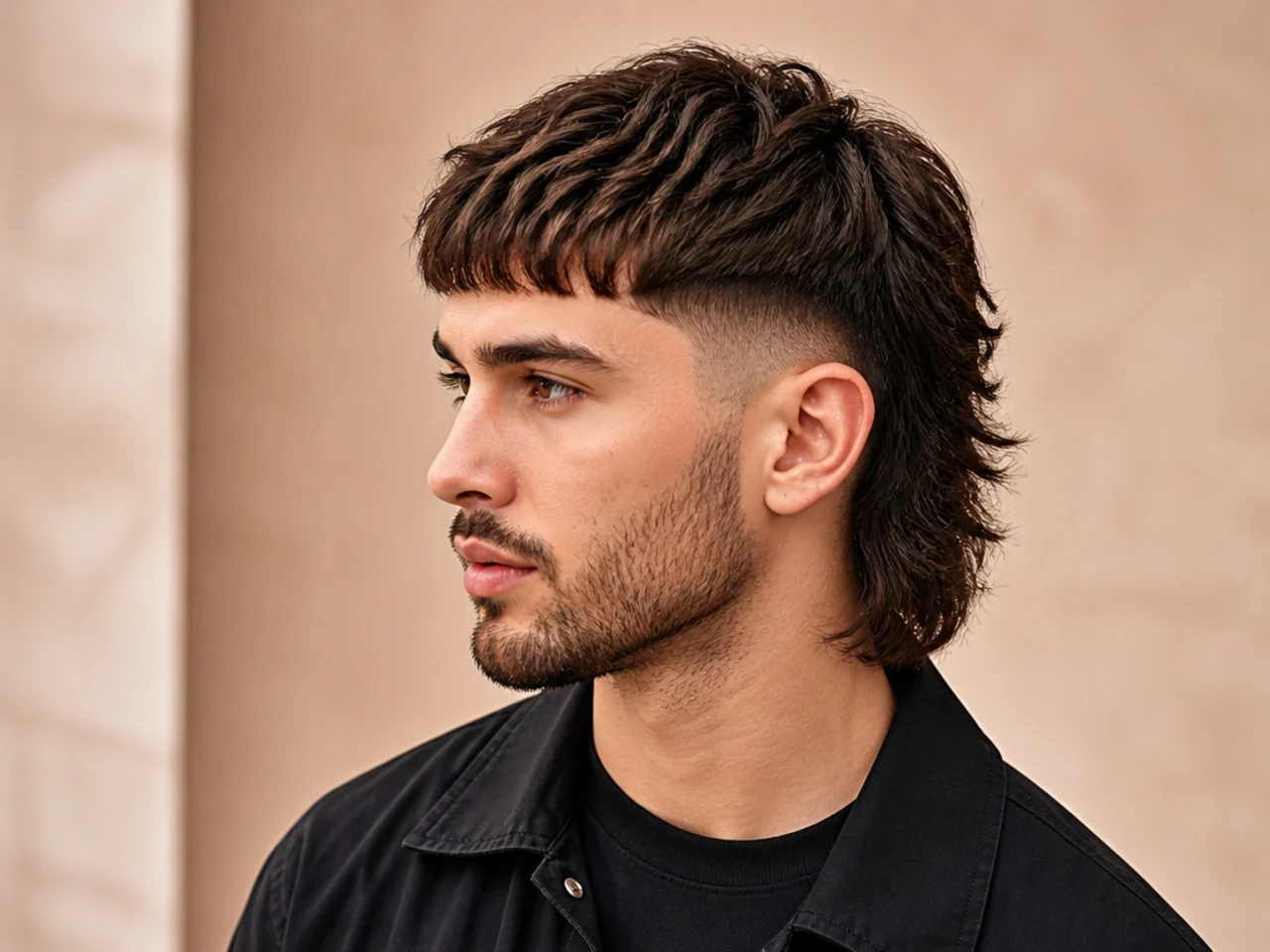
The low taper fade drops from skin at the sideburn and blends up through the sides, so the fringe and mullet sit cleanly on top of a sharp lower half. Reads office-safe from the front, editorial from the side.
Best on any hair type. Any face shape — the fade adapts to whatever length sits above it.
Ask for: "Low taper fade fringe mullet — skin at the sideburn tapering up over an inch, three-inch textured top with brow fringe, three-inch layered nape." Texture cream through the top and fringe, no product on the fade.
14. Mid Fade Fringe Mullet
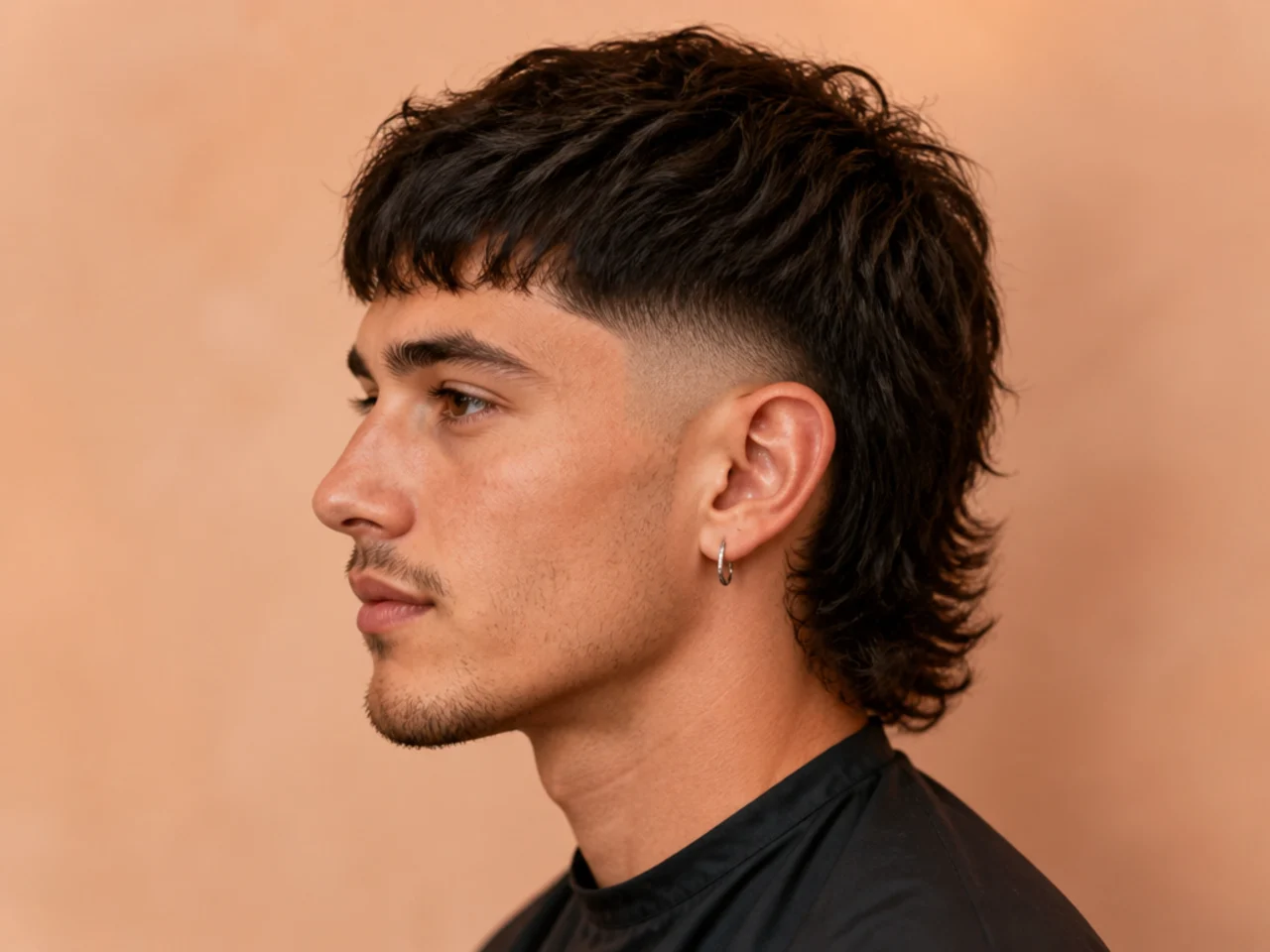
The fade starts higher — around the temple line — for sharper contrast between skin and length. The fringe and mullet read heavier because the sides sit dramatically shorter. This is the statement version.
Best on thick hair that carries the contrast without looking sparse. Square, angular, and diamond faces suit the geometry.
Ask for: "Mid fade fringe mullet — skin fade starting at the temple, two-and-a-half-inch top with heavy forward fringe, two-and-a-half-inch feathered nape." Matte clay through the top and fringe, push the fringe forward and down.
15. Burst Fade Fringe Mullet
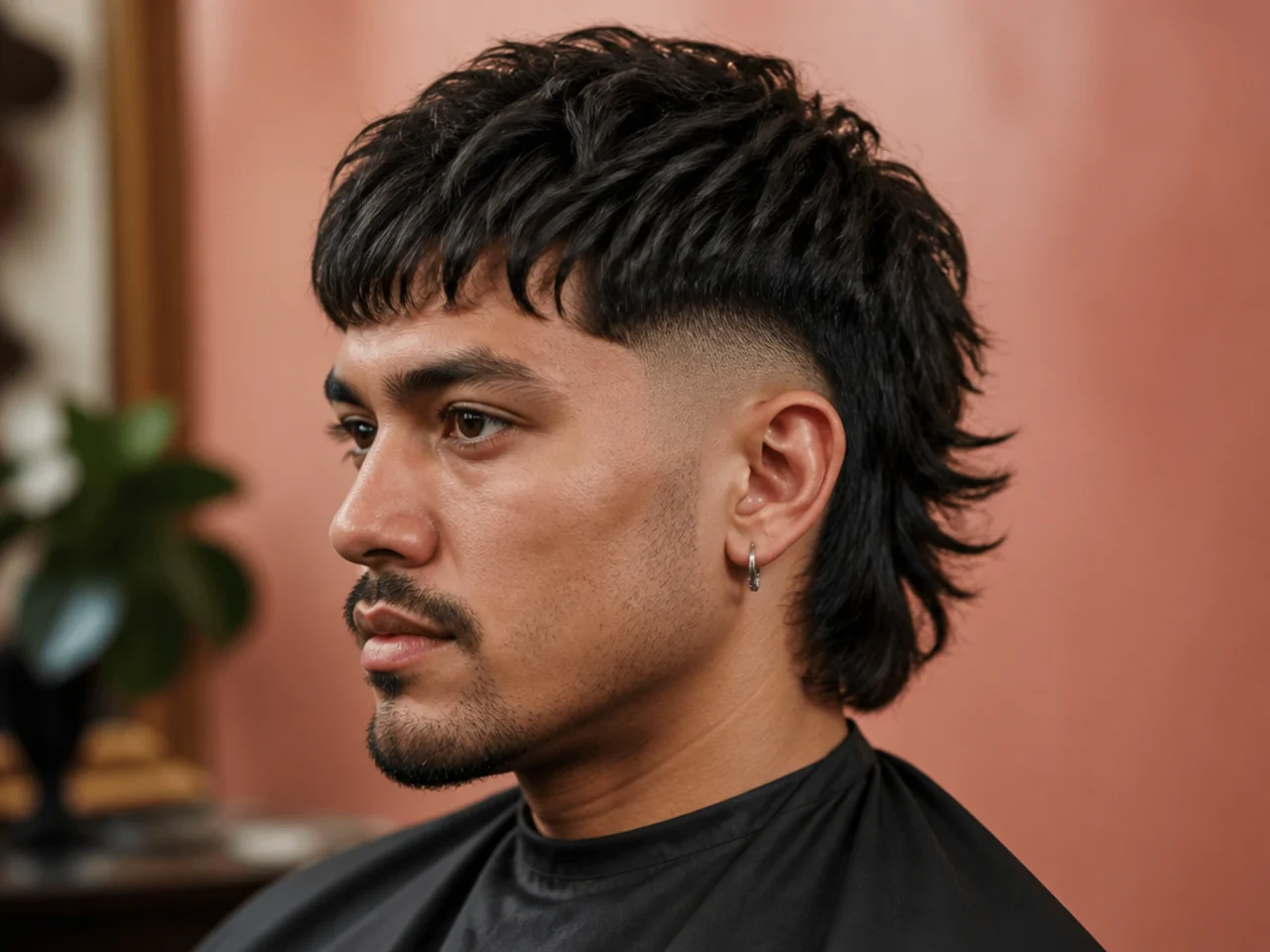
The burst fade curves around the ear in a semi-circle rather than dropping straight down. That leaves length behind the ear untouched, which flows straight into the mullet's back section. A specifically 2020s combination — the burst didn't exist mainstream until this cycle.
Best on any hair type but shines with a bit of texture — waves or slight curl. Oval, square, and diamond faces.
Ask for: "Burst fade fringe mullet — burst fade around each ear, two-and-a-half inches on top with soft forward fringe, three-inch feathered nape, keep the nape line soft." Light-hold cream through the top, air-dry the back.
16. Edgar Fringe Mullet
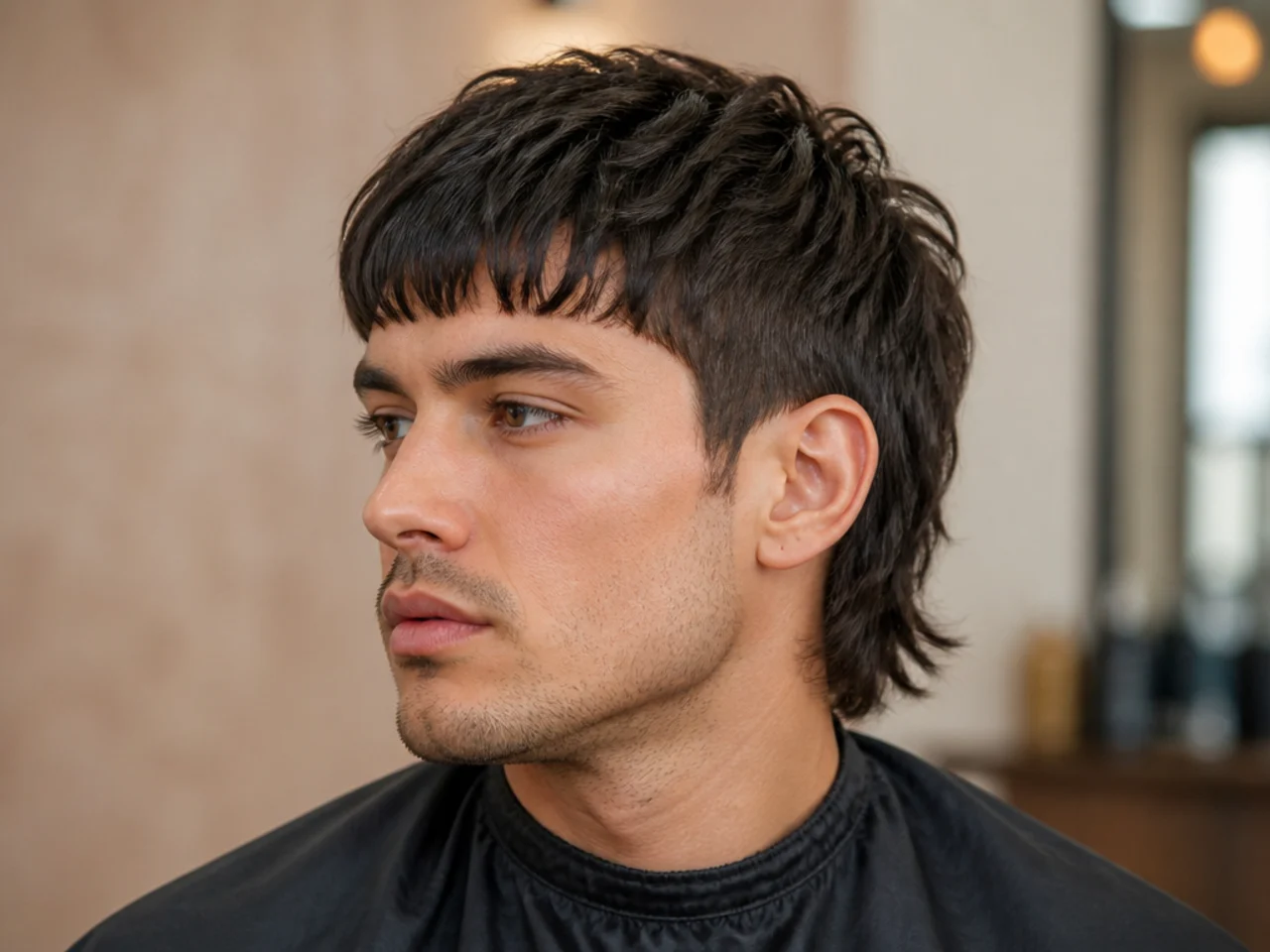
Borrows the Edgar haircut fringe — a hard-cut horizontal line straight across the forehead — and pairs it with a mullet nape. The front reads graphic and defined; the back reads soft and layered. High-contrast on purpose.
Best on straight, dense hair. Oval and square faces where the horizontal line reads confident rather than heavy.
Ask for: "Edgar fringe mullet — one-and-a-half inches on top, hard horizontal fringe line at one finger above the brow, two-inch textured nape, sharp guard 1 line-up at the sides." Matte paste, comb the fringe straight down and flat.
17. Broccoli Fringe Mullet
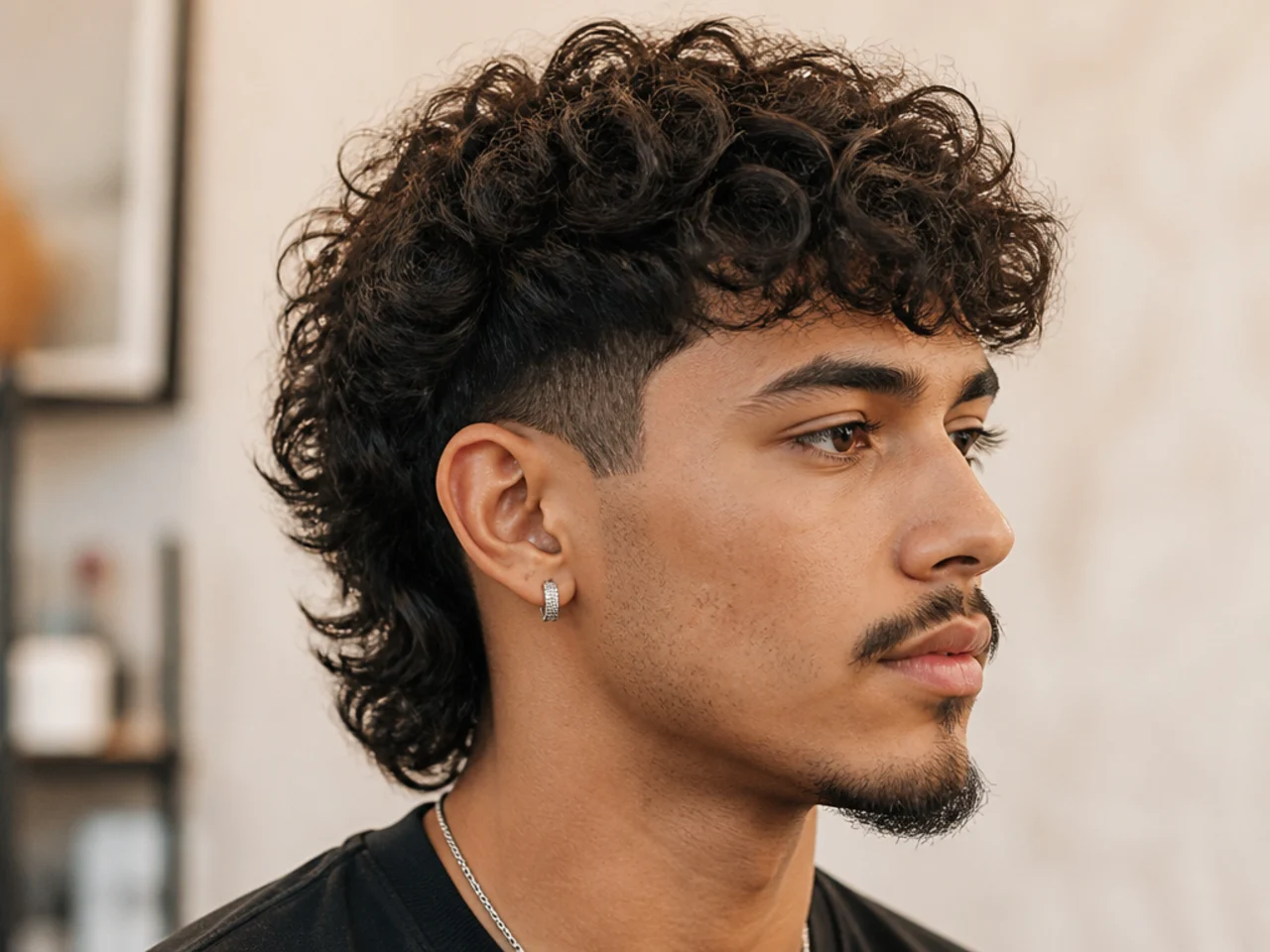
The broccoli haircut volume up top with a mullet running down the back. Permed or naturally curly texture builds the broccoli shape at the crown, and the fringe falls forward as a soft curly frame across the forehead.
Best on curly hair or straight hair with a body perm. Oval, heart, and long face shapes where the volume adds fullness at the crown.
Ask for: "Broccoli fringe mullet — three inches on top with permed or natural curl, soft curly fringe at mid-brow, three-inch curly nape, tapered sides." Curl cream on damp hair, diffuse upward, no brushing.
18. Peso Pluma Fringe Mullet
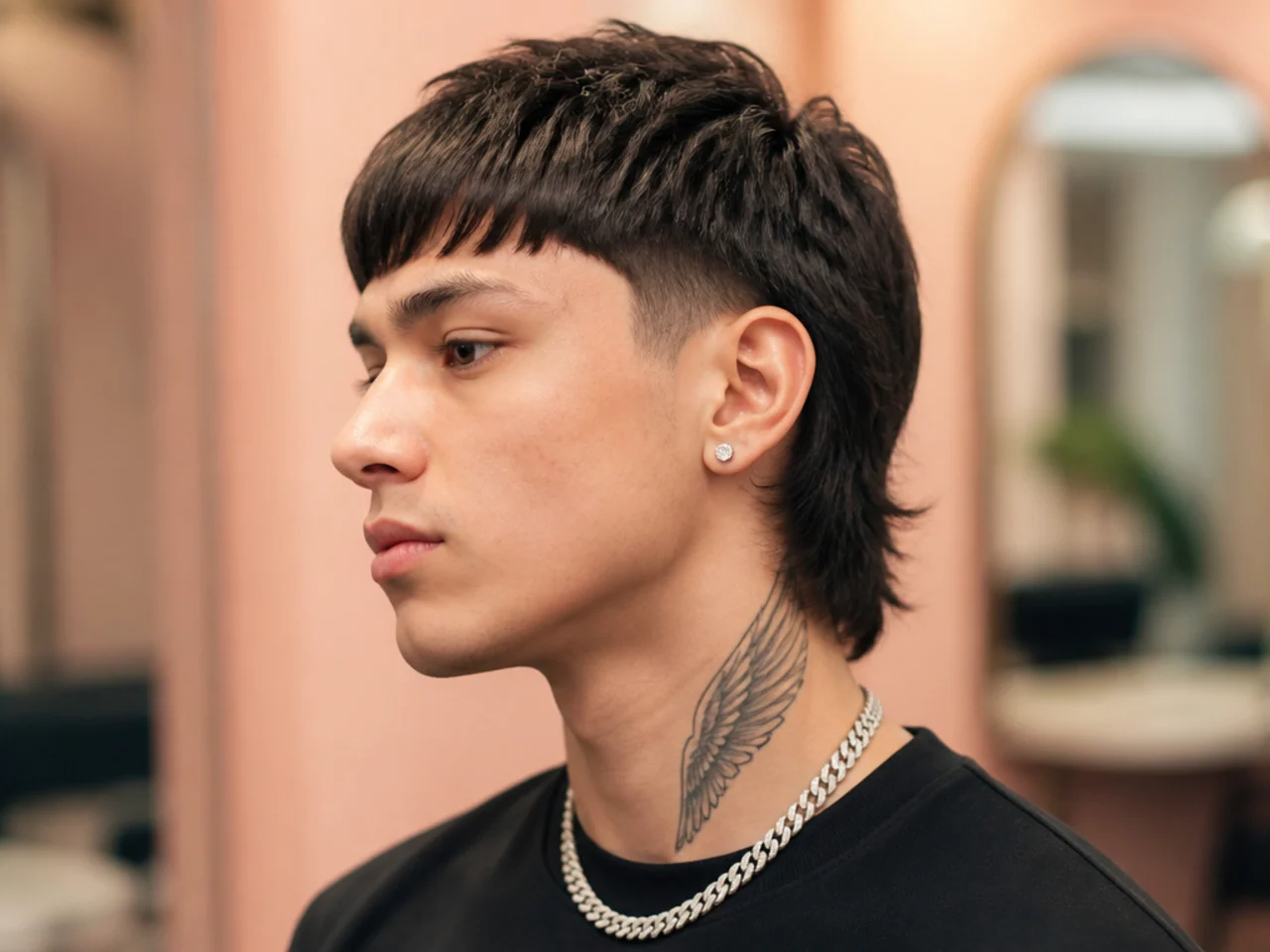
The Peso Pluma haircut reworked as a fringe mullet — a curly, center-parted curtain fringe at the front and a long curly mullet at the back. Latin music's most visible haircut translated into the mullet family.
Best on natural curly or permed hair with thick density. Oval, heart, and long faces where the length reads intentional.
Ask for: "Peso Pluma fringe mullet — five inches on top permed if not naturally curly, center-parted curtain fringe past the cheekbone, four-inch curly nape, scissor-blended sides." Curl cream to wet hair, diffuse, twist a few pieces at the fringe for extra definition.
19. Korean Straight Fringe Mullet
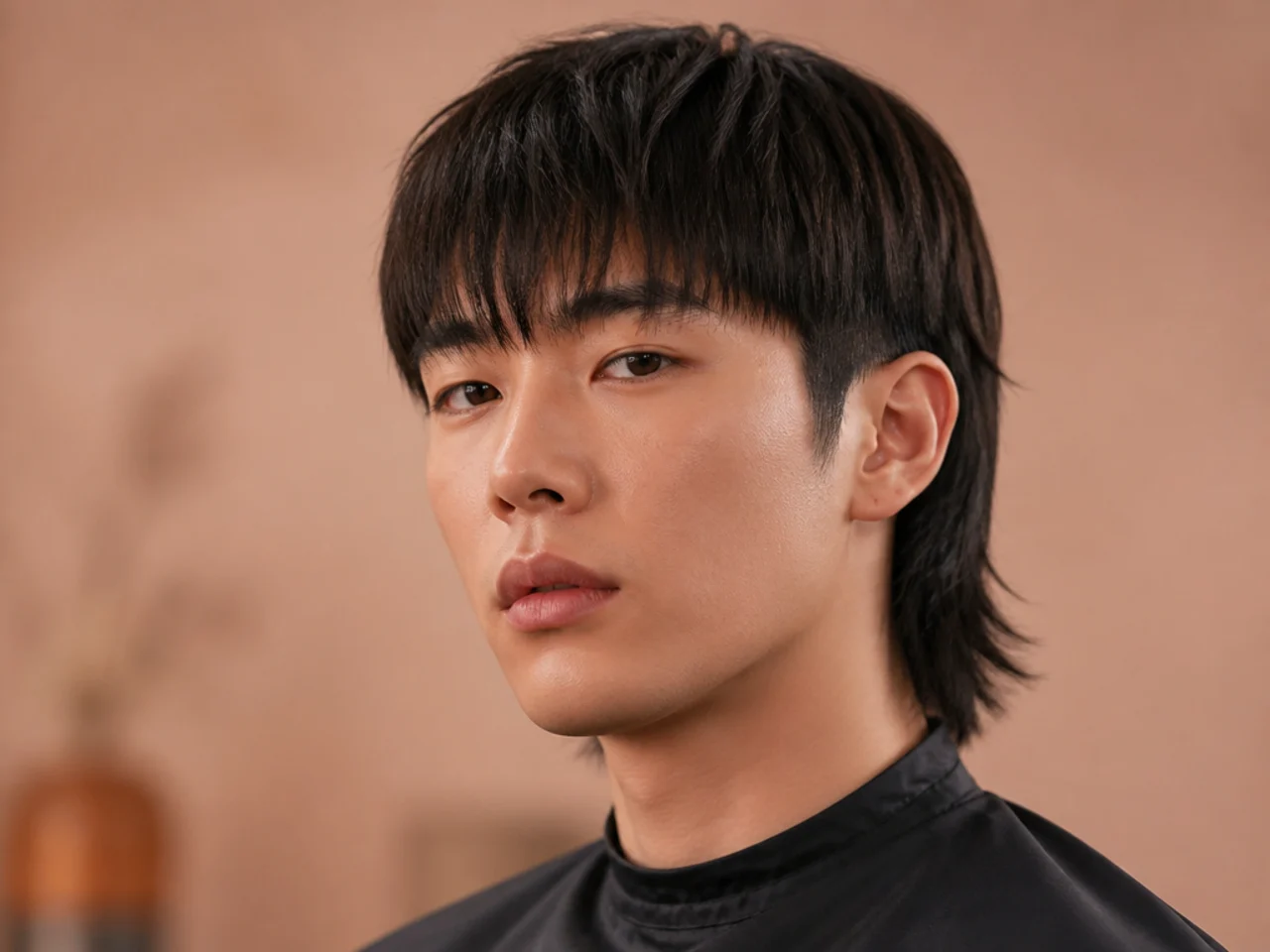
The K-drama edit. A sleek, straight forward fringe that sits precisely at the brow, over a straight-hair mullet at the collar. Every strand is smoothed to sit flat and photograph clean. Pairs cleanly with the Korean haircuts for men aesthetic.
Best on straight, medium-to-thick hair. Oval, square, and heart faces where the smooth finish reads polished.
Ask for: "Korean straight fringe mullet — three-and-a-half inches on top, sleek straight fringe at the brow, two-and-a-half-inch straight nape, scissor-blended sides." Blow-dry the fringe forward with a round brush, flat-iron on low, finish with a shine spray.
20. Grown-Out Fringe Mullet
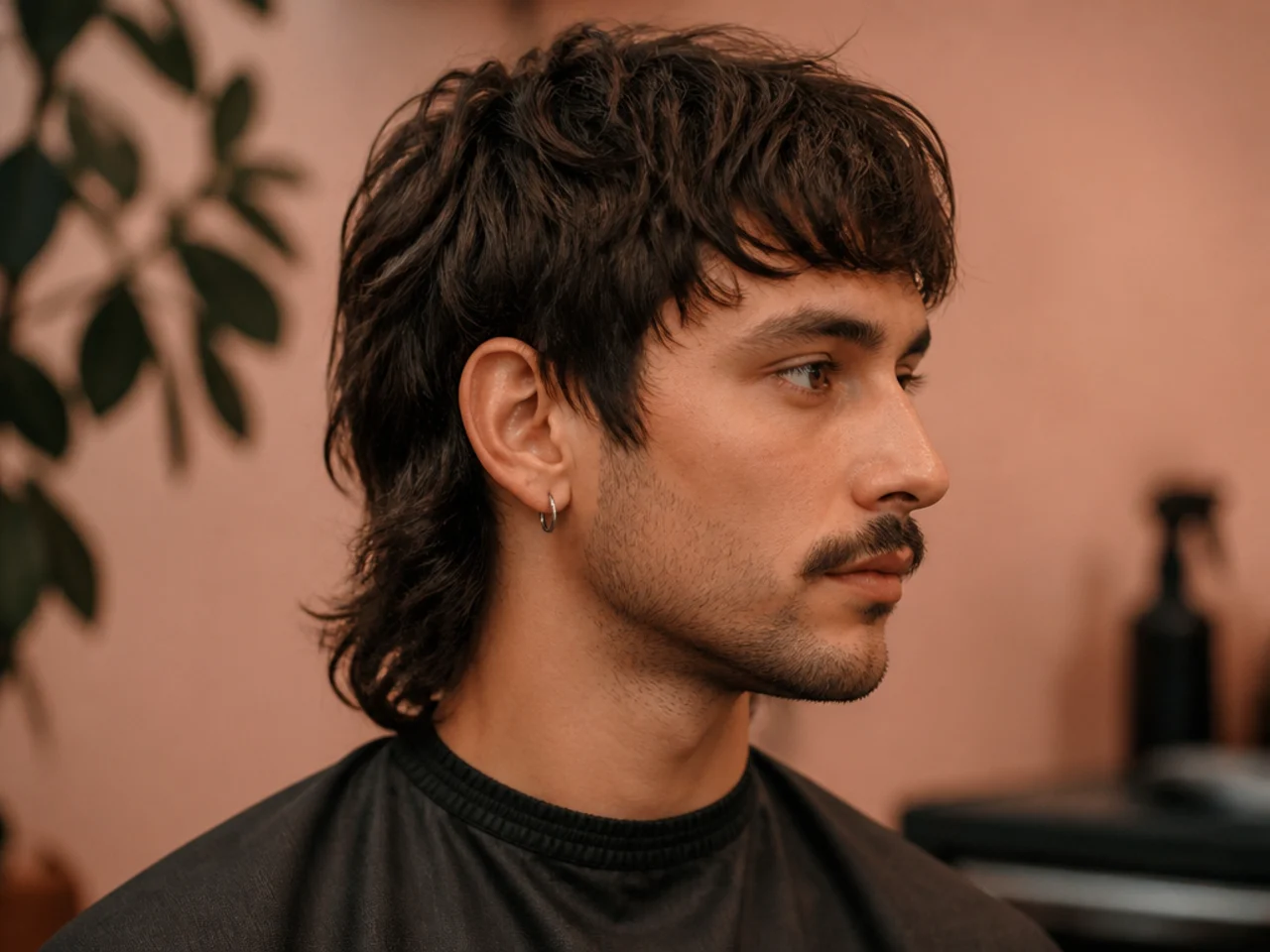
The maxed-out version — fringe past the eyes, back touching the shoulder blade, layers running the full length. Sits between a fringe mullet and a full wolf cut. Requires patience and monthly perimeter trims to keep the shape holding.
Best on wavy or curly hair with strong density. Oval, oblong, and heart faces where the vertical length narrows the profile.
Ask for: "Grown-out fringe mullet — six inches on top, fringe past the eyes cut to sit either side of the nose, shoulder-length layered back, keep the perimeter feathered." Sea-salt spray, scrunch, air-dry — no heat.
How to Ask Your Barber
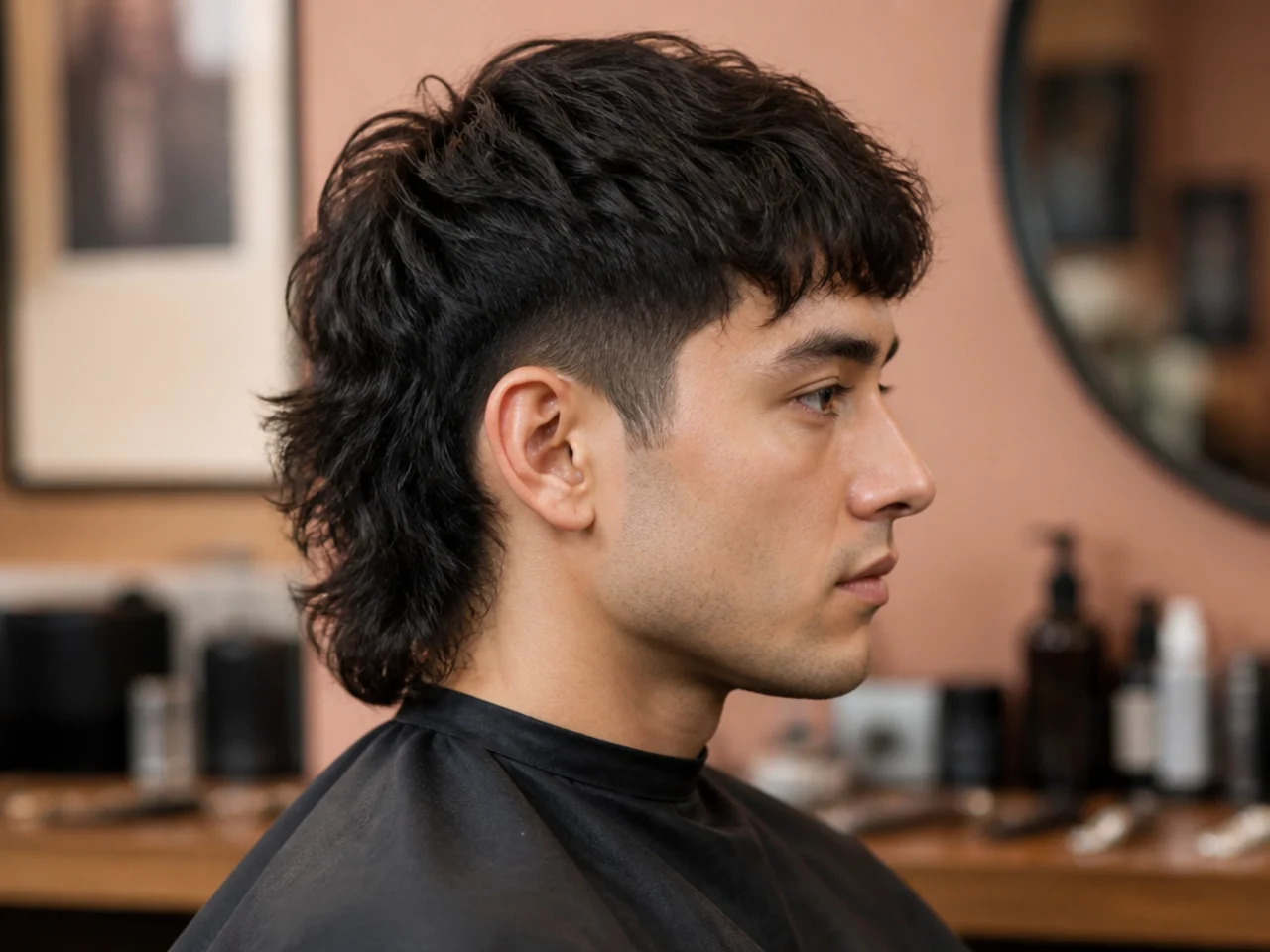
Barbers respond to specifics. Vague requests give you a haircut you did not book. Follow this five-step ask.
- Bring two photos. One from the front showing the fringe you want, one from the side showing the back length. Written descriptions get lost — pictures do not.
- Name the fringe first. Comma, curtain, blunt, wispy, piecey, side-swept, or long. This is the front frame — say it before the mullet.
- Give the back in inches. "Two-and-a-half inches at the nape" is a number your barber can measure. "Kind of medium" is not.
- Call the side treatment. Scissor-blended for office-safe, low taper fade for a clean line, mid or burst fade for a statement, two-block undercut for the K-pop version.
- Confirm the fringe finish. Point-cut, razored, blunt, or dry-cut. Each finish reads differently against the same length.
If you are switching from a short cut, budget four to five months of grow-out before the first fringe mullet shape-up. Book a trim every six to eight weeks during the grow-out to keep the perimeter clean.
Styling & Maintenance
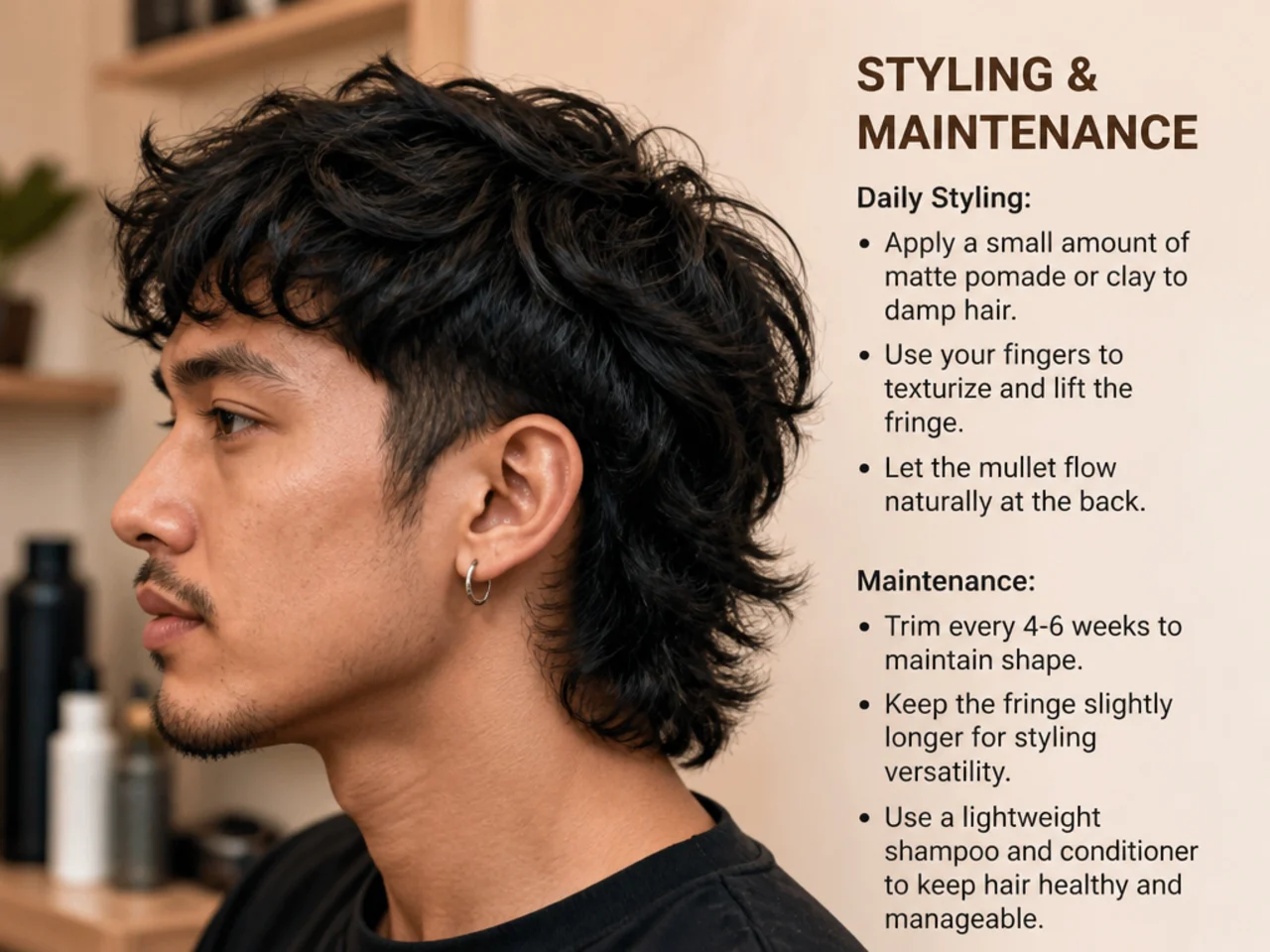
The fringe mullet is a low-effort cut once it is dialed in. Two products cover most versions — a matte clay or paste for the top and fringe, and a sea-salt spray or texture cream for the layered back. That is it.
Wash frequency depends on your scalp. Straight hair with normal oil holds the shape for three days between washes. Wavy and curly hair can push to four or five with a co-wash in between. A sulfate-free shampoo protects any perm or bleach in the fringe from stripping too fast.
Rough-dry the fringe forward with fingers — never brush it dry. Once it is 80% dry, work a pea-sized amount of clay through the top and pinch the fringe into shape at the brow. Finish the back with a mist of sea-salt spray and a scrunch. Air-dry any wave or curl the rest of the way. Clippers matter less on a fringe mullet than on a fade, but a decent set — see our best hair clippers for men guide — helps if you touch up your own sideburns between cuts. For wave-carrying products through the mullet nape, the best wavy hair products roundup covers what actually holds.
Book a re-cut every four to six weeks for scissor-blended sides, every two to three for a fade. Fringe-only trims sit between full appointments — most barbers charge a walk-in rate of ten to fifteen dollars for a fringe shape-up, which keeps the front line sharp without waiting for the full cut.
FAQ
What is a fringe mullet haircut for men?
A fringe mullet pairs a deliberate forward fringe — comma, curtain, blunt, or brow-length wisps — with the modern mullet's two-length back. The fringe frames the face and gives the cut a signature from the front. The layered nape sits between two and four inches for movement from the side.
Which face shape suits a fringe mullet best?
Oval and heart faces suit any fringe. Round faces want a side-swept or curtain fringe with vertical lift at the crown. Square faces soften with a wispy or piecey fringe. Long faces stay shorter on top and heavier at the brow to shorten the vertical read.
How long does my hair need to be for a fringe mullet?
Enough to reach the eyebrows at the front and one full finger-width past the collar at the back — usually four to five inches through the fringe and three to four at the nape. Growing out from a short cut takes three to four months before the first shape-up.
Do fringe mullets work on curly or wavy hair?
Yes — curly and wavy hair carries a fringe mullet with almost no styling effort. Ask for a dry cut so the barber sees the pattern, and request internal layers to keep the crown from stacking wide. Curl cream on wet hair, air-dry or diffuse, done.
How do I style a fringe mullet in the morning?
Rough-dry the front forward with fingers, work a matte cream or paste through the top and back, and finish the fringe with a light pinch of clay. Total time is under three minutes. Skip the blow-dryer on the back if you want the layers to sit soft.
How often does a fringe mullet need a re-cut?
Every four to six weeks for scissor-blended sides, every two to three for a fade or taper. The fringe blows the shape first — book a fringe-only trim halfway between full cuts if you want to keep the forehead line sharp without paying for a full appointment.