20 Easy Male Wolf Cut Styles For Everyday Wear
Twenty male wolf cut variations, and the thing that actually decides whether yours holds its shape by mid afternoon — how much weight comes out of the interior, not how long you leave the back.
In this article · 27
- What a Male Wolf Cut Actually Is
- How to Pick Your Version
- The 20 Male Wolf Cut Styles
- 1. Short Wolf Cut
- 2. Mid Length Wolf Cut
- 3. Wolf Cut With Curtain Bangs
- 4. Wavy Wolf Cut
- 5. Curly Wolf Cut
- 6. Straight Hair Wolf Cut
- 7. Wolf Cut With a Tapered Nape
- 8. Wolf Cut With an Undercut
- 9. Korean Wolf Cut
- 10. Shaggy Wolf Cut
- 11. Wolf Cut With a Middle Part
- 12. Wolf Cut With a Side Part
- 13. Textured Crop Wolf Cut
- 14. Wolf Cut for Thick Hair
- 15. Wolf Cut for Fine Hair
- 16. Long Wolf Cut
- 17. Wolf Cut With Face Framing Layers
- 18. Air Dried Wolf Cut
- 19. Blow Dried Wolf Cut
- 20. Wolf Cut at Week Ten
- Styling and Upkeep
- Mistakes to Avoid
- FAQ
- Final Thoughts
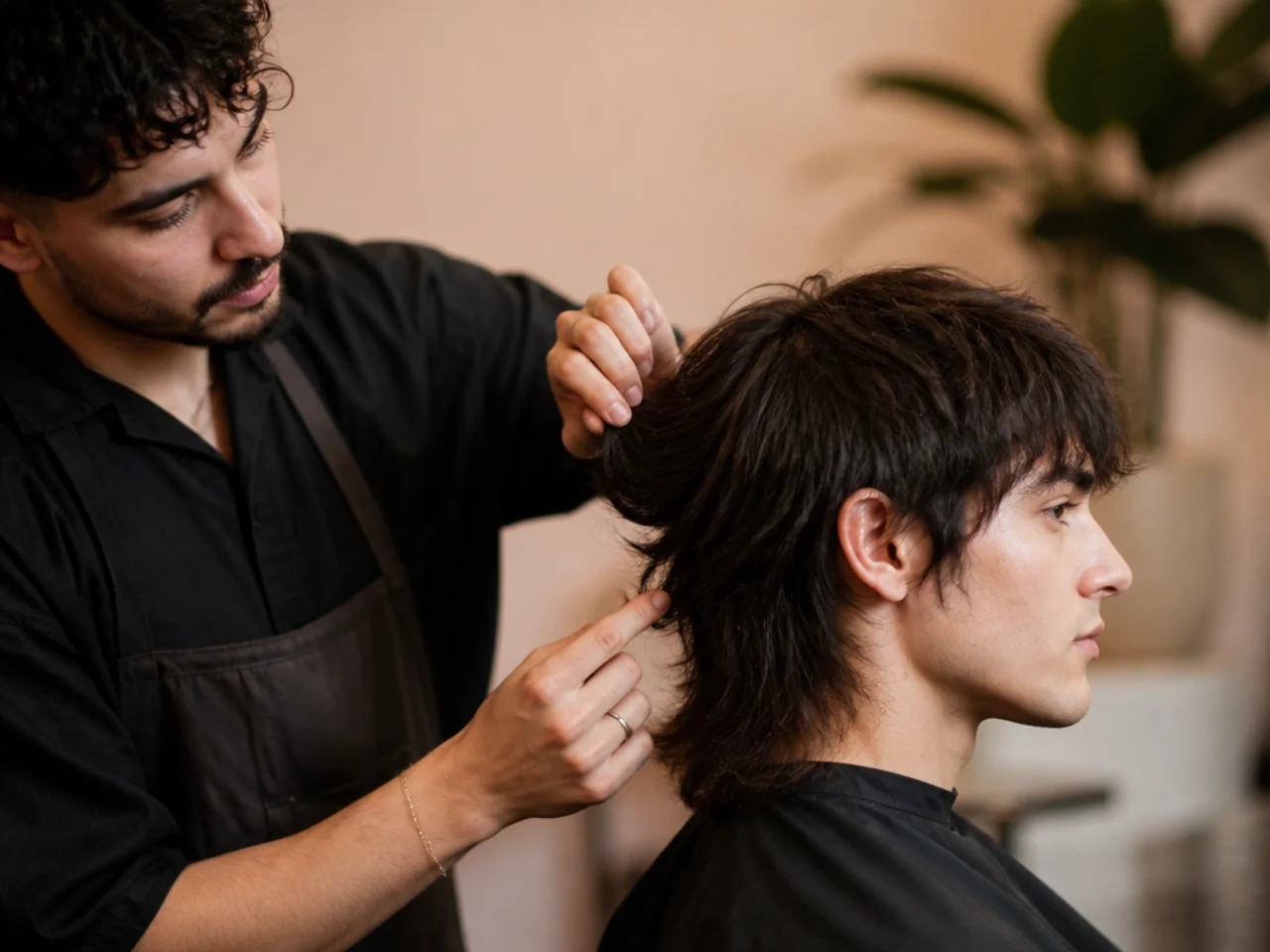
Most men asking for a wolf cut describe the length they want at the back and say nothing about the interior, which is the part that decides whether the cut holds.
The volume comes from short crown layers, not from length. Those layers sit on top of the longer ones underneath and prop them up. Take them out and you have a shapeless grow out.
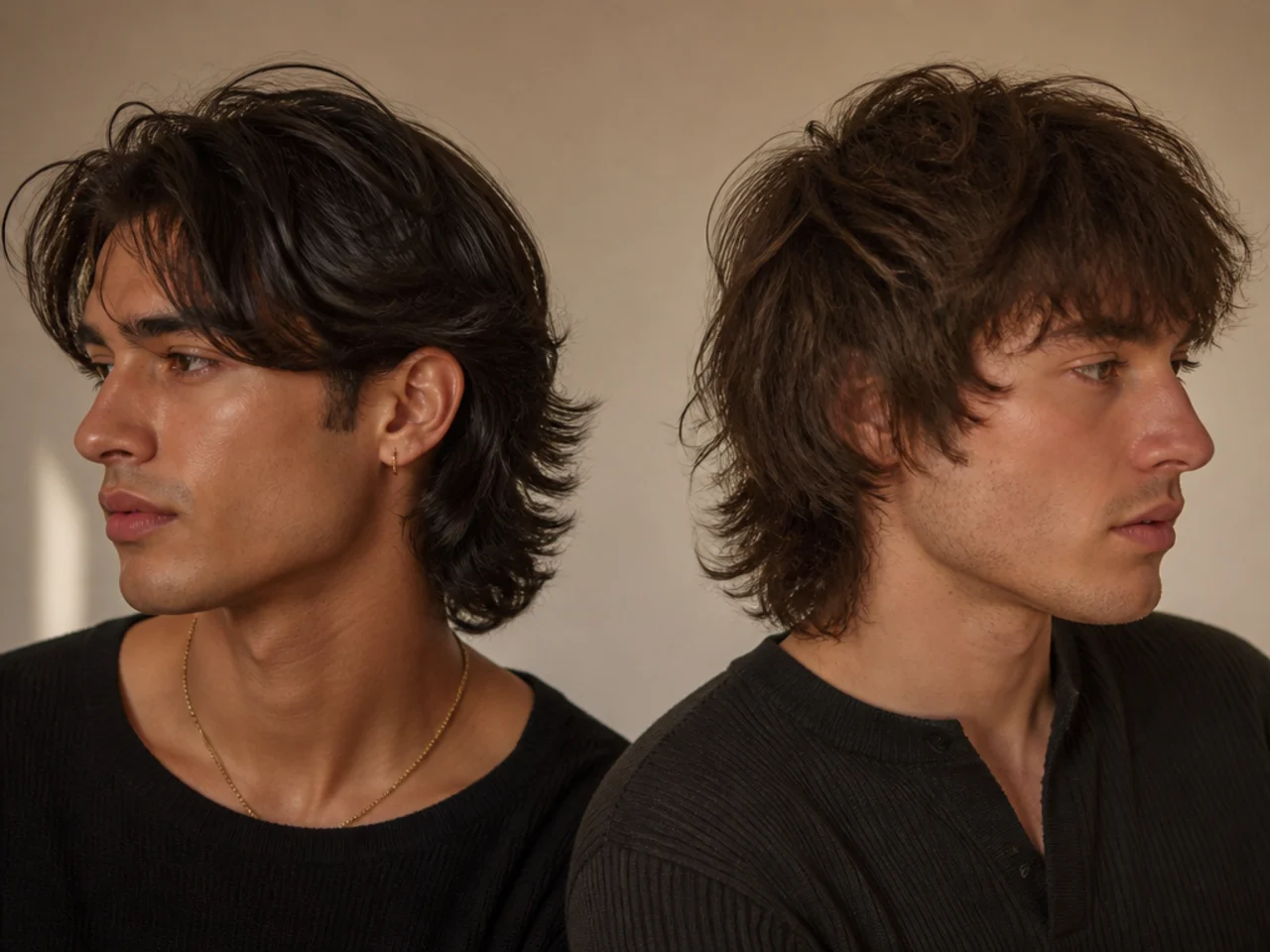
A wolf cut is layered through, a mullet is not. The mullet keeps a visible break between the top and the back. The wolf cut blends that break away.
What a Male Wolf Cut Actually Is
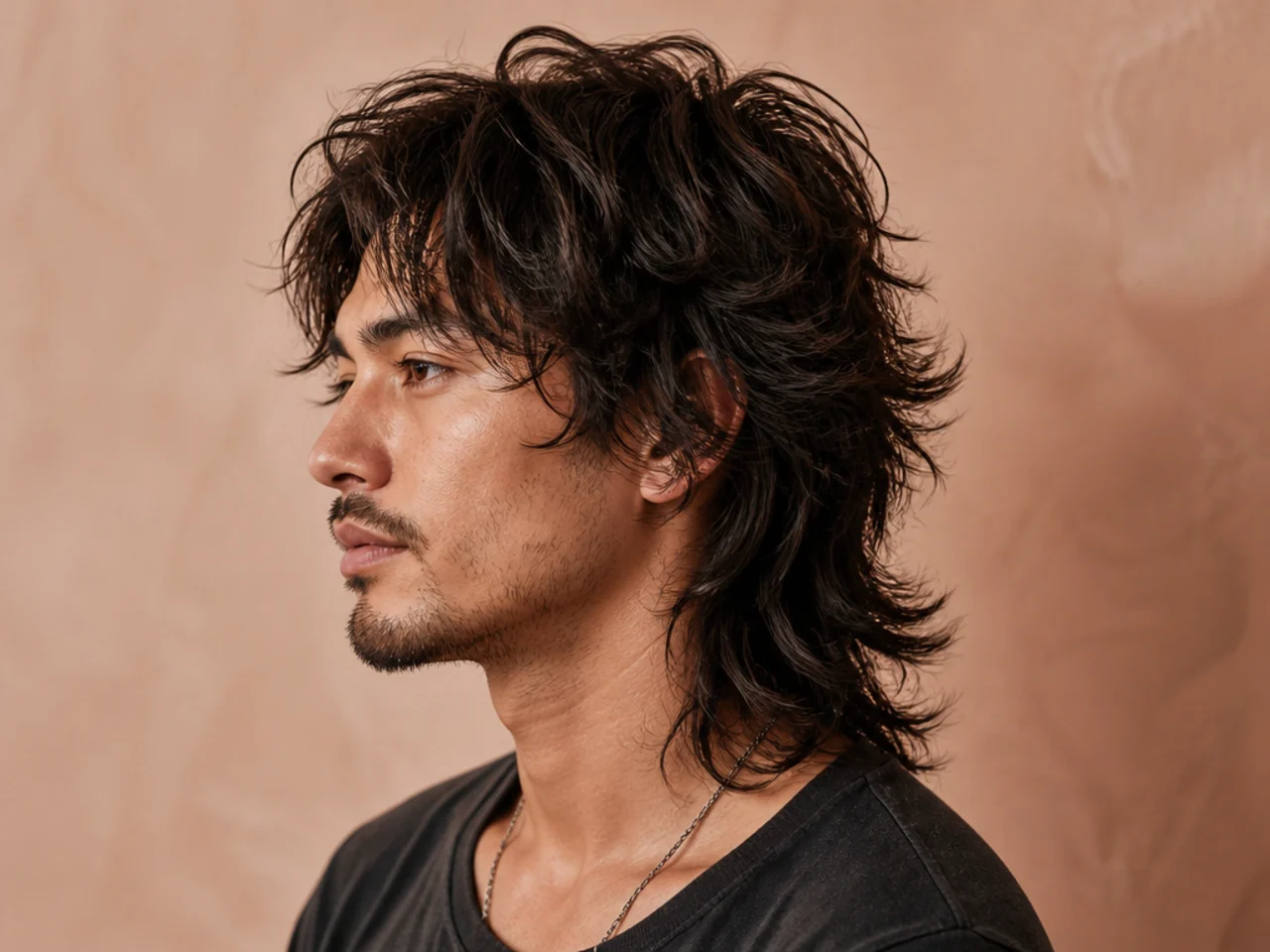
Short layers at the crown, long ones at the perimeter. The shortest interior length sits two to three inches above the longest. That gap is the whole cut.
The layers stack rather than hang. Each shorter section rests on the one below it, which is what lifts the crown. Remove the stack and the hair sits flat against the skull.
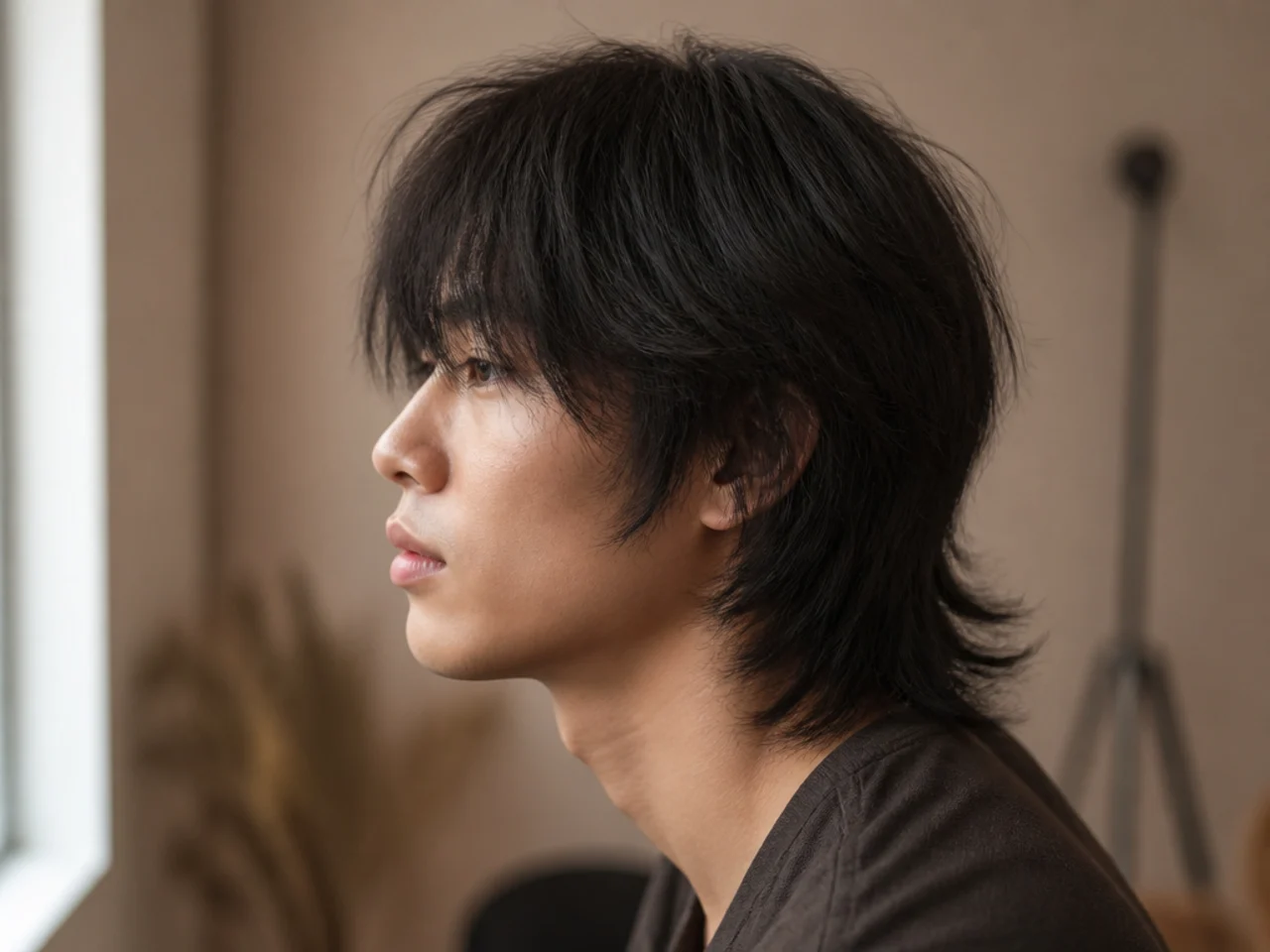
The nape stays longer than the sides. Not dramatically, but enough to give the silhouette its back weight. That is what carries the mullet inheritance.
Weight removal is not the same as length removal. A barber can take half the bulk out of the mid lengths without shortening the outline by a centimetre.
How to Pick Your Version
Match the layer depth to your density. Thick hair can lose a lot of interior weight and still hold shape. Fine hair loses the perimeter entirely if you cut past the mid lengths.
Decide the nape length before anything else. Collar length reads as a wolf cut, past the collar reads as a mullet, and above the hairline reads as a shag.
Let your texture set the styling load. Waves and curls hold the layers with no product. Straight hair needs a spray every morning or the shape lasts an hour.
Be honest about the grow out. This cut looks intentional for two months and then thickens at the perimeter, so book the trim before it does.
The 20 Male Wolf Cut Styles
1. Short Wolf Cut
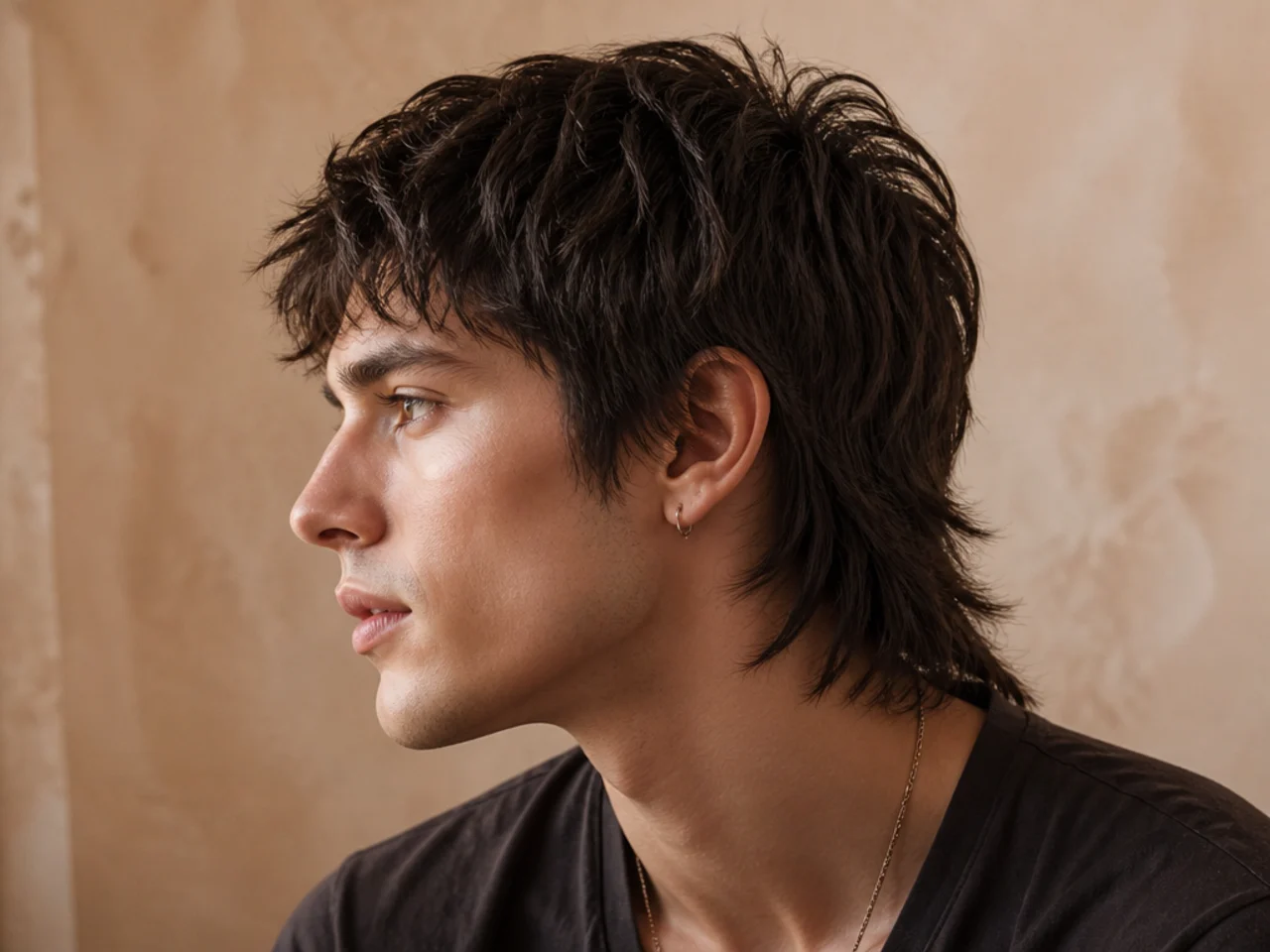
The crown layers stop around two inches and the nape barely clears the collar. Because the gap between the shortest and longest sections is smaller, the shape reads tidier and survives a full day without product. The short wolf cut is the version to ask for if you want the texture without the length commitment.
2. Mid Length Wolf Cut
The crown sits around three inches with the back reaching the top of the collar. This is the ratio the cut was built around, because three inches of stacked layer is enough to lift the crown without the weight of the length pulling it flat again by the afternoon.
3. Wolf Cut With Curtain Bangs
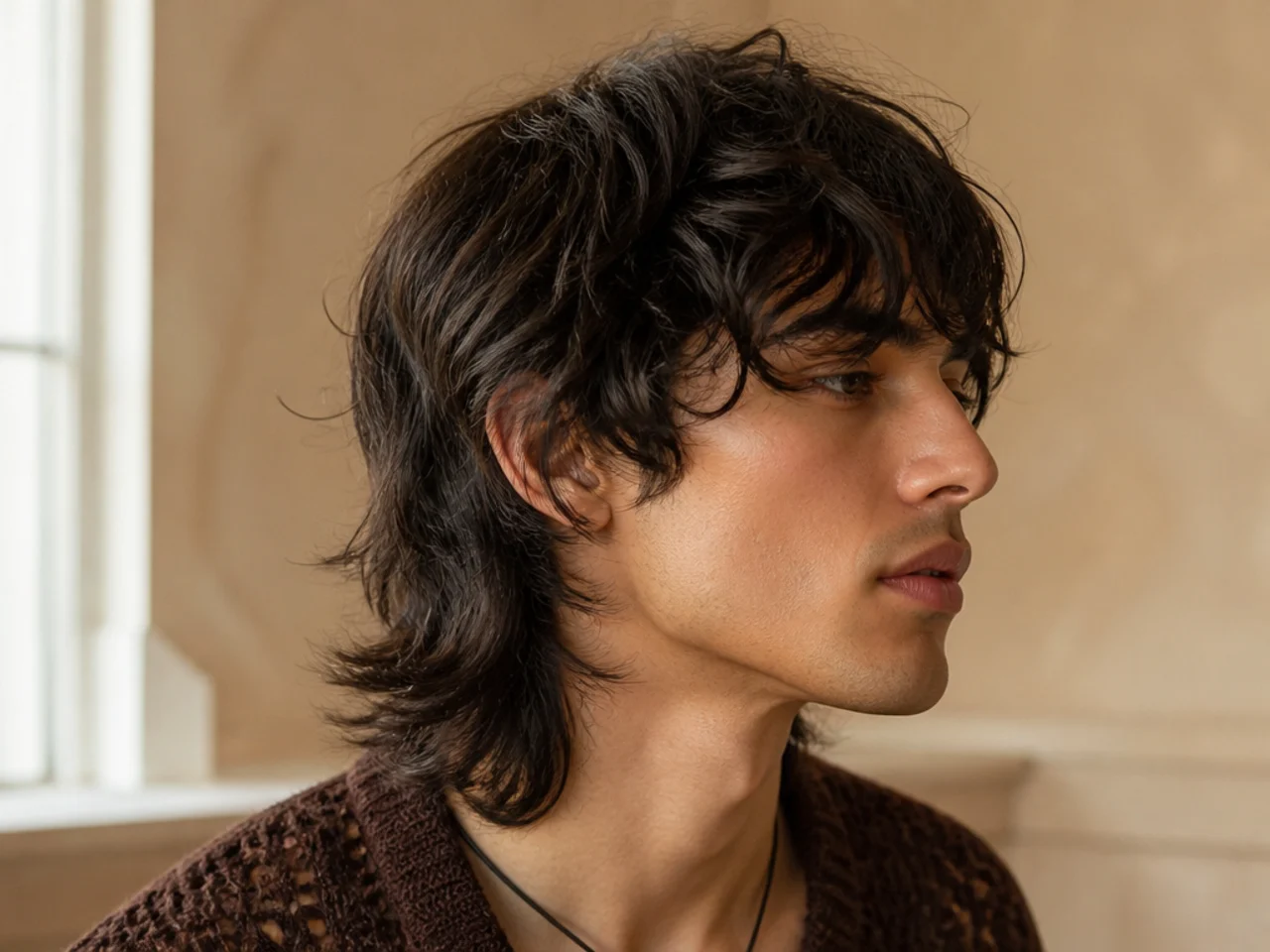
The front layers are cut to split at the centre and sweep outward. The split point matters more than the length, because a curtain that opens above the brow shortens the face and one that opens at the cheekbone lengthens it.
4. Wavy Wolf Cut
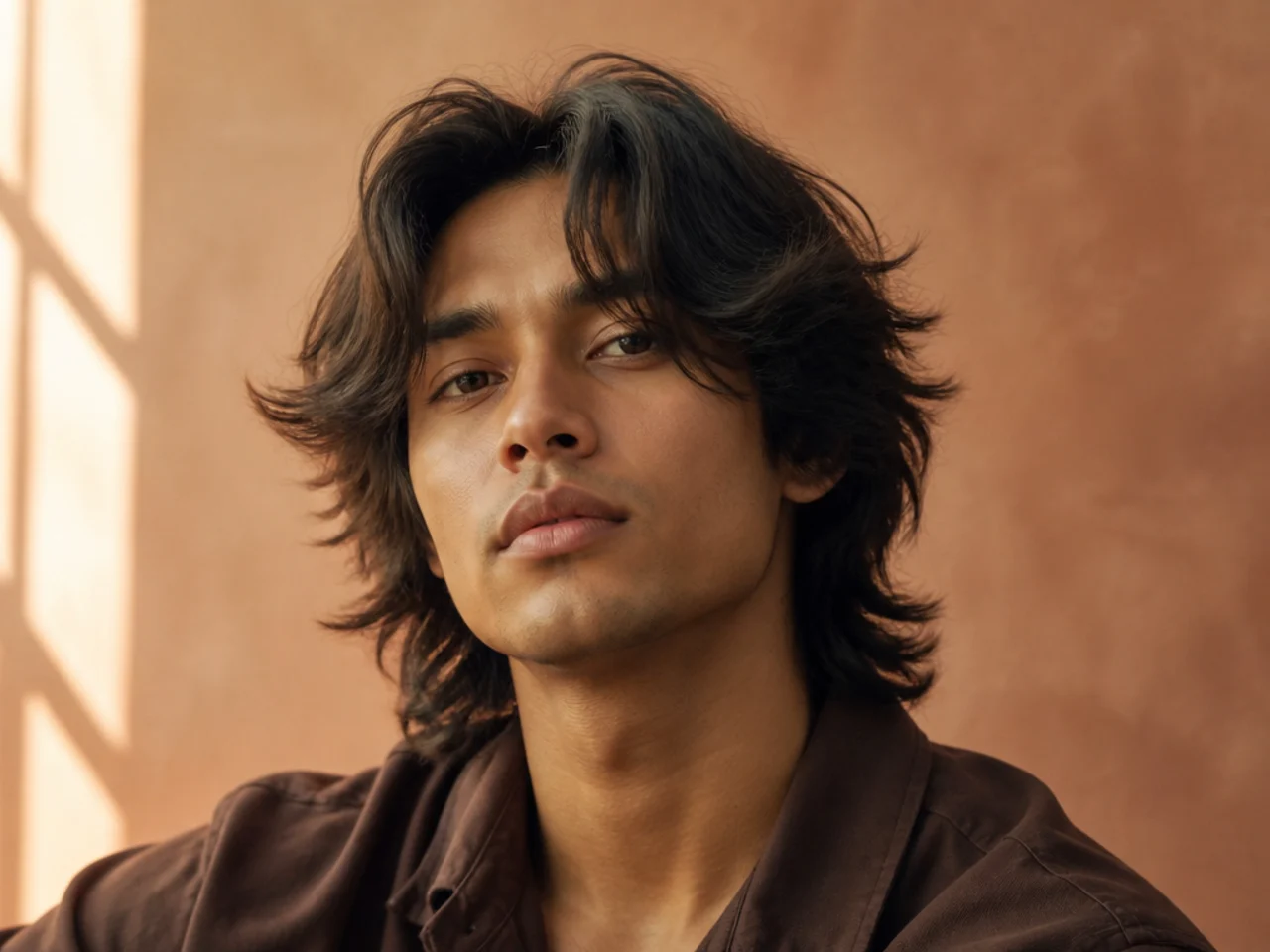
The easiest texture for this cut and the one it was designed on. Each bend in the strand catches on the ones around it, which holds the layers apart on their own, so a wavy wolf cut needs almost no product to keep its separation.
5. Curly Wolf Cut
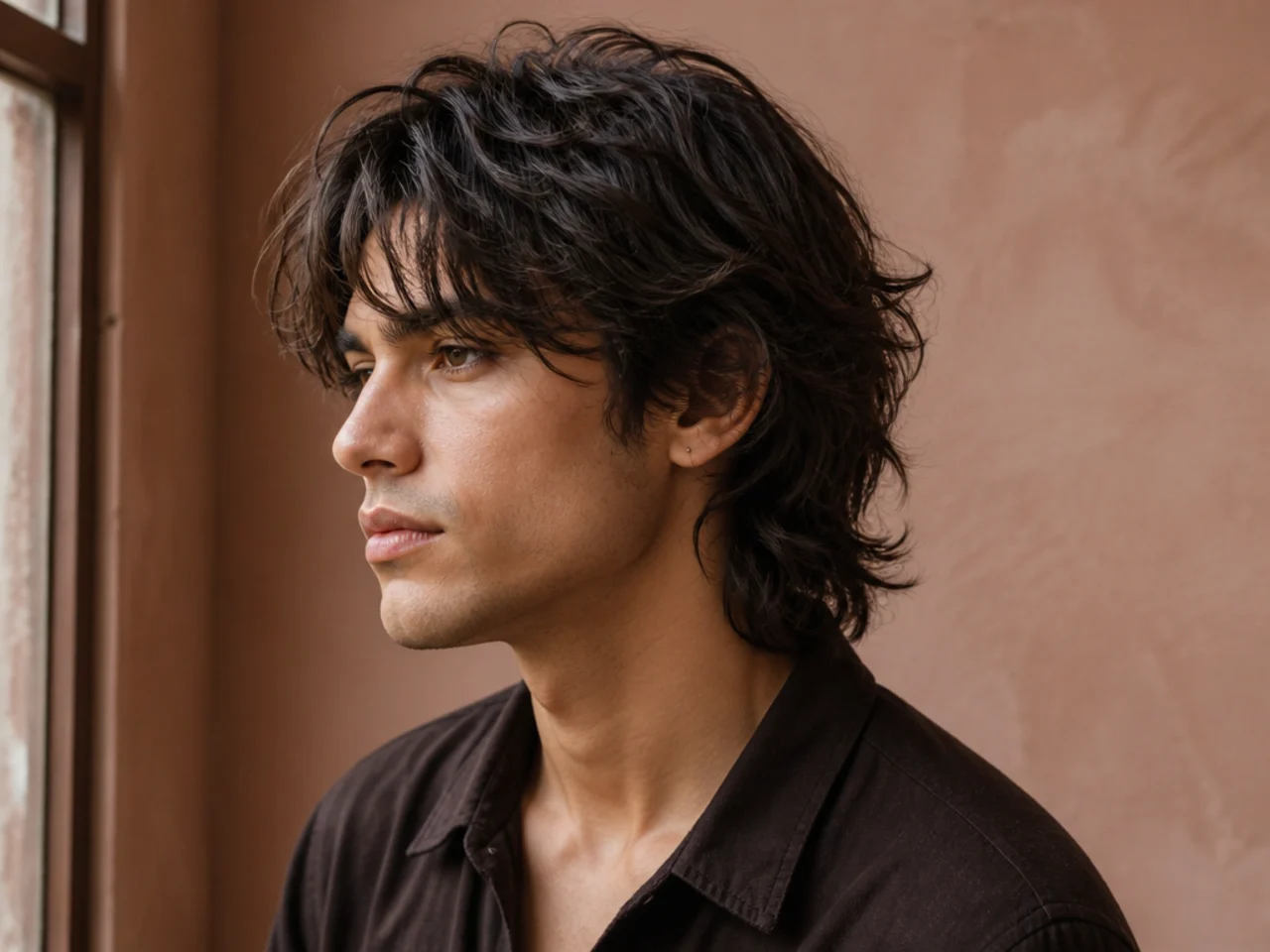
Curls shrink by up to a third when they dry, so a wolf cut on curly hair has to be cut dry or the crown ends up two inches shorter than planned. Cutting curl by curl also lets the barber place each layer where it will actually sit.
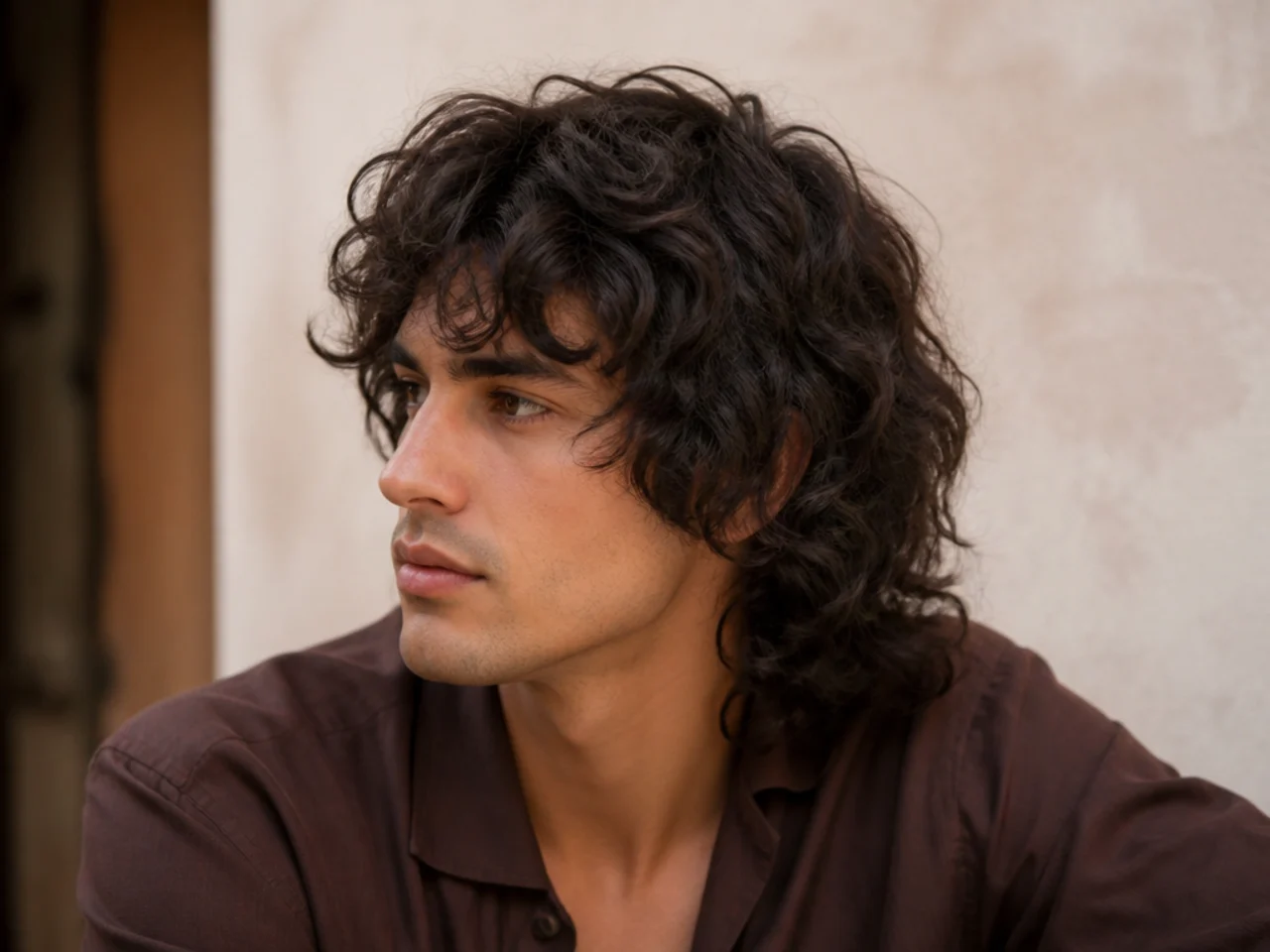
6. Straight Hair Wolf Cut
The hardest texture, because straight strands have no bend to catch on each other and gravity closes the layers up within the hour. It needs deeper point cutting through the mid lengths and a salt or clay spray at the roots to hold the separation.

7. Wolf Cut With a Tapered Nape
The hair at the neckline shortens gradually and finishes around a number one at three millimetres, never bare. It cleans up the outline without breaking the wolf cut silhouette, and because a taper leaves length behind it blurs slowly enough to still read correctly at four weeks.
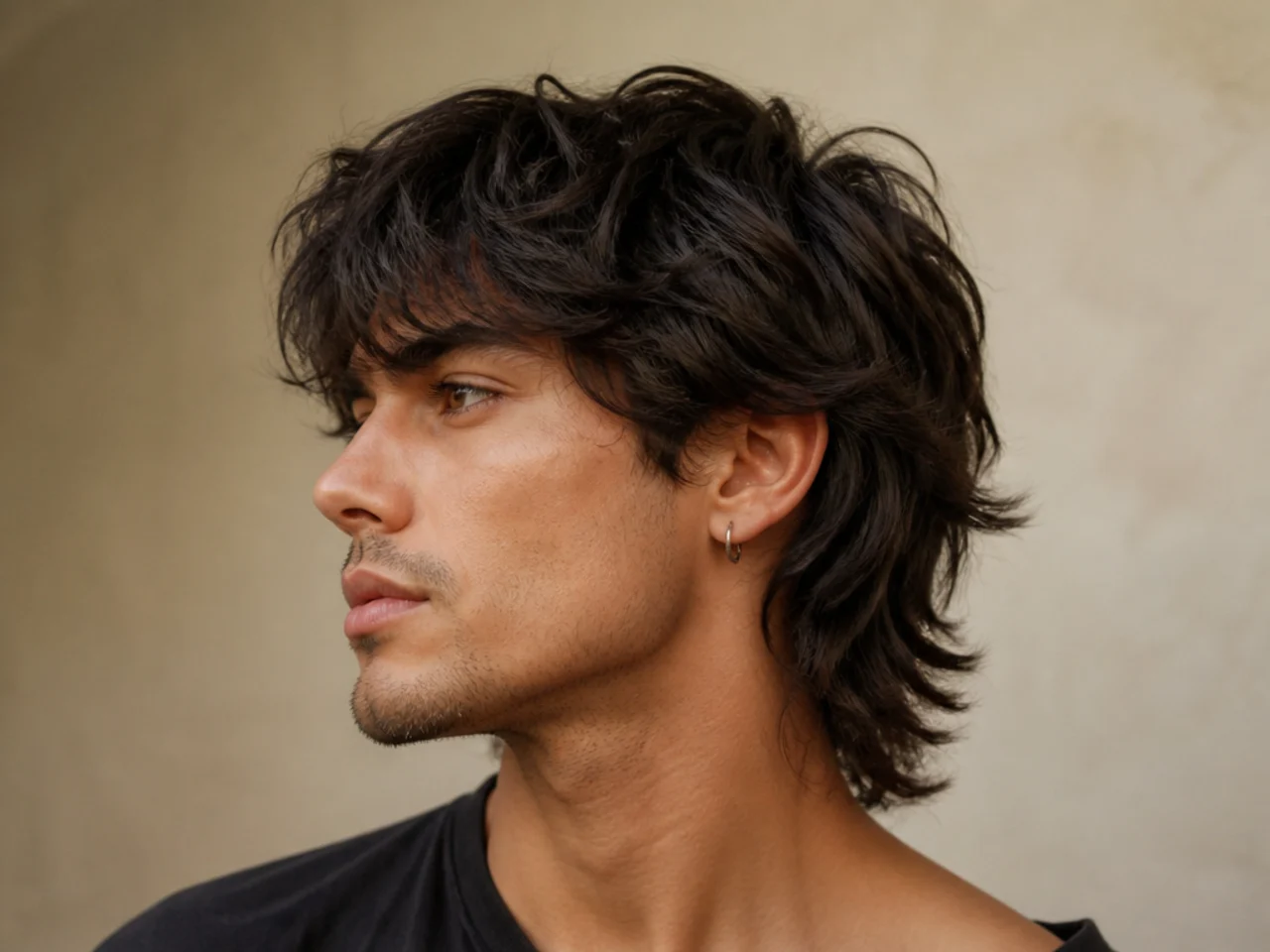
8. Wolf Cut With an Undercut
The sides are taken shorter underneath while the top length falls over them. This removes bulk at the widest point of the head, which is the reason it works on very thick hair, but it also creates a hard break the wolf cut normally avoids.
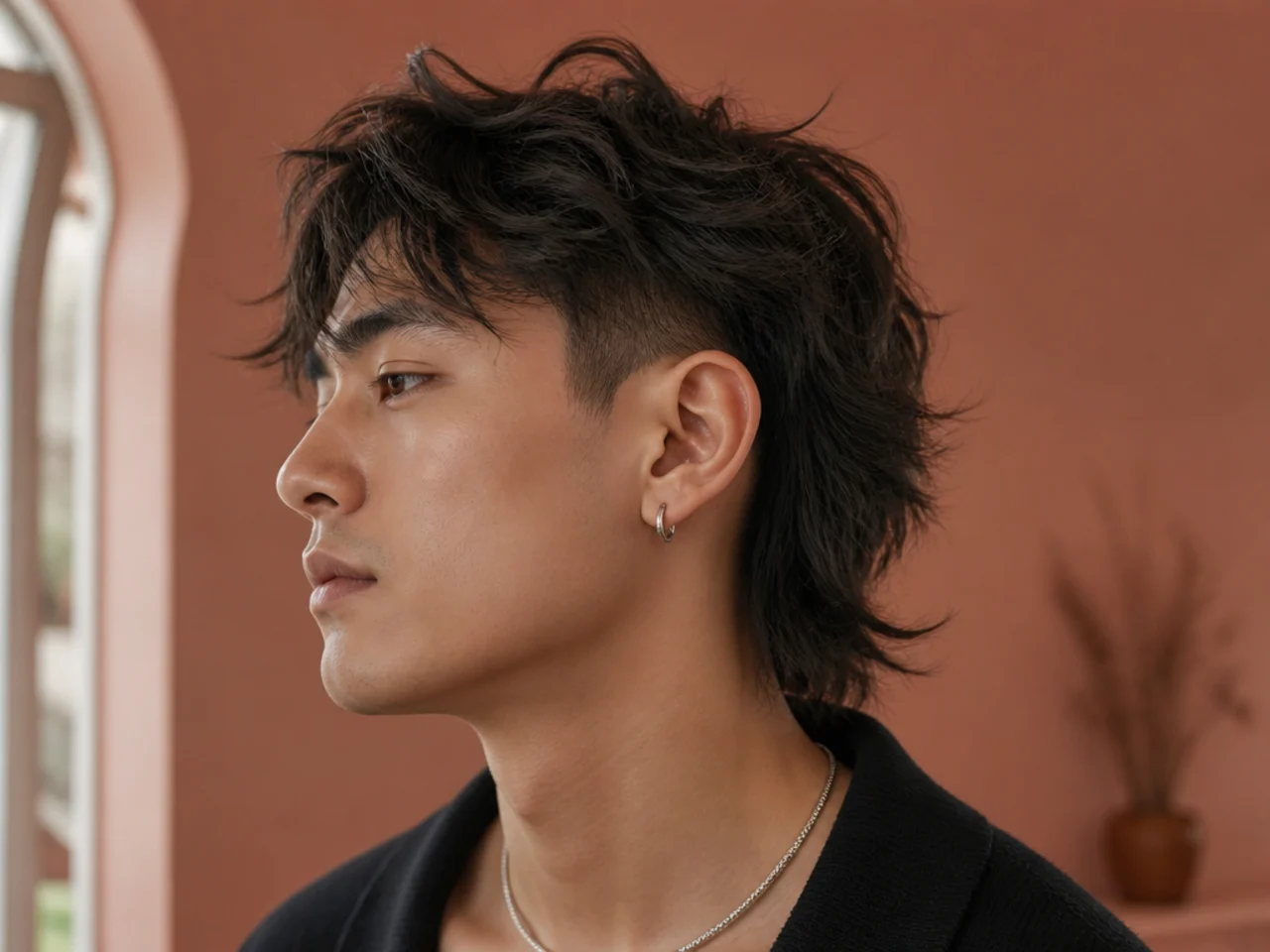
9. Korean Wolf Cut
Softer layering, a wispier fringe and far less disconnection than the western version. The layers are cut with the scissor angled along the strand rather than across it, which feathers the ends so the Korean wolf cut reads light instead of choppy.
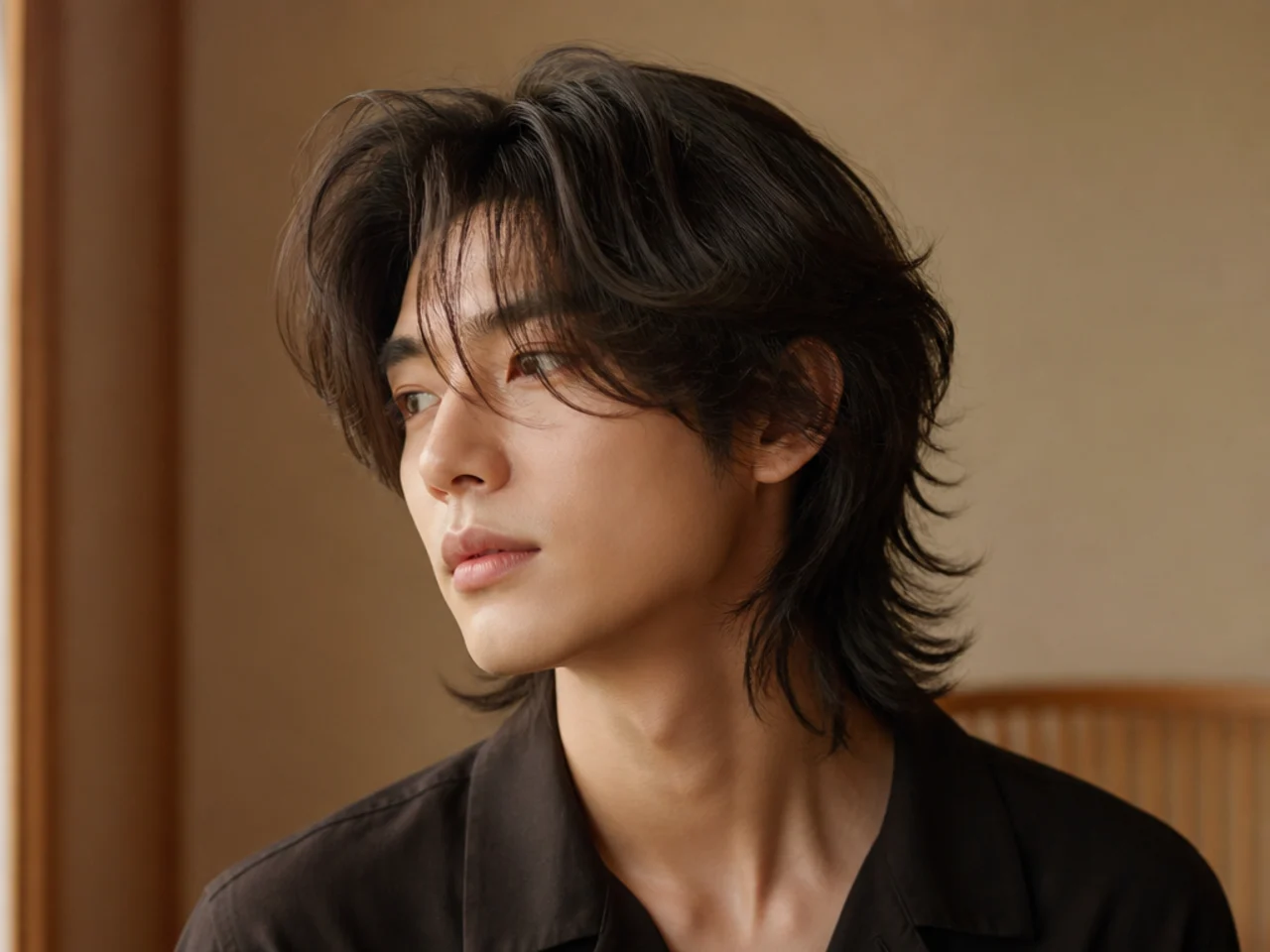
10. Shaggy Wolf Cut
More weight removed through the mid lengths, so the ends splinter into separate pieces instead of sitting as one edge. The trade is durability, because once that much bulk is gone the perimeter has nothing left to hold a line and it goes stringy as it grows.

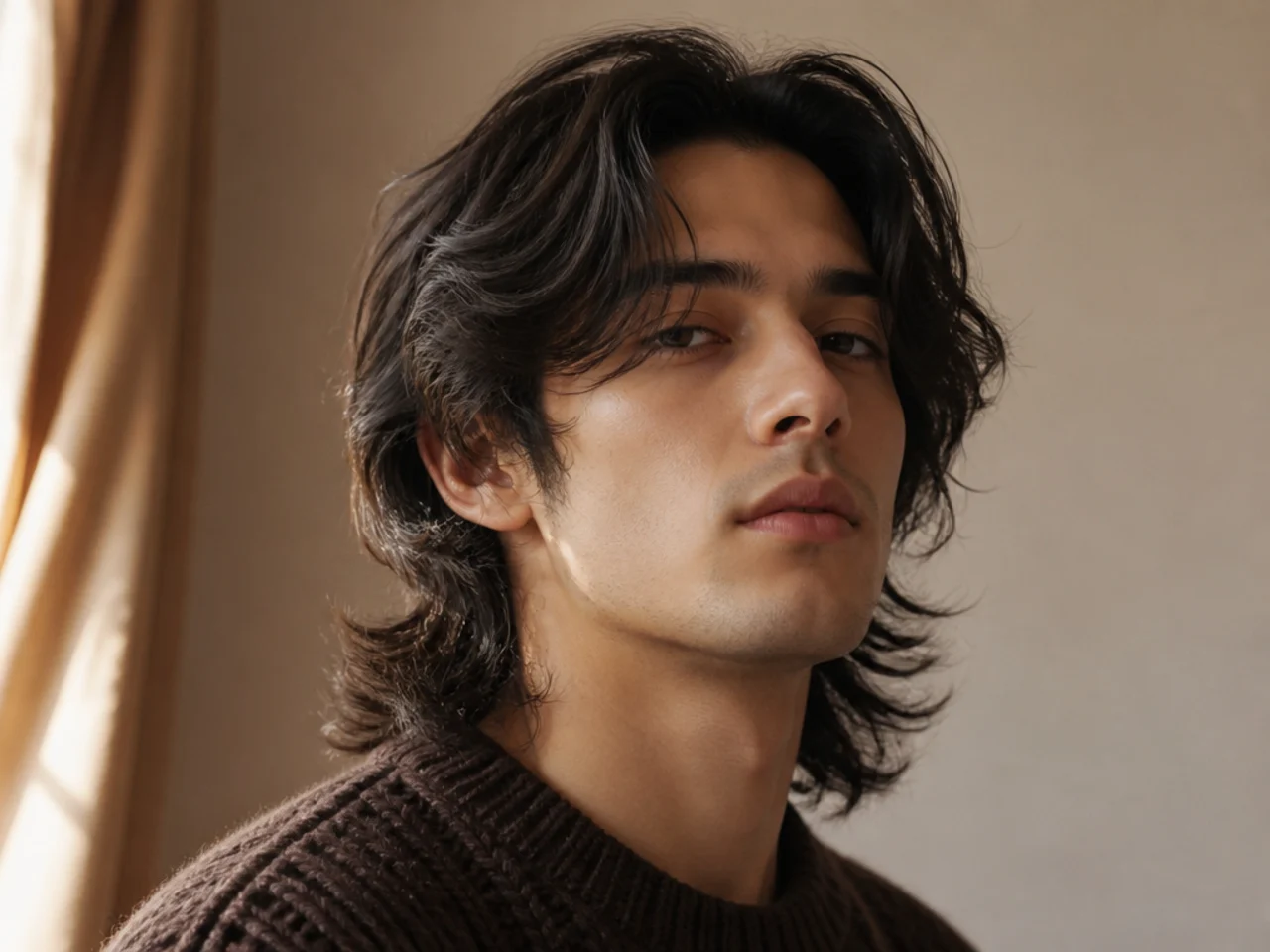
11. Wolf Cut With a Middle Part
Splitting the fringe down the centre pulls the front layers away from the face in both directions and shows the full width of the forehead. It suits a narrow or long face for exactly that reason, and works against a round one.
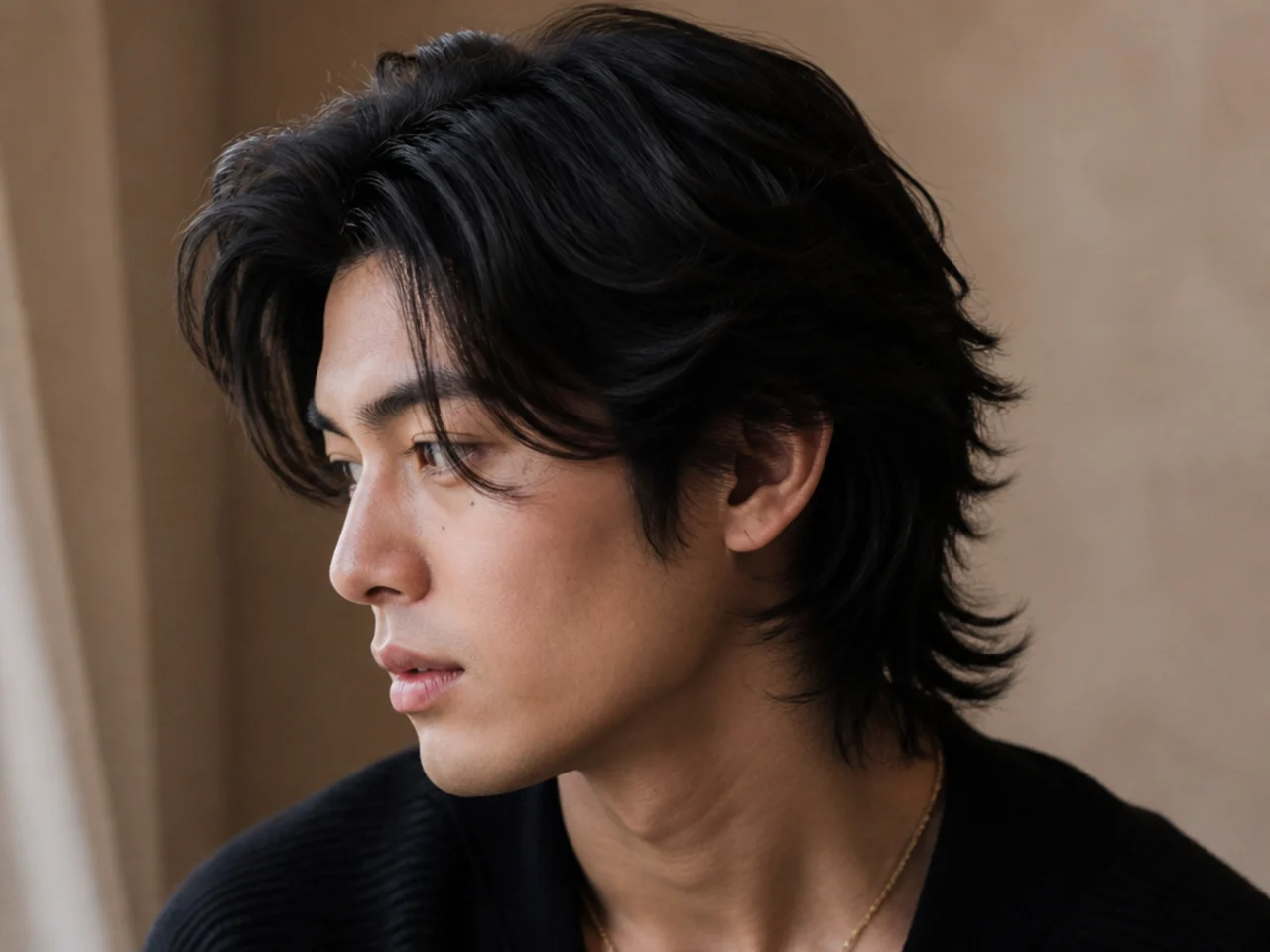
12. Wolf Cut With a Side Part
The parting sends most of the front weight across the forehead, which creates a diagonal line and a bank of volume on the heavier side. Deepening the part increases both, because more hair is being lifted over the line before it falls.
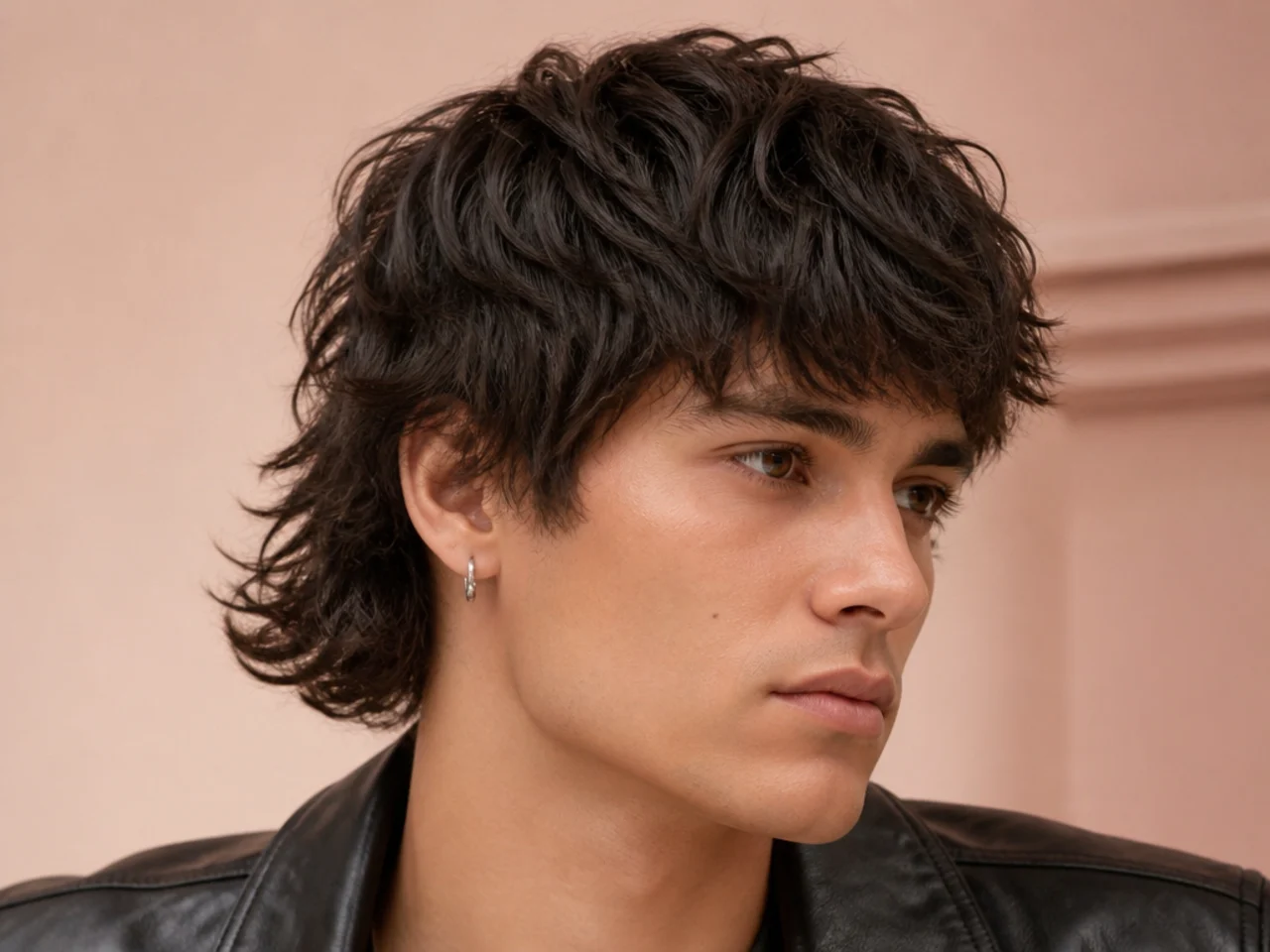
13. Textured Crop Wolf Cut
A cropped fringe pushed forward with the layered length kept at the back. The forward fringe covers a receding front hairline while the crown layers still carry height, which is why this pairing outlasts most short cuts on a thinning front.
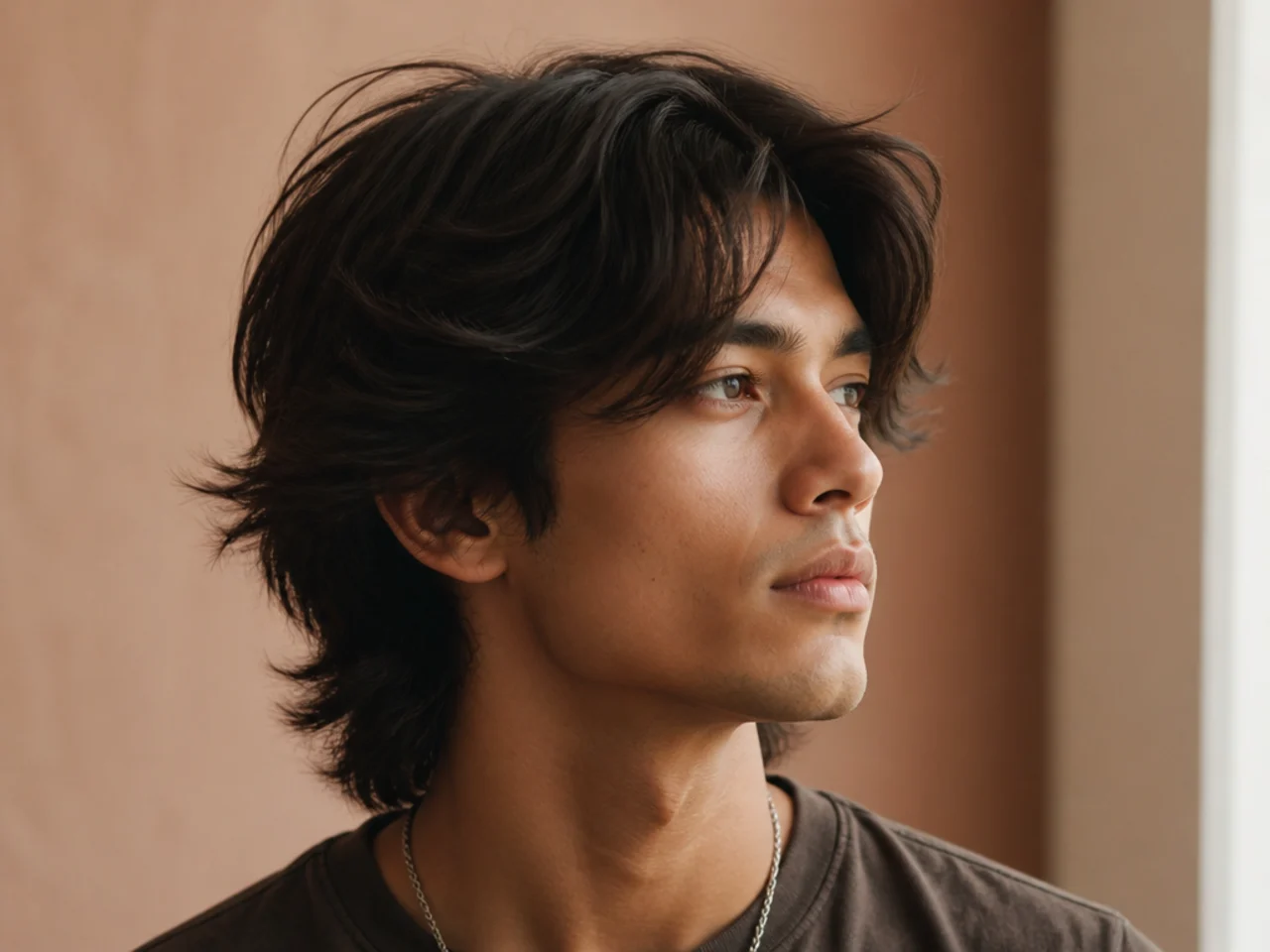
14. Wolf Cut for Thick Hair
Dense hair pushes outward rather than upward, so the cut needs weight taken from underneath the top section instead of off the surface. Thinning the interior lets the outer layer lie down while the crown keeps its lift, which is the opposite of what a shorter cut would do.
15. Wolf Cut for Fine Hair
Keep the shortest layer no more than two inches above the perimeter. Fine hair carries its density in the outline, and every layer cut below the mid lengths removes strands from that outline, which is what turns the ends see through.
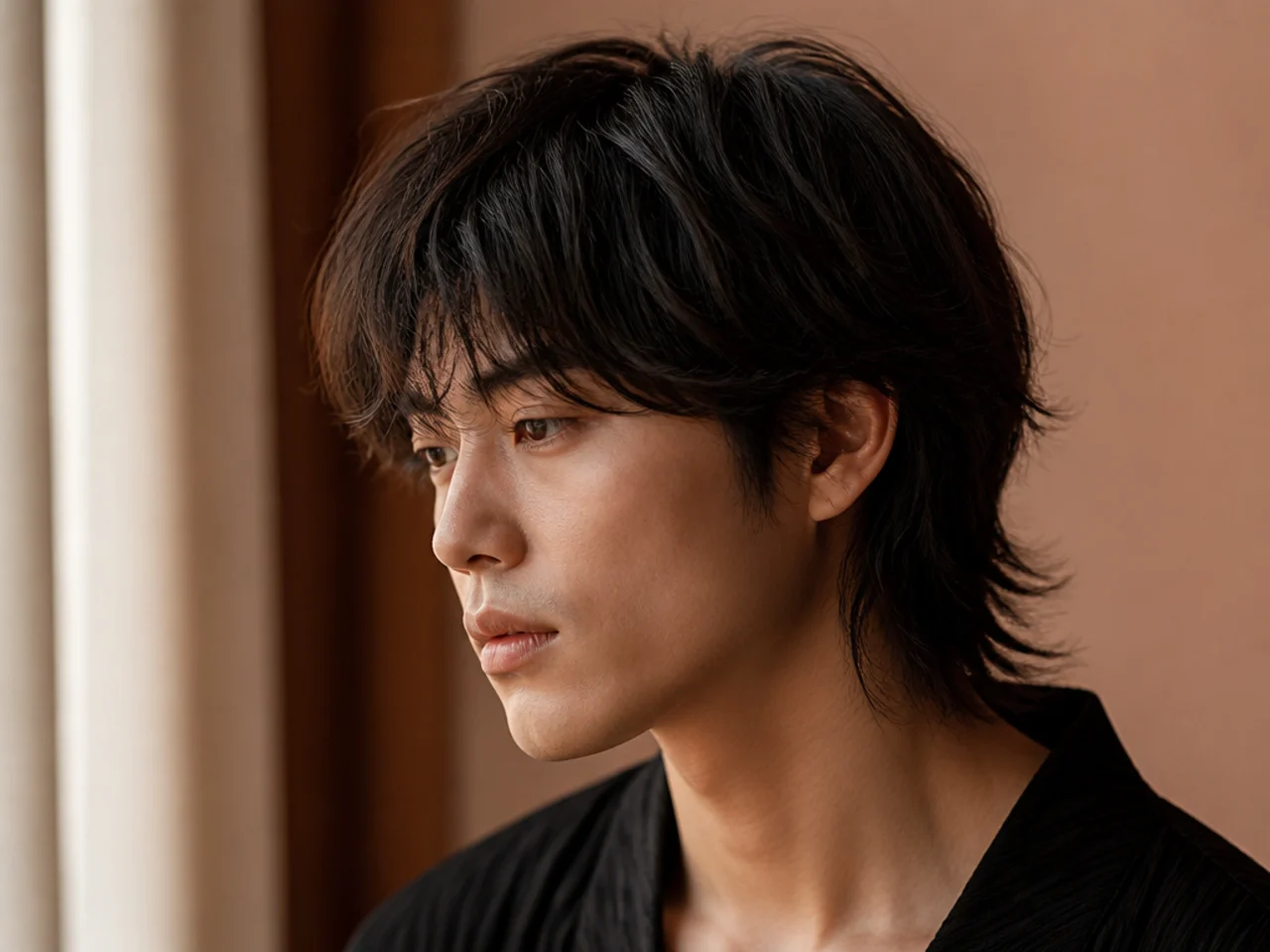
16. Long Wolf Cut
The back grown past the collar with the crown layers kept short. The longer the perimeter, the heavier it hangs, so a long wolf cut needs the interior layers cut shorter still or the weight below drags the crown flat.
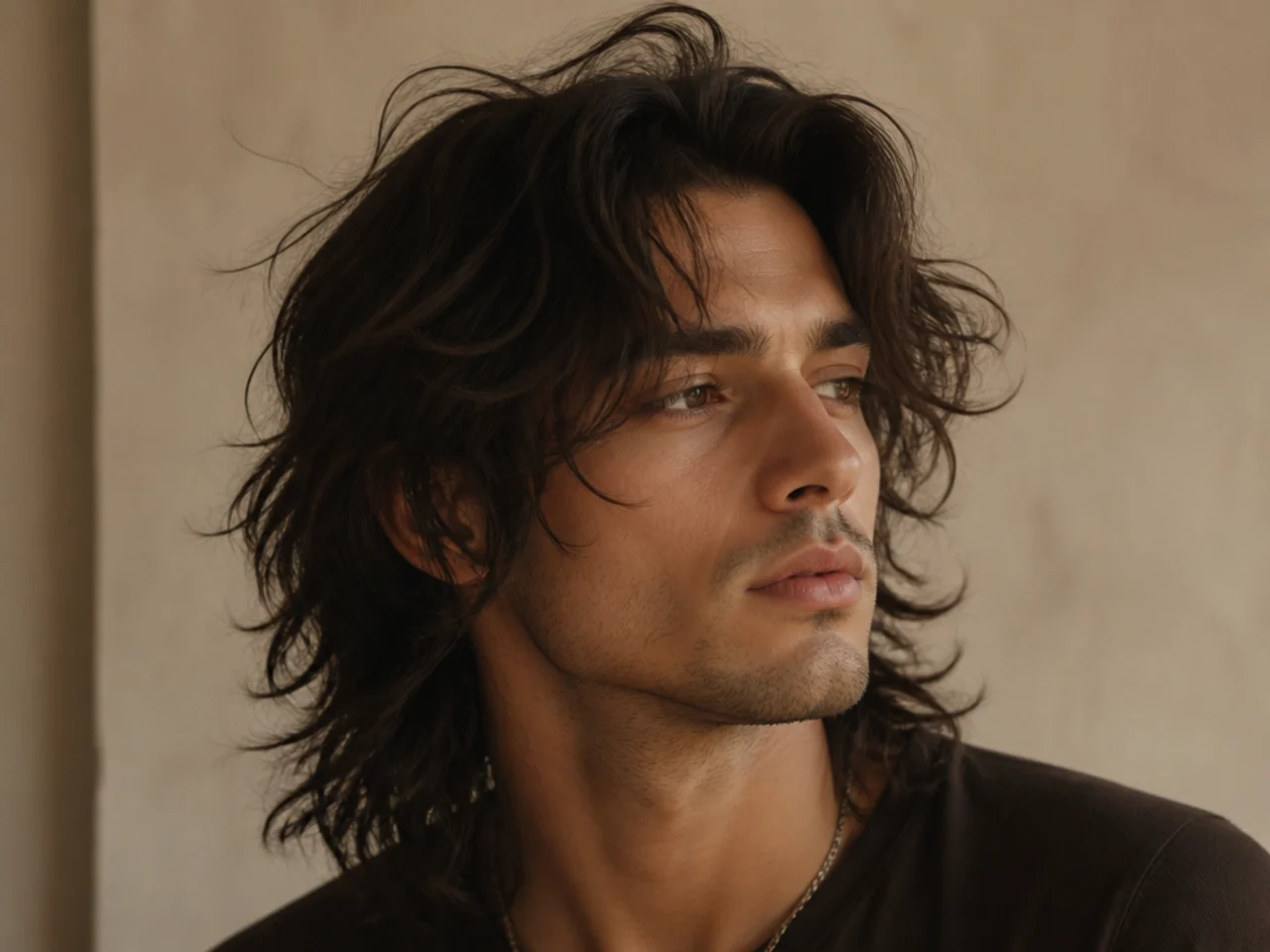
17. Wolf Cut With Face Framing Layers
The shortest front pieces are cut to land at the cheekbone and angle back toward the ear. That angle is what stops them hanging as a curtain across the face, and the landing point sets which feature the eye reaches first.
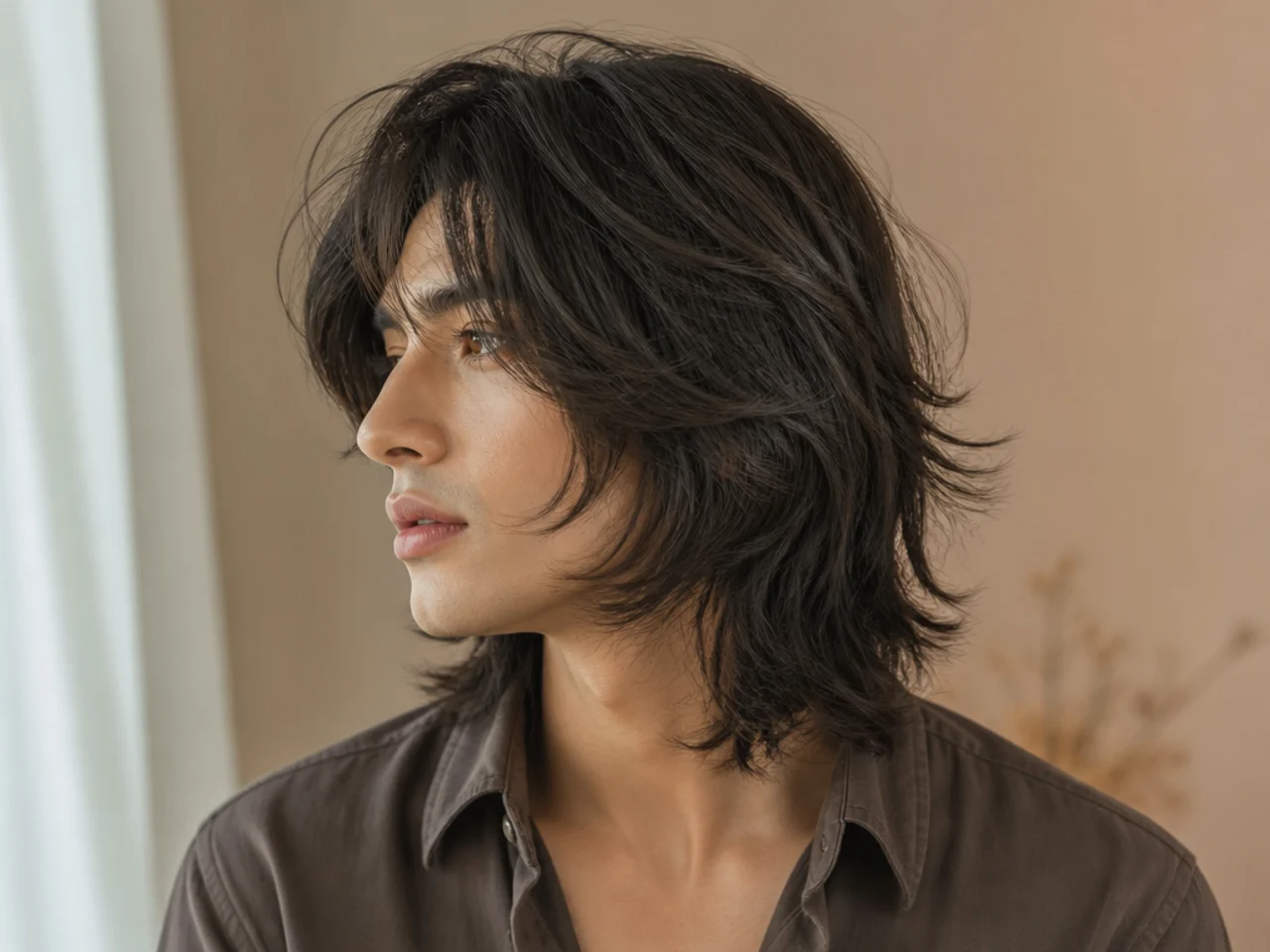
18. Air Dried Wolf Cut
Left to dry with nothing in it, the layers settle wherever the natural fall takes them. It looks best on wavy hair because the bend forms as the strand dries and locks the separation in, whereas straight hair air dries into a flat sheet.
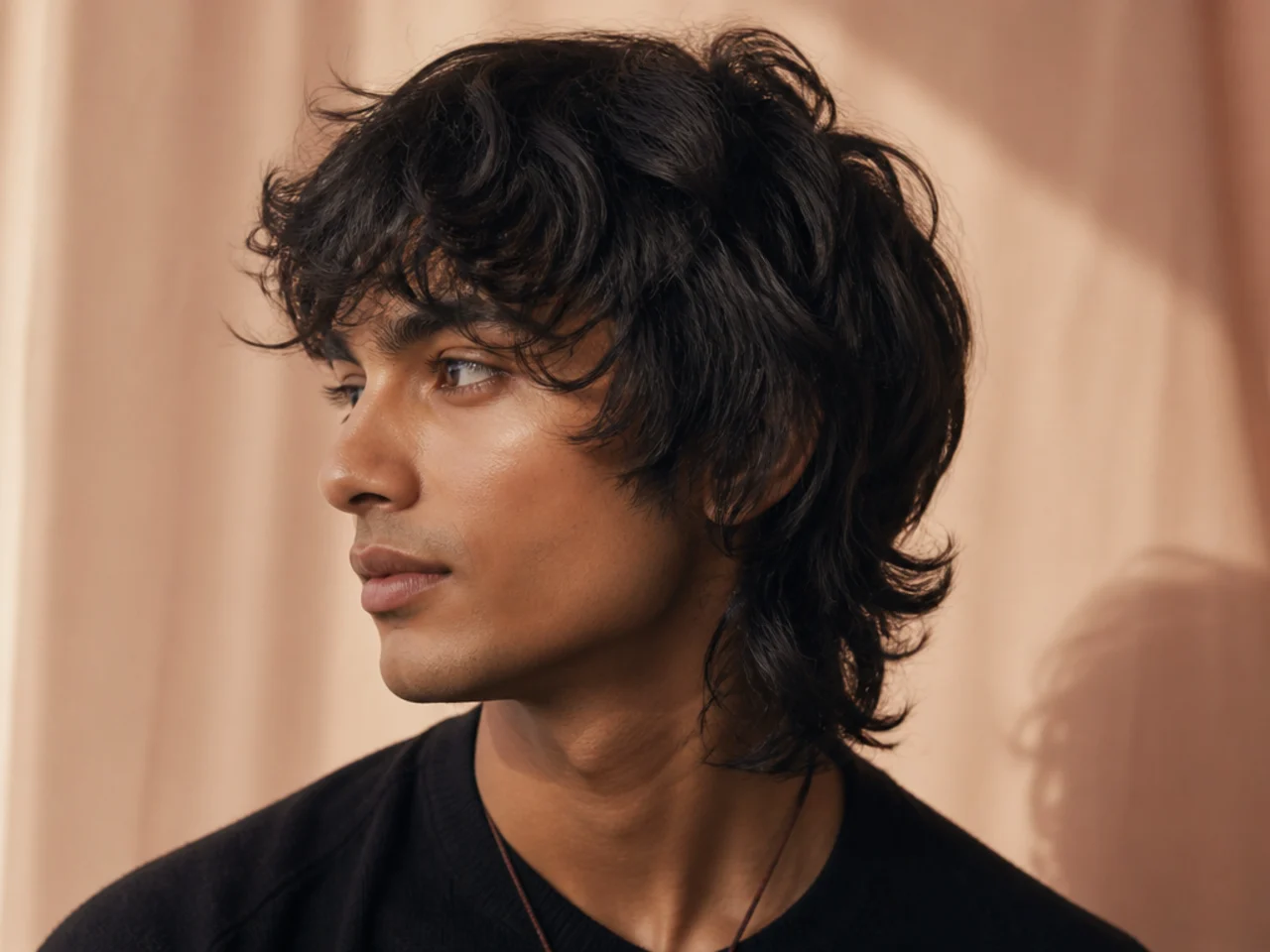
19. Blow Dried Wolf Cut
Drying the roots against the direction they grow lifts the crown, and hair sets its shape as it cools rather than while the heat is on it. Let each section cool in position for ten seconds before moving on or the lift drops out.
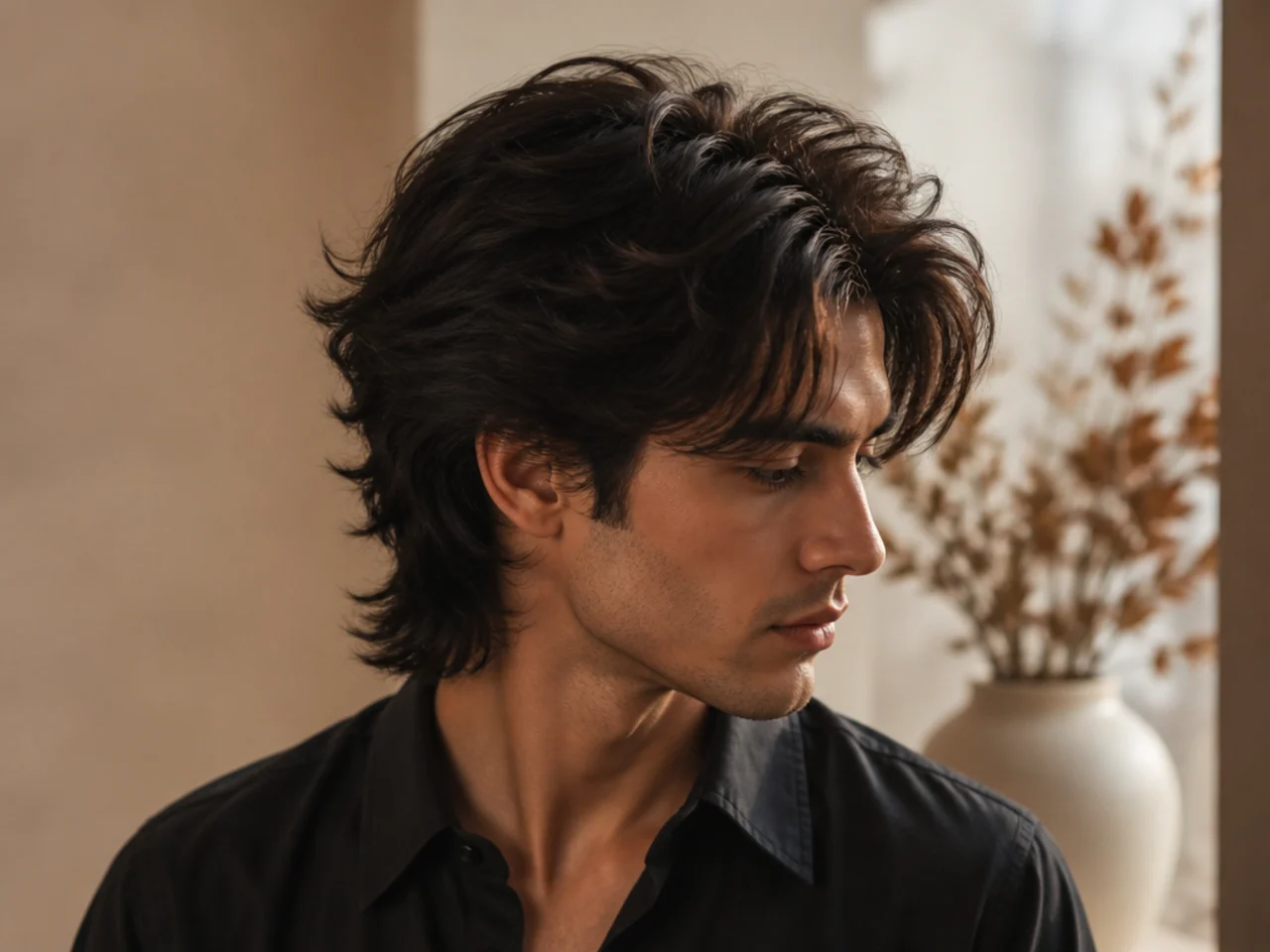
20. Wolf Cut at Week Ten
The layers have grown proportionally so the outline still reads correctly, but the shortest sections have reached the perimeter and thickened it. That is what flattens the crown, and it is the signal to book, not the length at the back.

Styling and Upkeep
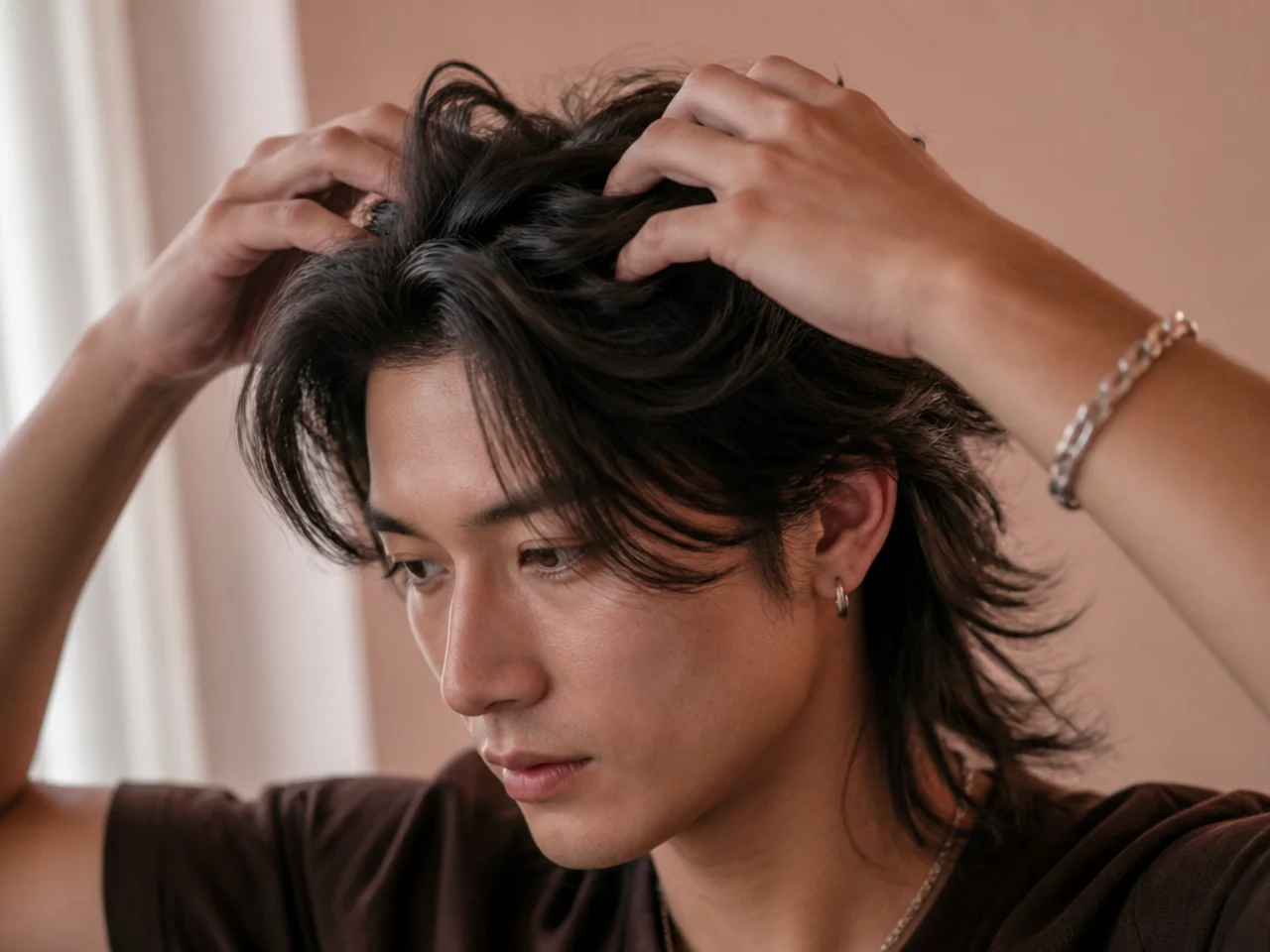
Product goes at the root, not on the ends. The ends already separate. The roots are what collapse.
Use a matte clay or a salt spray. Both roughen the cuticle so strands catch on each other instead of sliding flat.
Dry the crown first while it is wettest. It holds direction best when there is still water in it to reshape.
Book at eight to ten weeks. The proportions hold, but the perimeter thickens and takes the crown lift with it.
Ask for weight removal at the halfway trim. Two minutes of thinning through the mid lengths buys another month before the full cut.
Mistakes to Avoid
Asking for length and never mentioning layers. Length alone gives you a grow out. The interior layering is the cut.
Cutting curly hair wet. Curls shrink by up to a third as they dry, so the crown ends up far shorter than agreed.
Layering fine hair below the mid lengths. Fine hair keeps its density in the perimeter, and layers that deep take it out.
Letting the sides sit wider than the crown. Once the widest point is at ear height the silhouette reads round rather than layered.
Waiting past twelve weeks. By then the shortest layers have joined the perimeter and there is no stack left to lift the crown.
FAQ
Wolf cut or mullet? The wolf cut layers the break away, the mullet keeps it.
Does it work straight? Yes, with deeper interior texture and a root product.
How often trimmed? Eight to ten weeks, before the perimeter thickens.

Final Thoughts
Ask for the interior, not the outline. "Layers starting at the crown, three inches shorter than the back, weight out through the mid lengths" gives a barber something to cut, where "a wolf cut like the photo" gives them a guess.
For the full range of the cut see the wolf cut for men, and for the version built on curls see curly wolf cut men. More in Mullet and Wolf Cut.