25 Stylish Wolf Cut Ideas For Men To Try Now
Twenty five mens wolf cut variations, and the requirement most men find out too late — the cut needs about four inches on top before the layers can stack at all. Below that there is nothing for the shape to be built out of.
In this article · 32
- Wolf Cut Versus Mullet on Men
- Picking Your Length and Sides
- The 25 Mens Wolf Cut Variations
- 1. Classic Mens Wolf Cut
- 2. Short Wolf Cut
- 3. Medium Length Wolf Cut
- 4. Long Wolf Cut
- 5. Curly Wolf Cut
- 6. Wavy Wolf Cut
- 7. Straight Hair Wolf Cut
- 8. Coily Wolf Cut
- 9. Messy Wolf Cut
- 10. Modern Wolf Cut
- 11. Wolf Cut With Curtain Bangs
- 12. Wolf Cut With a Blunt Fringe
- 13. Wolf Cut With a Middle Part
- 14. Wolf Cut With a Taper
- 15. Wolf Cut With a Low Fade
- 16. Wolf Cut With a Burst Fade
- 17. Wolf Cut With an Undercut
- 18. Wolf Cut With a Mullet Tail
- 19. Wolf Cut on Fine Hair
- 20. Wolf Cut on Thick Hair
- 21. Wolf Cut With a Beard
- 22. Bleached Wolf Cut
- 23. Wolf Cut Pushed Back
- 24. Wolf Cut With a Side Fringe
- 25. Grown Out Wolf Cut
- Styling and Upkeep
- Mistakes to Avoid
- FAQ
- Final Thoughts
Most men who ask for a wolf cut and leave disappointed had two inches on top, and two inches cannot be layered into anything.
The volume comes from stacked layers. Short crown layers sit on top of longer ones and prop them up. Without a length difference between the two there is no stack and no volume.
The sides are a separate decision. Taper, fade or leave them shaggy — none of it changes whether the cut is a wolf cut, only how much width it has.
Wolf Cut Versus Mullet on Men
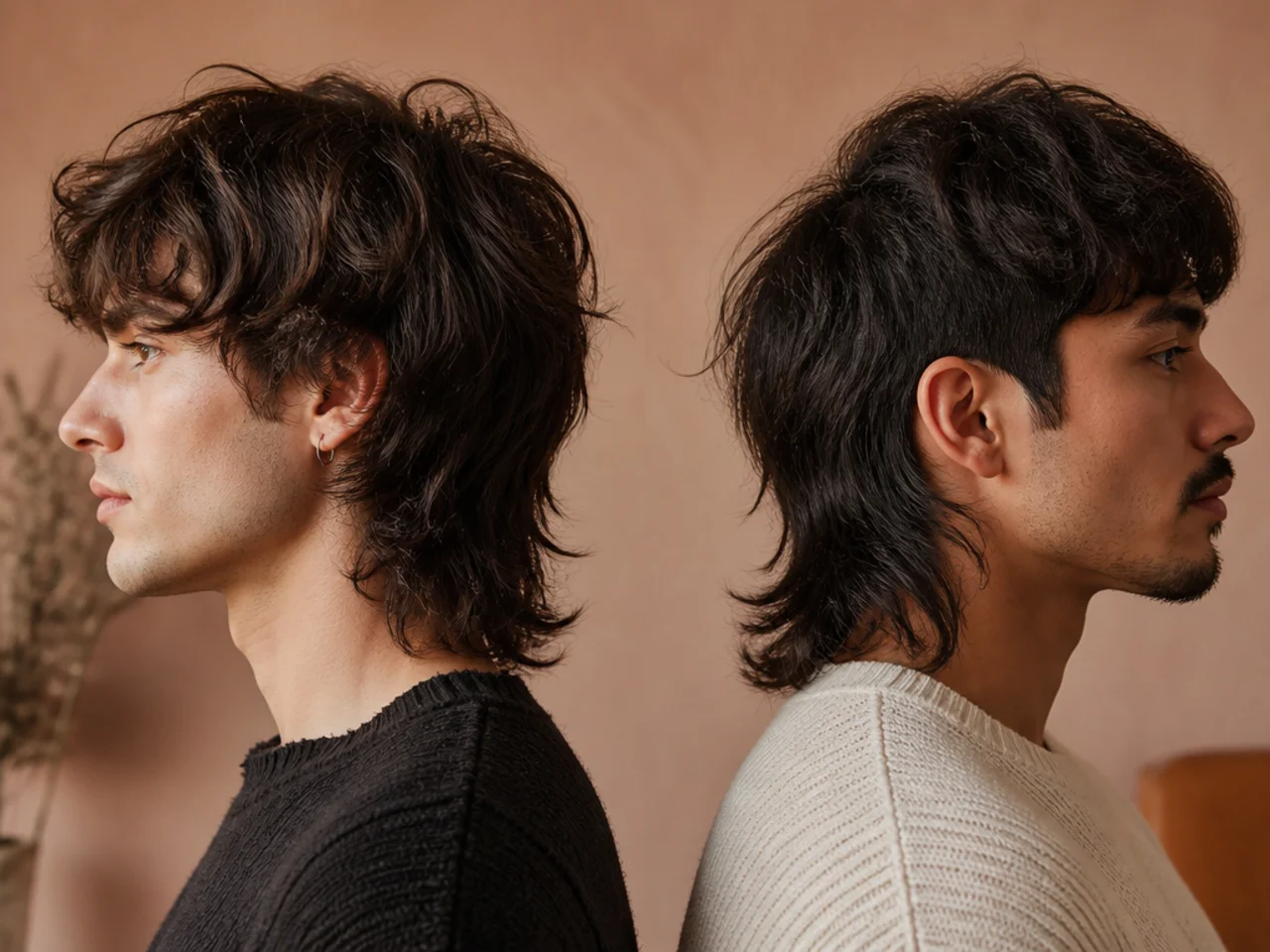
The wolf cut lives in the interior. It is a layering pattern, and it can exist on a head with no extra length at the back at all.
The mullet lives in the perimeter. It is a length difference between the front and the back, and it says nothing about how the top is layered.
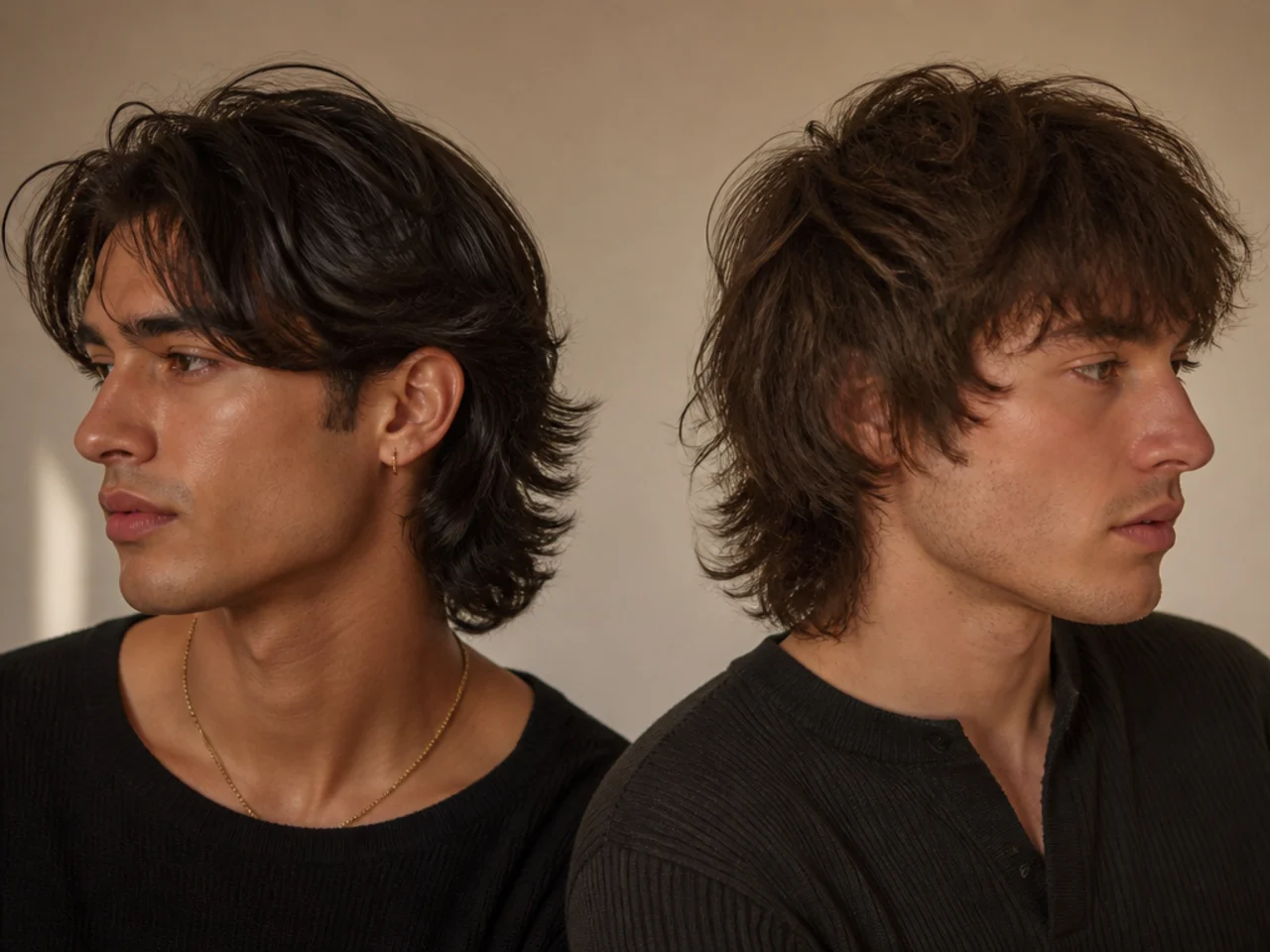
Most modern cuts are both. A shaggy crown over a long back is the combination people photograph, which is why the two names get swapped so freely.
Ask for the one you actually want. Say layering if you want volume at the crown, and say length at the back if you want a tail. Say both if you want both.
Picking Your Length and Sides
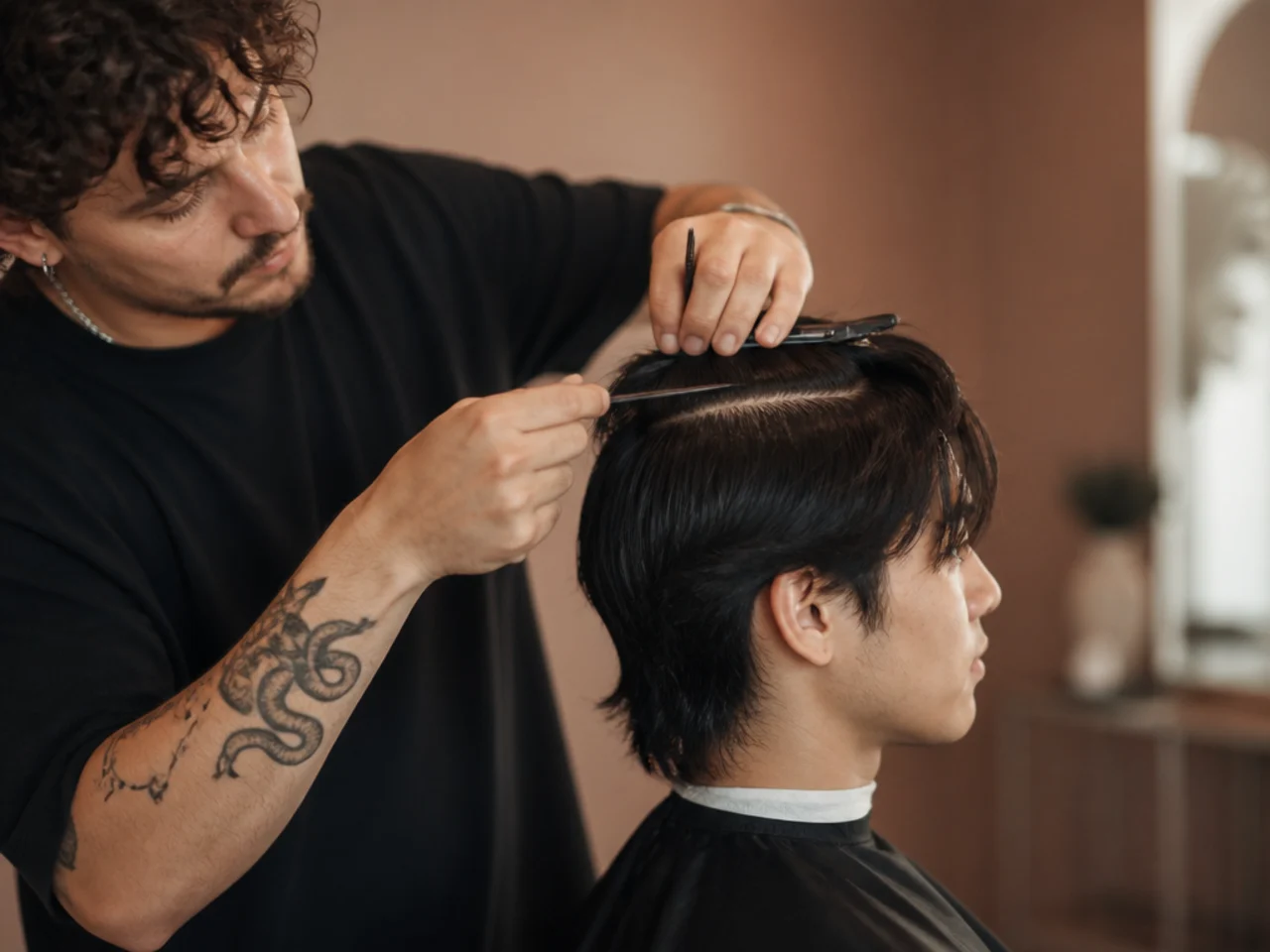
Grow to four inches before you book. The stack needs room. Cutting layers into anything shorter removes weight without producing shape, and the regrowth phase is worse than waiting.
Choose the side finish by your schedule. A skin fade shows stubble at one to two weeks. A taper finishing at a number one still reads correctly at three to four. Scissor cut sides last longer than either.
Fewer layers on fine hair. Layering removes density from the perimeter, and on fine hair the perimeter is the only place density is visible at all.
Cut curls dry. Curl shrinks as it dries, so a wolf cut measured wet arrives two to four inches shorter and the layers land in the wrong places.
The 25 Mens Wolf Cut Variations
1. Classic Mens Wolf Cut
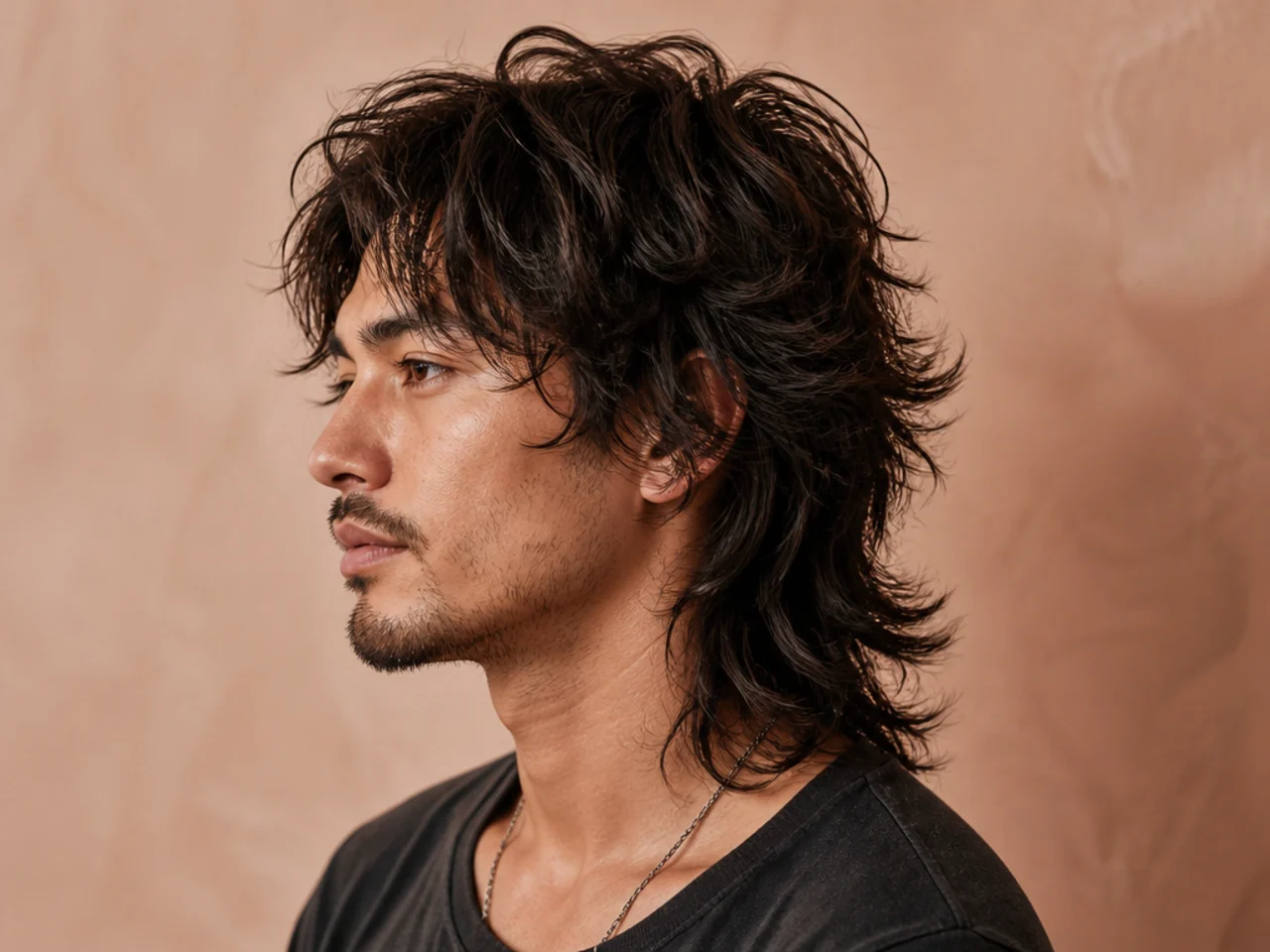
Layers stacked from the crown down, a centre split fringe, and enough length at the back to break the collar. It is the reference version because every other one on this list is a change to one of those three elements while the other two stay put.
2. Short Wolf Cut
The whole shape compressed into four or five inches, covered in more detail in the mens short wolf cut. With less vertical distance the layers have to sit closer together, so there are fewer of them and the separation comes from texturising rather than from length.

3. Medium Length Wolf Cut
Six to eight inches on top with the back at the nape. This is the length at which the stack is most visible, because there is room for three distinct layers and still enough weight underneath to stop it expanding sideways.
4. Long Wolf Cut
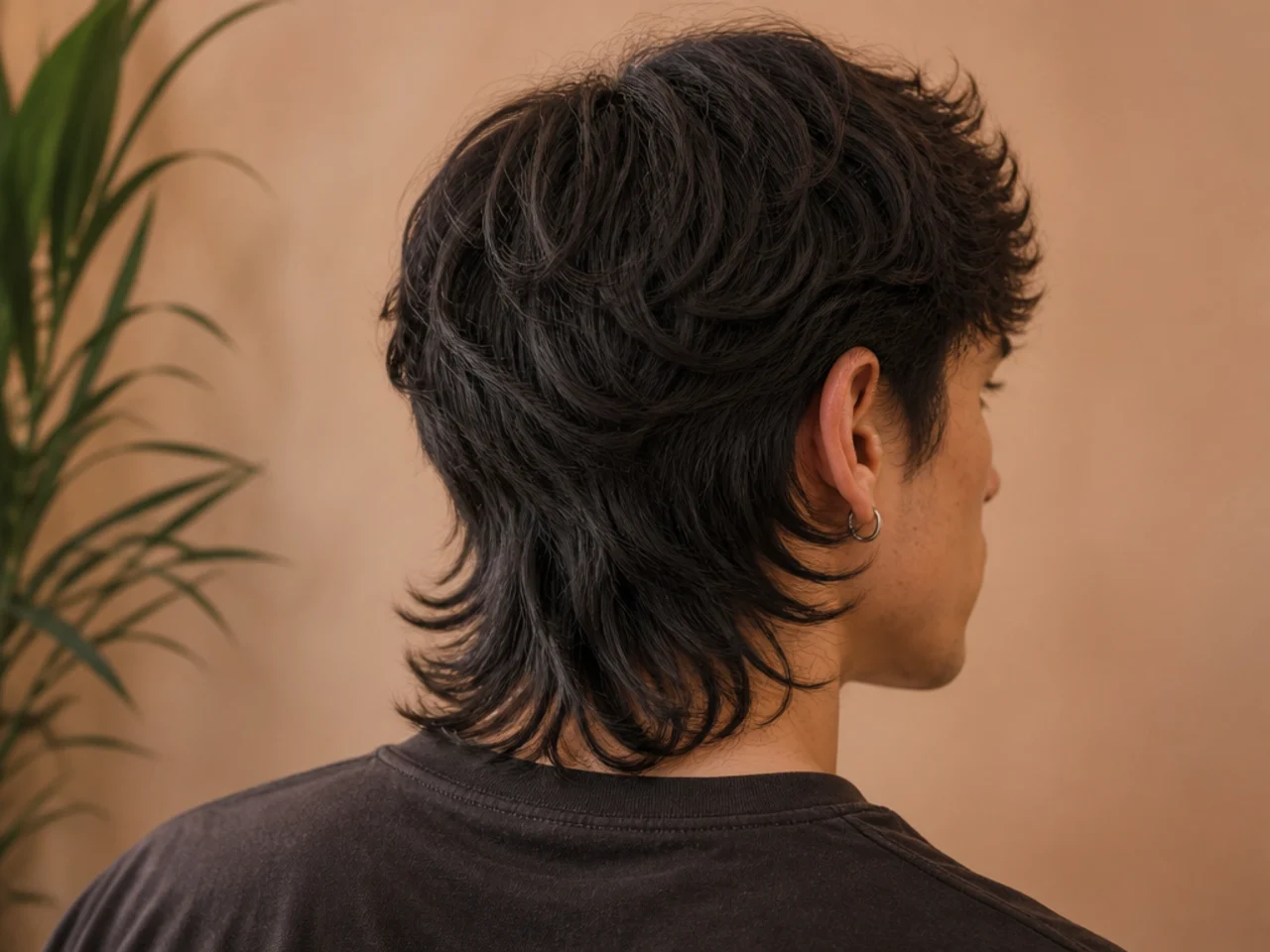
Past the shoulder, where weight starts working against the stack. The longer the hair below the crown, the more it pulls the layers flat, so a long wolf cut needs more layering than a short one just to hold the same amount of volume.

5. Curly Wolf Cut
Curl already produces the separation that layering is designed to create, so a curly wolf cut needs fewer layers than a straight one. It also has to be cut dry, curl by curl, because the length that appears once it springs up is the only length that matters.

6. Wavy Wolf Cut
The most cooperative texture for this cut. An S bend lifts the hair off itself at the root and scatters light along the strand, so the layer boundaries blur on their own and the volume appears without styling.
7. Straight Hair Wolf Cut
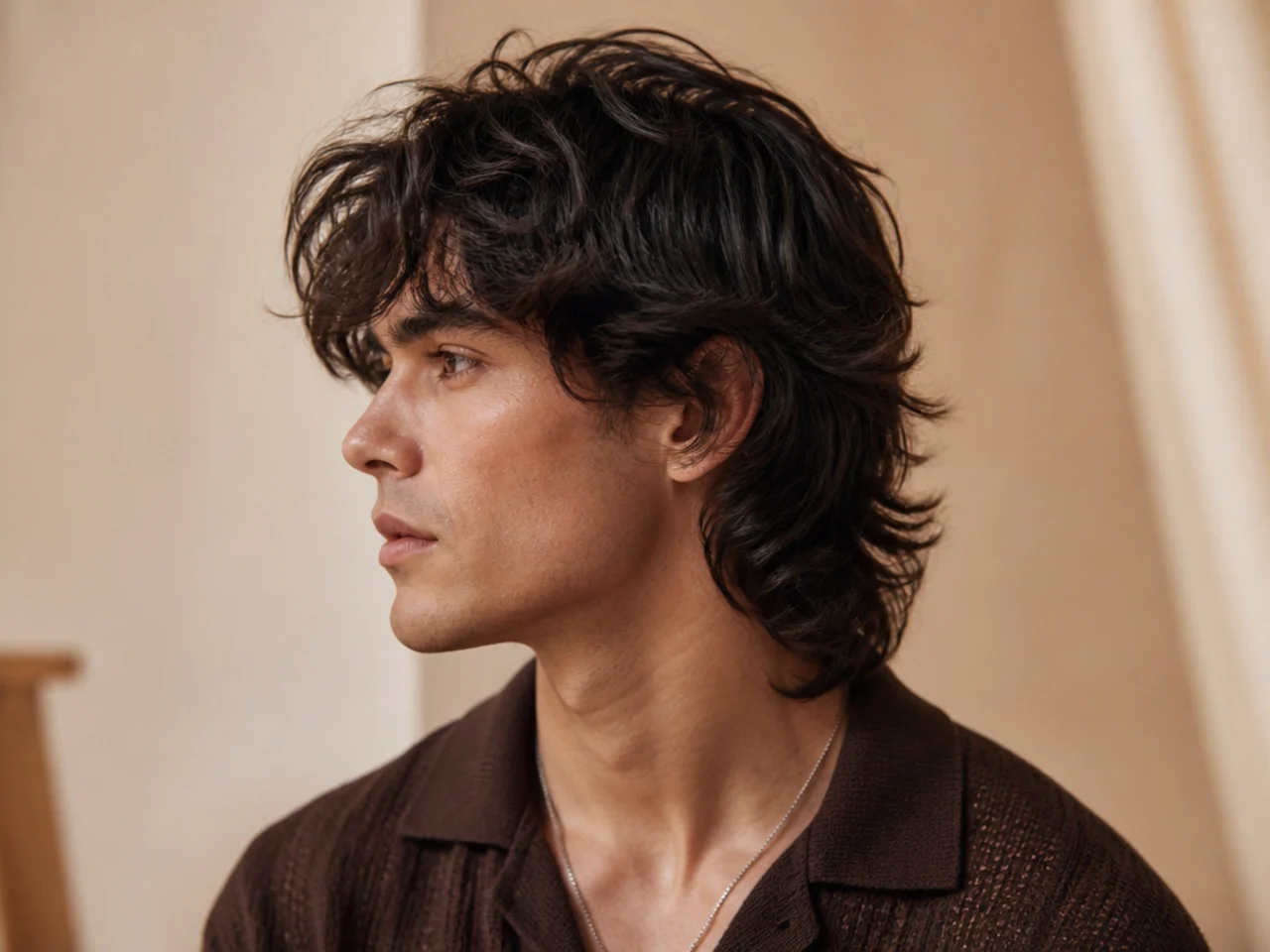
Straight hair hangs in a single line and shows every layer boundary as a step. The layers have to be point cut so the ends finish at different lengths, otherwise the cut reads as a series of shelves rather than as one shape.

8. Coily Wolf Cut
Coily hair grows outward before it grows down, so the stack reads as a rounded silhouette rather than a cascade. Cutting into the coil clump rather than tensioning it straight is what keeps the shape balanced once it is released.

9. Messy Wolf Cut
Air dried, no parting, separation coming from the cut rather than from product. It only works if the layers were point cut, because a bluntly cut layer dries as a solid block and reads as unkempt instead of textured.

10. Modern Wolf Cut
The tidier reading of the same shape — softer layer boundaries, a cleaner side, and less deliberate mess, set out in the modern wolf cut. The stack is still there; it has simply been blended so no single layer announces itself.

11. Wolf Cut With Curtain Bangs
The fringe split at the centre and cut to blend into the shortest crown layers. Because the fringe is part of the stack rather than a separate length, it grows out into the cut instead of sitting on top of it as an obvious fringe.
12. Wolf Cut With a Blunt Fringe
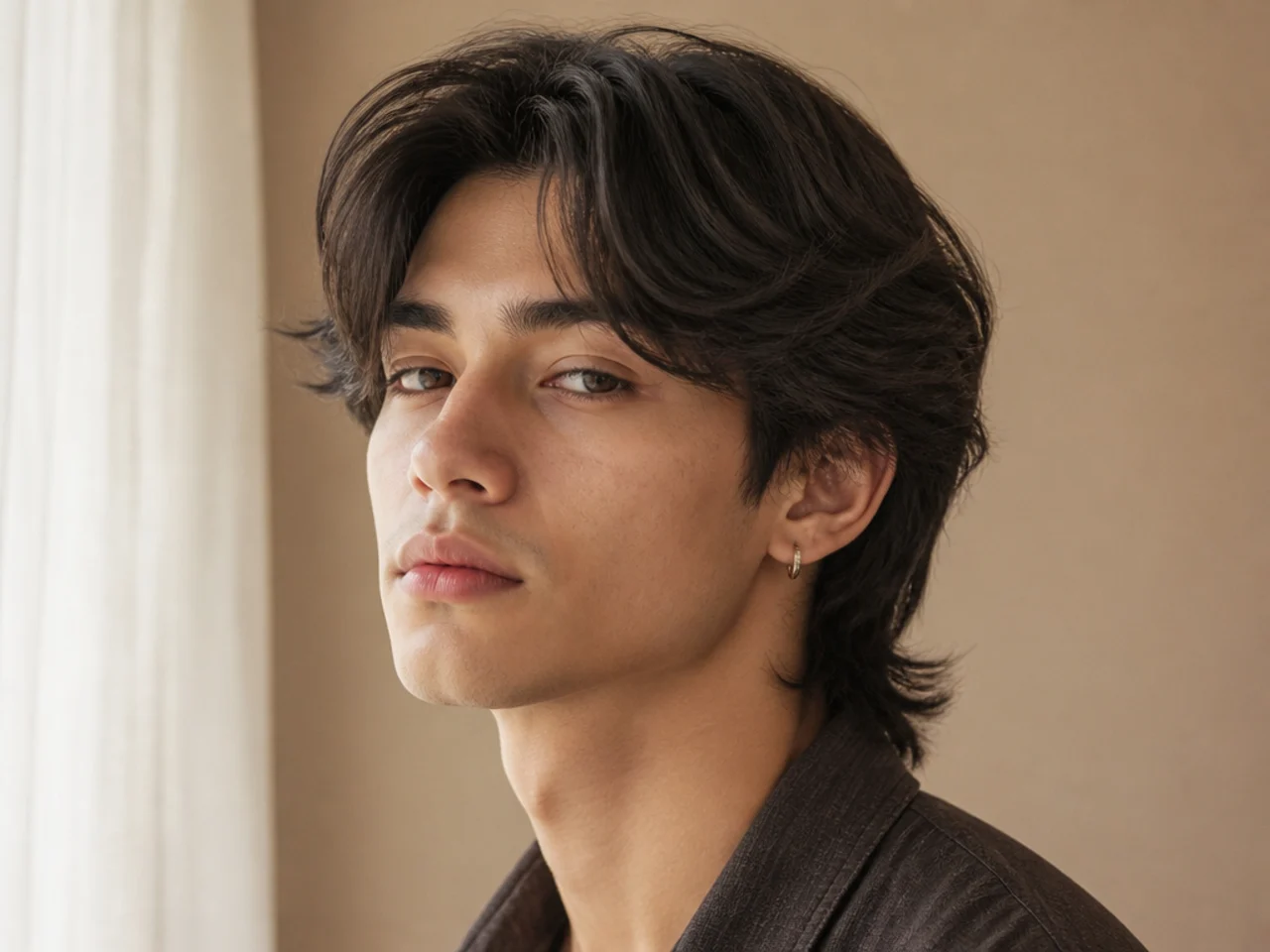
A solid fringe cut level at the brow under a layered crown. The hard horizontal at the front contrasts with the broken texture above it, which is a strong look on a long face and a heavy one on a short face.

13. Wolf Cut With a Middle Part
The top split down the centre so the two halves fall away symmetrically. It exposes the hairline, which suits an even one and draws attention to an uneven one, and it needs the crown layers cut evenly on both sides or the split sits off centre.

14. Wolf Cut With a Taper
The sides shortened gradually to a number one at the neckline, never bare. Those three millimetres keep the contrast against the layered top moderate, and the gradient blurs slowly enough that the cut still reads correctly at three to four weeks.
15. Wolf Cut With a Low Fade
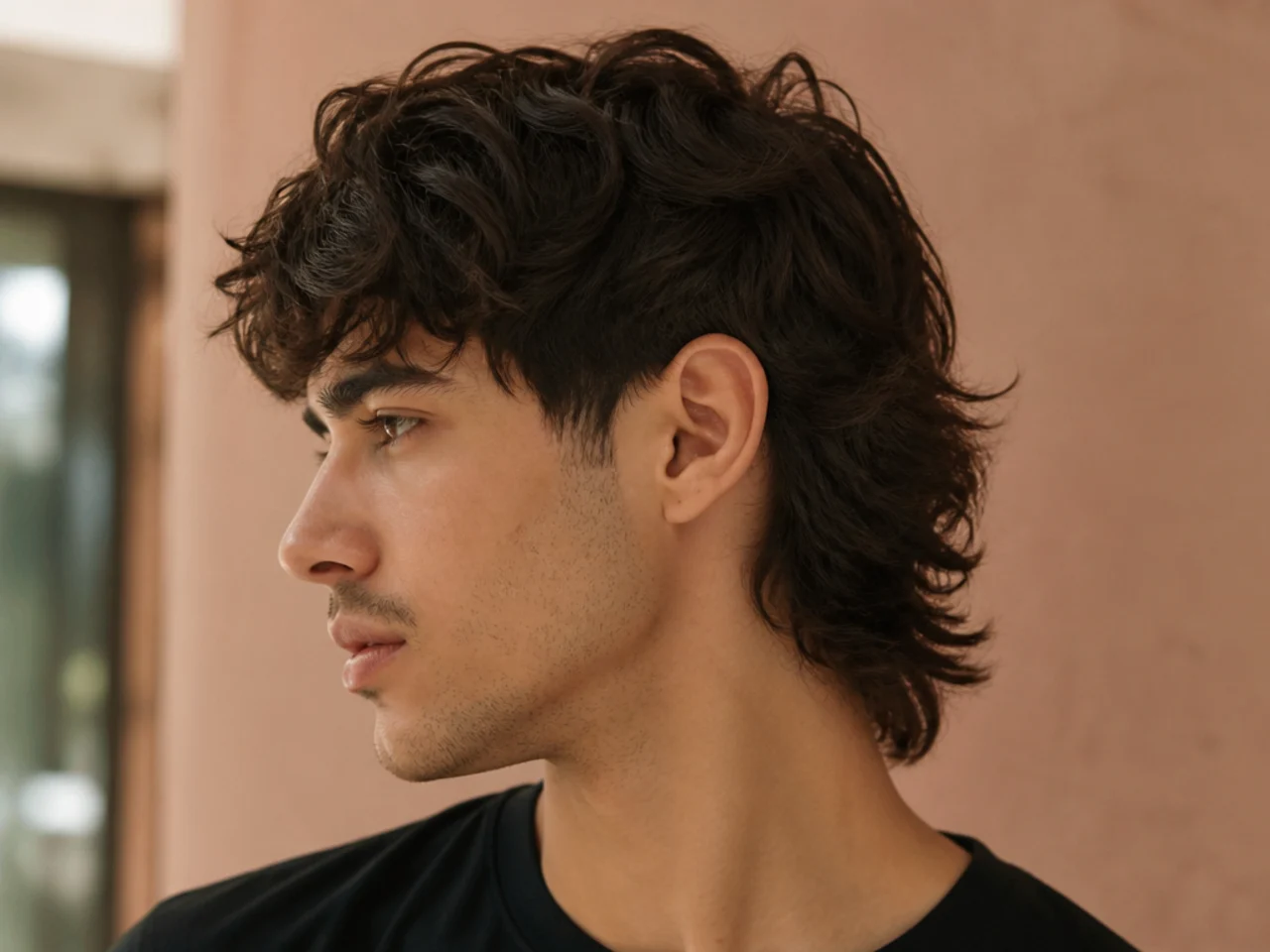
The fade starting just above the ear and dropping to skin at the bottom. Keeping the line low removes width only from the narrowest part of the head, so the layered crown keeps its silhouette instead of looking perched.
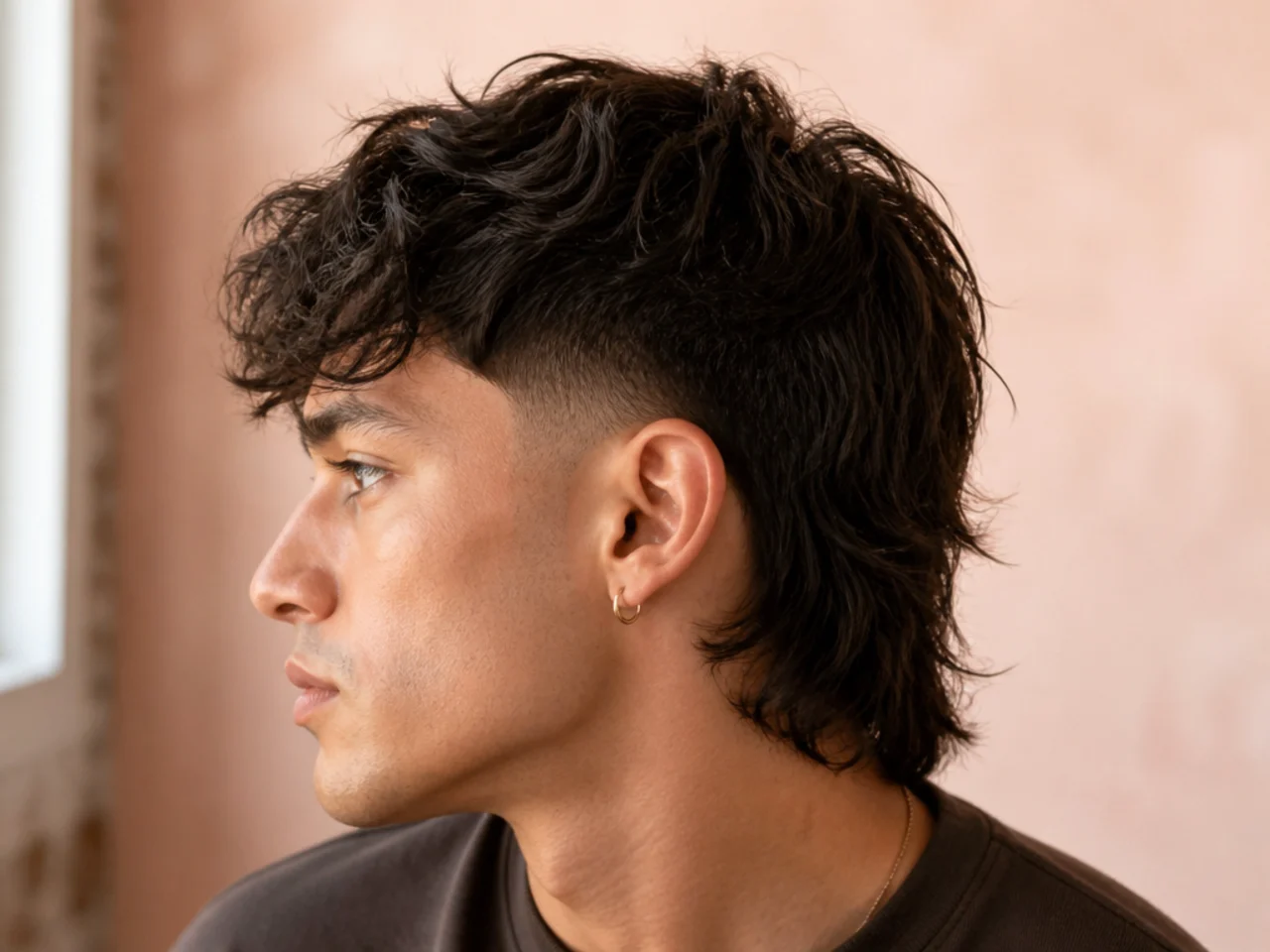
16. Wolf Cut With a Burst Fade
The fade arcing around the ear and stopping before the back of the head. It clears the side without cutting into the weight behind the ear, which is exactly the weight the layers at the back need to sit against.
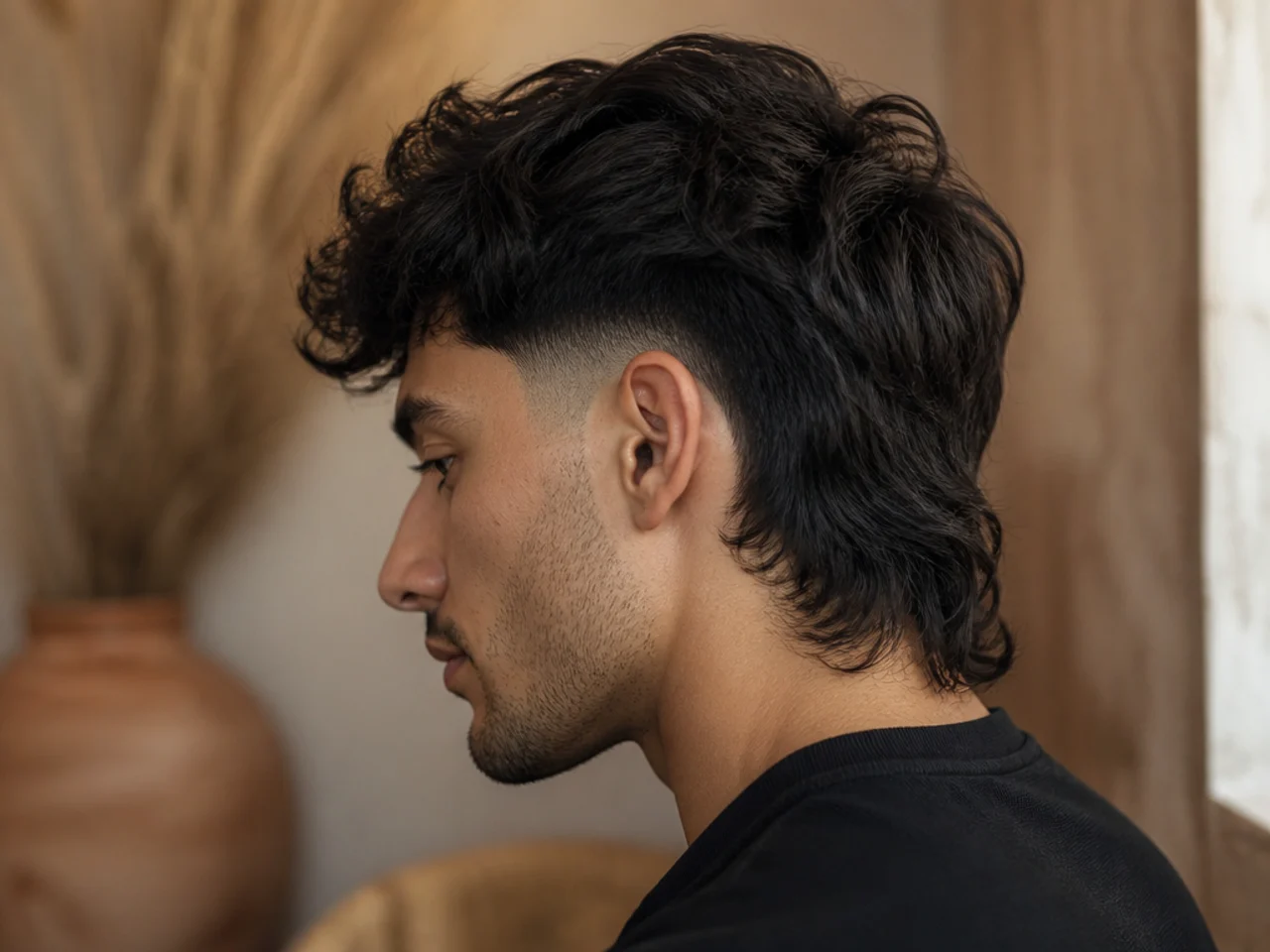
17. Wolf Cut With an Undercut
The sides clipped to one length with no gradient, and the layered top left long over them. The hard step is the point — it separates the two sections completely, so the volume on top reads as its own shape rather than as the top of a gradient.
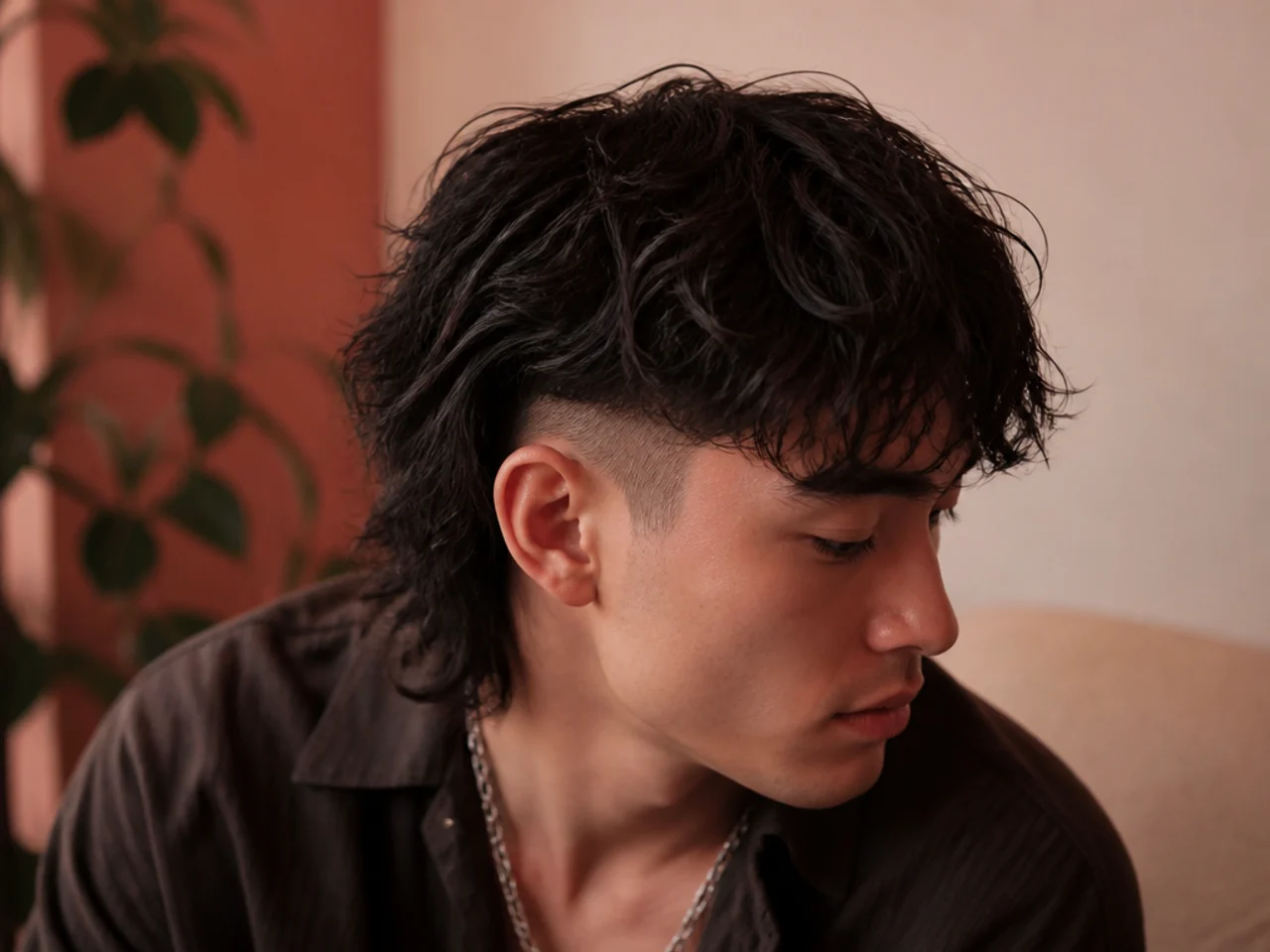
18. Wolf Cut With a Mullet Tail
Wolf cut layering above, a deliberately long section at the nape below. The layers give height at the crown while the tail gives length at the back, and the two together are what most people are actually pointing at when they show a photograph.
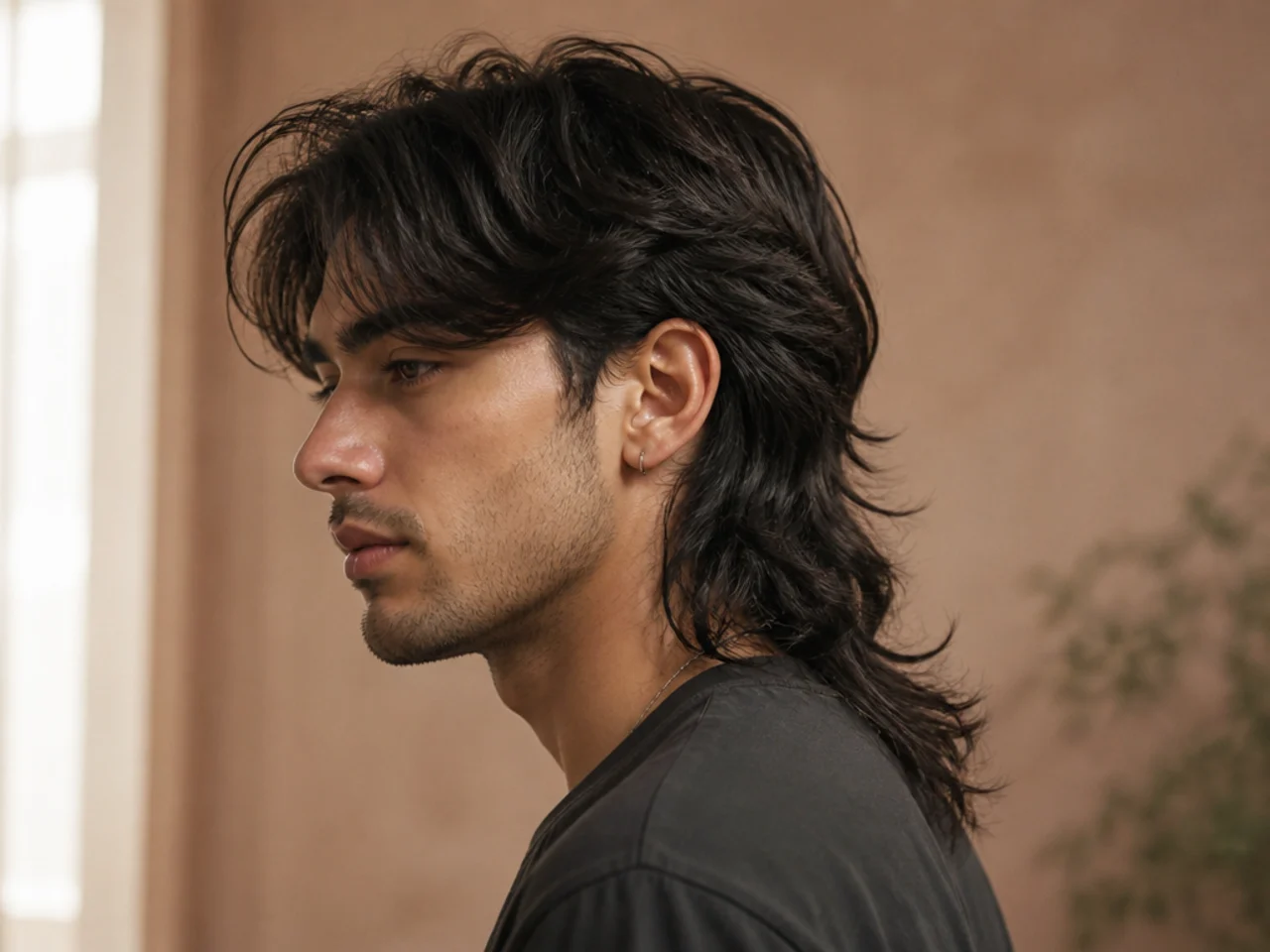
19. Wolf Cut on Fine Hair
Fine hair needs the layers restricted to the crown and the perimeter left blunt. Every layer takes density out of wherever it lands, and on fine hair the outline is the only place that density shows, so layered ends simply vanish.

20. Wolf Cut on Thick Hair
Thick hair carries weight that holds itself down, and removing it is what allows the stack to lift. Take too much and the cut expands sideways, so the thinning belongs in the interior where it is invisible rather than at the ends where it is not.

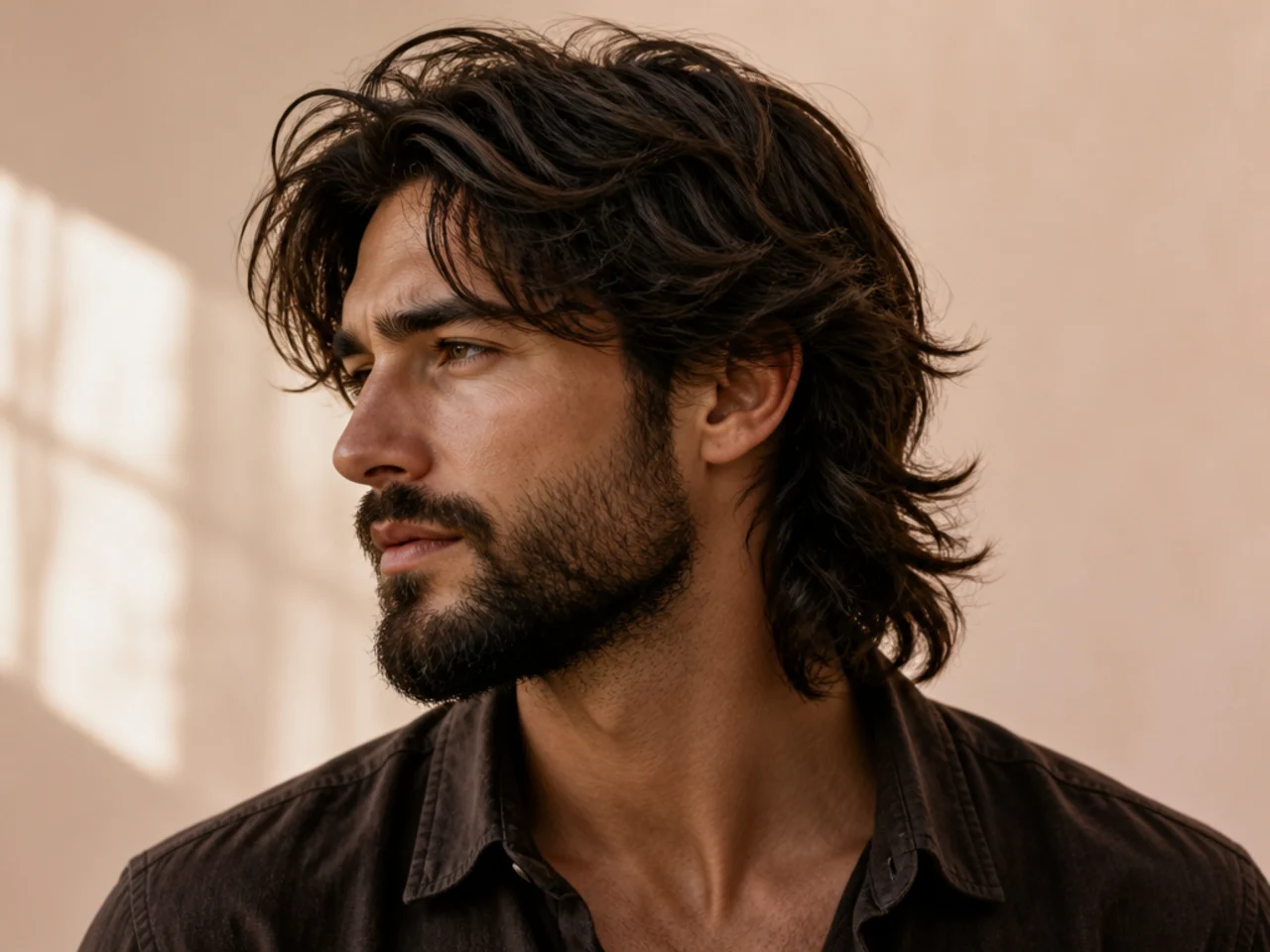
21. Wolf Cut With a Beard
A beard adds a second mass below the jaw, which balances the volume sitting at the crown. If the sides are faded, running the fade down into the beard removes the horizontal line across the jaw and keeps the silhouette continuous.
22. Bleached Wolf Cut
Lightening the ends against a darker root makes the layer boundaries visible as colour changes as well as length changes. Bleach also lifts the cuticle and roughens the strand, which gives fine hair the grip it needs to hold separation.

23. Wolf Cut Pushed Back
The whole top swept back off the face with a matte product. Pulling the front back exposes the hairline and raises the apparent height of the head, so it flatters a short face and lengthens a long one further.
24. Wolf Cut With a Side Fringe
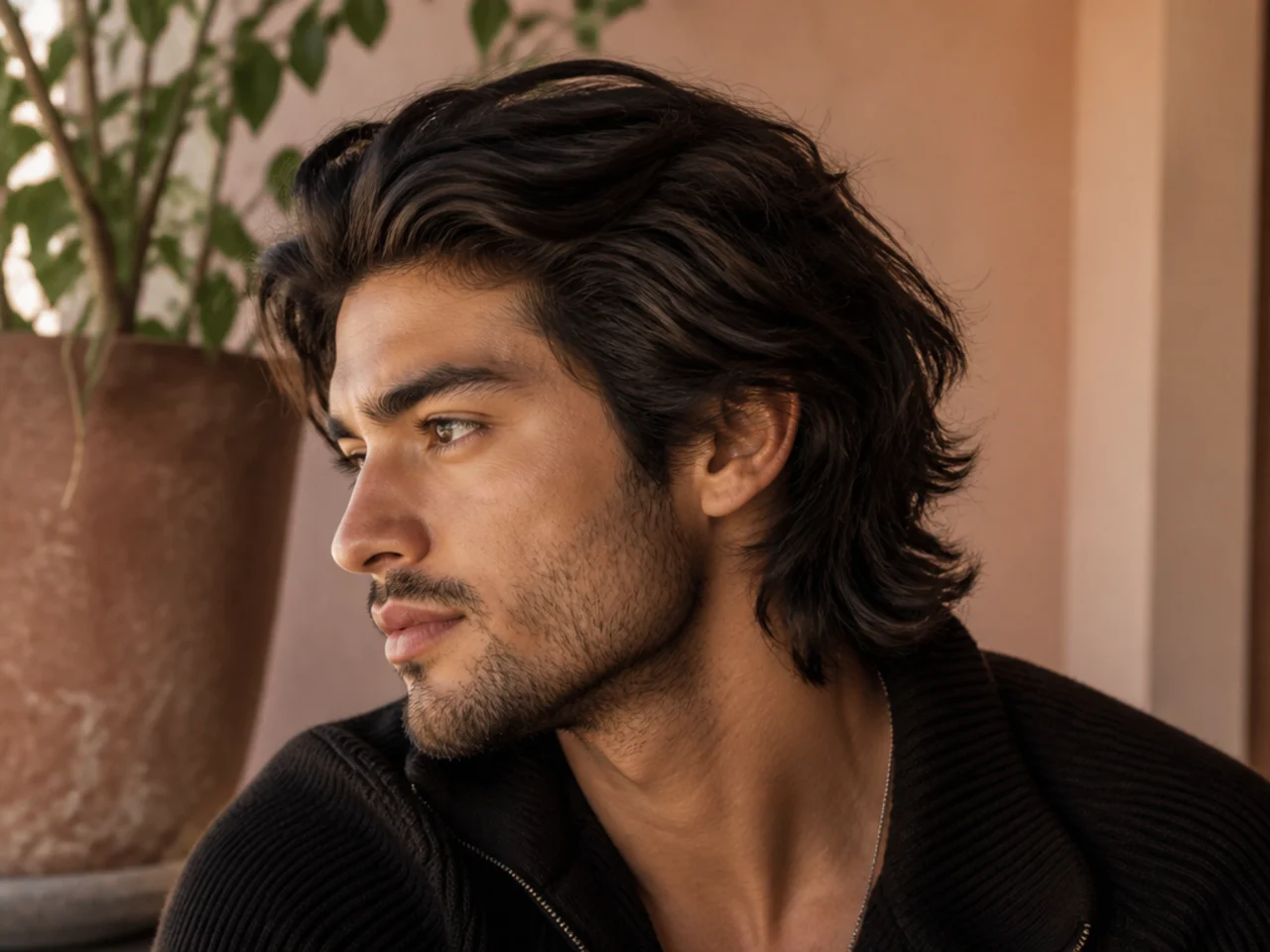
The fringe cut on a diagonal and worn across the forehead to one side. The diagonal crosses the face rather than sitting square on it, which softens a heavy brow and gives the layered crown an asymmetric weight to lean into.

25. Grown Out Wolf Cut
At eight to ten weeks the stack has dropped and the shape has flattened into a shag. The outline is still correct, so the repair is a reset of the crown layers rather than a full recut, and the perimeter can usually be left alone.

Styling and Upkeep
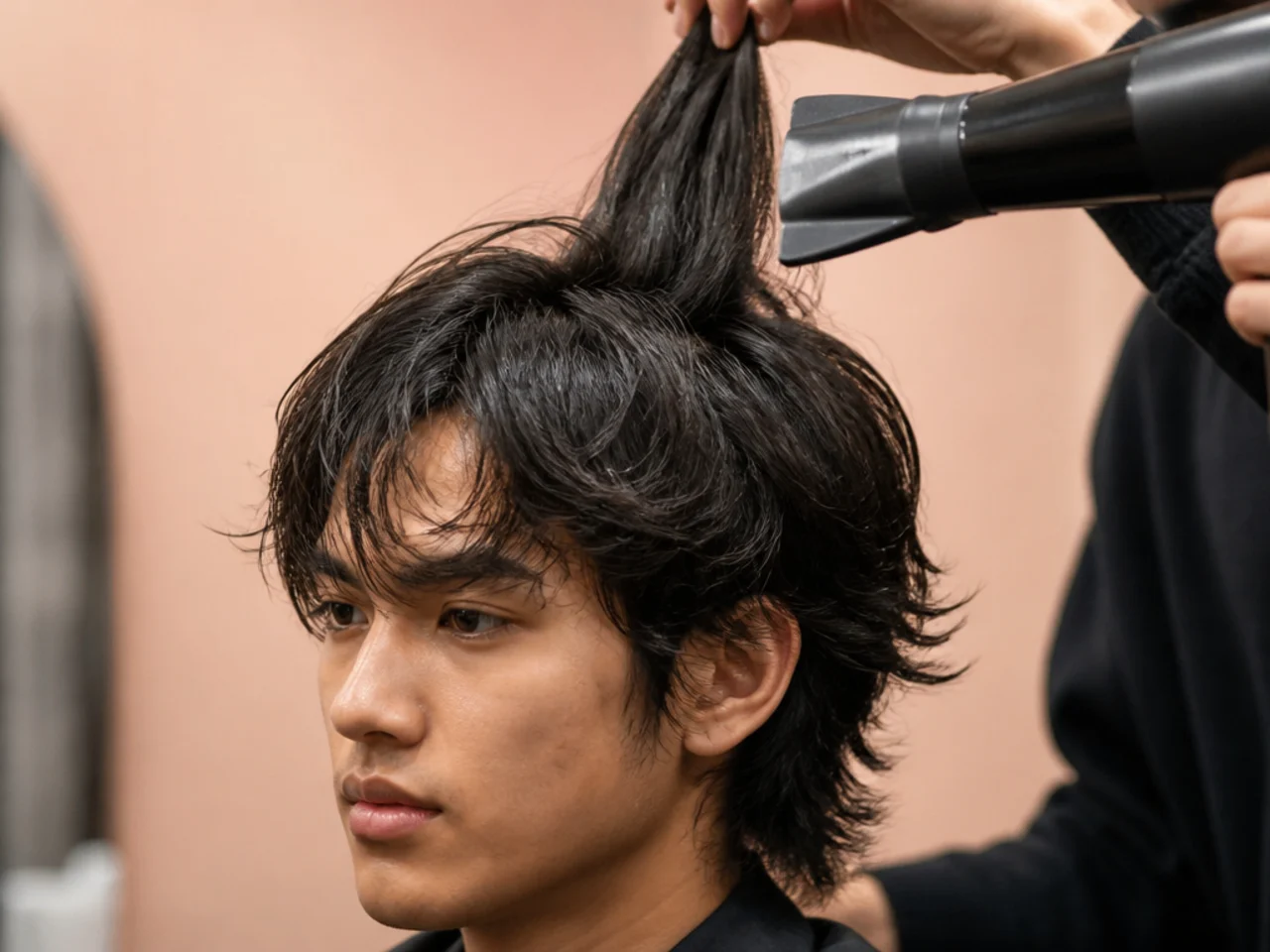
Dry the crown first and upward. The crown carries the volume for everything below it, and hair sets in the shape it dries in.
Use a matte product, not a wax. Anything heavy coats the strand and closes the separation the layers were cut to create.
Trim the layers, not the length. Resetting the crown stack restores the volume without shortening the perimeter you spent months growing.
Book the sides separately. A faded side needs attention every one to two weeks while the layered top holds for eight.
Skip the comb once it is dry. Combing pulls the layer ends into line with each other, which is the opposite of what the cut is for.
Mistakes to Avoid
Booking it at two inches. There is no vertical distance for the layers to occupy, so all you get is a thinned crop and a long wait.
Cutting curls wet. Two to four inches of shrinkage puts every layer boundary somewhere other than where it was agreed.
Layering fine hair to the ends. The perimeter is where fine hair looks dense, and layers take that density away first.
Taking the sides to skin on a monthly schedule. Bare scalp shows stubble within a fortnight. Ask for a taper finishing at a number one if you cannot get back in two weeks.
Loading the crown with heavy product. Weight at the top collapses the stack, and the stack is the only thing holding the volume up.

FAQ
How much length do I need? About four inches on top before the layers can stack.
Fade or taper? Fade for contrast at two weekly trims, taper for three to four.
How often? Eight weeks for the layers, sooner if the sides are faded.

Final Thoughts
Ask for two things separately: layers stacked at the crown, and a named finish on the sides. Barbers who hear only the word wolf cut tend to deliver a shag with faded sides, which is a reasonable haircut and not the one in the photograph.
For the longer end of the range see the long wolf cut for men, and for how the layering changes on curl see the curly wolf cut. More in Mullet and Wolf Cut.