6 Tips to Maintain a Long Wolf Cut
Six stylist-tested tips to keep a long wolf cut men can actually wear — trim cadence, product routine, wash frequency, styling, sleep, and growout.
In this article · 17
- What You'll Need
- Tip 1: Book the Trim Every 6 to 8 Weeks — By Calendar, Not by Mirror
- Tip 2: Build a Three-Product Routine — Leave-In, Grip, Hold
- Tip 3: Wash 2 to 3 Times a Week — Never Daily
- Tip 4: Style with Airflow — Blow-Dry Direction Sets the Shape
- Tip 5: Sleep on Silk with a Loose Low Bun — Cotton Wrecks the Layers
- Tip 6: Grow It Out in Phases — Anchor the Nape, Trim the Face-Framing
- Troubleshooting Common Long Wolf Cut Problems
- FAQ
- How often should a long wolf cut be trimmed?
- What products does a long wolf cut men actually need?
- How often should I wash a long wolf cut?
- How do I stop my long wolf cut from going flat?
- Do I need a silk pillowcase for a long wolf cut?
- How do I grow out a long wolf cut into full long hair?
- Can I maintain a long wolf cut with fine or thin hair?
- Is a long wolf cut low maintenance?
The long wolf cut looks effortless in reference photos and reads mullet-adjacent within three weeks if you neglect the maintenance. Layers blur, face-framing pieces go soft, and the shape that made you book the cut disappears. These six tips are what working stylists give clients walking out of the chair with a fresh long wolf cut — the routine that keeps the shape holding until the next visit.
What You'll Need
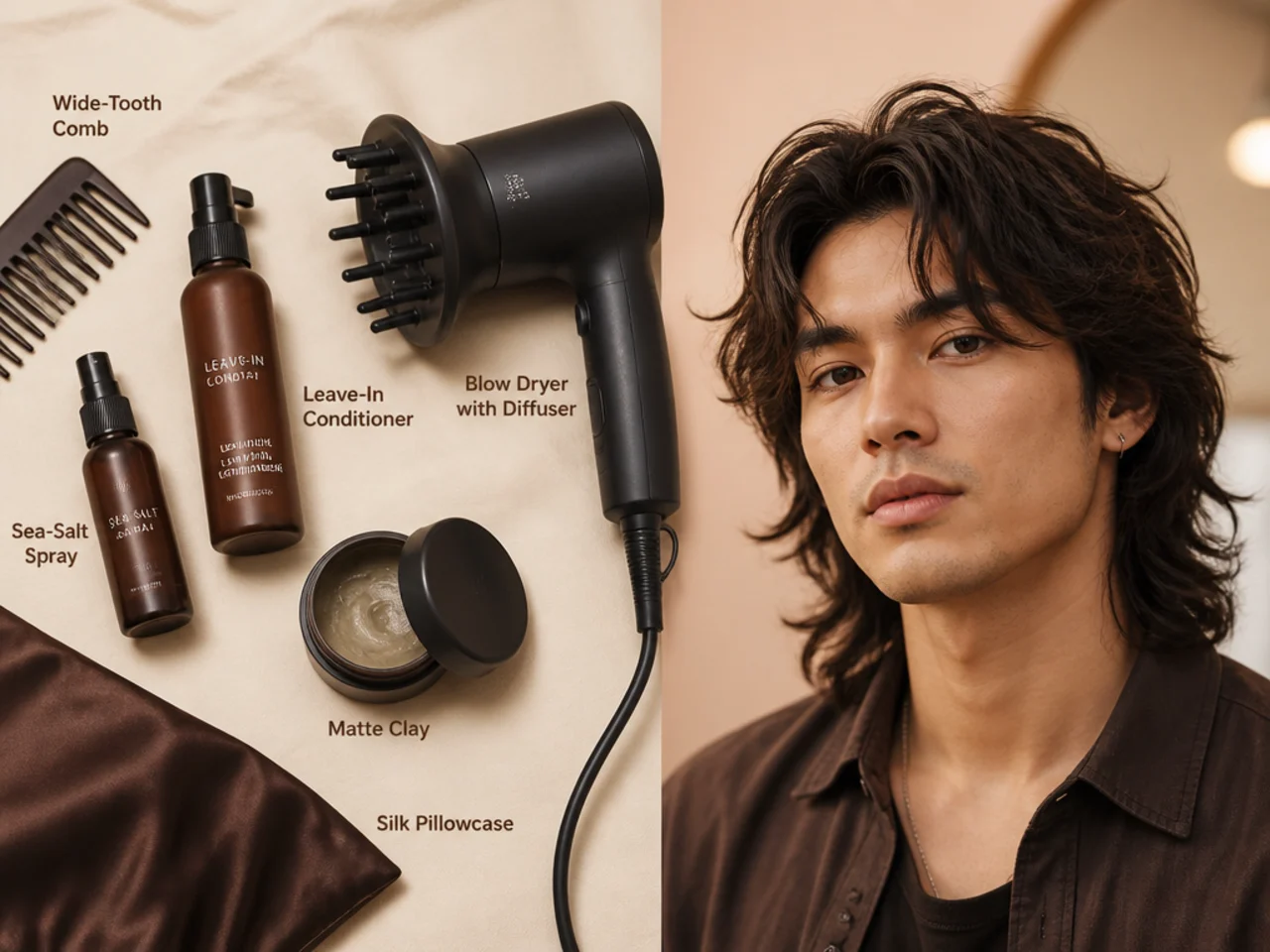
You do not need a shelf of product. You need five things doing five specific jobs, plus one pillowcase upgrade.
- Sulfate-free shampoo and conditioner — sulfates strip the mid-lengths first, and the mid-lengths are what carry the layered shape on a long wolf cut.
- Leave-in conditioner — protects the ends between washes and gives the barber less to trim off at your next visit.
- Sea-salt spray or light styling cream — the daily grip product that keeps the layered pieces defined. Salt spray for straight and wavy hair, styling cream for fine or curly hair.
- Matte clay or finishing paste — for hold at the crown without shine. A pea-sized amount does the whole head.
- Blow dryer with a nozzle and a diffuser — the nozzle sets direction on straight and wavy hair, the diffuser holds curl pattern without frizz.
- Wide-tooth comb, silk or satin pillowcase, and a weekly deep conditioner or hair mask.
Skip heavy waxes, alcohol-based holding sprays, and any product marketed as "shine serum" — long wolf cuts need matte movement, not slick weight.
Tip 1: Book the Trim Every 6 to 8 Weeks — By Calendar, Not by Mirror

The face-framing pieces are the first thing to go. They start defined at the cheekbone and blur into "just kind of layered hair" by week seven. Once that read softens, the shape stops being a wolf cut — and the recovery cut has to remove more length than a routine trim would.
Book six to eight weeks out on the calendar the day you leave the chair. By the time you notice the shape softening in the mirror, you have already been overdue for a week. The clients who always look sharp are the ones who booked before leaving the current appointment.
The trim itself is not a full recut. Ask for a dusting on the ends (a quarter inch, no more), a re-cut on the face-framing pieces at the cheekbone, and a reshape on the feathered perimeter through the nape. Total time in the chair should be twenty to thirty minutes. See our how often should men get a haircut guide for cadence across every men's silhouette — the wolf cut sits at the longer end because the layered structure buys you more grow-out before the shape breaks down.
The one exception is fade or taper sides. Those need a re-cut every two to three weeks — the layered top can wait, but the fade cannot. Book the sides-only cleanup between full trims. Say "wolf cut cleanup, no top" and your barber will know what you mean.
Tip 2: Build a Three-Product Routine — Leave-In, Grip, Hold

The long wolf cut needs a three-product routine and nothing more. Every extra bottle you add flattens the shape or weighs down the ends.
Product one is a leave-in conditioner. Apply to damp hair through the mid-lengths and ends after every wash. The ends are the wispy perimeter your cut is built around, and they are the most exposed part of any long haircut. A silicone-free leave-in absorbs cleanly without buildup.
Product two is your daily grip. Sea-salt spray for straight and wavy hair — mist through damp hair, scrunch, air-dry. Light styling cream for fine or curly hair — smaller amount, worked through with fingers rather than combed. Curly hair wants a curl cream or leave-in gel for definition; see our curly wolf cut men breakdown for pattern-specific product direction.
Product three is your matte hold. Matte clay or molding paste, pea-sized, worked into the crown and top layers. The job is to hold the root lift and add texture — not to slick, not to shine. Never apply hold product to the ends. It weighs the feathered perimeter flat and shows every fingerprint by afternoon. For long men's textures, our best wavy hair products roundup covers the categories in more depth.
What to skip: heavy pomades, water-based gels, high-hold hairsprays with alcohol, and any "styling wax" that leaves a shiny finish. Shine kills the texture. Weight kills the movement. If you find yourself layering more than three products, the routine is wrong — not the amount.
Tip 3: Wash 2 to 3 Times a Week — Never Daily

Daily washing is the single fastest way to destroy a long wolf cut. Long hair takes longer to redistribute scalp oils than short hair — strip the mid-lengths every morning and the ends turn brittle within a month. Two to three washes a week is the sweet spot. Adjust up if you sweat heavily, down if your scalp runs dry.
Use a sulfate-free shampoo and focus the lather on the scalp only. The mid-lengths and ends get cleaned by the runoff — they do not need direct scrubbing. Condition every wash, working from the ears down through the ends, and leave conditioner in for two full minutes before rinsing. This is the step most men skip and the step that keeps the layered ends from splitting.
Once a week, replace regular conditioner with a hair mask. Fifteen minutes on the mid-lengths and ends, then rinse. Long wolf cuts show damaged ends more than blunt cuts because the ends are the whole point of the shape — a stringy perimeter reads as neglect from six feet away.
Between wash days, use dry shampoo at the roots only. Never at the mid-lengths — dry shampoo dries out the layered pieces and turns them brittle. On heavy sweat days, rinse with cool water only, no shampoo. Cool water seals the cuticle and refreshes the shape without stripping oils. If you train daily, alternate a shampoo day with a co-wash day (conditioner only) to hit the sweat without the strip cycle. Wash in warm water and finish with a thirty-second cool rinse — smallest change on this list, biggest return on shine.
Tip 4: Style with Airflow — Blow-Dry Direction Sets the Shape
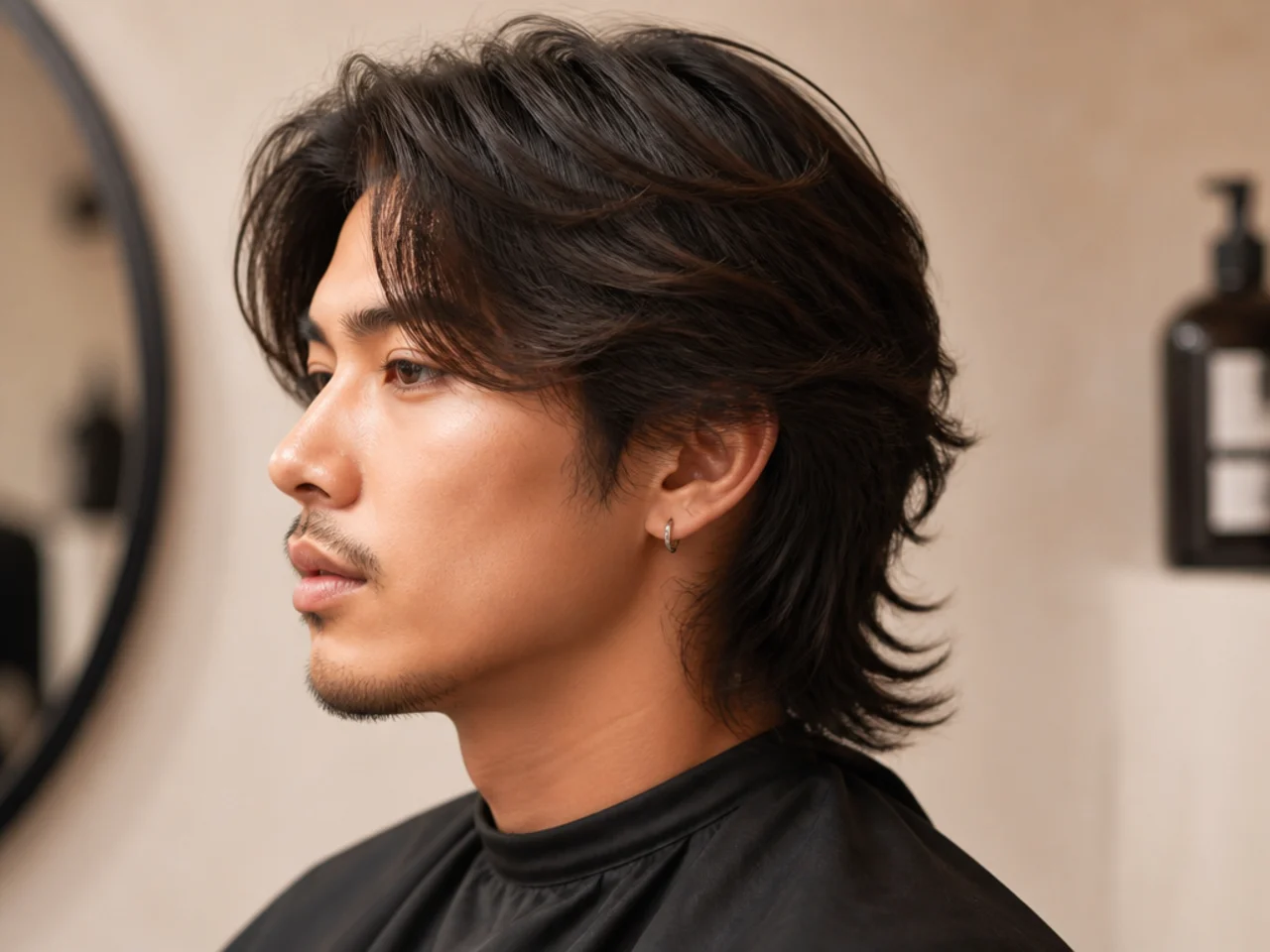
Product is not what holds a long wolf cut in shape. Airflow direction is. Get the drying right and the product wrong, the cut still reads. Get the product right and the direction wrong, the cut goes flat by mid-morning regardless of what you spent on the clay.
Start with towel-dried, damp hair — not soaking, not almost dry. Apply your grip product evenly through the layered mid-lengths, and work leave-in through the ends if you did not already.
Rough-dry with fingers. Fingers, not a brush. A brush at this stage flattens the layered pieces you are trying to lift. Point the dryer nozzle downward through the crown — this trains the layers to fall in the direction they were cut, not straight down against the scalp. As you dry, lift the roots at the crown with the fingers of your free hand. That root lift is the difference between a long wolf cut with movement and one that reads as uncut length.
For straight hair, use the nozzle and point down through the layers. For wavy hair, switch to the diffuser once the roots are dry and cup the mid-lengths without moving them — the diffuser sets the wave pattern without frizz. For curly hair, the diffuser goes on from the start; touch the curls as little as possible and finish with a cool shot to lock the pattern.
The cool shot is not optional. Warm airflow shapes the hair, cool airflow sets the shape. Thirty seconds of cool over the crown at the end doubles how long the shape holds through the day.
Common mistake: brushing wet hair. Wet layered hair is at maximum stretch and minimum strength. Brushing at that state breaks the mid-lengths and drags the layered movement flat. Detangle with a wide-tooth comb starting at the ends and working up, never at the roots first. Save the paddle brush for dry re-styling only.
Tip 5: Sleep on Silk with a Loose Low Bun — Cotton Wrecks the Layers
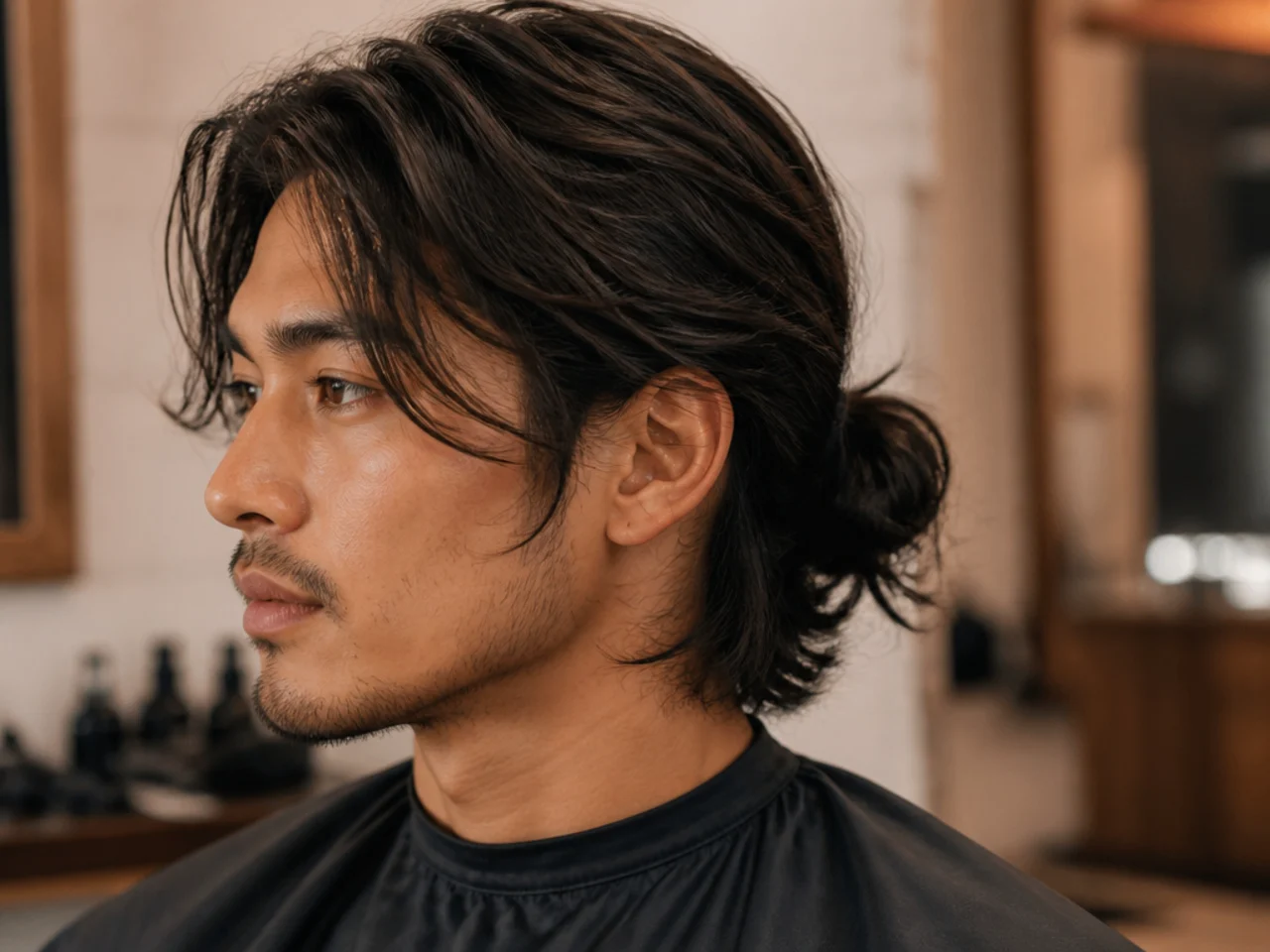
Cotton pillowcases are the invisible enemy of every long haircut. Cotton fiber creates friction, and friction against layered hair overnight flattens the crown, breaks the ends, and creases the face-framing pieces so they land in the wrong spot by morning. You wake up and re-wash to fix it — which is the daily-washing trap Tip 3 was built to avoid.
Fix it once. Switch to a silk or satin pillowcase. Not silk-blend. Not "silk-feel microfiber." Real silk or satin. The difference in ends, root volume, and morning frizz is visible within a week. A satin bonnet does the same job — sleep in the bonnet, wake up with the shape intact.
At collar length or shorter, the pillowcase alone is enough. Past the collar, add a loose low bun or loose braid at the nape before bed. Not tight — a tight bun creates the crease it was supposed to prevent. Loose enough that you can slide two fingers into the base and the hair pulls out without resistance. This keeps the layered mid-lengths from twisting into knots overnight.
For curly and coily long wolf cuts, use the pineapple technique instead. Gather all the length loosely on top of the head with a silk scrunchie — never an elastic band — with the ponytail falling forward as you sleep on your back. This preserves the curl pattern at the crown, exactly where curl pattern collapses first. See our curly wolf cut men piece for the full curl-pattern preservation routine.
Never sleep with soaking wet hair. Damp is fine — wet is destruction. Wet hair overnight against any pillowcase creates more friction damage than any styling mistake, and the layered ends are the first to snap. Rough-dry to at least seventy percent dry before bed.
Morning routine: skip the wash if the roots are not oily. Mist a light water spray or leave-in through the mid-lengths, scrunch or finger-tousle to re-set, and add a pea of matte clay only if the crown lift needs help. Fixed in three minutes without stripping the oils you spent the week protecting.
Tip 6: Grow It Out in Phases — Anchor the Nape, Trim the Face-Framing
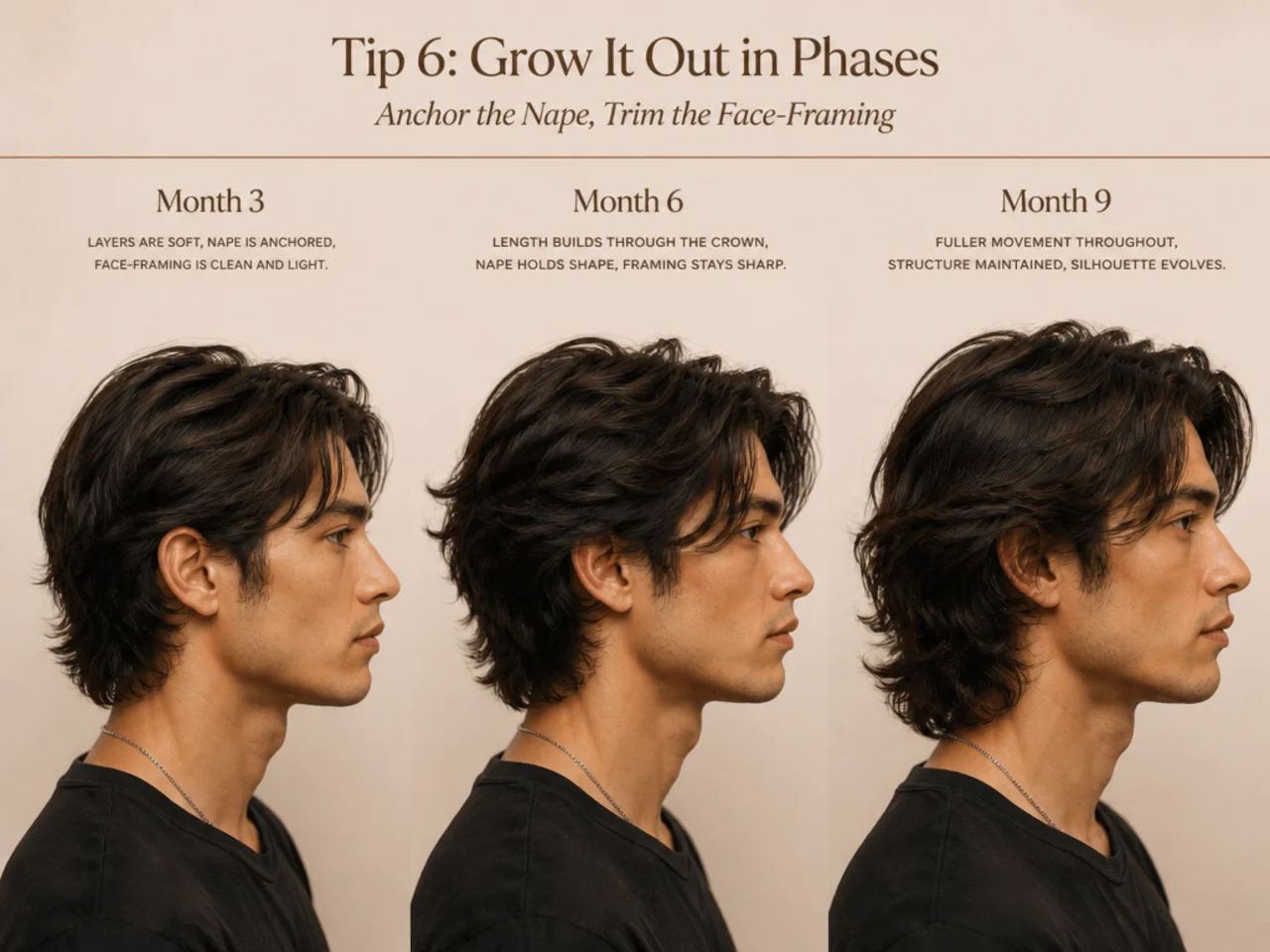
Whether you are growing your long wolf cut longer or transitioning it into full long men's hair, the growout has phases — treat them all the same and you end up with the awkward middle-length triangle every long-hair guide warns about.
Phase one — fresh cut to month three. The layered structure is intact and the shape still reads as a wolf cut. Trim only the face-framing pieces every six to eight weeks. Leave the nape and back untouched. Do not touch the top length either — the crown layers make this a wolf cut and not a bowl, and cutting them down while trying to grow the back breaks the ratio.
Phase two — months three to six. The awkward stretch. Face-framing reaches past the chin, nape brushes past the collar, layers start to feel disconnected. Trim the ends every eight weeks (a quarter-inch dusting) and add light internal weight removal through the mid-lengths at the third trim. Ask specifically for "internal thinning through the mid-lengths, no length off." This stops the shape from turning heavy as the back catches up.
Phase three — months six to nine. The wolf cut silhouette starts becoming a long men's cut with lingering face-framing. Trim every ten weeks — further apart, but each a real cleanup rather than a dusting. Keep the face-framing pieces alive if you want them; kill them off if you are heading toward a blunter shape. Our medium-length hairstyles men guide covers what phase three grows into.
Phase four — month nine onward. You now have long men's hair with wolf cut origins. Trim every twelve weeks to hold the shape and remove split ends. Weight-removal only where mass builds up too heavy — usually the sides above the ear.
The temptation through every phase is to over-trim to "clean it up." Resist. Over-trimming during growout is why most transitions stall — you spend a year trying to grow past a length you keep cutting back to. If ends are splitting, dust them and stop. If the shape feels heavy, remove weight internally, not length. See short wolf cut men for what phase one looked like and layered wolf cut men for how the layered rhythm evolves as length builds.
Troubleshooting Common Long Wolf Cut Problems
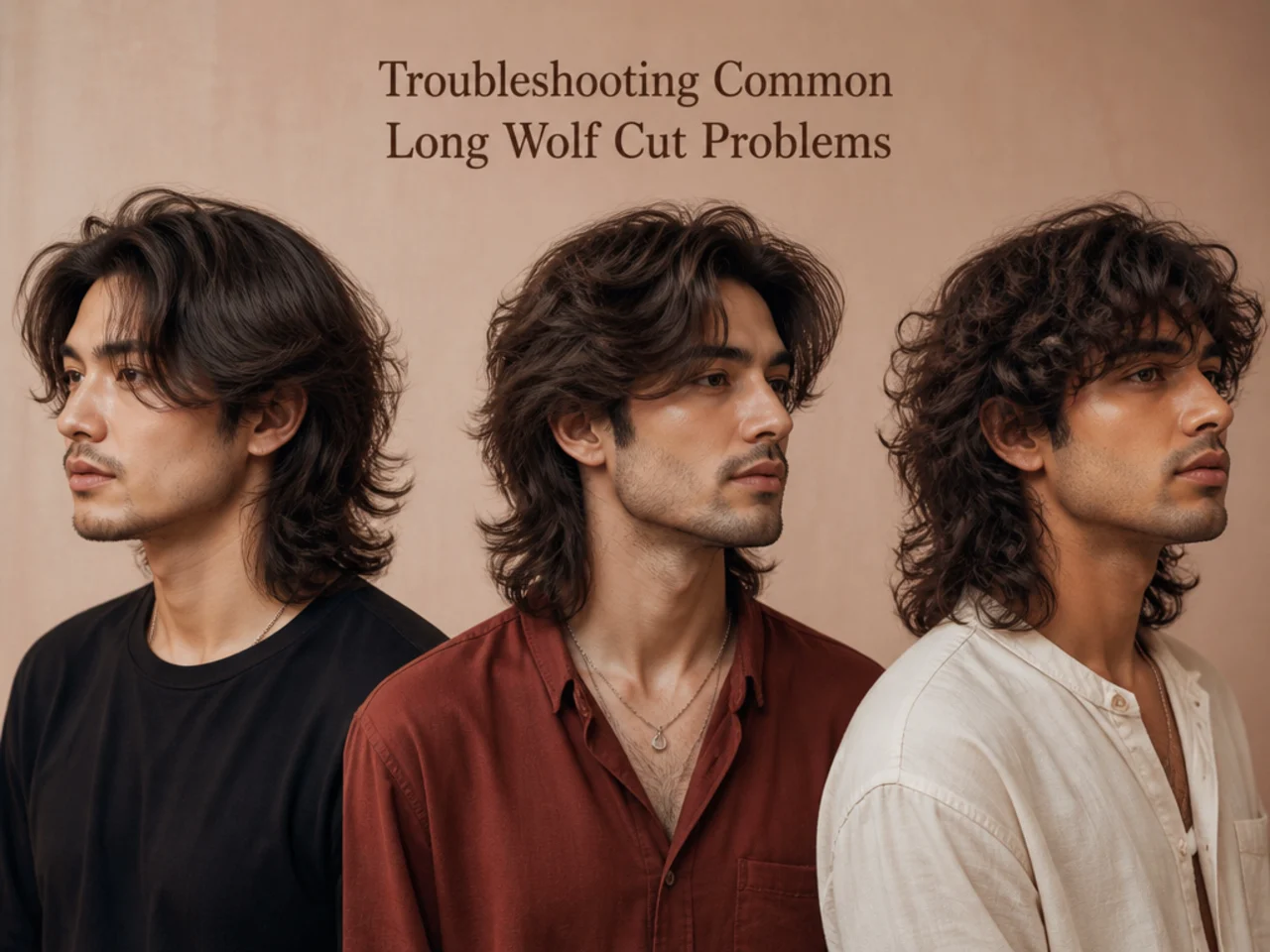
Every long wolf cut hits at least two of these problems in the first six months. All of them are fixable.
Problem: The crown goes flat by mid-morning. Not enough root lift during blow-dry, or too much product at the roots. Dry with the head tilted forward and airflow pointing down through the crown, lifting roots with fingertips. Apply matte clay only above the crown, never at the root itself. If the flat persists, switch from a heavy cream to a sea-salt spray for the lighter finish.
Problem: The face-framing pieces sit in the wrong spot. They were cut for wet hair and behave differently when dry, or your natural part fights the placement. Blow-dry the face-framing first, away from the face with a round brush, then let them fall. If a piece still lands wrong, book a quick reshape — most barbers will re-cut face-framing for free within two weeks.
Problem: The ends look stringy and thin. Split ends traveling up the shaft, dryness from over-washing, or product buildup. Cut the split-end section off at the next trim (do not try to grow past it), add a weekly hair mask, and use a clarifying shampoo once a month. If strings persist, ask your barber to weight-remove internally rather than trim length — ends often look better when mid-length weight comes off them.
Problem: The shape reads as a mullet by week five. Face-framing has grown out but the nape is still long, shifting visual weight to the back. Move your trim cadence to six weeks, focus on face-framing at every visit, and ask for a slight taper into the nape at the recut so the back stays feathered.
Problem: The hair frizzes in humidity. Damaged cuticle from heat styling or over-washing, or the wrong finishing product. Air-dry at least two days a week, run the diffuser on cool for one day, and add a light finishing mist (not a hairspray) after styling. Cotton pillowcases make frizz worse overnight — revisit Tip 5 if you skipped it. See our wolf cut hair men library for growout-phase reference photos.
FAQ
How often should a long wolf cut be trimmed?
Every six to eight weeks for the shape. The face-framing pieces and feathered perimeter blur first — once they read soft instead of shaped, book. Waiting past ten weeks lets the layered rhythm collapse into a shapeless mass and doubles the recut work. Fade or taper sides need a re-cut every two to three weeks; between full trims, book a sides-only cleanup to keep the perimeter sharp.
What products does a long wolf cut men actually need?
Three: a leave-in conditioner to protect the ends, a sea-salt spray or light styling cream for grip through the layered pieces, and a matte clay or finishing paste for hold at the crown. Skip heavy gels and alcohol-based sprays — they flatten the layered movement the cut was built for. See our best wavy hair products roundup for specific product categories that work across long men's textures.
How often should I wash a long wolf cut?
Two to three times a week. Long hair strips faster than short hair, and daily washing drags natural oils off the mid-lengths and ends. On non-wash days, use a water-only rinse if you sweat, or a dry shampoo at the roots (never at the mid-lengths) to reset without stripping. Cool water at the end of every wash seals the cuticle and improves shine.
How do I stop my long wolf cut from going flat?
Blow-dry direction sets the shape. Rough-dry with fingers pointing airflow downward through the crown, then lift the roots with fingertips as you dry. Finish with a cool shot to lock the shape. Never brush wet layered hair — it flattens the layered movement the cut was built to hold. If the crown still flattens by mid-morning, apply your matte clay above the crown line only, never at the root itself.
Do I need a silk pillowcase for a long wolf cut?
Yes — cotton pillowcases create friction that flattens layers, breaks ends, and creases the crown by morning. Silk or satin fixes all three and adds no styling time. A satin bonnet works the same way if you already have one from another routine. Past collar length, add a loose low bun or braid at the nape before bed to keep the mid-lengths from twisting into knots overnight.
How do I grow out a long wolf cut into full long hair?
Anchor the nape and keep trimming the face-framing pieces every eight weeks. The back can grow untouched for three to six months while the layered structure around the crown and cheekbones needs regular light dusting — otherwise the ratio between the layers falls apart. Add internal weight removal through the mid-lengths at month five to keep the shape from turning heavy. Plan on nine to twelve months to fully transition. For adjacent long-hair inspiration, our modern mullet haircut men and shag haircuts breakdowns cover related shapes in the same family.
Can I maintain a long wolf cut with fine or thin hair?
Yes — with a lighter product hand. Skip sea-salt spray (it dries fine hair out) and use a light styling cream instead. Wash three times a week rather than two, since fine hair looks greasy faster at the roots. Ask your barber for shallower internal layers and a blunter perimeter so the shape holds density. Fine hair benefits from a mousse at the roots for lift; apply damp, before the blow-dry.
Is a long wolf cut low maintenance?
Not in the "wash and go" sense — long hair needs the wash cadence, the pillowcase, and the trim schedule. But daily styling is under five minutes once the routine is dialed in. See our mullet and wolf cut hub for adjacent shapes with different maintenance profiles.