20 Layered Wolf Cut Haircuts Worth Trying
20 layered wolf cut ideas for men — subtle, heavy, feathered, chunky, textured, and wispy versions with photos, face-shape notes, and barber terms.
In this article · 34
- What Is a Layered Wolf Cut?
- How to Choose Your Layered Wolf Cut
- The 20 Layered Wolf Cut Variations
- 1. Classic Layered Wolf Cut
- 2. Subtle Layered Wolf Cut
- 3. Heavy Layered Wolf Cut
- 4. Feathered Layered Wolf Cut
- 5. Chunky Layered Wolf Cut
- 6. Textured Layered Wolf Cut
- 7. Wispy Layered Wolf Cut
- 8. Long Layered Wolf Cut
- 9. Medium-Length Layered Wolf Cut
- 10. Razored Layered Wolf Cut
- 11. Point-Cut Layered Wolf Cut
- 12. Curly Layered Wolf Cut
- 13. Wavy Layered Wolf Cut
- 14. Straight Layered Wolf Cut
- 15. Korean-Inspired Layered Wolf Cut
- 16. Layered Wolf Cut with Curtain Fringe
- 17. Layered Wolf Cut with Textured Fringe
- 18. Layered Wolf Cut with Low Taper Fade
- 19. Layered Wolf Cut with Burst Fade
- 20. Two-Block Layered Wolf Cut
- How to Ask Your Barber for a Layered Wolf Cut
- Styling and Maintenance for a Layered Wolf Cut
- FAQ
- What makes a wolf cut a layered wolf cut?
- Should I ask for subtle or heavy layers?
- How is a layered wolf cut different from a shag?
- Which face shape suits a layered wolf cut best?
- How often does a layered wolf cut need a trim?
- Can I get a layered wolf cut with fine or thin hair?
- Is a layered wolf cut workplace-appropriate?
- How much does a layered wolf cut cost?
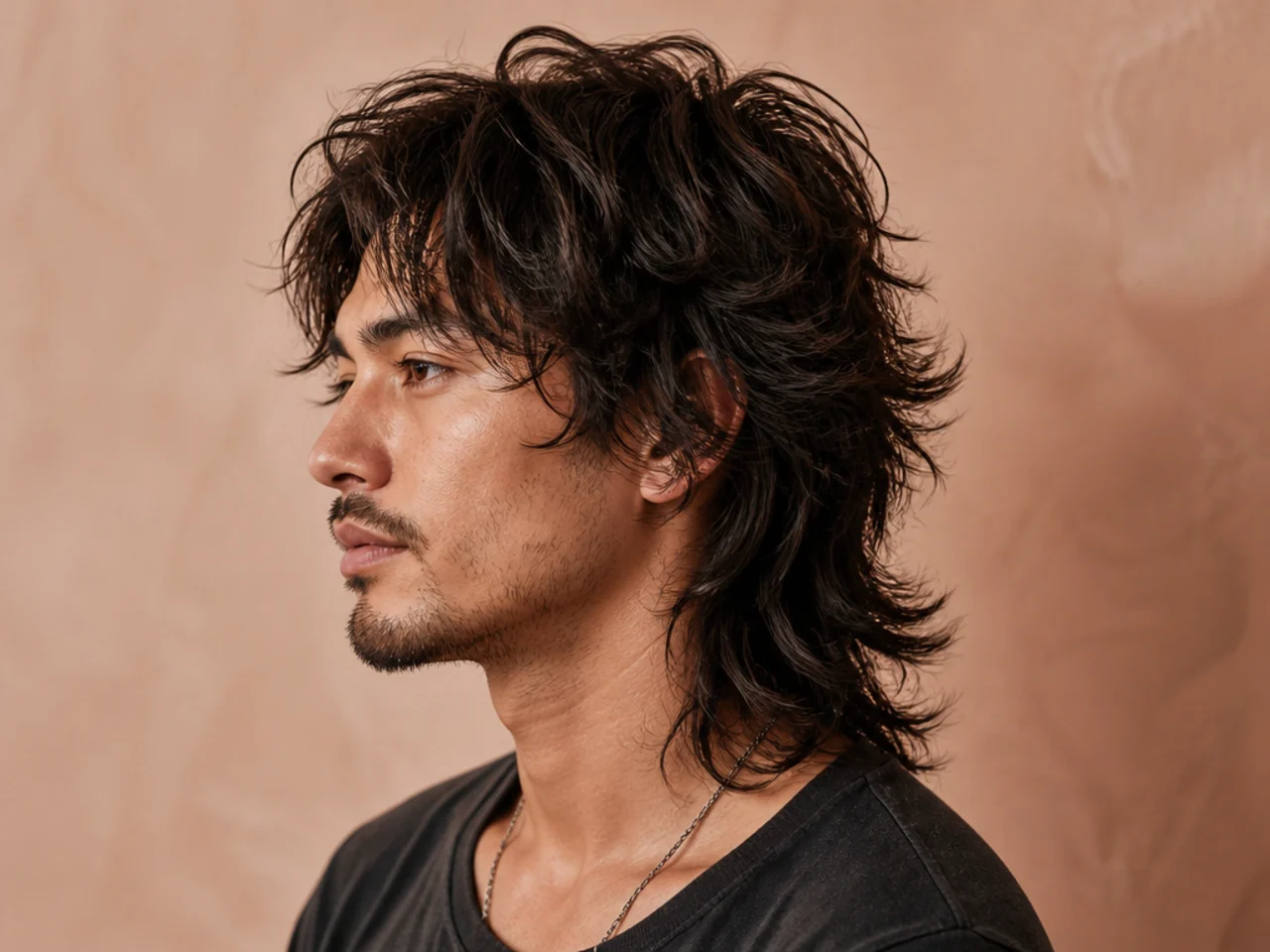
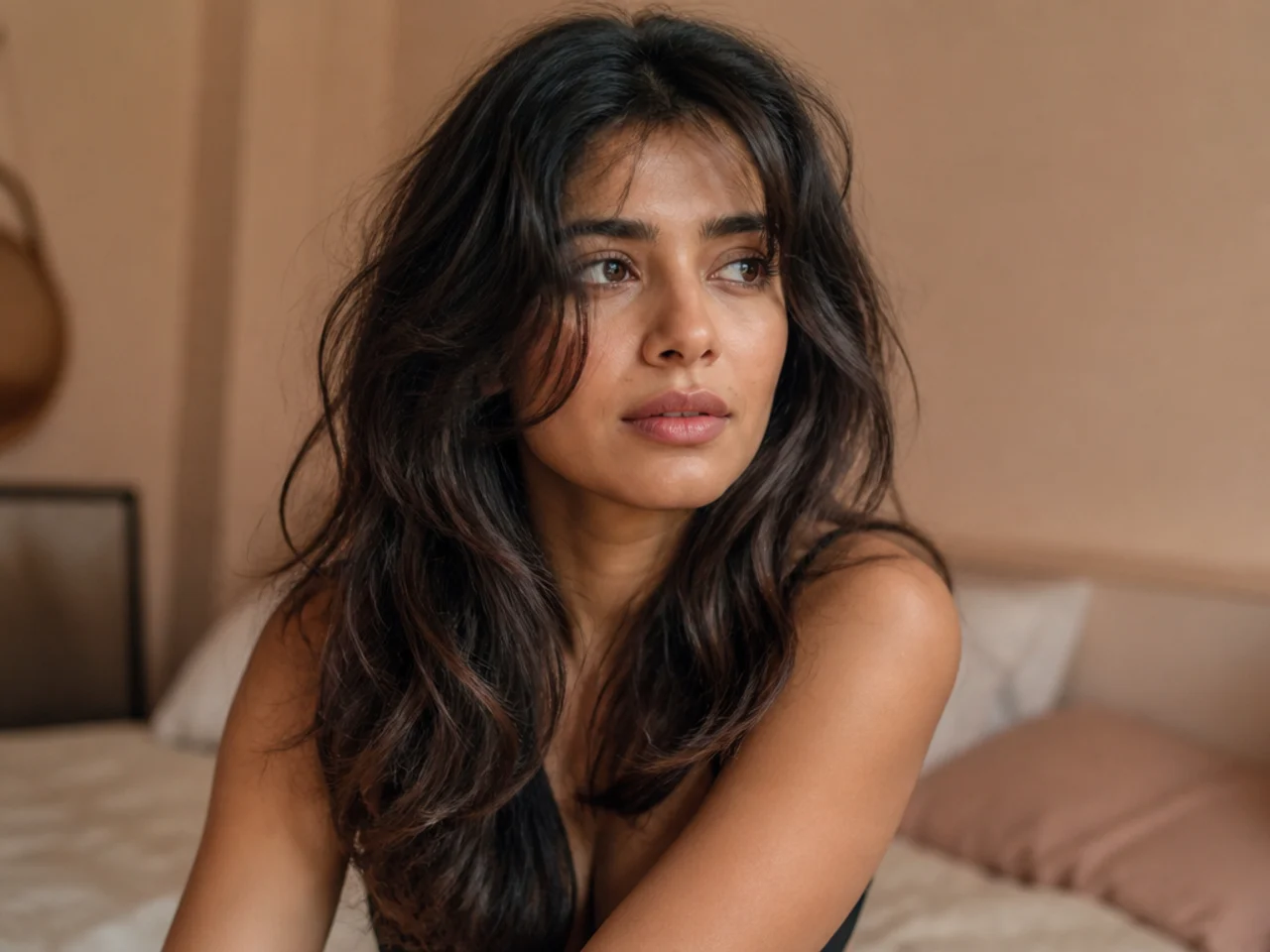
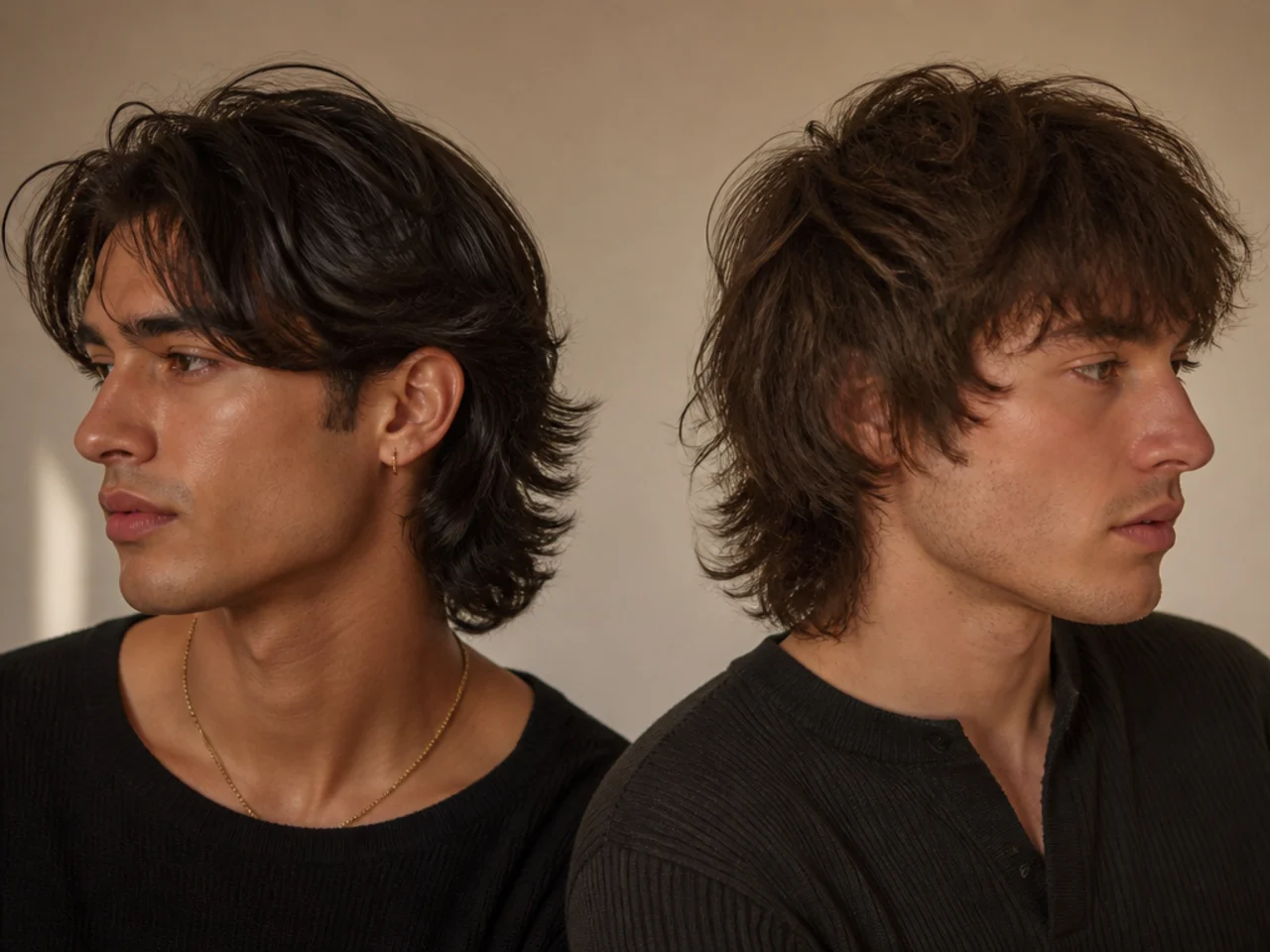
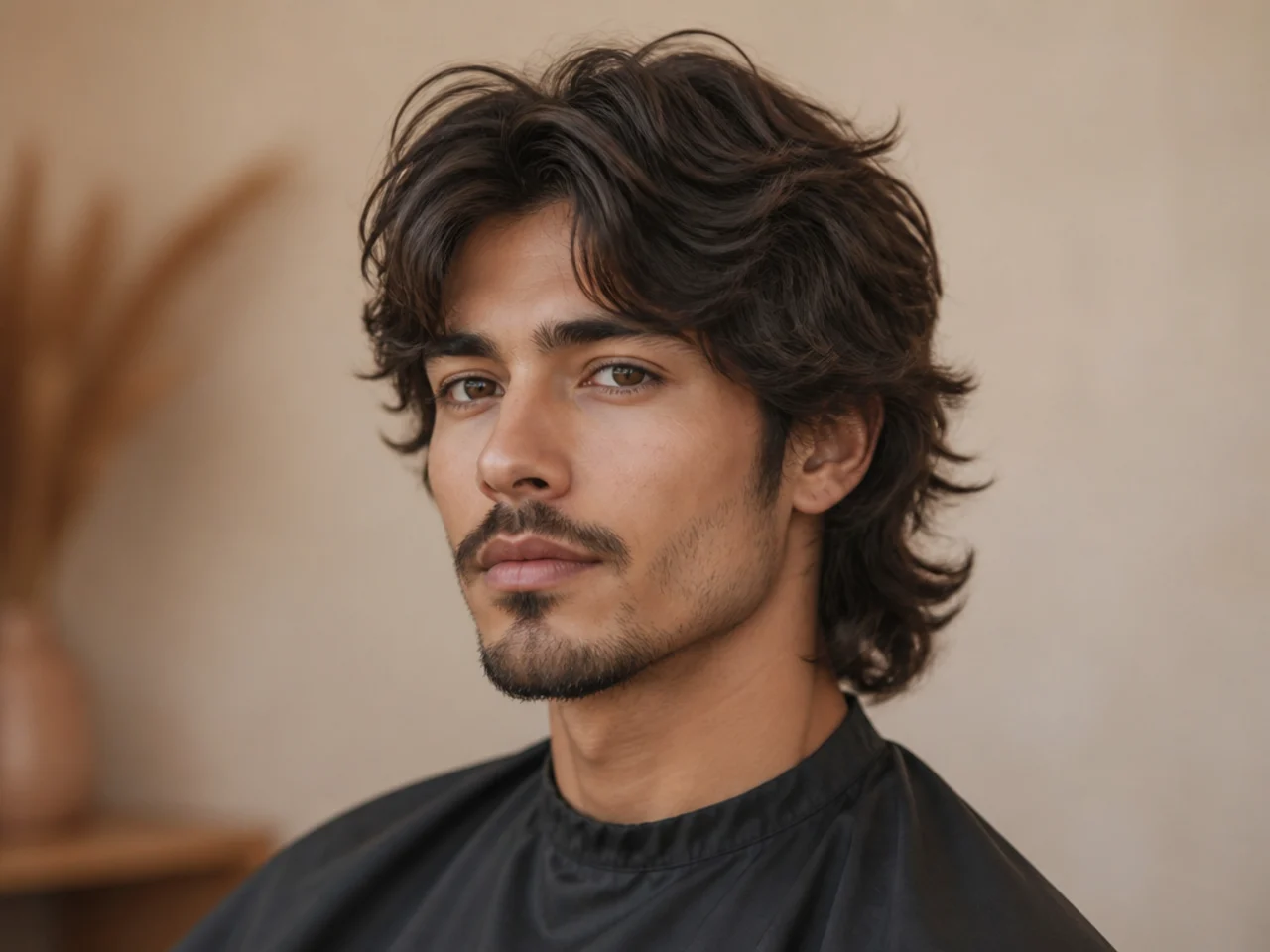
The layered wolf cut men are asking for in 2026 is the version where the layers are the whole story. Not a shag with a wispy tail. Not a mullet with soft edges. A full-on layered stack that starts at the crown, ribbons through the mid-lengths, feathers around the face, and finishes in a wispy perimeter. This guide covers twenty layered wolf cut variations — subtle to heavy, chunky to feathered — with the exact language to hand your barber for each one.
What Is a Layered Wolf Cut?
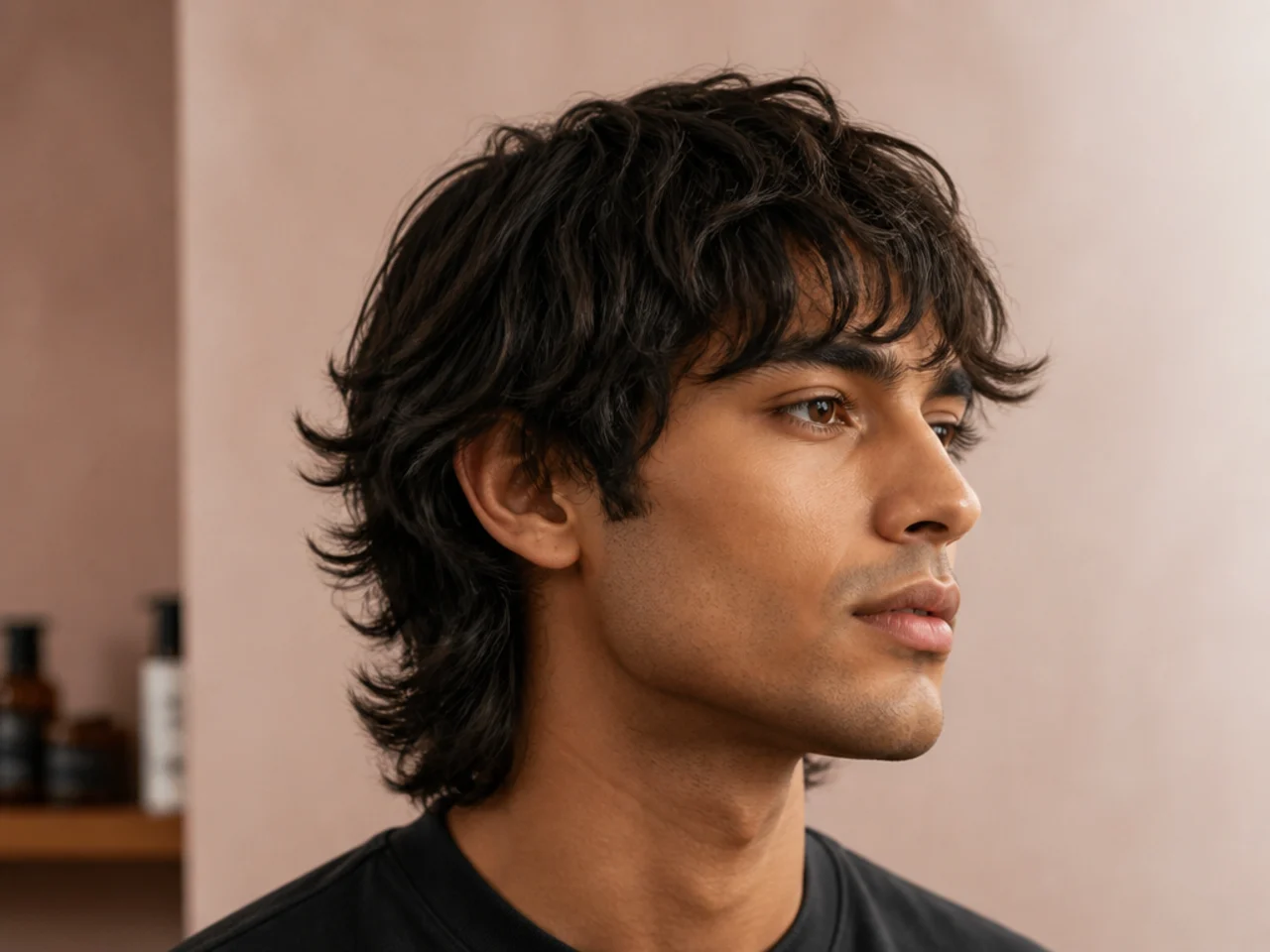
A layered wolf cut is a wolf cut where internal layering is the dominant technique. A regular wolf cut has layers, but they support the shag-mullet hybrid silhouette. In the layered version, the layers themselves are the point. You should be able to see each layer break — through the crown, at the mid-lengths, around the face — like a stack of ribbons that move independently when you push a hand through the hair.
The other wolf cut signatures still apply. Face-framing pieces sit at the cheekbones. The perimeter feathers rather than blunt-cuts. The nape length can sit anywhere from mid-neck to just below the collar. What separates the layered wolf from the full wolf cut baseline is how much of the shape reads as layered movement versus overall length or attitude.
The reference points are all over 2026 hair. Indie musicians wearing four-inch textured crops with visible layer breaks. K-pop idols in glossy layered wolves that catch stage light. Off-duty actors letting three-inch layers grow past the ear. It sits in the same neighborhood as the modern mullet, the shag haircut, and the layered haircut for men — pulling one signature detail from each family.
How to Choose Your Layered Wolf Cut
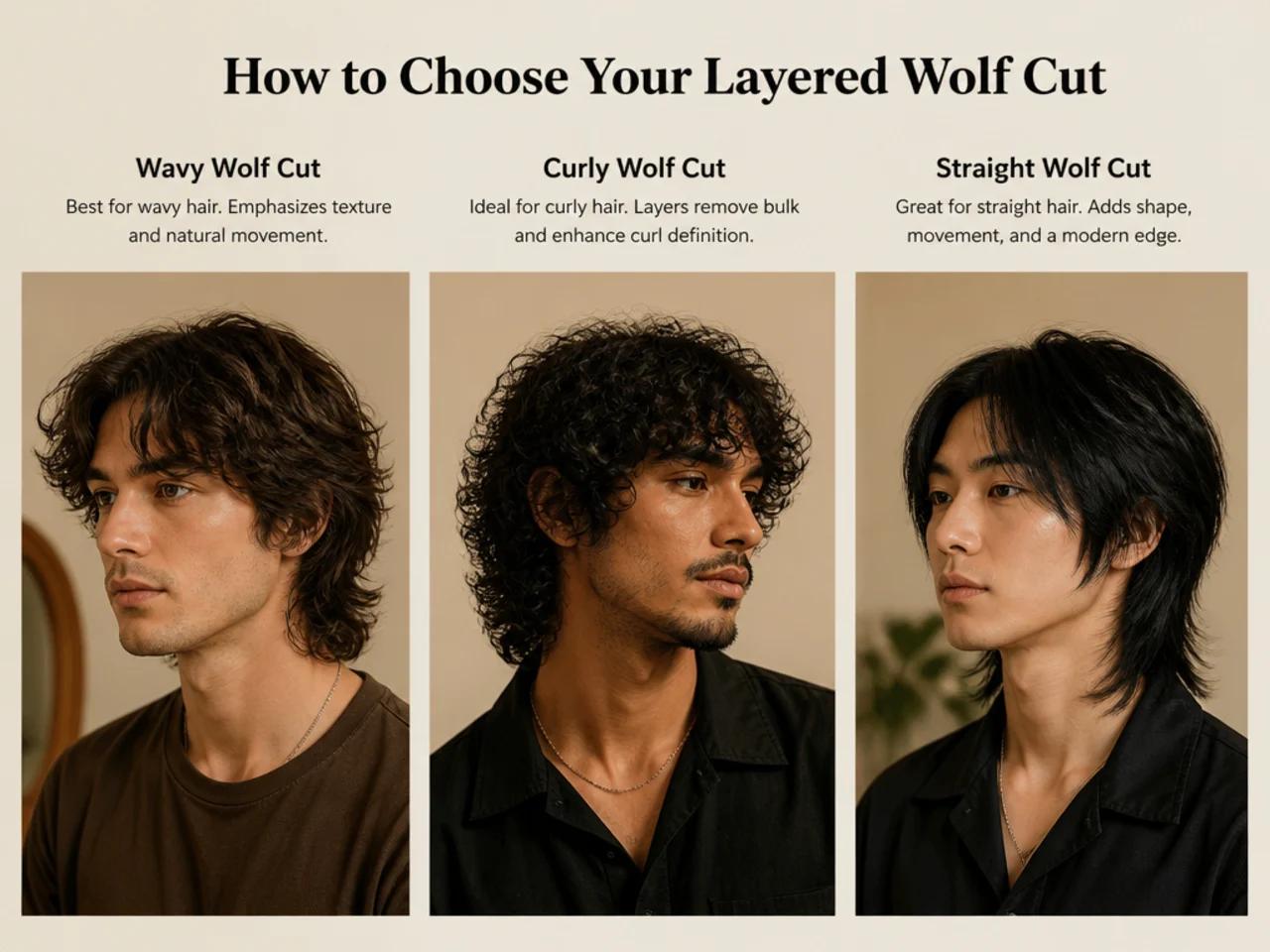
Hair type sets the layering intensity. Fine or thin hair wants subtle layers — shallow internal cuts and soft face-framing pieces that keep density. Medium hair takes any layering rhythm. Thick or dense hair wants heavy layers with aggressive weight removal so the shape moves instead of stacking into a mushroom. Straight hair reads best with medium-to-heavy layering because straight strands rely on the cut for texture. Wavy and curly hair build texture on their own, so the layers can stay softer.
Face shape sets the length distribution. Oval and diamond faces get away with anything from three to seven inches on top. Heart faces suit medium top length with fuller nape layers to balance the forehead. Round and square faces want lifted crown layers for vertical lines and a forward fringe or side sweep to break width. Long faces stay with shorter crown layers and a heavy fringe so the profile stays proportional.
Lifestyle sets the sides and fringe. Blended scissor sides read clean at any workplace. A low taper fade reads sharp without a hard line. A burst fade or two-block turns the layered wolf into a statement cut. Match the sides to how loud you want the shape reading. For pattern-specific guides, browse the mullet and wolf cut hub.
The 20 Layered Wolf Cut Variations
Each variation below tells you what makes it different, who it flatters, and the exact language for the chair. Bring a photo. Then hand your barber the numbers.
1. Classic Layered Wolf Cut
The baseline every other variation modifies. Three inches through the top and crown with medium internal layers, face-framing pieces at the cheekbone, and a feathered perimeter that just touches the collar at the back. Reads modern without leaning into any single subgenre.
Suits oval, heart, and diamond faces. Works with straight, wavy, or lightly curly hair.
Ask for: "Classic layered wolf cut, three inches through the top with medium internal layers, face-framing pieces at the cheek, feathered perimeter to the collar, blended sides at a guard 2." Style with a matte clay worked through damp hair, then finger-tousle the crown.
2. Subtle Layered Wolf Cut
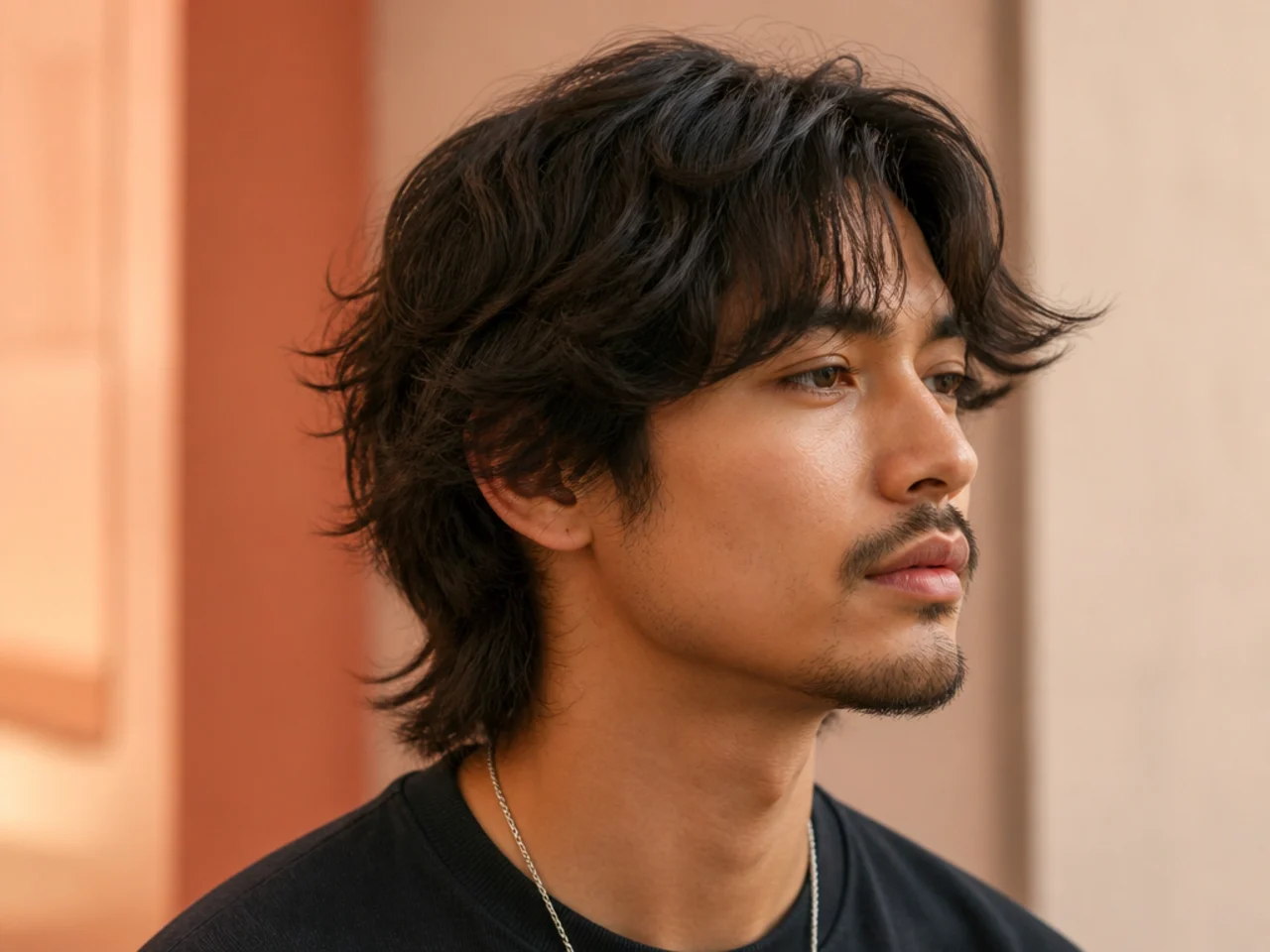
The quietest read on the list. Shallow internal layers cut only where they add movement, soft face-framing pieces that barely register up close, and a wispy perimeter that reads as one soft edge rather than a defined shape. From ten feet away it looks like a slightly grown-out crop.
Best for fine to medium hair. Suits every face shape because there is nothing loud to fight geometry.
Ask for: "Subtle layered wolf cut, three inches on top with shallow internal layers, softly feathered face-framing at the cheek, wispy perimeter, scissor-blended sides — no aggressive point-cutting anywhere." Style with a light styling cream and let it air-dry.
3. Heavy Layered Wolf Cut
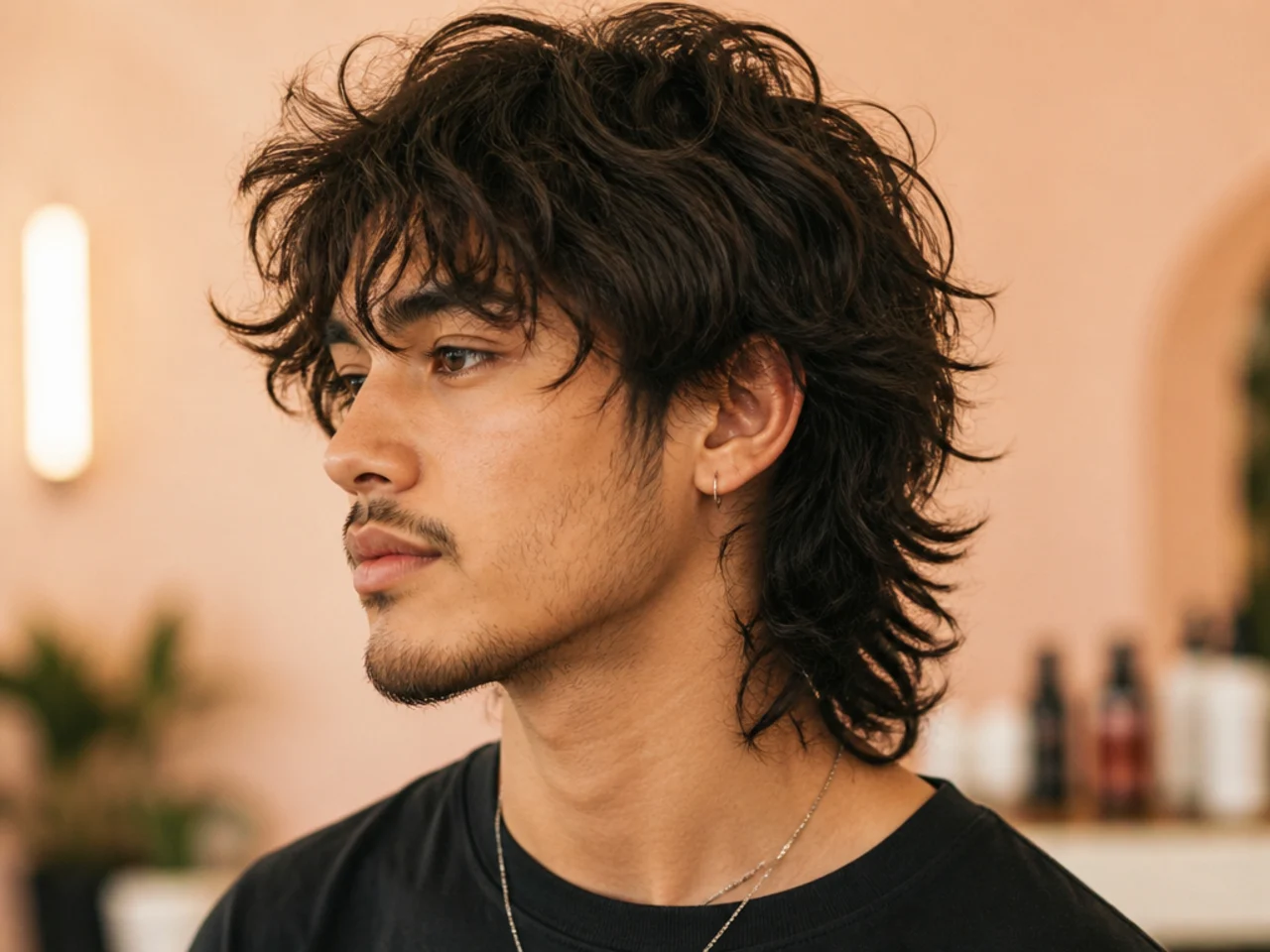
Every layer break visible. Deep internal layers cut aggressively through the crown, distinct mid-length breaks that show at the parietal ridge, and heavy face-framing pieces at the cheekbone. The layered rhythm is the entire silhouette.
Best on thick, dense hair that needs the weight removed. Suits oval and heart faces where the layered volume flatters.
Ask for: "Heavy layered wolf cut, four inches through the crown with deep internal layers, aggressive weight removal through the mid-lengths, defined face-framing at the cheek, feathered nape at the collar, low taper on the sides." Salt spray and matte paste worked together on damp hair, twist pieces for definition.
4. Feathered Layered Wolf Cut
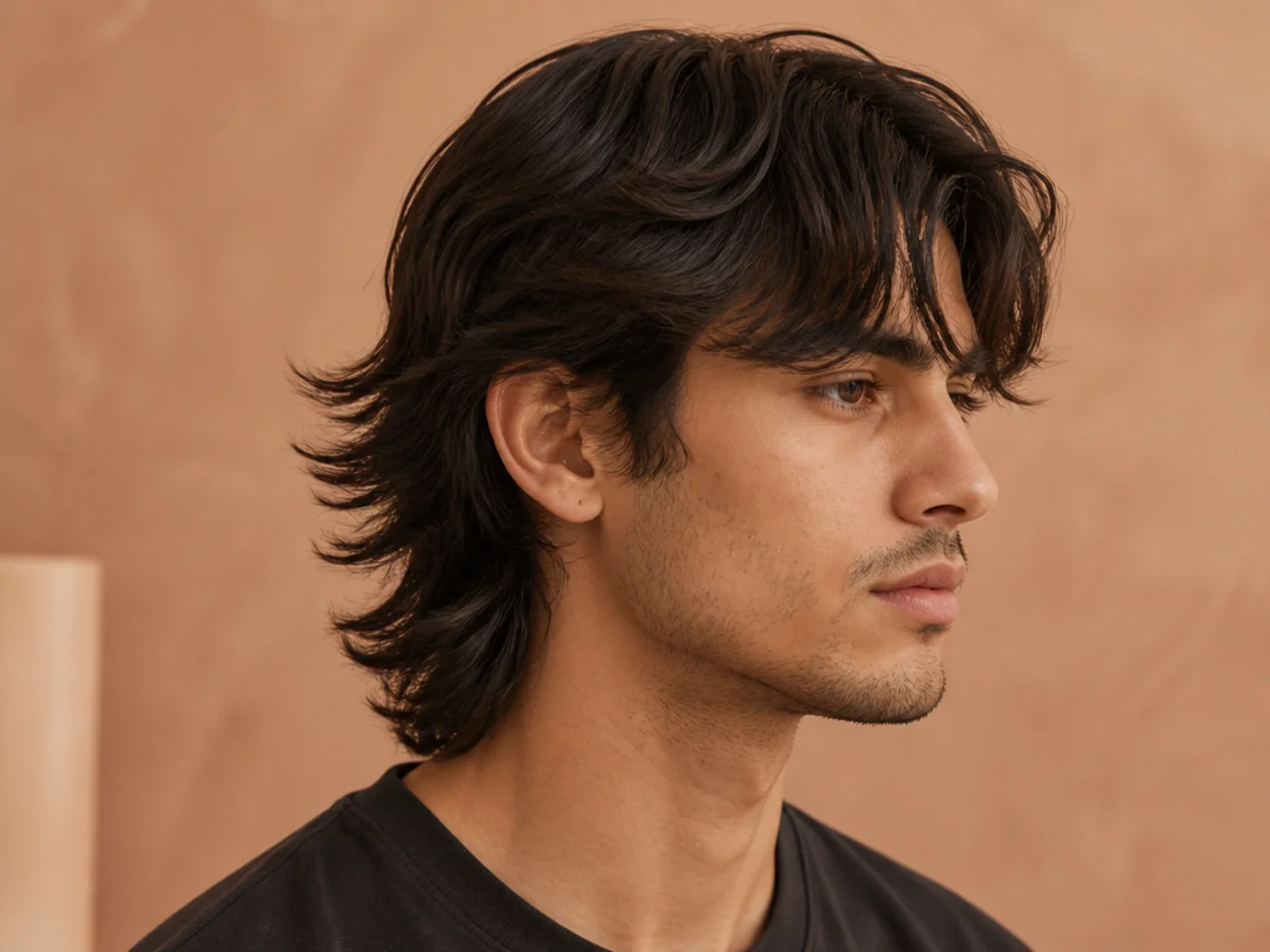
The layers taper into feathered points instead of ending in defined edges. Every layer line reads soft, the perimeter dissolves rather than stops, and the whole shape catches airflow. It is the most romantic version of the wolf cut and photographs beautifully in natural light.
Suits oval, heart, and long faces. Best on fine to medium straight or wavy hair.
Ask for: "Feathered layered wolf cut, three-and-a-half inches on top, cut each layer with a feathering technique so the ends taper, soft face-framing pieces, wispy feathered perimeter, scissor-blended sides." Blow-dry with a paddle brush pushing air downward through the layers.
5. Chunky Layered Wolf Cut
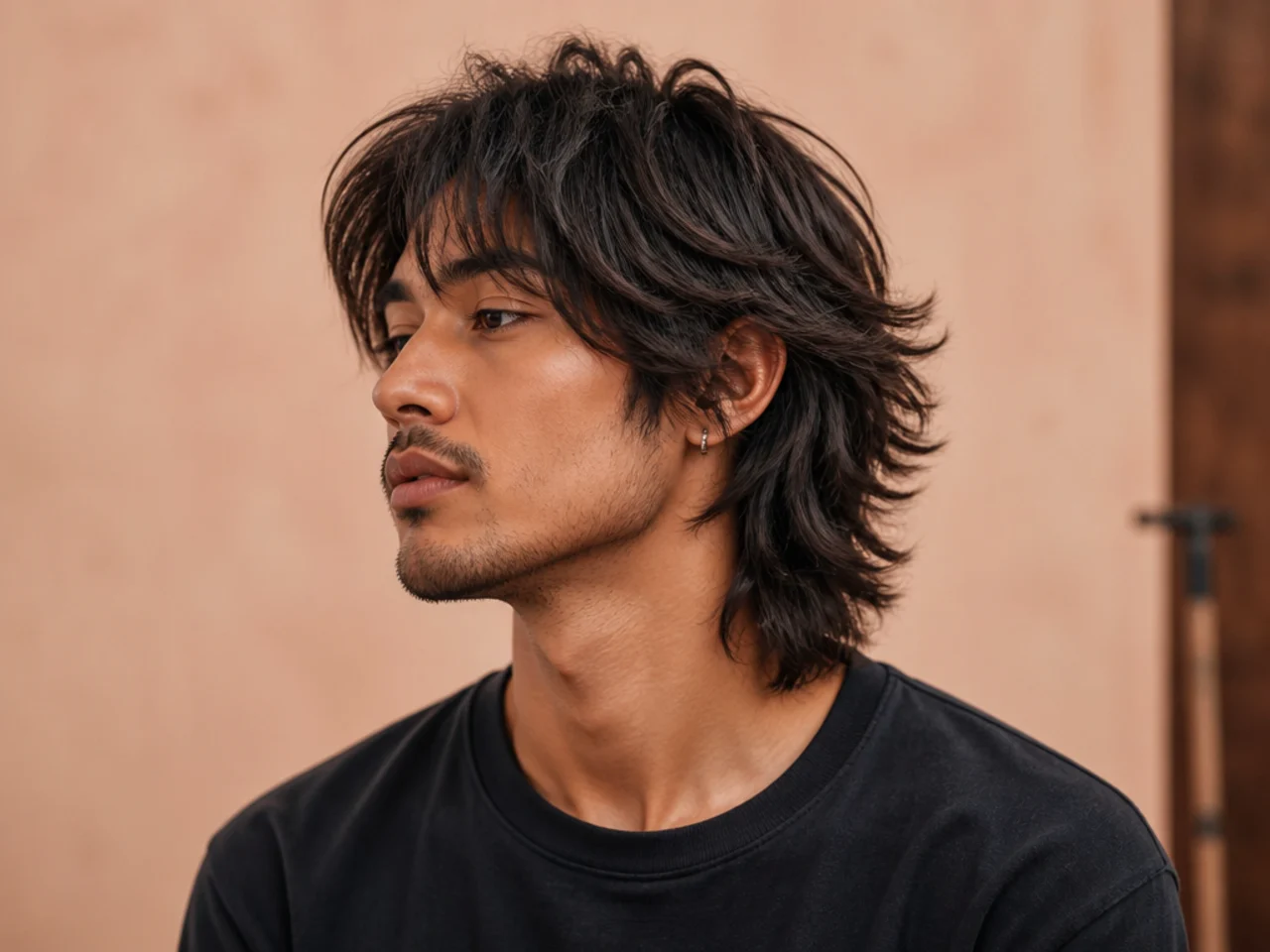
The opposite of feathered. Each layer ends in a defined chunk instead of feathering out, cut with a heavier line at each layer break. The face-framing pieces sit as thick sections at the cheek. Reads bold, editorial, and unmistakably shaped.
Best on medium to thick straight or wavy hair. Suits square and diamond faces where the chunk carries the bone structure.
Ask for: "Chunky layered wolf cut, four inches on top, cut each layer with a defined blunt-tip edge — no point-cutting — face-framing sections at the cheekbone in thick pieces, blunt perimeter at the collar, disconnected undercut on the sides." Matte pomade twisted through damp hair to separate sections.
6. Textured Layered Wolf Cut
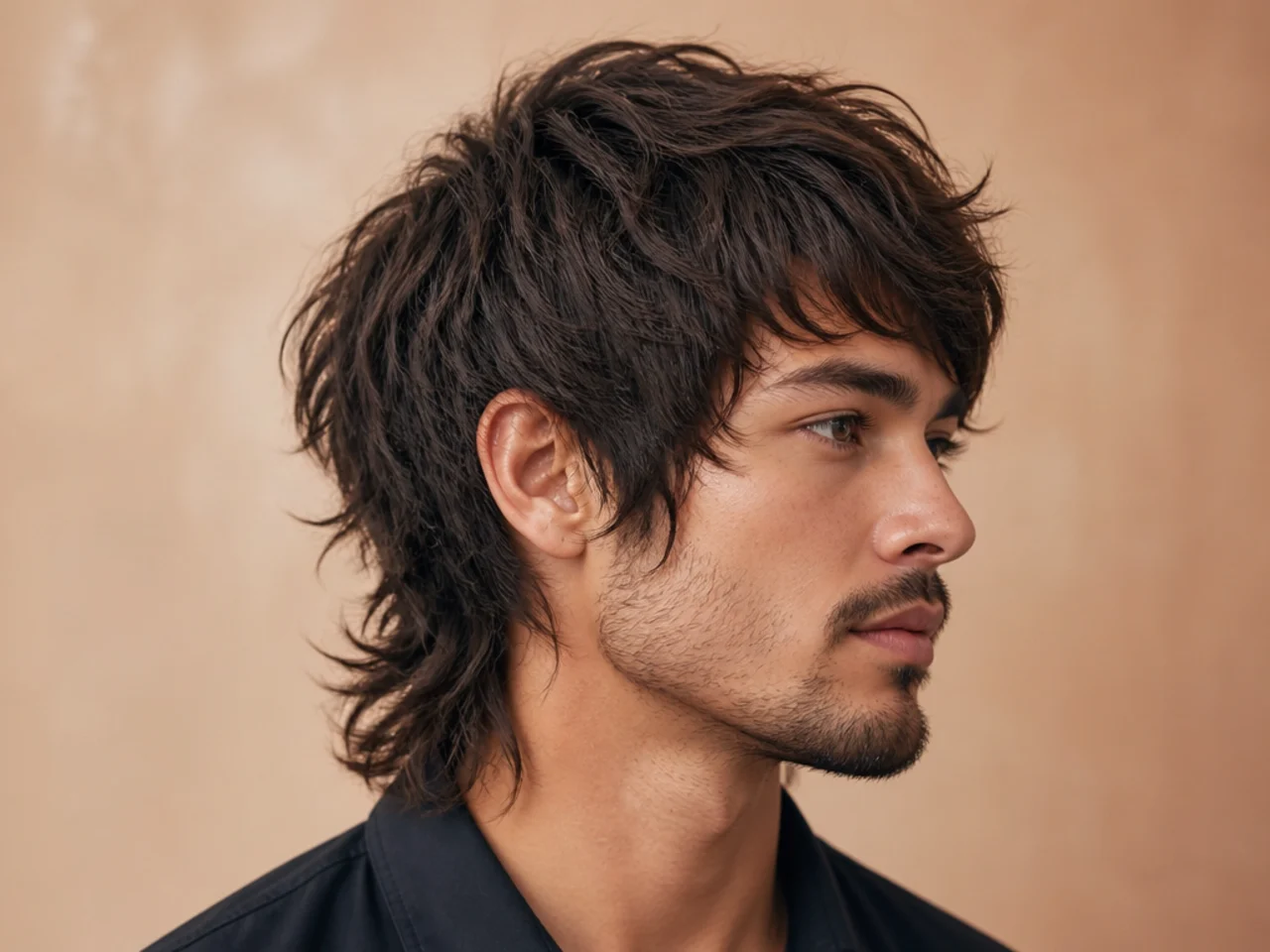
Layer edges point-cut aggressively so each section breaks into piecey texture rather than a clean line. The result is a shape you can see the movement in even when the hair is still. Sits between feathered and chunky.
Best on straight or wavy hair where the texture needs cutting help. Suits oval, heart, and diamond faces.
Ask for: "Textured layered wolf cut, three inches through the top with medium internal layers, point-cut every layer edge for piecey separation, textured face-framing pieces at the cheek, feathered perimeter, low taper on the sides." Sea-salt spray on damp hair, twist pieces, air-dry.
7. Wispy Layered Wolf Cut
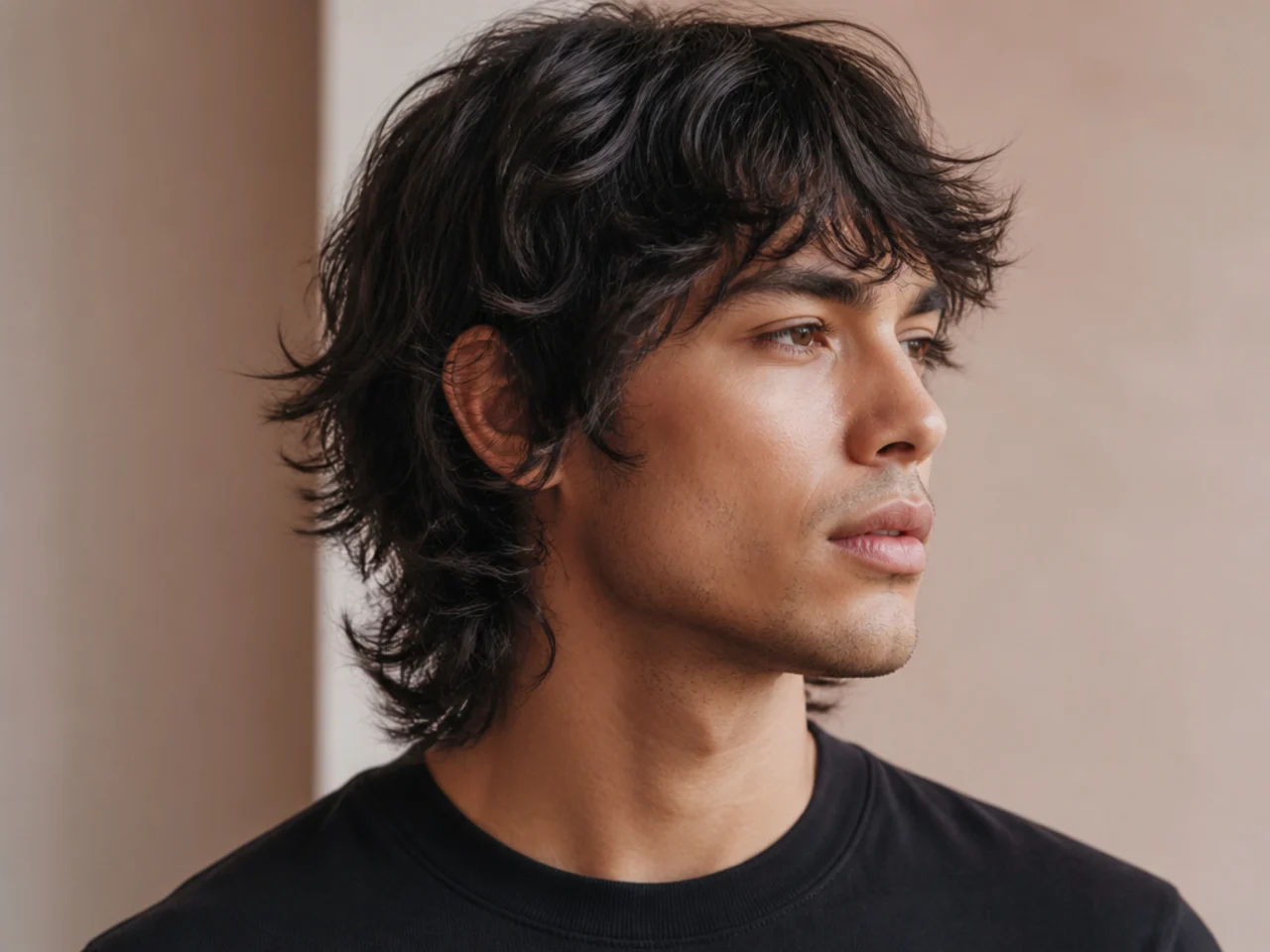
The lightest touch on the list. Every layer end tapered to a wisp, face-framing pieces cut so thin they read as strands, and a perimeter that dissolves into individual ends. Photographs like a watercolor. Requires clean hair and a light hand — a heavy product weighs it flat.
Suits oval, heart, and long faces. Best on fine to medium straight or wavy hair.
Ask for: "Wispy layered wolf cut, three inches on top with soft internal layers, razor-tapered layer ends throughout, wispy face-framing at the cheek, dissolved perimeter at the collar, scissor-blended sides — no fade." A light finishing spray only, worked through with fingers.
8. Long Layered Wolf Cut
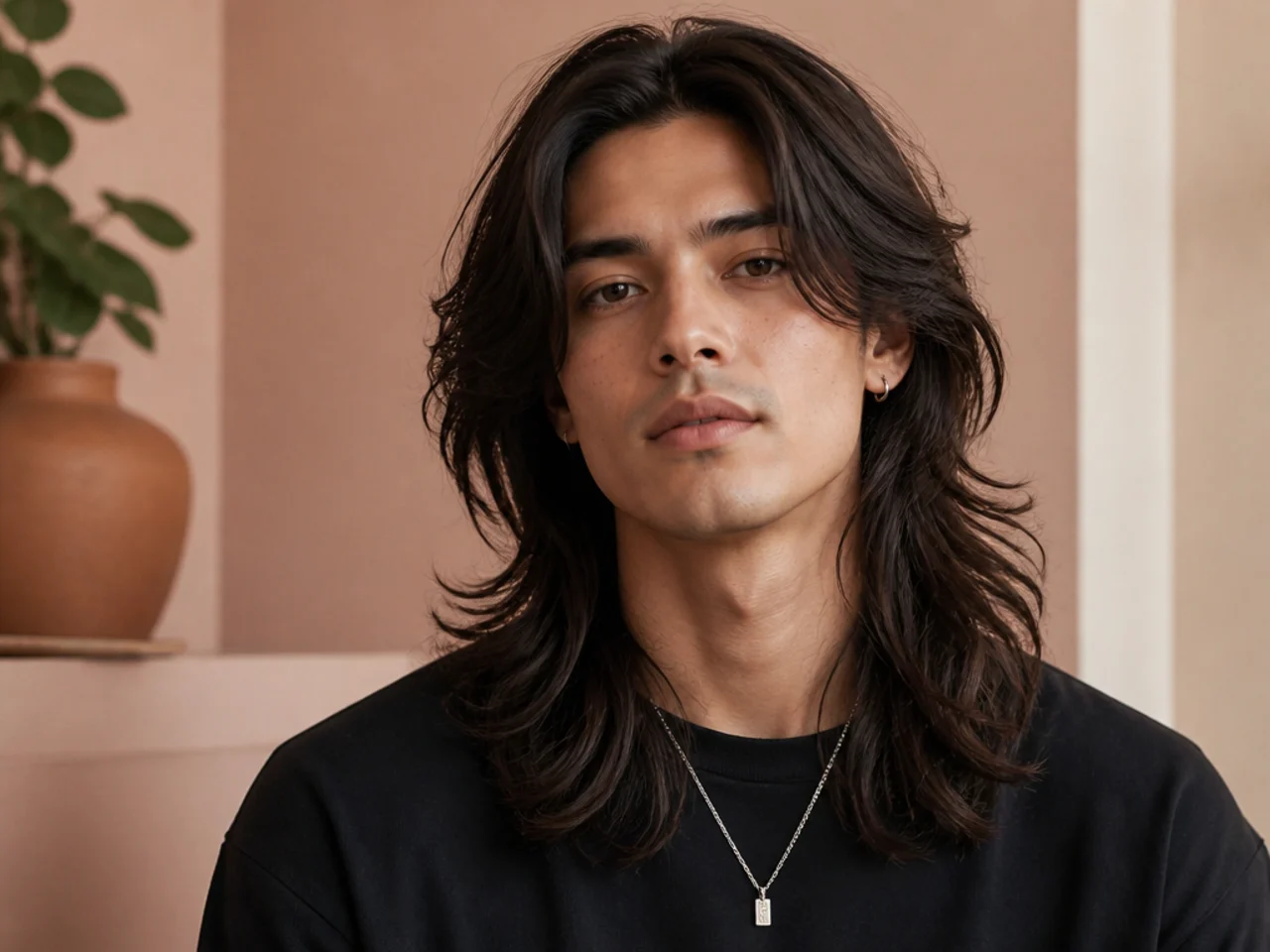
The full-length version. Six to eight inches through the top and crown, mid-length layers that fall past the ear, face-framing pieces reaching the jaw, and a nape that brushes the shoulders. Requires patience — the growing-out phase runs six to twelve months from a short cut.
Suits oval and heart faces. Best on medium to thick straight or wavy hair.
Ask for: "Long layered wolf cut, six-plus inches through the crown, deep internal layers cascading from the crown down, face-framing pieces to the jaw, feathered perimeter to the shoulders, no undercut — keep everything one connected shape." See our wolf cut for long hair reference for growing-out direction.
9. Medium-Length Layered Wolf Cut
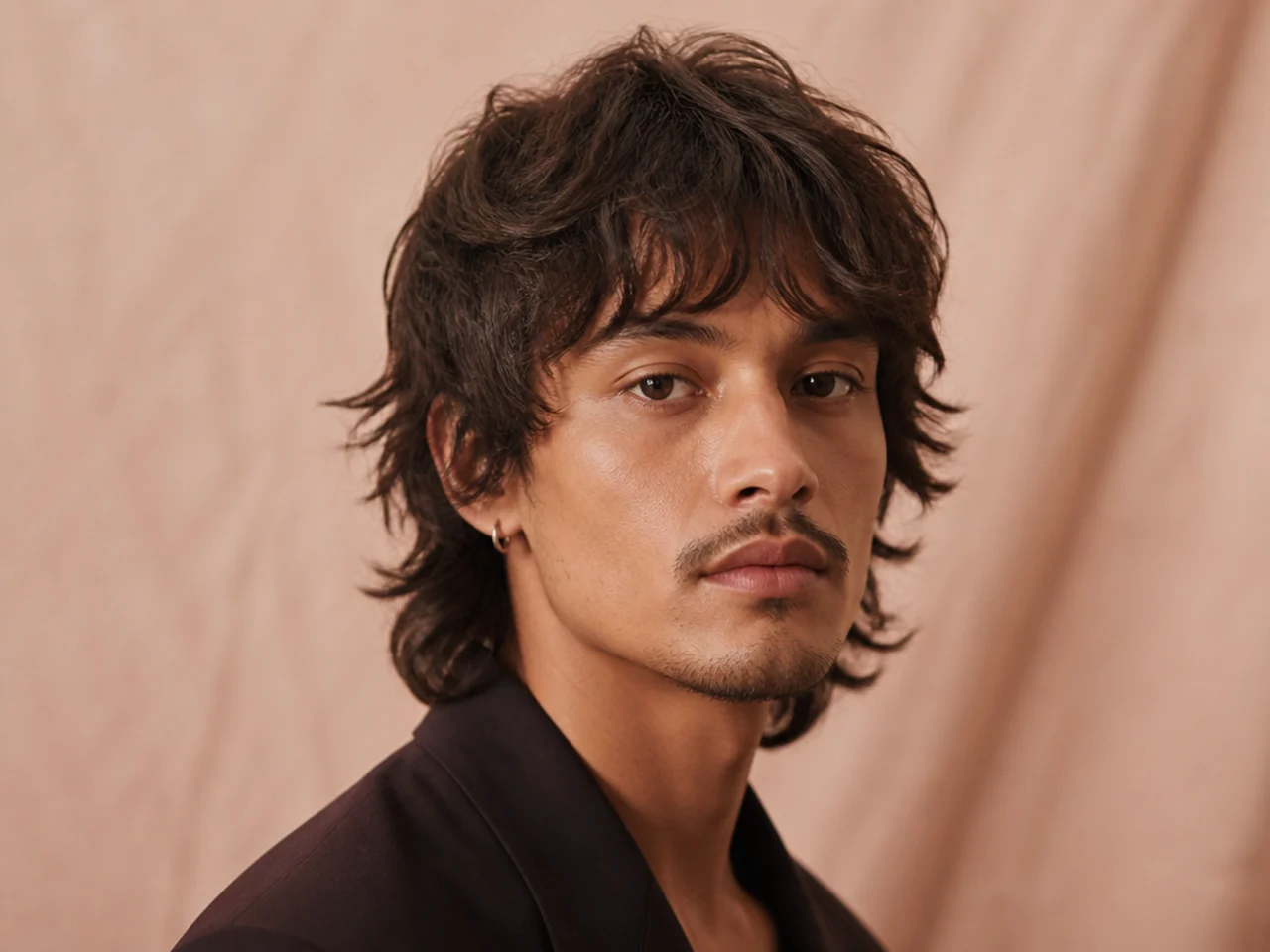
The wearable middle ground. Four to five inches through the top, mid-length layers that stop at the ear, face-framing pieces at the cheekbone, and a nape that sits between the ear and the collar. Long enough to read as a full layered wolf, short enough to style in three minutes.
Suits every face shape. Works with any hair type.
Ask for: "Medium-length layered wolf cut, four inches through the top with defined internal layers, mid-length layers ending at the ear, face-framing at the cheekbone, feathered nape between the ear and the collar, blended sides at a guard 3." See our medium-length hairstyles for men guide for the parent length range.
10. Razored Layered Wolf Cut
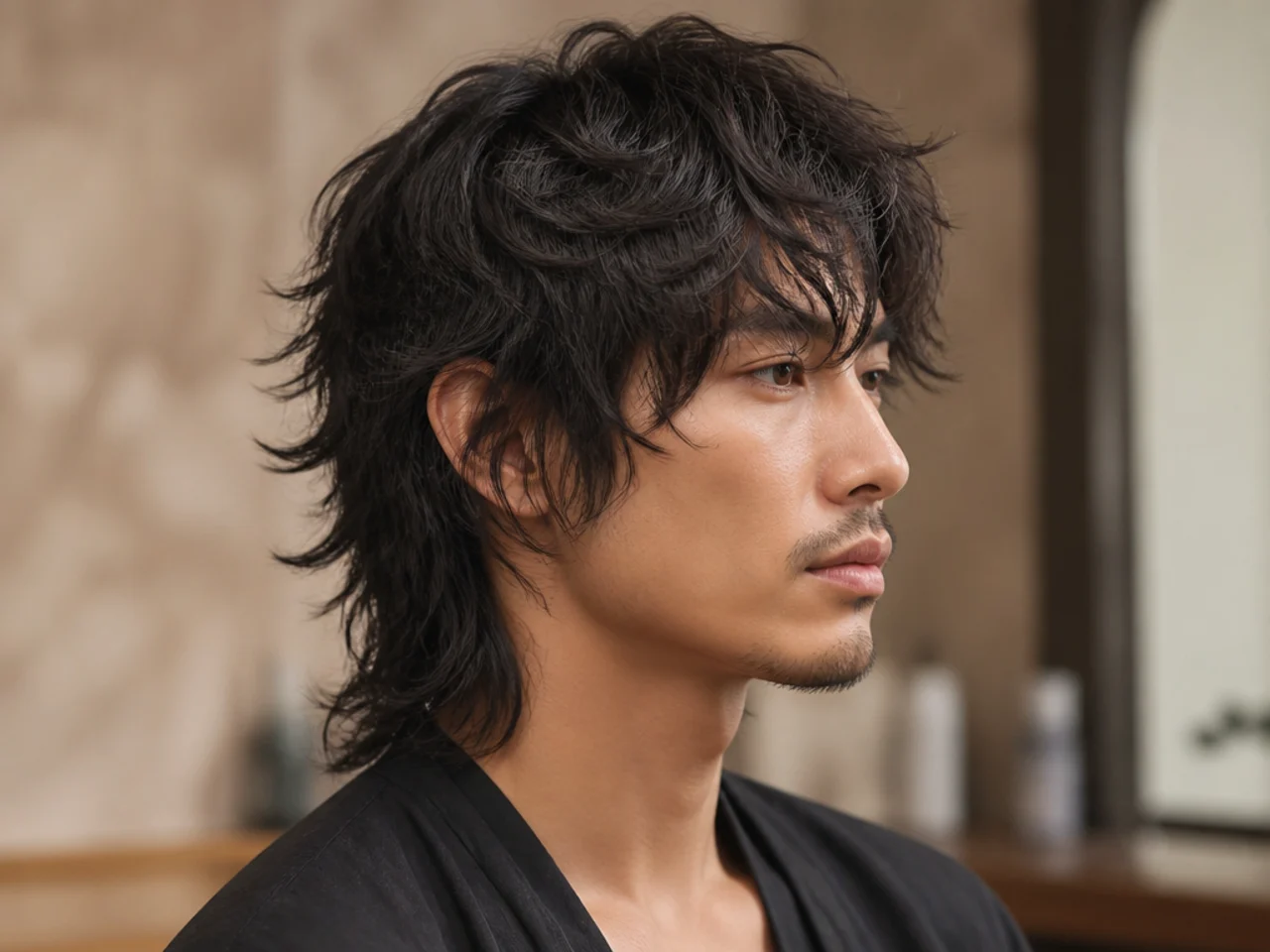
Cut with a straight razor instead of scissors. The razor tapers every layer to a fine point automatically, gives the perimeter a naturally dissolved edge, and adds movement scissors cannot match. Best in the hands of a barber who razor-cuts regularly — a beginner with a razor thins hair unpredictably.
Suits oval, heart, and diamond faces. Best on medium to thick straight or wavy hair — razor cutting damages fragile fine hair.
Ask for: "Razored layered wolf cut, three-and-a-half inches through the top with razored internal layers, razor-tapered face-framing pieces at the cheek, razored perimeter, low taper on the sides." Style with a leave-in conditioner and a light styling cream — no gels or heavy paste.
11. Point-Cut Layered Wolf Cut
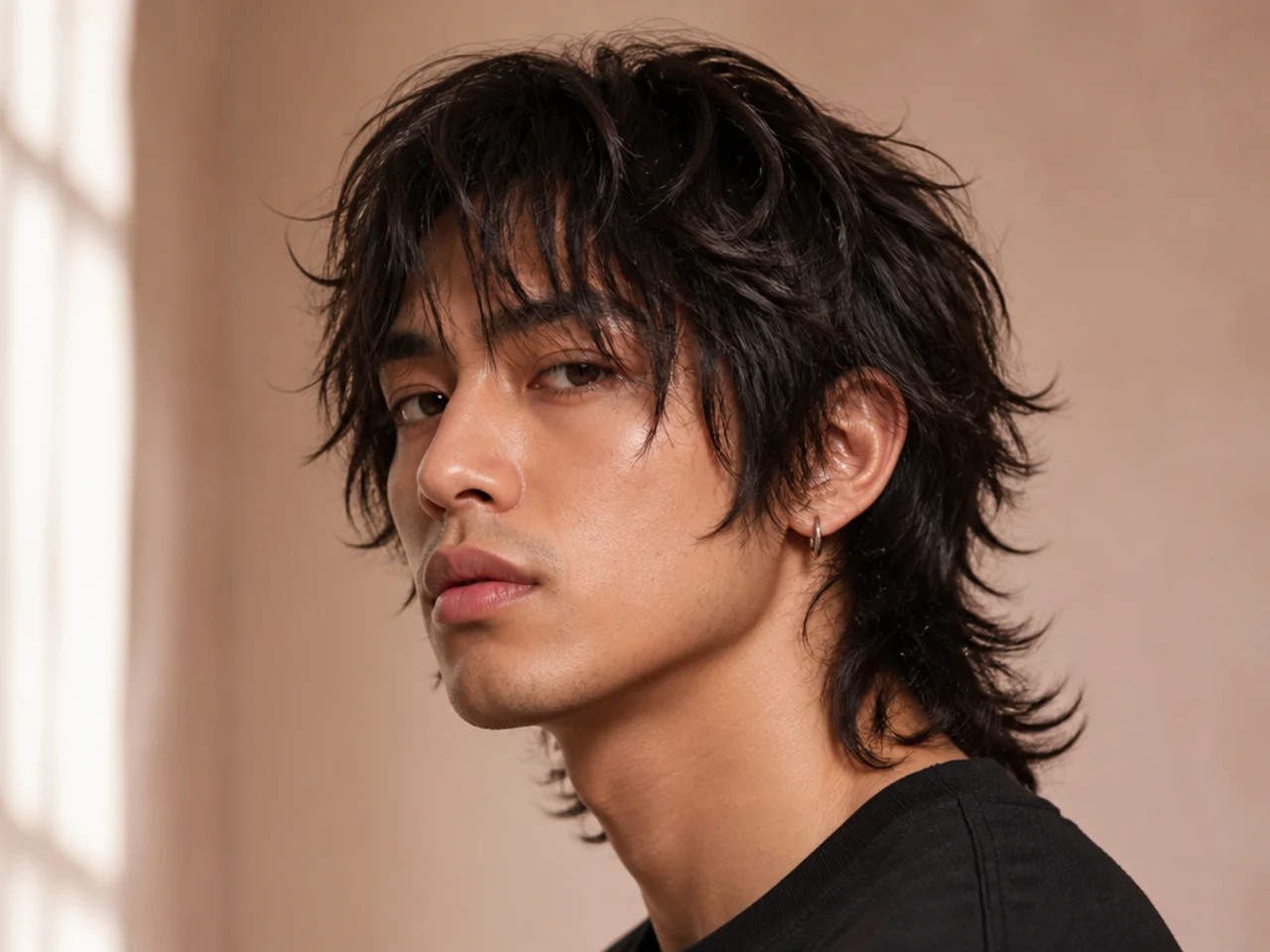
Every layer edge point-cut with scissor tips working vertically into the ends. Gives a distinctly piecey read — halfway between razored and blunt — with visible individual sections rather than continuous edges. The most durable cutting technique for the shape because point-cut edges hold their character between visits.
Best on medium to thick straight or wavy hair. Suits heart, oval, and diamond faces.
Ask for: "Point-cut layered wolf cut, three-and-a-half inches on top, point-cut every layer edge with vertical scissor points, textured face-framing at the cheek, point-cut perimeter, blended sides at a guard 2." Matte paste worked through damp hair, twist pieces for definition.
12. Curly Layered Wolf Cut
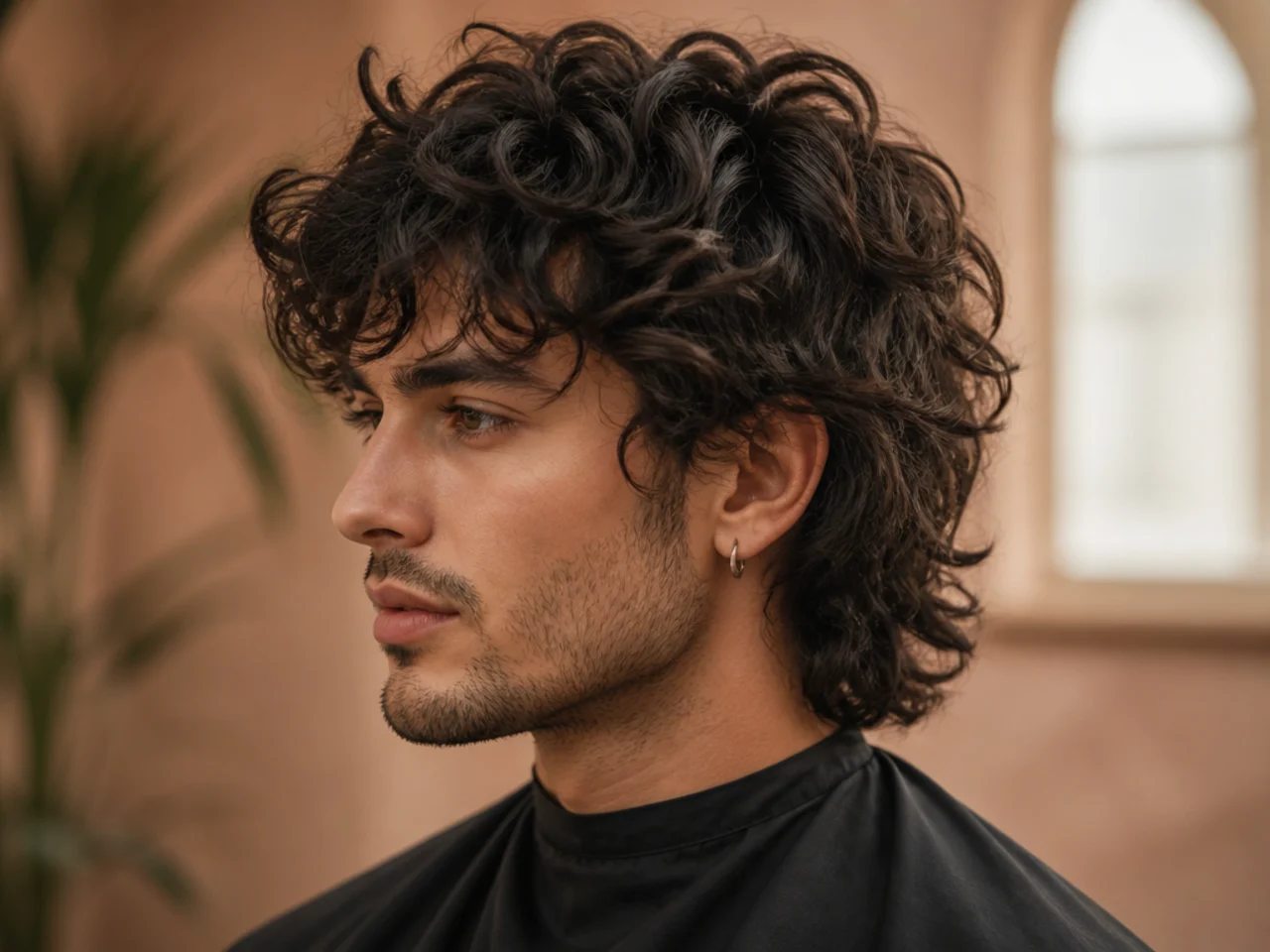
Curls do most of the work. Type 3 spirals build the layered structure naturally, so the cut supports the pattern with internal layers that keep the top from stacking triangle-wide. Cut dry so the barber can see where each curl sits. See our curly hairstyles for men guide for adjacent curly cuts.
Best on type 3 to 3c curls. Suits oval, heart, and diamond faces.
Ask for: "Curly layered wolf cut, dry cut throughout, four inches through the top with light internal layers that respect the curl pattern, face-framing curls at the cheekbone, feathered nape, keep the perimeter loose and organic." Leave-in conditioner on damp hair, finger-shape, air-dry.
13. Wavy Layered Wolf Cut
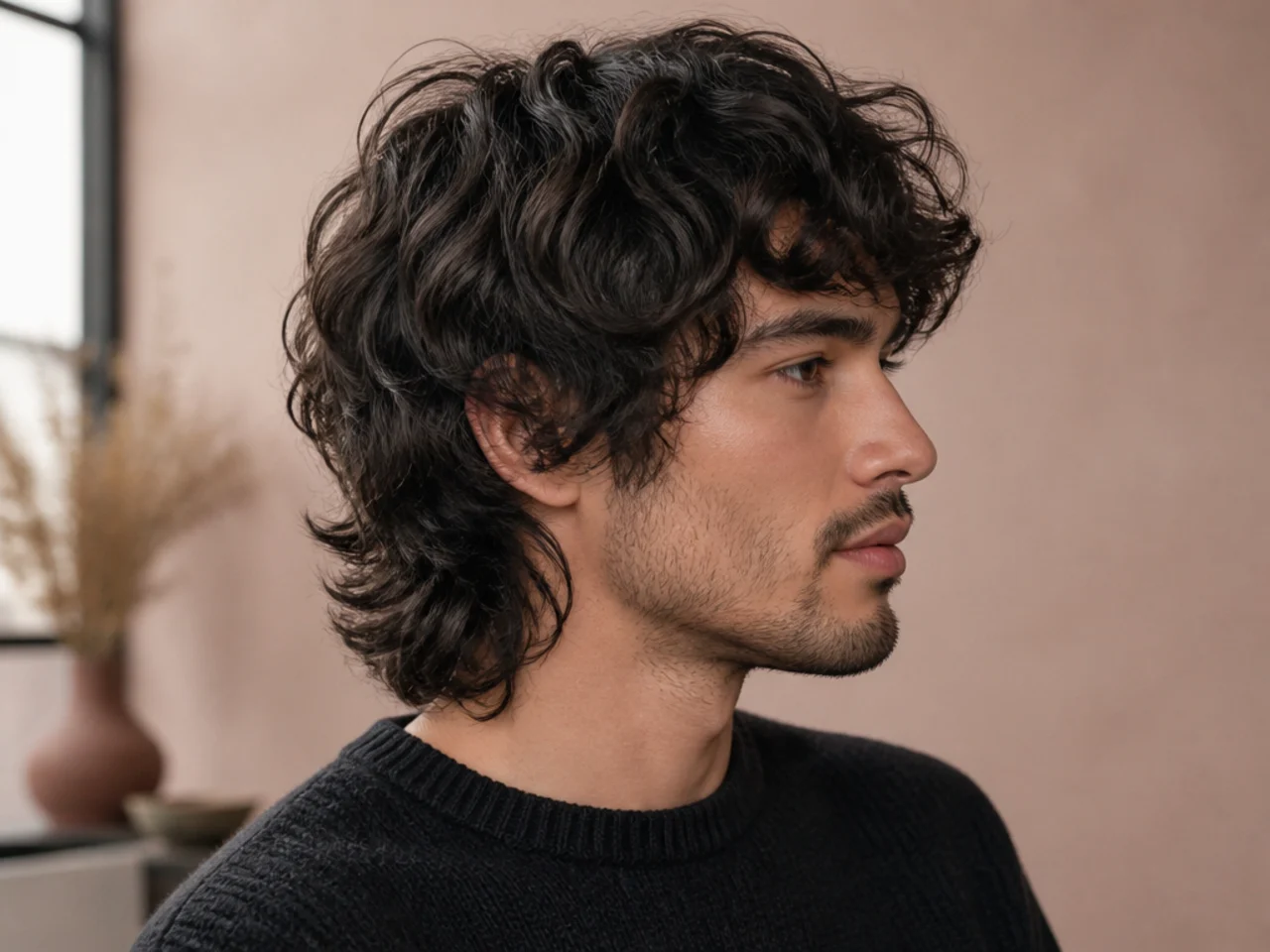
Waves sit between curly's built-in shape and straight hair's need for cutting texture. The wavy layered wolf lets the wave lead — internal layers cut in the direction of the natural bend, face-framing pieces cut to fall where the wave already wants to fall, minimal point-cutting because the wave supplies texture.
Suits oval, heart, and diamond faces.
Ask for: "Wavy layered wolf cut, three-and-a-half inches on top with soft internal layers cut in the direction of the wave, face-framing pieces at the cheek that follow the natural bend, wispy perimeter, low taper on the sides." Sea-salt spray on damp hair, scrunch, air-dry — never brush.
14. Straight Layered Wolf Cut
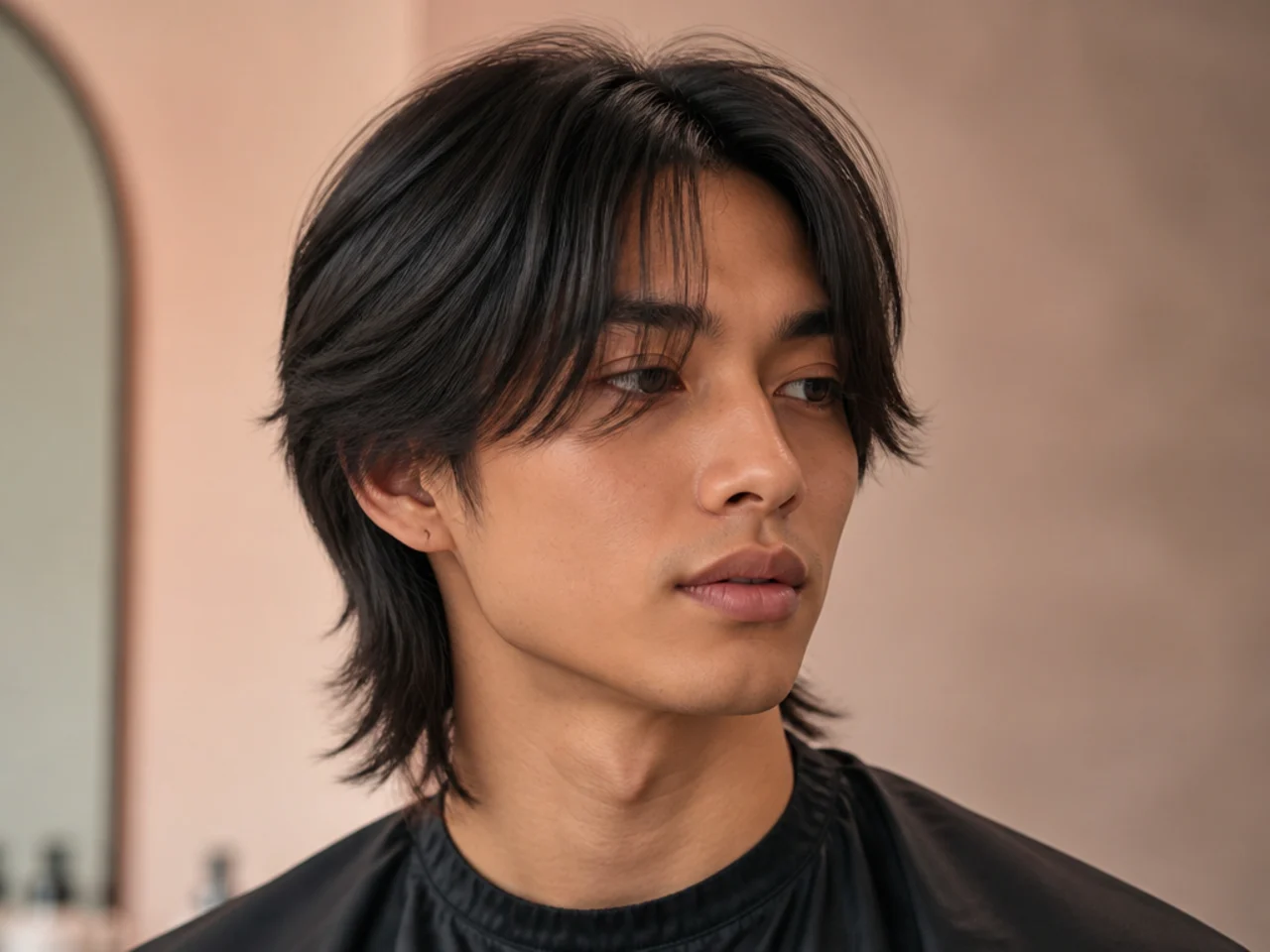
Straight hair reveals every layer break, so the straight layered wolf leans on medium-to-heavy layering for movement the hair cannot build on its own. Point-cutting and razoring both work — the shape is the sharpest on straight hair because nothing gets softened by natural bend.
Suits heart, square, and oval faces.
Ask for: "Straight layered wolf cut, three inches on top with medium internal layers, point-cut every layer edge for texture, defined face-framing pieces at the cheek, feathered perimeter, low taper on the sides." Molding paste through damp hair, blow-dry forward with a round brush.
15. Korean-Inspired Layered Wolf Cut
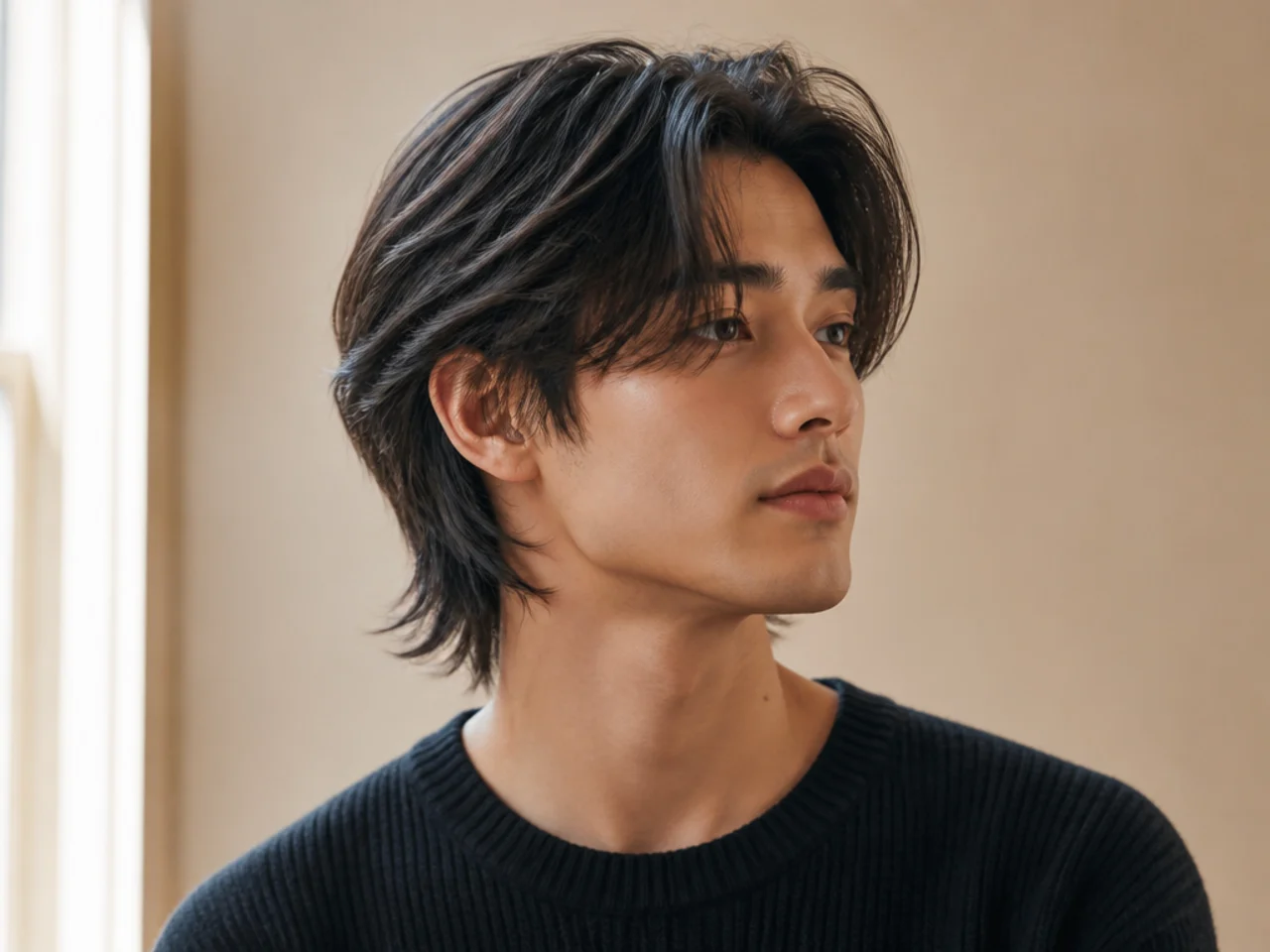
Softer, glossier, and more deliberately styled than most versions. The Korean-inspired layered wolf builds rounded internal layers instead of piecey ones, drops a forward fringe or curtain fringe over the brow, and finishes with a glossy — never matte — texture. It is what most K-drama leads are wearing right now.
Suits oval and long faces. Best on straight-to-slightly-wavy hair. Pair with the styling notes in our Korean haircuts for men roundup.
Ask for: "Korean layered wolf cut, three-and-a-half inches on top with soft rounded internal layers, forward or curtain fringe to just above the eyebrows, feathered nape, softly blended sides, glossy finish." Style with a hair mist and a light styling gel for shine.
16. Layered Wolf Cut with Curtain Fringe
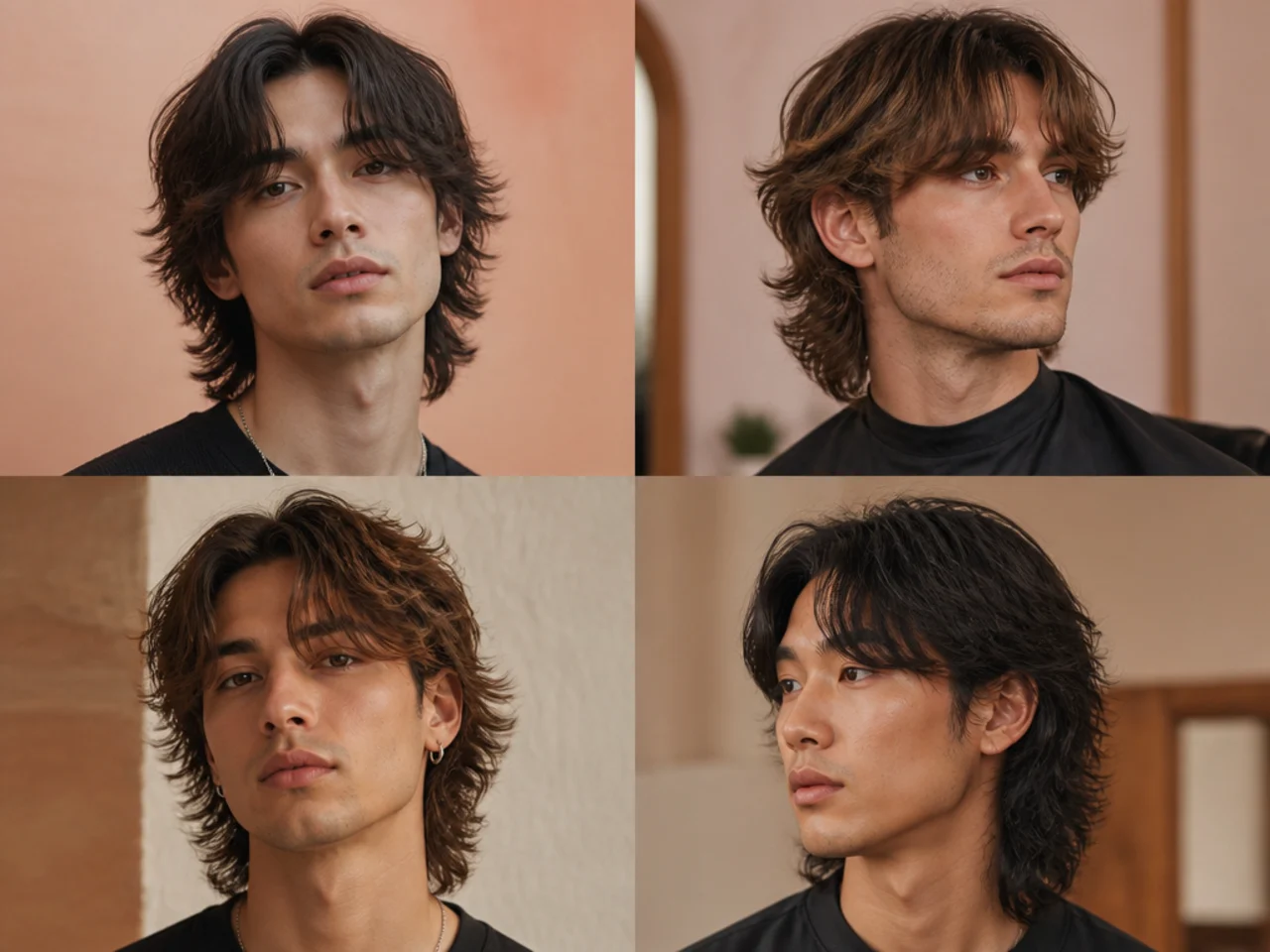
The fringe becomes the focal point. Two soft panels sweep out from a center part and frame the forehead, while the rest of the layered wolf sits shaggy behind them. Reads soft, approachable, and photographs beautifully in front-facing shots.
Suits round, oval, and heart faces where the curtain fringe softens the top of the face.
Ask for: "Layered wolf cut with curtain fringe, four inches on top with medium internal layers, fringe cut long enough to meet at a center part and curl outward at the temples, feathered nape, low taper on the sides." Blow-dry the fringe out and down from a center part with a round brush.
17. Layered Wolf Cut with Textured Fringe
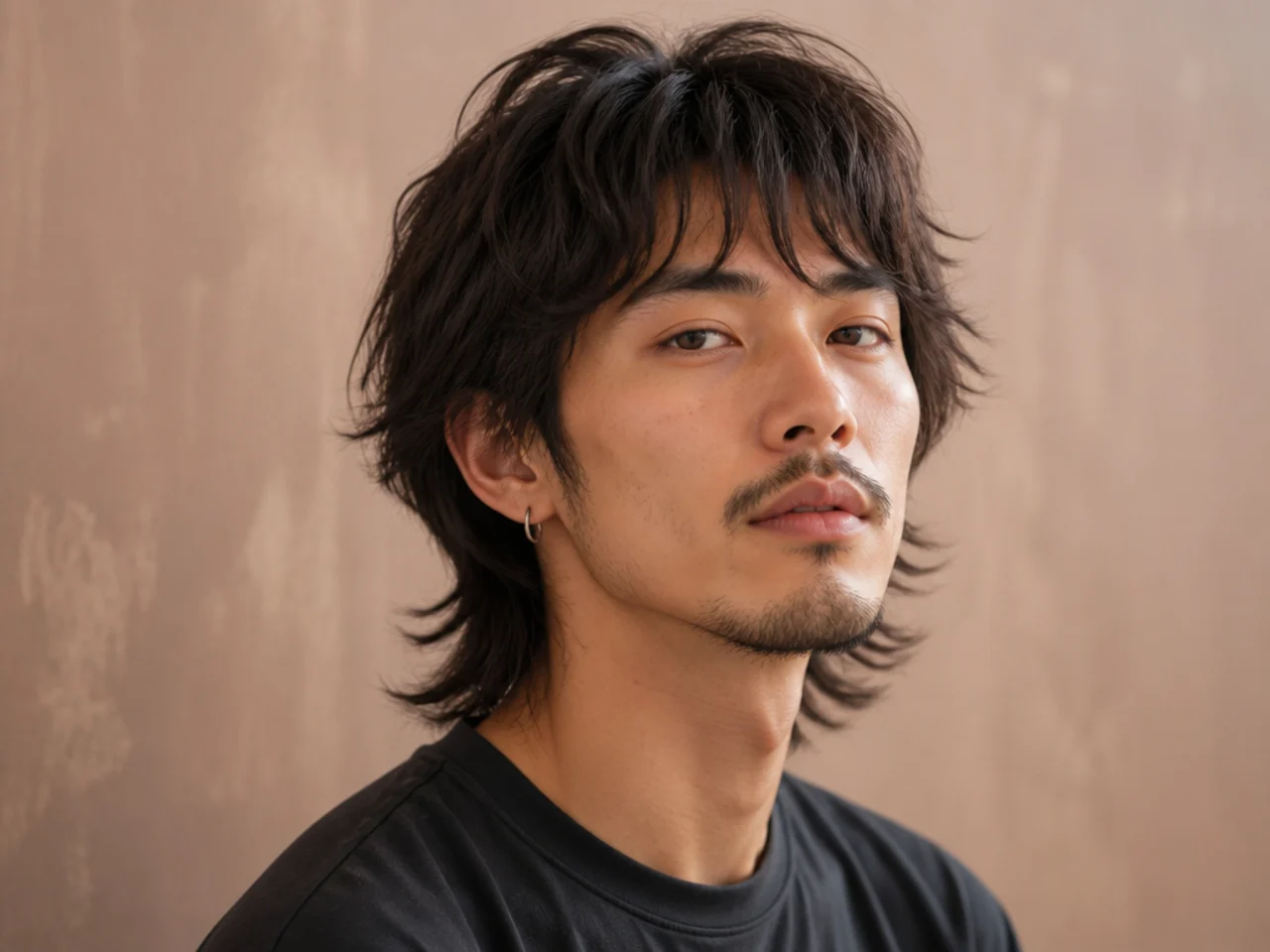
A choppy fringe drops forward onto the forehead in piecey sections instead of parting to the sides. The layered top and feathered nape hold the wolf shape while the textured fringe adds forward movement and softens the forehead line.
Suits round, oval, and square faces.
Ask for: "Layered wolf cut with textured fringe, three-and-a-half inches on top with internal layers, fringe point-cut heavily to fall in piecey sections to the brow, feathered perimeter, blended sides at a guard 2." Matte clay through the fringe, push forward with fingertips, done.
18. Layered Wolf Cut with Low Taper Fade
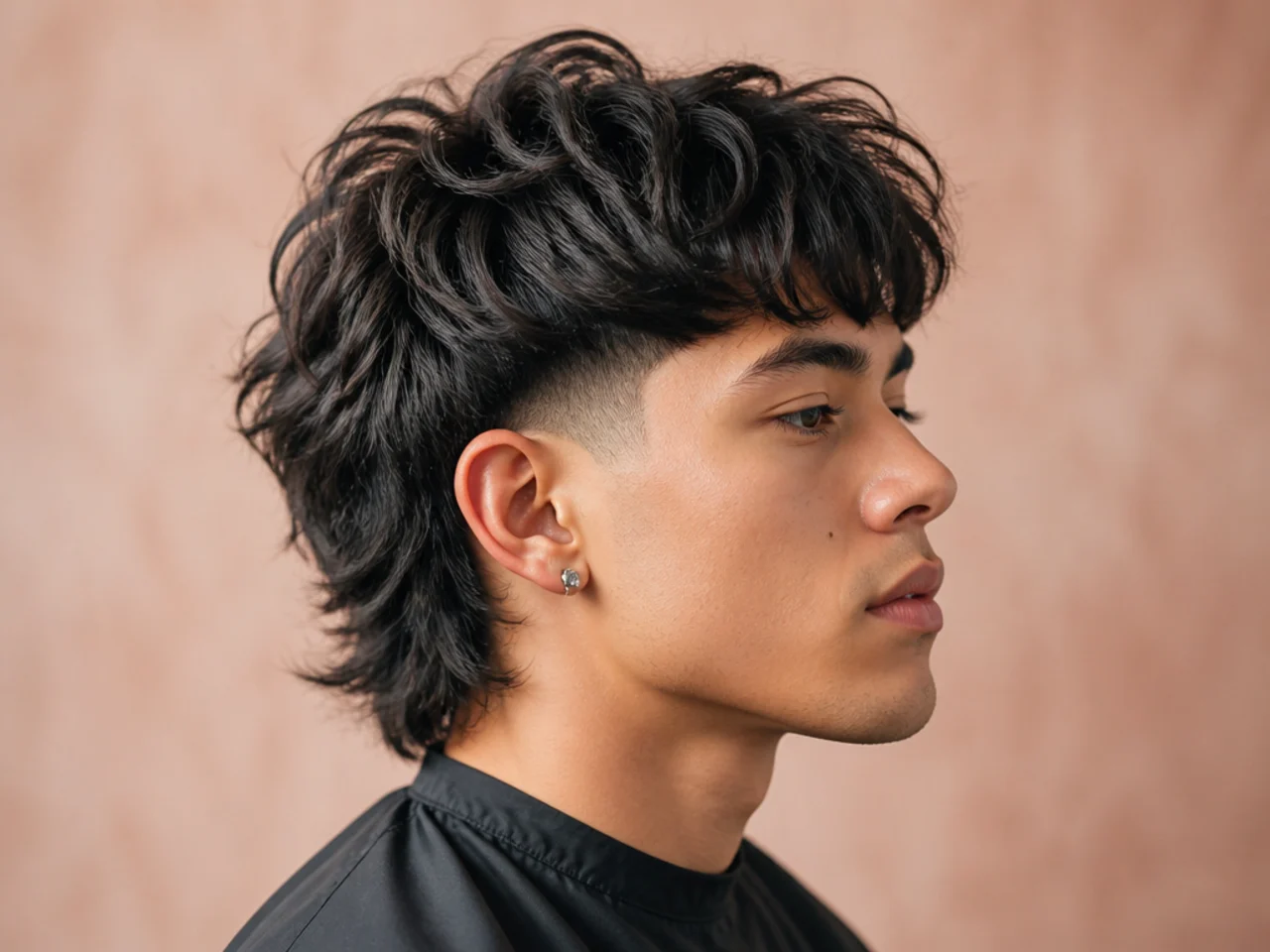
The office-safe version. A low taper fade starts just above the ear and dies out cleanly at the sideburn, keeping the sides tight without competing with the layered top. The layered wolf sits on top exactly as it would with scissor sides — the taper only clarifies the perimeter.
Works on every face shape because the taper does not fight geometry.
Ask for: "Layered wolf cut on top — three inches through the crown with medium internal layers, face-framing pieces at the cheek — low taper fade on the sides starting at the sideburn, ending at a guard 1, keep the nape tapered soft." Matte clay through the crown, finish with a light spray.
19. Layered Wolf Cut with Burst Fade
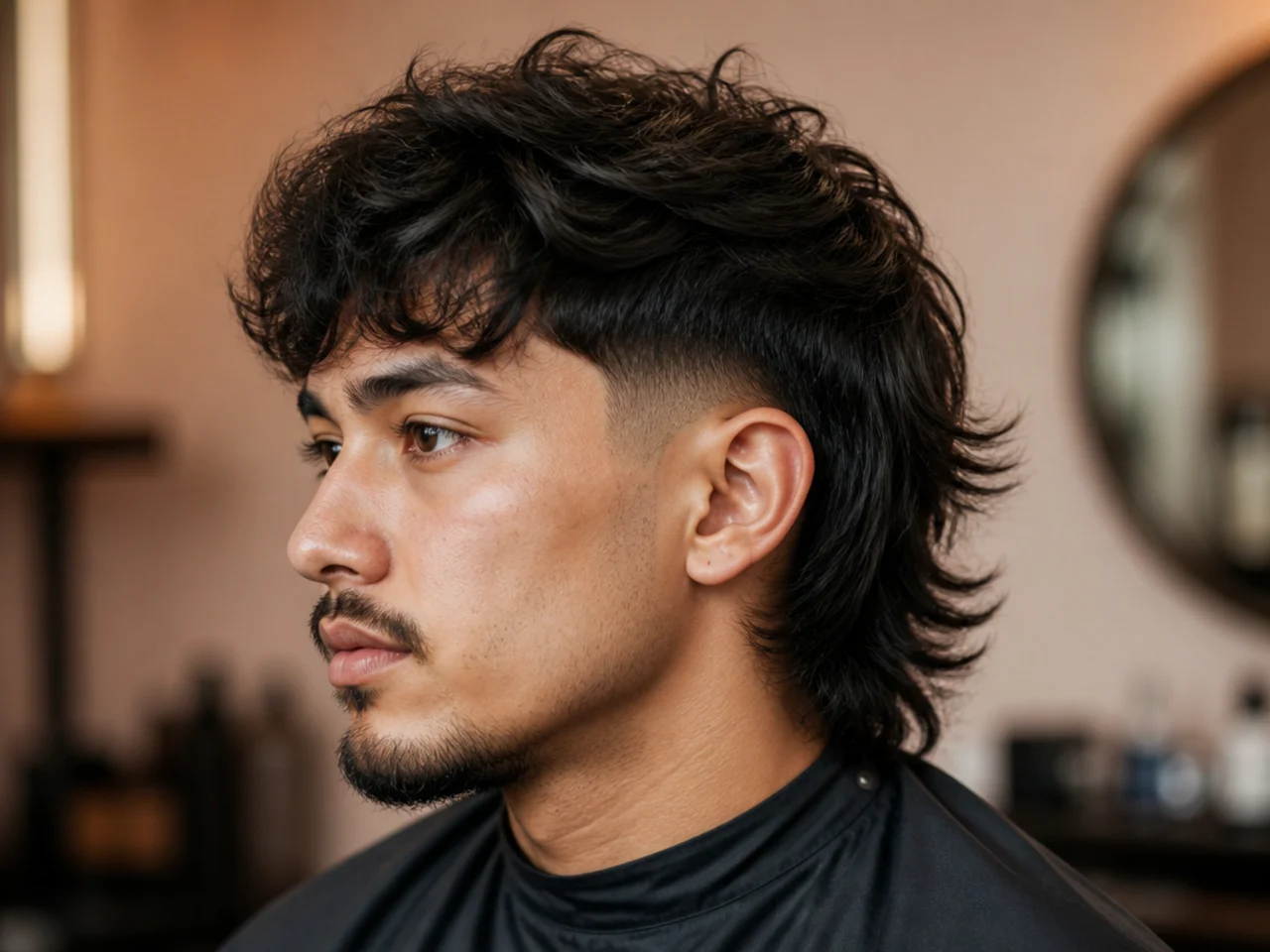
The arc changes the whole read. The burst fade curves in a semicircle around each ear, leaving the nape length untouched — so the layered wolf's feathered back flows out of the fade cleanly. Reads modern and camera-first.
Suits oval, heart, and diamond faces. Works with any hair type. See the full parent shape in our burst fade haircut breakdown.
Ask for: "Layered wolf cut with burst fade, three-and-a-half inches on top with defined internal layers, burst fade curving in a clean arc around each ear at a guard 1, keep the nape length intact and feathered." Blow-dry the crown backward, matte paste through the layers.
20. Two-Block Layered Wolf Cut
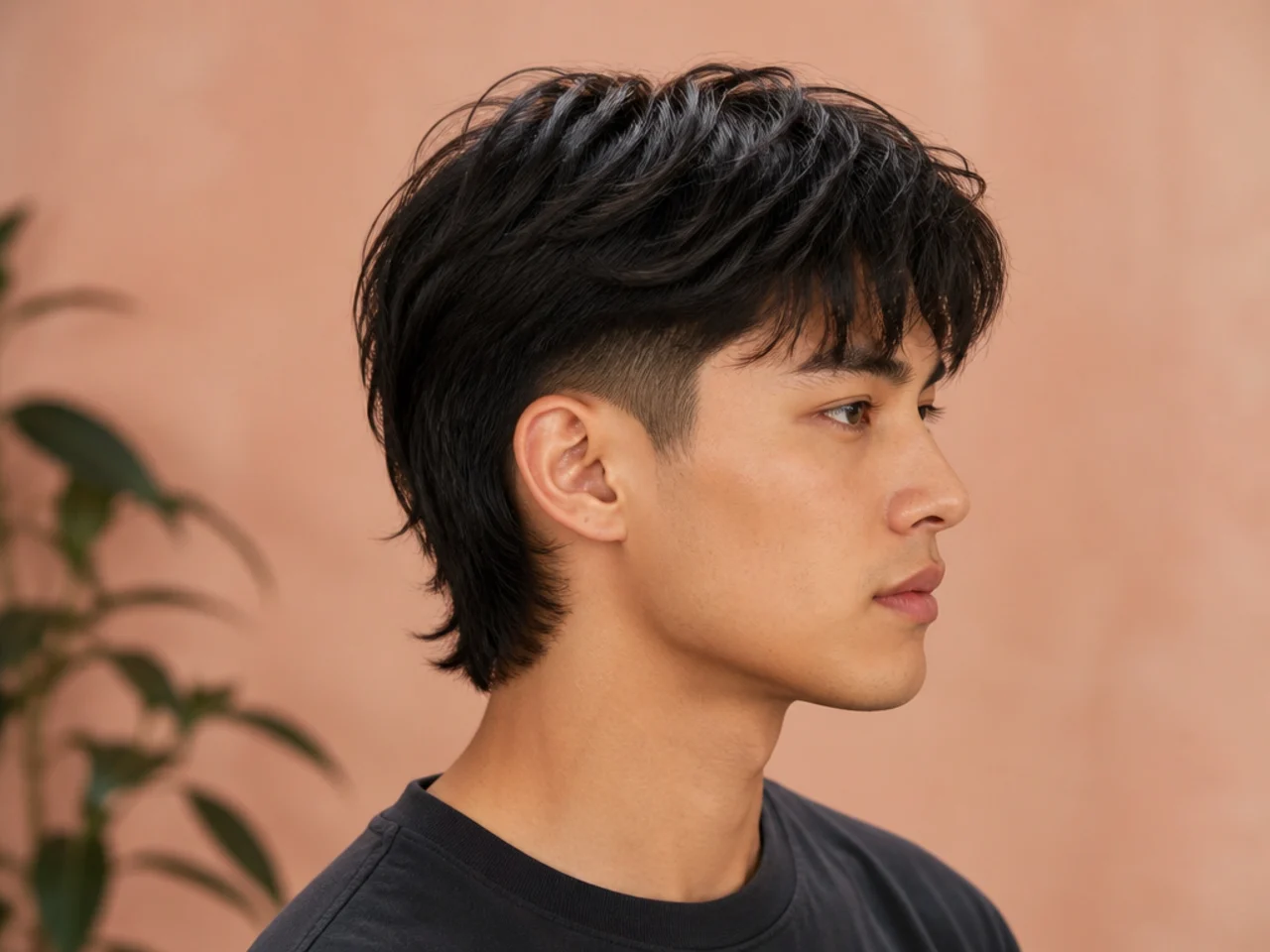
The K-pop two-block applied to the layered wolf. A short undercut hides underneath the top and back-of-ear, and the layered mass falls over the disconnect so from most angles it reads as one shape — until you push the top up and reveal the block underneath.
Suits oval, long, and heart faces. Best on dense straight-to-wavy hair.
Ask for: "Two-block layered wolf cut, half-guard undercut on the sides and back-of-ear, four-inch layered top and back left as one connected mass, defined internal layers, face-framing at the cheek, feathered perimeter, keep the disconnect line clean." Blow-dry the top backward and let it fall to hide the block.
How to Ask Your Barber for a Layered Wolf Cut
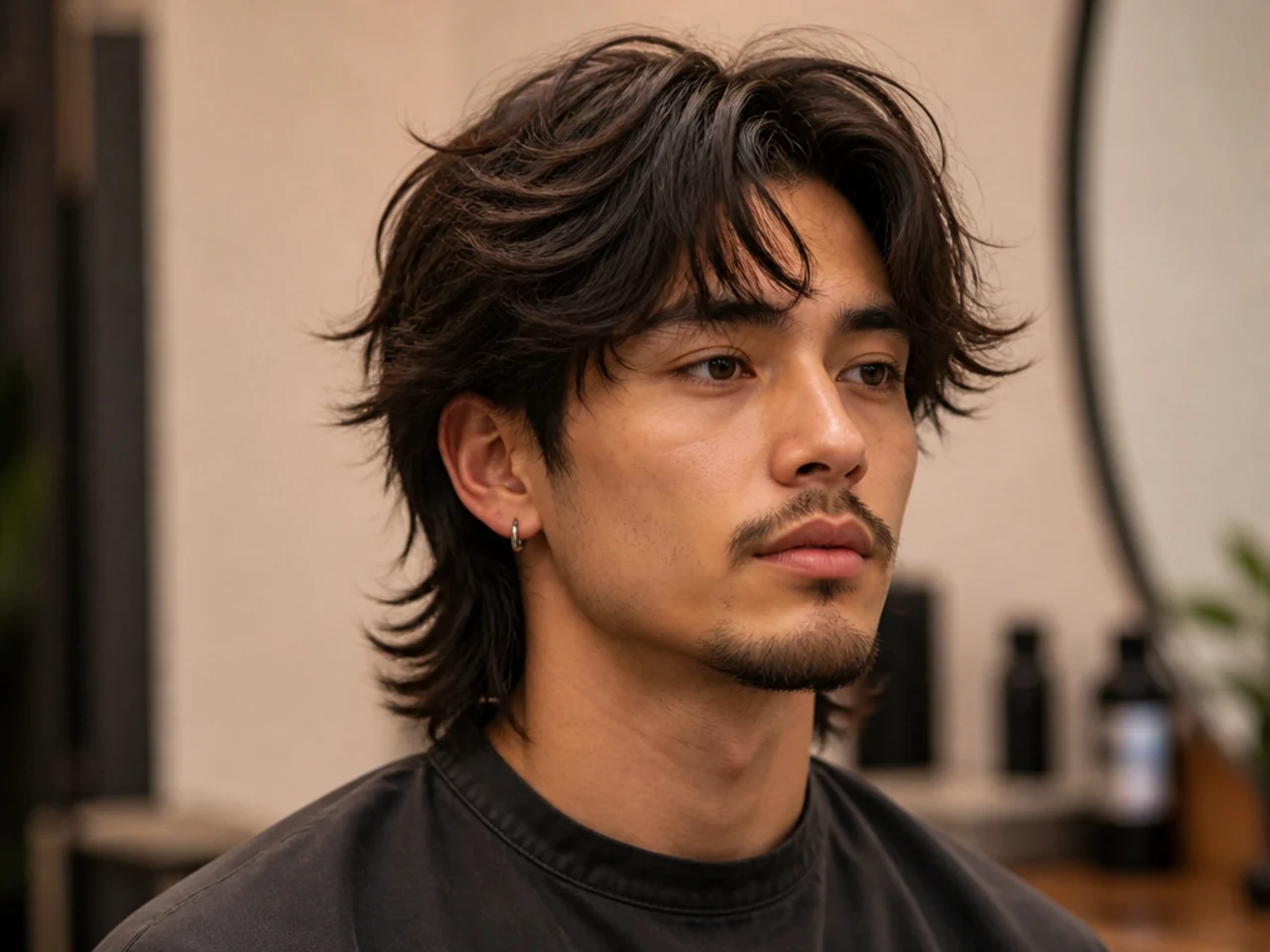
Bring a photo. Bring two if you can — one showing the top layering rhythm from three-quarter view, one showing the perimeter and nape from the side. The words below get you the rest of the way.
- Say "layered wolf cut" — not just "wolf cut." Every wolf cut has some layers. The layered version wants them as the loudest feature, not a supporting detail.
- Set the layering intensity. Subtle for fine hair or a quiet read. Medium for wearable everyday shape. Heavy for thick hair and editorial impact.
- Set the layering technique. Feathered (soft tapered ends), chunky (defined blunt-tip layers), textured (aggressive point-cutting), wispy (razor-tapered strands), or razored (full razor cut).
- Set the top length in inches. Three inches for the classic zone. Four to five inches for the medium-length version. Six-plus for the long version. One-and-a-half to two for a short crossover.
- Set the face-framing. Where at the cheek — cheekbone, jaw, or chin — and how heavy. Defined pieces read editorial. Wispy pieces read soft. Blunt pieces read chunky.
- Set the fringe. Curtain, textured, forward, side-swept, or none. Match to face shape and how much attention you want the front pulling.
- Set the side treatment. Scissor-blended, low taper, mid taper, burst fade, or disconnected undercut. Match to workplace and volume of attention you want the cut pulling overall.
Show the photo again once your barber has heard the answers, then confirm the top length in the mirror before scissors touch hair. It is much easier to adjust the plan before the first cut than to add length back after.
Styling and Maintenance for a Layered Wolf Cut
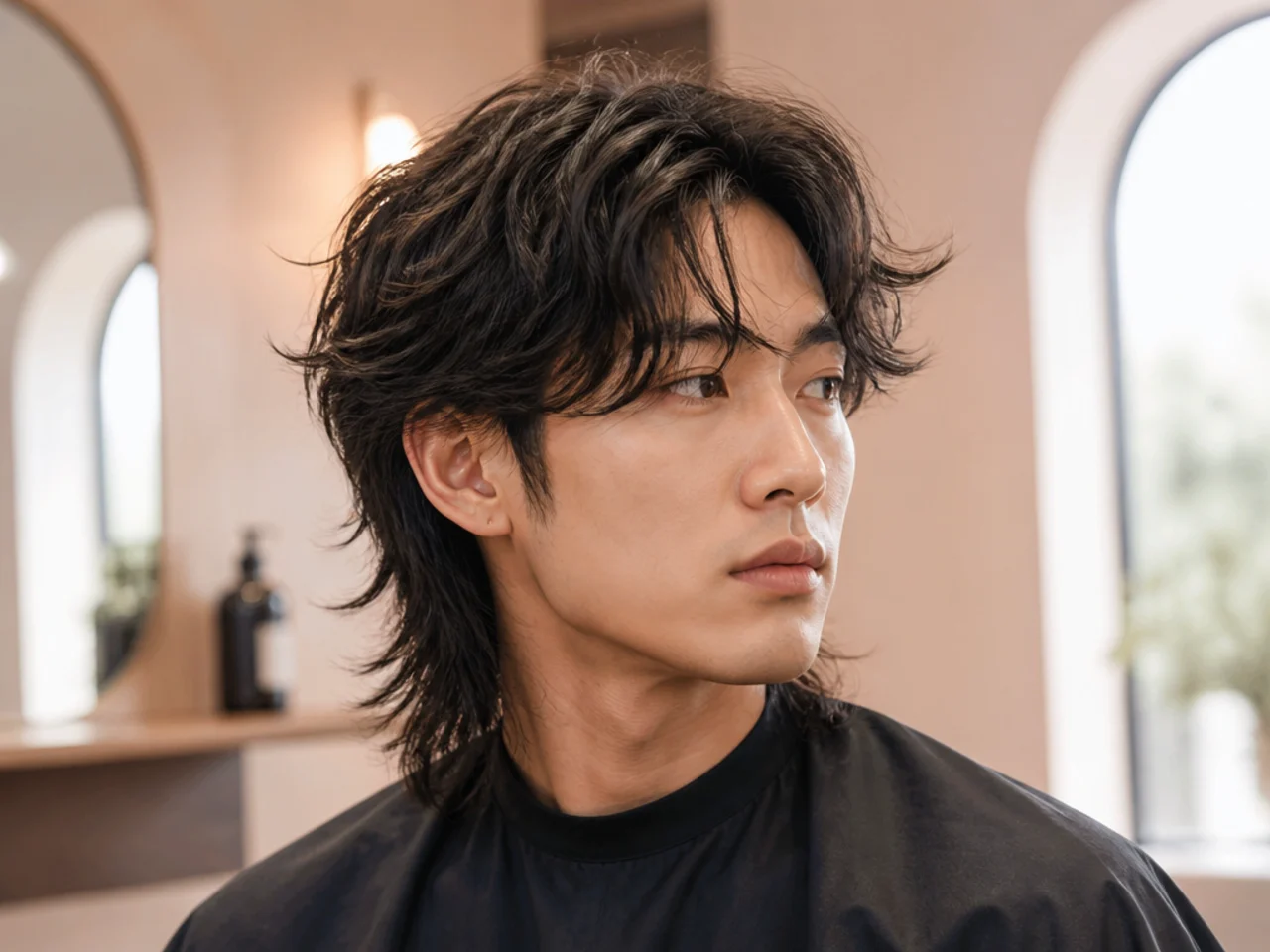
Styling a layered wolf cut is more about supporting the shape than reshaping it. The layers do the work — you just prime them, dry them the right direction, and set the finish.
Wash and towel-dry so hair is damp, not soaking. For straight hair, prime with a sea-salt spray for grip that keeps the layered pieces defined. For wavy hair, use a light styling cream that supports the wave without weighing it flat. For curly and coily hair, apply a leave-in conditioner while soaking, then let hair reach damp naturally before touching a product. Fine and thin hair skip the salt spray — it dries the ends out — and use a mousse for volume at the roots only.
Rough-dry with fingers, not a brush, unless you are building serious volume. Point the airflow downward through the crown to encourage the layers to fall in the direction they were cut. Lift the roots at the crown with fingertips as you dry — that root lift is what gives the layered shape its bounce. For a wispy or feathered read, dry on cool. For a chunky or textured read, dry with warm airflow and finish with a shot of cool to lock the shape.
Finish with a matte hold product for most versions — matte clay for structured looks, molding paste for pieces you want to twist and separate, sea-salt spray as a re-set through the day. The Korean-inspired and K-pop versions are the exceptions; those want a gel or styling mist for the glossy finish. A finishing spray sets everything for humid days without adding weight.
Re-cut the shape every six to eight weeks. The face-framing pieces and feathered perimeter blur first — once they read soft instead of shaped, it is time. Waiting past ten weeks lets the layered rhythm turn into a shapeless mass and doubles the re-cut work. Fade or taper sides need a re-cut every two to three weeks to stay sharp; between visits, run a beard trimmer over the neckline yourself to hold clean edges. For maintenance cadence across every men's silhouette, see our how often to get a haircut guide.
Wash three to four times a week — daily washing strips the natural oils the layered shape relies on for shine, twice a week is not enough when you are using product daily. Condition every wash and use a hair mask weekly to keep the ends from splitting; layered cuts show damaged ends more than blunt cuts because the ends are the whole point. Sleep on a silk or satin pillowcase to preserve texture — cotton flattens waves, breaks curls, and creases straight hair by morning. If you want to see how the layered wolf compares to related shapes, our layered mens shaggy hairstyles breakdown covers the shag side of the family.
FAQ
What makes a wolf cut a layered wolf cut?
Every wolf cut has some internal layering — the layered wolf cut leans into it. The layers are cut deeper, break more visibly through the crown and mid-lengths, and read as the dominant feature of the shape. If you can see each layer separate when you push a hand through the hair, it is a layered wolf cut. If the layers only support a shag or mullet silhouette, it is a standard wolf cut.
Should I ask for subtle or heavy layers?
Fine or thin hair wants subtle layers so the shape holds density. Thick or dense hair wants heavy layers to remove weight and let the shape move. Straight hair reads best with medium-to-heavy layering because the layers themselves supply the texture straight hair lacks. Wavy and curly hair can go softer because the pattern builds texture on its own. When in doubt, start medium — you can always cut deeper at the next visit.
How is a layered wolf cut different from a shag?
A shag layers evenly throughout with a loose perimeter and no strong shape rules. The layered wolf cut concentrates the deepest layering at the crown and around the face, keeps a longer wispy tail at the nape, and always has defined face-framing pieces at the cheekbone the shag skips. Think of the layered wolf as a shag with the volume dialed up at the crown and a longer, more shaped nape.
Which face shape suits a layered wolf cut best?
Oval, heart, and diamond faces get the cleanest read — the layered volume at the crown and cheekbone balances a narrower jaw. Round and square faces work with longer top layers and taller crown lift for vertical lines, plus a forward fringe or side sweep to break width. Long faces stay with shorter crown layers and a heavy fringe so the profile does not stretch. Every face shape has at least three variations on this list that work.
How often does a layered wolf cut need a trim?
Every six to eight weeks for the layered structure. The face-framing pieces and feathered perimeter blur first — once they read soft instead of shaped, it is time. Waiting past ten weeks lets the layered rhythm turn into a shapeless mass. Fade or taper sides need a re-cut every two to three weeks; between visits, hit the neckline yourself with a trimmer to hold clean edges.
Can I get a layered wolf cut with fine or thin hair?
Yes — with subtle layering only. Ask for shallow internal layers and soft face-framing pieces rather than aggressive point-cutting or razoring. Heavy layers remove weight fine hair cannot spare. A blunter perimeter with wispy face-framing gives fine hair the wolf cut silhouette without thinning it out. See our layered haircuts for men guide for fine-hair layering direction that applies to the wolf cut too.
Is a layered wolf cut workplace-appropriate?
Most versions are. The subtle, classic, feathered, wispy, and low-taper variations read clean in any office. Avoid the chunky, disconnected undercut, and two-block variations in traditional corporate settings — those read as statement cuts. Creative offices can handle any variation on this list.
How much does a layered wolf cut cost?
Between $50 and $110 at most independent shops, higher at style-focused salons. The layered work, face-framing detail, and feathered perimeter add fifteen to twenty minutes over a standard men's cut, so expect the appointment to run 60 to 75 minutes for the first cut and 40 to 50 minutes for follow-ups. Fade or taper sides add another ten dollars and ten minutes. For related roundups, see our stunning wolf cut hairstyles and chic wolf cut hairstyles for every face collections.