15 Chic Wolf Cut Hairstyles for Every Face Shape
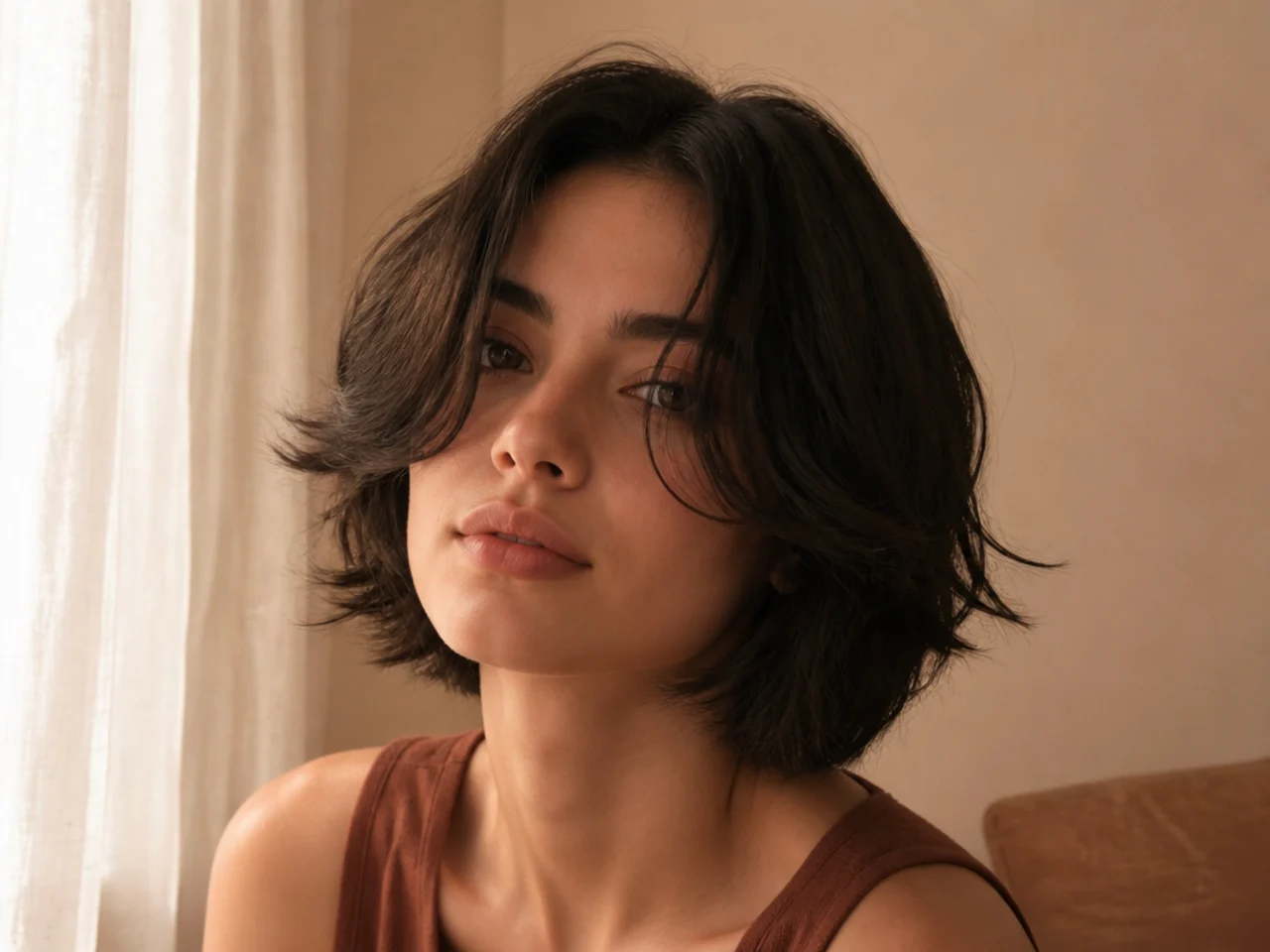
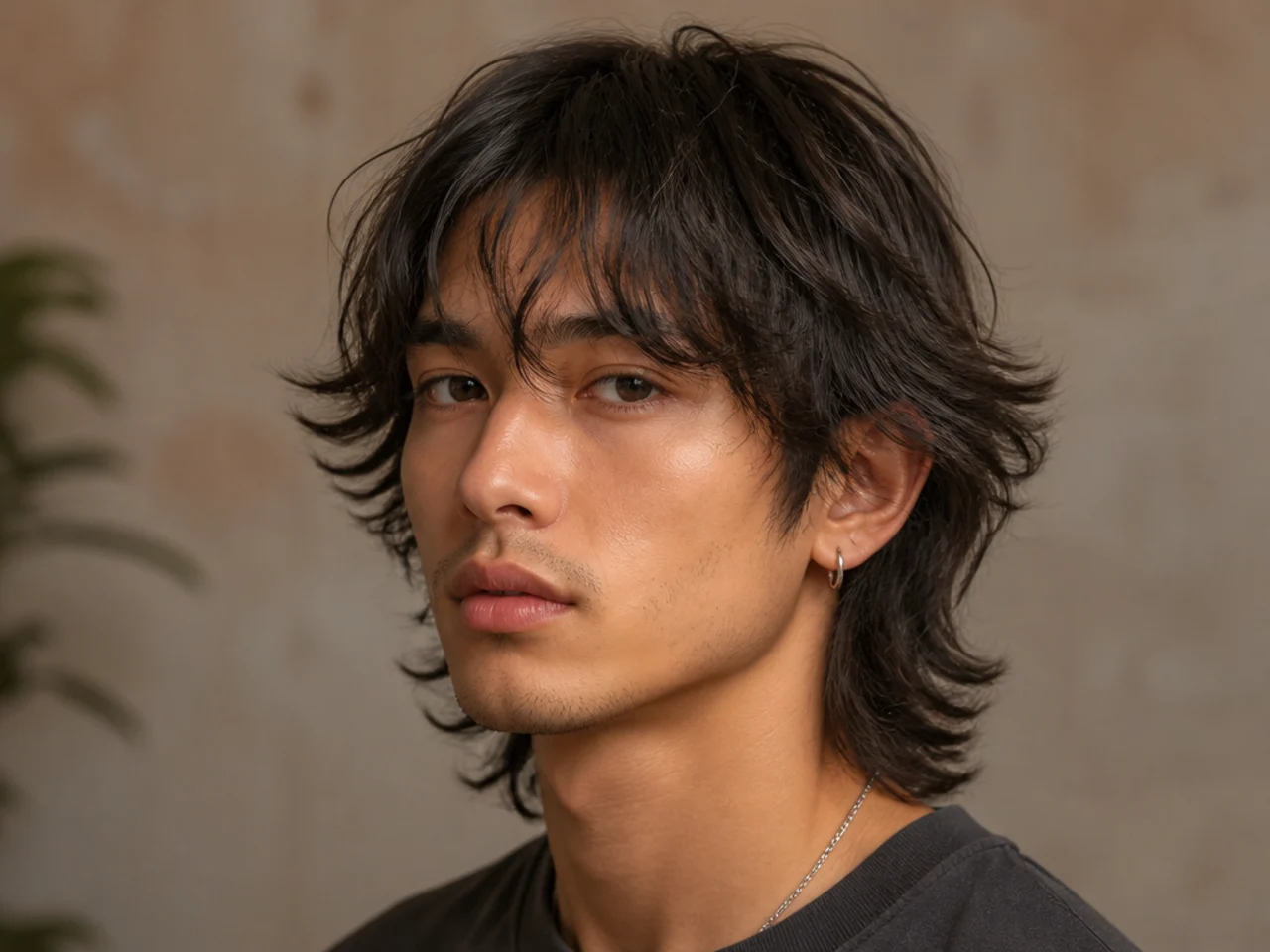
This shaggy wolf cut features layers that add volume and movement, making it ideal for oval faces. The wispy bangs frame the forehead nicely and soften the overall look. This
In this article · 16
- 1\. Shaggy Wolf Cut with Wispy Bangs for Oval Faces
- 2\. Tapered Wolf Cut with Curtain Bangs for Heart-Shaped Faces
- 3\. Textured Wolf Cut with Blunt Ends for Square Faces
- 4\. Wispy Wolf Cut with Volume for Round Faces
- 5\. Long Layered Wolf Cut for Long Faces
- 6\. Choppy Wolf Cut with Undercut for Triangular Faces
- 7\. Soft Wolf Cut with Face-Framing Layers for Diamond Faces
- 8\. High-Volume Wolf Cut for Coarse Hair Types
- 9\. Layered Wolf Cut with Color Highlights for Medium-Length Hair
- 10\. Messy Wolf Cut with Natural Waves for Beachy Vibes
- 11\. Edgy Wolf Cut with Asymmetrical Layers for Bold Women
- 12\. Playful Wolf Cut with Curly Layers for Curly Hair Types
- 13\. Classic Wolf Cut with Long Bangs for Modern Elegance
- 14\. Vibrant Wolf Cut with Bold Colors for the Adventurous
- 15\. Chic Wolf Cut with Side Swept Bangs for Professional Settings
- Choosing the Perfect Wolf Cut for You
The wolf cut is a mullet-shag hybrid — heavy layers up top, longer length down the back, and face-framing pieces that do half the styling for you. But the same cut can flatter one face and flatten another, depending on where those layers land. Below are 15 wolf cut variations, each tuned to a specific face shape. You'll get what makes each one different, why it works, how to ask your stylist, and one styling tip per look.
1. Shaggy Wolf Cut with Wispy Bangs for Oval Faces
Oval faces get to break the rules. Balanced proportions — forehead and jaw roughly equal, cheekbones a touch wider — mean almost any wolf variation reads well on you. The shaggy version leans into that flexibility.
What makes it different: the layers are stacked but blended, so you get lift at the crown without the disconnected step you see on a classic modern mullet. Wispy bangs sit just past the brows with feathered, see-through ends. Nothing about it looks freshly cut, and that's the point.
How to ask: "Blended shag layers through the crown, longest layer hitting the collarbone, wispy bangs starting about an inch back from my hairline, feathered out to the outer brow." Bring a photo. Always.
Styling tip: rough-dry with your fingers to lift the roots, then work a dime-sized amount of texture cream through the mid-lengths. Skip the diffuser unless your hair is curly. That wispy front piece needs air, not compression.
2. Tapered Wolf Cut with Curtain Bangs for Heart-Shaped Faces
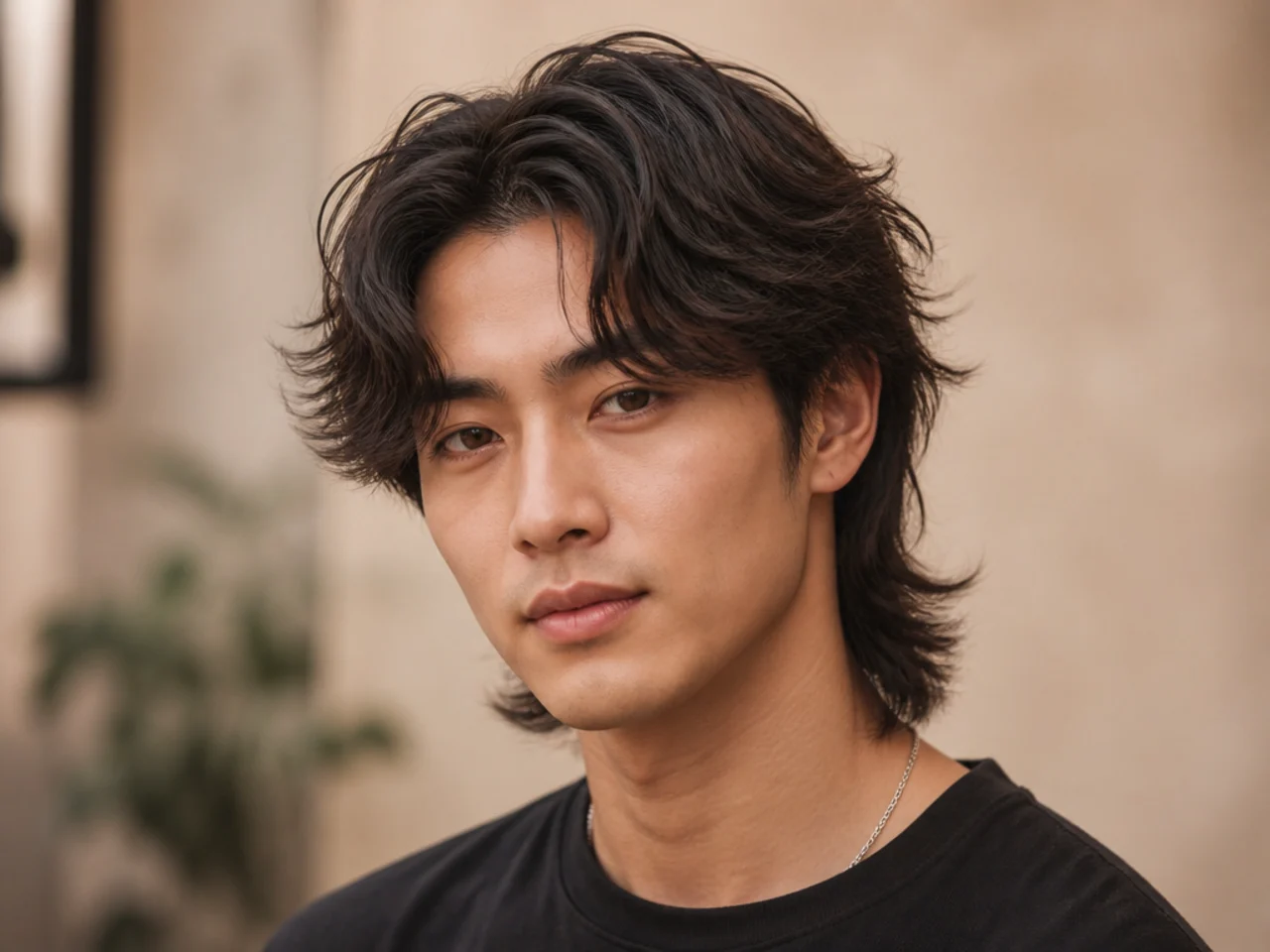
Heart-shaped faces are widest at the forehead and narrow through the jaw. Your job with a wolf cut is to add weight below the ears without ballooning volume above them.
What makes it different: the taper. Instead of the usual disconnected mullet tail, the back gets progressively narrower toward the nape. Curtain bangs part down the middle and sweep out to frame the temples in one smooth motion.
Why it flatters heart faces: the tapered back and the outward sweep of the bangs pull the eye toward your cheekbones instead of your forehead. The narrow nape mirrors your narrow jaw. That's proportion, not contrast — the goal isn't to shrink your forehead, it's to echo your natural silhouette.
How to ask: "Wolf cut with a tapered back — no mullet tail — no disconnection at the crown, curtain bangs split down the middle and cut to hit the outer corner of my eyes."
Styling tip: blow the bangs out with a round brush, twisting the ends away from your face for the last two seconds. That outward flick is the whole trick.
3. Textured Wolf Cut with Blunt Ends for Square Faces
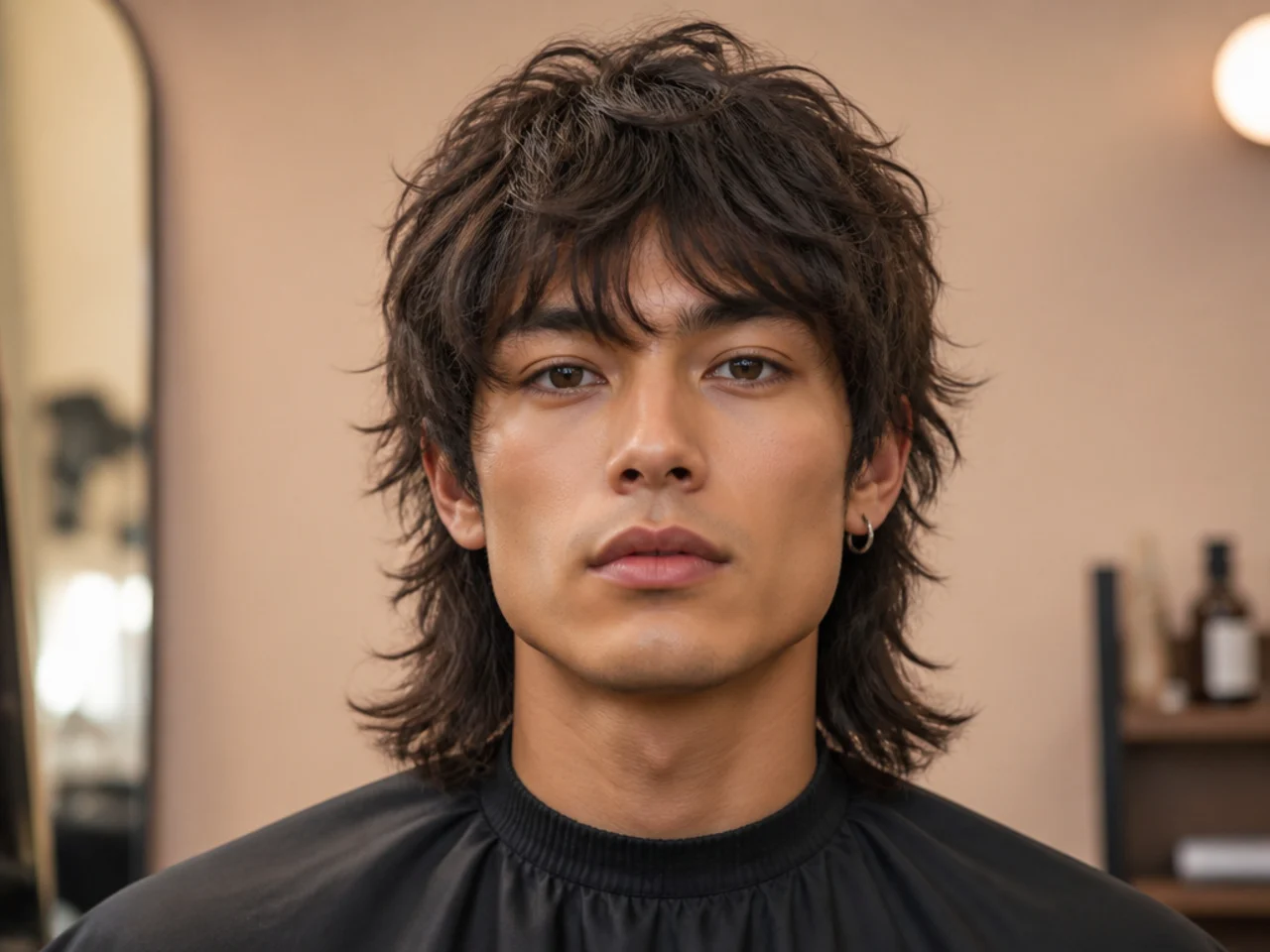
Square faces have equal width across the forehead, cheekbones, and jaw, with sharp corners at the jawline. Your goal isn't to hide the jaw — that never works. It's to break up the horizontal lines around it.
What makes it different: the ends are blunt, not tapered. Layers up top do all the movement work, then the perimeter is clean and heavy. That contrast is what modernizes a shape square faces have historically had to work around. Our full guide to haircuts for square faces walks through more shapes that follow the same weight logic.
How to ask: "Choppy internal layers through the top, longest layer sitting at the collarbone with a blunt cut across the back, face-framing pieces starting at the corners of my mouth."
Styling tip: flat-iron the ends in one slow pass with a slight C-curve toward your neck. That inward flick keeps the blunt line from reading severe against your jaw.
4. Wispy Wolf Cut with Volume for Round Faces
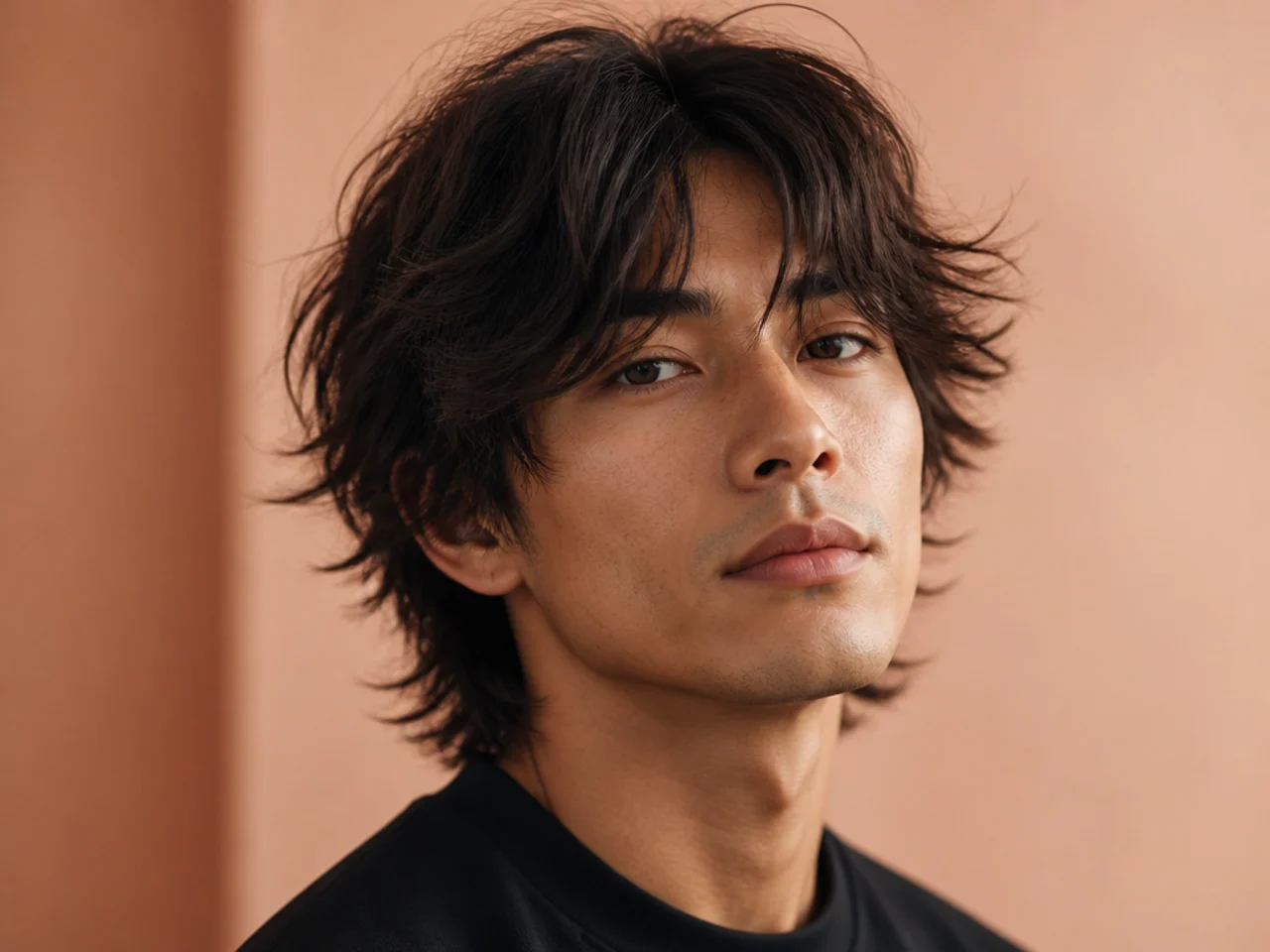
Round faces have soft, curved lines — width and length roughly equal, with fullness through the cheeks. Your cut needs to add length, not width. Height at the crown, narrow at the sides.
What makes it different: the layers are concentrated at the top of the head to build vertical volume. Sides stay close to the face so nothing exaggerates the cheek line. Wispy pieces at the temples slim the widest part of your face without covering it.
Why it flatters round faces: a taller crown reads as a longer face. The vertical lift redirects the eye up the head instead of side to side. It's the same principle behind a high pixie or a top-heavy butterfly haircut — bulk goes up, sides stay clean.
How to ask: "Layers stacked at the crown for lift, sides kept close to my head, longest length past the shoulders, wispy face-framing that starts at my cheekbone and grazes the jaw."
Styling tip: blow-dry upside down for 60 seconds. Then a fingertip of thickening paste at the roots on top only. Leave the sides alone.
5. Long Layered Wolf Cut for Long Faces
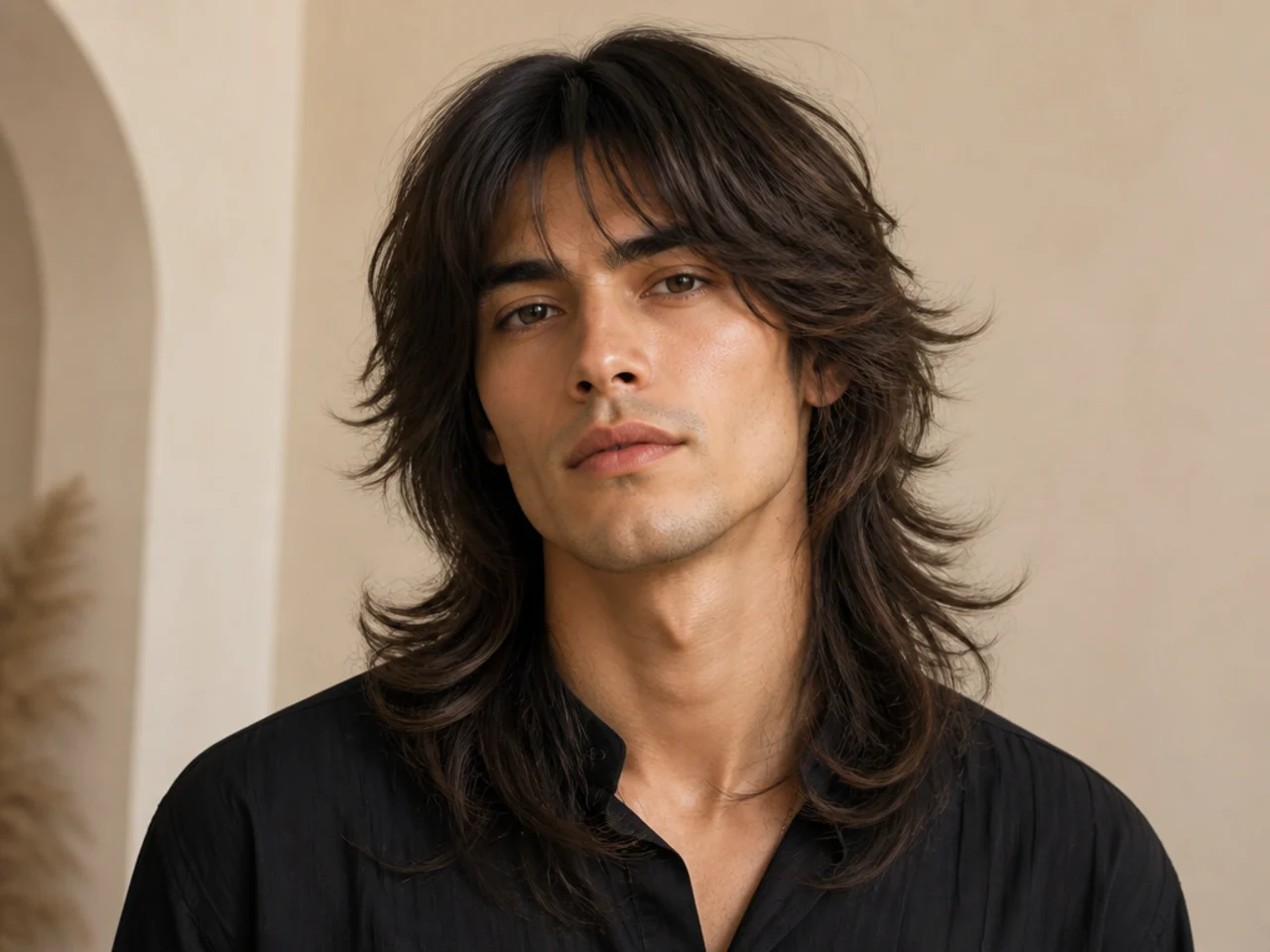
Long or oblong face shapes have more length than width — slim jaw, taller forehead, subtle cheekbones. You want the cut to add horizontal weight and visually shorten the line from hairline to chin.
What makes it different: this is the longest wolf variation in the roundup. Layers stay lower on the head, so bulk sits at the cheekbones instead of the crown. If you like this length range, our 10 stunning wolf cut hairstyles post covers more shapes in the same family.
Why it flatters long faces: heavy layers at the jaw create horizontal fullness right where your face needs it. The length past the collarbone doesn't matter for face-shape balance — what counts is where the shortest layer sits.
How to ask: "Wolf cut with the shortest layer hitting my cheekbone, no volume above the crown, blended layers all the way through to mid-back."
Styling tip: loose barrel curls on the layers between jaw and shoulder only. The rest can air-dry. Uniform curls flatten out the width you're building.
6. Choppy Wolf Cut with Undercut for Triangular Faces
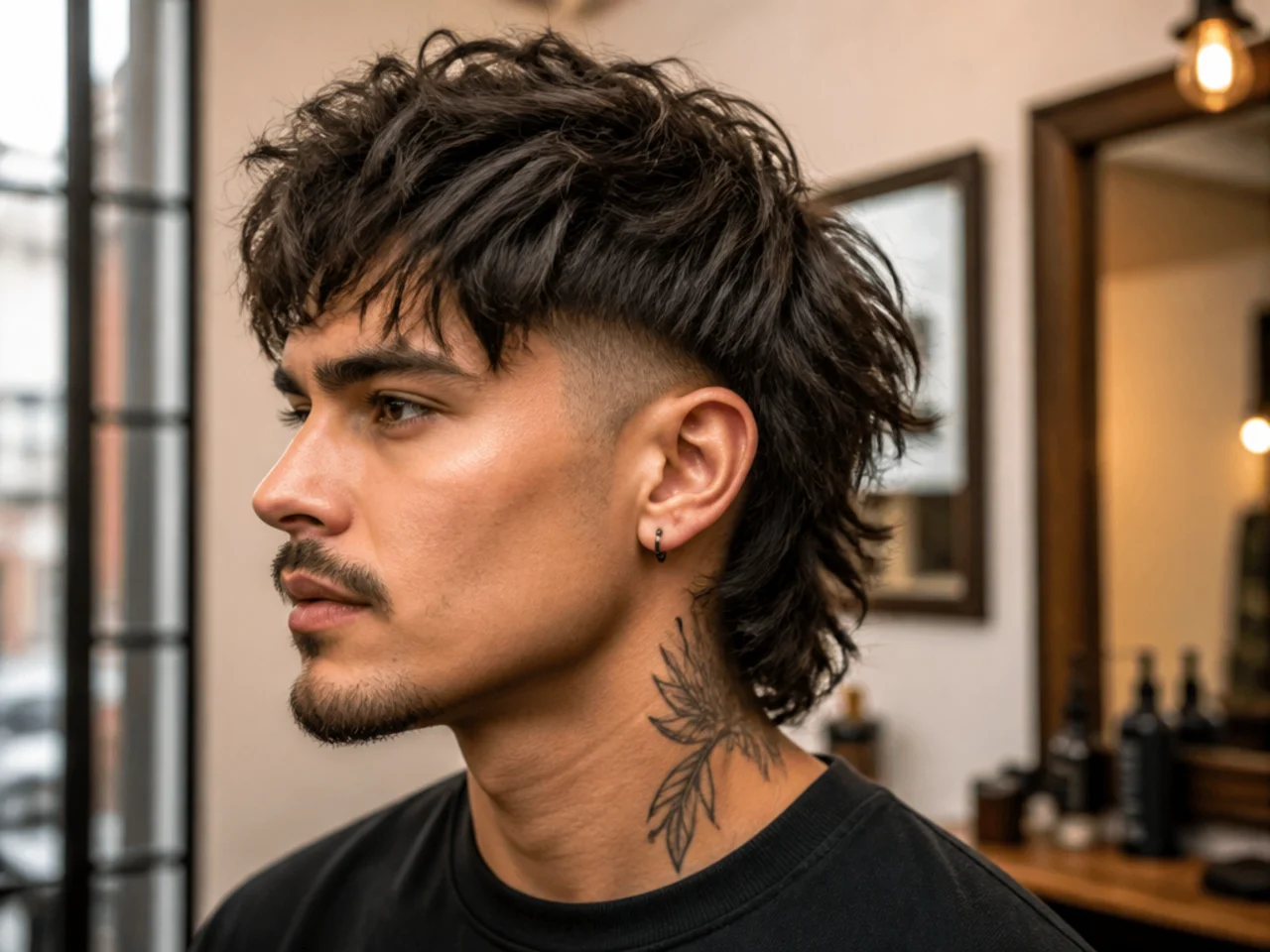
Triangular or pear-shaped faces are narrow at the forehead and wider at the jaw. Opposite of heart. You want volume up top and weight removed below the ears.
What makes it different: the undercut removes bulk from behind the ears — right where triangular faces carry extra width. Choppy layers on top add visual mass to the forehead area. It's a two-move cut: take weight off one axis, add it to another.
Why it flatters triangular faces: pulling weight off the sides and adding it above rebalances the pyramid without hiding anything. The undercut is functional here, not decorative.
How to ask: "High undercut behind the ears, disconnected from long choppy layers on top, longest length grazing my collarbone at the back." Ask for the undercut to be scissored, not clipper-cut. It blends better as it grows out.
Styling tip: texturizing spray on damp hair, then scrunch and let it dry. The undercut hides the ends of the layers when you tuck one side behind your ear, which is where the whole shape earns its keep.
7. Soft Wolf Cut with Face-Framing Layers for Diamond Faces
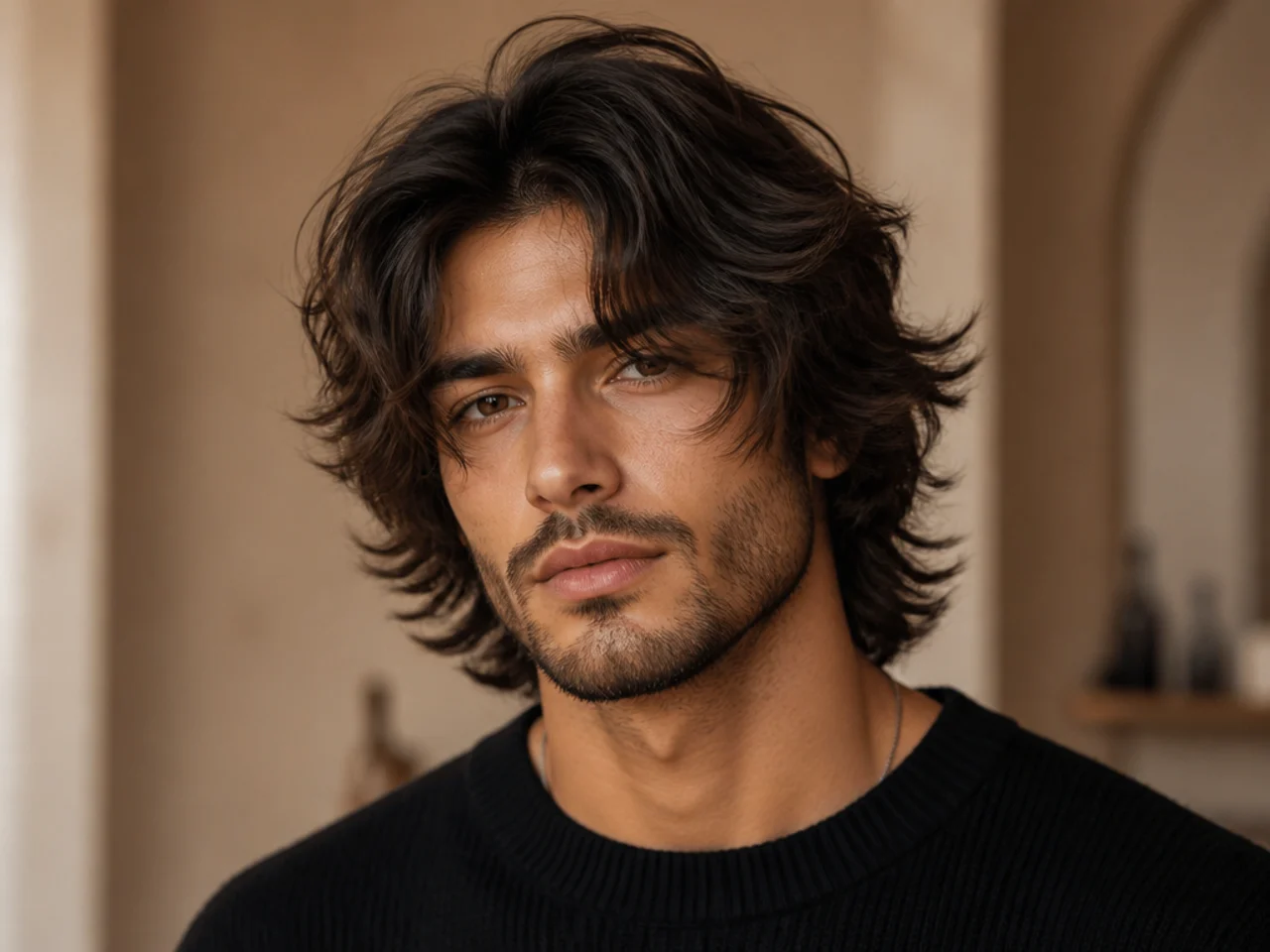
Diamond faces are narrow at the forehead and jaw, widest at the cheekbones. You need width added up top and around the chin — soften the middle, add to the ends.
What makes it different: everything about this variation is soft. No blunt edges, no visible layer steps. The face-framing pieces are cut in a long, feathered sweep spanning from your temples down to your chin, uninterrupted.
Why it flatters diamond faces: the subtle widening effect at the forehead — from crown layers — and at the jaw — from long face-framing — balances your wider cheekbones. You end up with three roughly equal points instead of one dominant middle.
How to ask: "Softly blended layers all the way through, no disconnection anywhere, face-framing pieces starting at my temples and traveling down to my chin in one continuous sweep."
Styling tip: 1.25-inch curling iron. Wrap the face-framing pieces away from your face, hold three seconds, release. Nothing else needs curling.
8. High-Volume Wolf Cut for Coarse Hair Types
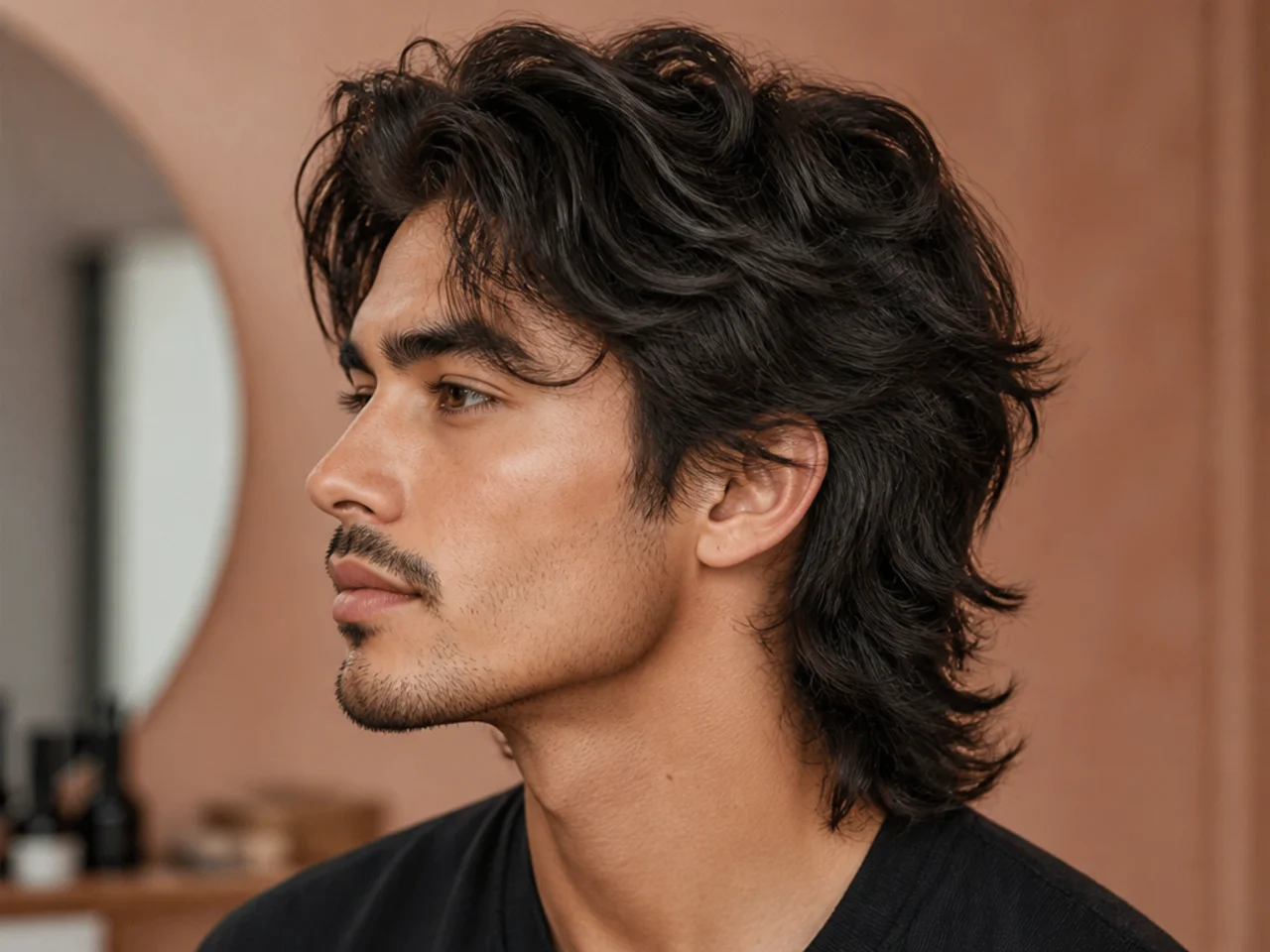
Coarse hair is thick, dense, and often resistant to layers cut too heavy. This variation is about texture rather than face shape — but the shape choices still matter for balance.
What makes it different: layers get aggressively thinned with point-cutting, not scissored blunt. That removes weight from the interior without shortening the length. Coarse hair fights back against blunt lines. It cooperates with soft ones.
Why it flatters most face shapes on coarse hair: coarse hair over-corrects on face-balancing. A layer arrangement that would flatter a round face on fine hair reads massive on coarse. Point-cutting scales the volume back to something proportional.
How to ask: "Wolf cut with point-cut layers only, no texturizing razor if my ends are dry, longest layer at collarbone." Mention any frizz or dryness. A razor is a bad idea on damaged ends.
Styling tip: mousse into wet hair, air-dry most of the way, then finish with a diffuser on low heat. Coarse hair rewards patience over heat.
9. Layered Wolf Cut with Color Highlights for Medium-Length Hair
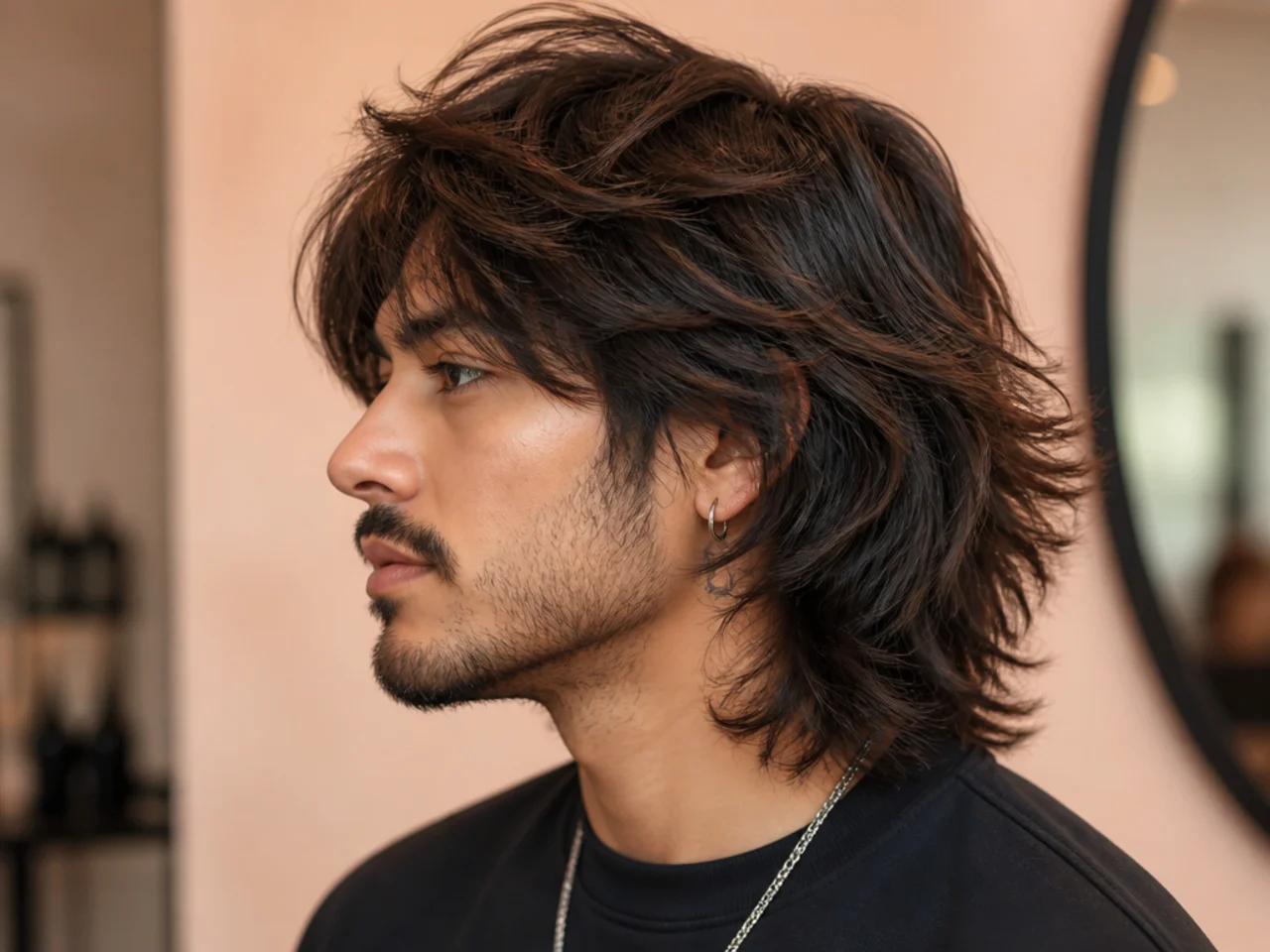
Medium-length hair — collarbone to just past the shoulder — is the sweet spot for the wolf cut. Long enough to show layers, short enough to stay bouncy.
What makes it different: strategic highlights placed at the ends of the top layers. When those layers move, the lighter pieces flash through and make the cut read as twice as textured.
Why it flatters most face shapes: color-placed dimension is a face-shape hack. Highlights around the face lift the eye up. Lowlights underneath push volume down. You can tune the placement to whatever your face needs — the same trick used in a shag haircut but with the wolf's more pronounced crown volume.
How to ask: "Wolf cut with layers starting at my chin, longest layer at collarbone. Highlights placed at the ends of the top layer and around the face-framing pieces."
Styling tip: curl in mixed directions. Uniform curls flatten the highlight pattern. Random directions let the color pop.
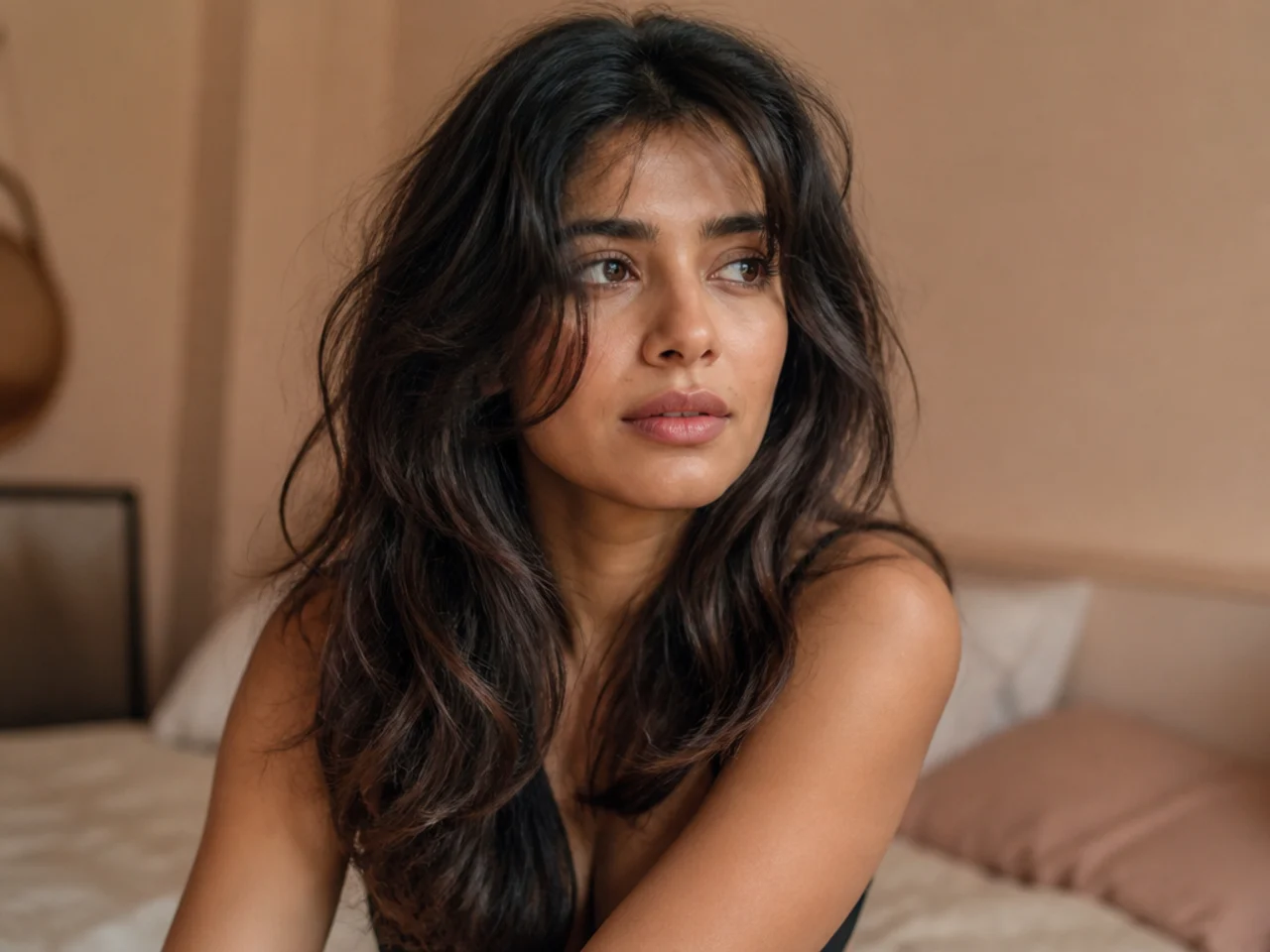
10. Messy Wolf Cut with Natural Waves for Beachy Vibes
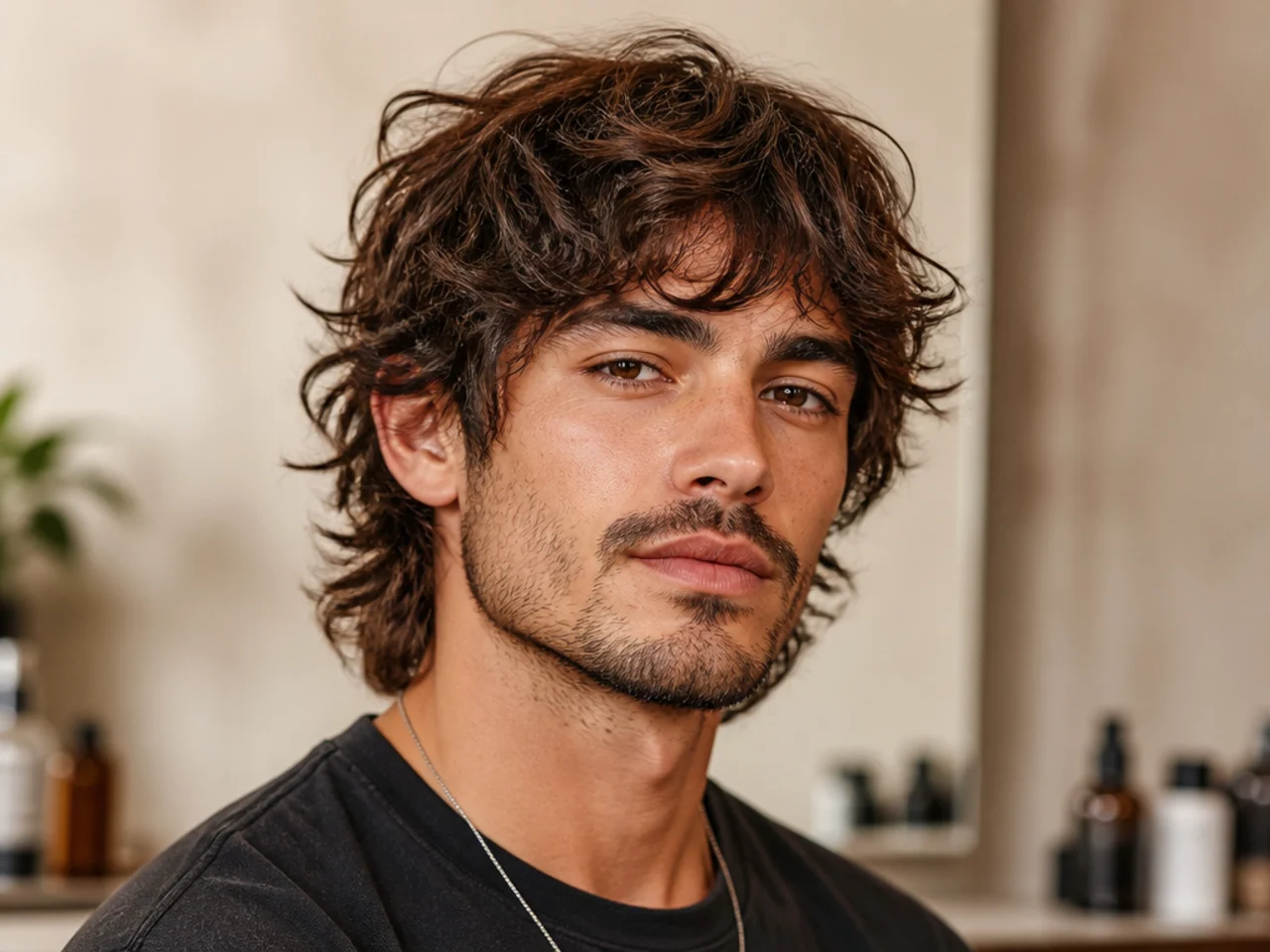
If your hair has natural wave, don't fight it. This variation is cut to work with what you already have. Same family as a proper shag, just shorter in the front.
What makes it different: no attempt at symmetry. Layers are placed based on where your hair naturally wants to bend, not on a template. Your stylist should be watching the way your hair dries as they cut.
Why it flatters most face shapes: undone doesn't mean unflattering. Waves add width where you need it and layers keep the ends from looking heavy. The randomness is what makes it universal — asymmetry cancels out shape rules.
How to ask: "Please cut this dry, layer by layer, based on how my waves fall. Wolf cut shape, but I want it to look like I haven't styled it."
Styling tip: salt spray on damp hair, scrunch once, then leave it alone. Touching it while it dries breaks the wave pattern. This is a cut that only pays off if you trust it.
11. Edgy Wolf Cut with Asymmetrical Layers for Bold Women
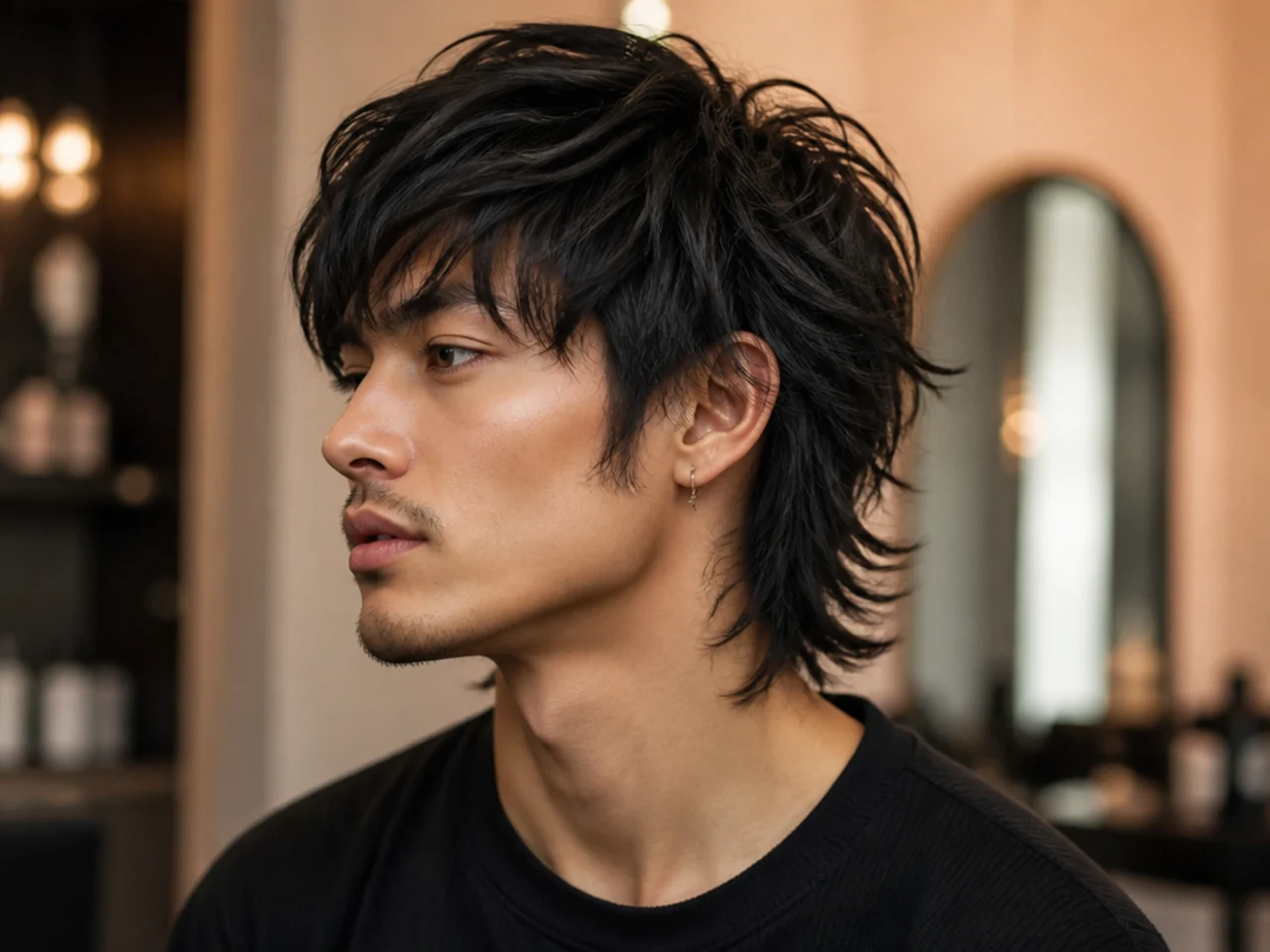
Asymmetry is the reset button on a face shape you're tired of working around. It bypasses the "balance the sides" playbook entirely.
What makes it different: one side is intentionally shorter, more textured, or angled differently than the other. Could be a longer piece on one side of the face, or the whole shape offset. Either way, the cut announces itself.
Why it flatters most face shapes: asymmetry creates visual movement that keeps the eye from settling on any one feature. Great for square faces — breaks the horizontal jawline — and round faces — creates a diagonal that slims. If you want to push further in this direction, a jellyfish haircut takes the disconnected principle to its logical extreme.
How to ask: "Wolf cut with the right side one to two inches longer than the left, disconnected at the layers, longer face-framing on the shorter side." Specify which side, or your stylist will guess wrong 50 percent of the time.
Styling tip: don't part it down the middle. A deep side part on the fuller side is what sells the asymmetry. Center parts negate the whole cut.
12. Playful Wolf Cut with Curly Layers for Curly Hair Types
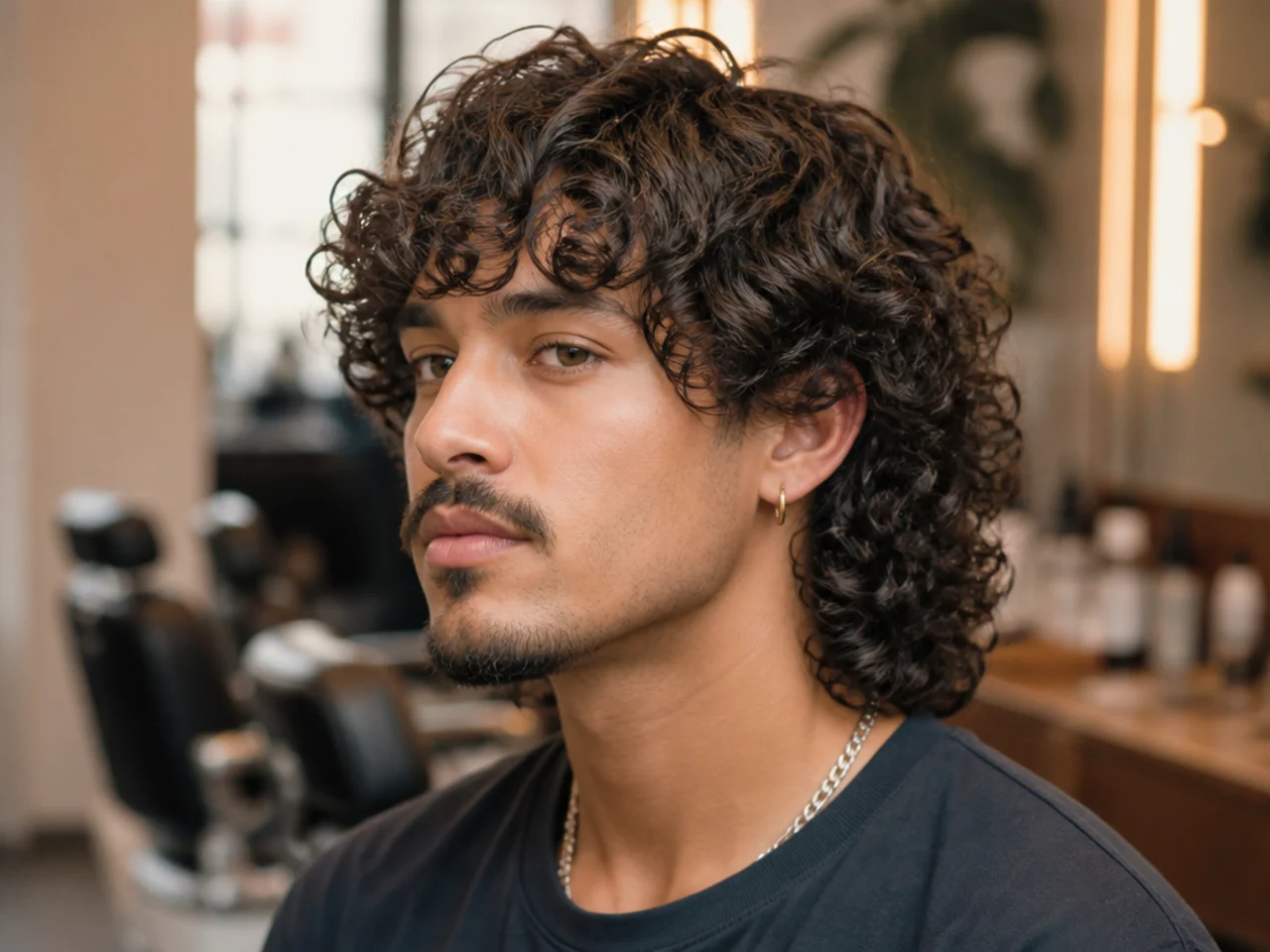
Curly hair in a wolf cut is a case study in why dry cutting exists. Wet, your curls stretch to two or three times their dry length. Cut wet, and every layer will land in the wrong place.
What makes it different: internal layers only. The perimeter stays one length. Bulk gets removed from inside the shape so the curls have room to expand outward without going triangular.
Why it flatters most face shapes on curls: curls have their own volume rules. Keeping the perimeter one length prevents the pyramid shape most curly cuts fall into. Layers up top let the crown curls define themselves individually instead of clumping.
How to ask: "Please cut this dry, curl by curl. Wolf cut shape — face-framing pieces at my cheekbone, longest curl at the collarbone. Only internal layering, no perimeter cutting."
Styling tip: curl cream on soaking-wet hair, praying-hands application, then plop in a cotton t-shirt for 20 minutes. Diffuse on cool. Heat kills curl clumps.
13. Classic Wolf Cut with Long Bangs for Modern Elegance
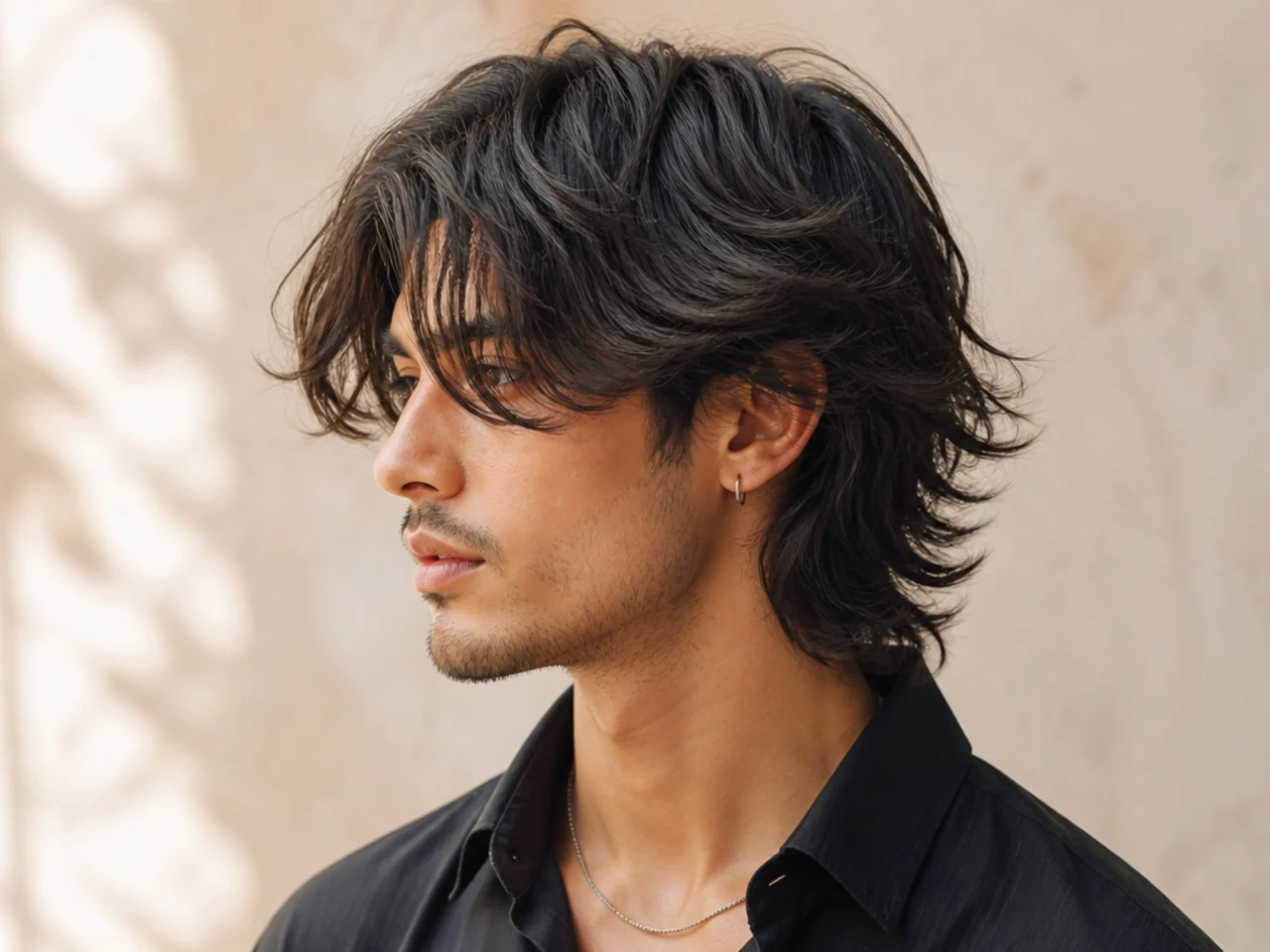
The classic wolf cut skips the extremes. No shaved undercut, no razor-thin layers, no asymmetry. This is the version you'd wear to a wedding without second-guessing it.
What makes it different: measured proportions. Bangs are long — hitting the eyelashes — and layers are blended smoothly all the way through with no visible steps. It shares DNA with the softer end of the butterfly haircut, just with more length at the back.
Why it flatters most face shapes: neutrality. Nothing is exaggerated in a direction that would clash with a specific face. Works especially well for oval, oblong, and diamond faces, but nobody looks bad in it.
How to ask: "Classic wolf cut, no disconnection anywhere, long bangs to my eyelashes, longest layer at collarbone, blended layers through the length."
Styling tip: blow-dry the bangs first, with a small round brush, while the rest of your hair is still wet. Wait too long and the bangs dry in whatever direction they want.
14. Vibrant Wolf Cut with Bold Colors for the Adventurous
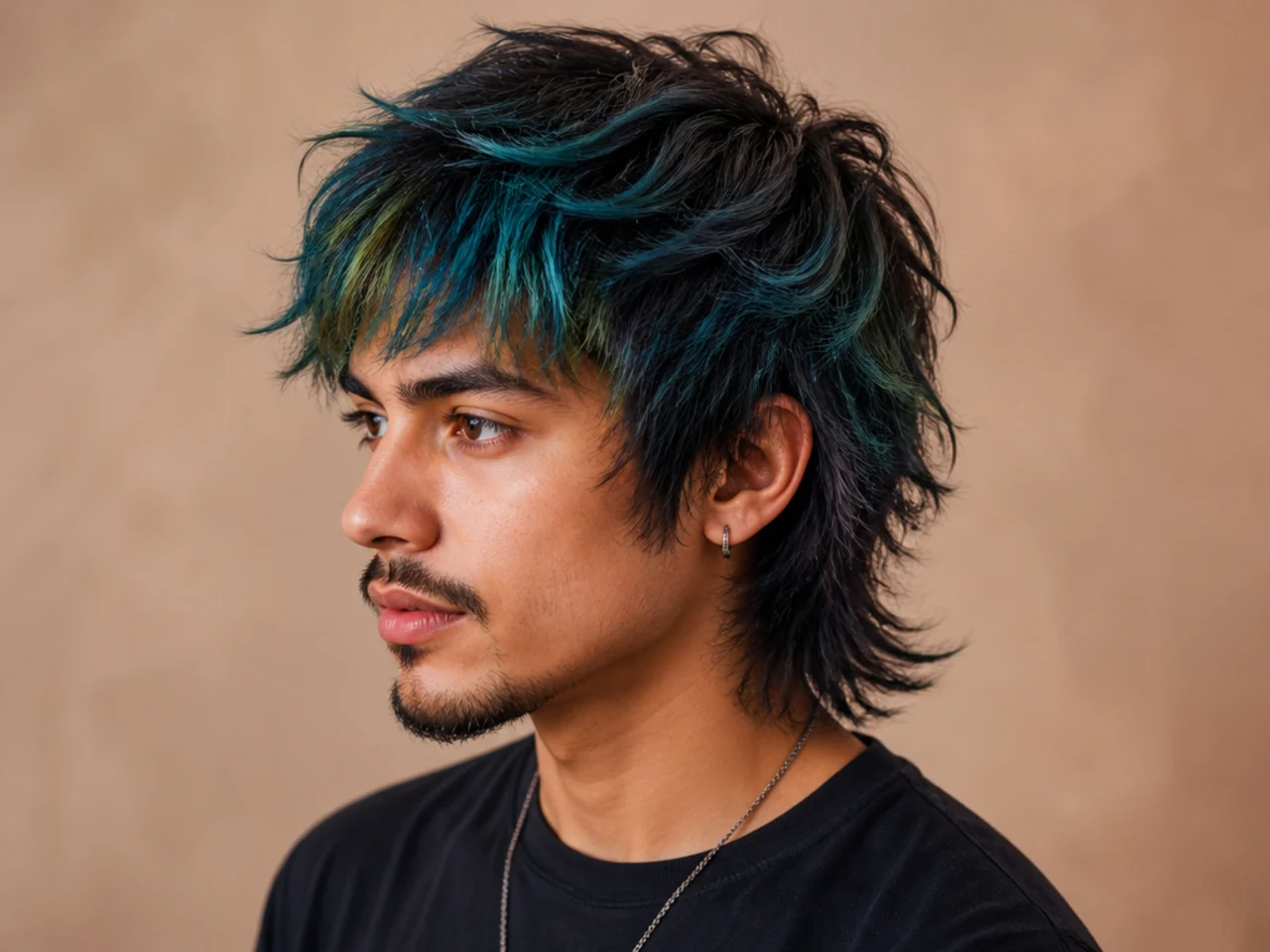
Bold color doesn't change the cut — but the cut has to earn the color. A boring shape with a wild color reads as costume. A great shape with a wild color reads as intentional.
What makes it different: layer placement gets exaggerated because color exposes any imprecision. Every layer step needs to be intentional, because a stripe of magenta will show you exactly where the layer stops.
Why it flatters most face shapes: color placement follows the same face-shape rules as layer placement. A brighter highlight at the cheekbones lifts a round face. A dark root with pale ends elongates. Talk to your colorist about placement, not just shade.
How to ask: "Wolf cut shape first, we'll build color around it. I want the layers to read cleanly through the color." Book the cut and color as separate appointments unless your stylist does both well.
Styling tip: color-safe shampoo, cold rinse at the end, sulfate-free everything. Bold colors fade in a week if you're not careful with the wash routine.
15. Chic Wolf Cut with Side Swept Bangs for Professional Settings
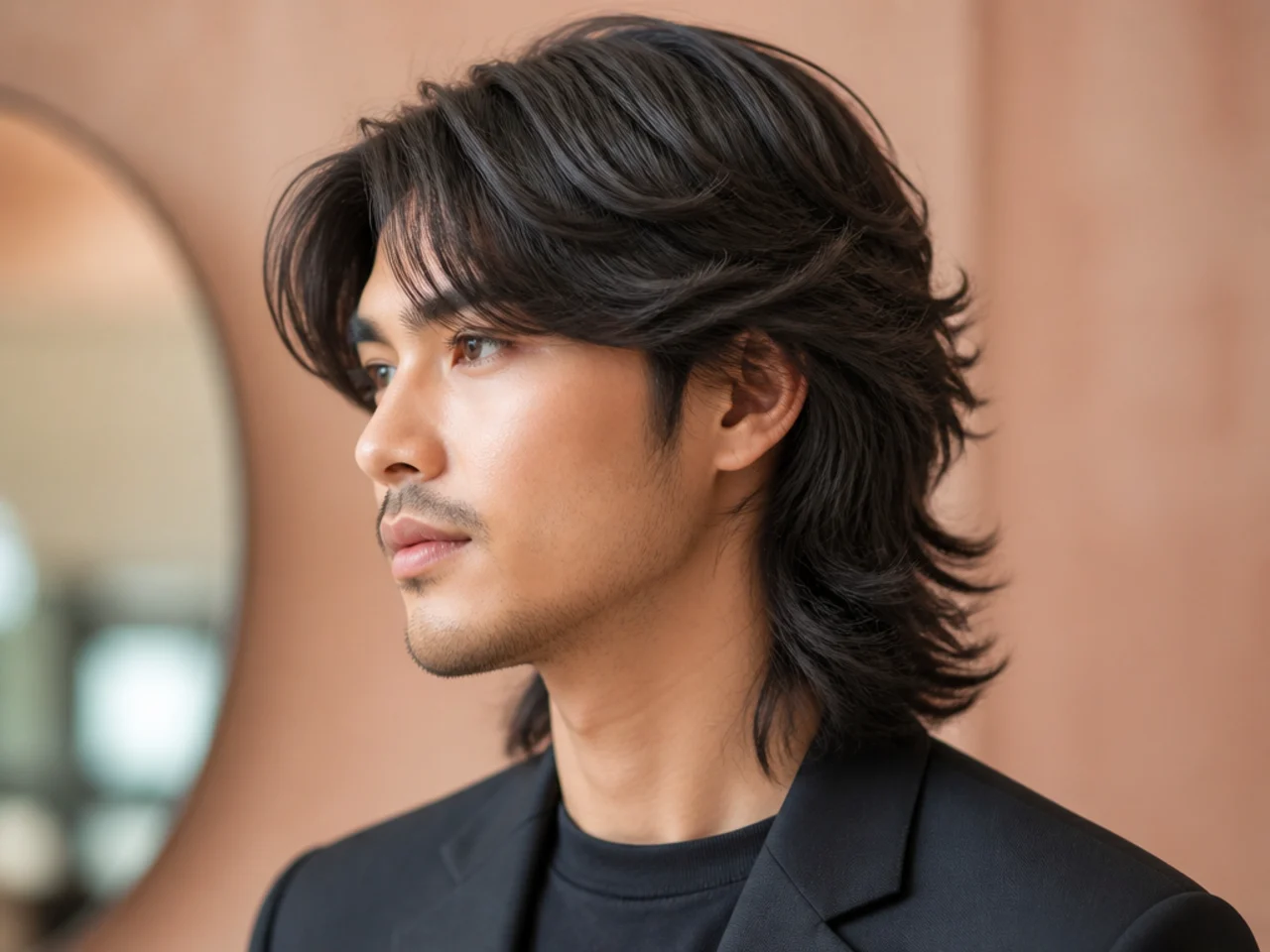
Side-swept bangs are the office-friendly wolf. They read polished from any angle and don't require constant maintenance to keep them out of your eyes.
What makes it different: the bangs sweep across the forehead in one long, angled piece. No middle part, no eyebrow-length crop. Layers stay conservative — no visible steps, no razored ends.
Why it flatters oval and heart-shaped faces: the diagonal sweep breaks up forehead width for heart shapes and adds a small dose of asymmetry to otherwise balanced oval faces. It also visually softens a straight or low hairline.
How to ask: "Wolf cut with side-swept bangs. Longest bang piece grazes my chin on one side. Blended layers through the length, longest at collarbone. No disconnection."
Styling tip: blow the bangs across your forehead with a round brush, then set with a light hairspray. Skip the hairspray and the bangs will fall back toward center by lunch.
Choosing the Perfect Wolf Cut for You
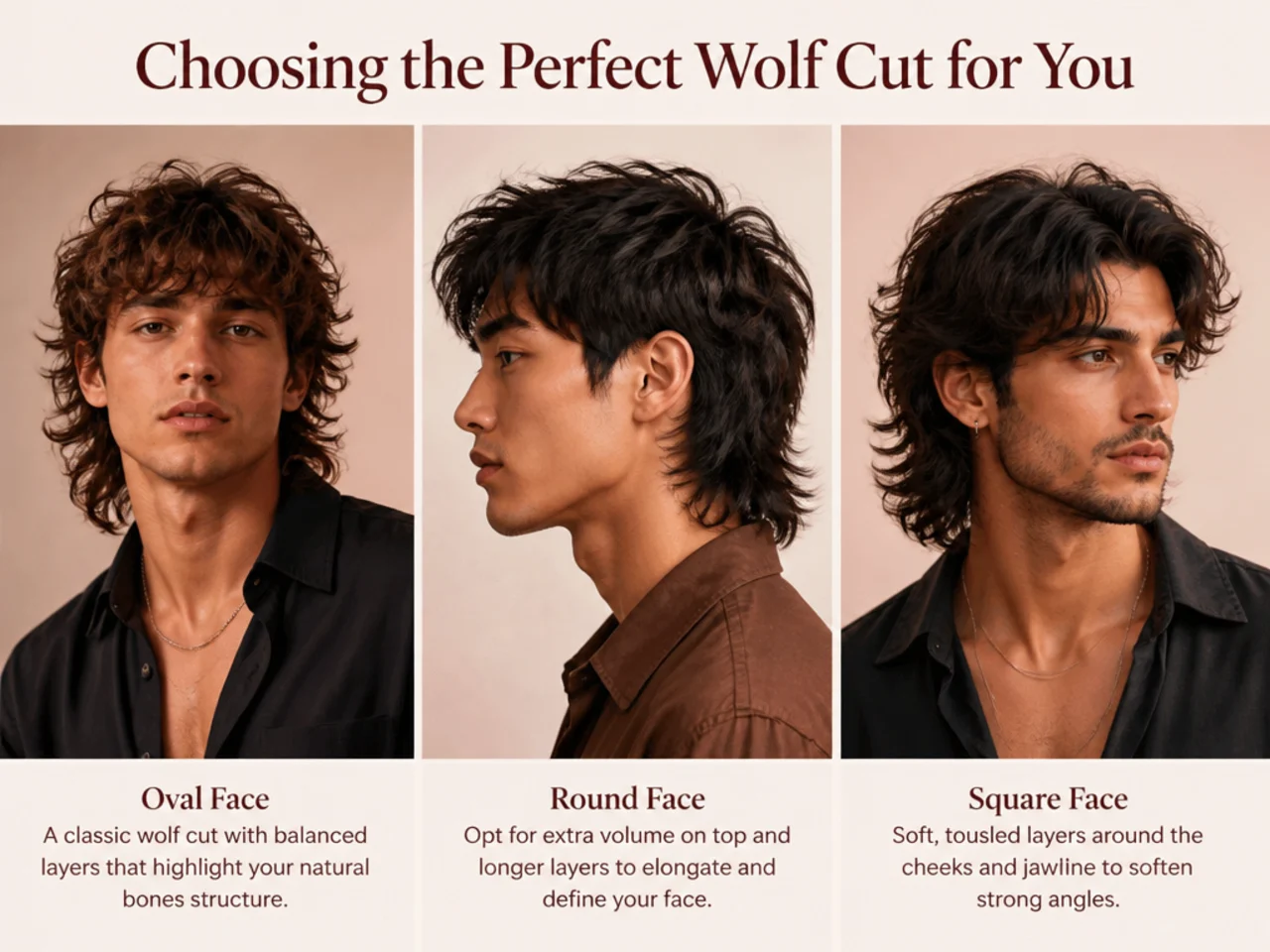
Everything above assumes one thing: you know your face shape. If you don't, look at yourself in the mirror with your hair pulled straight back. Trace the outline of your face on the mirror with a bar of soap or a dry-erase marker. That's your shape.
From there, the rules simplify.
- Oval: any variation works — pick based on hair type and lifestyle.
- Round: add height at the crown, keep the sides narrow.
- Square: soften with internal layers, avoid width at the jaw.
- Heart: taper the ends, add weight below the ears.
- Diamond: soften the middle, add width at the top and bottom.
- Long: add horizontal fullness at the cheekbone, no crown height.
- Triangular: volume up top, remove bulk at the sides.
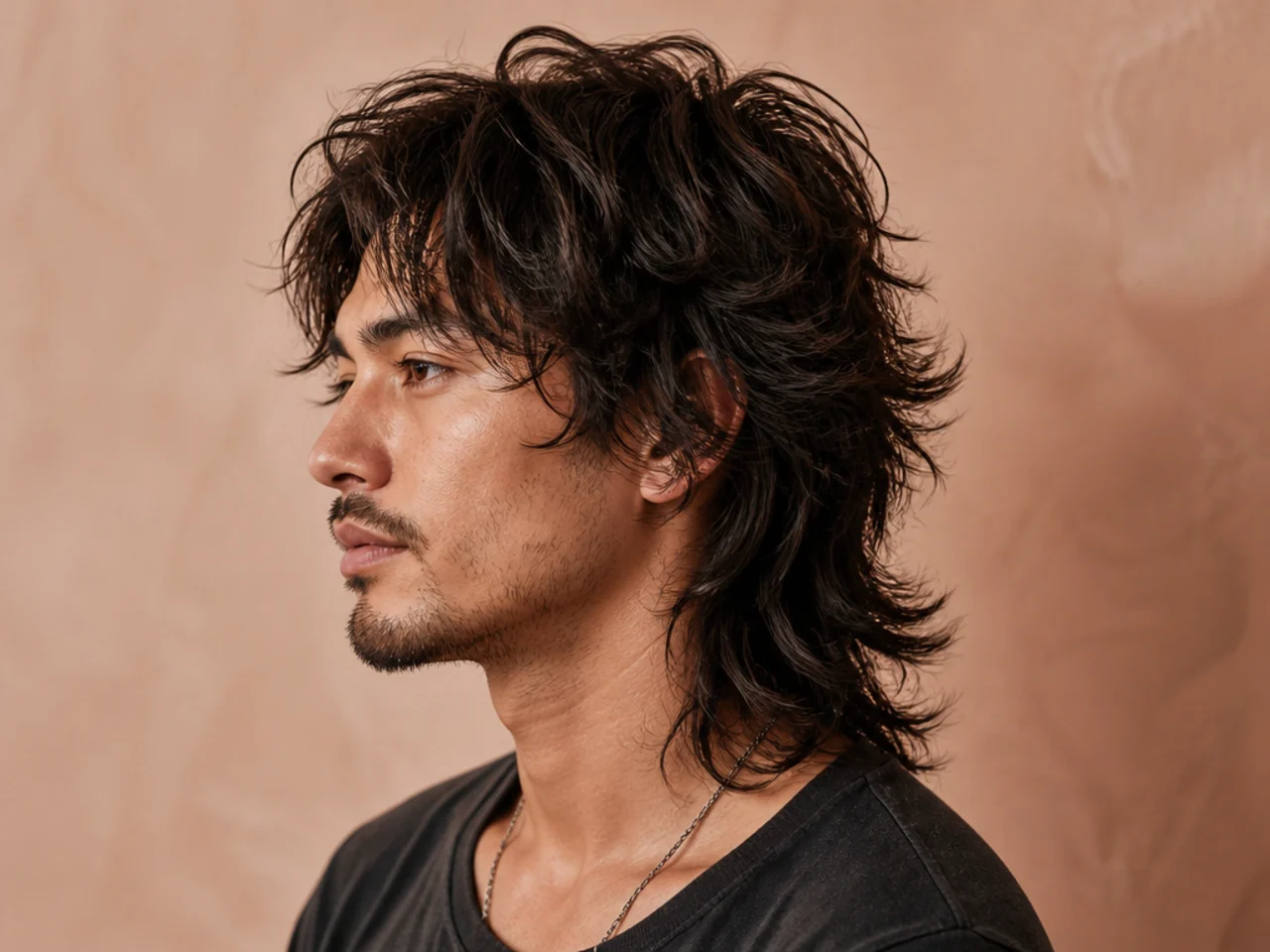
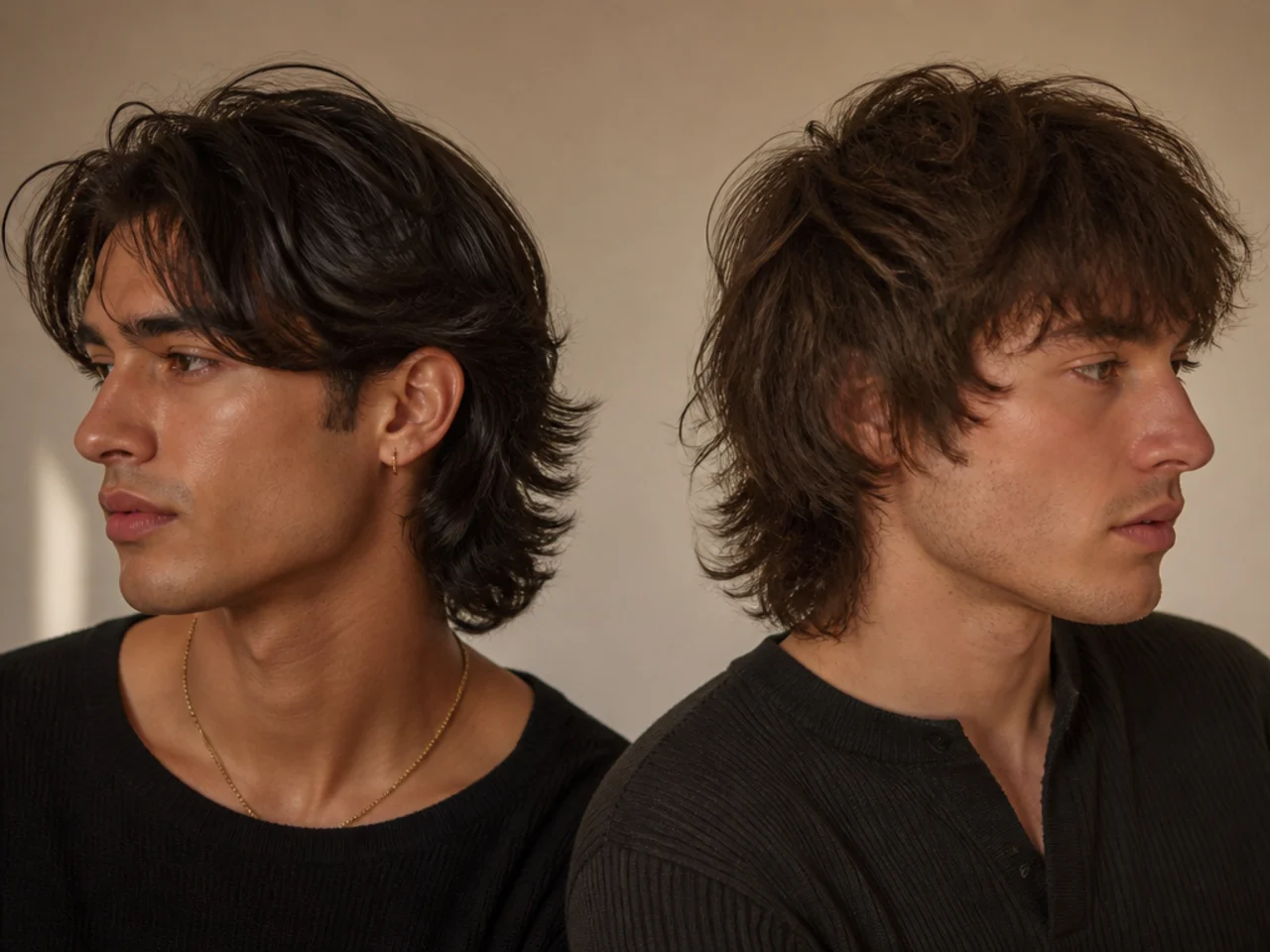
Most of these principles apply to men too, with adjustments for length and beard shape. Start with our men's wolf cut haircuts guide, or the 10 trendy wolf and shag haircuts roundup for cross-gender options.
One more thing worth saying: the wolf cut is forgiving. Even if you land the wrong variation the first time, layers grow out fast — six weeks and you're in a different shape entirely. That's not true of a blunt bob or a fringe. The wolf cut is designed to move through phases without ever looking like it's grown out. Book the appointment when you know what to ask for, not before.