10 Trendy Wolf and Shag Haircuts for Every Face Shape
If you crave a bold yet versatile style, the textured wolf cut is perfect. This cut features choppy layers and a voluminous finish, all while keeping some length. It looks gre
In this article · 11
- 1\. Textured Wolf Cut with Side-Swept Bangs for Oval Faces
- 2\. Shaggy Lob with Wispy Ends for Long Faces
- 3\. Layered Wolf Cut with Curtain Bangs for Round Faces
- 4\. Blunt Shag Cut with Tapered Sides for Square Faces
- 5\. Choppy Shag with Balayage Highlights for Textured Hair
- 6\. Shoulder-Length Wolf Cut with Face-Framing Layers for Heart-Shaped Faces
- 7\. Messy Shag with Undercut for Bold Statements
- 8\. Curly Wolf Cut with Layers for Natural Curls
- 9\. Softly Textured Shag with Long Bangs for Thick Hair
- 10\. Voluminous Wolf Cut with Fringed Bangs for Fine Hair
- Finding Your Perfect Wolf or Shag Trend
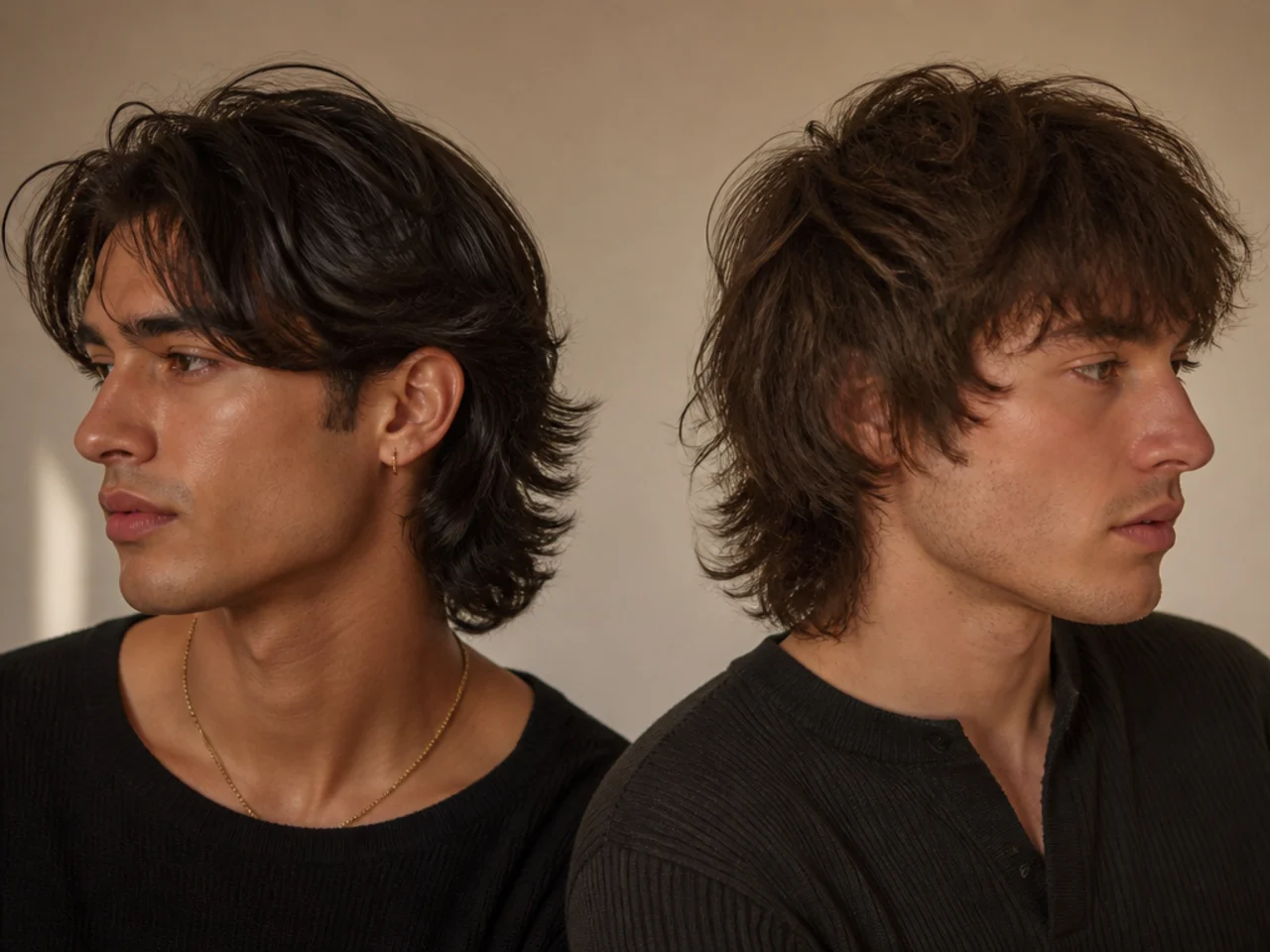
Wolf and shag haircuts are cousins, not twins. The wolf concentrates length at the back, echoing the modern mullet. The shag is layered all over, no back-weight bias. This roundup lives in the space between — hybrids that borrow the shag's face-framing softness and the wolf's back-heavy drama. Ten cuts below. For each: what sets it apart, who it flatters, how to brief your stylist, and one styling move that pulls the whole shape together.
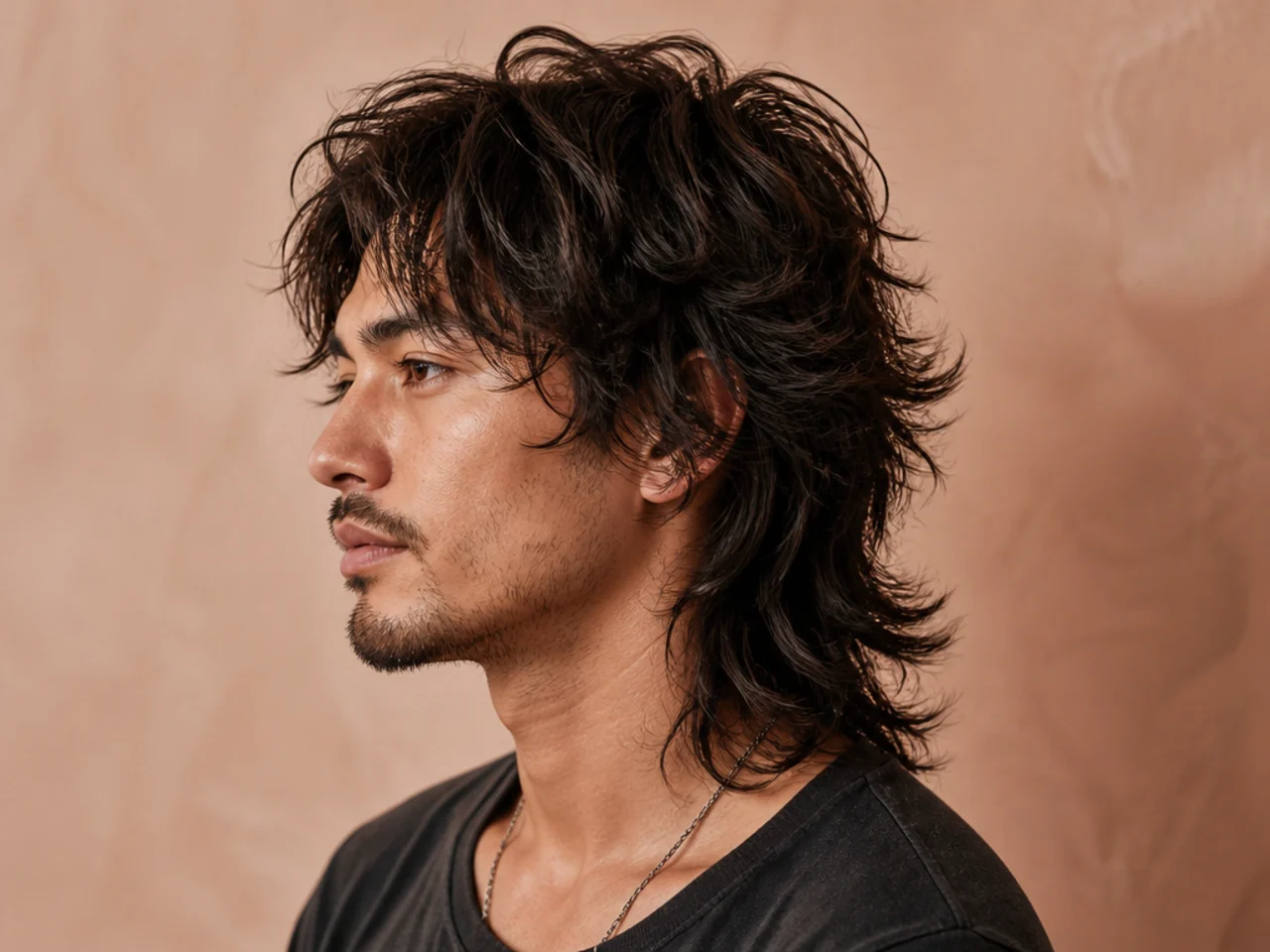
1. Textured Wolf Cut with Side-Swept Bangs for Oval Faces
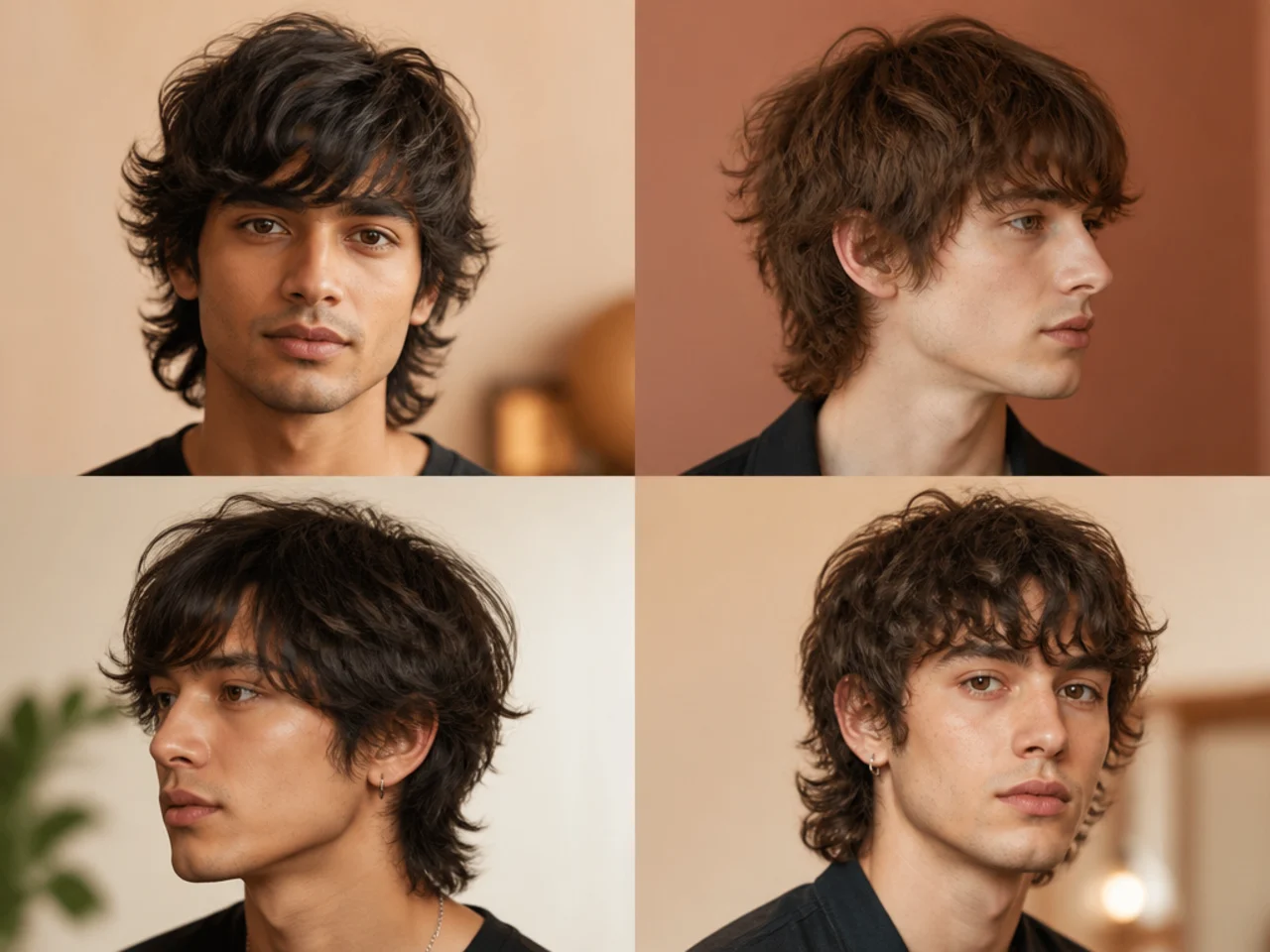
The entry-level wolf. Layers stack from ear level down through the ends, and the perimeter stays a touch longer at the back — enough to nod to the mullet without committing to one. Side-swept bangs soften the whole shape.
Oval faces can wear almost any cut, so this one gives you room to play. The choppy internal texture reads as personality without a strong silhouette to argue with. If you want to test the wolf idea before going shorter or heavier at the back, start here.
Ask your stylist for a graduated wolf with the shortest layers around the crown, blending down into a wispy back hem. Request bangs cut on a diagonal that fall past the brow bone. Show up with reference photos — verbal descriptions of "choppy" and "textured" never land the same way twice.
Styling: mist damp roots with sea-salt spray. Rough-dry with your fingers, pushing everything back and up. Finish with a pea of texture cream pinched through the ends. Under three minutes, no round brush required.
For more variations along the same theme, see our chic wolf cut roundup for every face shape.
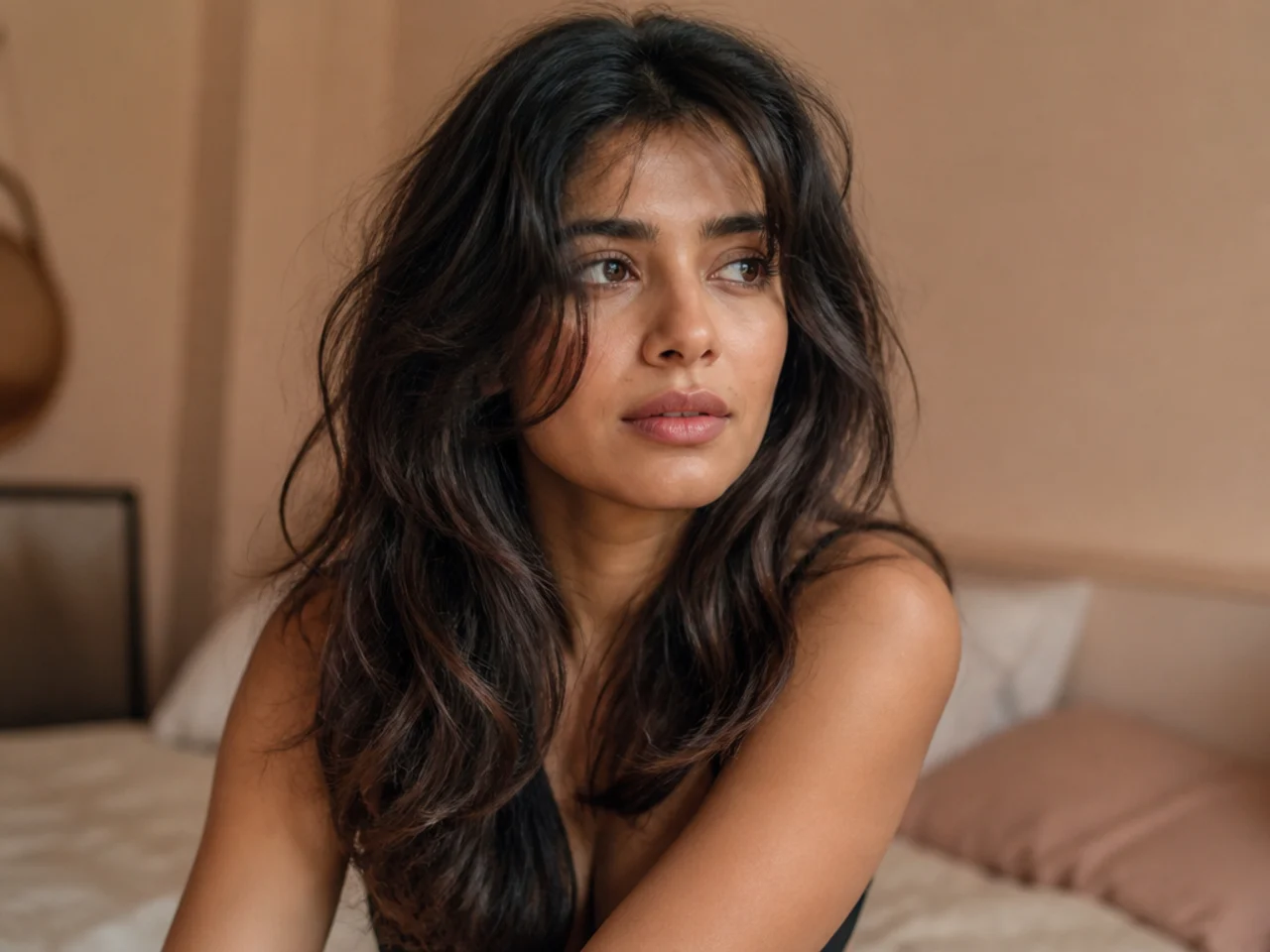
2. Shaggy Lob with Wispy Ends for Long Faces
Take a shag. Drop the perimeter to collarbone length. Thin the ends into wispy points. That's this cut, and it's one of the most flattering shapes in the whole family.
The lob length adds horizontal weight, which visually shortens a long face. Face-framing layers around the jaw widen the middle of the face — exactly where a long shape wants softness. If your face is longer than it is wide, this cut works harder for you than almost any alternative.
Ask for a lob with heavy internal layering and razor-thinned points at the perimeter. No blunt lines anywhere. Keep the front an inch shorter than the back to preserve the framing effect.
Styling: skip the round brush entirely. Work a walnut of texture cream through damp lengths and let the cut air-dry. If you sleep on it wet, braid it loosely so it dries with a natural bend. Morning maintenance: shake it out, add a spritz of finishing spray, done.
Curious how the same DNA plays at other lengths? Browse our full shag haircut library for shorter and longer versions.
3. Layered Wolf Cut with Curtain Bangs for Round Faces
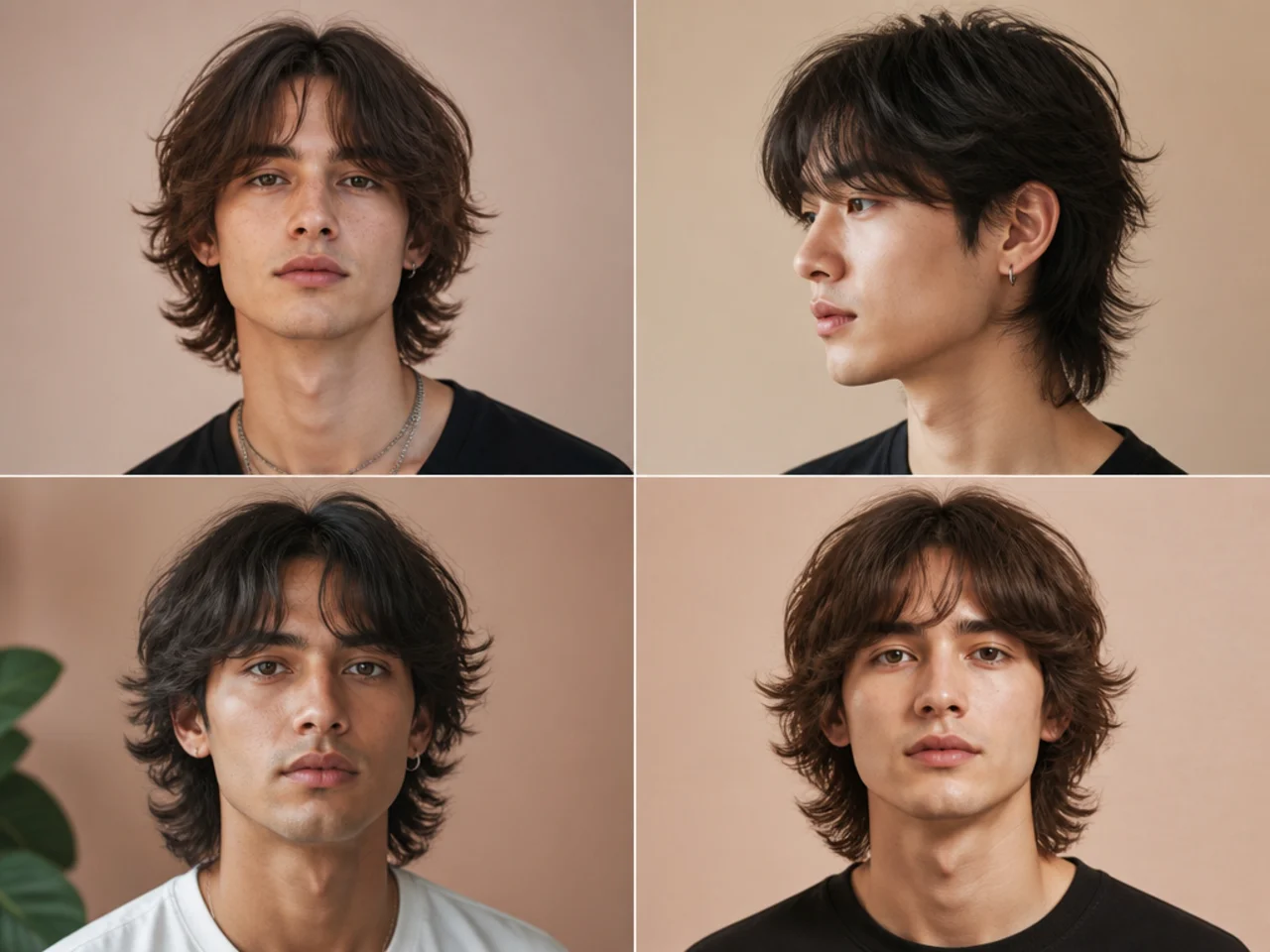
Curtain bangs split at the center and sweep away from the face. Pair them with a wolf and you get vertical lines everywhere — through the fringe, through the layers at the cheek, through the longer length at the back. Round faces read narrower immediately.
The trick is proportion. Bangs cut too short close the face down. Bangs left too long fight the layers below. Aim for a length that grazes the cheekbones when tucked behind an ear.
Ask for curtain bangs starting at the bridge of your nose and grazing the cheekbones, blended into face-framing layers below. The rest is a standard wolf — crown layers, longer back. Bring a photo of the bang length specifically, because "curtain bangs" means five different things to five different stylists.
Styling: blow-dry the bangs first. Small round brush, rolled away from center, thirty seconds per side. Everything below the ears air-dries with a bit of texture cream.
If a soft, face-flattering fringe appeals as part of a longer silhouette, the butterfly haircut uses a similar principle with more length below the shoulders.
4. Blunt Shag Cut with Tapered Sides for Square Faces
Most shags have wispy, uneven perimeters. This one doesn't. The hem is blunt — cut straight across at a chosen length — and that blunt line reads clean and modern.
But the sides are tapered inward, softening the corners of a square jaw so nothing competes with your natural bone structure. That's the whole trick. Bluntness gives you an editorial edge; the taper gives your face air.
Ask for a blunt shag ending just below the collarbone, with the sides tapered from ear to jaw. Keep the top heavily layered for movement so the blunt hem doesn't read as heavy or old-fashioned. Bring in a photo — most stylists default to wispy shag ends unless you specifically say otherwise.
Styling: shine serum through mid-lengths after a quick pass with a flat iron. Nothing on the roots. If you want a slight bend at the ends, use a 1-inch flat iron and turn it outward for the last inch.
Anyone considering a shag should also skim our layered haircut guide — layering technique is the whole game with this family of cuts.
5. Choppy Shag with Balayage Highlights for Textured Hair
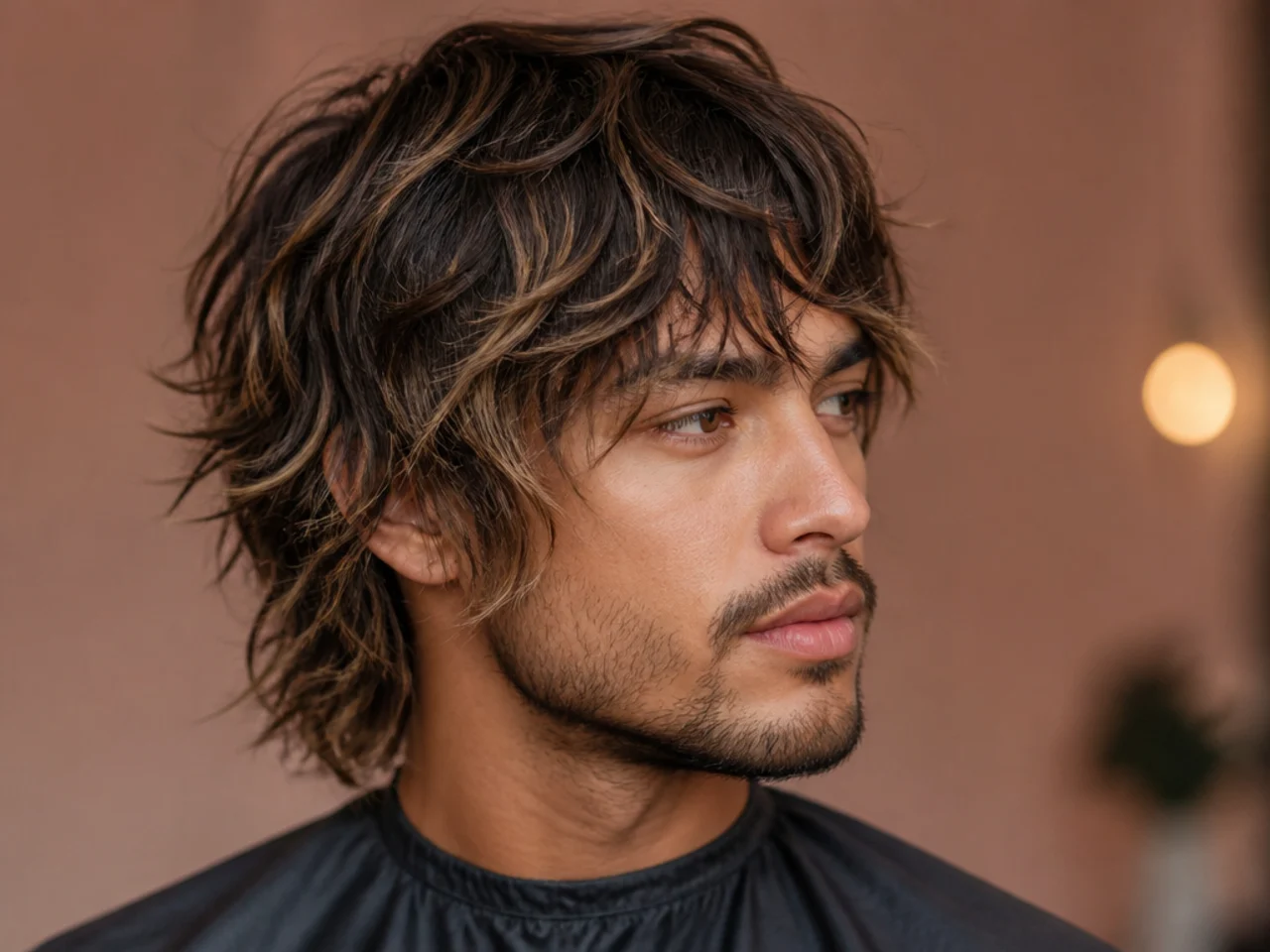
Choppy layers give wavy hair permission to move. Balayage — hand-painted highlights, no foils — amplifies the movement by adding dimension where the light already hits. Loud without being loud.
Works for any face shape. Layered movement disguises face-shape rules. If your natural texture sits anywhere between beachy waves and a loose spiral, this cut celebrates it. If your hair is bone-straight, this isn't your cut — the choppy ends need texture to look intentional instead of unfinished.
Ask for a razor-cut shag with choppy internal texture. Then request hand-painted balayage two shades lighter than your base, painted around the face and through the mid-lengths. Skip the foils — they read as too structured for this shape.
Styling: scrunch curl cream into soaking-wet hair, then air-dry. Do not touch it while it dries. If you must touch it, wait until it is bone-dry and break the cast with your fingers.
For more takes on the same silhouette in a wolf format, our stunning wolf cut hairstyle collection covers a range of lengths and textures.
6. Shoulder-Length Wolf Cut with Face-Framing Layers for Heart-Shaped Faces
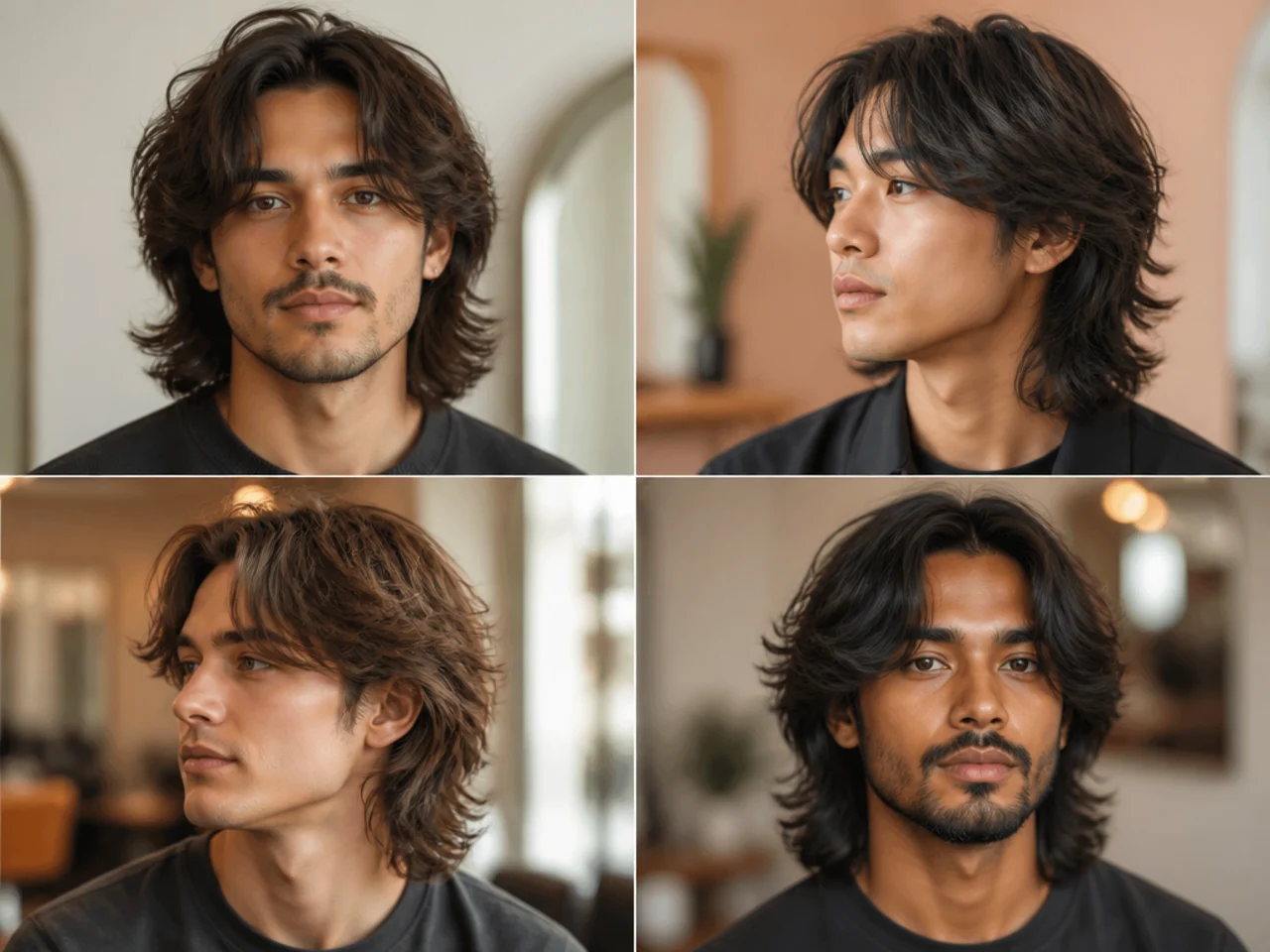
Heart-shaped faces are wider at the forehead and narrower at the chin. A wolf that hits at the shoulder with strong face-framing balances the shape by adding visual weight around the jaw — the widest point of your face gets the shortest layers, and the narrowest point gets the fullest.
That's the whole logic. Once you see it, you can't unsee it. It's also why heart shapes almost always look better with hair that hits at or below the jaw than above it.
Ask for a wolf ending at the shoulder with face-framing layers that start at the cheekbone and get longer as they descend. Keep the back a touch longer than the front — that's what makes it a wolf, not a shag.
Styling: volumizing mousse at the roots. Scrunch with your hands as you rough-dry. If you own a diffuser, this is when to use it. Hold it at the roots on low heat for extra lift, then release the curl at the bottom.
If stacked layers appeal, the jellyfish haircut pushes the two-length idea to a more graphic extreme worth studying.
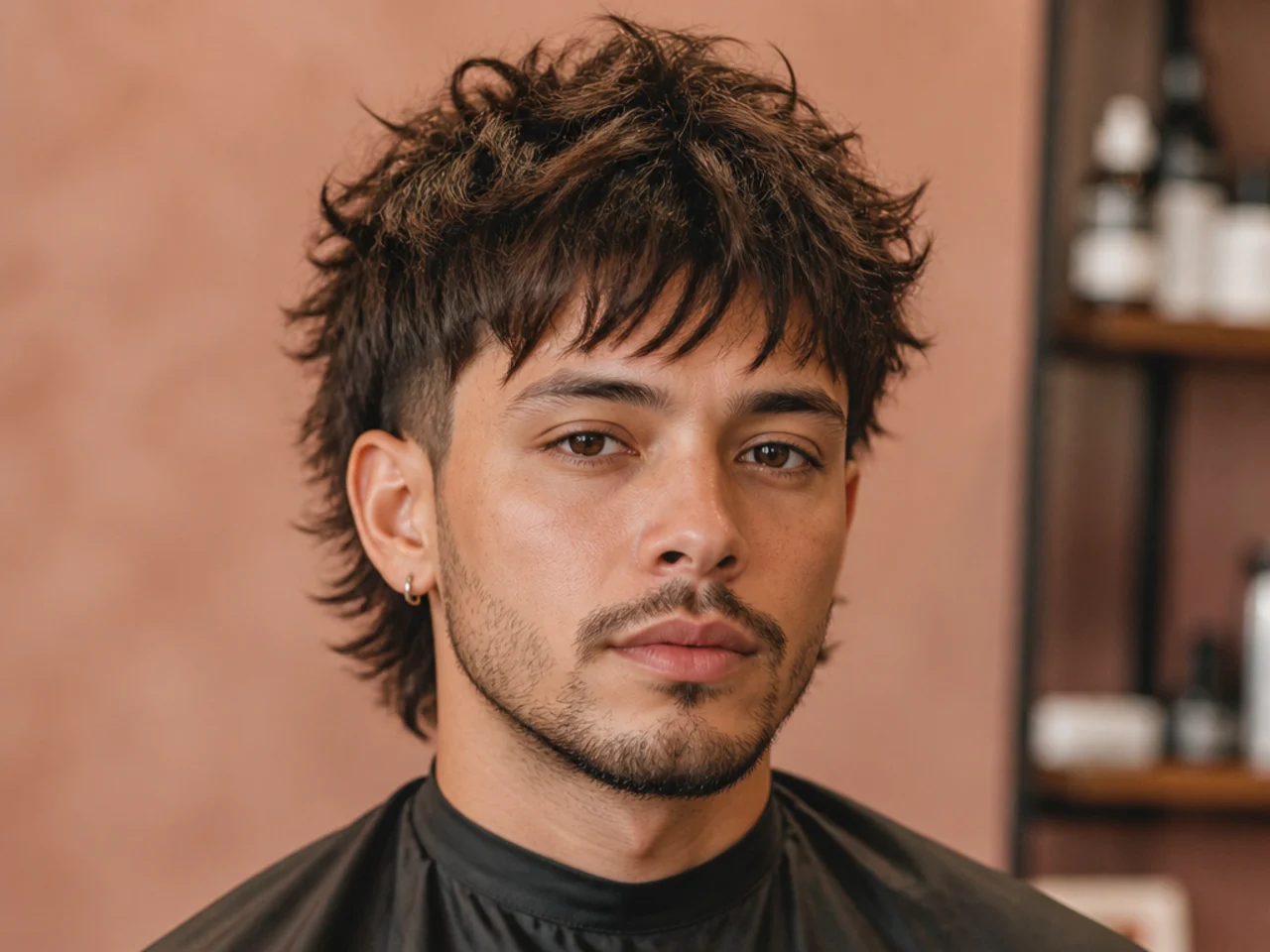
7. Messy Shag with Undercut for Bold Statements
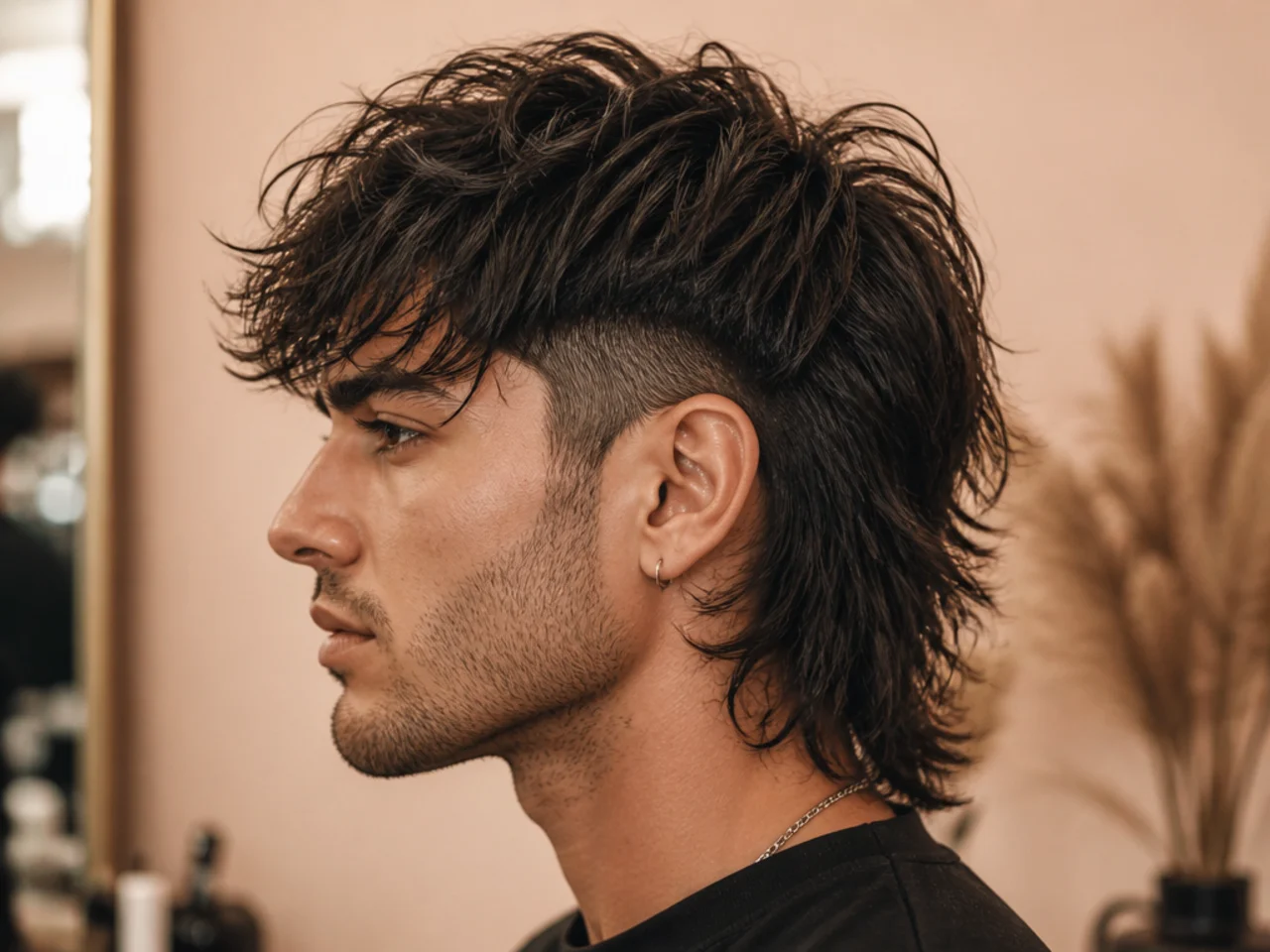
This one carries a secret. The shag layers on top look normal from the front. Underneath, a nape or side undercut is clipped short — completely hidden until you tie the hair up.
The undercut removes bulk without touching the visible shape. Good for anyone with dense hair who wants movement on top without the weight of a full head of layers. Also good for anyone who wants a statement they can hide during formal meetings.
Ask for a shag with a nape undercut clipped to a #3 or #4, blended into the layers above so nothing sticks out when the hair falls back into place. Discuss clipper length before your appointment — different guards give dramatically different results and there's no un-clipping once it's done.
Styling: texture paste, dime-sized, worked through the top with your fingertips. Finger-tousle to break up any part lines. The whole point is that the top looks casually messy while the undercut stays sharp.
For anyone considering the same idea at shorter overall lengths, our men's wolf cut haircut guide covers undercut and taper variations in detail.
8. Curly Wolf Cut with Layers for Natural Curls
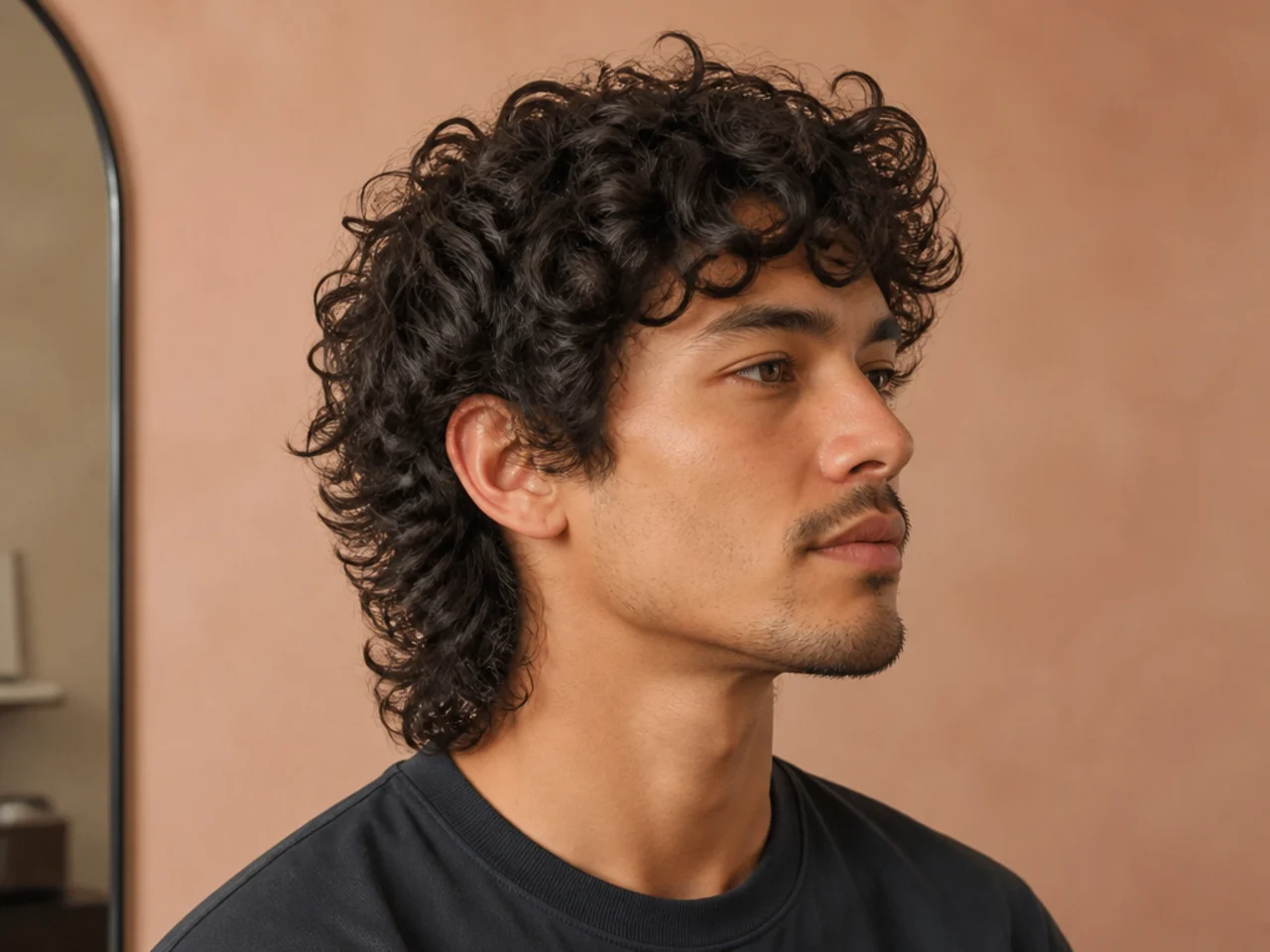
Curly hair stacks into a triangle if you cut it wrong. Internal layers fix that. This wolf keeps the curl pattern intact while removing weight from the middle of the shape so every curl has room to spring.
The rule for curly cuts is not the rule for straight cuts. A curl shrinks when it dries. Every inch of length cut wet becomes a smaller loss when the curl coils up, and stylists who cut curls wet routinely misjudge the final length by two or three inches. That's why this cut has to be done dry — on curls that have already formed — and why you should book with a stylist who specializes in curls, not one who cuts curls occasionally.
Ask for a curly cut with internal layers, not surface layers. Longer back, layers around the crown, face-framing at the front. Bring pictures of your hair on a good curl day, not a straightened-out day.
Styling: apply curl cream to soaking-wet hair. Diffuse upside down on low heat and high airflow. Do not touch a curl until it is completely dry — every finger that touches damp curl creates frizz.
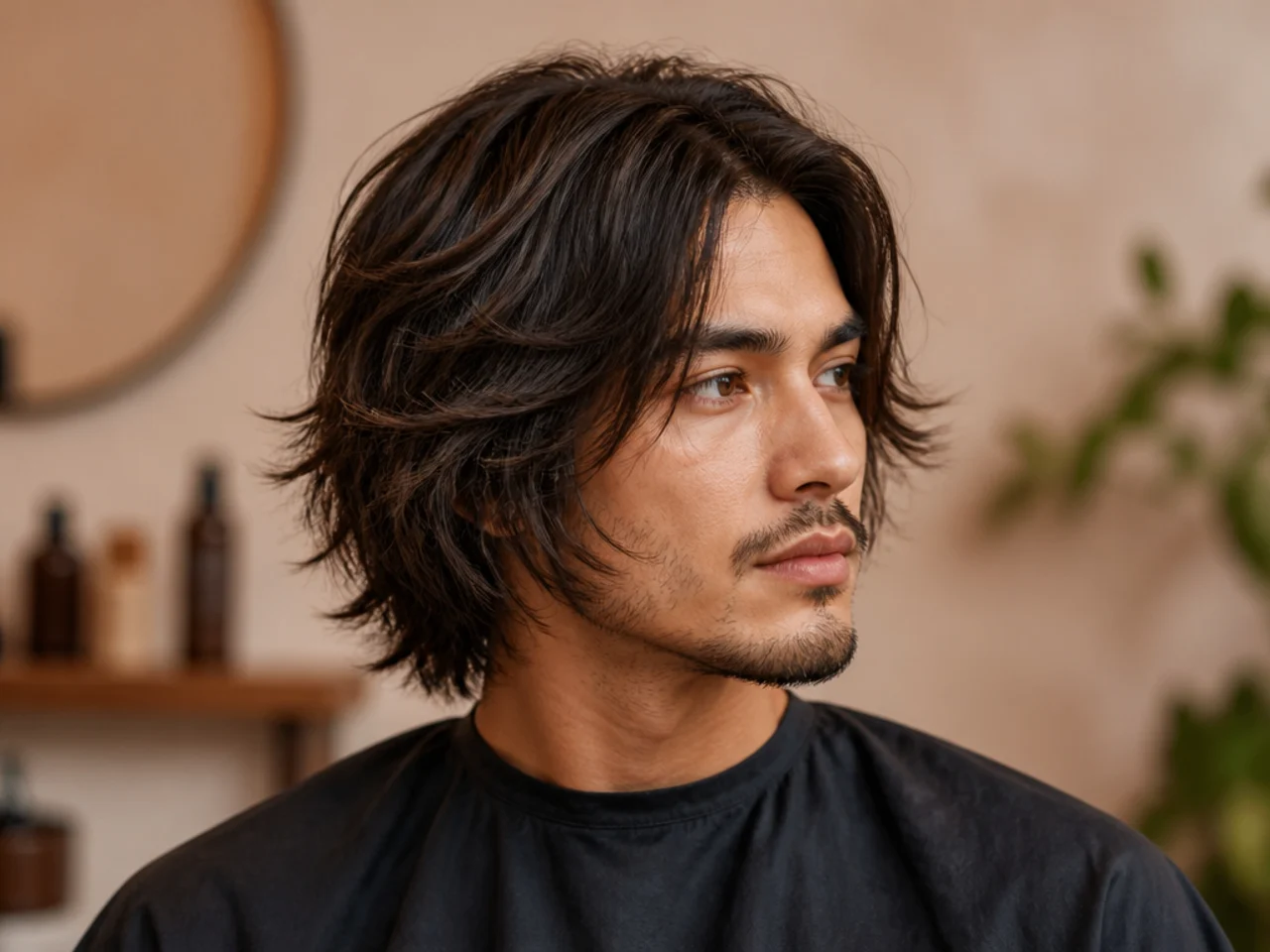
9. Softly Textured Shag with Long Bangs for Thick Hair
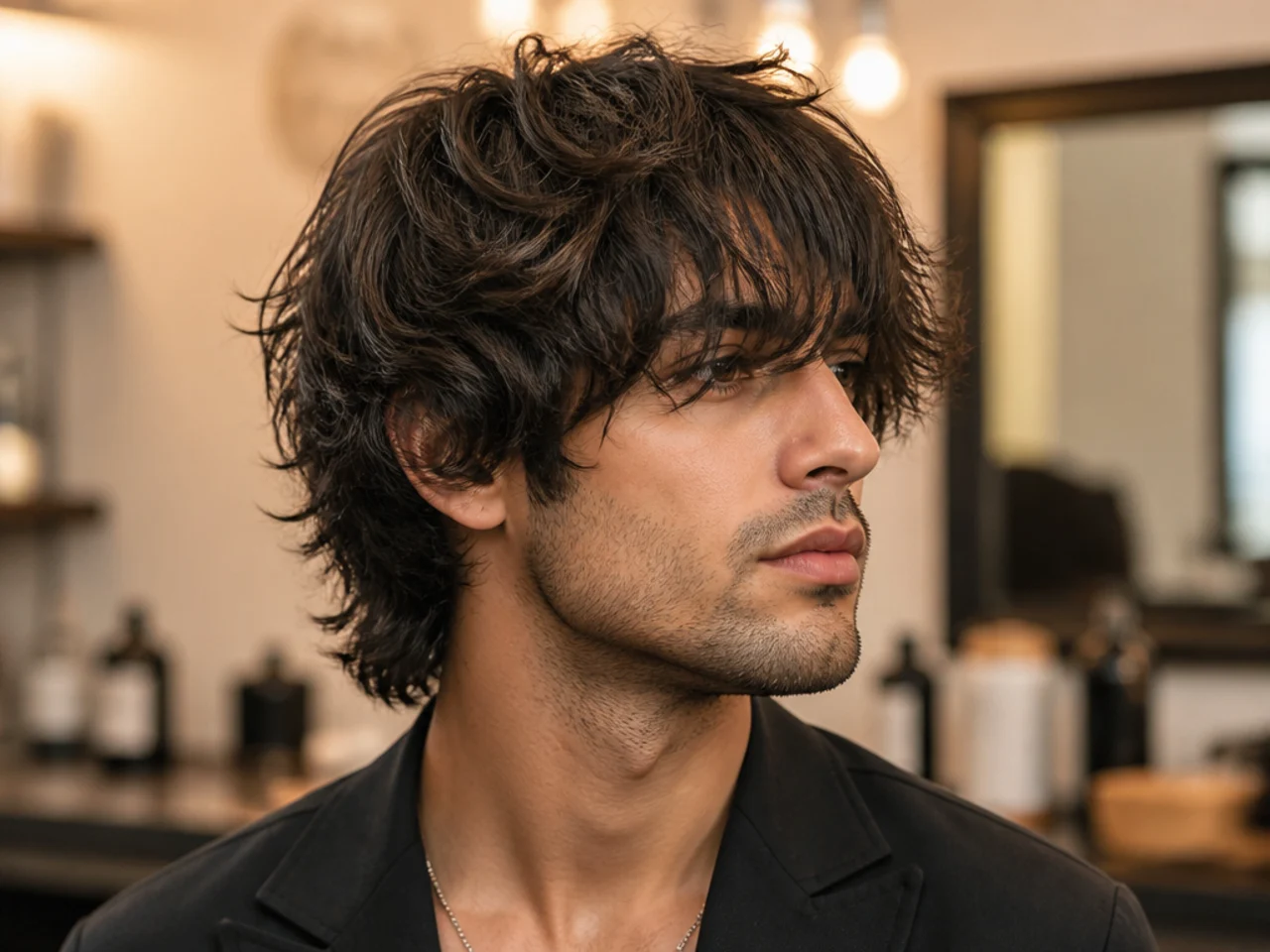
Thick hair fights back. Cut it wrong and you get a helmet. This shag survives thick hair by removing bulk from the inside — internal thinning shears used vertically through the mid-lengths — while keeping the perimeter visually full.
Long bangs blend into the face-framing layers so there's no hard line where the fringe ends. The result: softness on top of density, not softness instead of it. You keep the visual weight of thick hair without carrying its literal weight.
Ask for a long shag with long bangs and internal texture-cutting to remove bulk. Say "point-cutting" or "internal thinning" specifically — those are technique names your stylist will recognize. Do not accept surface thinning, which just creates flyaways at the top layer without solving the density problem.
Styling: a quick wave with a 1.25-inch curling iron through the mid-lengths. Nothing at the roots. Nothing at the ends. Just a bend in the middle to break up any straight sections that would otherwise read as heavy.
10. Voluminous Wolf Cut with Fringed Bangs for Fine Hair
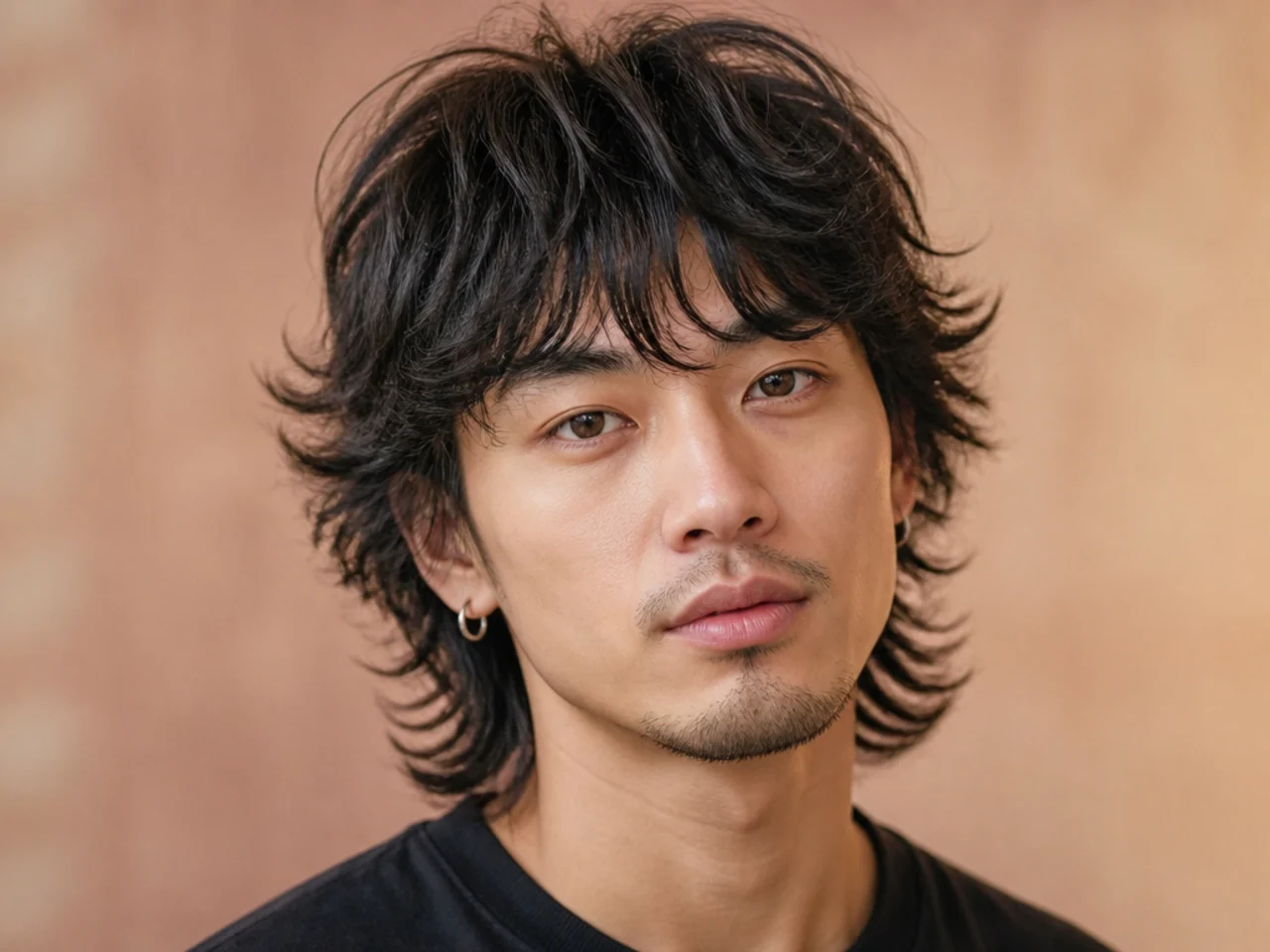
Fine hair wants weight where you don't naturally have it — up top. This wolf is engineered for that. Layers stack high on the crown to build the illusion of density, and a blunter fringe adds visual thickness right at the hairline.
The blunt fringe is critical. Wispy bangs on fine hair disappear. A blunt or lightly notched fringe at brow level reads as thick even when the hair itself is fine.
Ask for a wolf cut with layers concentrated at the crown and a blunt or lightly notched fringe cut at brow level. Keep the back long enough to preserve the wolf silhouette but not so long that the weight drags the shape down and gives away the density issue.
Styling: root-lift spray at the roots only, then blow-dry upside down for two minutes on high heat and high airflow. Flip your head back up and finger-comb into place. If you want extra hold, one shot of dry shampoo at the roots doubles as texture.
Finding Your Perfect Wolf or Shag Trend
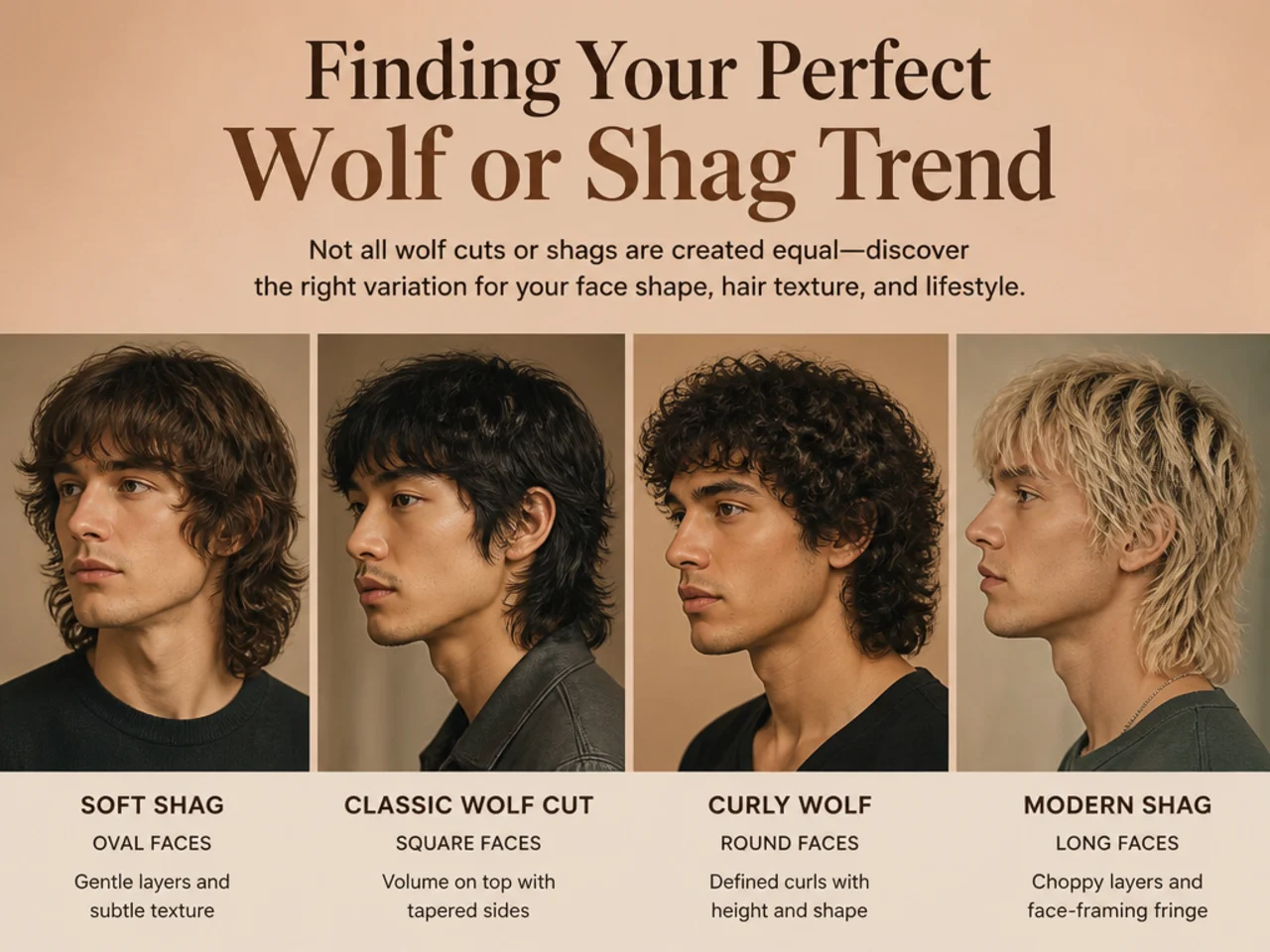
Every cut on this list starts from the same DNA. Layers do the work. Length concentration — evenly all over for a shag, weighted at the back for a wolf — sets the silhouette. Everything else is variation on a theme.
Match the cut to what your face and hair actually need:
- Oval and long faces: layers plus soft bangs. Almost anything works, but bangs pull the shape together.
- Round faces: curtain bangs or any vertical face-framing.
- Square faces: taper the sides to soften the jaw.
- Heart shapes: weight at the jaw, not at the crown.
- Thick hair: ask for internal thinning, not surface thinning.
- Fine hair: crown-heavy layers and a blunter fringe.
- Curly hair: dry cut, internal layers, no surface cutting.
Book with a stylist who has actually cut this family of shapes before. Bring reference photos, not adjectives. Talk about how you want to style the cut at home — a shape that only works with a blow-dryer and three products will get abandoned the first busy morning.
Come back every five to eight weeks for a trim. Wait longer and the layers collapse into shapelessness. Come sooner and the cut doesn't have time to develop its movement.