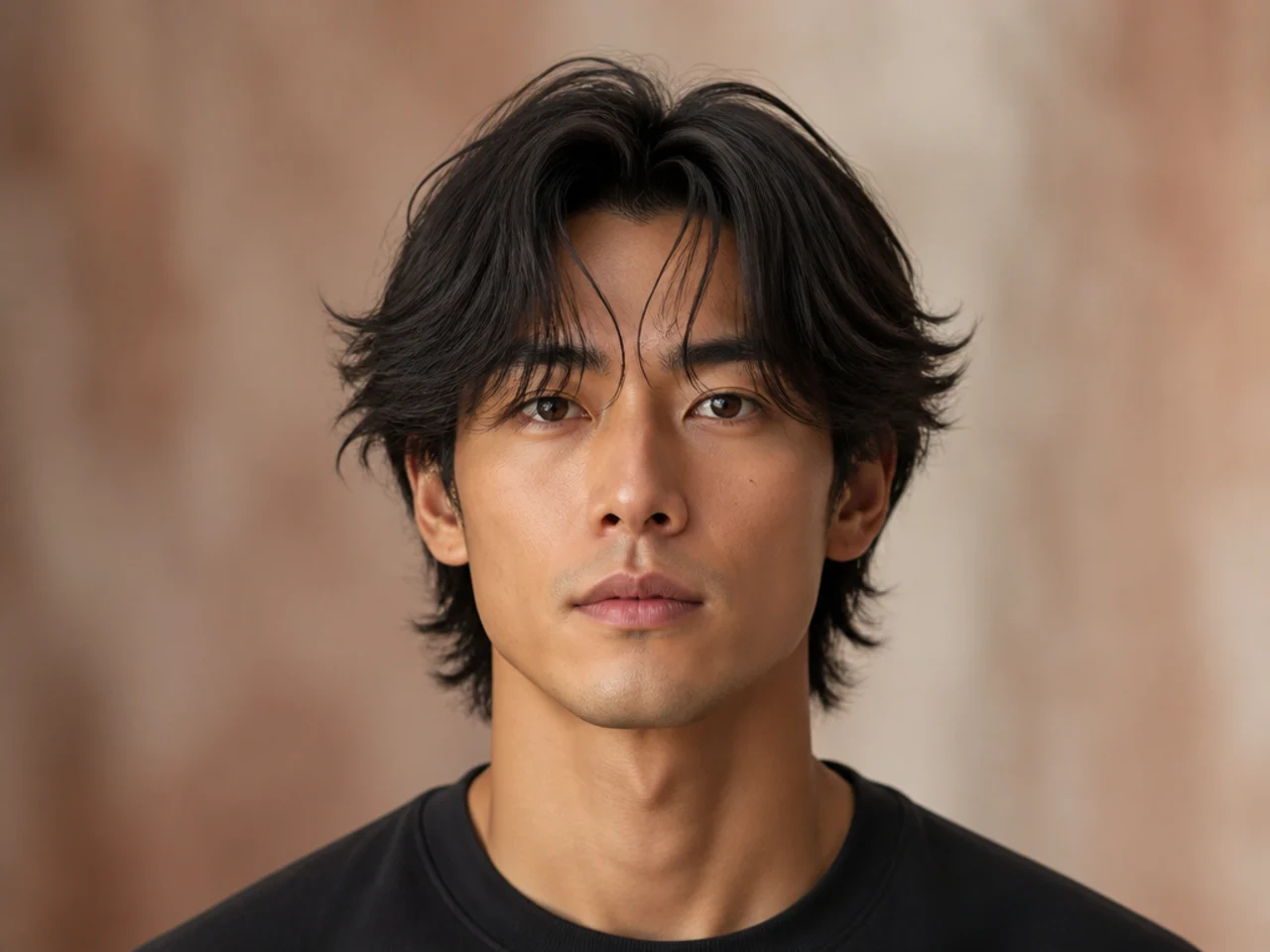
Layered Haircuts For Men: 19 Attractive Examples
Layered haircuts for men add volume, texture, and style. Discover trendy layered hairstyles that suit all hair types and face shapes easily.
In this article · 30
- Popular Layered Men's Hairstyles
- Layered French Crop with Low Fade
- Medium Flow with Layers
- Burst Fade Mohawk
- Layered Curls
- Messy Layered Comb Over with Tapered Sides
- Thick, Shaggy Hair with Layers
- Full Brush Back
- Side Part with Taper Fade
- Long Layered Crew Cut with High Taper Fade
- Messy, Layered Curly Hair
- Layered Modern Mullet
- Long and Layered
- Thick Curly Taper Fade
- Short Layers with Blunt Fringe and Fade
- Trendy, Layered Mod with Heavy Texture
- Layered Slick Back
- Textured Spiky Hair
- Short Brushed Forward Waves with Low Taper
- Long Side Swept Hair
- What Is Layered Hair For Men?
- FAQs About Layered Haircuts for Men
- Are Layered Haircuts Good For All Hair Types?
- How Do I Maintain a Layered Men's Haircut?
- Can Men With Short Hair Get Layers?
- What Products Work Best For Layered Hair?
- Do Layers Make Hair Look Thicker or Thinner?
- Can I Style Layered Hair Without Heat?
- Are Layered Hairstyles Professional?
- Which Face Shapes Suit Layered Haircuts Best?
Layered men's cuts do one thing: create movement. Your barber cuts the top in stacked sections — shorter underneath, longer on top — so the hair breaks, shifts, and never sits like a solid block. The style needs length to show. Anything under 3 inches reads choppy, not layered. Below, you'll find 19 variations built from the same technique, each shaped for a different vibe. Match your hair type first, then pick the shape.
Popular Layered Men's Hairstyles
Layered French Crop with Low Fade
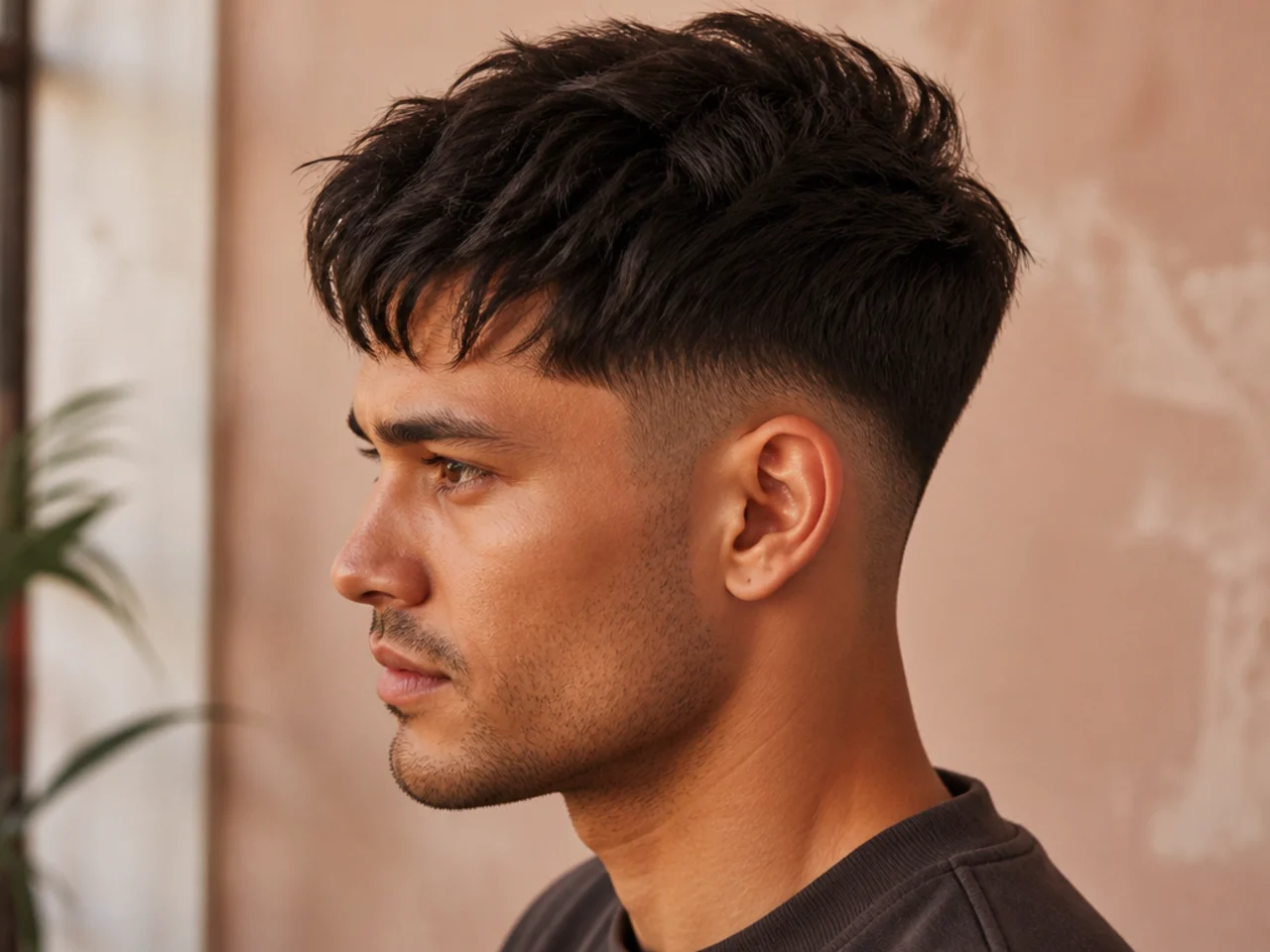
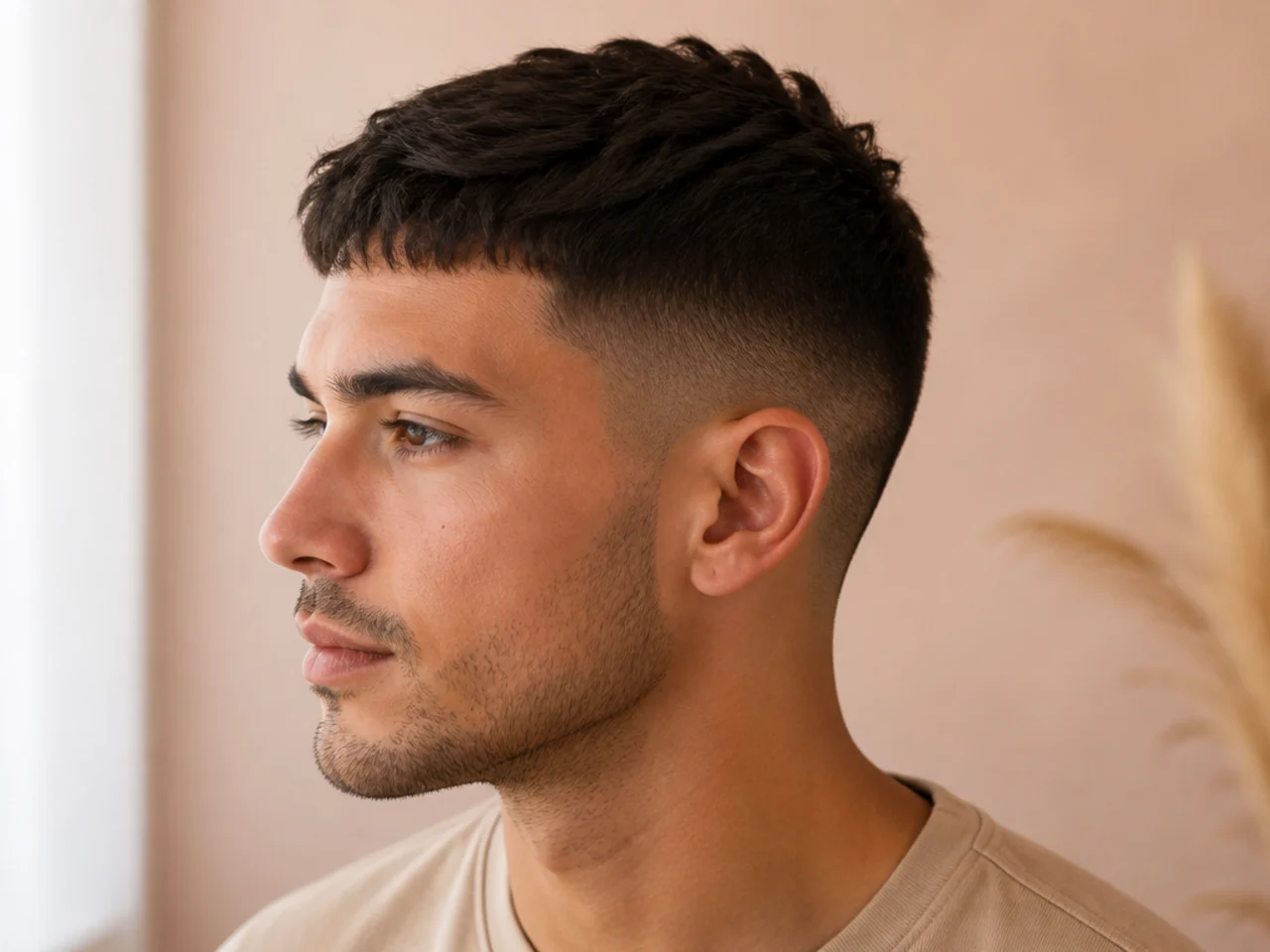
The French crop is the shortest cut in this guide that still earns the "layered" label. Your barber leaves 2.5 to 3 inches through the crown, then point-cuts underneath to hollow out weight and lift the blunt fringe. That heavy front edge stays intact — it's the signature. Best on straight or slightly wavy hair with medium-to-thick density. Fine hair can wear it if you keep the top closer to 2 inches. Ask for a French crop, 2.5 inches on top with internal layers for movement, blunt fringe left heavy, and a low fade starting just above the ear. Style tip: mist sea salt spray through damp roots, rough-dry with your fingers pushing the fringe forward, then break matte clay across your palms and press it in. Never rake — that flattens the layers you just paid for.
Medium Flow with Layers
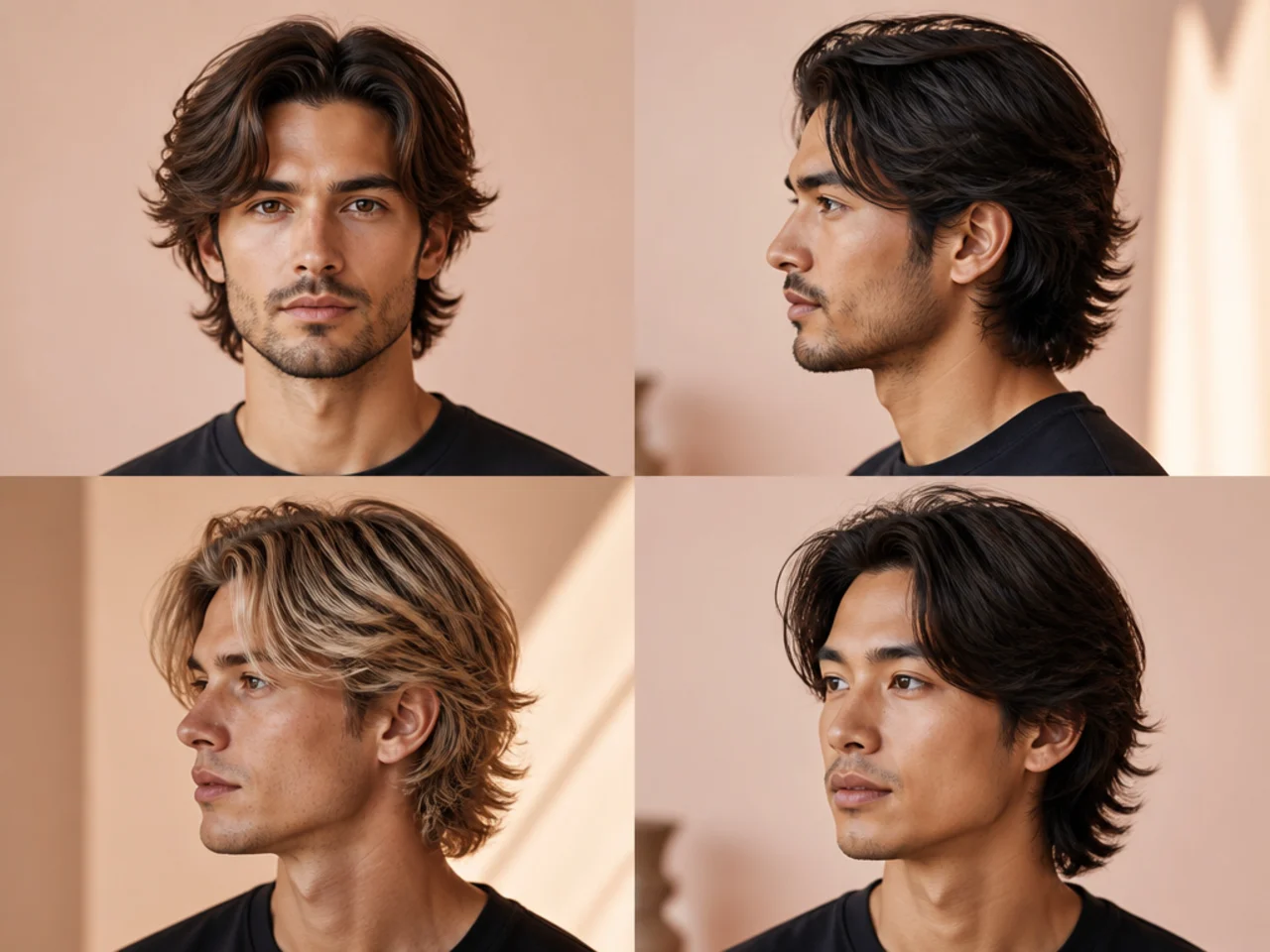
The sweet-spot cut for guys growing into medium length hair. The top runs 4 to 5 inches, layered heavily inside so it feathers back on its own instead of falling flat across the forehead. Think surfer flow but shaped — the layers give the movement direction. Best on straight-to-wavy hair; naturally wavy holds the shape longest before styling drops. Ask for 4 to 5 inches on top with internal layers for movement, sides scissor-blended (not clipper-faded), and length kept over the ears. Style tip: mist sea salt spray on damp hair, blow-dry back with your fingers, then twist small sections between your palms once cool for that piece-y separation. Finish with a pea of matte cream. Nothing more.
Burst Fade Mohawk
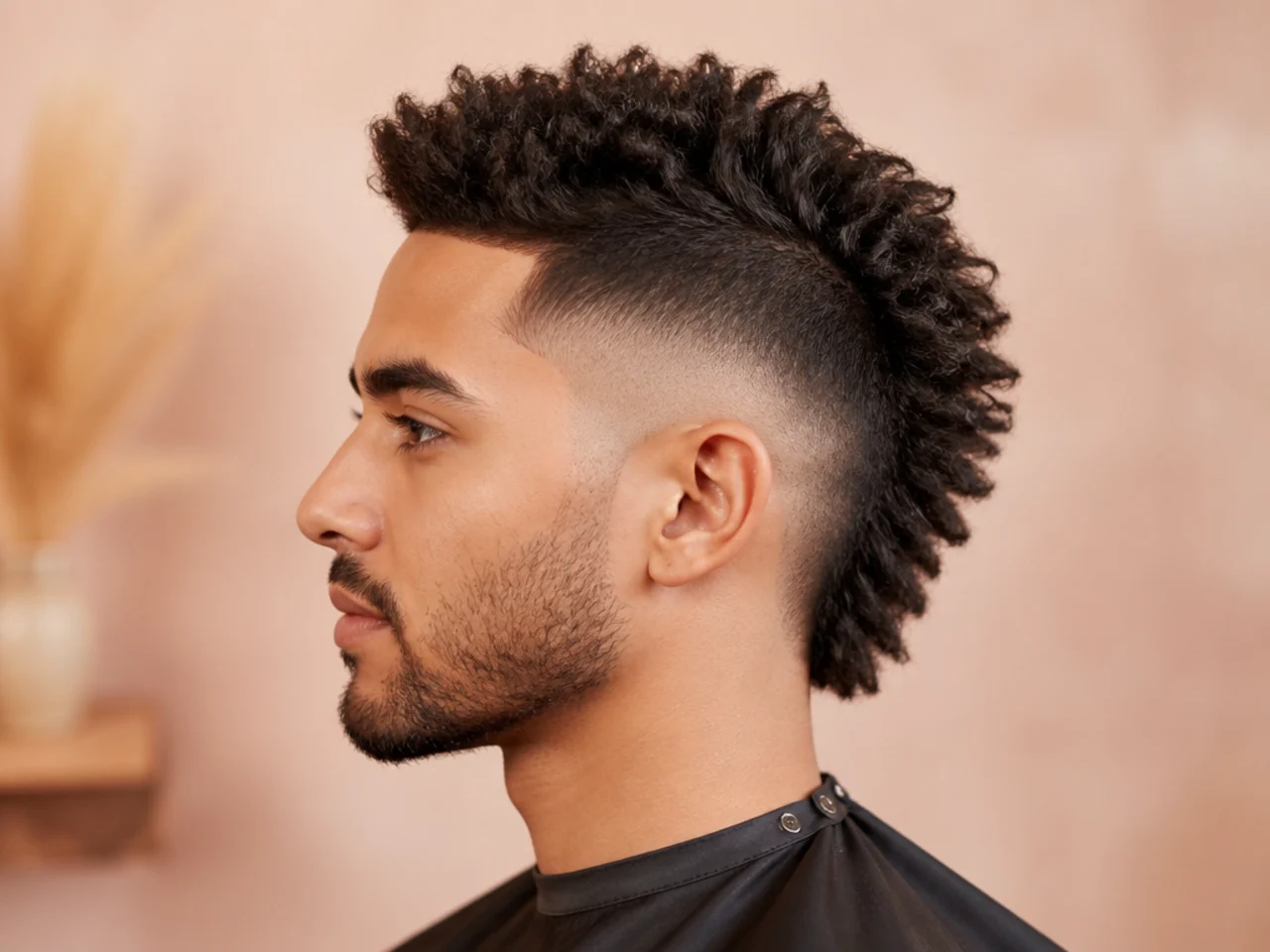
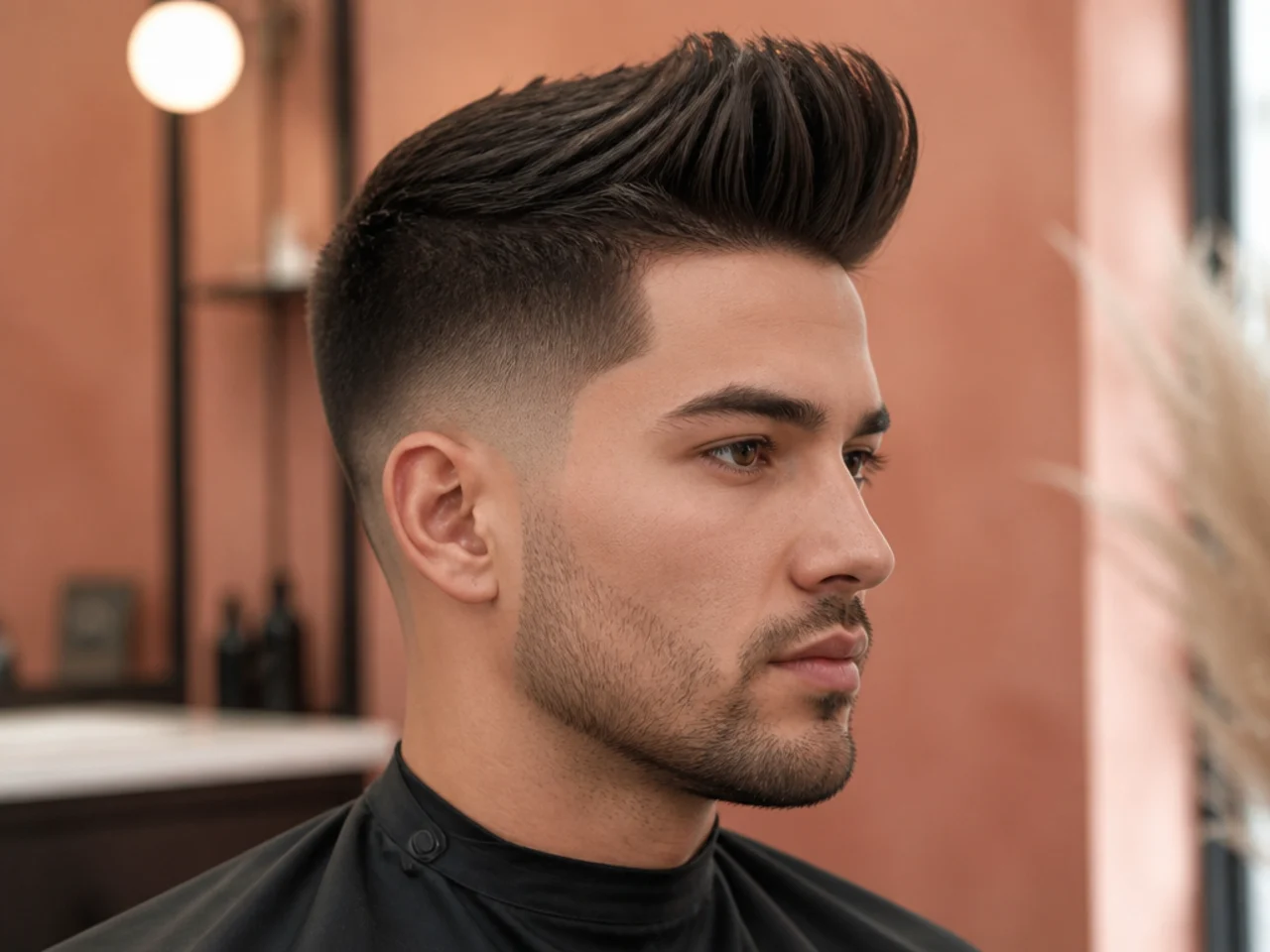
Layers turn a mohawk from a stripe into a shape. The center strip runs 3 to 4 inches, cut in graduated layers so the crown peaks higher than the front and back. A burst fade curves around the ear and disappears into the sides, framing the top without hard lines. Best on thick straight or coarse hair — the density holds the height. Ask for a burst fade with the mohawk top layered from 4 inches at the peak down to 2 inches at the perimeter, and no visible line where the fade begins. Style tip: blow-dry upward with a boar-bristle brush, then work high-hold matte paste from root to tip, pushing the front section back and up. Set with a strong-hold spray if you want it to survive a day out.
Layered Curls
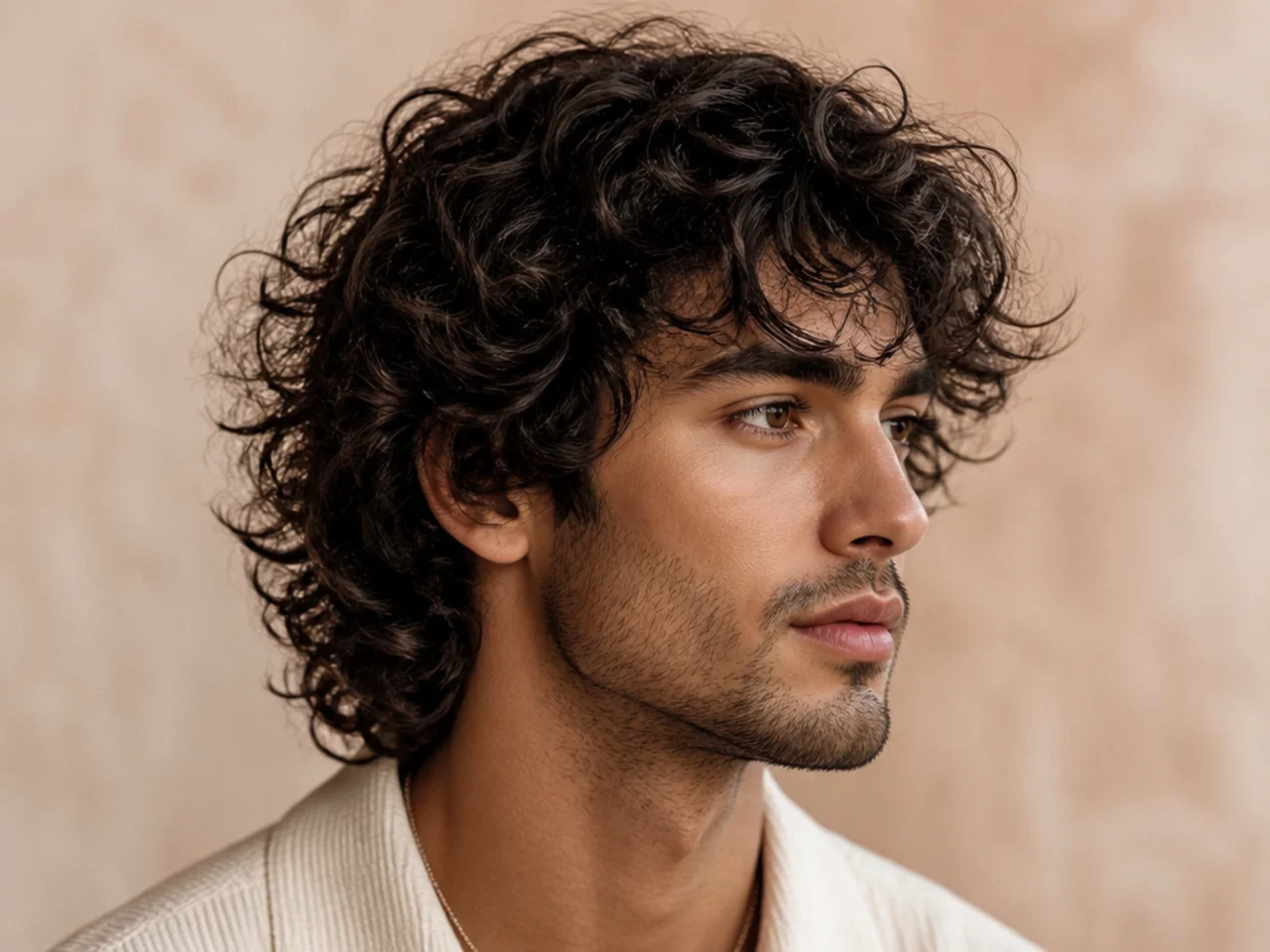
Curly hair needs scissor-only layering — no razor, no thinning shears, no clippers anywhere near the top. Your barber lifts each curl group at its natural spring point and trims to release weight without cutting through the curl pattern. Layers keep curls from stacking into a triangle at the ends. Best on 2C-3B textures at 3 to 5 inches; tighter coils want a different approach entirely. Ask for a dry-cut on the top, internal layers to remove bulk, and length left at 4 inches to preserve the coil shape. Style tip: on soaking-wet hair, rake in a leave-in, then scrunch a curl cream upward from the ends. Air-dry undisturbed, or diffuse on low with the head tilted forward.
Messy Layered Comb Over with Tapered Sides
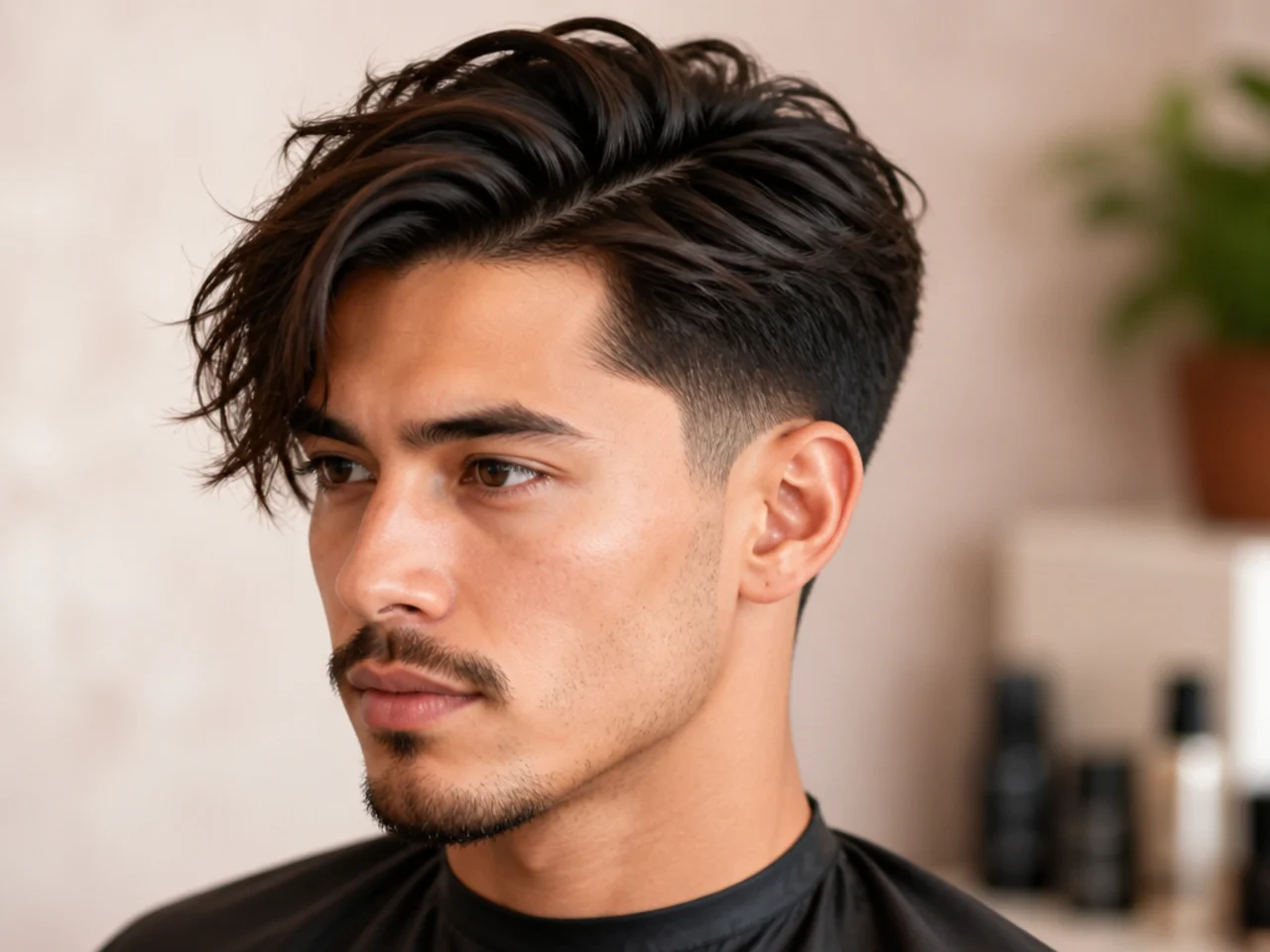
The comb over goes messy the moment you layer the top instead of blending it flat. Your barber cuts 3.5 to 4 inches through the crown, then internal layers break the sweep so it reads combed by hand, not with a fine-tooth. Tapered sides keep the ear clean without a hard fade line competing with the top. Best on straight-to-wavy medium hair. Ask for a scissor taper on the sides, 4 inches on top with internal layers for movement, and a defined part on your natural break. Style tip: dry with a paddle brush pulling to your part side, then finger-comb a soft cream through the front to break the shape. Never over-set the top — the messy read is the whole point.
Thick, Shaggy Hair with Layers
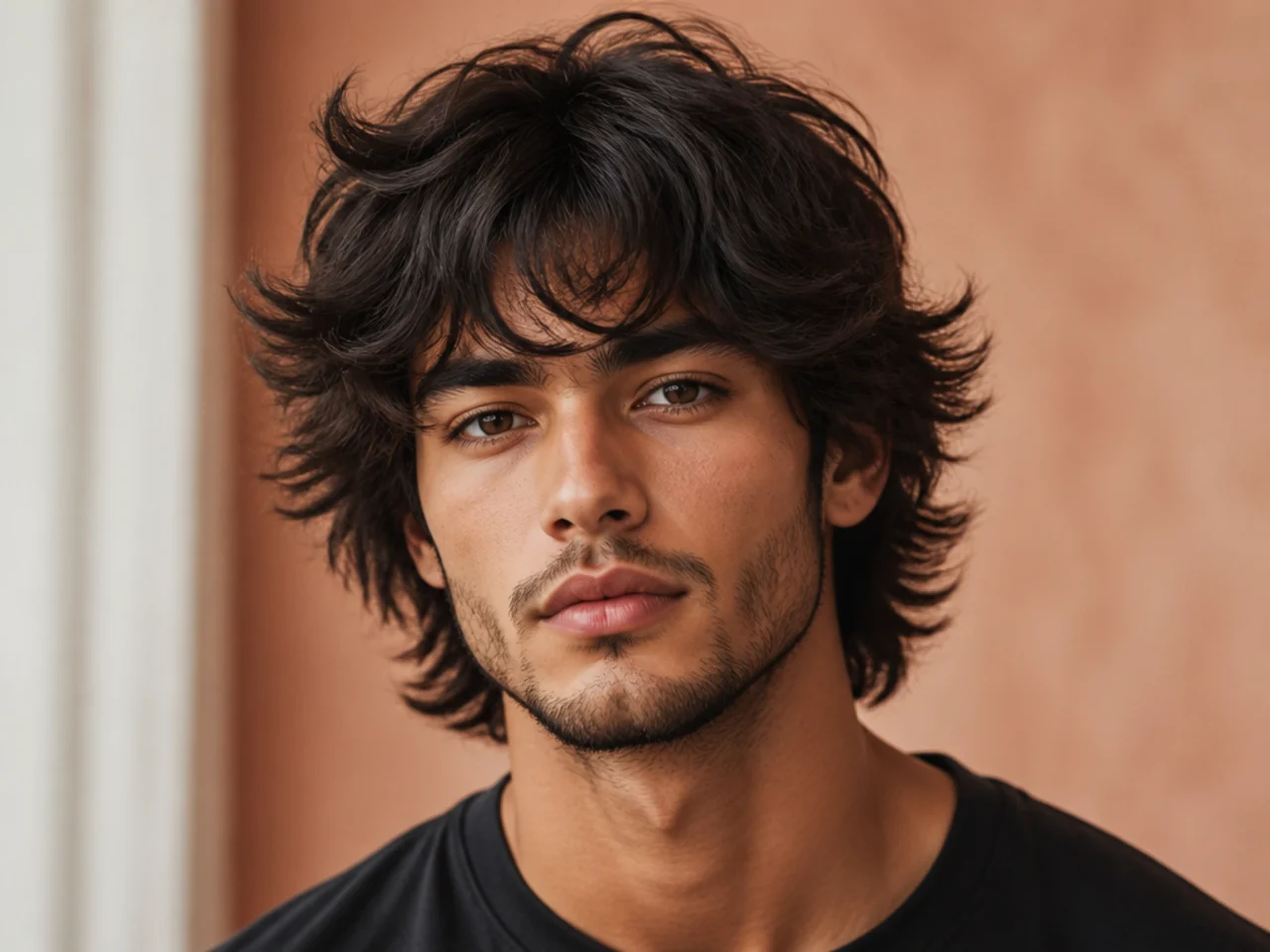
The shaggy layered look is what layering was invented for. Your barber cuts long into short into long — no even ends anywhere on the head. Length runs 4 to 6 inches, sitting over the ears with pieces falling into the eyes. Best on thick straight-to-wavy hair with enough weight to hold shape while moving. For a lighter, more separated cousin, see the shaggy layered hairstyle guide. Ask for a shag, 5 inches on top with sides connected (no fade), heavy internal layers throughout, and a curtained fringe. Style tip: rough-towel dry, mist salt spray head-down, then flip up and finger-shape. Skip the brush — the point is uneven texture, not a smooth silhouette.
Full Brush Back
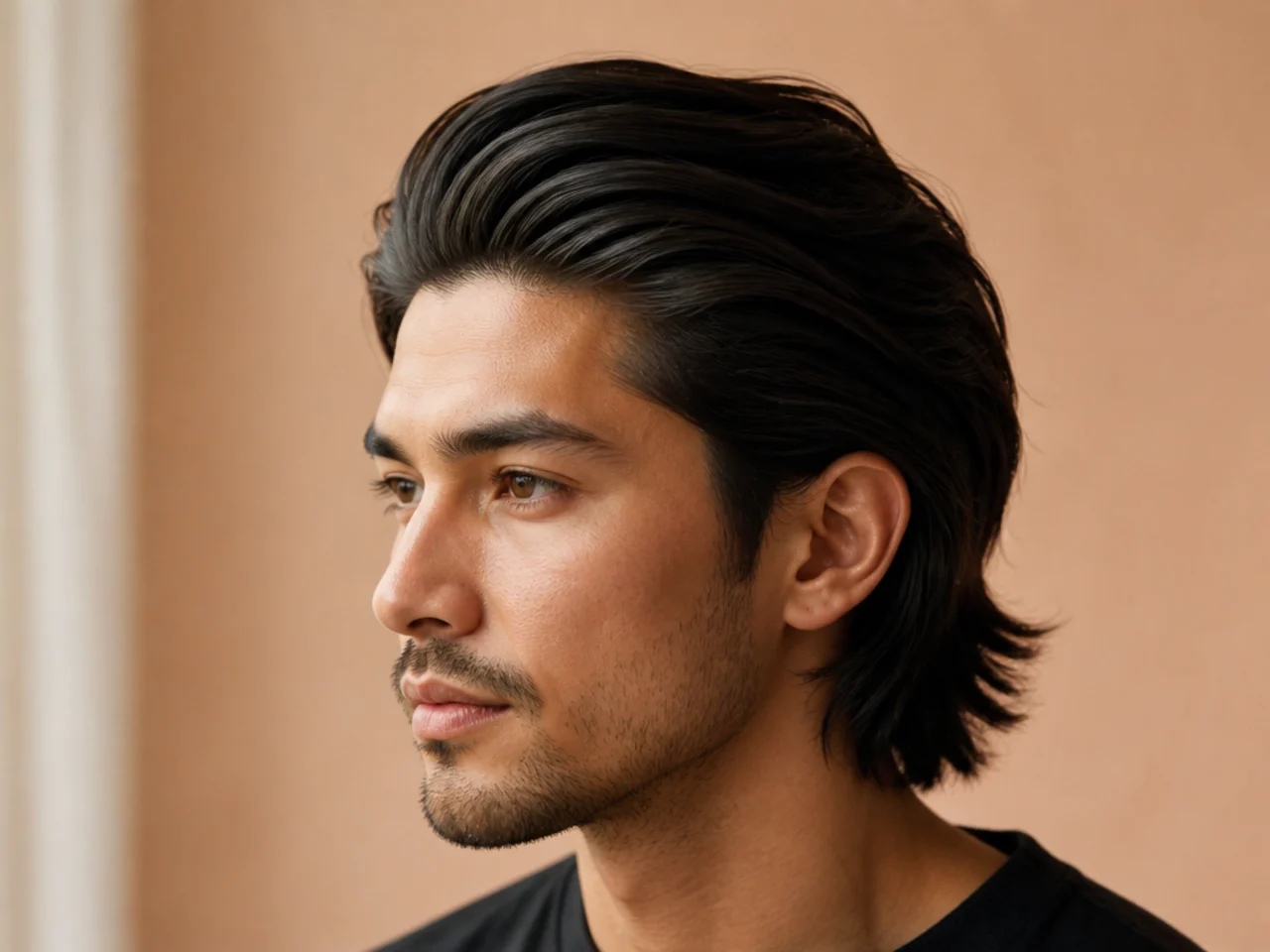
The layered pompadour's easier cousin. The top runs 4 to 5 inches with internal layers stacked toward the crown, so it brushes back into volume instead of piling into a wall at the front. Best on medium-thick straight hair; wavy works if you're patient with the blow-dry. Ask for 4.5 inches on top with layers concentrated in the crown, sides scissor-tapered, and a soft edge behind the ear. Style tip: hit damp roots with mousse, blow-dry from front to back with a round brush lifting at the roots, then break matte clay through the length and push it back. Finish with light spray on the crown only — the sides don't need holding.
Side Part with Taper Fade
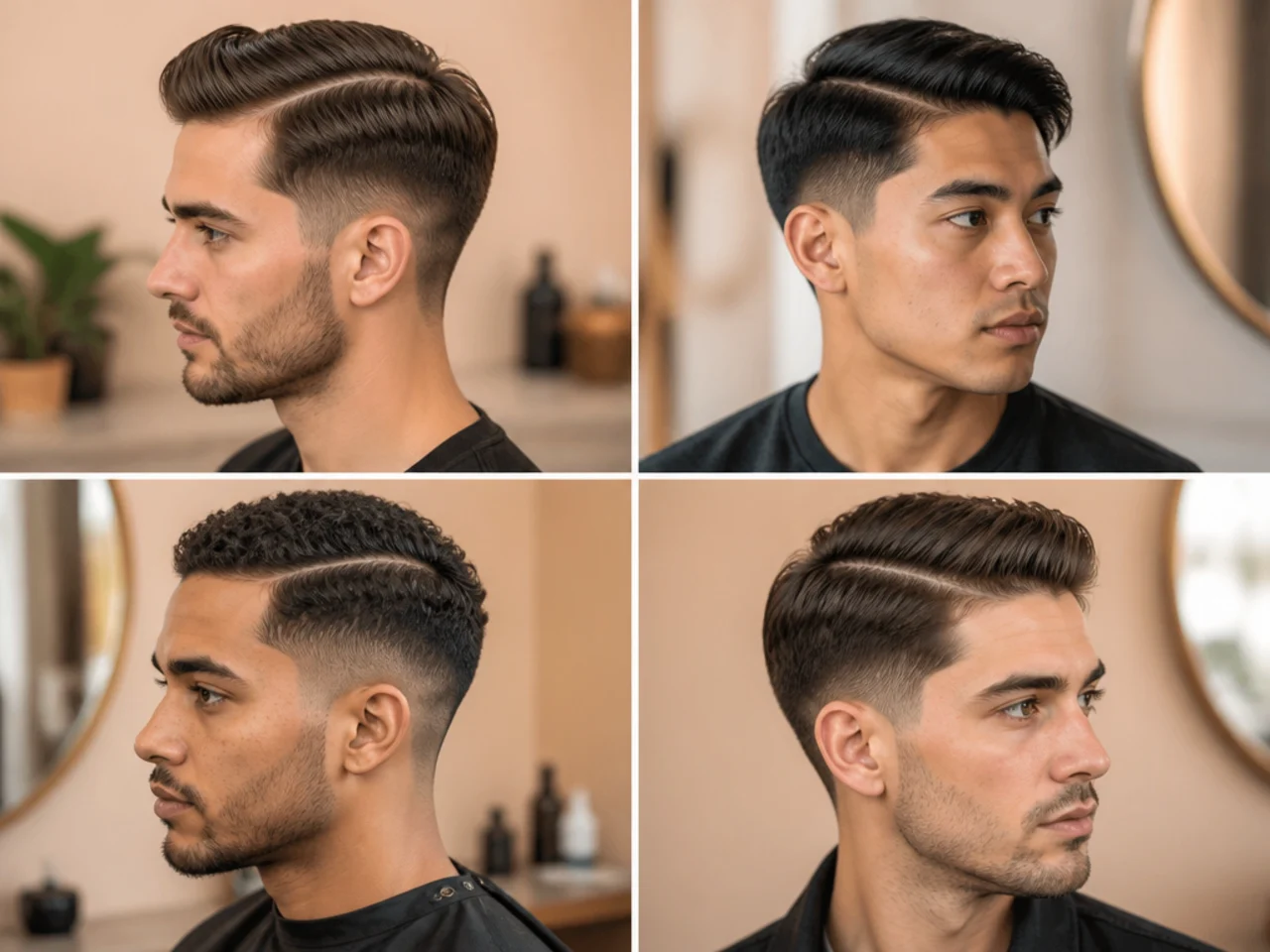
A side part turns modern the moment you add internal layers. Traditional side parts sit dense and formal — layered versions carry a soft, brushed-up motion at the top of the sweep that keeps the cut feeling worn, not styled. Best on straight fine-to-medium hair; layers add the volume fine hair lacks on its own. Ask for a taper fade on the sides, 3.5 inches on top with internal layers, and your natural part respected. Style tip: blow-dry across your part with a round brush lifting at the roots, then work a low-shine pomade or cream through the length. One product only. Skip gel — gel locks the top flat and kills every layer underneath.
Long Layered Crew Cut with High Taper Fade
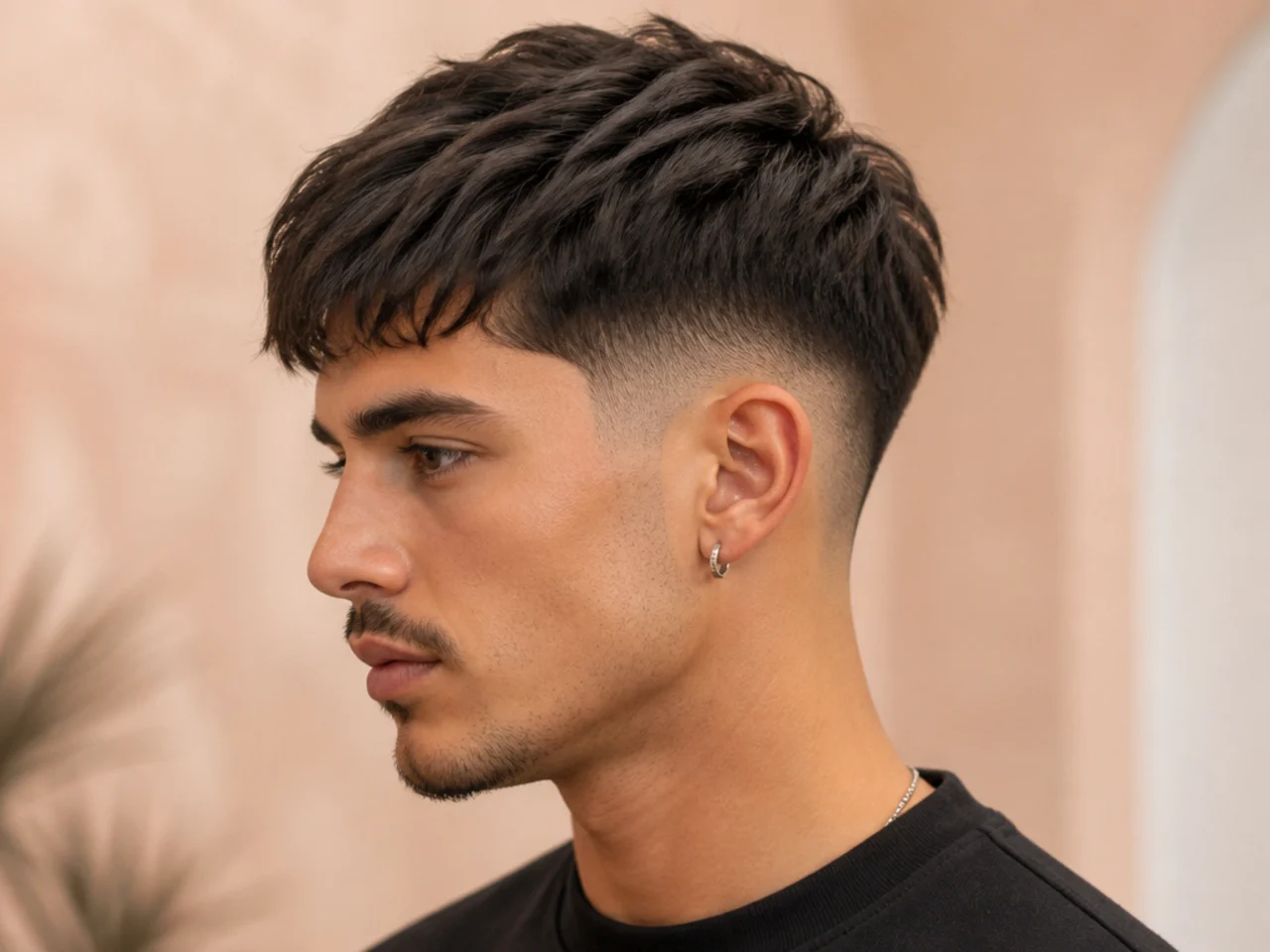
The classic crew cut grown into its longer form. Your barber leaves 2.5 to 3 inches through the front, tapering shorter toward the crown, with internal layers giving the front section lift instead of a flat wall. The high taper fade sharpens the perimeter without erasing the top's shape. Best on straight thick hair — density holds the front stand-up. Ask for a long crew cut, 3 inches at the front tapering to 1.5 at the crown, layers for lift, and a high taper fade dropping from the temple. Style tip: blow-dry the front section forward and up, then break matte clay through the roots. Push forward, not back. If it falls flat by lunch, you used too much product.
Messy, Layered Curly Hair
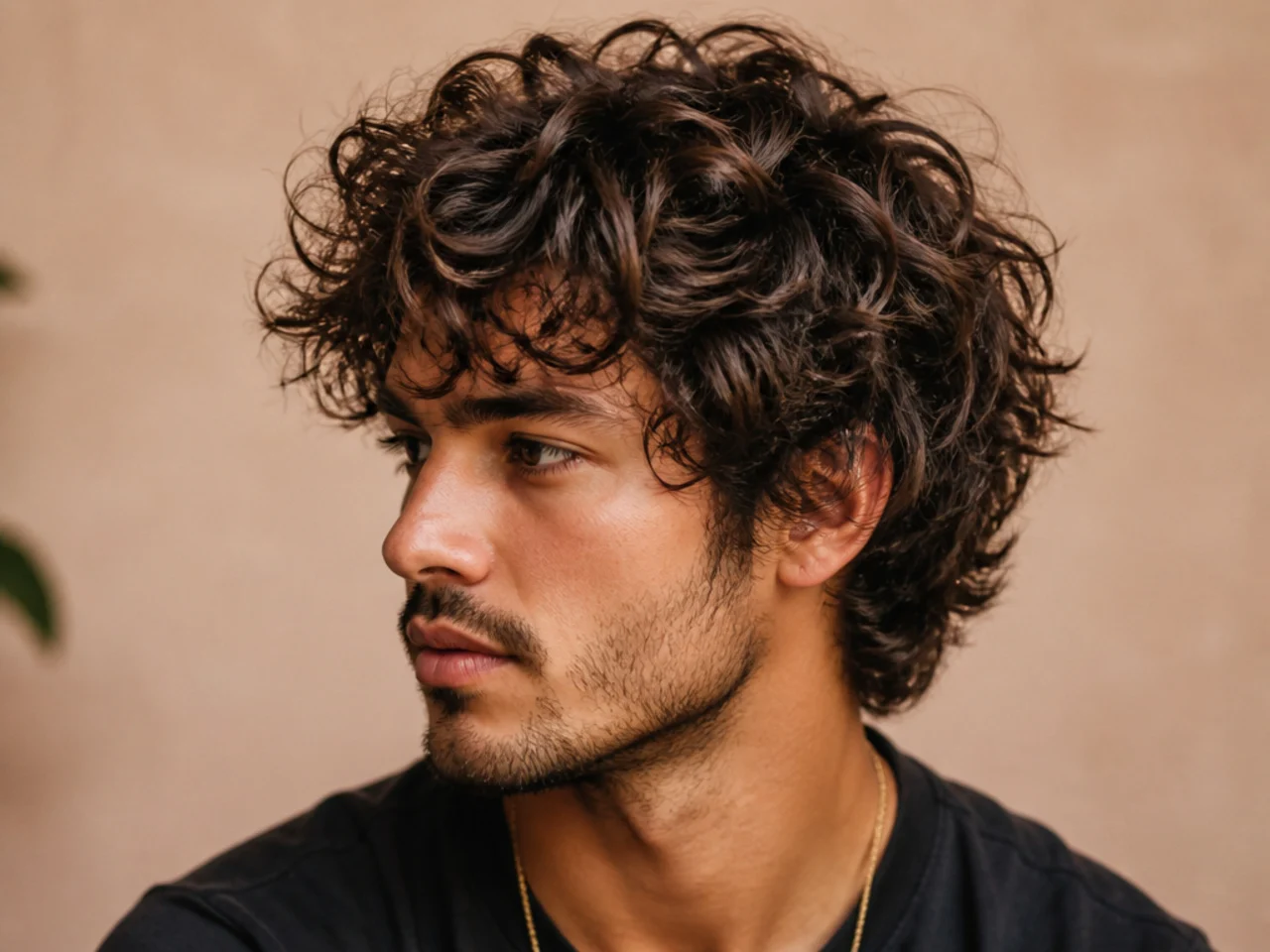
This is the messy hairstyle built for curls. Layering separates the curl clumps so they fall independently instead of matting into one collective shape at the ends. Length runs 4 to 6 inches — curls need weight to hang correctly and layers to breathe. Best on 2B-3A waves and curls with medium density. Ask for a dry-cut with internal layers to release weight, length kept at 5 inches, and sides left long enough to curl over the ear. Style tip: on wet hair, apply curl cream root to tip, then scrunch upward. Air-dry — don't touch it until it's done. Break the cast with a drop of light oil once dry, and the shape holds all day.
Layered Modern Mullet
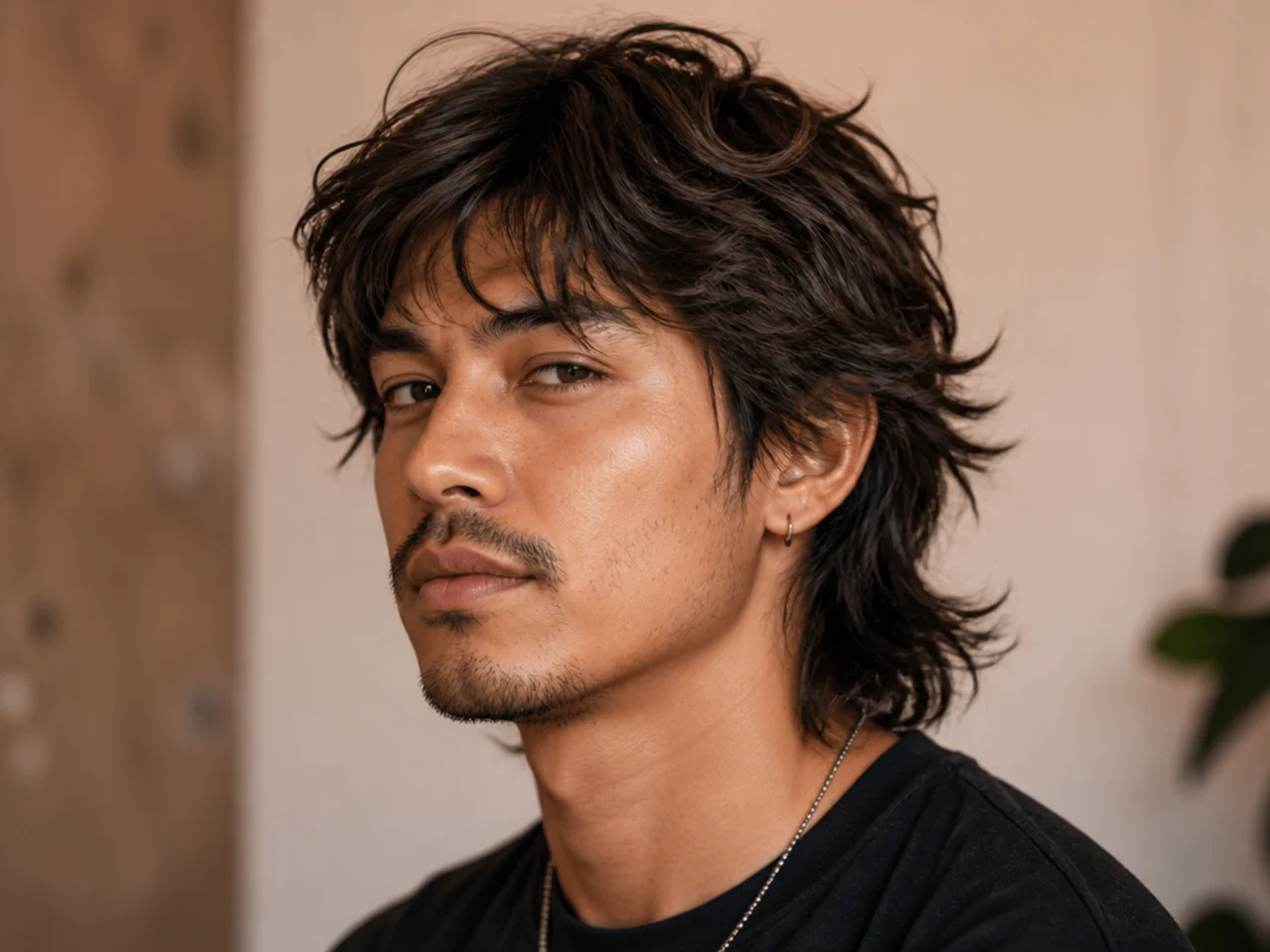
The modern mullet works because it's layered, not stacked. Traditional mullets drop from front to back in a hard line. The layered version blends the transition with internal cuts — 3 inches at the crown feathering into 5 at the nape, no hard drop anywhere. Best on straight or wavy medium hair. Ask for a modern mullet with a scissor-blended taper on the sides, 3 inches on top with internal layers for movement, and 5 inches at the back kept feathered, not blunt. Style tip: blow-dry the front up and back, let the back air-dry, then work a light cream through the length. Don't try to make the nape sit — it's supposed to move.
Long and Layered
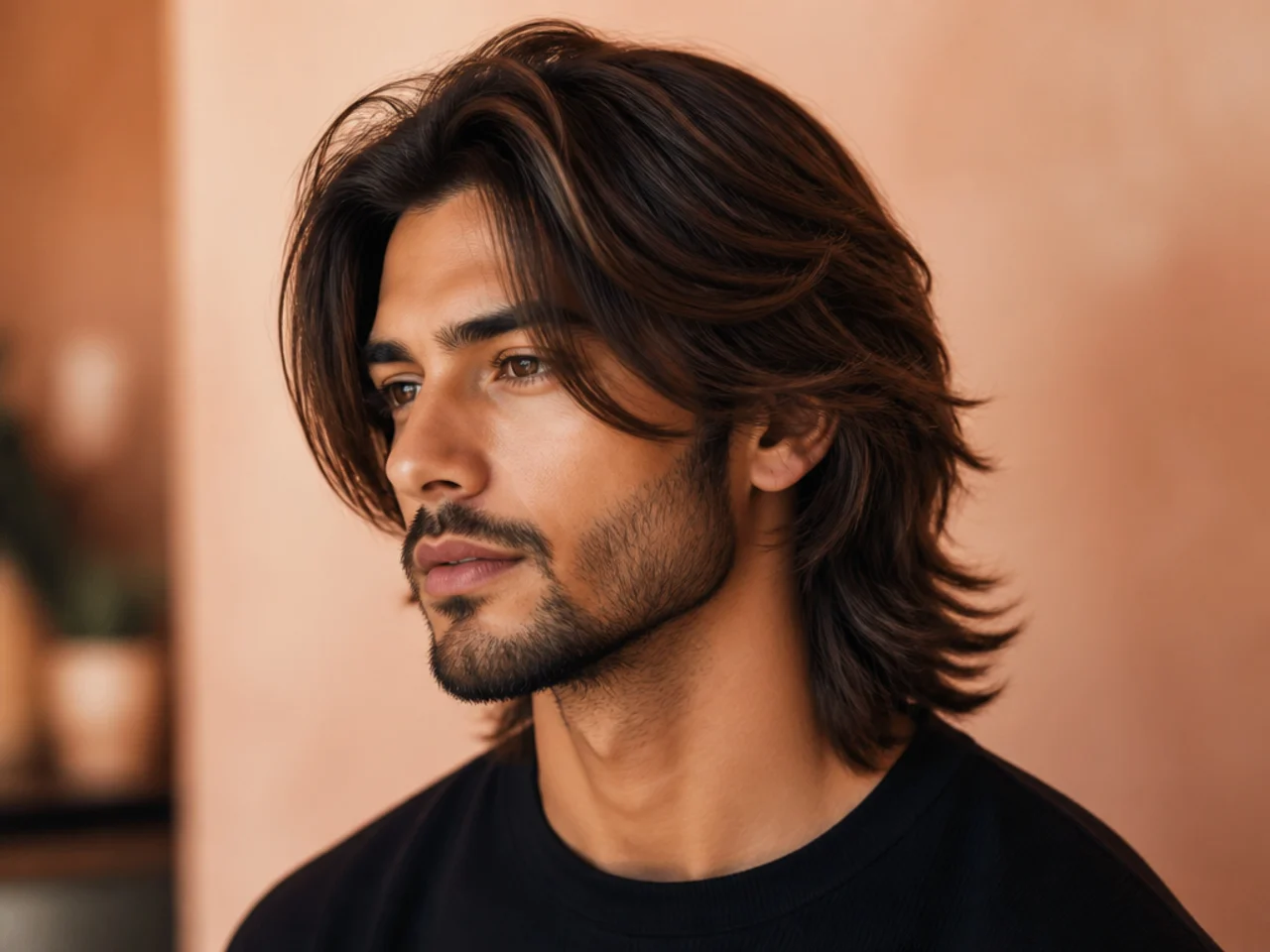
The full surfer shape with proper structure underneath. Length runs 5 to 7 inches, cut in long internal layers that let the front frame the face and the back sit at the collar. Best on straight-to-wavy hair with enough weight to fall correctly — thin, flyaway hair won't hold the shape. Ask for long layers throughout, kept one-length at the perimeter with heavy internal layering, and a curtained fringe if you want the face-framing effect. Style tip: mist salt spray on damp hair, twist mid-length sections between your palms, then loose-dry with your fingers pointing down. Finish with a pea of cream through the ends only. The roots stay untouched.
Thick Curly Taper Fade
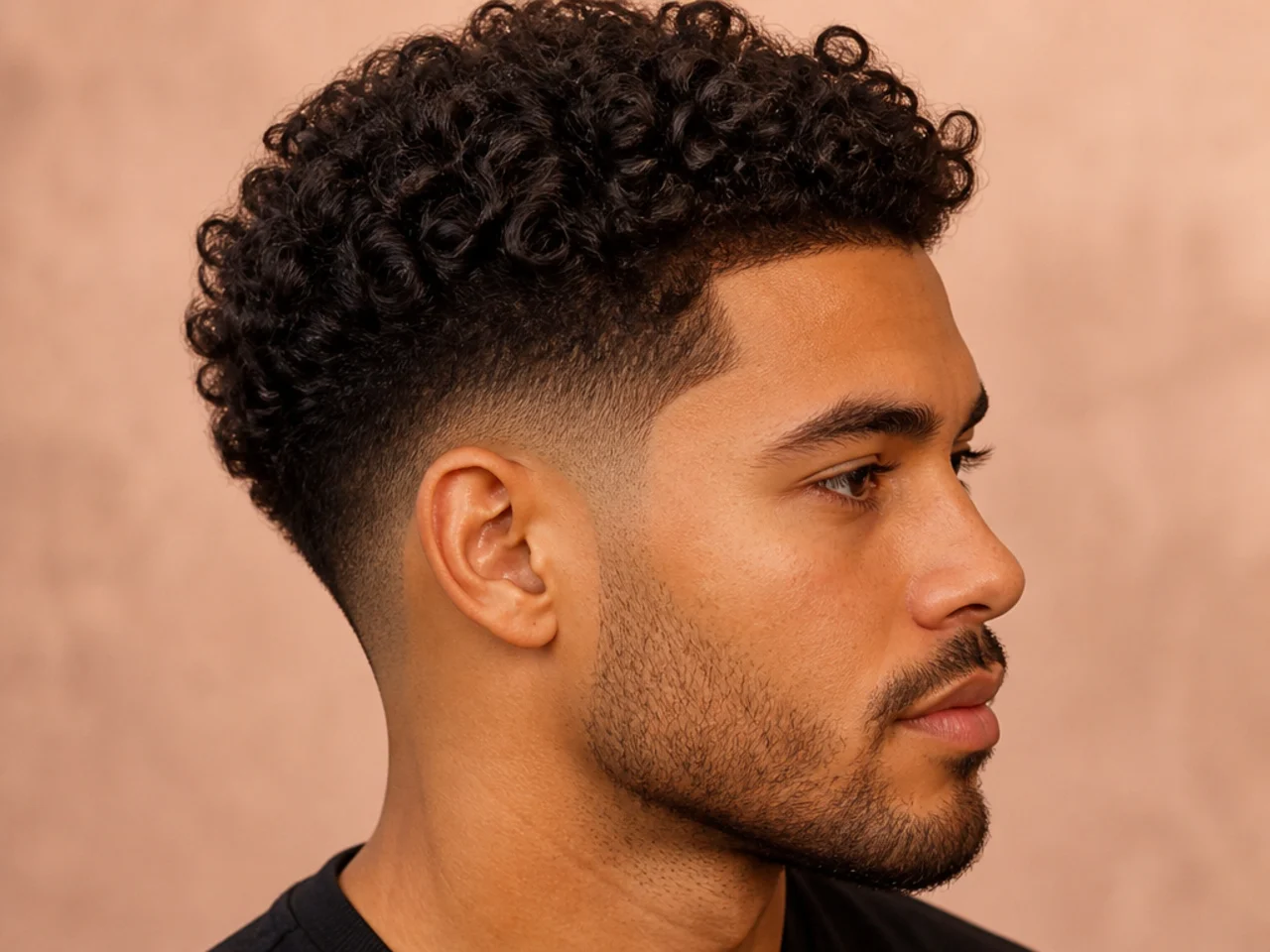
Curls plus a fade is a two-technique cut — scissors on top, clippers on the sides, and the two must be blended by hand where they meet. Length on top runs 3 to 5 inches, layered inside to release bulk without touching the curl pattern. The taper fade lifts curls off the ear without shortening them. Best on 3A-4A textures with thick density. Ask for a taper fade blended into scissor work at the corners, top left at 4 inches with internal layers to release weight, and no clipper-over-comb on the top. Style tip: apply curl cream to soaking-wet hair, define the front curls with your fingers, and diffuse on low heat with the head tilted forward. Set with light oil.
Short Layers with Blunt Fringe and Fade
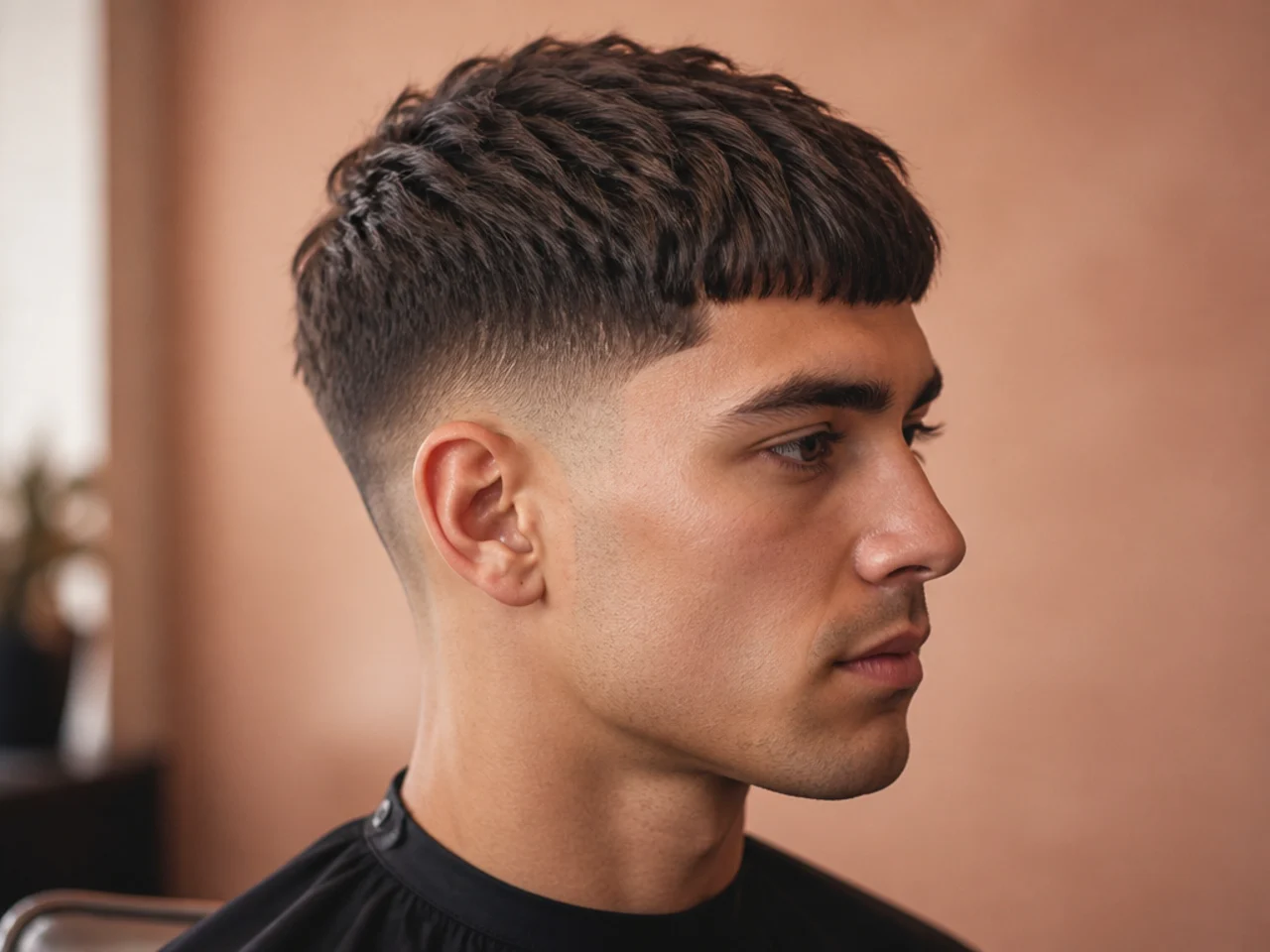
The Caesar's textured cousin. The top runs 2 to 2.5 inches with internal layers underneath the blunt front — this is the shortest cut in the guide where layering actually adds anything. Below 2 inches, layers just read as choppy ends. Best on straight thick hair; fine hair can wear it if the fringe stays dense. Ask for a mid fade on the sides, 2.5 inches on top with internal layers under a heavy blunt fringe, and no visible hard line where the fade meets the top. Style tip: sea salt spray on damp hair, rough-dry forward, then finger-press matte clay from the roots. Don't smooth the front — the blunt edge shows better with texture behind it, not shine.
Trendy, Layered Mod with Heavy Texture
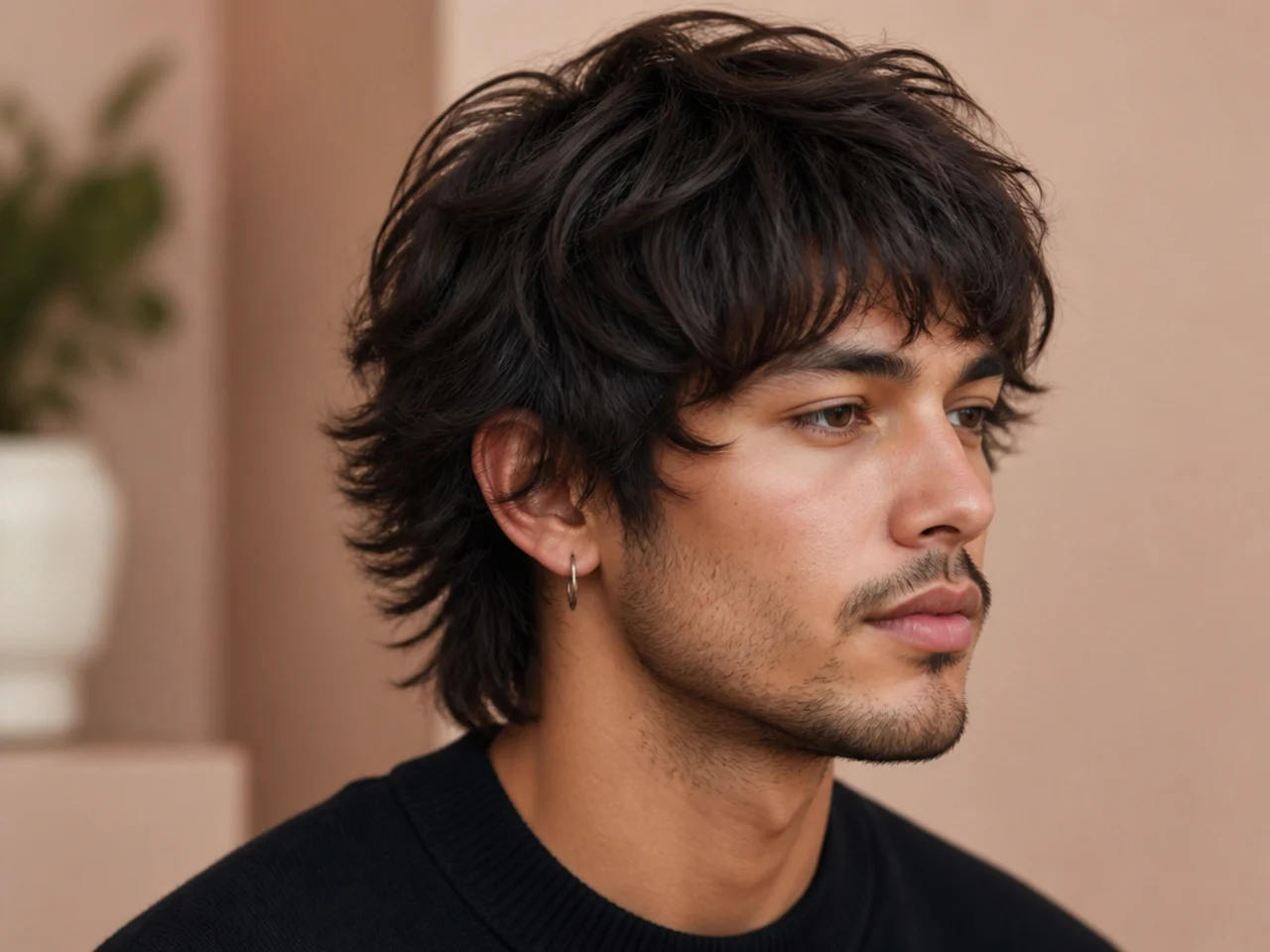
The mod cut revived with heavier internal texture. Length runs 4 to 5 inches on top with slightly longer sides sweeping over the ears — no fade, no taper, no clipper lines at all. Horizontal layering through the crown builds the volume; the front sits full or sweeps to one side. Best on straight-to-wavy medium hair. Ask for a mod-style cut, 4 inches on top with heavy internal layers, sides scissor-blended and kept over the ears, and the crown left with weight for lift. Style tip: blow-dry the crown up while brushing back, sweep the fringe with your hand, then work a soft cream through the length. The texture should show, not sit flat.
Layered Slick Back
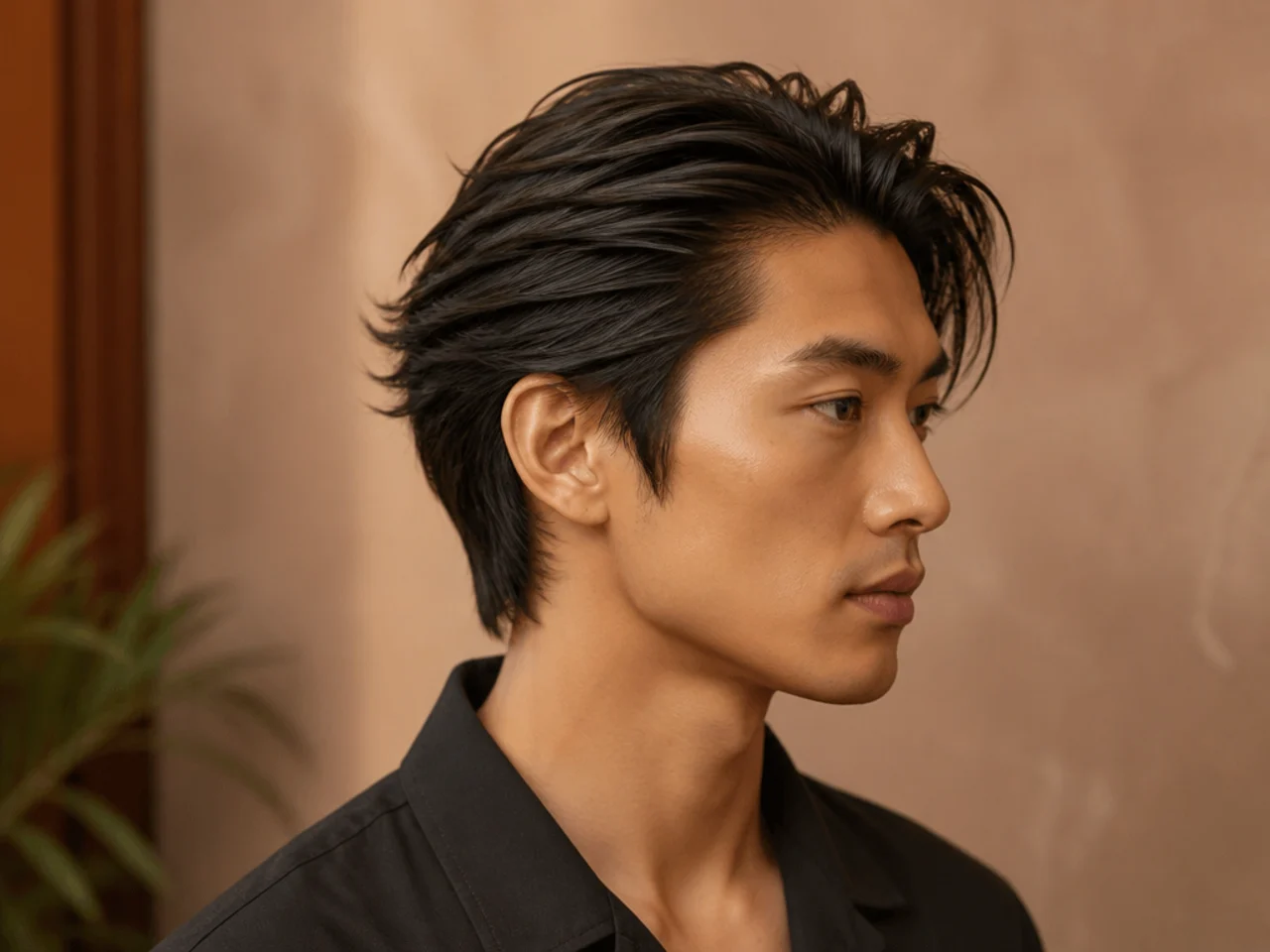
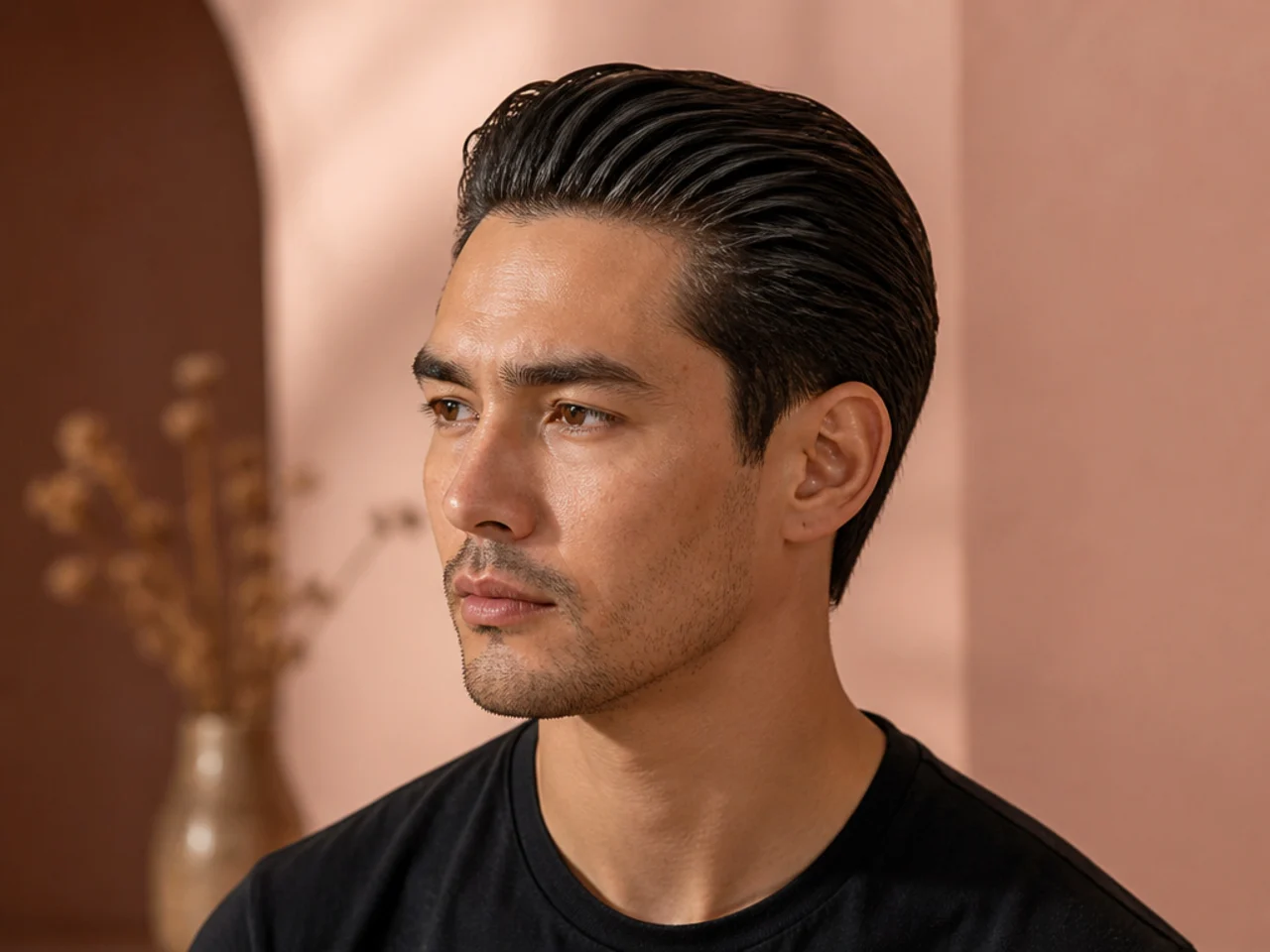
The layered slick back trades wet shine for soft movement. Your barber cuts 4 to 5 inches on top with heavy internal layers, so when you push it back, the hair sits in visible sections instead of one flat sheet. Best on straight-to-wavy medium-thick hair. Ask for a scissor-tapered side, 4.5 inches on top with layers for movement, and length left long enough to brush cleanly back at the crown. Style tip: apply a low-shine cream or paste to damp hair, blow-dry back with a paddle brush at low heat, then finish with a matte spray. Skip traditional wet pomade — the layers get lost under high shine, and the cut ends up looking flat again.
Textured Spiky Hair
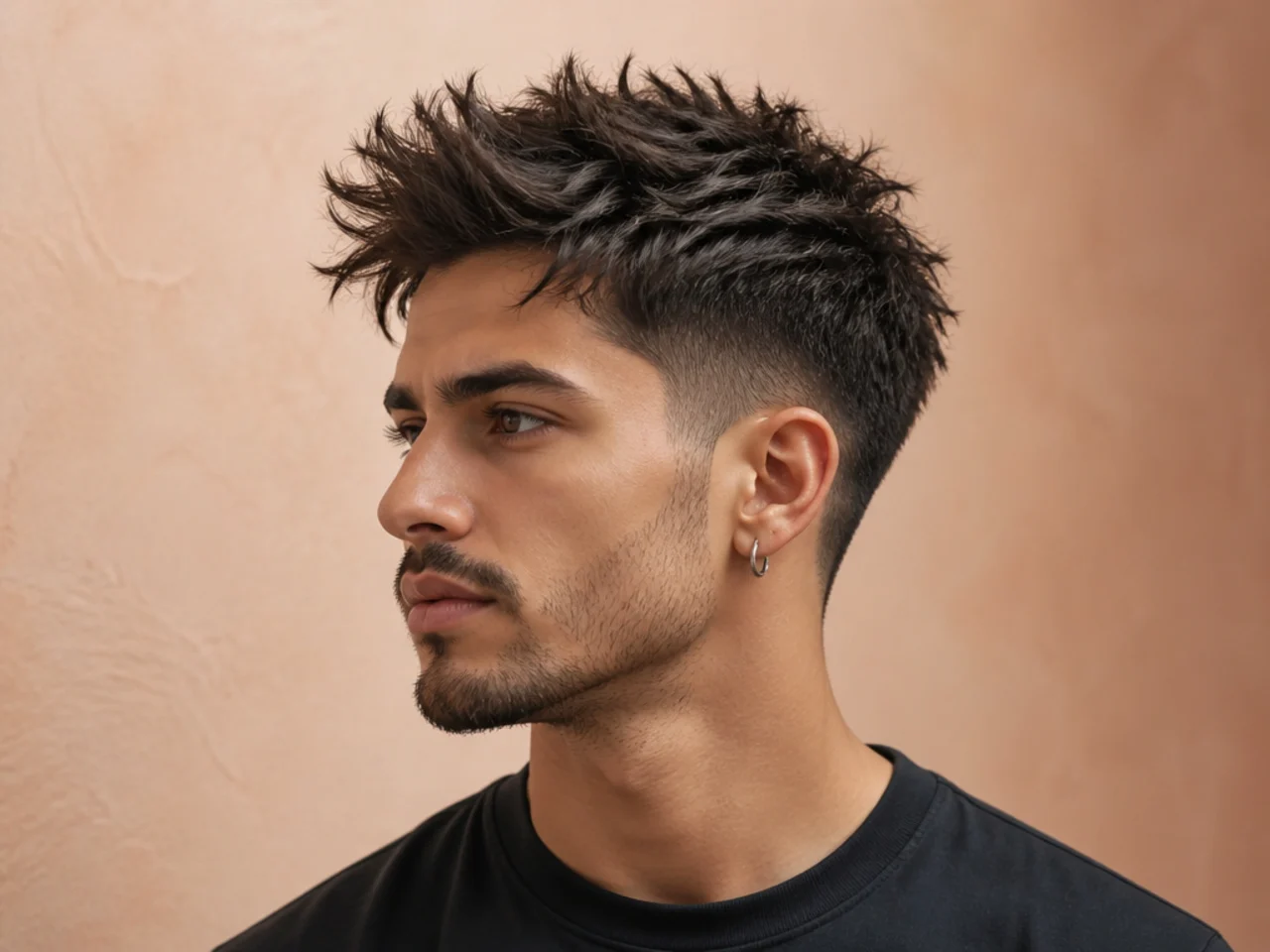
Spikes need layers to break the top into pieces that can actually stand independently. Your barber point-cuts throughout the top at 3 inches, creating jagged internal layers so each section holds its own direction. This is the flagship cut for textured styles — the whole shape depends on the point-cut internal work, not the length. Best on straight thick hair; fine or wavy needs more product to hold the spike. Ask for 3 inches on top with heavy point-cutting for texture, tapered sides, and no fade line — keep the transition soft. Style tip: apply high-hold matte fiber to damp hair, then rough-dry with your fingertips pinching sections upward. Twist individual pieces cool for definition.
Short Brushed Forward Waves with Low Taper
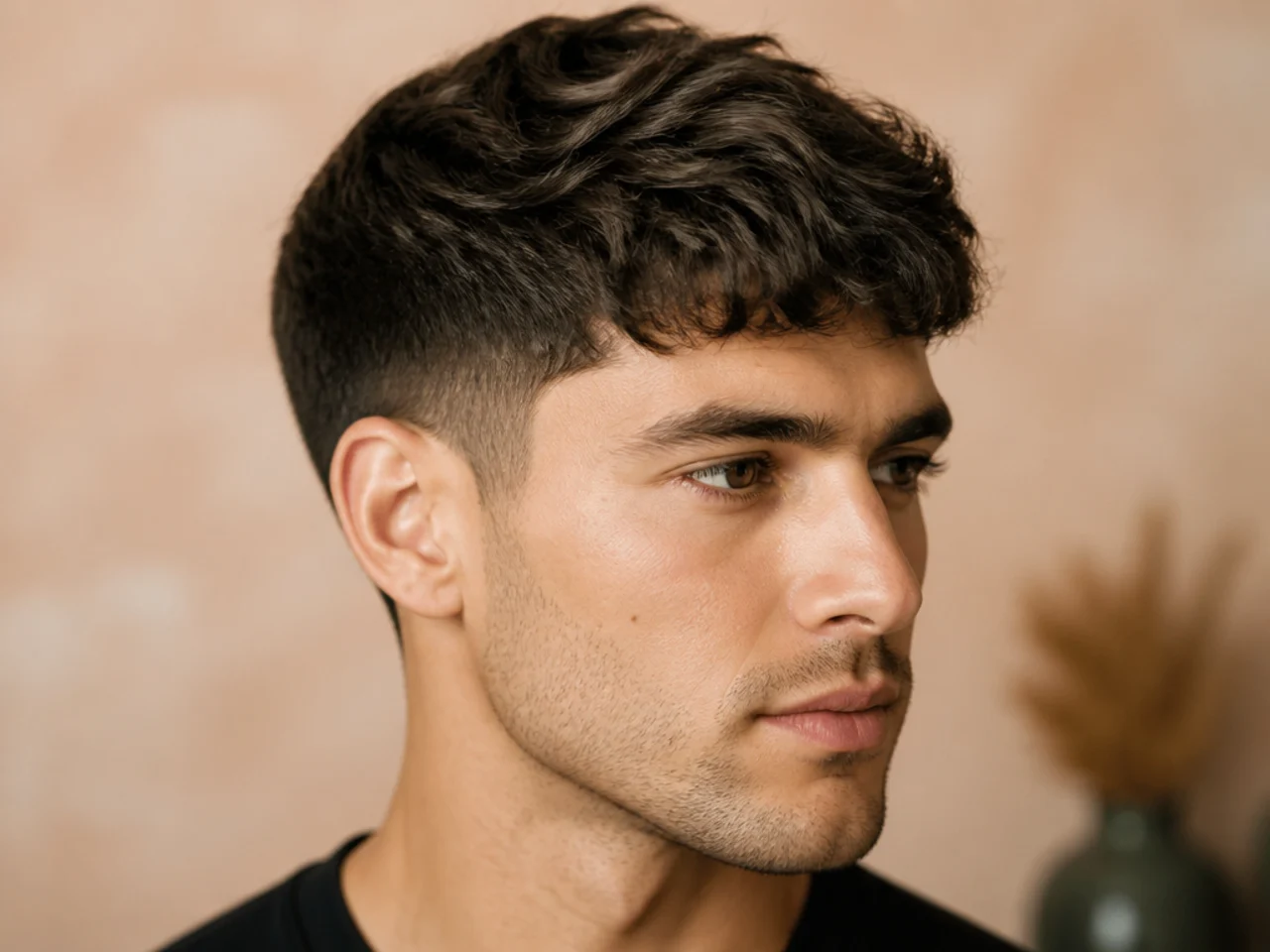
Short waves brushed forward is a texture-heavy Caesar variation. Length on top runs 2.5 to 3 inches, layered inside to encourage the wave pattern to fall forward instead of every direction at once. The low taper keeps the temples clean without competing with the front texture. Best on straight-to-wavy hair with medium density; naturally wavy holds forward-motion best. Ask for a low taper fade, 3 inches on top with internal layers for movement, and the direction cut forward at the crown. Style tip: sea salt spray on damp hair, blow-dry forward with a paddle brush, then finish with matte clay pressed in — never combed through. A comb pulls the waves apart.
Long Side Swept Hair
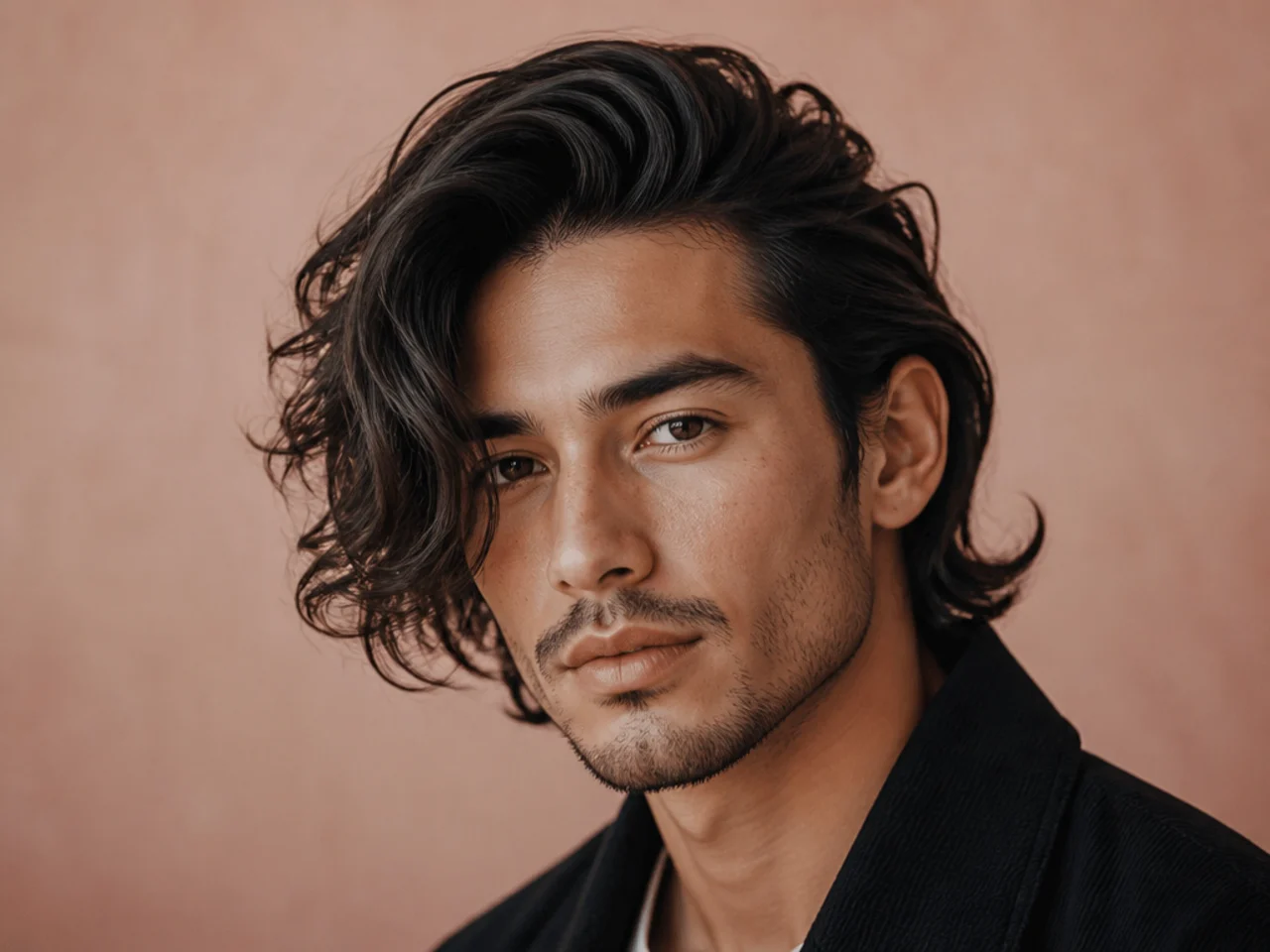
The most dramatic layered cut in this guide. Length runs 5 to 7 inches on top, cut in long internal layers with an undercut fade or hard part on the opposite side for contrast. The sweep goes hard to one side, exposing the disconnected sides underneath. Best on straight-to-slightly-wavy hair with enough weight to hold direction all day. Ask for a disconnected undercut fade, 6 inches on top with internal layers for movement, and the length kept one-length at the perimeter for the sweep. Style tip: blow-dry to your sweep side with a round brush lifting at the roots, then work matte wax through the length. Don't over-set — the layers should still shift when you move.
What Is Layered Hair For Men?
Layered hair is one cut with two length zones stacked on top of each other. Your barber leaves the outer sections at one length, then cuts internal sections shorter underneath. Outer hair falls over lifted underlayers, creating volume, movement, and shape a single-length cut can't produce. That's what your barber means by "internal layers" — nothing changes on the perimeter, everything changes inside.
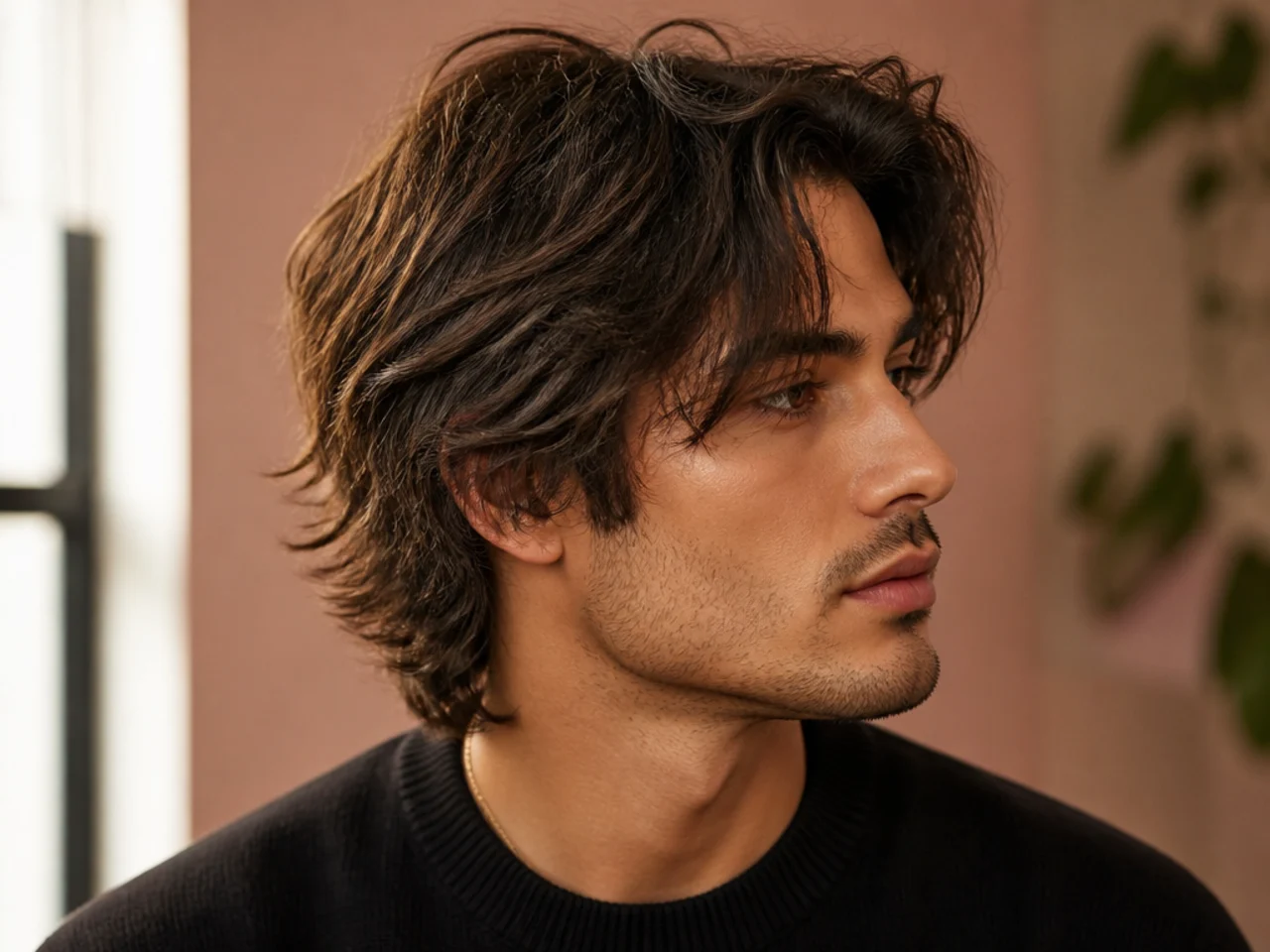
The technique only pays off on medium-to-longer tops. Below 3 inches, there's not enough length for the internal sections to stack — the cut just reads choppy and uneven. Layers work best on straight and wavy hair, where each section falls independently and catches light. Curly hair needs a different approach: dry-cut, scissor-only, at the natural spring of each curl. Skip razor cuts on any hair type — razors thin the ends and kill the movement layers are supposed to create.
Layering also fixes the two most common cut problems: too much bulk on thick hair, too little shape on fine hair. Deep internal layers hollow out heavy hair. Shorter internal layers lift the crown on fine hair. Same technique, opposite goals — that's why almost every men's cut over 3 inches on top uses some version of it.
FAQs About Layered Haircuts for Men
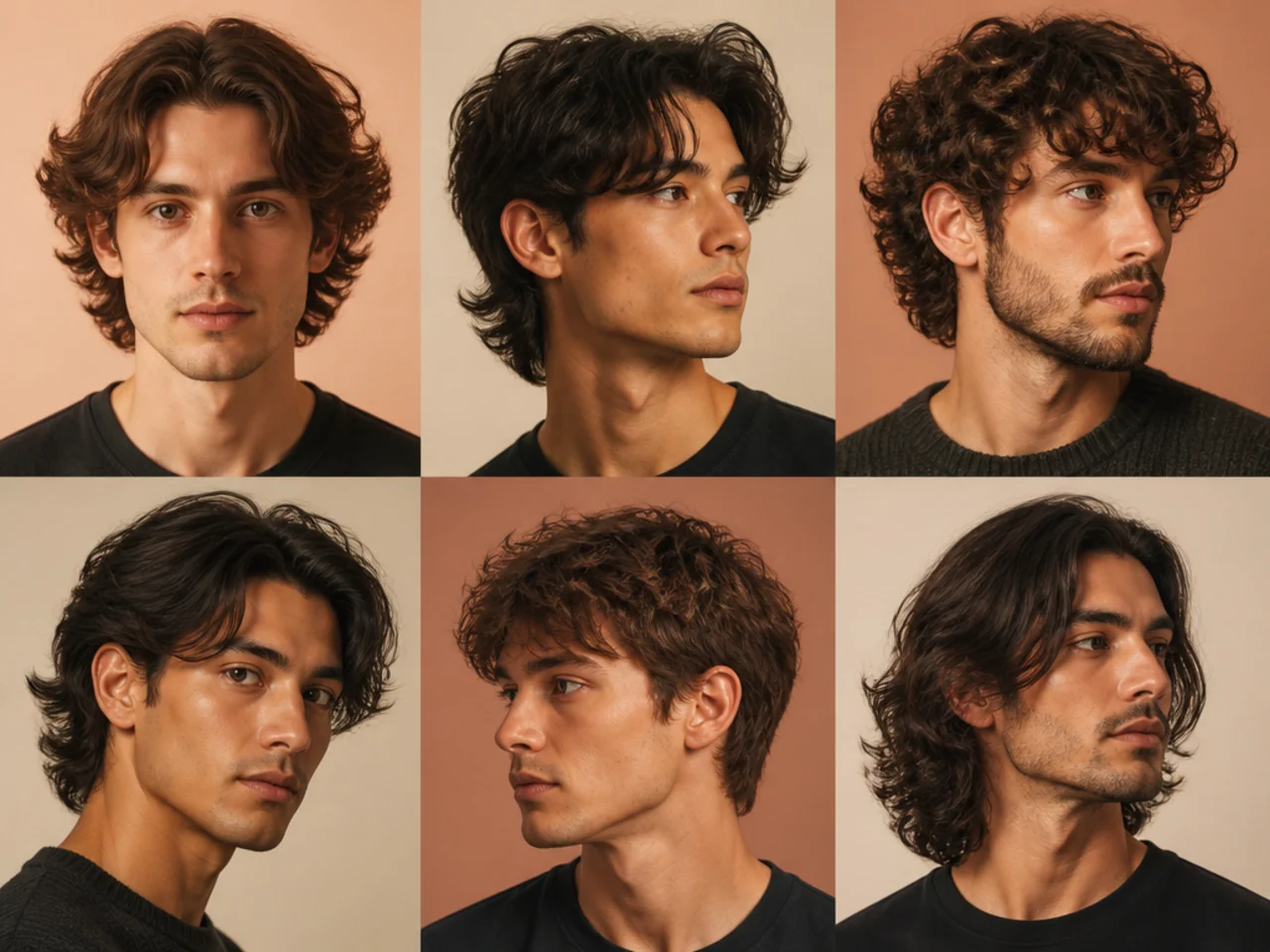
Are Layered Haircuts Good For All Hair Types?
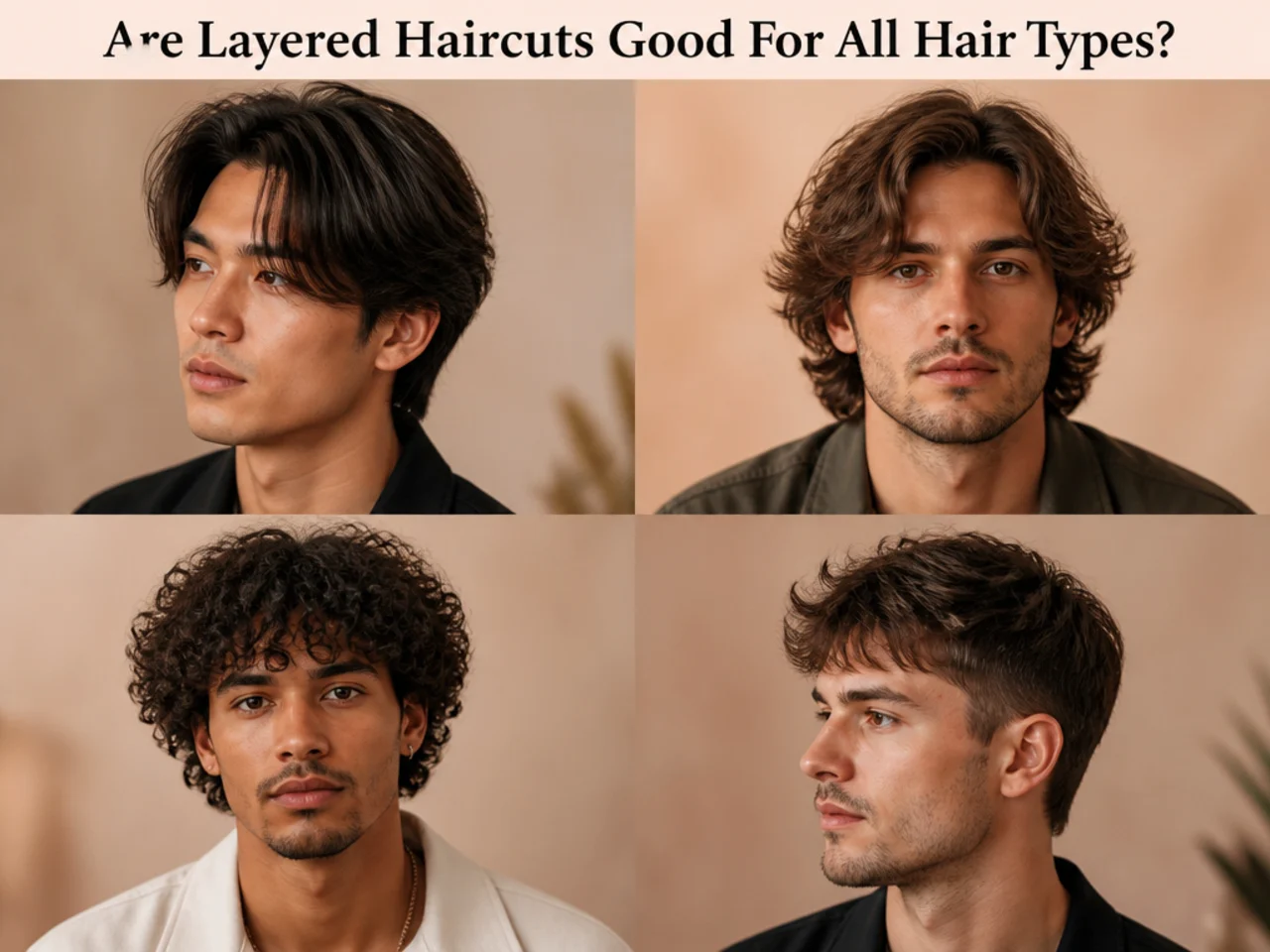
Yes, with adjustments. Straight and wavy hair takes to layers directly — scissor-cut, dry-checked, done. Curly and coily hair needs dry-cutting curl by curl at the natural spring, never wet. Fine hair needs shorter layers to build the illusion of density; thick hair needs deeper internal layers to release weight. Ask your barber to work with your texture, not against it — that's the whole trick.
How Do I Maintain a Layered Men's Haircut?
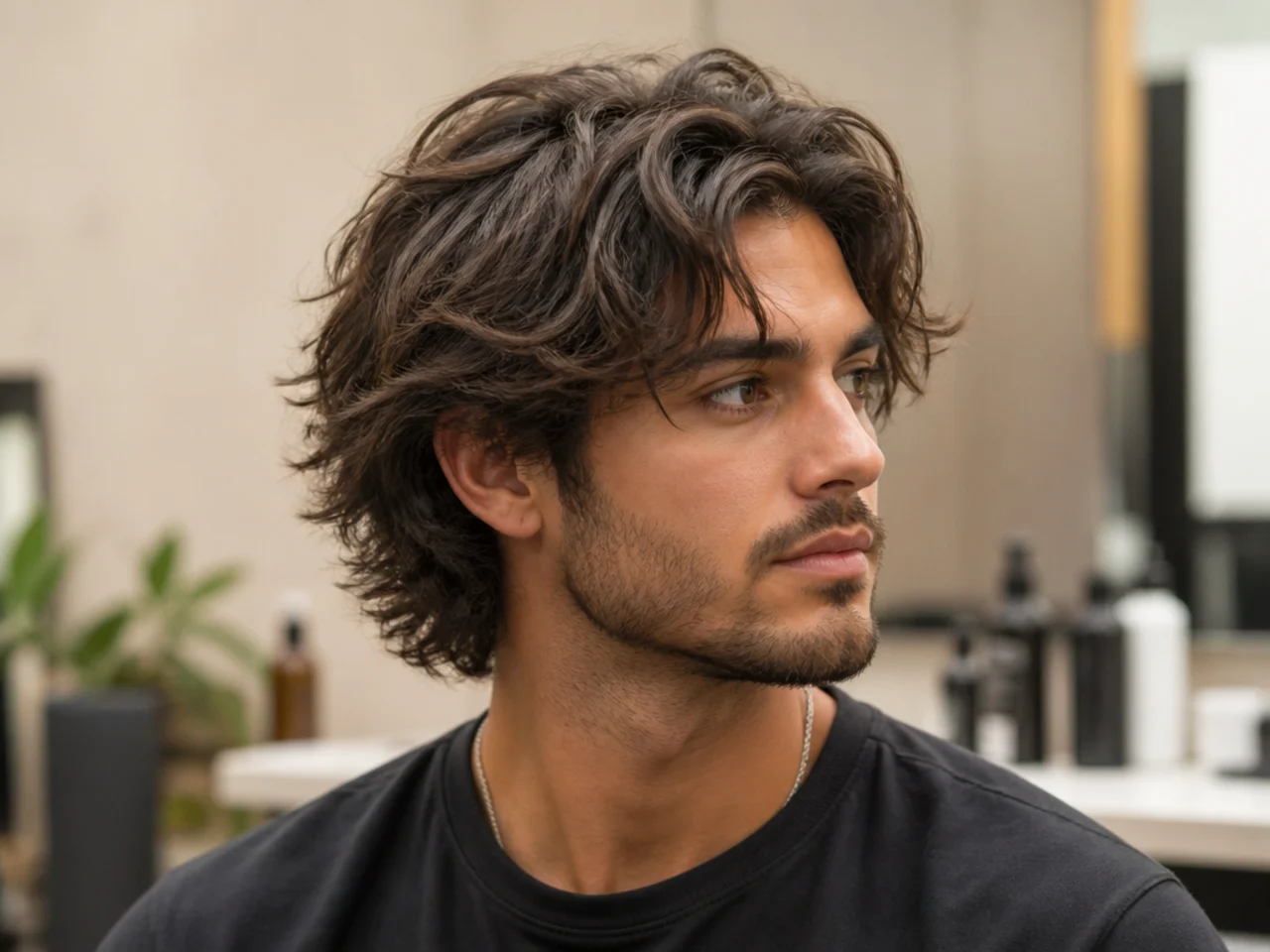
Wash two to three times a week, no more. Layers hold their shape through the natural oil on your hair — daily shampooing strips it and the cut goes flat. Air-dry when you can; high heat frays the ends layers depend on. Get a trim every 5 to 6 weeks — layers grow out unevenly and start looking shaggy before they look scruffy. Use one styling product, not three.
Can Men With Short Hair Get Layers?
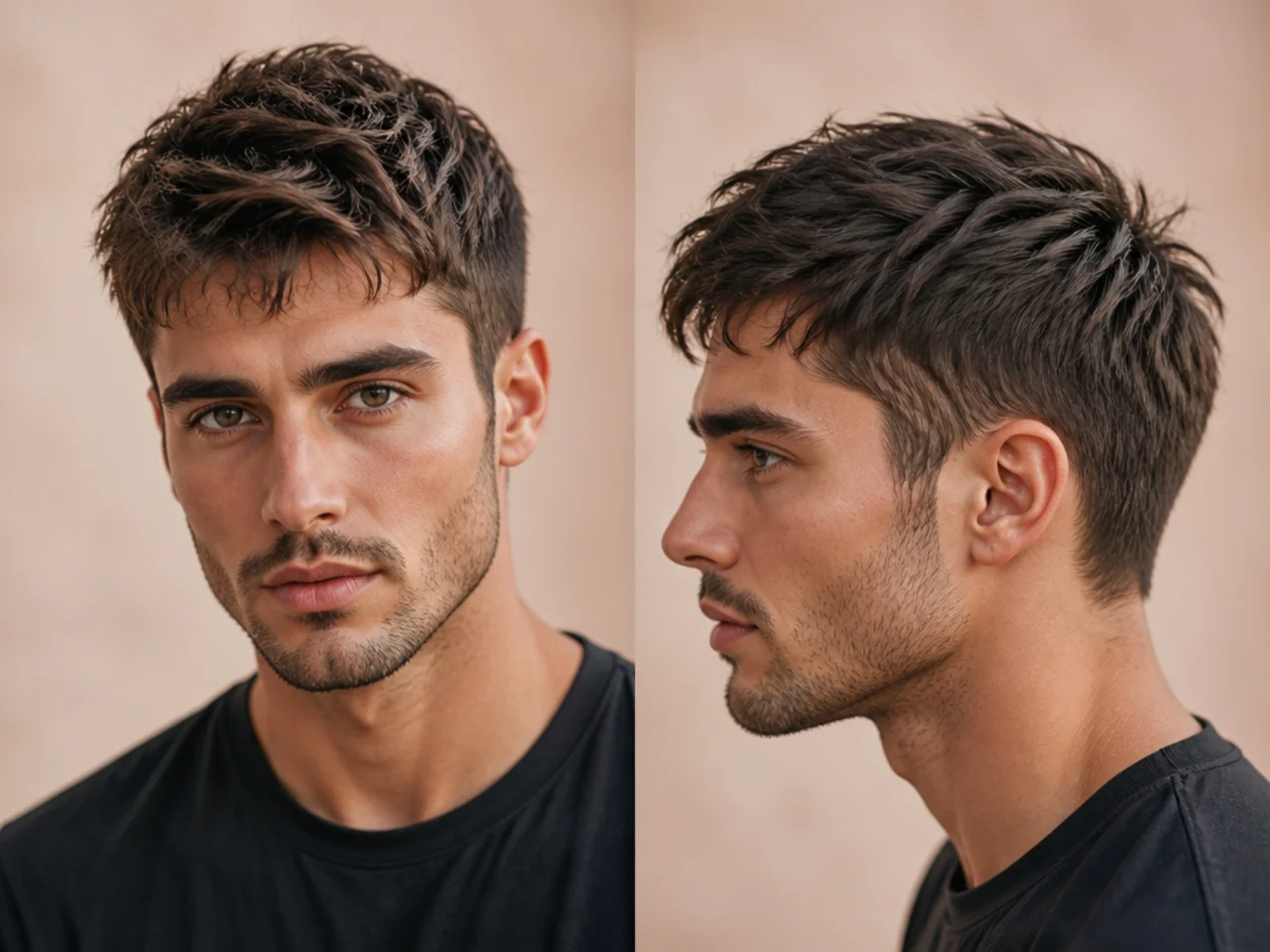
Only above 2 inches on top. Below that, there's not enough length for internal layers to stack — you just get uneven ends that read as a bad cut. If your hair is shorter, ask for a textured cut with point-cutting instead. Point-cutting creates visible separation without the stacked shape layering needs. It's the closest thing to layers a short cut can honestly wear.
What Products Work Best For Layered Hair?
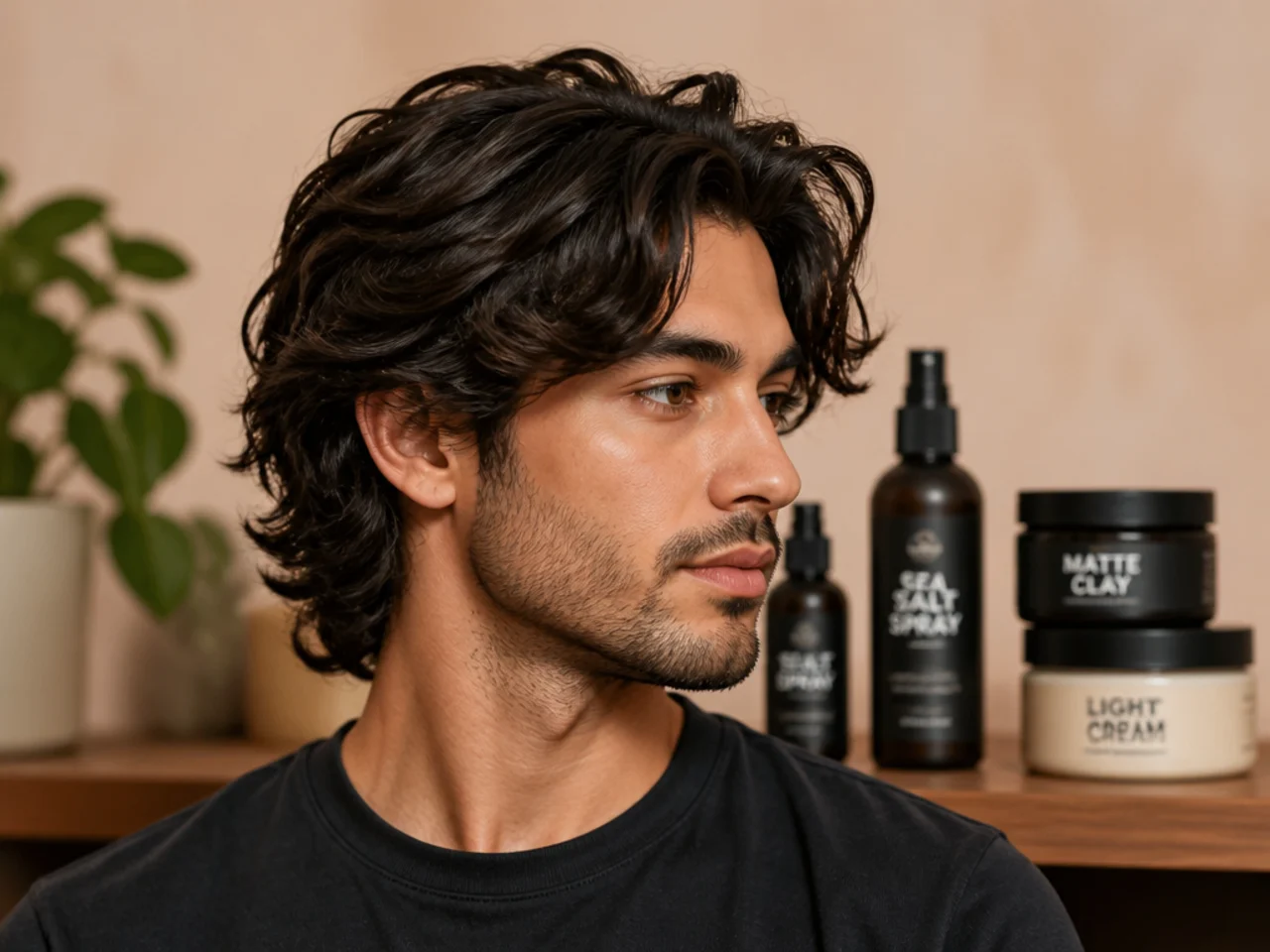
Matte clay, matte paste, sea salt spray, and light cream — one at a time. Shine products flatten layers; matte finishes let each section catch light separately. For curls, use a curl cream, nothing else. Skip gel entirely — it locks the hair into one shape and buries the layered structure. If you need hold, use a matte spray. If you need control, use less product, not more.
Do Layers Make Hair Look Thicker or Thinner?
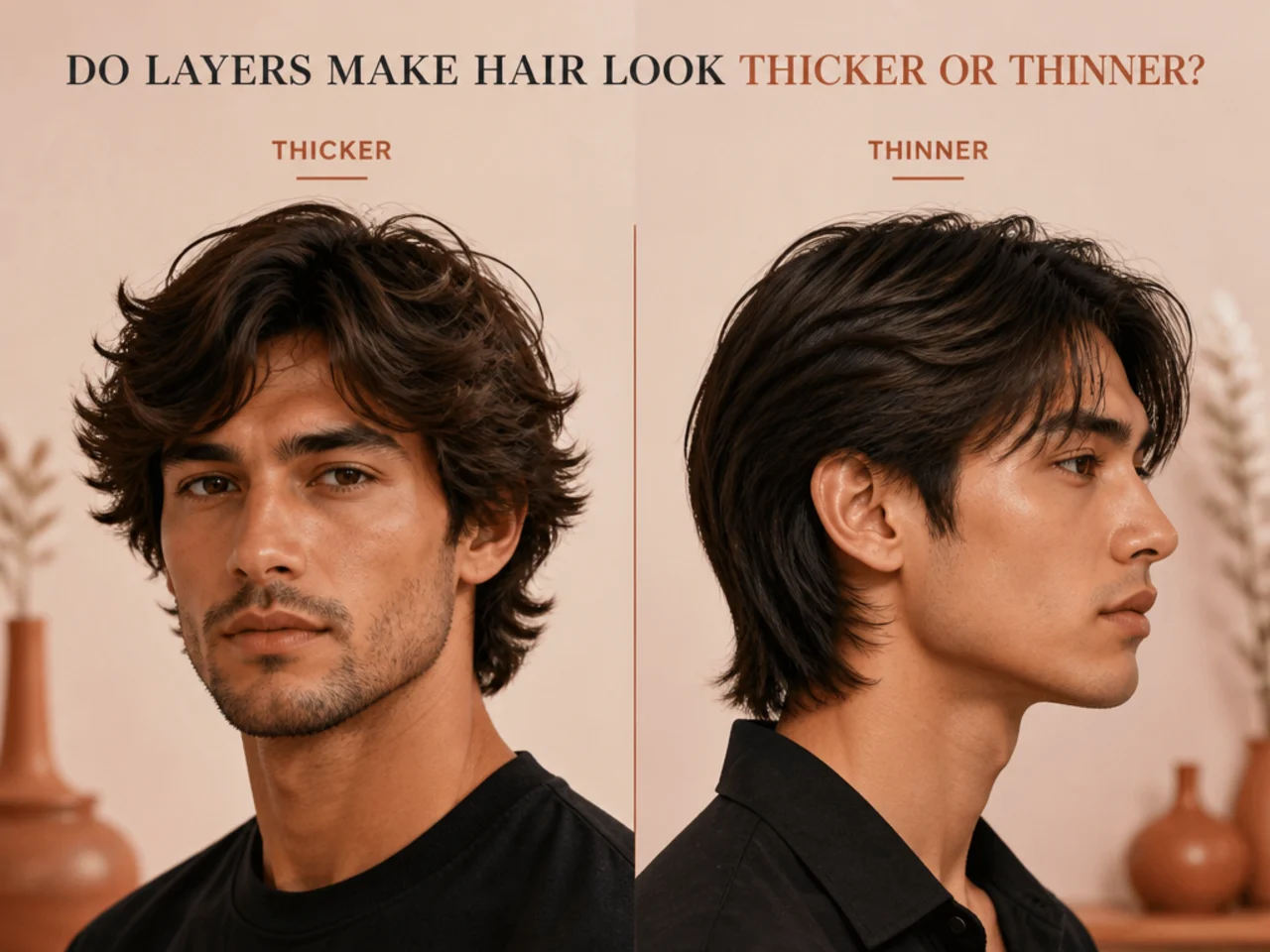
Both, depending on how they're cut. Internal layers remove weight — that makes thick hair sit lighter and thinner hair look fuller by lifting the top sections off the scalp. The effect works because of how light hits stacked hair versus flat hair: stacked layers create shadow lines that suggest density. Ask for shorter internal layers if you want more volume; longer internal layers for weight release.
Can I Style Layered Hair Without Heat?
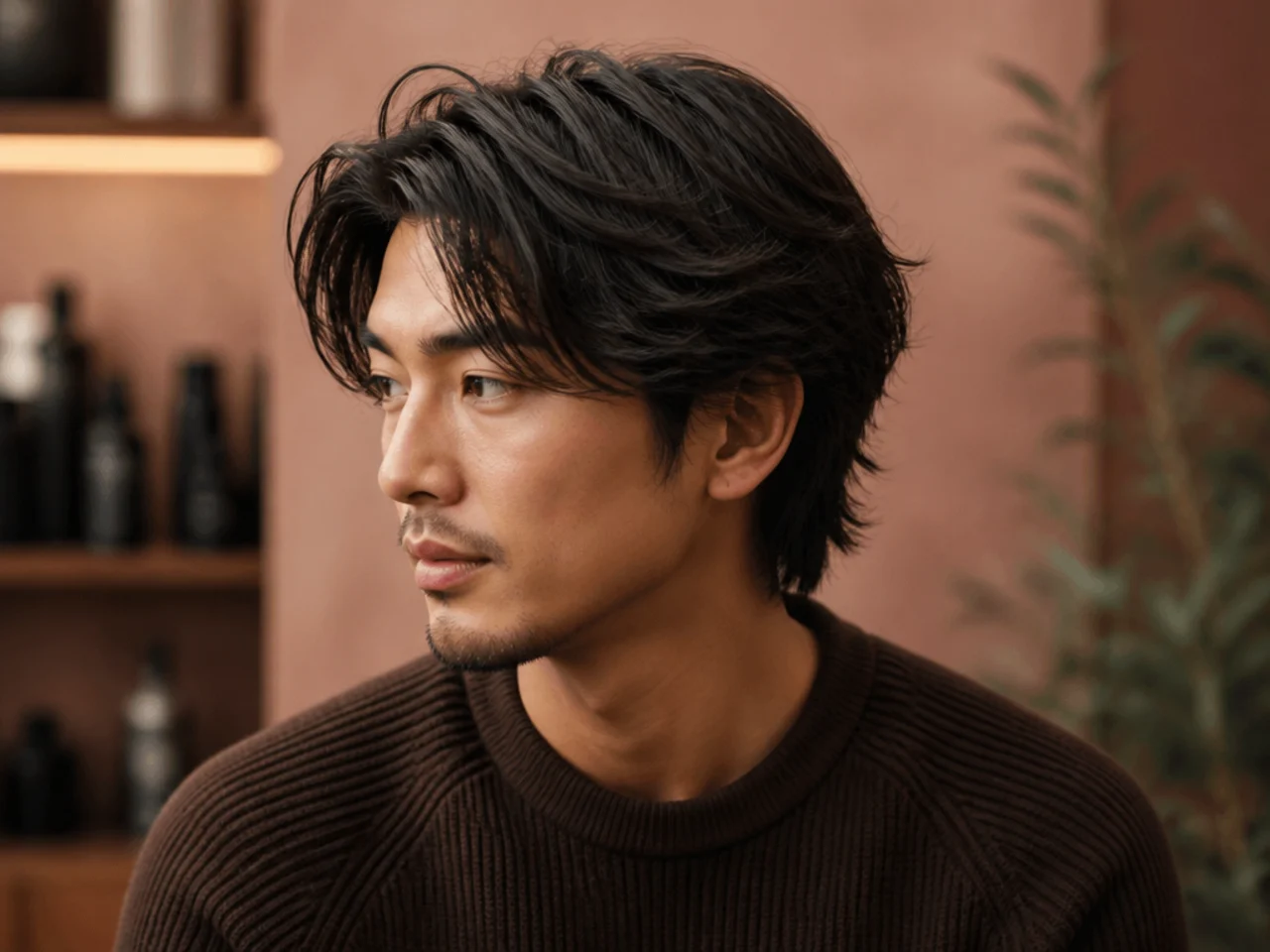
Yes — layers actually work better with air-drying for most hair types. Apply sea salt spray or mousse to damp hair, shape with your fingers, and let it dry undisturbed. For wavy and curly hair, air-drying preserves the natural texture layers are supposed to enhance. If you need volume, flip your head down while it dries. Heat is only necessary for setting a specific shape — otherwise, skip it.
Are Layered Hairstyles Professional?
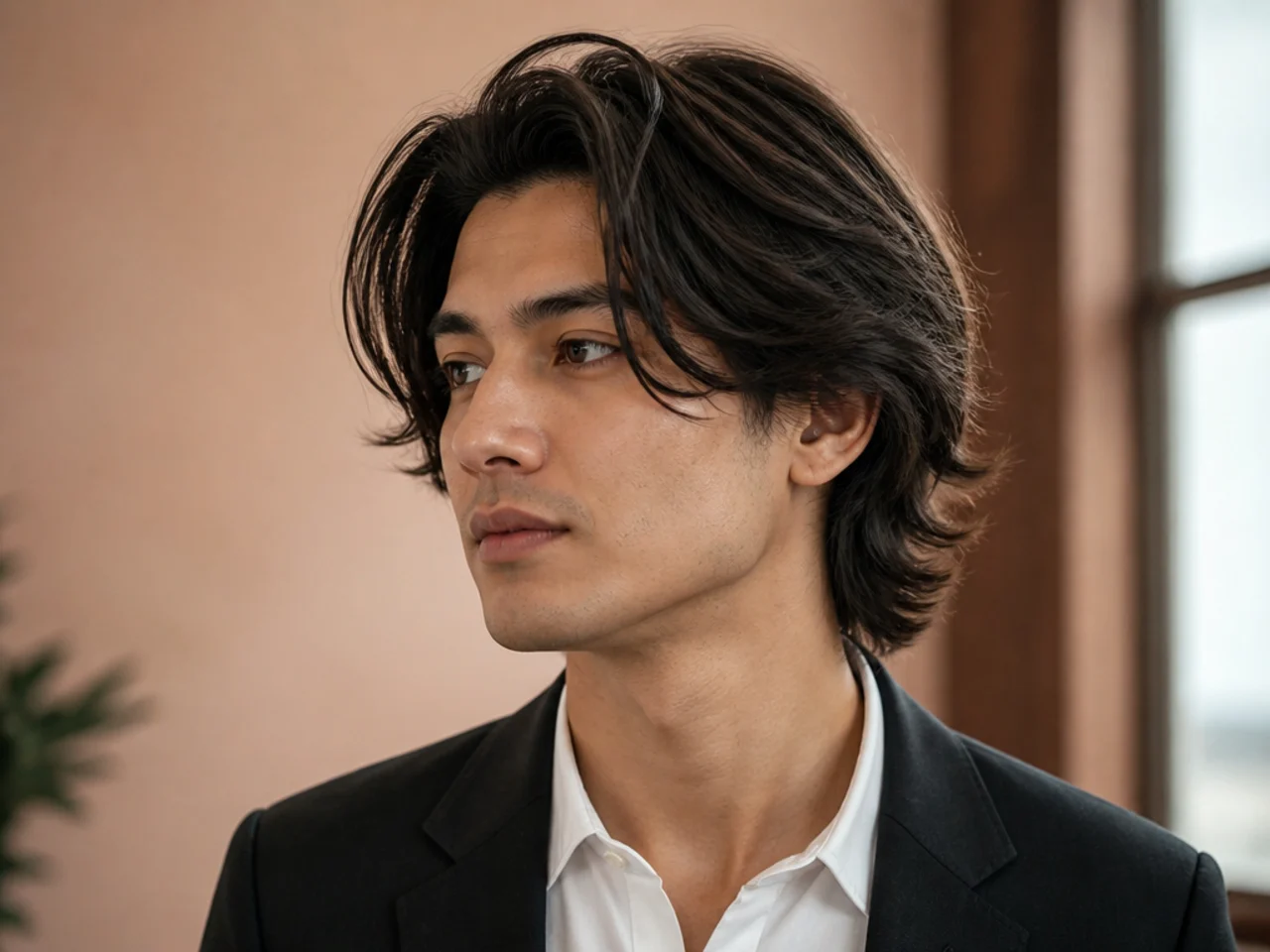
Yes, when styled cleanly. A side-parted layered cut with a taper fade reads as sharp as any traditional business cut. A full brush-back with a scissor-tapered side works for any office. The layered slick back is arguably more professional than a wet slick back — softer, cleaner, and less costume-like. The professional read comes from the sides being tidy and the styling being controlled, not from the cut being layer-free.
Which Face Shapes Suit Layered Haircuts Best?
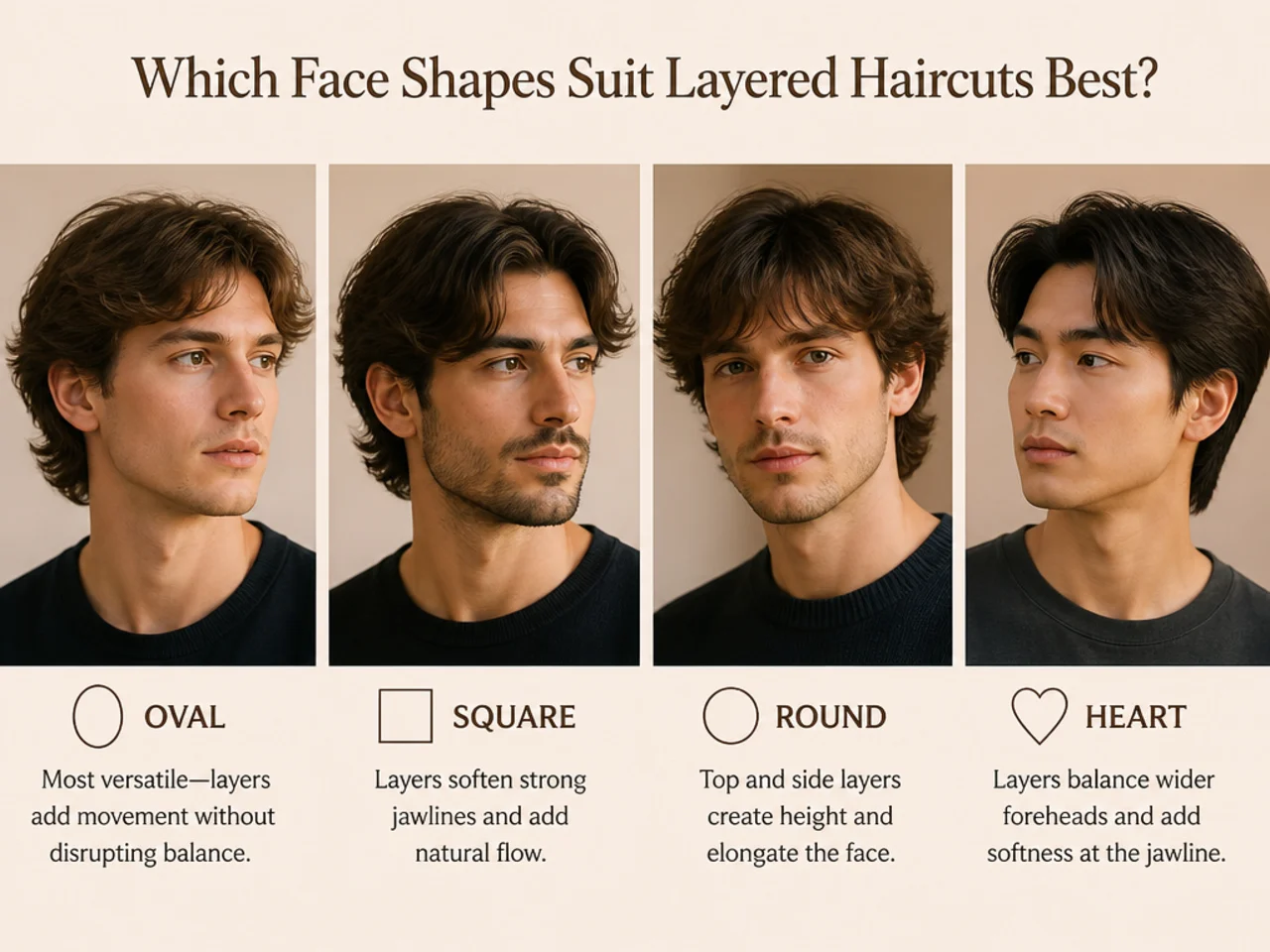
Round faces want longer top layers with tighter sides — the vertical shape lengthens the face visually. Square and rectangular faces want softer layers with fuller sides to soften the jaw. Oval faces wear almost anything. Long faces want horizontal volume — heavier layers through the crown with slightly fuller sides, not a tall top. Ask your barber to check your face proportions before setting the length.