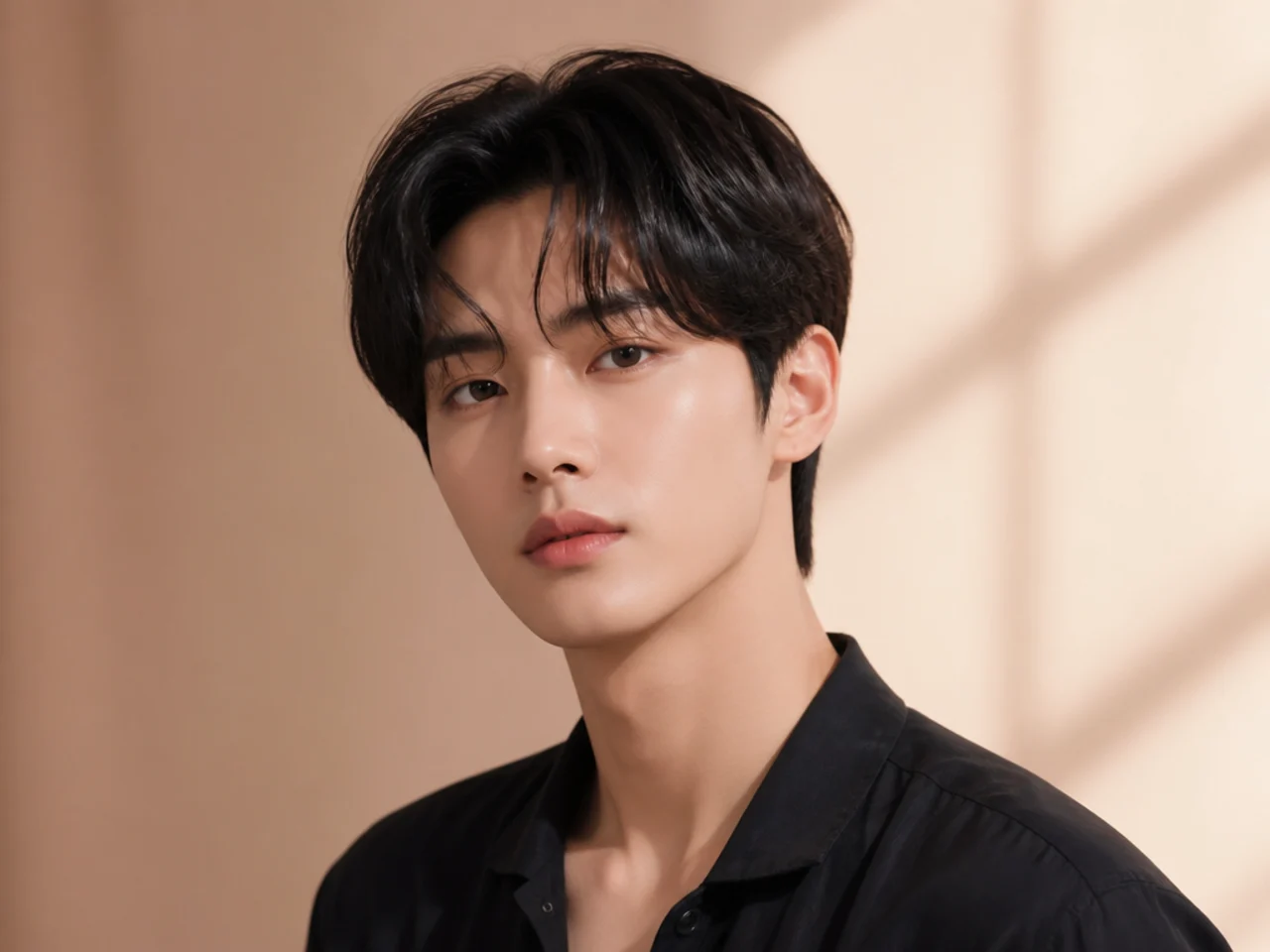
20 Korean Haircuts for Men That Women Love | K-Pop Trends
Discover the trendiest Korean Haircuts for Men! Transform your look with stylish cuts that highlight your personality and flair...
In this article · 35
- Korean Haircuts for Men
- Trends: Korean Haircuts for Men
- Short Korean Haircut for Men
- Korean Medium Haircut for Men
- Korean Long Haircut for Men
- Korean Fade Haircut for Men
- Korean Haircut for Curly Men
- Korean Layered Haircut for Men
- Bowl Cut Korean Haircut for Men
- Undercut Korean Haircut for Men
- Korean Haircut for Men with Bangs
- Korean Fringe Haircut for Men
- Korean Wavy Haircut for Men
- Middle Part Haircut for Men Korean
- Korean Perm Haircut for Men
- Mullet Haircut for Men Korean
- Korean Wolf Haircut for Men
- Ponytail Korean Men Haircut
- Quiff Korean Men Haircut
- Korean Buzz Cut for Men
- Korean Textured Crop Haircut Men
- Korean Slicked Back Hairstyle Men
- How to Style Korean Haircuts for Men?
- Embrace Texture
- Focus on Bangs
- Play with Length
- Add a Fade
- Use Accessories Thoughtfully
- Stay Groomed
- Tailor to Your Face Shape
- Conclusion
- FAQs
- What is the Korean Male Haircut Called?
- What is the Popular Haircut for Men in Korea?
- What is the Name of BTS Hairstyle?
Korean men's cuts drive the current wave of global hair trends. The comma, the two block, the middle part, the curtain — every one traces back to Seoul salons and K-pop stylists. Korean hair is glossy, styled, and precise. Never air-dry-messy. Your toolkit is a hairdryer, a round brush, a light cream, and a mist of hairspray. Most of these cuts want 3 to 5 inches on top.
Korean Haircuts for Men
Korean men's hair sits at the center of global trends for a reason. K-pop stylists rewrite the playbook every album cycle, and Seoul salons run months ahead of what shows up on Pinterest. The shared DNA: length on top (usually 3 to 5 inches), scissor-blended sides that stay soft rather than clipper-blunt, and a shiny, styled finish that never reads accidental.
Nothing about a good Korean cut is left to chance. The comma curl gets set with a round brush. The two block edge gets carved with a trimmer. The middle part gets blown down and locked with a light hairspray. Air-dry culture doesn't live here — you style every morning, or you skip the cut.
Texture matters more than face shape. Straight or lightly wavy Asian-type hair is the default target for most of these silhouettes. Curly and coarse hair can wear the same shapes, but styling swaps in a diffuser and a cream where a round brush would go.
Trends: Korean Haircuts for Men
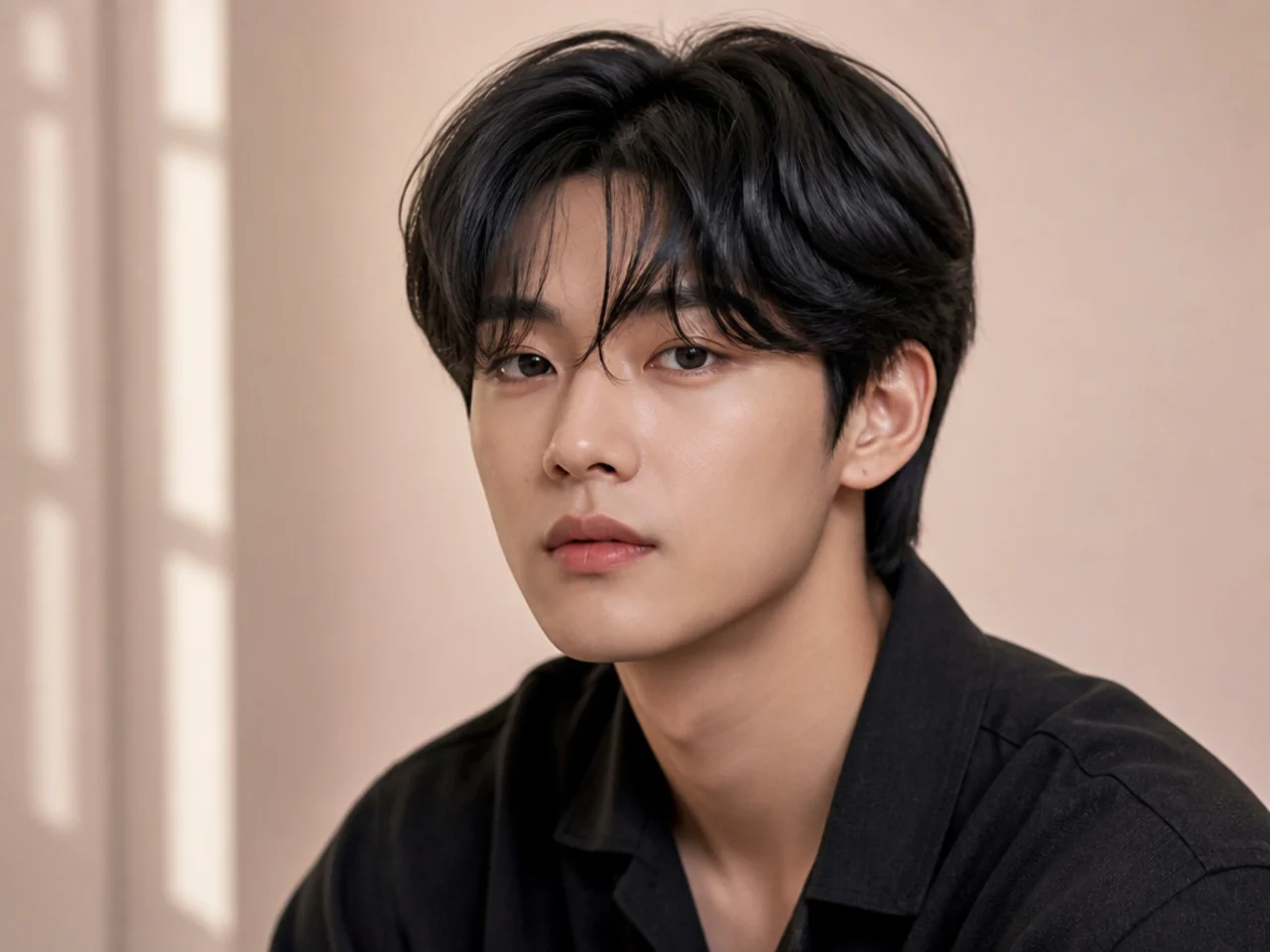
Here are 20 variations moving through Korean barbershops right now — what makes each one different, who it suits, how to ask, and one styling tip.
Short Korean Haircut for Men
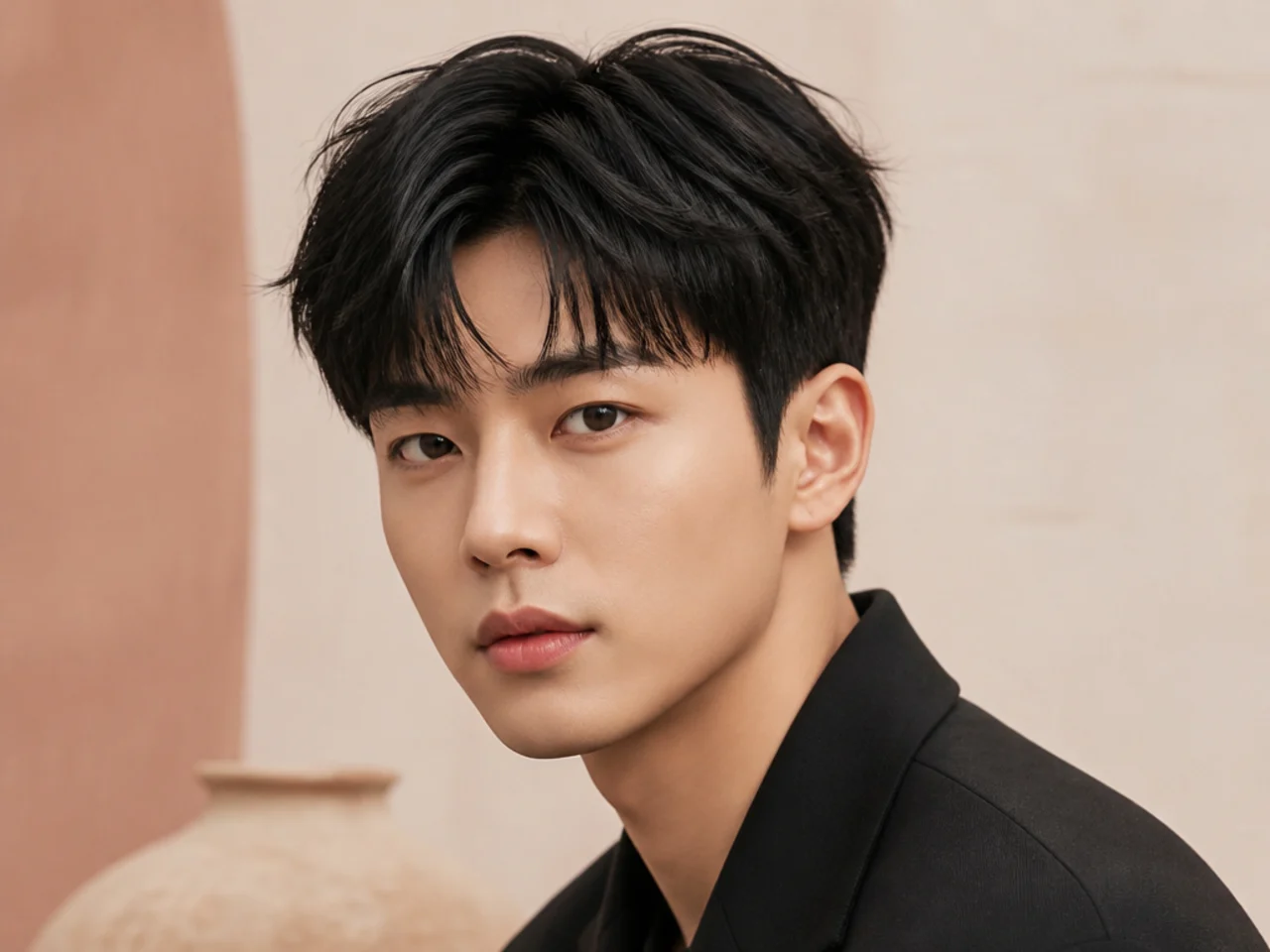
The short Korean cut trims the top to 2 to 3 inches and keeps the sides scissor-tapered instead of faded to skin. That's the tell — Korean barbers rarely go bald-fade short. Everything reads soft and clean, not sharp.
Best on straight hair with oval, oblong, or heart-shaped faces. Round faces should keep the top slightly longer for height.
Ask for a short scissor cut around 2 inches, sides tapered with scissors, no visible fade line. Point out you want the top to fall forward rather than stand up — Korean short cuts comb-forward from a natural crown.
Styling tip: rough-dry the top with your fingers for root volume, then work a pea of light cream through damp hair and comb forward. Skip any product on the sides.
Korean Medium Haircut for Men
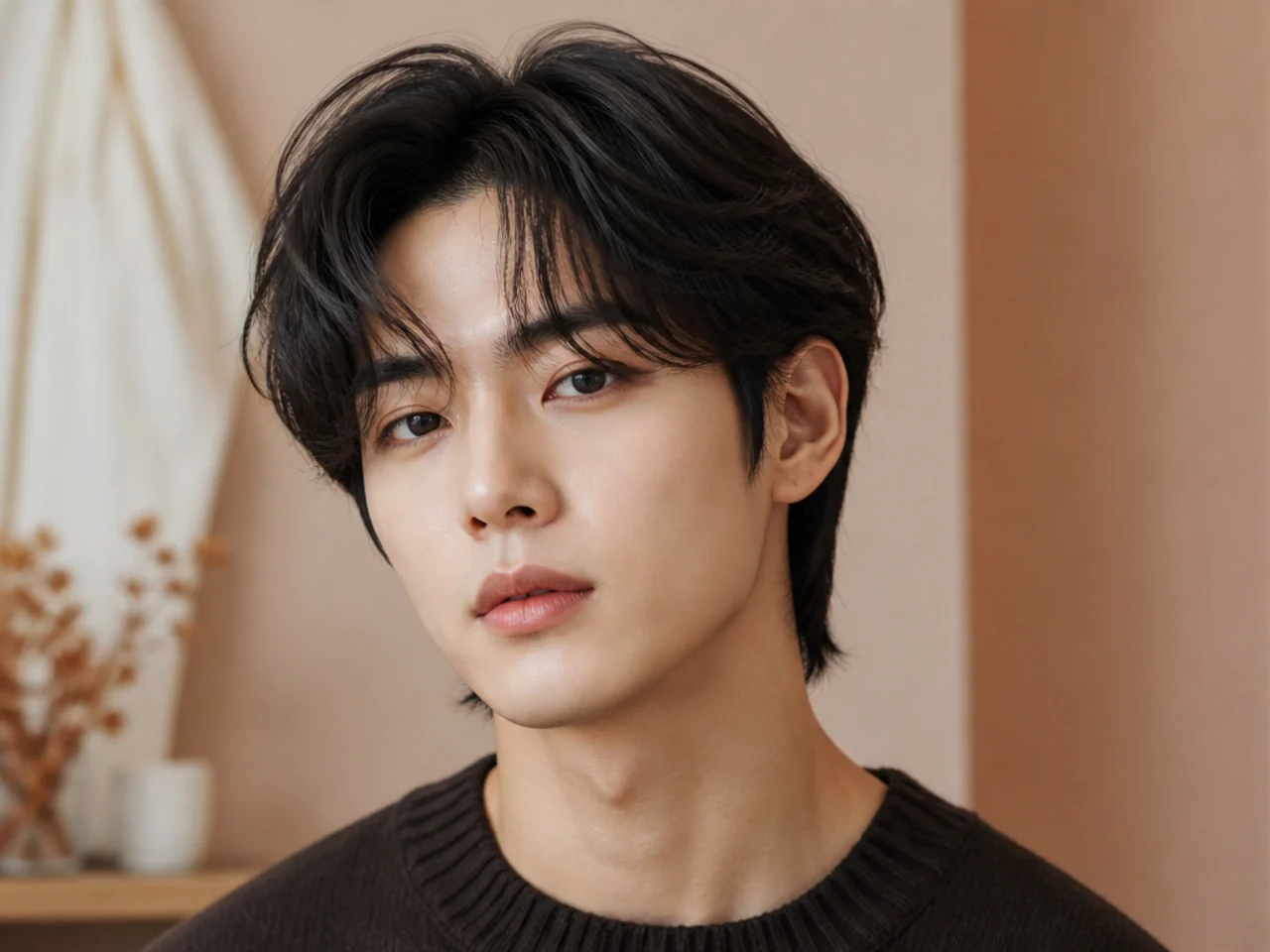
The medium Korean cut keeps roughly 4 inches on top and lands between the two block and the classic K-drama lead look. It's the safest starting point if you're new to Korean styling — long enough to shape with a round brush, short enough to look pulled-together without daily fuss.
Best on straight to wavy hair and most face shapes. Fine hair benefits from the length carrying volume; thick hair may want internal thinning.
Ask for 4 inches on top, scissor-cut sides above the ears, and internal layers so the top doesn't feel helmet-heavy. Reference a medium haircut photo — this style photographs better than it describes.
Styling tip: blow-dry with a round brush pulling the front up and slightly back. Finish with a matte cream through the mid-lengths, then a mist of light hairspray.
Korean Long Haircut for Men
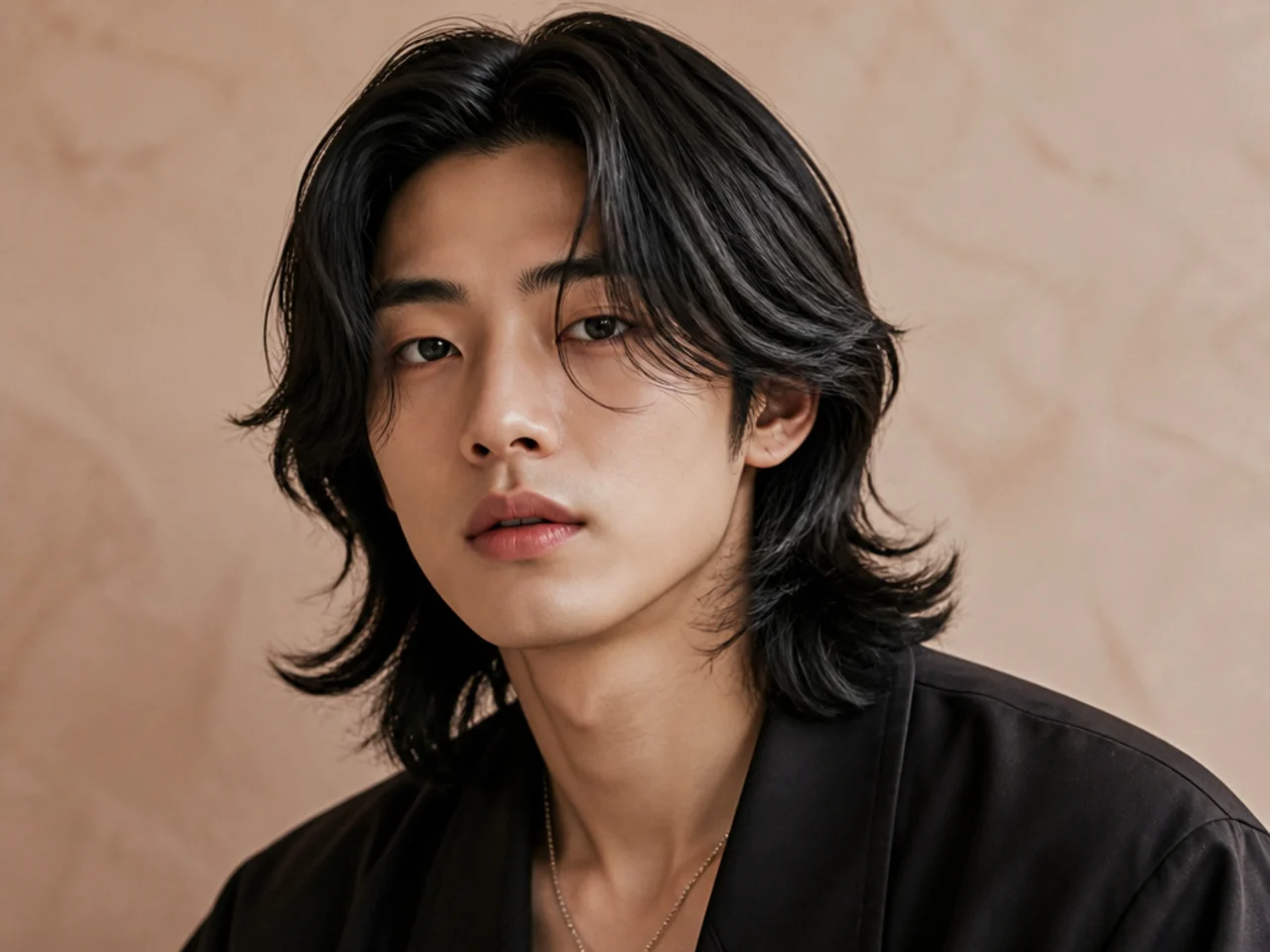
Long Korean styles run 6 inches and up, sitting past the eyebrows in front and past the collar in back. Think of the softer BTS Jin or Cha Eun-woo drama-era looks — glossy, layered, always in motion.
Best on straight hair with long or oval face shapes. Round faces should keep length concentrated on top and around the crown, not on the sides.
Ask for face-framing layers starting at the cheekbones, sides long enough to tuck behind the ears, and a taper — not a blunt cut — into the neckline. Bring photos; length terminology gets lost in translation.
Styling tip: shampoo, condition, and never skip a leave-in. Rough-dry to 80 percent, then round-brush section by section. A drop of hair oil on the mid-lengths is what makes Korean long hair look Korean.
Korean Fade Haircut for Men
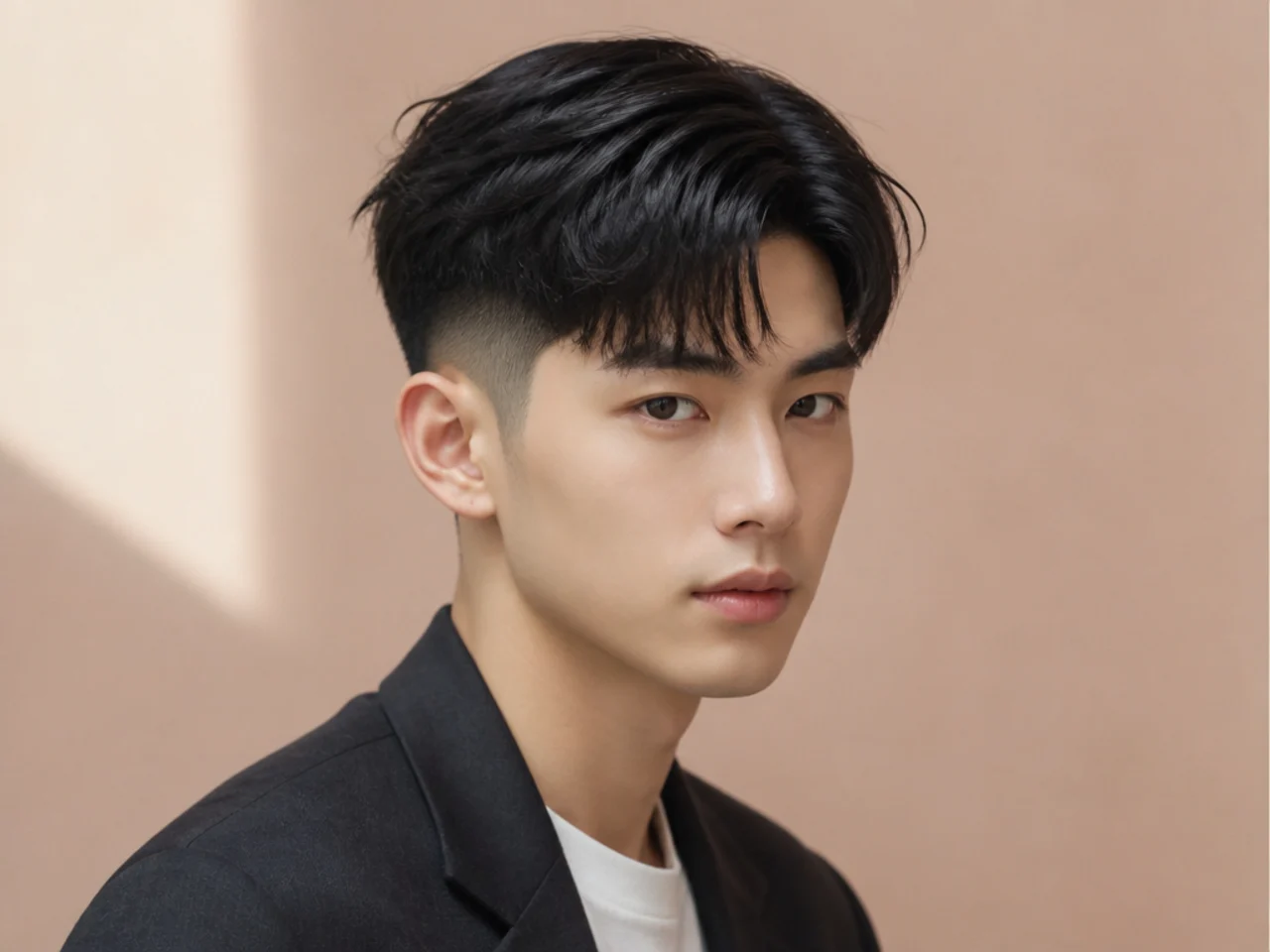
The Korean fade is quieter than the American fade. Where a U.S. barber might drop to skin on a high fade, Korean barbers usually settle at a low fade or mid fade with the line sitting below the temple. The top stays long — this is a fade for length, not against it.
Best on every face shape. Round and square faces love the vertical stretch a low fade gives.
Ask for a low taper fade stopping at the sideburn line, 3 to 4 inches on top, and a scissor-blended transition. Say "soft fade, not skin" so nothing goes shorter than a #1 guard.
Styling tip: fades still need product on top. A light pomade for shine, or a matte cream for a modern read — pick your finish and commit.
Korean Haircut for Curly Men
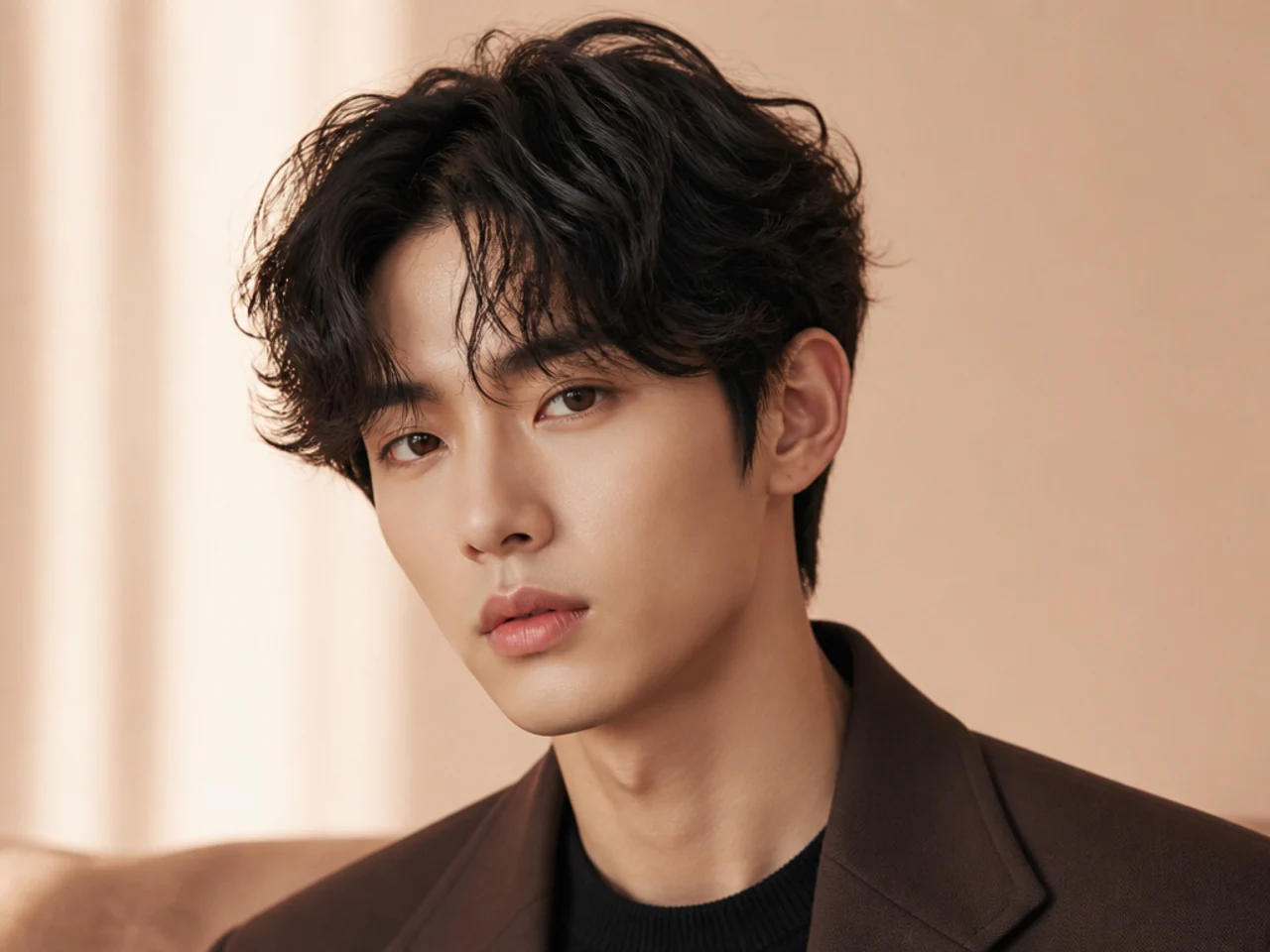
Curly Korean cuts play the length-up-top card but lean on the curl pattern instead of fighting it. If your texture runs loose wave to coily, this is the cut. Keep 3 to 4 inches on top, taper the sides softly, let the curls sit forward and slightly to one side.
Best on wavy, curly, or coily hair with medium density. Fine curls benefit from the taper adding shape.
Ask for a soft taper on the sides, no fade, and layers on top cut to fall with the curl direction. Show your barber a photo of your hair dry, not slicked back.
Styling tip: apply a curl cream to soaking-wet hair, scrunch upward, then diffuse on low heat. Don't touch until fully dry. See curly hair styling for men for product picks.
Korean Layered Haircut for Men
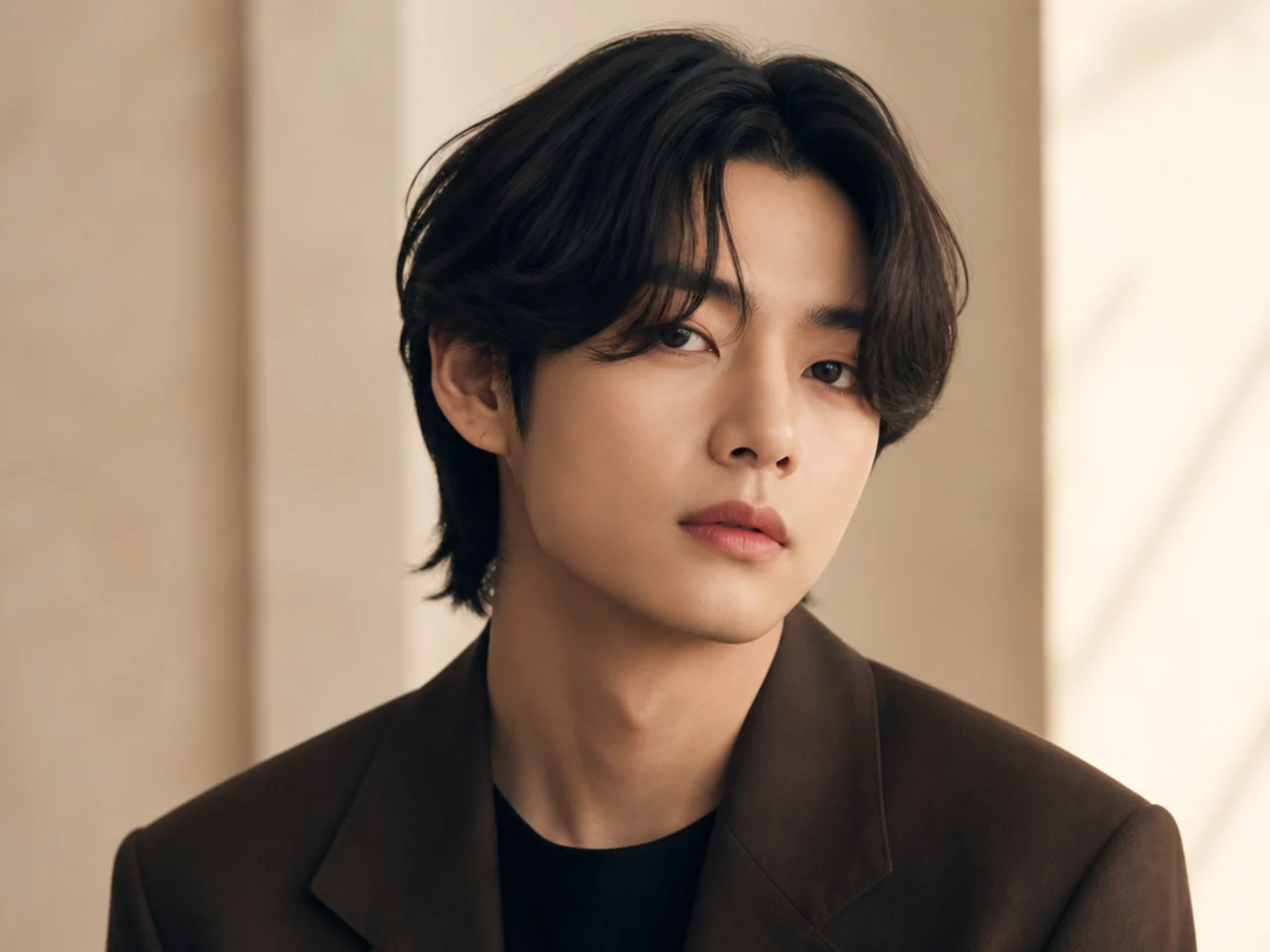
Layers do the invisible work behind every Korean long-top look. Without them, 4 inches on top sits like a mushroom. With them, the shape moves. A Korean layered cut concentrates layers on the top and front, keeping the underside solid so the crown holds volume.
Best on thick, straight hair that would otherwise sit heavy. Fine hair should ask for texture only at the tips.
Ask for internal point-cut layers on the top third, sides scissor-blended, and the front slightly longer than the crown so it falls forward. Reference a layered cut image.
Styling tip: layers show best on air-textured hair. Blow-dry with a round brush lifting from the roots, then break the shape with your fingers and a pea of cream. Never comb through after styling.
Bowl Cut Korean Haircut for Men
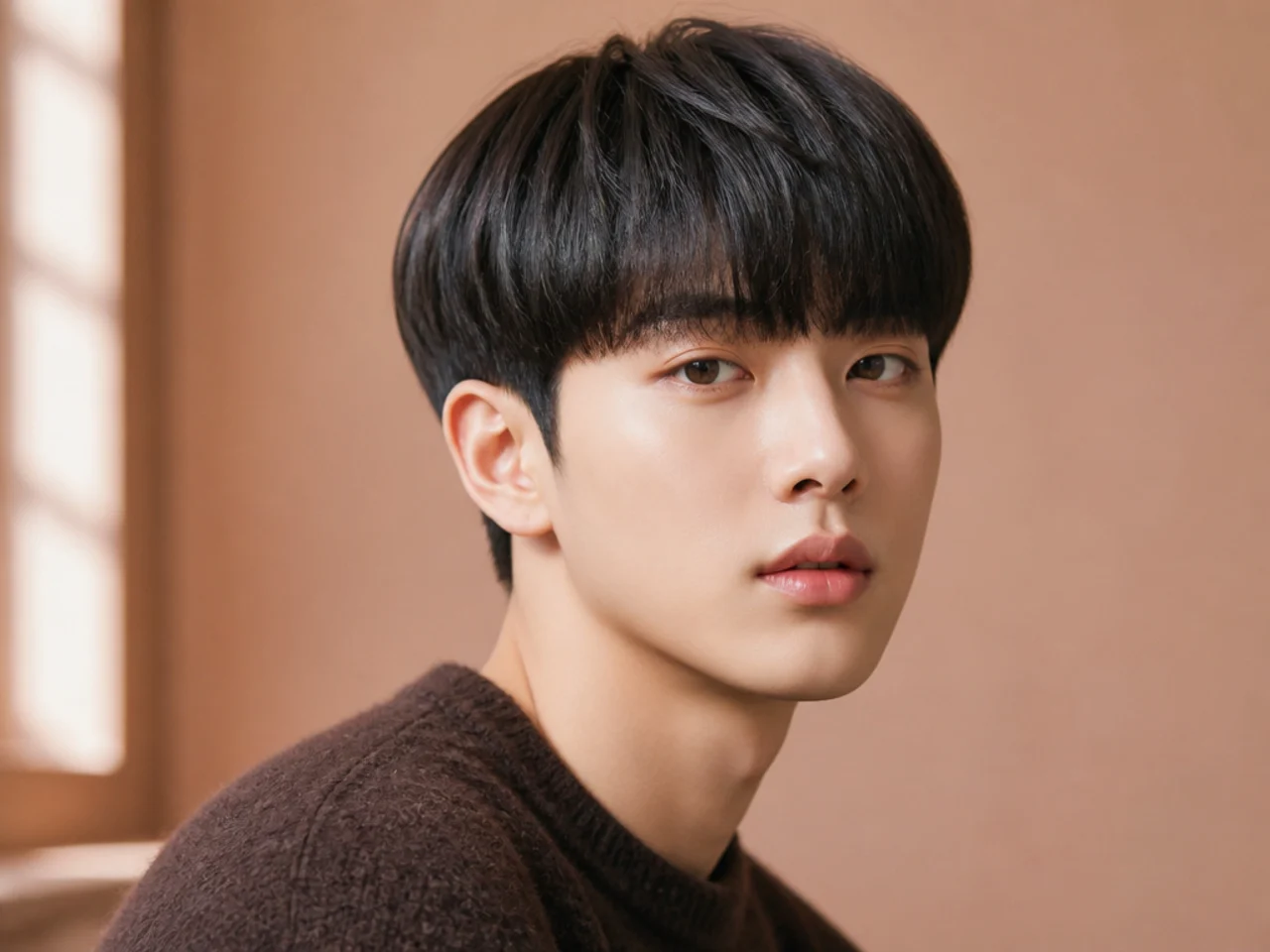
The Korean bowl cut is not the 90s cereal bowl. Modern versions taper the underside — sometimes with an undercut, sometimes a soft scissor blend — and keep a longer, disconnected top that falls in a smooth curve across the forehead. J-Hope wore it. So did every K-drama villain from 2018 forward.
Best on straight hair with medium to thick density. The shape carries the face.
Ask for a bowl-shaped perimeter that skims the eyebrows and covers the top of the ear, with an undercut or short taper underneath. Bring a photo — this cut goes wrong without one.
Styling tip: blow-dry forward and down using a flat brush, not round. Finish with a shine spray, not a hold product. The bowl should look sculpted and smooth, never crunchy at the tips.
Undercut Korean Haircut for Men
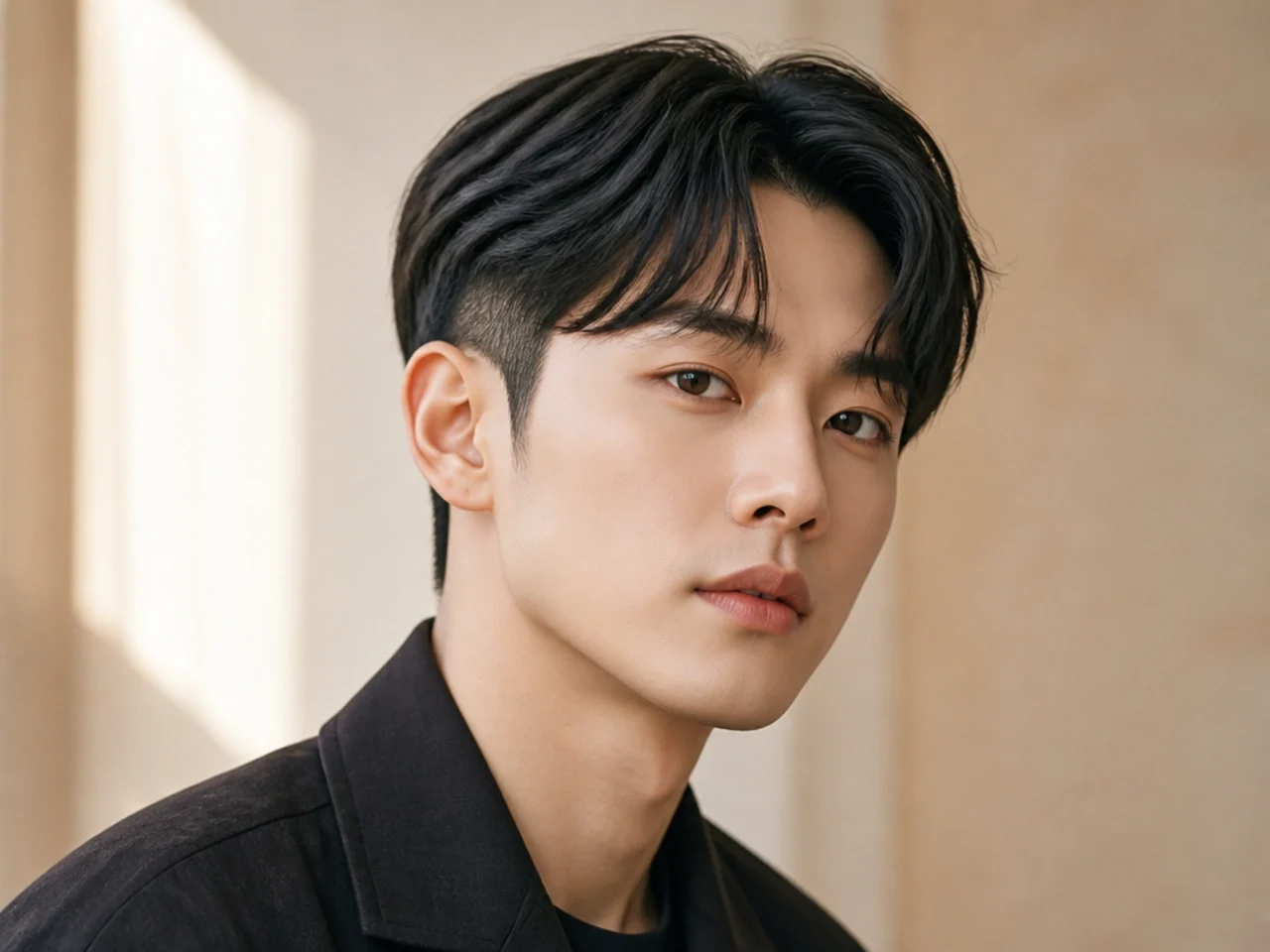
Korean undercuts are almost always disconnected — the top and sides don't blend, they meet at a hard visible line. Pair disconnected sides with a long top and you have the classic two block silhouette. The undercut fade softens it by tapering the underside instead of leaving it blunt.
Best on straight or wavy hair. Angular faces get sharper; round faces get lengthened.
Ask for a disconnected undercut with a #2 or #3 guard underneath and 4 to 5 inches on top. Point to where you want the disconnect line — usually just above the ear.
Styling tip: the top does all the work. Blow-dry forward and down with a round brush, part where the hair naturally splits, finish with a matte cream. The sides need nothing.
Korean Haircut for Men with Bangs
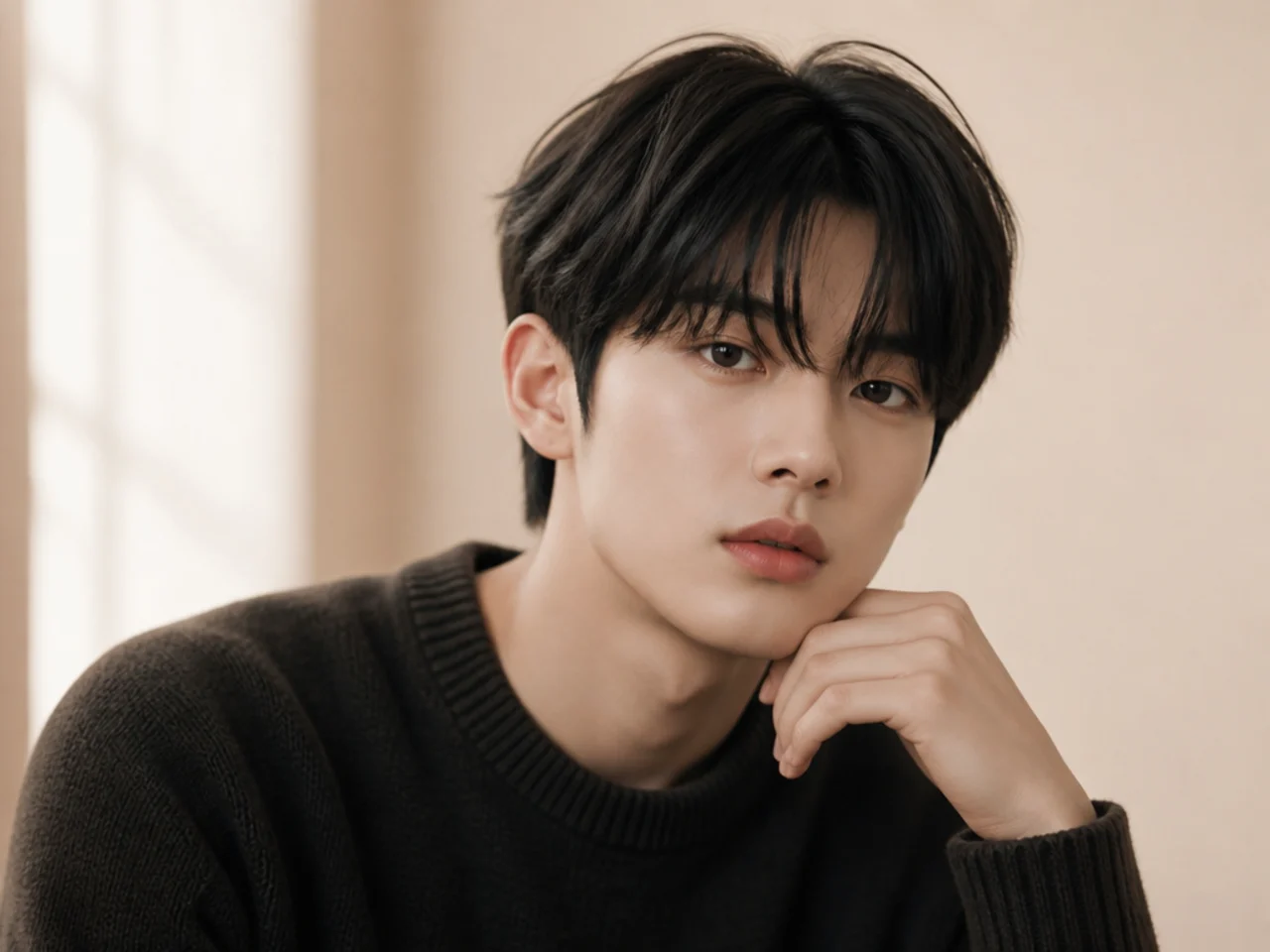
Korean bangs are longer than American bangs and rarely blunt. They fall past the eyebrows, get texturized so they break into soft pieces, and either sit forward across the forehead or split into a comma curl or curtain over the temples.
Best on medium to long hair and most face shapes. High foreheads especially benefit — Korean bangs cover cleanly.
Ask for face-framing bangs starting at the corner of the eye, textured through the tips with point cutting, and long enough to touch the eyelash line. Say "no blunt" three times if you have to.
Styling tip: bangs live or die by the round brush. Blow-dry them down and slightly forward while wet, then hit them with cool air for two seconds to set. A mist of light hairspray keeps them from splitting into chunks by lunchtime.
Korean Fringe Haircut for Men
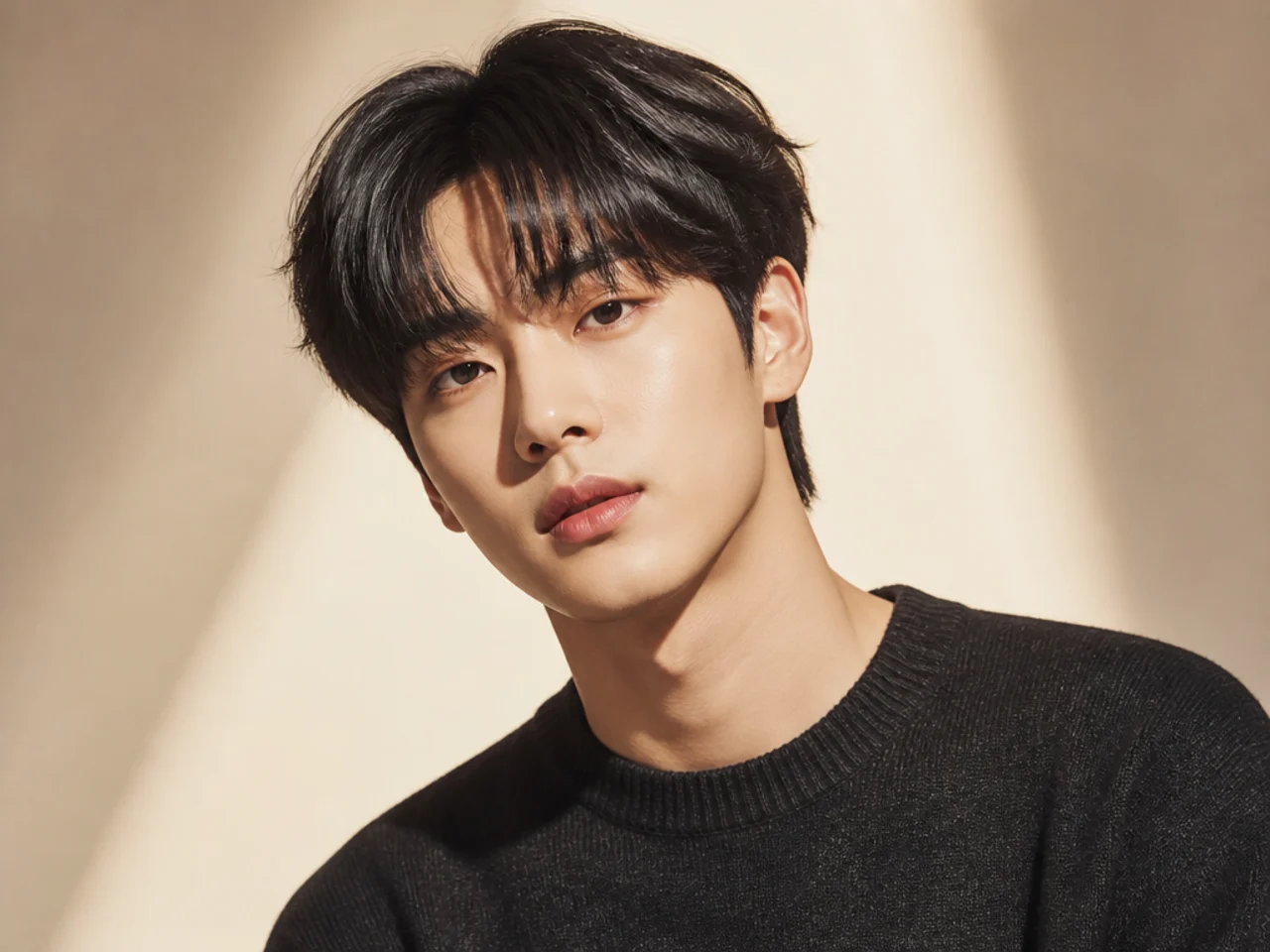
Fringe is the umbrella term Korean stylists use for any front-heavy shape — comma cuts, curtain fringes, cropped fringes, side-swept fringes all sit under it. Length runs 3 to 5 inches, with the fringe reaching the eyebrows or just past.
Best on every face shape when you tune the weight right. Long faces want a heavier fringe; round faces want a side-swept one.
Ask for a fringe cut with the front longer than the crown, texturized ends, and enough length to style multiple ways. Specify which direction you want it to fall.
Styling tip: fringe wants a lightweight cream, never a paste. Comb it forward while blow-drying with a round brush, then break the shape with your fingers. A light hairspray fixes the fall without freezing it.
Korean Wavy Haircut for Men
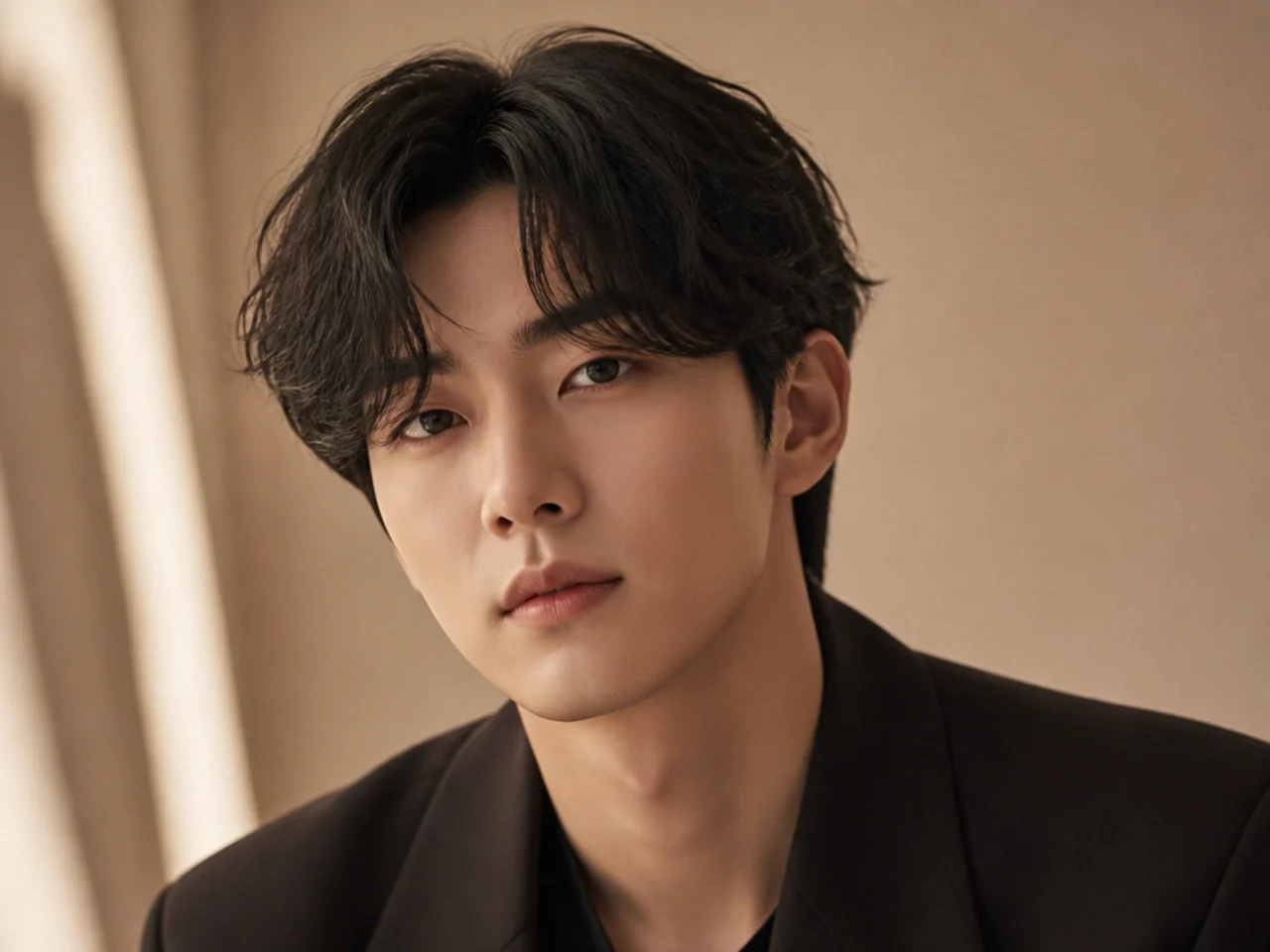
The Korean wavy cut takes a medium-length top and lets natural wave do half the styling. If your hair is straight, this look gets faked with a soft perm — Korean salons perm way more than American ones, and the finish reads as natural.
Best on wavy hair. Straight-haired guys should book a perm consultation, not try to blow-dry the wave in.
Ask for 4 to 5 inches on top, scissor-blended sides, and layers cut with the wave pattern rather than against it. If you're perming, ask for a "light setting perm" — Korean vocabulary for a natural-looking wave.
Styling tip: apply a curl-defining cream to damp hair, scrunch, and diffuse on low. On dry hair, redefine with a spray gel. Wavy Korean styles need moisture — dry, frizzy waves look off.
Middle Part Haircut for Men Korean
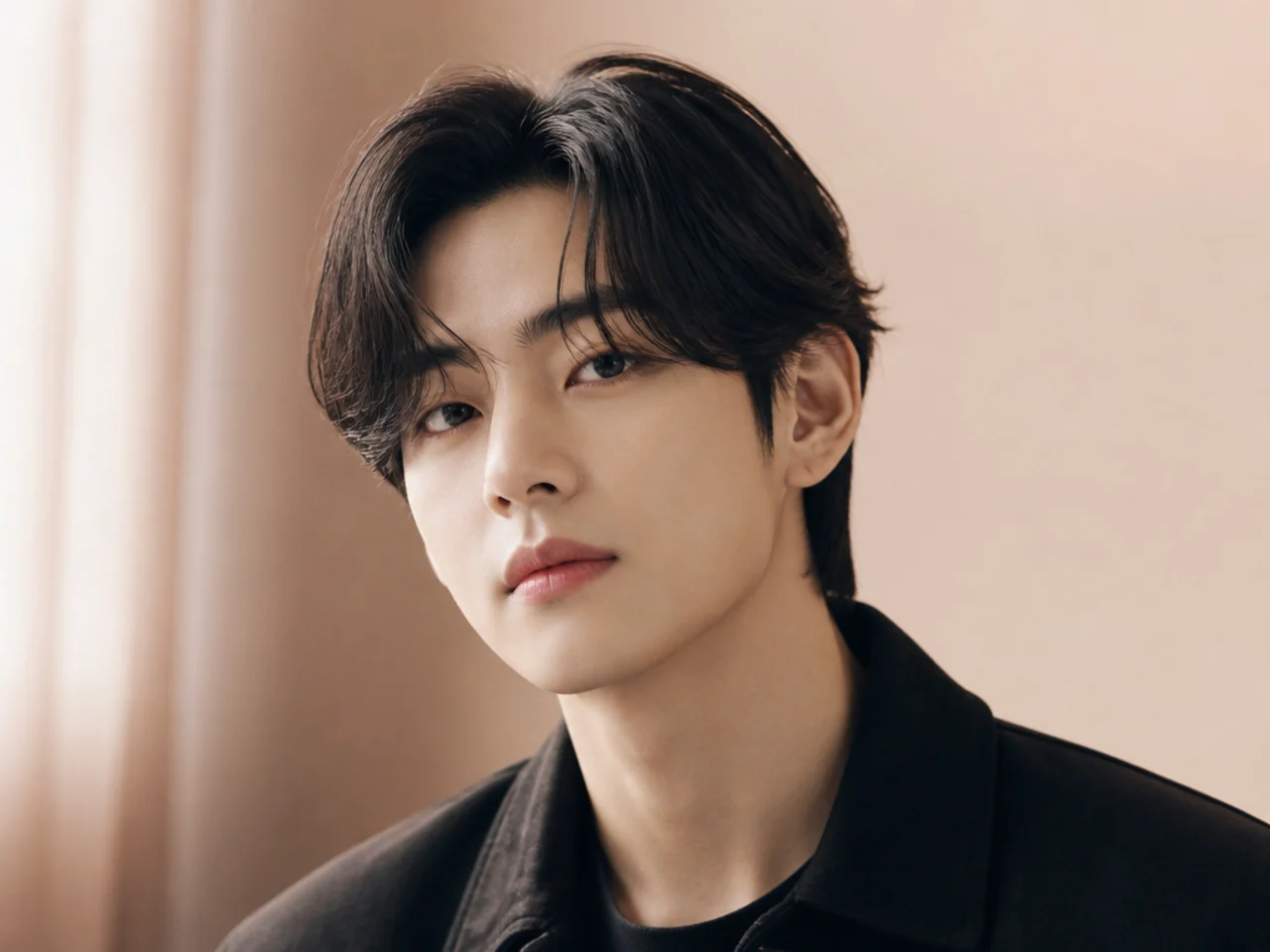
The middle part is the K-drama lead default. Length runs 4 to 6 inches, parted straight down the center, with each side falling forward to frame the eyes. Curtain variations flip the ends slightly outward at the cheekbones.
Best on oval, square, and heart-shaped faces. Round faces need extra volume at the crown to keep the part from widening the face.
Ask for a center part, 4 to 5 inches on top, scissor-tapered sides that stay long enough to tuck, and a slight forward curve on the ends. You cannot fake this cut with the wrong length — commit or pick something else.
Styling tip: blow-dry with a round brush pulling each side forward and slightly out. Set with cool air. A pea of light cream through the mid-lengths, then hairspray. Recomb the part while wet, not dry.
Korean Perm Haircut for Men
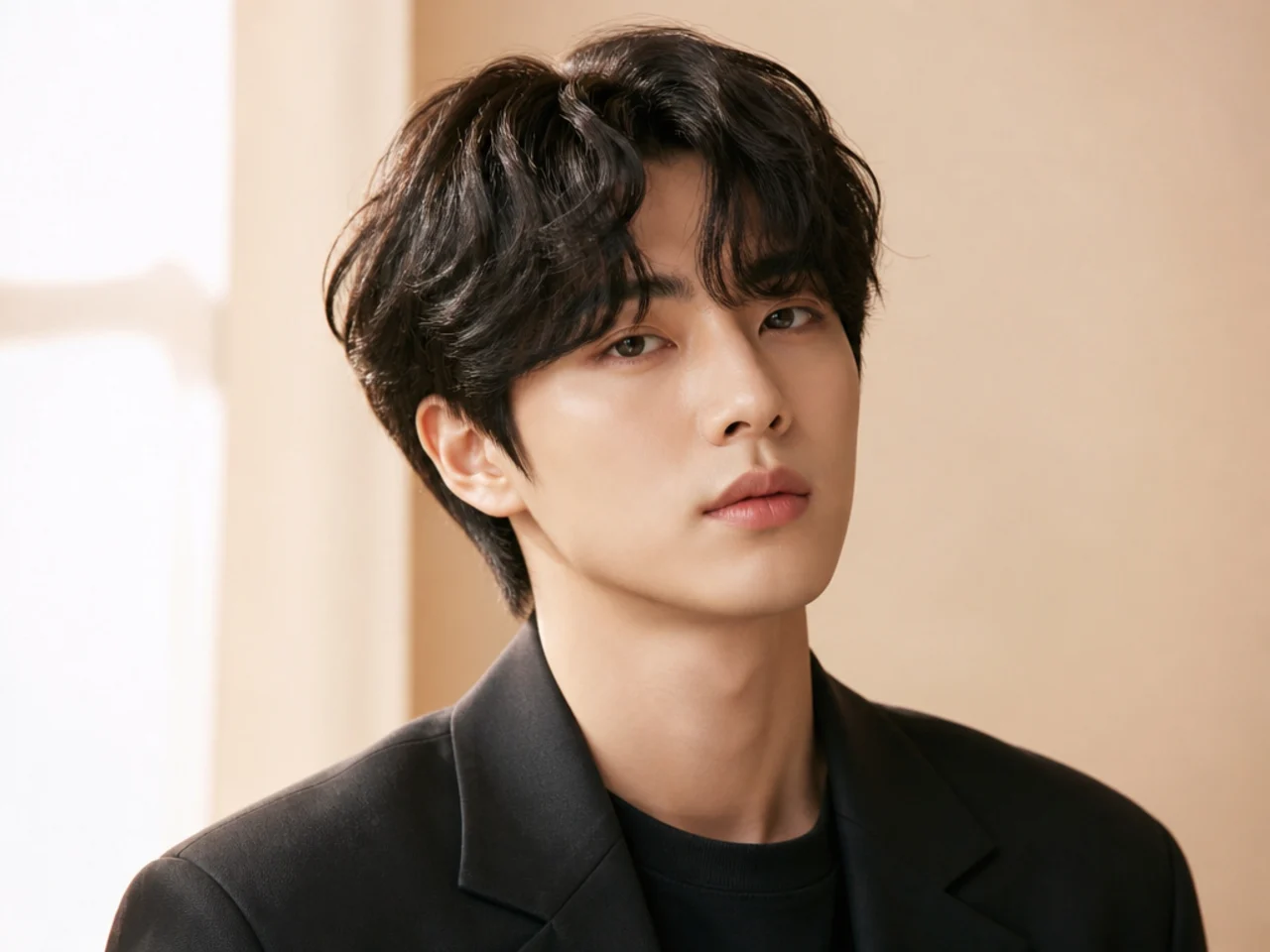
Perms are baseline in Korean men's hair. A setting perm adds gentle root volume; a Superman perm loops the front into a defined comma curl; a wolf perm ramps texture through every layer. Any of these pair with almost every cut in this guide — the perm sits underneath the shape.
Best on straight hair that won't hold volume, or thick straight hair that needs bend. Skip if your hair is already curly.
Ask for the perm type by name — barbers pattern-match faster to Korean terminology. Bring a photo of the finish. Cut first, perm second, same appointment.
Styling tip: perms are wash-and-go, not brush-and-go. Air-dry or diffuse, scrunch in a curl cream, leave the shape alone. Brushing a perm out drops the pattern within a week.
Mullet Haircut for Men Korean
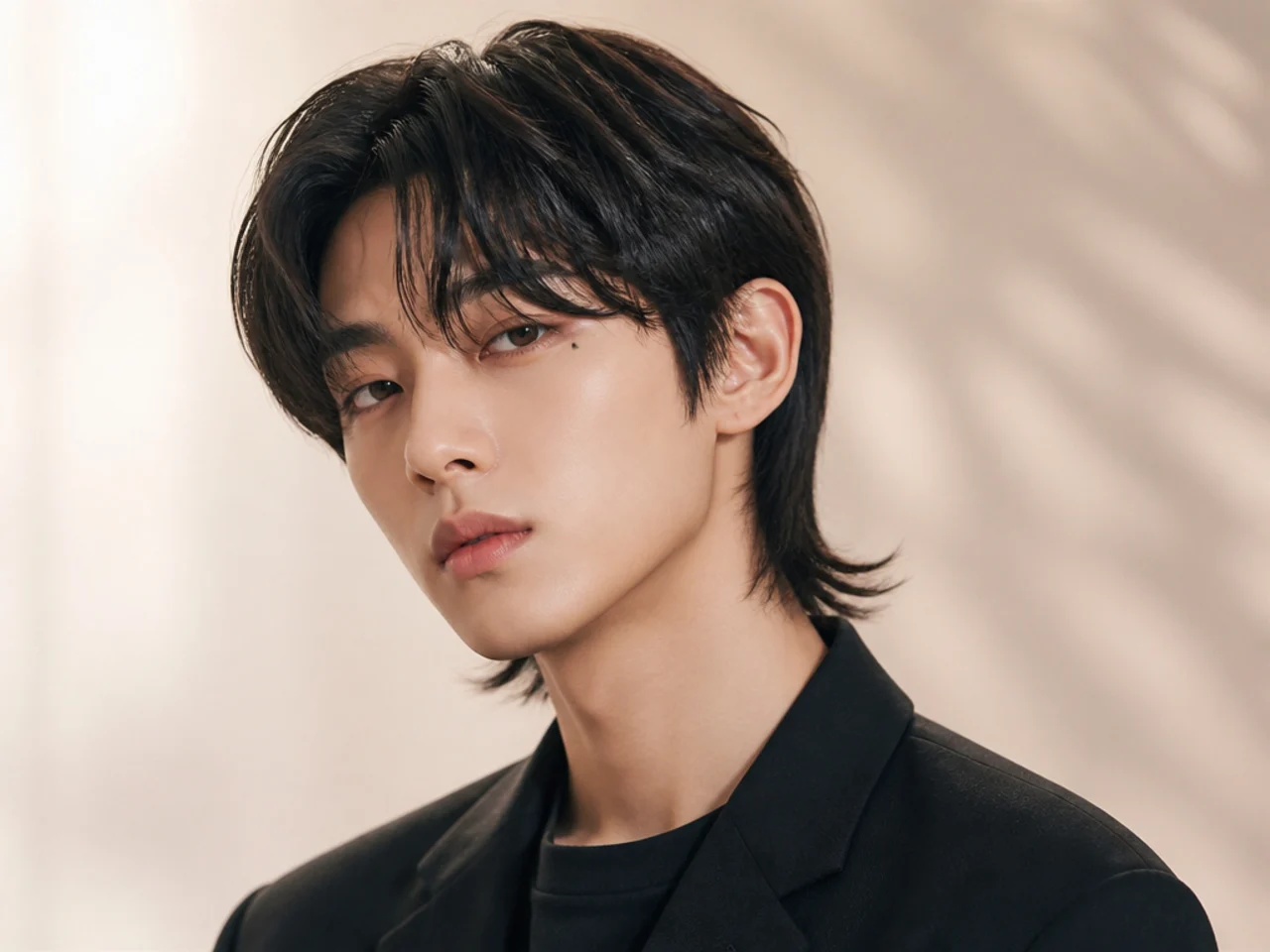
The Korean mullet — often called a wolf cut when the layers get heavier — keeps the top and front short to medium, then drops length through the back past the nape. Nothing about it reads 80s American. It's shaggy, textured, almost always paired with a middle or side part on top.
Best on oval and oblong faces. Wide faces should keep the sides shorter to avoid balancing width with more width.
Ask for 3 to 4 inches on top, texturized back layers reaching 5 to 6 inches, and heavily point-cut ends. Reference a Korean photo — American mullets look different and your barber will default to what they know.
Styling tip: rough-dry with your fingers pulling everything back and out from the crown. A texture or sea salt spray gives the shag its edge. Skip the hairspray.
Korean Wolf Haircut for Men
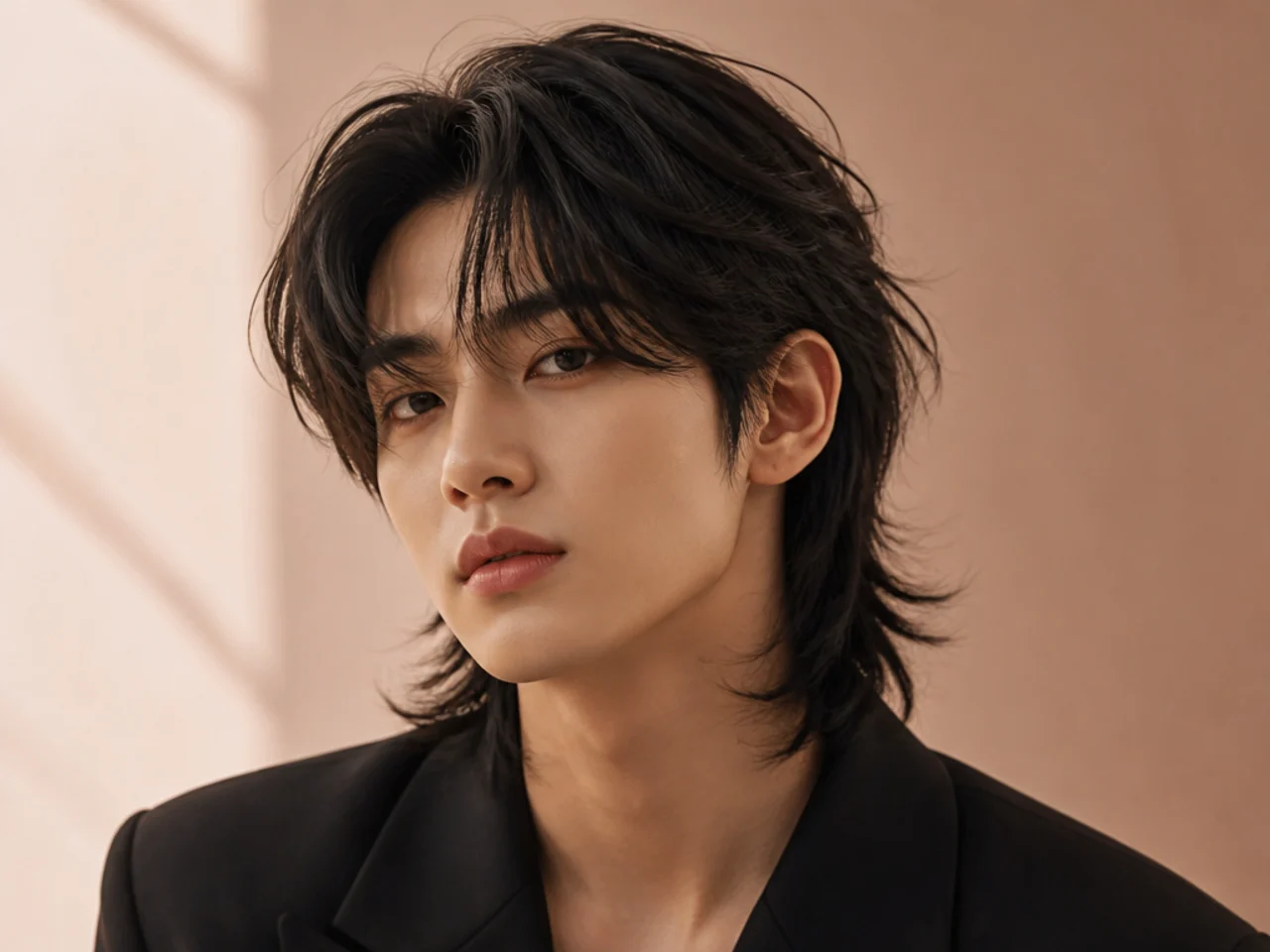
The wolf cut is a mullet crossed with a shag — heavier layers throughout, more volume around the crown, and a front that can be styled with a comma curl or a middle part. Look at Wonwoo's late-2022 era for a textbook Korean wolf.
Best on straight to wavy hair with medium density. Fine hair may look sparse; thick hair may need internal thinning.
Ask for a wolf cut with layers starting at the temples, length running longer at the back than the sides, and heavy texture through the tips. Say you want the fringe forward, not swept.
Styling tip: this cut wants wave. If your hair is straight, run a curling wand through the top and front pieces before dressing. A texture spray finishes it; a fine-tooth comb kills it.
Ponytail Korean Men Haircut
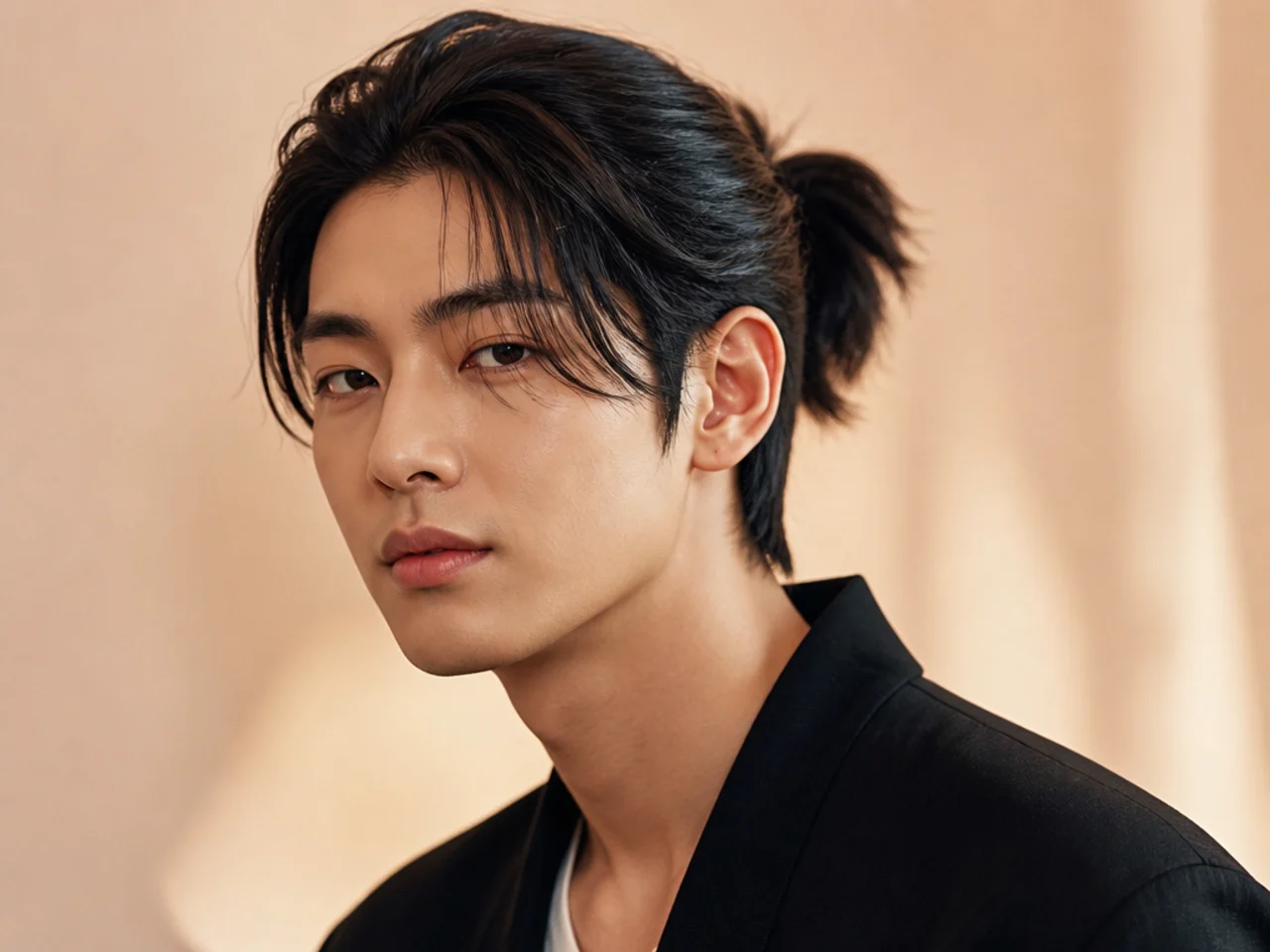
The ponytail cut isn't really a cut so much as a length target — usually 8 inches or more, all one length past the shoulders, with subtle layers around the face so the front pieces frame when the tail is up. Idols like Kang Daniel and Bang Chan wear it in and out of pulled-back styles constantly.
Best on straight or wavy hair. Density matters more than face shape — thin ponytails read scraggly.
Ask for a straight-across length past the shoulders, layers no shorter than the jawline, no thinning at the ends. Tell your barber you want it to hold in a low or high pony without wisps escaping.
Styling tip: brush knots out before washing, not after. On days you tie it up, wet-set the front pieces to frame the face. Down days want a leave-in and a wide-tooth comb only.
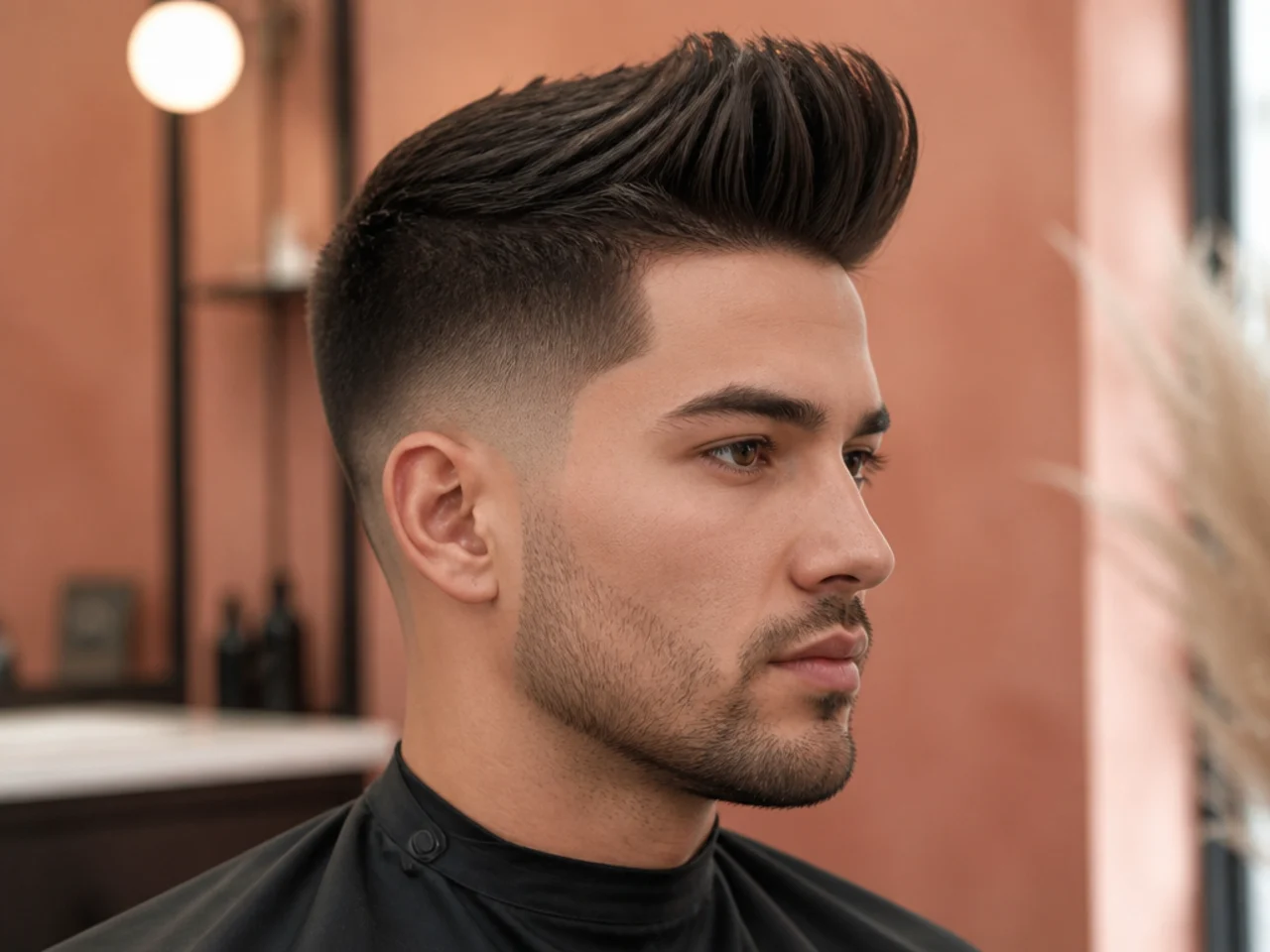
Quiff Korean Men Haircut
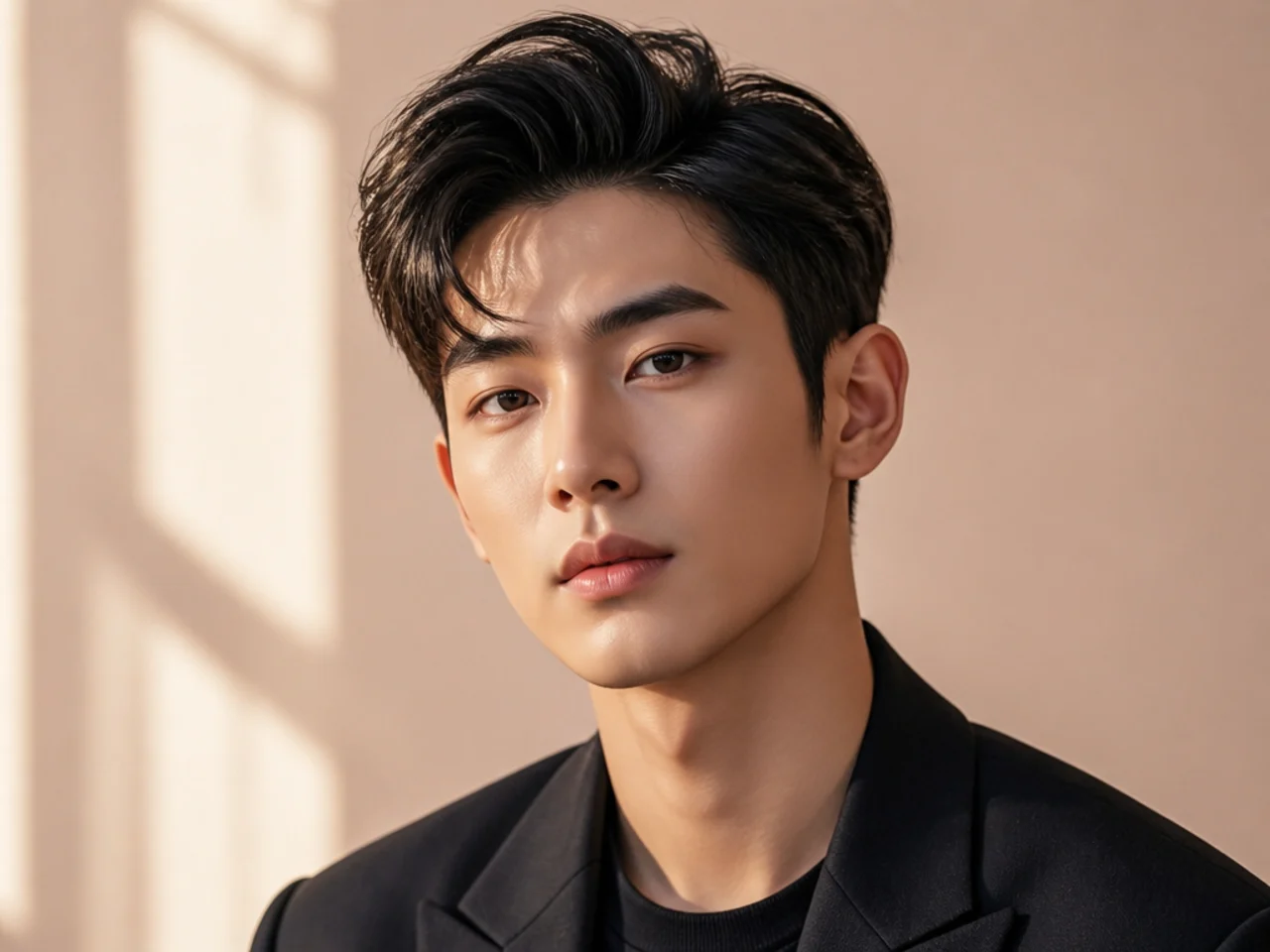
The Korean quiff trades the American pompadour's height for softer, front-facing volume. The top runs 4 to 5 inches, sides sit short but not faded to skin, and the front lifts up and slightly back rather than straight up in a wall.
Best on oval and square face shapes. Round faces get useful vertical lift.
Ask for a quiff with 4 inches on top, scissor-blended sides at a #3 guard, and layers cut to fall backward. Point out you want soft volume, not a stiff wall.
Styling tip: this is round-brush territory. Blow-dry the front lifting up and slightly back, section by section, hitting each pass with cool air. A light pomade or matte cream, then hairspray. Never work product through fully dry hair — restart wet if you have to.
Korean Buzz Cut for Men
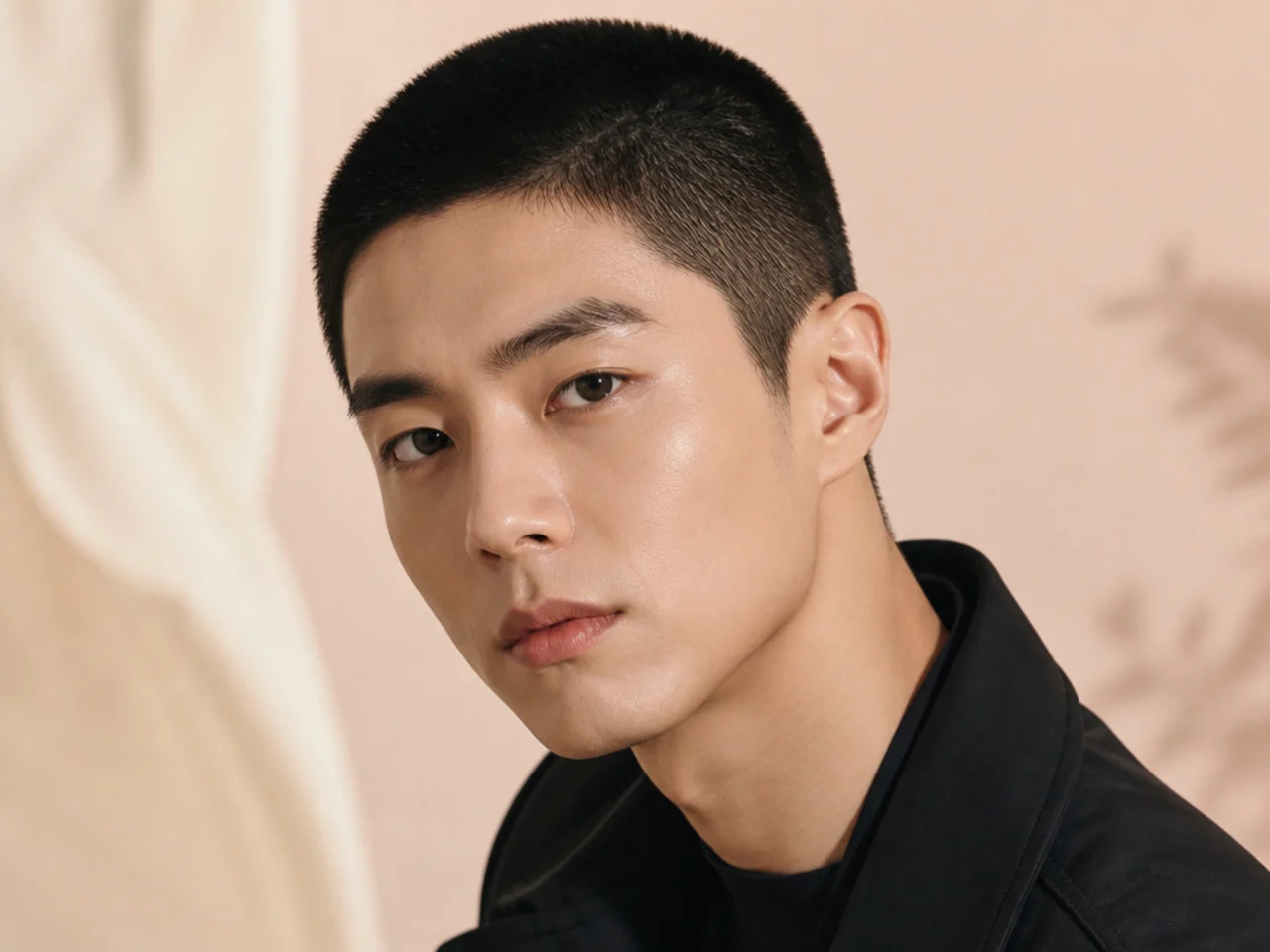
Korean buzzes rarely go military-short. The standard is a #3 or #4 all over, sometimes with a slight length differential on top and a soft taper at the temples. The finish reads clean and modern, not stark.
Best on strong face shapes — square, angular, and oval faces carry it best. Softer, rounder faces can look under-defined without a beard.
Ask for a buzz cut at a #3 or #4 all over, with a slight taper into the sideburn and nape. If your hair is Asian-type coarse, the buzz cut for Asian men variation is exactly where to point in the reference photos.
Styling tip: buzzes are the one Korean cut that doesn't need styling. They do need skin care — visible scalp shows every dry patch. Moisturize daily, use SPF, book a monthly cleanup.
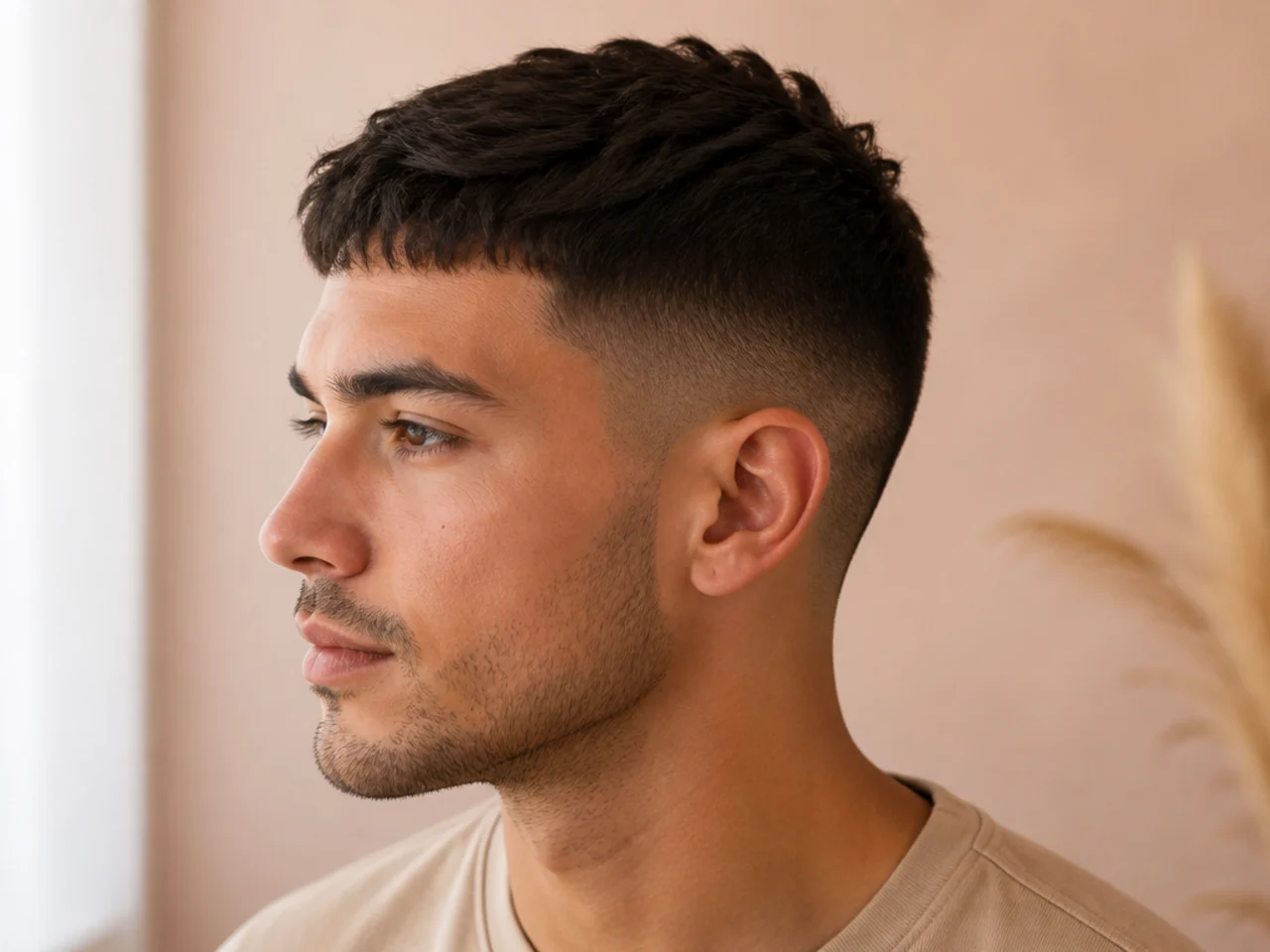
Korean Textured Crop Haircut Men
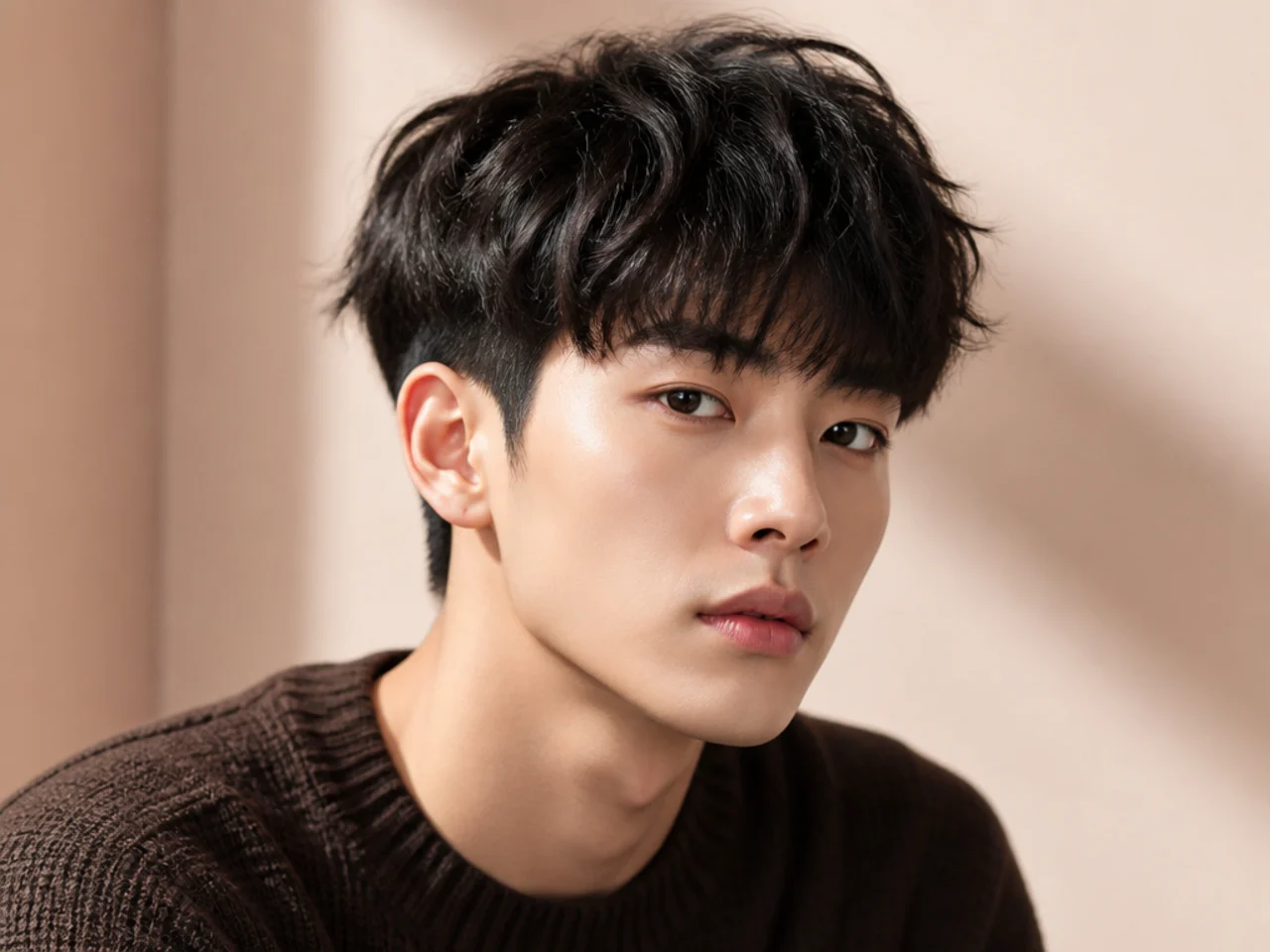
The Korean textured crop takes the French crop's silhouette — short sides, short top, forward fringe — and softens every edge. Fringe runs longer, texture runs choppier, sides stay scissor-tapered rather than clipper-faded. It's the broccoli cut's calmer older brother.
Best on every face shape. Cover a high forehead or shorten a long face with a heavier fringe.
Ask for a textured crop with 2 to 3 inches on top, choppy point-cut ends, fringe reaching the brow, and soft sides — no fade. Skip anything described as "sharp" — Korean crops don't do sharp lines.
Styling tip: this is a low-maintenance cut once dry. Rough-dry forward with your fingers, break the shape apart, done. A dry texture spray adds grit without weight.
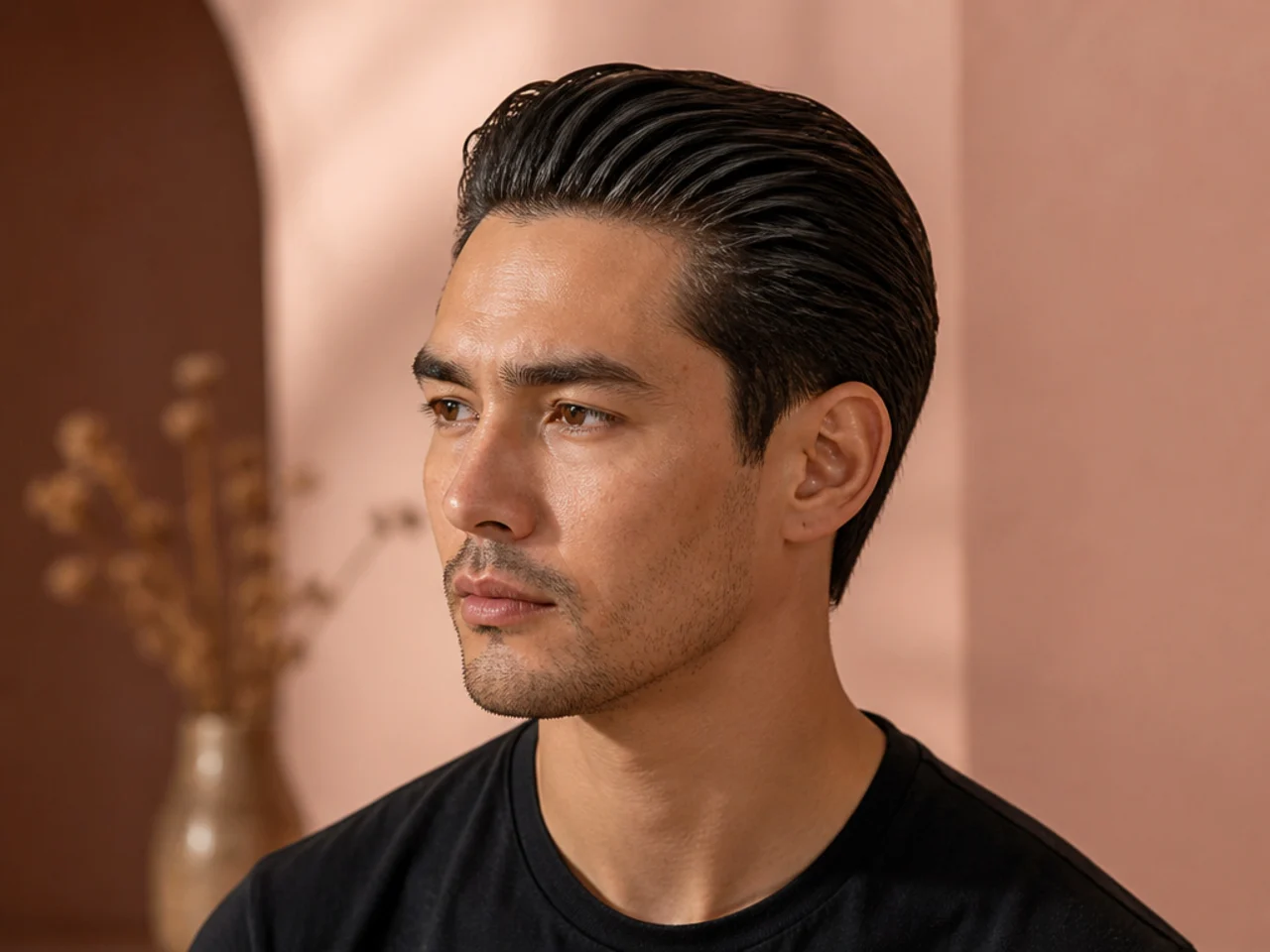
Korean Slicked Back Hairstyle Men
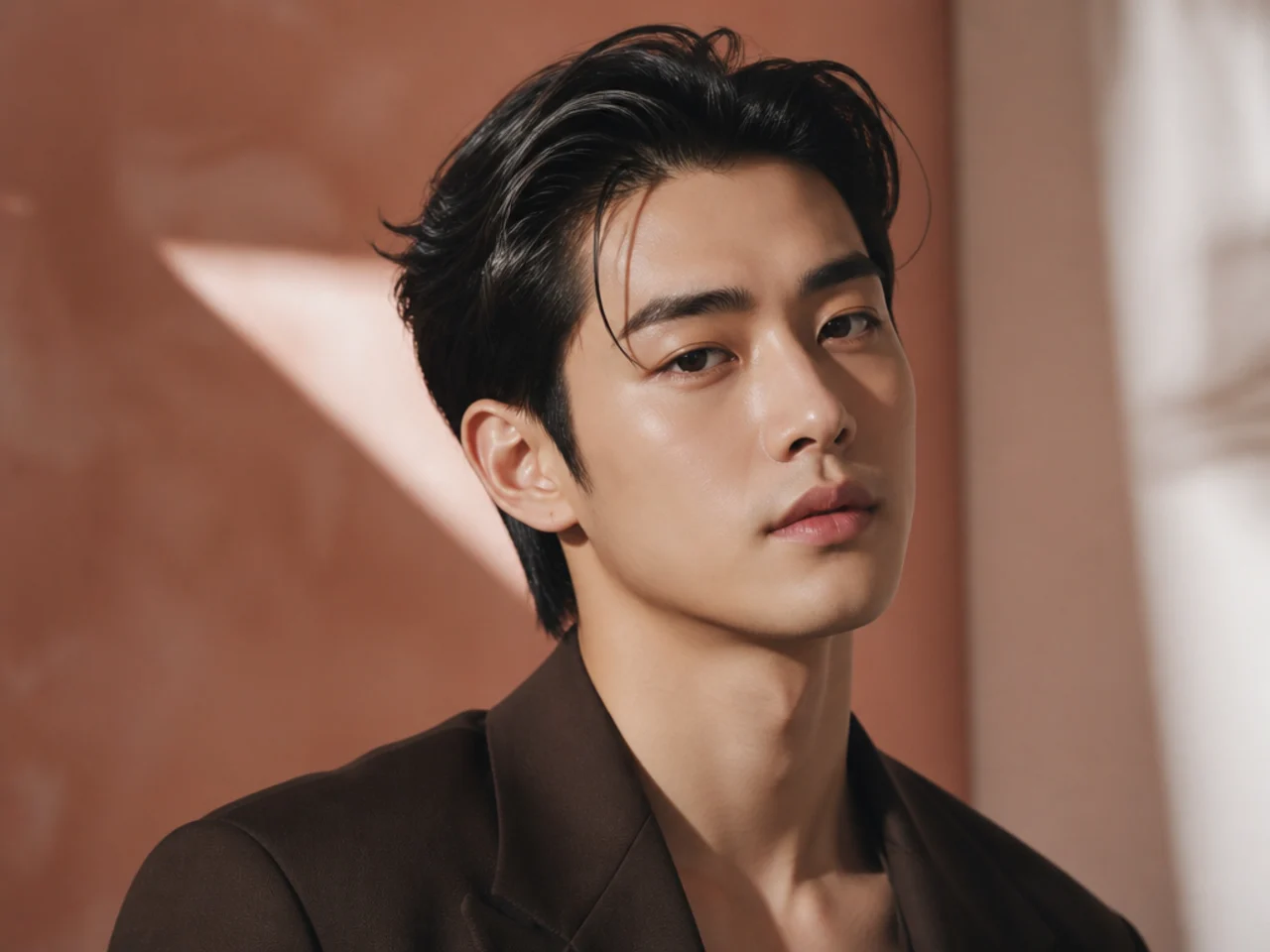
Slicked-back Korean styles borrow from the side part playbook but push everything up and over instead of clean across. Length runs 4 to 5 inches, sides sit short with a soft taper, finish is high-shine — pomade, not gel.
Best on angular, oval, and square faces. Round faces should build slight height at the crown to avoid looking flat.
Ask for a slick back with 4 inches on top, scissor-blended sides, and a natural part left in — the part still shows through even when everything's combed back.
Styling tip: apply pomade to towel-dried hair, not dry hair. Comb straight back with a fine-tooth comb, then blow-dry cool from the front to lock the direction. High-shine pomade for the classic look; matte paste for a modern read. Never spray hairspray over a slick back — it dulls the finish.
How to Style Korean Haircuts for Men?
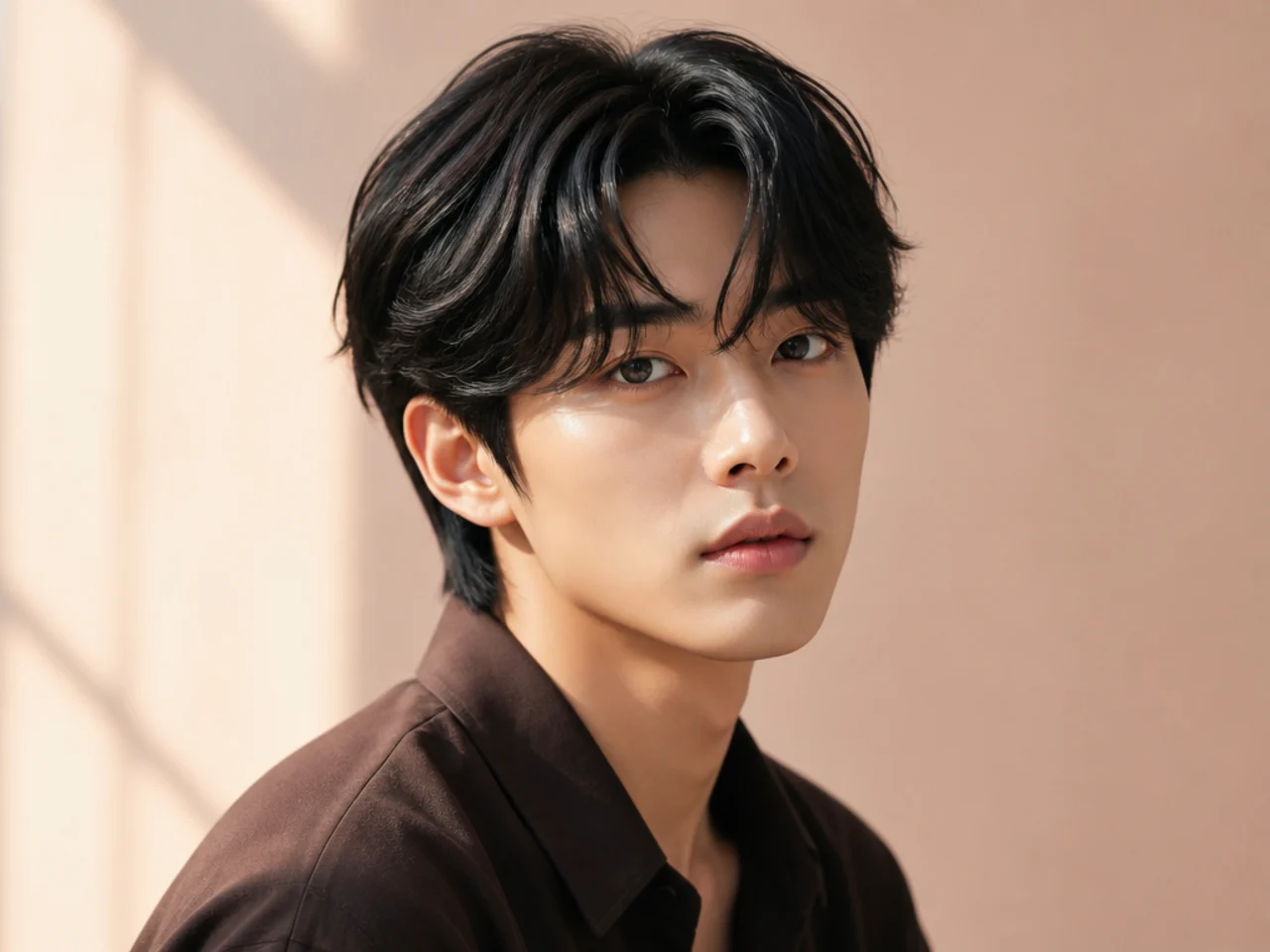
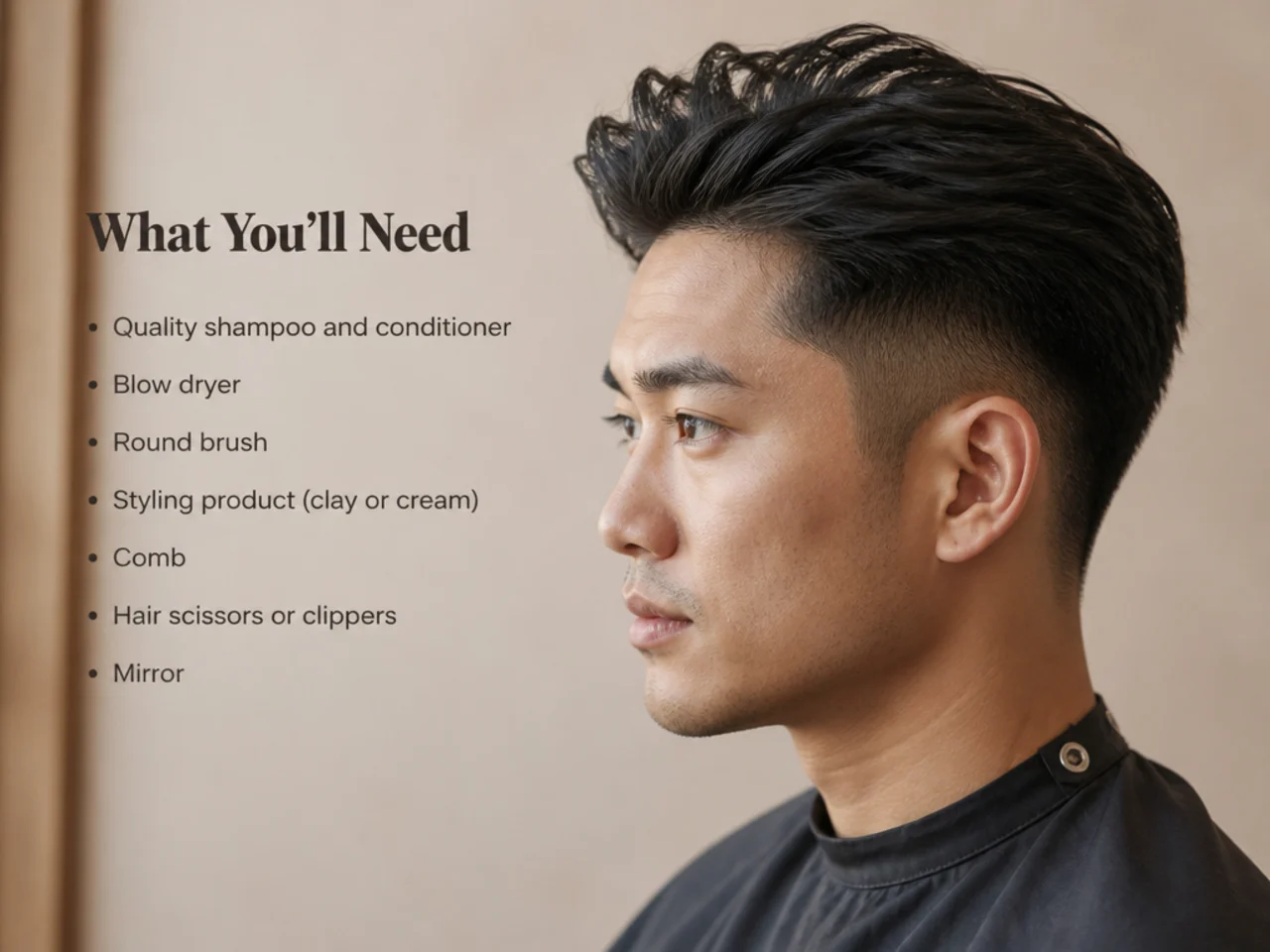
Every Korean style leans on four things: heat, tension, product, and hold. Skip one and the shape falls flat before noon.
Embrace Texture
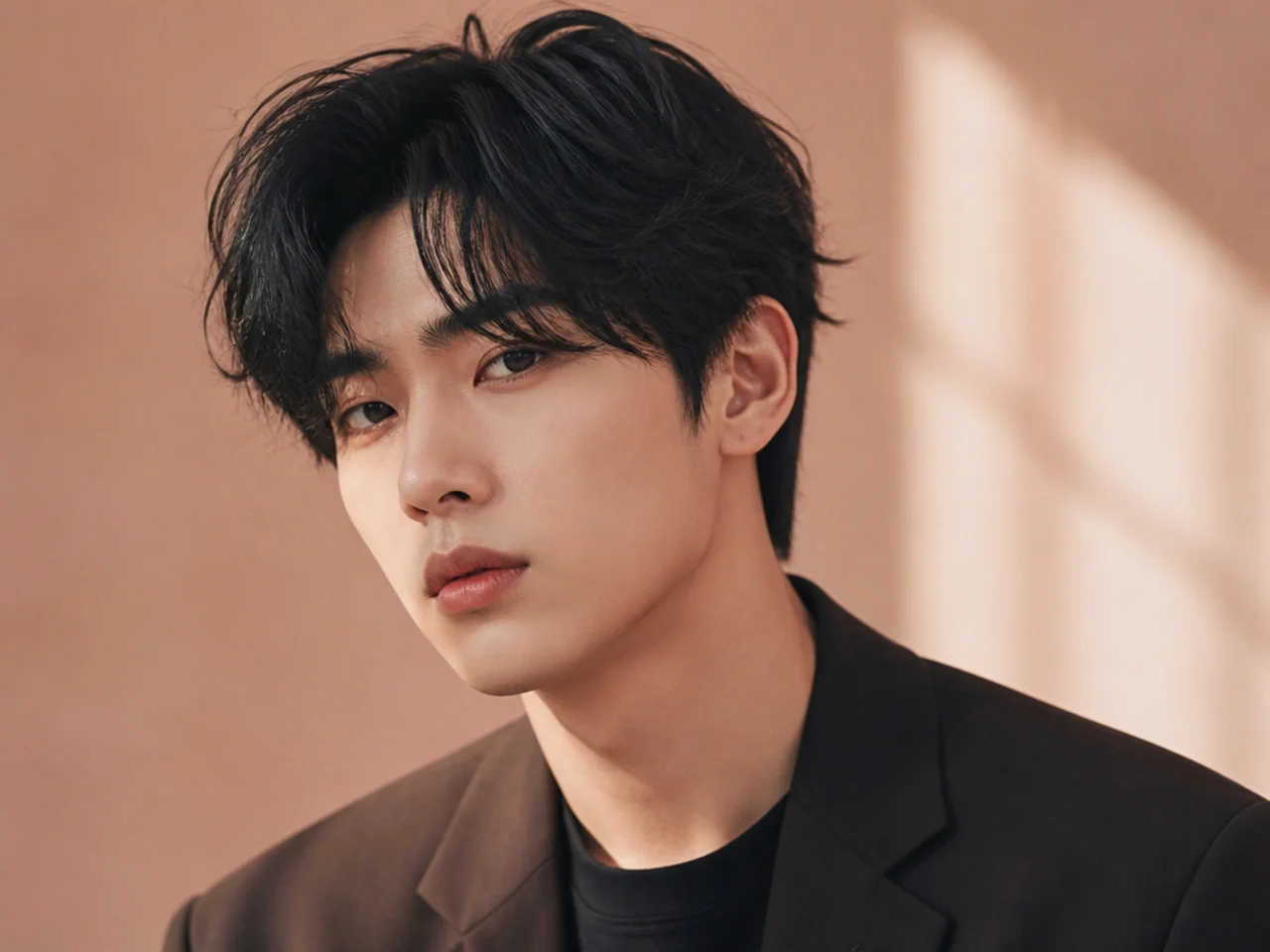
Texture in Korean styling doesn't mean messy. It means visible pieces — the front separates into strands, the top moves, the ends aren't a slab. A lightweight cream or a dry texture spray does the work. Never a heavy wax, never a stiff paste.
Focus on Bangs
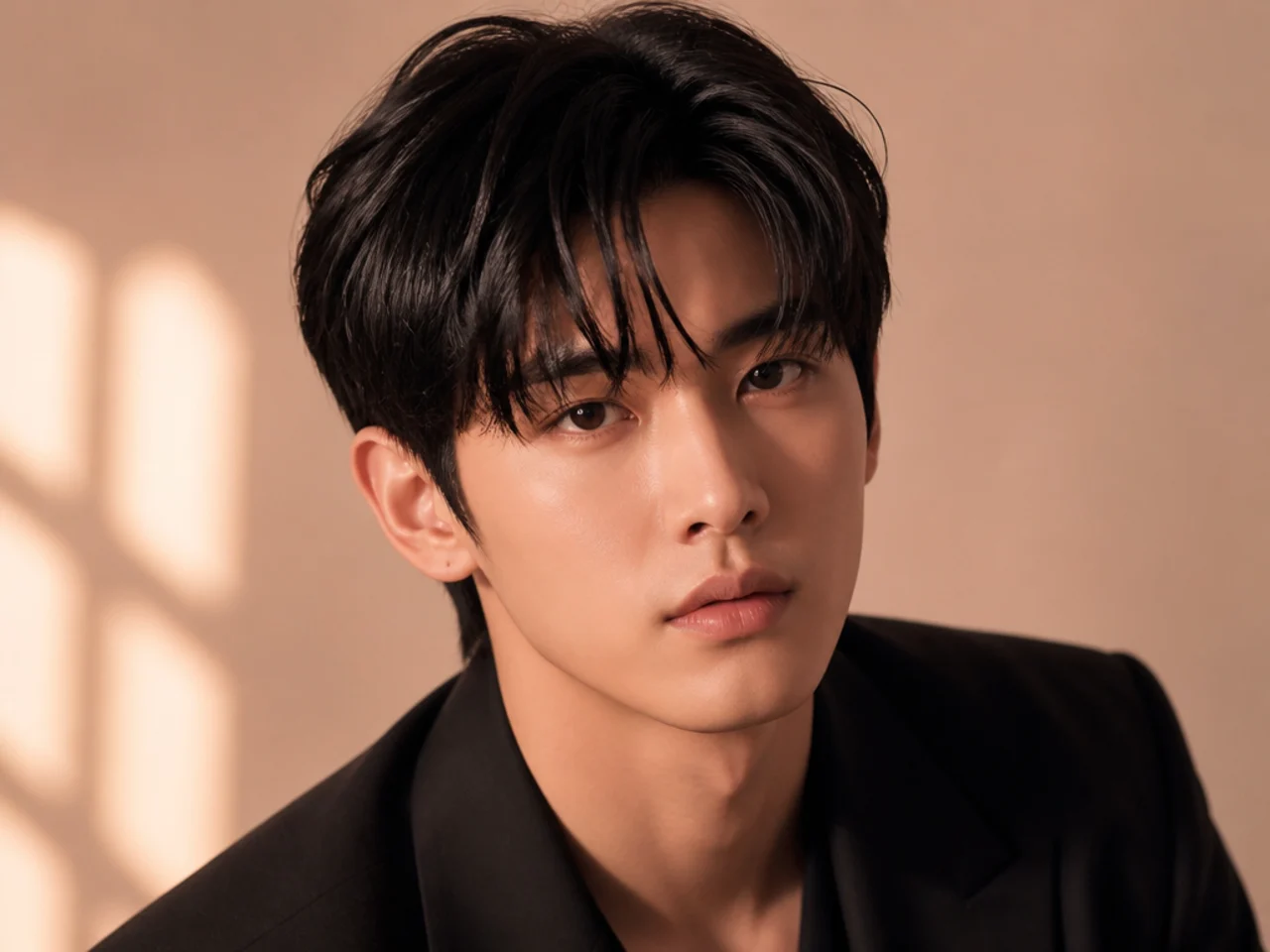
Bangs are where Korean styling stands apart from American. Long, textured, curled forward or split into a curtain. Cut them dry-length past the eyebrows and blow-dry wet with a round brush every morning. Blunt is not the target.
Play with Length
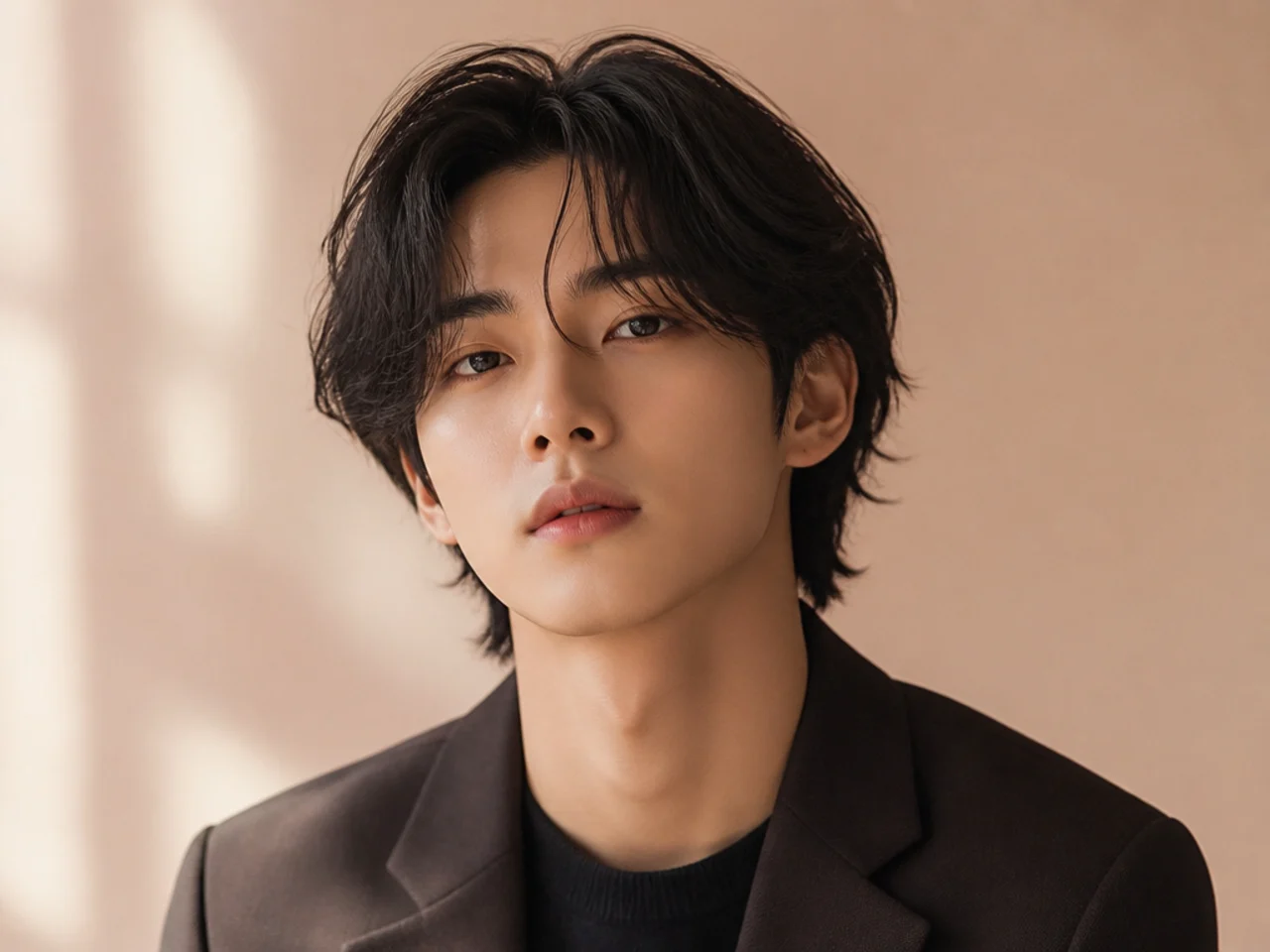
Most Korean cuts want 3 to 5 inches on top. That range holds a comma curl, sits in a middle part, and blow-dries with real movement. Under 2 inches goes American in shape. Over 6 inches becomes long-hair specific.
Add a Fade
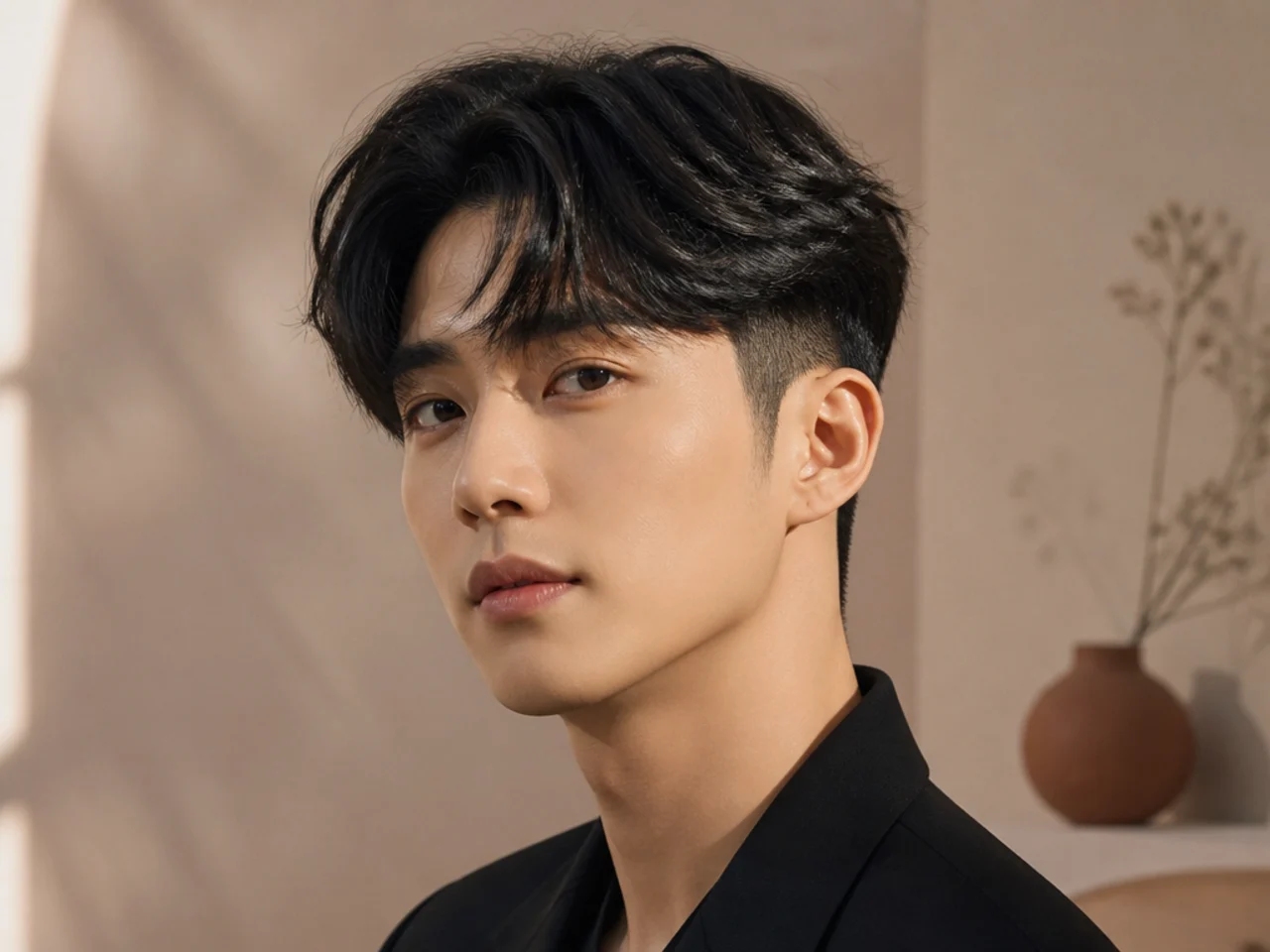
Keep it low or mid, and keep it soft. Korean barbers scissor-blend the transition. Ask for "no bald fade" and reference a low taper fade or an undercut fade. The line should suggest itself, never shout.
Use Accessories Thoughtfully
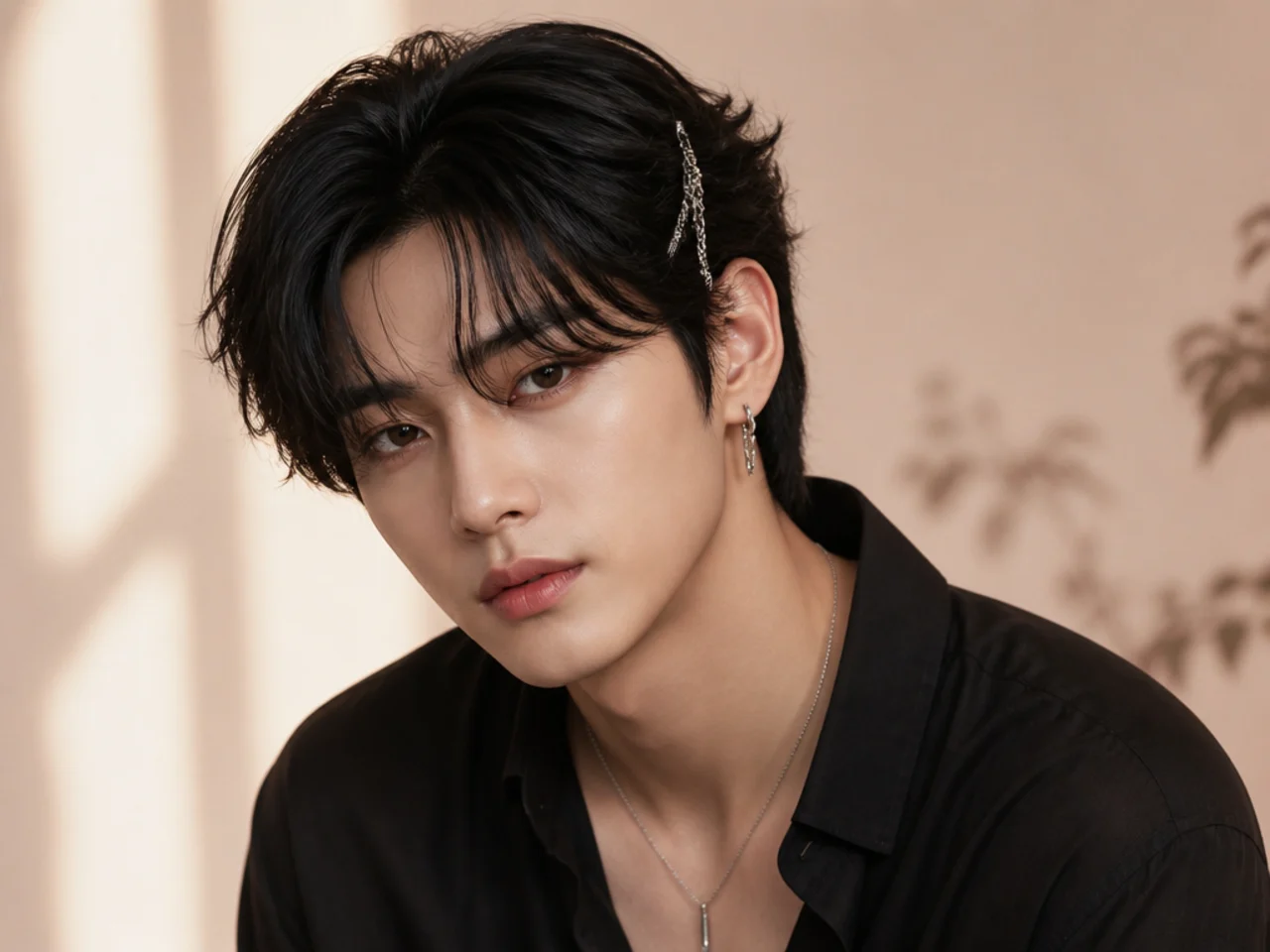
Clips, thin headbands, and slim caps show up in Korean styling more than American. On medium to long hair, a bobby pin hidden inside the fringe holds a curtain part all day. Skip anything oversized or logo-forward.
Stay Groomed
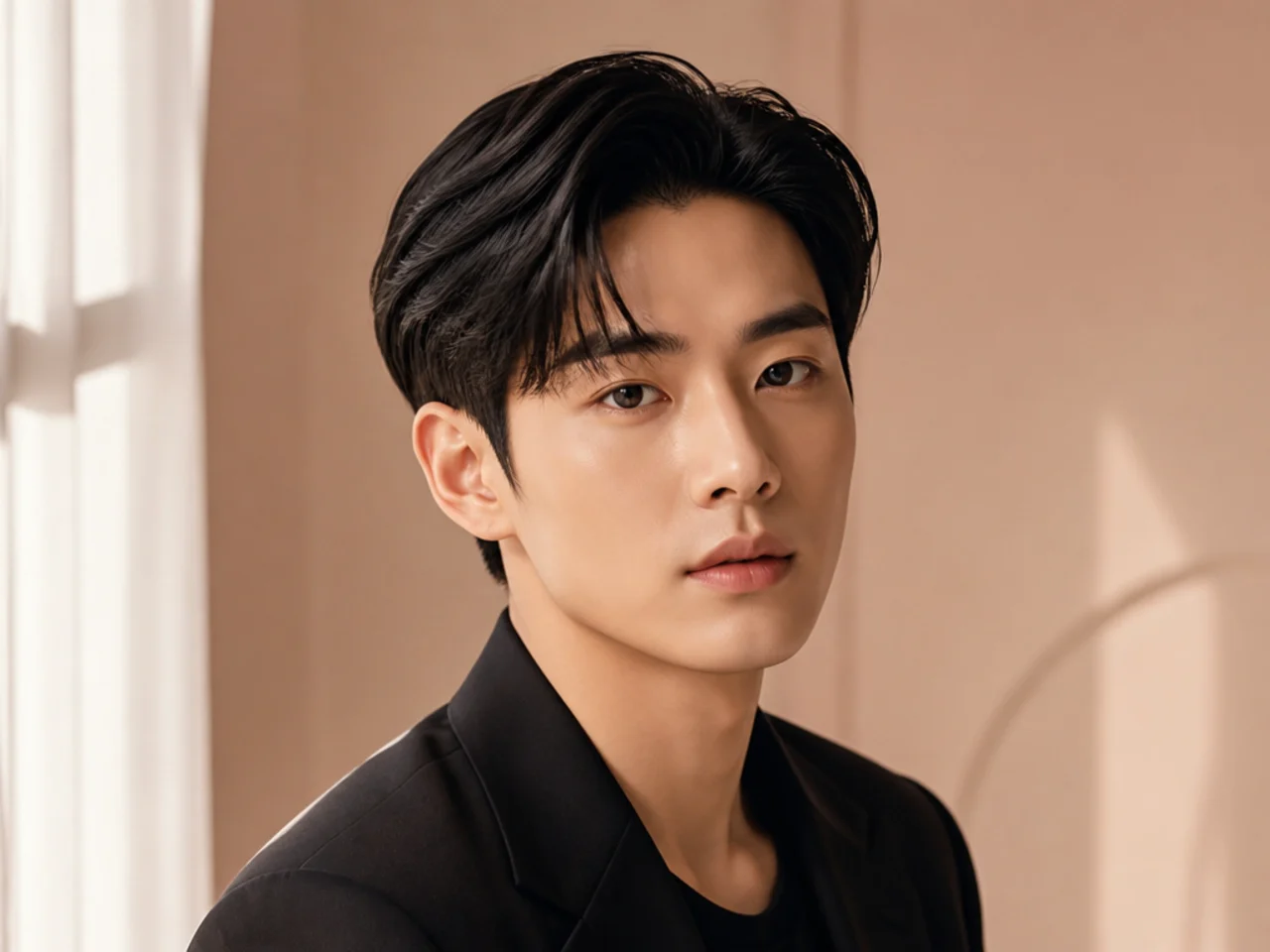
Book the next cut before you leave the chair. Every 3 weeks for short, every 5 for medium, every 6 to 8 for long. These cuts depend on precision, and precision fades fast between visits.
Tailor to Your Face Shape
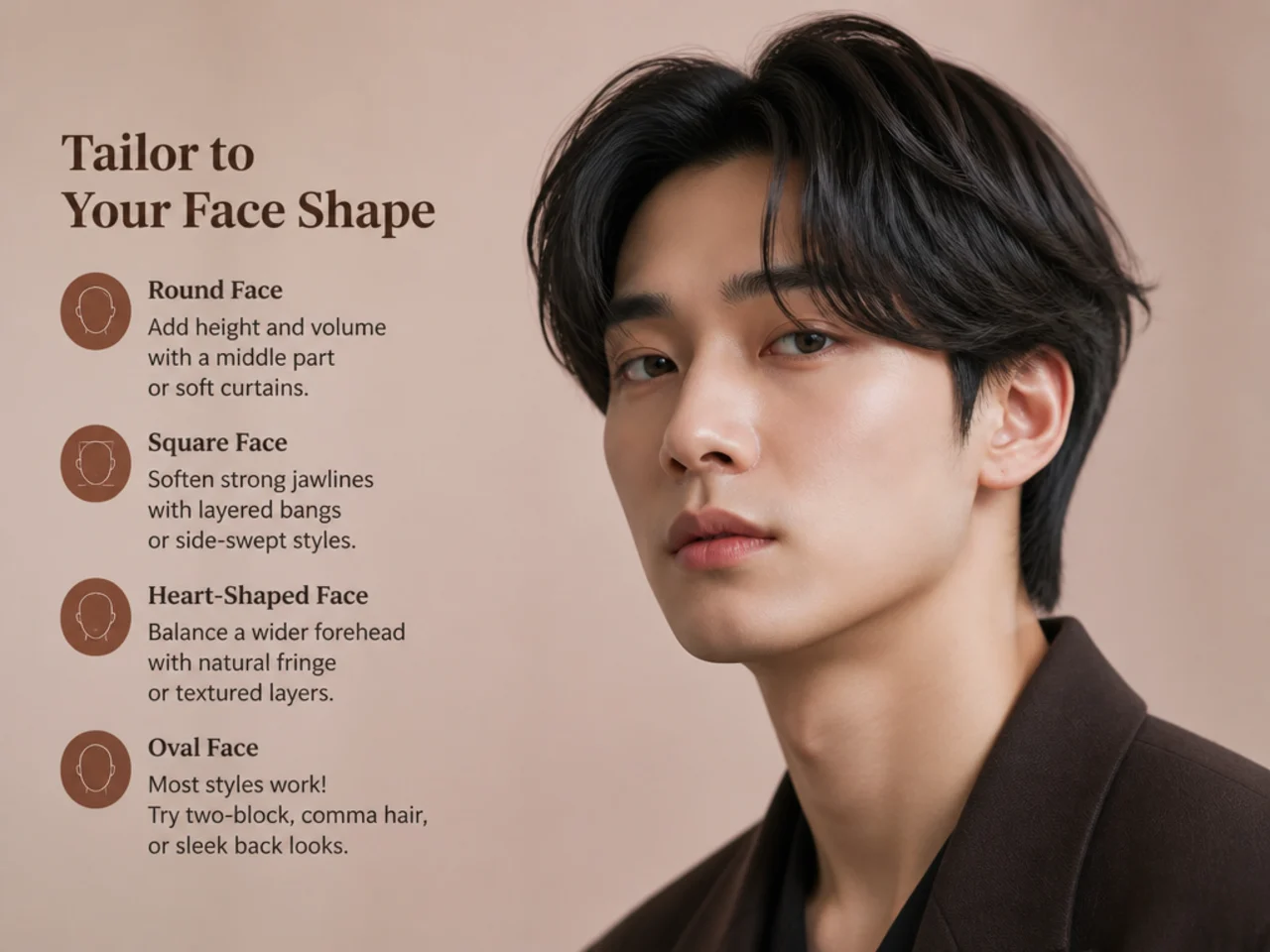
Round faces want height on top and length in the fringe. Square faces want softness — a curtain part, a comma curl, no sharp edges. Long faces want a heavier fringe and shorter top to break the vertical. Oval faces get to pick anything.
Conclusion
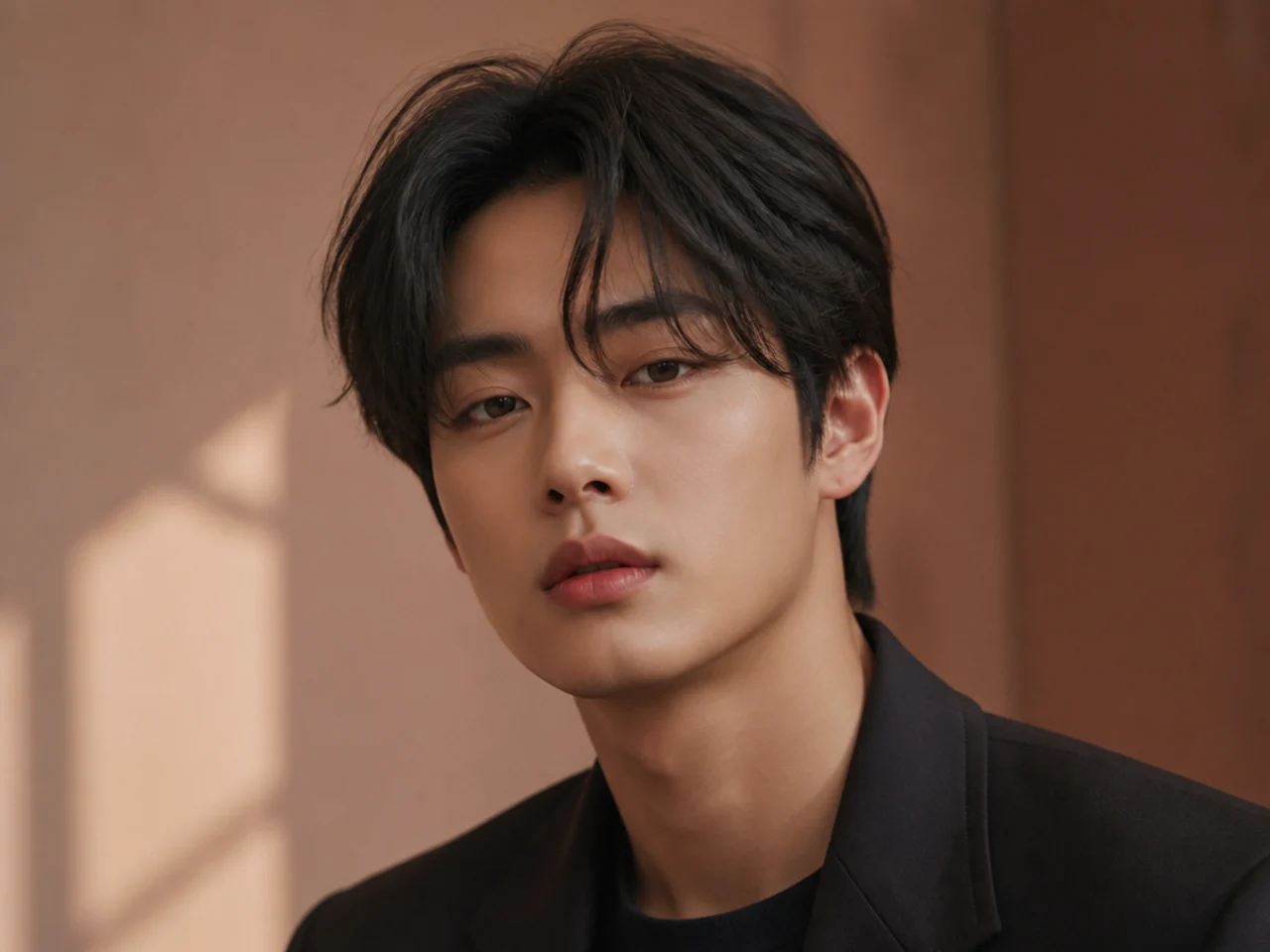
Korean men's cuts drive the current global trend list because they take styling seriously. The comma, the two block, the middle part, the curtain — none survive on air-dry. You blow-dry with tension, work in a light cream, finish with a mist of hairspray, and the shape holds all day.
Pick the variation that matches your texture and face shape, take a photo to the barber, and specify length in inches rather than "short" or "medium." Rehearse the routine at home for a week before deciding whether the cut worked. Korean hair rewards the routine.
FAQs
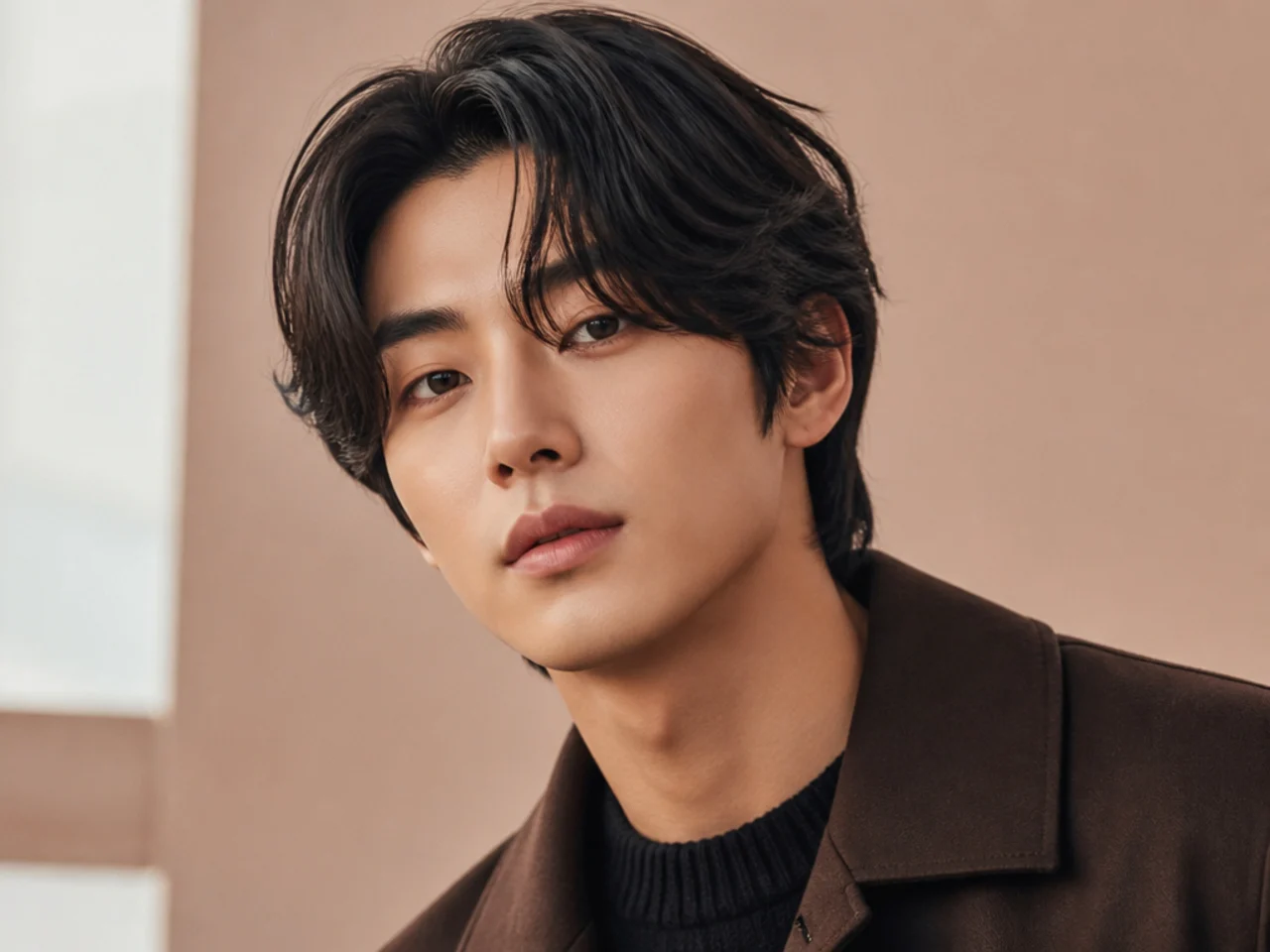
What is the Korean Male Haircut Called?
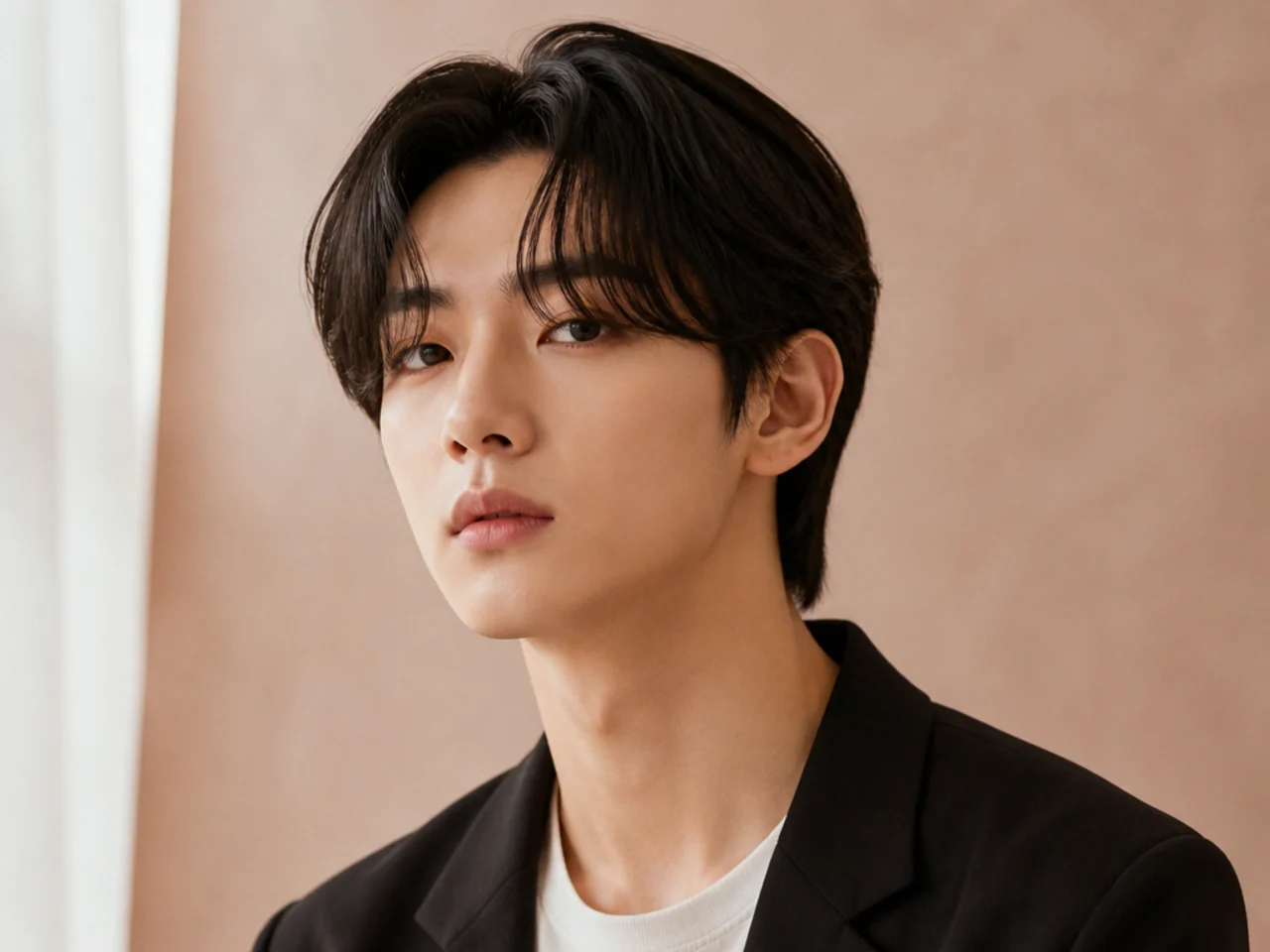
There's no single name. Barbers pattern-match to variations — the two block, comma cut, curtain fringe, and middle part are the current top four. When Korean stylists say "K-pop cut," they usually mean whichever silhouette a specific idol wore that quarter, not a fixed shape.
What is the Popular Haircut for Men in Korea?
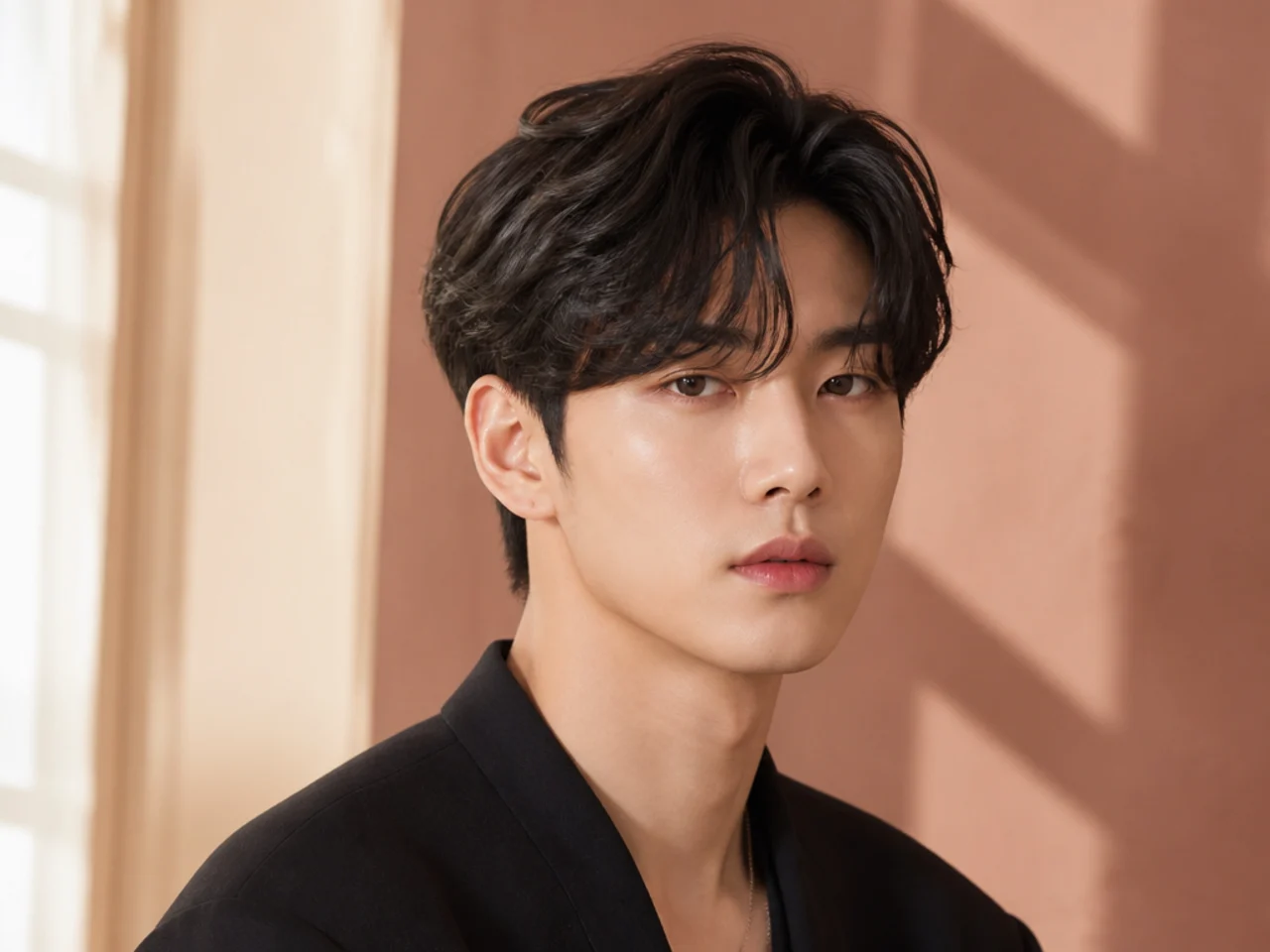
The two block is the default. Ask any Korean barber for "the usual" and you'll get 4 inches on top with a disconnected undercut underneath. It's the base layer that almost every other Korean variation — comma cut, middle part, wolf cut, and curtain fringe — builds on top of.
What is the Name of BTS Hairstyle?
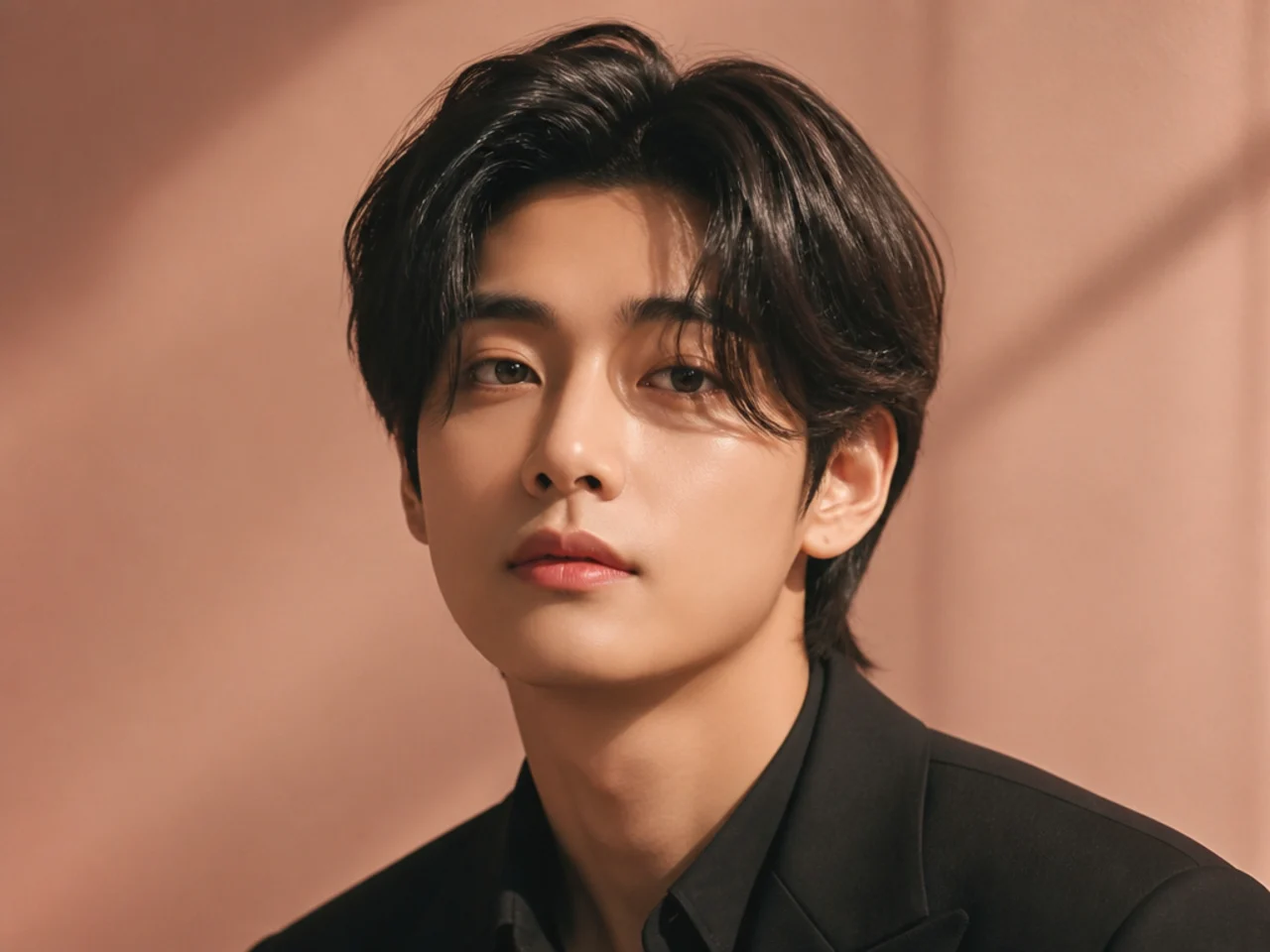
Every member rotates. V is known for curtain-cut middle parts; Jimin runs comma cuts and side-swept fringes; Suga has cycled through slicked-back and buzz cuts; RM defaults to short textured crops. "BTS hair" is a decade of variations across seven members, not a single named cut.