36 Fringe Haircuts for Men: Easy Hairstyles to Try
Explore 30 fringe haircut ideas that will add something new to your style. Choose fringe hairstyle that flatters most & enjoy your transformation
In this article · 57
- What is a Fringe Haircut?
- Top 36 Fringe Haircut Styles for Men
- Textured Fringe
- Long Hair Fringe
- Side Swept Fringe
- Messy Fringe Haircut
- Mid Taper Textured Fringe
- Tapered Fringe
- Short Fringe
- Curly Fringe
- Blowout Taper Fringe
- Straight Hair Fringe
- Taper Fade Fringe
- Long Curly Fringe
- Tousled Fringe
- Wavy Fringe
- Cropped Fringe
- The Caesar
- Mid Fade with Textured Fringe
- Textured Short Fringe
- Buzzcut Fringe
- Heavy Angular Fringe
- Classic Fringe
- High Taper with Textured Fringe
- Curly Caesar
- Asian Fringe Haircut
- Fringe Haircut Low Fade
- Textured Curly Fringe
- Afro Fringe
- Fringe with Fade
- Disconnected Fringe
- Floppy Fringe
- fringe haircut female
- Shag with Blunt Bangs
- French Bob with Razored Fringe
- Mid-Length Cut with Wispy Bangs
- Choppy Lob with Bangs
- Short Mullet with Textured Fringe
- How to Style a Fringe Haircut (Step-by-Step)
- How to Choose the Right Fringe Haircut for You
- Face Shape
- Hair Type
- What to Tell Your Barber for the Perfect Fringe Haircut
- Common Mistakes to Avoid
- How to Maintain Fringe Haircut
- FAQs Fringe Hairstyles
- What is a fringe haircut male?
- Is a fringe attractive on guys?
- What face shapes suit a fringe?
- Does a fringe suit a chubby face?
- Can curly-haired men pull off a fringe haircut?
- How do you style a messy fringe hairstyle for men?
- What are the best products to style a fringe haircut for men?
- How can I ask my barber for a textured fringe?
- Which fringe styles are trending in 2025?
- How often should I trim a fringe haircut?
- Do fringes make you look younger or older?
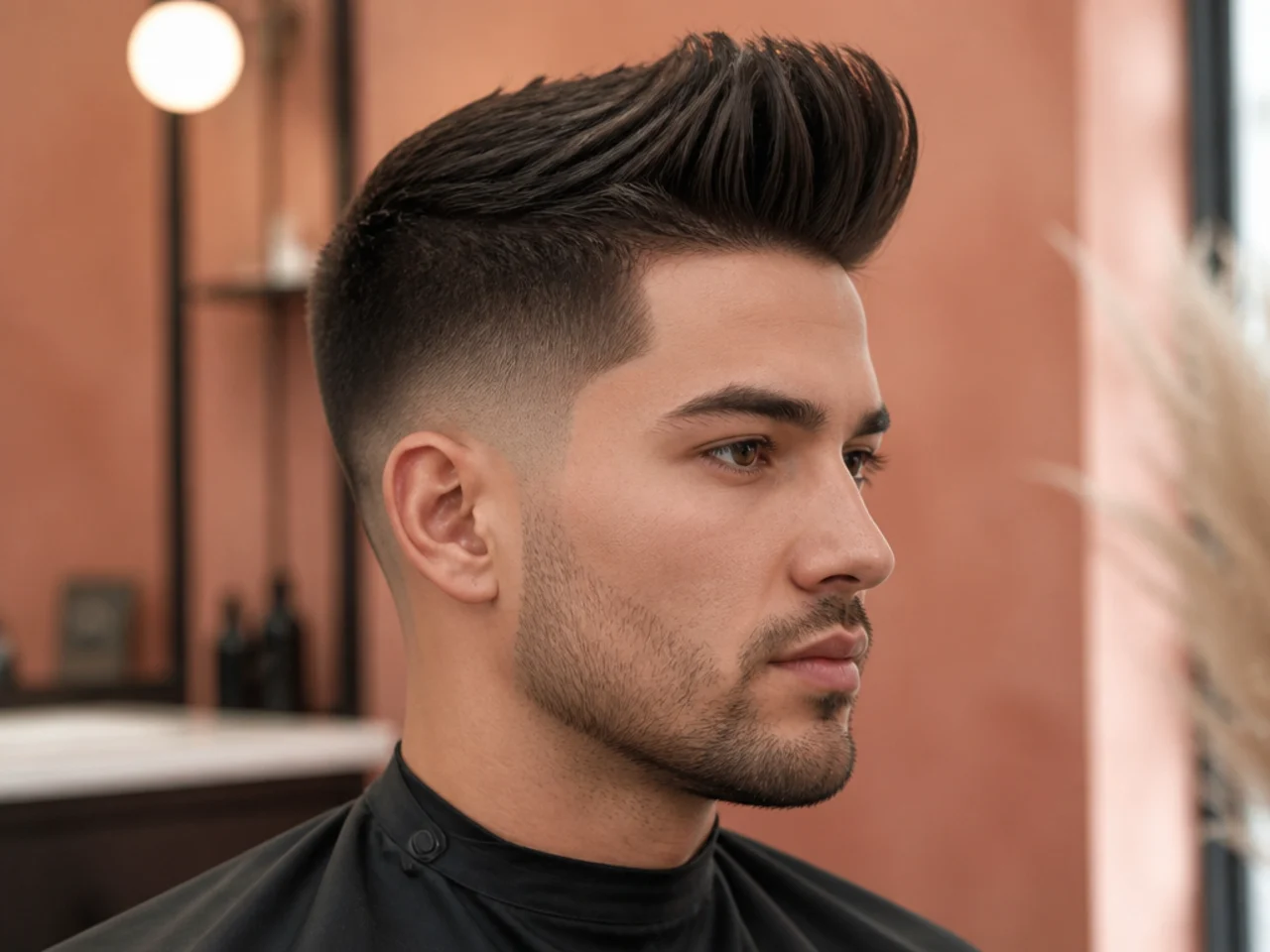
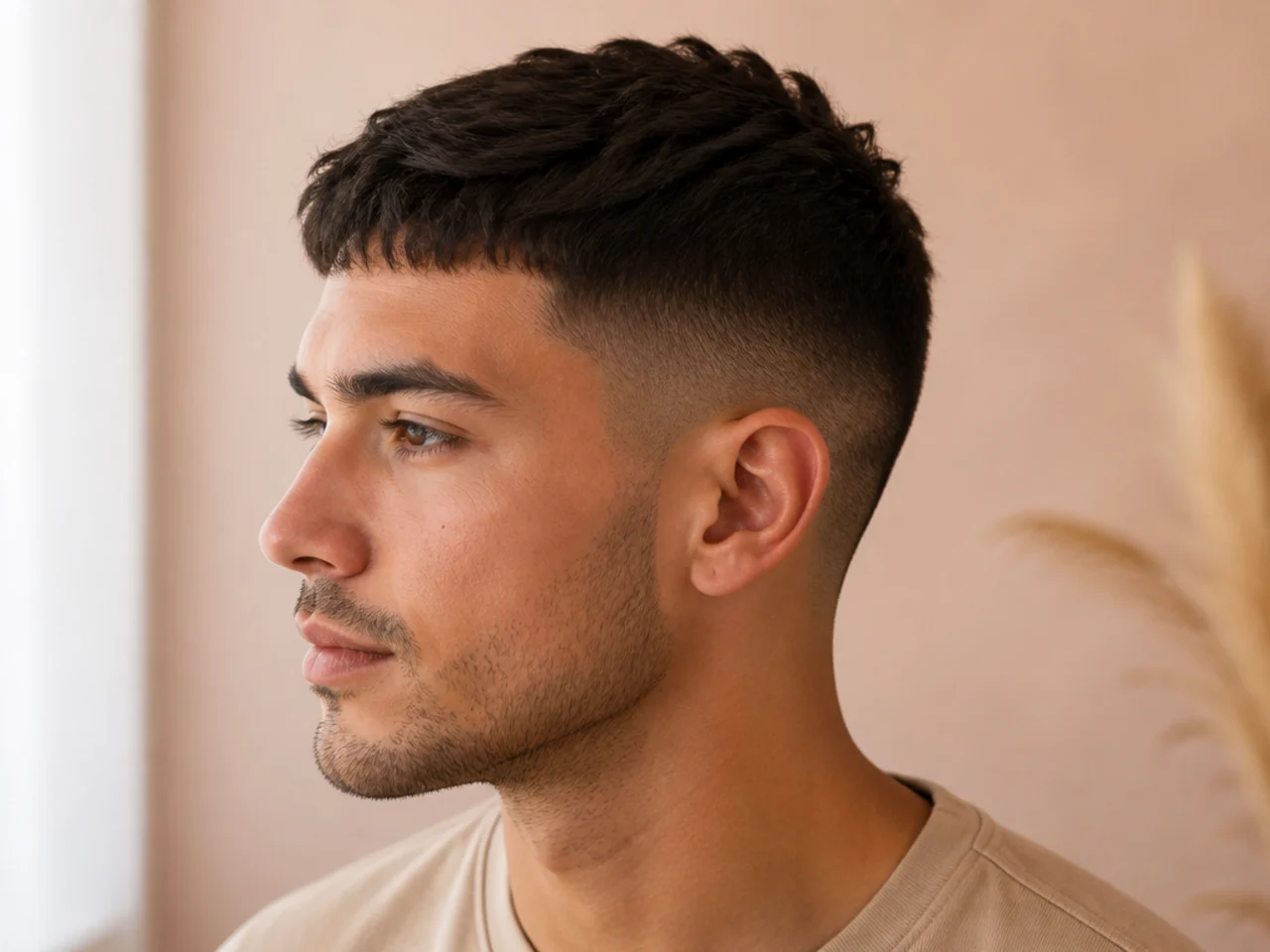
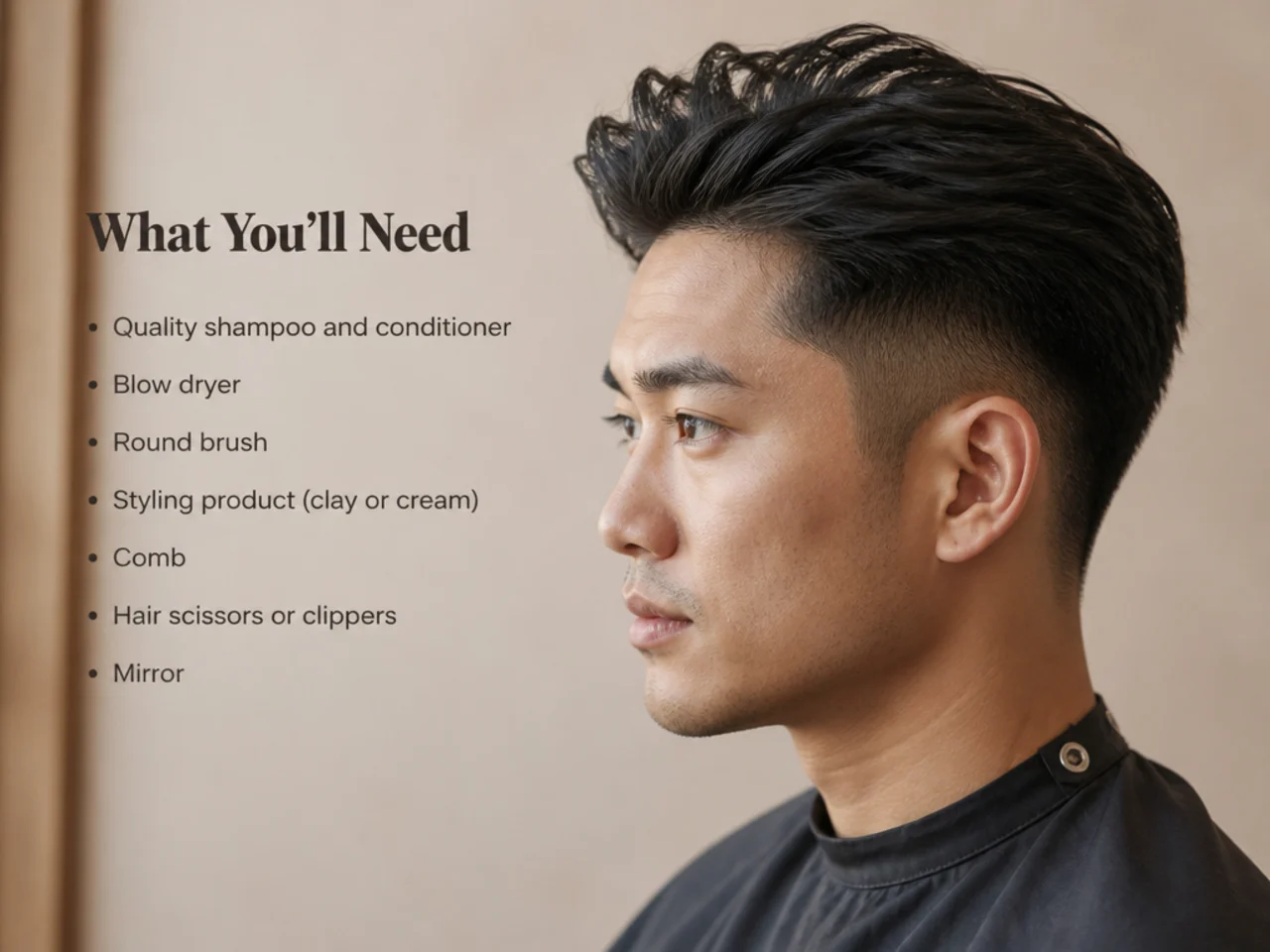
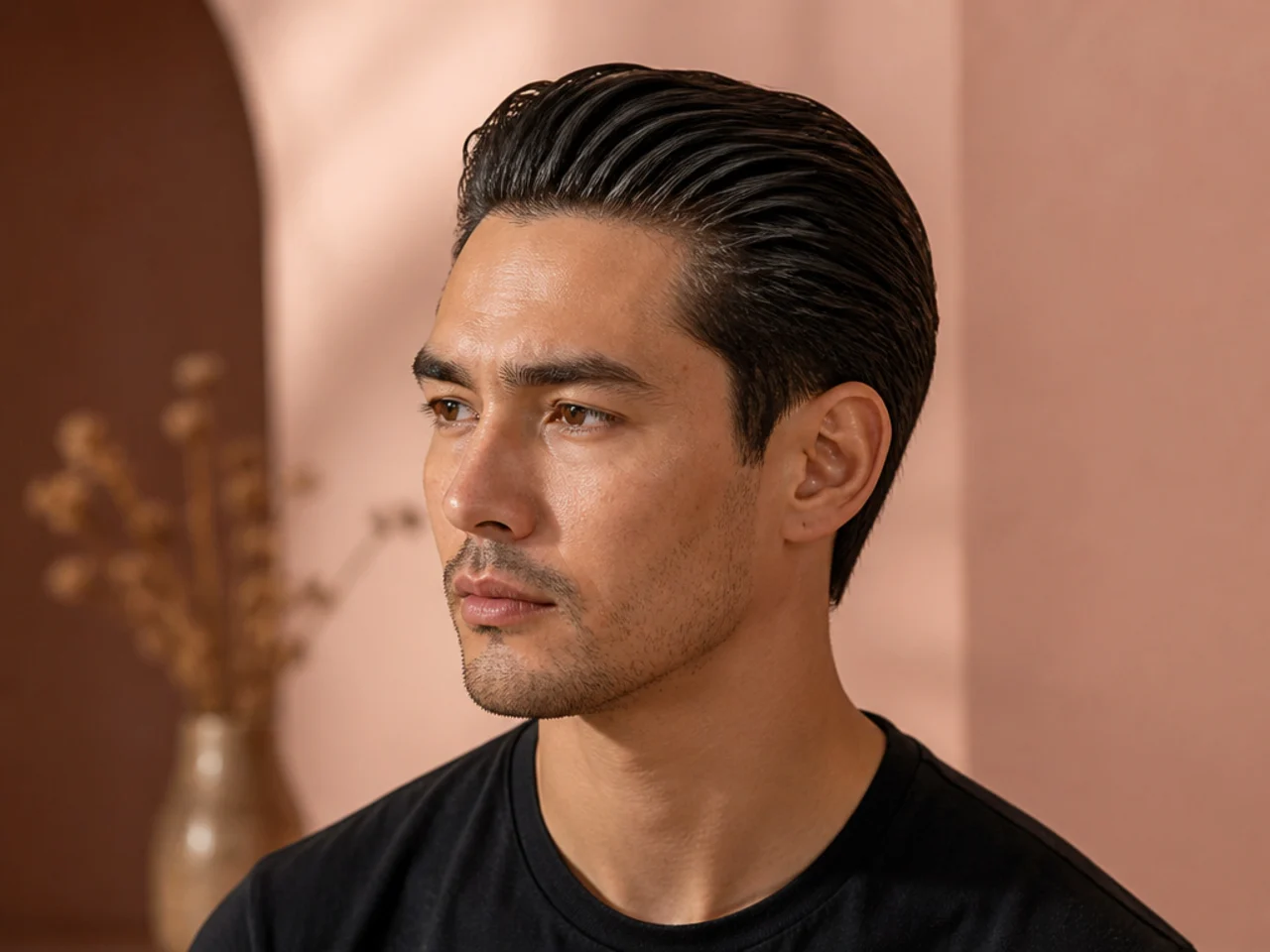
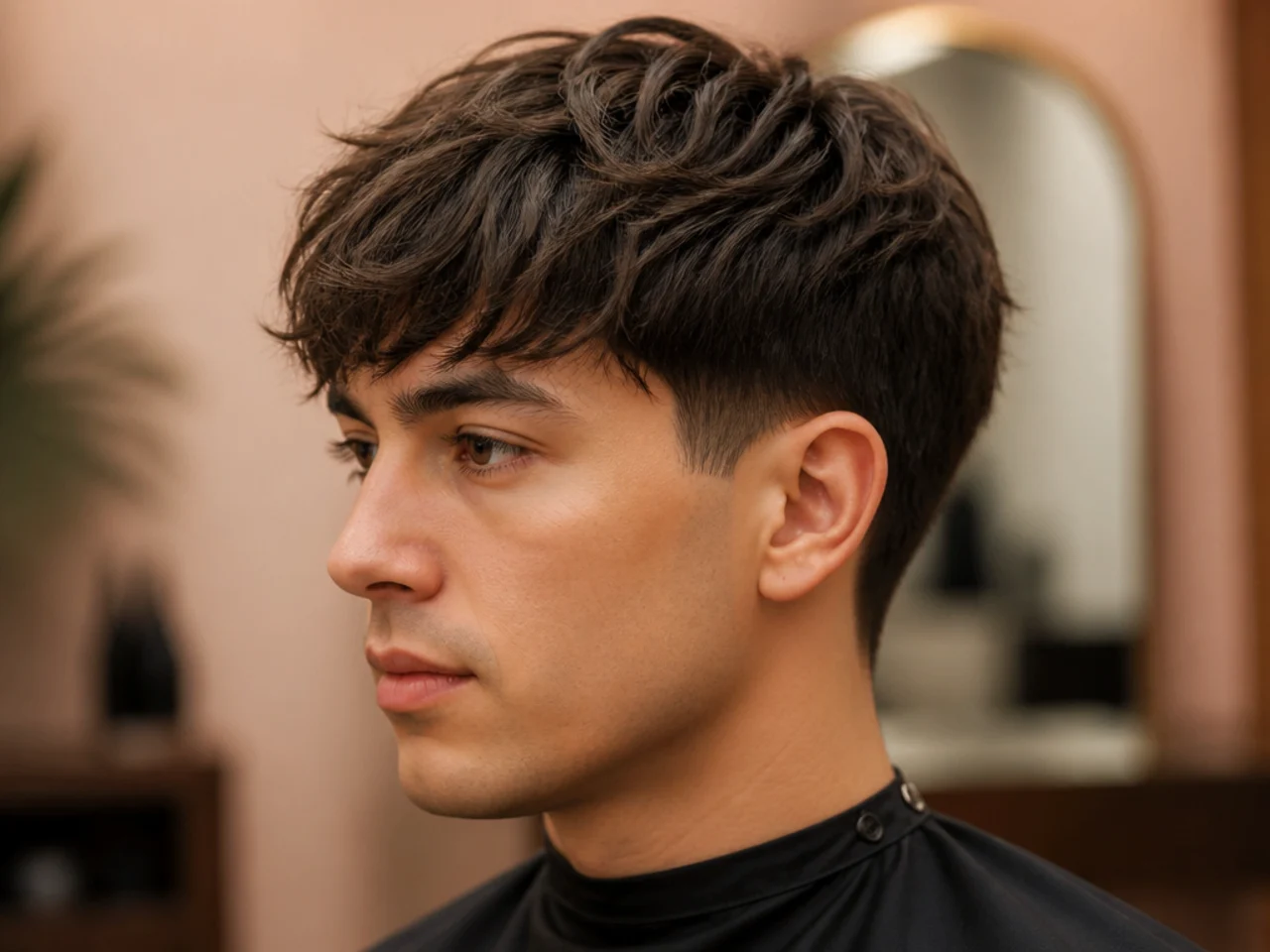
The fringe is the styling detail defining men's hair right now. The Edgar, French crop, comma cut, and middle part all lean on the front piece to set their character. Get it right and the rest of the cut follows. This guide catalogues 36 fringe variations — what separates each one, who it suits, and exactly how to ask for it in the chair.
What is a Fringe Haircut?
A fringe is the front section of hair, cut long enough to fall over the forehead. That's the definition — but how it's weighted, angled, and finished decides whether you end up with a French crop, a curtain, a comma, or an Edgar. It softens strong hairlines, hides a receding front, and adds movement to shapes that would otherwise sit flat. It works on straight, wavy, curly, and coily hair — only the cut length and finish change to match.
The rest of this guide walks through 36 variations. Each covers what makes that fringe different, who it flatters, how to ask for it in the chair, and one styling move that keeps the shape between cuts.
Top 36 Fringe Haircut Styles for Men
Textured Fringe
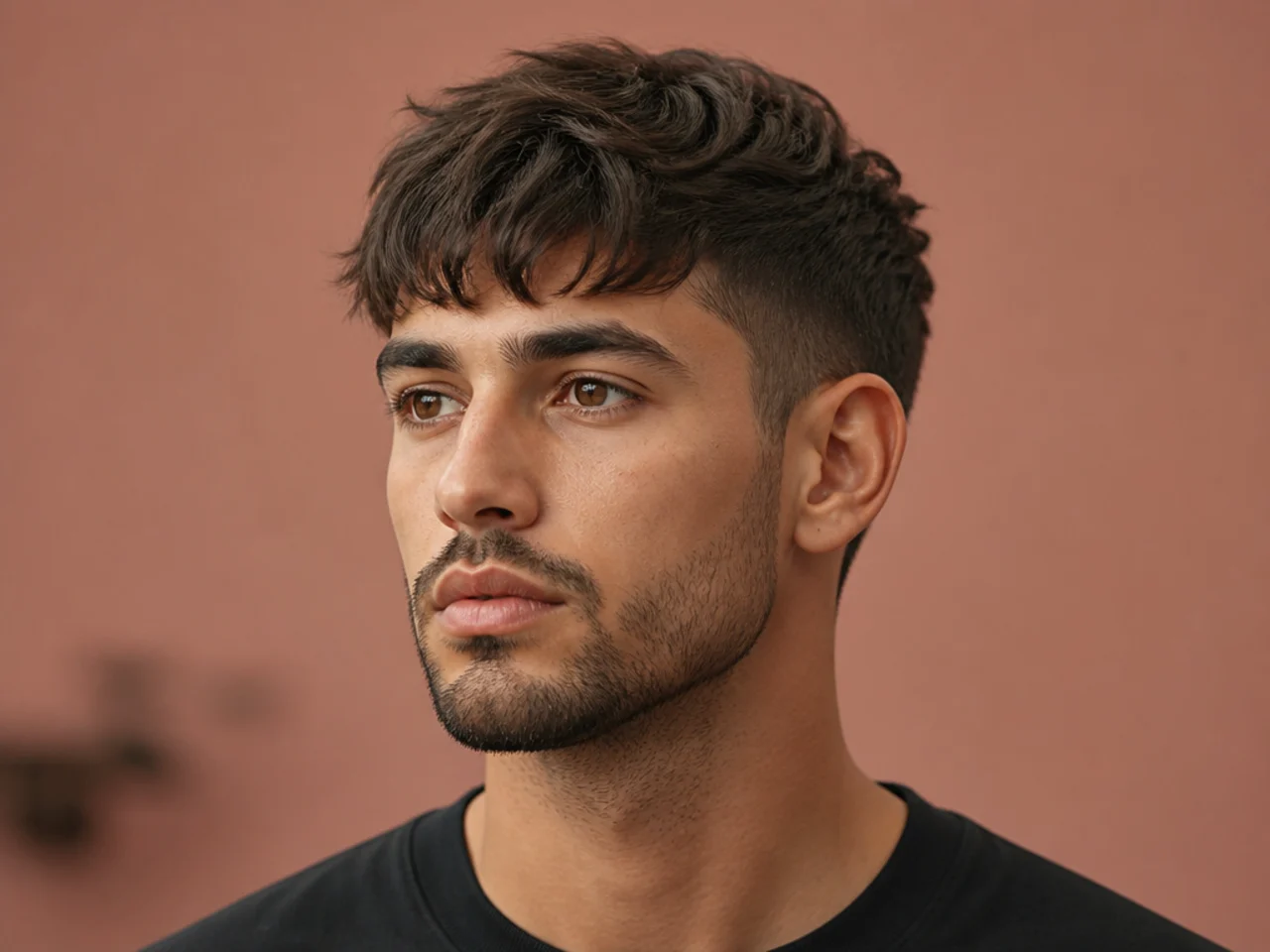
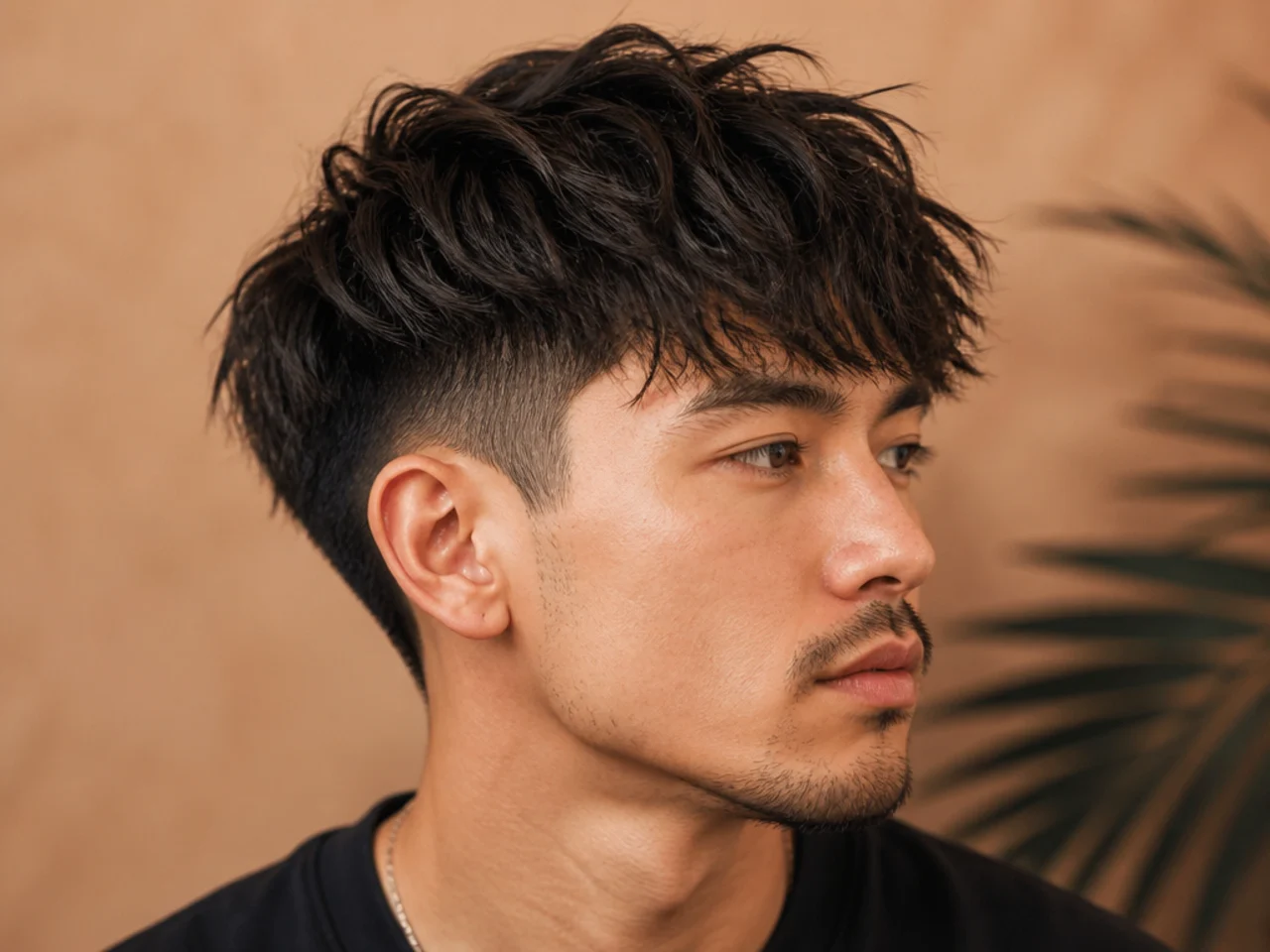
Point-cut layers through the front create movement instead of solid weight. That texture separates it from a blunt fringe — ends look chipped, not sliced. Suits medium to thick straight or wavy hair, and softens angular or square jaws. Ask for a brow-grazing fringe with point-cut layers, a mid or low fade, and matte finish. Blow-dry forward on medium heat, then work a pea of clay through the front to separate the pieces. Our textured haircuts guide covers more variations.
Long Hair Fringe
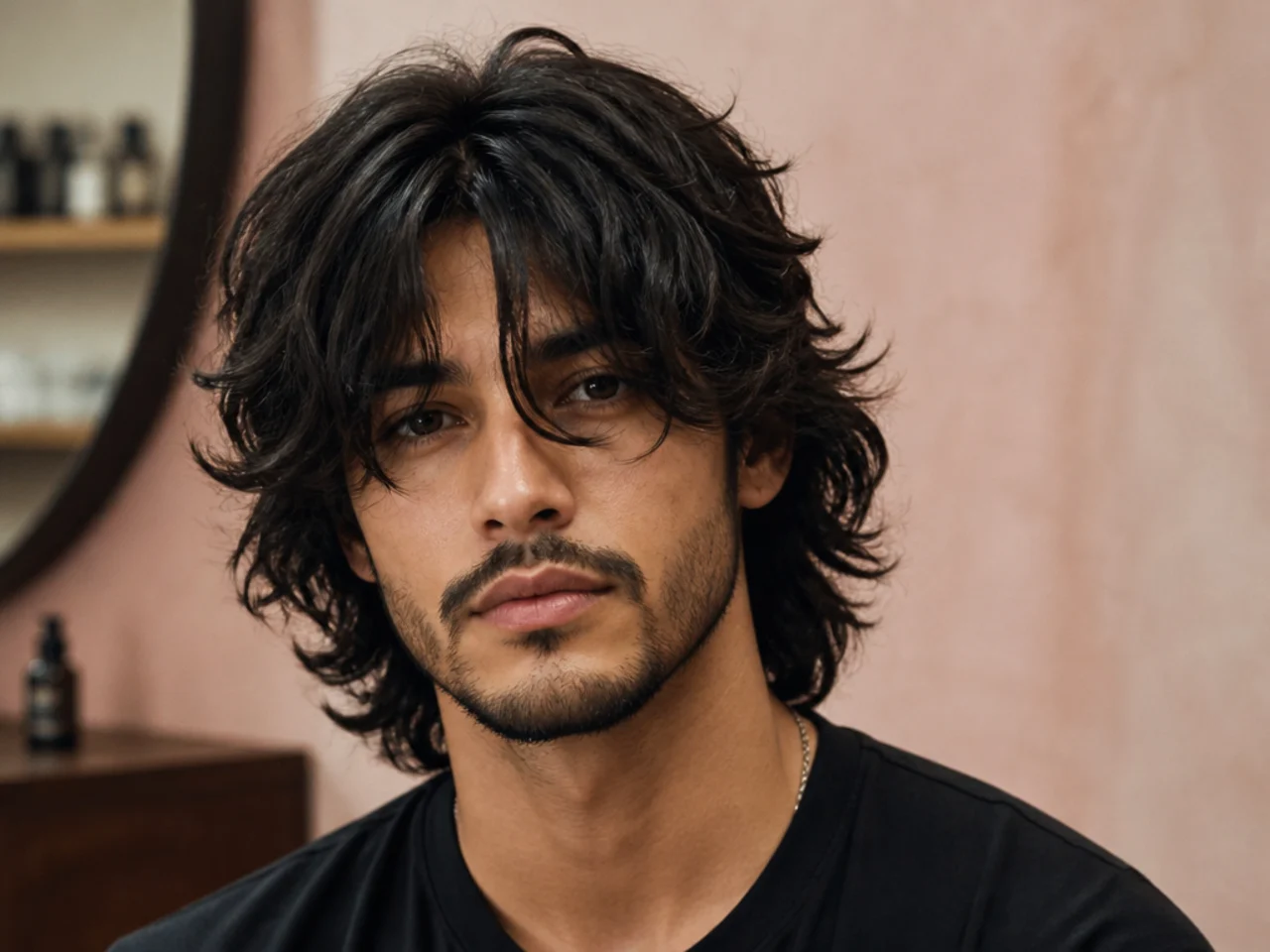
Drops past the brows and blends into layered length across the top. Reads relaxed, not sharp — surf, not barbershop. Best on straight or wavy hair with medium density; too thick clumps, too thin goes stringy. Angular jawlines benefit most since the length softens the frame. Ask for a fringe that covers the brow, scissor-cut sides at length, no fade, natural finish. Rough-dry forward with your fingers, then rub a nickel of light cream through the top.
Side Swept Fringe
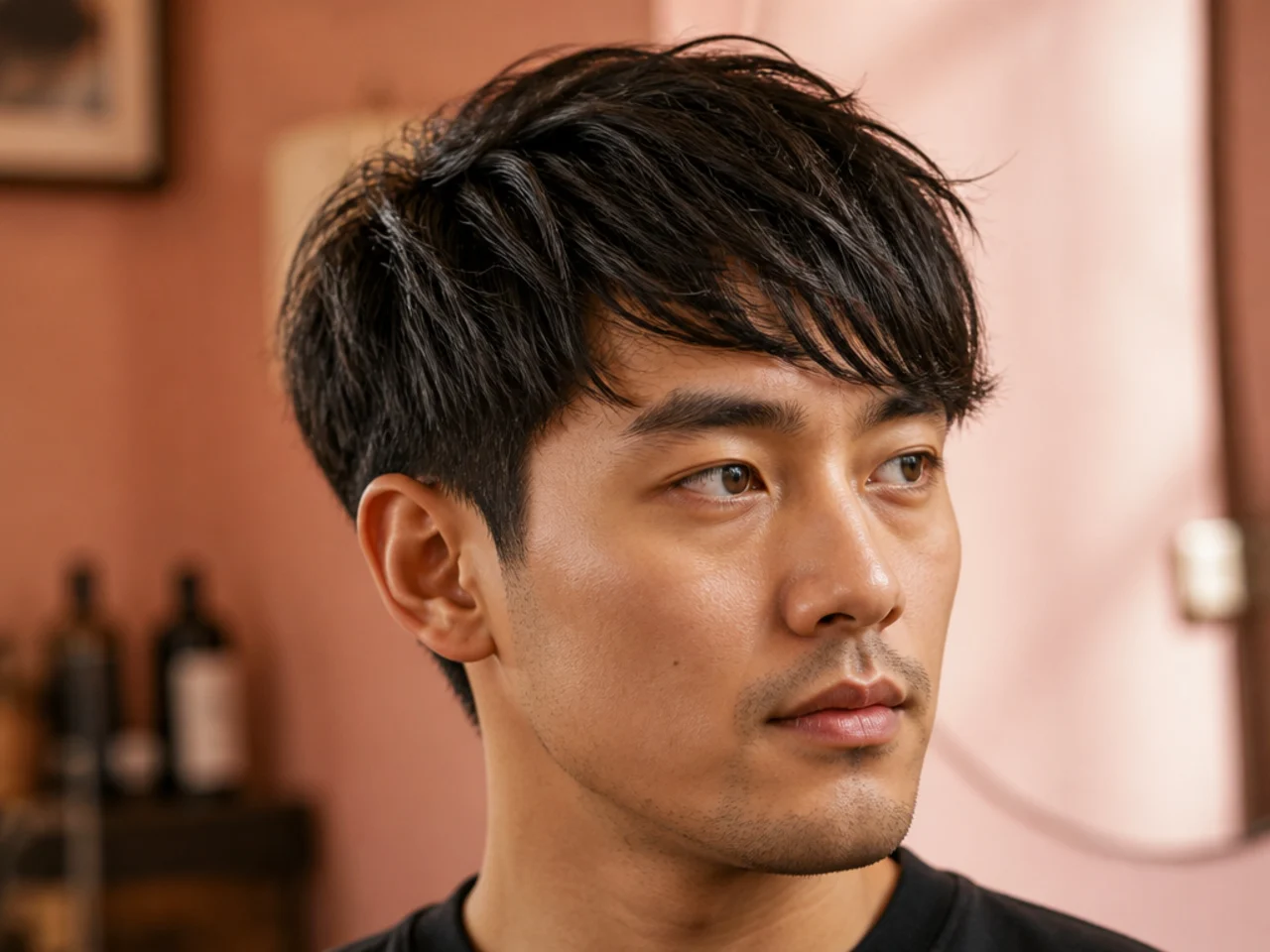
Sits long enough to reach across the forehead, brushed diagonally instead of straight. That angle creates a line across the face that balances a round or wide-set look. Works on straight or slightly wavy hair — curls fight the direction. Ask for a fringe covering the brow when combed forward, scissor-cut sides or light taper, and low-shine finish. Blow-dry against the sweep direction with a round brush to lock the angle, then hold with a light cream.
Messy Fringe Haircut
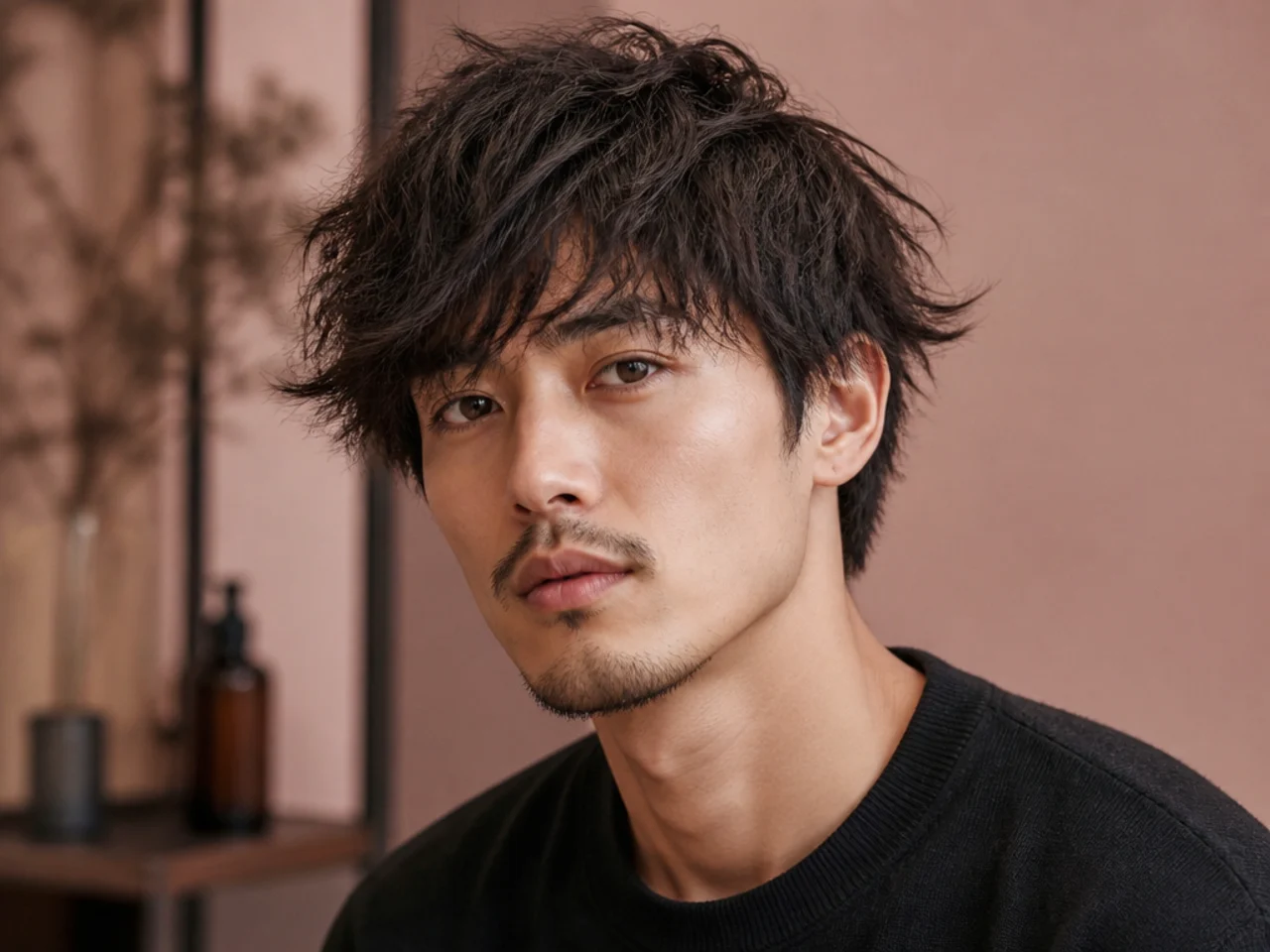
Deliberately un-styled. Layers of different lengths sit forward with no order — ends should almost look tangled. Best on wavy hair with natural body, on faces that benefit from casual softening. Ask for choppy layers through the front, a low or mid fade, and matte finish. Scrunch a fingertip of messy-style paste through damp hair, then rough-dry with your hands. No comb, no brush — those undo the whole point.
Mid Taper Textured Fringe
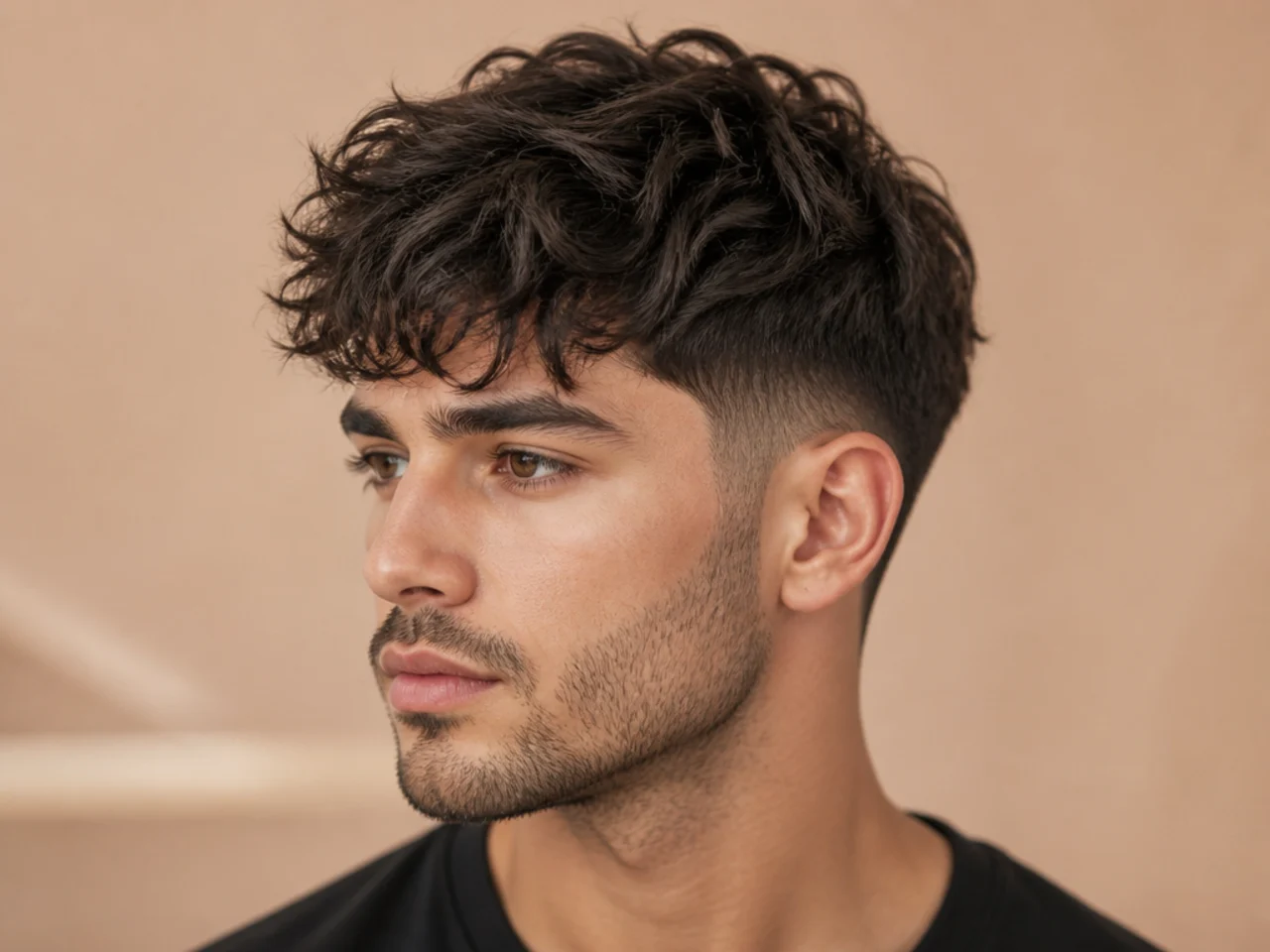
Pairs a mid taper with a textured front section. The taper starts at temple height and tightens above the ears, so the front reads full without the sides getting bulky. Balanced cut for round or square faces — taper elongates, fringe softens. Ask for a brow-length textured fringe, a mid taper (not a full fade), and matte hold. Blow-dry the fringe forward, then twist small sections between thumb and finger with clay to define separation.
Tapered Fringe
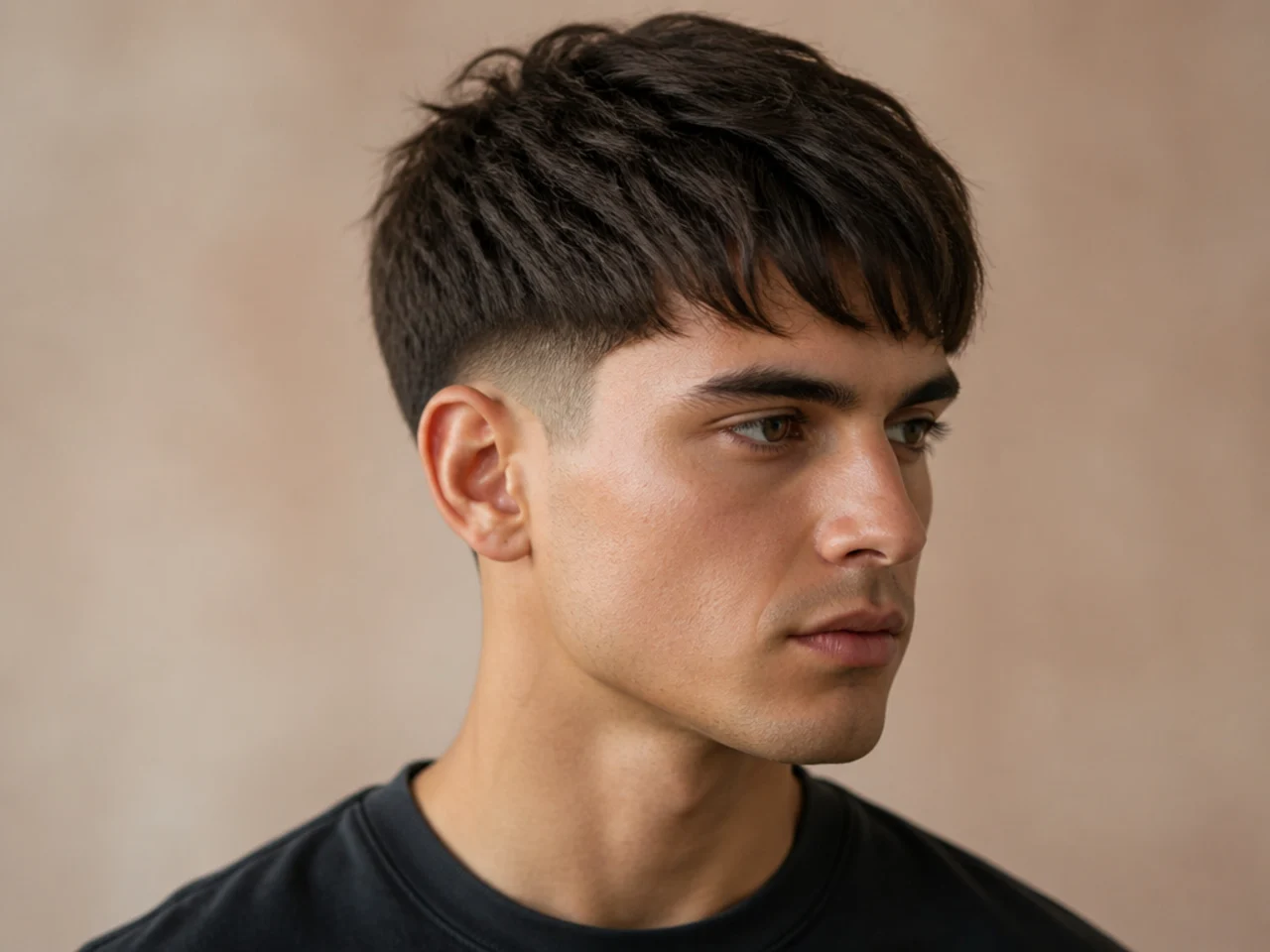
Leans on the taper more than the top. Sides and back stay tight but scissor-blended, and the fringe sits at brow length with soft weight. It's the low-key version of the taper fade fringe — same shape, less contrast. A low taper fade is the close cousin. Suits straight or slightly wavy hair on angular faces. Ask for a scissor taper, natural-length brow fringe, and satin finish. Blow-dry forward with a round brush, then smooth with a pinch of cream.
Short Fringe
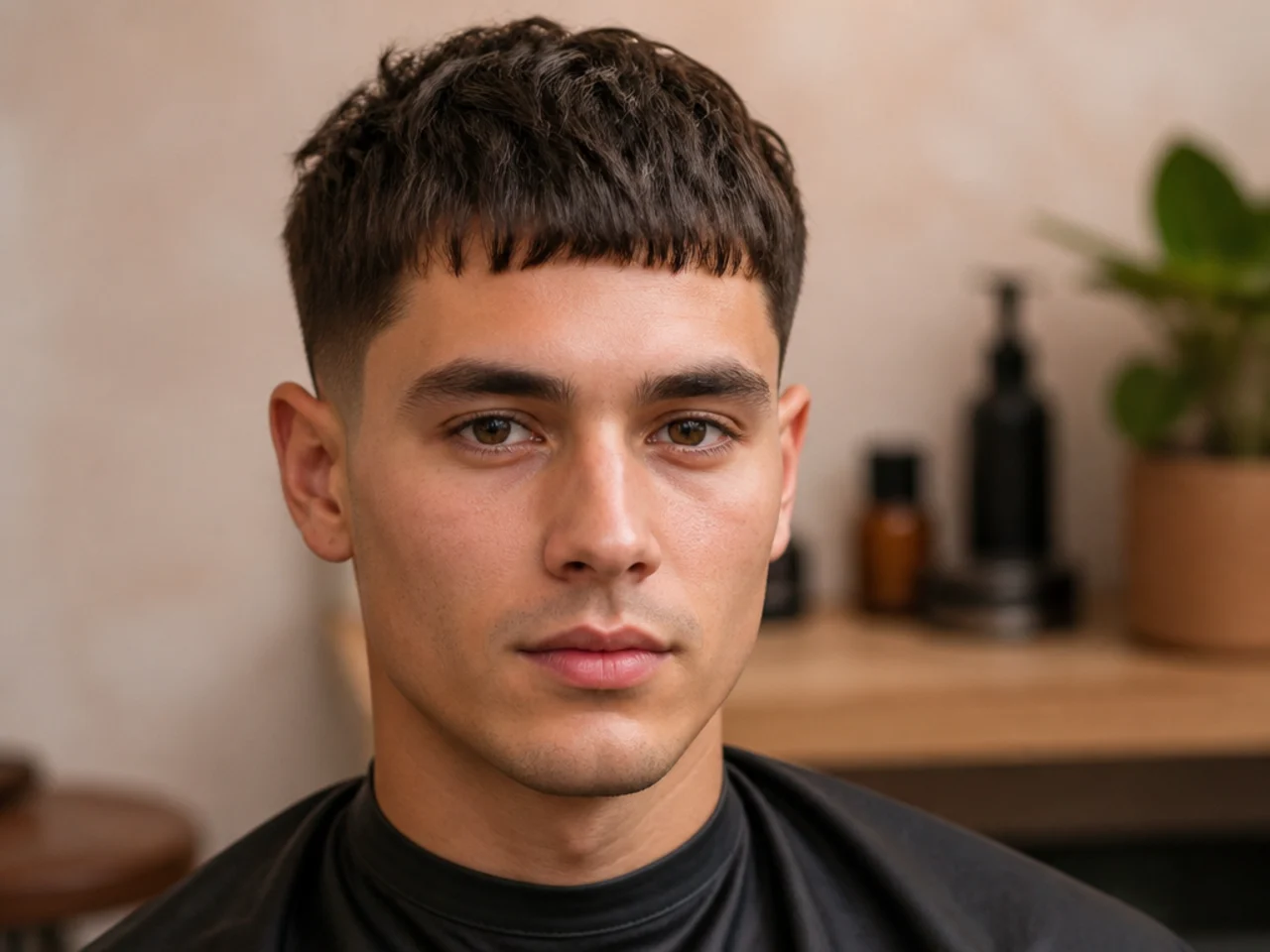
Stops above the brows. That short length is the whole personality — no swept, no covered, just a clean front edge above the eye line. Best on high hairlines (extra forehead balances the short fringe) and on straight or fine hair. Ask for a fringe that clears the brow by half an inch, tight sides with a low or mid fade, and matte finish. Rub clay between your palms first, then press it into the front — brushing spreads it too thin.
Curly Fringe
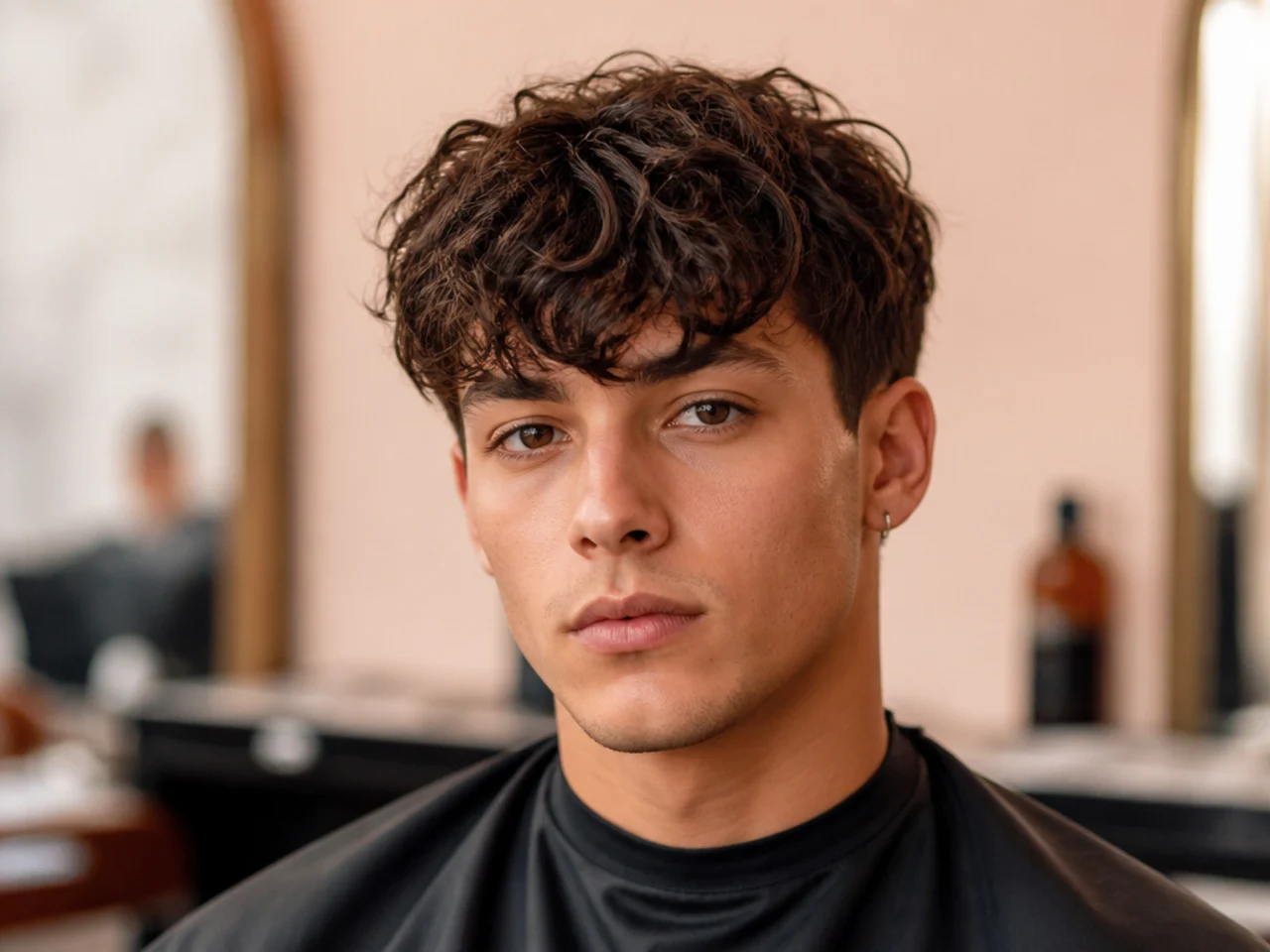
Lets natural coil sit forward across the forehead. Separates from a standard curly top by direction — curls are cut and trained to fall forward, not up. Works on Type 3 curls; tight coils need a different treatment. Round or heart-shaped faces get good balance from the forward volume. Ask for a fringe that lands at the brow when stretched (so it sits above the brow when curled), faded sides, and no product on the sides. Diffuse upside down, then flip and shape the front with curl cream.
Blowout Taper Fringe
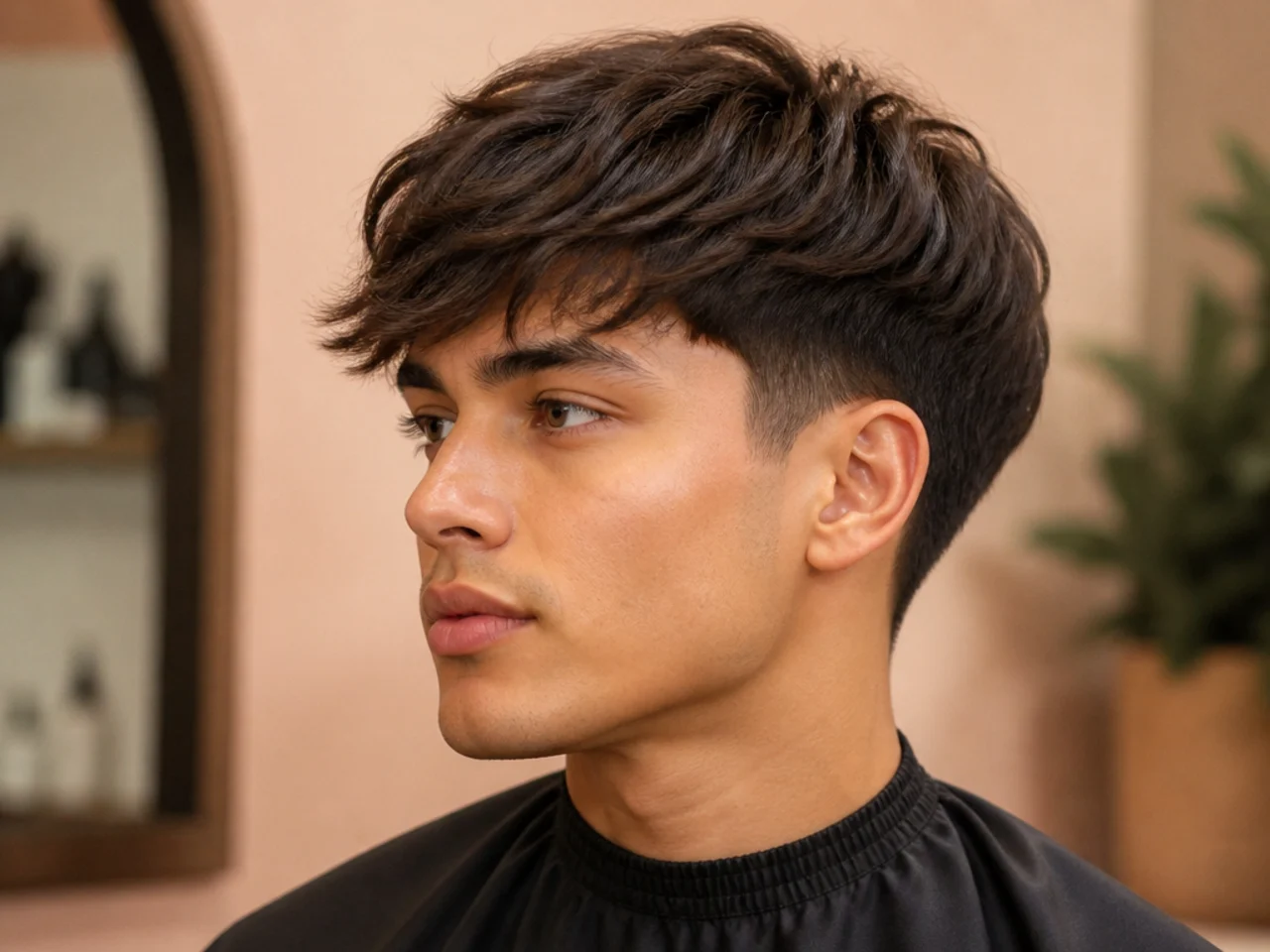
The blowout taper fringe pushes volume upward at the front instead of forward. Fringe lifts off the forehead in a soft arc, held by a taper fade that keeps the sides clean. Good for round faces that want vertical line, and for anyone with thick, straight hair. Shares DNA with the broccoli haircut in the volume it carries. Ask for length up front styled up and back, a taper fade, and volume-friendly product. Blow-dry with a round brush pulling straight up, then set with light hairspray.
Straight Hair Fringe
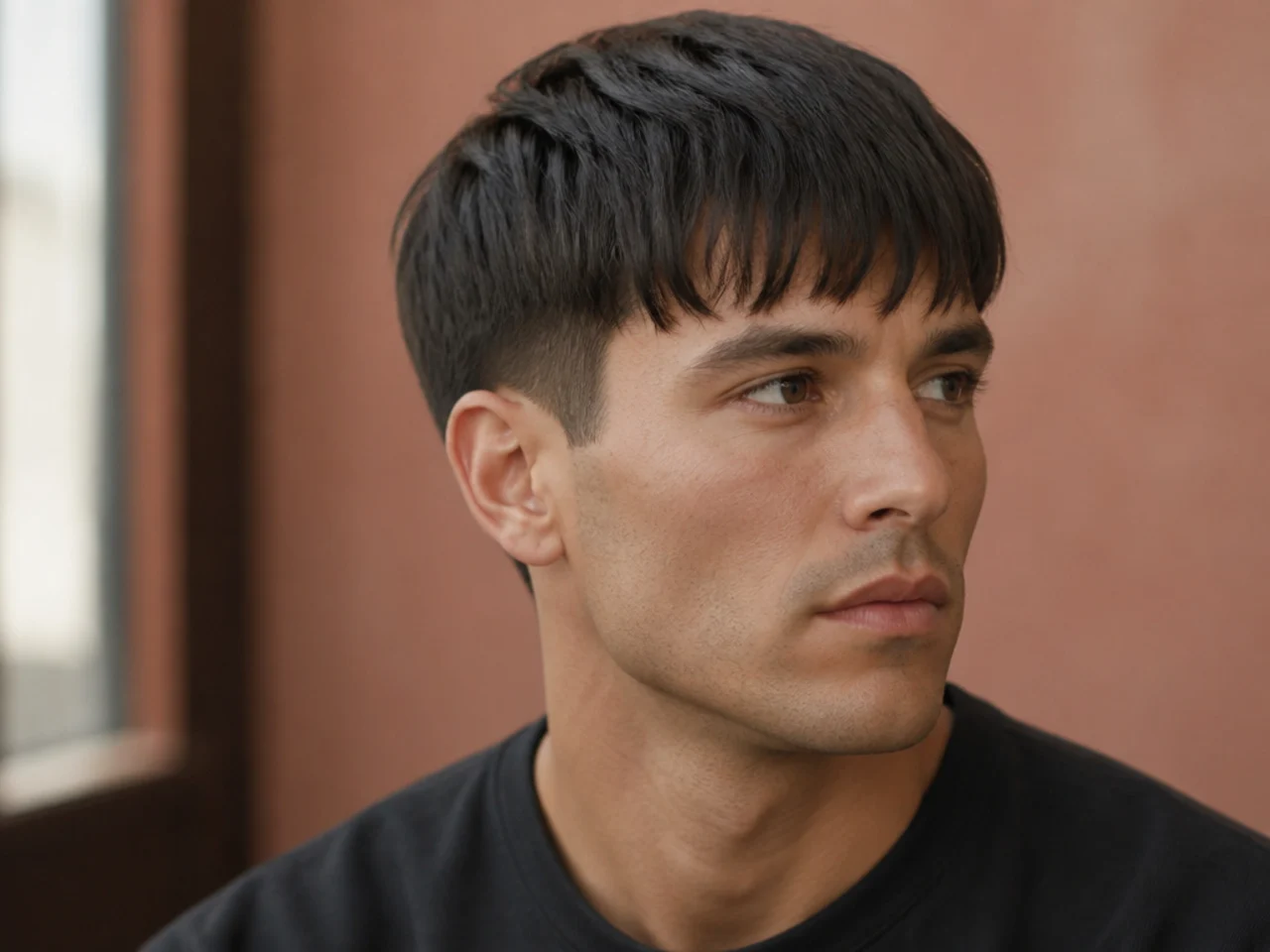
Blunt weight makes straight hair look thicker. Cut line runs horizontal — no layering — so the fringe has a sharp bottom edge. Best on genuinely straight hair with medium density (fine goes stringy, thick looks helmet-like). Long or oval faces benefit most; the horizontal edge shortens the frame. Ask for a blunt brow-grazing fringe, low fade sides, and sleek finish. Blow-dry down with a paddle brush, then run cream through the ends only.
Taper Fade Fringe
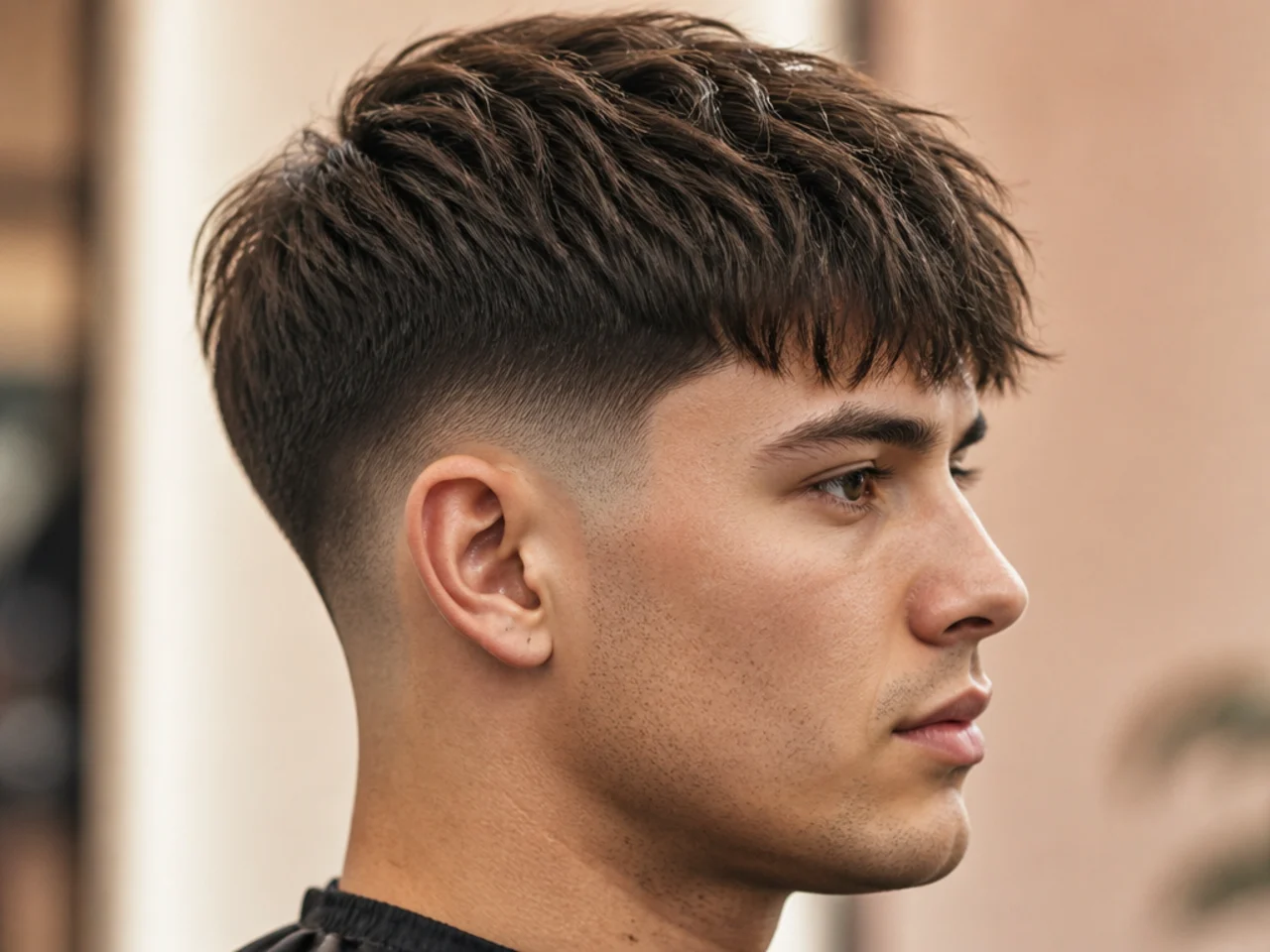
The crisp version — a full taper fade on the sides with a blunt or slightly angled fringe on top. The contrast between clean fade and heavy fringe is the whole point. Works on straight or fine hair, and on faces that carry sharp lines (square, oval). Ask for a mid taper fade, brow-length fringe cut flat across, and low-shine paste. Blow-dry forward, then hit the front with cool air once dry to keep the line from softening.
Long Curly Fringe
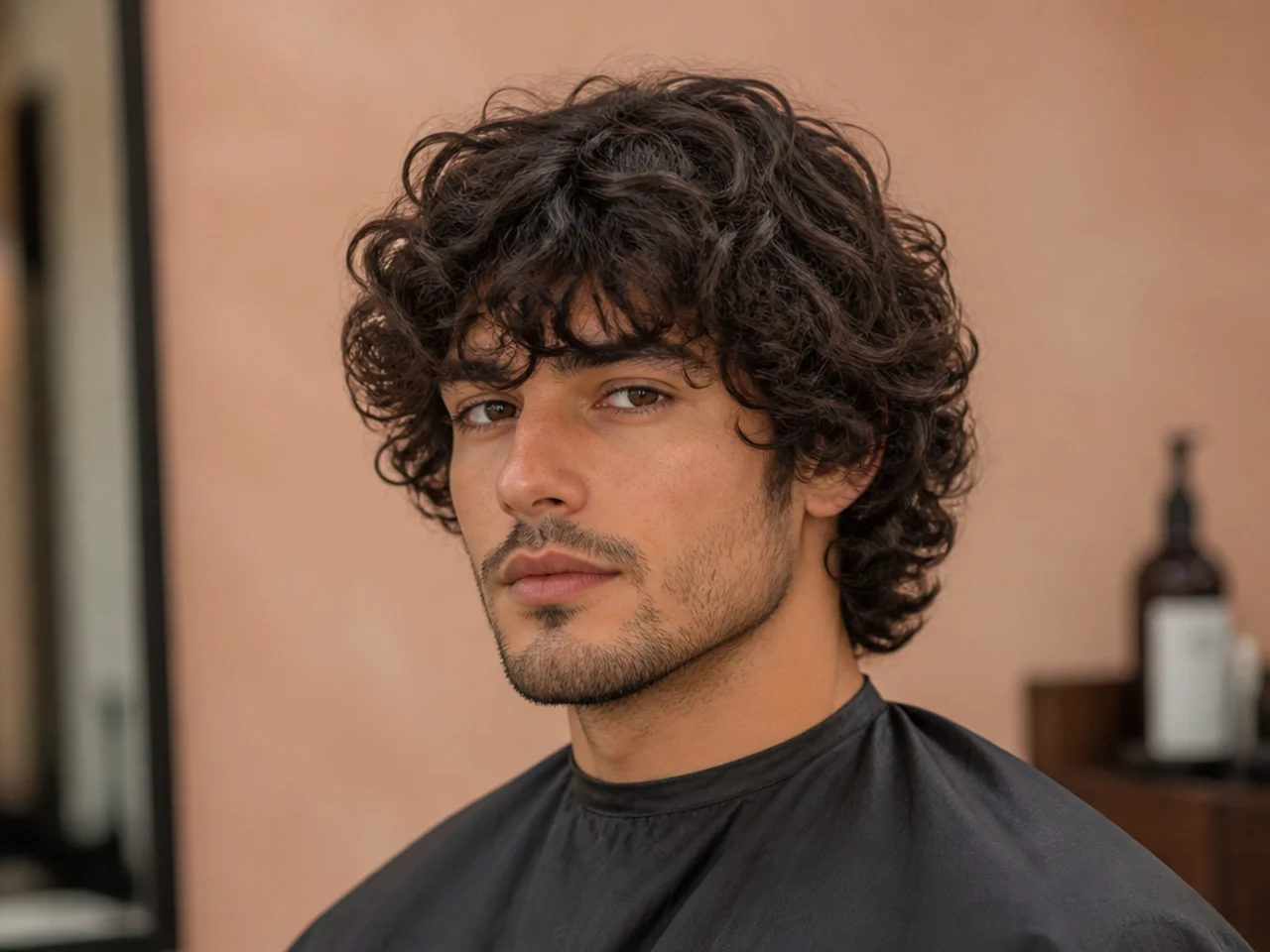
Drops past the brows and rests against the forehead in loose spirals. Different from the standard curly fringe because of length — this one moves as you move. Best on Type 3 curls with medium to thick density, and on angular faces that need softening around the eyes. Ask for a fringe covering the brow when stretched, scissor-cut sides at longer length, no fade. Apply curl cream to soaking-wet hair, diffuse with the front pushed back, then flip forward and let it fall.
Tousled Fringe
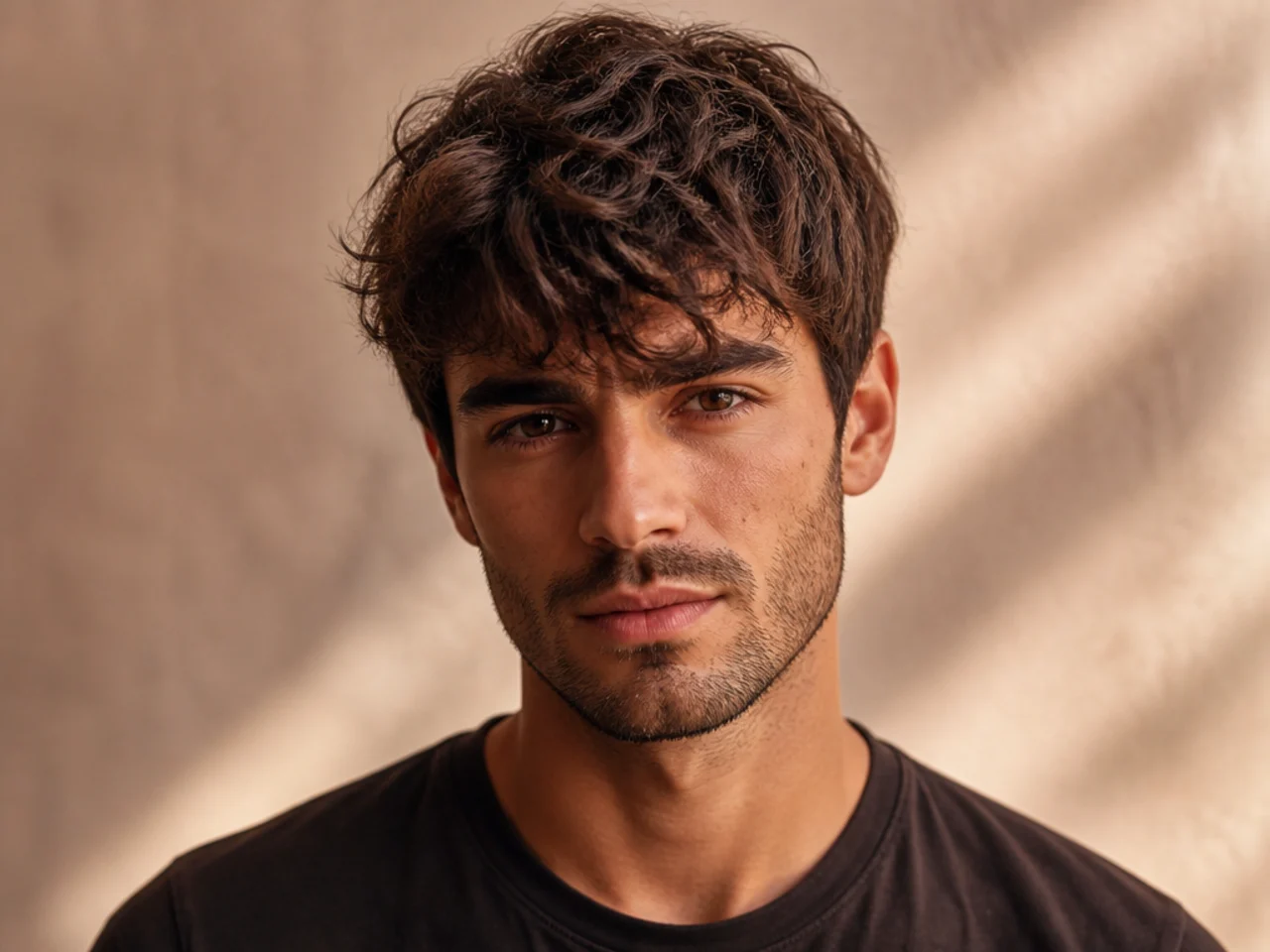
Sits between messy and neat. Layers face forward in a loose, hand-styled shape — not the deliberate chaos of a messy fringe, not the sharp lines of a textured one. Suits wavy hair on faces that lean square or angular. Ask for a brow-grazing fringe with soft layers, a mid taper or fade, and matte finish. Rough-dry with your hands, then push the front where you want it with a light paste — no comb, no product on top of the head.
Wavy Fringe
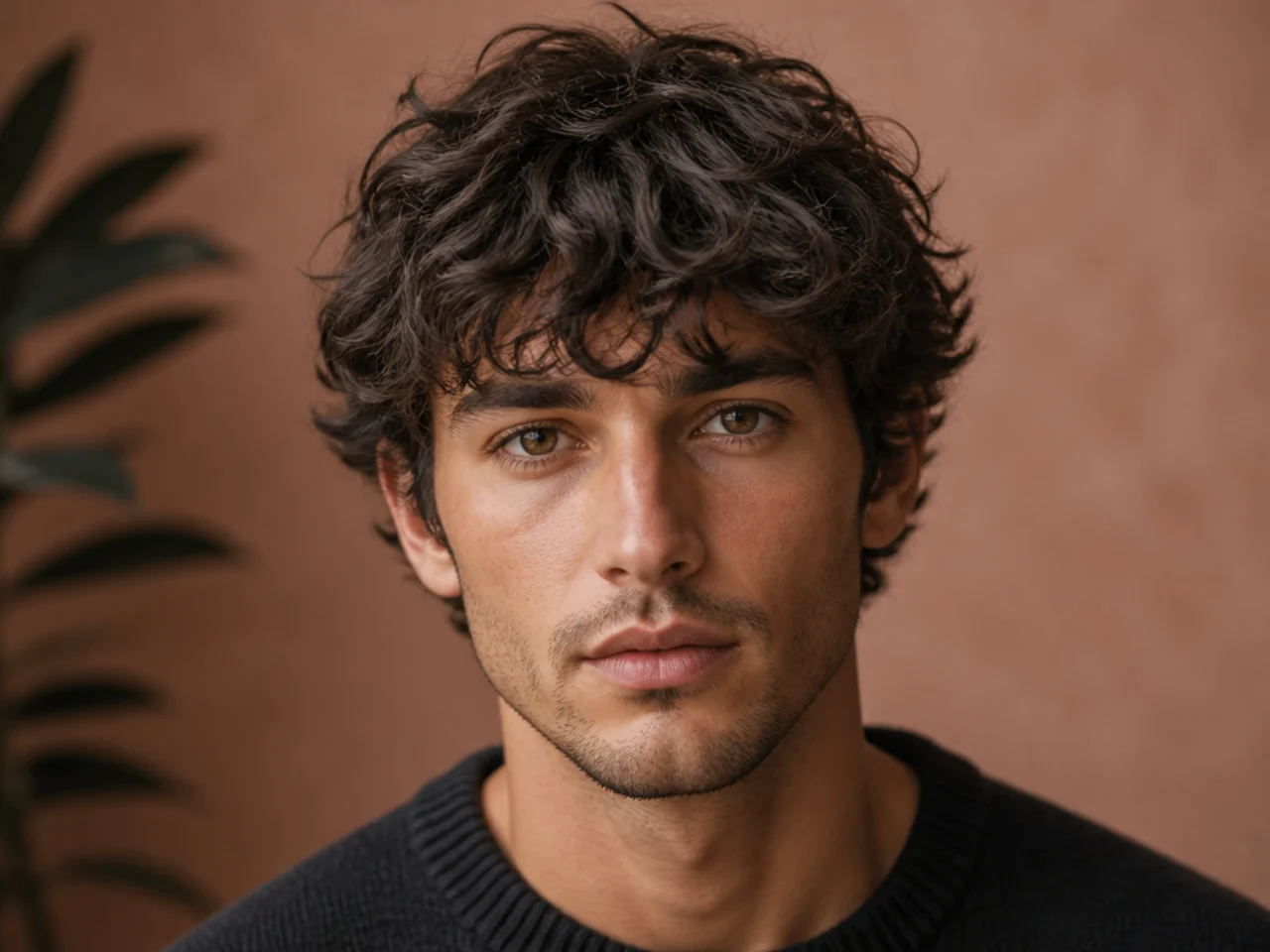
Uses natural bend to create shape at the front. Waves push the fringe out and to one side instead of straight down, so the look moves without being styled hard. Works on Type 2 waves; straight hair lies flat, tight curls spring up. Round or oval faces get the best fit. Ask for a fringe at the brow when stretched, a low fade, and light-hold finish. Diffuse with your head tipped forward, then set with sea-salt spray from about a foot away.
Cropped Fringe
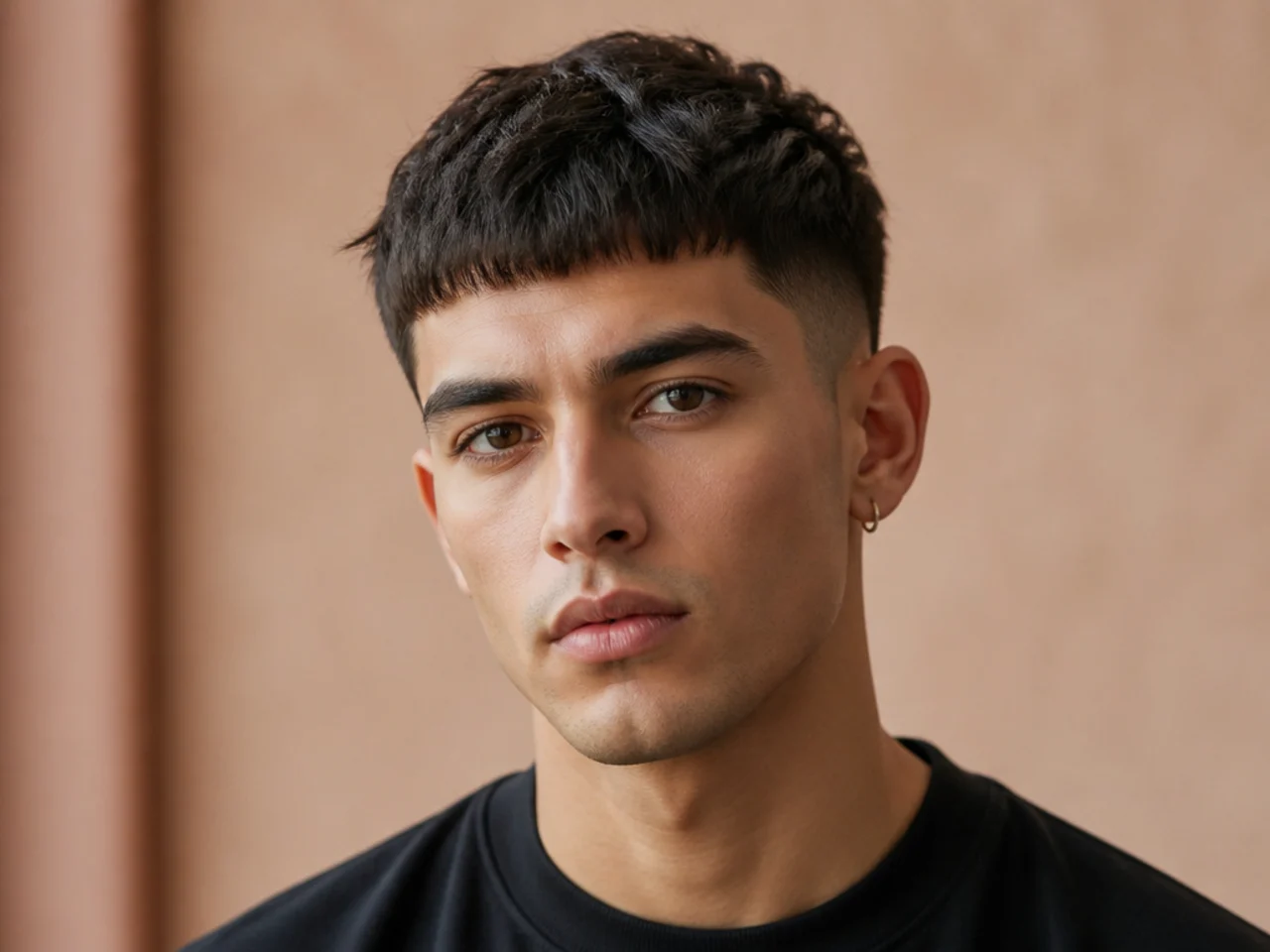
Short, blunt, and horizontal — a sharp front edge over tight sides. Different from the short fringe by weight: the crop keeps full thickness right up to the cut line, no thinning behind it. Best on straight hair and on square or oval faces that can carry the geometry. Ask for a blunt fringe sitting above the brow, high or mid fade, and matte finish. Push clay through the fringe from root to tip so the line stays crisp — surface application leaves the ends greasy.
The Caesar
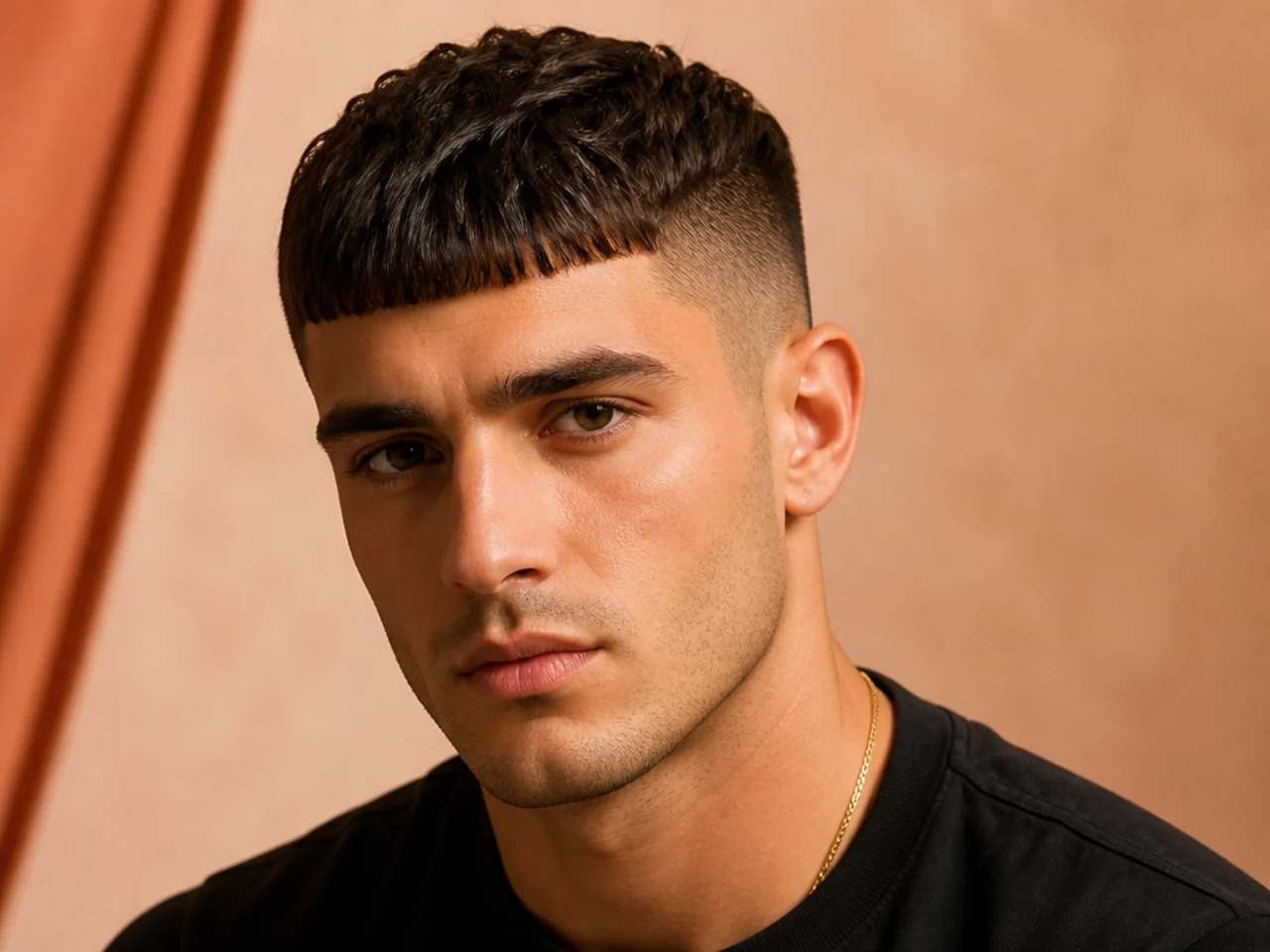
The classic short blunt fringe. Named for the horizontal front edge on Roman busts, it's basically a cropped fringe with slightly softer sides. Works on almost any straight or wavy hair type, and reads clean on receding or high hairlines because the fringe sits low and forward across the temple corners. Ask for a fringe cut horizontally across the forehead, sides at 1 to 2 clipper guards, and matte finish. Apply matte cream to damp hair, comb forward from the crown, leave it.
Mid Fade with Textured Fringe
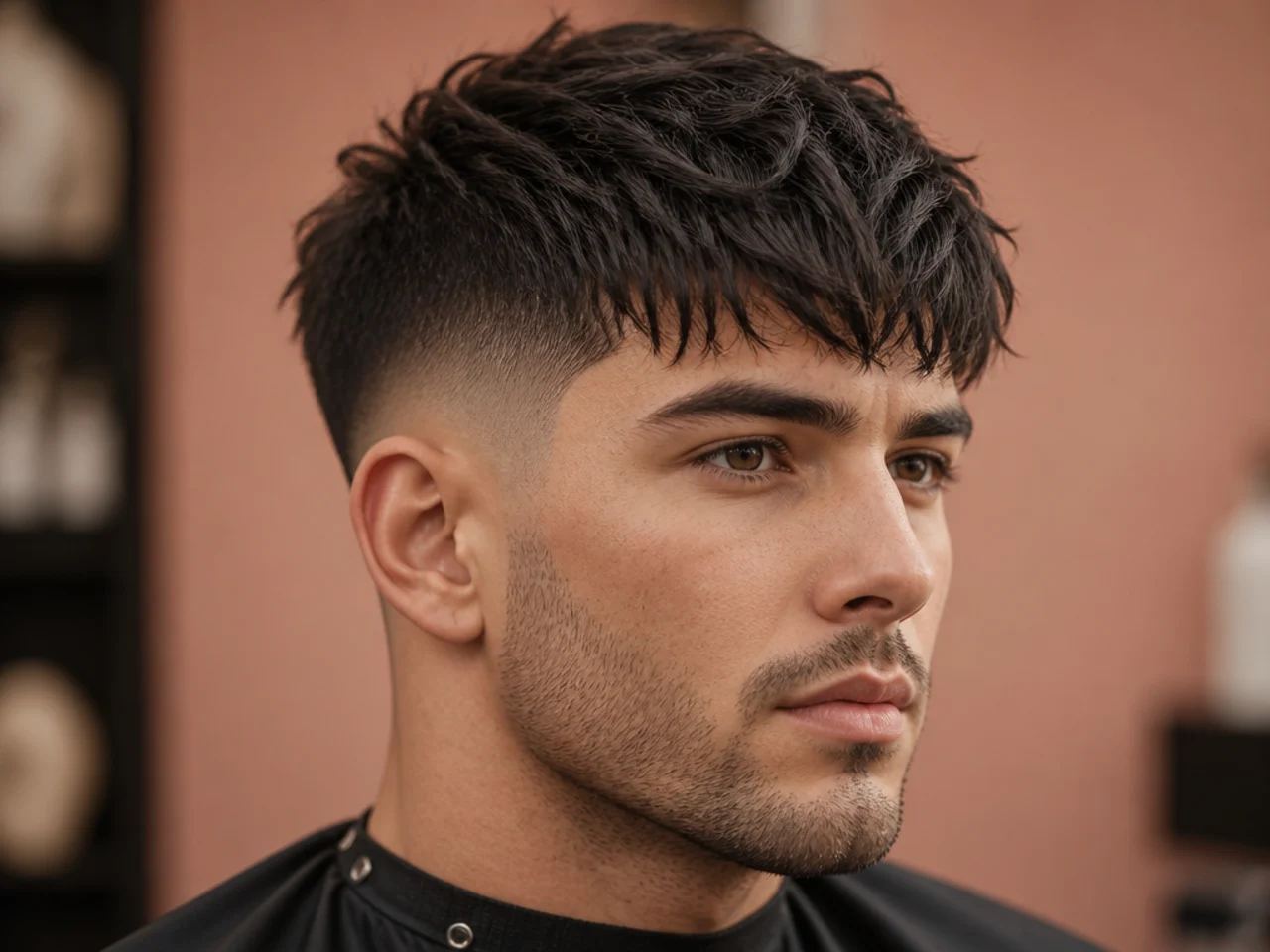
The mid fade with textured fringe is the default modern men's cut in 2026. Mid fade starts mid-temple — high enough to look sharp, low enough to stay low-maintenance. Textured fringe sits at brow length with movement through the front. Especially good on square jaws where the fade tightens the outline and the fringe softens the top. Ask for a mid fade, a brow-length point-cut fringe, and matte hold. Blow-dry forward, then break the shape with clay from underneath.
Textured Short Fringe
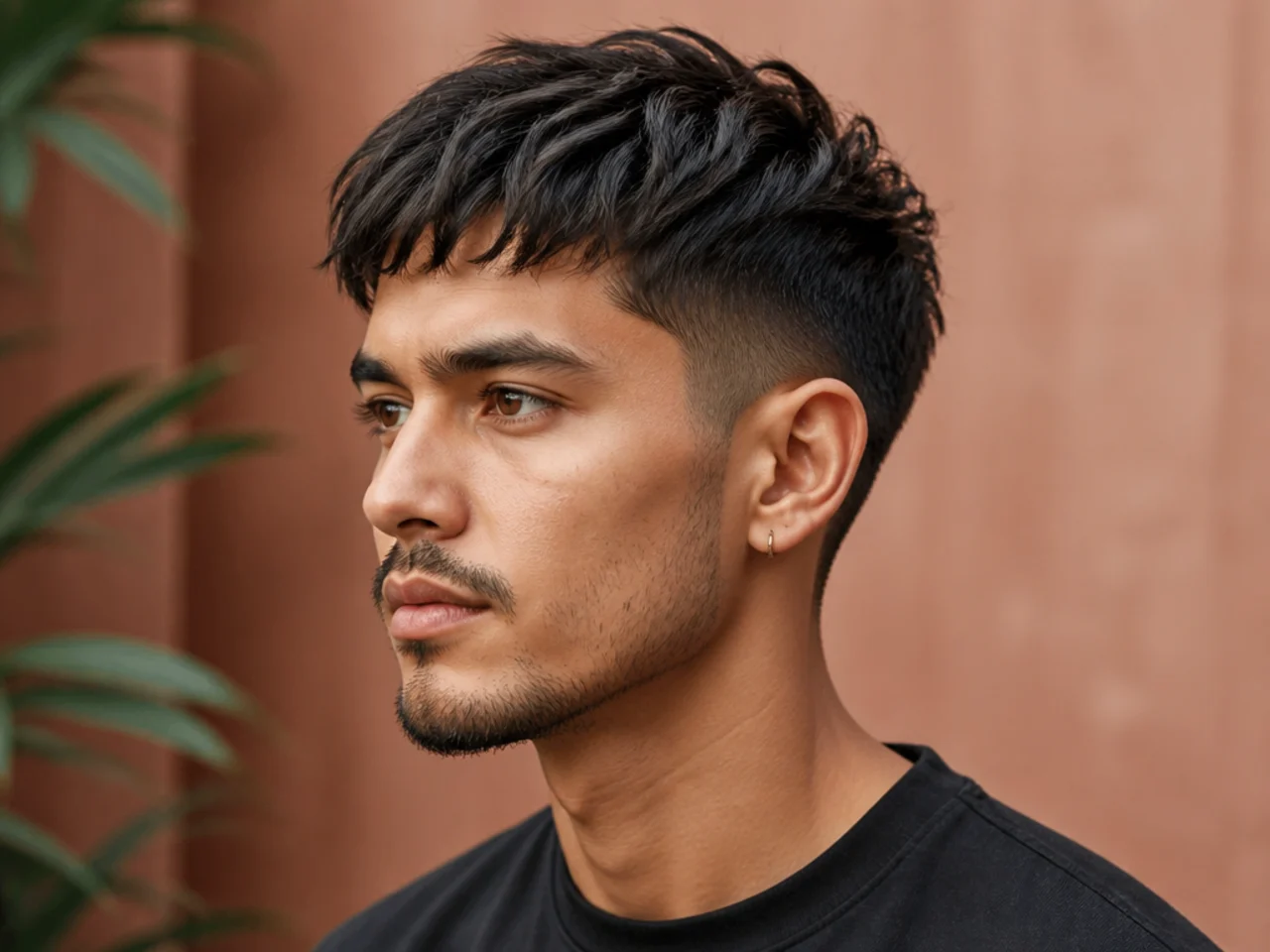
Combines the short-fringe length with layered movement. Fringe sits above the brow but with point-cut ends instead of a blunt line — the crop that doesn't look severe. Best on straight or wavy hair, and on any face shape except very long — the shortness would exaggerate length. Ask for an above-brow fringe with point-cut ends, low or mid fade, and matte hold. Work clay into towel-dried hair with your fingers, then push everything forward.
Buzzcut Fringe
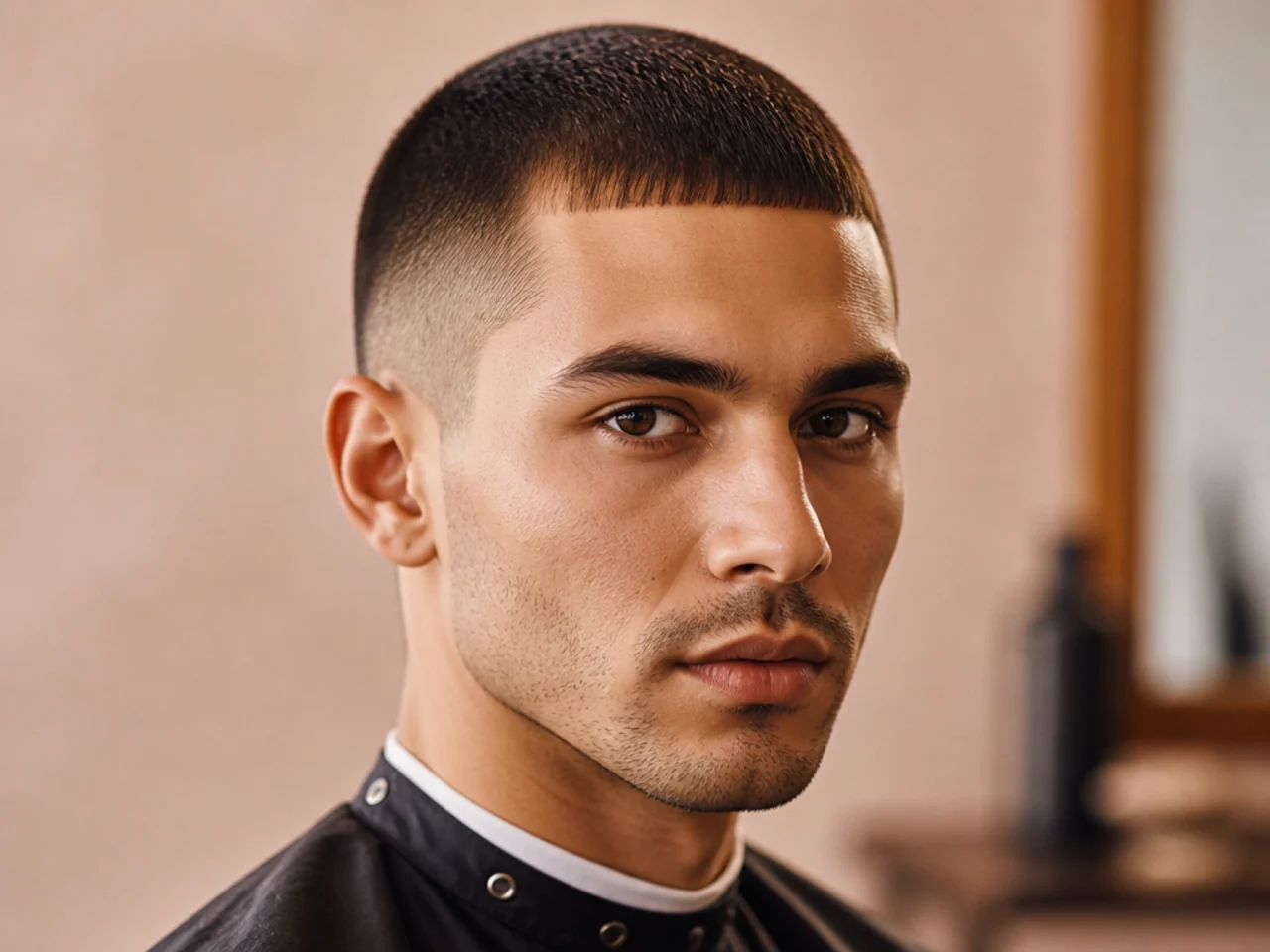
The buzzcut fringe is a paradox — a buzz on the sides and back, with just enough length at the front to form a fringe. Different from a plain buzz because you keep the front long enough to see and shape. Suits high hairlines and square jaws, works on any hair texture as long as the front has weight. Ask for a 1 to 2 guard on the sides and back, a defined fringe at the front (specify the length), and a light cream. Comb forward, smooth flat with your palm.
Heavy Angular Fringe
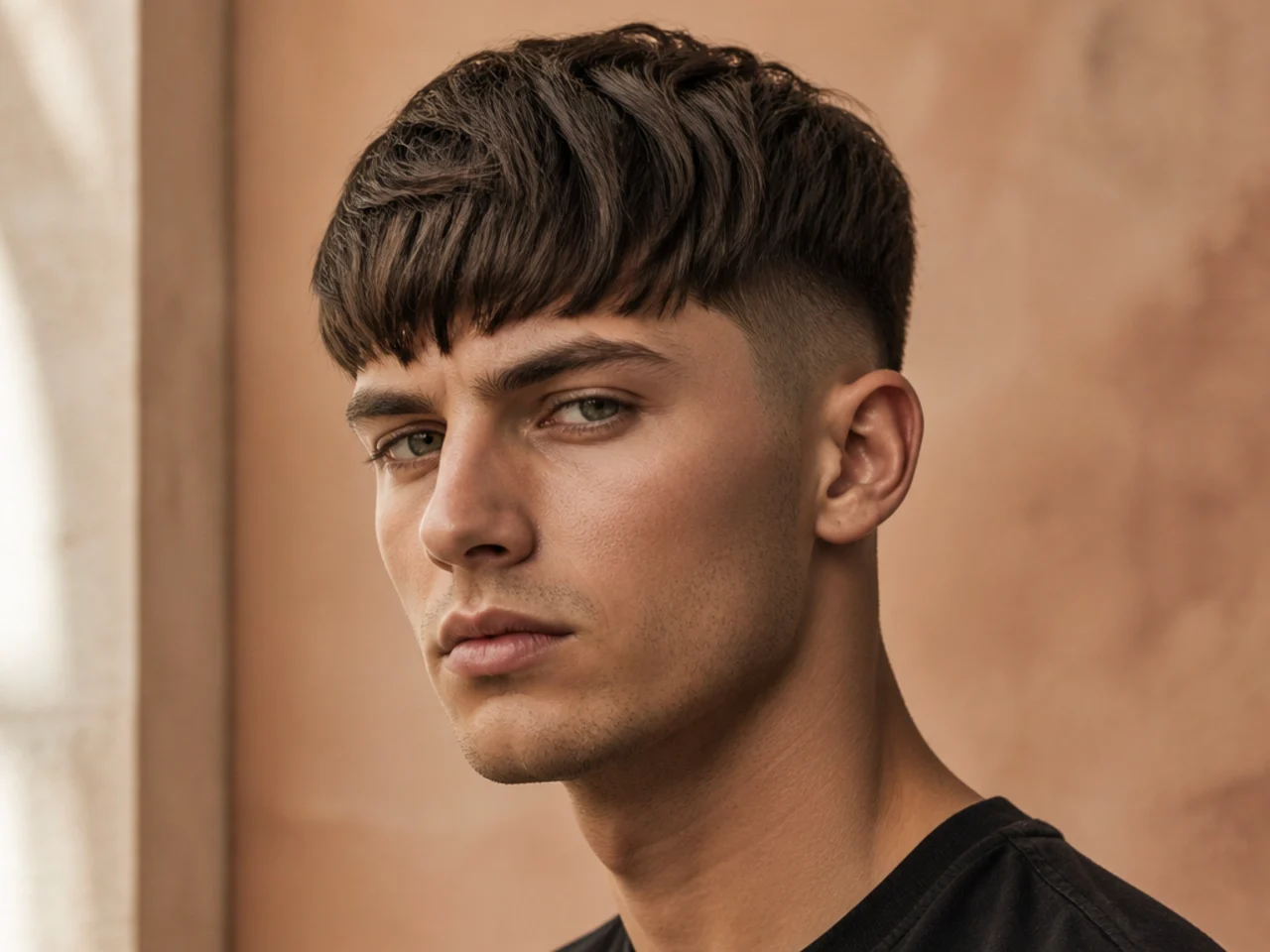
Weight through the middle and a diagonal cut line. That angle — long on one side, shorter on the other — makes it "angular." Works on thick straight hair, and on round or square faces where the diagonal creates length. Ask for a fringe with weight left in, cut on an angle across the forehead, and mid to high faded sides. Blow-dry into the angle with a round brush, then set with matte clay from the roots outward.
Classic Fringe
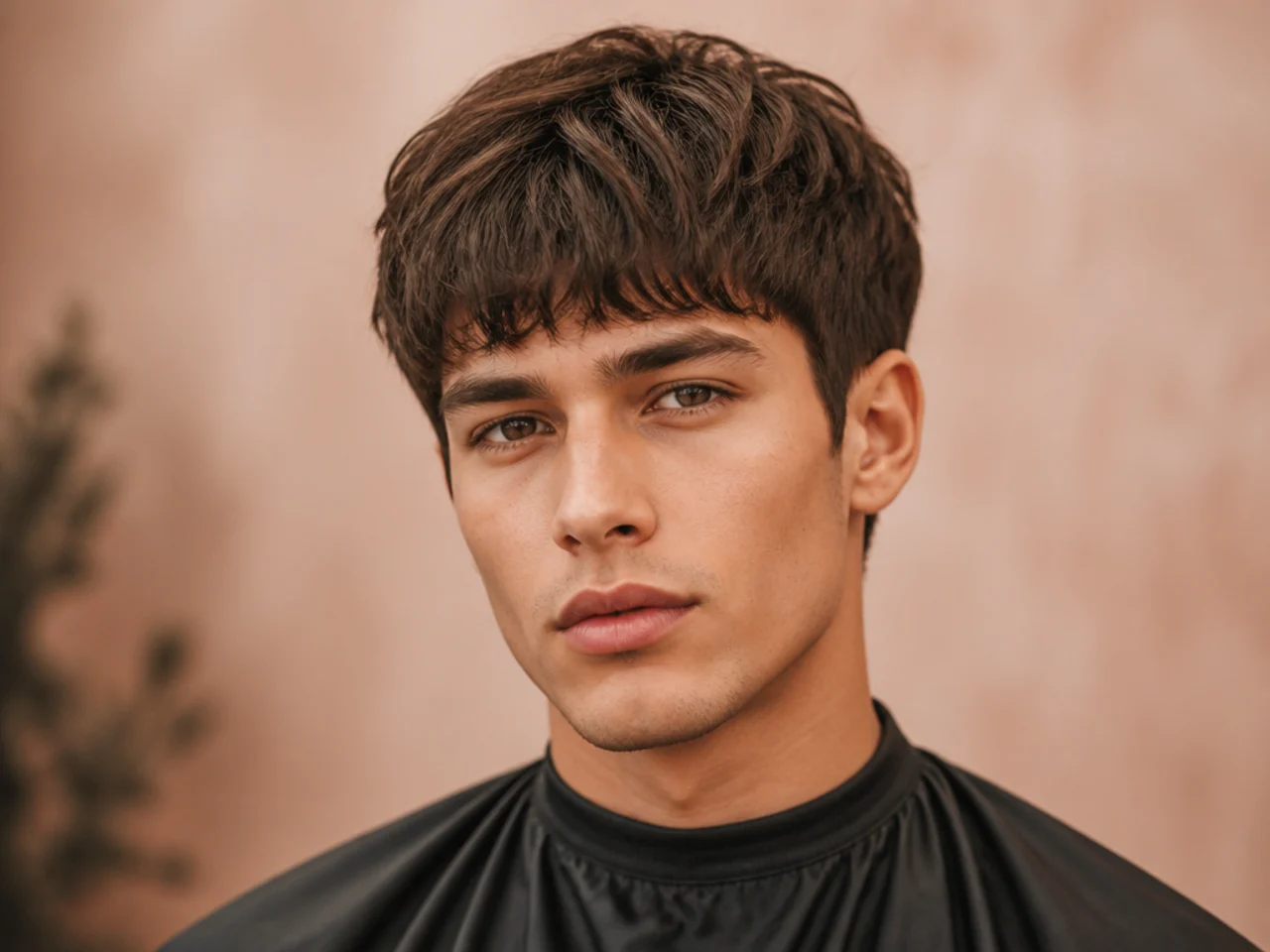
Medium-weight, brow-length, softly swept — no strong texture, no blunt line, no angle. Reads clean without reading trendy, which is why it stays in style year after year. Works on straight or slightly wavy hair and suits almost any face shape. Ask for a brow-grazing fringe with soft weight, scissor-cut sides or a light taper, and low-shine finish. Blow-dry forward with a paddle brush, then finger-comb into a soft side lean.
High Taper with Textured Fringe
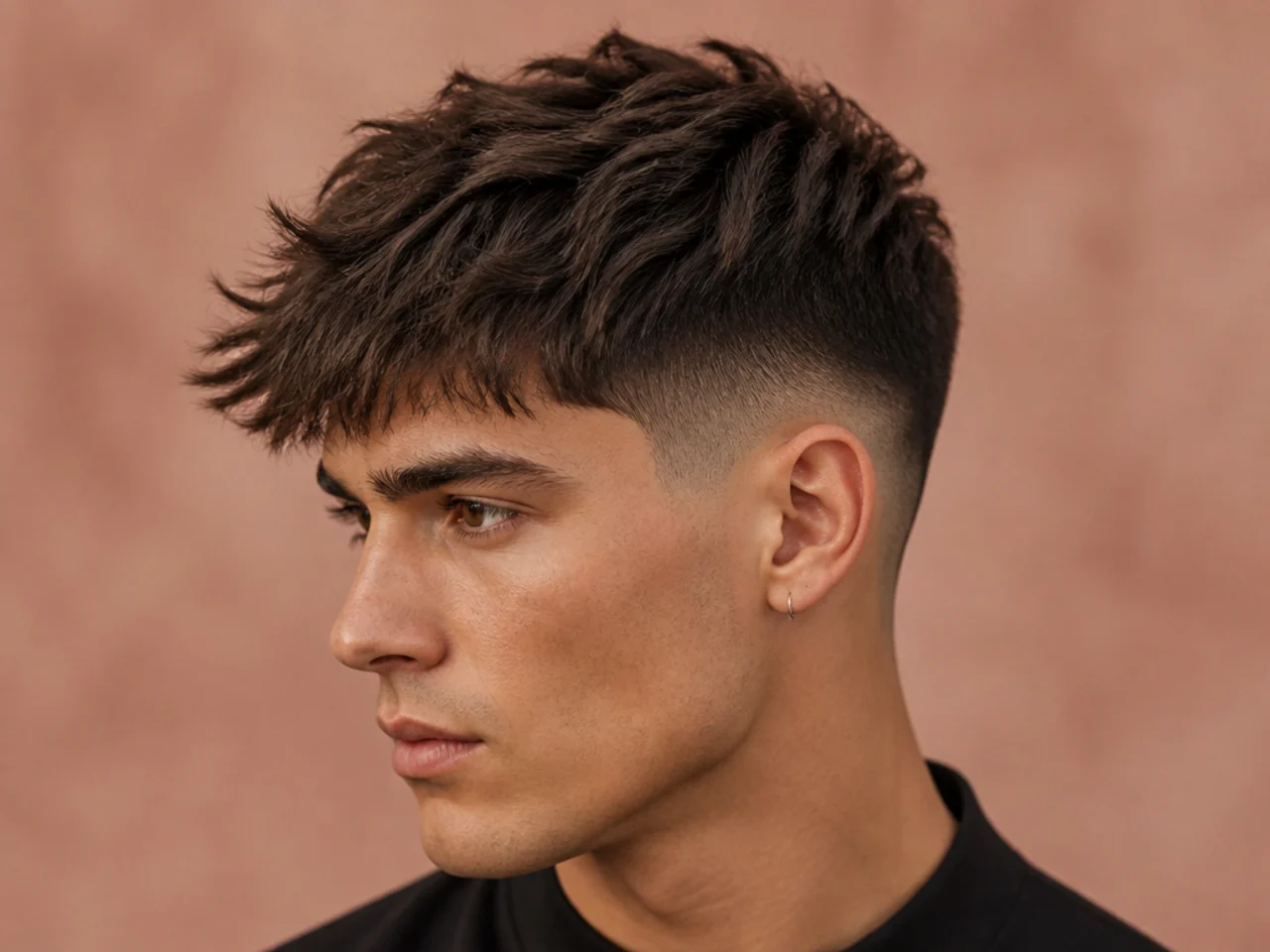
Pushes the taper up near the parietal ridge, leaving a full box of length on top with a forward-swept fringe. High taper reads sharper than mid; the fringe softens it back down. Works on thick straight or wavy hair, suits round or heart-shaped faces where you want vertical length. Ask for a high taper (not a skin fade), a brow-length textured fringe, and matte hold. Blow-dry the top upward before pushing the fringe forward — root lift first, shape second.
Curly Caesar
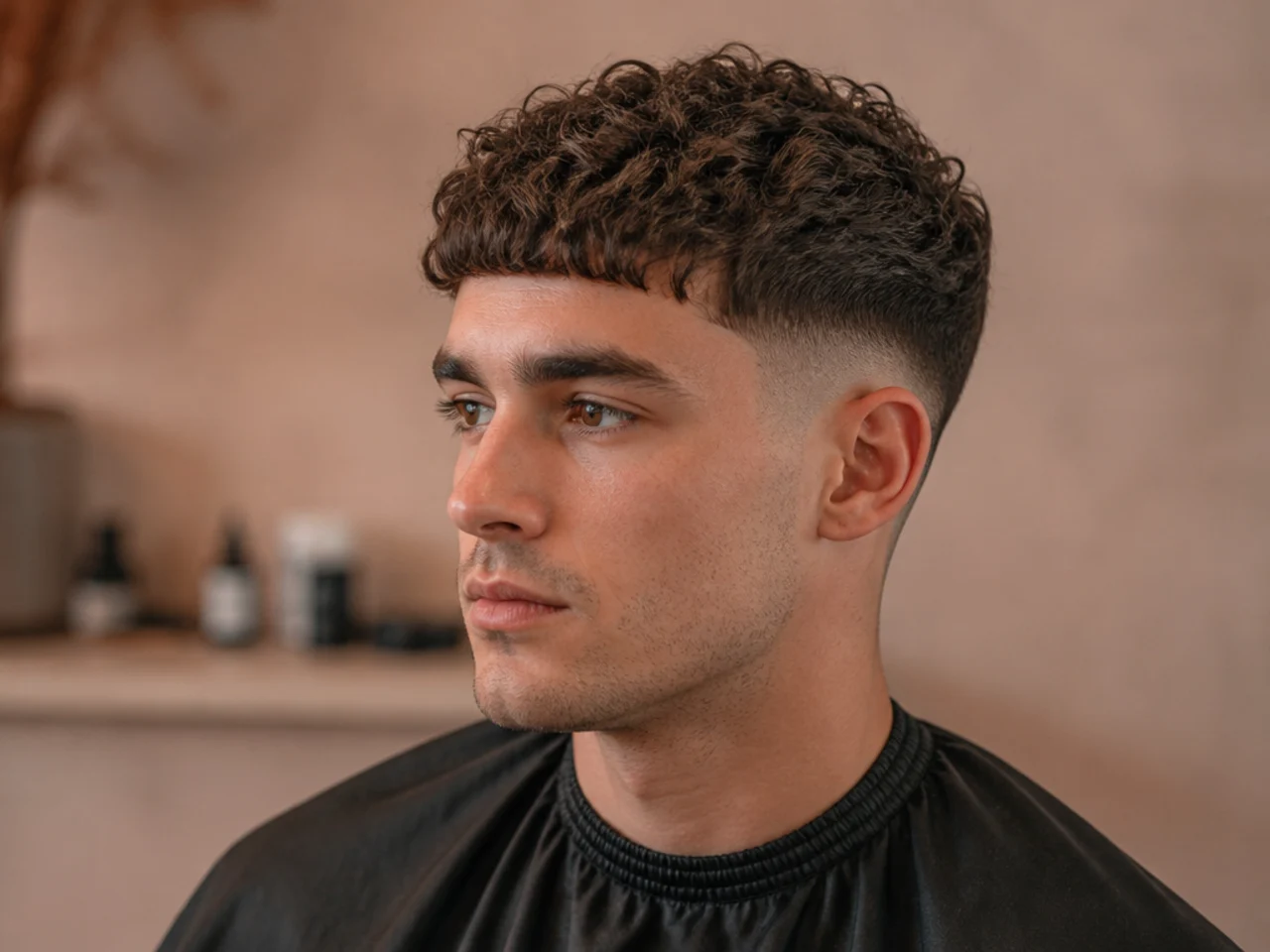
A Caesar cut on natural curls — the top sits forward across the forehead in a short, densely-curled fringe. Curls are trained to face forward instead of rising up. Works on Type 3 curls with medium density, and on high hairlines the short fringe would leave exposed on straight hair. Ask for a short curly fringe that sits above the brow when stretched, scissor-cut short sides, and no product on the sides. Apply curl cream to wet hair and diffuse forward on low heat.
Asian Fringe Haircut
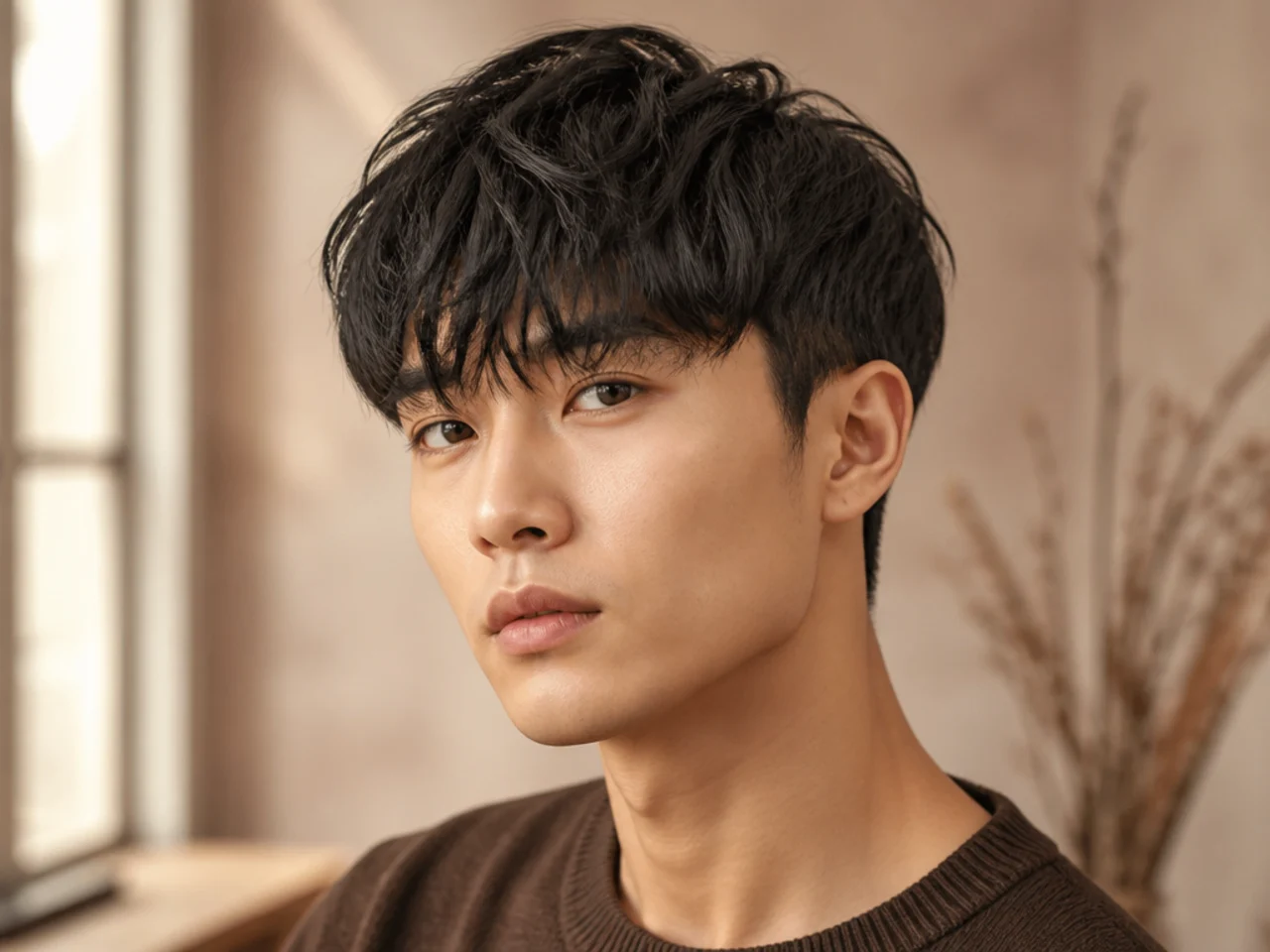
Uses the density of typical East Asian hair — thick, straight, coarse — to build a heavy layered front piece with volume through the crown. Weight distribution is the difference: full at the front, tapered but not faded at the sides. Suits square or heart-shaped faces. Ask for a fringe covering the brow with subtle internal layers, a scissor taper (not a clipper fade), and matte finish. Blow-dry upward at the roots so the crown lifts, then let the fringe fall forward on its own.
Fringe Haircut Low Fade
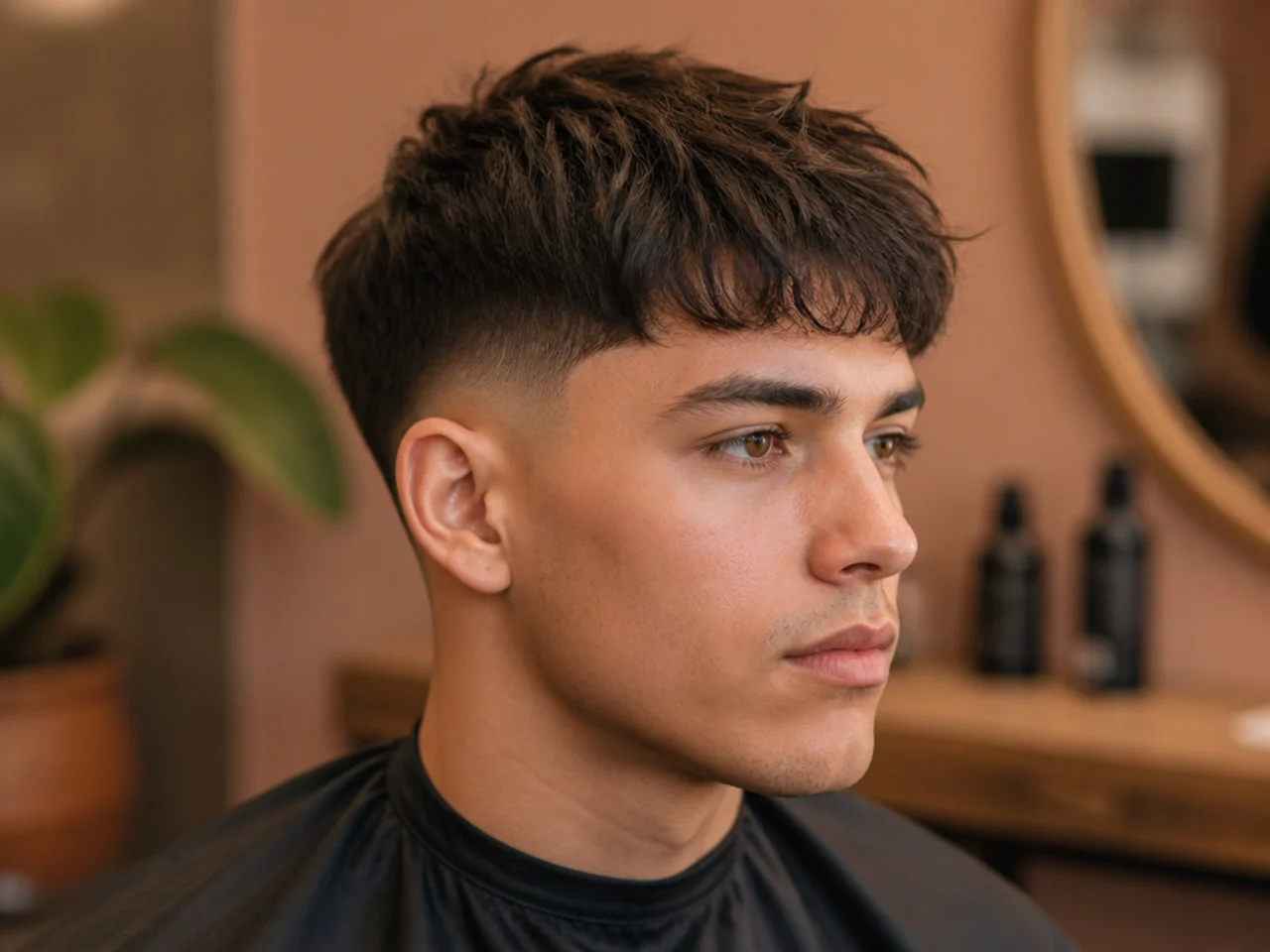
Pairs a soft front section with a low fade that starts just above the ears. That low fade keeps the transition subtle so the fringe reads as the focus. Works on all hair types and any face shape, though angular faces get the most benefit from the added softness. Ask for a low fade, brow-grazing fringe cut to your natural density, and light matte hold. Blow-dry forward with fingers only, then break the shape with a fingertip of clay pressed in from below.
Textured Curly Fringe
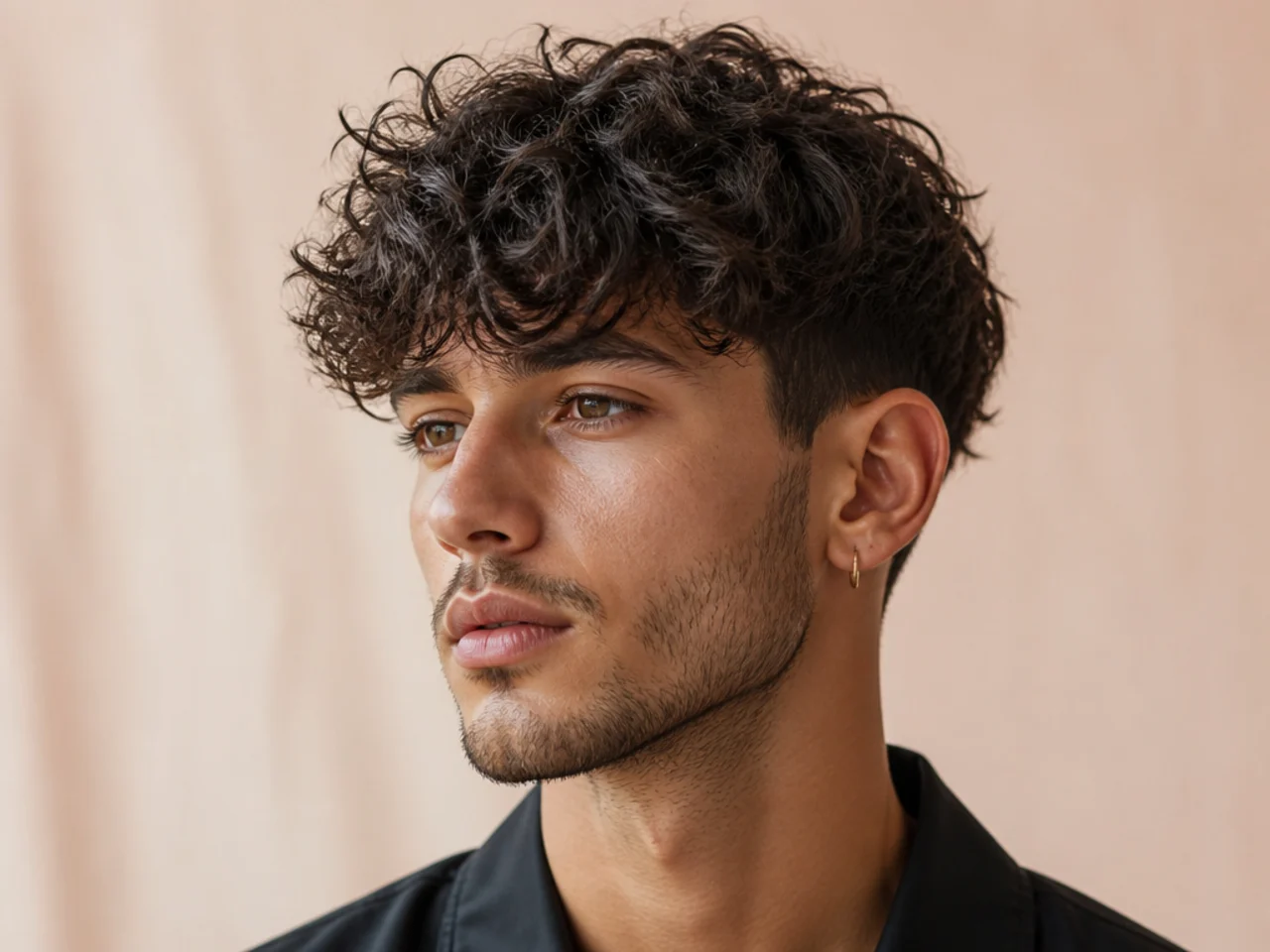
Adds shape and separation to natural coil. Layers are cut so the curls fall forward with defined pieces instead of one thick block. Best on Type 3 curls, on square or oval faces. Ask for a fringe at brow height when stretched, a mid fade, and lightweight curl cream. Diffuse on low heat with the fringe pushed forward, then pick at individual curls to open them up. Don't touch the front while drying — you'll frizz it.
Afro Fringe
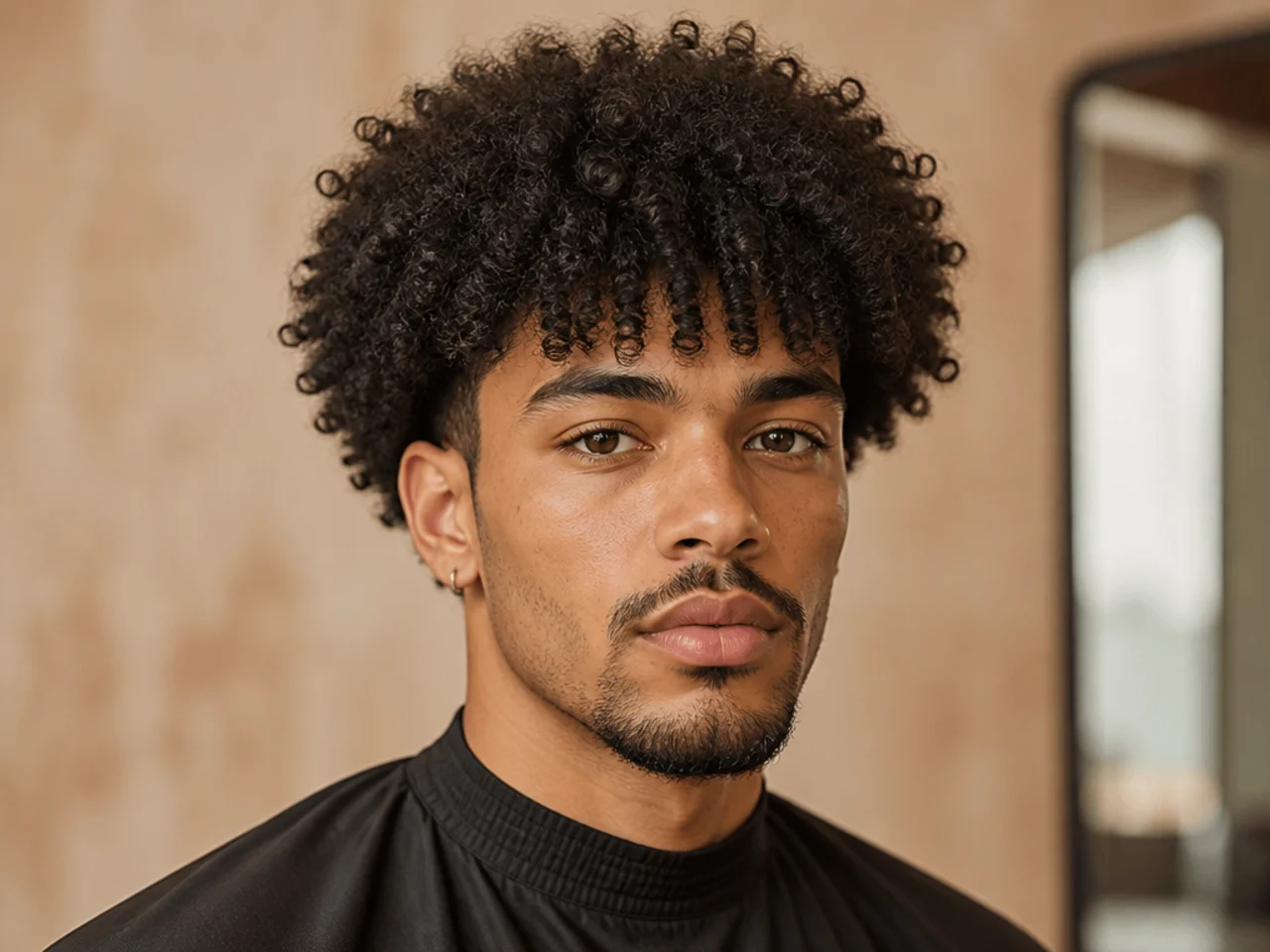
Treats tightly coiled hair the same way other fringes treat straight: cut so the front sits over the forehead. Different from a plain fro because the front is trained and cut to lie down instead of sit up. Suits Type 4 hair on high hairlines or angular faces. Ask for a fringe cut at the forehead line with the rest of the top left full, faded or short sides, and a moisturizing cream. Comb the front out with leave-in conditioner while damp, then shape by hand.
Fringe with Fade
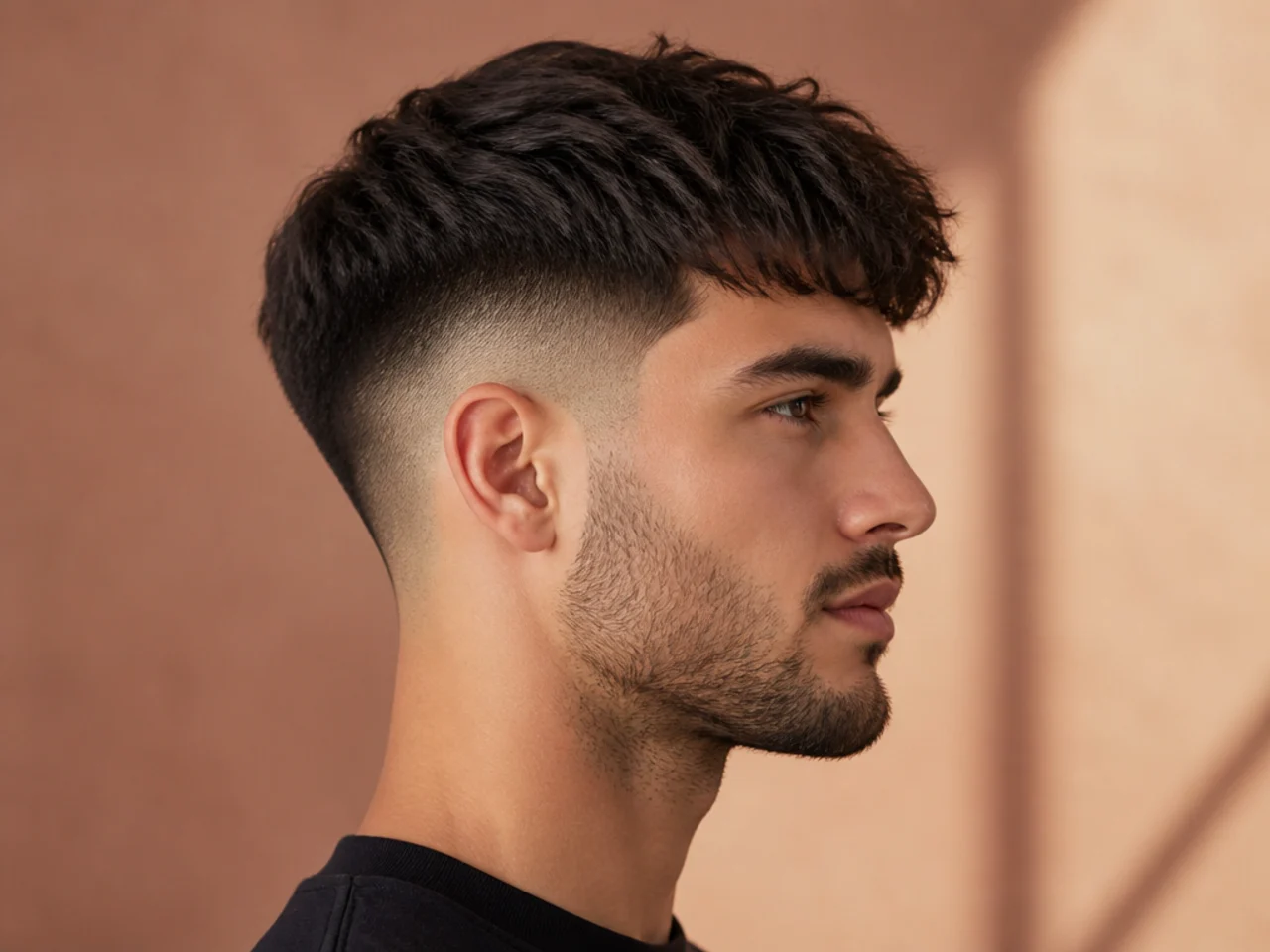
The generic fringe with fade combines any medium-weight fringe with a fade on the sides — usually low or mid. It's the shape most barbers default to if you just say "fringe with fade" without specifying more. Works on any hair type; suits any face shape depending on which fringe you pick. Ask for the fringe length (brow-grazing / above brow / covering brow), the fade type (low, mid, high), and the finish (matte, sleek). Blow-dry the fringe forward and finish with your product of choice — this cut is a template, not a specific style.
Disconnected Fringe
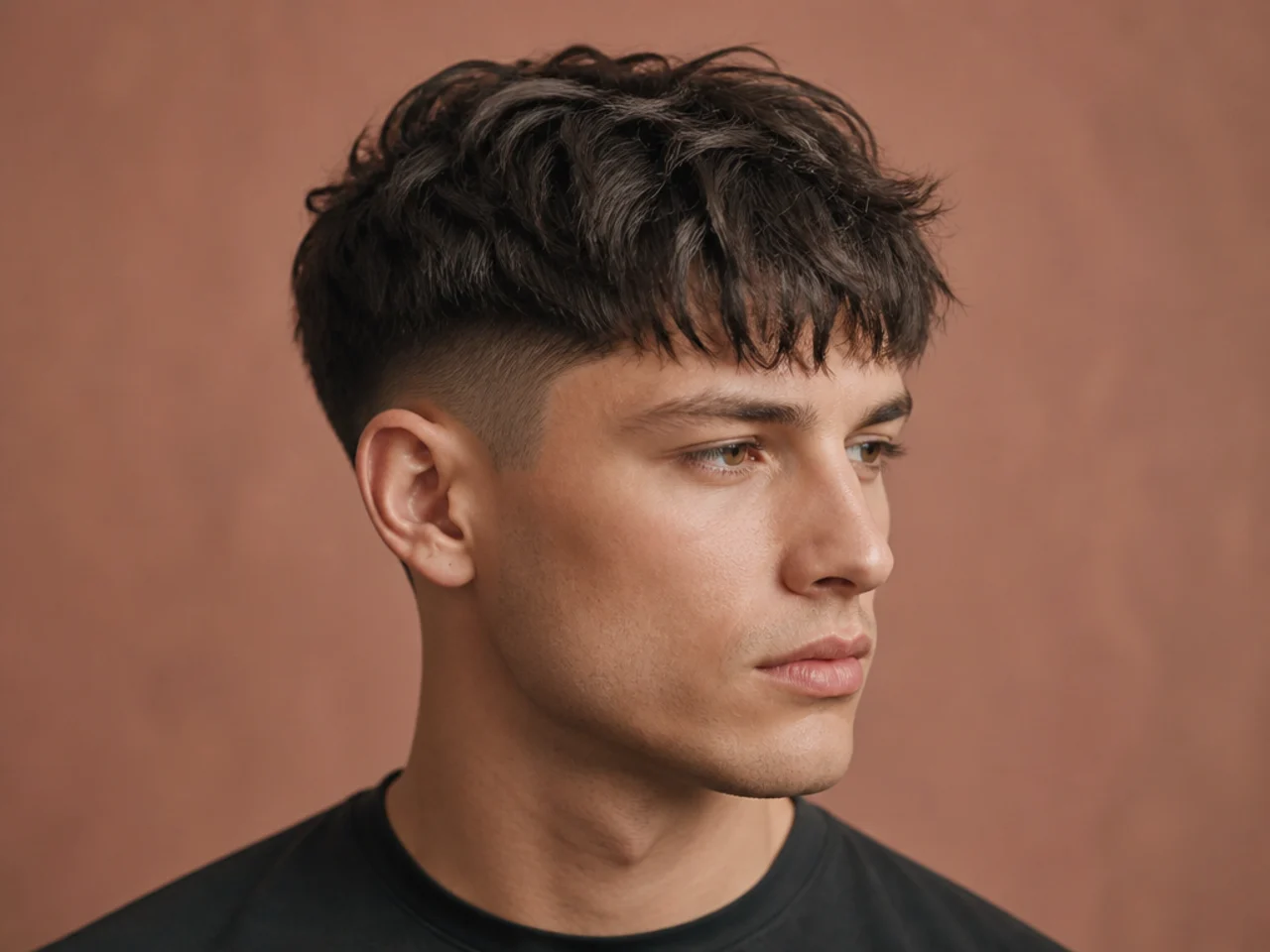
Cuts abruptly from top to side — no fade, no blend, just a clean visual line where the long fringe meets the short sides. That hard line is the style's whole personality. Suits square jaws and angular faces where the graphic edge reads intentional. Ask for a fringe with weight left in, ultra-short sides (0 to 1 guard) with a disconnect at the parietal ridge, and matte hold. Blow-dry the fringe forward and use clay to keep the pieces visibly separated at the disconnect line.
Floppy Fringe
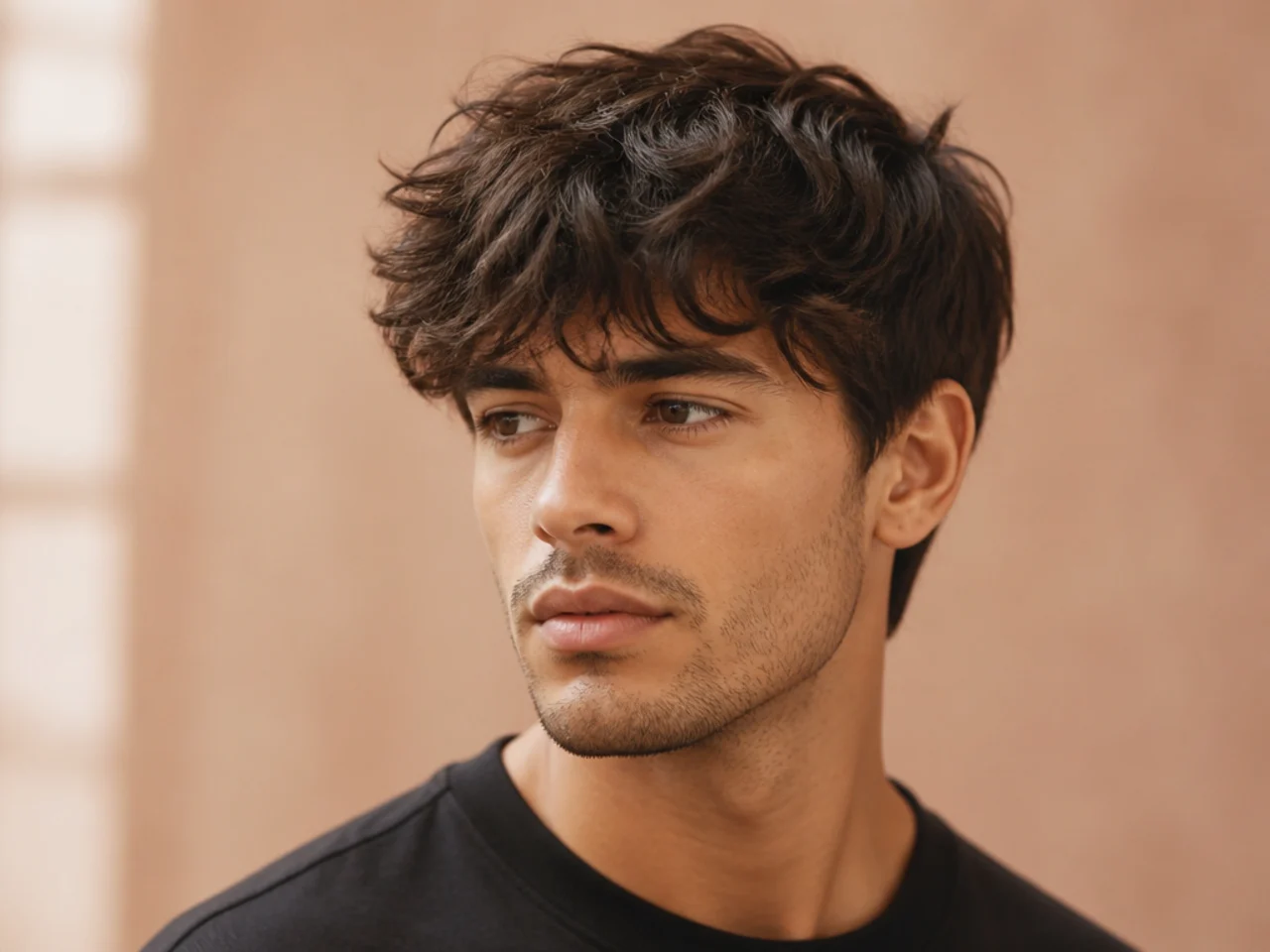
Drops past the brows and moves as you move. Different from a long fringe because the weight is deliberately soft — you should be able to shake your head and see the fringe settle back into place. Works on medium-density wavy or straight hair, and on angular faces that need looseness around the eyes. Ask for a fringe covering the brow with soft, chopped layers, scissor-cut sides at a longer length, and a lightweight cream. Rough-dry with your hands only, then push the fringe where you want it and let it fall.
fringe haircut female
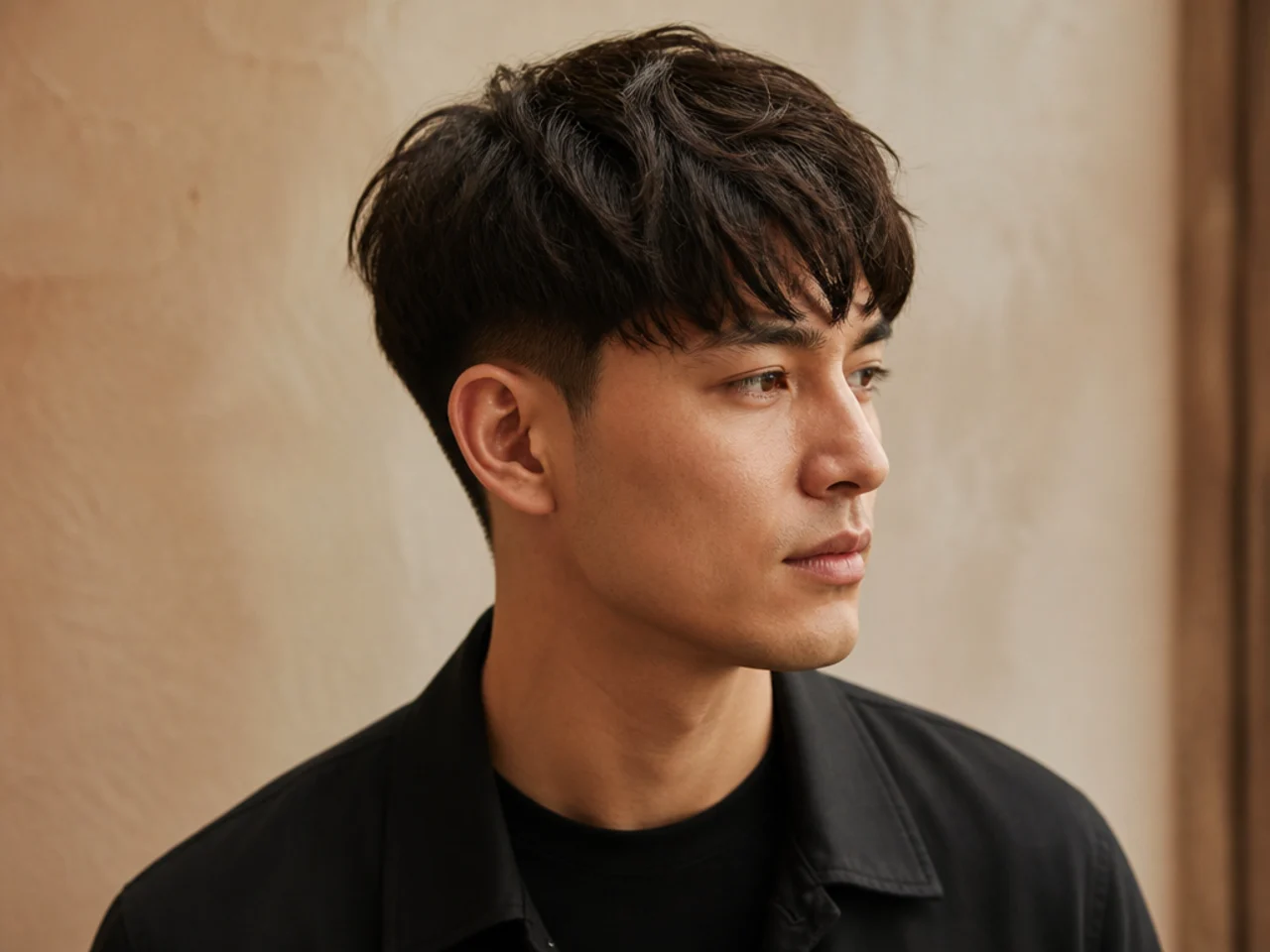
These five variations show how the same fringe principles translate to women's cuts — useful if you're pulling reference photos or matching a partner's style.
Shag with Blunt Bangs
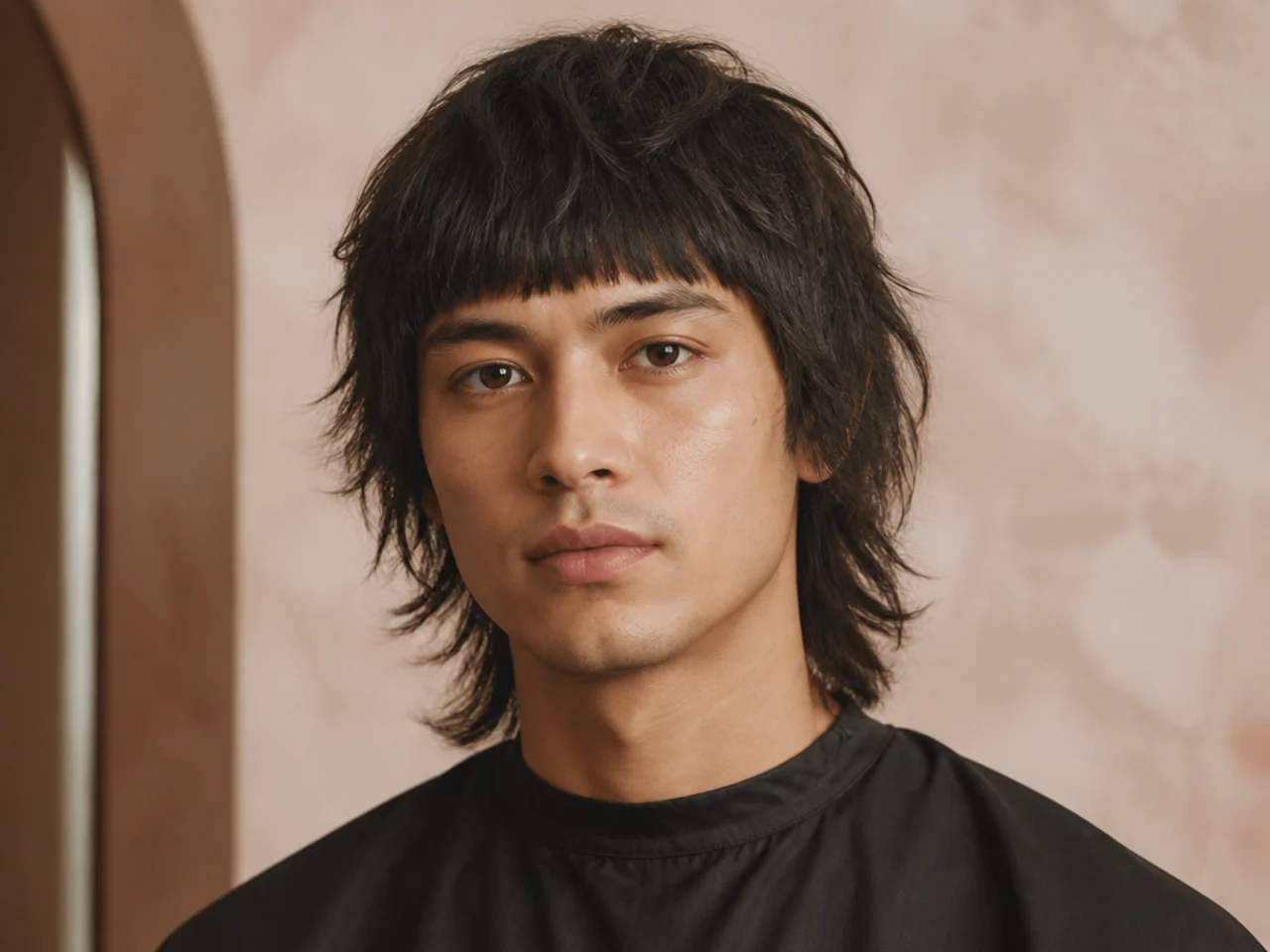
The shag with blunt bangs pairs textured mid-length layers with a heavy, straight-across fringe. The blunt weight at the front anchors the shape while the layers behind add movement. Suits oval and heart-shaped faces best. Ask for a shag cut with brow-grazing blunt bangs and a slightly point-cut fringe edge for softness. Rough-dry with sea-salt spray, then set with a light hold cream through the mid-lengths only.
French Bob with Razored Fringe
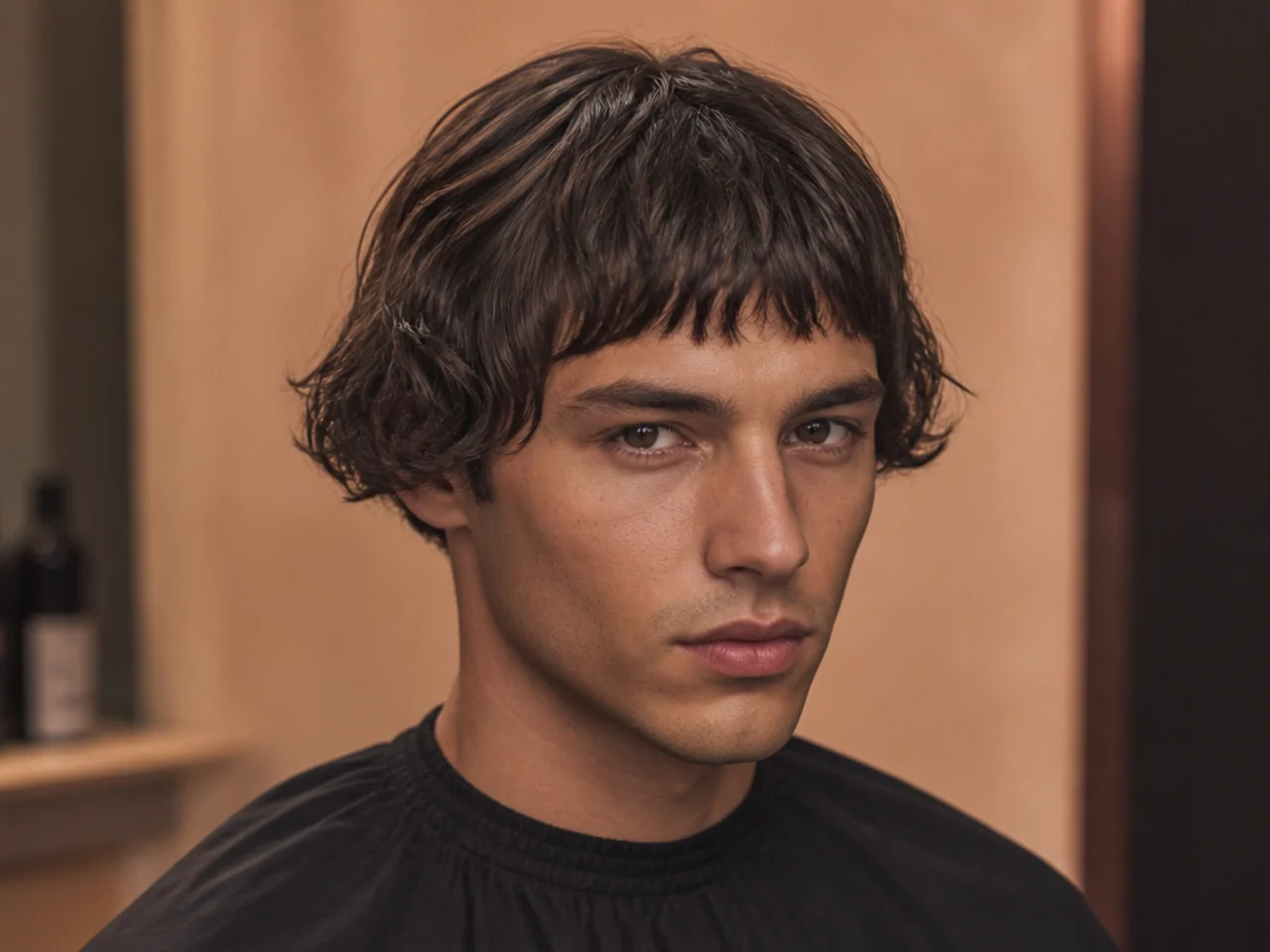
The French bob with razored fringe pairs short, jaw-length hair with a wispy, razor-cut front piece that lands just above the brows. The razor gives the fringe airy separation instead of a solid line. Best on straight or slightly wavy hair, and on square or oval faces. Ask for a bob cut to jaw length with a razored fringe sitting above the brow. Blow-dry with a round brush on low heat, then finish with a mist of texturizing spray.
Mid-Length Cut with Wispy Bangs
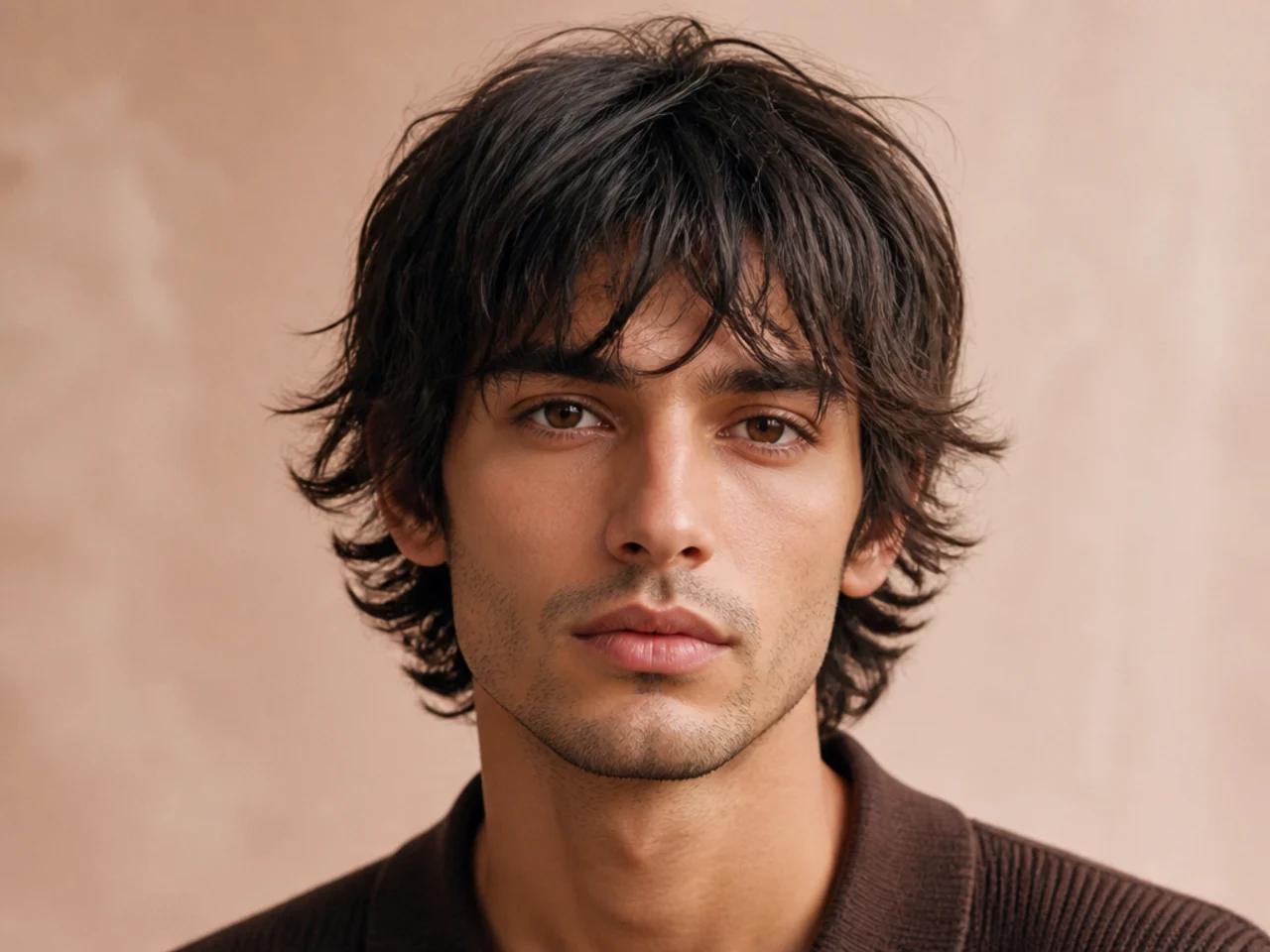
The mid-length cut with wispy bangs uses light, feathered pieces at the front that graze the brows rather than sit fully across. Wispy is the softest fringe treatment available — perfect for anyone wanting hair over the forehead without weight. Works on wavy or straight hair, and suits round faces that need vertical softness. Ask for wispy, feather-cut bangs and mid-length layers through the rest. Blow-dry the fringe forward with a small round brush, then set with light hairspray.
Choppy Lob with Bangs
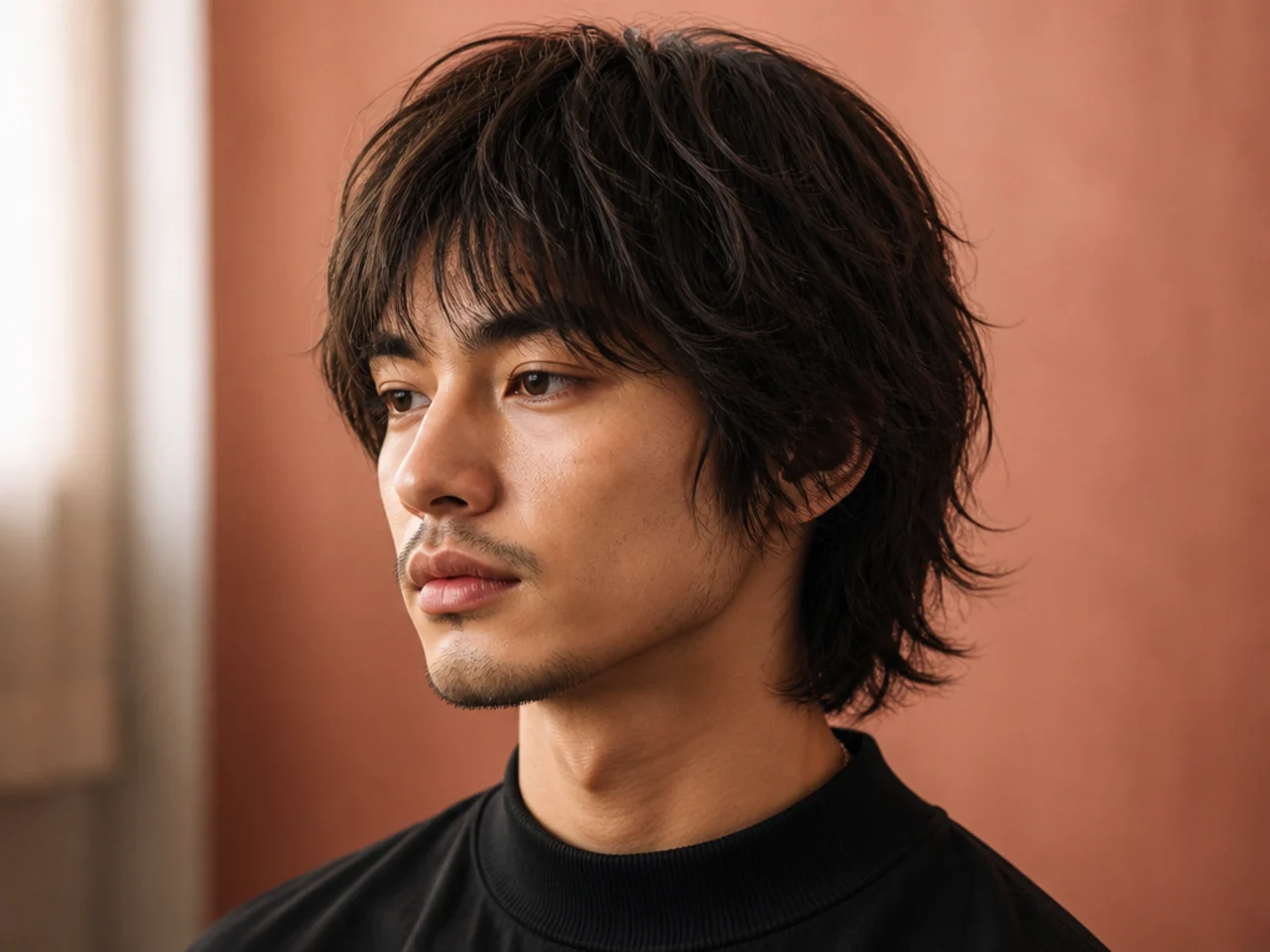
The choppy lob with bangs pairs a shoulder-length blunt cut with a soft, textured fringe. The bangs sit at brow length with chopped ends — not sharp, not wispy, somewhere between. Best on wavy hair, and softens angular jawlines. Ask for a lob cut to shoulder length with a choppy brow-length fringe. Blow-dry with fingers only for maximum texture, then apply a small amount of cream through the ends.
Short Mullet with Textured Fringe
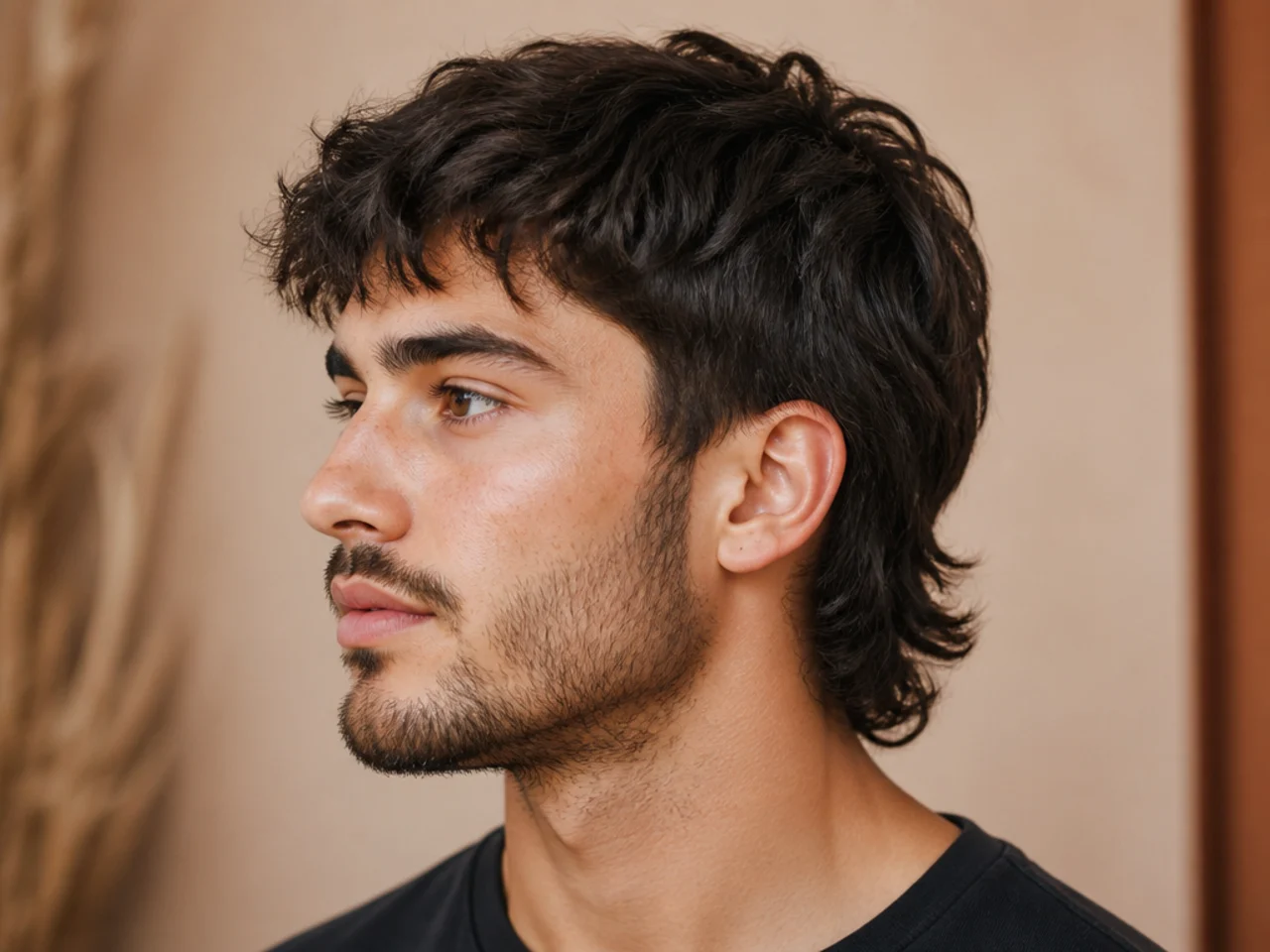
The short mullet with textured fringe brings back the shape without the drama. Short on top and sides, longer at the nape, and a textured fringe at the front. The fringe pulls the eye up so the length at the back reads as intentional rather than dated. Works on straight or wavy hair on most face shapes. Ask for a modern mullet with a brow-length textured fringe and clean, tapered sides. Blow-dry the fringe forward and shape with matte paste. Jayne Matthews advises cutting the bangs with a razor rather than scissors to give them this soft textured look.
How to Style a Fringe Haircut (Step-by-Step)
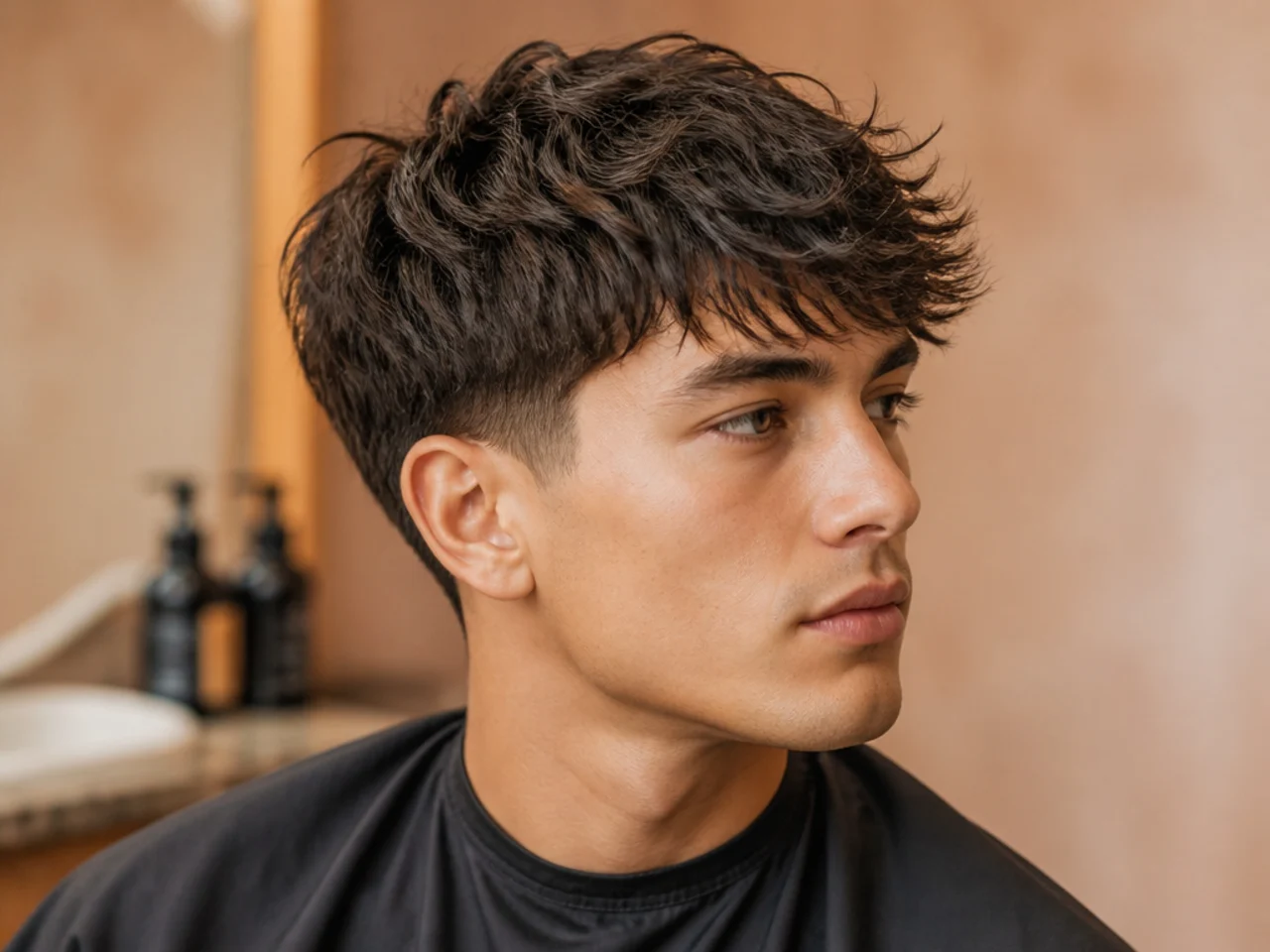
Styling a fringe well comes down to prep, drying direction, and product volume. Follow the sequence below and the shape holds through the day.
- Prep Your Hair with the Right Wash
Volumizing shampoo strips buildup that would flatten the fringe by lunchtime. Skip heavy conditioners on the roots — a nickel-sized amount, mid-lengths only. - Towel Dry and Apply Pre-Styling Product
Pat the hair to damp, not wet. Work a pea of sea-salt spray or mousse through the fringe — pre-styling gives the strands grip so anything you add on top actually holds. - Blow-Dry for Shape and Volume
Blow the fringe forward on medium heat. Use your fingers to lift the roots and set the direction. A round brush at the front adds height; skip it if you want a flatter, natural fall. - Use a Brush or Comb to Define the Fringe
Once mostly dry, comb through the front section to check the shape. A wide-tooth comb keeps texture; a paddle brush flattens for a sleeker line. - Finish with a Styling Product
Warm a fingertip of clay, cream, or paste between your palms. Push it through the fringe from underneath — surface-only application makes the ends look greasy. - Set and Adjust for All-Day Hold
A quick mist of light hairspray or a shake of texture powder holds the shape without stiffness. Fluff with your fingers to reset the fringe through the day. - Best Products For Fringe Haircut
The right product keeps a fringe reading as intentional. Match the product to the finish you want — one product is usually plenty, layering isn't always better. - Texture Clay
Matte finish, strong hold. Best for shaping short and textured fringes without weighing them down. - Texture Powder
Adds root lift on fine or flat hair. Sprinkle at the roots and rub in — start with less than you think. - Molding Paste
Flexible hold with a soft finish. Best for messy and tousled fringes that need shape but not stiffness. - Sea Salt Spray
Adds grip and texture before drying. Use on damp hair to create natural separation and slight bend. - Lightweight Shampoo & Conditioner
Non-greasy formulas keep the fringe from going flat. Skip 2-in-1s — they leave residue that dulls the finish.
How to Choose the Right Fringe Haircut for You
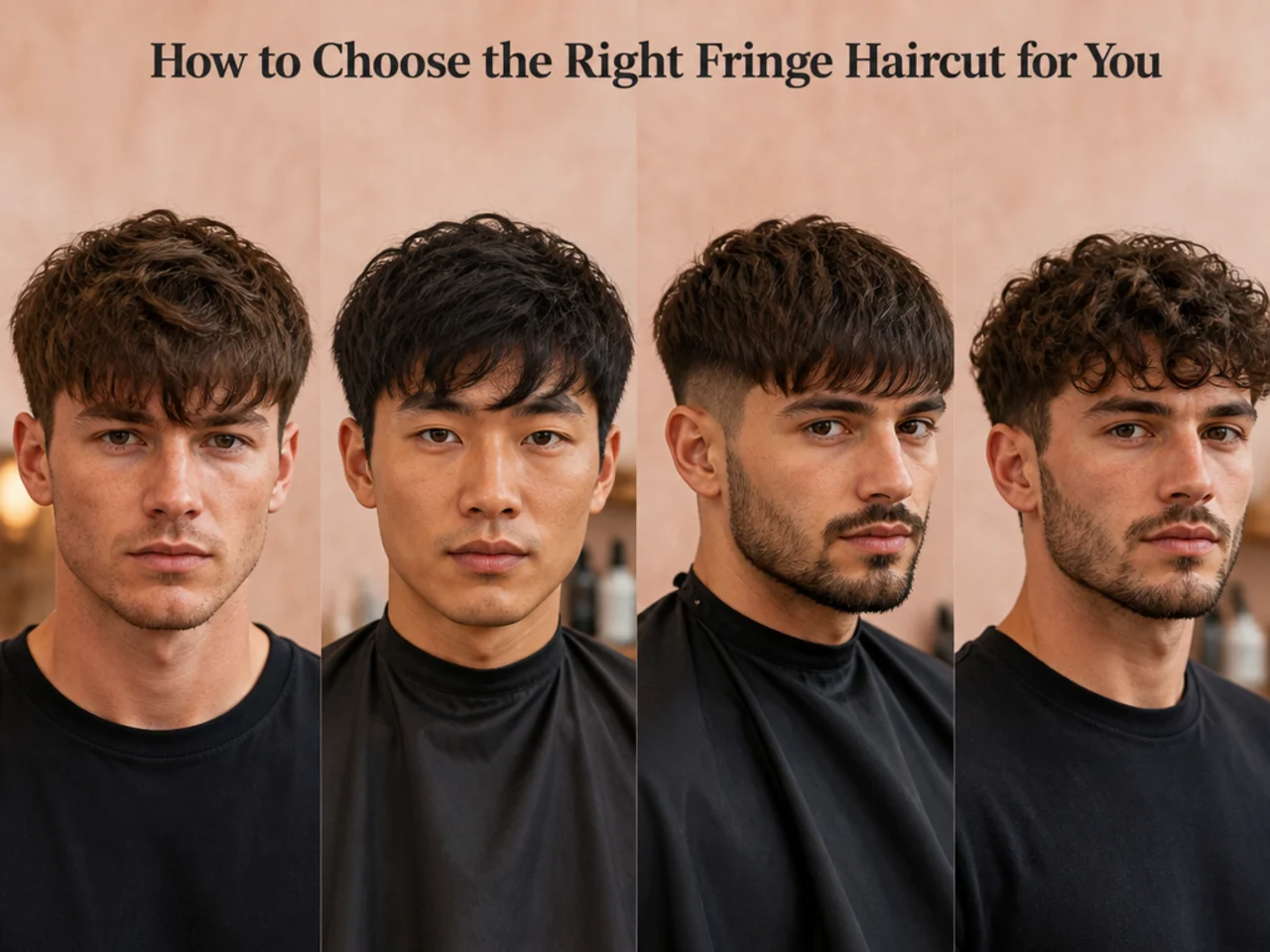
The right fringe balances your face shape, works with your hair texture, and matches your maintenance appetite. Get all three right and the cut looks intentional every morning.
Face Shape
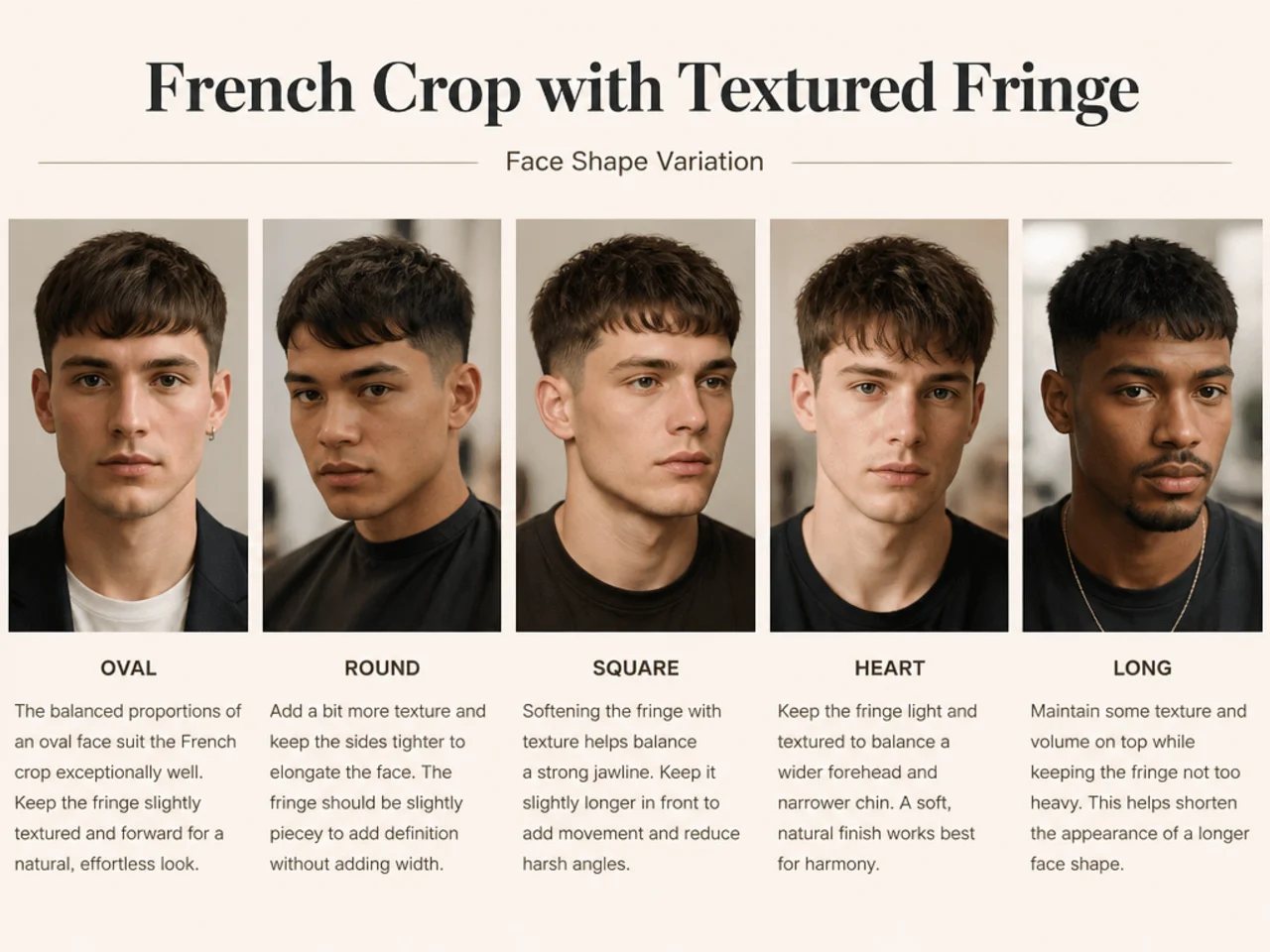
Round faces get length from angled, side-swept, or heavy-angular fringes — anything that adds a vertical line. Square faces soften with textured or wispy fringes that break the strong jaw. Oval faces suit almost every version; try what you haven't. Heart-shaped faces balance with a side-swept fringe that reduces forehead width. Long or rectangular faces need blunt, horizontal fringes that visually cut the length in half. Angular faces of any type benefit from softer, more textured fringes over hard blunt lines.
Hair Type
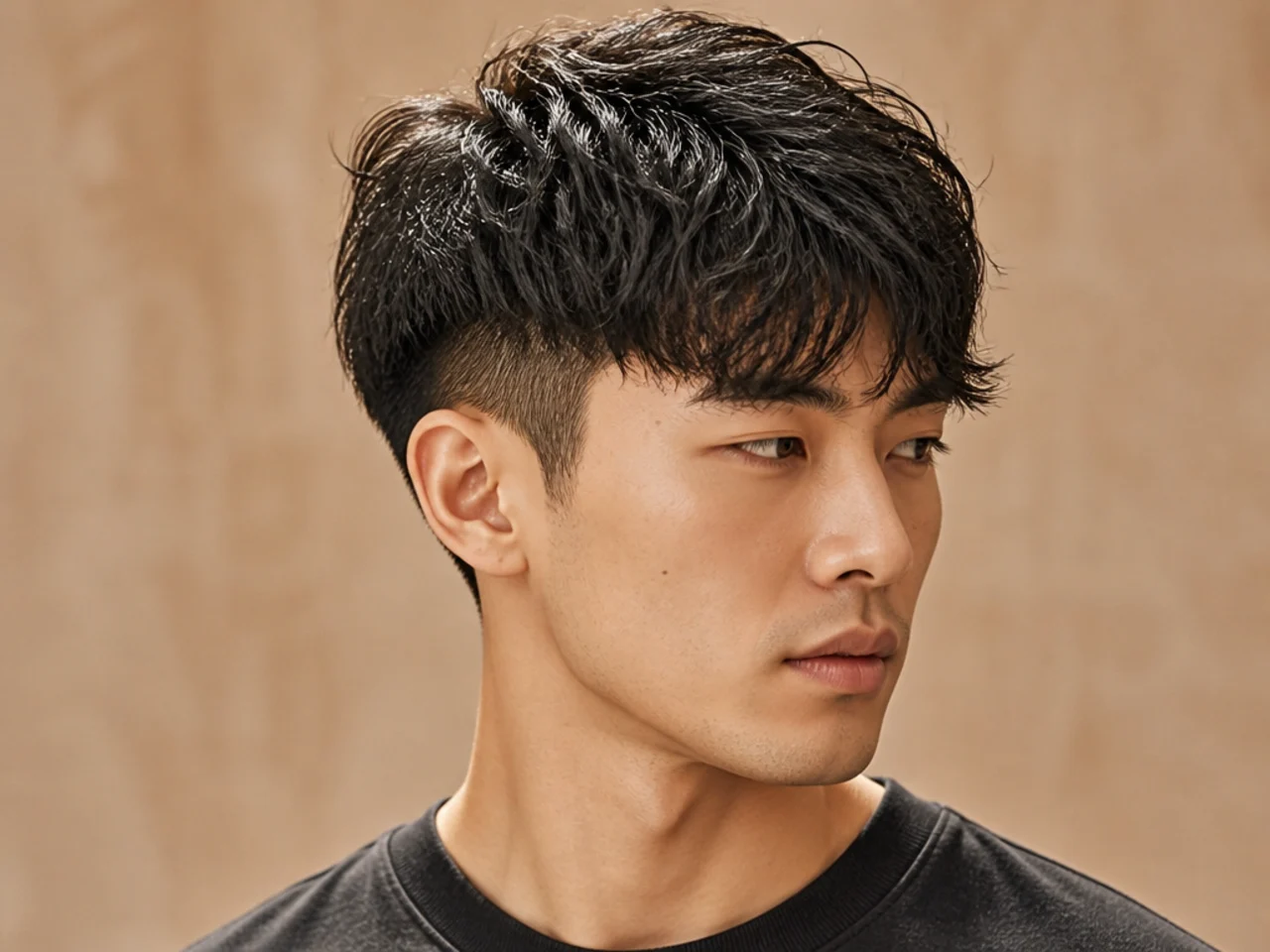
Straight hair holds blunt lines and sharp geometry — cropped, Caesar, and blunt fringes read best. Wavy hair suits textured, messy, tousled, and side-swept variations that use natural movement. Curly hair needs fringes cut so the coils fall forward without fighting the top volume — curly fringe, textured curly fringe, or curly Caesar. Type 4 coils work with the afro fringe and short cuts left long at the front. Fine hair looks best in medium-weight fringes; too short reveals density, too heavy looks stringy.
What to Tell Your Barber for the Perfect Fringe Haircut
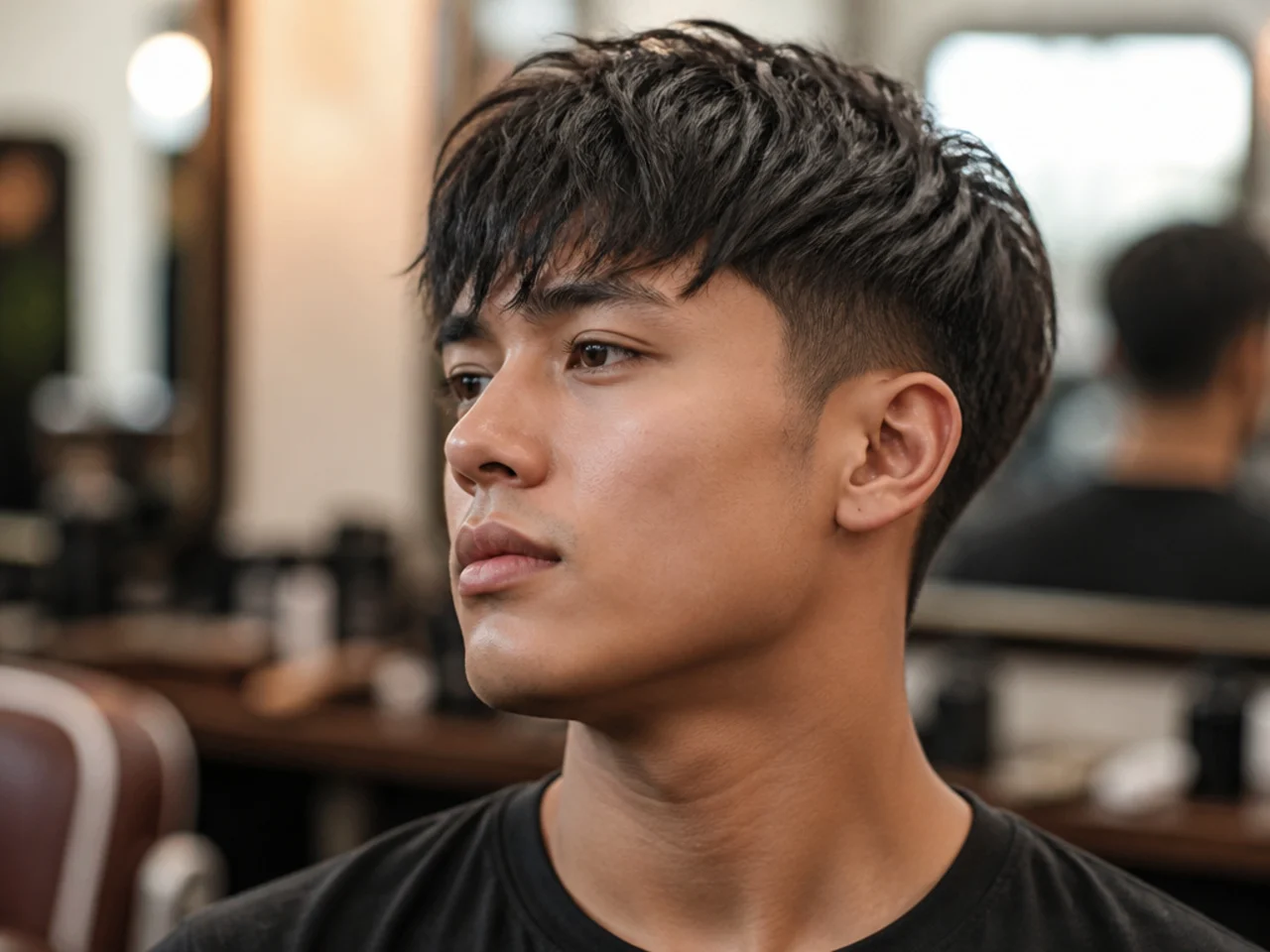
Bring a photo. Not a description, not a name, not a vibe — a photo of the exact cut you want, ideally shot from the angle you see yourself in the mirror. Then specify four things: fringe length (brow-grazing, above brow, or covering brow), side treatment (fade type, taper, or scissor cut), top length in inches or clipper guards, and the finish (matte, satin, or sleek). Mention your face shape so the barber can adjust the front angle. Say your hair density so they know how much weight to leave in the fringe.
Common Mistakes to Avoid
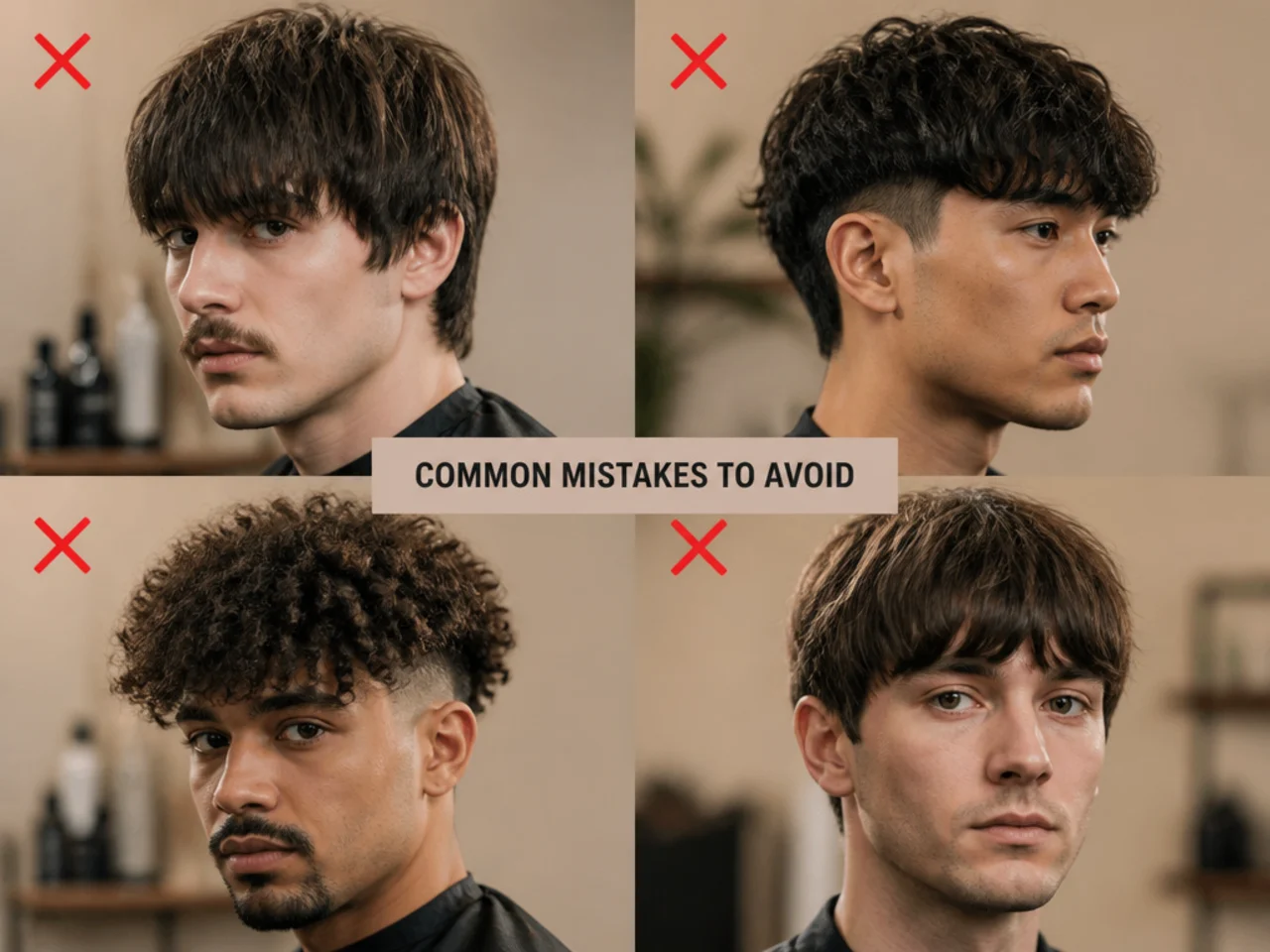
The biggest error is being vague — "just something short with a fringe" gets you a haircut with no shape. Skip the fringe length and you'll get whatever the barber thinks looks good on you. Skip the finish and you'll get whatever product is on the counter. Don't ask for a photo of a hair type you don't have, either. Straight hair won't fall like the wavy fringe in the reference; curls won't sit like the tapered fringe on a straight-haired model. Match your hair to the picture before you show it.
How to Maintain Fringe Haircut
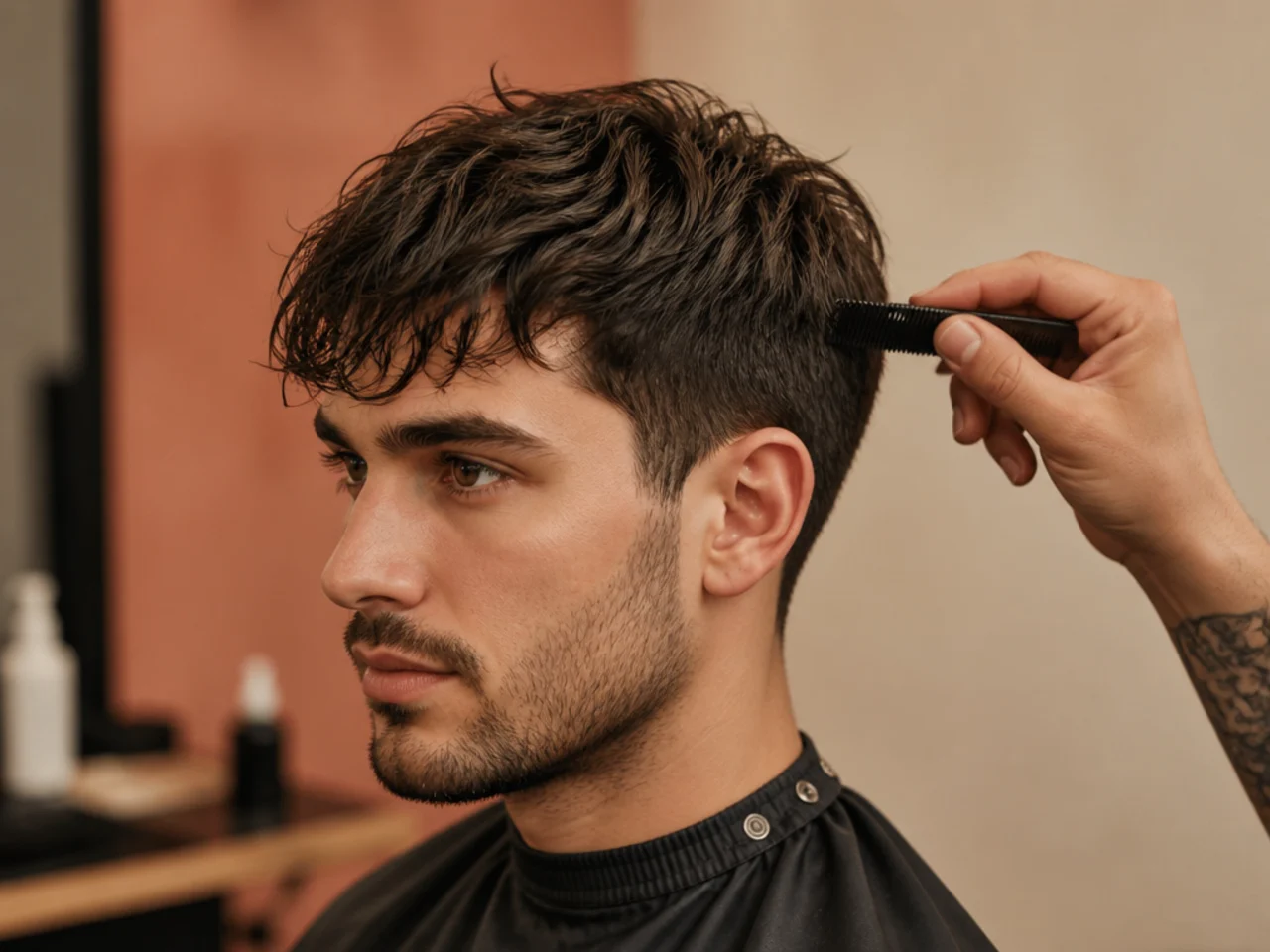
A fringe softens fast — the shape you left the barber with lasts about three weeks on shorter cuts, six on longer ones. Book the next appointment before you leave. Between cuts, keep the routine simple.
- Trim every 3 to 4 weeks for short fringes, 5 to 6 weeks for medium lengths — the moment the shape softens is the moment to book.
- Wash 2 to 3 times a week with a light shampoo. Over-washing dries the ends; under-washing flattens the roots.
- Skip heavy pomades and greasy waxes on the fringe — they build up fast on the front section and dull the finish.
- Blow-dry forward with your fingers or a round brush to reset the shape each morning.
- Use matte paste or cream for daily hold. Save gels and heavier products for occasion styling.
- A quick mist of sea-salt spray on the fringe brings texture back on limp days without needing to re-wash.
FAQs Fringe Hairstyles
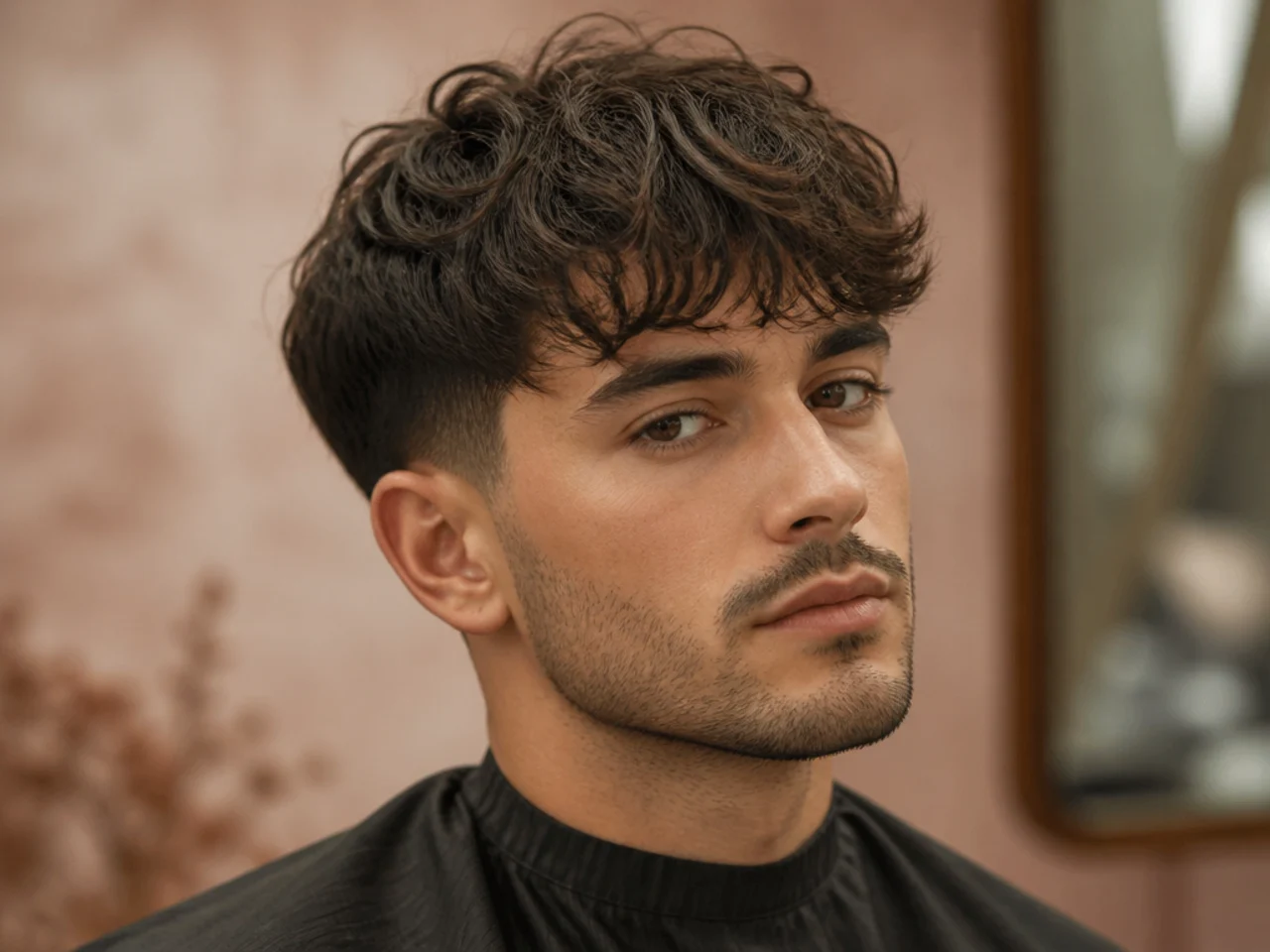
What is a fringe haircut male?
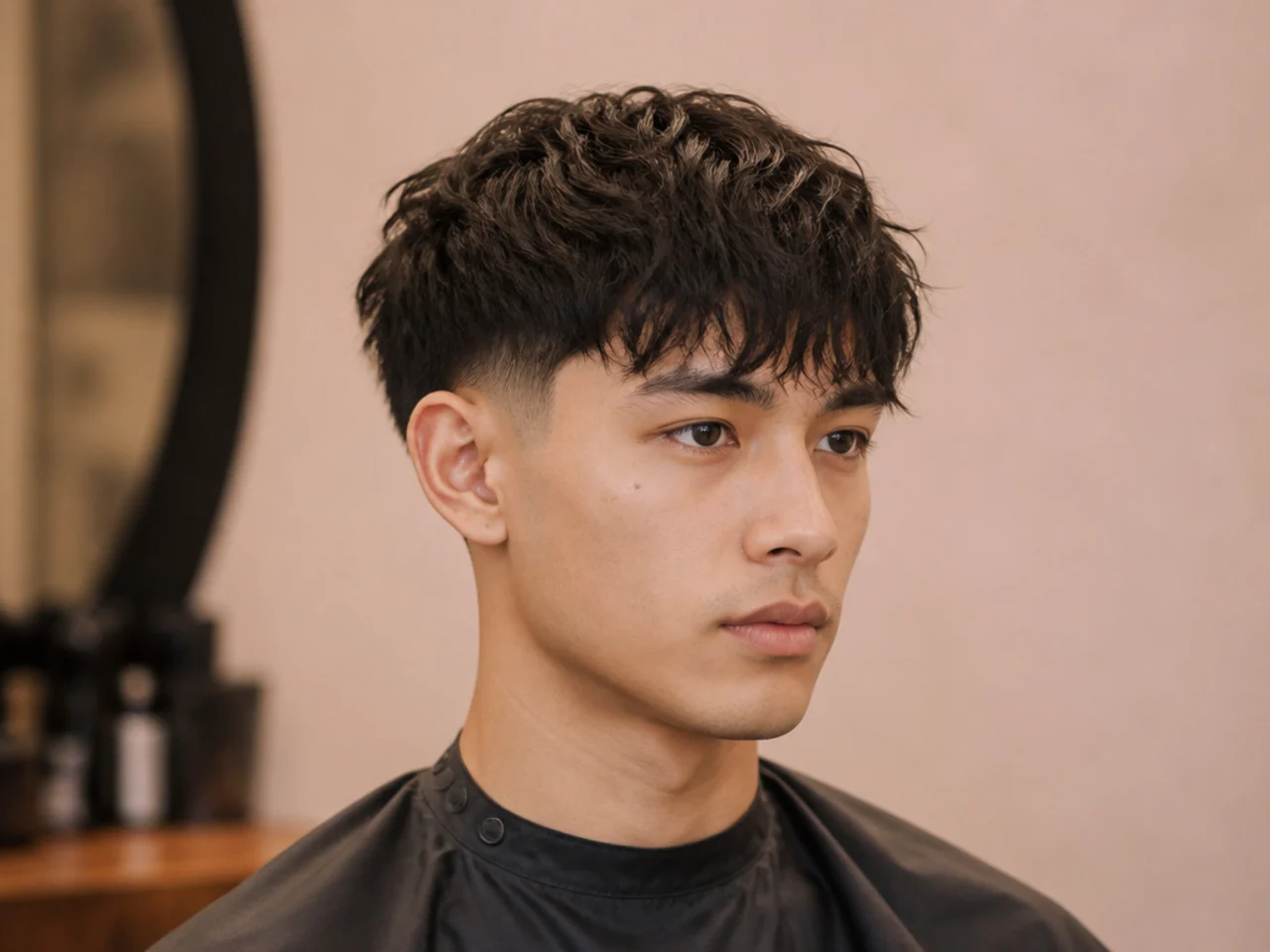
A men's fringe haircut is any cut with the front section left long enough to fall over the forehead. That includes short crops, Edgar cuts, French crops, curtain fringes, and comma cuts. The fringe is the defining feature — sides, back, and top length can be almost anything.
Is a fringe attractive on guys?
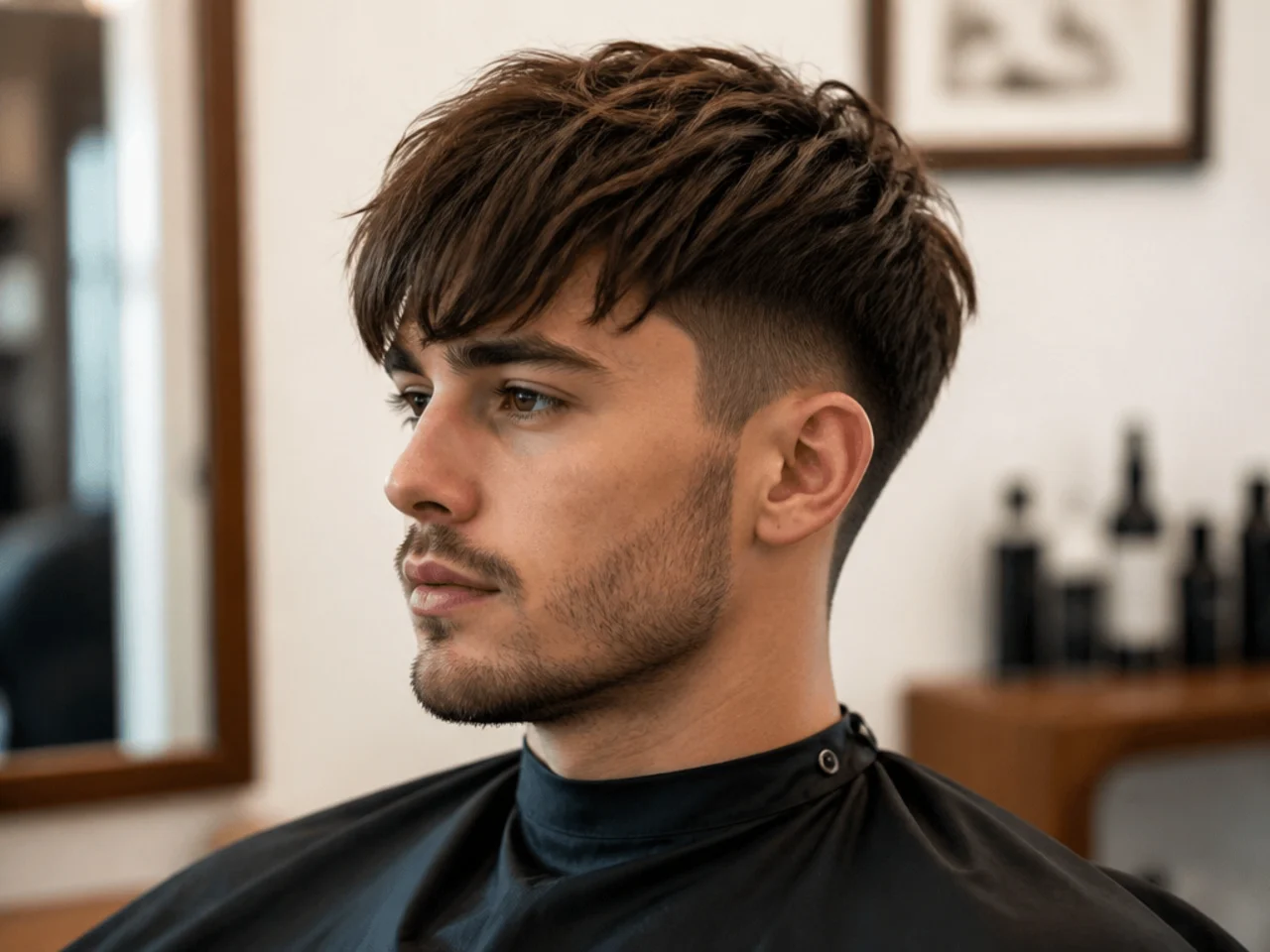
A fringe reads modern and softens strong features like a heavy brow or wide forehead. Whether it works on you depends on face shape and hair type — a wispy fringe on a long face reads poorly, a blunt fringe on a round face reads worse. Match the variation to your features, not to what looked good on a friend.
What face shapes suit a fringe?
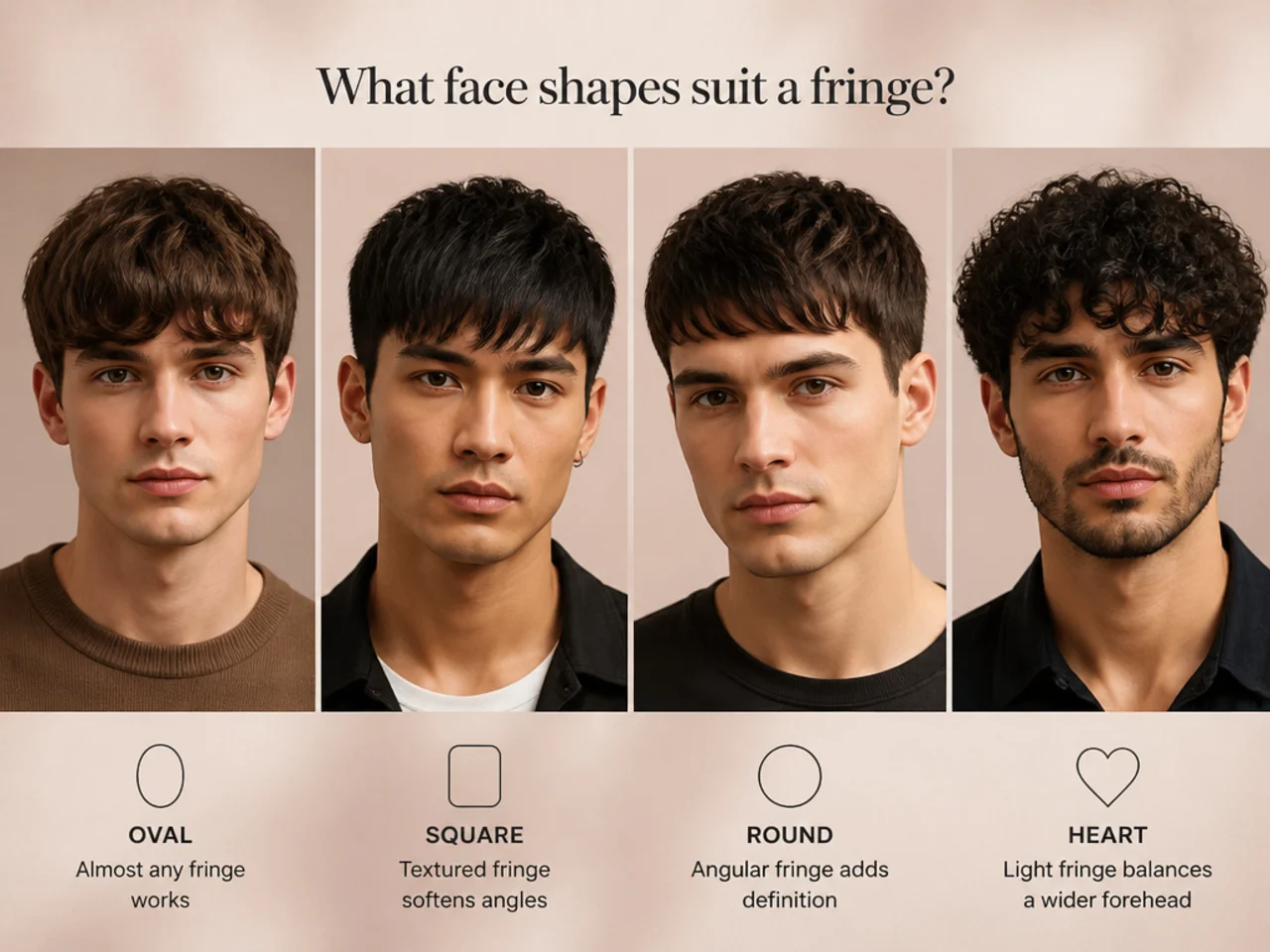
Every face shape suits a fringe — the variation changes. Round faces need vertical length from angled or heavy fringes. Square faces need softening from textured or wispy versions. Oval takes almost anything. Heart shapes suit side-swept. Long faces suit blunt, horizontal cuts that visually shorten the frame.
Does a fringe suit a chubby face?
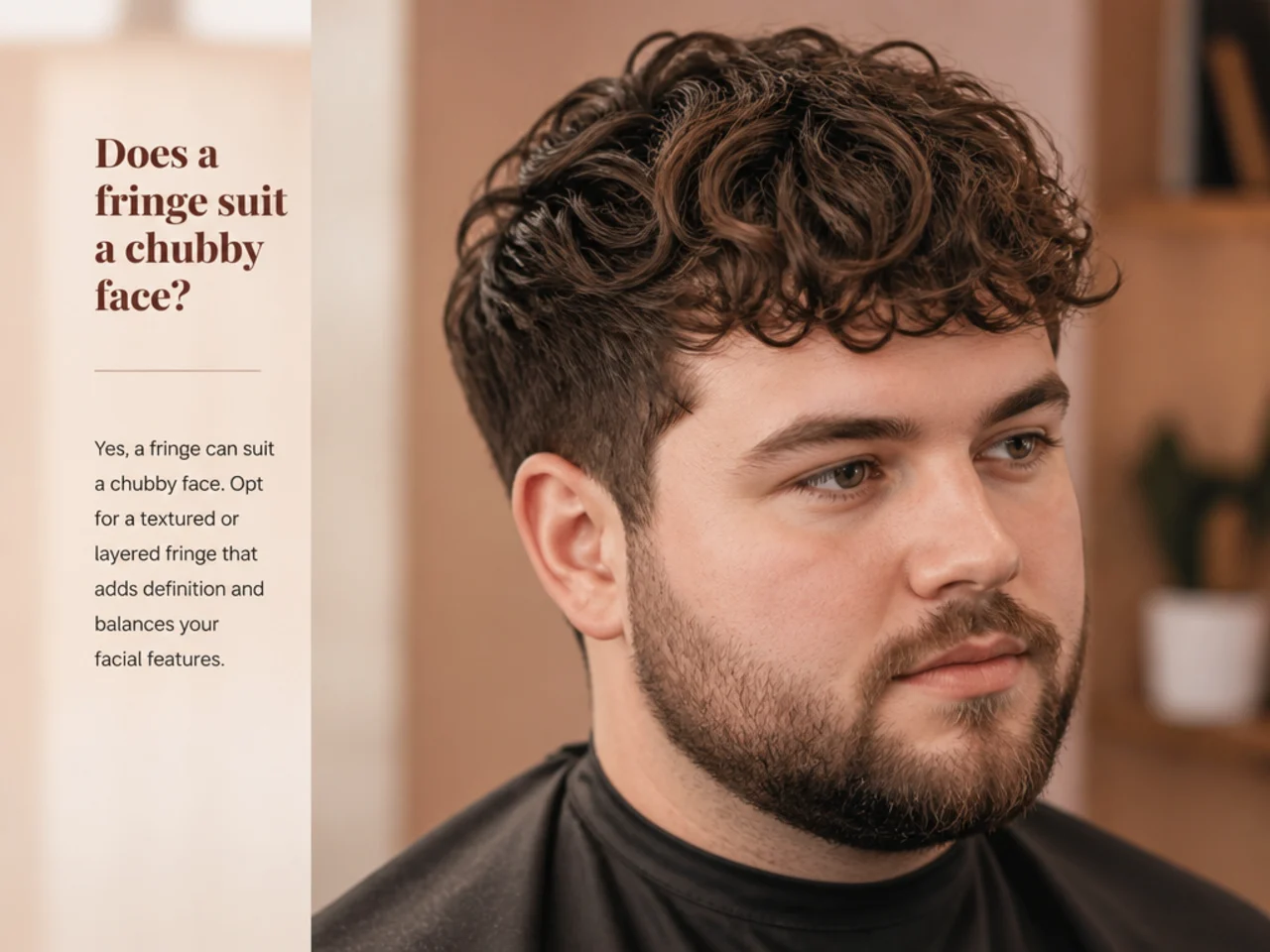
Yes, with the right one. Angled or side-swept fringes add a diagonal line that visually slims the face. Skip blunt or heavy horizontal fringes that emphasize width and roundness.
Can curly-haired men pull off a fringe haircut?
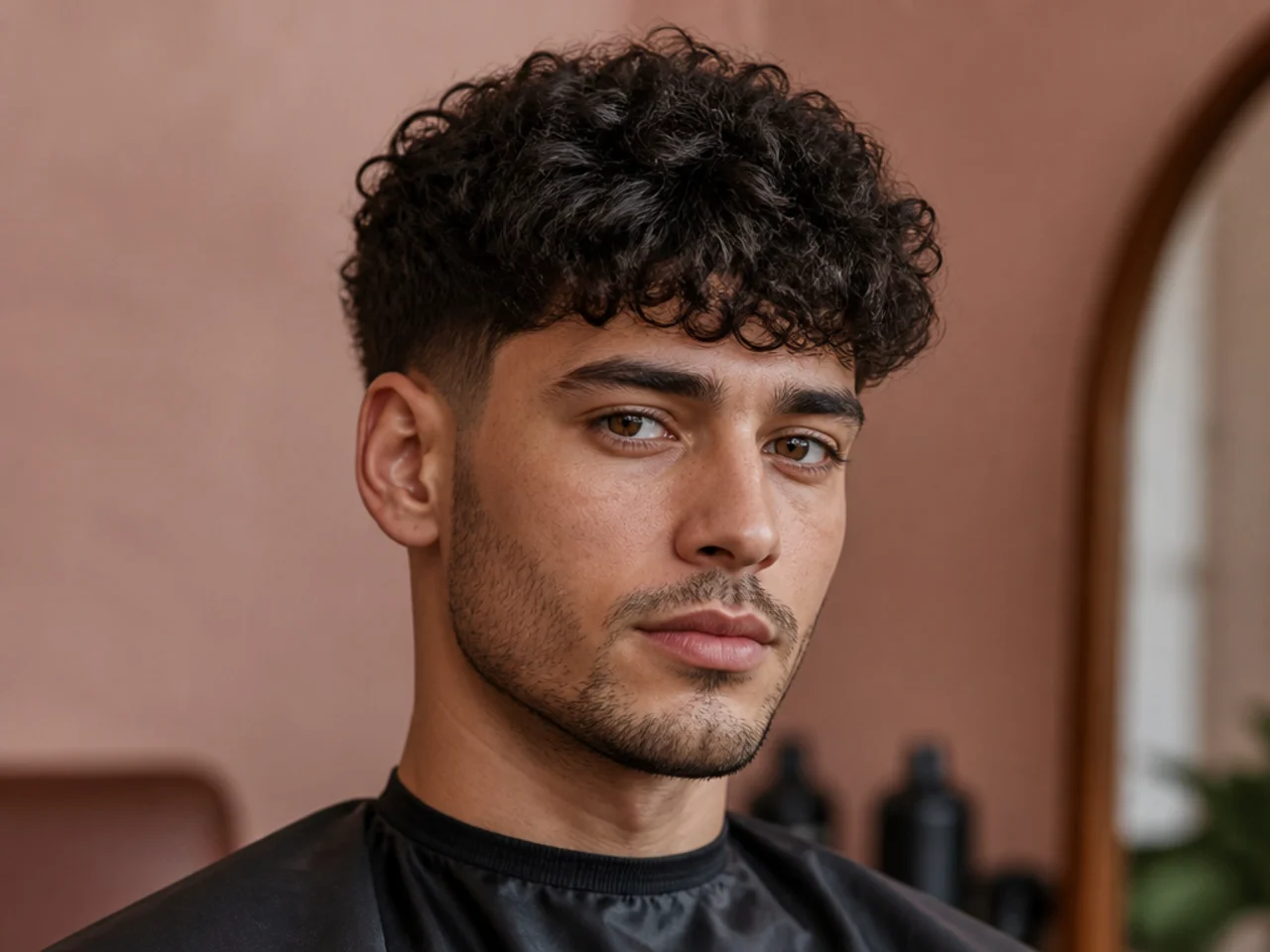
Yes — curly fringes, textured curly fringes, and curly Caesars are cut so the coils fall forward instead of up. The cut length accounts for shrinkage: what sits at the brow when stretched will sit well above it when the curl springs back.
How do you style a messy fringe hairstyle for men?
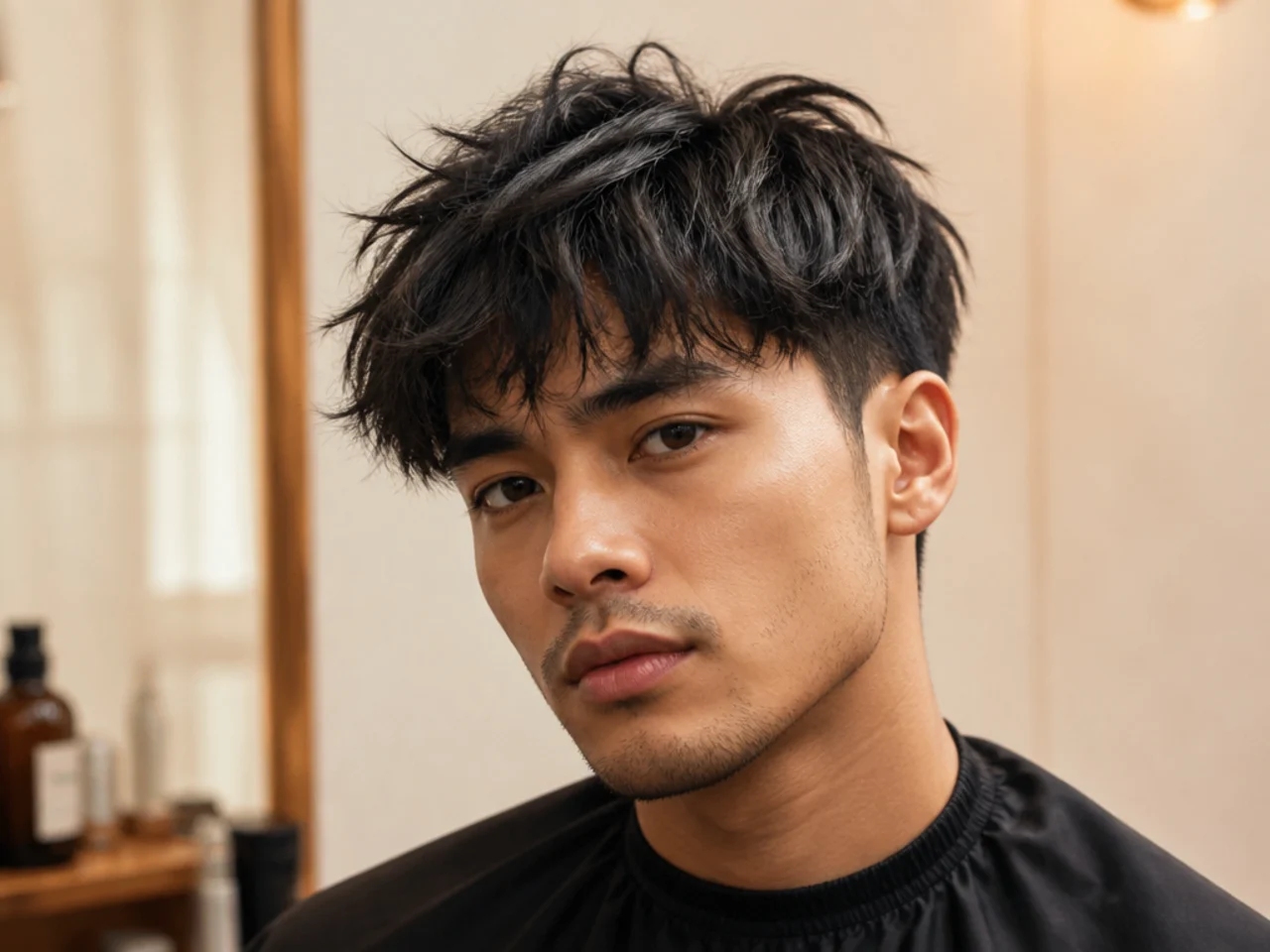
Rough-dry the front with your fingers — no brush. Push a fingertip of matte paste through the strands from underneath. Break up the ends with your fingers so nothing sits flat. Skip the hairspray; a messy fringe should still move when you shake your head.
What are the best products to style a fringe haircut for men?
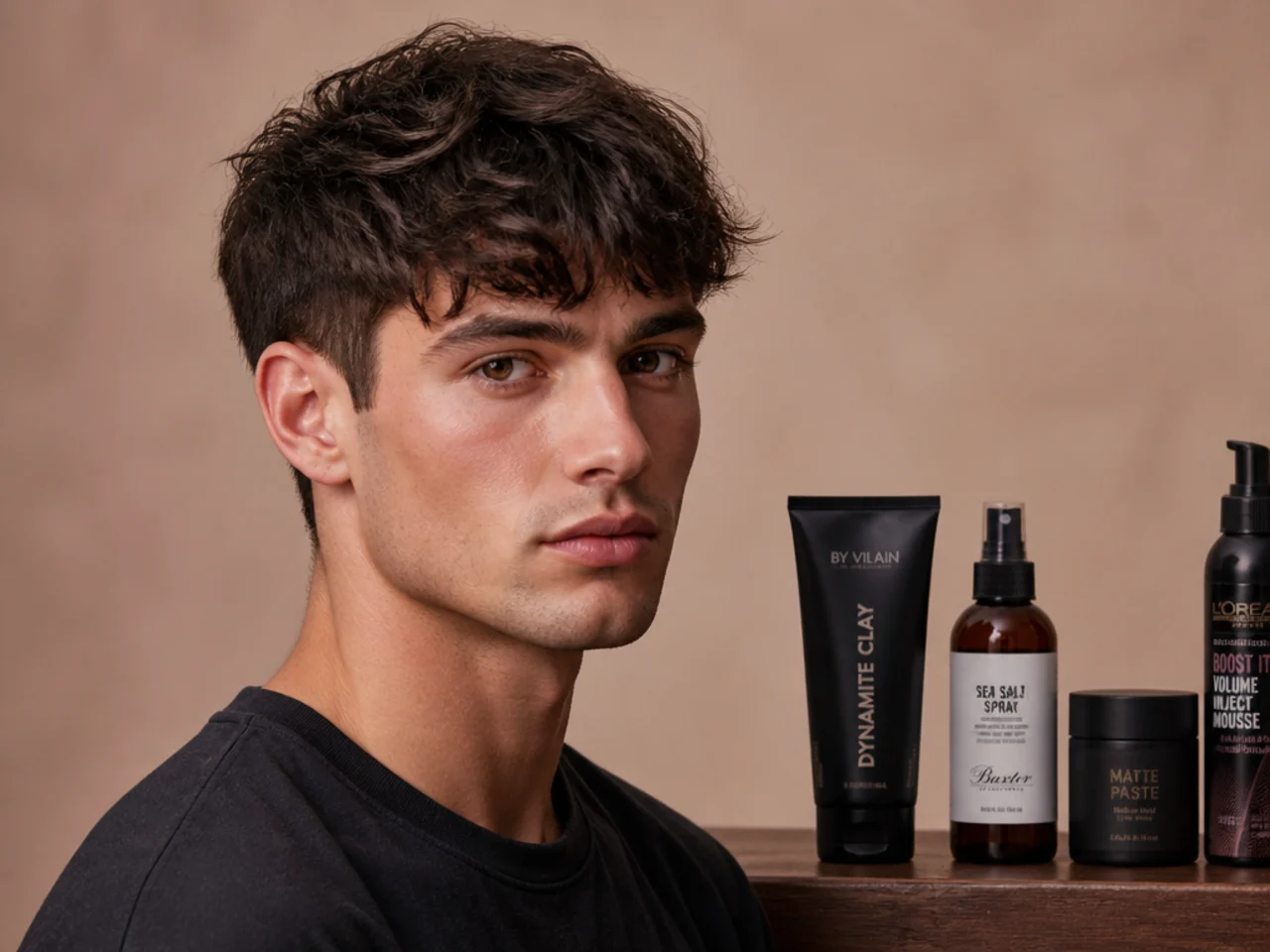
Matte clay for short, textured, and cropped fringes. Molding paste for messy and tousled versions. Cream for curtain and swept styles that need shine but flexibility. Sea-salt spray as a pre-styler for grip. Texture powder for fine hair that needs root lift.
How can I ask my barber for a textured fringe?
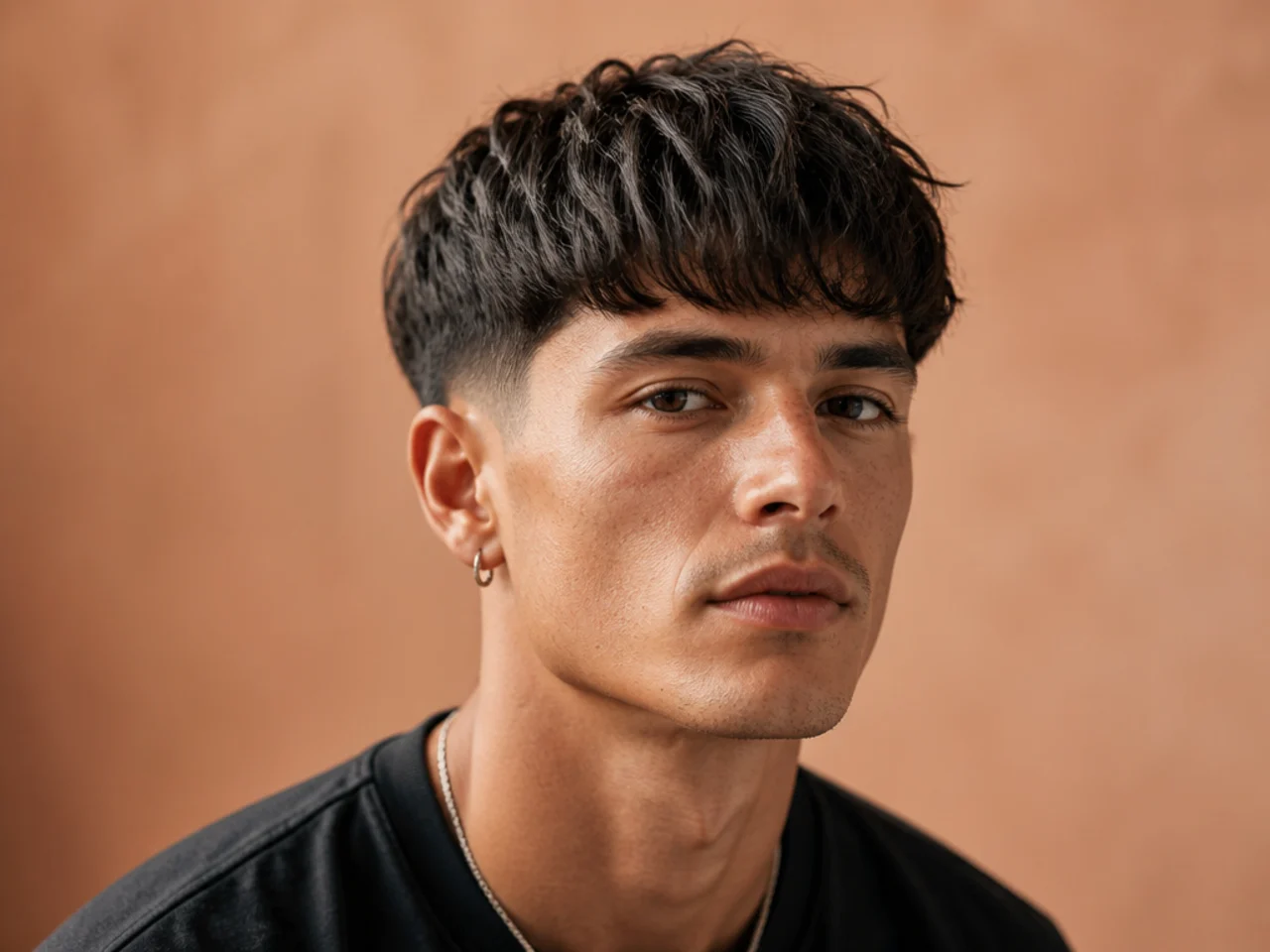
Ask for point-cut layers on top and a brow-grazing fringe with a chopped edge. Specify the side treatment — mid fade or scissor taper works for most. Add "matte finish" so they leave you with the right product recommendation before you go.
Which fringe styles are trending in 2025?
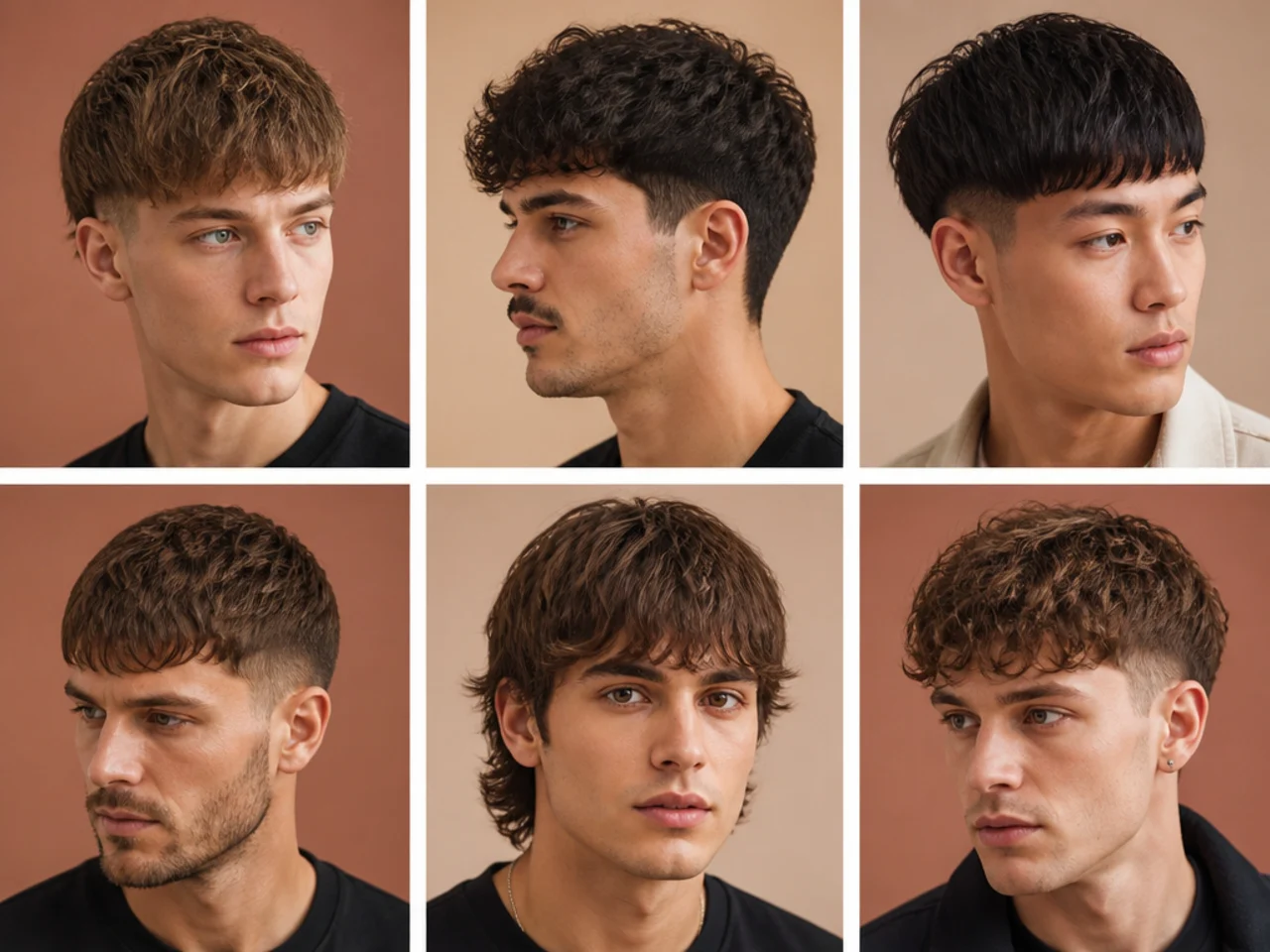
Textured fringes with mid taper fades, curtain fringes on longer hair, Edgar-style cropped fringes, and disconnected fringes lead the request list right now. The comma cut variation is still climbing, and the classic French crop keeps holding its ground.
How often should I trim a fringe haircut?
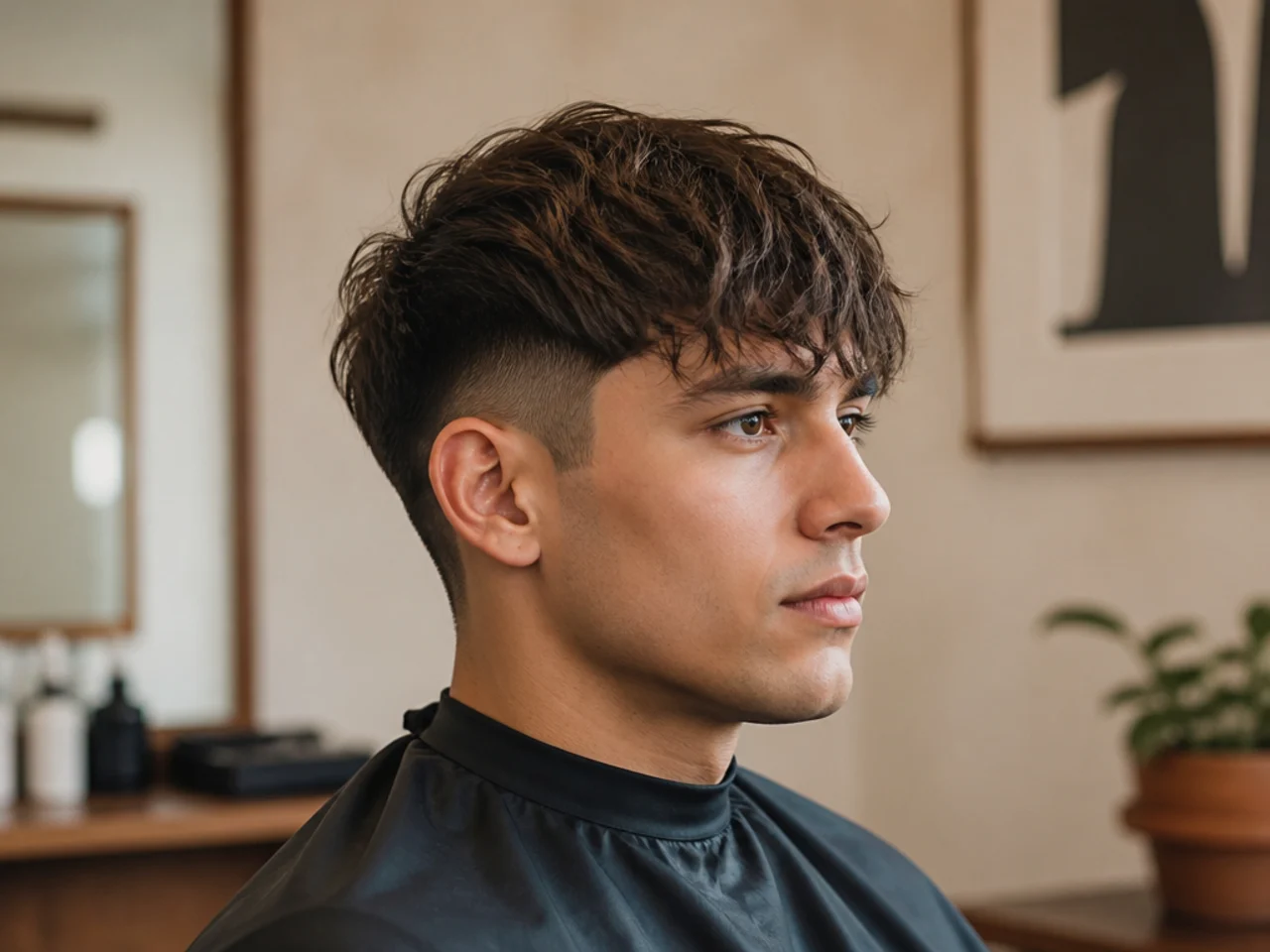
Every 3 to 4 weeks for short and cropped fringes. Every 5 to 6 weeks for medium and longer lengths. The moment the shape softens is the moment to book — waiting past that just makes the next cut harder for the barber to correct.
Do fringes make you look younger or older?
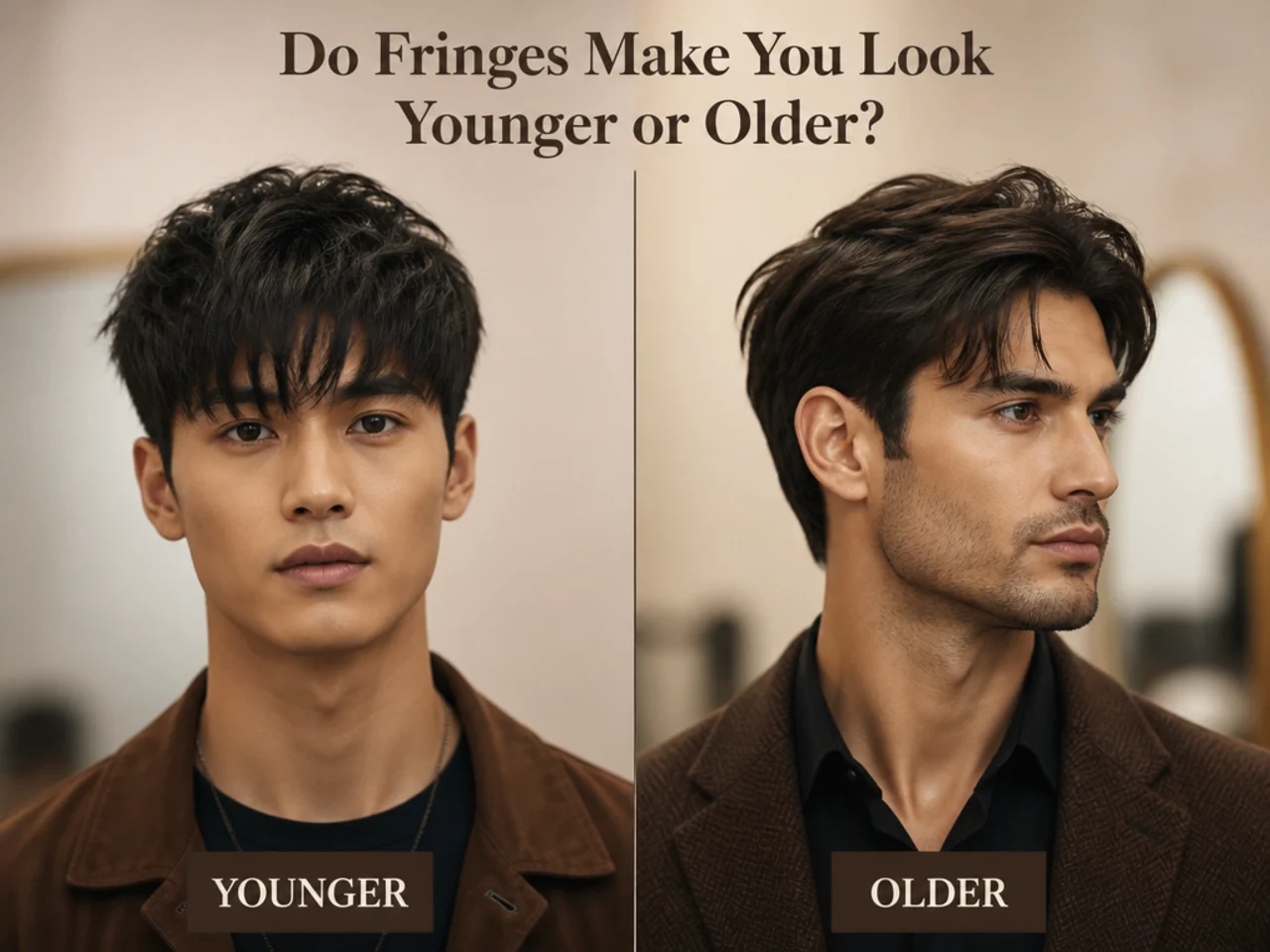
Fringes tend to soften features and read younger, especially compared to a hard-lined slicked-back or side-part. That said, a heavily-textured or messy fringe can read too casual for older guys who want a classic look — pick the version, not just the style.