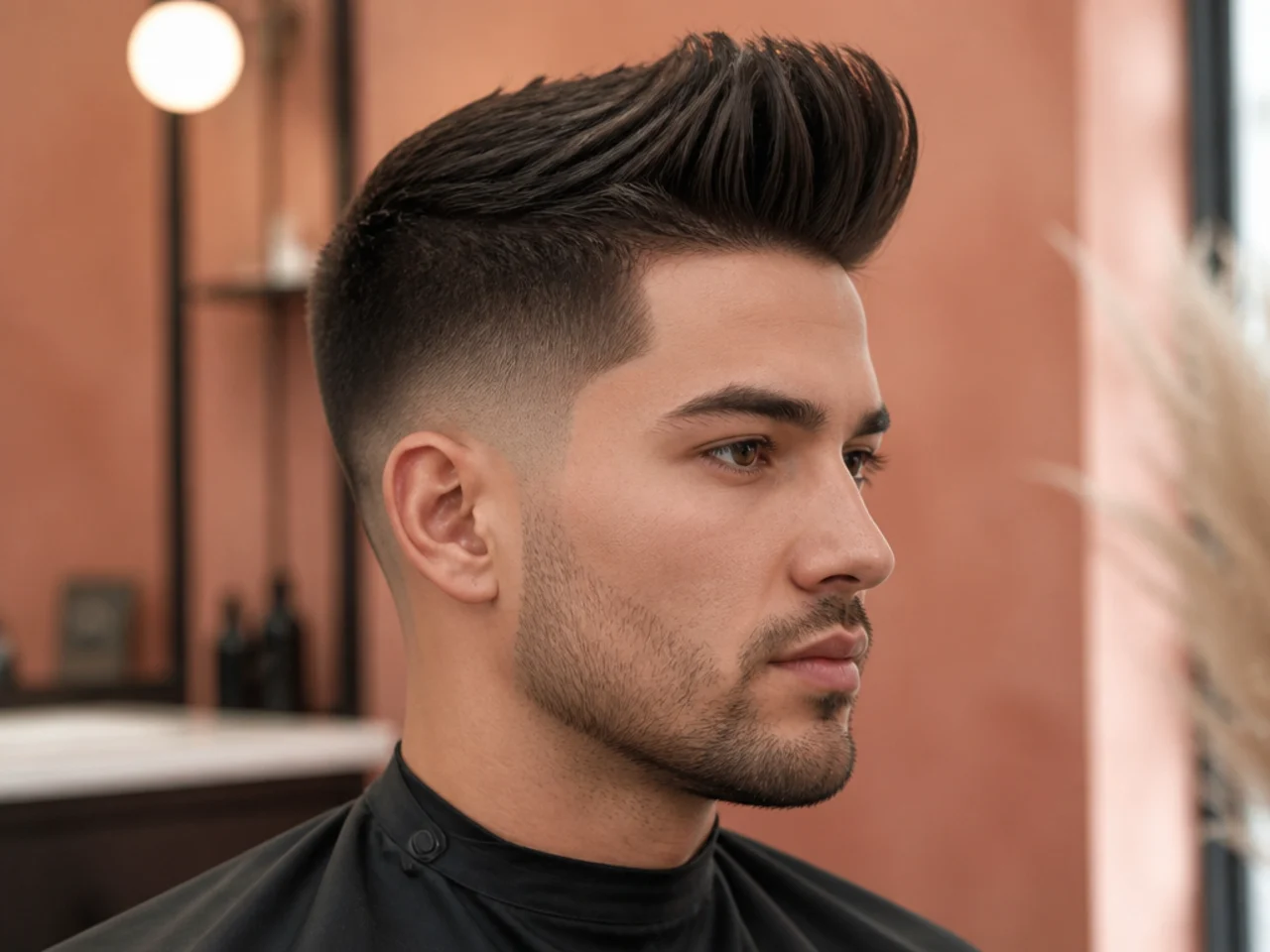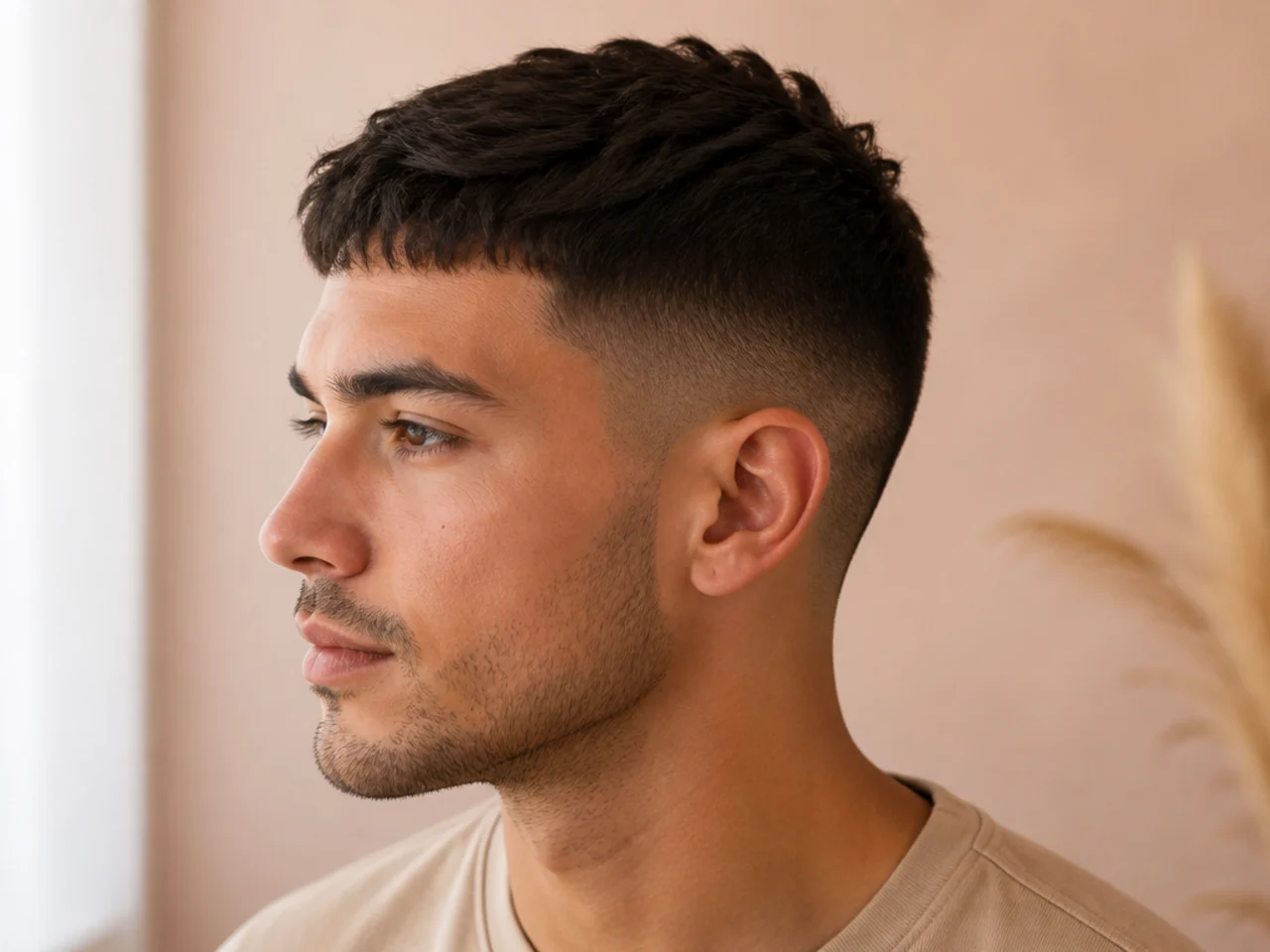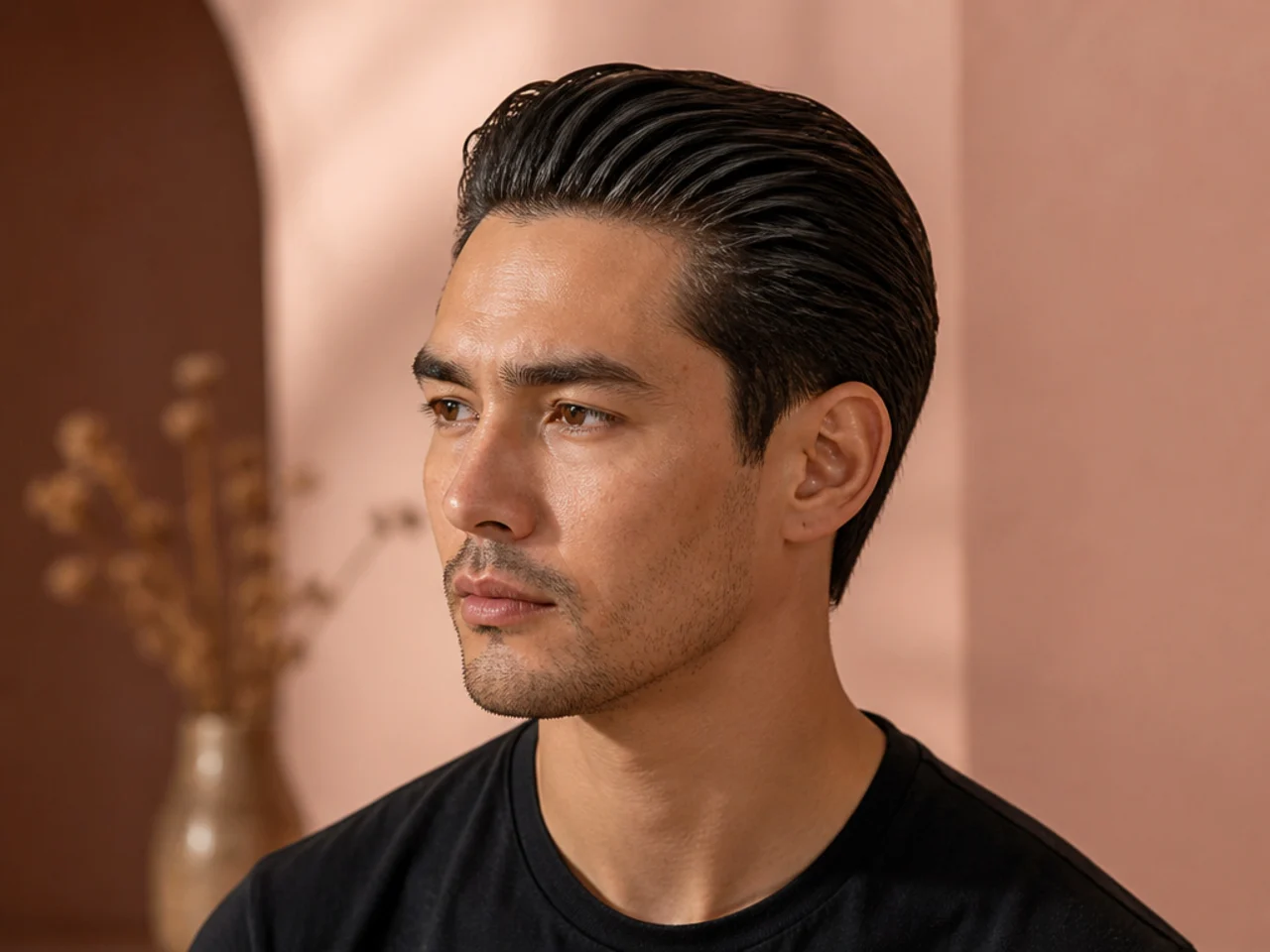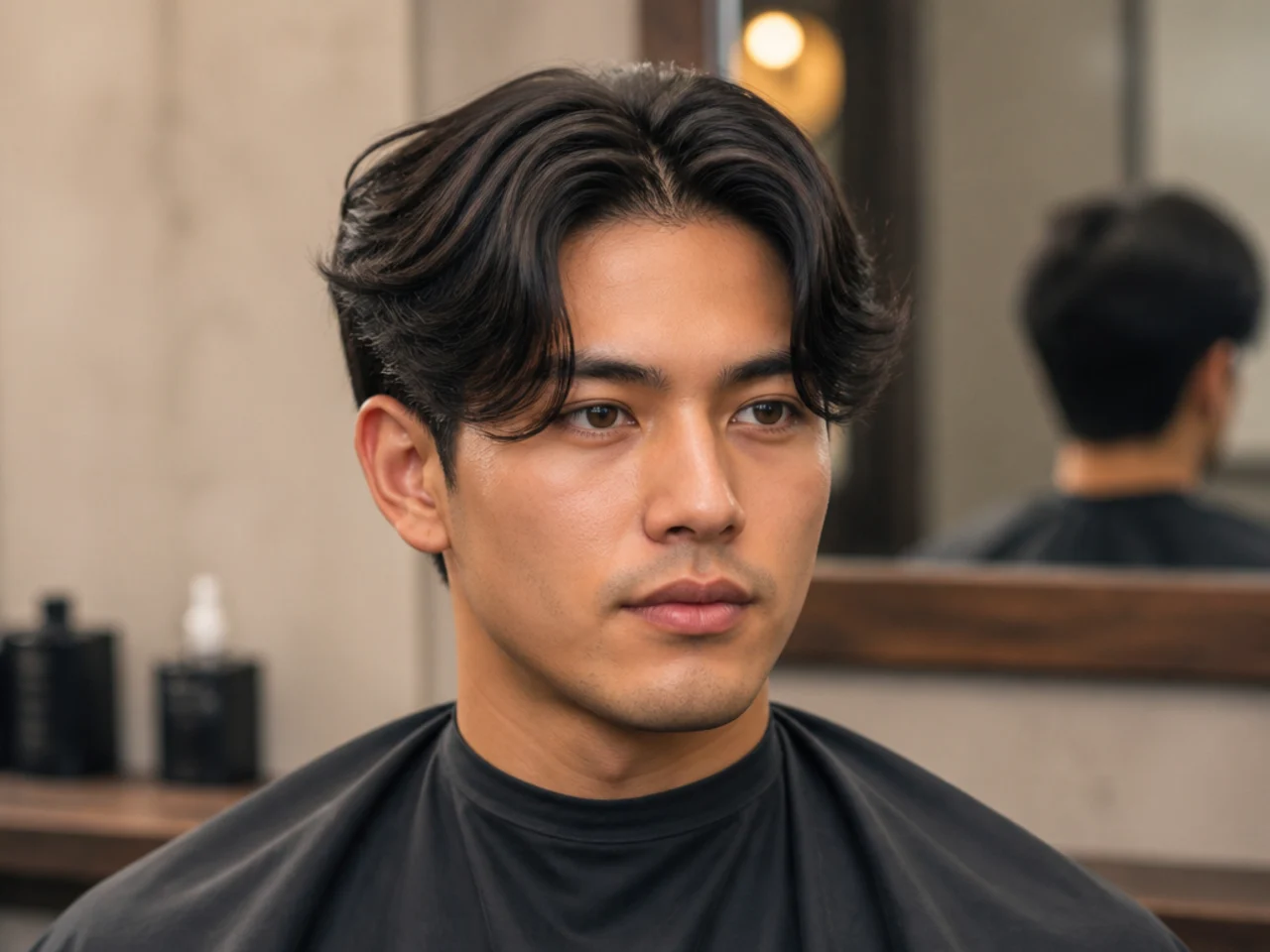
27 Middle Part Haircut for Men: Trending Hairstyle Variations
Middle part haircut is stylish men’s hairstyle where hair is parted down center to create naturally balanced look. This timeless yet modern style features layers that fall eve
In this article · 47
- Popular Men’s Middle Part Hairstyle for Men
- Stylish Classic Middle Part
- Short Middle Part
- Long Middle Part
- Middle Part Taper Fade
- Sleek Middle Part with Short Sides
- Flowing Center Part
- Short Textured Middle Part with Low Fade
- Middle Parted Brush Back
- Parted Curtains
- Textured Middle Part Flow
- Messy Middle Part
- Middle Part Flow with Long Curtains
- Loose Curtains
- Cool Middle Part with Temp Fade
- Textured Wavy Middle Part
- Two Block Middle Part
- Middle Part Fade
- Pulled Back Center Part with Short Sides
- Short Textured Center Part
- Messy Curly Middle Part
- Textured Middle Part with Undercut
- Short Parted Curtains
- Voluminous Parted Curtains
- Medium Parted Flow
- Middle Part with Mid Fade
- Long Curly Middle Part
- Attractive Long Flowing Middle Part
- What Is Middle Part Haircut?
- How To Style Middle Part
- Step 1: Wash, Condition and Towel Dry
- Step 2: Create Middle Part
- Step 3: Use Sea Salt Spray For Natural Texture
- Step 4: Scrunch Dry With Hair Dryer and Diffuser
- Step 5: Apply Styling Clay To Enhance Control and Texture
- Why Is Middle Part Haircut Trending Again?
- Who Should Try Middle Part Hairstyle?
- How to Get Middle Part Haircut
- FAQs About Middle Part Hairstyle
- What Face Shape Suits Middle Part Haircut?
- Can I Get Middle Part Hairstyle With Short Hair?
- Is Middle Part Good For Curly Or Wavy Hair?
- Does Middle Part Make Your Face Look Slimmer?
- What Haircut Is Good For The Middle Part?
- Why Is Gen Z Obsessed With Middle Parts?
- What Is A Middle Part Haircut?
- What Are Gen Z Hairstyles?
The middle part haircut men has been the biggest men's cut since 2020. K-pop pushed it. TikTok scaled it. Gen Z owns it. The formula: grow the top to 4–6 inches, blow it forward off a center split, and let it fall in curtains on either side of your face. Straight and wavy hair get there fast. Curly hair needs help. Below are 27 variations, who each one suits, and exactly how to ask for it.
Popular Men’s Middle Part Hairstyle for Men
Every version below shares the same DNA — longer top, split down the center, curtains falling forward. What changes is the side treatment, the length, and the amount of movement.
Stylish Classic Middle Part
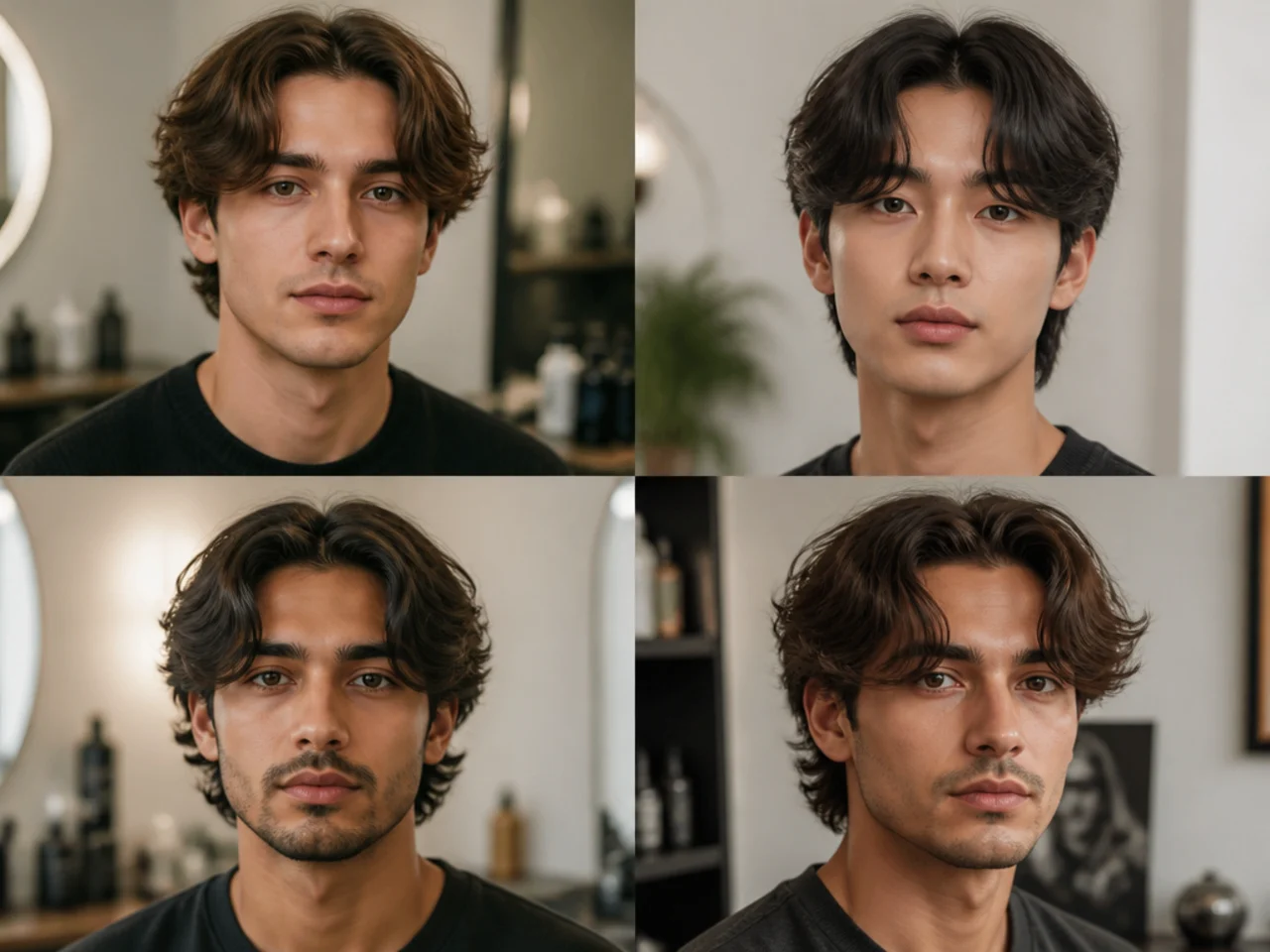
The baseline. No fade, no undercut, no loud detail — just a clean 5-inch top scissor-blended into sides that sit just above the ear. Works on almost any face shape. Best on straight-to-wavy hair with medium density. Ask for "five inches on top, scissor sides tapered to the nape, layered so the front falls forward off a center split." Blow-dry with your head tipped forward under a low nozzle, then finger-comb both curtains out. Finish with a matte styling cream through the ends — never at the roots. Glossy pomades kill this cut.
Short Middle Part

The office-legal version. Top runs 3–4" — enough to part, not enough to fall in your eyes. Pairs a scissor-cut top with a short taper on the sides so the shape holds without a fade. Suits round and square faces because the shorter top adds vertical height. Ask for "three inches on top, tapered sides, layered so it can part center." Style damp: wide-tooth comb the split in, hit both sides with a blow-dryer angled down the shaft, and set with a matte clay. It's the safest middle part in the guide.
Long Middle Part
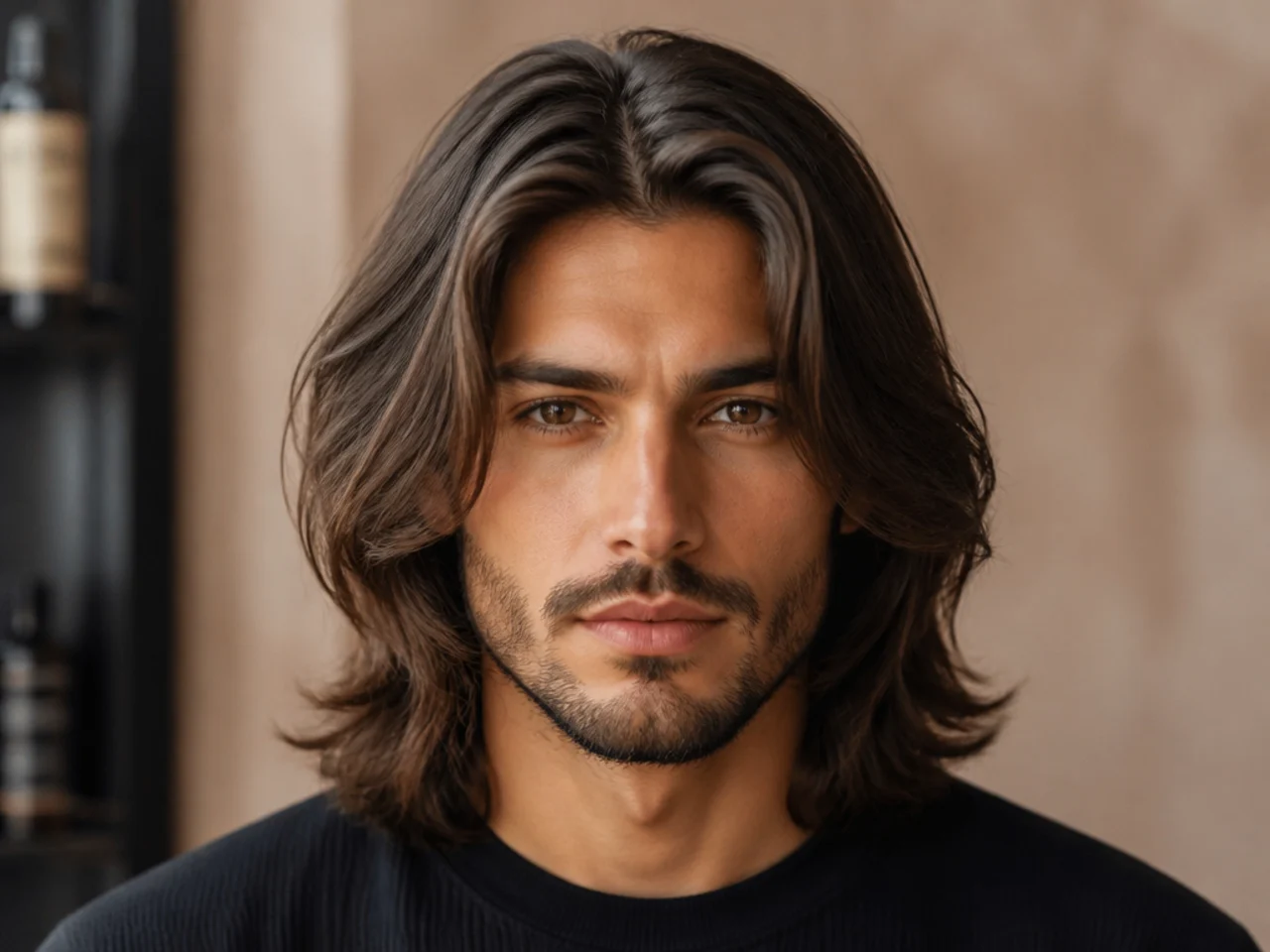
Chin-length and past. Real length changes everything: gravity does the parting for you and the curtains actually drape. Best on oval and long faces because the width around the jaw balances the shape. Straight or slightly wavy hair only — anything curlier fights the drop. Ask for "grow-out length, layered from the cheekbone down, no undercut, no fade." Wash, towel-dry, work a leave-in through the mids, and diffuse with your head upside down for root lift.
Middle Part Taper Fade
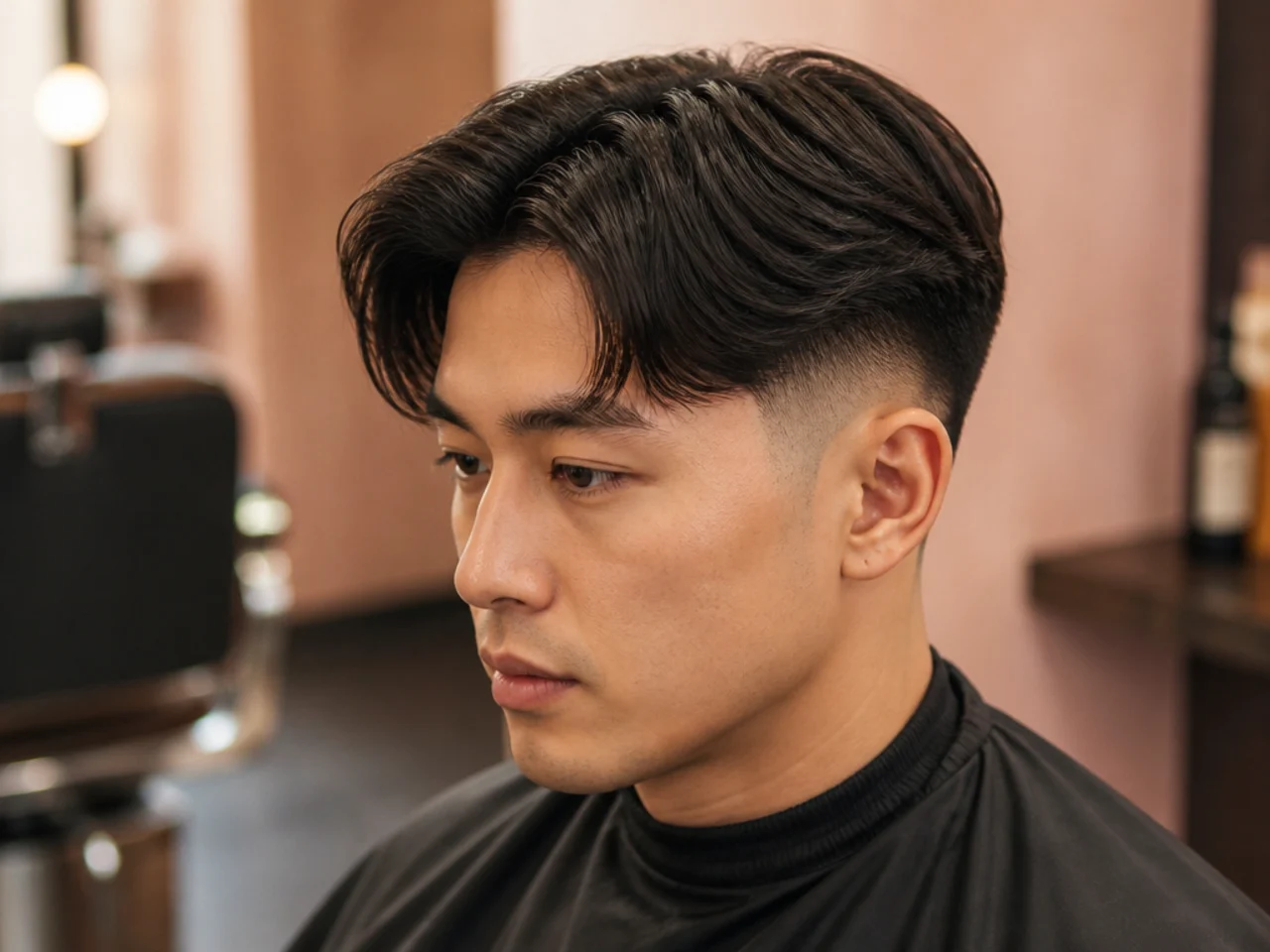
The low taper fade sharpens the whole silhouette. Sides drop cleanly around the ear while the top keeps its full 5-inch curtain length. The taper is what makes this look modern — it stops the sides from puffing when the top gets long. Suits square, oval, and diamond faces. Ask for "low taper fade around the ears and nape, five inches left on top, split down the middle." Blow-dry with a round brush, angling the front strands forward and out. Matte paste with a soft hold locks the split without freezing the movement.
Sleek Middle Part with Short Sides
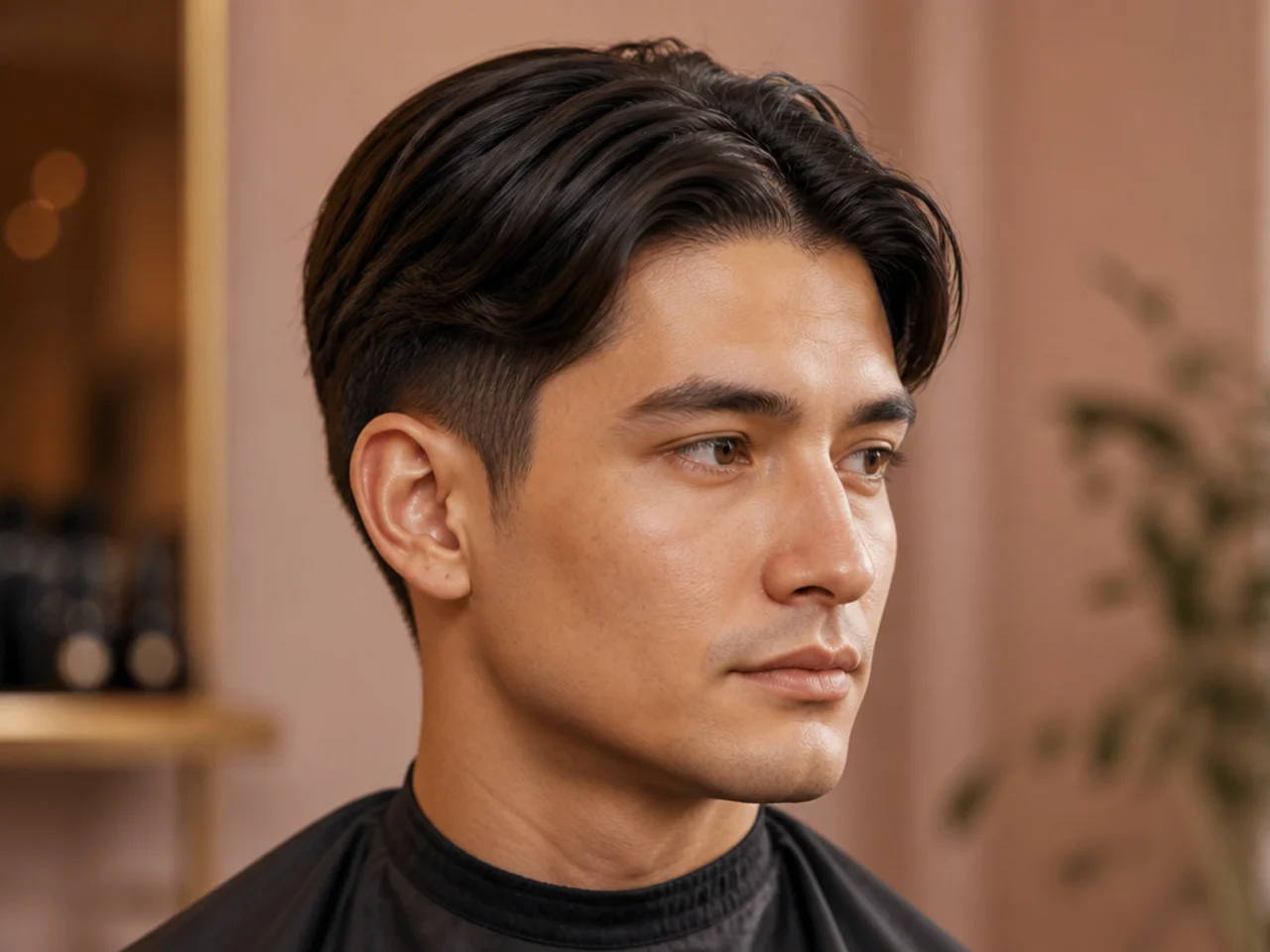
The Wall Street version — the professional look of the middle part family. Sides cut short with a #2 clipper, top kept at 4" and combed flat off a razor-sharp center split. Best on oval and heart faces with fine-to-medium straight hair — thick hair puffs and ruins the smoothness. Ask for "number two on the sides blended up, four inches on top scissor-cut, split dead center." Blow it back and to the sides with a round brush, then finish with a shine-forward pomade combed through with a fine-tooth comb. This is the one middle part where gloss beats matte.
Flowing Center Part
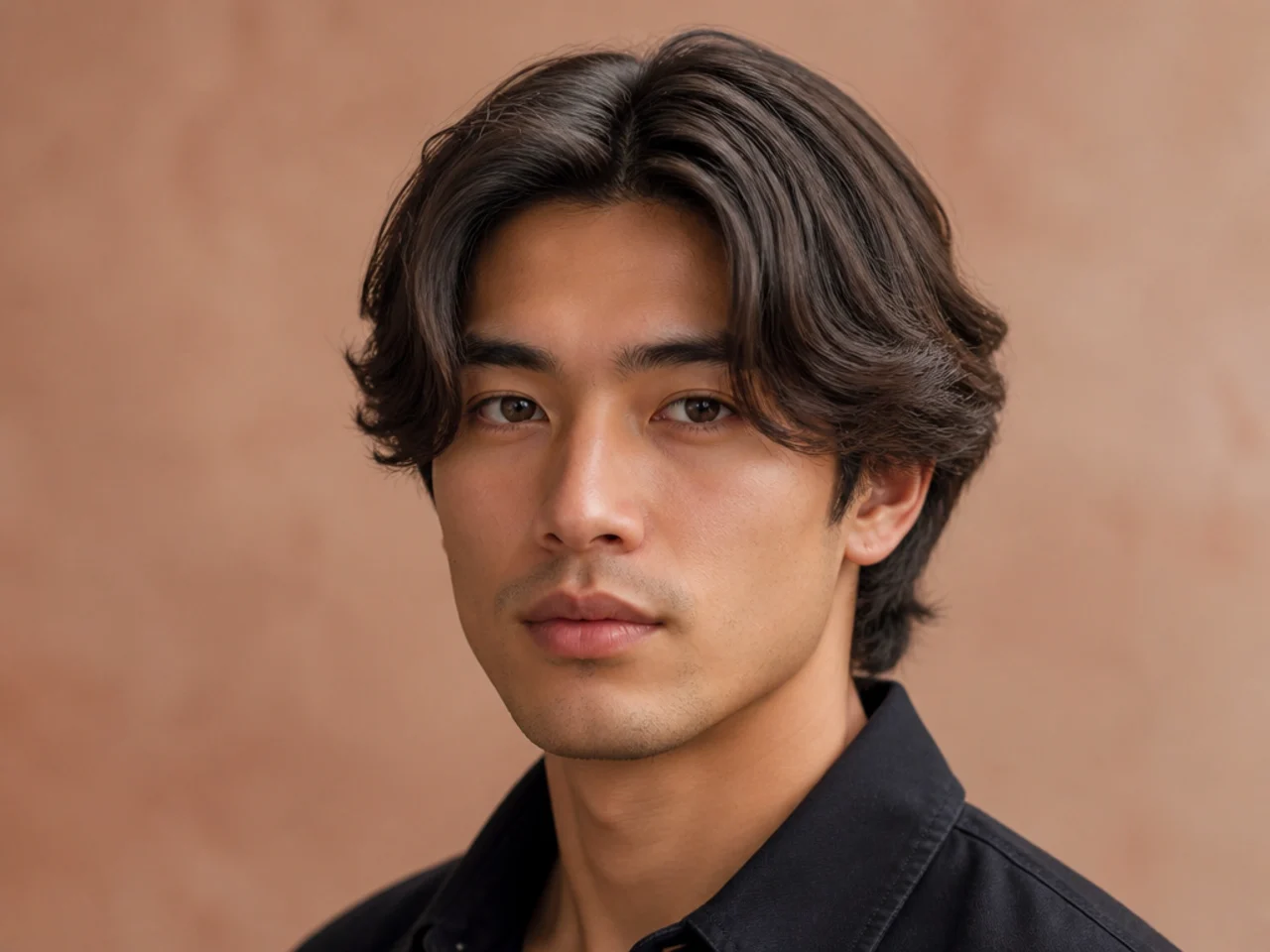
Softer than the classic — think surfer, not sales meeting. Longer than 5", cut into long layers that carry movement all the way down. Wavy hair does this without asking. Suits oval, heart, and long faces. Ask for "six inches on top, long soft layers, sides connected — no fade, no taper." It's a close cousin of the layered haircut, so ask for real internal layering, not just point-cut ends. Rough-dry upside down, spritz a texture spray through the ends, then finger-comb the center split in and let it fall. Skip the clay. A single mist of light-hold spray sets it.
Short Textured Middle Part with Low Fade
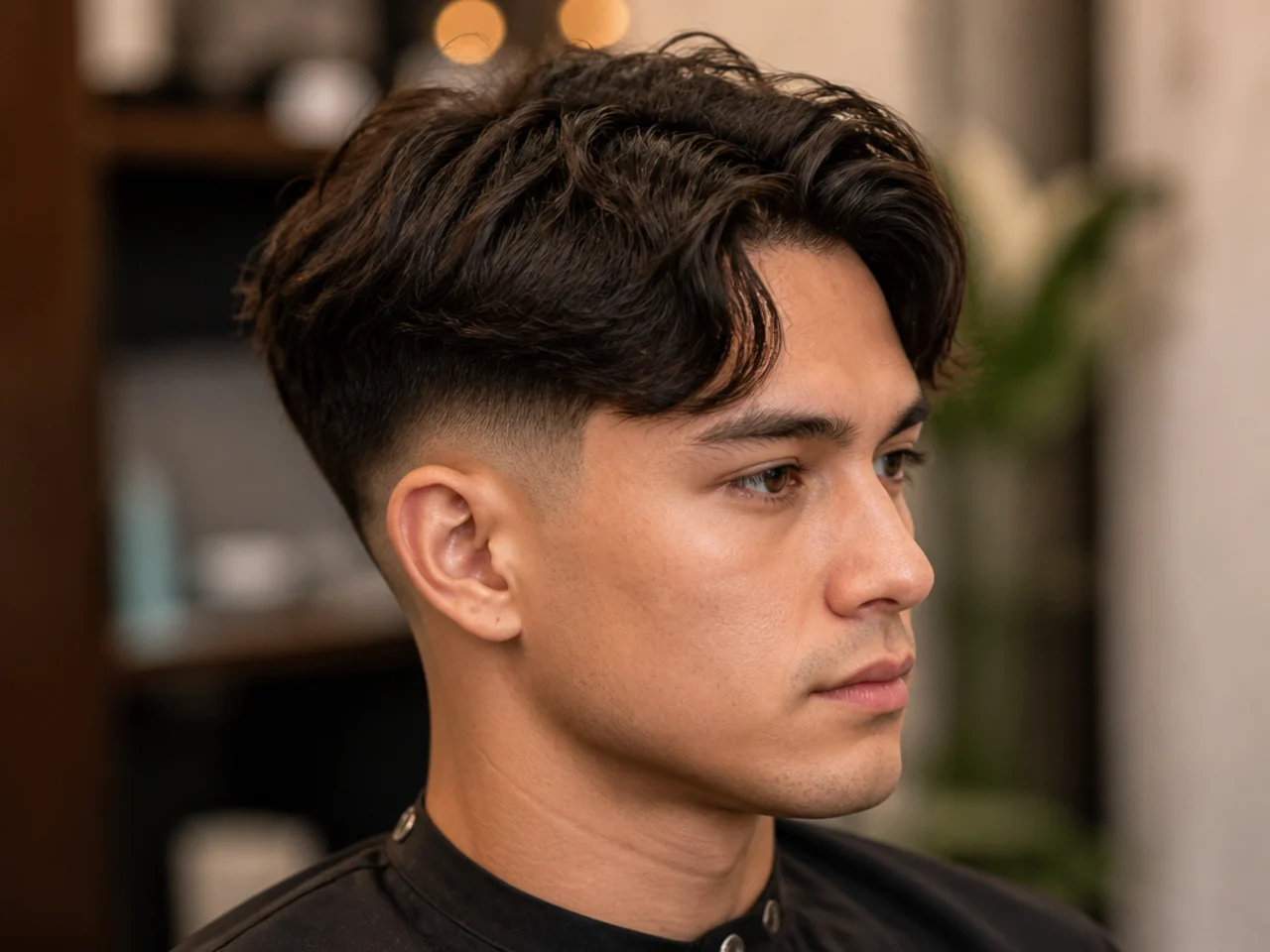
The K-pop-meets-fade version. Point-cut top around 4", broken into short choppy layers, dropped over a clean low fade. Best on round faces — the height on top slims the shape. Fine or medium straight-to-wavy hair takes it best. Ask for "low fade starting at the temple, four inches on top point-cut for texture, split down the middle." Rough-dry, then work a pea-sized amount of matte clay through with your fingers — don't comb it after. The messier the finger-work, the better it reads.
Middle Parted Brush Back
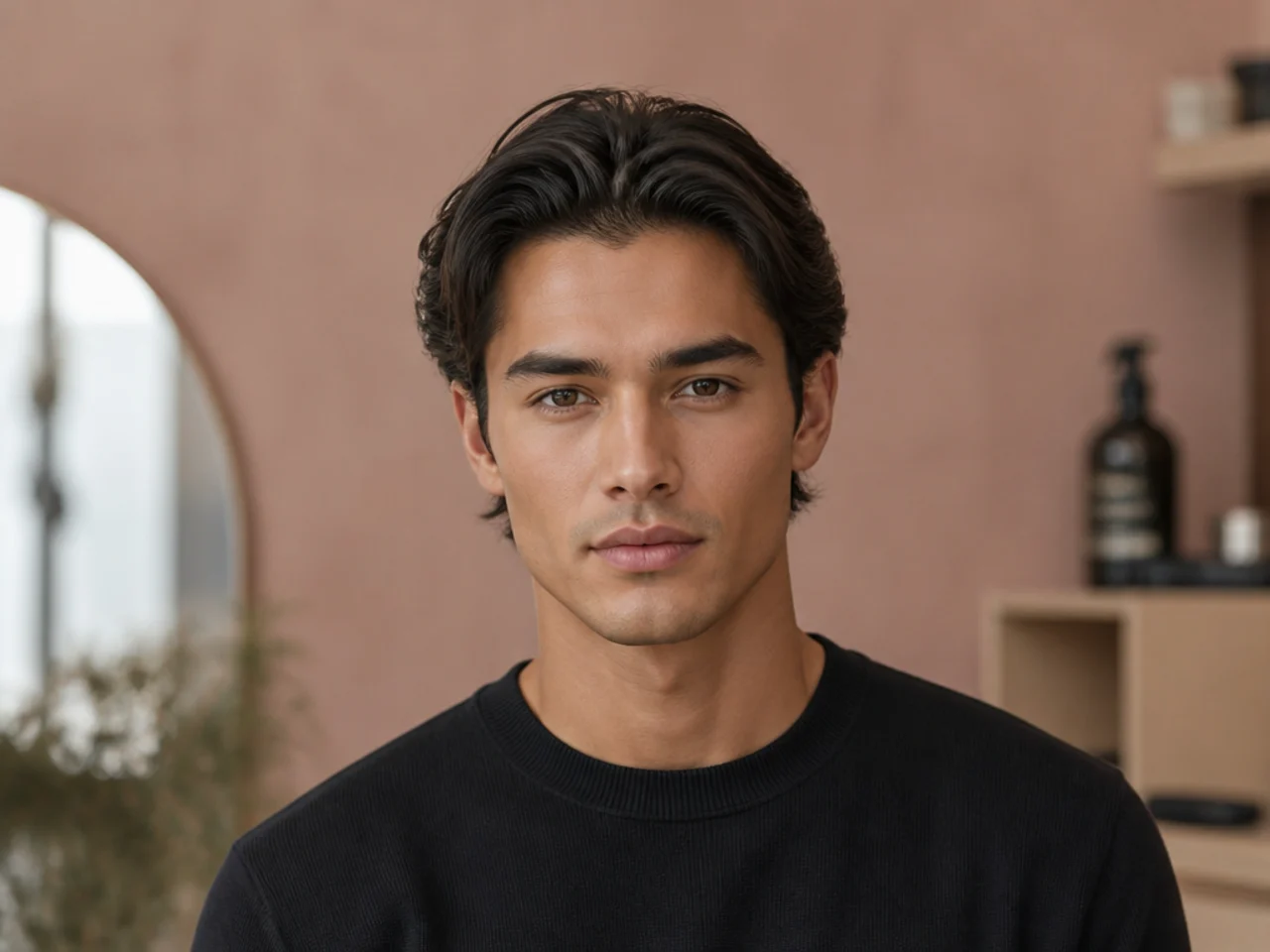
A middle part that opens at the front, then sweeps back at the crown. You keep the center detail at the hairline without committing to the full curtain drop. Suits oval and rectangular faces. Works on medium-density straight or slightly wavy hair. Ask for "five inches on top, layered, scissor-cut sides, cut so I can either part it center or brush it back." Blow-dry the front forward first to set the part, then push the crown and mids back with a paddle brush. Light pomade at the mid-shaft keeps the sweep without pinning it flat.
Parted Curtains
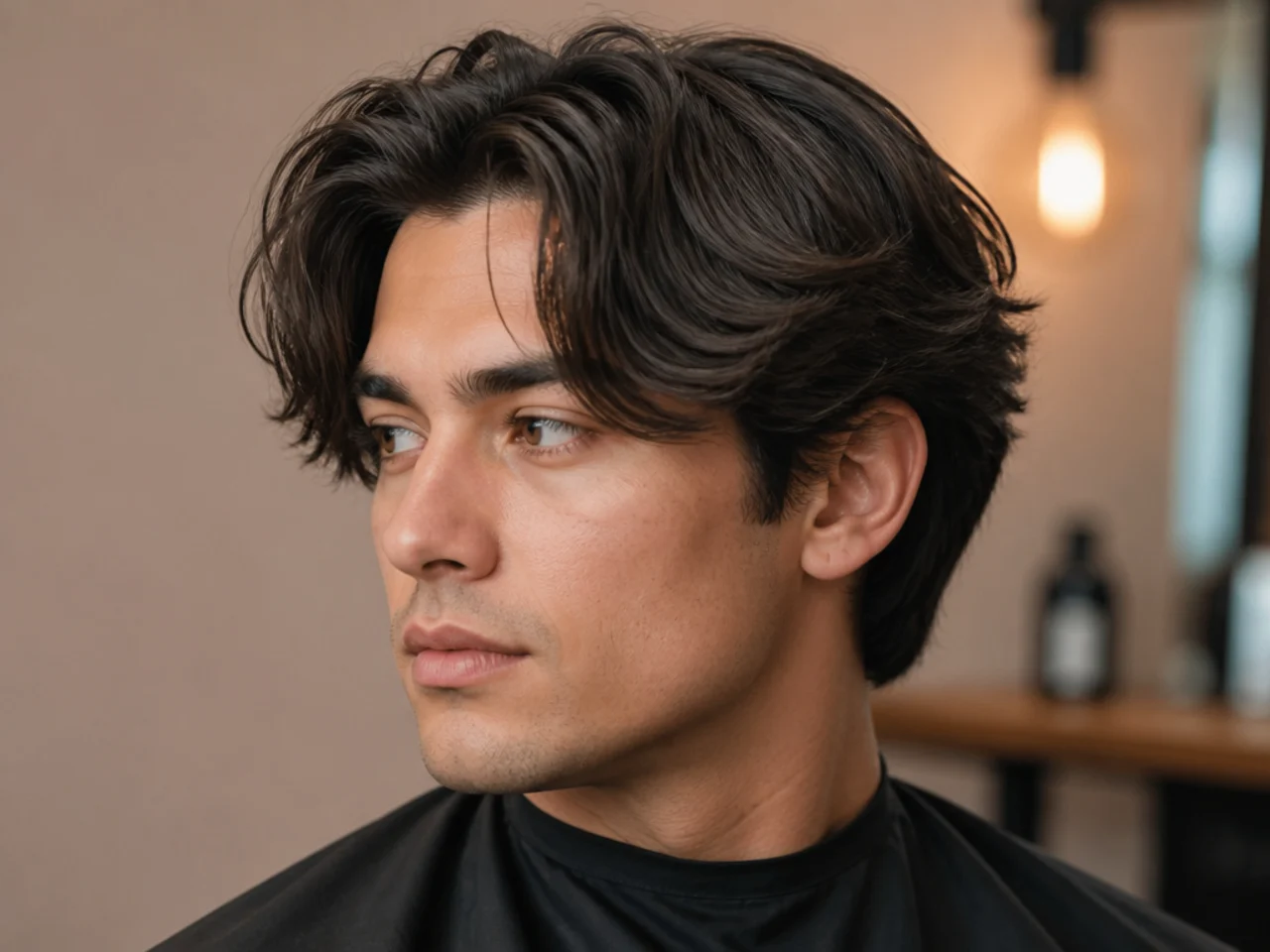
The '90s original — Leonardo DiCaprio, 1996. Bluntly cut ends around the jawline, no fade, no undercut, parted straight down the middle with two full curtains falling forward. Best on oval and heart-shaped faces because the width at the jaw softens strong lines. Ask for "curtain cut, blunt ends, jaw length, no layers past the mid-shaft." Diffuse on low heat, twist a coin-sized bit of cream between your palms, then rake it front-to-back through both sides. It's a symmetrical cousin of the comb over haircut — pick this when you want balance instead of a side sweep.
Textured Middle Part Flow
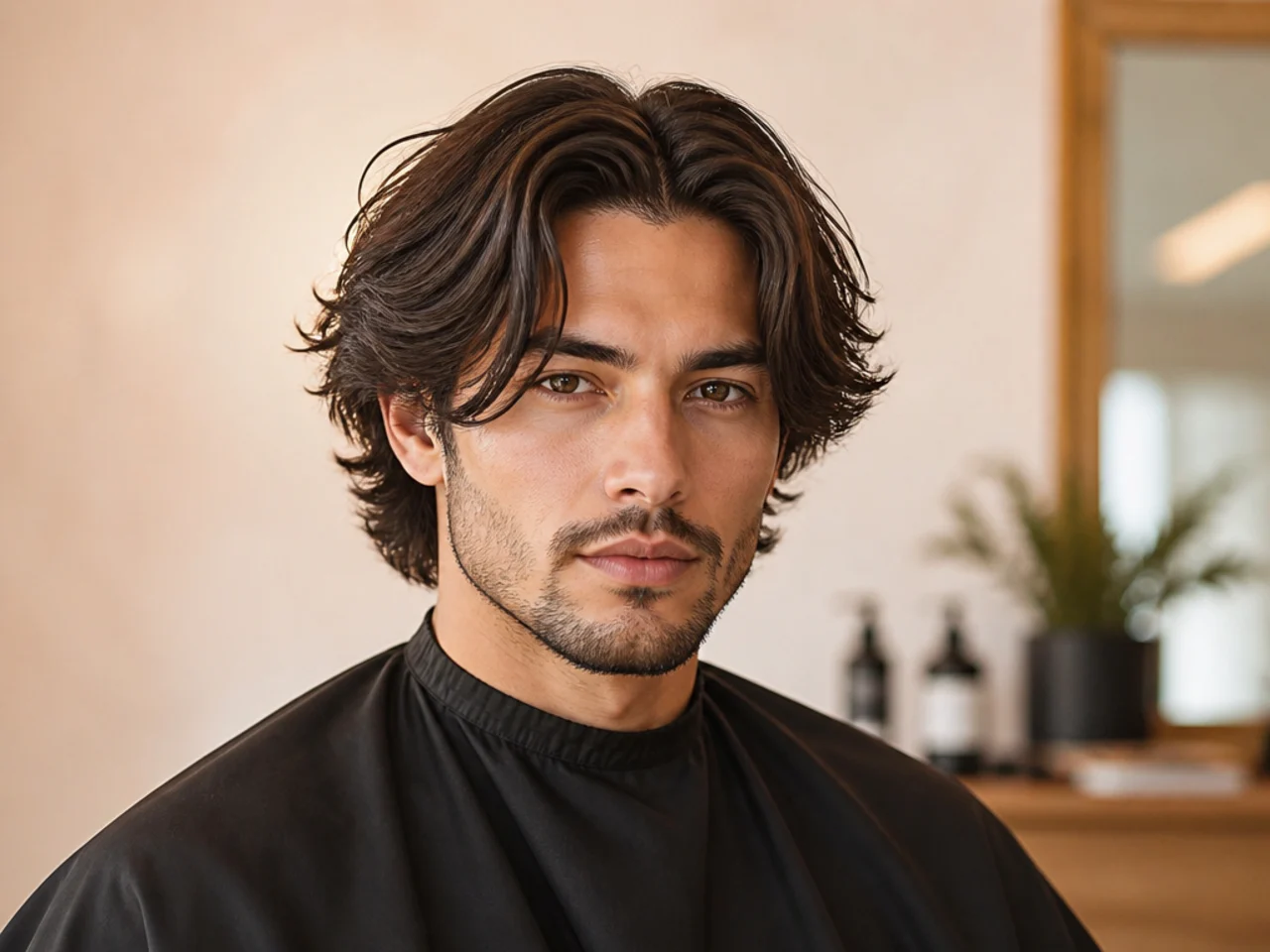
The everyday one. 5" top, natural texture pulled forward and split, sides connected. Any face shape except very round works. Medium-to-thick wavy hair is ideal — straight hair needs a texture spray to fake it. Ask for "five inches on top, long internal layers, no fade, no undercut, cut for a center part with movement." Wash, condition heavier than you think, towel-dry, then work in a curl or wave cream. Diffuse on low, scrunching upward. This should look like you didn't try — which means using less product, not more.
Messy Middle Part
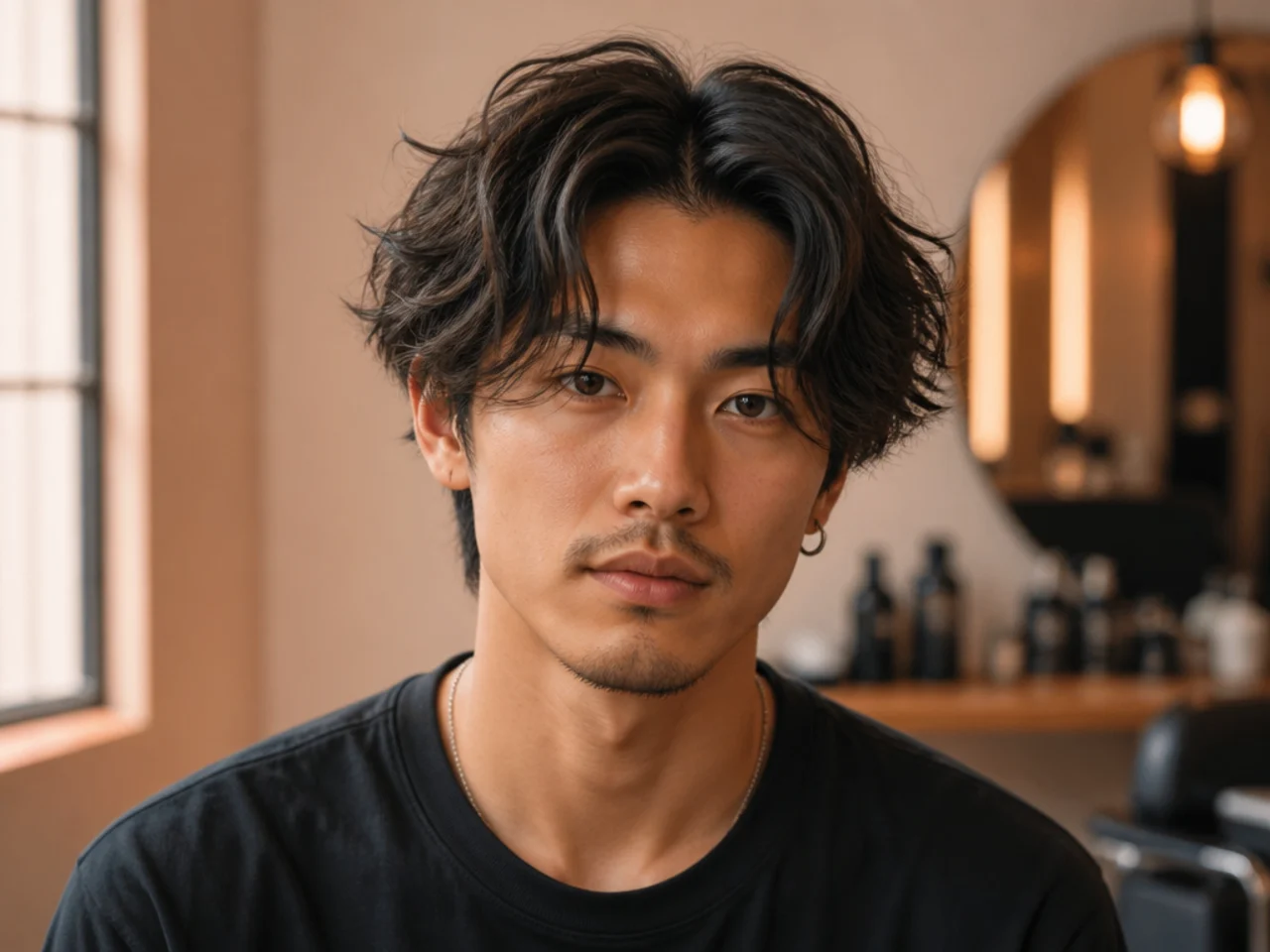
Same cut as the classic, styled deliberately loose. 4–5" top, scissor-blended sides. Suits oval, square, and diamond faces because the asymmetry softens sharp lines. Any hair type from straight to wavy. Ask for "point-cut top around five inches, choppy through the front, natural sides, cut so the middle part isn't rigid." Rough-dry, work a matte paste between your palms, then push it in front-to-back with your fingers. Don't comb after. If it looks too neat, muss it with damp hands and reshape.
Middle Part Flow with Long Curtains
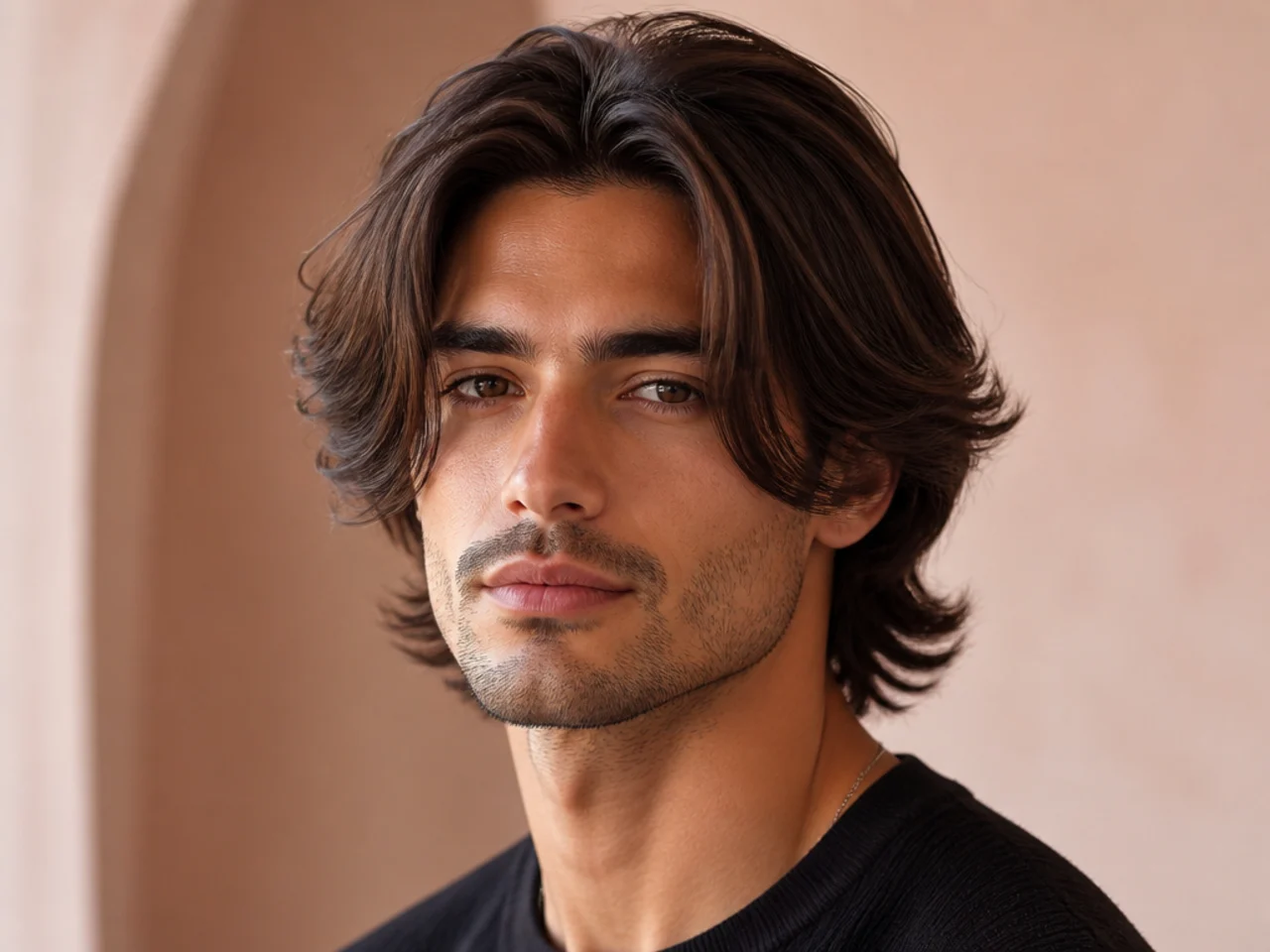
The full curtain drop. Top pushed to 6", cut in long uniform layers that fall past the cheekbone. Suits oval, heart, and diamond faces. Straight-to-wavy hair only — this look needs the drape. Ask for "six inches on top with long soft layers, connected sides at the ear, no fade, layered so both curtains fall forward off a center part." Blow-dry with the head tipped forward using a nozzle, then flip both sides out with the fingers. A light-hold hairspray from 12" away sets it without stiffness.
Loose Curtains
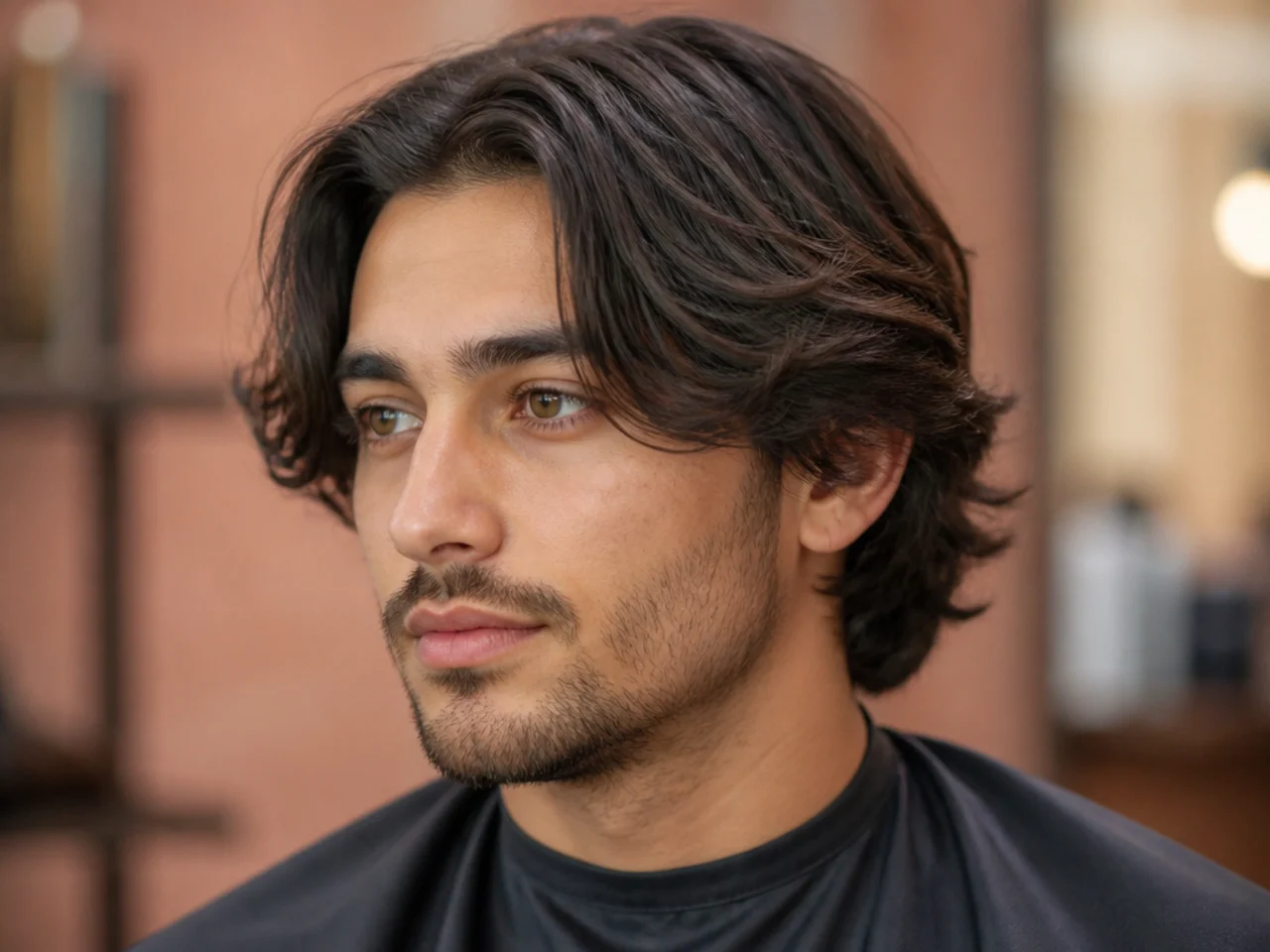
Wispier and lighter than parted curtains — more air, less structure. Top at 4–5", heavily point-cut so the ends sit feathered instead of blunt. Suits round and square faces because the softness offsets hard angles. Fine to medium hair. Ask for "curtain cut, four to five inches, feathered ends, no blunt line, cut for a center split." Air-dry 70% then diffuse the rest. Rub a pea of matte cream between your palms, tap it through the ends only. The roots need to breathe or the whole shape flattens.
Cool Middle Part with Temp Fade
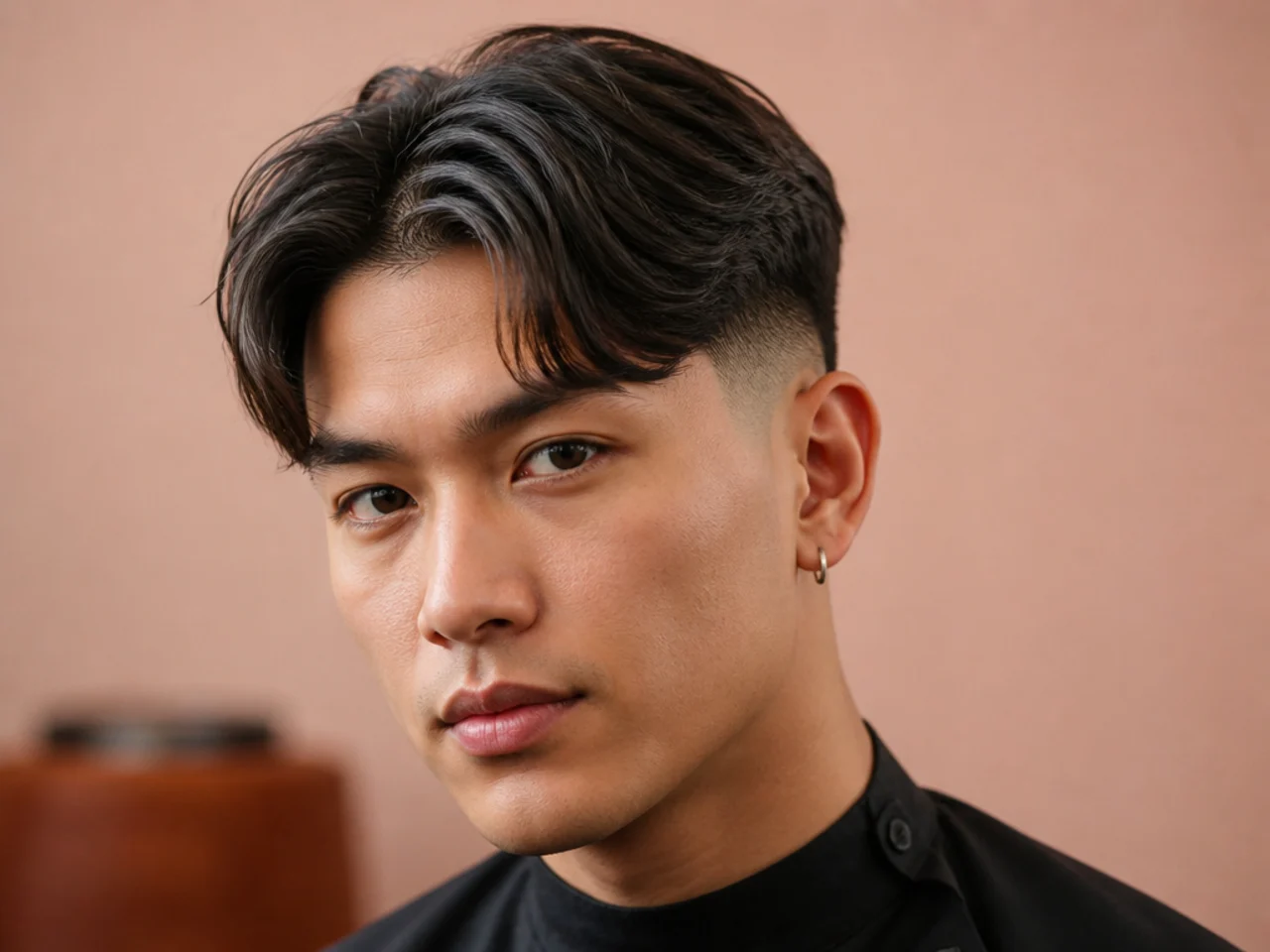
The temp fade runs high enough at the temple to sharpen the corner, then drops into a soft blend below the ear. Top runs 5", still splits center. Suits round and heart faces — the temple detail pulls the eye up and out. Ask for "temp fade from the recession point down, five inches on top layered for a middle part, connected at the crown." Blow-dry forward, part it center with a comb, then paste each side out and away. Book the fade every three weeks or the temple detail blurs.
Textured Wavy Middle Part
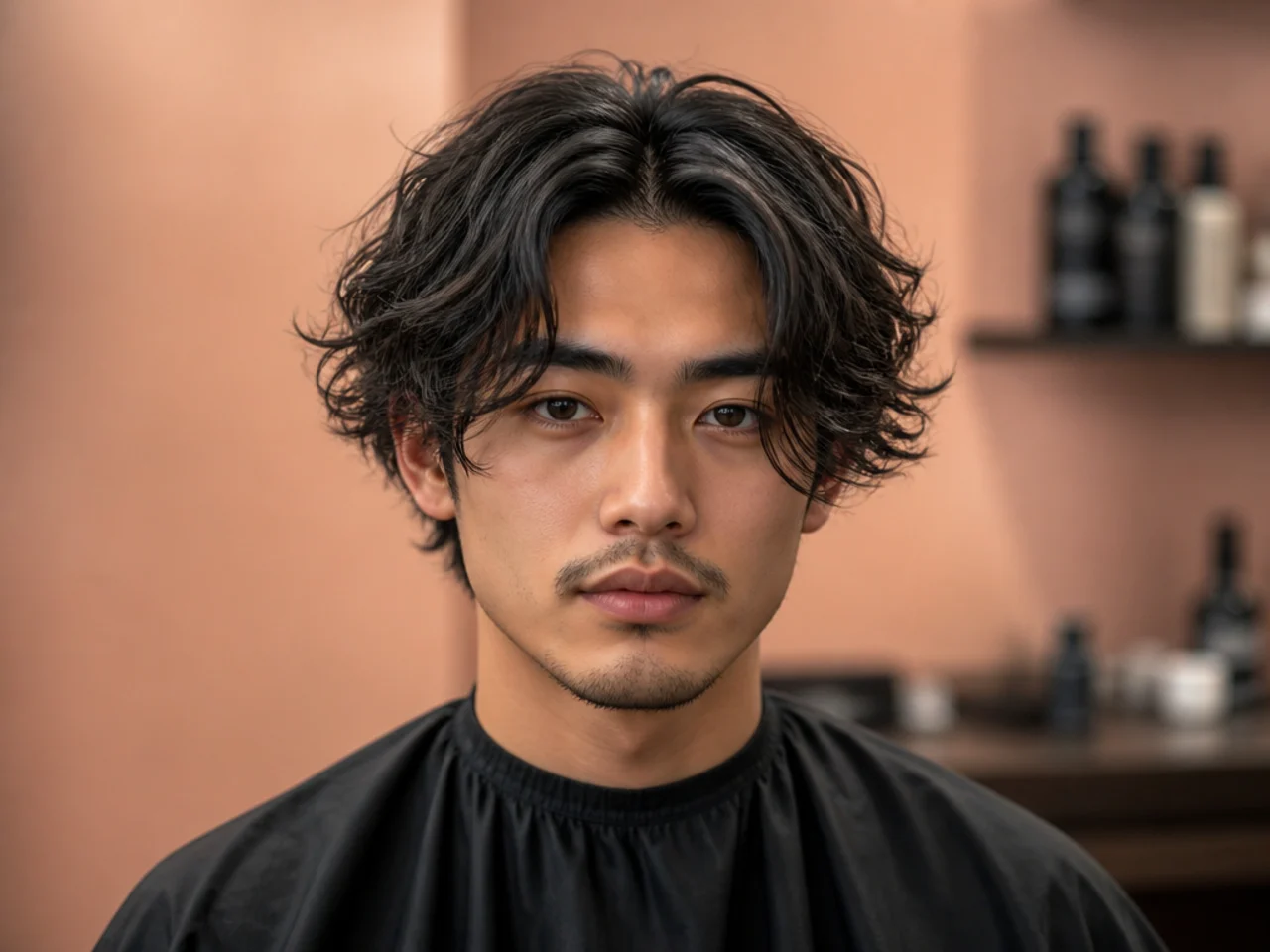
Built specifically for guys with natural waves. Long soft layers, top around 5–6", cut so the wave pattern falls into a natural center split. Suits oval, heart, and long faces. Straight hair can't fake this look — the waves are the point. Ask for "five to six inches on top, long internal layers cut with a razor, sides connected, no fade." Wash, apply a wave-defining cream in the shower, diffuse on low with an upward scrunch. That's it. No comb, no second product.
Two Block Middle Part
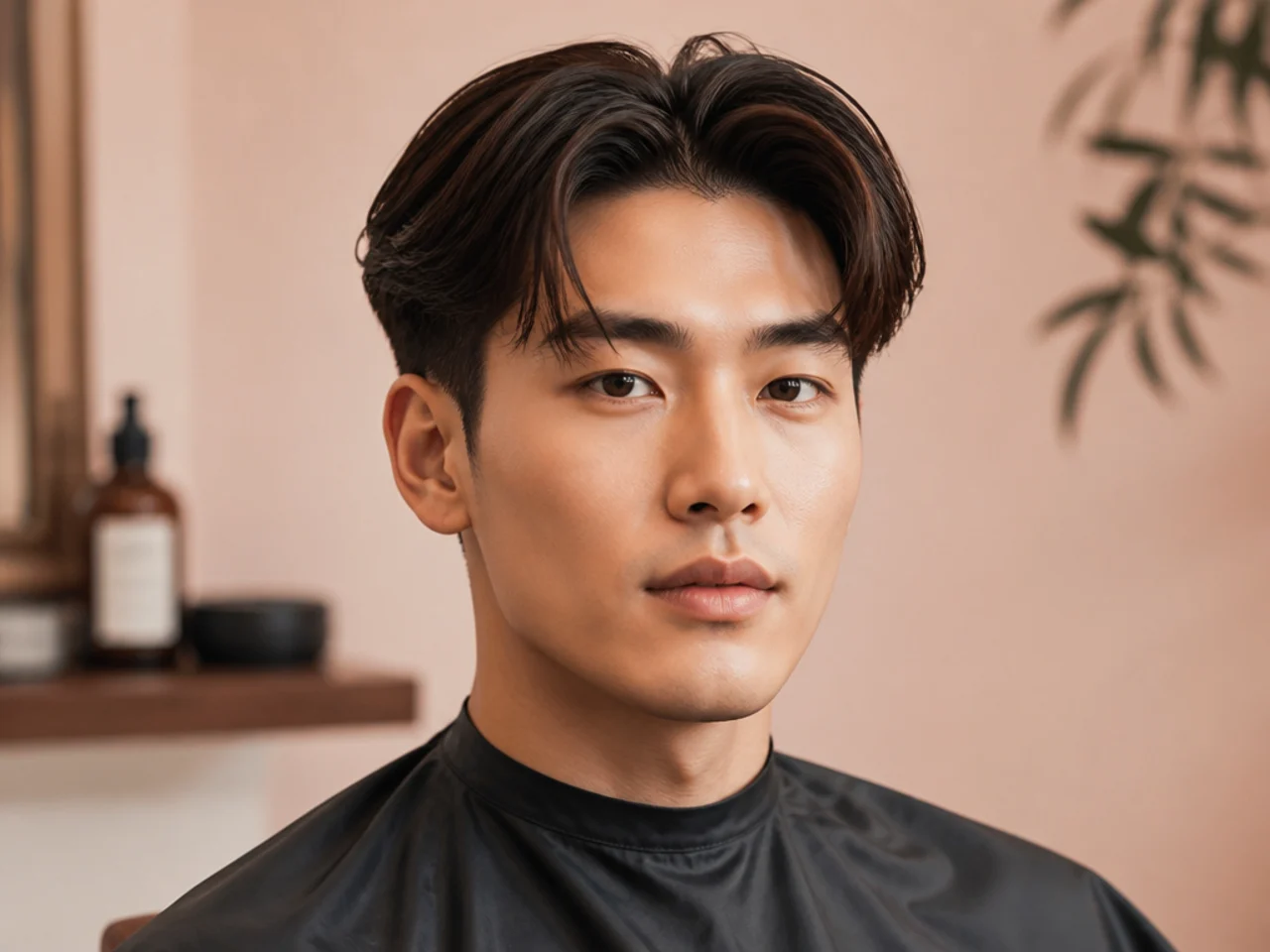
The Korean signature. Longer 5–6" top over shorter, tapered sides — the two "blocks" are the disconnect. It's the base structure behind most Korean haircuts for men. Best on oval, heart, and long faces; straight to gently wavy hair. Ask for "two block cut, five inches on top, tapered sides and back to a number two, layered for a middle part with length in the front." Blow-dry the top forward with a round brush, split it center, then push each side outward. Matte clay locks it. See our two block haircut guide for pairing tapers.
Middle Part Fade
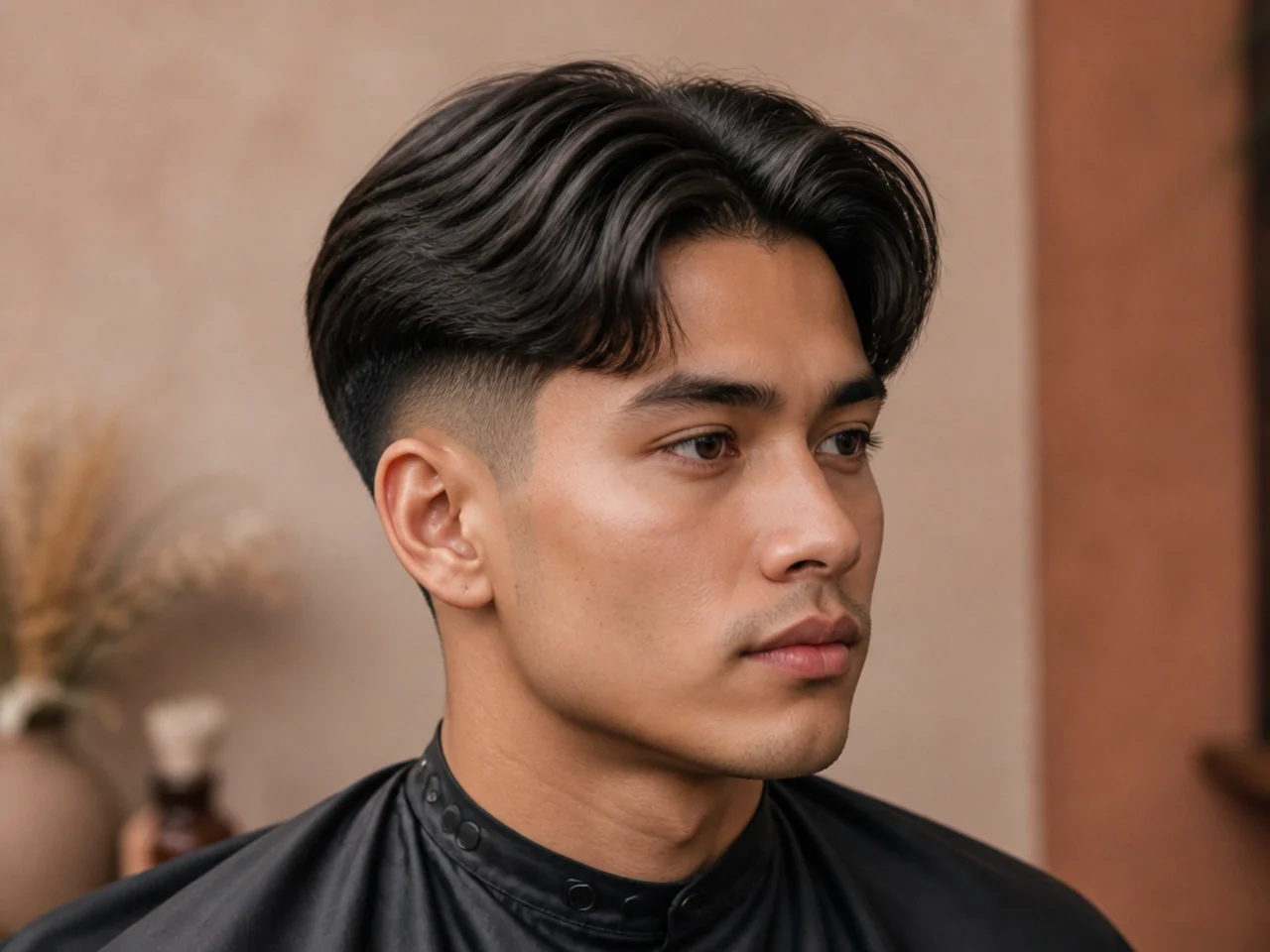
Any fade — low, mid, or high — paired with a 4–6" curtain top. This is the base template of the modern middle part. Suits every face shape; the fade height is what you match to your features. See the fade haircut guide for the difference between them. Ask for "mid fade around the sides and back, five inches on top, layered for a middle part." Blow-dry front-forward with a nozzle, split, then style with matte clay. Book the fade every 2–3 weeks — the top can wait 4–5.
Pulled Back Center Part with Short Sides
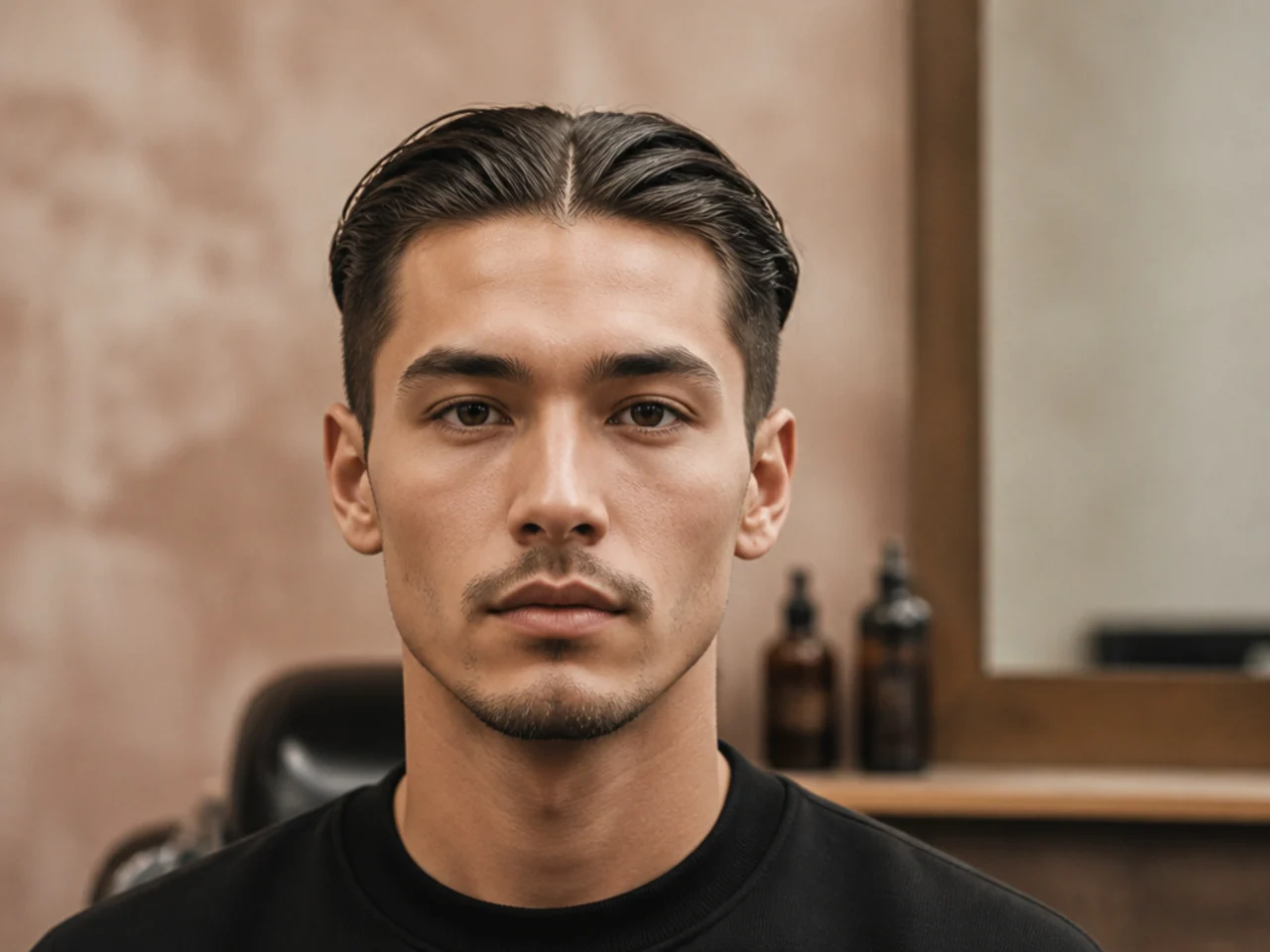
A middle part where the top gets combed back instead of forward — you keep the center opening at the hairline but the length flows behind. Sides sit at a #2 or #3 clipper. Suits oval and long faces. Straight to slightly wavy medium-thick hair. Ask for "number two on the sides, five inches on top scissor-cut, opened up at the hairline for a center part but layered to sweep back." Blow-dry back and up with a round brush, then set with a firm-hold cream. It's close in spirit to a side part hairstyle for men but stays symmetrical.
Short Textured Center Part
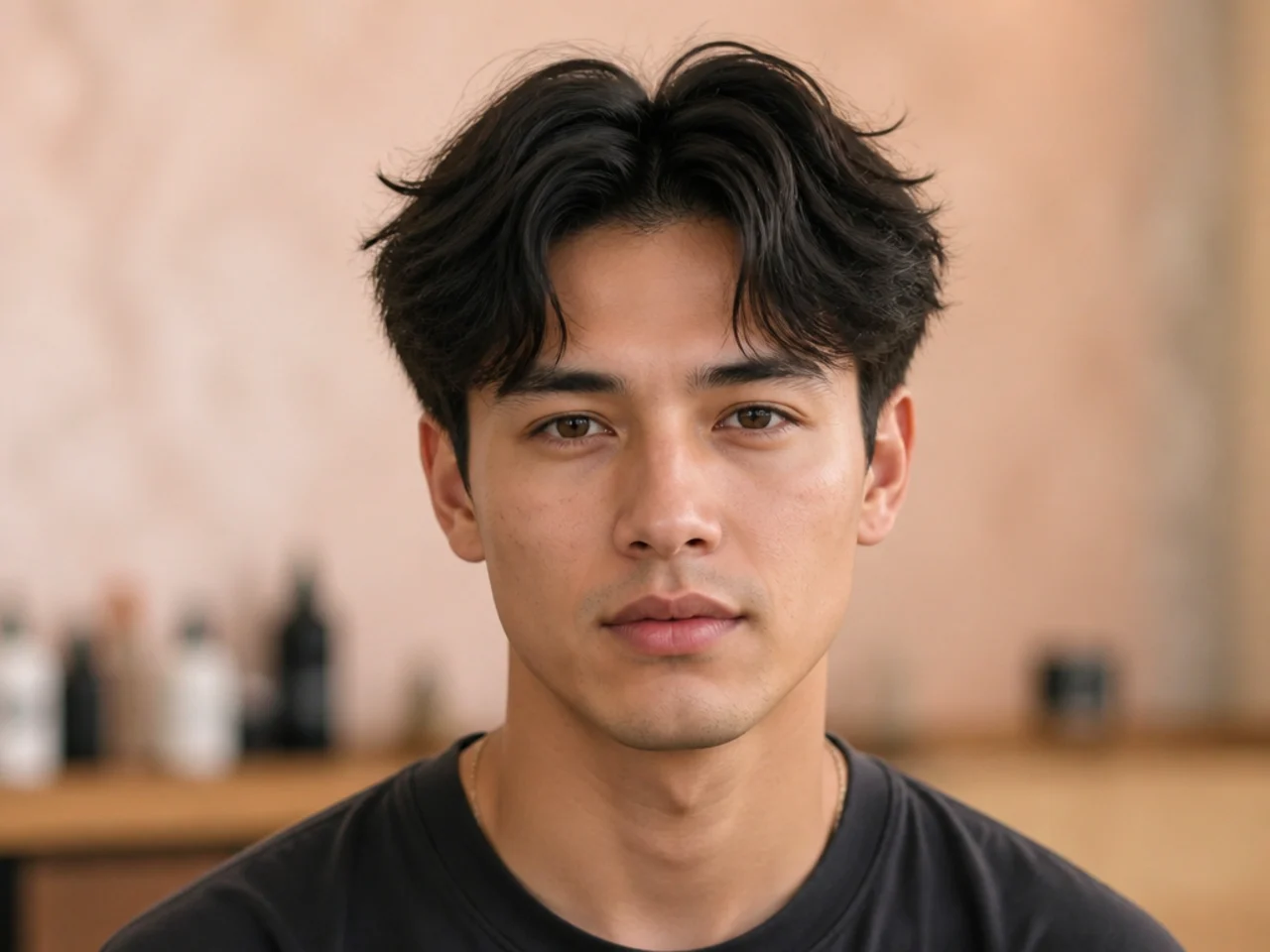
The lowest-maintenance version in the guide. Top at 3–4", sides scissor-cut short, textured through with a razor. Best on square and round faces. Any hair type. Ask for "three to four inches on top, razor-textured for movement, short scissor sides, cut so it can part center." Towel-dry, rub in a bit of clay, split it with your fingers. Total styling time: under 60 seconds. The texture does the work — which is why the razor cut matters. Ask for scissors-only if your hair is fine; razors thin fine hair too fast.
Messy Curly Middle Part

Curls do the middle part on their own — you just cut for it. 4–5" of top, curls left dense and unthinned, sides tapered to keep the shape from ballooning. Suits oval and heart faces. Curly to coily hair only. Ask for "four inches on top, keep the curl density, tapered sides, cut to fall in a natural center split." Wash, condition heavily, apply curl cream on soaking hair, diffuse on low upside down. Do not brush after. Brushing kills a curly middle part in one pass — use your fingers or a wide-tooth pick only.
Textured Middle Part with Undercut
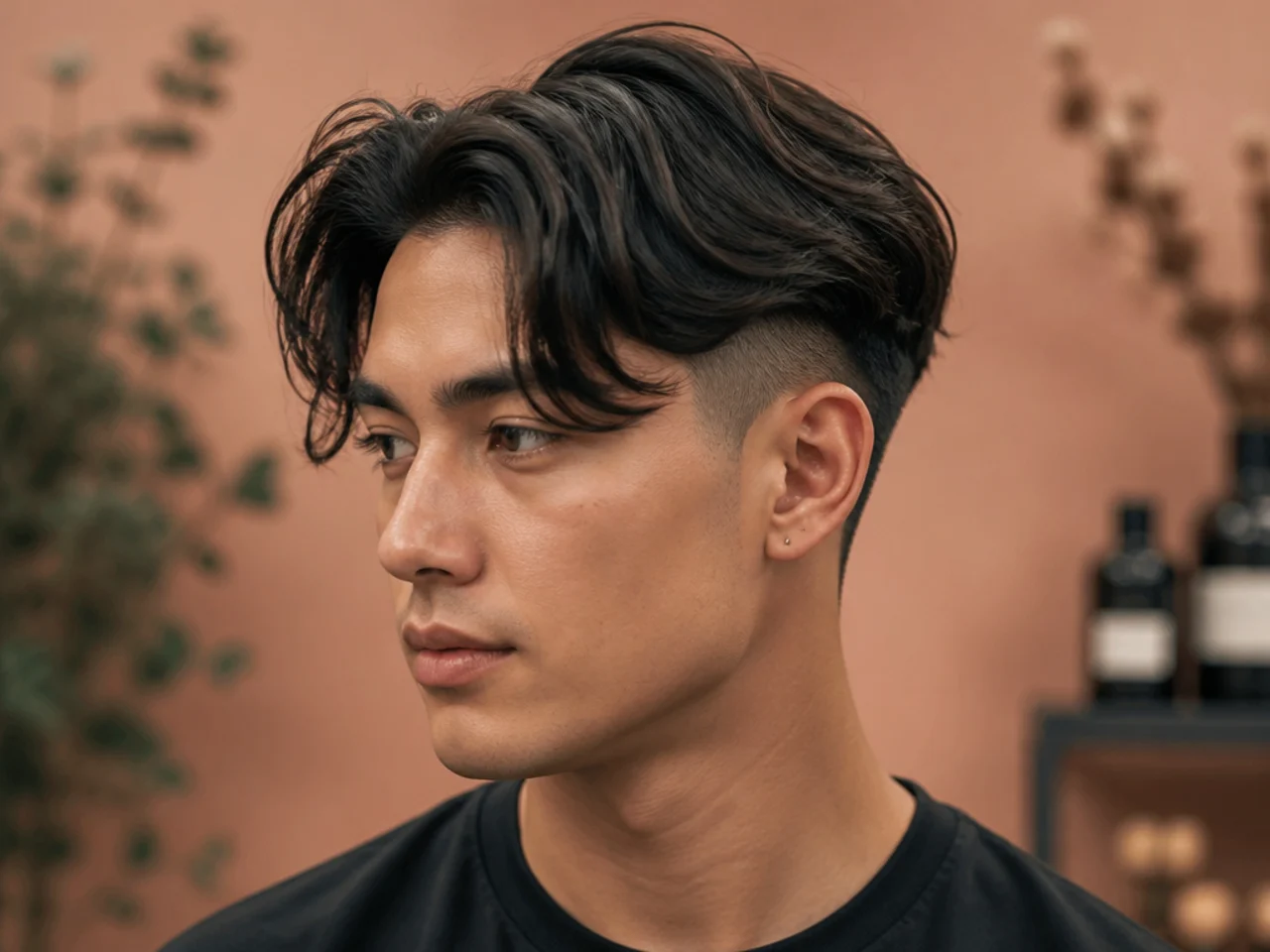
The strongest contrast in the guide — long top over a shaved undercut fade. Top runs 5–6", falls in a full curtain, undercut sits at a #1 or #2 with a clean disconnected line. Suits square and diamond faces because the disconnect adds jaw definition. Any hair type. Ask for "disconnected undercut at a number two, five to six inches on top, layered for a middle part, no blending." Blow forward with a nozzle, split, and lock with a strong-hold matte paste.
Short Parted Curtains
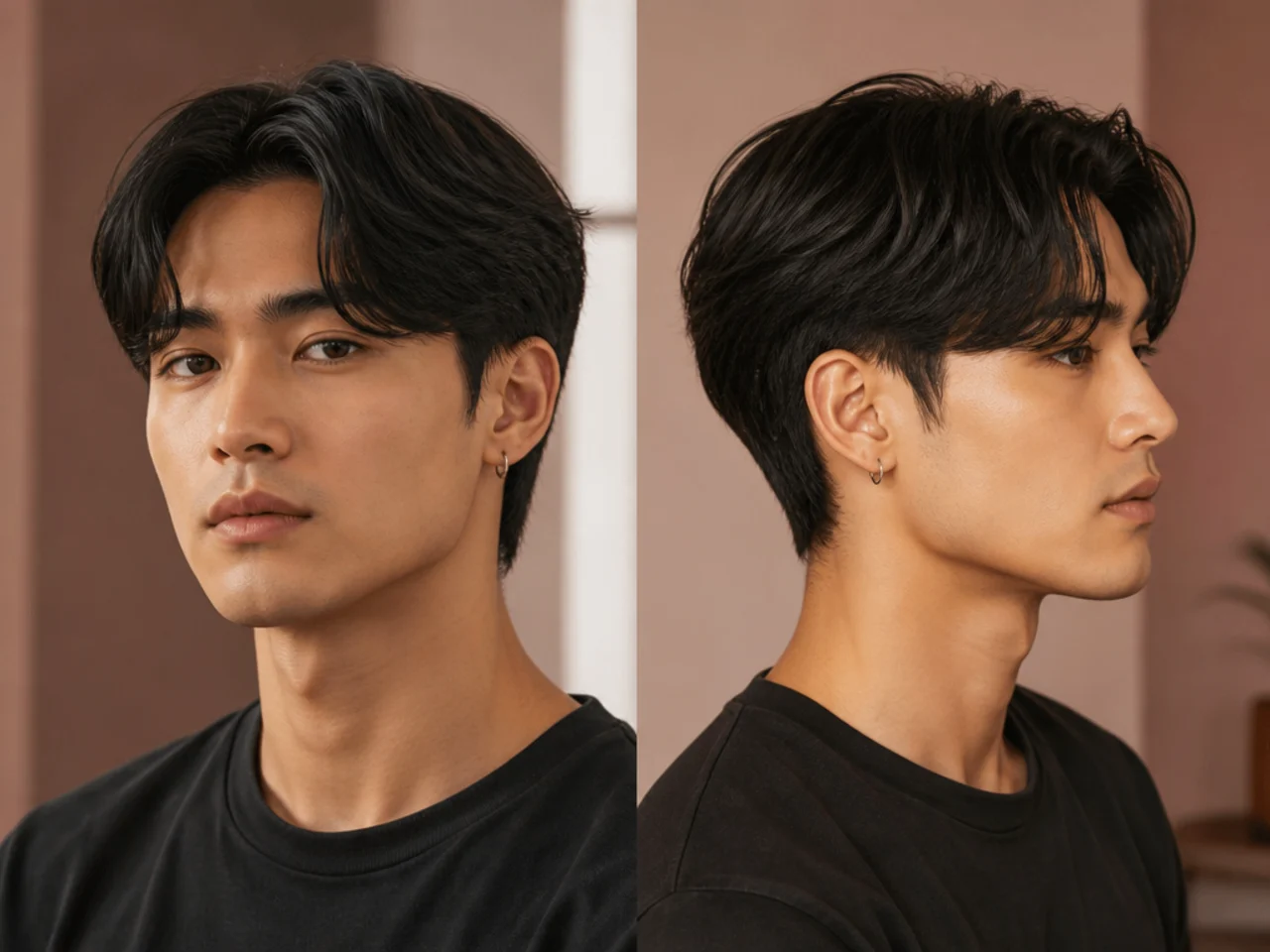
The fringe haircut family, but split. Front pieces sit at brow length, cut so they part forward and outward off a center line. Sides connected, short. Suits oval, heart, and long faces. Best on straight to slightly wavy fine-to-medium hair. Ask for "curtain fringe at the brow, cut to part center, scissor sides above the ear, no fade." Blow-dry the fringe forward first with the fingers, then twist and split it. A light cream through the fringe ends holds the separation.
Voluminous Parted Curtains
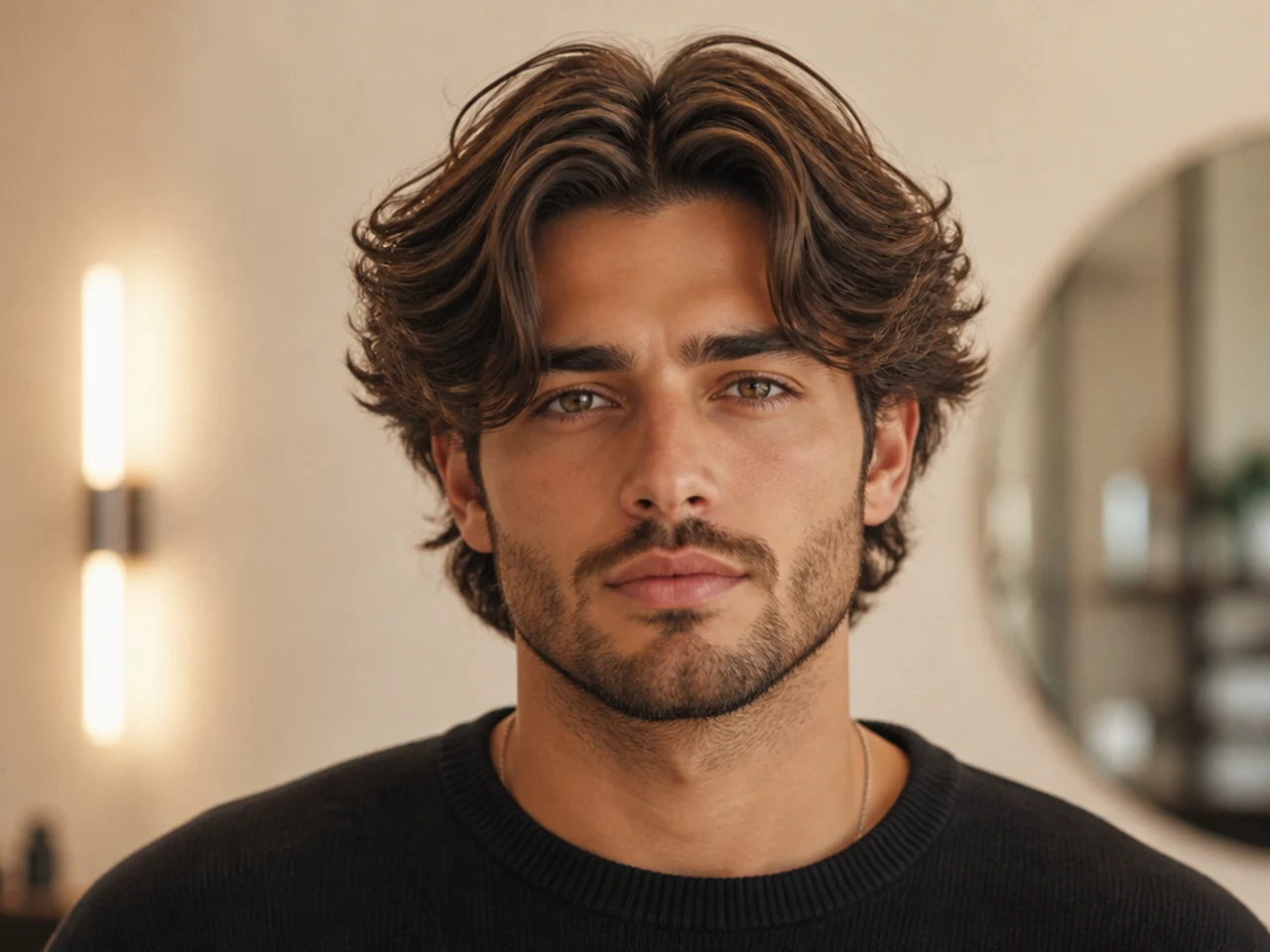
Built for thick hair. Length runs 5", but the layering is deep — internal texture removed so the mass doesn't sit like a helmet. Suits square and round faces because the height adds length. Thick straight or wavy hair only; fine hair can't hold the volume. Ask for "curtain cut at five inches, internal thinning through the mid-shaft, do not thin the ends, sides connected." Blow-dry with a round brush lifting straight up at the roots, then split with a comb. Volume powder at the roots holds all day.
Medium Parted Flow
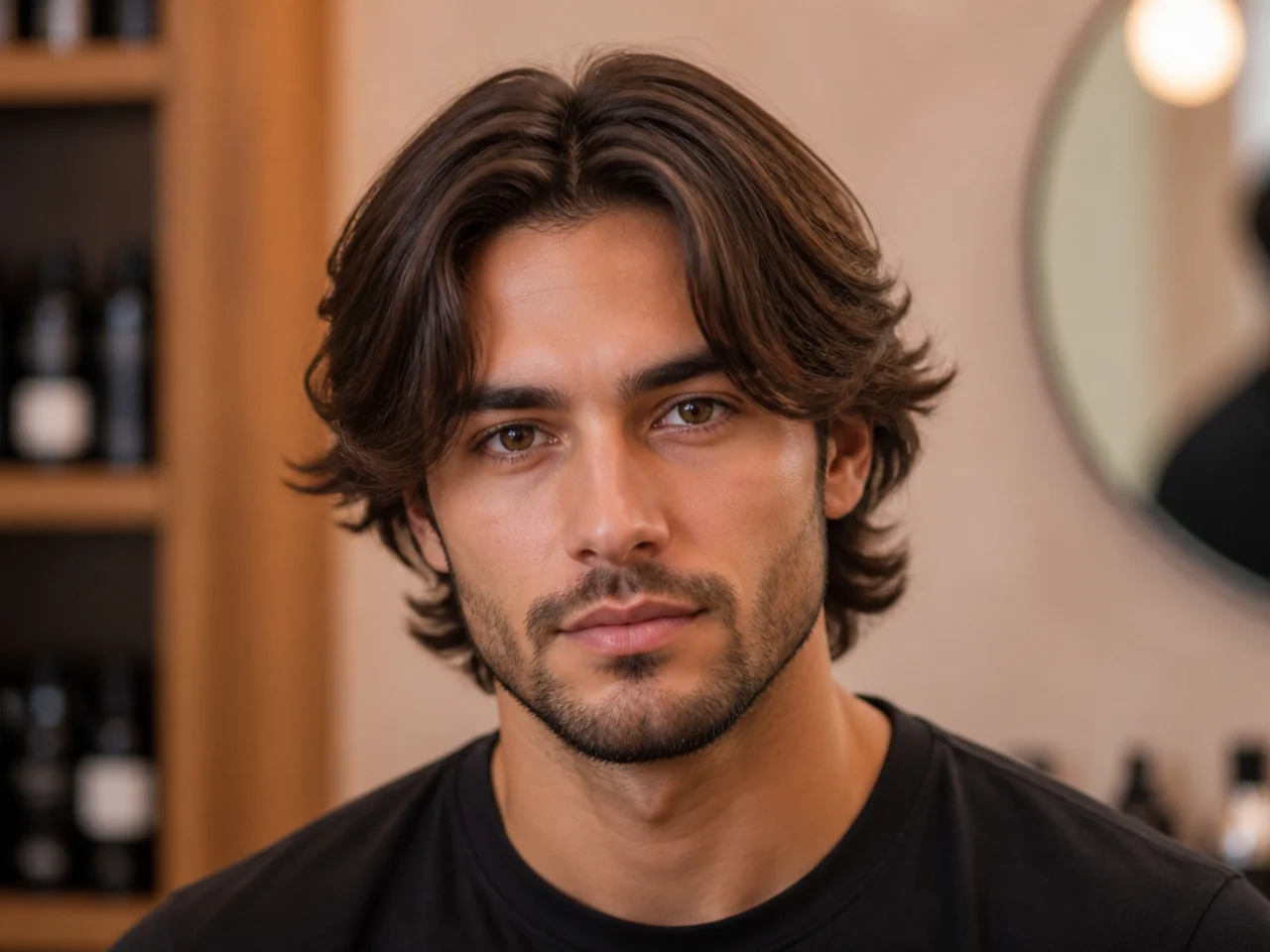
The middle of the road. Not as long as the flow-with-long-curtains, not as tidy as the classic. Top at 4–5", layered soft, sides connected. Any face shape. Straight to wavy hair. Ask for "four to five inches on top, soft internal layers, sides connected at the ear, cut for a center part." Diffuse damp hair on medium heat with a scrunch, then split with your fingers. Sea salt spray does more here than any cream — it stiffens the shape enough to hold the part without going wet-look.
Middle Part with Mid Fade
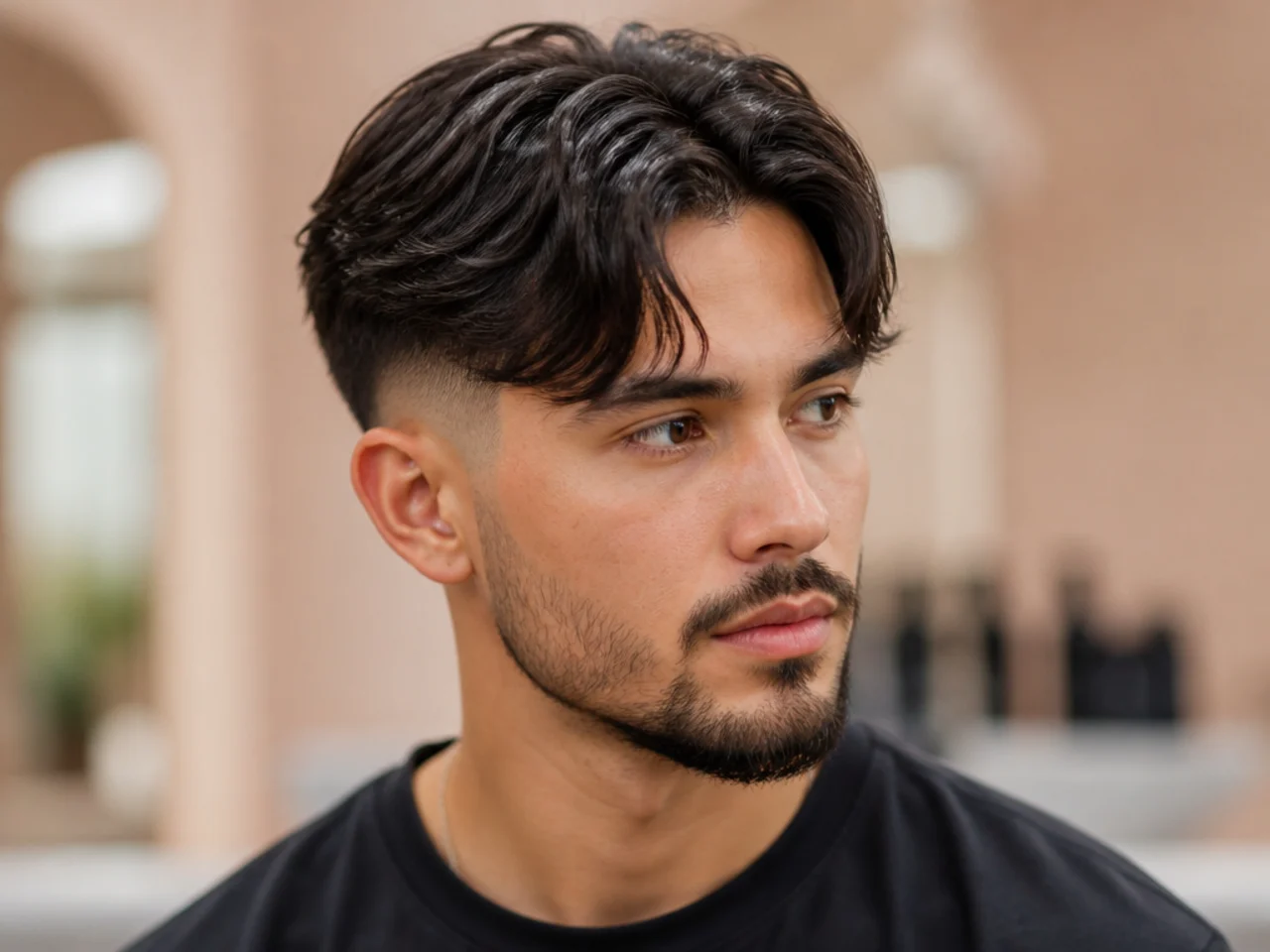
The gym-and-office favorite. A mid fade hits at the temple, keeps the ears clean, and lets the 5" top do its full curtain drop. Suits oval, round, and square faces — the mid fade is the most face-shape-forgiving of the fade family. Ask for "mid fade around the temple and back, five inches on top scissor-cut, split down the middle, layered for movement." Blow forward with a nozzle, part it clean with a comb, then matte paste each side out. Book the fade every 2 weeks — mid fades blur fastest.
Long Curly Middle Part
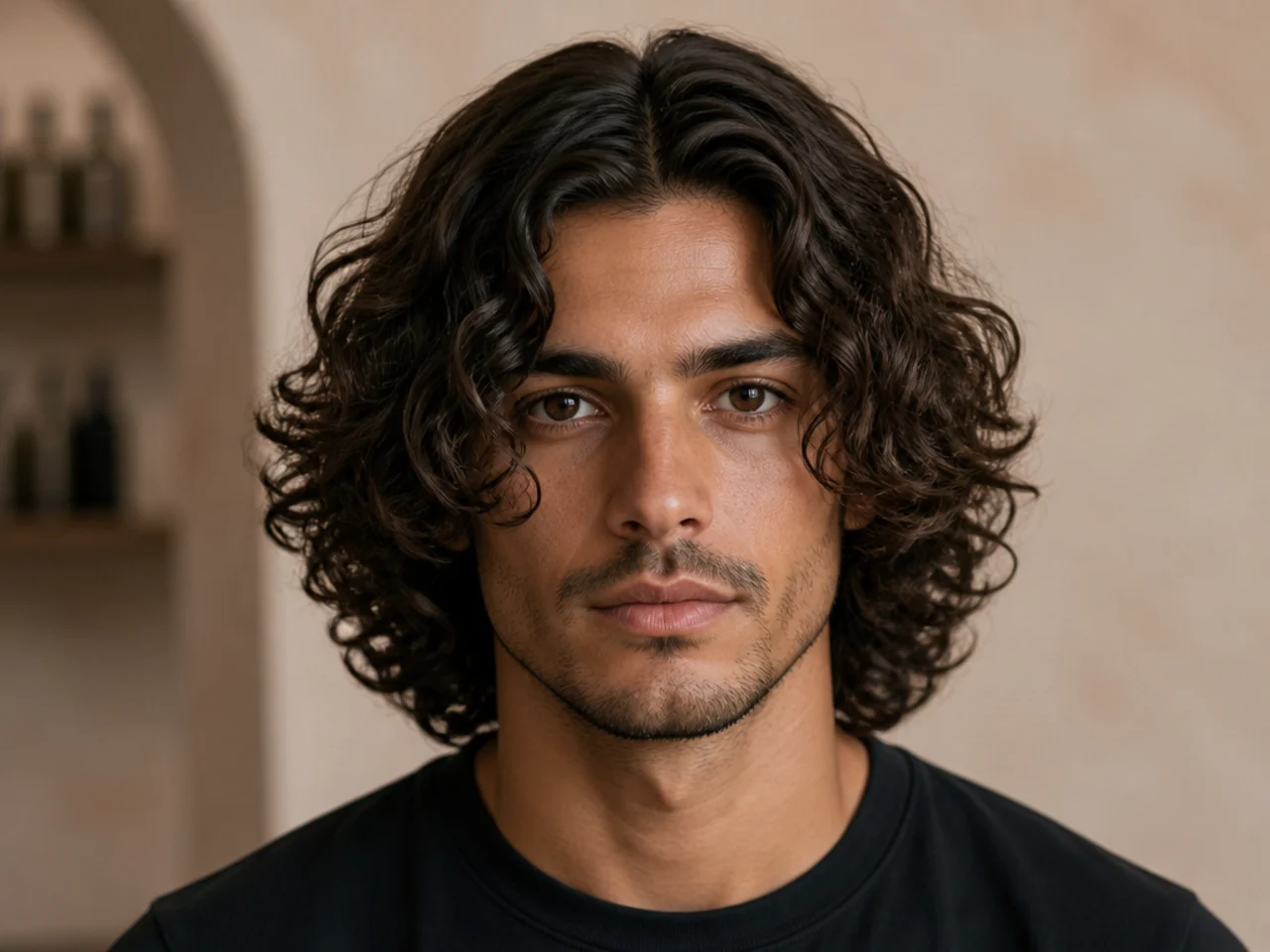
Real curly length. 6"+, layered so the curl shape doesn't turn into a triangle. Suits oval, heart, and diamond faces. Curly to coily hair only. Ask for "grow-out length, sides connected, internal layers through the crown and mid-shaft, cut for a natural center split." Wash weekly max, condition every day, apply leave-in daily on damp hair. Diffuse or plop; never brush dry. A natural middle part shows up on its own at this length.
Attractive Long Flowing Middle Part
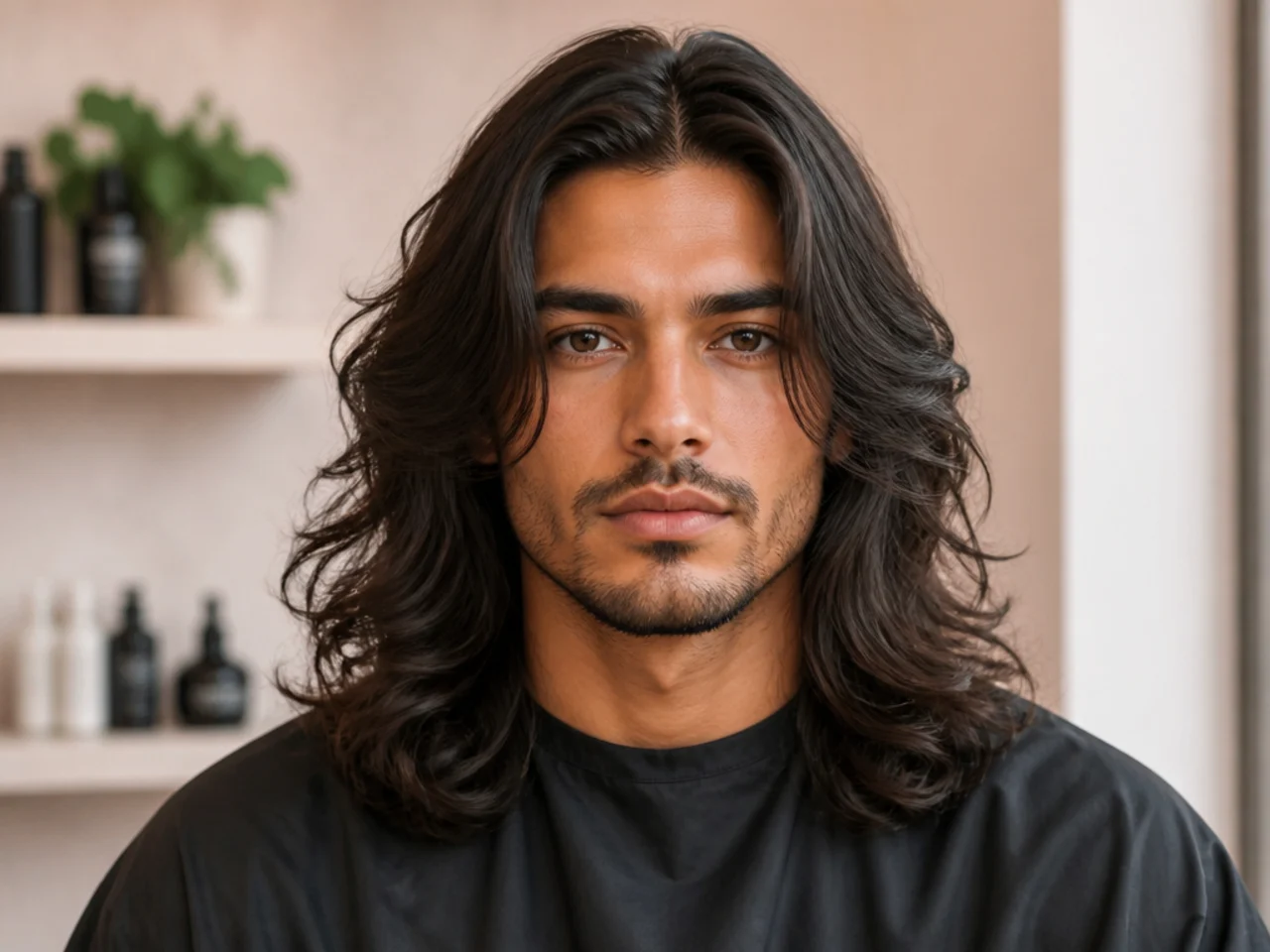
The rockstar version. Length hits the collarbone, layers stay long and heavy, sides fully connected. Suits oval and long faces because the length narrows the shape further. Straight to wavy hair only — anything curlier goes wide instead of long. Ask for "shoulder-length flow, long layers only through the last four inches, no fade, no undercut, cut for a center part." Wash, deep-condition, air-dry to about 80%, then finish with a diffuser upside down. Sea salt spray sets the movement — heavy creams weigh the length down.
What Is Middle Part Haircut?
A middle part is any men's cut where the top is long enough — 4 inches minimum — to split straight down the center. The hair on either side falls forward into what barbers call curtains. That's the whole idea. Everything else — fade, undercut, length, texture — is a variable stacked on top of that base.
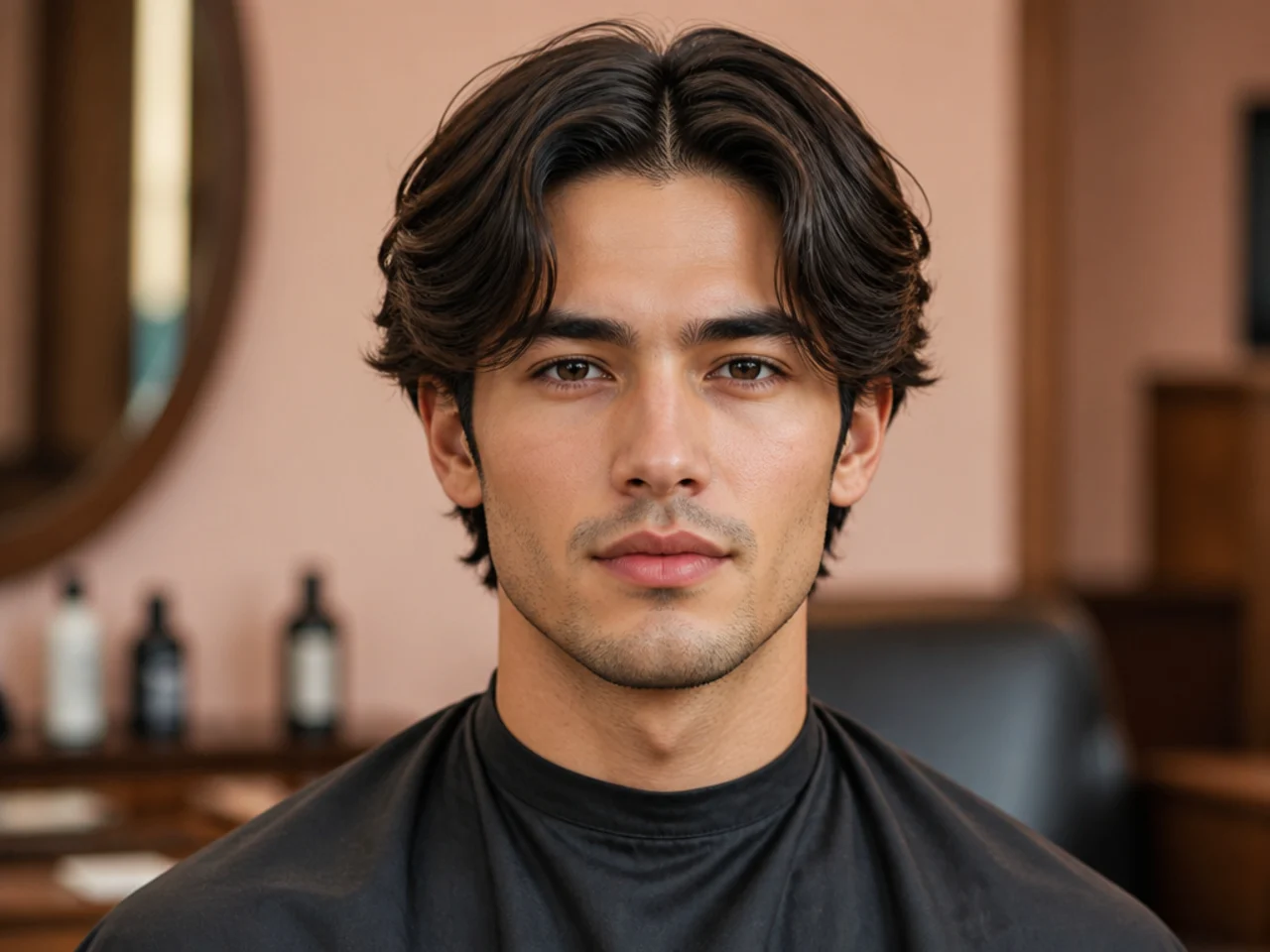
The cut works on straight to wavy hair without much argument. Curly hair needs help. Ask about a keratin smoothing treatment through the front third, a Japanese straightening, or a soft perm-relaxer to force the curtains flat while leaving the natural pattern intact underneath. Skip this step and the curls fight the split, puffing outward instead of falling forward. That's the number one reason guys try the cut and hate it.
Sides can go three ways: fully connected (classic, jaw-length curtains), scissor-tapered (clean but soft), or faded (modern, sharpest visual contrast). Pick based on how much upkeep you want. Fades need a chair every 2–3 weeks. Scissor sides hold shape for 5–6.
How To Style Middle Part
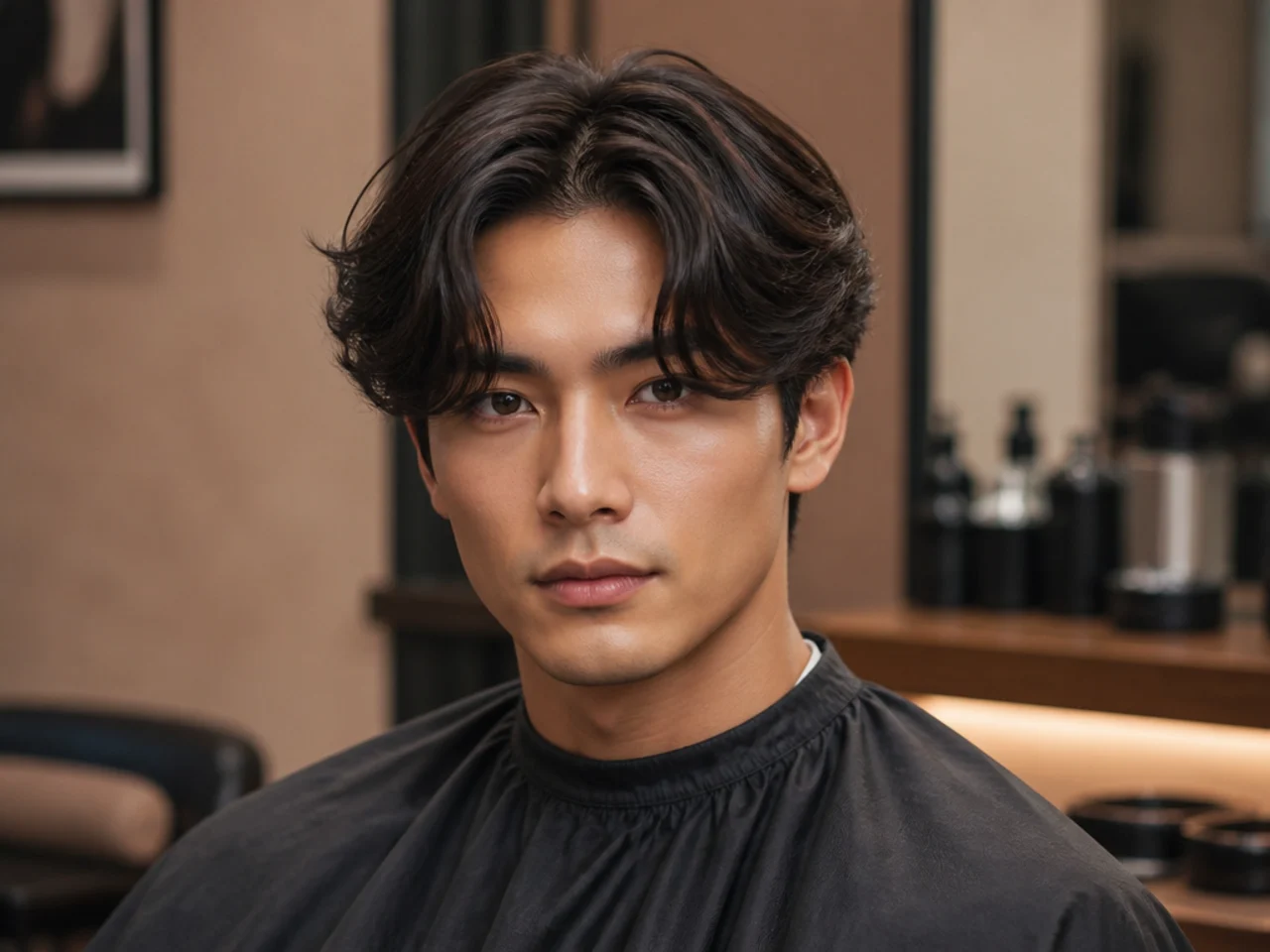
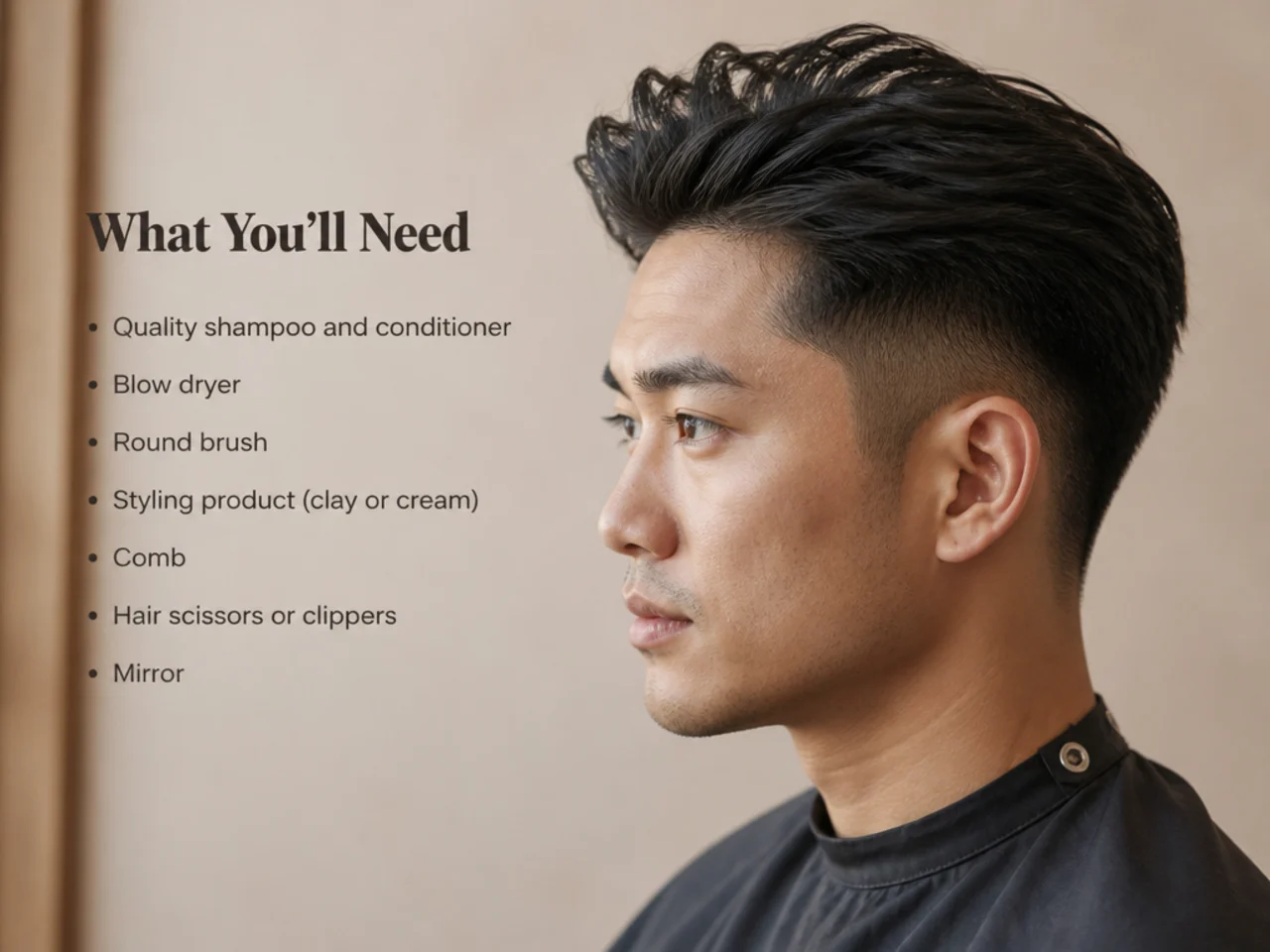
You need four things: a blow-dryer with a nozzle attachment, a wide-tooth comb, a matte styling cream or clay, and a texture spray. Skip the diffuser unless your hair is curly. The nozzle is what directs the fall.
Follow these five steps every morning after a shower.
Step 1: Wash, Condition and Towel Dry

Wash with a sulfate-free shampoo. Condition every time. The middle part needs your hair soft and manageable, and dried-out hair fights the shape. Rinse cold at the end — it flattens the cuticle and adds shine. Towel-dry rough enough to leave your hair damp but not dripping. Skip terrycloth if you can; a microfiber towel or an old cotton t-shirt won't rough up the shape before you start styling.
Step 2: Create Middle Part
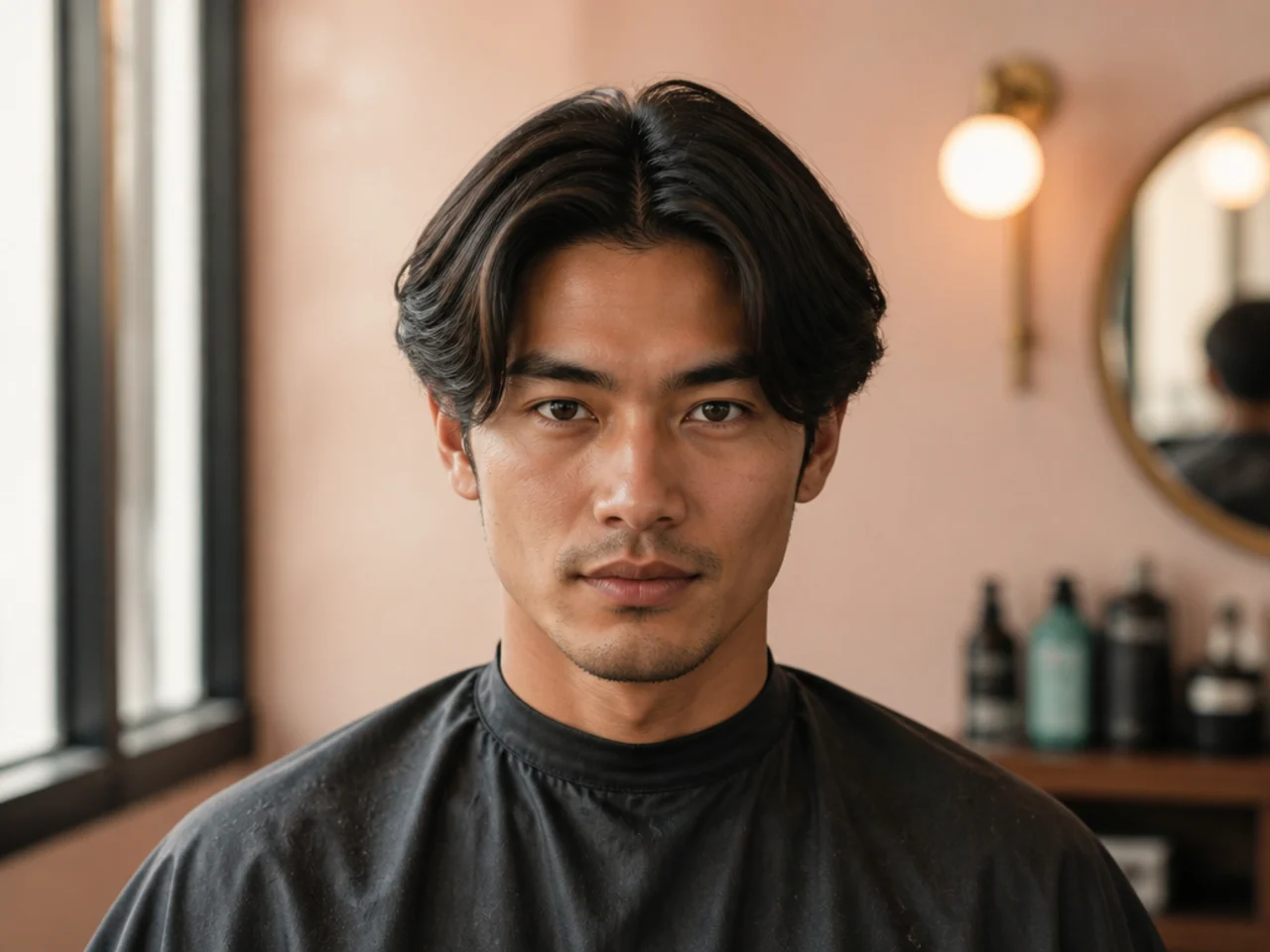
While it's damp, drag a wide-tooth comb from the front hairline straight back to the crown, splitting the hair evenly. Look at the mirror head-on. The part should line up with the middle of your nose. If your natural part is off-center, drag the comb harder and use a bit of styling cream to lock the split before you blow-dry. Curly hair skips the comb and uses fingers instead — a comb wrecks the pattern.
Step 3: Use Sea Salt Spray For Natural Texture
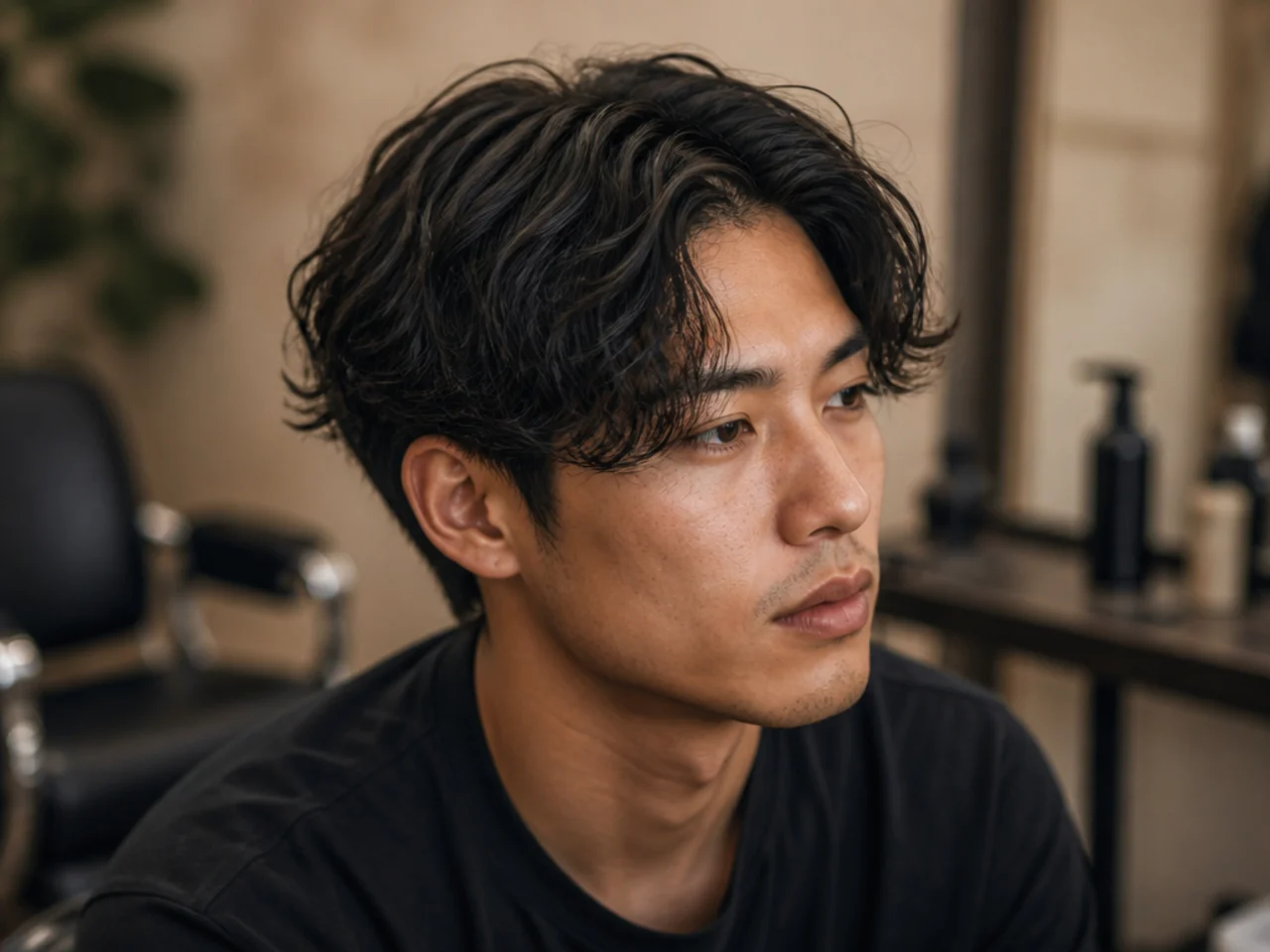
Spray a texturizing sea salt mist across the top and mid-lengths — never at the roots. Salt at the roots gets sticky and flattens the shape. Squeeze the ends gently between your palms to activate the texture. If your hair is fine, swap the sea salt for a heat protectant spray; salt dries fine hair out over time and shortens the life of the cut.
Step 4: Scrunch Dry With Hair Dryer and Diffuser
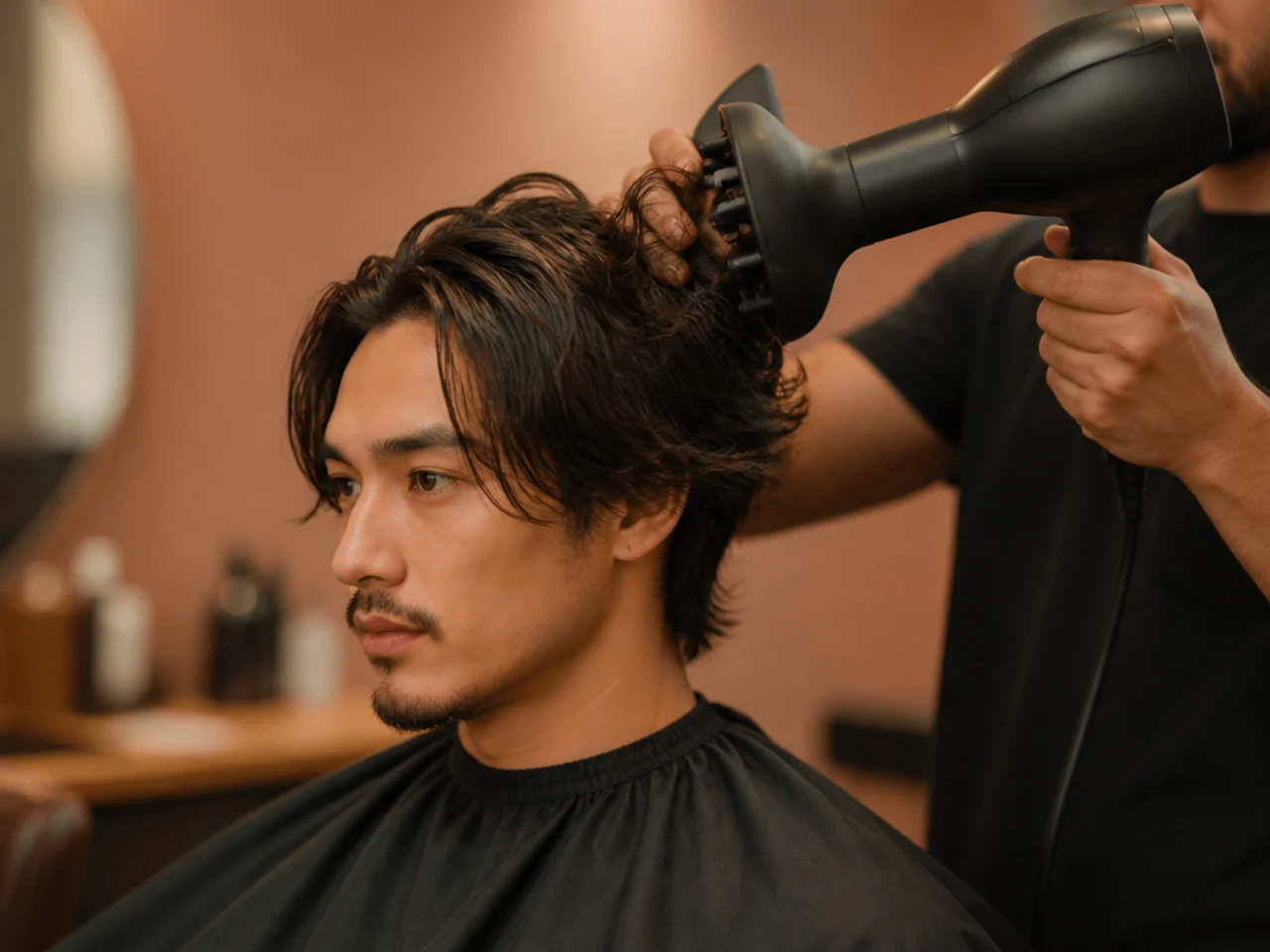
Set the dryer to medium heat with a nozzle attached — not a diffuser unless you're curly. Point it down the shaft, from root to tip, angled forward. This trains the curtains to fall correctly. Work in sections: back first, then sides, then top and fringe. Never blast hot air up from below; that puffs the shape and kills the drape.
Step 5: Apply Styling Clay To Enhance Control and Texture
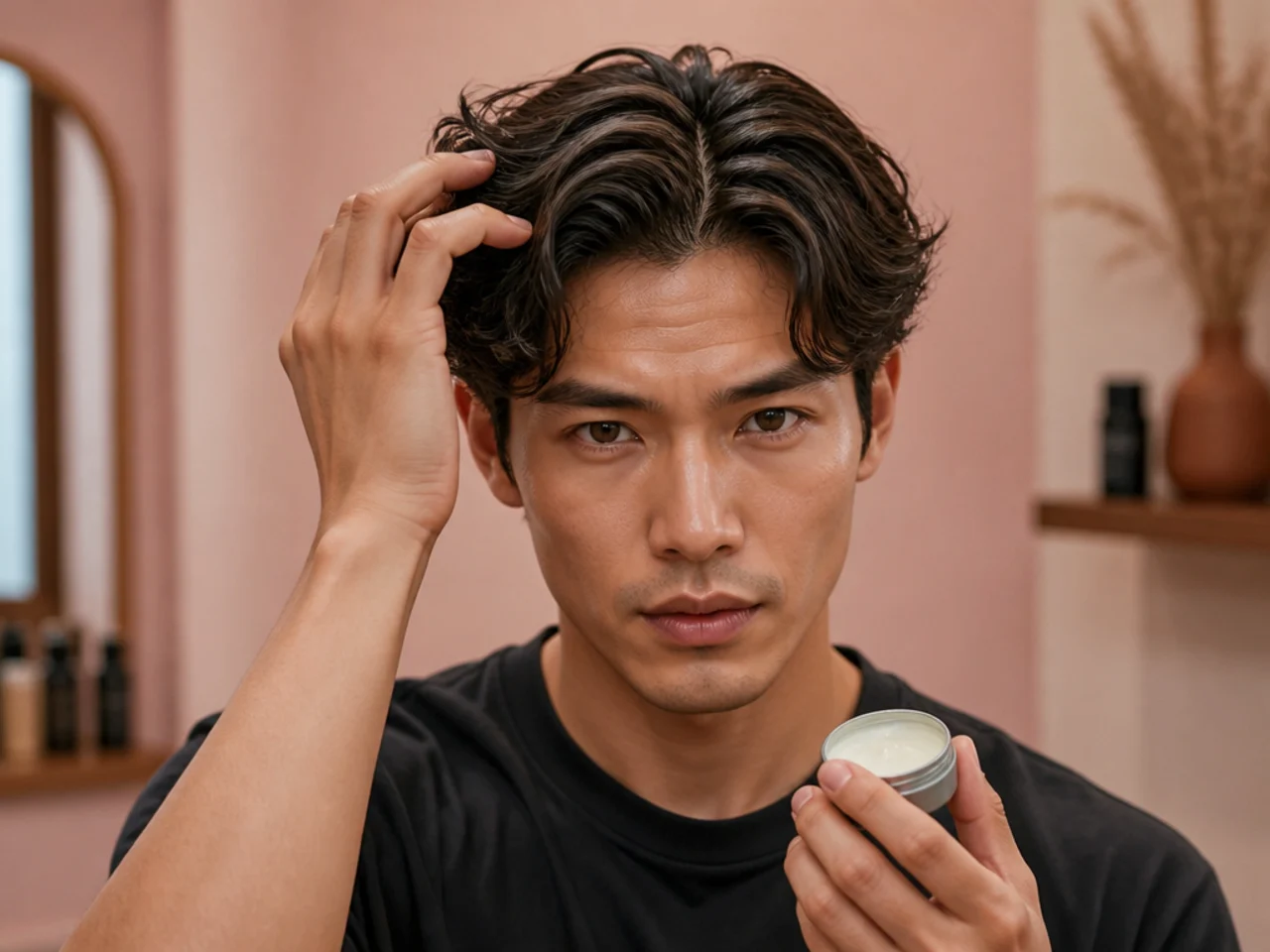
Warm a pea-sized amount of matte styling clay between your palms until it goes clear. Work it front-to-back through the top only. Don't touch the roots. Split the part again with your fingers, push each curtain out and away from your face, and leave it. Adding more product makes the shape heavier — resist the urge. If the hold gives up by mid-day, use less next time, not more.
Why Is Middle Part Haircut Trending Again?
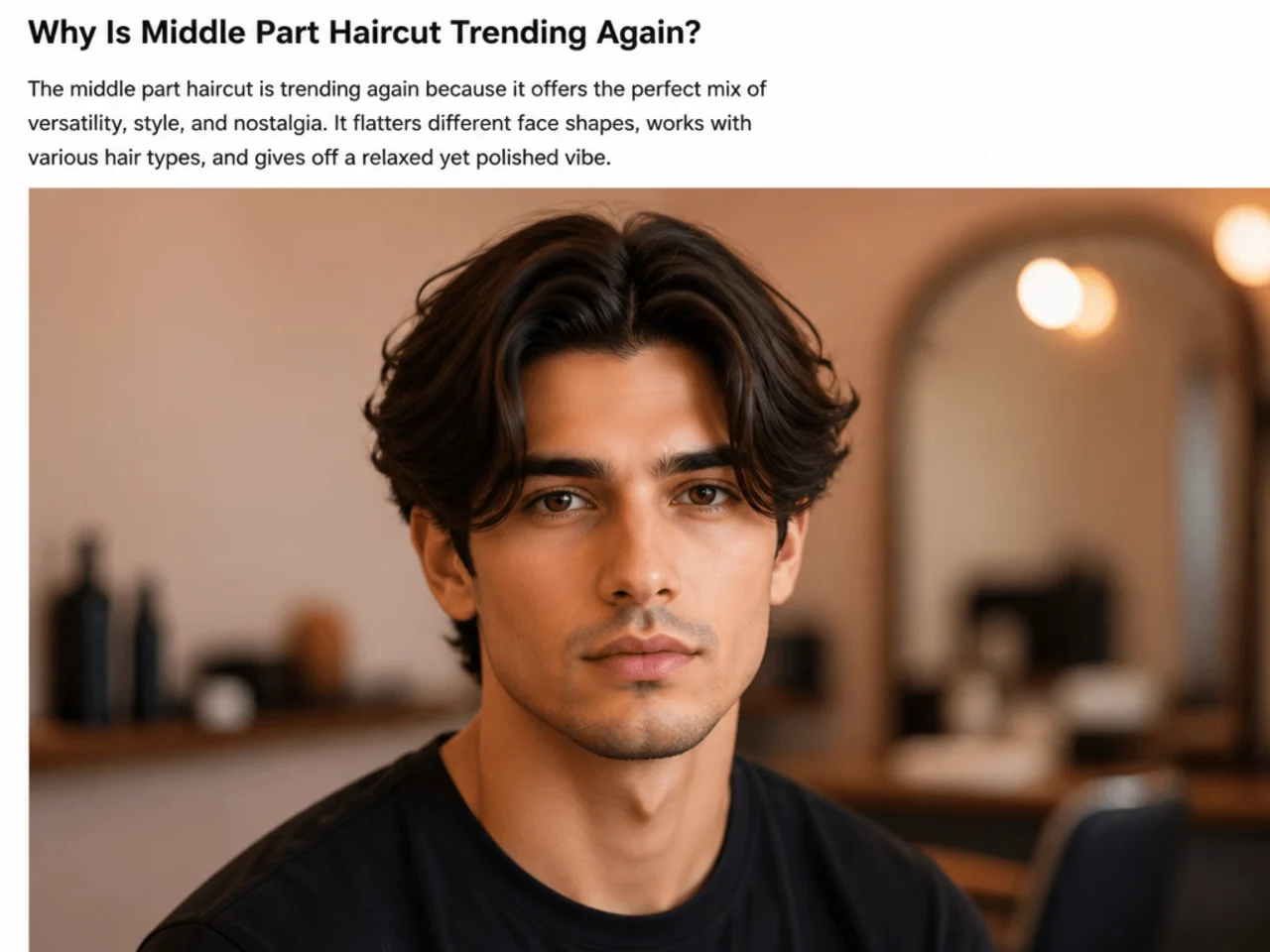
Three forces pushed it back into the mainstream. K-pop groups made the two-block-and-curtain silhouette their signature after 2016, and by 2020 every teen boy on TikTok had a version. Timothée Chalamet gave it Hollywood cover. The e-boy aesthetic gave it edge. Now the cut owns Gen Z — no other men's silhouette has stuck this hard, this long, since the buzzcut.
The staying power is real because the cut adapts. Add a fade and it works in an office. Grow it long and it works at a festival. Perm the front and it works on curly hair. The base geometry — long top, center split, curtains forward — is neutral enough to carry any variation on top of it.
Who Should Try Middle Part Hairstyle?
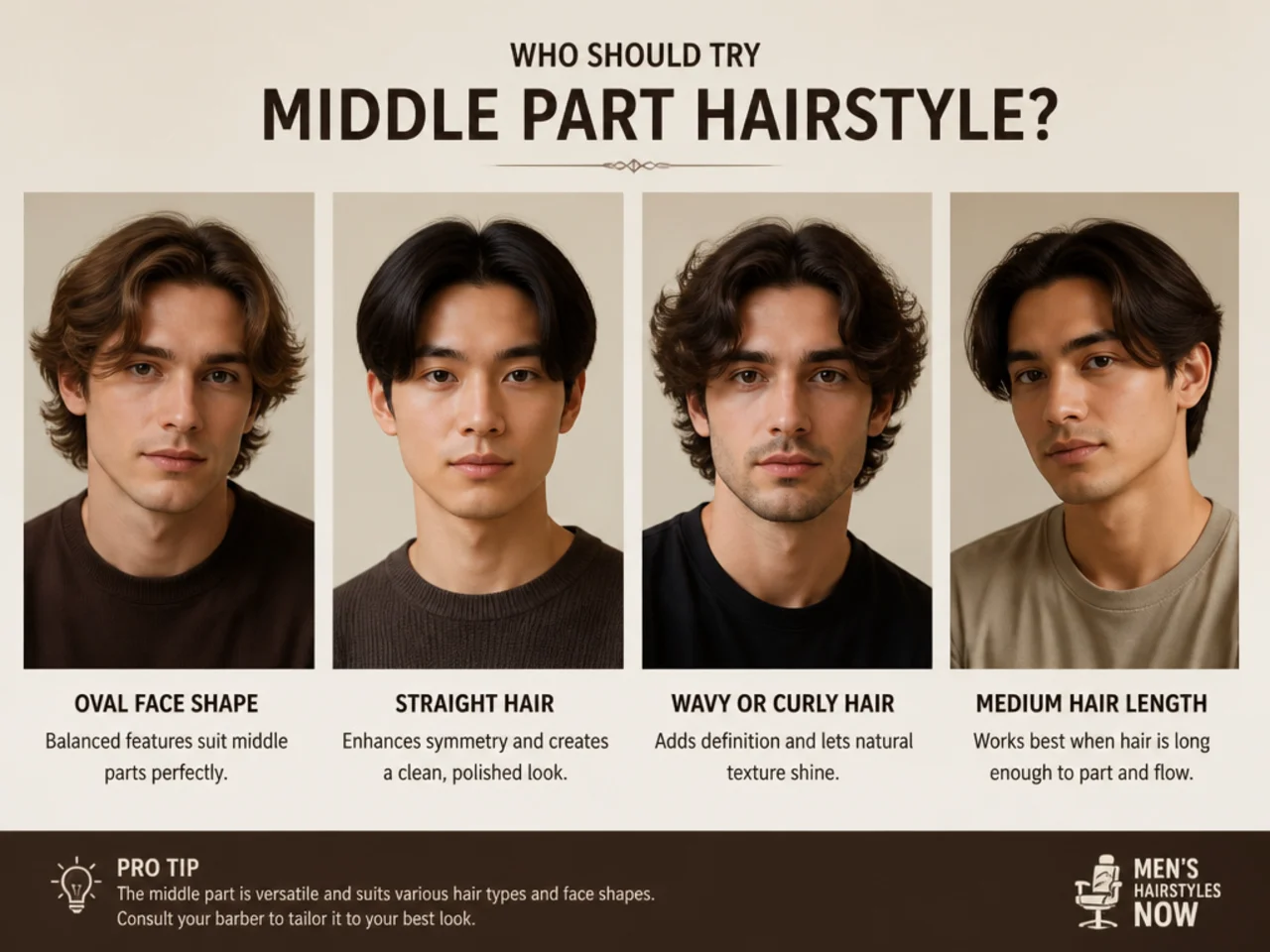
Almost anyone. What matters more than face shape is texture and patience.
- Oval, heart, and diamond faces: The center split hits perfectly balanced against your bone structure. Nothing to adjust.
- Round or square faces: Add height. Ask for a longer top (5–6") and less internal thinning so the shape reads vertical, not horizontal.
- Long faces: Keep it medium (4–5") and let the curtains stay dense at the sides — width offsets length.
- Straight to wavy hair: The easiest starting point. Skip to the styling guide above.
- Curly or coily hair: Ask about a keratin smoothing treatment for the front third only. It relaxes the pattern enough to drop into curtains without touching the natural body underneath.
The growing-out phase is the hardest part. Expect 4–6 months from a short cut to a working middle part. Ask your barber to keep the sides shaped every three weeks during that window — the awkward stage is what makes most guys quit.
How to Get Middle Part Haircut
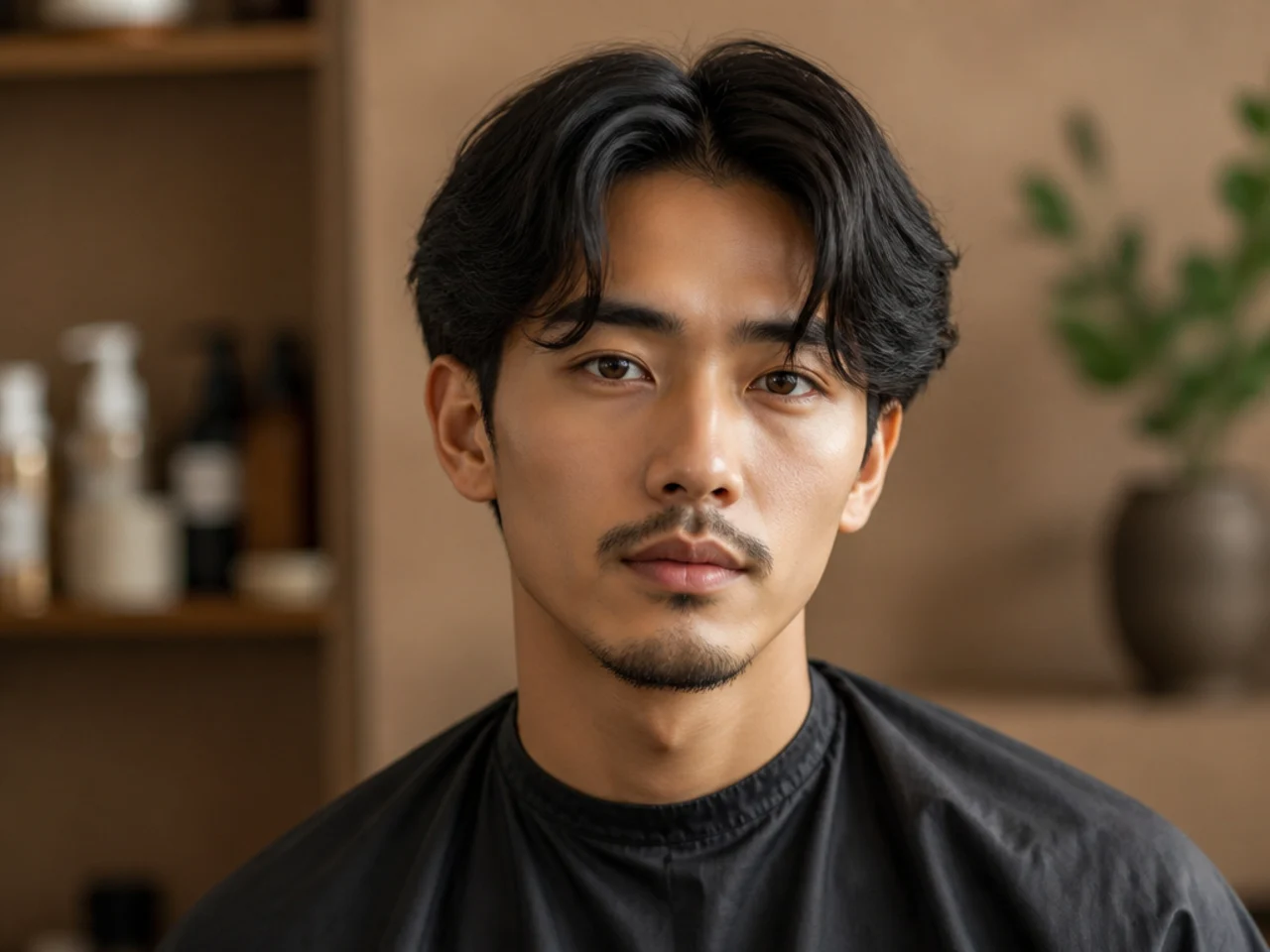
- Grow the top to 4–6 inches. Measure with a comb straight up from the scalp. Anything shorter won't hold a split.
- Pick your side treatment. Connected for classic, scissor-tapered for clean, faded for modern. If in doubt, start with a low taper — it looks intentional at every stage.
- Bring a photo. Barbers work from images faster than descriptions. Reference the exact length and side treatment from the variations above.
- Ask for the cut in this order: "Five inches on top, [side treatment], layered so it splits down the middle and falls forward."
- Watch the first blow-dry. Ask your barber to show you the exact motion — head tipped forward, nozzle down the shaft, air pushed front-forward. Recreate it every morning.
Once the hair trains — usually 2–3 weeks of consistent styling — the part sets on its own. That's the payoff. The trick is committing to the daily blow-dry until the shape memorizes itself.
FAQs About Middle Part Hairstyle
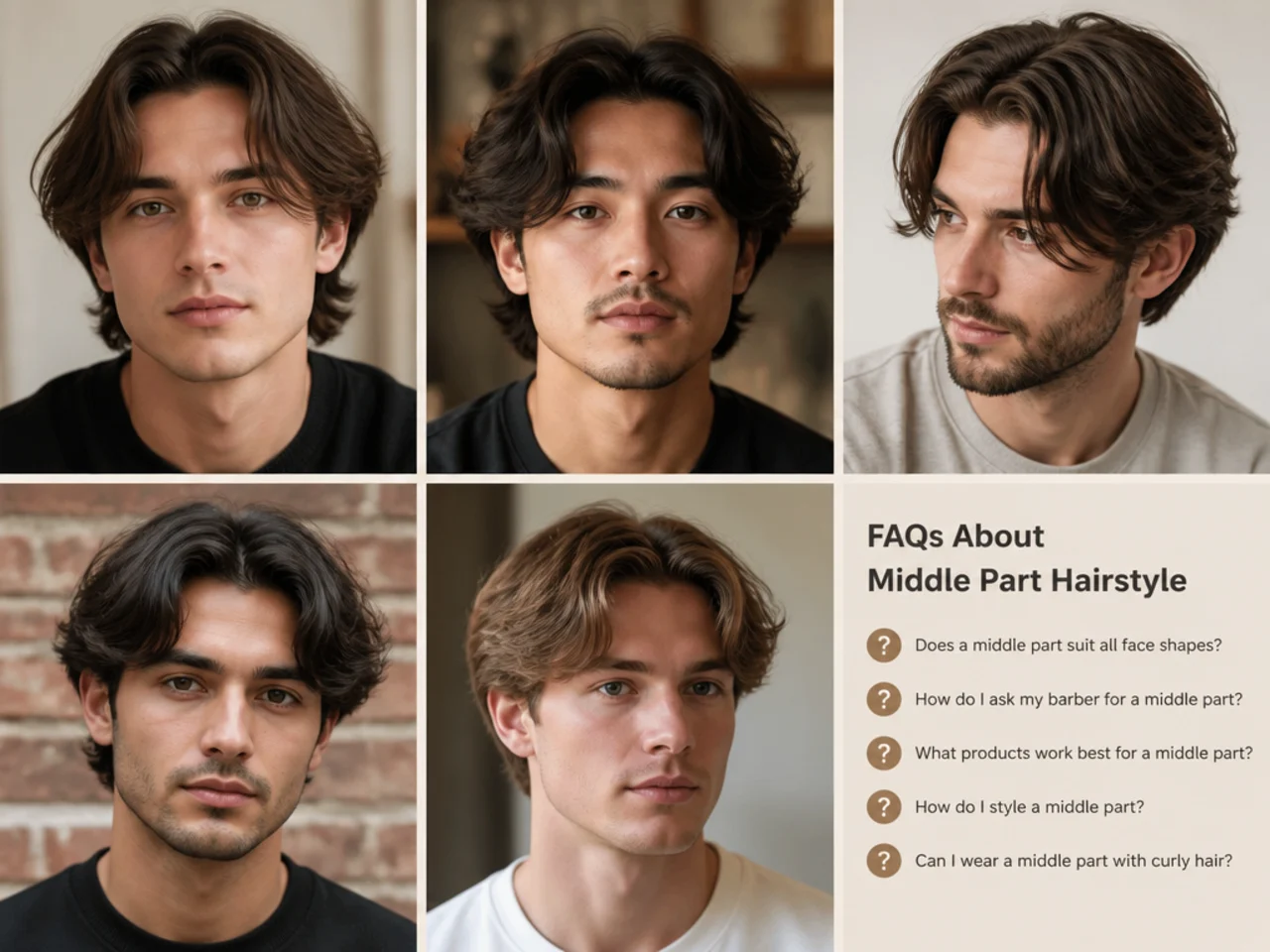
What Face Shape Suits Middle Part Haircut?
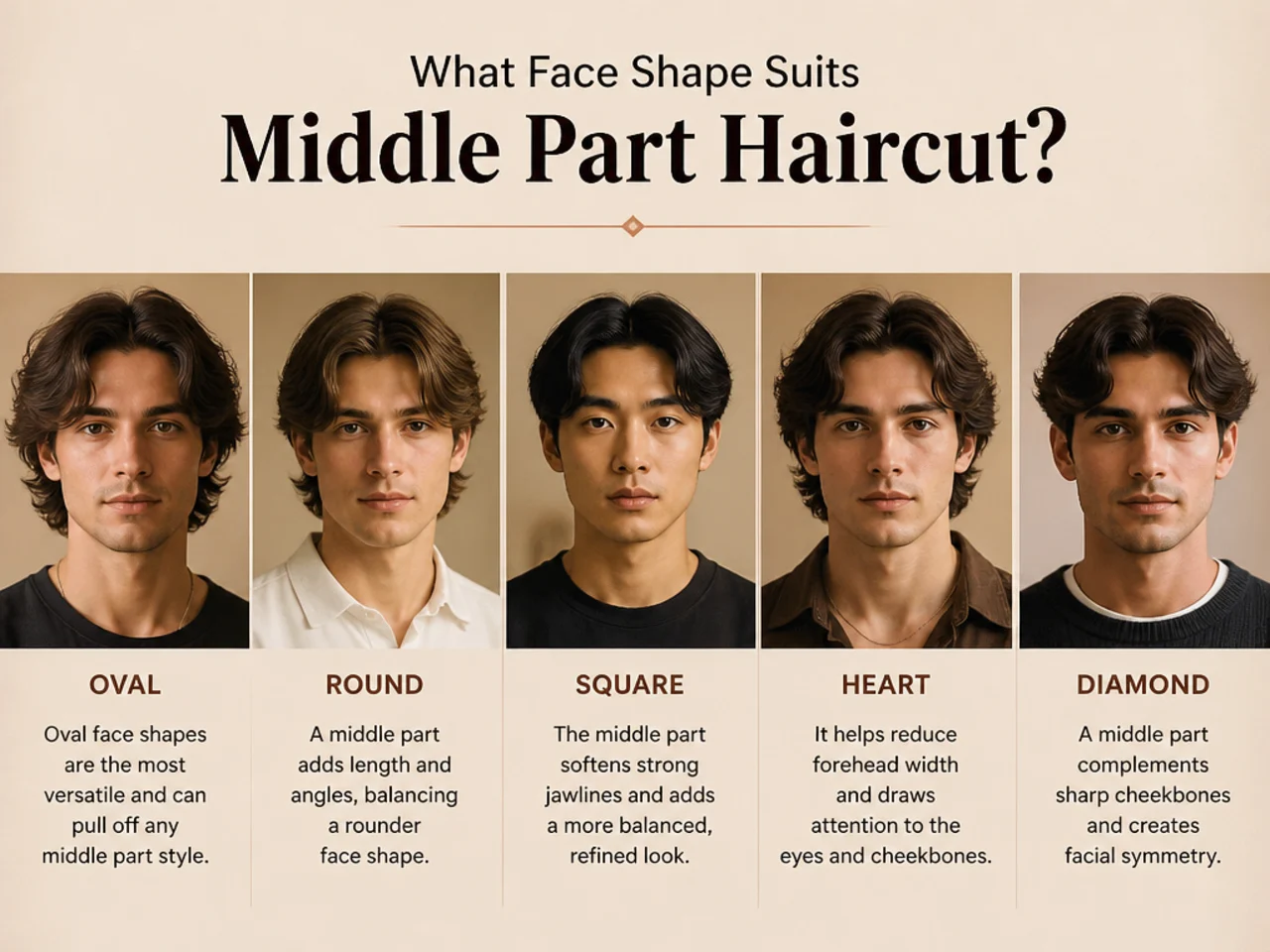
Oval, heart, and diamond faces win by default — the center split matches their natural symmetry. Round and square faces can wear it with a longer top for vertical height. Long faces should stay at medium length with dense sides so the width offsets the length.
Can I Get Middle Part Hairstyle With Short Hair?
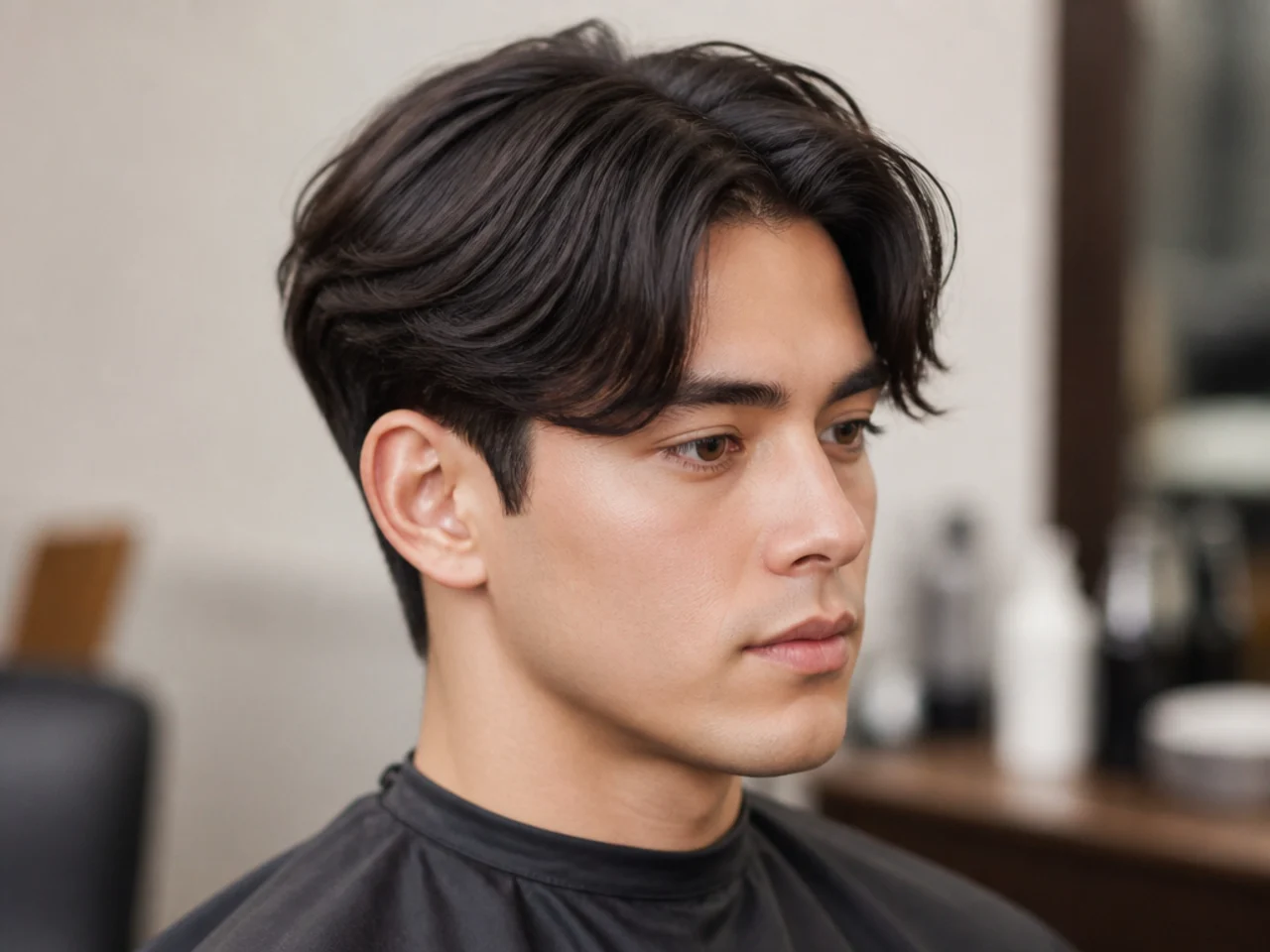
Yes, but the top has to hit at least 3 inches — anything shorter won't hold a split. Pair it with a taper or fade to keep the shape sharp. Look at the short textured middle part and the short textured center part above for the exact specs to ask for.
Is Middle Part Good For Curly Or Wavy Hair?
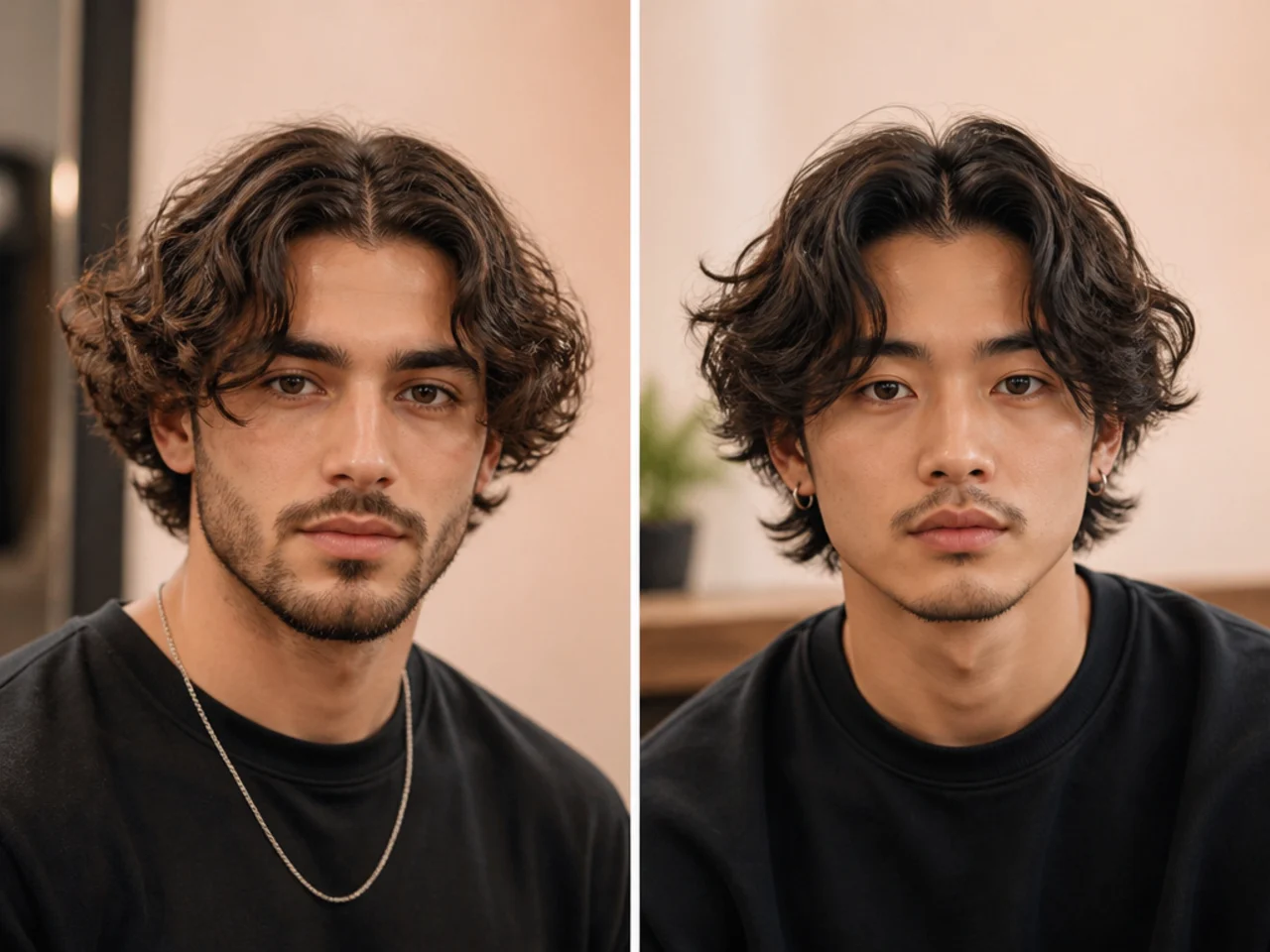
Wavy hair does it easily. Curly hair needs help — either a keratin smoothing through the front third, a soft perm-relaxer, or a Japanese straightening — to force the curtains flat. Without that, the curls puff outward instead of falling forward, and the split disappears within an hour.
Does Middle Part Make Your Face Look Slimmer?
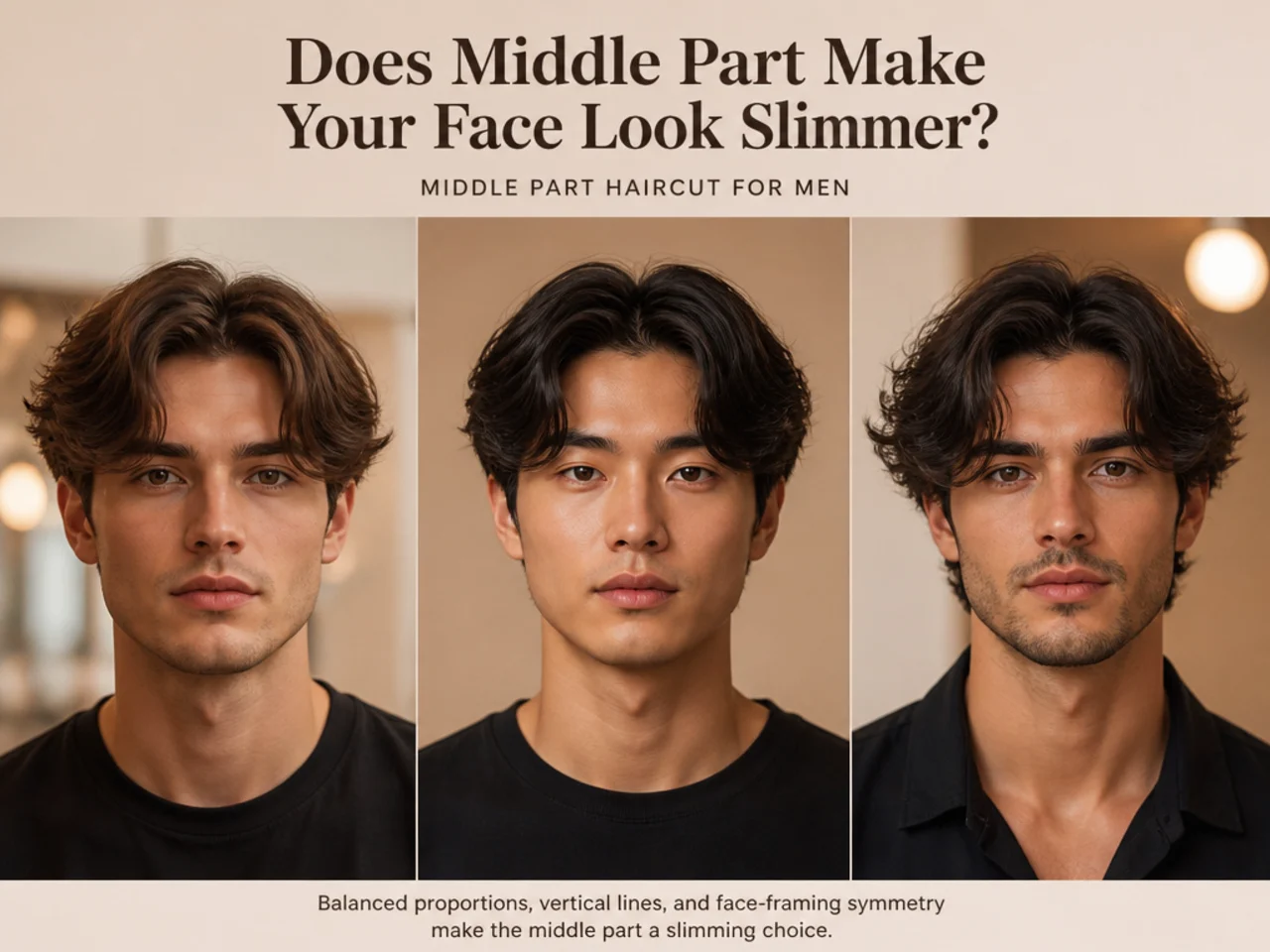
Yes. The vertical line down the center draws the eye up and down instead of side to side, which slims the visual width of the face. Length at the sides adds narrowing on top of that.
What Haircut Is Good For The Middle Part?
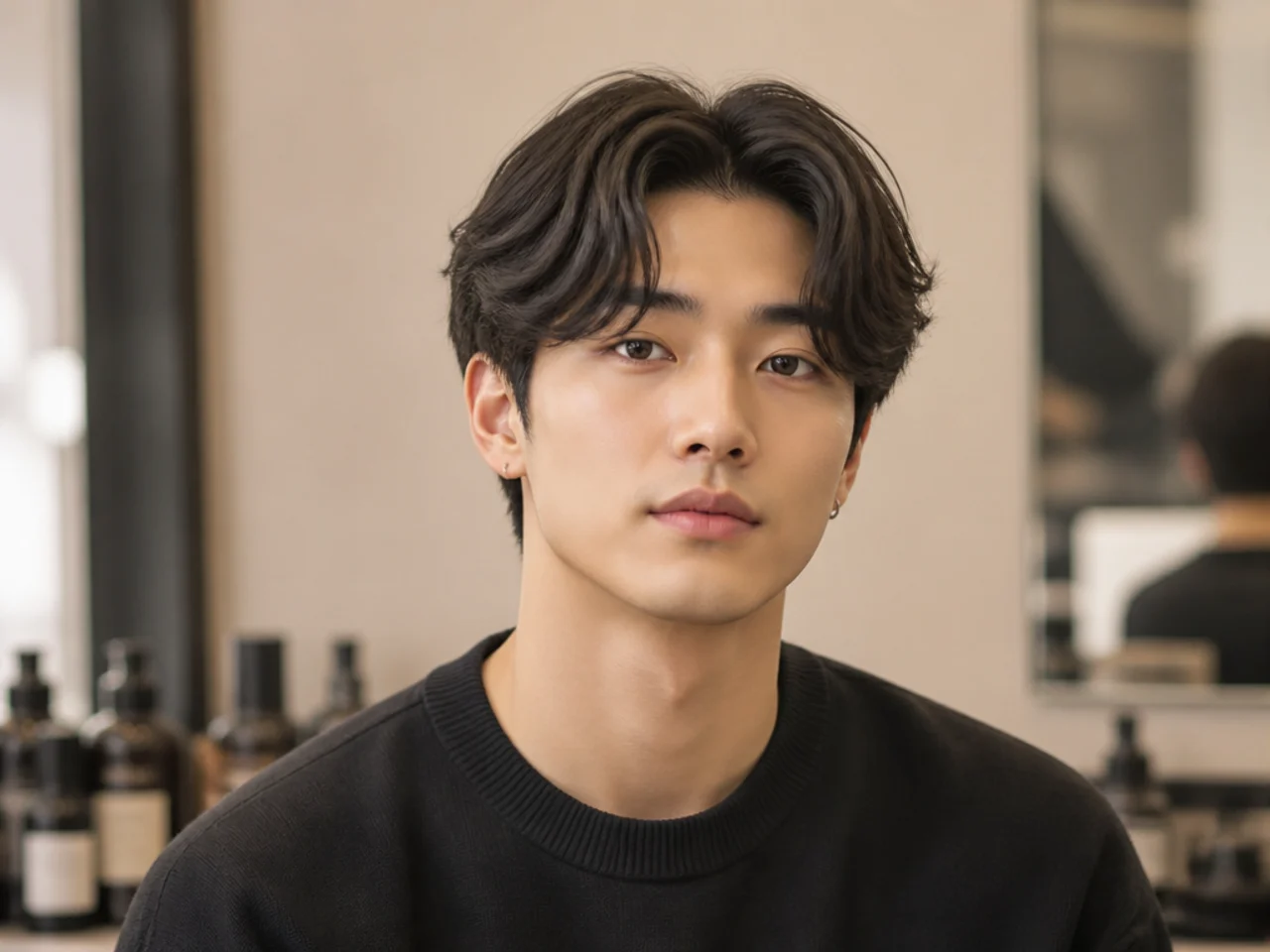
Any cut with 4+ inches on top and real internal layering. The classic curtain, the two-block, the comma haircut, and any middle-part-plus-fade combination all work. Ask specifically for a cut that splits center — not a cut that just happens to have length. The layering direction is what makes it fall correctly.
Why Is Gen Z Obsessed With Middle Parts?
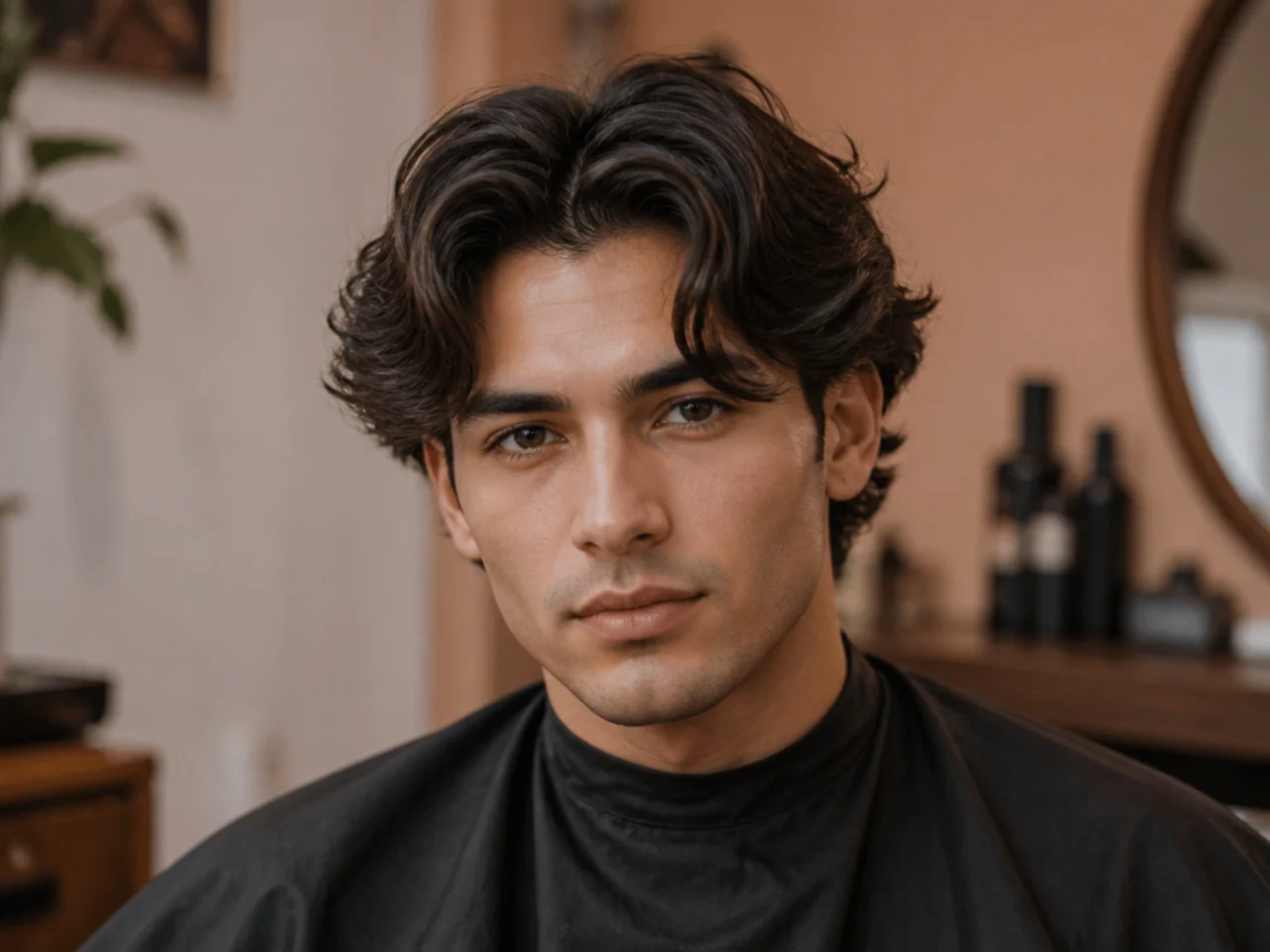
Because it's the anti-side-part. The side part reads corporate; the middle reads modern. K-pop and TikTok gave it cultural weight in 2020, and it's held longer than any men's silhouette in a decade. It also photographs well — symmetry sells on-camera.
What Is A Middle Part Haircut?
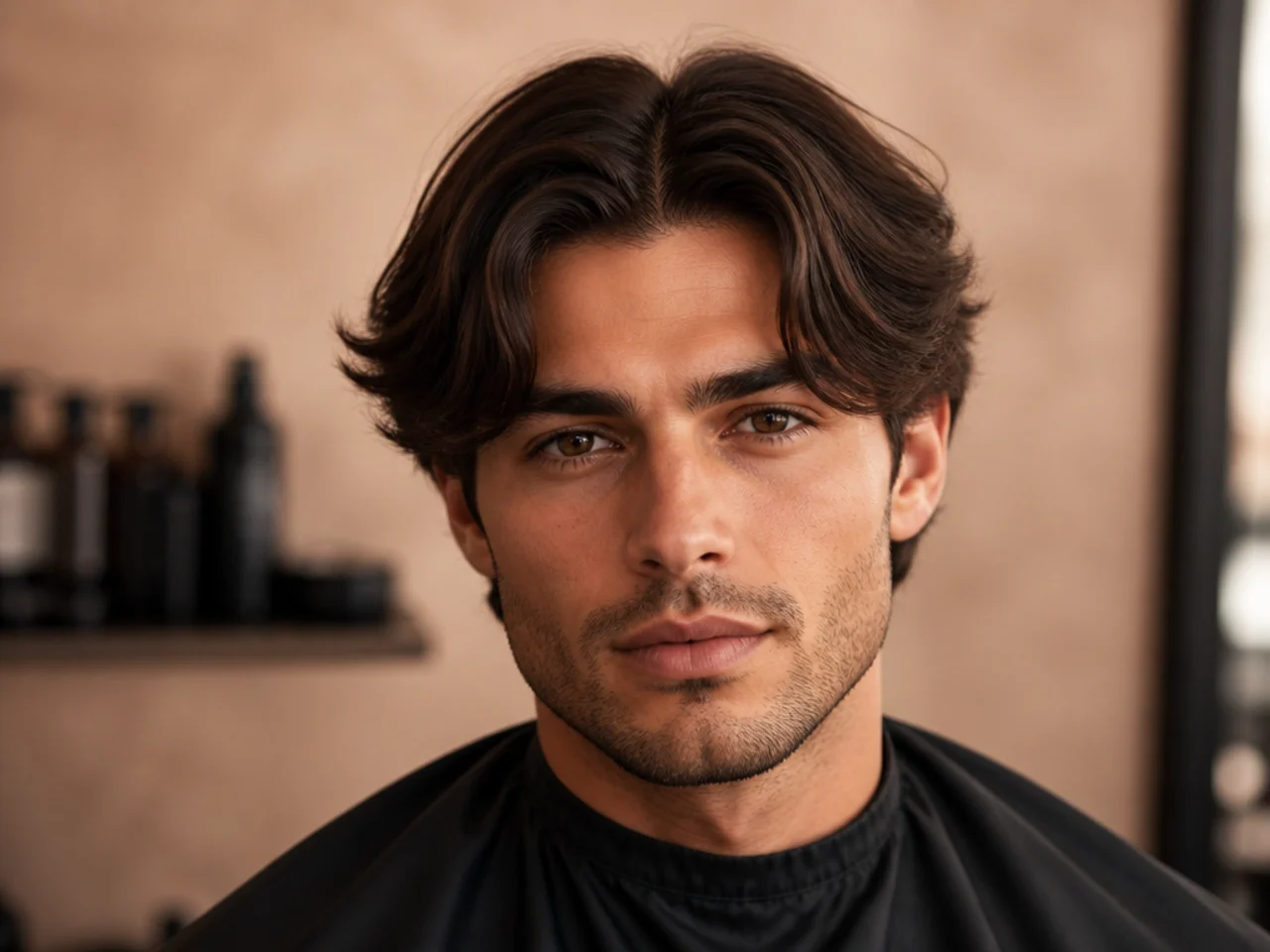
A men's cut where the top is grown to 4+ inches and split straight down the center of the scalp. Both sides fall forward as curtains, framing the face. Everything else — the fade, the undercut, the texture, the length — is a variable layered on top of that base geometry.
What Are Gen Z Hairstyles?
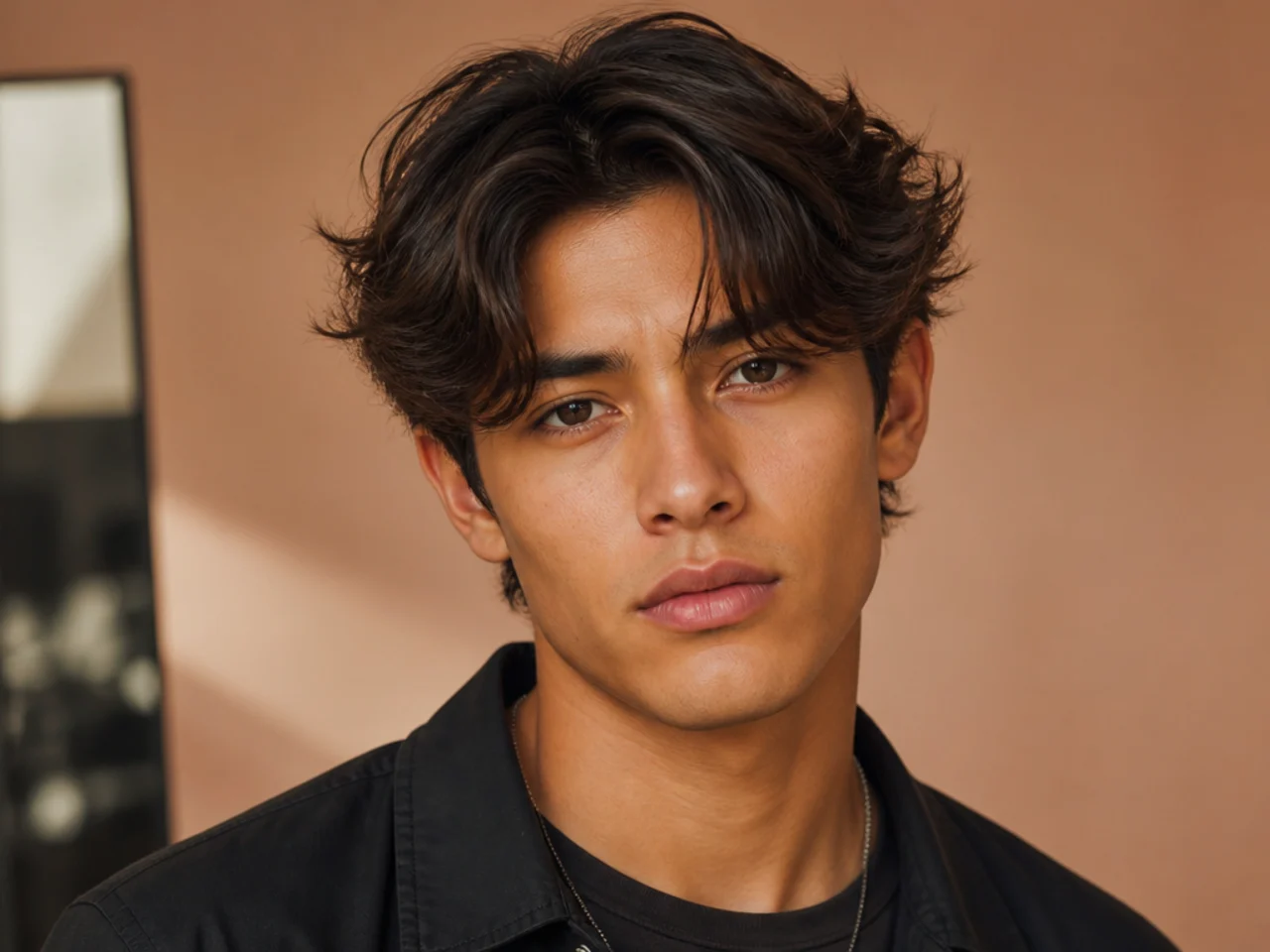
The middle part sits at the top of the list. Then the two block haircut, the mullet, the wolf cut, the comma haircut, and any variation of the curtain fringe. All share the same DNA: long top, textured through, styled forward or with a soft asymmetric drop that reads modern without feeling forced.