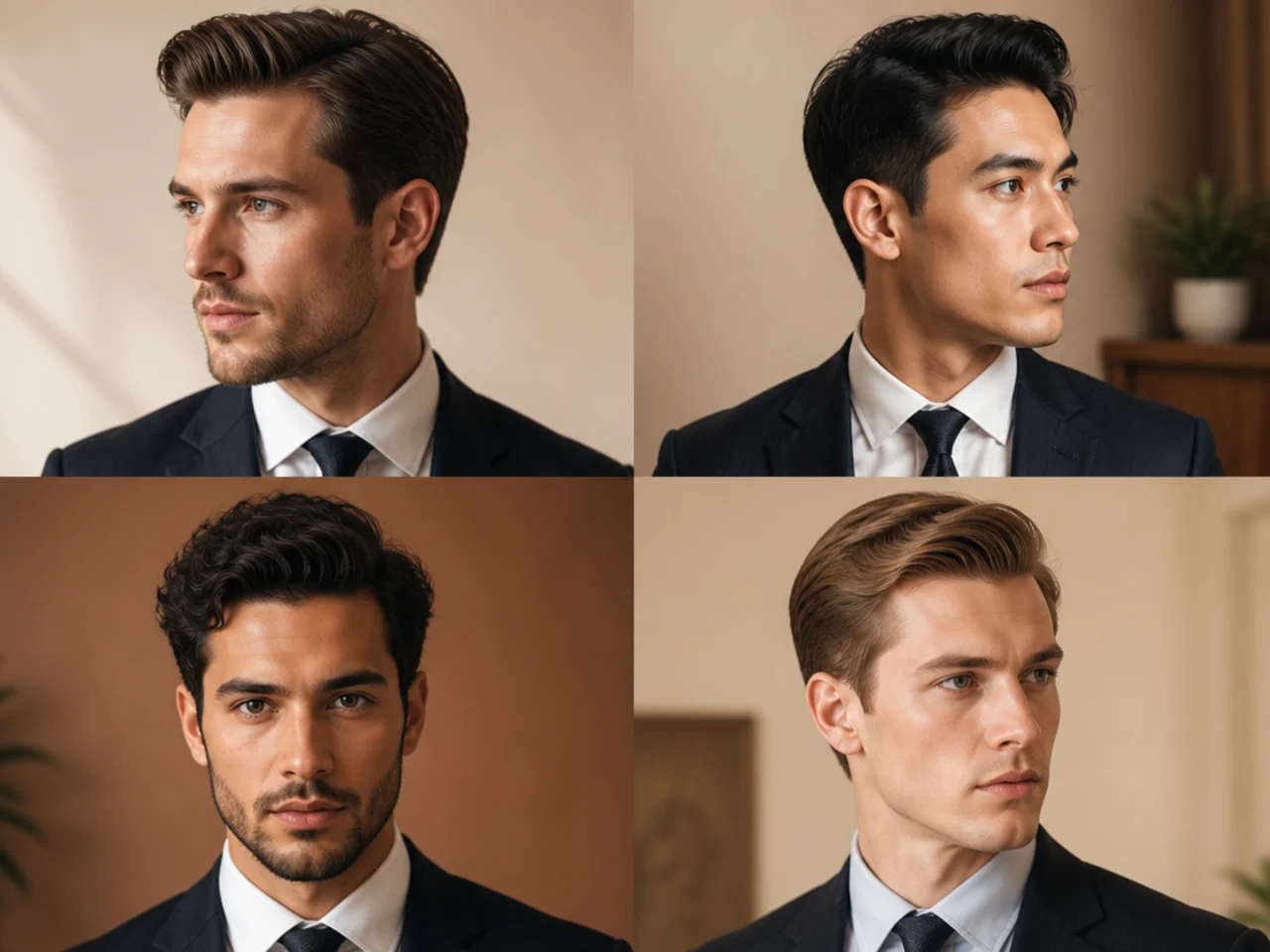
Professional Hairstyle Men: 30 Classy Haircut For Businessmen
Discover professional hairstyle men ideas including slick back, taper fade, side part, pompadour, and textured crop—clean, stylish haircuts perfect for office and modern profe
In this article · 52
- Business Professional Hairstyles For Men
- Loose Parted Curls
- Textured Comb Over
- Side Part Fade
- Medium Flow Style
- Tousled Short Curly Hair
- Classic Crew Cut
- Textured Pompadour Fade
- Modern Quiff
- Classic Gentlemen's Cut
- Ivy League
- Buzz Cut
- Short Brush Up with Tapered Sides
- Comb Over Fade
- Short Afro Curly Fade
- Textured Fringe with Taper Fade
- Layered, Messy Mod
- Slick Back Undercut
- Faux Hawk Fade
- Modern Pompadour Fade
- Thick, Messy Hair
- Side Swept Wavy Hair
- Classy Man Bun
- Long Comb Over
- Textured Quiff with Low Taper Fade
- Long, Tousled Curls
- High and Tight
- Spiky Hair
- Short Hair with A Beard
- Medium Shaggy Hair
- Comb Back with Mid Skin Fade
- Modern Mullet Fade
- Brush Back with Mid Skin Fade and A Beard
- The Most Popular Professional Haircut for Men
- Professional Men's Long Hairstyles
- Medium Length Professional Men's Hairstyles
- Final Thoughts
- FAQs About Professional Hairstyle Men
- What is The Most Professional Hairstyle For Men in 2026?
- Which Professional Haircut Suits All Face Shapes?
- Are Long Hairstyles Considered Professional For Men?
- What Hairstyle is Best For Men With Thin Hair in Professional Settings?
- How Can I Make My Hairstyle Look More Professional Daily?
- What's The Difference Between a Business Haircut And a Casual Haircut?
- Are Fades And Undercuts Considered Professional?
- What Hairstyle Should Professionals Avoid at Work?
- Which Professional Hairstyle is Easiest to Maintain For Men?
- How Often Should Men Get a Haircut to Maintain a Professional Look?
- What Is the Most Professional Hairstyle For Men?
- Can ChatGPT Help Me Pick a Hairstyle?
- What Is the Best Haircut For a CEO?
- What Is The 3-2-1 Rule For Haircuts?
A professional hairstyle reads competent in a client meeting, a boardroom, a job interview. That doesn't mean boring. Sharp fades, textured tops, deep comb overs — all fair game if the lines are clean and the finish stays put. This guide walks you through the professional hairstyles for men worth knowing, what makes each one read polished, who it suits, and exactly how to ask your barber so you walk out ready for the office.
Business Professional Hairstyles For Men
Every cut below shares three traits: clean lines, invisible product, and a shape that holds from morning coffee through the last meeting of the day. Pick based on your hair type, your industry, and how much time you're willing to spend in front of the mirror.
Loose Parted Curls
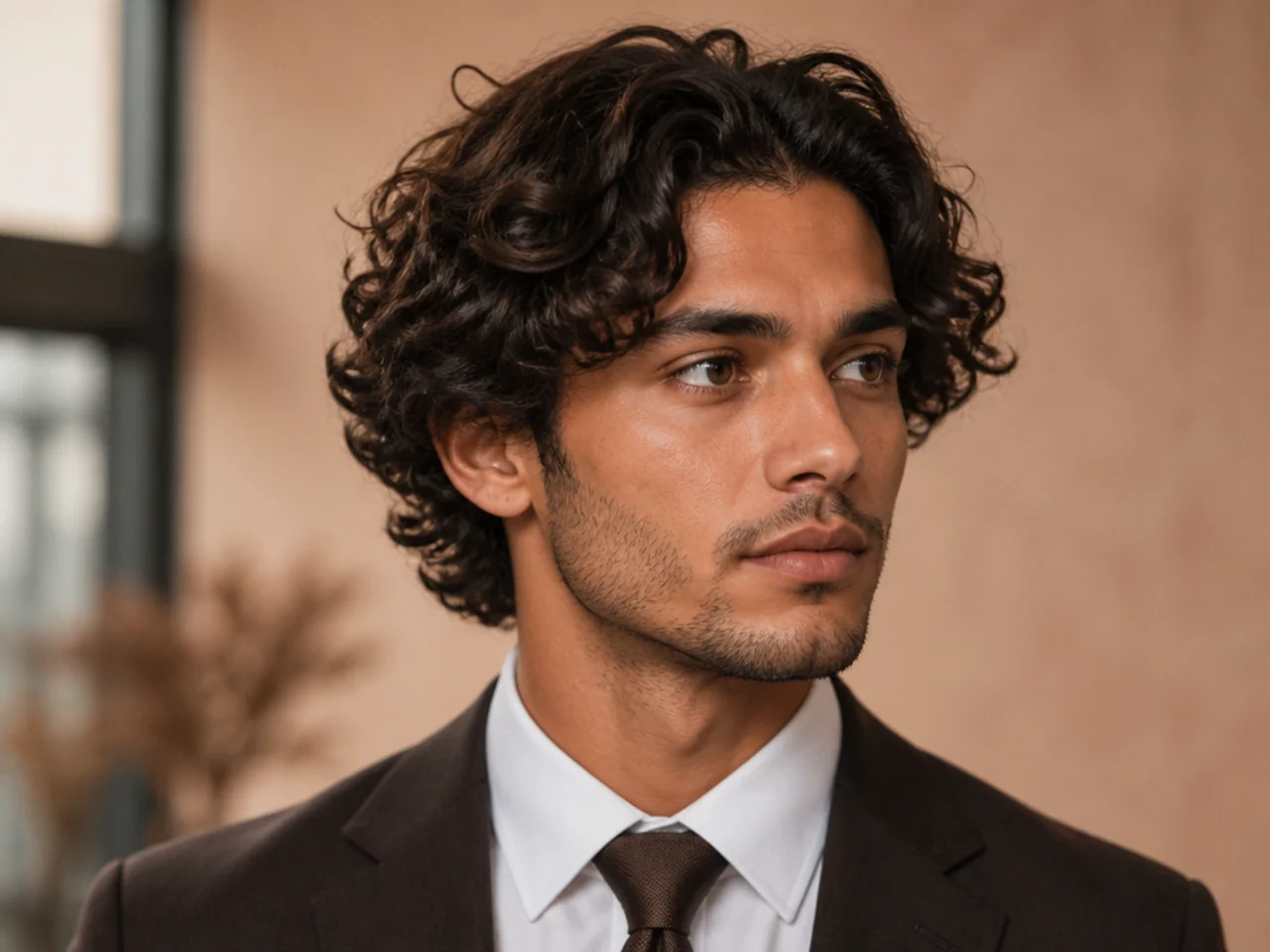
Natural curl reads professional when you frame it with structure. A defined part gives the eye somewhere to land, and clean sides keep the shape from turning wild by lunch. This suits consultants, architects, agency creatives — anywhere personality is a plus. Ask for two inches on top, a soft low taper on the sides, and a scissor blend around the ears so nothing looks stubbly. Comb the part in while damp, then work a dime of curl cream through with your fingers. Air dry. The part holds, and the curls stay defined without ever looking wet.
Textured Comb Over
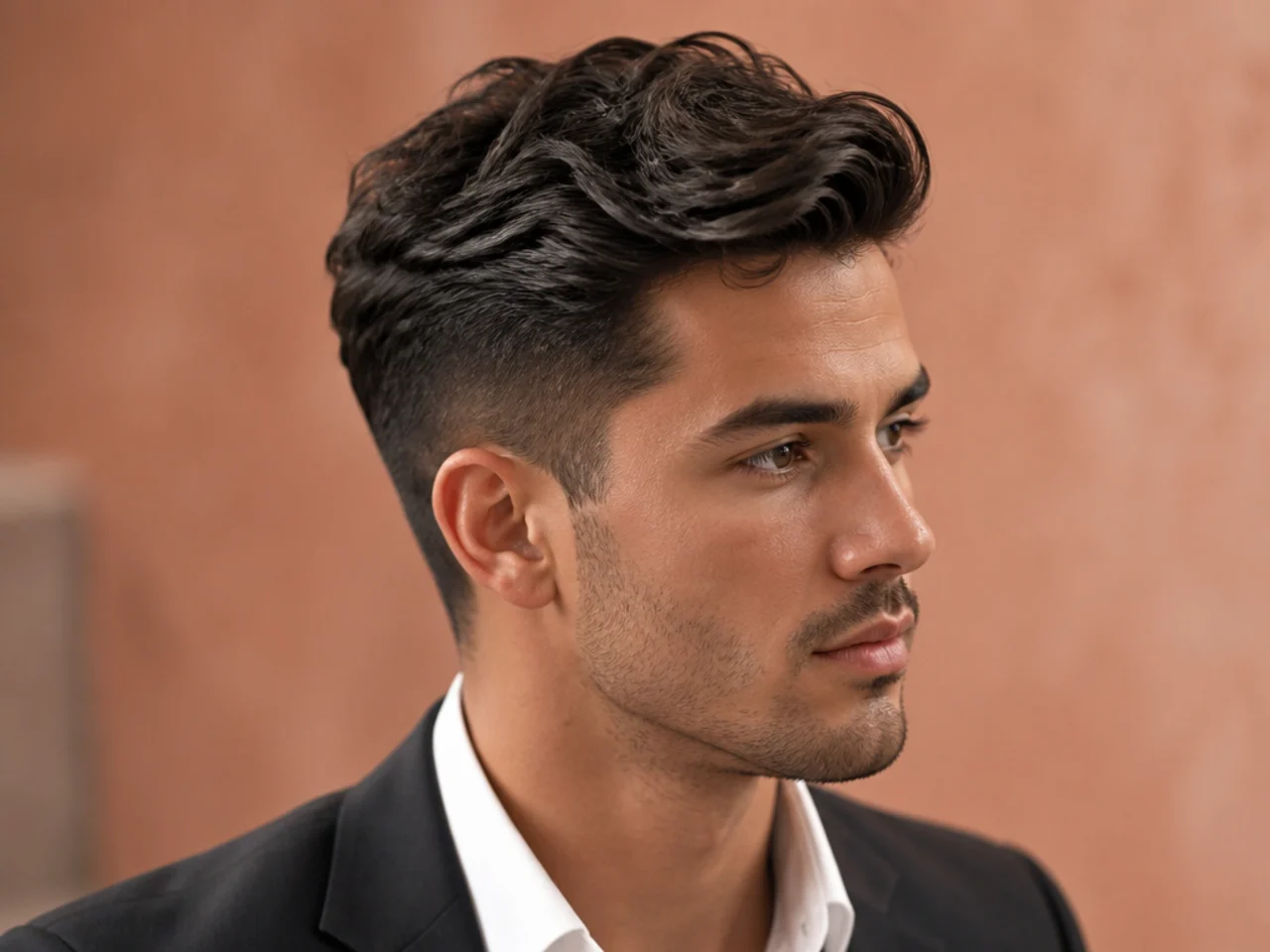
The textured comb over is the workhorse of professional cuts. Length on top gives you something to shape; a clean fade on the sides keeps it disciplined. It fits every industry — law, finance, engineering, sales. Ask for three inches on top, a low fade that blends into a natural hairline, and a hard part scissored in so your barber follows the same line at every visit. Work matte clay into damp hair, comb it over, and press it flat with a paddle brush for thirty seconds. The clay locks the shape without shine, so you never read like you tried too hard.
Side Part Fade
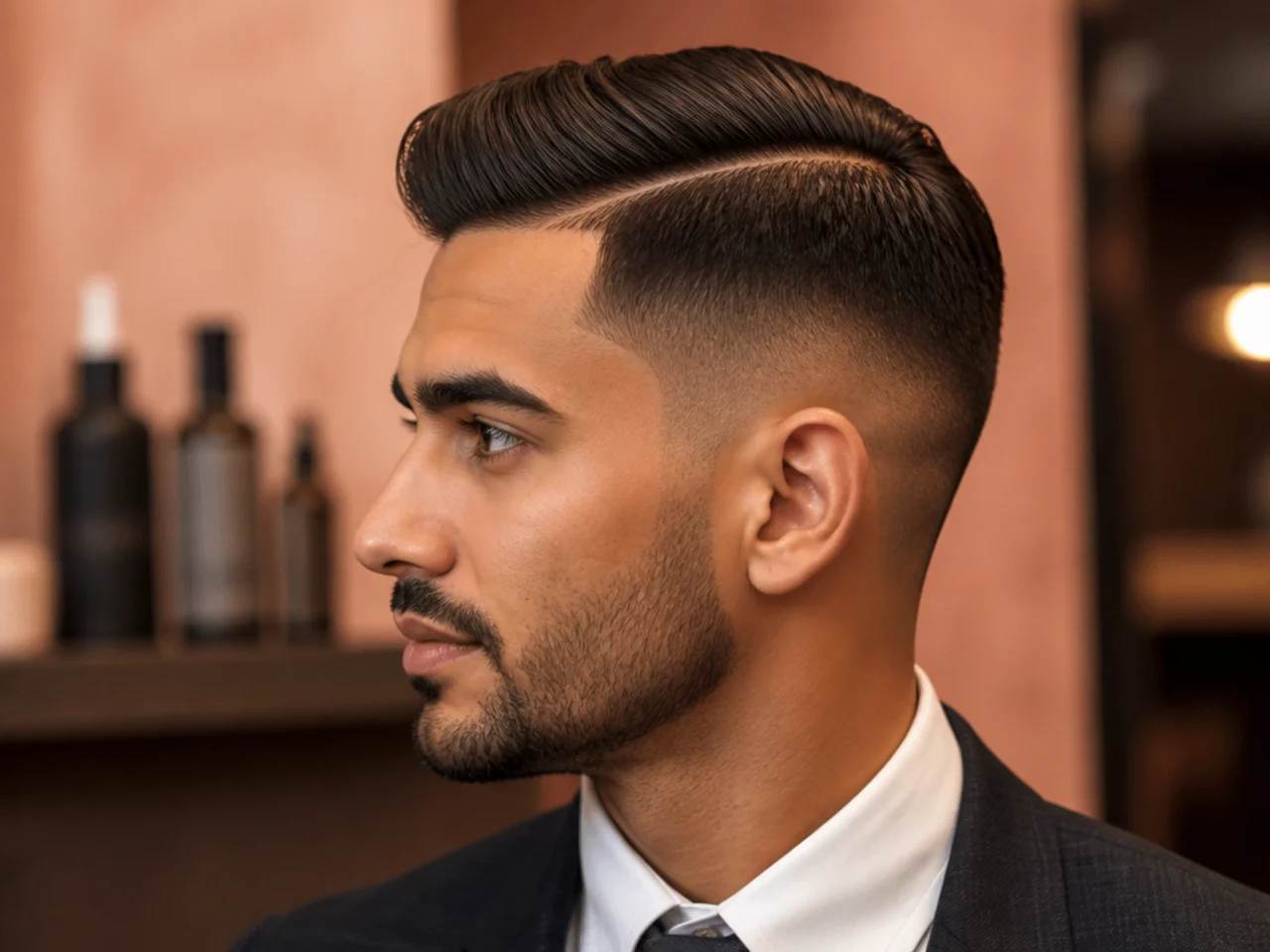
A side part fade splits the difference between old-school gentleman and modern crisp. The part signals order; the fade signals current. Bankers, associates at law firms, anyone in a suit five days a week — this is your default. Ask for two and a half inches on top, a mid fade starting an inch above the ear, and a natural hairline (not a razor lineup — you want grown-in, not fresh-out-of-the-chair). Style with a light cream and a fine-tooth comb. Part on the natural weak spot in your hair, comb the top over, then blast cool air from the dryer to lock it.
Medium Flow Style
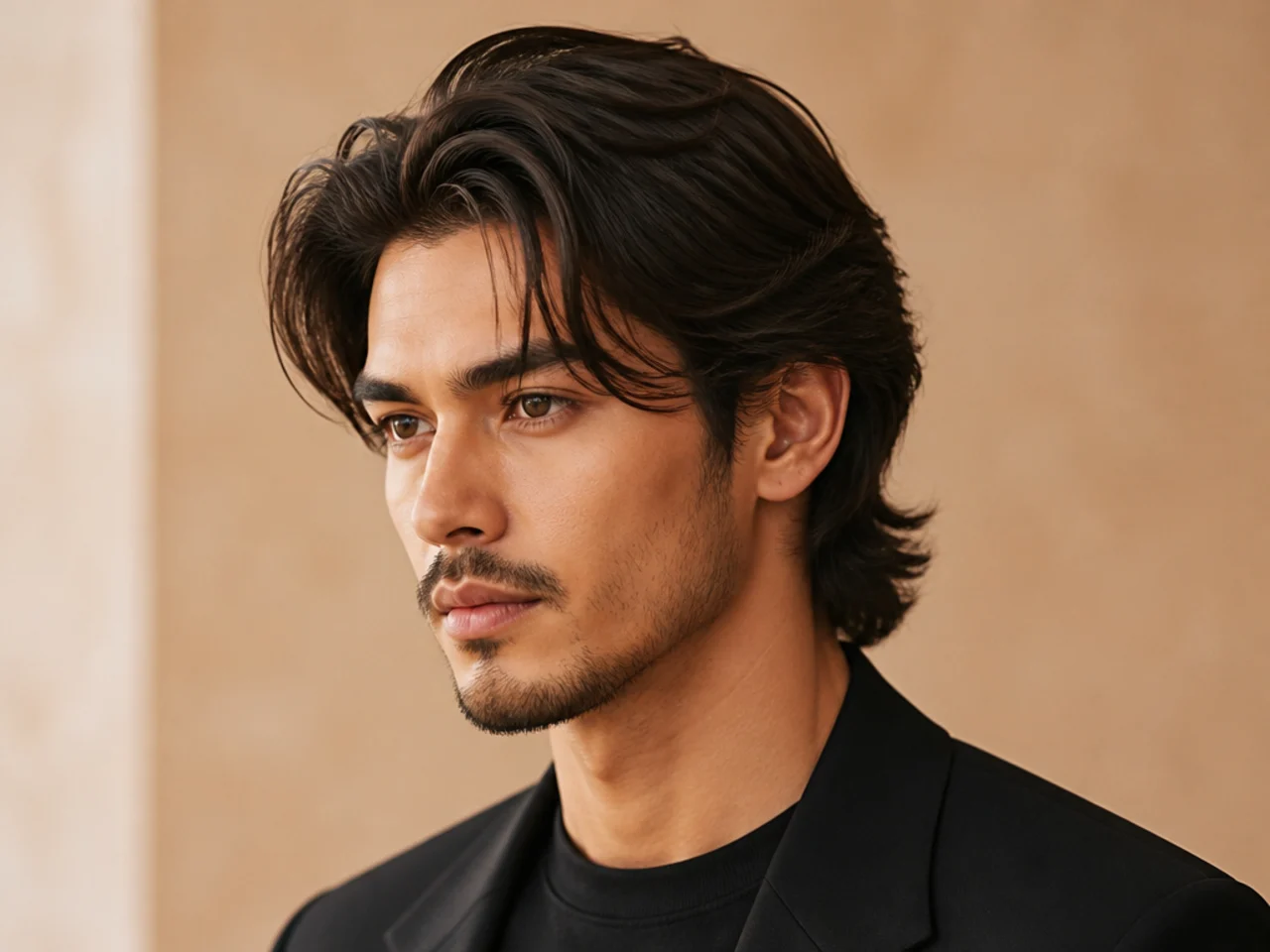
Medium flow reads professional when the ends stay disciplined and the roots stay lifted. You want the hair to move, never to look shaggy. This works for tech pros, media roles, anyone in a workplace where visible personality is a feature, not a bug. Ask for length that hits mid-ear on the sides and grazes the collar in back, with a heavy weight line so the shape holds when you tuck it behind your ear. Push a deep side part into damp hair with your fingers, then brush the top back and to the side. A pea of cream keeps everything in place. For more length options, see our full medium length hairstyles guide.
Tousled Short Curly Hair
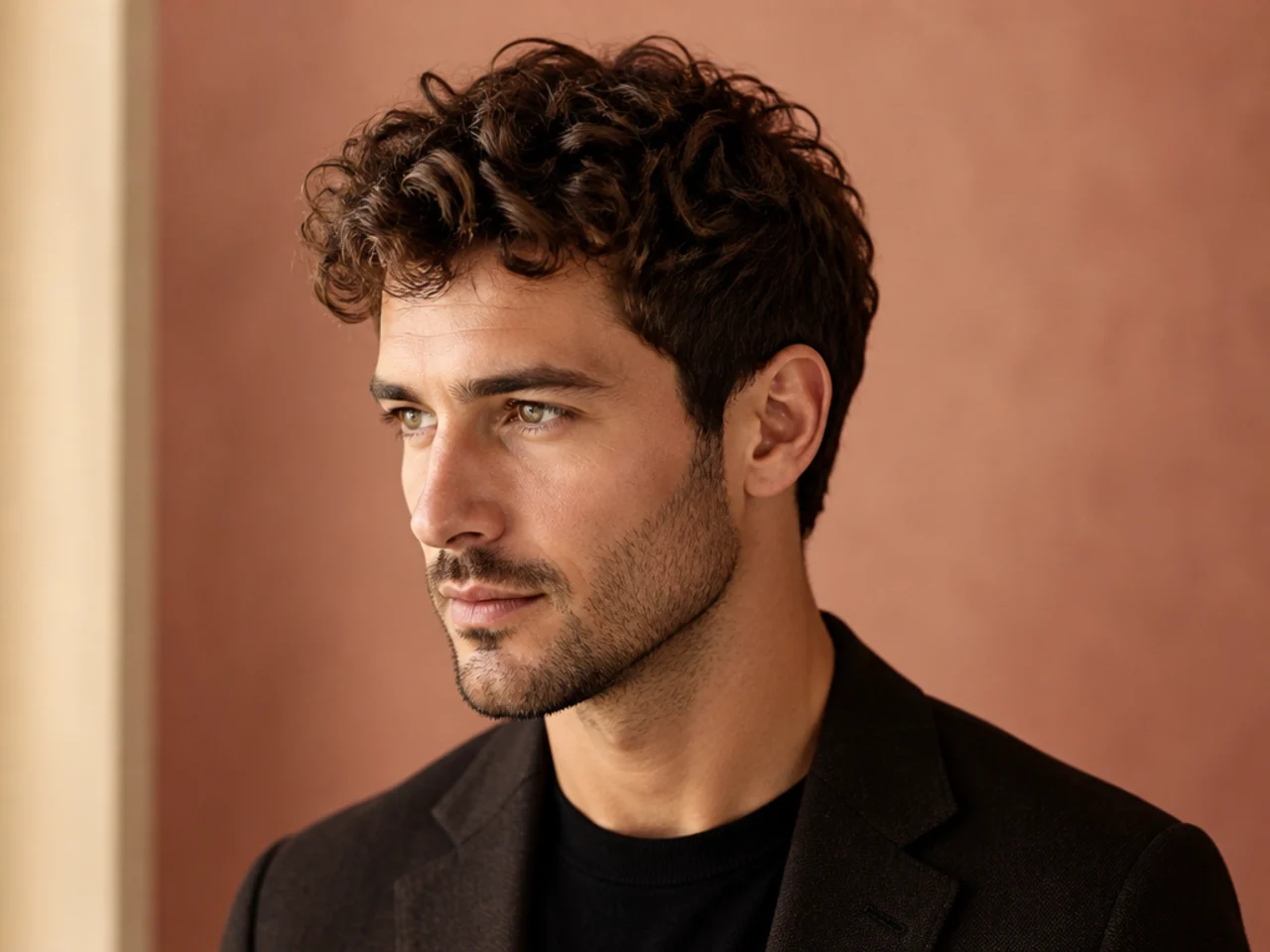
Short curls read professional when the length stays even and the sides don't stray. That means precision on the barber's part and a light touch on yours. Suits doctors, dentists, engineers — anywhere hands-on work makes long styles impractical. Ask for two-inch coils on top, a taper haircut that runs a full inch below your natural hairline, and defined edges around the ears. On damp hair, work in curl mousse and diffuse for two minutes. Do not touch the curls until they're fully dry — crush them once and they frizz. Finish with a mist of hairspray, palm-pressed in.
Classic Crew Cut
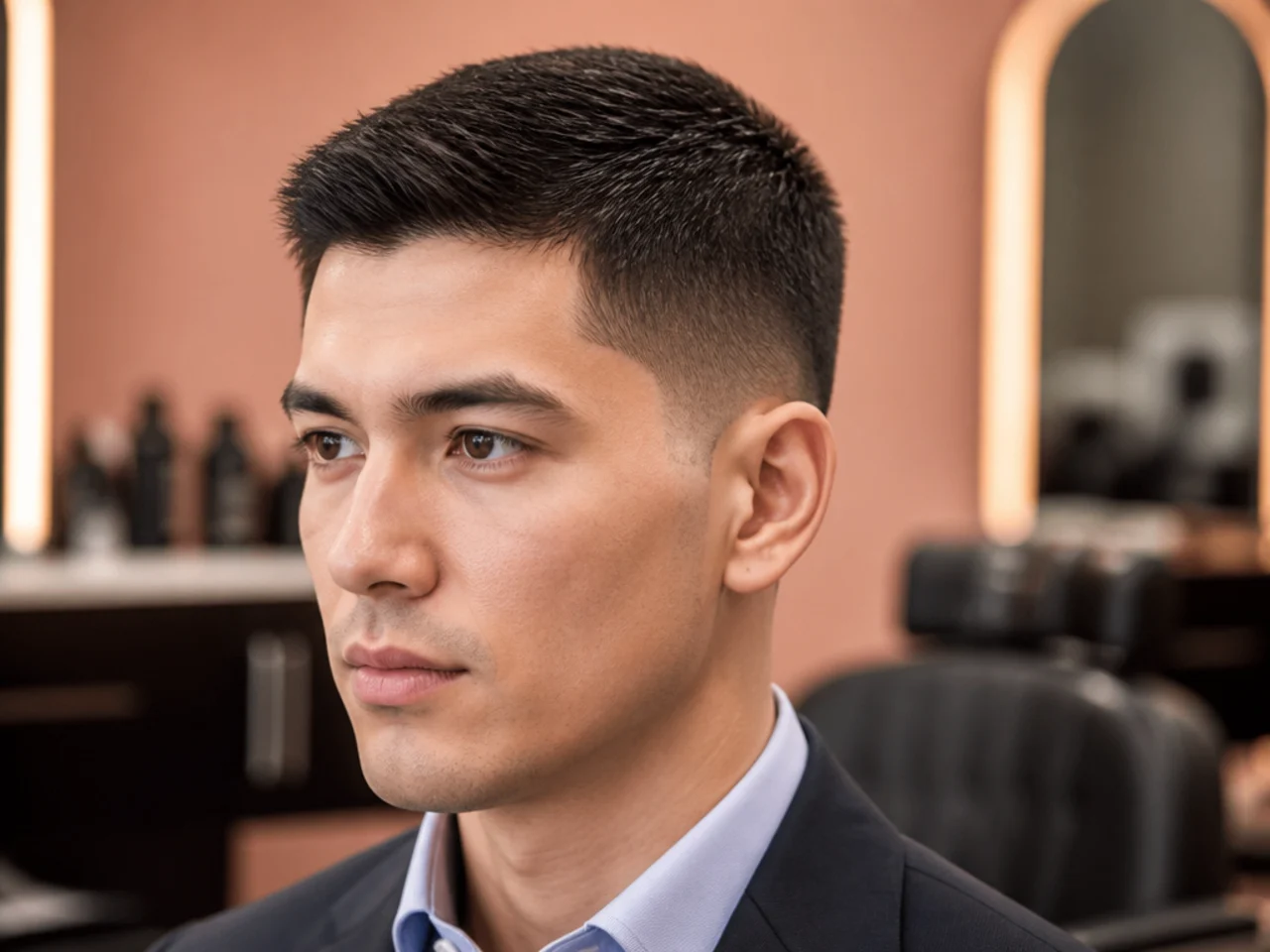
The crew cut is what your grandfather wore to the office, and nothing about it has aged out. Its power is its refusal to be noticed. Suits military, law enforcement, consulting, banking — any industry where restraint is a virtue. Ask for a #3 guard through the top, a #2 on the sides fading down to a #1 above the ear, and a clean square across the forehead if your hairline allows it. There is almost nothing to style. A nickel of cream, brushed forward with the hand, is enough. The classic crew cut is what you request when you want zero maintenance and total polish.
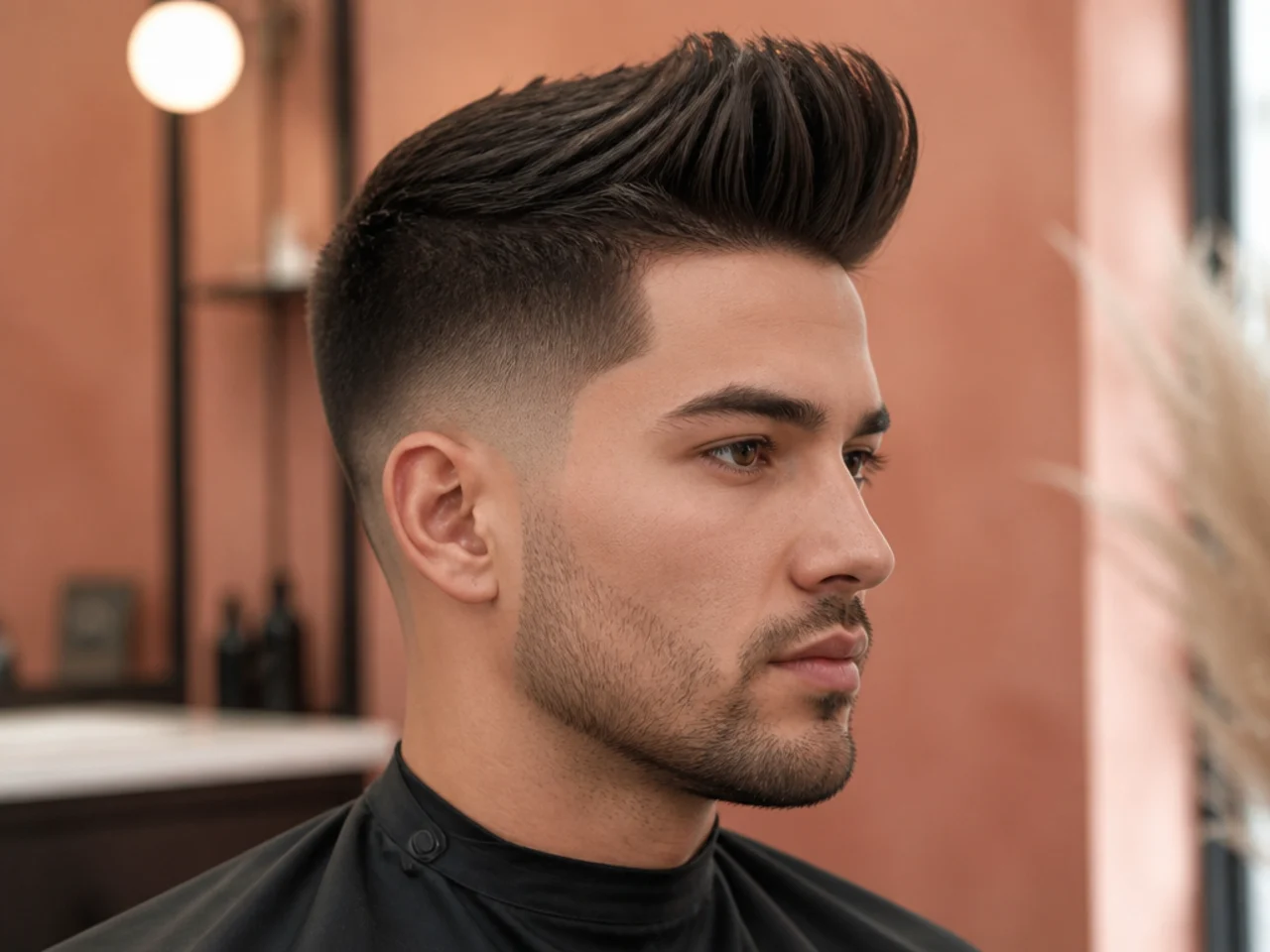
Textured Pompadour Fade
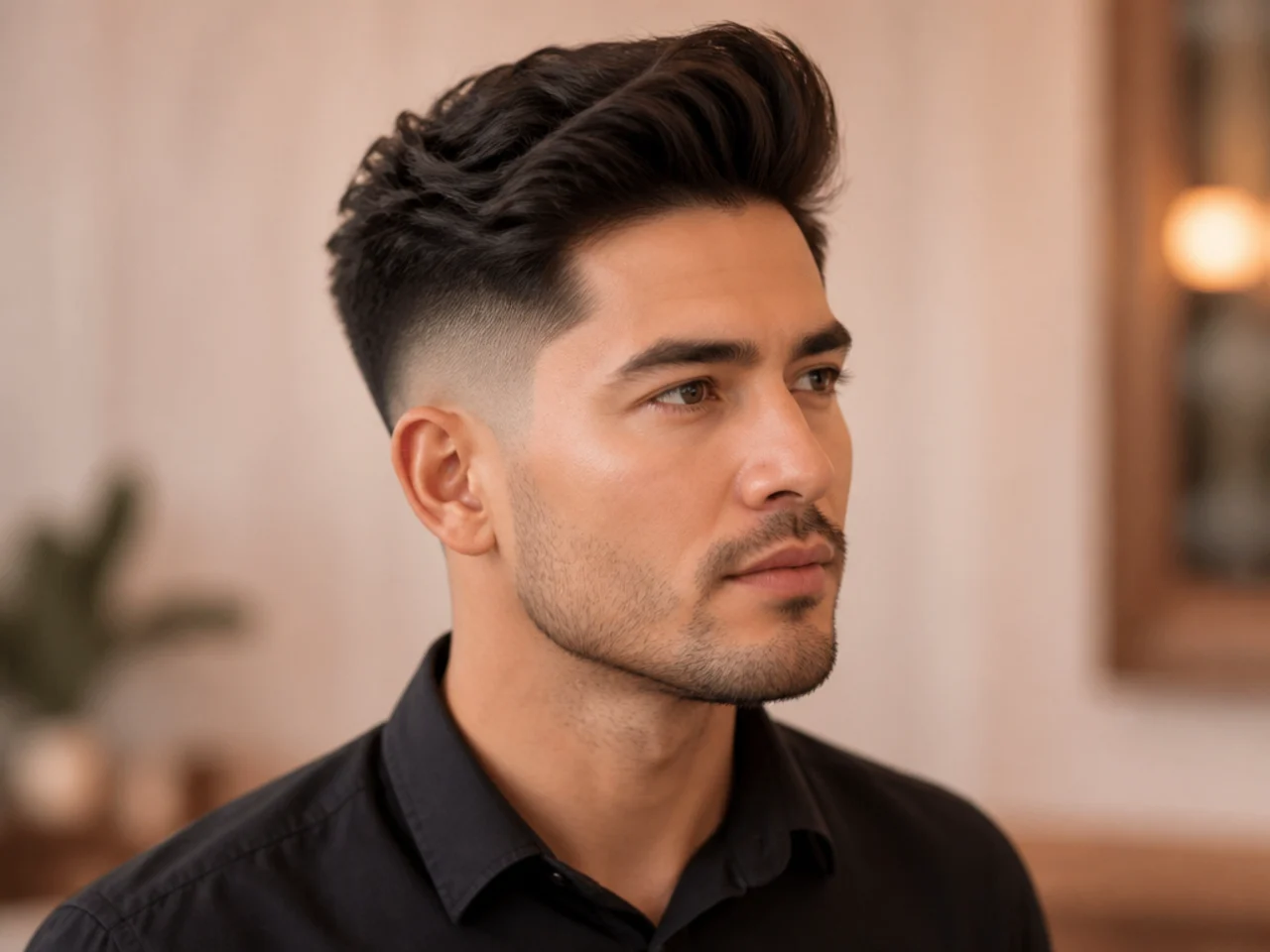
A pompadour reads professional when the height stays under two inches and the sides fade tight. Push it taller and it starts to look showy. Suits creative directors, tech founders, sales leadership — roles where visible confidence works in your favor. Ask for four inches through the front, cropped shorter toward the crown, and a mid fade that lands right above the temple. Blow-dry the front up and back with a round brush, then finish with clay or fiber for hold without shine. If you feel a rockstar vibe forming in the mirror, take the height down at the next cut.
Modern Quiff
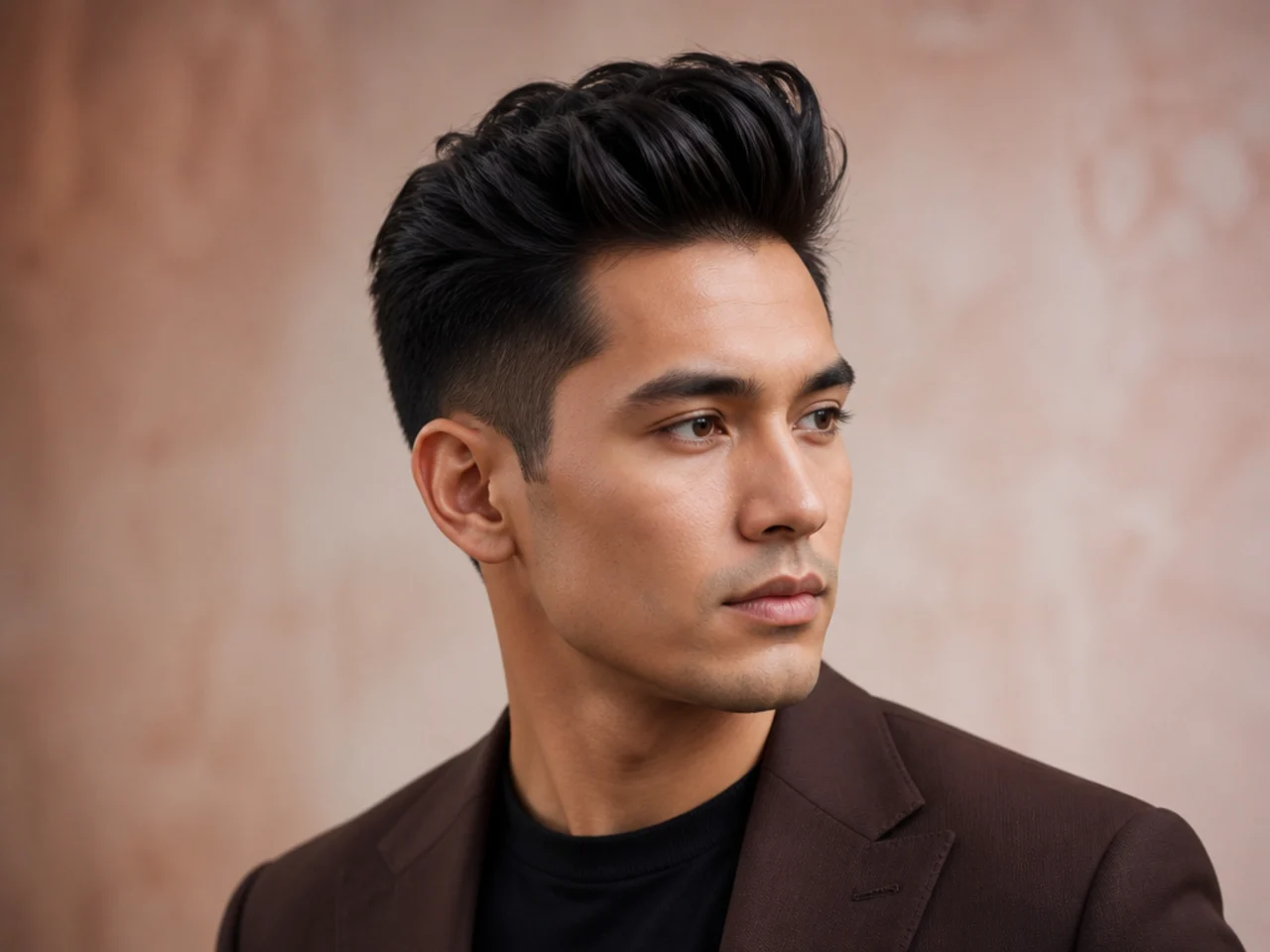
The modern quiff is a pompadour that stopped trying so hard. Less height, more forward motion, softer edges. Suits creatives, marketing pros, product managers — anyone whose day mixes meetings with real work. Ask for three inches through the front, tapering back to an inch at the crown, with a scissor-blended taper on the sides. Style with a light wax on damp hair. Lift the front with your fingers rather than sculpting — the point is movement, not architecture. If your hair is straight, pre-blow the front upward before applying product.
Classic Gentlemen's Cut
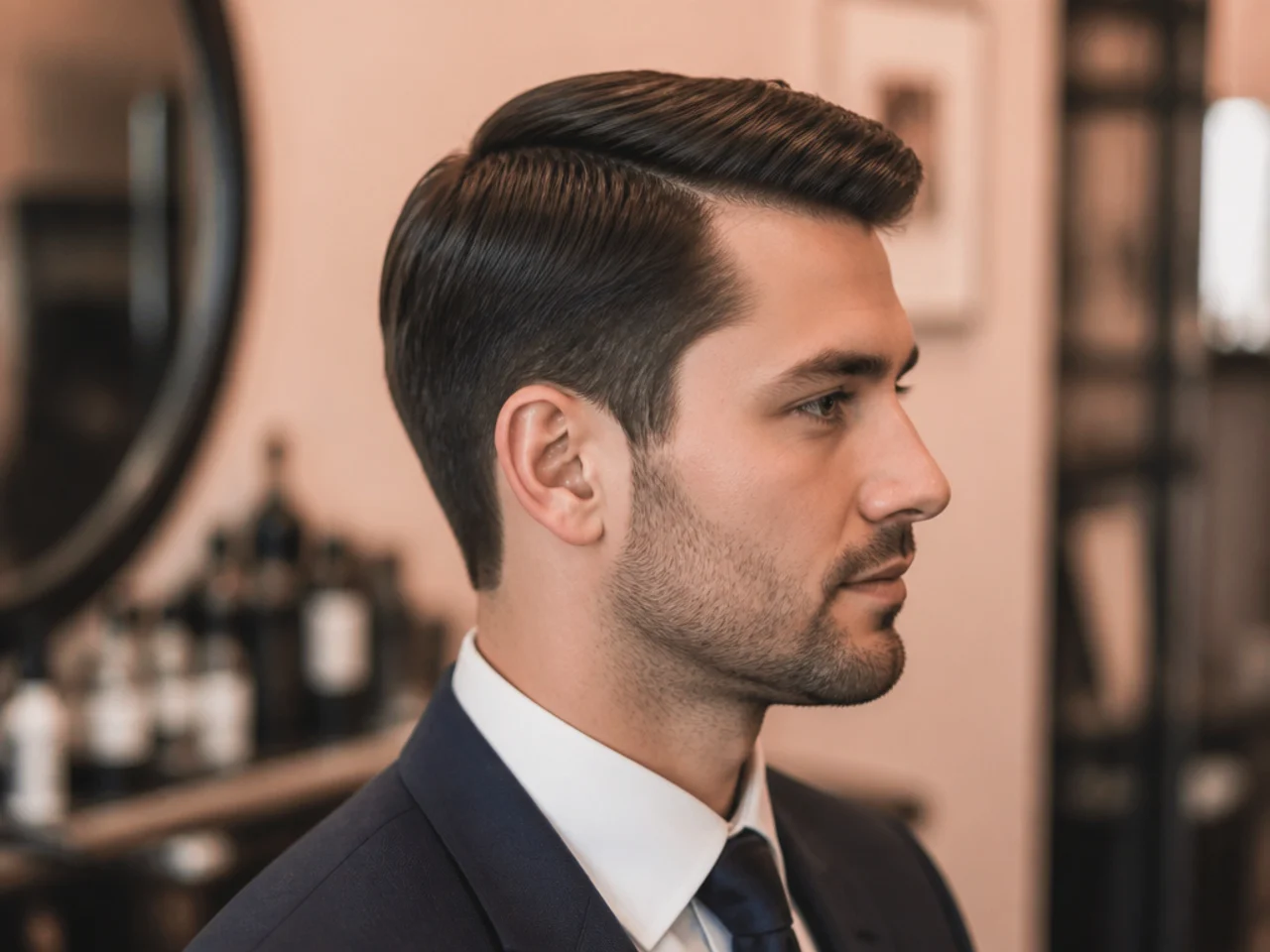
The classic gentlemen's cut is your board-meeting insurance policy. Every line is intentional, nothing about it dates the wearer. Suits law partners, senior executives, courtroom appearances, weddings, funerals — anywhere formality is baseline. Ask for two inches on top, a scissor-blended taper on the sides, and a defined hard part on your natural side. Use pomade for shine and hold. Comb the top from the part down over the ear, then flick the front up half an inch. A short groomed beard reinforces the vintage cue without tipping into costume. See our related boys haircuts for teenage guys guide for younger versions.
Ivy League
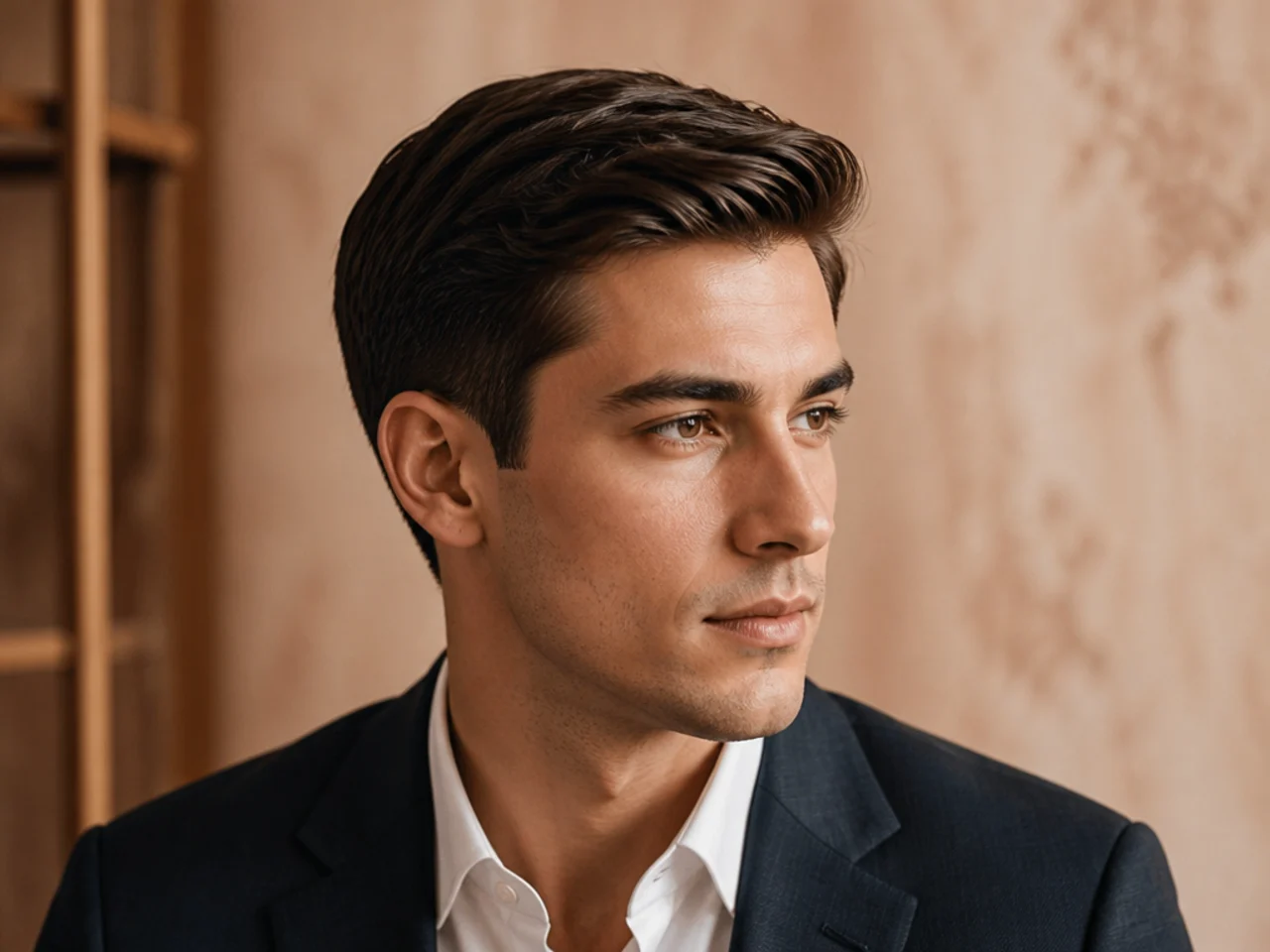
The Ivy League haircut is a longer, softer cousin to the crew cut. Enough length to show a slight sweep in the front, short enough to survive a humid commute. Suits recent grads, junior associates, anyone starting out in a formal-dress industry. Ask for two inches on top, a #2 on the sides tapering to skin above the ear, and a natural front hairline. Work a light cream through damp hair and sweep to the side. Air dry, or hit it briefly with a blow dryer. Book a re-cut every three weeks — this style softens fast.
Buzz Cut
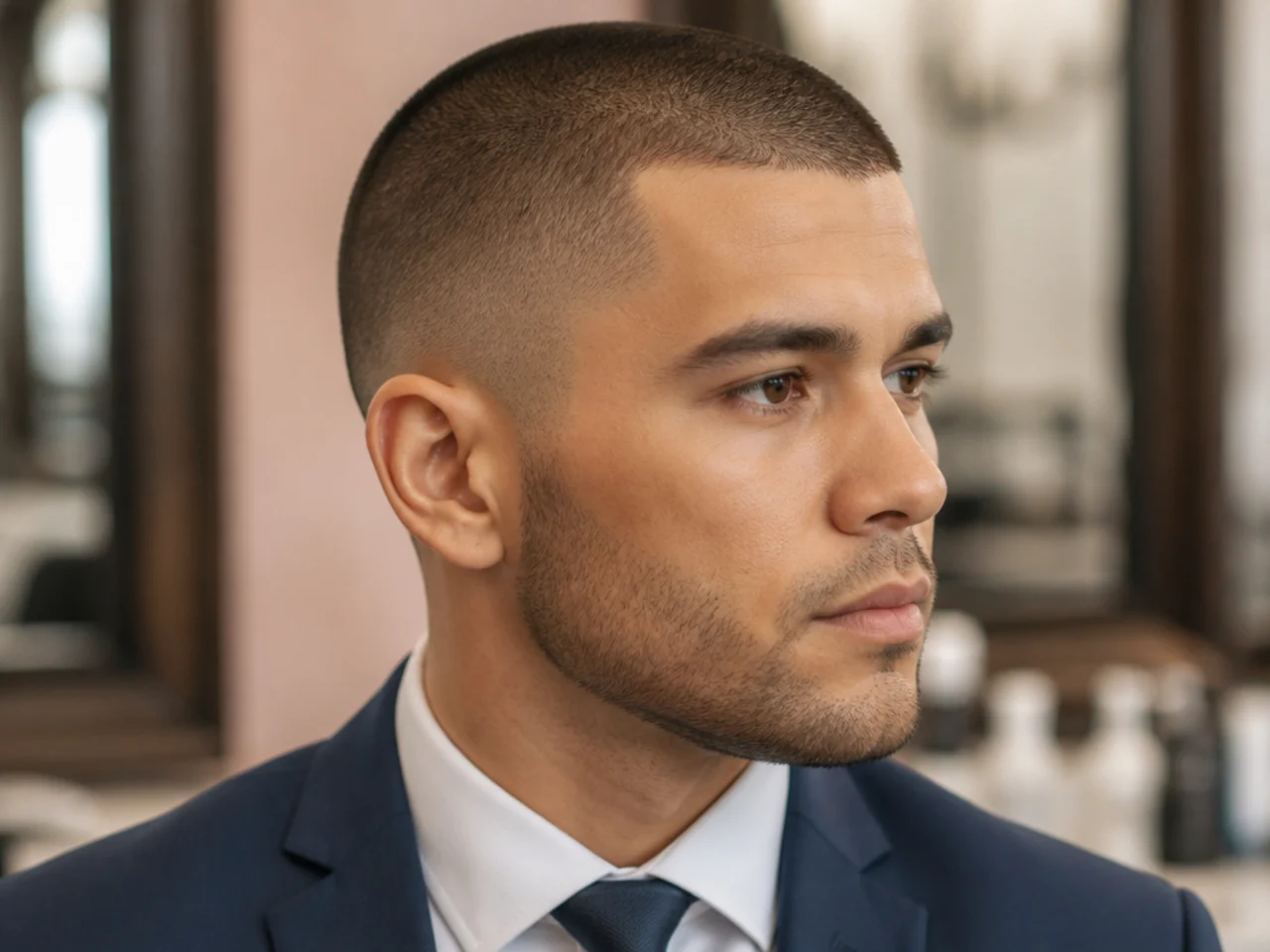
The buzz cut is the ultimate low-effort professional look. Uniform length, no styling required, in and out of the chair in ten minutes. Suits high-stress roles — surgeons, pilots, anyone who values the ninety seconds it takes to wash and go each morning. Ask for a #2 all over, or a #3 on top blending down to a #1 on the sides for a slightly less severe look. Skip styling entirely. A small amount of oil or moisturizer on the scalp keeps the head from looking chalky under office lighting. Trim your beard to the same guard length for balance.
Short Brush Up with Tapered Sides
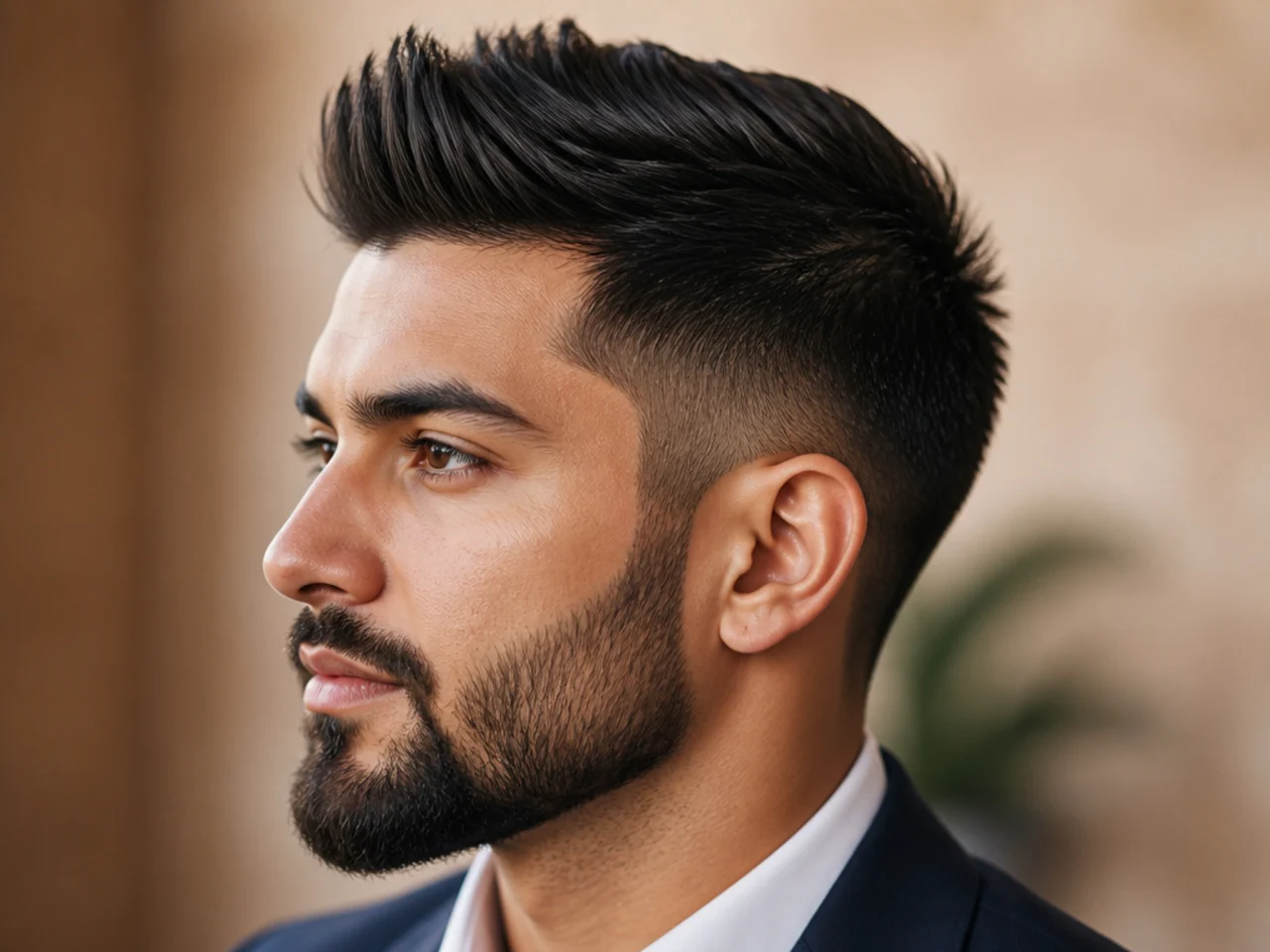
The brush-up reads professional when the height stays modest and the sides fade clean. It gives you texture without asking you to commit to a full pompadour. Suits sales pros, real estate, hospitality — client-facing roles where presence matters. Ask for two and a half inches through the front, cropped shorter as you move back, with a low taper starting at the temple. Blow-dry the front up with your fingers, then finish with matte paste worked from root to tip. The paste holds without shine, so you don't read glossy under fluorescents.
Comb Over Fade
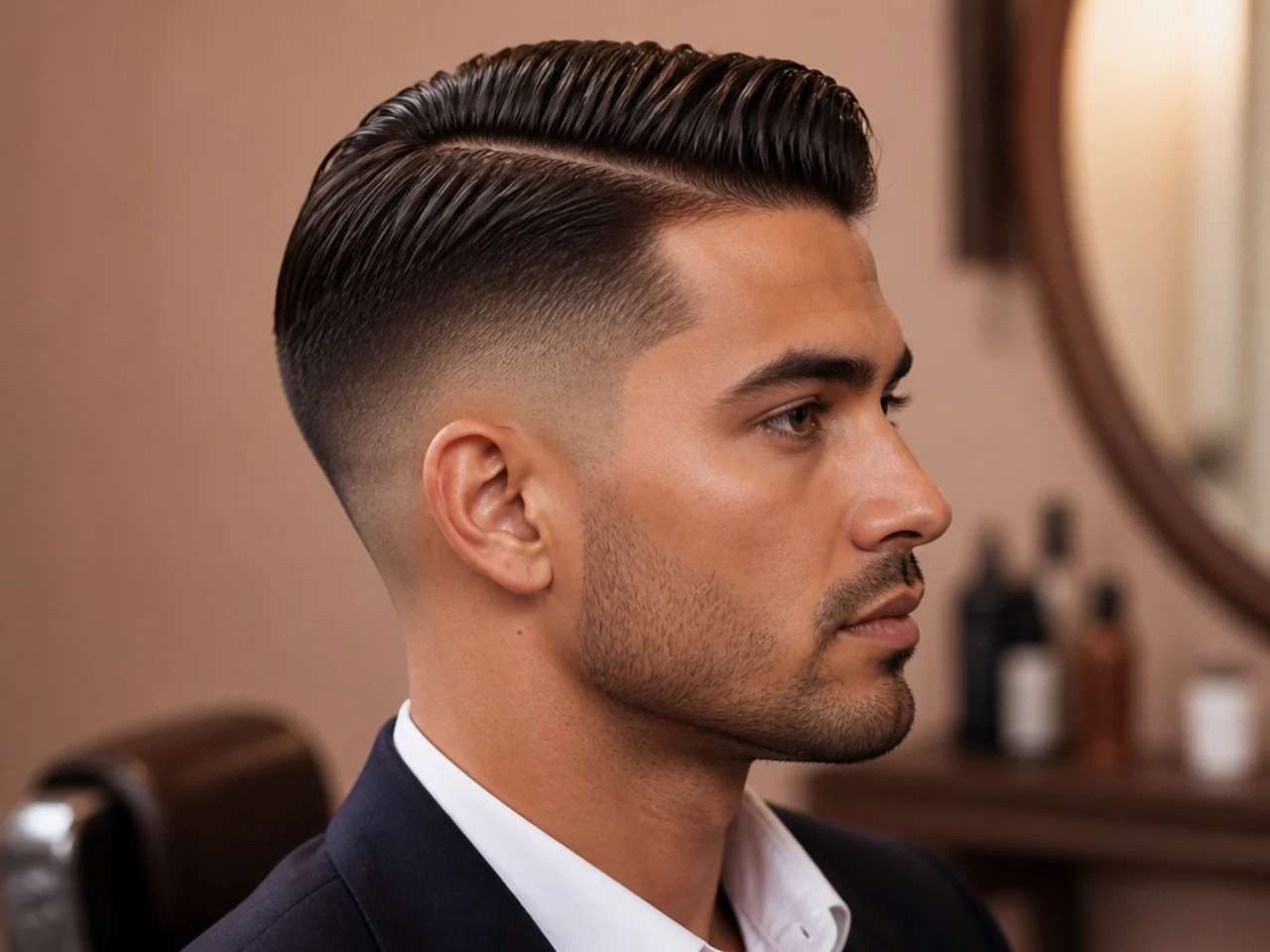
The comb over haircut with a fade is one of the sharpest professional options on the menu. The part gives structure; the fade keeps it modern. Suits law, finance, consulting — any suit-and-tie industry where the cut needs to look intentional at 8am and still look intentional at 8pm. Ask for three inches on top, a mid fade tapering to skin above the ear, and a hard part etched in on your natural side. Apply pomade to damp hair, comb from the part down over the ear, and set with a shot of hairspray. Book every three weeks — the hard part loses definition fast.
Short Afro Curly Fade
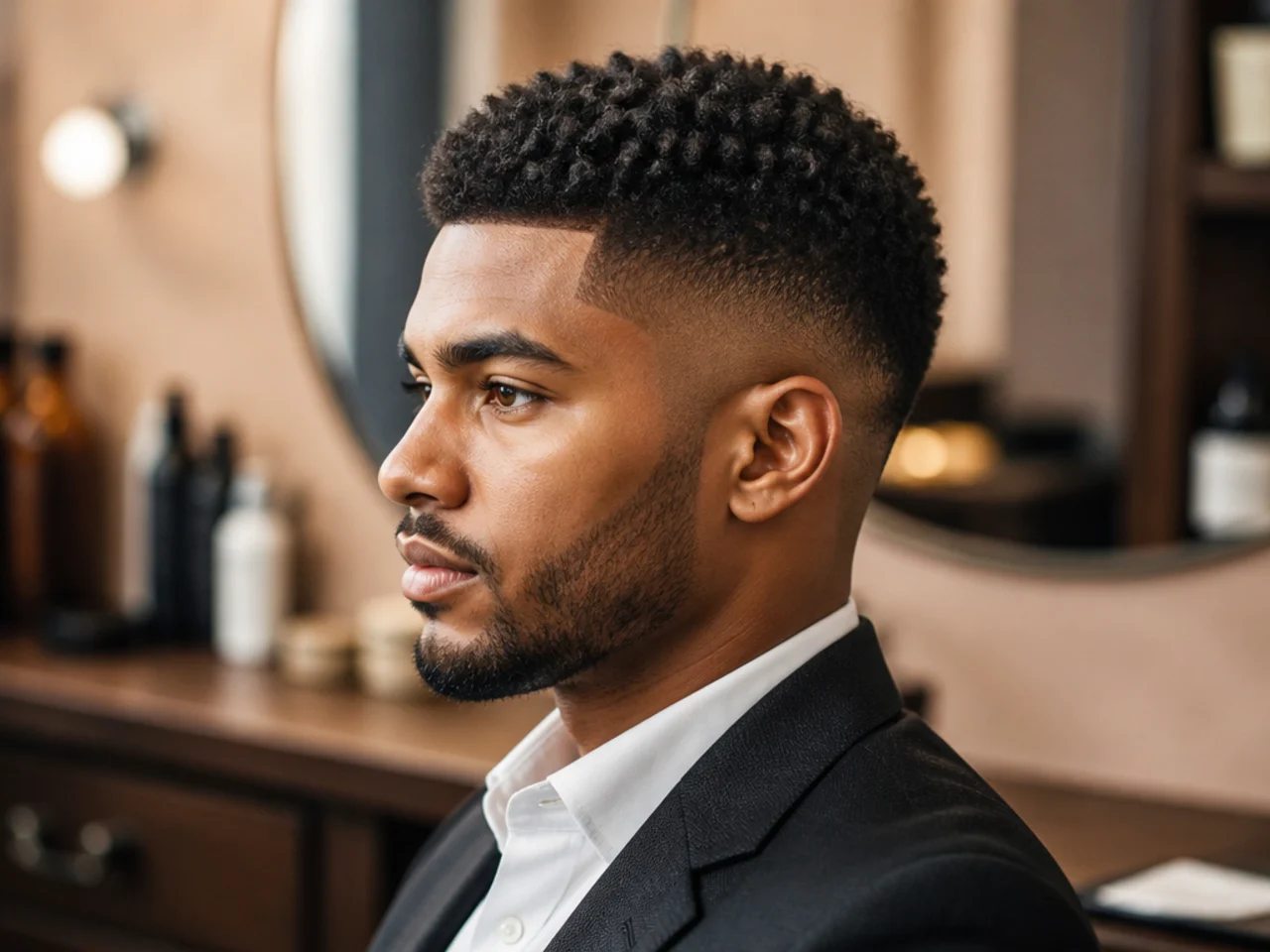
Short afro curls read professional when the shape stays symmetrical and the fade is clean. That's the barber's job — yours is showing up on schedule. Suits any industry, especially those where a distinctive silhouette works in your favor: sales, media, executive presence roles. Ask for one and a half inches of natural curl on top cut round, with a fade haircut arcing down to skin above the ear. Moisturize daily with a leave-in and pick out the top with an afro pick for volume. Sleep in a satin cap — the friction from a cotton pillowcase flattens the crown by morning.
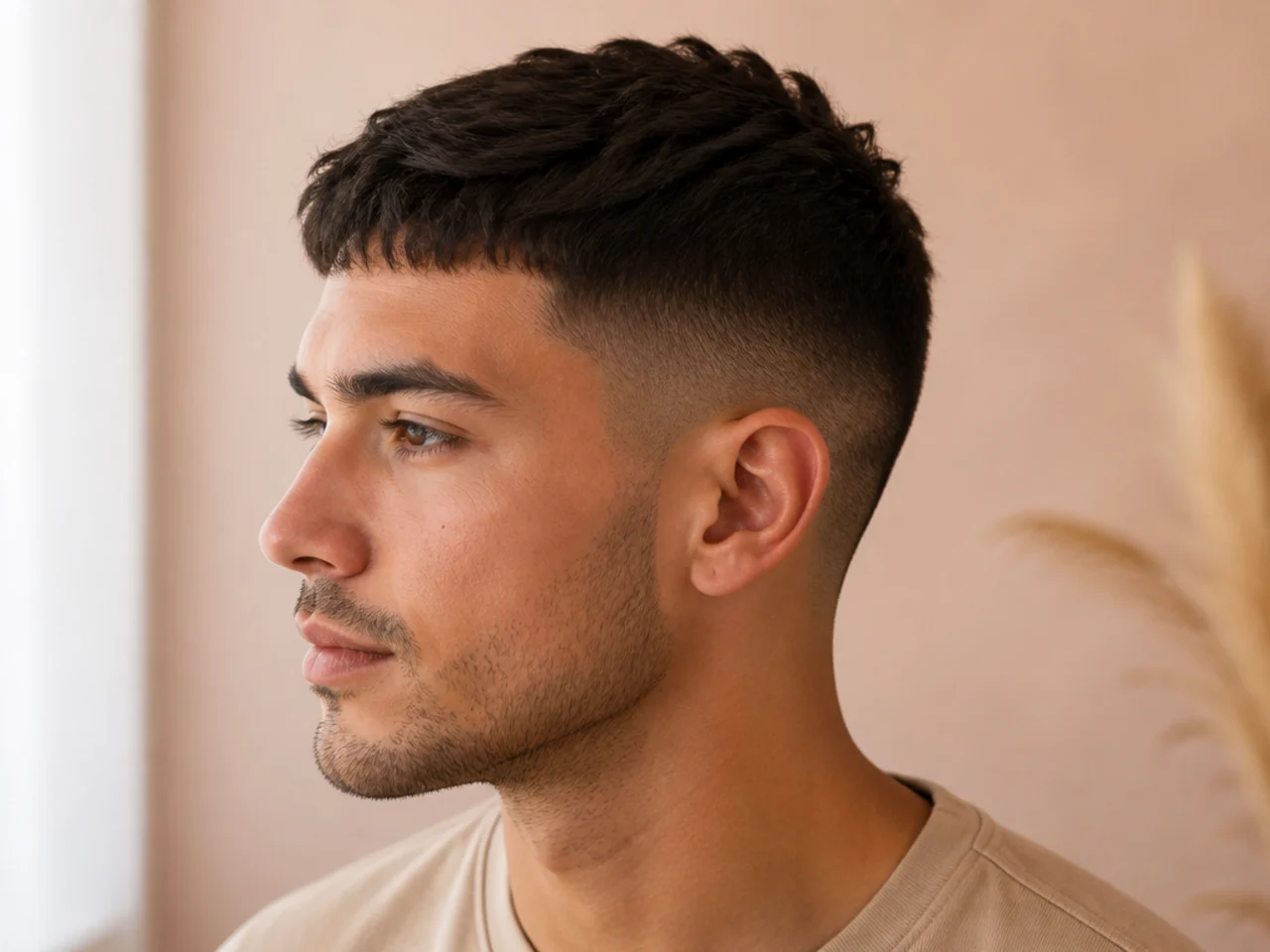
Textured Fringe with Taper Fade
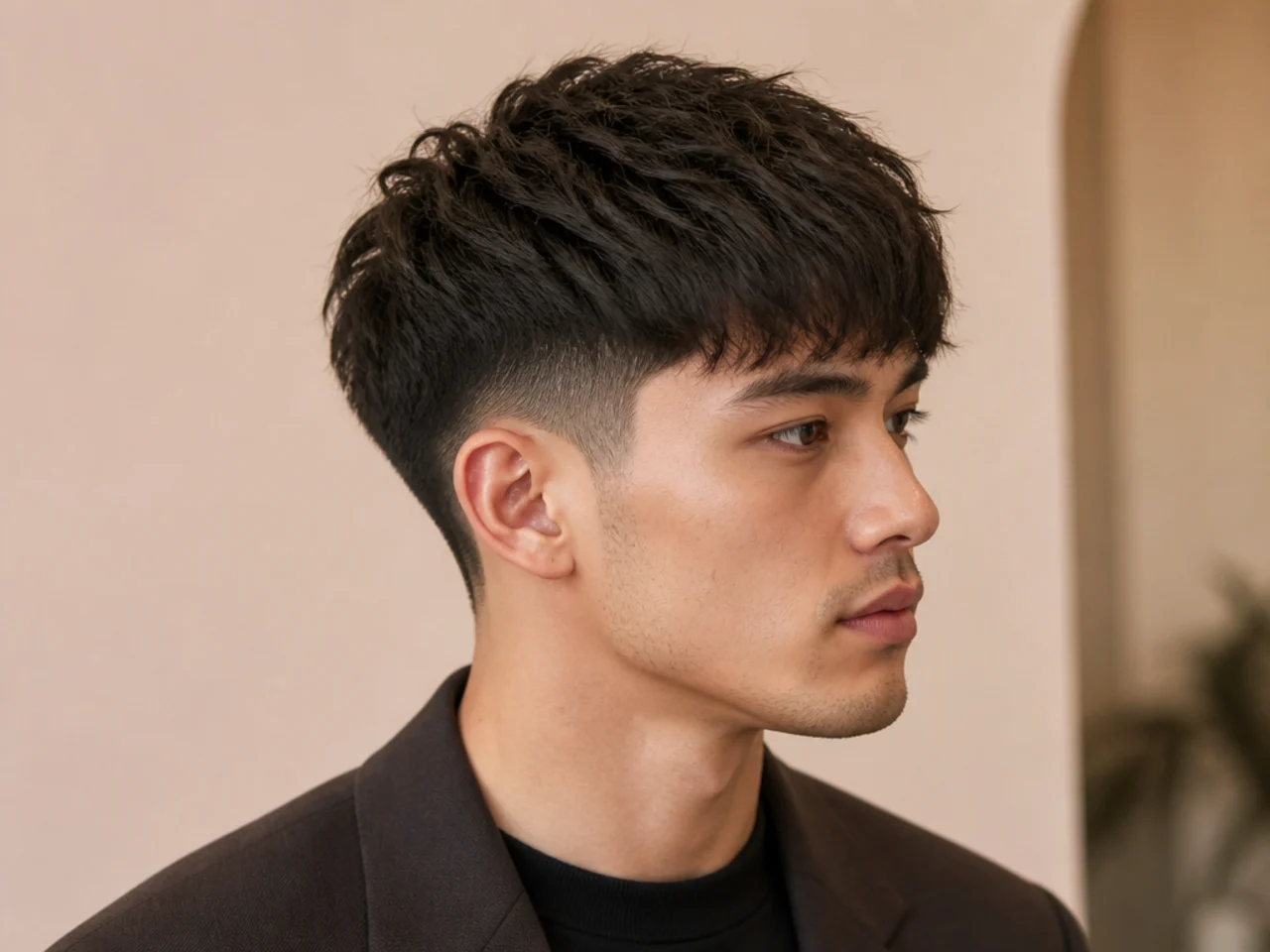
A textured fringe reads professional when the ends stay soft and the sides stay sharp. It softens hard features and gives you an approachable, current look. Suits customer-facing roles, HR, marketing, teaching — anywhere warmth is part of the job. Ask for three inches through the front, cut heavier at the ends for a piecey finish, with a taper fade blending from the temple. Apply matte pomade to dry hair, then rake it forward with your fingers. Do not comb — combed fringes look pasted on. The goal is a fringe that reads like you woke up and did nothing, achieved by ten minutes of styling.
Layered, Messy Mod
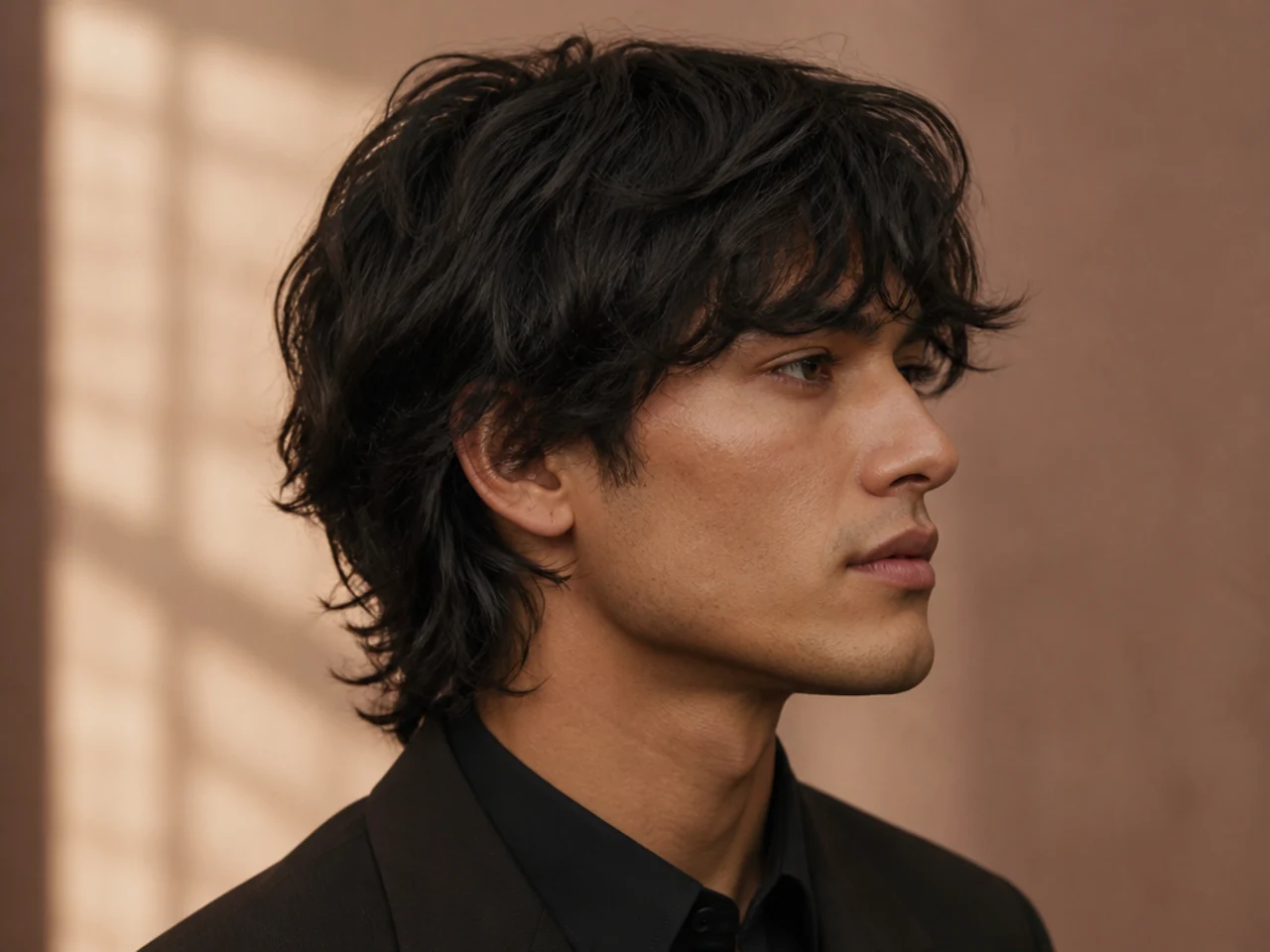
A layered messy mod is professional when the messiness is engineered. Layers give the shape; product gives the hold. Suits creative agencies, media roles, tech at a startup — workplaces where the dress code is smart casual. Ask for three inches through the top with heavy layering, sides brought down over the ear with soft weight, and a slight fringe that breaks against your forehead. Rough-dry with your hands, then work paste through the mid-lengths. Push everything slightly forward. A short beard along the jaw squares the face and keeps the whole thing from tipping teenage.
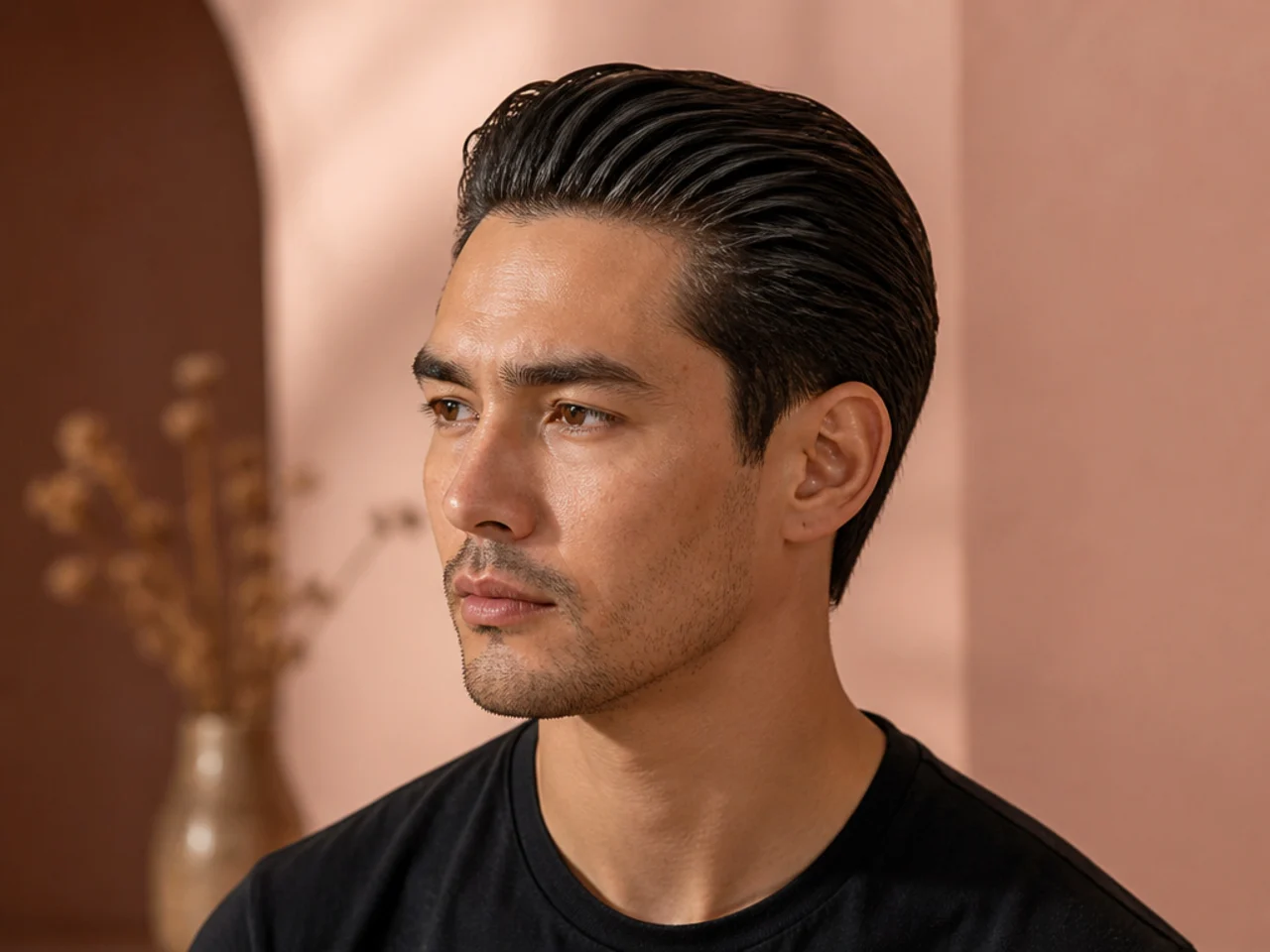
Slick Back Undercut
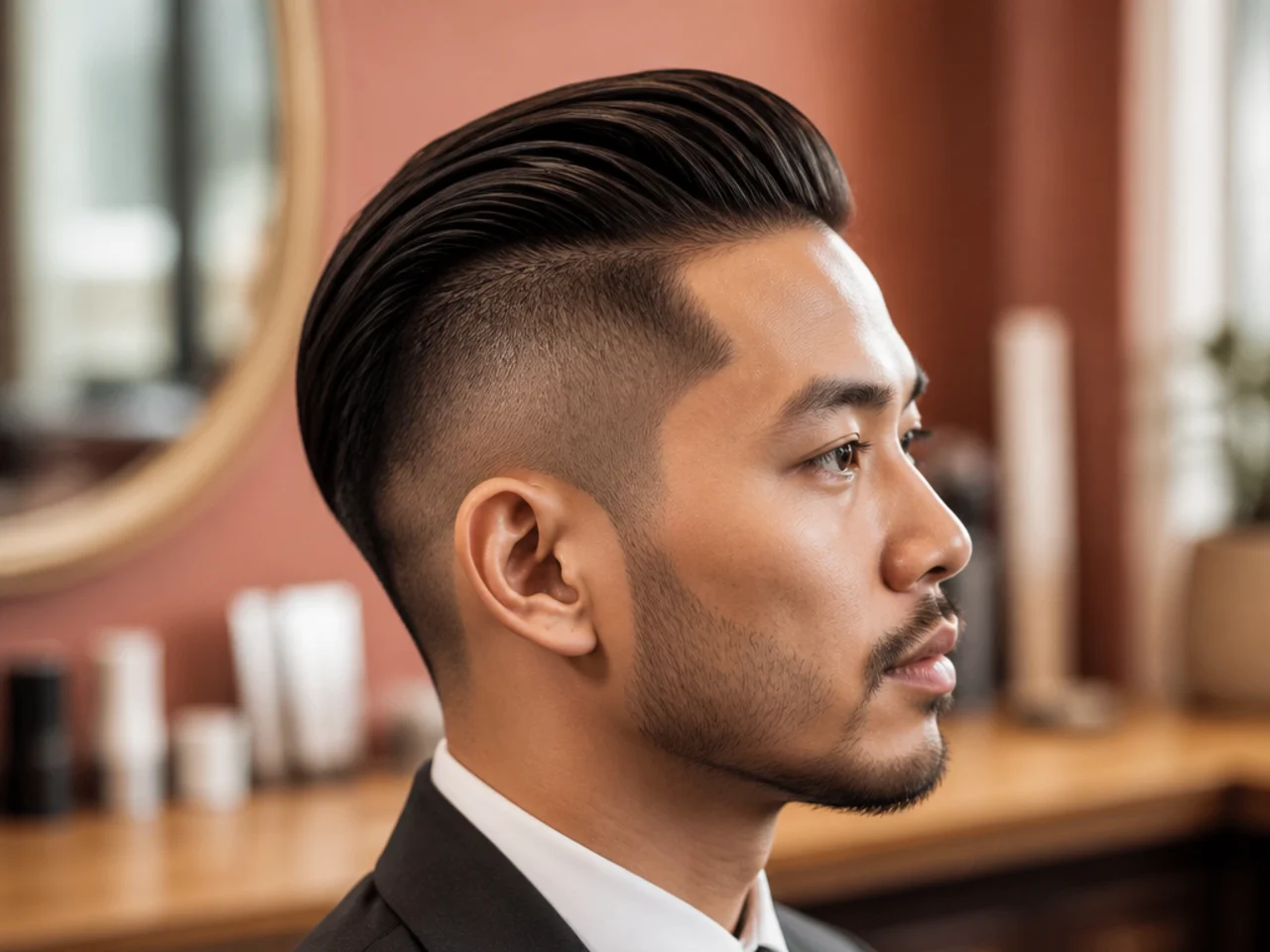
The slick back undercut is professional when it stays disciplined. Slicked back on top, clipped short on the sides, no product overflow onto the forehead. Suits finance, hospitality management, senior sales — roles where a strong silhouette pays off. Ask for four inches on top, an undercut on the sides using a #2 or #3 guard, and a hard-blended weight line where the top meets the sides. Apply a pea of pomade to damp hair, comb straight back, then flatten with a paddle brush. Alternative for humid days: gather it into a low bun with a discreet elastic — reads intentional, not lazy.
Faux Hawk Fade
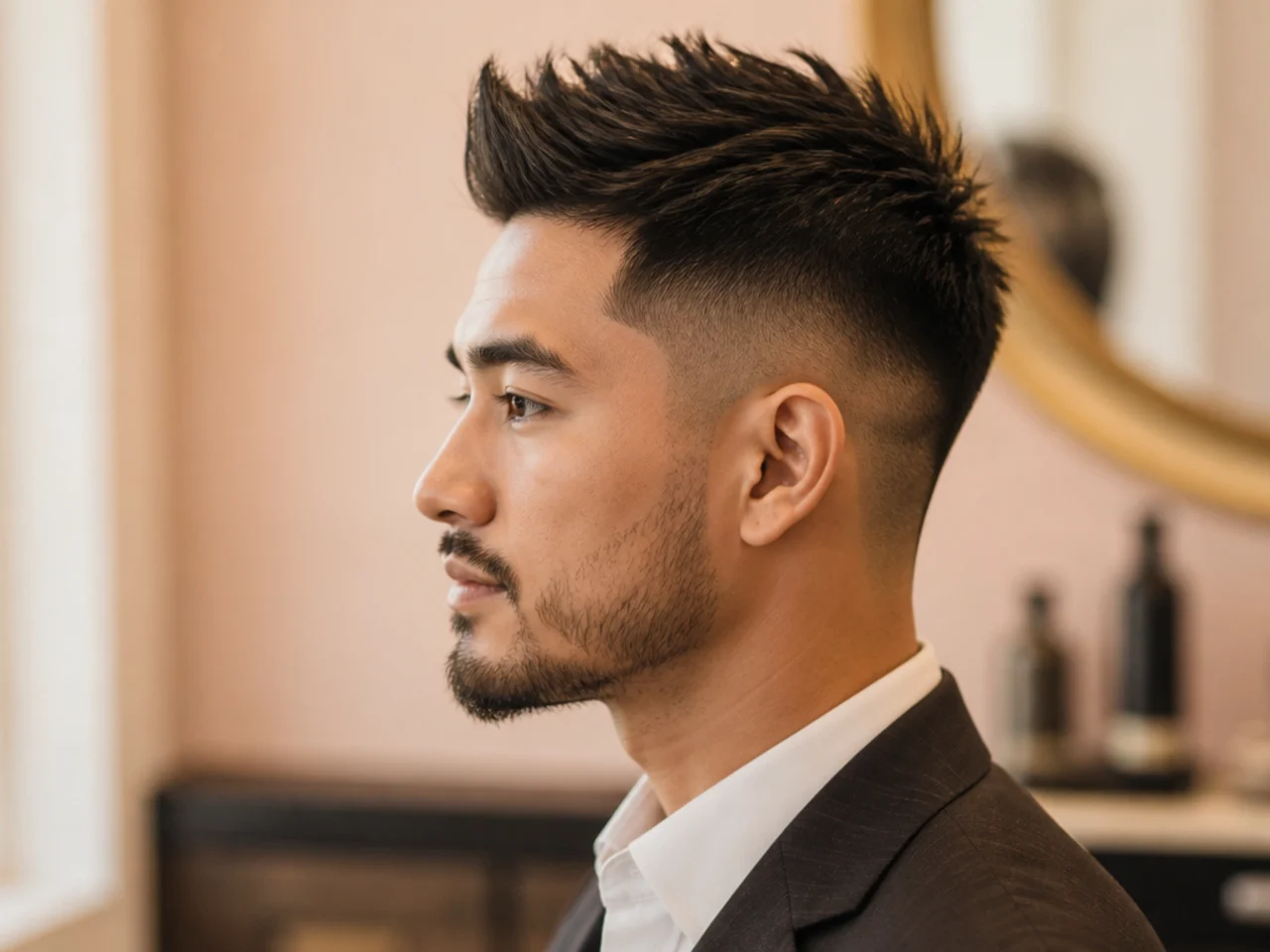
A faux hawk with a fade reads professional when the mohawk shape is suggested, not screamed. Length concentrated down the center, sides fading clean, no shaved lines. Suits creative directors, tech leadership, anyone whose personal brand tolerates a bit of edge. Ask for three inches down the center strip tapering shorter toward the sides, a mid fade blending to skin above the ear, and a natural hairline in front. Blow-dry the center up with your fingers, then use fiber or wax to shape a soft peak. Ease off the height at each cut — it's easy to overshoot into skate-park territory.
Modern Pompadour Fade
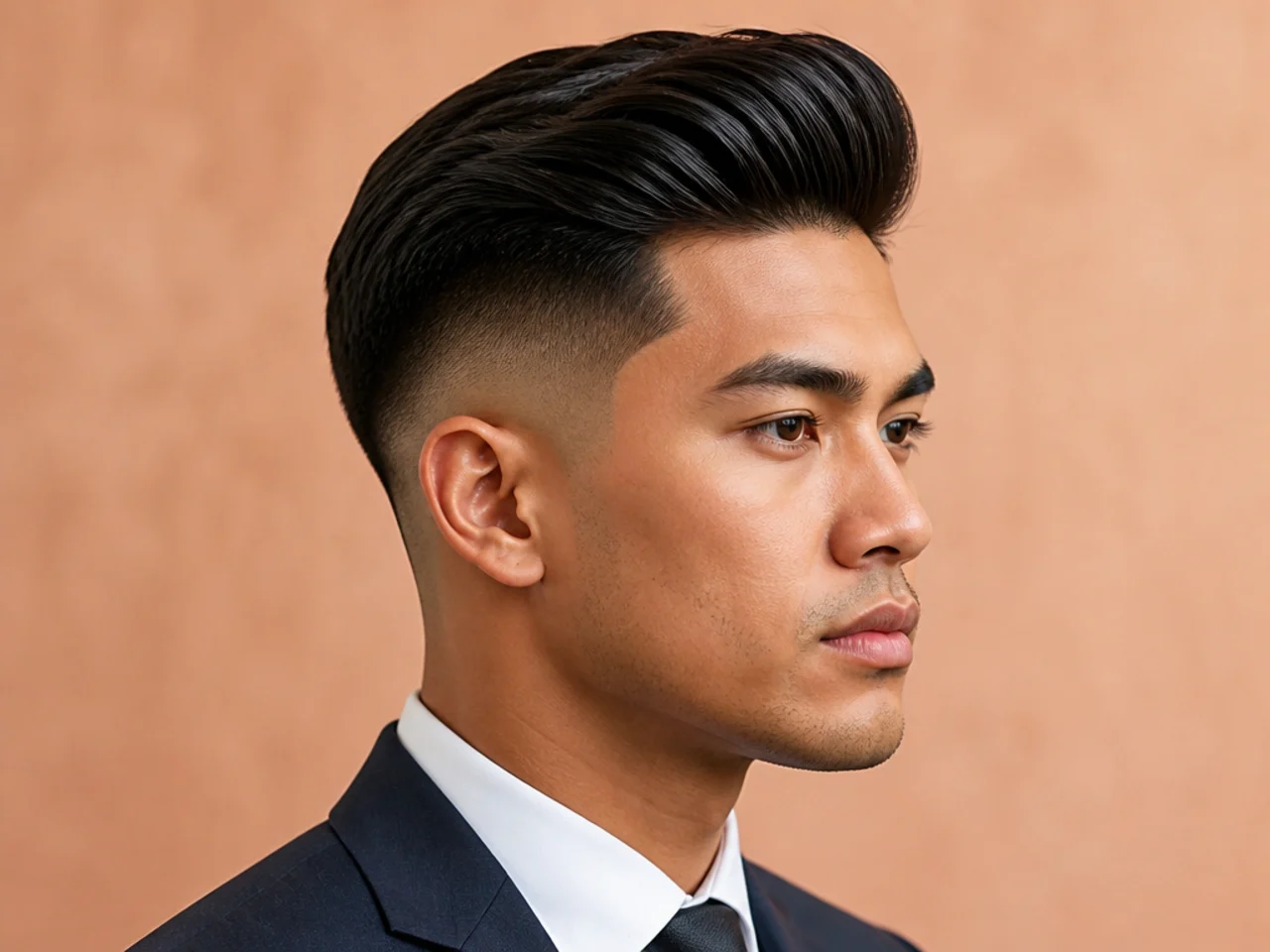
The modern pompadour trades the greaser wall of hair for a lower, tighter silhouette. Faded sides do most of the heavy lifting. Suits senior tech roles, agency leadership, high-end retail management. Ask for four inches through the front, cropped shorter as you move back, with a high fade starting an inch above the ear. Blow-dry the front up and back with a round brush, then finish with a pomade that offers hold without a wet look. If you're new to blow-drying, invest ten minutes of practice — it's what separates a real pompadour from a top that just sits there.
Thick, Messy Hair
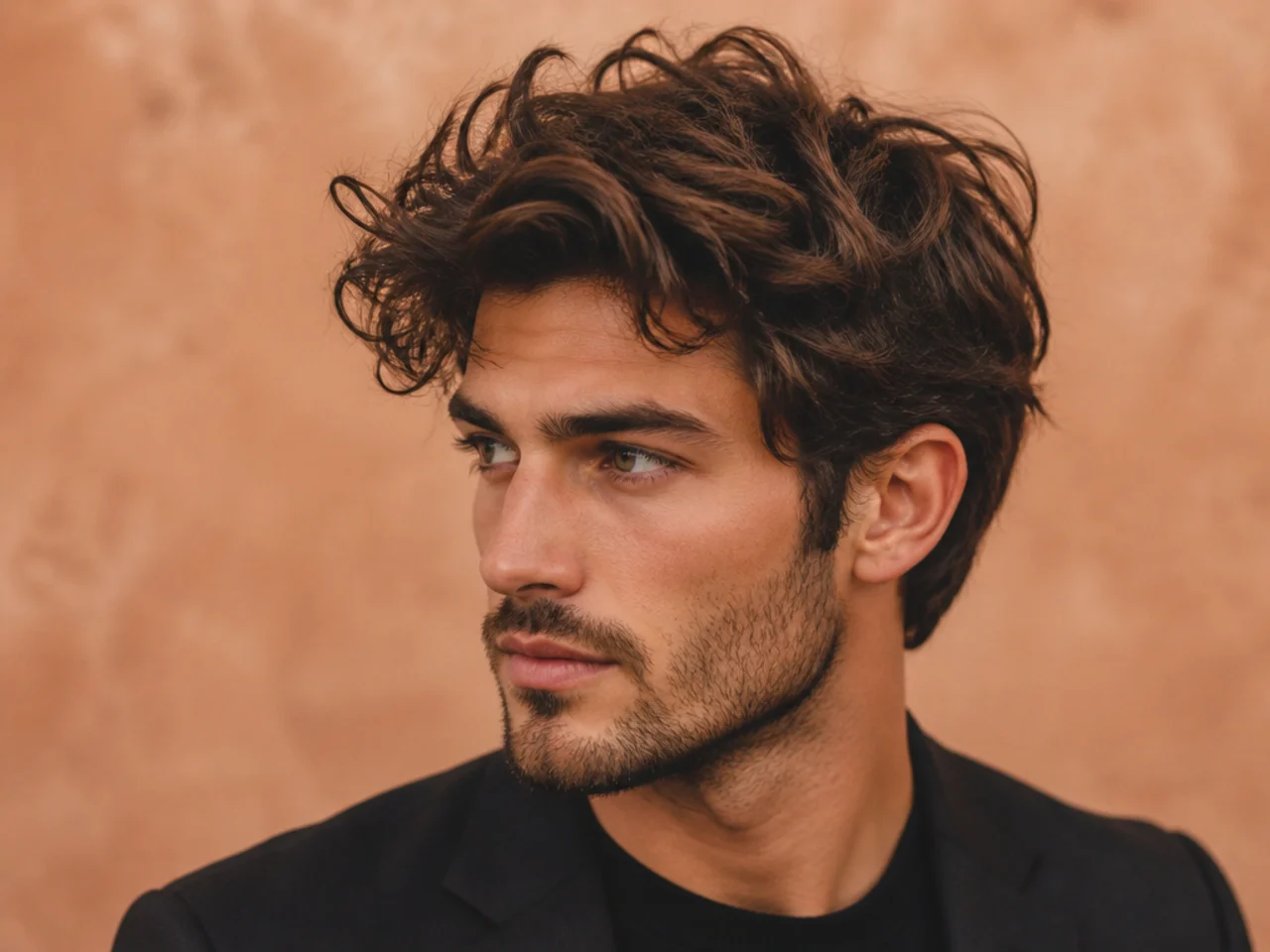
Thick messy hair looks professional when the length is even and the ends stay clean. That's a scissor-cut job, not a clipper job. Suits creative fields, tech at a startup, media, architecture — anywhere culture rewards personality. Ask for three inches all over, cut with heavy layering to keep the density from going pyramidal, and a soft point-cut through the ends. Style with a matte paste worked in from root to tip. Push forward with your hands, then leave it alone. Check our messy hairstyles for men guide for related takes.
Side Swept Wavy Hair
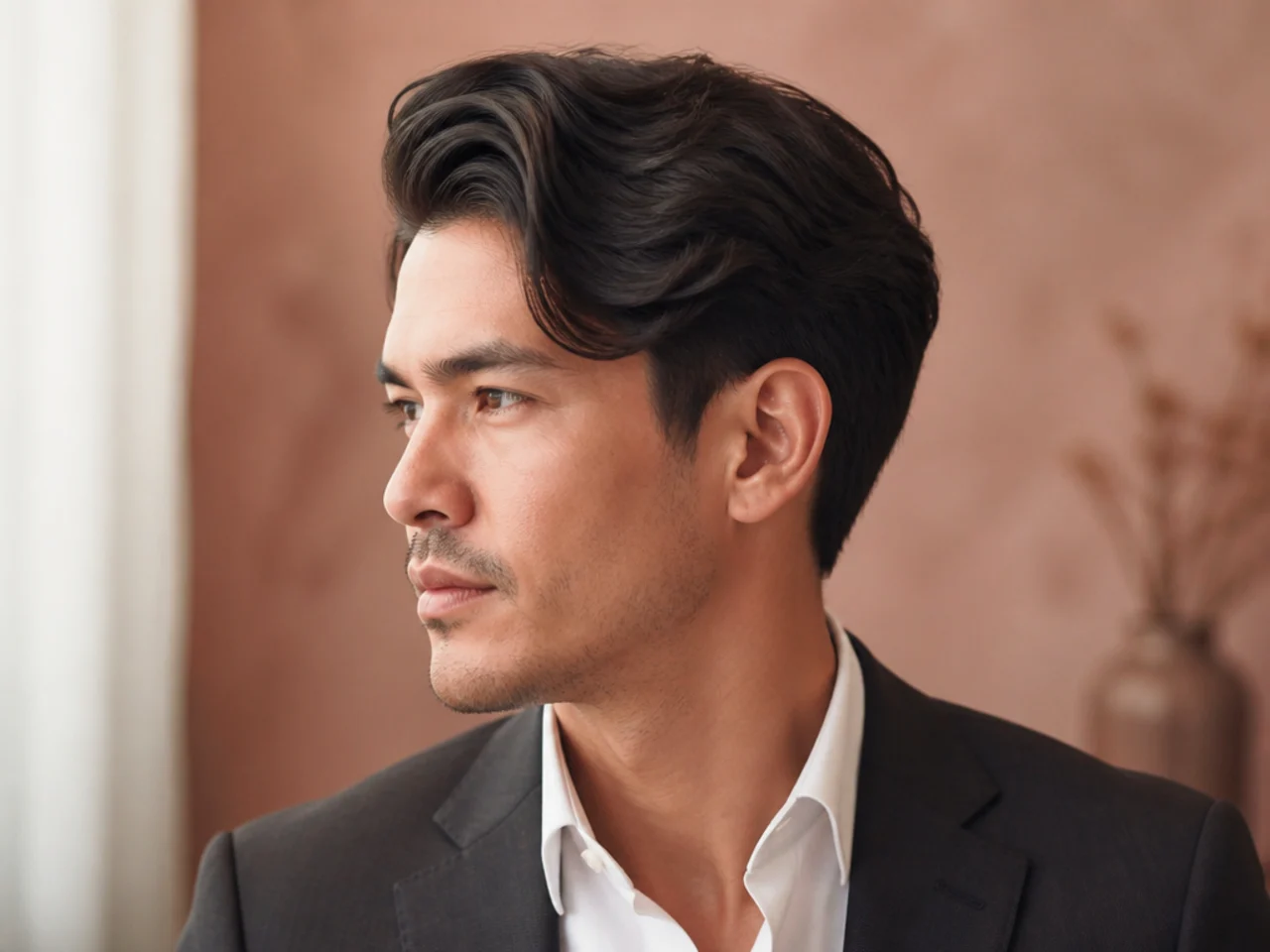
Side-swept waves read professional when the sides stay tight and the top has clear direction. Wavy hair reads intentional when you sweep it, chaotic when you leave it. Suits marketing, real estate, hospitality — client-facing roles where an approachable look pays off. Ask for three inches through the top, a low taper on the sides fading to a #1 above the ear, and a soft part on your natural side. Rough-dry the top back and to the side, then work a light cream through the ends. A blow-dryer on cool locks the shape without adding frizz.
Classy Man Bun
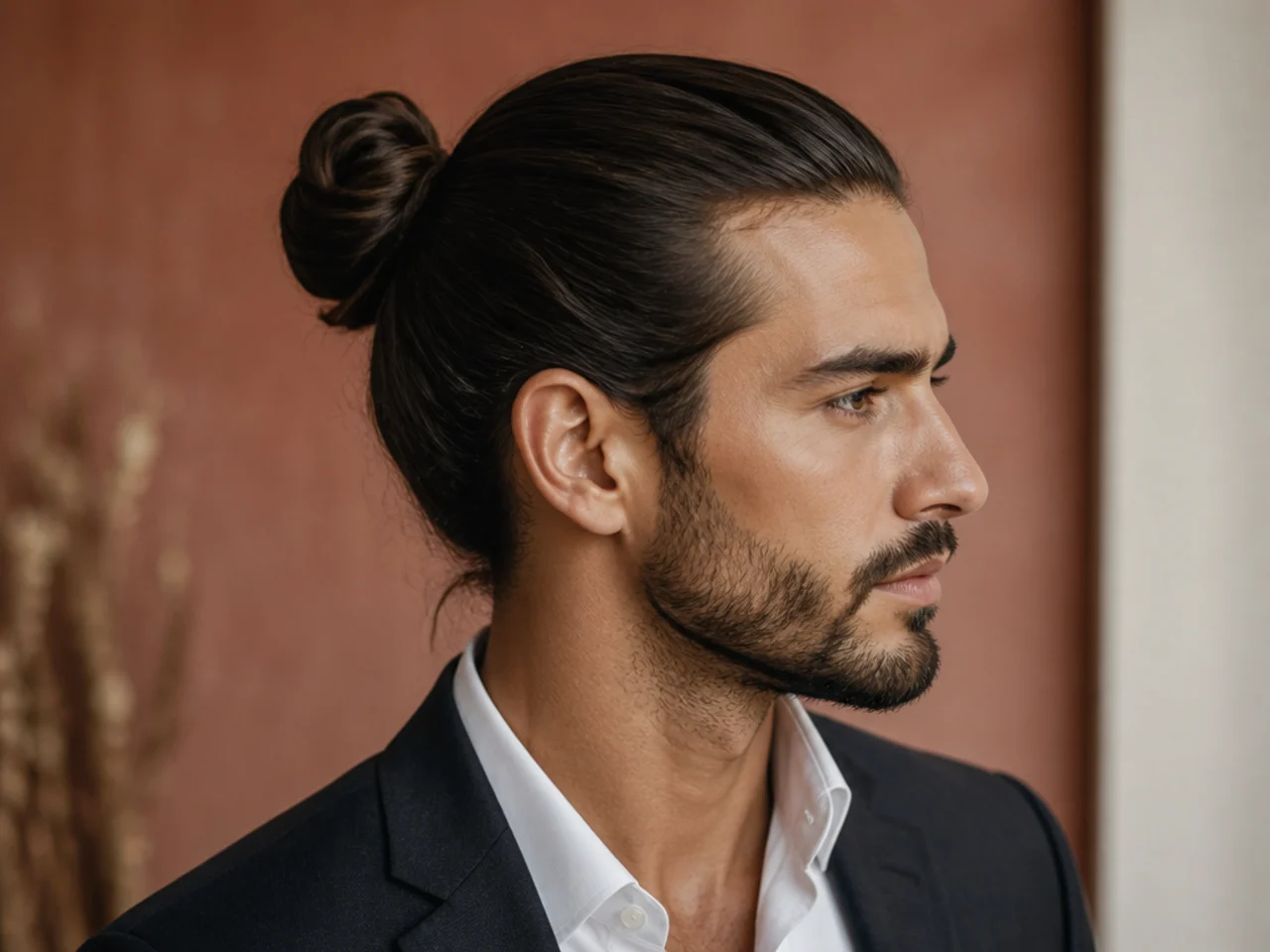
A man bun reads professional when the bun sits low, the pulled-back hair is smooth, and the sides don't fly out. It requires more discipline than a short cut, not less. Suits creative industries, hospitality, senior tech — workplaces where longer hair is normalized. Ask for length from the collar to mid-back, with a hidden undercut running ear to ear so the bun sits flat instead of ballooning. Pull hair back with a boar-bristle brush, secure with an elastic at the nape of the neck, and use a fingertip of pomade to smooth flyaways along your hairline. Wash every other day.
Long Comb Over
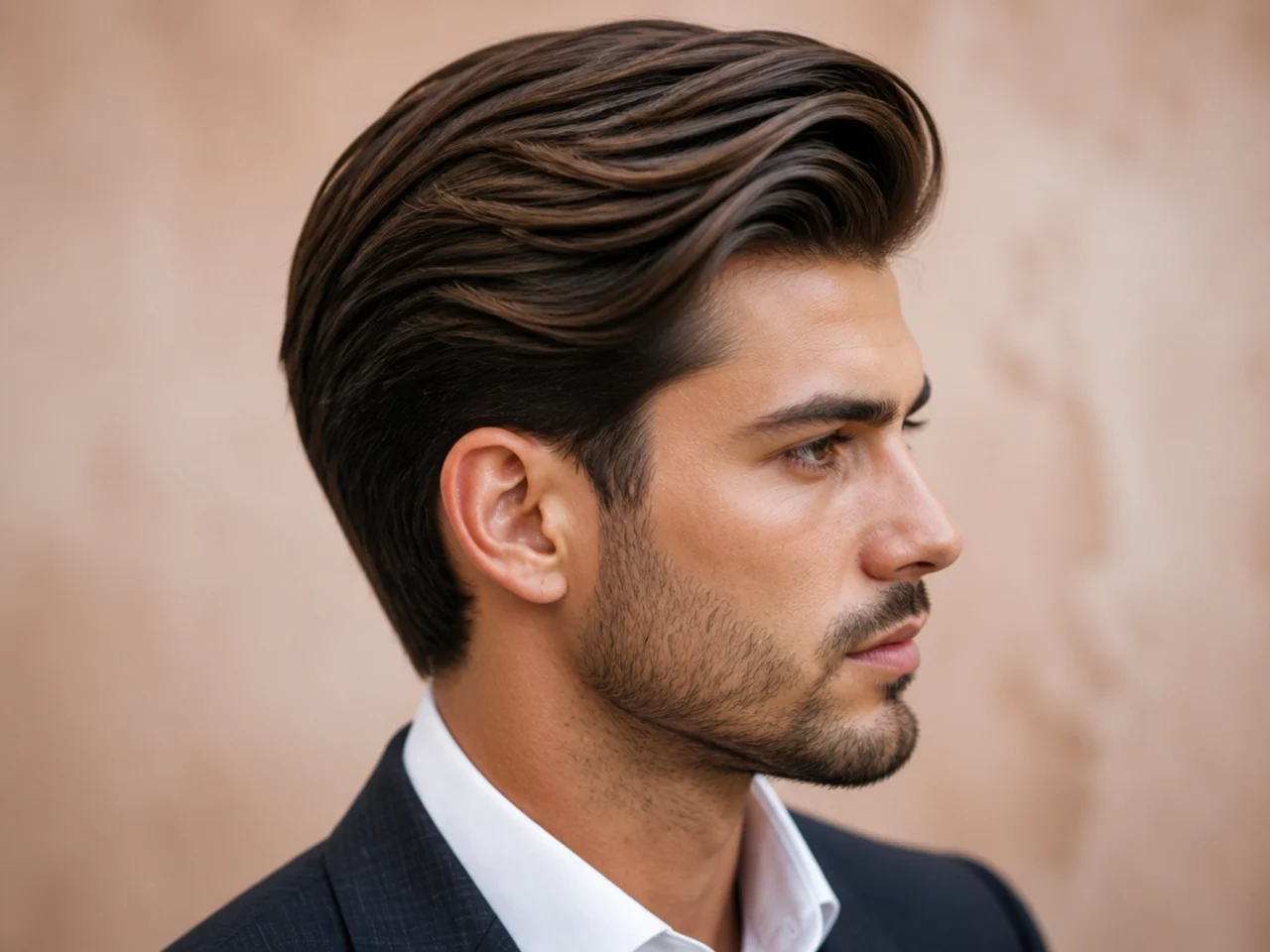
A long comb over is a comb over with two extra inches of drama. Same principles: deep part, tight sides, disciplined finish. Suits senior executives, law partners, anyone who wants a signature look that still reads formal. Ask for five inches through the top, a low taper on the sides fading to skin, and a hard part on your natural side. Apply pomade to damp hair, comb across from the part, then use a paddle brush to press the shape flat. Finish with hairspray at the crown. A short groomed beard adds weight to the jaw and balances the length up top.
Textured Quiff with Low Taper Fade
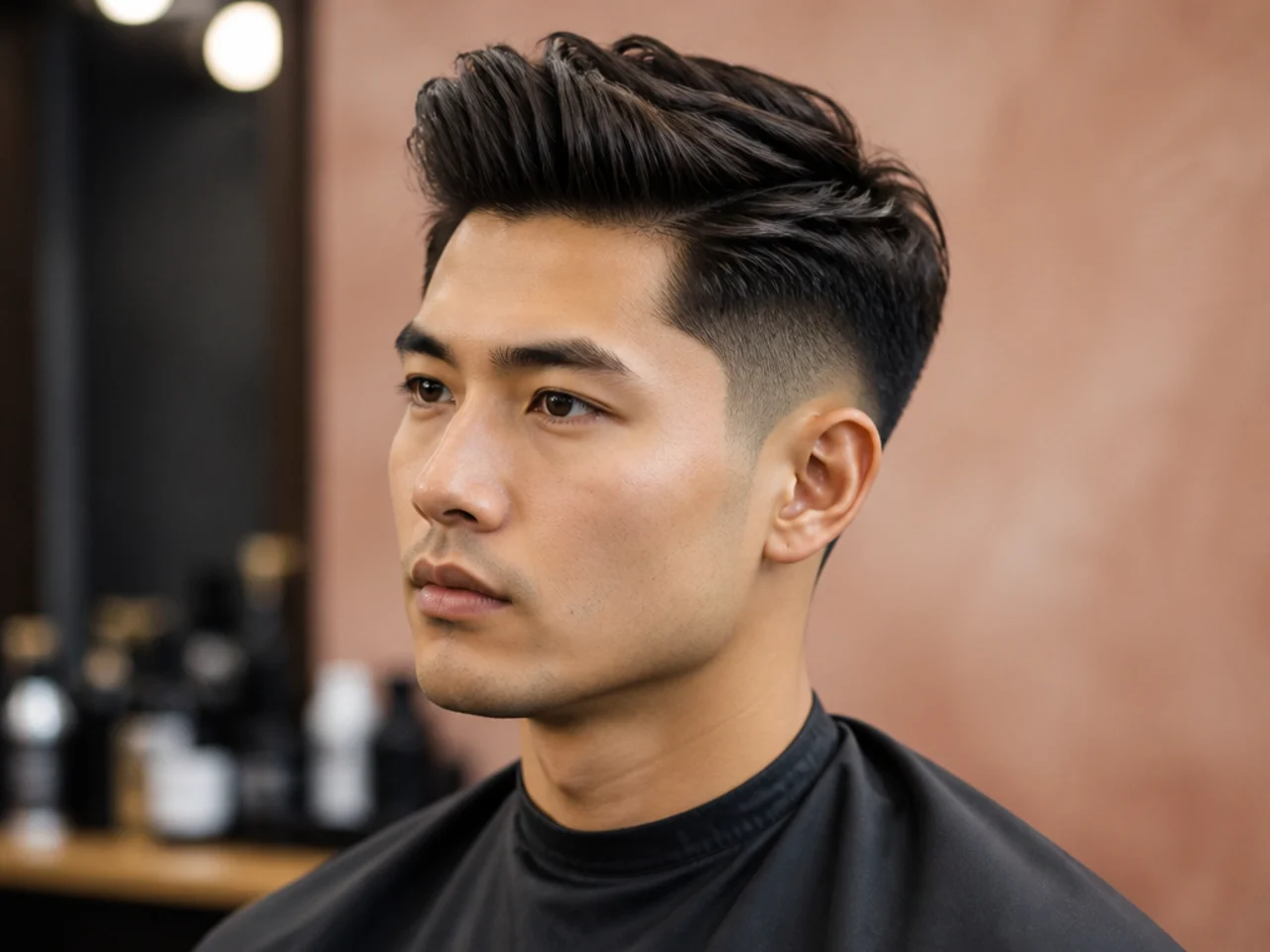
A textured quiff with a low taper fade is the current default for professionals under 40. Enough volume to notice, enough discipline to belong in a boardroom. Suits every industry from law to tech. Ask for three inches through the front, cropped shorter as you move back, with a low taper fade starting right at the temple. Blow-dry the front up with your fingers, then apply matte paste from mid-length to root. Push the shape up and slightly back. The taper is your safety net — it looks professional even on days you don't style.
Long, Tousled Curls
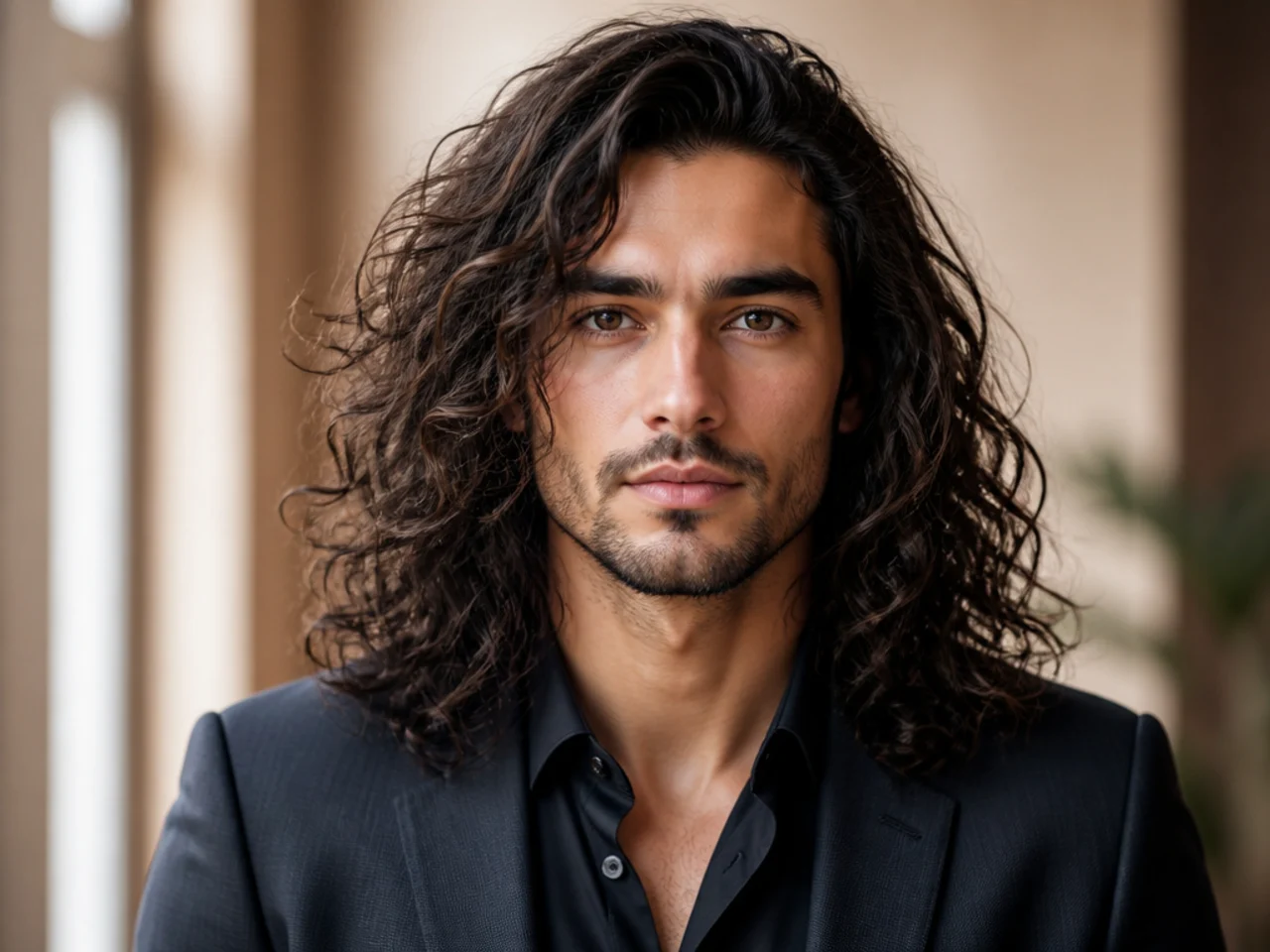
Long tousled curls read professional when the curls are hydrated, the length stays uniform, and the sides don't puff out. That's a maintenance question, not a cut question. Suits creative agencies, media, teaching, senior tech — culturally flexible workplaces. Ask for length that hits your jaw when the curls are dry (they'll shrink up), plus a graduated shape so the sides don't add width. Apply curl cream and gel — the cream conditions, the gel holds. Diffuse until fully dry, then crunch out the gel cast with your fingers. Skip shampoo on off-days; conditioner-only preserves the curl pattern.
High and Tight
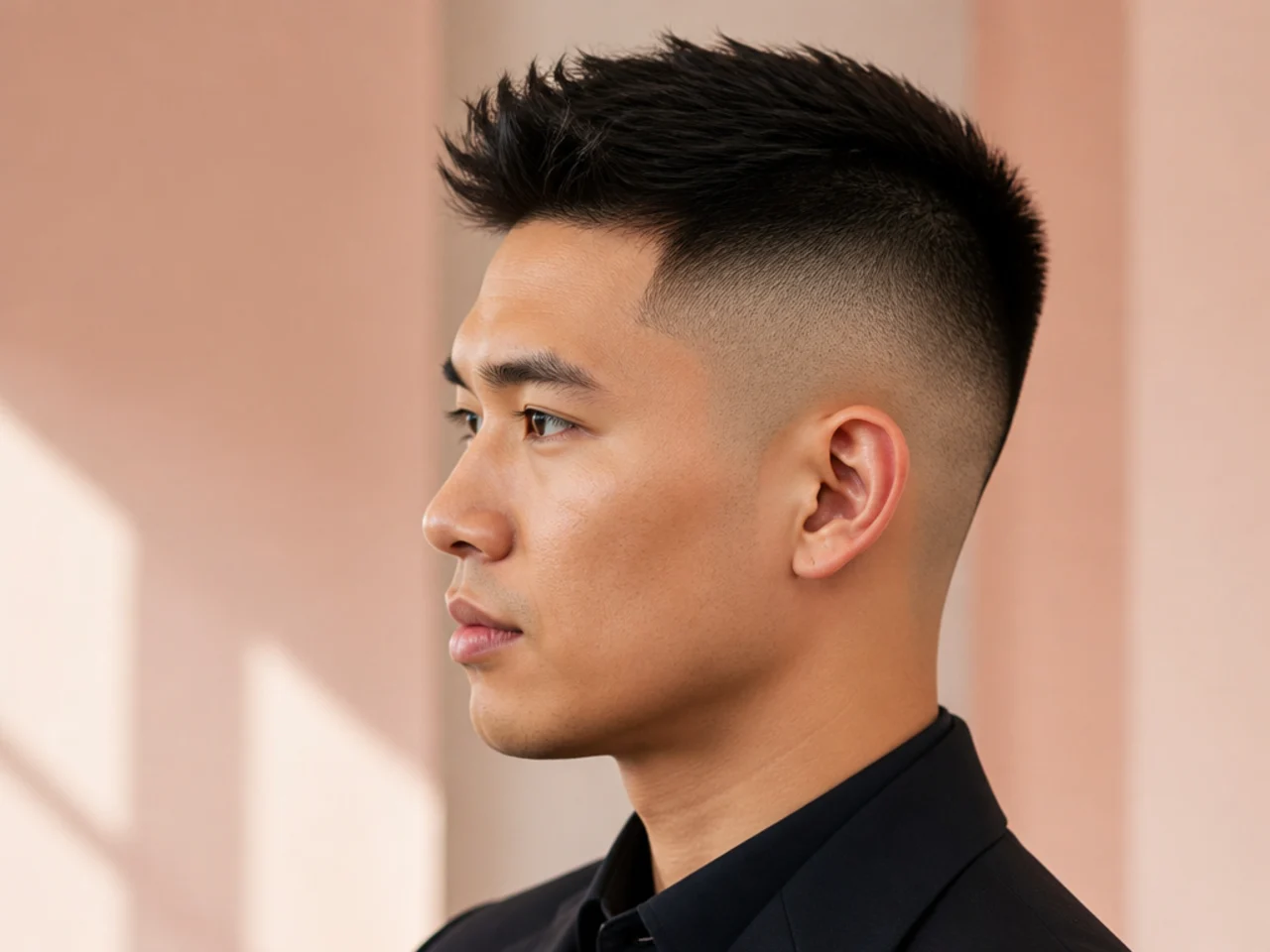
The high and tight is a military-adjacent professional cut with zero styling required. The contrast between the top and sides does all the visual work. Suits law enforcement, military-transition roles, consulting, banking — professions that reward decisiveness. Ask for a #3 guard through the top with the length isolated to the crown, a bald fade or a #0 on the sides, and a defined line right at the parietal ridge. Nothing to style. A drop of scalp oil on the sides keeps them from looking dry. Book every two weeks — this style loses its edge in ten days.
Spiky Hair
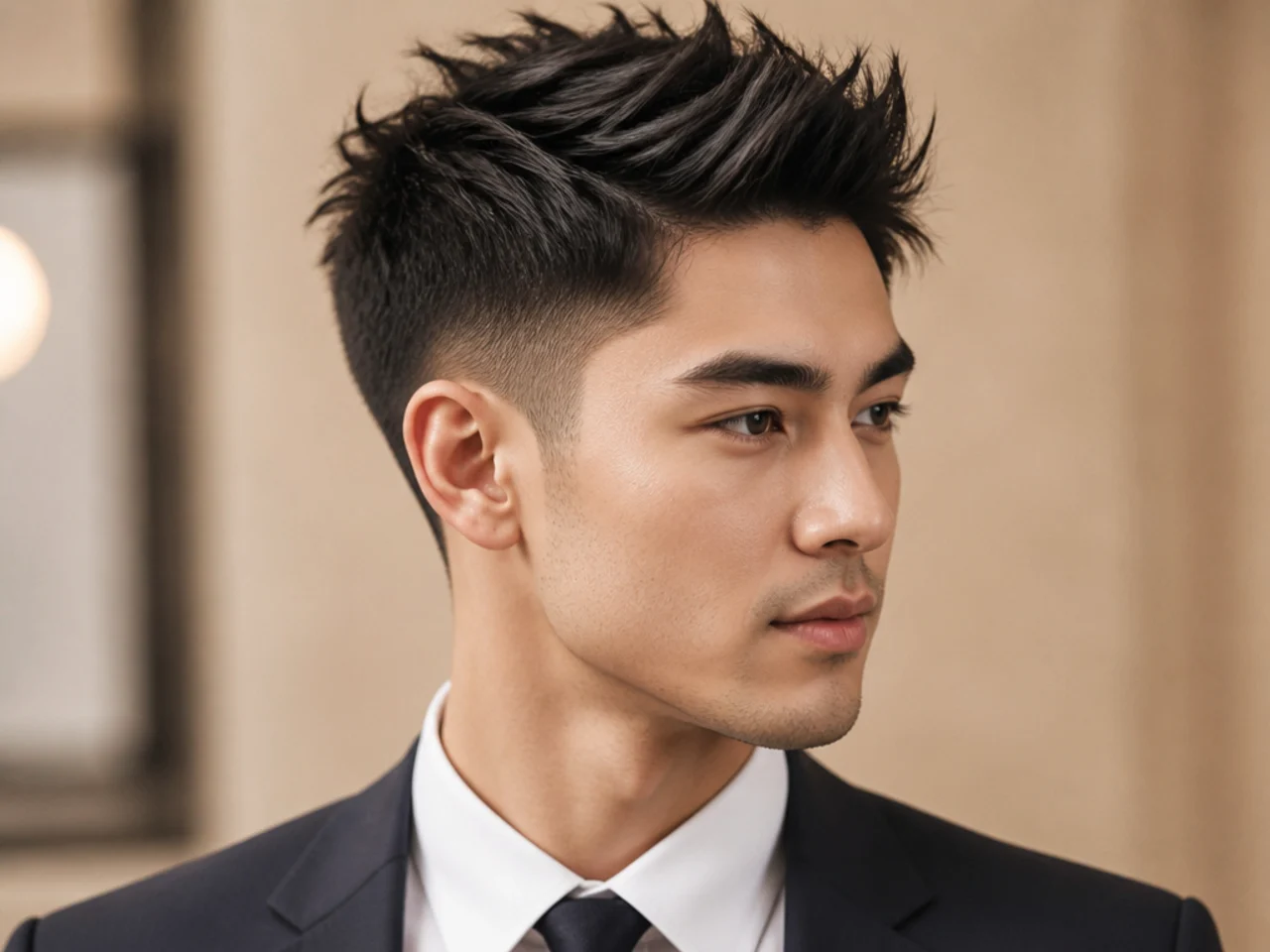
Spiky hair reads professional when the spikes are subtle and the sides stay disciplined. Think architectural texture, not 2003 boy band. Suits sales, tech, creative roles — anywhere a bit of energy in your look works for you. Ask for two inches of length across the top, a taper on the sides fading to a #1 above the ear, and a soft front hairline. On damp hair, work a firm-hold clay from root to tip. Pull small sections upward and pinch the ends. The spikes should suggest movement, not spell it out.
Short Hair with A Beard
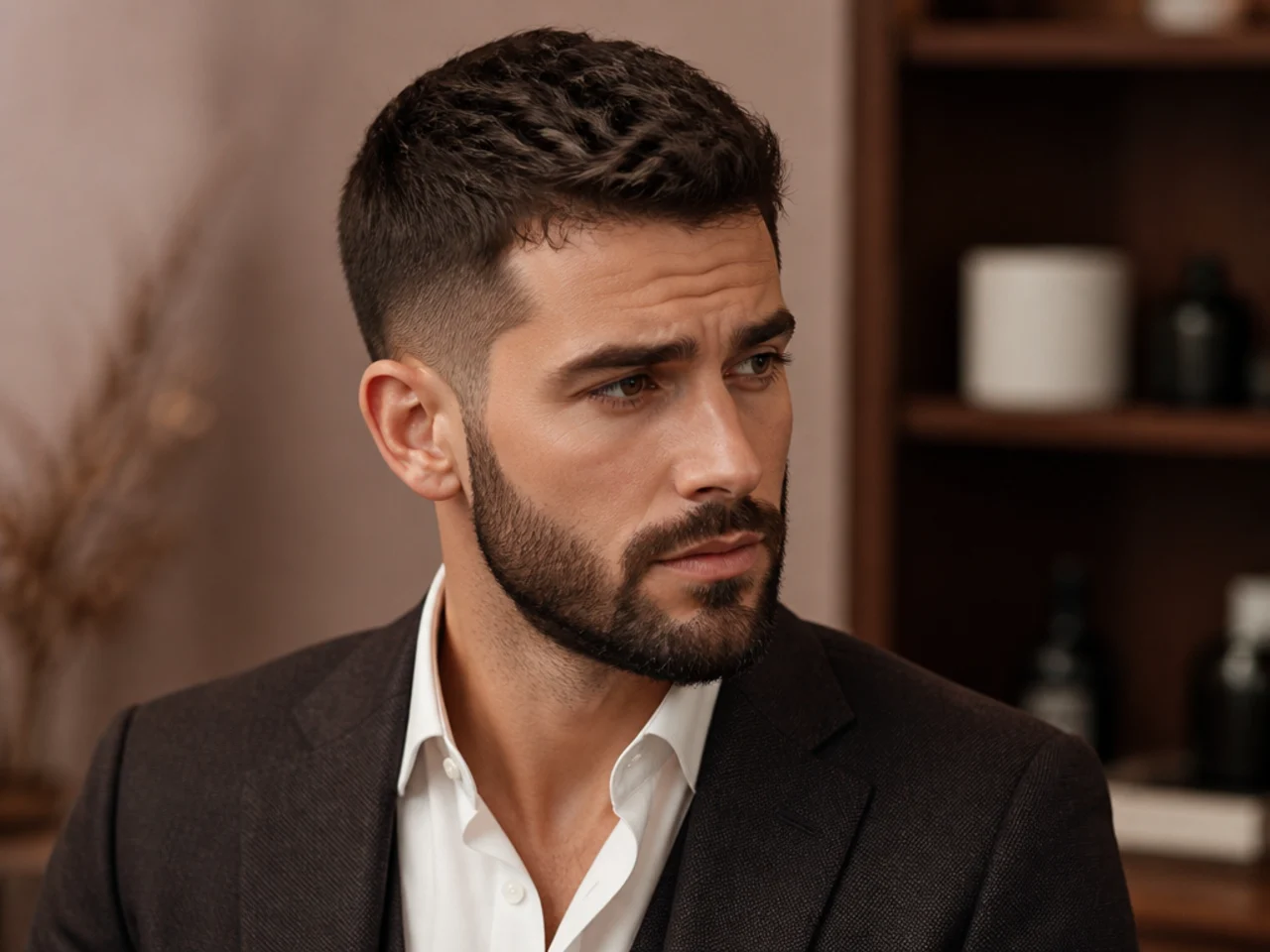
Short hair paired with a full beard reads professional when both are cut in the same length family. Uneven ratios make one dominate the other. Suits professors, doctors, senior tech — roles where age and authority pair well. Ask for one and a half inches on top with soft layering, a scissor-blended taper on the sides, and a beard trimmed to a #4 with defined cheek and neck lines. Style the top with a matte cream — small amount, brushed forward. Comb the beard daily. The whole look should feel considered, not accidental.
Medium Shaggy Hair
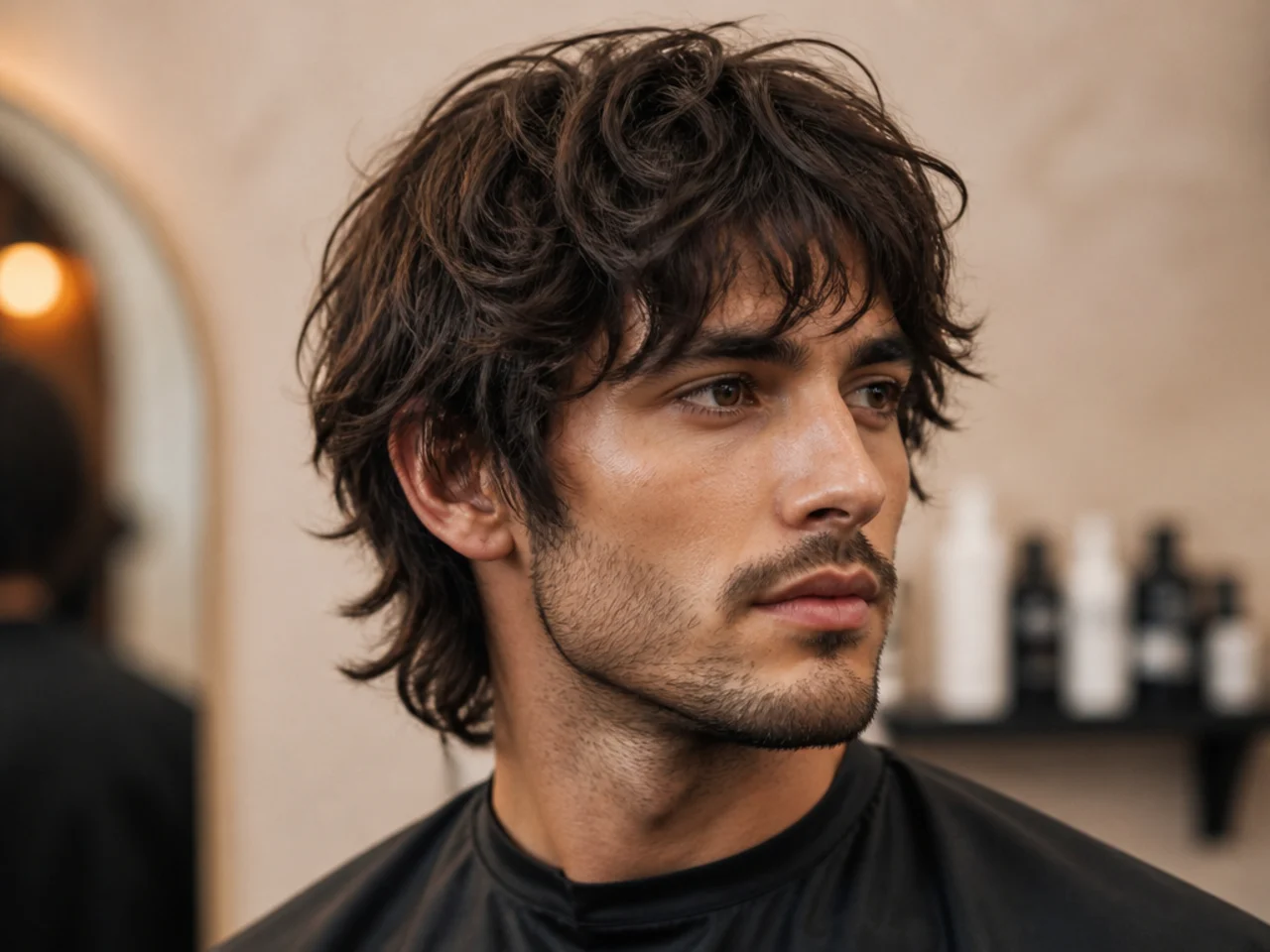
Medium shaggy hair reads professional when the layers are cut with intention and the ends stay tidy. The word "shaggy" is misleading — this cut requires precision. Suits creative fields, media, tech, architecture. Ask for three to four inches with heavy internal layering, sides brought down over the ear, and a fringe that breaks softly against your forehead. Air-dry with a bit of sea salt spray, then rake through with your fingers. The shag haircut works especially well on wavy hair — it gives the waves shape without asking them to behave.
Comb Back with Mid Skin Fade
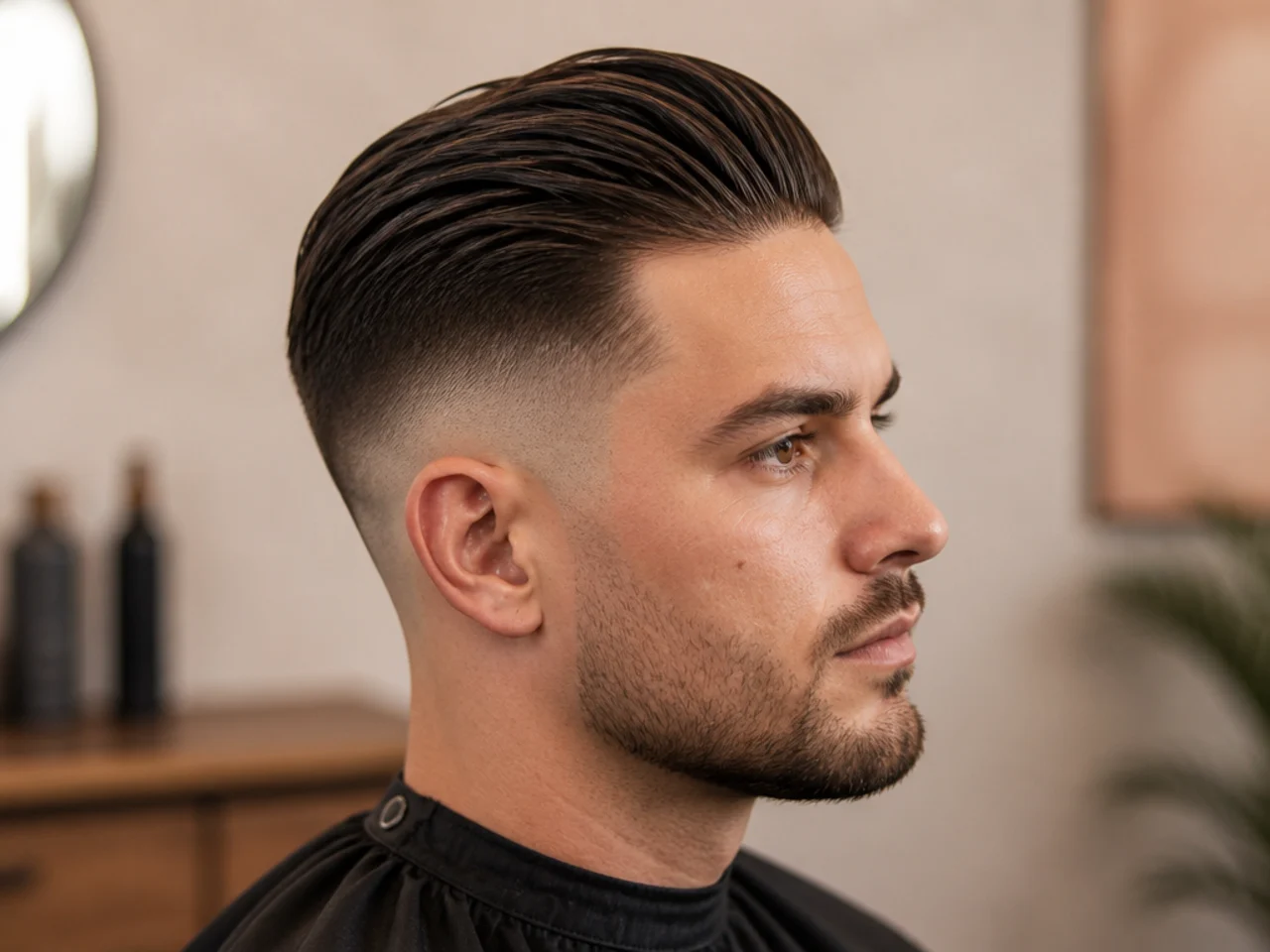
A brushed-back top with a mid skin fade is one of the sharpest cuts you can walk into a corporate office with. It reads intentional from ten feet away. Suits banking, law, consulting, executive roles. Ask for three inches on top, a mid skin fade starting an inch above the ear, and a clean natural hairline in front. Apply pomade to damp hair, comb straight back with a fine-tooth comb, then hit the sides with a blow dryer on cool. The skin fade holds its shape for about ten days — book at the two-week mark to keep the edge.
Modern Mullet Fade
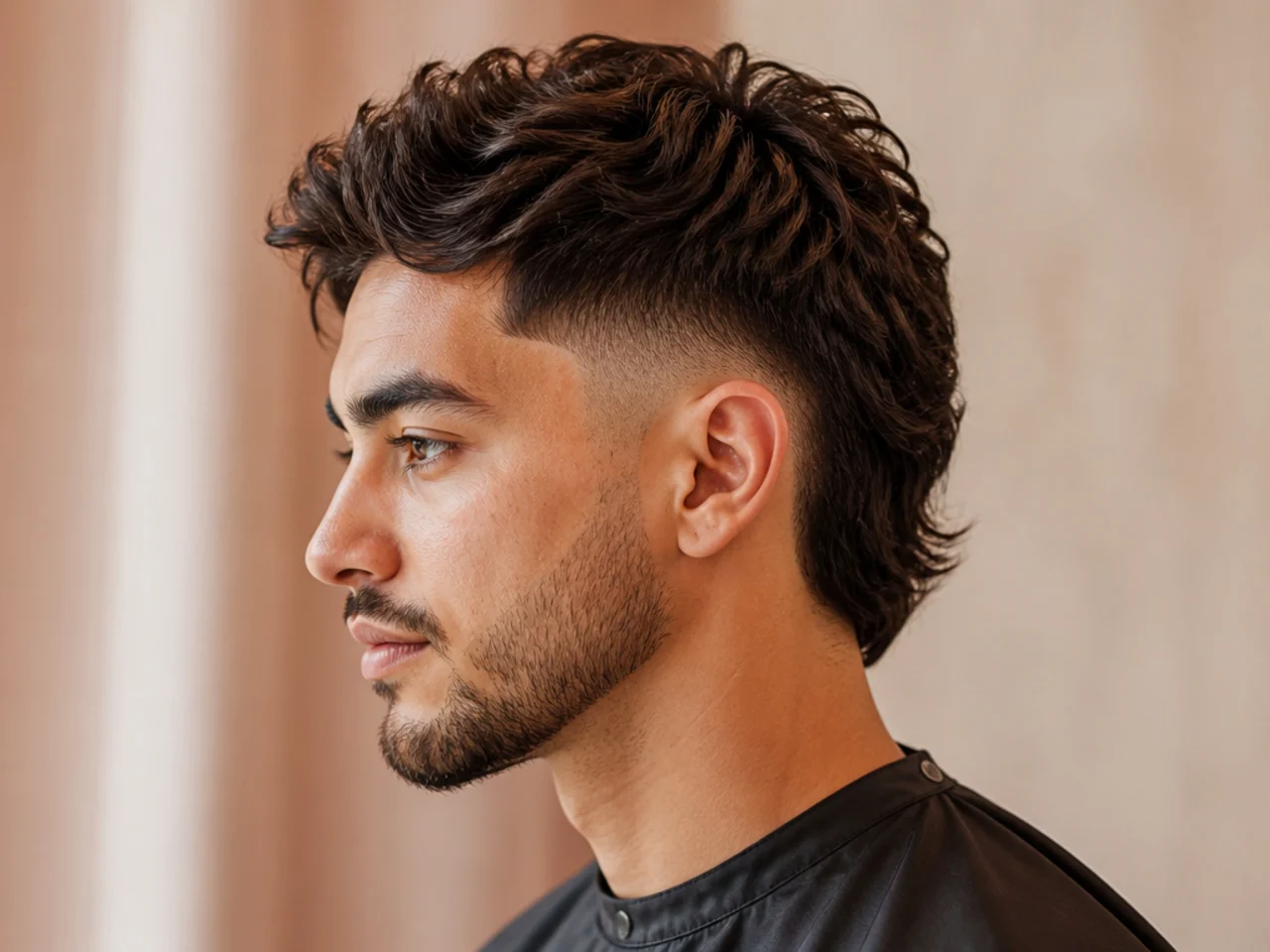
The modern mullet with a fade sounds like a joke and reads shockingly professional in practice. Short and disciplined on the sides, longer through the back and crown, no party in the back — just a controlled weight line. Suits creative directors, agency leadership, media — workplaces that value a distinctive look. Ask for two inches on top, a fade on the sides, and length in the back that grazes the top of your collar. Style the top with matte paste, push slightly forward, and let the back sit. If you're new to this cut, ease in — start mullet-adjacent and let the back grow in over a few visits.
Brush Back with Mid Skin Fade and A Beard
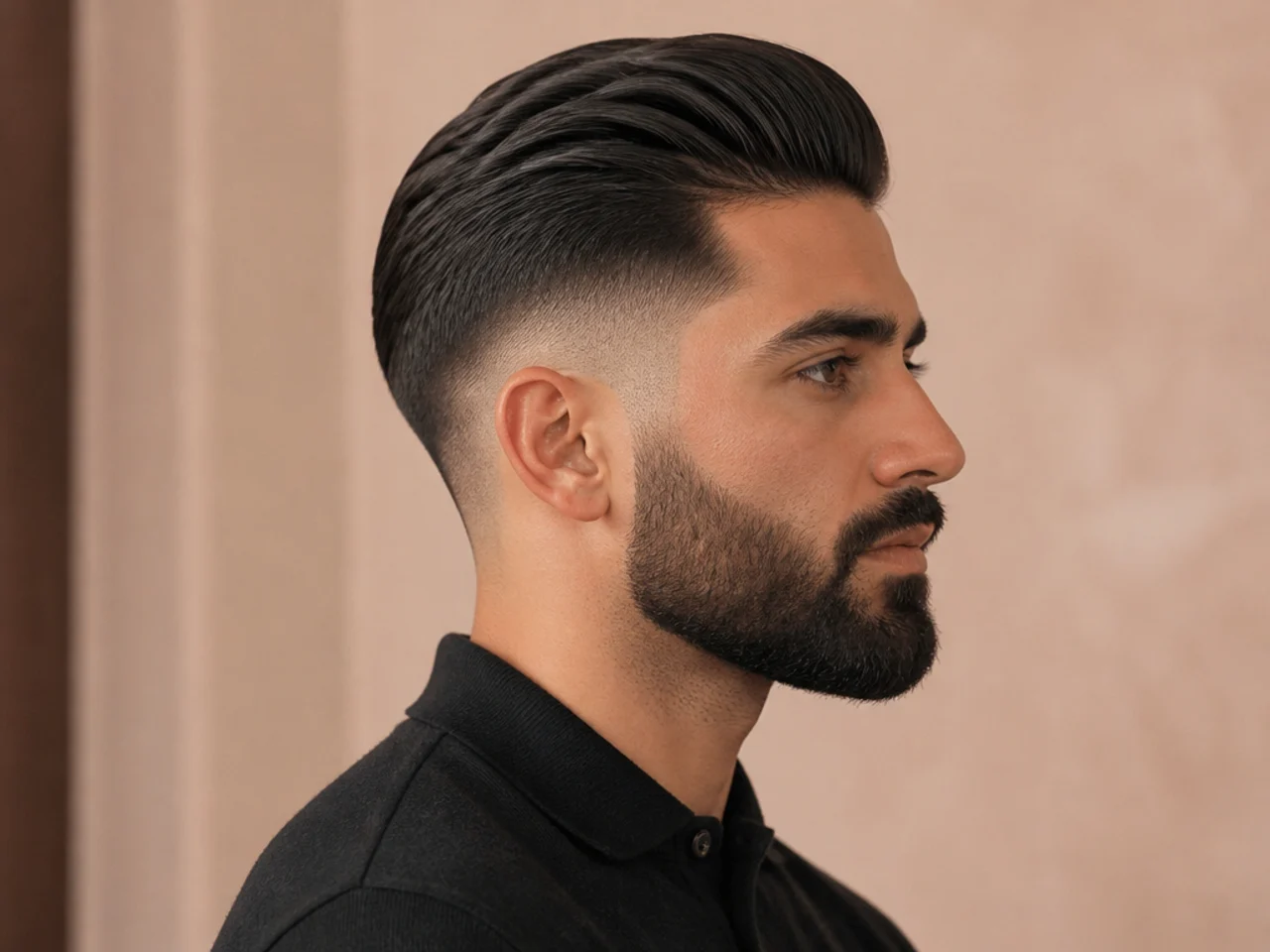
Brushed back with a mid skin fade and a full beard is the alpha-professional silhouette. It photographs well and holds up in every meeting on your calendar. Suits senior finance, executive roles, legal partners. Ask for three inches on top, a mid skin fade running from the temple down to the neckline, and a beard trimmed to a #4 with cheek and neck lines etched sharp. Apply pomade to damp hair, comb back, and blast cool air through the sides. Comb the beard forward first, then downward — this trains the hairs to sit flat. Oil the beard nightly to avoid the wire-brush texture.
The Most Popular Professional Haircut for Men
When you ask what the most-requested professional haircut looks like right now, the answer is a short list: the comb over fade, the textured quiff, the crew cut, the side part with a mid fade, and the slick back undercut. Every one follows the same recipe — length on top with clear direction, short and disciplined on the sides, a finish that stays neat all day.
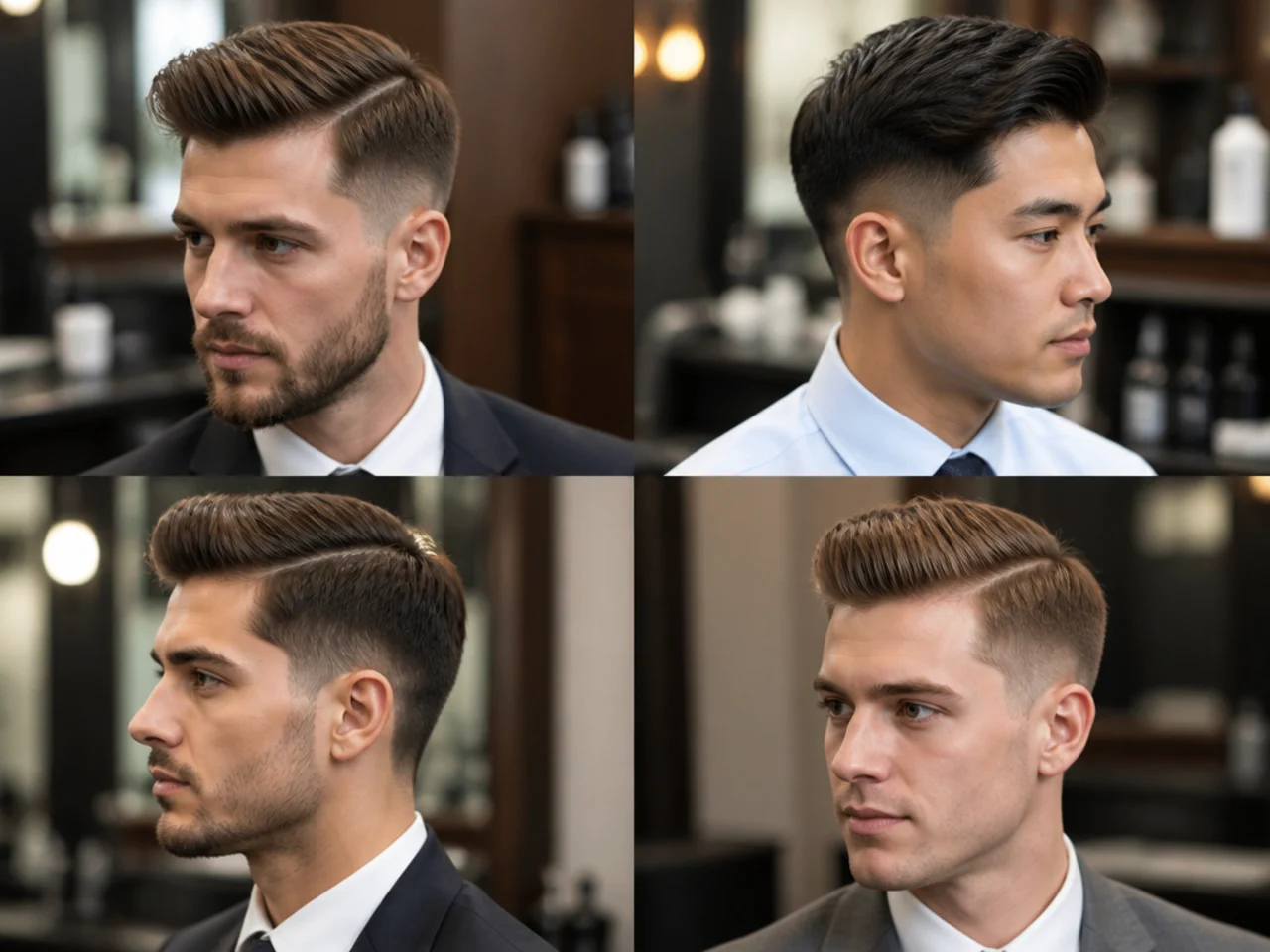
The classic taper sits at the center of every version. It's the cut that reads polished on every hair type, on every face shape, in every industry — because the barber shapes it with scissors rather than committing to a fixed clipper length. A taper is subtle in a way a fade never is, which makes it the safest choice for conservative industries: law, finance, medicine, government.
If you're new to the world of professional cuts, start with a taper and a two-inch top. From that base you can experiment — grow the top out for a quiff, sharpen the sides into a fade, deepen the part for a comb over. See our full professional hairstyles for men library for direction and photo references.
Professional Men's Long Hairstyles
Long hair reads professional in most modern workplaces if you keep it clean. That's the entire secret. Untangled, freshly washed, no visible split ends. The look that gets you called into the wrong meeting isn't length — it's neglect.
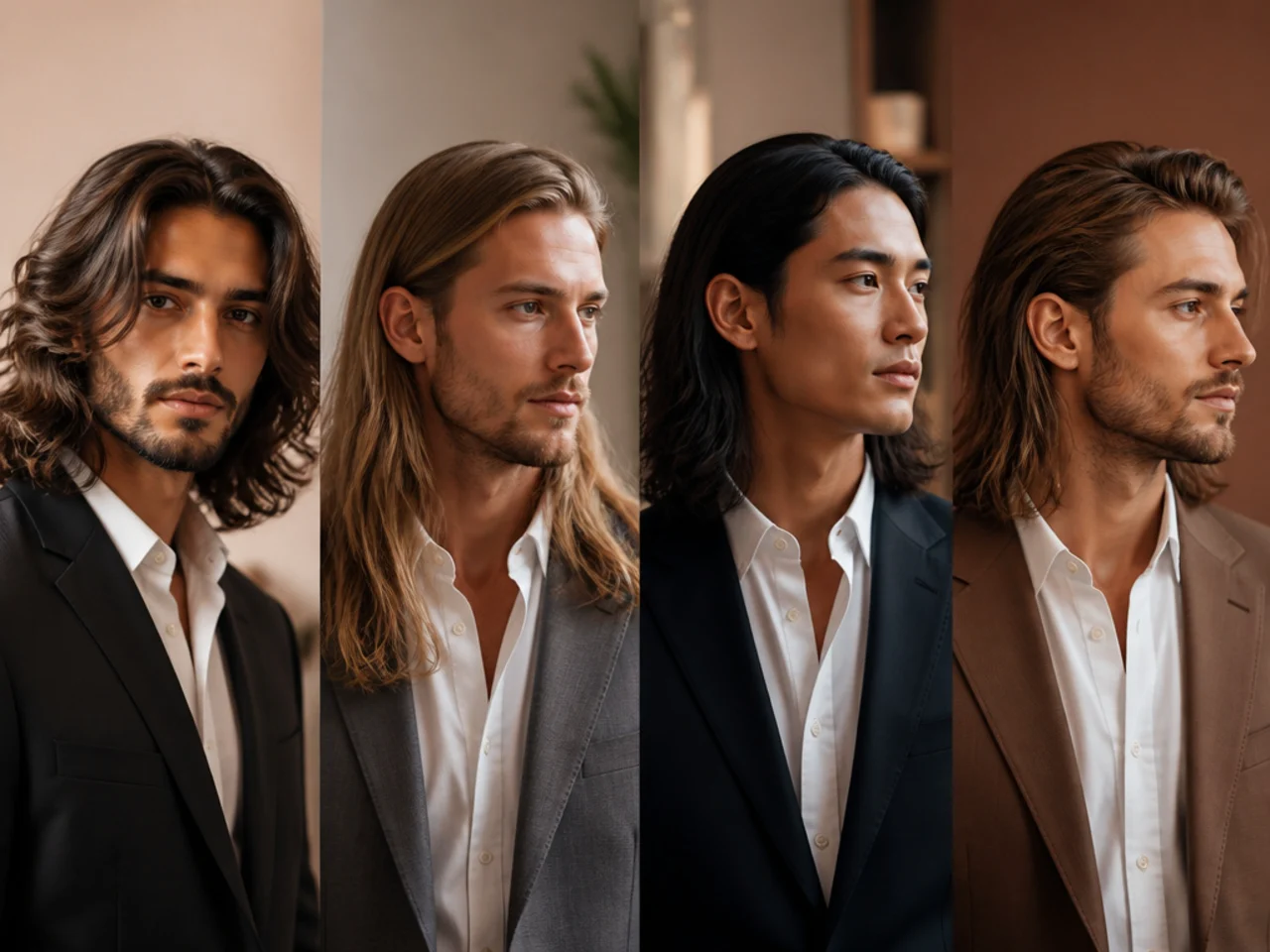
The three long styles that read most professional: a controlled layered cut that hits your collar, a low ponytail secured at the nape, and the man bun tied loosely enough that no scalp shows through. Every one of these requires a haircut every six weeks — length gives you options, but only if you're maintaining the shape underneath. Ask your barber for internal layering to keep the density manageable, a soft weight line at the collar, and a scissor blend around the ears.
Wash every other day with sulfate-free shampoo and follow with a leave-in conditioner. Brush from the ends up to avoid pulling, not from the roots down. If you work in a suit-and-tie industry and still want to keep your length, tie it back for meetings and wear it down at your desk. That single move is what separates long hair that reads professional from long hair that reads like a personal statement.
Medium Length Professional Men's Hairstyles
Medium length is the sweet spot for professional grooming. Enough length to work with, short enough that a bad morning doesn't ruin your look. Cuts in this range — the textured side part, the classic taper, the brushed-back — do the majority of professional grooming work in the working world.
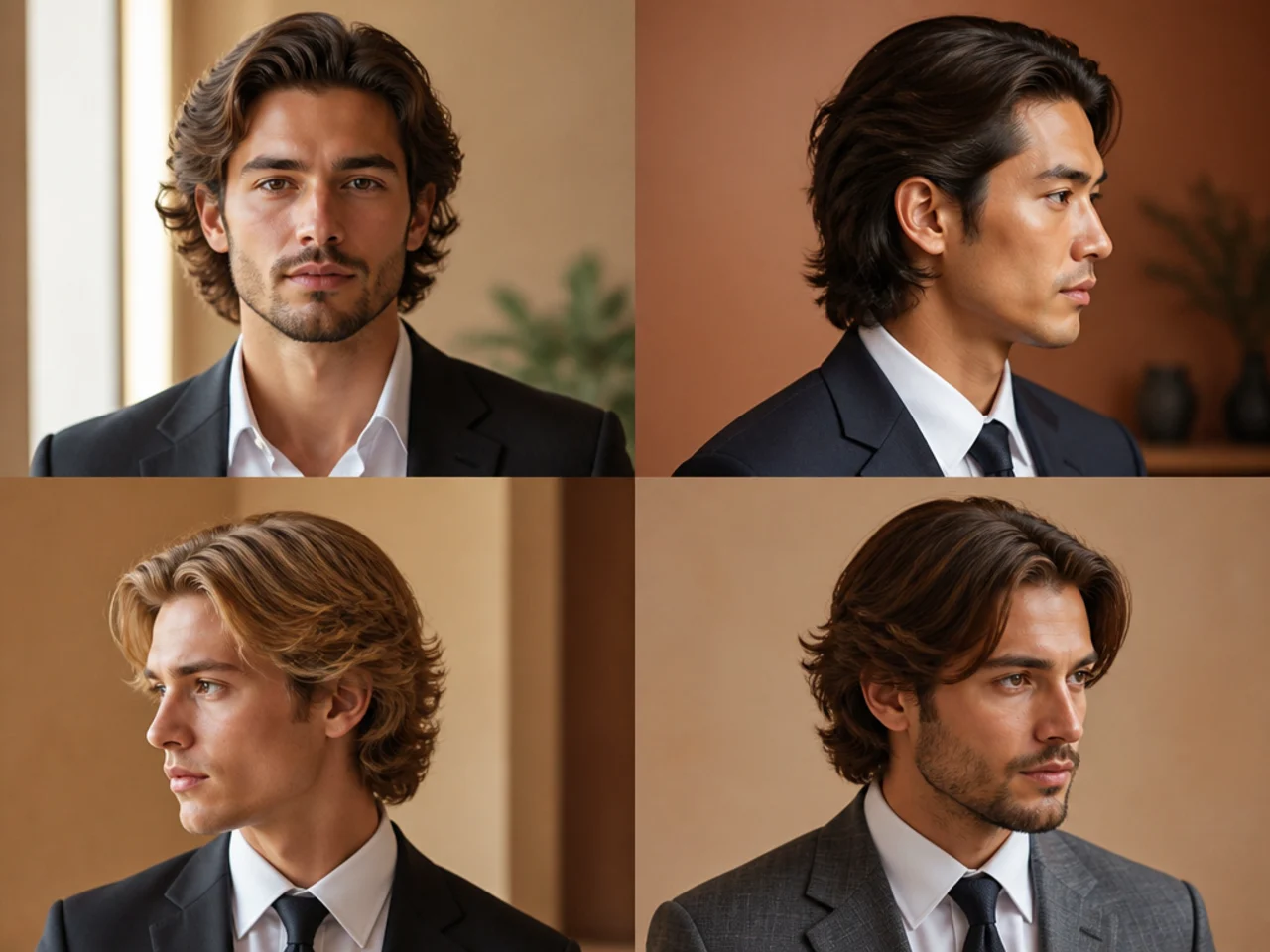
The rules that make a medium cut read professional: an even weight line so the shape doesn't blow out through the day, a disciplined side treatment (taper, low fade, or mid fade — pick one and commit), and a finish that reads matte rather than glossy under office lighting. Glossy pomades photograph like helmet hair on webcam calls; matte pastes and clays photograph like natural texture.
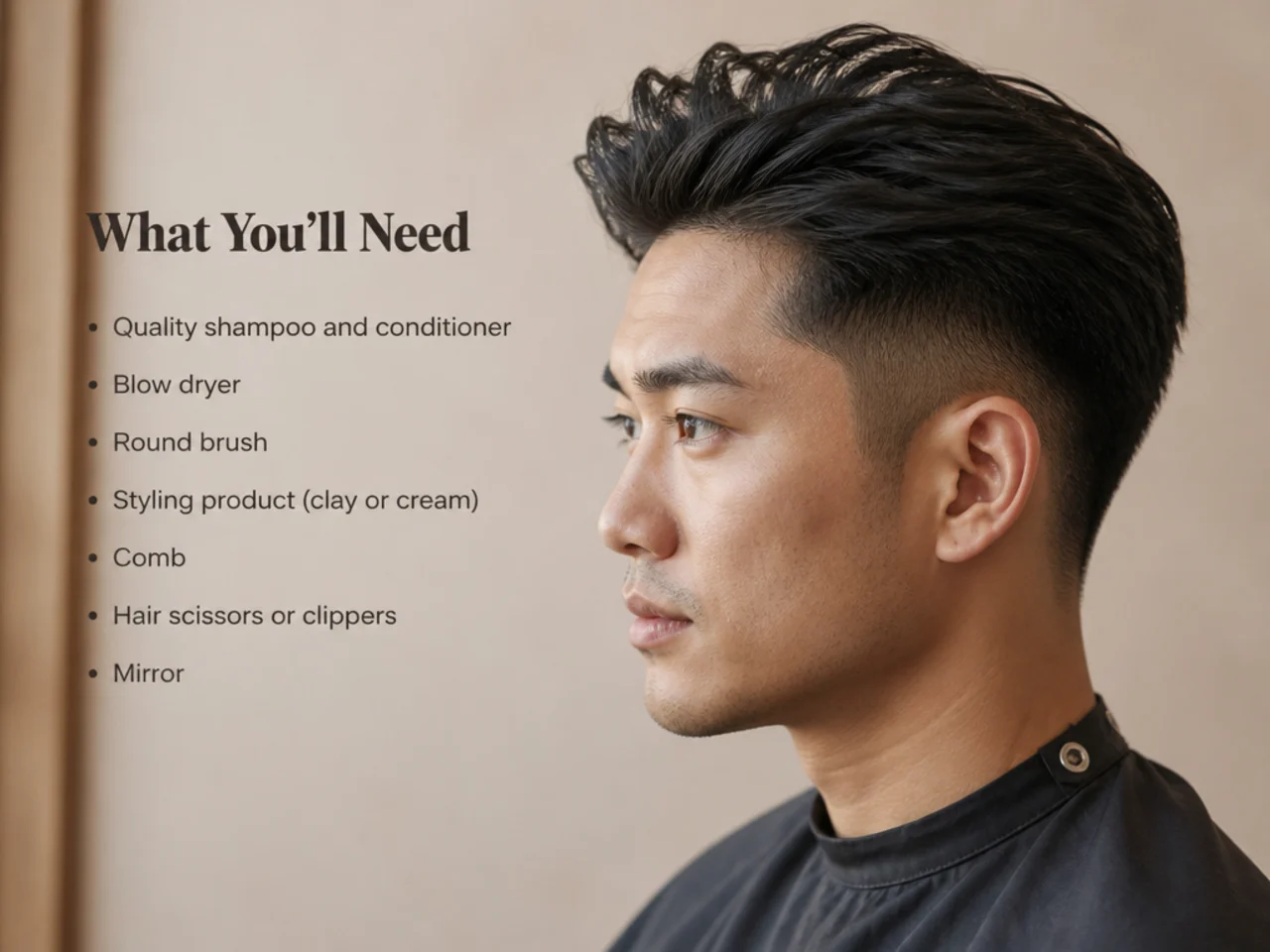
For styling, keep the tools simple: a fine-tooth comb, a boar-bristle brush, a small paddle brush, one blow dryer with a concentrator nozzle. Product-wise, own one matte paste and one hairspray. That's the entire toolkit for every medium-length cut in this guide. Book a re-cut every four to five weeks — miss the window and the shape starts fighting you.
Final Thoughts
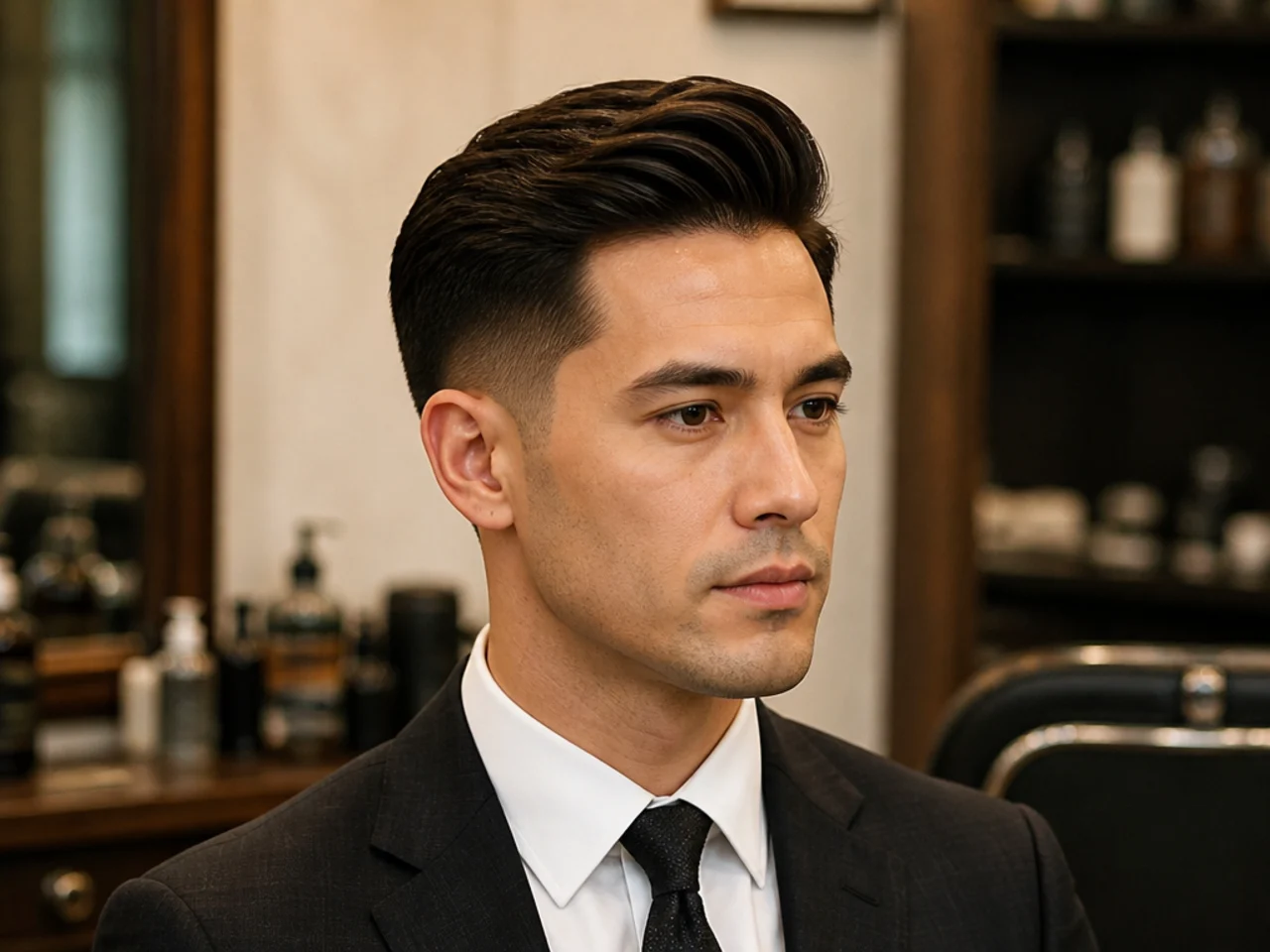
A professional hairstyle is less about the cut and more about the upkeep. The sharpest fade grows soft in two weeks. The tidiest comb over falls apart if you skip the product. Pick a style that fits your hair type, your face shape, and the amount of time you're willing to spend in front of the mirror — then commit to the maintenance calendar.
Find a barber who knows how to cut hair like yours specifically, book a standing appointment every three to four weeks for short styles or five to six for medium, and buy one good matte paste plus one hairspray. That's the entire kit. Everything else is variation on the same theme: clean lines, no visible product, consistent shape.
FAQs About Professional Hairstyle Men
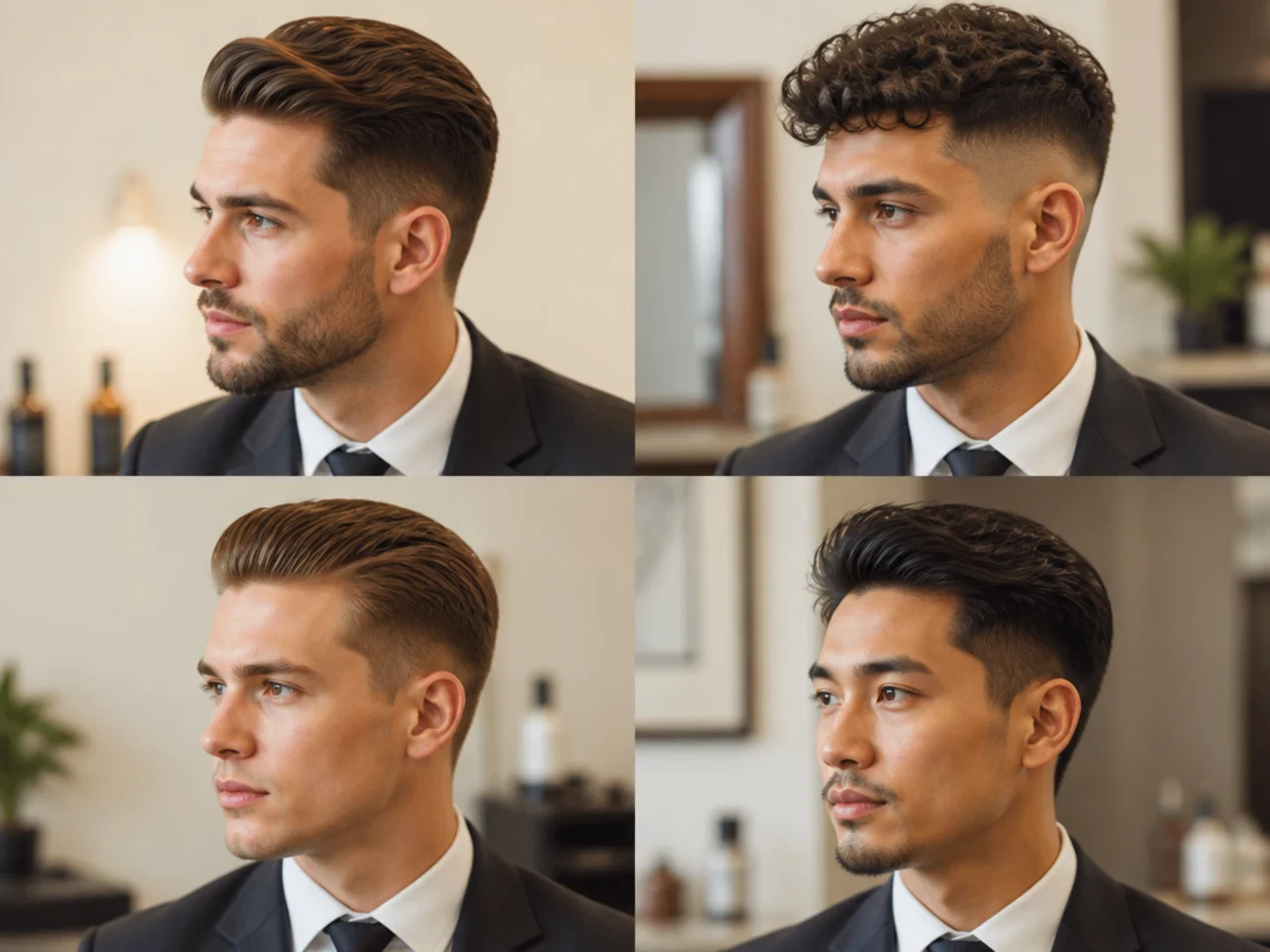
Fast answers to the questions clients ask at the chair when they're considering a professional cut.
What is The Most Professional Hairstyle For Men in 2026?
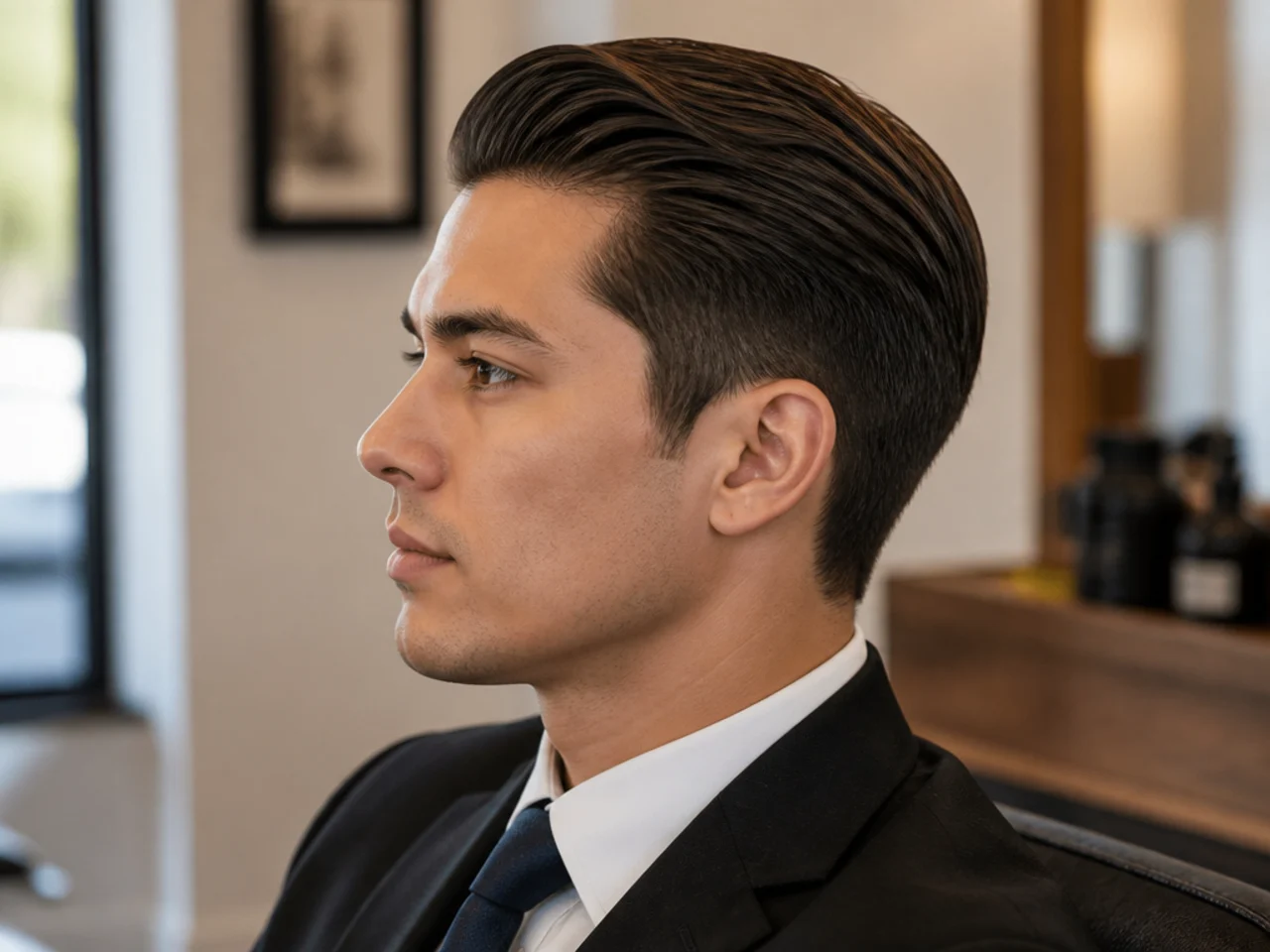
The taper fade with a side part, the textured quiff, and the classic comb over lead the professional list right now. Each reads competent in a boardroom without looking dated. If you want a single default, ask for a mid fade with two and a half inches of length on top brushed to the side — it works on nearly every hair type and every industry.
Which Professional Haircut Suits All Face Shapes?
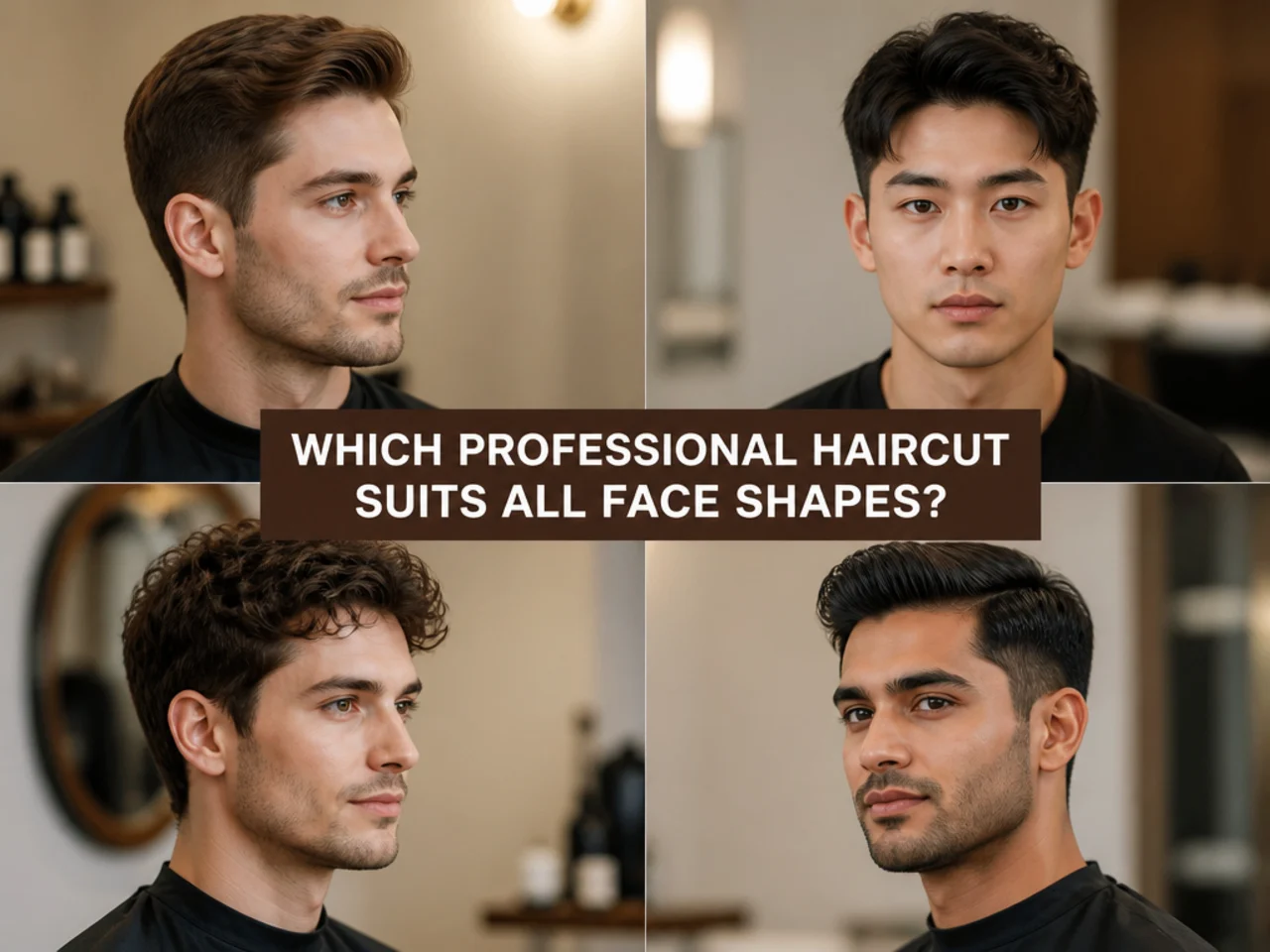
The taper fade with a soft side part is the closest thing to a universal cut. It gives an oval face a bit of angle, breaks up a round face with a defined part, and softens a square face with volume on top. Ask your barber to keep the sides scissor-blended into the fade — that's what makes it look proportional to your specific face rather than clipped on.
Are Long Hairstyles Considered Professional For Men?
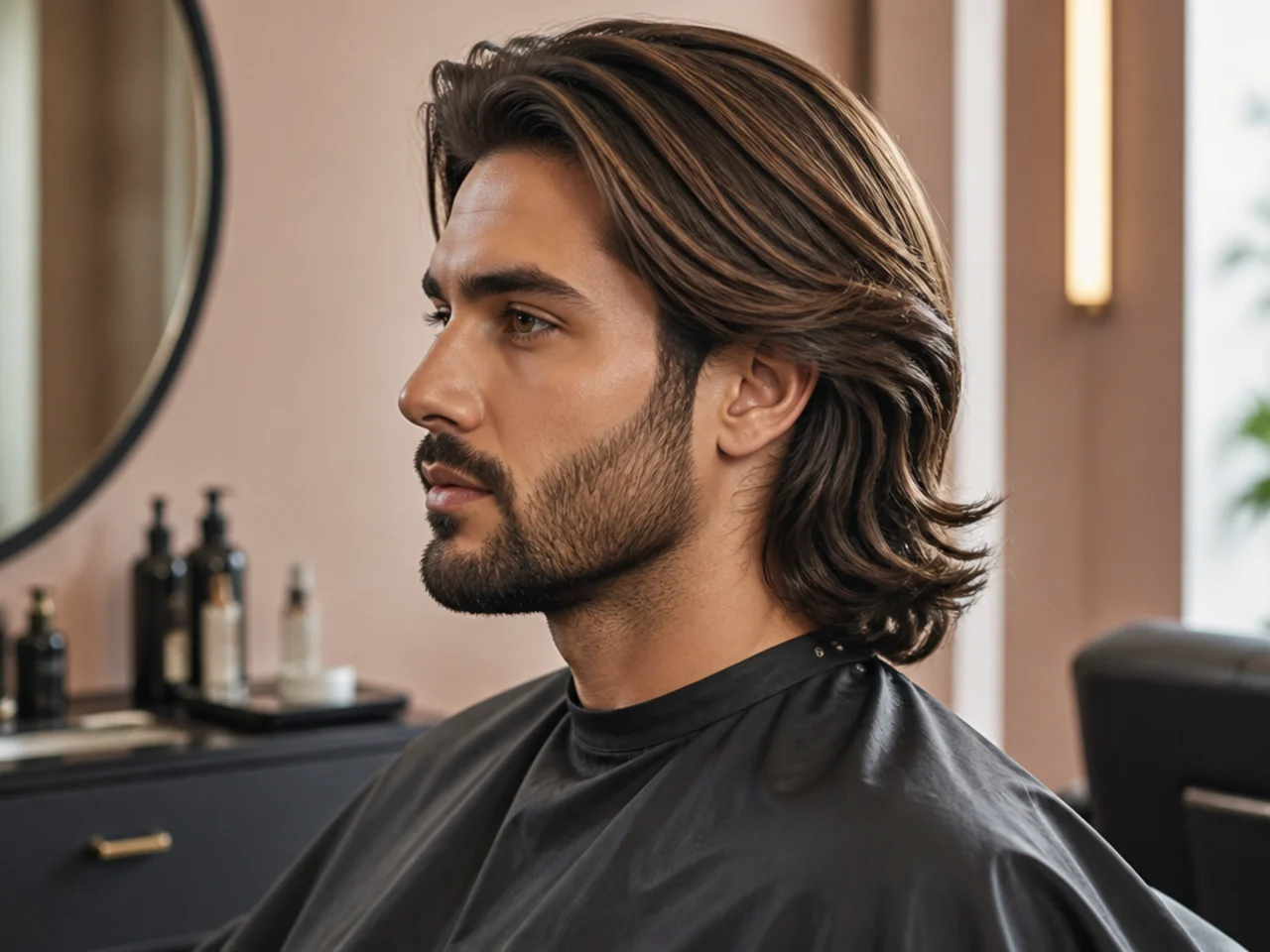
Yes, provided the hair is clean, cut with intention, and either tied back or shaped through the collar. A shoulder-length layered cut, a low ponytail, or a neat man bun all read professional. Untended length that hasn't seen a barber in six months does not. The rule: length is fine, neglect isn't.
What Hairstyle is Best For Men With Thin Hair in Professional Settings?
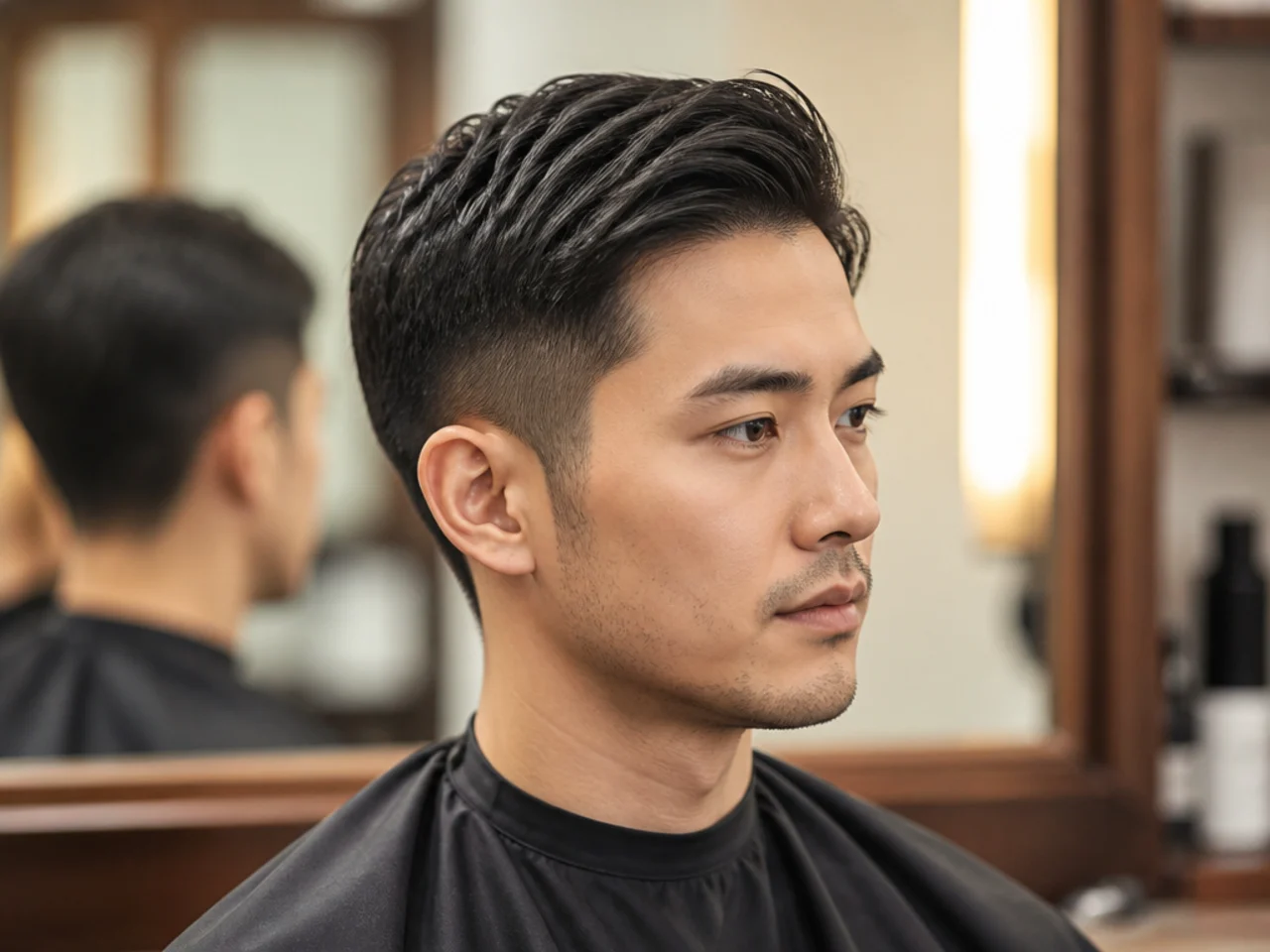
Keep it short. A crew cut, a French crop, or an Ivy League cut with a light taper on the sides gives you the illusion of density without asking product to do the work. Avoid slicked-back styles that expose the scalp. Ask your barber to leave a bit of weight at the crown and cut the front slightly heavier — the visual density in the front is what your eye reads as fullness.
How Can I Make My Hairstyle Look More Professional Daily?
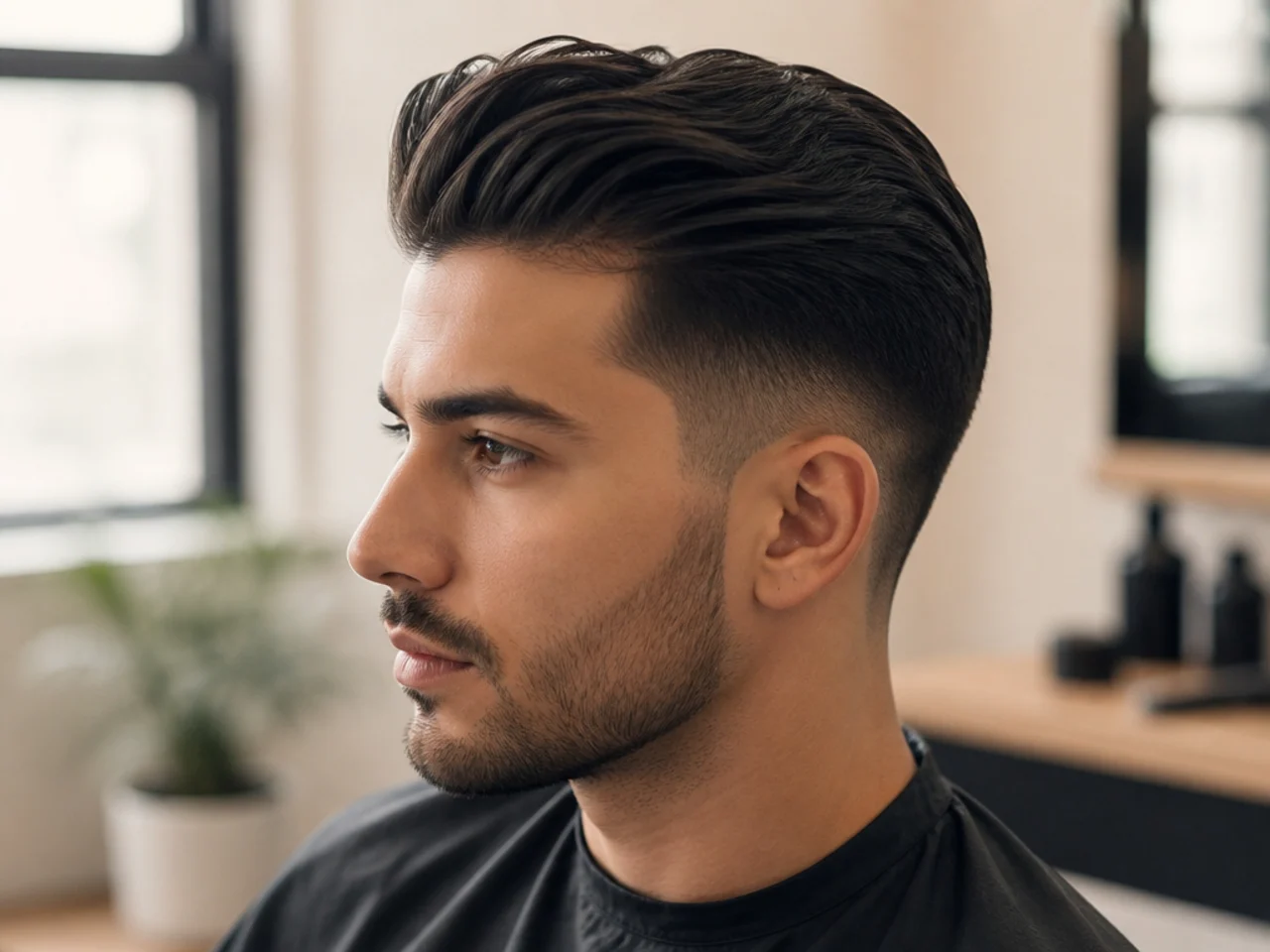
Wash every other day, not every day. Condition daily. Use one matte styling product — clay or paste — rather than layering three. Comb before you style, brush after. Book a re-cut every three to four weeks. Trim any stray neck and ear hair yourself between visits with small clippers. That's the entire routine for looking sharp all week.
What's The Difference Between a Business Haircut And a Casual Haircut?
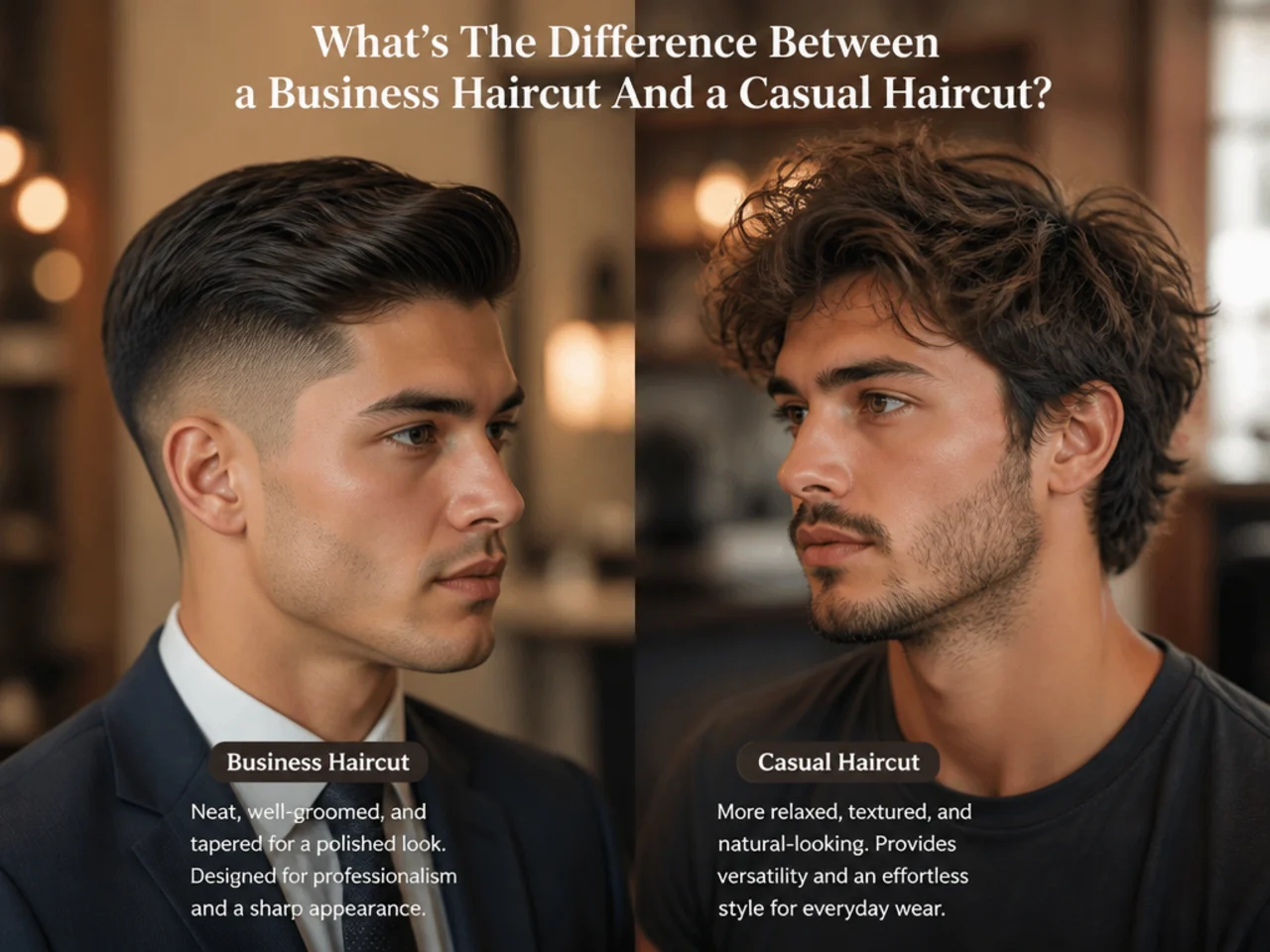
A business cut has clean lines, a disciplined side treatment, and product that reads invisible. A casual cut can carry more texture, a softer edge, and product that reads visibly styled. The same base cut can go either way — a textured quiff styled with matte paste reads business; the same cut styled with sea salt spray reads weekend. It's mostly a finish decision, not a cut decision.
Are Fades And Undercuts Considered Professional?
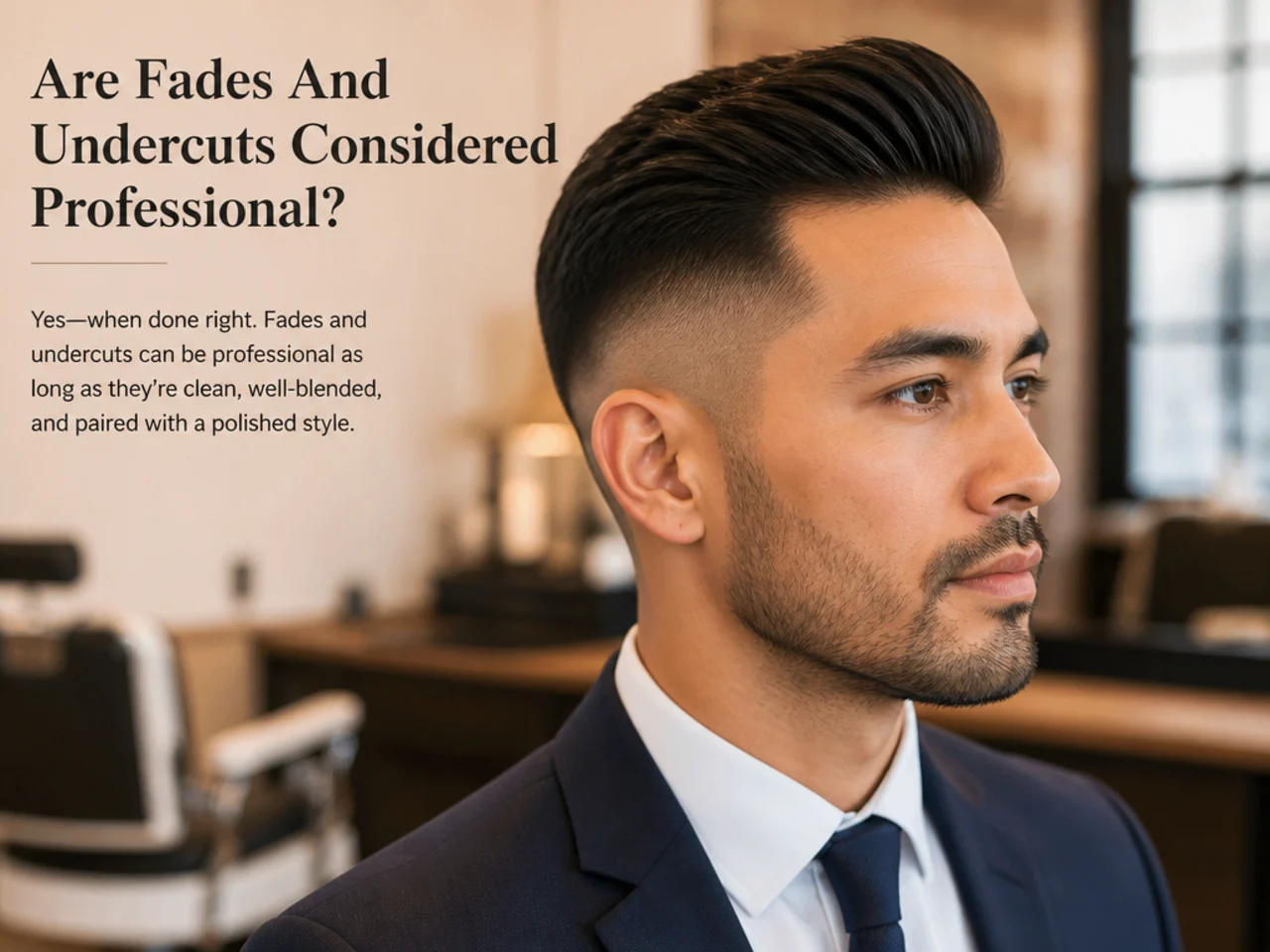
Yes. A low fade or mid fade is standard in every professional setting now, from law firms to hospitals. High fades and undercuts with heavy contrast can read more casual — save those for creative industries. If you're unsure, ask for a taper instead of a fade. It's the more conservative move and works everywhere.
What Hairstyle Should Professionals Avoid at Work?
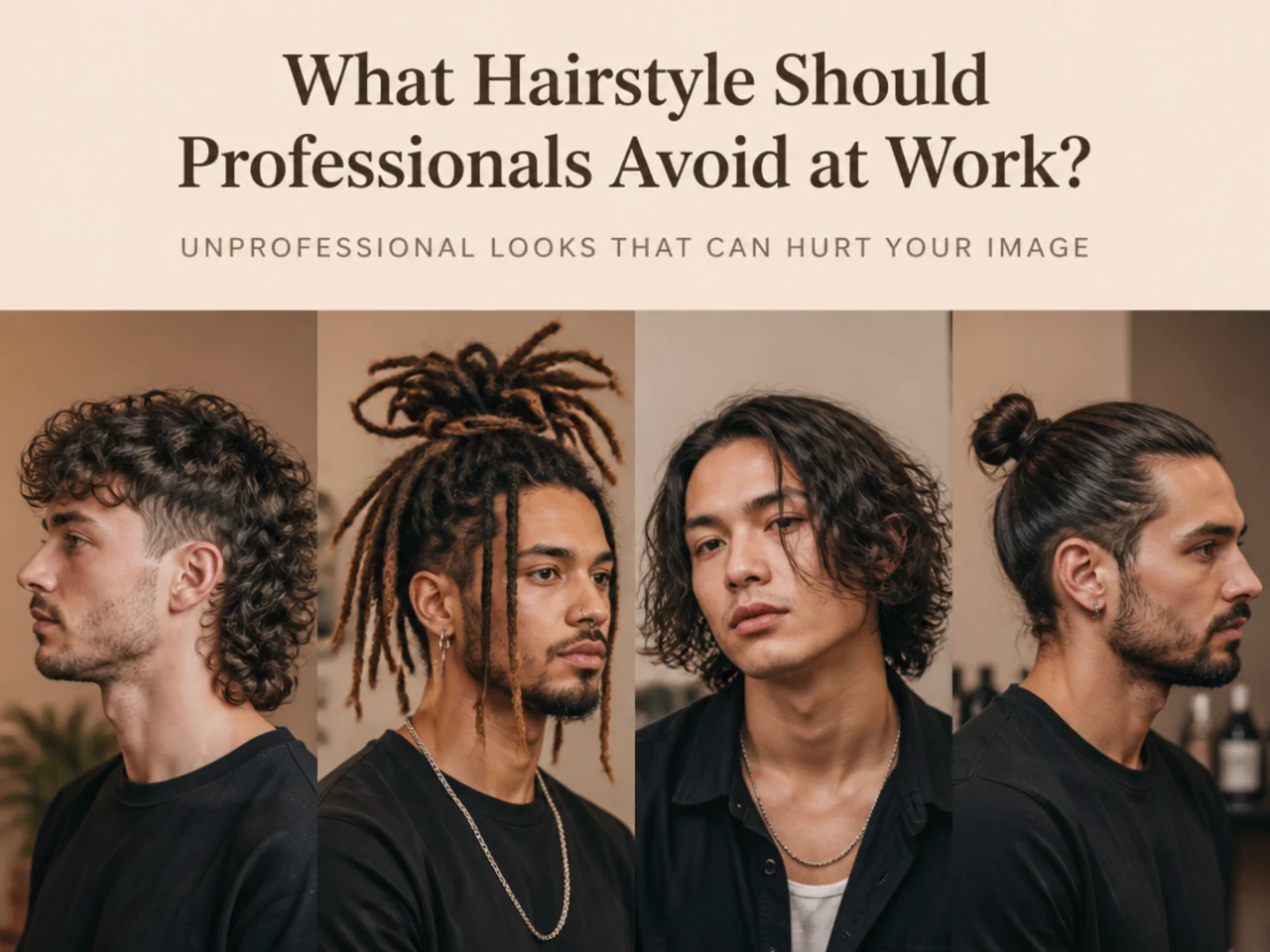
Skip anything that requires explanation in a meeting: bright color, aggressive designs shaved into the fade, mullets so long the back hits the collar, spikes so tall they cast a shadow. In more conservative fields, also skip visible hard undercuts and man buns. If your grandfather would be confused by it, your COO probably will be too.
Which Professional Hairstyle is Easiest to Maintain For Men?
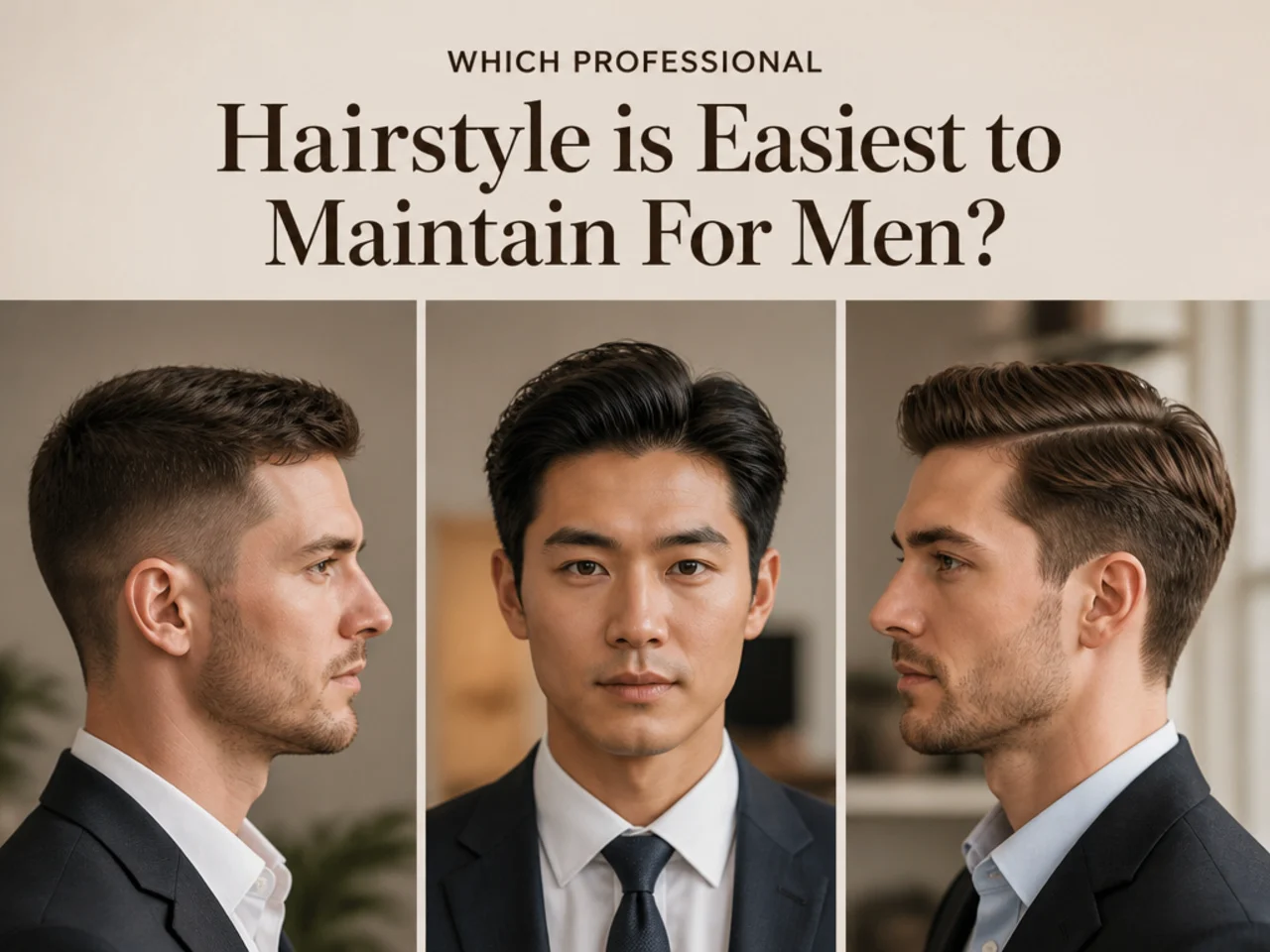
The buzz cut wins on effort. Ten minutes at the barber every two weeks, zero styling, no product. Second place goes to the crew cut, third to the Ivy League. All three require a wash, a dry, and nothing else. Complexity scales up with length — the longer you go, the more time you owe the mirror.
How Often Should Men Get a Haircut to Maintain a Professional Look?
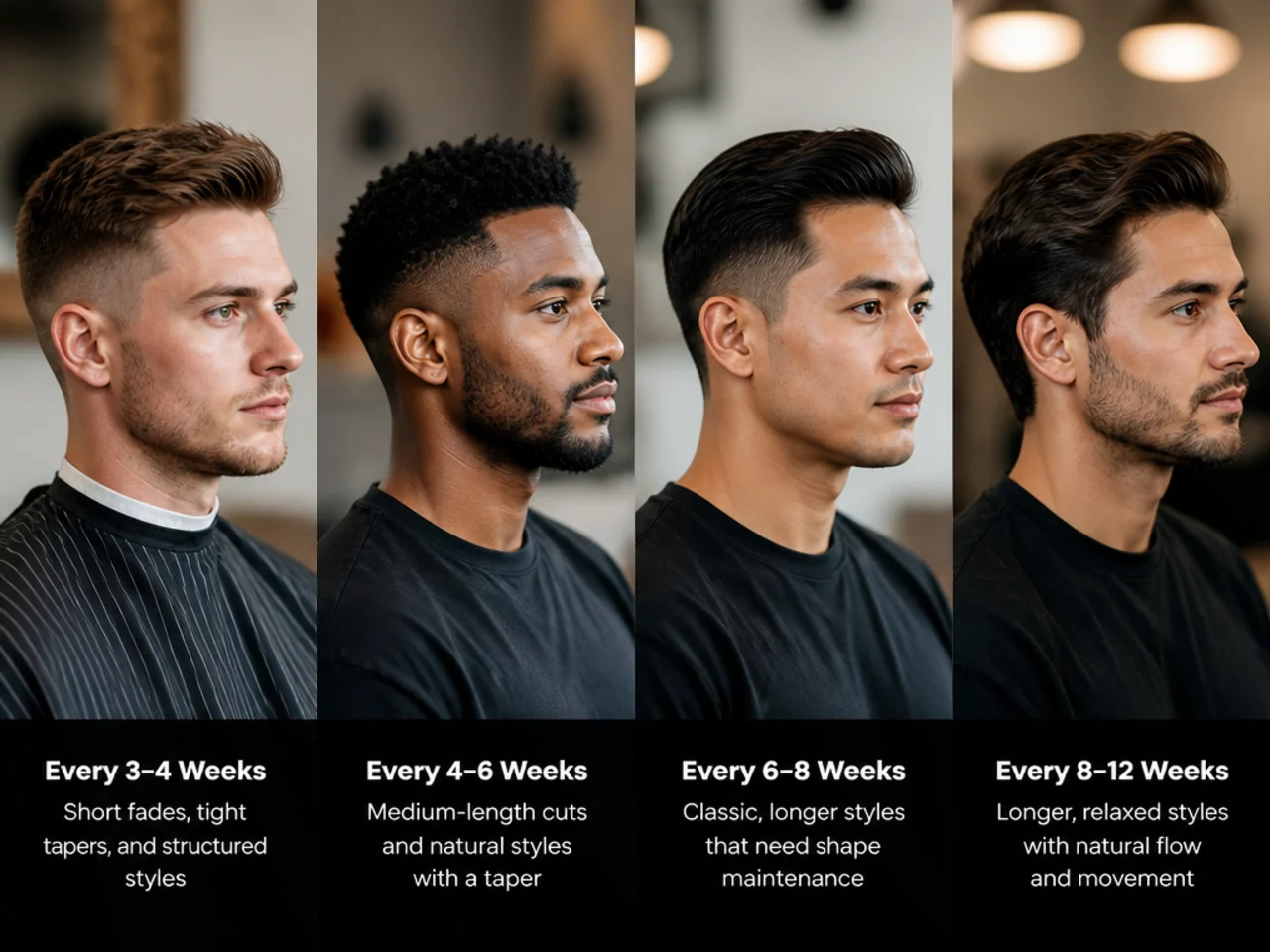
Every three to four weeks for short cuts (buzz, crew, high and tight), every four to five weeks for medium cuts (taper, comb over, quiff), every five to six weeks for medium-long styles. If the shape softens noticeably by the middle of the second week, you waited too long. Book on the calendar, not on inspiration.
What Is the Most Professional Hairstyle For Men?
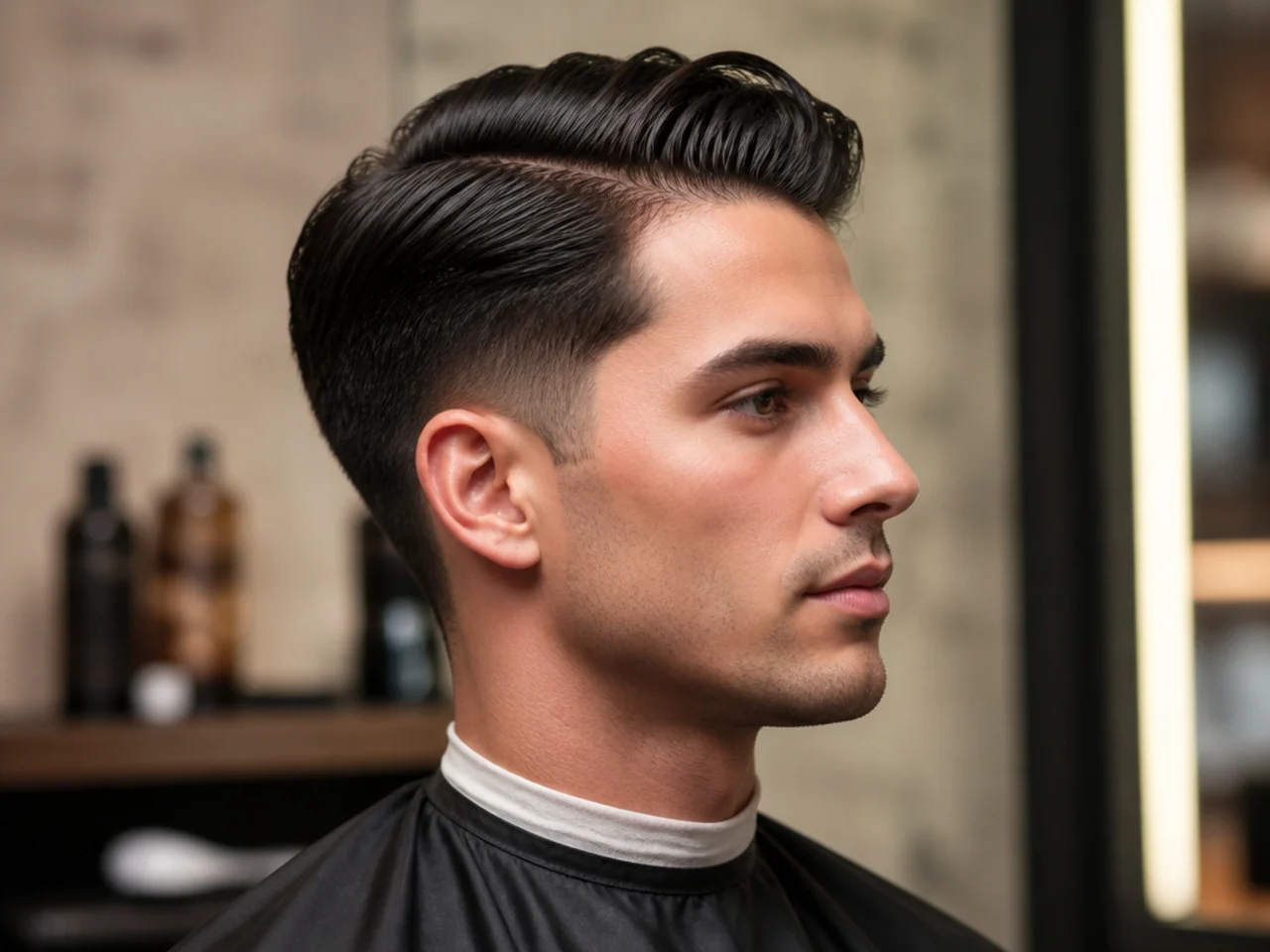
A taper fade with a side part and two and a half inches on top is the most professional single cut you can name. It works on nearly every hair type, every face shape, every industry. Walk into a barber and say those exact words — "taper fade, side part, two and a half inches on top" — and you'll walk out looking sharp.
Can ChatGPT Help Me Pick a Hairstyle?
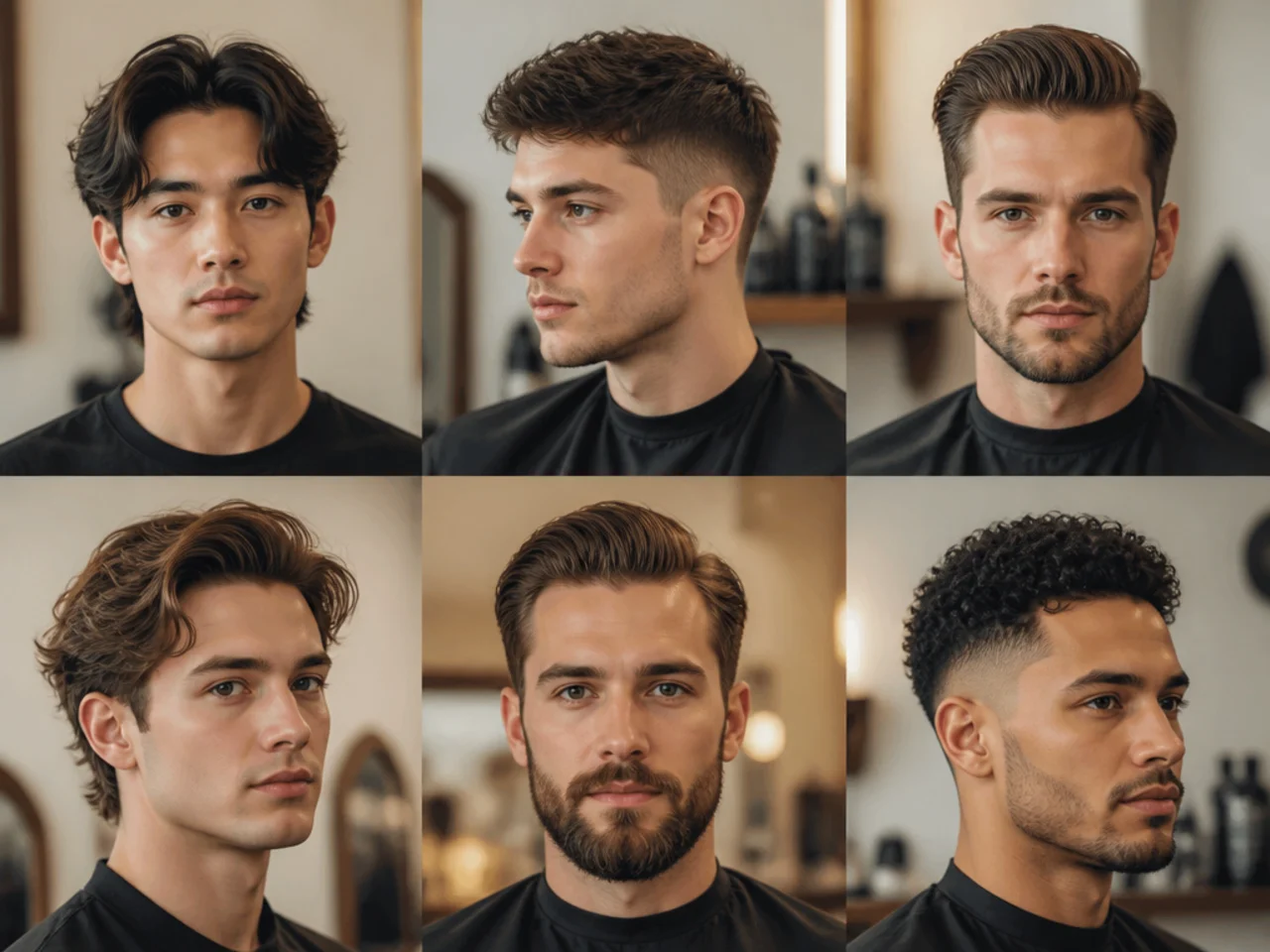
An AI can suggest cuts based on your face shape and hair type, but a good barber will do better. Barbers see your hair in three dimensions, feel the density, and know how the shape will grow out. Use AI to build a shortlist, then bring three photos to your barber and let them tell you which one will actually work on you.
What Is the Best Haircut For a CEO?
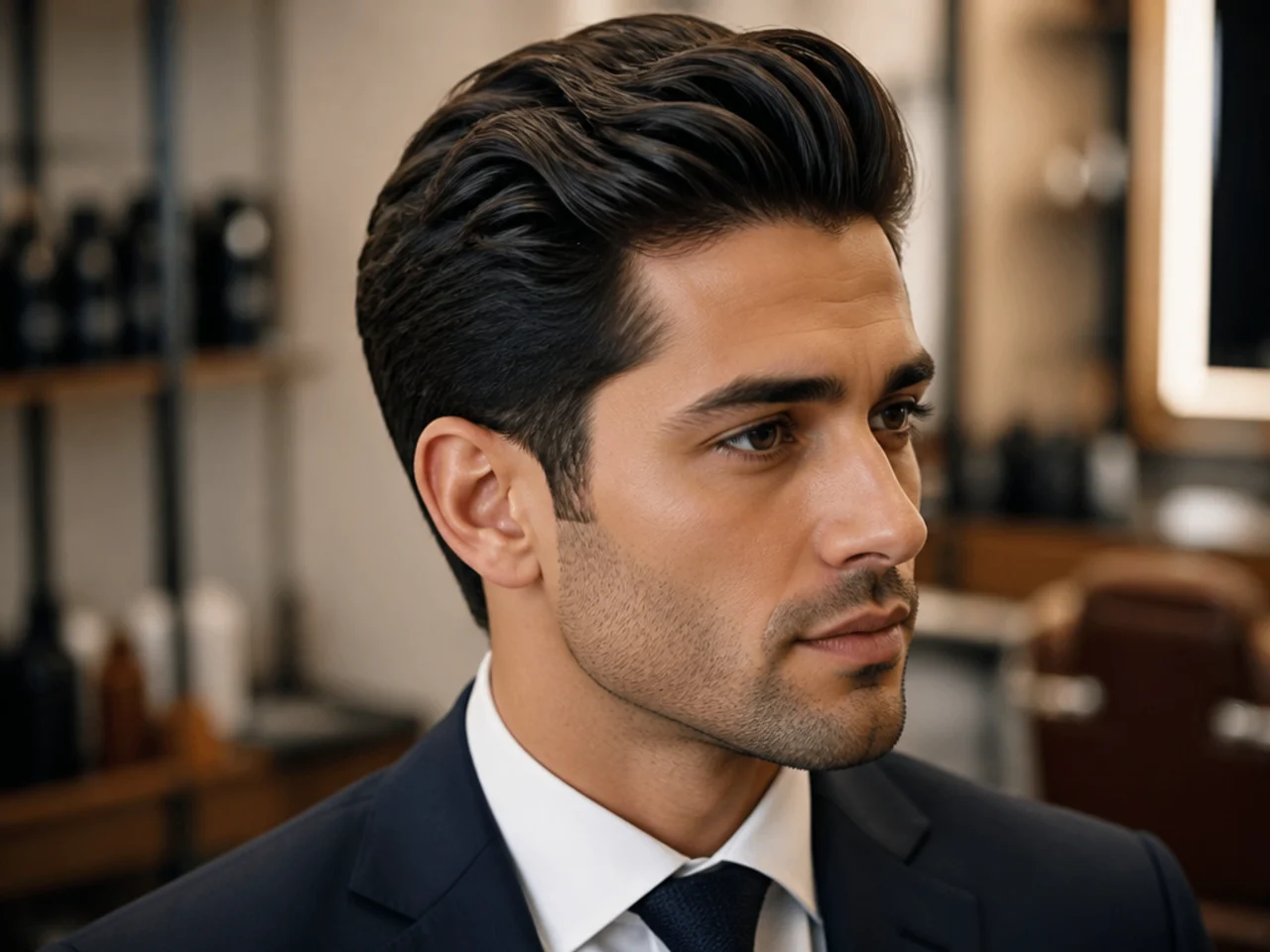
A slick back with a mid fade or a classic side part with a low taper. Both read authoritative in every setting a CEO walks into. Keep the top at three inches, the sides tight, and finish with a matte product so you don't photograph glossy under boardroom lighting. Book every three weeks. Never let the shape soften before a major meeting.
What Is The 3-2-1 Rule For Haircuts?
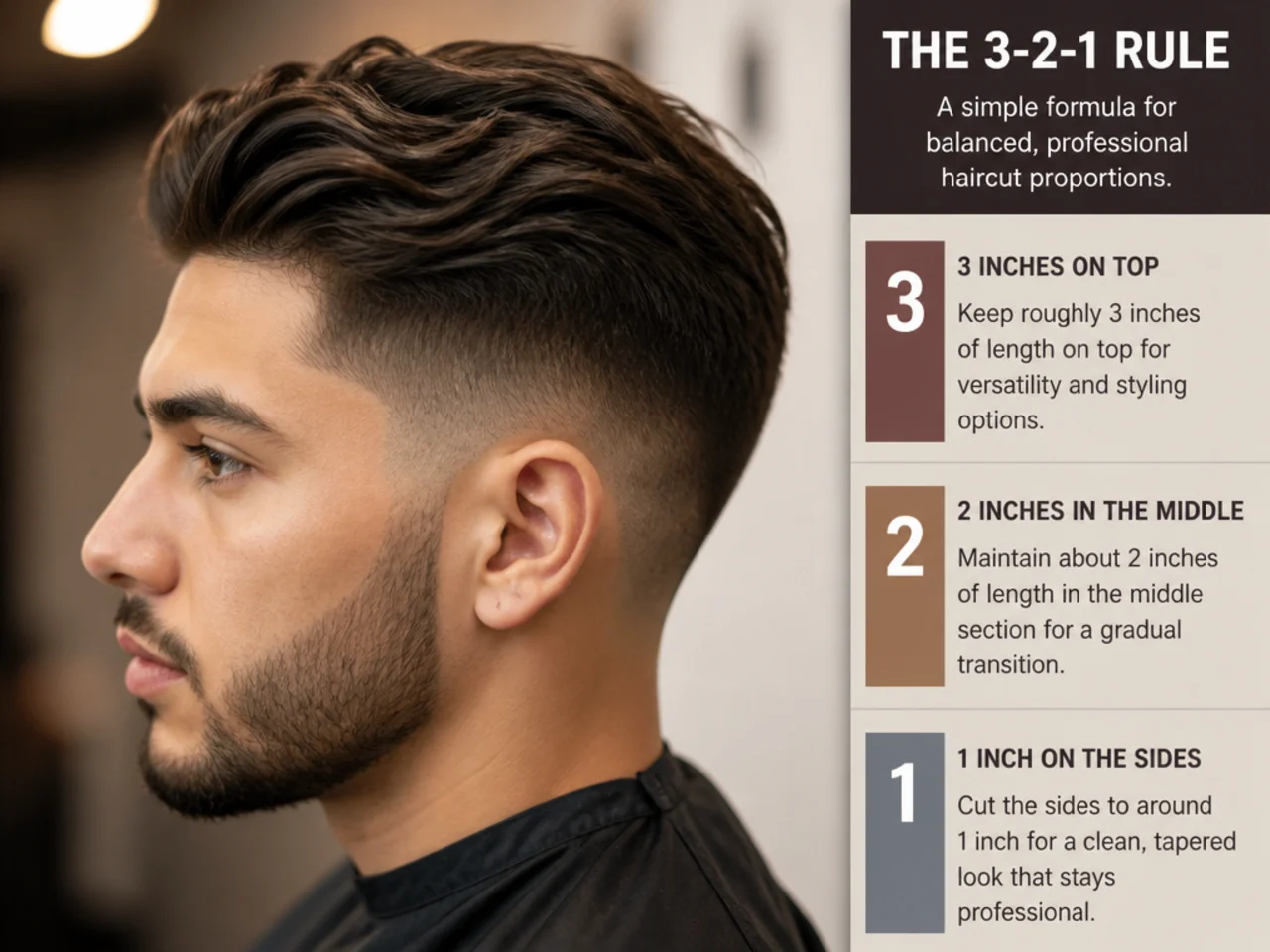
Some barbers use 3-2-1 as shorthand for a maintenance rhythm: a full cut every three weeks, a neckline and edge cleanup every two, a beard and mustache trim every one. In practice, most professionals do a full cut every four weeks and a quick lineup at the two-week mark. Pick a rhythm and stick to it — consistency is what reads professional over time.