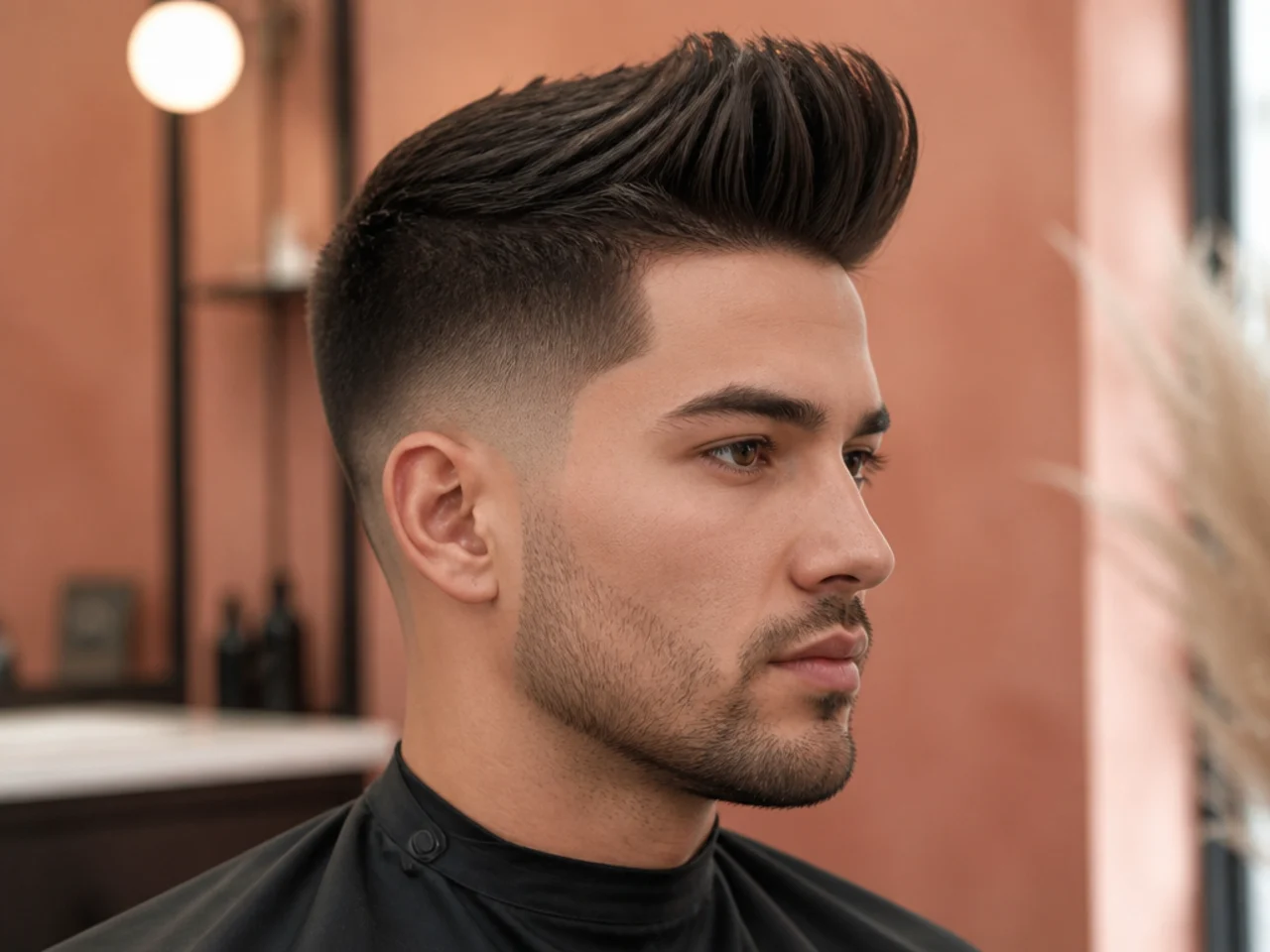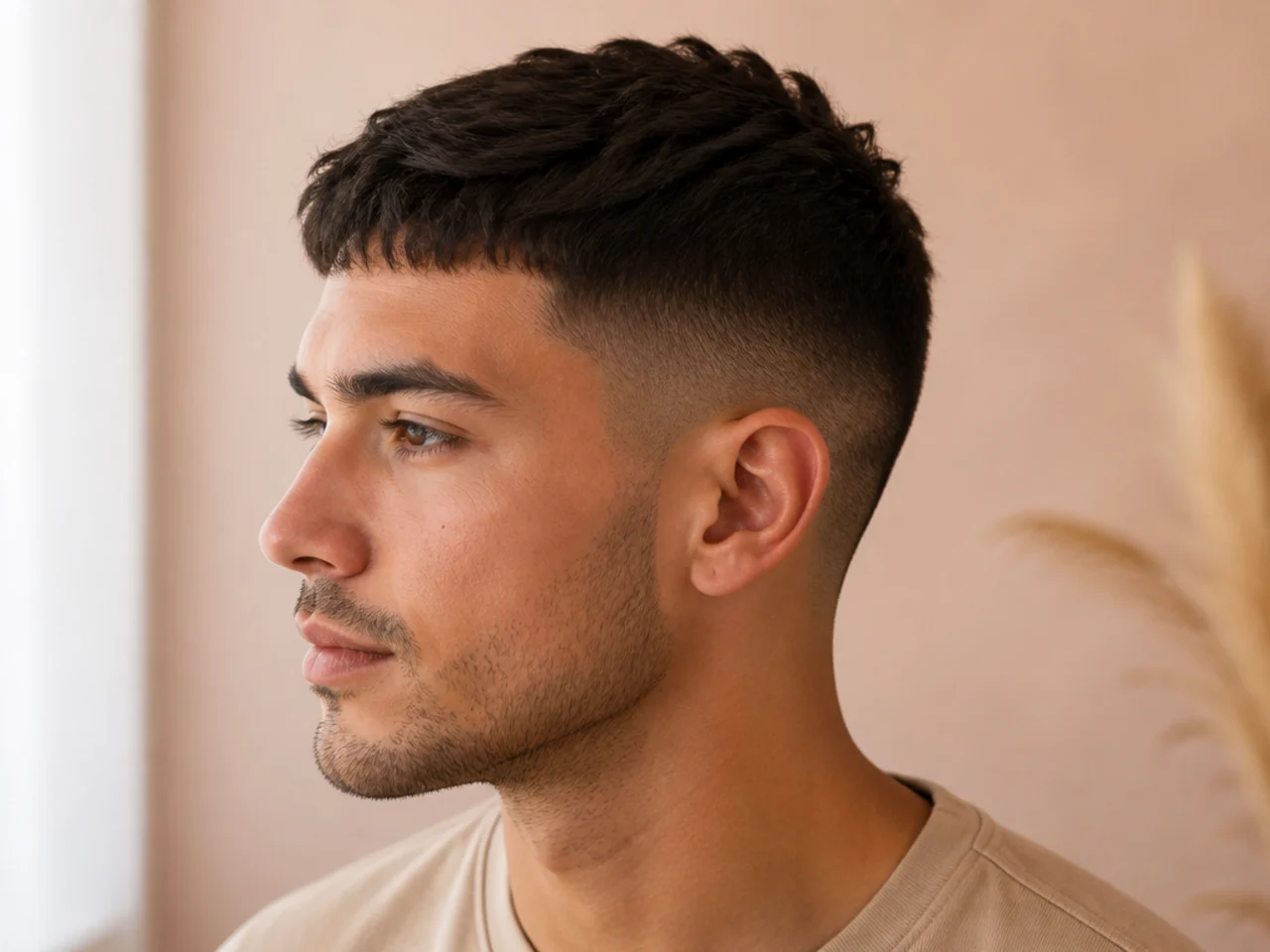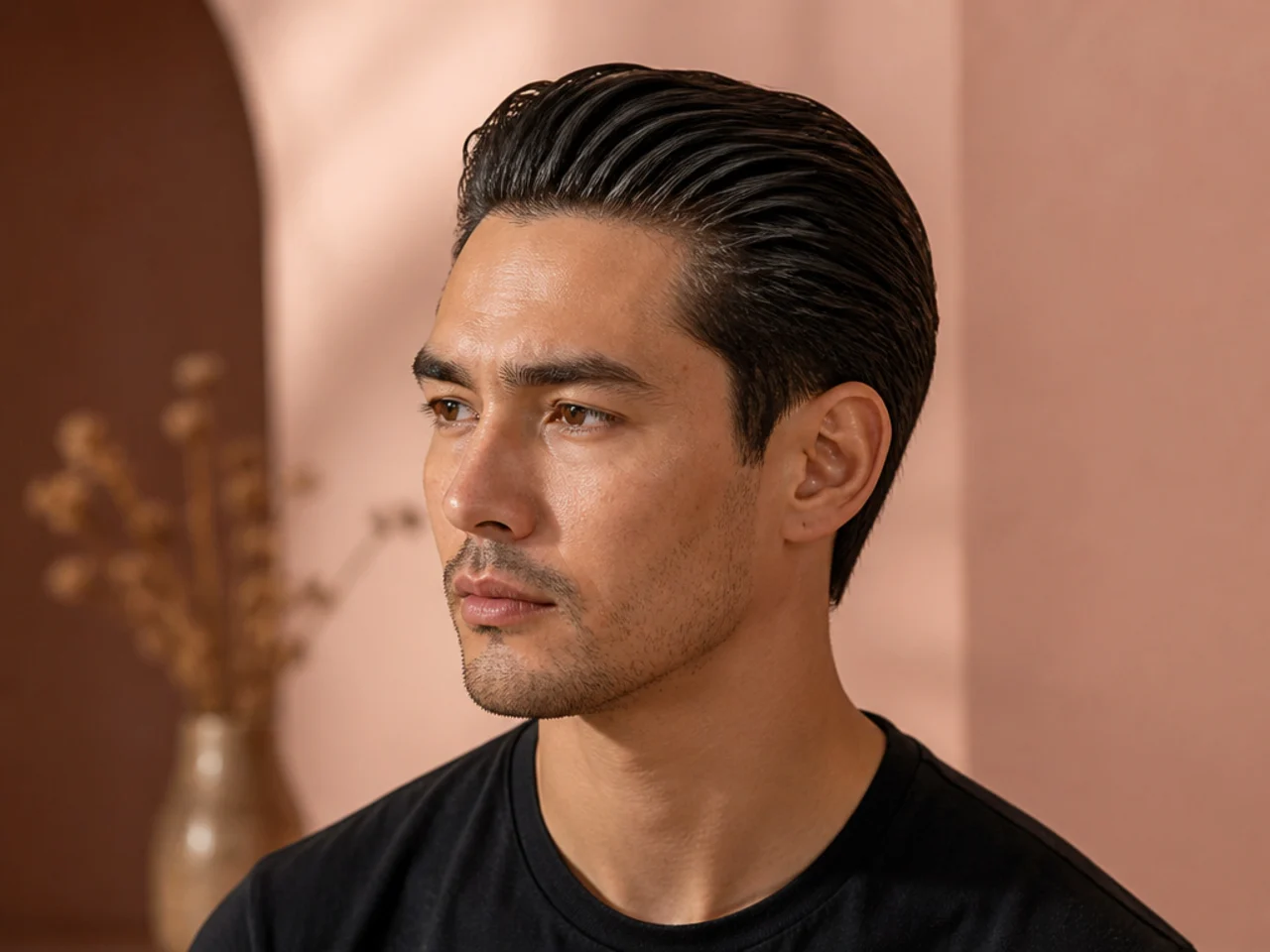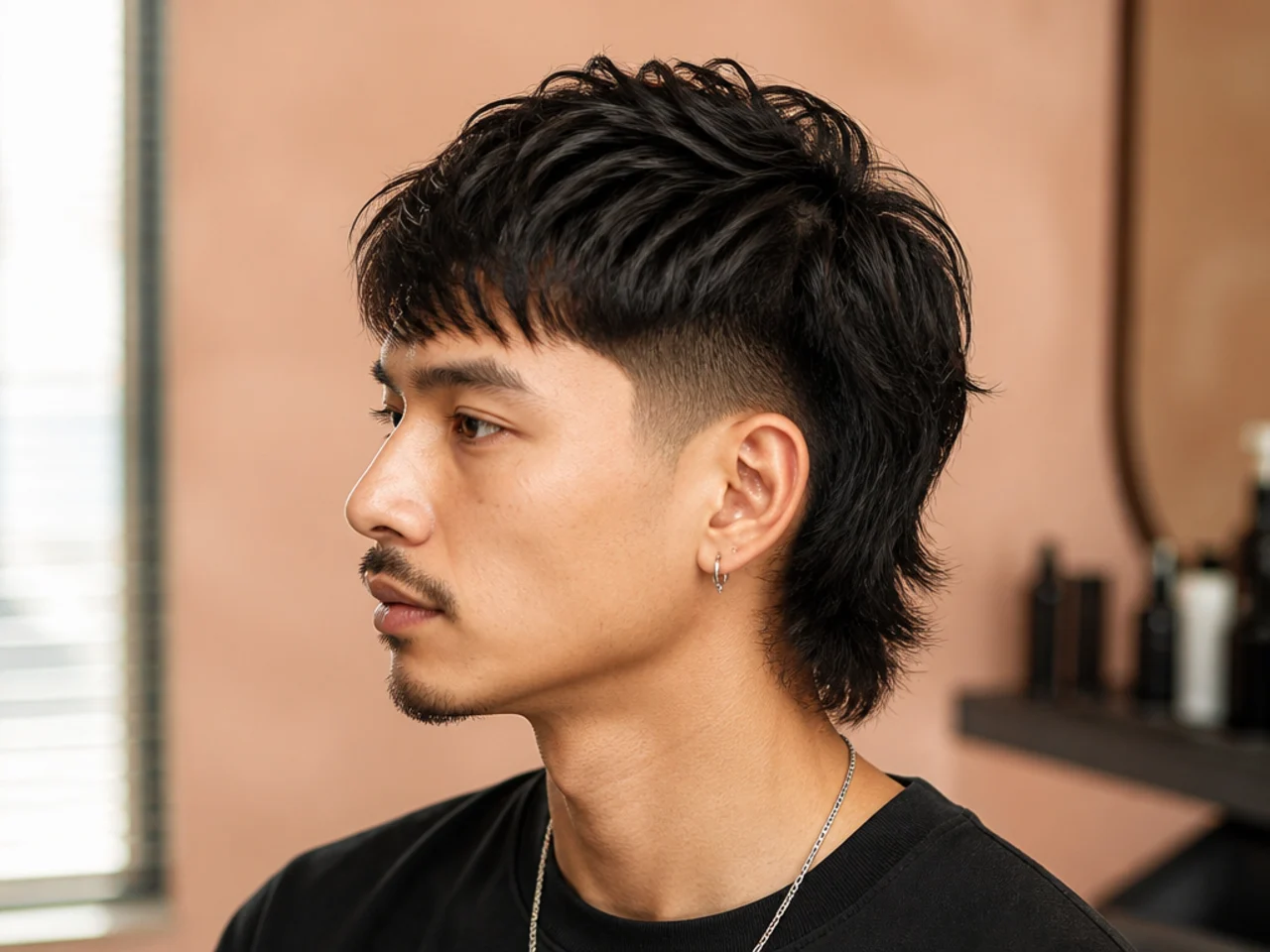
15 Two Block Mullet Haircuts for a Bold Look
15 two block mullet haircuts men are asking for when they want a bold look — hidden Korean sides, a mullet drop at the nape, and the exact ask for each version.
In this article · 27
- What Is a Two Block Mullet?
- How to Choose Your Two Block Mullet
- The 15 Two Block Mullet Variations
- 1. The Classic Two Block Mullet
- 2. The Korean Idol Two Block Mullet
- 3. The Hard Ledge Two Block Mullet
- 4. The Skin Fade Two Block Mullet
- 5. The Undercut Two Block Mullet
- 6. The Low Taper Two Block Mullet
- 7. The Middle Part Two Block Mullet
- 8. The Curtain Fringe Two Block Mullet
- 9. The Choppy Textured Two Block Mullet
- 10. The Long Dramatic Two Block Mullet
- 11. The Wavy Two Block Mullet
- 12. The Curly Two Block Mullet
- 13. The Bleached Tip Two Block Mullet
- 14. The Wolf-Layered Two Block Mullet
- 15. The Reverse Weight Two Block Mullet
- How to Ask Your Barber for a Two Block Mullet
- Styling and Maintenance
- FAQ
- What is a two block mullet haircut?
- Is the two block mullet still bold in 2026?
- Which two block mullet works with curly or coily hair?
- How long does my hair need to be before I book a two block mullet?
- Does the two block mullet suit round or square face shapes?
- Which two block mullet variation works in a corporate office?
The two block mullet is a hybrid on purpose — the hidden Korean disconnect on the sides, a mullet drop at the nape, and a top long enough to cover both stories at rest. This guide breaks down the fifteen two block mullet variations men are asking for. Each entry names the exact ask: guard number for the hidden block, top length in inches, and mullet drop so your barber lands it on the first pass.
What Is a Two Block Mullet?
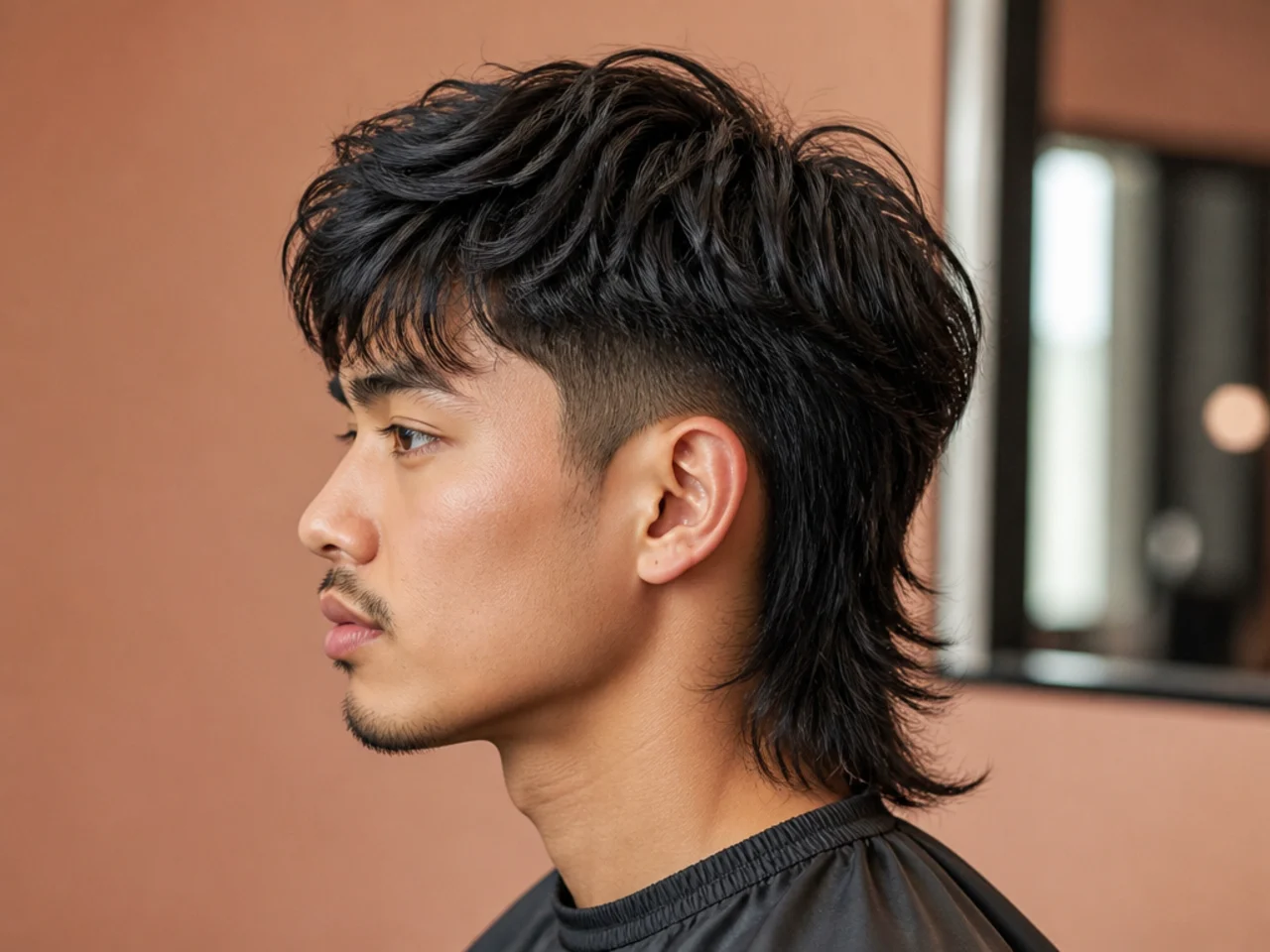
A two block mullet stacks three distinct lengths onto one head. The sides get buzzed short — usually a 1, 2, or 3 guard — along a horseshoe line that wraps from above one ear across the back to the other. The top sits long enough to fall past that line and cover the buzz at rest, the way a standard two block haircut does. The back drops past the collar into a mullet nape, two to four inches longer than the covering top layer.
The reveal is what makes it bold. Push the top back and the hidden block shows itself in a sharp horizontal line. Turn to profile and the mullet drops from the crown into a distinct drape. Static, it reads as a long modern cut with clean sides. In motion, three signatures announce themselves. It sits next to the fringe-forward comma mullet as one of the two Korean-adjacent hybrids men are booking most, and the mullet half is documented in the modern mullet haircut men breakdown.
How to Choose Your Two Block Mullet
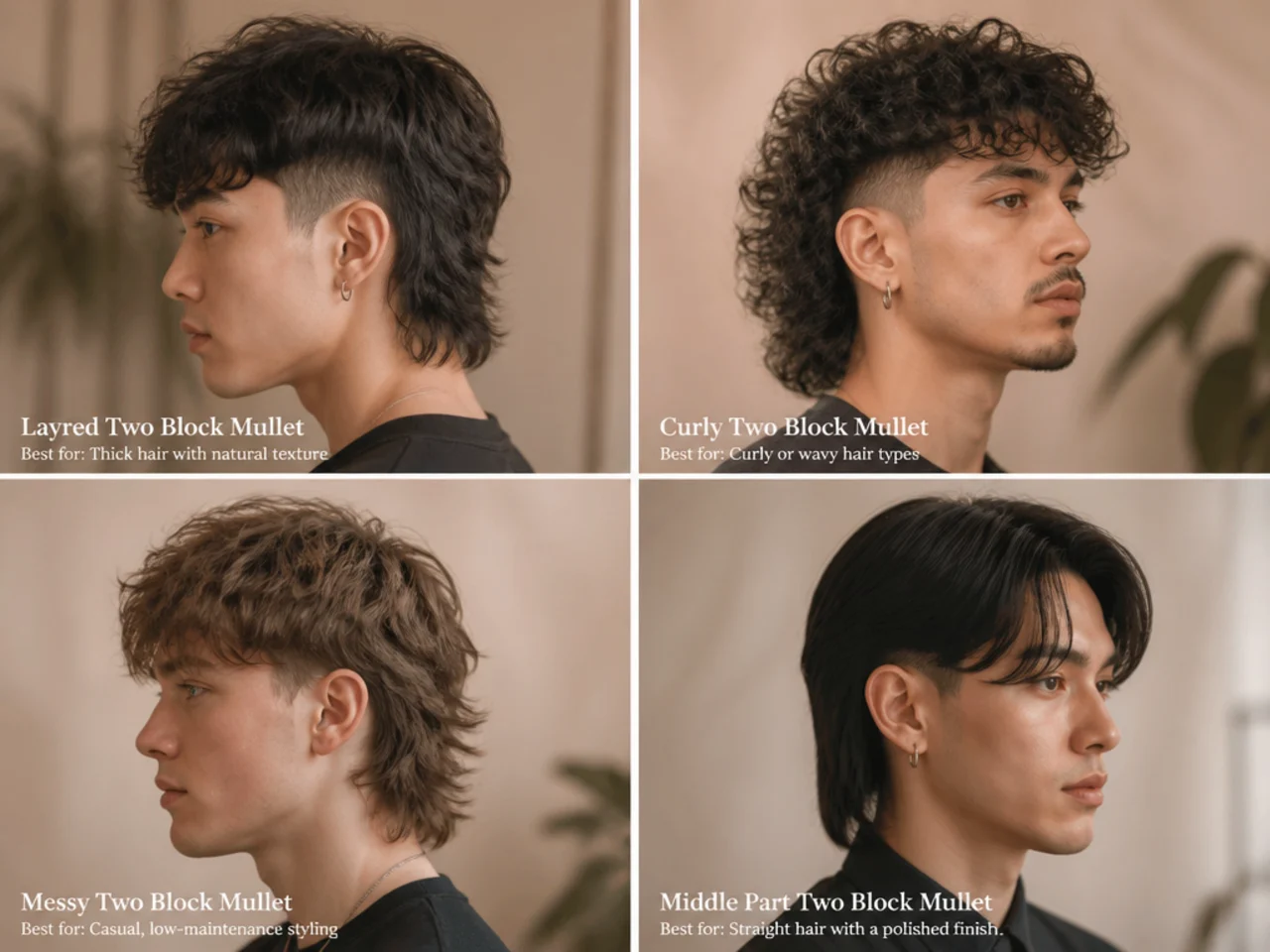
Three factors narrow fifteen versions down to yours. First, hair type. Straight and 2A–2B wavy hair take almost every variation — the top drapes cleanly over the hidden block and the mullet sits where you want it. 2C–3B curls need longer top layers so the pattern falls past the horseshoe line before it lifts, and the mullet nape needs internal thinning so it does not stack into a triangle. Coily hair (3C–4C) works best with the fade or undercut versions where the buzz frames a compact top rather than trying to cover it.
Second, face shape. Oval works everywhere. Round faces want vertical volume from the middle part, curtain, or long dramatic versions. Square faces want softer edges — scissor-blended sides and a middle part or curtain fringe read best. Long faces want a shorter mullet and a fringe or curtain front so the vertical does not stretch further. Heart faces suit the classic hidden and reverse-weight versions.
Third, tolerance for boldness. The skin fade, undercut, hard-ledge, choppy, bleached-tip, and long dramatic versions announce themselves the second you walk in. The low taper, classic hidden, middle part, and curtain fringe versions carry the hybrid identity but soften the volume for stricter dress codes.
The 15 Two Block Mullet Variations
Every version below is a distinct silhouette your barber can cut with one photo and three numbers. Bring inches — "four inches on top, three-inch mullet drop, 2 guard hidden underneath" beats "long two block with some length in the back" every time. The names track how the top covers the block, how sharp the disconnect reads, and how the mullet drops behind.
1. The Classic Two Block Mullet
The reference version — every other variation adjusts one dial from this baseline. Sides get buzzed to a 2 guard along the horseshoe line so nothing shows at rest. Top runs 3 inches, long enough to cover the block and drape past your ears. Back drops 3 inches into a textured mullet with layered movement. Best on straight-to-wavy hair with medium density; oval, heart, and diamond faces read strongest. Ask for a 2 guard hidden block, 3 inches on top with weight left in, and a 3-inch textured mullet. Style with a matte clay through damp hair and a wide-tooth comb.
2. The Korean Idol Two Block Mullet
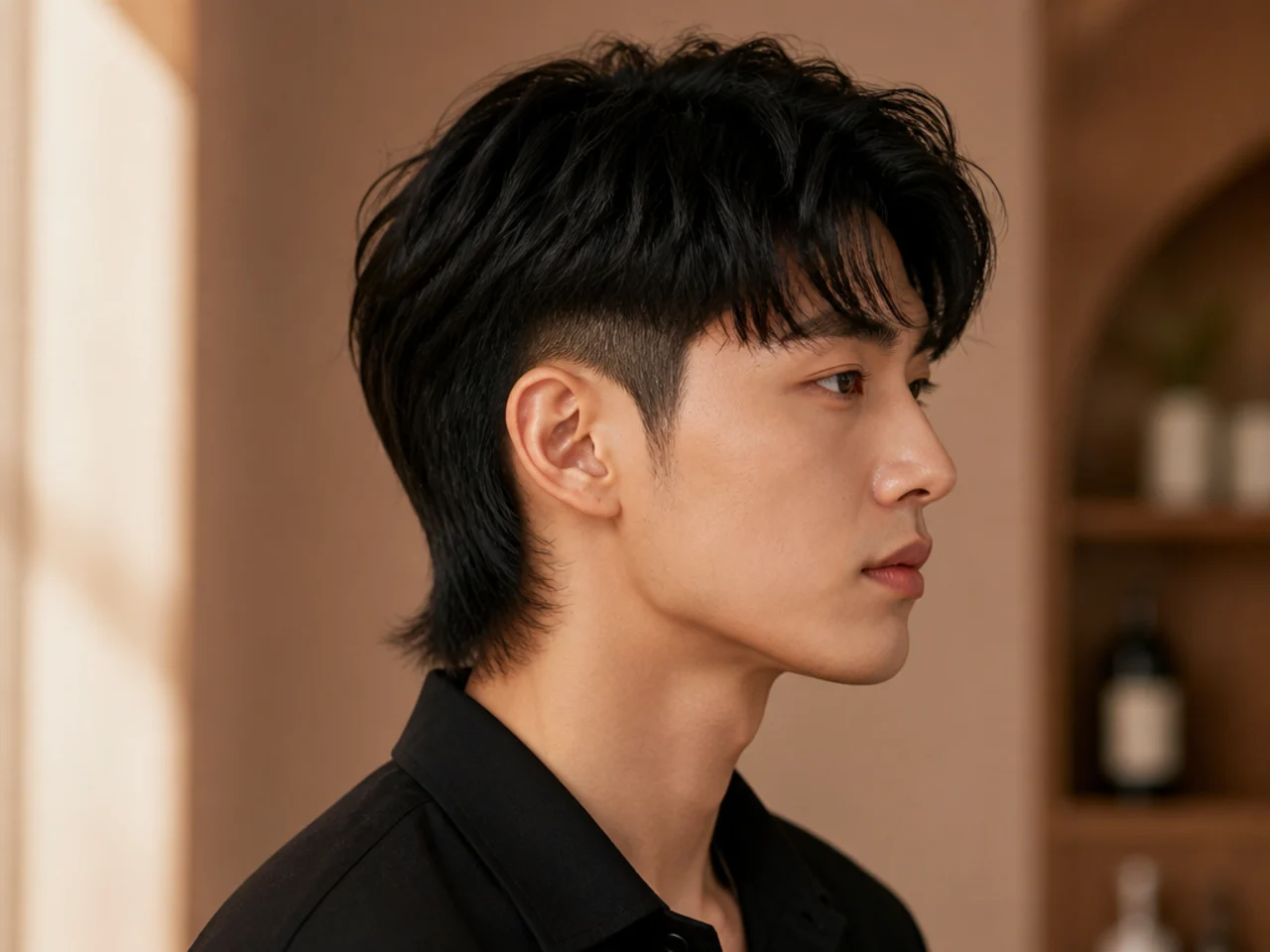
The K-pop staging of the hybrid. Sides taken tighter — a 1 guard hidden underneath — for the sharpest reveal when the top moves. Top runs 3.5 inches with a glossy weighted finish that reads sleek rather than textured. Back drops 2.5 inches into a controlled short mullet that clears the collar but sits closer to the head. Best on silky straight hair with medium density; suits oval and heart faces. Ask for a 1 guard hidden block, 3.5 inches on top with a glossy finish, and a 2.5-inch short controlled mullet. Style with a light-shine cream and a fine-tooth comb front-to-back. Sibling: the Korean two block haircut without the drop.
3. The Hard Ledge Two Block Mullet
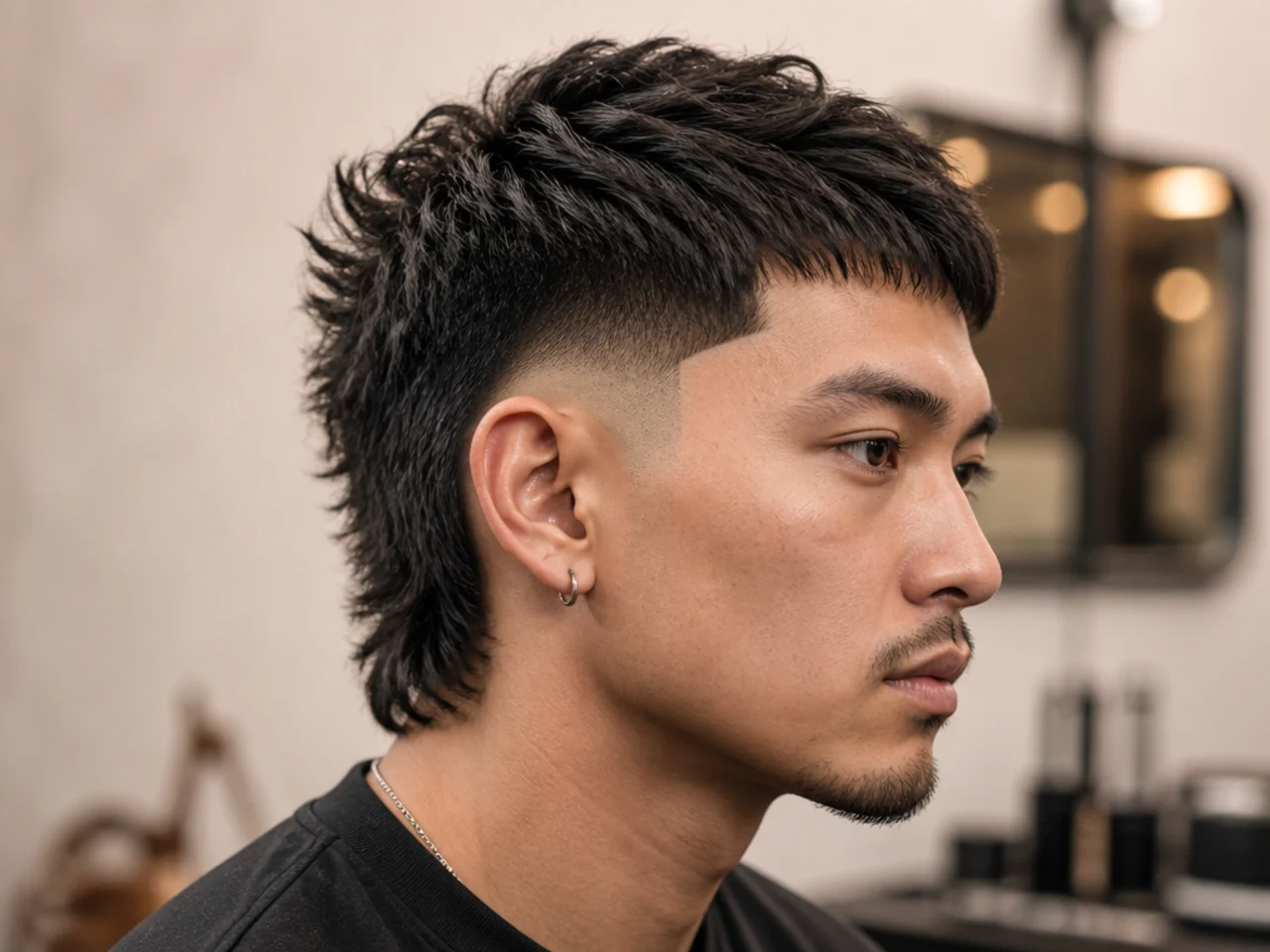
Puts the horseshoe line on display instead of hiding it. Your barber leaves the top layer just short of covering the ledge so a hard horizontal disconnect shows at the temple wrapping to the back. The mullet drops from a separate horizontal line at the crown. Reads architectural. Best on straight hair with medium-to-thick density; fine hair loses the mass to hold the ledge. Ask for a hard-line ledge at temple height, a 2 guard under the top, 3 inches on top left short enough to expose the ledge, and a 3-inch mullet. Style with matte clay for grip so the top does not flop and hide the line.
4. The Skin Fade Two Block Mullet
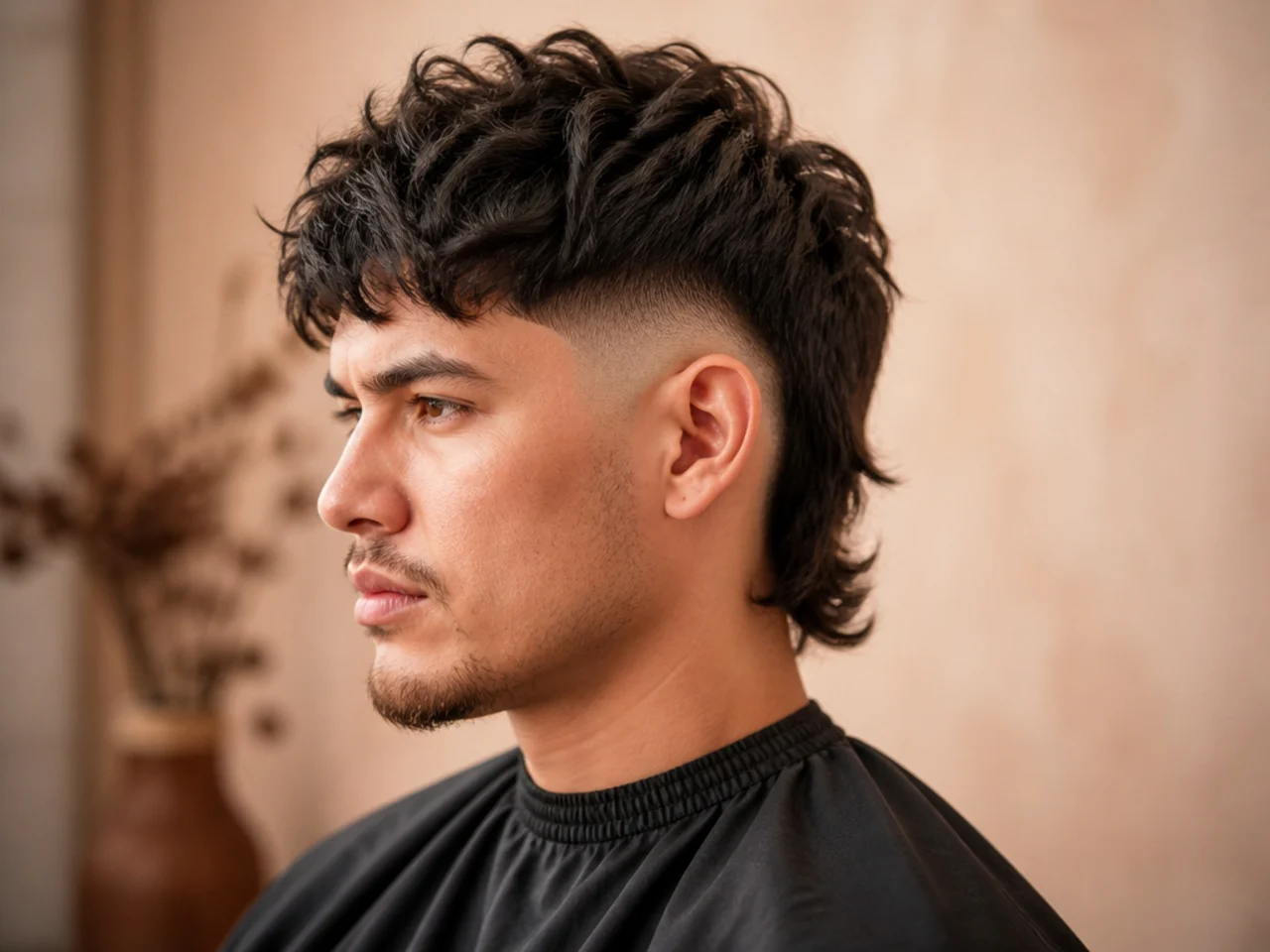
Trades the classic buzzed block for a full skin fade. The horseshoe line disappears — the sides fade from top length down to bare skin at the ears and nape. The mullet drops 3 to 4 inches from the crown as a disconnected tail behind the fade. Maximum contrast. Best on straight-to-wavy hair with any density; suits oval, square, and heart faces. Ask for a low or mid skin fade, 3.5 inches on top, and a 3.5-inch textured mullet at the nape that runs disconnected from the fade behind the ears. Style with matte clay on the top and finger-shape the mullet after air-drying. See the fade haircut guide for base fade variations.
5. The Undercut Two Block Mullet
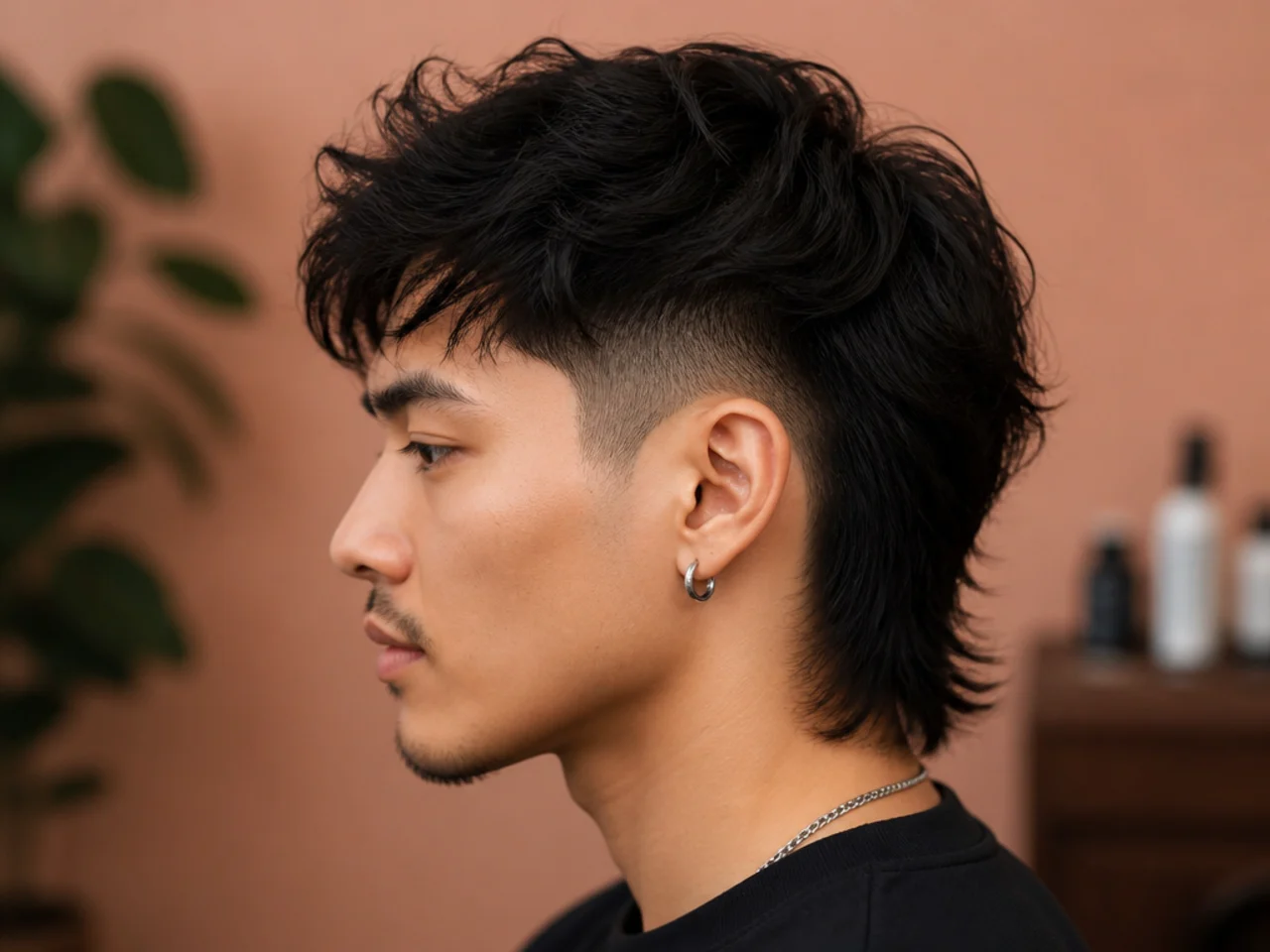
The hardest disconnect on the list. Sides clipped tight to a 0 or 1 guard and cut straight along a horizontal line at temple height — no fade, no blend, no gradient. Top drops abruptly into the buzzed sides at a hard visual break, and the mullet extends the disconnect into a 3-inch drop. Best on straight hair with strong density; fine hair reads scattered rather than sharp. Ask for a hard-line undercut at temple height, 1-guard sides, 4 inches on top with weight left in, and a 3-inch mullet. Style with matte clay for grip and a low-shine finish.
6. The Low Taper Two Block Mullet
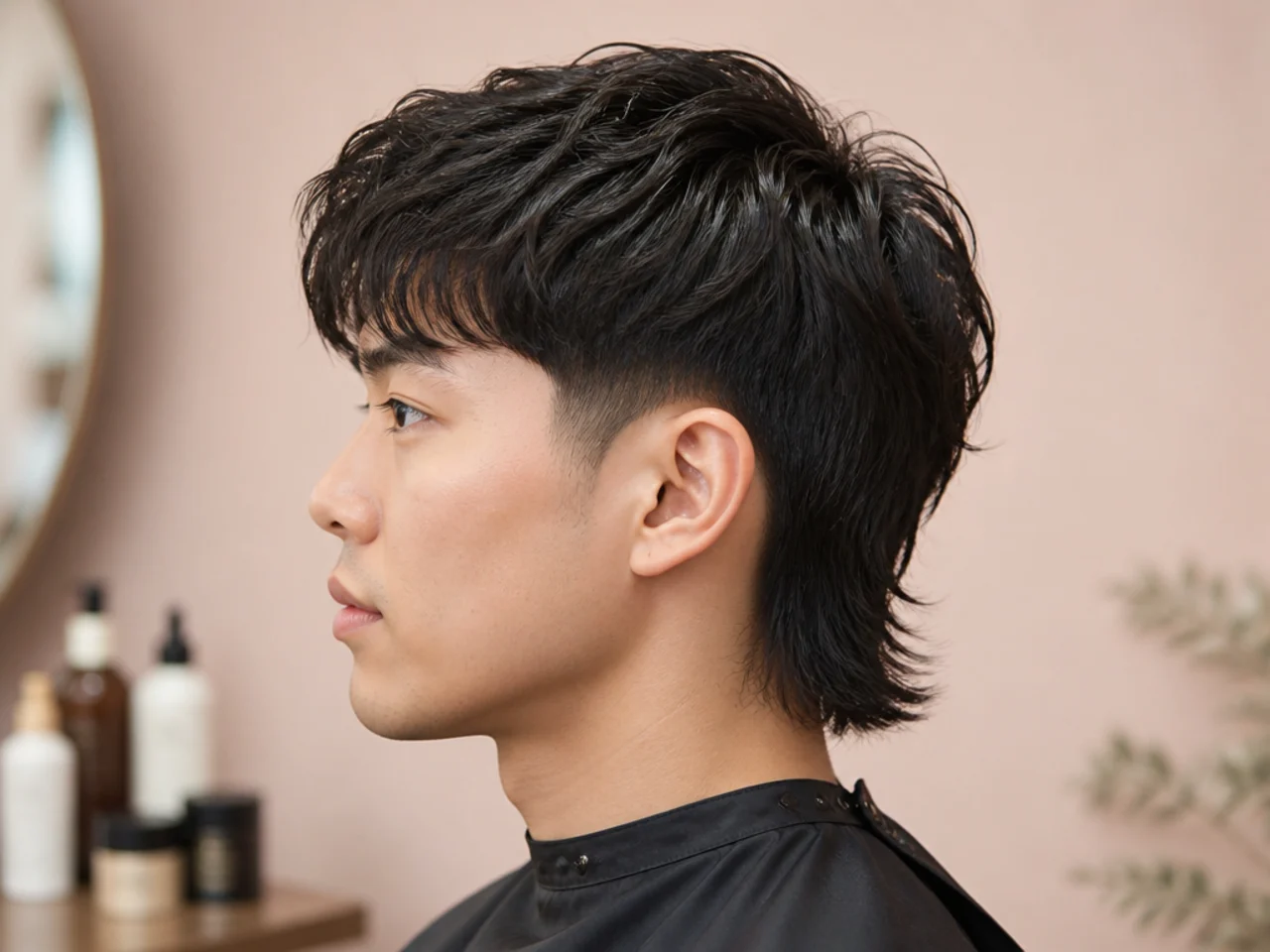
The workplace-safe bold. Sides run a low taper — clippers step down gradually from the top length into skin only at the neckline and behind the ears. Hidden block sits at a 3 guard underneath. Top runs 3.5 inches and the mullet drops just 2 inches, sitting right at the collar rather than past it. Bold hybrid identity, minimal disruption. Best on straight-to-wavy hair with any density; suits every face shape. Ask for a low taper, 3 guard hidden block, 3.5 inches on top, and a 2-inch subtle mullet. Style with a lightweight matte cream and a fine-tooth comb. See the two block taper fade haircut for the taper-first version.
7. The Middle Part Two Block Mullet
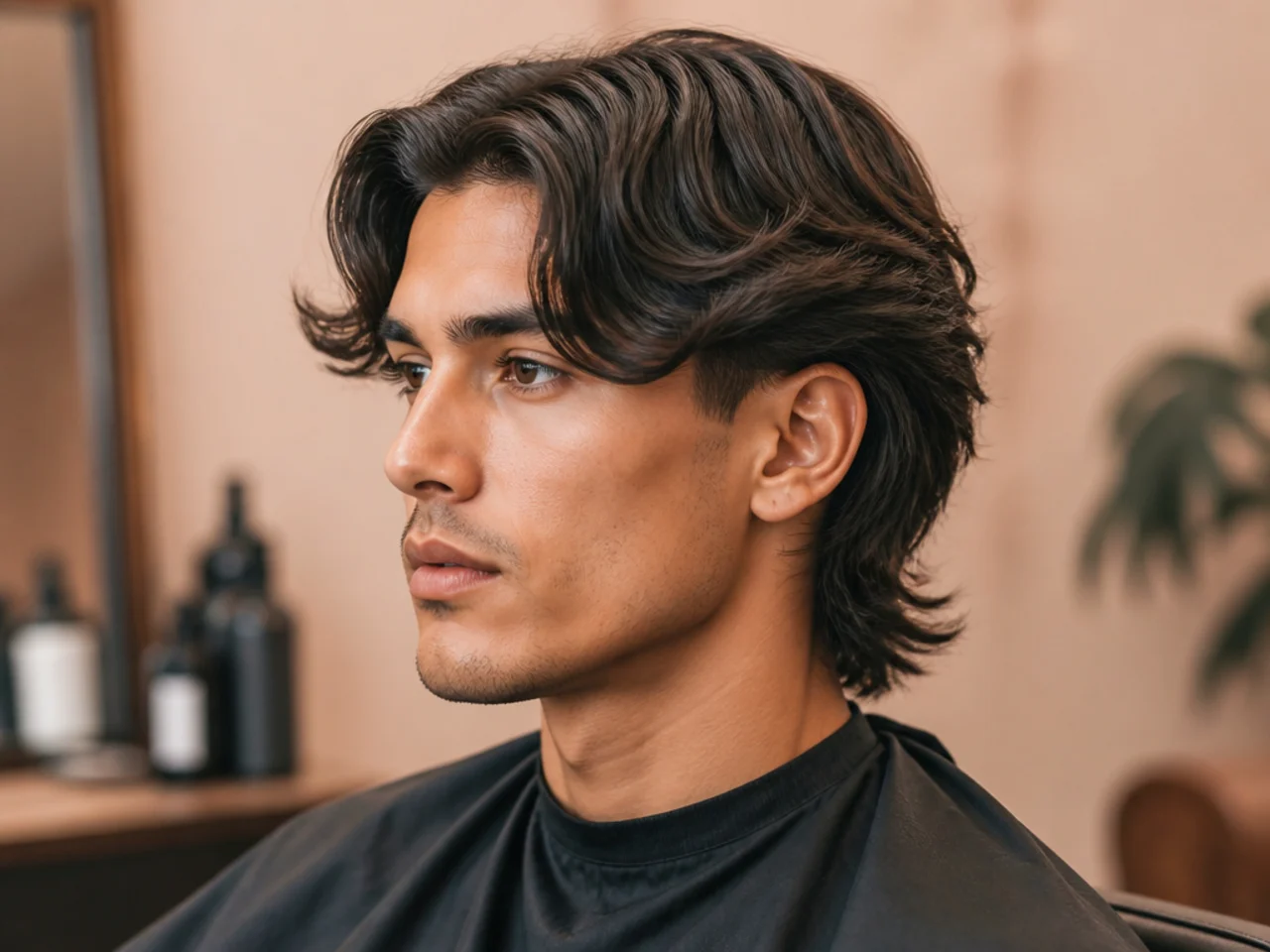
The K-idol default framing. Top cut long enough to fall in two curtains from a center part, hidden sides buzzed at a 1 or 2 guard, mullet drops 3 inches. The curtain front frames the face without adding width and the hidden block keeps the sides from puffing outward. Best on straight hair with medium density; suits oval, long, and heart faces. Ask for a middle part two block, 1 guard hidden underneath, 4 inches on top with front weight for the curtains to fall, and a 3-inch textured mullet. Style with a round brush pulling each curtain outward from the part, then a light setting mist. See the flatter middle part haircut men without the drop.
8. The Curtain Fringe Two Block Mullet
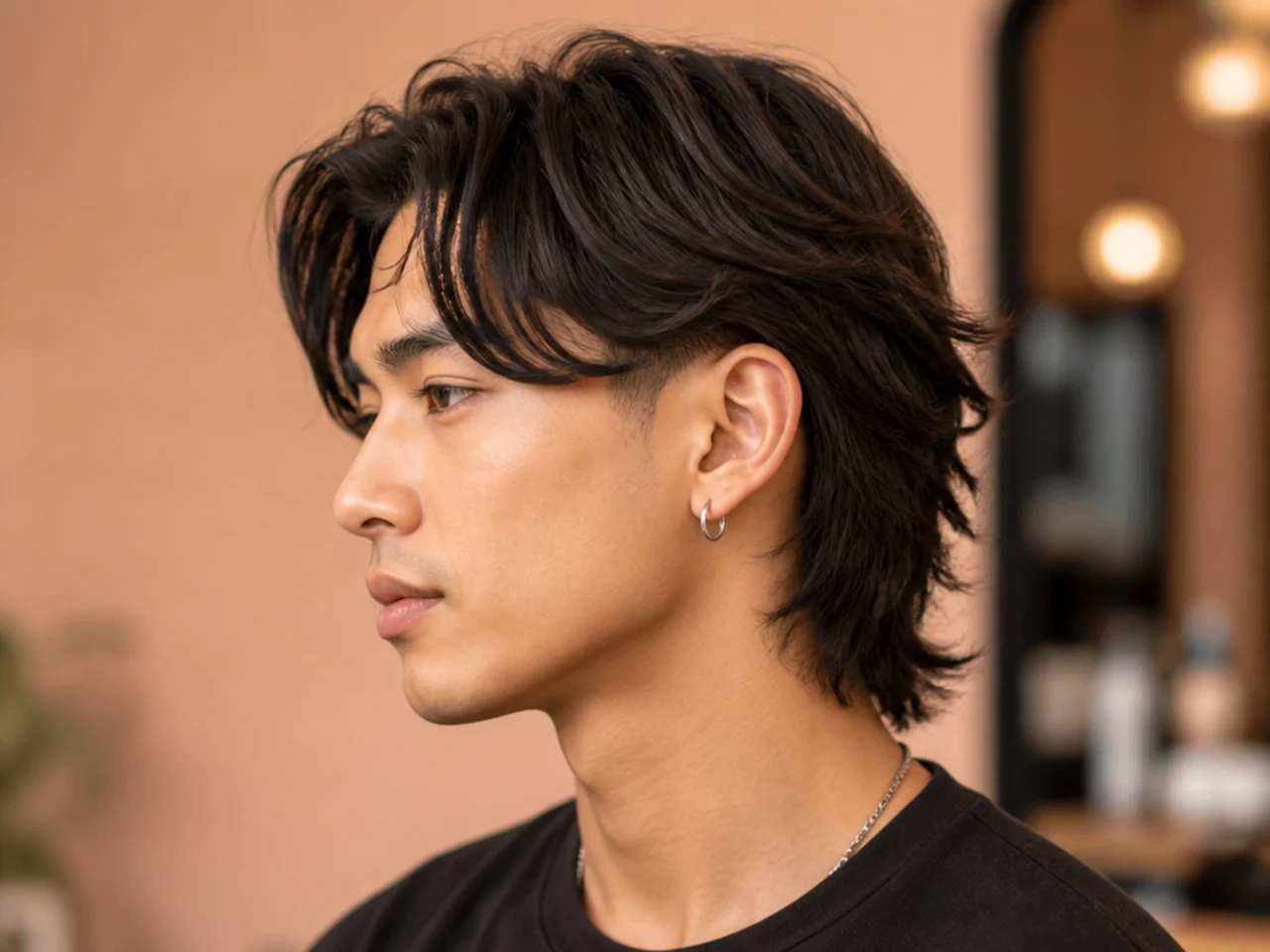
Softens the middle part into a full curtain fringe that grazes the eyebrows. The fringe splits at a soft center and curves outward, hidden buzz sits underneath at a 2 guard, and the mullet drops 2.5 to 3 inches. Reads younger and more approachable than the sleek middle part. Best on straight-to-wavy hair with medium density; suits long, square, and heart faces because the fringe shortens vertical space. Ask for a curtain fringe reaching the brow, a 2 guard hidden block, 4 inches on top with the front layered for the split, and a 3-inch mullet. Style by rough-drying inverted for lift, then dropping the fringe and finger-parting at center. The fringe haircuts for men guide covers the base fringe spec.
9. The Choppy Textured Two Block Mullet
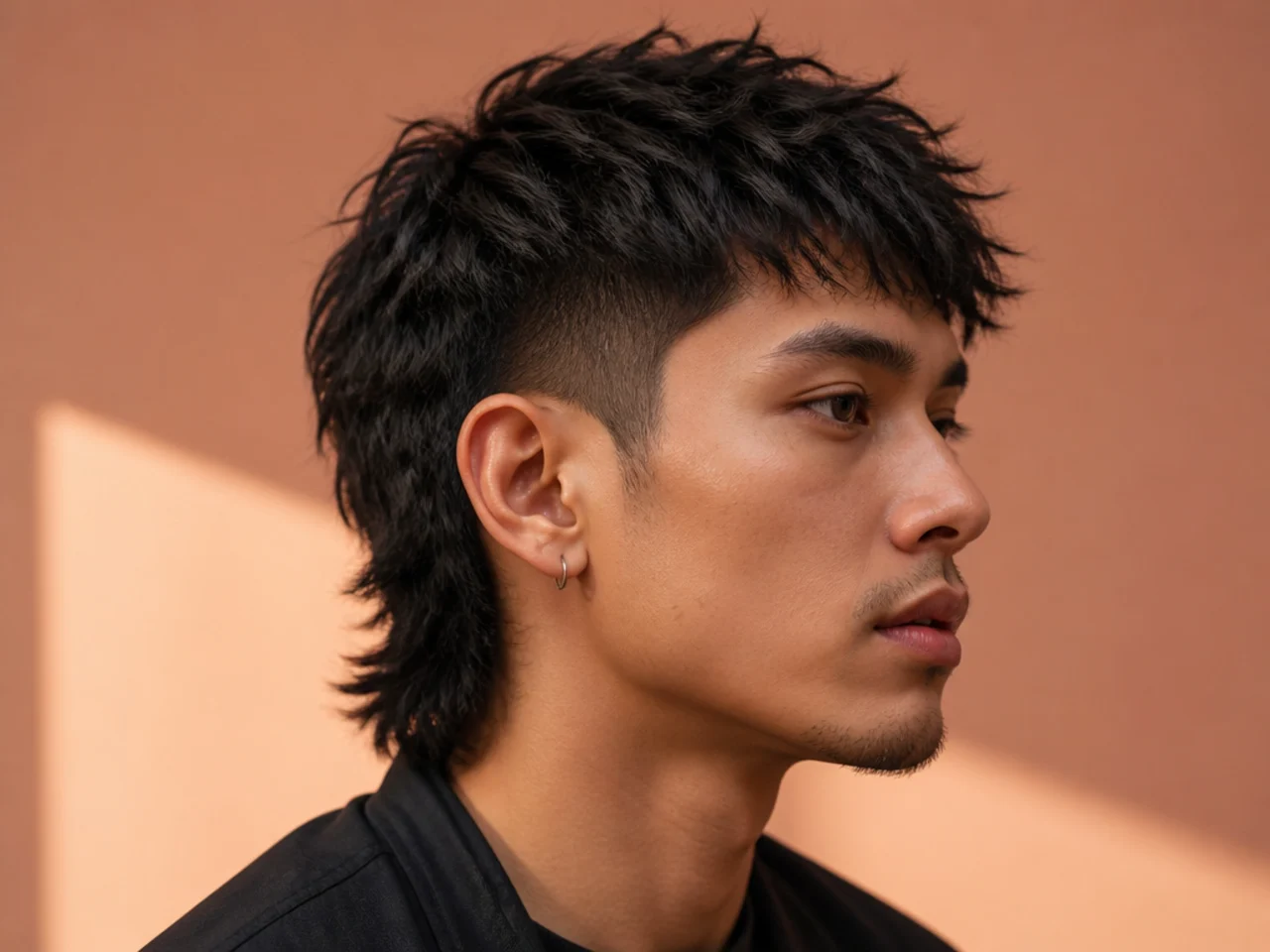
Loudest texture on the list. Aggressive point-cutting through the top and back creates chunky, uneven pieces that catch light in individual sections rather than reading as one smooth surface. Hidden block sits underneath at a 2 guard; the mullet drops 3 inches with a jagged rather than blunt perimeter. Reads punk-adjacent. Best on straight-to-wavy hair with medium-to-thick density; fine hair reads scattered. Ask for a 2 guard hidden block, 3.5 inches on top with heavy point-cutting, and a 3-inch jagged-perimeter mullet. Style with matte clay through the crown for grip and skip the setting mist — the finish should feel raw.
10. The Long Dramatic Two Block Mullet
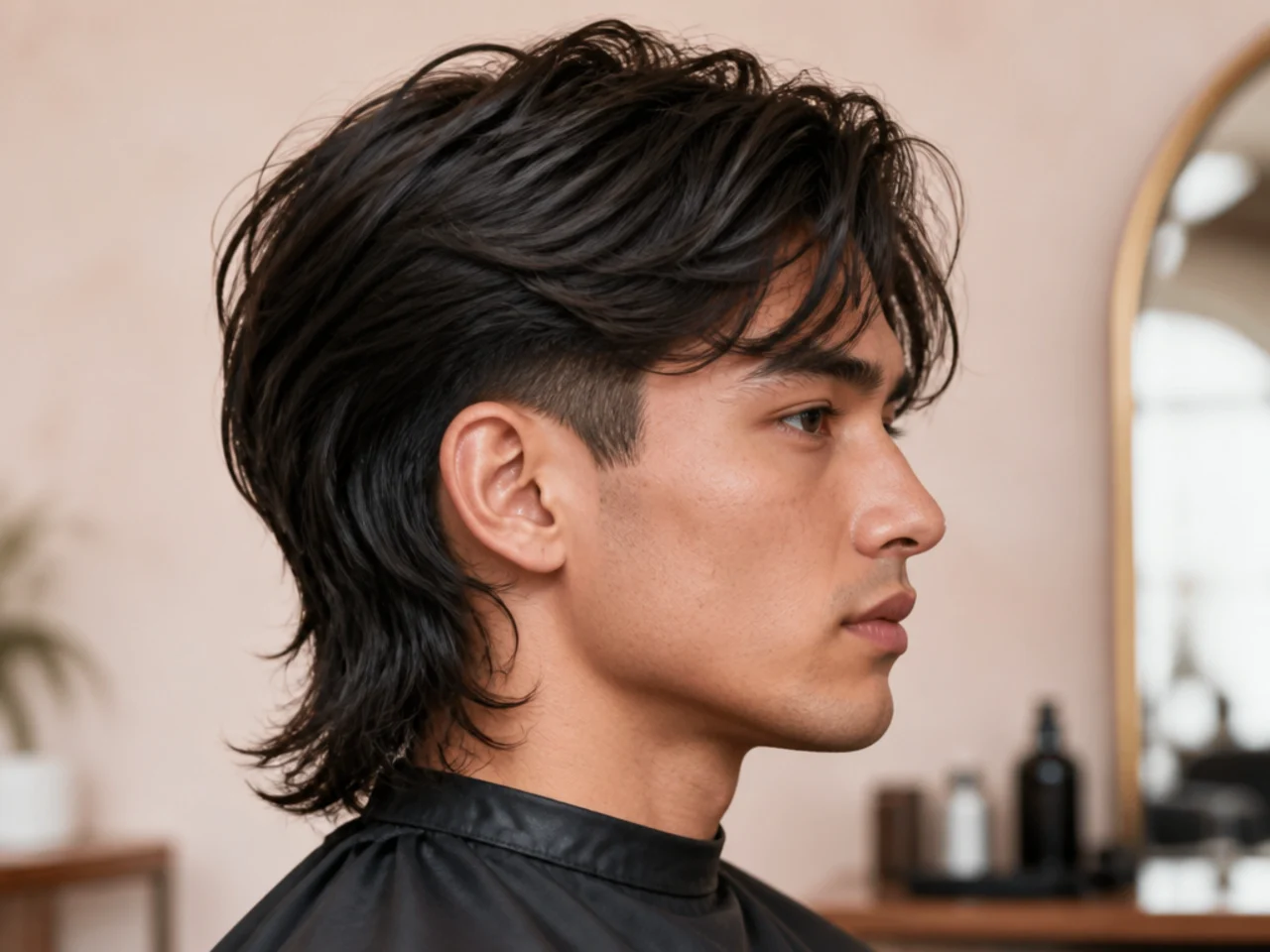
Pushes both lengths to the limit. Top runs 5 inches — past the eyebrows in front and past the collar behind the ears — and the mullet drops 4 inches with heavy internal layering so the length moves rather than sits flat. Hidden block at a 1 guard so the sides stay compressed against the head. Best on straight-to-wavy hair with strong density; fine hair collapses under the weight. Ask for a 1 guard hidden block, 5 inches on top with front weight retained, and a 4-inch heavily layered mullet. Style with a leave-in cream, air-dry from damp, then finger-shape the mullet.
11. The Wavy Two Block Mullet
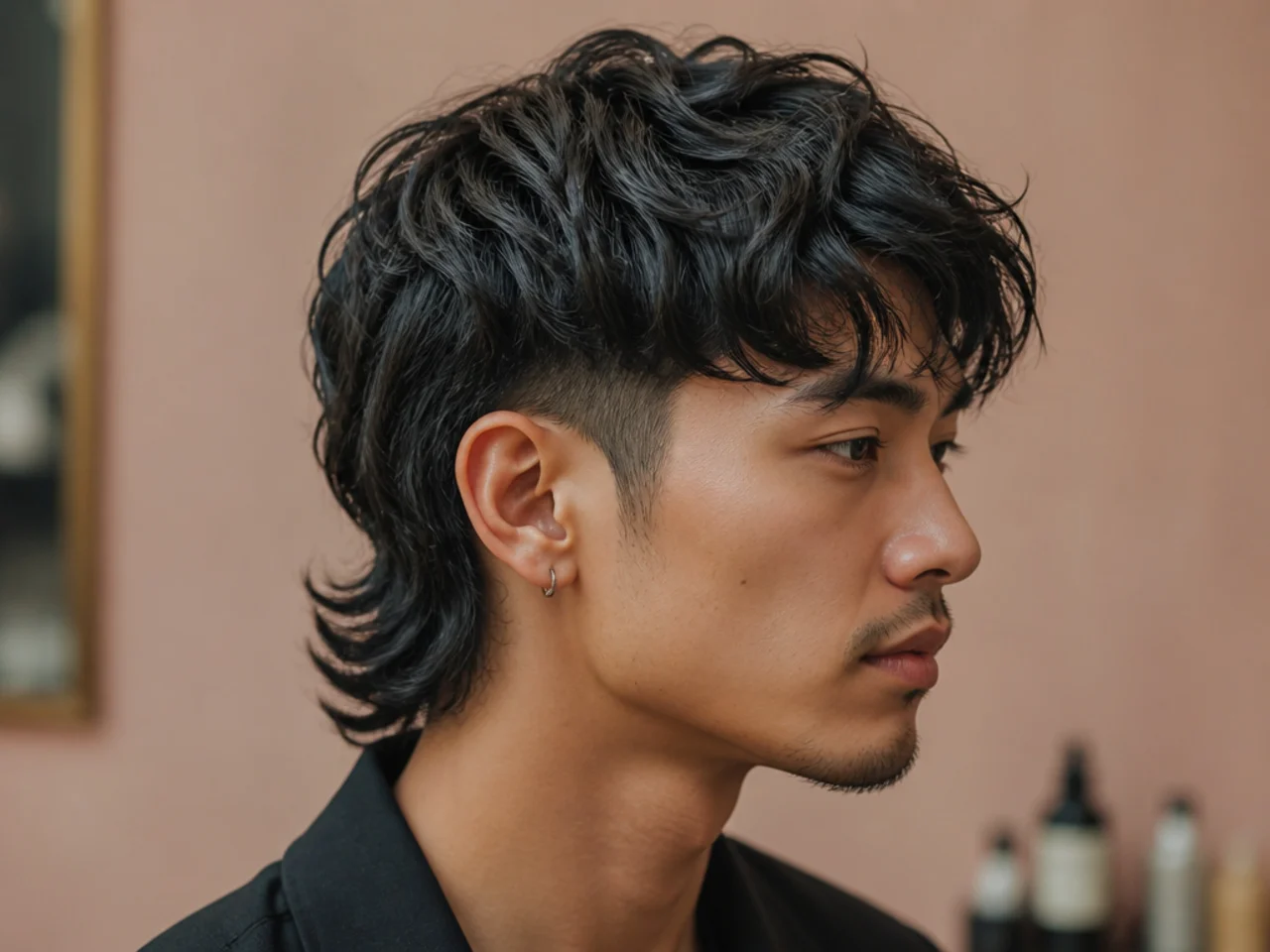
Tuned for 2A–2C waves. Top layer needs half an inch of extra length compared to the classic because waves lift the ends and shorten the drape. Hidden block runs a 1 guard so the sides stay tight when the wavy top moves. Mullet drops 3 to 3.5 inches with waves flowing through the perimeter rather than blunt-cut. Best on 2A–2C wavy hair with medium density; suits oval, heart, and long faces. Ask for a 1 guard hidden block, 3.5 to 4 inches on top with the natural wave preserved, and a 3-inch mullet with wave-friendly layering. Style with sea-salt spray on damp hair, scrunch by hand, and air-dry.
12. The Curly Two Block Mullet
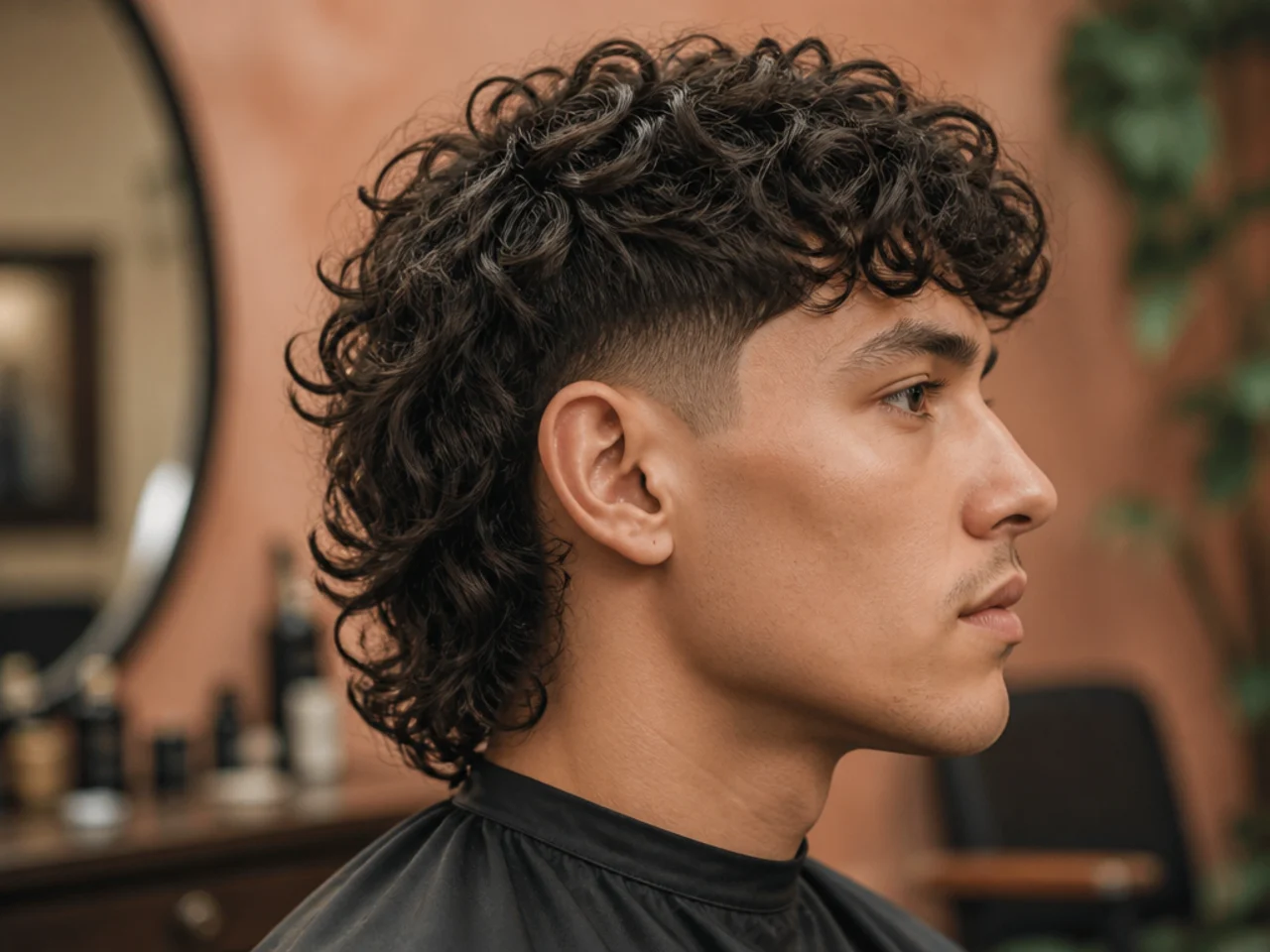
Curls fight the covering mechanic because they lift instead of drape, so the fix is length plus a shorter hidden block. Top runs 4.5 inches so the curls fall past the horseshoe line before they spiral upward. Hidden block runs a 0.5 or 1 guard so no buzz peeks through when the curls move. Mullet drops 3 inches with internal thinning. Best on 2C–3B curls with medium density; suits oval and heart faces. Ask for a 0.5 or 1 guard hidden block, 4.5 inches on top with internal thinning, and a 3-inch mullet with the curl pattern respected. Style with curl cream on damp hair and diffuse on low heat.
13. The Bleached Tip Two Block Mullet
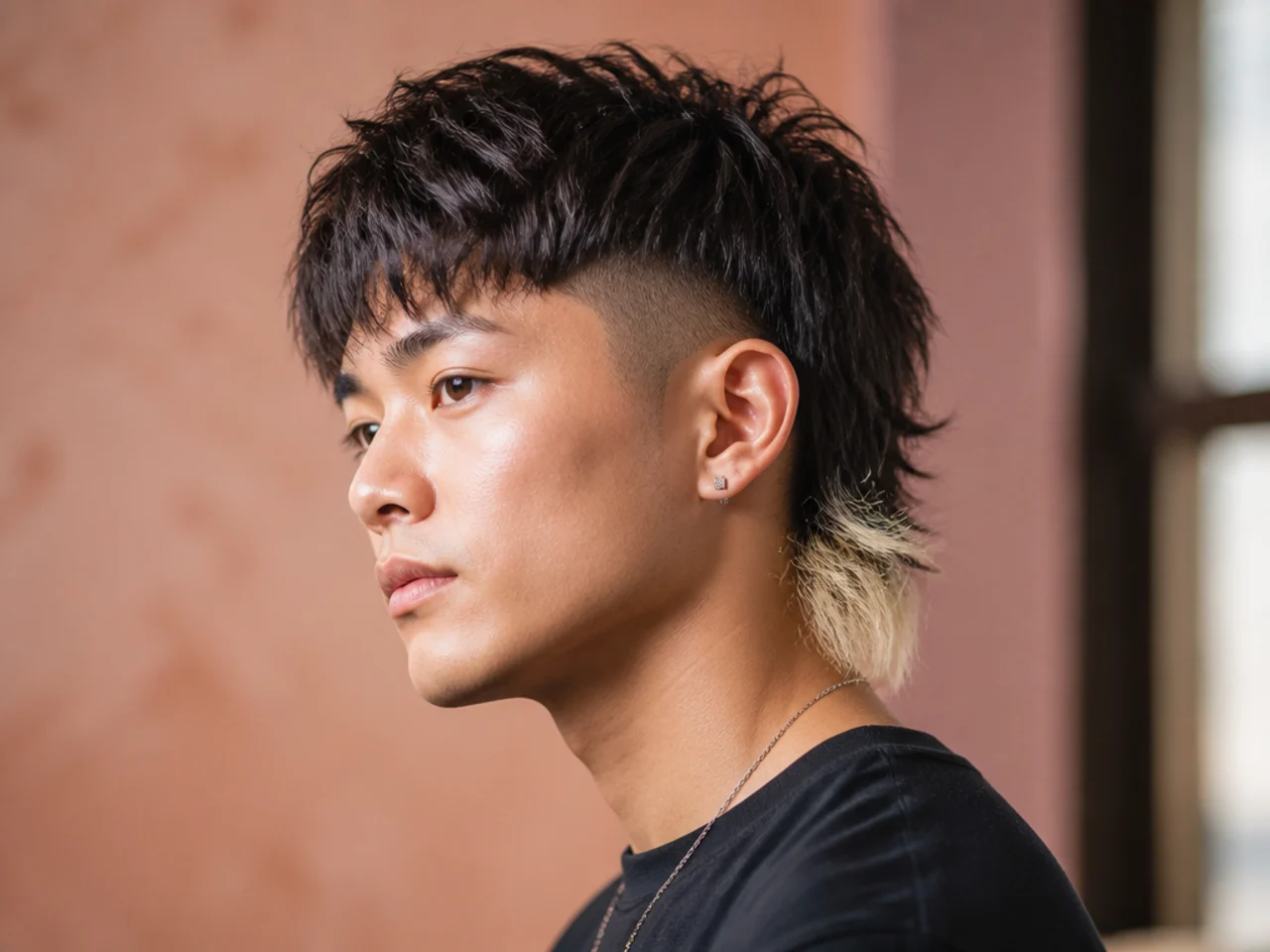
Color does the boldest lifting. Dark roots hold through the sides and lower crown, then a graduated bleach lightens the top three inches and the mullet ends. Hidden block stays dark so the reveal reads as sharp light-over-dark contrast when the top moves. Best on straight-to-wavy hair with medium density; healthy hair only — bleach plus daily heat wrecks weak strands. Ask for a 2 guard hidden block, 3.5 inches on top with a graduated bleach through the last 2 inches, and a 3-inch mullet bleached through the last 1.5 inches. Style with a purple shampoo cycle to keep the tone brass-free, matte clay on the top, and a heat protectant every session. Book bleach touch-ups every six to eight weeks.
14. The Wolf-Layered Two Block Mullet
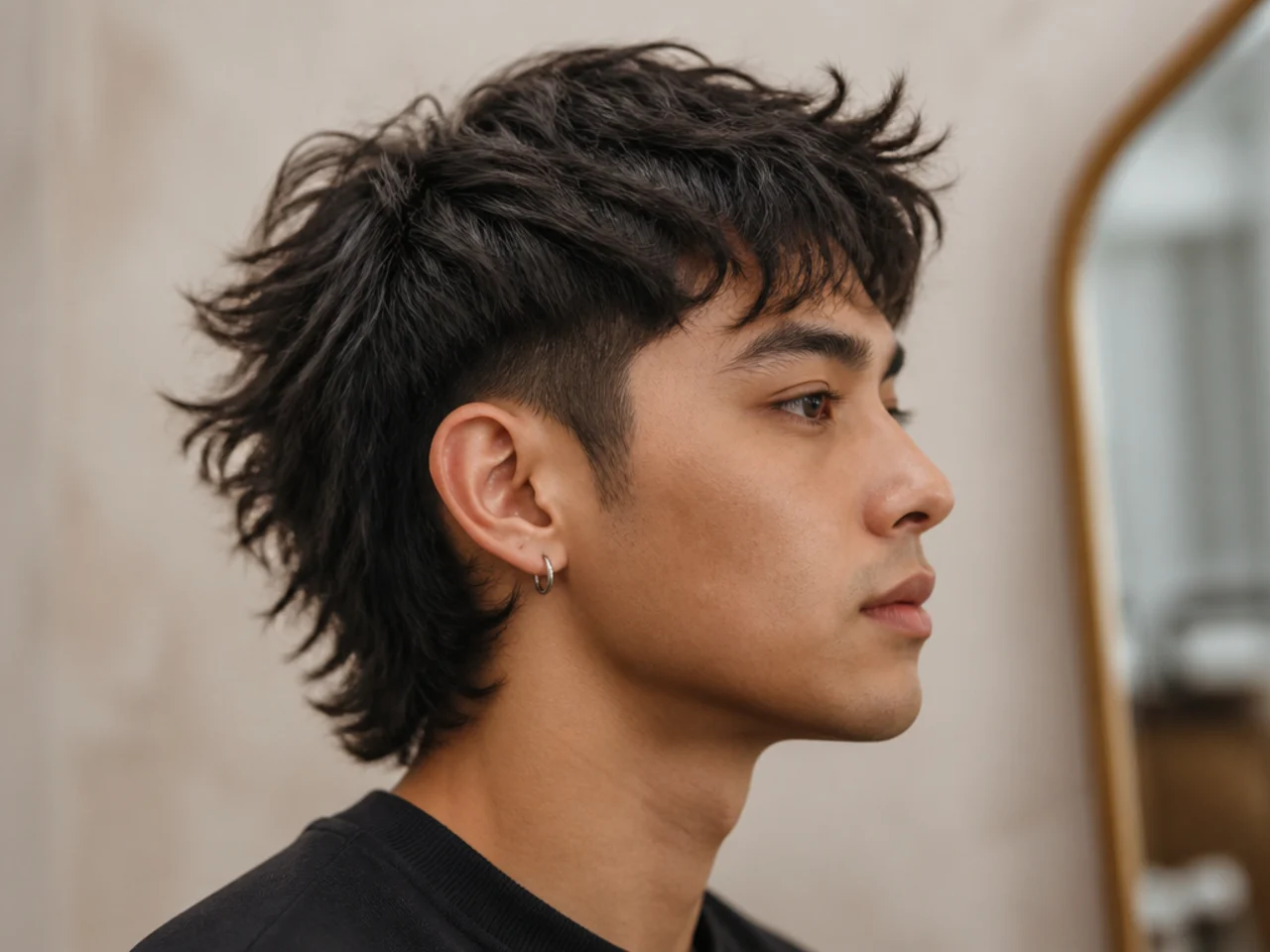
Wolf-cut framework under the two block mullet shape. Heavy internal layers wrap the crown and face-framing pieces so the top moves in feathered chunks rather than a single drape. Hidden block at a 2 guard. Mullet drops 3.5 inches with the feathered layers flowing directly into the nape rather than stopping at a hard perimeter. More textured, more unfinished than the classic. Best on wavy or curly hair with medium density; suits oval, heart, and diamond faces. Ask for wolf-cut internal layers, a 2 guard hidden block, 4 inches on top, and a 3.5-inch feathered mullet connected to the wolf layering. Style with sea-salt spray on damp hair and finger-shape everything before it dries. See men's wolf cut haircuts for the base wolf structure.
15. The Reverse Weight Two Block Mullet
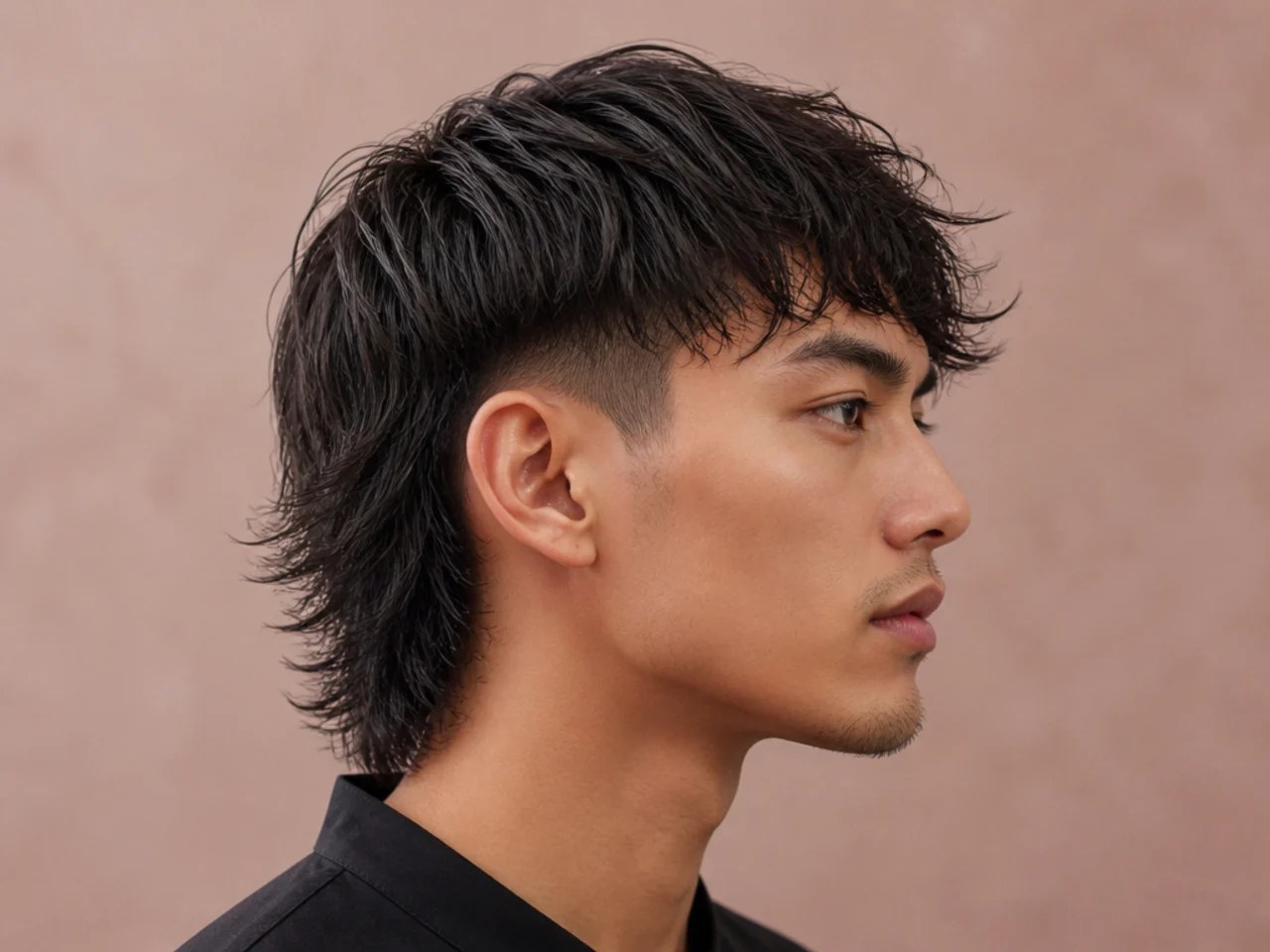
Flips the visual weight forward. Front runs longer and heavier — 4.5 to 5 inches with weight retained through the front third — while the back drops only 2 inches into a subtle mullet. Hidden block at a 2 guard. Reads like the front does the talking and the mullet whispers behind. Great transitional cut if you want to keep growing toward a full dramatic mullet. Best on straight-to-wavy hair with medium density; suits square and heart faces where a heavier front softens the jawline. Ask for a 2 guard hidden block, 5 inches at the front dropping to 3.5 at the crown, and a 2-inch subtle mullet. Style with leave-in cream and a large round brush at the front only. Related hybrid: the comma mullet haircut with a curled front.
How to Ask Your Barber for a Two Block Mullet
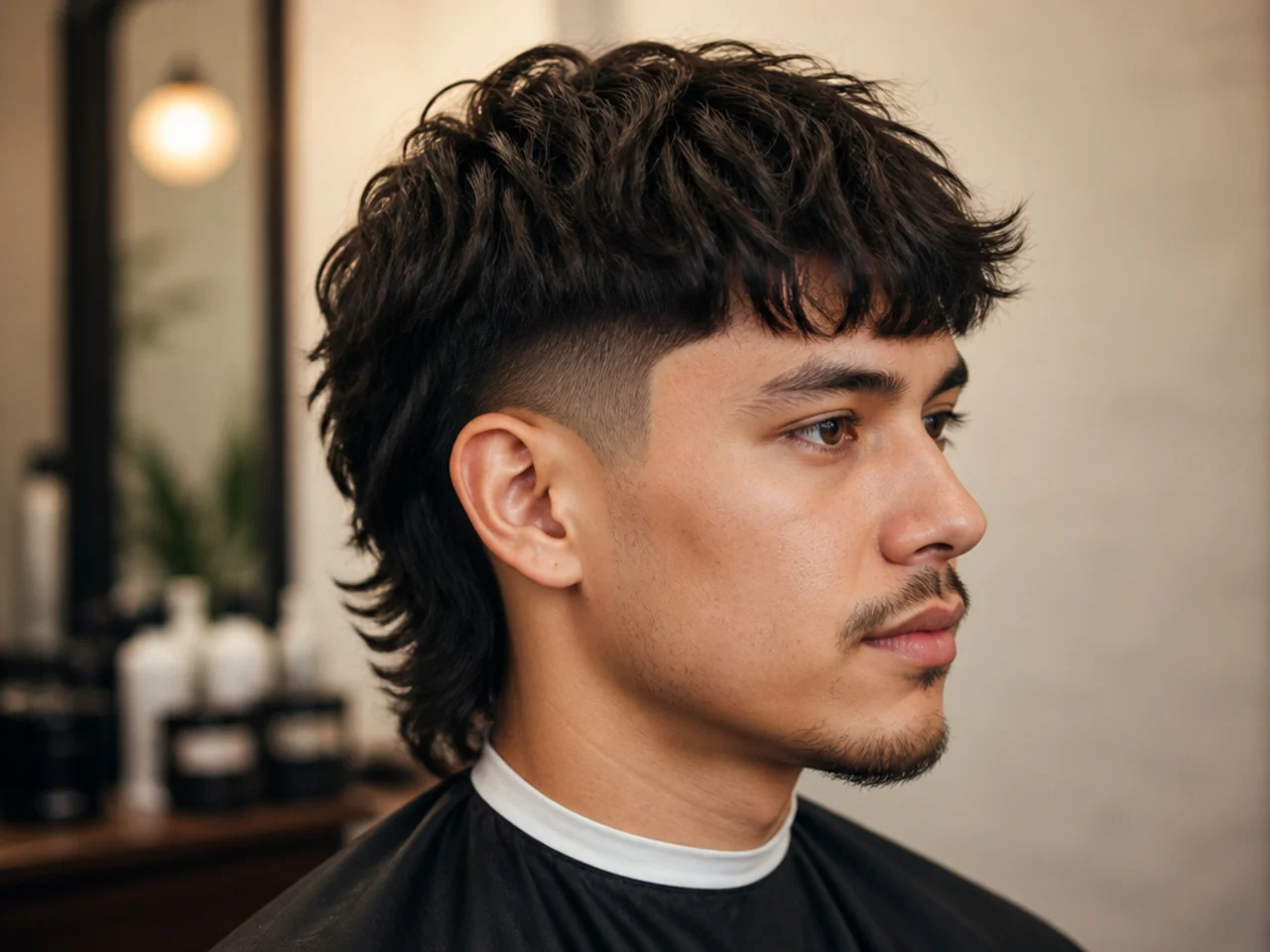
Every version of this hybrid lives or dies on the consultation. Vague language sends your barber guessing across three sections; specific language lands the shape on the first pass.
- Bring three reference photos. One front, one side, one three-quarter from behind. A single photo hides two of the three sections.
- Name the variation. "Classic two block mullet," "skin fade two block mullet," "long dramatic two block mullet" — the labels on this list have crossed over on Pinterest, and most Korean-trained and modern barbers recognize them.
- Specify three lengths. Top in inches, hidden block by guard number, mullet drop in inches. "Four inches on top, 2 guard hidden underneath, 3-inch mullet" is unambiguous.
- Point to the horseshoe line. Touch above your ear where you want the hidden block to start and trace the line across the back. Physical reference beats every word.
- Decide hidden or exposed. Say whether the top layer should fully cover the block at rest, or whether you want the ledge to show. That single choice changes how short the top gets left.
- Confirm the mullet perimeter. Blunt, feathered, point-cut, or jagged — say which. Blunt reads K-pop. Feathered reads shag-influenced. Jagged reads punk.
- Book the follow-up before you leave. Every four to five weeks for skin fades, undercuts, and hard-line versions. Every six to seven weeks for classic hidden-block and scissor-blended sides.
Styling and Maintenance
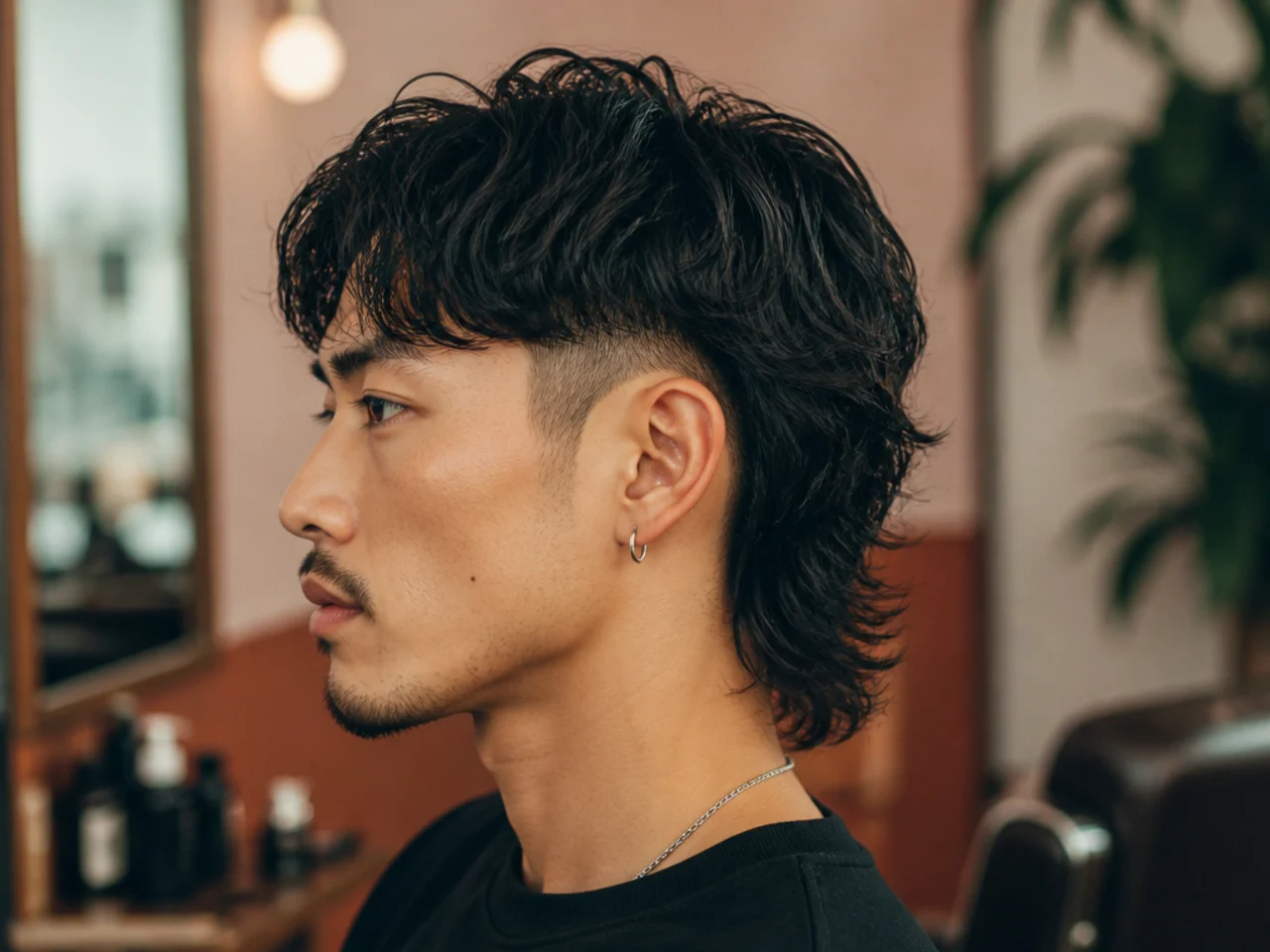
The two block mullet is a two-minute morning cut, not a zero-minute one. Your barber sets the architecture; you set the top drape, control the mullet perimeter, and decide day-to-day whether the hidden block stays hidden. Skip the top work and the block starts showing at random. Skip the back work and the mullet stacks into a triangle within a week.
Start damp, not dry. Wash, condition, and towel-blot until uniformly damp. Spray a lightweight sea-salt spray or volumizing mist through the top and back. Comb the top forward in the intended fall direction and the mullet straight down. Setting both directions while damp locks in the shape memory before product touches it.
Match the product to the finish. A matte clay is the primary product for classic, textured, undercut, and hard-ledge versions. A light-shine cream suits the Korean idol, middle part, and curtain fringe versions. A curl cream handles the wavy and curly versions. A low-shine pomade suits the middle part and reverse-weight versions. A light setting mist locks the shape without the crunchy feel of hairspray.
Cover the hidden block on purpose. For classic, wavy, curly, and long versions, comb the top forward and down over the horseshoe line while damp so the block stays hidden as the hair dries. For hard-ledge and undercut versions, do the opposite — push the top up and back with matte clay so the disconnect stays visible.
Sleep protects both sections. A silk or satin pillowcase saves the top drape and mullet layers overnight; cotton roughens the top and creates cowlicks at the crown. Never sleep on wet mullet layers — they set into whatever shape they dry in.
Book on cadence. Every four to five weeks for skin fades, undercuts, hard-line versions, and bleach touch-ups. Every six to seven weeks for classic hidden-block, wolf-layered, and curly versions. The moment the hidden block starts peeking through at rest, book.
FAQ
What is a two block mullet haircut?
A two block mullet is a hybrid that fuses the Korean two block — buzzed hidden sides tucked under a longer top layer — with a mullet drop that grows two to four inches past the collar. The top covers the buzzed block at rest and reveals it when you move. The mullet sits behind as a distinct third length. Three signatures land together and read unmistakably intentional.
Is the two block mullet still bold in 2026?
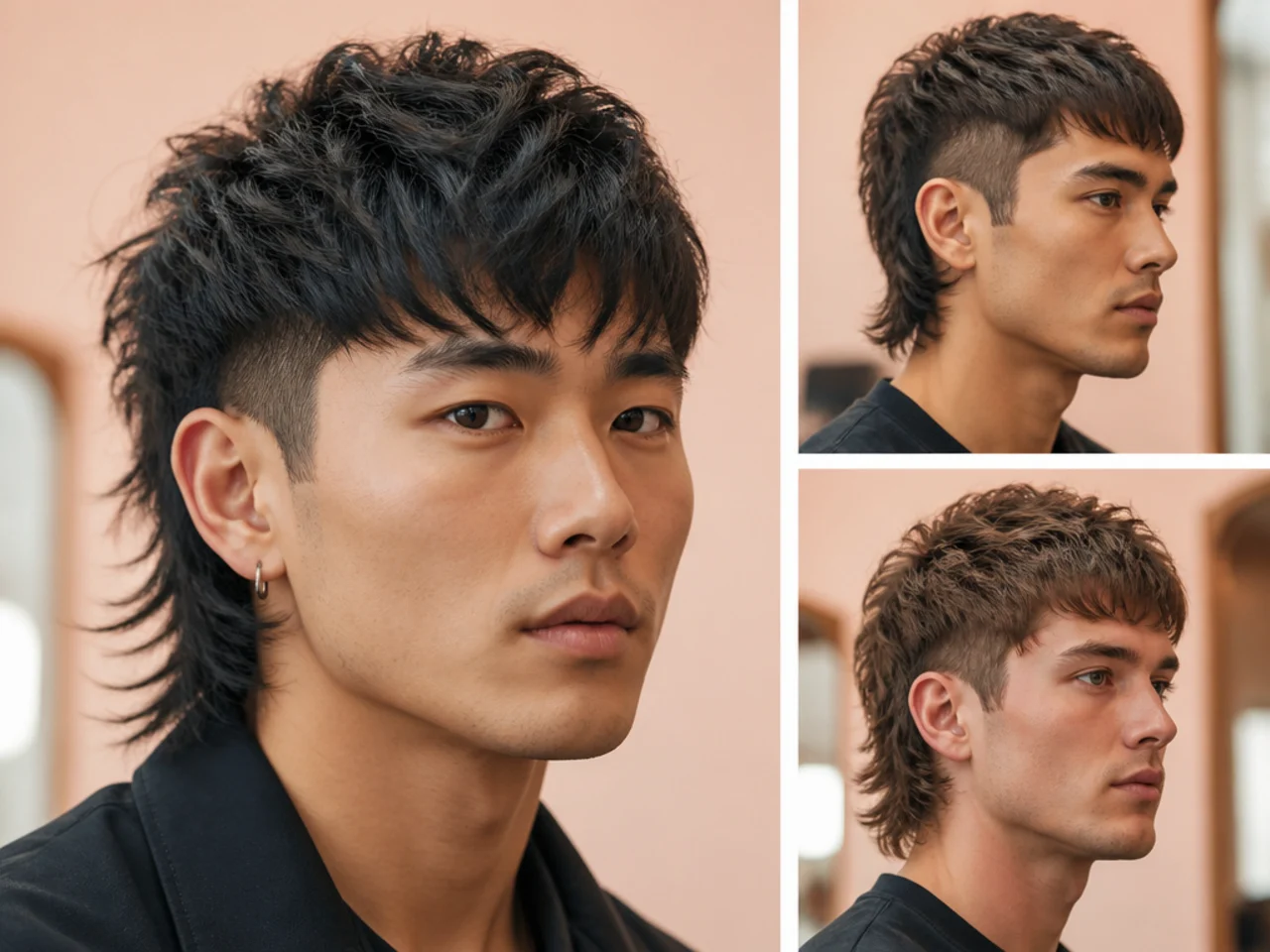
Yes — even as the hybrid moved from K-pop niche into mainstream men's fashion, the bold variations still read like a statement. Skin fades, undercuts, hard ledges, bleached tips, and long dramatic lengths all announce themselves the second you walk into a room. Softer versions with low tapers and shorter drops exist for stricter dress codes, but the hybrid rewards commitment rather than half-measures.
Which two block mullet works with curly or coily hair?
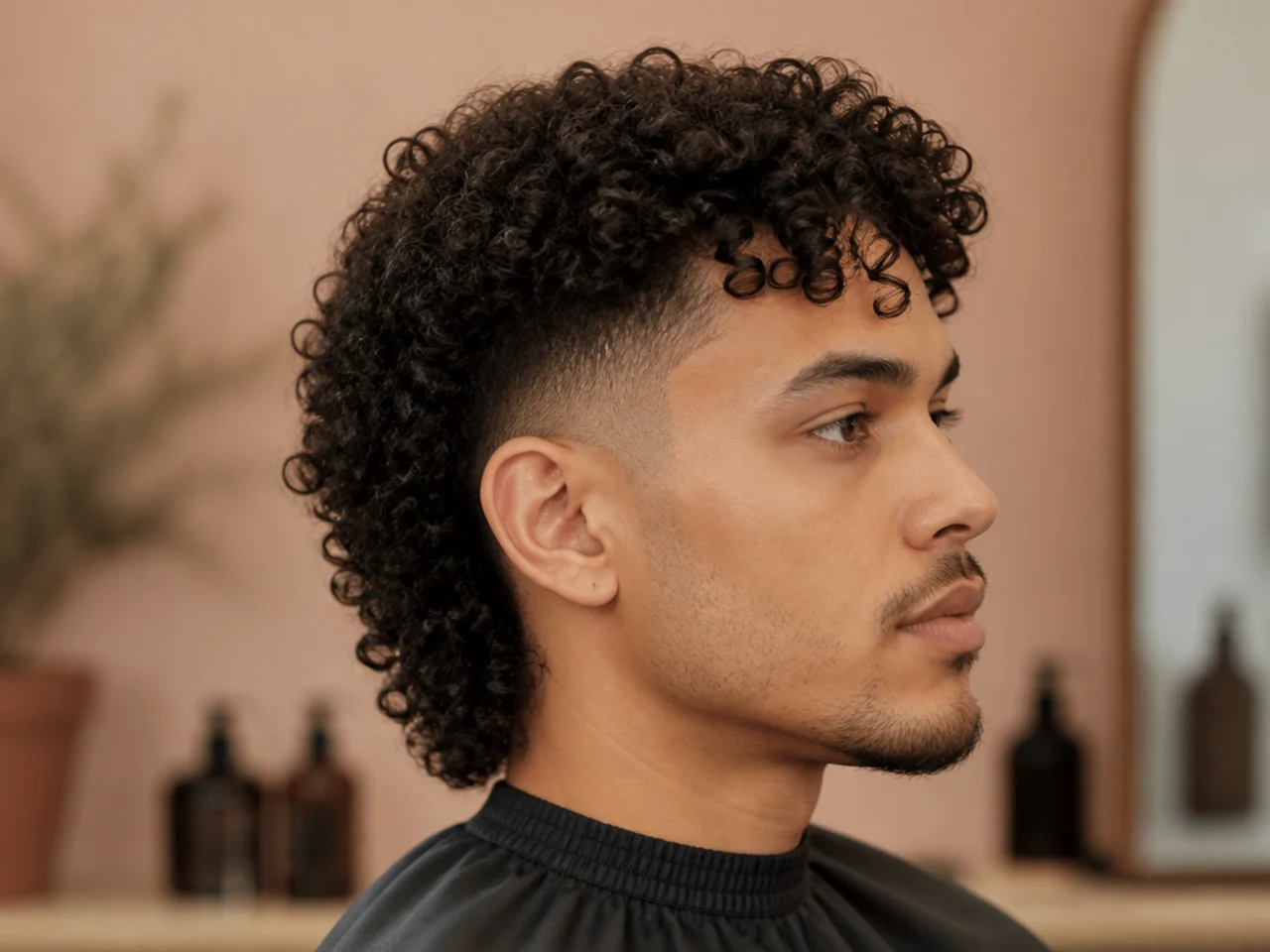
The curly, wolf-layered, and long dramatic versions work with 2C–3B curls — the extra top length lets gravity drape the curl pattern past the horseshoe line before it lifts. Coily hair (3C–4C) suits the skin fade and undercut versions better, where a compact top sits above a clear disconnect rather than trying to cover a hidden block that the coil pattern will fight. Skip the brush and diffuse on low heat with a curl cream.
How long does my hair need to be before I book a two block mullet?
Three inches on top and two inches at the nape is the absolute minimum. Under three on top, the top layer will not cover the hidden block and the horseshoe line shows at rest. Under two at the nape, the mullet reads as a plain longer neckline. Most bold versions ask for four to five inches on top and three to four at the nape. From a short cut, expect three to four months of grow-out before booking.
Does the two block mullet suit round or square face shapes?
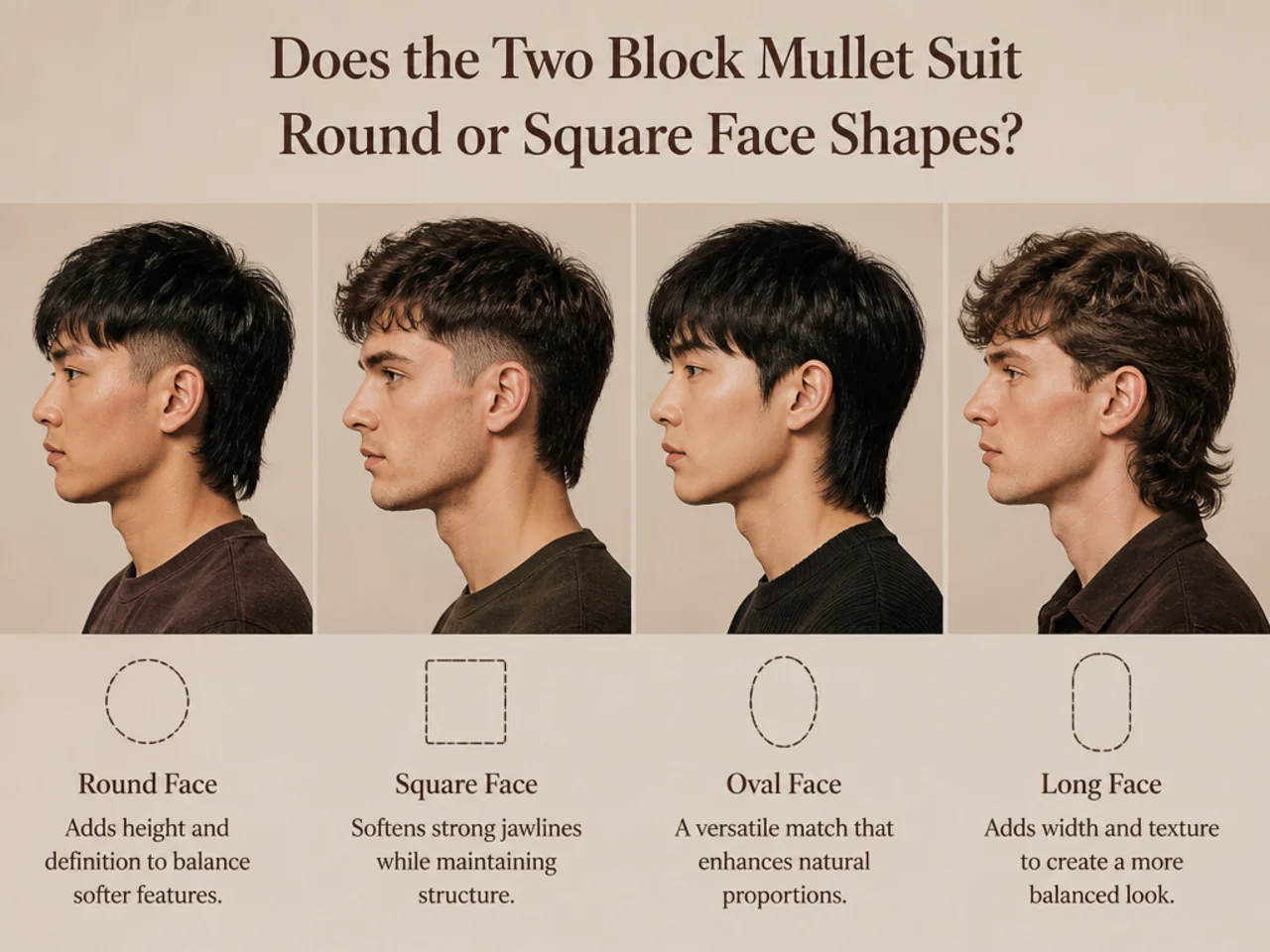
Yes, with tuning. Round faces want vertical volume to lengthen the frame — pick the middle part, curtain fringe, or long dramatic versions. Square faces want a softer top and scissor-blended sides — the middle part, curtain fringe, and wavy versions read best. Long faces want a shorter mullet and a fringe or curtain front so the vertical does not stretch further. Oval and heart faces suit almost every variation on the list, including the classic and skin fade versions.
Which two block mullet variation works in a corporate office?
The classic hidden, low taper, Korean idol, middle part, and reverse weight versions read office-safe — top covers the block at rest, mullet sits at or above the collar, finish stays polished. Skip the skin fade, undercut, hard ledge, choppy, bleached tip, and long dramatic versions for strict dress codes — those land stronger in creative, hospitality, or entertainment roles. The low taper is a strong middle ground: bold hybrid identity underneath, workplace-safe silhouette on the surface.