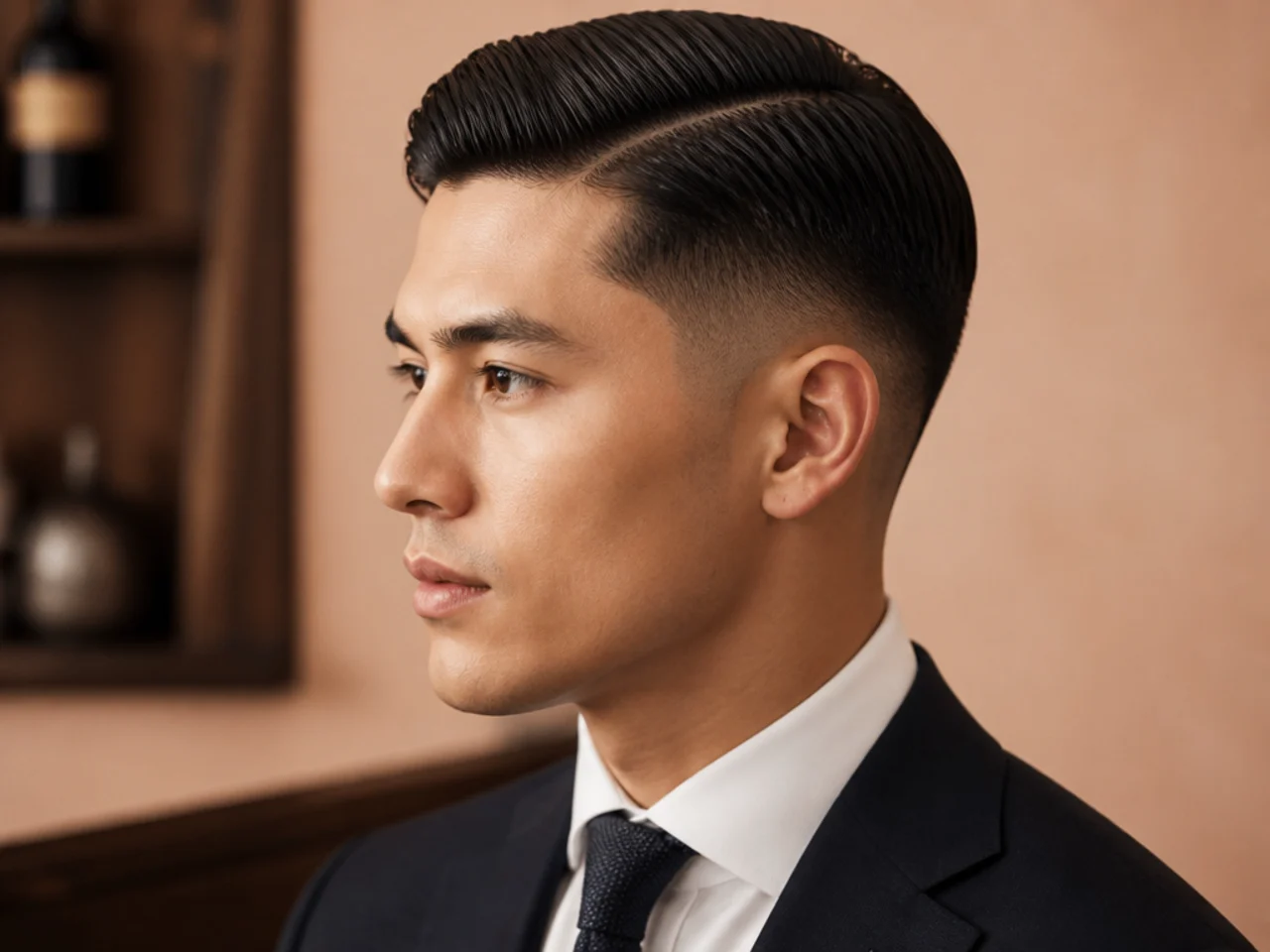
20 Professional Haircuts for the Office
Twenty office-ready professional haircut ideas for men — with face-shape notes, styling times, and the exact language to hand your barber. Sharp Monday through Friday.
In this article · 34
- What Makes a Haircut Office-Appropriate?
- How to Choose Your Office Cut
- The 20 Office-Ready Cuts
- 1\. Classic Executive Side Part
- 2\. Low Fade Comb Over
- 3\. Textured Crop with Low Taper
- 4\. Business Ivy League
- 5\. Scissor-Cut Crew
- 6\. Modern Quiff with Low Taper
- 7\. Sleek Slick Back with Taper
- 8\. French Crop Fade
- 9\. Brushed-Back with Mid Skin Fade
- 10\. Short Textured Pompadour
- 11\. Groomed Buzz Cut
- 12\. Hard Side Part with Skin Fade
- 13\. Longer Fringe Crop (Modern Caesar)
- 14\. Layered Medium-Length Executive
- 15\. Tapered Curly Executive Cut
- 16\. Disconnected Undercut with Slick Top
- 17\. Mid Fade with Cropped Top
- 18\. Low Fade with Soft Fringe
- 19\. Executive Man Bun with Undercut
- 20\. Silver Fox Side Part
- How to Ask Your Barber
- Styling and Maintenance
- Final Thoughts
- FAQ
- What's the safest professional haircut for a first office job?
- Are fades still considered professional in 2026?
- How long can top length go before it stops reading professional?
- What styling product should I use for an office cut?
- How often should I book a haircut to stay office-ready?
- Can I keep long hair or a beard in a corporate office?
- Which face shape suits which office cut?
The professional haircut office men are asking for in 2026 is not a single cut. It's a family — twenty shapes that read competent in a meeting, survive a full workday without touch-ups, and let your barber rebuild the silhouette in under thirty minutes. Below are the twenty variations worth knowing, with face-shape notes, styling times, and the exact language to hand the chair.
For the wider menu, start with the professional hairstyle men taxonomy or the shorter, easier picks in our professional hairstyles for men roundup.
What Makes a Haircut Office-Appropriate?
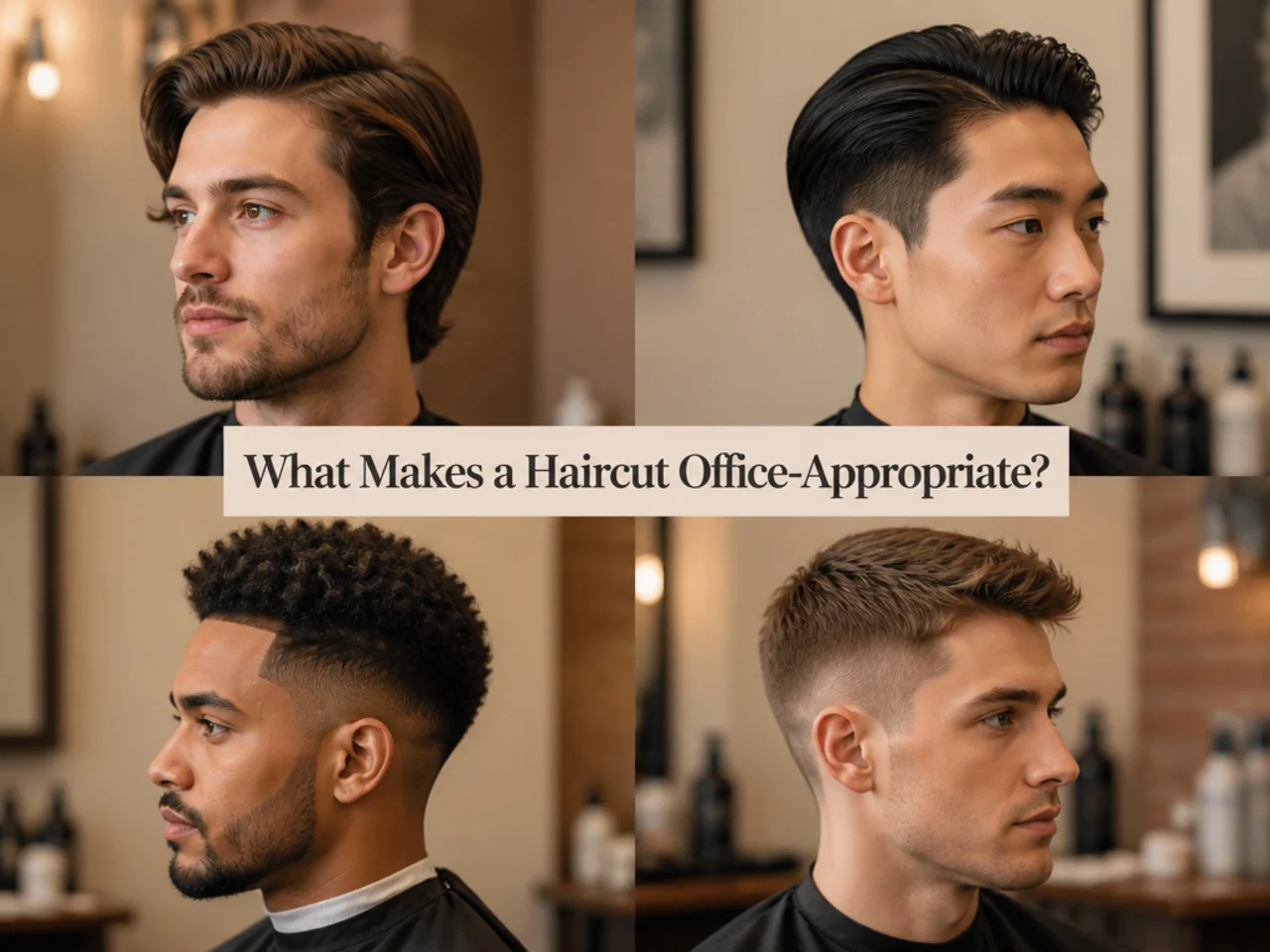
Three traits separate an office cut from a weekend cut. First, clean lines — a disciplined side treatment (taper, low fade, or scissor blend) that doesn't blur three days after the chair. Second, invisible product — a matte clay or a light cream, never a wet-look pomade that photographs like grease under overhead fluorescents. Third, a shape that holds from 8am through the last meeting of the day without a mirror check.
You can pair any of those traits with texture, length, or a bit of personality. The line between "corporate" and "creative" is finish, not silhouette. A textured quiff styled with matte paste reads boardroom. The same quiff styled with sea-salt spray reads weekend brunch. Pick the cut for the face; pick the finish for the room.
The one rule that never bends: your barber has to see you every three to five weeks. A brilliant cut on week one looks unkempt by week six on every hair type there is.
How to Choose Your Office Cut
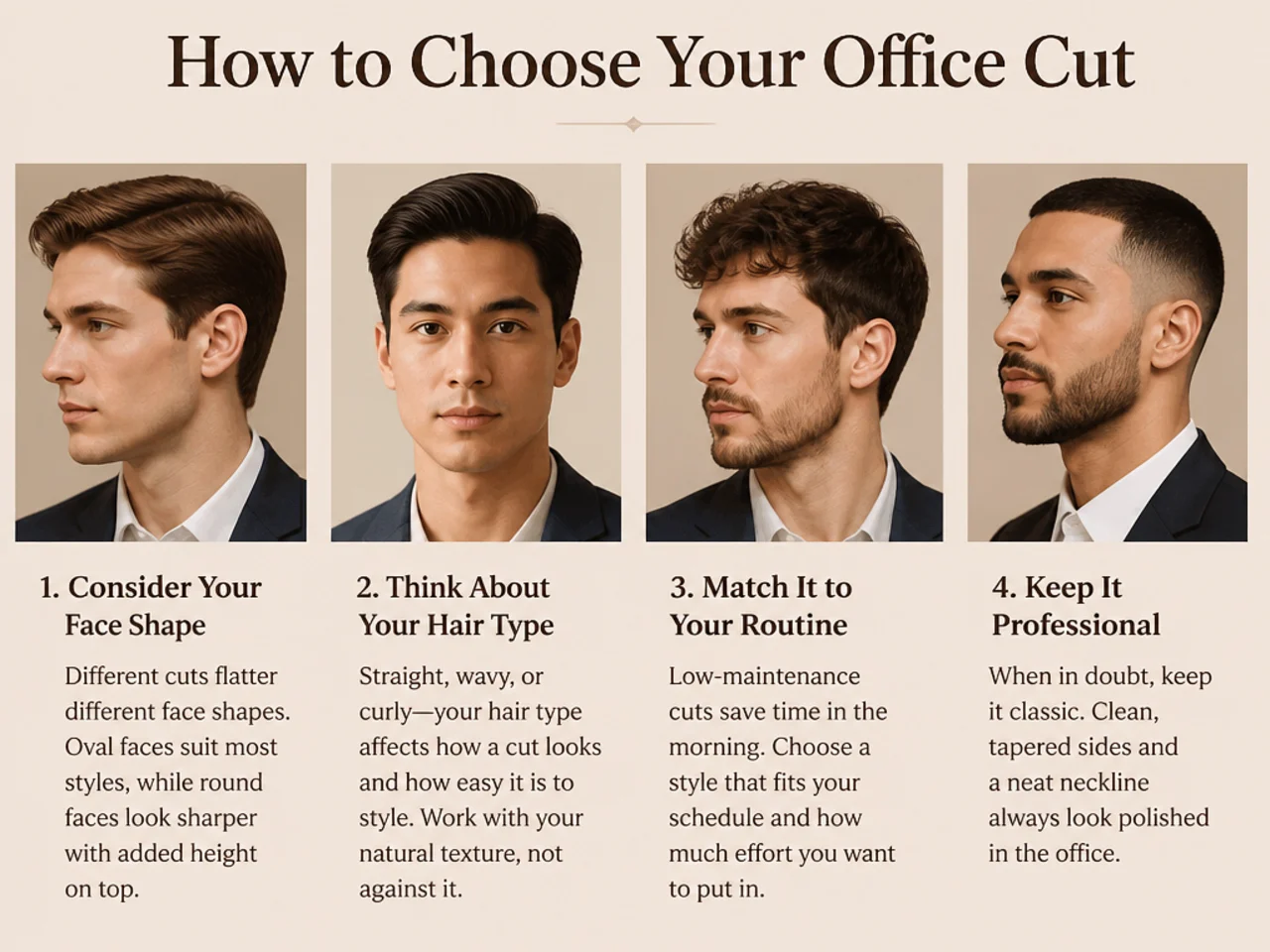
Three questions decide the version. What industry are you in? What's your face shape? How much time do you actually spend in front of the mirror each morning?
Conservative fields — law, banking, medicine, government — reward restraint. Aim for a scissor taper on the sides, no visible hard-part lines, and a top under three inches. Corporate-neutral fields (consulting, engineering, corporate marketing) open up to a low or mid fade and a bit of top texture. Creative and tech workplaces tolerate a skin fade, a longer top, or a groomed man bun as long as the finish stays clean.
Face shape does the second sort. Round and square faces want vertical line — a quiff, brushed-back top, or side part gives you height. Oblong and long faces want horizontal balance — keep the top short and let a well-executed fade shape the sides. Oval faces wear almost every option in this guide.
The 20 Office-Ready Cuts
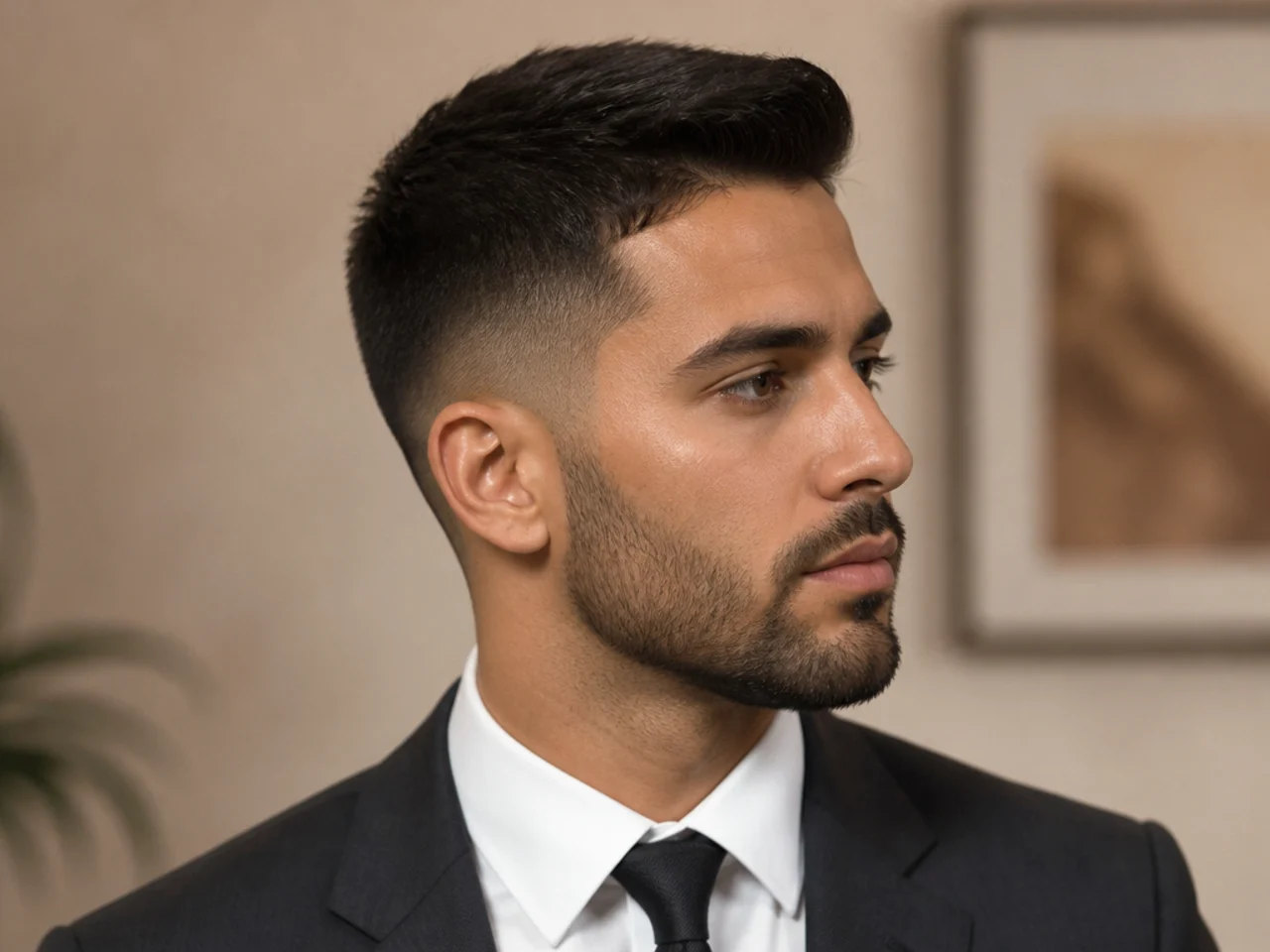
Twenty variations sorted from most conservative to most modern. Each block covers what makes this cut different, who it suits, exactly how to ask, and one styling move worth borrowing.
1. Classic Executive Side Part
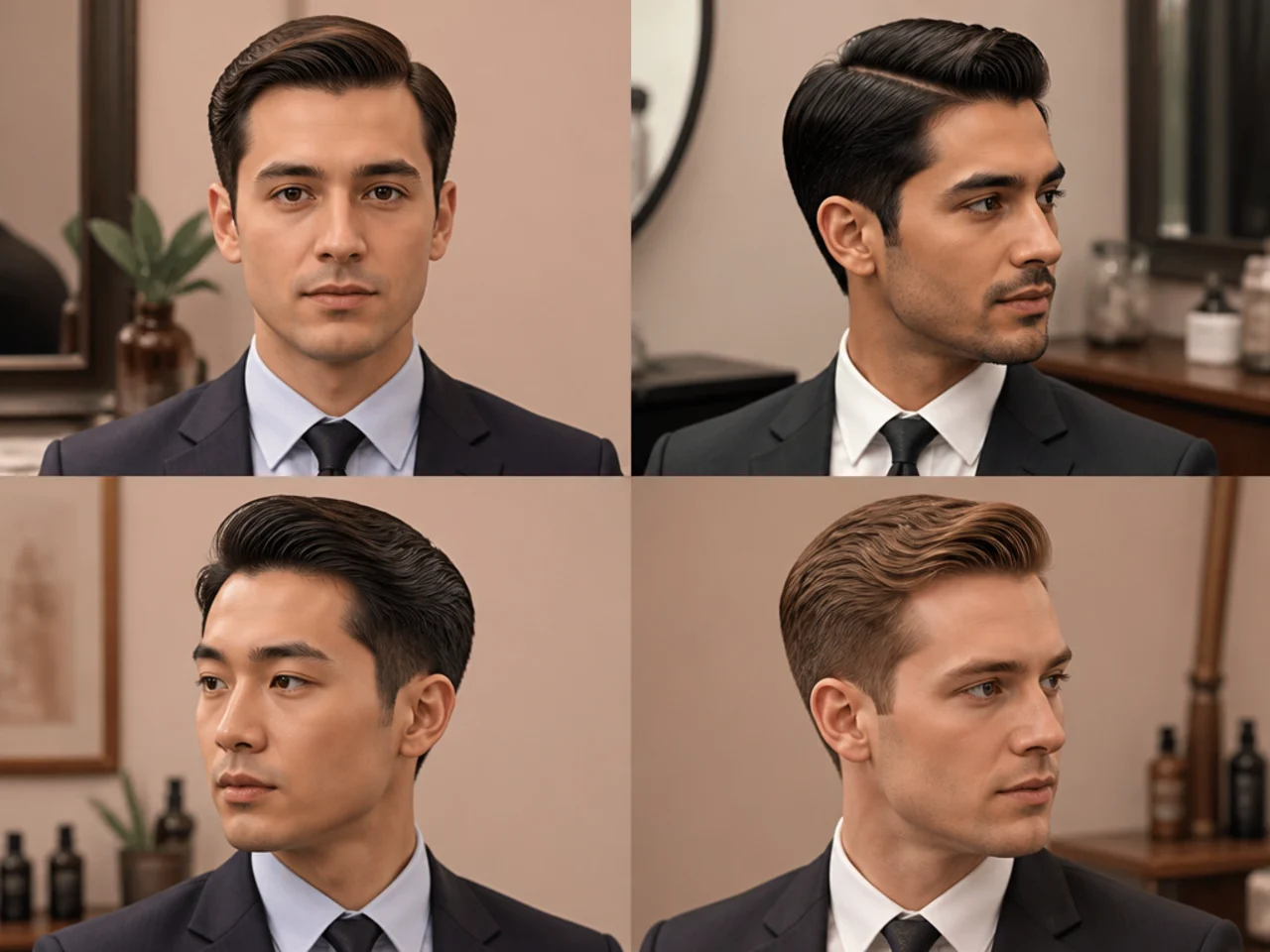
The default cut every senior partner in every industry wears at some point. Two to two-and-a-half inches on top, a scissor taper on the sides, hair combed to one side along your natural parting. Suits every face shape — the ratios are conservative enough to disappear into a suit. Works on straight and gently wavy hair; coarse or curly hair needs a light cream to lie flat.
Ask for: "Scissor taper on the sides, two-and-a-half inches on top, natural side part on my dominant side. Conservative finish, no fade line."
Styling: pea of light-hold pomade or cream through damp hair, one pass with a fine-tooth comb, done. Under ninety seconds from towel to door.
2. Low Fade Comb Over
The workhorse of professional cuts. Three inches on top combed across a defined side part, a low fade that blends into a natural hairline. Suits every industry from law to sales. Best on straight to lightly wavy hair; the comb-over needs a bit of length to lie right.
Ask for: "Low fade starting at the ear, three inches on top, hard part scissored in on the natural side."
Styling: matte clay worked into damp hair, comb from the part down over the ear, press flat with a paddle brush for thirty seconds. The clay holds the shape without adding shine — critical under overhead office lighting.
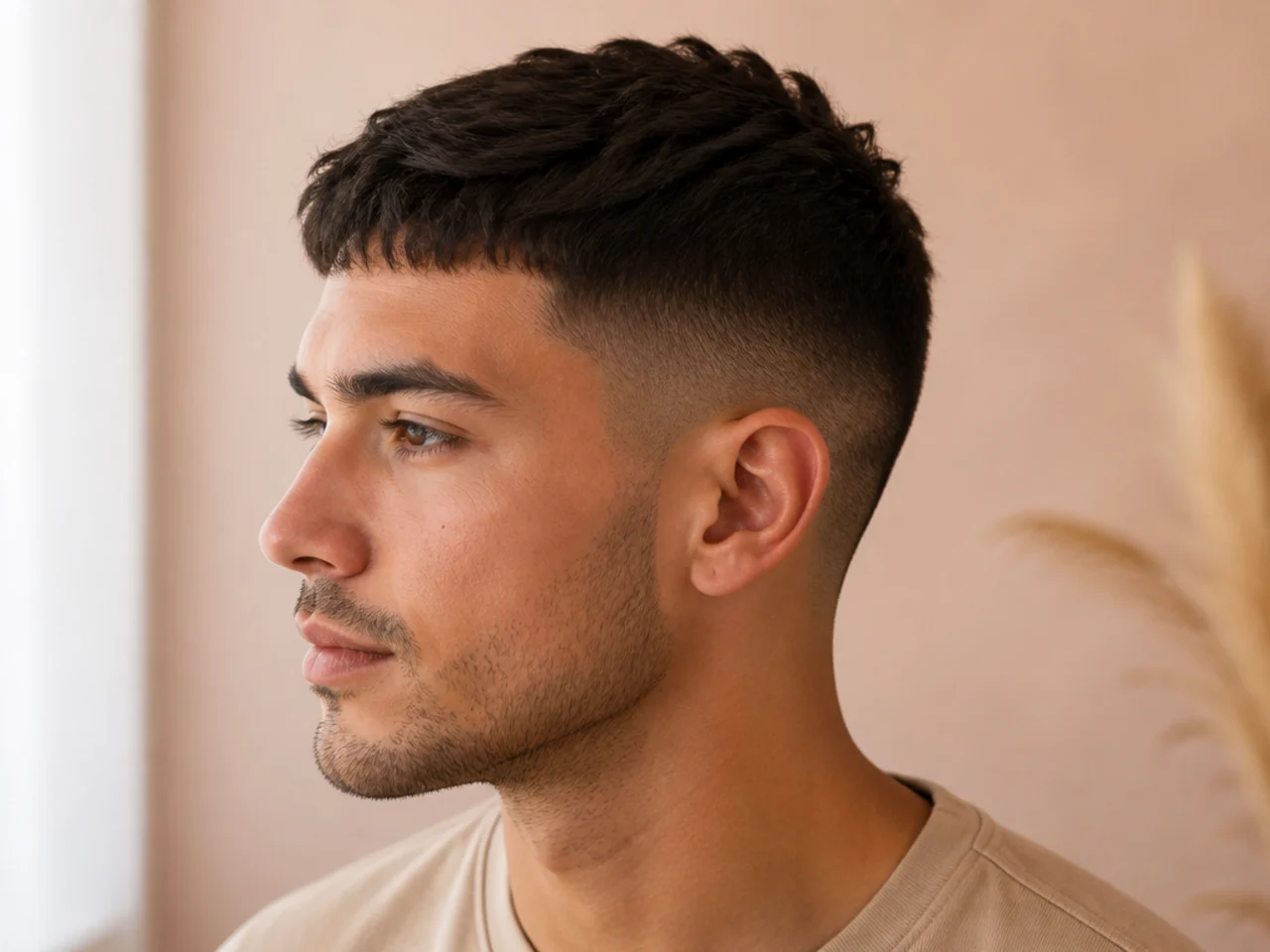
3. Textured Crop with Low Taper
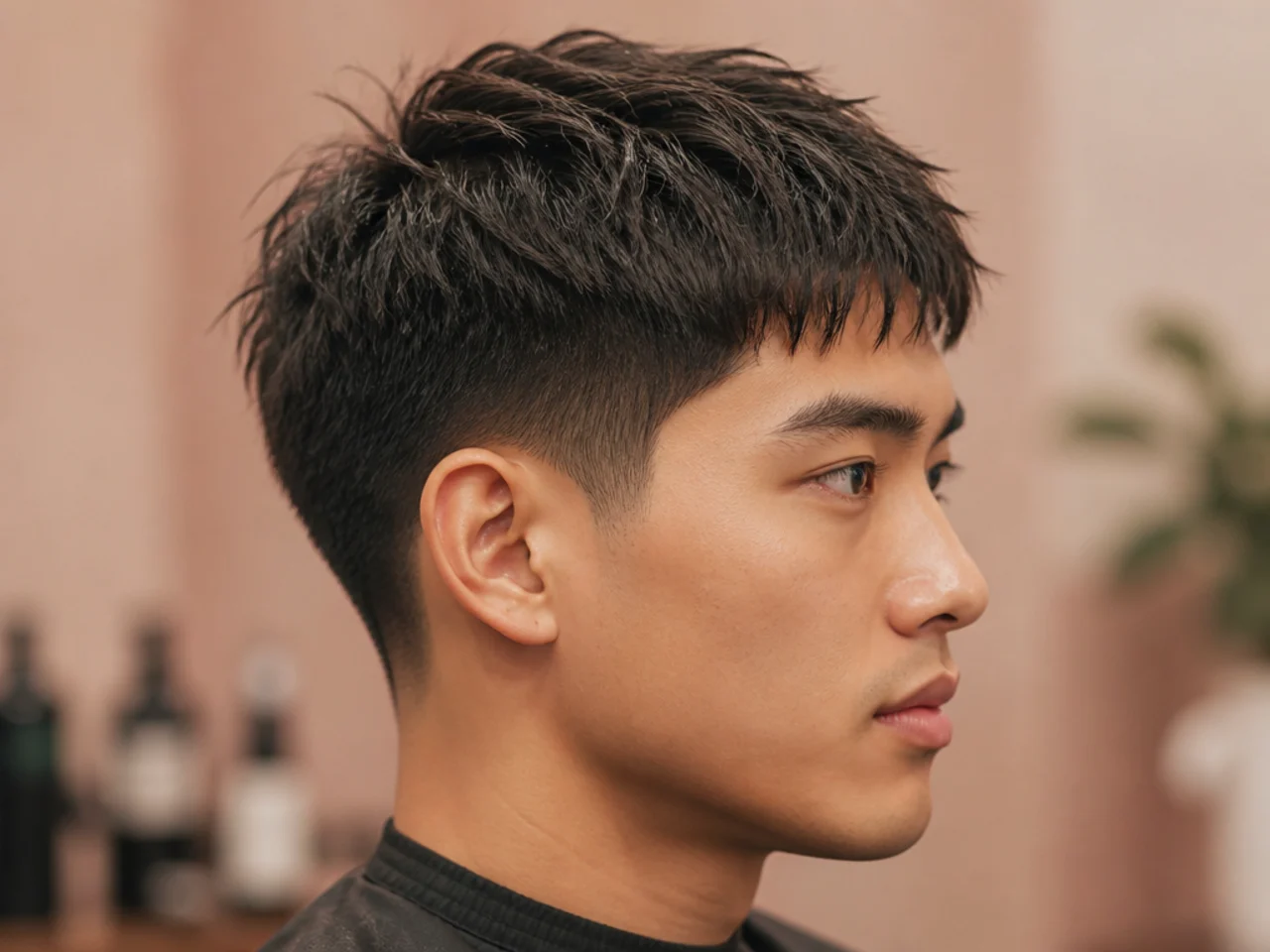
The current default for men under forty who work in modern offices. Two inches on top cut heavy through the ends for texture, a short forward fringe, a low taper fade at the sides. Suits round and heart-shaped faces because the fringe softens the forehead and the taper elongates the sides. Wavy and coarse hair pop in this cut.
Ask for: "Low taper on the sides, two inches on top point-cut for texture, forward fringe left at brow length."
Styling: matte paste raked forward with your fingers on damp hair. Air dry or hit briefly with a blow dryer. Do not comb — combed crops look pasted on.
4. Business Ivy League
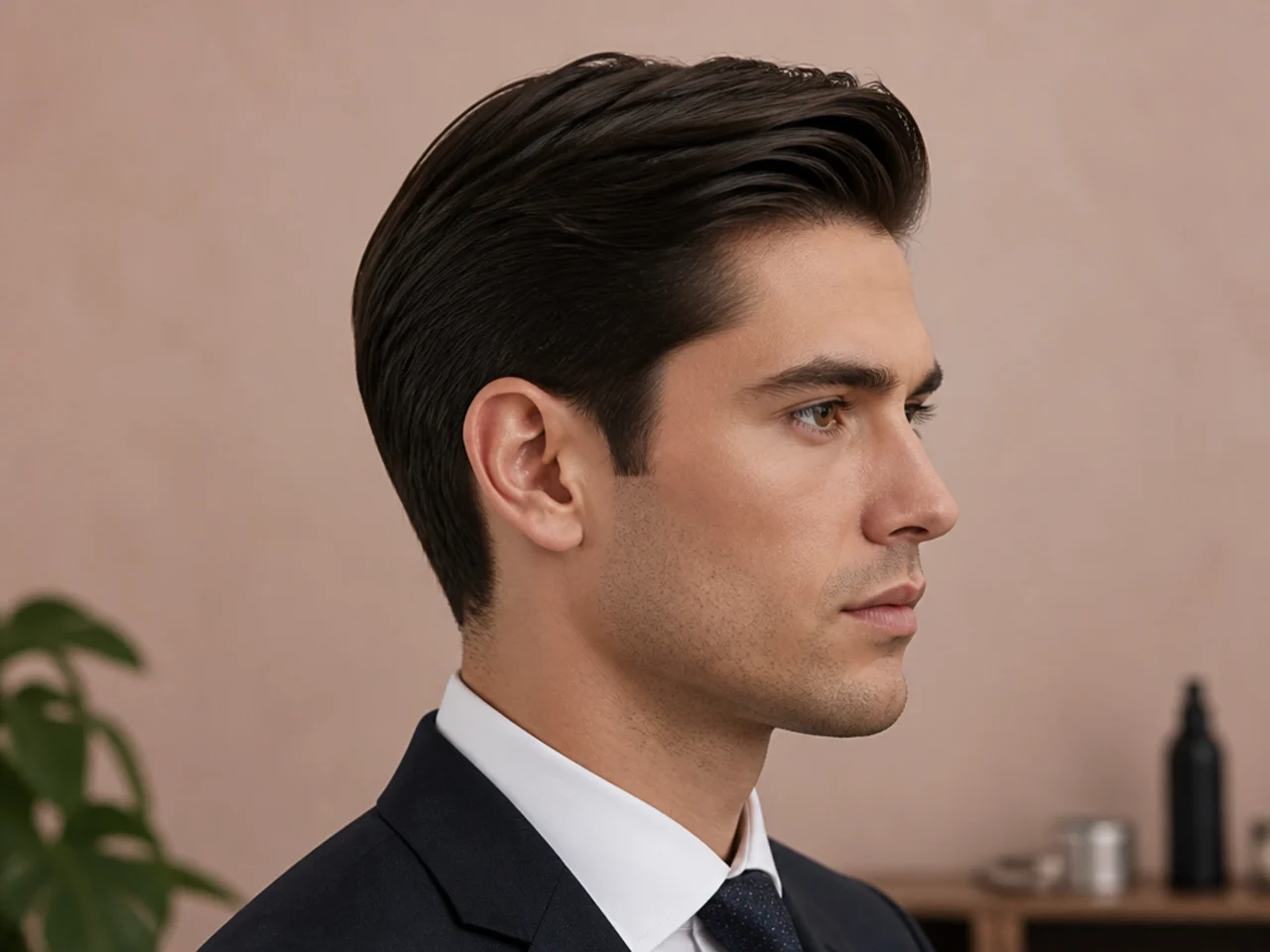
A slightly longer, softer cousin to the crew cut. Two inches on top so the front sweeps to the side, a #2 clipper taper on the sides, a natural front hairline. The Ivy League haircut reads polished on junior associates and senior partners alike. Suits every face shape; best on straight and lightly wavy hair.
Ask for: "Ivy League — two inches on top, #2 clipper taper on the sides fading to skin above the ear, natural front hairline."
Styling: light cream through damp hair, swept to the side with a comb or the palm of your hand. Air dry or thirty seconds with a blow dryer. Book every three weeks — this style softens fast.
5. Scissor-Cut Crew
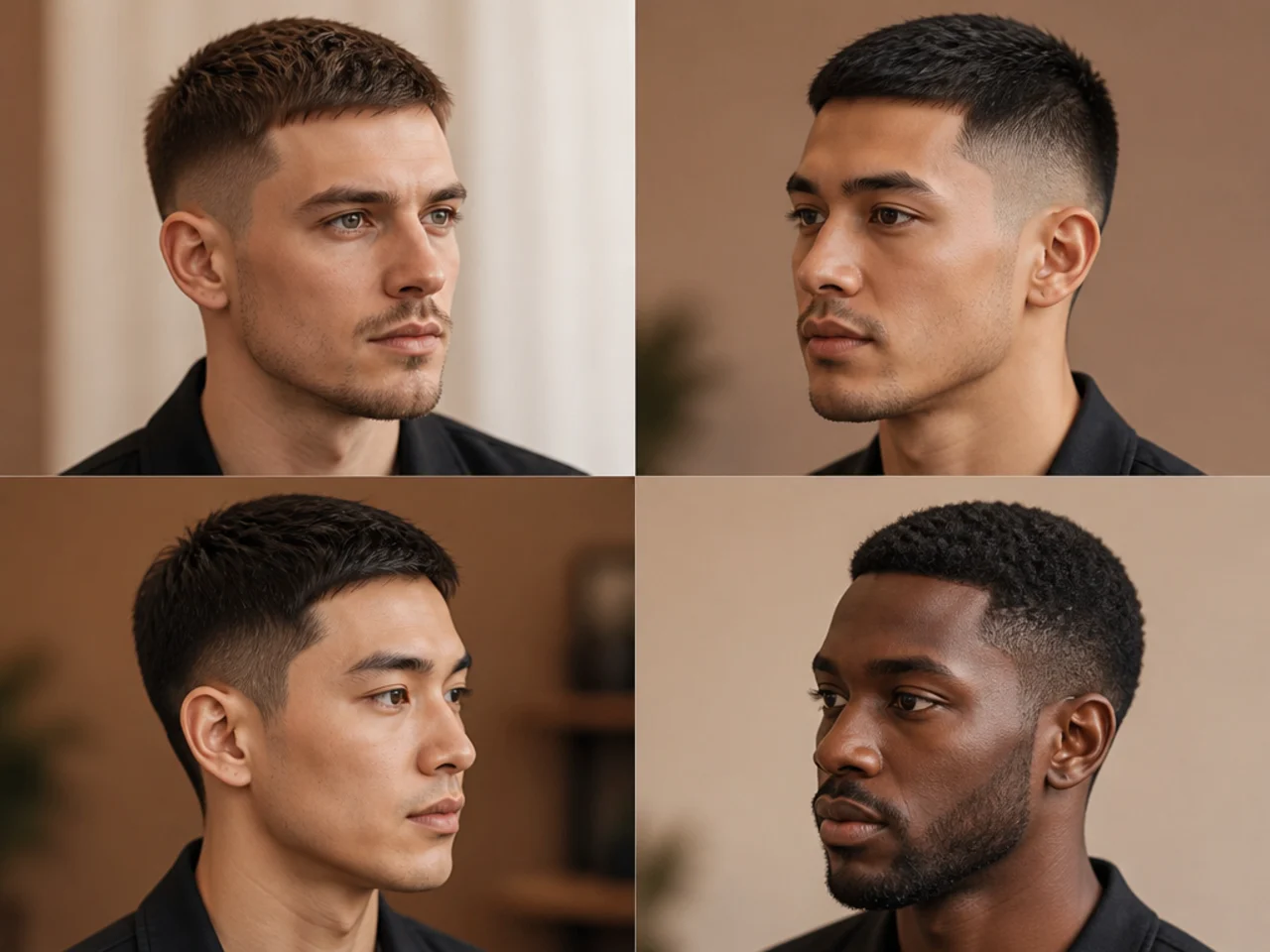
The crew cut done with scissors instead of clippers reads more polished than the guarded version — the top has soft variation instead of a flat, machine-cut plane. One-and-a-half inches through the top graduating to shorter at the temples, sides scissor-blended, square across the forehead if your hairline allows. Suits square and oval faces. Perfect for thick, coarse hair that needs the length variation to sit right.
Ask for: "Scissor-cut crew, inch-and-a-half on top graduating shorter toward the sides, no clipper lines, square front."
Styling: a nickel of cream brushed forward with your hand. Nothing else required. The whole routine takes forty seconds.
6. Modern Quiff with Low Taper
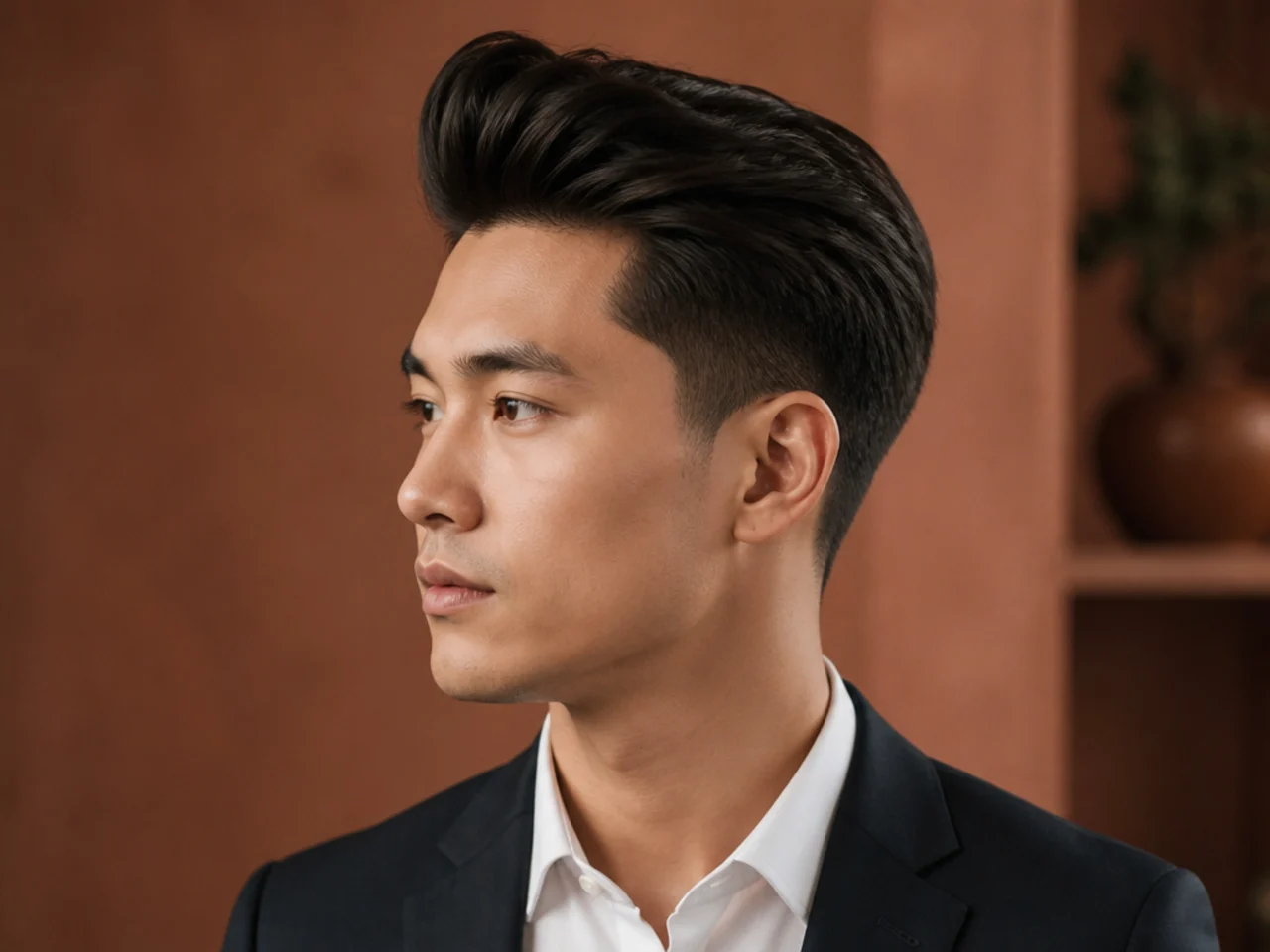
The modern quiff is a pompadour that quit trying so hard. Three inches through the front, tapering back to an inch at the crown, low taper on the sides fading to a #1 above the ear. Reads polished in creative, marketing, and product roles. Suits oval and long faces; round faces should keep the height under two inches so the ratio stays balanced.
Ask for: "Modern quiff, three inches at the front tapering to one at the crown, low taper on the sides fading to a #1 guard."
Styling: rough-dry the front up and back with your fingers, then work a nickel of matte clay from mid-length to root. Lift, don't sculpt. Ninety seconds start to finish.
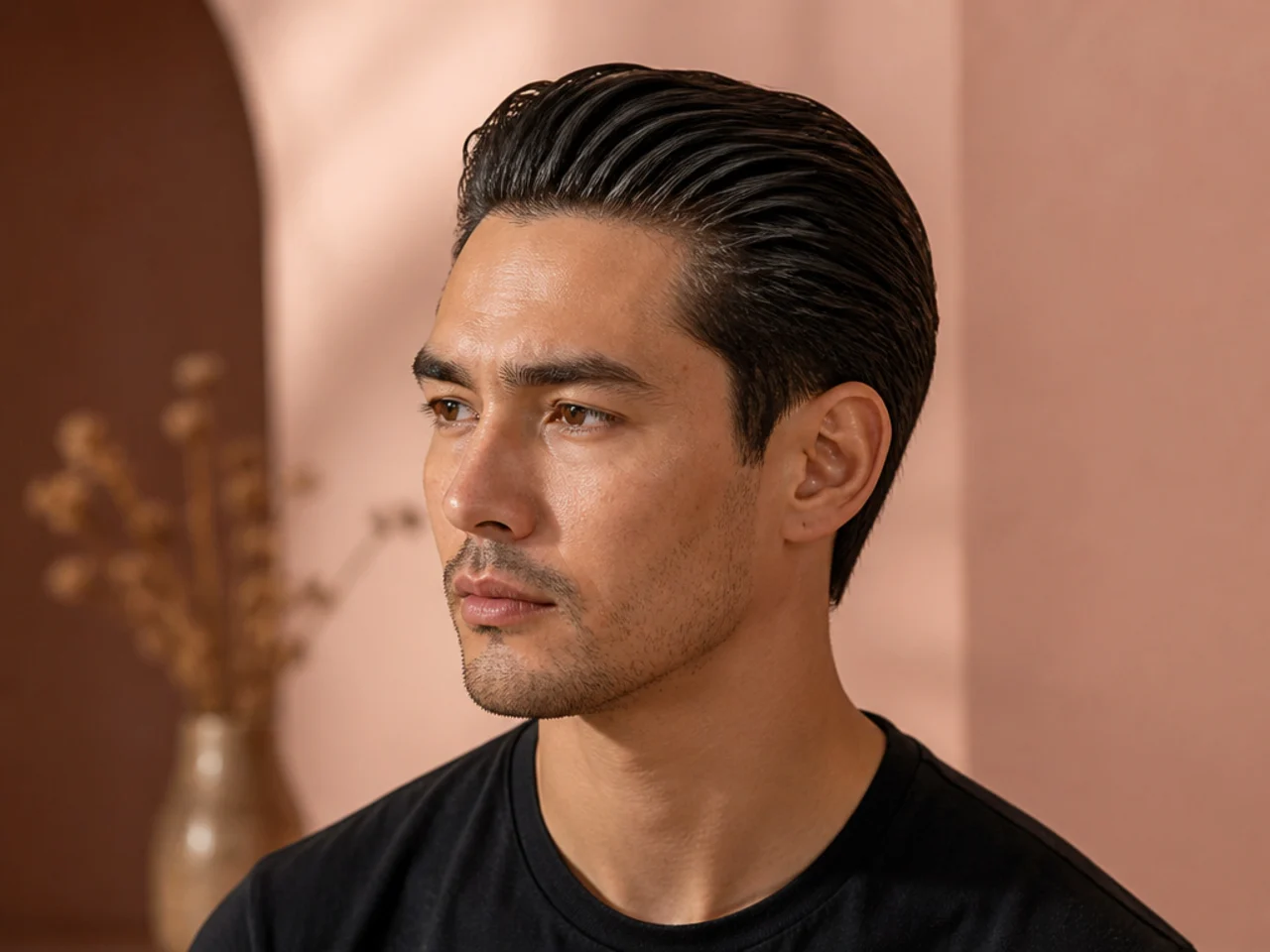
7. Sleek Slick Back with Taper
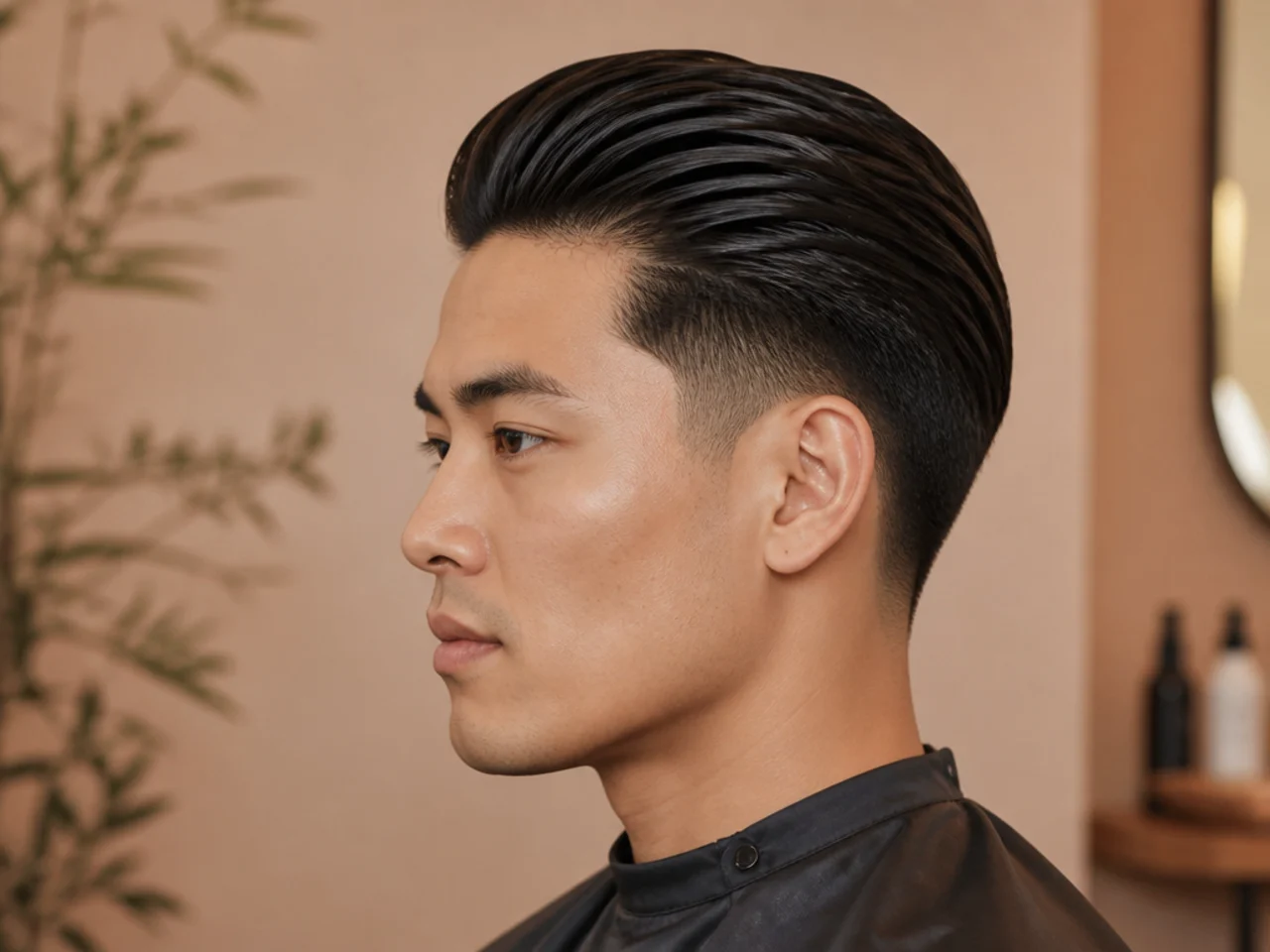
The slick back haircut in its most office-ready form. Three inches on top, scissor taper on the sides, no undercut. Everything combs straight back from the front hairline. Suits oval and long faces best; the flat top can drag a round face longer, so keep a slight lift at the crown if that's you. Works best on straight to gently wavy hair — tight curls fight the direction.
Ask for: "Slick back cut, three inches on top, scissor taper on the sides — no fade line, no undercut."
Styling: medium-hold pomade or a strong cream through damp hair, comb straight back, then blast cool air from the dryer for ten seconds to lock the shape. Matte pomade over shiny pomade for the office — same hold, half the glare.
8. French Crop Fade
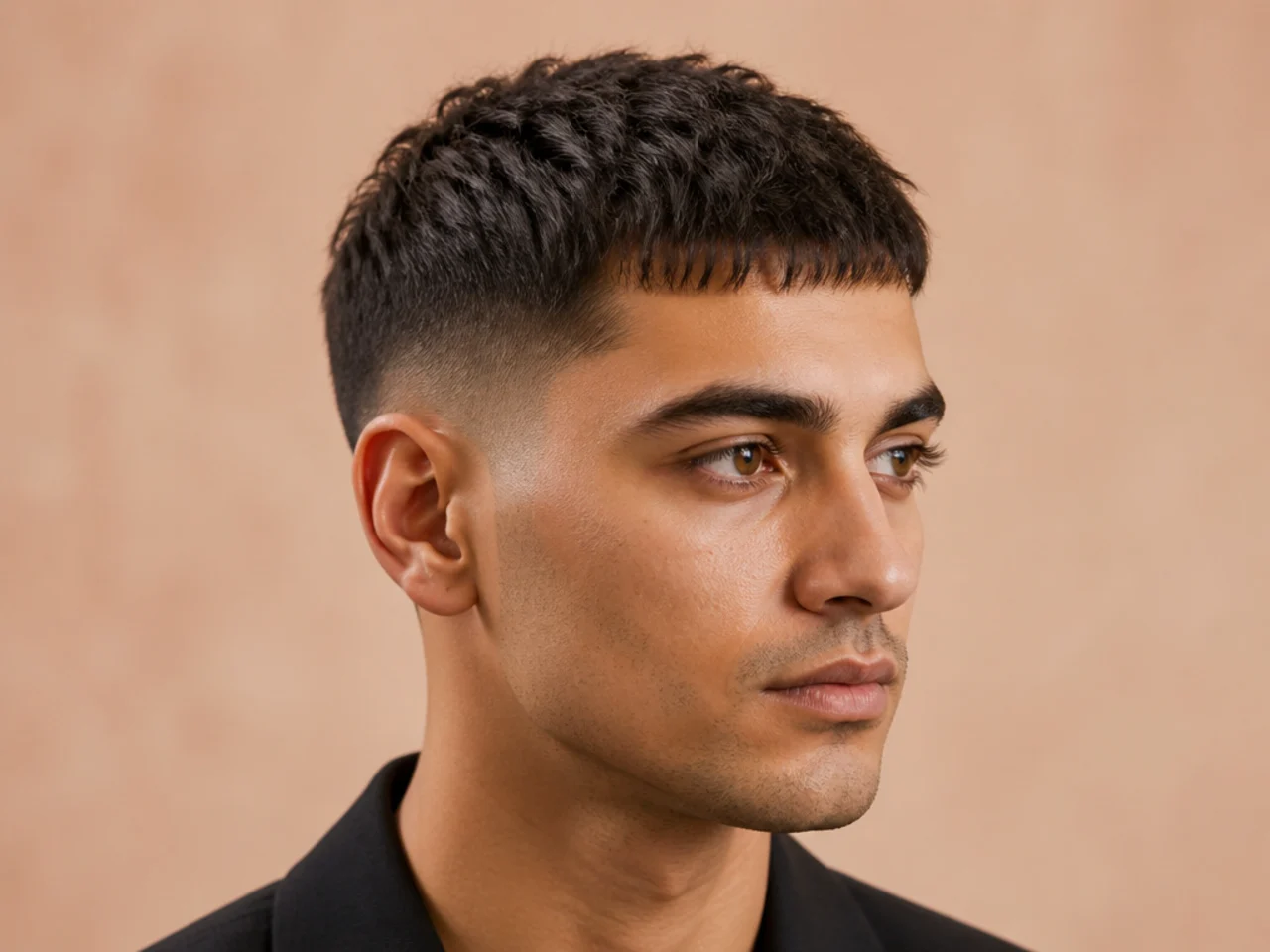
The French crop haircut modernized with a fade. Blunt short fringe at brow level, an inch-and-a-half through the crown, low or mid fade on the sides. Suits round and oval faces — the horizontal fringe softens height and adds structure. Especially strong on coarse straight and wavy hair, and it's a receding-hairline savior because the fringe covers the corners.
Ask for: "French crop with a low fade, inch-and-a-half through the crown, blunt fringe at brow level."
Styling: matte paste through the fringe with your fingertips, push slightly forward, done. No comb. Zero shine.
9. Brushed-Back with Mid Skin Fade
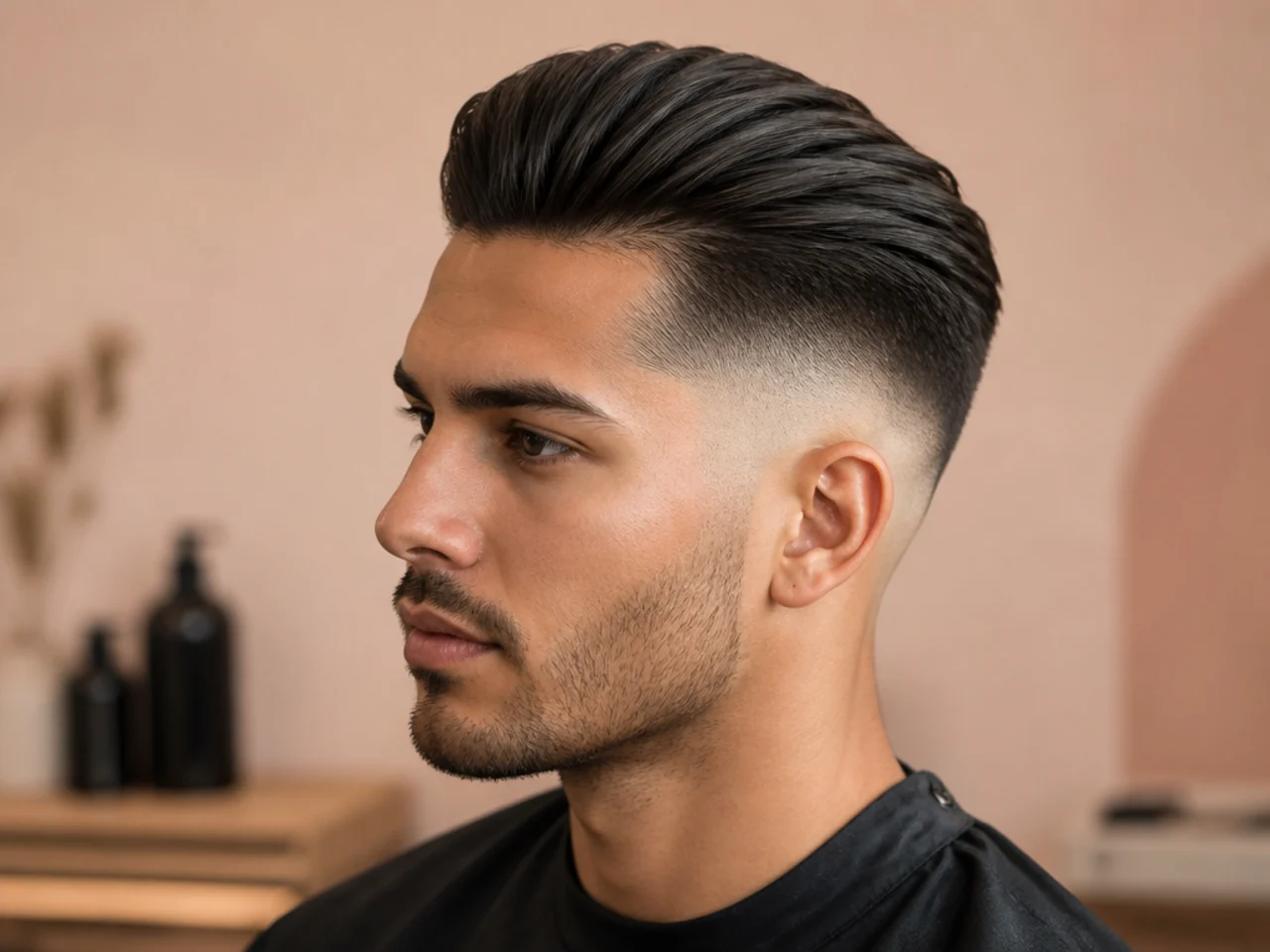
One of the sharpest silhouettes you can walk into an office with. Three inches on top brushed back off the forehead, a mid skin fade starting an inch above the ear, a clean natural front hairline. Reads authoritative in every meeting. Suits banking, law, consulting, executive roles. Best on straight and wavy hair; curly hair looks better with a lower fade so the density on top balances.
Ask for: "Mid skin fade starting an inch above the ear, three inches on top brushed back, natural front hairline."
Styling: pomade to damp hair, comb straight back with a fine-tooth comb, then hit the sides with a cool blow dryer. The fade holds its shape for about ten days — book at the two-week mark.
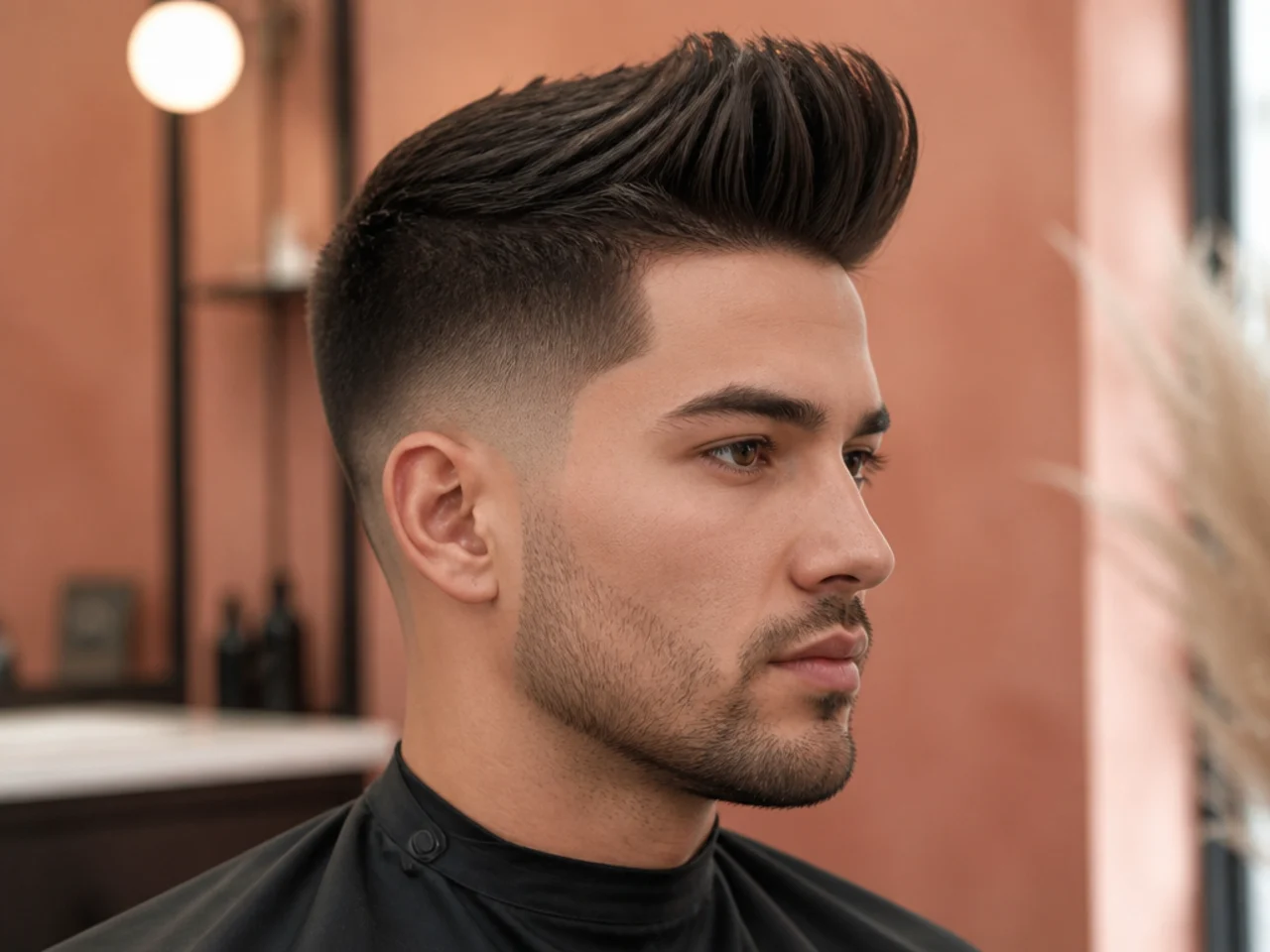
10. Short Textured Pompadour
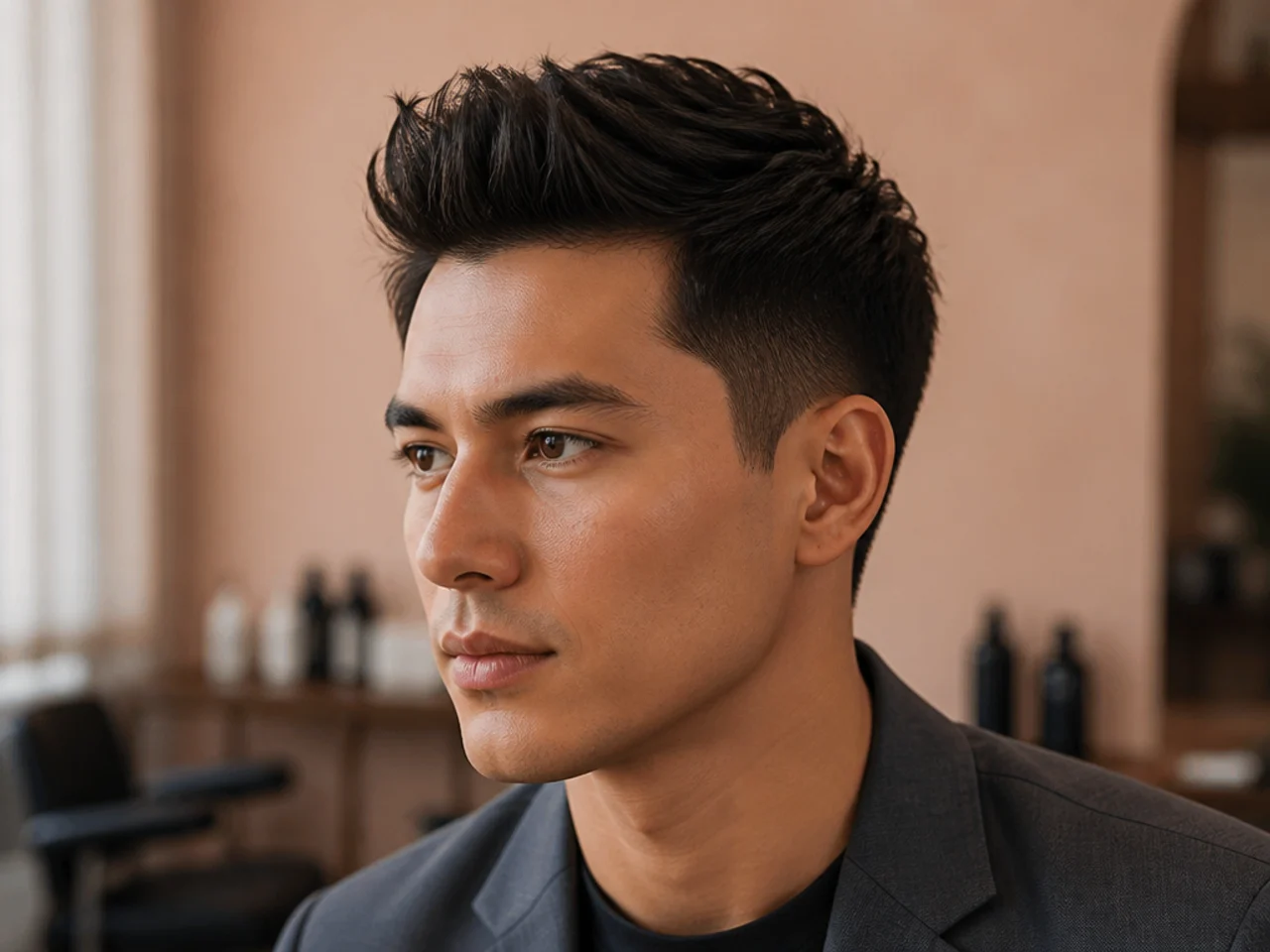
A pompadour reads professional when the height stays under two inches and the sides fade tight. Push it taller and it starts to read costume. Three-and-a-half inches through the front, cropped shorter toward the crown, mid fade landing right above the temple. Suits creative directors, tech founders, sales leadership. Straight and gently wavy hair only.
Ask for: "Short textured pompadour, three-and-a-half inches at the front cropped shorter toward the crown, mid fade landing above the temple."
Styling: blow-dry the front up and back with a round brush, then finish with clay or fiber for hold without shine. If a rockstar vibe forms in the mirror, take the height down at the next cut.
11. Groomed Buzz Cut
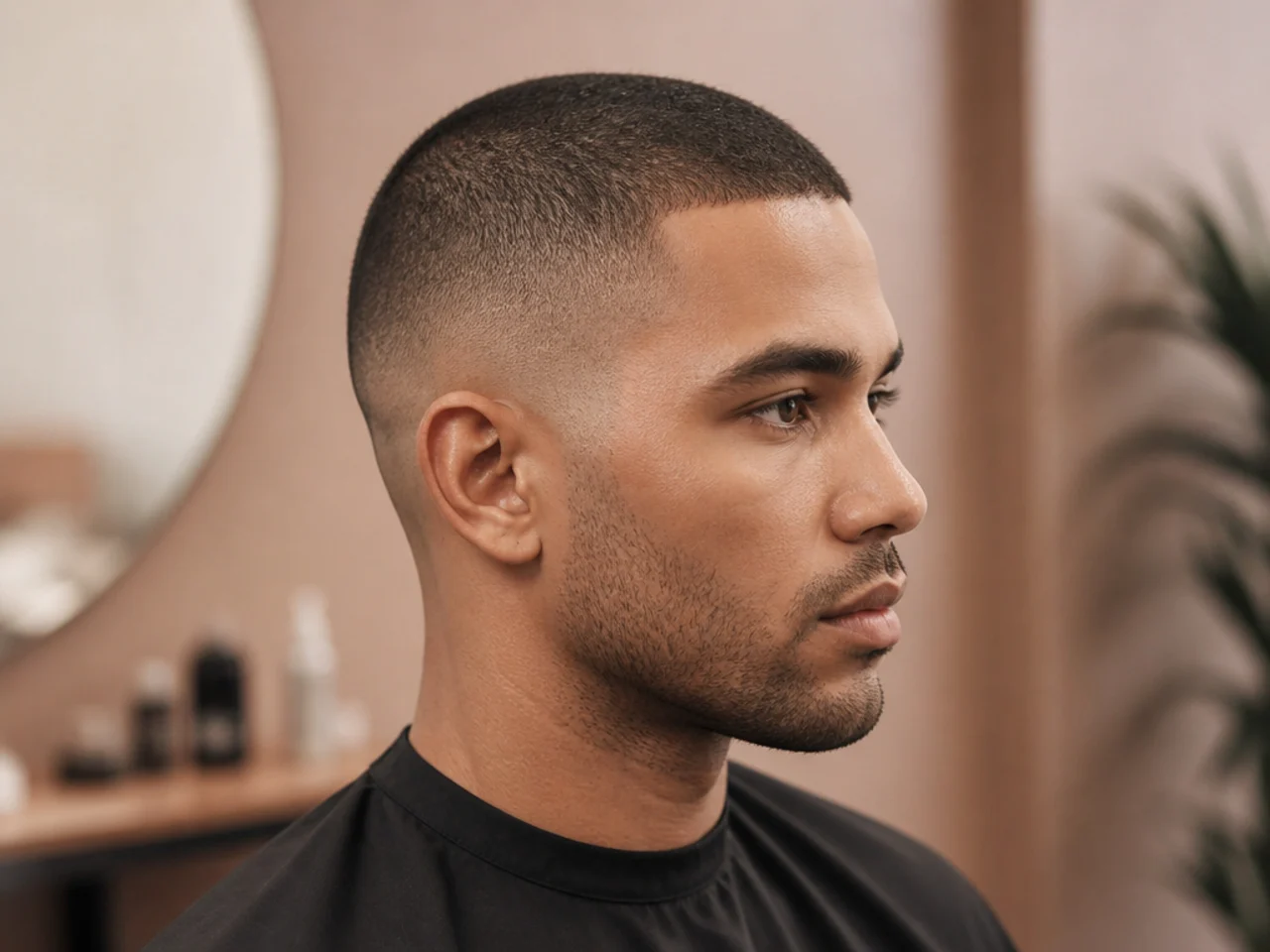
The buzz cut is the lowest-effort professional look on the menu. Uniform length across the head, a clean line-up at the front and around the ears, in and out of the chair in fifteen minutes. Suits high-stress roles that value time — surgeons, pilots, senior operators, anyone who won't touch a hairbrush before a meeting. Works on every face shape and every hair type.
Ask for: "#2 all over, sharp line-up at the front and behind the ears. Skip if my hairline recedes at the corners."
Styling: zero product. A drop of scalp oil on the sides keeps them from looking chalky under fluorescent light. Trim your beard to the same guard length for a coherent finish.
12. Hard Side Part with Skin Fade
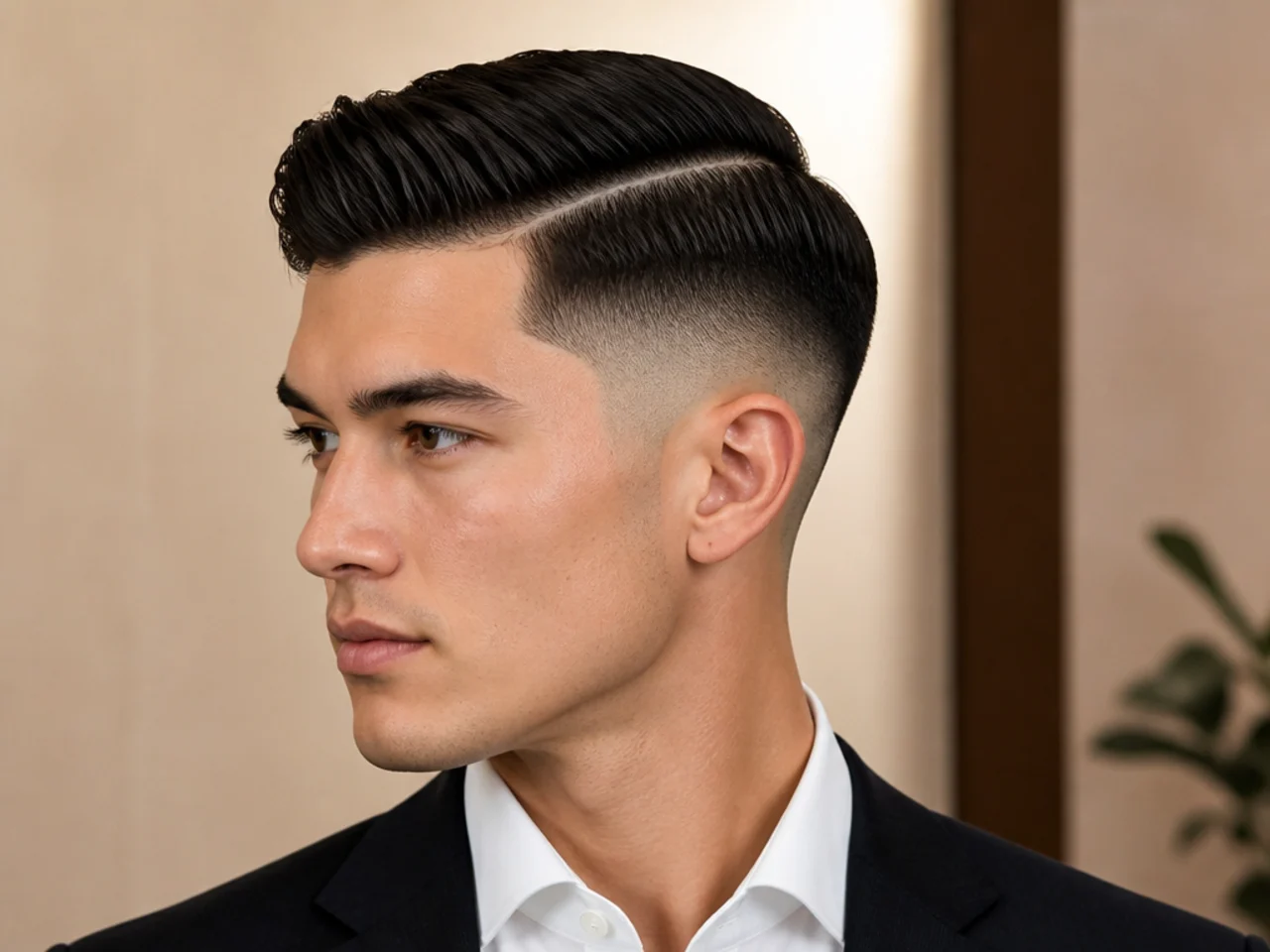
The most disciplined look in this guide. A razor-drawn line along your natural parting, a high skin fade at the sides, one-and-a-half to two inches on top. Suits creative-adjacent professional roles — tech leadership, product design, marketing. Square and oval faces wear it best; round faces gain welcome vertical line from the parting.
Ask for: "High skin fade, razor-drawn hard part on my natural side, two inches on top."
Styling: medium-hold pomade combed from the part down over the ear, then set with a shot of hairspray. Book every two weeks — the hard part and the skin fade both soften fast.
13. Longer Fringe Crop (Modern Caesar)
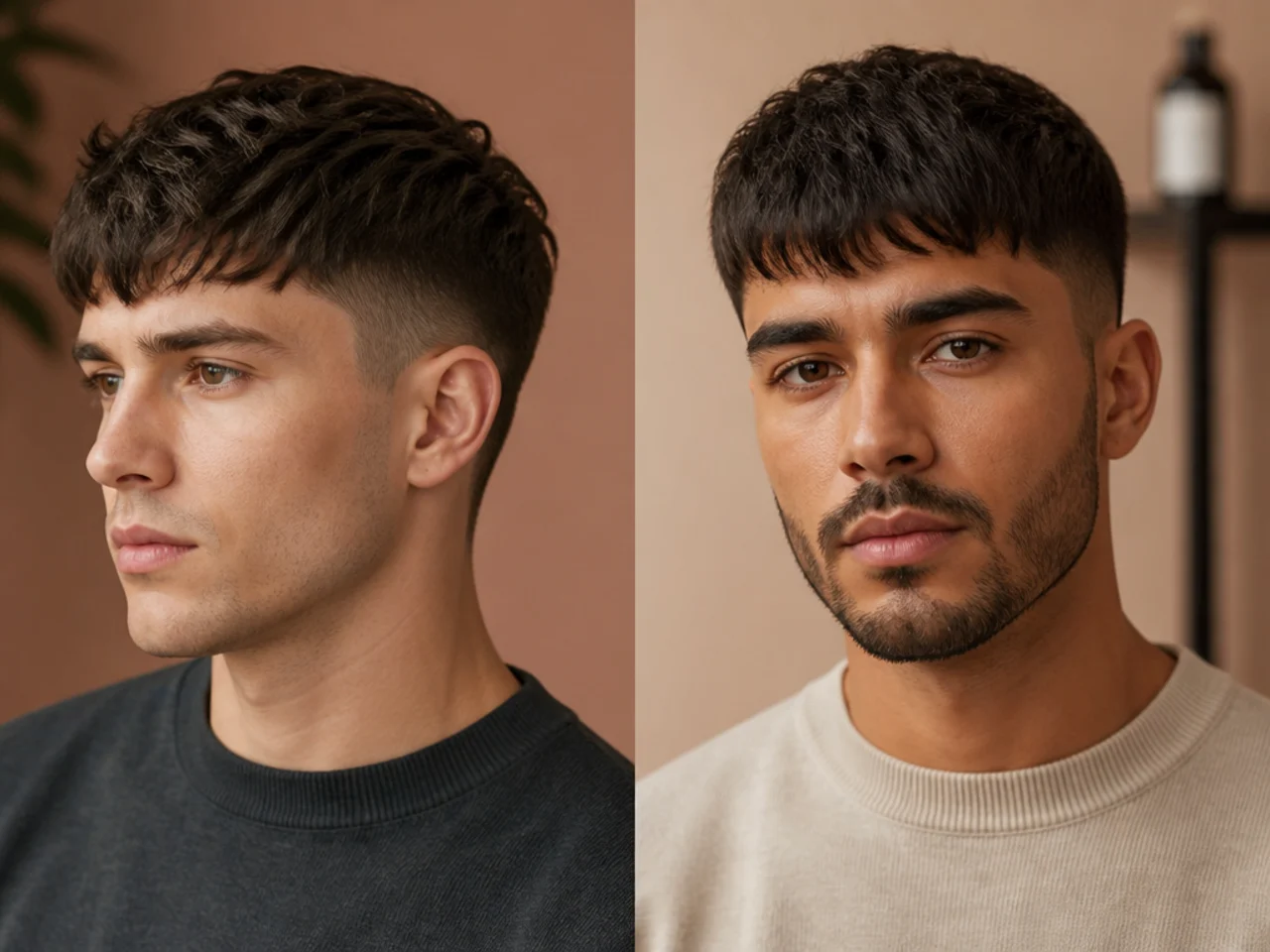
The Caesar's modern update — a longer, softer fringe pushed forward across the forehead, two inches through the crown, scissor-blended sides. Suits oblong and long faces because the horizontal fringe breaks up the vertical line. Best on straight and slightly wavy hair. Reads polished in creative agencies, media, hospitality, and higher education.
Ask for: "Longer fringe crop, two inches on top, fringe pushed forward at brow length, scissor-blended sides — no clipper line."
Styling: matte paste raked forward with your fingers on damp hair. Skip the comb. Air-dry or hit briefly with a warm dryer.
14. Layered Medium-Length Executive
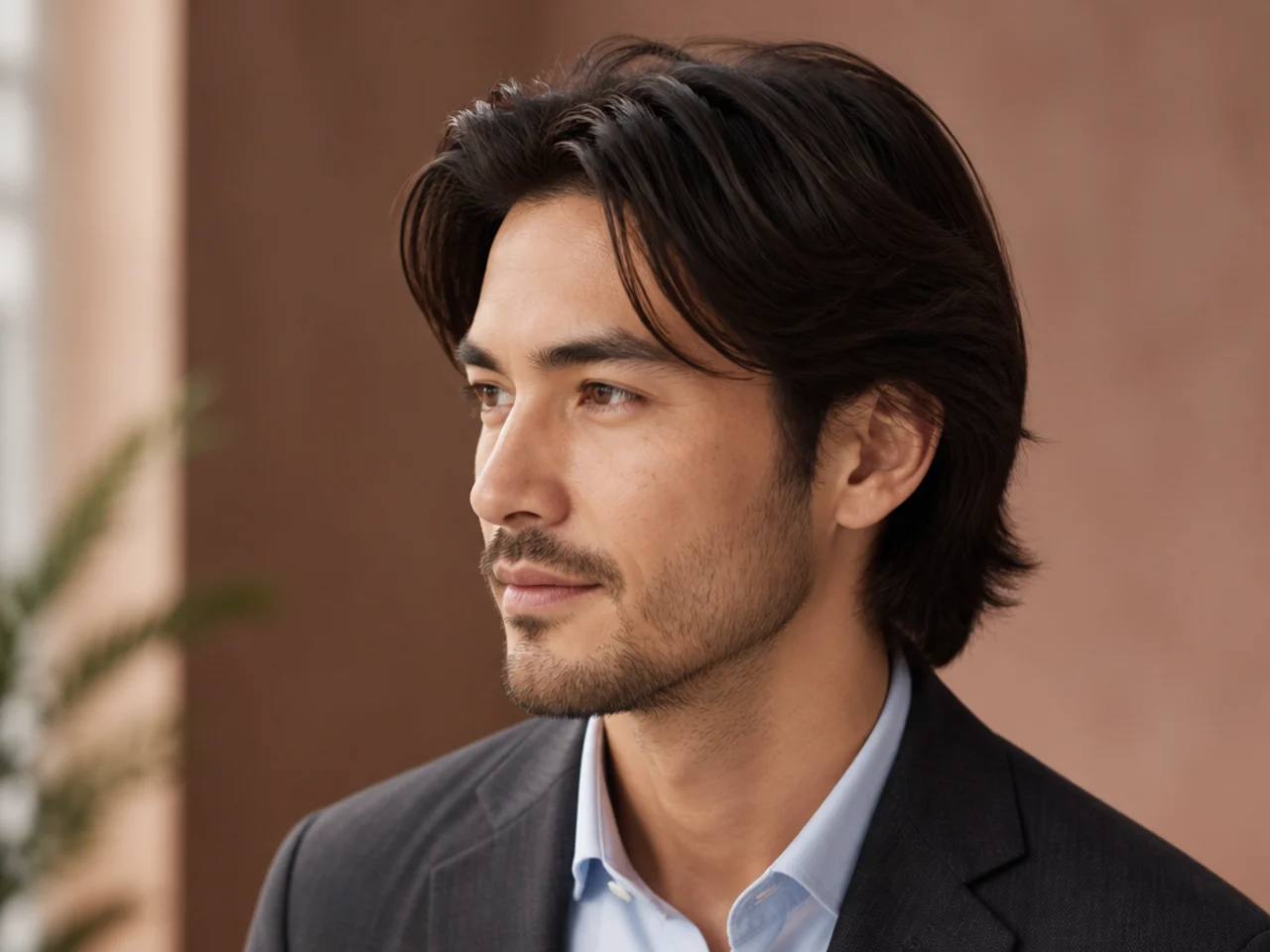
Medium length reads executive when the layers are cut with intention and the ends stay disciplined. Four inches through the top with heavy internal layering, sides brought down to mid-ear with a soft weight line, and a defined side part. Suits wavy hair especially well. Fits creative directors, senior tech, architecture, media. For more length options in this range see our medium length hairstyles for men guide.
Ask for: "Four inches on top with internal layering, sides brought down over the ear with a soft weight line, defined side part on my natural side."
Styling: blow-dry the top back and to the side using a round brush, then work light cream through the mid-lengths. Skip anything with shine.
15. Tapered Curly Executive Cut
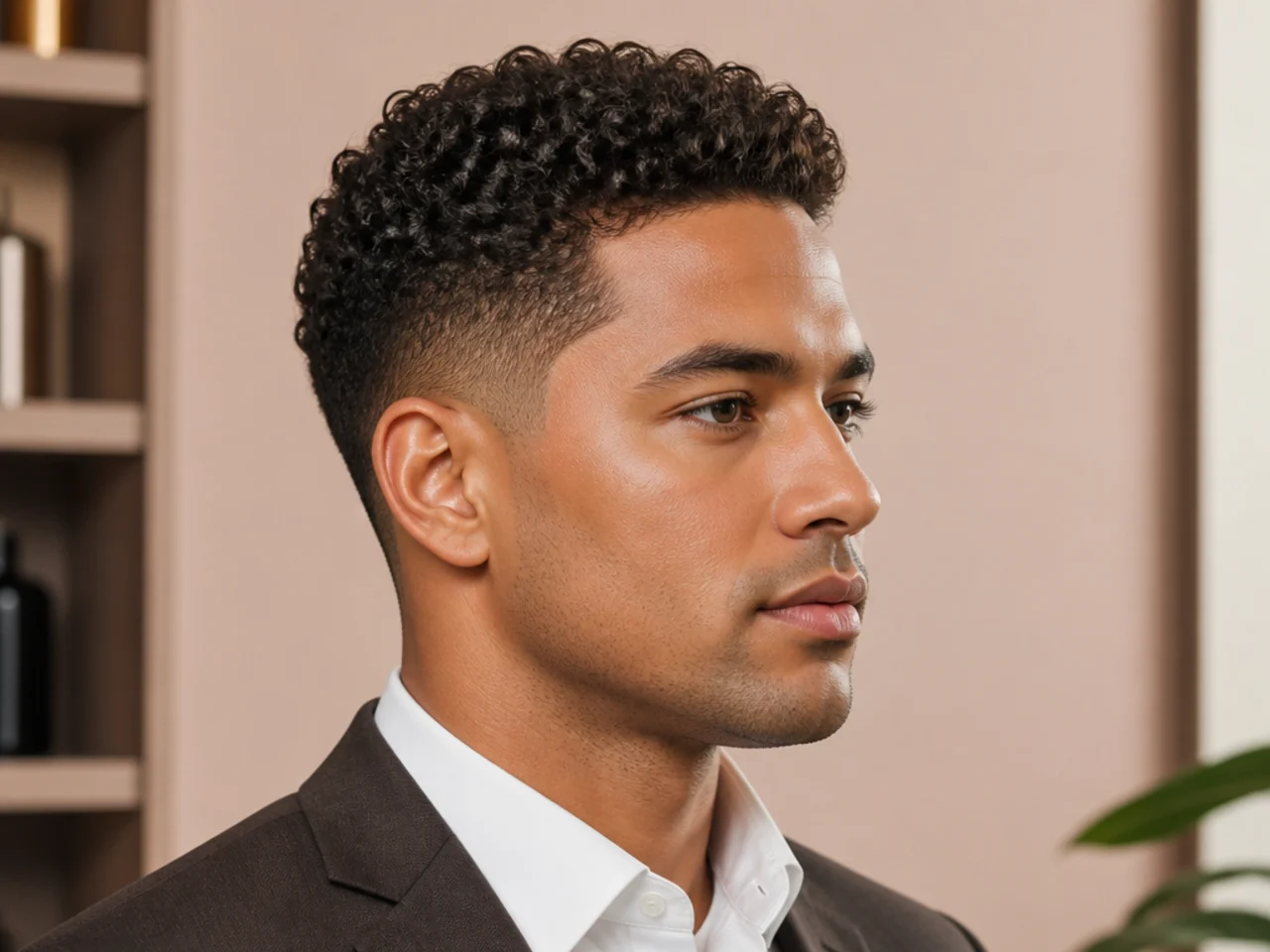
Natural curls read executive when the shape stays symmetrical and the sides don't stray. Two inches of curl on top cut round, a taper that runs a full inch below your natural hairline, and defined edges around the ears. Suits every industry — a distinctive silhouette works in your favor in client-facing roles.
Ask for: "Round two-inch curl on top, clipper taper starting an inch below the natural hairline, defined edges at the ears."
Styling: curl mousse worked into damp hair, then diffuse for two minutes. Do not touch the curls until they're fully dry — crush them once and they frizz for the rest of the day. Finish with a mist of hairspray, palm-pressed in.
16. Disconnected Undercut with Slick Top
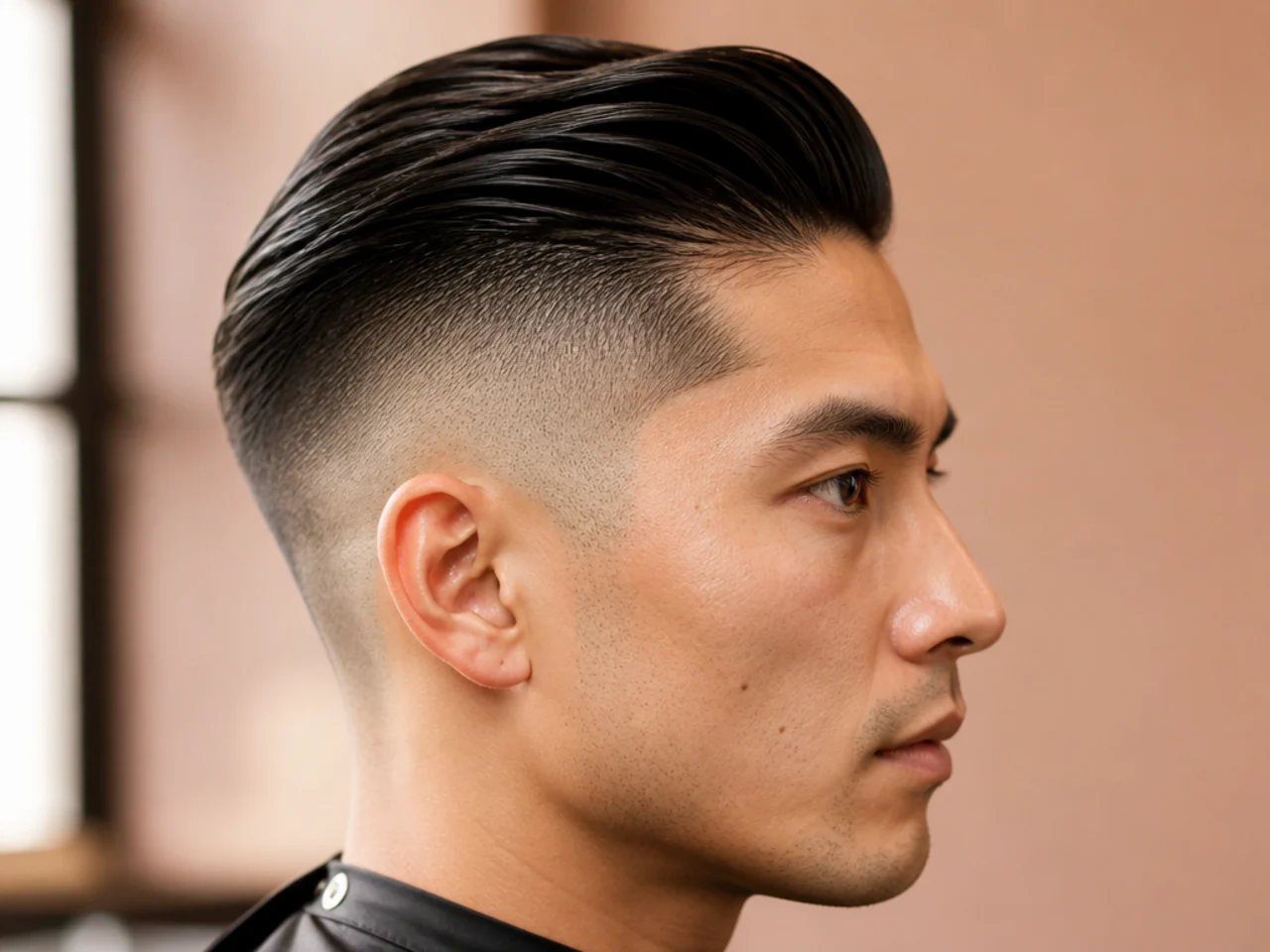
The disconnected undercut is what happens when the sides and top refuse to blend. Four inches on top combed straight back, clean #2 or #3 guard on the sides — no fade, no transition zone. Suits creative leadership and tech roles. Best on straight to gently wavy hair; the top has to sit flat when you slick it. Oval and long faces wear it best.
Ask for: "Disconnected undercut, four inches on top, #2 on the sides — no blend, no fade. Hard weight line where the top meets the sides."
Styling: pea of pomade on damp hair, comb straight back, flatten with a paddle brush. On humid days, gather it into a low bun — reads intentional, not lazy.
17. Mid Fade with Cropped Top
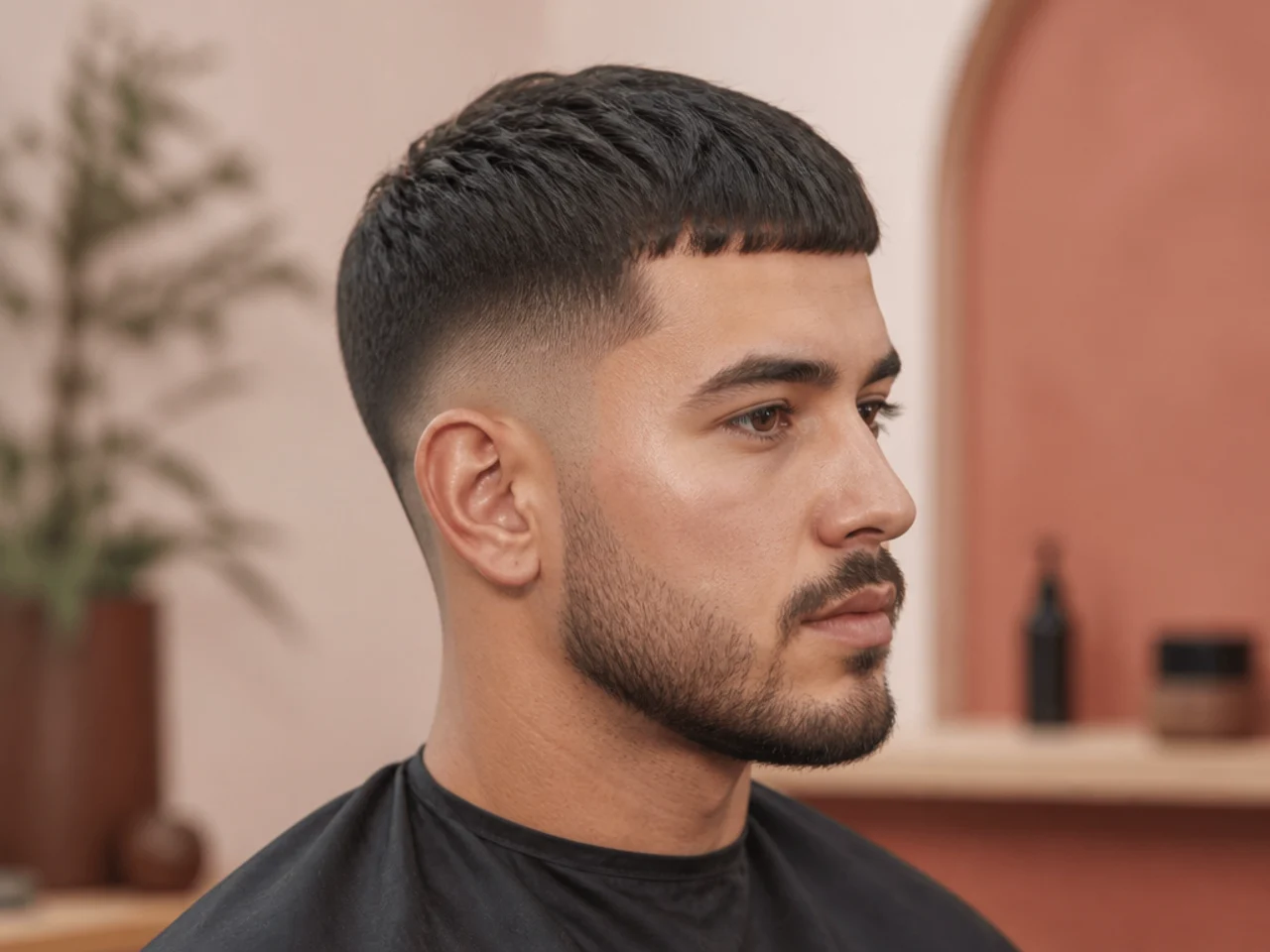
The safest way to try a fade in a conservative office. An inch on top, a mid fade landing at the temple, no fringe, no texture play. Reads modern-conservative — you look current without looking like you're chasing a trend. Suits round and square faces because the short crown proportion balances a full face. Every hair type works.
Ask for: "Mid fade landing at the temple, one inch of scissor-cut length across the top, clean natural hairline in front."
Styling: almost nothing. A dime of cream, brushed forward with your hand. Done in thirty seconds.
18. Low Fade with Soft Fringe
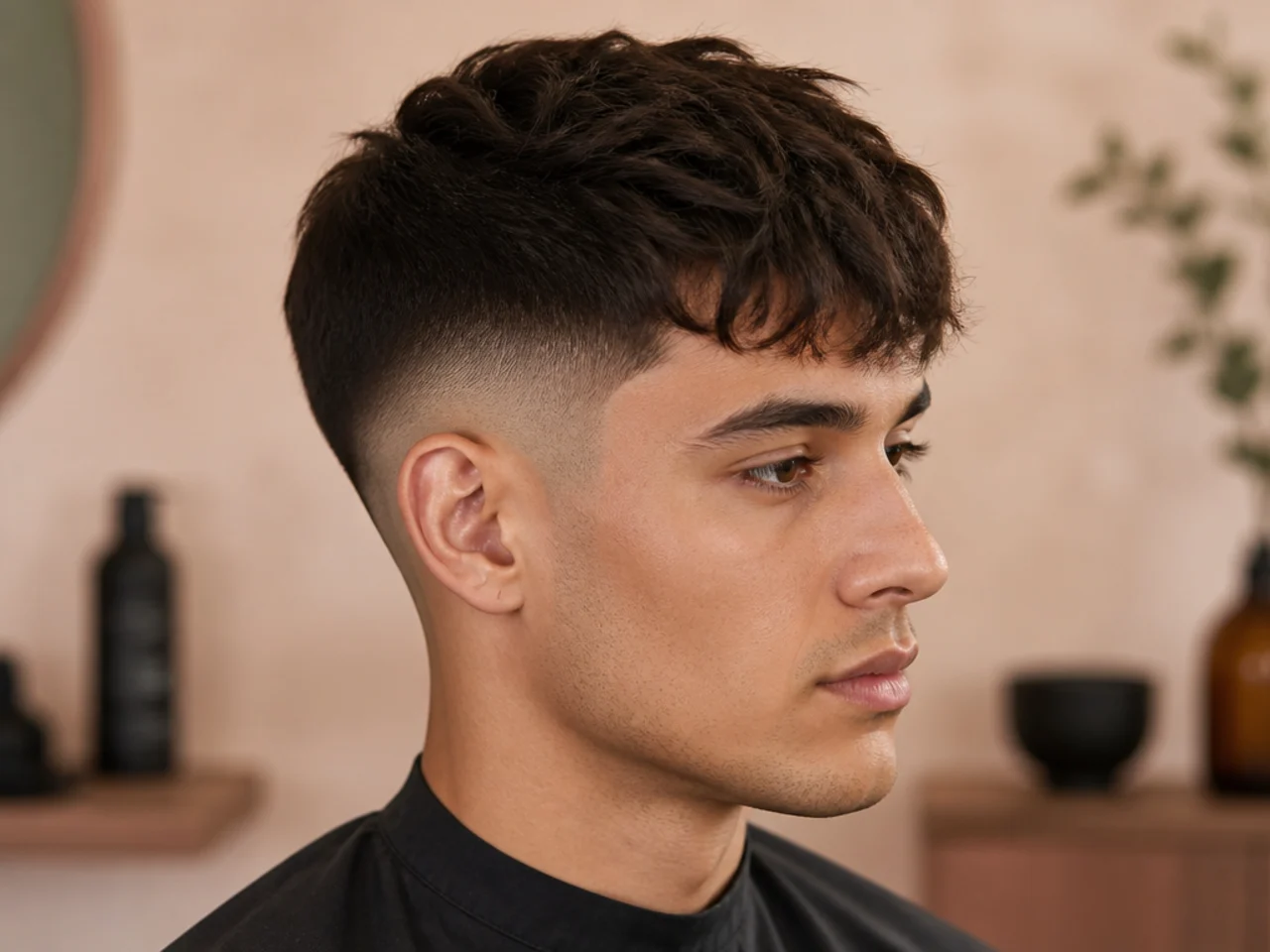
A softer, warmer take on the office cut. Two-and-a-half inches through the front feathered into a piecey fringe, a low fade tapering to a #0.5 above the ear. Suits customer-facing roles — HR, teaching, marketing, hospitality — where approachability is part of the job. Heart-shaped faces wear it especially well because the fringe balances a wider forehead.
Ask for: "Low fade at the ear, two-and-a-half inches on top feathered into a soft fringe at brow length."
Styling: matte pomade on dry hair, raked forward with your fingers. The fringe should read like you did nothing — achieved by five minutes of fussing.
19. Executive Man Bun with Undercut
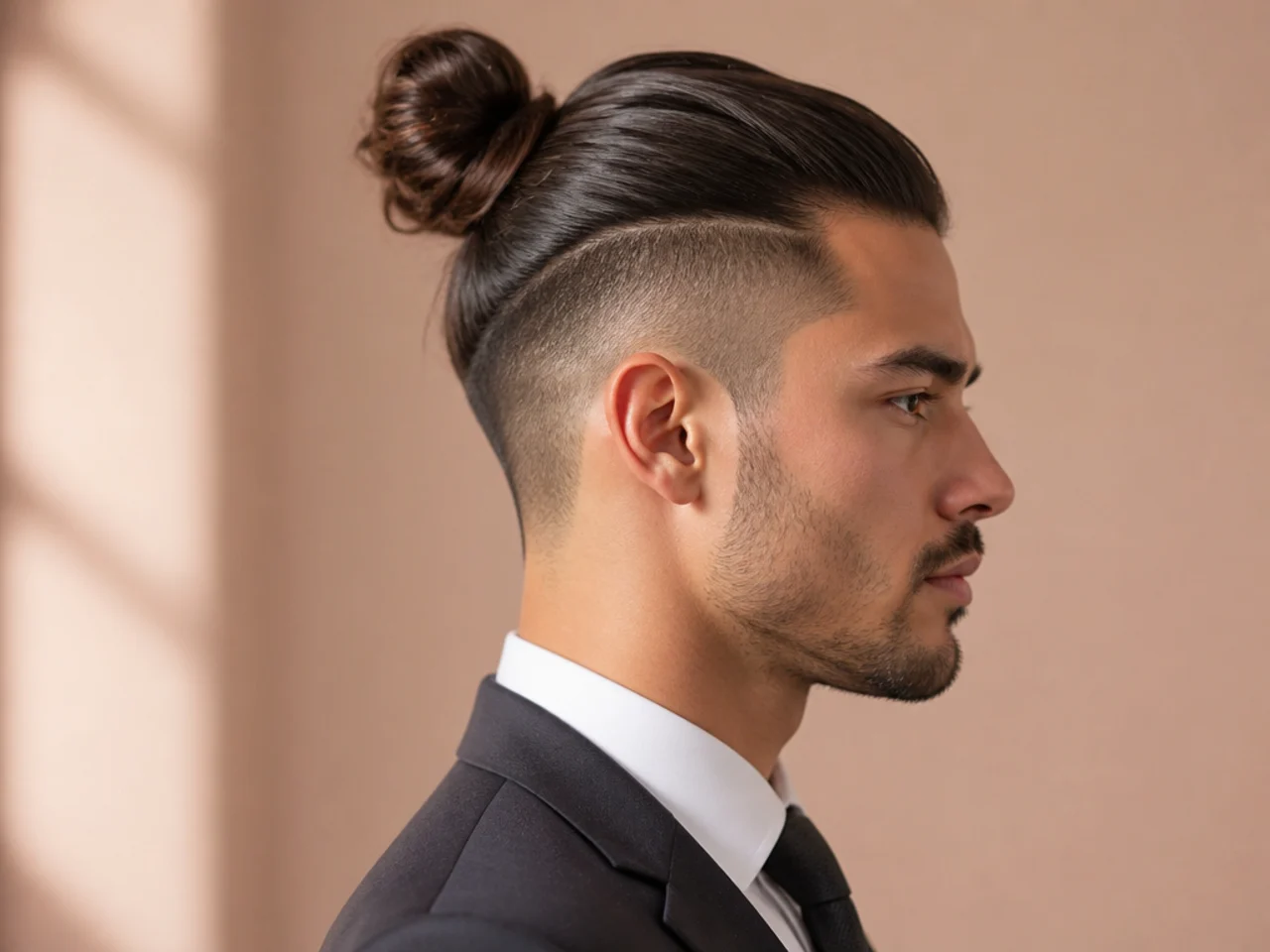
The one long option that reads executive rather than surfer-adjacent. Length from your collar to mid-back on top, with a hidden undercut running ear to ear so the bun sits flat instead of ballooning. Works in creative, hospitality, and senior tech offices — anywhere longer hair is normalized. Requires more discipline than a short cut, not less.
Ask for: "Length from the collar to mid-back on top, hidden undercut ear to ear using a #2 guard."
Styling: pull hair back with a boar-bristle brush, secure with an elastic at the nape of your neck, then use a fingertip of pomade to smooth flyaways along the hairline. Wash every other day, not daily.
20. Silver Fox Side Part
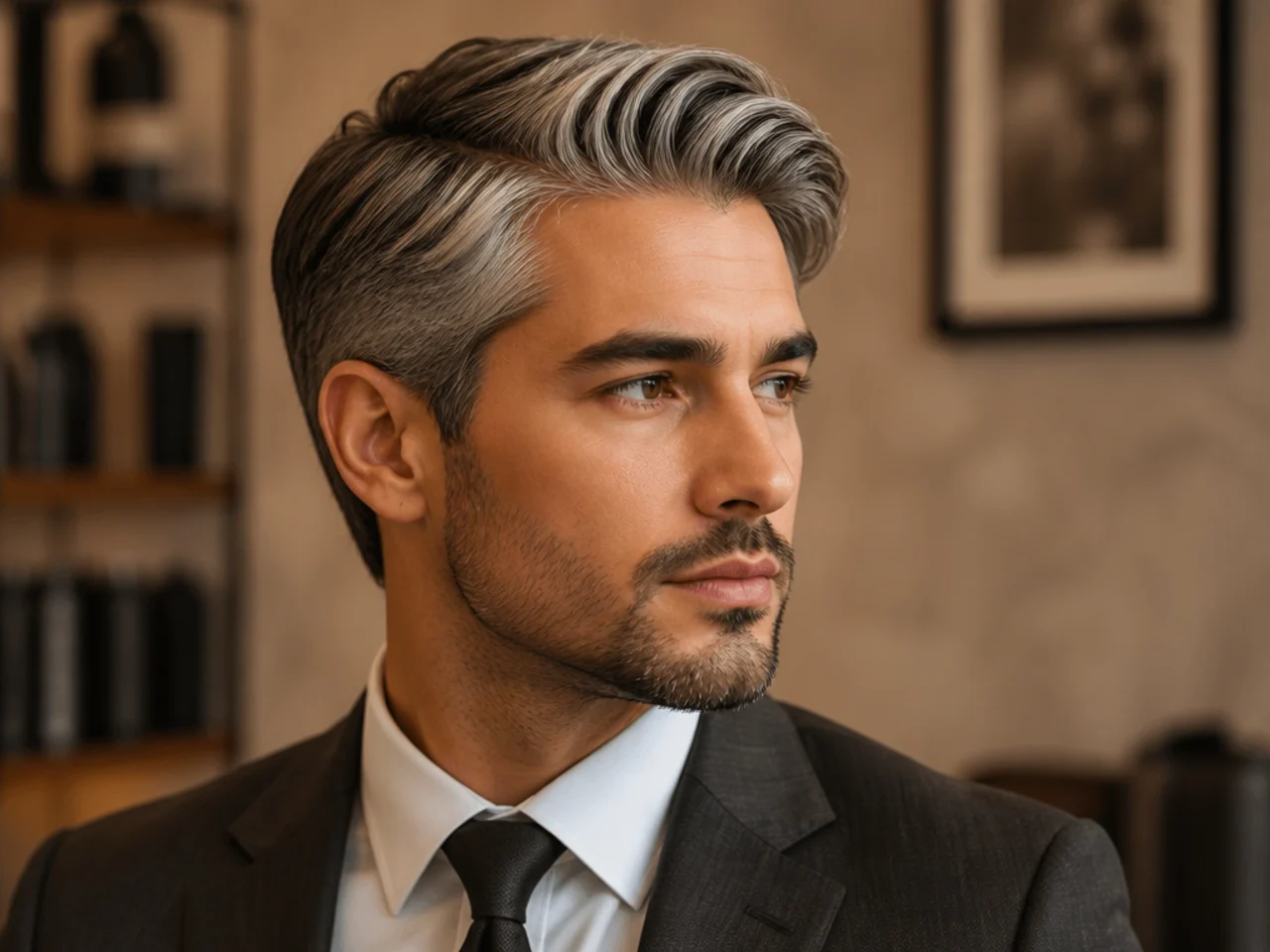
The senior-executive default. Grey or salt-and-pepper hair worn in a defined side part, two-and-a-half inches on top, a scissor taper on the sides. Suits every face shape and rewards texture — the silver catches office light in a way brown or black hair doesn't. Works on every hair type from straight to lightly wavy; coarse hair holds the shape even longer between cuts.
Ask for: "Classic side part, two-and-a-half inches on top, scissor taper on the sides, defined natural side parting."
Styling: light cream on damp hair, one pass with a comb, done. Skip pomade — shine on grey hair reads yellow under fluorescent light. If your grey is coming in patchy, ask your barber about a five-minute low-lift camo treatment.
How to Ask Your Barber
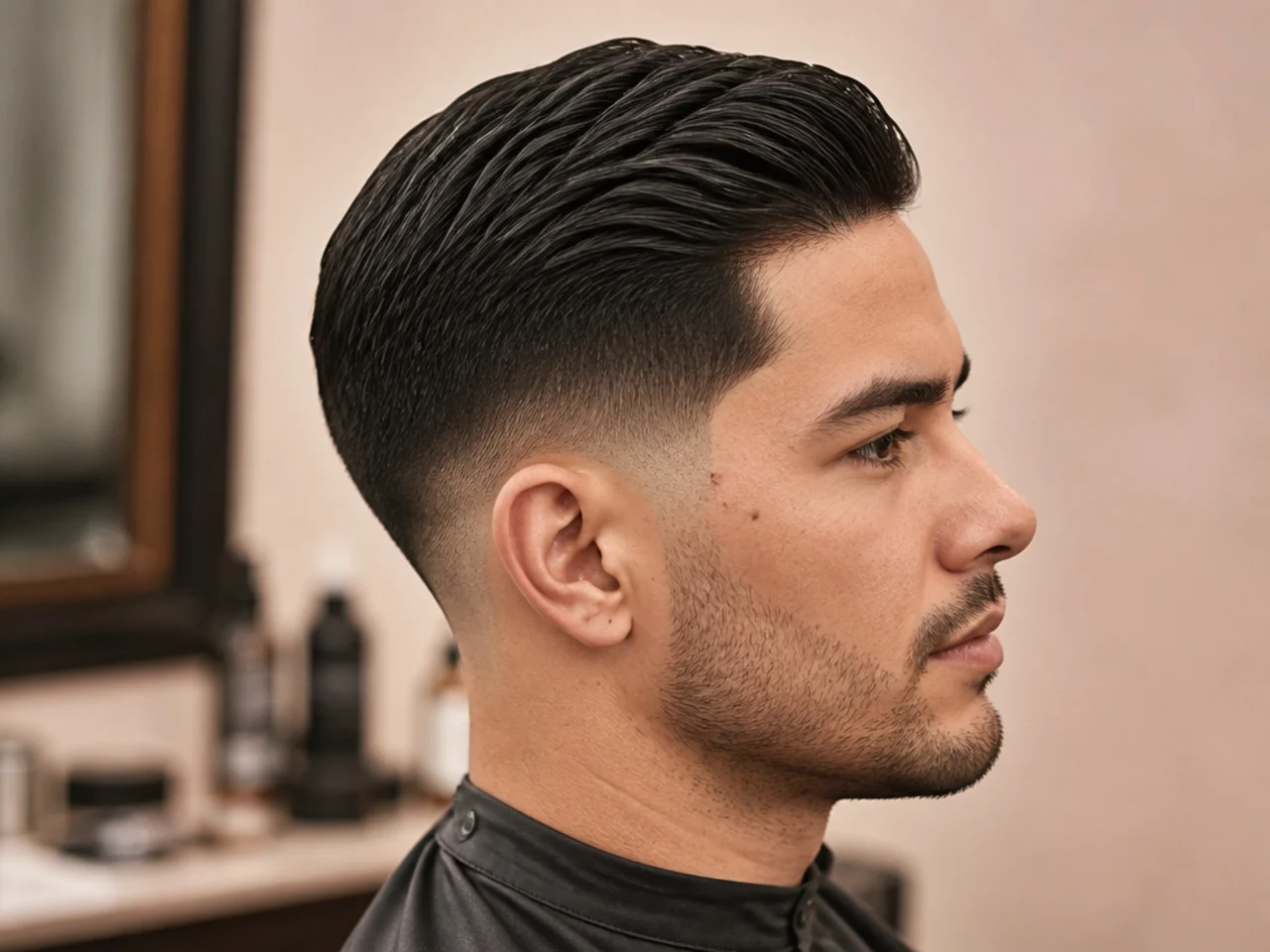
The professional cut you leave with depends more on your language in the first two minutes than on any decision the barber makes with the clippers. Five steps that get you the cut in your head:
- Bring a photo. Two if you can — one showing the front, one showing the side. Verbal descriptions of the same cut vary wildly between barber and client. A photo doesn't.
- Name the side treatment in numbers. Say "scissor taper," "low fade at the ear," "mid fade at the temple," or "skin fade at the corner." Every barber understands those four phrases identically.
- Give the top length in inches. "Two inches on top" is universal. "Not too short" is not. If you're wrong on the number, your barber will correct you at the chair.
- Specify the finish. "Matte and textured" vs. "sleek with a comb line." One product family holds up better than the other for your industry — decide before you sit down.
- Book the next appointment on the way out. Every professional cut has a shelf life. Skin fades hold ten days; scissor tapers stretch to five weeks. Book the next visit while the current cut is still fresh in the barber's memory.
Styling and Maintenance
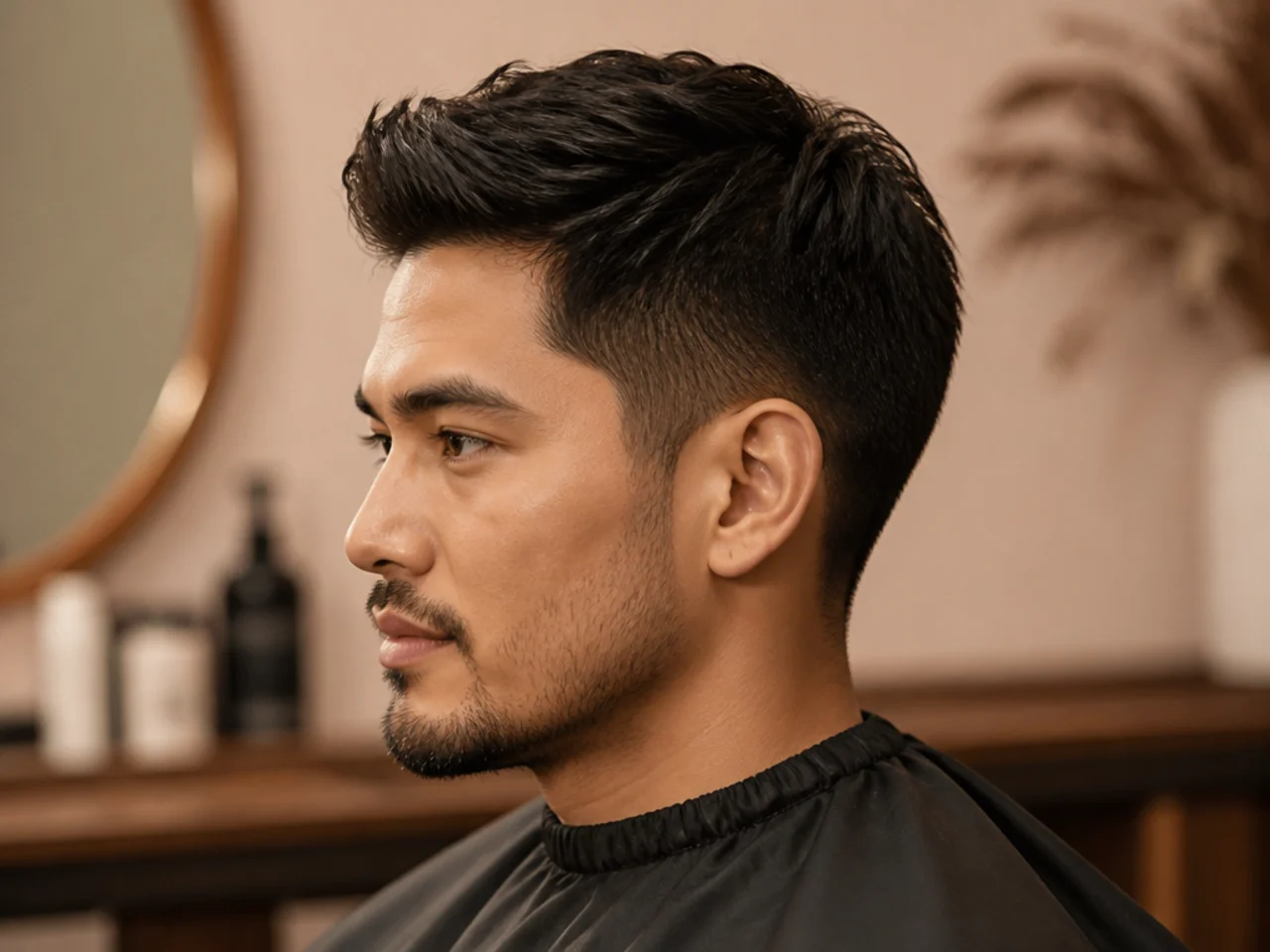
The professional look isn't the cut. It's the cut plus a two-minute morning routine plus a barber every three to five weeks. Everything below assumes you've booked the visits.
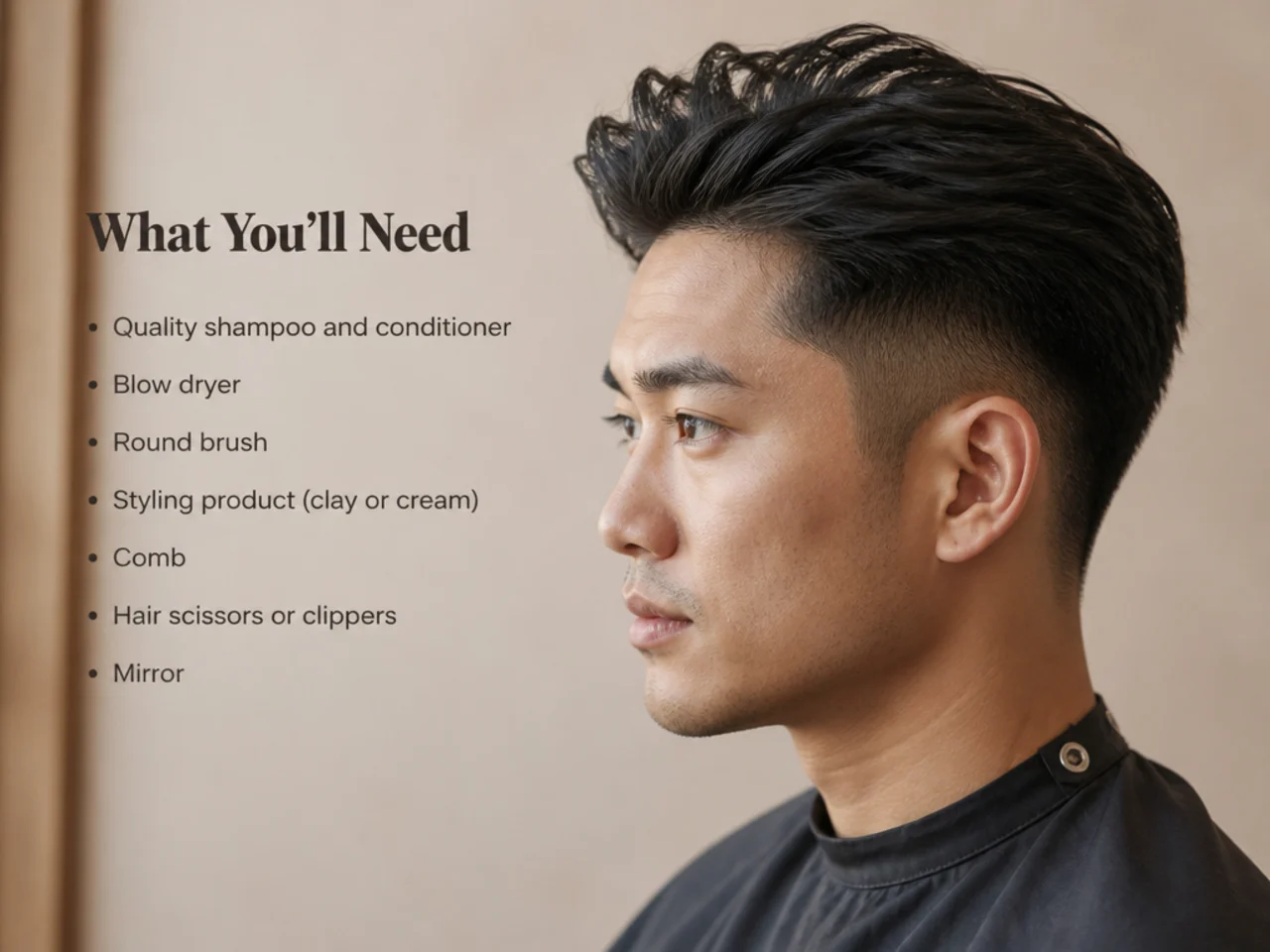
Own one matte clay or paste, one light hairspray, one fine-tooth comb, and a small paddle brush. That covers 90% of the cuts in this guide. Add pomade only if you're specifically running a slick-back or a defined side part with shine. Add mousse only if your top style needs volume — quiff, pompadour, brushed-back. No man needs more than three styling products in his cabinet.
Wash every other day with a sulfate-free shampoo, condition daily. Daily washing strips the oils that make your hair sit right after styling. Air-dry when you can; blow-dry only when the style specifically needs it (any pompadour, quiff, or brushed-back). Set the dryer on cool for the last twenty seconds of any style — the cool blast locks the shape for a full workday.
Book your next haircut on the calendar rather than by inspiration. Skin fades: every two weeks. Standard fades and short cuts: every three. Medium-length cuts: every five. If the shape softens visibly by the middle of the second week of a fade, that's your barber telling you to move the appointment up. See how often should men get a haircut for the full cadence chart by style.
Between visits, trim your neck and ear hair yourself with a small set of clippers — see our best hair clippers for men picks for reliable options. A two-minute cleanup at the ten-day mark extends the sharp look by a full week.
Final Thoughts
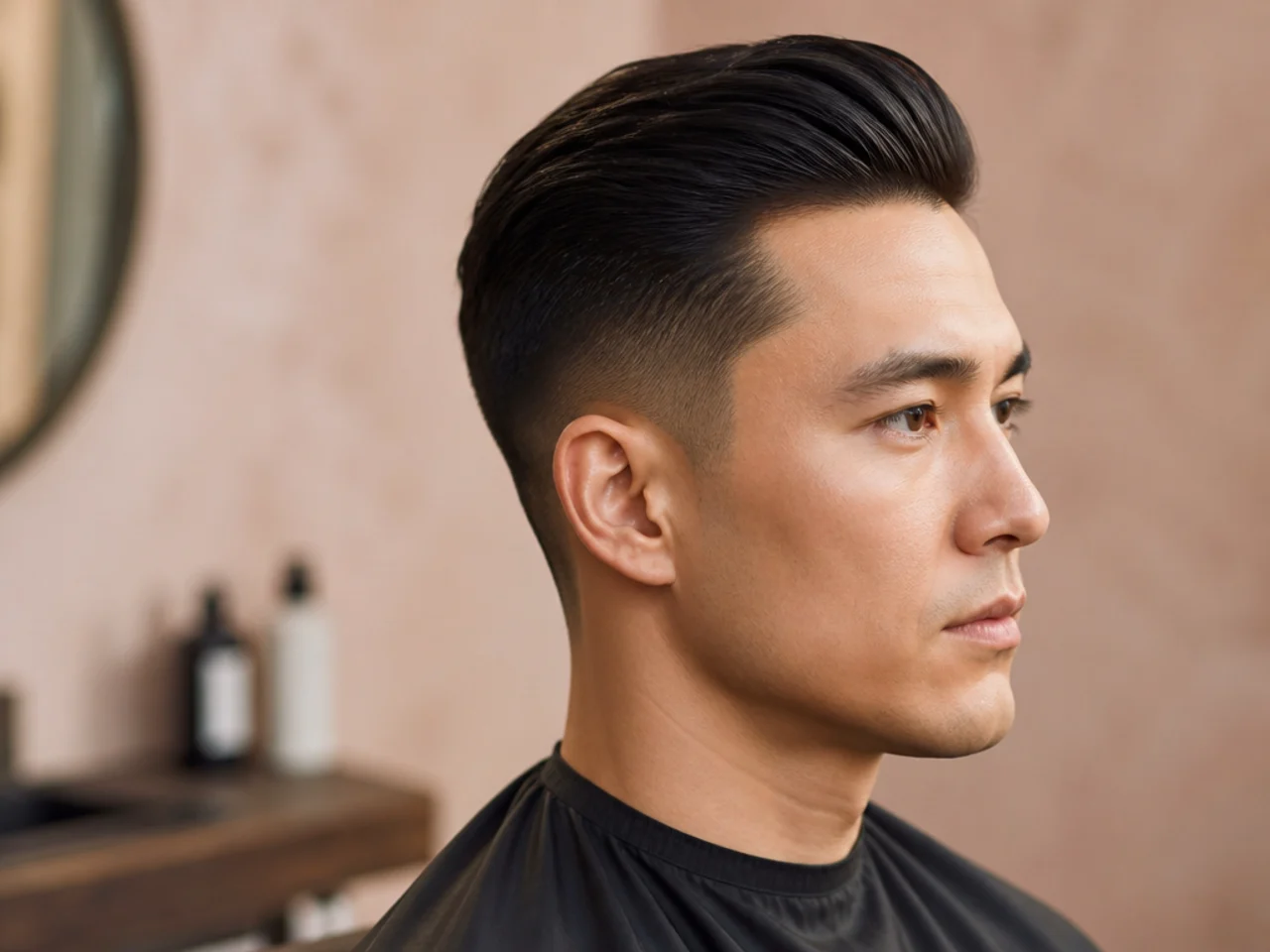
The professional cut is a system, not a style. Pick a shape that suits your face and hair type. Match the finish to your industry. Book a barber you trust every three to five weeks. Own three styling products. That's the whole recipe.
If you're switching from a weekend cut to an office cut for the first time — a new job, a promotion, a wedding — start conservative and let the shape evolve. Ask for the classic side part or the scissor-cut crew, wear it for two visits, then pick a slightly more modern variation once you've seen how the office reacts. Six weeks of feedback is more useful than any guide, including this one.
FAQ
Quick answers to the questions clients ask at the chair when they're switching to a professional cut.
What's the safest professional haircut for a first office job?
A taper on the sides with two to two-and-a-half inches on top, combed into a soft side part. It reads polished in every industry from law to tech, works on nearly every face shape, and re-cuts fast if your barber misses the shape on the first try. Ask for a scissor taper — not a fade — for the most conservative finish. See our short simple men's haircuts guide for related low-effort options.
Are fades still considered professional in 2026?
Yes. Low fades and mid fades are standard in every office setting now, including finance and law. Skin fades and high fades read a touch more casual — save those for creative or tech workplaces. When in doubt, pick a taper. It's the most conservative side treatment and it flatters every workplace.
How long can top length go before it stops reading professional?
Roughly four inches on the crown is the cap for most corporate offices — long enough for a quiff or a comb over, short enough that it never falls into your eyes. Beyond that, you're into medium-length territory, which still works if the shape stays disciplined and the ends stay clean. The side part hairstyles for men collection covers longer options that still read office-ready.
What styling product should I use for an office cut?
A single matte clay or paste covers most professional cuts. Matte finishes photograph like real hair under fluorescent office lighting. Shiny pomades photograph like helmet hair on webcam calls. Save the pomade for cuts that specifically call for a slick finish, like a brushed-back or a formal comb-over.
How often should I book a haircut to stay office-ready?
Every three weeks for skin fades and buzz cuts, every four weeks for standard fades and tapers with short tops, every five to six weeks for medium-length styles. Book the next appointment as you're leaving the chair — the moment the shape softens is the moment your look stops reading sharp.
Can I keep long hair or a beard in a corporate office?
Long hair works in most modern offices if it's clean, layered by a barber every six weeks, and tied back for client-facing meetings. A beard reads professional when it's trimmed to a defined line at the cheeks and neck — not left to grow into the collar. Both need more maintenance than a short cut, not less. For lowest-effort options across the board, see low maintenance men's haircuts.
Which face shape suits which office cut?
Round and square faces want vertical line — a quiff, brushed-back top, or defined side part gives height and structure. Oblong and long faces want horizontal balance — keep the top short and let a fade shape the sides; a Caesar or French crop reads especially well. Oval faces wear almost every option in this guide. If yours is a strong square jaw, the haircuts for square faces breakdown covers this in more detail.