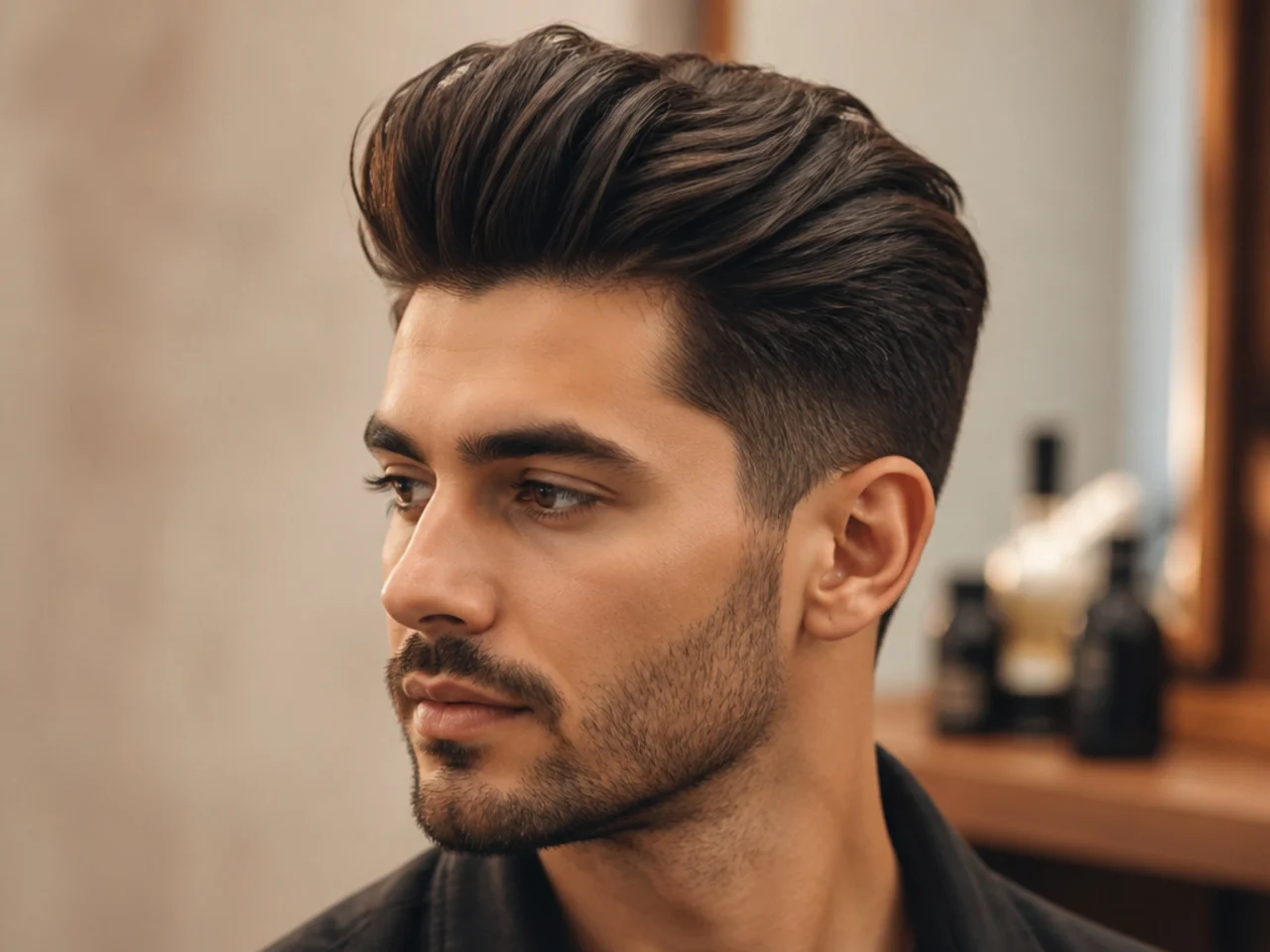
The Quiff Hairstyles: 25 Stylish Variations For Modern Men
Upgrade your look with stylish Quiff Hairstyles for Men! Explore modern, textured, and classic quiff haircuts that add volume, attitude, and a sharp trendy vibe.
In this article · 42
- Trendy Men's Quiff Haircut Ideas
- Classic Quiff
- Messy Quiff
- Who Should Try a Messy Quiff Hairstyle
- Textured Quiff
- How to Get a Textured Quiff Hairstyle
- Modern Quiff
- Short Quiff
- Quiff Fade
- Medium Quiff
- Quiff with Beard
- Short Quiff with Low Taper Fade
- Tousled Textured Quiff with Low Fade
- Wavy Quiff
- Short Textured Quiff with Mid Fade
- Messy Quiff with Taper Fade
- Long Quiff
- Thick Quiff Fade
- Full Textured Quiff with Low Skin Fade
- Tousled Short Quiff with Low Fade
- Messy Wavy Quiff with Low Taper
- Natural Quiff with High Fade
- Undercut Quiff
- Youthful Short Quiff with Drop Fade and Beard
- Textured Quiff with Sharp Fade
- Edgy Blonde Quiff
- Long Quiff Fade
- Straight Smooth Quiff with Mid Skin Fade
- Curly Quiff
- What Is A Quiff Haircut?
- How To Style A Quiff
- Step 1: Wash and Prep
- Step 2: Blow-Dry for Volume
- Step 3: Apply Styling Product
- Step 4: Shape the Quiff
- Step 5: Lock It In
- Final Thoughts
- FAQ's
- What Do I Tell My Barber For a Quiff?
- How to Style a Soft Quiff?
- Is a Quiff Suitable For Older Men?
- What's a Quiff For a Girl?
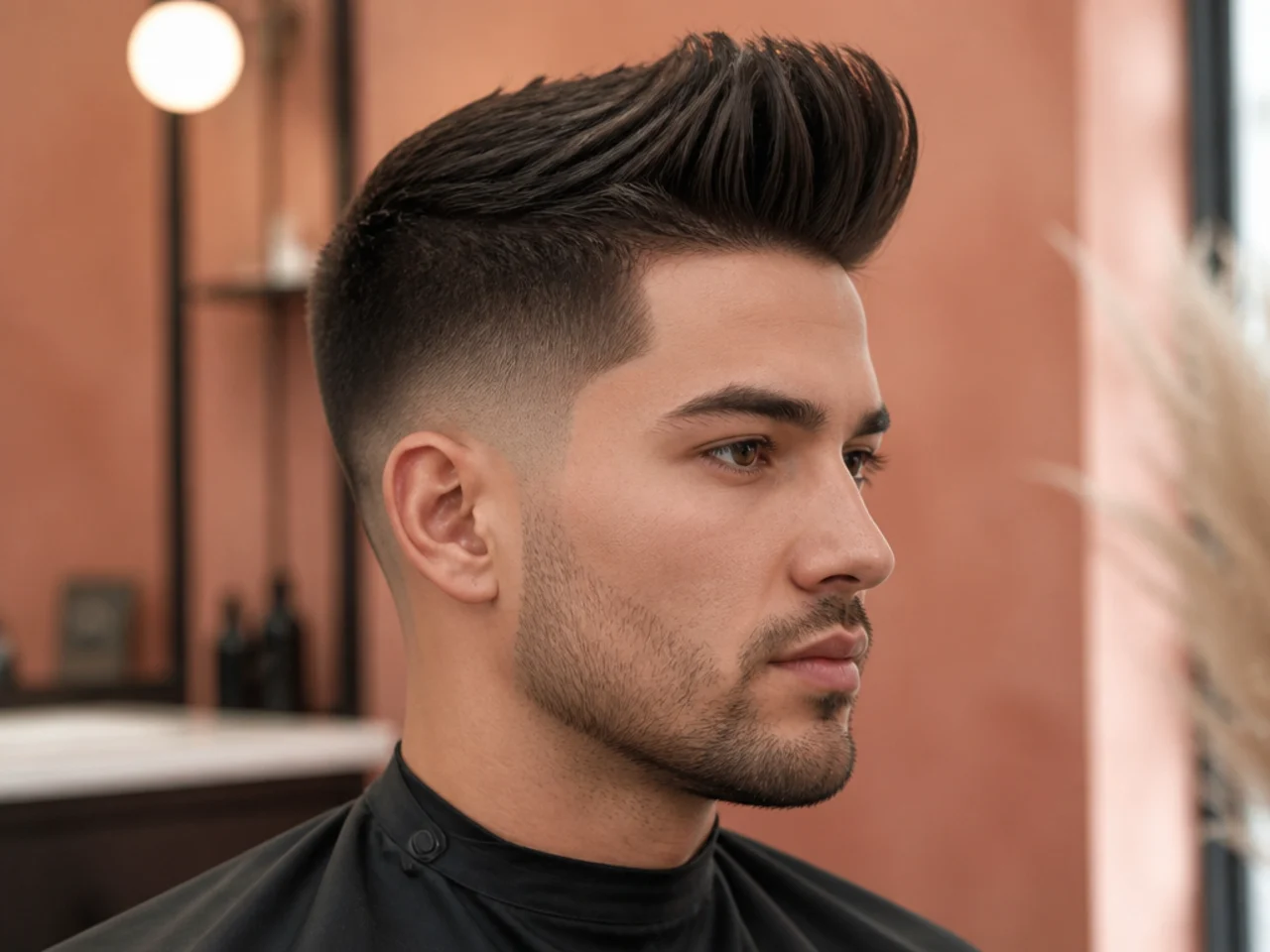
The quiff is the pompadour's subtle cousin. You get the same front-heavy lift, but swept up and slightly back rather than piled and glossed. Sides stay short — usually faded — and the top runs matte, not 1950s slick. It works on straight, wavy, and curly hair, and reads modern on almost any face shape. Below are 25 variations barbers cut every week, with notes on who each one suits and how to ask.
Trendy Men's Quiff Haircut Ideas
Classic Quiff
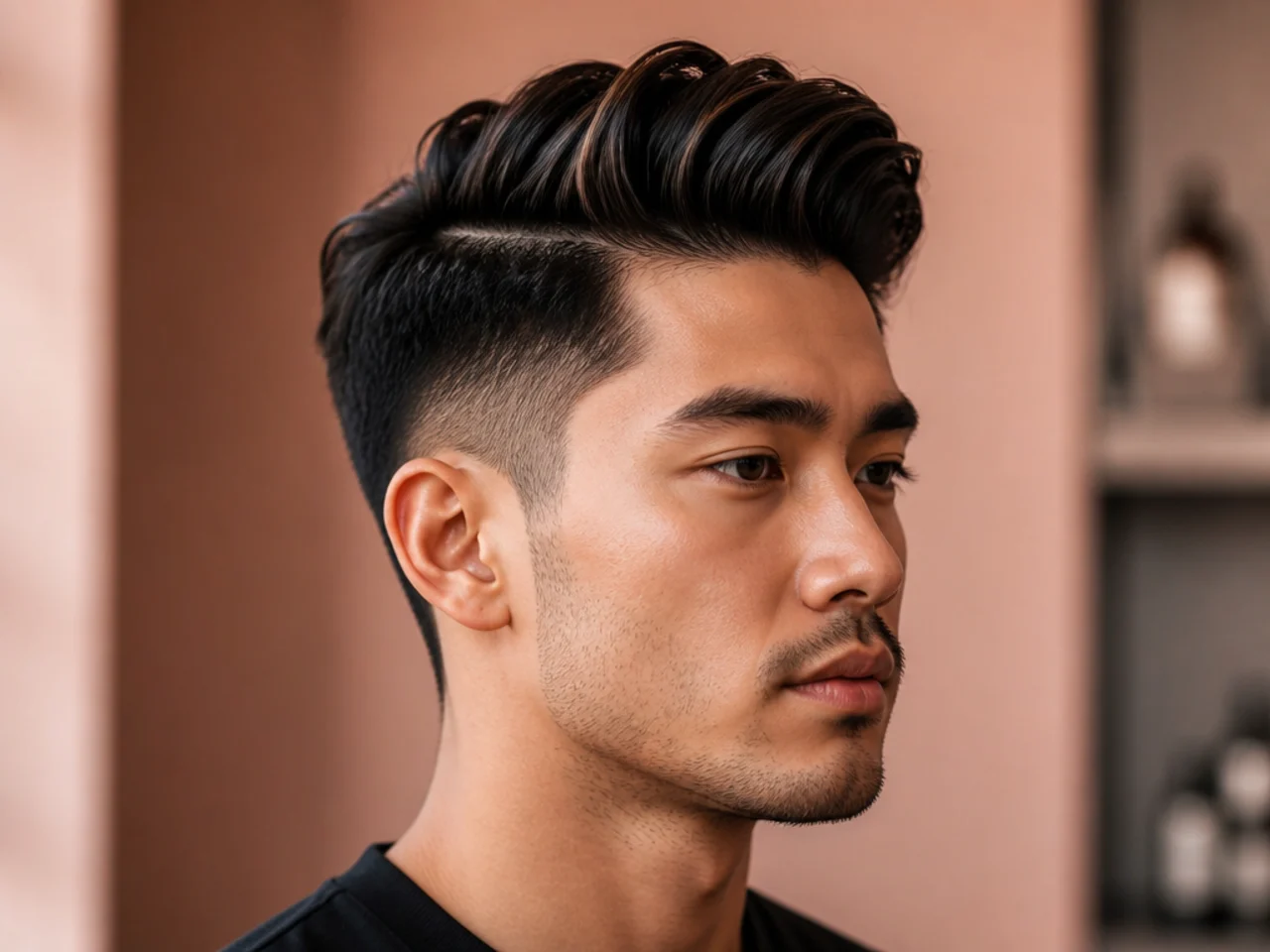
The classic quiff is the neutral shape every other variation spins off. Four to five inches on top, front lifted up and back at a soft angle, sides scissor-blended or dropped into a short taper. Nothing shouts. The lift does the work.
Ask your barber for 4 inches on top, a low taper fade at the sides, and a soft blend at the parietal ridge. Tell them you want the front long enough to lift, not spike. If you want more contrast, ask for a mid fade instead of a taper — or an undercut if you want the top disconnected from the sides entirely.
Blow-dry the front up and back with a round brush on medium heat. Mist with sea-salt spray while damp, then work a nickel-size scoop of matte clay from root to tip.
Best for: medium to thick straight hair on oval or square face shapes.
Messy Quiff
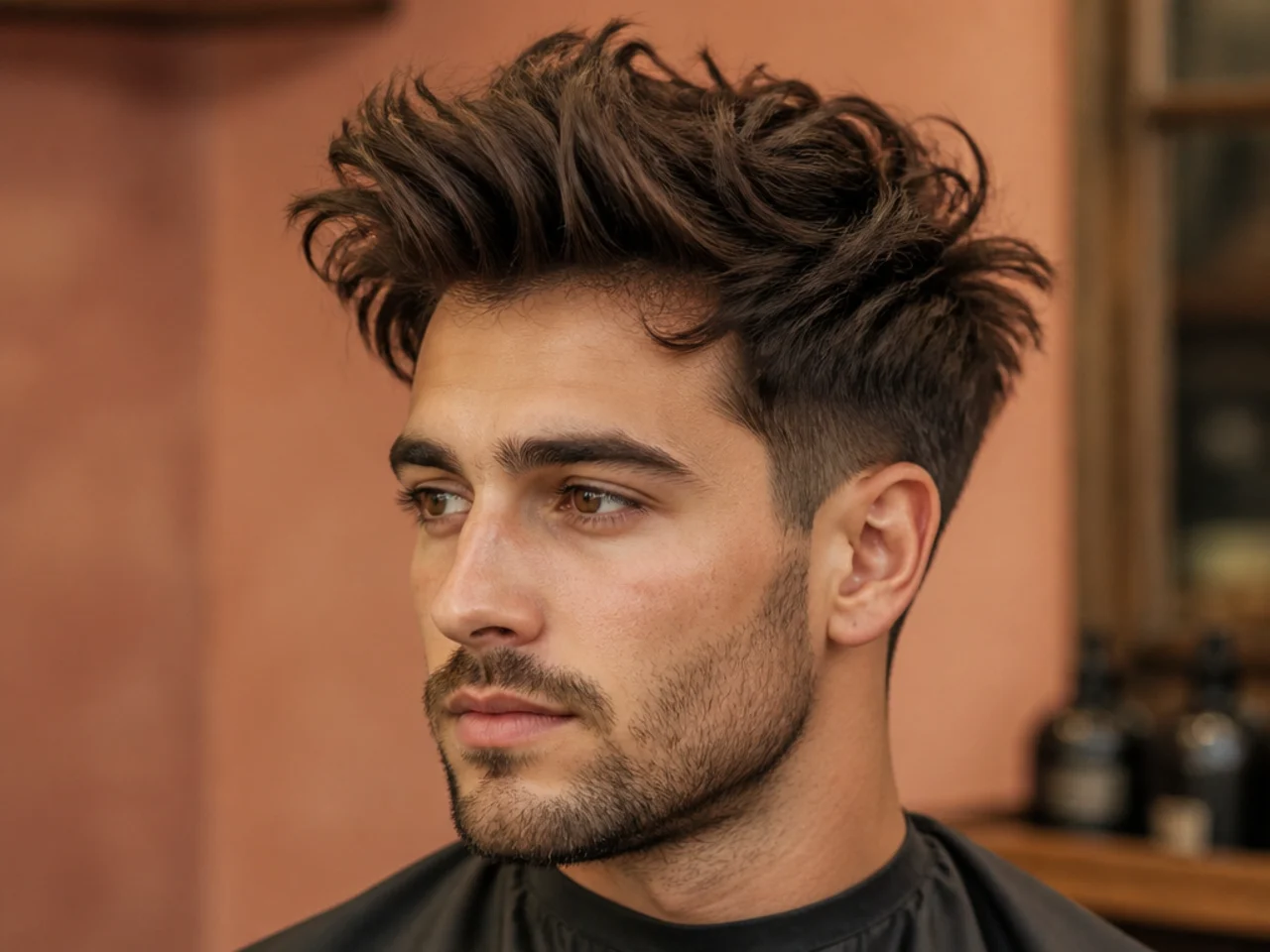
The messy quiff keeps the volume of a classic but breaks up the finish so it looks slept-in, not styled. Layers run longer at the front (5–6"), the perimeter is left slightly rough, and there's no clean part or comb line — just texture pointing up and forward.
Ask for scissor layers on top, a burst fade or drop fade at the sides, and no razor work at the ends. Tell your barber you want a "worn-in" edge, not a sharp one.
Rough-dry with your fingers on high heat, no brush. Warm a pea of matte clay between your palms and press it in from the ends toward the roots. That keeps the piece-y look intact.
Best for: guys who don't want to think about their hair after 90 seconds in the mirror.
Who Should Try a Messy Quiff Hairstyle
The messy quiff works best if your hair already has some natural movement — a slight wave, a cowlick, or fine-but-plentiful strands. Perfectly straight, thick hair will fight the tousle and want to sit flat.
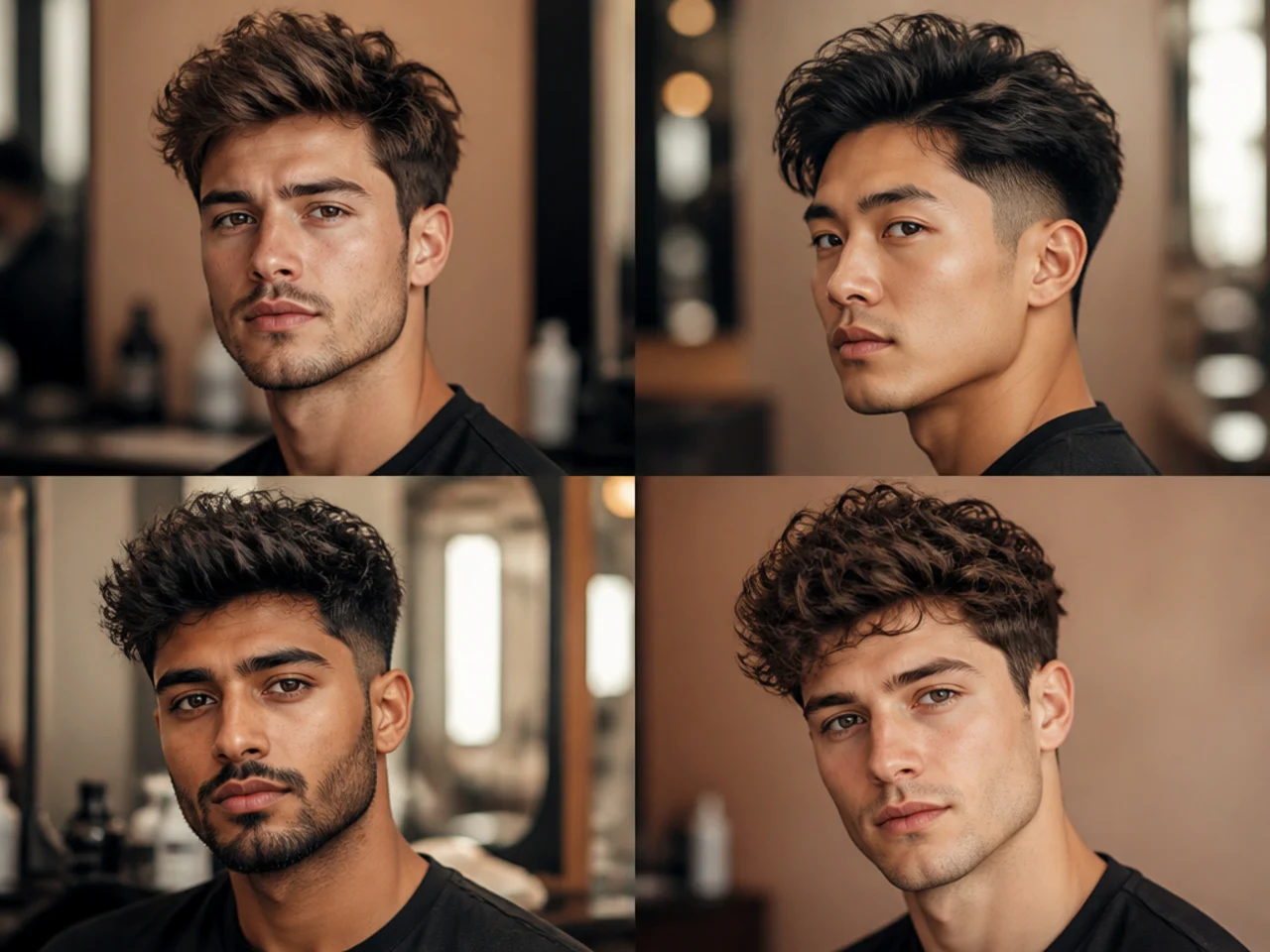
Face shape matters less than usual here. The uneven front softens angular jaws and adds vertical lift on rounder faces. Skip this version if you like a crisp part or run a formal wardrobe day-to-day. The finish is deliberately undone, and it reads better with knitwear than with a suit.
Textured Quiff
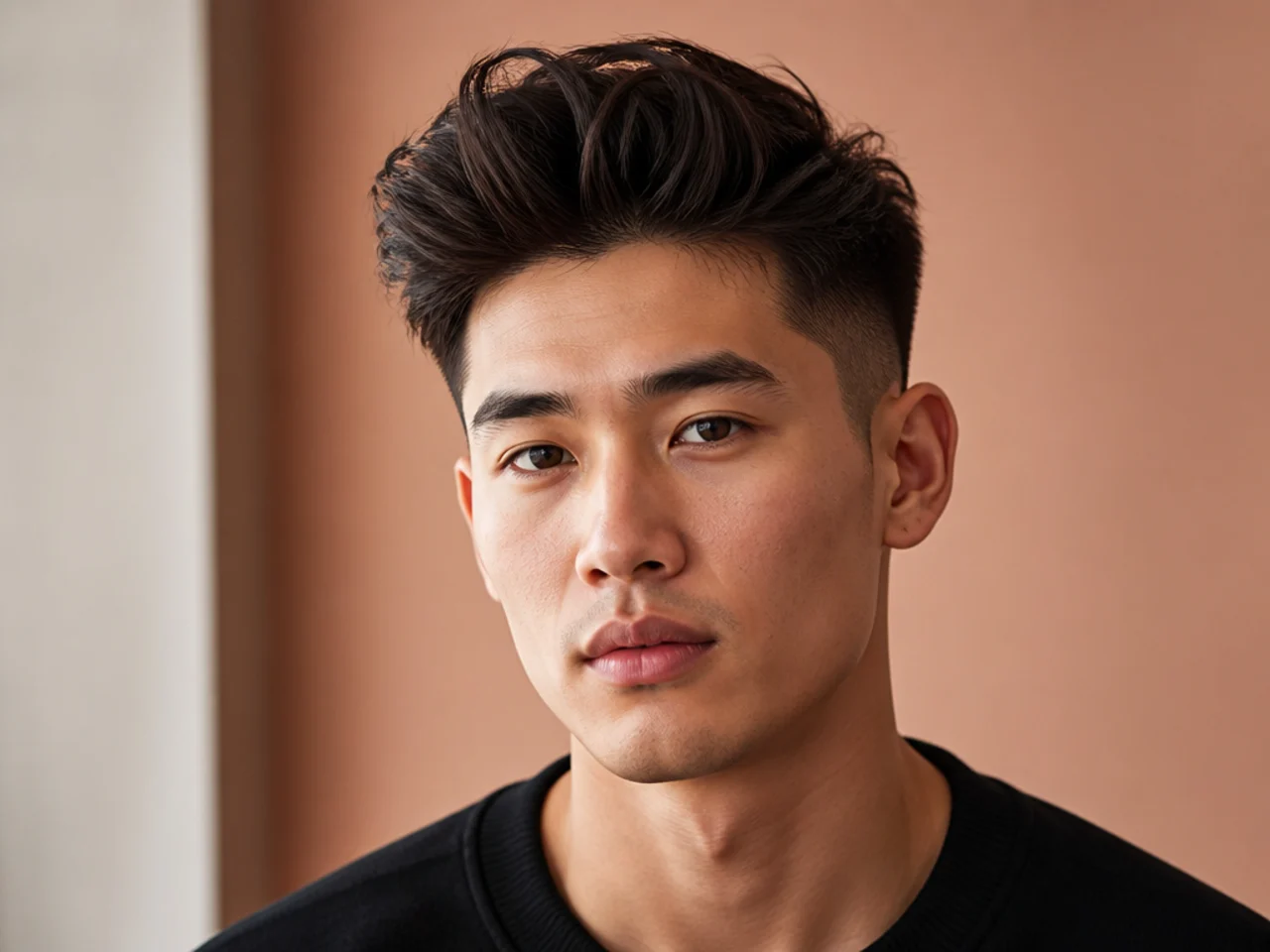
The textured quiff is the modern default. Layers are point-cut through the top so strands separate cleanly, and the front is left long enough (5") to sweep up with real movement. It looks piece-y in every direction, not flat and combed.
Ask for point-cut layers on top, a mid fade or low taper fade on the sides, and light thinning through the crown if your hair is dense. Tell your barber the goal is separation, not bulk.
Rough-dry from the roots up, then round-brush the front. Emulsify a pea of matte clay between your palms, work it through the ends, then push the front up and back with open fingers.
Best for: straight or slightly wavy hair, and anyone tired of hair that looks like a helmet by 3 p.m.
How to Get a Textured Quiff Hairstyle
Start with clean, towel-dried hair — damp, not dry. Spritz sea-salt spray from the roots to mid-length while it's still wet. That's what gives the finished style its grip.
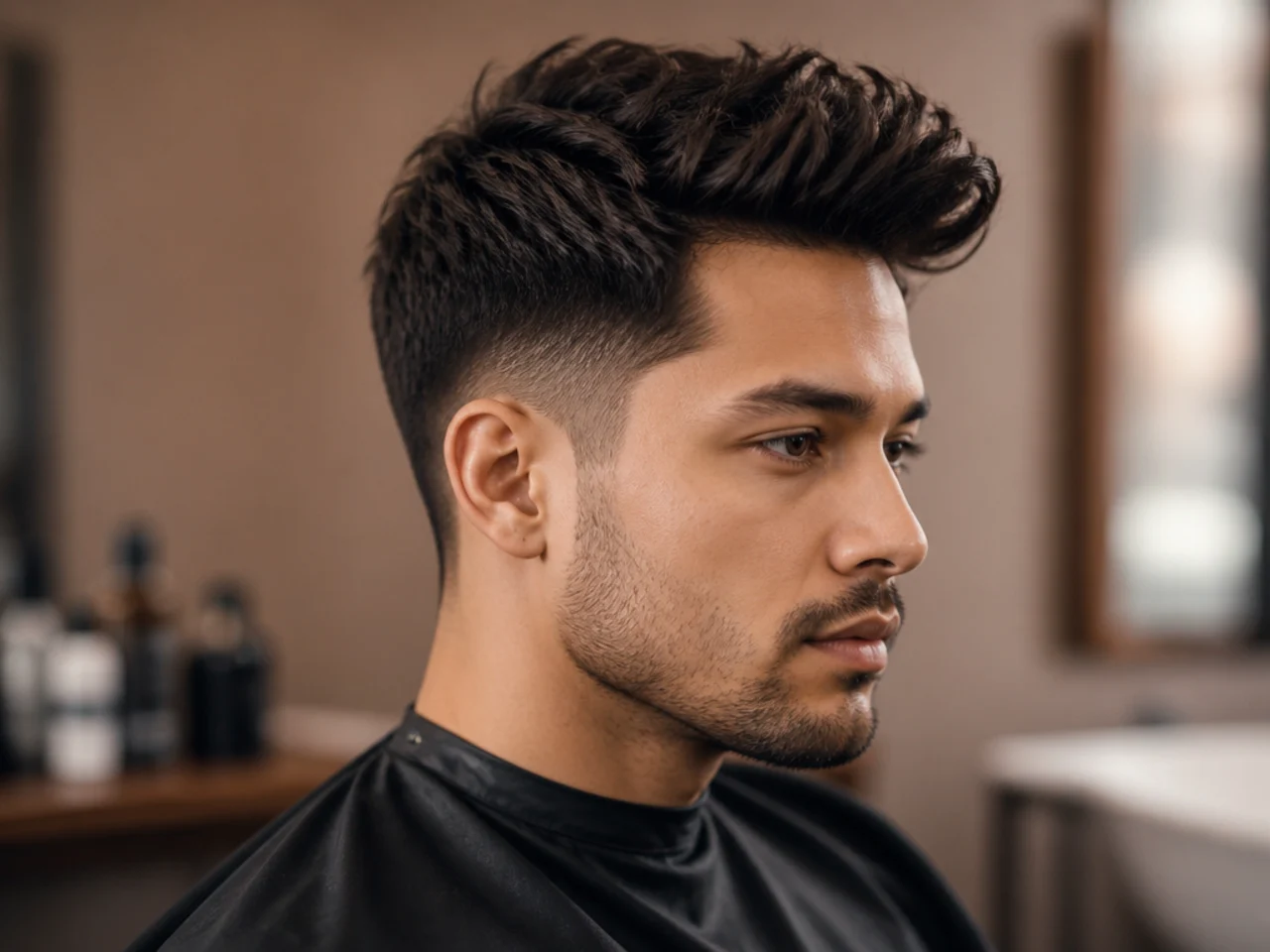
Blow-dry with a round brush, lifting the front section up and slightly back. Cool-shot the shape to lock it. Rub a pea-size scoop of matte clay between your palms until it disappears, then press it into the ends of the front third first — never at the roots, or you'll flatten everything you just lifted.
Modern Quiff
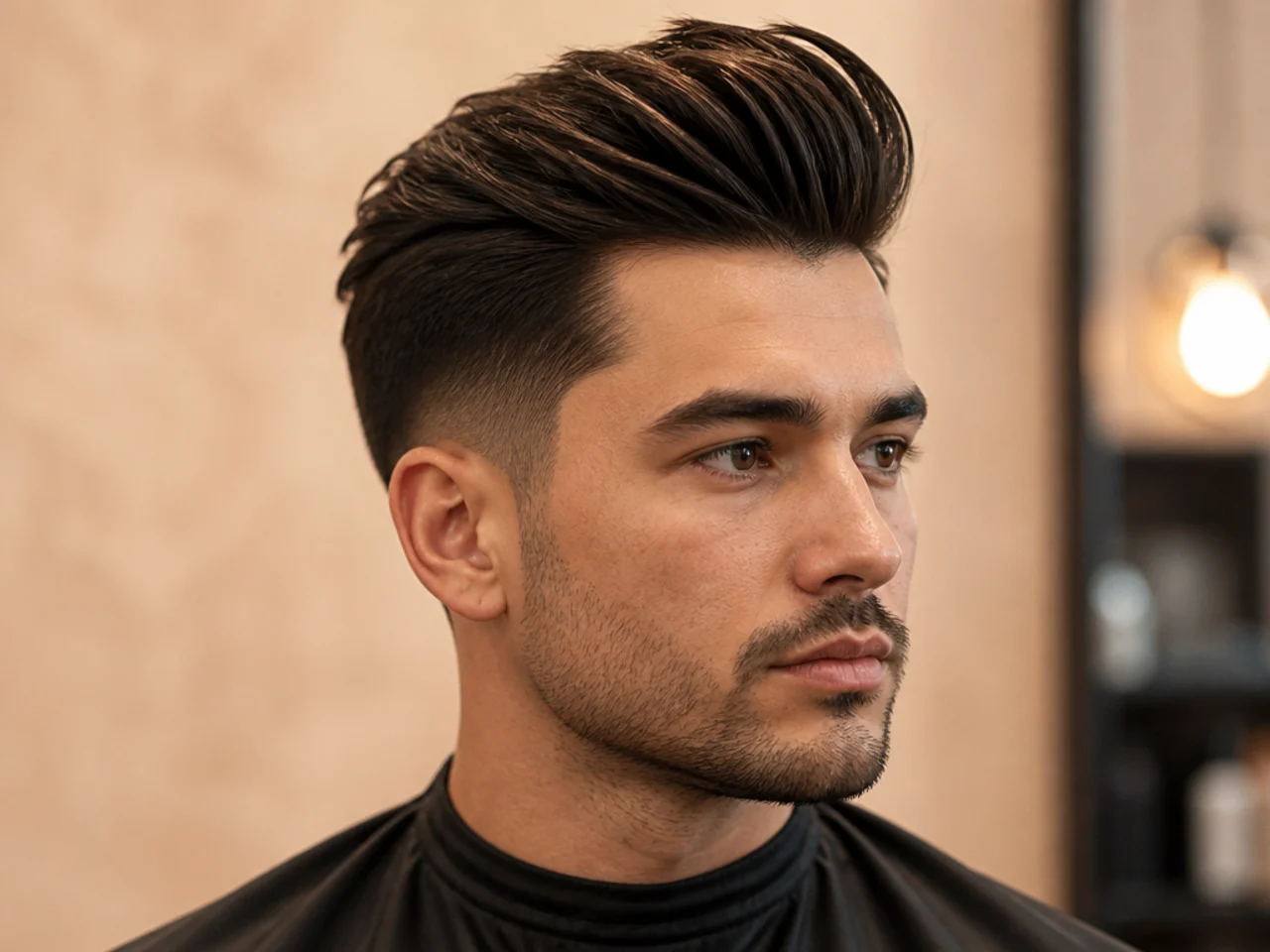
The modern quiff sharpens every edge of the classic. Sides get a proper skin fade or high taper fade, the top is left long at the front (5–6") and tighter through the crown, and there's usually a soft disconnection where the top meets the fade.
Ask your barber for a skin fade starting mid-ear, scissor detail through the crown, and the front left long enough to sweep. If you want less shock at the perimeter, ask for a low fade instead.
Prep with a light mousse for lift, blow-dry the front up with a round brush, then finish with matte clay pressed into the ends only. Skip pomade — it kills the texture the fade is meant to contrast.
Best for: 20s–30s guys who want a haircut that photographs well.
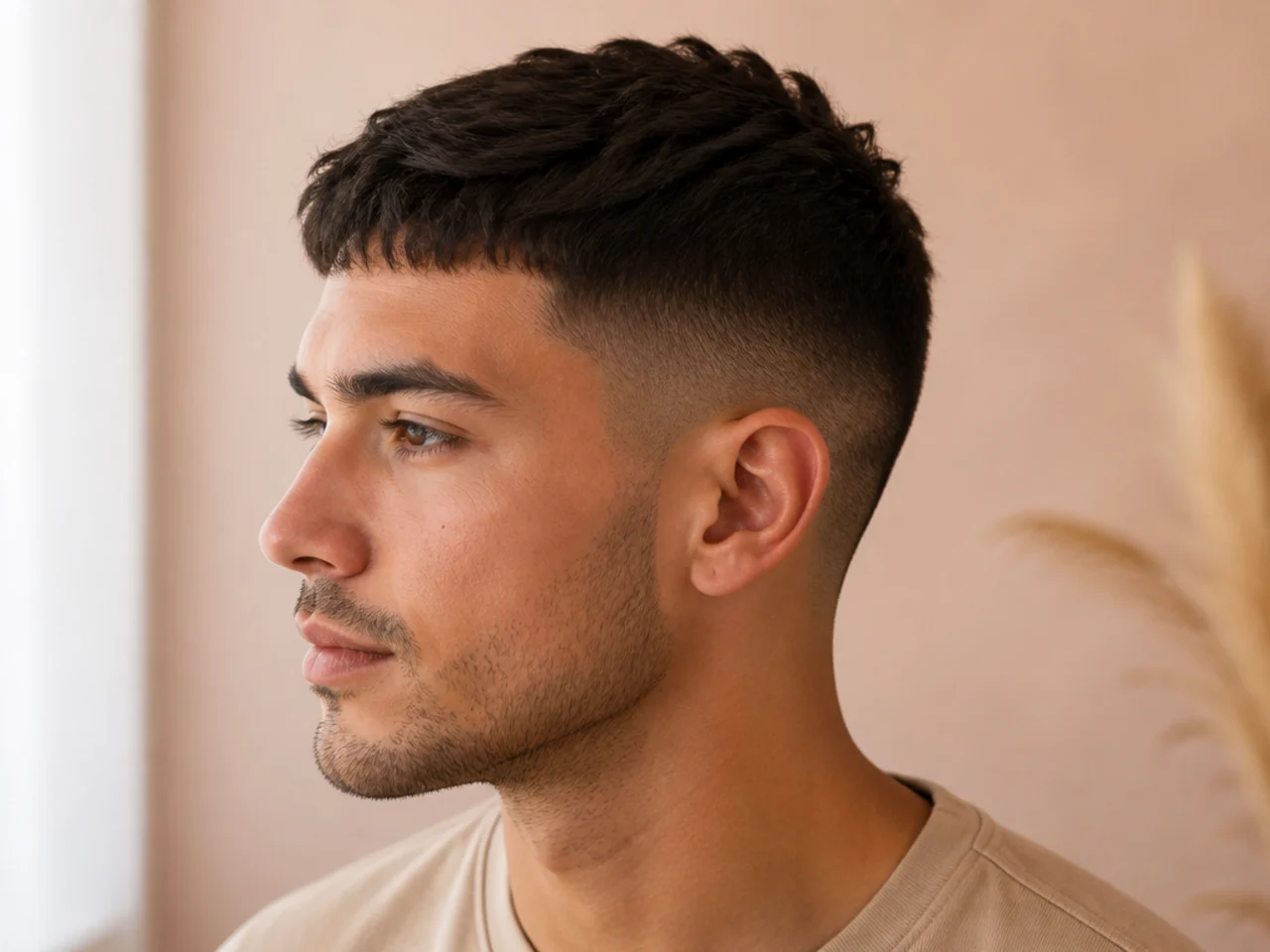
Short Quiff
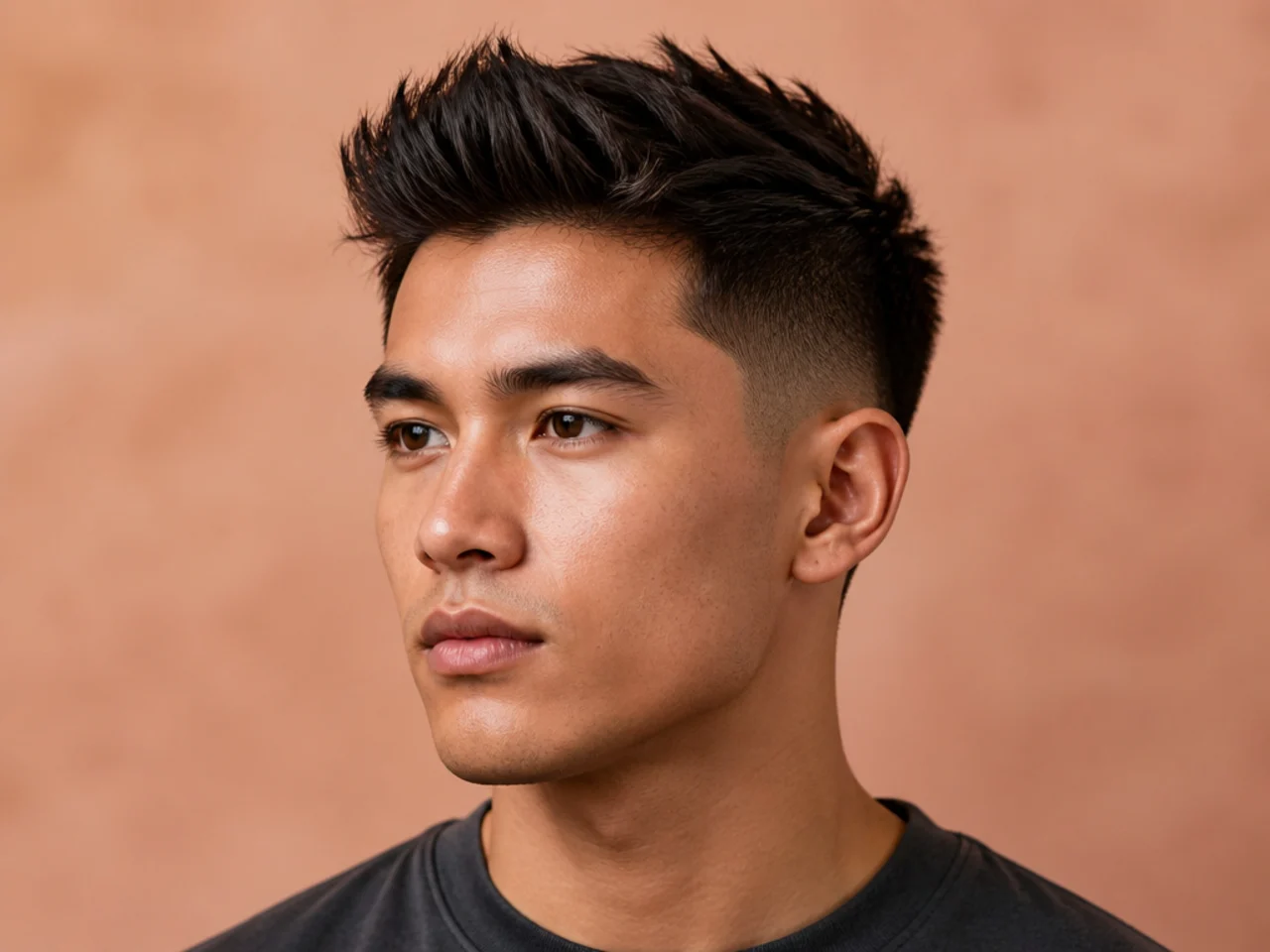
The short quiff is a quiff cut down to shift-work length. Top runs 2–3" — long enough to lift, short enough that it holds shape on its own. Sides are usually a clean skin fade.
Ask for 3 inches on top, a mid or high skin fade, and a soft blend at the crown so nothing looks blocky from the side. If your work leans conservative, ask for a low taper fade so the sides stay closer to your natural hairline.
Rub matte paste between your palms and push the front up and back with your fingers. No blow-dryer required most days — 30 seconds gets you out the door.
Best for: guys with straight, medium-density hair and a schedule that doesn't allow 10 minutes of styling.
Quiff Fade
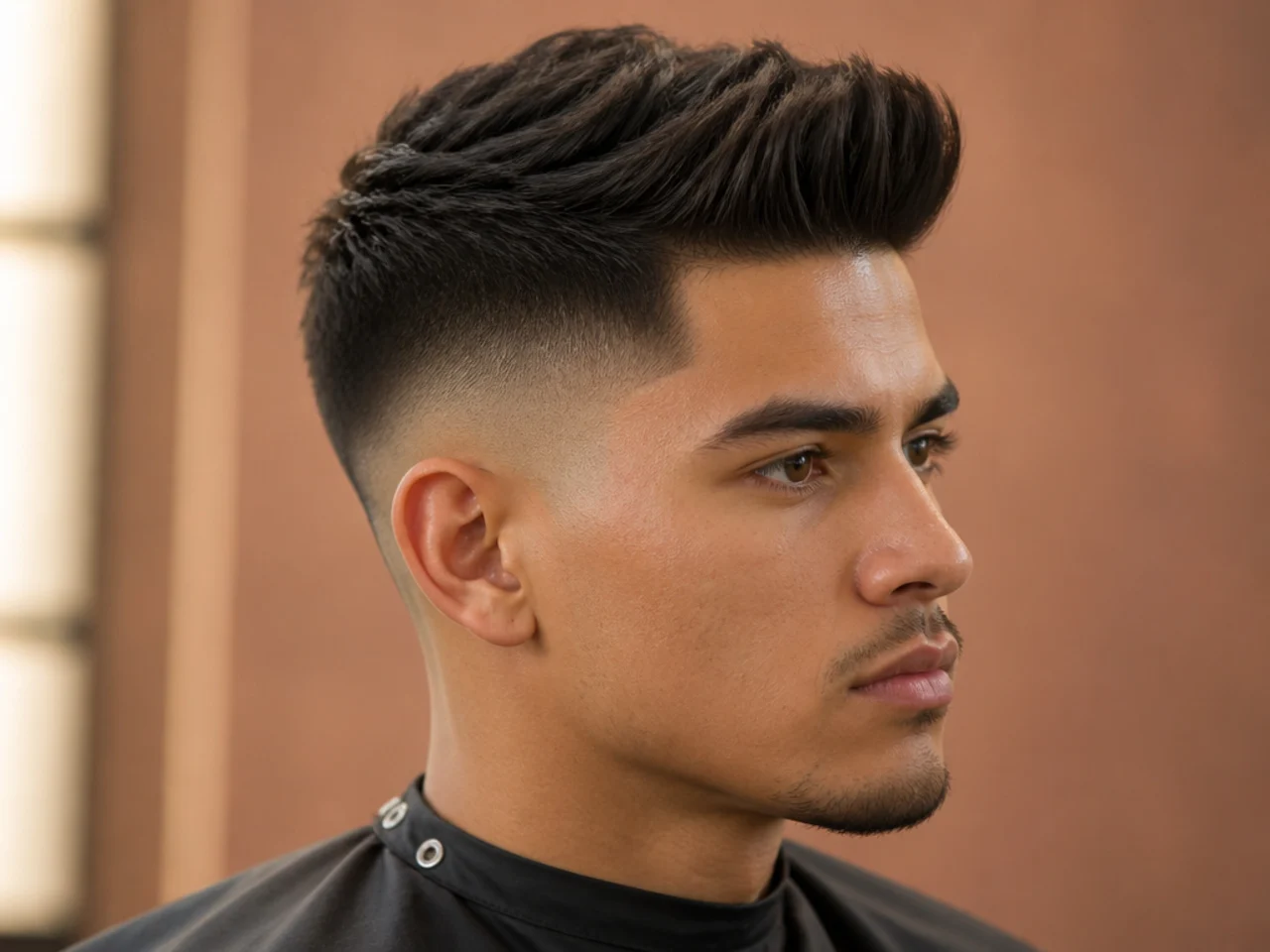
The quiff fade is the umbrella term for any quiff paired with faded sides. The contrast — height on top, skin at the sides — is what gives the shape its modern read.
Ask for the fade type that matches your face and lifestyle: low fade for the most conservative frame, mid fade for balance, high fade for maximum contrast. Tell your barber you want the top left at 4–5" so the quiff sweeps rather than spikes.
Blow-dry up and back with a round brush, then use matte clay to lock the shape. If you want a shinier, retro finish, swap the clay for a light pomade — same technique, different mood.
Best for: any face shape, any hair type. The fade type does the flattering.
Medium Quiff
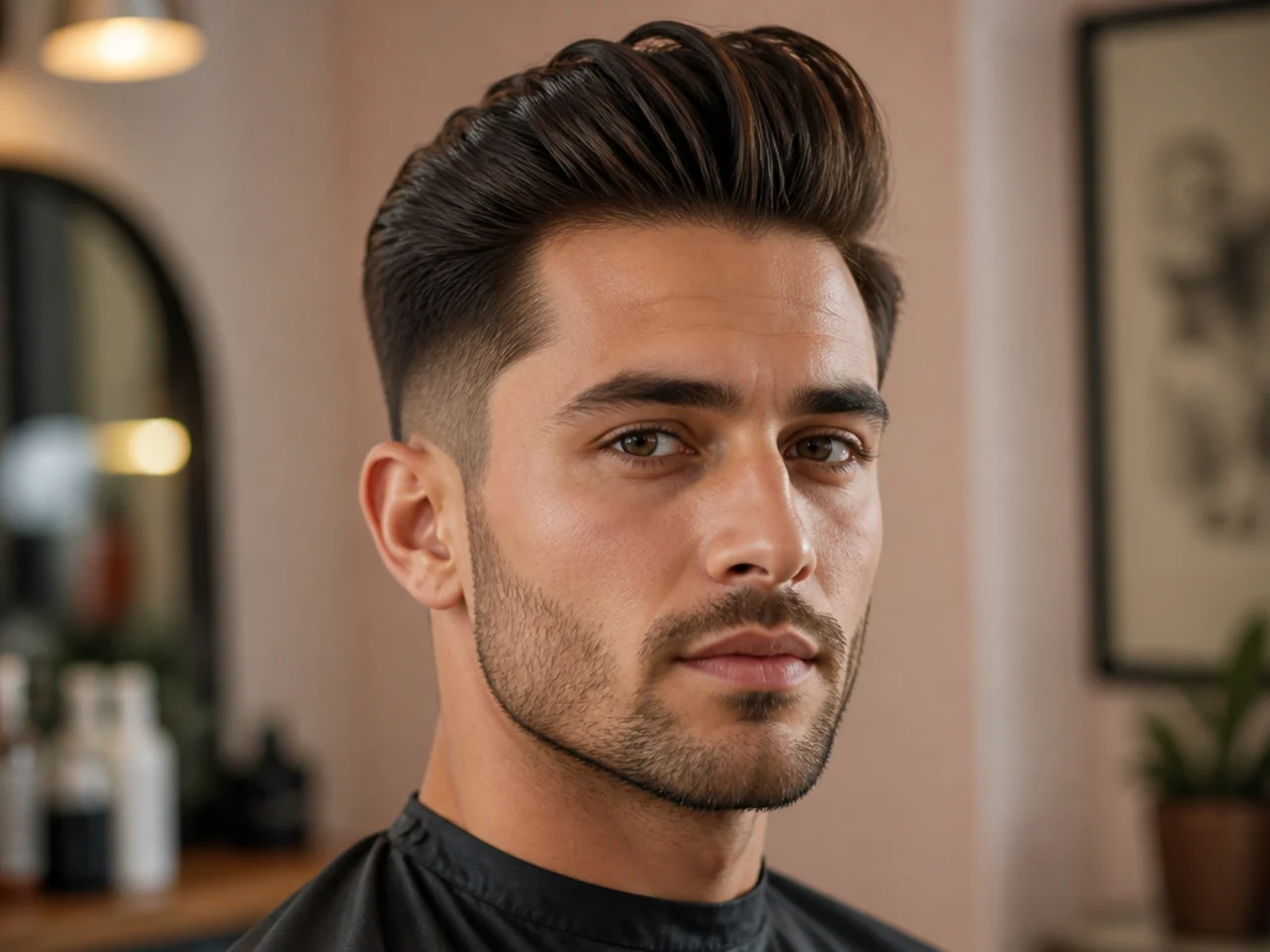
The medium quiff is the flexible middle length. Top runs 5–6", enough to style up for a meeting or push back for the weekend without recutting.
Ask for scissor-cut layers on top, a low or mid taper fade at the sides, and enough length at the crown to blend into the front sweep. Tell your barber you want the option to wear it forward some days and up others.
For volume, round-brush up and back after towel-drying, then work in matte clay. For a flatter, comb over alternative, run a wide-tooth comb through with a light cream and part just off-center.
Best for: guys who want one haircut that dresses up, dresses down, and buys them 6 weeks between visits.
Quiff with Beard
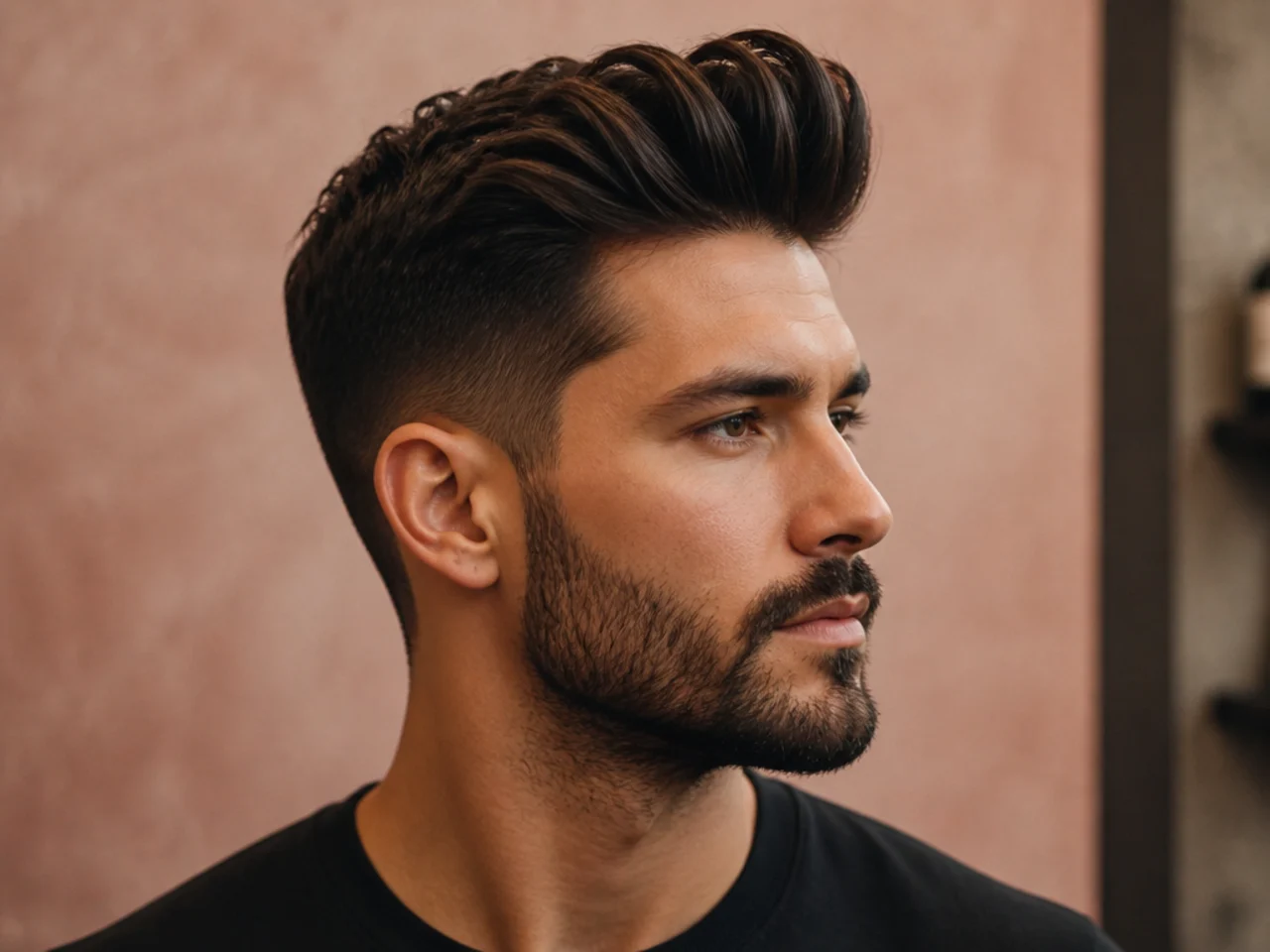
Pairing a quiff with a beard doubles the frame — height on top, weight along the jaw — which reads masculine without any effort on your part. The trick is matching the density: full quiff with a full beard, textured quiff with shorter stubble.
Ask for a mid fade that ties into the beard line so the sides and cheeks flow into each other. Top length depends on the quiff style — 4" for classic, 5–6" for a textured version.
Style the quiff with matte clay pushed up and back. Keep beard oil in the beard and product on top — mixing them makes both look greasy.
Best for: square, oval, and heart-shaped faces. Round faces should keep the beard tighter to avoid a helmet effect.
Short Quiff with Low Taper Fade
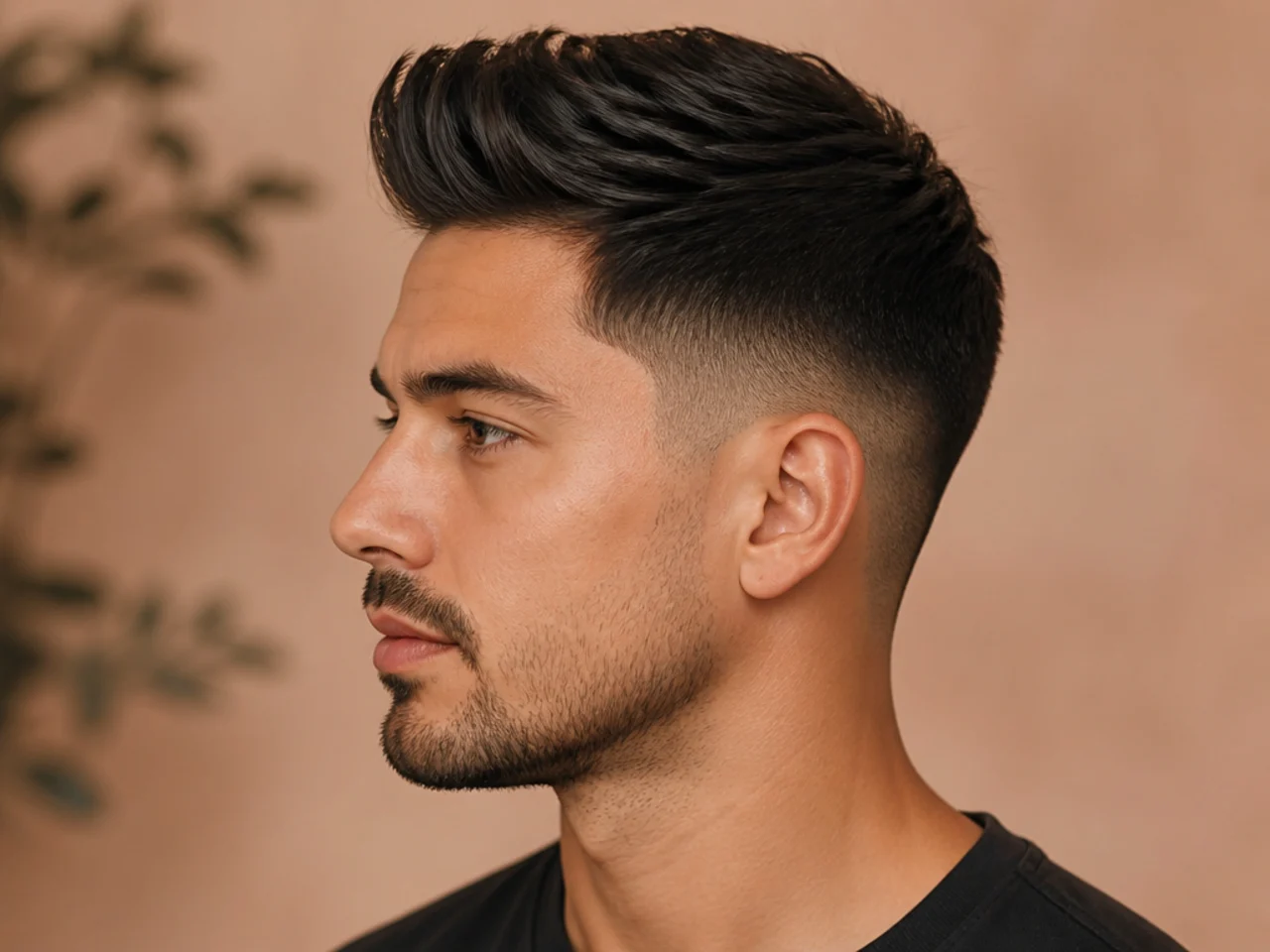
This is the office-friendly version. The top sits at 2.5–3", the sides drop into a subtle low taper fade that doesn't climb above the ear, and the whole cut reads clean even after eight hours in a chair.
Ask for a 3" top, a low taper fade that starts just behind the sideburn, and a soft blend at the crown. Tell your barber you want the fade "invisible from the front." It does more work than you'd think for interviews and formal wear.
Blow-dry with a vented brush for a little front lift, then work matte clay through the front only. Two-minute style.
Best for: professional settings, all face shapes, and hair that doesn't need to be babied.
Tousled Textured Quiff with Low Fade
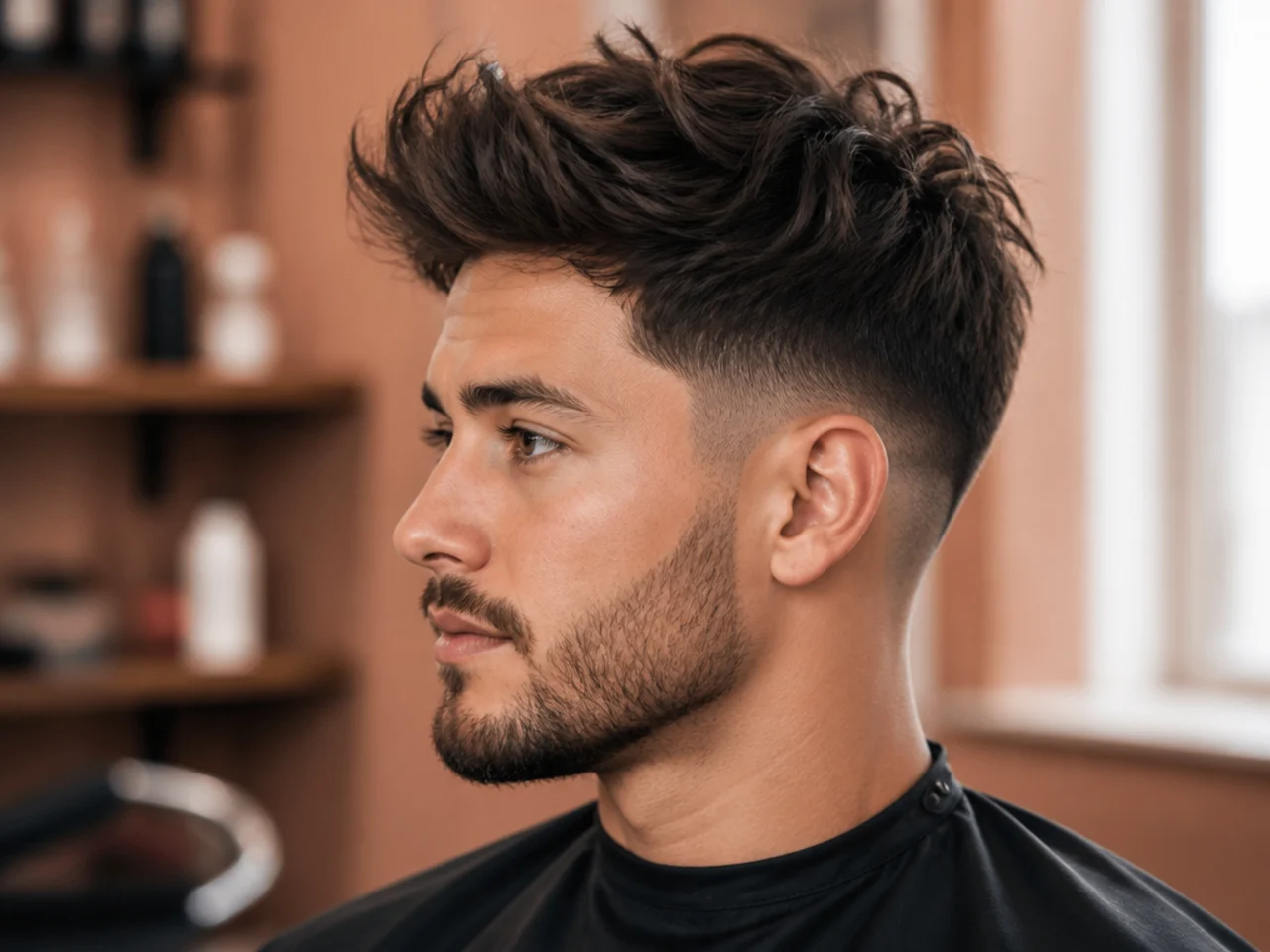
This one keeps the sides quiet — a low fade that barely climbs above the ear — so all the drama sits on top. The top itself is deliberately messy: layered, tousled, with the front swept up and slightly off-center.
Ask for a low fade, scissor-cut layers through the top, and 5" left at the front. Tell your barber the finished look should feel undone, not styled.
Rough-dry with your fingers, then spray sea-salt spray from the ends up. Finish with a coin of matte clay pressed into the front, and push everything up with open fingers. If your hair falls flat by evening, hit it with dry texture spray.
Best for: wavy or thick straight hair, and any face shape that suits a soft frame.
Wavy Quiff
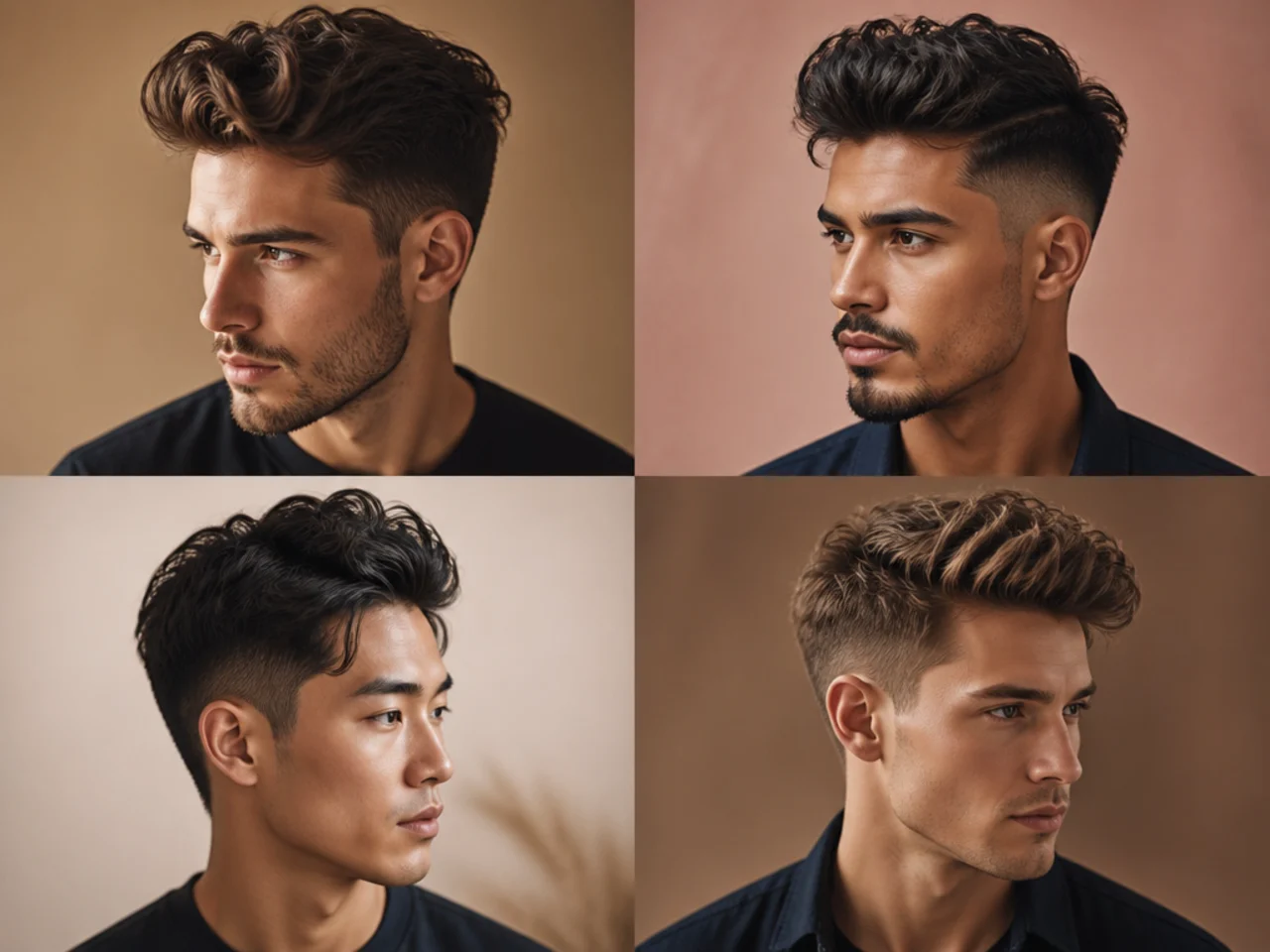
If your hair has a natural bend, the wavy quiff lets it show instead of fighting it flat. The waves handle the texture for you — all you're adding is direction and a bit of lift at the front.
Ask for scissor layers cut with the wave pattern, a mid or low taper fade at the sides, and 4–5" at the front. Tell your barber not to thin the ends — thinning ruins wave definition.
Apply a wave-friendly cream (or a mousse-and-cream mix) to damp hair, then either air-dry with the front swept back or diffuse on low. Skip clay — it's too thick for waves. A light wax or defining cream at the end keeps everything in place.
Best for: naturally wavy hair, any face shape.
Short Textured Quiff with Mid Fade
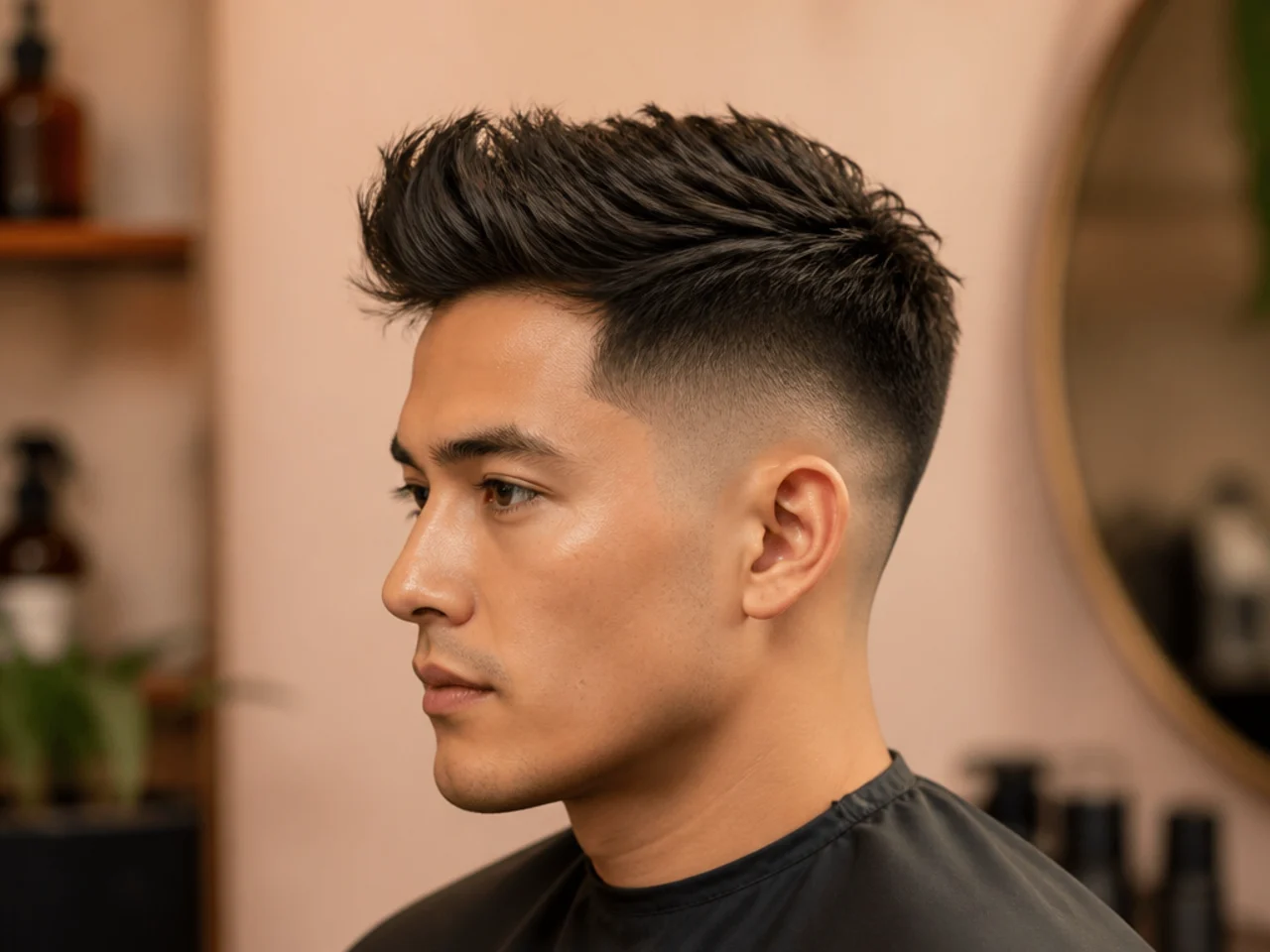
Short on top (2–3"), textured through the layers, and paired with a mid fade that lands halfway up the side. It's the version most barbers default to when a client says "just clean it up but make it modern."
Ask for a mid fade, point-cut layers on top, and enough length at the front to lift with your fingers. Tell your barber to keep the crown tight — long crown ruins the shape from behind.
Rub matte paste between your palms, press into the front, then push everything up and slightly forward. If you have coarse or resistant hair, use a stronger fiber instead of paste.
Best for: thick or coarse hair, square or oval face shapes, and anyone who wants low effort with a sharp finish.
Messy Quiff with Taper Fade
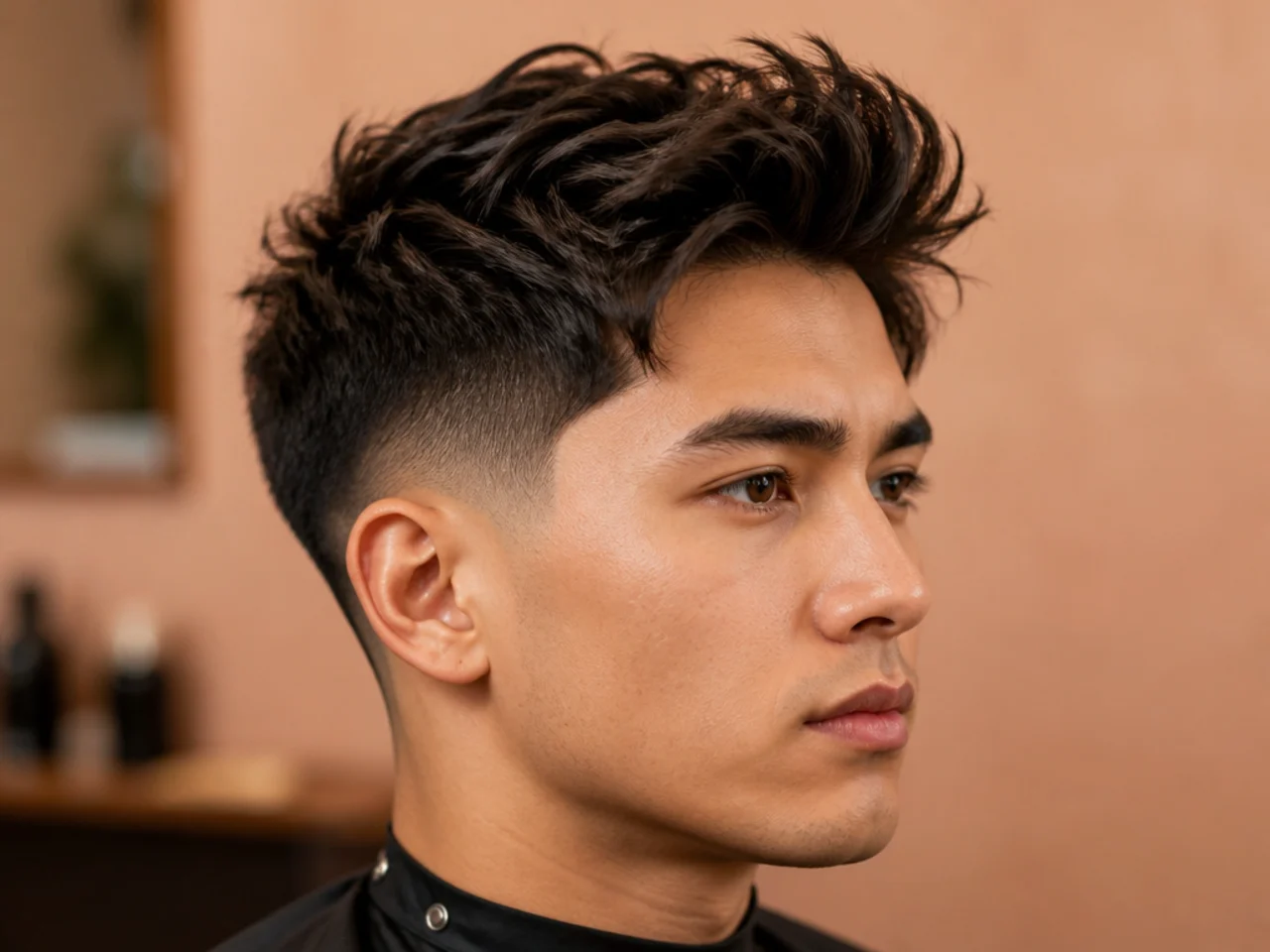
This is the middle ground between structured and slept-in. The top is messy — front swept up and to one side with visible separation — but the taper fade at the sides keeps the whole cut looking intentional.
Ask for a mid taper fade, 5" at the front, and scissor layering with a slight forward direction. Tell your barber you want the top to fall naturally, not sit locked in place.
Blow-dry from underneath the front to build root lift, then work a flexible cream or fiber through with your fingers. Push the front up and slightly off to one side — dead-center is what makes a quiff look outdated.
Best for: guys who want casual but still put-together. Fine to thick hair.
Long Quiff
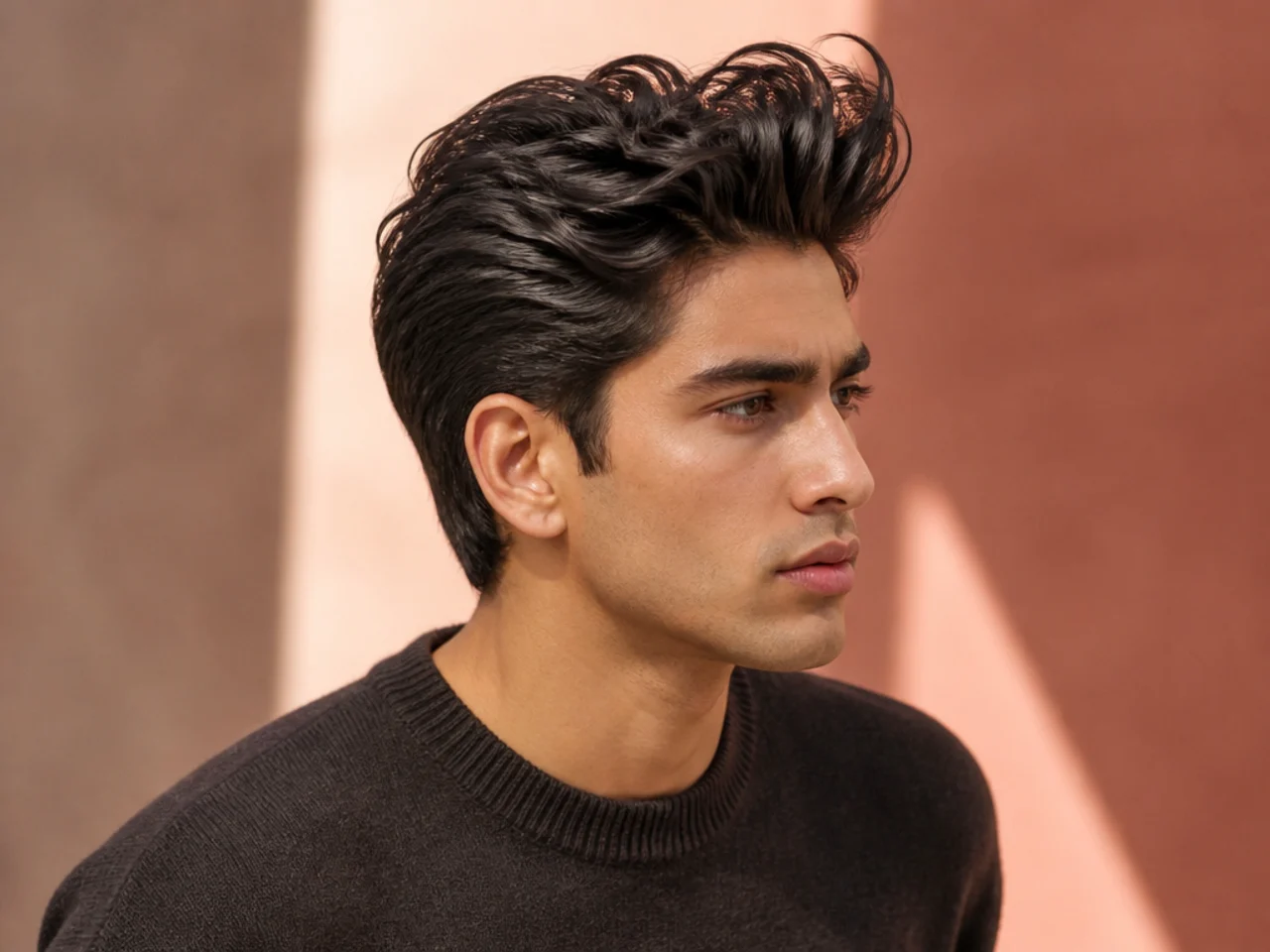
The long quiff pushes top length to 6–7" and lets the front sweep back with real drama. It needs thicker hair to hold shape and 5 minutes of styling most days, but the payoff is a hairstyle that stops people in a room.
Ask for 6" at the front, layered down to 4" at the crown, and a low fade or scissor-blended sides so the length dominates. Tell your barber you want the shape to hold when swept back, not fall in your eyes.
Prep with a volumizing mousse, blow-dry with a round brush from front to crown, and set with a firm-hold matte cream. Finish with a light hairspray to keep the height through the day.
Best for: thick, straight-to-wavy hair and oval or long face shapes.
Thick Quiff Fade
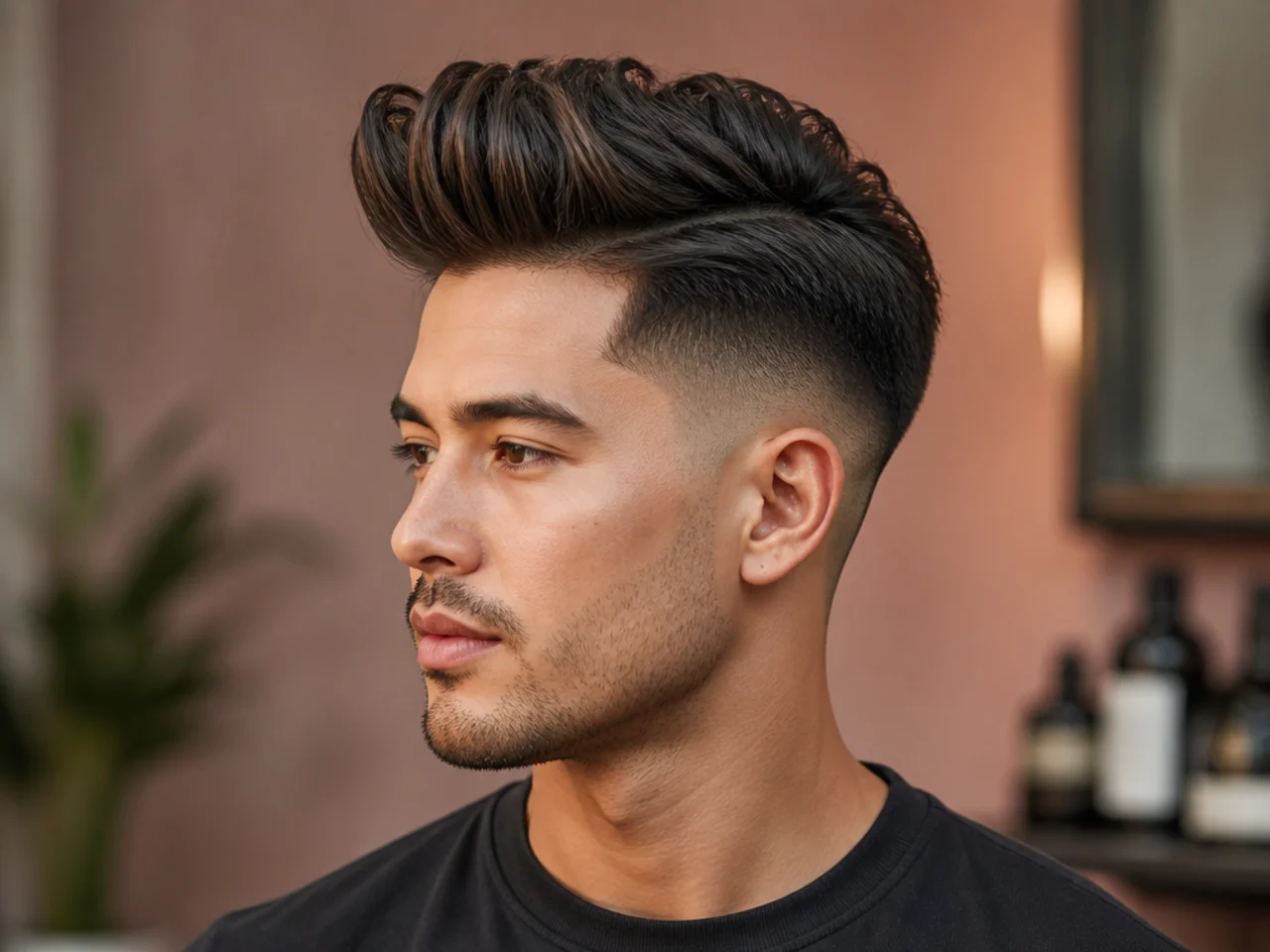
If your hair is dense and coarse, the thick quiff fade thins the sides down so the top can carry all the volume without looking like a mushroom cap.
Ask for a mid or high skin fade, scissor layering with heavy internal thinning through the top, and 4–5" at the front. Tell your barber to remove weight — not length — so the shape stays but the bulk goes.
Prep with a blow-dry cream to soften coarse strands, then round-brush up and back. Finish with matte paste worked through the front. A short beard or shaped stubble balances the top-heavy shape.
Best for: thick, dense hair — Mediterranean, Middle Eastern, and Latin hair types especially. Square and oval face shapes.
Full Textured Quiff with Low Skin Fade
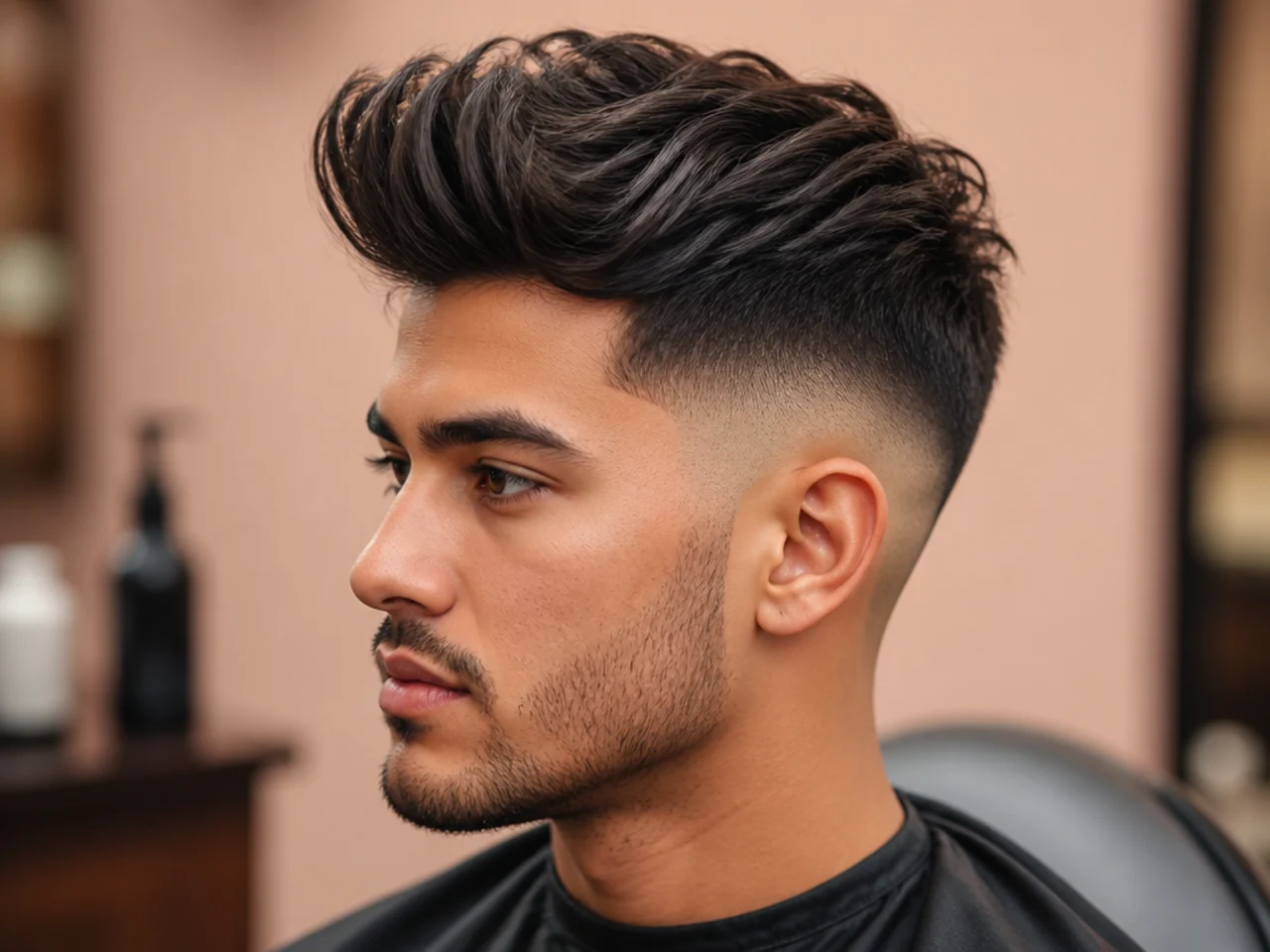
This version leans loud. Full texture through the top means visible separation between every section, and the low skin fade at the sides makes the top look even bigger by contrast.
Ask for a low skin fade, point-cut layering, and 5" left at the front. Tell your barber you want maximum separation — the finished look should almost read as spiky when styled up.
Sea-salt spray on damp hair, rough-dry with fingers, then press matte clay through the mid-lengths. Push everything up with the flat of your hand — no comb. Some guys wear this one spiked forward for evening and brushed up and back for daytime.
Best for: fine or medium hair that needs the help, any face shape except very round.
Tousled Short Quiff with Low Fade
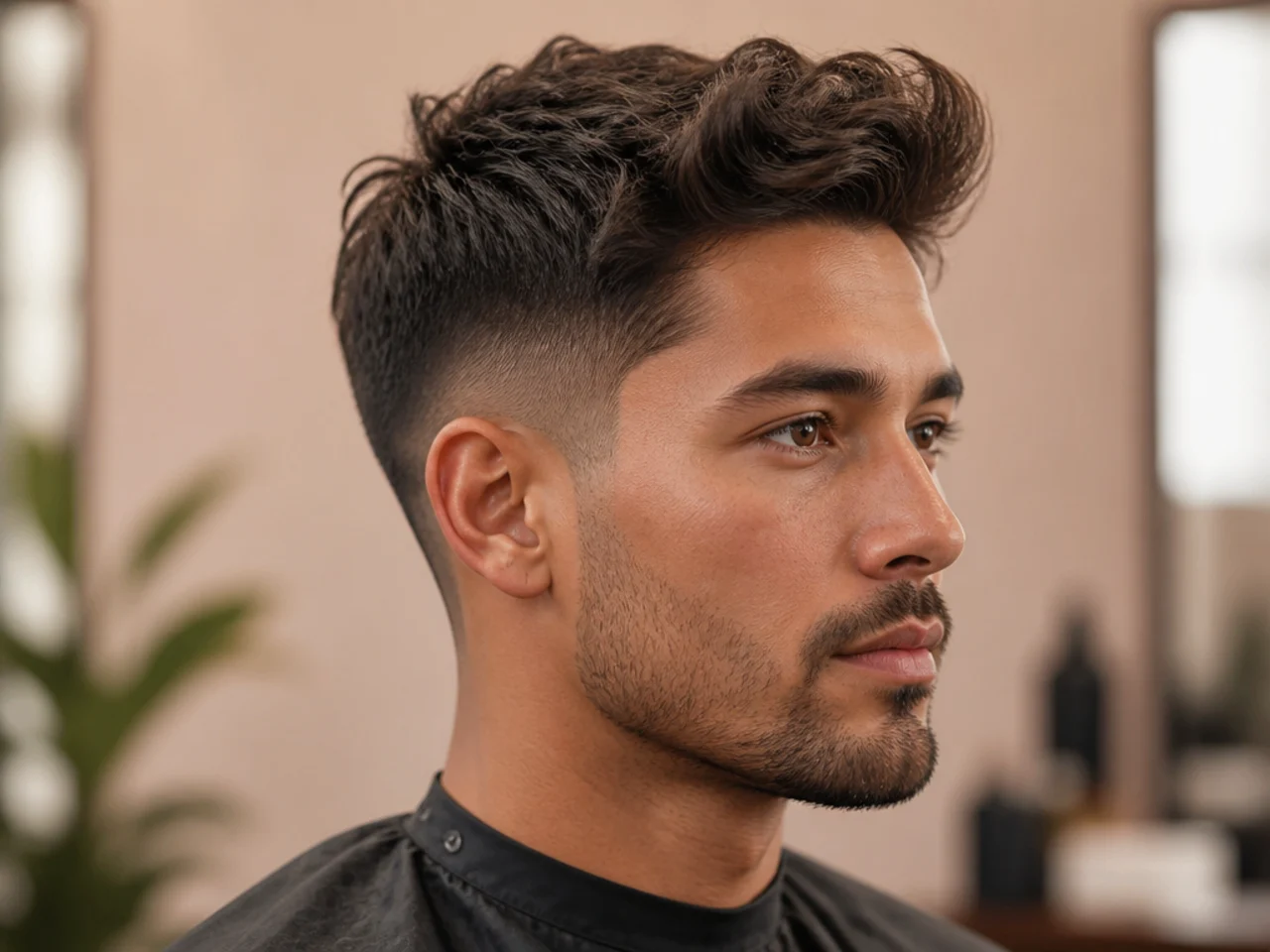
Short (2.5–3") but not tight — the top is layered enough to fall in a soft, tousled shape. The low fade keeps the sides quiet so nothing competes.
Ask for a low fade starting just above the ear, scissor layers on top, and enough front length to sweep up with your fingers. Tell your barber the vibe is "surfer, cleaned up" — not slick.
Air-dry when you can. When you can't, hit the front with a diffuser or blow-dryer on low, then rub a small amount of cream or light wax through the ends. Fingers only, no comb.
Best for: everyday wear, all face shapes, hair that doesn't sit down when you tell it to.
Messy Wavy Quiff with Low Taper
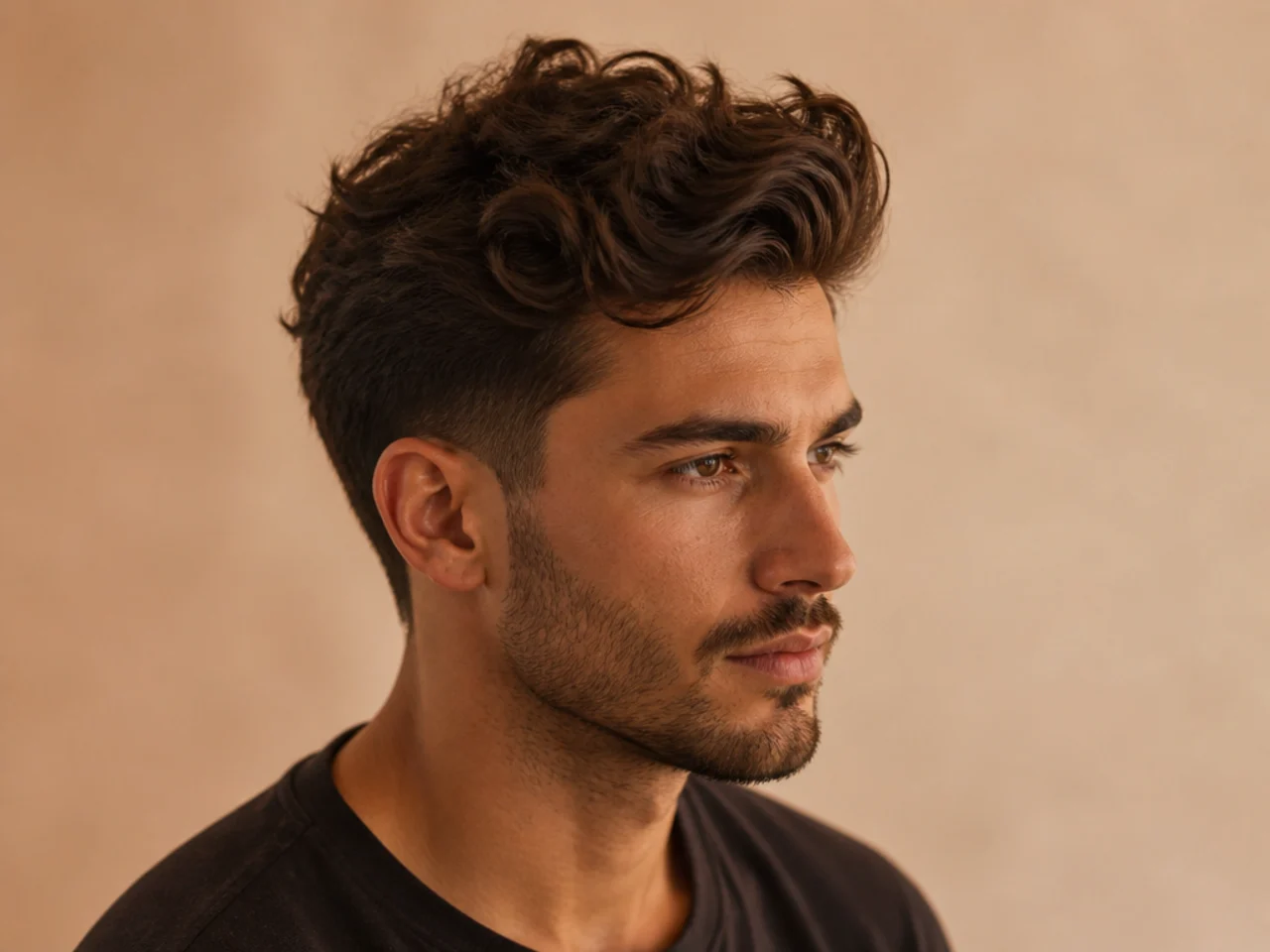
Waves plus a low taper plus deliberately messy styling. The top falls in loose S-shapes toward the front, and the low taper fade at the sides keeps it from looking sloppy.
Ask for a low taper, scissor layers cut with your wave pattern, and 5" at the front. Tell your barber to leave the perimeter slightly uneven — the roughness reads intentional on waves.
Apply a curl cream or sea-salt spray to damp hair, scrunch the front to encourage the wave, then let strands fall casually toward the forehead. A light wax at the tips only.
Best for: naturally wavy or slightly curly hair, oval or heart-shaped faces, guys who want youthful energy in the cut.
Natural Quiff with High Fade
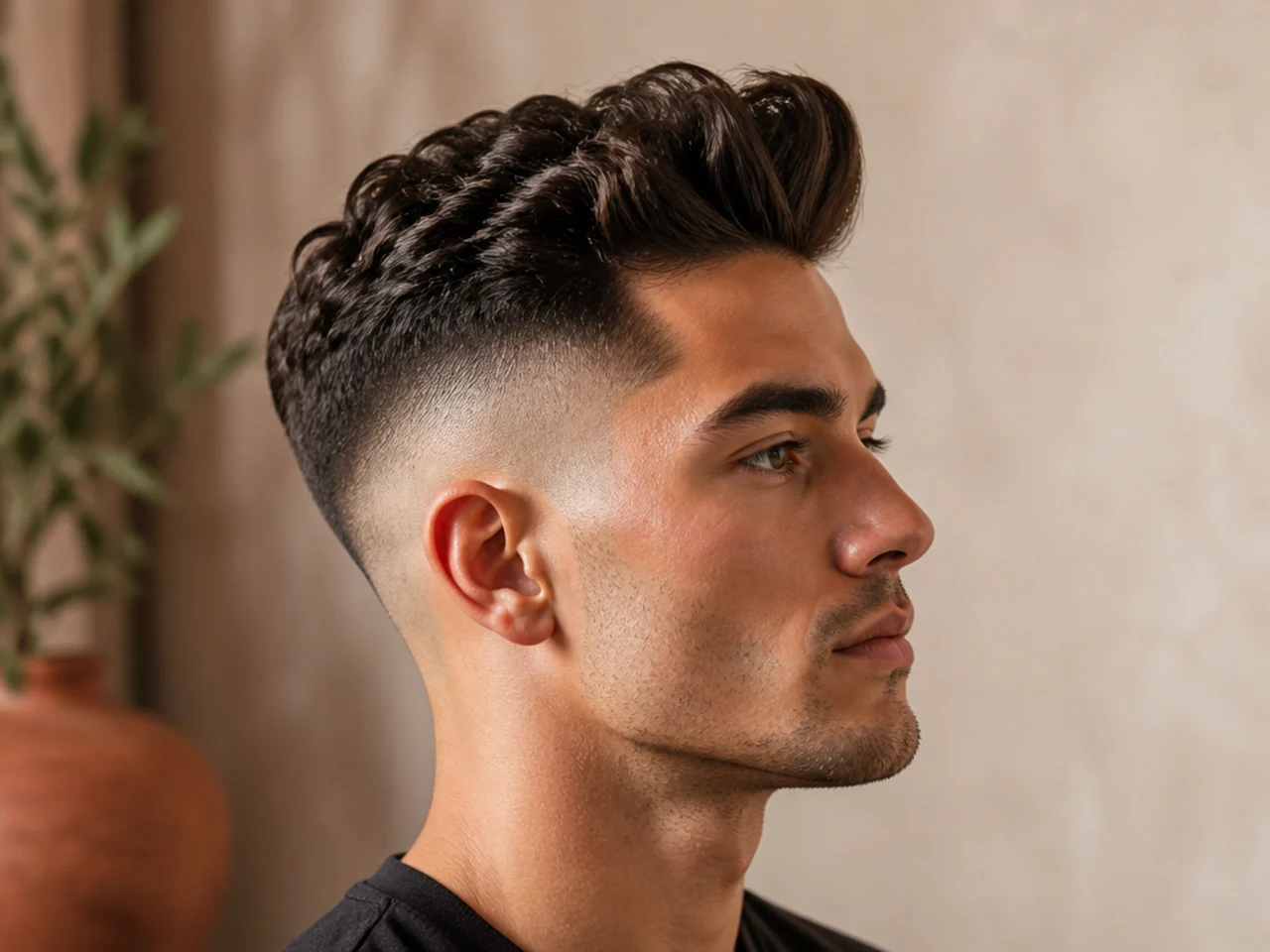
Maximum contrast, minimum product. A high taper fade or skin fade climbs to the temple, and the top is left long enough (5") to fall naturally without heavy styling.
Ask for a high fade at the temple, scissor detail through the top, and no thinning — you want the density intact so the fall looks natural. Tell your barber to leave the front weight-heavy so it moves.
Blow-dry loosely up and back with your fingers, then finish with a tiny bit of light cream through the front. That's it. The fade does the styling; you just direct the top.
Best for: clean-shaven or lightly stubbled guys, straight-to-wavy hair types, oval or square face shapes.
Undercut Quiff
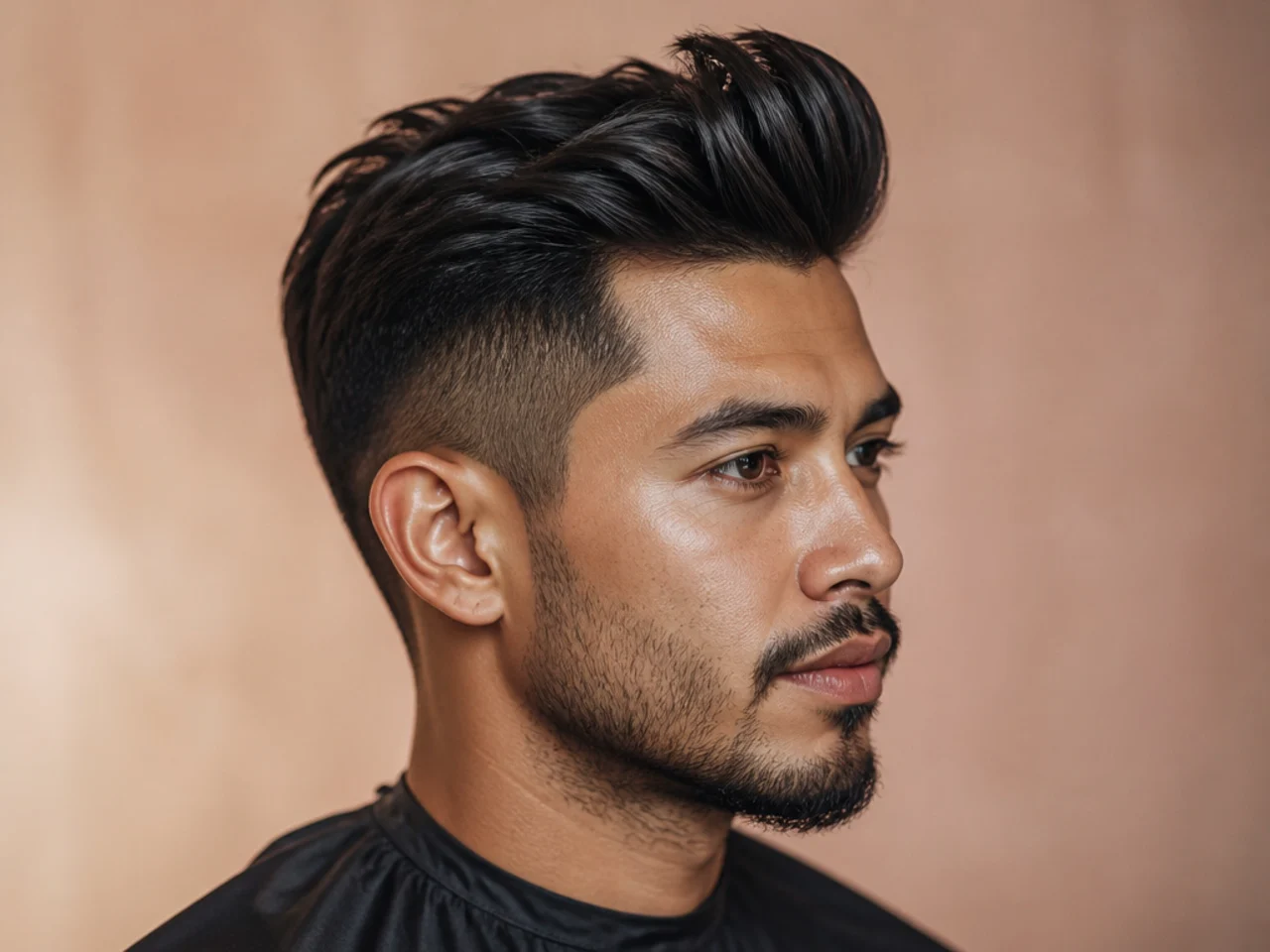
The undercut quiff is disconnected on purpose. Sides are clipped short — often one guard, all the way up — with no blend between them and the top. It's the sharpest, most fashion-forward take on the shape.
Ask for a disconnected undercut (specify #2 or #3 guard), 5–6" left on top, and a clean line where the disconnection sits. Tell your barber if you want a hard part cut in or a soft transition.
Style up and back with matte clay for the everyday look, or brush back sleek with pomade for a formal slick back — the disconnection lets you flip between both without recutting.
Best for: guys who don't mind attention, oval and square face shapes, straight to slightly wavy hair.
Youthful Short Quiff with Drop Fade and Beard
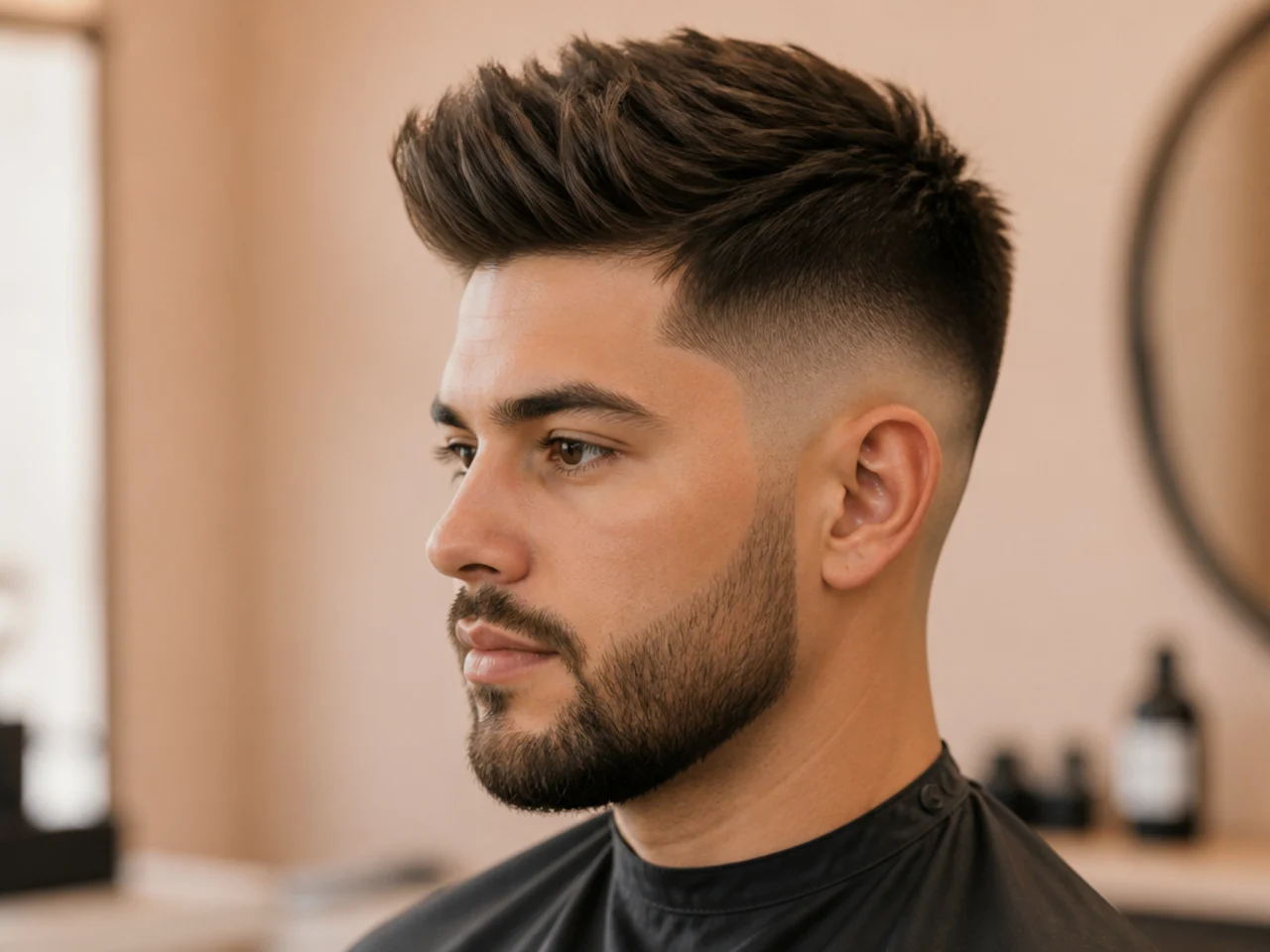
The drop fade curves down and around behind the ear rather than staying flat, which gives the shape a softer, younger read. Paired with a short quiff and a trimmed beard, it looks trendy without trying too hard.
Ask for a drop fade — specify where you want it to bottom out — and 3" on top. Tell your barber to keep the beard connected to the fade so the transition is seamless.
Rub matte paste between your palms, push the top up and slightly forward with your fingers, then rake through with light pressure. Skip anything shiny — matte is the whole point of this shape.
Best for: 18–30 range, oval to square face shapes, medium-density hair.
Textured Quiff with Sharp Fade
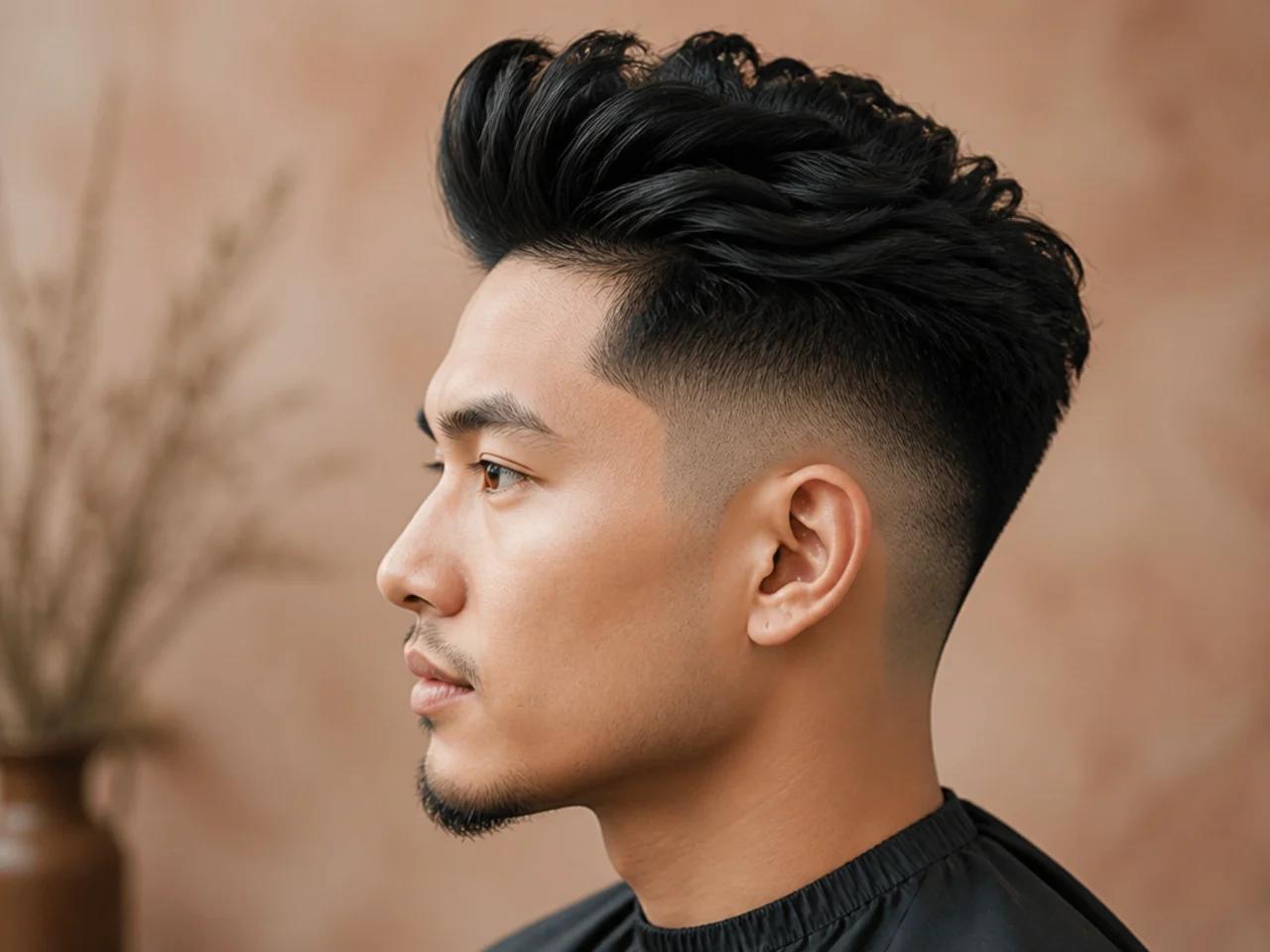
The "sharp fade" here means a hard, high-contrast skin fade with a defined bald edge — no soft blend, just a clear line where the fade begins. The textured top plays against it.
Ask for a high skin fade with a defined line-up at the hairline, point-cut layers on top, and 5" at the front. Tell your barber you want the contrast crisp — this cut looks best fresh.
Style with matte clay pressed into the ends only, then push the front up and back. Because the sides are so sharp, you can afford a rougher finish on top — asymmetry works here.
Best for: angular face shapes (this cut slims a wider jaw), straight to wavy hair, guys who don't mind a two-week reset schedule.
Edgy Blonde Quiff
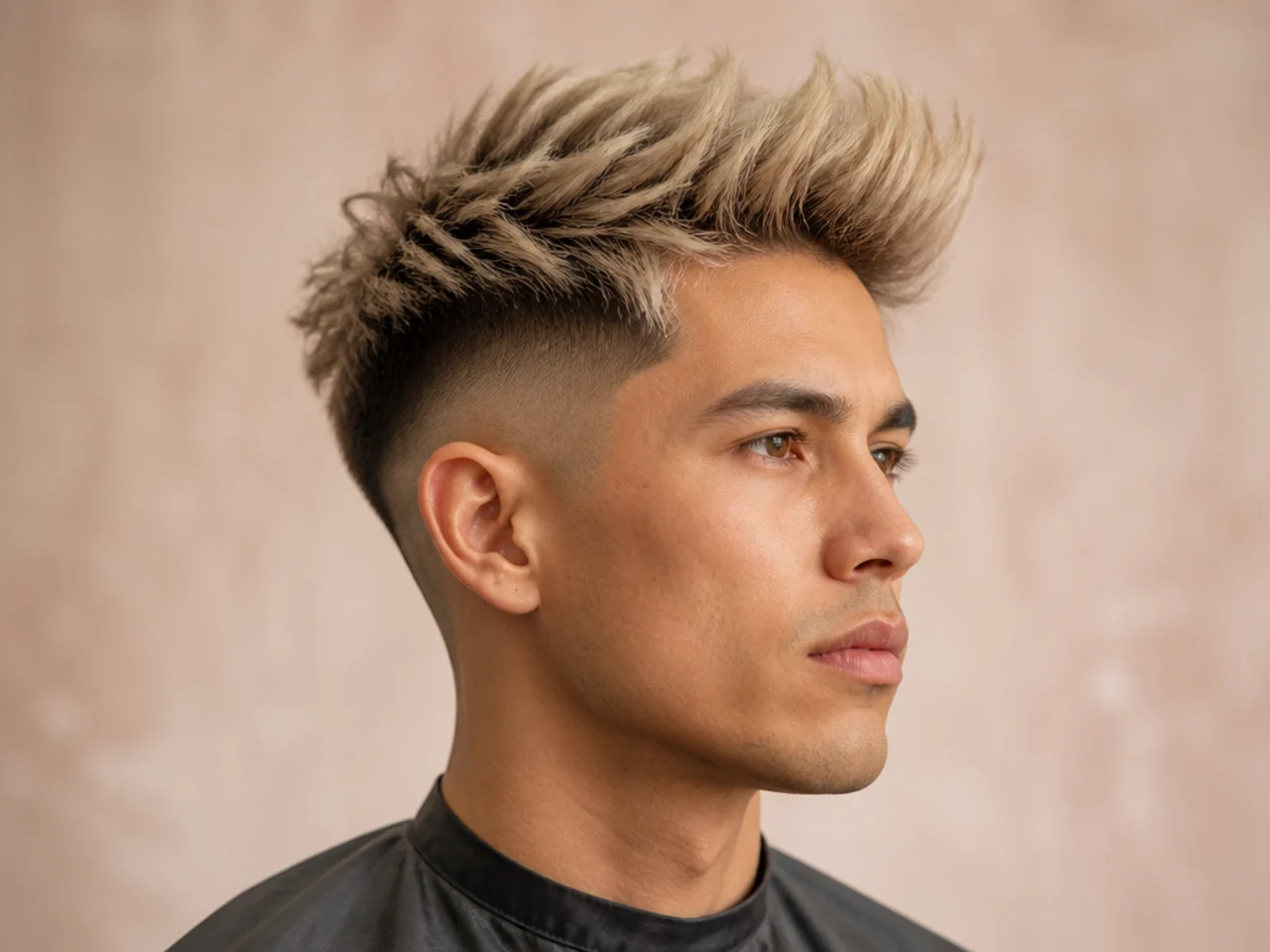
Add color to any textured quiff and the shape reads twice as loud. Platinum, icy blonde, and honey tones all work — the lighter the tone, the more the texture pops in photos.
Ask for the base cut first (usually a textured quiff with a mid or high fade), then talk to your colorist separately about lift and tone. Blonde takes 2–3 sessions on darker starting hair, plus toner every 6 weeks.
Style with matte clay — never anything shiny, since gloss on bleached hair looks brassy. Use a purple shampoo weekly to keep tones from going yellow.
Best for: guys ready for the maintenance, cooler skin tones especially. Any face shape.
Long Quiff Fade
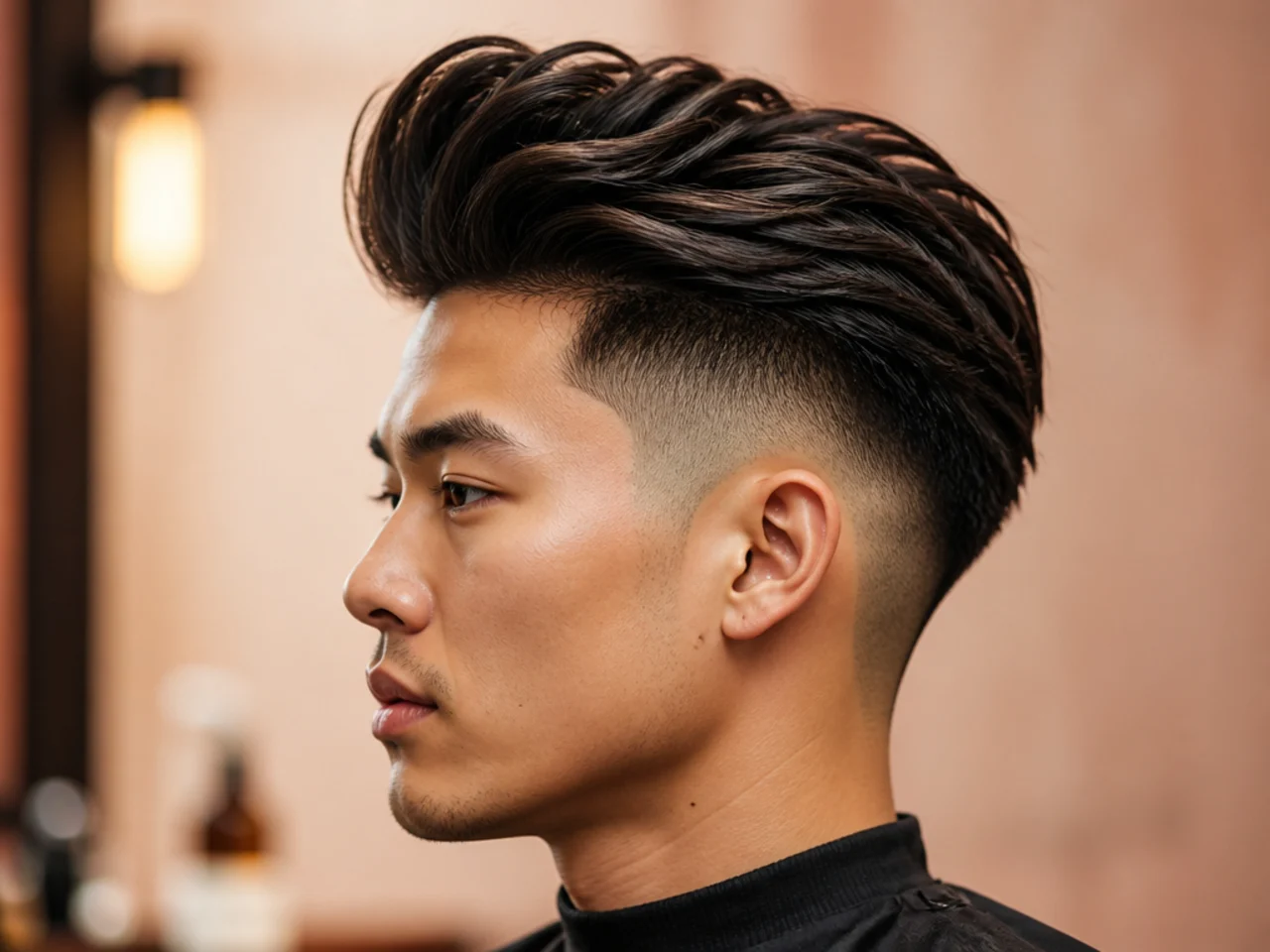
Length on top (6"+) paired with faded sides. The vertical lift elongates the face, which is why round-face clients ask for this version constantly.
Ask for a mid or high skin fade and 6" at the front, tapered down through the crown so the length doesn't turn into a mullet. Tell your barber you want the front to hold a swept-back shape.
Blow-dry with a large round brush up and back, apply a firm-hold matte cream from mid-length to ends, and finish with a light hairspray. This cut needs regular trims — every 4 weeks — to keep the fade sharp against the length.
Best for: round and square face shapes, thick straight-to-wavy hair, guys willing to style.
Straight Smooth Quiff with Mid Skin Fade
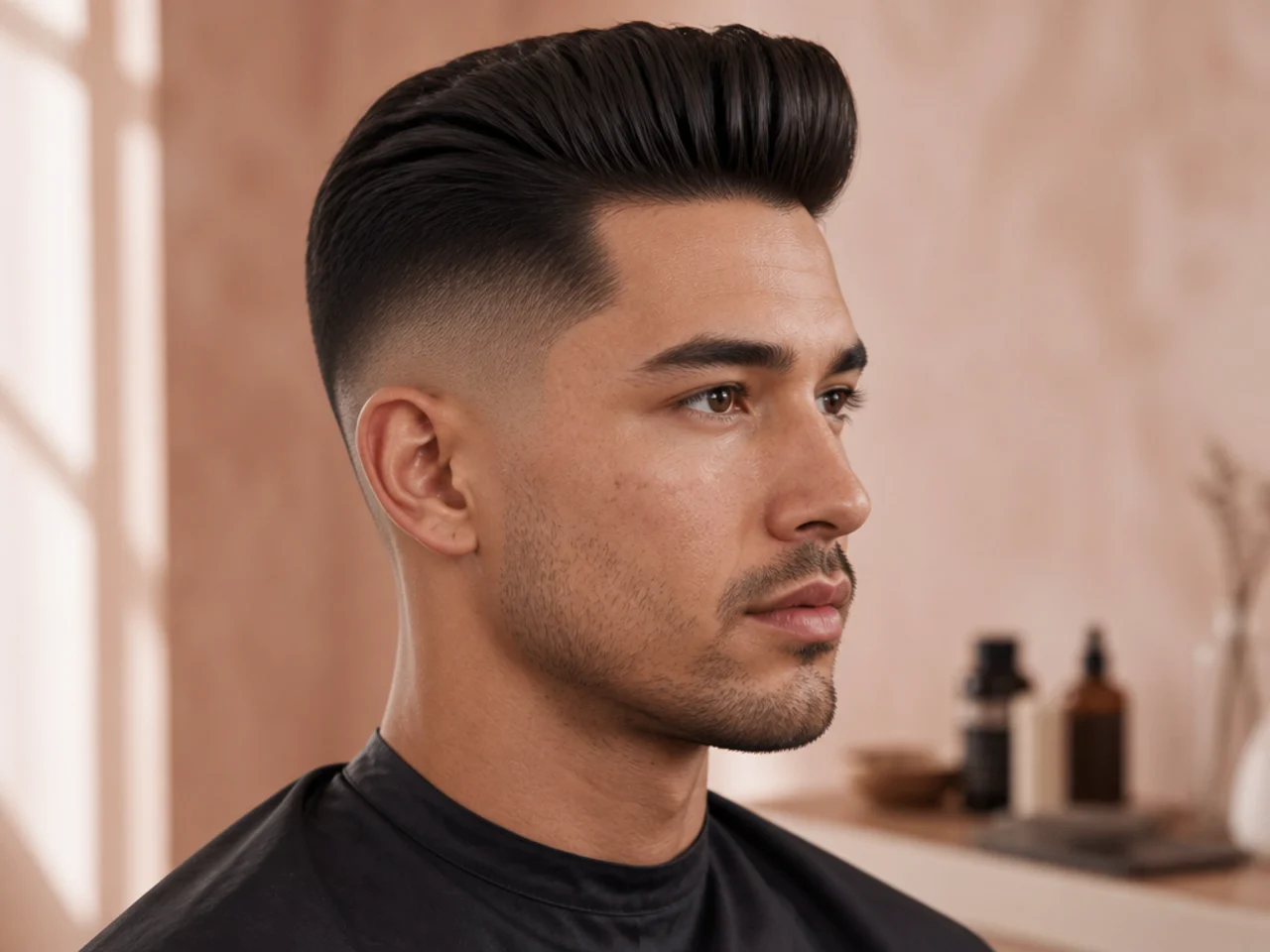
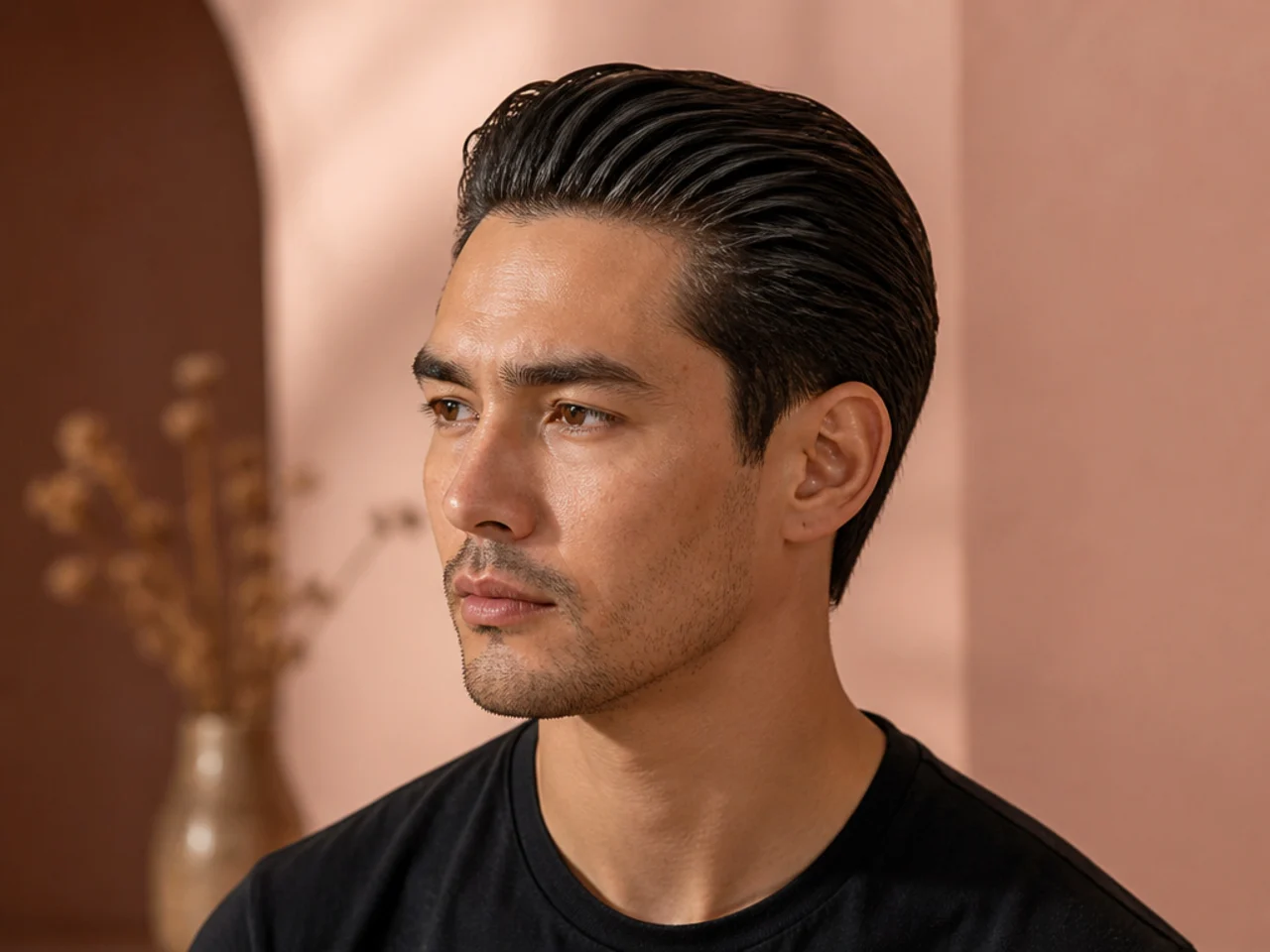
This is the polished, back-to-the-1950s version — but with a modern skin fade to keep it out of costume territory. The top is combed back cleanly with visible shine.
Ask for a mid skin fade, 5" at the front, and scissor layers through the top. Tell your barber the finish will be smooth, not textured, so no aggressive thinning.
Prep with a blow-dry cream, blow-dry with a round brush straight back, then work a coin-size scoop of water-based pomade from root to tip. Comb through, done. This is the closest a quiff gets to a proper pompadour, which is why it flatters formal wear.
Best for: weddings, offices, any setting where "polished" beats "casual." Straight hair holds it best.
Curly Quiff
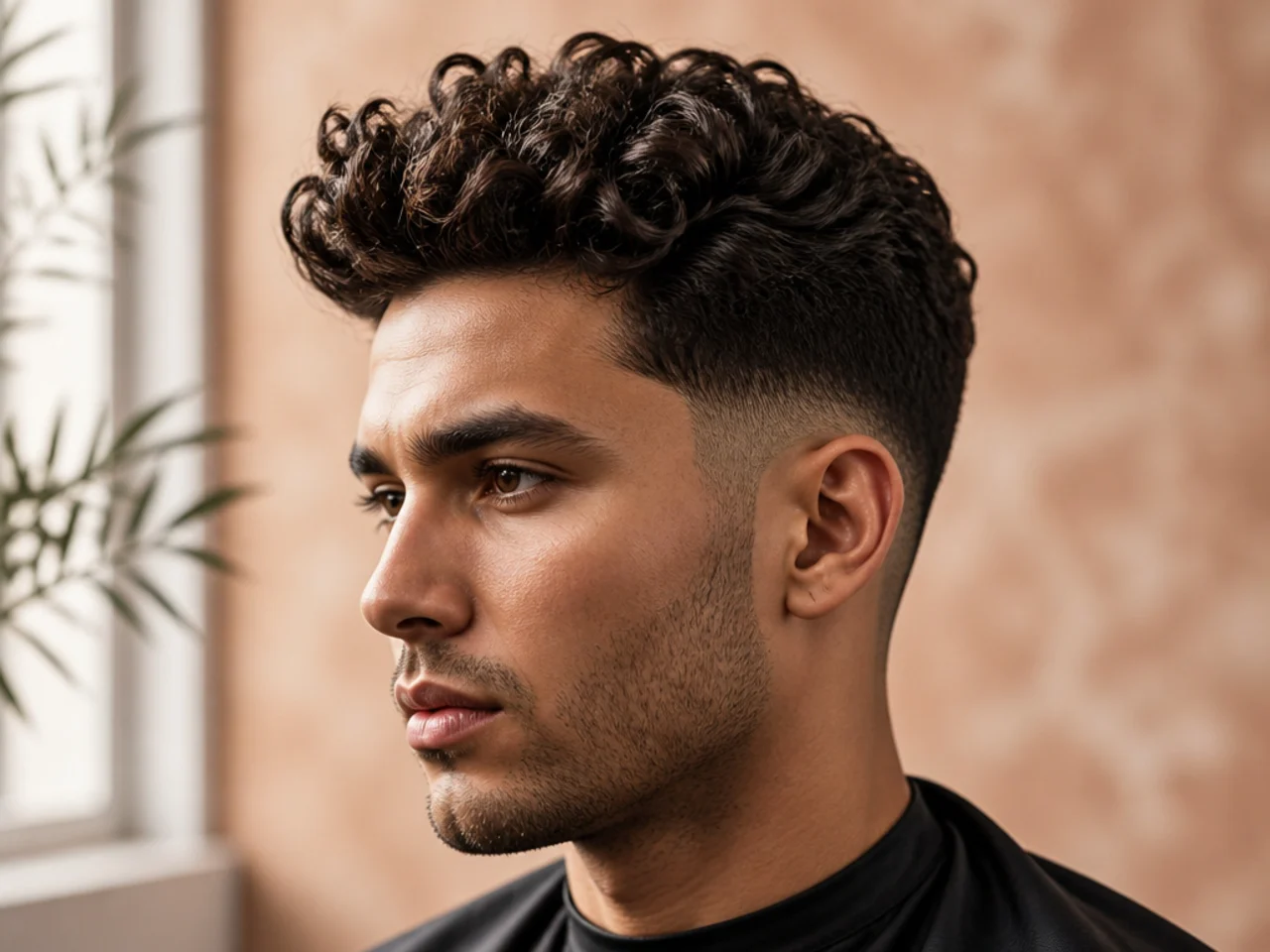
Curly hair makes the quiff shape read differently. The volume is built-in, so the barber's job is to control the perimeter and give the front room to lift naturally.
Ask for scissor layers cut on dry curl (not wet — curls shrink), a low or mid taper fade at the sides, and 4–5" at the front measured stretched. Tell your barber not to razor or thin — both destroy curl pattern.
Apply a curl cream or leave-in conditioner from mid-length to ends on damp hair. Scrunch upward at the front to encourage lift. Diffuse on low if you have time, air-dry if you don't. Light gel or wax for hold, applied with an open hand — never combed through.
Best for: 3A–3C curl patterns, any face shape, guys tired of hiding their curls in a fade.
What Is A Quiff Haircut?
A quiff is a men's haircut with short sides and longer hair on top, especially at the front. The front gets swept up and slightly back to create height. Think of it as a pompadour's more casual cousin — same silhouette, less shine, no hard part locking everything into place.
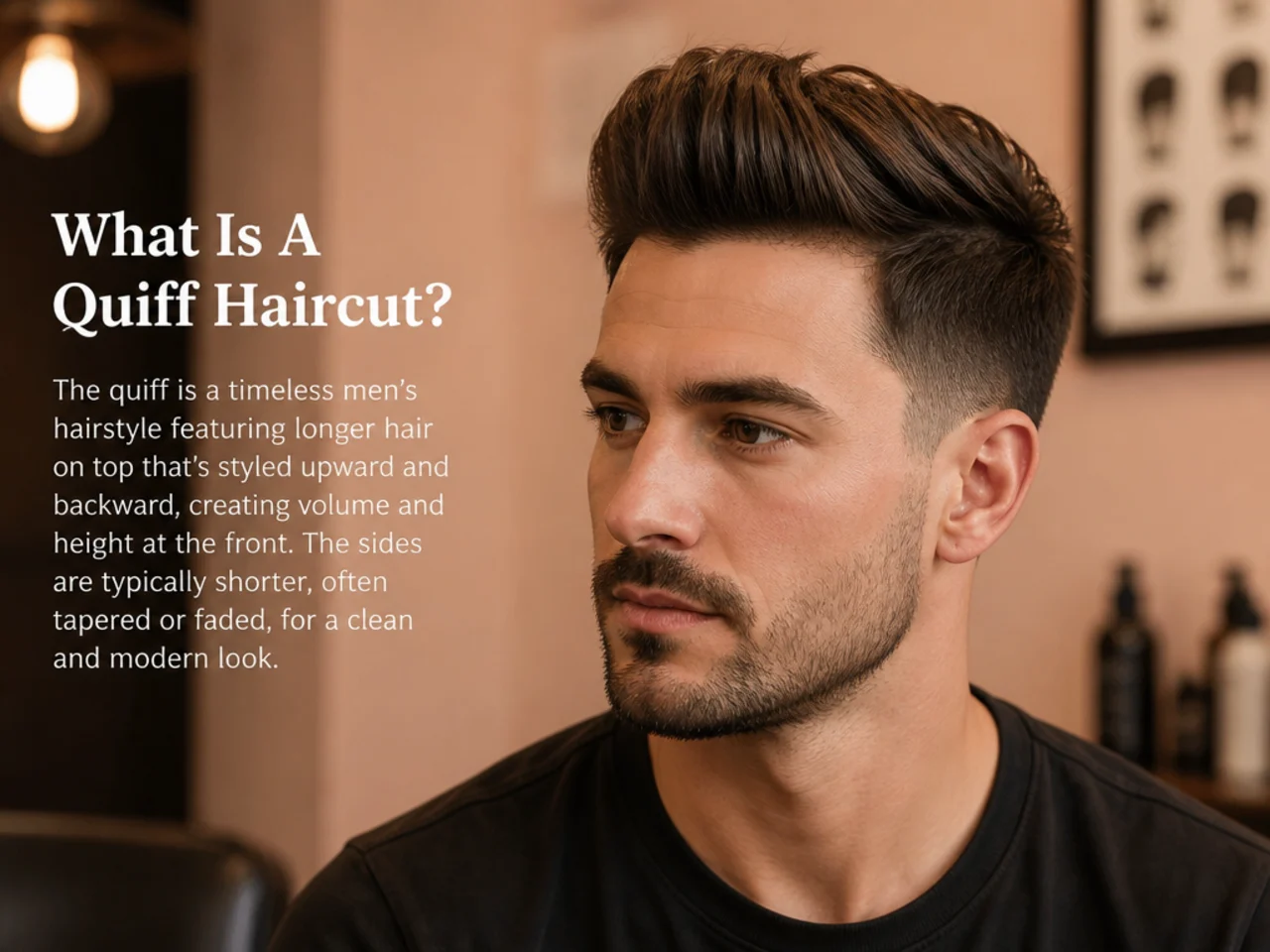
The shape traces back to the 1950s rock 'n' roll era, when Elvis Presley and James Dean wore it as a rebellious alternative to slicked-back styles. Modern barbers strip out the gloss and add fades, tapers, and textured tops — you can watch the shape evolve in this short history from Wahl.
The quiff works on almost every hair type. Straight hair holds the sweep cleanly, wavy adds movement, thick delivers volume for free. Fine hair needs a mousse pre-styler, but the shape still works. Variation is what does the heavy lifting.
Pro tip: matte clay or sea-salt spray for a modern texture. Pomade for the 1950s finish. Pick one; don't layer them.
How To Style A Quiff
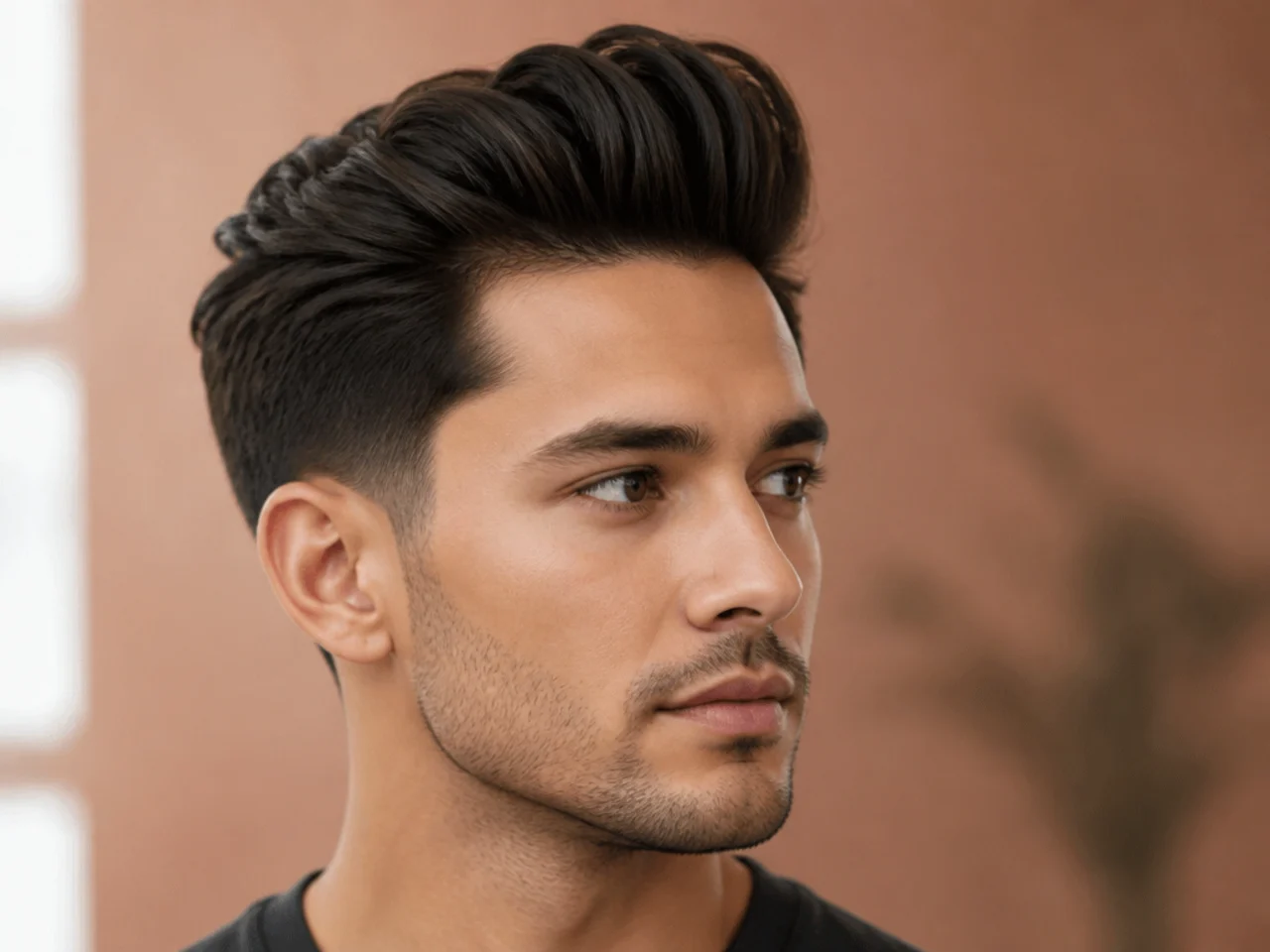
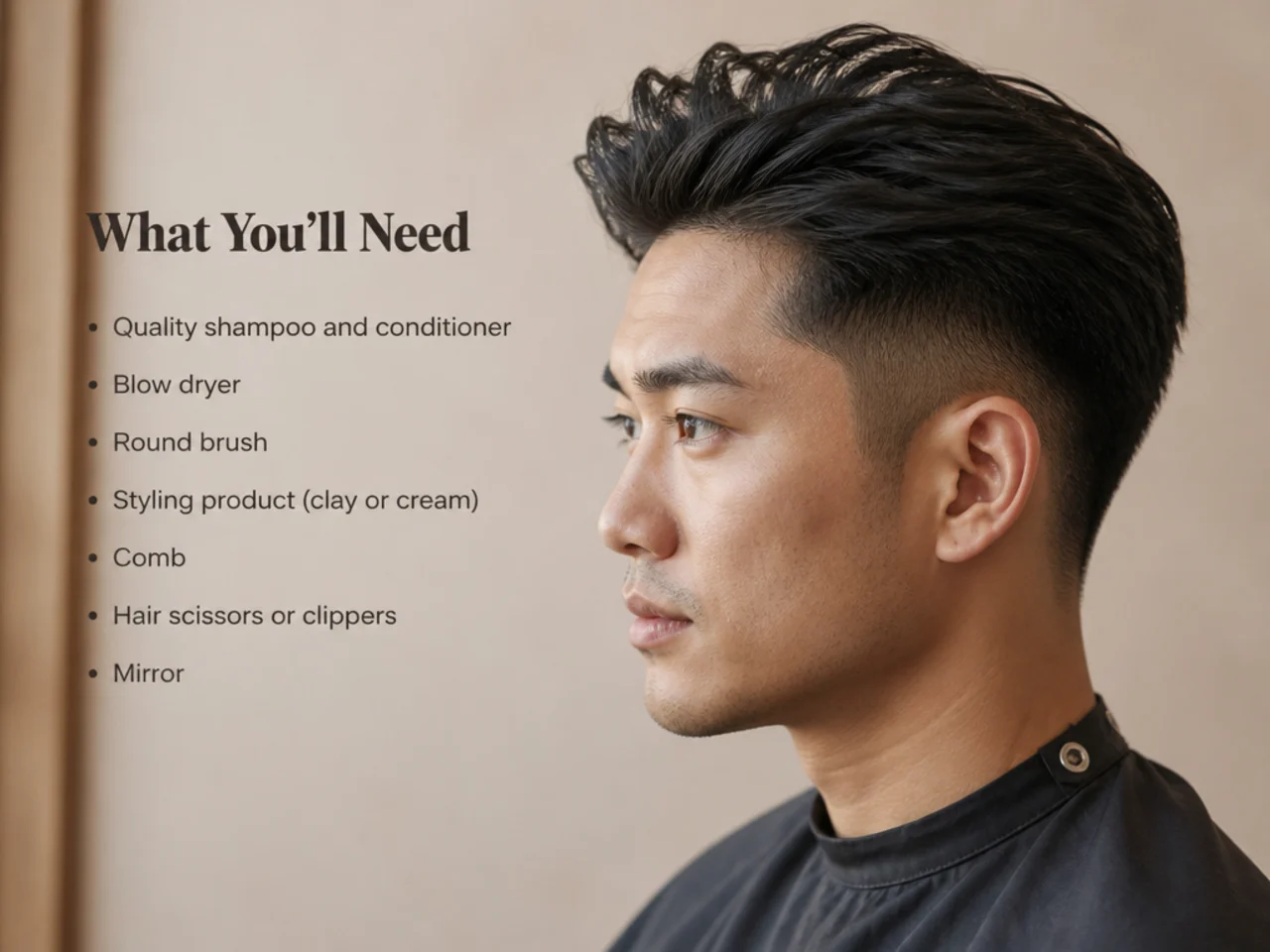
Styling a quiff takes 3–5 minutes if you do it right. The steps below are the barber-standard sequence — prep, dry, product, shape, lock.
Step 1: Wash and Prep
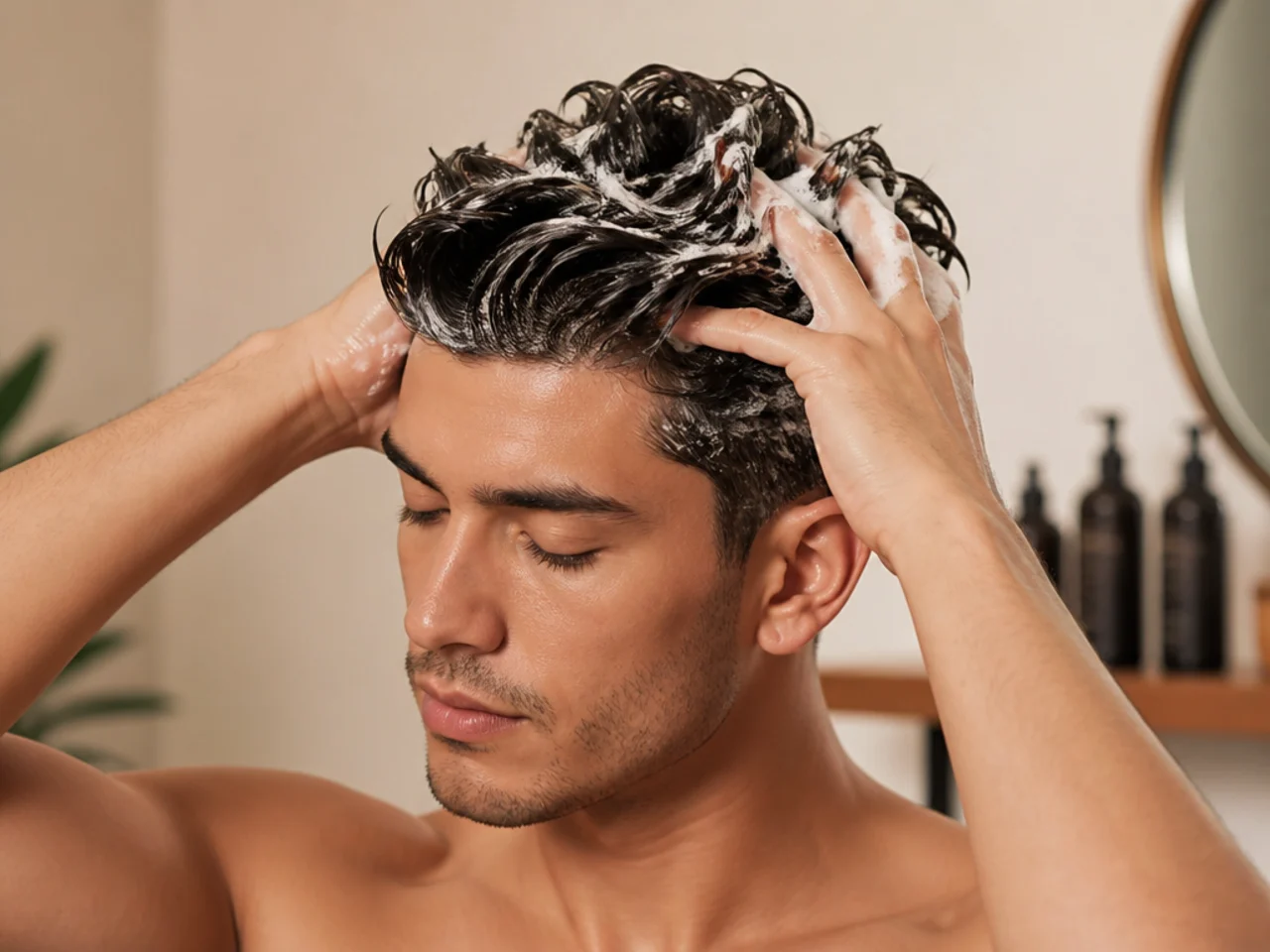
Wash, then towel-dry to the point where hair is damp but not dripping. Spray a light sea-salt spray or work a coin of volumizing mousse from root to mid-length. This gives the finished style grip and lift — skip it and the quiff falls flat by lunch.
Step 2: Blow-Dry for Volume
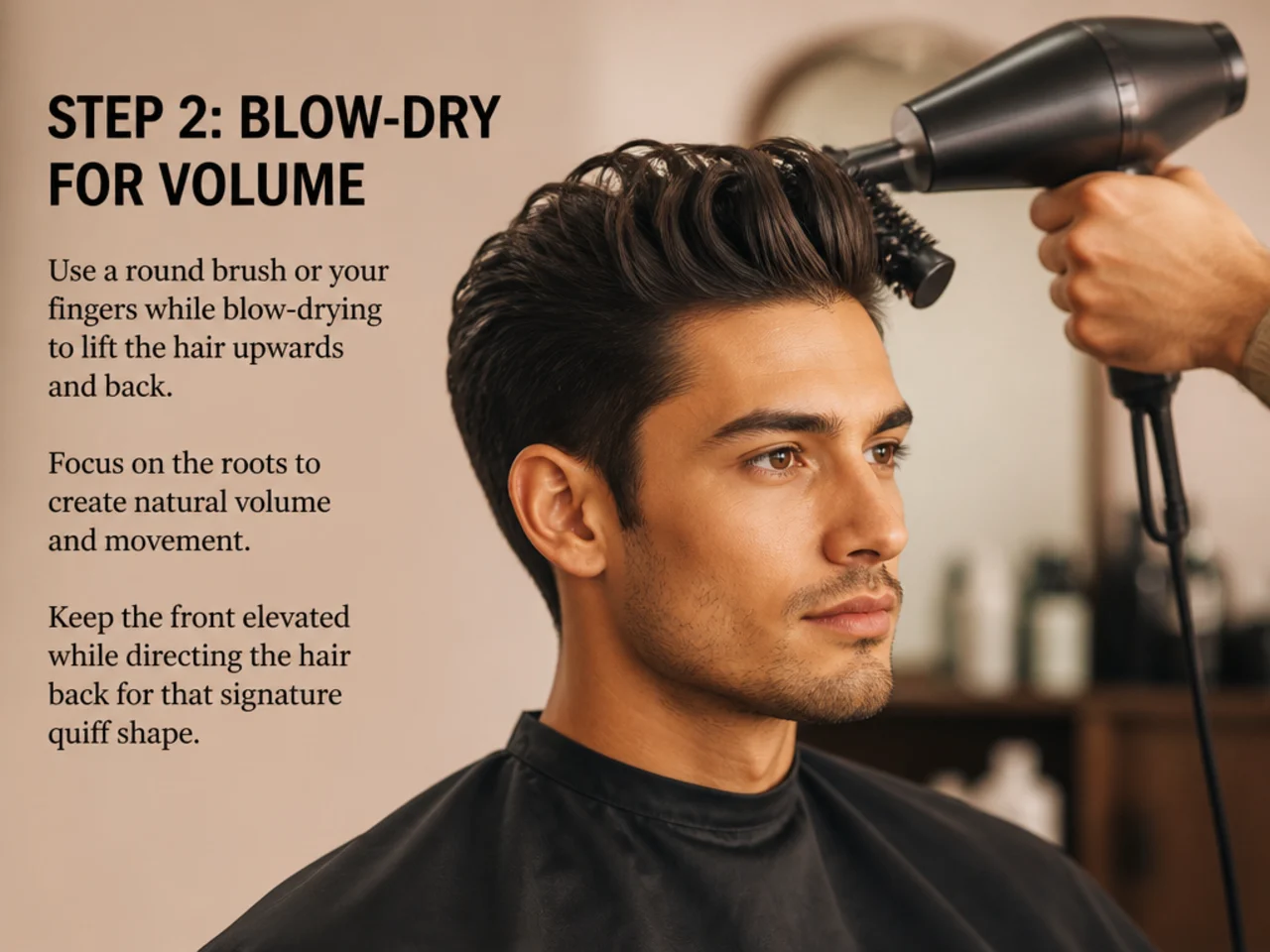
Blow-dry on medium heat with a vented brush or a round brush. Lift the front up and back at the root — that's where the height comes from. Point the nozzle down along the hair shaft to keep the cuticle smooth. Cool-shot the shape when it's where you want it; the cool air locks the direction in.
Step 3: Apply Styling Product
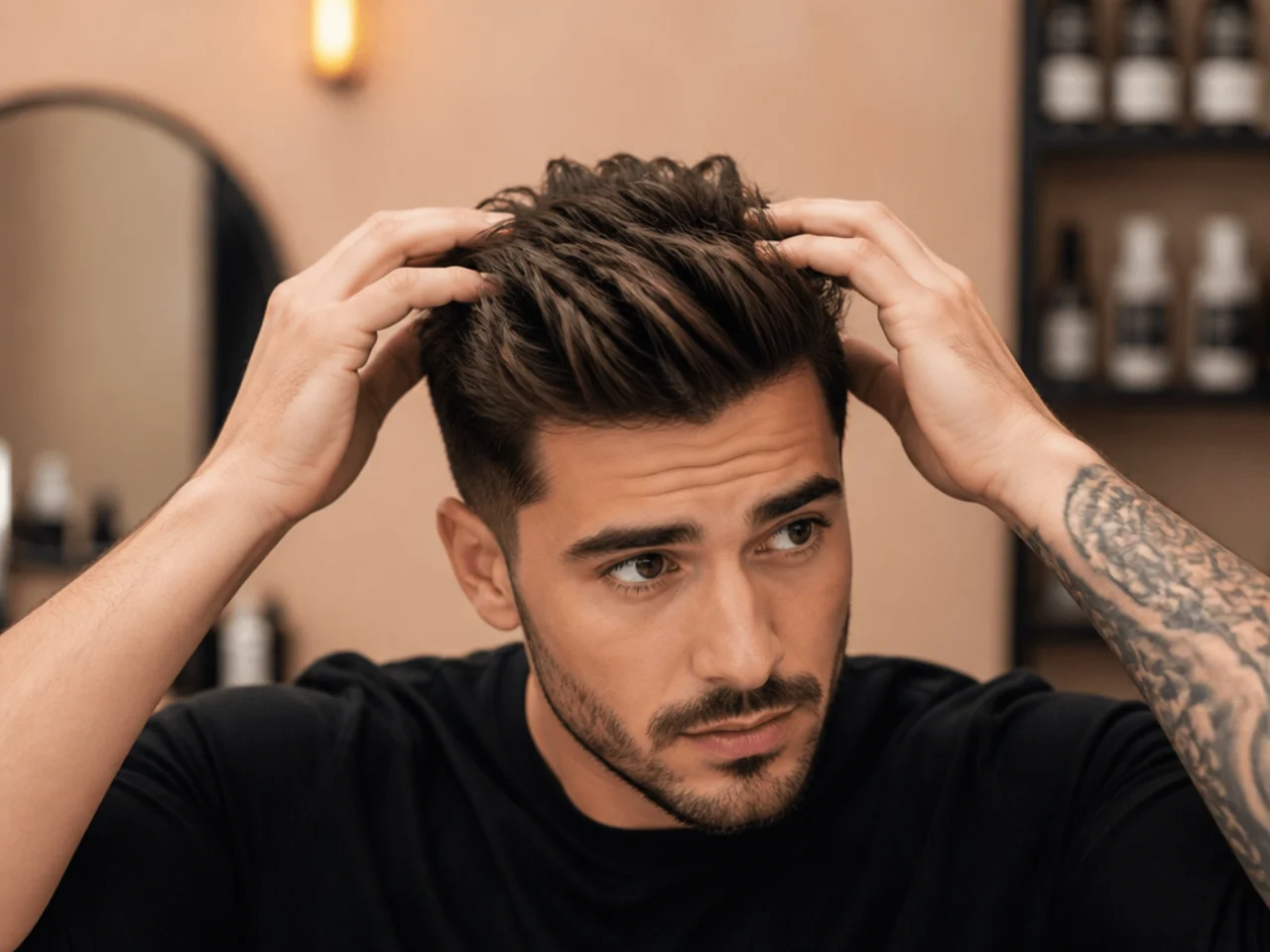
Match the product to the finish you want:
- Matte clay or paste for modern, textured looks.
- Pomade for a glossy, retro finish.
- Fiber or cream for medium hold with movement.
Warm a nickel-size scoop between your palms until it turns clear, then apply to the ends first and work back toward the roots. Never dump product at the roots — that flattens what you just built.
Step 4: Shape the Quiff
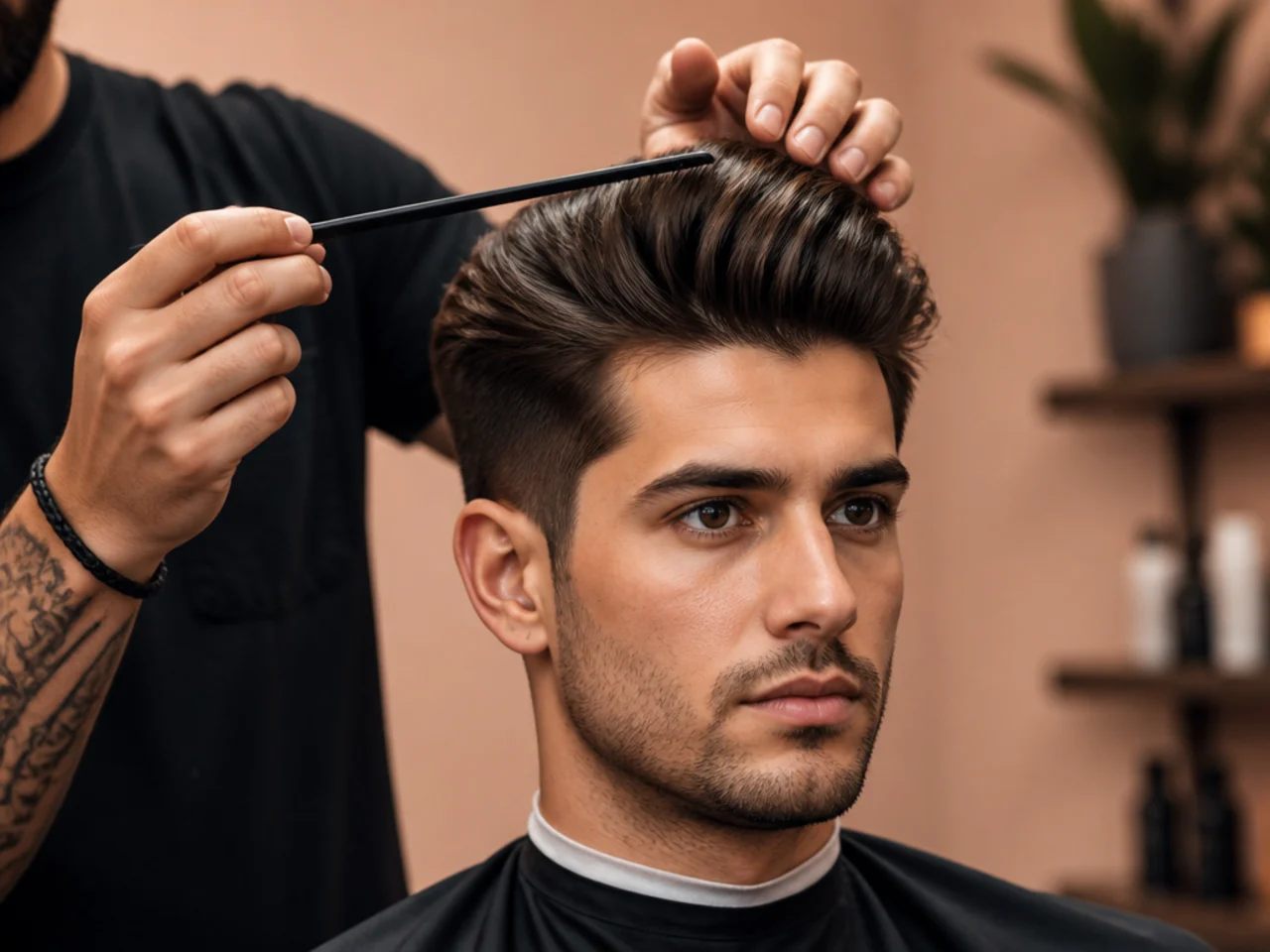
Push the front up and slightly back with your fingers or a wide-tooth comb. Off-center reads more modern than dead-center. For a tousled finish, rake through with open fingers. For a formal shape, comb it through smoothly. If you want it in the blowout taper family — front lifted forward instead of swept back — direct the top up and forward as you dry.
Step 5: Lock It In
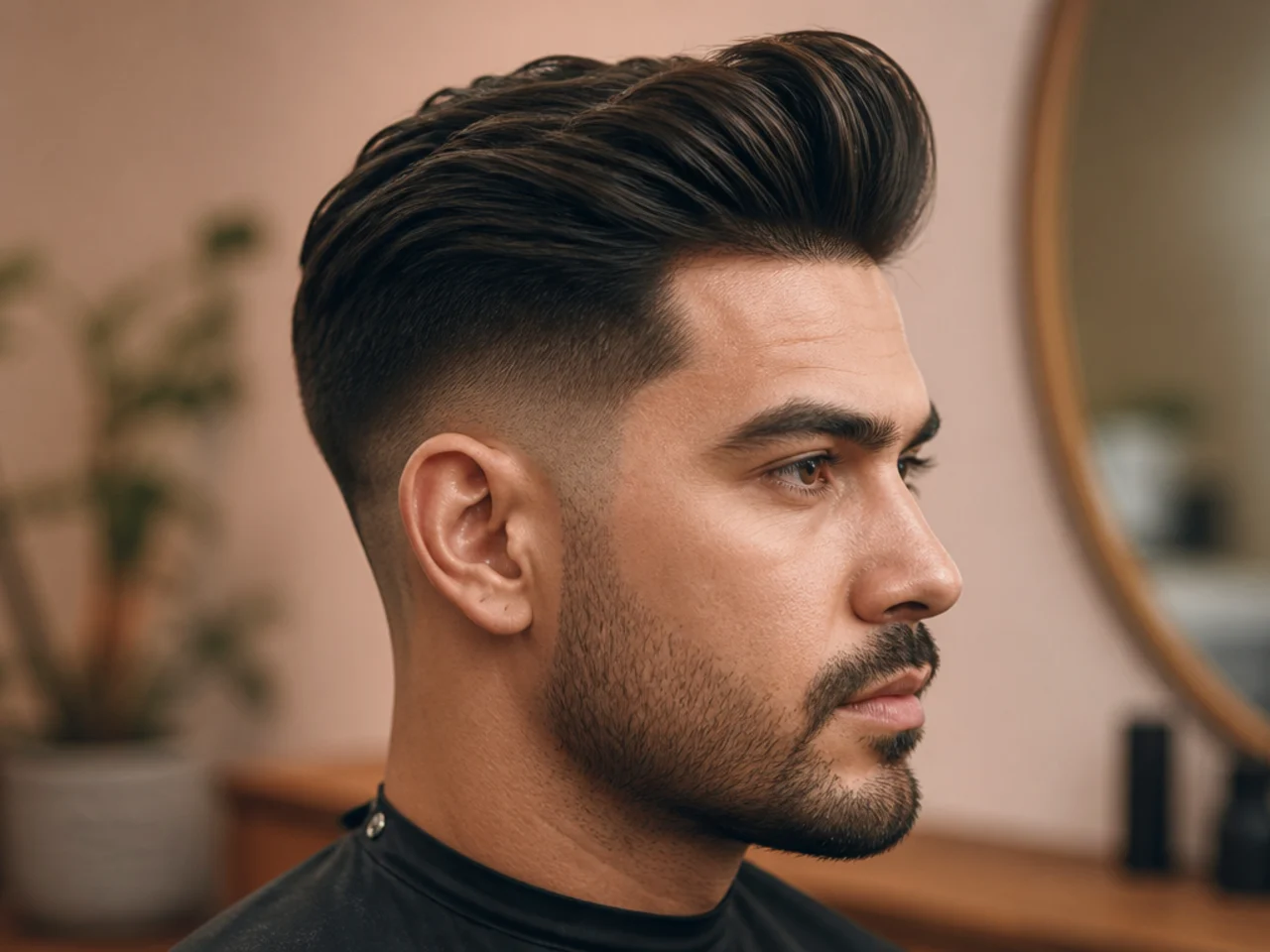
If your hair falls by afternoon, mist a light hairspray from 8" away. A light-hold spray keeps movement; strong-hold turns the whole thing into a shell. One pass is enough.
Barber tip: fine or thinning hair? Add texture powder at the root before styling. Dust it in, rub it around, then style as usual. You'll see the difference immediately.
Read: Ivy League Haircut.
Final Thoughts
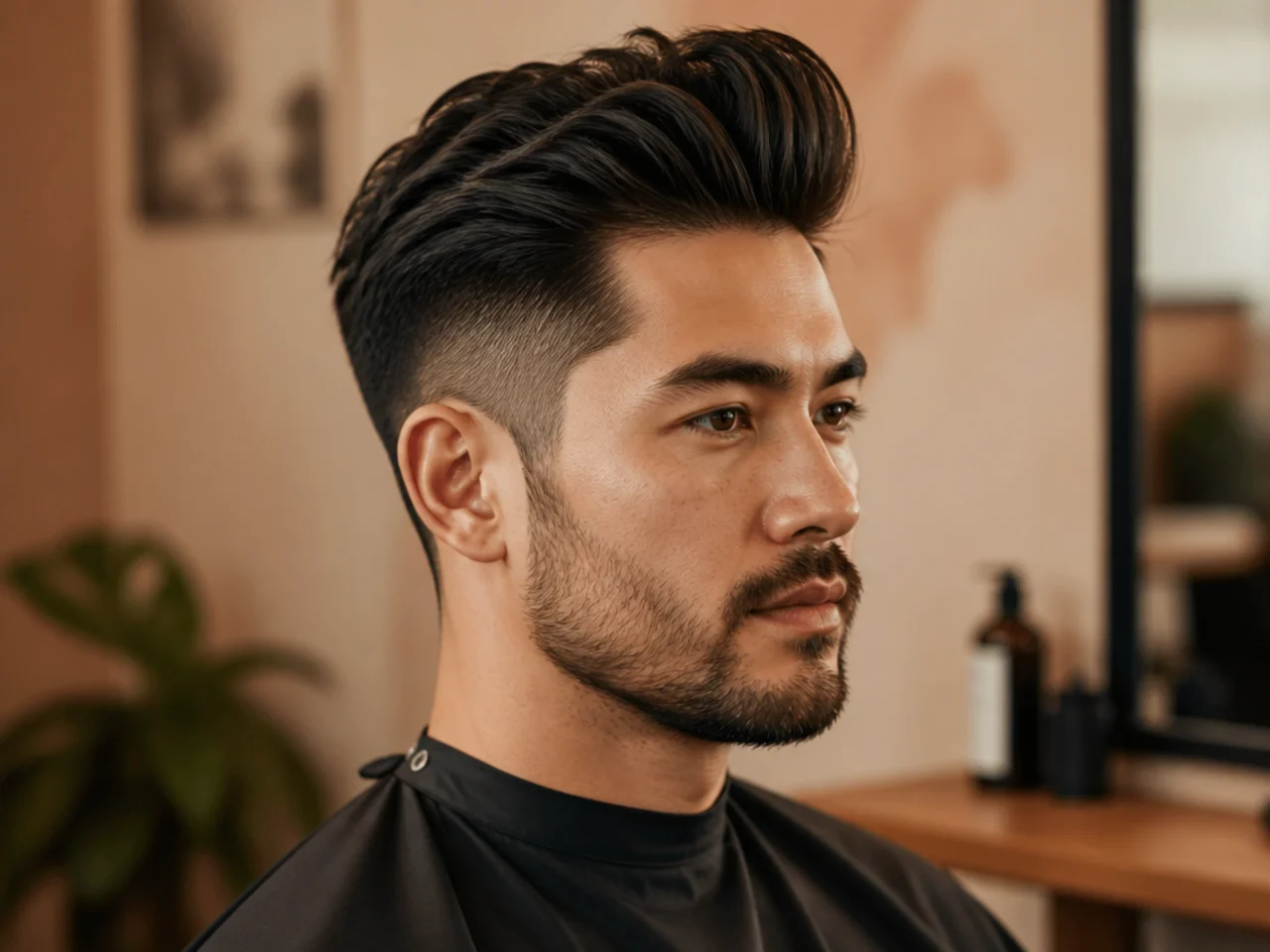
The quiff isn't one haircut — it's a shape you can dial 25 different ways depending on your hair, your face, and how much time you spend in the mirror. Textured or slick, short or long, disconnected or blended — the front-heavy lift is what makes any of them read as a quiff.
Bring the exact photo of the variation you want to your next appointment. Specify top length in inches, side treatment by name, and finish. That's how you leave the chair with the cut in your head, not a rough approximation of it.
FAQ's
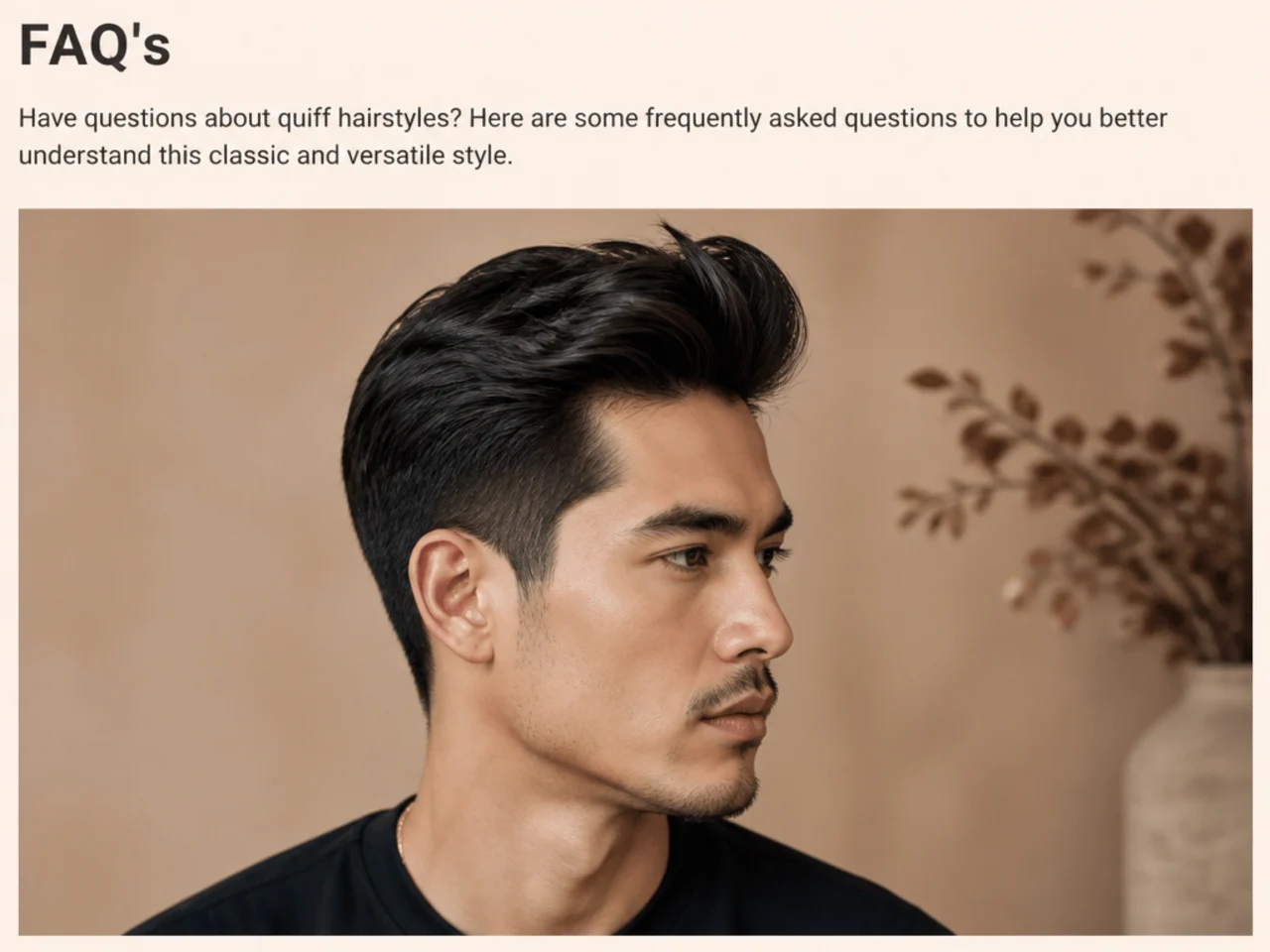
What Do I Tell My Barber For a Quiff?
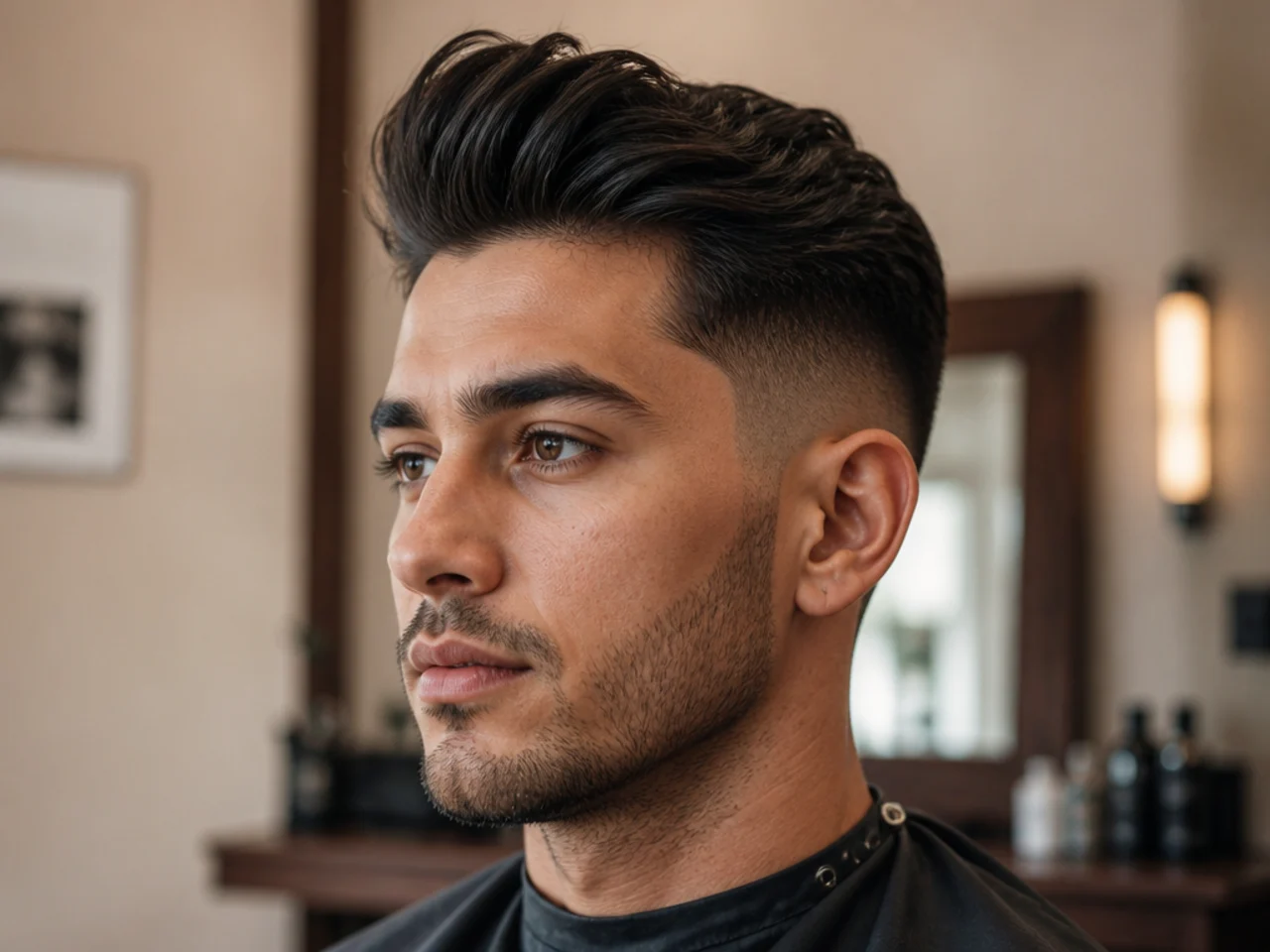
Bring a photo. Then specify: top length in inches (usually 4–6" for the front), side treatment (scissor blend, taper, low fade, mid fade, or skin fade), and finish (matte and textured, or sleek and shiny). Ask for the front to be left long enough to lift, not spike. That's a complete brief.
How to Style a Soft Quiff?
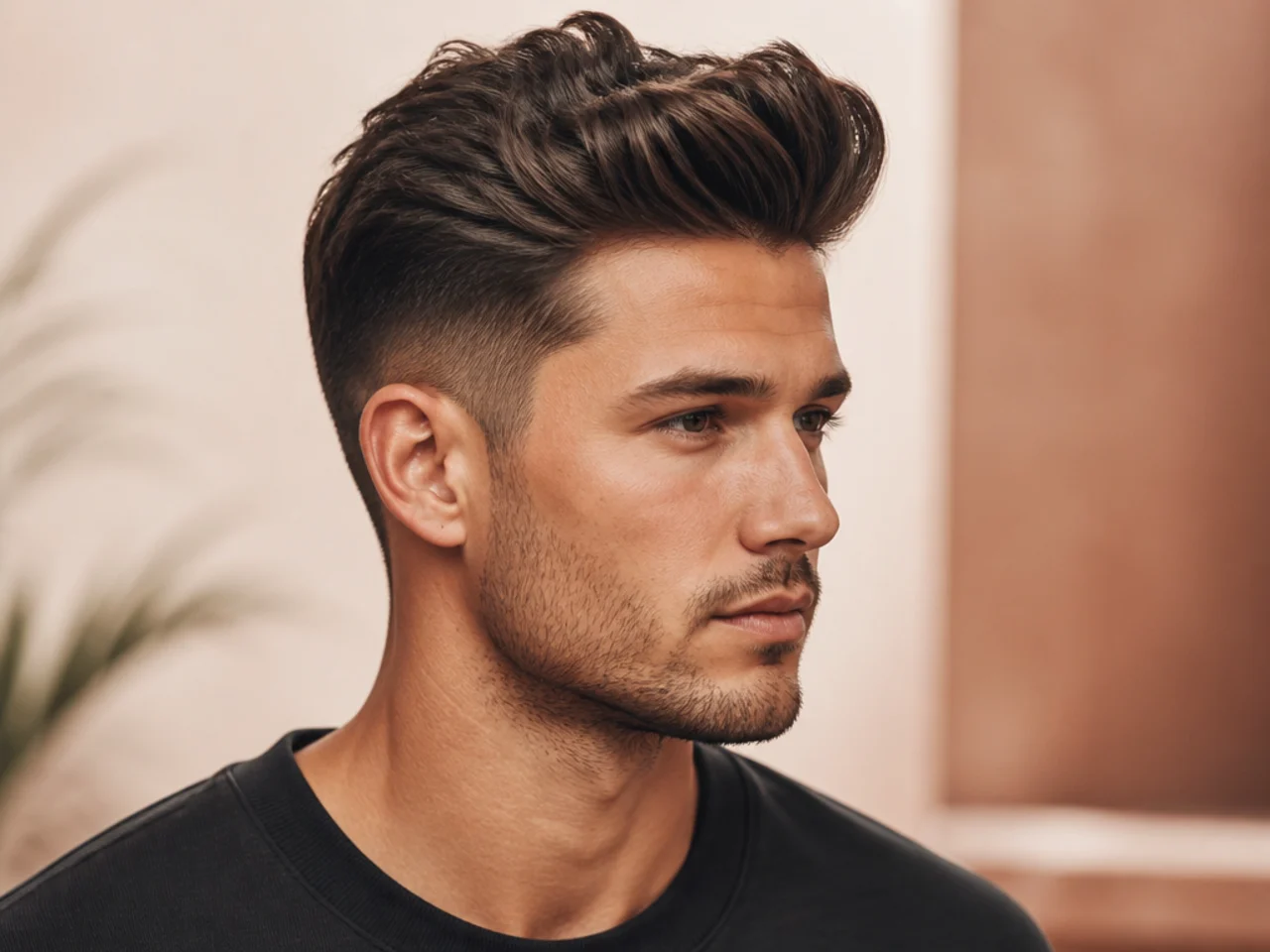
Work a coin of styling cream or light mousse through damp hair. Blow-dry with a vented brush, lifting at the roots but not pulling the front sharp. Finish with a light wax or cream — no clay, no pomade. The idea is a rounded shape with soft edges, not a defined ridge at the front. Fingers only, no comb.
Is a Quiff Suitable For Older Men?
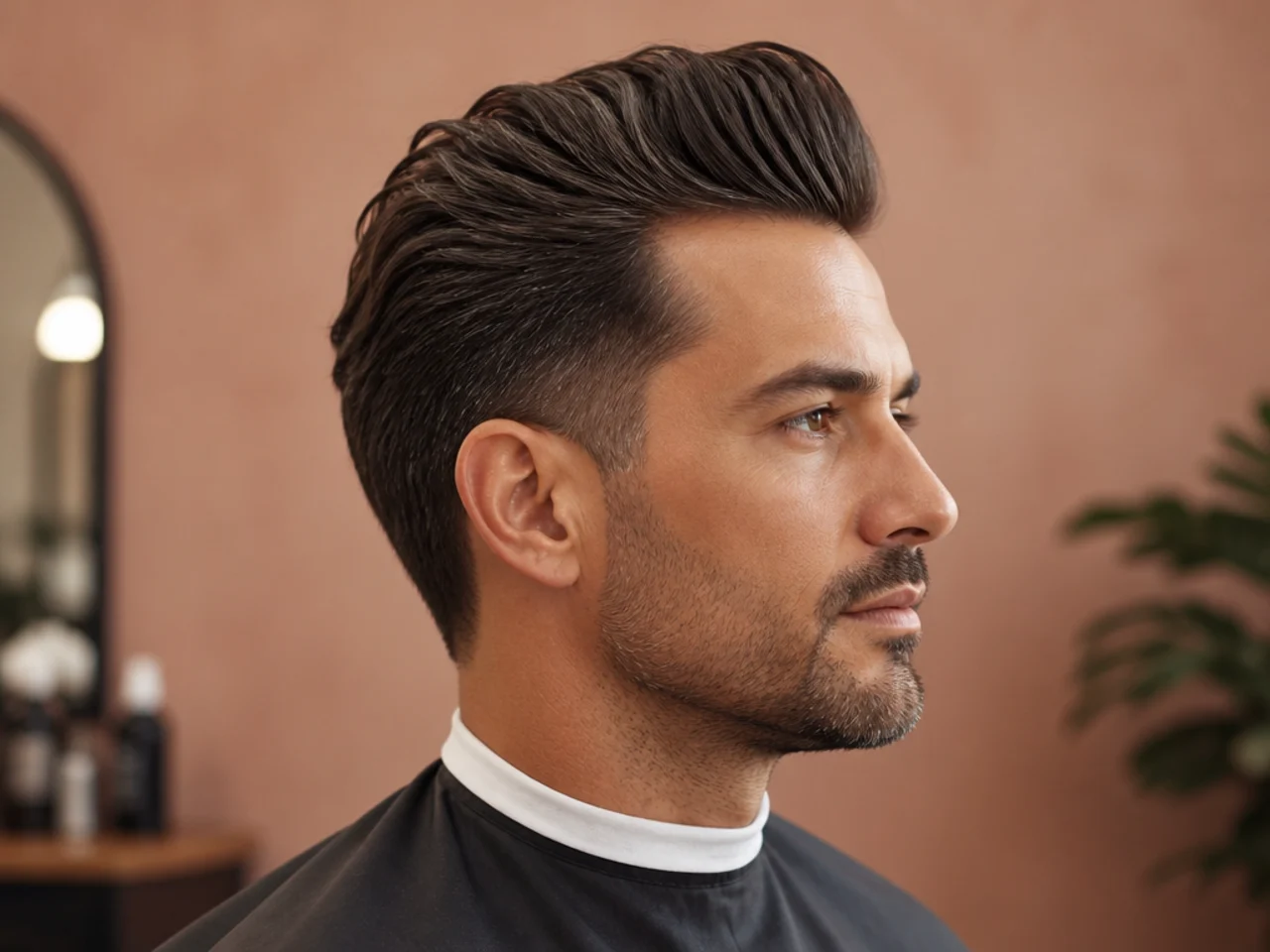
Yes — the trick is picking the right variation. A short quiff with a low taper fade suits guys over 40 better than a long, textured version. Keep the top at 3–4", the sides tapered rather than skin-faded, and the finish sleek rather than deliberately messy. Ages the shape down without trying too hard.
What's a Quiff For a Girl?
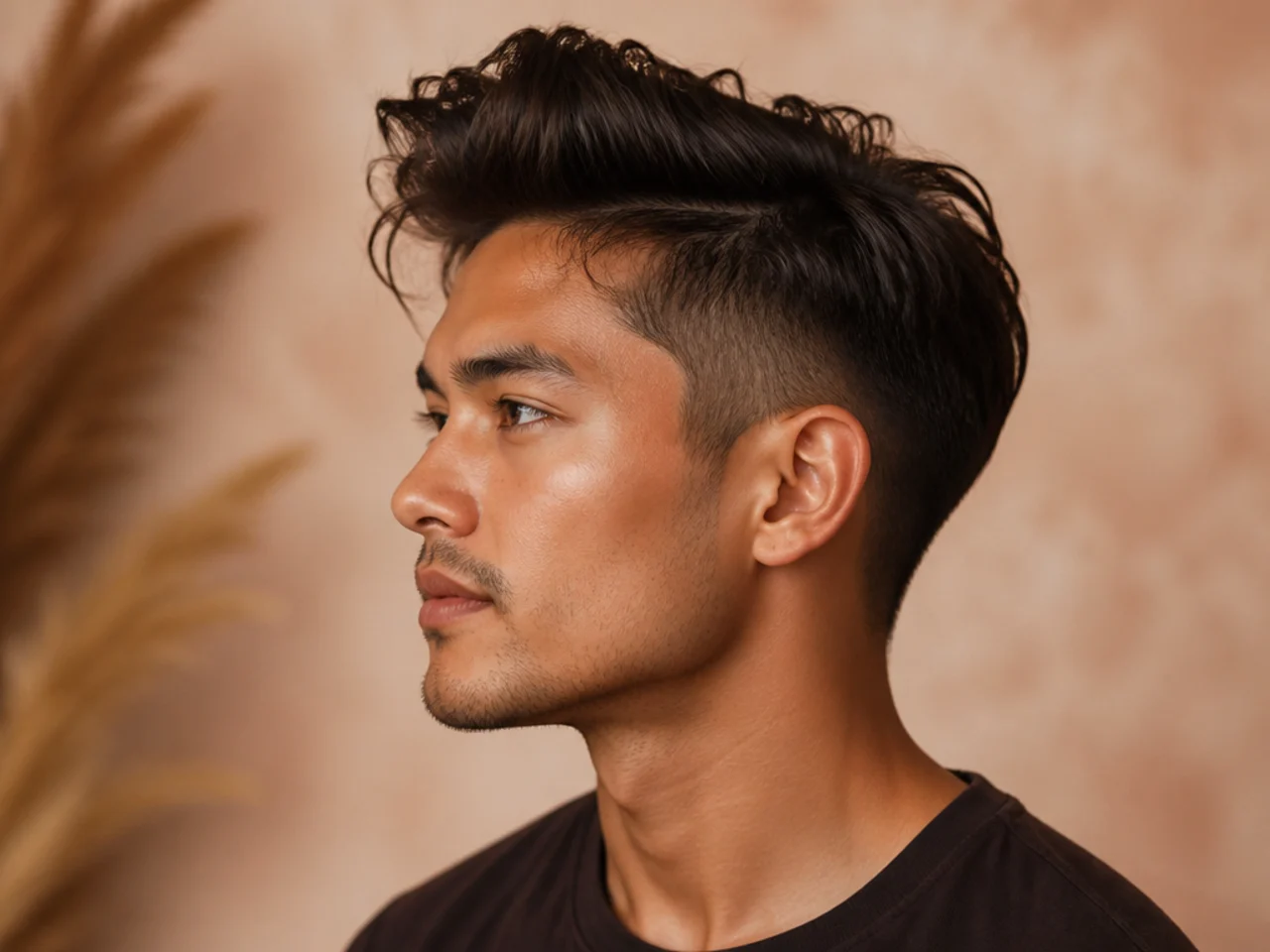
A women's quiff is the same silhouette — front-heavy lift, hair pushed up and back — usually paired with longer hair at the back or waves. It shows up most often on short pixie cuts or one-length bobs, styled with mousse and a round brush. Different genre, same construction.