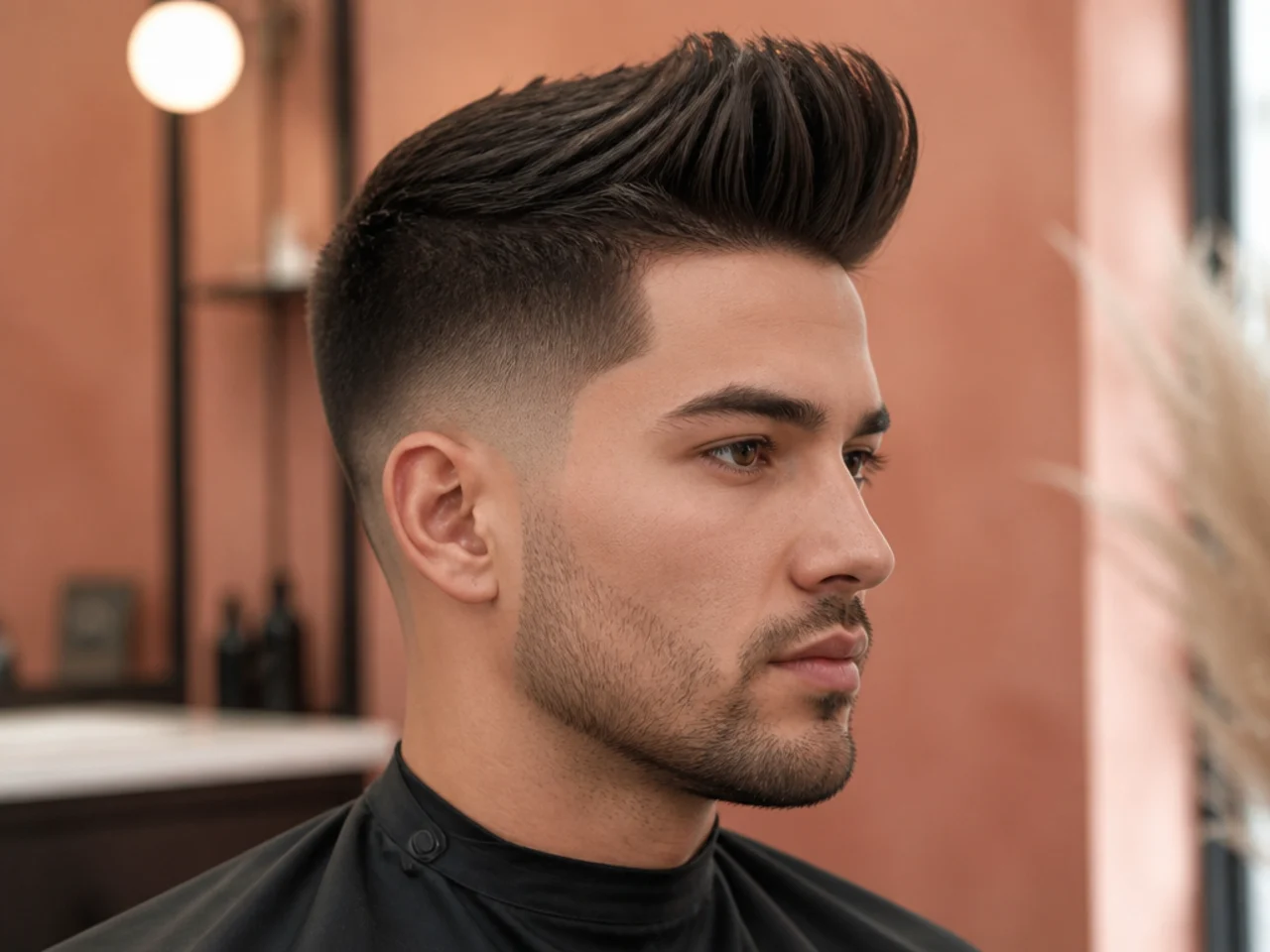
20 Quiff Fade Hairstyles Worth Trying
Quiff fade men are asking for in 2026 — 20 variations across low, mid, high, skin, taper, drop, and burst fades with photos, face-shape notes, and barber-ready specs.
In this article · 32
- What Is a Quiff Fade?
- How to Choose Your Quiff Fade
- The 20 Quiff Fade Variations
- The Classic Low Fade Quiff
- The Mid Fade Quiff
- The High Fade Quiff
- The Skin Fade Quiff
- The Low Taper Fade Quiff
- The Drop Fade Quiff
- The Burst Fade Quiff
- The Textured Quiff Fade
- The Messy Quiff Fade
- The Slick Pomaded Quiff Fade
- The Side-Part Quiff Fade
- The Curly Quiff Fade
- The Wavy Quiff Fade
- The Short Quiff Fade
- The Long Quiff Fade
- The Undercut Quiff Fade
- The Pompadour Quiff Fade
- The Quiff Fade with Beard
- The Quiff Fade with Hard Part
- The Modern Fringe Quiff Fade
- How to Ask Your Barber
- Styling & Maintenance
- FAQ
- Is a quiff fade still trending in 2026?
- What is the difference between a quiff and a pompadour?
- Which fade should I ask for if I want the safest option?
- Can older men wear a quiff fade?
- How long does it take to grow one out?
- Does the quiff fade look good on Asian or Black hair?
A quiff fade is the modern default when a man walks into a barbershop asking for "something sharp but not too aggressive." The top gives you the lift and personality. The fade gives you the clean sides and easy grow-out. Pair the two right and the whole cut works on a Monday morning and a Saturday night. This guide covers the 20 quiff fade variations men are booking most in 2026 — every fade height, every top texture, and the exact language to hand your barber for each one.
What Is a Quiff Fade?
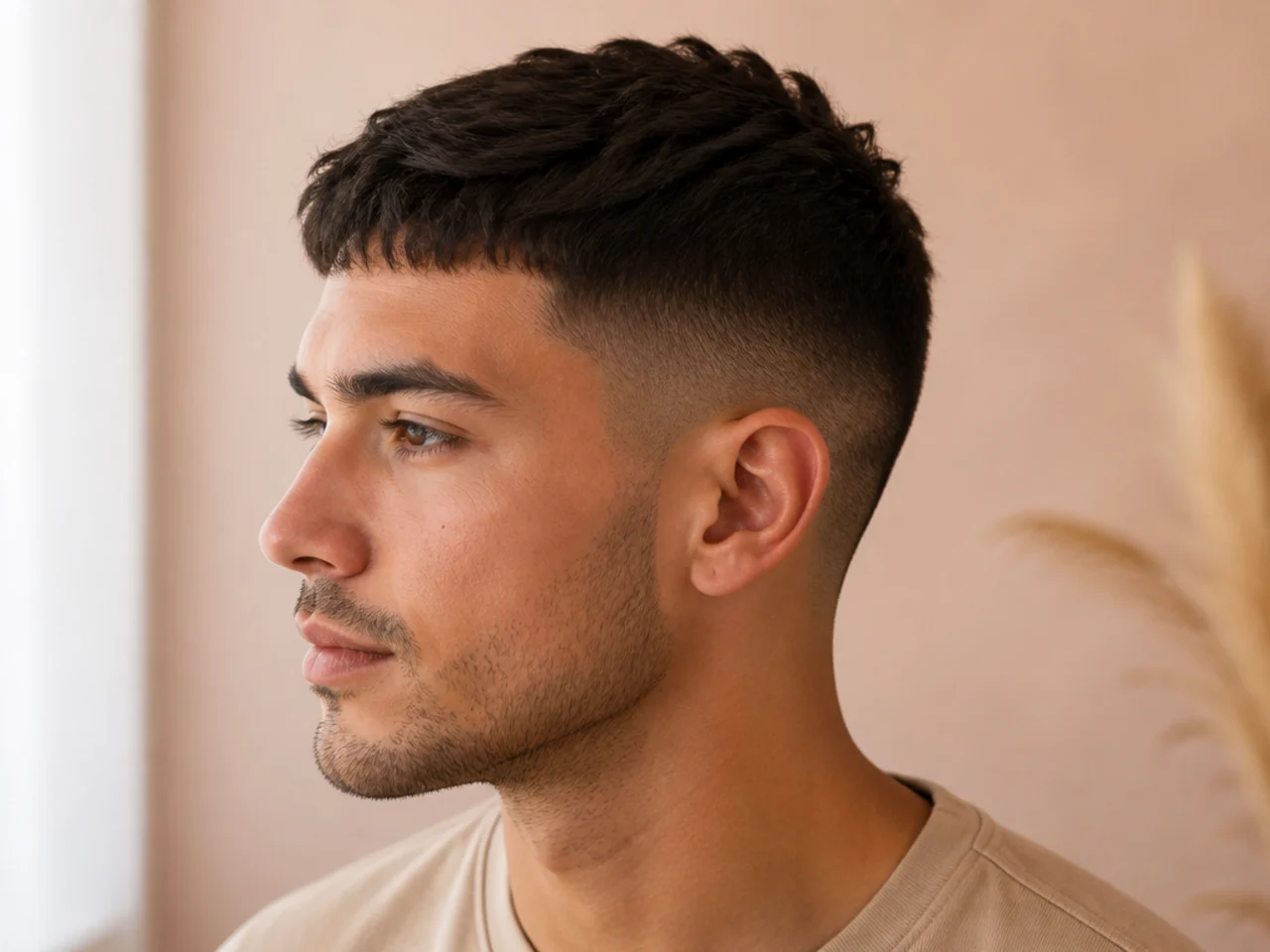
A quiff fade is a two-piece haircut. On top: a quiff — hair kept longer at the front, swept up and slightly back so the shape lifts. On the sides: a fade — a graduated blend from short to shorter that starts somewhere between the ear and the temple and drops to a chosen finish line. That combination has been the most-requested modern men's cut for a decade because it flatters almost every head shape without asking much of your morning.
The variations come from two axes. Fade height sets the mood: low reads polished, mid reads balanced, high reads bold, skin reads editorial. Top treatment sets the personality: pomaded shine reads classic, matte texture reads modern, curly or wavy reads relaxed, disconnected reads sharp. Any fade can pair with any top, which is why the family is deep. This guide walks the twenty best combinations barbers cut most often.
The wider quiff hairstyles men guide covers no-fade versions and the classic pomaded shapes. If you already know you want a low fade specifically, the low fade quiff haircut men roundup drills into that height alone. This article stays wider — every fade type paired with every quiff.
How to Choose Your Quiff Fade
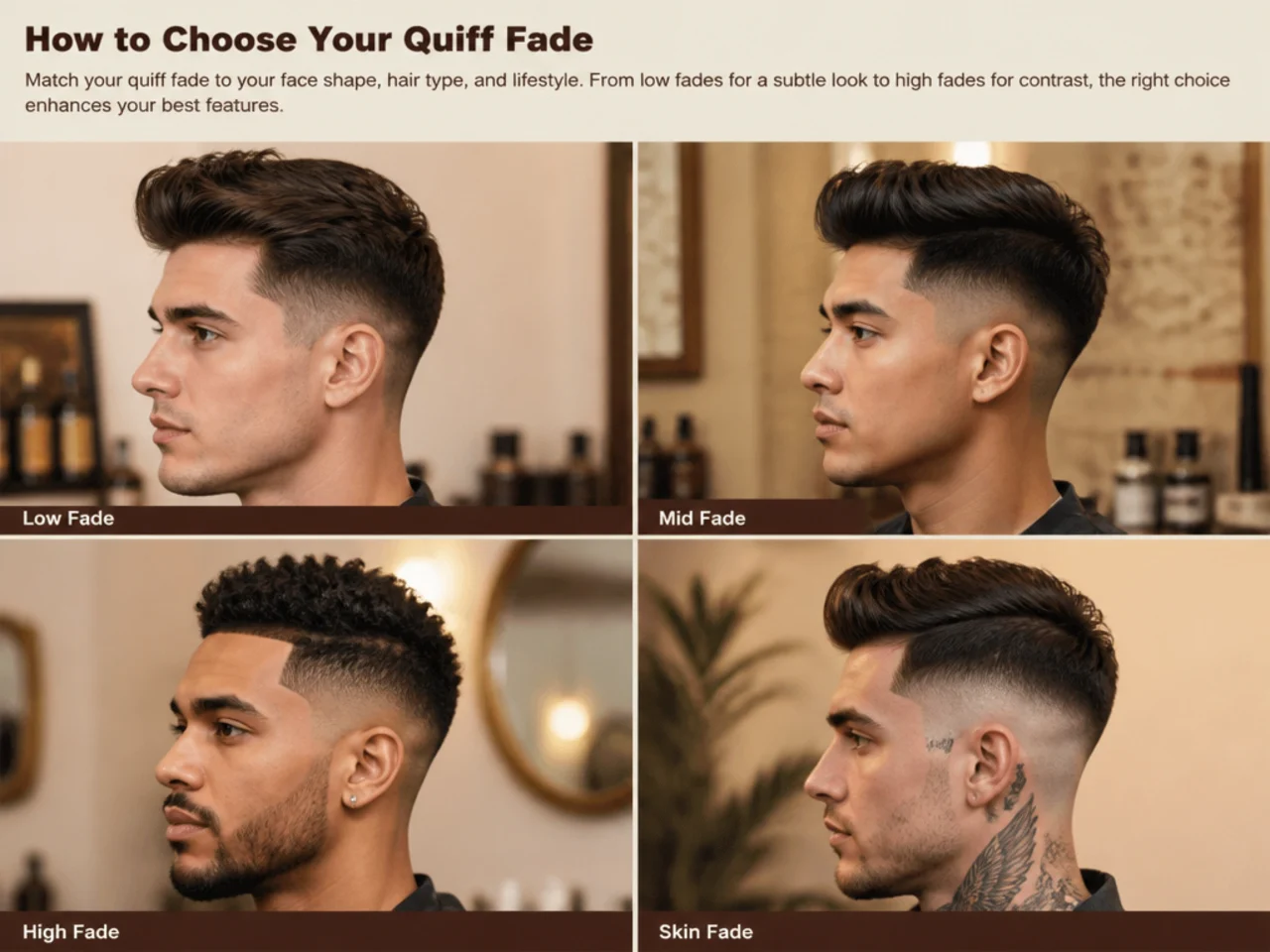
Face shape sets the fade height. Round faces want a mid or high fade with a longer top for vertical lift — the shape elongates the face. Square jaws suit any fade height; the pairing that flatters most is a mid fade with a 4-inch textured top. Oval faces have the widest menu — almost anything works. Long faces stay with a low fade and a moderate 3 to 4-inch top so the head does not stretch further. Heart and diamond faces suit tighter, shorter tops with a mid or high fade. See haircuts for square faces for the wider geometry rules.
Hair type sets the top treatment. Fine hair needs mousse or texture powder at the root for lift, plus a slightly longer top than average to hold shape. Medium hair takes almost any variation. Thick or coarse hair benefits from internal thinning through the crown so the top does not stack wide over faded sides. Curly and wavy hair should be dry-cut so the barber sees the pattern before the scissors move, and it swaps heavy pomade for a cream or a light fiber.
Finally, be honest about how much time you want to spend styling. Short and textured quiff fades take 60 seconds and one product. Slick pomaded and pompadour versions need five minutes and a blow-dryer. Pick the version your Tuesday morning can actually support.
The 20 Quiff Fade Variations
Twenty variations that cover every fade height, every top texture, and every real use case. Each entry tells you what makes it different, who it suits, the exact wording for your barber, and one styling detail that separates it from its neighbors.
The Classic Low Fade Quiff
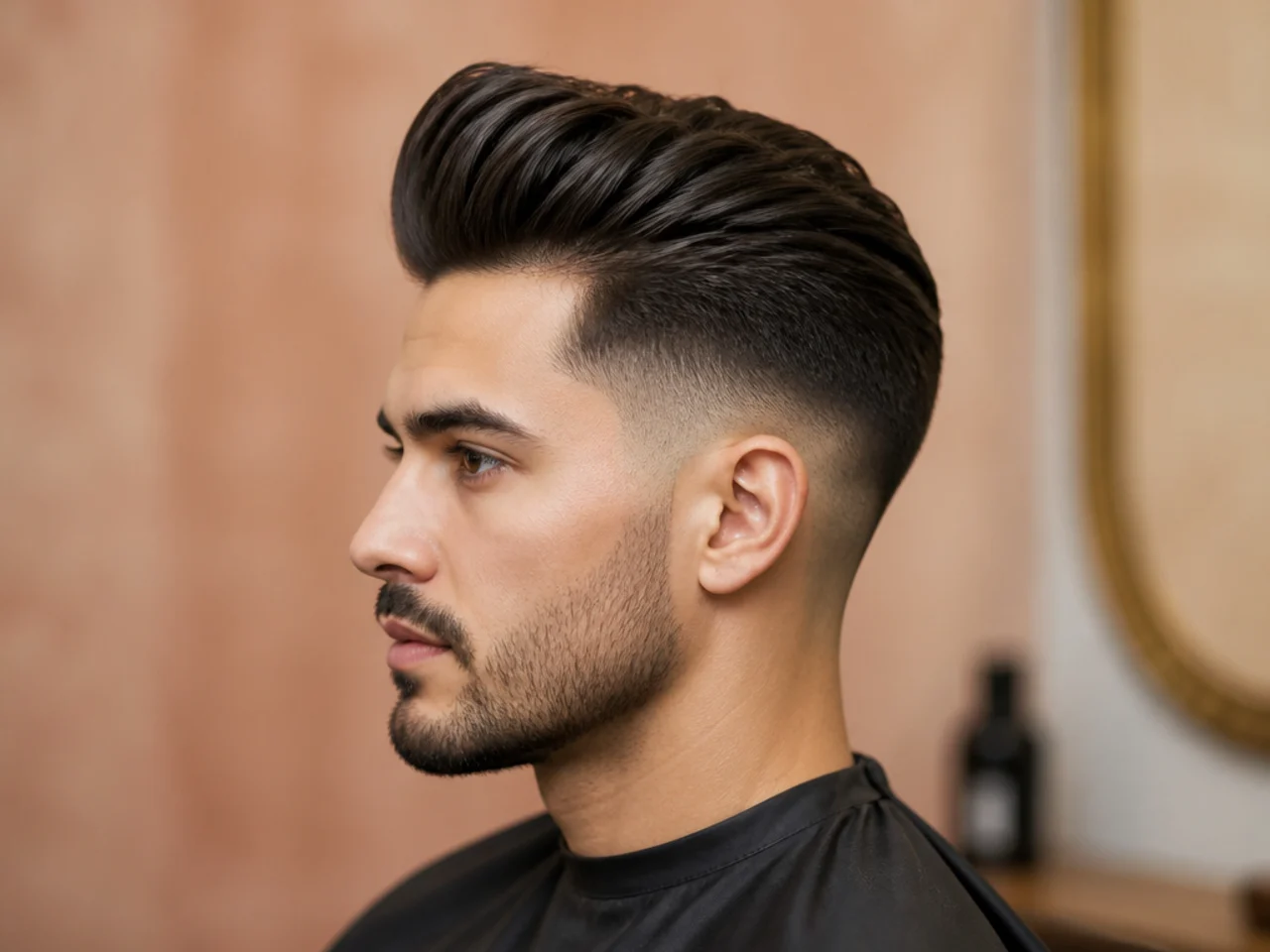
The safest quiff fade in the room. The fade starts just above the ear, drops to a #1 or skin at the sideburn, and lets a four-inch textured top do the visual work. It reads clean in every dress code and grows out without demanding a rebook every three weeks. This is the version most first-time quiff-fade clients leave with.
Ask for a low fade starting a finger's width above the ear, tapering to skin at the sideburn, and four inches on top with light point-cut texture. Style with a coin of matte clay warmed between your palms, worked through damp hair, then finger-lifted from the front back. Best for oval, square, and heart-shaped faces on any hair density.
The Mid Fade Quiff
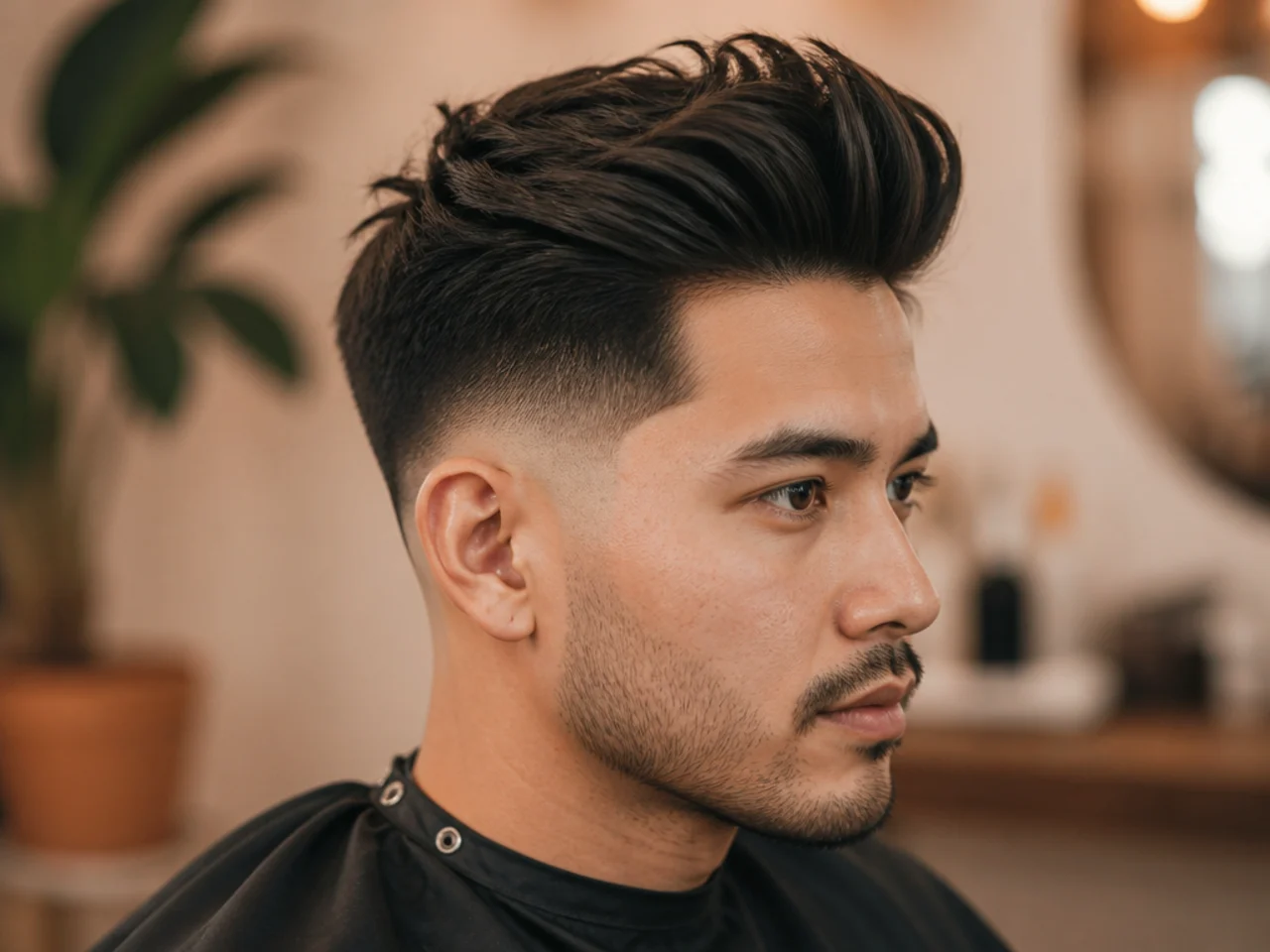
The most-requested quiff fade of 2026. The fade starts at the temple, sits right in the middle of the side, and pairs with any top length between three and six inches. Barbers call it the "default modern quiff" because it flatters almost every face and reads correctly in every setting.
Ask for a mid fade starting at the temple and dropping to skin at the sideburn, plus four to five inches on top with a defined sweep. Say "sharp mid fade, textured quiff, medium length." Style with a light fiber or matte clay for hold with movement. Best for round faces (thanks to the vertical lift), square jaws, and oval faces on straight-to-wavy hair.
The High Fade Quiff
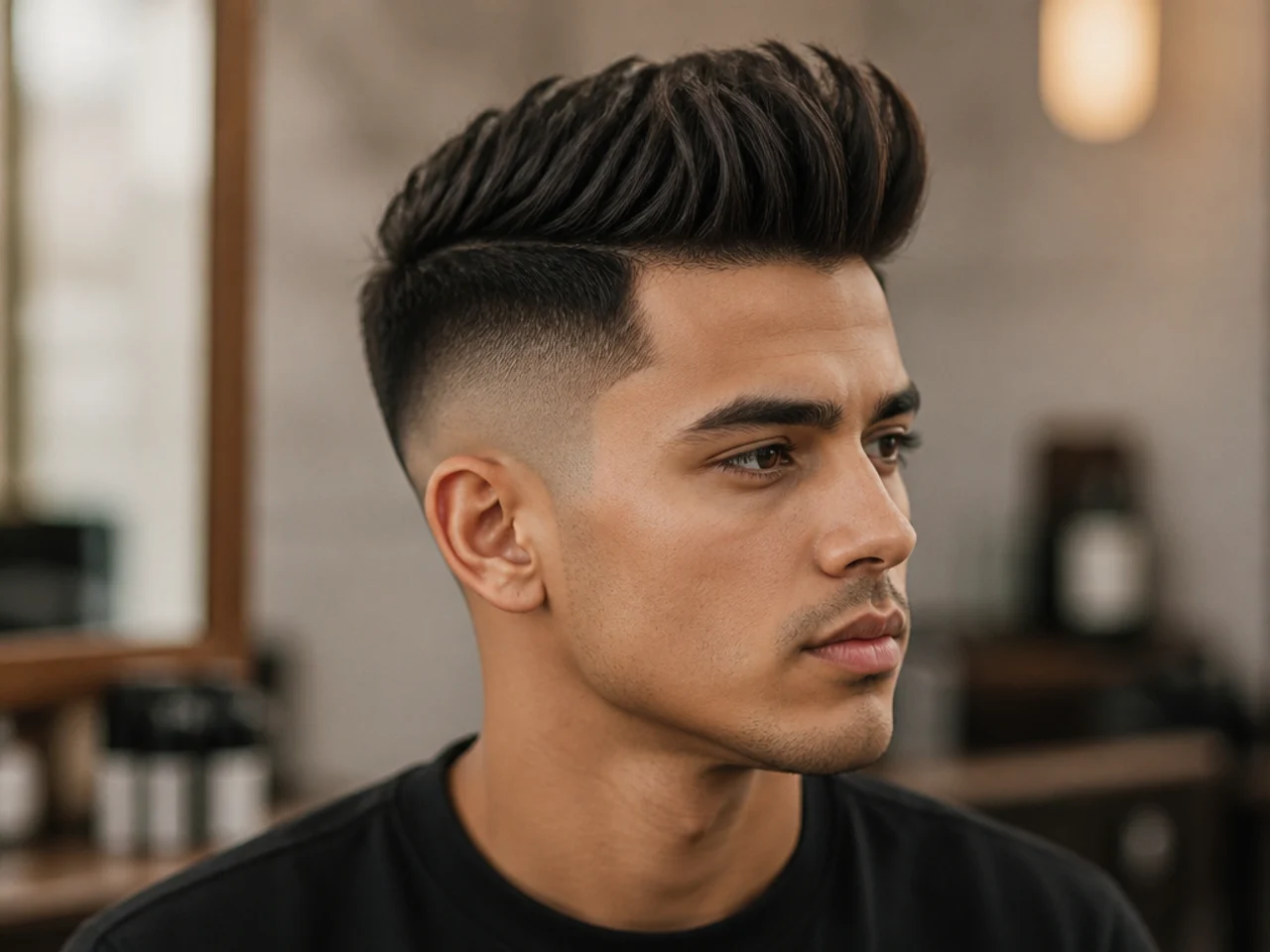
Maximum contrast. The fade climbs high above the temple, leaving a compact block of top hair that reads dramatic from every angle. This is the version musicians, athletes, and anyone who wants their hair noticed booked most in the last cycle. It needs a strong hairline and good head shape to sit right.
Ask for a high fade starting above the temple and dropping to skin, plus five to six inches on top swept up and back with visible lift. Tell your barber you want the "top to read as its own shape" — high fades read best when the top does not sit close to the head. Style with a fiber and a light hairspray for hold. Best for oval, square, and heart-shaped faces on thick straight-to-wavy hair.
The Skin Fade Quiff
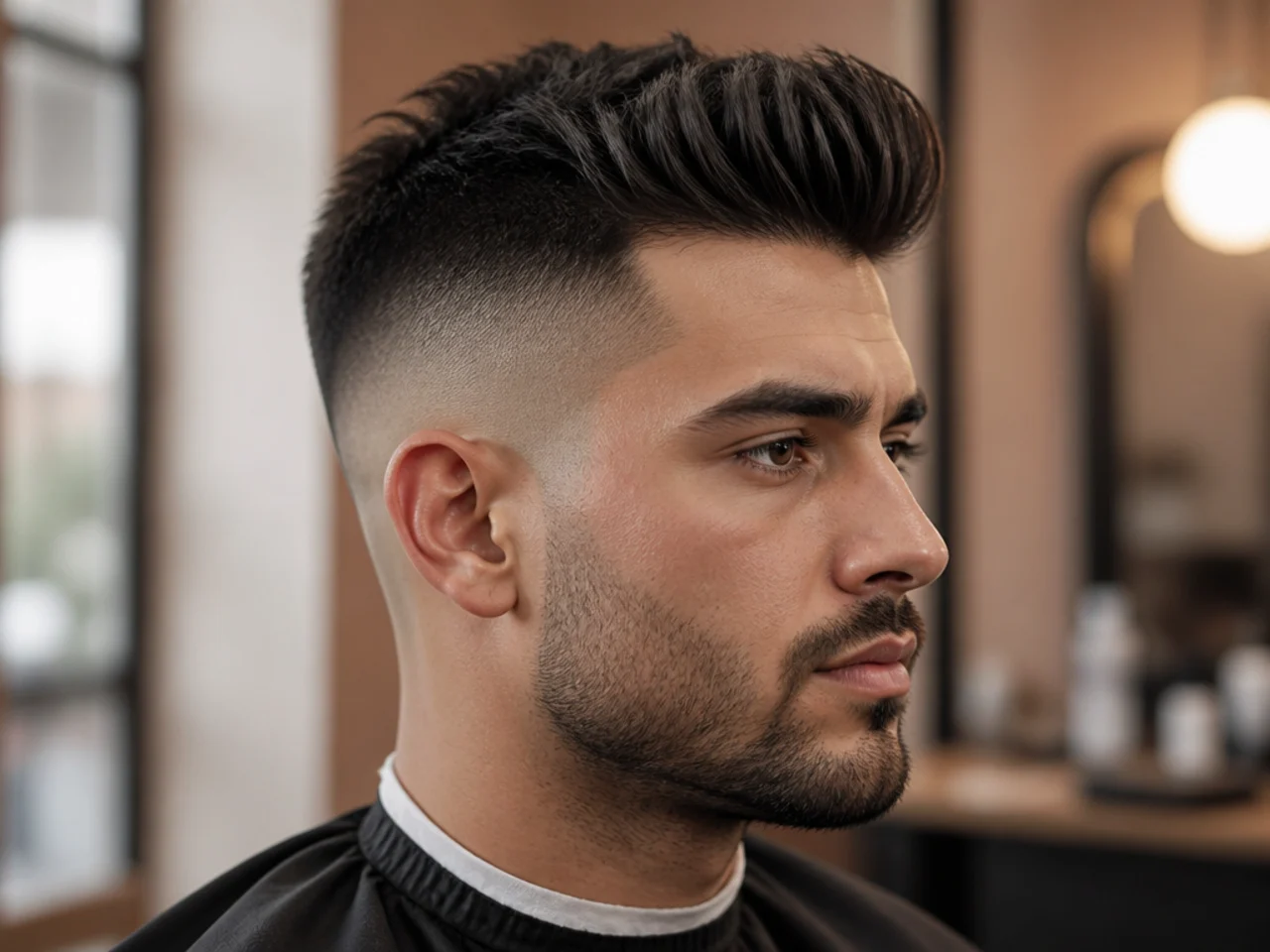
The bald fade version. The fade runs all the way down to bare skin — no leftover shadow — and the disappearance of side length turns the quiff into the whole cut. This is the sharpest quiff fade in the family and the most maintenance-hungry. Book the next cut at three weeks or the effect blurs.
Ask for a skin fade at your chosen height (mid or high most flattering), a razor-clean finish at the bottom, and four to five inches on top with real texture. Style with a matte clay or fiber. Best for square and oval face shapes with sharp hairlines on thick straight hair. If you have thin or receding edges, the exposure a skin fade brings is unforgiving.
The Low Taper Fade Quiff
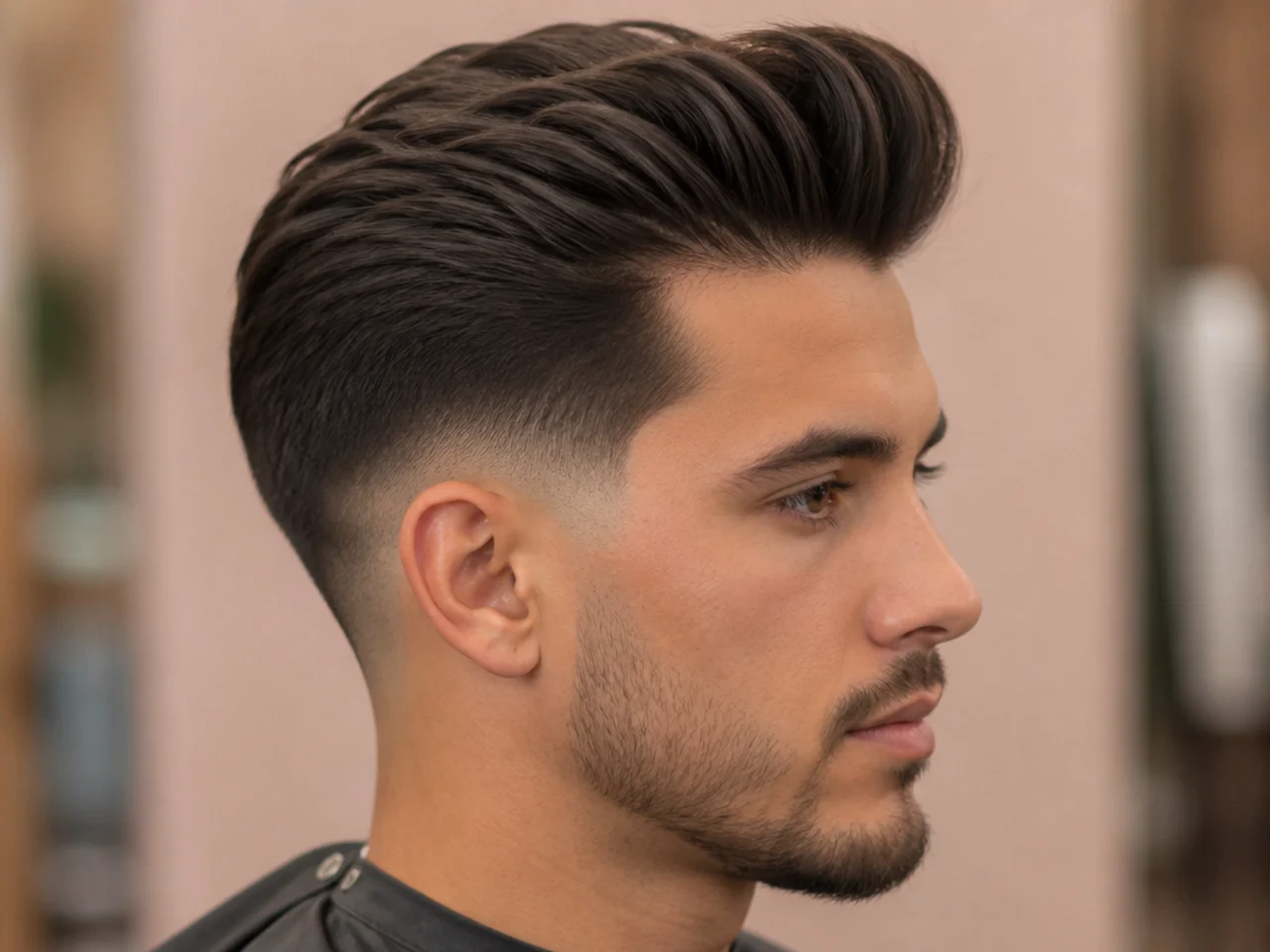
The subtlest quiff fade. A low taper fade sits at the sideburns and around the neckline only — the sides above stay longer, blended by scissors rather than clippers. It reads polished and professional without any of the visual weight a fuller fade brings. Perfect for offices with a conservative code.
Ask for a low taper fade at the sideburn and neckline, sides scissor-blended at #4 above the ear, and four inches on top swept up and slightly back. Style with a light cream or a matte pomade for subtle shine. Best for older men, professional dress codes, and any face shape on straight or wavy hair.
The Drop Fade Quiff
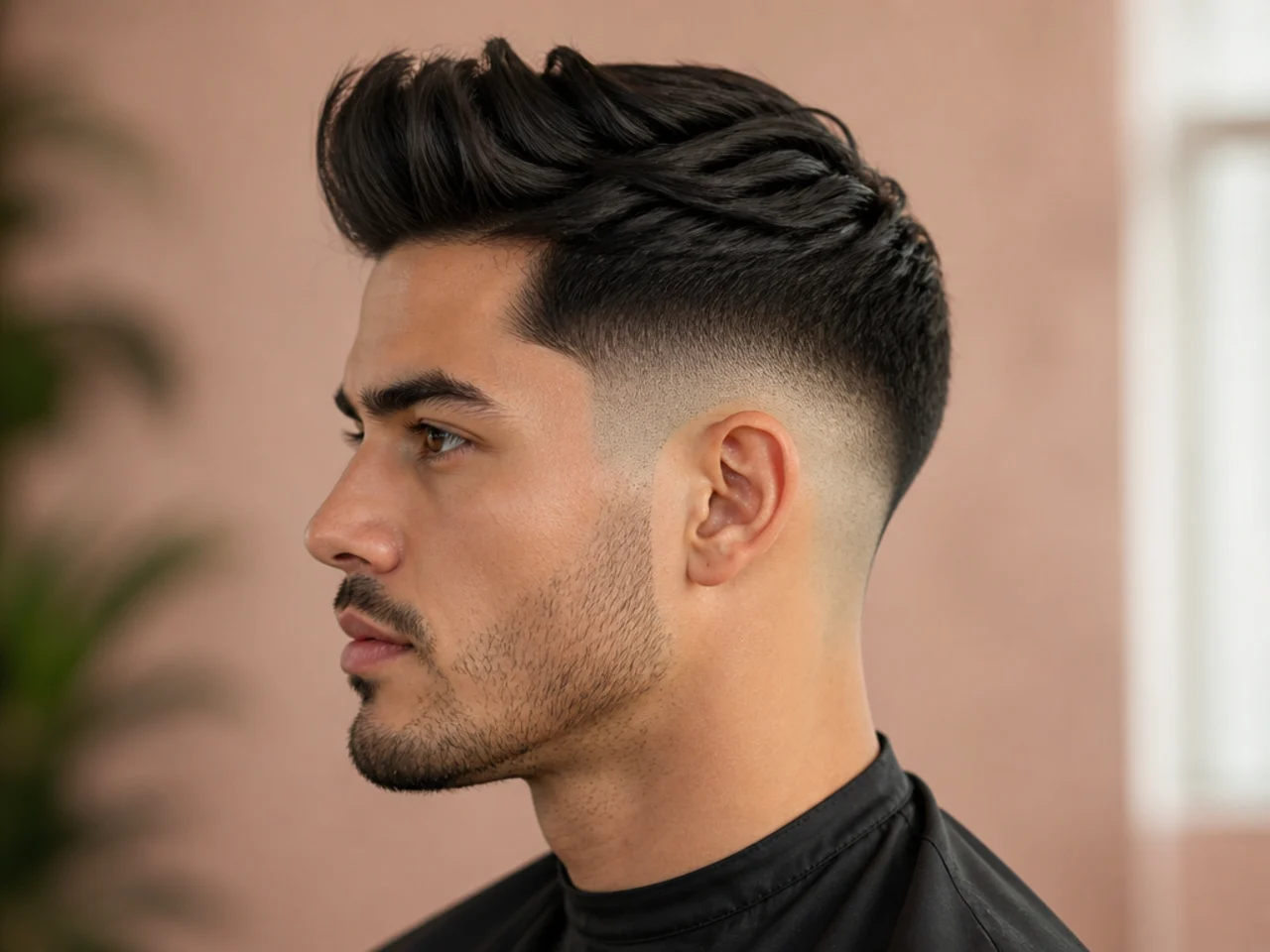
The fade drops behind the ear. Instead of a straight horizontal line across the side, the barber follows the natural curve of the head so the fade dips lower behind the ear than in front. It reads more three-dimensional than a straight fade and photographs beautifully in profile.
Ask for a drop fade — mid height in front, curving down to sit lower behind the ear — and four to five inches on top with a swept-back finish. Tell your barber "drop it behind the ear," which is the standard shop language. Style with a fiber for texture and hold. Best for oval and square face shapes on straight-to-wavy hair.
The Burst Fade Quiff
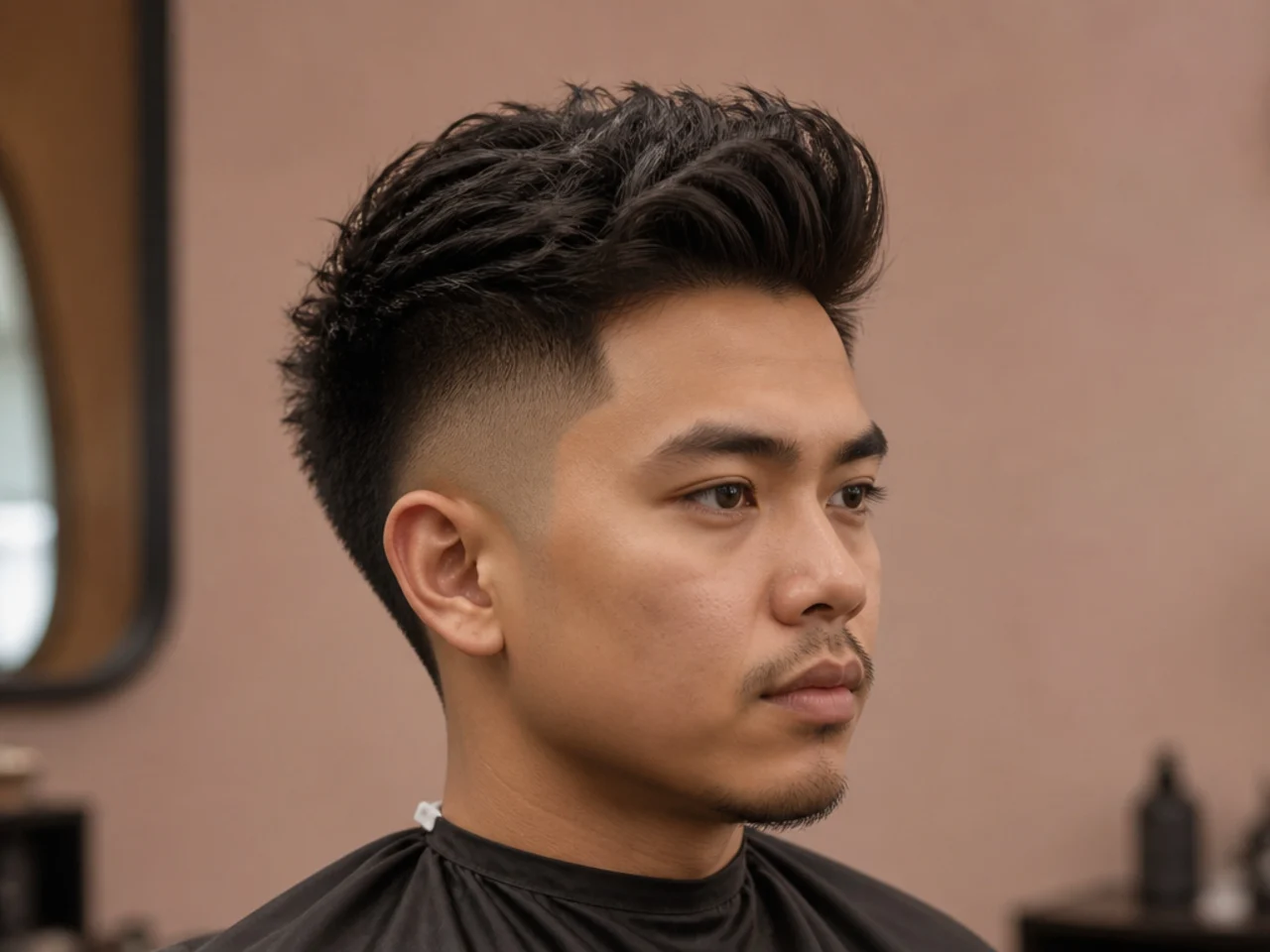
A semicircle of fade radiating around the ear. The burst fade leaves length across the top of the head and at the nape, creating a rounded halo of shorter hair only around the ear. It reads modern, athletic, and hip-hop influenced — one of the most-tagged fade variations on Pinterest right now.
Ask for a burst fade at your chosen height (mid burst most versatile), skin at the base of the burst, and length preserved across the top and nape. Add four to five inches on top with a defined quiff sweep. Style with a fiber or matte clay. Best for round and oval face shapes on straight and curly hair alike — the burst plays beautifully with texture.
The Textured Quiff Fade
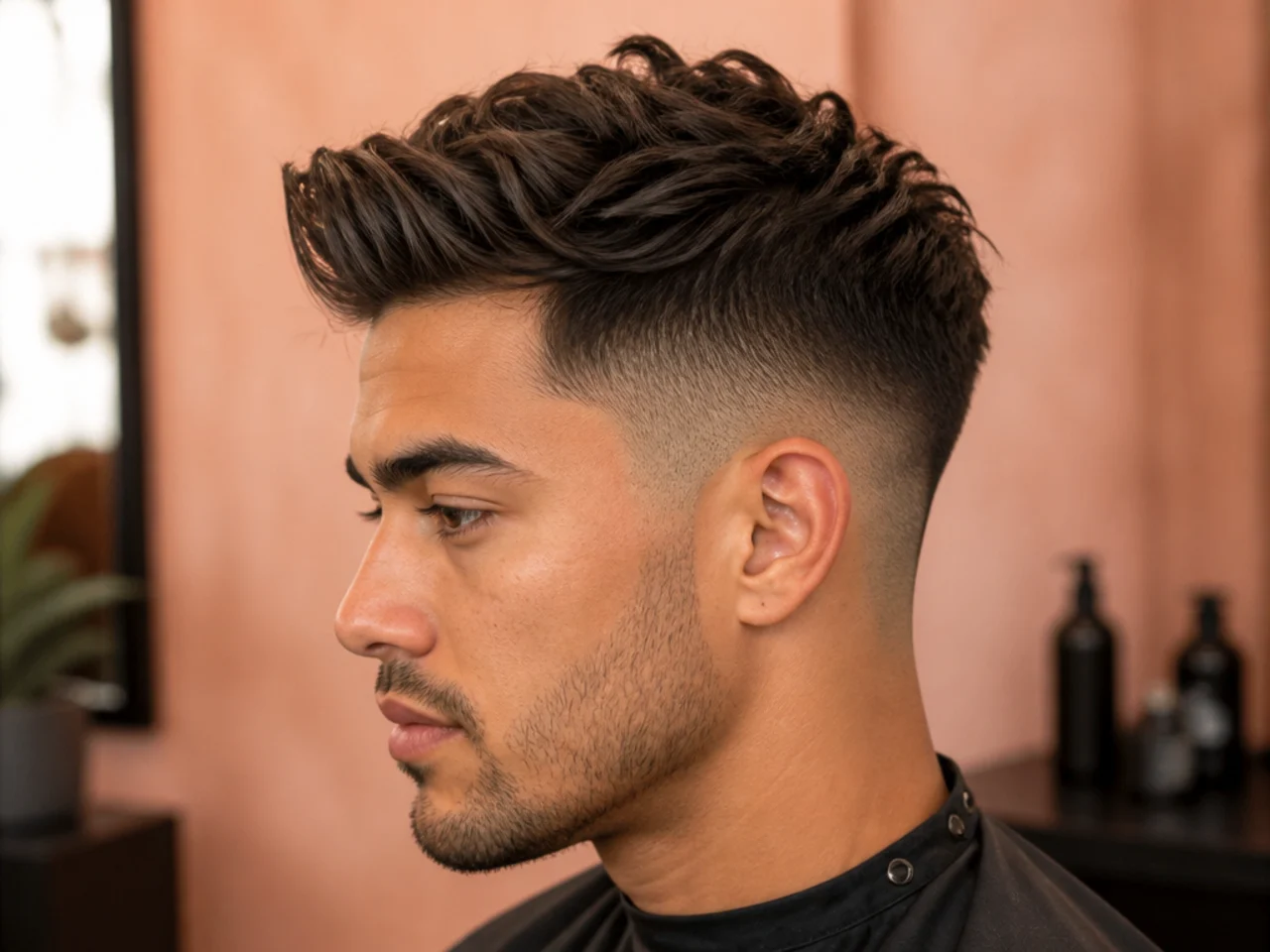
The modern default. Every strand on top is point-cut for movement, every finish is matte, and the sweep looks deliberately undone rather than combed into place. This is the version that reads current in 2026 without leaning into any single trend. Barbers cut it more than any other quiff shape.
Ask for a mid fade starting at the temple, four inches on top, point-cut layering through the front two-thirds, and a matte finish. Tell your barber "textured quiff, no gloss." Style with a matte clay or a fiber worked from the roots up with your fingers only — no comb. Best for oval, square, heart, and diamond faces on any hair density. See the wider textured haircuts for men guide for the finishing rules.
The Messy Quiff Fade
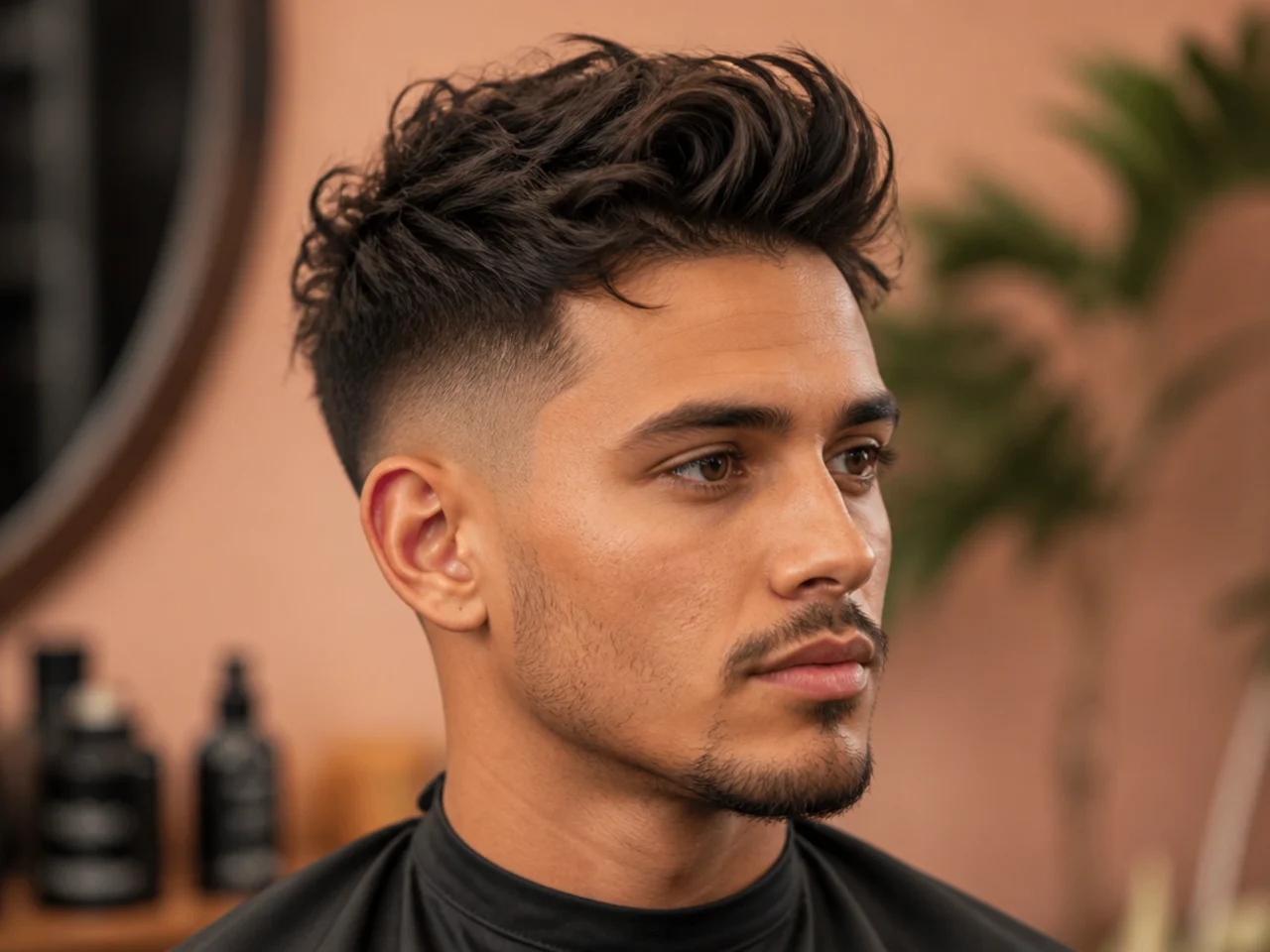
One step past textured. The top sits deliberately undone — pieces going in slightly different directions, visible root lift, no attempt at symmetry. It reads confident and effortless when it is cut right, and unkempt when it is cut wrong. The difference is layering: a proper messy quiff needs cross-directional layering the barber builds in with shears.
Ask for a mid or high fade, cross-directional point-cut layering through the top four to five inches, and a messy sweep instruction. Style with a fiber or a texture cream worked with your fingers, hair still slightly damp. Best for creative-industry offices and weekends on any face shape with medium-to-thick hair.
The Slick Pomaded Quiff Fade
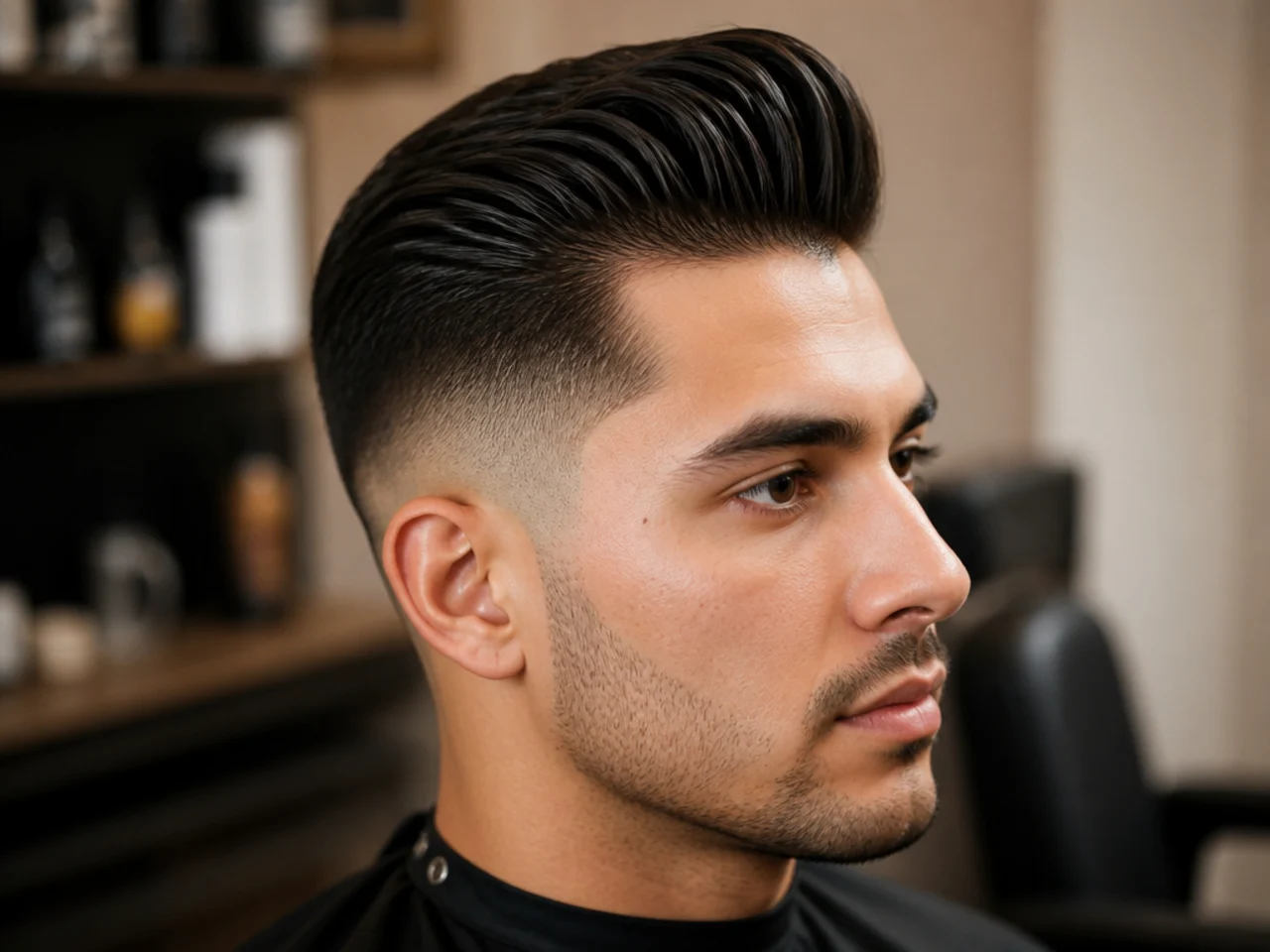
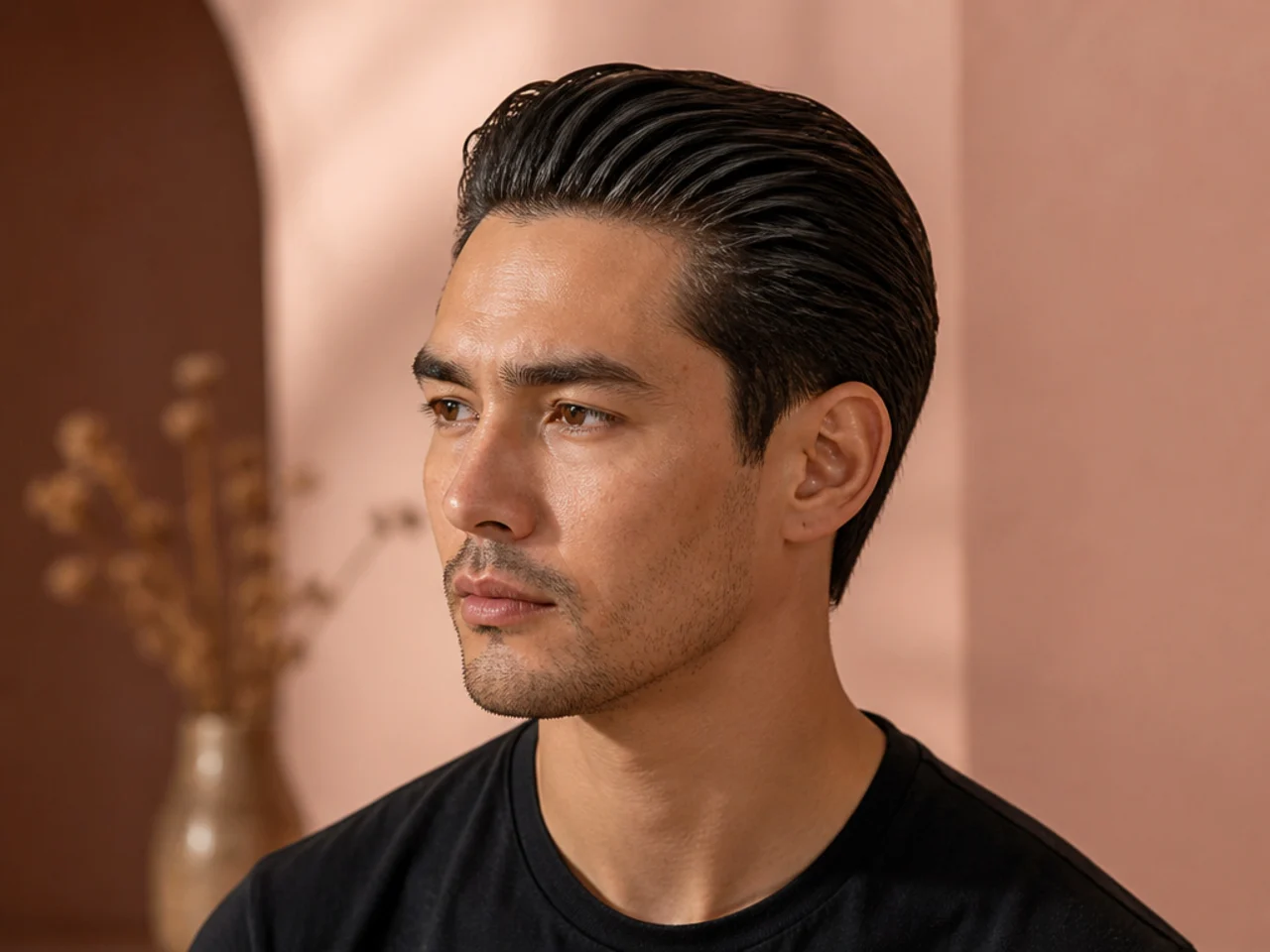
The classic pomaded quiff with a modern fade underneath. Top is combed cleanly from front to back with a shine pomade — no visible texture, no matte finish — and the sides run through a clean low or mid fade. This is the version that flatters formal wear and evening events. The pomade shine makes it read polished; the fade keeps it from reading dated.
Ask for a low fade, four inches on top, and a scissor-cut sweep angle so the pomade sits neatly. Style with a medium-hold water-based pomade combed once with a fine-tooth comb from front to back. Best for weddings, formal events, and any face shape on straight or wavy hair. The modern cousin to a proper slick back haircut.
The Side-Part Quiff Fade
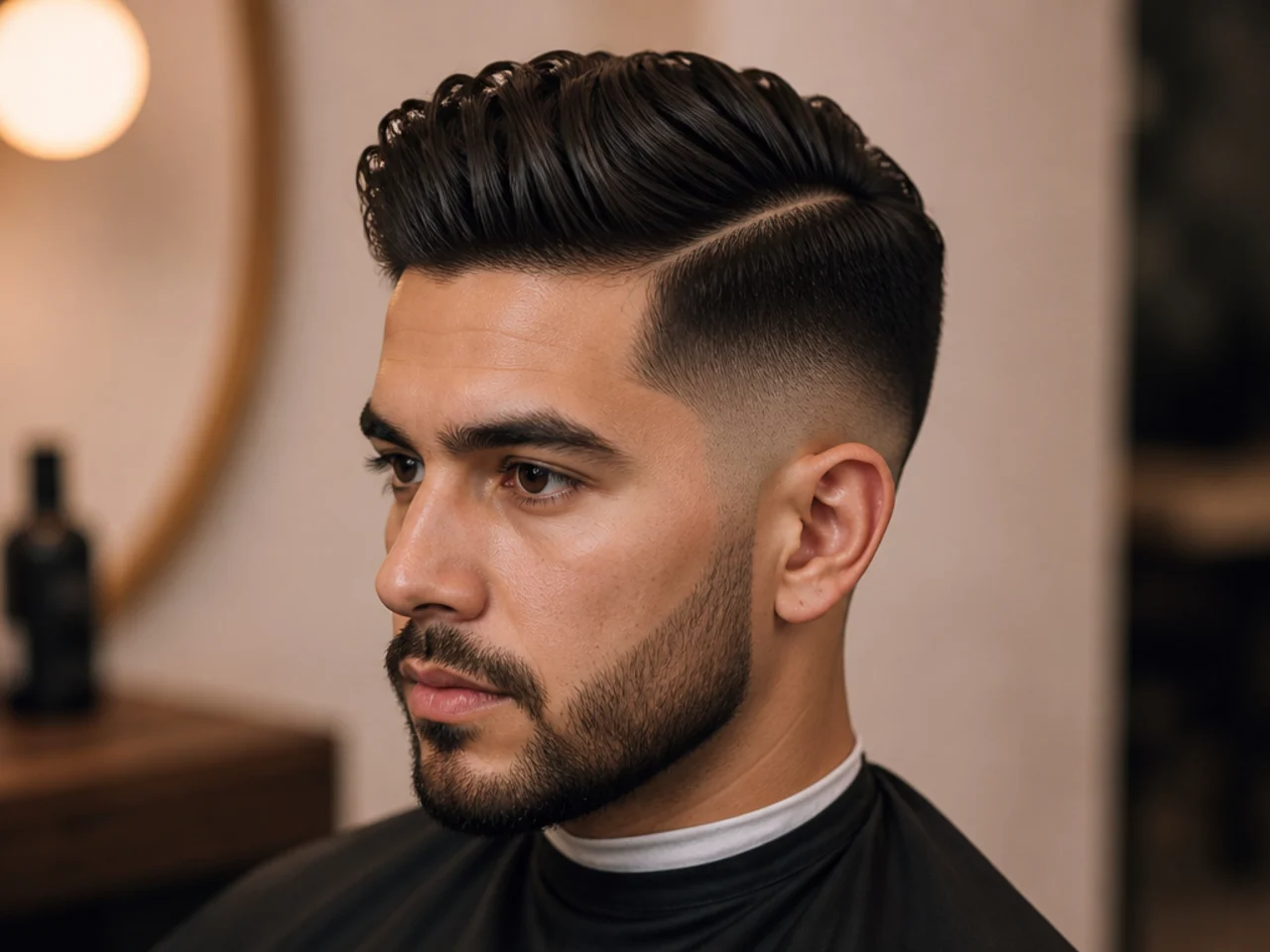
A quiff crossed with a proper side part. The front still lifts, but a natural parting on your dominant side splits the top so the shape reads sharper and more disciplined. It flatters business dress codes better than any freer version because the visible part adds structure to the sweep. Pair it with a mid fade for the most polished read.
Ask for a natural side part along your cowlick, a mid fade starting at the temple, and four inches on top. Tell your barber the sweep sits on the heavier side of the part, not both sides. Style with a cream pomade combed from the part outward and up-and-back at the front. Best for offices, interviews, and formal wear. See the side part hairstyles for men guide for related shapes.
The Curly Quiff Fade
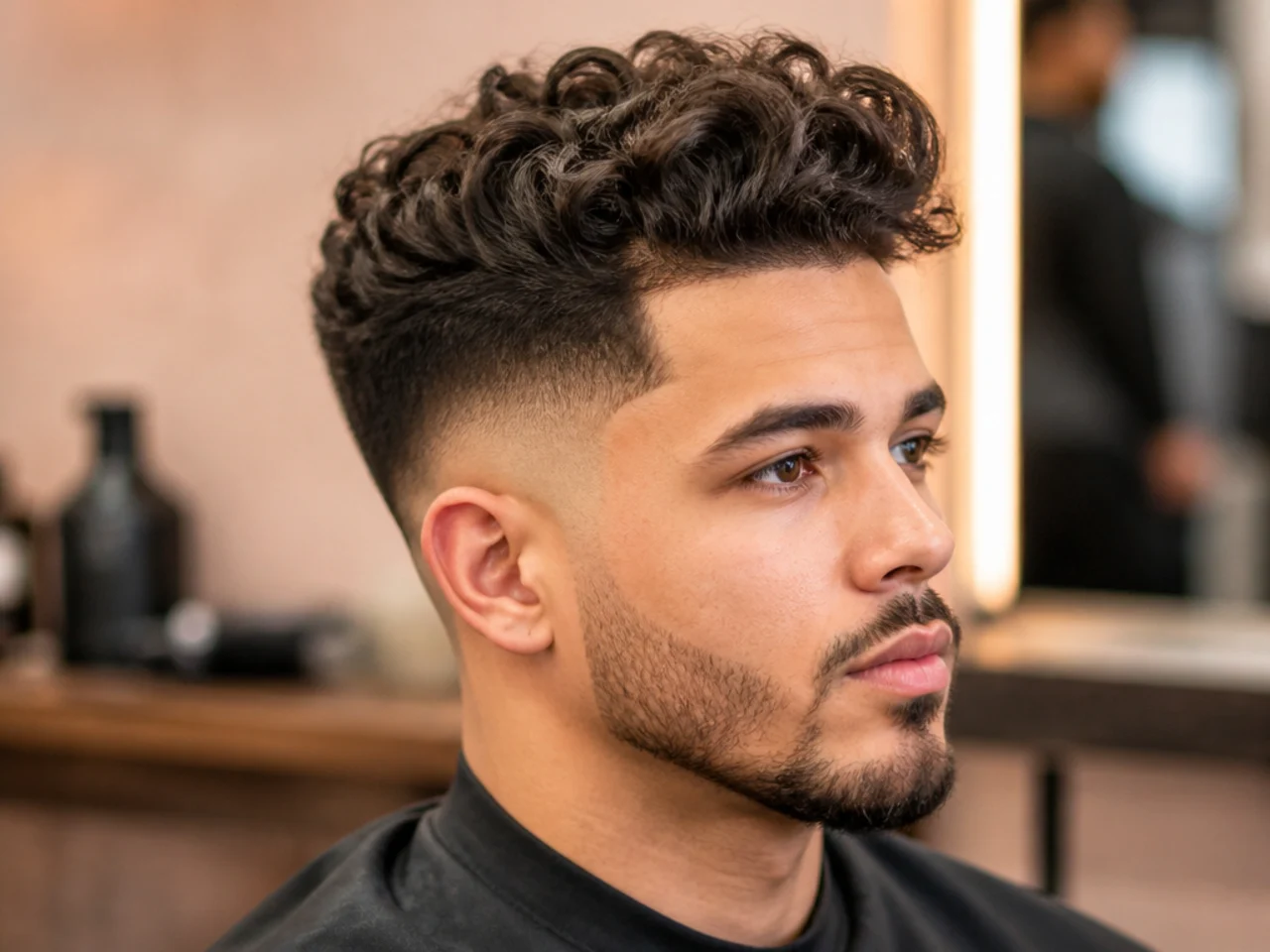
Natural curl carrying the shape. The top stays long enough for the curl pattern to show — four to five inches minimum — and the fade cleans up the sides so the curls read intentional rather than overgrown. This is the version that turns curly hair into a compliment magnet without any styling gymnastics.
Ask for a mid fade, four to five inches on top, a dry-cut on the curly section so the barber sees the pattern, and no thinning through the crown. Style with a curl cream or a light hold gel worked through damp hair with your fingers only, then air-dried or lightly diffused. Best for round, oval, and heart-shaped faces on 3A through 3C curl patterns. The wider curly quiff hairstyles men roundup covers longer and shorter versions.
The Wavy Quiff Fade
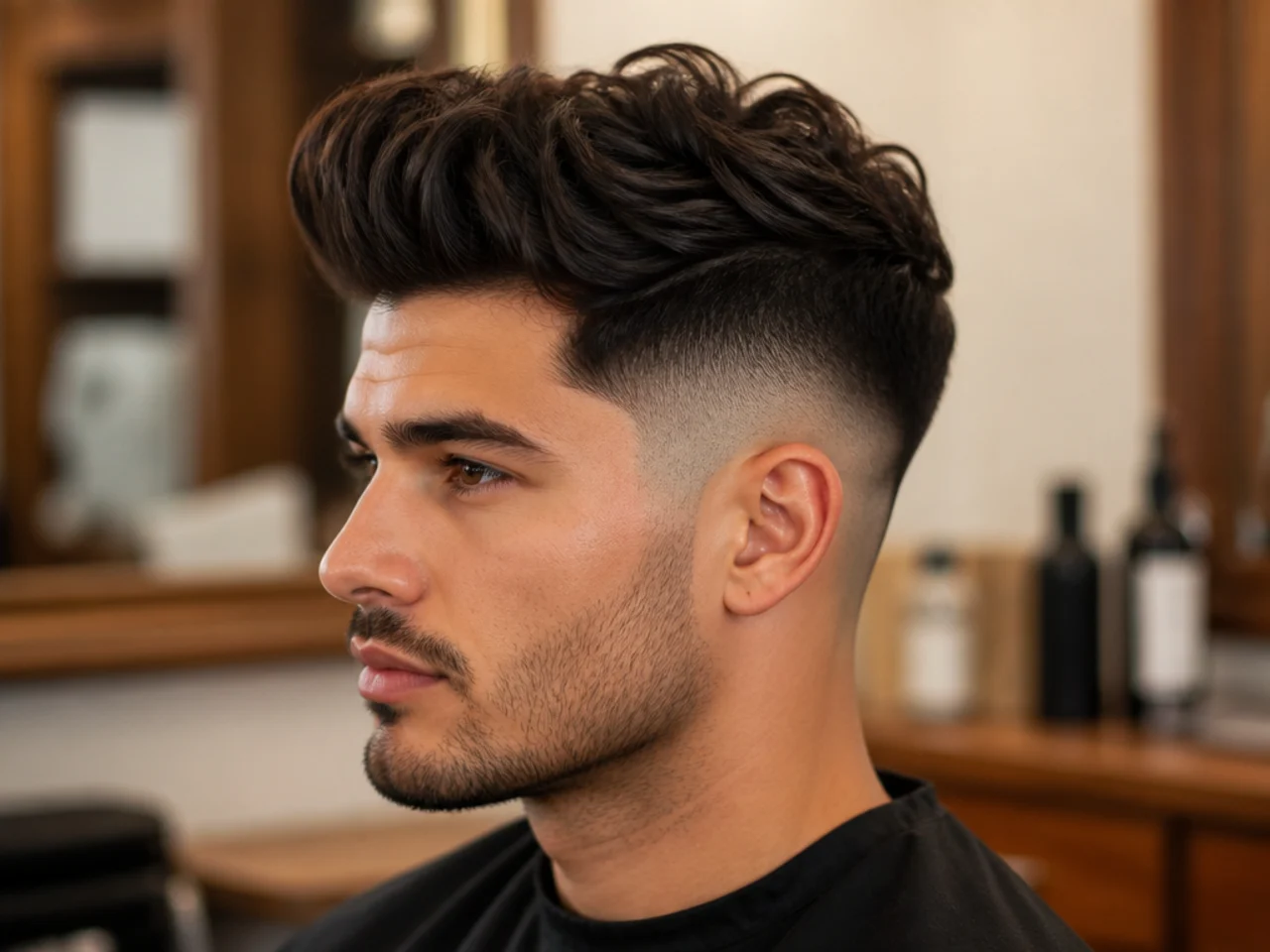
The easy-mode quiff fade. Wavy hair holds a quiff shape without much product because the natural wave adds lift and movement on its own. Pair with a low or mid fade for a version that takes 90 seconds in the morning and looks intentional all day. Barbers describe wavy hair as "the easiest hair to build a quiff fade on."
Ask for a low or mid fade, four inches on top, and light layering to let the wave move. Style with a sea-salt spray on damp hair, scrunched with your hands, then swept up and back with your fingers. Best for beach-town lifestyles, low-effort mornings, and any face shape on 2A through 2C wave patterns.
The Short Quiff Fade
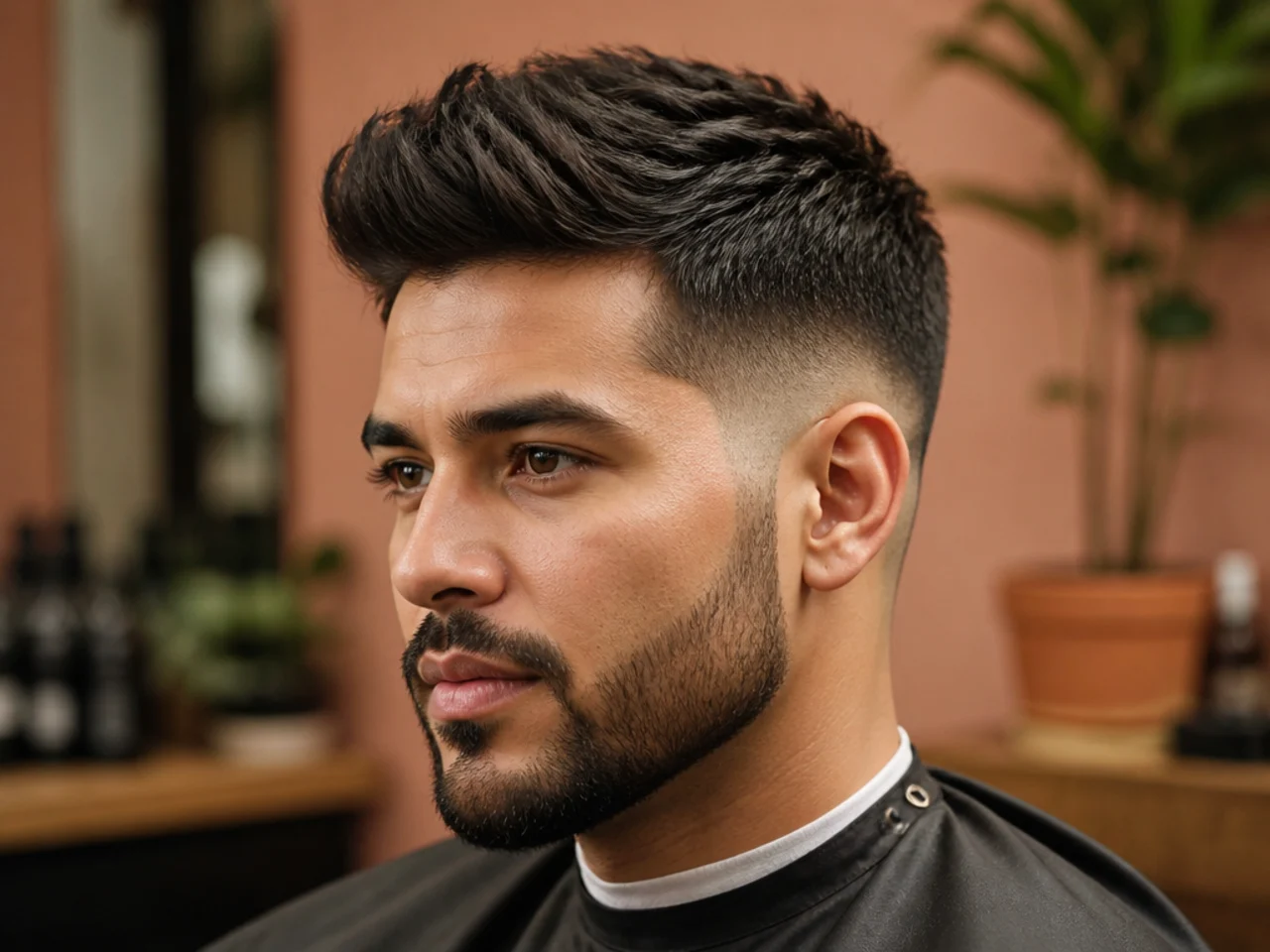
The low-maintenance quiff fade. Top runs two to three inches — just long enough to lift at the front — with a mid or low fade below. It reads clean and current without demanding real styling time, which makes it the version most shift workers and dads book. Growing it out gives you the classic four-inch versions above.
Ask for a mid fade, two to three inches on top, and a soft point-cut through the front for lift without weight. Style with a coin of matte clay finger-swept forward and slightly up. Best for busy schedules, oval and square face shapes, and thick straight hair that needs shorter length to sit correctly. The short quiff hairstyles men guide covers no-fade short versions.
The Long Quiff Fade
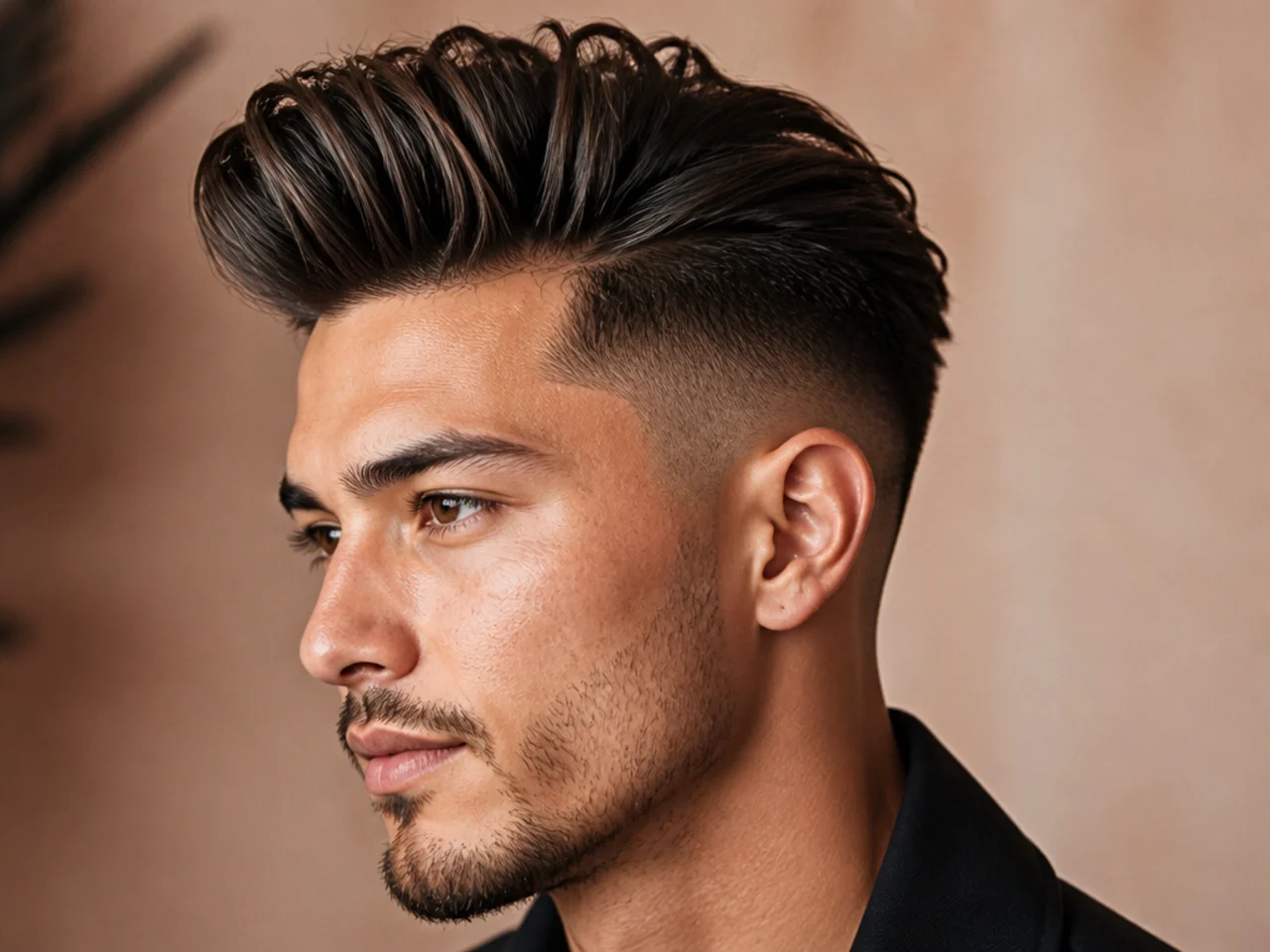
The statement version. Top pushed to five or six inches for real drama, fade kept low to let the top length dominate. This is the quiff fade that photographs like a magazine cover — musicians, models, and anyone with thick hair and confidence book this one. It needs five minutes of styling most days.
Ask for a low fade, six inches at the front tapered down to four at the crown, and no thinning through the top — every strand carries the volume. Style with a volumizing mousse on damp hair, blow-dry up and back with a round brush, then set with a shine pomade. Best for thick straight-to-wavy hair on square and oval faces. See long quiff hairstyles men for more length-forward variations.
The Undercut Quiff Fade
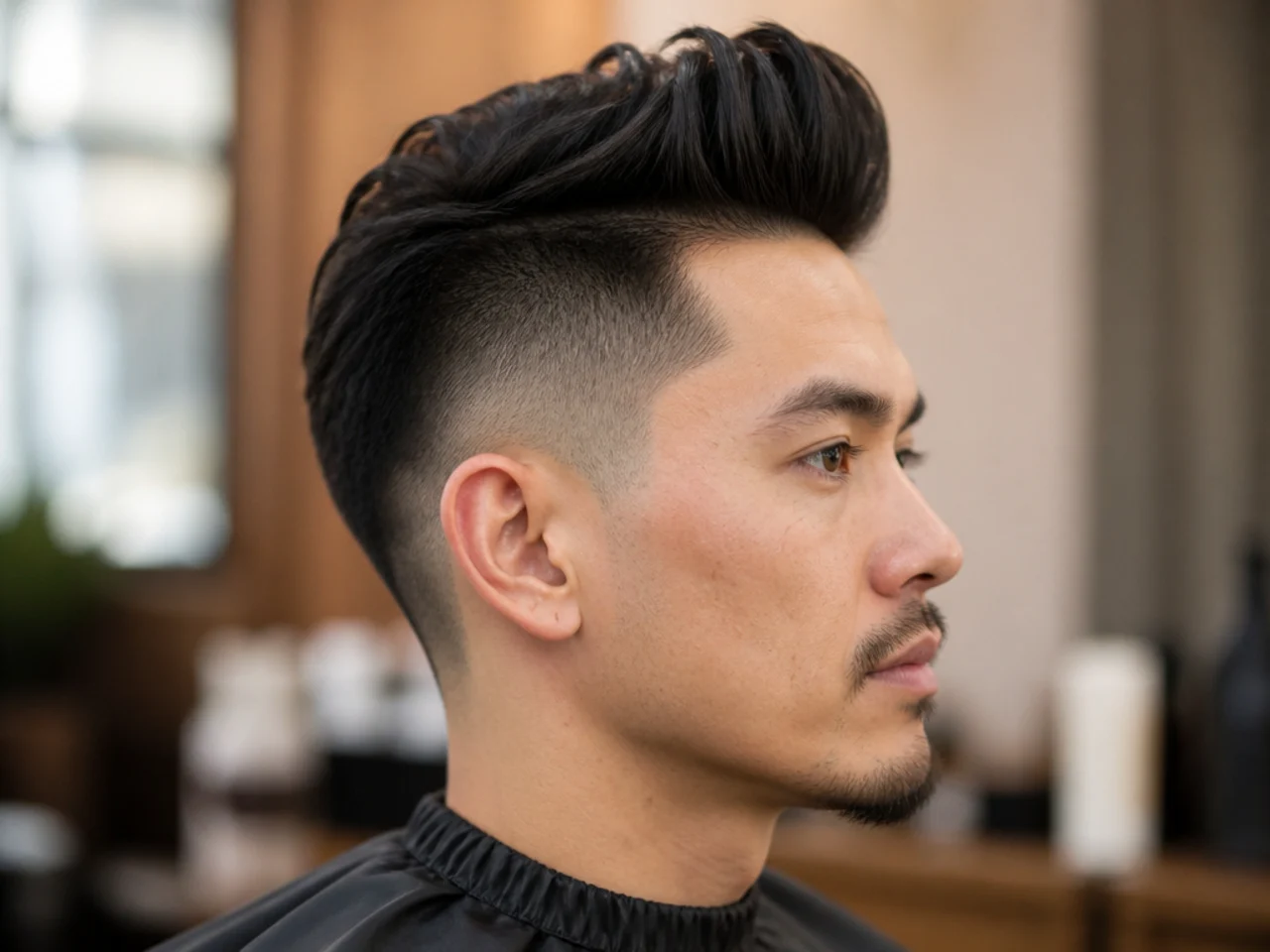
The disconnected version. Instead of a graduated fade, the barber leaves a sharp visual break between the long top and the short fade below — no blend, no gradient, just a clean line. It reads architectural and modern, and it pairs beautifully with a mid or high fade underneath. This is the quiff fade for anyone who wants maximum visual impact.
Ask for a disconnected undercut with a mid or high fade below, five inches on top with a defined sweep, and a hard visible break at the disconnection line. Tell your barber "undercut, not blended." Style with a fiber or matte clay for hold. Best for oval, square, and heart-shaped faces on thick straight hair. See the undercut fade family guide for the wider architecture.
The Pompadour Quiff Fade
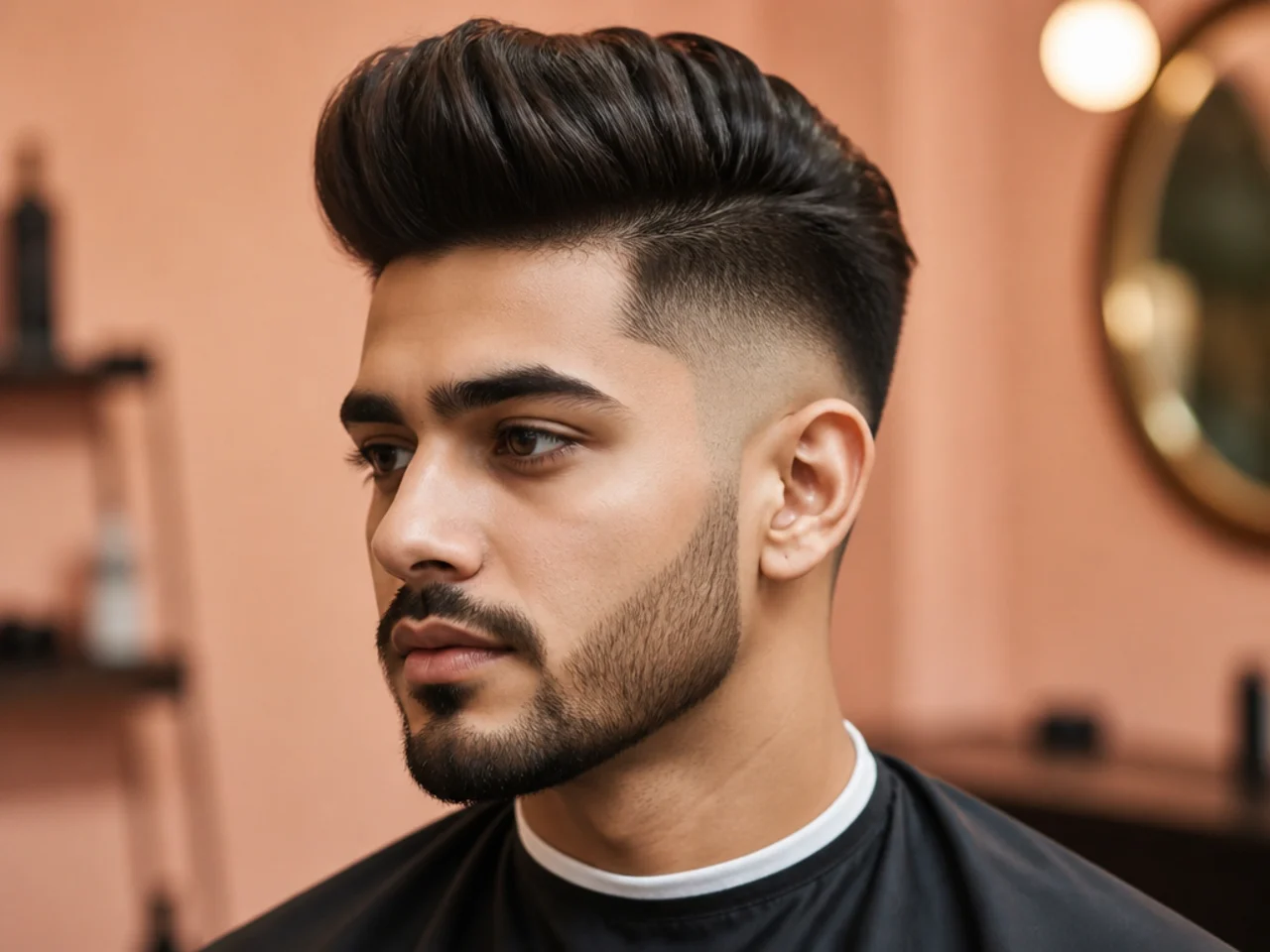
The tallest quiff fade. The top runs six inches, volume is built at the root, and the sweep goes up before it goes back — the classic pompadour silhouette with a modern fade underneath. This is the loudest quiff fade in the room and the one that reads most vintage-glamorous. Book the extra styling time — this one needs it.
Ask for a mid fade, six inches on top layered down to four at the crown, and enough weight through the front to hold height. Style with a volumizing mousse on damp hair, blow-dry up and back with a round brush, set with a shine pomade. Best for thick straight hair on square and oval faces with the wardrobe to carry it.
The Quiff Fade with Beard
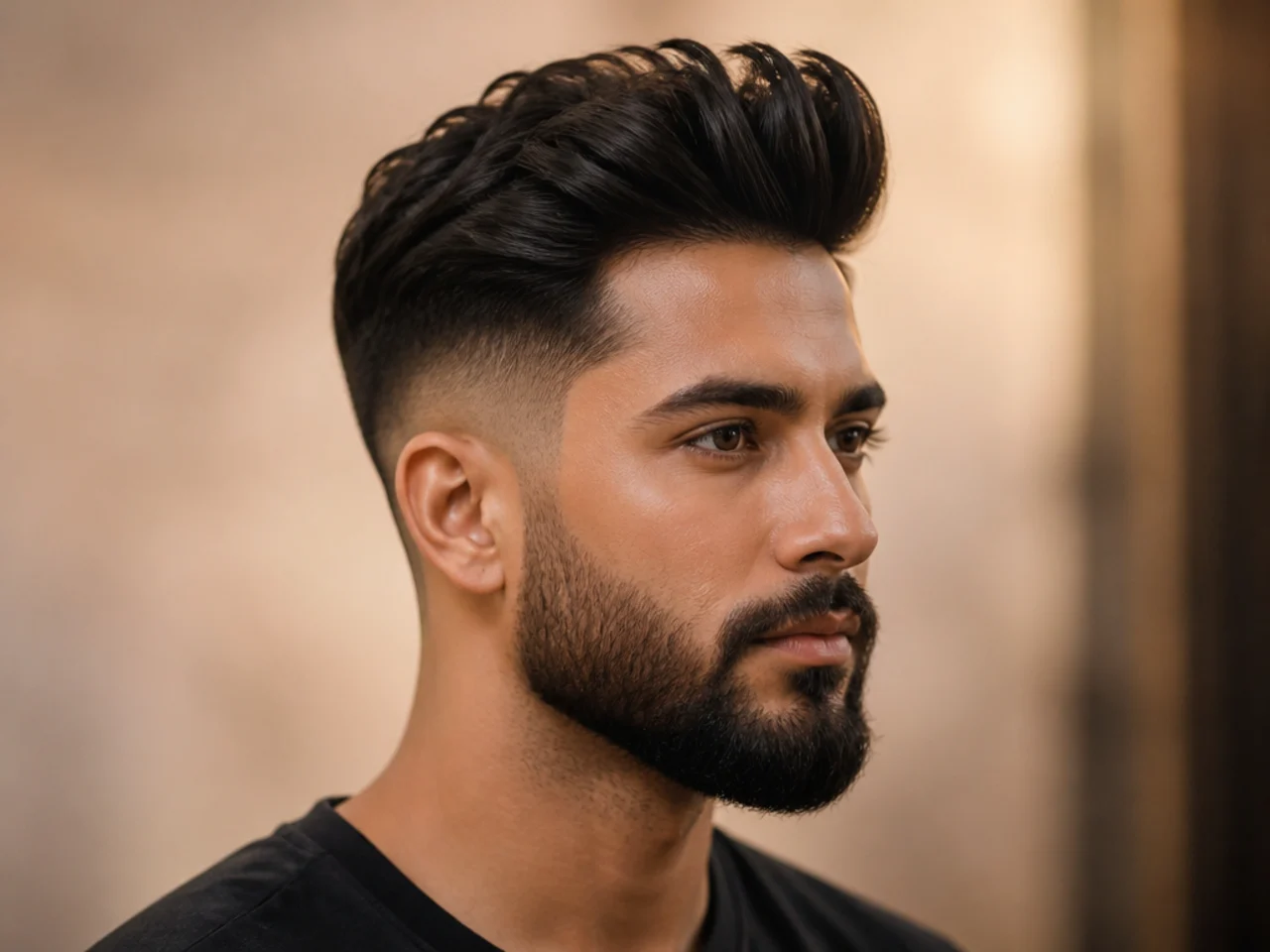
Volume on top, weight along the jaw. Pair any quiff fade with a full trimmed beard and the whole face reads twice as masculine. The trick is connecting the fade cleanly into the beard sideburn so the transition looks intentional. Ask your barber to keep the two lines linked — no visible break between the fade and the beard.
Ask for a mid or low fade, four inches on top, and a fade-to-beard connection with no gap. Style the top with a fiber and the beard with a light oil — never mix the two products. Best for square, oval, and heart-shaped faces on medium-to-thick hair. The pairing that reads most polished is a mid fade quiff plus a two-week beard.
The Quiff Fade with Hard Part
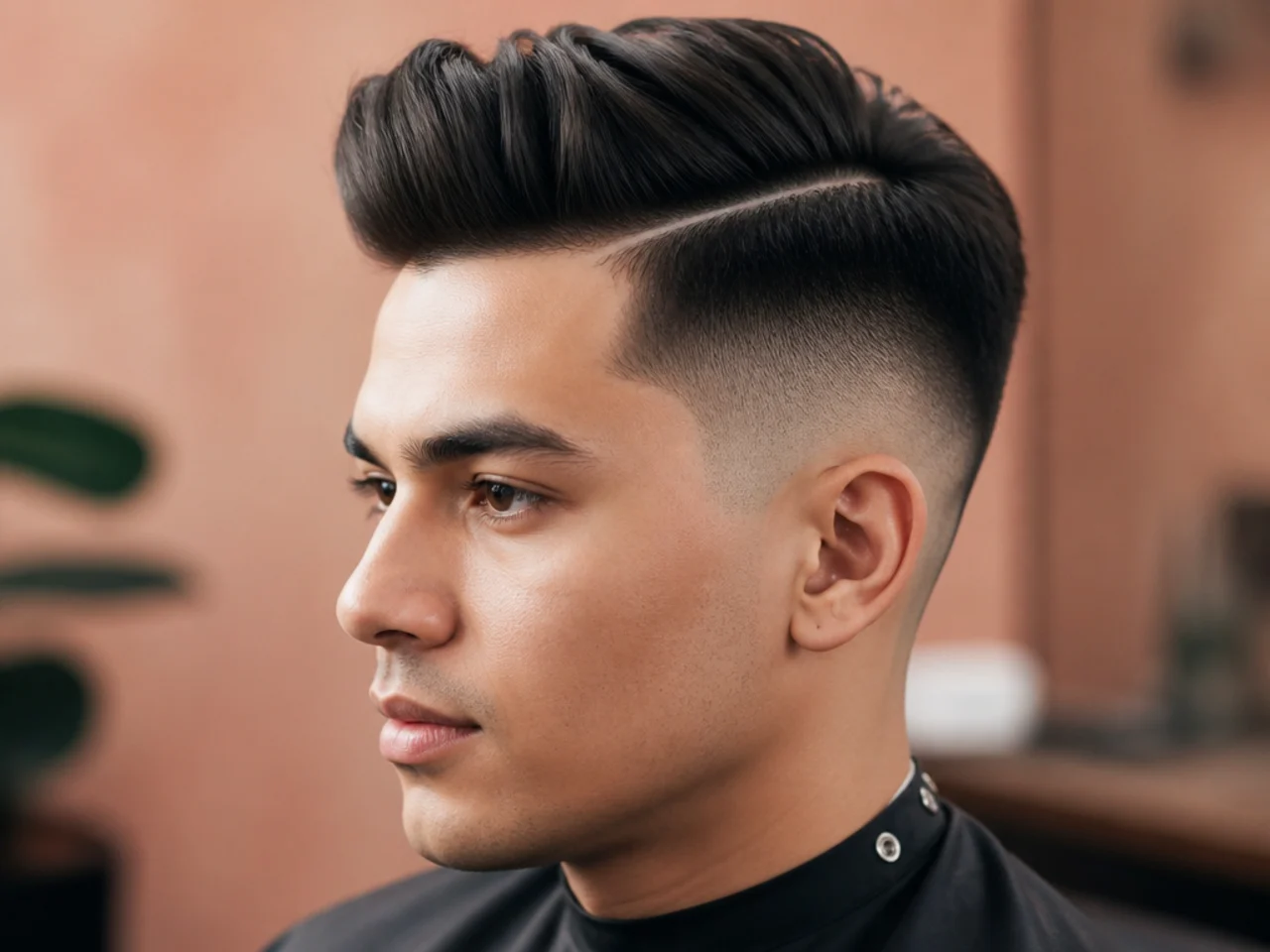
A razor-drawn line cut into the side. The barber uses a straight razor or a trimmer to draw a clean line where a natural part would sit, and the quiff lifts up and back from that line. The hard part reads sharp, disciplined, and unmistakable in photos. It flatters business events, weddings, and anyone who wants their haircut to signal "care was taken."
Ask for a razor-drawn hard part on your dominant side, a mid fade below, and four to five inches on top swept up and back from the part. Tell your barber to cut the line with a straight razor, not a clipper — the edge is cleaner. Style with a shine pomade combed from the part outward. Best for weddings, formal events, and straight-to-wavy hair on any face shape.
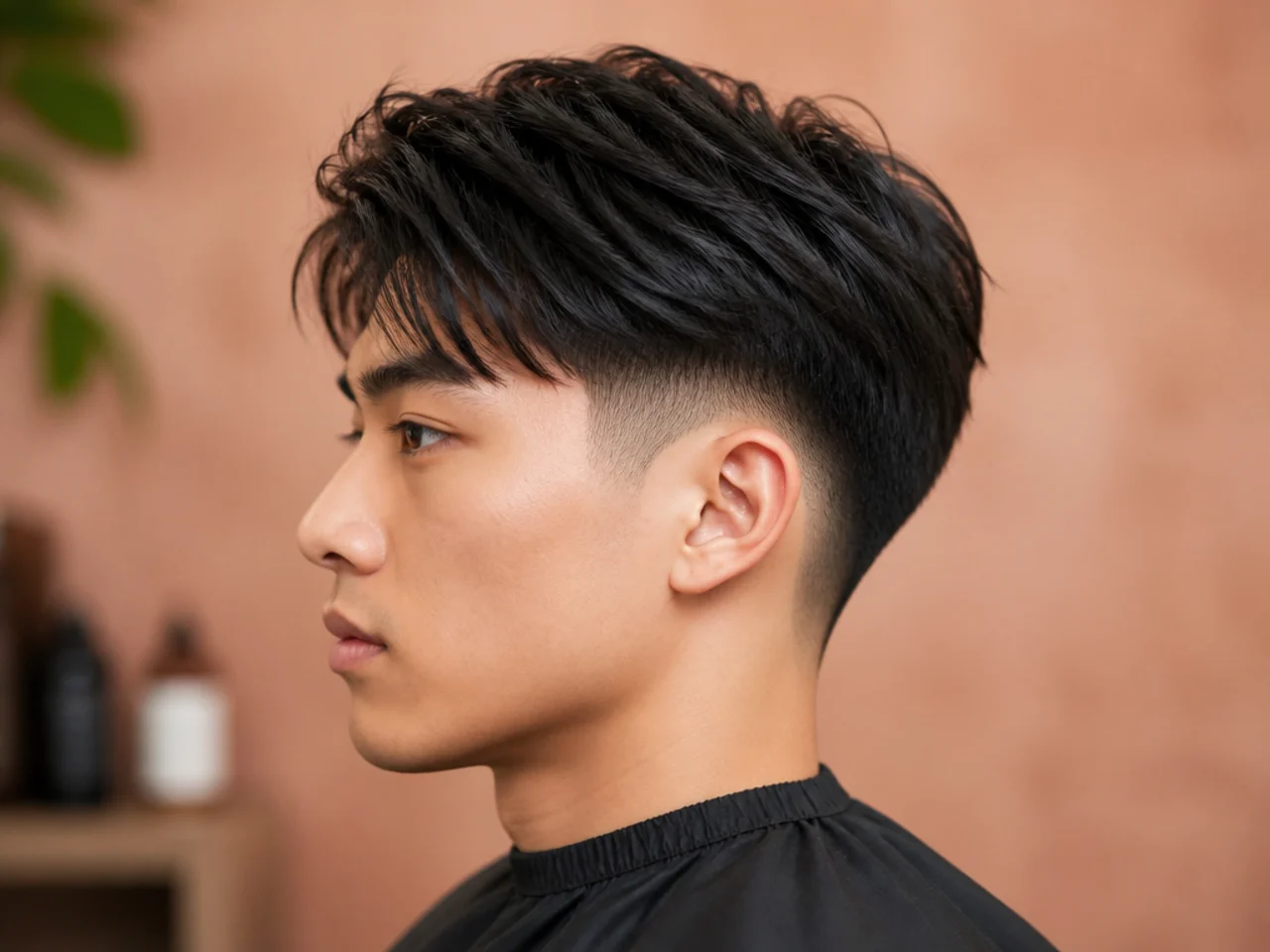
The Modern Fringe Quiff Fade
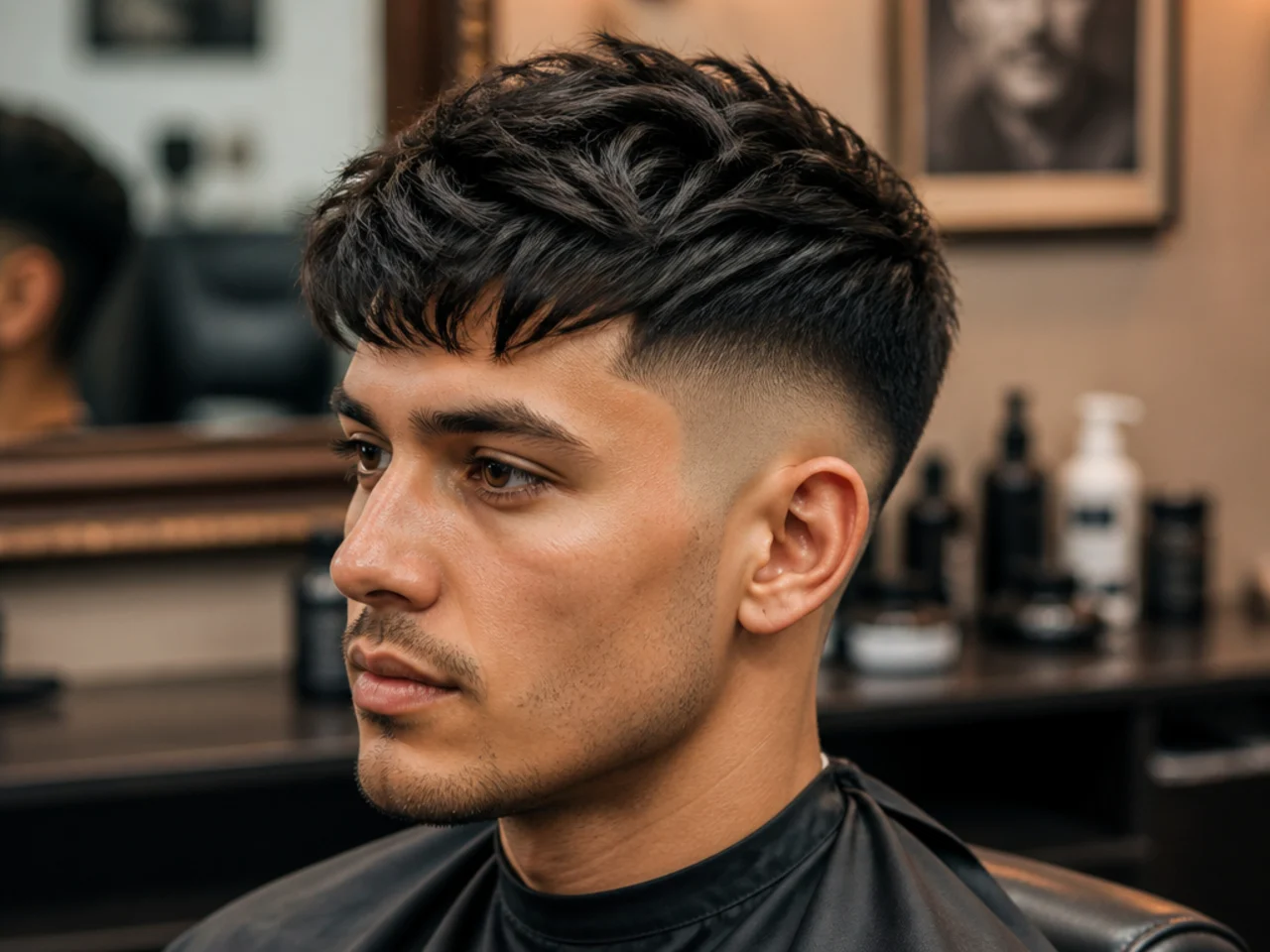
The quiff-fringe hybrid. Instead of sweeping the whole front up, the barber leaves a textured fringe that falls forward while the crown lifts into a quiff shape behind it. It reads younger, softer, and more Korean-influenced than the classic swept versions — one of the fastest-growing quiff variations of the last cycle.
Ask for a mid fade, five inches on top, a piecey point-cut fringe that sits forward at the hairline, and quiff lift built into the crown behind. Style with a light fiber worked from the crown up, then the fringe pushed forward with your fingers. Best for oval, round, and heart-shaped faces on straight-to-wavy hair. See the fringe haircuts for men family for the wider fringe menu.
How to Ask Your Barber
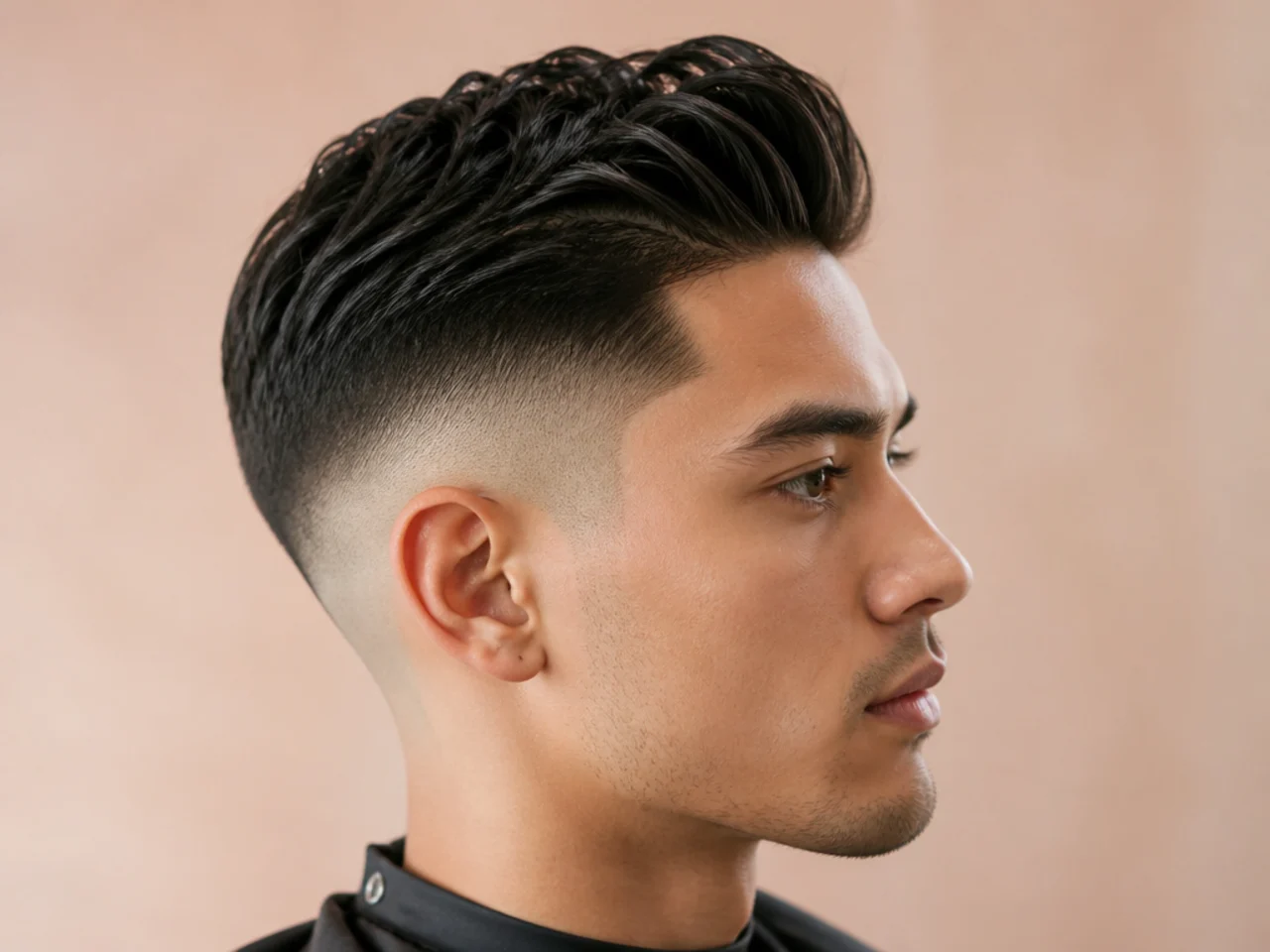
Bring a photo of the exact variation from above. Then walk through these five specifics in order — every barber understands this brief without another word.
- Fade height. Low, mid, high, or skin. This is the most important call because every other decision flows from it. Say the word.
- Fade style. Taper, drop, burst, or straight. This decides the shape of the fade line. If you want a taper only around the ears and neck, say "low taper." If you want the fade curved behind the ear, say "drop it behind the ear."
- Bottom finish. Skin, #0, #0.5, or #1. Where the fade actually ends. Skin fades read sharpest; #1 reads softest.
- Top length in inches. Two for short, three for compact, four for classic, five for full, six for statement. Say the number in inches, not guard numbers — the top is scissor-cut.
- Top finish. Matte textured, shine pomaded, wet-look, or curly natural. This tells the barber which layering pattern to use and which product to demo.
Add a beard connection or hard part if you want either. That is the whole brief. Say those five things and you walk out with the quiff fade you had in mind, not the one your barber assumed you meant.
Styling & Maintenance
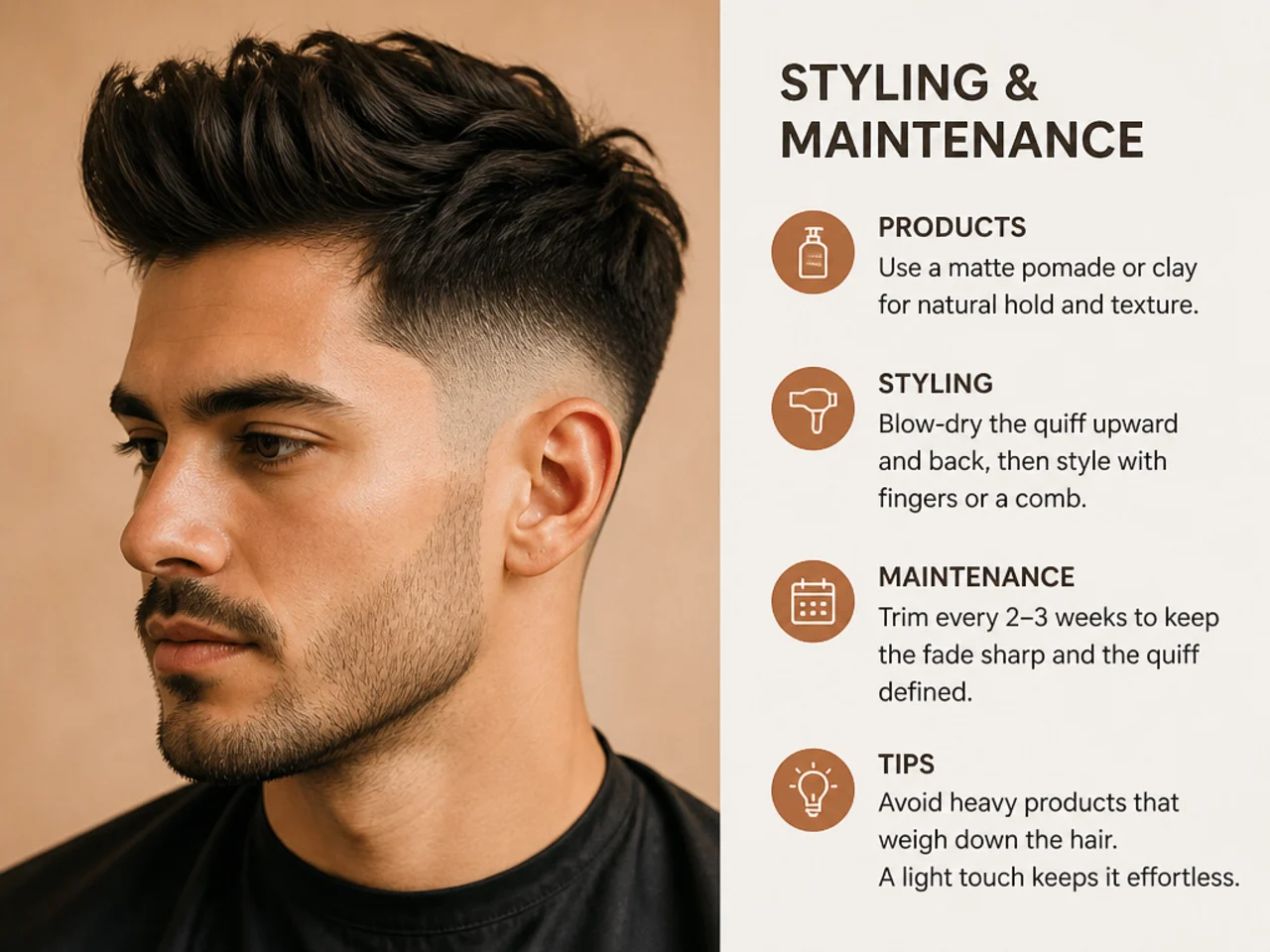
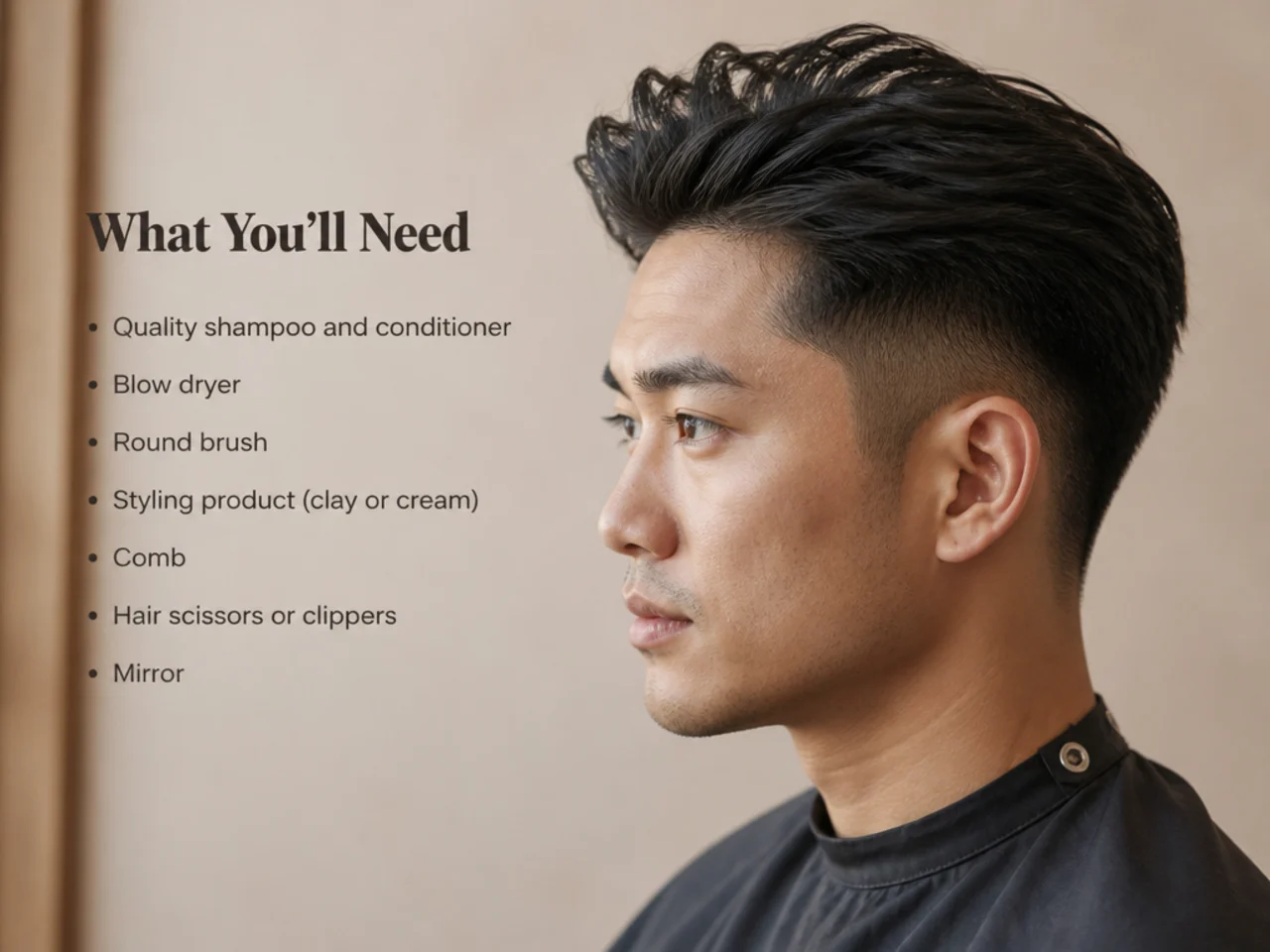
A quiff fade needs three products on the counter — matched to your chosen finish. For matte and textured versions, keep a matte clay and a texture powder. For classic and slick versions, keep a medium-hold pomade and a fine-tooth comb. For curly and wavy versions, keep a curl cream or a sea-salt spray. That is the base kit. Anything else is optional.
Start with damp — not wet — hair. Apply your product from the front backward, working it through the length with your fingers before touching a comb. For lift, blow-dry the front up and back with a round brush before adding your finishing product. For a matte finish, air-dry after applying the clay and skip the dryer. Comb once (or not at all) depending on the version — textured versions never see a comb.
Book the next full cut every three to four weeks to keep the fade sharp. Skin fades blur first — plan for three. Low tapers stretch to five weeks. The top can stretch to six between full cuts because it is scissor-cut and less time-sensitive. A quick shape-up between full cuts — just the sides and neckline — extends the life by a week and costs half of a full appointment. If you want to invest in home tools, the best hair clippers for men guide covers what to keep on the counter for neckline touch-ups.
For product recommendations by hair type, the best wavy hair products roundup covers pomades, creams, and sprays that hold on straight and wavy hair alike. For work-friendly styling routines, see professional hairstyles for men.
FAQ
Is a quiff fade still trending in 2026?
Yes — the quiff fade is the most-booked modern men's haircut of the last five years and shows no signs of slowing. The 2026 versions barbers cut most often are the textured mid fade quiff, the modern fringe quiff fade, and the messy quiff with mid fade — all in this guide. The classic pomaded versions still hold strong in the professional and formal-wear categories.
What is the difference between a quiff and a pompadour?
A quiff sweeps the front up and back in one smooth direction. A pompadour rolls the front forward first, builds volume through the crown, then sweeps back — it is taller and needs more product. The pompadour quiff fade in this guide sits between the two. Barbers historically treated them as cousins in the same family.
Which fade should I ask for if I want the safest option?
Low fade or low taper fade. Both keep the visual contrast quiet, both grow out gracefully, and both read appropriate in every professional dress code. The mid fade is a small step up in visibility and still works in almost every setting. Save the high and skin fades for when you want the haircut to be the first thing people see.
Can older men wear a quiff fade?
Absolutely. The low taper fade quiff, the slick pomaded quiff fade, and the side-part quiff fade were built for men 35 and up. Keep the top length at three to four inches, the fade low, and the finish leaning classic rather than matte-textured. That combination reads distinguished, not trend-chasing. The old money haircut men breakdown covers the wider mature-styling rules.
How long does it take to grow one out?
If you are starting from a buzz cut, budget four to six months for a full quiff fade — you need at least three inches at the front to hold shape. From a short crop, two to three months. The awkward middle phase — around week eight — is easier if you ask your barber for a shape-up along the way to keep the sides fresh while the top catches up.
Does the quiff fade look good on Asian or Black hair?
Yes to both. Asian men's straight hair holds the classic and textured versions with almost no styling effort — the density does the work. Black men's curly and coily hair pairs beautifully with a burst fade quiff or a mid fade quiff with a natural top. The fade haircut pillar covers the fade-type nuances by hair type in more depth.