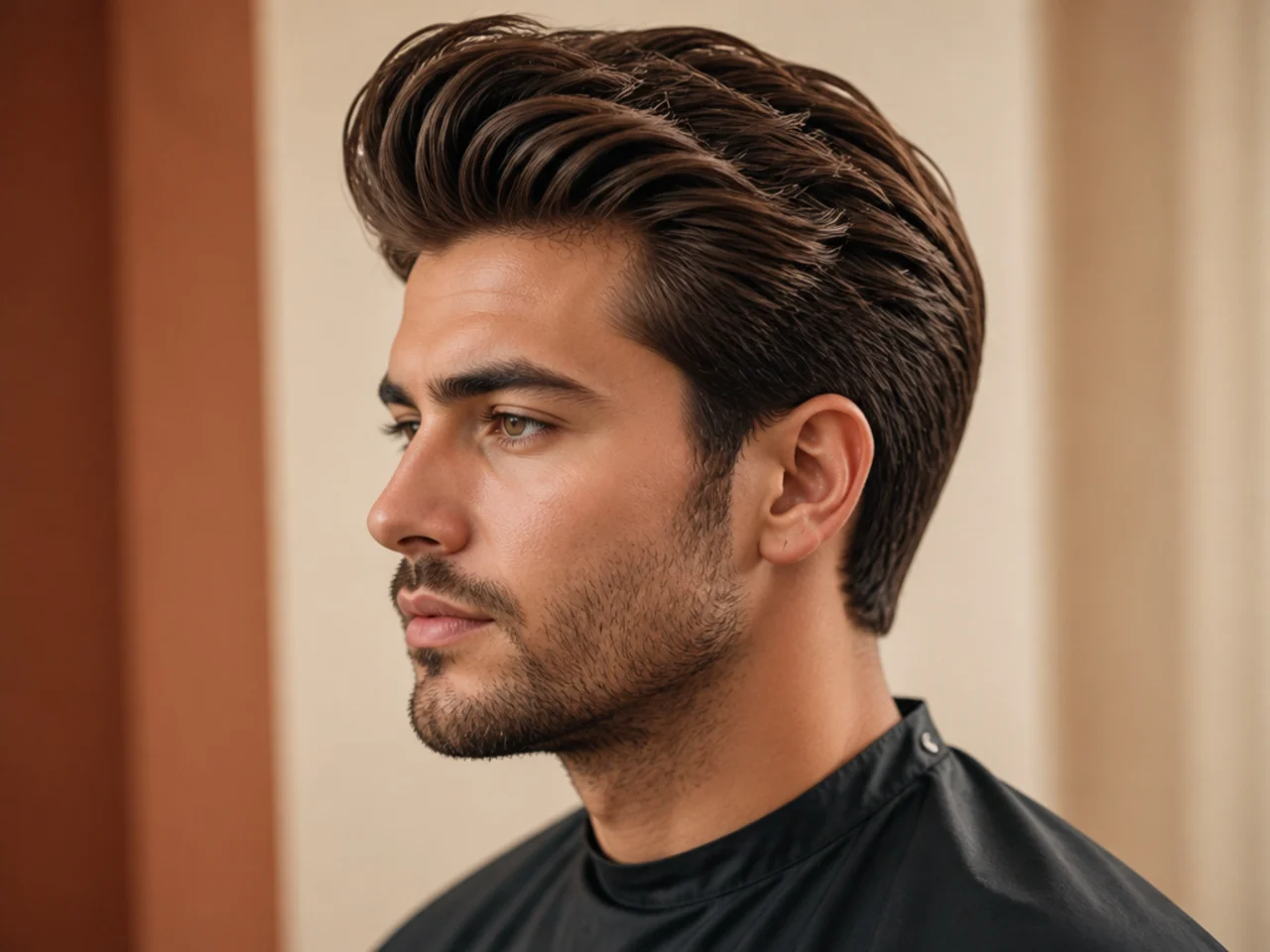
20 Long Quiff Hairstyles for Men
Twenty long quiff hairstyles men are asking for in 2026 — six to eight inches on top, real front sweep, and the exact barber ask for each variation.
In this article · 32
- What Is a Long Quiff?
- How to Choose Your Long Quiff
- The 20 Long Quiff Variations
- 1. Classic Long Quiff
- 2. Textured Long Quiff
- 3. Sleek Long Quiff
- 4. Messy Long Quiff
- 5. Long Quiff with Low Taper Fade
- 6. Long Quiff with Mid Fade
- 7. Long Quiff with High Skin Fade
- 8. Long Undercut Quiff
- 9. Long Quiff with Burst Fade
- 10. Long Quiff with Drop Fade
- 11. Long Wavy Quiff
- 12. Long Curly Quiff
- 13. Long Quiff with Hard Part
- 14. Long Quiff with Beard
- 15. Long Side-Swept Quiff
- 16. Long Layered Quiff
- 17. Executive Long Quiff
- 18. Long Middle-Broken Quiff
- 19. Rockabilly Long Quiff
- 20. Grown-Out Long Quiff
- How to Ask Your Barber for a Long Quiff
- Styling and Upkeep for a Long Quiff
- FAQ
- Is the long quiff still trending in 2026?
- How long does hair need to be for a long quiff?
- How is a long quiff different from a pompadour?
- Can I get a long quiff with fine or thinning hair?
- Which fade works best with a long quiff?
- Can a long quiff work for older men?
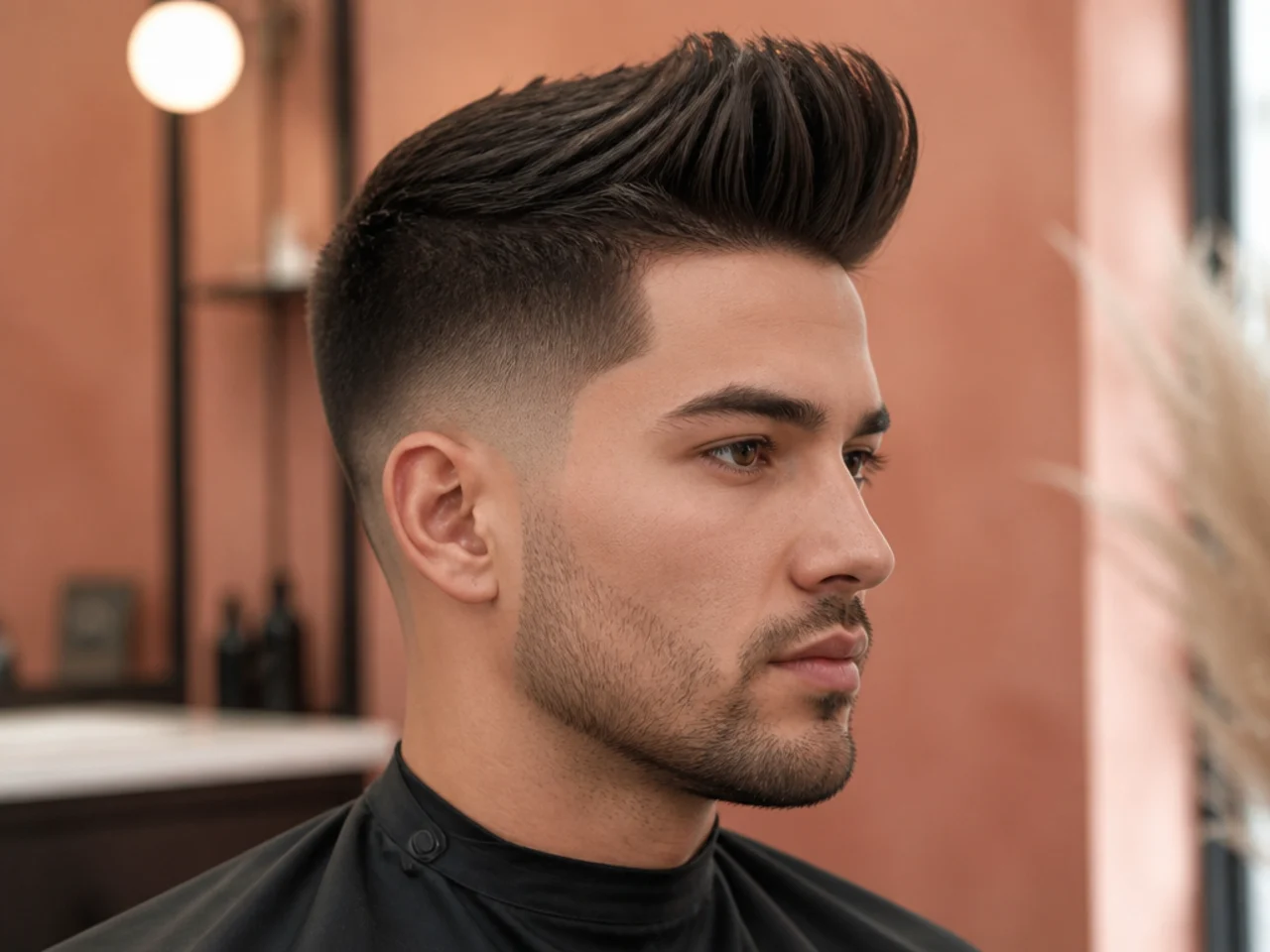
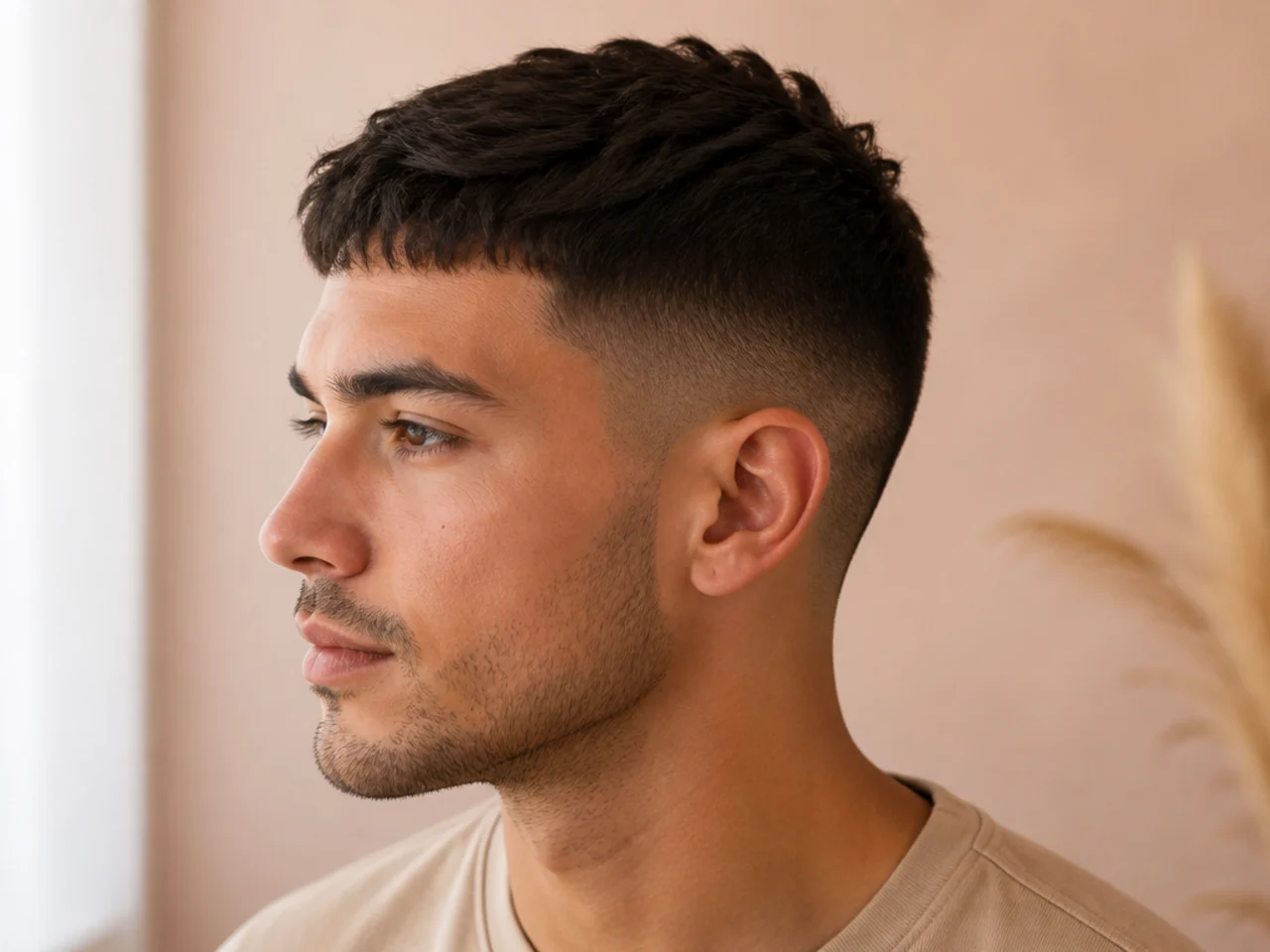
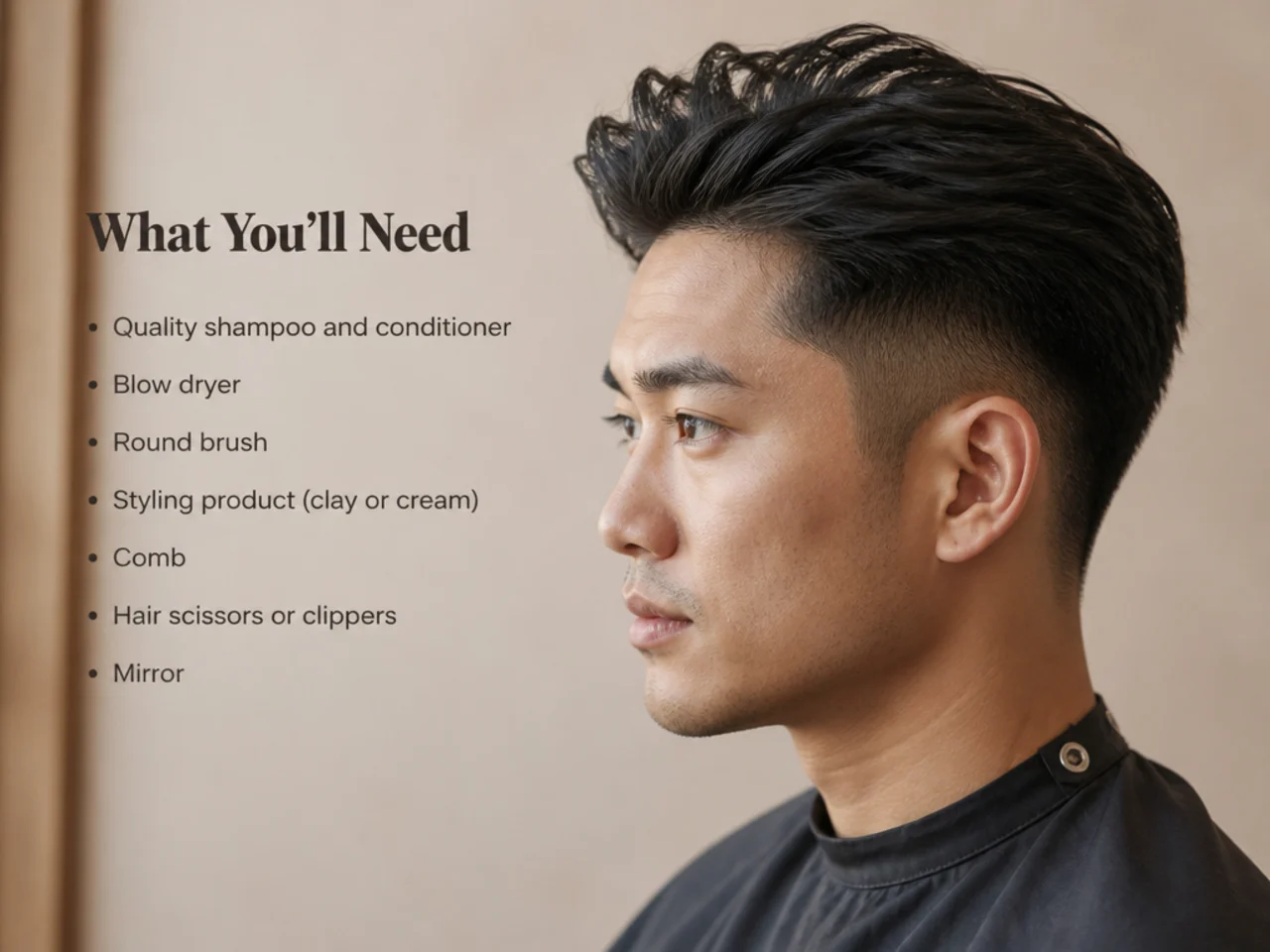
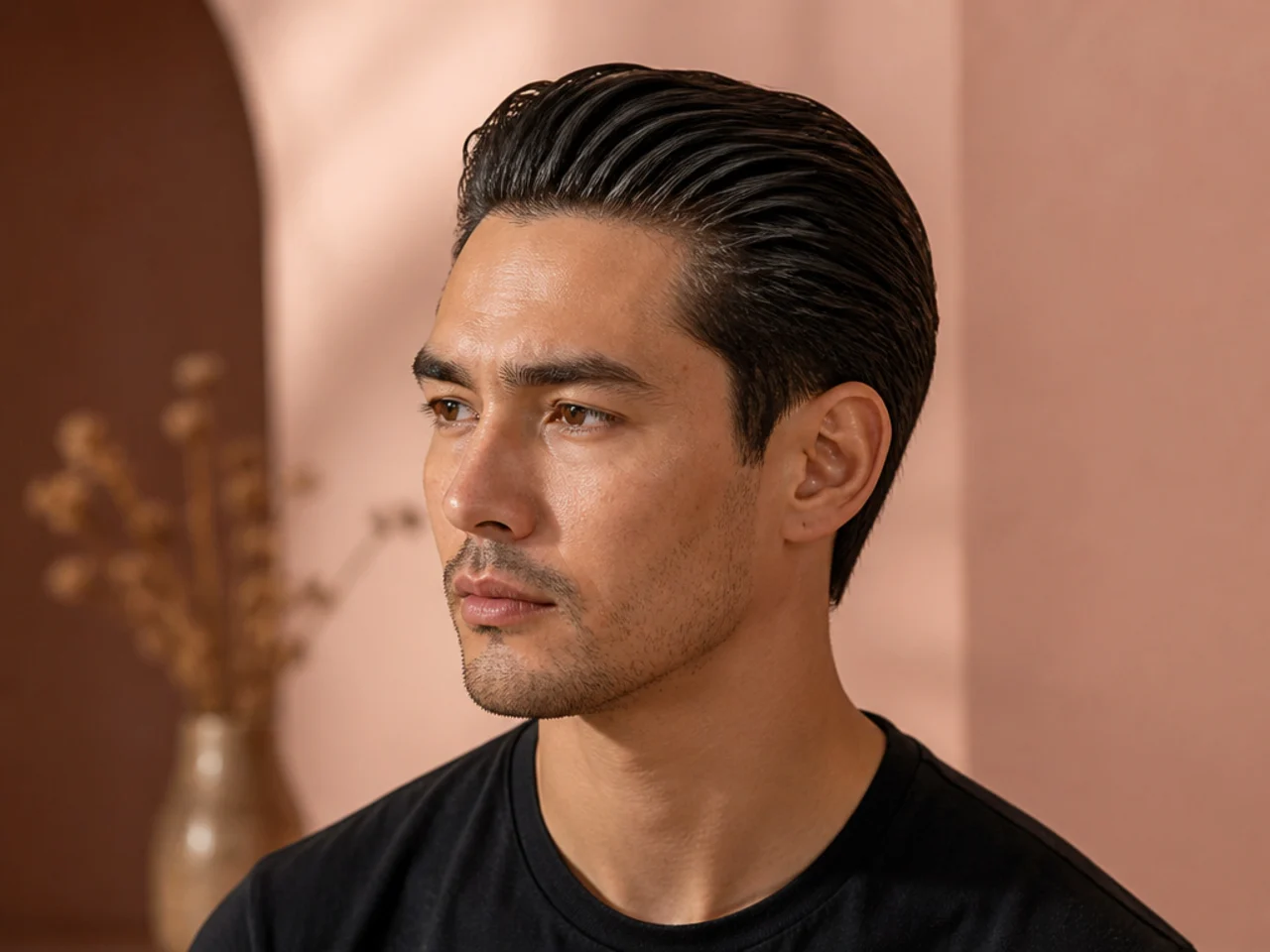
A long quiff is a quiff cut past the five-inch mark so the front sweeps back with real drama instead of the tidy lift of a shorter shape. Six to seven inches on top is the working range, sides stay short by contrast, and the front carries a visible curve from hairline to crown. It reads statement without reading costume, and it photographs like nothing else in the wider quiff hairstyles library for men. Below are twenty long quiff hairstyles men are asking for in 2026, with the number to hand your barber and the face shape each one flatters.
What Is a Long Quiff?
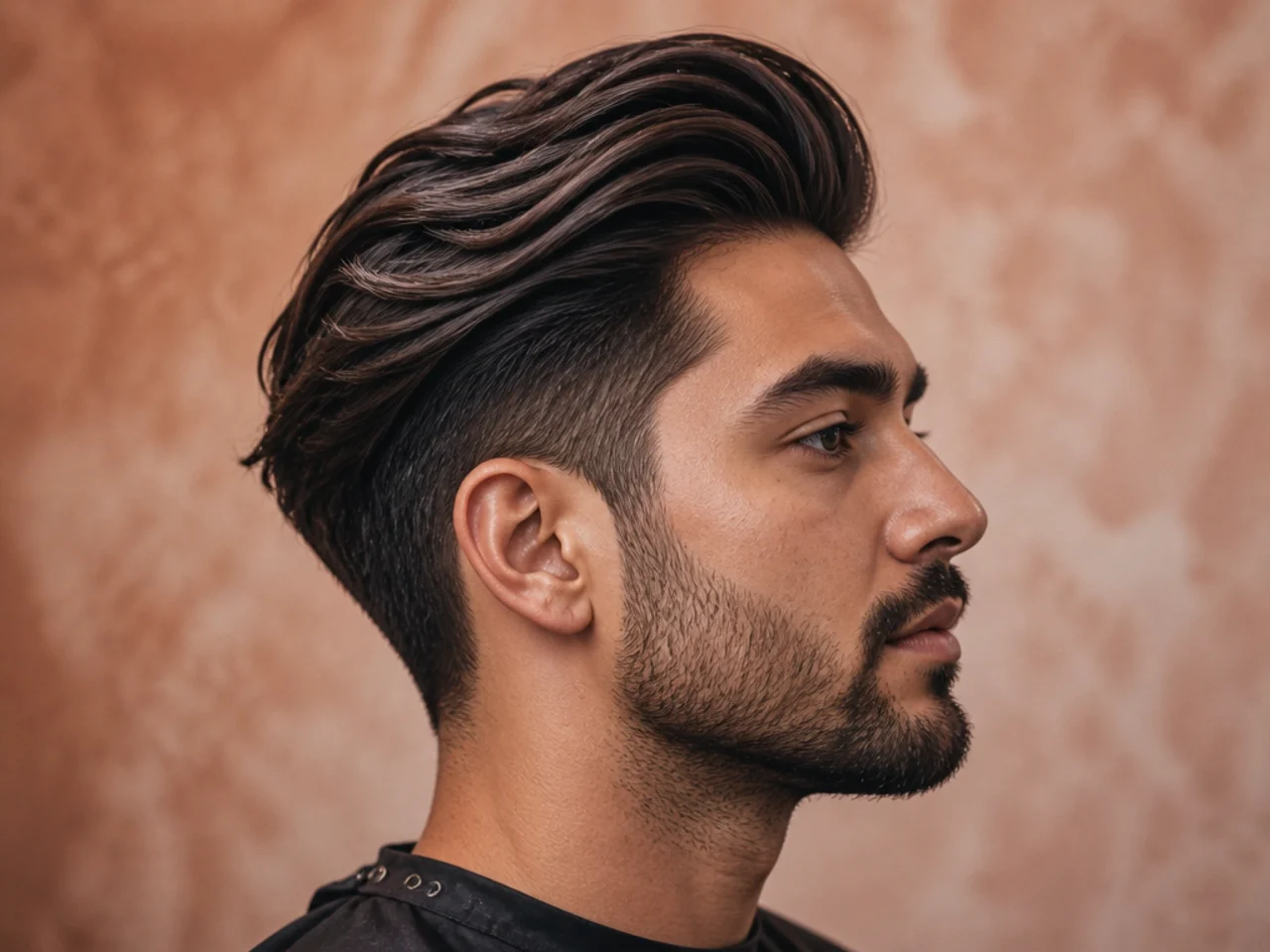
A long quiff is a men's haircut with five to eight inches of length on top and short, faded, or tapered sides. The front is left long enough that when you sweep it up and back, it holds a visible arc rather than a flat lift — the hair curves over the crown like a wave rolling backward. That curve is what separates a long quiff from a slick back or a long comb-over.
Three details set a long quiff apart from other long-top men's cuts. The front sits taller than the crown, which is the geometry of the quiff family. The layers grade downward from front to back so the shape does not tip into shag or mullet territory. And the sides sit noticeably shorter than the top — a scissor blend at minimum, more often a taper or a fade — so the length reads as intentional rather than overgrown.
The long quiff earns its slot for one reason. It is the loudest version of the shape short of a full pompadour, and it delivers a silhouette that carries a room. The trade is real — five minutes at the mirror most days, a round brush, and a re-cut cadence tighter than a shorter shape. Guys who want the payoff learn to make peace with the routine.
How to Choose Your Long Quiff
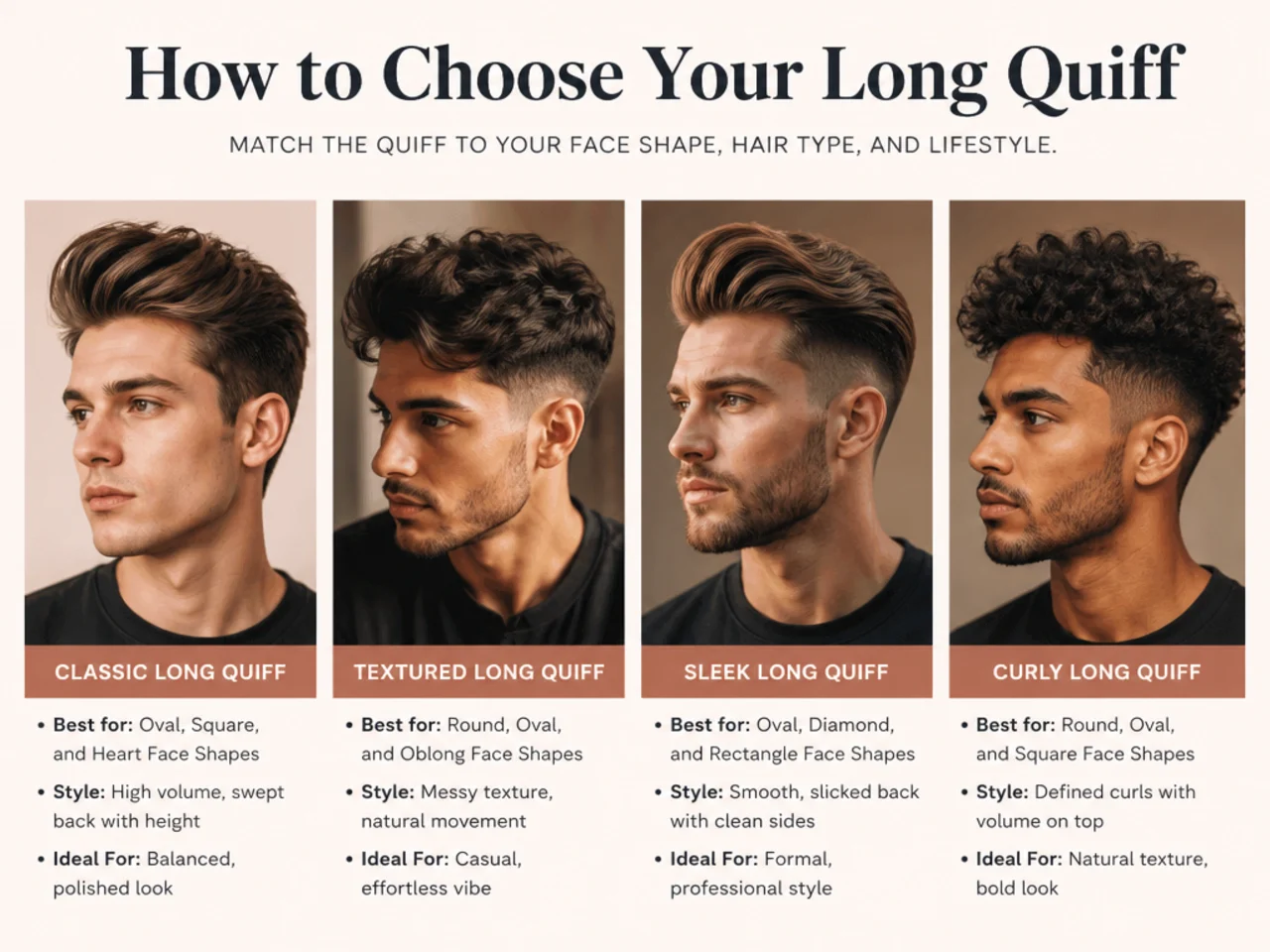
Face shape sets the shortlist. Oval faces suit every version on this list. Square jaws look sharper under a textured or messy long quiff — the softness on top offsets the angular bottom line. Round faces gain the most: vertical lift stretches the frame and slims a wider face better than any other cut in the men's category. Long or rectangular faces should stay at the shorter end of the range — five inches, not seven — with a lower fade so the top does not lengthen an already long face. Heart-shaped faces balance under a side-swept or middle-broken version that adds width across the brow.
Hair type sets the difficulty. Thick, medium-density straight hair is the easiest — a round brush and matte cream does the work. Fine hair needs a mousse pre-styler, extra internal layering, and a texture powder at the root to keep the length from collapsing. Coarse hair holds the shape but needs internal thinning at the cut so it does not sit like a helmet. Wavy hair is the sweet spot for the messier and grown-out versions. Curly hair needs the length measured stretched and works best with a cream, never a pomade.
Lifestyle is the tiebreaker. If your morning runs five minutes, pick the messy or grown-out version — finger-styled, matte cream, done. If you can spend ten minutes and you own a round brush, the sleek, classic, and executive versions are in range. If your workplace runs formal, stay with the scissor-blended and low-taper sides — a high skin fade or a disconnected undercut reads loud in a boardroom regardless of how neat the top sits.
The 20 Long Quiff Variations
1. Classic Long Quiff
The classic long quiff is the neutral shape every other long version bends off. Six inches at the front, four through the crown, sides finished with a soft scissor taper or a subtle low fade. The finish sits low-shine — a cream or a light pomade, not clay — and the front holds a controlled sweep rather than a piece-y break.
Ask for six inches on top graded down to four at the crown, a scissor blend or short low taper fade, and no aggressive thinning. Tell your barber the front should curve, not spike.
Blow-dry from underneath the front with a large round brush, then comb a coin of medium-hold cream up and back. Best for oval, square, and round face shapes on medium-density straight or lightly wavy hair.
2. Textured Long Quiff
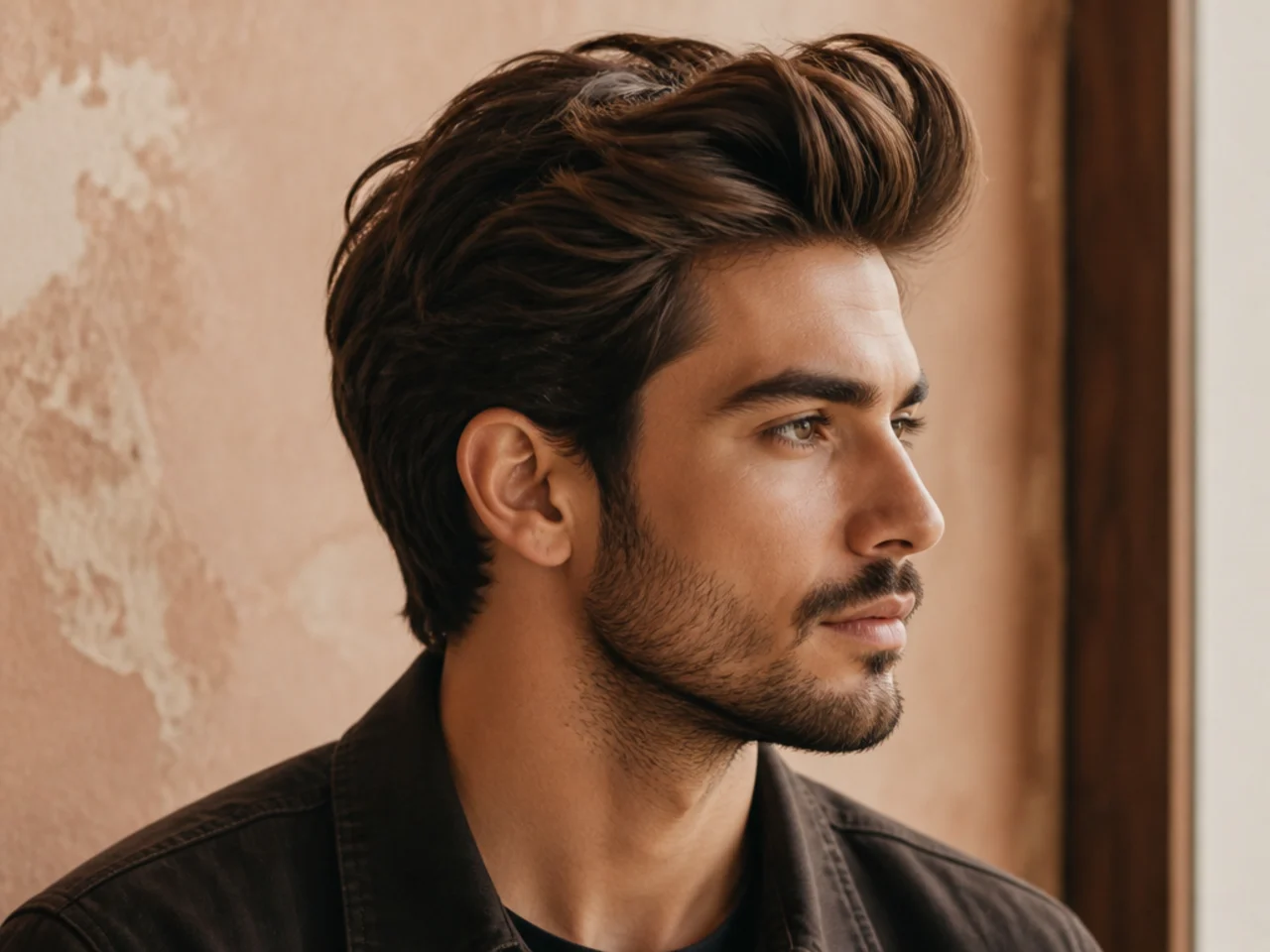
The textured version leans on aggressive point-cutting to give the long top visible piece separation. Layers are chopped at slightly different lengths so strands sit apart rather than clumping into a smooth curve. It is the modern read on a long quiff — piece-y, matte, and photographed everywhere in 2026.
Ask for six inches on top, heavy point-cut layers, a mid fade at the sides, and light thinning through the crown if your hair is dense. Add "no razor" so the ends stay chunky.
Sea-salt spray on damp hair, rough-dry from the roots up, then a nickel of matte cream through the ends only. Push the front up and back with open fingers. Best for straight or lightly wavy hair on any face shape, and the natural next step from the shorter textured haircuts for men family.
3. Sleek Long Quiff
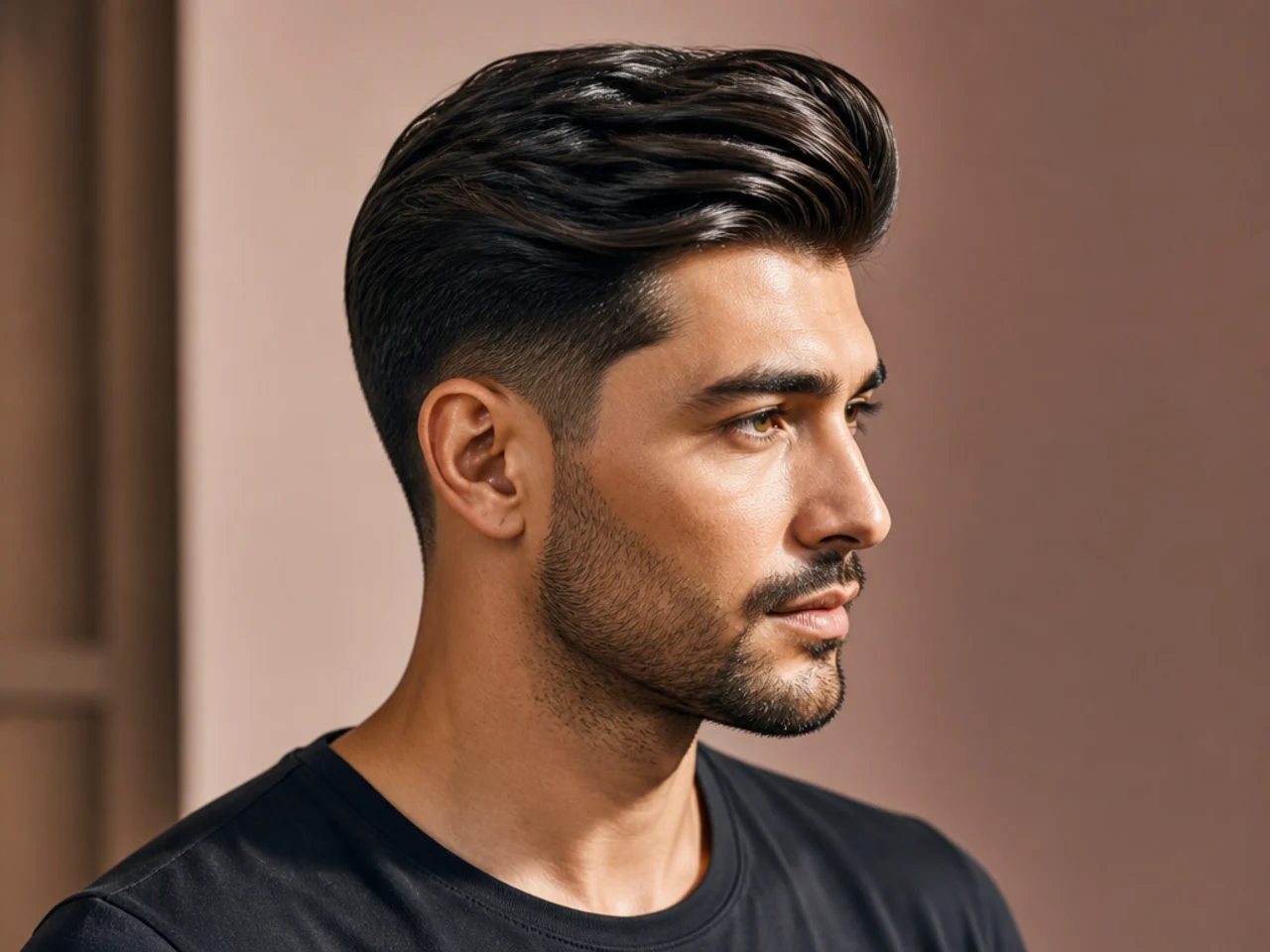
The sleek version is the closest a long quiff gets to a proper pompadour without pushing into that costume. The front combs cleanly up and back with visible shine, the sides sit at a mid or high skin fade, and the crown is layered so nothing puffs behind the curve. It flatters formal wear better than any other version on this list.
Ask for six-and-a-half inches at the front, scissor layers with no aggressive thinning, and a mid fade or high skin fade at the sides. Say the finish will be smooth, not textured.
Prep with a blow-dry cream, round-brush the front up and back on medium heat, then work a coin of water-based pomade from root to tip. Comb through and cool-shot to set. Best for weddings, offices, and straight hair that holds a shape.
4. Messy Long Quiff
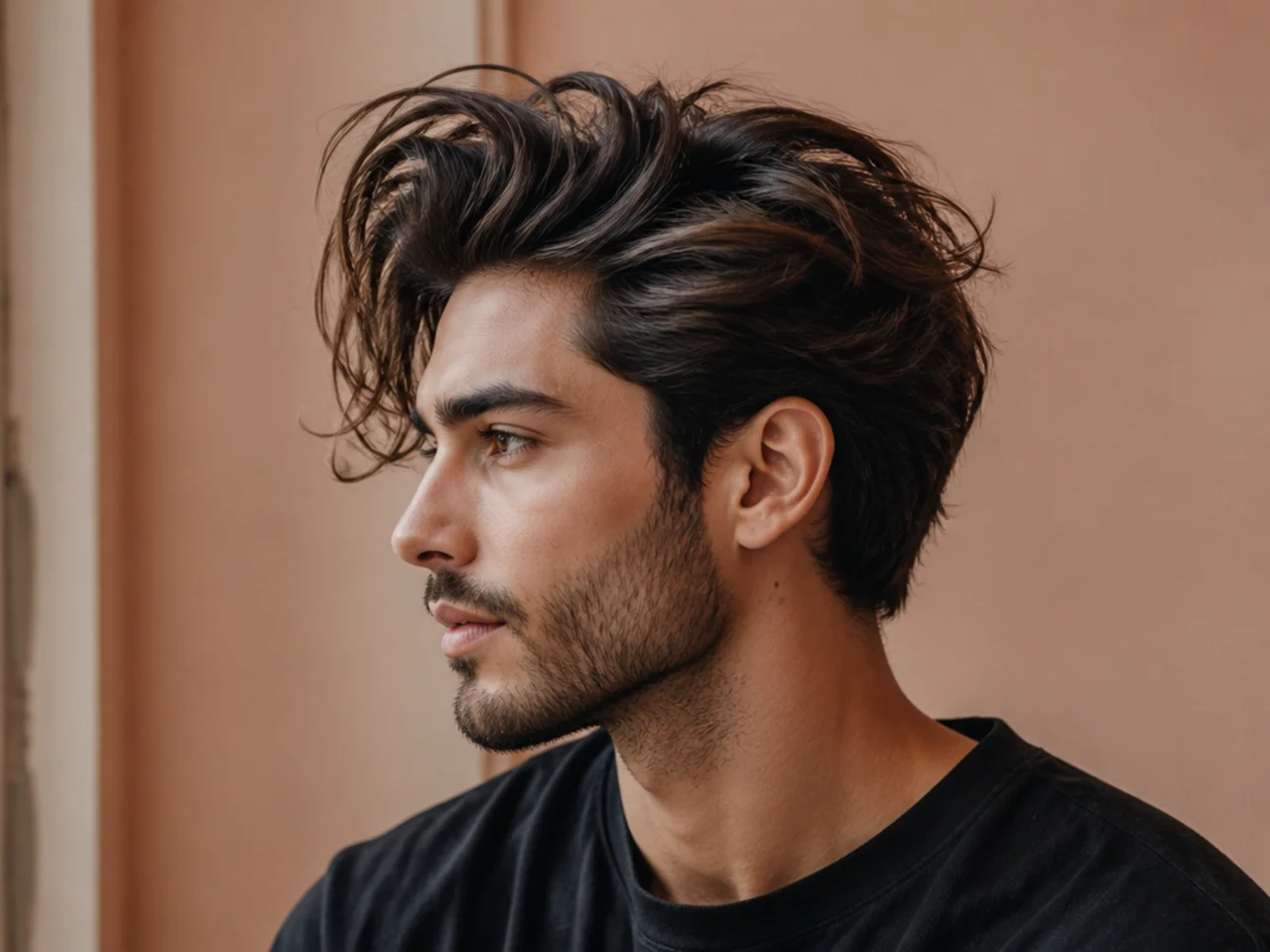
The messy version keeps the length of the classic but breaks the finish so it reads slept-in rather than styled. Layers are point-cut, the perimeter is left slightly rough, and the front is finger-swept rather than combed. There is no defined ridge or hard part — the top moves in loose sections toward the back.
Ask for a six-inch front, scissor layers with visible variation in length, and a low taper fade at the sides. Tell your barber "worn-in, not sharp."
Rough-dry with your fingers on high heat, spray sea-salt spray from the ends up, then press a pea of matte clay through the front third. Best for wavy or thick straight hair, and the natural upgrade from the shorter messy hairstyles men family.
5. Long Quiff with Low Taper Fade
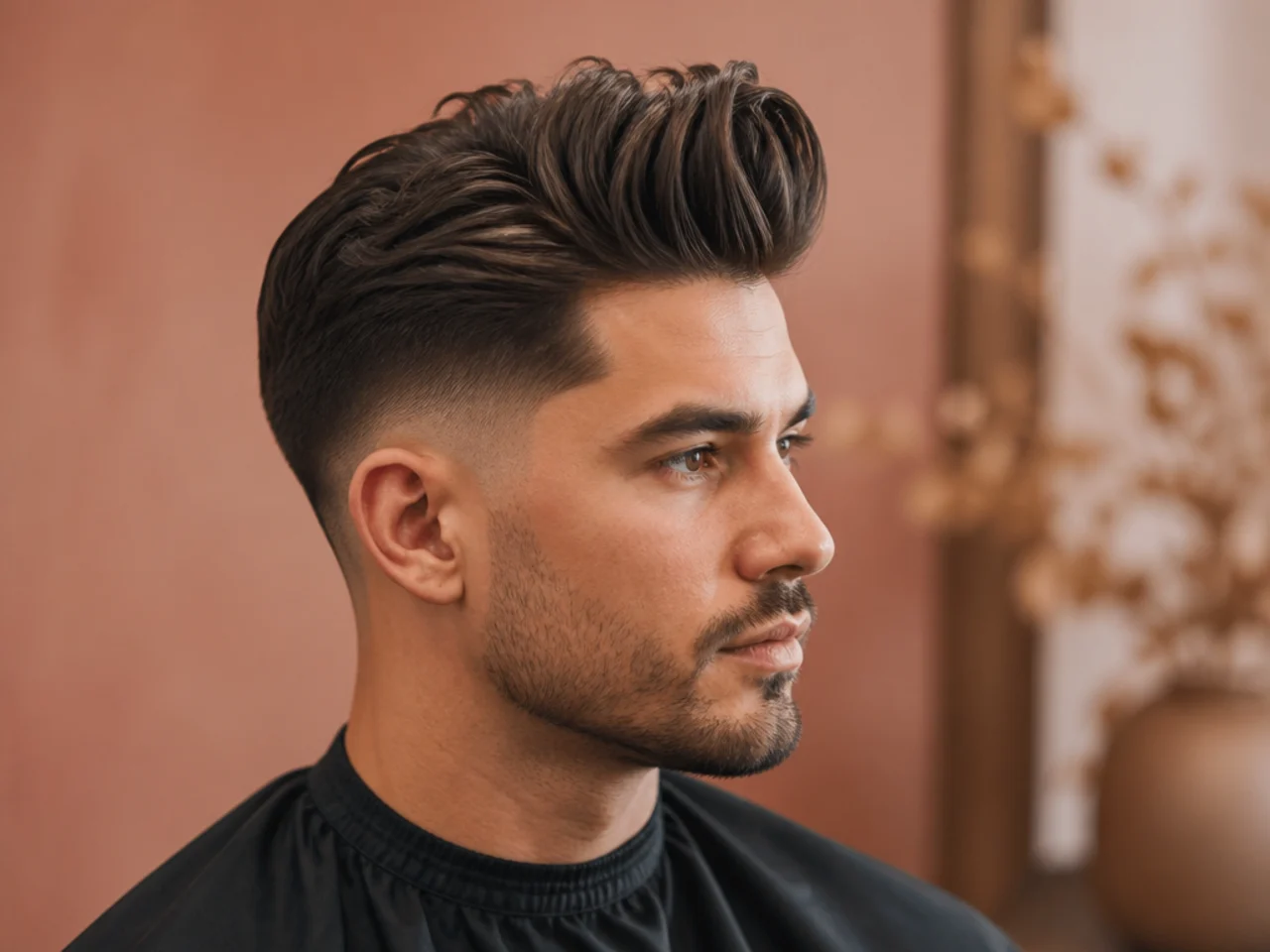
The low taper is the softest side treatment for a long top. Instead of a fade climbing up the head, the sides drop into a gentle taper at the neckline and around the ears. The length on top does the talking, and the sides stay quiet enough to read in any workplace.
Ask for a low taper fade starting just behind the sideburn, six inches on top, and a soft scissor blend at the parietal ridge so the length flows into the tapered sides without a hard line.
Blow-dry the front up and back with a vented brush, work a coin of medium-hold cream through the mid-lengths. Best for oval, square, and softer facial features. It is the safest possible entry point into the long quiff family for a professional workplace.
6. Long Quiff with Mid Fade
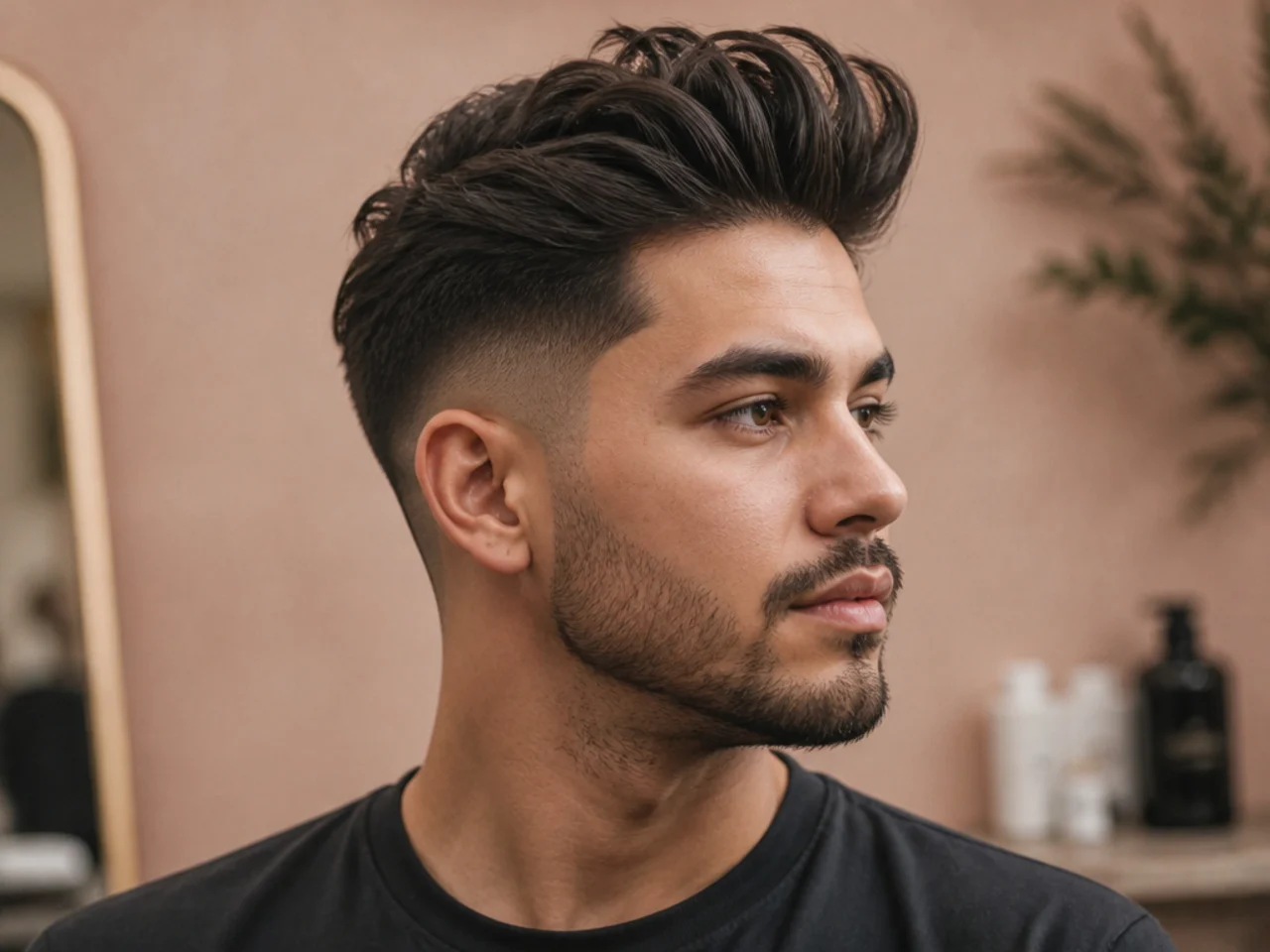
The mid fade sits at the temple and reads as the default modern pairing for a long top. It gives the length enough contrast to look sculpted without pushing into shaved-sides territory. Most guys who ask for "a long quiff with a fade" mean this version — it photographs balanced from every angle.
Ask for a mid fade at the temple, six inches on top with point-cut ends, and a soft blend at the crown. Add "matte finish" so a barber does not default to gloss on the longer top.
Round-brush the front up and back for a minute, matte cream through the mid-lengths, finger-style the crown. Best for almost any face shape under thirty-five — the mid fade does the flattering, and the length delivers the drama.
7. Long Quiff with High Skin Fade
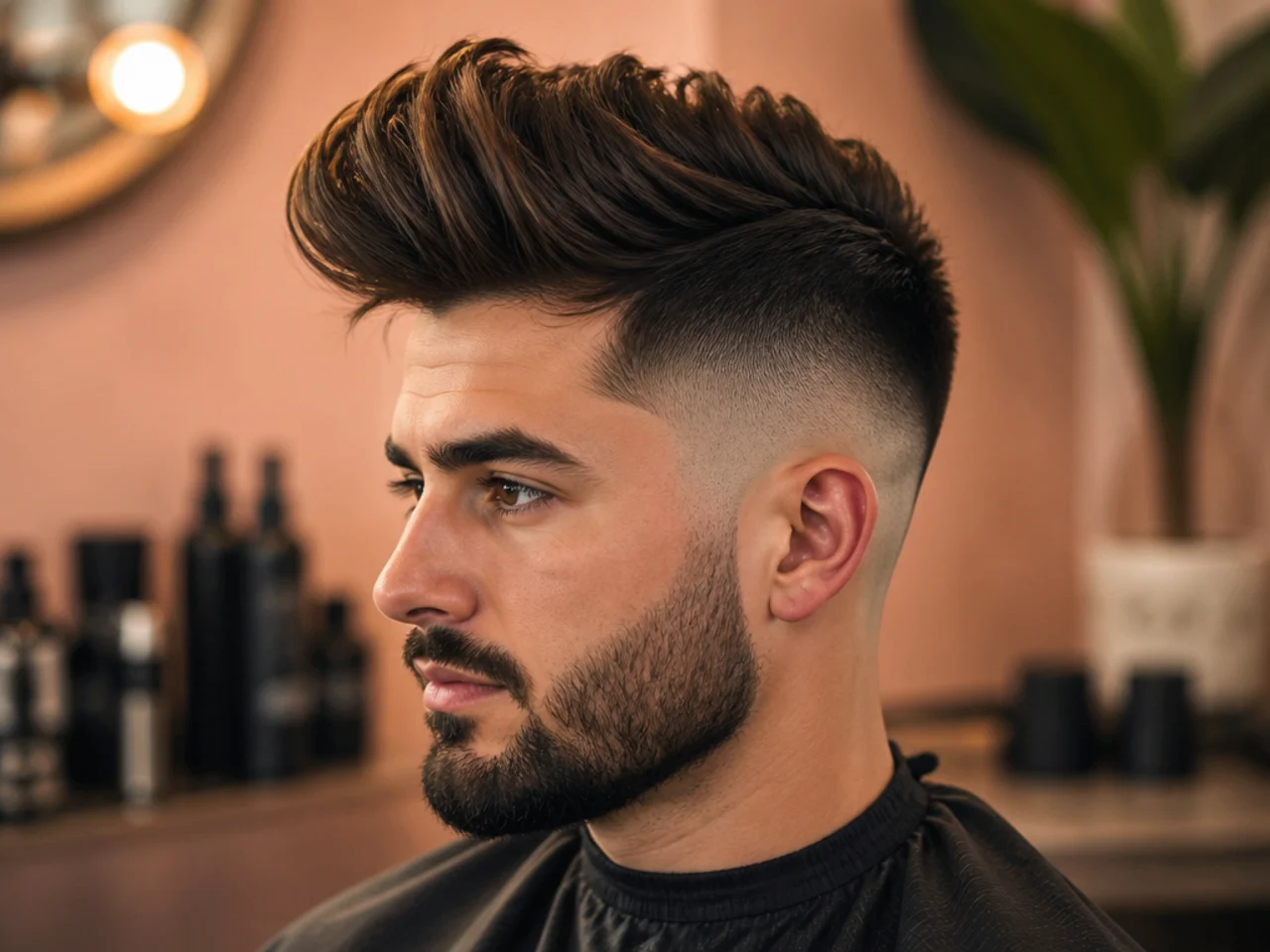
The high skin fade version is the statement pairing. Sides go to skin mid-ear or above, and the long top sits in a hard-contrast quiff shape that reads editorial. It is the version guys post to Instagram, not the one for a business-formal Monday.
Ask for a high skin fade starting mid-ear or higher, six-and-a-half inches on top, and a soft disconnect where the top meets the fade. Say "matte, not sleek."
Blow-dry the front up and back, matte paste through the mid-lengths, push the length backward with the flat of your hand. Book a mid-cycle line-up at two weeks — this fade grows out fastest.
8. Long Undercut Quiff
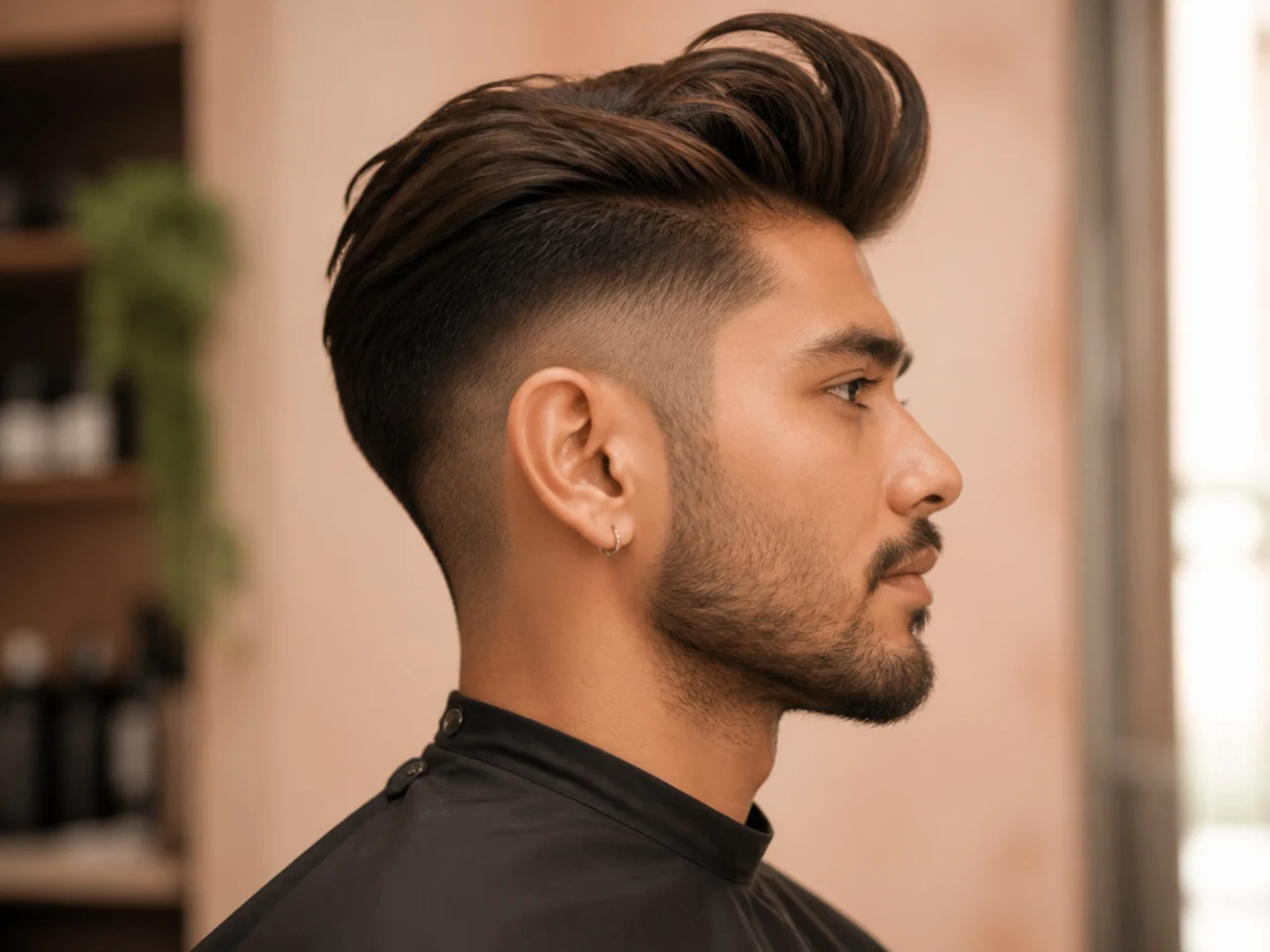
The undercut version disconnects the top from the sides entirely — no blend, just a clear break between clipper-cut sides and the long quiffed top. It is the sharpest silhouette on the list and the one that lets you flip finishes without recutting.
Ask for a disconnected undercut at a number two or three guard, seven inches on top, and a clean line where the disconnection sits.
Style up and back with matte clay for the everyday look, or brush back with water-based pomade for a formal shape. Best for guys who do not mind the attention, oval and square face shapes, and straight to lightly wavy hair. The disconnect ages tougher than a fade — commit before you book.
9. Long Quiff with Burst Fade
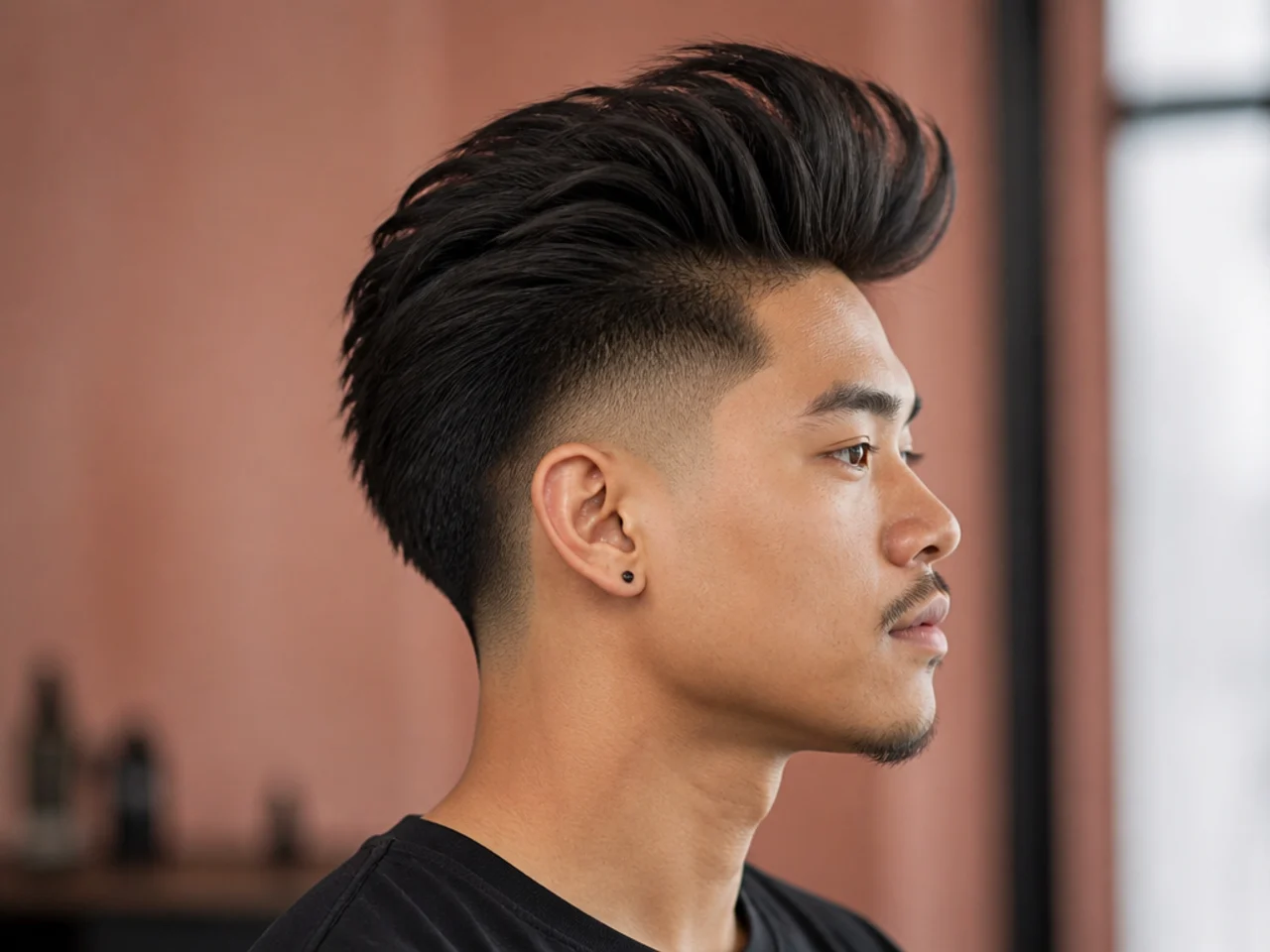
The burst fade curves around the ear in a semicircle instead of running flat up the head. It leaves a small tuft at the nape, keeps length above the ear, and reads softer than a straight-line fade. Paired with a long top, it makes the whole shape feel sculpted rather than clipped.
Ask for a burst fade curving around the ear, six inches on top with point-cut layers, and a soft blend into the crown.
Round-brush the front up and back, matte cream through the mid-lengths, push everything backward with your fingers. Best for oval and diamond faces on straight-to-wavy hair. It is the version most guys pick when they want a distinctive silhouette instead of the standard flat-climb fade.
10. Long Quiff with Drop Fade
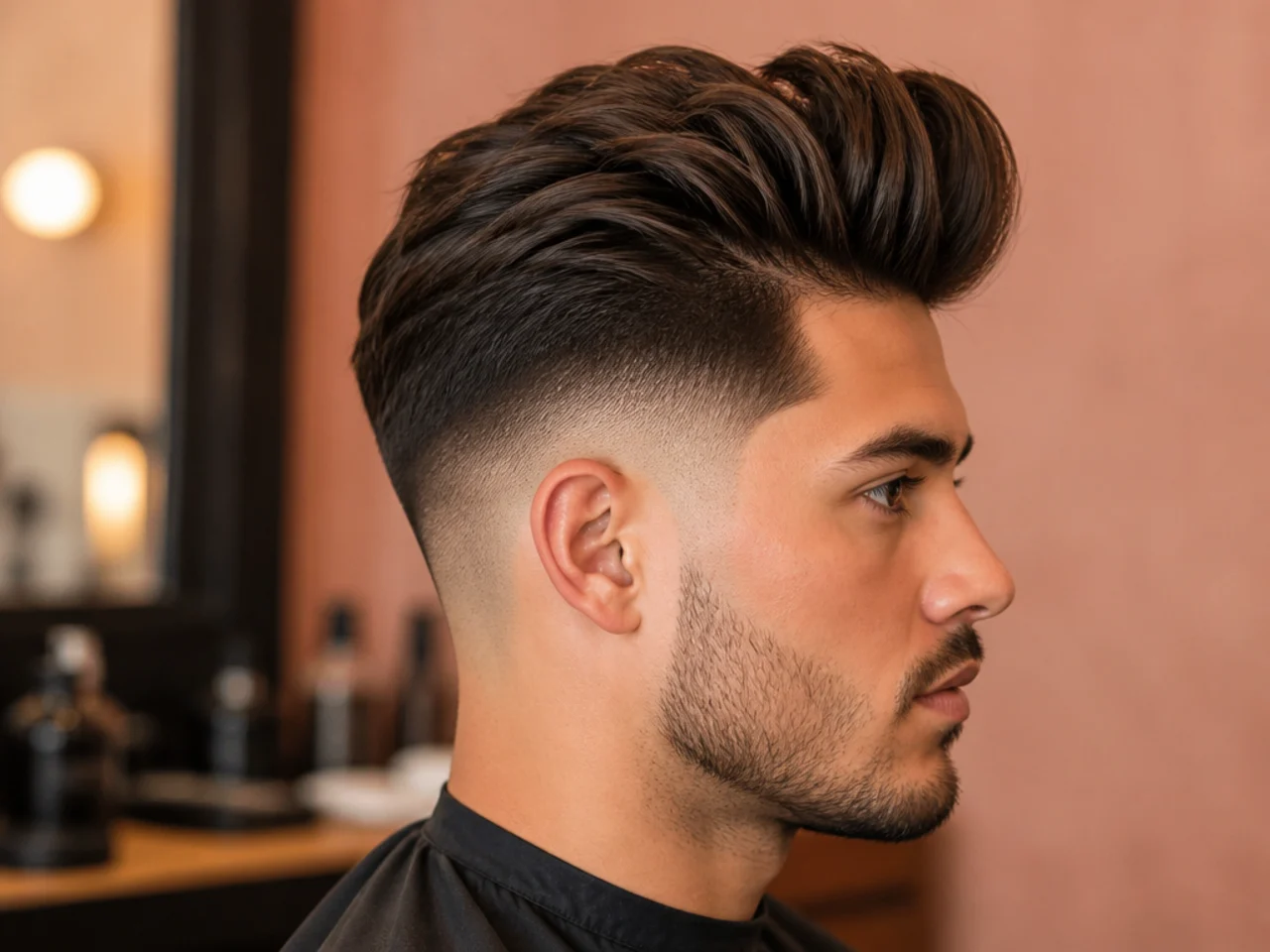
The drop fade curves down and around behind the ear rather than staying flat, which gives the sides a softer, sculpted read. Paired with a long top, it hides the transition and lets the length carry the silhouette without a hard clipper line breaking the frame.
Ask for a drop fade — specify where you want it to bottom out behind the ear — and six inches on top with a soft scissor blend at the crown.
Rough-dry from underneath the front, matte cream through the mid-lengths, push the top up and slightly forward before letting it fall back. Skip anything shiny — matte is the whole point of the shape. Best for eighteen to thirty, oval to square face shapes, and medium-density straight or wavy hair.
11. Long Wavy Quiff
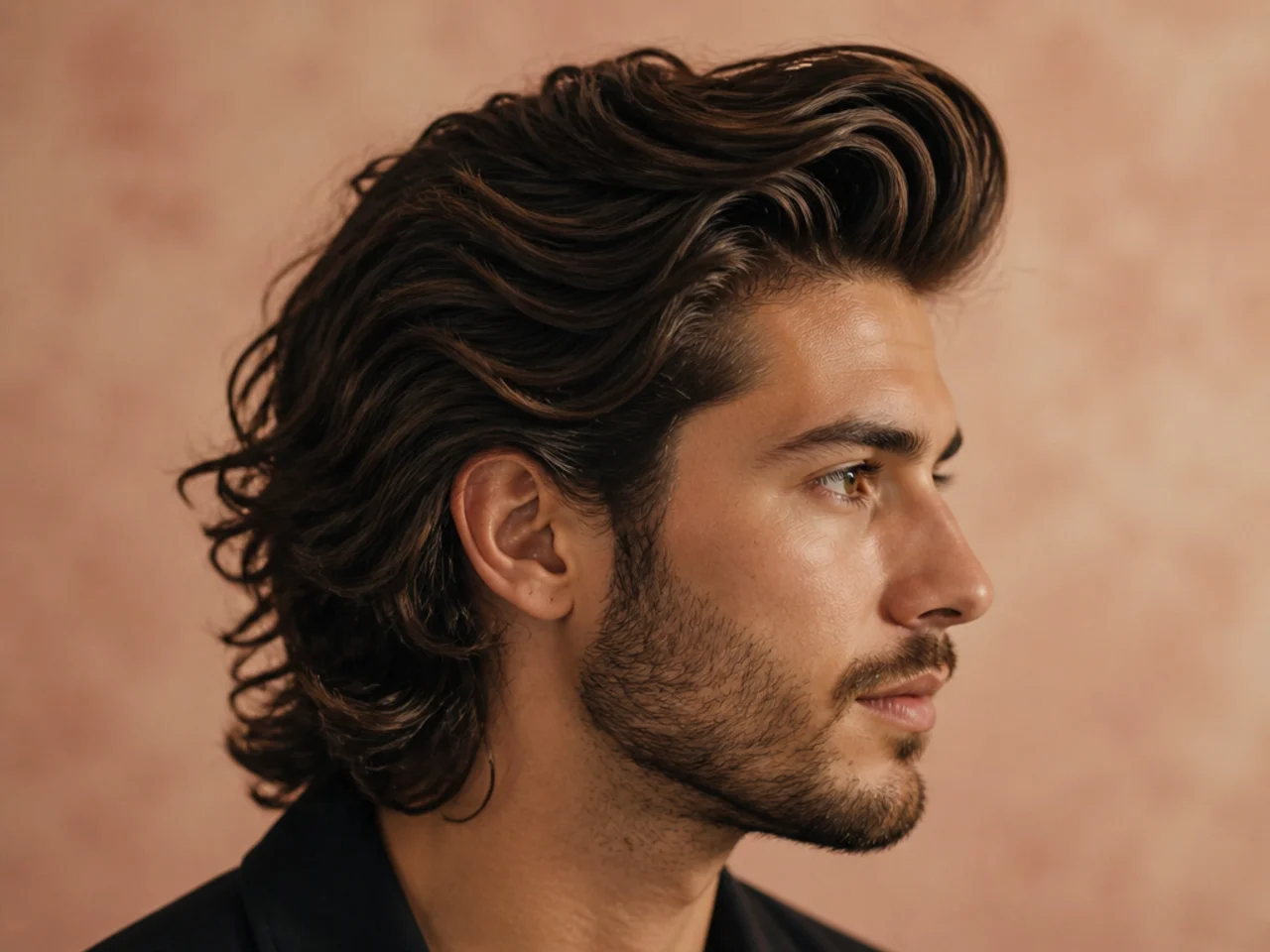
Wavy hair is the sweet spot for a long quiff. The natural bend gives you piece separation without any styling effort, and the length lets each wave show its full S-shape on the way back. This version leans into the wave rather than fighting it flat.
Ask for scissor layers cut with the wave pattern, a low taper or mid fade at the sides, and six inches at the front. Say "no thinning shears" — thinning kills wave definition.
Apply a wave-friendly cream to damp hair, scrunch the front to encourage the wave, then air-dry or diffuse on low. A light wax at the tips only. Best for naturally wavy hair on any face shape, and a grown-up alternative to the shorter surfer hairstyle look.
12. Long Curly Quiff
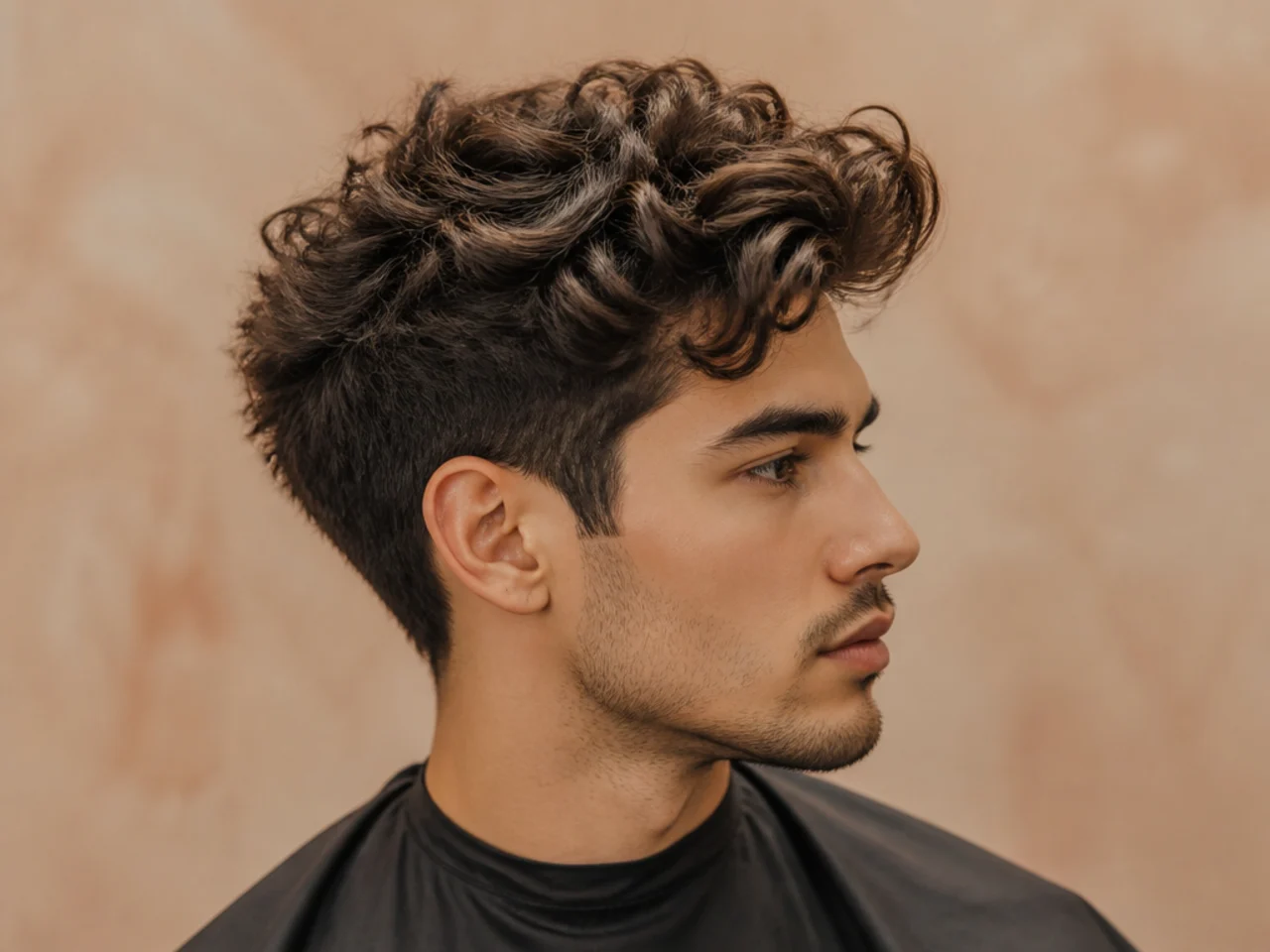
Curls change the geometry of a long quiff. Volume is built in, so the length delivers even more presence — the coils lift naturally at the front and spring backward over the crown with density that straight hair cannot match. Length is measured stretched; shrinkage takes half of it back when the coil relaxes.
Ask for a dry cut so your barber can see where the coils actually fall, seven to eight inches at the front measured stretched, and a mid taper at the sides. Skip razor and thinning shears — both destroy curl pattern.
Curl cream on damp hair, diffuse on low or air-dry, then push the front up and back with your palm. Best for type 2 and 3 curls on any face shape. Type 4 hair works but reads more Afro-quiff and deserves its own consultation.
13. Long Quiff with Hard Part
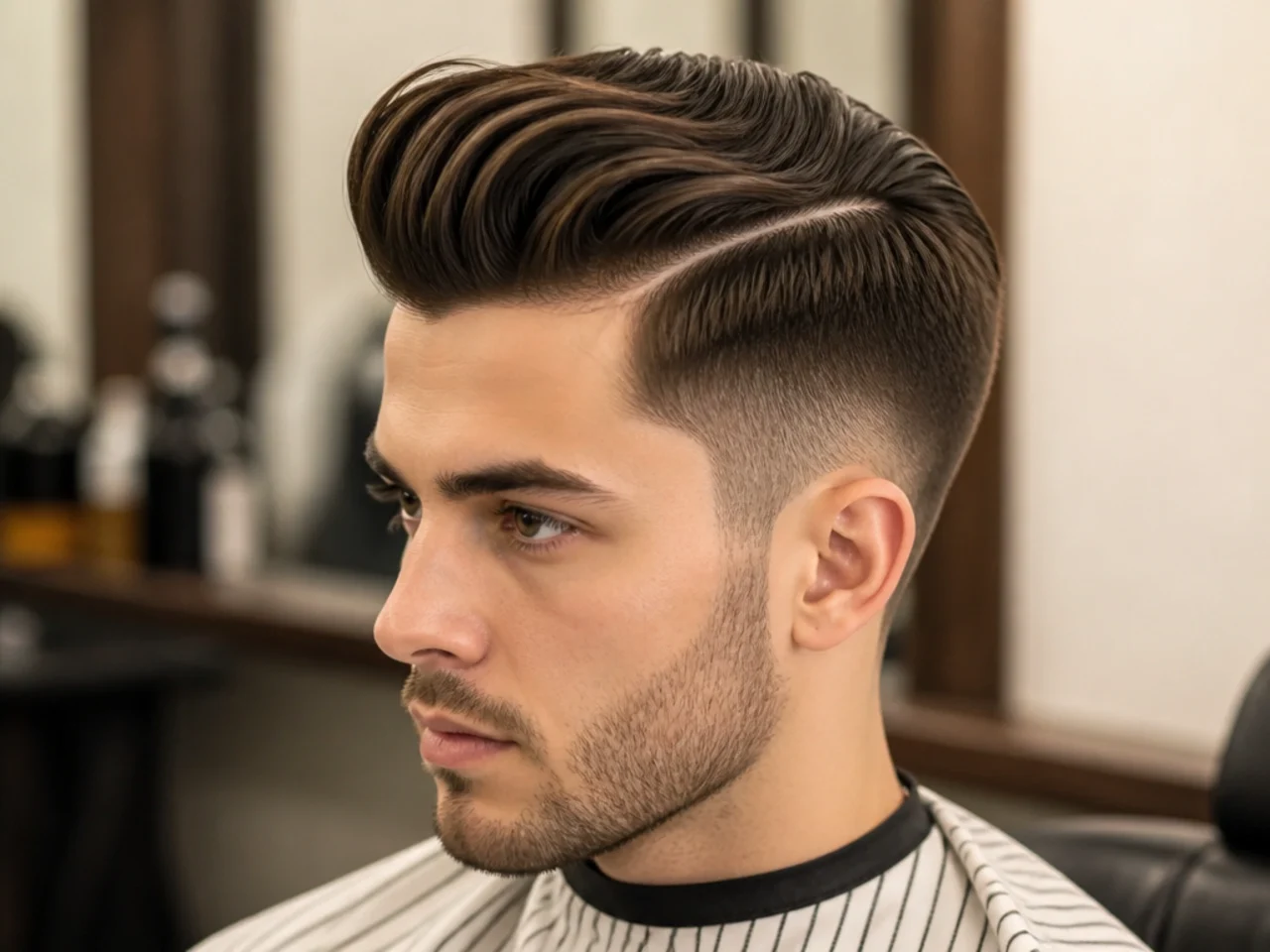
The hard part is a clean line cut into the side with a straight razor or a zero guard — a barber-drawn part that stays visible for two to three weeks. Paired with a long top, it adds a sharp geometric detail at the side without changing the sweep on top.
Ask for a clipper-cut hard part along your natural side part, then a mid fade below it. Keep the top at six inches with scissor layers.
Comb the front up and back with a water-based pomade, letting the hard part frame the sweep. Best for square and diamond faces on straight hair. Book a re-line every two weeks — the hard part is always the first detail to grow out.
14. Long Quiff with Beard
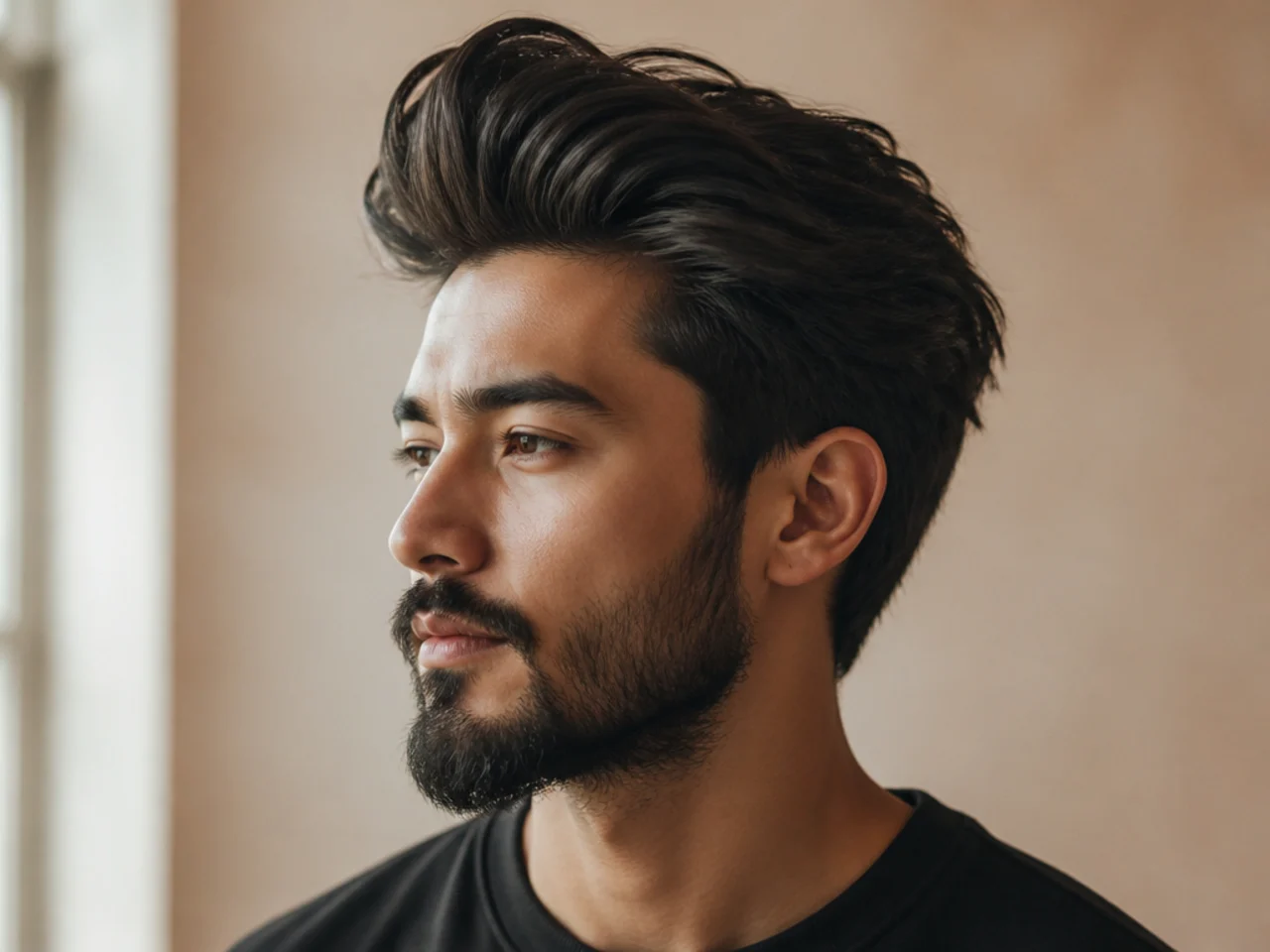
Pairing a long quiff with a beard is a balance question. The top adds real height, the beard adds bottom-weight, and the two need to sit at proportional lengths or the face reads unbalanced. A medium beard — one to one-and-a-half inches — carries a six-inch quiff without competing for attention.
Ask for the long quiff you would cut without a beard, plus a beard trim that matches the visual weight. Ask your barber to blend the sideburn into the beard so no clipper line breaks the frame.
Style the quiff as usual, then a drop of beard oil combed through with the fingers. Best for square, oval, and heart-shaped faces on guys with mature jawlines. Skip the pairing if the beard is patchy.
15. Long Side-Swept Quiff
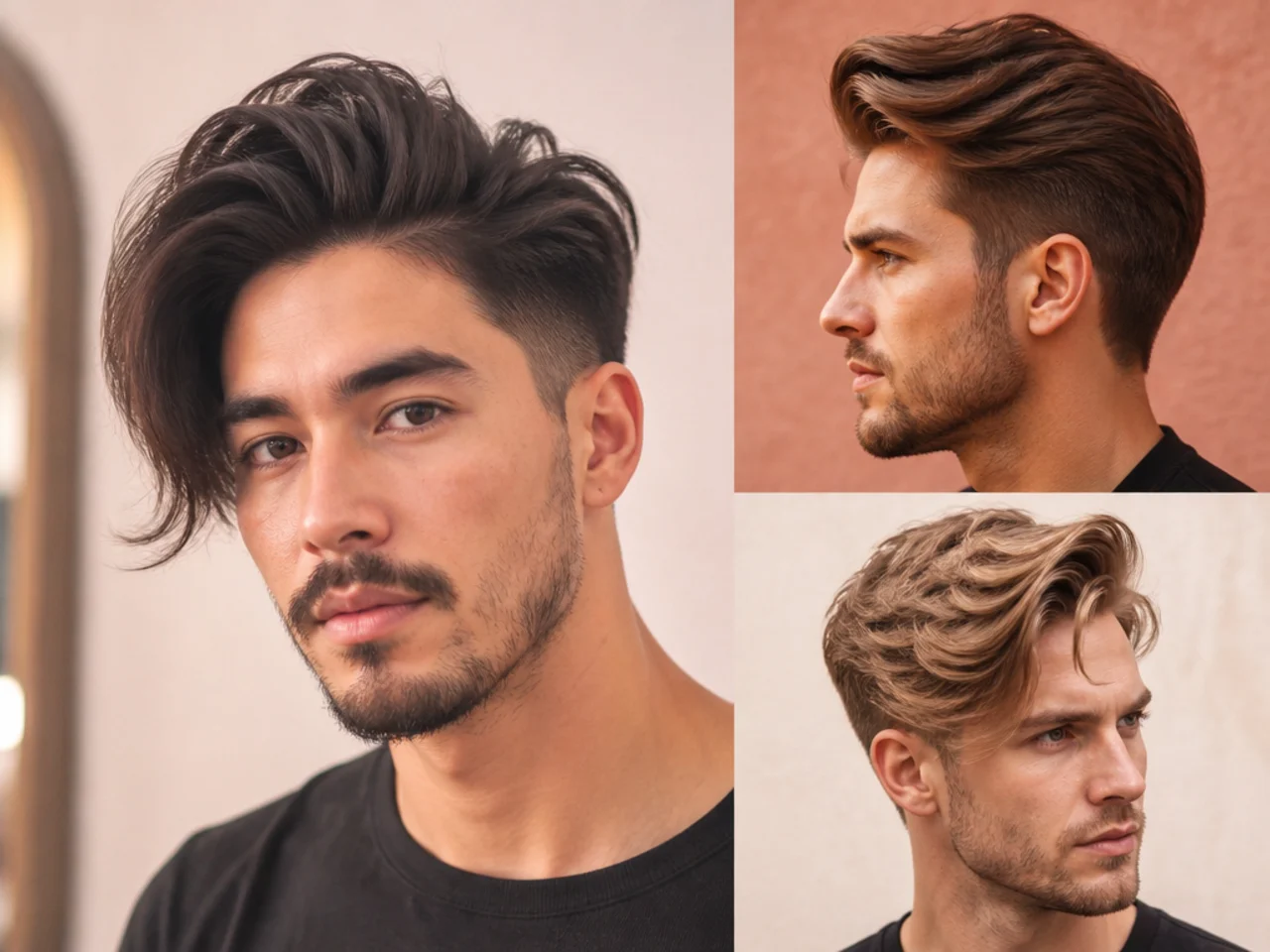
The side-swept version trades vertical lift for horizontal sweep. Same six inches at the front, but instead of pushing it up and back, you push it diagonally across the forehead. The front piece breaks over one brow, and the crown still sits with soft height so the shape reads as a quiff, not a fringe.
Ask for a six-inch front cut with the weight leaned to one side, a mid fade at the sides, and enough length at the crown to blend into the sweep. Tell your barber which side you part on.
Blow-dry the front to one side with a paddle brush, then work a medium-hold cream through the ends. Best for round face shapes — the diagonal line breaks the roundness — and for guys who want a long quiff that reads more polished than the sweep-back.
16. Long Layered Quiff
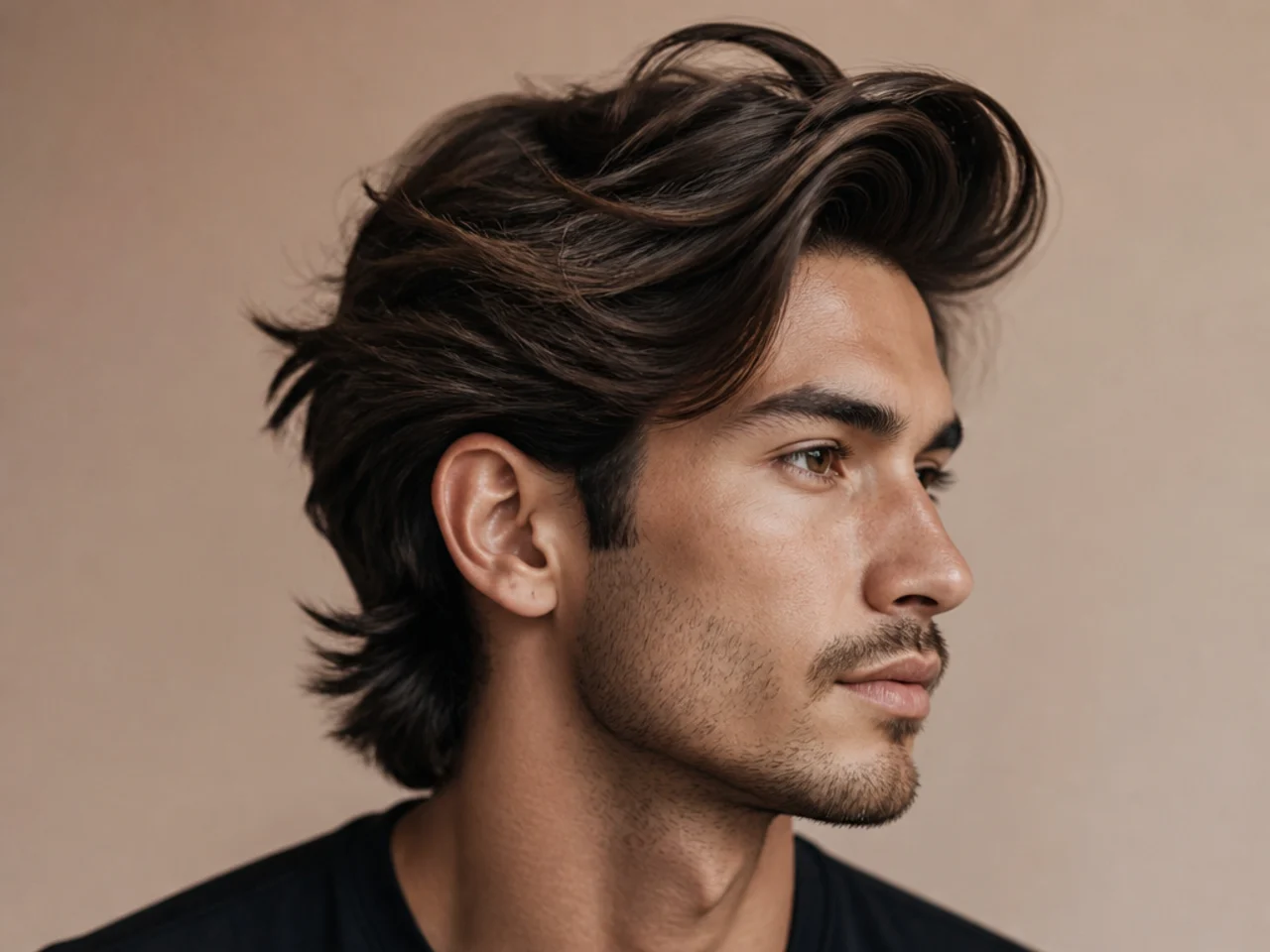
The layered version turns the whole top into visible movement. Heavy internal layering breaks the long top into three or four length grades, and the front sits with the most weight so the sweep still holds. It reads soft and lived-in rather than sculpted — the natural bridge to the layered haircuts for men family.
Ask for six inches at the front, layered down to three at the crown in three visible grades, and a low fade or scissor blend at the sides. Say "movement, not thinning."
Rough-dry from underneath, work a light cream through the mid-lengths, and finger-style the layers up and back. Best for straight to slightly wavy hair on any face shape, and the version that reads best in profile.
17. Executive Long Quiff
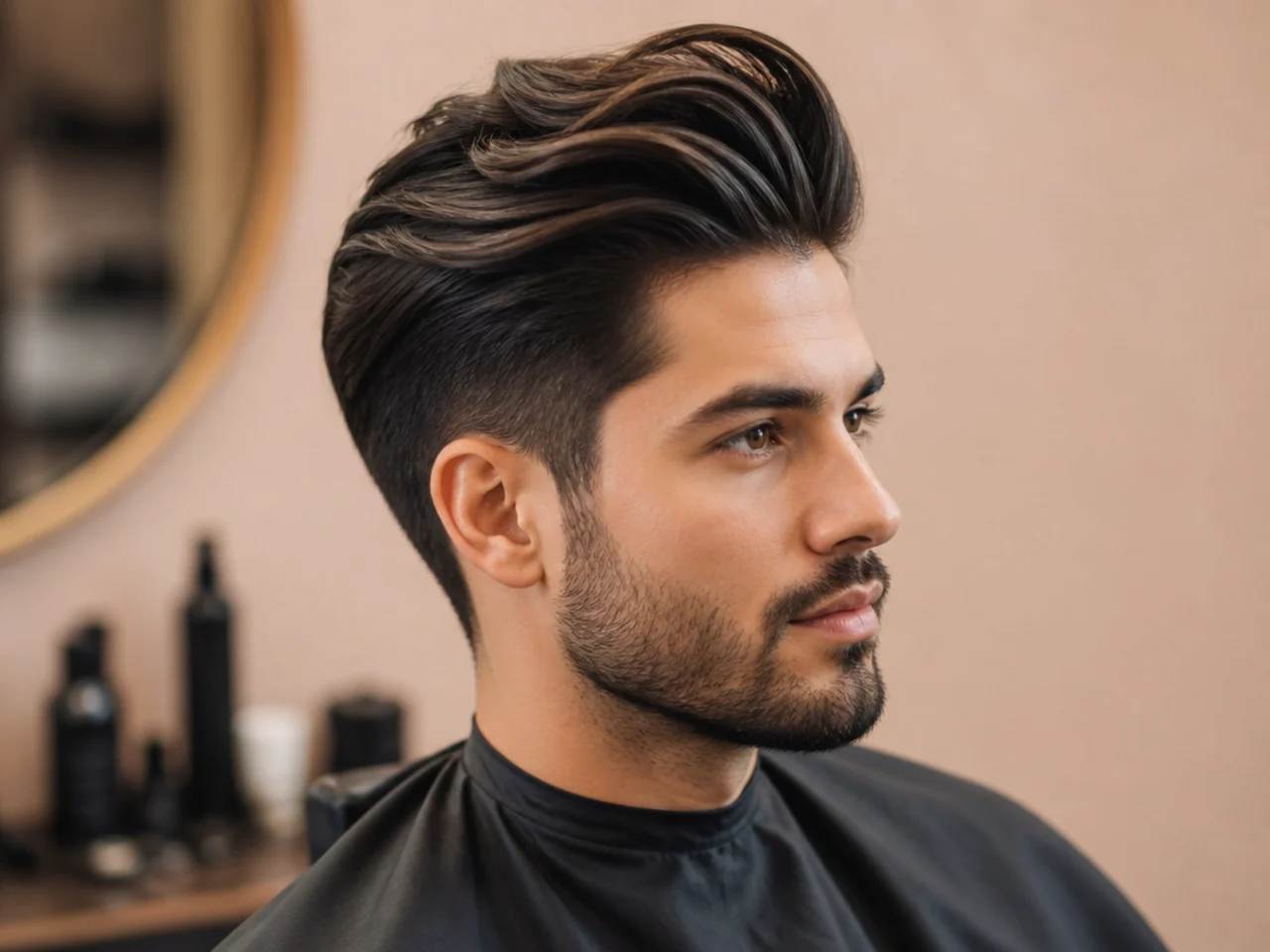
The executive version is the long quiff for the boardroom. Six inches at the front, scissor-blended sides with no clipper lines, and a soft comb-back finish that reads polished at every angle. It flatters silver and salted hair better than dark and reads as the grown-up cousin of the modern textured version.
Ask for a six-inch top, full scissor work, and a soft side taper at the natural hairline. Say "no visible fade line" — the shape has to look grown-up, not trendy. Add point-cut ends for movement.
Blow-dry the front up and back with a vented brush, then a coin of light cream combed through. Best for guys thirty-five and up, formal workplaces, and any face shape. The natural neighbor is a professional hairstyle for men roundup when you want to browse adjacent shapes.
18. Long Middle-Broken Quiff
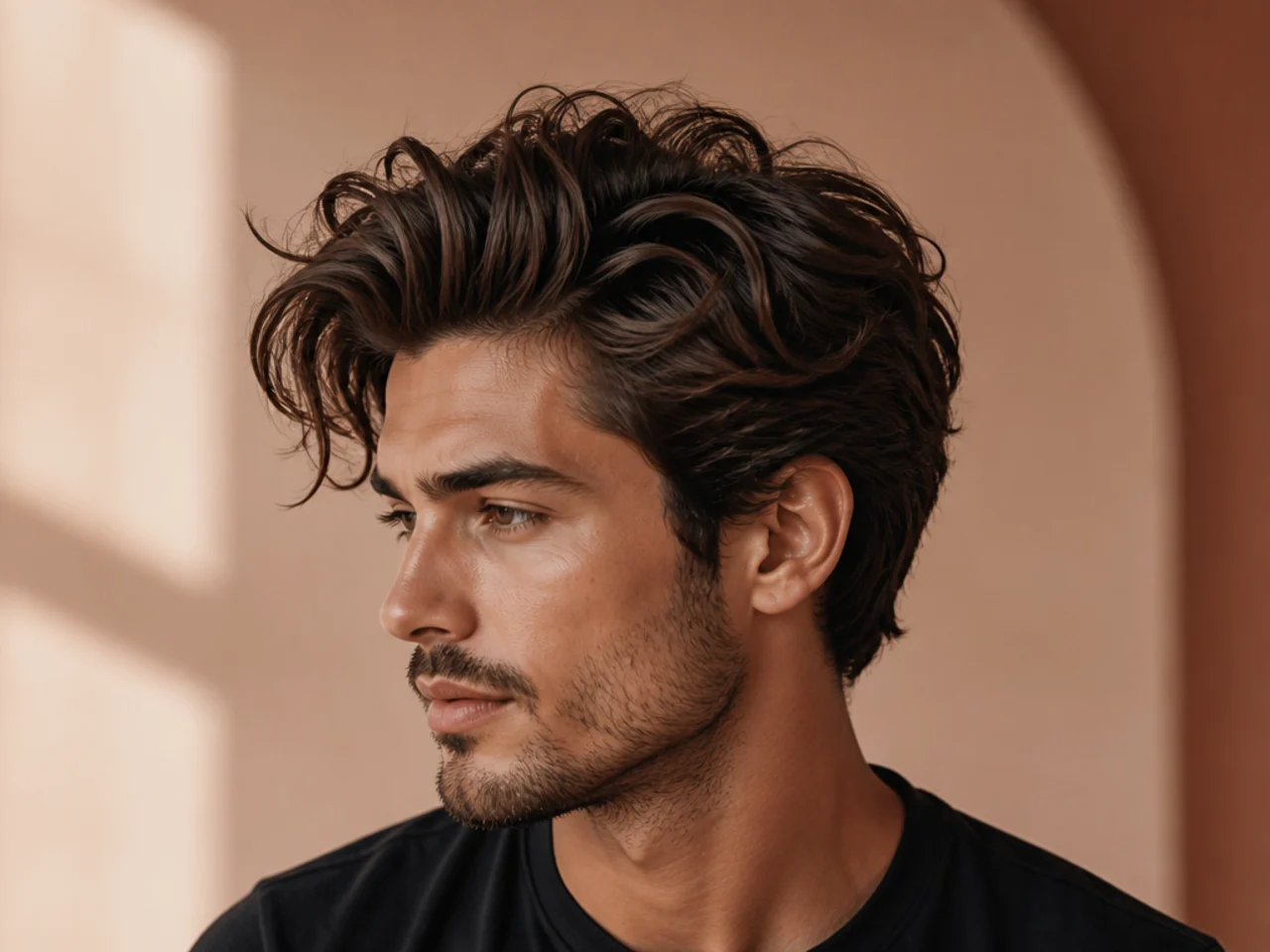
The middle-broken version splits the front loosely down the center before both sides sweep diagonally back over the crown. It is a modern hybrid — half curtain, half quiff — and it reads younger than the straight sweep-back. The break is deliberately soft, never a hard part.
Ask for six inches at the front cut with a slight center weight, a mid fade at the sides, and scissor layers through the crown. Tell your barber "loose middle break, not a hard part."
Blow-dry both front sides back and outward with a round brush, then work a light cream through the mid-lengths. Best for oval, heart, and diamond faces on straight to wavy hair. See the middle part haircut men guide for the front-parted neighbor.
19. Rockabilly Long Quiff
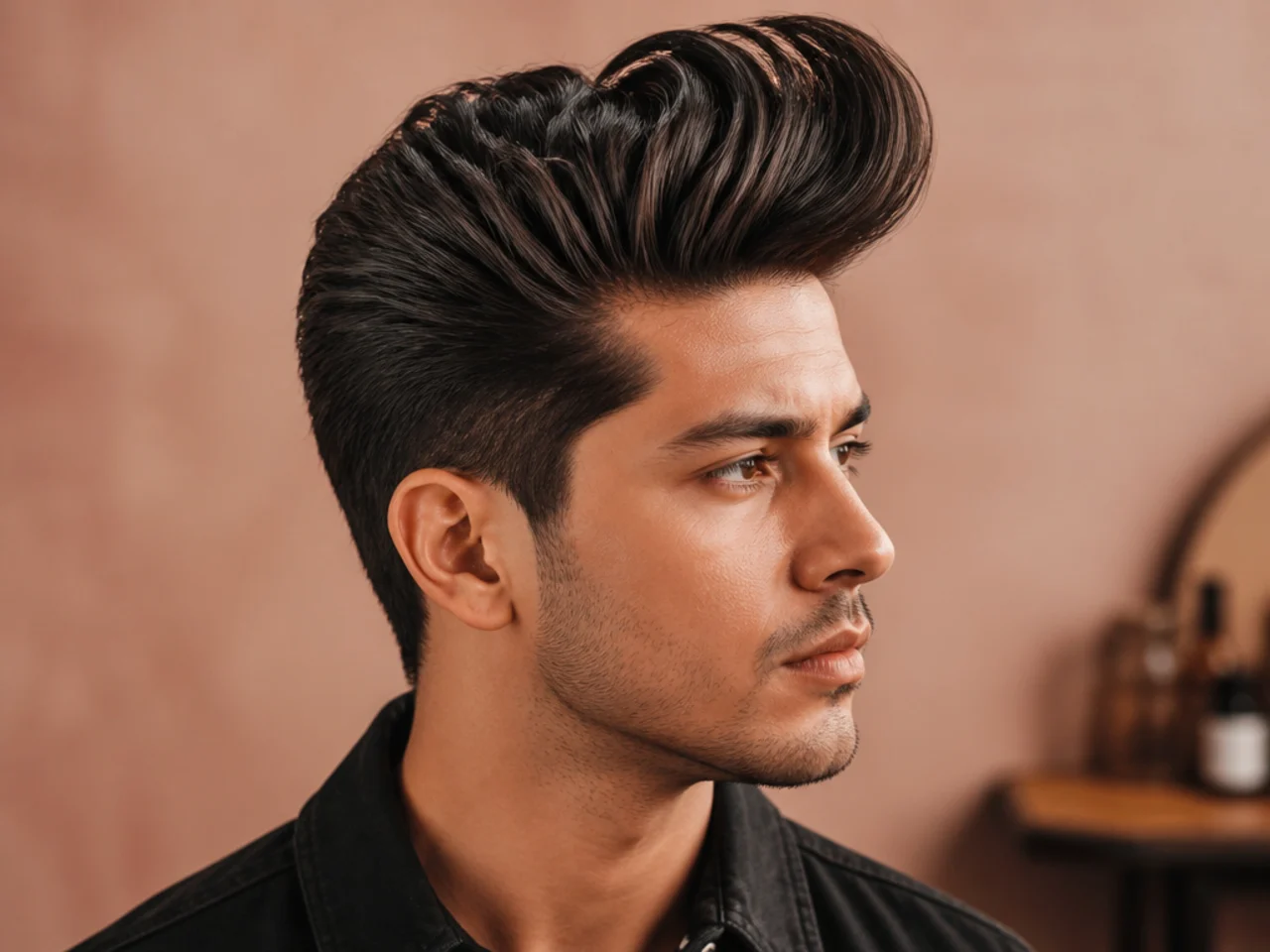
The rockabilly version is the loudest long quiff on the list — a full seven-to-eight inch front stacked into a tall wet-look pomp with visible height above the hairline. It borrows directly from the 1950s revival, and it flatters guys who own the aesthetic beyond the haircut.
Ask for seven to eight inches at the front, scissor-cut with no aggressive thinning so the front holds its own weight, and a mid or high skin fade at the sides. Tell your barber the finish will be high-shine.
Blow-dry the front up and back with a large round brush, work a strong-hold water-based pomade from root to tip, shape the front curve with a fine-tooth comb, cool-shot to lock. Best for straight, thick hair on oval and square face shapes. Related to but distinct from the classic slick back haircut.
20. Grown-Out Long Quiff
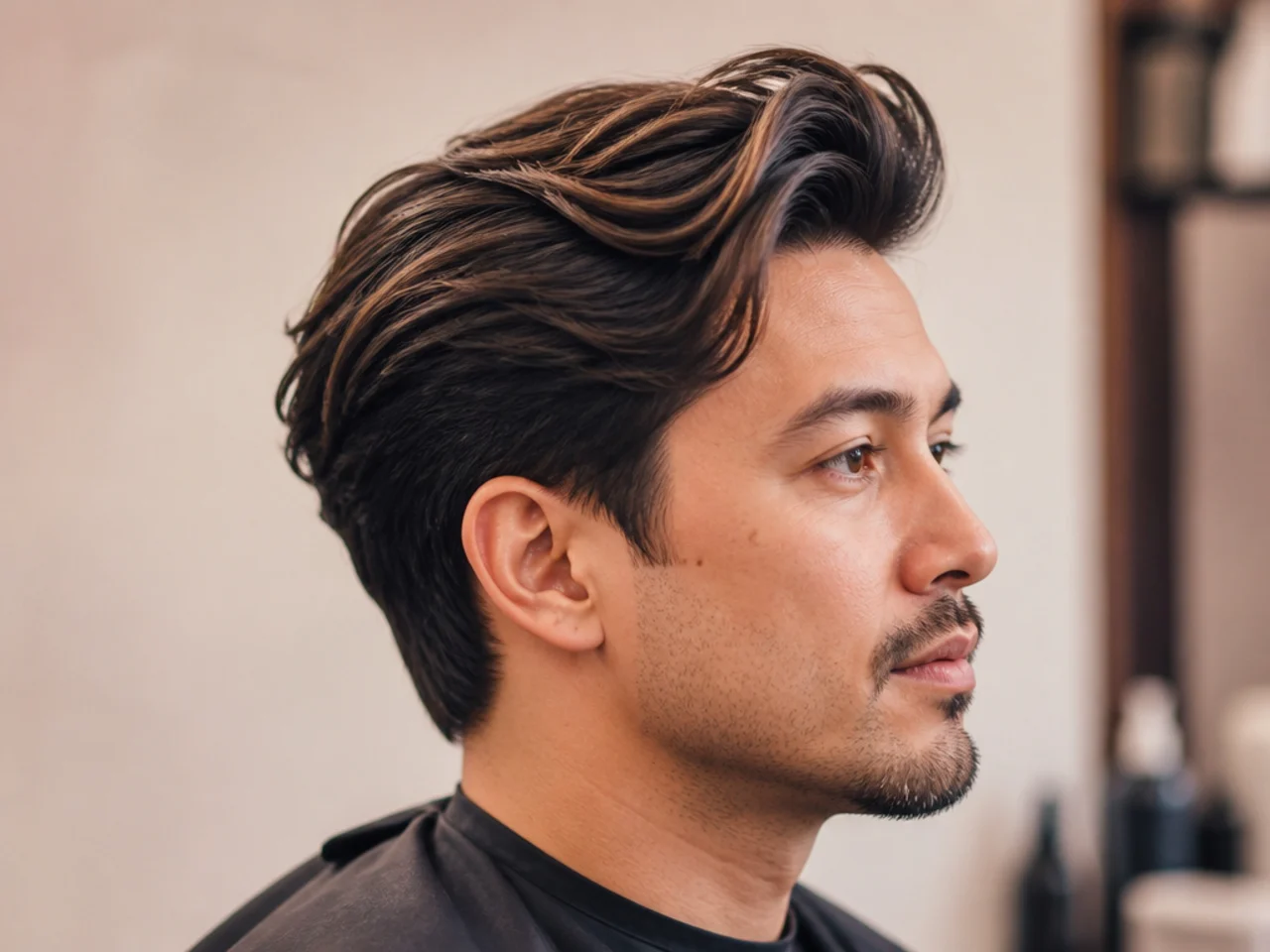
The grown-out version is the long quiff mid-transition — you have grown from a medium shape into real length, and the whole cut sits with a lived-in softness. Sides are just past their taper, front is six inches and holding, and nothing reads over-styled.
Ask for a light shape-up rather than a full re-cut — dust the ends, soften the sides with a scissor blend, leave the crown alone. Tell your barber "keep every millimeter, just clean the edges."
Rough-dry the front with your fingers, work a light cream through the mid-lengths, and let the front fall backward without forcing the arc. Best for wavy and thick straight hair on any face shape. It is the version to book on the way to a full medium-length hairstyle for men when you want the in-between to look intentional.
How to Ask Your Barber for a Long Quiff
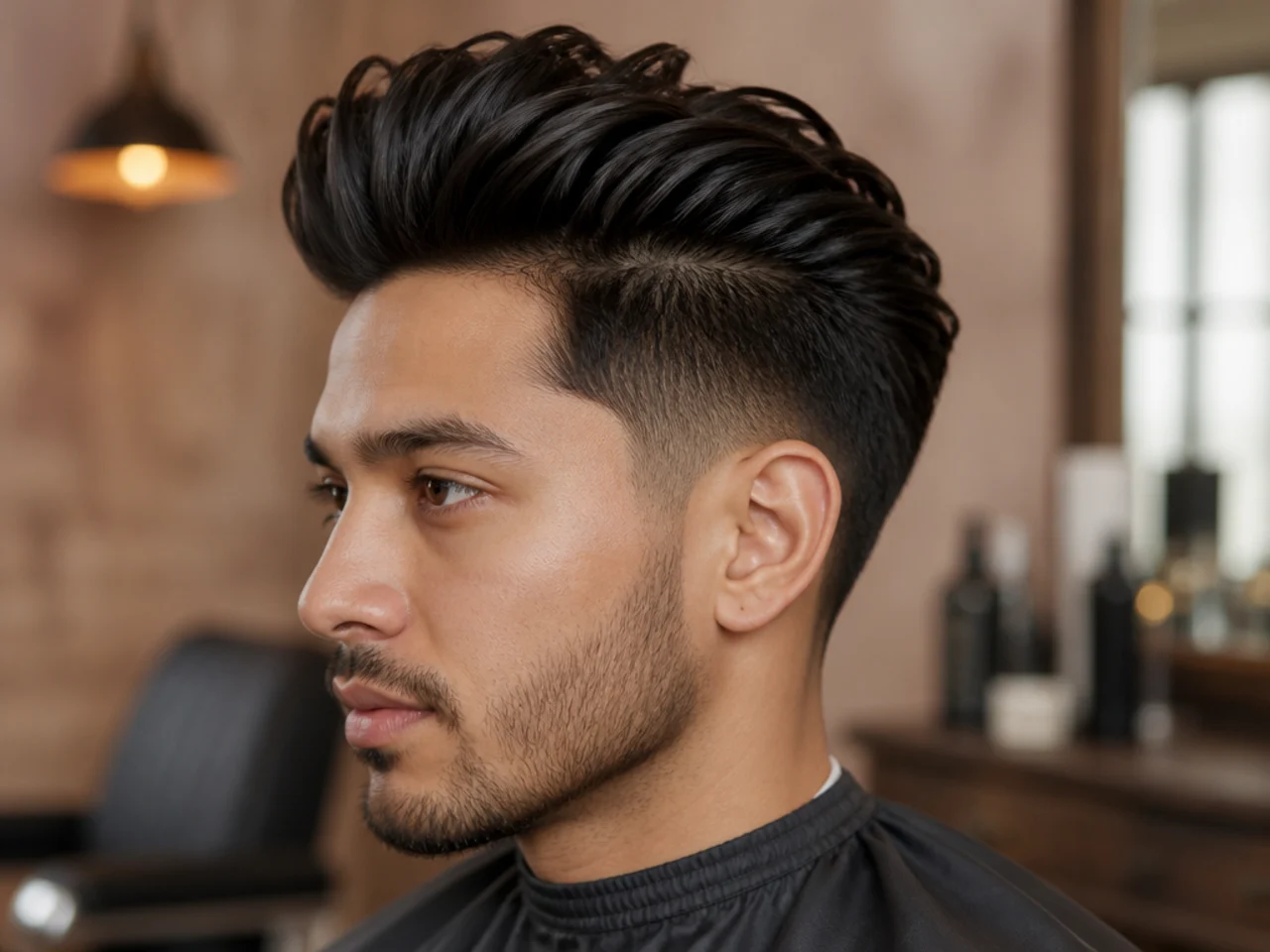
Barbers cut what they see, not what they hear. "Long quiff" is a wider spread than "short quiff" — one guy's long is six inches, another's is eight — so pair every request with a saved photo and specific numbers.
- Bring one saved photo. Not five — one clean reference of the exact long quiff you want. Face shape and hair type in the photo should match yours as closely as possible.
- Name the length on top in inches. Six inches is the standard long quiff. Seven is the loudest normal version. Eight is rockabilly territory. Say the exact number so the barber does not default to their own idea of "long."
- Specify the crown length too. The crown always sits shorter than the front — usually three to four inches for a six-inch front — so the length grades downward and does not tip into a mullet.
- Specify the side treatment. Choose one: scissor blend, low taper, mid fade, high skin fade, burst fade, drop fade, or disconnected undercut.
- Ask for the crown to be layered down. A long front over a matching long crown reads shaggy. Layered down reads as a proper quiff.
- State the finish out loud. "Matte" for textured versions, "low-shine cream" for classic, "high-shine pomade" for sleek and rockabilly. Some barbers default to gloss on longer tops — head that off in the consult.
- Ask for point-cut ends unless you booked the sleek version. Point-cutting gives long tops the piece separation that keeps them from looking helmet-flat.
Take a mirror check from every angle before you leave the chair. The front looks fine head-on almost always — the crown line and the parietal ridge tell you if the cut lands. If either reads off, ask for the adjustment before you pay.
Styling and Upkeep for a Long Quiff
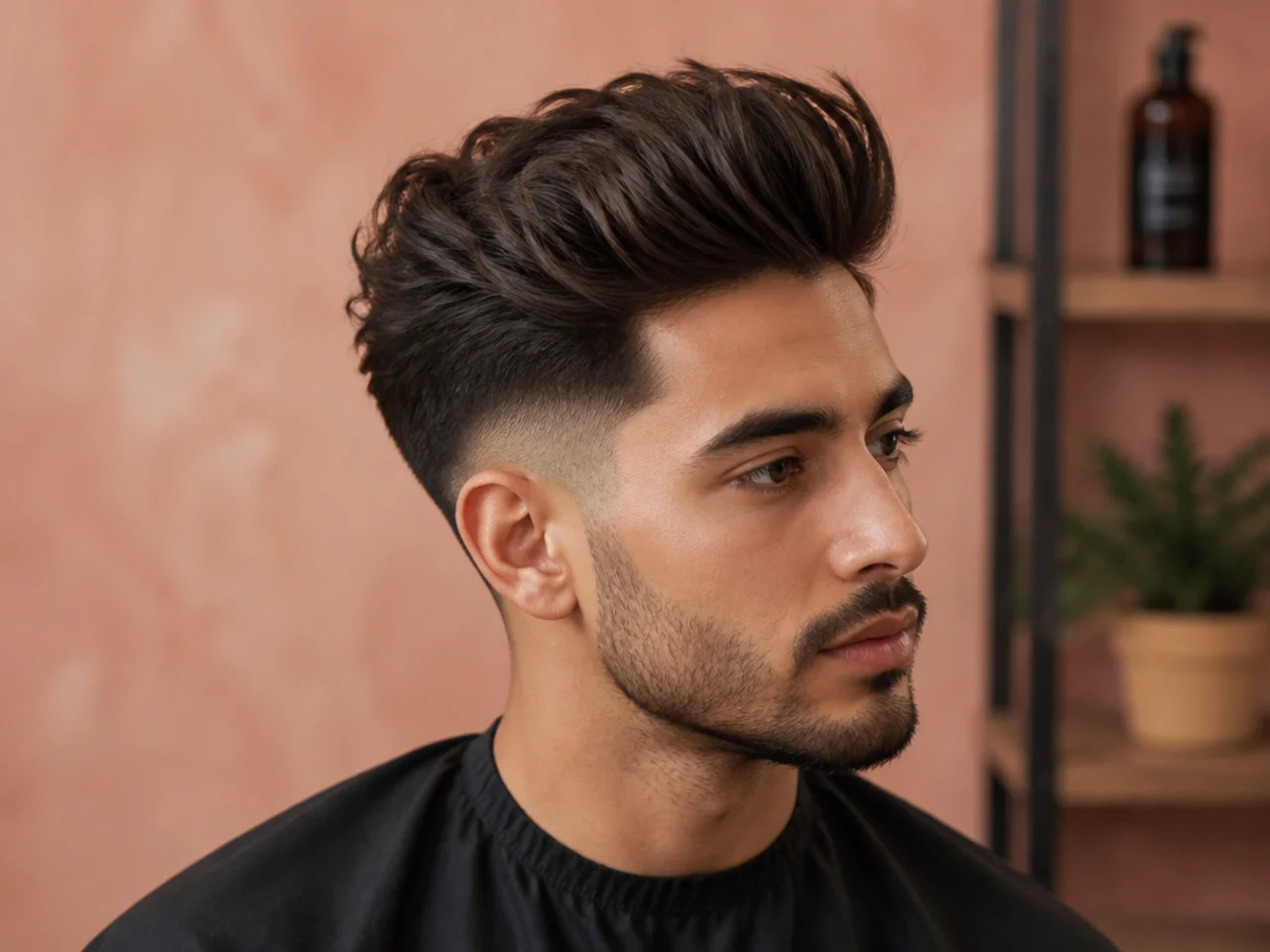
The long quiff needs more products than the shorter versions, and the ones you pick change with the finish. Every long version benefits from a prep step — a light mousse or a volumizing spray on damp hair — because five to eight inches of hair falls under its own weight without root lift. Matte cream is the go-to finishing product for textured looks, water-based pomade for sleek, and a strong-hold fiber for rockabilly. Skip clay on very long tops — it is too heavy for the length and pulls the arc down.
Blow-drying is where the long quiff earns its shape. Rough-dry the base with your fingers from the roots up, then switch to a large round brush for the front. Lift each section up and back at the root, point the nozzle down the shaft to keep the cuticle smooth, and cool-shot the shape when the front sits where you want. The cool air locks the direction in and the shape holds for eight to ten hours.
Wash cadence matters as much as product choice. A daily shampoo strips the natural oils that give a long quiff grip — cut it to every second or third day and use a sulfate-free formula. Deep-condition the mid-lengths once a week if the top runs dry, and rinse cool at the end to seal the cuticle. A good wavy hair product routine covers most long quiff needs even on straight hair — the categories overlap.
Re-cut cadence sits at four to five weeks for the sides and six to eight weeks for the top dust-and-shape. Long quiffs live on clean tapered sides and a controlled crown — the moment the sides fluff up or the crown grows past the front, the shape reads unkempt. A mid-cycle line-up at two to three weeks keeps faded versions photograph-ready. A decent home tool from the best hair clippers for men roundup lets you dust the neckline between cuts without touching the fade.
FAQ
Is the long quiff still trending in 2026?
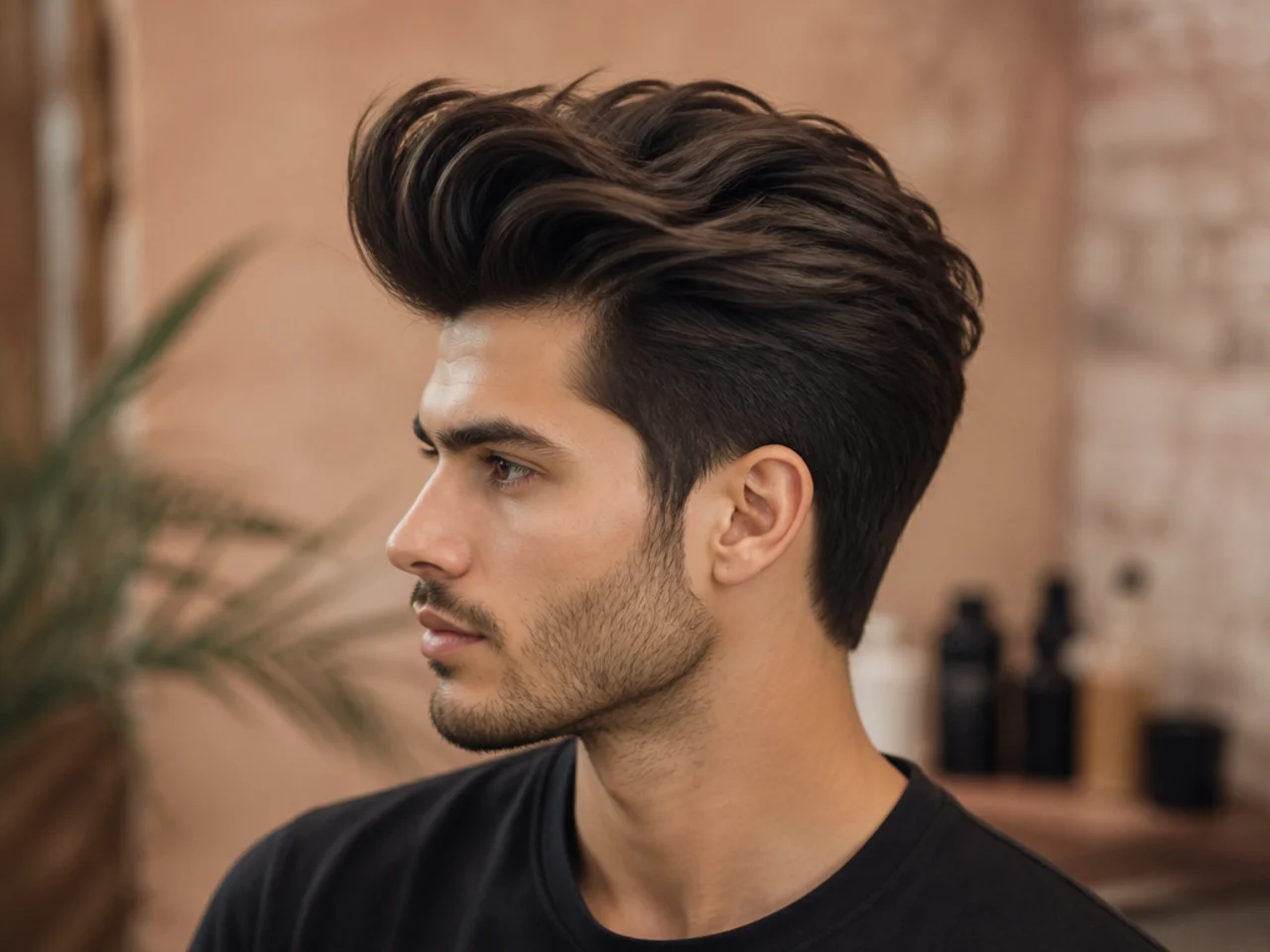
Yes. Long tops are having their loudest moment in a decade, and the long quiff is the leading silhouette in the men's category. The 2026 read leans softer and more matte than the peak 2015 pompadour era — less shine, less product visible, more finger-styled sweep, and lower fades in place of the high skin fades that defined that earlier wave.
How long does hair need to be for a long quiff?
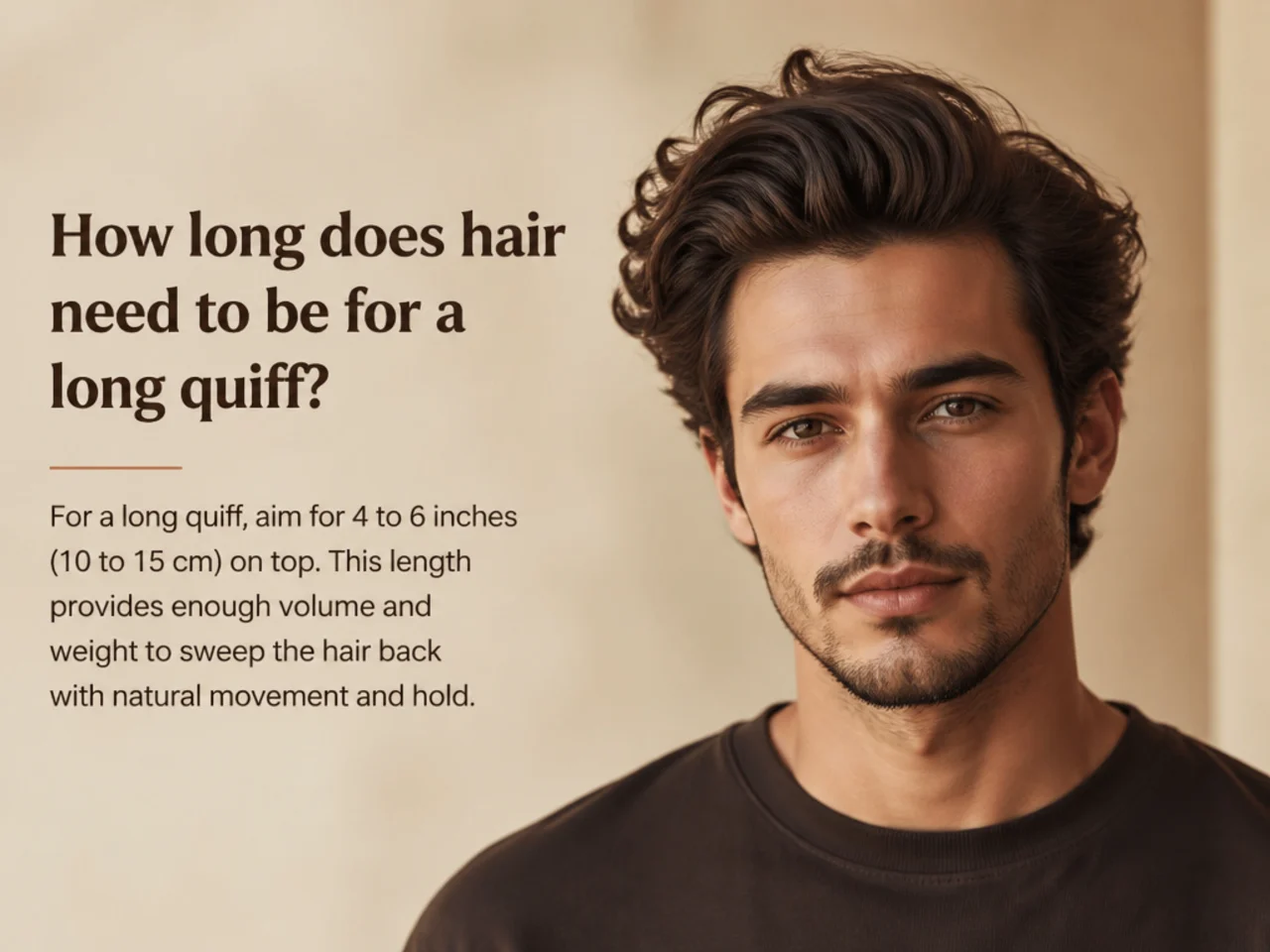
The front piece needs to reach at least five inches to hold a real sweep back over the crown. If you are growing from a medium quiff — three to four inches — budget three to four months for the front alone. In the interim, ask your barber for a scissor-blended side every four to five weeks and leave the top alone. The grow-out looks intentional if the sides stay clean.
How is a long quiff different from a pompadour?
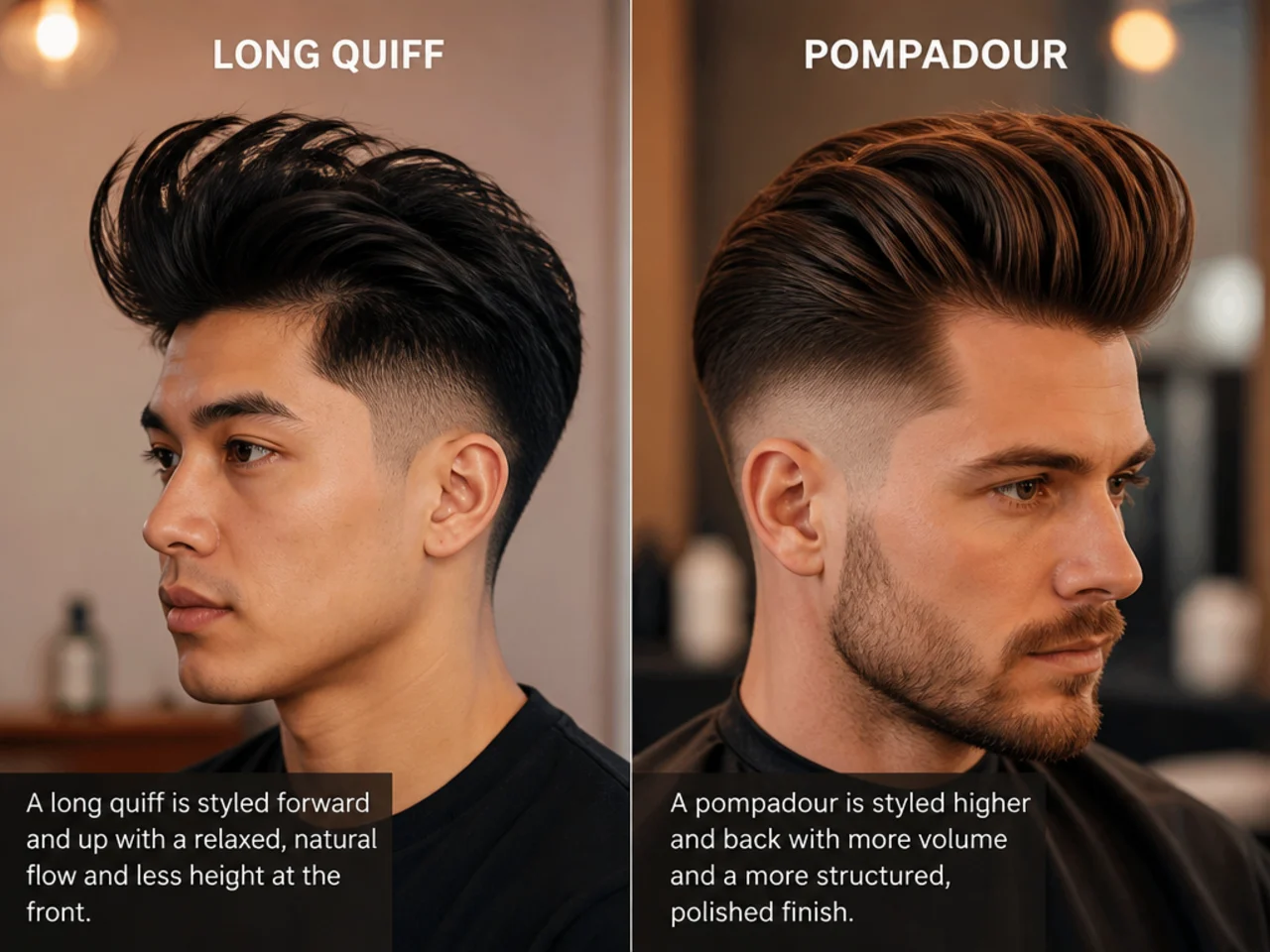
The shape overlaps but the geometry differs. A pompadour stacks visible height straight up above the hairline and holds it there with heavy pomade. A long quiff sweeps the front up and backward in a curve — the height is real but it flows backward rather than standing straight. Same length on top, different destination. The rockabilly long quiff on this list is the closest overlap of the two.
Can I get a long quiff with fine or thinning hair?
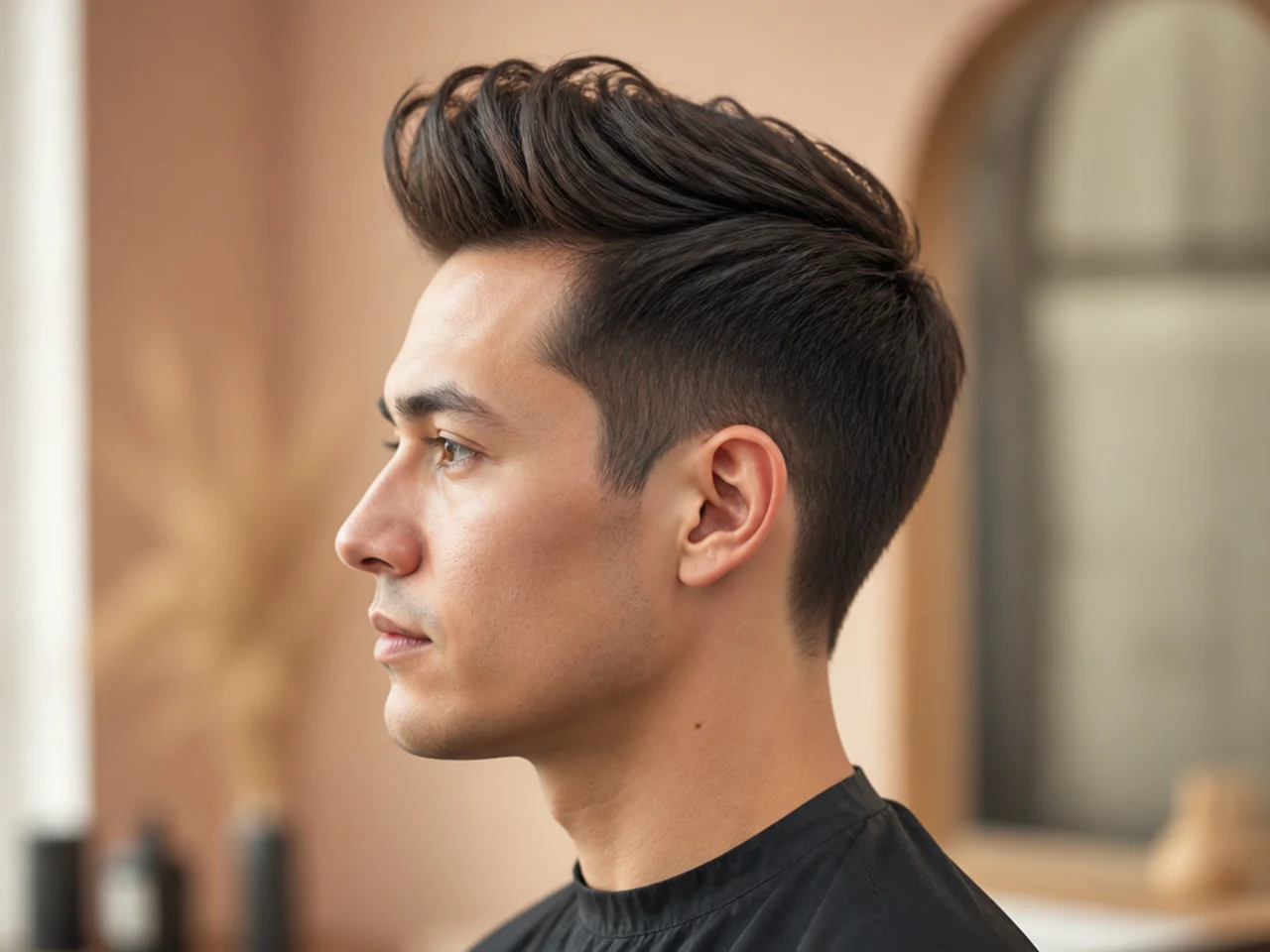
Yes, with the right prep. Fine or thinning hair needs a volumizing mousse pre-styler and a dusting of texture powder at the root before the round-brush blow-dry. Skip pomade — the weight drags fine hair flat. Matte cream and a light-hold spray hold better on fine long tops. Keep the length closer to five inches than seven so the front does not collapse by evening.
Which fade works best with a long quiff?
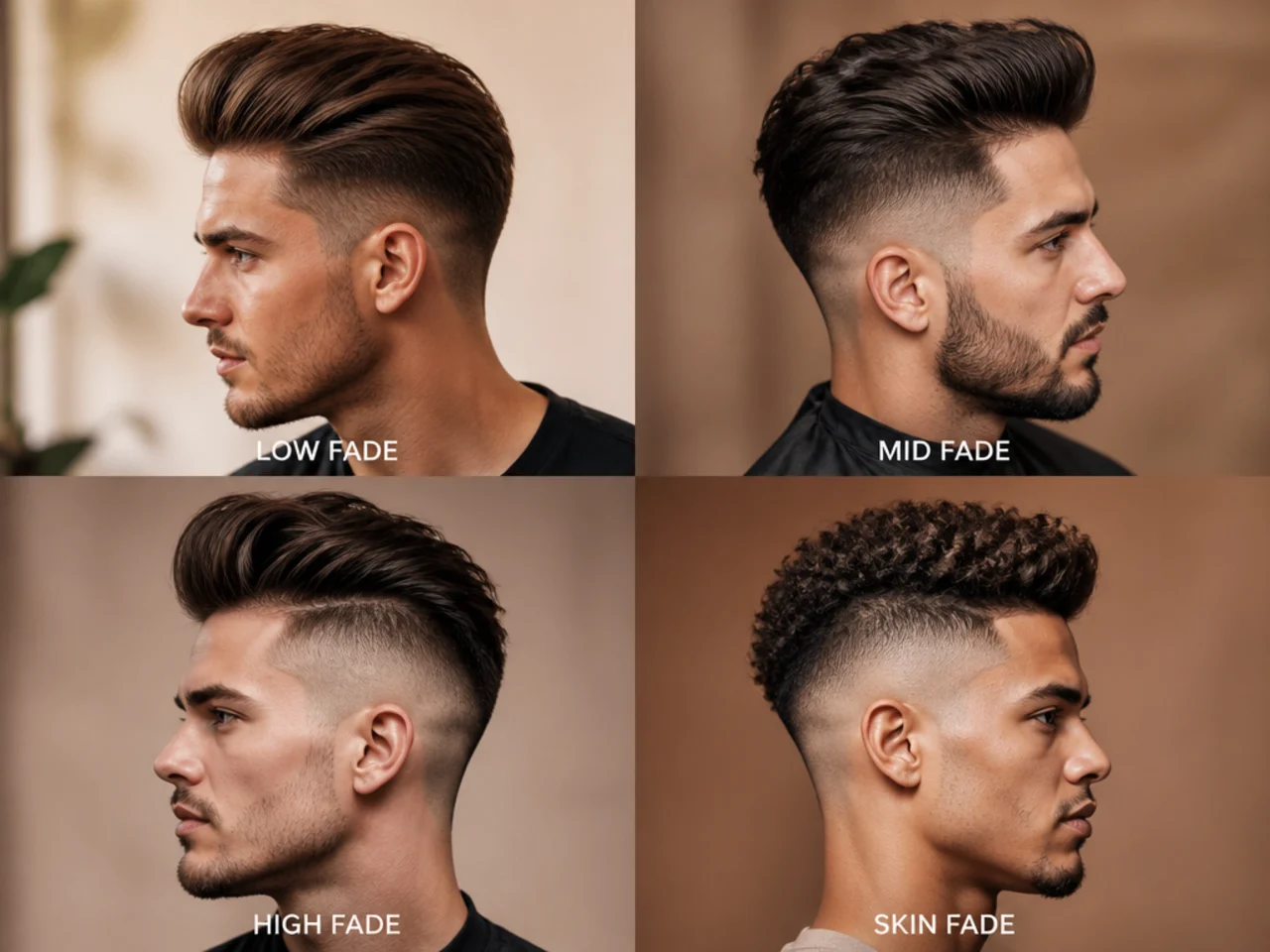
The mid fade is the default pairing — enough contrast to sculpt the length, not so much that the shape reads editorial. The low taper reads most conservative for a workplace and grows out kindest. The high skin fade delivers the loudest photograph and needs a two-week mid-cycle line-up. See the wider fade haircut guide for the geometry of each option before you book.
Can a long quiff work for older men?
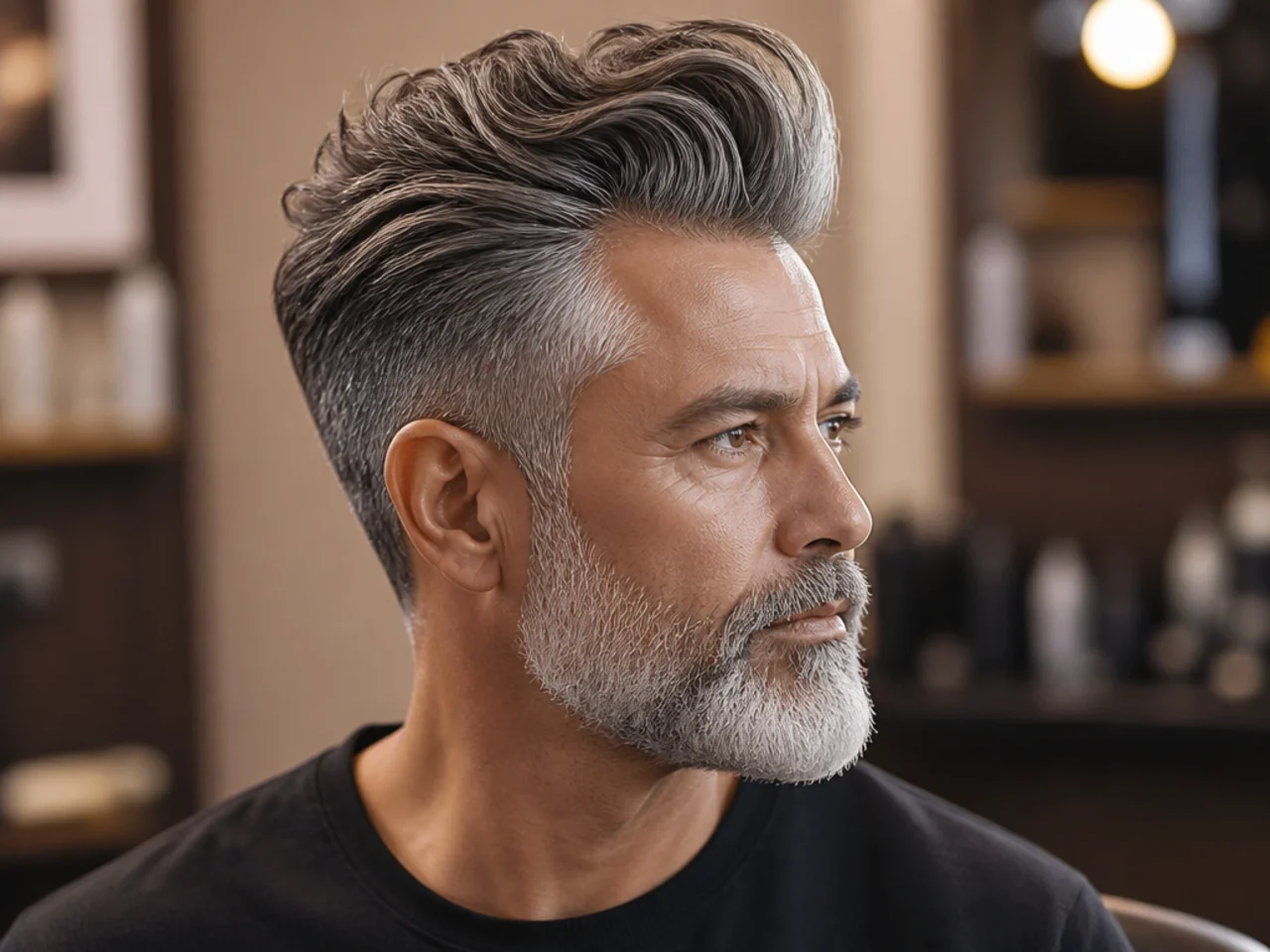
Yes — the trick is picking the executive, classic, or sleek versions. Keep the length at five to six inches rather than seven or eight, choose scissor-blended or low-taper sides rather than a fade, and finish with a low-shine cream rather than matte clay or a heavy pomade. The shape ages up cleanly when the finish stays polished and the geometry stays controlled.