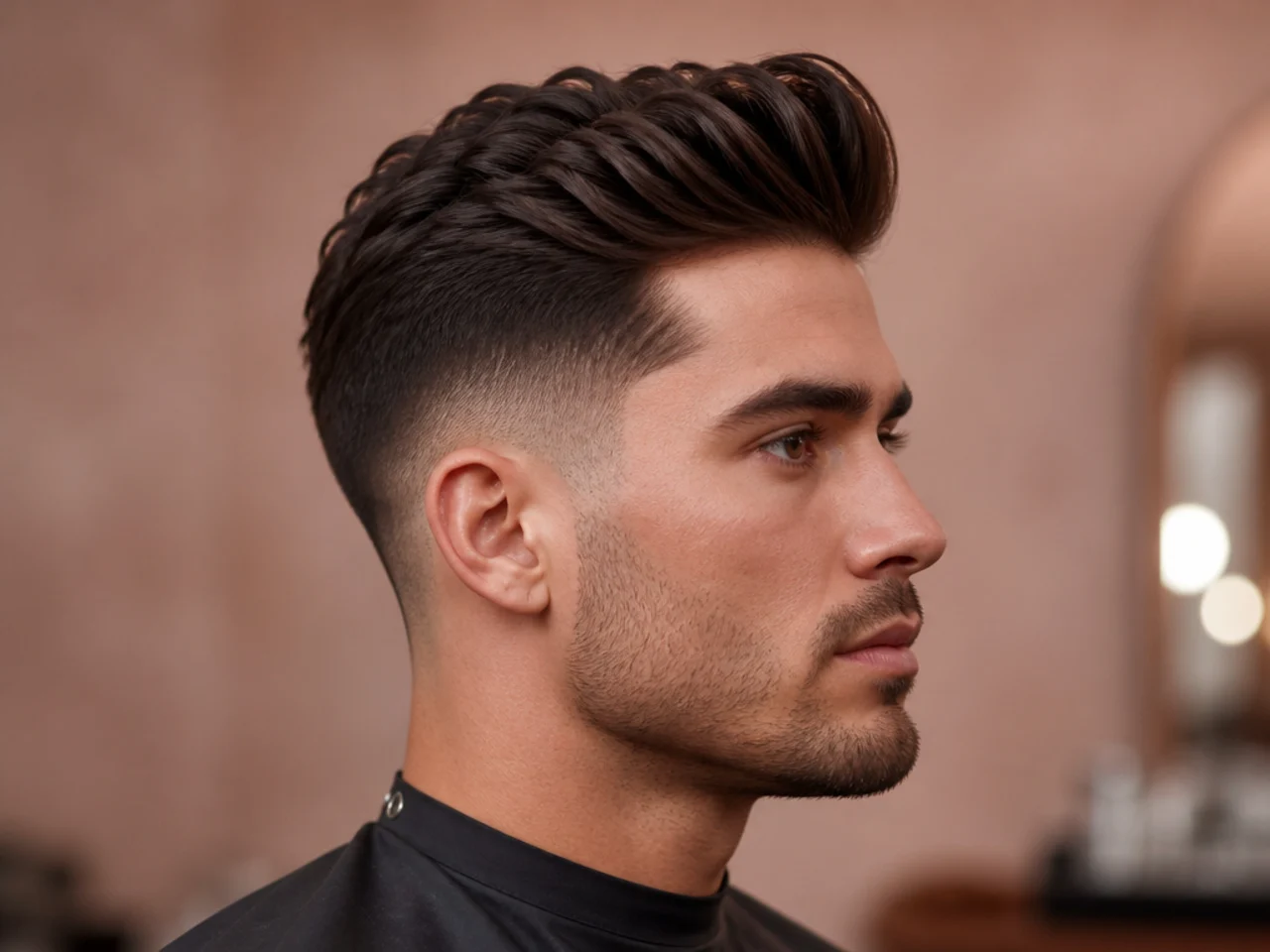
20 Low Fade Quiff Haircuts for Men
20 low fade quiff haircuts for men — classic, textured, curly, taper, and skin fade versions with photos, face-shape notes, and barber-ready specs.
In this article · 30
- What Is a Low Fade Quiff?
- How to Choose Your Low Fade Quiff
- The 20 Low Fade Quiff Variations
- 1. Classic Low Fade Quiff
- 2. Textured Low Fade Quiff
- 3. Messy Low Fade Quiff
- 4. Short Low Fade Quiff
- 5. Medium Low Fade Quiff
- 6. Long Low Fade Quiff
- 7. Wavy Low Fade Quiff
- 8. Curly Low Fade Quiff
- 9. Straight Low Fade Quiff
- 10. Low Taper Fade Quiff
- 11. Low Skin Fade Quiff
- 12. Low Drop Fade Quiff
- 13. Low Burst Fade Quiff
- 14. Side-Swept Low Fade Quiff
- 15. Modern Low Fade Quiff
- 16. Low Fade Quiff with Beard
- 17. Low Fade Quiff with Line-Up
- 18. Low Fade Quiff with Fringe
- 19. Slicked Back Low Fade Quiff
- 20. Tousled Low Fade Quiff
- How to Ask Your Barber for a Low Fade Quiff
- Styling and Maintenance for a Low Fade Quiff
- FAQ
- Is a low fade quiff good for a first fade?
- Which is more conservative — a low taper fade or a low skin fade?
- Can I style a low fade quiff for a formal event?
- How long does the top need to be to lift into a quiff shape?
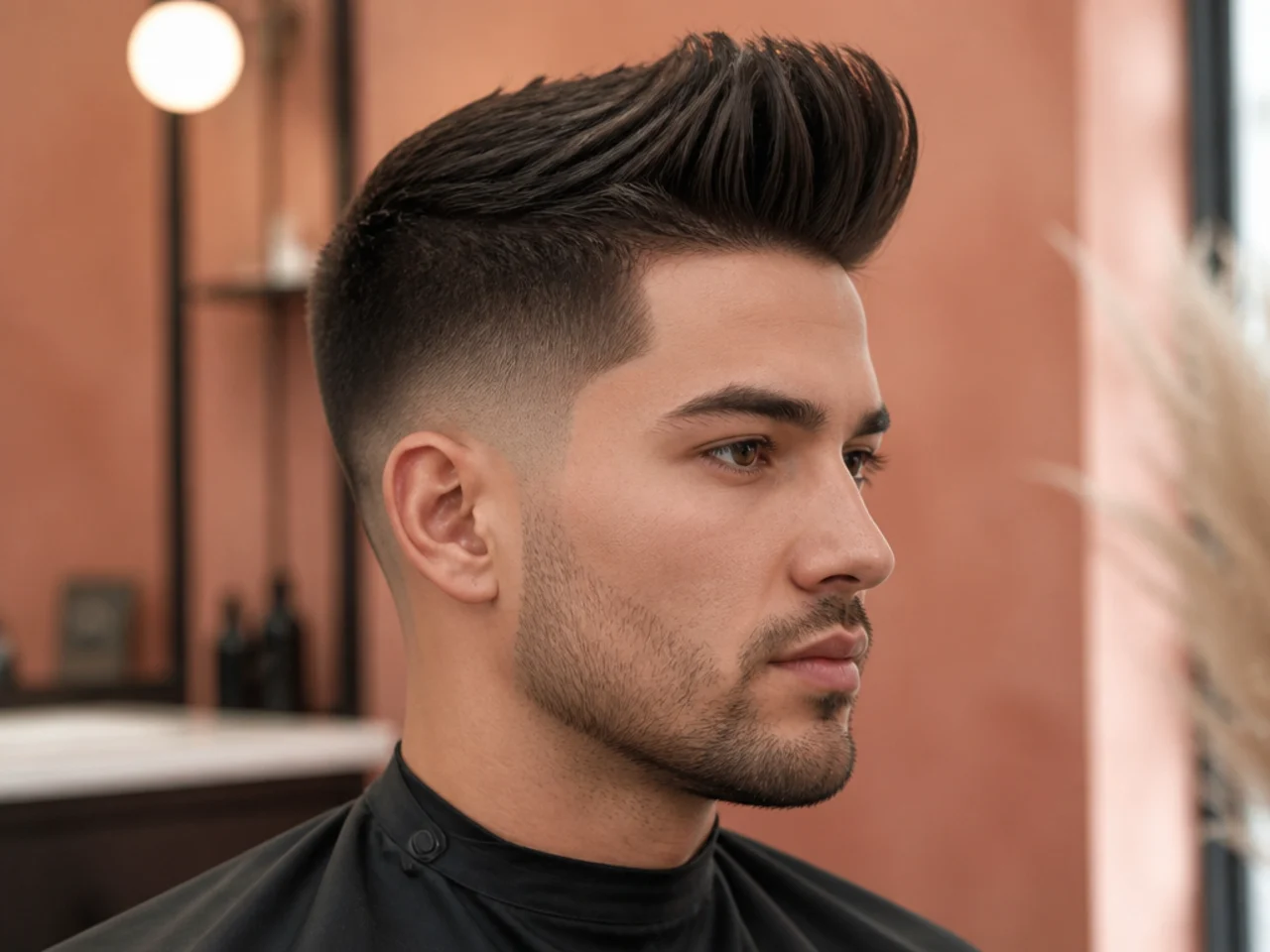
The low fade quiff is the quiff for men who want the shape without the shock. The fade starts just above the ear, drops to skin near the sideburn, and lets the lift on top carry the whole cut. Sides stay quiet, transitions stay soft, and the finished look reads sharp in a boardroom and easy on the weekend. This guide covers the 20 low fade quiff variations men are asking for right now, with photos, face-shape notes, and the exact language for your barber.
What Is a Low Fade Quiff?
A low fade quiff is a two-part cut. On top you get the quiff — length swept up and slightly back so the front lifts. On the sides you get a low fade that starts just above the ear and drops to skin at the sideburn. The transition is soft and low on the head, which keeps the contrast quiet compared to a mid or high fade.
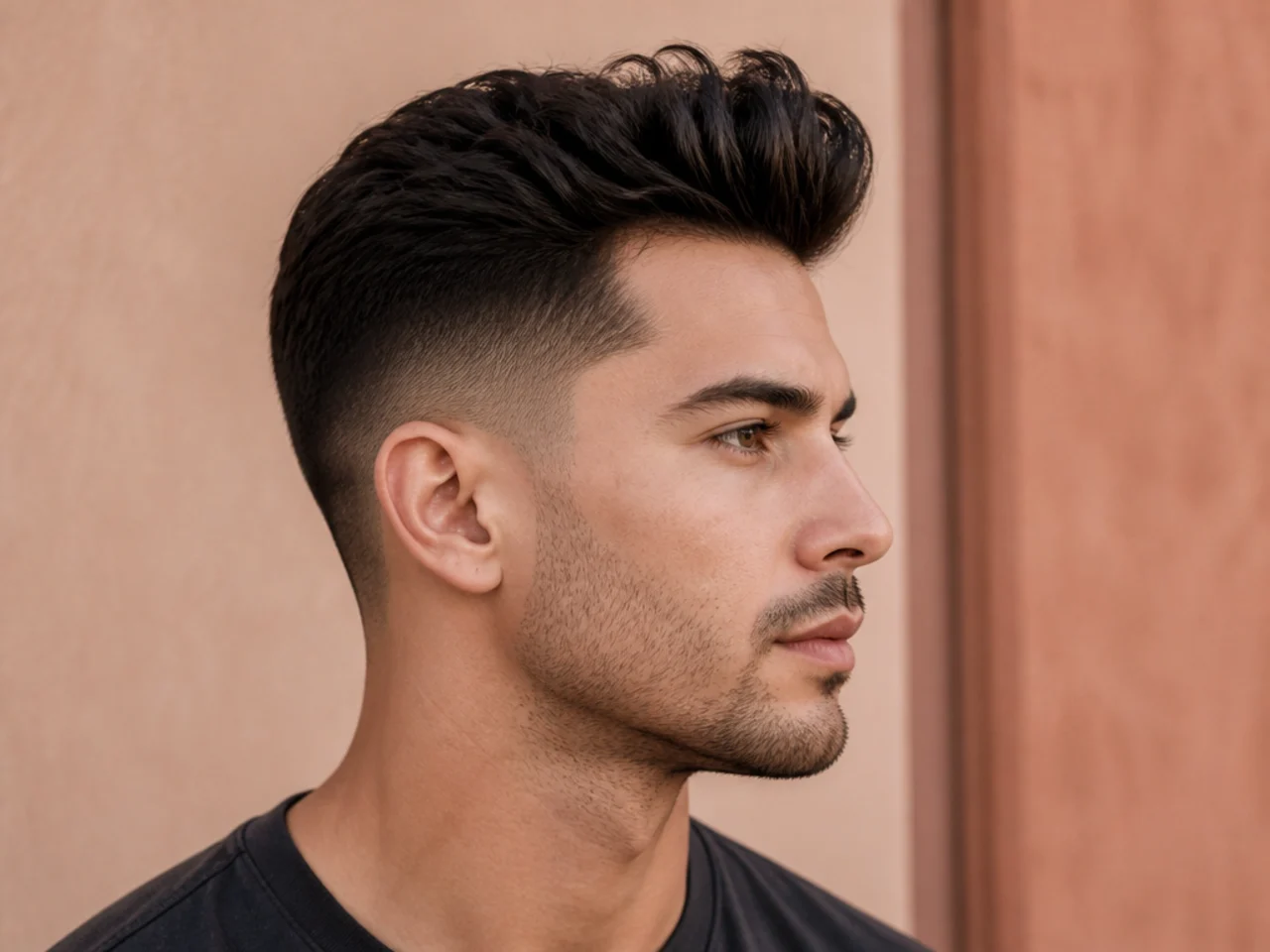
The shape covers a lot of ground. You can wear a low fade quiff at 2 inches on top for a shift-work cut or push the top to 6 inches for a statement version. The low fade holds either extreme because the sides never dominate. That is the whole point of the family — top length does the styling, low fade does the framing.
Barbers reach for a low fade when a client says "clean but not aggressive." Compare that to a low taper fade alone, which stops shorter of skin, or a mid fade, which climbs higher and reads sharper. The low fade quiff sits at the moderate end of the fade family, and every variation on this list keeps that soft-side identity.
How to Choose Your Low Fade Quiff
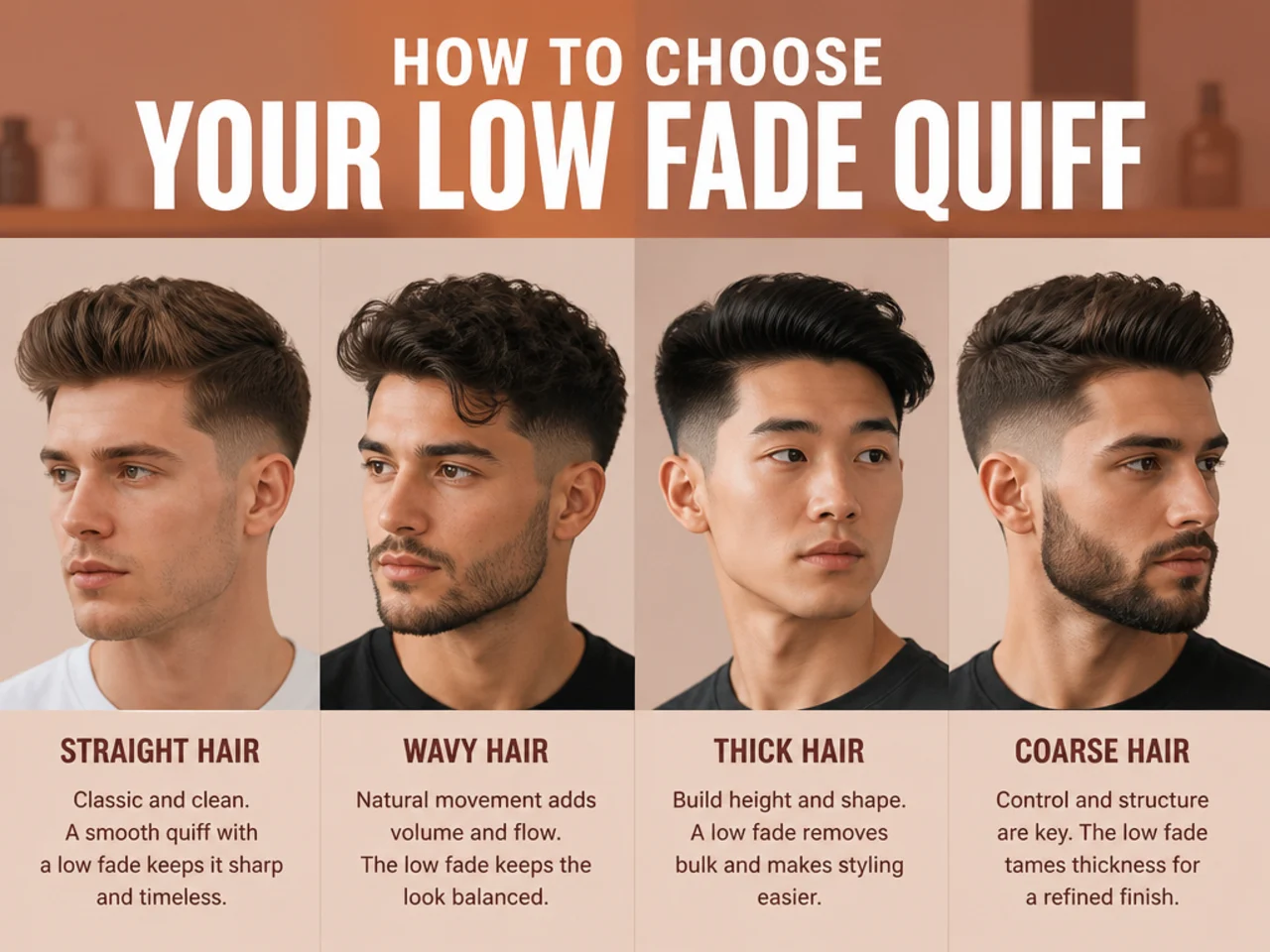
Face shape sets the top length. Oval and square faces suit any top length from 3 to 6 inches. Round faces want more vertical lift at the front to elongate the profile — go 5 inches minimum. Long faces stay with 3 to 4 inches so the head does not stretch further. Heart and diamond faces suit the shorter, tighter versions where the fade does most of the framing.
Hair type sets the internal work. Fine hair needs mousse or texture powder at the root for lift — the barber should point-cut lightly to avoid stripping density. Medium hair takes almost any variation. Thick or coarse hair needs internal thinning through the crown so the top does not stack wide over quiet sides. Curly hair should be dry-cut so the barber sees the pattern before scissors move.
Lifestyle sets the finish. A matte, textured top reads casual and modern. A sleek, combed top reads formal — closer to a mod cut than a modern quiff. Match the finish to the wardrobe you wear most days, not the one you wear once a month.
The 20 Low Fade Quiff Variations
Every variation below tells you what makes it different, who it flatters, and the exact language for the chair. Show your barber a photo, then hand them the numbers.
1. Classic Low Fade Quiff
The neutral shape every other variation spins off. Four inches on top, front swept up and slightly back, low fade starting just above the ear and dropping to skin at the sideburn. Nothing shouts. The lift does the work.
Suits every face shape. Best on medium-density straight or wavy hair.
Ask for: 4 inches on top, a low fade to skin at the sideburn blending up to a #2 guard, and a soft scissor blend at the crown. Blow-dry up and back with a round brush, then work a nickel of matte clay from mid-length to ends.
2. Textured Low Fade Quiff
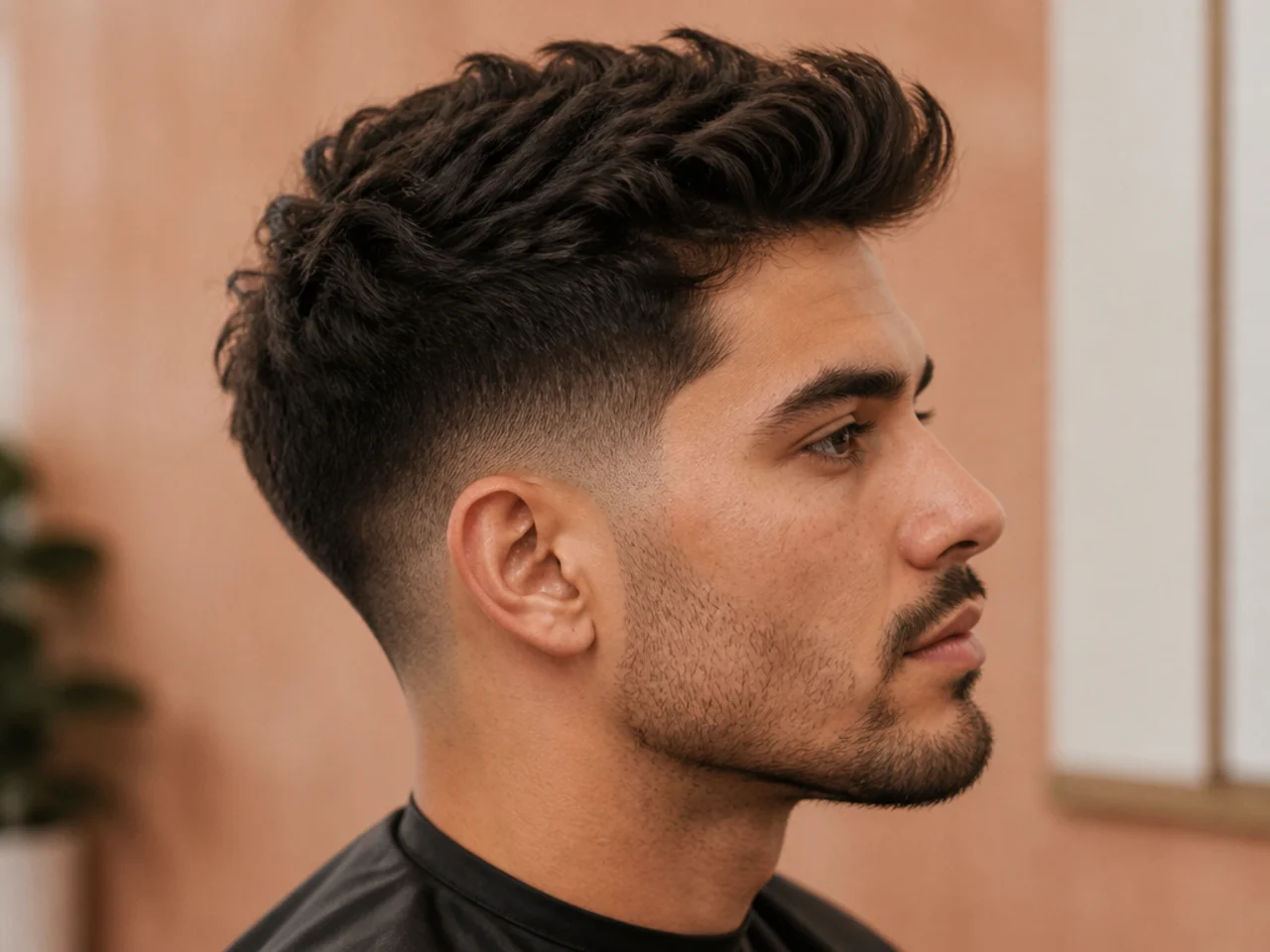
The modern default. Layers are point-cut through the top so strands separate cleanly, the front is left long enough to sweep with real movement, and the low fade keeps the whole cut grounded.
Best on straight to slightly wavy hair. Suits oval, square, and heart faces.
Ask for: point-cut layers on top, 5 inches at the front, a low fade to skin at the sideburn, and light thinning through the crown if your hair is dense. Rough-dry with fingers, then press matte clay into the ends only — never at the roots.
3. Messy Low Fade Quiff
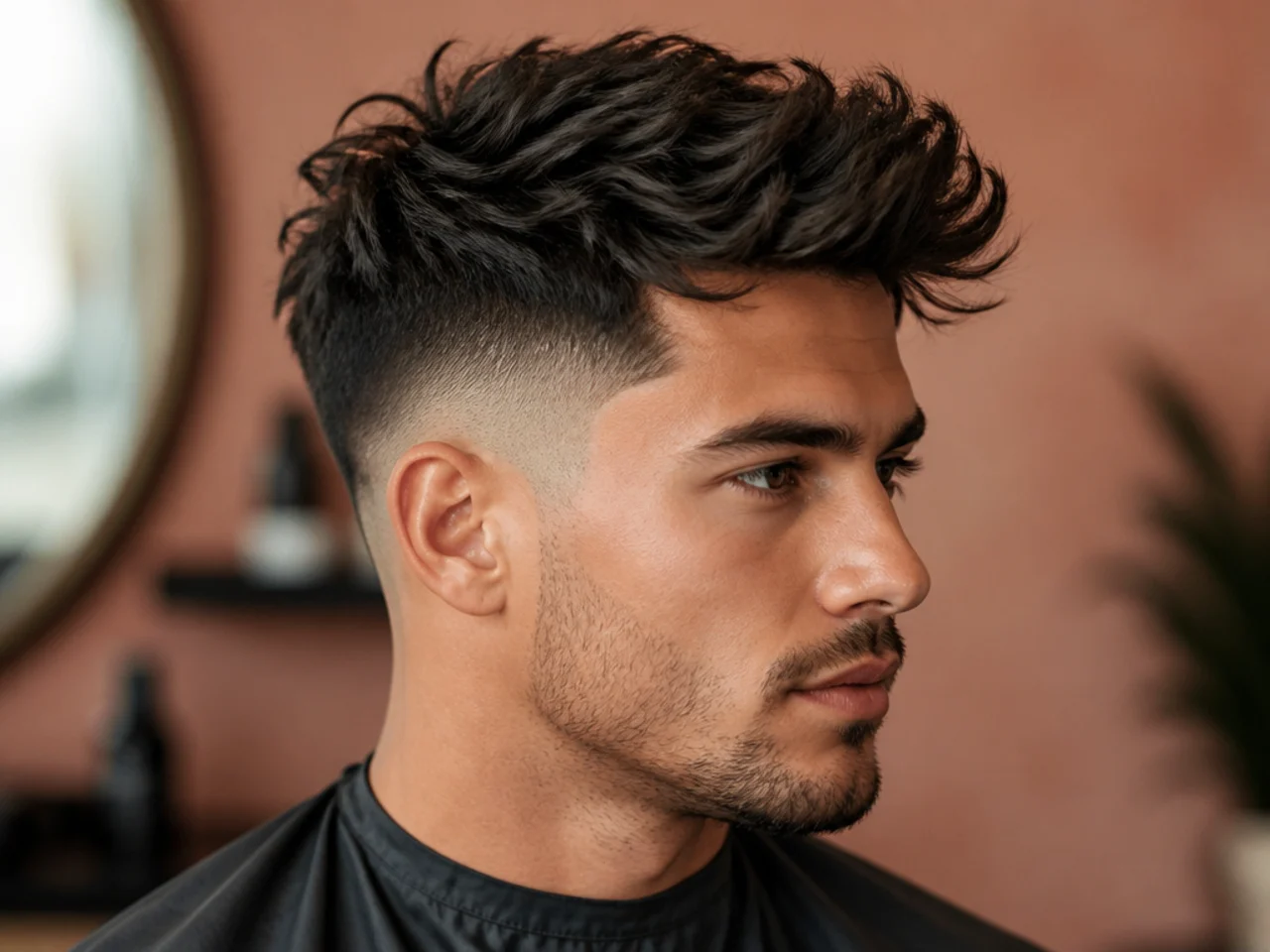
The messy quiff with quiet sides. Layers run 5 to 6 inches at the front, the perimeter is left slightly rough, and the low fade at the sides makes sure the finished look reads intentional instead of unbrushed.
Suits guys with natural movement — wavy or fine-but-plentiful hair. Any face shape.
Ask for: scissor layers on top with a "worn-in" edge, a low fade at the sideburn, and no razor work at the ends. Mist sea-salt spray on damp hair, rough-dry with fingers, then work a pea of matte clay through the mid-lengths.
4. Short Low Fade Quiff
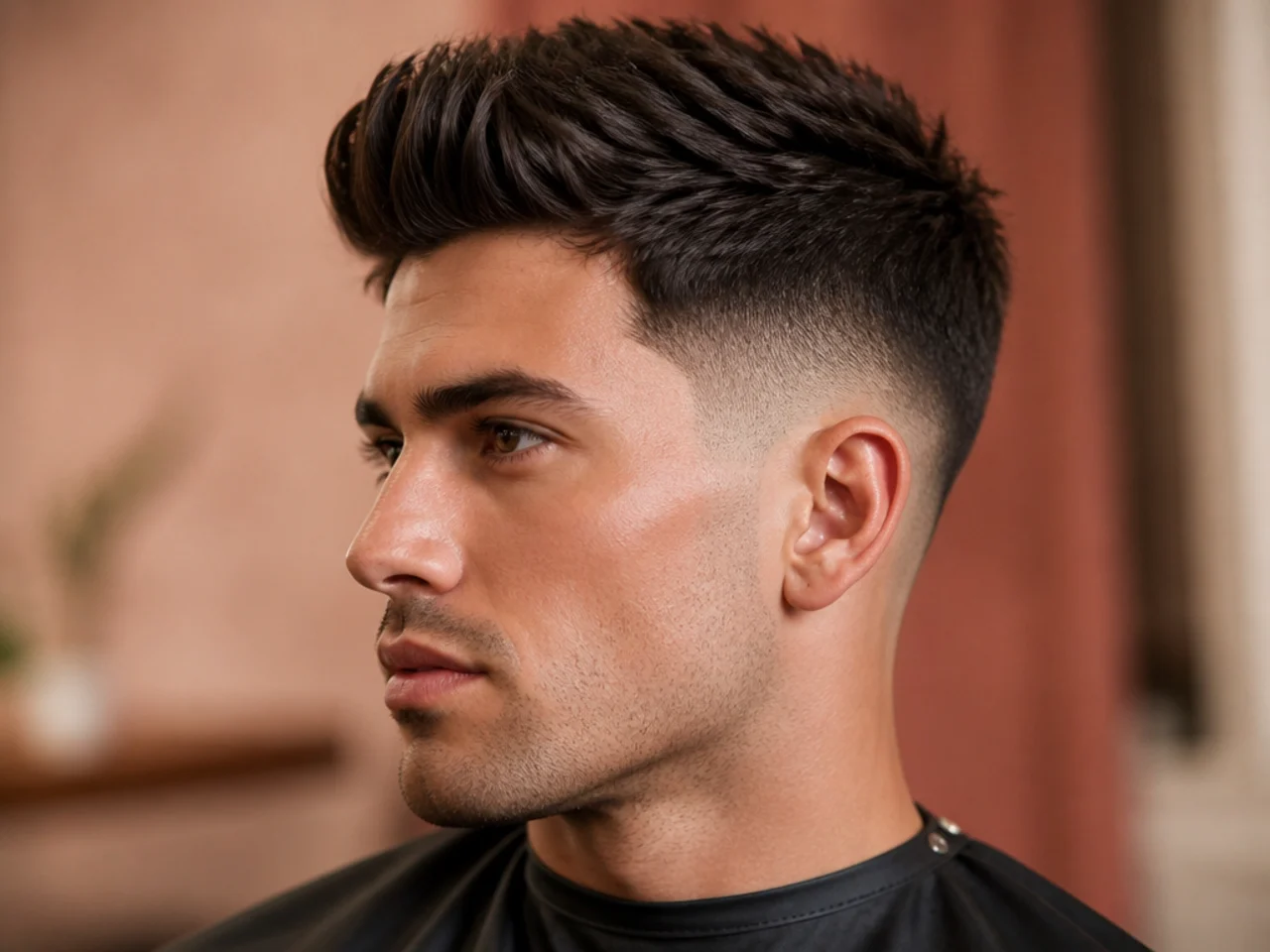
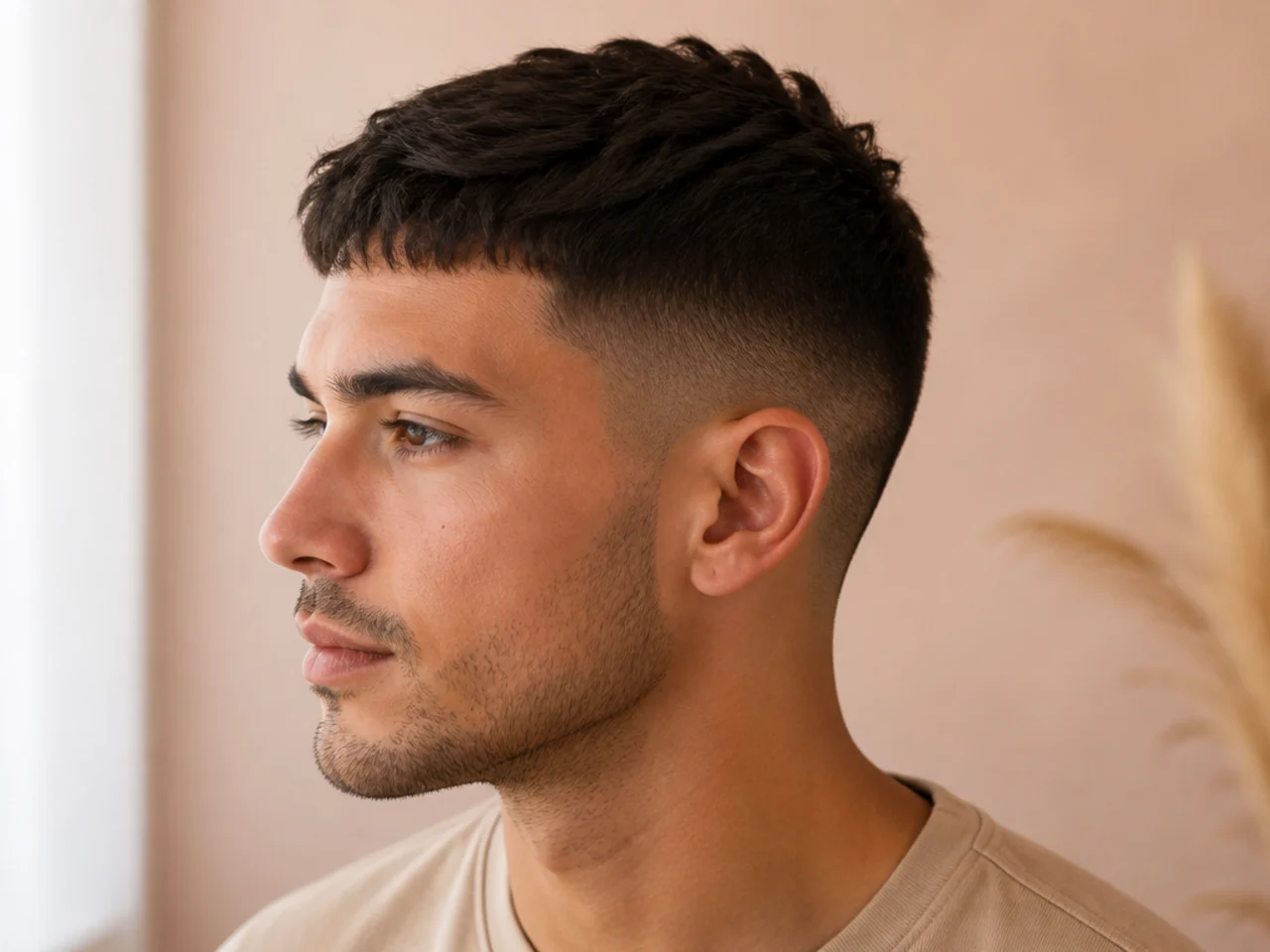
A quiff cut down to shift-work length. Top runs 2 to 3 inches, long enough to lift with fingers, short enough that it holds shape on its own overnight. The low fade keeps the sides looking clean without demanding a two-week reset.
Best on straight, medium-density hair. Suits every face shape.
Ask for: 3 inches on top, a low fade starting just above the ear, and a soft blend at the crown so nothing looks blocky from the side. Rub matte paste between your palms and push the front up and back with fingers. No blow-dryer needed most days.
5. Medium Low Fade Quiff
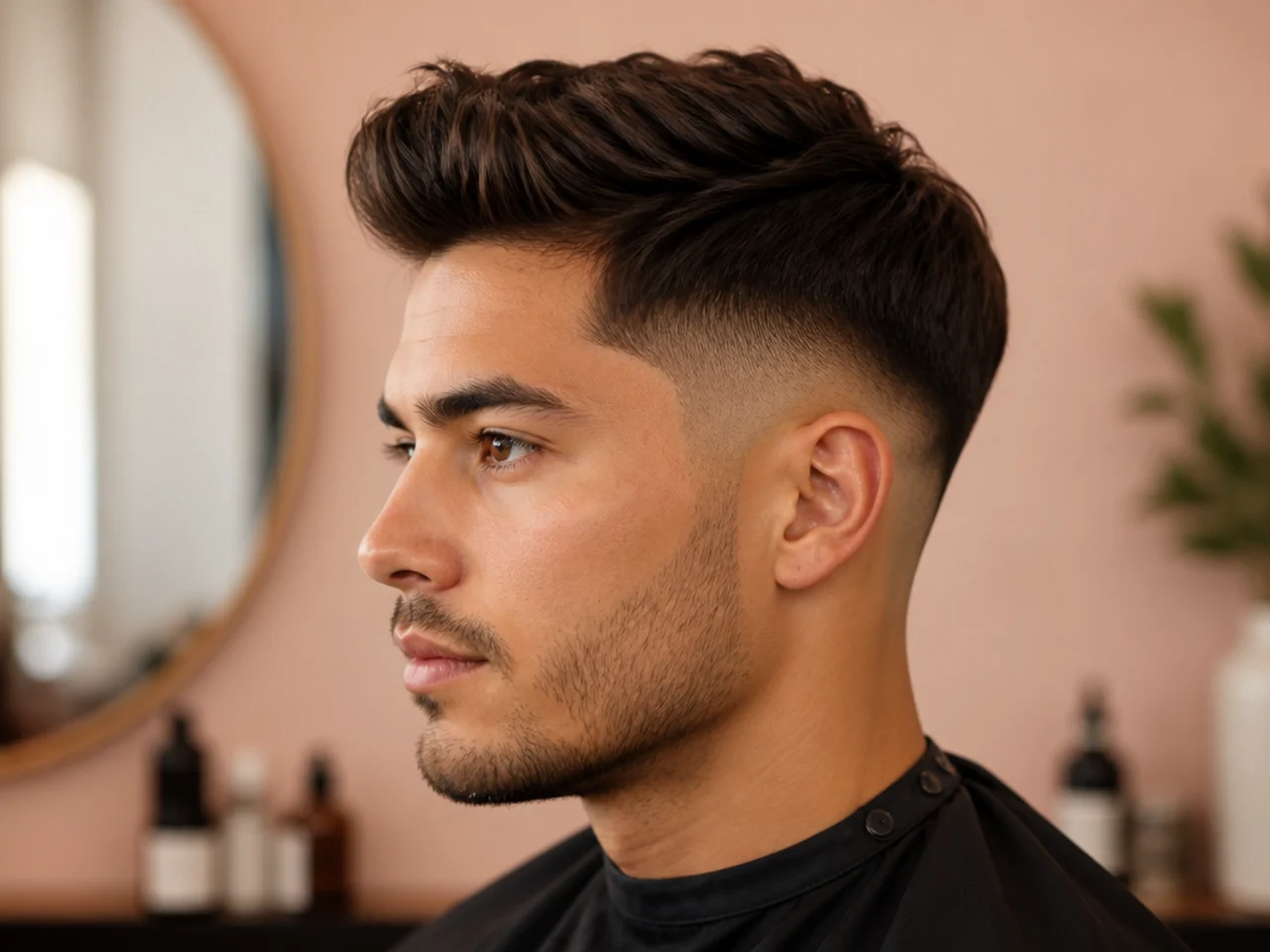
The flexible middle length. Top runs 5 to 6 inches, enough to style up for a meeting or push back for the weekend without a recut. See our medium quiff hairstyles for men guide for related medium-length variations.
Suits guys who want one haircut that dresses up and down. Any face shape.
Ask for: scissor-cut layers on top, 5 inches at the front, a low fade at the sideburn, and enough length at the crown to blend into the front sweep. Round-brush up and back after towel-drying, then work in matte clay for volume.
6. Long Low Fade Quiff
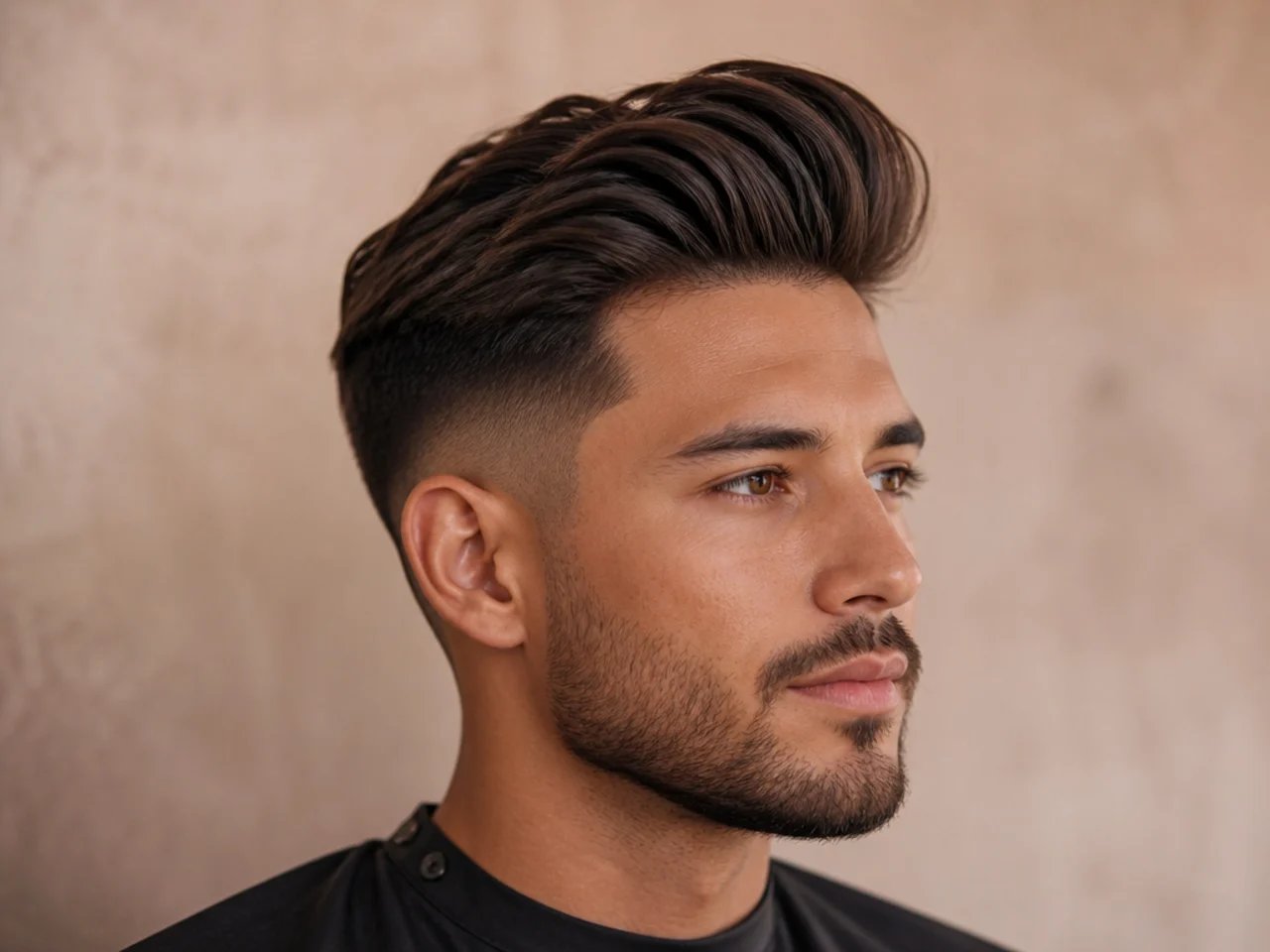
Length on top pushed to 6 or 7 inches, with the low fade keeping the sides tight enough that the length reads intentional instead of shaggy. Needs thicker hair and 5 minutes of morning styling, but the payoff is a haircut that stops people in a room. Pair the look with a long quiff styling routine.
Best on thick straight-to-wavy hair. Oval and long face shapes.
Ask for: 6 to 7 inches at the front, layered down to 4 inches at the crown, and a low fade at the sideburn. Prep with volumizing mousse, blow-dry with a large round brush from front to crown, then set with a firm-hold matte cream.
7. Wavy Low Fade Quiff
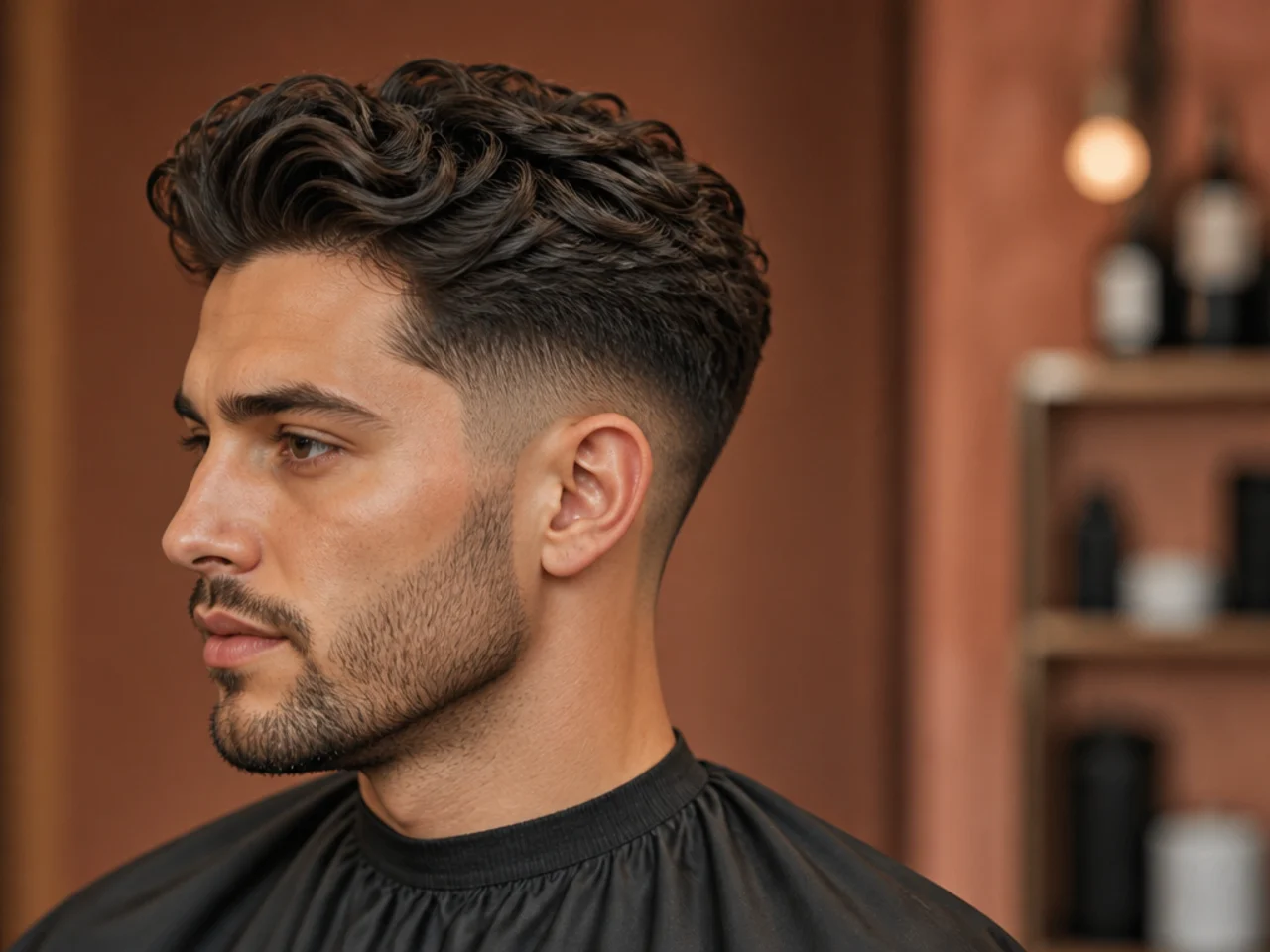
If your hair bends on its own, the wavy low fade quiff lets it show instead of fighting it flat. The waves handle the texture — all you add is direction and a bit of lift at the front. The low fade keeps the frame quiet so the wave pattern reads on top.
Best on naturally wavy hair. Suits every face shape.
Ask for: scissor layers cut with the wave pattern, a low fade at the sideburn, and 4 to 5 inches at the front. Tell your barber not to thin the ends — thinning kills wave definition. Apply a wave cream to damp hair, then air-dry with the front swept back or diffuse on low.
8. Curly Low Fade Quiff
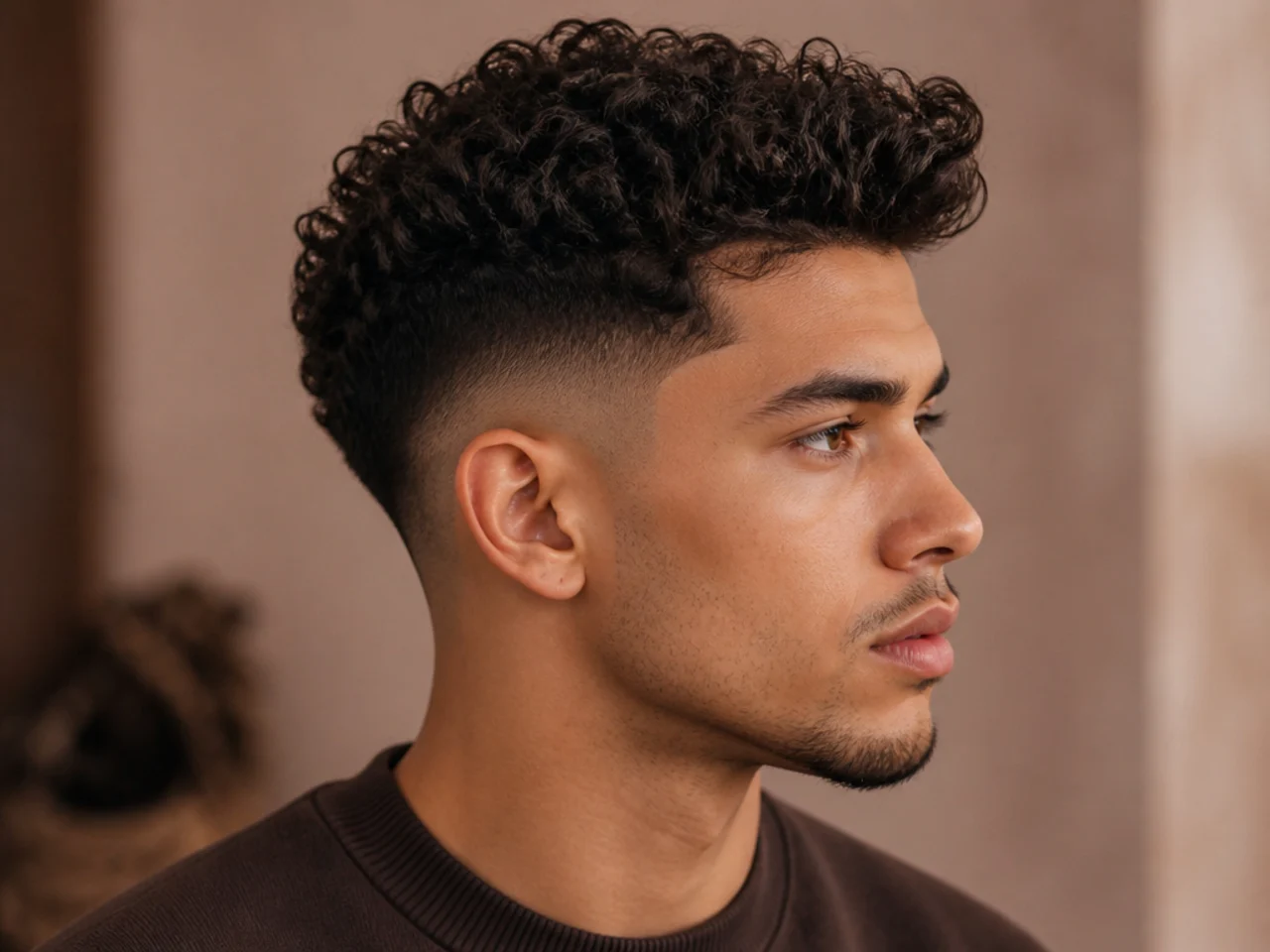
Curls do most of the shape work. The barber's job is to control the perimeter and give the front room to lift naturally. See our curly quiff hairstyles for men guide for pattern-specific direction.
Best on 3A to 3C curl patterns. Suits every face shape.
Ask for: scissor layers cut on dry curl, a low fade at the sideburn, and 4 to 5 inches at the front measured stretched. No razor, no thinning. Apply a curl cream to damp hair, scrunch upward, and diffuse on low if you have time.
9. Straight Low Fade Quiff
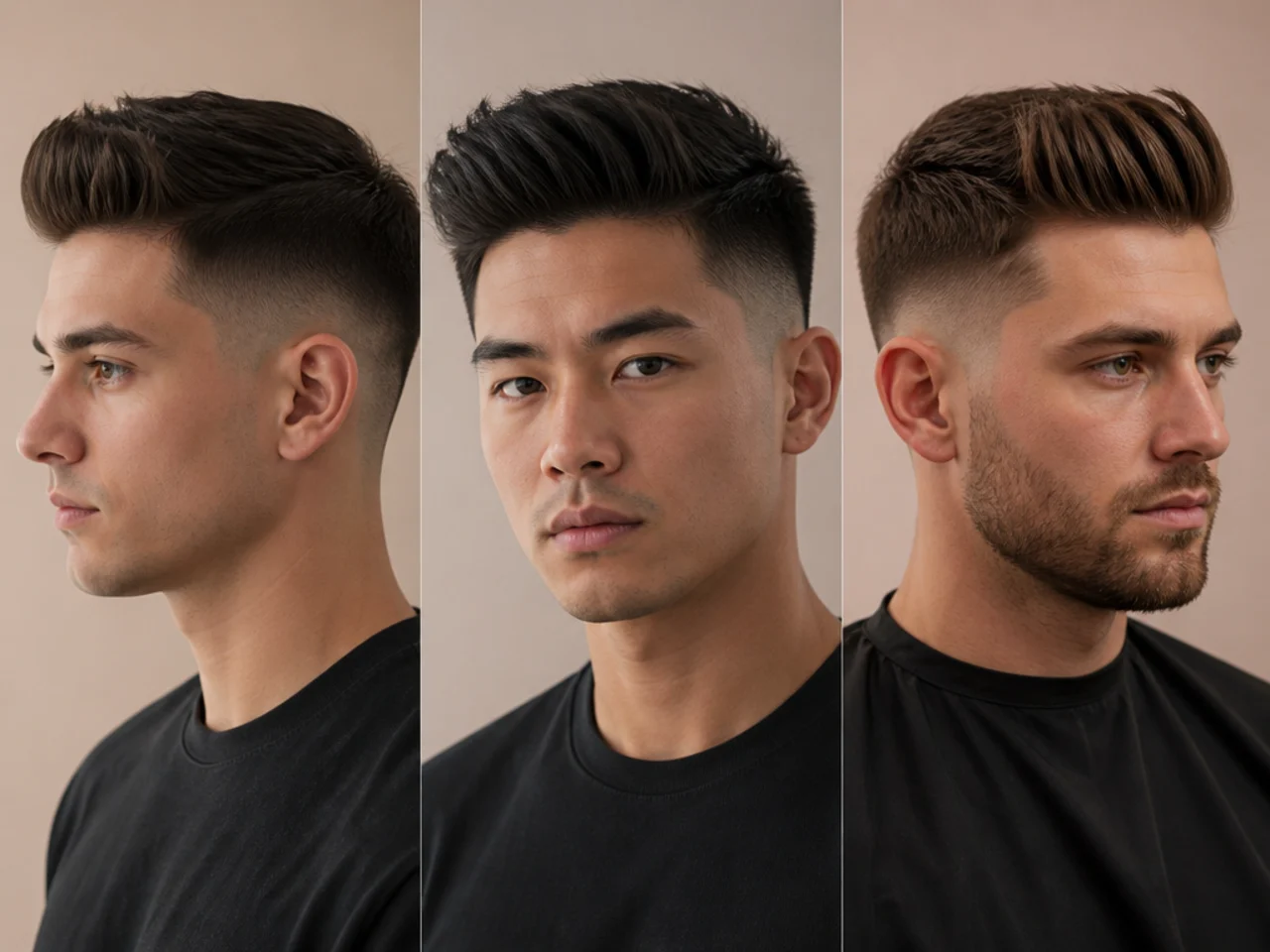
The polished version. Straight hair holds a clean sweep, so the top can read smooth without extra texture work. Combined with a low fade, the finished cut sits closer to a classic quiff than to the messy family.
Best on medium to thick straight hair. Suits every face shape.
Ask for: 4 to 5 inches on top with scissor layers, a low fade at the sideburn, and a smooth crown blend. Blow-dry with a round brush straight up and back. Work a coin of light pomade or cream from root to tip, then comb through.
10. Low Taper Fade Quiff
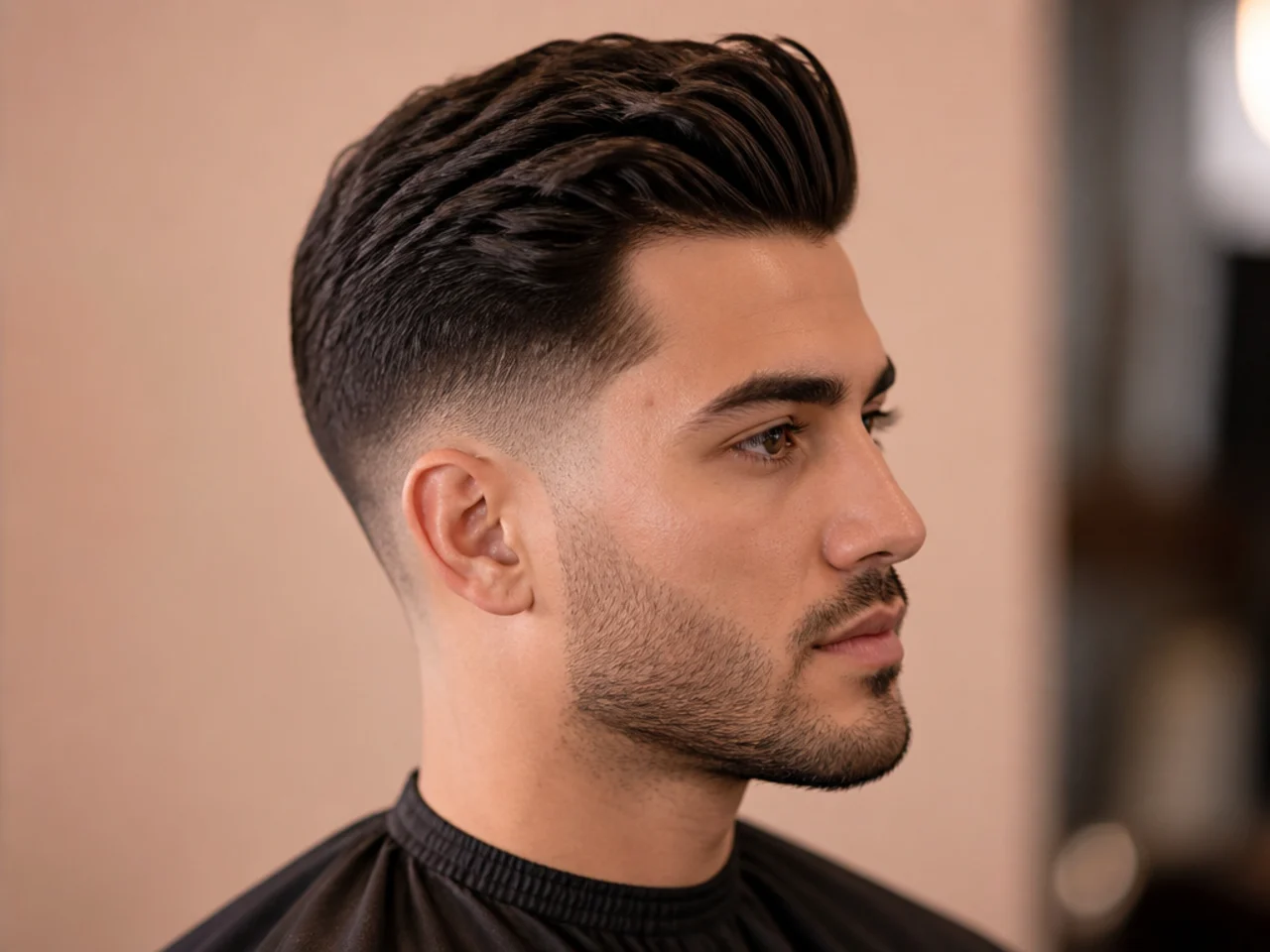
The softest version of the family. A low taper fade stops before skin, so the sides fade to a shorter guard rather than dropping to bare skin. Reads the most conservative — safe for interviews, weddings, and workplaces that side-eye a full skin fade.
Suits every face shape. Best for guys in traditional professional settings.
Ask for: 4 inches on top with soft layers, a low taper fade that starts just behind the sideburn and drops to a #0.5 guard, and a clean scissor blend at the crown. Style with matte clay pushed up and back.
11. Low Skin Fade Quiff
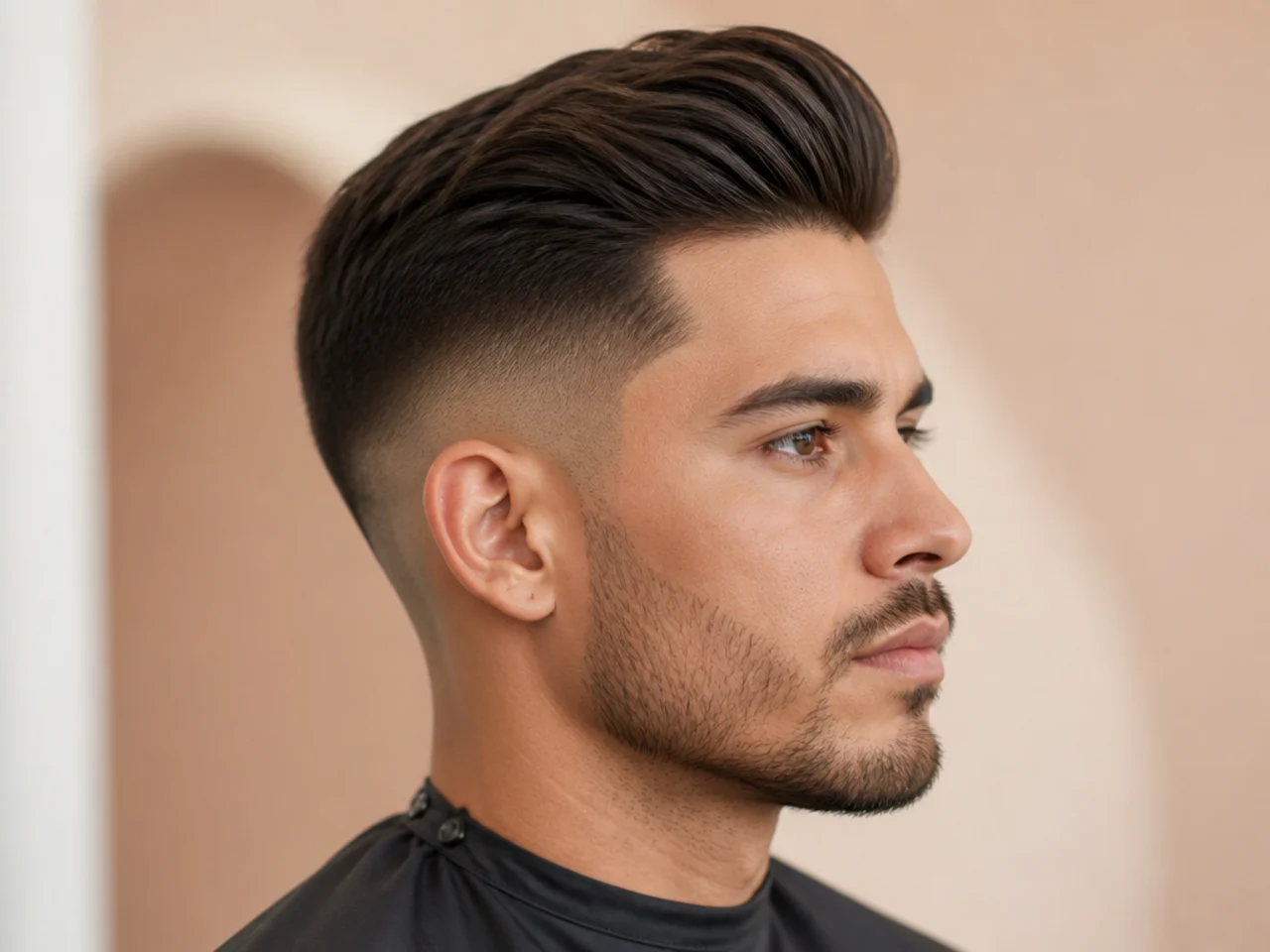
The sharpest version of the family. A low skin fade drops to bare skin at the sideburn and blends up through short guards to full hair below the temple. The contrast between skin and quiff on top is what makes this version photograph so well.
Best on straight to wavy hair. Suits oval, square, and diamond faces.
Ask for: a low skin fade to bald at the sideburn blending up to a #2 guard at the temple, 5 inches on top with point-cut layers, and a defined line-up at the front hairline. Style with matte clay pressed into the ends only.
12. Low Drop Fade Quiff
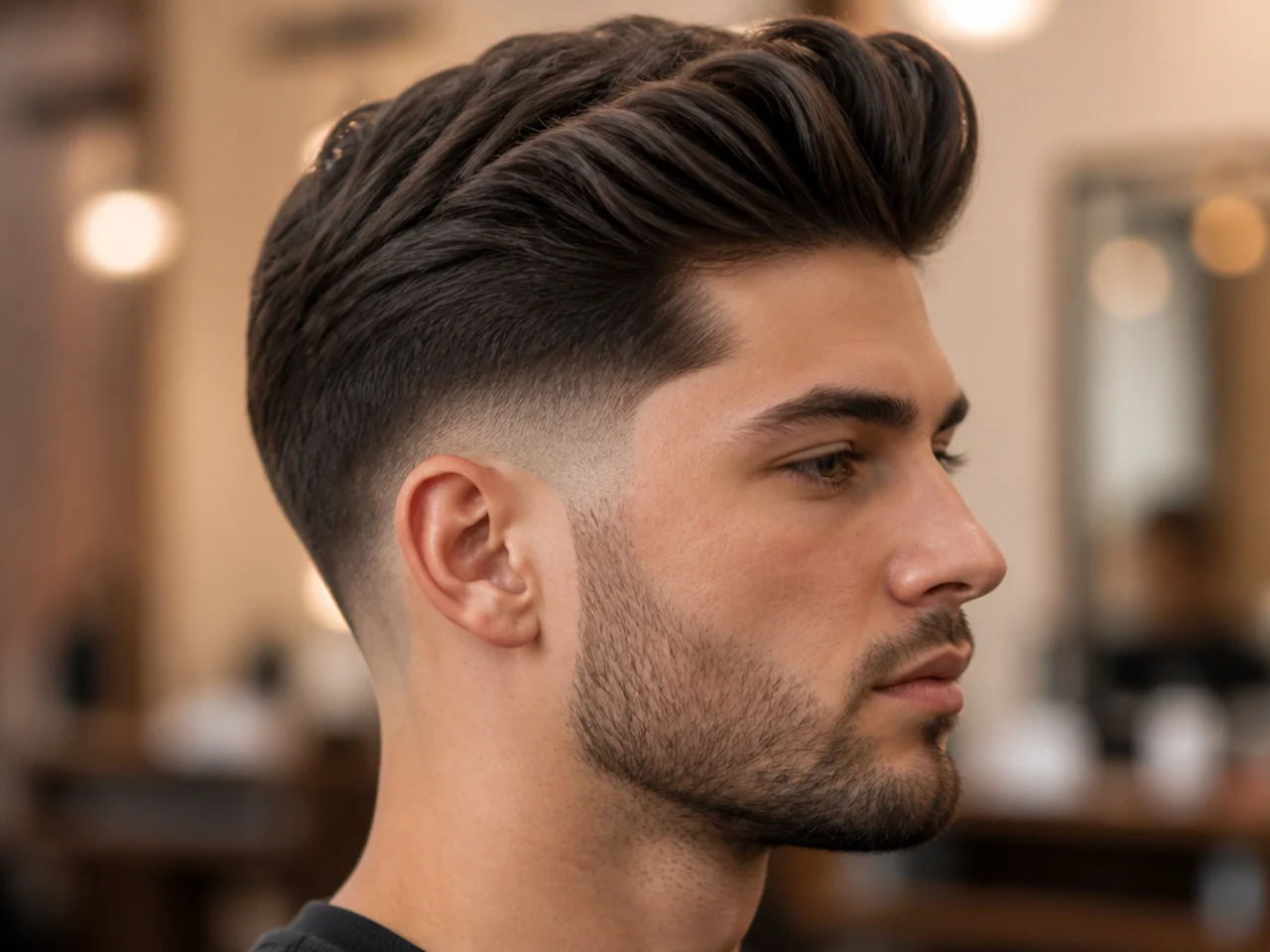
The low drop fade curves down behind the ear rather than staying flat, which gives the back of the head a softer, rounder read. Paired with a quiff on top, the shape looks intentional from every angle — especially from the side and back.
Suits round, square, and diamond faces. Best on any hair type.
Ask for: a low drop fade — specify where the fade should bottom out behind the ear — 4 inches on top with scissor layers, and a clean crown blend. Blow-dry the front up and back with a round brush, then set with matte paste.
13. Low Burst Fade Quiff
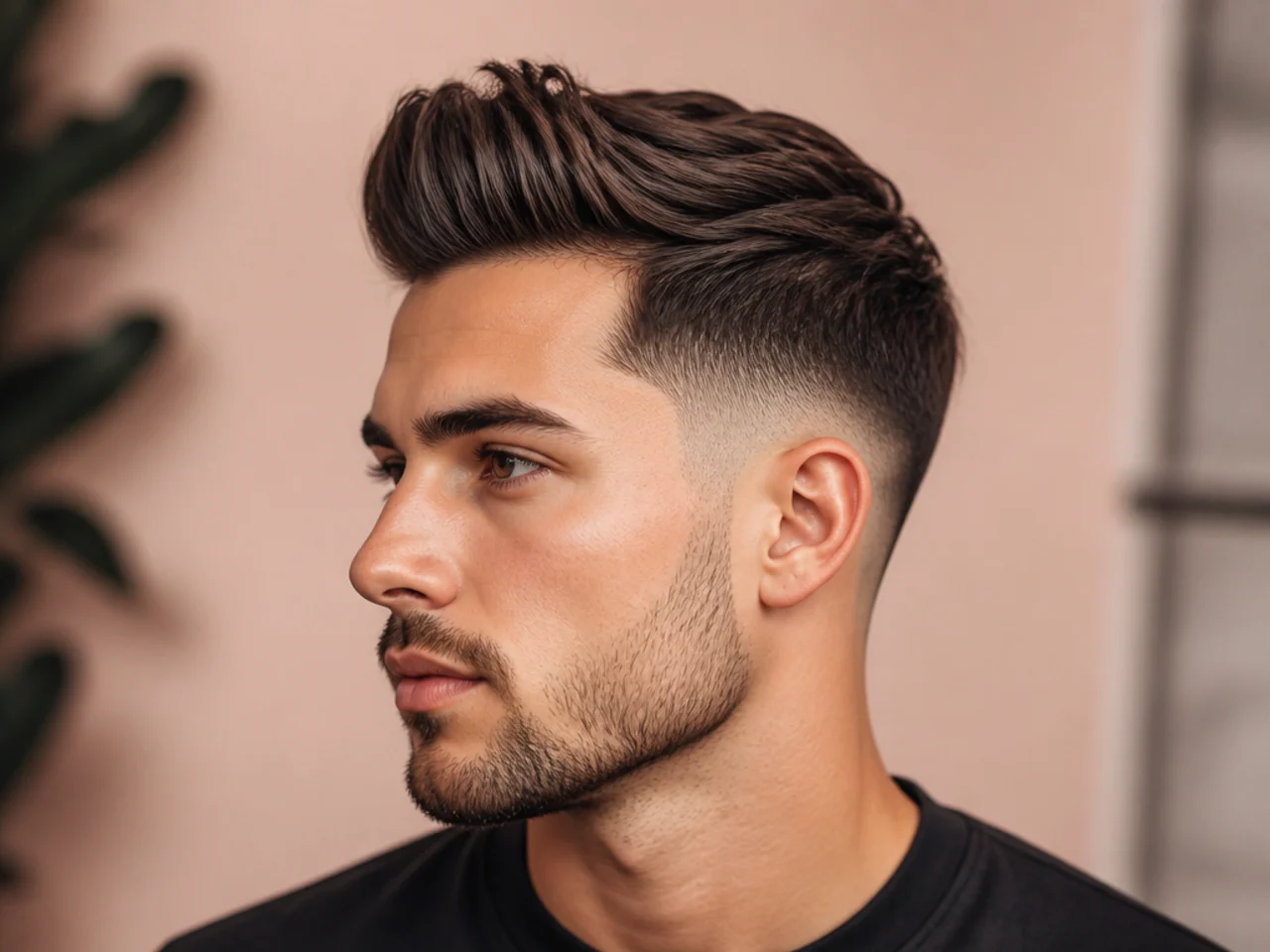
The burst fade curves in a clean semicircle around each ear, leaving a small strip of length behind the ear that reads sharp from the side. Kept at low height, the burst stays subtle enough to pair with formal wear without shouting.
Suits oval, square, and diamond faces. Works with any hair type but shines with wave or curl.
Ask for: a low burst fade to a #0.5 guard around each ear, 4 inches on top with soft layers, and a scissor blend at the crown. Matte paste through damp hair, blow-dry backward for lift.
14. Side-Swept Low Fade Quiff
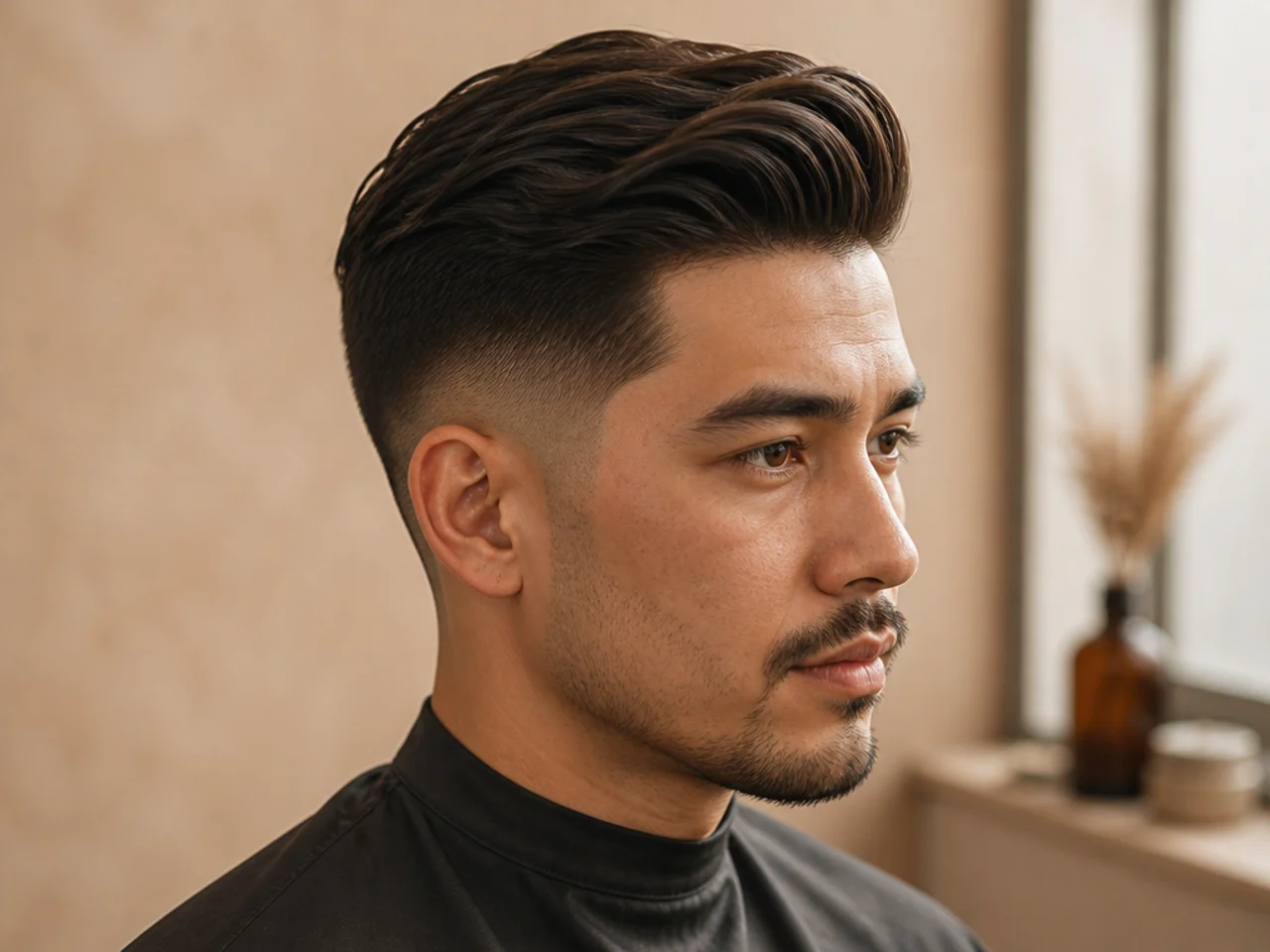
The quiff swept up and to one side instead of dead-center. The off-center direction reads more modern than the traditional centered lift, and the low fade keeps the sides quiet so the sweep dominates. Pairs well with a side part mindset.
Suits every face shape. Best on straight to slightly wavy hair.
Ask for: 5 inches at the front, scissor layers with a slight side direction, a low fade at the sideburn, and a soft crown blend. Blow-dry the front up and to one side, then finish with a light cream or paste.
15. Modern Low Fade Quiff
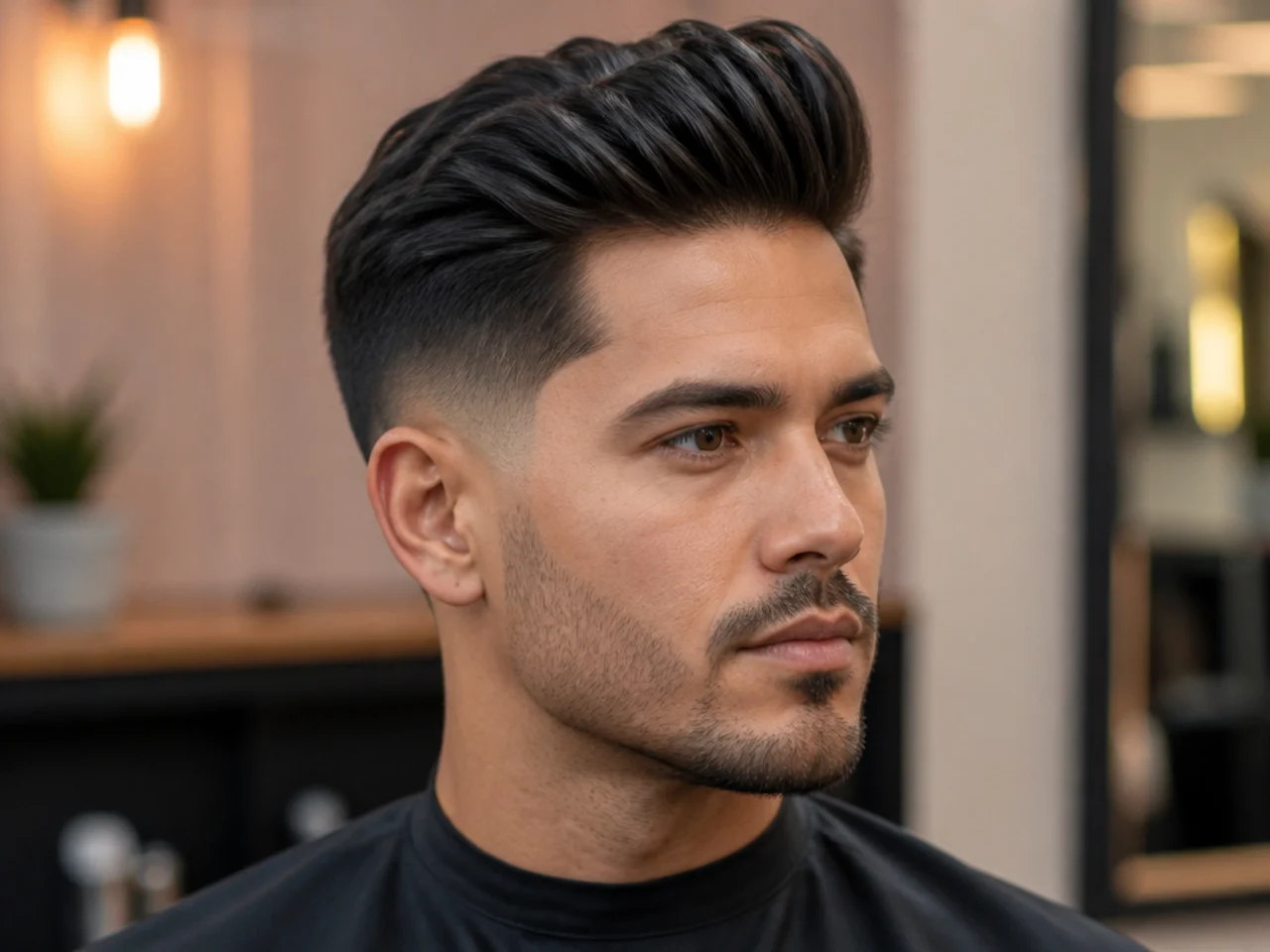
Every edge sharpened. The top is left long and layered for movement, the low fade drops to skin at the sideburn for maximum contrast, and there is usually a soft disconnection where the top meets the fade. Reads current, camera-ready, and 2020s-first.
Best on straight to wavy hair. Suits guys in their 20s and 30s.
Ask for: a low skin fade with a soft disconnection at the parietal ridge, scissor detail through the crown, and 5 to 6 inches at the front. Prep with light mousse, round-brush the front up, then finish with matte clay pressed into the ends only.
16. Low Fade Quiff with Beard
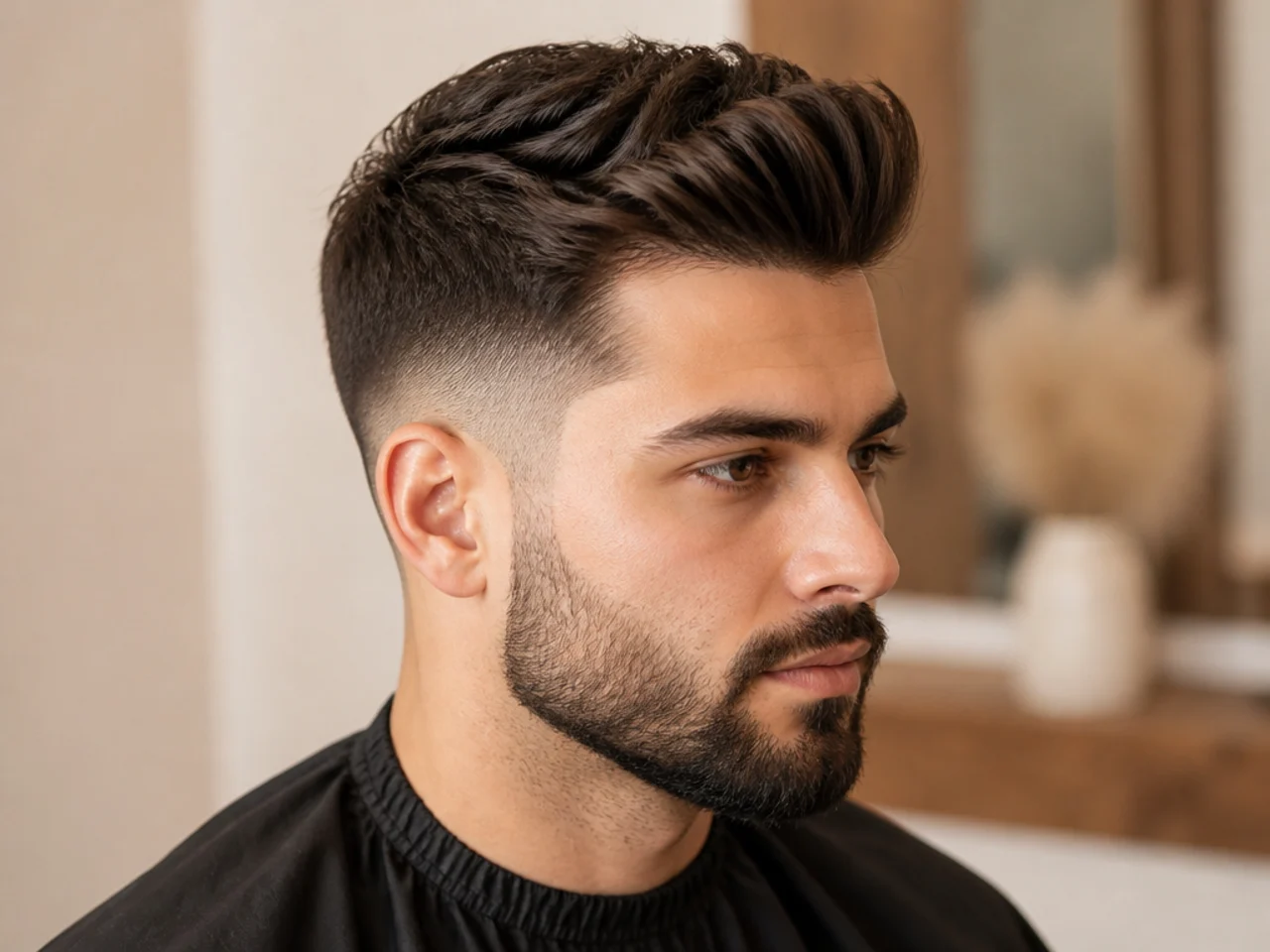
Pairing a quiff with a beard doubles the frame — height on top, weight along the jaw — and the low fade acts as the bridge between the two. Match density: full quiff with a full beard, textured quiff with shorter stubble.
Suits square, oval, and heart faces. Round faces should keep the beard tight.
Ask for: a low fade that ties into the beard line at the sideburn so the sides and cheeks flow into each other, 4 to 5 inches on top depending on the quiff style, and a clean scissor blend at the crown. Keep beard oil in the beard and clay on top — never mix.
17. Low Fade Quiff with Line-Up
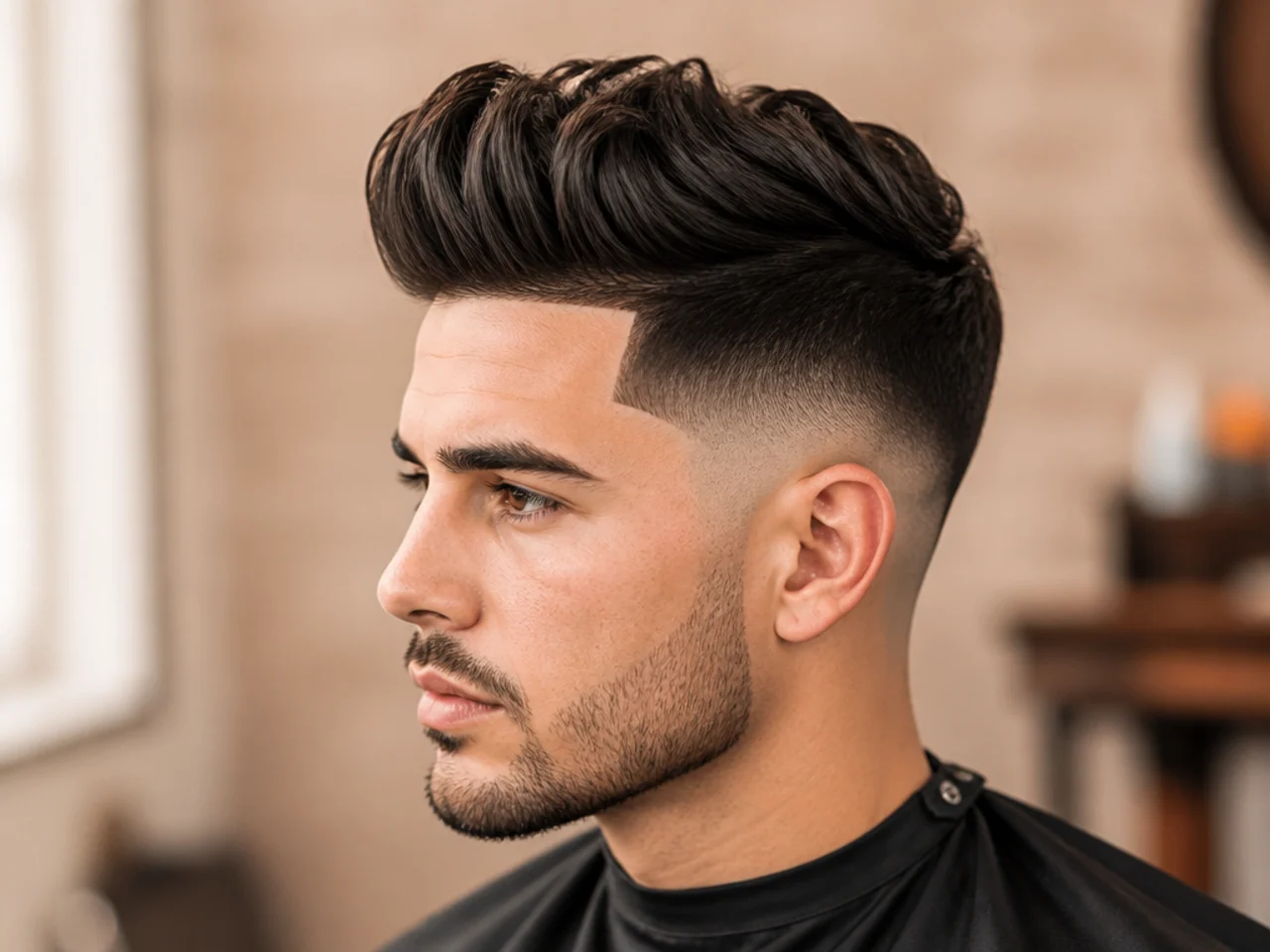
A razor line-up at the hairline, temples, and sideburns turns the low fade quiff into a geometry piece. The rest of the cut stays soft — the line-up does the sharpening on its own. Popular with guys who want a barbershop-fresh read every time they leave the chair.
Suits every face shape. Especially strong on square and diamond faces.
Ask for: a low fade at the sideburn, 4 inches on top with scissor layers, and a razor line-up at the front hairline, temples, and sideburns. Book touch-ups every 2 weeks to keep the line crisp.
18. Low Fade Quiff with Fringe
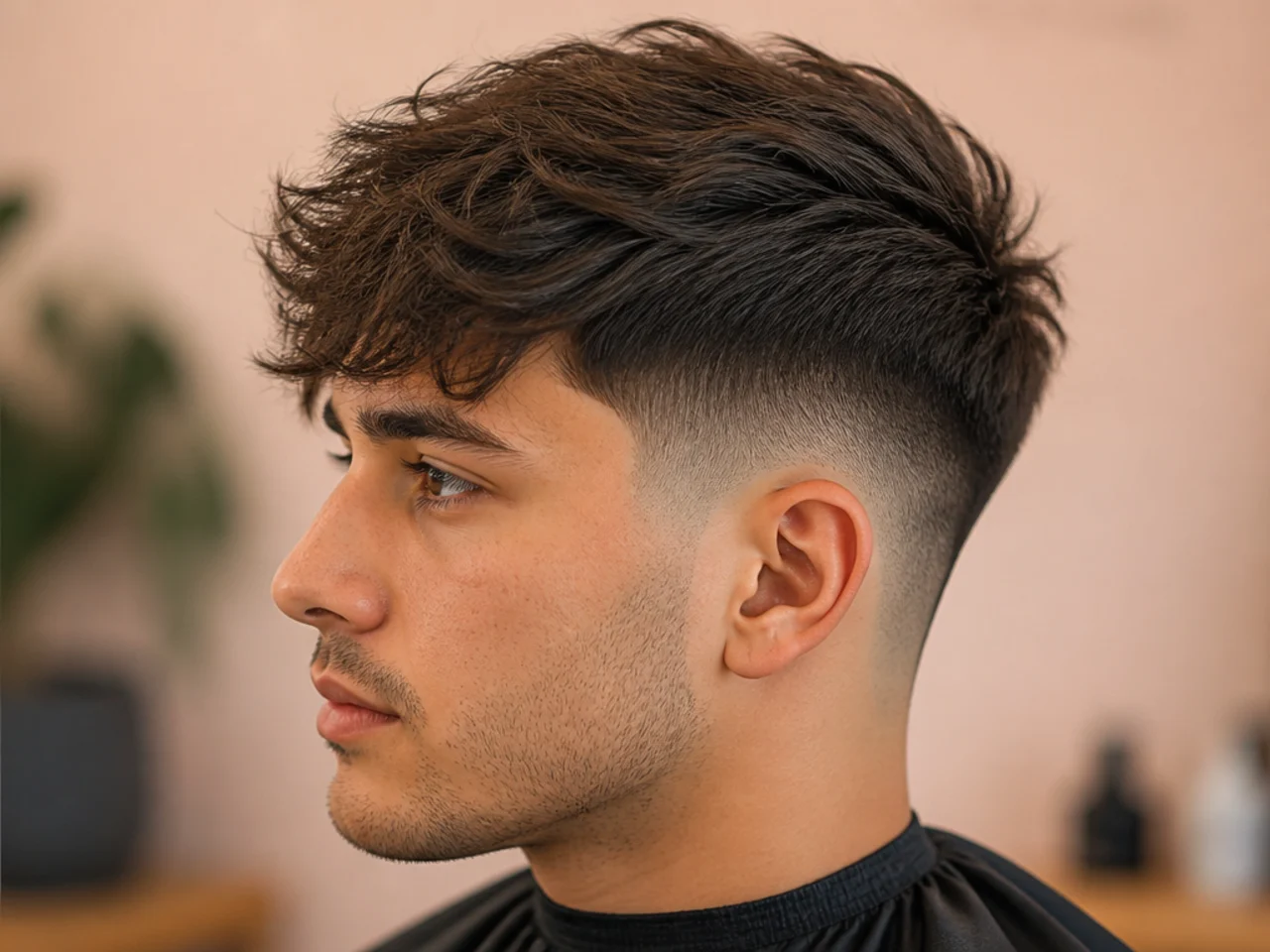
The quiff kept short at the crown but the front left long enough to fall forward as a soft textured fringe. You get the low fade quiff's clean framing plus fringe coverage for a higher forehead or a heart-shaped face.
Suits round, heart, and oval faces. Best on straight to slightly wavy hair.
Ask for: 5 inches at the front point-cut for texture, 3 inches through the crown, a low fade at the sideburn, and a soft crown blend. Blow-dry the fringe forward with fingers, then press a pea of matte clay into the ends.
19. Slicked Back Low Fade Quiff
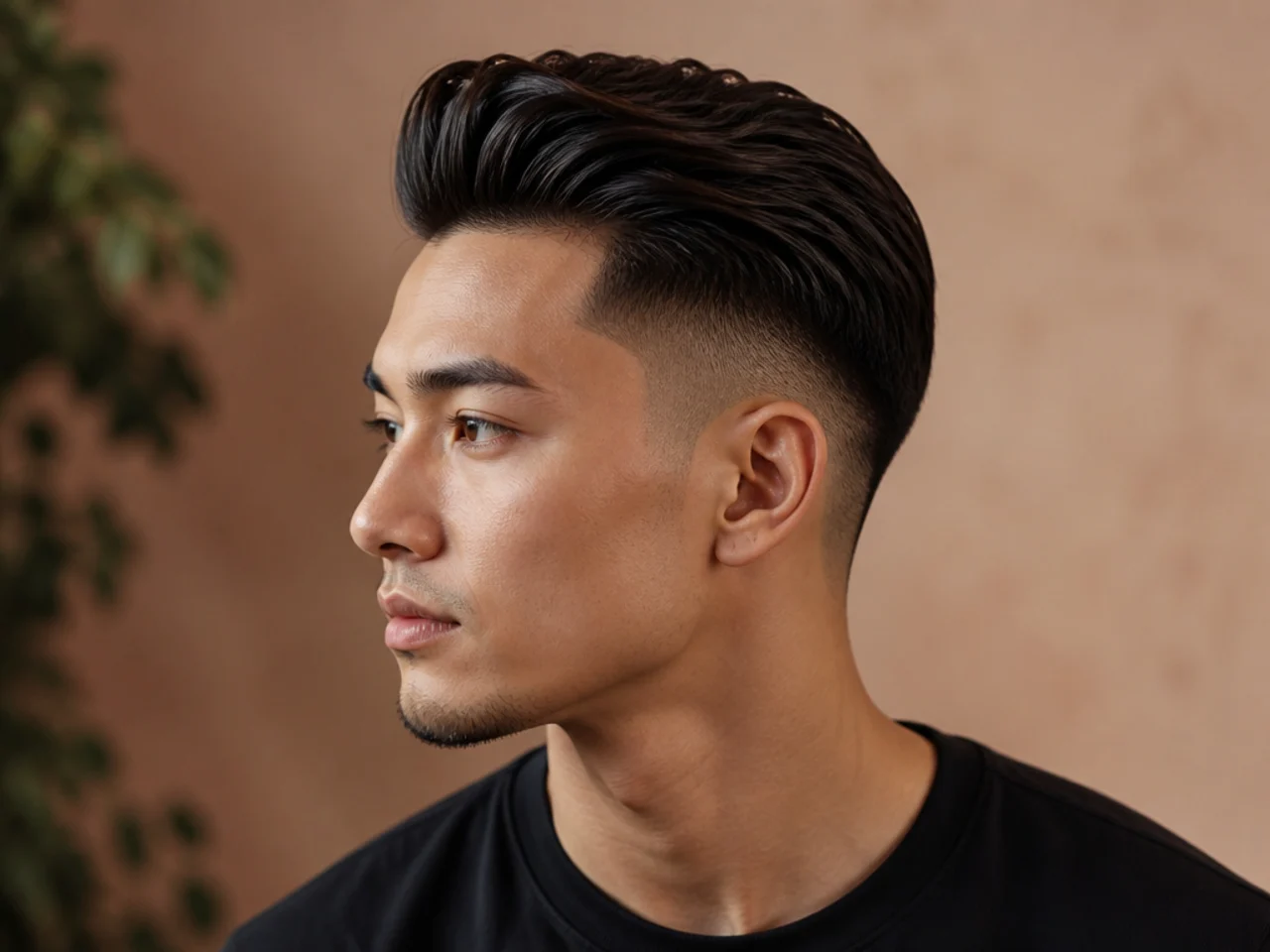
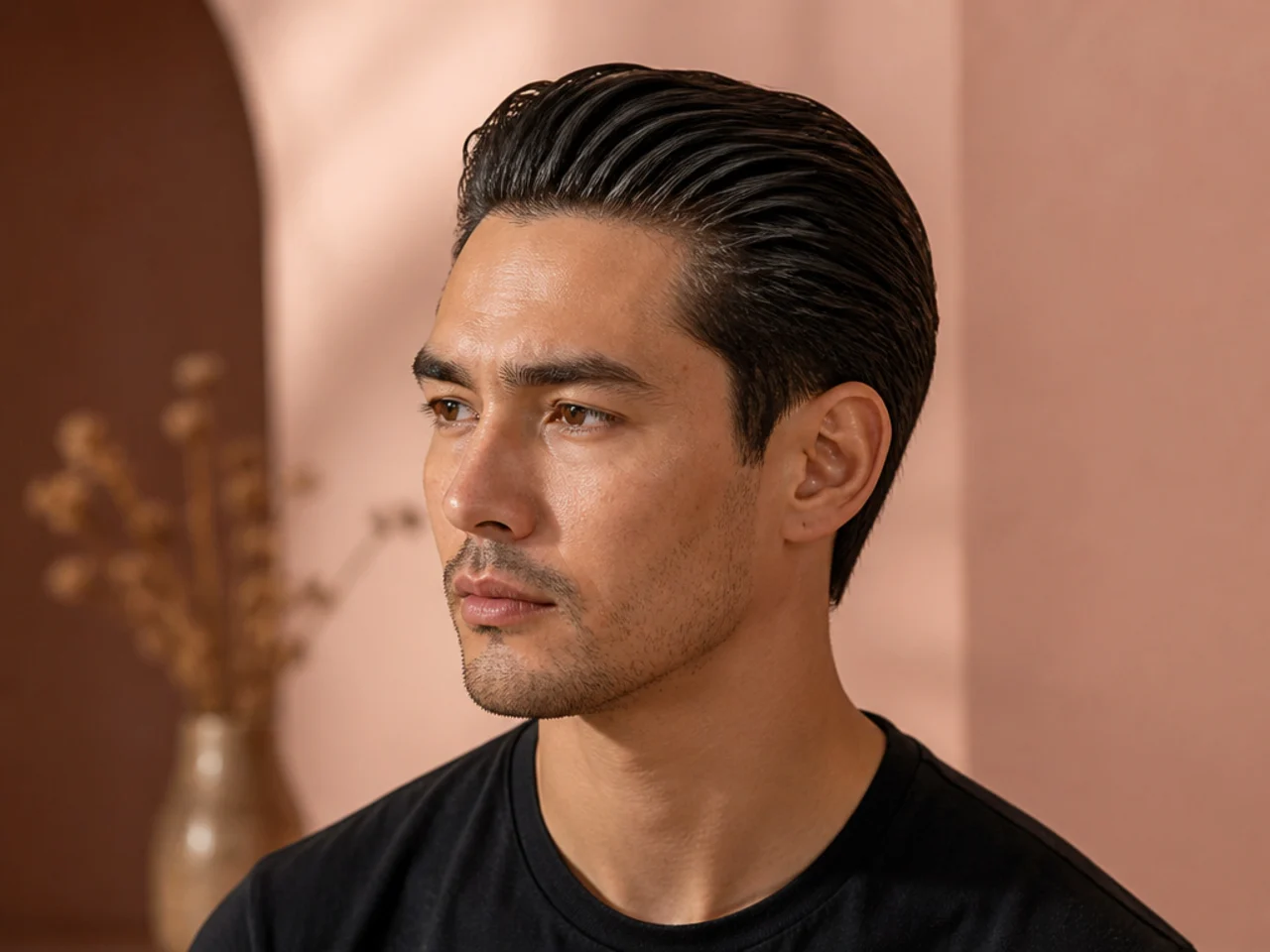
The 1950s finish with modern sides. The top is combed straight back with visible shine — closer to a slick back haircut than a matte quiff — and the low fade keeps the sides quiet enough that the sheen on top does not read as costume.
Best on straight hair that holds a comb line. Suits weddings, offices, and formal events.
Ask for: 5 inches on top with scissor layers, a low fade at the sideburn, and a smooth crown blend. Prep with a blow-dry cream, blow-dry straight back with a round brush, then work a coin of water-based pomade from root to tip and comb through.
20. Tousled Low Fade Quiff
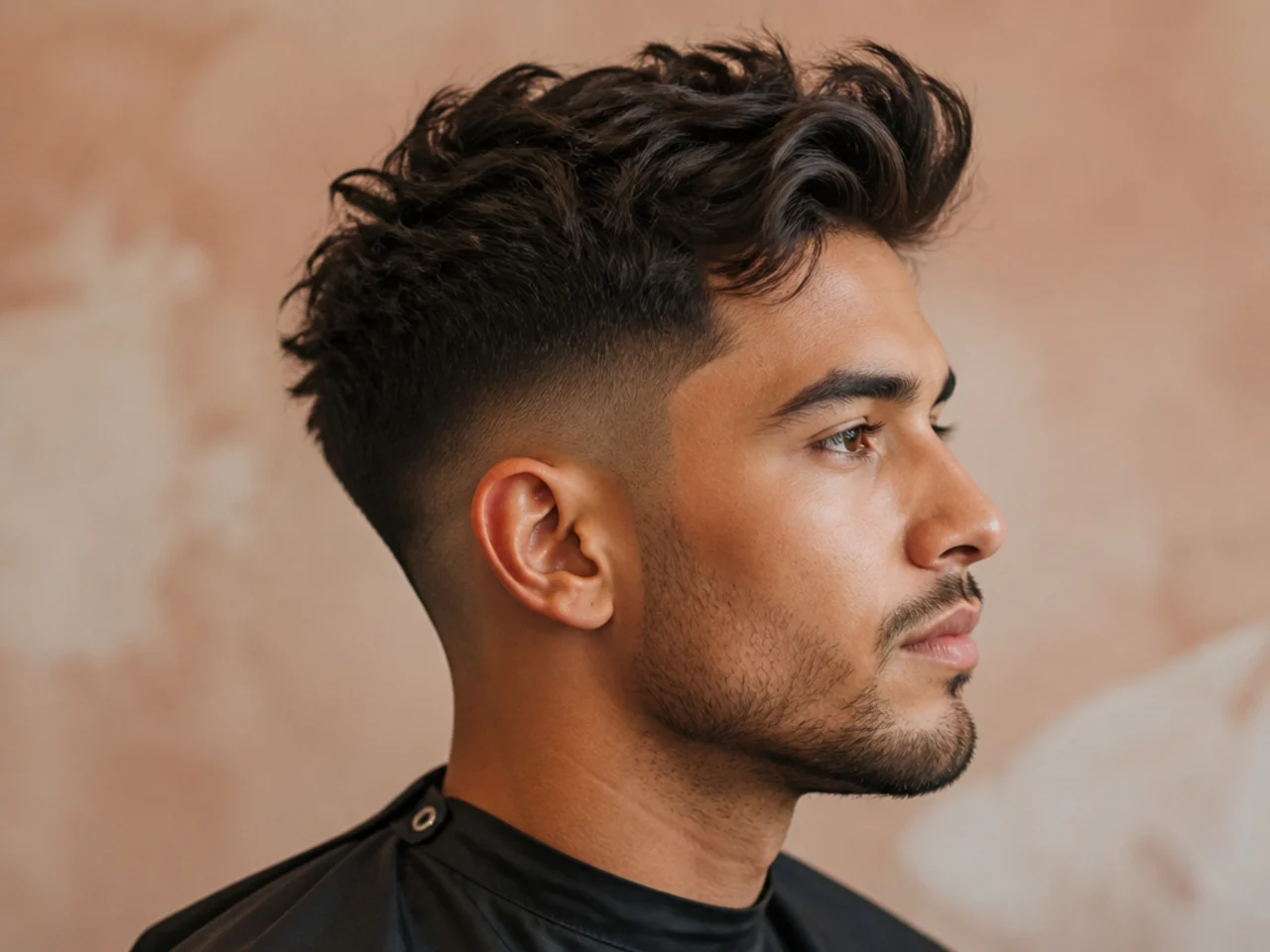
The lowest-effort version. Top layered enough to fall in a soft, casual shape without daily styling, sides finished with a low fade so the whole thing reads intentional even on wash-and-go days. Reads "surfer, cleaned up" more than "styled."
Suits every face shape. Best on hair with any natural movement.
Ask for: scissor layers on top, 5 inches at the front, a low fade starting just above the ear, and no razor work. Air-dry when you can. Otherwise, hit the front with a diffuser on low, then rub a small amount of cream through the ends with fingers only.
How to Ask Your Barber for a Low Fade Quiff
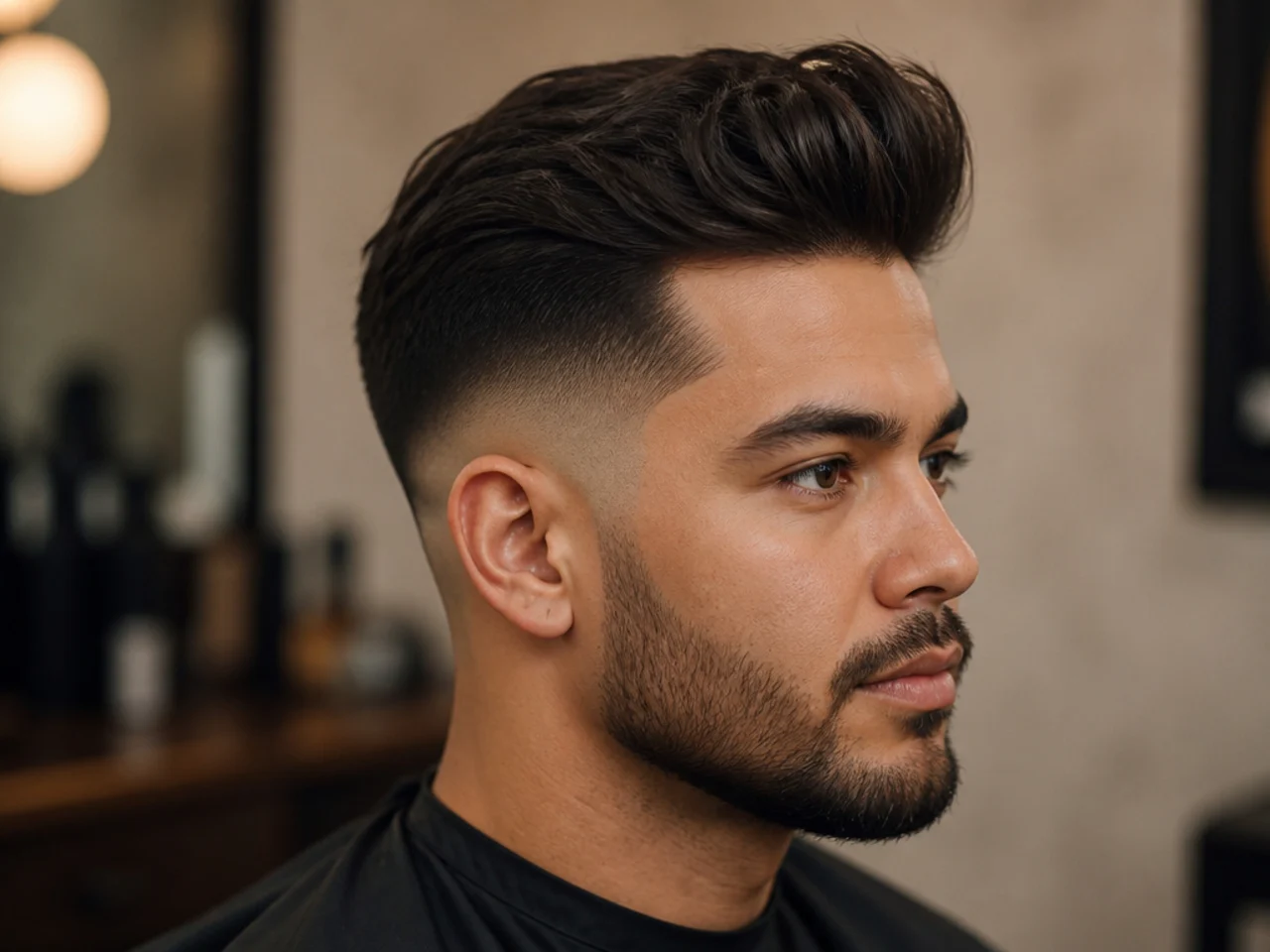
Bring a photo. That is rule one for every variation. Then walk your barber through the numbers below in order — top first, sides second, finish last. That is how a good barber wants the brief handed to them.
- Say "low fade quiff" — not just "quiff" or "fade." The low fade is a specific starting point (just above the ear, dropping to skin at the sideburn). Naming it saves a five-minute conversation about height.
- Set the top length in inches. 2 to 3 inches for shift-work versions, 4 inches for the classic zone, 5 to 6 inches for statement or long variations.
- Choose the low fade style. Low taper fade (softest), low skin fade (sharpest), low drop fade (curved), or low burst fade (arc around the ear). Each reads differently.
- Set the layering on top. Scissor blend for smooth versions. Point-cut for textured. Heavy internal thinning if your hair is thick or coarse and would otherwise stack wide.
- Set the finish direction. Up and back (classic), up and to one side (side-swept), straight back (slicked), or forward (fringe). The front direction changes the whole personality.
- Set the crown treatment. Ask for a soft scissor blend at the parietal ridge so nothing reads blocky from the side or back. This is the detail most barbers forget unless asked.
- Set the product finish. Matte and textured, or sleek and shiny. Both work — matte reads modern, sleek reads formal.
Show the photo one more time before scissors touch hair. Confirm the fade height and top length out loud. That is a complete brief.
Styling and Maintenance for a Low Fade Quiff
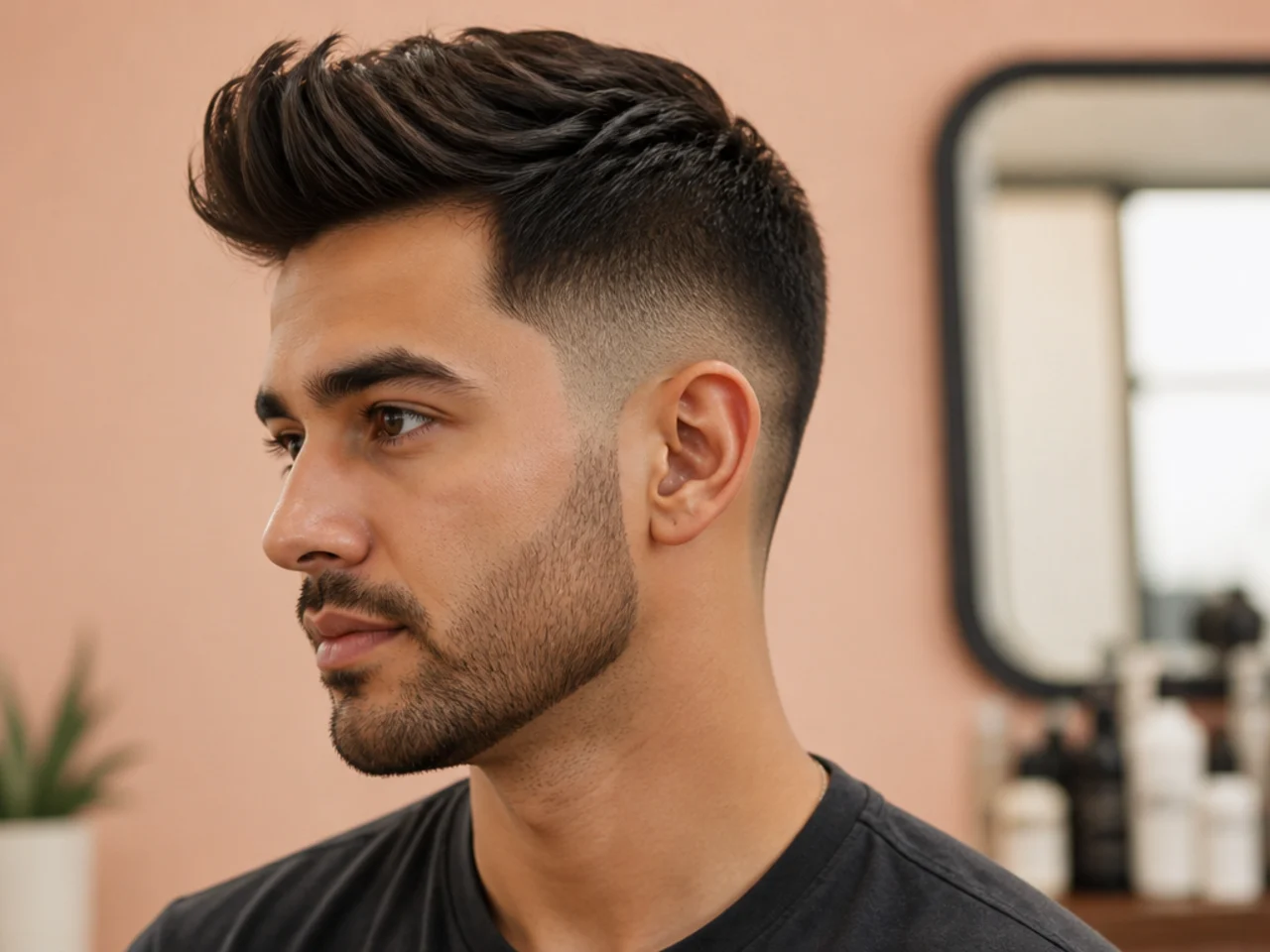
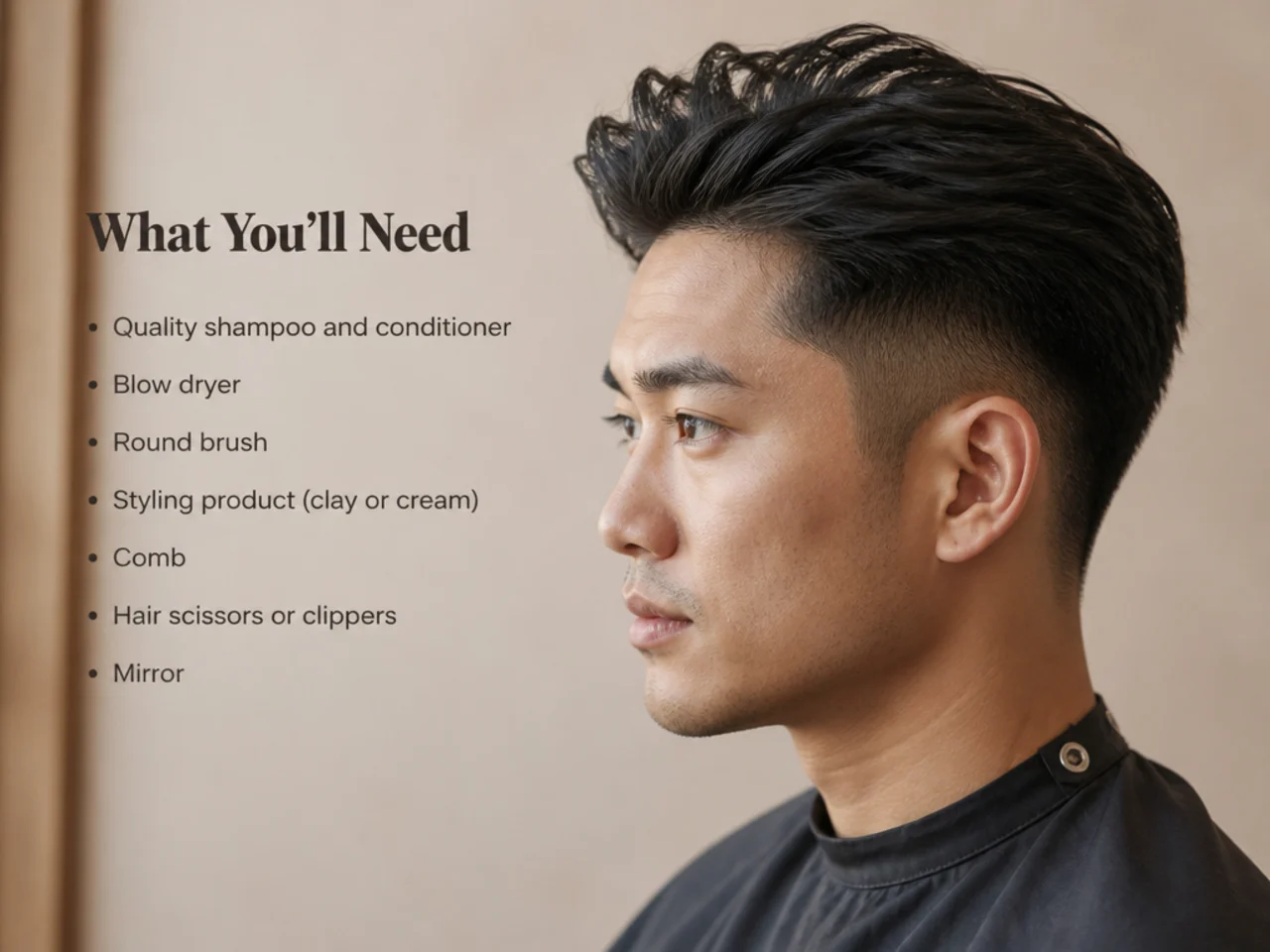
Wash and towel-dry to damp — not dripping, not fully dry. Damp hair absorbs product; wet hair holds it on the surface where it drips. For straight hair, prime with a sea-salt spray for grip. For wavy hair, use a light styling cream. For thick or curly hair, use a leave-in conditioner while soaking wet and let hair reach damp naturally.
Blow-dry with a vented brush or round brush on medium heat. Lift the front up and back at the root — that is where the height comes from. Point the nozzle down along the hair shaft to keep the cuticle smooth and the finish clean. Cool-shot the shape when it is where you want it. The cool blast locks direction in.
Match the product to the finish. Matte clay for modern textured looks. Medium-hold pomade for slicked-back or classic finishes. Fiber or cream for medium-hold movement. Sea-salt spray as a pre-styler for grip. Warm a nickel of product between your palms until it turns clear, apply to the ends first, then work back toward the roots. Never dump product at the roots — that flattens what you just built.
Re-cut the fade every 3 to 4 weeks. The low fade blurs before the top loses shape, so the sides are usually what pulls you back into the chair. Book a quick side clean-up (10 to 15 minutes) between full cuts if you want the contrast to hold. Wash the top 3 to 4 times a week, condition every wash, and sleep on a silk or satin pillowcase to preserve the texture overnight. For cadence across every cut in your rotation, see our how often to get a haircut guide.
FAQ
Is a low fade quiff good for a first fade?
Yes. The low fade sits below the temple, which keeps the contrast soft compared to a mid or high fade. That makes it the barber's default recommendation for a first-time fade client. If you decide you want more contrast later, moving up to a mid fade quiff takes one appointment.
Which is more conservative — a low taper fade or a low skin fade?
The low taper fade. Both start at the same height, but the low taper stops before skin — it fades down to a short guard (usually #0.5) rather than dropping to bare skin. That extra hair at the sideburn reads softer, which is why the low taper is the safer pick for interviews, weddings, and traditional offices.
Can I style a low fade quiff for a formal event?
Yes. Swap matte clay for water-based pomade and blow-dry the top straight back with a round brush. Comb it through smoothly and finish with a light spray. The low fade already reads clean; the sleek top brings the whole cut into wedding-and-tie territory.
How long does the top need to be to lift into a quiff shape?
Minimum 3 inches at the front. Anything shorter and the top does not have enough length to sweep up and hold — it reads as a short mens haircut with a low fade instead of a quiff. Four to five inches is the sweet spot for lift, five to six for full-height statement versions.