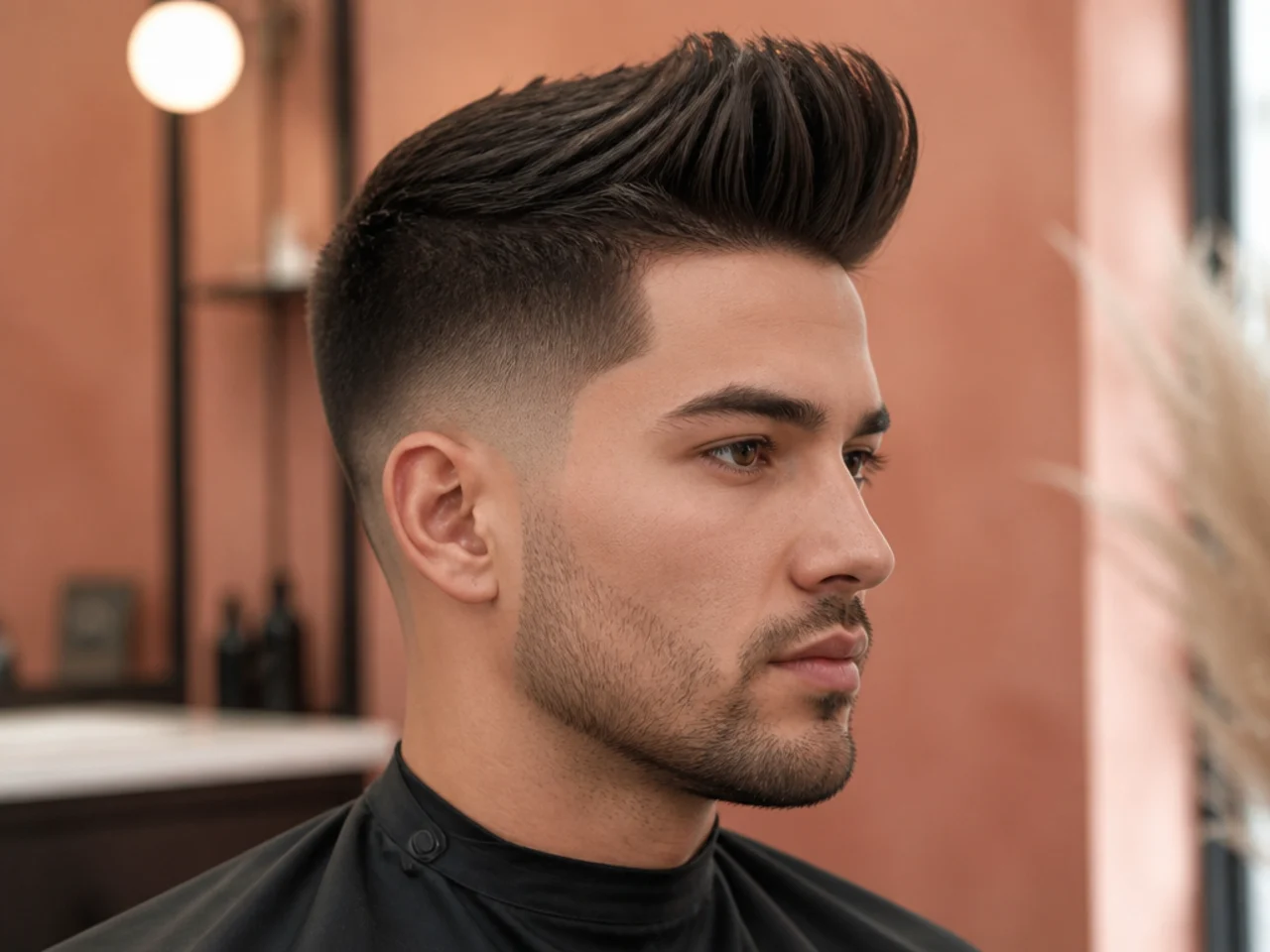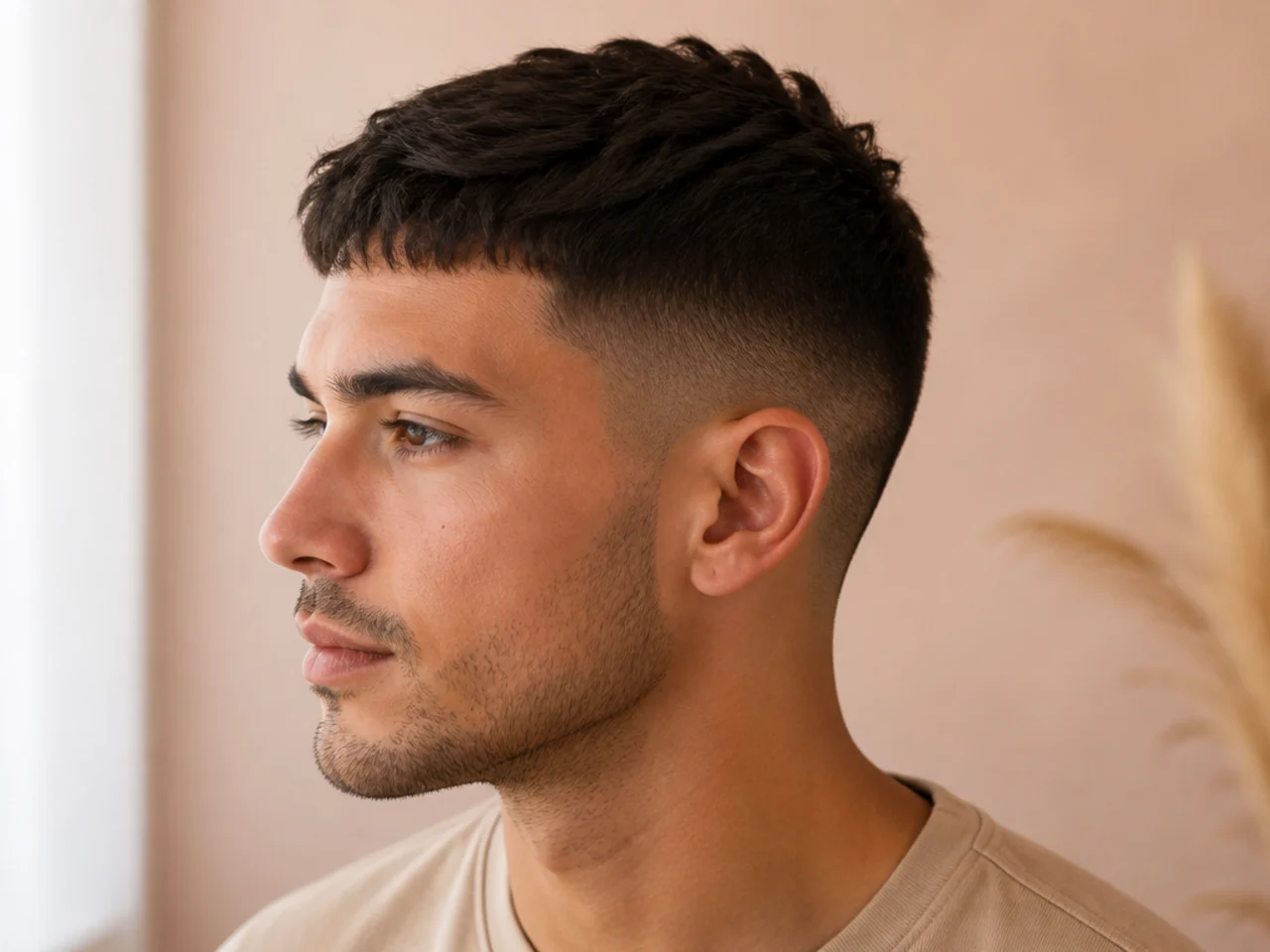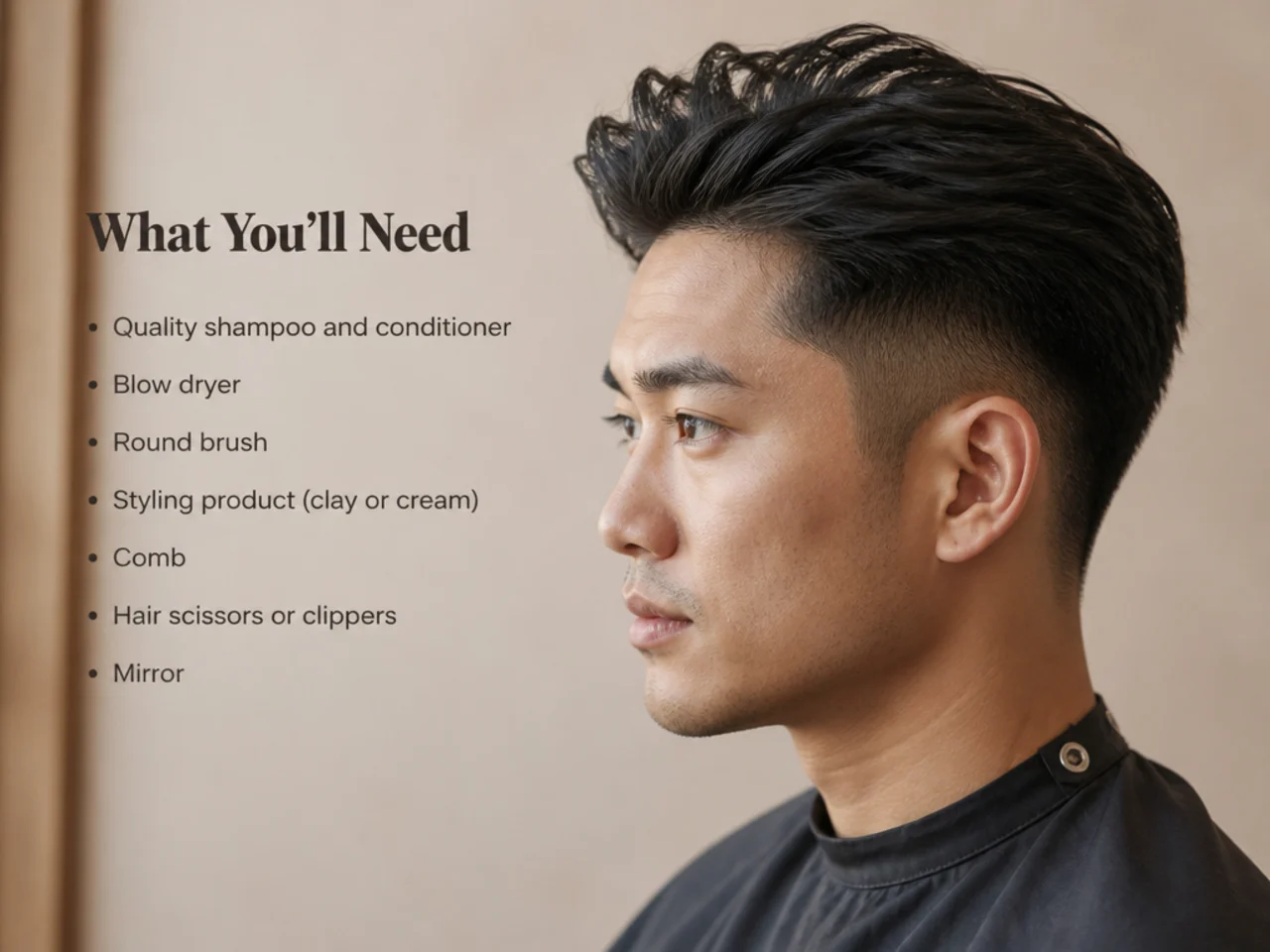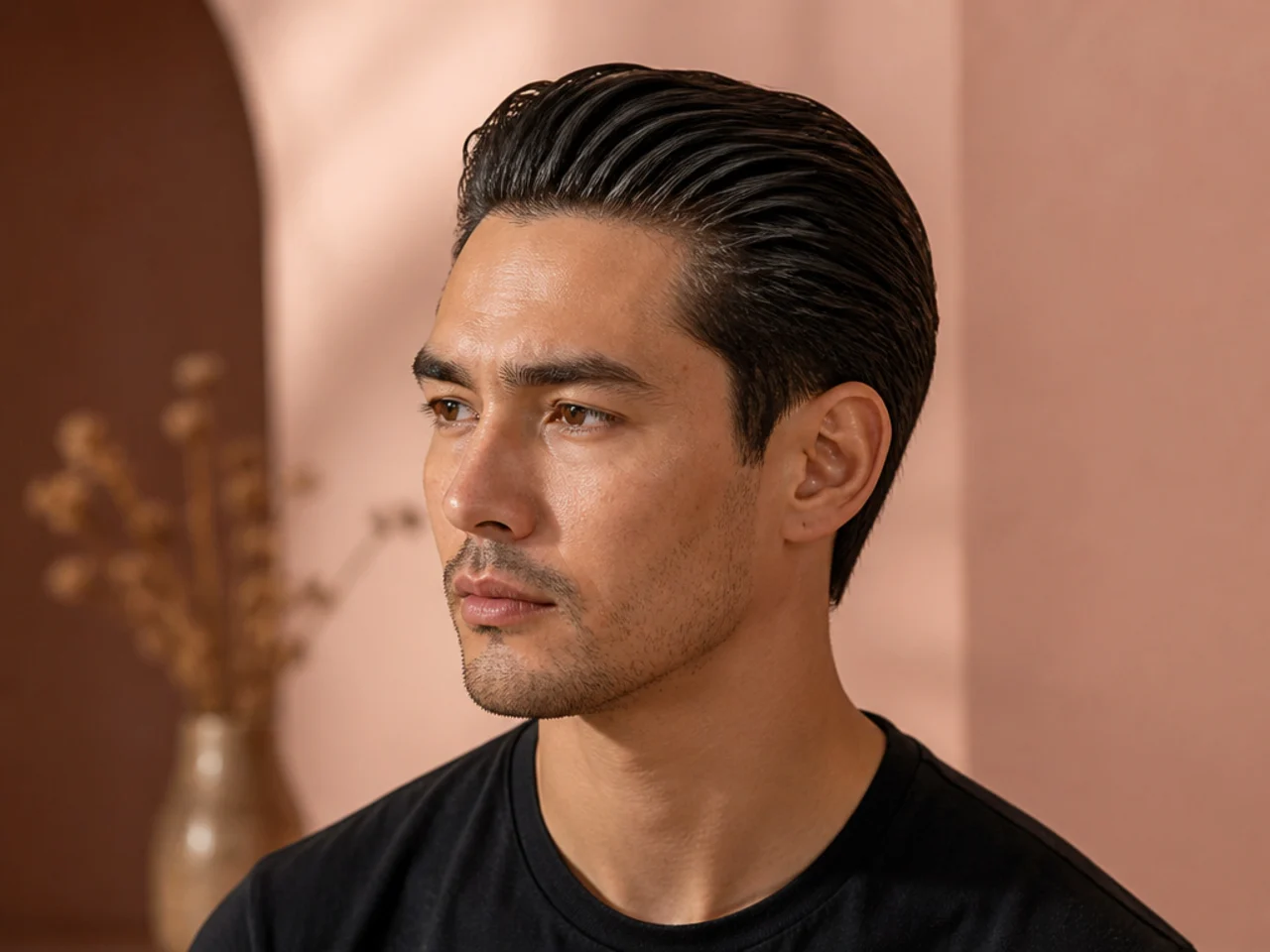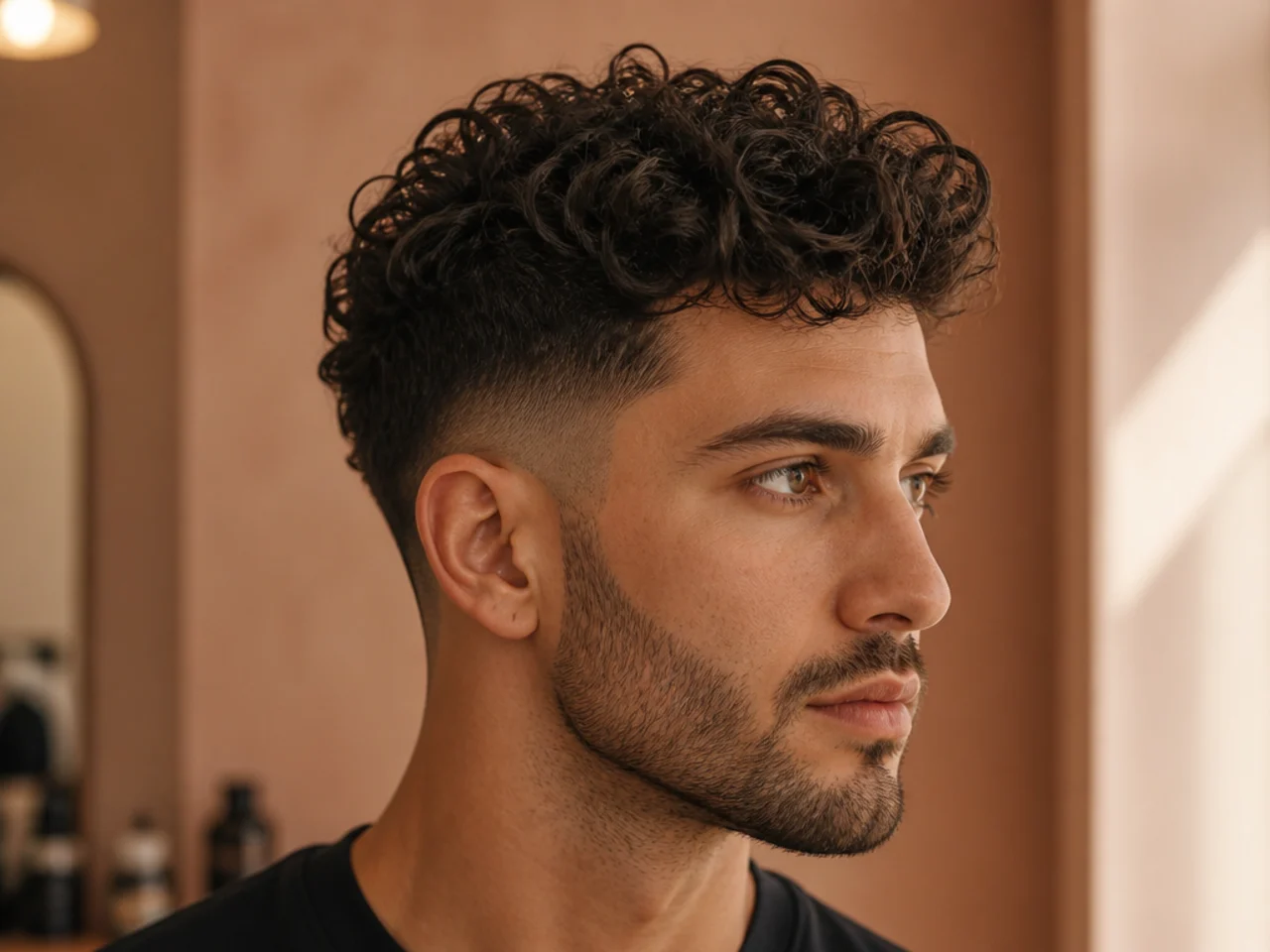
20 Curly Quiff Hairstyles Worth Trying
Twenty curly quiff hairstyles for men across 3A to 4C hair — cut to respect the coil, styled matte, with face-shape notes and the exact barber ask for each.
In this article · 32
- What Is a Curly Quiff?
- How to Choose Your Curly Quiff
- The 20 Curly Quiff Variations
- 1. Classic Curly Quiff
- 2. Textured Curly Quiff
- 3. Loose Wave Curly Quiff (3A)
- 4. Springy Ringlet Curly Quiff (3B)
- 5. Tight Coil Curly Quiff (3C)
- 6. Type 4A Kinky Curl Quiff
- 7. Type 4B Cotton Coil Quiff
- 8. Type 4C Coil Quiff
- 9. Short Curly Quiff
- 10. Medium Curly Quiff
- 11. Long Curly Quiff
- 12. Low Fade Curly Quiff
- 13. Mid Fade Curly Quiff
- 14. High Skin Fade Curly Quiff
- 15. Burst Fade Curly Quiff
- 16. Low Taper Curly Quiff
- 17. Undercut Curly Quiff
- 18. Curly Quiff with Curtain Fringe
- 19. Curly Quiff with Beard
- 20. Curly Quiff with Line Design
- How to Ask Your Barber for a Curly Quiff
- Styling and Maintenance for Curly Hair
- FAQ
- Is the curly quiff still trending in 2026?
- How is a curly quiff different from a curly top with a fade?
- Can I get a curly quiff on 4C hair?
- Do I need a fade to make a curly quiff work?
- What if my curls look flat instead of lifted?
- Can I style a curly quiff without a diffuser?
A curly quiff is a quiff that lets the coil do the work. Same lifted front, same tight-to-fade sides, but the top is cut with scissors only and styled with product that respects the pattern instead of flattening it. This guide runs twenty curly quiff hairstyles for men across the 3A through 4C range, with the exact stretched length, the side treatment, and the one styling move that keeps each version reading defined instead of frizzy. The wider quiff hairstyles library for men covers the straight and wavy versions of the same family, and the curly hairstyles for men roundup is the broader guide across every non-quiff curl shape.
What Is a Curly Quiff?
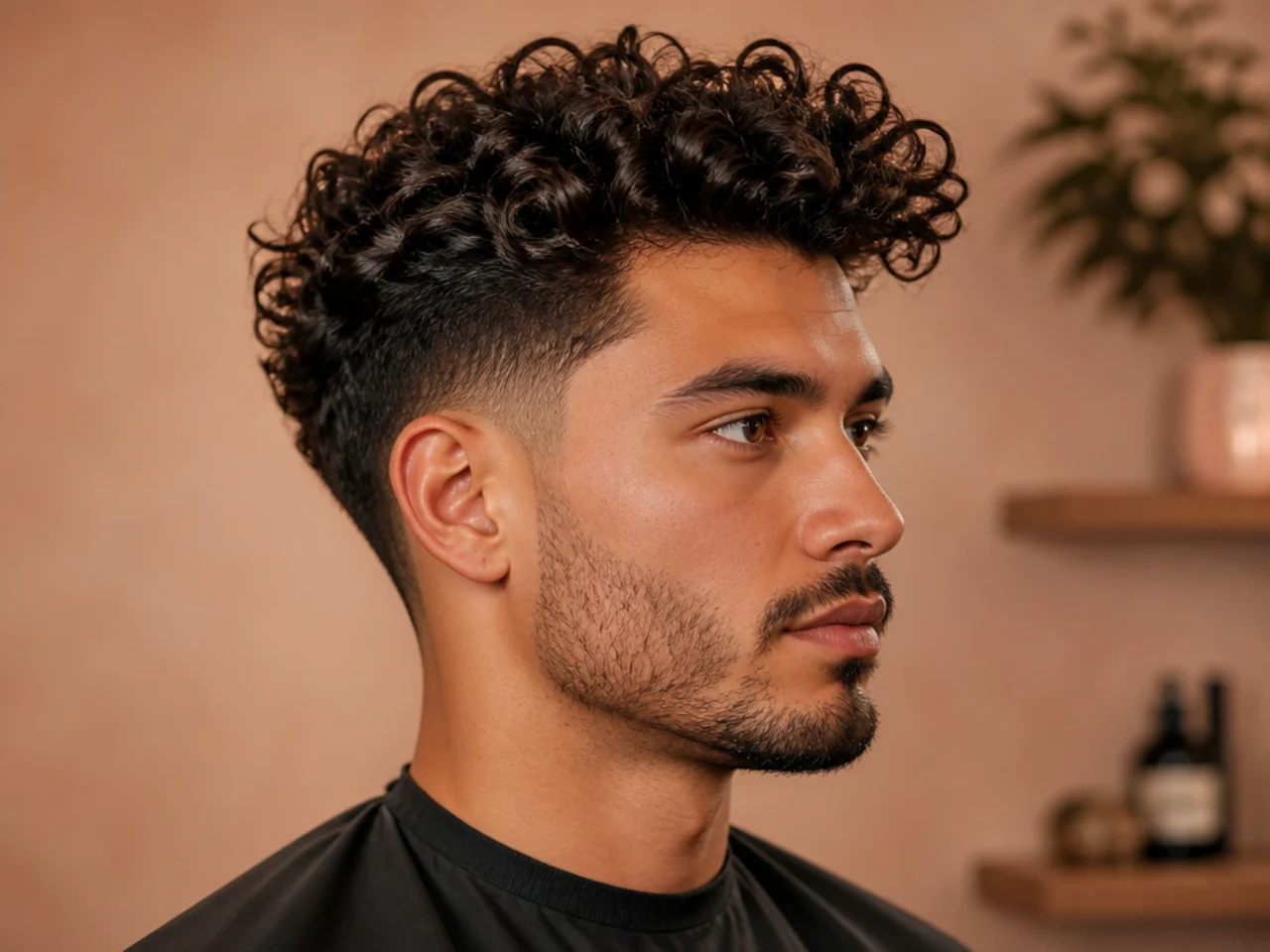
A curly quiff is a men's haircut with naturally curly hair kept long enough on top to lift up and slightly back, sitting in a rounded shape that reads as visible height. The coil pattern does what a comb and blow-dryer do on straight hair — the ringlet or corkscrew arcs upward on its own once cut to the right length. Sides sit shorter than the top, usually faded, tapered, or clipper-cut, so the volume above reads as the visual focus rather than a mushroom.
Three details separate a curly quiff from a curly top-and-fade. The front piece has to reach a stretched length that clears the eyebrow with room — otherwise shrinkage kills the lift. The internal cut has to keep the curl weight distributed so the top sits rounded and lifted, not flat with a tuft at the front. And the sides have to sit noticeably shorter than the top so the coil above has permission to hold vertical space.
The curly quiff earns its spot because it is the most flattering way to wear medium-to-long curly hair on almost any face shape. Volume at the crown lengthens the face, the lifted front adds structure, and the fade or taper at the sides pulls the eye up and away from any jaw-heaviness. It reads modern in photos and unfussy in person once you dial the wash-day routine.
How to Choose Your Curly Quiff
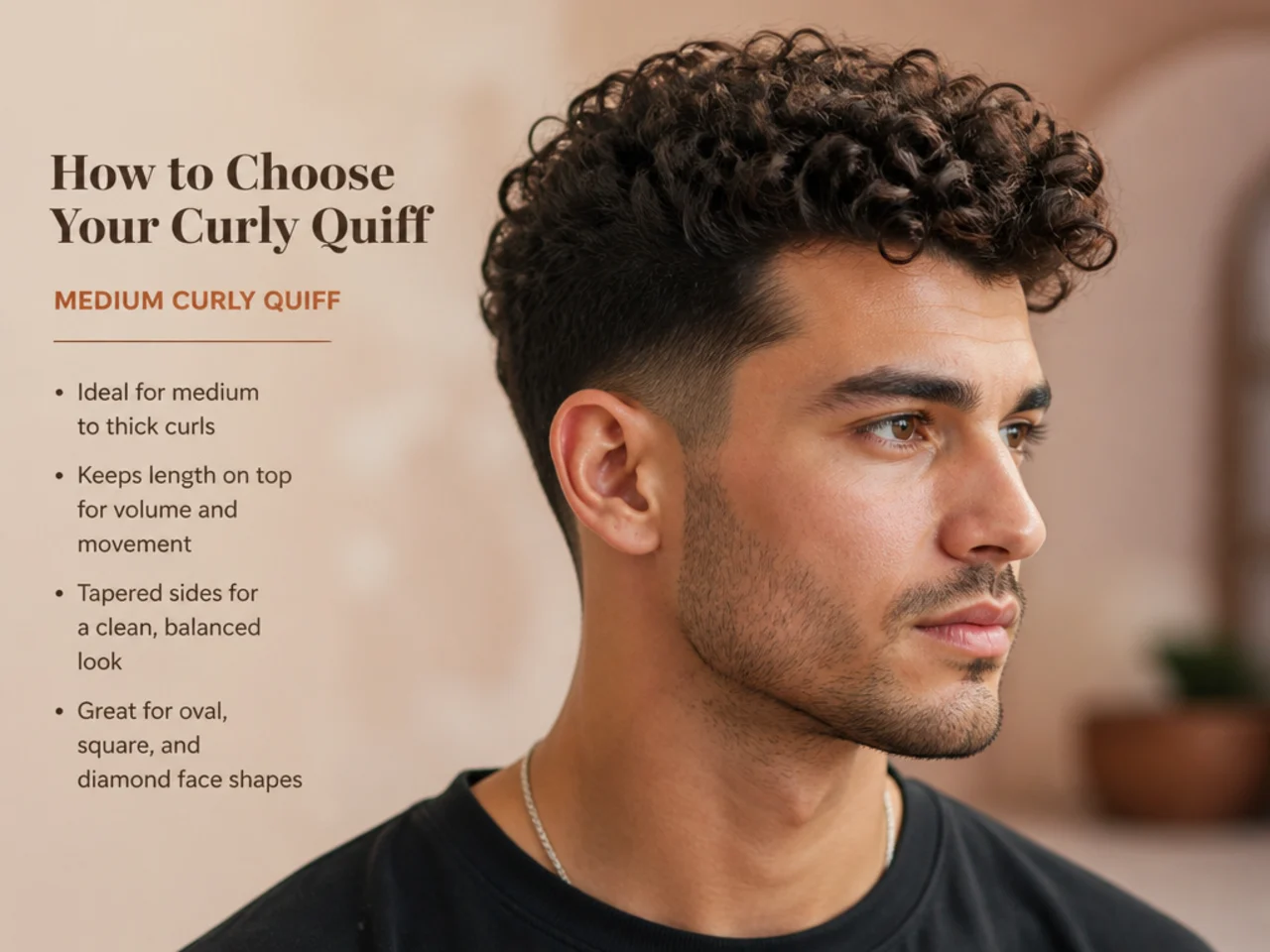
Curl type is the first filter. Loose 3A waves and ringlets carry a quiff closest to the straight-hair silhouette — soft height, subtle piece separation, lower time to define. Springy 3B corkscrews give the sculptural version most people picture when they hear "curly quiff." Tight 3C coils bring the fullest volume and read as the biggest shape on the shortest length. Type 4A through 4C leans into a freeform Afro-quiff — the front is picked up rather than combed, and the whole top reads as one continuous rounded silhouette. See our curl types guide if you're not sure where your hair falls.
Face shape sets the height. Oval faces suit almost every version on this list. Square jaws look great under a taller, tighter-defined quiff that echoes the angular bottom line. Round faces need the vertical lift, so go higher on the front and pair with a mid or high fade to elongate the frame. Long or rectangular faces do better under a shorter, wider curly quiff — height on a long face stacks length. Heart-shaped faces balance under a medium curly quiff that keeps the top from adding forehead.
Lifestyle sets the cadence. If your morning is a shower and a shake, pick a wash-and-go version on a low taper — refresh with water and a fingertip of curl cream on day two. If your job runs formal, a low fade with a defined curl on top reads pulled-together. Save the high skin fades and freeform Afro-quiffs for weekends, photos, and workplaces that reward personality.
The 20 Curly Quiff Variations
1. Classic Curly Quiff
The classic curly quiff is the neutral shape every other version on this list spins off. Five inches at the front measured stretched, four through the crown, sides scissor-blended or dropped into a soft short taper. The finish is matte and product-visible — you see the definition, you don't see the shine.
Ask for five stretched inches at the front, a scissor blend at the sides down to a #2 guard, and a dry cut on top so the barber can see the natural fall of the coil. Say "scissors only up top, no thinning shears, no razor." Compare with the straight-hair sibling in our classic quiff hairstyles guide if you want the polished-cream finish instead of matte.
Layer leave-in and curl cream on soaking-wet hair, then diffuse on low heat until eighty percent dry. Best for oval, square, and heart face shapes on 3A through 3C hair.
2. Textured Curly Quiff
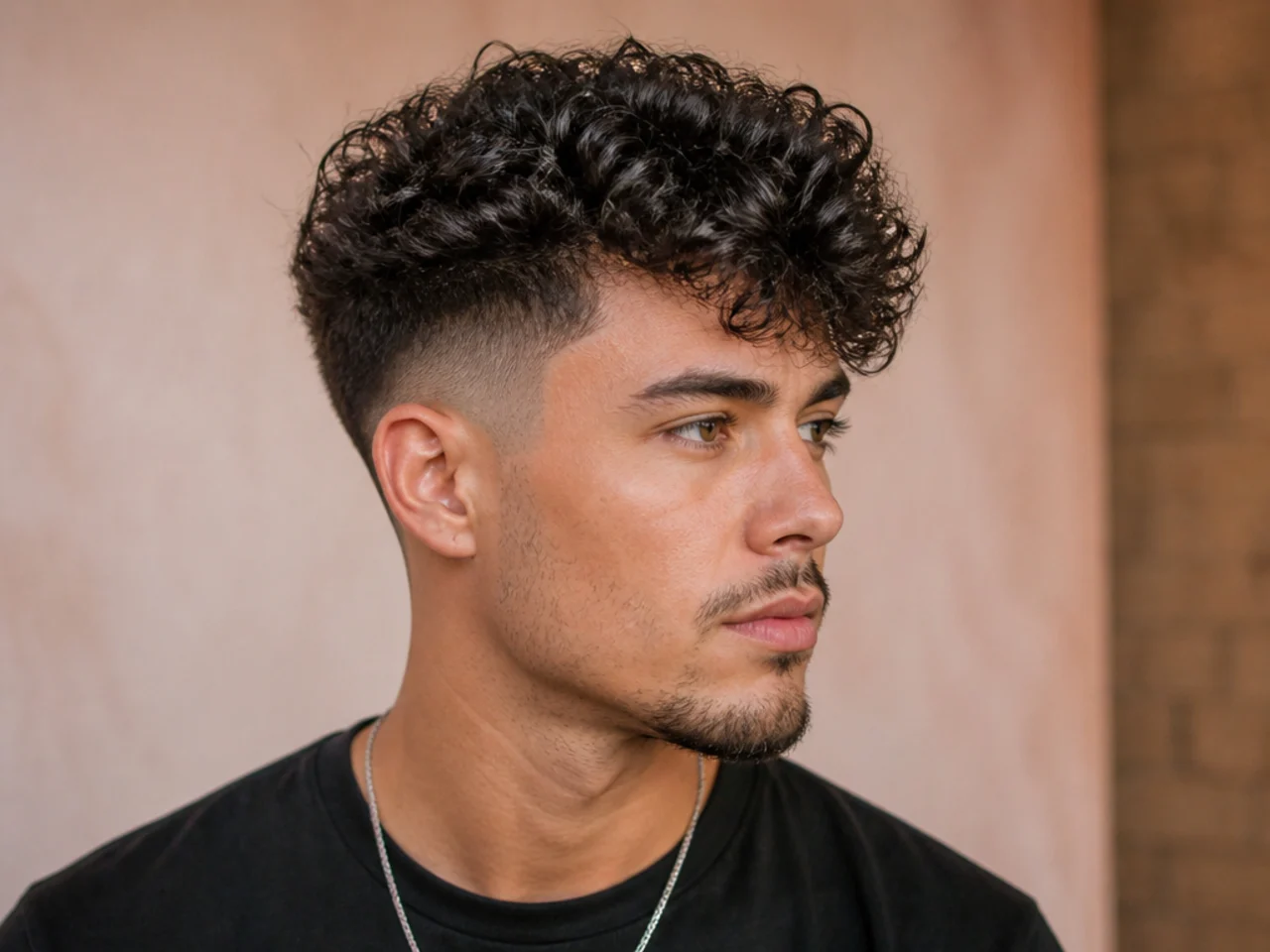
The textured version pushes coil separation to the front of the read. Every ringlet sits as its own piece rather than clumping into a block, and the front looks pieced without any of the clay-and-paste tricks a straight-hair quiff would need. The cut does most of the work; the styling protects it.
Ask for a scissor-only cut on top with light internal layering to release the pattern, and a mid fade at the sides. Tell your barber "no thinning shears — they shred the ends and kill definition."
Curl cream over leave-in, then a rice-grain of light-hold gel raked through with your fingers. Best for 3A through 3C curls where the ringlet pattern is well-defined; loosely defined curls need a foam instead of a gel for the same look.
3. Loose Wave Curly Quiff (3A)
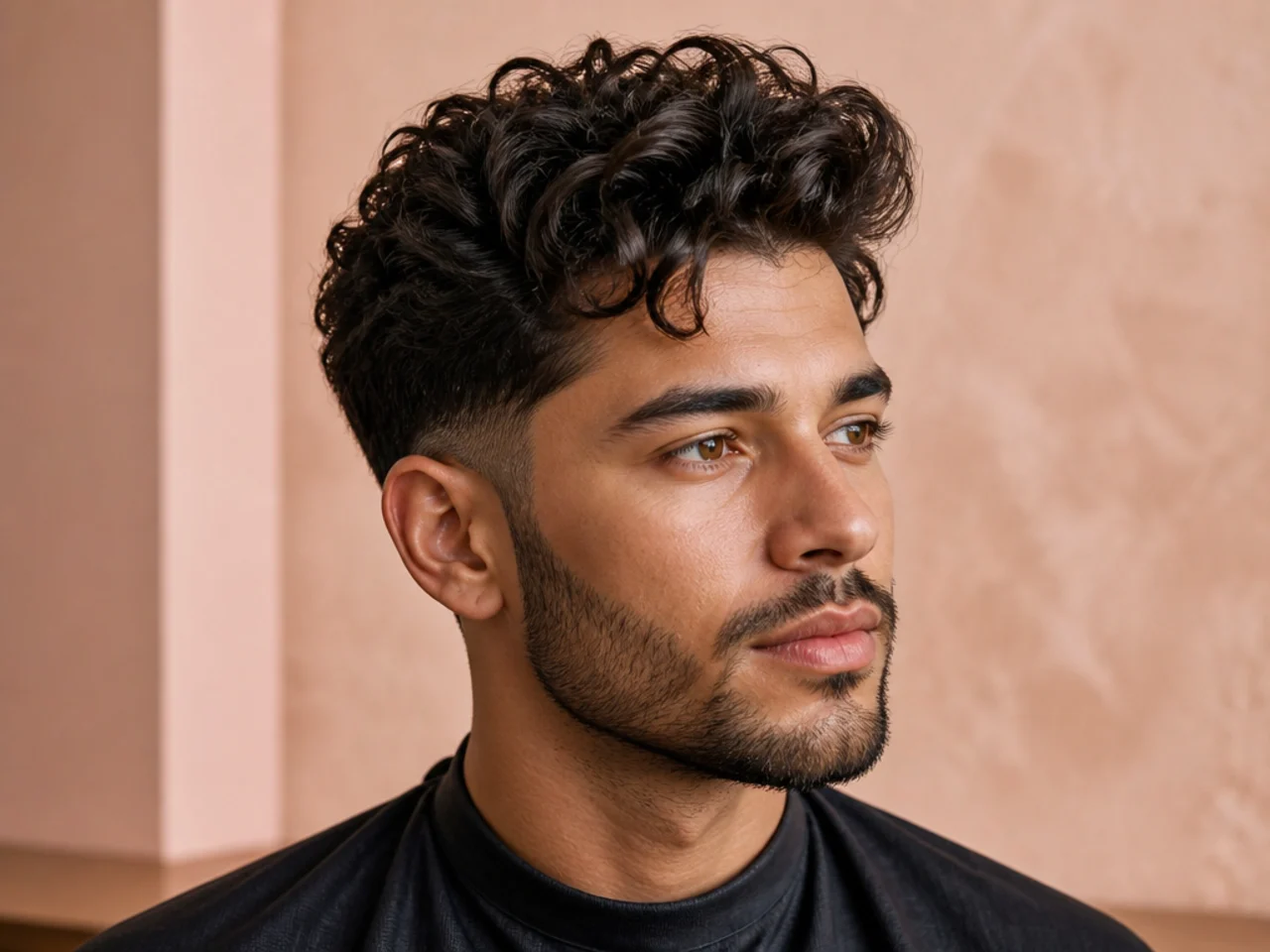
Type 3A hair reads as loose ringlets with an open S-shape — the closest curl pattern to wavy hair. The quiff sits lower and softer than the tighter versions, and the front piece can be swept up-and-back with almost no product on day one after a cut. The volume comes from the layering, not the styling.
Ask for scissor-only work with soft internal layering, five to six stretched inches at the front, and a low taper fade at the sides so the shape carries a natural neckline.
A curl cream and a spritz of light gel, diffused or air-dried. Best for oval, square, and heart faces where a soft rounded front adds structure without pushing into statement territory.
4. Springy Ringlet Curly Quiff (3B)
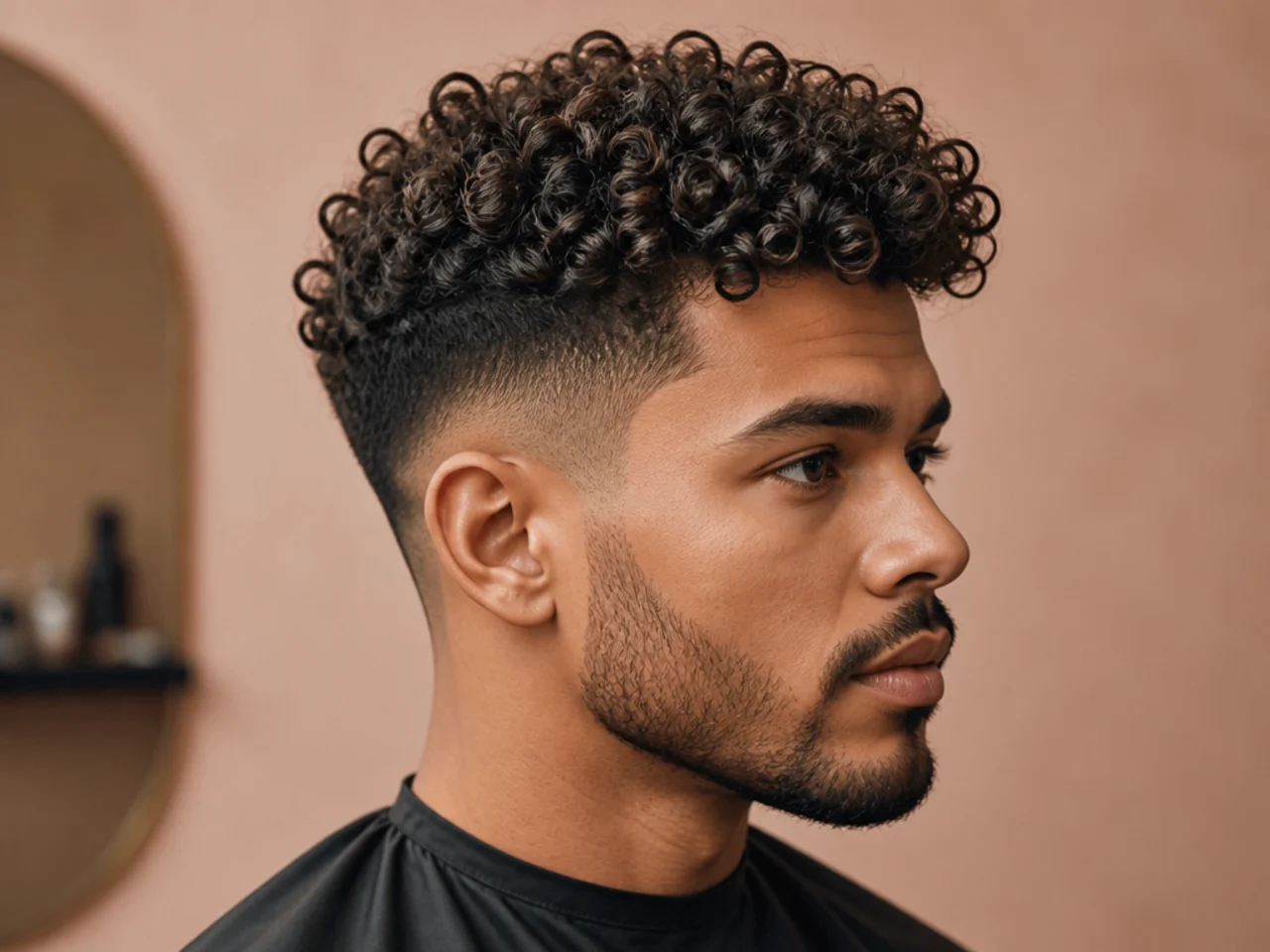
Type 3B is the sweet spot for a curly quiff. Springy corkscrew ringlets hold the lifted shape naturally, the definition reads sharp from every angle, and the top sits rounded without any of the coaxing tighter curl types need. Most of the reference photos guys pull in the chair are 3B.
Ask for five to six stretched inches at the front, four through the crown, and a mid taper or mid fade at the sides. Dry cut, scissors only, no thinning.
Leave-in, curl cream, light gel on soaking-wet hair. Diffuse on low heat with a fingertip lift at the roots. Best for almost every face shape on 3B hair — this pairing does the flattering.
5. Tight Coil Curly Quiff (3C)
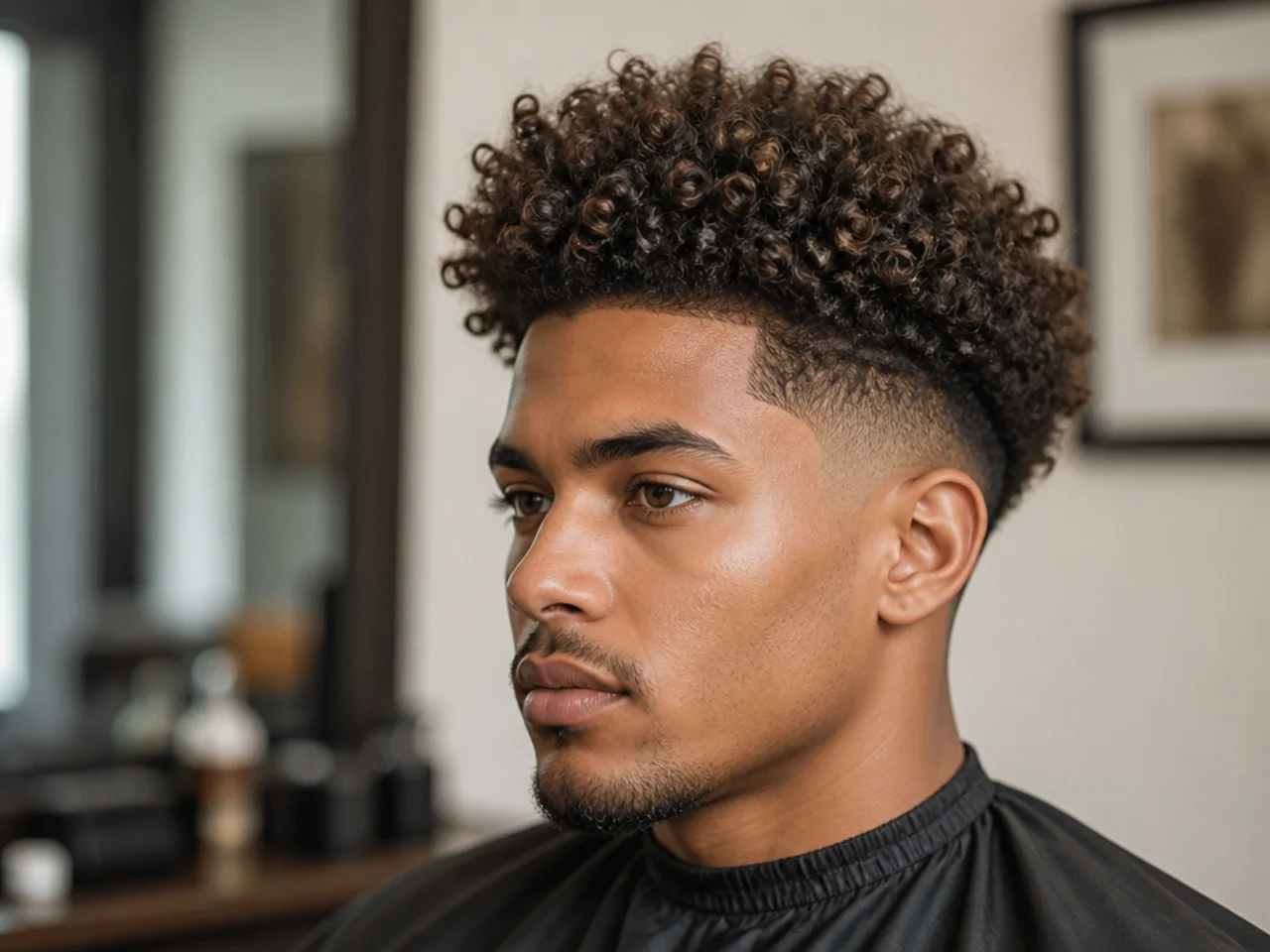
Type 3C hair sits as tight coils with the width of a pencil or narrower. The curly quiff on 3C reads as the fullest, most sculptural version on this list — the density of coils per square inch stacks visual volume the moment the length reaches four stretched inches.
Ask for a dry cut, six stretched inches at the front, and a high skin fade or burst fade for the sharpest contrast. Scissors only. Point the ends into the coil to protect the spring.
A curl cream layered with a moisture-heavy custard for the hold. Pat with a diffuser on low, hands off once drying starts. Best for square, oval, and diamond faces where the tall volume balances a strong jaw. Also see the broader curly hair haircuts guide for adjacent shapes.
6. Type 4A Kinky Curl Quiff
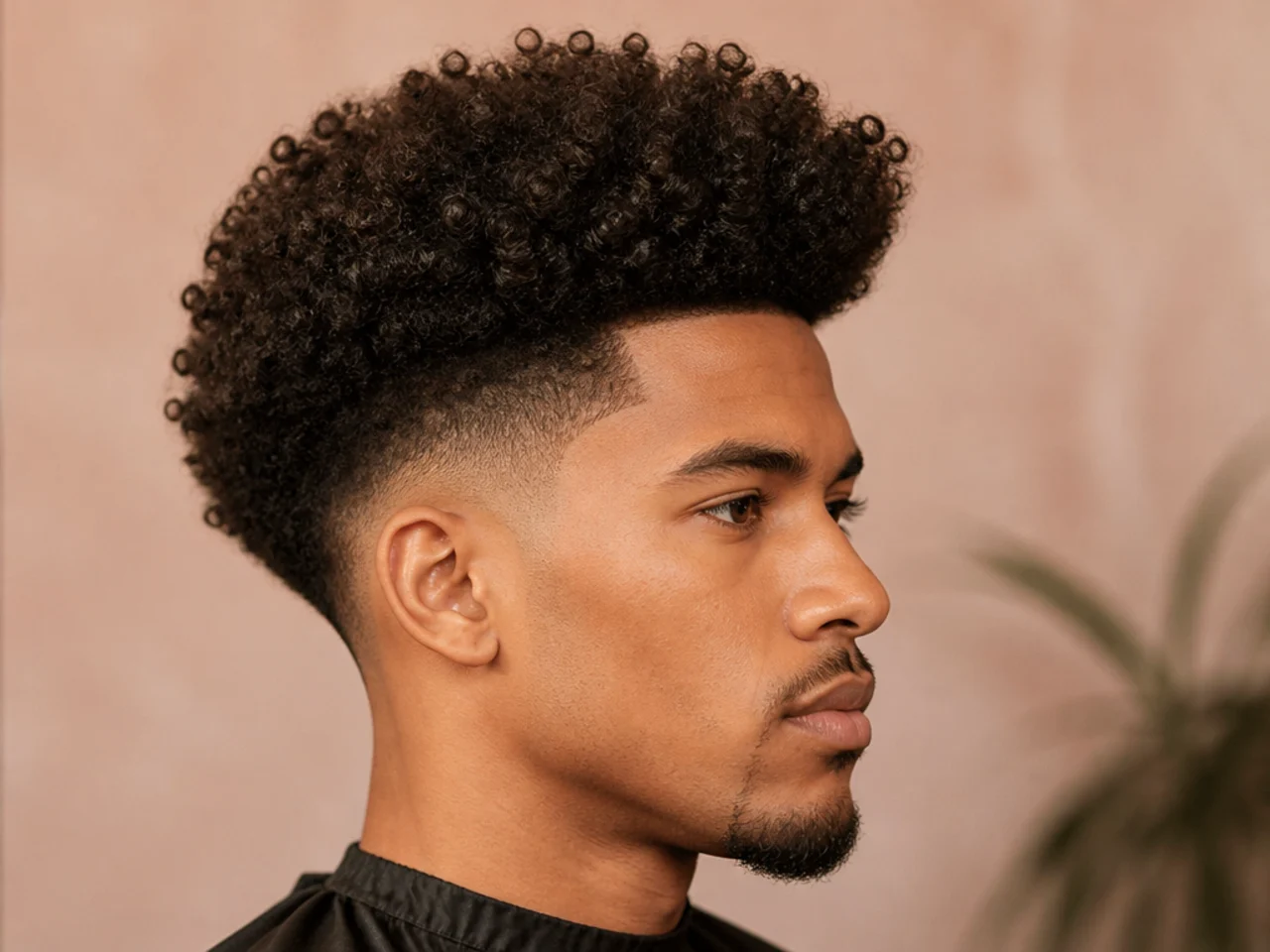
Type 4A hair reads as tight kinky curls with a defined S-pattern smaller than the 3C coil. On a quiff, the volume goes vertical fast and the shape reads as one continuous rounded silhouette rather than distinct pieces. Density carries the visual weight even on shorter lengths.
Ask for six to seven stretched inches at the front to account for shrinkage, a mid taper fade at the sides, and a dry cut so the barber can see the natural rise. Tell them "keep the crown slightly tighter so the front is the tallest point."
Wash-day curl cream over a leave-in, diffuse on low, and refresh mid-week with a water-and-conditioner spray. Best for oval, square, and heart face shapes.
7. Type 4B Cotton Coil Quiff
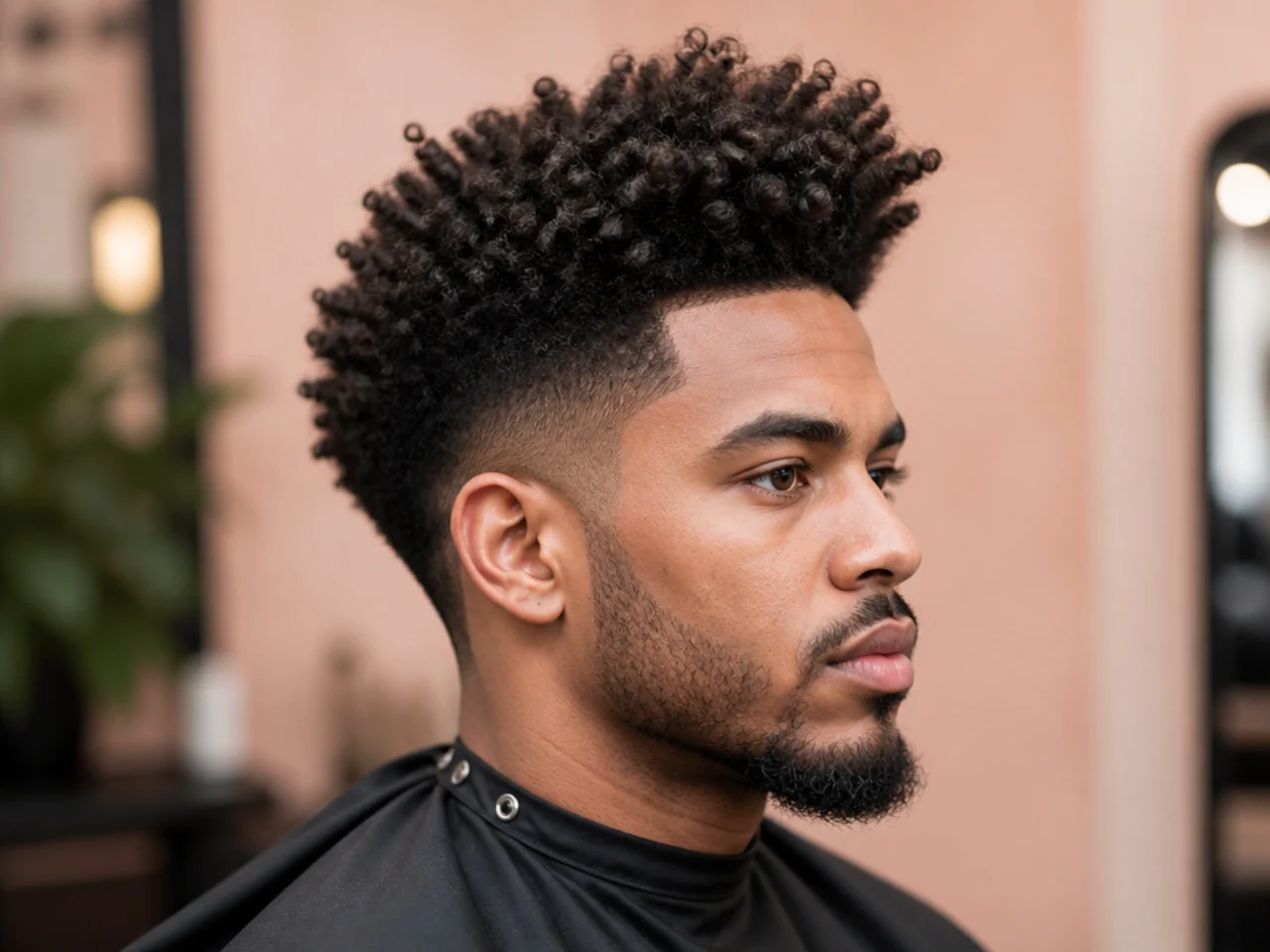
Type 4B hair reads as tight coils with a Z-pattern rather than a rounded S. The pattern is denser, less spring-loaded, and holds sculpted shape once picked into place — which makes the quiff more of a sculpted silhouette than a lifted spring. The read is bolder and more architectural than looser types.
Ask for a scissor-only cut with the top left at seven stretched inches, a low taper fade, and a shape-up around the hairline. Say "cut to shape, not to length" so the barber removes weight in the round rather than in flat sections.
Moisture-heavy leave-in, curl custard, pick the front upward with a wide-tooth pick. Refresh with a water spritz. Best for square, oval, and long face shapes where the vertical shape softens angular features.
8. Type 4C Coil Quiff
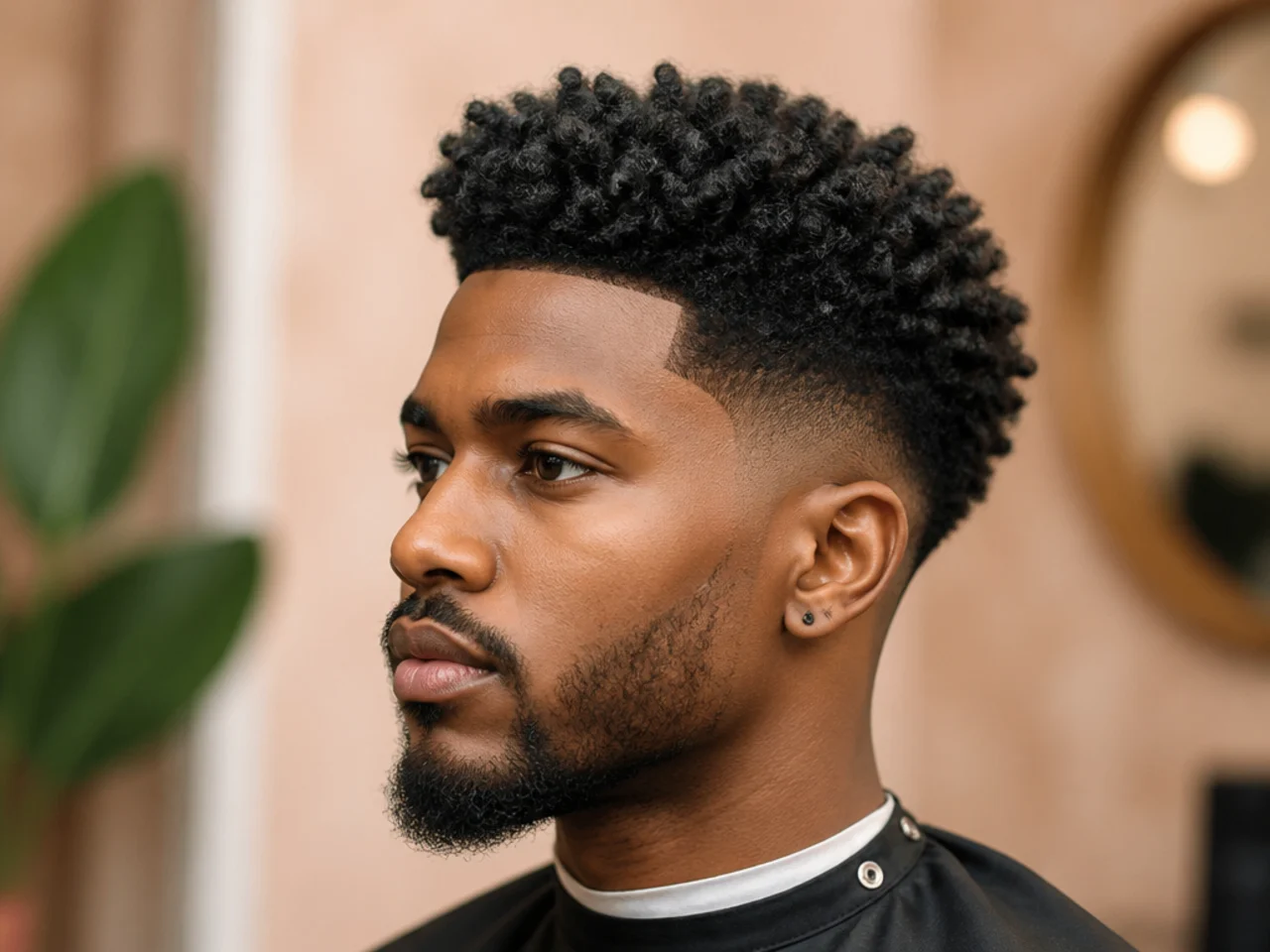
Type 4C sits as the tightest coil pattern — almost no defined curl, just densely packed springs. On a quiff, the shape is the most freeform on this list. The top is picked and patted into a rounded silhouette rather than lifted with a comb, and the read tips toward an Afro-quiff hybrid.
Ask for a shape-up service, seven to eight stretched inches at the front, and a low or mid fade at the sides. Ask for the top to be scissored to a rounded silhouette rather than layered.
Leave-in, curl butter, and a wide-tooth pick to sculpt. Cover overnight with a satin bonnet so the shape holds through week two. Best for oval, square, and diamond face shapes on the confident end of the visibility scale.
9. Short Curly Quiff
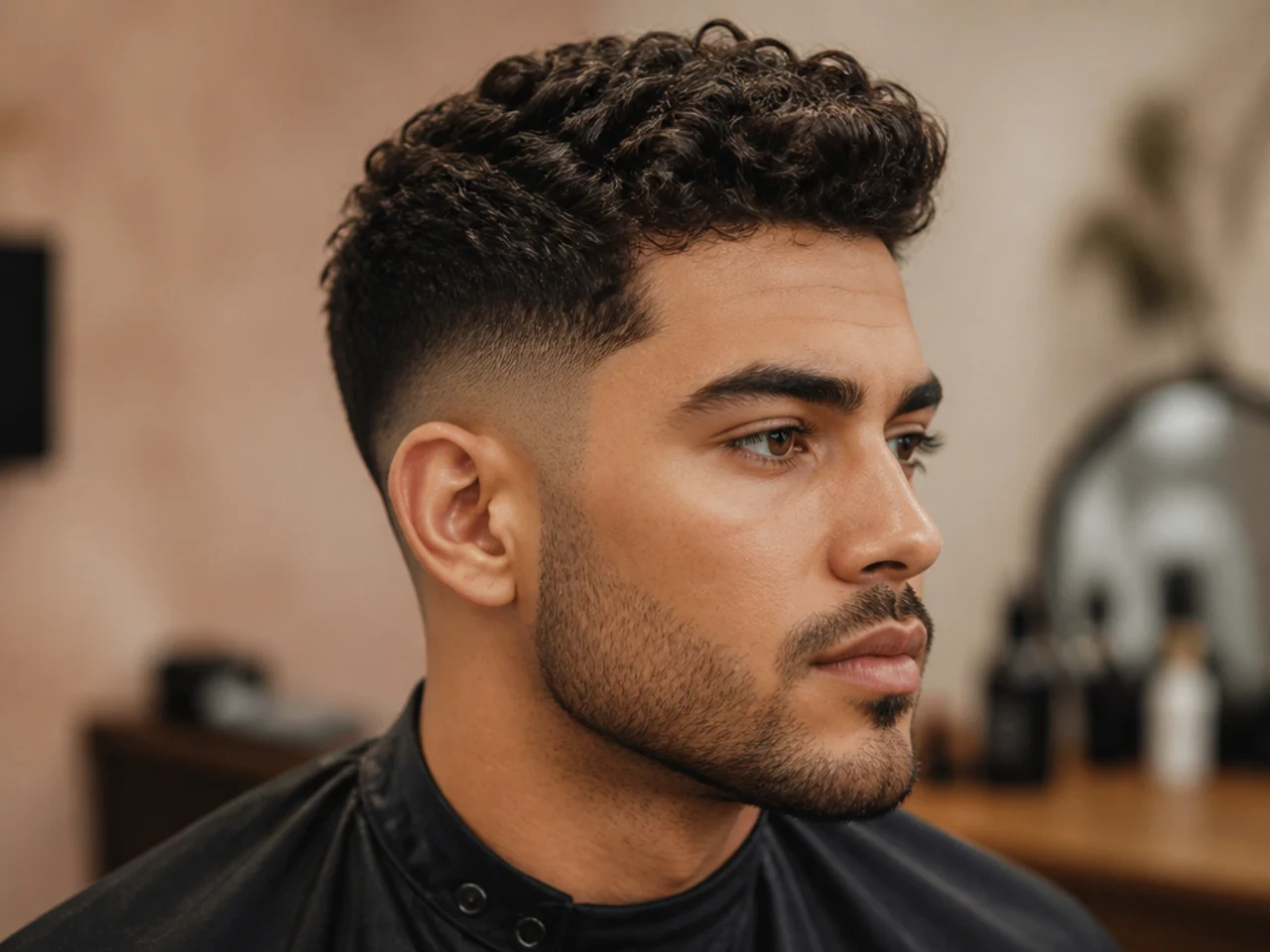
The short version keeps the curly quiff at working length — three stretched inches at the front, sides on a mid fade or skin fade. The compact shape reads sharp for the office, keeps styling under a minute most mornings, and grows into a longer quiff cleanly if you decide to switch tracks.
Ask for three stretched inches at the front, a mid or high skin fade, and a soft rounded scissor shape at the crown. Point-cut into the coil, no razor, no thinning shears.
A pea of curl cream on damp hair, no gel — the top is too short to need hold. Best for 3B through 4A hair on any face shape, and the safest way for a first-time curly-quiff wearer to test the silhouette. The short quiff hairstyles for men library covers straight and wavy versions at the same length.
10. Medium Curly Quiff
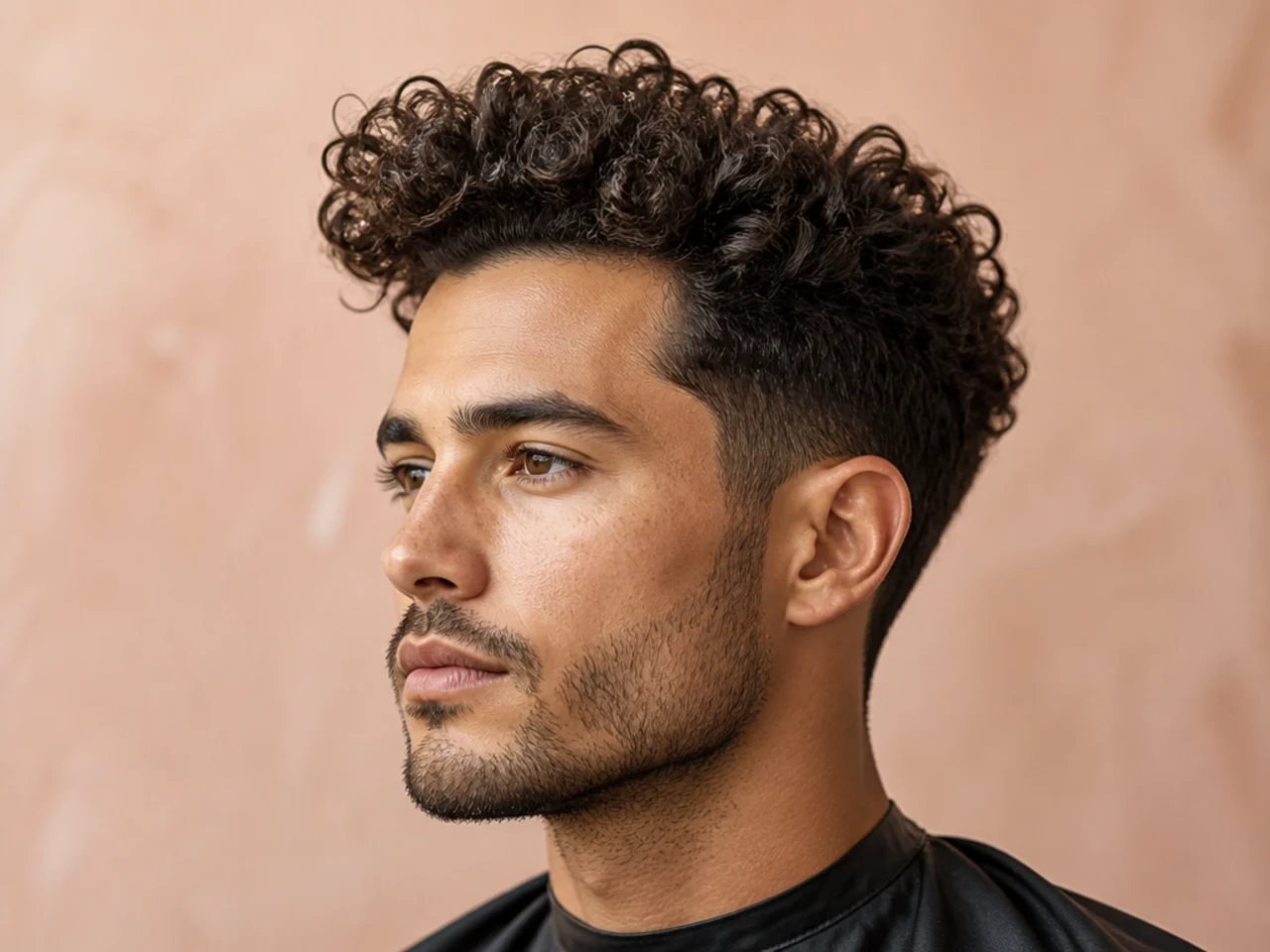
Medium is the length the curly quiff is designed around. Five stretched inches at the front, four through the crown, sides faded or scissor-blended. Enough length for a full lifted front, enough definition through the mid-lengths to hold shape into day three between washes.
Ask for five stretched inches at the front, four at the crown, and a low fade or scissor blend at the sides. Dry cut, scissors only, minimal layering.
Leave-in plus curl cream, diffused on low or air-dried, refresh with water on day two. Best for almost every face shape and the version most guys land on after trying the short and long ends of the family.
11. Long Curly Quiff
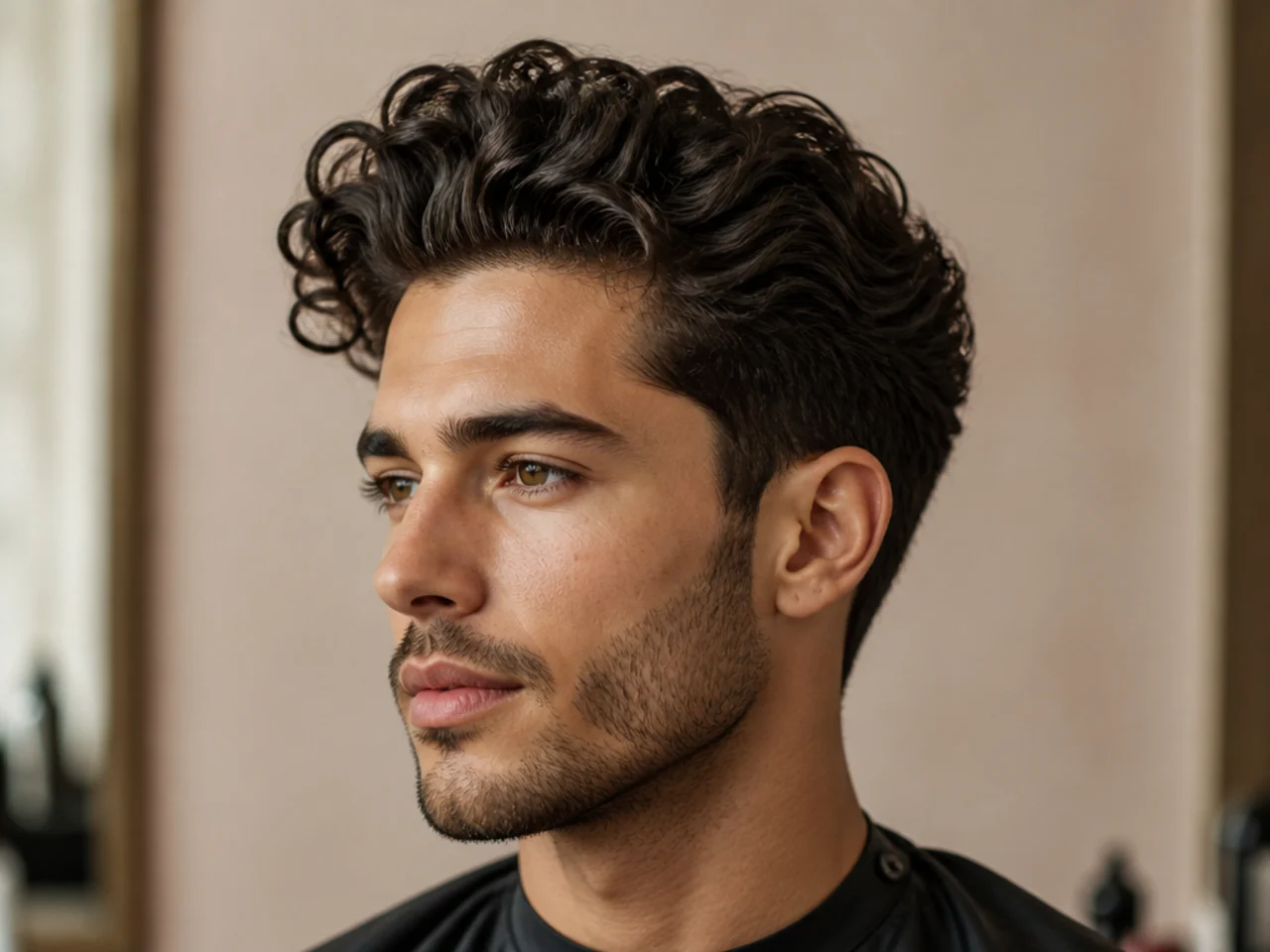
The long version stretches the curly quiff into statement territory. Seven-plus stretched inches at the front, the shape lifted vertically and dropping back into a soft cascade at the crown. Sides can stay scissor-blended or drop into a long taper for a lived-in perimeter.
Ask for seven-plus stretched inches on top with heavy internal moisture-cutting, a scissor blend or long taper, and a soft undone perimeter at the neckline.
Layer leave-in, curl cream, and a foam on soaking-wet hair. Diffuse or air-dry, then pick the front upward once fully dry. Best for oval, square, and heart faces on 3A through 3C hair — 4B and 4C need their own consultation at this length.
12. Low Fade Curly Quiff
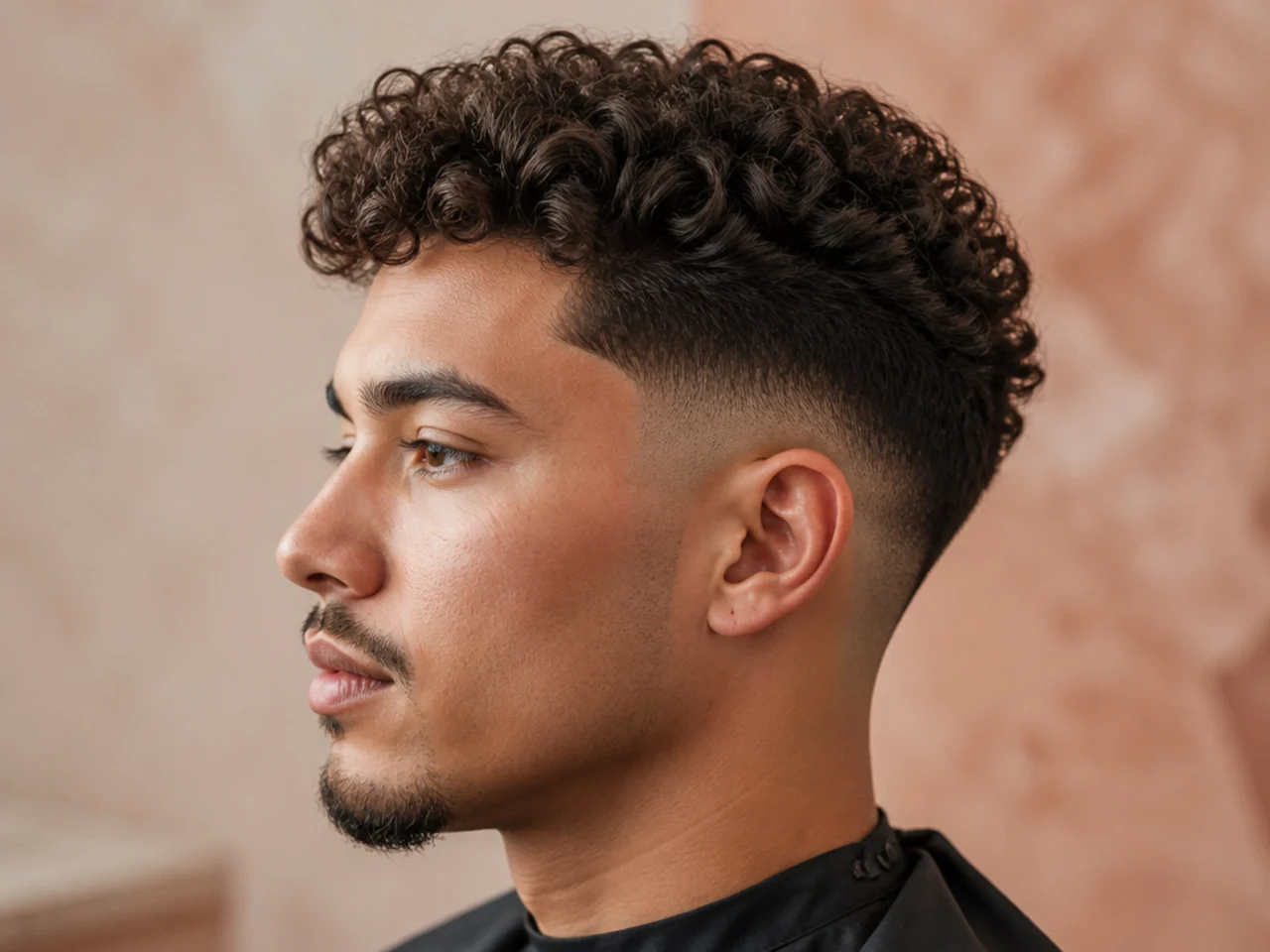
The low fade version keeps the contrast subtle. The blend starts just above the ear, the coil on top reads as the visual focus, and the whole cut works in a conservative office without pushing loud. It's the safest way into the curly quiff family.
Ask for a low fade starting at the top of the ear, five stretched inches on top, and a soft blend at the parietal ridge. Say "matte finish" so the barber doesn't reach for a shiny product at the end.
Curl cream on damp hair, diffuse, done. Best for oval and square face shapes and for workplaces that respect a haircut but don't reward statement.
13. Mid Fade Curly Quiff
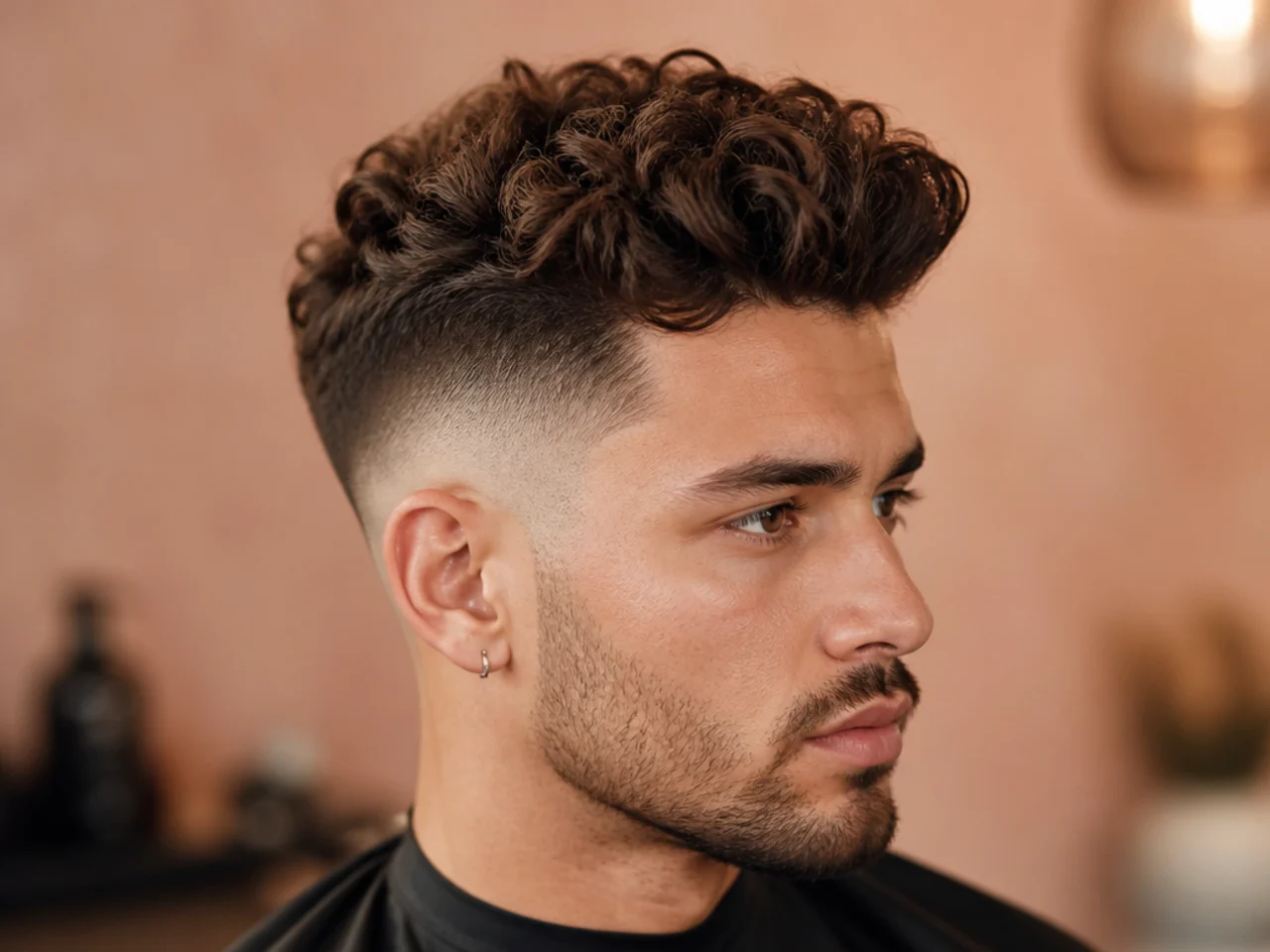
The mid fade sits at the temple and is the modern default pairing for a curly quiff. It gives the top enough contrast to look like a proper style without pushing into shaved-sides territory. Most guys who ask for "a curly quiff with a fade" mean this version.
Ask for a mid fade at the temple, five to six stretched inches on top, and a soft rounded scissor cut through the crown. Dry cut, no thinning.
Leave-in, curl cream, light gel, diffuse. Best for almost every face shape on 3A through 4A hair — the pairing does the flattering, and it photographs sharper than a low fade for most guys under 35.
14. High Skin Fade Curly Quiff
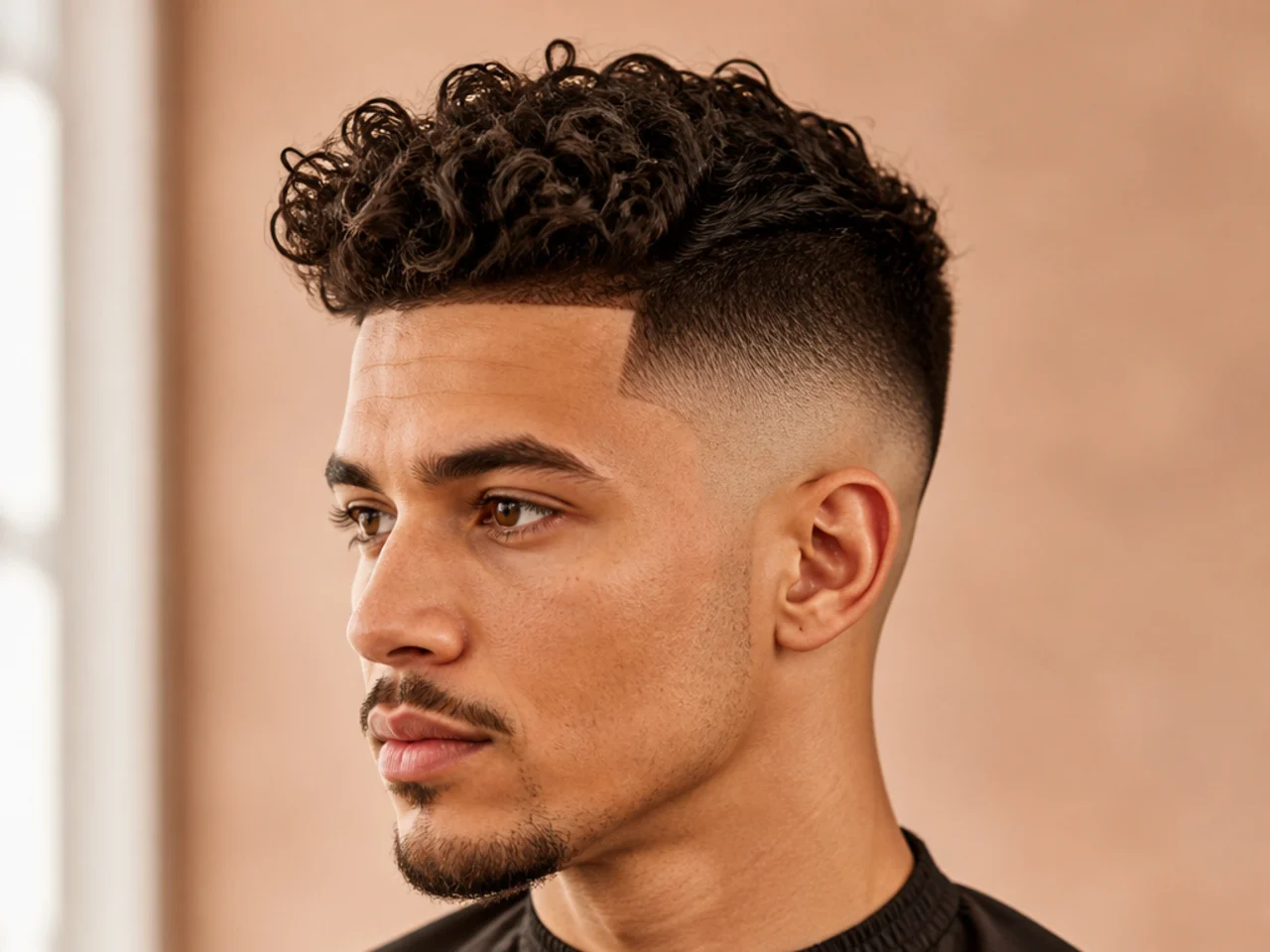
The high skin fade version is the statement pairing. Sides go to skin high on the head, the top sits in a hard-contrast curly shape, and the whole cut reads modern-editorial. It's the version guys post to social, not the one for a business-formal Monday.
Ask for a high skin fade starting mid-ear or above, six stretched inches on top, and a soft disconnect where the top meets the fade. Add a hairline shape-up for a clean front.
Curl custard, diffuse, pick upward. Best for oval, square, and diamond faces on 3B through 4A hair where the density carries the tall volume the shape demands.
15. Burst Fade Curly Quiff
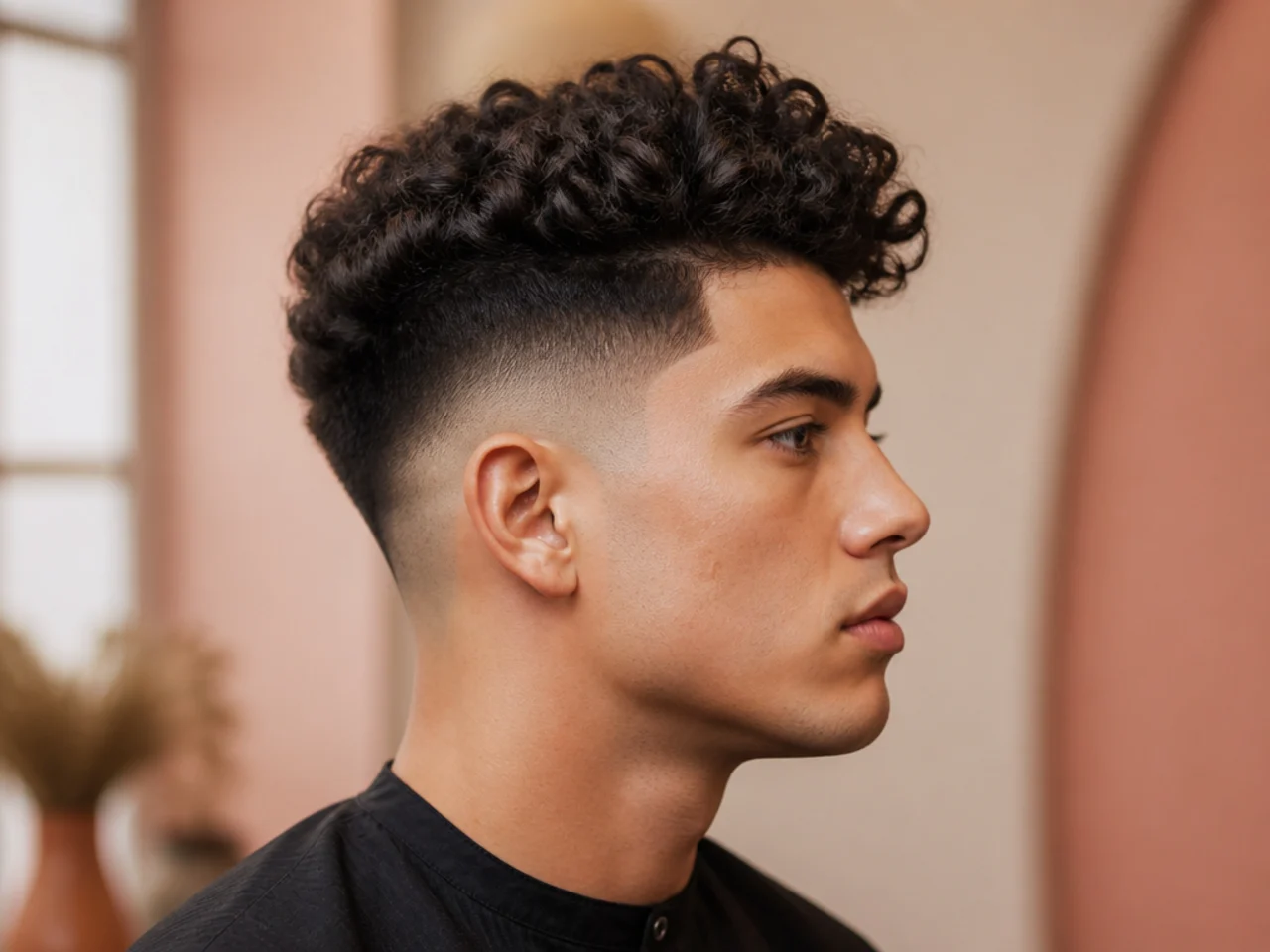
The burst fade version pulls the fade into a semi-circle around the ear rather than a straight line across the temple. It leaves length at the neckline and above the fade, and the arc frames the ear like a spotlight for the volume on top. It reads sharper for curly hair than any other fade shape.
Ask for a burst fade starting mid-ear, five to six stretched inches on top, and a scissor-blended crown. The nape stays a little longer than a standard fade — that's the point.
Curl cream and light gel, diffused. Best for oval, square, round, and heart faces on 3B through 4A hair — the shape is genuinely universal, which is why it's one of the most-requested pairings right now.
16. Low Taper Curly Quiff
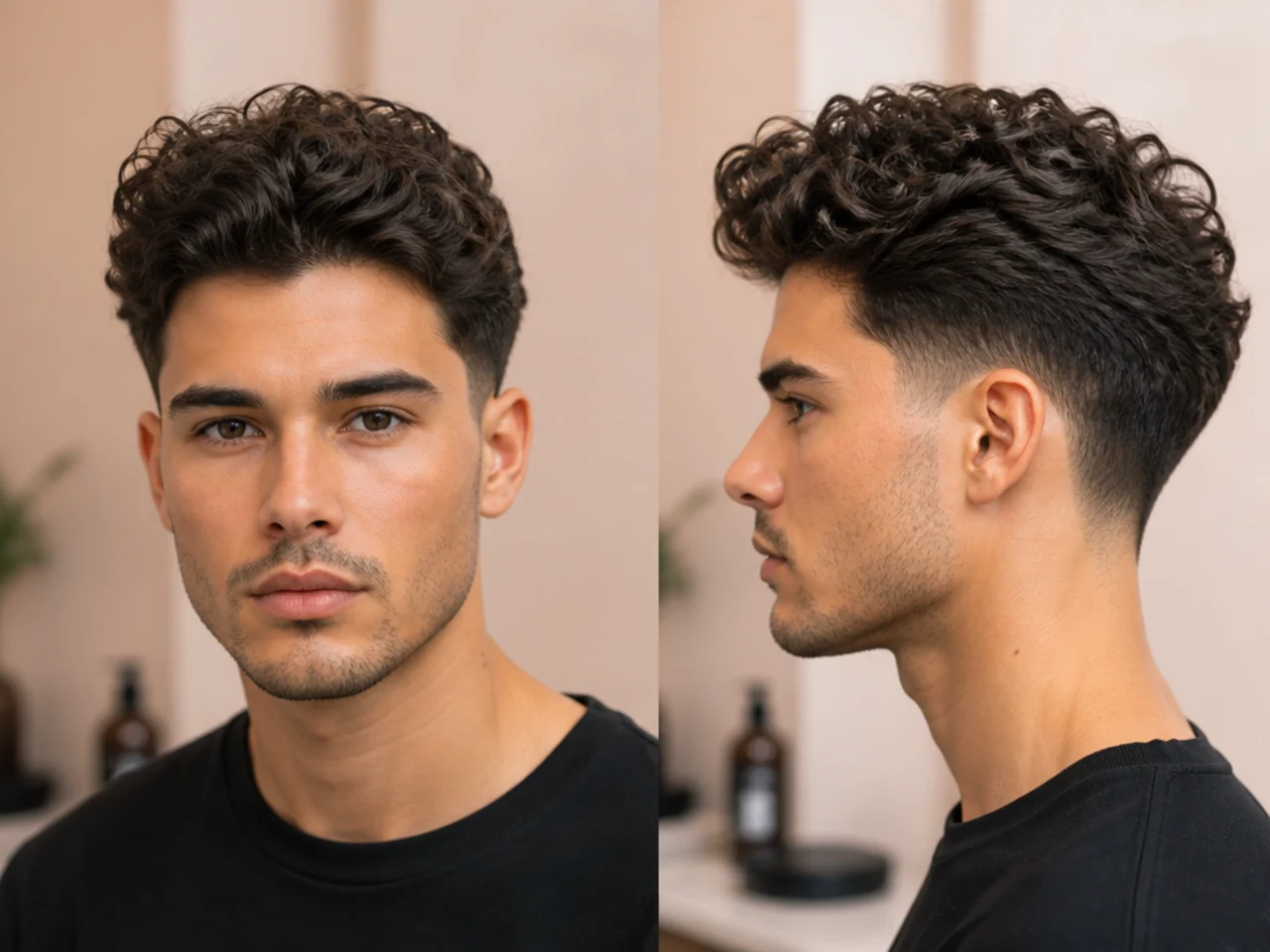
The low taper version is the softest side treatment on this list. Instead of a fade, the sides drop into a gentle taper at the neckline and around the ears — the hair stays close to your natural sideburn line. It grows out kinder than any fade and reads more grown-up in almost every workplace.
Ask for a low taper, five stretched inches on top with soft internal layering, and a scissor blend from the parietal ridge up.
Leave-in, curl cream, diffuse. Best for guys with 3A through 3C curls who want the volume of a quiff without visible clipper lines — and for anyone whose job reads better under a softer perimeter.
17. Undercut Curly Quiff
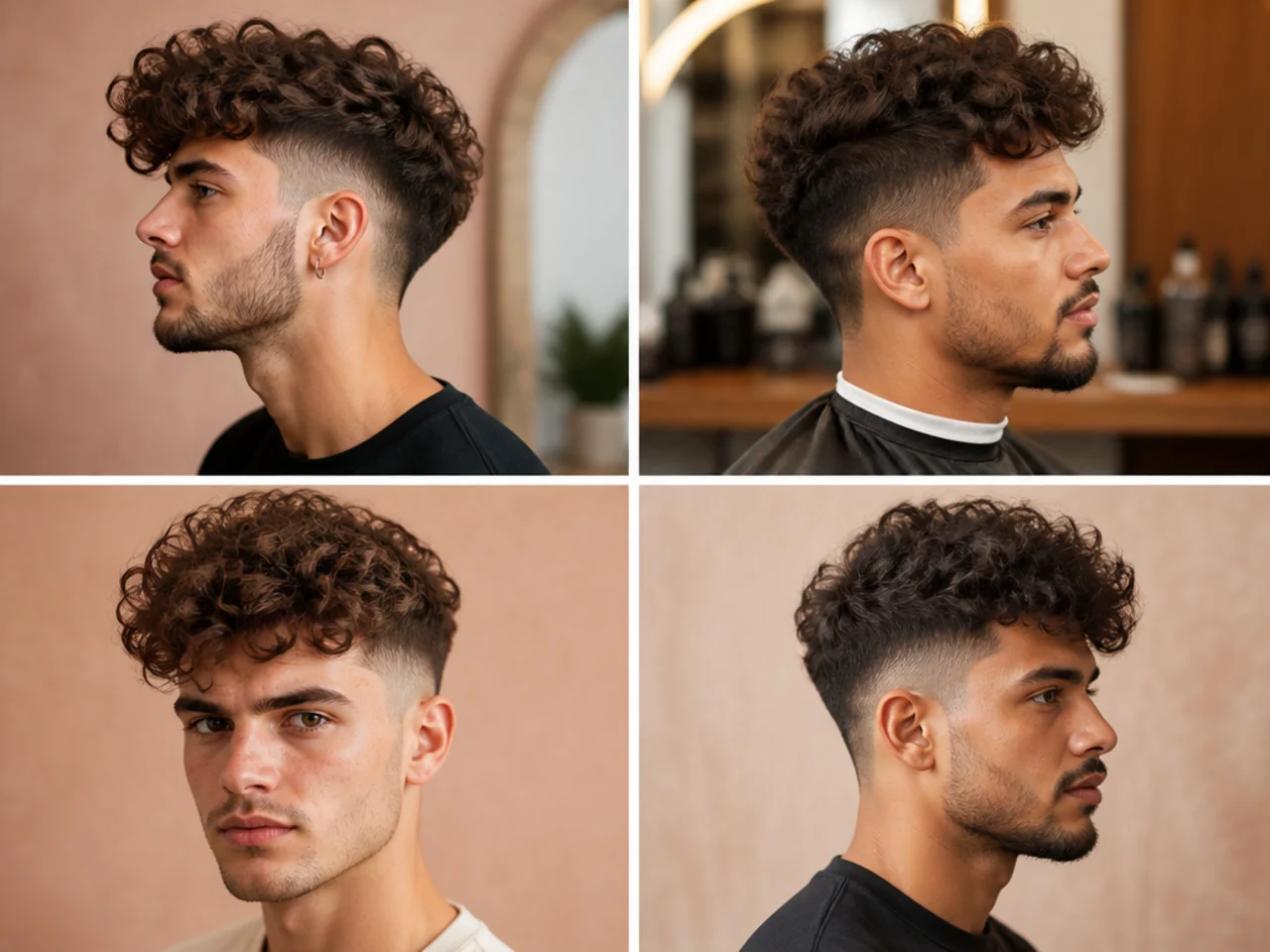
The undercut version disconnects the top from the sides entirely — no blending, just a clear break between shaved sides and voluminous curly top. It's the most dramatic silhouette on this list and the one that photographs loudest.
Ask for a disconnected undercut at the sides (guard number 1 or 2, no blend), six-plus stretched inches on top, and a rounded scissor shape at the crown. Add a shape-up at the front hairline.
Curl cream, custard, pick upward. Best for oval, square, and diamond faces on thick 3B through 4A hair — looser 3A curls struggle to carry the volume this shape asks for.
18. Curly Quiff with Curtain Fringe
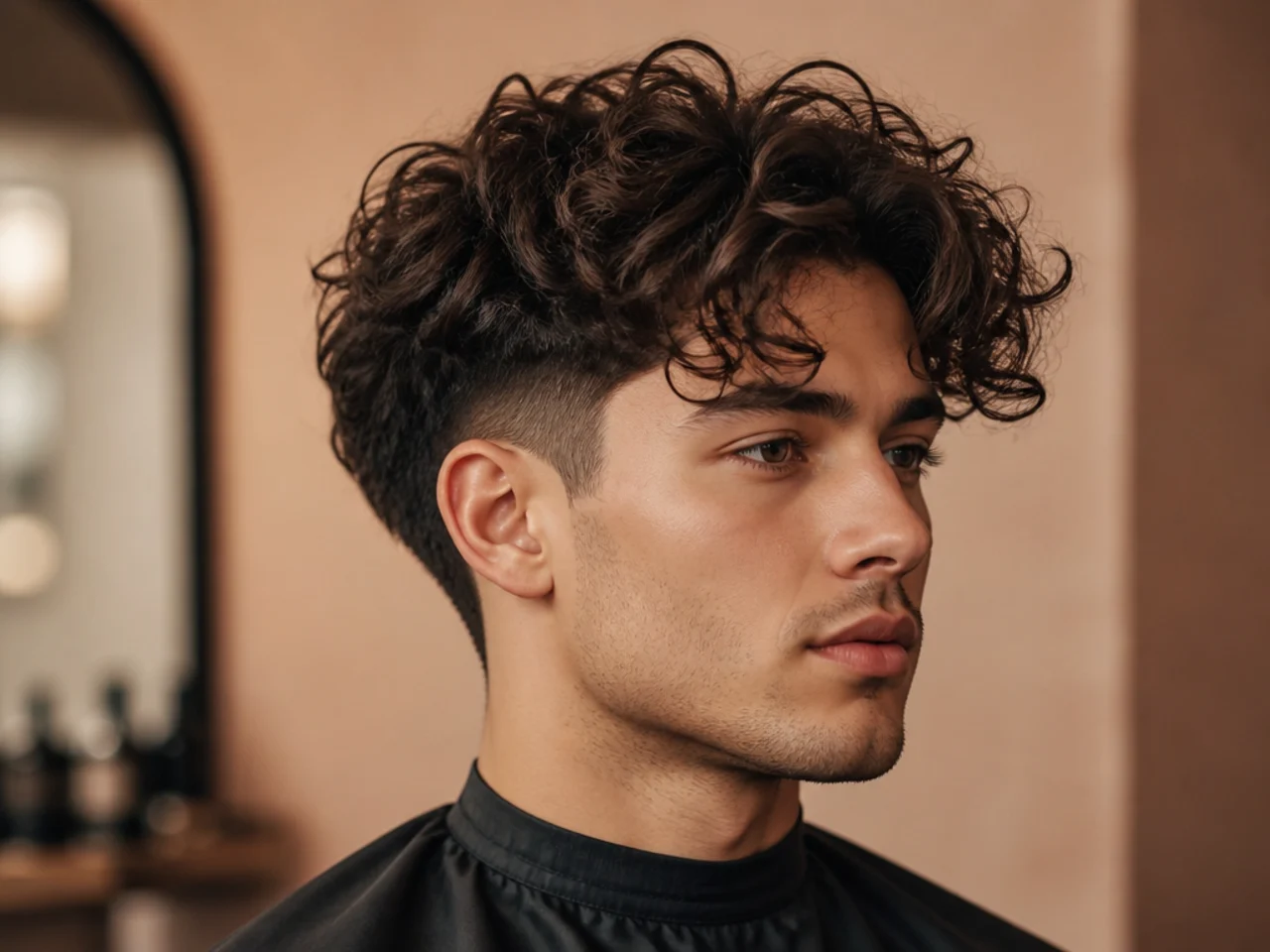
This version keeps the quiff shape at the crown while letting the very front curls drop forward and part in the middle — a soft curtain of coil framing the forehead. The crown still carries height, but the front reads gentler and adds a lived-in edge.
Ask for a scissor-only cut with six stretched inches at the front, encouragement to part-and-fall in the middle, and a low taper or low fade at the sides. Point-cut into the ends.
Curl cream on soaking-wet hair, split the front with your fingers as it dries, diffuse on low. Best for oval, long, and heart faces where the front helps break forehead height. Also for guys who want a curly quiff that carries into a longer grow-out cycle cleanly.
19. Curly Quiff with Beard
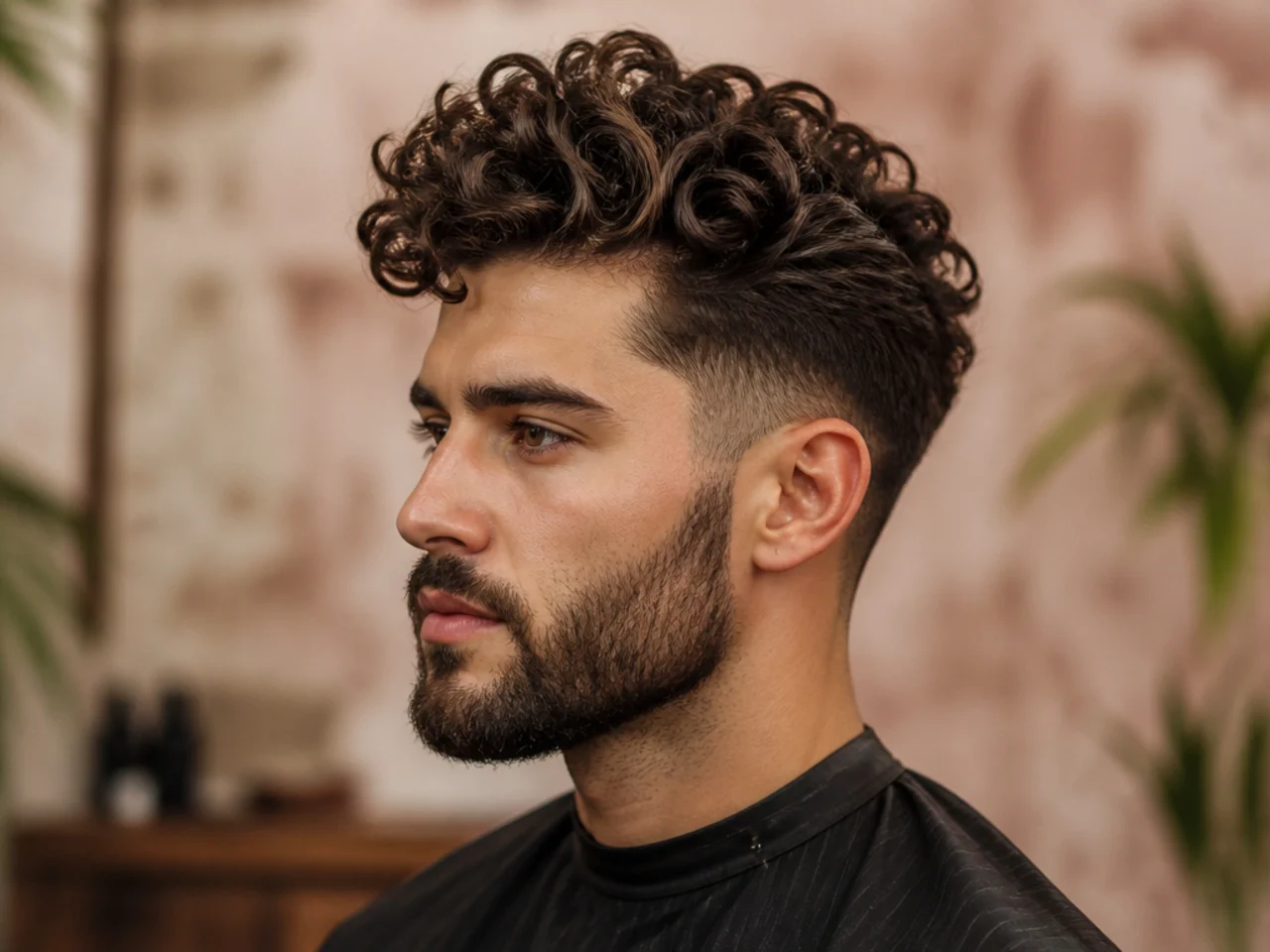
Pairing a curly quiff with a beard is a balance question. The top adds height, the beard adds bottom-weight, and the two need to sit at proportional lengths or the face reads unbalanced. A short-to-medium beard suits almost every version on this list.
Ask for the same curly quiff you'd cut without a beard, plus a beard trim that matches the visual weight — half-inch to one-inch beard length pairs well with a five-inch curly quiff. Line up the cheek and neckline for definition.
Style the top as usual, then a drop of beard oil combed through with a small pick or fine-tooth comb. Best for guys with mature jawlines — the beard adds structure the volume on top wouldn't carry alone. Skip the pairing if your beard grows patchy through the cheeks.
20. Curly Quiff with Line Design
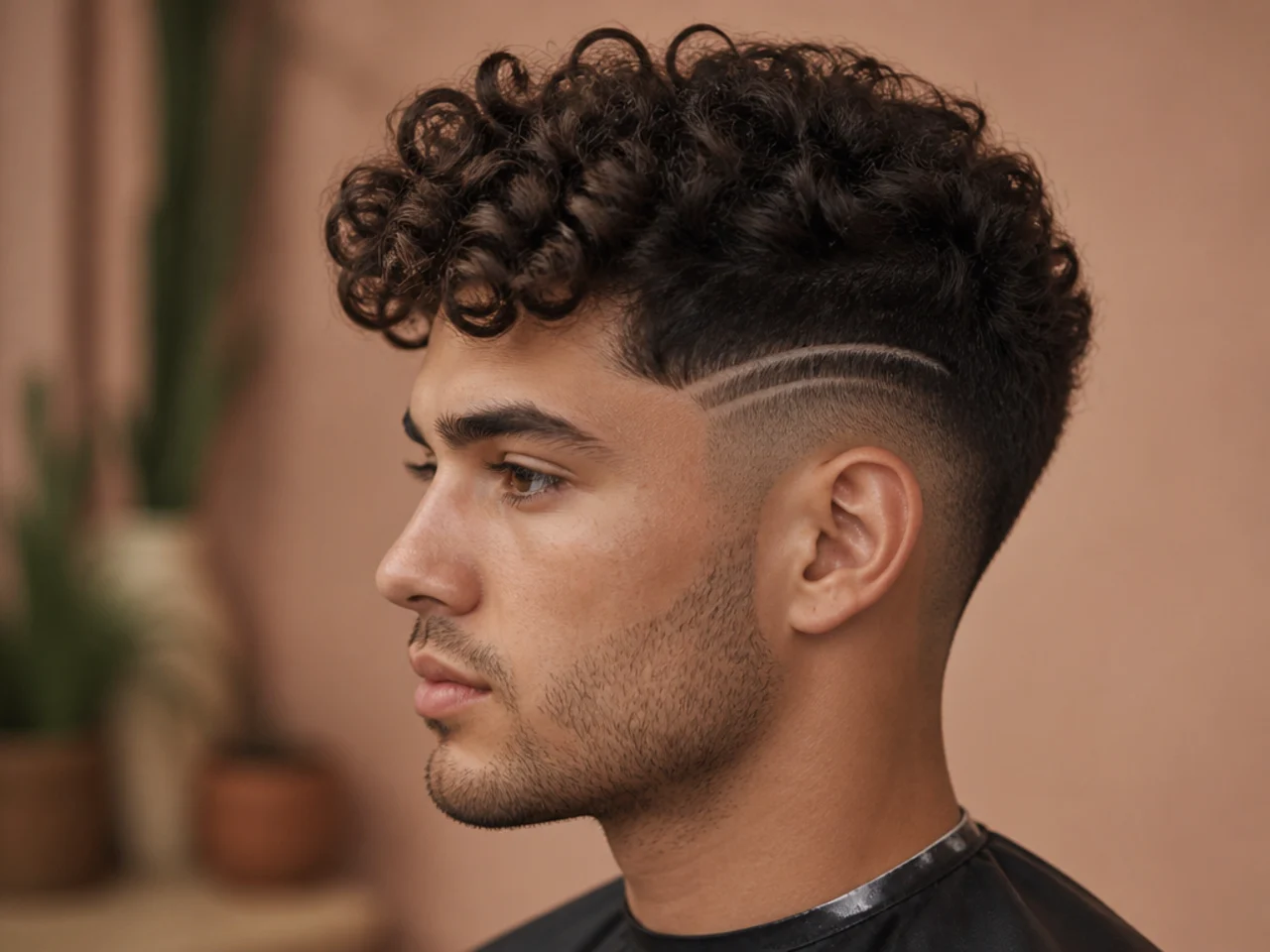
The line-design version adds a single shaved line — usually a hard part above the fade or a hairline design at the temple — that sharpens the edge of the whole cut. It's the barber-flourish upgrade for guys who already wear the shape and want a next step.
Ask for a mid or high fade, five to six stretched inches on top, and a shaved line at the point you want the sharpness to sit. Show a photo of the exact line placement — every barber freehands them differently.
Curl cream, light gel, diffuse. Best for guys with 3B through 4B hair who want the curly quiff to read as a barbering statement rather than just a style. If clean-lined perimeters aren't your read, the textured haircuts for men library covers softer options in the same length range.
How to Ask Your Barber for a Curly Quiff
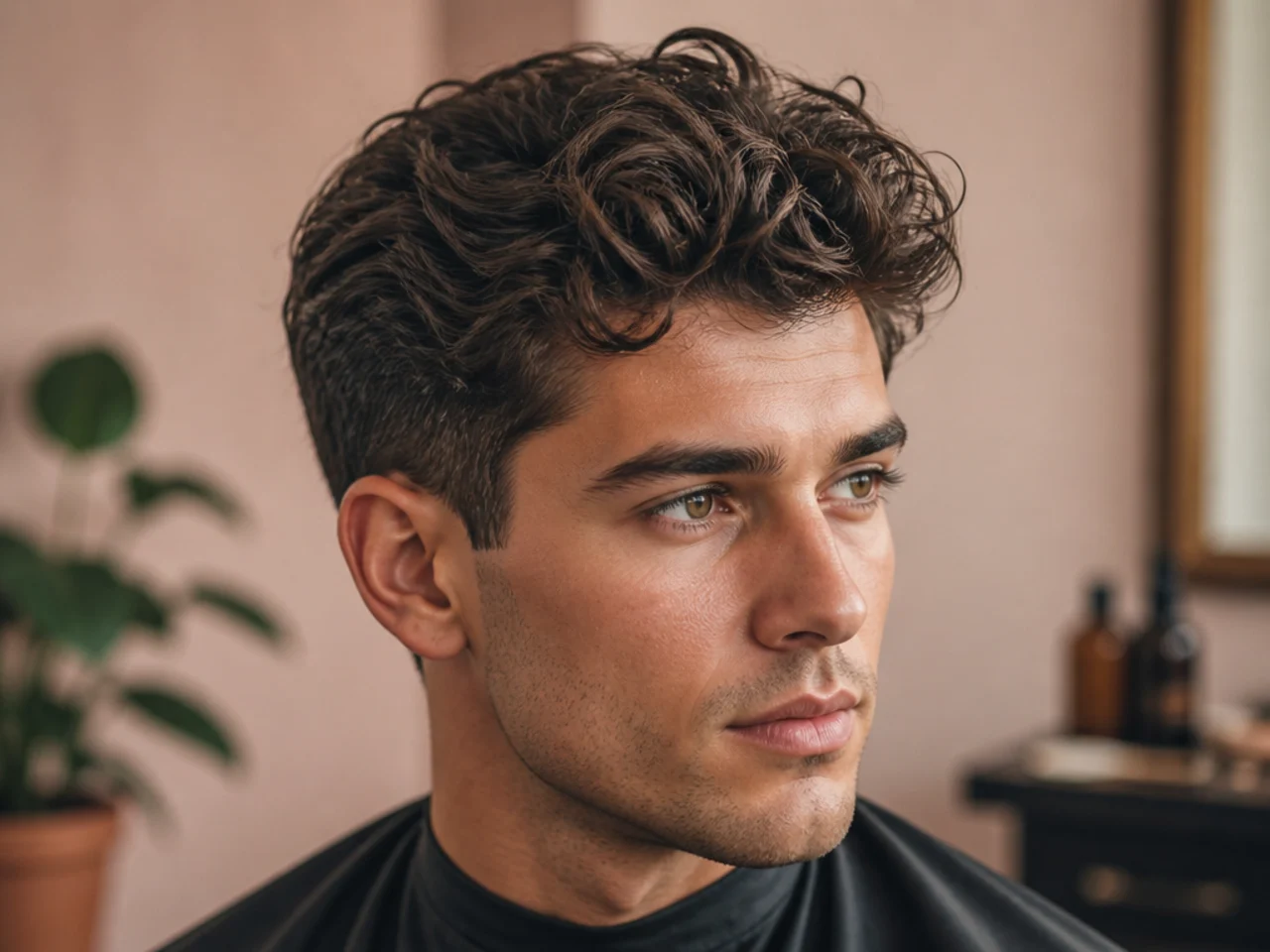
Barbers cut what they see. Curly hair is unforgiving because shrinkage lies about length — wet is not dry, dry is not shrunk-back-into-place. Pair every request with a photo and specific numbers, and insist on the details below.
- Bring one saved photo. Not five, not a Pinterest grid — one clean reference of the exact curly quiff you want. Curl type and face shape in the photo should be close to yours if possible.
- Ask for a dry cut. Wet cuts shrink up to fifty percent on tight curls. Dry cutting lets the barber see where the coil actually falls and remove length in the round.
- Name the stretched length in inches. Five stretched inches at the front is the standard curly-quiff range. Say the exact number rather than "medium" — a barber's "medium" for straight hair and yours for curls will never match.
- Specify the side treatment. Choose one: low taper, low fade, mid fade, high skin fade, burst fade, undercut, or scissor blend. Each one changes the whole read of the cut.
- Say "scissors only up top, no thinning shears, no razor." Thinning shears shred curl ends into frizz, and a razor breaks the pattern where it matters most.
- Ask for point-cutting into the coil. The ends should sit inside the curl pattern rather than snipped square across it. That's what preserves definition through the front piece.
- Confirm the neckline and any shape-up. A shaped hairline reads sharp; a natural one reads soft. Match it to the version you asked for.
Take a mirror check from every angle before you leave the chair. The front looks fine head-on almost always — the crown and the transition at the temple are what tell you if the cut lands.
Styling and Maintenance for Curly Hair
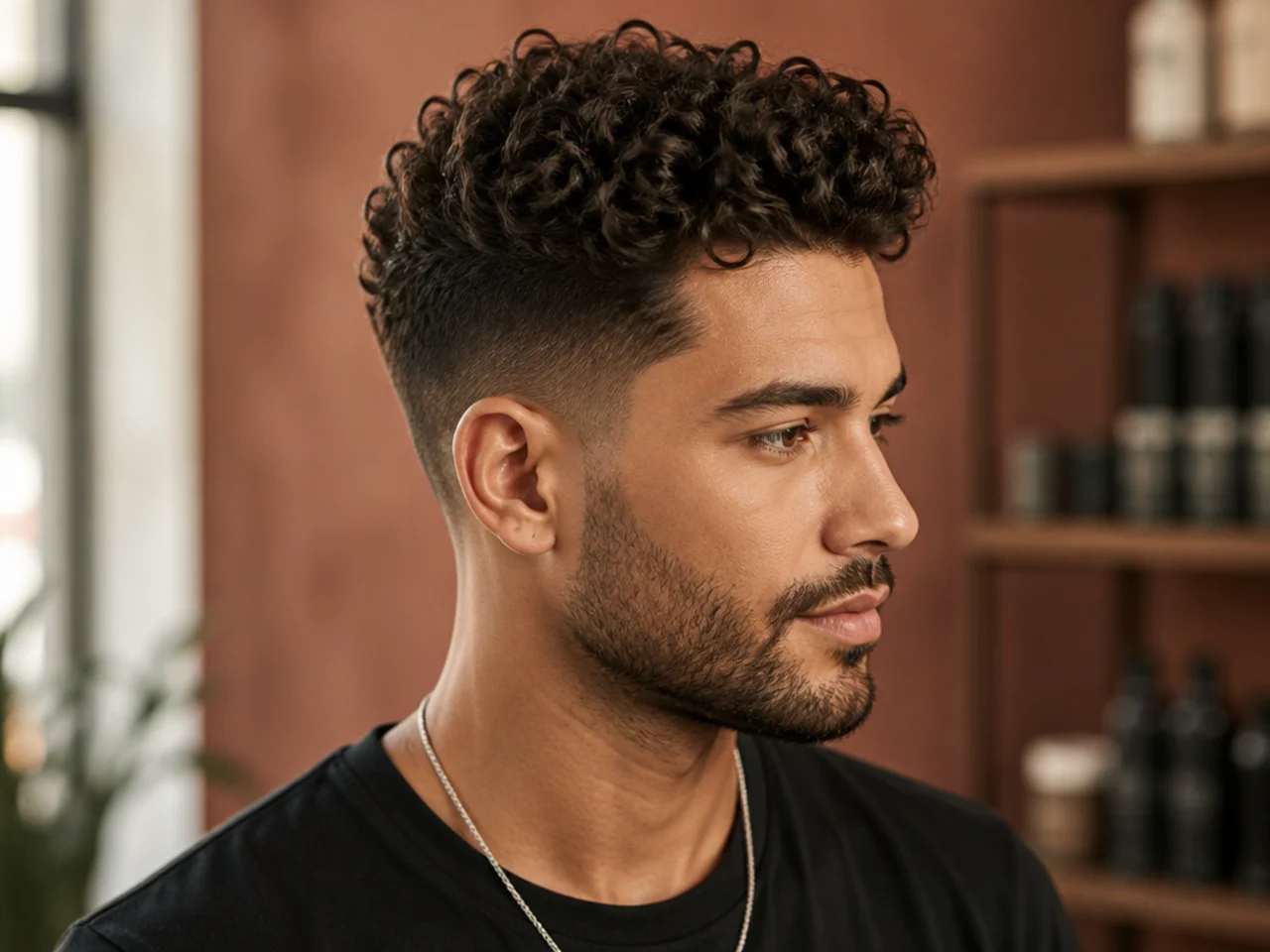
The curly quiff is a wet-hair styling routine. Every step happens on soaking-wet or damp hair, layered in a specific order, then left alone once drying starts. The wrong order or a mid-dry rework destroys definition faster than any product mistake.
Start with a leave-in conditioner on soaking-wet hair — it's the moisture base that lets everything on top hold shape. Follow with a curl cream, raked through with your fingers, then a rice-grain of light-hold gel or a palmful of foam depending on how tight your coil is. Looser 3A hair does better with a foam; tighter 3C through 4C hair does better with a custard. Diffuse on low speed and low heat with the head tilted, or air-dry hands-off. Once the hair reaches eighty percent dry, do not touch it. Scrunch out the gel cast at the end with a drop of oil in your palms.
Wash cadence matters more on curly hair than on any other type. A daily shampoo strips the oils that give curls definition — cut it to once a week for tight coils, twice a week for looser ringlets, and co-wash between with a moisture-heavy conditioner. Sleep on a satin pillowcase or under a satin bonnet; cotton wicks moisture out overnight and turns definition into frizz by morning. Refresh with a water-and-conditioner spray on days two through five to reset the shape.
Re-cut cadence is four to six weeks for most versions. The front piece and the crown are where the shape lives, so book the moment the front loses lift or the crown starts sitting flatter than the front. Faded sides need a mid-cycle line-up at week three; scissor-blended cuts stretch to week seven. For more curl-specific product guidance across textures, our roundup of the best wavy hair products for men covers the crossover formulas that work on looser 3A curl types.
FAQ
Is the curly quiff still trending in 2026?
Yes — the curly quiff is one of the most-requested men's medium-length shapes right now, and search volume has held steady across 3A through 4C curl types. The 2026 read is softer than the peak 2019 pompadour era, with more front length, more visible curl definition, and matte natural finishes replacing the gel-heavy sculpt of the earlier wave.
How is a curly quiff different from a curly top with a fade?
A curly quiff is one specific shape inside the curly-top-with-a-fade family. The front piece has to lift vertically to read as a quiff — a flat curly top over a fade is a different cut entirely. Height at the front, rounded crown, and shorter sides are the three things that define the quiff read.
Can I get a curly quiff on 4C hair?
Yes, and it reads as one of the most sculptural versions on this list. Type 4C needs the longest stretched length up top to give the shape vertical room — seven to eight inches at the front is normal — and the styling routine leans on curl butter and a pick rather than a diffuser. See variations 7 and 8 above for the specific asks.
Do I need a fade to make a curly quiff work?
No. A scissor blend or a low taper carries the shape just as well and reads more grown-up. The fade adds contrast; the fade doesn't make the cut. If your workplace or your face shape reads better without visible clipper lines, skip the fade entirely — the low taper version in variation 16 is the go-to.
What if my curls look flat instead of lifted?
Two usual culprits — the cut is wrong, or the styling is dragging the shape down. If the front piece is shorter than four stretched inches, shrinkage is stealing all the lift; you need to grow it out. If the length is there but the shape still falls flat, cut the gel or switch from cream to a foam — too much product weight pulls the coil down.
Can I style a curly quiff without a diffuser?
Yes — air-dry works if you're patient. Layer leave-in, curl cream, and gel on soaking-wet hair, then flip your head upside-down for a few minutes to encourage root lift. Let the hair air-dry hands-off. It takes longer, but the definition often reads even sharper than a diffused finish. For more short-curl styling advice across cut lengths, our short curly hair guide for men covers the shorter end of the same routines.