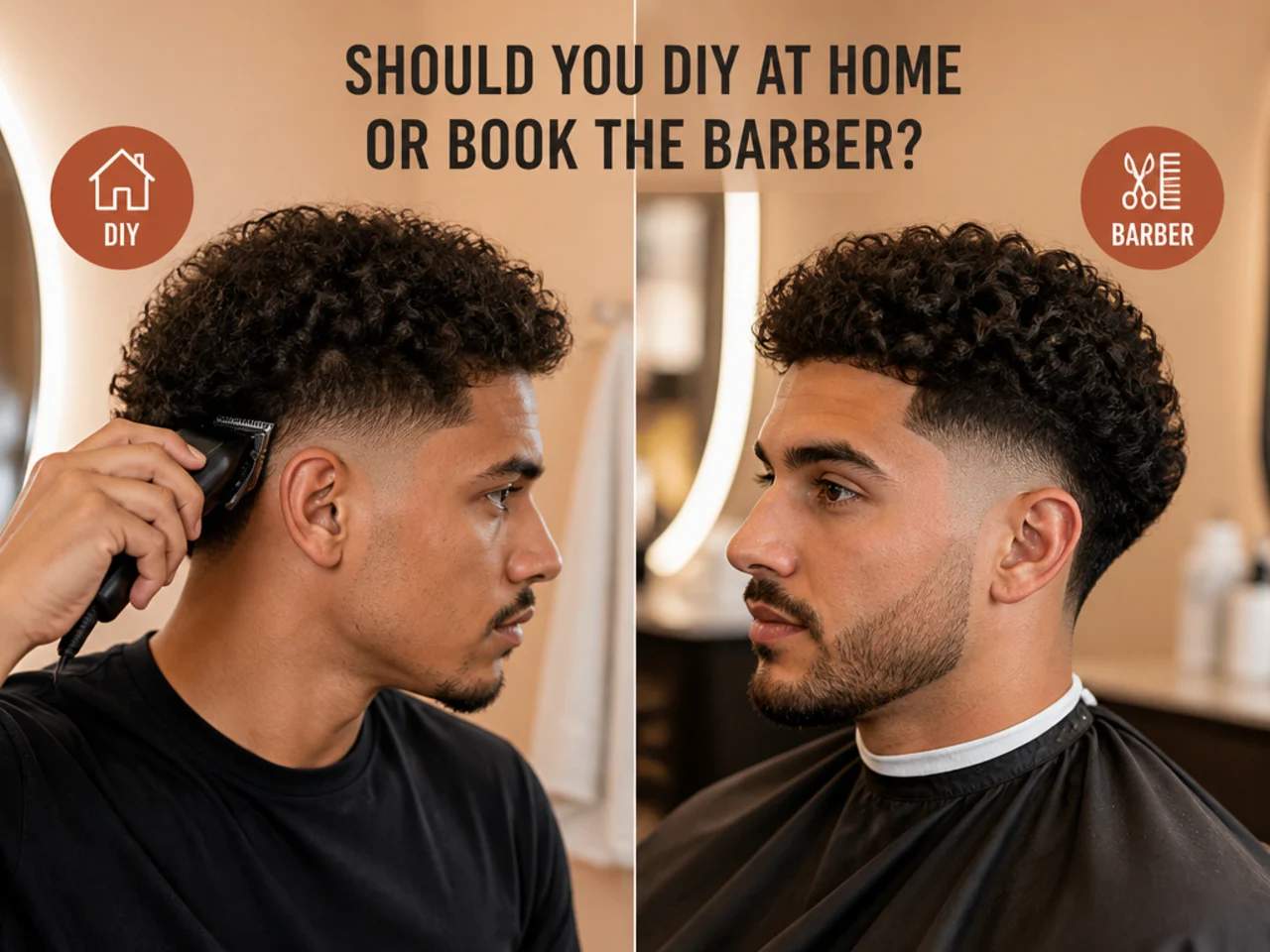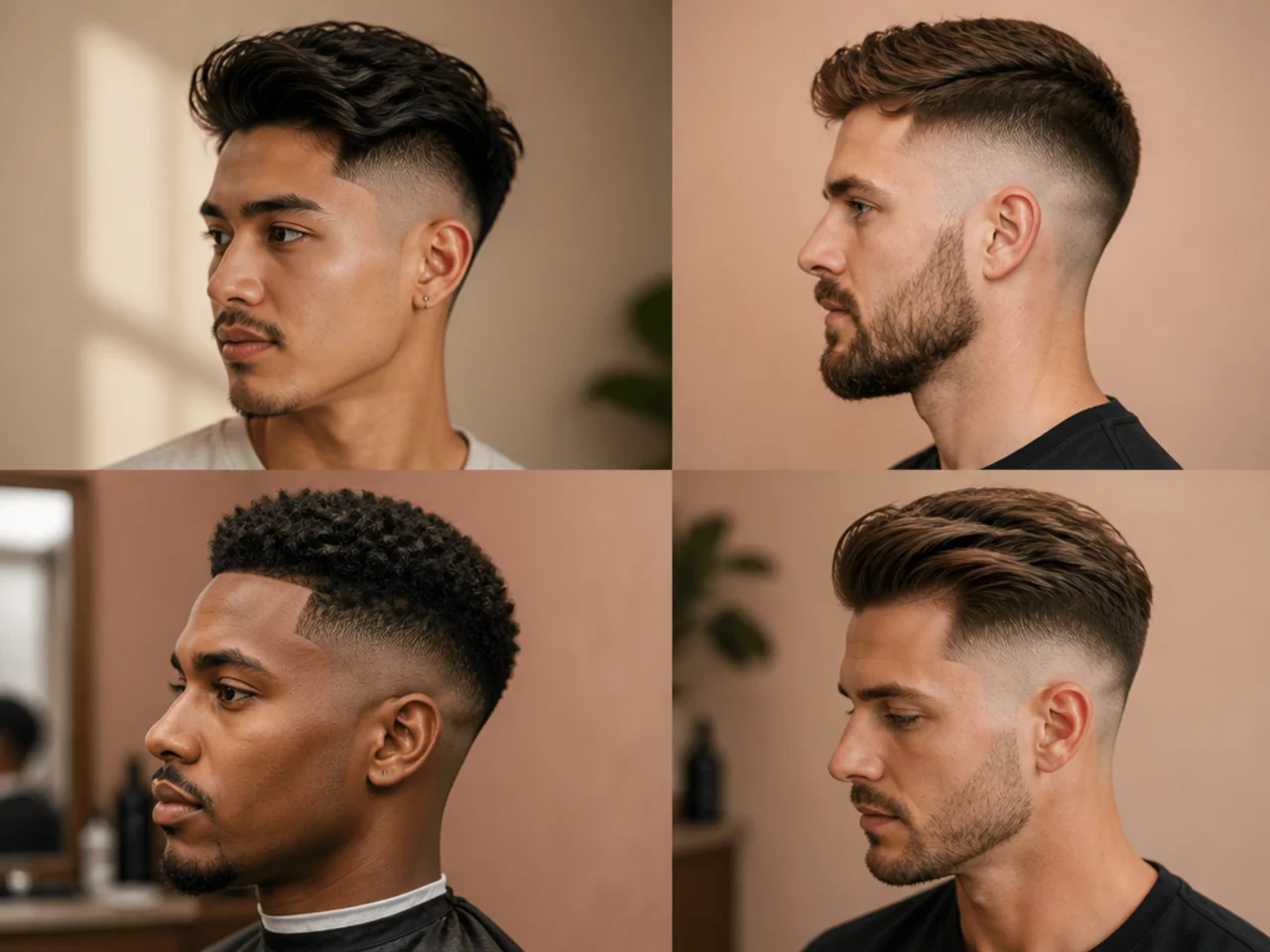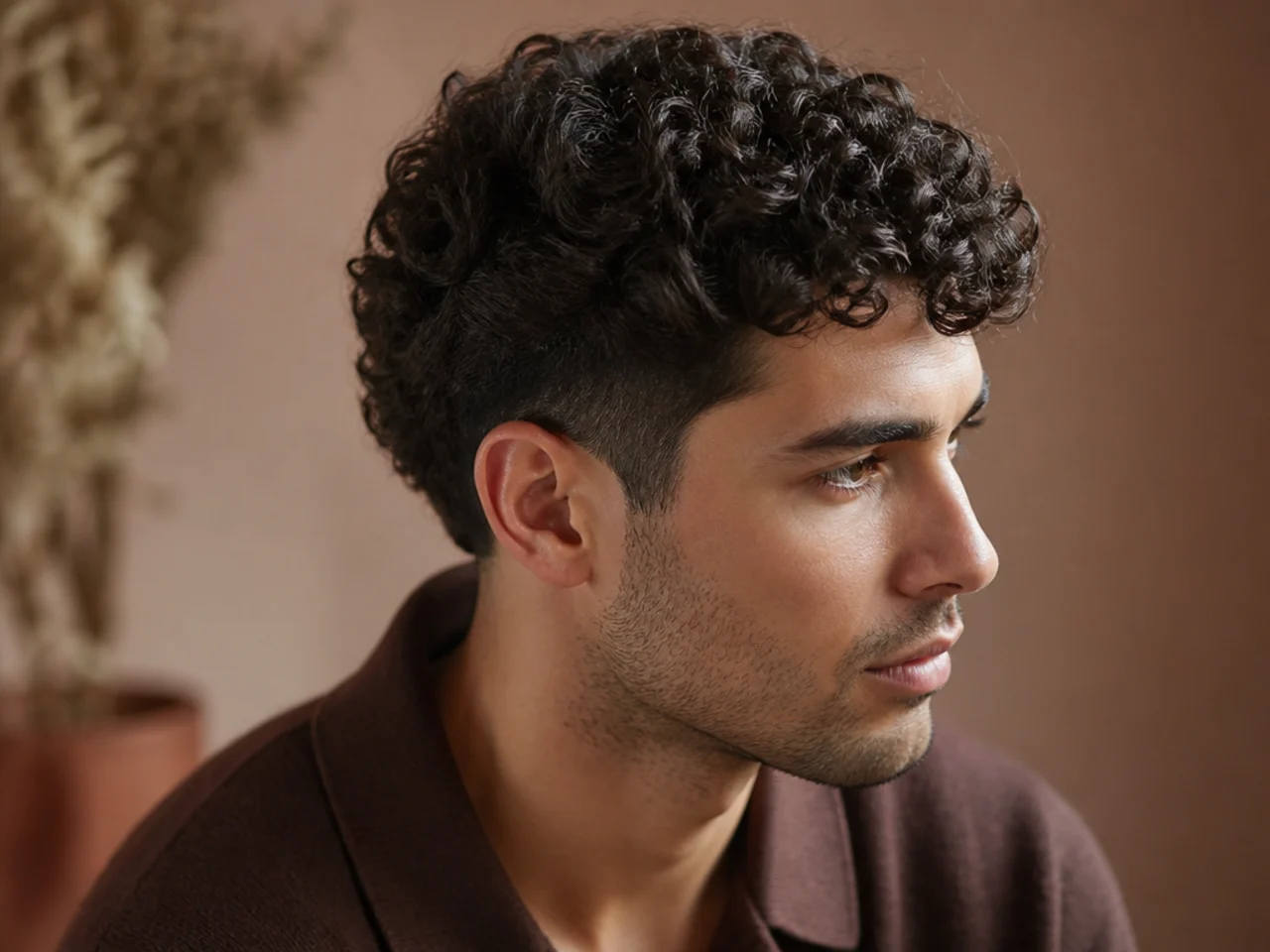
25 Curly Mullet Fade Ideas For Men With Thick Hair
Twenty five curly mullet fades, chosen around the two things thick curly hair does that straight hair does not — it shrinks as it dries, and it grows outward as well as down. Both decide where the fade line has to sit.
In this article · 32
- Why Curls Change How a Fade Reads
- Choosing Your Fade Height
- The 25 Curly Mullet Fades
- 1. Low Taper Curly Mullet
- 2. Mid Fade Curly Mullet
- 3. High Fade Curly Mullet
- 4. Skin Fade Curly Mullet
- 5. Burst Fade Curly Mullet
- 6. Drop Fade Curly Mullet
- 7. Temple Fade With a Curly Tail
- 8. Disconnected Curly Mullet
- 9. Blended Curly Mullet
- 10. Curly Mullet With a Hard Part
- 11. Curly Mullet With a Line Up
- 12. Short Curly Mullet
- 13. Shoulder Length Curly Mullet
- 14. Curly Mullet With a Curtain Fringe
- 15. Curly Mullet With a Short Fringe
- 16. Coily Mullet Fade
- 17. Loose Wave Mullet Fade
- 18. Ringlet Mullet Fade
- 19. Curly Mullet on Very Thick Hair
- 20. Curly Mullet With a Hollowed Interior
- 21. Curly Mullet With a Beard Connection
- 22. Bleached Tip Curly Mullet
- 23. Wide Tail Curly Mullet
- 24. Narrow Tail Curly Mullet
- 25. Curly Mullet at Week Six
- Styling and Upkeep
- Mistakes to Avoid
- FAQ
- Final Thoughts
The commonest curly mullet failure is a cut that looked right in the chair and sat two inches shorter by the time it dried.
Curls shrink and thick curls shrink most. A coil can lose a third of its length as it dries, so a wet cut lands the tail well above where it was measured.
Thick curly hair grows outward as much as down. The fade is what removes that width, and how high it goes changes the whole silhouette rather than just the sides.
Why Curls Change How a Fade Reads
A curl blurs the fade line for you. The bend throws light in several directions, so the boundary between two guard lengths softens before the eye can find it. Straight hair gives the barber nowhere to hide.
Shrinkage is not the same everywhere. The nape is usually looser than the crown, so the same cut length dries to different heights across the head. Dry cutting is how that gets accounted for.
Width is the variable a fade controls. Thick curls stand out sideways. Taking them down at the sides is what lets the tail read as length rather than as bulk.
Density is not the same as volume. Thick curly hair has plenty of both, which is why weight has to come out of the interior rather than off the curl ends where it causes frizz.
Choosing Your Fade Height
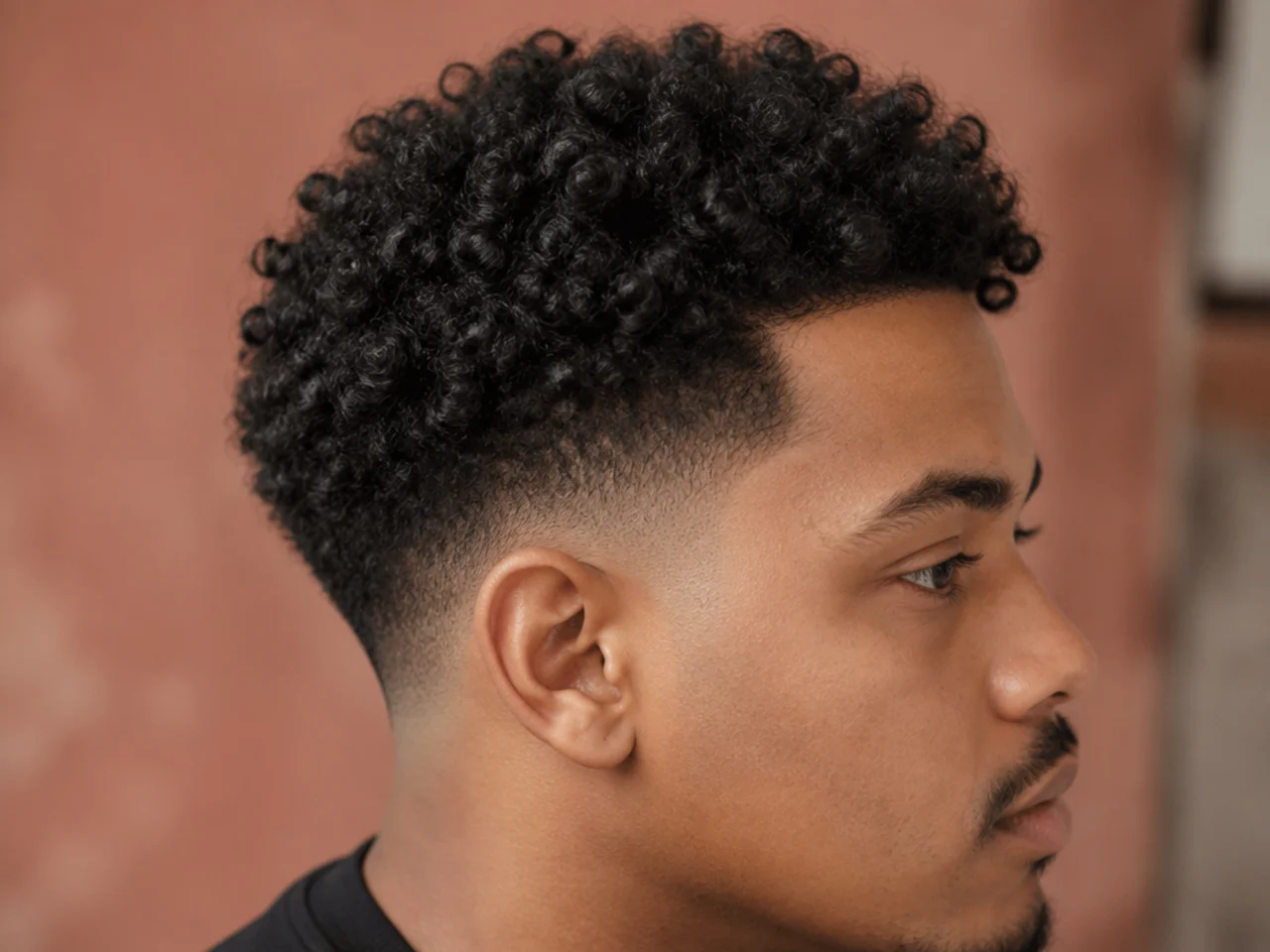
Low keeps the width you need. A low taper or burst leaves hair around the ear, which balances a heavy curly back. It is the default for a reason.
Mid raises the contrast without narrowing the head. The line sits between the ear and the parietal ridge, which is as high as most thick curly mullets want to go.
High trades width for contrast. Above the parietal ridge the head starts reading narrow against the tail. It works on looser curl patterns where the top has less bulk to lose.
Skin or not is a schedule decision. Bare skin shows stubble inside a fortnight; a taper finishing at a number one still reads correctly at three to four weeks.
The 25 Curly Mullet Fades
1. Low Taper Curly Mullet
The line starts at the top of the ear and finishes around a number one, leaving hair at the bottom rather than skin. It is the version that keeps the most width at the sides, which is what stops thick curls on top looking top heavy — the same balance a curly mullet relies on everywhere else.
2. Mid Fade Curly Mullet
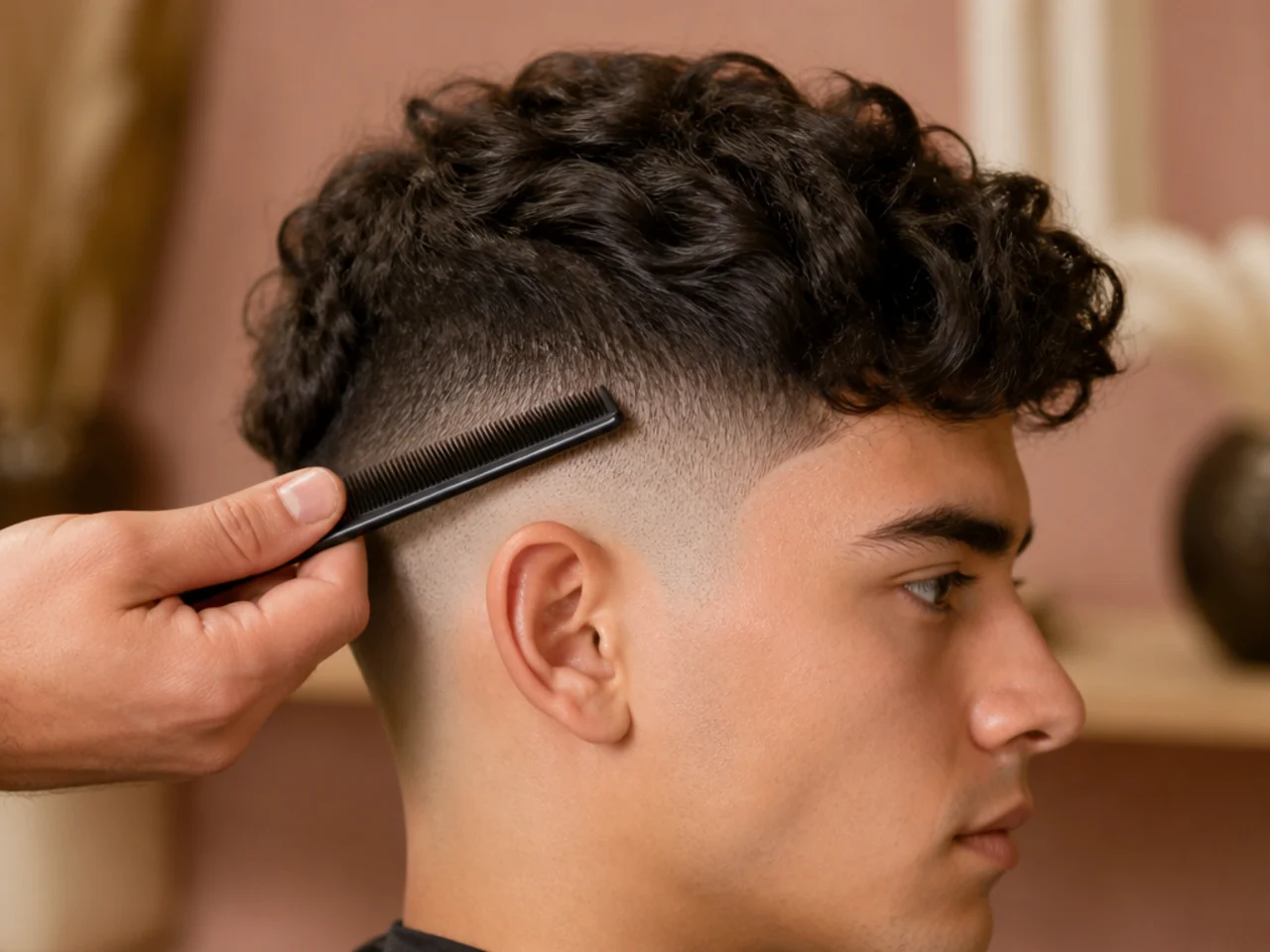
The fade begins between the ear and the parietal ridge, so the gradient has further to travel and needs more passes to stay smooth. On curls that extra distance is forgiving, because the bend in the hair covers small steps a straight head would expose.
3. High Fade Curly Mullet
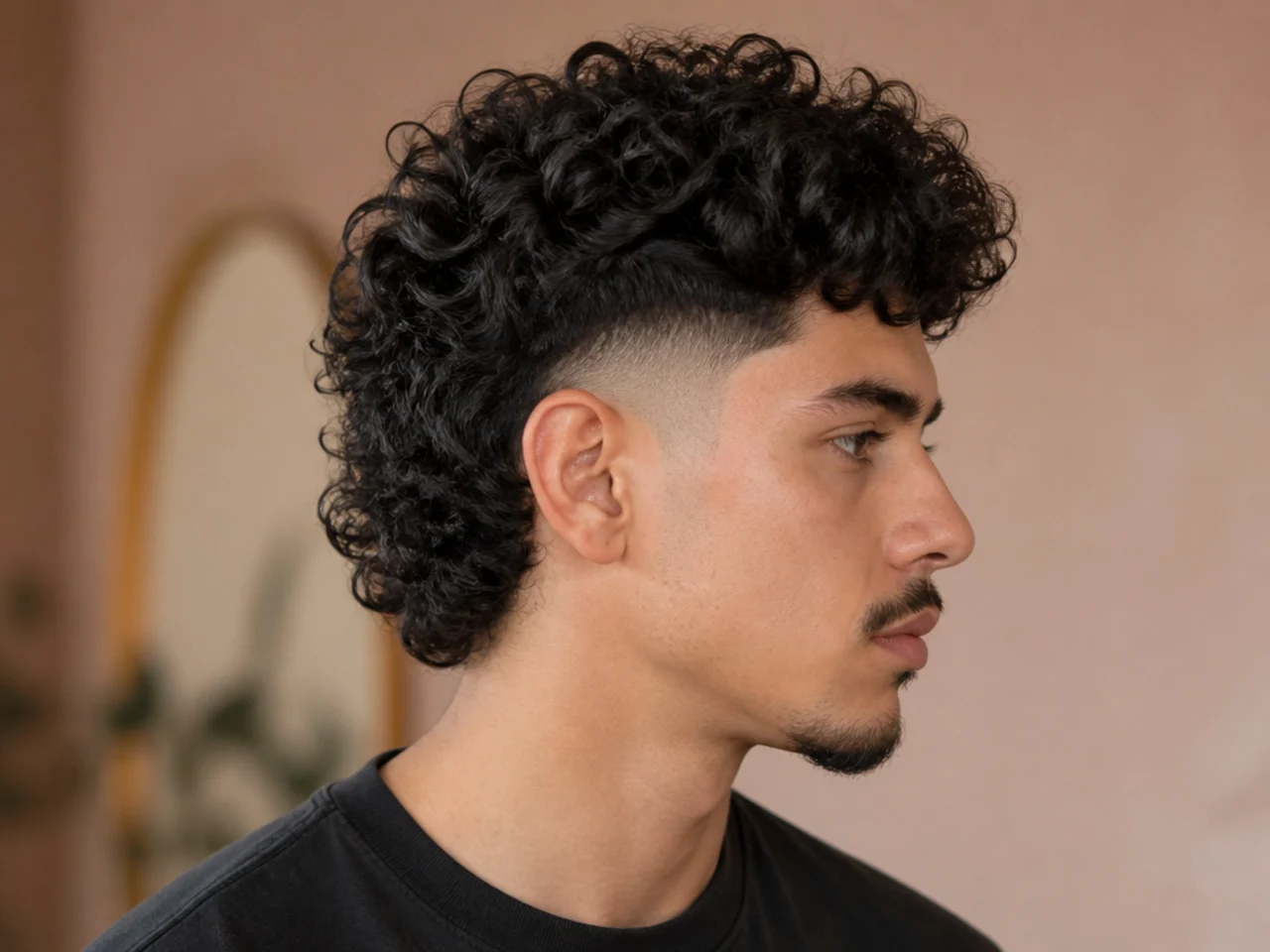
Starting at or above the parietal ridge strips the width out of the sides entirely, leaving a column of curl on top and a long back. It suits looser patterns and narrow faces, and it makes a round head look considerably narrower than a low fade does.
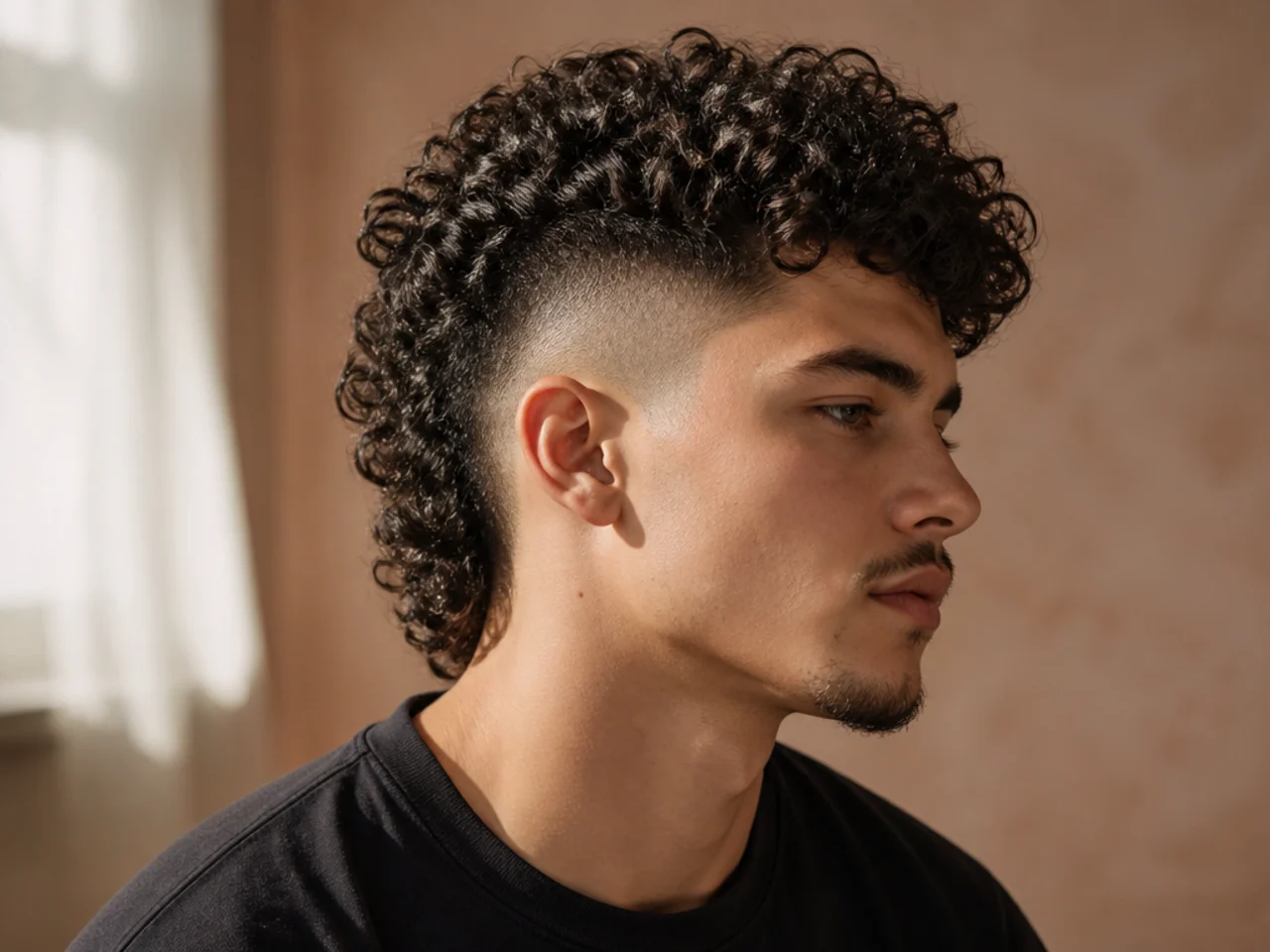
4. Skin Fade Curly Mullet
Taking the bottom to bare skin gives the hardest contrast available, because skin reflects light where hair absorbs it. It also halves the useful window — stubble is visible within one to two weeks, so this is a fortnightly cut whatever else you do, as with any curly fade.
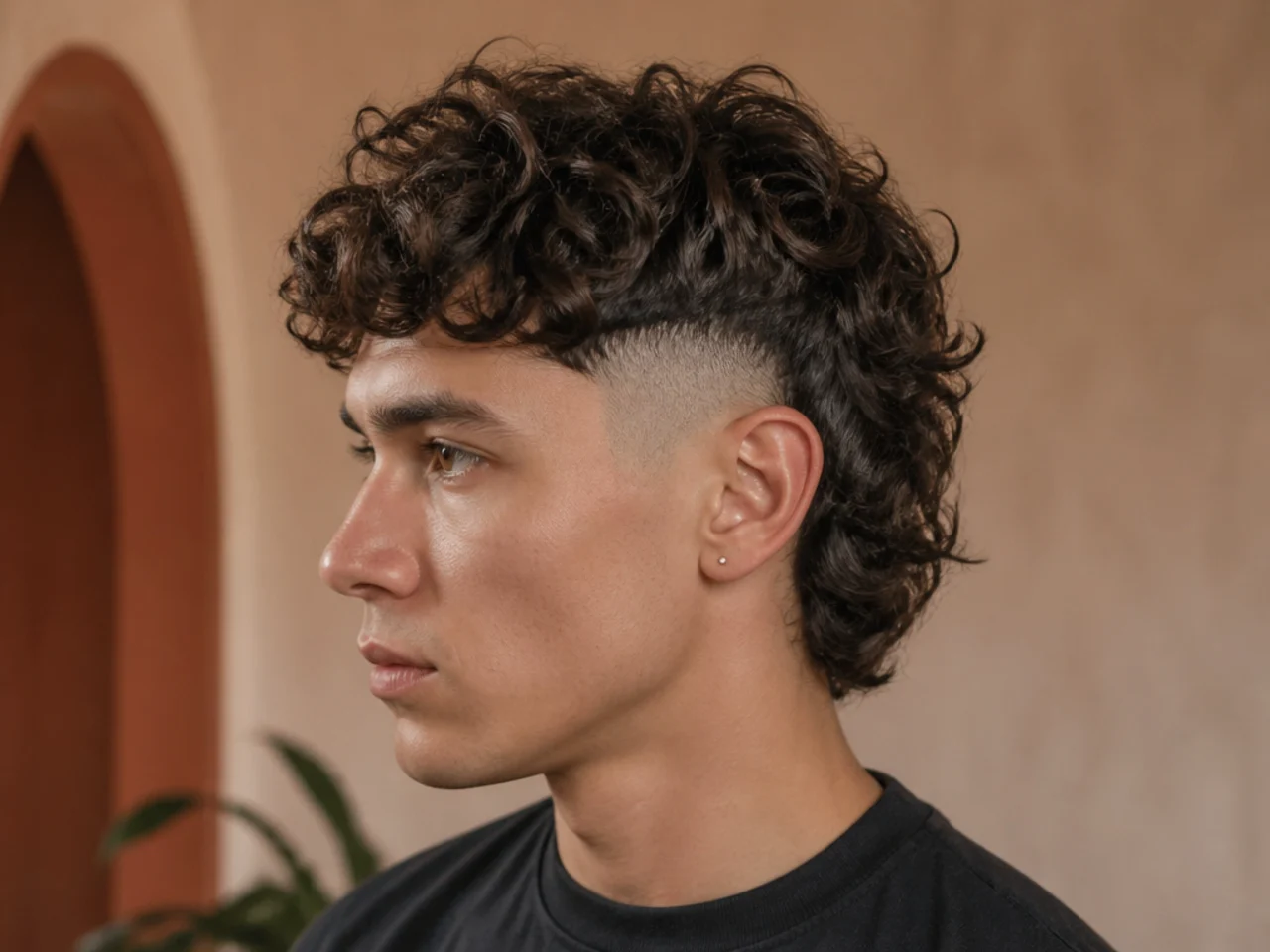
5. Burst Fade Curly Mullet
The fade arcs around the ear and stops, leaving the nape untouched. That is why it suits a mullet better than any other shape — the tail keeps its full weight because the clippers never reach the back of the neck.
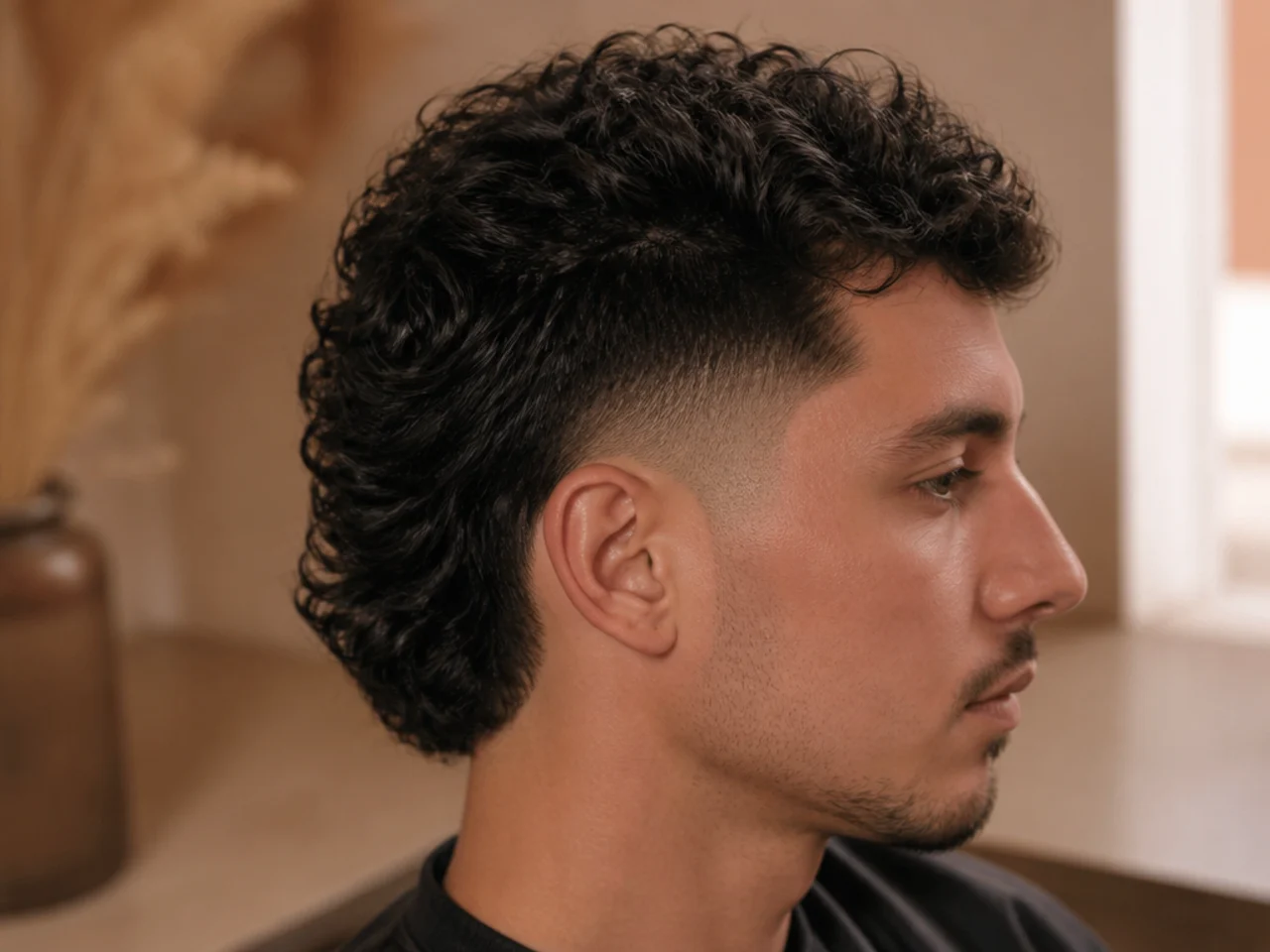
6. Drop Fade Curly Mullet
The fade line drops as it travels backward, following the curve of the skull instead of running straight. It keeps more hair low at the back of the head, which gives a heavy curly tail something to sit on rather than starting abruptly.
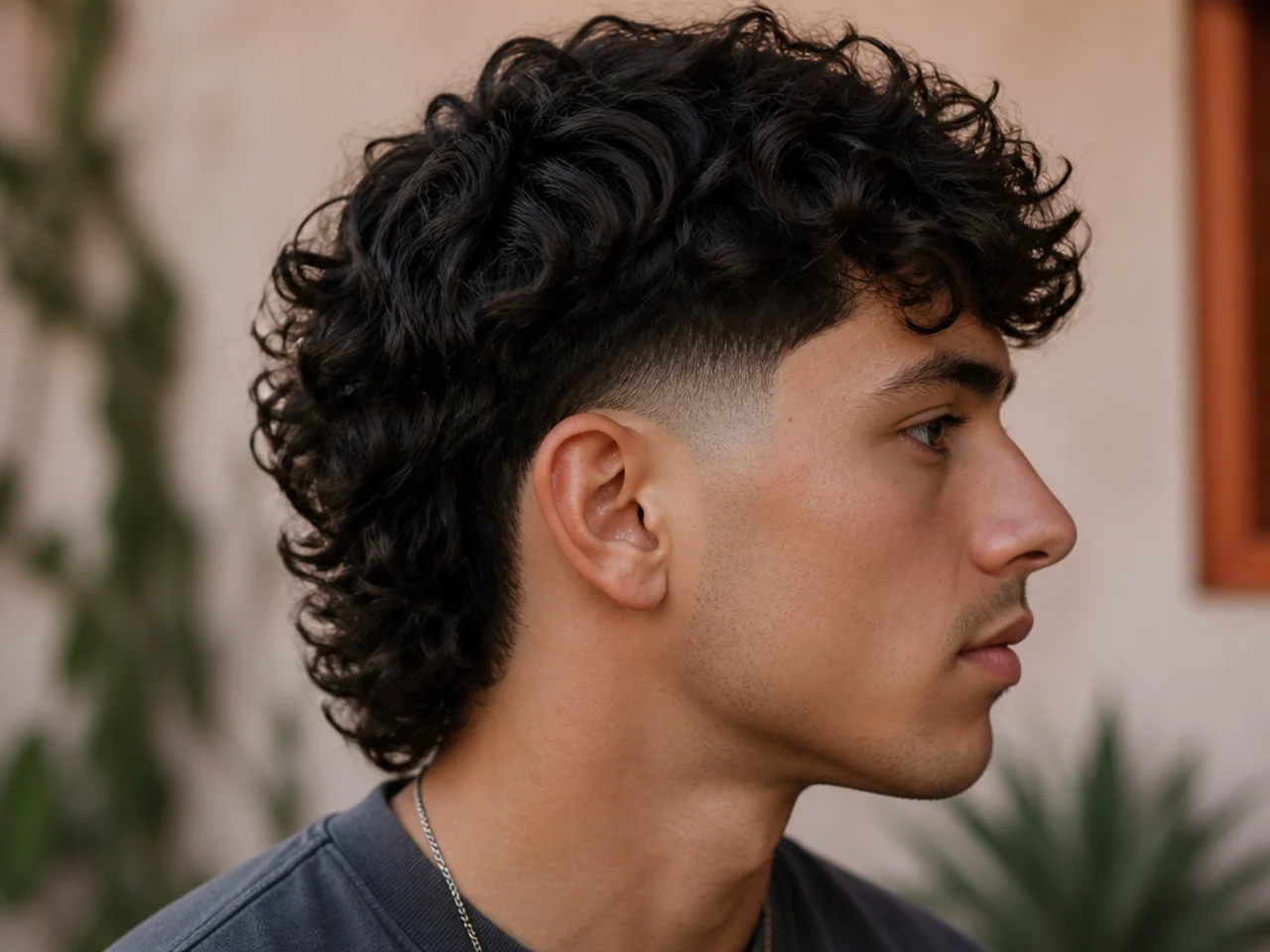
7. Temple Fade With a Curly Tail
Only the corners at the temples are taken down, leaving everything else full. It cleans up the front of a thick curly head without removing the width that balances the tail, which makes it the least drastic fade on this list.
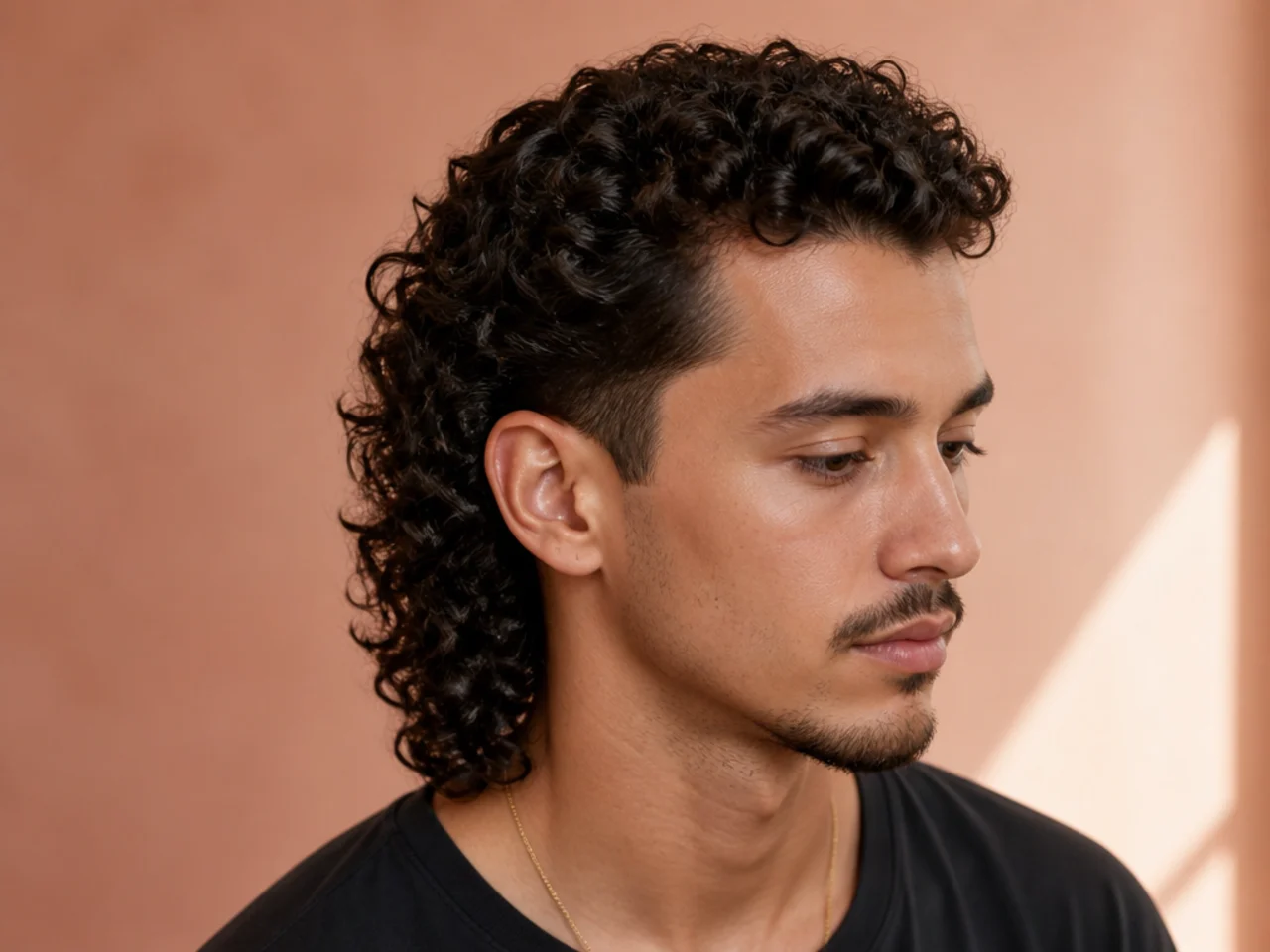
8. Disconnected Curly Mullet
No gradient between the short sides and the long top, just a hard step. The eye reads the two lengths as separate shapes, which exaggerates both — and it means the disconnection line has to be placed precisely, because there is no blend to soften a bad decision.
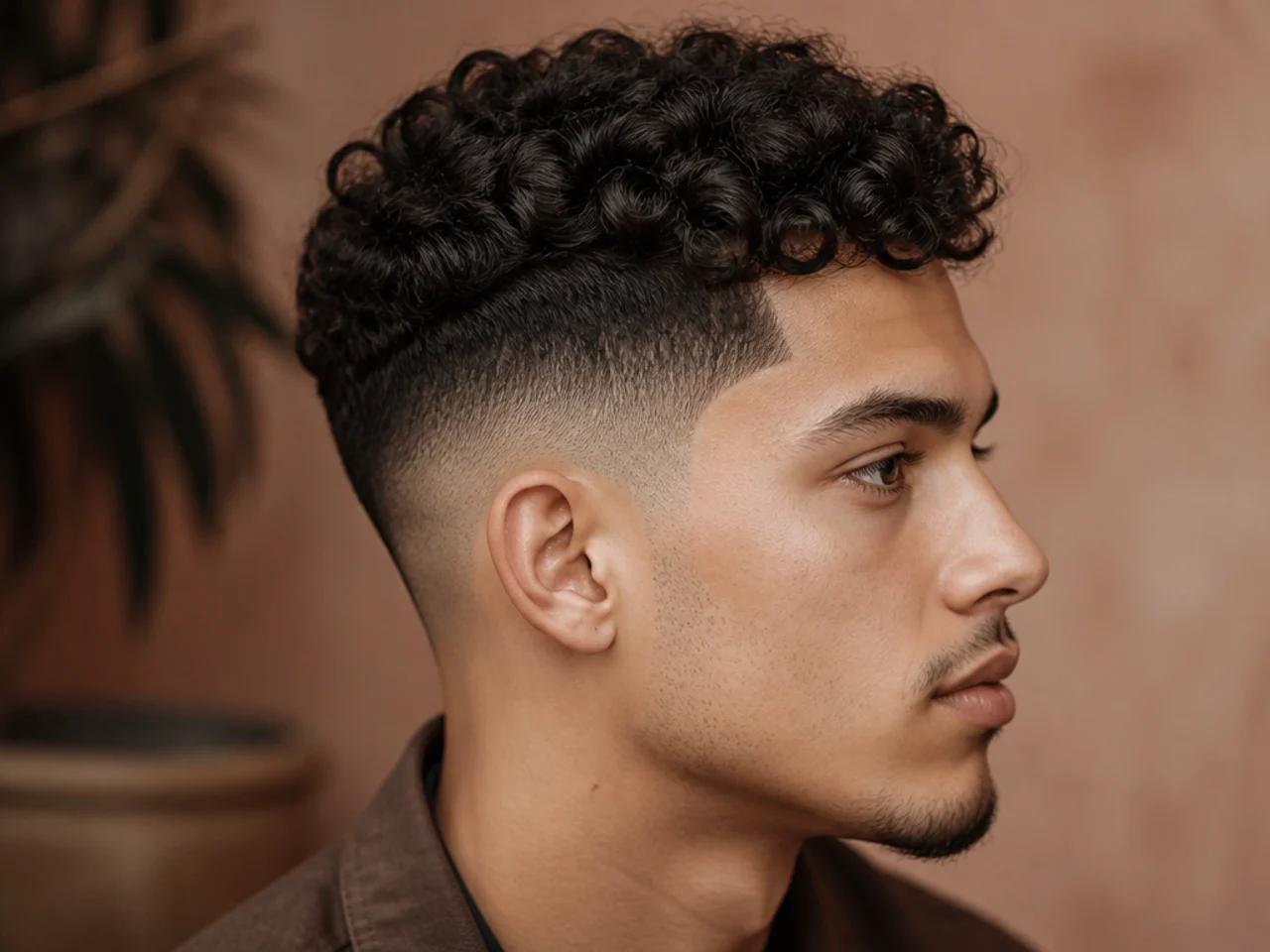
9. Blended Curly Mullet
The top graduates into the sides rather than stopping against them. It is more forgiving as it grows, because a blend that softens still looks like a blend, where a disconnection that fills in just looks unfinished.
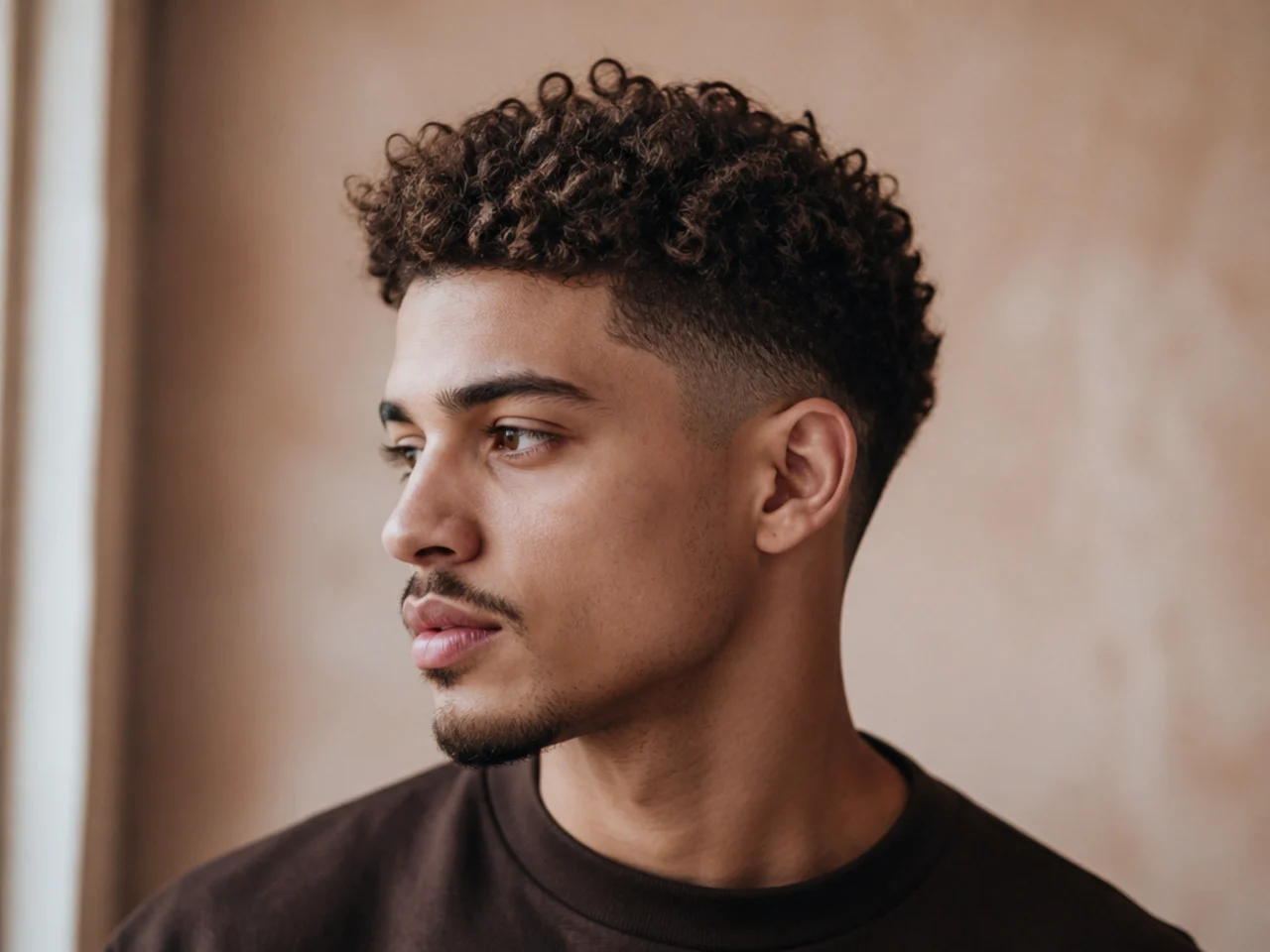
10. Curly Mullet With a Hard Part
A trimmer line cut along the parting gives the eye a straight vertical against all that curl. On thick curly hair it is the only reliably straight line in the cut, which is exactly why it reads so strongly against everything around it.
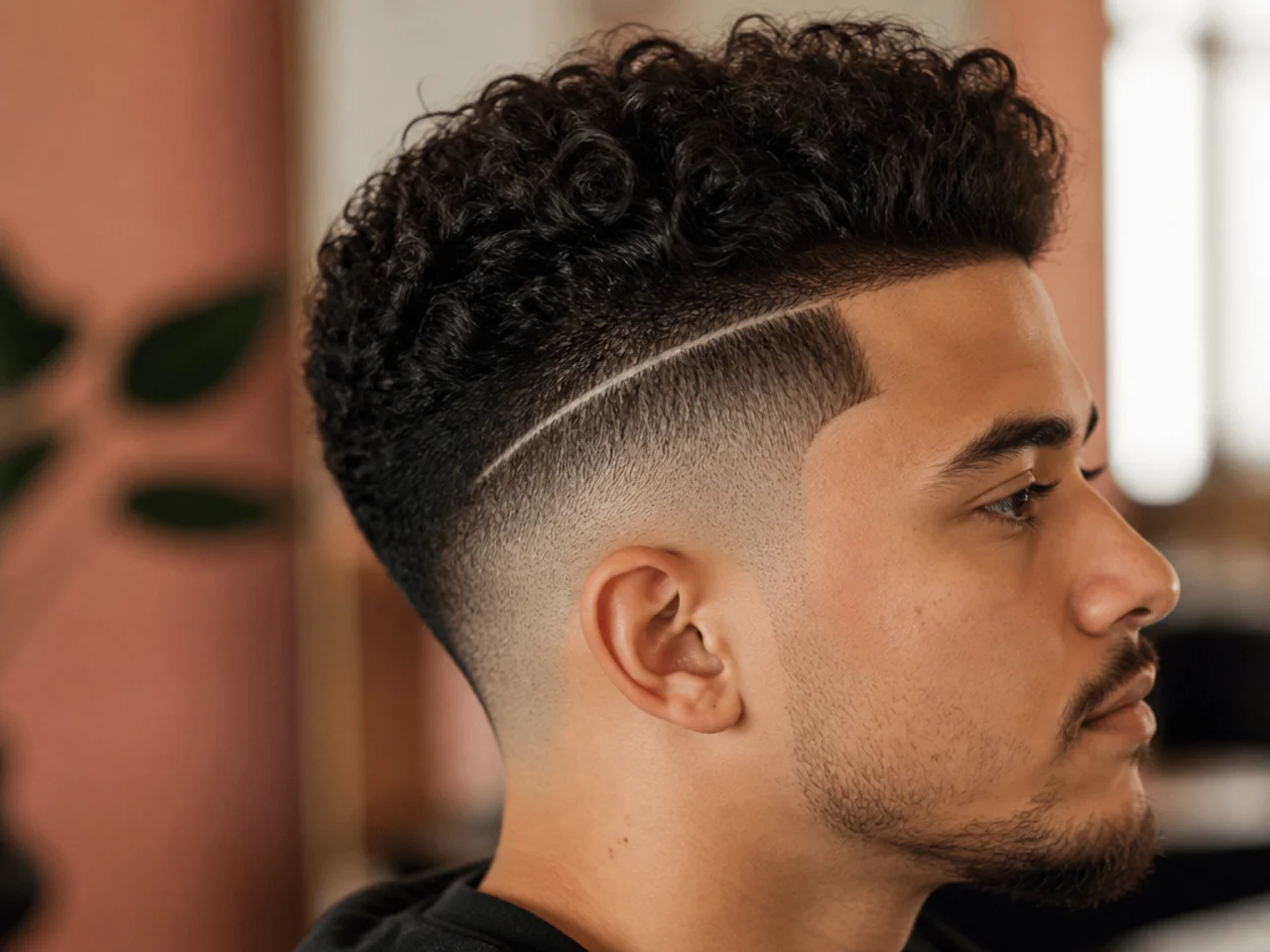
11. Curly Mullet With a Line Up
The front hairline squared off with a trimmer. It sharpens a curly outline that is naturally soft, but it grows back as visible stubble along the forehead within about ten days, so it commits you to the same schedule as a skin fade.
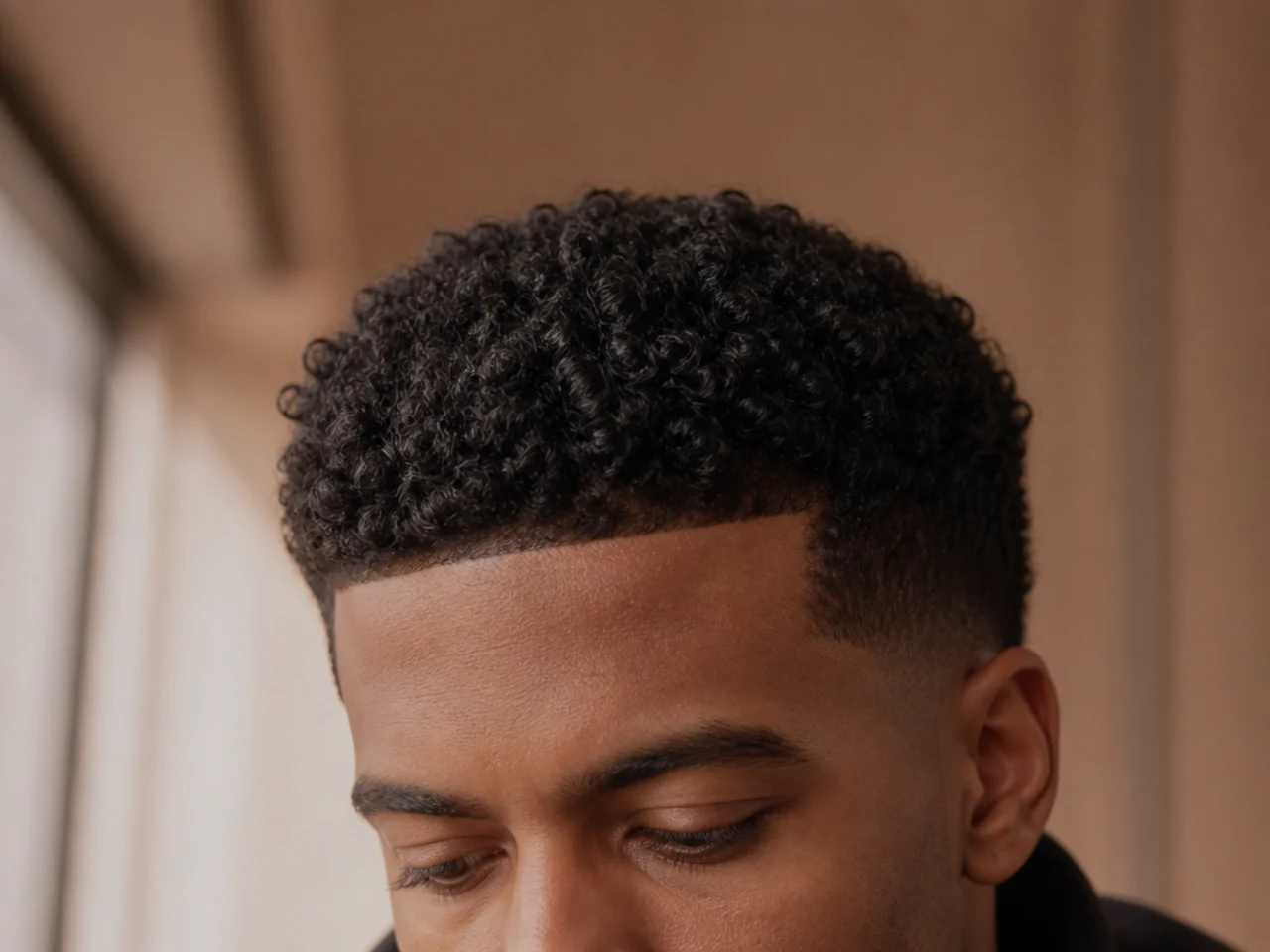
12. Short Curly Mullet
The tail stops at the nape rather than the collar. Less weight pulling on the curl means the pattern stays tighter and springier, which is the main reason short curly mullets look more defined than long ones.
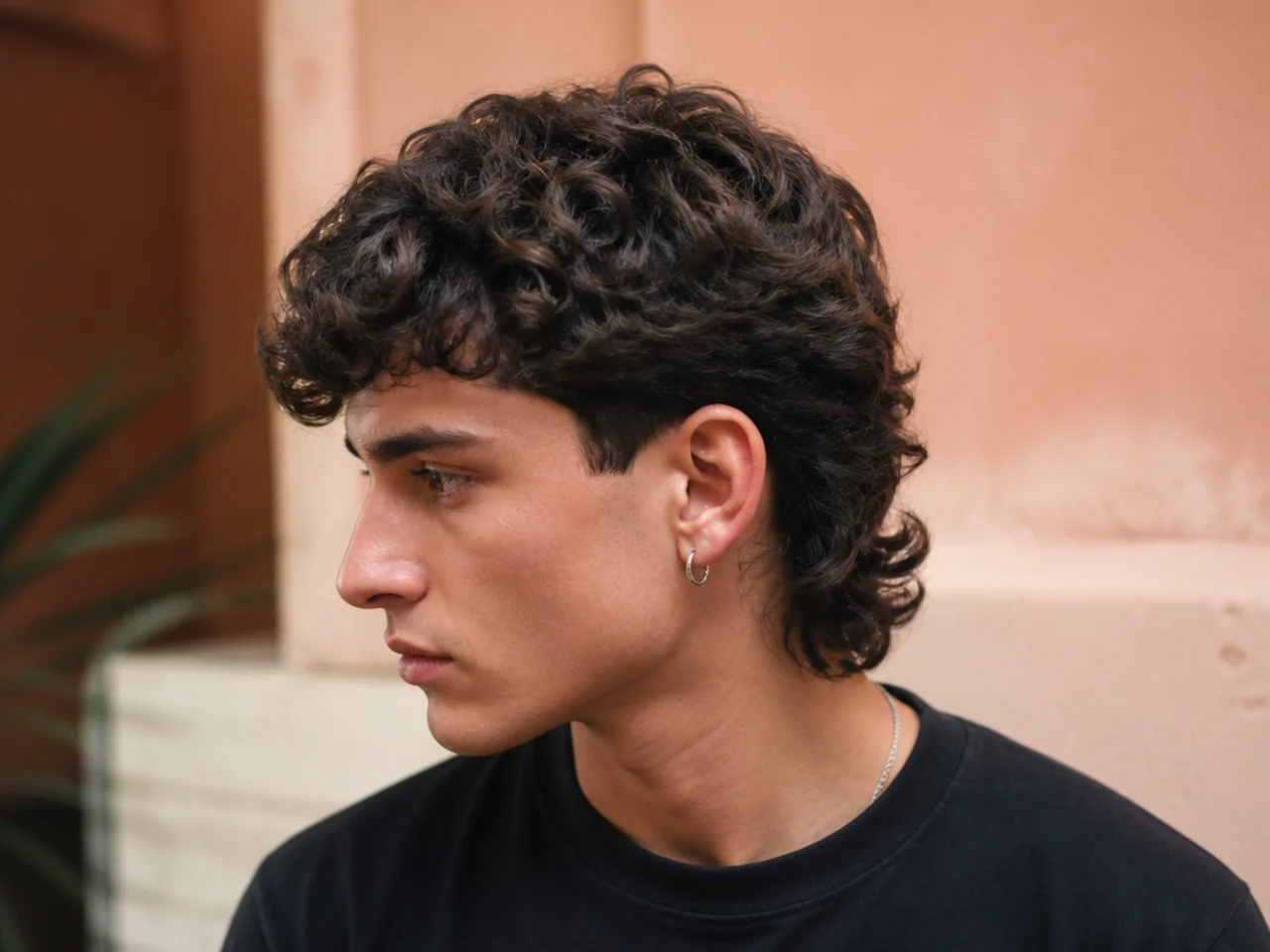
13. Shoulder Length Curly Mullet
Past the collar the weight of the hair starts pulling the curl pattern straighter at the ends. Expect the tail to read looser than the crown, and expect it to need dusting every couple of months to keep the ends from thinning out.

14. Curly Mullet With a Curtain Fringe
The front split and pushed to each side, which frames the face without adding height. On curls it works because the split follows the natural clumping, so the fringe holds its shape without being blown into position each morning.
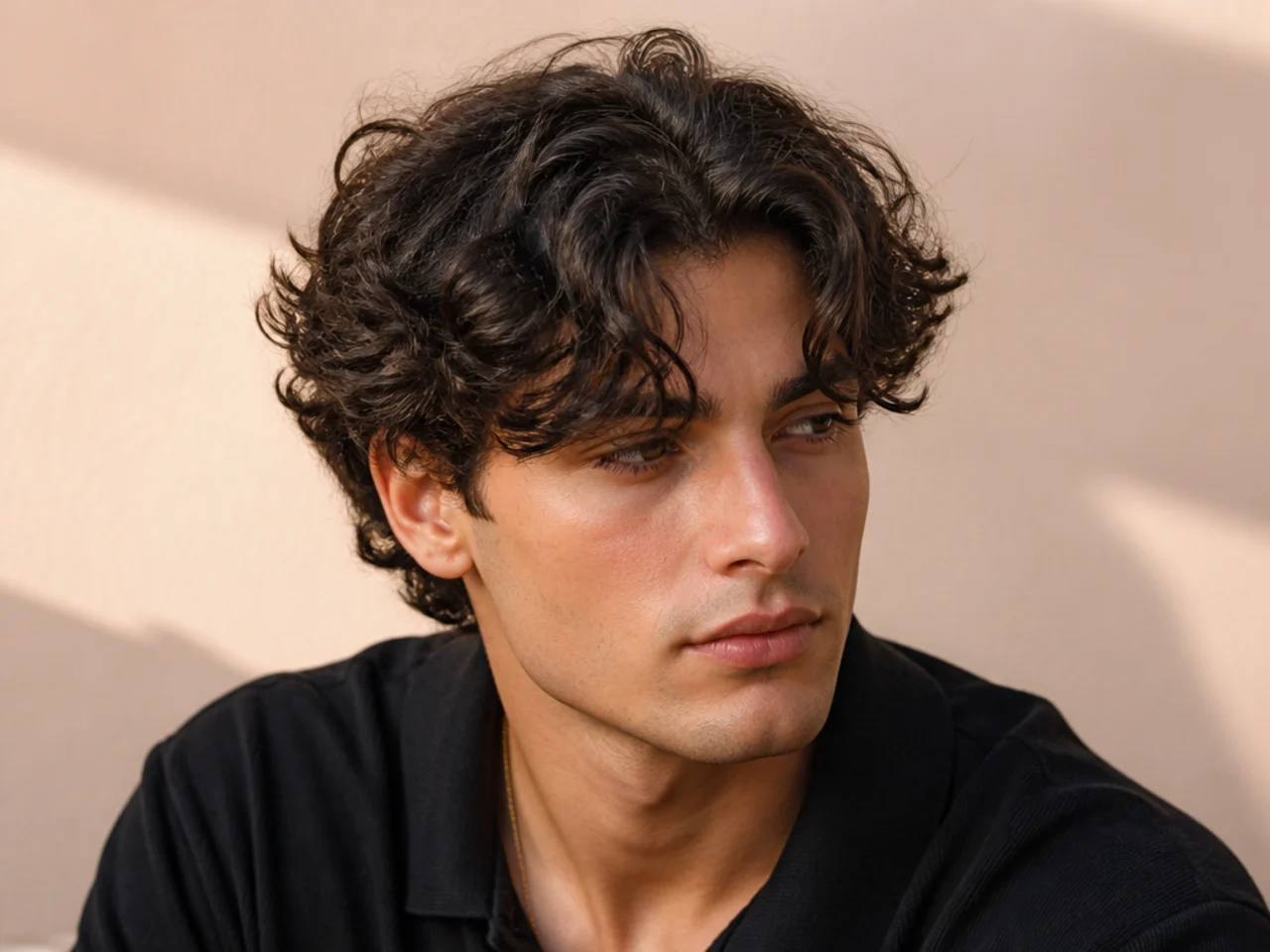
15. Curly Mullet With a Short Fringe
Cut above the brow, and cut dry — a curly fringe cut wet at brow level springs up to the middle of the forehead. It gives the front a blunt edge that contrasts with the softness everywhere else in the cut.
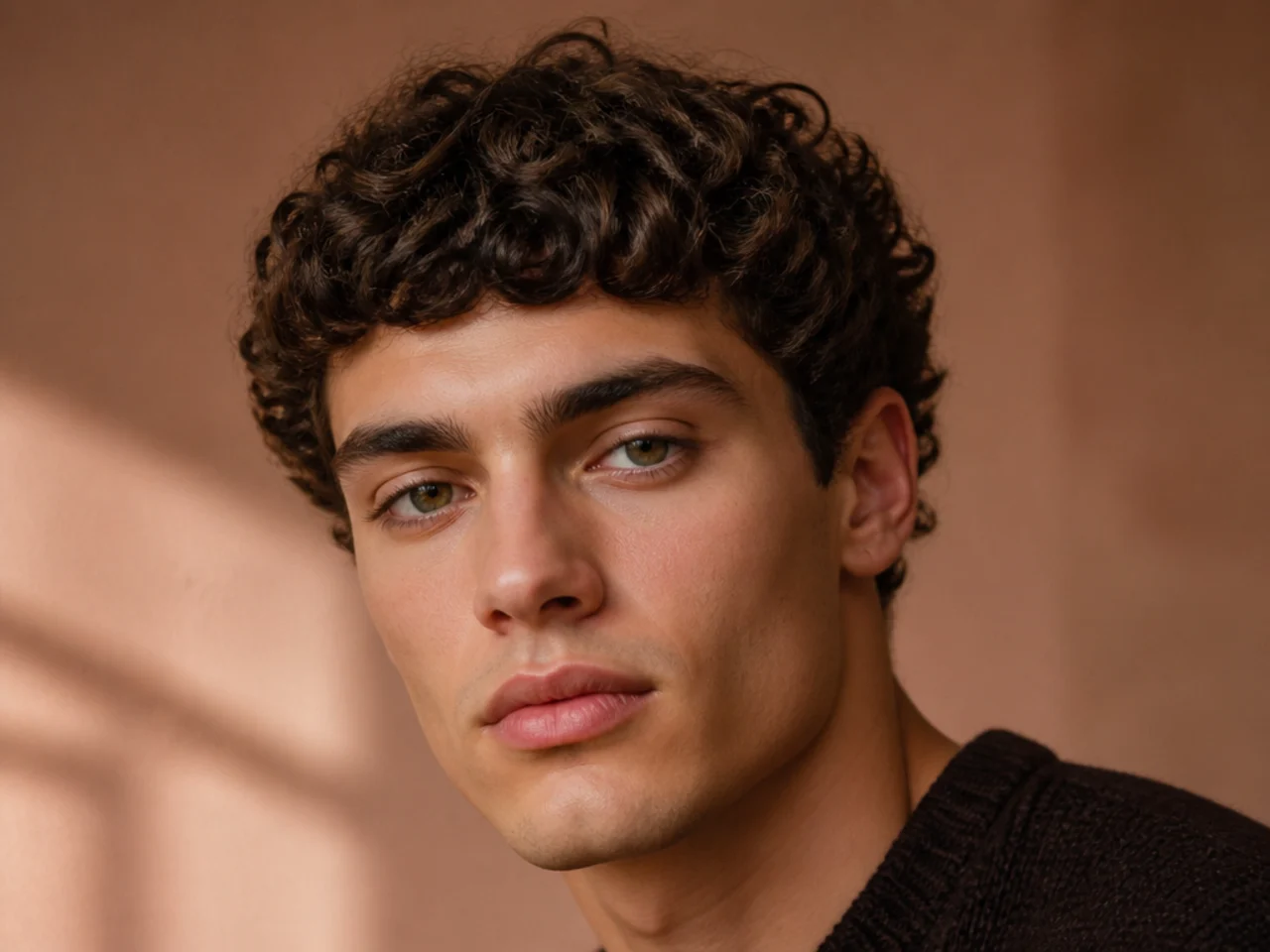
16. Coily Mullet Fade
Tight coils shrink most of all, sometimes by half, so the tail has to be cut with the dry length in mind rather than the stretched one. The payoff is that a coil holds its shape against a fade line better than any other pattern.
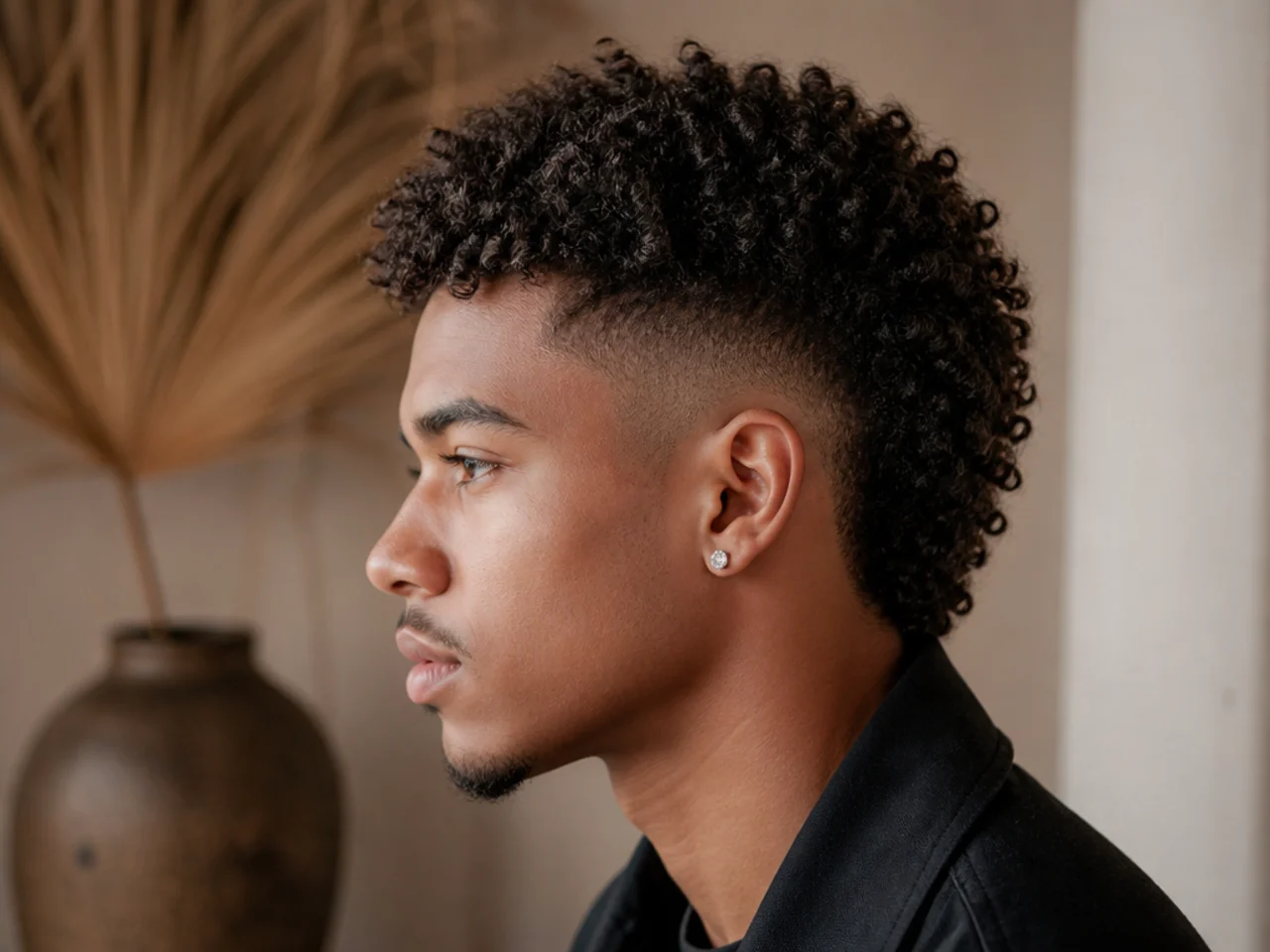
17. Loose Wave Mullet Fade
A loose wave has the least shrinkage and the least separation, so it needs more length than a coil to read as anything other than thick straight hair. Below about four inches at the back a wave will not show as a wave at all.
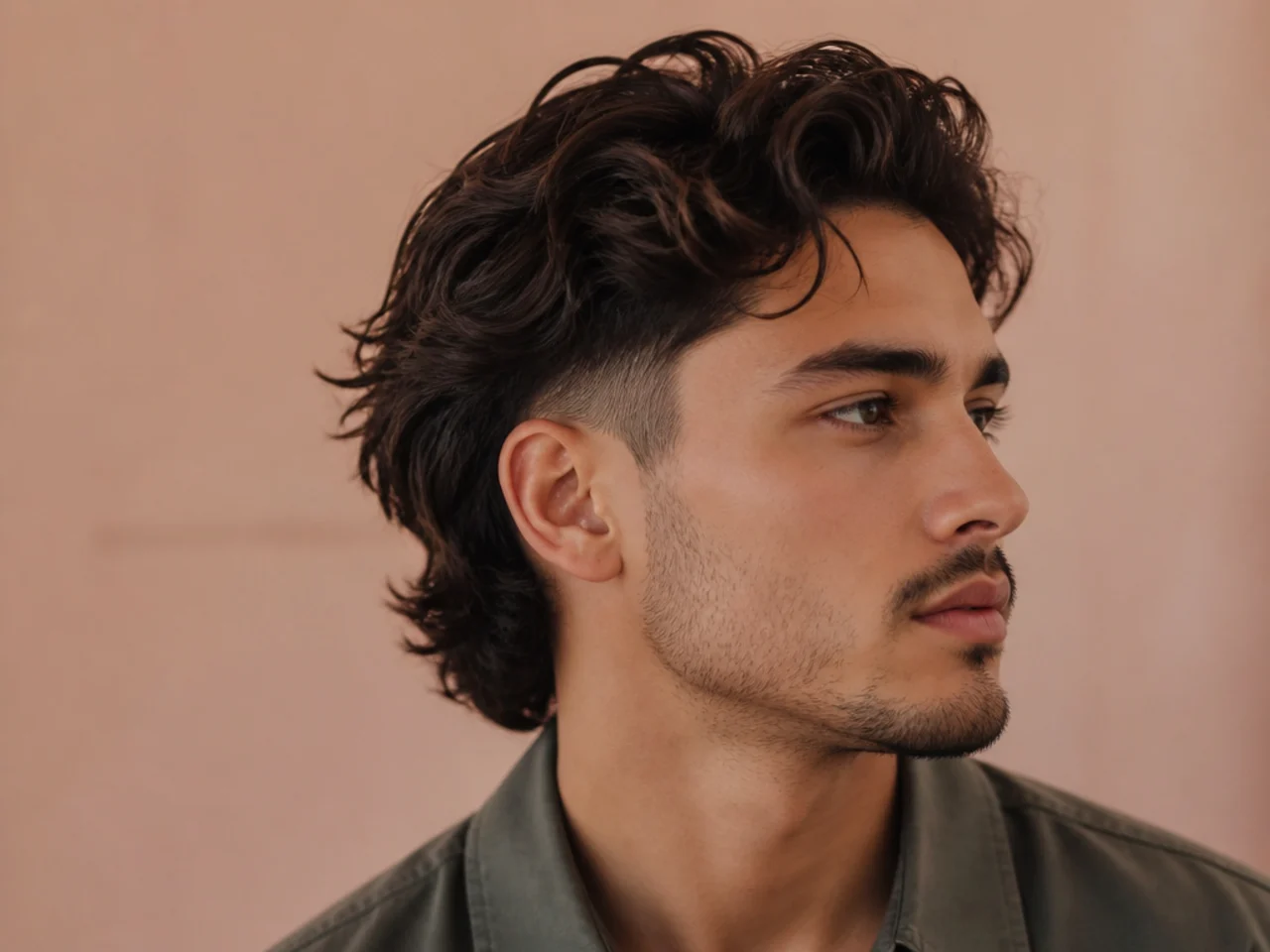
18. Ringlet Mullet Fade
Defined spiral curls sit in visible clumps, which means the fade line can be softer without looking unfinished, since the clumps break the eye up before it reaches the transition. Cut each clump at its own length or the tail dries in steps.
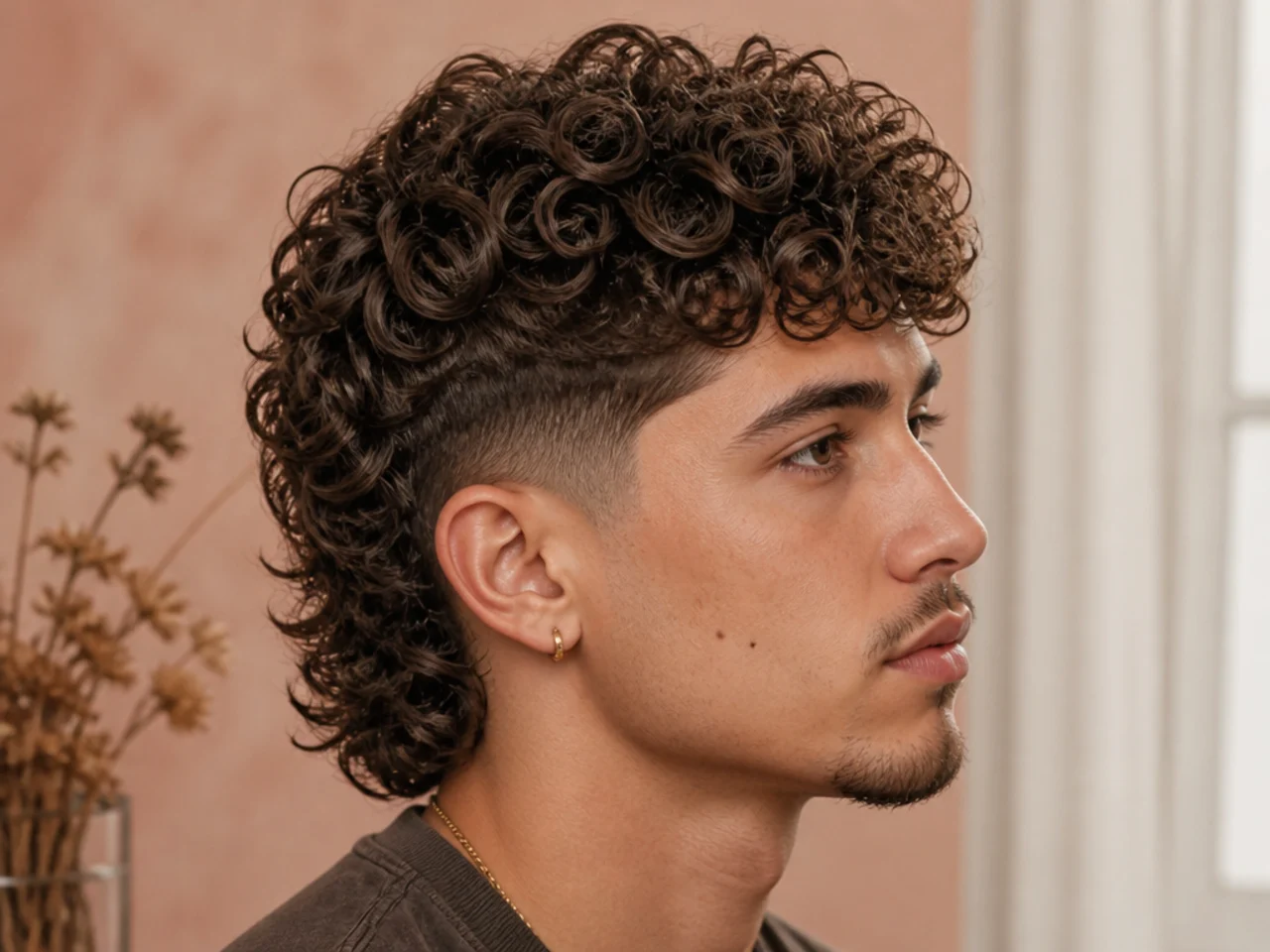
19. Curly Mullet on Very Thick Hair
Density is the problem, not length. Thick curly hair pushes outward and the fade has to run higher than you would expect just to bring the width back under control, which is why a low fade sometimes fails on a very dense head.
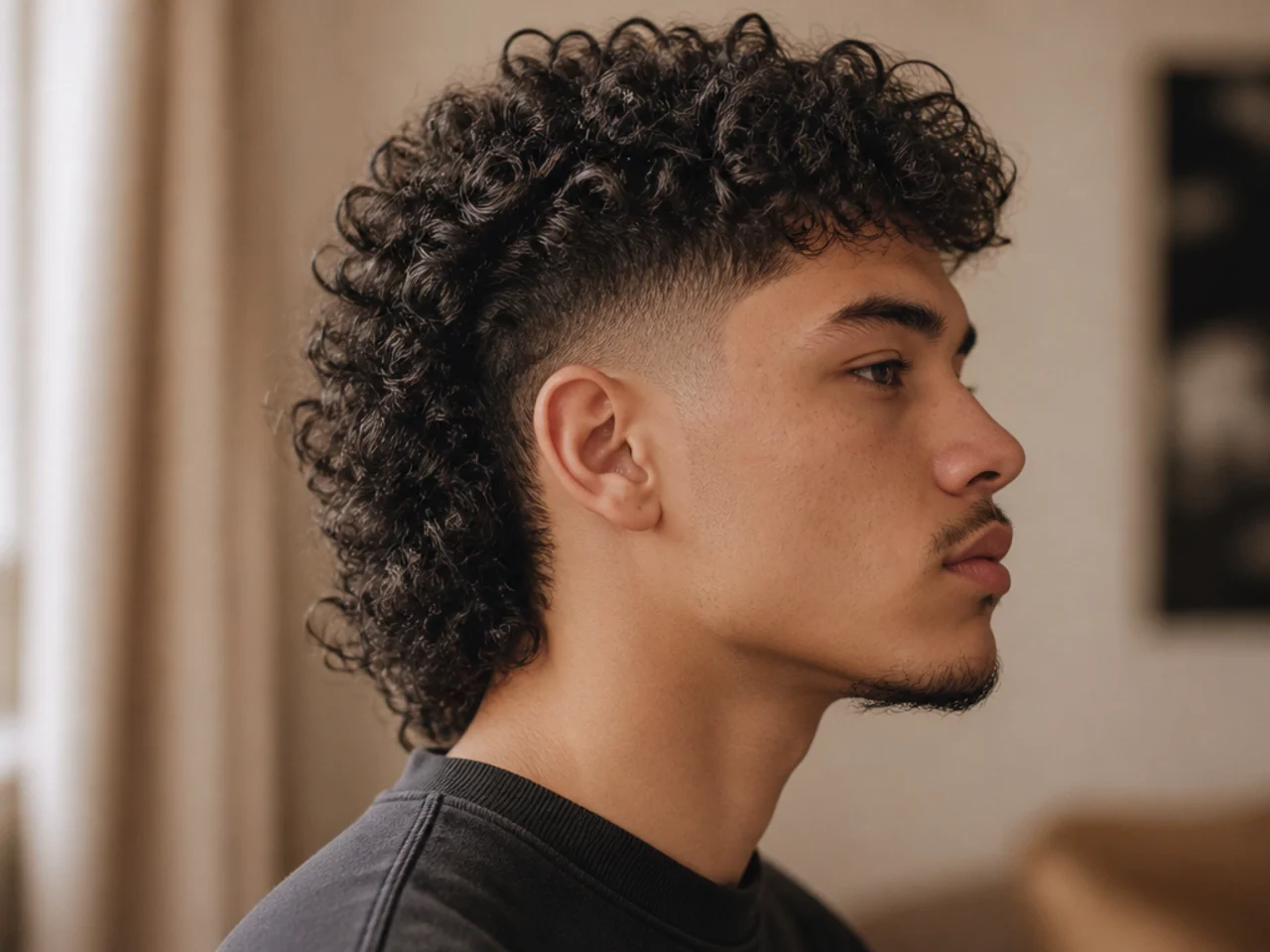
20. Curly Mullet With a Hollowed Interior
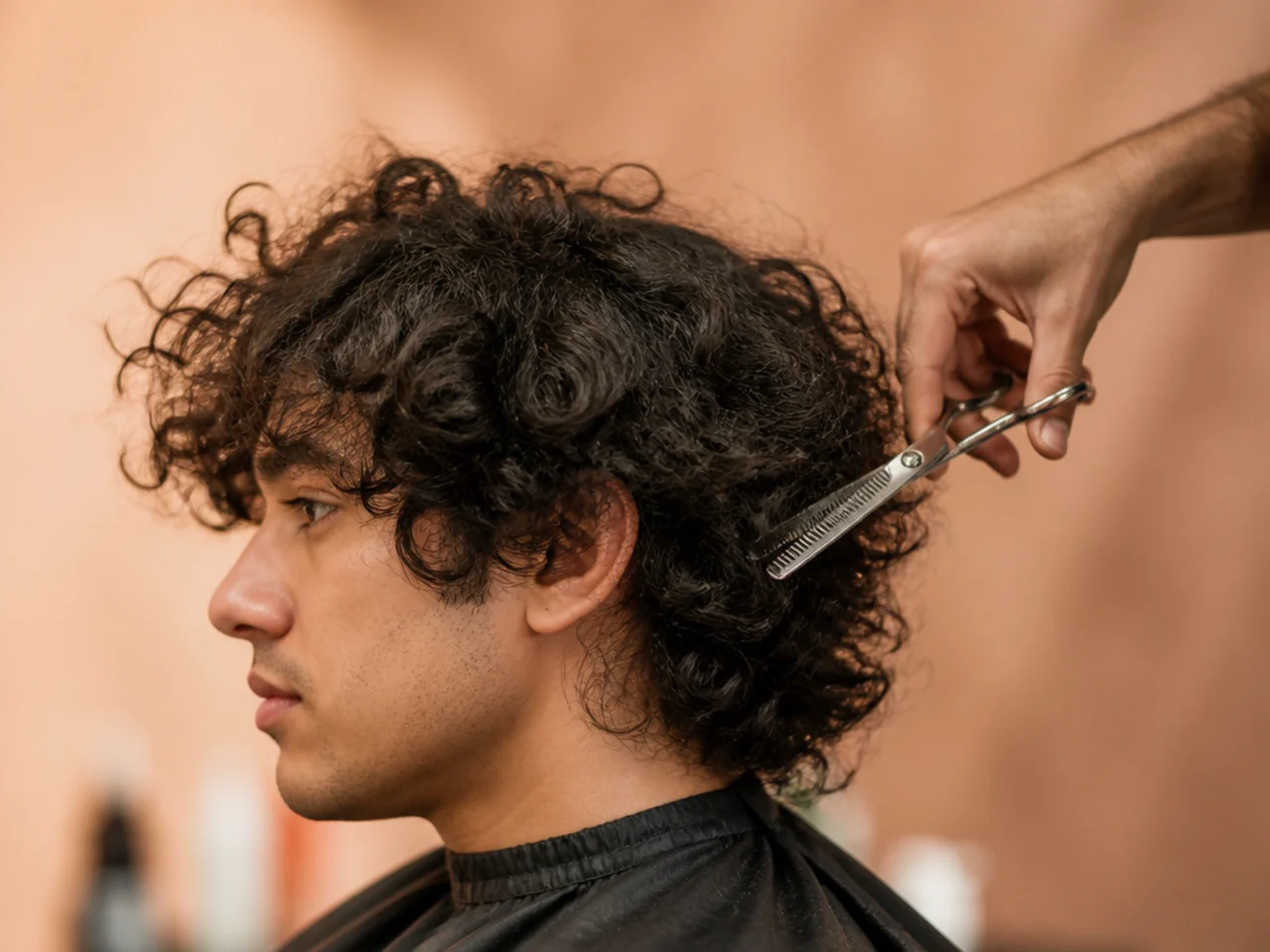
Weight taken from inside the mid lengths lets the outer curls fall instead of being propped up from below. Ask for it with scissors on the interior only — thinning shears cut curls at random points and leave a frizz halo that lasts until it grows out.
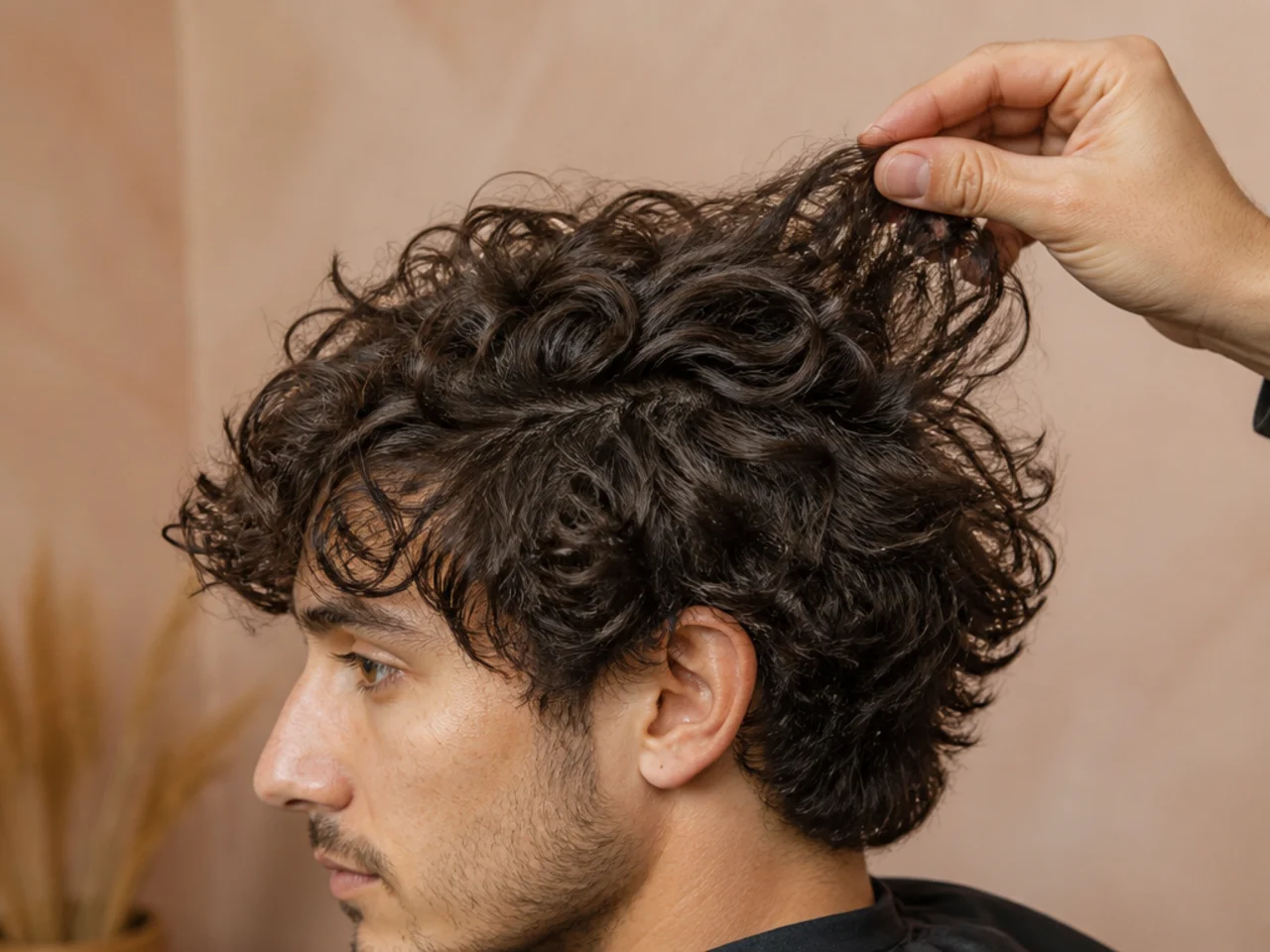
21. Curly Mullet With a Beard Connection
The fade runs down into the beard as one gradient, removing the second horizontal line across the jaw. The join has to land where beard density genuinely starts, usually just below the earlobe, or the gradient runs out of hair halfway down.
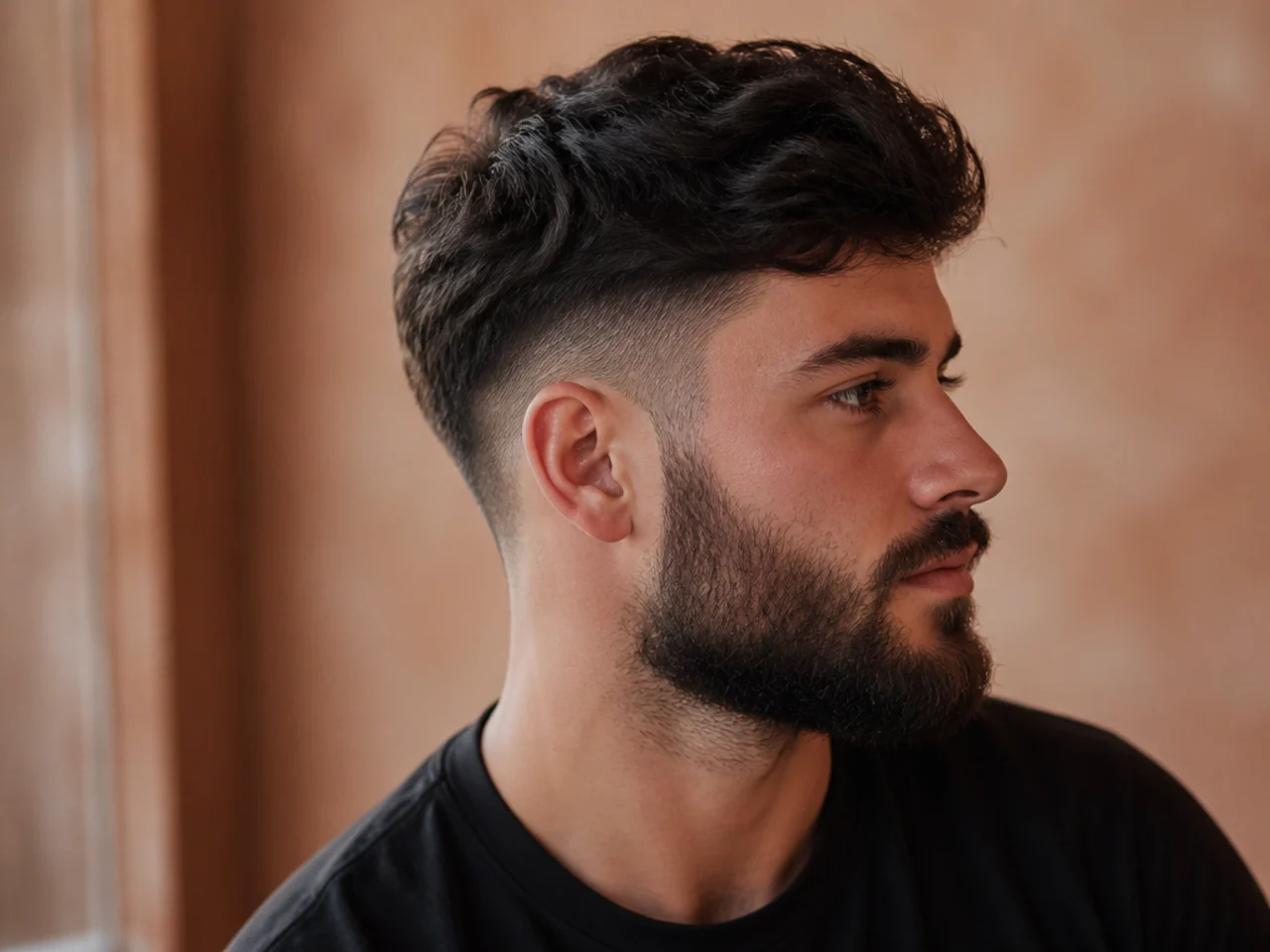
22. Bleached Tip Curly Mullet
Lightening only the ends makes the curl pattern visible from a distance, because the eye reads the colour change where it cannot read the shape. Bleached curls also dry faster and rougher, so this version needs conditioning the untouched one does not.
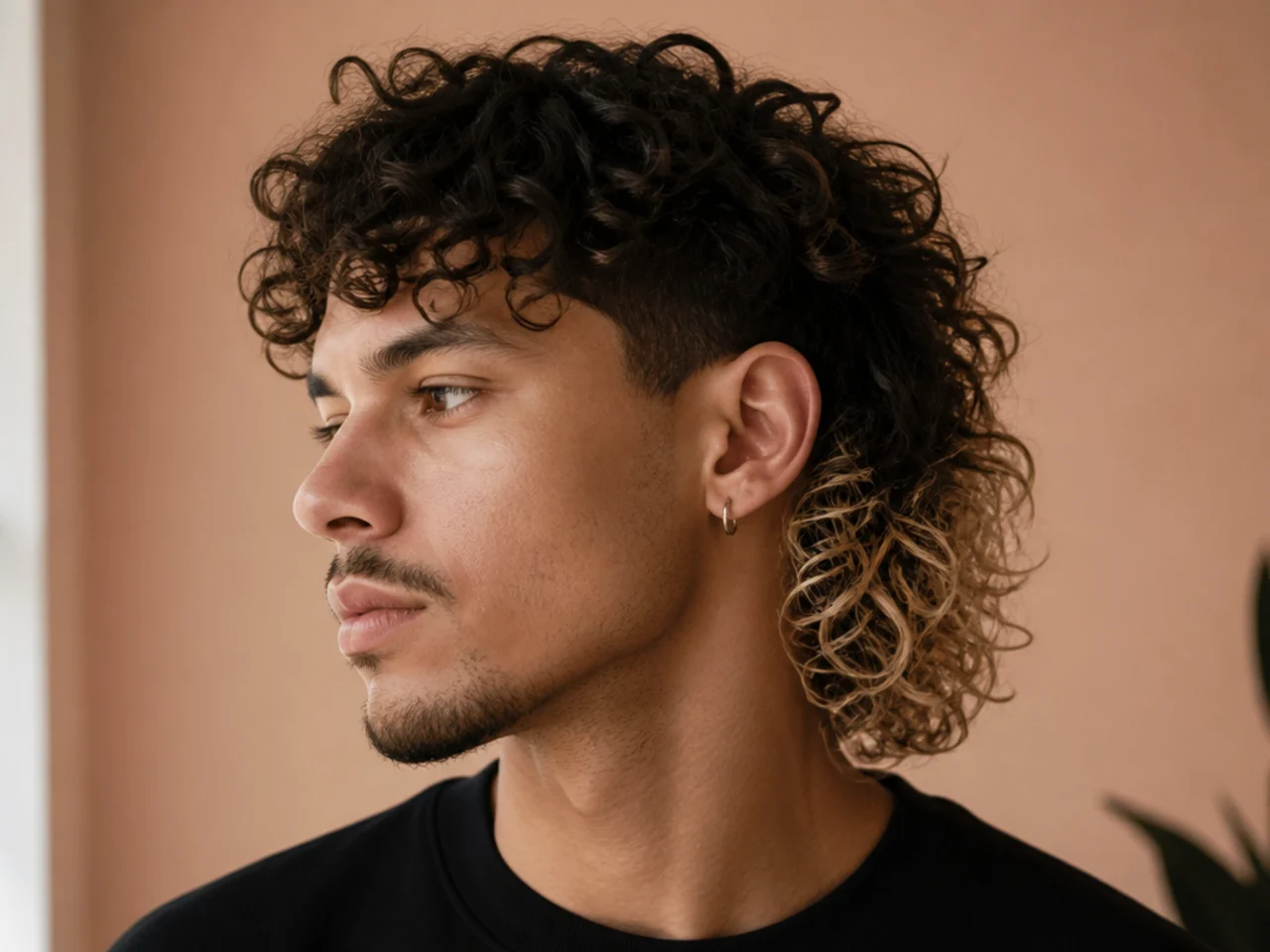
23. Wide Tail Curly Mullet
The tail kept full across its whole width rather than tapered inward. It balances a broad face and a high fade, since a narrow tail under a narrow set of sides makes the whole head read thin from behind.
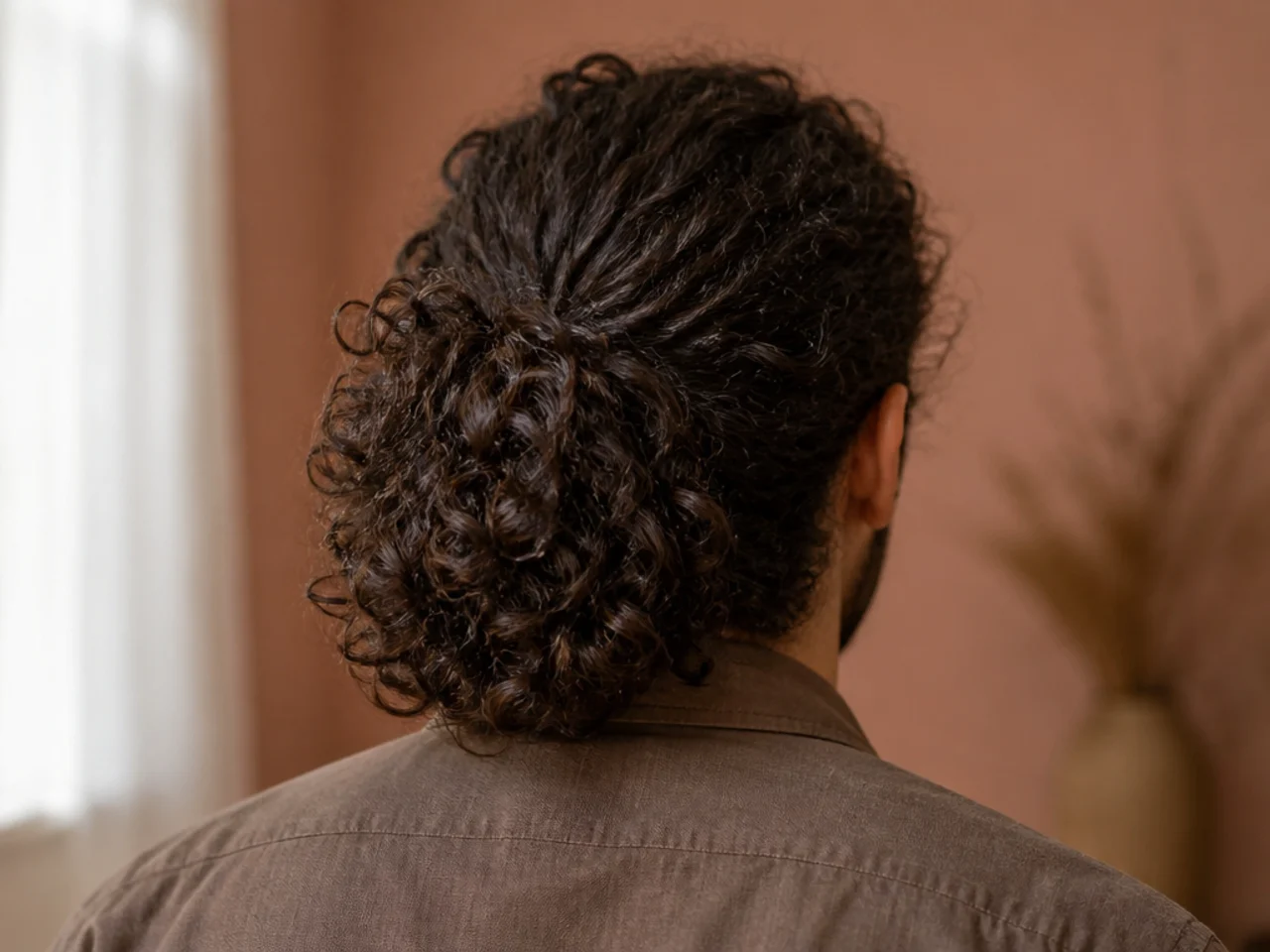
24. Narrow Tail Curly Mullet
The sides of the tail brought in so it hangs as a defined column. On thick curly hair this is the version that stops the back spreading sideways, and it needs recutting more often because curls fill the shape back in as they grow.
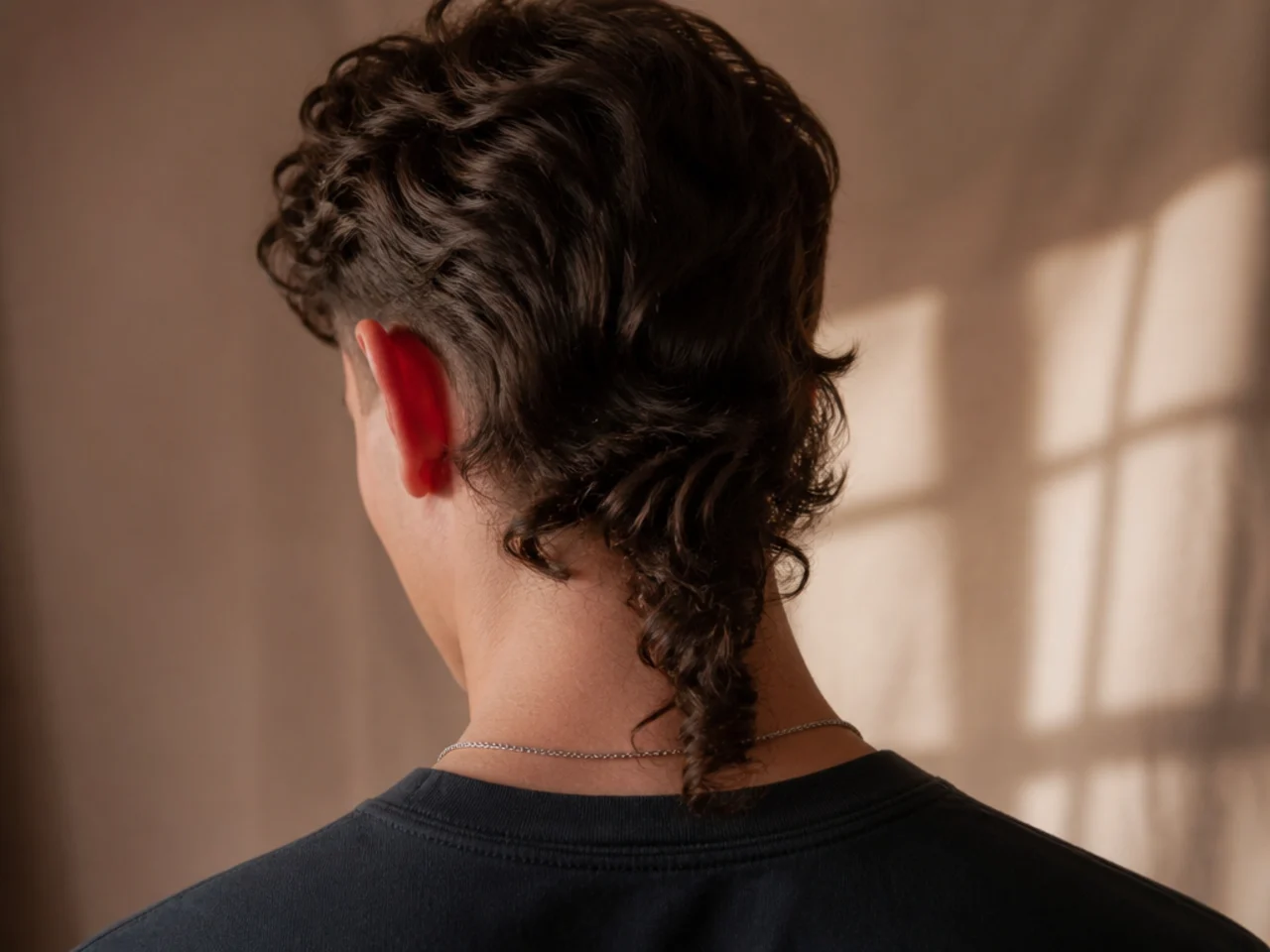
25. Curly Mullet at Week Six
The fade has closed up and the curl has grown into it, which on a taper still reads as the intended shape. It is the honest test of a fade height — if the cut only looks right in week one, the line was placed higher than the schedule supports.
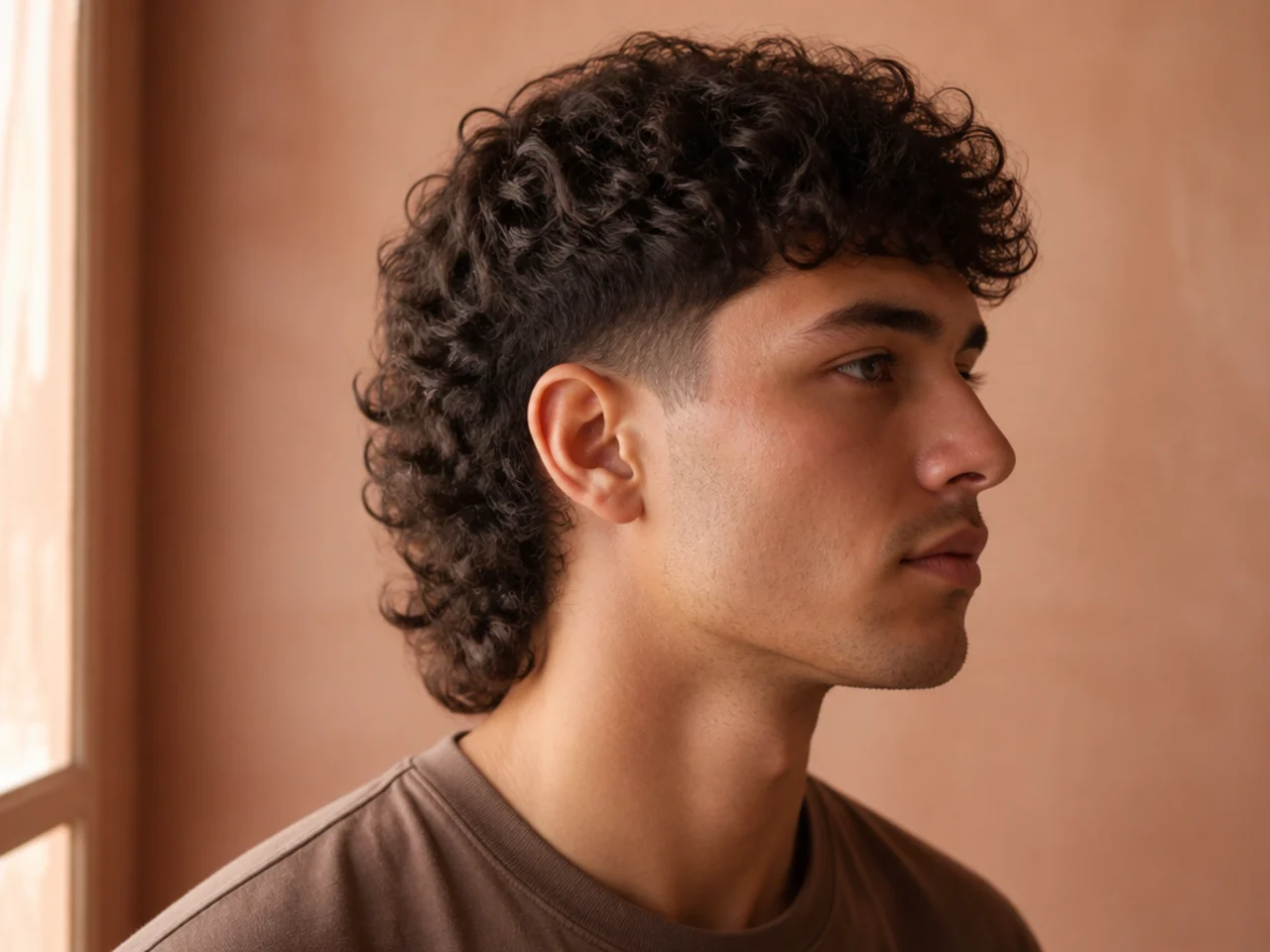
Styling and Upkeep
Ask for it cut dry. Shrinkage is the single largest source of a tail that came out shorter than agreed, and it cannot be corrected afterwards.
Name the fade height in guard numbers. A number one leaves three millimetres and a two leaves six. Saying low or short means different things to different barbers.
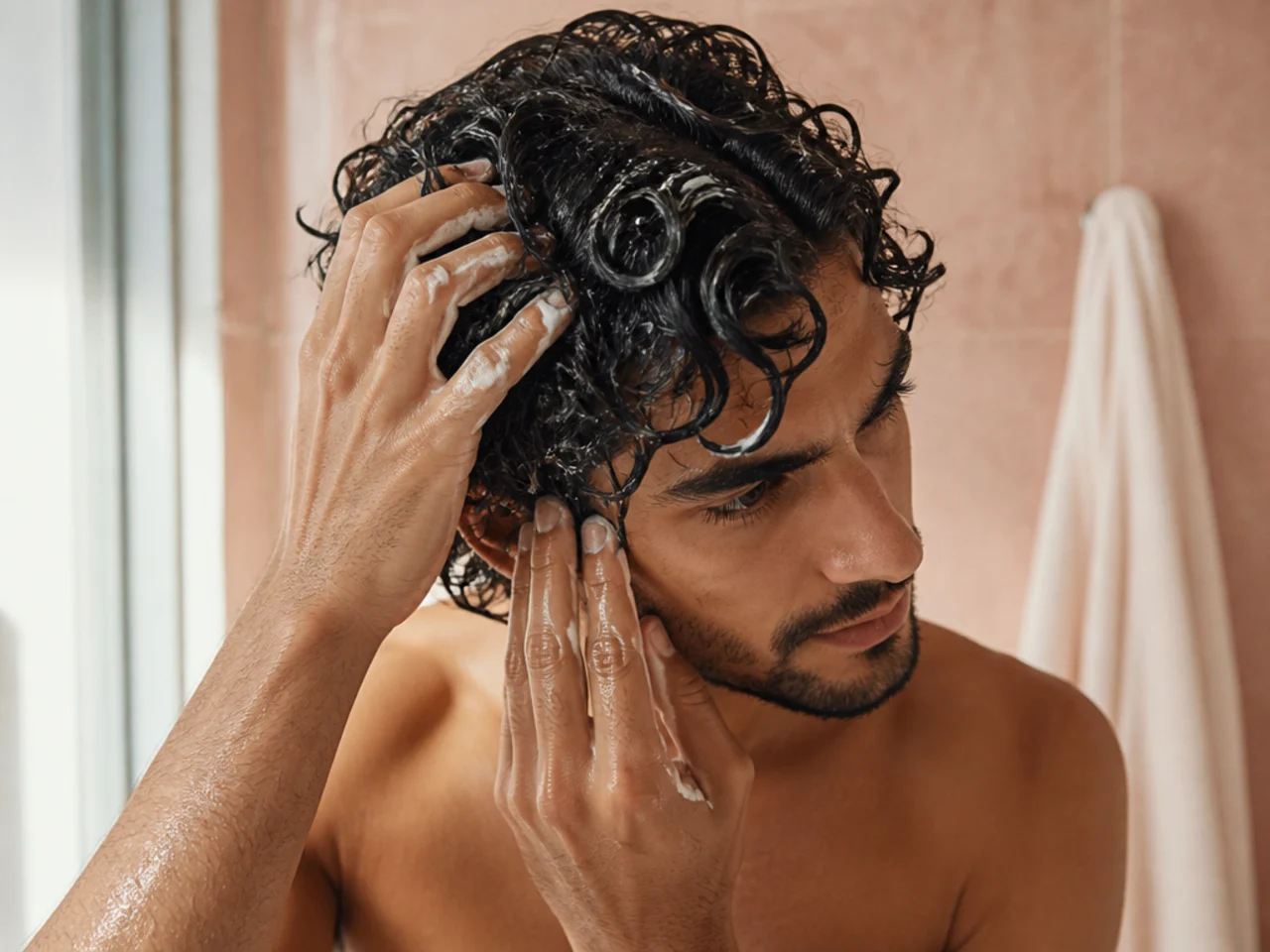
Apply product to soaking wet hair. Curl definition comes from the product setting the clump as it dries, so anything applied to damp hair sets a clump that has already broken.
Never brush it dry. Brushing pulls the clumps apart and the curl becomes a frizz halo until the next wash.
Dust the tail every eight to ten weeks. Splits travel up the shaft, so a few millimetres off preserves far more length than it removes.
Mistakes to Avoid
Cutting the tail wet. It springs up as it dries, sometimes by a third, and there is nothing to put back.
Thinning shears in the tail. They cut curls at random points and leave frizz that stays until the ends are cut off entirely.
A skin fade on a four week schedule. Bare skin shows stubble in a fortnight, so the cut spends more time grown out than sharp.
A high fade on very dense hair with a narrow face. Removing all the side width leaves the head reading narrow under a heavy tail.
Judging the fade before the top dries. Wet curls hang long and flat, and the contrast the fade creates only appears once they spring up.
FAQ
Wet or dry cut? Dry. Curls shrink by up to a third and a wet cut overshoots.
Best fade height? Low taper or burst, because both keep the weight the tail needs.
How often? Two weeks for a skin fade, three to four for a taper.
Final Thoughts
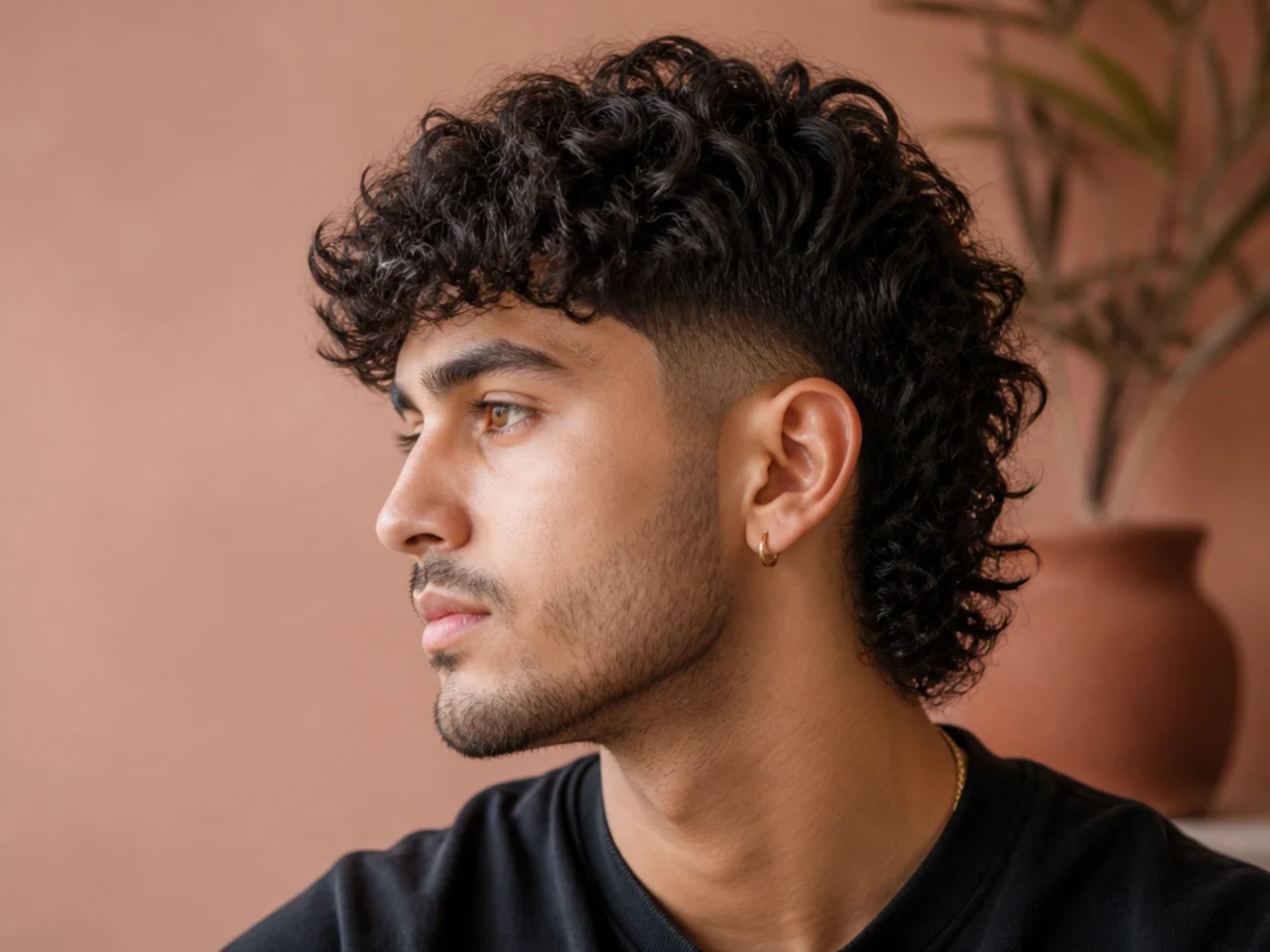
Say the fade height in guard numbers, say whether it goes to skin, and say that the tail is measured dry. Those three sentences remove almost every way a curly mullet goes wrong at the chair.
For length worn without the mullet shape see long curly hair for men, and for the range of cuts curls suit see curly hair haircuts for men. More in Fade Haircuts.