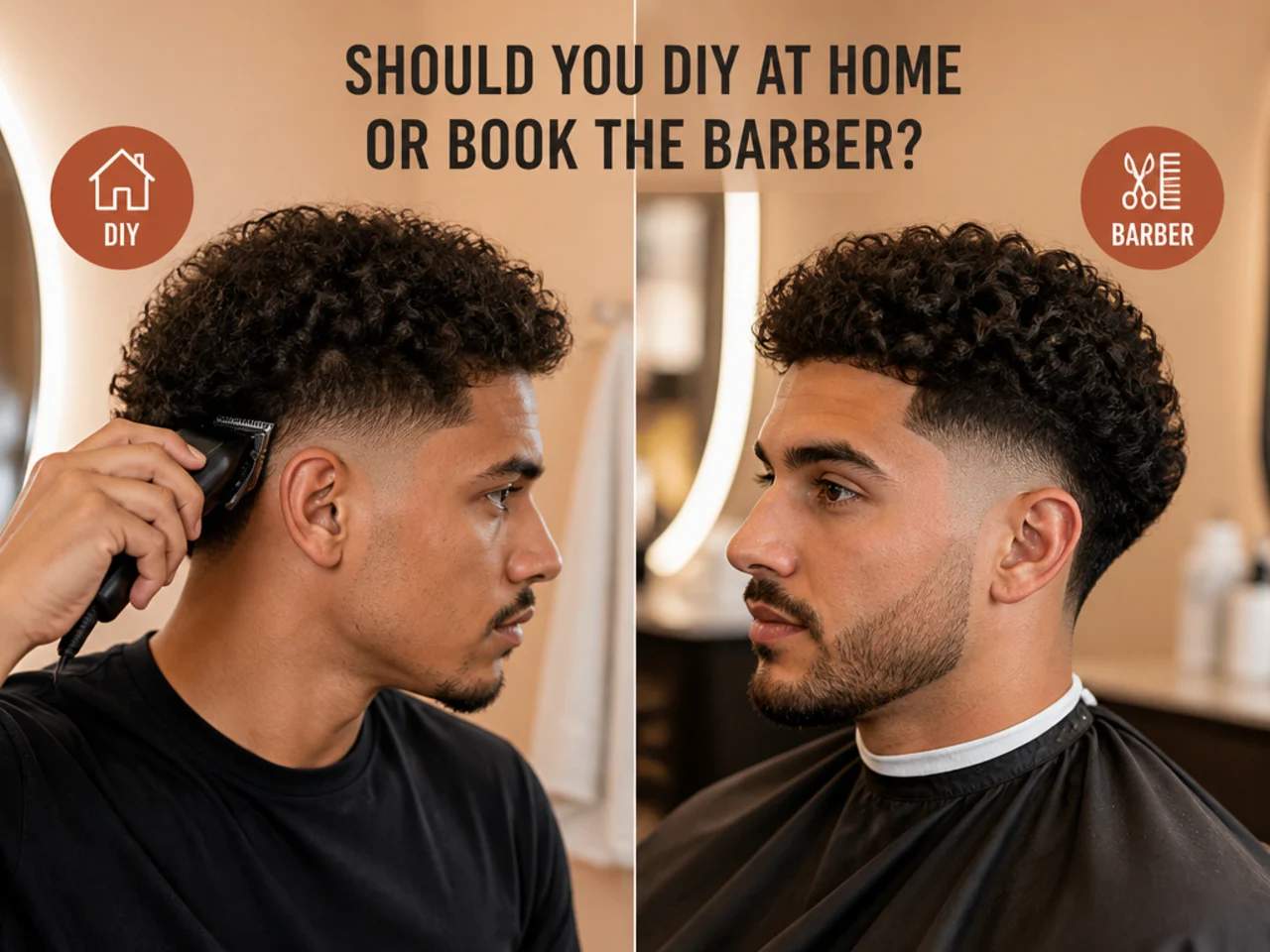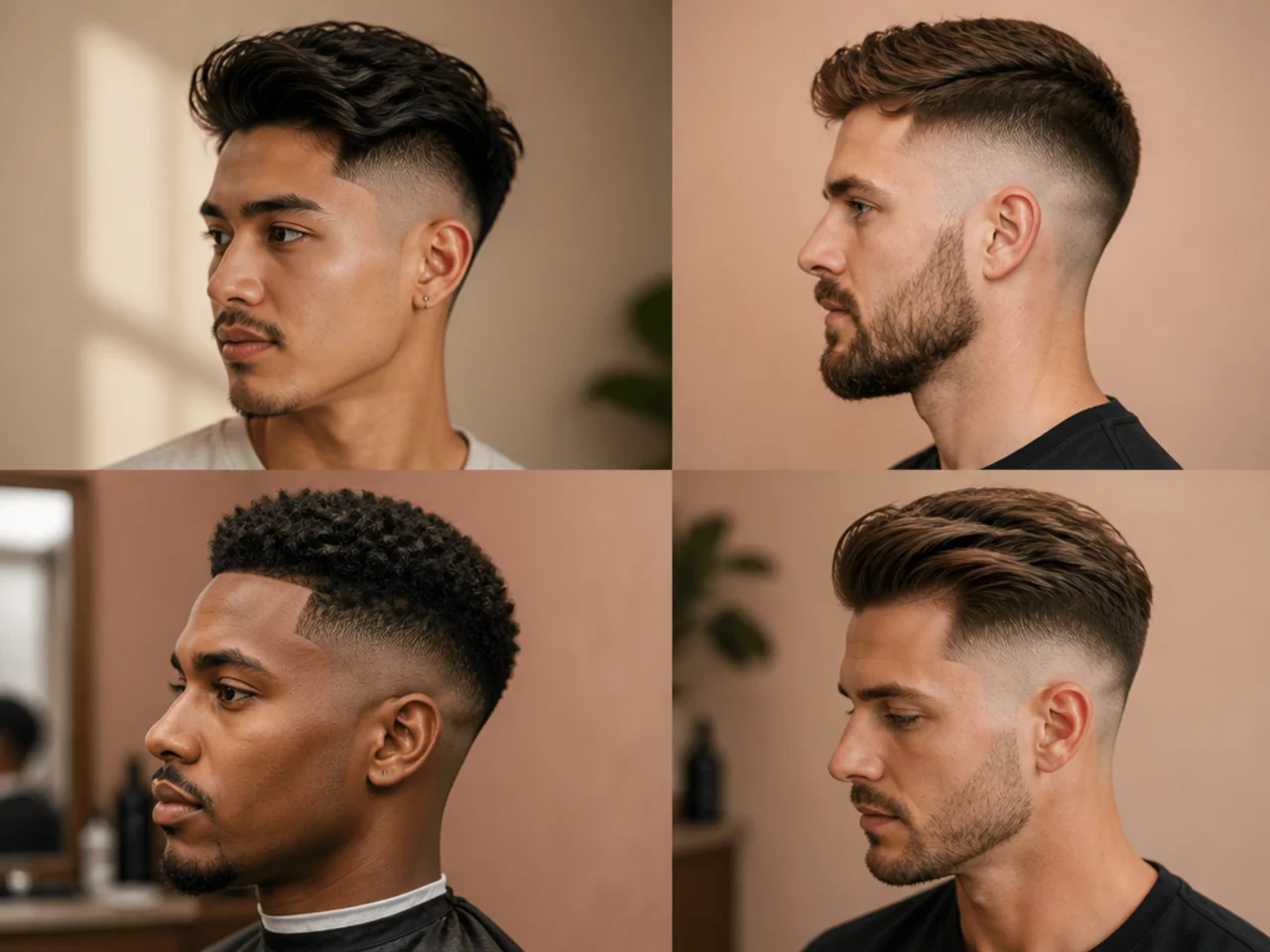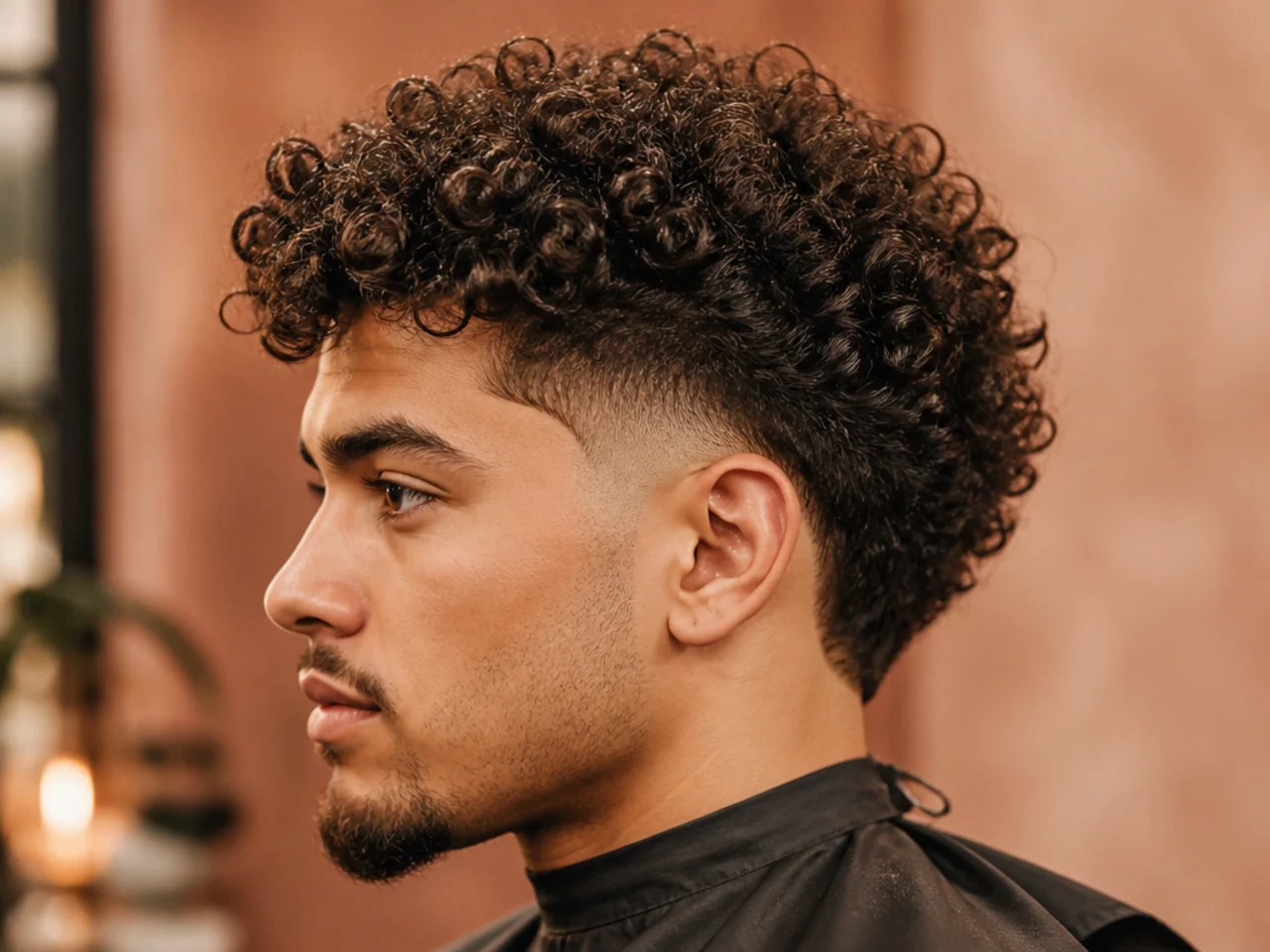
20 Burst Fade Ideas for Curly Hair Guys
Twenty burst fade curly hair ideas for 3A to 4B textures — with face-shape notes, guard numbers, and the words to hand your barber. Real curls, clean arcs.
In this article · 33
- What Is a Burst Fade for Curly Hair?
- How to Choose Your Curly Burst Fade
- The 20 Curly Burst Fade Variations
- 1. Classic Curly Burst Fade
- 2. Low Burst Fade for Curls
- 3. Mid Burst Fade for Curls
- 4. High Burst Fade for Curls
- 5. Skin Burst Fade with Curly Top
- 6. Curly Burst Fade Mullet
- 7. Curly Burst Fade Mohawk
- 8. Curly Burst Fade with Fringe
- 9. Curly Burst Fade Faux Hawk
- 10. Curly High-Top Burst Fade
- 11. Curly Comma Burst Fade
- 12. Short Curly Burst Fade
- 13. Long Curly Burst Fade
- 14. Burst Fade for 3A Loose Curls
- 15. Burst Fade for 3B Springy Curls
- 16. Burst Fade for 3C Corkscrew Curls
- 17. Burst Fade for 4A Tight Coils
- 18. Burst Fade for 4B Coily Hair
- 19. Curly Burst Fade with Beard
- 20. Curly Burst Fade with Design
- How to Ask Your Barber for a Curly Burst Fade
- Styling & Maintenance for a Curly Burst Fade
- FAQ
- Why does the burst fade work so well with curly hair?
- Which curl type looks best with a burst fade?
- Should the top be clippered or scissor-cut?
- How short should the burst go on curly hair?
- How often do I need to re-cut a curly burst fade?
- Can I get a burst fade with 4A or 4B coily hair?
- How much does a curly burst fade cost?
Curly hair and the burst fade share the same visual language — both are built on curves. The semicircle at the ear echoes the coil above, so the two shapes read as one clean idea instead of a fade fighting a texture. This guide covers twenty burst fade curly hair variations, from a subtle 3A crop to a full 4B skin arc, plus the exact clipper numbers to hand your barber and a real styling routine that keeps the curl pattern intact.
What Is a Burst Fade for Curly Hair?
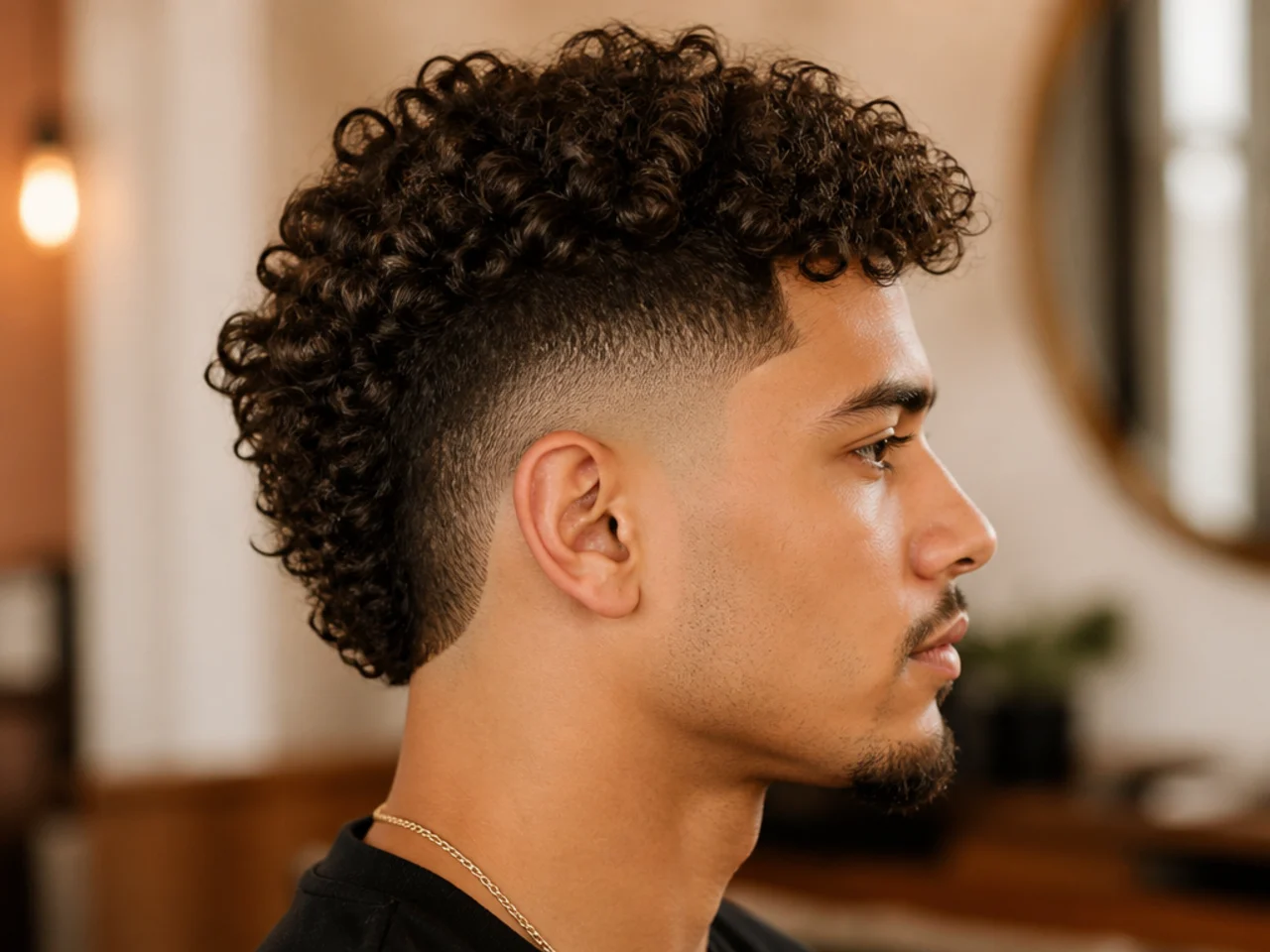
A burst fade haircut is a fade shaped like a semicircle. The shortest point sits directly behind the ear, and length grows outward from there in every direction, so the ear reads exposed and framed at the same time. On curly hair, that arc turns into a natural visual echo of the coil pattern above — the burst curves, the curls curve, and the two shapes speak to each other instead of fighting.
Curly-specific rules change the cut in three ways. The top has to be scissor-cut, not clippered, so the curl pattern stays intact — thinning shears remove the springs that give curls their bounce. The arc is usually taken tighter (skin or guard 1) because curly hair adds visual weight up top that a soft fade can't balance. And the transition from arc to curl needs a feathered blend, not a hard line, or the top reads like a wig sitting on a fade.
Nail those three moves — scissor-cut top, tight arc, feathered transition — and you have a curly burst fade. Everything on the list below is a variation on that template.
How to Choose Your Curly Burst Fade
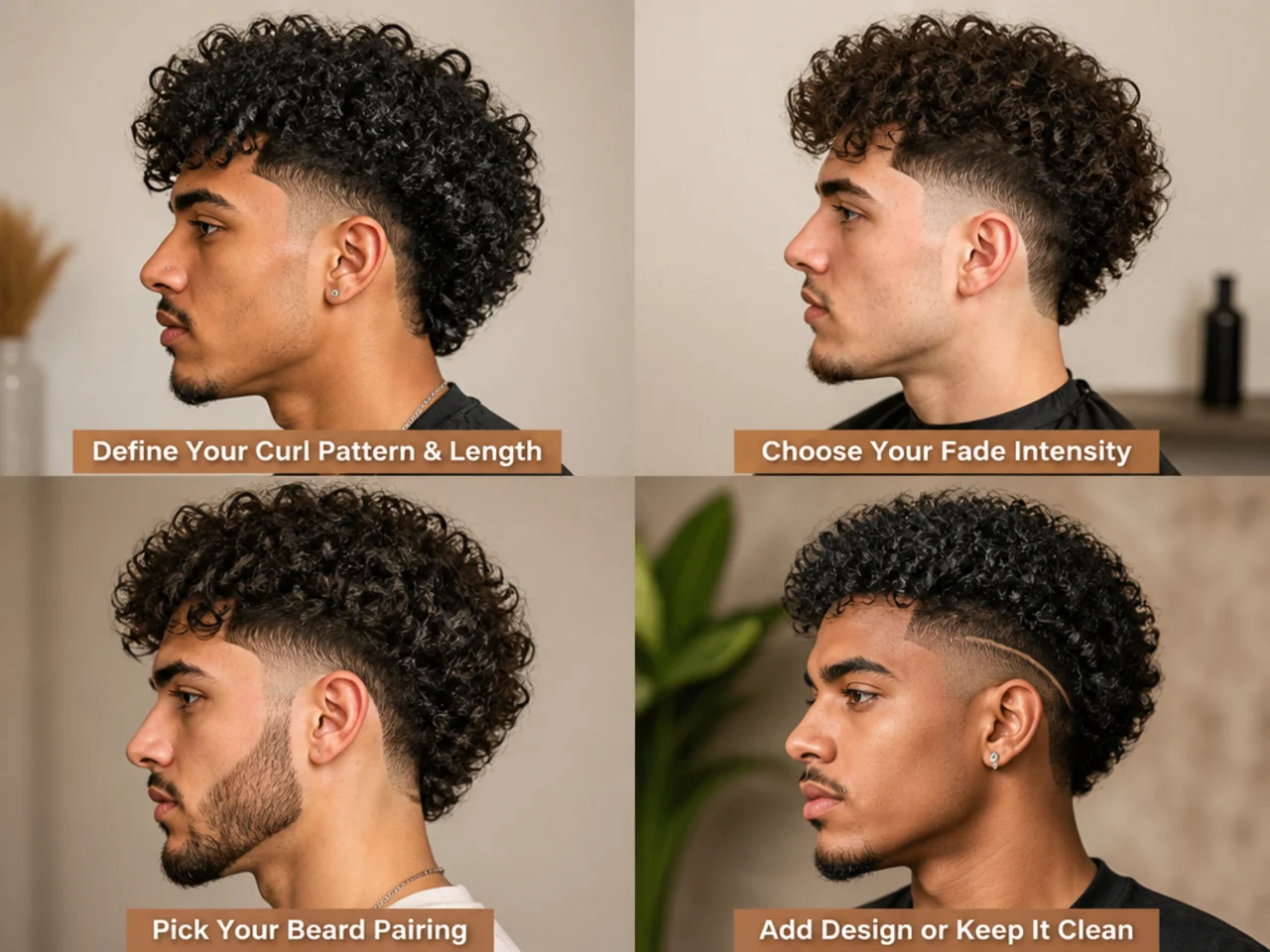
Start with your curl type. A quick primer: 3A curls are loose and springy, roughly the size of a Sharpie; 3B curls are tighter corkscrews the size of a marker; 3C is a defined springy pattern the size of a pencil; 4A tight coils spring like a coiled pen spring; 4B forms a Z-shaped kink with less visible curve. For a full breakdown, see our curl types guide. Looser patterns (3A, 3B) work with any burst height. Tighter patterns (3C, 4A, 4B) look sharpest against a mid or high skin burst — the tighter pattern needs more skin contrast to read as intentional.
Then your face shape. Round and square faces want height on top — go mid or high burst with three inches of curl or more. Oval and heart faces suit every burst height because there's no proportion to fight. Long faces stay low burst with a shorter top so the silhouette doesn't stretch.
Finally, your workplace. A low burst to a guard 1 with a two-inch top reads clean in most offices. A skin burst with four inches of pineapple curl reads like a personality — great, just plan for the conversation. Browse the full silo on our fade haircuts hub for cross-comparisons.
The 20 Curly Burst Fade Variations
Each variation below covers what makes it different, who it suits, and the exact language to use in the chair. Show your barber a photo — no cut on this list should be attempted from a verbal description alone.
1. Classic Curly Burst Fade
The baseline. A mid burst arc taken to a guard 1 wraps each ear, the top sits at three inches of scissor-cut 3A or 3B curl, and the transition feathers between the two so no hard line separates them. This is what most barbers cut when a guy walks in and says "burst fade, curly on top."
Suits every face shape. Best on 3A and 3B curls.
Ask for: "Mid burst fade to a 1, scissor-cut only on top with three inches of curl length, feathered blend at the transition, no thinning shears." Style by diffusing damp curls on low heat, then finger-shape with a leave-in and a curl cream.
2. Low Burst Fade for Curls
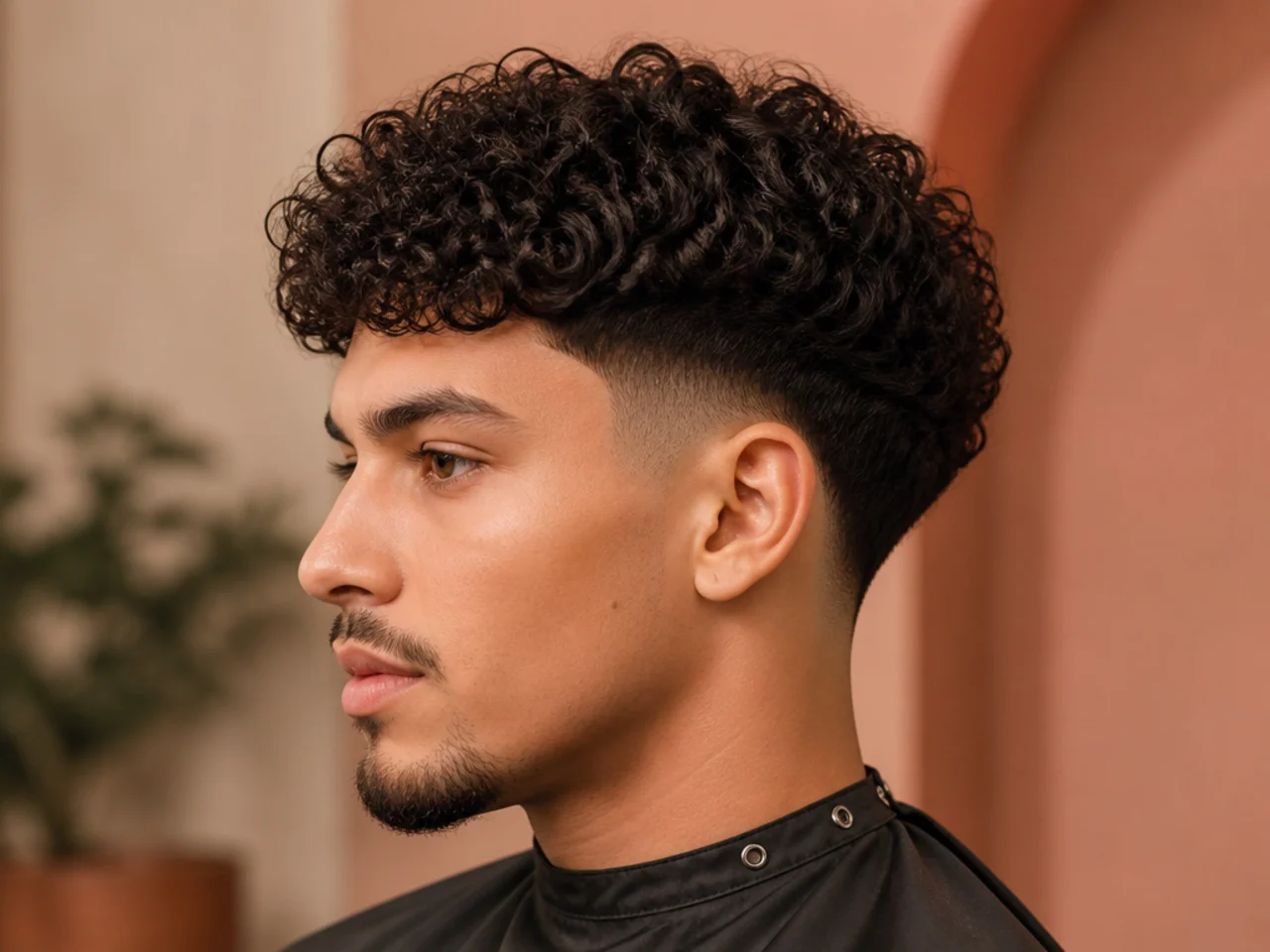
The office-safe curly burst. The arc curves low around the ear, dies out at the nape, and leaves most of your side profile untouched — so the curls on top do the talking, not the fade. Pair with a two-to-three-inch top for a workplace-tolerant read.
Works on nearly every face shape. Best on 3A curls where the softer arc lets the loose pattern breathe.
Ask for: "Low burst fade to a 1, scissor-cut top at two inches, feathered blend around the ear, soft taper at the nape." For more low-arc direction, see the full low burst fade breakdown.
3. Mid Burst Fade for Curls
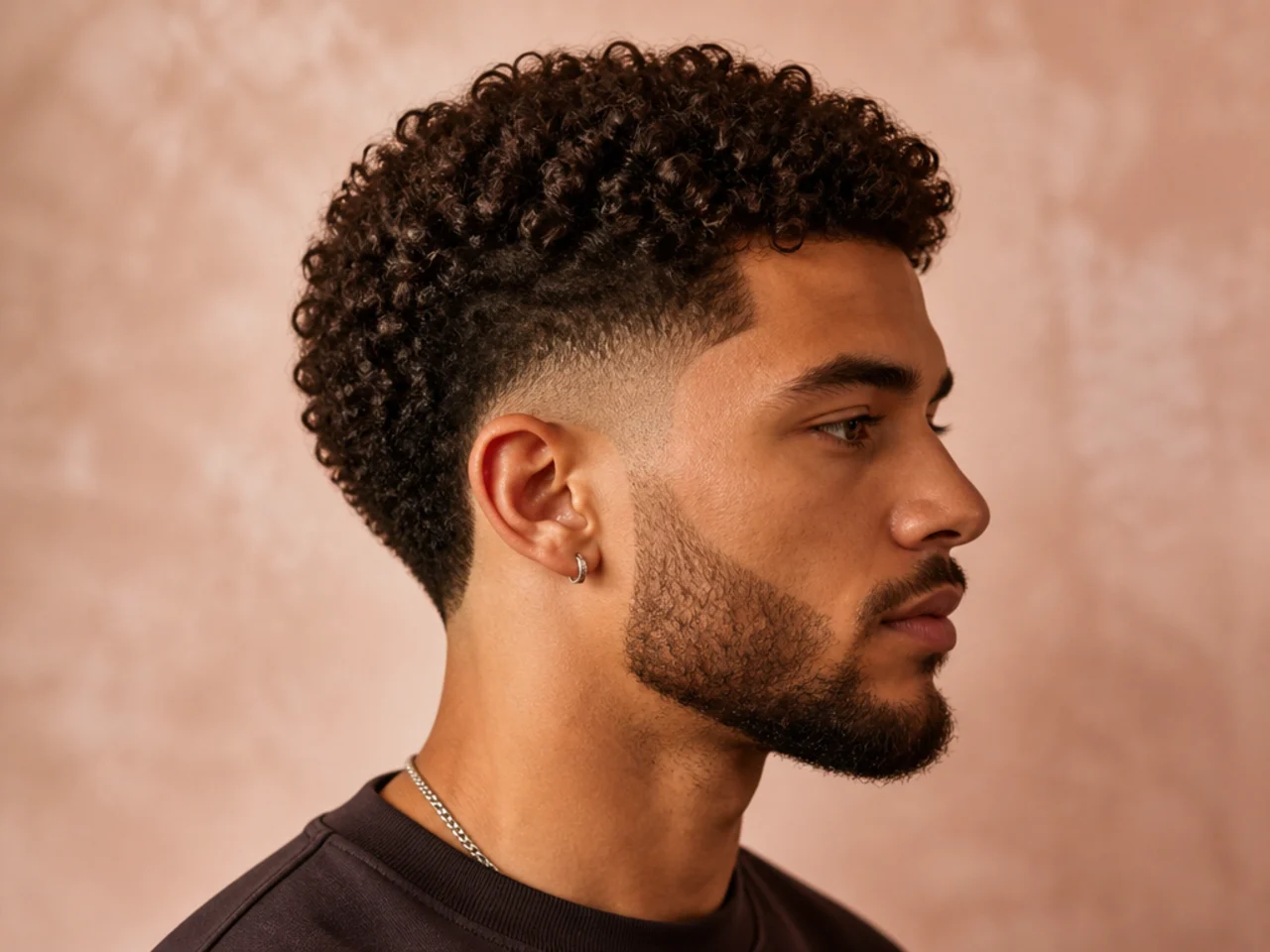
The neutral setting. The widest point of the arc sits at the temple line — high enough to read as sharp, low enough to still curve gracefully. Most guys who just say "curly burst fade" mean this one.
Suits square, oval, and heart faces. Best on 3B and 3C curls where the pattern reads clearly against the arc.
Ask for: "Mid burst to a 1, curving around each ear and dropping at the nape, three-inch scissor-cut curly top, feathered blend." For the straight-line cousin, look at a low fade haircut instead.
4. High Burst Fade for Curls
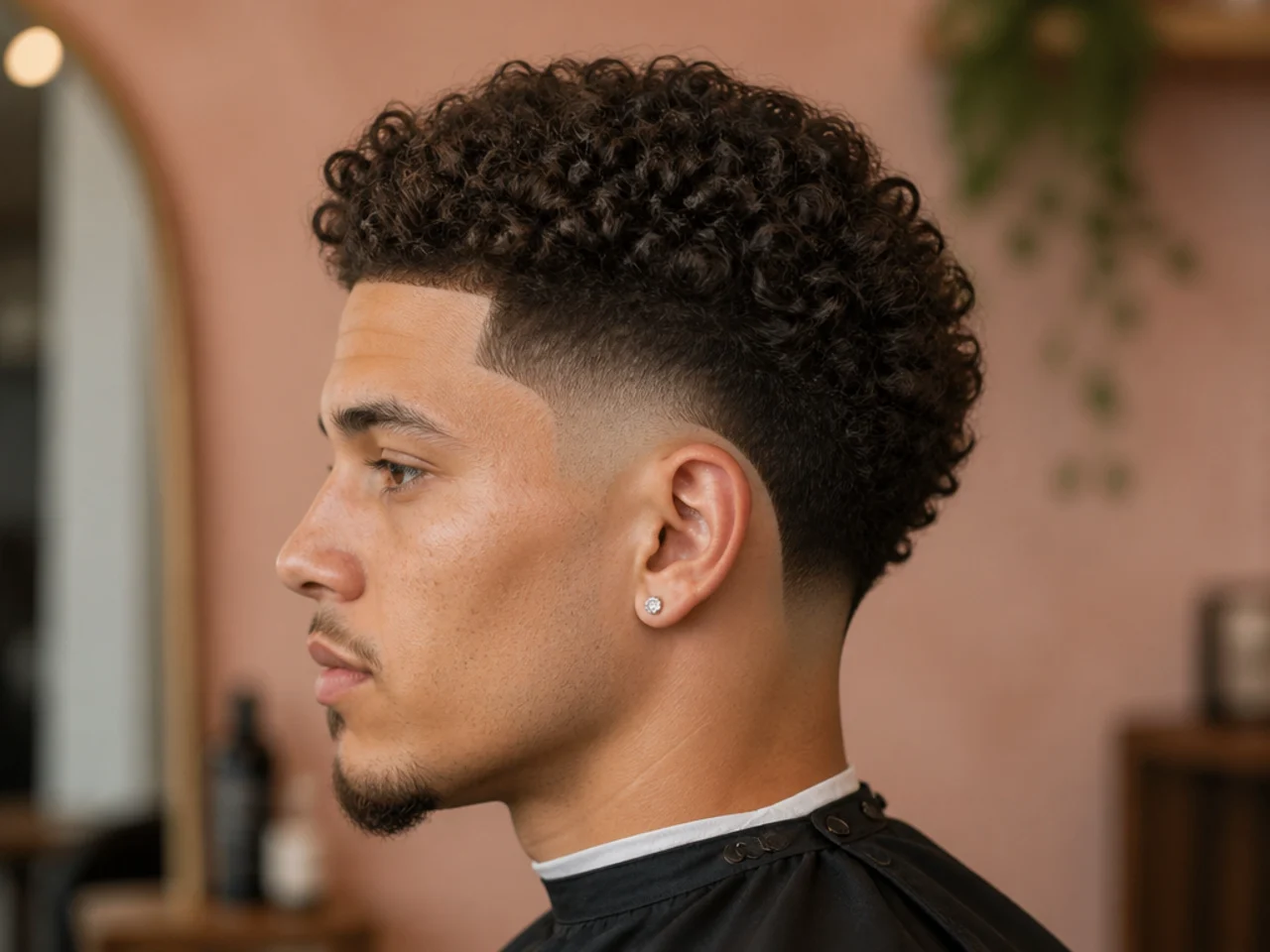
Bold, angular, and hard to miss. The widest point of the arc climbs up near the temple, exposing more skin than any other version — and the taller the burst, the more the curly top has to work to balance it. Volume on top is non-negotiable.
Works on heart, oval, and round faces because the exposed side visually narrows a wider face.
Ask for: "High burst fade to a 1 or skin, starting at the temple line and curving down past the ear, four inches of scissor-cut curly length on top with no thinning through the crown." Style with a curl cream on soaking-wet hair, then diffuse dry.
5. Skin Burst Fade with Curly Top
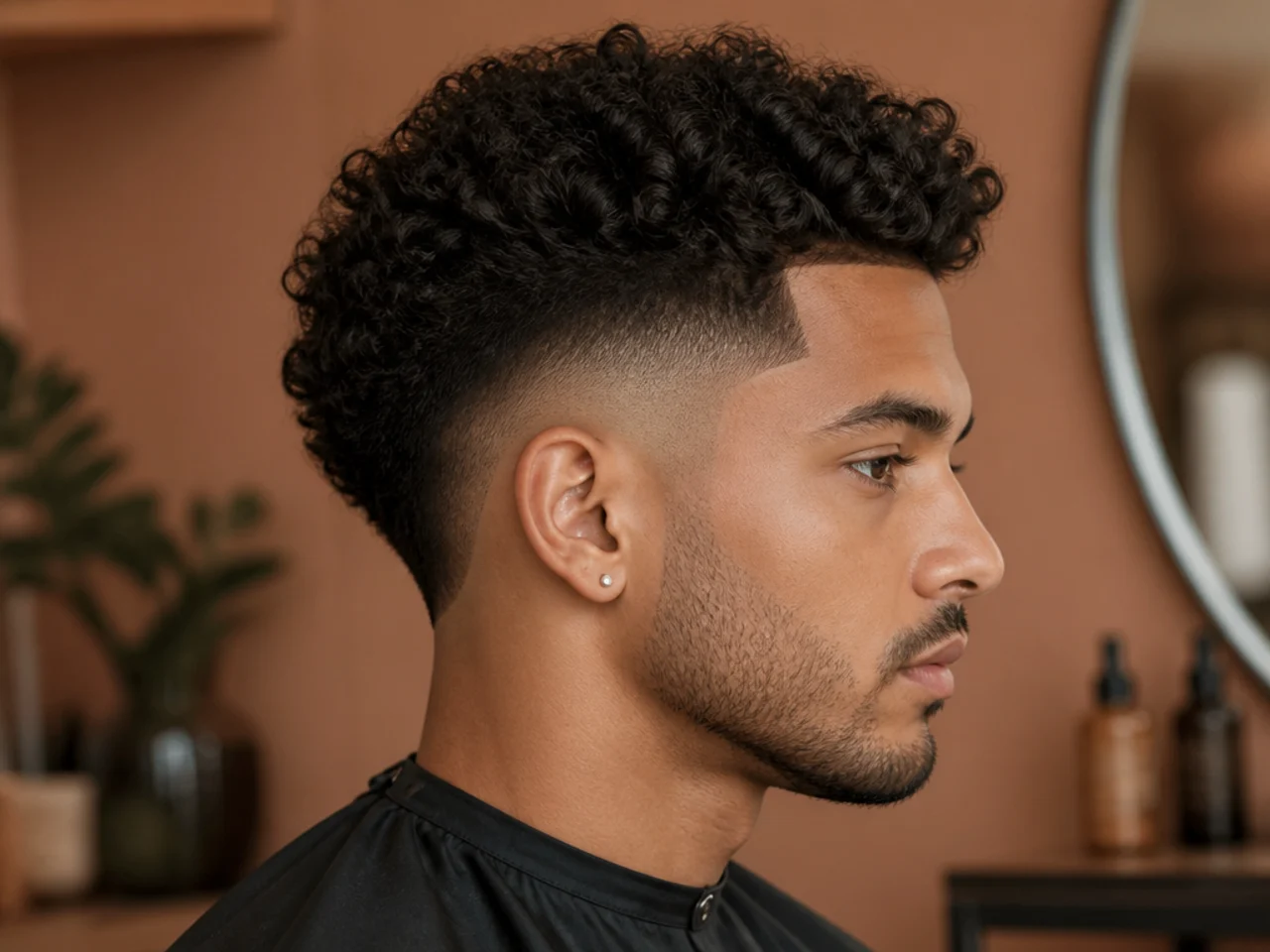
Maximum contrast. The arc goes blade-to-scalp — no guard, just skin — so the semicircle around the ear reads as bright, clean geometry against the coil pattern above. This is the burst fade curly hair silhouette most guys see on Pinterest and save.
Suits diamond, oval, and square faces where the sharp edge flatters strong bone structure. Best on 3B, 3C, and 4A textures.
Ask for: "Skin burst around each ear, three-inch scissor-cut curly top, feathered blend at the transition, rebook in ten days." The skin exposure needs re-cutting sooner than any other version — set the reminder.
6. Curly Burst Fade Mullet
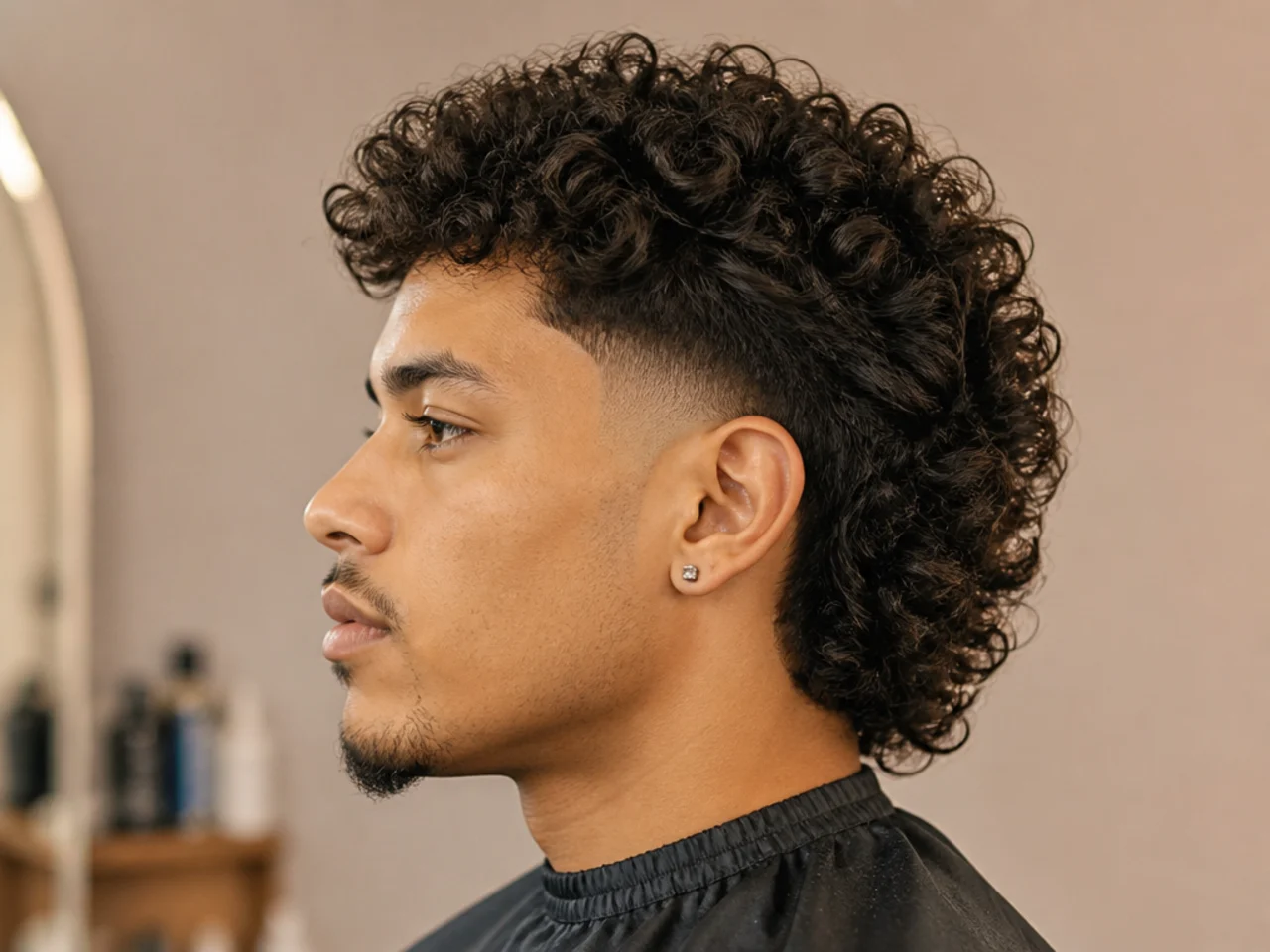
The mullet on curly hair is the burst's most-requested pairing right now. The arc erases everything around the ear, the curl pattern spills over the top, and the back length falls in loose spirals over the neckline. Three shapes, all built on curves.
Suits oval, heart, and diamond faces where the back length balances a narrower jaw. Best on 3A and 3B curls.
Ask for: "Skin burst around each ear, scissor-cut top at three inches with the curl pattern preserved, three-inch curl length at the back with internal layers to remove weight." For the full mullet breakdown across curl types, see our burst fade mullet guide.
7. Curly Burst Fade Mohawk
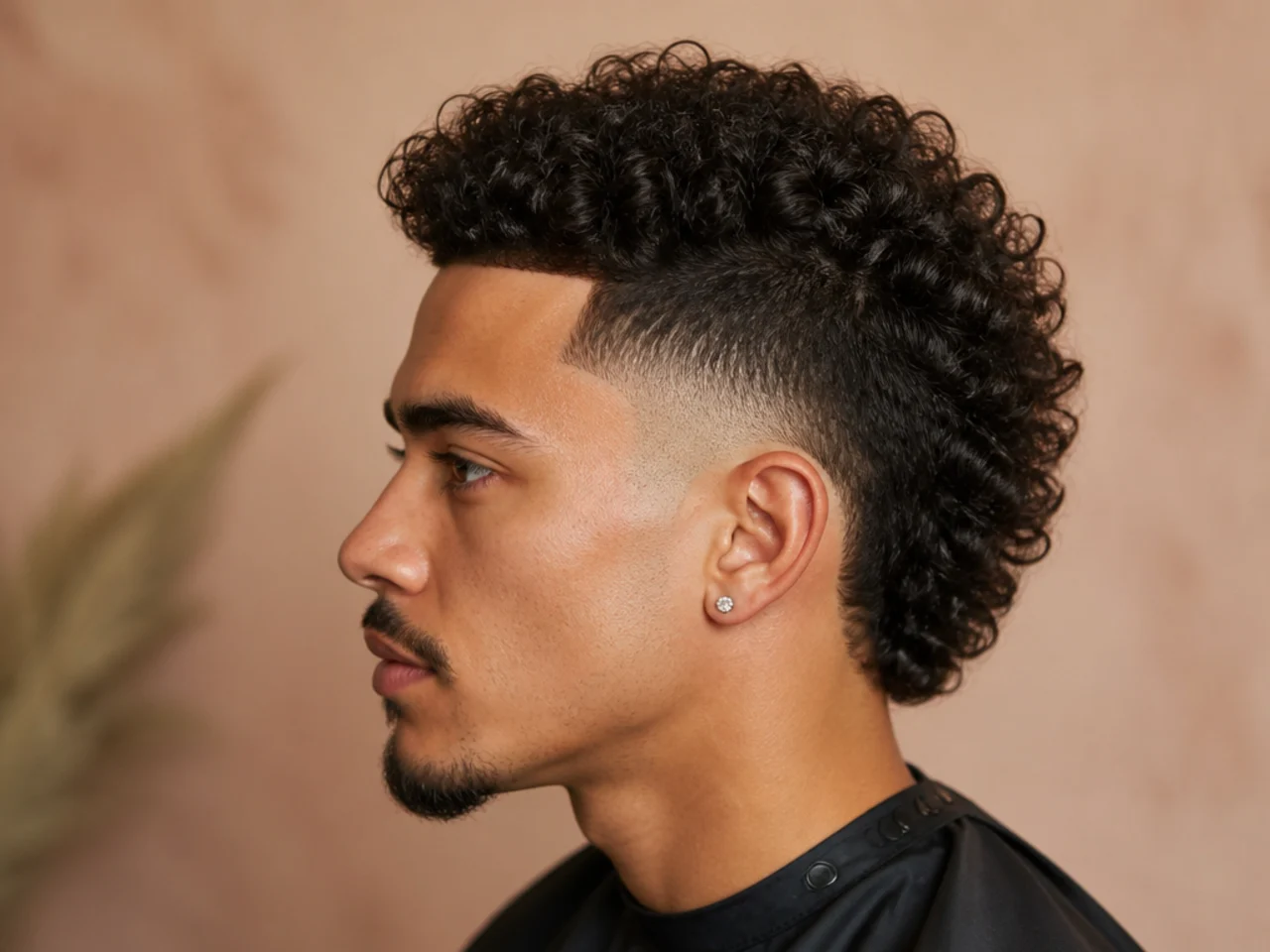
A strip of curl runs down the center of the head while both sides burn away to skin bursts. The double arc frames the strip like parentheses, and the curl pattern gives the mohawk more visual weight than a straight-hair version ever gets.
Ideal on diamond, oval, and round faces where the vertical line adds length. Best on 3B, 3C, and 4A textures.
Ask for: "Skin burst on both sides with a mohawk strip left about three inches wide, four-inch curl length on the strip scissor-cut only, clean line where the strip meets the burst." Style upward with a strong-hold curl cream. Not for guys who need to explain their haircut.
8. Curly Burst Fade with Fringe
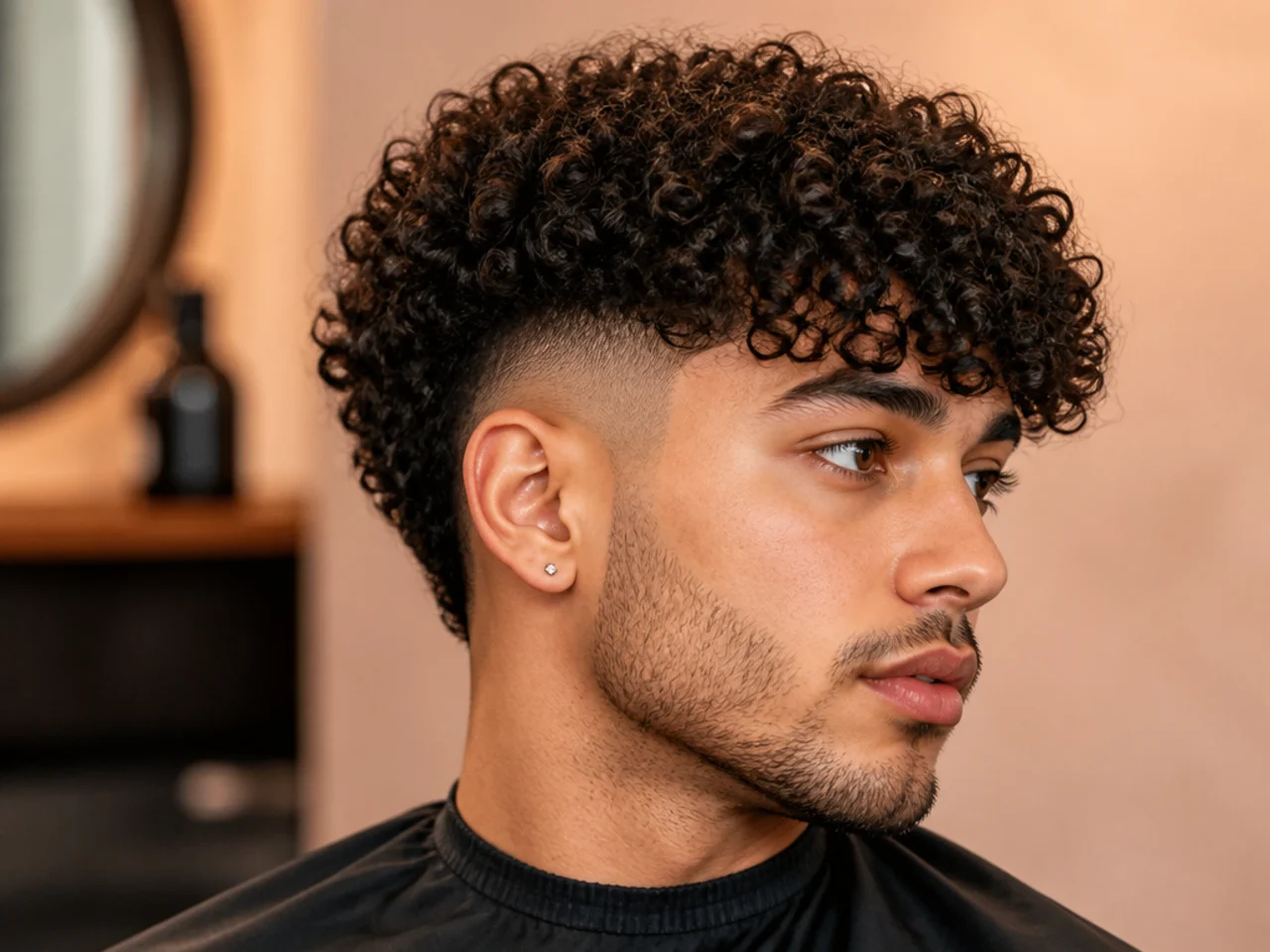
A curly fringe sends spring-loaded length forward onto the forehead while the arcs on the sides stay clean. The fringe doesn't lie flat — it bounces, curls back on itself, and lands where it wants. That's the whole point.
Suits round, oval, and heart faces where the fringe softens the top of the face. Best on 3A and 3B curls.
Ask for: "Mid burst to a 1, three-inch scissor-cut curly top with the front left long enough to fall forward as a fringe, feathered blend at the temples." Style with a curl cream on wet hair and let the fringe air-dry the direction it wants to go.
9. Curly Burst Fade Faux Hawk
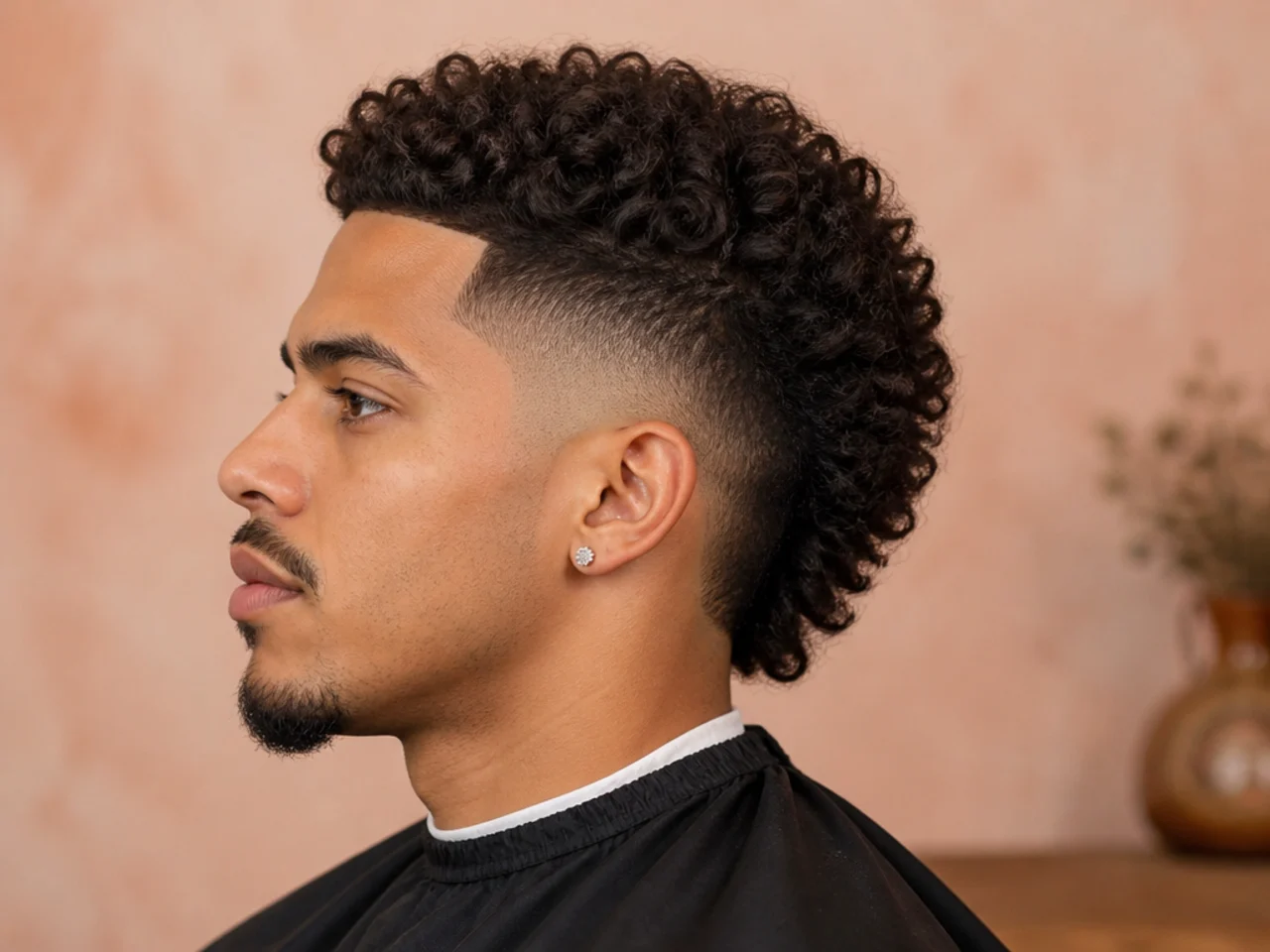
The faux hawk keeps some length on the sides — just very short — so the burst still reads without the mohawk's shaved commitment. The curls up top get pushed inward toward a center spine, forming a soft peak instead of a hard strip.
Suits square, oval, and heart faces. Best on 3B and 3C curls with enough density to build vertical height.
Ask for: "Mid burst to a 1, four-inch scissor-cut curly top styled inward toward the center, feathered blend on the sides." Style upward with a curl cream and a light hold gel for the center spine.
10. Curly High-Top Burst Fade
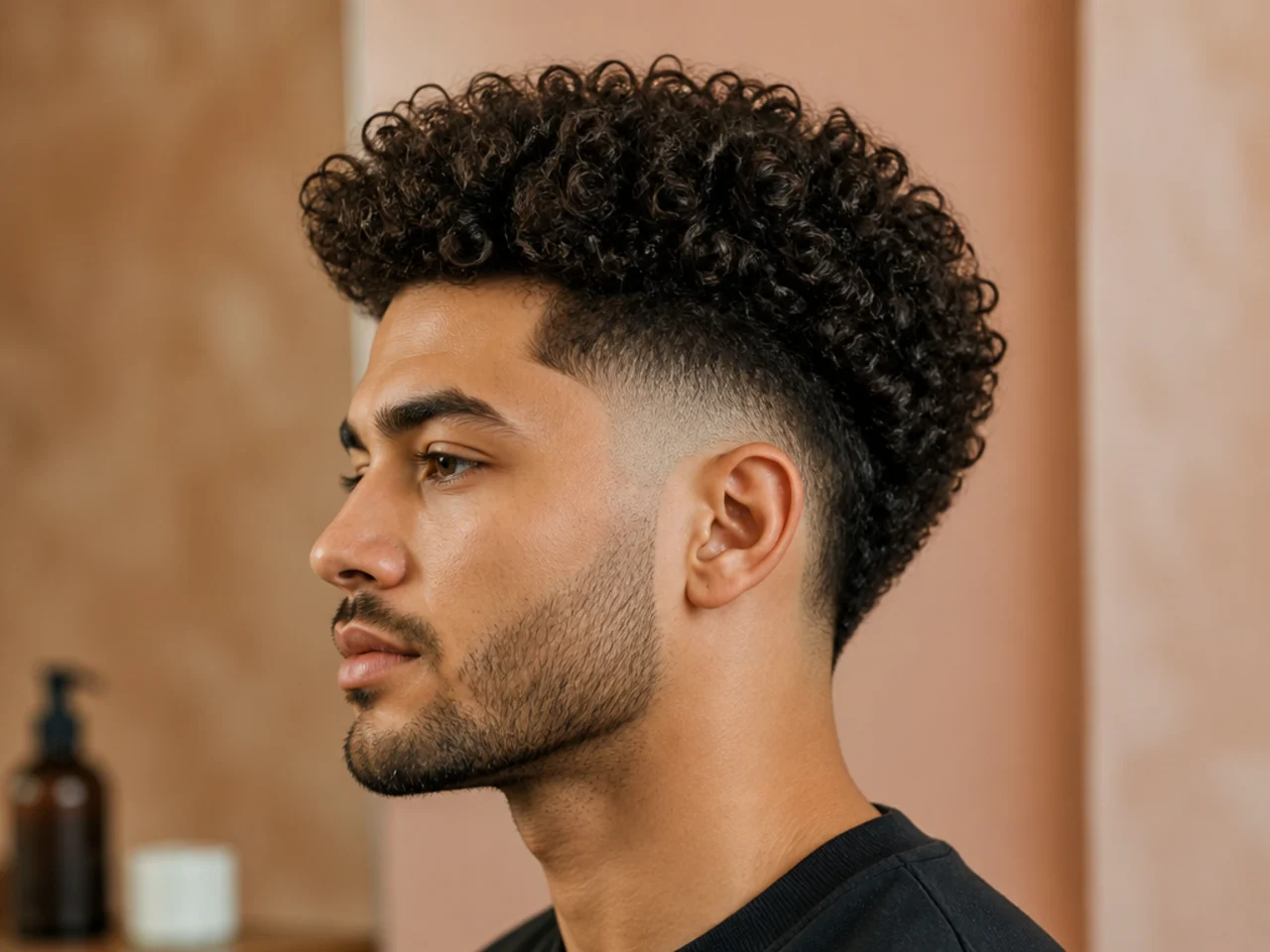
The high-top revival. A tall column of curl sits on top, squared off with visible corners, and the burst arc curves around each ear so the shape reads as a modern take on a 90s silhouette. The high-top has been quietly climbing back into rotation since 2024.
Suits oval, heart, and diamond faces. Best on 3C, 4A, and 4B textures where the tight pattern holds the squared shape.
Ask for: "Skin burst around each ear, high-top squared at five inches with the front slightly taller than the crown, scissor-cut throughout, hard corners at the top edges." Pick out with an afro pick, then set with a light molding paste for the corners.
11. Curly Comma Burst Fade
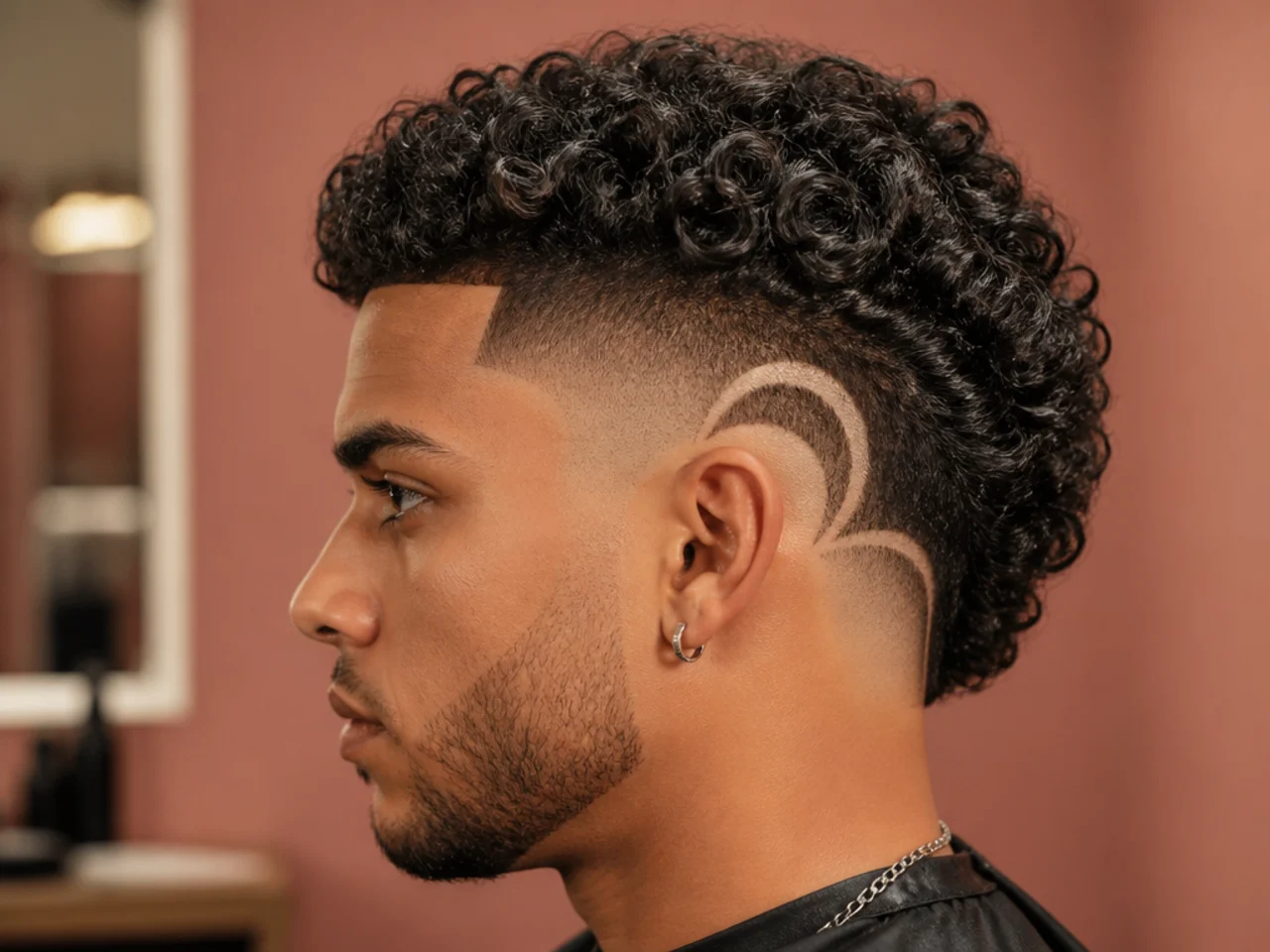
Two comma-shaped curl strands hang down over the forehead, framing the face like parentheses, while the burst curves around the ears. Three shapes talking to each other, all curves. This is the pairing K-pop stylists and Korean barbers reach for on their curly-haired clients.
Suits oval and heart faces where the curled framing softens the forehead. Best on 3A and 3B curls.
Ask for: "Mid burst to a 1, three-inch scissor-cut top with the front sections left long enough to shape into commas, feathered blend at the temples." Blow-dry the comma pieces forward with a small round brush, then let the rest of the top air-dry natural.
12. Short Curly Burst Fade
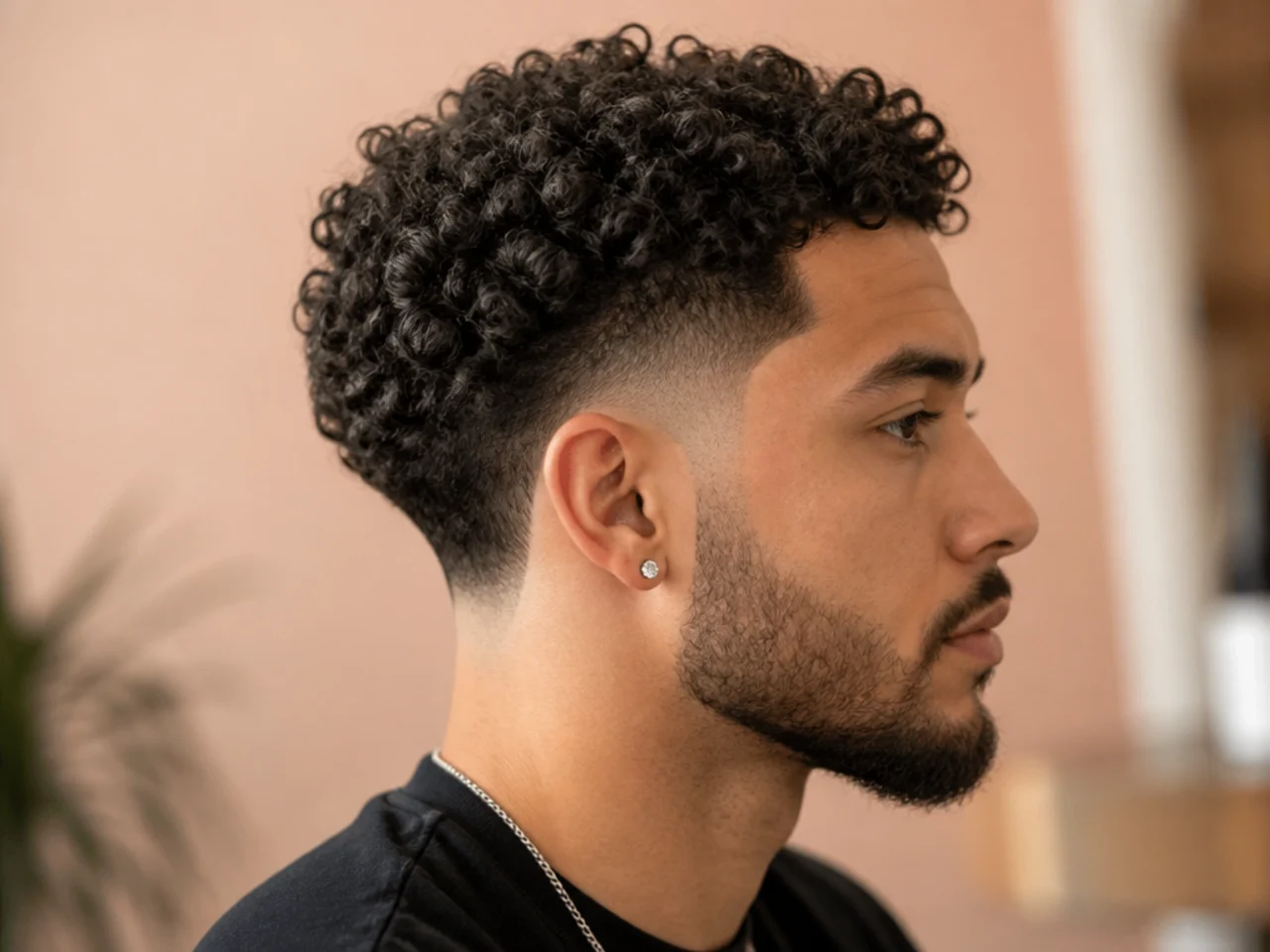
The lowest-maintenance version on the list. The top stays under two inches of curl, the arc curves low around the ear, and the whole cut takes ten seconds to style in the morning. Great gateway variation for guys new to fades.
Every face shape works. Best on 3B, 3C, and 4A textures where the shorter length still reads as a defined coil pattern.
Ask for: "Low burst to a 1, scissor-cut curly top at one and a half inches, feathered blend at the temples, soft taper at the nape." Rub a curl cream through damp hair with your palms and walk out the door.
13. Long Curly Burst Fade
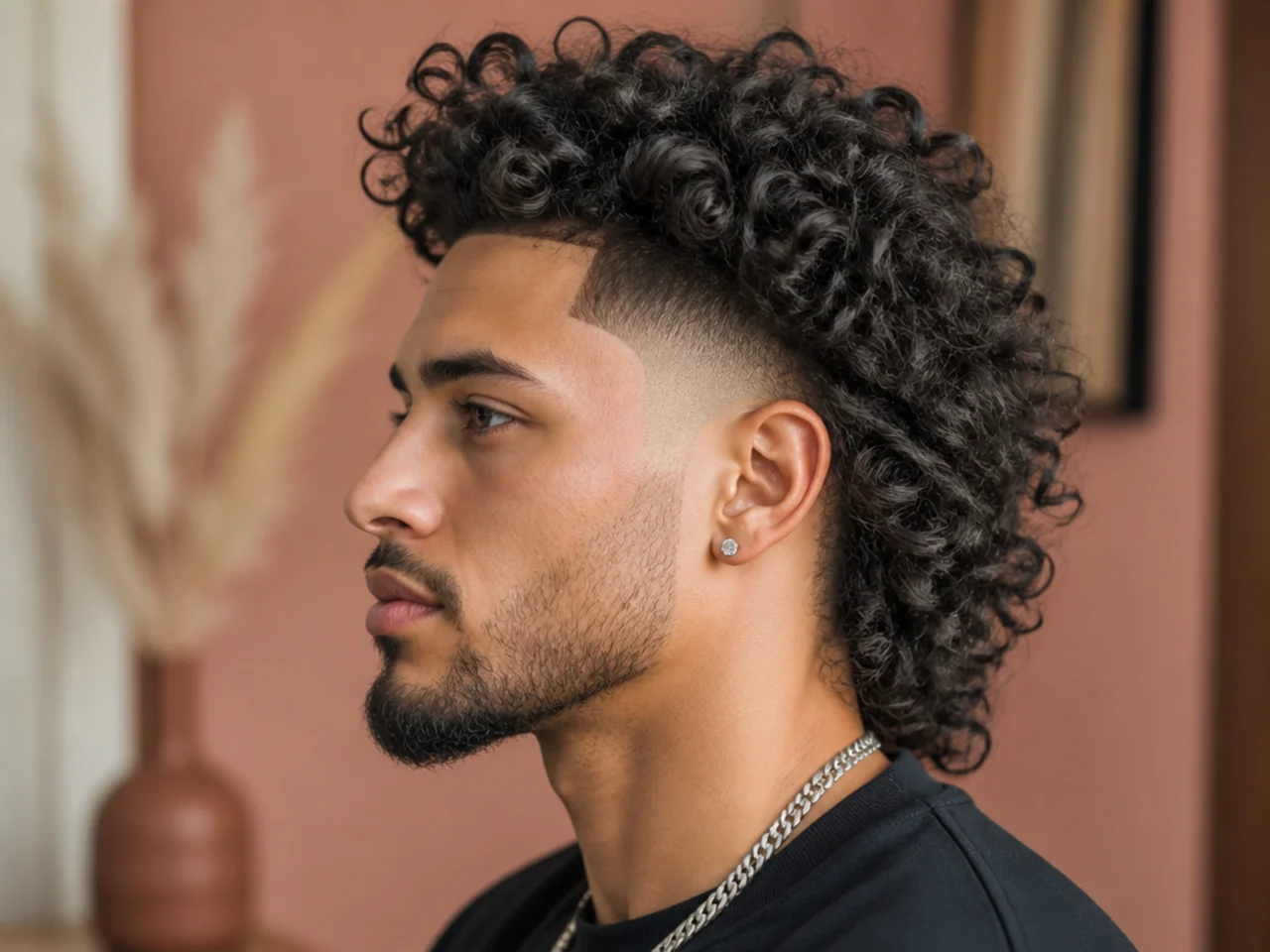
The commitment version. The top drops to five inches or more, the curls fall forward and to the sides, and the arc's job is to keep the whole thing from looking overgrown. Without the burst, this cut reads as bedhead. With it, it reads as intentional.
Suits oval, heart, and diamond faces. Best on 3A and 3B curls where the length hangs with enough shape to still read as pattern, not weight.
Ask for: "Mid burst to a 1, five-inch scissor-cut curly length on top with internal layers to keep weight from dragging the pattern down, feathered blend at the transition." Diffuse dry, then finger-shape with a curl cream and a light-hold mousse.
14. Burst Fade for 3A Loose Curls
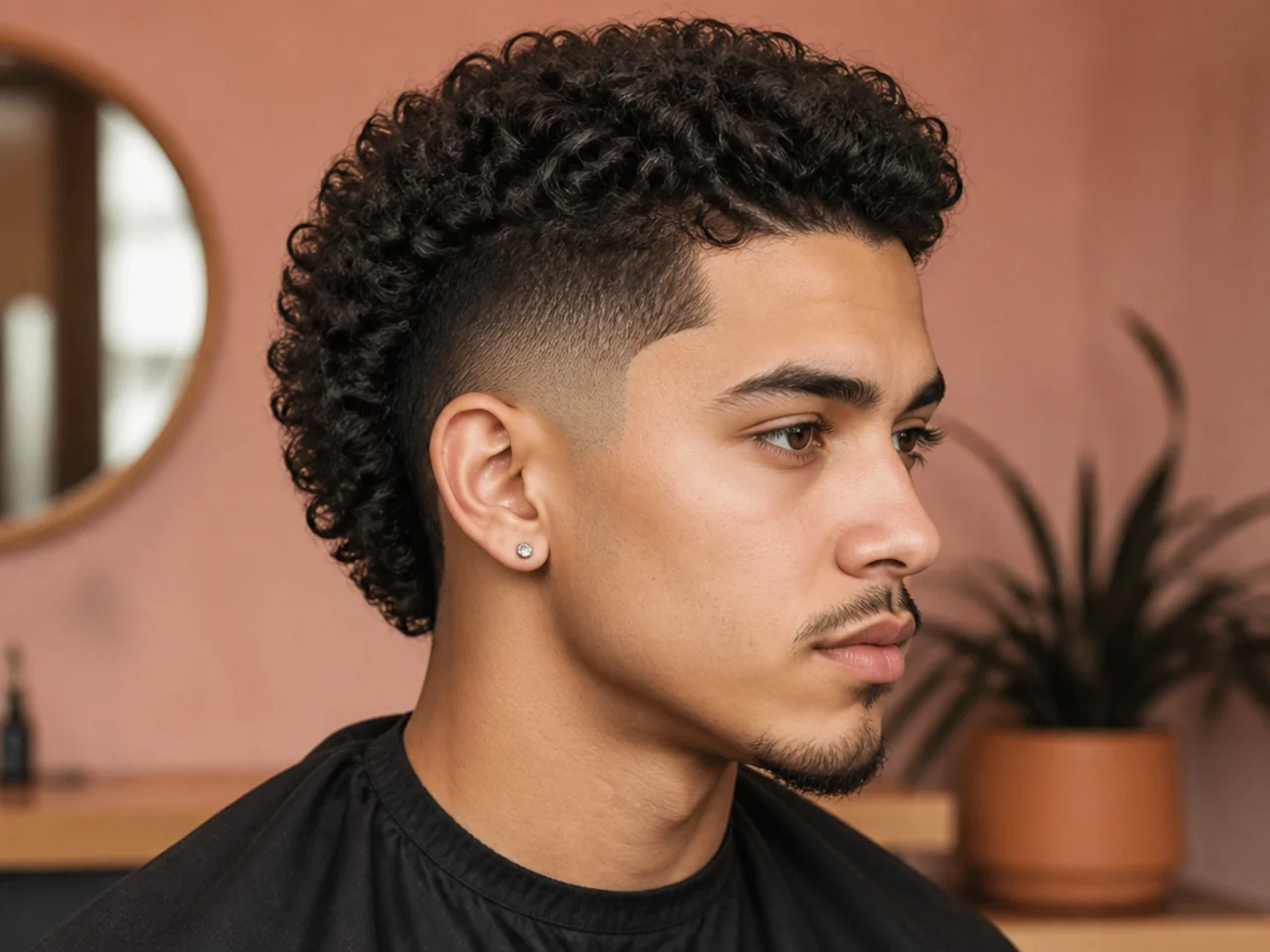
3A curls are the loosest of the true curl range — big loops, defined shape, easy to over-style flat if you're not careful. The burst fade lets 3A's natural weight fall around the face without competing with straight fade lines.
Suits every face shape. This is the most photographed curl-and-burst combination on Pinterest.
Ask for: "Mid burst to a 1, three-inch scissor-cut top preserving the 3A curl pattern, feathered blend at the temples, no thinning shears anywhere." Style with a leave-in and a curl cream on soaking-wet hair, then hands-off while it air-dries.
15. Burst Fade for 3B Springy Curls
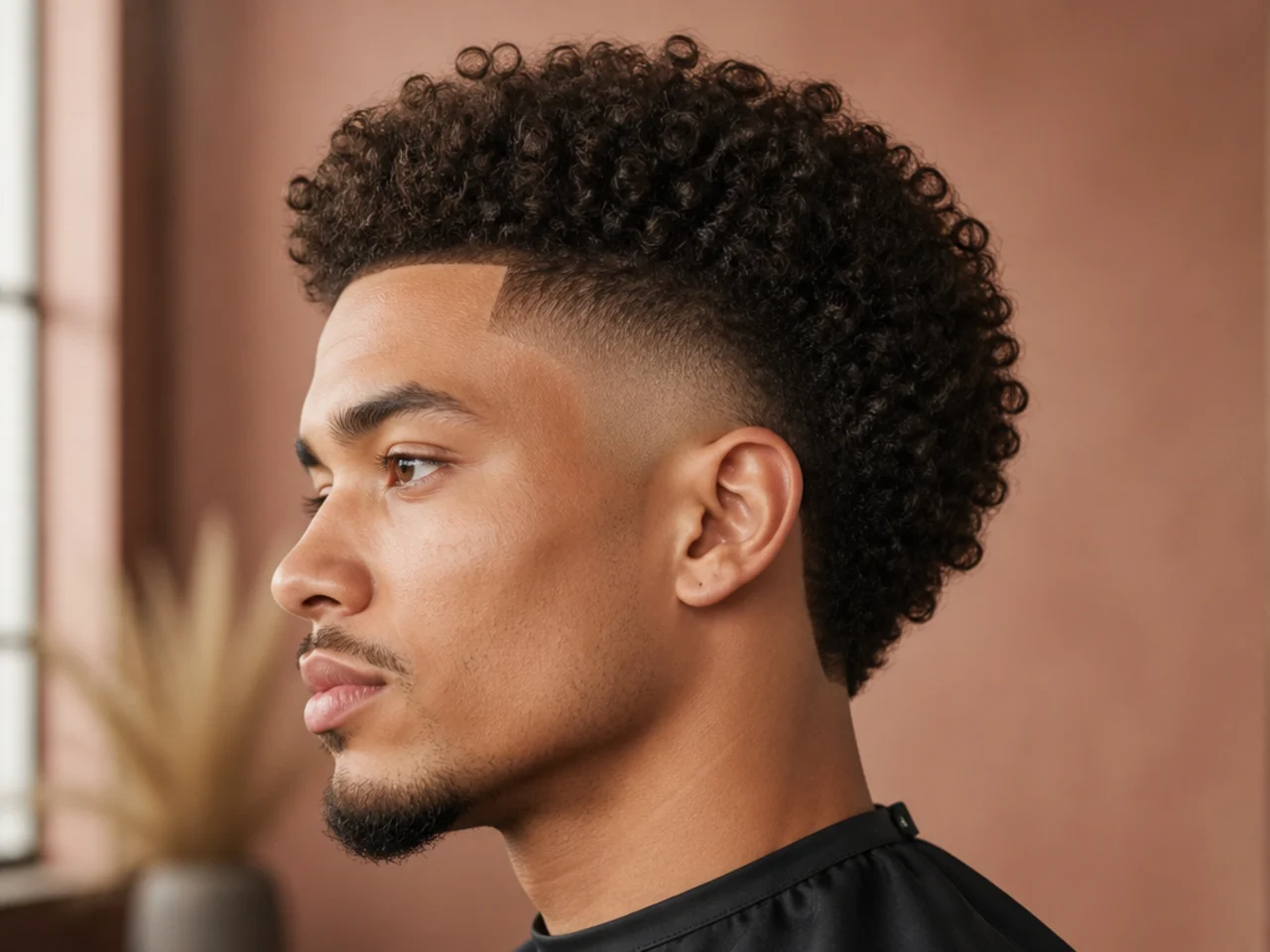
3B curls are tighter than 3A — springy corkscrews the size of a permanent marker — and they hold volume without effort. That volume is a gift the burst fade knows how to frame: the arc's clean geometry sharpens what would otherwise read as a soft mass on top.
Suits round, square, and heart faces. Best paired with a skin or guard 1 burst for maximum contrast.
Ask for: "Skin burst around each ear, three-inch scissor-cut 3B curl top with defined pattern preservation, feathered transition." Diffuse dry with the diffuser cupped up into the roots for lift.
16. Burst Fade for 3C Corkscrew Curls
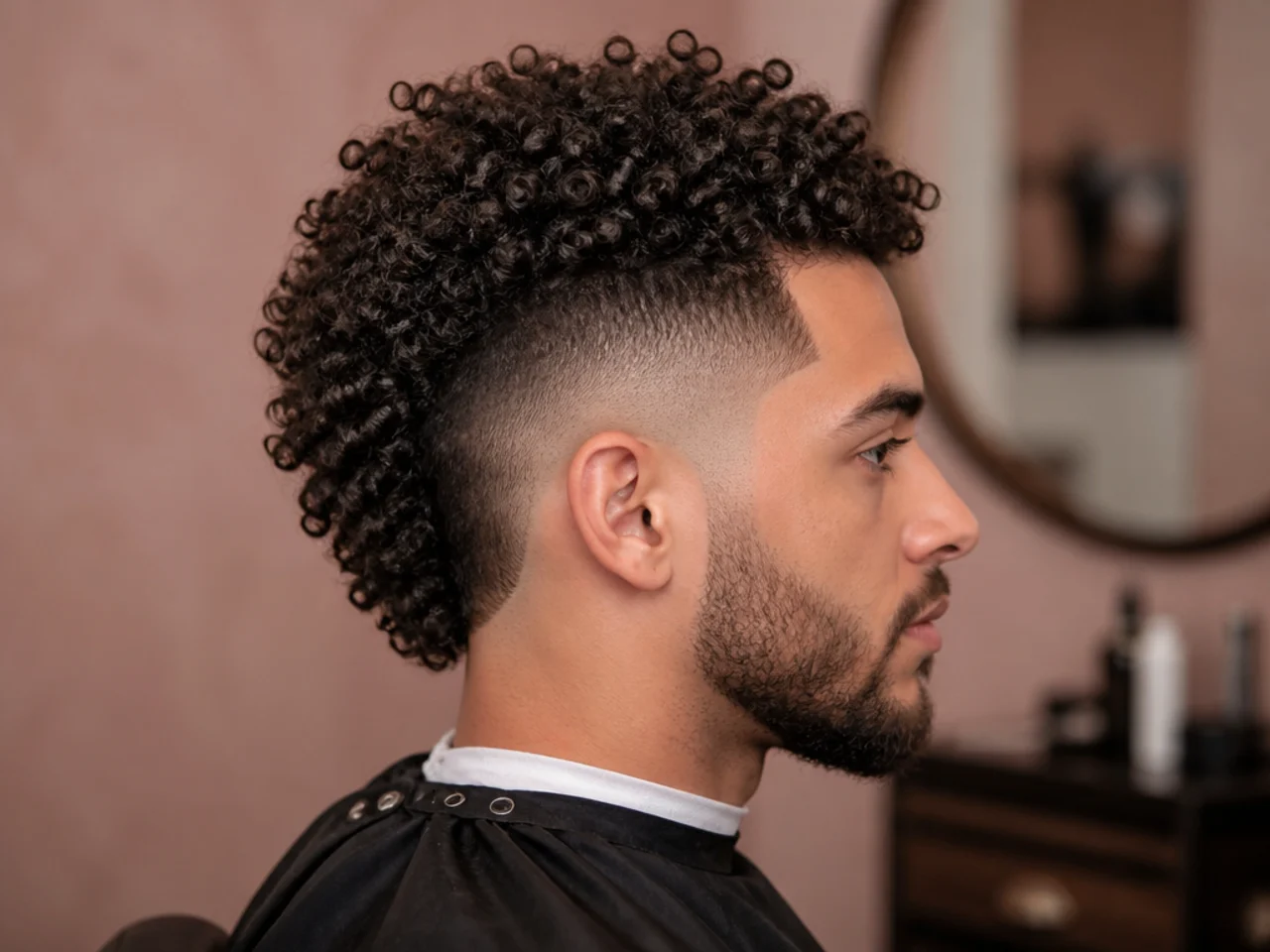
3C curls form tight, defined corkscrews the size of a pencil — dense, springy, and full of visible pattern. The burst fade's arc reads as a sharp edge against 3C's high-volume top, which is why this pairing is such a fixture at barbershops that specialize in textured hair.
Suits oval, round, and diamond faces where the dense top volume adds height. Best with a high or skin burst.
Ask for: "High skin burst around each ear, four-inch scissor-cut 3C curly top with the pattern preserved, feathered blend, sharp line-up at the hairline." Diffuse dry, then set with a moisturizing curl cream.
17. Burst Fade for 4A Tight Coils
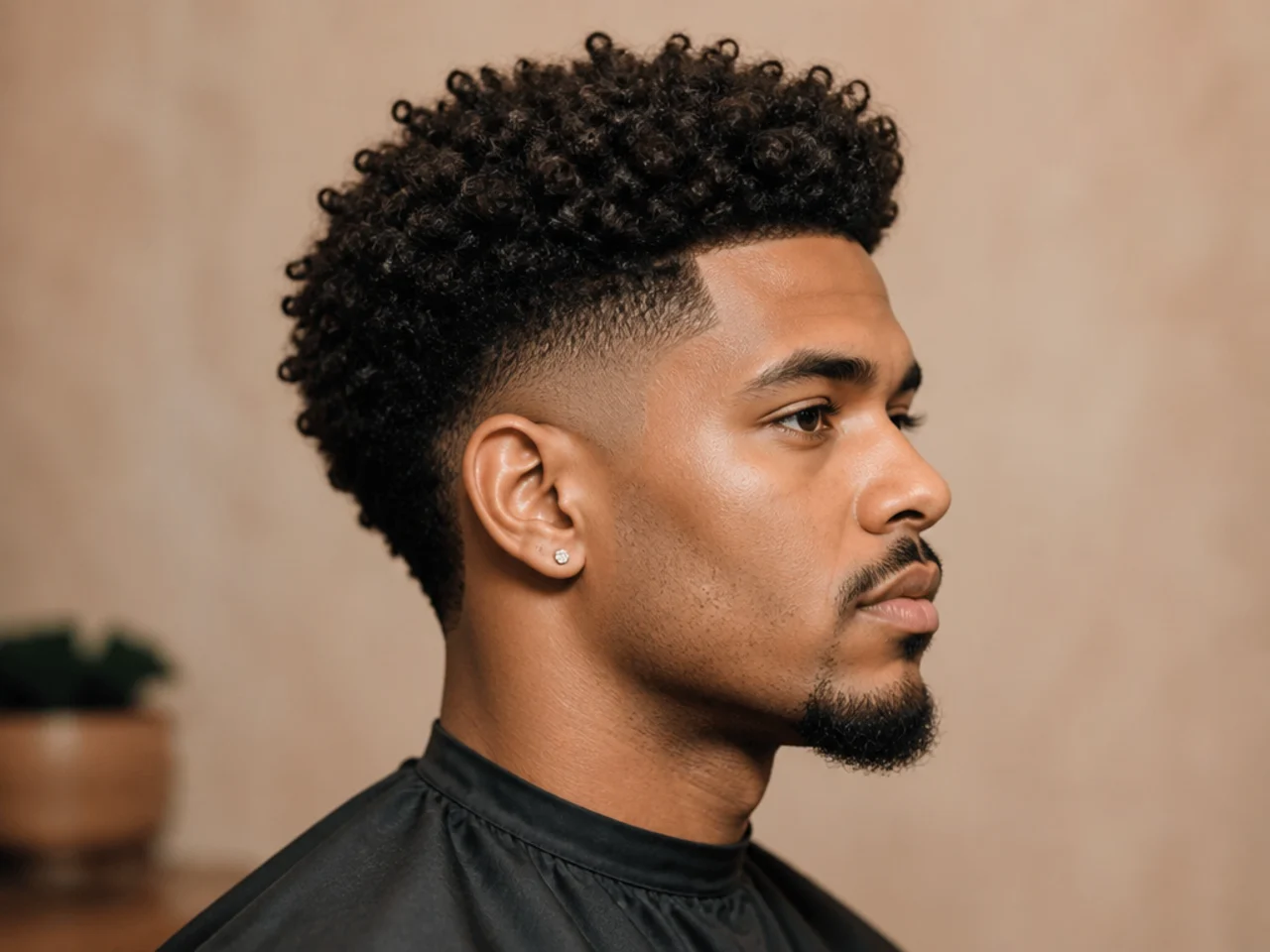
4A coils spring like a tightly wound pen spring — a clear pattern, tight to the head, that reads as texture from across the room. The burst fade sharpens the sides so the coils on top read as the deliberate move they are. On 4A hair, the burst is a barber standard, not a trend.
Suits oval, round, and diamond faces. Book every ten to fourteen days to keep the arc crisp.
Ask for: "Skin burst around each ear, three-inch scissor-cut 4A coil top with the pattern preserved, sharp line-up at the front hairline, feathered blend at the transition." For more direction on cuts that flatter 4A textures, see our fade haircuts for Black men guide.
18. Burst Fade for 4B Coily Hair
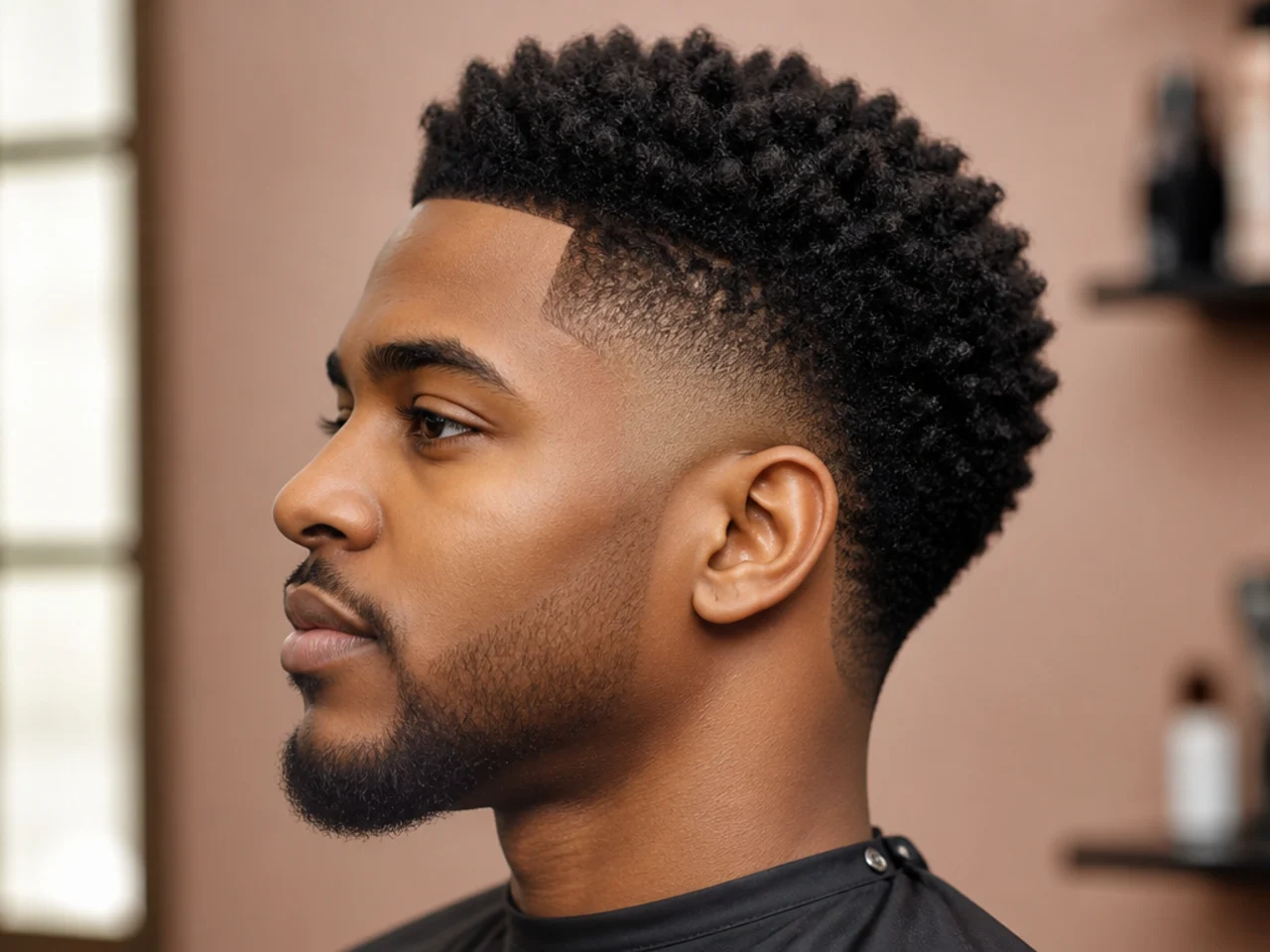
4B hair forms a Z-shaped pattern rather than a spring — less visible curve, more visible kink. It holds shape aggressively, which is exactly why the burst fade works: the arc's clean edge gives the eye a resting point against 4B's dense, energetic top. On 4B textures, the burst reads as sculptural.
Suits diamond, oval, and square faces. Best with a skin burst and a defined line-up.
Ask for: "Skin burst around each ear, two-to-three inches of 4B coily top scissor-cut with the natural shape preserved, sharp front line-up." Moisturize with a leave-in every other day — 4B texture needs more water than any other pattern.
19. Curly Burst Fade with Beard
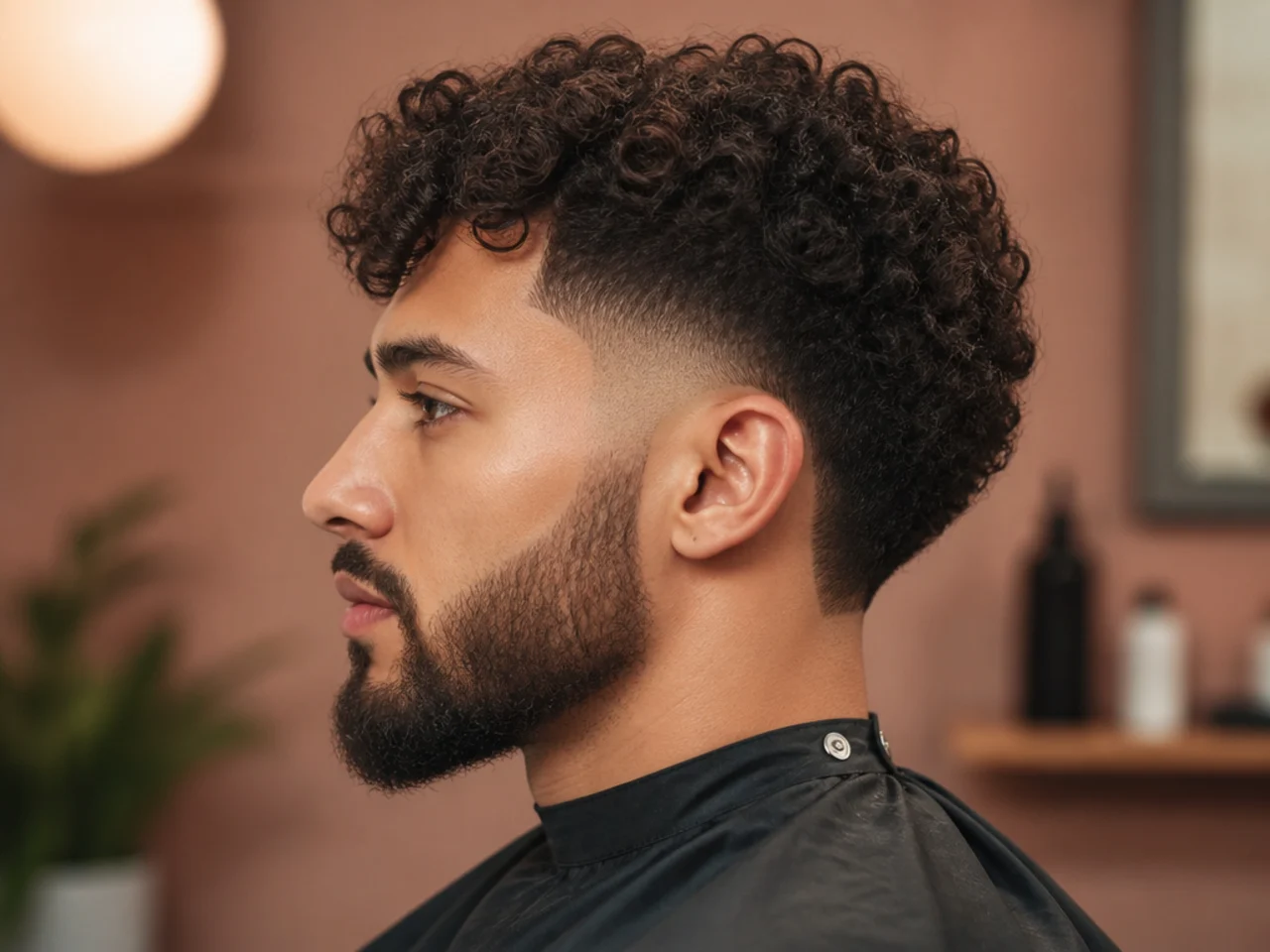
The beard is what makes the curly burst read grown-up. The arc curves around the ear and dies out just above the jawline, where the beard picks up the same grade and carries it forward — one continuous shape from crown to chin, with the curl pattern up top as the crown.
Suits diamond, oval, and square faces. Best on 3B, 3C, and 4A textures where the beard density matches the top density.
Ask for: "Mid burst to a 1 with a hard line into the beard at the sideburn, three-inch scissor-cut curly top, beard graded to match the burst guard, feathered blend across the jawline." Trim the beard yourself between visits to keep the transition sharp.
20. Curly Burst Fade with Design
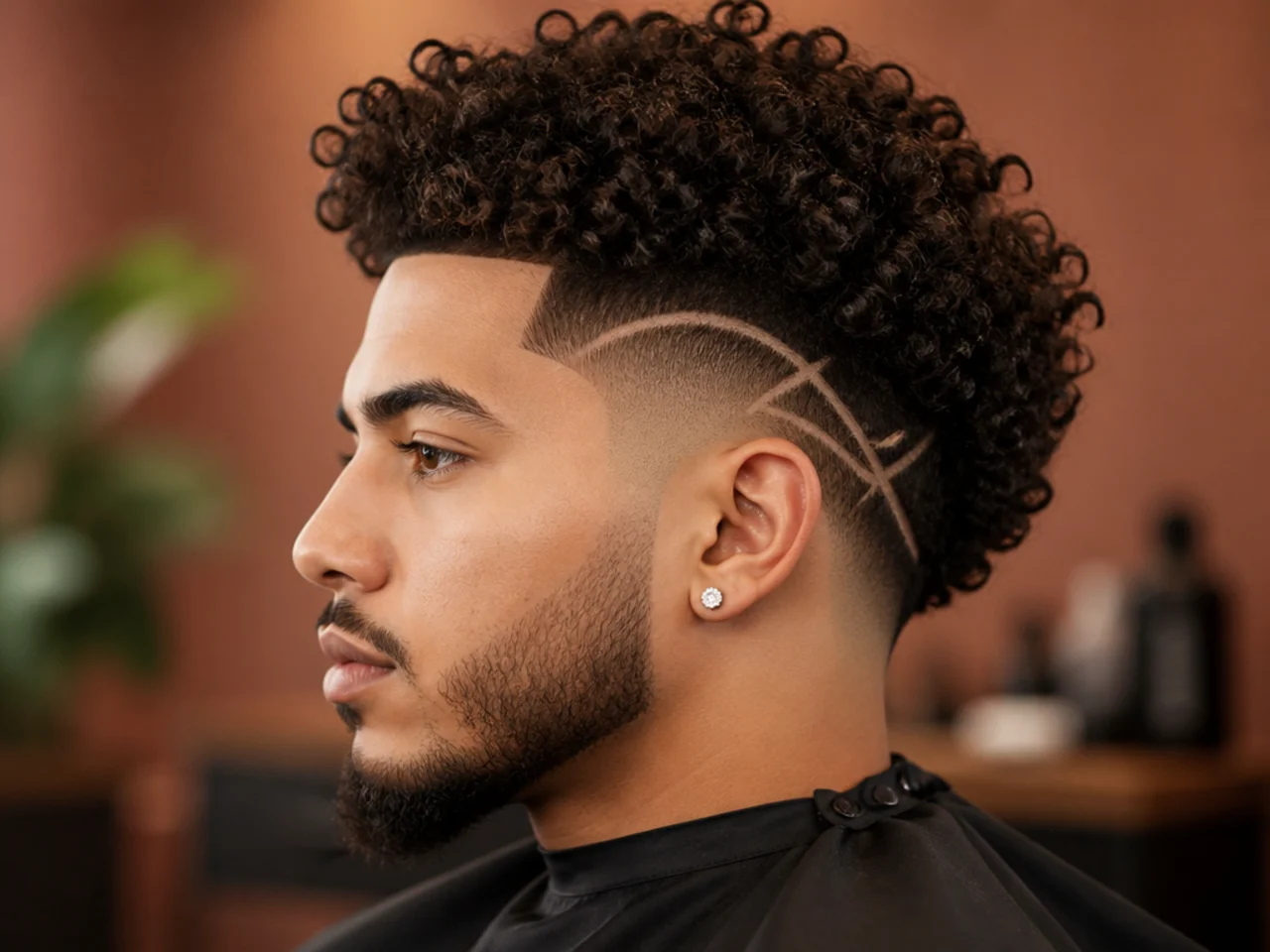
A shaved line, a lightning bolt, or a geometric etch cut into the shortest section of the arc. The burst gives the design a clean canvas because the skin around the ear is already exposed, and the curly top acts as the visual counterweight so the design doesn't feel like too much on its own.
Suits oval and diamond faces where the extra visual detail flatters strong bone structure. Best on 3C, 4A, and 4B textures where the design lines contrast with the compact curl pattern above.
Ask for: "Skin burst around each ear, three-inch scissor-cut curly top, one shaved line running from the widest point of the arc into the temple." Agree on the design placement before the barber picks up the trimmer — mark it in the mirror first.
How to Ask Your Barber for a Curly Burst Fade
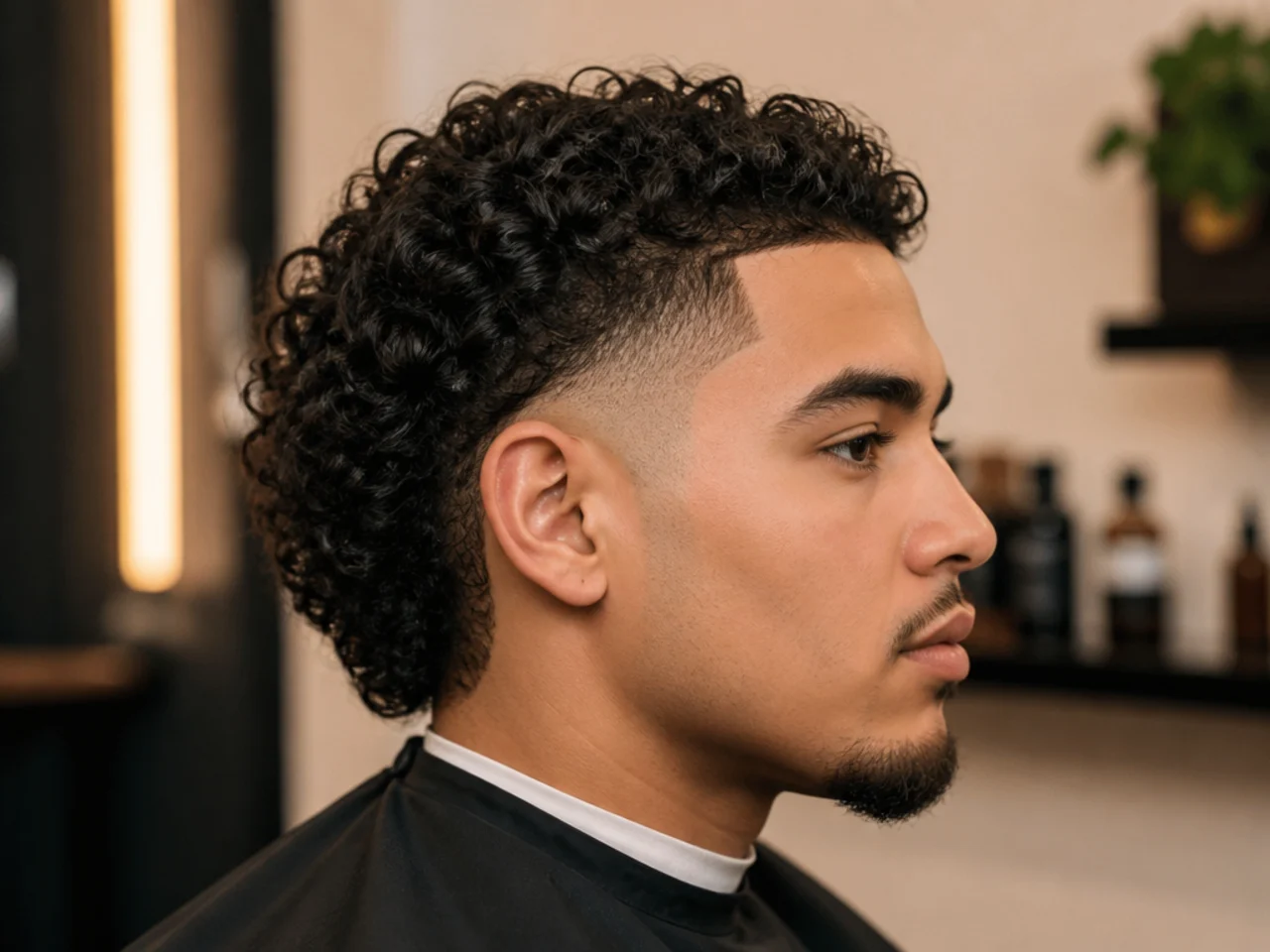
Bring a photo. Curly hair and fades are both interpretation-heavy — barbers who nail one still guess at the other, and guessing is where good haircuts go wrong. The seven steps below get you the version in your head.
- Say "burst fade with a scissor-cut curly top" — never just "fade with curls on top." The two are different requests. A regular fade with curls could mean any straight vertical line running up the side. The burst specifically curves around the ear.
- Set the burst height. Low sits tight to the ear. Mid crosses the temple line. High climbs to the hairline. Point to the widest section of the arc in your photo.
- Set the guard at the shortest point. Skin (0) for maximum contrast. Guard 1 for very short but visible. Guard 2 for softer and workplace-safe.
- Say scissor-cut only, no thinning shears, on the top. This is the single most important instruction — thinning shears cut through the middle of the curl and destroy the spring. Scissor cuts one strand at a time, preserving the pattern.
- Set the top length in inches, not guards. Two inches for short, three inches for standard, four-to-five inches for high-volume looks. Guard numbers over curls give unpredictable results because the pattern springs up.
- Ask for a feathered blend at the transition. No hard line where the fade meets the curl. The blend is what makes the two shapes read as one.
- Confirm the neckline. Tapered (soft point) or blocked (hard horizontal line). Tapered wears better on curly hair because it grows out cleaner as the curl fills in.
Once you have those seven answers, your barber can start cutting without a single guess. Show the photo again to confirm the shape before the clippers turn on.
Styling & Maintenance for a Curly Burst Fade
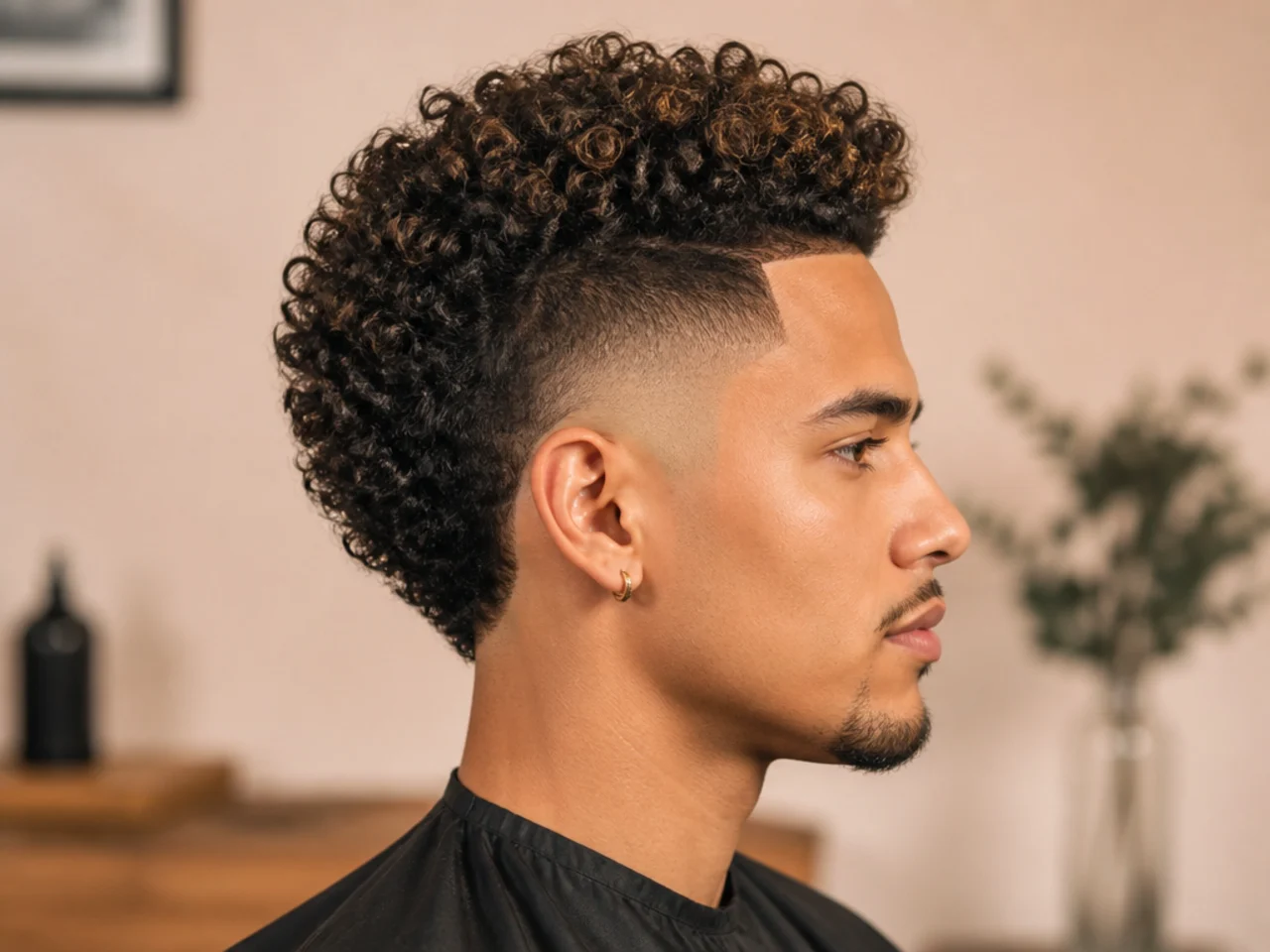
Curls don't play by the same styling rules as straight hair. Water is the primer, not the enemy. Product goes on soaking wet, then hands off until it's dry.
Wash two to three times a week with a sulfate-free shampoo. Every day strips the oils your pattern needs to hold shape. On rinse-only days, work a rich conditioner mid-shaft to ends and finger-comb through under running water.
Apply product to soaking wet hair, not damp. Damp hair holds product on the outside of the strand where it dries into a crunchy shell. Soaking wet hair uses the water as a carrier to distribute product evenly through the curl. Palm-emulsify a leave-in first, rake it through, then follow with a curl cream. Skip a step and the pattern loses definition by afternoon.
Dry hands-off. Cup a diffuser up into the roots on low heat and low speed, or plop hair into a cotton T-shirt or microfiber towel for twenty minutes and let it air-dry. A regular terry towel roughs up the cuticle and creates the frizz halo curly guys spend the rest of the day trying to smooth. See our full curly hair men haircut guide for the six-tip routine barbers use.
Refresh day two with a spray bottle. Mist water through the curls until they're damp, scrunch a pea of leave-in through the length, and let it re-set for ten minutes. Pineapple hair loosely at the top of your head overnight, and sleep on a silk or satin pillowcase — cotton flattens the pattern by morning.
Book the burst re-cut every two to three weeks. The arc blurs at the transition line by week three because the shape depends on precise clipper work — and curly hair on the sides grows into a soft halo that softens the arc even sooner. The curly top itself only needs a shape trim every six to eight weeks. Between visits, run a beard trimmer over the neckline yourself to buy an extra week of clean edges. If your top style leans on comma bangs, curtain shapes, or a mullet, browse our curly hairstyles for men guide for pairings — every long-top curly look sits well over a burst.
For guys with 3C, 4A, or 4B textures, add a deep conditioning treatment once a week and re-book every ten to fourteen days rather than three weeks — the tighter the pattern, the faster the arc reads as blurred.
FAQ
Why does the burst fade work so well with curly hair?
Both shapes are built on curves. The arc around the ear mirrors the coil pattern on top, so the two speak the same visual language — a straight fade line into curls creates a hard visual break where the burst blends the two into one continuous idea. That's why the burst fade curly hair combination has climbed steadily on Pinterest since 2022 and now shows up at almost every specialty textured-hair shop.
Which curl type looks best with a burst fade?
Every type from 3A loose curls to 4B kinky coils works — the burst adapts. That said, 3B and 3C corkscrew patterns are the most photogenic against the arc because the defined spring reads clean from every angle. 4A and 4B textures actually hold the shape longer between cuts because the pattern is tighter to the head, so the sides grow into a softer halo less quickly. If you're unsure of your type, our curl types guide walks through the differences with reference photos.
Should the top be clippered or scissor-cut?
Scissor-cut, always. Clippers cut through the middle of a curl and remove the spring that gives the pattern its bounce. Thinning shears are worse — they leave a fine shredded finish that reads as frizz within a week. Insist on scissor cuts one strand at a time on the top, even if it takes the barber an extra ten minutes. That extra time is what preserves the curl definition you were born with.
How short should the burst go on curly hair?
Skin (0) gives the sharpest contrast against a curly top and is the most-requested version. A guard 1 keeps the arc visible but softer and is the everyday choice for guys who want the shape without maximum drama. A guard 2 is the office-safe version where the fade reads as a subtle shadow rather than a shaved line. Any burst guard higher than 2 blurs into the curly top too much to read as a burst at all — pick a low taper fade instead if you want that softness.
How often do I need to re-cut a curly burst fade?
Every two to three weeks for the arc. The curve blurs faster than a straight fade because the shape depends on precise transitions, and curly hair on the sides grows into a frizz halo that softens the arc by week four. Tight coil textures (3C, 4A, 4B) usually rebook every ten to fourteen days for the sharpest look. The curly top itself only needs a shape trim every six to eight weeks — the burst work is the maintenance driver.
Can I get a burst fade with 4A or 4B coily hair?
Yes — coily textures are one of the burst fade's best pairings. The tight pattern reads as clean geometry against the exposed arc, and a skin burst against a dense coily top is one of the sharpest silhouettes in men's barbering right now. Ask for the front line-up to be cut sharp, use a moisturizing leave-in every other day to keep the pattern hydrated, and book every ten to fourteen days for the arc to stay crisp.
How much does a curly burst fade cost?
Between $40 and $95 at most independent shops, higher at specialty textured-hair salons. The scissor work on the top adds ten to fifteen minutes over a standard clipper cut, and the burst arc adds another five to ten. Expect the appointment to run 45 to 75 minutes total — worth the price if you find a barber who understands both curls and fades.