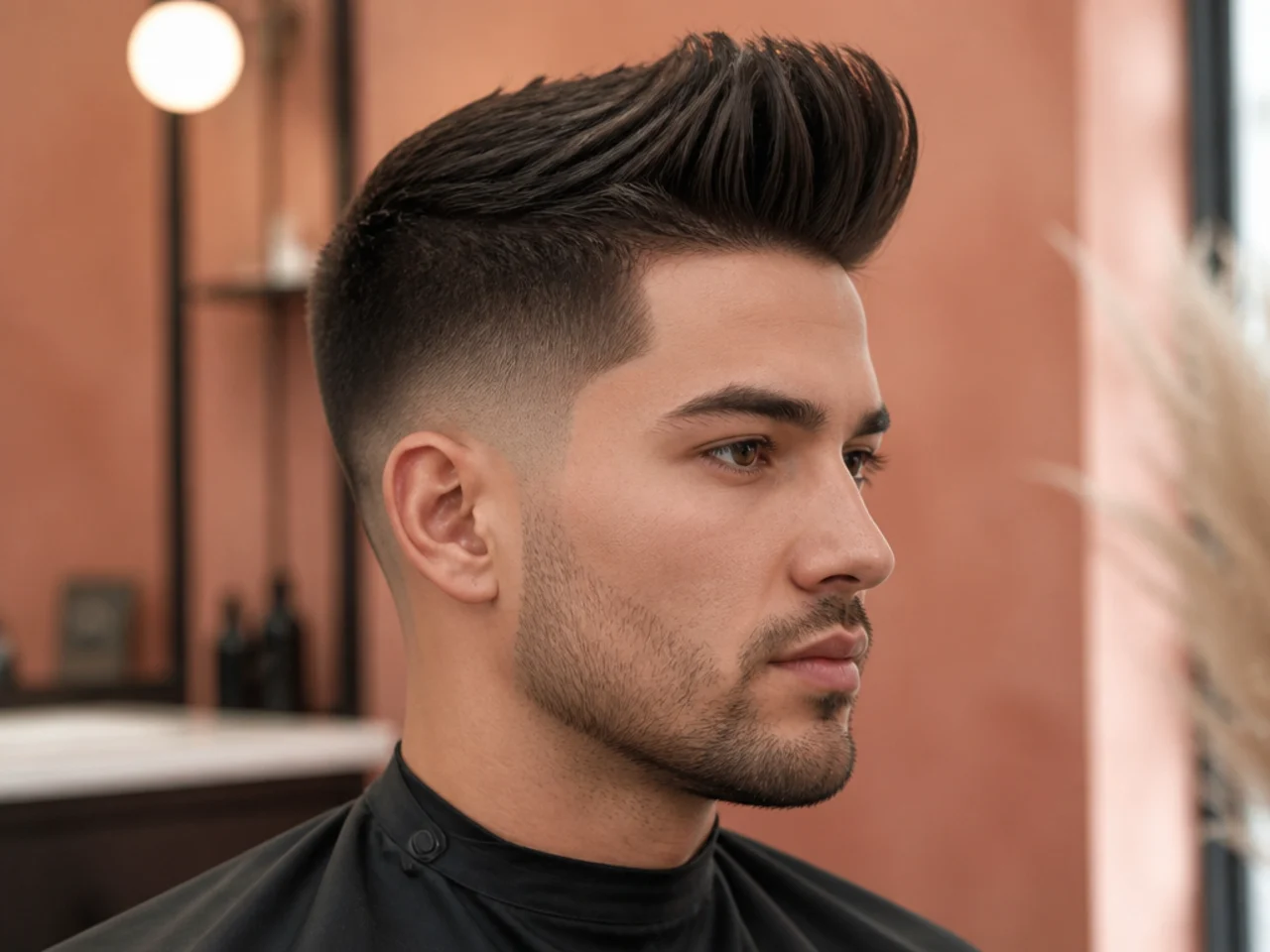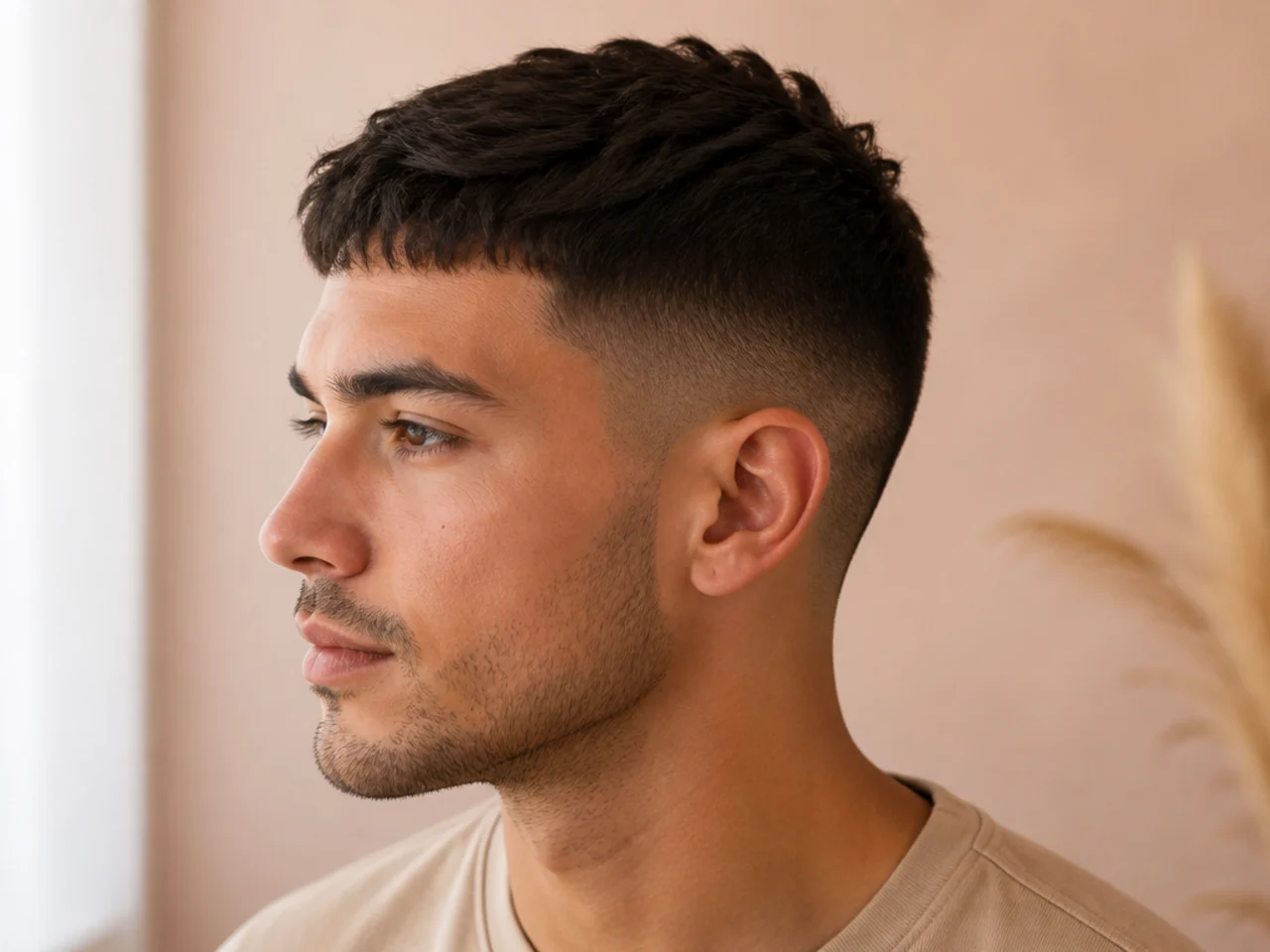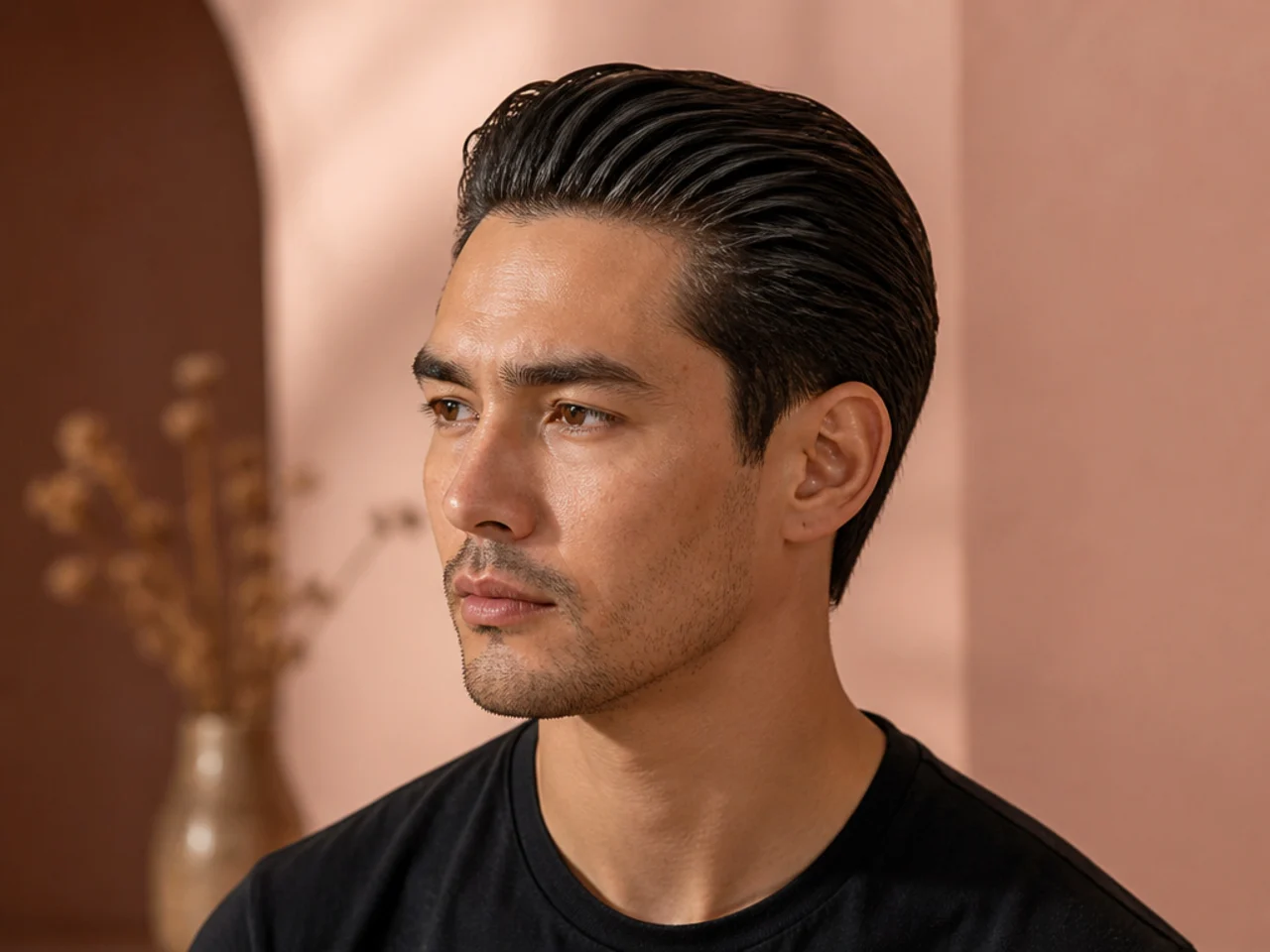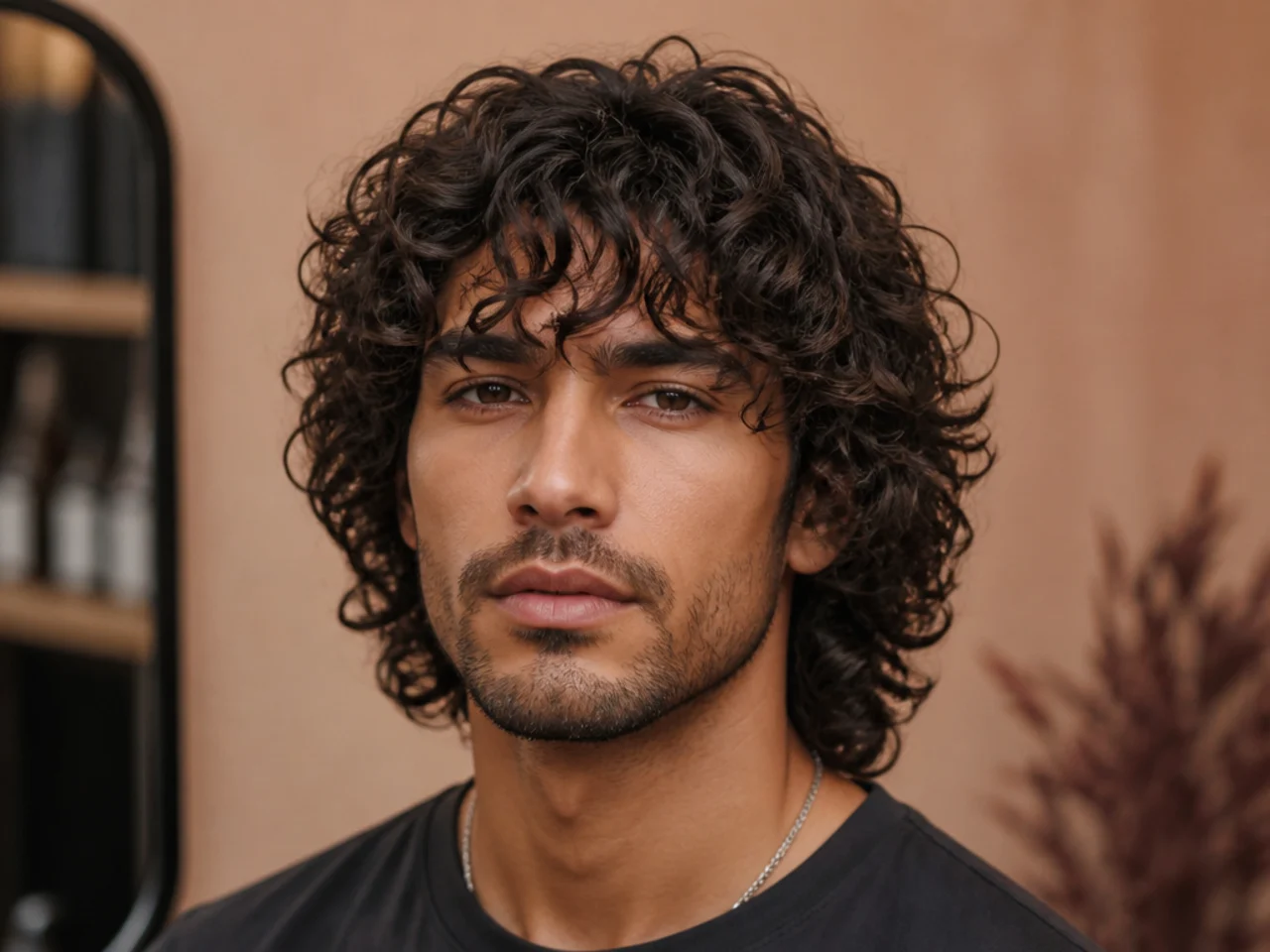
20 Medium Length Haircuts for Curly Hair
Twenty medium length curly hair men cuts — shag, wolf, mullet, mod, top knot, twist-out — with clipper numbers, inches, and the exact ask for your barber.
In this article · 32
- What Is a Medium Length Curly Cut?
- How to Choose Your Medium Length Curly Cut
- The 20 Cuts
- 1\. Layered Curly Shag
- 2\. Round Medium Afro
- 3\. Curly Wolf Cut
- 4\. Curly Bro Flow
- 5\. Curtain Curls
- 6\. Middle Part Curls
- 7\. Curly Top Knot
- 8\. Curly Modern Mullet
- 9\. Curly Fringe with Low Taper
- 10\. Curly Two Block
- 11\. Curly Textured Pompadour
- 12\. Curly Quiff with Mid Fade
- 13\. Curly Faux Hawk
- 14\. Curly Comma Hair
- 15\. Grown-Out Curly Ivy League
- 16\. Medium Curly Undercut
- 17\. Twist-Out Medium Length
- 18\. Sponge-Twist Coily Halo
- 19\. Medium Freeform Locs
- 20\. Curly Side Sweep with Low Taper
- How to Ask Your Barber
- Styling and Maintenance
- FAQ
- What's the best medium length curly hair men cut?
- Does curly hair need a fade for a medium length cut?
- How do I stop my curly hair from going frizzy at medium length?
- Can I get a slick back or side part on curly hair?
- What's the difference between a medium length wavy cut and a curly one?
- How often should I trim a medium length curly haircut?
Curly hair at medium length is where the curl finally gets to speak. Too short and the pattern reads as fuzz; too long and gravity flattens the crown. Three to five inches on top is the sweet spot — long enough to bounce, short enough to sit round. This guide runs the twenty medium length curly hair men cuts worth walking into a barber shop for in 2026, with photos, curl-type notes, and the exact clipper numbers, inches, and finish notes to hand your barber. For the full medium length haircut men catalog across every texture, start there.
What Is a Medium Length Curly Cut?
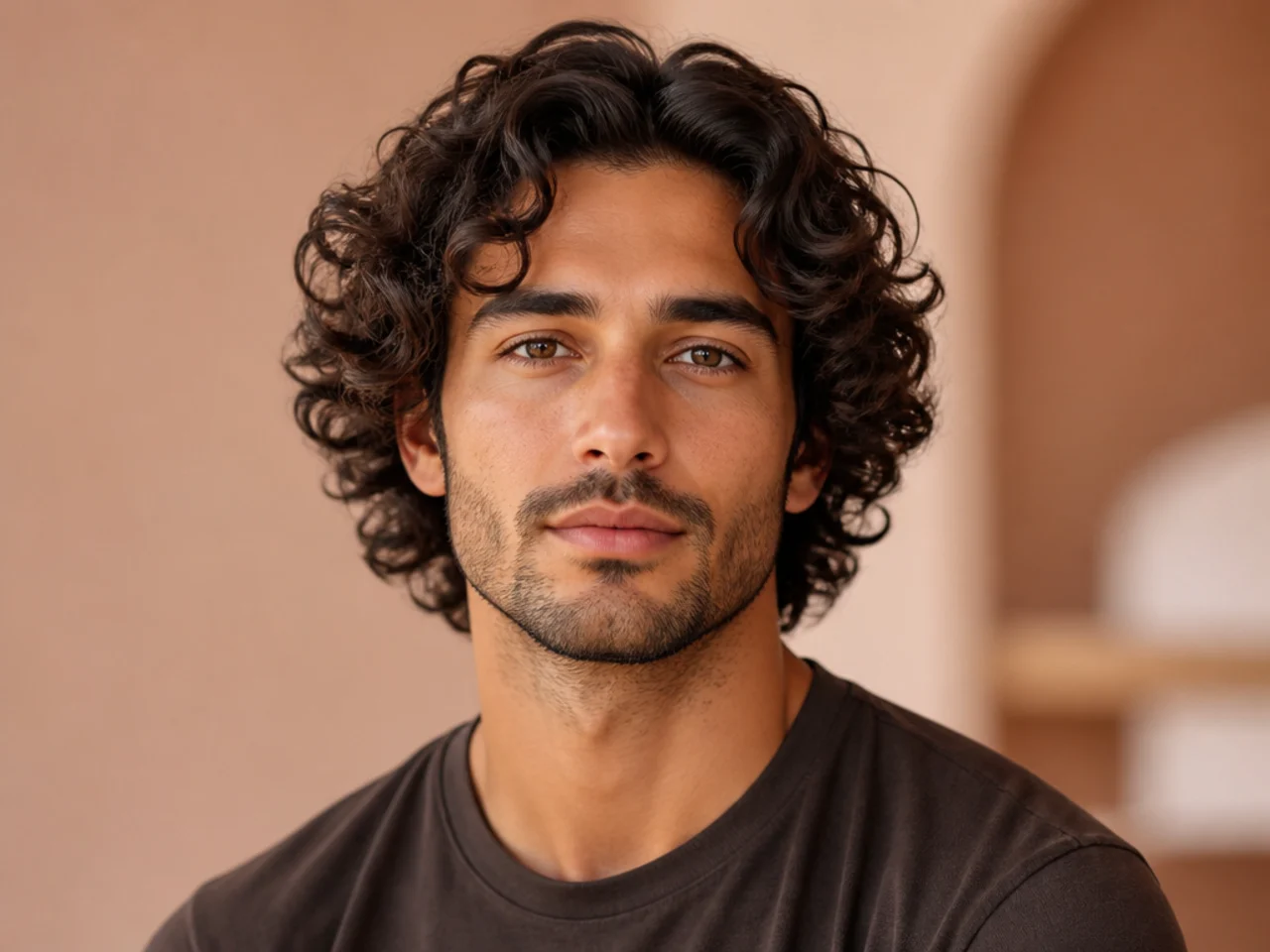
Medium length on curly hair sits at 3 to 5 inches on top — measured stretched, before the coil pulls it up. Curly hair spans 3A through 4C on the curl types scale: loose ringlets larger than a Sharpie at 3A, springy Sharpie-sized corkscrews at 3B, tight pencil-sized coils at 3C, and 4A through 4C for the coily patterns that read as an S, a Z, and a dense zig-zag. All six thrive at medium length because the strand finally has room to complete the coil without collapsing.
Sides can stay long and scissor-blended for a rounder halo, or drop to a low, mid, or high fade for a sharper frame around the crown. Both work — curly hair reads cleaner against a tapered side than a shaggy one, but neither is required. See the medium length hairstyles men pillar for the styling-first take across textures.
The trade-off you're working with: curly hair has physics. It expands up and out from the scalp, so the barber has to cut for the finished shape, not the wet length. Every cut in this guide assumes a dry curl consultation and a stylist who understands that the pattern shrinks between rinse and finish.
How to Choose Your Medium Length Curly Cut
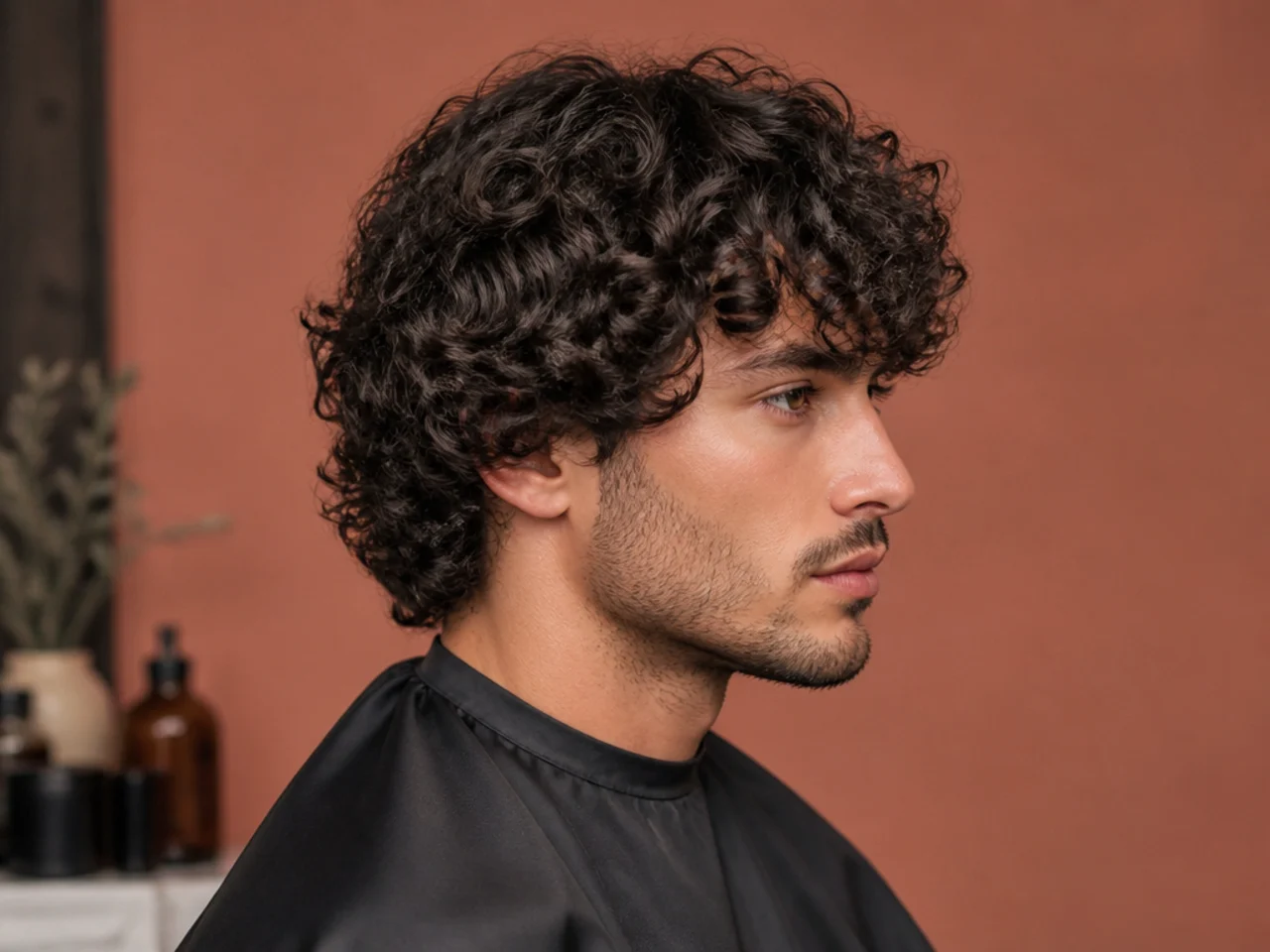
Three filters narrow the twenty. Face shape, curl type, and how much time you want to spend defining the pattern each morning.
Round faces want vertical height — curly quiff, textured curly pompadour, faux hawk, top knot. The lift stretches the frame. Long or oblong faces want soft horizontal spread — layered shag, curtain curls, side sweep. Square jaws pair with rounded crowns — round medium afro, layered curly shag, twist-out — because the halo softens angular bones. Oval faces wear every version here. For the deeper face-shape framework, see haircuts for square faces.
Curl type sets the density. 3A holds the structured cuts — grown-out Ivy League, curtain curls, side sweep — because the ringlet still drapes. 3B and 3C are the widest-fit sweet spot, carrying nearly every cut on this list. 4A through 4C want the cuts built for shape and shrinkage — round medium afro, twist-out, freeform locs, sponge-twist halo — because coily patterns shrink 50 to 75 percent from stretched to dry, and the cut has to allow for it.
The 20 Cuts
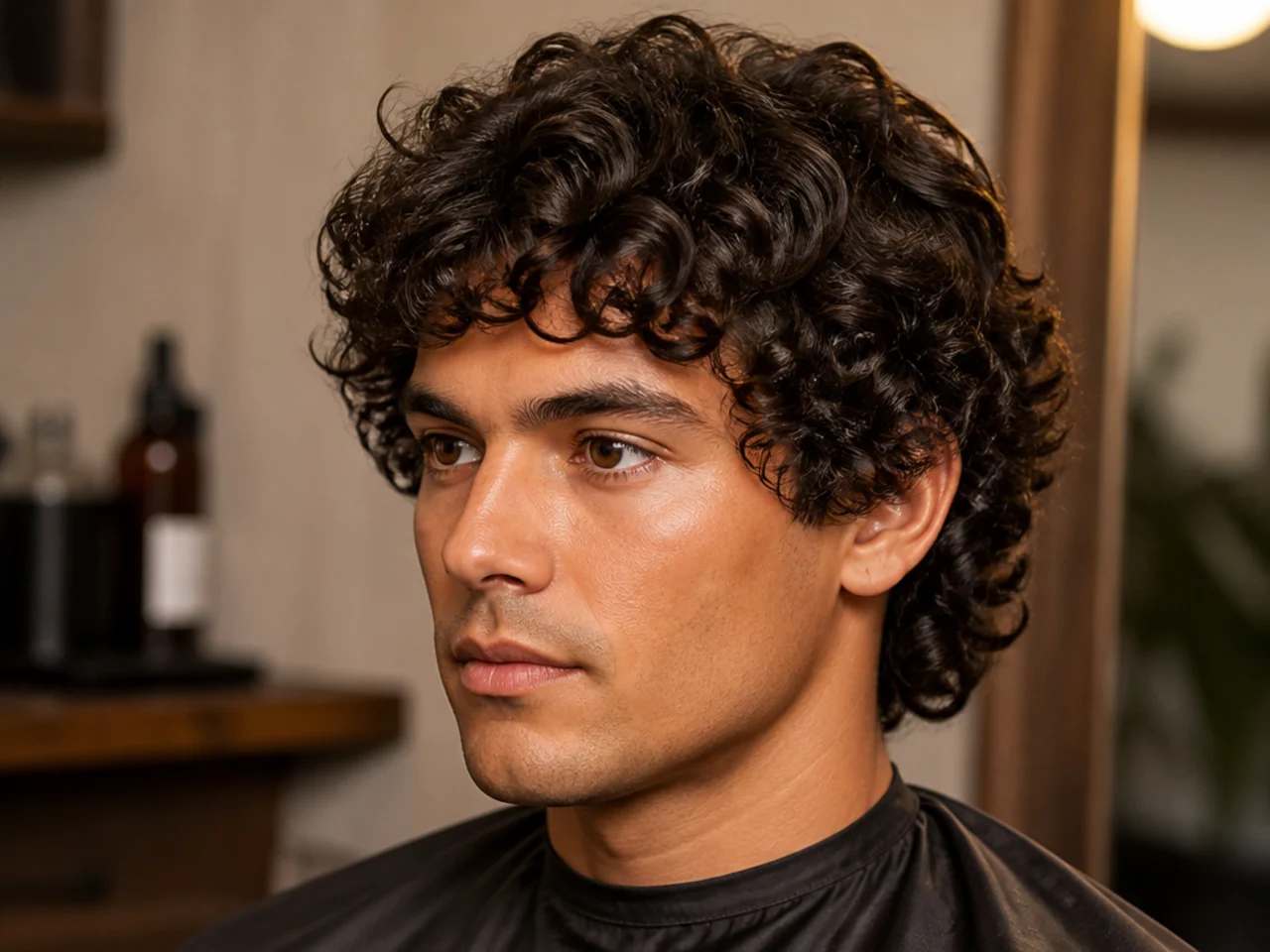
Twenty cuts, ordered soft-and-natural to loud-and-statement. Each block covers what makes the cut work on curly hair, who it suits, exactly how to ask, and one styling move worth stealing.
1. Layered Curly Shag
The reference cut for curly hair at medium length. Top runs 4 to 5 inches stretched with heavy internal layering so the curl separates instead of stacking. A curtain fringe sits just past the brow, splitting to either side of a soft central part. Sides stay scissor-blended or drop to a low taper. The shag treats curly hair the way it was meant to be treated — pattern first, silhouette second.
Suits every face shape. 3A carries the drape softest; 3B and 3C hold the round volume the shag was built for.
Ask for: "layered curly shag, 5 inches stretched on top, heavy internal layering to reduce weight, curtain fringe past the brow, dry cut on damp curl."
Styling: rake leave-in through soaking-wet hair, scrunch a coin of curl cream in with a praying-hands motion, diffuse on low with the head tipped forward. Break the cast with a fingertip of oil once dry.
2. Round Medium Afro
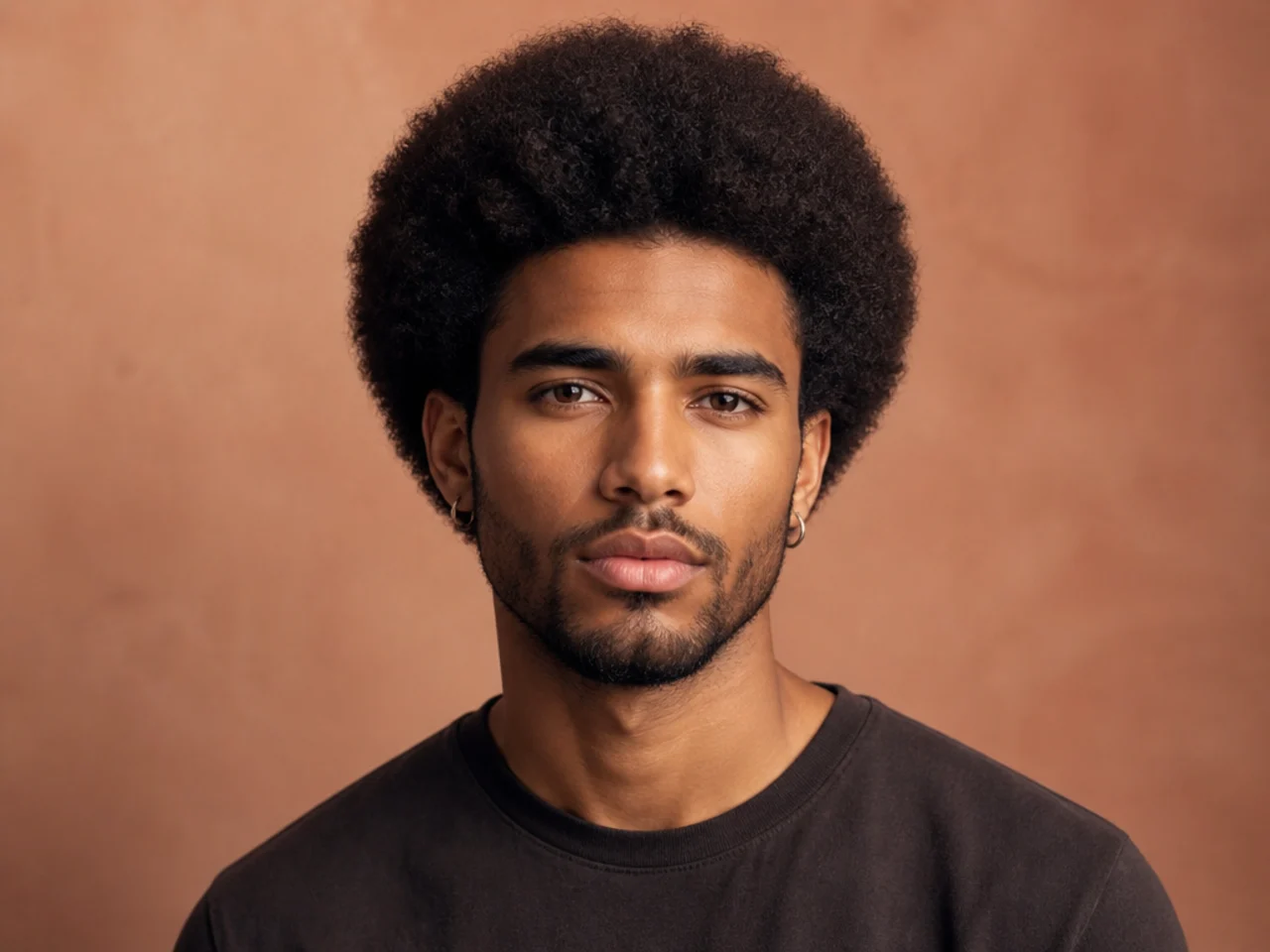
The clean afro at medium length. Top and sides carry the same 3-inch stretched length so the shape reads as a round halo around the head, sculpted with scissor blending or shaped with a wide-tooth pick after every wash. No fade — the entire volume is the statement.
Best on 3C, 4A, and 4B textures where the coil holds the round shape without collapsing. Suits round, oval, and square faces because the sphere balances any bone structure.
Ask for: "medium round afro, 3 inches all around, cut with a pick after the shape is set, no fade or taper, scissor-blend the perimeter to a soft round line."
Styling: apply leave-in and curl cream to damp hair, comb through with a wide-tooth pick from root to tip while air-drying, then pick out from the scalp once dry to build the halo. A silk or satin pillowcase at night preserves the round.
3. Curly Wolf Cut
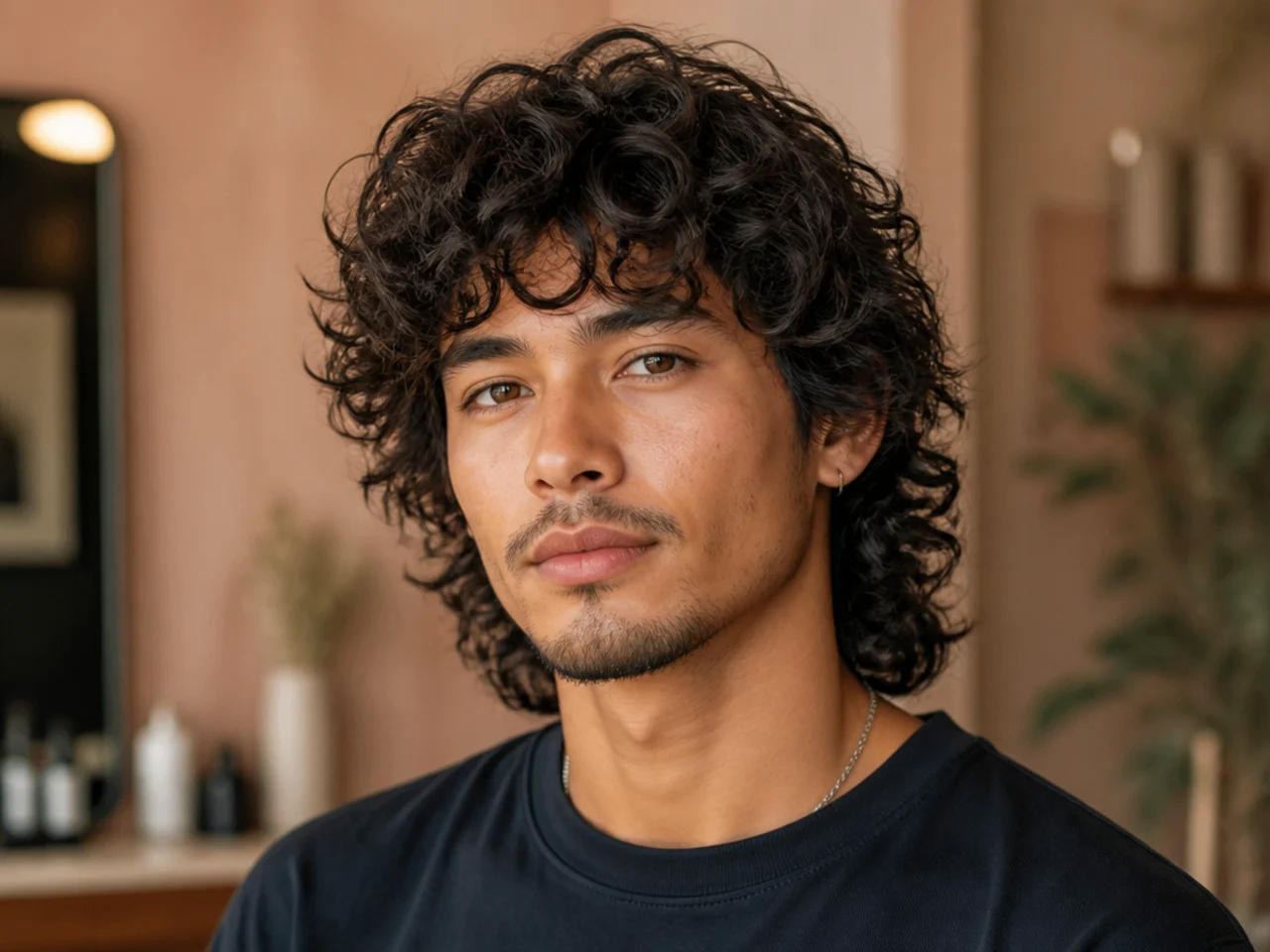
The wolf cut for men built for curls. Top stays 4 inches stretched with heavy razored layers stacked through the crown; the front drops into wispy face-framing ringlets that hit the cheekbone. The back reaches the collar with disconnected coily layers. Curly hair is the wolf's ideal texture — the shag-inflected shape needs volume to move. For the curl-specific deep dive, see curly wolf cut men.
Suits diamond, oval, and heart-shaped faces. 3A through 3C carry the shape cleanest; 4A works with heavier razoring.
Ask for: "curly wolf cut with crown volume, razored face-framing curls at the cheekbone, 4 inches stretched on top, disconnected back to the collar, dry cut."
Styling: leave-in and curl cream on damp hair, diffuse with the head upside down, then flip up and shape the crown with fingers. Fingertip of oil at the ends.
4. Curly Bro Flow
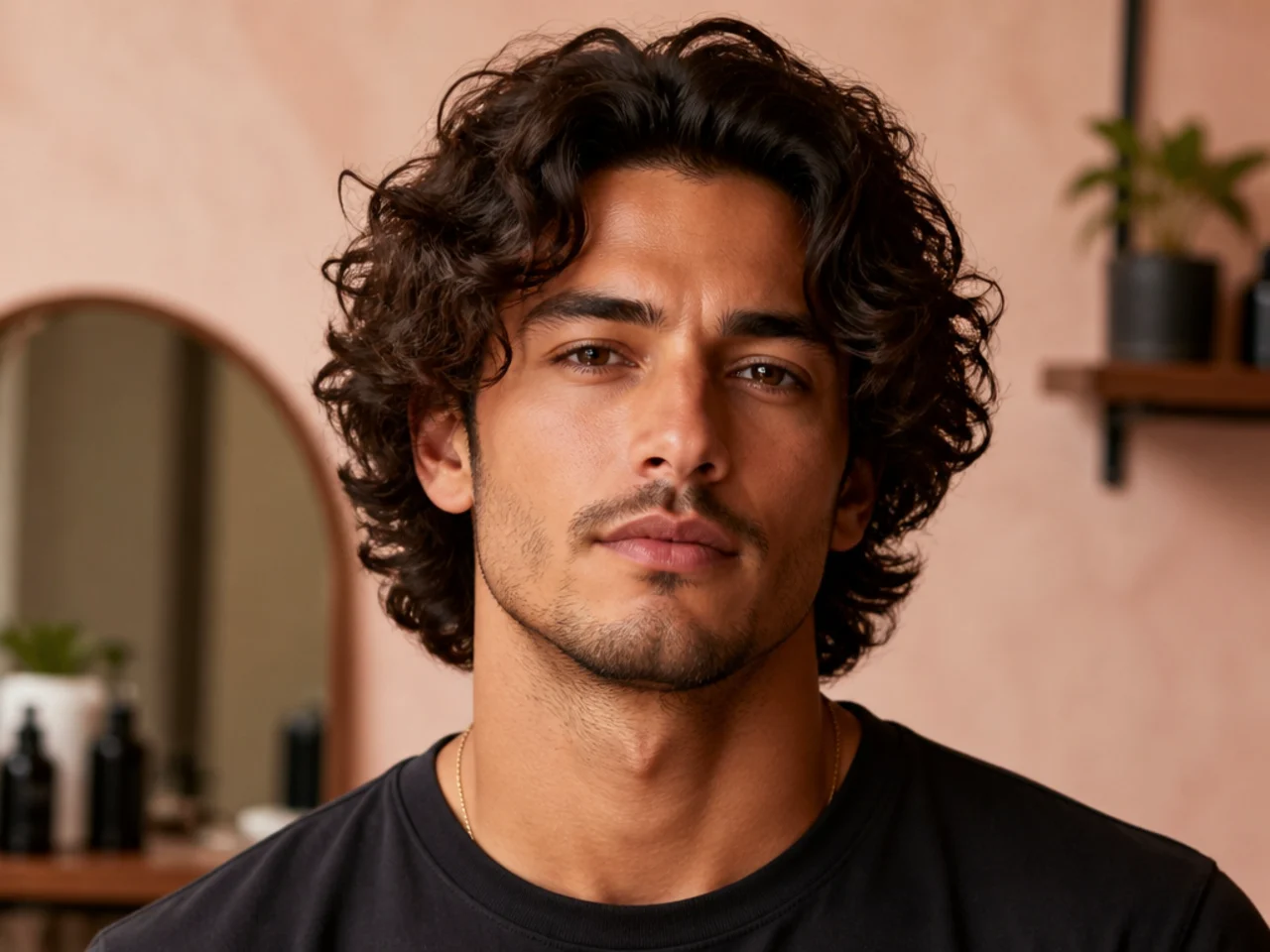
The flow haircut done curly. Length runs 5 inches stretched on top and sides, sweeping loosely back from the hairline with the coil leading. Scissor-cut only, no fade, point-cut ends so the ringlets don't blunt into shelves. The finished shape is a mane rather than a haircut — think curly rocker, not comb-back business.
Suits oval, oblong, and diamond faces. 3A and 3B carry the sweep cleanest; 3C reads as a fuller, rounder mane.
Ask for: "curly bro flow, scissor work only, 5 inches stretched all around, no fade, point-cut ends, layered so the curl falls back naturally."
Styling: rake leave-in through soaking-wet hair, work curl cream in with a praying-hands motion, sweep back with fingers as it dries. Never a comb — tracks kill the softness.
5. Curtain Curls
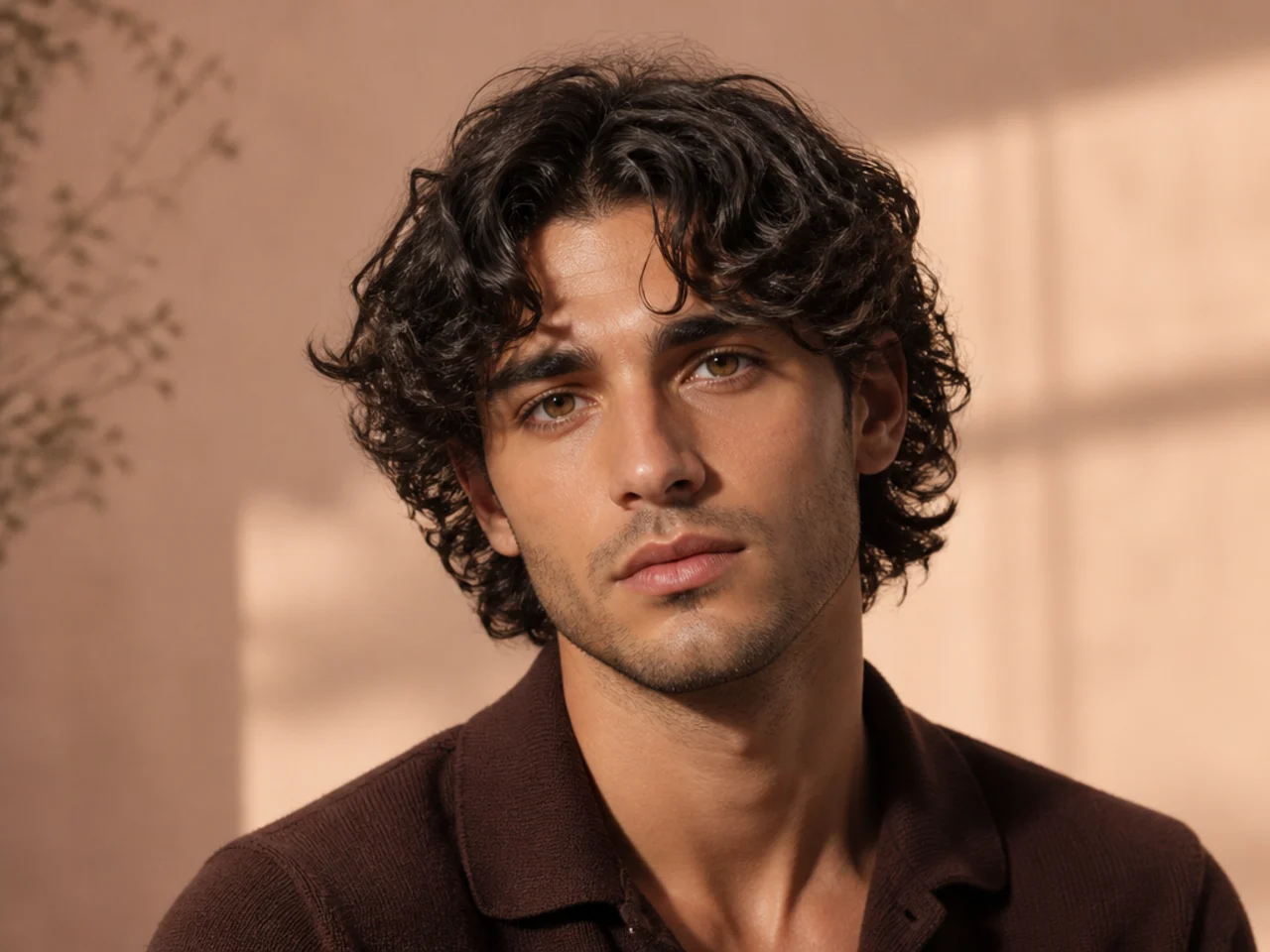
The 90s curtain silhouette adapted for the curl. Front pieces hit 5 to 6 inches stretched and sweep to either side of a defined central part. Sides stay scissor-cut and long enough to blend the fringe into the curl mass. No fade. Curly hair drapes the curtain with a rounder edge than straight — the parted ringlets frame the face like a cathedral arch.
Best for oval, diamond, and heart-shaped faces. 3A and 3B hold the split; 3C and 4A push the fringe outward, which reads fuller.
Ask for: "curtain curl cut, 5 to 6 inches stretched at the front, 4 inches at the crown, defined middle part, scissor-cut sides to the ears, light face-framing layers cut dry."
Styling: leave-in and curl cream on damp hair, finger-comb the part clean, diffuse or air-dry. Fingertip of oil to seal the ends. If the ringlets frizz, mist water and re-scrunch — never brush.
6. Middle Part Curls
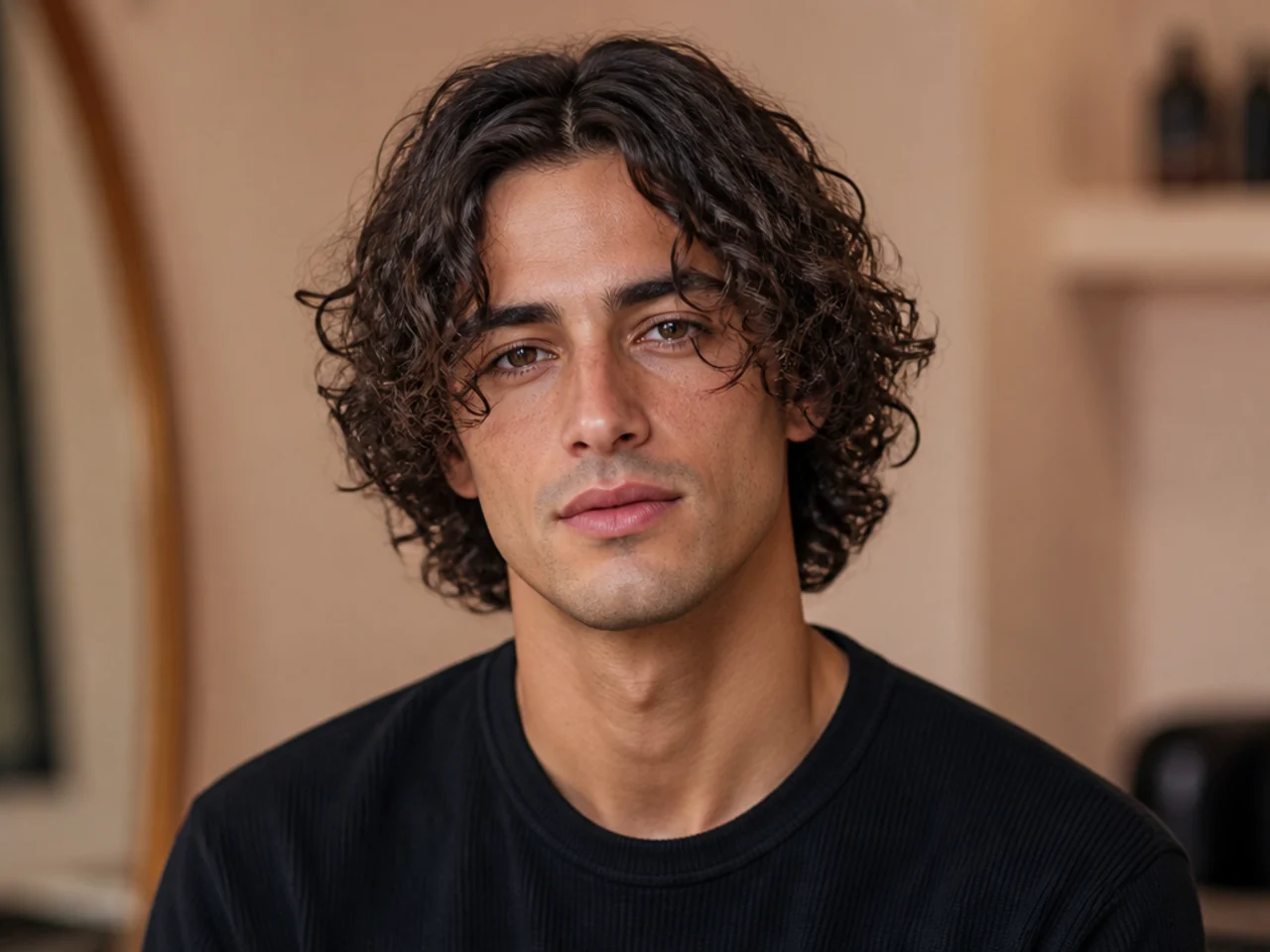
The looser cousin of the middle part haircut, cut for the curl. Top runs 4 to 5 inches stretched with heavy razored layers that let the ringlets fall to either side of a soft center split. Sides can stay long and scissor-blended or drop to a soft low taper. The center part reads intentional on curly hair only if the layering is aggressive enough to let the pattern separate — otherwise it reads flat.
Oval and long faces wear this best. 3A is the sweet spot; 3B carries it with more visual weight, and 3C splits into a broader triangle.
Ask for: "middle part curl cut, 5 inches stretched on top, razored face-framing layers to the cheekbones, defined center part, scissor-blended sides or a soft low taper."
Styling: leave-in and curl cream on damp hair, comb the part with a wide-tooth comb, diffuse or air-dry. Fingertip of oil at the ends only.
7. Curly Top Knot
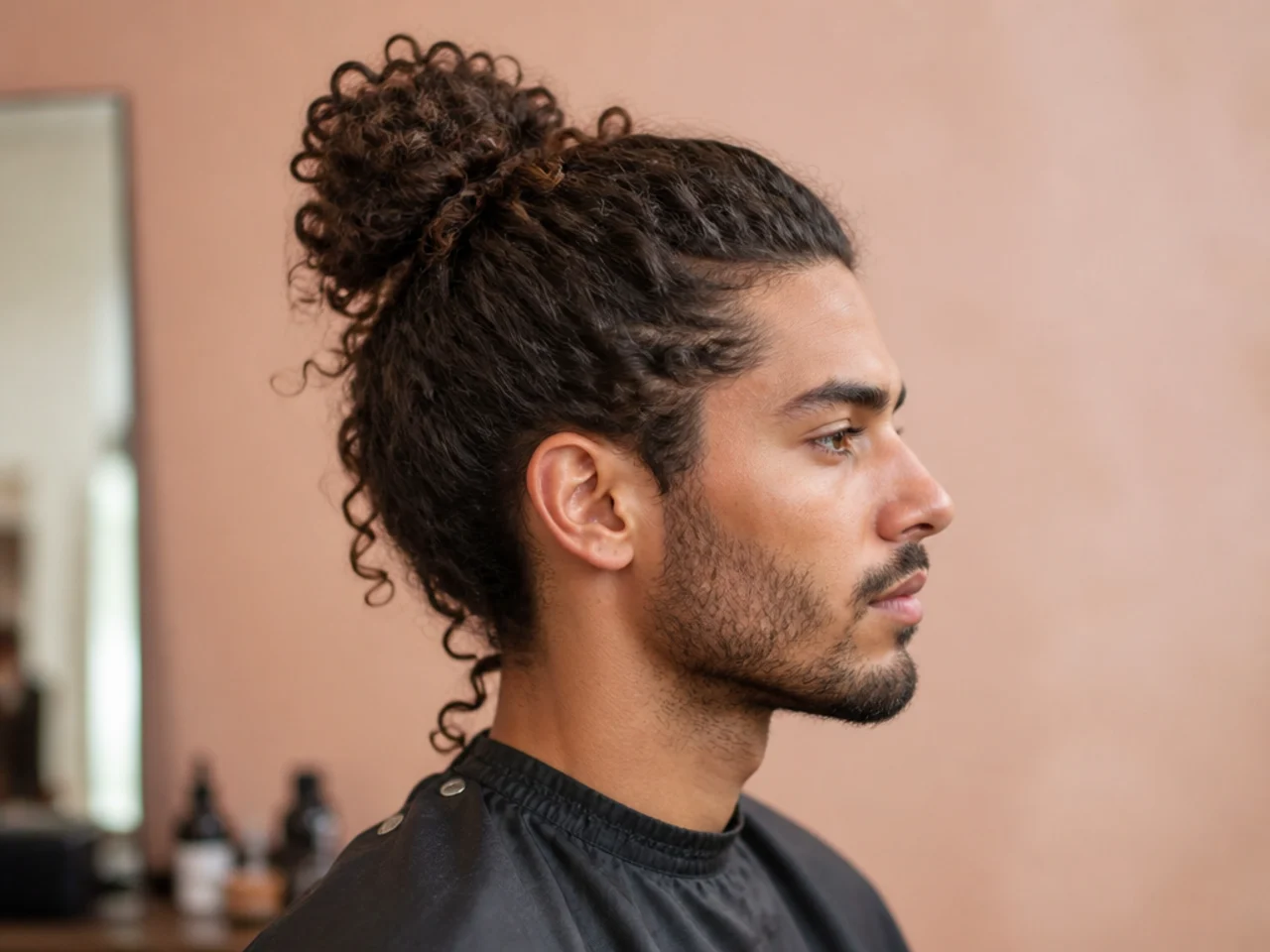
The summer solution: long enough on top to tie up, short enough on the sides to stay cool. Top runs 5 to 7 inches stretched; sides drop to a mid or high skin fade. Internal layering prevents bulk at the knot base. Curly hair makes a rounder, softer knot than straight — the coil adds body to the bundle instead of pulling flat.
Suits oval and square faces. 3A and 3B carry the knot cleanest; 3C and 4A make a bigger knot with more halo effect. Pair with a full or short beard for balance.
Ask for: "curly top knot cut, mid or high skin fade on the sides, 6 inches stretched on top, internal layering to remove crown bulk so the knot sits clean."
Styling: gather damp hair at the crown, twist once with the coil direction, secure with a fabric elastic — never rubber. Pull small pieces loose at the temples for movement. Coil the loose curls at the halo with your fingers.
8. Curly Modern Mullet
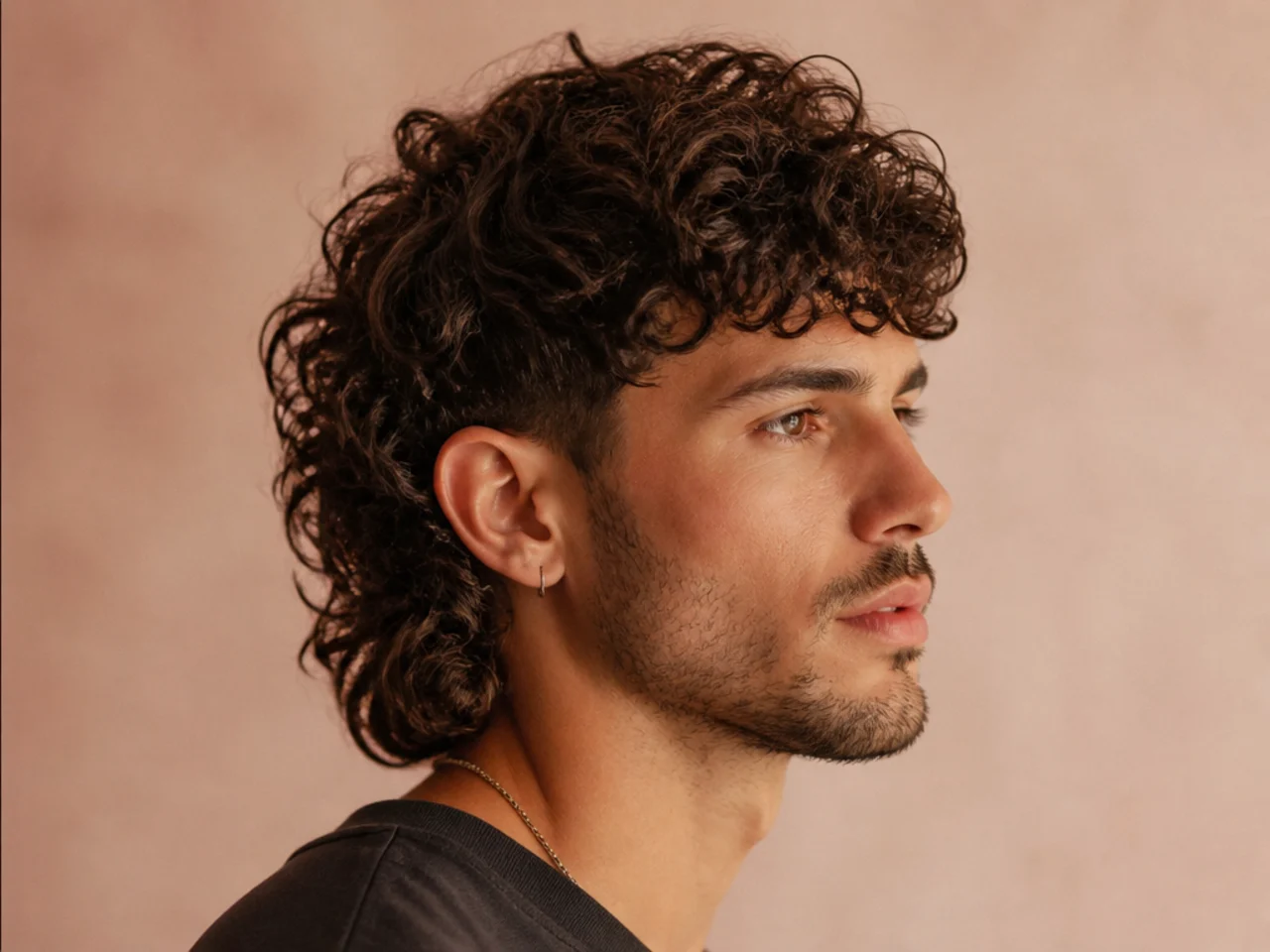
The modern mullet built for the curl. Top and front stay 3 to 4 inches stretched with heavy point-cutting. The back reaches the collar with disconnected coily layers. Sides drop to a low mid fade for the clean transition from the coil mass to the fade line. Curly hair is the mullet's most photogenic texture — the back-length movement needs body to look intentional, and coils supply it by default.
Suits oval and heart-shaped faces. The fringe frames a strong forehead; the back adds masculine length. 3B and 3C carry the back-length shape without collapsing.
Ask for: "curly modern mullet, 4 inches stretched on top with heavy point-cutting, back to the collar with disconnected layers, low mid fade on the sides, cut dry."
Styling: leave-in and curl cream on damp hair, diffuse the crown with the head upside down, then flip and let the back fall. Fingertip of oil at the ends. Skip pomade — the shine kills the shape.
9. Curly Fringe with Low Taper
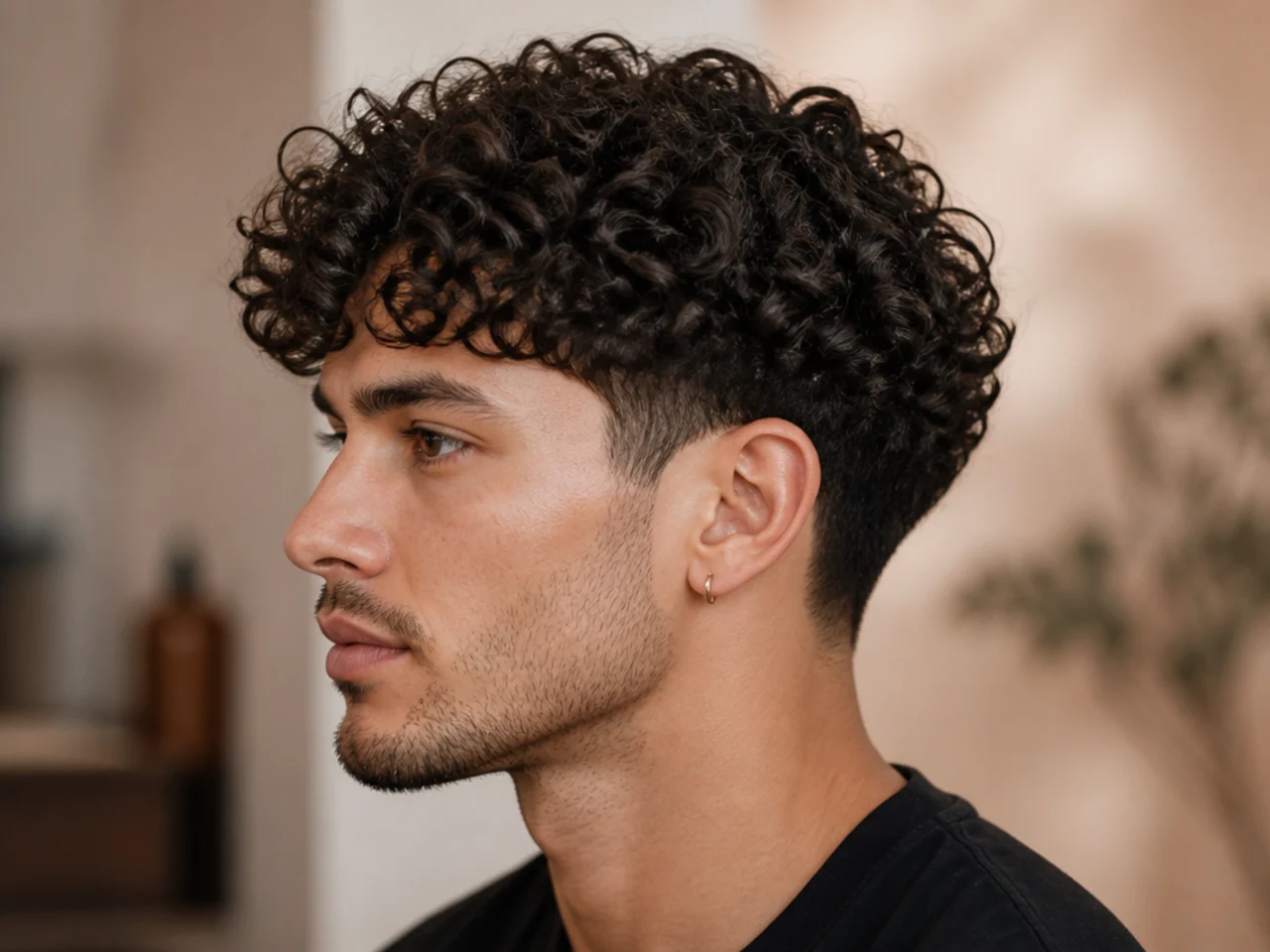
The medium fringe rebuilt for the curl. Top runs 5 to 6 inches stretched so the fringe sits past the eyebrows as a mass of coils. Sides drop to a low taper fade for a clean frame. The whole cut leans forward from the crown, and curly hair adds vertical volume the flat fringe can't fake.
Flatters oval and square faces — the fringe softens the jawline. High foreheads and receding hairlines benefit most.
Ask for: "curly medium fringe, 5 to 6 inches stretched at the front with heavy layering, curl-forward point-cut fringe past the brows, low taper fade on the sides."
Styling: work leave-in and curl cream through damp hair with the fringe pulled forward, diffuse on low. Push the fringe out and slightly down with your palm. Never a brush — brushes make curly fringes stiff.
10. Curly Two Block
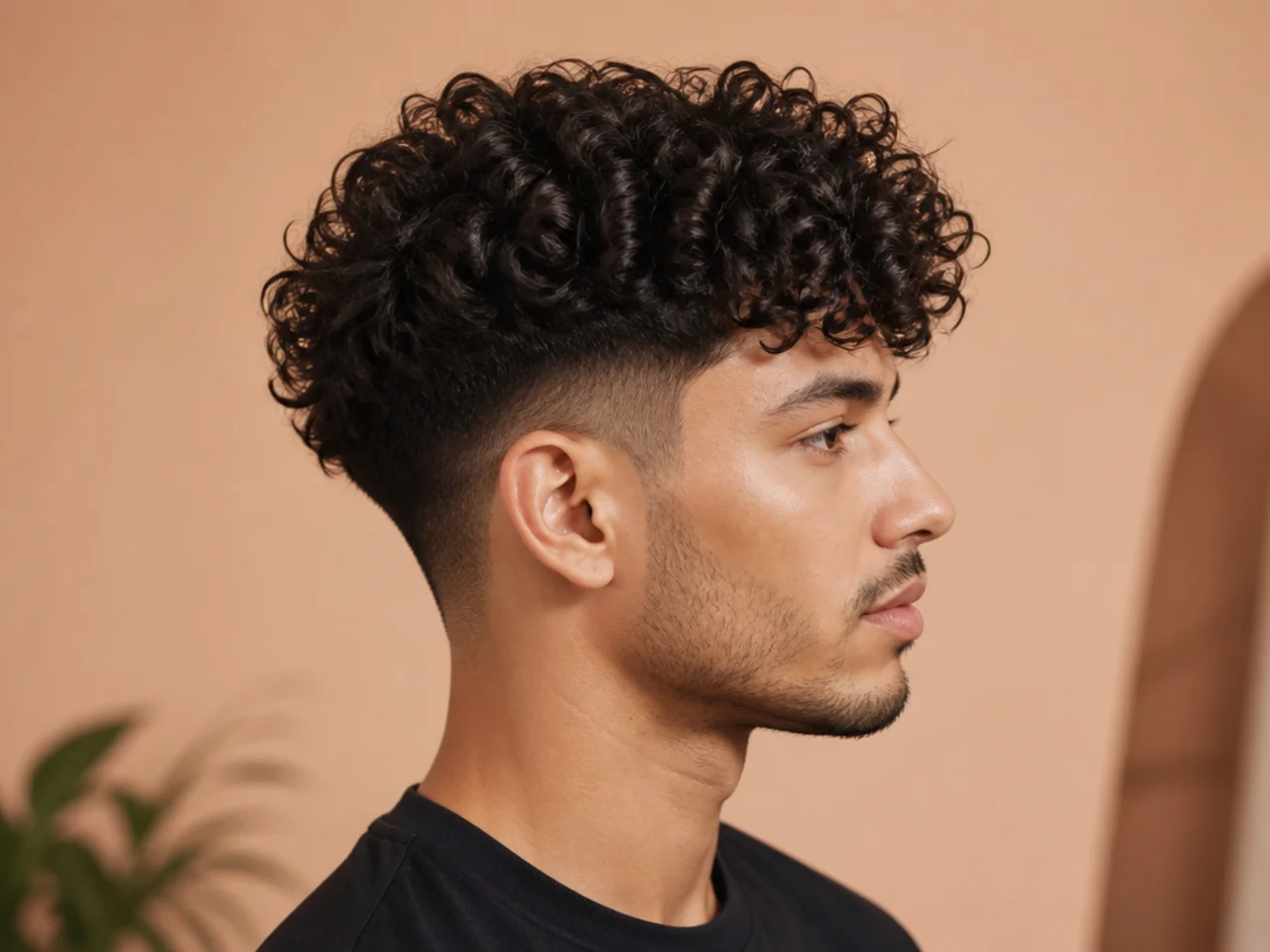
The K-pop two block adapted for the curl. Sharp contrast between a long, layered curl mass on top and short clipper-cut back and sides. Top runs 4 to 6 inches stretched with weight built at the crown. The disconnection between top and sides is intentional and visible. Curly hair softens the disconnection compared to straight — the hard clipper line hides under the halo, which reads looser than the original Korean silhouette.
Suits round and square faces because the top adds vertical length and the tight sides sharpen the frame. 3A and 3B carry it clean; 3C bulks it into more of a curly undercut.
Ask for: "curly two block, guard 2 on the sides and back with a clean disconnection, top at 5 inches stretched, front layered forward, cut with the curl direction in mind."
Styling: leave-in and curl cream on damp hair, diffuse with the head tipped forward, then flip up. Fingertip of matte cream to define the front pieces. Skip shine.
11. Curly Textured Pompadour
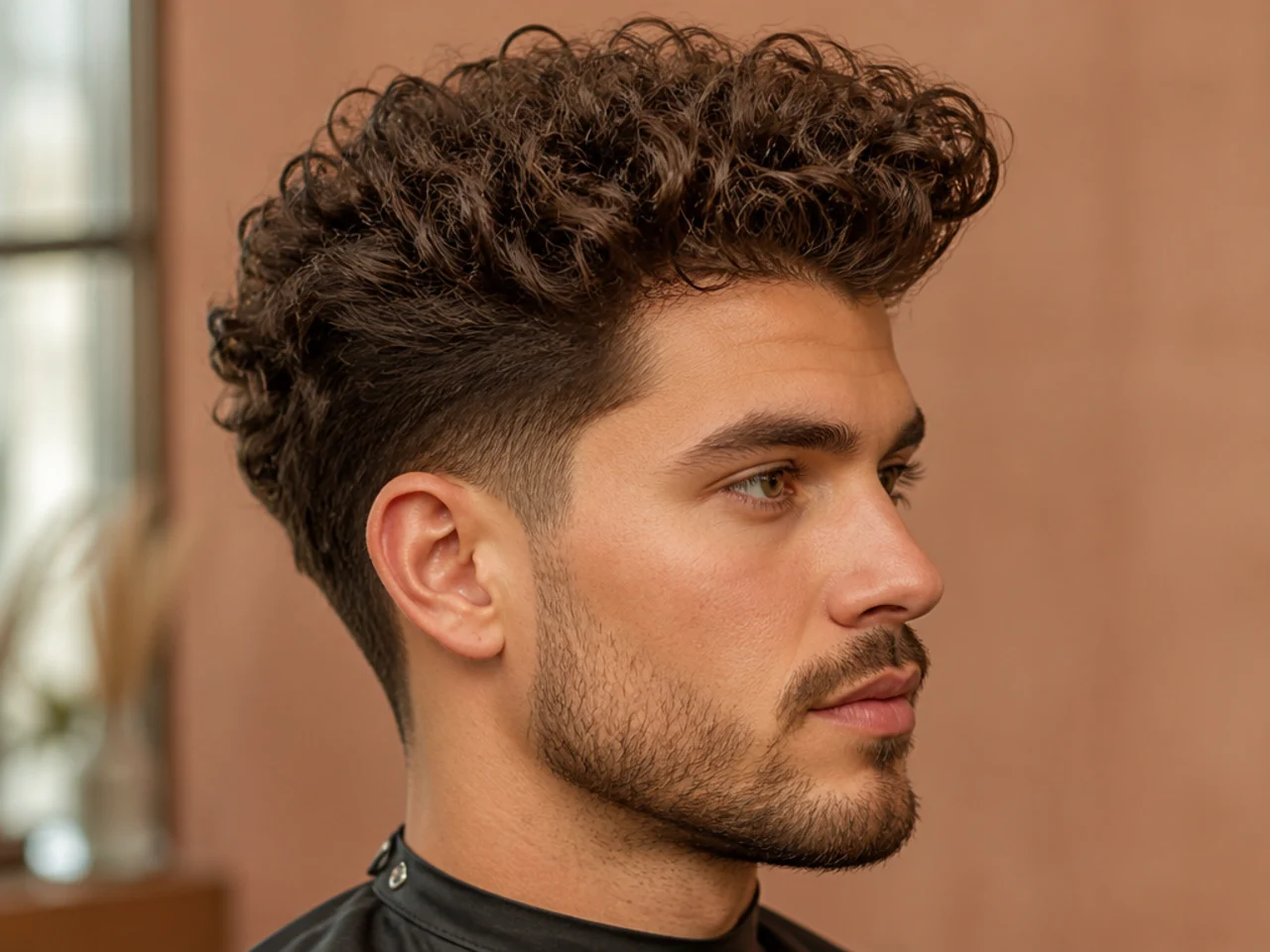
The textured pompadour swaps the shiny classic for a coil-driven lift. Top runs 5 to 6 inches stretched at the front, tapering to 3 inches at the crown. Sides sit tight with a mid or high fade. Point-cut ends give the coils breathing room. Curly hair carries this cut without mousse or a round brush — the pattern supplies the scaffolding.
Suits oval and square faces. 3B and 3C hold the arch best; 3A can carry it but reads softer.
Ask for: "curly textured pompadour, 5 inches stretched at the front, 3 at the crown, point-cut throughout, mid or high fade with a defined line."
Styling: apply leave-in and curl cream to damp hair, diffuse with the head tipped back so the front piece lifts. Strong-hold matte cream pressed into the base, shaped forward with the fingertips. Structured — never crispy.
12. Curly Quiff with Mid Fade
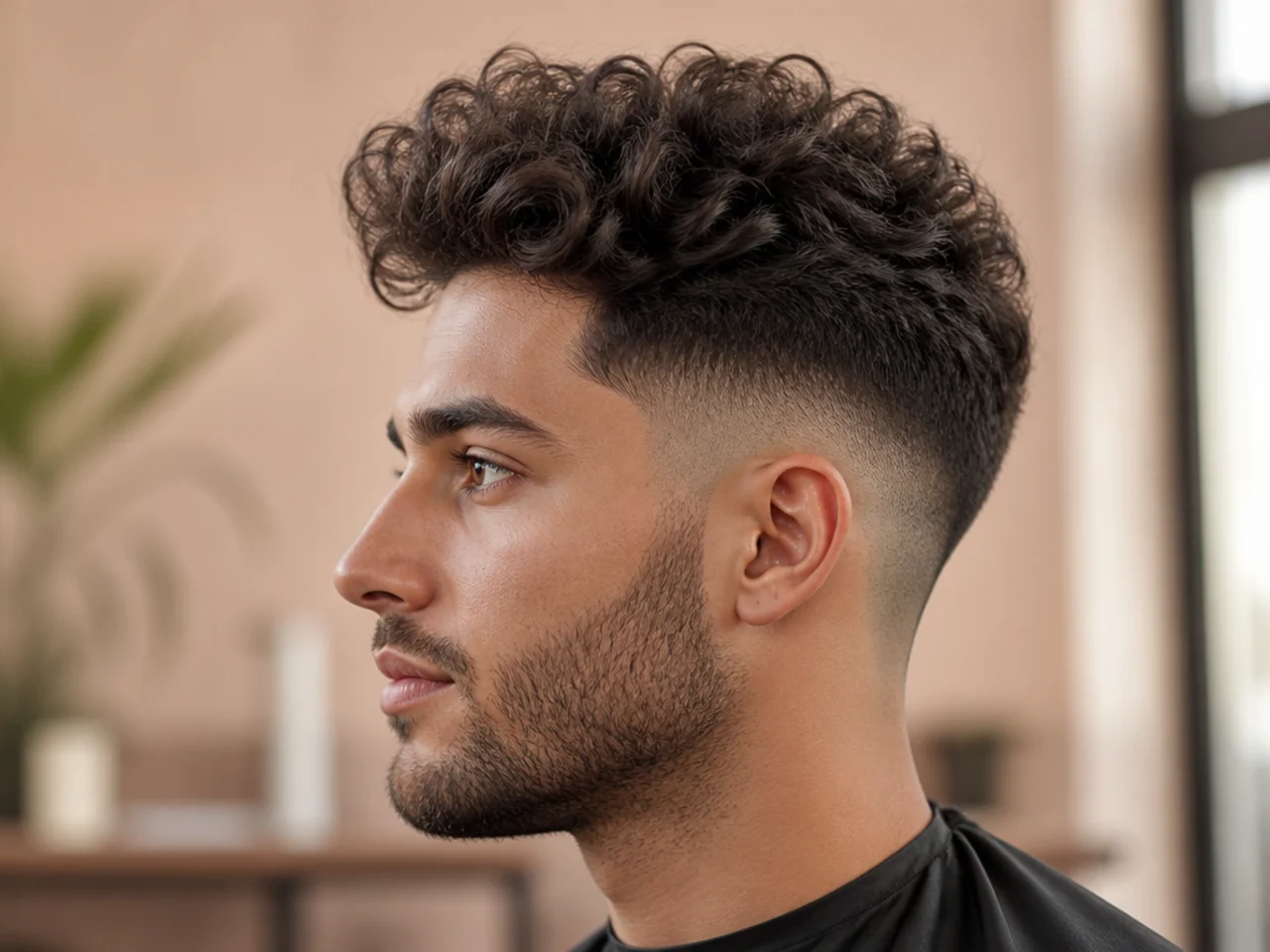
The medium quiff done curly — taller than the wavy version because the coil already leans up. Top runs 5 inches stretched so the front piece arches back with the ringlet's natural lift. Sides get a mid fade to draw the eye vertically. Point-cut layers throughout so the quiff has separation. Curly hair holds this shape better than straight because the coil supplies the volume that straight has to fake with heat.
Flatters round and square faces because the vertical height stretches the frame. 3A and 3B hold the arch; 3C bulks it into a textured pompadour, which is fine — see number 11.
Ask for: "curly medium quiff, 5 inches stretched at the front, point-cut internal layers, mid fade on the sides — not skin, just clean."
Styling: leave-in and curl cream on damp hair, diffuse with the head tipped back to lift the front. Matte cream on the front third only. The back sits clean.
13. Curly Faux Hawk
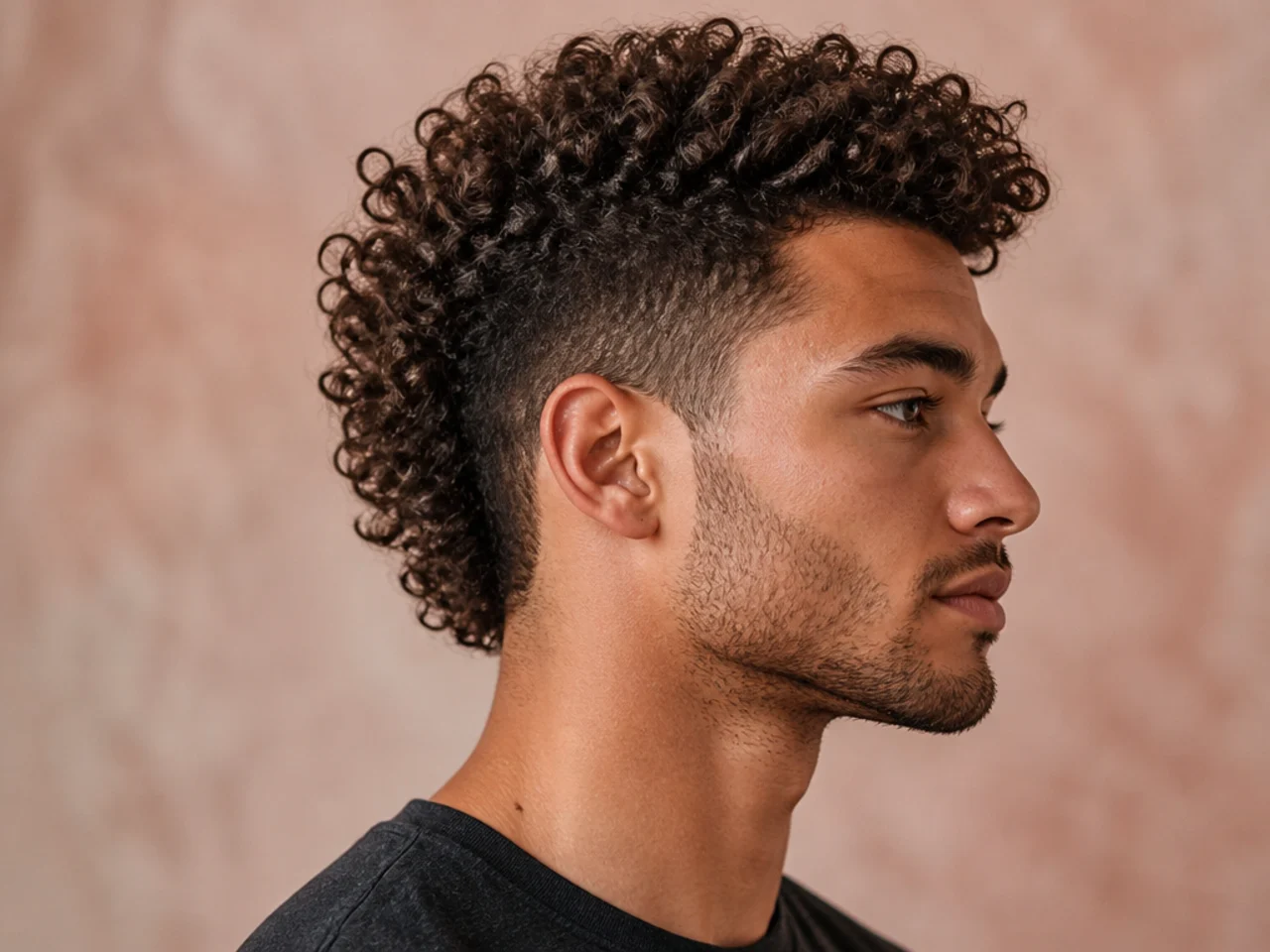
The faux hawk built for the curl. Top runs 4 to 5 inches stretched down the center strip, tapering short at the temples and back to a low or mid fade. The curl mass sits as a vertical column from the front hairline to the crown — a Mohawk silhouette without shaved sides.
Suits round and diamond faces because the vertical column stretches the frame. 3B and 3C carry the column cleanest; 3A reads flatter and needs strong-hold cream.
Ask for: "curly faux hawk, 5 inches stretched down the center strip, low or mid fade on the sides tapering to the strip, front point-cut for lift, dry cut."
Styling: leave-in and curl cream on damp hair, diffuse the center strip up and slightly forward with fingers. Fingertip of matte cream to hold the shape. Air-dry the sides.
14. Curly Comma Hair
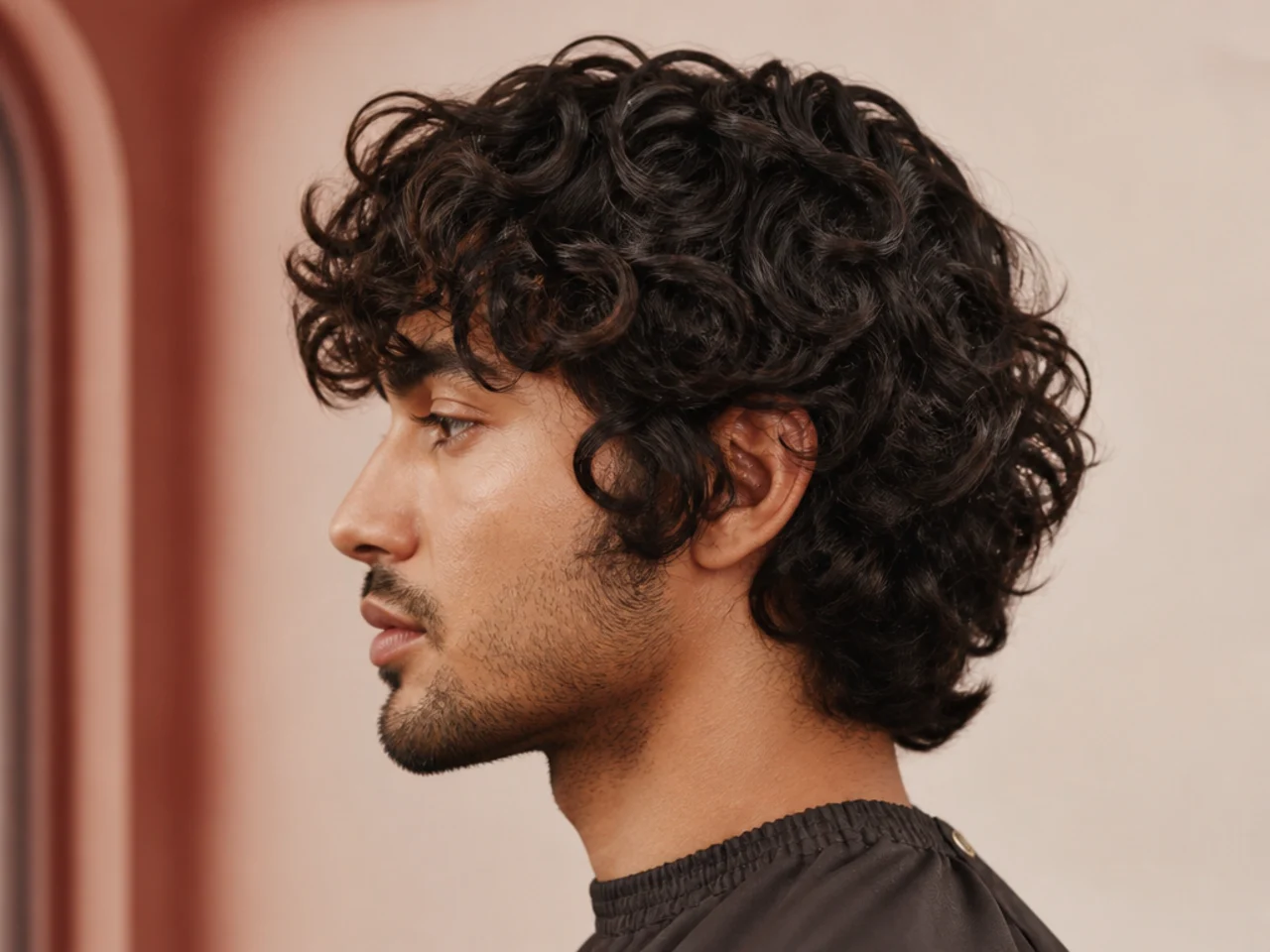
The Korean comma hair rebuilt for looser coils. Top runs 3 to 4 inches stretched, styled forward and slightly to one side so the front ringlets curl into two comma shapes on the forehead. Sides get a low or mid fade for the clean line. Curly hair takes the comma shape without a round brush — the S-pattern does what straight hair needs heat to fake.
Best for oval, round, and square faces. 3A carries the comma shape cleanest; 3B works with tighter point-cutting; 3C bulks the comma into a broader curl.
Ask for: "curly comma hair, 3 to 4 inches stretched on top, layered forward, mid fade on the sides — I want the comma curl to sit on the forehead using the natural coil."
Styling: small amount of curl cream warmed between the palms, worked forward from the crown. Coax the front ringlets into the comma shape with your fingertips, one side at a time. A pinch of gel only if humidity fights you.
15. Grown-Out Curly Ivy League
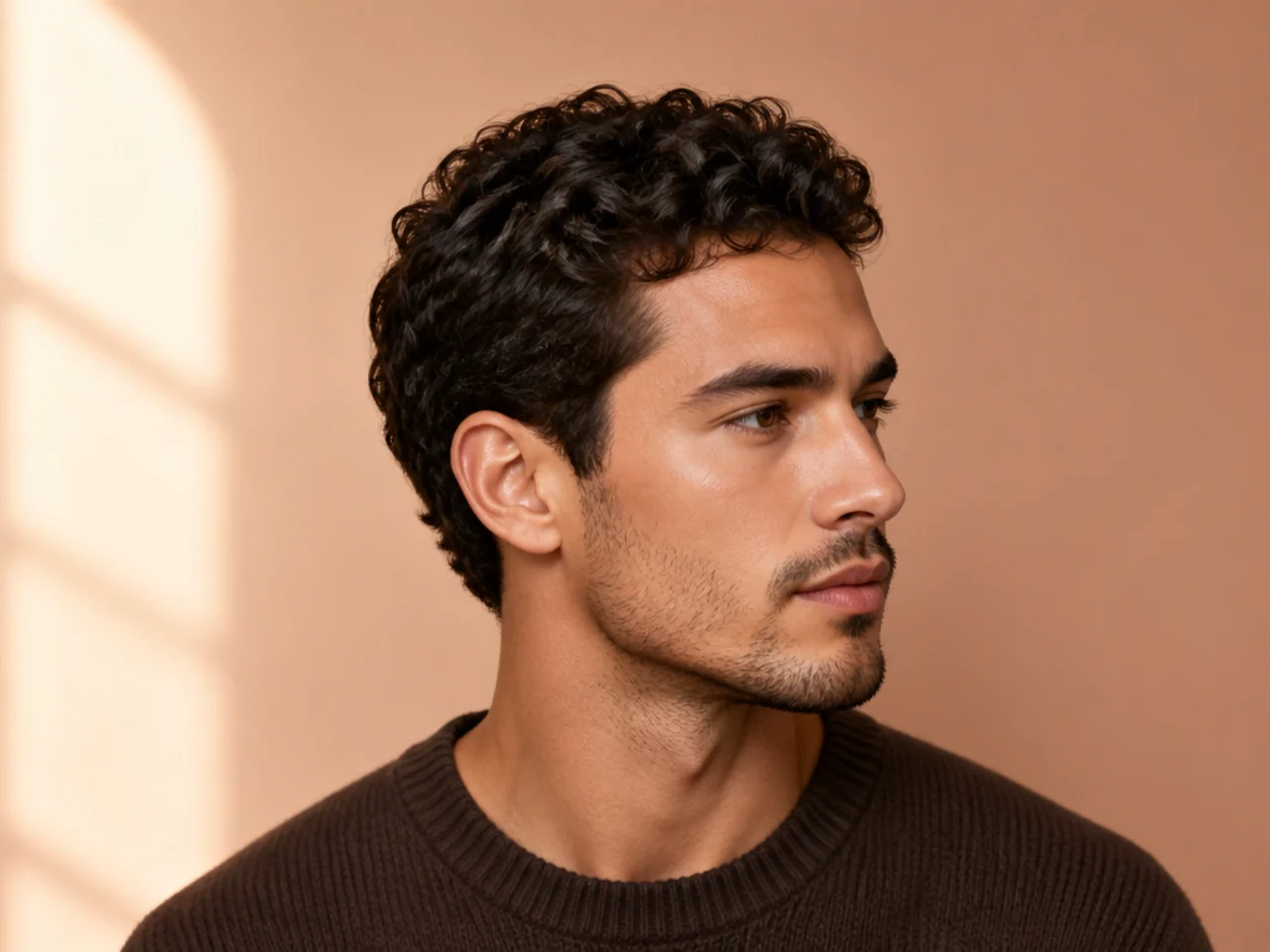
The Ivy League grown into medium territory for curls. Top reaches 3 to 4 inches stretched with a soft side part that lets the front pieces sweep sideways. Sides taper with scissors — never a fade for this cut. Curly hair adds body the straight-hair version has to build with a round brush, which makes this cut easier to wear on curls than any other texture. Perfect for the professional hairstyle men meeting-room and dinner rotation.
Suits oval, square, and long face shapes. 3A holds the part cleanest; 3B splits the part into a soft ridge, which reads intentional rather than messy.
Ask for: "grown-out curly Ivy League, 4 inches stretched on top with a soft side part, scissor taper on the sides — no clippers, no fade — blended to a natural sideburn."
Styling: curl cream and a pinch of pomade-alternative styling paste on damp hair, comb the part once, diffuse or air-dry. Should sit like it was cut yesterday even on day five.
16. Medium Curly Undercut
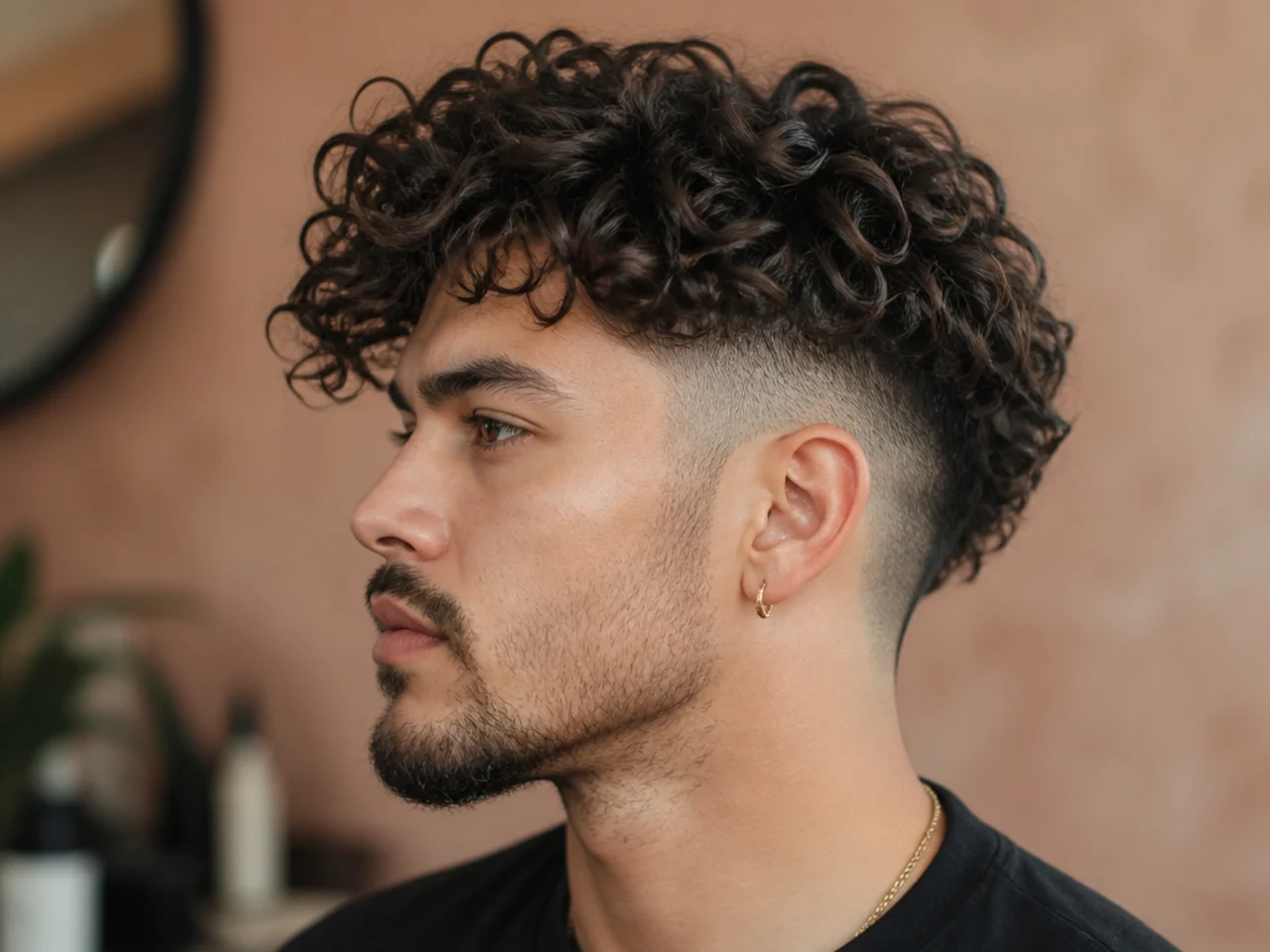
The undercut with the curl kept long on top. Sides drop to a guard 1 or guard 0.5 with a hard disconnection at the parietal ridge — no fade. Top runs 5 inches stretched with heavy internal layering. The contrast between the tight clipper sides and the curl canopy on top makes the cut read louder than a two block, which softens the line.
Suits square and round faces. 3B and 3C carry the crown volume; 3A holds a looser canopy that reads slightly softer.
Ask for: "medium curly undercut, guard 1 on the sides and back with a clean disconnected line at the parietal ridge, 5 inches stretched on top with heavy internal layering, dry cut."
Styling: leave-in and curl cream on damp hair, diffuse or air-dry with the head tipped forward. Fingertip of matte cream to shape the front. Sides need a shape-up every 3 weeks.
17. Twist-Out Medium Length
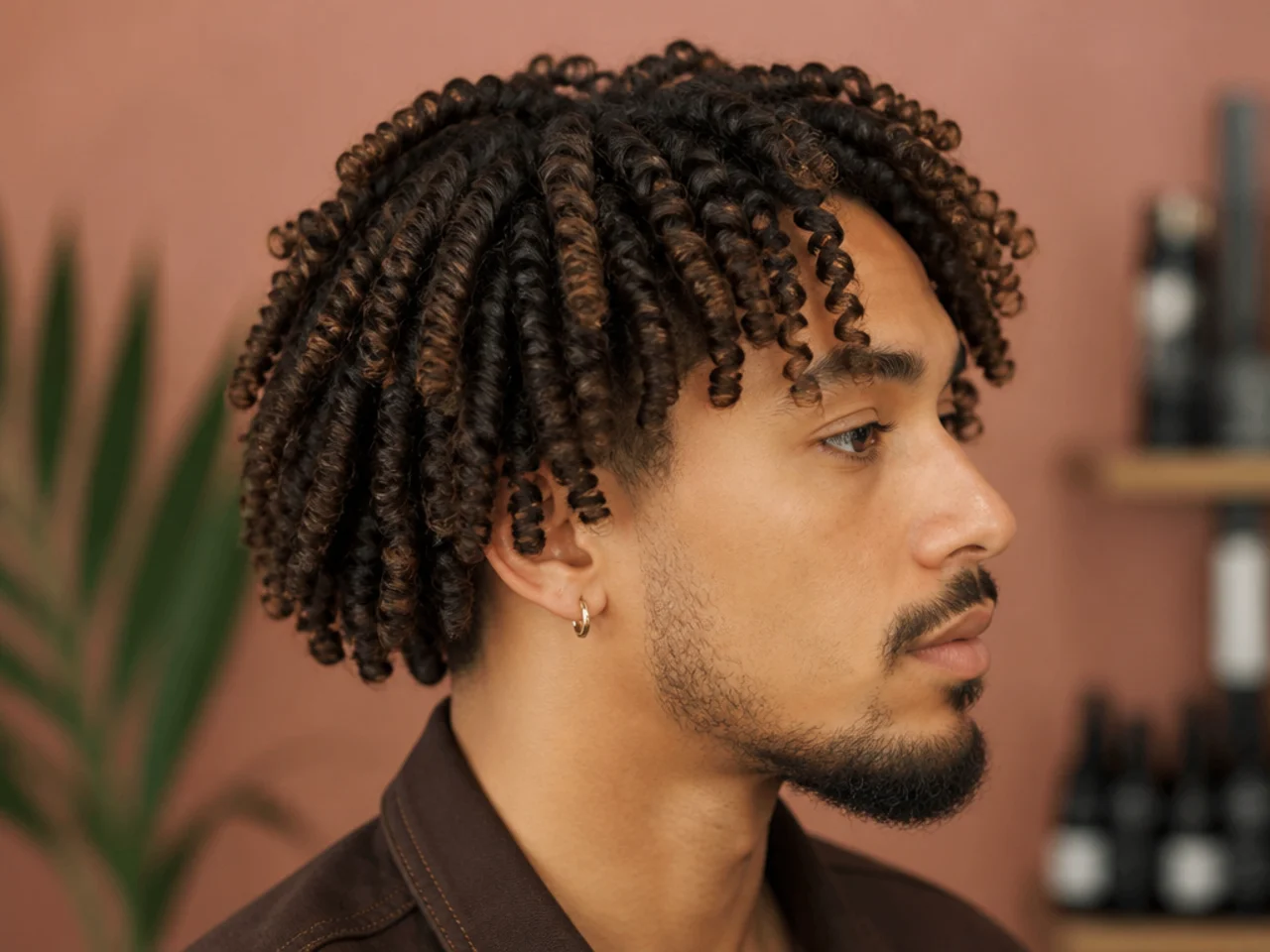
The twist-out is the curl-defining style built for 4A through 4C textures. Base cut runs 3 to 4 inches stretched all around with scissor-blended sides or a soft low taper. The style is set overnight with two-strand twists that unravel into defined coil clusters the next morning. The medium length gives the twists room to bloom without collapsing.
Suits every face shape. 4A and 4B hold the twist pattern cleanest; 4C needs a heavier cream base for definition.
Ask for: "medium twist-out cut, 4 inches stretched all around with scissor-blended sides or a soft low taper — I'll be setting it with two-strand twists overnight, so cut for the finished twist-out shape."
Styling: apply leave-in, curl cream, and a pinch of gel to damp hair section by section. Twist each section into a two-strand rope, sleep on a satin pillowcase or under a satin bonnet, unravel in the morning with oiled fingertips. Never a comb.
18. Sponge-Twist Coily Halo
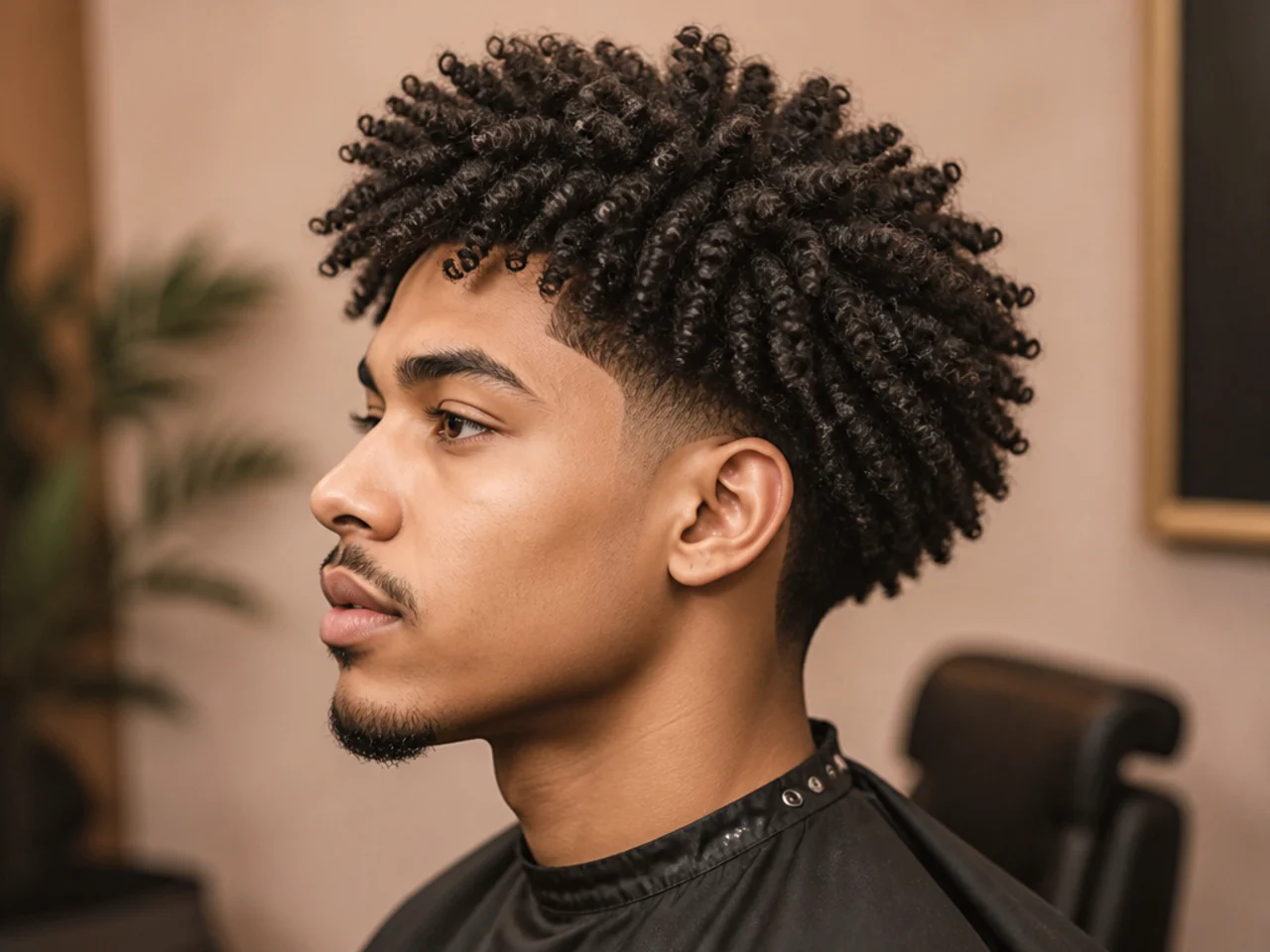
The tight-coil style built with a hair sponge — a bristle-textured tool that defines individual coils on 4A through 4C hair. Base cut runs 3 to 4 inches stretched all around with scissor-blended sides that shape a rounded halo. The sponge is worked in circular motions across damp hair to snap the coils into a defined, uniform texture.
Suits every face shape. 4A, 4B, and 4C are the target textures; the sponge doesn't work as cleanly on looser 3A and 3B ringlets.
Ask for: "sponge-twist coily halo, 4 inches stretched all around, scissor-blended sides shaped for a round halo, no fade — I'll be defining with a hair sponge after cutting."
Styling: apply leave-in to damp hair, work a hair sponge in circular motions across the scalp to define each coil. Fingertip of oil after to lock the pattern. Silk pillowcase at night preserves the definition for two to three days.
19. Medium Freeform Locs
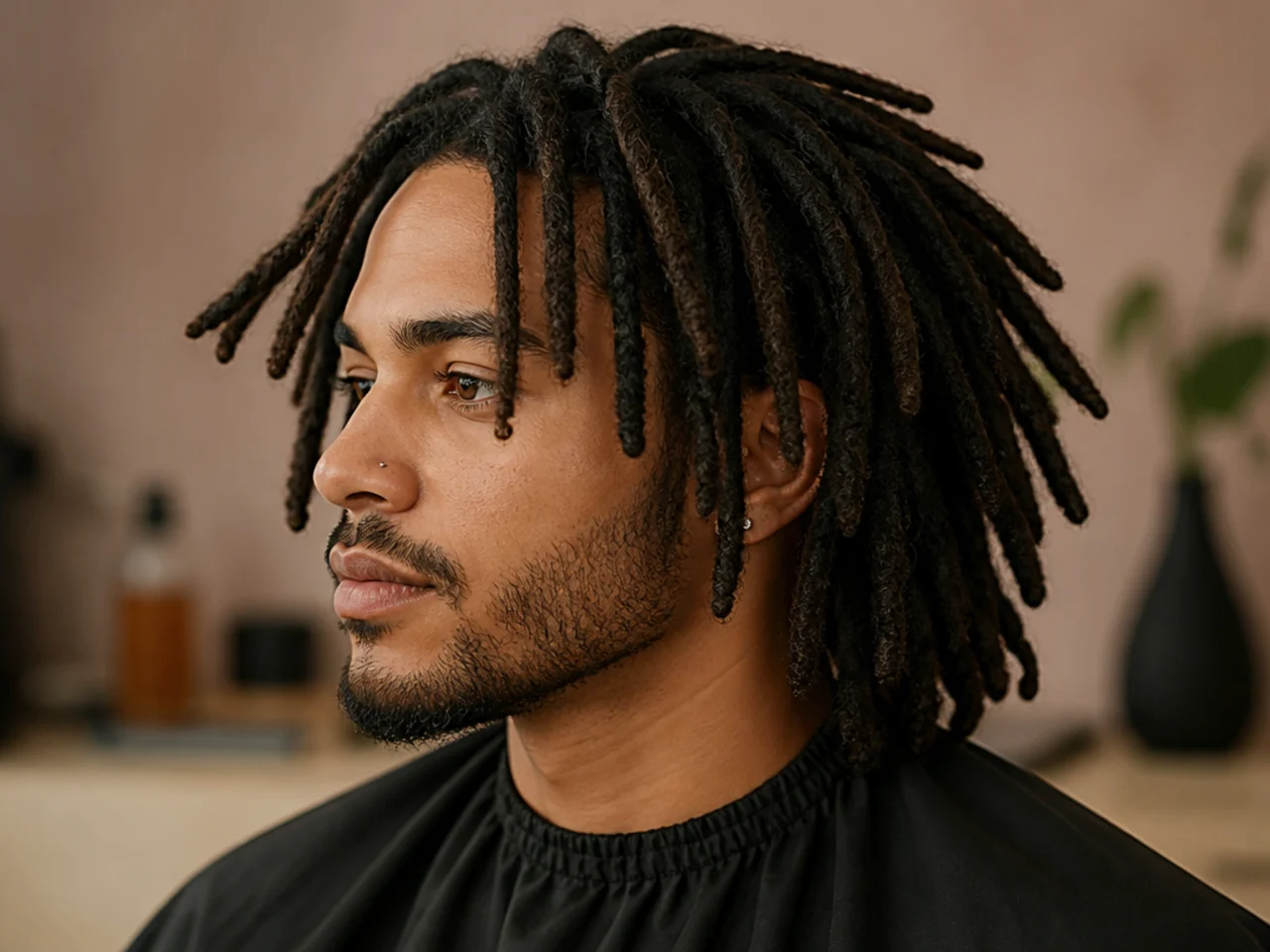
The natural loc style at medium length — freeform meaning the locs are allowed to form and mature without palm-rolling, retwisting, or interlocking. Base length runs 6 to 10 inches once matured; the cut is really a shape-and-shape-up of an existing loc pattern rather than a fresh cut. Sides can be scissor-blended for a rounded shape or dropped to a low taper for a modern outline.
Best on 4A, 4B, and 4C textures where the coil naturally locs. Every face shape works — the loc shape is set by the crown density and the perimeter cut.
Ask for: "medium freeform locs shape-up, keep the length at the collar, low taper fade at the sides to sharpen the outline, do not thin the interior — I want the locs to mature naturally."
Styling: wash monthly with a residue-free clarifying shampoo, apply light rose water or leave-in to damp locs, air-dry. Never wax. Retie a satin scarf at night to protect the pattern.
20. Curly Side Sweep with Low Taper
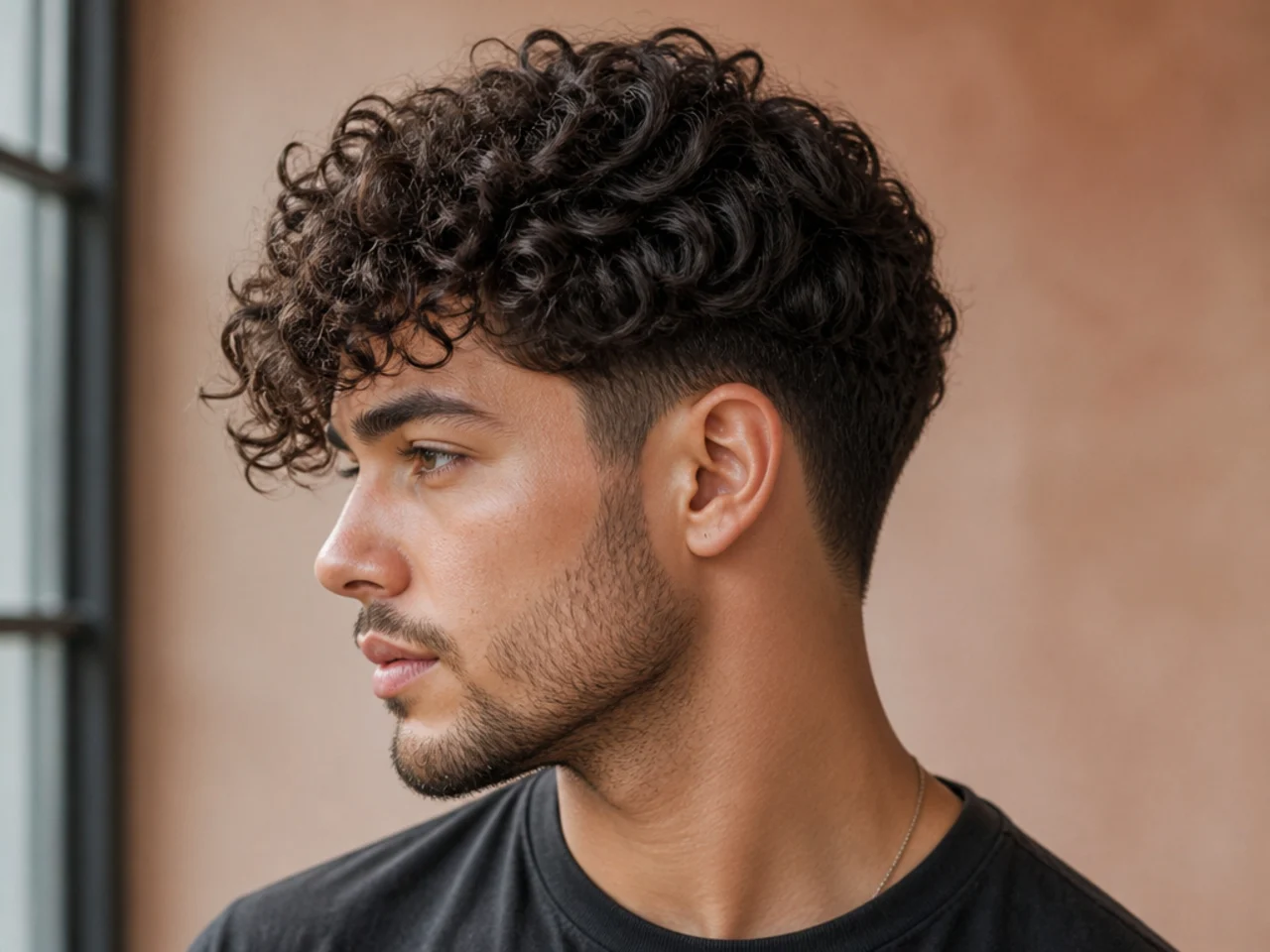
The workhorse medium curly cut. Top runs 4 to 5 inches stretched, styled swept to one side across the forehead in a soft diagonal. Sides drop to a low taper fade that stops well below the temple, letting the swept curl read as the whole event. Point-cut ends throughout. The lowest-effort version of every cut above.
Suits oval, square, and long faces. Every curl type from 3A to 4A carries this cut — the fade sharpens whatever the coil does naturally.
Ask for: "medium curly side sweep with a low taper fade, 4 to 5 inches stretched on top swept to one side, point-cut ends, fade stopping well below the temple."
Styling: leave-in and curl cream on damp hair, diffuse with the head tipped in the direction of the sweep. Fingertip of oil at the ends. This is the low-maintenance option — see low maintenance mens haircuts for more in the same range.
How to Ask Your Barber
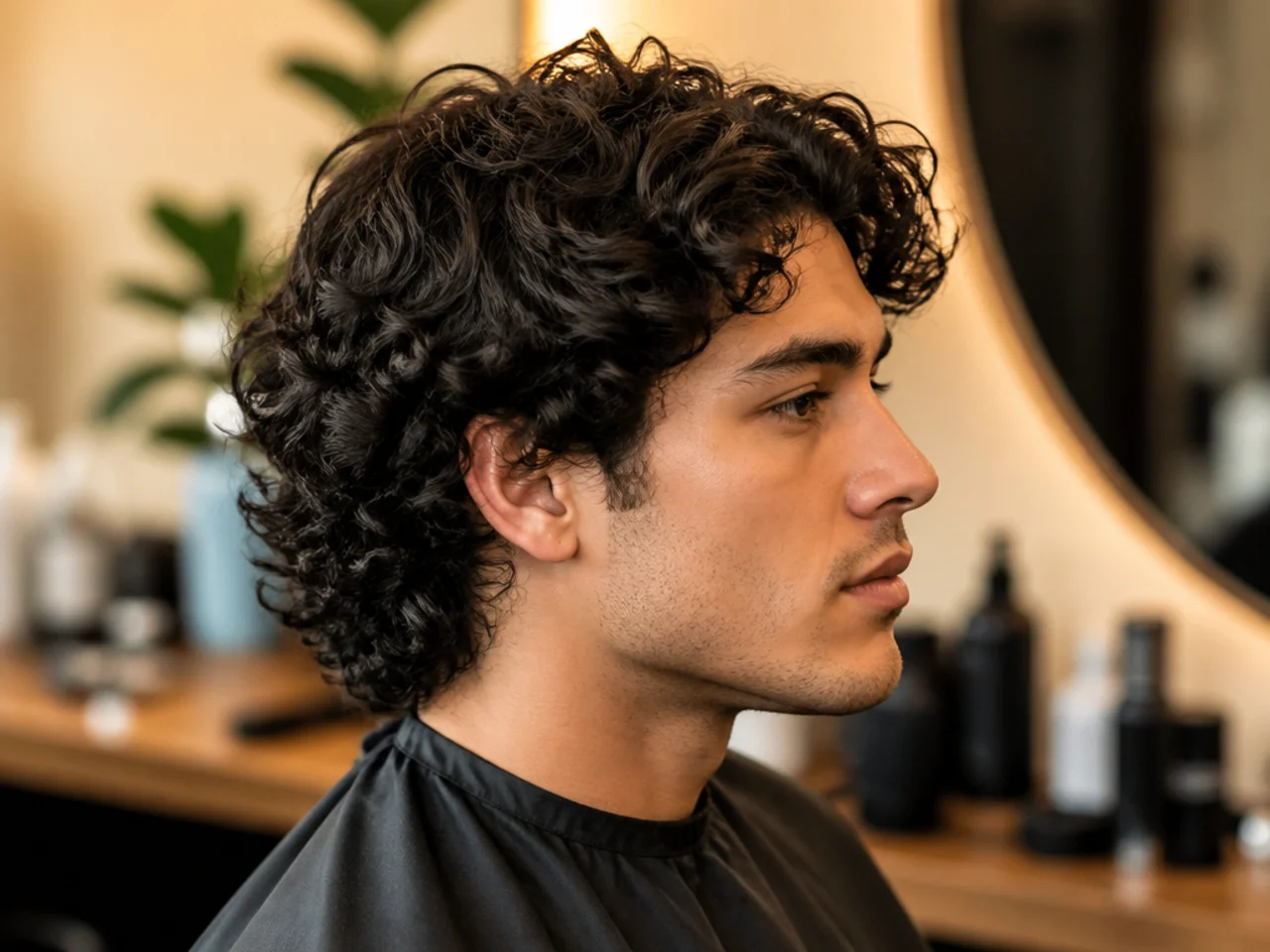
Barbers translate photos and numbers, not adjectives. Curly hair adds two more variables — the curl type and the shrinkage percentage — that a good curl specialist asks about but many barbers don't. Walk in with the following.
- A screenshot of the exact cut you want. From this guide, an Instagram feed, wherever. Names shift shop to shop; a picture doesn't.
- The length on top in inches, measured stretched. "Five inches stretched" is universal. Add an inch to the number you'd give for straight hair — curly pulls up.
- Your curl type. 3A loose ringlets, 3B Sharpie-sized corkscrews, 3C pencil-sized coils, 4A defined S-coils, 4B less-defined Z-pattern, 4C tight zig-zag. Point to a section they can see.
- The side treatment. Options: skin fade, low taper, mid taper, high fade, scissor blend, or long and layered. Say the height (low, mid, high) and the finish (skin, guard 0.5, guard 1, guard 2, or scissor-cut).
- The fringe direction. Forward, back, side-swept, middle-parted, or none. Volunteer this or your barber will guess.
- Whether they cut wet or dry. Ask before you sit. Curly hair should be dry-cut, or at minimum wet-cut with a dry check before you leave. A stylist who insists on wet-only will consistently overshoot.
- Your maintenance window. Every three weeks, or every ten? Skin fades soften in ten days. Scissor blends stretch to eight or ten weeks on curly — the pattern hides outline drift longer than any other texture.
Hand the photo. Answer the seven. Let your barber work.
Styling and Maintenance
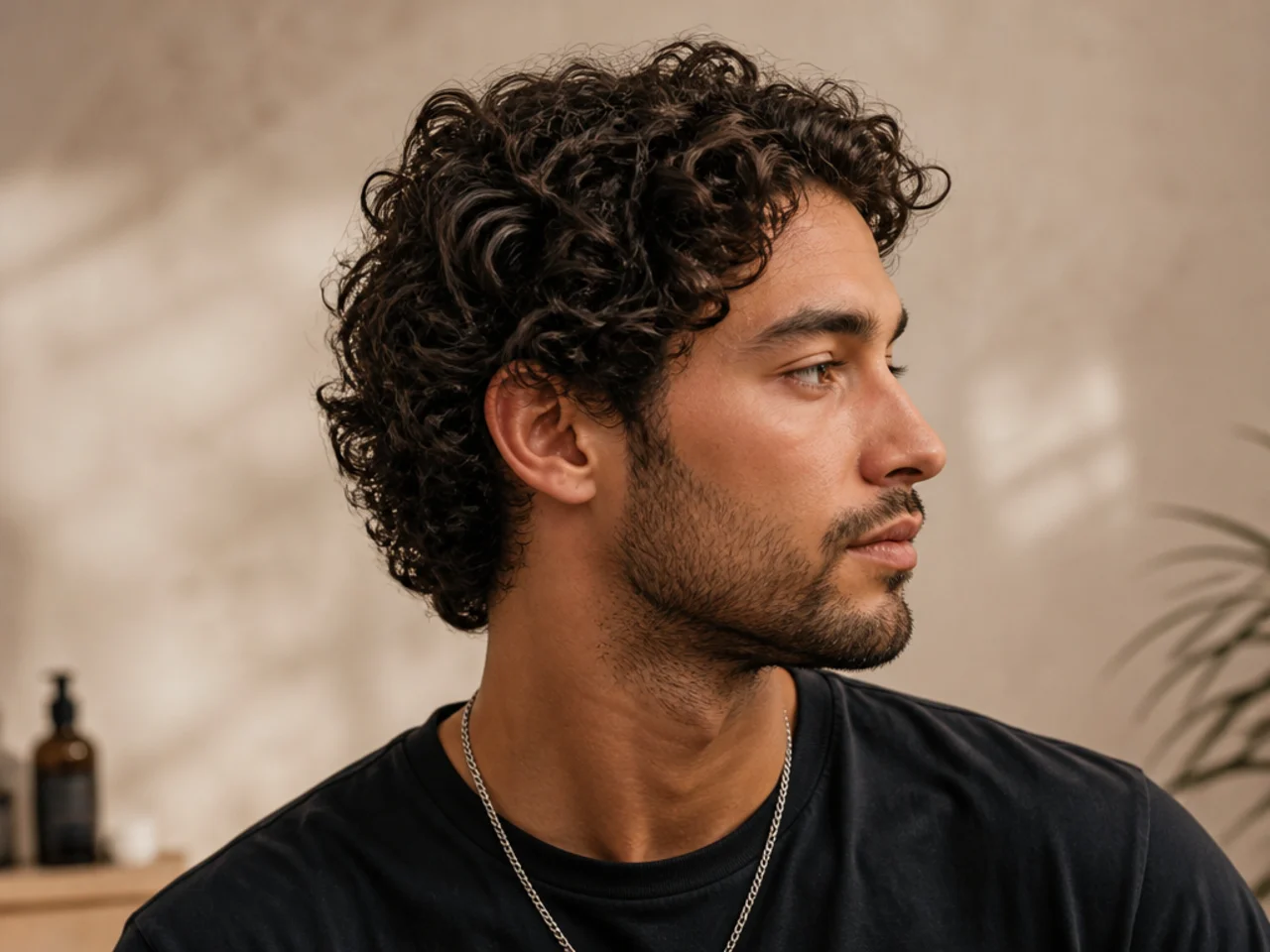
Curly hair rewards water more than product. The curl forms while the strand dries; product only sets what water shaped. Style soaking-wet, dry with the pattern, and use product to define rather than build.
The four-product shortlist for curly hair:
- Leave-in conditioner — the foundation. Adds slip so the curl cream distributes evenly and stops the strand from grabbing itself into frizz. Every routine below starts with a leave-in.
- Curl-defining cream or gel — for pattern definition and hold. Cream for softer coils, gel for harder cast and longer wear.
- Lightweight oil — jojoba, argan, or grapeseed. Seals moisture after the pattern sets and breaks the cast without frizzing.
- Diffuser attachment — cups the curl and dries it without breaking the pattern. Air-drying works too, but takes 90 minutes and leaves the crown flat. For product deep-dives, see the best wavy hair products guide, which crosses over to the looser 3A curl range.
Skip pomade, mousse, and terry-cloth towels. Pomade shines the coil into strings. Mousse dries crunchy on curly hair (versus wavy). Terry cotton snags the pattern into frizz — swap for a microfiber towel or an old cotton T-shirt.
The five-minute routine:
- Wash with a sulfate-free shampoo once or twice a week; co-wash the other days.
- In the shower, rake a coin of leave-in through soaking-wet hair, followed by a coin of curl cream. Praying-hands motion, then scrunch upward.
- Squeeze excess water with a microfiber towel — never rub.
- Air-dry or diffuse on low heat with the head tipped forward, cupping curl sections into the diffuser bowl. Stop when 80 percent dry.
- Once fully dry, break the cast with a fingertip of oil worked between the palms, scrunching gently upward.
Cadence: book every 8 to 10 weeks for scissor-blended cuts and every 3 to 4 weeks for anything with a skin fade or hard undercut. Curly hair hides outline drift longer than straight or wavy because the pattern distracts the eye — but past ten weeks the internal weight builds, the ends split, and the crown flattens.
Night care matters. Sleep on a satin or silk pillowcase, or wear a satin bonnet. Cotton pillowcases pull moisture from the strand and snag the pattern — you wake to a frizzed halo instead of a slept-in coil. For more curly-specific reads, see the curly hairstyles for men pillar and the mens curly haircuts short guide for shorter takes on the same texture.
If your curl looks frizzy, you skipped the leave-in or dried too fast with heat. If your curl looks stringy, you used too much product or the wrong product base. Adjust one variable at a time.
FAQ
What's the best medium length curly hair men cut?
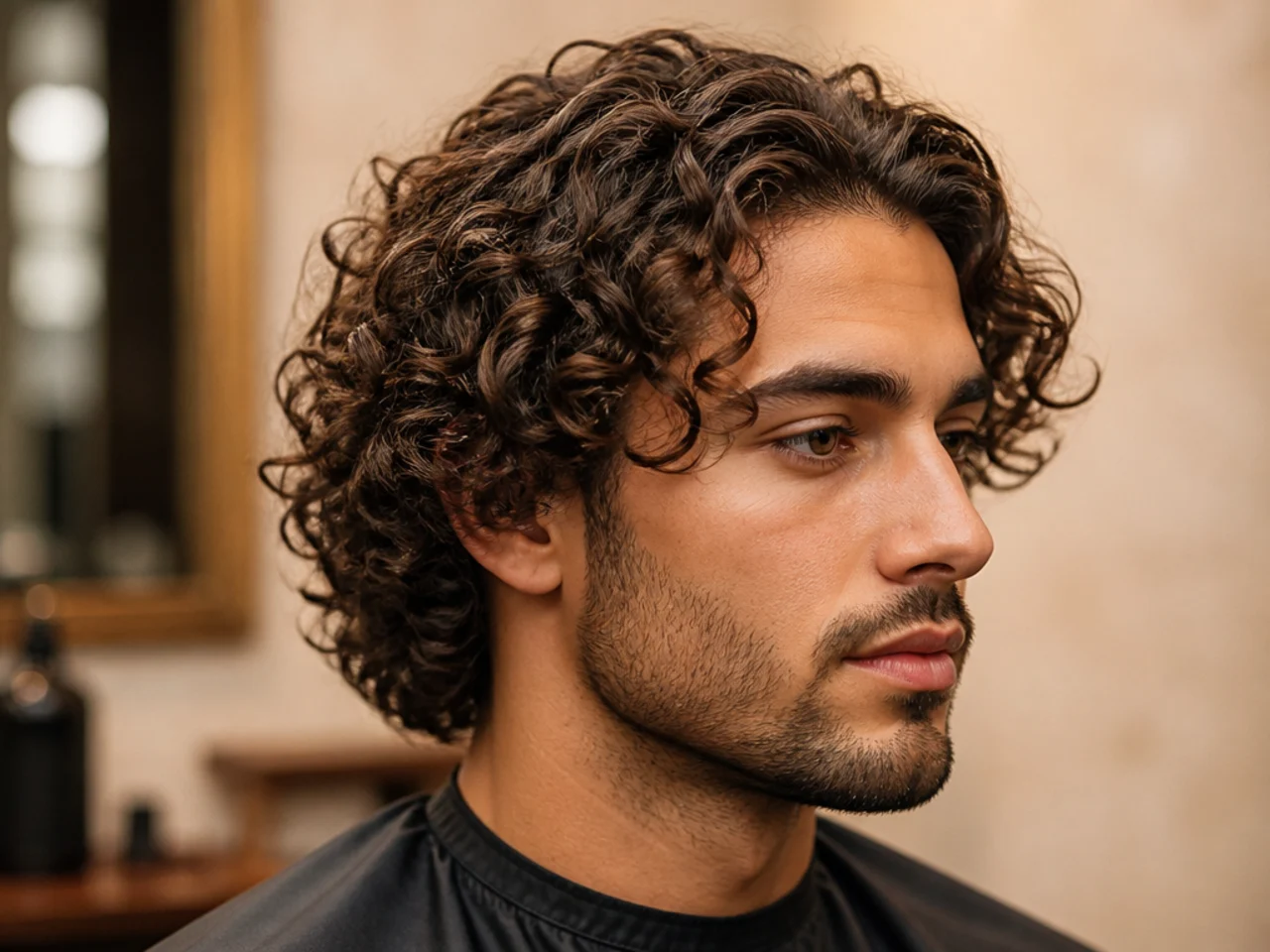
The layered curly shag. It thins internal weight so the coil expands instead of stacking flat, adds a curtain fringe that frames the face, and works across 3A through 3C without changing the instructions. Pair with a low taper fade for a cleaner outline, or leave the sides scissor-blended for a rounder halo — both are correct.
Does curly hair need a fade for a medium length cut?
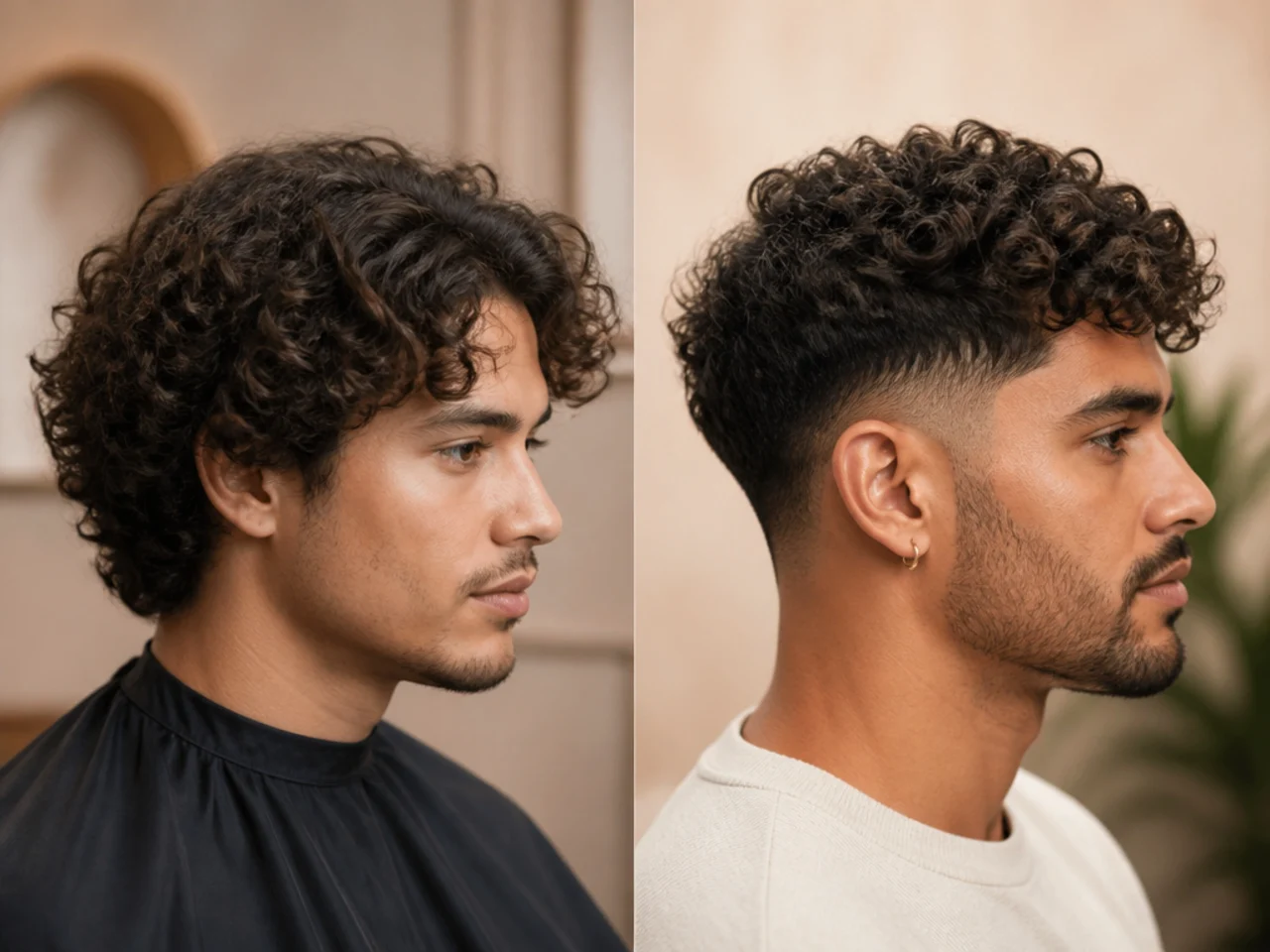
No. Half the cuts here work with scissor-blended sides — shag, bro flow, curtain, round afro, twist-out, freeform locs. A low or mid taper sharpens the outline and stretches the wear between cuts, but curly hair holds its shape without one. Match the side treatment to your calendar and the vibe you want.
How do I stop my curly hair from going frizzy at medium length?
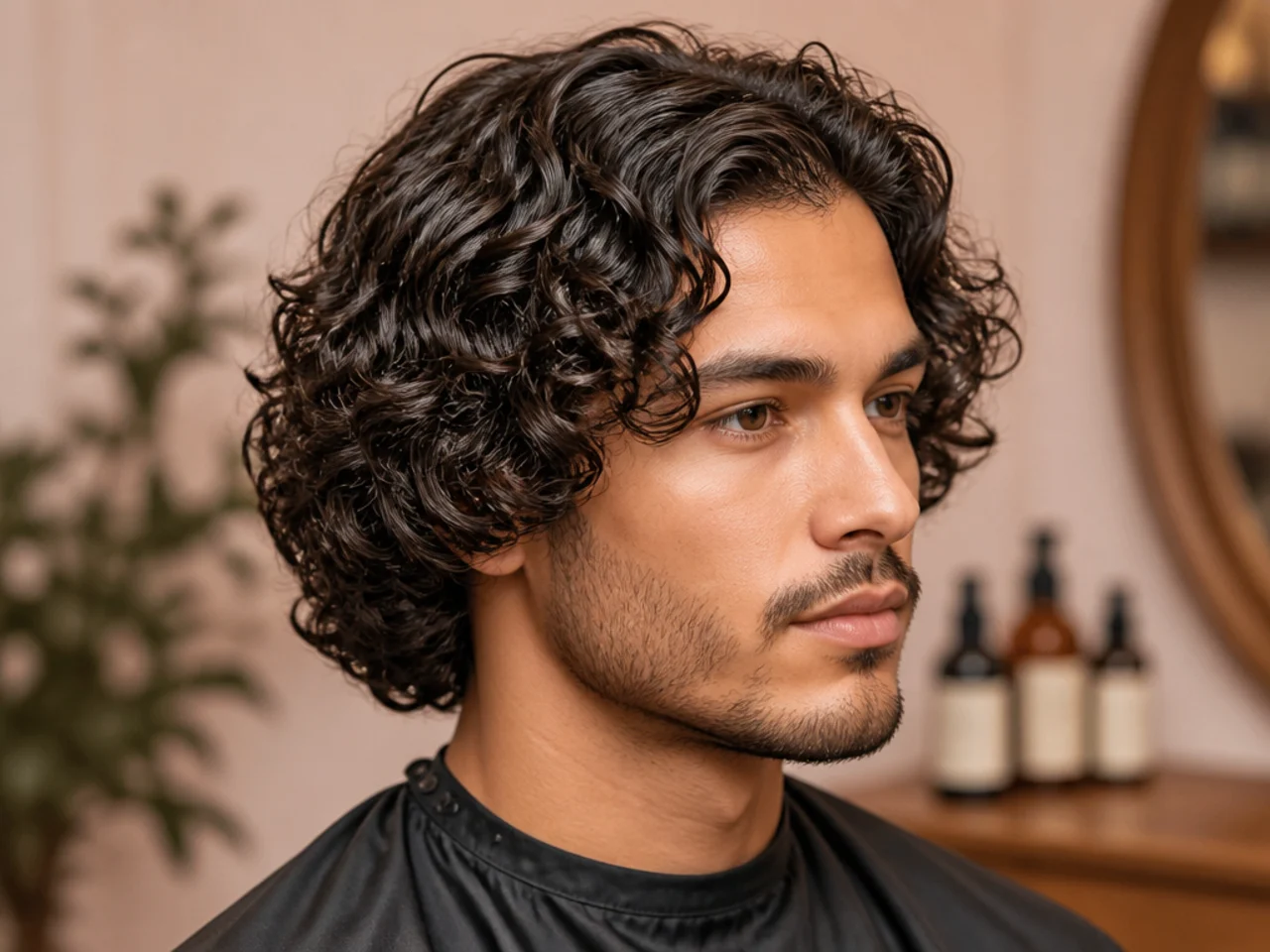
Four fixes. Apply leave-in and curl cream to soaking-wet hair, never damp — water is the delivery system. Swap the terry-cloth towel for microfiber or a cotton T-shirt to stop friction frizz. Stop touching your hair once it's dry — every pass breaks the cast. Sleep on a satin pillowcase or under a satin bonnet to preserve the pattern overnight.
Can I get a slick back or side part on curly hair?
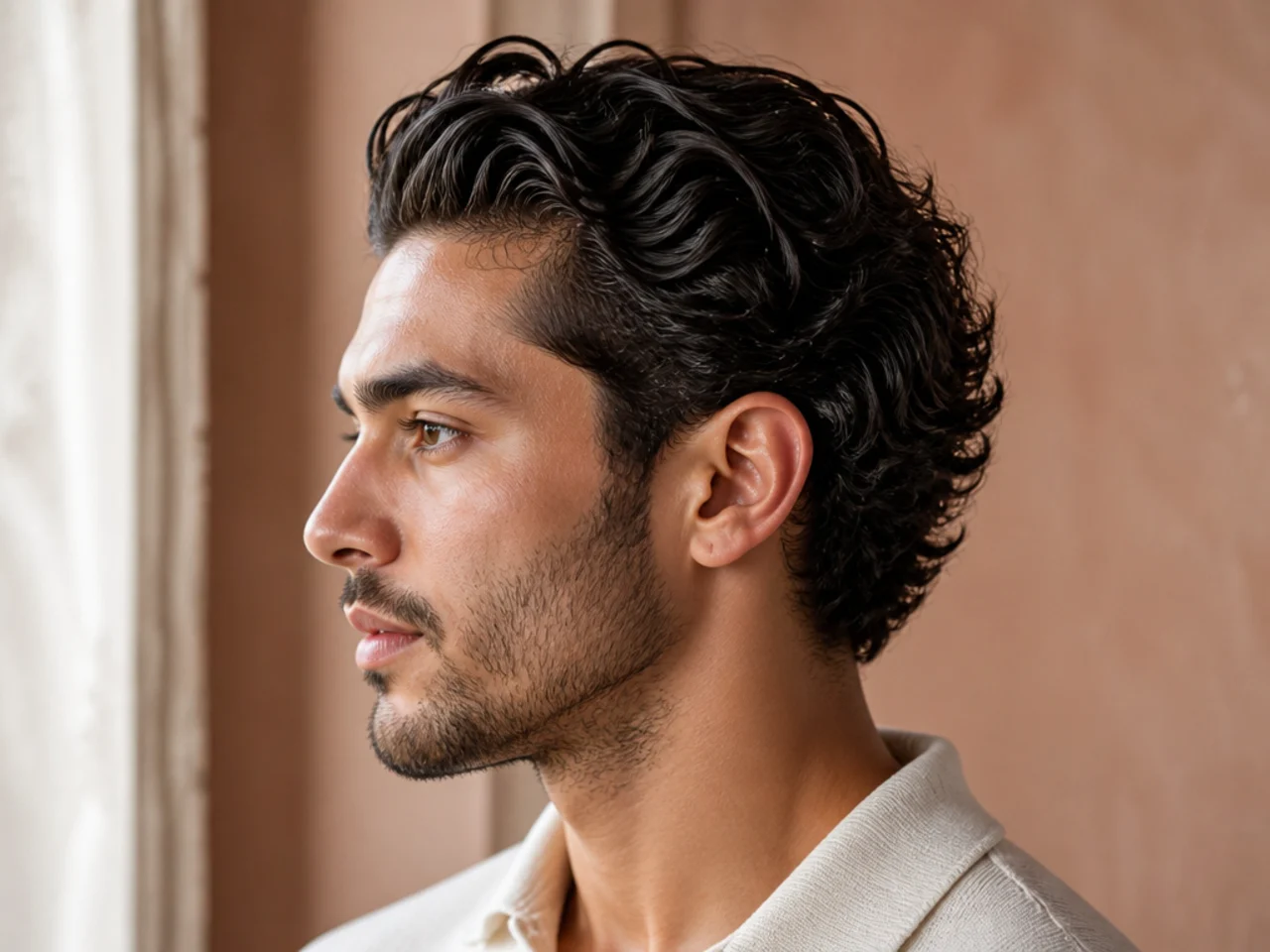
You can — but only on the looser end of the curl spectrum. The grown-out Ivy League and side sweep work on 3A ringlets, sometimes 3B with strong-hold cream and a wide-tooth comb. 3C, 4A, 4B, and 4C fight a hard part and reveal the pattern under pomade shine. If you want the slick look on tighter curls, ask about a temporary broccoli haircut grow-out that keeps the coil short enough to comb.
What's the difference between a medium length wavy cut and a curly one?
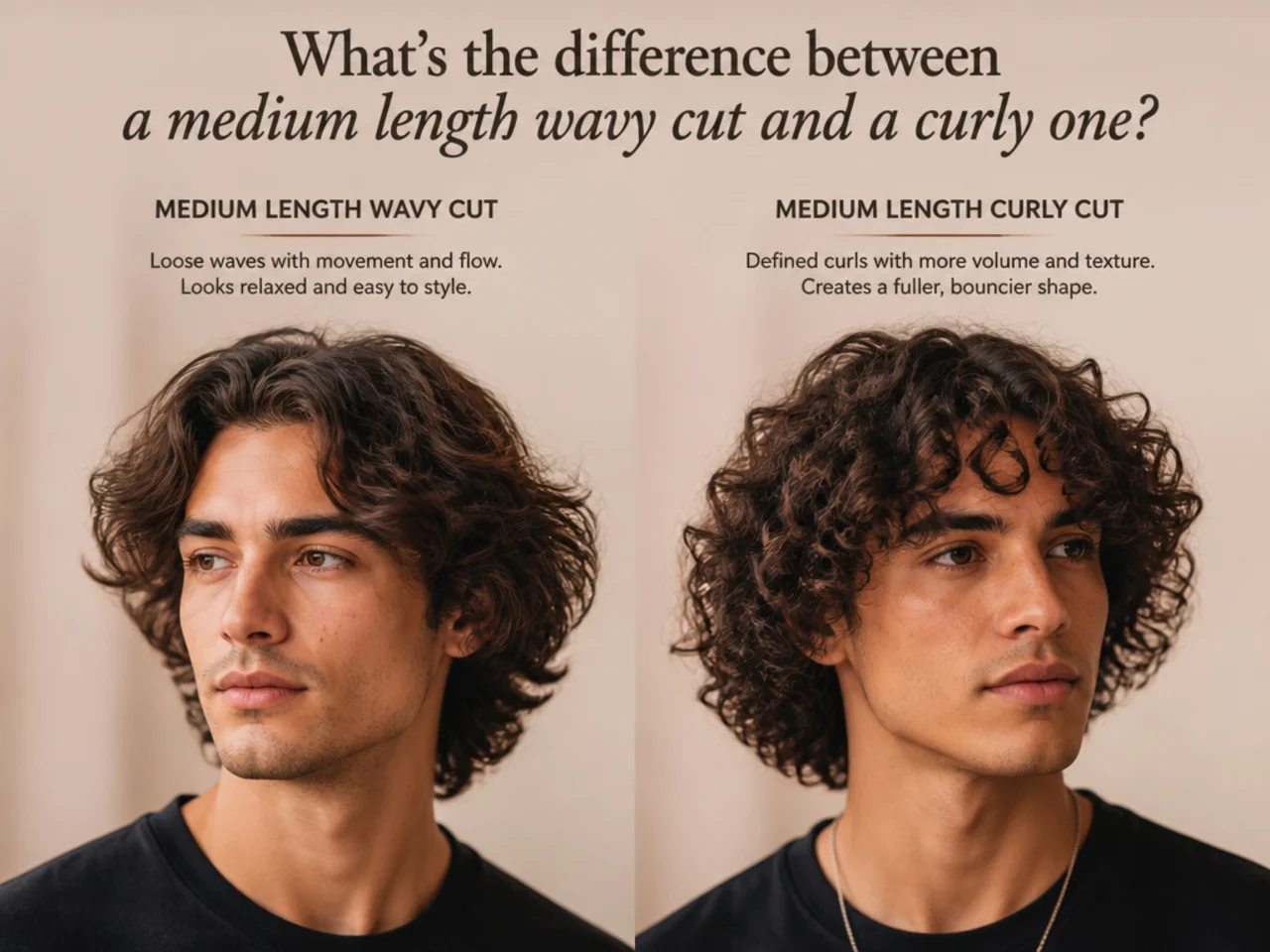
Wavy is 2A through 2C — S-pattern, loose to coarse, and the wave lays. Curly is 3A through 4C — spiral to zig-zag, and the pattern builds a round dome. Wavy cuts lean on flow and layering because the wave drapes. Curly cuts pull weight up and out because the coil expands. See the medium length haircut men wavy guide for the wave-specific version, and the curly hair haircuts hub for the wider curl framework.
How often should I trim a medium length curly haircut?
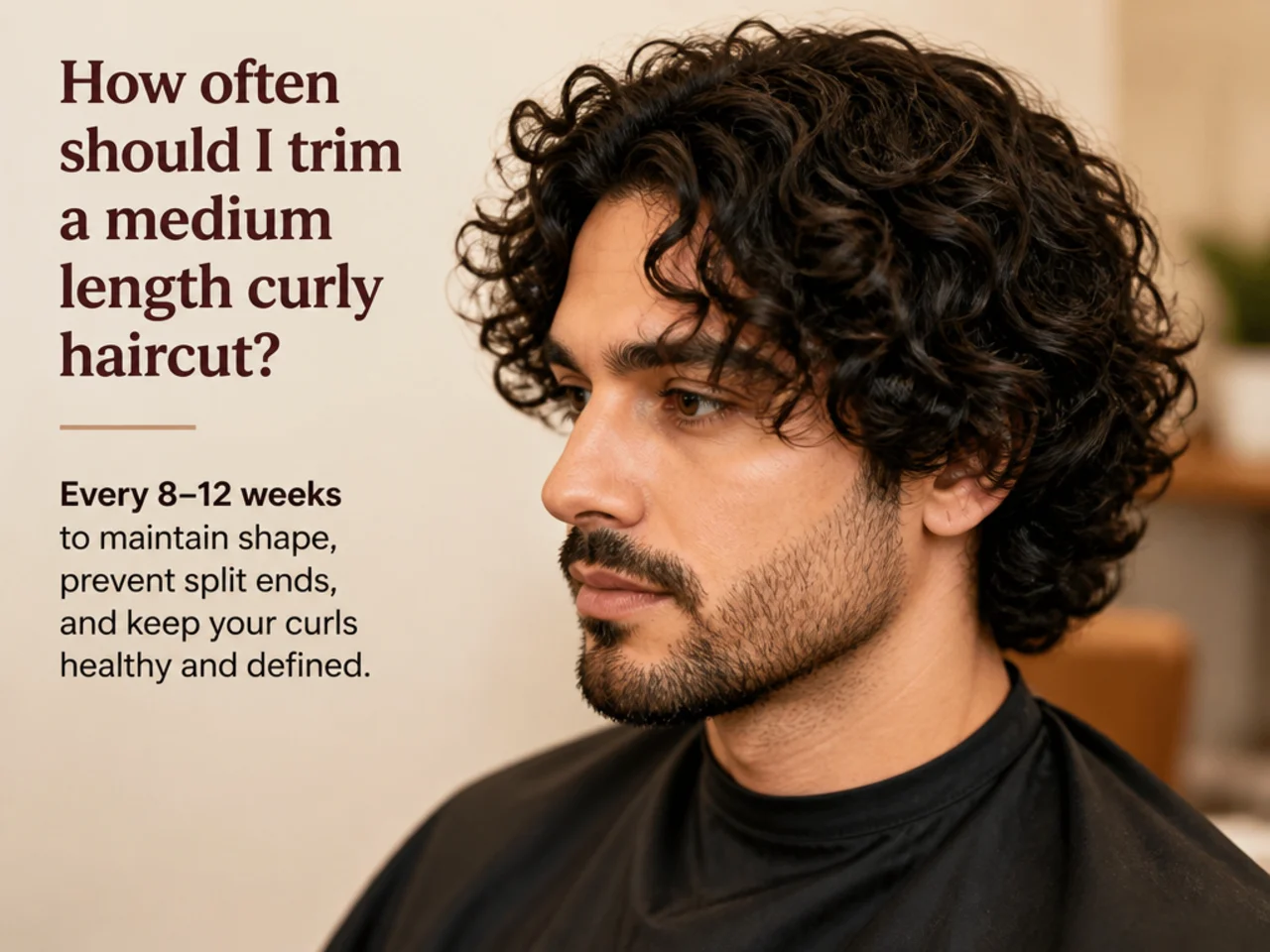
Every 8 to 10 weeks if the sides are scissor-blended. Every 3 to 4 weeks if the sides drop to a skin fade. Curly hair grows into shape rather than out of it, which stretches your window — but past ten weeks the ends split, the pattern clumps unevenly, and the round crown flattens. Book the moment the crown starts feeling heavy on top.