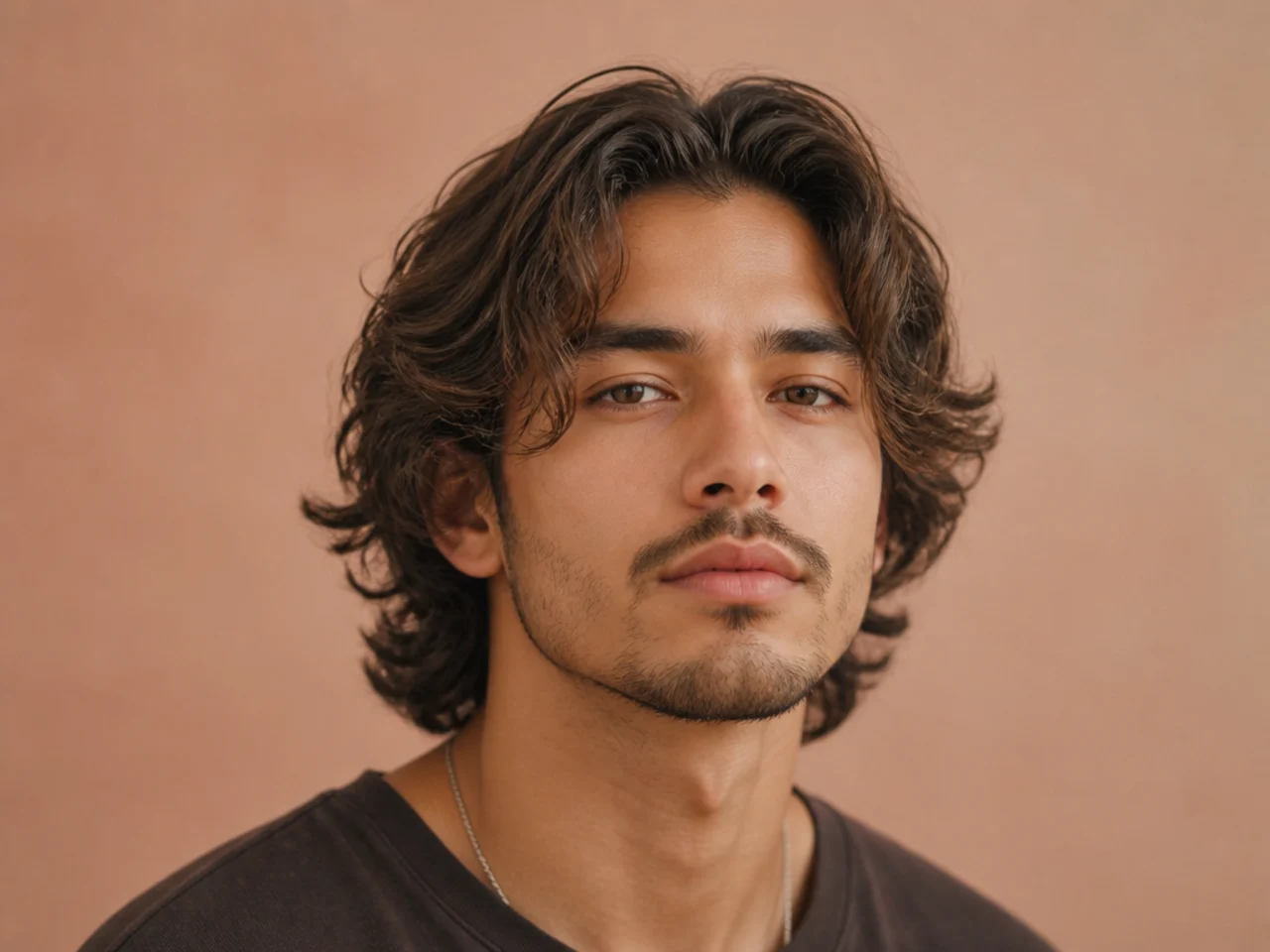
20 Medium Length Styles for Wavy Hair
Twenty medium length wavy hair men styles — bro flow, shag, curtains, wolf cut, mullet — with clipper numbers, inches, and the exact ask for your barber.
In this article · 32
- What Is a Medium Length Wavy Hair Cut?
- How to Choose Your Medium Length Wavy Cut
- The 20 Cuts
- 1\. Bro Flow
- 2\. Modern Shag
- 3\. Medium Surfer Cut
- 4\. 90s Curtains
- 5\. Middle Part with Face-Framing Layers
- 6\. Medium Wolf Cut
- 7\. Modern Mullet
- 8\. Loose Mod Cut
- 9\. Layered Cut with Rounded Crown
- 10\. Textured Medium Fringe
- 11\. Loose Quiff
- 12\. Medium Textured Pompadour
- 13\. Wavy Comma Hair
- 14\. Medium Two Block
- 15\. Grown-Out Ivy League
- 16\. Long French Crop
- 17\. Waves with Low Taper Fade
- 18\. Bro Flow with Low Taper Fade
- 19\. Messy Medium Crop
- 20\. Wavy Top Knot
- How to Ask Your Barber
- Styling and Maintenance
- FAQ
- What's the best medium length cut for wavy hair men?
- Does wavy hair need a fade for a medium length cut?
- How do I stop my wavy hair from going frizzy at medium length?
- Can I get a slick back or side part on wavy hair?
- What's the difference between a medium length wavy cut and a curly one?
- How often should I get a medium length wavy haircut trimmed?
Wavy hair is the medium-length category's sweet spot. The natural S-pattern does half the styling for you, layers separate cleanly, and cuts that read flat on straight hair pick up body the moment they hit the temple. This guide runs the twenty medium length wavy hair men styles worth walking into a barber shop for in 2026 — with photos, face-shape notes, and the exact clipper numbers, inches, and finish notes to hand your barber. For the full medium length haircut men catalog across every texture, start there.
What Is a Medium Length Wavy Hair Cut?
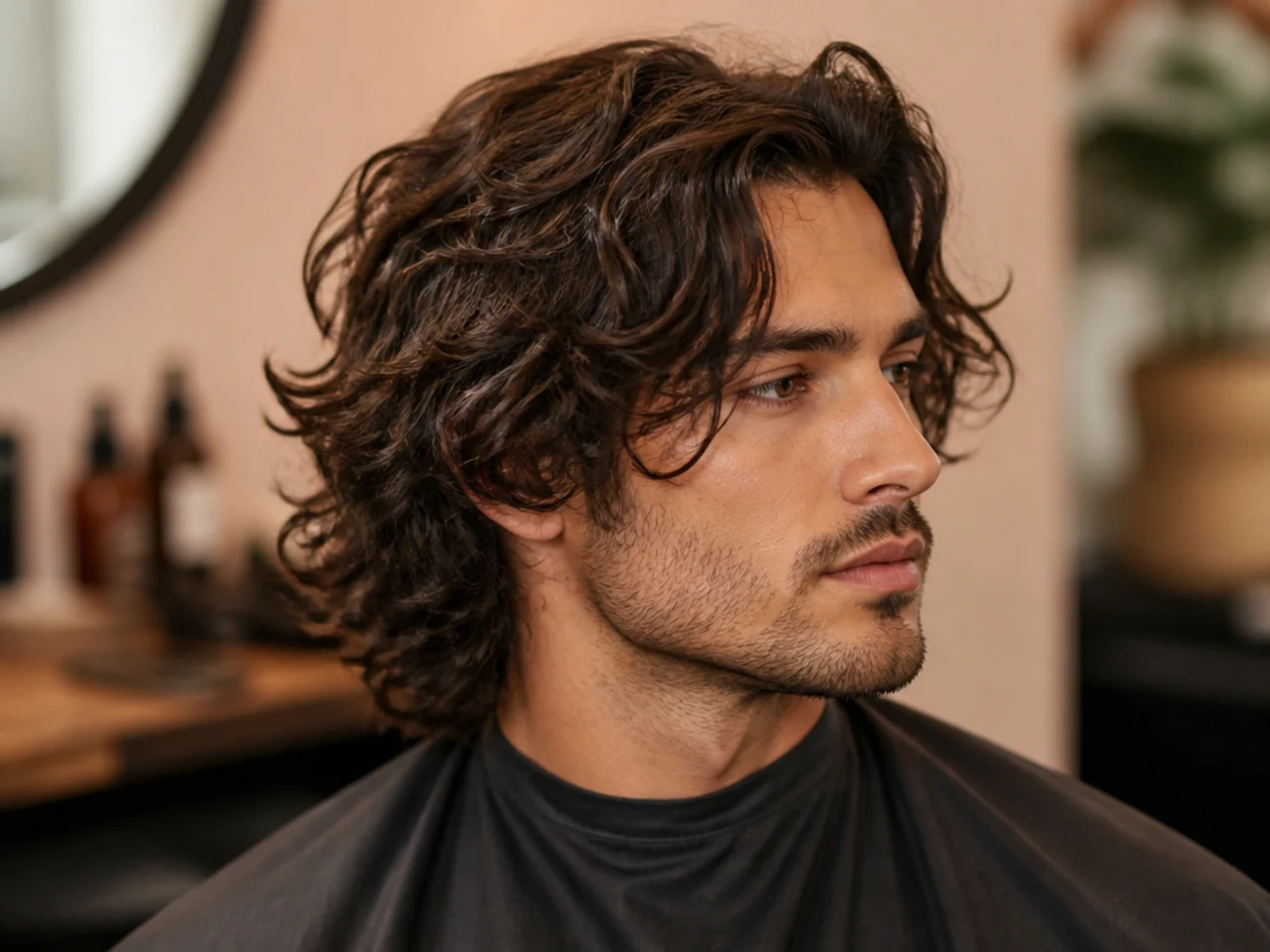
Medium length sits at 3 to 6 inches on top — measured stretched, before the wave pulls it up. Wavy hair spans the 2A to 2C range: loose S-waves at 2A, defined body at 2B, and coarser corkscrew-adjacent waves at 2C. All three thrive at medium length because the strand finally has room to curve without collapsing under its own weight.
Sides can stay long and scissor-blended for the softer flow cuts, or drop to a low, mid, or high fade for a sharper outline. Both work on wavy — the wave pattern reads cleaner against a tapered side than it does against a shaggy one. See the medium length hairstyles men pillar for the styling-first take across every cut.
The trade-off you're working with: wavy hair has a mind. Fight it and every morning is a two-round negotiation. Cut with it, and the wave becomes the shape.
How to Choose Your Medium Length Wavy Cut
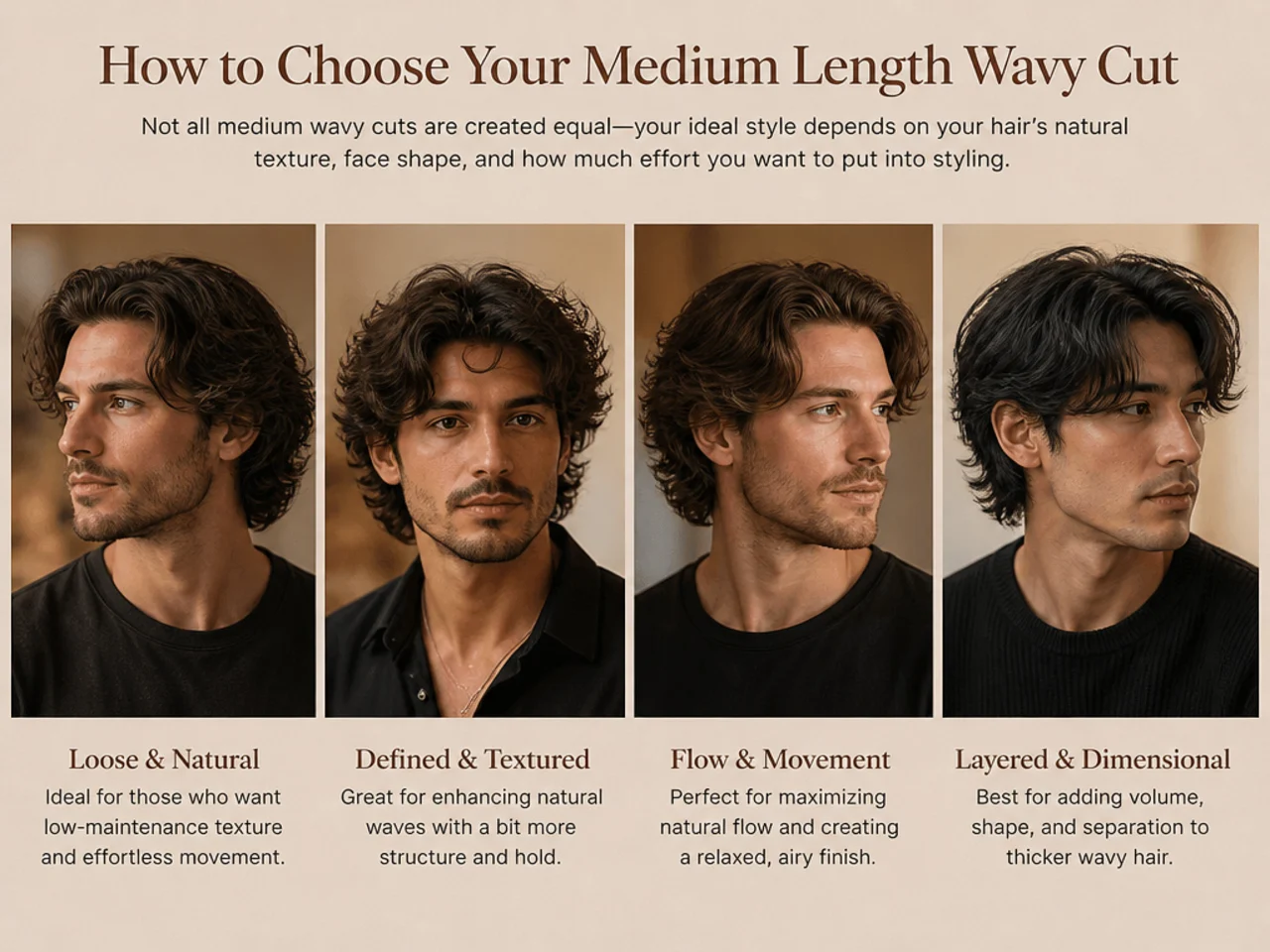
Three filters narrow the twenty fast. Face shape, wave pattern, and how much product you want to touch.
Round faces want vertical lift — loose quiff, textured pompadour, faux hawk. The height stretches the frame. Long or oblong faces suit soft horizontal movement — curtains, side sweep, medium fringe. Square jaws pair with rounded tops — mod cut, layered crown, shag. Oval wears every version here. For the deeper face-shape framework, see haircuts for square faces.
Wave pattern matters more than density on wavy hair. 2A holds structured cuts (side part, Ivy League, comma) because the strand still drapes when combed. 2B is the sweet spot for shag, curtains, mod, bro flow, and wolf cut. 2C wants the loudest layers — modern mullet, medium wolf, textured pompadour — because the coarser wave needs internal thinning to move.
The 20 Cuts
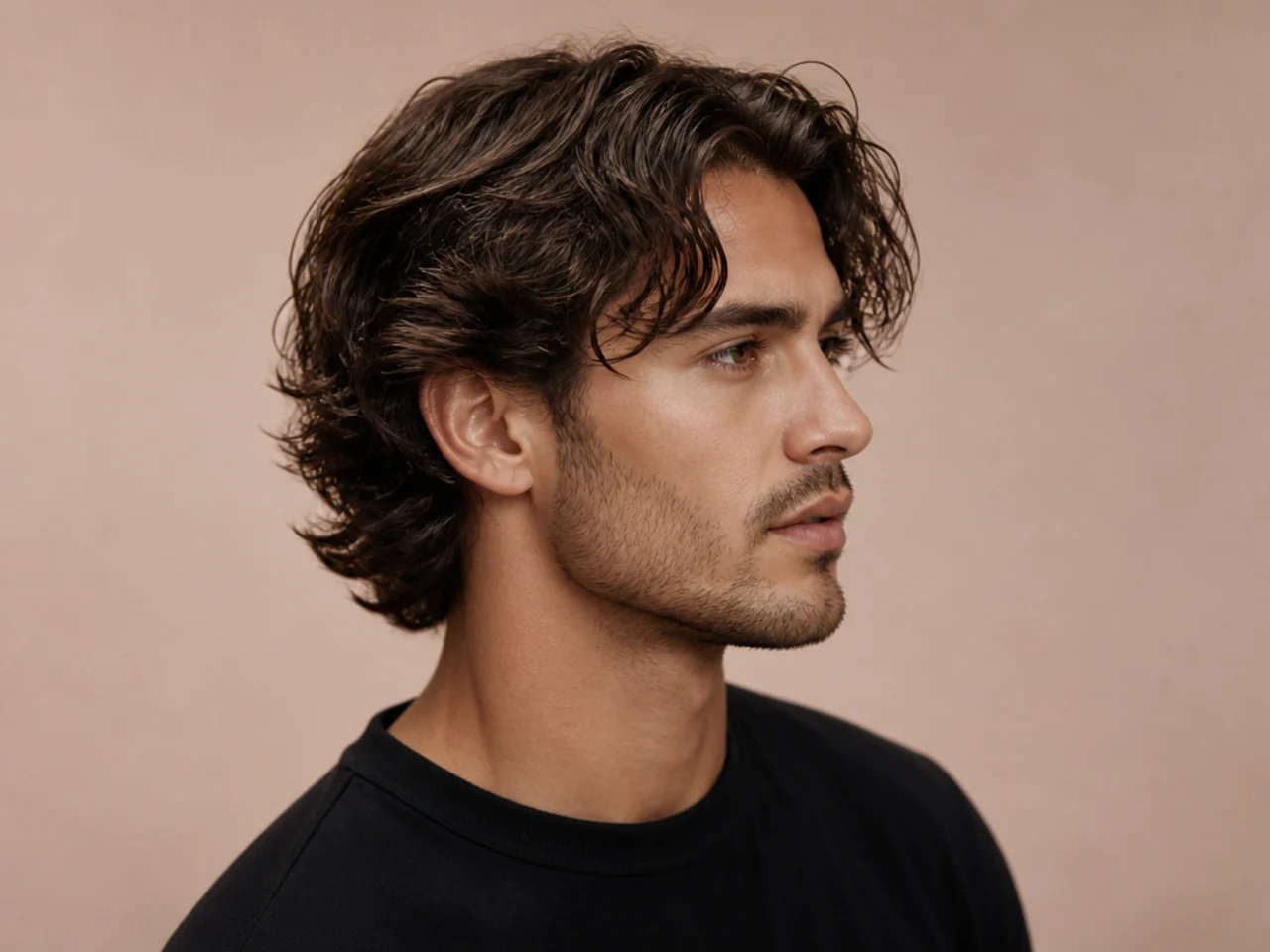
Twenty cuts, ordered soft-and-natural to loud-and-statement. Each block covers what makes the cut work on wavy hair, who it suits, exactly how to ask, and the styling move to steal.
1. Bro Flow
The reference cut for wavy hair. Length runs 4 to 5 inches on top and sides, sweeping straight back from the hairline with the wave leading. Scissor-cut only, no fade, point-cut ends so the wave breaks softly instead of blunting. For thirty more variations, see the flow haircut men guide.
Suits oval, oblong, and square faces. 2A through 2C carry the shape — tight curls bounce out of the sweep, and dead-straight hair looks pasted rather than flowing.
Ask for: "bro flow, scissor work only, 5 inches on top, no fade, point-cut ends, layered so the wave falls back naturally."
Styling: rake a walnut of cream through damp hair, finger-comb back from the hairline, and let the flow air-dry into place. Never a comb — tracks kill the softness.
2. Modern Shag
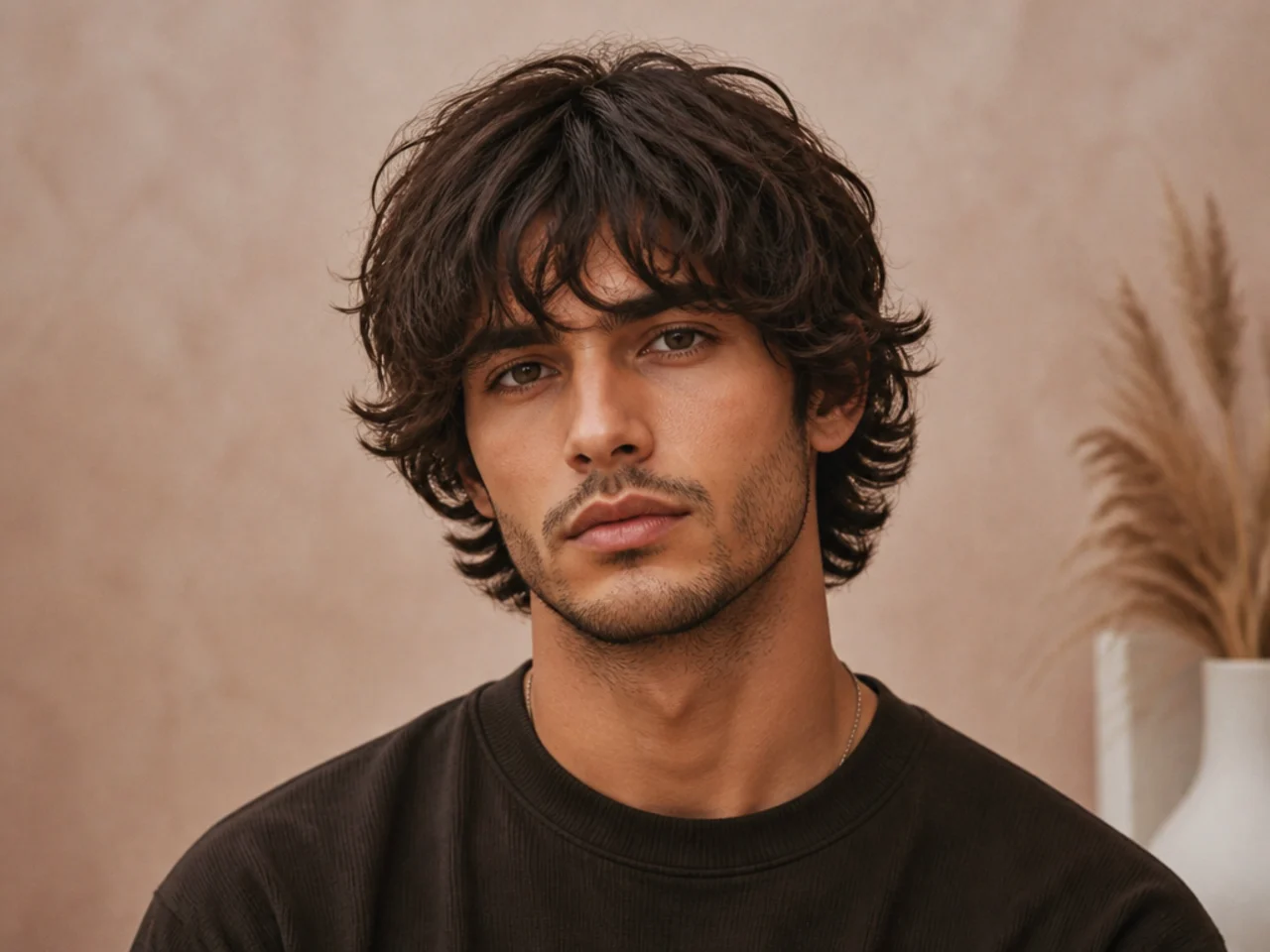
The shag is heavy on layers and light on rules. Length hits 4 to 5 inches all around with wispy razored ends and heavy internal layering so the wave has visible separation. A curtain fringe sits just past the brow, splitting to either side of a soft central part.
Best on 2B and 2C hair — the layering pulls weight so the wave sits with definition. Suits every face shape except very round.
Ask for: "modern shag, heavy internal layering, razored wispy ends, 4 inches all around, curtain fringe cut just past the brow, cut dry to check the wave fall."
Styling: mist sea-salt spray on damp hair, rough-dry with fingers or a diffuser on low, break the ends with a fingertip of matte paste. Finish should look like you slept on it — deliberately.
3. Medium Surfer Cut
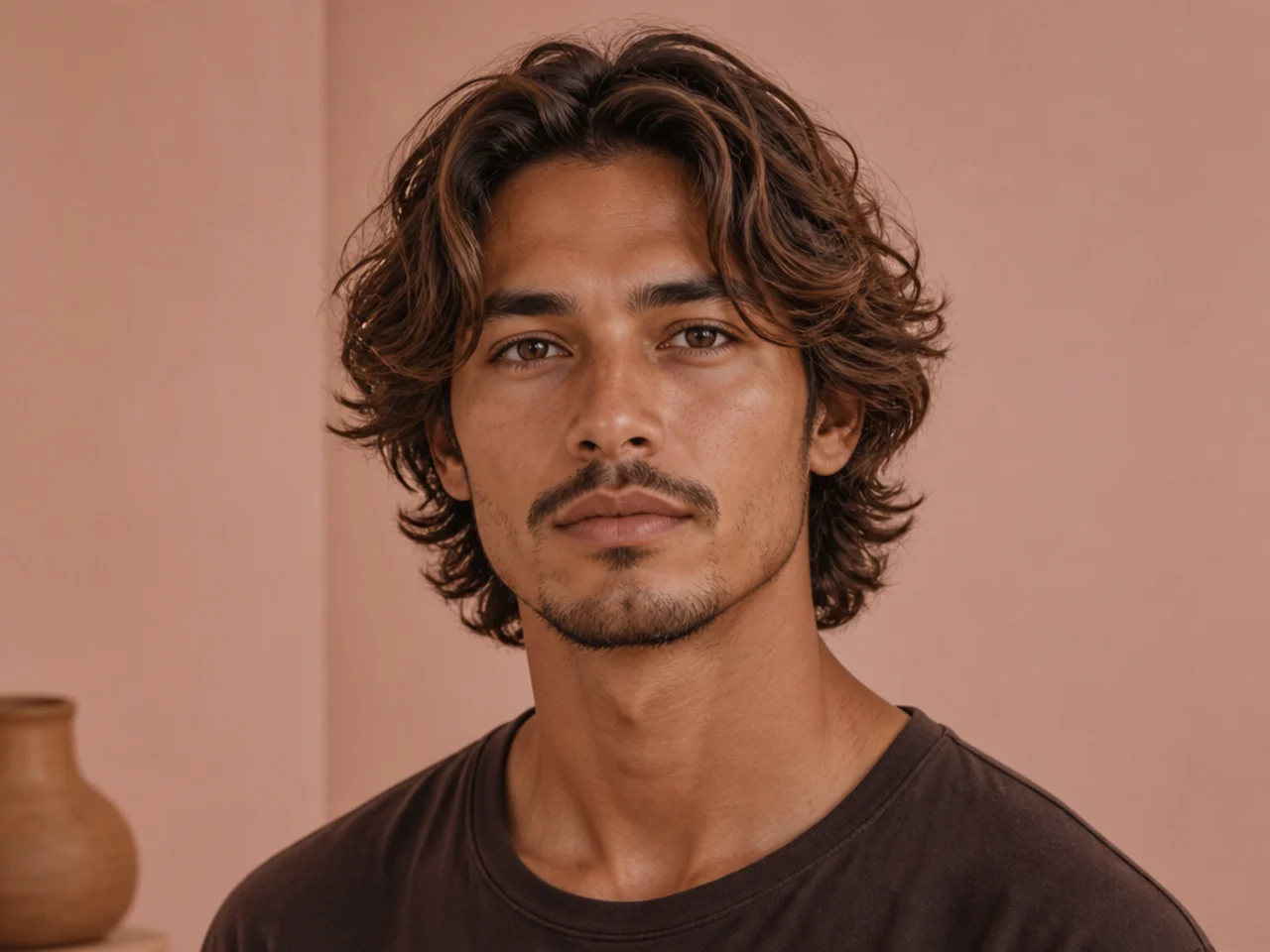
The surfer cut at medium length is what wavy hair was born to do. Length runs 4 to 5 inches with light internal layers so the natural wave catches light through the ends. No fade. Sides scissor-blend into a soft length around the ears. Beach-and-brine texture without the actual salt water.
Suits oval and heart faces; the movement softens strong bones. 2A and 2B waves carry the shape cleanest — 2C reads shaggier by design.
Ask for: "medium surfer cut, 5 inches on top, even scissor layers, no fade, soft blend at the ears — I want it to look sun-lightened even if it isn't."
Styling: mist sea-salt spray through damp hair, scrunch upward while it air-dries or diffuses. Fingertip of matte cream at the mid-shaft. Ask about foil highlights if you want the sun-lightened read on darker hair.
4. 90s Curtains
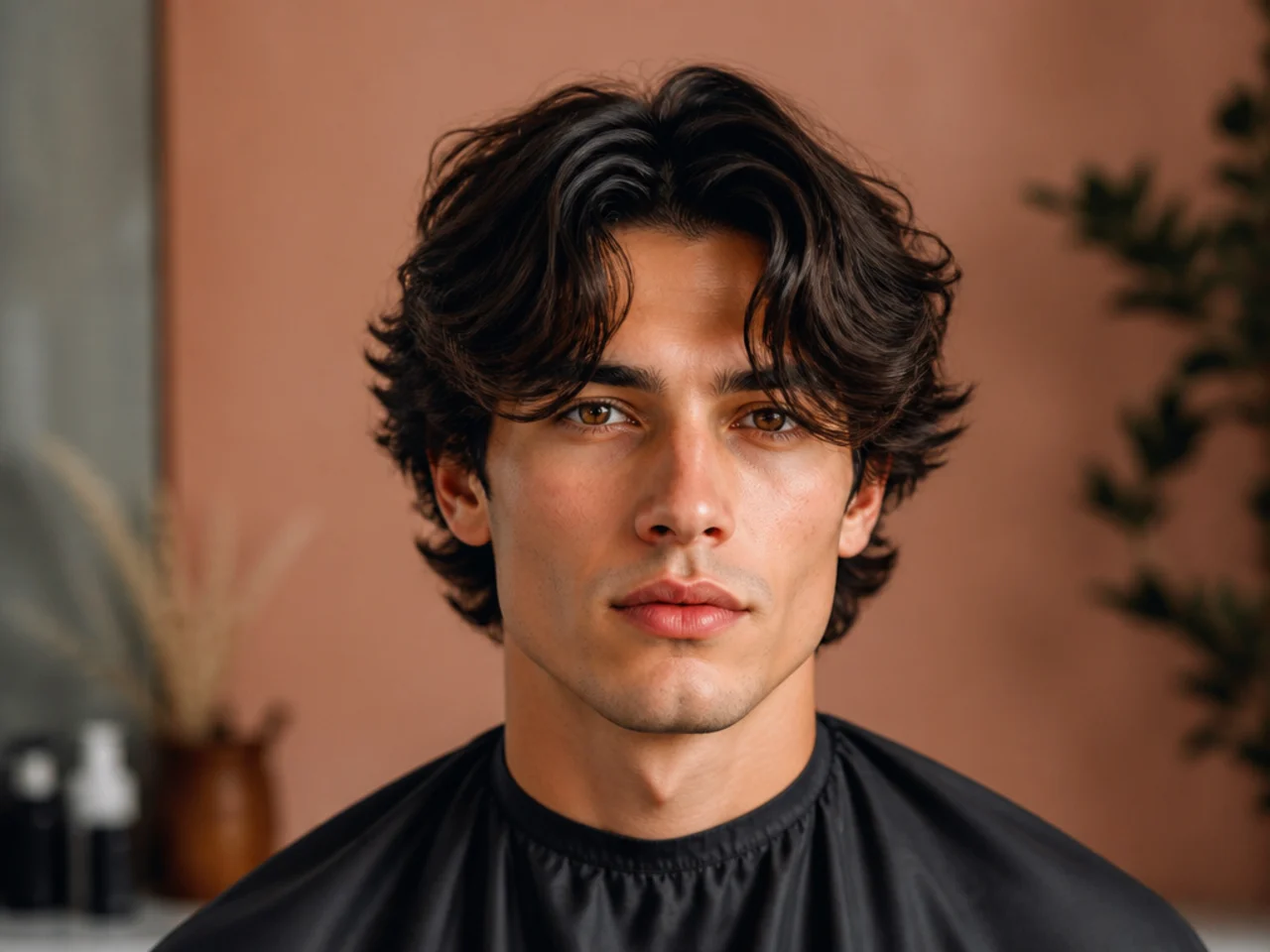
Curtains revive the 90s middle part with modern layering. Front pieces hit 5 to 6 inches and sweep to either side of a defined central part. Sides stay scissor-cut and long enough to blend the fringe cleanly. No fade. Wavy hair drapes the curtain with softer edges than straight — think Leonardo DiCaprio in the Titanic era, not Nick Carter.
Best for oval, diamond, and heart-shaped faces. 2A and 2B waves hold the split; 2C waves push the fringe outward, which reads shaggier but still period-correct.
Ask for: "90s curtain cut, 5 to 6 inches at the front, 4 inches at the crown, defined middle part, scissor-cut sides to the ears, light face-framing layers."
Styling: blow-dry the fringe outward from the center part with a small round brush, aiming heat along the wave direction. Fingertip of cream through the ends. If the fringe wants to sit flat, mist sea-salt spray at the roots first.
5. Middle Part with Face-Framing Layers
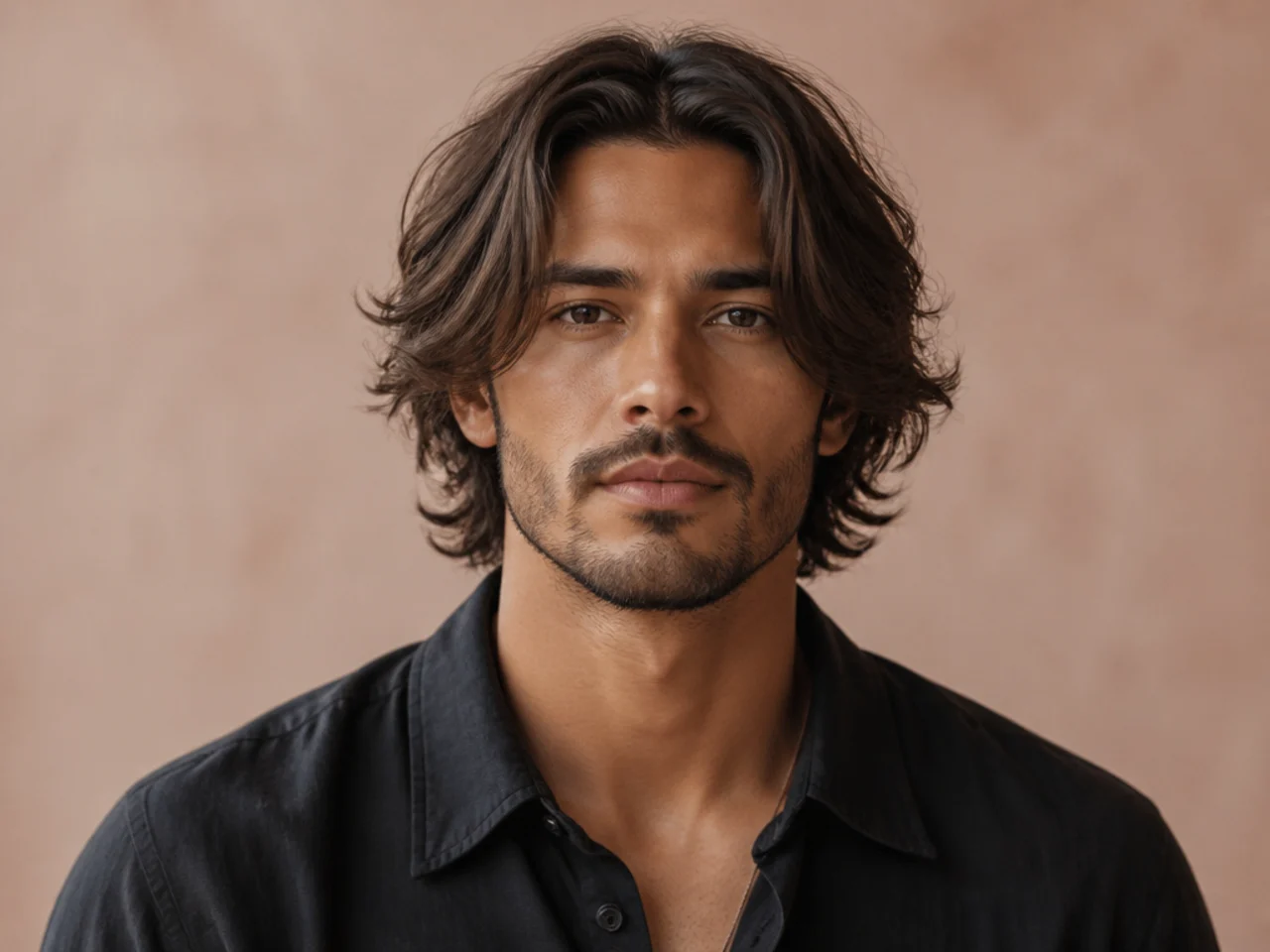
The modern take on the middle part haircut, cut looser than the 90s version. Top runs 4 to 5 inches with heavy razored layers that frame the cheekbones and jaw. Sides can stay long and scissor-blended or drop to a soft low taper. Wavy hair carries the parted drape with built-in movement — no round brush required.
Oval and long faces wear this best. 2B is the sweet spot; the split needs enough wave to look intentional but not so much it fights the part.
Ask for: "middle part cut, 5 inches on top, razored face-framing layers to the cheekbones, scissor-blended sides or a soft low taper."
Styling: sea-salt spray on damp hair, rough-dry with fingers, run a wide-tooth comb through the part to set the split clean. Fingertip of cream at the ends only.
6. Medium Wolf Cut
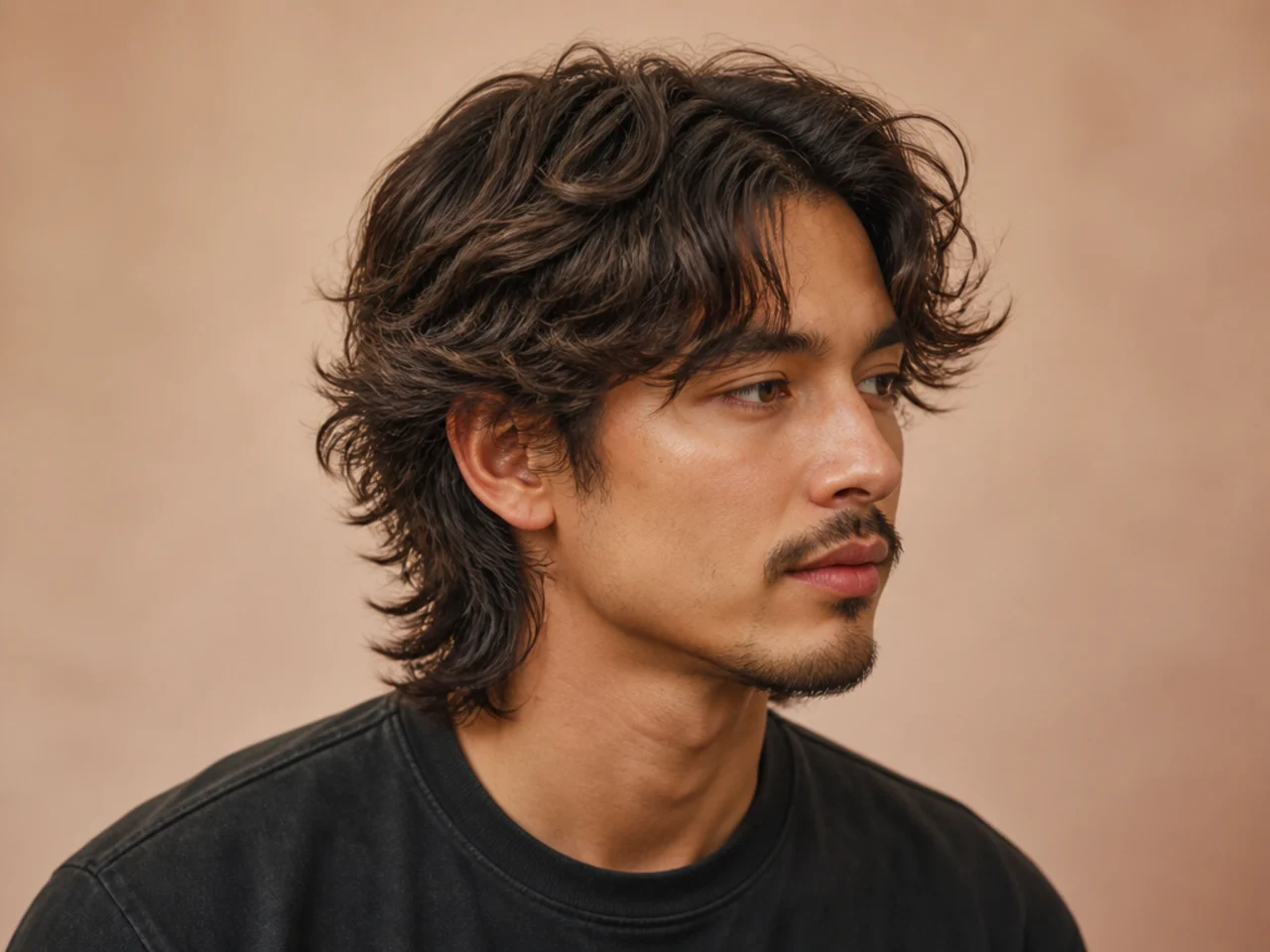
The wolf cut for men is the shag's louder cousin. Top stays 4 inches with heavy layers stacked through the crown; the front and sides drop into wispy face-framing pieces that hit the cheekbone. Razored throughout for that feathered edge. Wavy hair is the ideal texture — the coarse layering pattern needs wave to move.
Suits diamond, oval, and heart-shaped faces. 2B and 2C carry the volume best. For the wavy-specific deep dive, see wavy wolf cut men.
Ask for: "medium wolf cut with heavy crown volume, face-framing layers cut razor-thin at the cheekbone, 4 inches on top, curtain-parted fringe, cut dry."
Styling: sea-salt spray on damp hair, diffuse on low with fingers lifting the crown, air-dry the sides. Fingertip of matte cream to break the ends. Skip pomade — it flattens the wave.
7. Modern Mullet
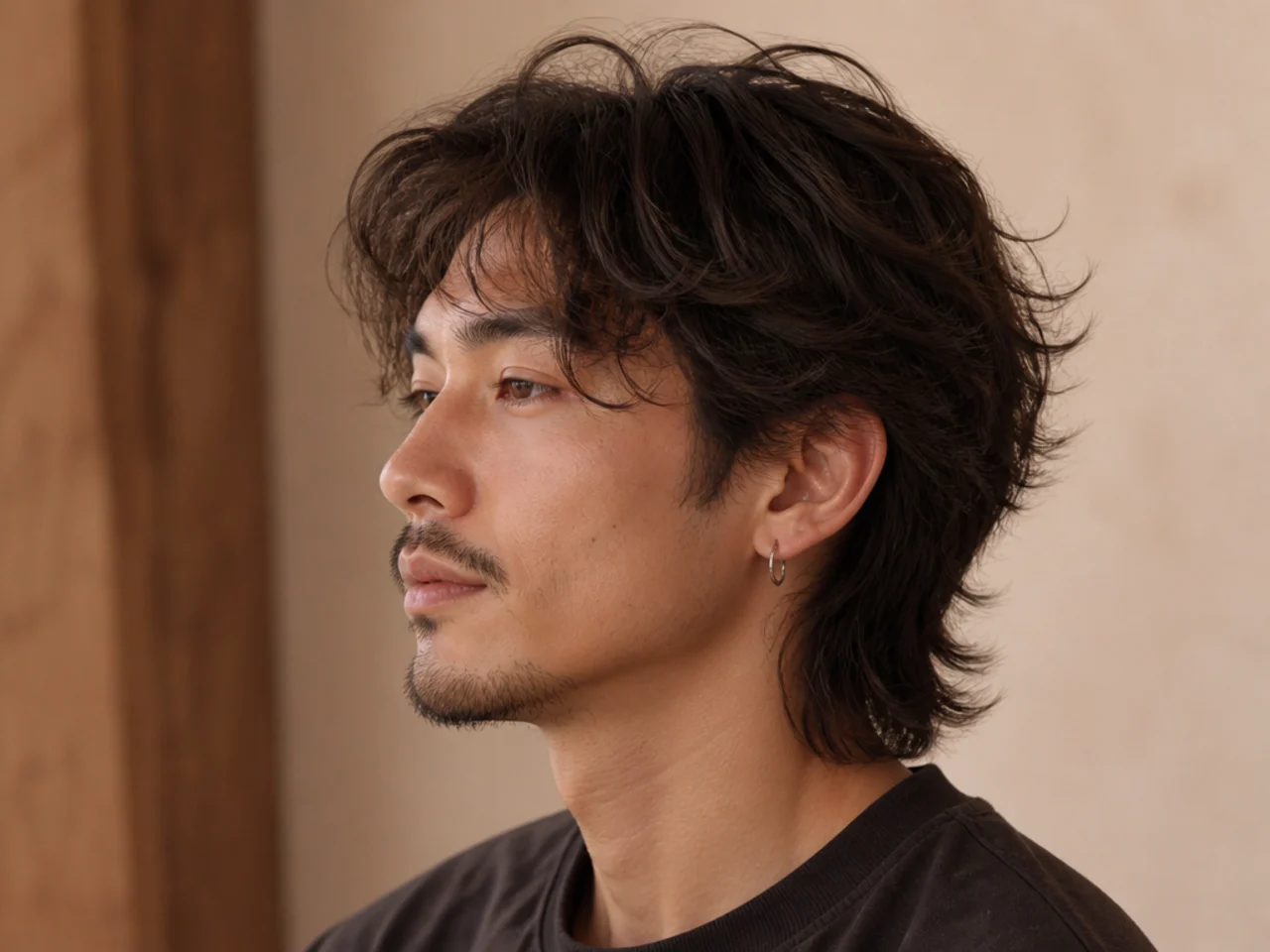
The modern mullet buries the 1980s version and rebuilds around texture. Top and front stay 3 to 4 inches with heavy point-cutting. The back reaches the collar with choppy disconnected layers. Sides taper or fade — usually a low mid fade for the clean transition. Wavy hair is the mullet's best friend; the back-length movement needs body to look intentional.
Suits oval and heart-shaped faces. The fringe frames a strong forehead; the back adds masculine length. 2B and 2C waves carry the back-length shape without collapsing.
Ask for: "modern mullet, 4 inches on top with heavy point-cutting, back to the collar with disconnected layers, low mid fade on the sides."
Styling: sea-salt spray on damp hair, diffuse with a low heat, push the fringe forward with a palm swipe. Skip pomade — the shine kills the shape.
8. Loose Mod Cut
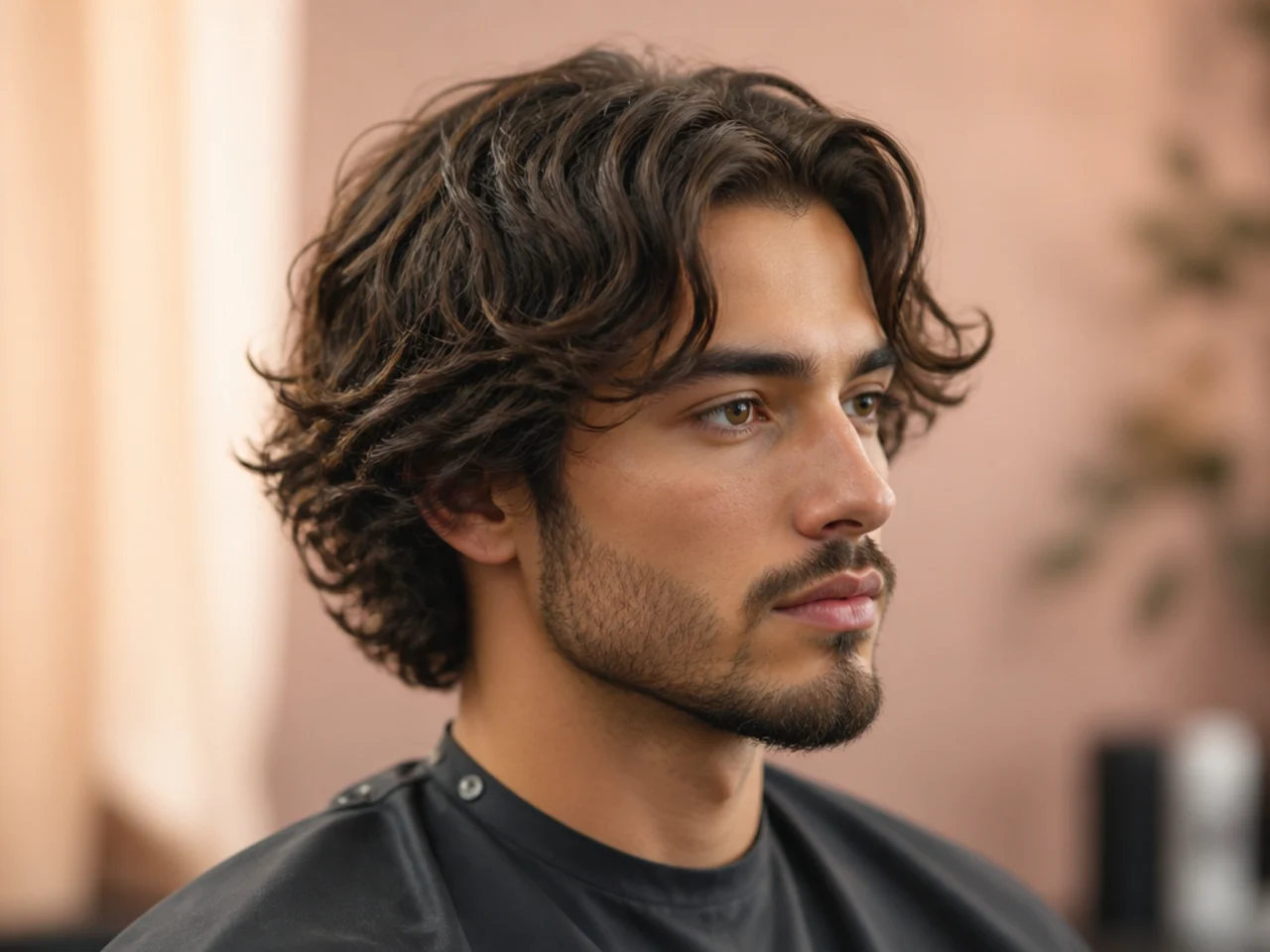
The 1960s British mod silhouette pulled forward with wavy softness. Top runs 3 to 4 inches, layered short at the crown and longer toward the front. Sides scissor-blend down to the ears — no clipper guards. The whole shape rounds through the crown with a soft fringe that ends just above the brow. Wavy hair rounds the crown naturally, which is why this cut sits so cleanly on 2A and 2B.
Best for square and diamond faces because the rounded top softens angular jaws. Straight hair reads sharper; wavy reads warmer.
Ask for: "loose mod cut, 4 inches on top, razored internal layers with a rounded crown, soft fringe to the brow, scissor-blended sides."
Styling: small amount of matte paste through damp hair, blow-dry with fingers pushing the fringe forward and slightly down. Skip shine.
9. Layered Cut with Rounded Crown
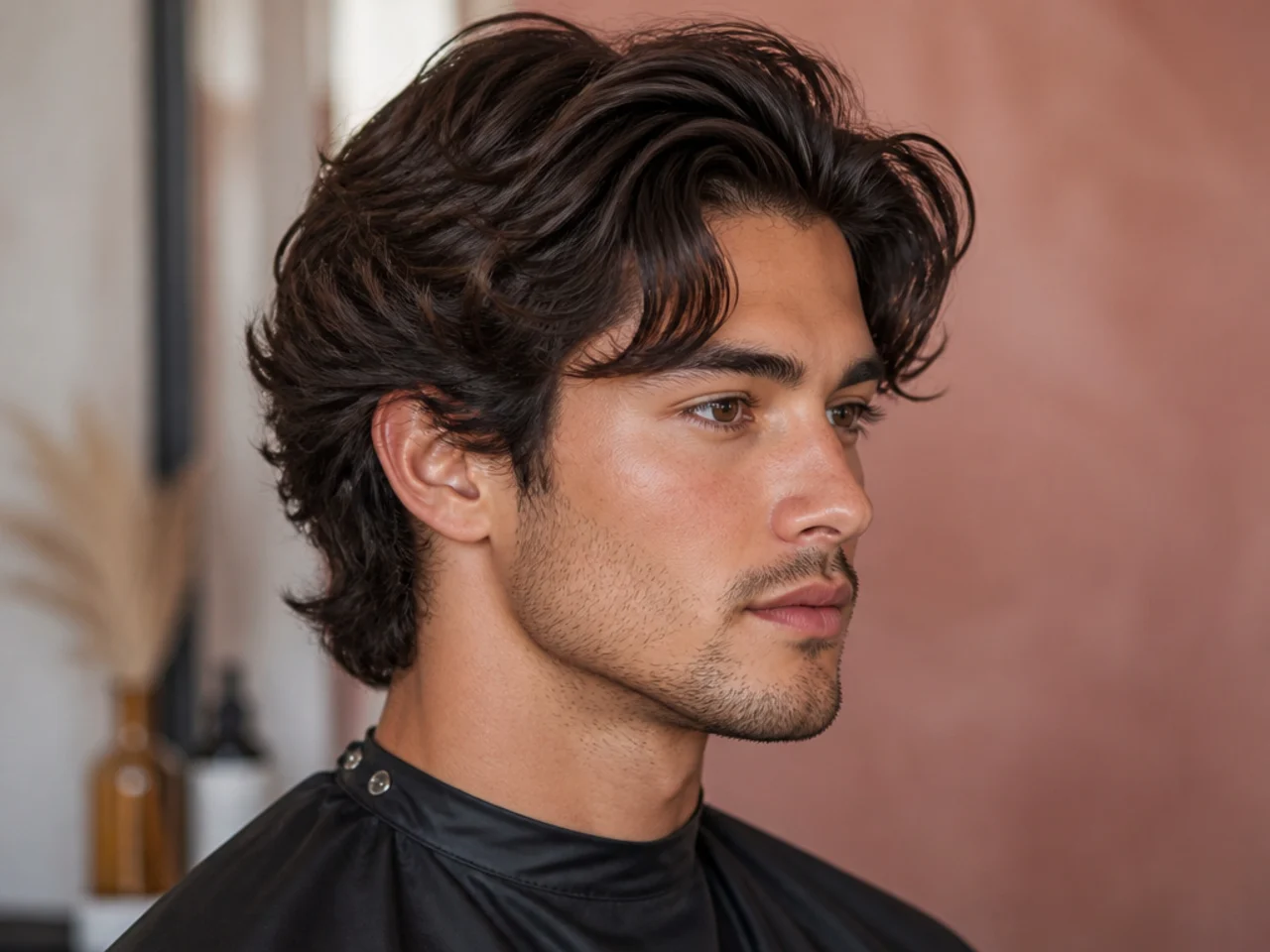
The workhorse medium layered cut. Top runs 4 to 5 inches with soft internal layers cut to build a slightly rounded crown. Sides scissor-blend down to a soft length at the ears — no fade. The layering is subtle but essential: wavy hair without internal layering builds a pyramid shape as the wave stacks weight through the mid-shaft.
Suits every face shape. 2A through 2C hold the layers; the finer the wave, the softer the finish.
Ask for: "medium layered cut, 4 inches on top, soft internal layers with a rounded crown, scissor-blended sides — no fade — cut dry to check the wave fall."
Styling: cream from mid-shaft to tips on damp hair, air-dry or diffuse on low. Push the front up and slightly forward. Versatile enough to comb sideways for a meeting or scrunch for the weekend.
10. Textured Medium Fringe
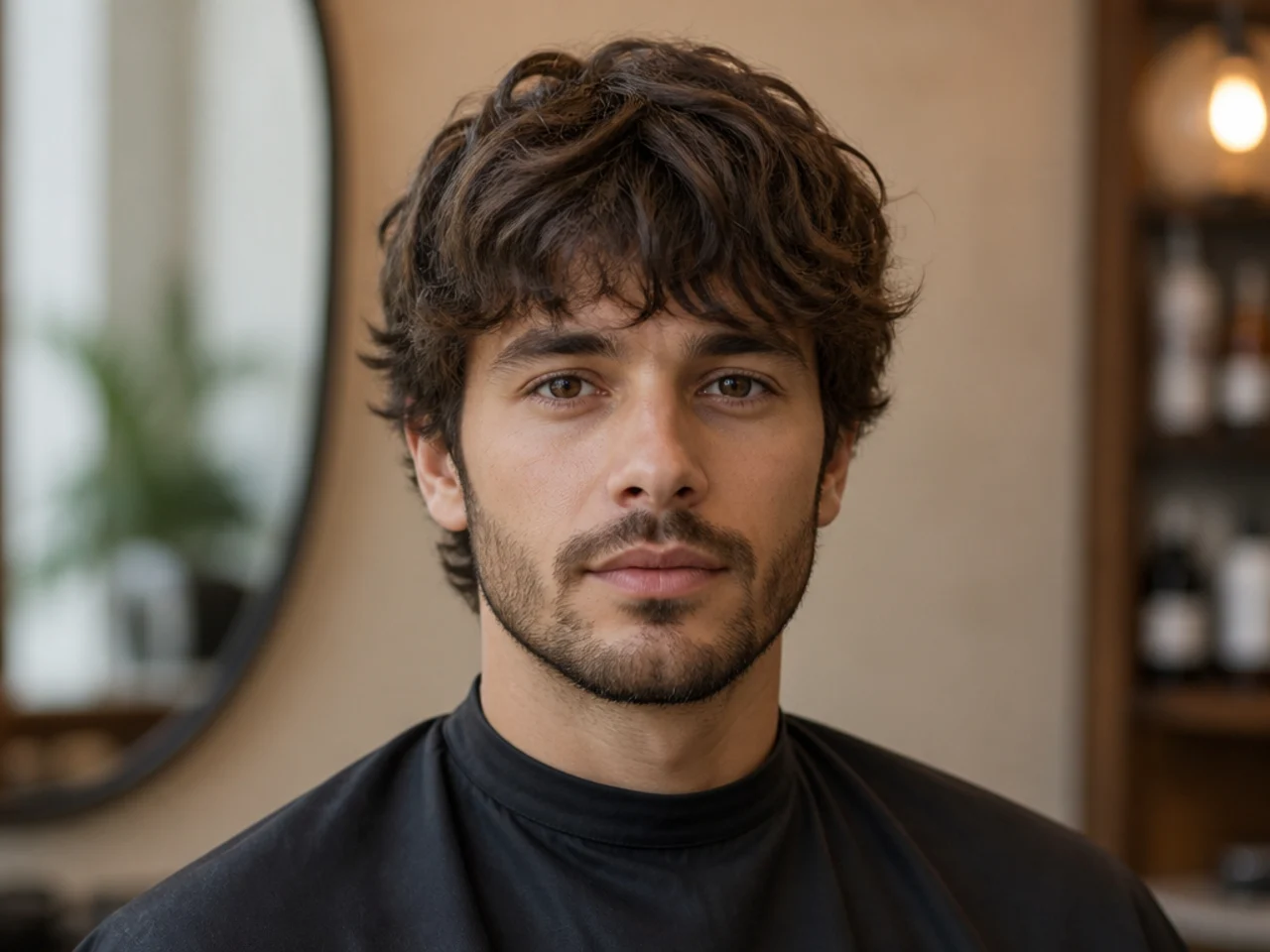
The medium fringe haircut trades a hard hairline for a heavy curtain of wave across the forehead. Top runs 5 to 6 inches so the fringe sits past the eyebrows. Sides scissor-blend or drop to a low taper. The whole cut leans forward from the crown, and wavy hair adds the movement that makes the fringe read soft instead of blunt.
Flatters oval and square faces — the fringe softens the jawline. High foreheads and receding hairlines benefit most.
Ask for: "medium textured fringe, 5 to 6 inches at the front, heavy point-cut fringe past the brows, low taper fade on the sides."
Styling: work a fingertip of matte paste from mid-length to tips, push the fringe forward with your palm. Never a brush — brushes make wavy fringes stiff.
11. Loose Quiff
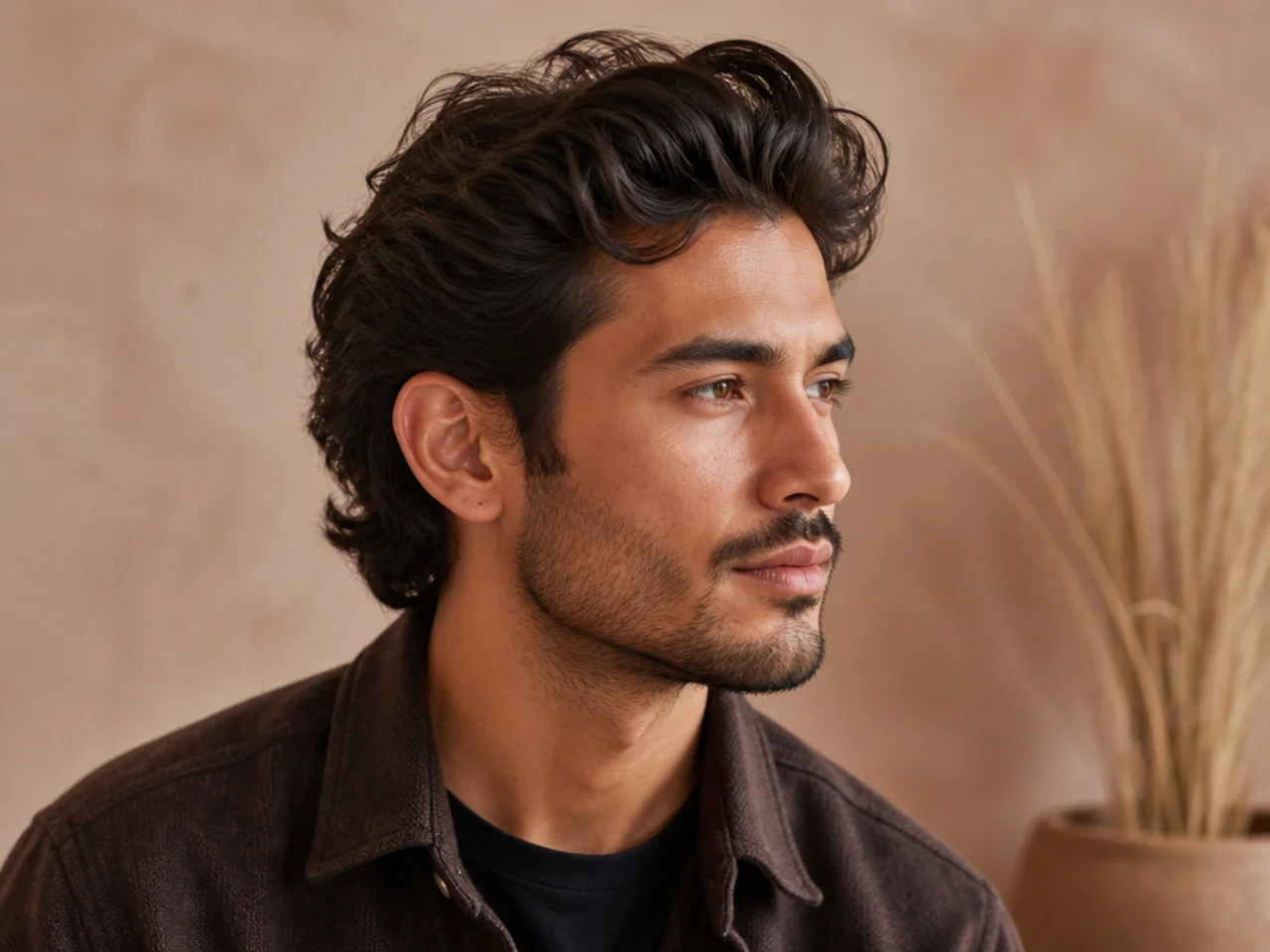
The medium quiff done wavy — softer than the straight-hair blowout version. Top runs 4 to 5 inches so the front piece arches back with the wave's natural lift. Sides get a mid fade to draw the eye vertically. Point-cut layers throughout so the quiff has separation. Wavy hair holds this shape better than straight because the wave supplies the volume that straight has to fake with heat.
Flatters round and square faces because the vertical height stretches the frame. 2A and 2B waves hold the arch; 2C bulks it into more of a textured pompadour, which is fine — see number 12.
Ask for: "loose medium quiff, 5 inches at the front, point-cut internal layers, mid fade on the sides — not skin, just clean."
Styling: blow-dry the front up and back with a round brush on low, following the wave direction, not fighting it. Matte clay on the front third only. The back sits clean.
12. Medium Textured Pompadour
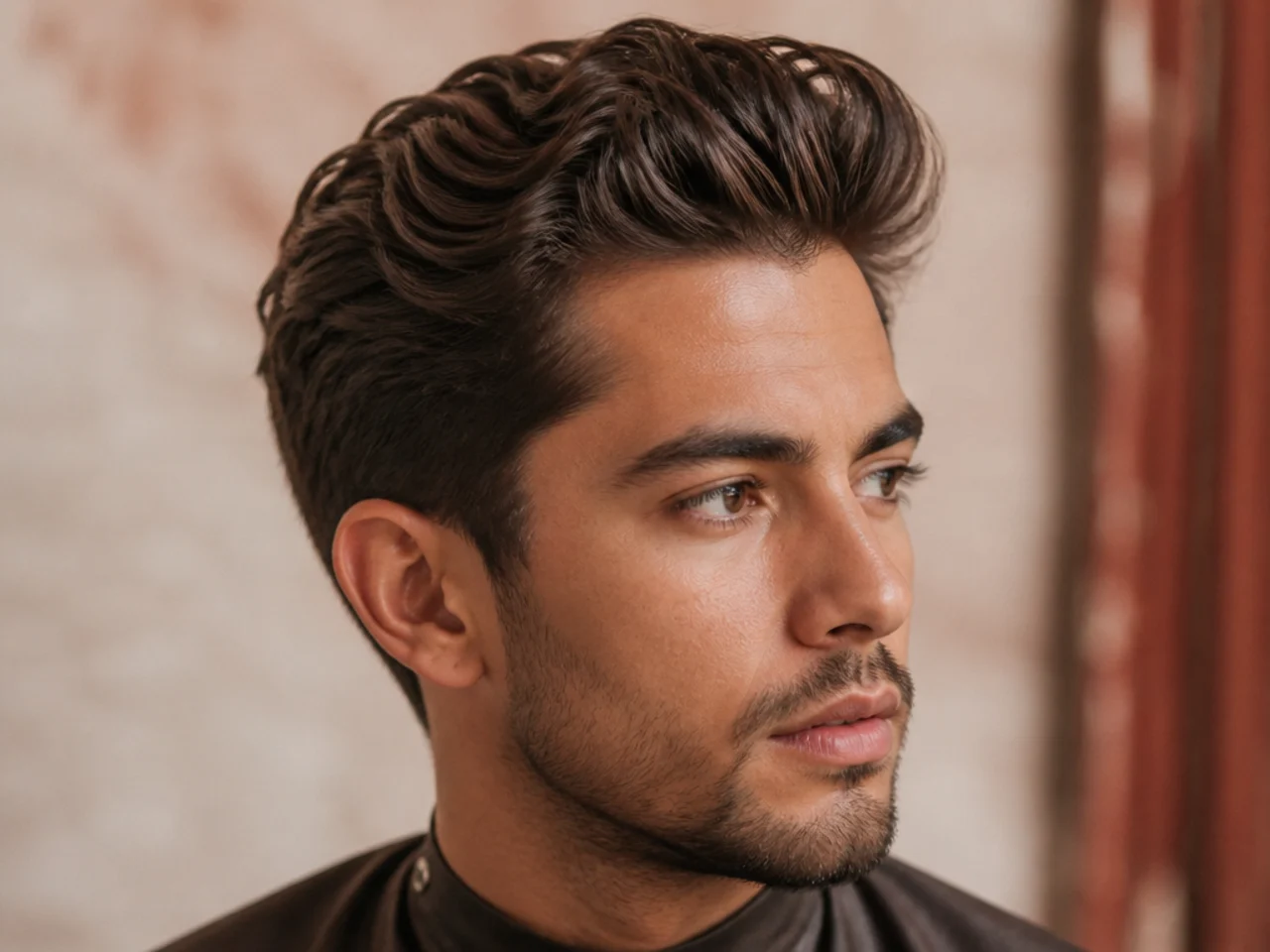
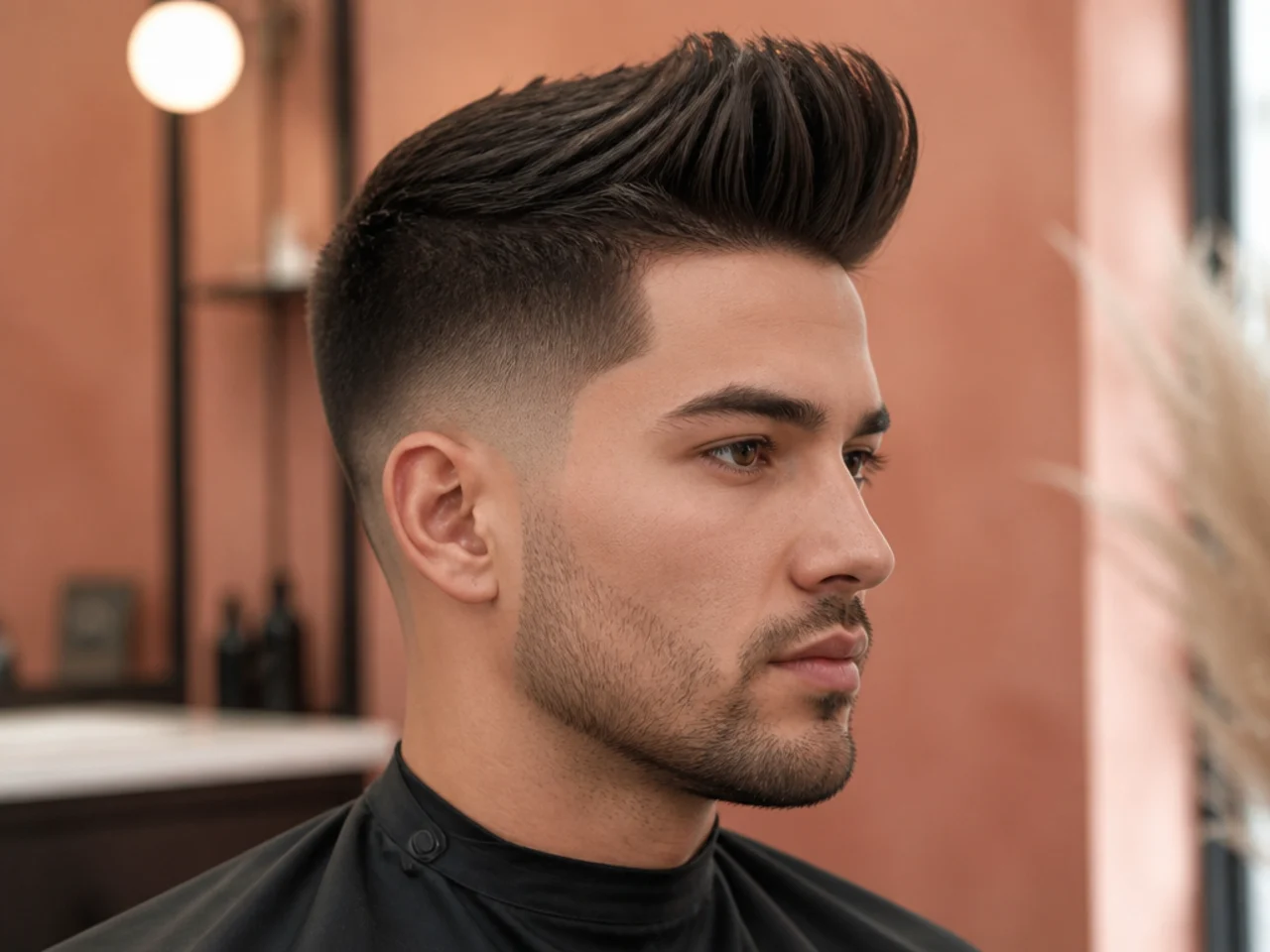
The textured pompadour swaps the shiny classic for a matte layered lift. Top runs 5 to 6 inches at the front, tapering to 3 inches at the crown. Sides sit tight with a mid or high fade. Point-cut ends give the shape breathing room. Wavy hair carries this cut without a mousse base — the wave supplies the scaffolding that straight fine hair has to build with product.
Suits oval and square faces. 2B and 2C hold the arch best; 2A can carry it but reads softer.
Ask for: "medium textured pompadour, 5 inches at the front, 3 at the crown, point-cut throughout, mid or high fade with a defined line."
Styling: blow-dry up and back with a round brush along the wave. Strong-hold matte clay pressed into the base, shaped forward with the fingertips. Structured — never crispy.
13. Wavy Comma Hair
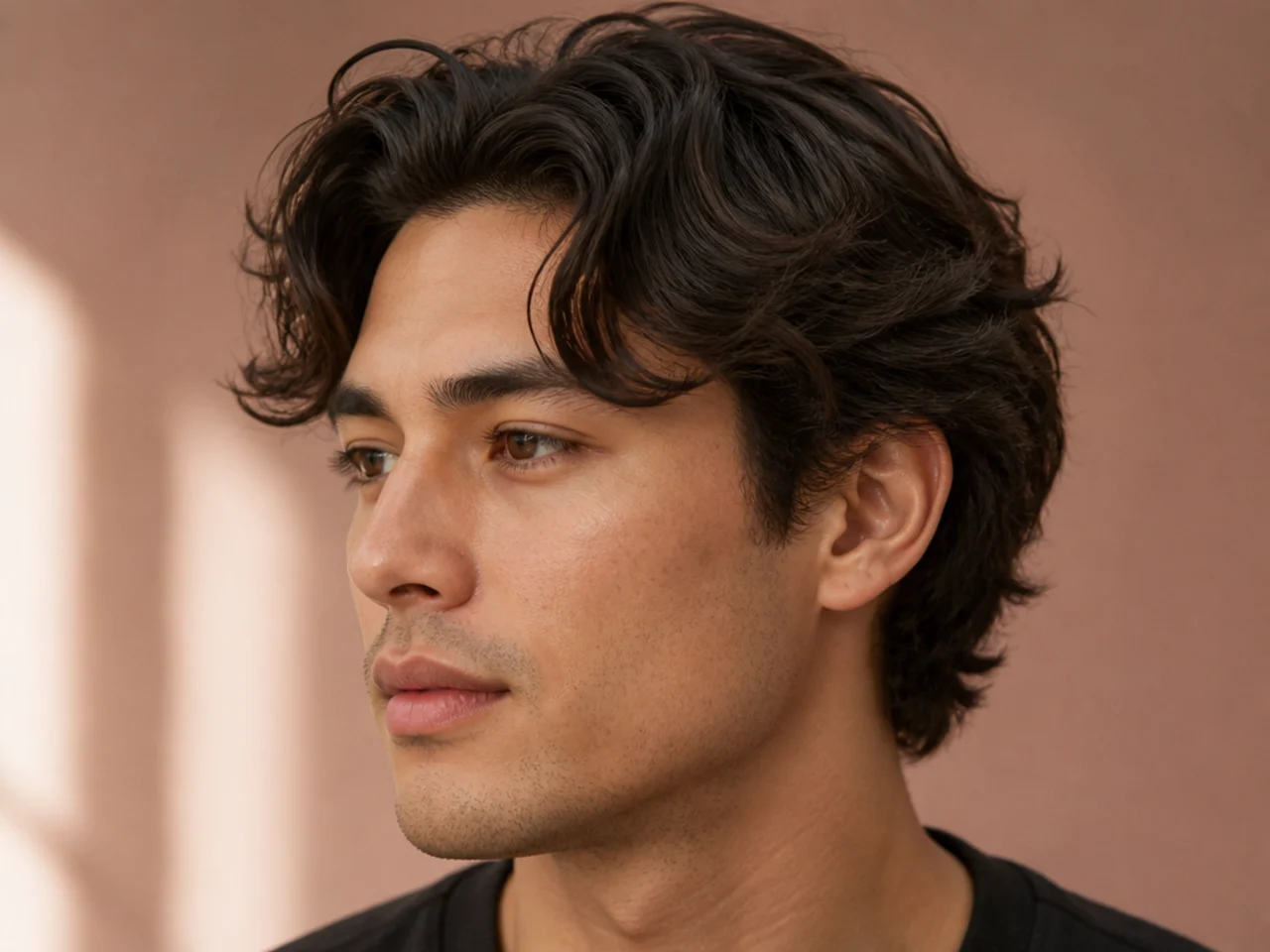
The Korean comma hair import adapted for wave. Top runs 3 to 4 inches, styled forward and slightly to one side so the front strands curl into two comma shapes on the forehead. Sides get a low or mid fade for the clean line. Wavy hair takes the comma shape without a round brush — the S-pattern does what straight hair needs heat to fake.
Best for oval, round, and square faces. 2A and 2B carry the shape cleanest; the wave pattern needs pliability, not a hard curl.
Ask for: "wavy comma hair, 3 to 4 inches on top, layered forward, mid fade on the sides — I want the comma curl to sit on the forehead using the natural wave."
Styling: small amount of matte clay warmed between the palms, worked forward from the crown. Coax the front strands into the comma shape with your fingertips, one side at a time. Hairspray only if humidity fights you.
14. Medium Two Block
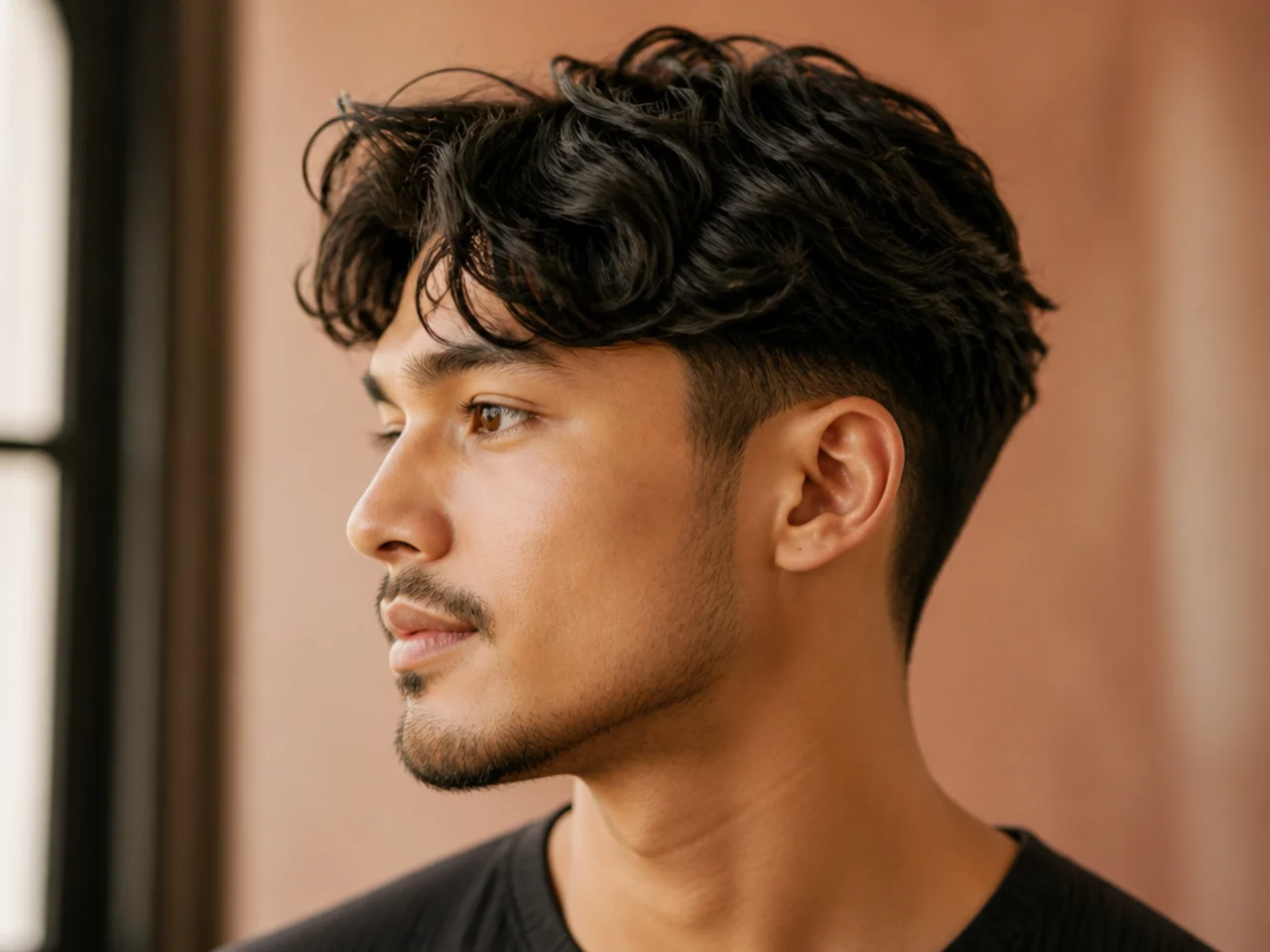
The K-pop favorite adapted for wavy hair. Sharp contrast between a long layered top and short clipper-cut back and sides. Top runs 4 to 6 inches with weight built at the crown. The disconnection between top and sides is intentional and visible. Wavy hair softens the disconnection compared to straight — the sharp edges hide under the wave, which lands looser and more Western than the original Korean silhouette.
Suits round and square faces because the top adds vertical length and the tight sides sharpen the frame. 2A and 2B waves only — 2C bulks the top into a pyramid unless the barber thins aggressively.
Ask for: "medium two block, guard 2 on the sides and back with a clean disconnection, top at 5 inches, front layered forward, cut with the wave direction in mind."
Styling: air-dry until damp, then blow-dry the top forward and slightly to one side. Sea-salt spray for grip. No shine.
15. Grown-Out Ivy League
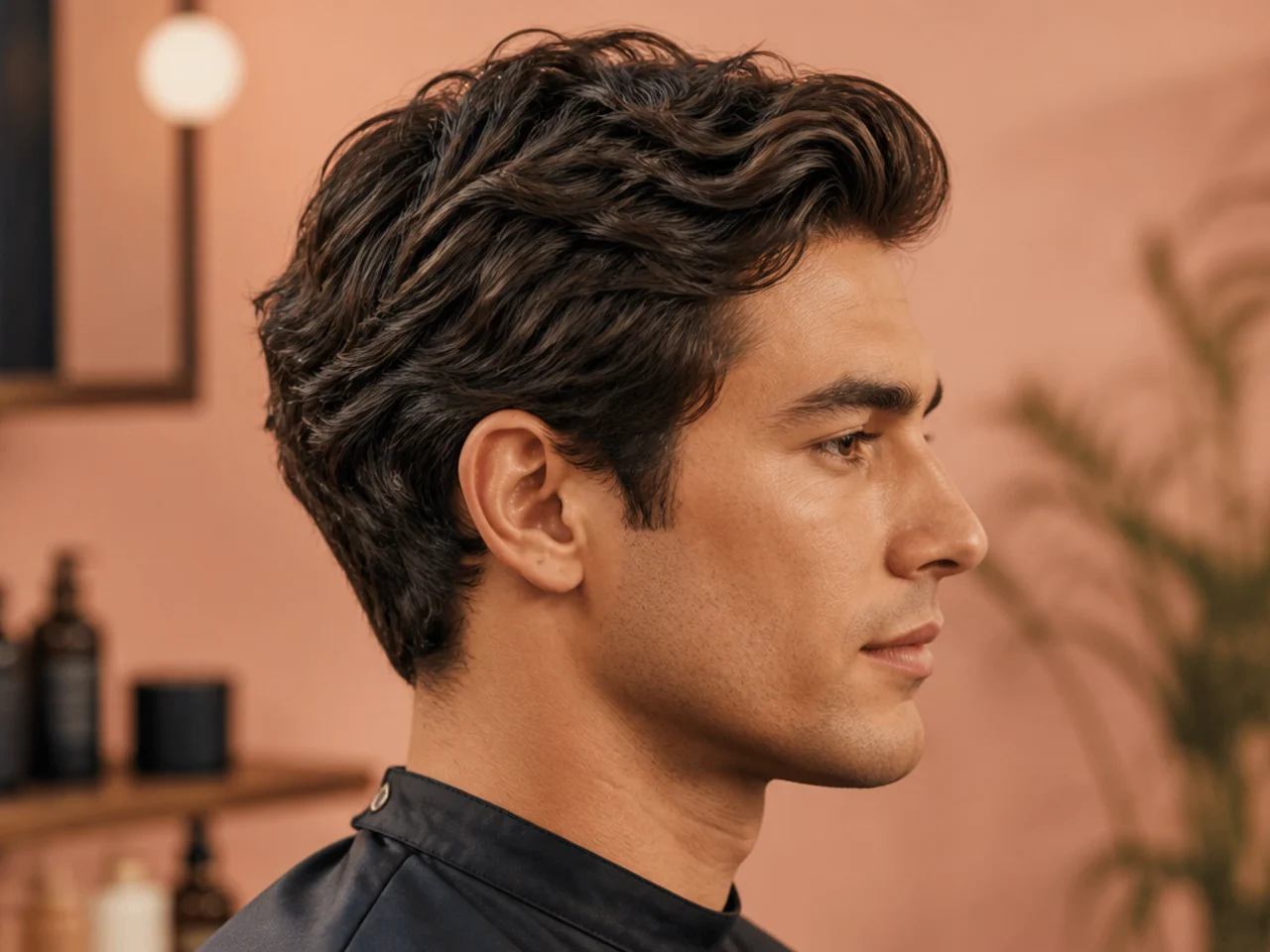
The Ivy League grown into medium territory. Top reaches 3 to 4 inches with a soft side part that lets the front comb sideways or forward. Sides taper with scissors — never a fade for this cut. Wavy hair adds body the straight-hair version has to build with a round brush, which makes this cut easier to wear on wavy than any other texture.
Suits oval, square, and long face shapes. 2A holds the part cleanest; 2B and 2C break the part into a soft split, which reads intentional rather than messy.
Ask for: "grown-out Ivy League, 4 inches on top with a soft side part, scissor taper on the sides — no clippers, no fade — blended to a natural sideburn."
Styling: cream through damp hair, comb once with the part, air-dry or blow-dry gently across. Should sit like it was cut yesterday even on day five.
16. Long French Crop
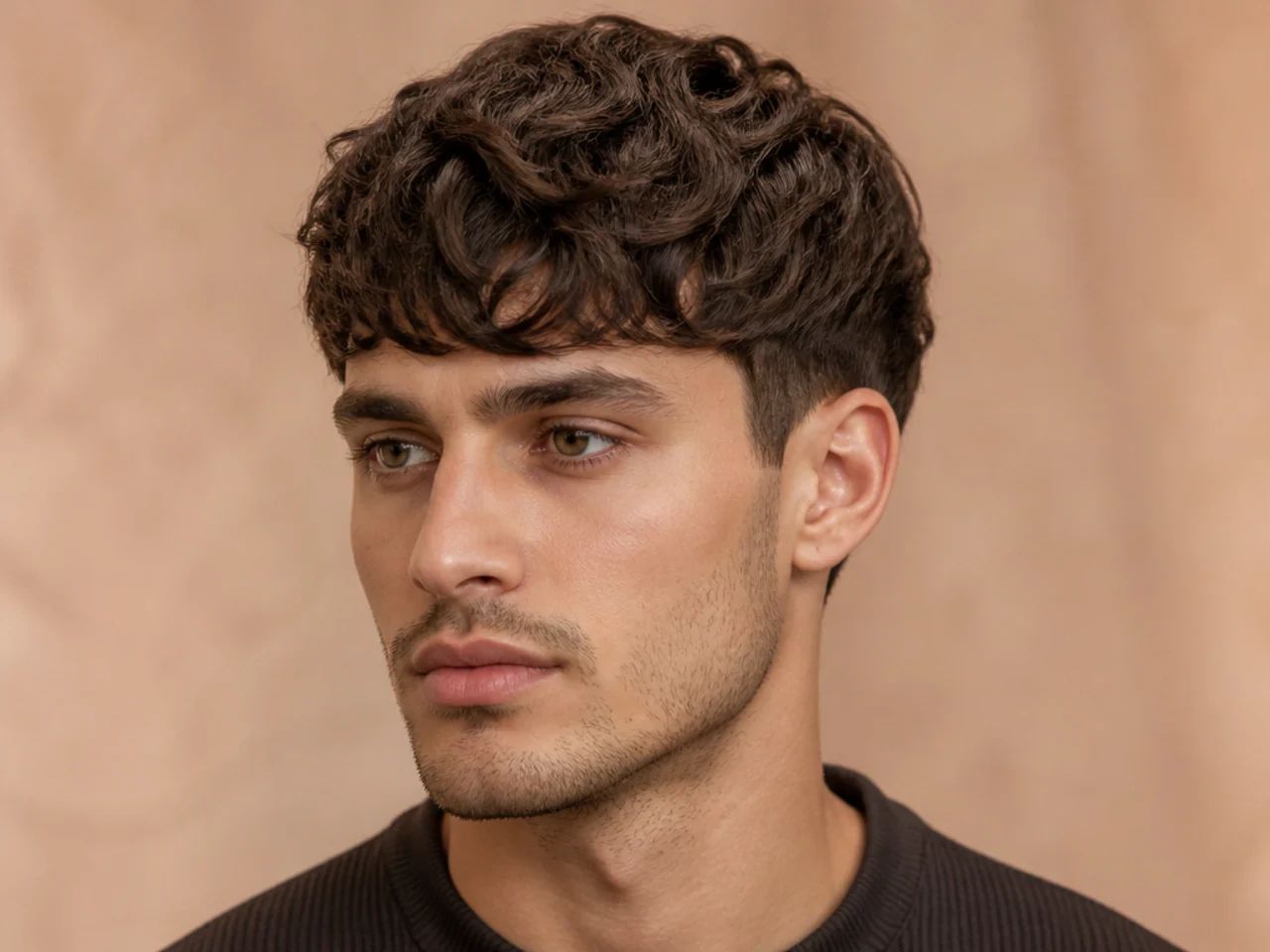
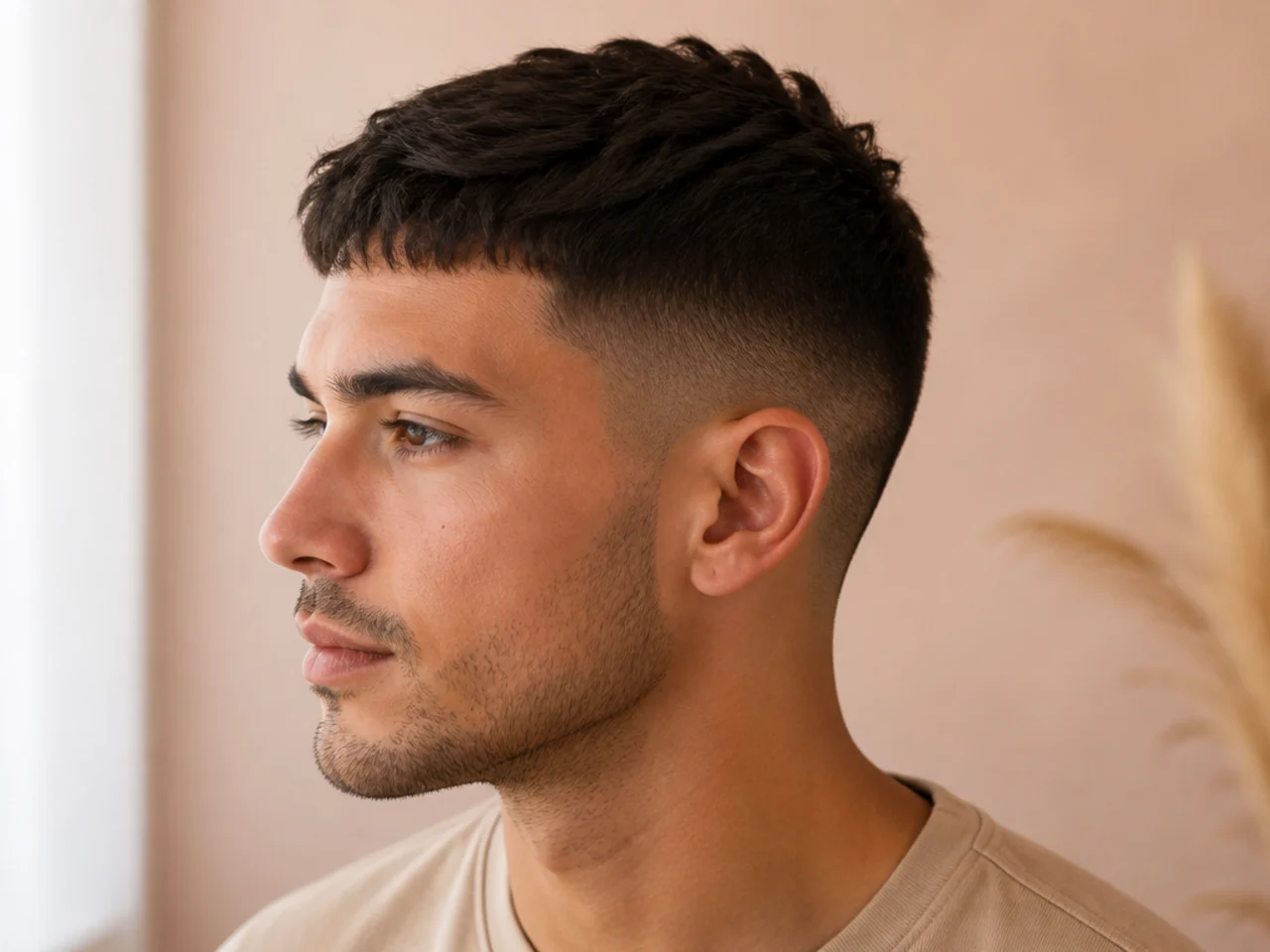
The French crop grown out to medium territory. Top runs 3 inches, brushed forward and down into a fringe that stops just above the brow. The fringe is heavily point-cut so the edge feathers instead of sitting blunt. Sides drop to a mid taper fade. Wavy hair reads densest here because the shortness plus broken ends plus wave stacks visual weight three ways.
Suits round, square, and oval faces. Fine 2A wavy hair reads richer than fine straight in this cut — the wave adds body the length can't.
Ask for: "long French crop, 3 inches on top brushed forward with the wave, point-cut fringe to the brow, mid taper fade on the sides."
Styling: pea of matte clay warmed between the palms, pushed forward and down from the crown. Air-dry. Ninety-second morning.
17. Waves with Low Taper Fade
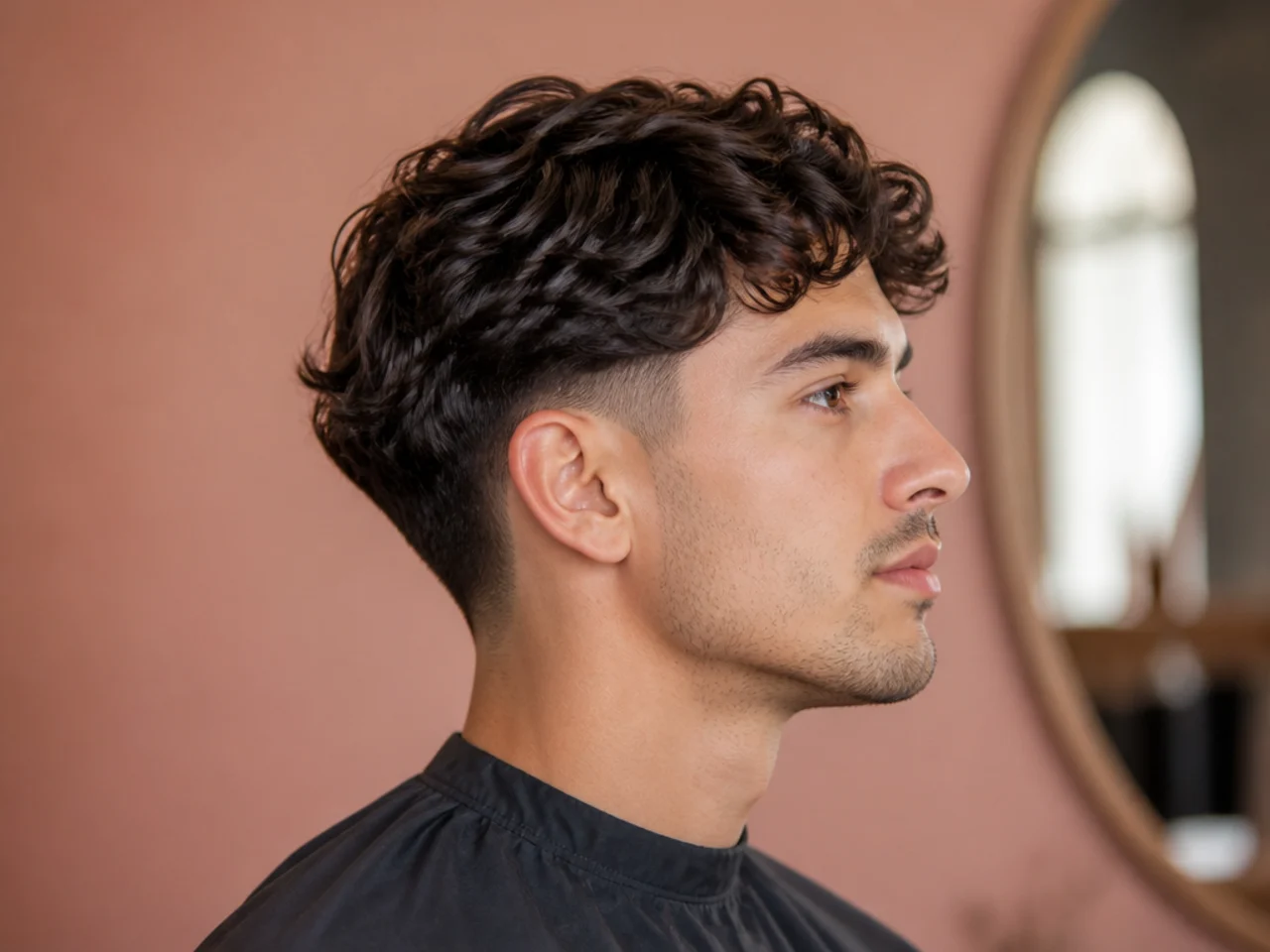
The clean version. Top runs 4 to 5 inches, left long enough for the wave to break naturally, with no forward-, back-, or middle-sweep — the wave sits where it lands. Sides drop to a low taper fade that stops well below the temple, letting the wave read as the whole event. Point-cut ends throughout.
Suits oval, square, and long faces. Every wave pattern from 2A to 2C carries this cut — the fade sharpens whatever the wave does naturally.
Ask for: "medium wavy cut with a low taper fade, 4 to 5 inches on top left in its natural fall, point-cut ends, fade stopping well below the temple."
Styling: sea-salt spray on damp hair, scrunch upward, air-dry or diffuse on low. Fingertip of light cream at the ends only. This is the low-lift version of every cut above.
18. Bro Flow with Low Taper Fade
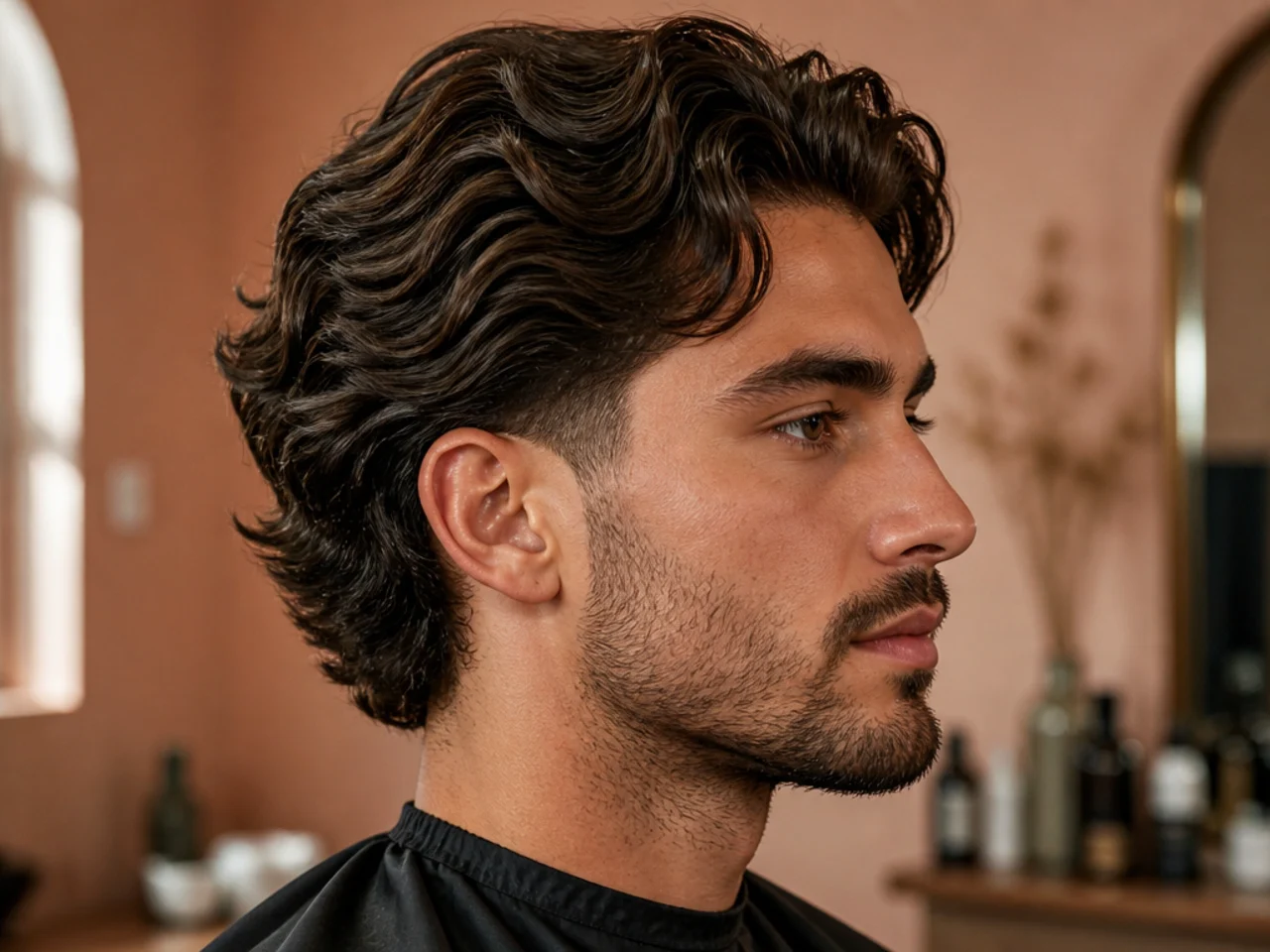
The bro flow sharpened. Top and back stay 4 to 5 inches sweeping back with the wave, but the sides drop to a low taper fade that lifts the outline from the temple down. Cleaner than the pure flow, warmer than the pure fade. This is the fade-friendly version of number 1.
Suits every face shape. 2A through 2C wavy hair holds the sweep — the fade only sharpens what the wave is already doing on top.
Ask for: "bro flow with a low taper fade, 5 inches on top and back sweeping with the wave, low taper on the sides stopping well below the temple, point-cut ends."
Styling: cream through damp hair, finger-comb back from the hairline, air-dry. The taper does the sharpening; you're only styling the top.
19. Messy Medium Crop
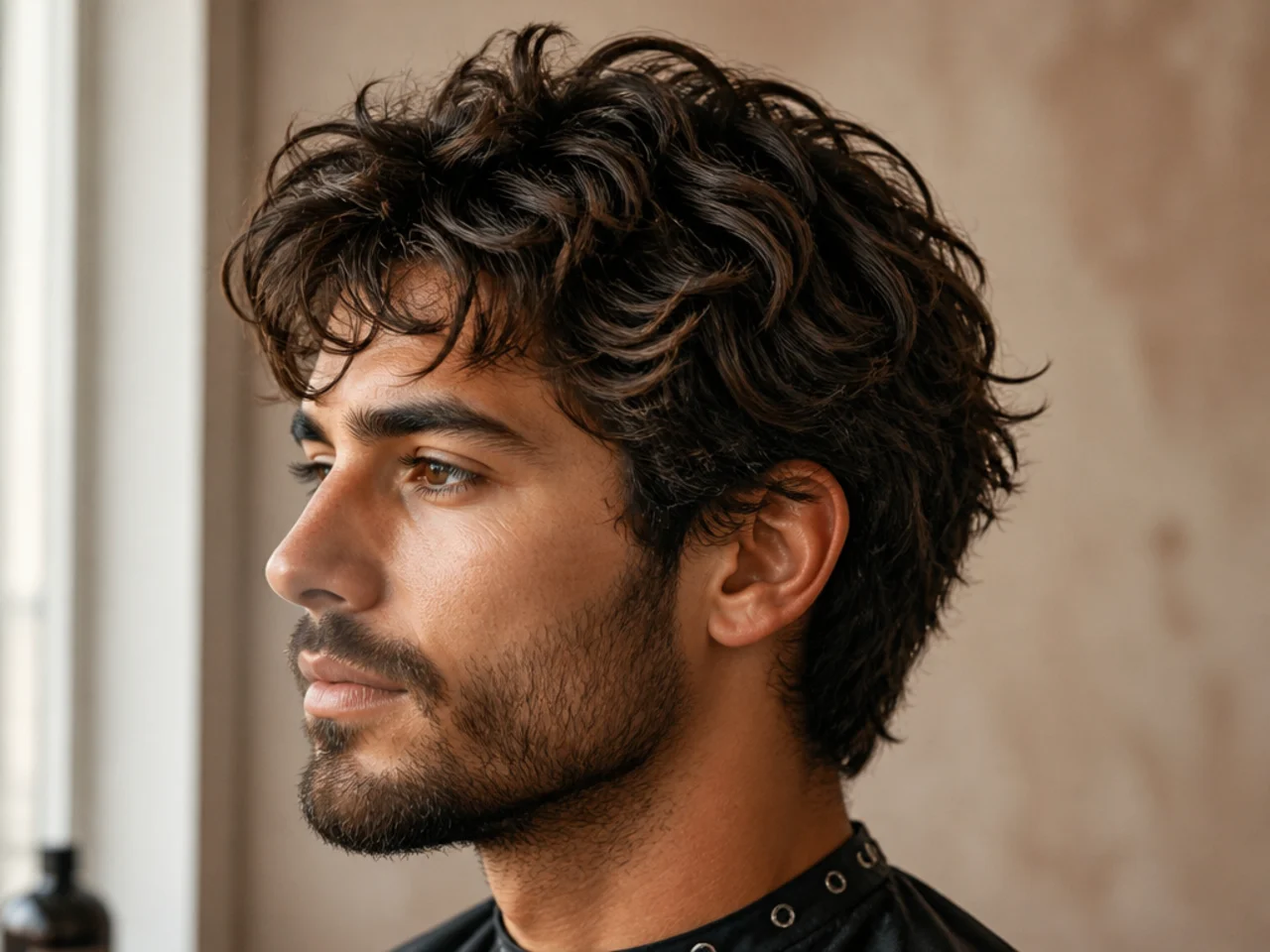
The messy crop is the shag stripped of its curtain fringe. Top runs 3 to 4 inches with heavy internal texturing and randomized point-cut ends. Sides drop to a low or mid taper fade. The whole cut leans into the wave's natural randomness — no defined part, no set direction, just controlled chaos. For the wider textured category, see textured haircuts for men and the layered shaggy hairstyles guide.
Suits every face shape. 2B and 2C read cleanest — the coarse wave needs the texturing to move.
Ask for: "messy medium crop, 4 inches on top with heavy internal texturing and random point-cut ends, low or mid taper fade on the sides, no defined part."
Styling: sea-salt spray on damp hair, tousle with your fingers while it air-dries. Fingertip of matte paste roughed through the ends only. If it looks styled, restart — the point is unstudied.
20. Wavy Top Knot
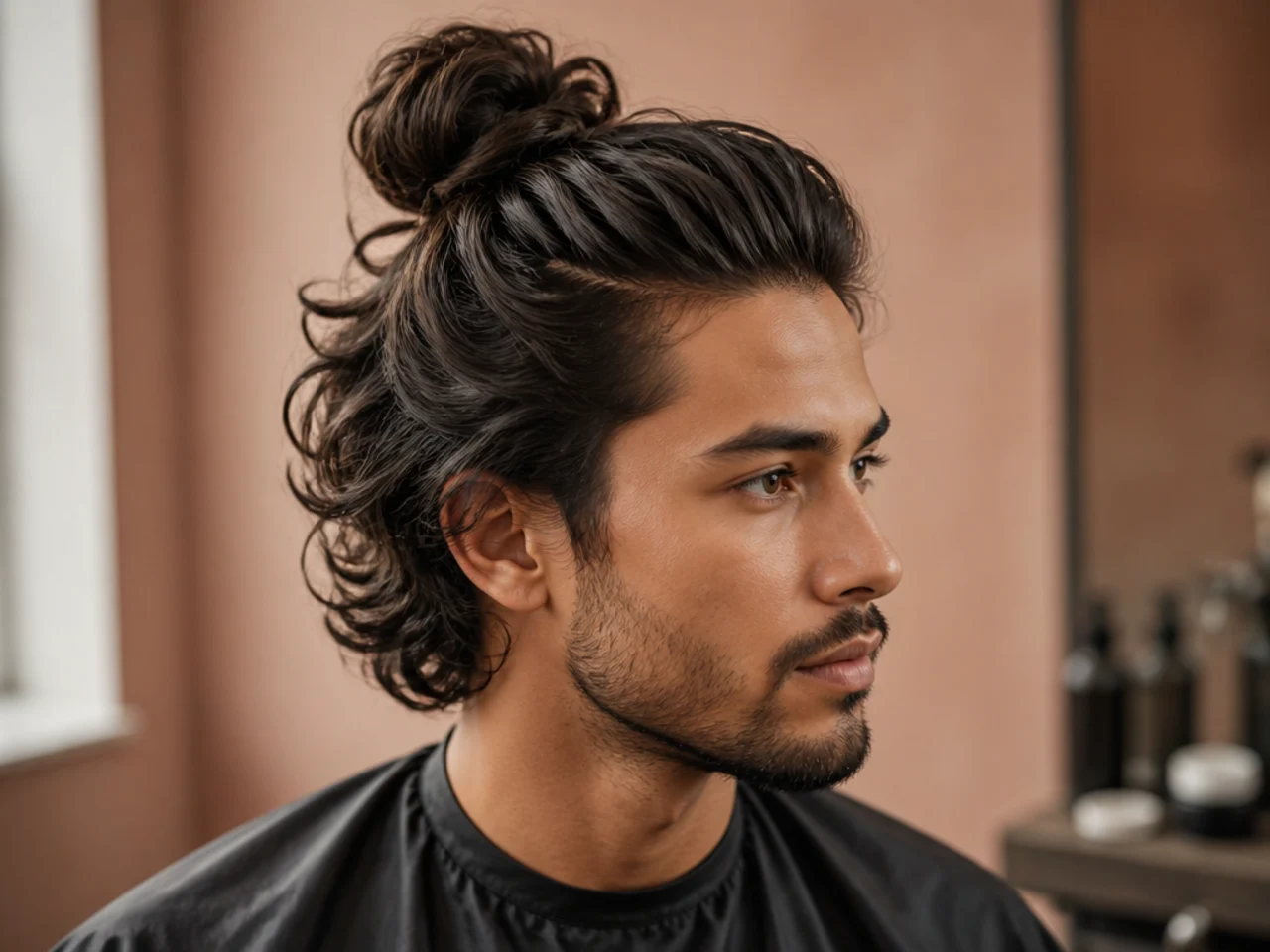
The top knot cut solves the summer problem: long enough on top to tie up, short enough on the sides to stay cool. Top runs 5 to 7 inches; sides drop to a mid or high skin fade. Internal layering prevents bulk at the knot base. Wavy hair makes a rounder, softer knot than straight — the wave adds body to the bundle instead of pulling everything flat.
Suits oval and square faces. 2A and 2B carry the knot cleanest; 2C makes a bigger knot with more halo effect. Pair with a full or short beard for balance.
Ask for: "wavy top knot cut, high skin fade on the sides, 6 inches on top, internal layering to remove bulk at the crown so the knot sits clean."
Styling: gather damp hair at the crown, twist once with the wave direction, secure with a fabric elastic — never rubber. Pull small pieces loose at the temples for movement. The wave does the softening.
How to Ask Your Barber
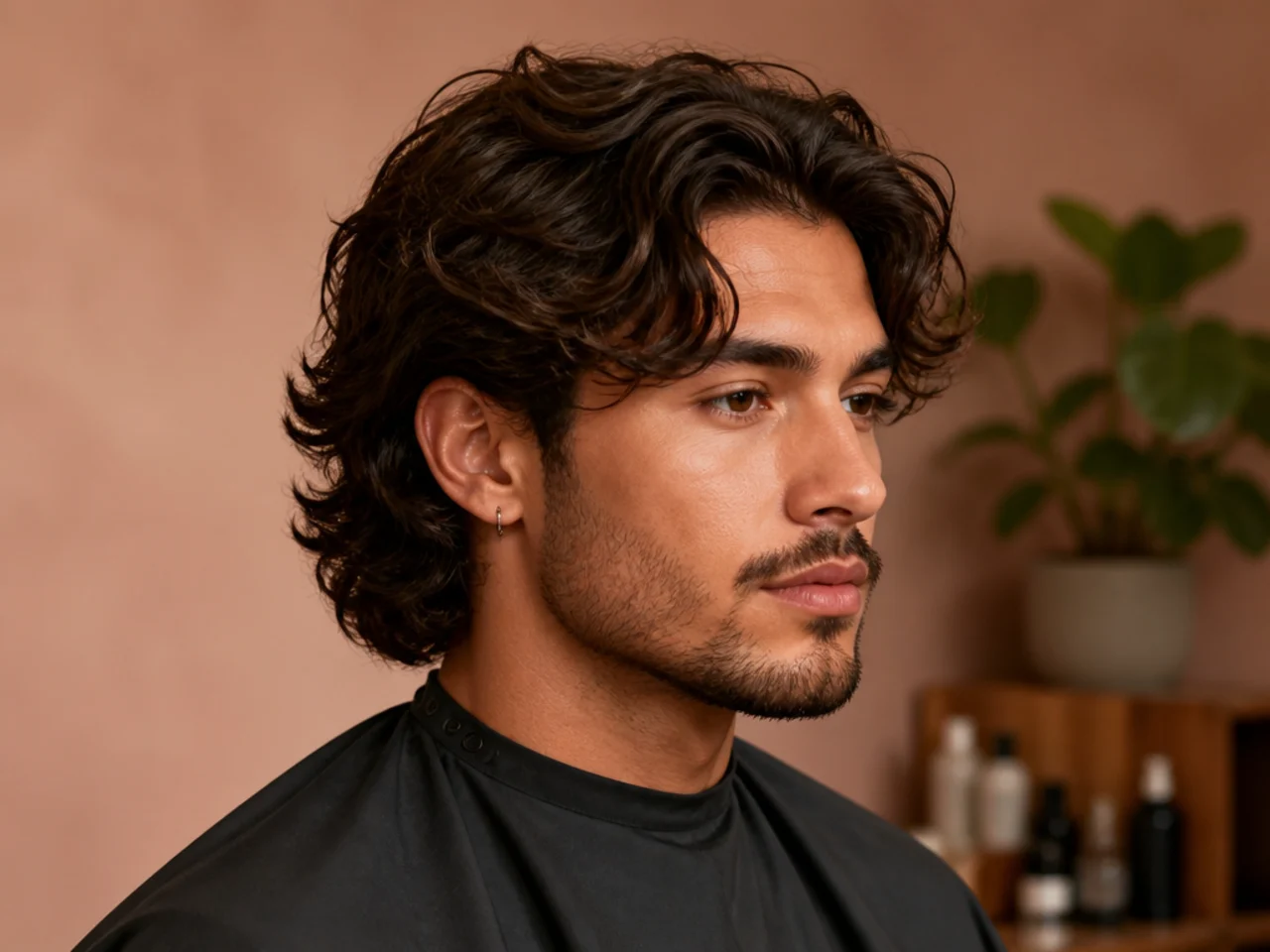
Barbers translate photos and numbers, not adjectives. Wavy hair adds one more variable — the wave direction and pattern — that a good stylist asks about but many don't. Walk in with the following.
- A screenshot of the exact cut you want. From this guide, an Instagram feed, wherever. Names shift shop to shop; a picture doesn't.
- The length on top in inches, measured stretched. "Five inches" is universal. Add half an inch to the number you'd give for straight hair — wavy pulls up.
- The side treatment. Options: skin fade, low taper, mid taper, high fade, scissor blend, or long and layered. Say the height (low, mid, high) and the finish (skin, guard 0.5, guard 1, guard 2, or scissor-cut).
- The fringe direction. Forward, back, side-swept, middle-parted, or blunt. Volunteer this or your barber will guess.
- Whether they cut wet or dry. Ask. Wavy hair should be dry-checked at minimum. A stylist who insists on wet-only will consistently overshoot the length.
- Your wave pattern. 2A loose, 2B defined, 2C coarse. Point to a section they can see. A good stylist adjusts internal thinning based on wave weight.
- Your maintenance window. Every two weeks, or every six? Skin fades soften in ten days. Scissor blends stretch to six or eight weeks on wavy — the wave hides outline drift.
Hand the photo. Answer the seven. Let your barber work.
Styling and Maintenance
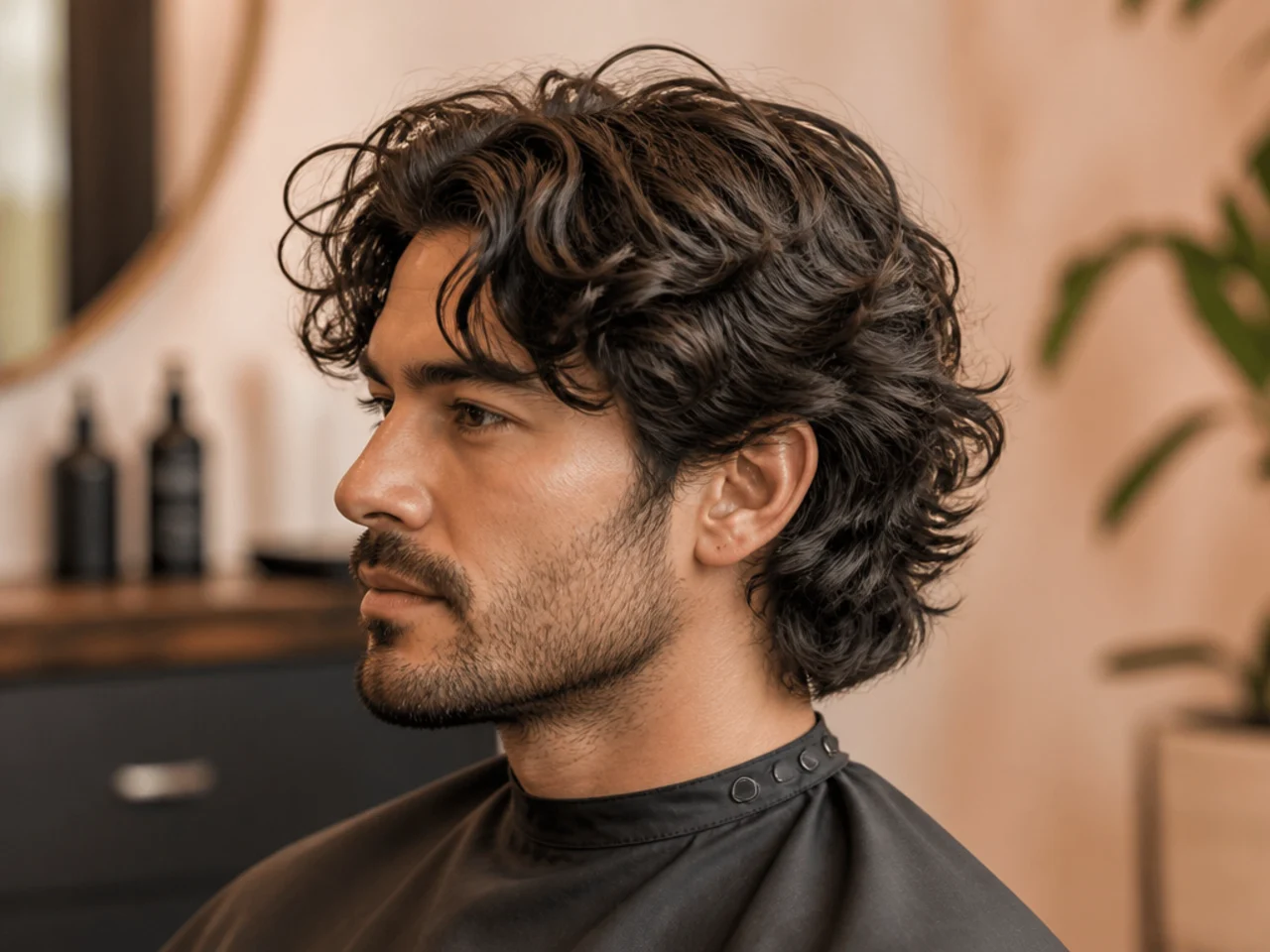
Wavy hair rewards water more than product. The wave forms while the strand dries; product only sets what water shaped. Style damp, dry with the wave, and use product to finish rather than build.
The four-product shortlist for wavy hair:
- Sea-salt spray — the pre-styling foundation. Adds grip, encourages the wave to clump instead of frizz, lifts the roots. Almost every cut here starts with a mist.
- Curl cream or lightweight styling cream — for wave definition. Wavy-specific formulas work better than straight-hair creams, which weigh the wave down.
- Matte clay or paste — for hold and structure at the ends or the fringe. Skip anything with shine.
- Diffuser attachment — the single most useful tool for wavy hair. Cups the wave and dries it without breaking the pattern. A round brush works too, but only if you follow the wave direction.
Skip pomade, gel, and mousse. Pomade shines the wave into strings. Gel crunches. Mousse builds volume where wavy hair already has it. For a deeper product breakdown, see the best wavy hair products guide.
The three-minute routine:
- Wash, towel-dry gently — squeeze, don't rub. Wavy hair frizzes from friction.
- Mist sea-salt spray root to tip while damp. Scrunch upward with your palms to encourage the wave.
- Air-dry or diffuse on low heat with the head tipped forward. Fingers only — no combs while drying.
- Finish with a fingertip of matte paste only where the shape needs holding — the fringe, the crown, the ends.
Cadence: book every 6 to 8 weeks for scissor-blended cuts and every 3 to 4 weeks for anything with a skin fade. Wavy hair hides outline drift longer than straight or curly, which stretches your window — but past eight weeks the internal weight starts dragging the wave flat, and every cut here needs that weight rebalanced.
If your wave looks frizzy, you dried too fast or used too much heat. If your wave looks flat, you skipped the salt spray at the roots or used a shine product. Adjust one variable at a time.
FAQ
What's the best medium length cut for wavy hair men?
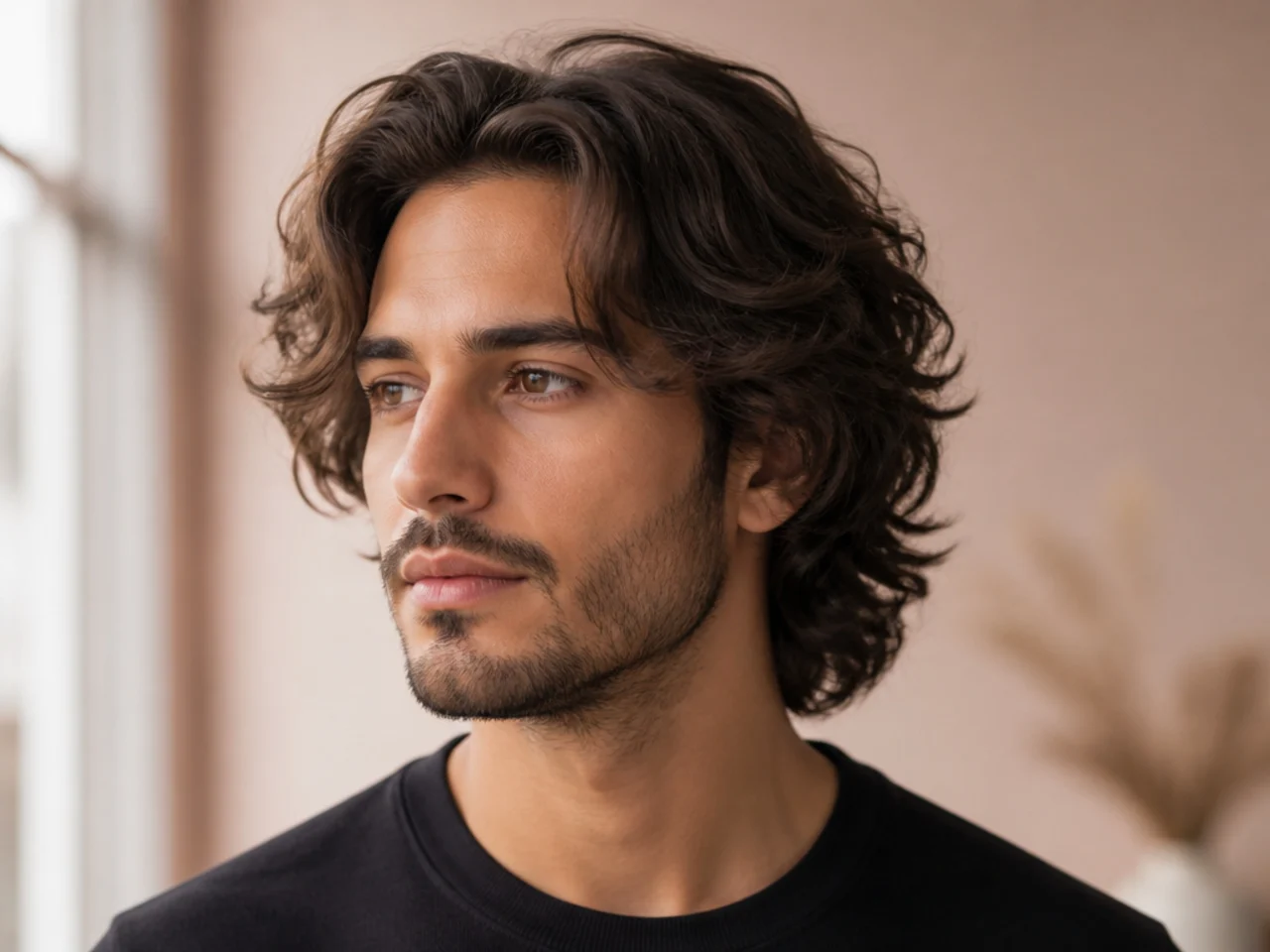
The bro flow is the reference cut for wavy hair — no other texture holds the natural sweep as cleanly, and the styling is a walnut of cream plus a finger-comb. If you want more structure, the modern shag adds layers and a curtain fringe that lets 2A through 2C waves separate cleanly. Both take under three minutes.
Does wavy hair need a fade for a medium length cut?
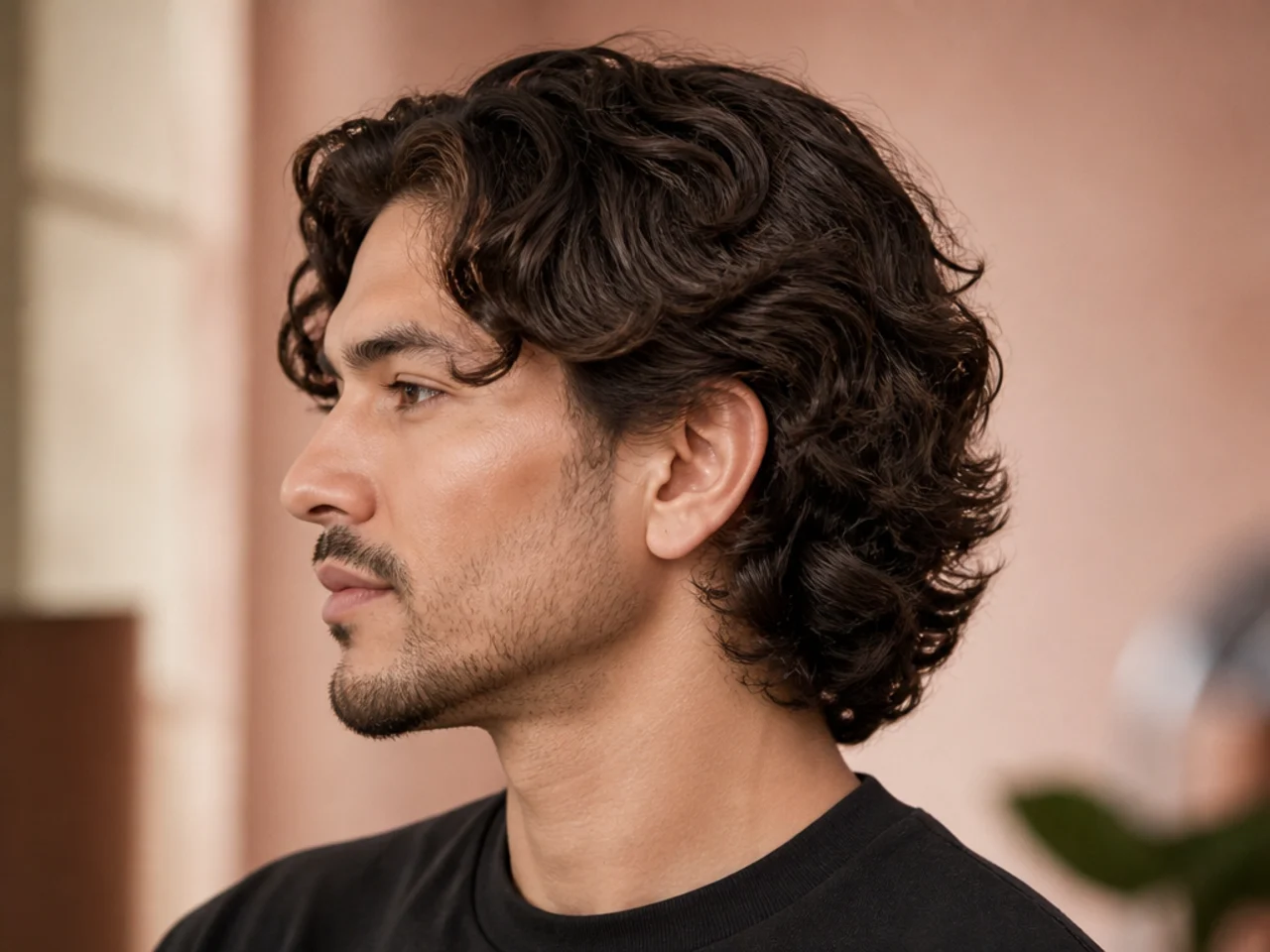
No. Half the cuts in this guide work with scissor-blended sides — bro flow, shag, surfer, curtains, mod, Ivy League, layered. A low or mid taper sharpens the outline and stretches the wear between cuts, but wavy hair holds its shape without one. Match the side treatment to your calendar and the vibe you want.
How do I stop my wavy hair from going frizzy at medium length?
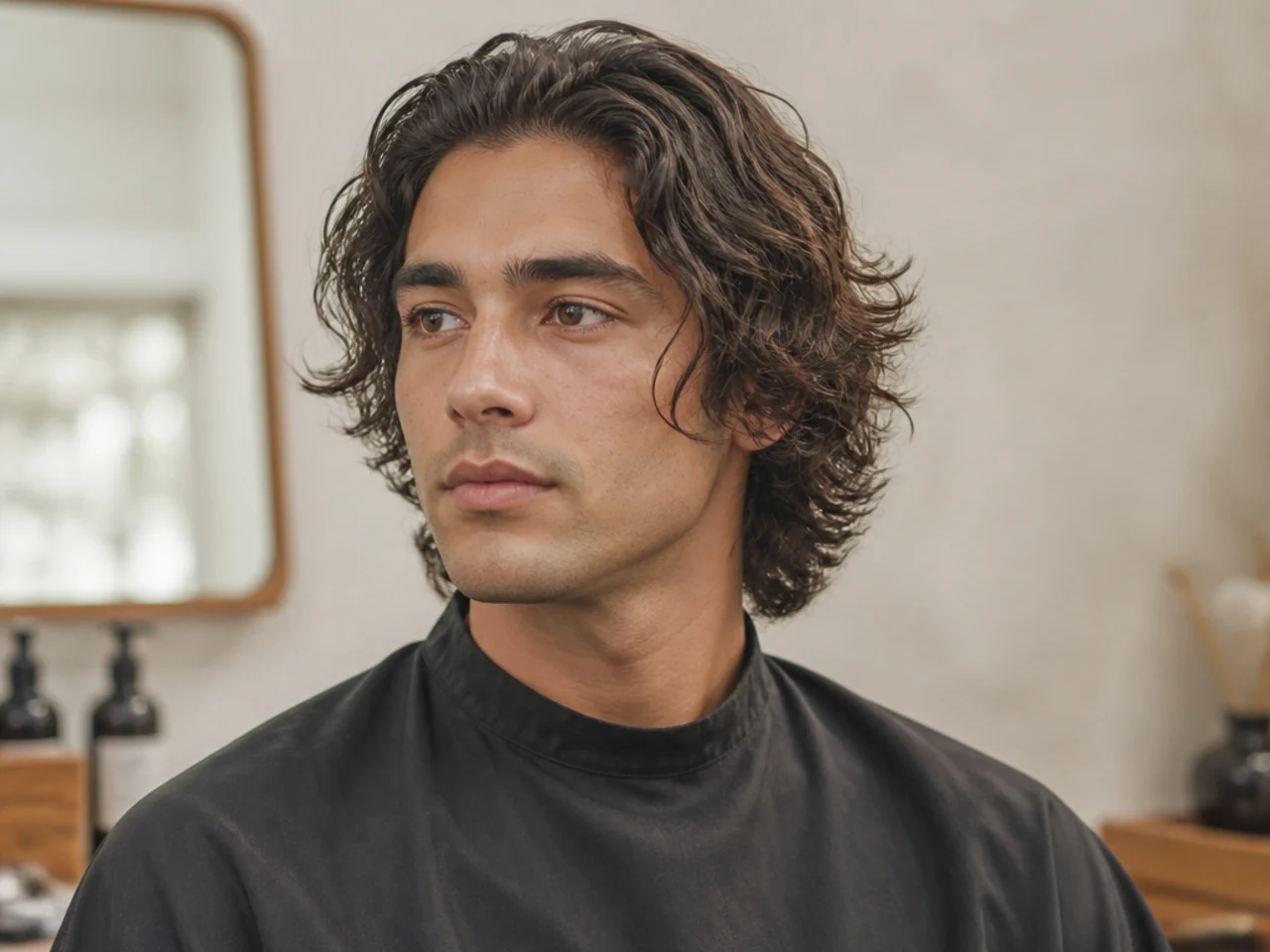
Three fixes. Towel-dry by squeezing rather than rubbing — friction breaks the wave pattern into frizz. Skip combs while the hair is drying; use fingers or a wide-tooth pick only. And finish with a fingertip of curl cream or lightweight leave-in on the mid-shaft to weight the wave down. A humidity-fighting spray helps in summer.
Can I get a slick back or side part on wavy hair?
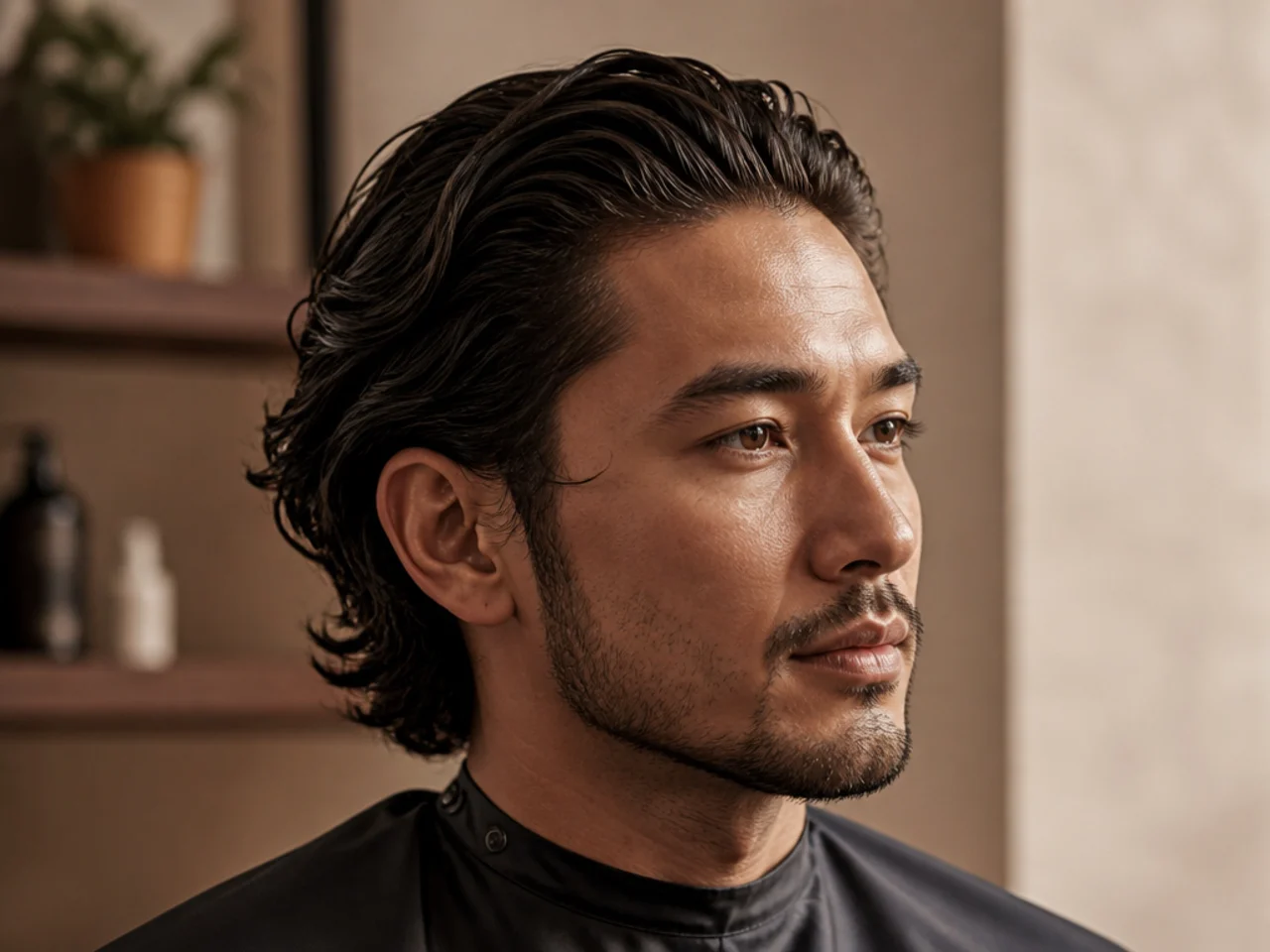
You can — but not comfortably. Wavy hair fights a hard part and reveals the wave under pomade shine. The grown-out Ivy League and side part work on 2A wavy; 2B and 2C are better served by cuts that lean into the wave. If you want the slick look, ask for a heavy scissor blend and use a stronger-hold water-based pomade, but budget morning time for the fight.
What's the difference between a medium length wavy cut and a curly one?
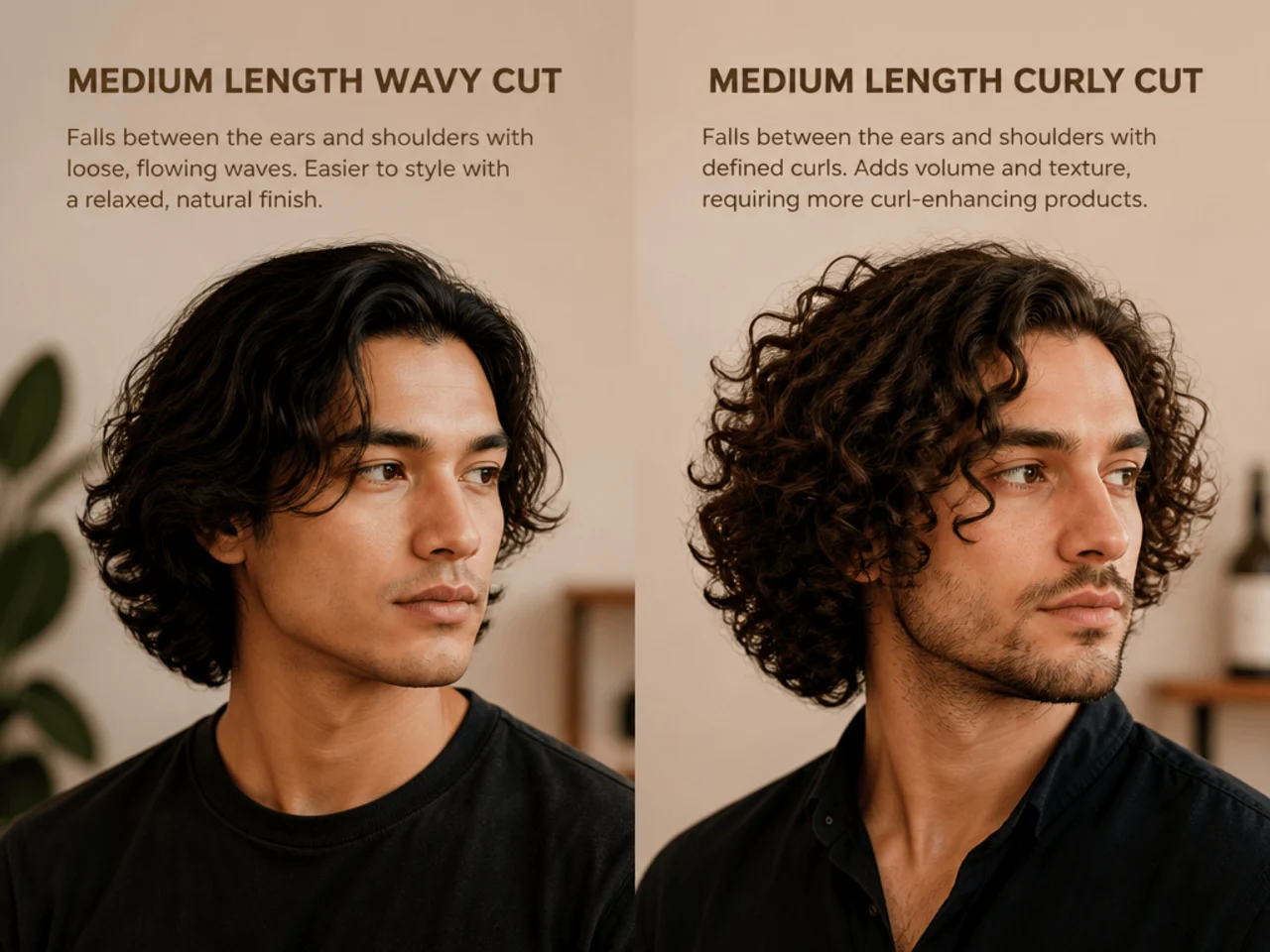
Wavy is 2A through 2C — S-pattern, loose to coarse. Curly is 3A through 3C — spiral pattern, defined ringlets. Wavy cuts lean on flow, layering, and internal weight because the wave lays. Curly cuts pull weight up and out because the ringlet builds a dome. The curly hairstyles for men guide covers 3A and beyond. For the pattern breakdown, see curl types.
How often should I get a medium length wavy haircut trimmed?
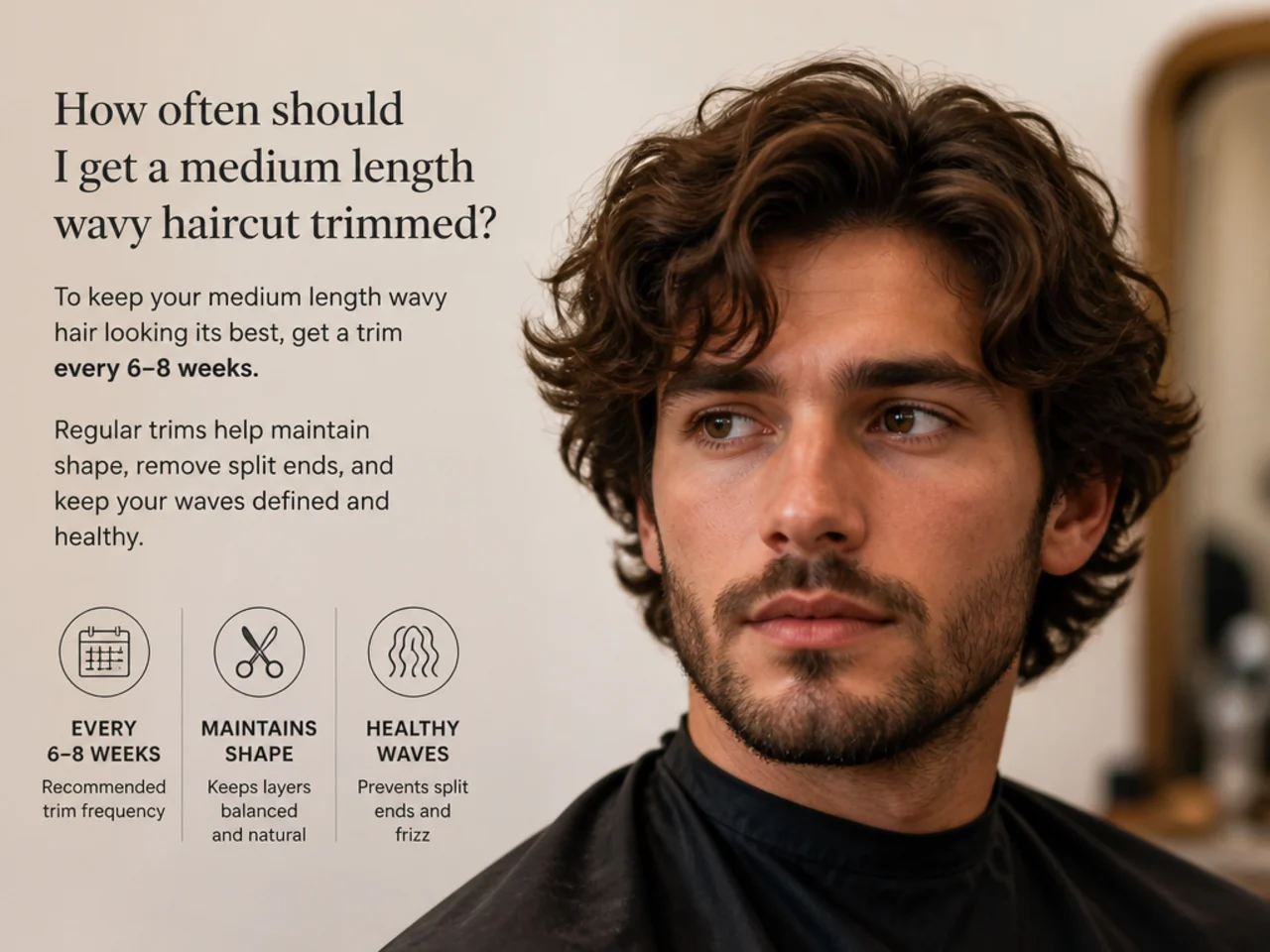
Every 6 to 8 weeks if the sides are scissor-blended. Every 4 weeks if the sides drop to a fade. Wavy hair grows into shape rather than out of it, which stretches your window — but past eight weeks the internal weight builds and starts pulling the wave flat, and the cut stops sitting the way it was designed. Book the moment the wave starts feeling heavy at the crown.