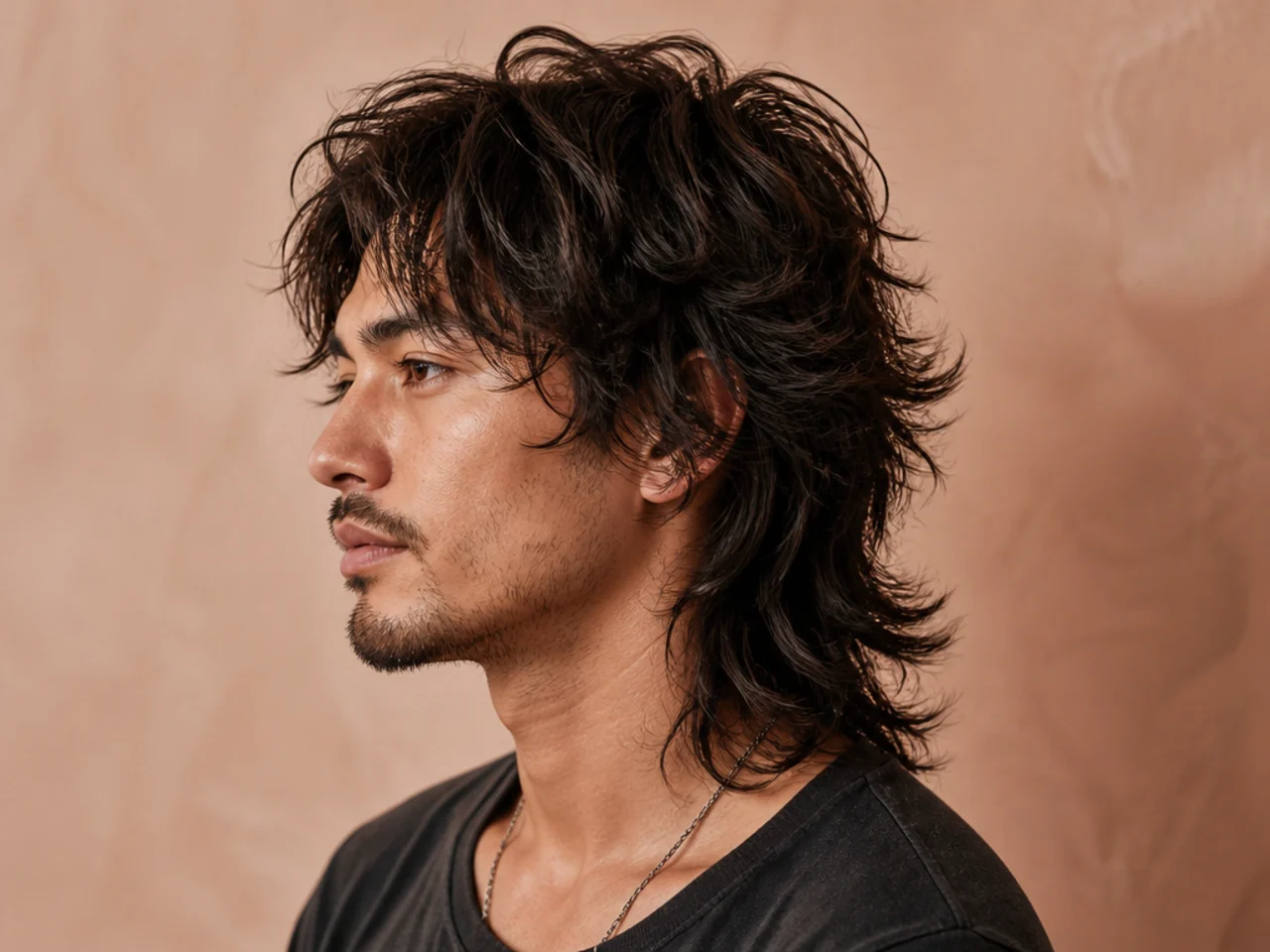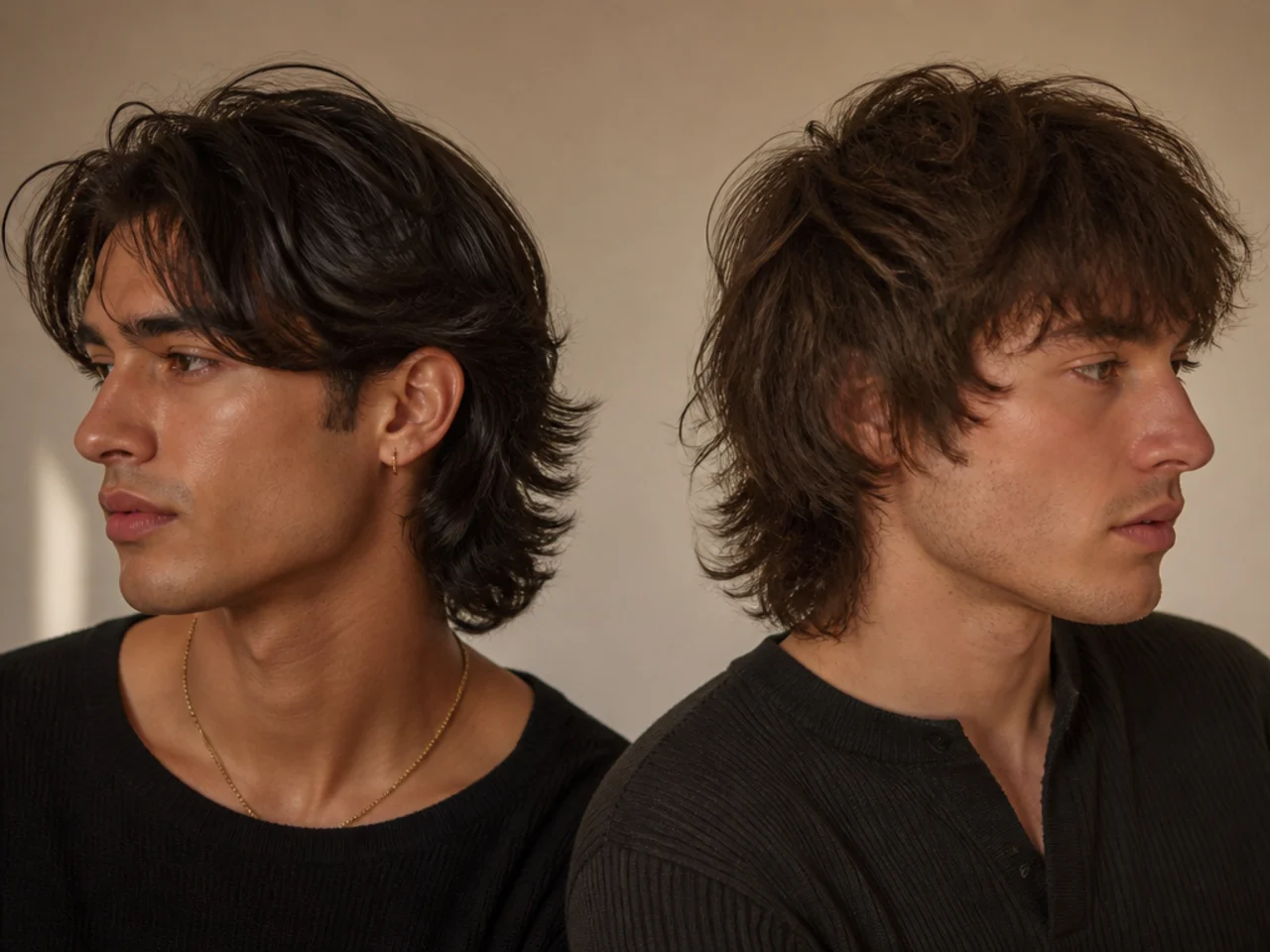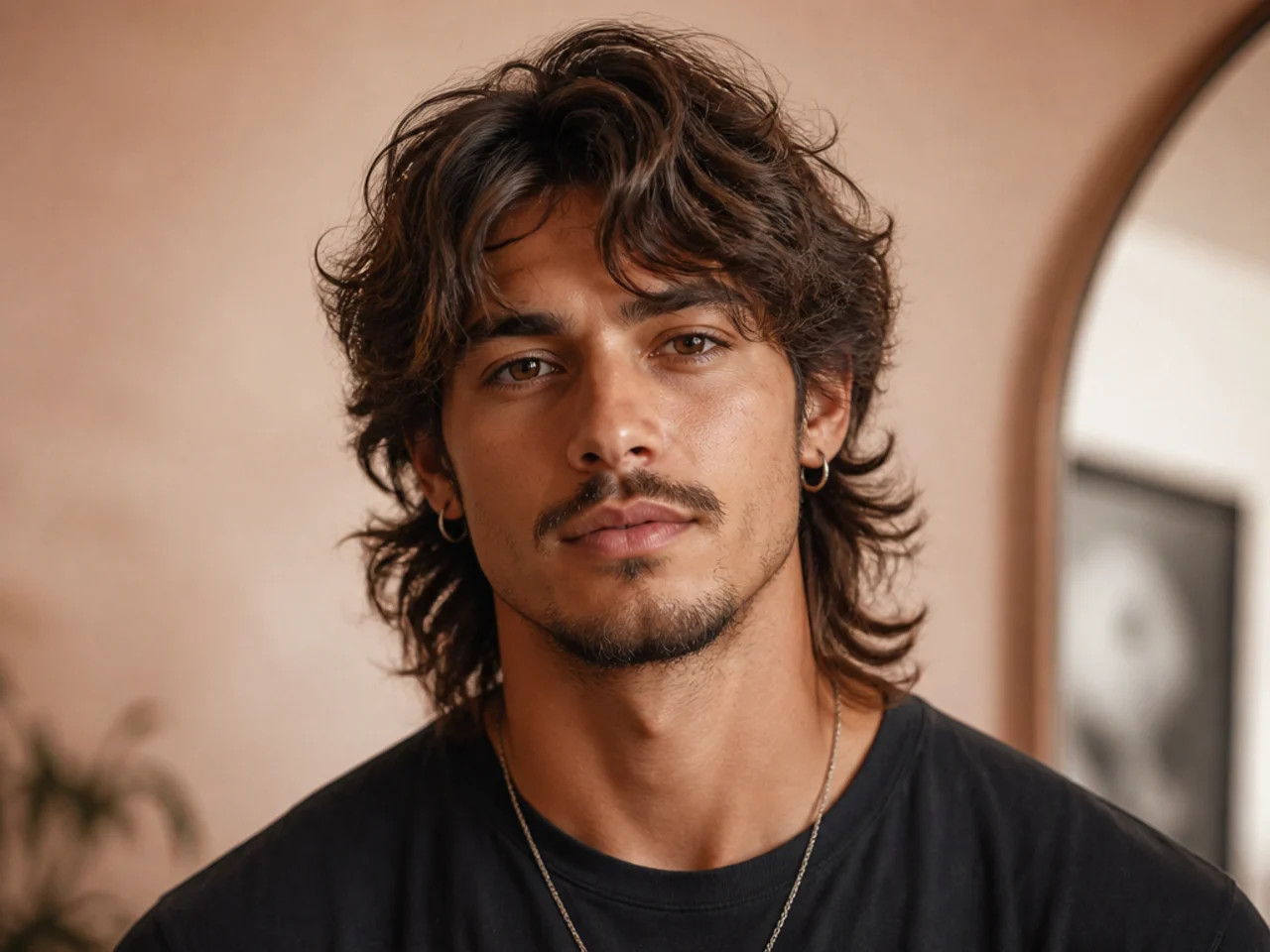
20 Wavy Wolf Cut Haircuts for Men
20 wavy wolf cut men ideas across 2A, 2B, and 2C waves — with face-shape notes, cutting technique, and the exact chair language for each variation.
In this article · 34
- What Is a Wavy Wolf Cut?
- How to Choose Your Wavy Wolf Cut
- The 20 Wavy Wolf Cut Variations
- 1. Classic Wavy Wolf Cut
- 2. Loose 2A Wave Wolf Cut
- 3. Defined 2B Wave Wolf Cut
- 4. Deep 2C Wave Wolf Cut
- 5. Textured Wavy Wolf Cut
- 6. Beach Wave Wolf Cut
- 7. Korean Wavy Wolf Cut
- 8. Middle Part Wavy Wolf Cut
- 9. Curtain Fringe Wavy Wolf Cut
- 10. Side-Swept Wavy Wolf Cut
- 11. Textured Fringe Wavy Wolf Cut
- 12. Messy Wavy Wolf Cut
- 13. Wispy Wavy Wolf Cut
- 14. Chunky Wavy Wolf Cut
- 15. Short Wavy Wolf Cut
- 16. Medium-Length Wavy Wolf Cut
- 17. Long Wavy Wolf Cut
- 18. Two-Block Wavy Wolf Cut
- 19. Low Taper Fade Wavy Wolf Cut
- 20. Burst Fade Wavy Wolf Cut
- How to Ask Your Barber for a Wavy Wolf Cut
- Styling and Maintenance
- FAQ
- What is a wavy wolf cut for men?
- What wave type suits a wolf cut best?
- What top length works best on wavy hair?
- Should wavy hair be cut wet or dry for a wolf cut?
- How do I style a wavy wolf cut so the waves stay defined?
- How often does a wavy wolf cut need a trim?
- Is a wavy wolf cut workplace-appropriate?
- How is a wavy wolf cut different from a straight-hair wolf cut?
Wavy hair sits in the sweet spot for a wolf cut — enough natural movement to build the shag texture without needing the styling commitment a curl pattern demands. The S-wave supplies the volume, the face-framing pieces catch the bend, and the feathered perimeter reads soft in every direction. This guide covers 20 wavy wolf cut variations for men across 2A, 2B, and 2C wave types, with the exact cutting technique and chair language for each.
What Is a Wavy Wolf Cut?
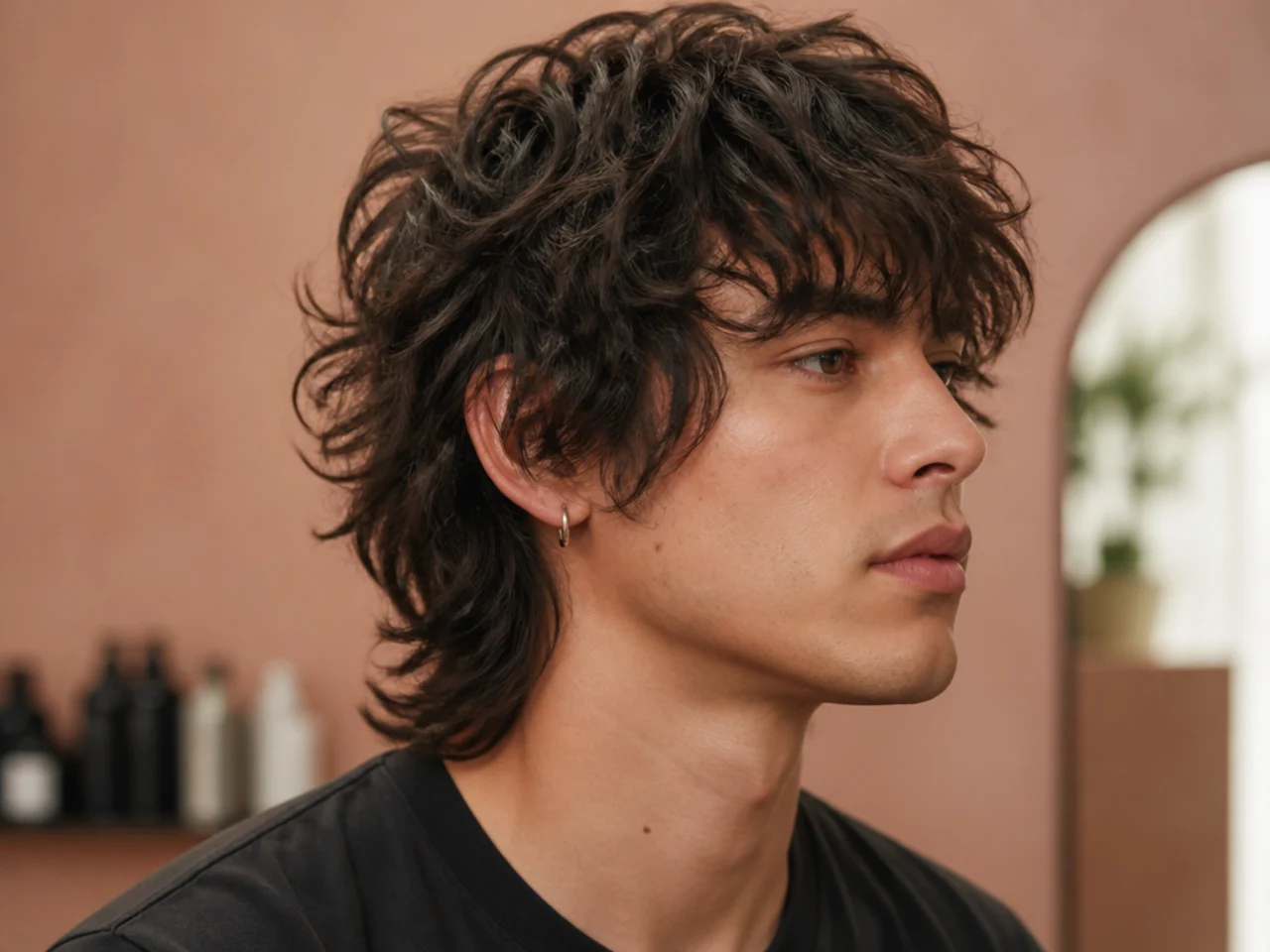
A wavy wolf cut is the men's shag-mullet hybrid cut specifically for wave patterns from 2A through 2C. The anatomy is the same as any men's wolf cut — internal layers through the crown, face-framing pieces at the cheekbone, and a longer feathered perimeter at the nape. The difference is how the cut works with your existing pattern. Waves supply half the texture straight hair has to build from scratch, so the technique changes.
The rule most barbers get wrong on wavy hair is treating it like straight hair. Straight scissor lines read blocky under the wave, blunt perimeters flatten the natural bend, and heavy point-cutting can shred a delicate 2A pattern. A good wavy wolf leans on wet-cutting for structure and a dry-cut finish for texture — the perimeter cut wet for accurate length, then re-checked dry after the wave has dropped so the barber can point-cut only where the shape actually needs it.
The wave itself does the styling work most straight-hair versions rely on product for. That is the whole appeal. Three inches on top with medium internal layers reads shaggy and layered on wavy hair with a scrunch of sea-salt spray, where the same cut on straight hair would need eight minutes of round-brushing to build the same lift. It shares that low-effort DNA with the shag haircut family — the wolf just adds crown structure and defined face-framing pieces the shag leaves loose.
How to Choose Your Wavy Wolf Cut
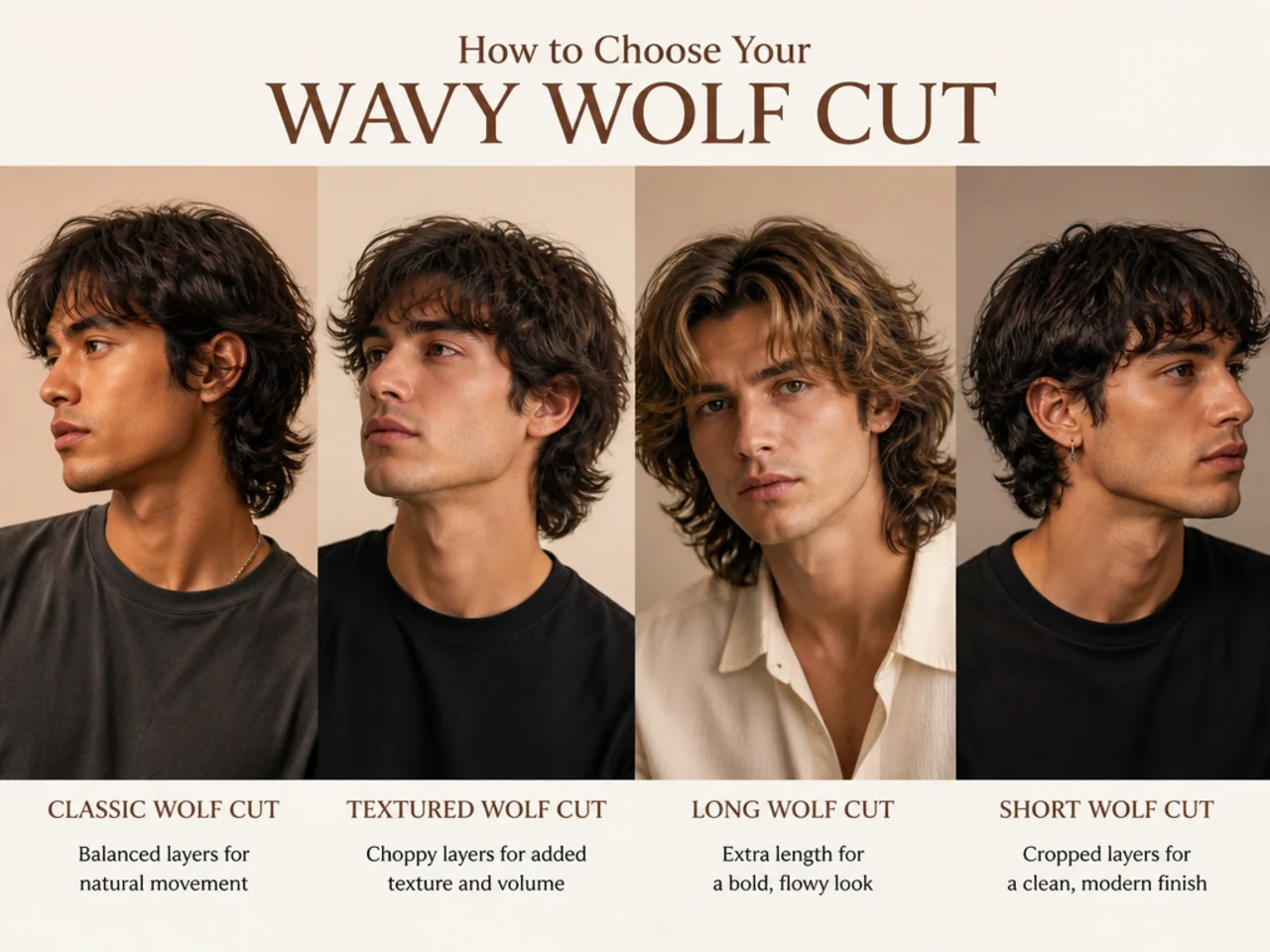
Wave type sets the layering intensity. Loose 2A hair — waves that read closer to straight until length pulls the S-shape out — wants soft, shallow internal layers and a longer feathered perimeter so gravity can build the wave. Defined 2B waves are the reference-photo baseline; medium internal layers, standard face-framing at the cheekbone, and a nape that grazes the collar. Deep 2C waves border on 3A curls with dense pattern definition — ask for deeper internal layering so the wave lifts off the head instead of stacking triangle-wide. If you are not sure which type you have, see our curl types guide for a pattern breakdown.
Face shape sets length and fringe. Oval, heart, and diamond faces suit almost every version below. Round and square faces want lifted crown layers and a forward or side-swept fringe for vertical lines. Long faces stay with three-inch crown layers max and a heavier fringe so the profile does not stretch. Waves flatter longer faces particularly well because the bend at the temple naturally shortens the read.
Lifestyle sets the sides. Blended scissor sides read clean at any office and let the wave carry the whole shape. A low taper fade adds sharpness without pulling focus. Burst fades, two-blocks, and disconnected undercuts turn the wolf into a statement cut — great for creative fields, harder in banking or law. Match the sides to the room you sit in and browse the mullet and wolf cut hub for adjacent silhouettes.
The 20 Wavy Wolf Cut Variations
Each variation below tells you what makes it different, who it flatters, exactly what to ask for in the chair, and one styling move built for waves. Bring a reference photo of a guy with your wave type — a wolf styled on 3A curls or straight hair reads differently when your 2B pattern is doing the work.
1. Classic Wavy Wolf Cut
The baseline every other version modifies. Three inches through the top and crown with medium internal layers, face-framing pieces at the cheekbone, and a feathered perimeter that just touches the collar. Reads modern without leaning into any subgenre. Works across every wave type but sits sharpest on defined 2B.
Suits oval, heart, and diamond faces. Universally flattering across 2A through 2C.
Ask for: "Classic wavy wolf cut, wet-cut for shape with a dry point-cut finish, three inches through the top with medium internal layers, face-framing pieces at the cheek, feathered perimeter to the collar, blended sides at a guard 2."
Styling tip: Lightweight leave-in on soaking-wet hair, a nickel of sea-salt spray scrunched upward, then air-dry or diffuse on low heat for two minutes.
2. Loose 2A Wave Wolf Cut
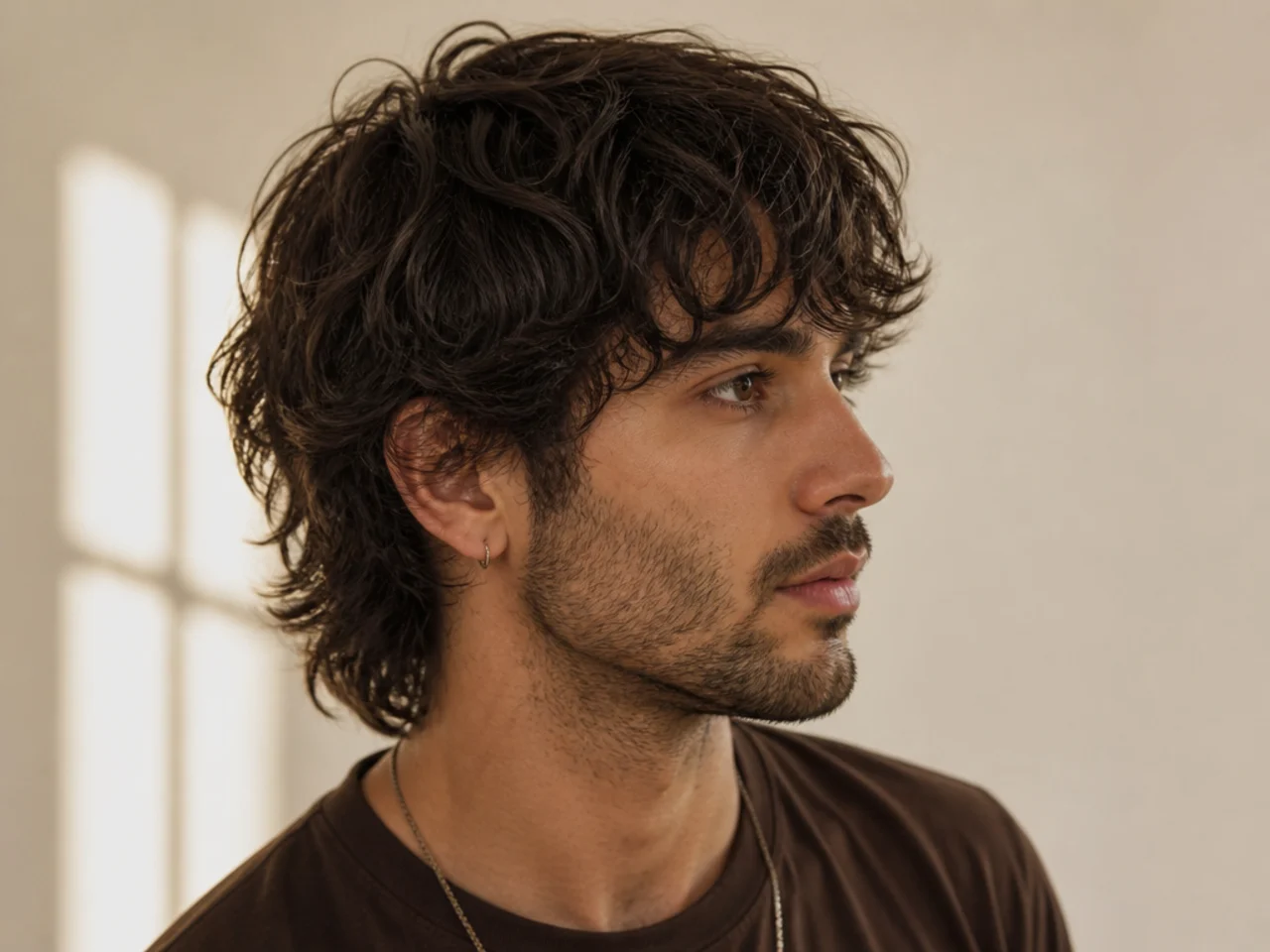
The wolf for hair that reads almost straight until length pulls the wave out. Longer through the length so gravity can build the S-shape, softer internal layers cut in the wave direction, and a feathered nape that reaches past the collar. The trap with 2A is over-layering — deep layers remove the weight that lets the wave form.
Suits oval, heart, and long faces. Best when the wave carries down through the mid-length.
Ask for: "Loose 2A wolf cut, wet-cut throughout, four inches through the crown with soft shallow internal layers cut in the wave direction, face-framing waves to the jaw, feathered nape past the collar, blended sides."
Styling tip: A light styling cream and a diffuser on low heat for two minutes to encourage the wave without over-defining it into a curl.
3. Defined 2B Wave Wolf Cut
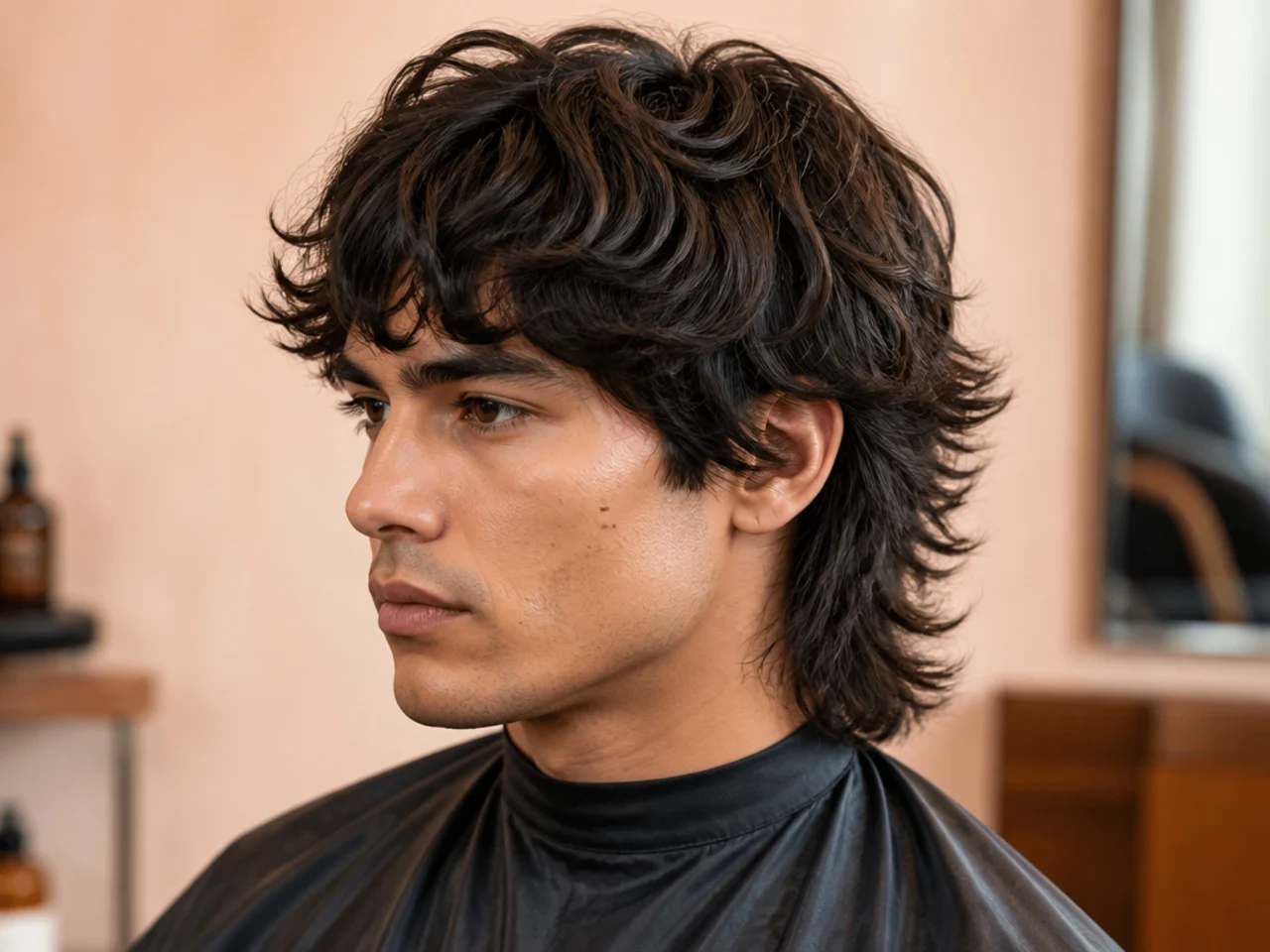
The version most reference photos are actually wearing. Springy 2B S-waves build the signature bounce with almost no product effort — medium internal layers give the crown lift, face-framing pieces spring at the cheekbone, and the perimeter feathers into the collar with visible wave separation. The pattern most reliably reads as a wolf cut without any styling gymnastics.
Suits oval, heart, diamond, and square faces. 2B carries the wolf silhouette cleaner than any other wave type.
Ask for: "Defined 2B wolf cut, wet-cut with a dry point-cut finish, three inches through the crown with medium internal layers, face-framing waves at the cheekbone, feathered nape at the collar with wave separation, softly blended sides."
Styling tip: Sea-salt spray on soaking-wet hair, praying-hands to smooth the cuticle, then scrunch upward and air-dry undisturbed.
4. Deep 2C Wave Wolf Cut
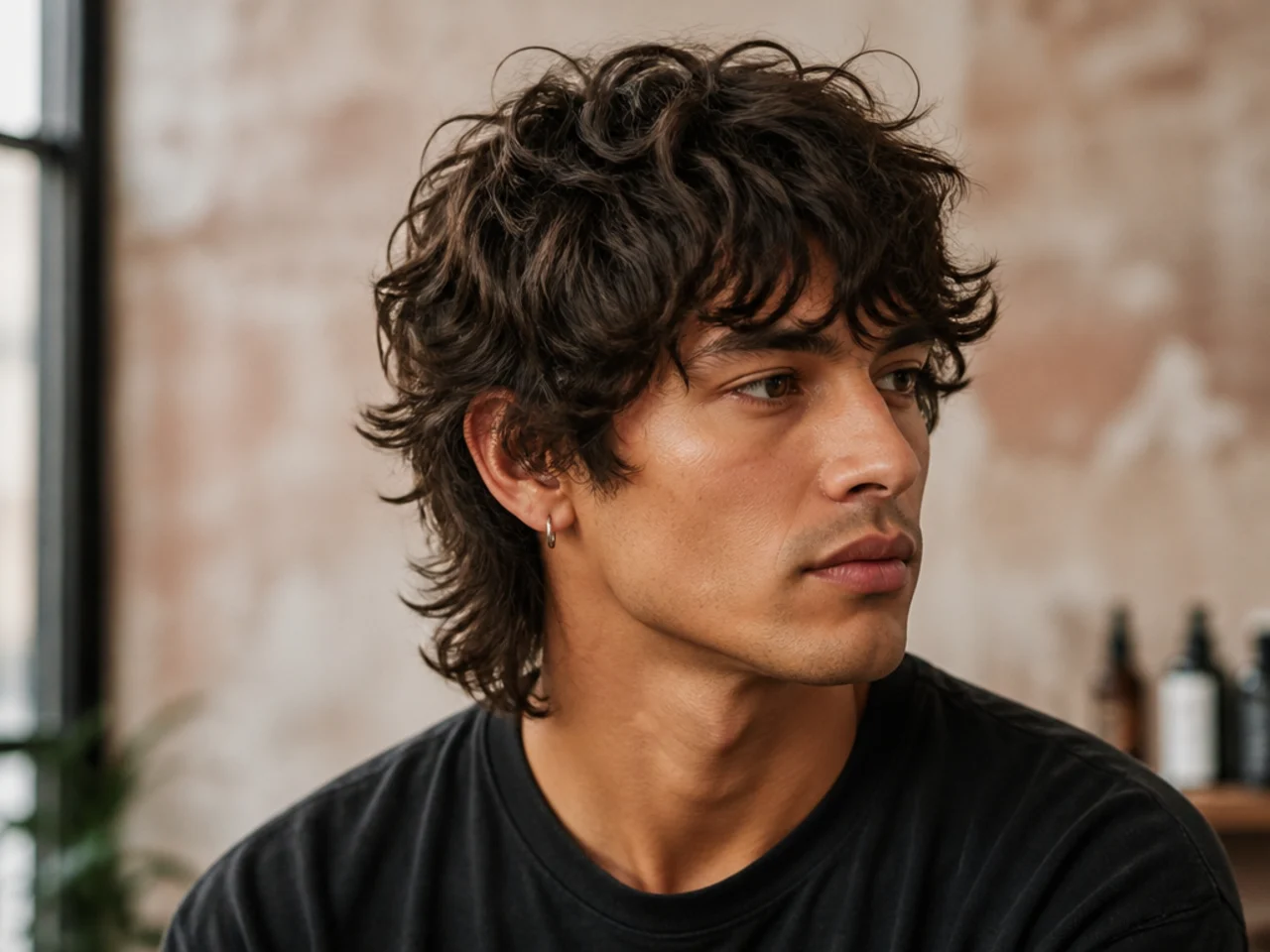
The wolf for waves that border on 3A curls — dense pattern definition, real volume at the roots, and a tendency to spread wide without weight removal. Ask for deeper internal layering than the 2B version and face-framing pieces cut at the temple rather than the cheekbone so the finished shape reads oval, not pyramidal.
Suits diamond, oval, and heart faces where the crown volume balances the jaw.
Ask for: "Deep 2C wolf cut, wet-cut with dry finish, three inches through the crown with heavy internal layering for volume control, face-framing waves at the temple, feathered perimeter at the collar, low taper on the sides."
Styling tip: A stronger-hold curl cream over leave-in, scrunched in and left to air-dry — no diffuser at this pattern intensity, or the volume goes untamed.
5. Textured Wavy Wolf Cut
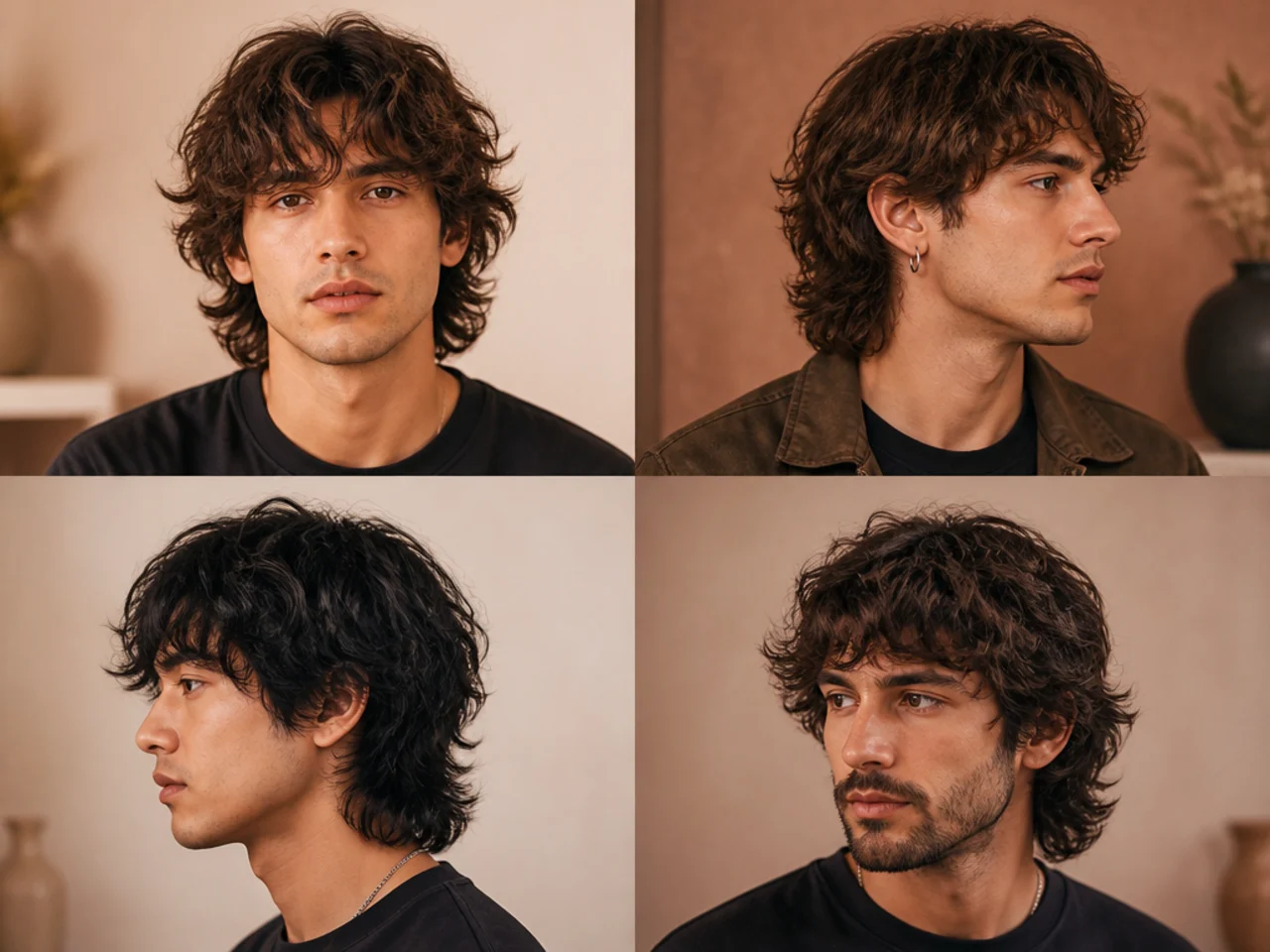
The most-requested styled variation. Every layer edge is point-cut aggressively, face-framing pieces get visible piecey separation, and the perimeter feathers into individual ends the wave then scoops upward. The point-cutting lands harder on wavy hair than on straight because the natural bend catches the light on every jagged edge. See our textured haircuts for men guide for the parent technique.
Suits oval, heart, diamond, and square faces. Best on medium to thick 2B or 2C hair.
Ask for: "Textured wavy wolf cut, wet-cut for structure, dry point-cut finish with aggressive point-cutting on every layer edge, piecey face-framing at the cheek, textured feathered perimeter, low taper on the sides."
Styling tip: Sea-salt spray on soaking-wet hair, twist pieces with fingers, air-dry — the twist sets the piecey read as the wave dries.
6. Beach Wave Wolf Cut
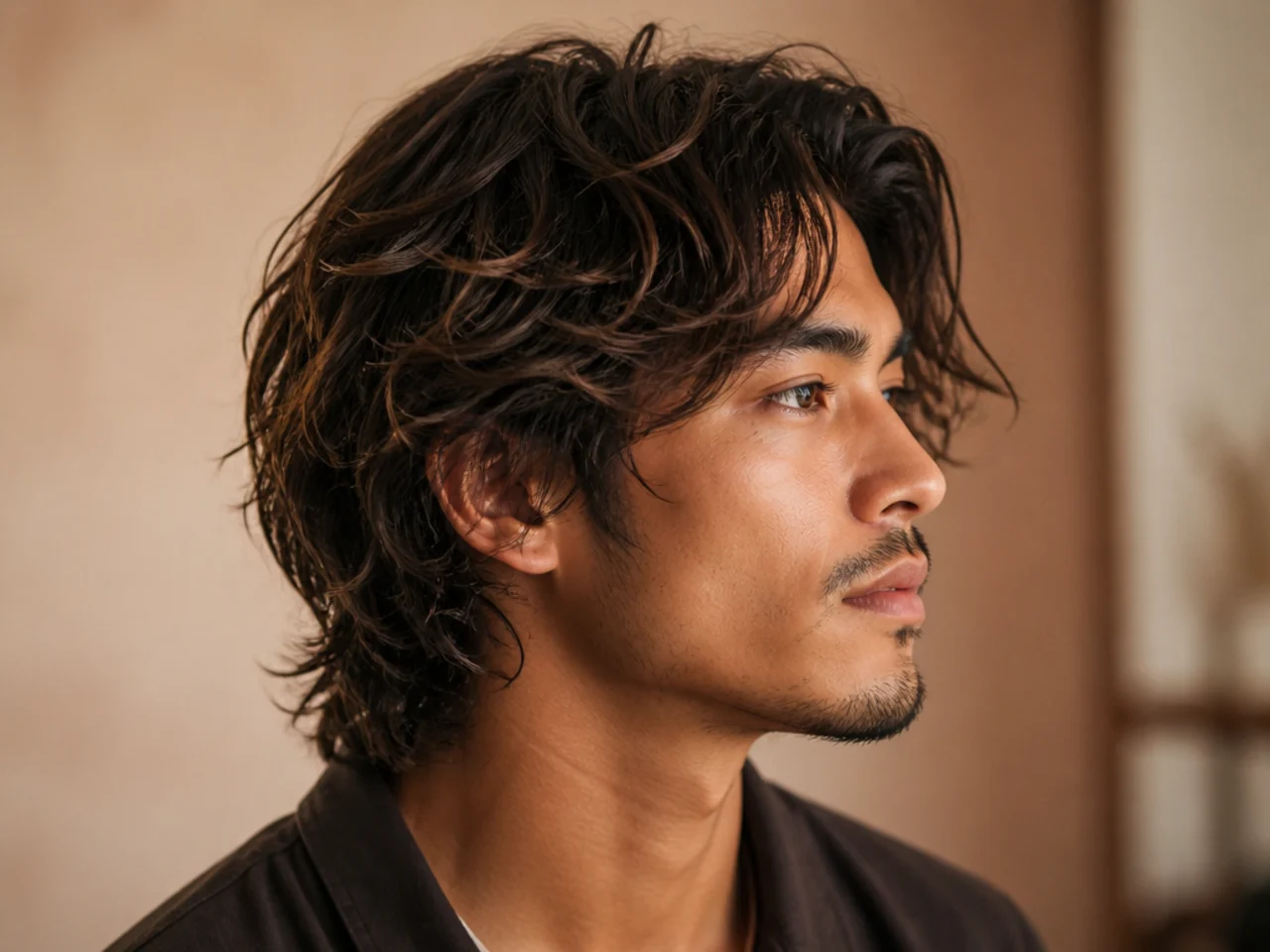
The surfer-adjacent wolf. Same layered structure as the classic but styled with a heavier sea-salt spray for that undone, sun-bleached read — think three days off the sand rather than fresh out of the chair. The wave gets amplified rather than tamed, and the perimeter is left slightly rougher so it looks like the ocean cut it. The surfer hairstyle shares this styling DNA with a looser silhouette.
Suits oval, heart, and diamond faces. Best on 2B or 2C hair with warm-toned or lightened color.
Ask for: "Beach wave wolf cut, wet-cut with dry razored finish for a rougher perimeter, four inches through the top with textured internal layers, face-framing pieces at the cheek left slightly wispy, razored perimeter, blended sides at a guard 3."
Styling tip: Heavy sea-salt spray on wet hair, scrunch aggressively, then flip the hair upside down and diffuse for one minute to lock the beachy volume.
7. Korean Wavy Wolf Cut
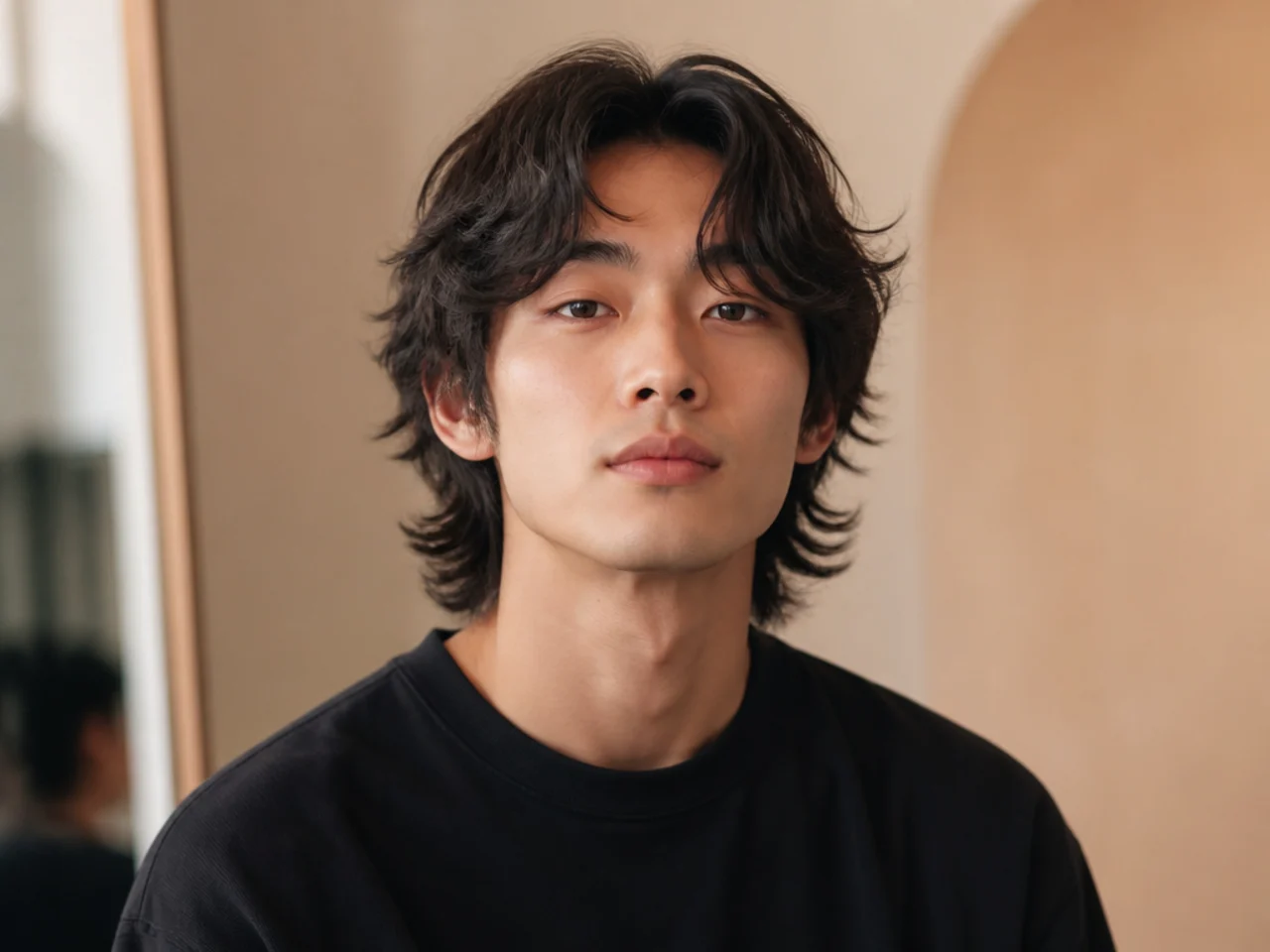
Softer, glossier, and more deliberately styled than most versions on this list. Rounded internal layers instead of piecey ones, a forward or curtain fringe over the brow, and a glossy finish rather than matte. Waves on Asian hair are often finer and looser (2A-2B territory), so the K-pop wolf leans on soft styling rather than aggressive texture.
Suits oval and long faces. Ideal on straight-to-2B wavy hair.
Ask for: "Korean wavy wolf cut, wet-cut throughout, three-and-a-half inches on top with soft rounded internal layers, forward or curtain fringe sitting just above the eyebrows, feathered nape, softly blended sides, glossy finish."
Styling tip: A hair mist and light styling cream on damp hair, diffuse for a minute for shape, then a hair oil worked through the ends for the glossy K-drama shine.
8. Middle Part Wavy Wolf Cut
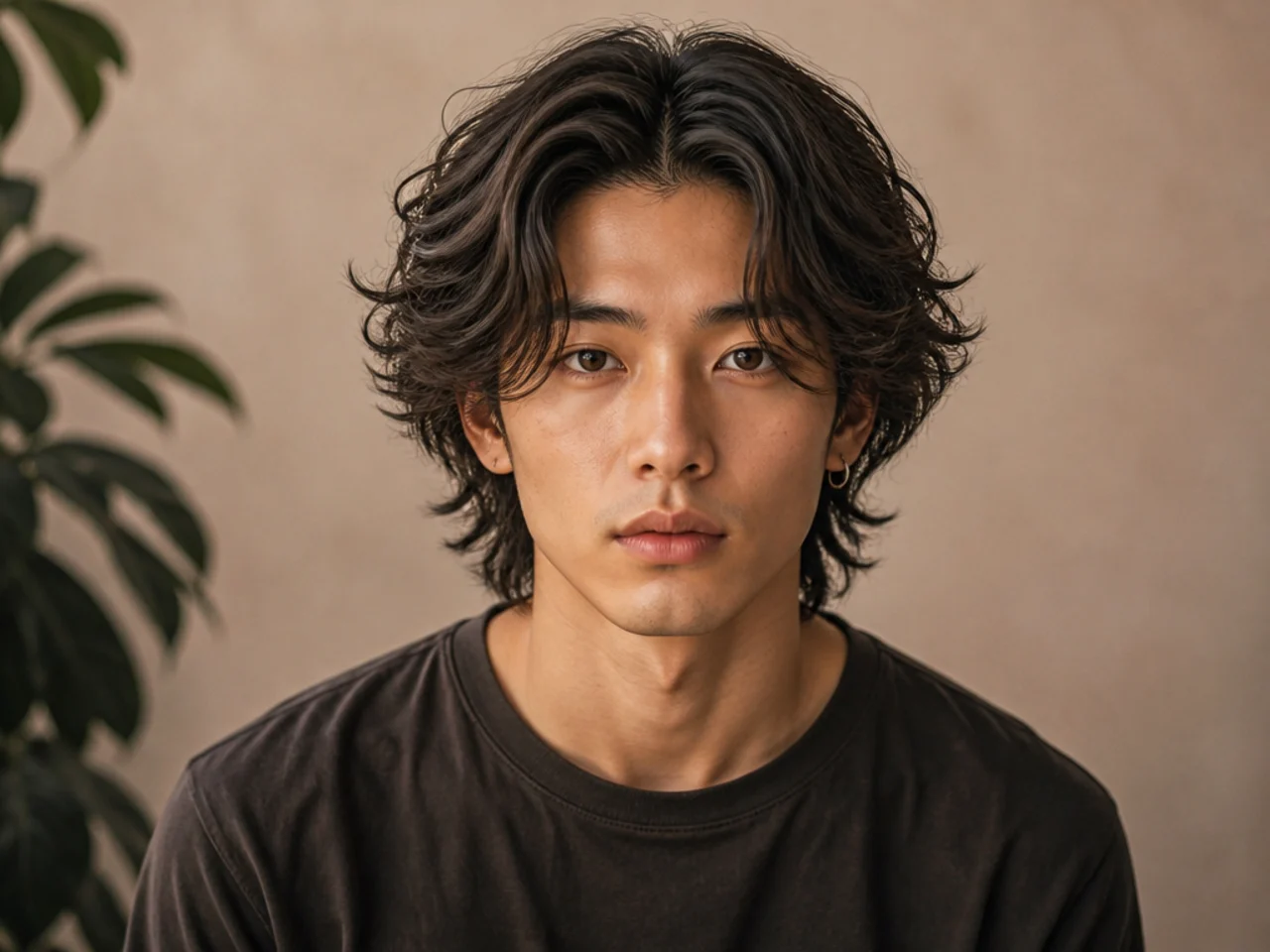
Center part with the layered mass falling in two panels on either side. The wave holds a center part beautifully because the natural bend at the temple keeps the fall symmetrical. Face-framing pieces cut to sweep away from the nose, feathered perimeter, wispy nape that catches wave separation.
Suits oval, heart, and diamond faces with symmetrical features. Best on medium 2B hair between four and five inches long.
Ask for: "Middle part wavy wolf cut, wet-cut, four inches on top cut for a defined center part, medium internal layers, face-framing waves at the cheek sweeping away from the center, feathered perimeter at the collar, blended sides at a guard 2."
Styling tip: Comb a light styling cream through wet hair from the center part outward, then scrunch each side and diffuse for a minute to set the panels.
9. Curtain Fringe Wavy Wolf Cut
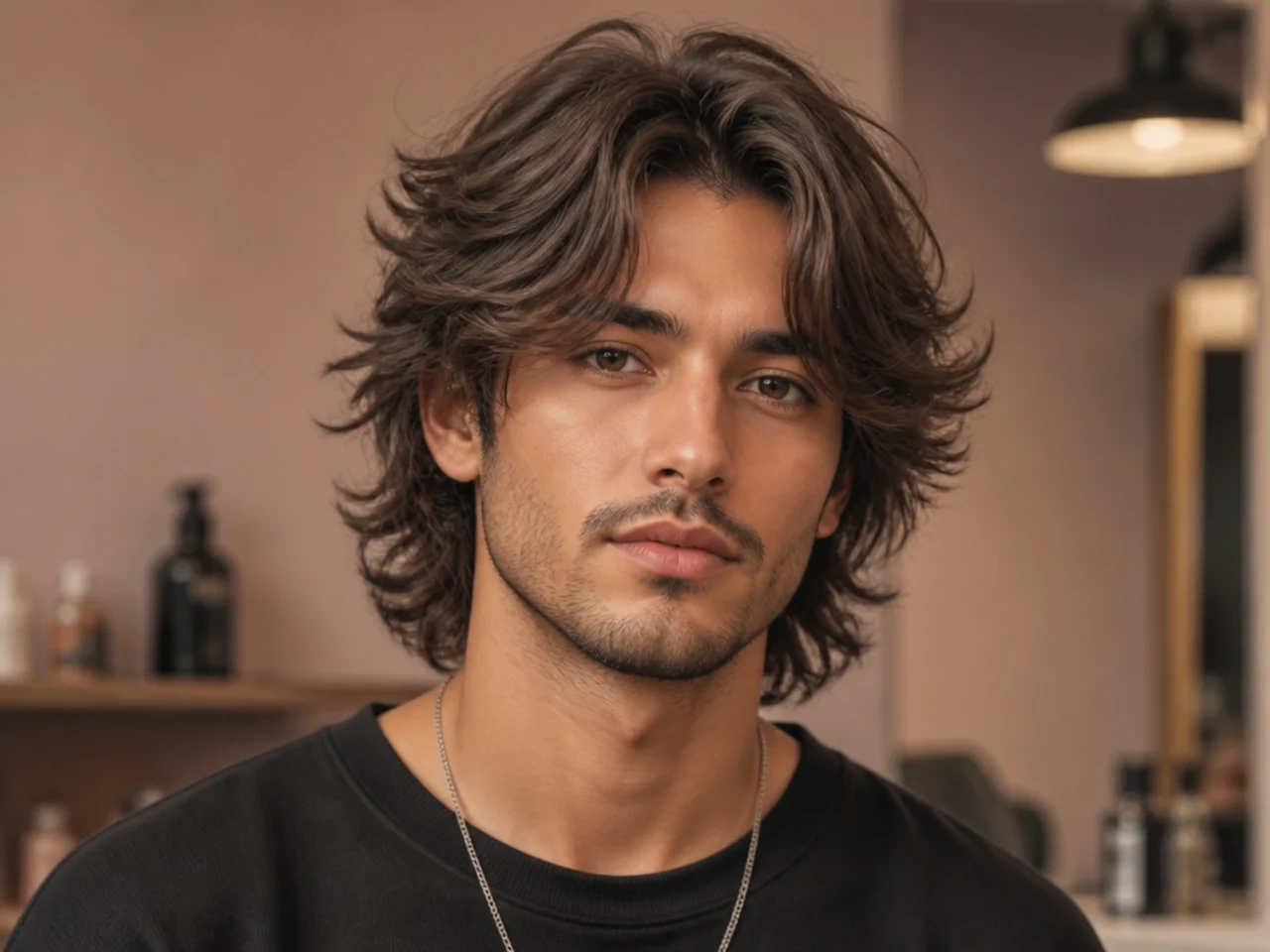
The fringe steals the show. Two soft panels sweep out from a center part and frame the forehead, while the layered wolf mass sits shaggy behind them. Wavy hair holds the curtain sweep more naturally than straight because the bend at the temple curves the fringe outward without any brush work — the wave does it for you.
Suits round, oval, and heart faces where the curtain fringe softens the top of the face.
Ask for: "Wavy wolf cut with curtain fringe, wet-cut throughout, four inches on top with medium internal layers, curtain fringe cut long enough to meet at a center part and curl outward at the temples with the wave, feathered nape, low taper on the sides."
Styling tip: Light styling cream on wet hair, comb the fringe outward from center, then diffuse for a minute — the wave will curl the ends automatically.
10. Side-Swept Wavy Wolf Cut
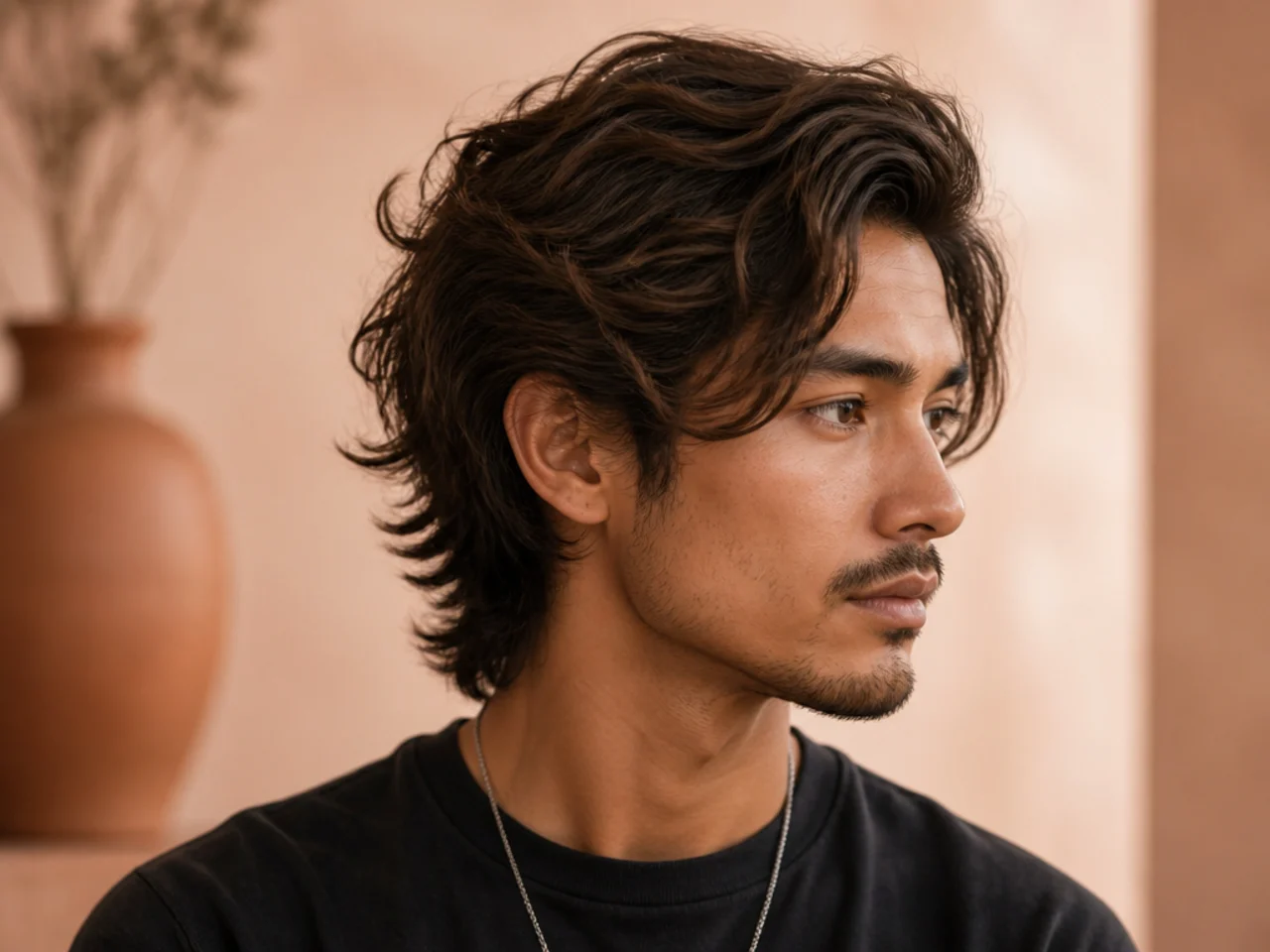
A deep side part with the whole layered mass swept across the crown to one side. On wavy hair the sweep holds most of the day but resettles into a softer, more organic fall than the same cut on straight hair — a feature rather than a flaw. Reads modern preppy with a lived-in edge.
Suits oval, square, and heart faces. Works with any density of 2A through 2C.
Ask for: "Side-swept wavy wolf cut, wet-cut with dry finish, four inches on top cut for a deep side part, medium internal layers with the layer direction favoring the sweep side, face-framing waves at the cheek on the sweep side only, feathered perimeter, blended sides at a guard 2."
Styling tip: Sea-salt spray on soaking-wet hair, comb across from the deep side part, then diffuse with the airflow pointing across the sweep direction to set the shape.
11. Textured Fringe Wavy Wolf Cut
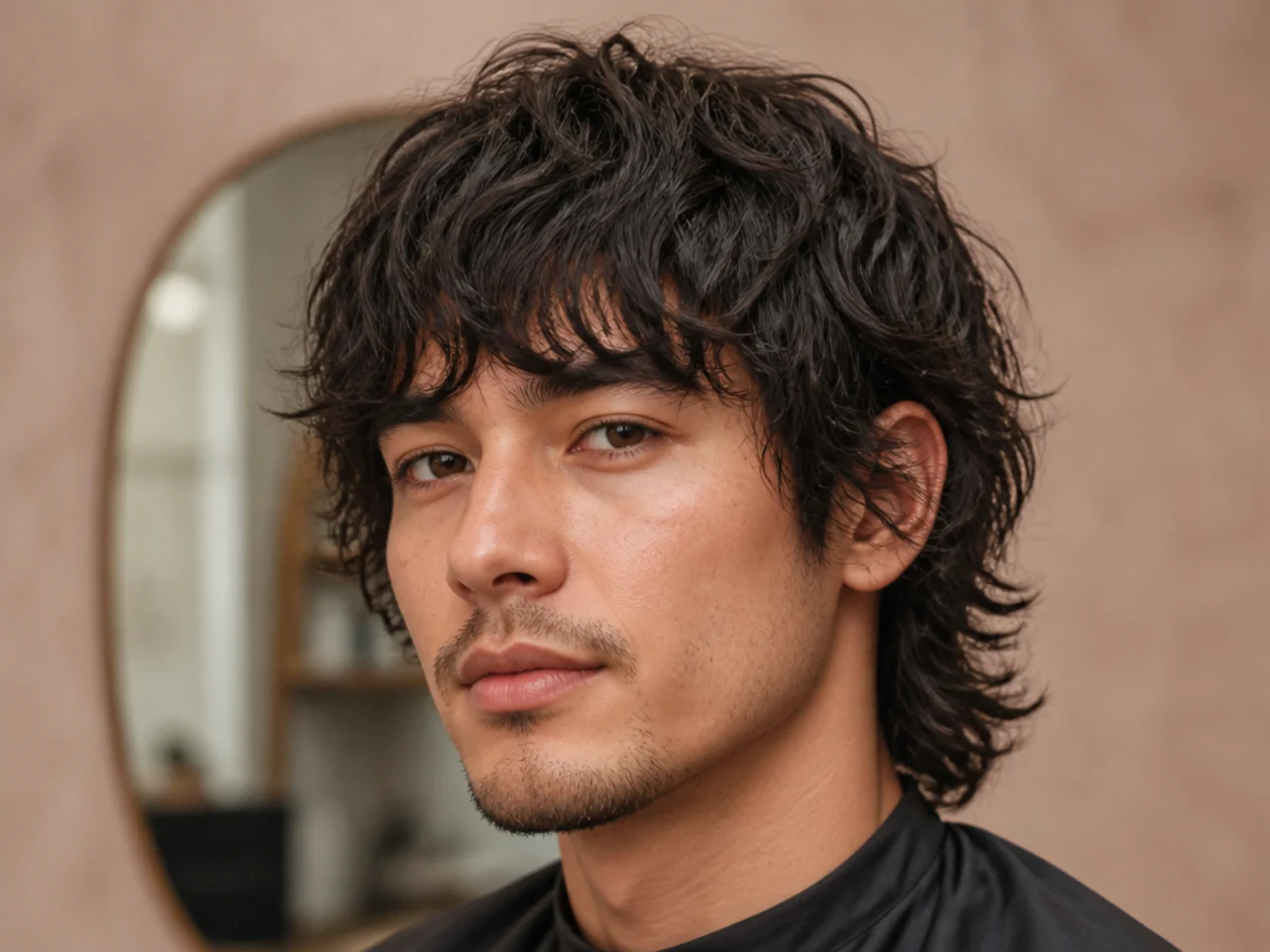
A choppy fringe drops forward onto the forehead in piecey sections instead of parting to the sides. The layered top and feathered nape hold the wolf shape while the textured fringe adds forward movement — the wave naturally bends the fringe pieces so they land as separated locks rather than a curtain.
Suits round, oval, and square faces. Best on medium to thick 2B or 2C hair.
Ask for: "Wavy wolf cut with textured fringe, wet-cut throughout, dry point-cut finish, three-and-a-half inches on top with internal layers, fringe point-cut heavily to fall in piecey sections to the brow, feathered perimeter, blended sides at a guard 2."
Styling tip: A pea of matte clay pressed forward through the fringe with fingertips, then air-dry — the clay separates the pieces the wave has already shaped.
12. Messy Wavy Wolf Cut
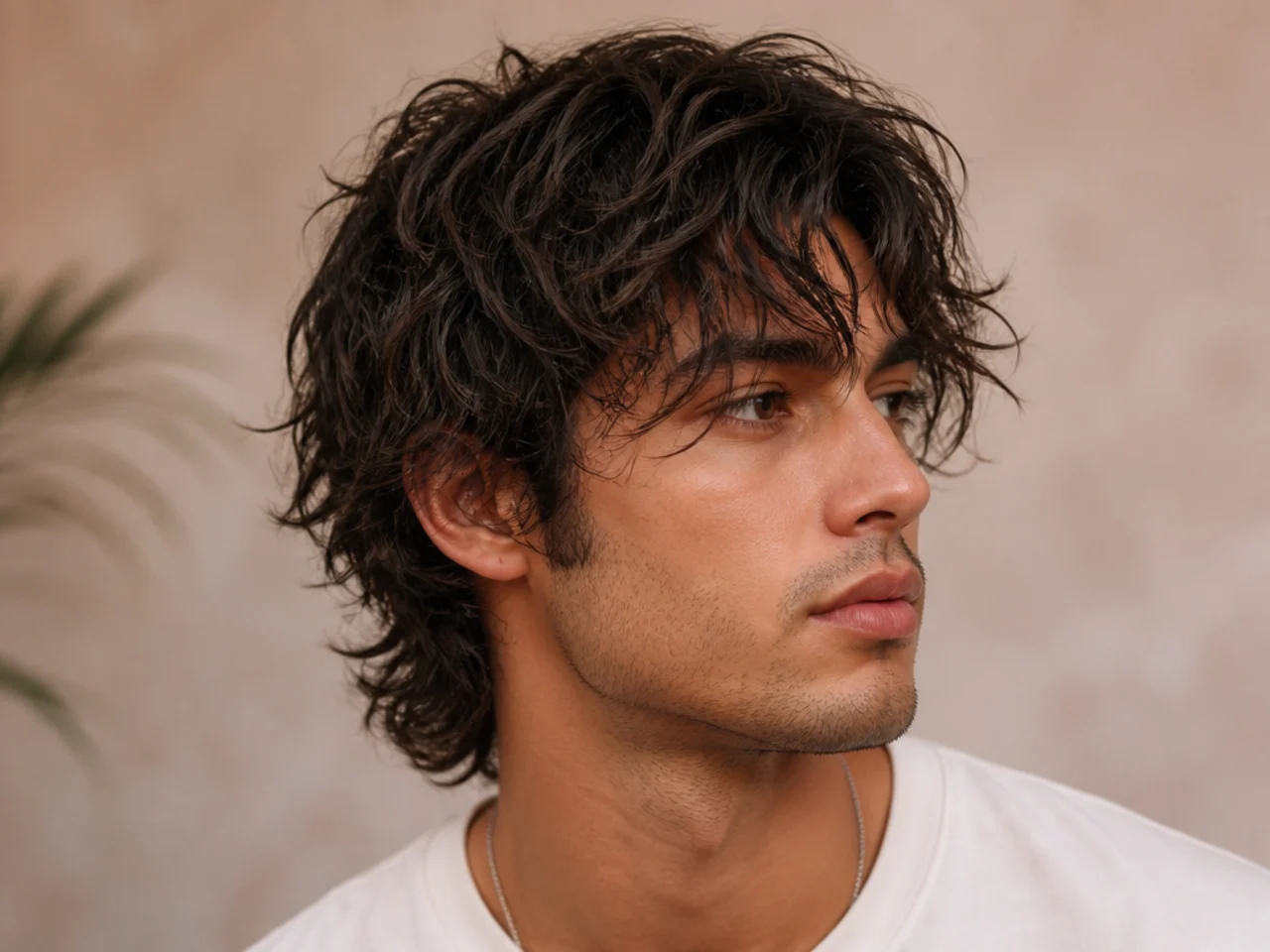
The deliberately undone version. Same structure as the classic wolf but styled to look like you just rolled out. The wave does most of the work — messy on wavy hair is not accidental, it is a specific product-and-scrunch sequence that reads as effortless. Wavy hair carries messy better than any other texture because the wave itself is unstructured by default.
Suits every face shape. Works across all three wave types.
Ask for: "Messy wavy wolf cut, wet-cut with an aggressive dry point-cut finish, three inches through the top with medium internal layers cut in the wave direction, undefined face-framing at the cheek — no clean line — feathered perimeter, blended sides at a guard 2."
Styling tip: Sea-salt spray and a pea of matte paste worked together on damp hair, tousle roughly with fingers, no combing, no diffuser — let it air-dry as it lands.
13. Wispy Wavy Wolf Cut
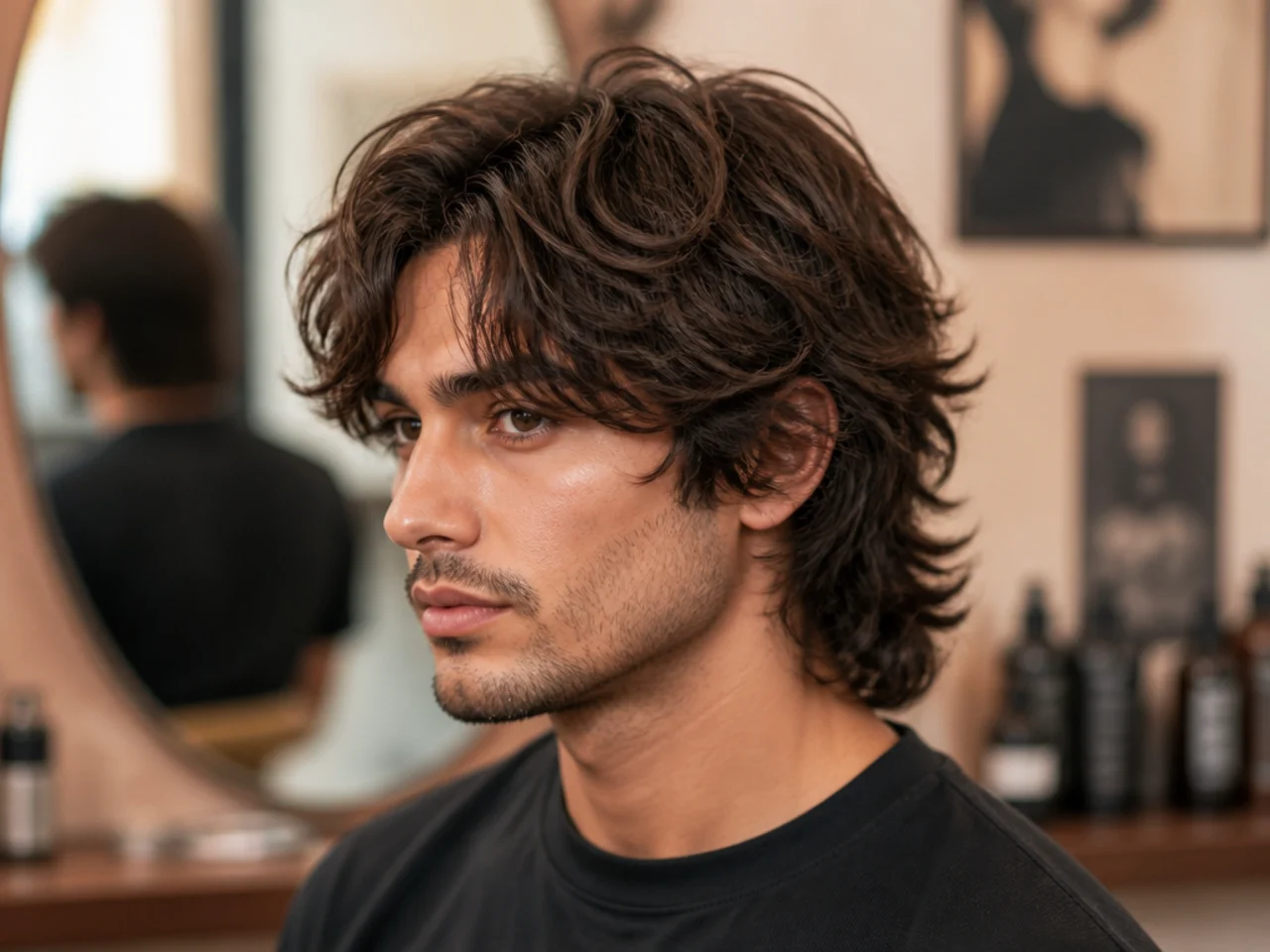
The lightest touch on the list. Every layer end tapered to a wisp, face-framing pieces cut so thin they read as strands, and a perimeter that dissolves into individual ends the wave then lifts. Photographs like a watercolor and gives fine 2A hair the movement it usually lacks without stripping density.
Suits oval, heart, and long faces. Best on fine 2A hair — heavier waves overpower the wispy read.
Ask for: "Wispy wavy wolf cut, wet-cut with a razored finish, three inches on top with soft shallow internal layers, razor-tapered layer ends throughout, wispy face-framing at the cheek, dissolved perimeter at the collar, scissor-blended sides — no fade."
Styling tip: A light finishing spray only, worked through with fingers. Skip clay and paste — they weigh wispy layers flat and kill the airy read.
14. Chunky Wavy Wolf Cut
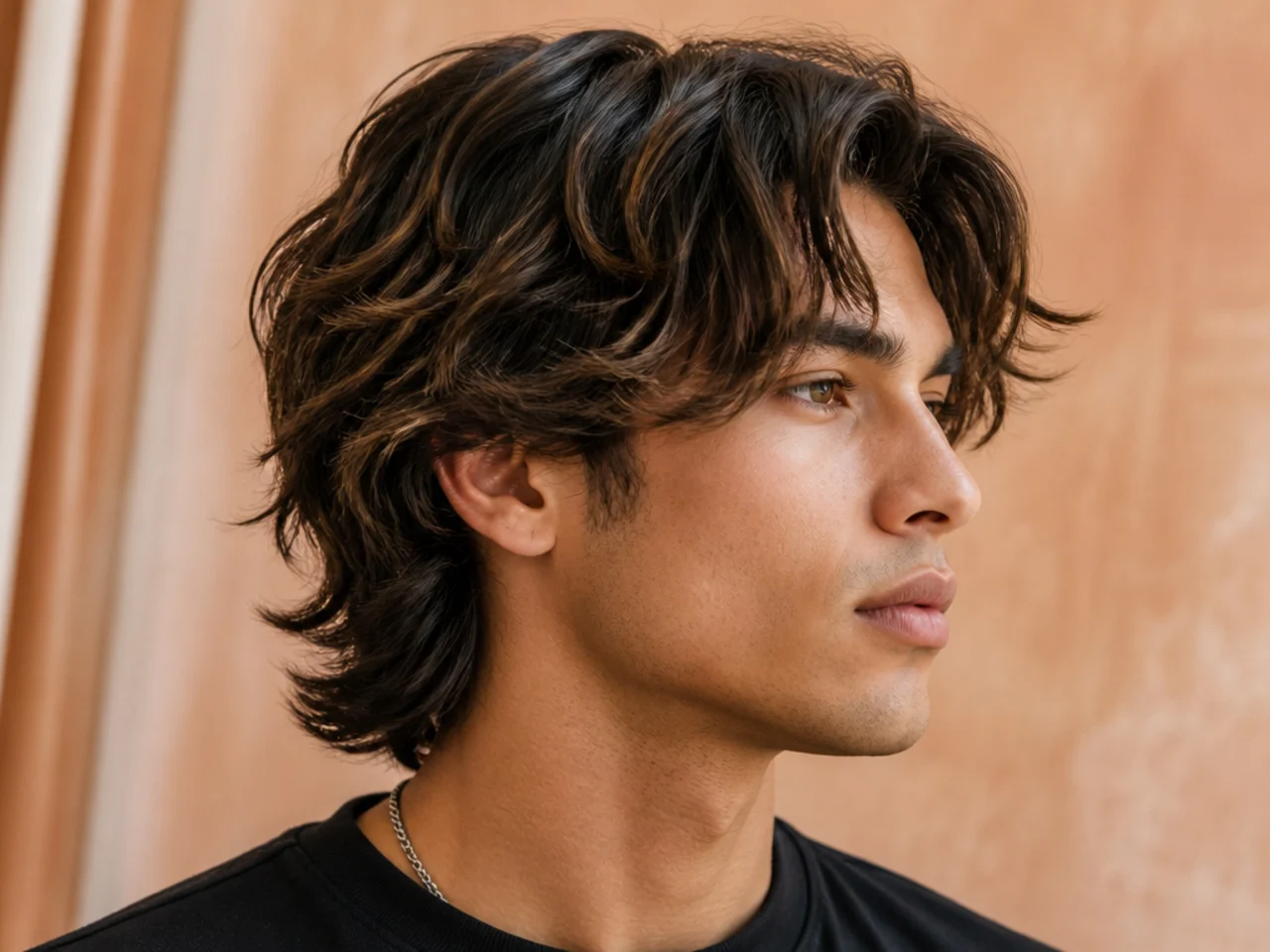
Layers cut with defined edges and thick face-framing sections at the cheek. Sits between textured and blunt — the pieces read as intentional chunks rather than continuous ends. The wave amplifies the chunk read because each section catches its own bend, so the whole cut looks like a stack of individually shaped locks.
Best on medium to thick 2B or 2C hair. Suits square, diamond, and oval faces.
Ask for: "Chunky wavy wolf cut, wet-cut throughout, four inches on top with defined layer breaks, thick chunky face-framing at the cheek, blunt-tip perimeter at the collar, low taper on the sides."
Styling tip: Molding paste on damp hair, twist and separate large pieces with fingers, then diffuse for two minutes to lock the chunk definition.
15. Short Wavy Wolf Cut
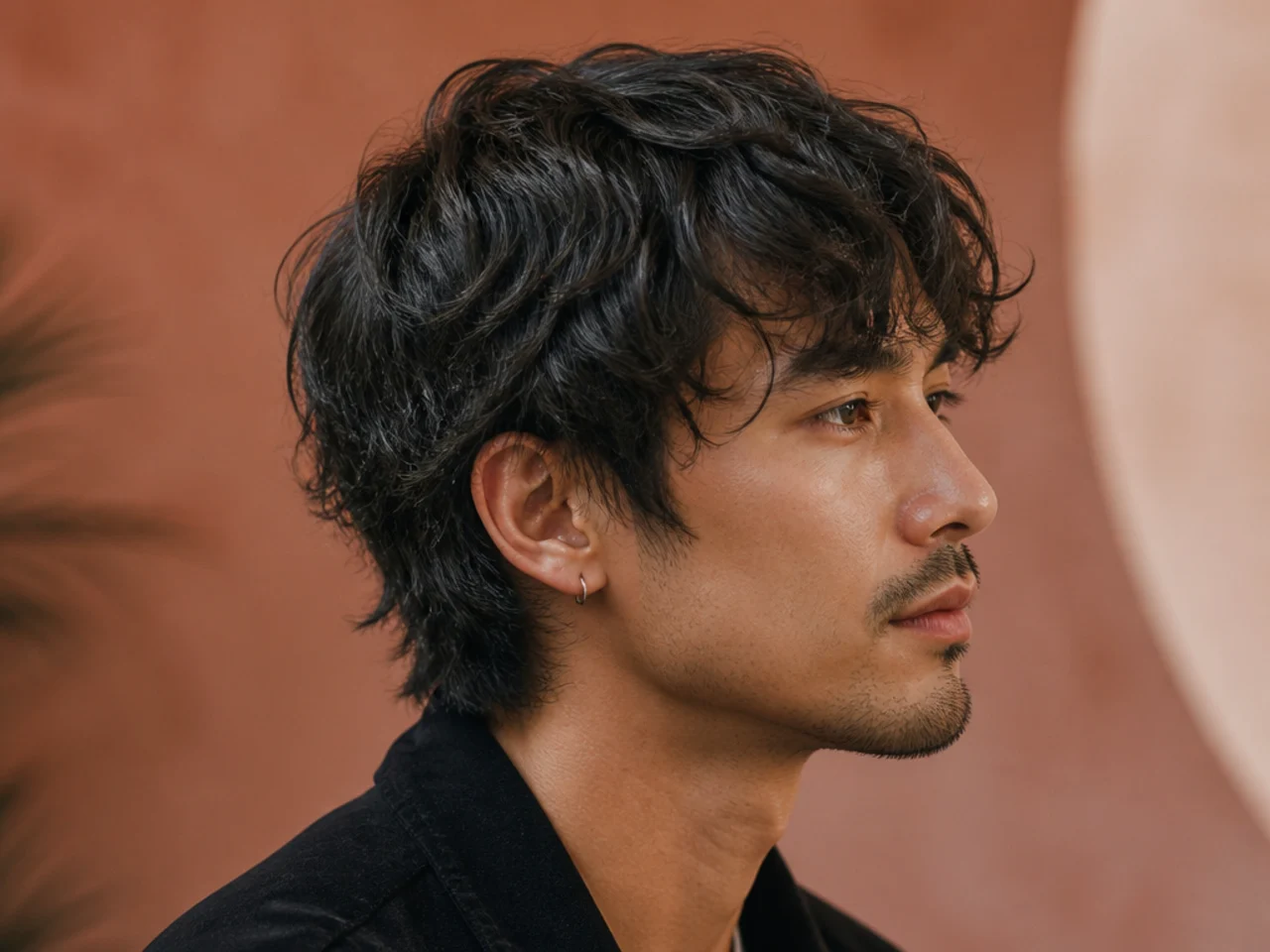
The cropped version — same wolf structure, length dial pulled short. Two inches through the top, mid-length layers stopping at mid-ear, face-framing pieces at the cheekbone, and a nape that sits just above the collar. Reads modern and workplace-safe with almost zero styling time. See the full breakdown in our short wolf cut men guide.
Suits oval, heart, diamond, and long faces. Works with any density of 2A through 2C hair.
Ask for: "Short wavy wolf cut, wet-cut with dry point-cut finish, two inches through the top with defined internal layers, face-framing at the cheekbone, feathered nape just above the collar, low taper on the sides."
Styling tip: Sea-salt spray on damp hair, scrunch with fingers, air-dry — the whole routine takes under two minutes.
16. Medium-Length Wavy Wolf Cut
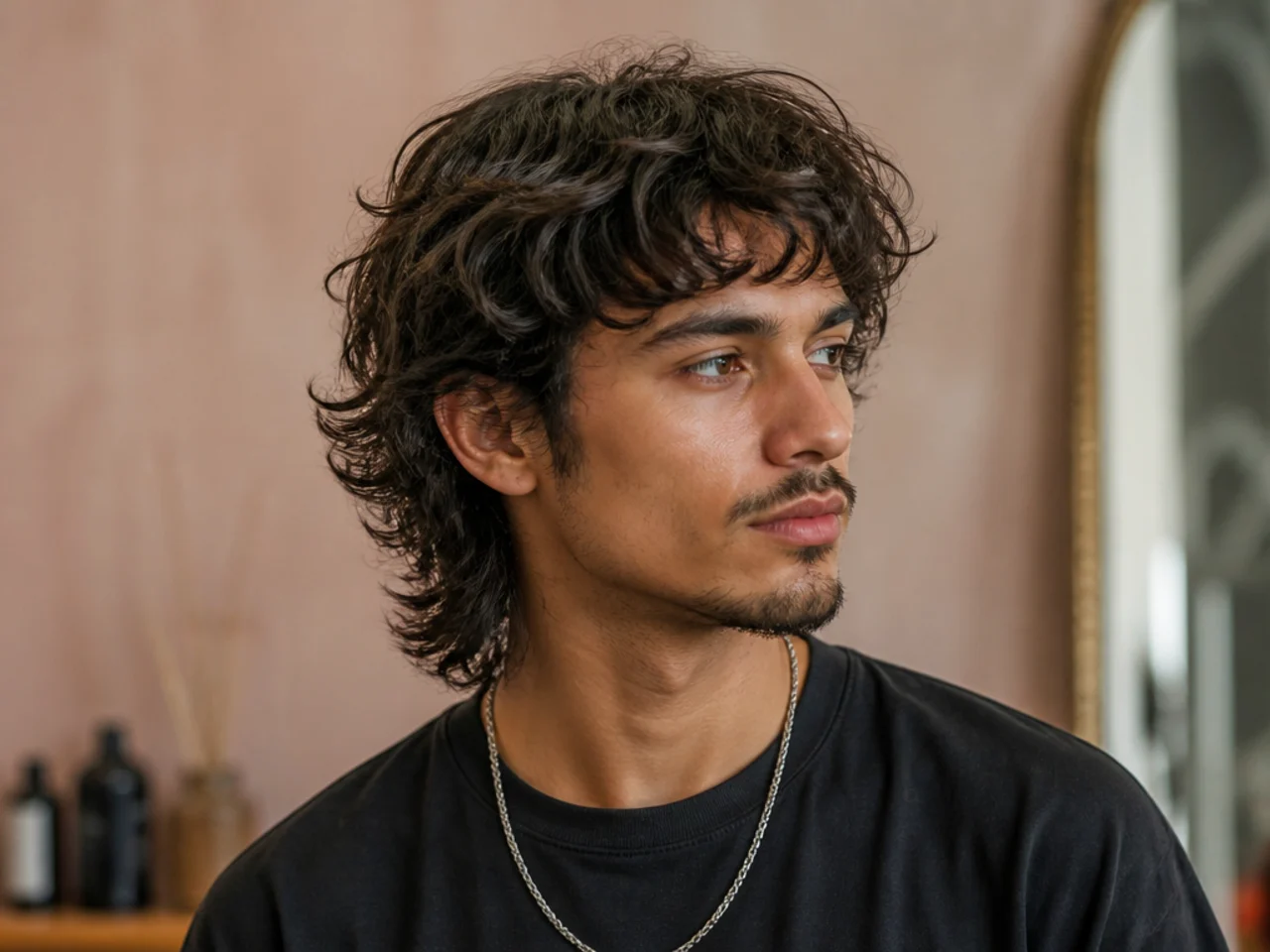
The wearable middle ground. Four to five inches through the top, mid-length layers that stop at the ear, face-framing pieces at the cheekbone, and a nape that sits between the ear and the collar. Long enough to read as a full wolf, short enough to style in three minutes. Sits between the short and long versions in the wolf cut hair men family.
Suits every face shape. Works with medium or thick 2B or 2C hair — fine 2A drops flat at this length.
Ask for: "Medium-length wavy wolf cut, wet-cut throughout, four inches through the top with defined internal layers, mid-length layers ending at the ear, face-framing at the cheekbone, feathered nape between the ear and the collar, blended sides at a guard 3."
Styling tip: Sea-salt spray on soaking-wet hair, scrunch and diffuse on low for two minutes to build the crown volume the length flattens on air-dry alone.
17. Long Wavy Wolf Cut
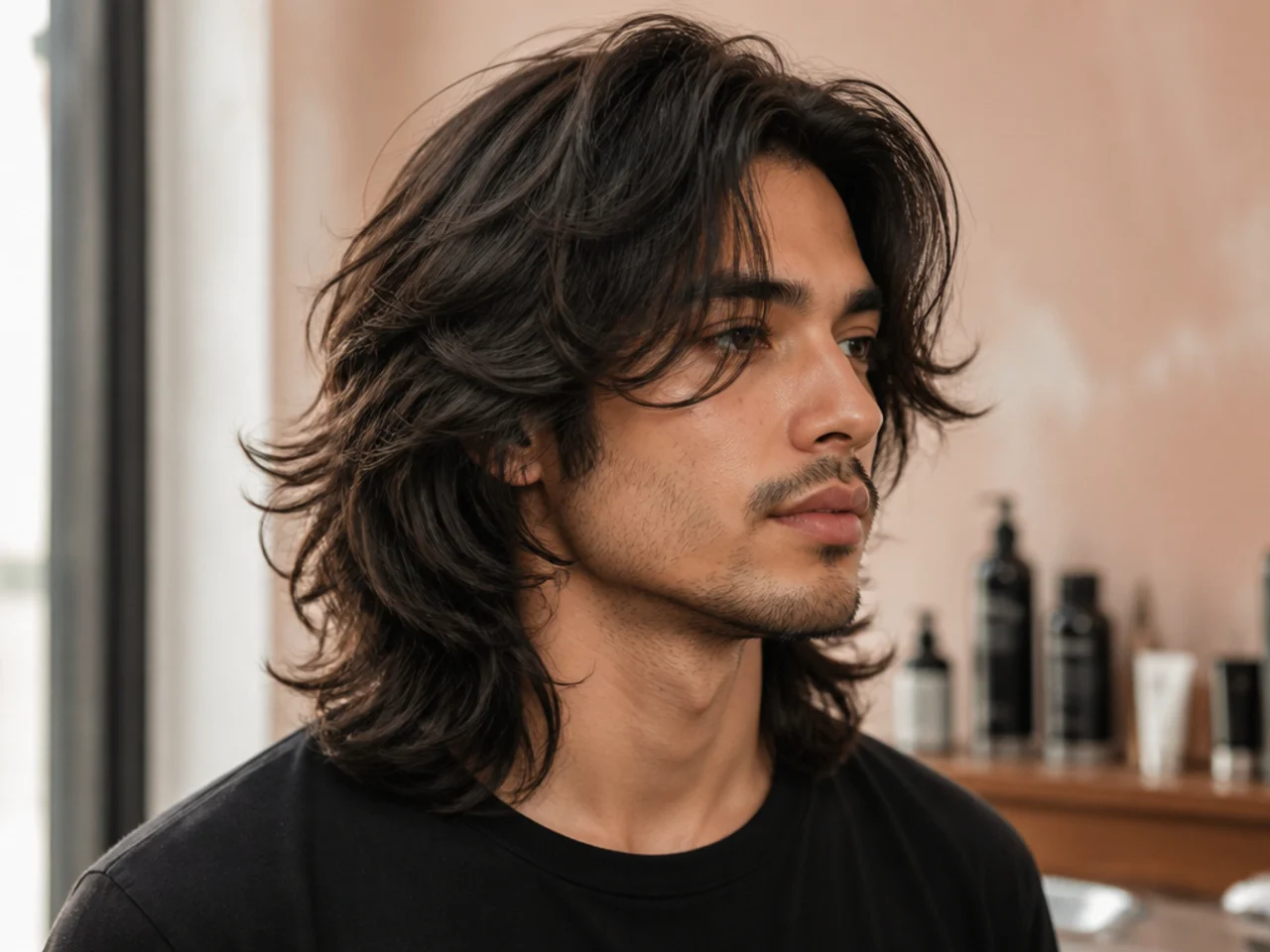
The full-length version. Six to eight inches through the top and crown, mid-length layers that fall past the ear, face-framing pieces reaching the jaw, and a nape that brushes the shoulders. Waves carry the length gracefully — no daily styling to keep the shape moving. Growing from short to long takes six to twelve months; check the wolf cut men long breakdown for the growing-out direction.
Suits oval and heart faces. Best on medium to thick 2B or 2C hair.
Ask for: "Long wavy wolf cut, wet-cut with dry finish, six-plus inches through the crown, deep internal layers cascading from the crown down, face-framing pieces to the jaw, feathered perimeter to the shoulders, no undercut — keep everything one connected shape."
Styling tip: Leave-in conditioner and a curl-defining cream on soaking-wet hair, scrunch upward, then pineapple the hair overnight in a loose top-knot on a satin pillowcase to preserve the wave.
18. Two-Block Wavy Wolf Cut
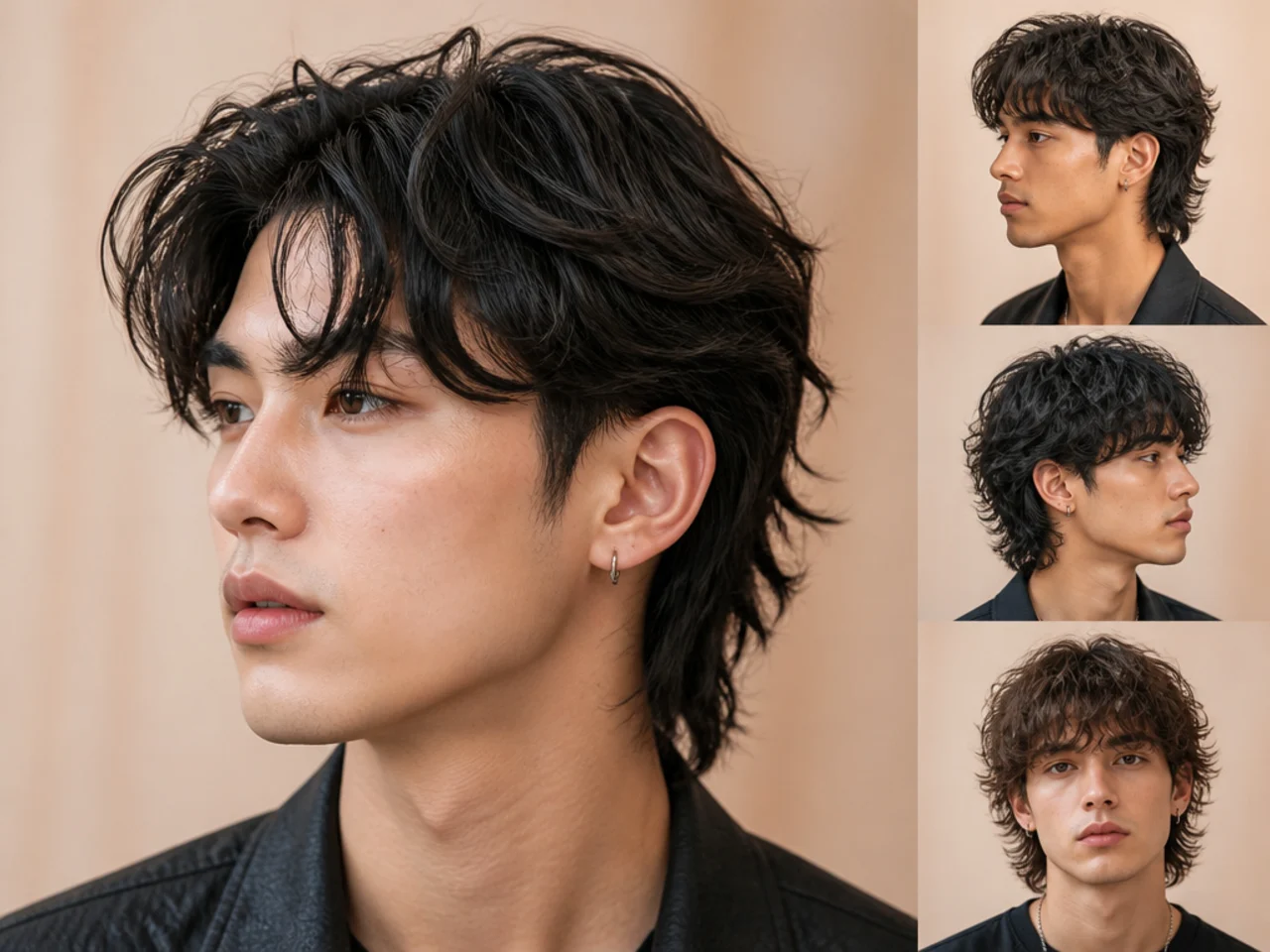
The K-pop two-block applied to the wavy wolf. A short undercut hides under the top and behind the ear, and the layered wave falls over the disconnect so from most angles it reads as one shape — until the top gets pushed up and reveals the block underneath. The wave hides the disconnection line more forgivingly than straight hair does.
Suits oval, long, and heart faces. Best on medium to thick 2B or 2C hair.
Ask for: "Two-block wavy wolf cut, wet-cut throughout, half-guard undercut on the sides and back-of-ear, four-inch layered wavy top and back left as one connected mass, defined internal layers, face-framing at the cheek, feathered perimeter, keep the disconnect line clean."
Styling tip: Sea-salt spray on damp hair, diffuse the top back and outward so the wave falls over the block, then finish with a light hair mist to lock the fall.
19. Low Taper Fade Wavy Wolf Cut
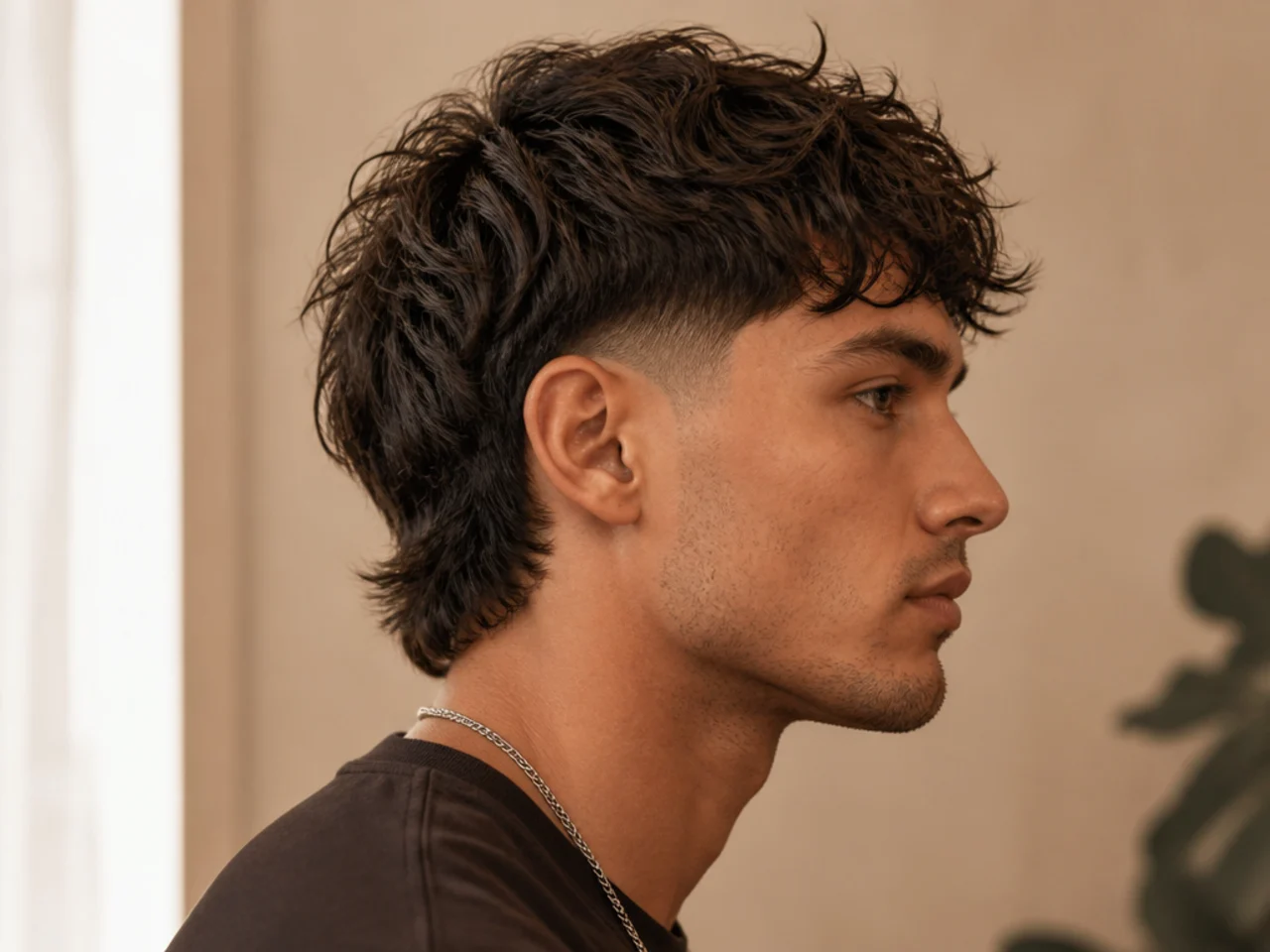
The office-safe version. A low taper fade starts just above the ear and dies out cleanly at the sideburn, keeping the sides tight without competing with the layered top. The wave sits on top exactly as it would with scissor sides — the taper only clarifies the perimeter and reads sharp in every professional setting.
Works on every face shape. Best on medium 2B hair three to four inches on top.
Ask for: "Wavy wolf cut on top with a low taper fade — three inches through the crown with medium internal layers, face-framing waves at the cheek — low taper fade on the sides starting at the sideburn, ending at a guard 1, keep the nape tapered soft."
Styling tip: Sea-salt spray on damp hair, scrunch and diffuse briefly, then a pea of matte paste through the ends only — no product on the fade or the neckline.
20. Burst Fade Wavy Wolf Cut
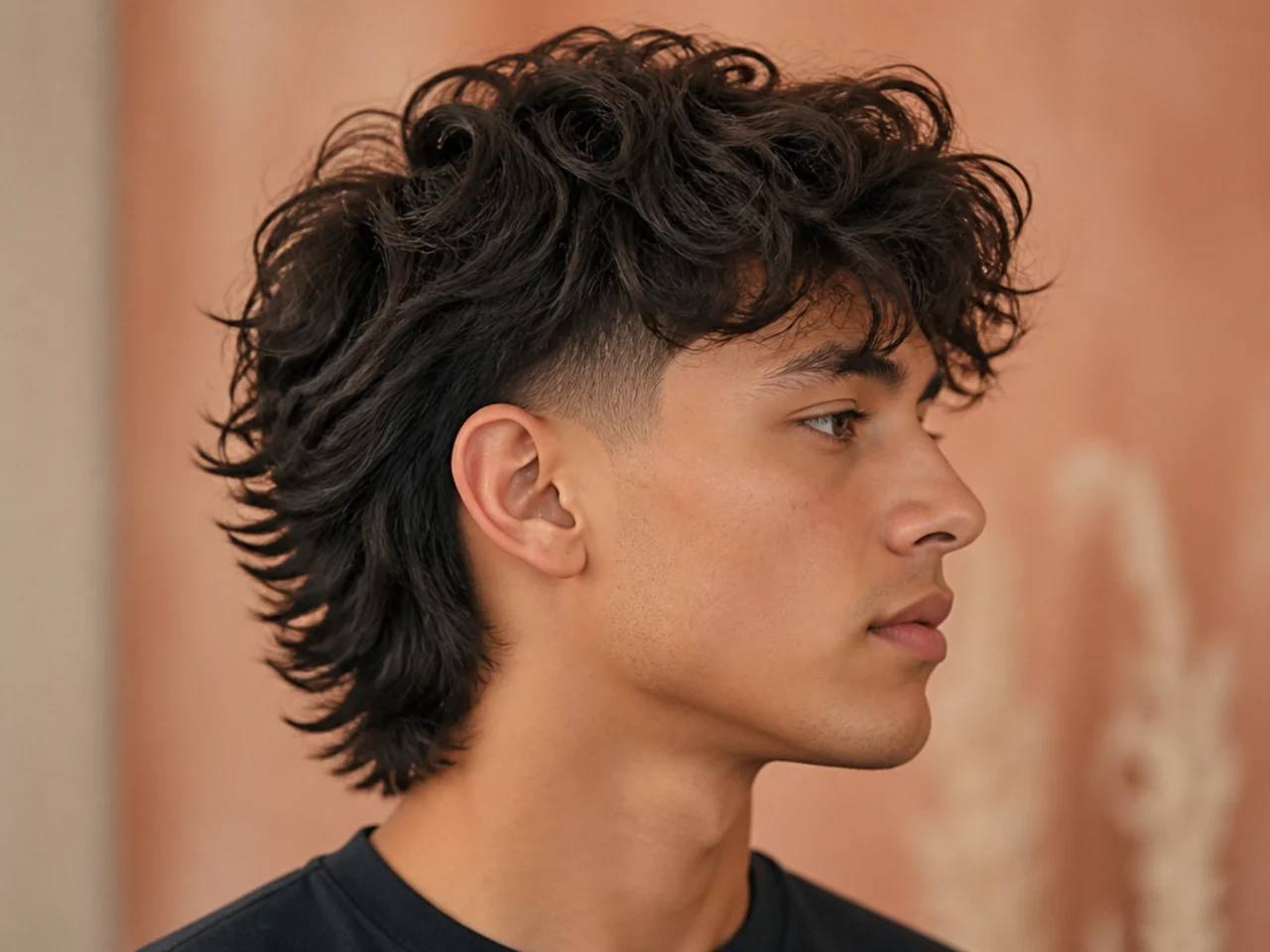
The arc changes the whole read. The burst fade curves in a semicircle around each ear, leaving the nape length untouched — so the wave's feathered back flows out of the fade cleanly. On wavy hair the arc reads editorial because the natural bend at the temple echoes the semicircle around the ear — the two curves working together.
Suits oval, heart, and diamond faces. Works with any density of 2A through 2C.
Ask for: "Wavy wolf cut with burst fade, wet-cut with dry point-cut finish, three-and-a-half inches on top with defined internal layers, burst fade curving in a clean arc around each ear at a guard 1, keep the nape length intact and feathered."
Styling tip: Sea-salt spray on damp hair, scrunch and diffuse the crown backward, then a pea of matte paste through the layers to define the pieces without weighing the wave down.
How to Ask Your Barber for a Wavy Wolf Cut
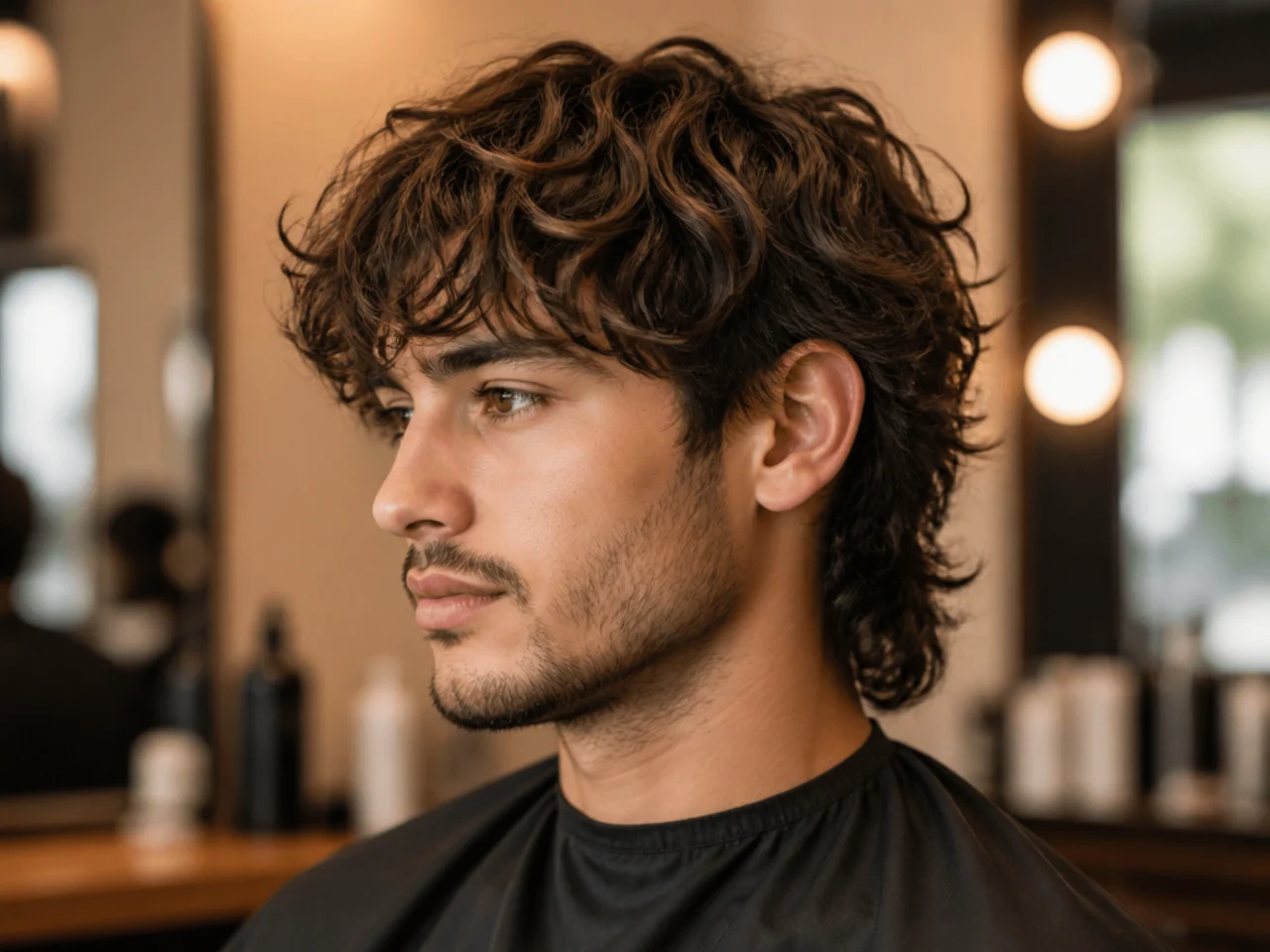
Bring a photo. Two if you can — one showing the top layering from three-quarter view, one showing the perimeter and nape from the side. Match the wave type in your reference photo to your own. A wolf styled on straight hair reads completely different once your 2B waves are cut the same way, and a 2C reference on a 2A guy is a recipe for disappointment.
- Say "wavy wolf cut" and name your wave type. 2A, 2B, or 2C. The wave-type qualifier tells your barber to skip the heavy point-cutting that assumes no natural texture and to layer for the pattern you actually have.
- Set the top length in inches. Two inches for the short version, three to four for the everyday zone, five to six for the medium-to-long versions, six-plus for the full-length wolf.
- Set the layering intensity. Subtle for 2A or fine hair. Medium for defined 2B or the classic reference-photo look. Heavy for dense 2C or editorial impact.
- Ask for a wet cut with a dry point-cut finish. Wet-cutting sets accurate length. The dry finish is where the barber sees your actual pattern and point-cuts only where the shape needs it. Skipping the dry check leaves the finished cut looking blockier than the reference.
- Set the face-framing. Where at the cheek — cheekbone, jaw, or chin — and how heavy. Defined pieces read editorial. Wispy pieces read soft. Chunky pieces read bold. The wave will amplify whichever you pick.
- Set the fringe. Curtain, textured, forward, side-swept, or none. Curtain and textured fringes both work particularly well on waves because the natural bend shapes them without heat.
- Set the side treatment. Scissor-blended, low taper, mid taper, burst fade, or disconnected undercut. Match to workplace and how loud you want the cut reading overall.
Show the photo again once your barber has heard the answers, then confirm the top length in the mirror before scissors touch hair. Waves shrink slightly less than curls when they dry — around ten to fifteen percent — so ask your barber to cut a little longer than the finished target if you want the wave to sit exactly at reference-photo length.
Styling and Maintenance
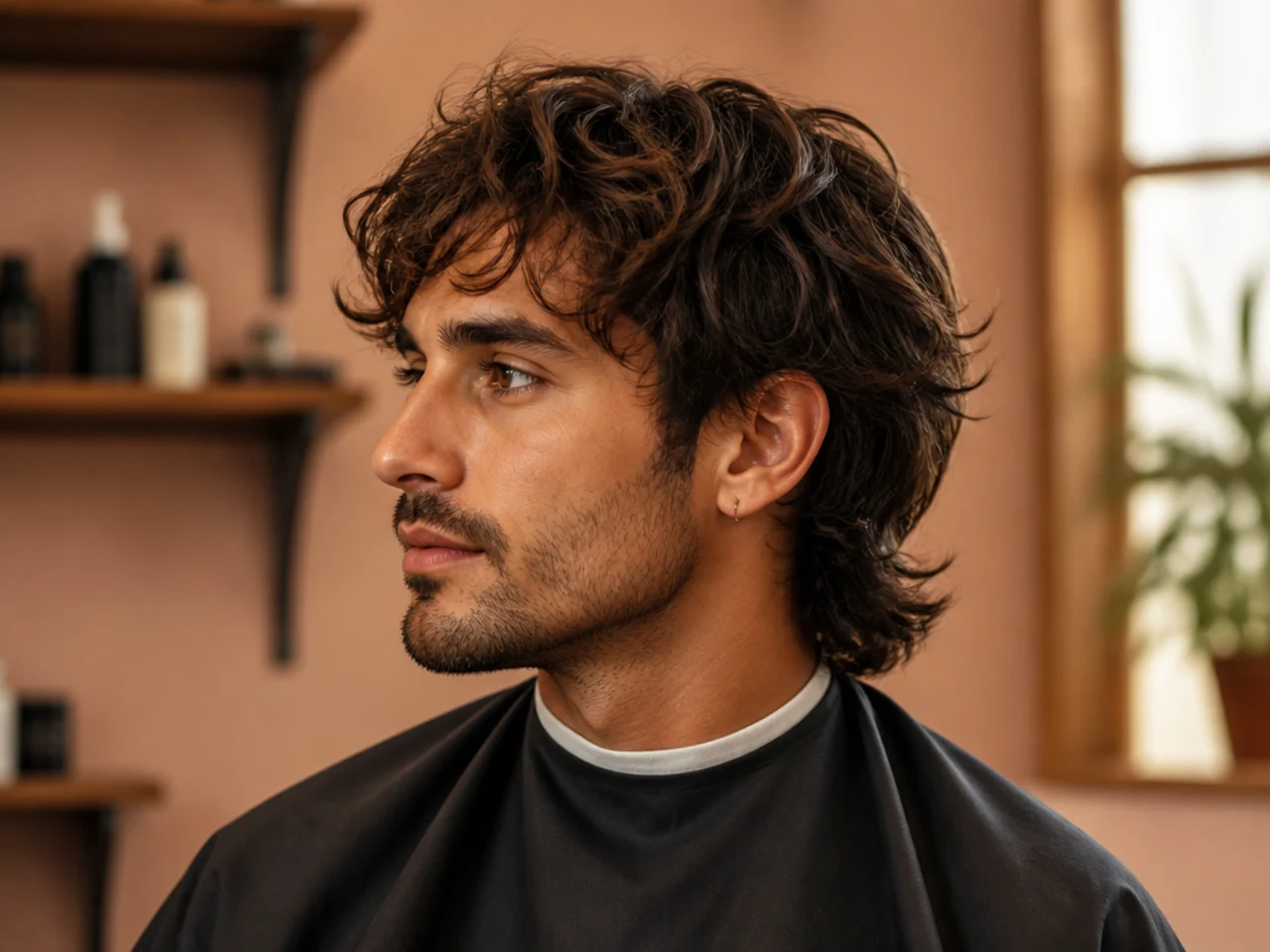
Wavy hair is high-reward to style but punishes shortcuts. The routine below takes three to eight minutes and holds all day. Skip a step and the wave drops flat by lunch.
Wash and leave soaking wet — not damp. Unlike straight hair, waves need product applied to hair that is still dripping. Water carries the styling product into the wave pattern; damp hair diffuses it unevenly and leaves patches of flat wave.
Layer product bottom-up. Leave-in conditioner first for moisture, then a sea-salt spray or curl-defining cream for hold and pattern definition. Fine 2A hair often skips the sea-salt spray in favor of a mousse for lift without weight. Dense 2C hair adds a curl-defining gel over the cream for stronger hold. Our best wavy hair products roundup covers the specific categories that work per wave type.
Scrunch, do not comb. Cup a section of hair from the ends up toward the roots and squeeze — the scrunching motion builds the wave pattern. Combing after products are in flattens the S-shape. If you must detangle, use a wide-tooth comb before any product goes in.
Diffuse or air-dry — never rough-dry. A diffuser attached to a low-heat setting for two to five minutes keeps the wave defined and speeds up drying. Air-drying takes thirty to sixty minutes and gives the most natural wave read but leaves the roots flat unless you clip them up mid-dry. A regular blow-dryer without a diffuser destroys the wave pattern in under thirty seconds.
Add product only to the ends after drying. A pea of matte paste, molding paste, or a light styling cream worked through the ends after drying separates the pieces and adds definition. Never apply post-dry product to the roots — it kills the crown lift the wave built up during drying.
Re-cut the shape every six to eight weeks. Waves hide grow-out longer than straight hair but shorter than tight curls. The face-framing pieces and feathered perimeter blur at the six-week mark on most guys. Fade or taper sides need a re-cut every two to three weeks to stay sharp; between visits, run a beard trimmer over the neckline yourself to hold clean edges. For maintenance cadence across every men's shag silhouette, our modern mullet haircut guide covers the parent family schedule.
Wash two to three times a week. Daily washing strips the natural oils waves rely on for definition — most wavy guys wash too often and wonder why the pattern goes limp. Condition every wash, co-wash between wash days if hair feels dry, and use a heat protectant before any diffuser session even on low heat.
Sleep in a pineapple or on silk. A loose top-knot on the crown preserves the wave pattern overnight; sleeping loose on cotton flattens the wave and adds friction frizz by morning. A silk or satin pillowcase does the same job with less setup. For a spectrum of adjacent layered shapes, our shag haircut and layered wolf cut guides sit closest to the wavy wolf in the same family.
FAQ
What is a wavy wolf cut for men?
A wavy wolf cut is a shag-mullet hybrid cut specifically for 2A, 2B, and 2C wave patterns. The natural S-wave supplies the texture, so the barber leans on internal layers, face-framing pieces at the cheekbone, and a feathered perimeter instead of heavy point-cutting. The wave carries the shape without straightening or heavy heat styling.
What wave type suits a wolf cut best?
All three suit it. 2B is the sweet spot — the S-wave is defined enough to read as texture in every reference photo without needing heavy product. 2A wears longer lengths and softer layers to keep the loose wave visible. 2C reads closest to a curly wolf and takes deeper internal layers so the denser wave lifts instead of stacking triangle-wide.
What top length works best on wavy hair?
Three to five inches through the top. Under three inches and the wave pattern flattens into a textured crop. Over five inches on fine 2A hair and the wave drops out under its own weight. Dense 2B and 2C carries six to eight inches for the long version, provided you let it air-dry rather than blow it straight.
Should wavy hair be cut wet or dry for a wolf cut?
Wet-cut the perimeter and internal shape, then dry-cut the finishing texture. Wet-cutting sets accurate length and layer geometry; dry-cutting after the wave has dropped shows the barber where the pattern actually sits. Ask for a wet cut with a dry point-cut finish for the sharpest wavy read.
How do I style a wavy wolf cut so the waves stay defined?
Start on soaking-wet hair — never damp for waves. Apply a lightweight leave-in conditioner, layer a sea-salt spray or curl-defining cream on top, then scrunch upward from the ends toward the roots. Diffuse on low heat for two minutes or air-dry undisturbed for thirty. Never brush the wave dry — it breaks the pattern instantly.
How often does a wavy wolf cut need a trim?
Every six to eight weeks for the layered structure. Waves hide grow-out longer than straight hair but shorter than tight curls, so the face-framing pieces and feathered perimeter blur at the six-week mark on most guys. Fade or taper sides need a re-cut every two to three weeks to stay sharp between full appointments.
Is a wavy wolf cut workplace-appropriate?
Most versions are. The classic, wispy, side-swept, low-taper, and short variations read clean in any office. Skip the two-block, disconnected chunky, burst-fade, and long shoulder-brushing versions for traditional corporate settings — those photograph loud. Creative offices can handle any variation on this list.
How is a wavy wolf cut different from a straight-hair wolf cut?
The cutting technique changes. Straight hair needs heavy point-cutting and razoring to build the texture the wolf silhouette depends on. Wavy hair supplies half of that texture from the natural bend, so the barber leans on internal layering and a lighter dry-cut finish. Styling is faster on waves too — a scrunch-and-air-dry replaces the eight-minute round-brush routine straight hair demands.