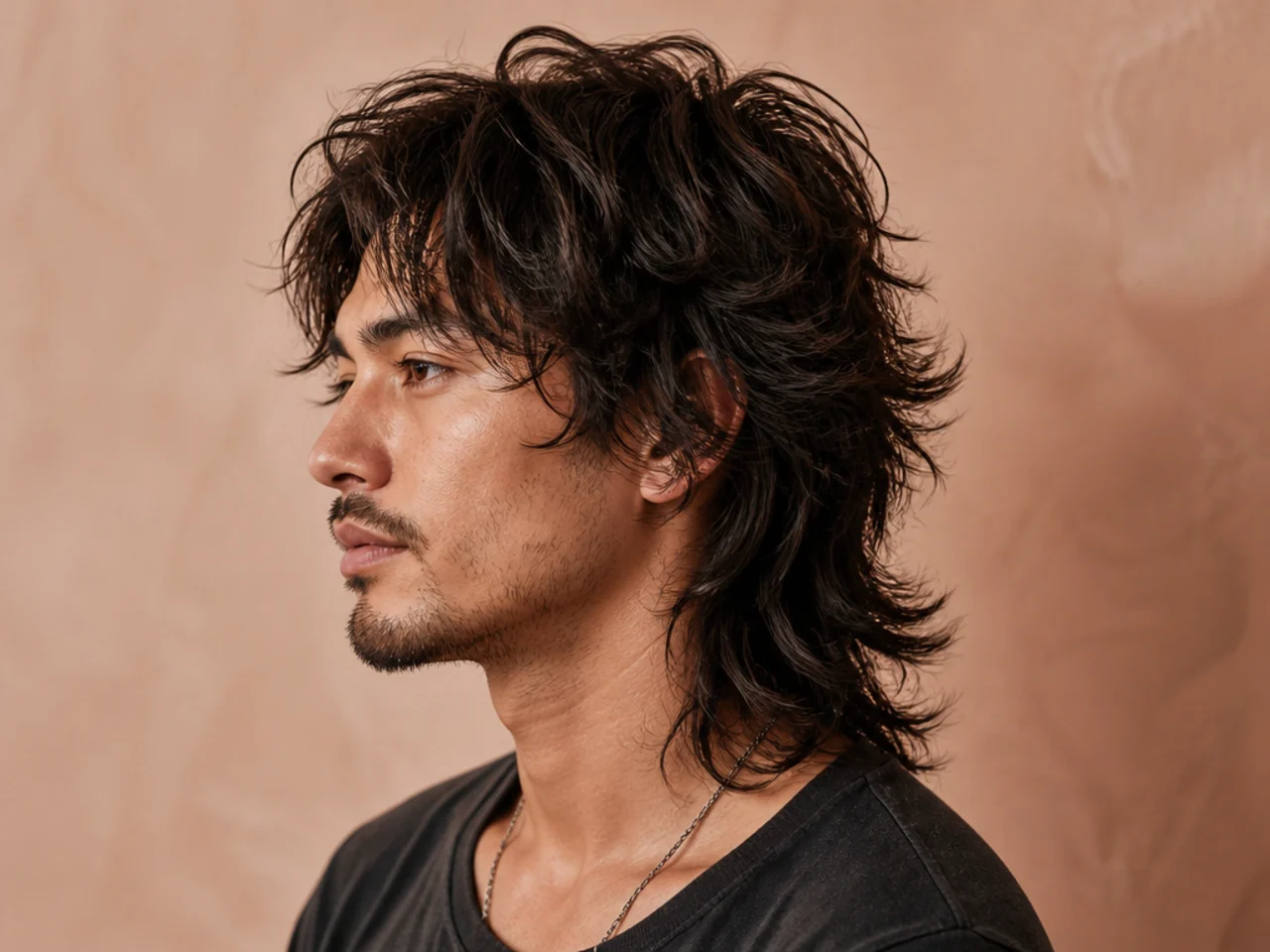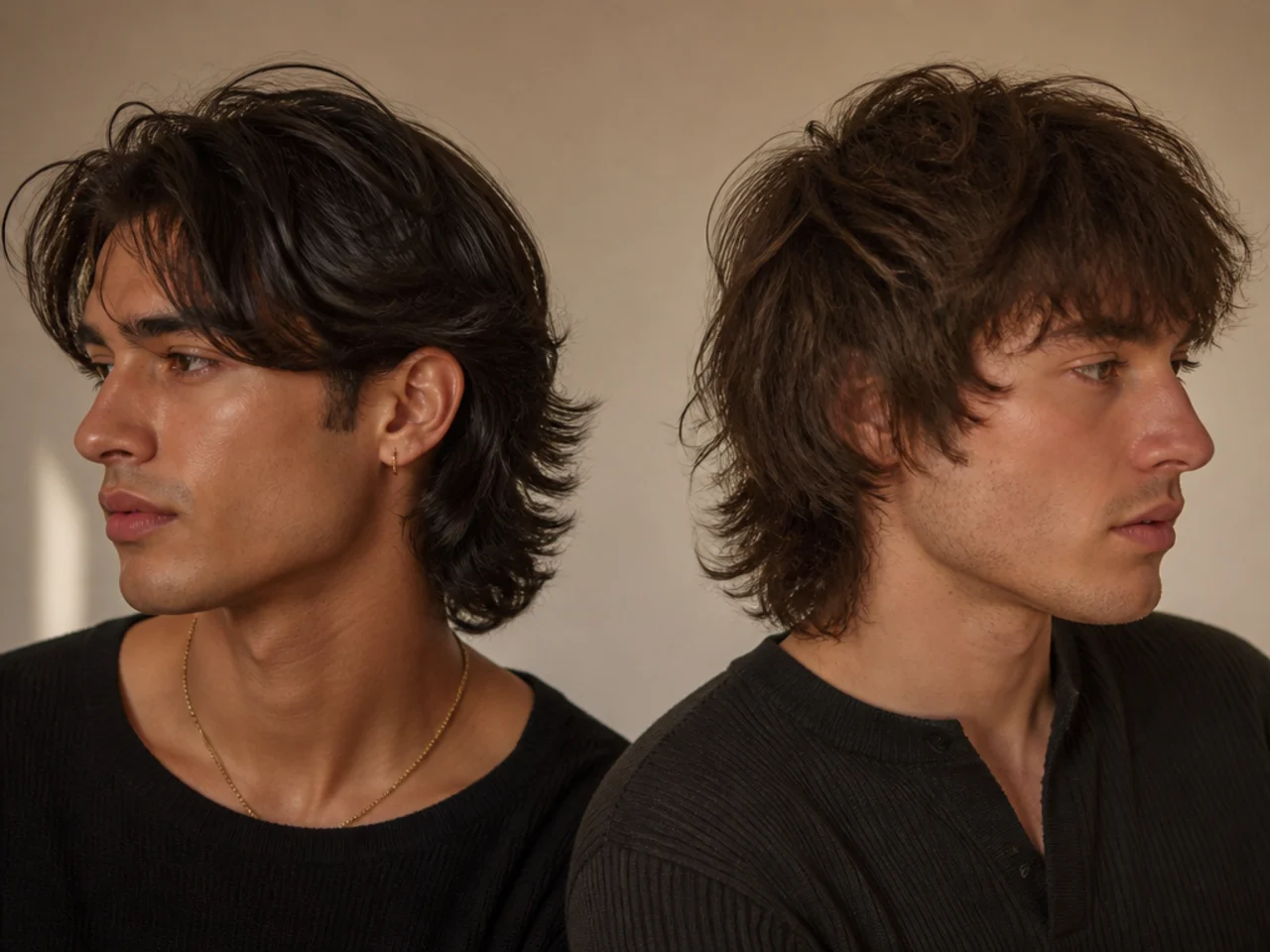
25 Short Wolf Cut Ideas Without Any Bangs
Twenty five short wolf cuts with no fringe, and the constraint that governs all of them — at short lengths the gap between the crown layer and the perimeter is small, so a couple of centimetres either way changes the whole silhouette.
In this article · 32
- How Short Changes the Shape
- Choosing Your Length and Perimeter
- The 25 Short Wolf Cuts Without Bangs
- 1. Chin Length Wolf Cut
- 2. Jaw Length Wolf Cut
- 3. Collarbone Wolf Cut
- 4. Wolf Bob
- 5. Shaggy Bob With No Fringe
- 6. Centre Parted Short Wolf Cut
- 7. Side Parted Short Wolf Cut
- 8. Short Wolf Cut With a Deep Crown Layer
- 9. Short Wolf Cut With Soft Crown Layers
- 10. Tucked Behind the Ears
- 11. Framing Slice Starting at the Jaw
- 12. Short Wolf Cut on Fine Hair
- 13. Short Wolf Cut on Thick Hair
- 14. Wavy Short Wolf Cut
- 15. Curly Short Wolf Cut
- 16. Coily Short Wolf Cut
- 17. Straight Short Wolf Cut
- 18. Short Wolf Cut With a Stacked Back
- 19. Short Wolf Cut With a Blunt Perimeter
- 20. Short Wolf Cut With Point Cut Ends
- 21. Short Wolf Cut With a Long Nape
- 22. Short Wolf Cut With a Short Nape
- 23. Hidden Undercut at the Nape
- 24. Shadow Root Short Wolf Cut
- 25. Grown Out Short Wolf Cut
- Styling and Upkeep
- Mistakes to Avoid
- FAQ
- Final Thoughts
A short wolf cut fails when the crown layer and the perimeter end up almost the same length, because the gap between them is the entire haircut.
The lift is a stacking effect. Short crown layers rest on longer hair beneath and hold it away from the head, and at short lengths there is very little hair beneath to rest on.
Without a fringe the perimeter is the frame. On a short cut the outline already sits near the face, so where it lands does most of the framing job.
How Short Changes the Shape
The gap gets small fast. On long hair the crown sits many inches above the ends, but on a chin length cut that distance can be three or four centimetres.
Less weight means more movement. Short hair has less mass pulling it down, so the same layer that lies flat at waist length stands up at the jaw.
The perimeter carries the density. Cut into the outline and a short cut goes wispy at the bottom immediately, because there is no length below to disguise it.
Everything happens faster. The shape flattens from the crown down within eight to twelve weeks, where a long wolf cut holds for three to four months.
Choosing Your Length and Perimeter
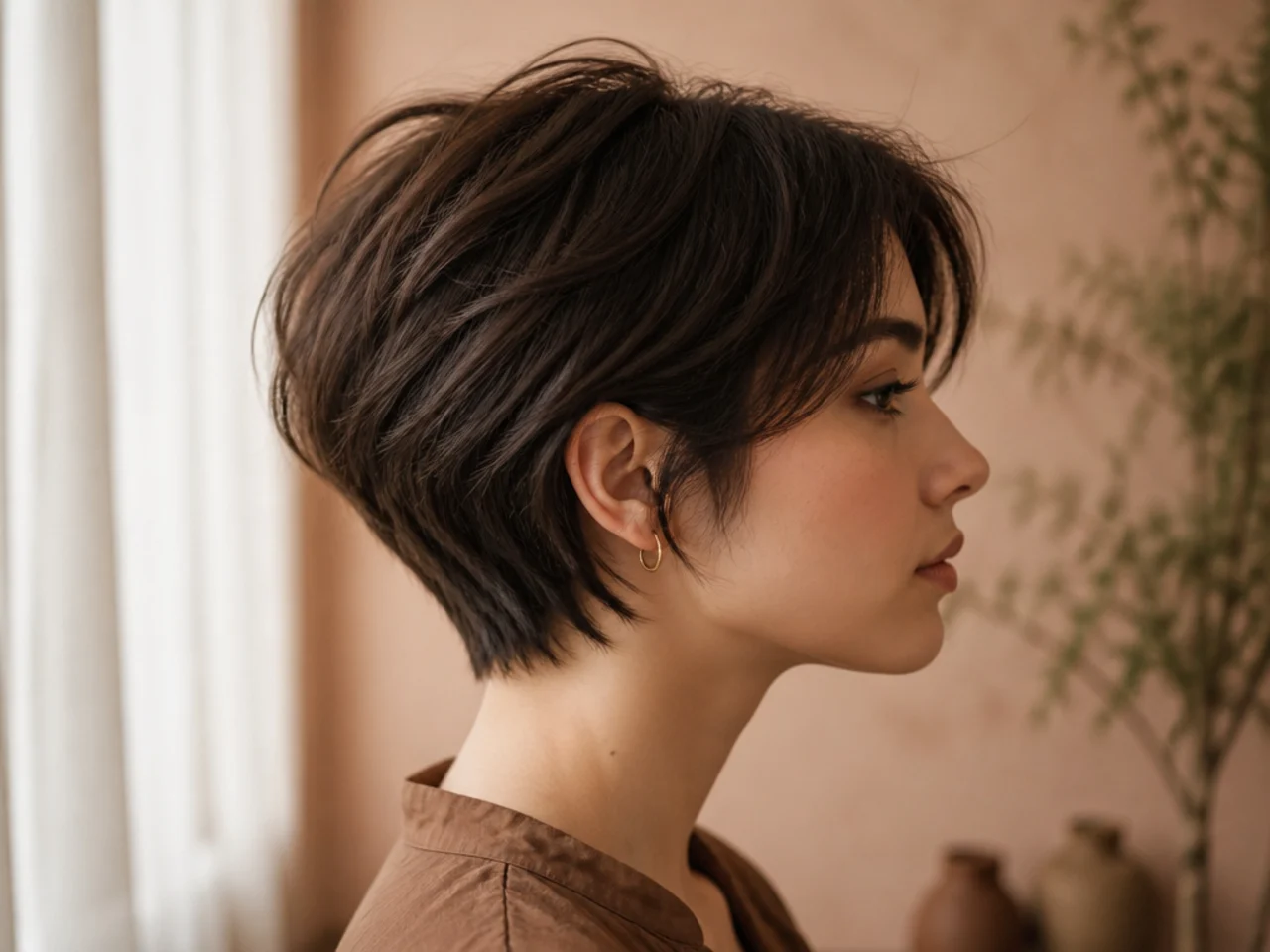
Chin is the floor. Any shorter and there is nothing left underneath for the crown layers to prop up.
Jaw is the reliable middle. Enough length for a genuine two tier stack without the ends reaching the shoulder.
Collarbone buys a third tier. It is also the point where ends stop resting on the shoulder and kicking outward.
Blunt for fine, notched for thick. A blunt outline makes fine hair look denser, while a notched one lets thick hair settle instead of spreading.

The 25 Short Wolf Cuts Without Bangs
1. Chin Length Wolf Cut
The shortest workable version, with the crown layer only a few centimetres above the perimeter. That narrow gap keeps the texture subtle, and pushing the crown any shorter leaves nothing beneath it to hold up.
2. Jaw Length Wolf Cut
A couple of extra centimetres is enough to build a proper two tier stack, which is why this is the most common short wolf length. The lower tier gives the crown something to rest on and the shape holds without product.

3. Collarbone Wolf Cut
The shortest length that can carry three tiers of layering, and the point where the ends stop landing on the shoulder. Hair resting on the shoulder is pushed outward, which is what puts a permanent kink into a shorter perimeter.

4. Wolf Bob
A blunt bob outline with wolf layering above it, so the perimeter holds the density while the crown supplies the movement. It suits fine hair particularly, because a solid outline is what makes fine hair read as thick.

5. Shaggy Bob With No Fringe
More layering through the middle of the shape and less separation between crown and ends, which pushes it closer to a shag than a wolf cut. The even spread is why it grows out with nothing to correct.

6. Centre Parted Short Wolf Cut
With no fringe the parting supplies the only vertical line, and putting it dead centre draws the eye up and down rather than across the face. On a short cut that matters more, because the width of the shape sits right at cheek height.

7. Side Parted Short Wolf Cut
Sending most of the hair one way loads that side with weight so it falls diagonally, and it lifts the roots on the heavy side because they are pushed against their natural direction. That root lift is where the crown volume comes from.
8. Short Wolf Cut With a Deep Crown Layer
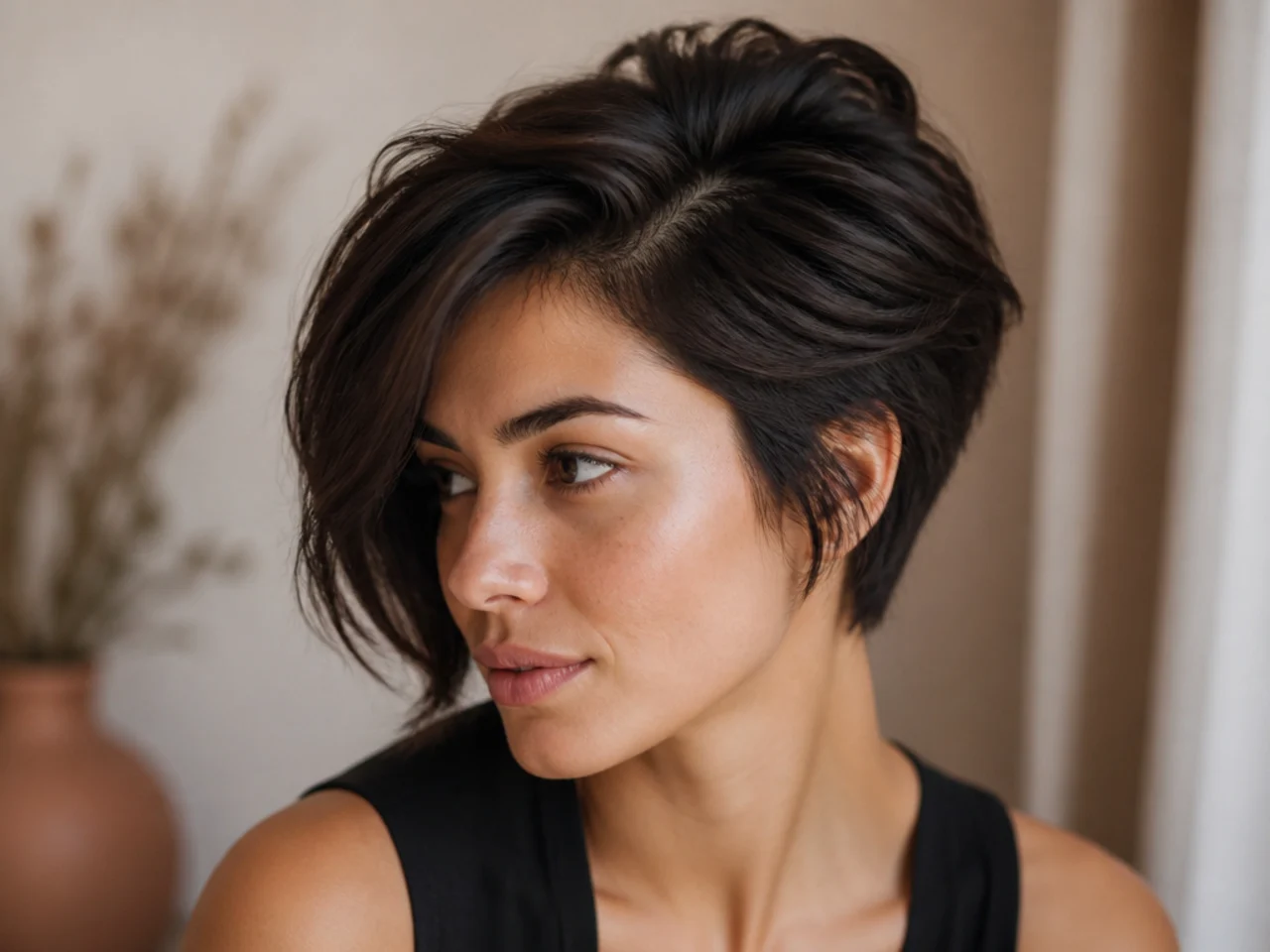
The crown taken well above the rest for maximum lift, since the shorter that layer is the more it stands. Take it too far and it becomes too short to lie in any direction at all, at which point it simply sticks up.

9. Short Wolf Cut With Soft Crown Layers
A smaller distance between the crown and the perimeter gives less lift but far more predictability. The layer has enough weight to lie where it is put, so the cut sits correctly straight out of a towel.

10. Tucked Behind the Ears
This only works if the shortest crown layer is long enough to reach behind the ear and stay there. Cut it shorter and the section springs forward the moment you turn your head, which is why the tuck has to be planned at the cut.

11. Framing Slice Starting at the Jaw
A slice cut into the front section starting at the jaw takes over the framing job the fringe would have done. Starting it at the jaw rather than higher leaves enough weight below the shortest point to stop it flicking outward.

12. Short Wolf Cut on Fine Hair
Keep the perimeter blunt and put the layering only in the top third of the shape. Fine hair looks dense because of its outline, so every cut into that outline is a cut into the illusion of thickness.

13. Short Wolf Cut on Thick Hair
Bulk removed from the interior, a couple of inches down from the root, lets the shape fall inward instead of standing out. Thinning only the ends moves the width upward and turns a short cut into a triangle.

14. Wavy Short Wolf Cut
A wave scatters light in several directions, which blurs the boundary between one layer and the next before the eye can find it. That forgiveness makes this the lowest maintenance version of the whole shape.

15. Curly Short Wolf Cut
Cut dry, curl by curl. Two to three inches of shrinkage is proportionally enormous on a short cut, so a collarbone length measured wet can dry somewhere around the chin.

16. Coily Short Wolf Cut
Worn length can be half of stretched length, so the cut has to be shaped dry and judged where the hair actually sits. Rounded tiers keep the silhouette even, because a flat line disappears entirely once the coil pattern returns.

17. Straight Short Wolf Cut
Every layer step is fully visible, so the tiers have to be cut closer together than they would be on a wave. Straight hair also drops through the day, which is why the crown roots need drying with intent for the lift to survive past midday.

18. Short Wolf Cut With a Stacked Back
Layers graduated upward at the back so each length rests on the one below and is held out by it. That support is what builds a rounded back instead of a flat curtain hanging off the crown.
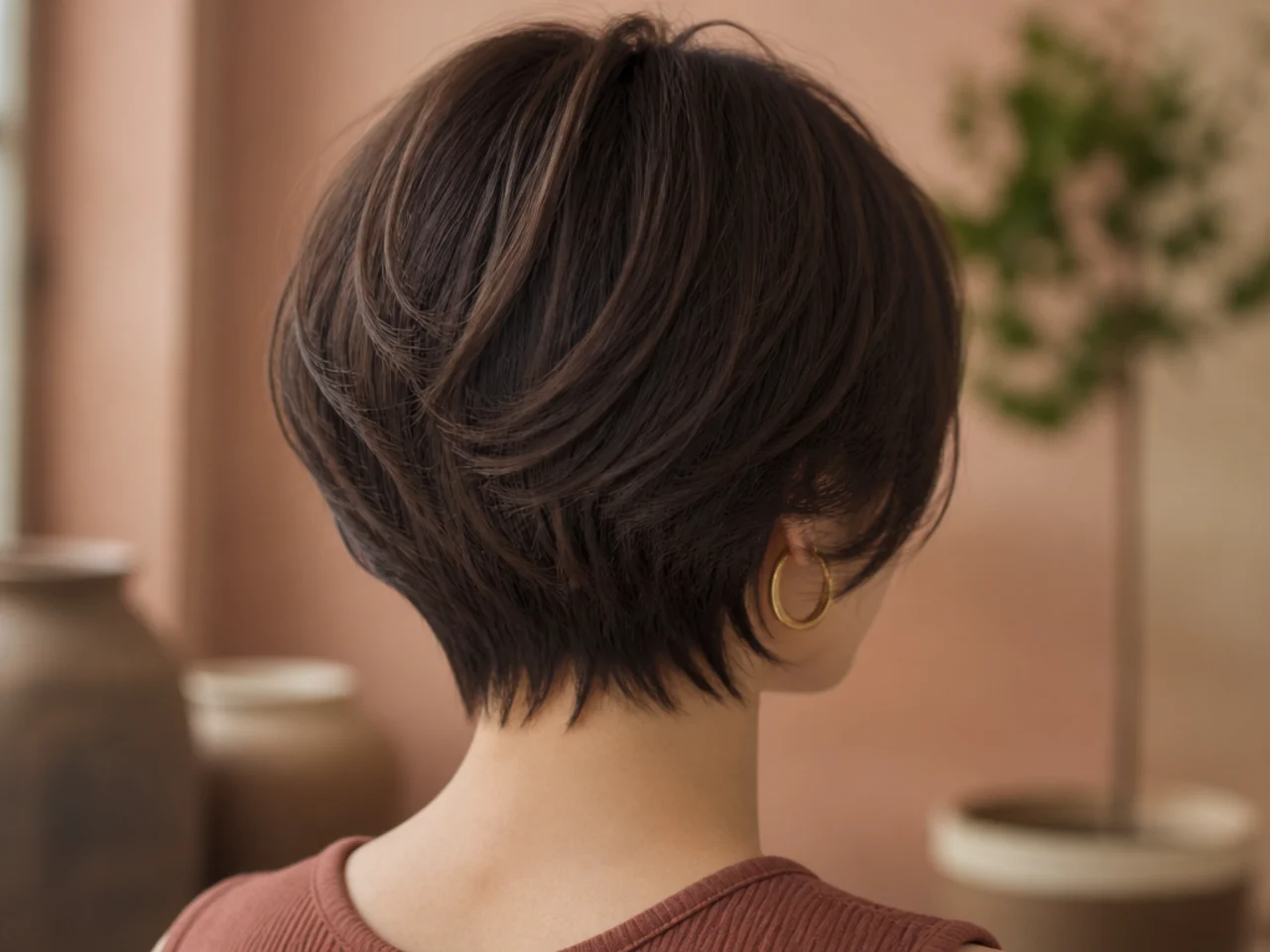
19. Short Wolf Cut With a Blunt Perimeter
Full density kept at the very ends stops a short cut looking wispy at the bottom, which is where short hair usually thins out visually. The layers above have to stay light in return, or the shape reads heavy at both ends.

20. Short Wolf Cut With Point Cut Ends
Scissors held vertically remove length in a zigzag so no two hairs finish in the same place. That staggered edge is what stops each layer reading as a hard line across the hair.

21. Short Wolf Cut With a Long Nape
Length left at the back only, which is the mullet lean of the shape. All the contrast sits where you cannot see it in a mirror, so it is worth photographing the back before agreeing to it.

22. Short Wolf Cut With a Short Nape
Cutting the nape close lifts the whole shape above the collar and makes the back look deliberately finished. The neckline then needs cleaning every three to four weeks, because it is the fastest visible regrowth anywhere on a short cut.
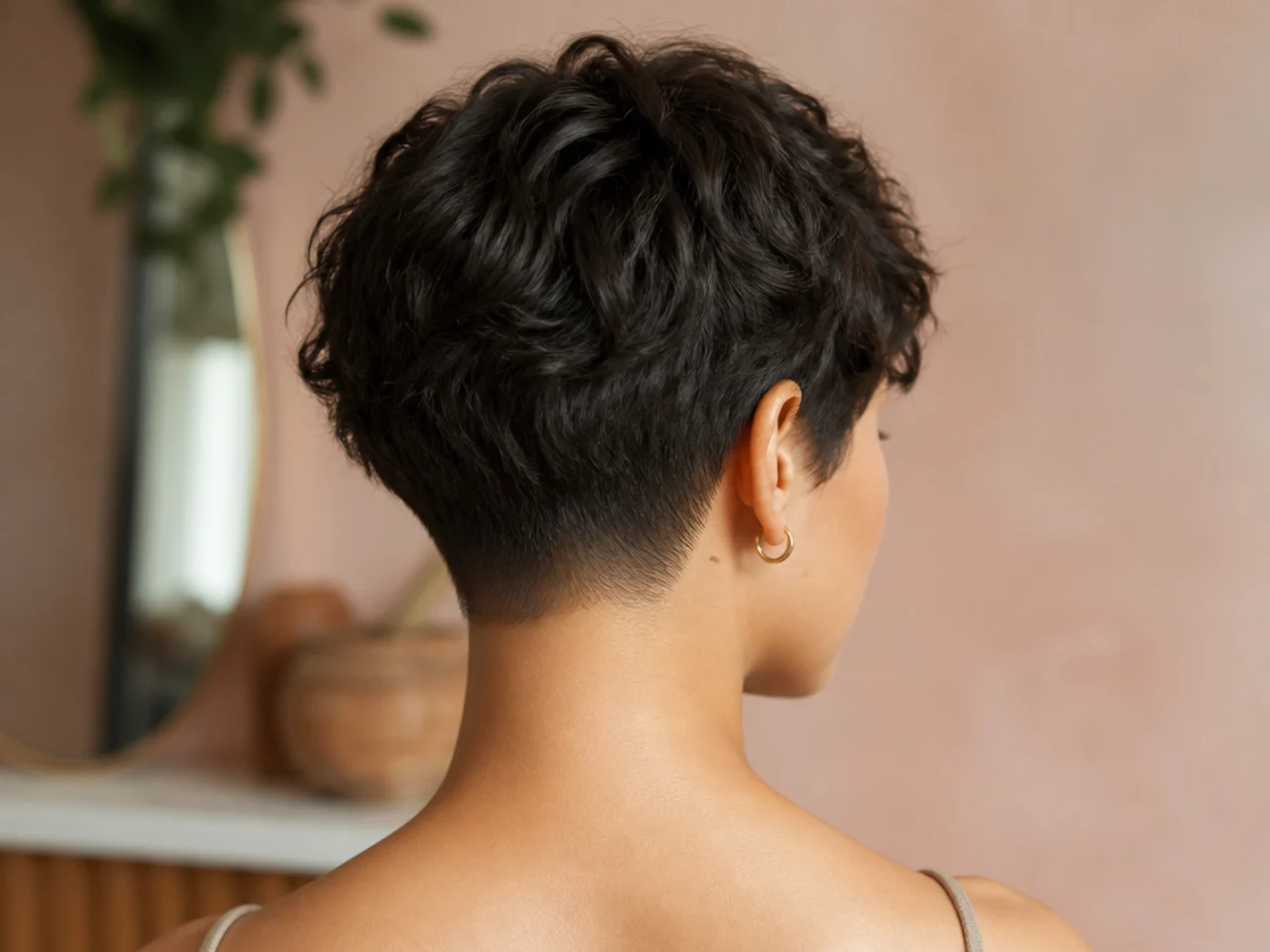
23. Hidden Undercut at the Nape
Bulk taken out underneath, where the length above covers it completely. On thick hair this is what stops the back kicking outward, and it grows out invisibly because nothing on the surface was touched.
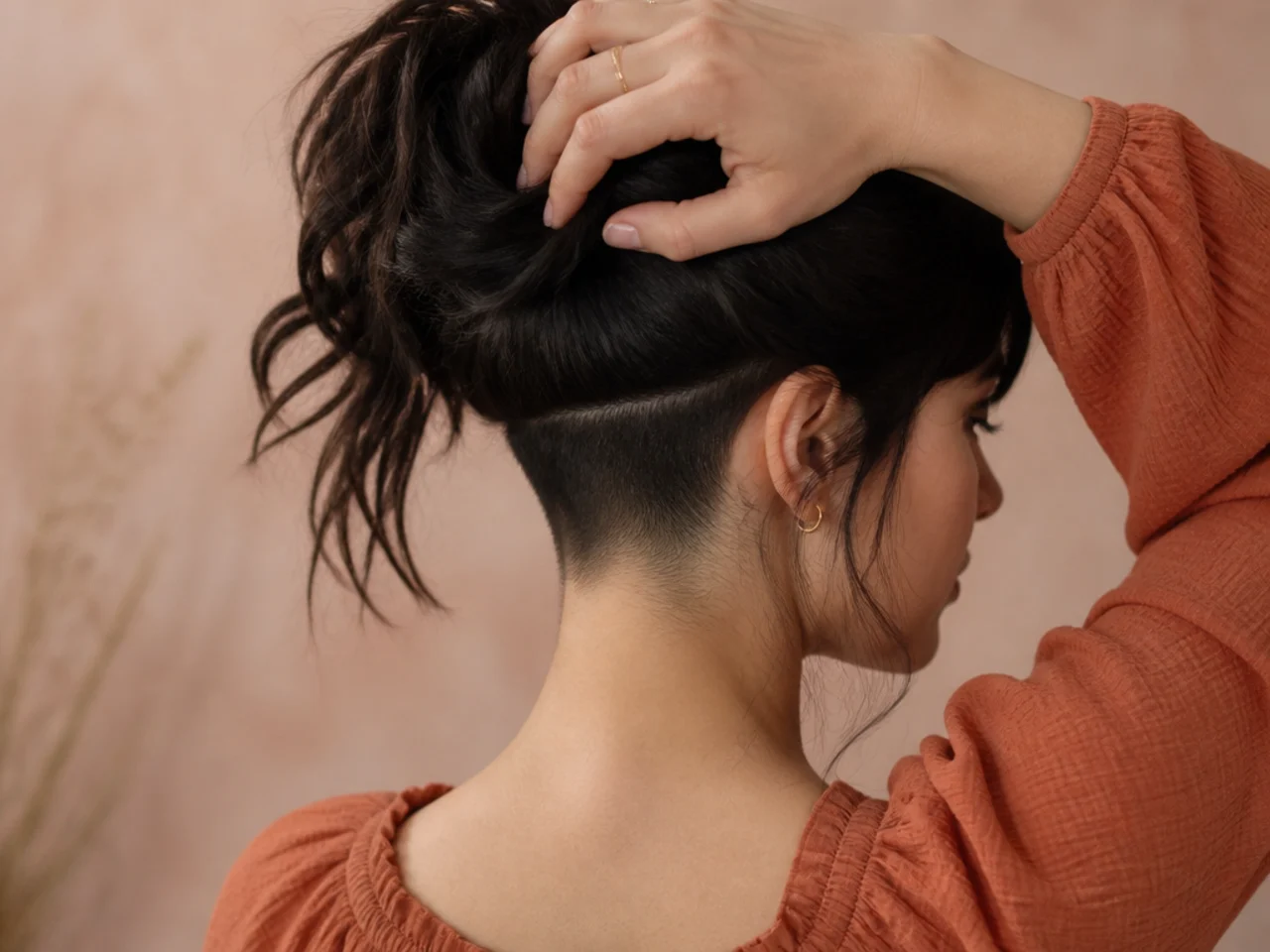
24. Shadow Root Short Wolf Cut
Depth kept at the roots gives the grow out nowhere obvious to begin, so the colour stays wearable for months. It also makes the crown look fuller, because a darker root reads as more hair than a bright one does.

25. Grown Out Short Wolf Cut
By month three the crown layer has closed most of the gap to the perimeter and the lift flattens from the top down. It shows far more here than on a long cut, because the entire shape lives inside a few centimetres.

Styling and Upkeep
Dry the crown roots first and against the fall. The lift is a root effect and a crown dried last is a crown dried flat.
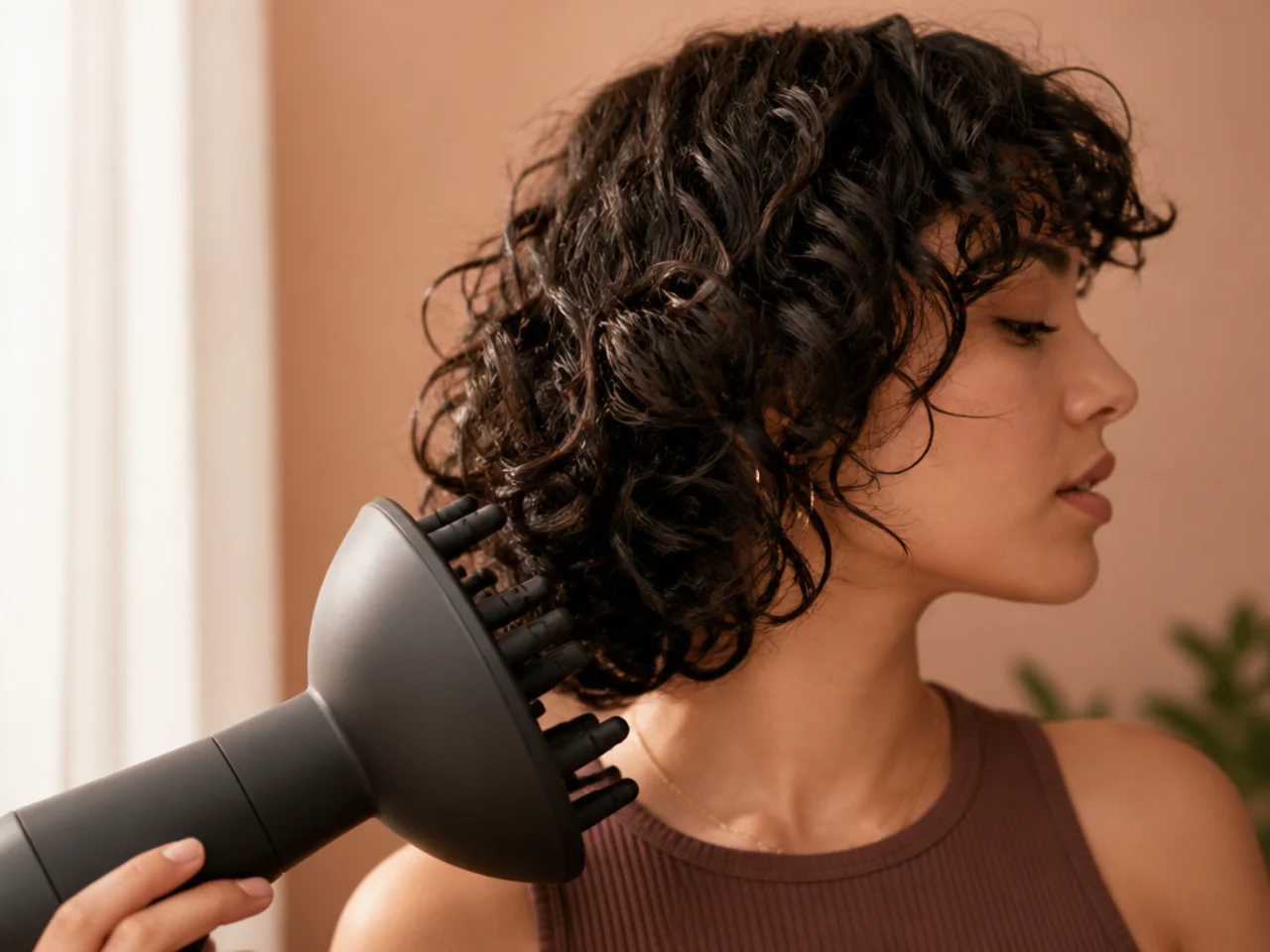
Diffuse on curls, never a nozzle. Concentrated air separates the curl clumps that the cut was shaped around.
Keep product low and light. Short hair has little weight to spare, and a heavy cream cancels the lift the crown layer was cut for.
Clean the nape every three to four weeks. It is the only part of a short cut that goes visibly untidy before the shape does.
Book at eight to twelve weeks. Sooner than a long wolf cut, because the gap that makes the shape is smaller.
Mistakes to Avoid
Cutting the perimeter above the chin. There is then nothing beneath the crown layer for it to rest on, and the texture stops reading.
Layering into the outline on fine hair. The blunt edge is the density, and cutting it away removes the only thing making the hair look thick.
Cutting curls wet at short lengths. Shrinkage of two to three inches is a much bigger proportion of a short cut than a long one.
Thinning only the ends on thick hair. The width moves upward and the shape becomes a triangle instead of collapsing inward.
Waiting four months for a trim. By then the crown has caught up with the perimeter and the shape is gone.

FAQ
How short can it go? Chin length, or the crown layer has nothing left to sit on.
What frames the face? The perimeter and a front slice starting at the jaw.
How often trimmed? Eight to twelve weeks, with the nape cleaned more often.

Final Thoughts
Name the two lengths and the rest follows. Say where the perimeter falls, say how far above it the crown layer sits, and a short wolf cut becomes a repeatable cut rather than a photograph nobody can measure.
For the full range of the shape see the short wolf cut guide, and for the softer sliced version see the korean wolf cut. More in Mullet and Wolf Cut.