15 Reverse Mullet Haircuts for Men
15 reverse mullet haircuts for men — long front, cropped back. Curtain-bangs, comma, wavy, curly, two-block. Photos, face-shape notes, barber-ready phrasing.
In this article · 27
- What Is a Reverse Mullet?
- How to Choose Your Reverse Mullet
- The 15 Reverse Mullet Variations
- 1. Classic Reverse Mullet
- 2. Curtain-Bangs Reverse Mullet
- 3. Comma-Hair Reverse Mullet
- 4. Middle-Part Reverse Mullet
- 5. Side-Swept Reverse Mullet
- 6. Textured Reverse Mullet
- 7. Wavy Reverse Mullet
- 8. Curly Reverse Mullet
- 9. Faded Reverse Mullet
- 10. Two-Block Reverse Mullet
- 11. Undercut Reverse Mullet
- 12. Slick-Back Reverse Mullet
- 13. Quiff Reverse Mullet
- 14. Korean Reverse Mullet
- 15. Flow Reverse Mullet
- How to Ask Your Barber for a Reverse Mullet
- Styling and Maintenance
- FAQ
- What is a reverse mullet haircut for men?
- Which face shape suits a reverse mullet best?
- How is a reverse mullet different from a regular long-fringe haircut?
- How do I ask my barber for a reverse mullet?
- Can I get a reverse mullet with curly or coily hair?
- How often do I need to re-cut a reverse mullet?
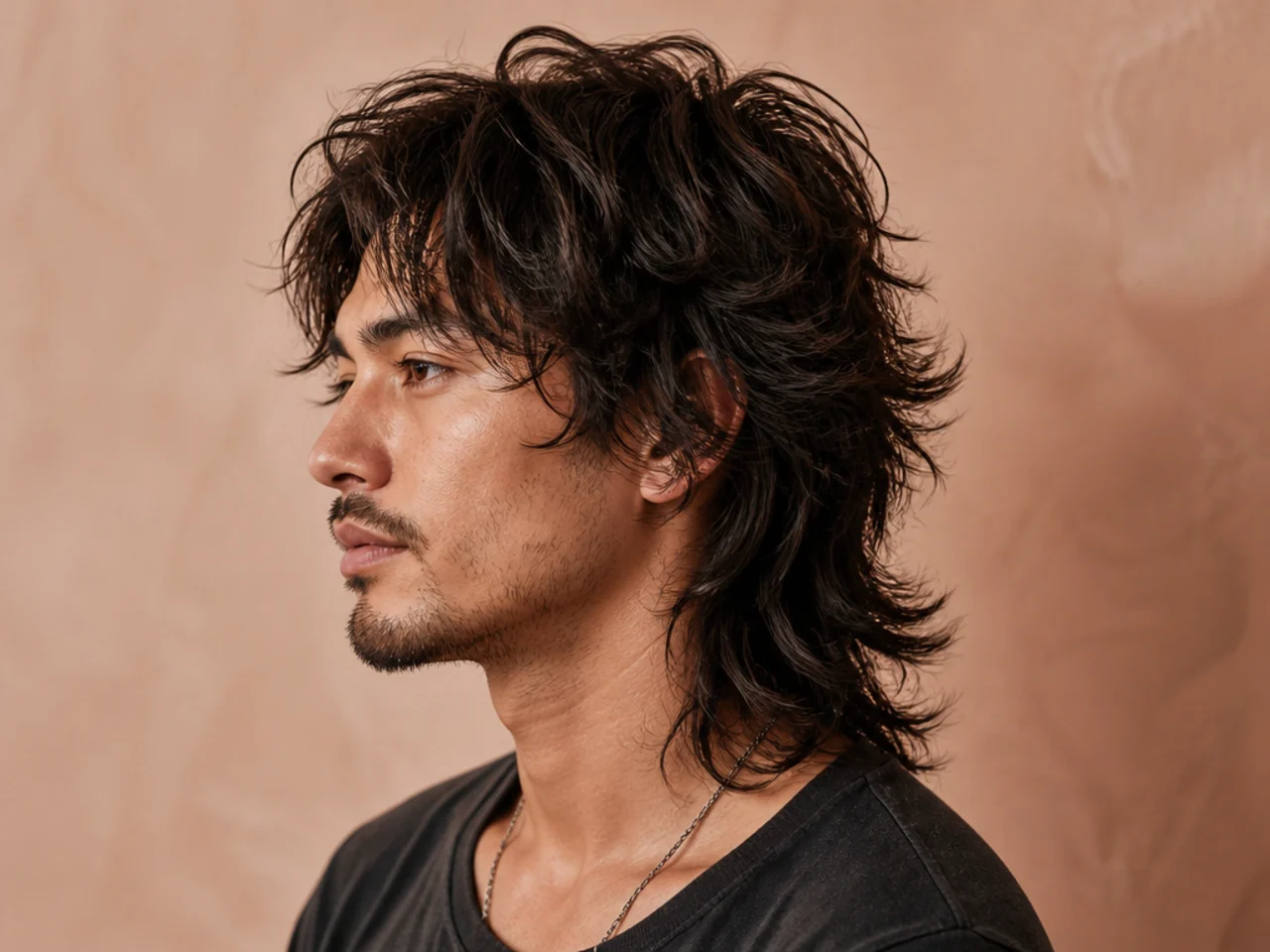
The reverse mullet flips the shape you're picturing. Length lives at the front — a fringe, a curtain, a comma, or a swept-back top — while the back and sides stay cropped tight. The result reads party in the front, business in the back. It flatters more face shapes than the classic mullet, passes at more workplaces, and still delivers the two-length signature. This guide covers 15 reverse mullet variations men are asking for, who each one flatters, and exactly how to ask for it in the chair.
What Is a Reverse Mullet?
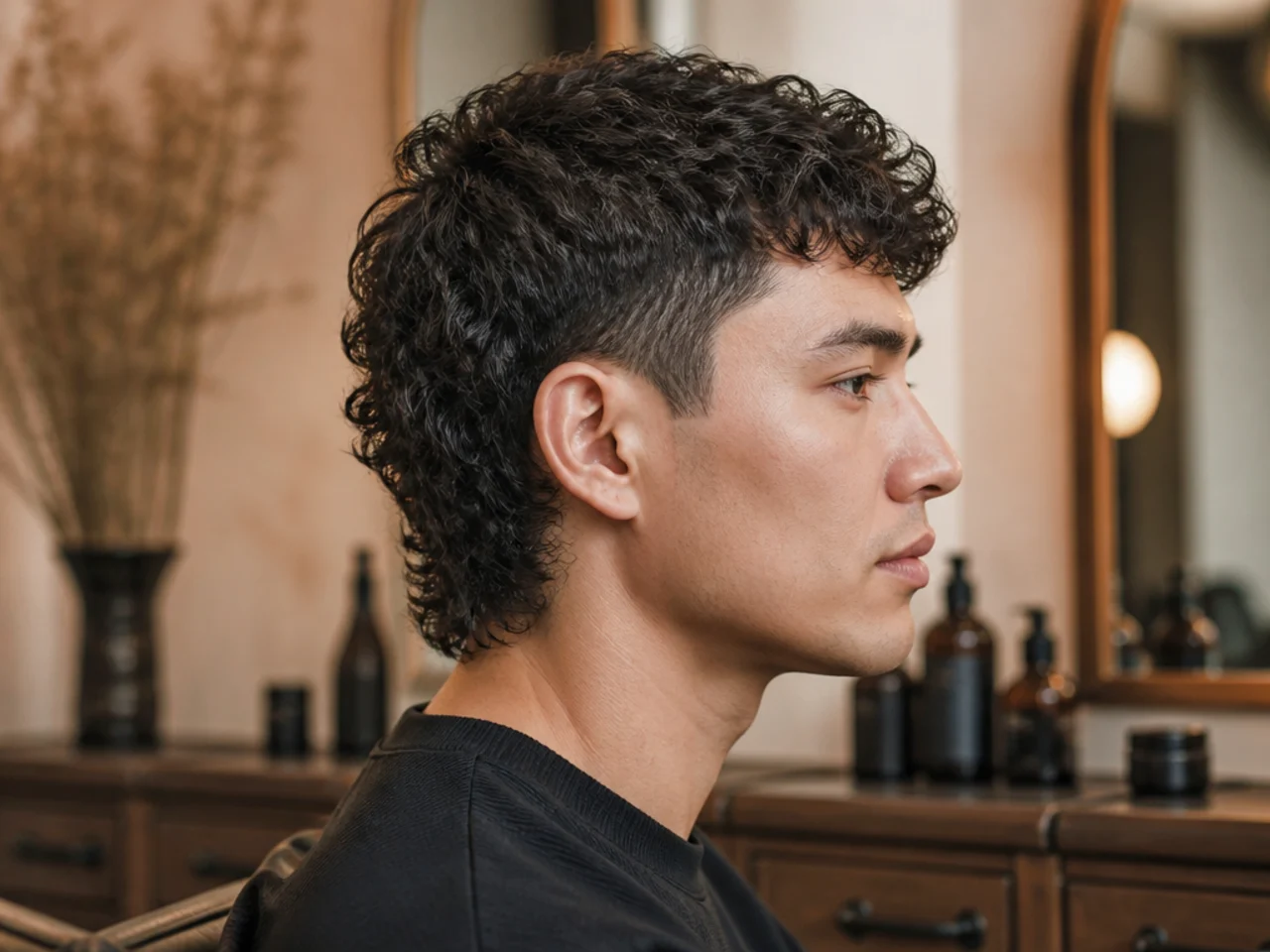
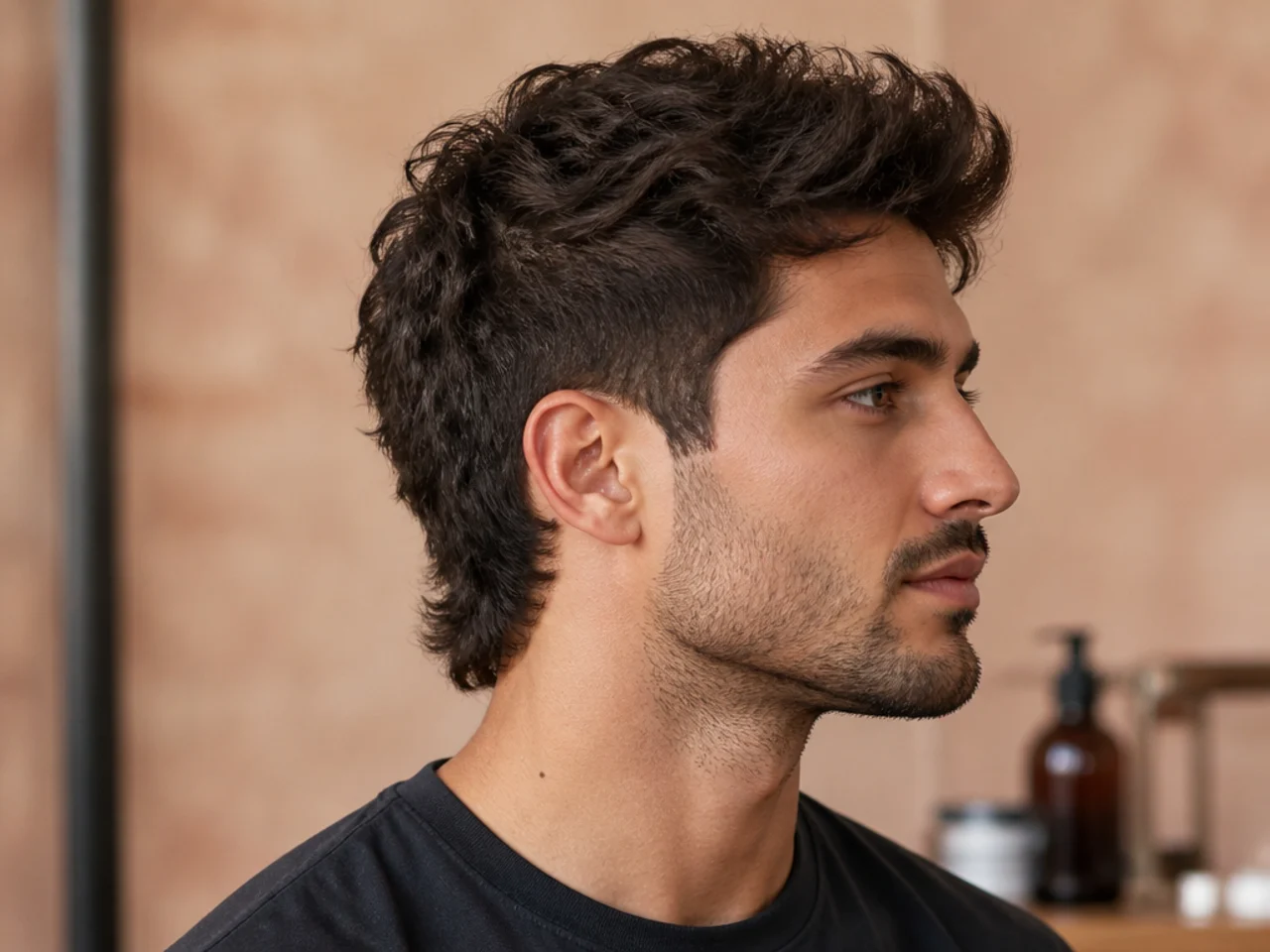
A reverse mullet is a men's two-length cut that inverts the classic mullet's front-to-back ratio. The front and top keep the length — usually three to five inches, cut into a fringe, curtain, comma, or a swept-back mass. The back and sides drop to a cropped, tapered, or faded finish under an inch. Nothing at the nape touches the collar.
That inversion is the whole story. A modern mullet keeps length at the nape for weight and swing. A reverse mullet moves that length to the fringe, so the visual weight sits above the eyeline instead of below the collar. From the side, the shape reads like a wedge — heavy at the front, tapering to nothing at the back. That silhouette is what makes it work in offices that would flag a full mullet.
References are current. Skaters, footballers, K-drama leads, and rappers are all wearing this shape — long comma fringes over cropped napes, curtain bangs with faded backs, side-swept masses with buzzed sides. It sits at the intersection of the two-block haircut, the curtain-bang crop, and the classic mullet.
How to Choose Your Reverse Mullet
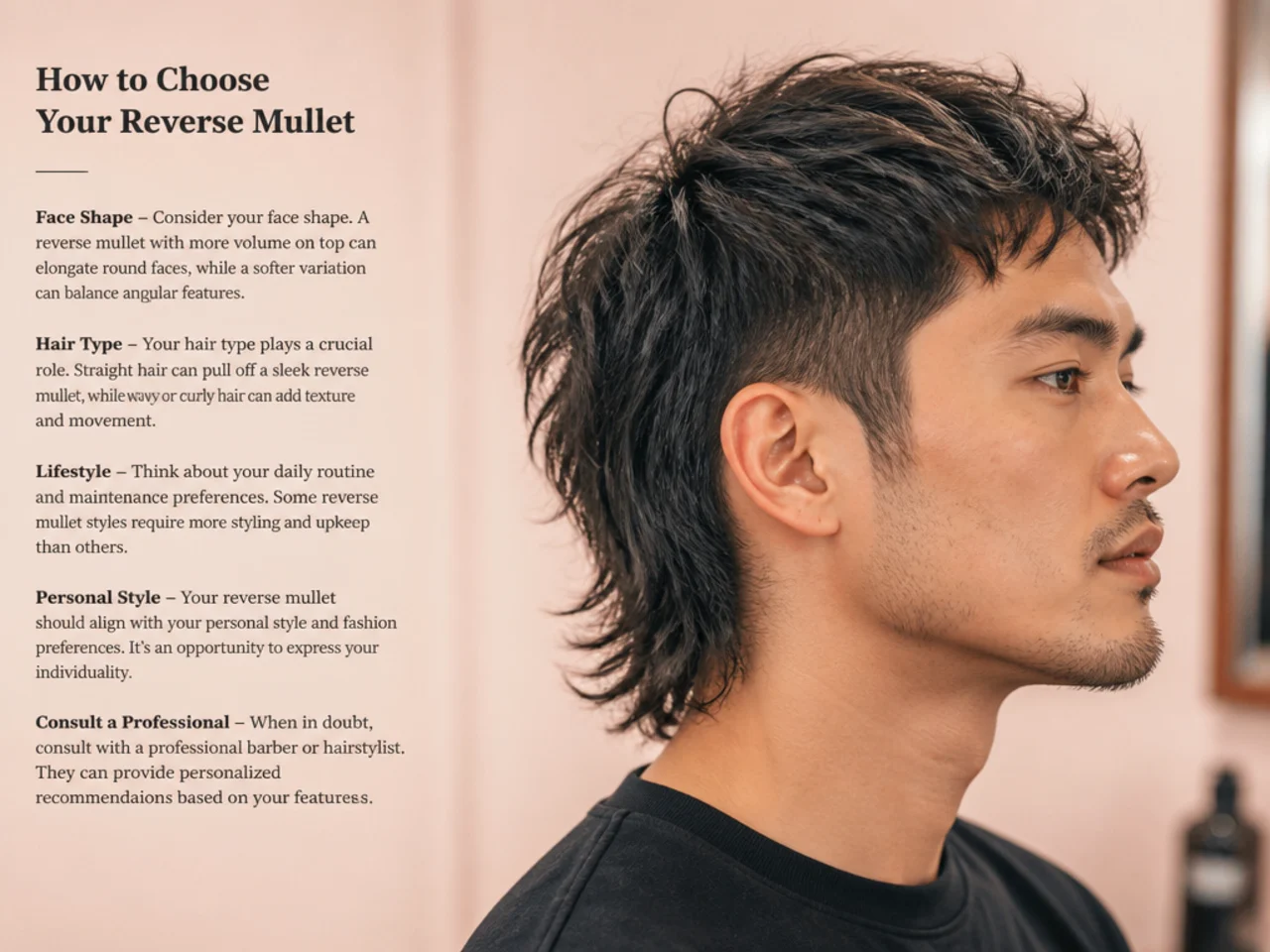
Face shape sets the fringe direction. Oval and square faces read cleanly with any front treatment — curtain, side-swept, textured, or slicked back. Round faces want lift or side-sweep so the front adds vertical line. Long faces need a forward or curtain fringe that shortens the profile; skip slicked-back variations that expose the full forehead. Heart faces read best with a curtain or center-part fringe that balances a wider forehead.
Hair type sets the layering rhythm. Straight hair reveals every layer line, so it needs point-cutting through the fringe to build texture. Wavy hair sits best with soft internal layers cut in the direction of the wave. Curly and coily textures need almost nothing at the front — the pattern builds the weight naturally — but the back needs a dry-cut taper so the transition follows the curl direction.
Lifestyle sets the back treatment. A scissor-blended low taper reads clean in any office. A low taper fade sharpens the contrast without a hard line. A full skin fade, burst fade, or undercut turns it into a statement cut. Match the loudness to how much attention you want pulling. For neighboring silhouettes, browse the mullet and wolf cut hub or our men's wolf cut guide.
The 15 Reverse Mullet Variations
Each variation tells you what makes it different, who it flatters, and the exact language for the chair. Show your barber a photo, then hand them the numbers.
1. Classic Reverse Mullet
The baseline version. Three inches of textured fringe falls forward to the brow, the nape drops to about one inch, and the sides taper cleanly from long to short. Nothing loud — the whole cut leans on the length ratio for its signature.
Suits every face shape. Best on straight to wavy hair.
Ask for: "Classic reverse mullet, three-inch fringe point-cut to fall in piecey pieces to the brow, one-inch nape with a soft scissor finish, low taper on the sides — no fade line." Style with matte clay through damp hair, finger-comb the fringe forward.
2. Curtain-Bangs Reverse Mullet
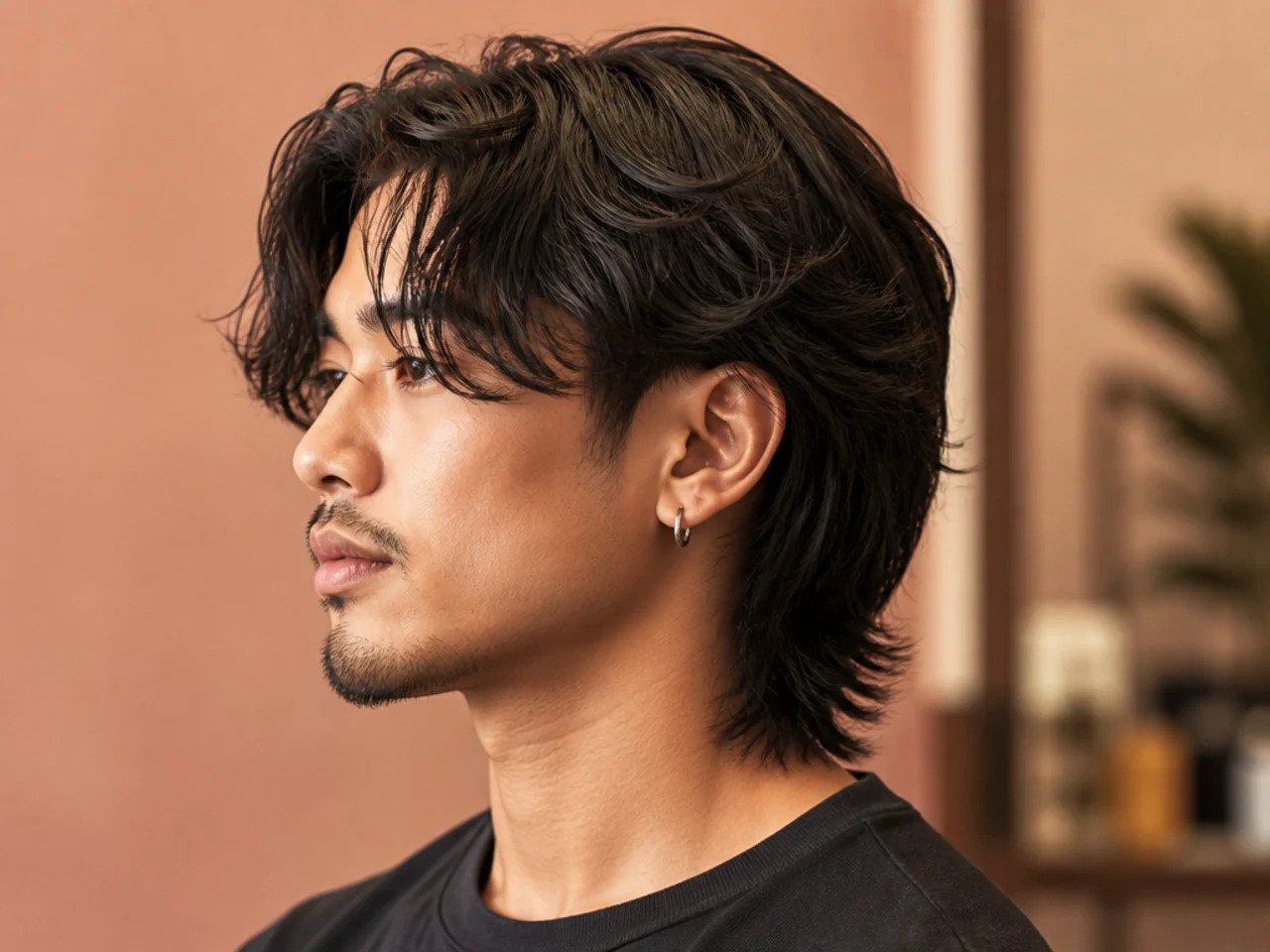
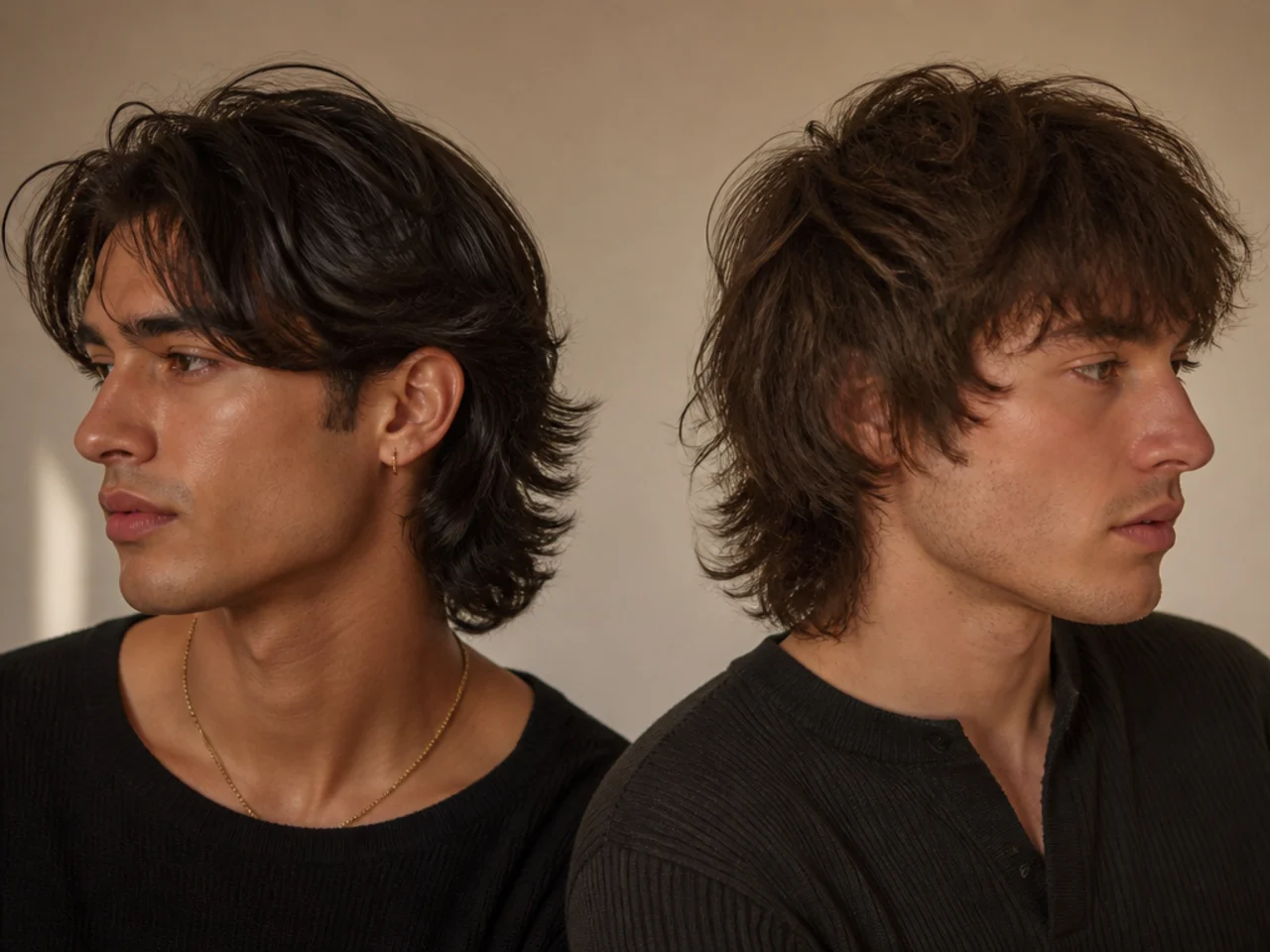
The most-requested variation on the list. A center-parted curtain fringe splits and falls on either side of the forehead, framing the face. The back stays cropped to half an inch so the front reads without competition. Popular with skaters, indie musicians, and off-duty athletes.
Suits oval, heart, and diamond faces. Best on straight to wavy hair long enough to fall to the cheekbones.
Ask for: "Reverse mullet with curtain bangs, four-inch center-parted fringe cut to fall to the cheekbones, half-inch clipper-cut nape, low taper on the sides." Blow-dry the fringe with a round brush, splitting down the middle as it dries.
3. Comma-Hair Reverse Mullet
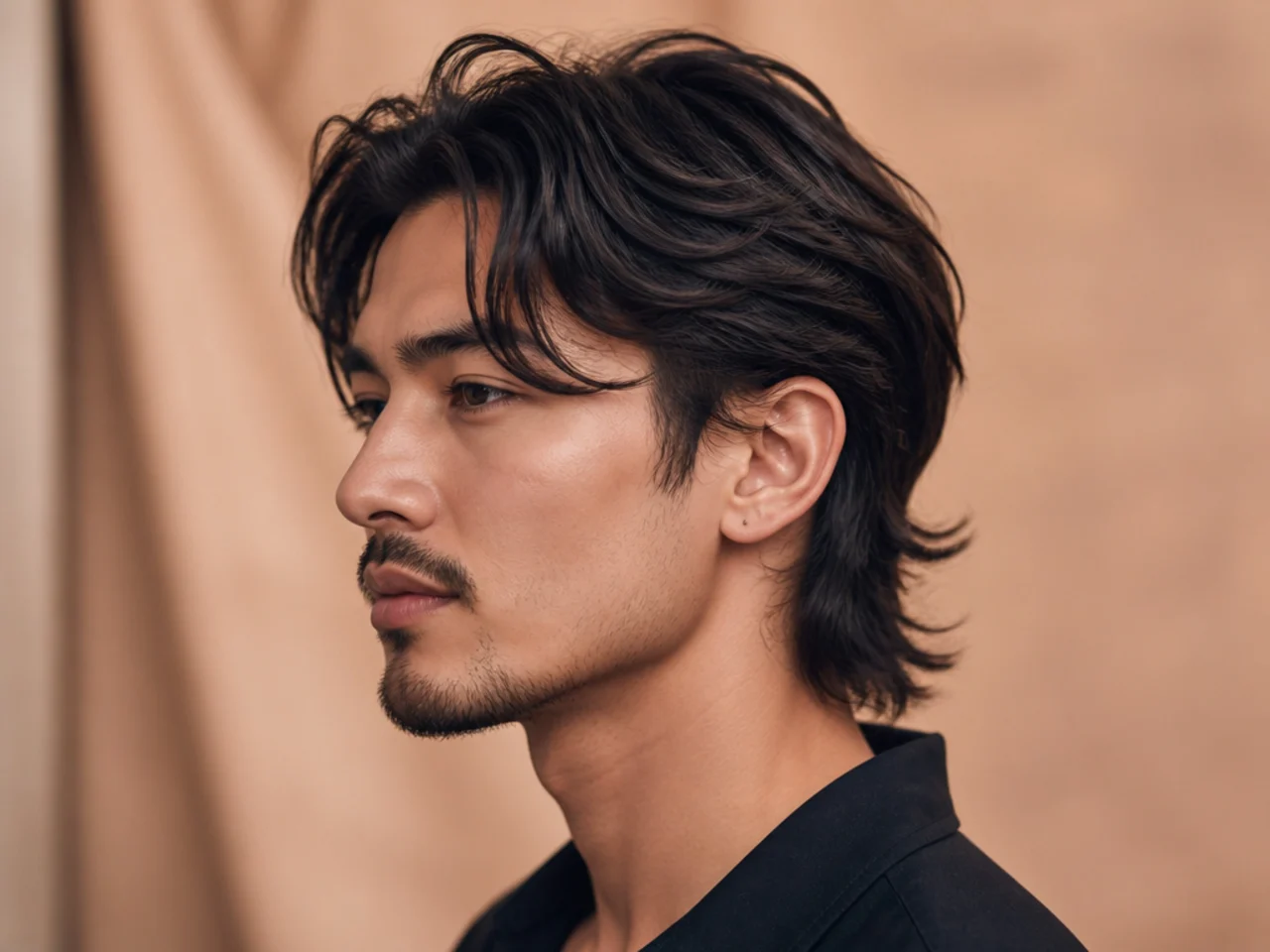
The comma haircut styling paired with a reverse-mullet base. The fringe curls inward at the forehead in a comma shape, glossy and sharp, while the back drops to a clean cropped finish. Front reads K-drama, back reads modern crop.
Suits oval, long, and heart faces. Best on straight to slightly wavy hair.
Ask for: "Reverse mullet with a comma fringe, three-and-a-half-inch top with soft internal layers, fringe long enough to curl inward with a round brush, half-inch clipper-cut nape, low taper on the sides." Blow-dry the fringe over a small round brush and roll inward at the ends. See our Korean haircuts for men guide for full styling direction.
4. Middle-Part Reverse Mullet
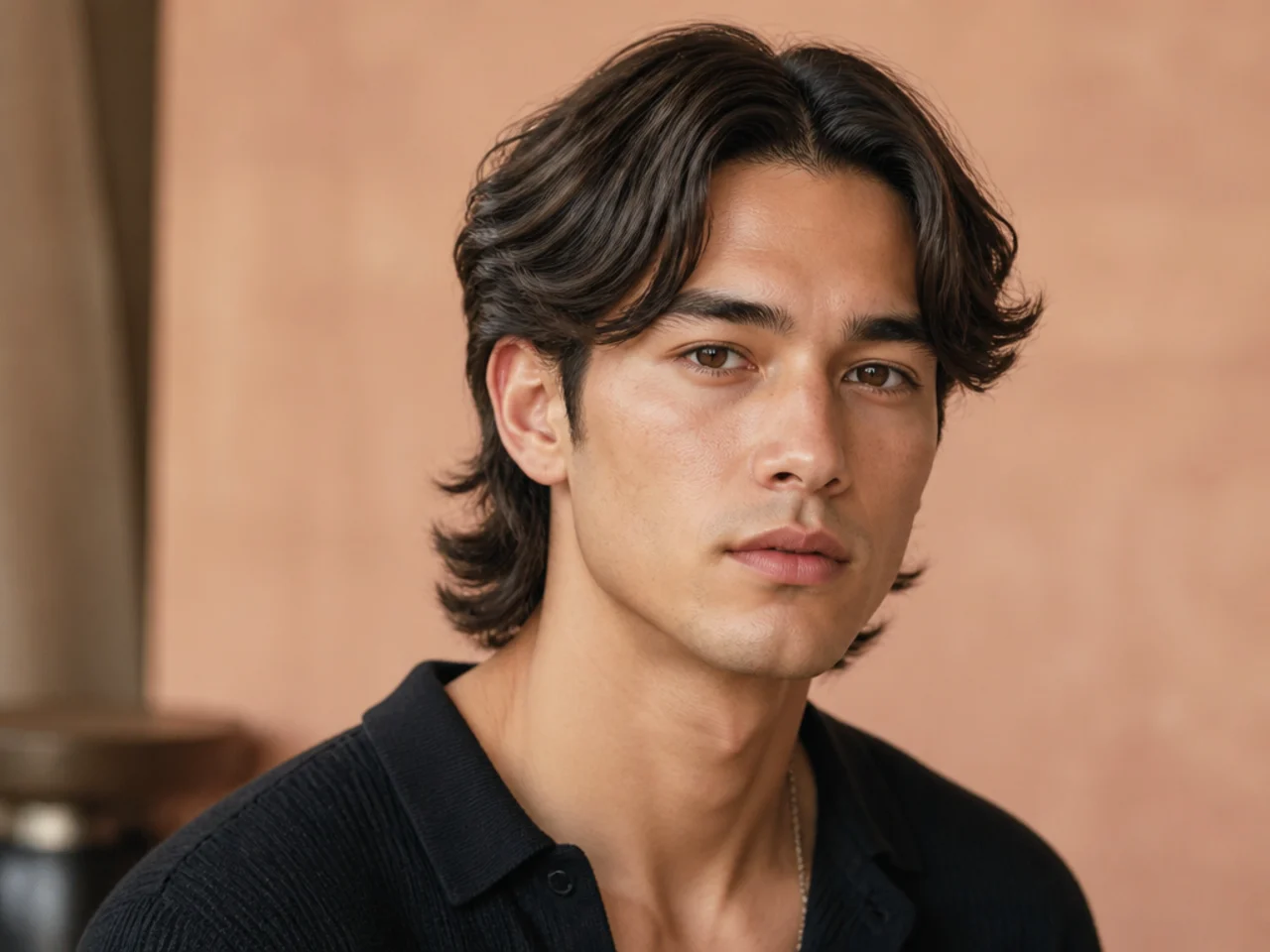
The middle-part haircut turned into a reverse-mullet silhouette. A hard center part divides the top into two flowing curtains that hang past the ears, while the back gets buzzed to a guard 1. The center part creates symmetry the classic mullet never had.
Suits oval, square, and long faces. Best on straight to slightly wavy hair with medium density.
Ask for: "Middle-part reverse mullet, four-inch top divided by a hard center part with internal layers, guard 1 buzz on the back and lower sides, soft taper connecting the top to the sides at the temples." Blow-dry each side outward from the part with a round brush.
5. Side-Swept Reverse Mullet
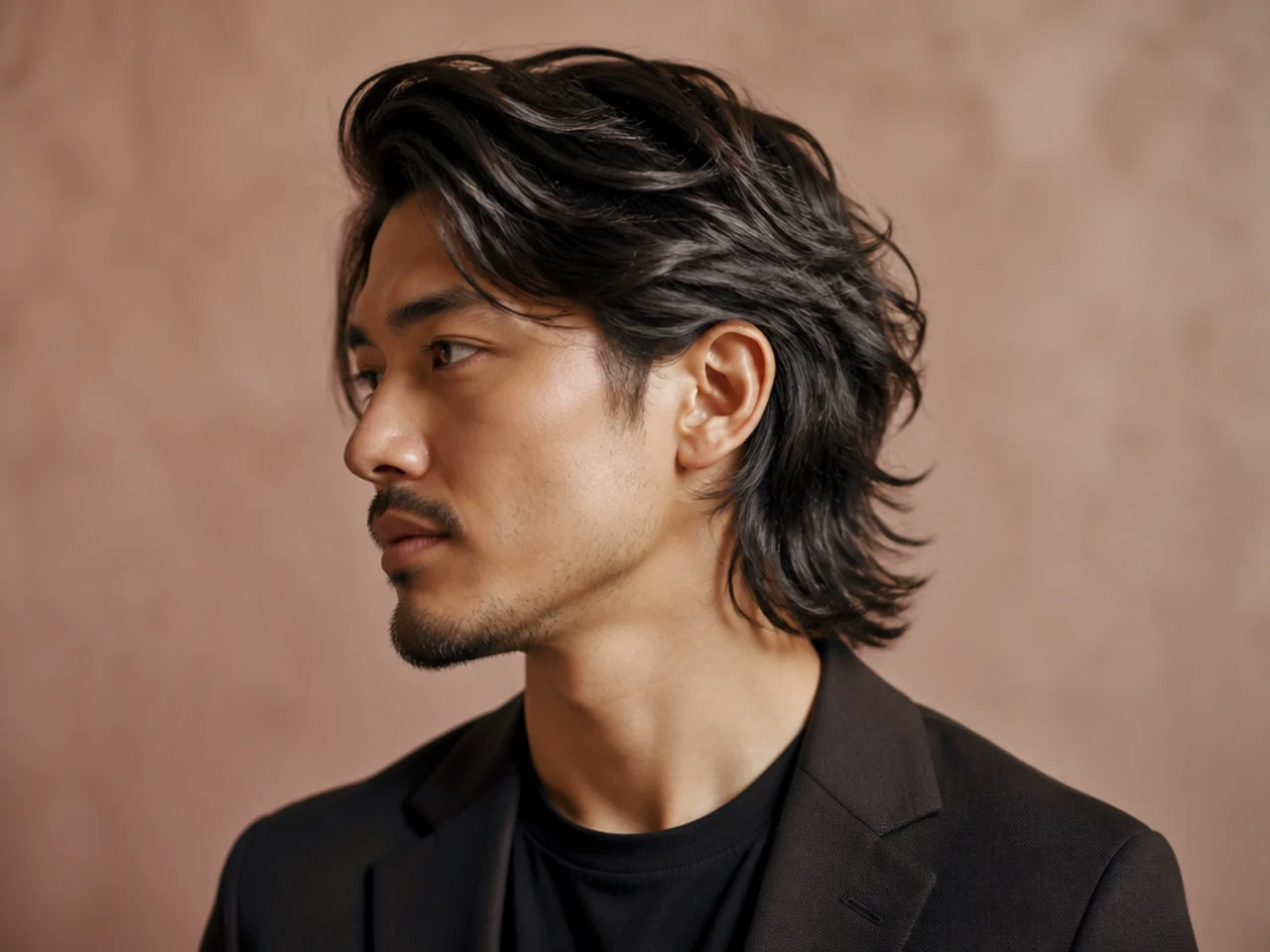
The whole top sweeps diagonally across the forehead in one clean motion, ending near the opposite temple. The back drops to a taper or fade so nothing distracts from the sweep. Reads sharp and slightly retro — a nod to 2000s emo without the flatness.
Suits oval, square, and diamond faces. Best on straight to slightly wavy fine-to-medium hair.
Ask for: "Side-swept reverse mullet, four-inch top with a heavy side-swept direction, fringe cut to fall from crown to opposite eyebrow, half-inch clipper-cut nape, mid taper on the sides." Blow-dry across the forehead with a paddle brush, matte paste to hold.
6. Textured Reverse Mullet
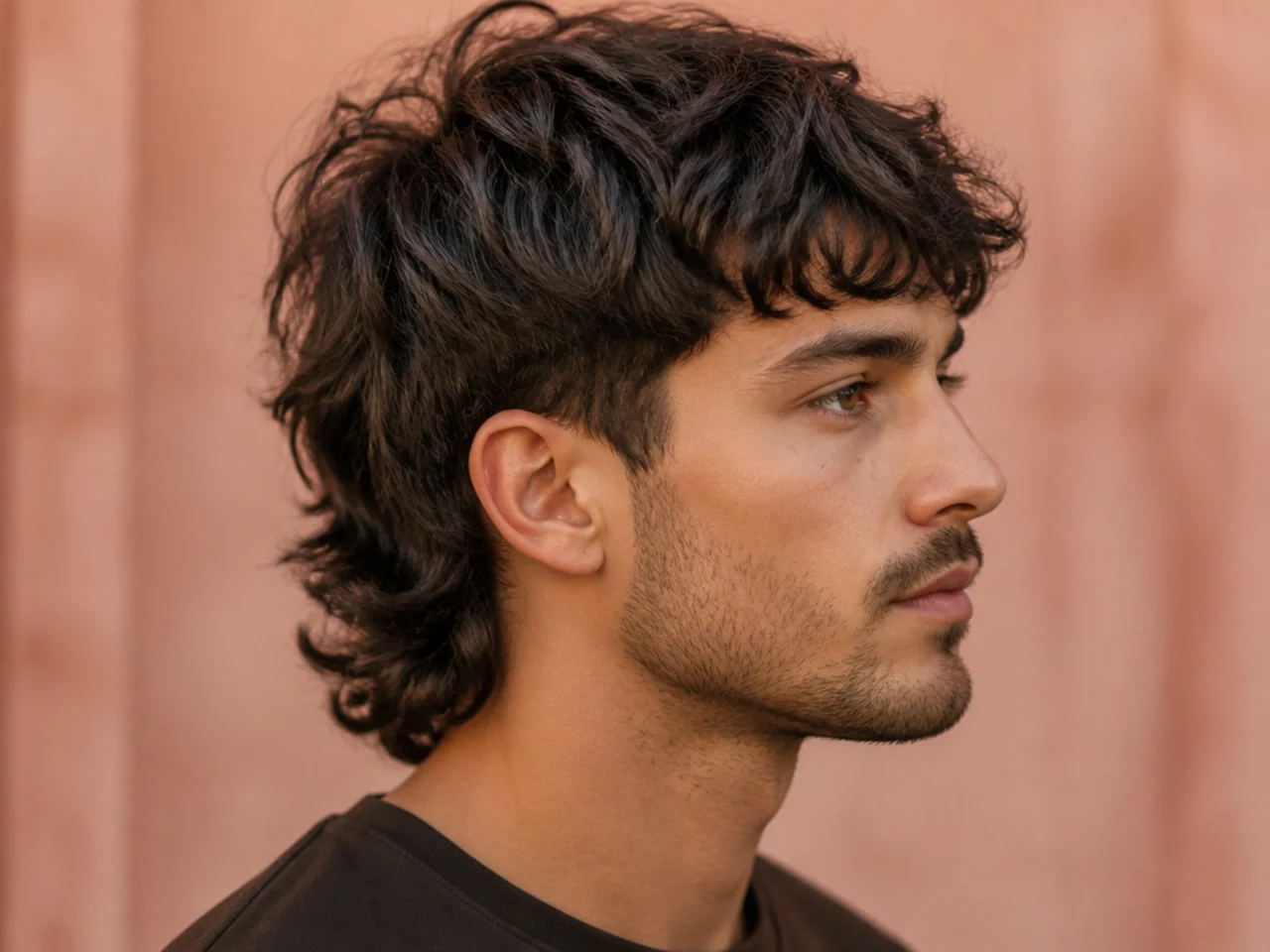
Every strand up front reads as its own piece. Aggressive point-cutting turns the fringe into visible chunks rather than a smooth curtain, and the back mirrors the top's finish with a cropped, choppy nape line. Reads editorial and slightly undone.
Suits oval, heart, and diamond faces. Best on medium-thick straight or wavy hair.
Ask for: "Textured reverse mullet, three-and-a-half-inch top with aggressive point-cutting through the fringe, half-inch choppy nape, razor-feathered perimeter, low taper on the sides." Salt spray and matte paste on damp hair, twist random front pieces for definition.
7. Wavy Reverse Mullet
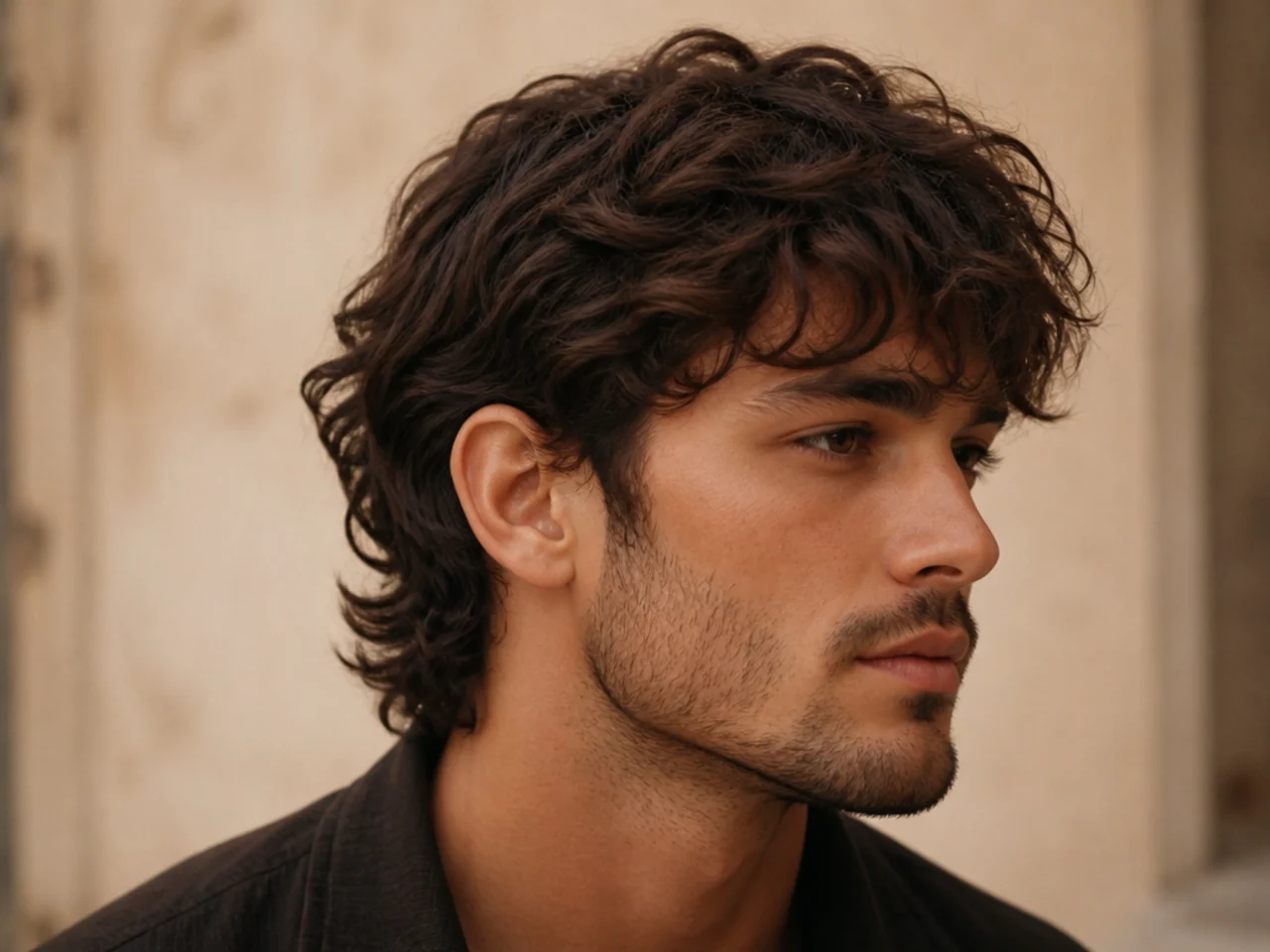
The waves lead. Soft internal layers cut with the wave direction let the front fall in natural bends toward the brow, while the back stays close to the scalp so nothing competes with the front texture. The lightest-effort variation on the list.
Suits oval, heart, and diamond faces. Best on type 2 wavy hair.
Ask for: "Wavy reverse mullet, four-inch top with soft internal layers cut in the direction of the wave, half-inch clipper-cut nape, blended low taper on the sides." Salt spray on damp hair, scrunch the front once, air-dry — never brush.
8. Curly Reverse Mullet
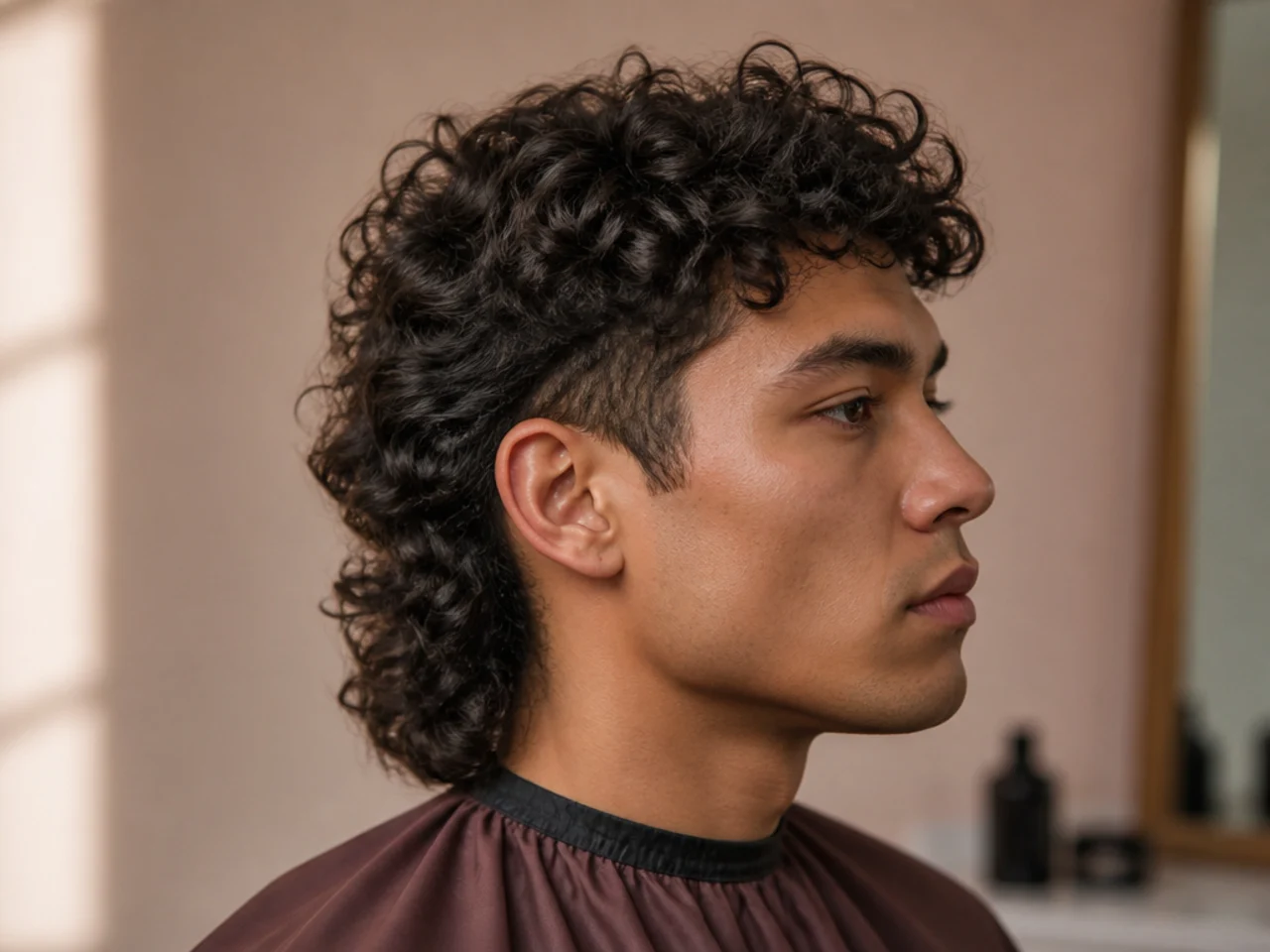
Type 3 curls build the reverse-mullet weight on their own — a full mass of coils at the front, close-cropped taper at the back. The layering job just removes bulk so the crown does not stack into a triangle. Curl pattern does the rest.
Best on type 3 curls. Suits oval, heart, and diamond faces.
Ask for: "Curly reverse mullet, dry-cut throughout, four-inch top with internal layers to remove bulk, half-inch tapered nape following the curl pattern, low taper on the sides." For sibling shapes, see our curly hairstyles for men guide.
9. Faded Reverse Mullet
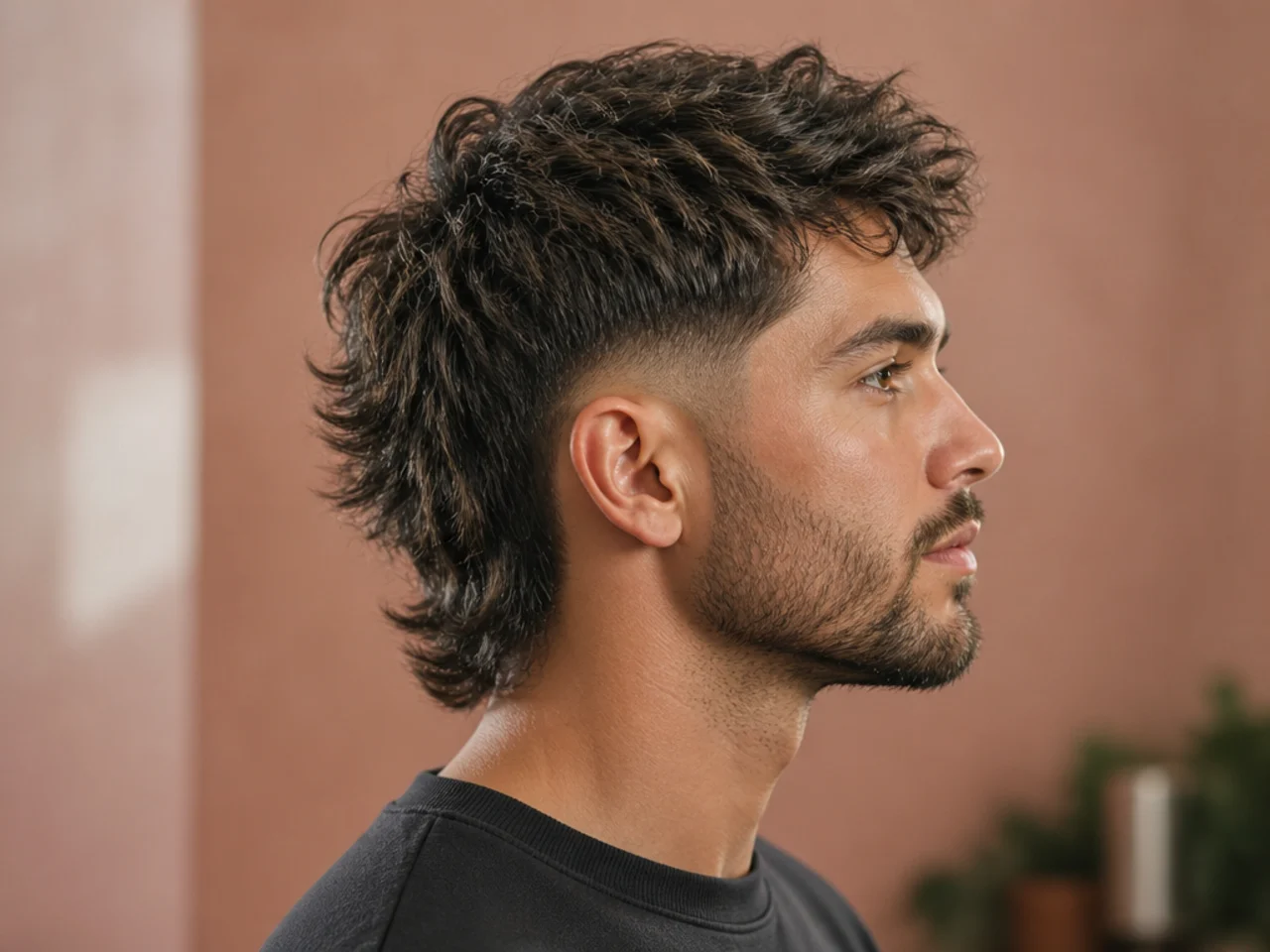
A low fade or mid fade wraps the entire back and sides, dropping to skin at the nape and blending up toward the long front. The fade sharpens the reverse ratio — the contrast between fringe and shaved back reads at a distance.
Suits oval, square, and diamond faces. Works with any hair type but shines with medium-thick density.
Ask for: "Faded reverse mullet, four-inch top with textured layers, low or mid fade wrapping the back and sides — skin at the sideburn and nape blending up to a guard 2." Book fade touch-ups every two weeks.
10. Two-Block Reverse Mullet
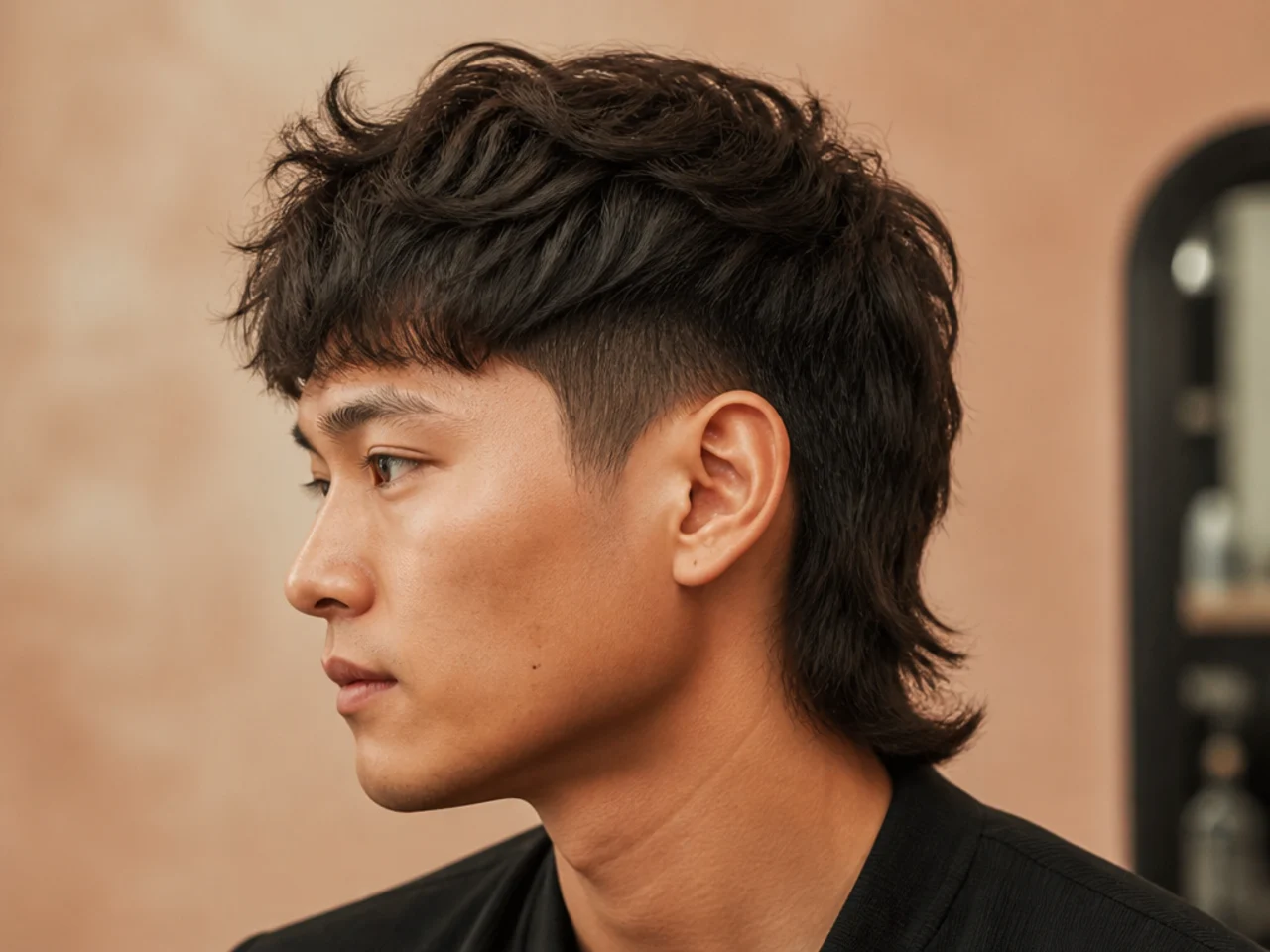
The two-block silhouette built as a reverse mullet. A long top-front floats above a hard-line undercut wrapping the sides and back. From the front, the top reads full and dramatic; from behind, the undercut sits clean and sharp. K-pop's signature move.
Suits oval and long faces. Best on dense straight to slightly wavy hair.
Ask for: "Two-block reverse mullet, four-inch top with internal layers, half-guard undercut wrapping sides and back with a clean line, front cut into a curtain or forward fringe." Blow-dry the top backward, then let the front fall naturally.
11. Undercut Reverse Mullet
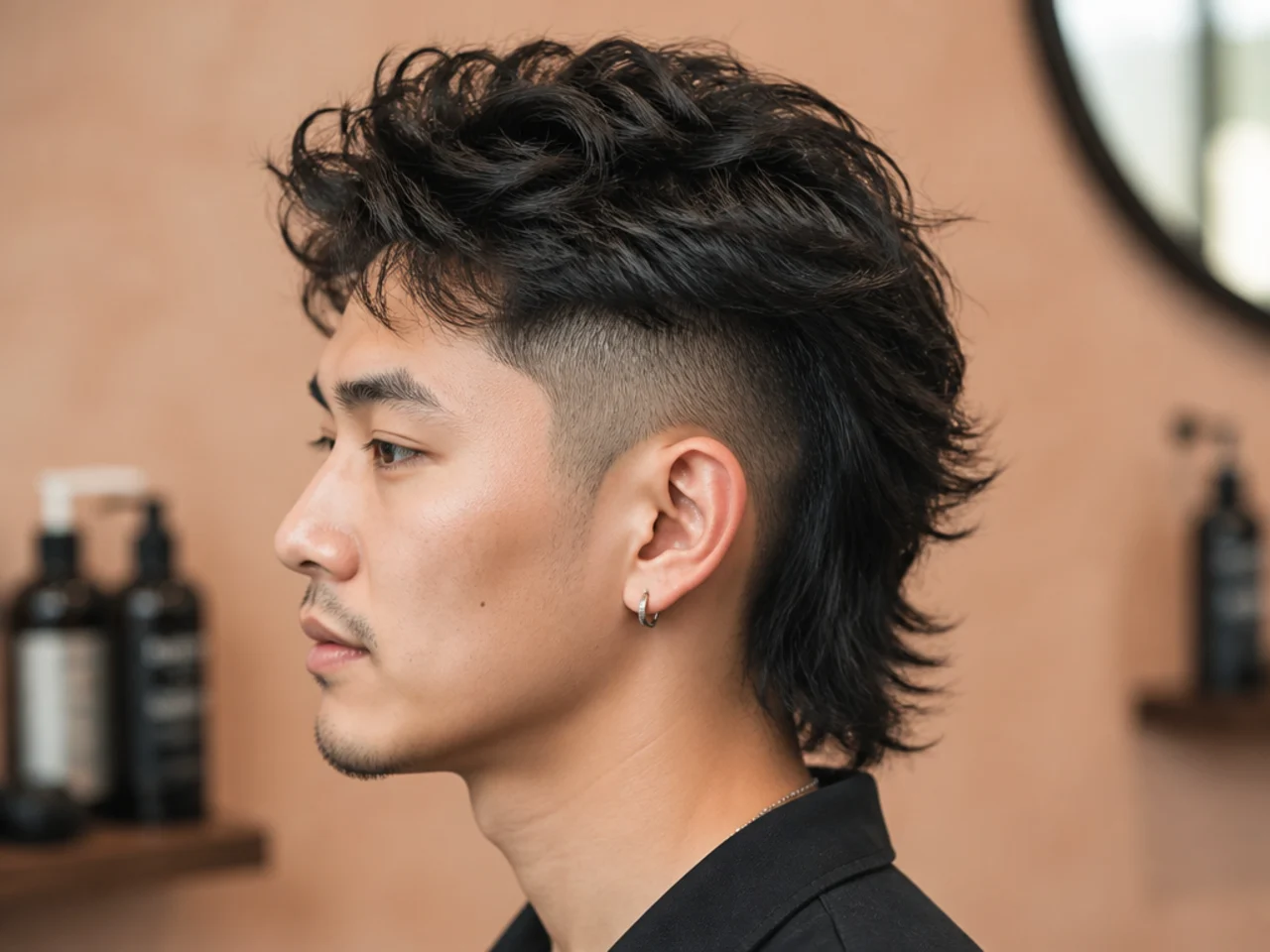
Similar to the two-block but with the disconnection line running higher and rougher. The top mass sits above a shaved undercut with no blend — the two lengths meet at a clear edge. Reads punk, editorial, and fully committed.
Suits oval, long, and diamond faces where the vertical drop flatters proportion.
Ask for: "Undercut reverse mullet, four-inch top with textured internal layers, half-guard undercut on back and sides, hard disconnection line around the parietal ridge, front cut into a heavy forward fringe." Blow-dry the top so the undercut stays fully visible.
12. Slick-Back Reverse Mullet
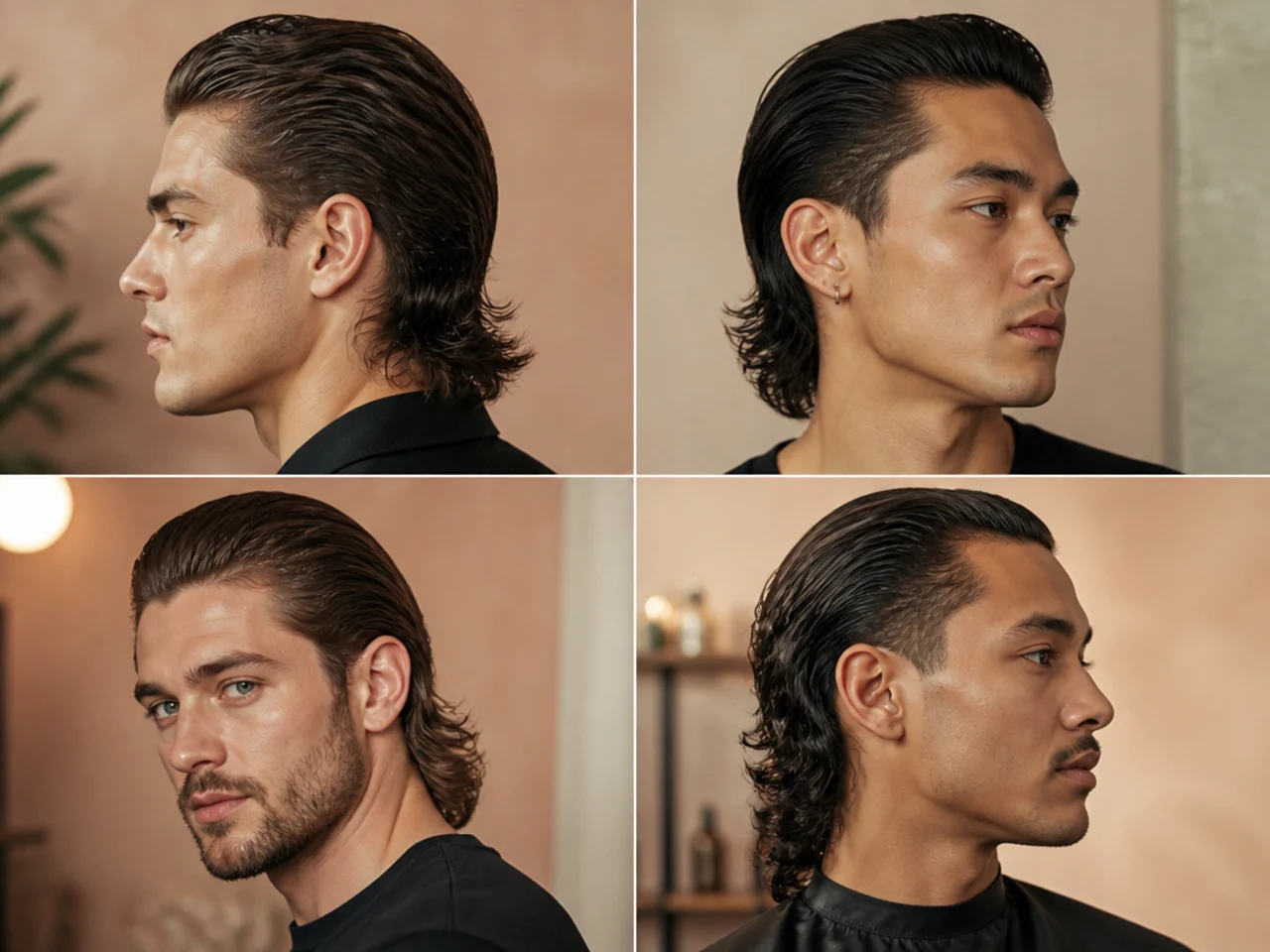
The whole top pulls back over the crown, held in place with pomade, while the back drops to a taper or fade. Reads clean and mature — a boardroom-safe version of the reverse mullet for guys who want the shape without any fringe drama.
Suits oval, square, and diamond faces. Best on straight to slightly wavy hair with medium density.
Ask for: "Slick-back reverse mullet, four-inch top with soft internal layers, low taper on the sides, half-inch clipper-cut nape, keep enough length up front to sweep back cleanly." Style with a cream pomade combed straight back with a wide-tooth comb.
13. Quiff Reverse Mullet
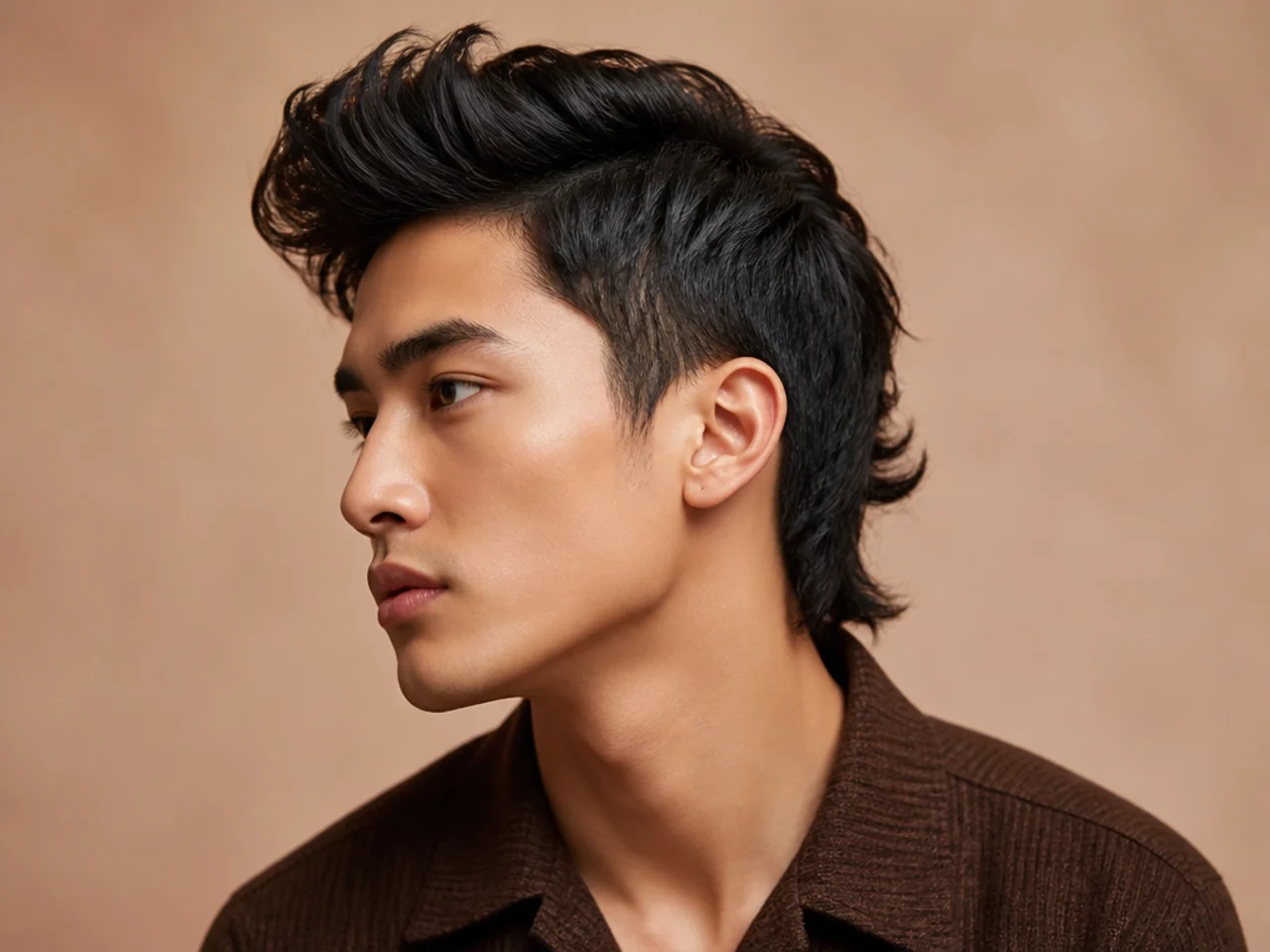
The quiff hairstyle built into a reverse-mullet base. The front sweeps up and back in a lifted arc, holding vertical volume above the forehead, while the back stays cropped tight so nothing competes. The classic front-heavy silhouette turned into a two-length statement.
Suits round and square faces because the vertical line elongates the profile.
Ask for: "Quiff reverse mullet, four-and-a-half-inch top for quiff volume, half-inch clipper-cut nape, mid taper on the sides, keep the fringe long enough to sweep up and back with hold." Blow-dry the top upward and backward with a round brush, matte pomade for hold, hairspray to finish.
14. Korean Reverse Mullet
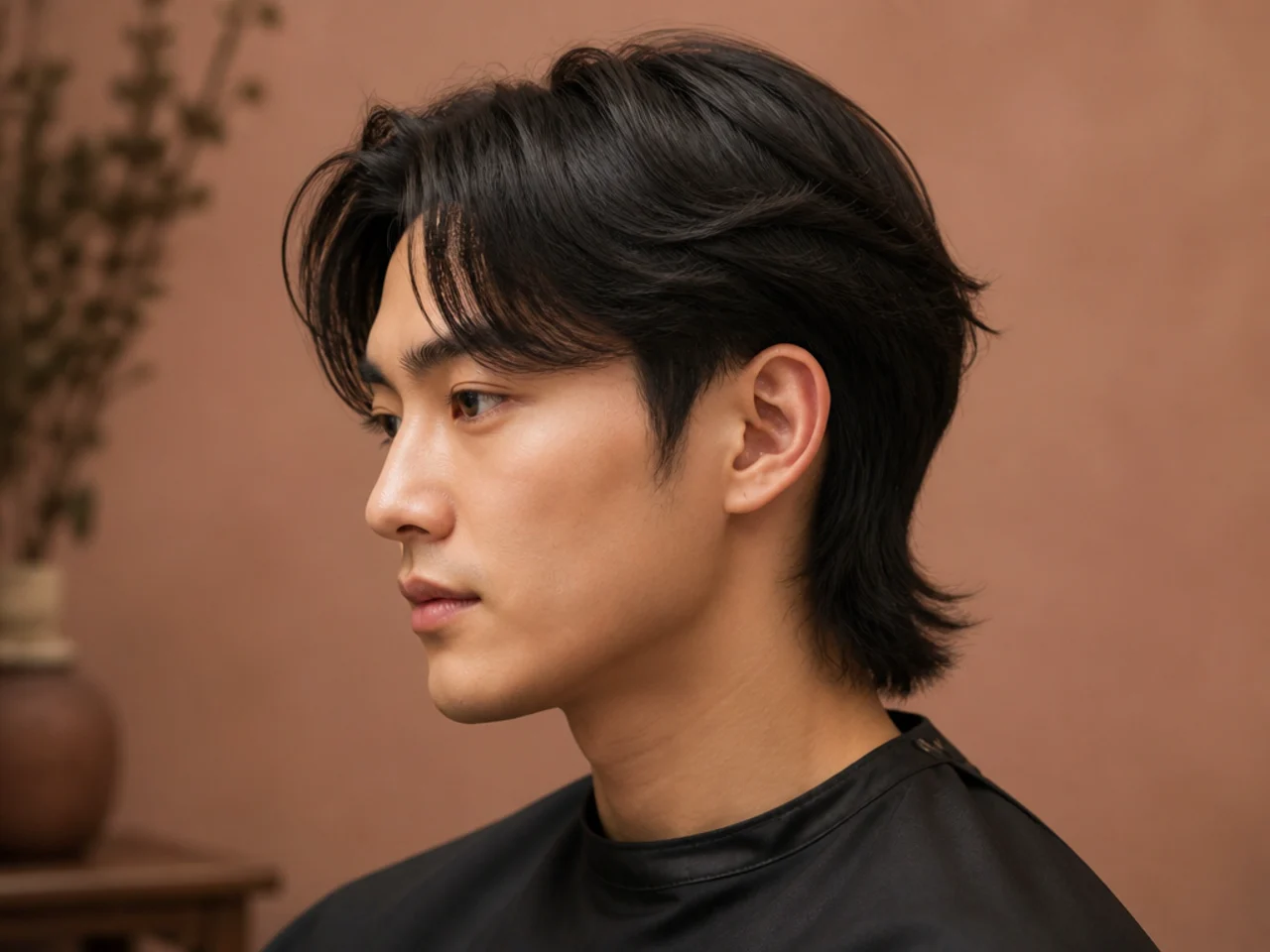
The Korean-inspired build — soft, rounded internal layers through the top, a glossy finish, and a forward fringe just above the eyebrows. The back drops to a clean cropped nape so the front stays the visual focus. Camera-ready and slightly moody, borrowed straight from K-drama leads.
Suits oval and long faces. Best on straight to slightly wavy medium-density hair.
Ask for: "Korean reverse mullet, three-and-a-half-inch top with soft rounded internal layers, forward fringe to just above the eyebrows, half-inch clipper-cut nape, softly blended low taper." Style with a glossy pomade combed forward.
15. Flow Reverse Mullet
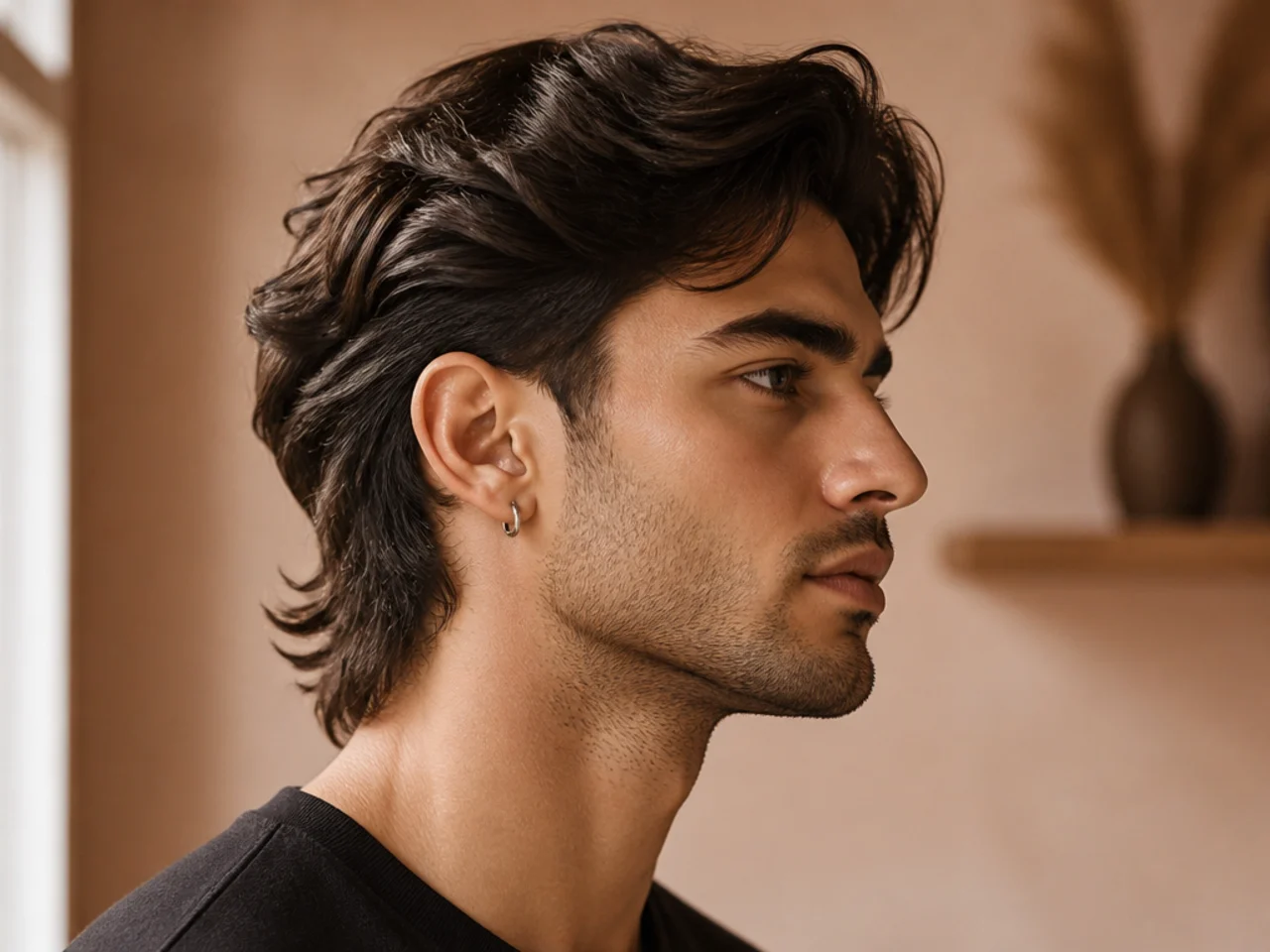
The longest variation on the list. Five-inch top length sweeps back into a flowing wedge that moves with head turns, while the back stays cropped tight to keep the shape from spreading into a full flow haircut. Reads athletic — hockey-adjacent, minus the classic mullet drop.
Suits oval, square, and diamond faces. Best on medium-thick straight to wavy hair.
Ask for: "Flow reverse mullet, five-inch top swept back with soft internal layers, one-inch nape with a soft scissor finish, low taper on the sides." Salt spray in damp hair, blow-dry backward with a paddle brush.
How to Ask Your Barber for a Reverse Mullet
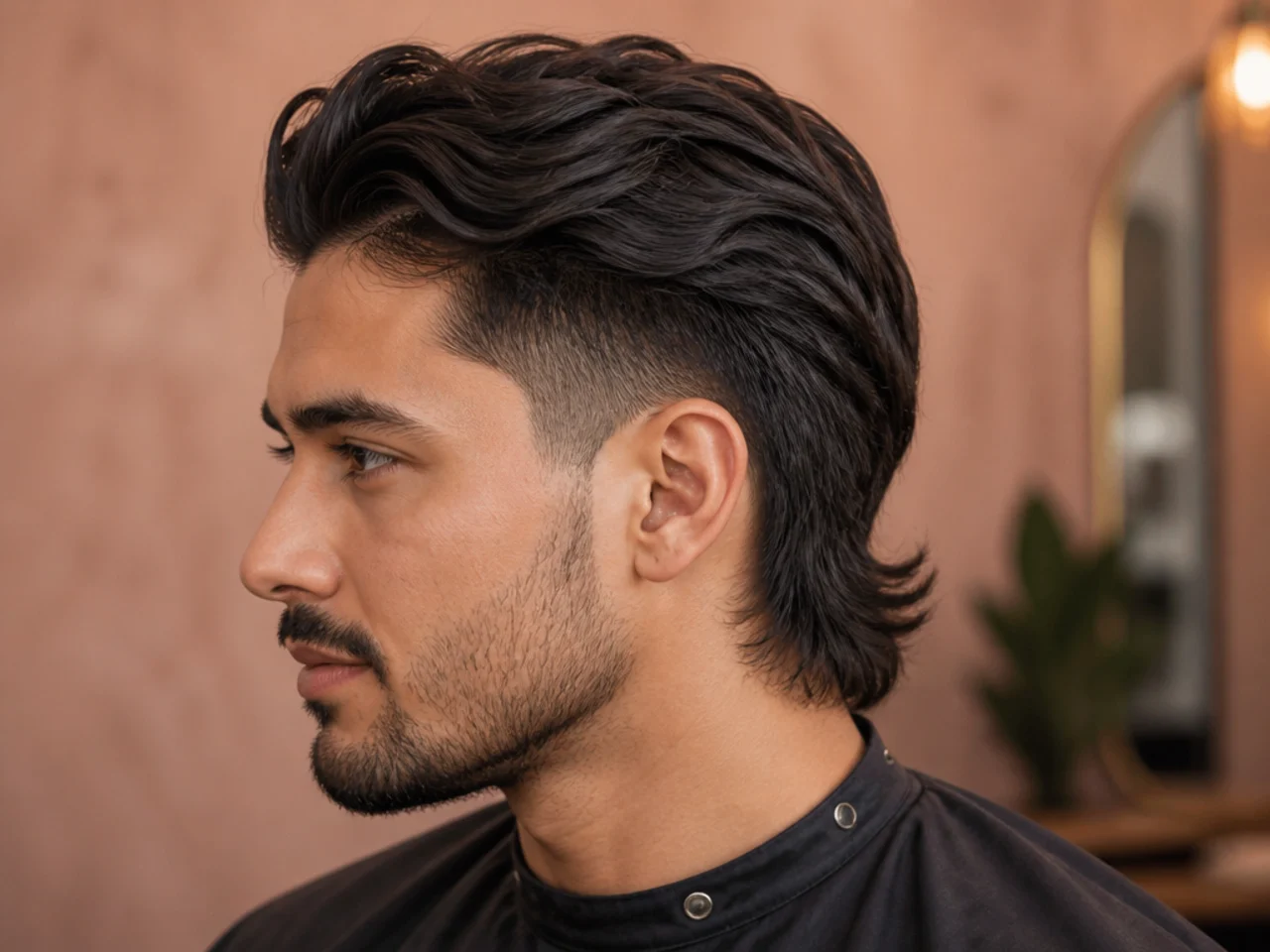
Bring a photo. That is rule one for any layered cut, and doubly true for the reverse mullet because "reverse mullet" covers 15 different silhouettes.
- Say "reverse mullet" — never just "mullet" or "long fringe short back." A plain mullet runs the opposite direction; a long fringe with a short back skips the mullet's two-length language. The reverse mullet wants both — the inverted length ratio and the deliberate two-length silhouette.
- Set the front length in inches. Three inches for the classic and textured versions. Three-and-a-half for the comma and Korean cuts. Four inches for the curtain, side-swept, middle-part, and quiff variations. Five inches for the flow reverse mullet.
- Set the back length in inches or clipper guard. Half an inch (a guard 1) for the shortest, cleanest versions. One inch for the softer boy-cut zone. Skin at the nape for full fade variations. The back has to sit visibly shorter than the front for the shape to register.
- Set the fringe or top direction. Forward and textured, curtain, comma, side-swept, middle-part, slick-back, or quiffed. The direction sets the whole front personality — pick before you sit down.
- Set the side treatment. Scissor-blended, low taper, mid taper, low fade, mid fade, high fade, disconnected undercut, or two-block undercut. Match the loudness of the sides to how much attention you want the cut pulling.
- Ask for internal layering, not stacked layers. Internal layers remove bulk while keeping the perimeter intact — that keeps the front weight readable. Stacked layers turn the front into a helmet and kill the clean two-length signature.
- Confirm the transition. For blended versions, ask for a soft scissor blend from long top into cropped back. For undercut and two-block versions, ask for a hard disconnected line. Do not leave the transition style to the barber's default.
Once you have those seven answers, your barber can start cutting without a guess. Show the photo again to confirm the shape before scissors touch hair. If you are weighing this against neighbors, our short mullet haircut men guide covers the standard direction and the wolf-cut mullet breakdown covers the layered hybrid.
Styling and Maintenance
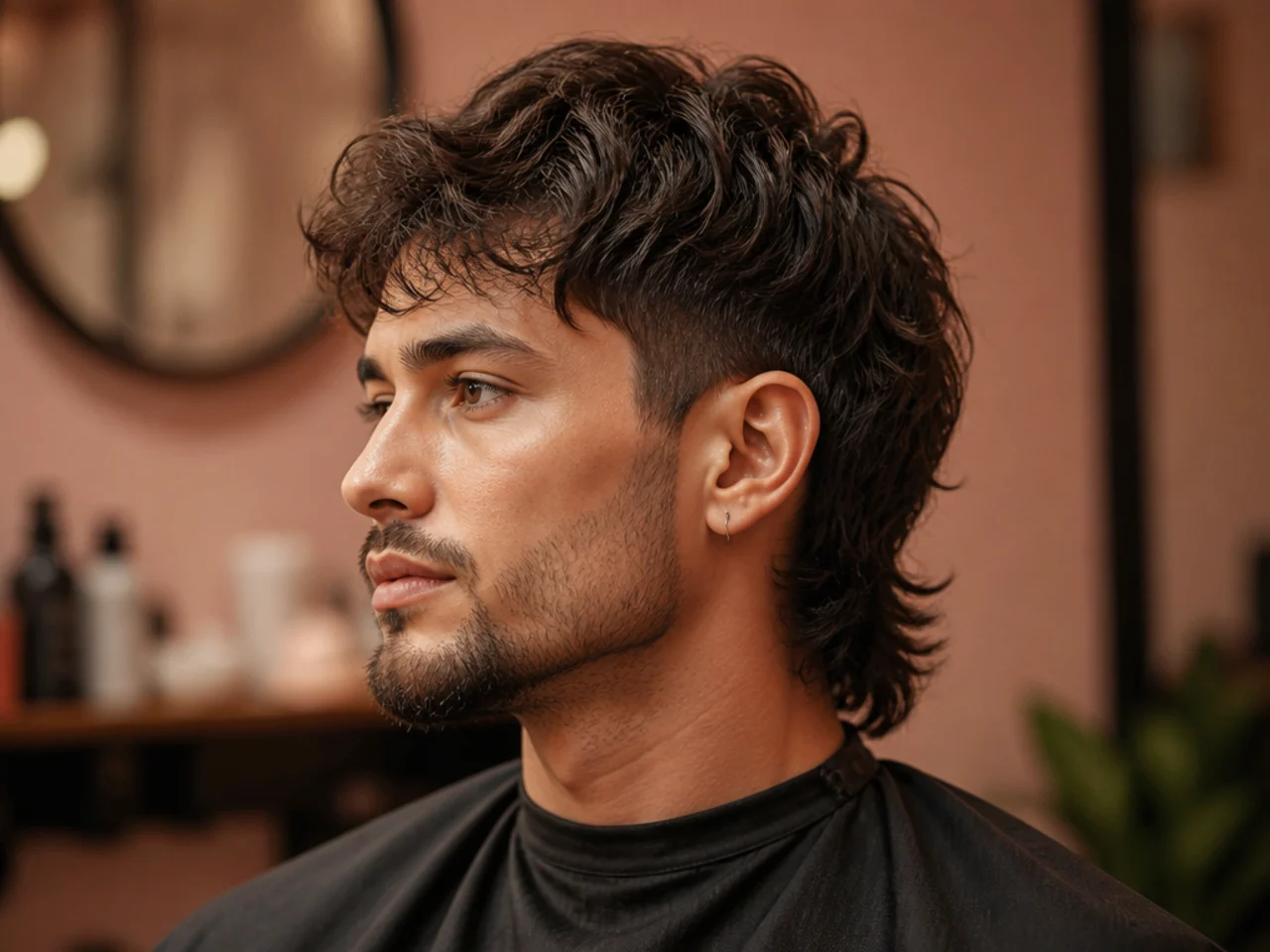
Wash and towel-dry so hair is damp, not wet. Damp hair absorbs product; wet hair drips it. Prime straight hair with a sea-salt spray for grip. Use a light styling cream on wavy hair. On curly and coily hair, apply a leave-in conditioner while soaking wet and let hair reach damp naturally.
Style the front first. Rough-dry the fringe or top mass with a round brush in the direction of your chosen finish — forward for a classic or textured fringe, split from a center part for curtain bangs, inward at the ends for a comma, up and back for a quiff, straight back for a slick-back. This is the part of the cut that carries the whole look, so give it the extra minute.
Finish with a matte hold product. Matte clay for textured tops. Molding paste for structured tops with light sheen. Cream pomade for glossy slick-backs and Korean variations. Skip anything crunchy — modern reverse mullets read best with movement, not stiffness.
Re-cut the front every four to six weeks; the fringe grows fastest in your line of sight. Re-cut the back and sides every two to three weeks if you have a fade or taper — the shaved lengths blur first and kill the reverse ratio. Between fade visits, run a beard trimmer over the neckline yourself to buy an extra week of clean edges. For full cadence guidance, see our how often to get a haircut guide.
Wash the top three to four times a week and condition every wash — long fringes show damaged ends faster than blunt cuts. Sleep on a silk or satin pillowcase to preserve texture and stop the fringe from creasing overnight. For neighboring silhouettes in the family, browse our jellyfish haircut breakdown.
FAQ
What is a reverse mullet haircut for men?
A reverse mullet flips the classic mullet ratio. The front and top keep the length — usually three to five inches of fringe or top mass — while the back and sides stay cropped, tapered, or faded short. It reads as party in the front, business in the back. See the standard direction in our modern mullet guide.
Which face shape suits a reverse mullet best?
Oval, square, and diamond faces get the sharpest read — the fringe softens strong bone structure while the cropped back keeps the head narrow. Round faces work with a lifted or side-swept front rather than a flat forward fringe. Long faces benefit from a curtain or forward fringe that shortens the profile. Heart faces read best with a curtain or middle-part variation that balances a wider forehead.
How is a reverse mullet different from a regular long-fringe haircut?
A long fringe leaves the back at a matched or slightly shorter length — think a shaggy cut or a flow. A reverse mullet drops the back sharply — a half-inch to one inch, or a full skin fade — so the gap between front and back is visible from every angle. The two-length contrast is the signature.
How do I ask my barber for a reverse mullet?
Say four things — the front length in inches (three to five), the back length in inches or clipper guard (a half-inch to one inch), the side treatment (taper, fade, undercut, or scissor-blended), and the fringe style (curtain, comma, side-swept, textured, middle-part, or slick-back). Bring a photo. See the seven-step checklist above for the details before scissors touch hair.
Can I get a reverse mullet with curly or coily hair?
Yes — curls up front build the reverse-mullet weight on their own, and a cropped back keeps the silhouette from spreading wide. Ask your barber to dry-cut so the pattern is visible, and request internal layers rather than stacked layers so the crown does not build into a triangle on 3a-3c curls or a helmet on 4a-4c coils. For related pattern-specific work, see our curly hairstyles for men guide.
How often do I need to re-cut a reverse mullet?
Every four to six weeks for the layered front. The long front holds its shape for a while, but the cropped back grows out quickest and blurs the length ratio first. Fade or taper backs need touching up every two to three weeks to keep the front-to-back contrast sharp. Between fade visits, run a beard trimmer over the neckline yourself to buy an extra week of clean edges.