15 Fringe Mullet Ideas for Men
Fifteen fringe mullet ideas for men — curtain, textured, micro, comma, Edgar. Photos, face-shape notes, and the exact barber-ready cutting terms.
In this article · 25
- What Is a Fringe Mullet?
- How to Choose Your Fringe Mullet
- The 15 Fringe Mullet Variations
- 1. Classic Textured Fringe Mullet
- 2. Curtain Fringe Mullet
- 3. Micro Fringe Mullet
- 4. Long Fringe Mullet
- 5. Blunt Fringe Mullet
- 6. Side-Swept Fringe Mullet
- 7. Comma Fringe Mullet
- 8. Edgar Fringe Mullet
- 9. Wispy Fringe Mullet
- 10. Wavy Fringe Mullet
- 11. Curly Fringe Mullet
- 12. Piecey Fringe Mullet
- 13. Fringe Mullet with Low Fade
- 14. Split Fringe Mullet
- 15. Fringe Mullet with Beard
- How to Ask Your Barber for a Fringe Mullet
- Styling and Maintenance
- FAQ
- What is the best fringe mullet for a round face?
- How long does the top need to grow before you can cut a fringe mullet?
- Can a fringe mullet be part of a workplace haircut?
- What is the difference between a fringe mullet and a comma hair mullet?
The fringe changes everything about a mullet. Length at the front balances length at the back, the two visual weights meet through the sides, and the whole cut suddenly reads as one shape instead of "a mullet from behind." This guide covers fifteen fringe mullet ideas men are asking for, from a micro fringe that grazes the mid-forehead to a curtain fringe that falls past the cheekbones — with face-shape rules and the exact language to hand your barber.
What Is a Fringe Mullet?
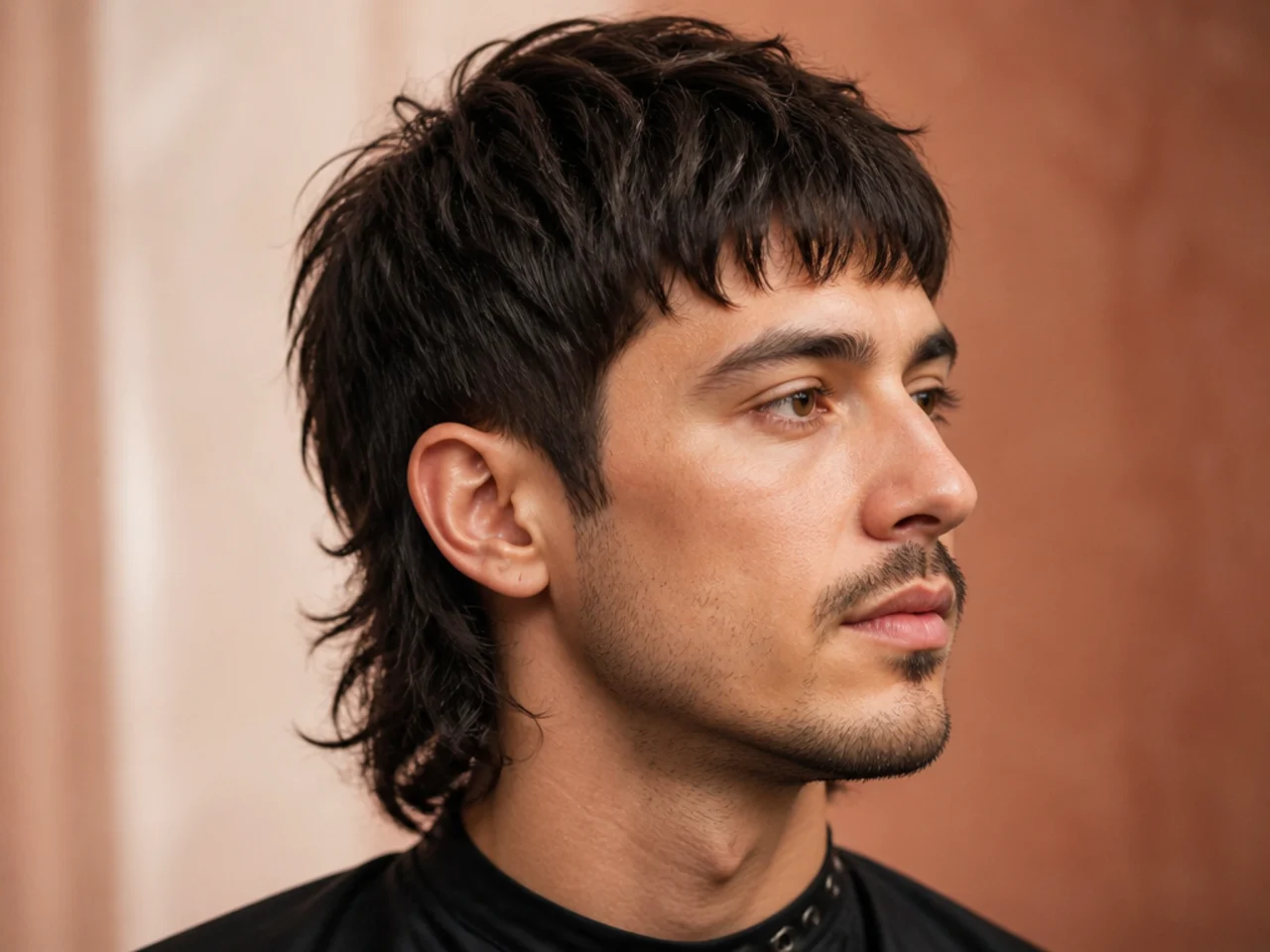
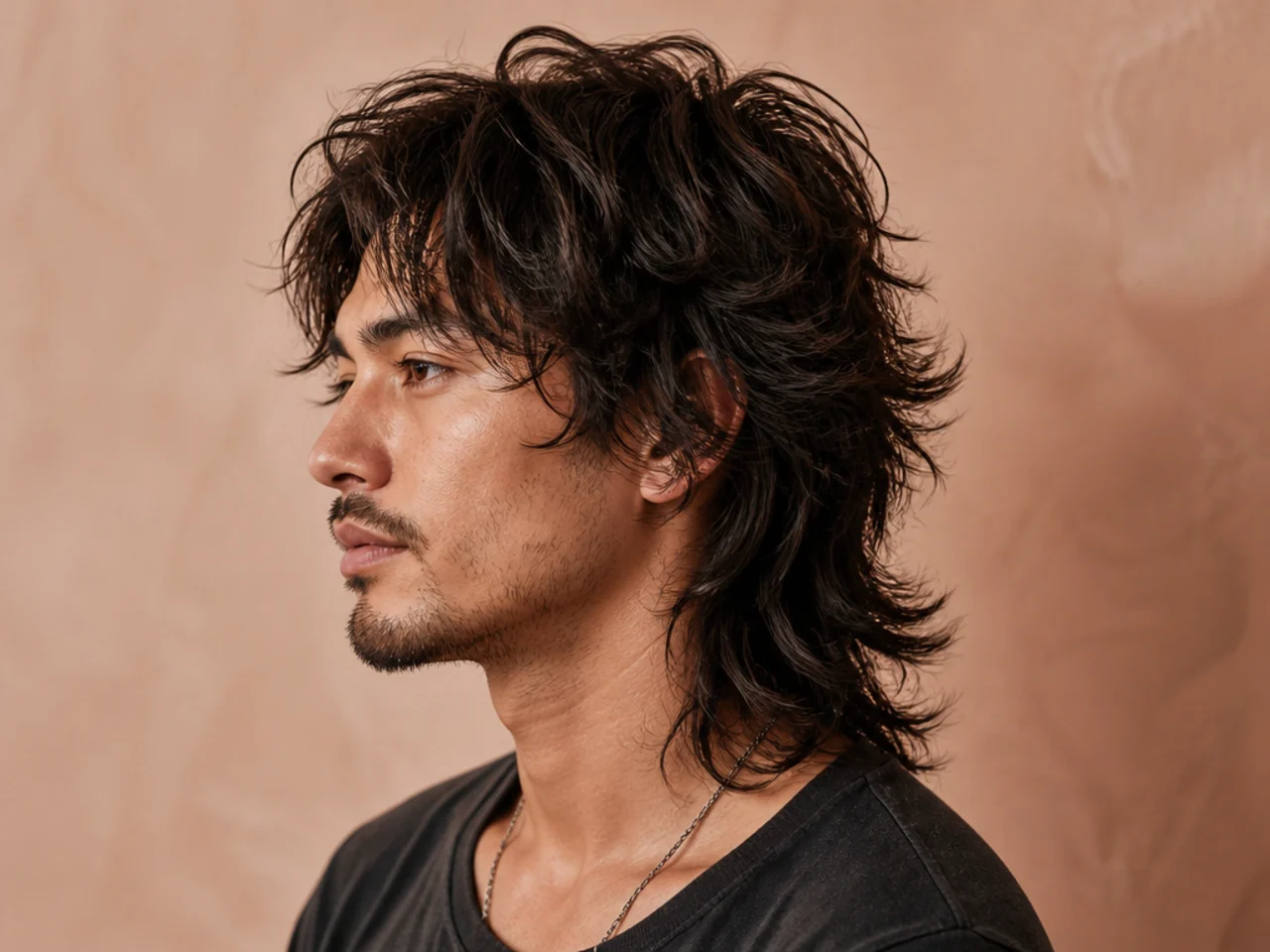
A fringe mullet is a mullet cut with the front hair intentionally grown and shaped to fall forward onto the forehead. The fringe runs anywhere from mid-forehead length (micro) to below the cheekbones (long curtain). The nape stays mullet-length — usually three to four inches — and the sides get scissor-blended or tapered so the front-and-back length dominates.
That fringe is what turns a mullet from a back-focused cut into a full silhouette. Without a fringe, a mullet reads mostly from the profile and behind. With one, the shape reads from the front too — the fringe shortens the top of the face and the mullet adds weight behind, creating a symmetric visual that photographs cleanly from any angle.
Fringes come in six main forms. Straight (falling flat to the brow), textured (point-cut into pieces), curtain (parted center and falling to either side), comma (curled inward at the ends), Edgar (blunt-cut straight across), and side-swept (falling to one side). Each pairs differently with a mullet base — see the fringe haircuts for men guide for the wider fringe family.
How to Choose Your Fringe Mullet
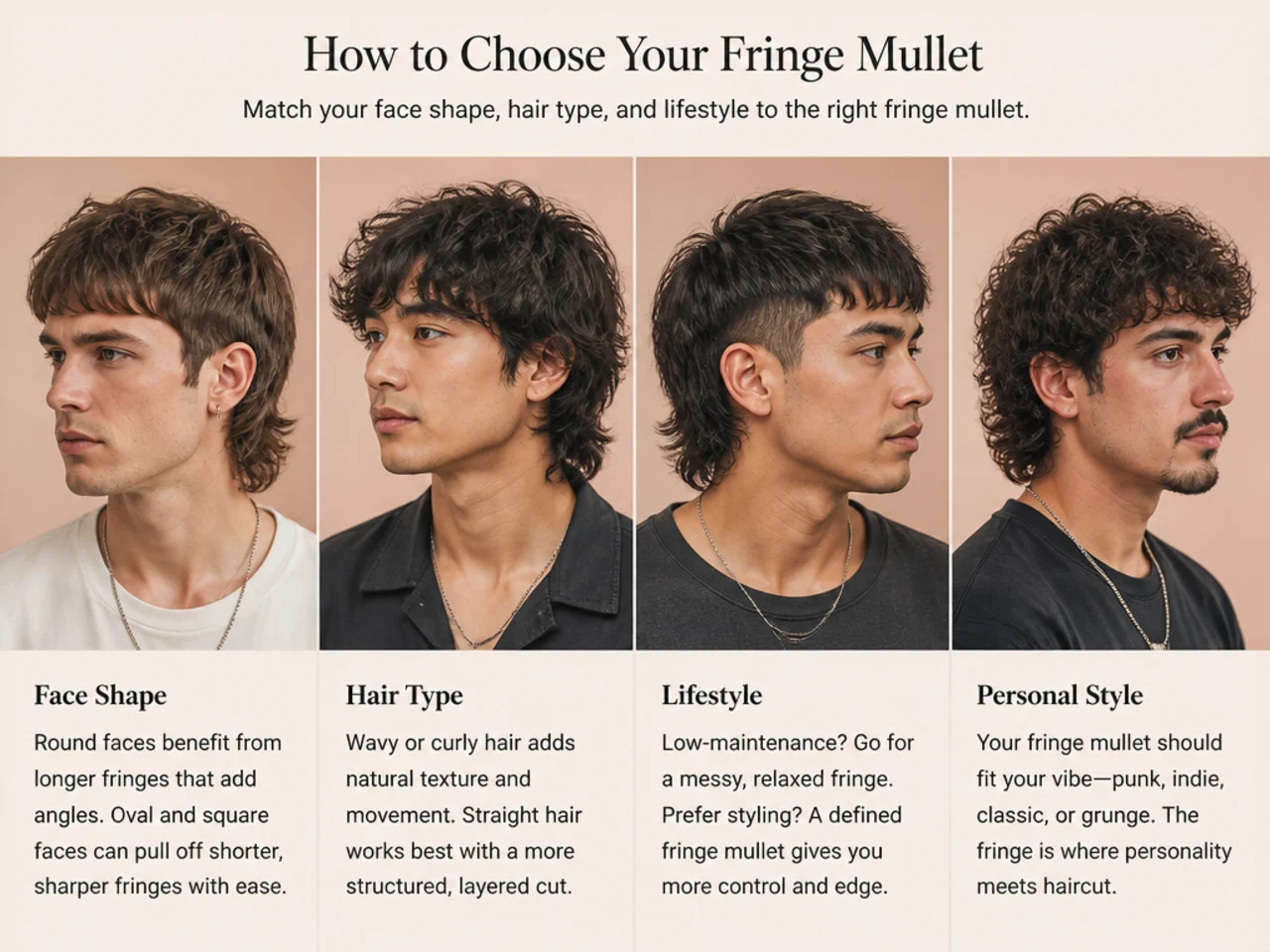
Face shape sets the fringe length. Long faces want a full brow-length fringe that shortens the vertical read. Oval faces suit any length. Round faces need a piecey or wispy fringe that does not add width — skip blunt heavy fringes. Square faces work with blunt fringes that echo the jawline geometry. Heart and diamond faces sit best with textured or curtain fringes that soften the forehead.
Hair type sets the fringe method. Straight hair holds any fringe shape but reveals every layer line — expect point-cutting for texture. Wavy hair suits soft feathered fringes cut in the wave direction. Curly hair needs the fringe cut dry so the pattern shows, and it lifts naturally at the forehead. Fine hair benefits from micro or wispy fringes that do not stress limited density.
Lifestyle sets the styling weight. Micro and side-swept fringes stay out of the way and need minimal product. Curtain and long fringes need daily blow-drying to shape. Comma and Edgar fringes need a specific styling routine every day. See the mullet and wolf cut hub for the wider silhouette family or the modern mullet haircut men pillar for the base cut.
The 15 Fringe Mullet Variations
Each variation below breaks down the fringe shape, the flattering face shapes, and the exact language for the chair.
1. Classic Textured Fringe Mullet
The baseline. A textured fringe drops onto the forehead in piecey point-cut sections, falling to just above the brow. Top runs three inches with internal layers, nape drops three inches with a feathered perimeter, and sides get scissor-blended. Reads modern and easy to wear.
Suits every face shape. Works with any hair type but shines on straight to slightly wavy hair.
Ask for: "Classic textured fringe mullet, three-inch top with internal layers, fringe point-cut to fall in piecey pieces to the brow, three-inch feathered nape, scissor-blended sides." Styling time: one minute — matte paste through damp hair, finger-comb the fringe forward.
2. Curtain Fringe Mullet
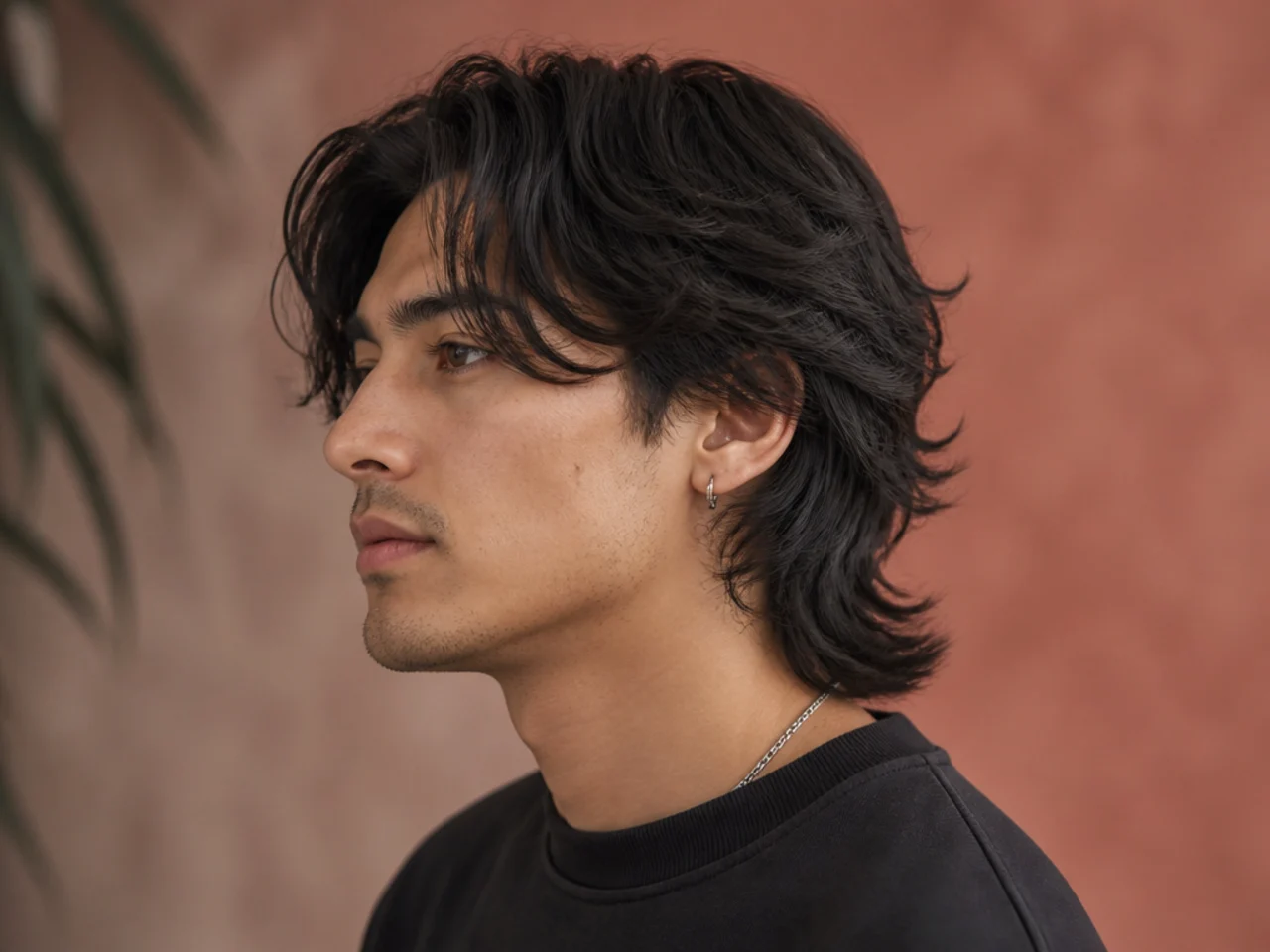
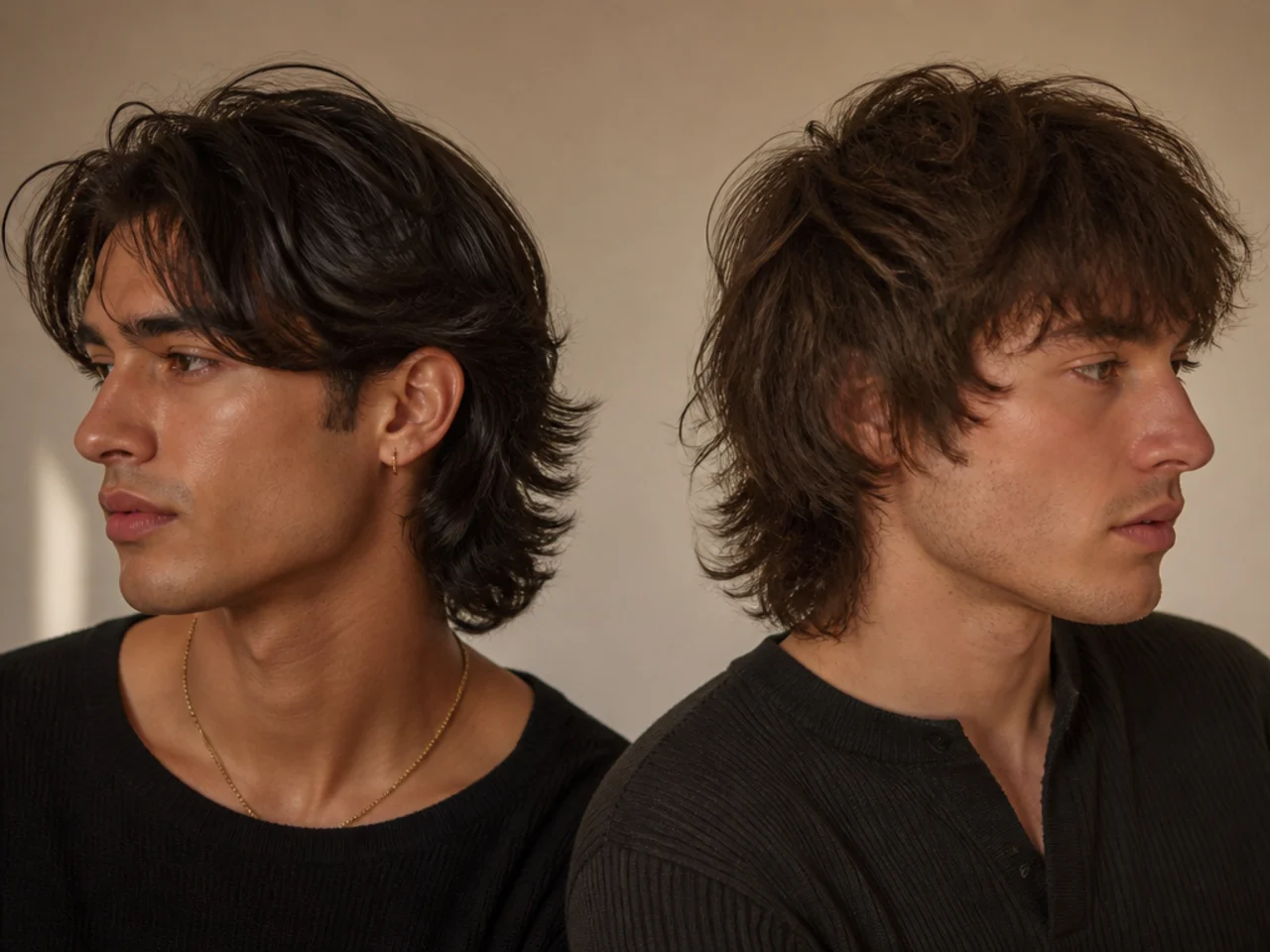
The center-parted fringe. Front hair grows long — four to five inches — and gets center-parted so the two halves fall to either side of the forehead, framing the eyes. Combined with a mullet's back drop, the curtain creates a full silhouette that reads as one shape from every angle.
Suits oval, heart, and long faces. Best on straight to slightly wavy hair.
Ask for: "Curtain fringe mullet, four-inch top with a defined center part, curtain fringe falling to either side of the forehead just below the cheekbone, three-inch feathered nape, scissor-blended sides." Styling time: ninety seconds — blow-dry the fringe outward on each side with a round brush.
3. Micro Fringe Mullet
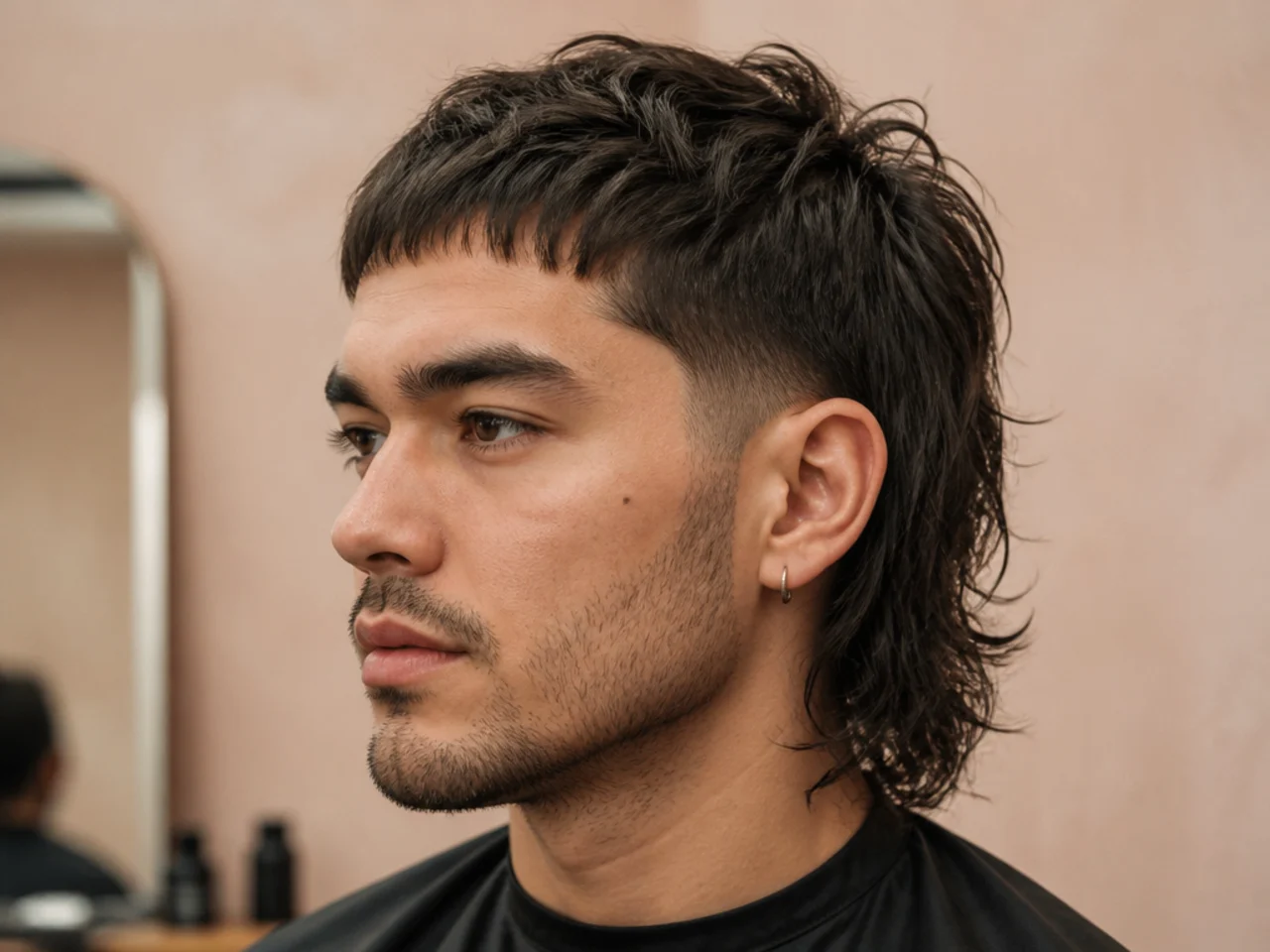
The shortest fringe on the list. Cut to sit at the mid-forehead — well above the brow — the micro fringe adds a small textured shelf to the front without covering any face. Reads sporty and low-maintenance. Popular with athletes who want the fringe read without hair in their eyes.
Suits round, oval, and square faces. Works with any hair type.
Ask for: "Micro fringe mullet, two-and-a-half-inch top with internal layers, micro fringe cut to sit at the mid-forehead in piecey pieces, three-inch feathered nape, low taper on the sides." Styling time: thirty seconds — matte clay, finger-press the fringe forward.
4. Long Fringe Mullet
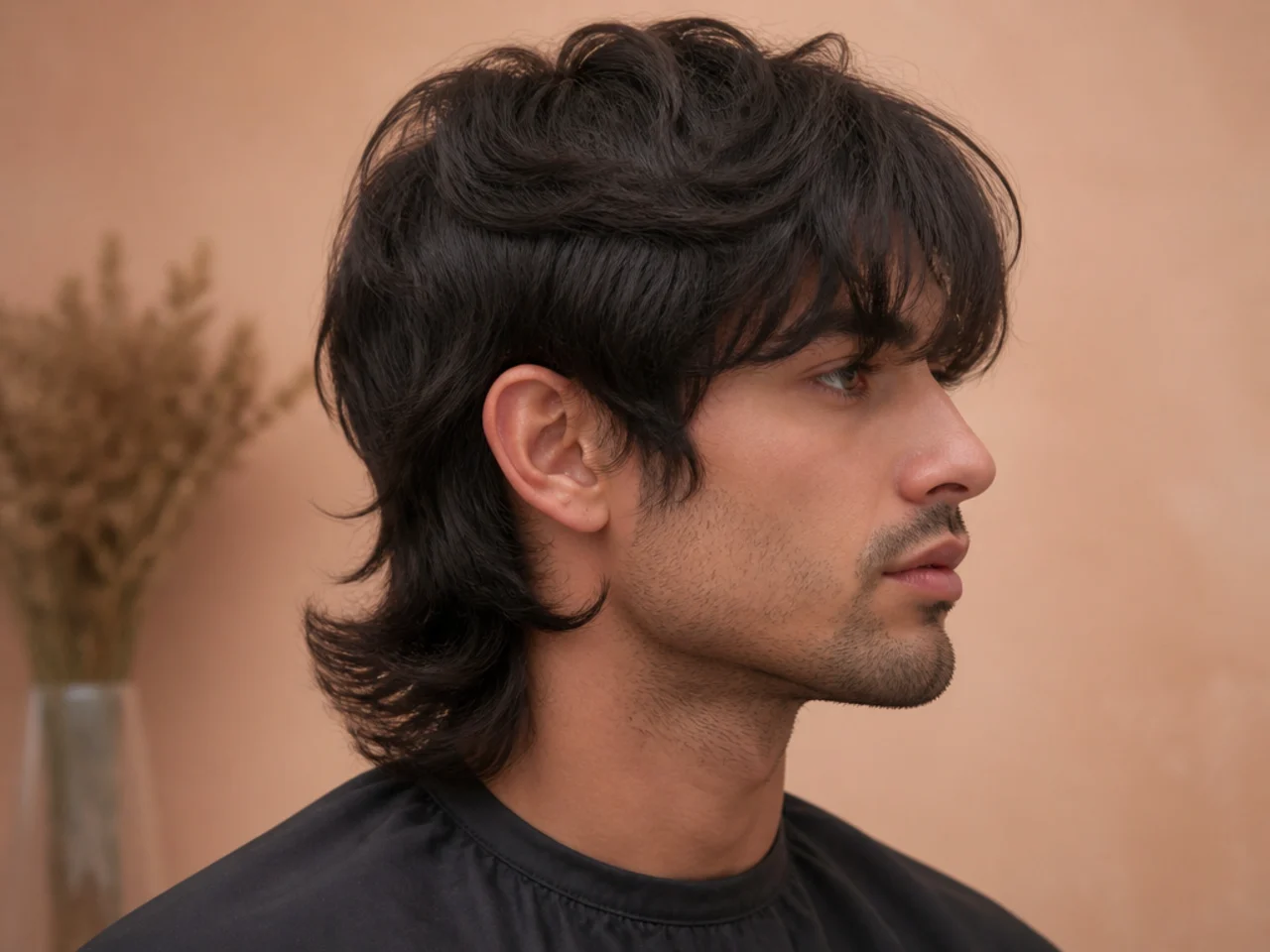
The fringe drops past the cheekbones. Top and fringe grow to five to six inches, falling forward in a heavy sweep that partially covers the eyes and reaches the mid-cheek at its longest point. The mullet nape stays around four inches. Reads editorial, moody, and slightly rock.
Suits long, oval, and heart faces. Best on straight to slightly wavy hair with enough density to carry the length.
Ask for: "Long fringe mullet, five-inch top with heavy internal layers, long fringe falling forward past the cheekbones, four-inch feathered nape, scissor-blended sides — no fade." Styling time: two minutes — light styling cream, finger-comb the fringe forward.
5. Blunt Fringe Mullet
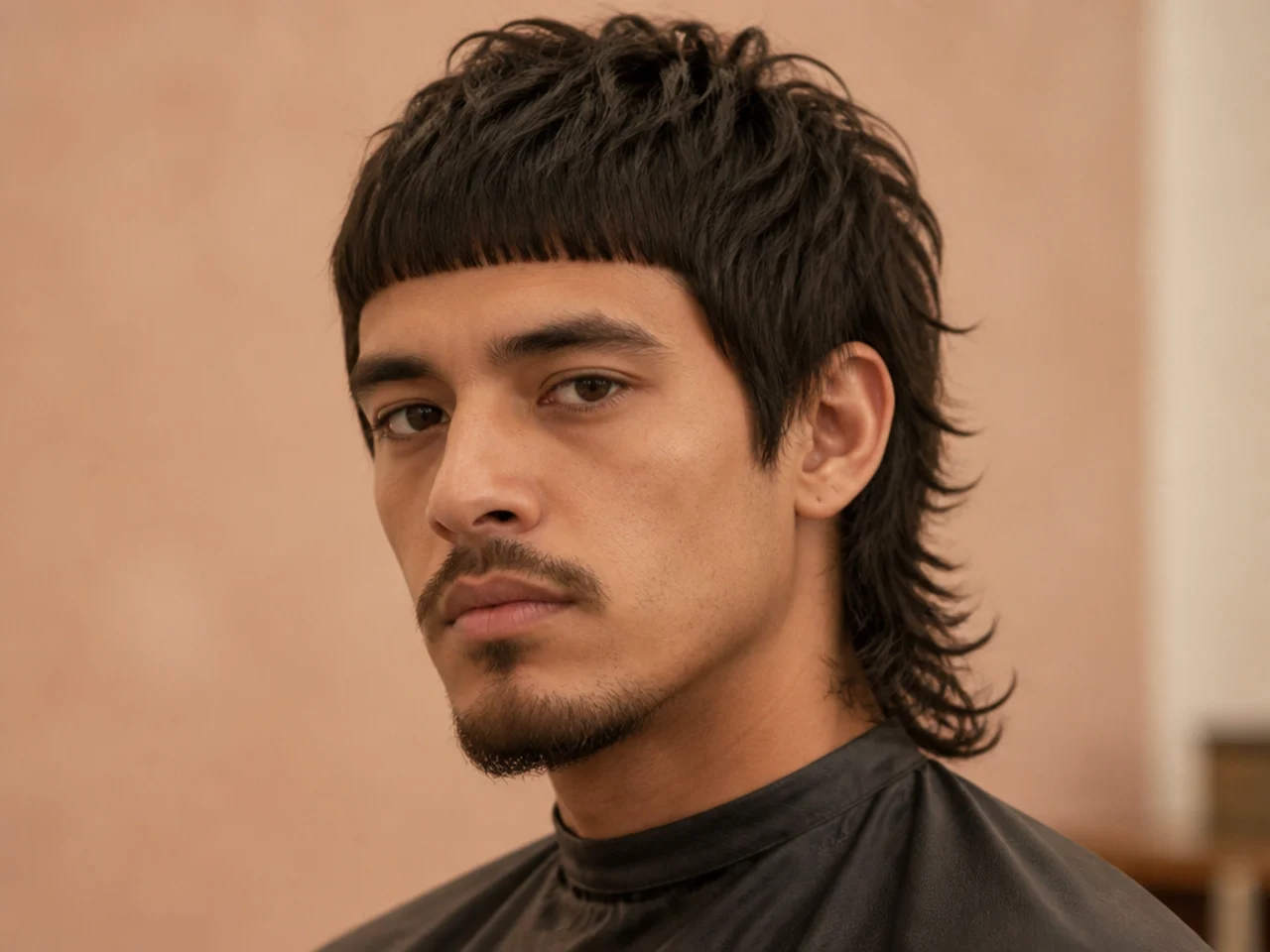
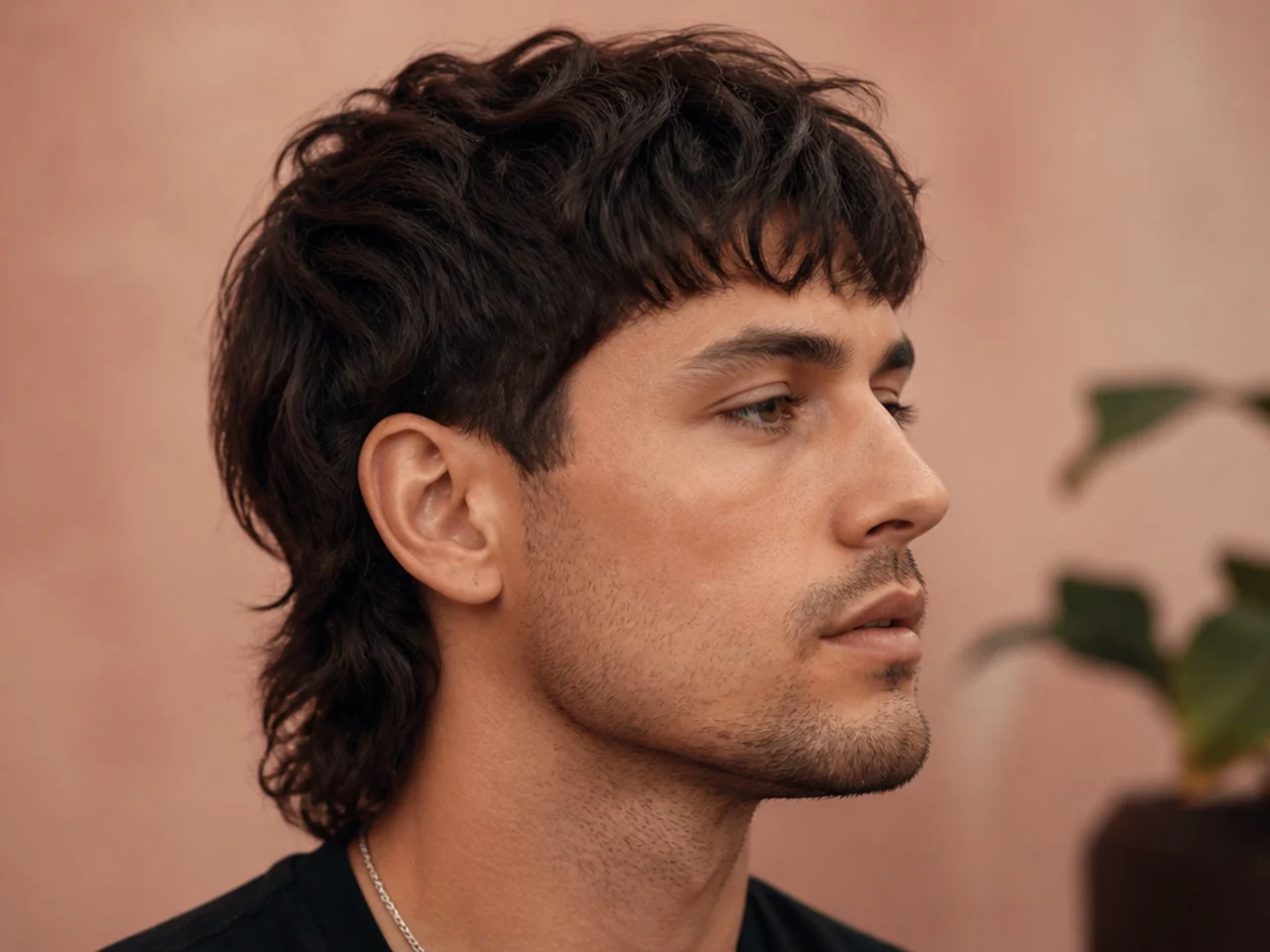
A hard straight-across fringe cut at brow level. No texture, no feathering, no piecey ends — just a clean geometric line across the forehead. Combined with a mullet's soft feathered nape, the blunt fringe reads as a hard-soft contrast that is more visually interesting than either element alone.
Suits square, oval, and heart faces. Best on straight hair with medium to thick density.
Ask for: "Blunt fringe mullet, three-inch top with soft internal layers, hard straight-across fringe cut at brow level with no texture, three-inch feathered nape, low taper on the sides." Styling time: forty-five seconds — light styling cream, comb the fringe straight down.
6. Side-Swept Fringe Mullet
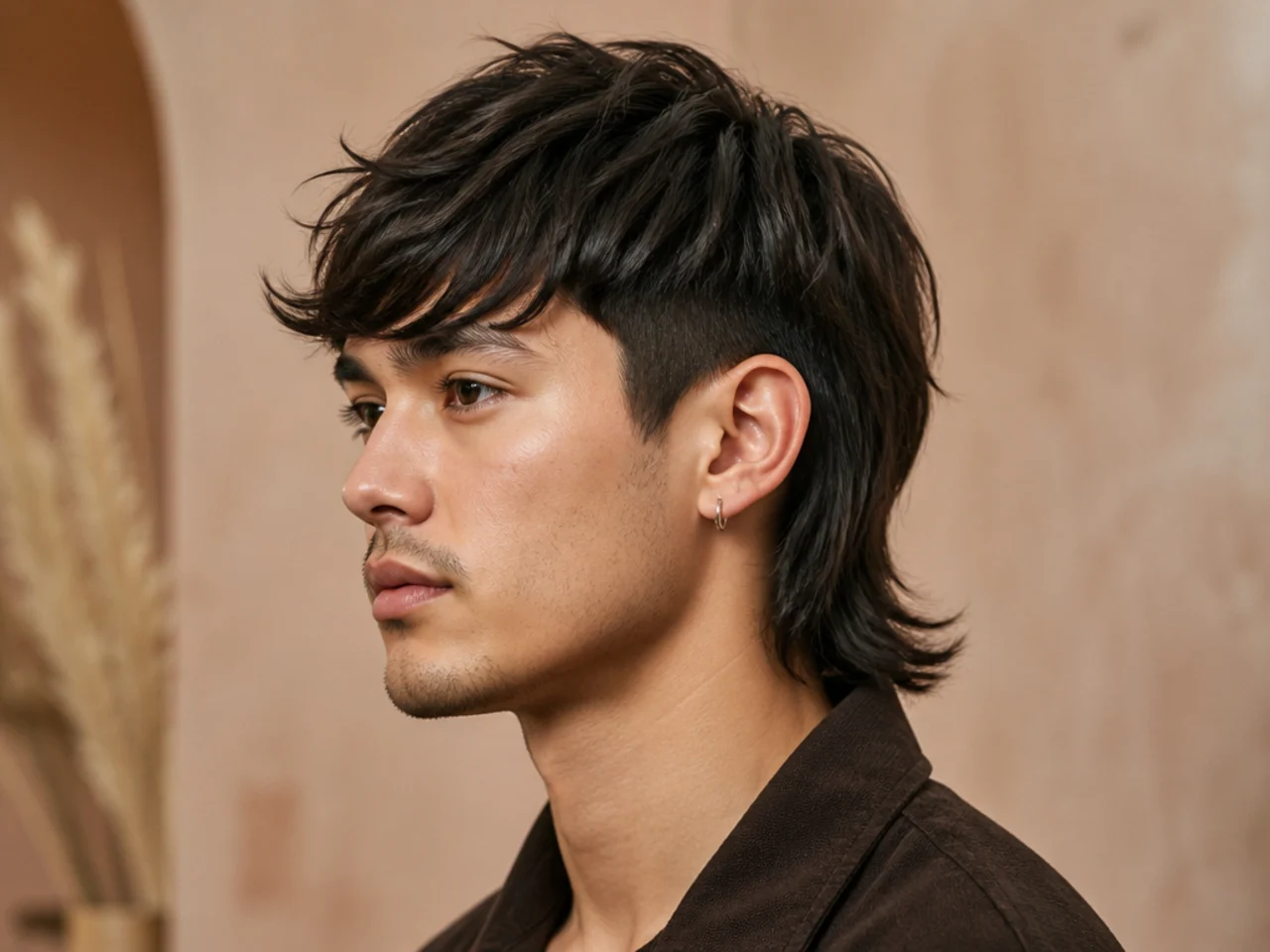
The fringe grows to three or four inches and gets swept fully across the forehead to one side, following a natural side parting. Reads dressed and slightly nostalgic — an emo-era fringe combined with a modern mullet base. Popular with guys who want a fringe that also functions as a styling piece.
Suits oval, heart, and diamond faces. Best on straight to slightly wavy hair.
Ask for: "Side-swept fringe mullet, three-inch top with a defined natural side part, fringe swept fully across to one side and reaching past the eyebrow, three-inch feathered nape, scissor-blended sides." Styling time: ninety seconds — matte paste, comb the fringe across.
7. Comma Fringe Mullet
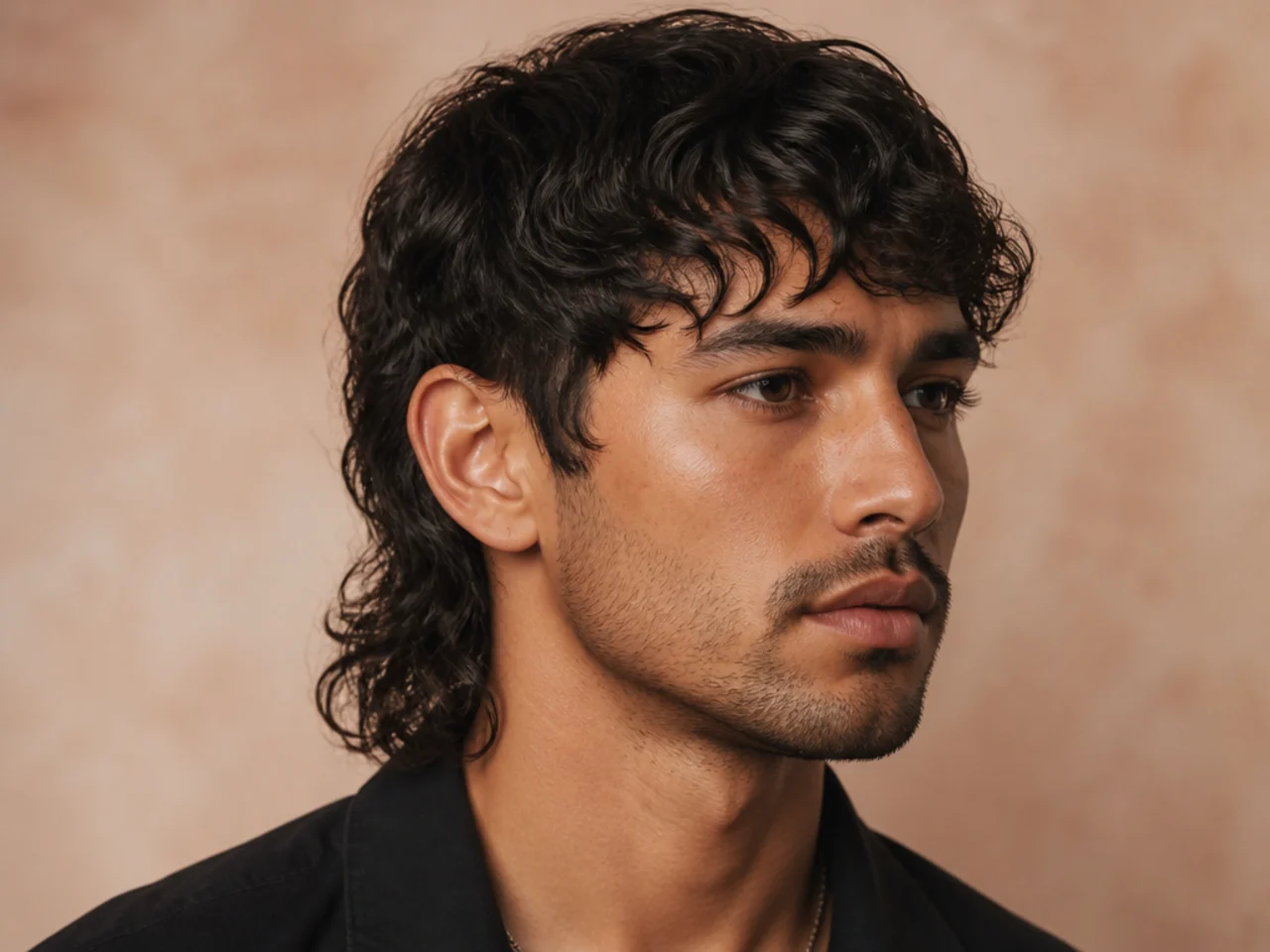
The K-drama fringe. The front hair grows to three inches and gets blow-dried with a small round brush so the ends curl inward at the forehead in a comma shape. Combined with the mullet's back drop, the comma reads glossy and controlled at the front while the nape stays textured behind.
Suits oval, long, and heart faces. Best on straight to slightly wavy hair.
Ask for: "Comma fringe mullet, three-inch top with soft internal layers, fringe cut long enough to curl inward with a round brush, three-inch feathered nape, low taper on the sides." Styling time: two minutes — blow-dry the fringe over a small round brush and roll inward. See our comma hair mullet breakdown for full comma styling technique.
8. Edgar Fringe Mullet
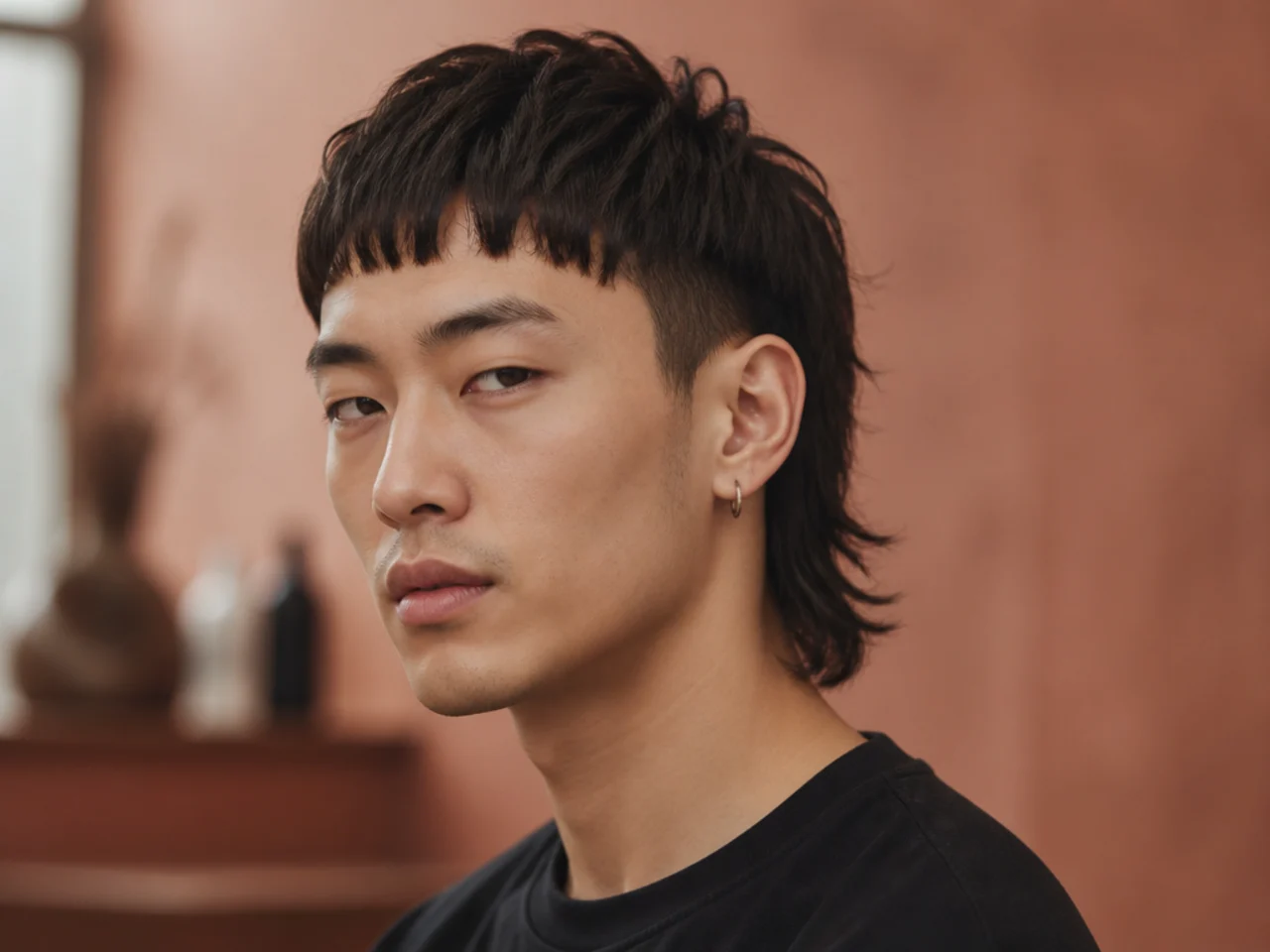
The Edgar's signature hard flat fringe combined with a mullet's back length. The fringe cuts straight across at brow level with a hard clipper-cut edge, then the sides drop to a skin fade below. Nape stays two to three inches with a feathered perimeter. Reads street-modern with a strong Latin barbershop reference.
Suits square, oval, and heart faces. Best on straight to slightly wavy hair.
Ask for: "Edgar fringe mullet, two-and-a-half-inch top, hard flat straight-across fringe clipper-cut at brow level, three-inch feathered nape, low skin fade on the sides." Styling time: one minute — light hair mist, comb the fringe straight down.
9. Wispy Fringe Mullet
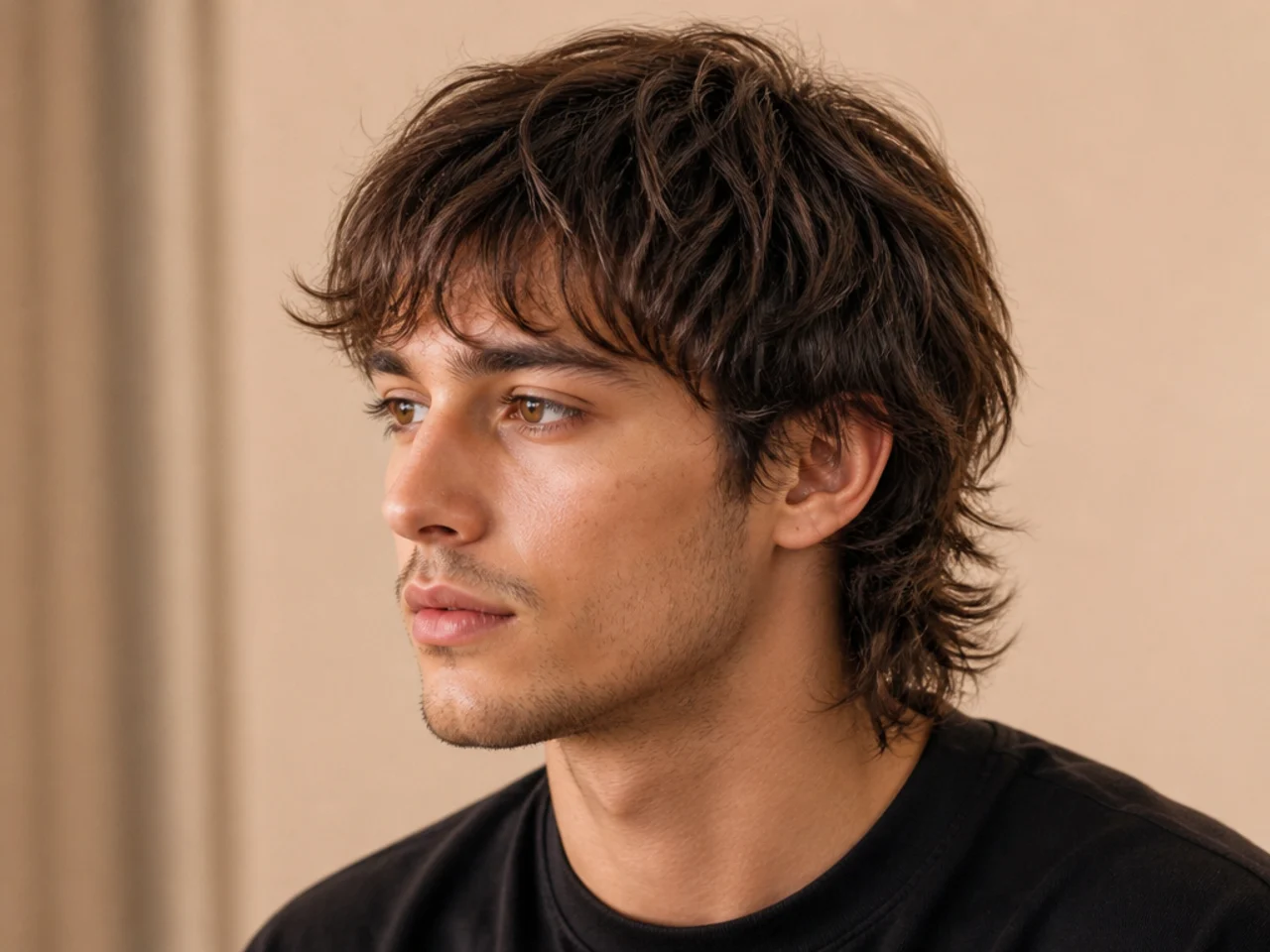
The lightest fringe on the list. Cut into thin feathered pieces that sit softly on the forehead without any weight. Reads gentle and unforced. Best for fine-haired guys who cannot carry a heavy textured fringe without it going limp.
Suits round, oval, and heart faces. Best on fine to medium hair.
Ask for: "Wispy fringe mullet, two-and-a-half-inch top with soft internal layers, wispy fringe cut into thin feathered pieces to just below the brow, two-and-a-half-inch feathered nape, scissor-blended sides." Styling time: thirty seconds — light hair mist, finger-press the fringe forward.
10. Wavy Fringe Mullet
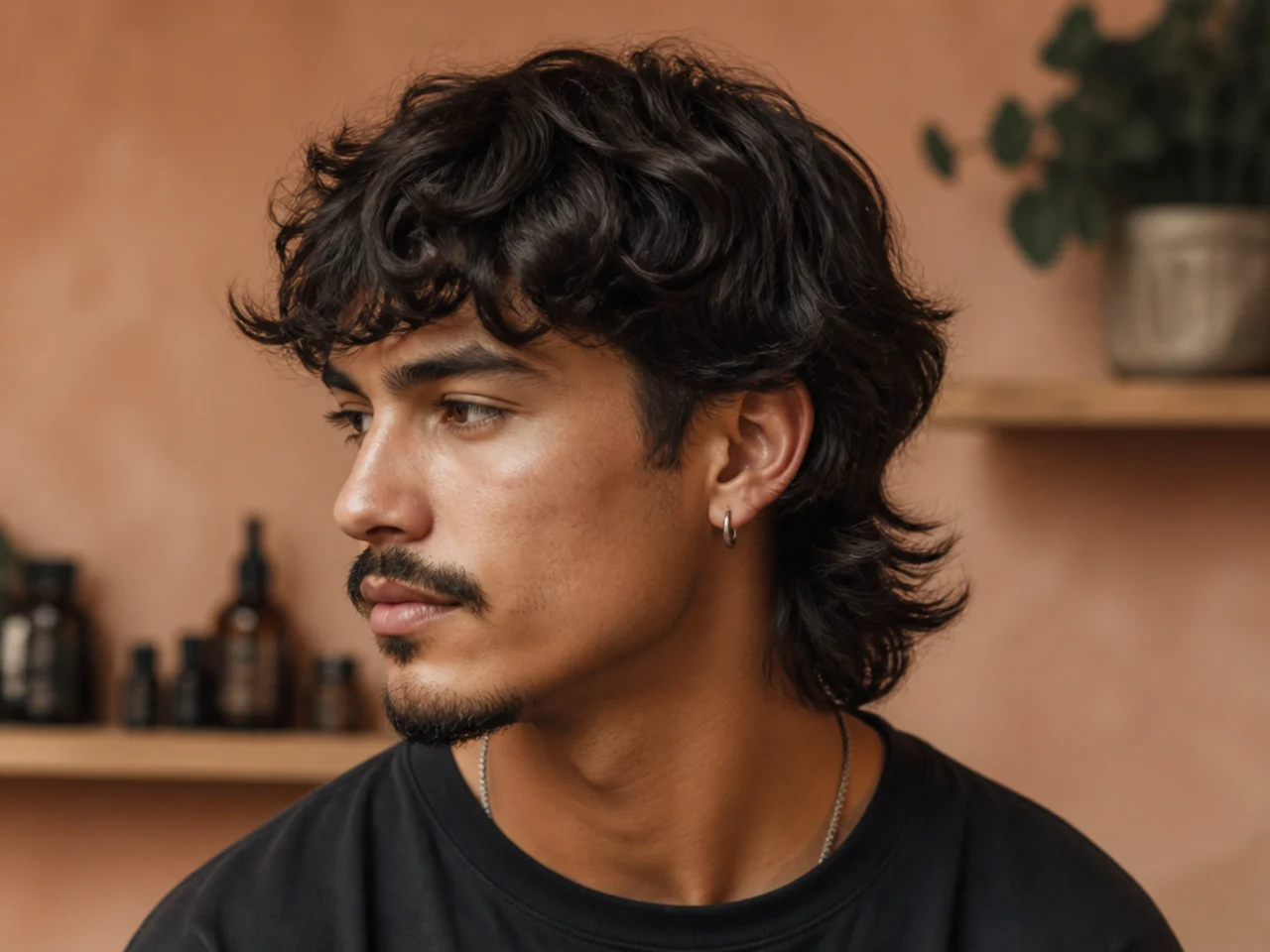
The wave leads. Soft internal layers cut in the direction of the wave let the fringe fall in visible ripples at the forehead — no need for point-cutting or shaping. Combined with a wavy mullet nape, the whole cut reads as continuous wave movement from front to back.
Suits oval, heart, and diamond faces.
Ask for: "Wavy fringe mullet, three-inch top with soft internal layers cut in the direction of the wave, fringe cut to fall in natural ripples to just above the brow, three-inch feathered nape, scissor-blended sides." Styling time: ninety seconds — salt spray on damp hair, scrunch, air-dry.
11. Curly Fringe Mullet
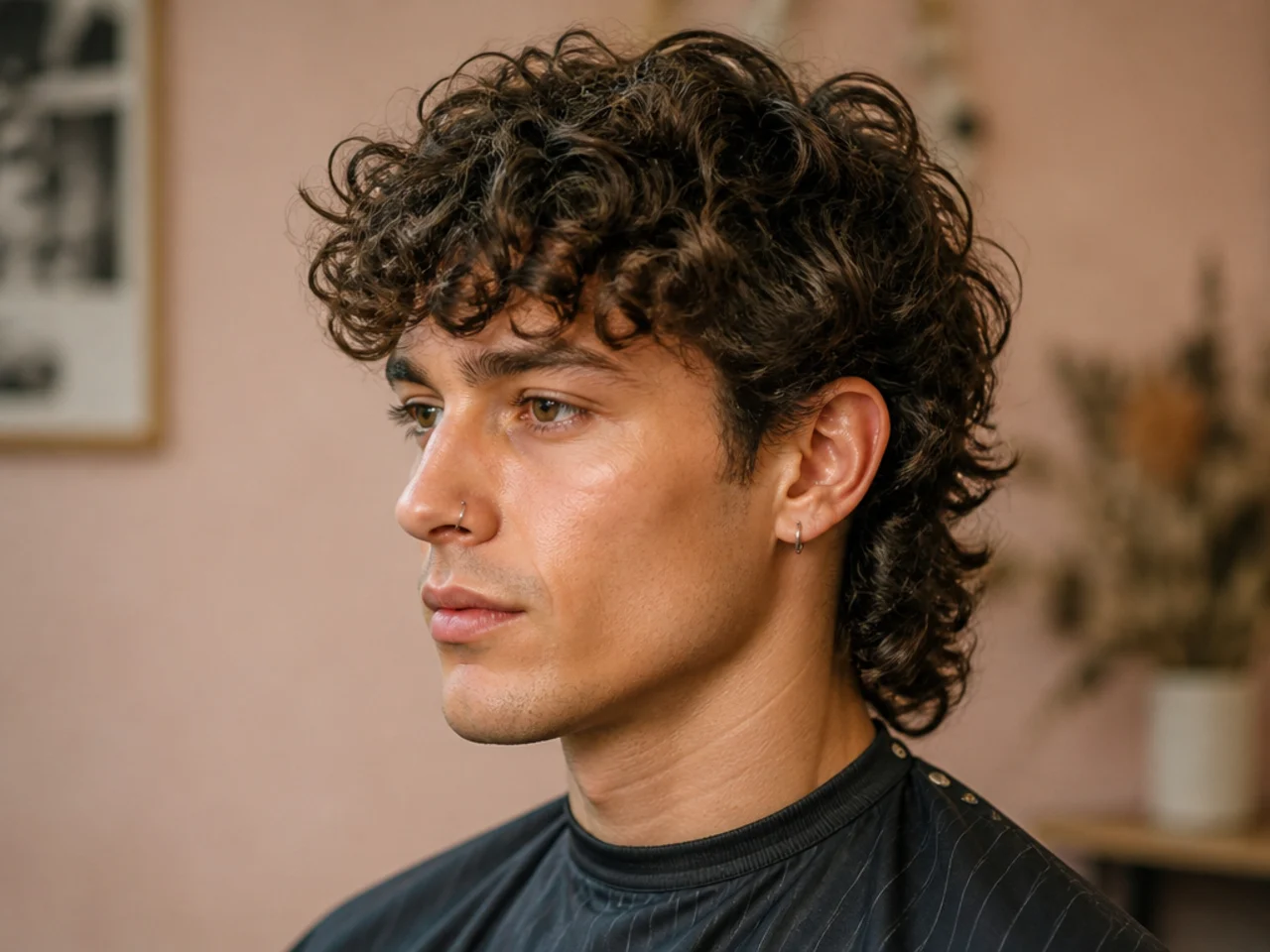
Curls at the forehead. Type 3 spirals lift naturally at the front instead of falling flat, giving the fringe a volume-forward read that no other hair type produces. Combined with a curly mullet nape, the whole cut reads as controlled curl density with a two-length silhouette.
Best on type 3 curls. Suits oval, heart, and diamond faces.
Ask for: "Curly fringe mullet, dry-cut throughout, three-inch top with internal layers to remove bulk, curly fringe cut to sit at the brow when dry, three-inch coiled nape, tapered sides following the curl pattern." Styling time: two minutes — leave-in conditioner on wet hair, define the fringe with fingers, air-dry.
12. Piecey Fringe Mullet
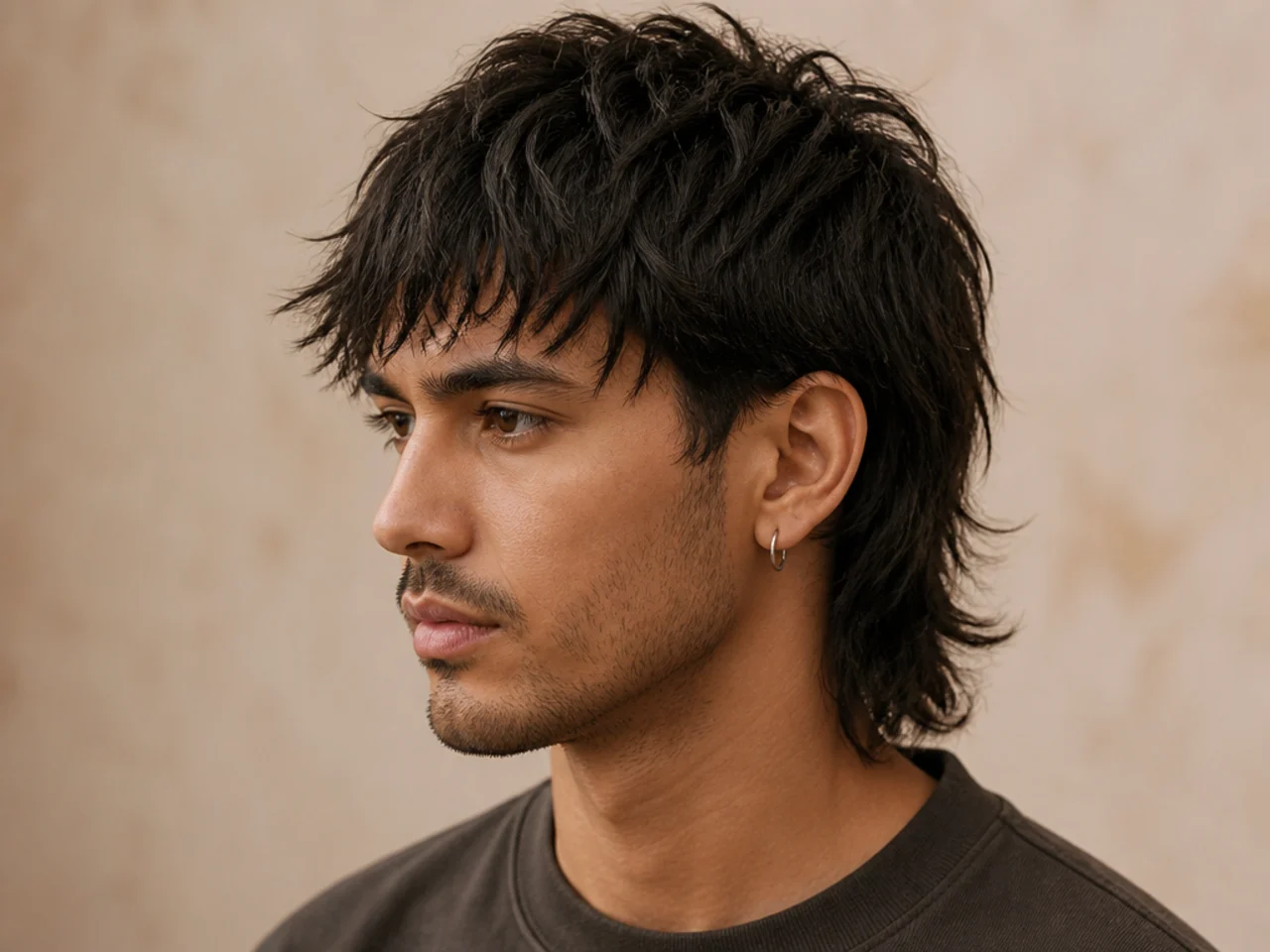
Extra-textured. The fringe gets aggressively point-cut so each front piece is visible separately rather than blending into a mass. Reads defined and slightly punk. Combined with a mullet nape and a low fade, the piecey fringe reads as full-attitude street style.
Best on medium-thick straight or wavy hair. Suits oval, heart, and square faces.
Ask for: "Piecey fringe mullet, three-inch top with aggressive point-cutting, fringe aggressively point-cut to fall in defined separated pieces to the brow, three-inch piecey nape, low fade on the sides." Styling time: one minute — salt spray plus matte paste, twist the fringe pieces for definition. See our textured fringe men roundup for related shapes.
13. Fringe Mullet with Low Fade
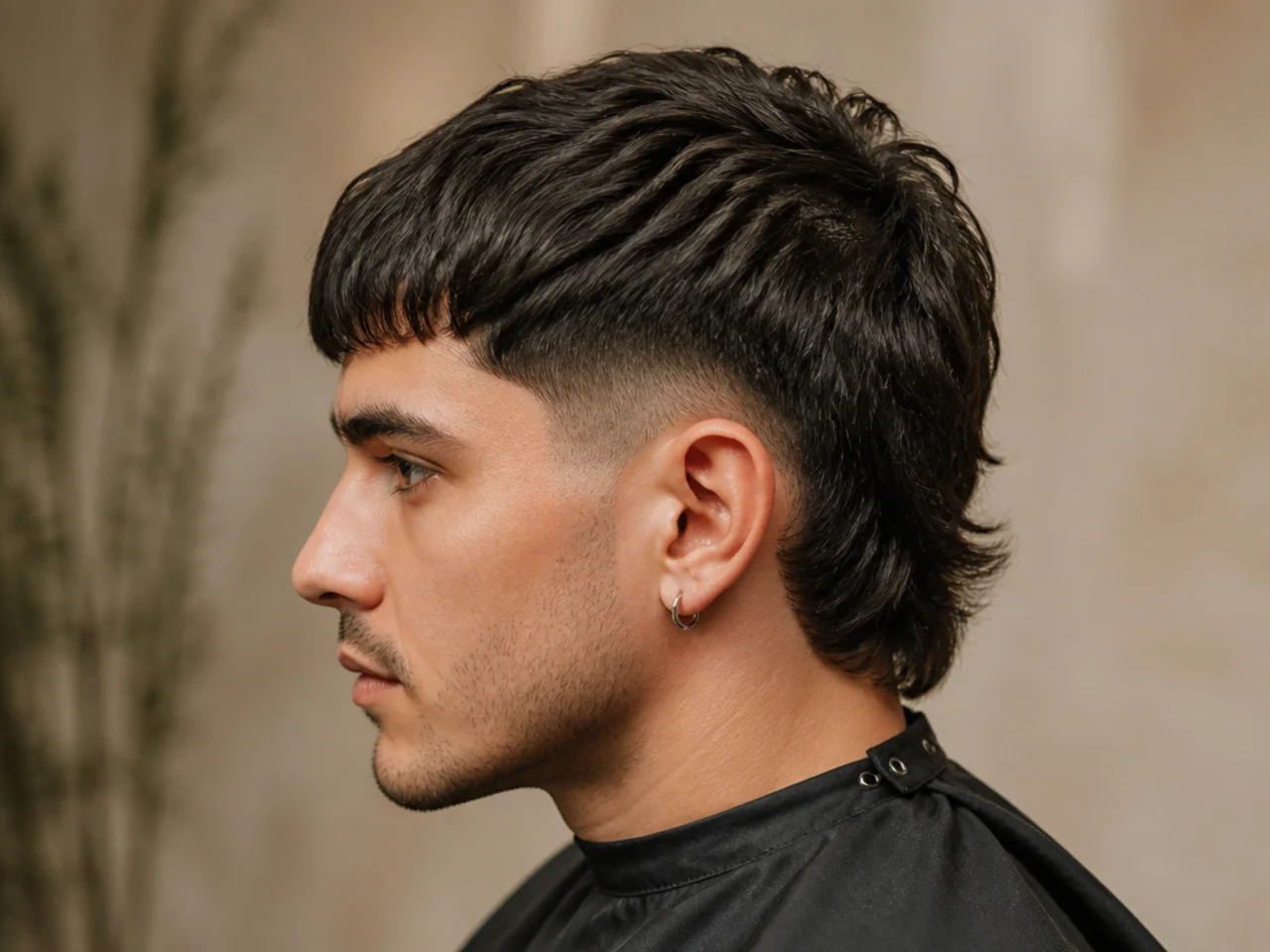
The low fade sits above the ear, giving the fringe and mullet nape a clean short-sided base to sit against. The fade drops to skin at the sideburn and blends up to a guard 2. Above, three inches of top with a textured fringe to the brow. Behind, a three-inch feathered nape. Reads current — one of the most-cut fringe mullet variations right now.
Suits square, oval, and heart faces. Best on straight to wavy hair.
Ask for: "Fringe mullet with a low fade — skin at the sideburn blending up to a guard 2 — three-inch top with a textured fringe point-cut to the brow, three-inch feathered nape." Styling time: one minute — matte paste, finger-comb the fringe forward.
14. Split Fringe Mullet
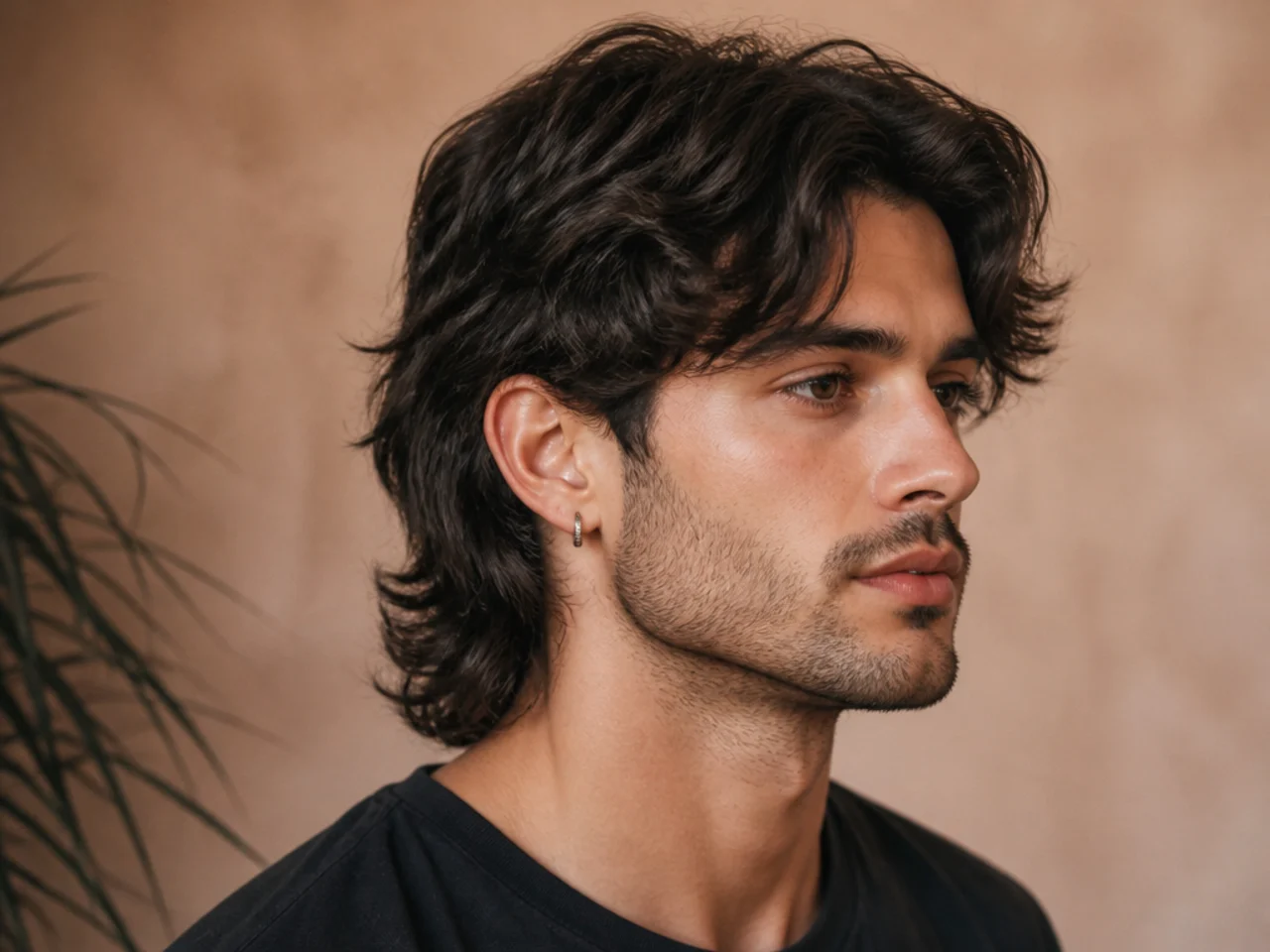
A curtain fringe pushed further. The center parting sits deep and the two halves of the fringe are actively separated with product so a visible gap runs down the center. Combined with a mullet's back drop, the split fringe reads as high-fashion — the runway version of the curtain.
Suits oval and heart faces. Best on straight to slightly wavy hair.
Ask for: "Split fringe mullet, four-inch top with a defined deep center part, split fringe pushed to either side of the forehead with a visible gap, three-inch feathered nape, scissor-blended sides." Styling time: two minutes — cream pomade, blow-dry each side outward, hairspray finish.
15. Fringe Mullet with Beard
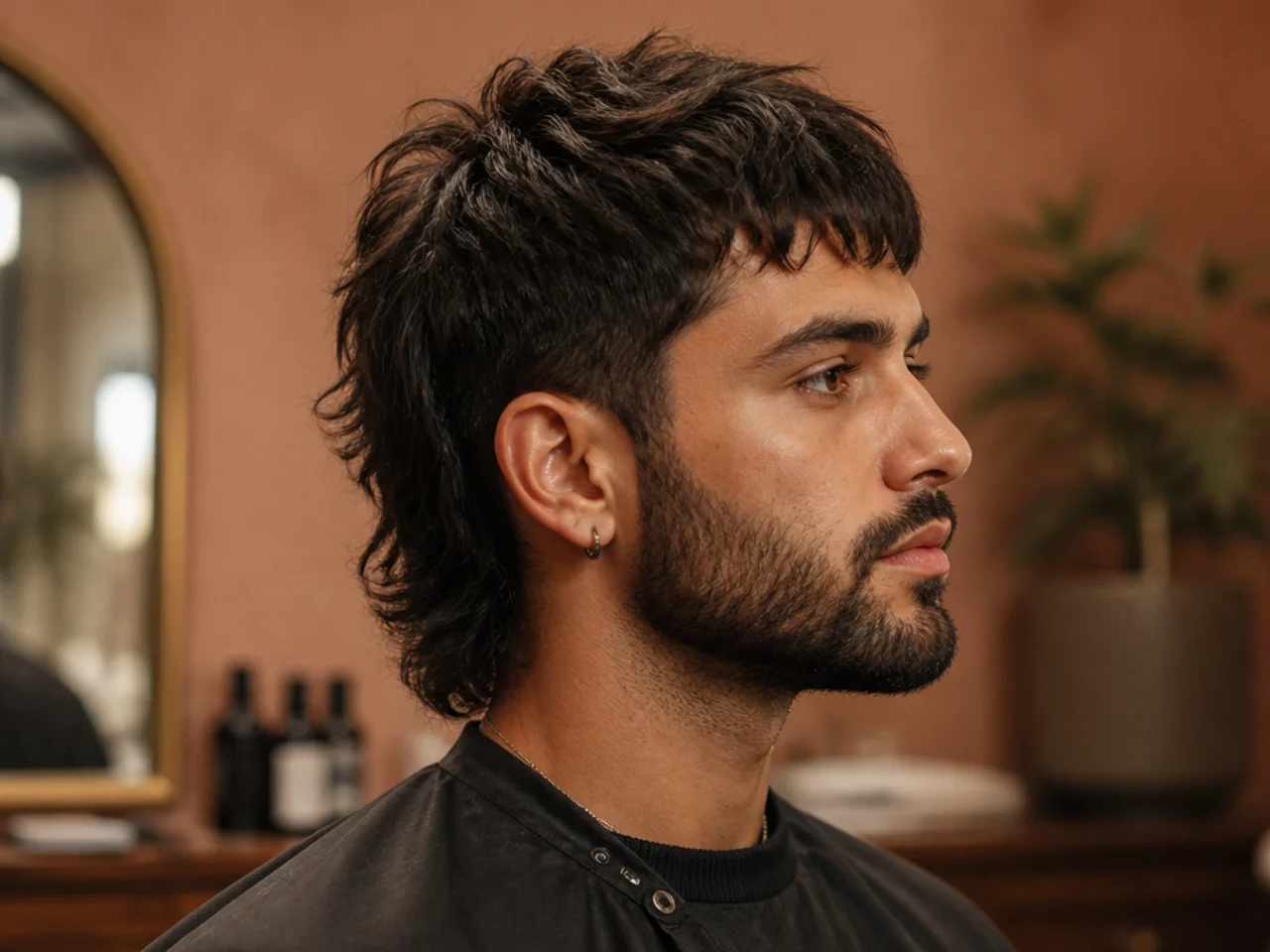
A matched-grade beard grounds the fringe-plus-mullet silhouette. The beard's hard line at the jaw balances the fringe's soft drop at the forehead — top-heavy softness balanced by bottom-heavy density. Reads as an adult cut, more editorial than the young-lead versions.
Suits diamond, oval, and square faces. Best on men in their late twenties and older.
Ask for: "Fringe mullet with a matched beard, three-inch top with internal layers, textured fringe point-cut to the brow, three-inch feathered nape, mid taper connecting into a guard 3 beard, hard sideburn line." Styling time: two minutes for hair and beard combined. See our fringe mullet haircut men guide for the full fringe-focused deep dive.
How to Ask Your Barber for a Fringe Mullet
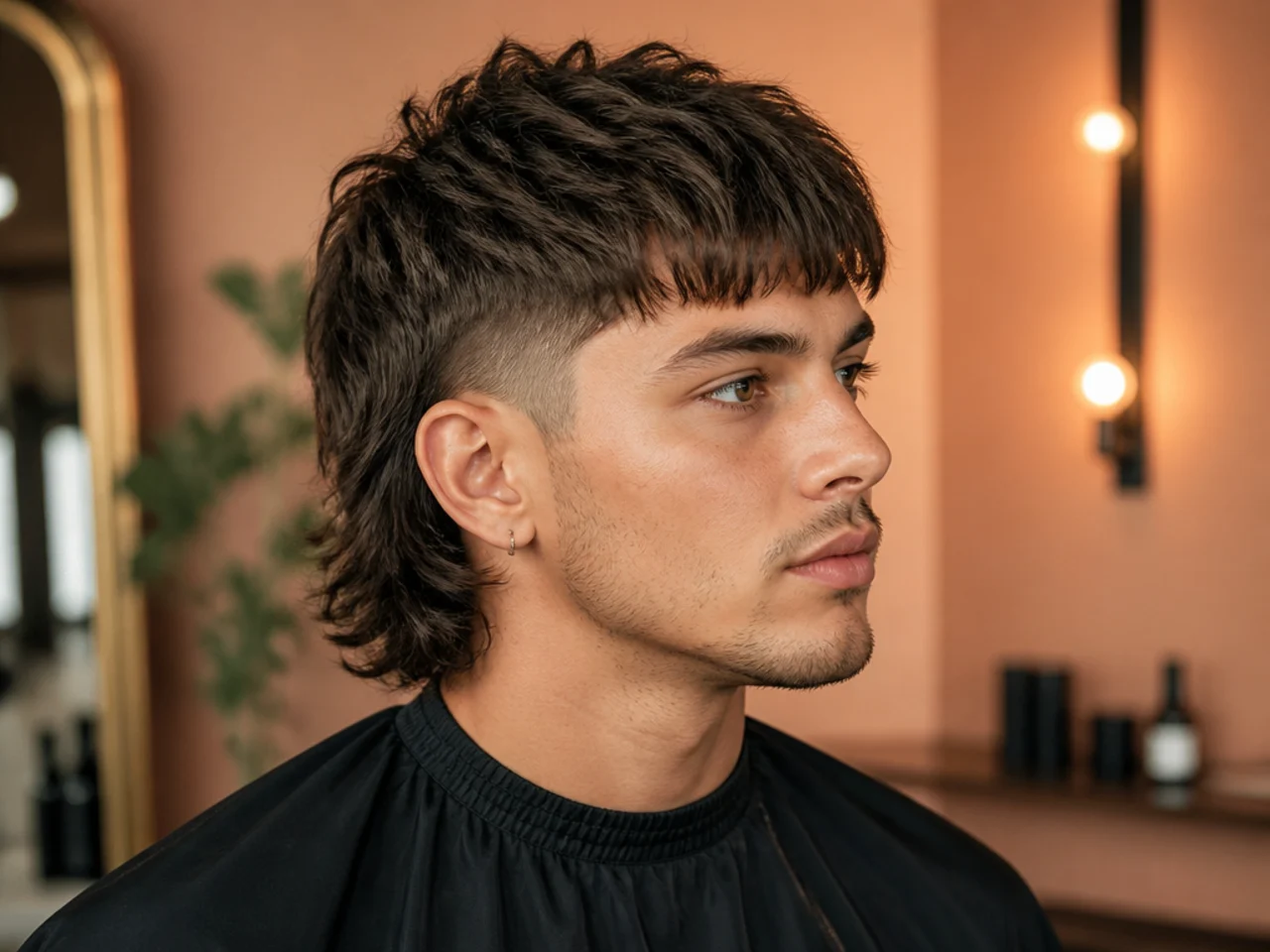
Bring a photo. The fringe shape and length are the two elements that vary most across the fifteen variations, and a photo removes any translation error.
- Name the fringe shape. Textured, curtain, micro, long, blunt, side-swept, comma, Edgar, wispy, or piecey. Each is a different cutting approach — call it out by name so the barber picks the right technique.
- Set the fringe length in inches — measure from the hairline. Mid-forehead is a micro fringe (about one inch of drop from the hairline). Brow level is a classic fringe (two to two-and-a-half inches). Below the eye is a long fringe (three to four inches). Below the cheekbone is a heavy long fringe (five to six inches).
- Set the top length in inches. Two-and-a-half to three inches for classic fringes. Three-and-a-half to four inches for curtains and long fringes. The top length has to work with the fringe length — a two-inch top cannot carry a five-inch fringe.
- Set the nape length in inches. Two-and-a-half to three inches for the modern zone. Three-and-a-half to four inches for the longer versions. The nape stays visibly longer than the sides for the mullet to register.
- Set the perimeter finish at the nape. Feathered reads soft. Piecey reads textured. Blunt reads Edgar-adjacent. The nape finish should echo or complement the fringe finish.
- Set the side treatment. Scissor-blended for softest read. Low taper for scissors-only sharp. Low fade for current-modern. Burst fade for architectural — pairs especially well with Edgar and piecey fringes.
- Confirm the fringe direction before styling. Forward flat for textured and blunt. Center-parted outward for curtain and split. Curled inward for comma. Swept to one side for side-swept. The direction is set in the cut, then reinforced with styling.
Show the photo one more time before the barber picks up the scissors. The fringe length in particular cannot be un-cut for four to six weeks of growth.
Styling and Maintenance
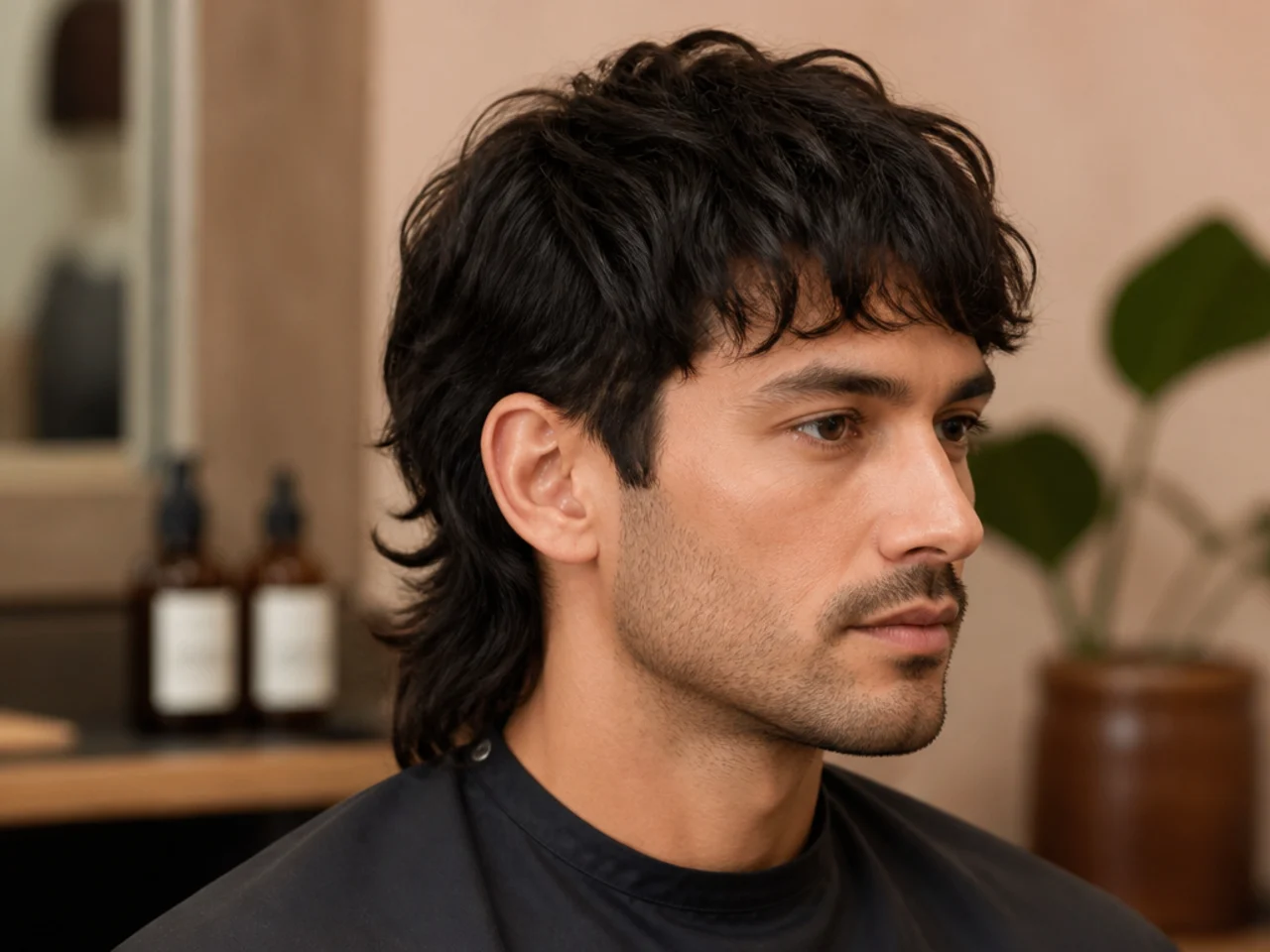
Damp hair, always. Wash and towel-dry so the fringe holds product without dripping. For textured and piecey fringes, use a matte paste. For curtain and long fringes, use a light styling cream. For comma fringes, use a small amount of matte-shine pomade so the curl holds without stiffness.
Fringes need direction. Rough-dry the fringe pointing the direction you want it to sit — forward for textured, outward for curtain, across for side-swept, inward with a round brush for comma. Set the direction while the hair is still damp and it holds all day.
Blow-dry with a small round brush for curtain, comma, and split fringes. The brush creates the shape as the heat dries the hair. For textured, blunt, micro, and side-swept fringes, finger-drying is enough.
Product weight matters. Heavy pomades pull fringes flat and greasy — skip them. Matte pastes and light styling creams sit lightly on the fringe without dragging it down. High-shine gels work for comma and split fringes but should stay out of textured and piecey styles.
Re-cut the fringe every three to four weeks. Front hair grows fastest, and even a quarter-inch of drop pushes the fringe into your eyes and changes the whole read. Book a fringe-only trim between full re-cuts — most barbers charge a small fee or nothing at all. The rest of the cut can wait six to eight weeks. For sibling silhouettes, see our short mullet haircut men or stylish mullet haircut men guides.
FAQ
What is the best fringe mullet for a round face?
The micro fringe mullet or the wispy fringe mullet. Both keep the fringe piecey and light rather than heavy and blunt — heavy fringes add horizontal width to a round face, while textured fringes break the width up. Skip the blunt and Edgar fringes for round faces.
How long does the top need to grow before you can cut a fringe mullet?
At least three inches at the crown for the classic and micro variations. Four to five inches for the curtain, comma, split, and long fringe variations. Growing from a standard men's cut takes four months for the shorter fringes and six months for the longer ones.
Can a fringe mullet be part of a workplace haircut?
Yes — the textured fringe mullet with a scissor-blended side and a matte finish reads as a contemporary layered cut rather than a statement mullet. Skip the long, split, and Edgar variations for traditional offices. The mullet haircut for men guide has quieter alternatives if the office is genuinely conservative.
What is the difference between a fringe mullet and a comma hair mullet?
A fringe mullet is any mullet with front hair falling forward as a defined fringe. A comma hair mullet is a specific fringe variation where the front hair is styled with a round brush to curl inward at the ends in a comma shape. Every comma is a fringe; not every fringe is a comma.