20 Steps To Grow Into A Long Mullet Fade In 6 Months
Scalp hair grows around half an inch a month, so six months buys roughly three inches at the back. Twenty steps in order, including the one that ruins most attempts: trimming the sides and the back on the same visit.
In this article · 27
- What A Long Mullet Fade Actually Is
- Choosing Your Fade Height Before You Start
- The 20 Steps
- 1. Measure Where You Are Starting
- 2. Cut The Sides And Leave The Back
- 3. Set The Fade Height Once
- 4. Photograph The Starting Point
- 5. Book The First Trim For Week Three
- 6. Trim The Sides Only
- 7. Let The Corner Above The Ear Grow
- 8. Ride Out The Month Two Shelf
- 9. Point Cut The Ends At Week Ten
- 10. Keep The Fade Off The Fringe
- 11. Stop Trimming The Back Entirely
- 12. Add Layers Only When The Back Clears The Collar
- 13. Switch From Paste To Cream
- 14. Dry The Back Downward From Now On
- 15. Sleep On Silk Or Plait It
- 16. Reassess The Fade Against The New Length
- 17. Take The Weight Out Of The Interior
- 18. Trim The Ends At Week Twenty
- 19. Cut The Final Shape At Six Months
- 20. Set The Maintenance Interval
- Styling and Upkeep
- Mistakes to Avoid
- FAQ
- Final Thoughts
Most attempts at a long mullet fade fail in the chair rather than in the mirror, on the visit where the back gets tidied along with the sides.
Six months buys about three inches. Scalp hair grows roughly half an inch a month, so the timeline is fixed by biology and the only variable is what gets cut off along the way.
The sides keep getting cut. The back does not. The contrast is the cut. Letting everything grow evenly produces long hair, not a mullet fade.
What A Long Mullet Fade Actually Is
A fade goes to skin. A taper does not. A fade takes the sides to bare scalp, which is why it shows regrowth in one to two weeks. A taper finishes around a number one at three millimetres and holds three to four.
The length lives below the occipital bone. Everything under that bony ridge at the back of the skull is the tail. Everything above and around it is faded.
The two are joined by a corner above the ear. That corner is where the fade turns into the length, and it is the part of the cut that decides whether the shape looks deliberate.
Long means past the collar. Anything shorter sits on the shirt rather than over it, and hair resting on fabric kicks outward instead of hanging.

Choosing Your Fade Height Before You Start
Low, at the top of the ear, keeps it wearable. The fade stays under the hairline and most of the side keeps length, so the cut reads as long hair with a clean edge.
Mid, halfway up, gives the real contrast. It is the height most long mullet fades are photographed at, and it strips volume from the side of the head, which the tail then has to balance.
High, at the parietal ridge, needs a heavy tail. Take that much off the sides with a thin back and the head reads narrow from every angle.
Decide once and record it. Fade height is the variable that makes the same cut look different month to month, and it is the only measurement worth writing down.

The 20 Steps
1. Measure Where You Are Starting
Put a tape against the longest point at the back and write the number down. Without a starting figure you cannot tell growth from imagination, and month three feels like nothing is happening even when three quarters of an inch has arrived.
2. Cut The Sides And Leave The Back
The first appointment establishes the shape rather than waiting for it. Fade the sides now and leave every hair below the occipital bone untouched, because a mullet grown from an even starting point takes an extra two months to separate.

3. Set The Fade Height Once
Name the height against the ear and keep it for the full six months. Changing it partway resets the visual reference, so the cut appears to go backwards even though the back is longer than it was.

4. Photograph The Starting Point
Take a side and a back shot on day one. It is the only reliable comparison you will have at month three, when the change is real but too gradual to notice from daily mirror use.

5. Book The First Trim For Week Three
A skin fade blurs within one to two weeks and is gone by three, so week three is the outside limit. Leave it to week five and the sides have grown level enough that the shape has to be rebuilt rather than maintained.

6. Trim The Sides Only
Say it out loud at every appointment: sides and fade only, nothing below the ridge. Barbers tidy long ends by reflex, and a single half inch taken off the back costs a month of the six.

7. Let The Corner Above The Ear Grow
Resist cleaning up the corner where the fade meets the length. That hair is what will eventually bridge the two sections, and shaving it each visit leaves a permanent notch that no amount of growth fills.

8. Ride Out The Month Two Shelf
At about two inches the back is long enough to reach the collar but not to pass it, so the ends kick outward. Cutting the flick off restarts the problem an inch shorter, and it returns within three weeks anyway.

9. Point Cut The Ends At Week Ten
The only cut the back should get. Point cutting takes the split tips off at an angle without shortening the section, so the length is preserved while the ends stop looking frayed.

10. Keep The Fade Off The Fringe
The front should now be long enough to fall forward, and it needs to be left alone too. A fringe cut to stay tidy through the grow out ends up two months behind the rest and never catches up.

11. Stop Trimming The Back Entirely
From month three the back is the whole project. Even a dusting removes the length that a month of growth just added, which is how people spend a year arriving at four inches.

12. Add Layers Only When The Back Clears The Collar
Layering before that point removes the weight the tail needs to hang. Once it is past the collar there is enough length that a few interior layers add movement without shortening the outline. Detail in the full mullet haircut.

13. Switch From Paste To Cream
Paste grips short hair and holds the crown up, but at three inches it clumps the tail into strips. A cream coats without setting, so the length hangs as one piece and still moves.

14. Dry The Back Downward From Now On
Hair sets in the direction it dries. Pointing the nozzle down the length closes the cuticle along the strand and trains the tail to hang, where upward airflow bakes the flick in for the day.

15. Sleep On Silk Or Plait It
Cotton drags the cuticle open overnight, and open cuticles are what snap. Six months of nightly friction removes as much length from the ends as two trims would, so this is a growth decision rather than a comfort one.

16. Reassess The Fade Against The New Length
At month four the tail finally has enough weight to balance a higher fade. Raising it now genuinely sharpens the cut, where raising it at month one would have left the head looking narrow.

17. Take The Weight Out Of The Interior
If the tail sits as a block, remove bulk from inside the section rather than off the ends. That keeps the outline exactly where it is while letting the length actually hang instead of standing away from the neck.

18. Trim The Ends At Week Twenty
One more point cut, no more than a quarter inch. Damaged ends taper to nothing and make the tail look thinner than it is, so removing them costs a fortnight of growth and returns the width.

19. Cut The Final Shape At Six Months
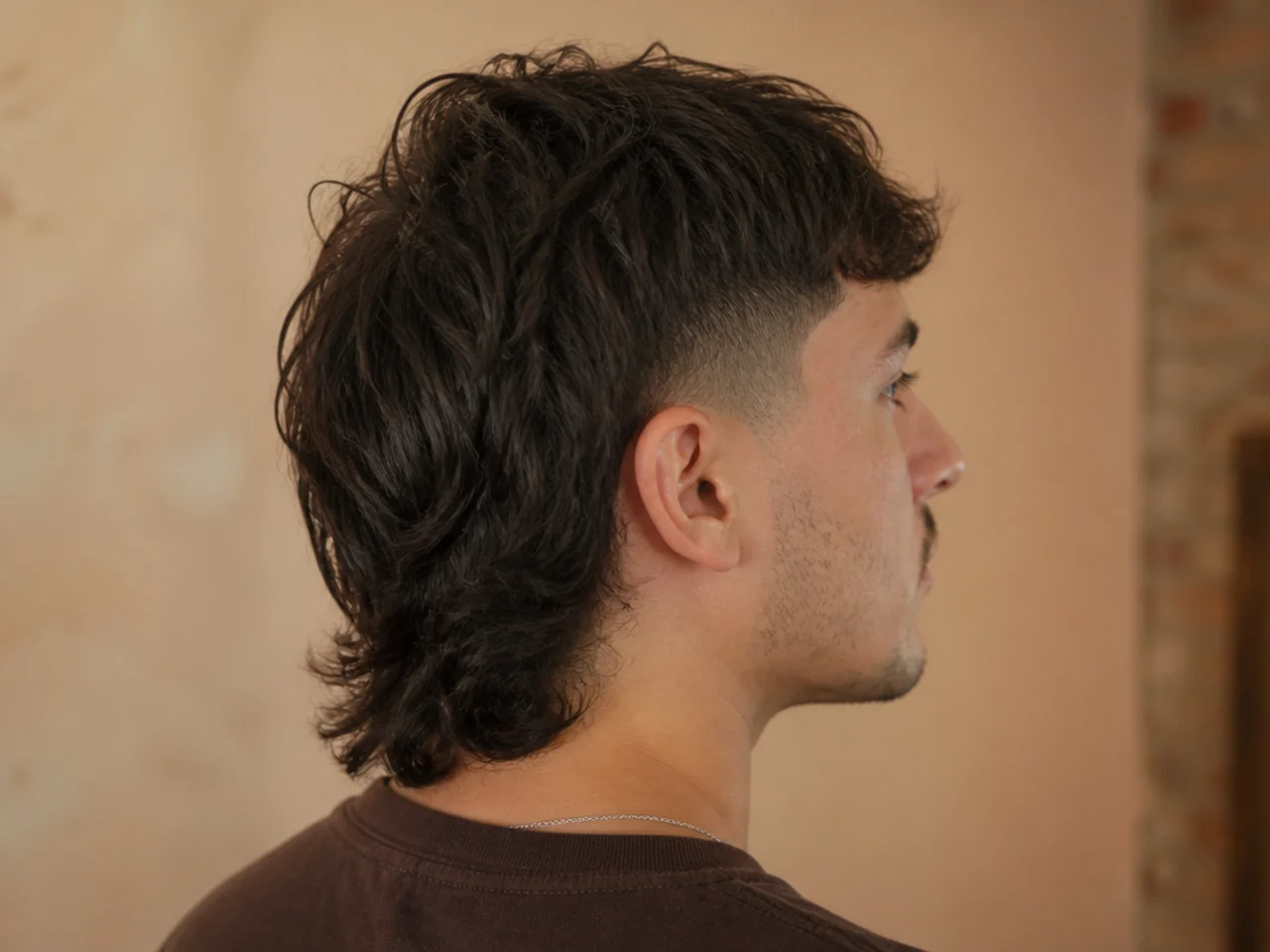
Now the outline gets decided: where the tail finishes, whether the bottom is left blunt or tapered, and how the corner above the ear joins the two sections. Doing this earlier is guessing with length you did not have. More on the finished shape in the mullet fade for men.
20. Set The Maintenance Interval
From here the fade sets the schedule, not the tail. A skin fade needs two weeks and a taper three to four, while the back needs a point cut two or three times a year and nothing else.

Styling and Upkeep
Say sides only, every single visit. It is the one instruction that decides whether six months of growth survives.
Wash the back less than the sides. Length dries out fastest at the ends because they are the oldest hair on the head, and shampoo strips the oil that protects them.
Condition from the mid lengths down. The tail needs it and the faded sides do not, and conditioner near the root flattens whatever lift the crown has.
Keep a comb, not a brush, for wet hair. Wet hair stretches and snaps, and a wide tooth comb pulls through in one direction rather than tearing across the section.
Photograph every month. Growth of half an inch a month is invisible day to day, and the photographs are what stop the third month becoming a haircut.

Mistakes to Avoid
Letting the back be tidied. It is the default barber reflex and it is the single most expensive mistake in the process.
Cutting the flick out at month two. It comes back an inch shorter within three weeks. Weight fixes it, not length.
Skipping the fade to save money. Six months of even growth is not a mullet fade, it is long hair. The contrast is the entire cut.
Layering too early. Weight is what makes a short tail hang. Removing it before the collar leaves the ends flicking outward for another two months.
Changing the fade height every visit. The cut looks different each time and the growth appears to stall, because your reference point moved rather than your hair.

FAQ
How long? Six months, at about half an inch of growth a month.
Cut anything? Sides and fade only, plus two point cuts on the ends.
Hardest stage? Weeks six to ten, when the ends kick off the collar.

Final Thoughts
The whole process comes down to one sentence repeated every three weeks: fade the sides, nothing below the ridge. Growth is fixed at roughly half an inch a month, so the only thing you control is how much of it stays on your head.
For the shape you are aiming at see the mullet haircut for men, and for the layered version of the same length see the long wolf cut for men. More in Fade Haircuts.