15 Full Mullet Haircuts for Men in 2026
Fifteen full mullet haircuts for men in 2026 — classic 80s, modern, Aussie, curly, faded. Photos, face-shape notes, and barber-ready cutting terms.
In this article · 25
- What Is a Full Mullet?
- How to Choose Your Full Mullet
- The 15 Full Mullet Variations
- 1. Classic 80s Full Mullet
- 2. Modern Full Mullet
- 3. Aussie Full Mullet
- 4. Full Mullet with Low Fade
- 5. Full Mullet with Burst Fade
- 6. Full Curly Mullet
- 7. Full Wavy Mullet
- 8. Full Straight Mullet
- 9. Full Mullet with Layered Fringe
- 10. Full Mullet with Mustache
- 11. Retro Full Mullet
- 12. Full Mullet with High Skin Fade
- 13. Full Mullet with Beard
- 14. Full Mullet Wolf Cut Hybrid
- 15. Long Full Mullet
- How to Ask Your Barber for a Full Mullet
- Styling and Maintenance
- FAQ
- How long does it take to grow out a full mullet?
- What is the difference between a full mullet and a wolf cut?
- Does a full mullet work with thinning hair?
- Which full mullet is the least offensive to a conservative office?
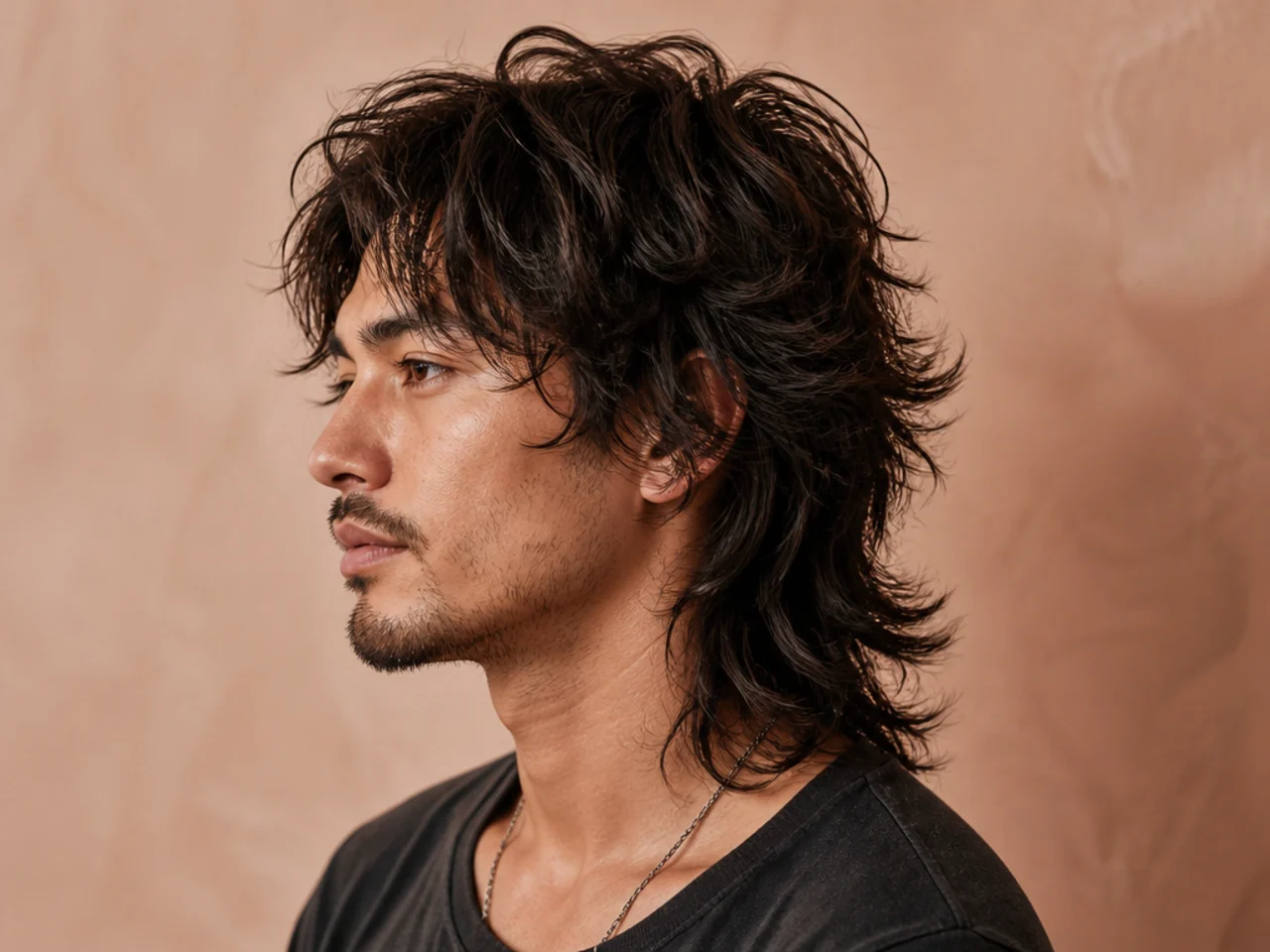
The full mullet is back at full length. Not the compressed office version, not the subtle taper-with-a-drop — the real thing, with three to five inches at the nape, layered internal texture, and a length ratio that reads from any angle. This guide covers fifteen full mullet haircuts men are asking for in 2026, with the face-shape rules that flatter each one and the exact language to hand your barber for the version you want.
What Is a Full Mullet?
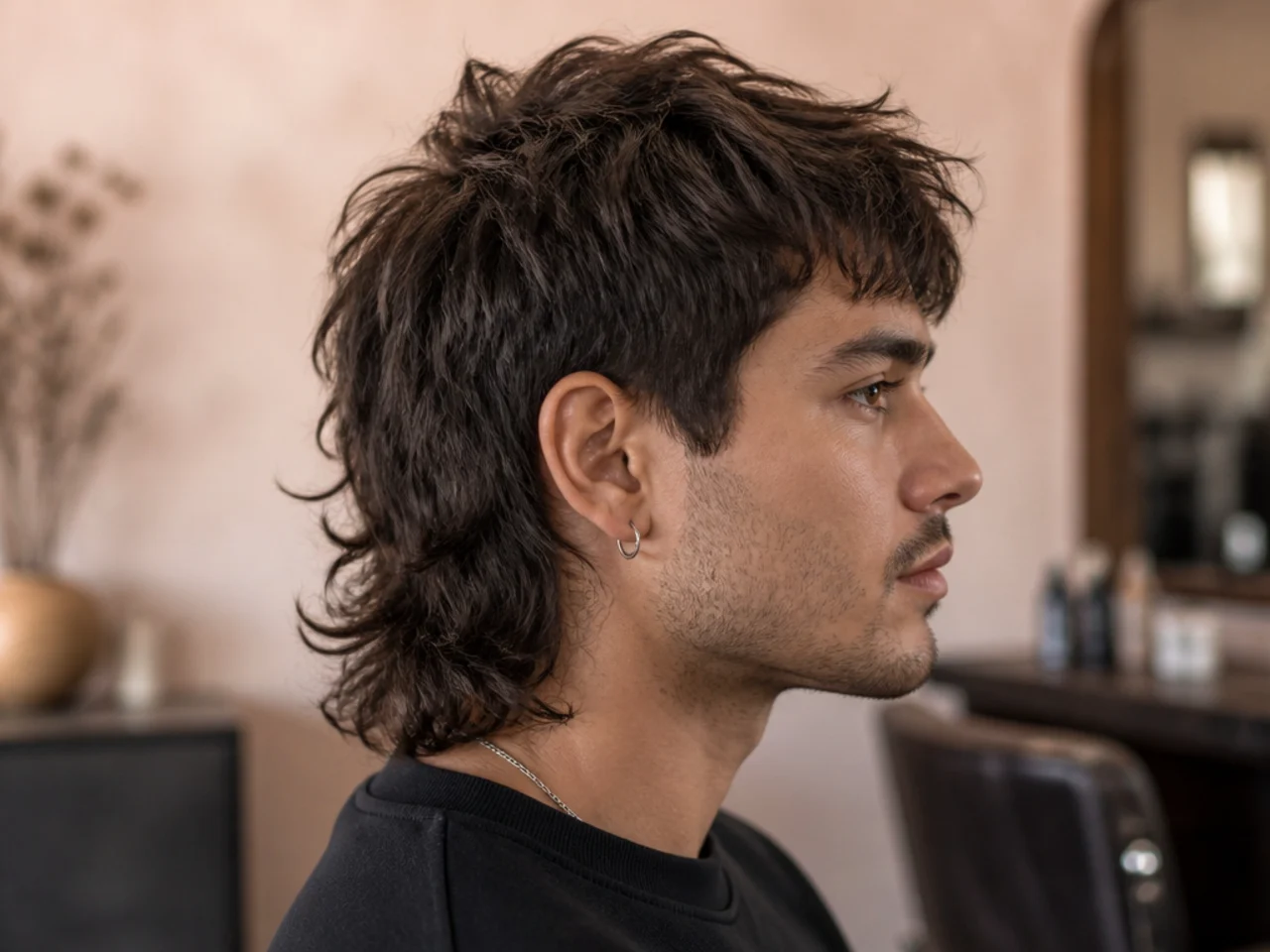
A full mullet is the mullet at its intended proportions. Top runs three to four inches with internal layers for movement. Nape drops to three to five inches at its longest point, feathered or blunt-cut at the perimeter. Sides get scissor-blended, tapered, or faded so the length lives entirely at the top and back.
The full version is the reference silhouette. Every shorter mullet — the short mullet, the slight mullet, the mini — is a compressed variation of this shape. Cut a full mullet and the same person can wear it as a statement one week and pin it back for a meeting the next.
The cultural read has shifted. Where the mullet was retro-only for two decades, the full mullet now reads current — worn by Premier League footballers, AFL players, indie rock frontmen, and off-duty actors in their twenties and thirties. Growing it out is a two-season commitment, but the payoff is a cut with real presence and none of the halfway-measures energy.
How to Choose Your Full Mullet
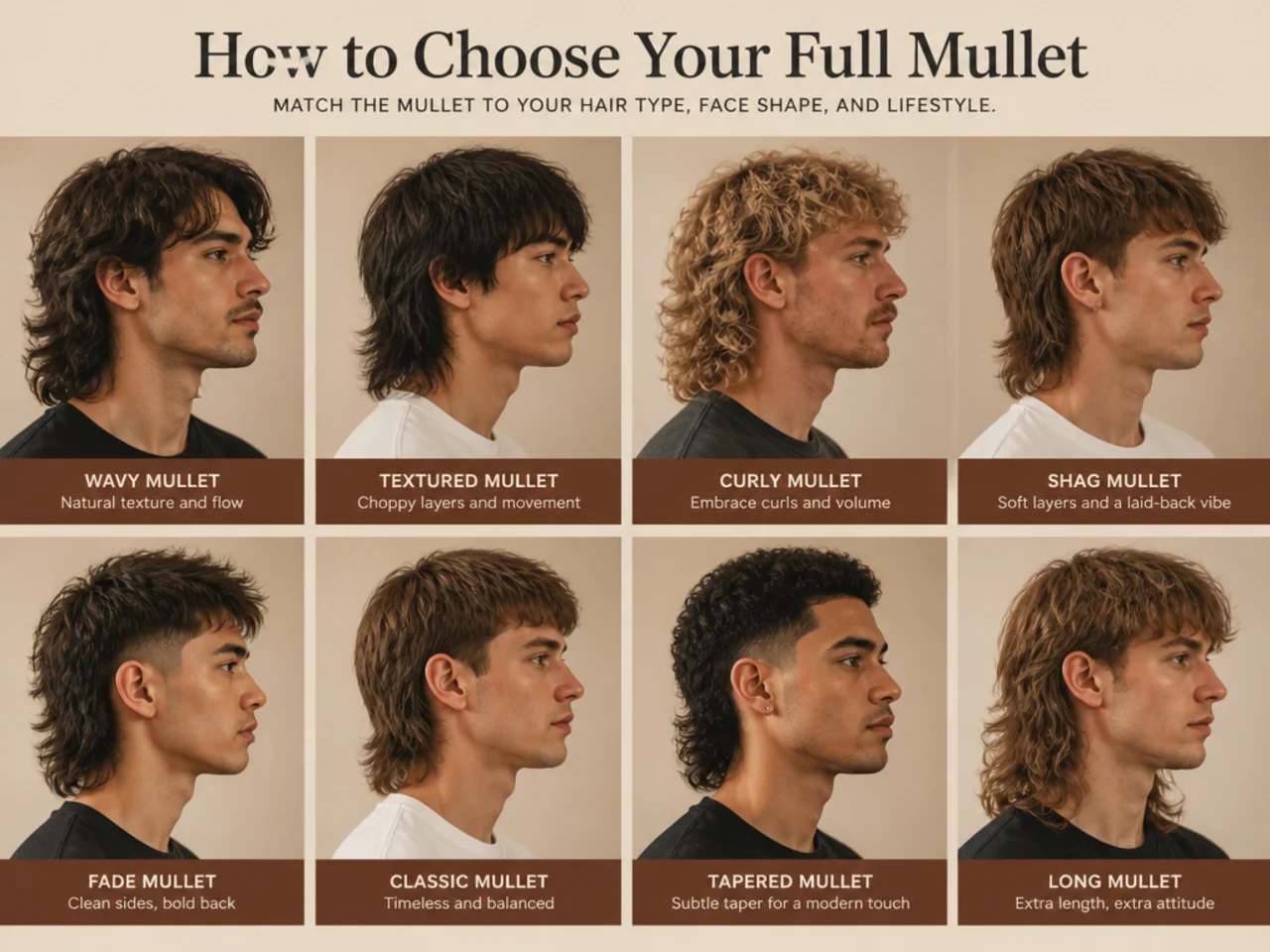
Face shape sets the top-to-back ratio. Oval and heart faces suit every ratio — from a three-inch top over a three-inch nape to a two-inch top over a five-inch nape. Square and diamond faces want a longer nape than top for vertical proportion. Round faces need three to four inches on top with a defined low taper to lengthen the profile. Long faces stay at two to two-and-a-half inches on top with a forward fringe so the shape does not stretch.
Hair type sets the layering rhythm. Straight hair reveals every layer line, so it wants heavy point-cutting through the crown and light razor work at the nape. Wavy hair sits best with soft internal layers cut in the wave direction. Curly and coily hair barely needs cutting — the pattern builds the mullet shape on its own with a dry-cut for shape.
Lifestyle sets the side treatment. Scissor-blended sides read soft. A low taper fade reads sharp without a hard line. A burst fade or high skin fade turns the full mullet into a statement cut. For the wider mullet family, see the mullet and wolf cut hub or our modern mullet haircut men pillar for the middle-of-the-road version.
The 15 Full Mullet Variations
Each variation below breaks down the shape, the flattering face shapes, and the exact language for the chair. Hand your barber a photo and the numbers together.
1. Classic 80s Full Mullet
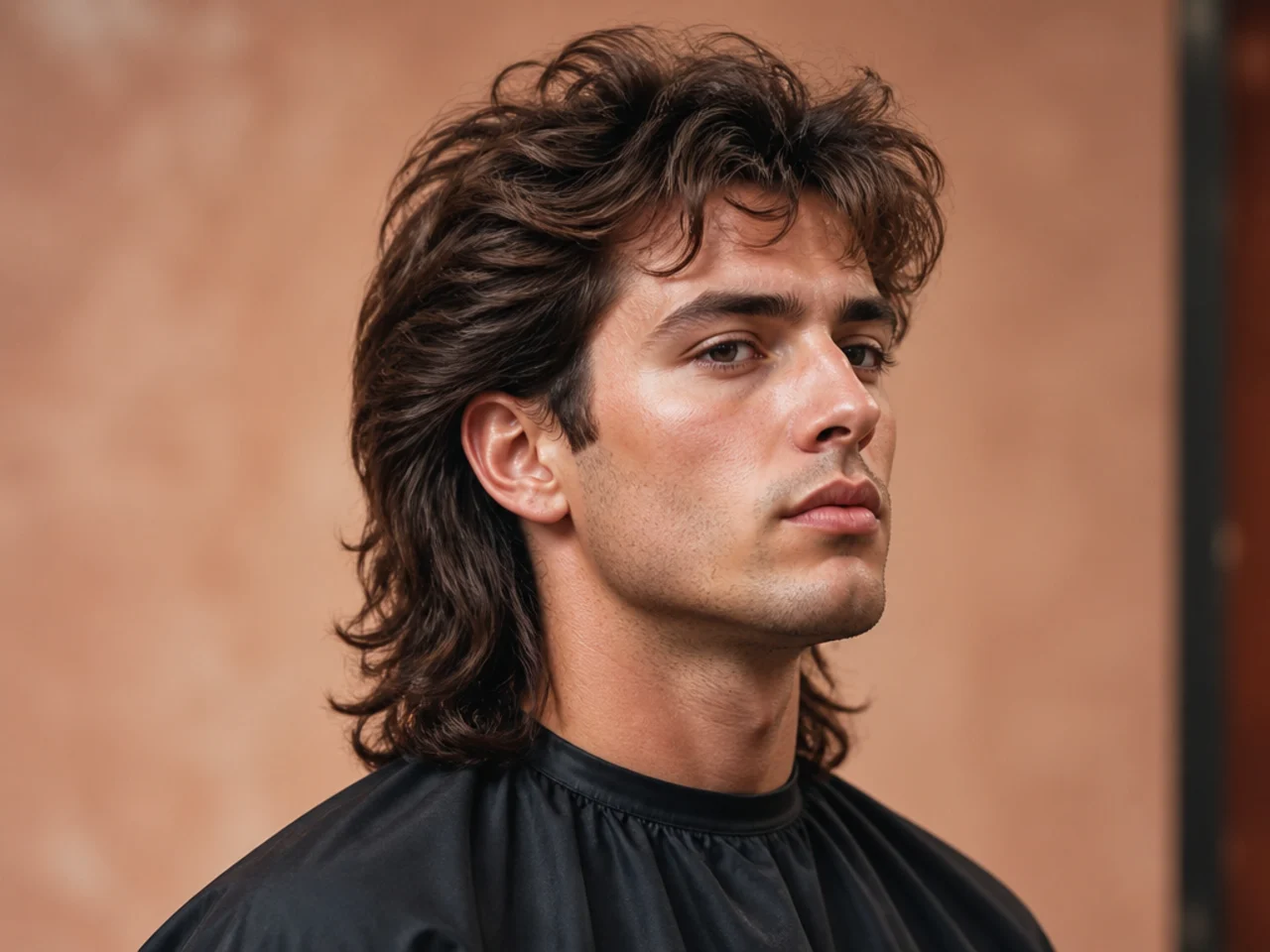
The reference cut. Four-inch top with soft layers, a defined side part, four to five inches at the nape falling in a feathered curtain, and blended sides with no fade. Reads unmistakably retro — the mullet as it was worn in 1985, without any modern compression.
Suits oval and square faces. Best on straight to slightly wavy medium-density hair.
Ask for: "Classic 80s full mullet, four-inch top with soft layers and a defined side part, five-inch feathered nape falling in a curtain, scissor-blended sides — no fade line, no taper." Styling time: two minutes — cream pomade combed through, blow-dry the nape down and back.
2. Modern Full Mullet
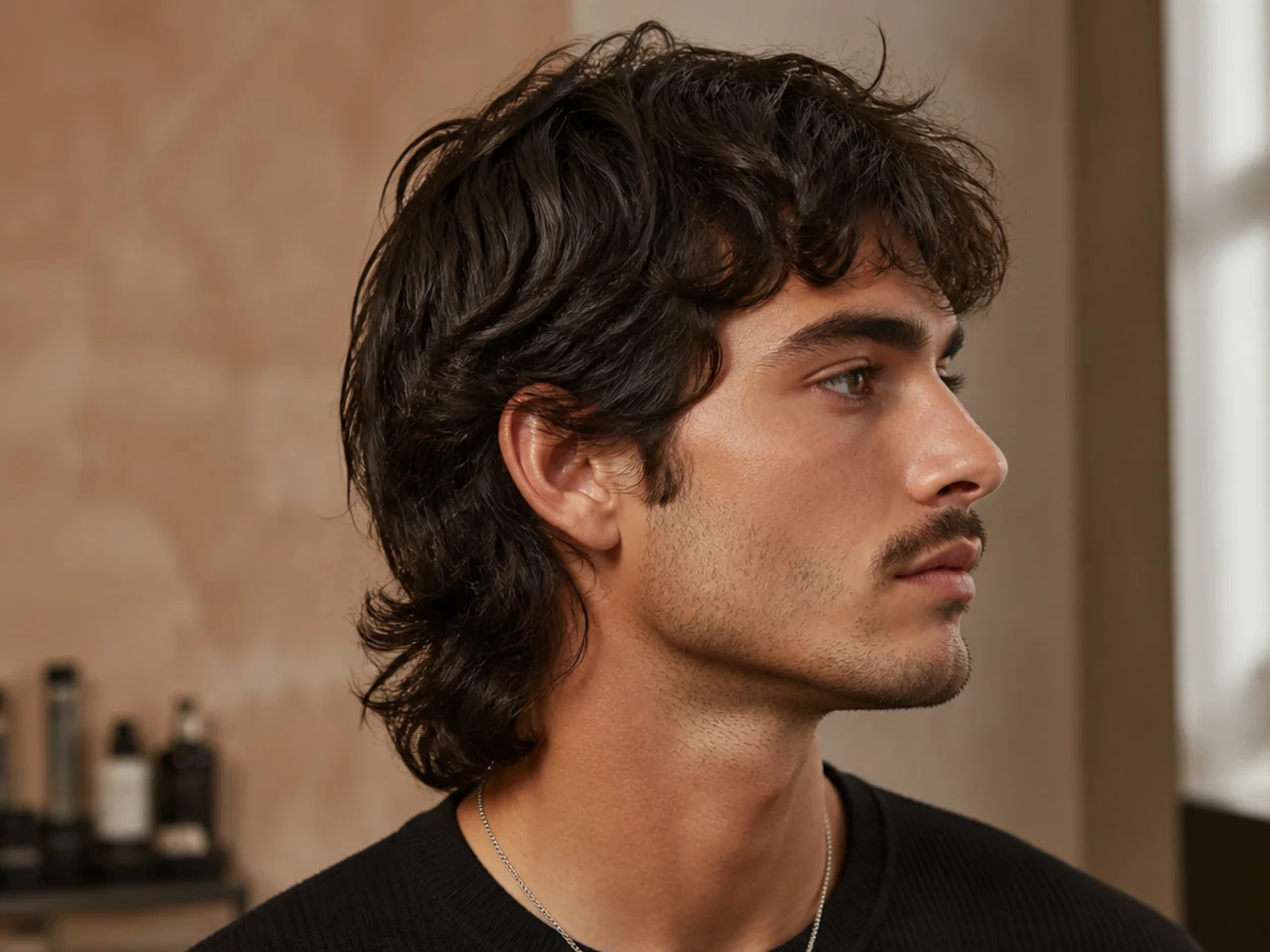
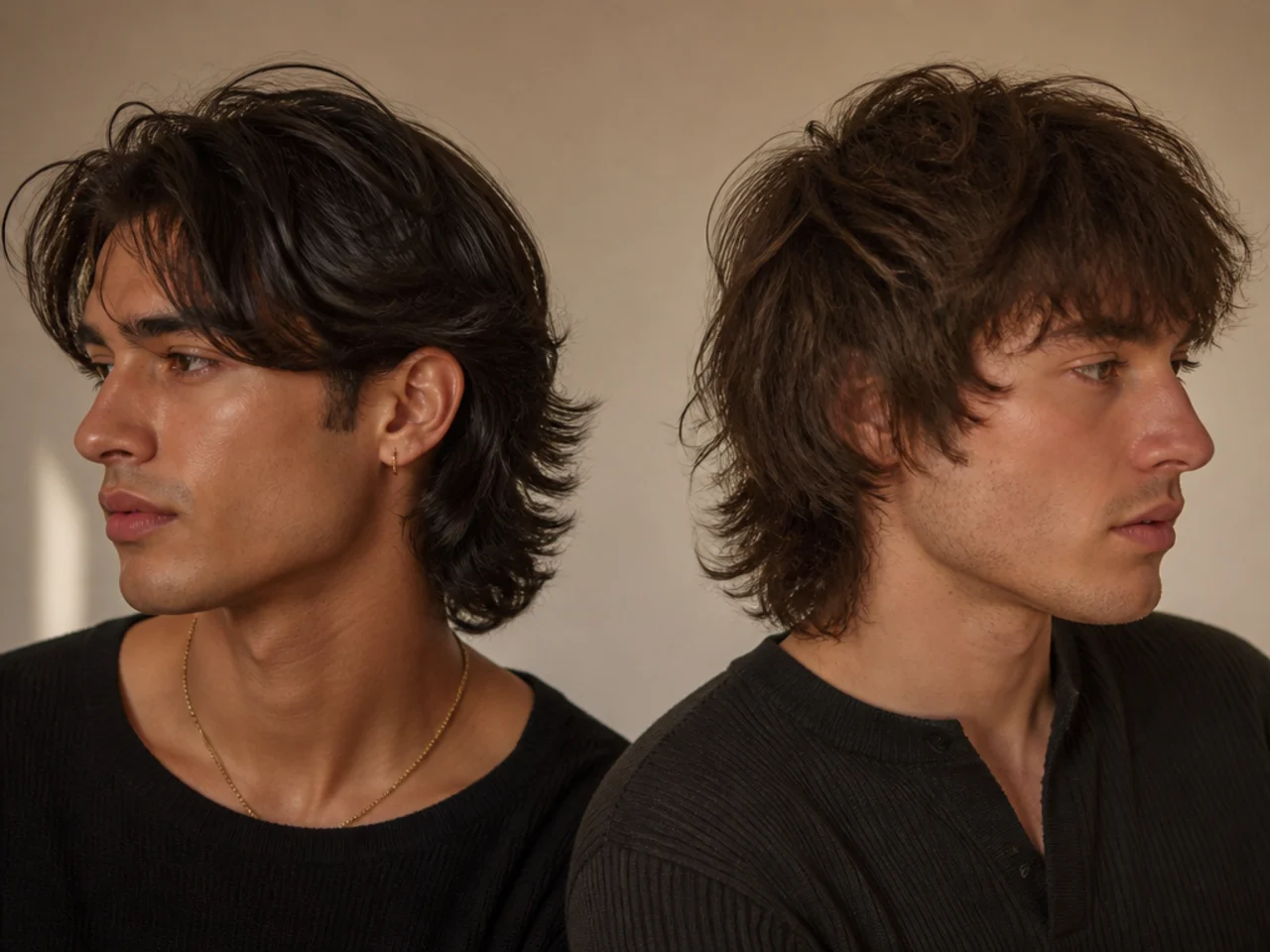
The 2026 baseline. Three-inch top with internal layers, three-inch feathered nape, and a soft scissor taper on the sides. Reads intentional without leaning hard into retro. This is what most barbers cut when a client says "a full mullet."
Suits every face shape. Works with any hair type — the modern version is the most adaptable.
Ask for: "Modern full mullet, three-inch top with internal layers, three-inch feathered nape, soft scissor taper on the sides — no fade line." Styling time: one minute — matte clay through damp hair, finger-comb backward.
3. Aussie Full Mullet
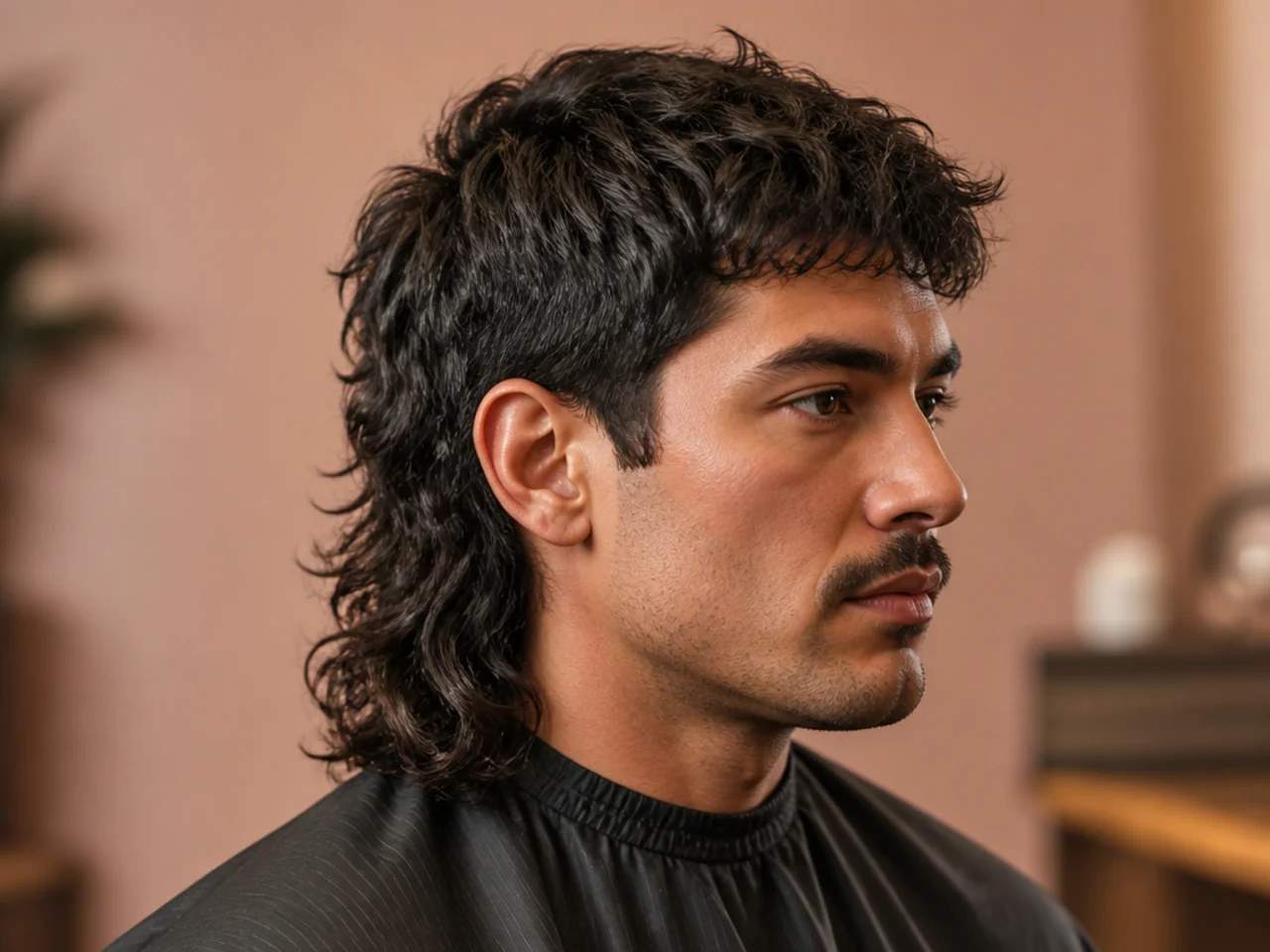
The Australian version — cropped through the top, long and straight through the back. One-and-a-half inches on top, four to five inches at the nape falling straight down without feathering, and a hard low taper on the sides. The AFL and rugby league dressing-room cut, worn straight into daily life.
Suits oval, square, and diamond faces. Best on straight hair that hangs cleanly at length.
Ask for: "Aussie full mullet, one-and-a-half-inch cropped top, four-and-a-half-inch straight nape with a blunt perimeter — no feathering — hard low taper on the sides at a guard 1." Styling time: thirty seconds — light styling cream, comb the nape flat.
4. Full Mullet with Low Fade
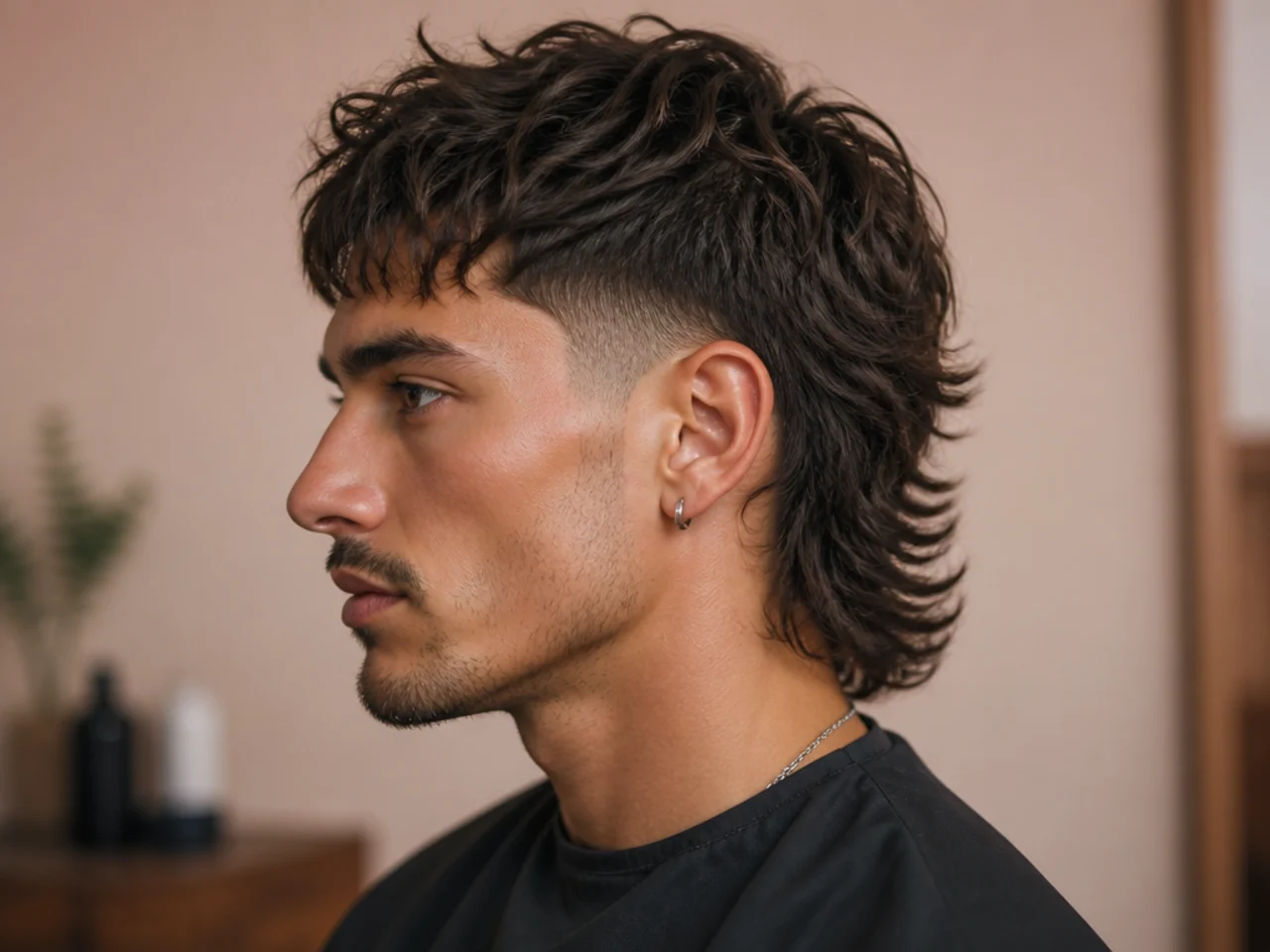
The low fade sits just above the ear, so the mullet's back section reads cleanly against short sides. The fade drops to skin at the sideburn and blends up quickly, keeping the top and back as the visual focus. Reads current — the most-cut fade-plus-mullet combination in barbershops right now.
Suits square, oval, and heart faces. Best on straight to wavy hair that holds shape.
Ask for: "Full mullet with a low fade — skin at the sideburn blending up to a guard 2 — three-inch textured top, four-inch feathered nape." Styling time: one minute — matte paste through damp hair, blow-dry backward for lift.
5. Full Mullet with Burst Fade
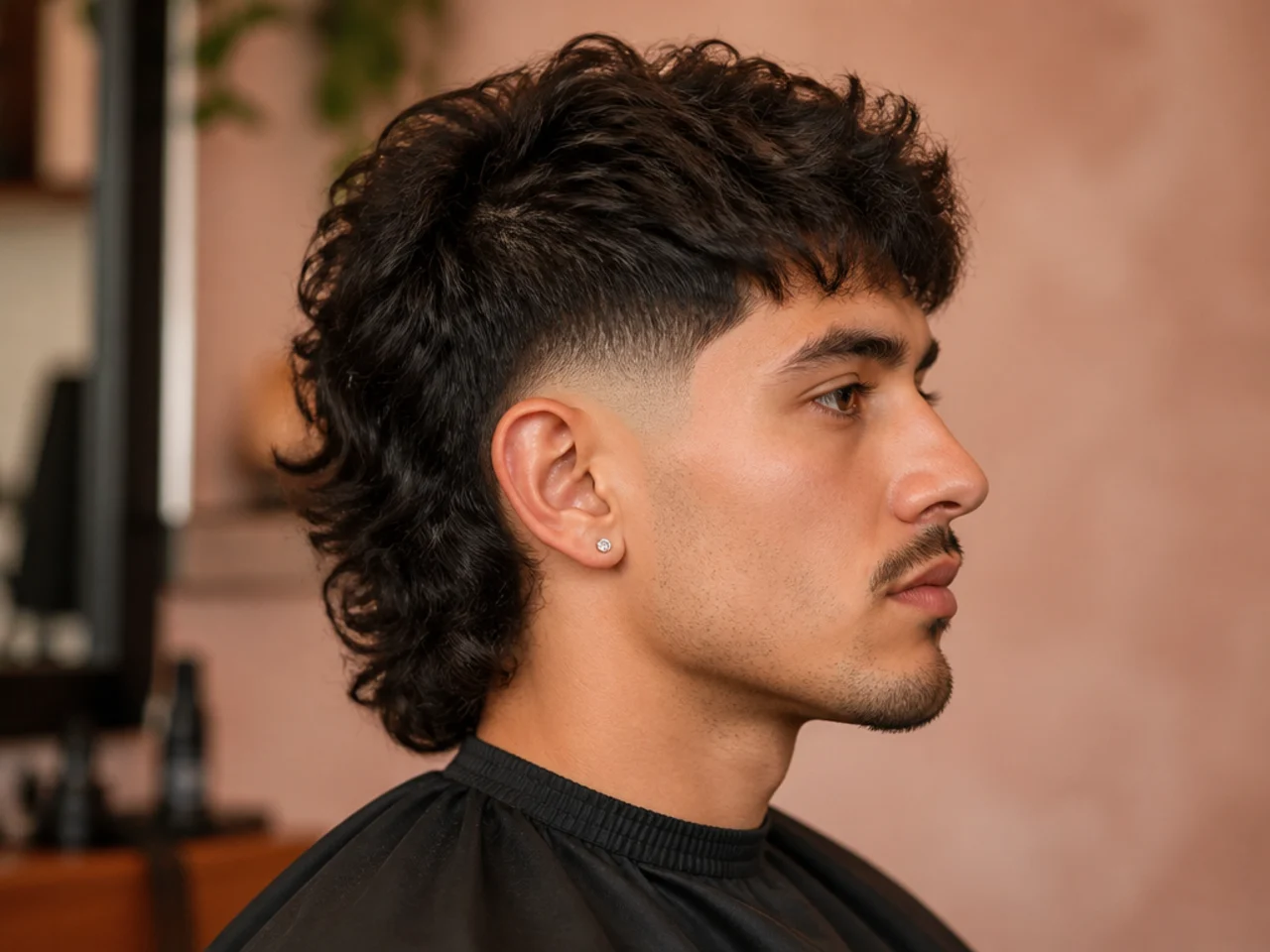
The burst fade curves in a clean semicircle around each ear, leaving the nape length untouched. That leaves a small strip of length behind the ear that flows straight into the full mullet's back section — a signature not every barber cuts cleanly, so ask specifically for the burst arc.
Suits oval, square, and diamond faces. Works with any hair type but shines with a bit of wave or curl.
Ask for: "Full mullet with a burst fade, three-inch textured top with layers, burst fade to a guard 1 around each ear, four-inch feathered nape kept intact." Styling time: one minute — matte clay, finger-comb backward.
6. Full Curly Mullet
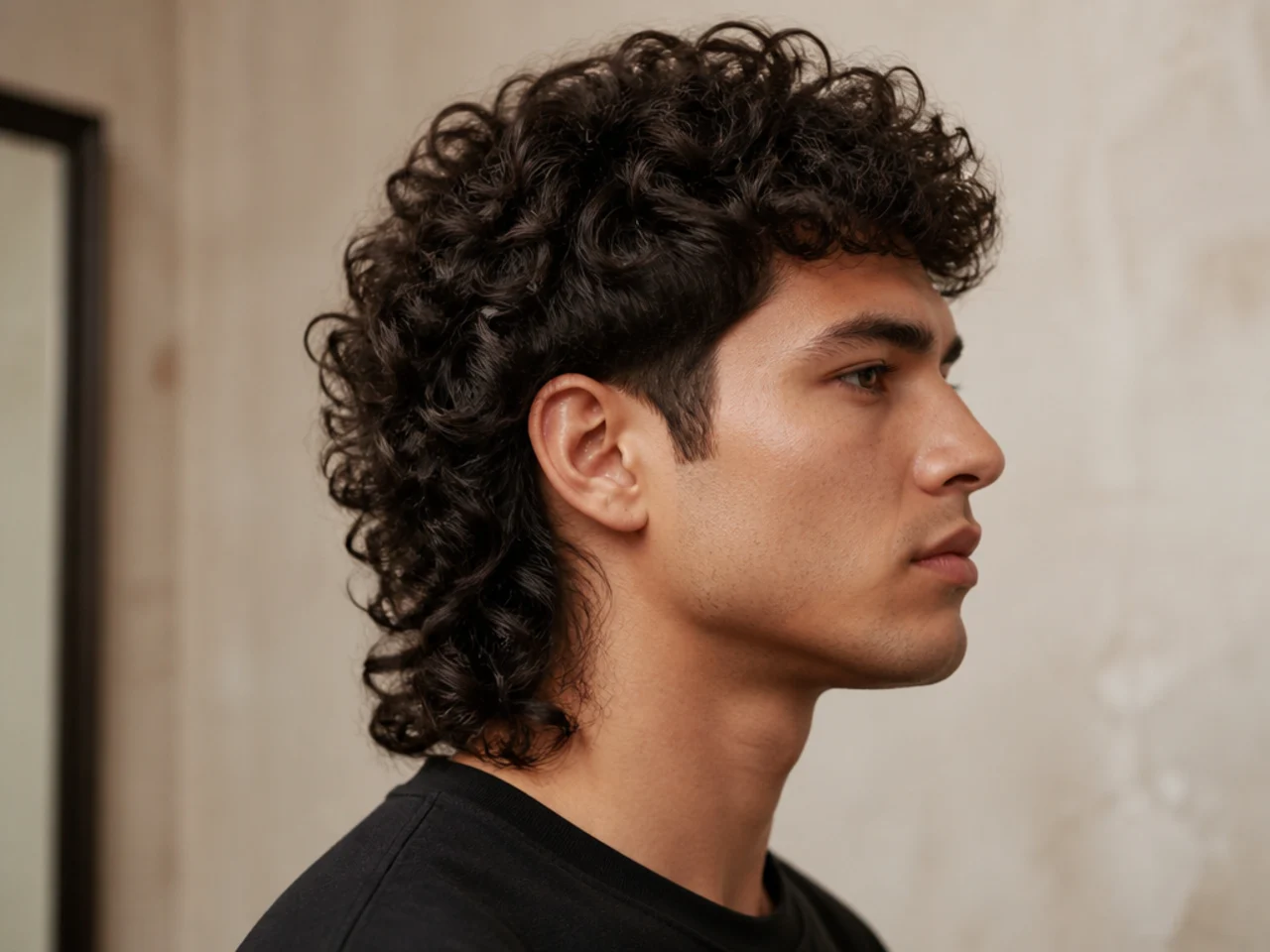
Curls at full length. Type 3 spirals stack into visible internal layers through the top and drop into a bouncing curly nape at the back — no product needed to define the shape. The cut removes bulk from the crown and cleans the perimeter, then steps back and lets the pattern lead.
Best on type 3 curls. Suits oval, heart, and diamond faces.
Ask for: "Full curly mullet, dry-cut throughout, three-and-a-half inches on top with internal layers to remove bulk, four-inch coiled nape, tapered sides following the curl pattern." Styling time: two minutes — leave-in conditioner while soaking wet, scrunch, air-dry. See our curly mullet haircut for men breakdown for more curl-specific direction.
7. Full Wavy Mullet
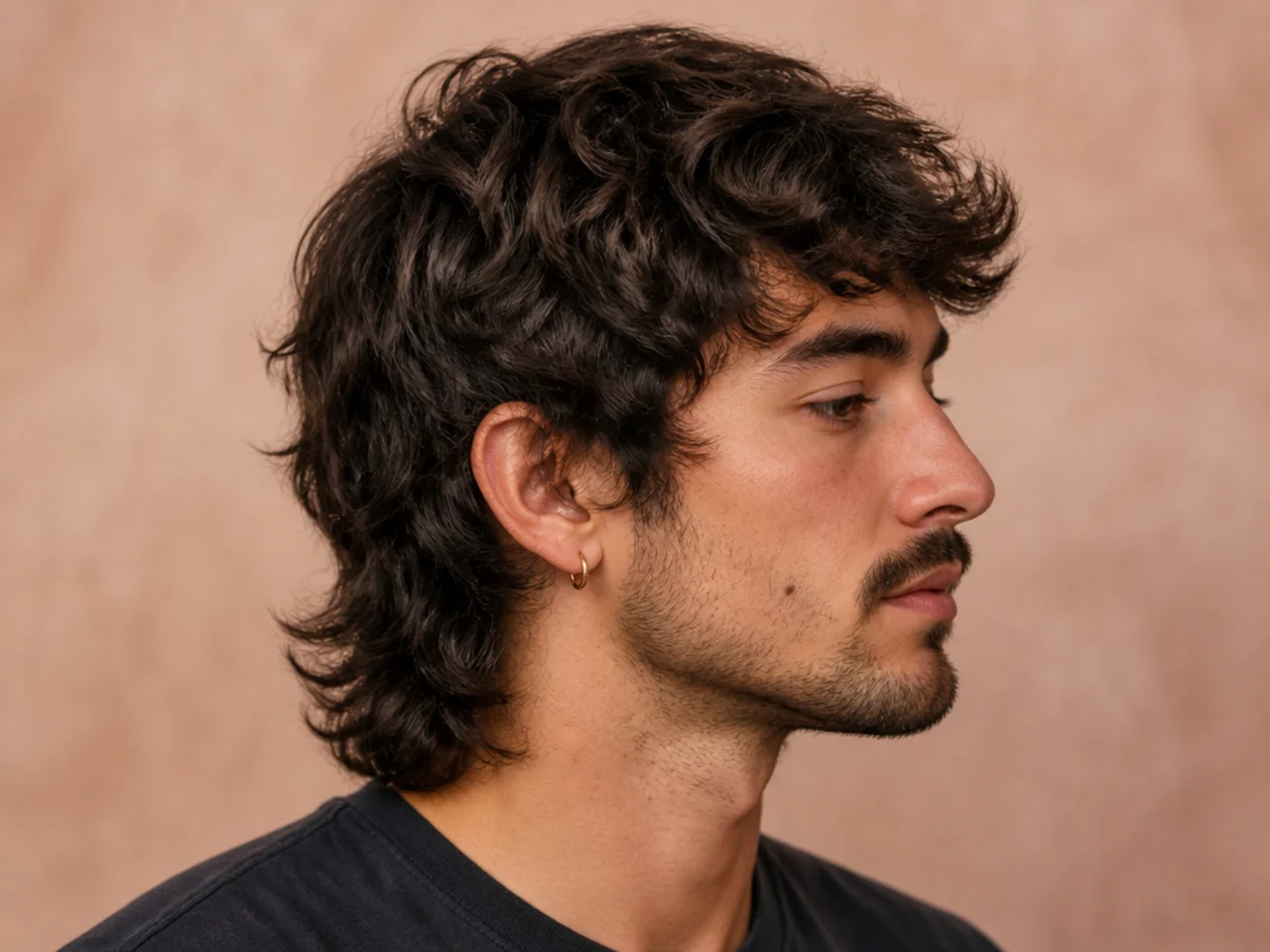
Wavy hair at full length reads as effortless movement. Soft internal layers cut with the wave direction let the top hold volume without frizz, and the nape falls into feathered waves that shift when you move. No aggressive point-cutting — the wave builds all the texture the cut needs.
Suits oval, heart, and diamond faces.
Ask for: "Full wavy mullet, three-inch top with soft internal layers cut in the direction of the wave, four-inch feathered nape, scissor-blended sides — no fade." Styling time: ninety seconds — salt spray on damp hair, scrunch, air-dry. Never brush the wave out.
8. Full Straight Mullet
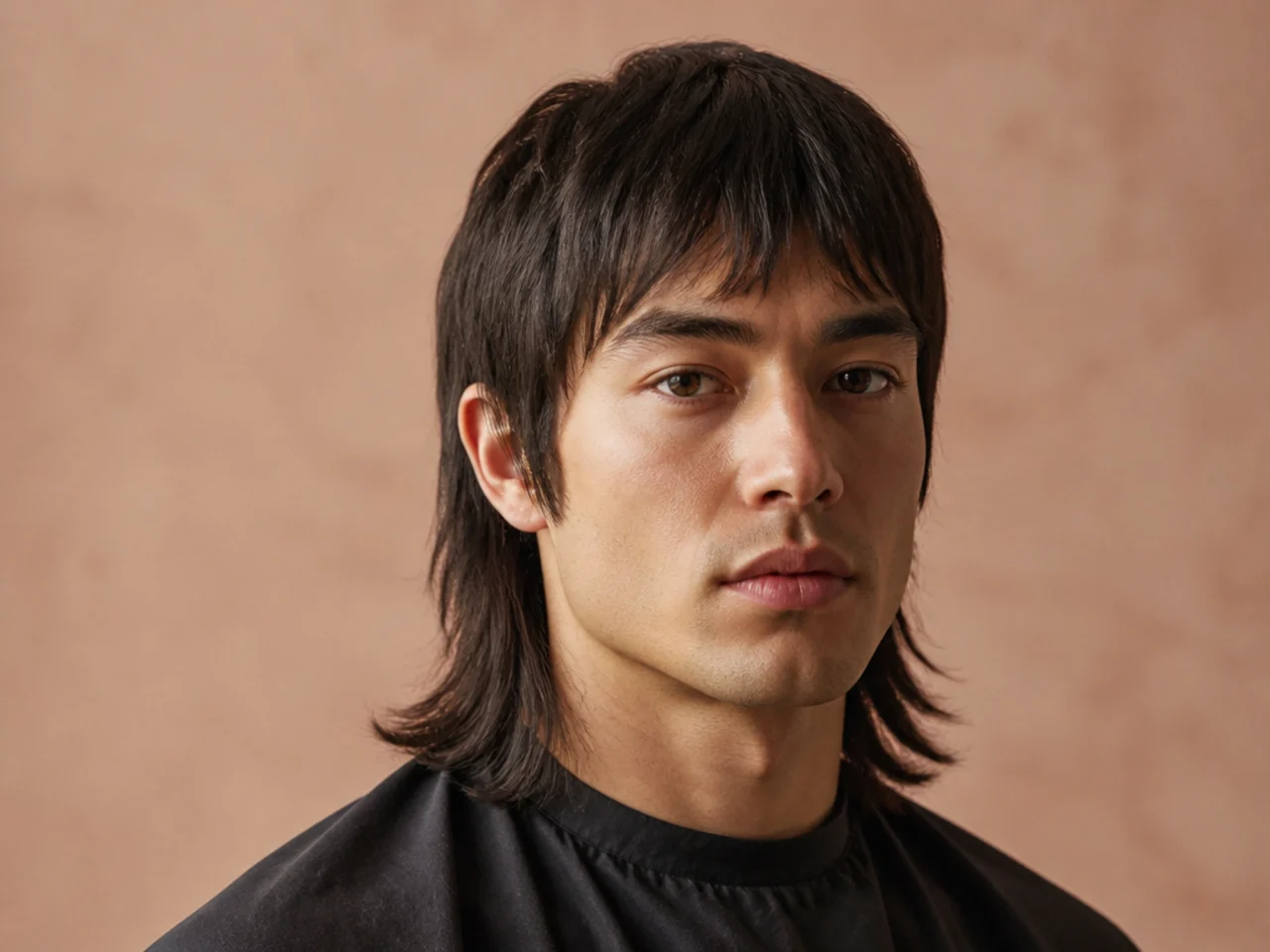
Straight hair reveals every layer line. This version leans on aggressive point-cutting through the crown to build texture the strands cannot build on their own. The nape stays feathered rather than blunt so the length reads soft against the sharp top. Reads clean and precise.
Suits heart, square, and oval faces.
Ask for: "Full straight mullet, three-and-a-half-inch top aggressively point-cut for texture, four-inch feathered nape, low taper on the sides." Styling time: one minute — molding paste through damp hair, blow-dry forward and up.
9. Full Mullet with Layered Fringe
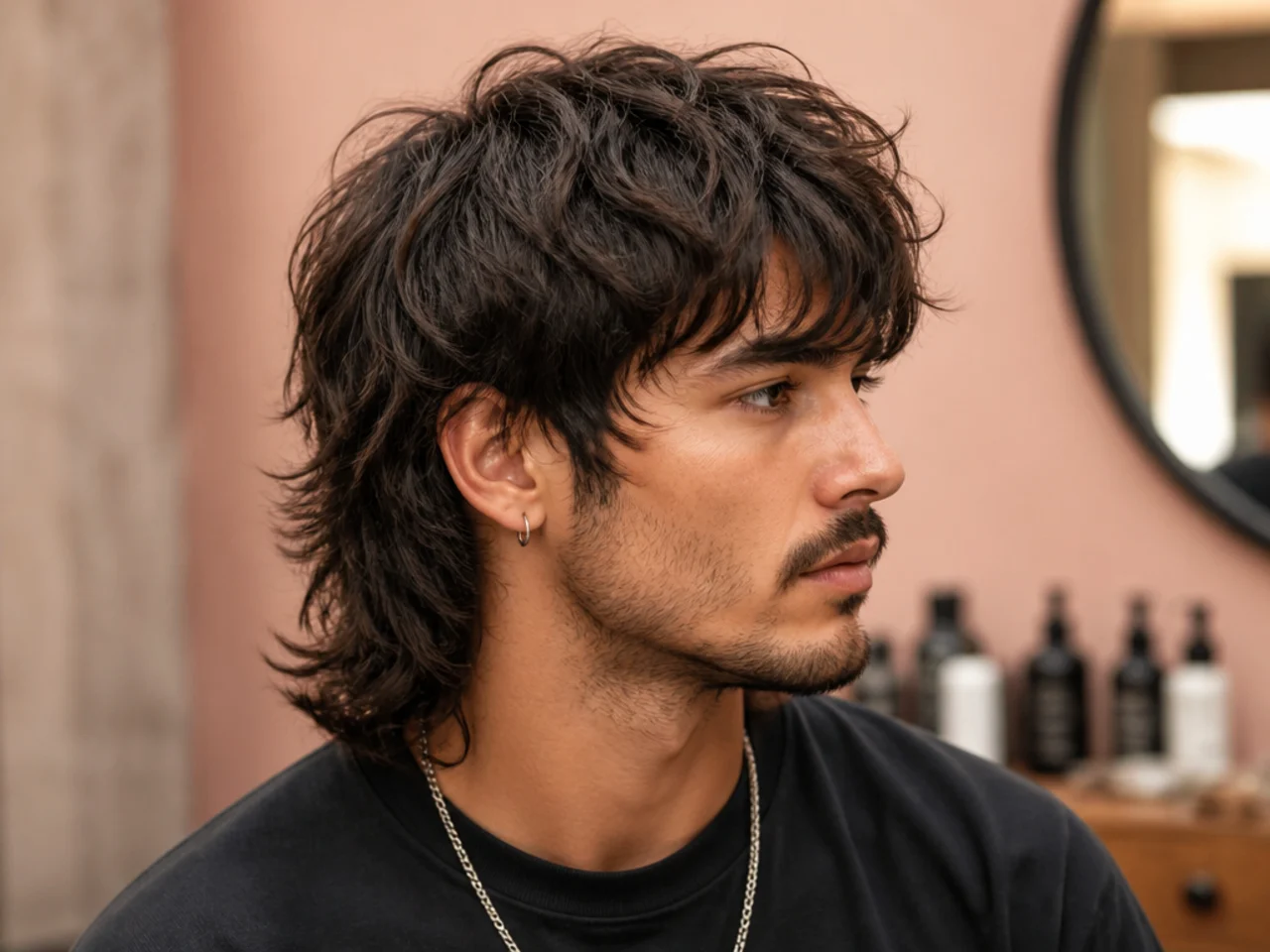
A layered fringe drops onto the forehead in visible pieces, adding a front focal point that balances the nape weight. The fringe uses the same internal-layer approach as the crown, so the whole cut reads as one shape rather than two. Popular with guys who want more front personality.
Suits round, oval, and heart faces where the fringe shortens the top of the face.
Ask for: "Full mullet with a layered fringe, three-inch top with internal layers, fringe point-cut to fall in piecey pieces to the brow, four-inch feathered nape, blended sides." Styling time: ninety seconds — finger-comb the fringe forward, matte paste for definition. See our fringe mullet haircut men guide for the fringe-forward version.
10. Full Mullet with Mustache
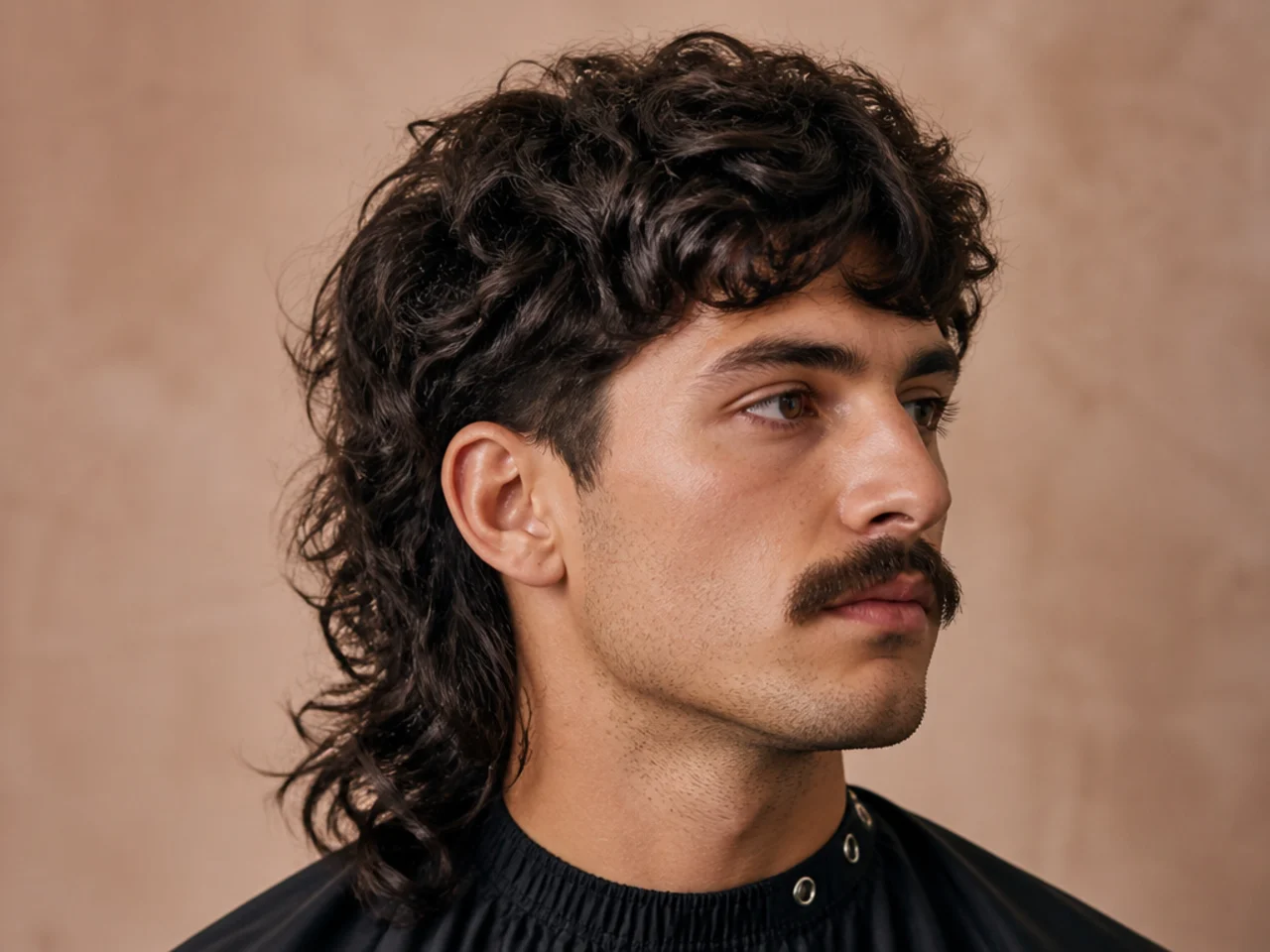
The mustache-plus-mullet is a full statement. A defined mustache — chevron, walrus, or horseshoe — grounds the whole face and gives the mullet's texture a hard anchor. Reads intentionally retro without tipping into costume.
Suits oval, square, and diamond faces. Best on men in their late twenties and older who can grow a defined mustache.
Ask for: "Full mullet with the mustache in mind — three-inch top with layers, four-inch feathered nape, low taper on the sides, leave the sideburns full to connect with the mustache line." Styling time: two minutes — matte clay for the hair, mustache wax for the mustache.
11. Retro Full Mullet
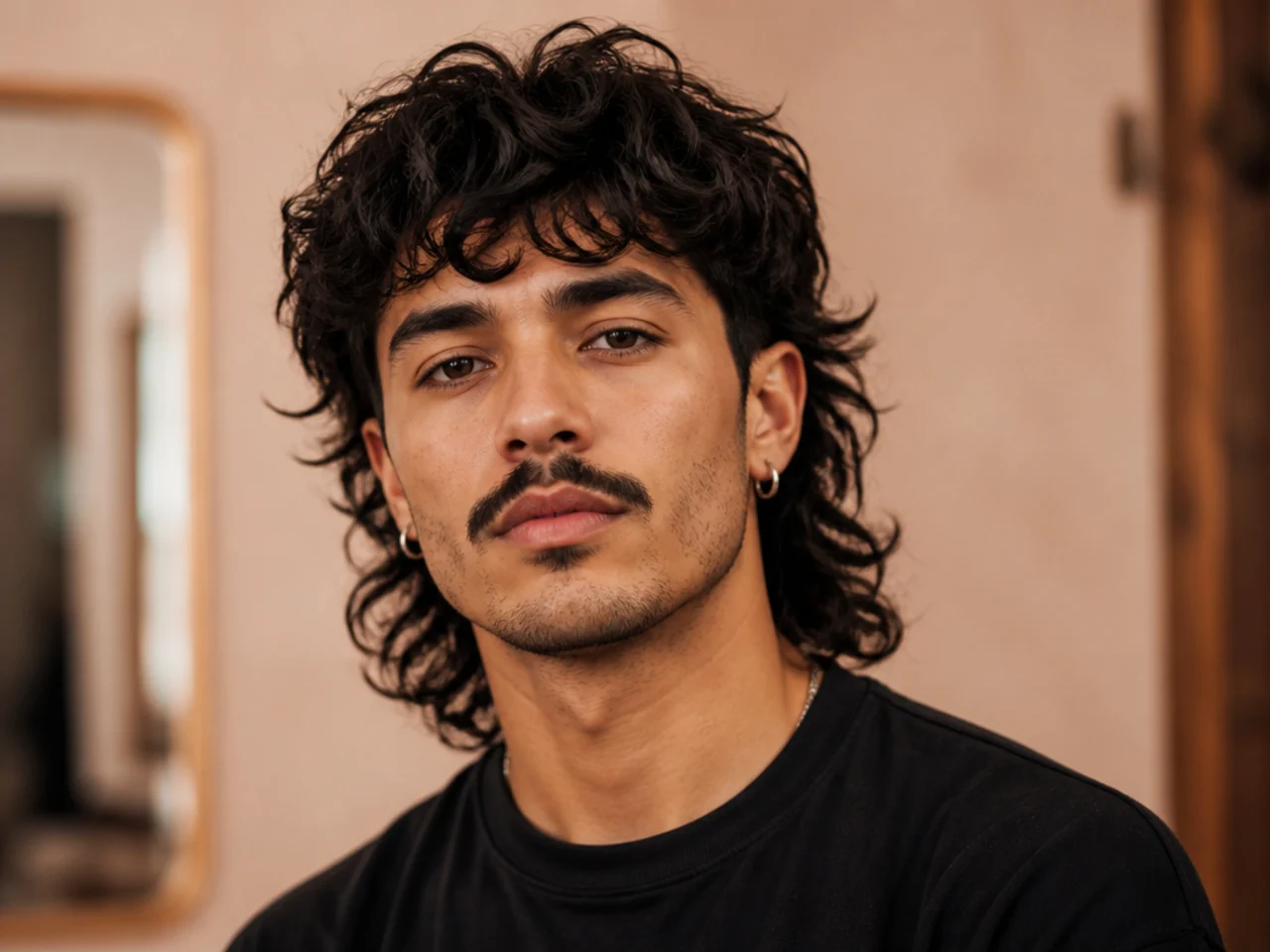
A direct nod to the 80s, updated. Four-inch top with a defined side part, a five-inch nape with layered ends rather than a curtain, softly tapered sides — no fade — and a slightly feathered perimeter. Reads playful — a costume for guys with the confidence to wear it every day.
Suits oval and square faces. Best on straight to slightly wavy hair.
Ask for: "Retro full mullet, four-inch top with a defined side part, five-inch nape with layered ends, softly tapered sides — no fade — feathered perimeter." Styling time: two minutes — cream pomade combed to the side, blow-dry the nape flat.
12. Full Mullet with High Skin Fade
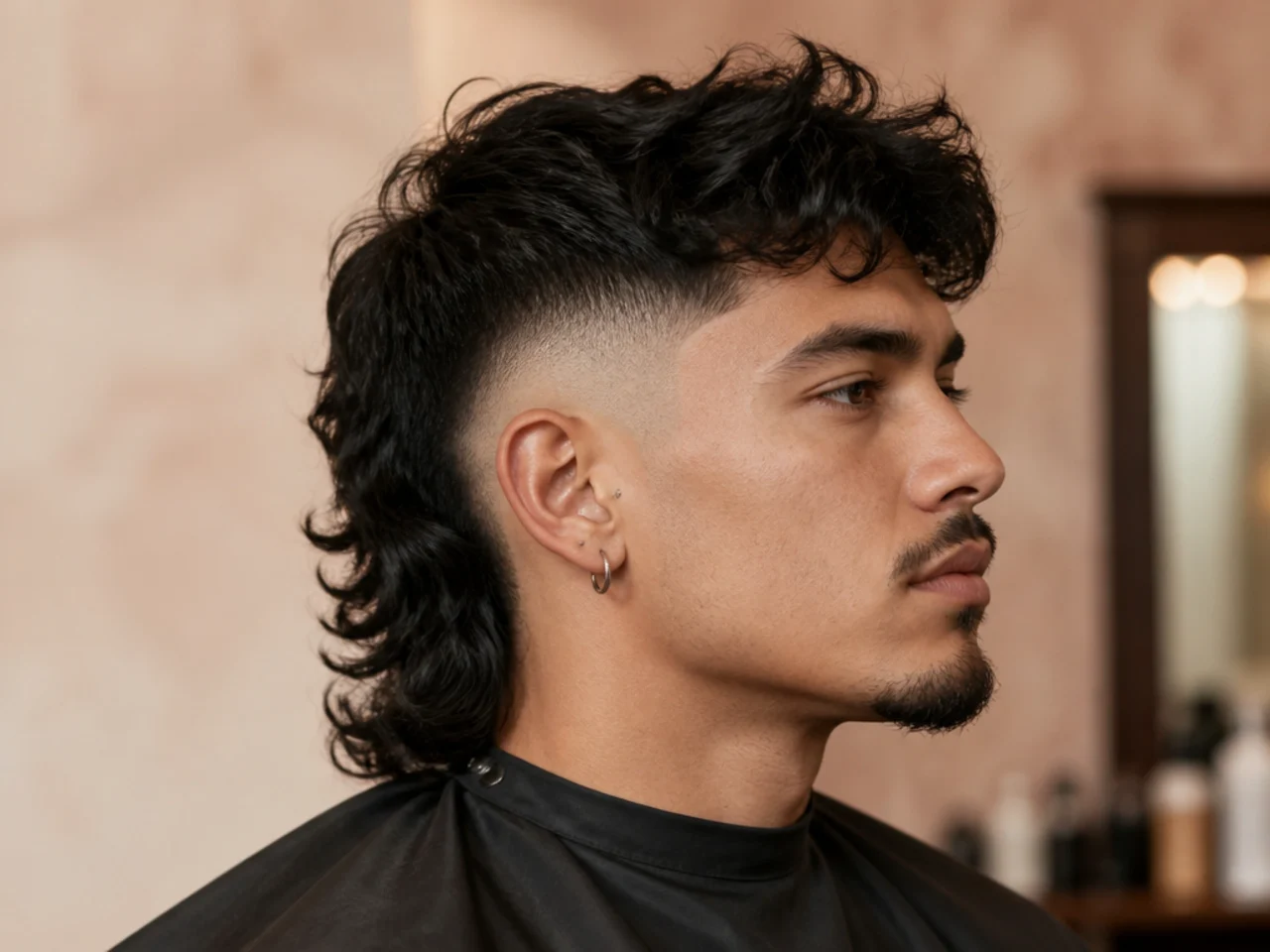
The most dramatic length ratio on the list. A high skin fade drops the sides to bare skin from the sideburn up to the parietal ridge, leaving the top and back to carry the whole length. The visual gap between skin sides and four-inch nape reads as pure architecture.
Suits oval, square, and diamond faces. Best on medium-thick straight to wavy hair that holds structural shape.
Ask for: "Full mullet with a high skin fade, three-inch top with textured layers, four-and-a-half-inch feathered nape, high skin fade blending up from the sideburn to the parietal ridge." Styling time: ninety seconds — strong-hold clay through damp hair, blow-dry backward.
13. Full Mullet with Beard
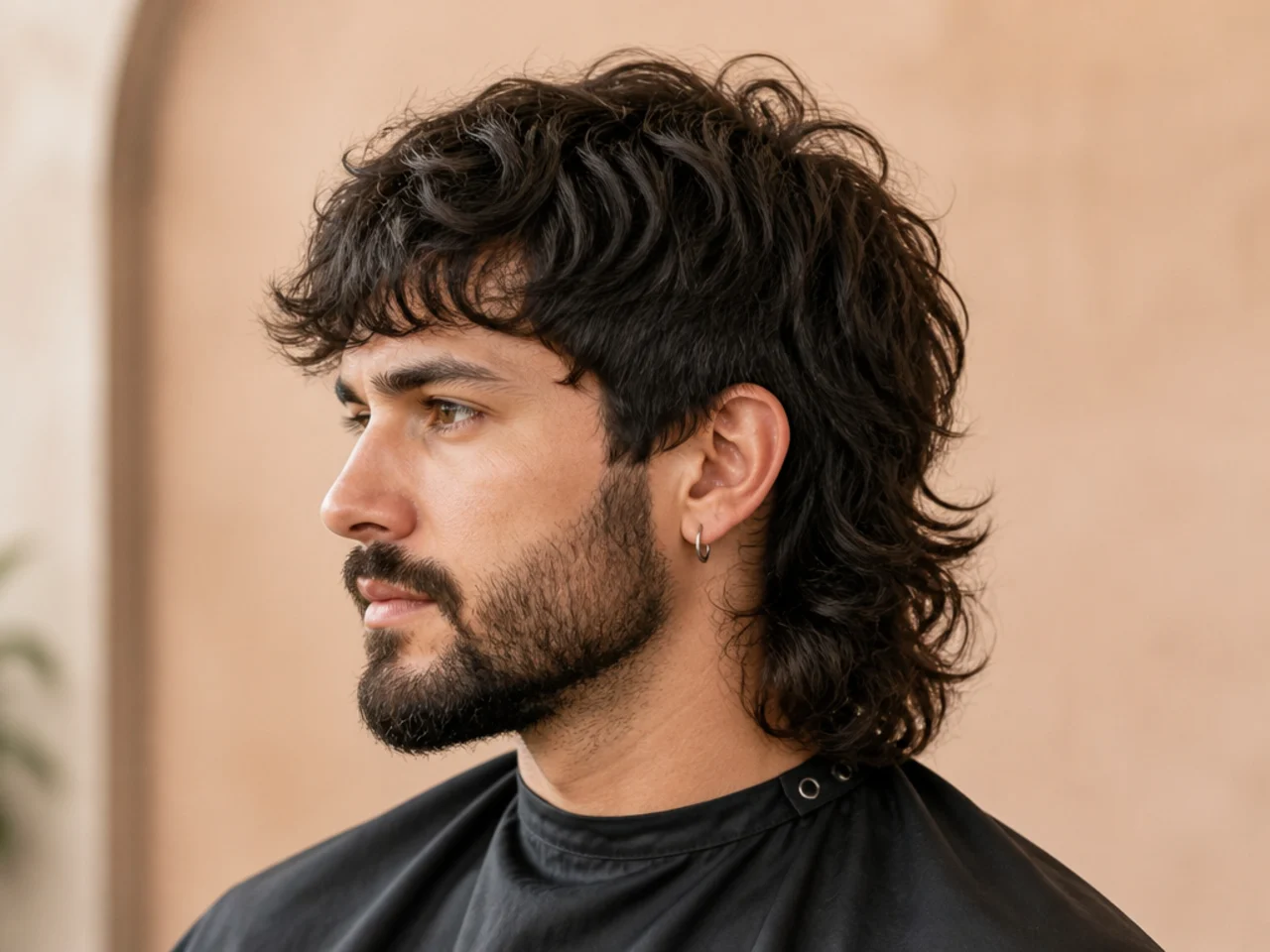
The beard grounds the shape and pushes the read older. Where the top and nape layer and move, the beard adds a hard visual base — the two together make the full mullet read as an adult cut. Beard runs at guard 3 or 4 to sit visually against the fade grade above.
Suits diamond, oval, and square faces where the beard balances a wider forehead.
Ask for: "Full mullet with a matched beard, three-inch top with internal layers, four-inch feathered nape, mid taper on the sides connecting into a guard 3 or 4 beard, hard sideburn line." Styling time: two minutes for hair and beard — matte clay plus beard oil.
14. Full Mullet Wolf Cut Hybrid
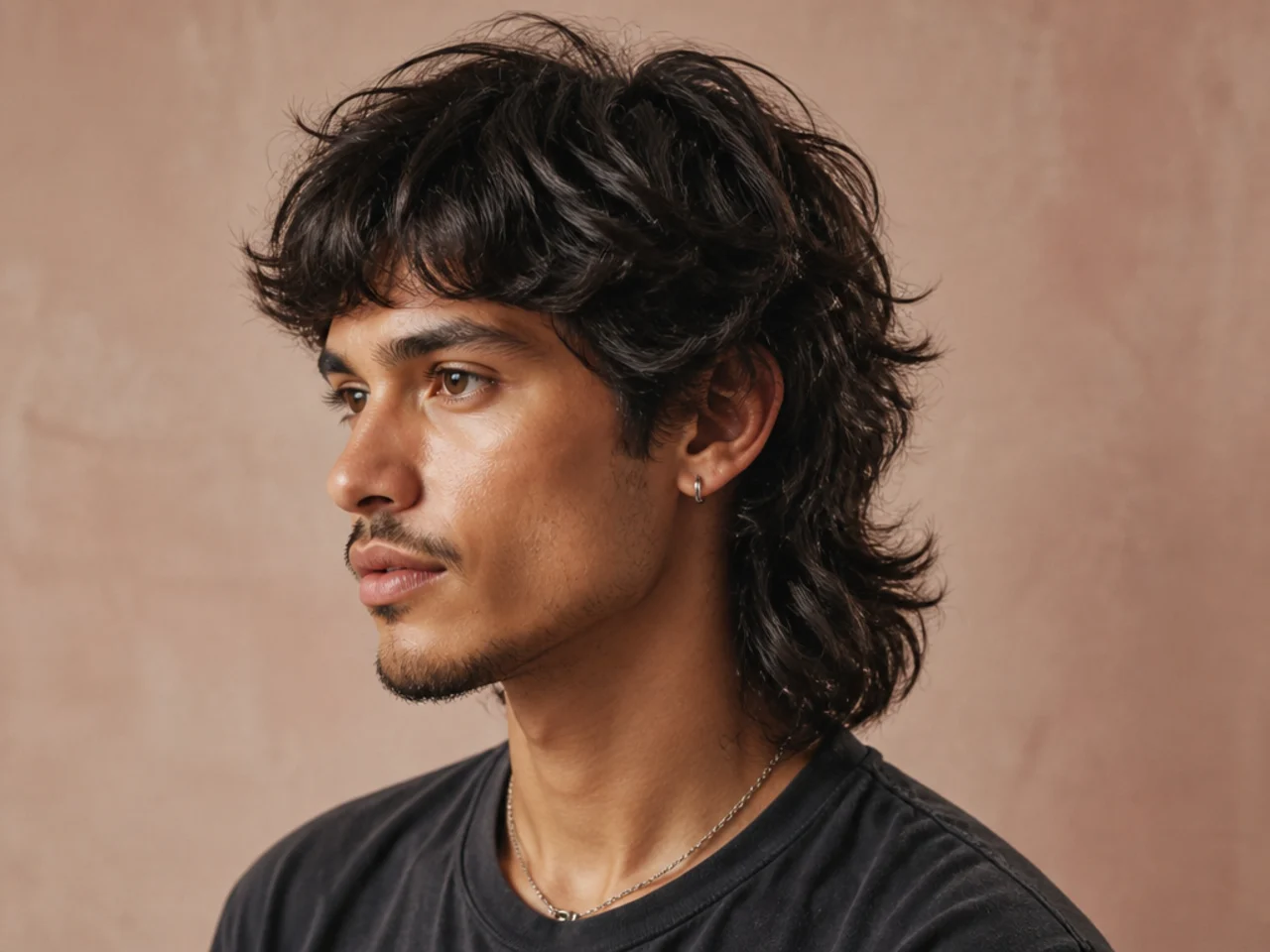
The full mullet crossed with the wolf cut. Keeps the mullet's four-inch nape and back weight, but adds heavier crown layers and face-framing pieces at the cheekbones. Reads more editorial and more rock than a pure full mullet.
Suits oval, heart, and diamond faces. Best on wavy or curly hair with movement.
Ask for: "Full mullet wolf cut hybrid, three-inch top with heavy internal layers and face-framing pieces at the cheekbones, four-inch feathered nape, softly tapered sides." Styling time: two minutes — salt spray plus light cream on damp hair, air-dry.
15. Long Full Mullet
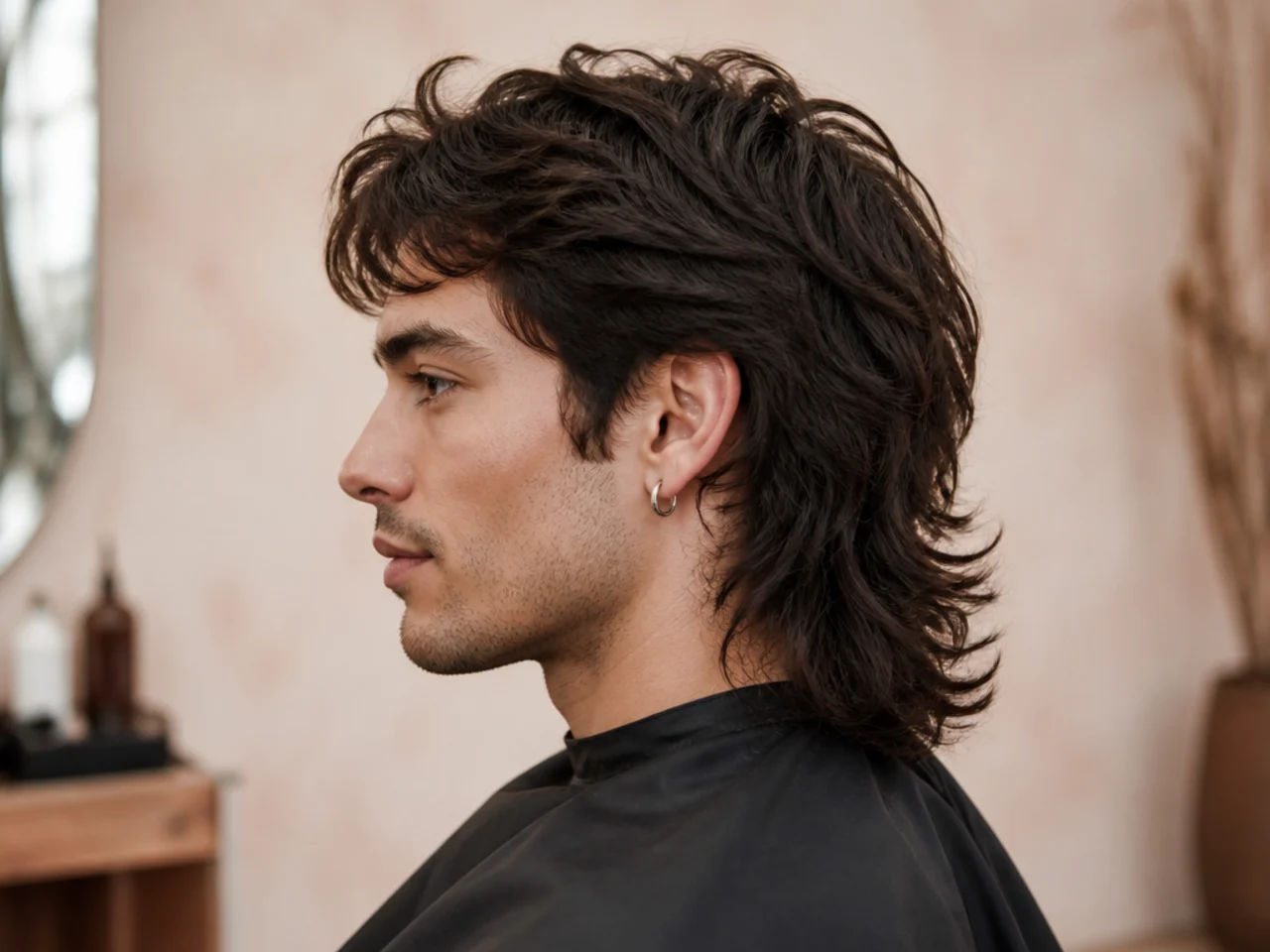
The longest mullet before it becomes a full wolf cut. Five to six inches at the nape sitting on or just above the shoulders, four inches through the top with heavy layers, and softly tapered sides. Reads bold — the full commitment version.
Suits oval, square, and diamond faces. Best on straight to wavy hair that hangs cleanly at length.
Ask for: "Long full mullet, four-inch top with heavy internal layers, five-and-a-half-inch shoulder-length nape, softly tapered sides — no fade." Styling time: two minutes — salt spray on damp hair, blow-dry the nape down and back, light cream for hold.
How to Ask Your Barber for a Full Mullet
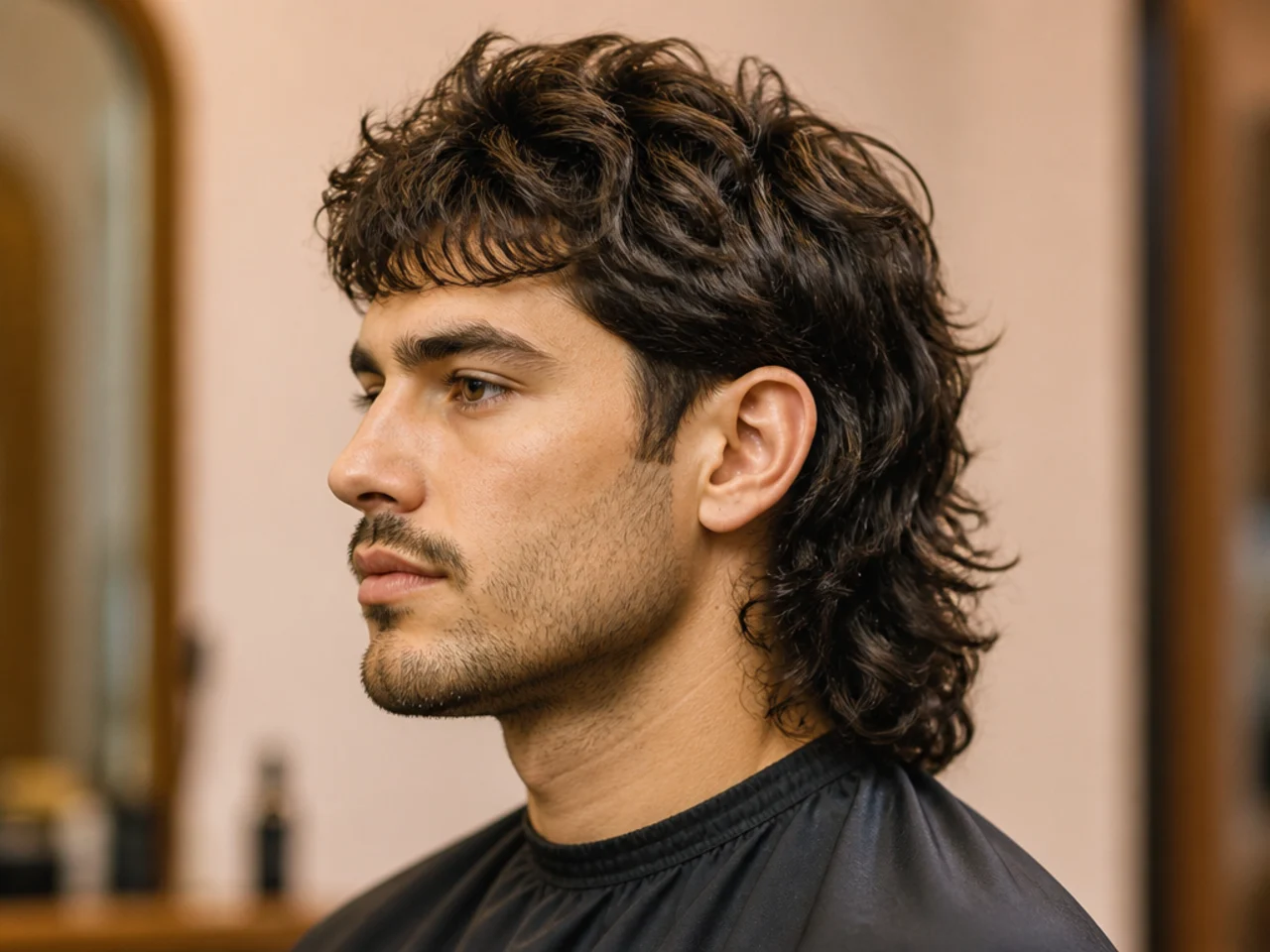
Bring a photo. A photo covers what words cannot — the exact layering rhythm, the perimeter finish, the ratio between top and back. Then hand your barber the seven answers below.
- Say "full mullet" — not just "mullet." Barbers cut short mullets, slight mullets, subtle mullets, and modern mullets differently. "Full" locks in the three-to-five-inch nape and the three-to-four-inch top.
- Set the top length in inches. Two-and-a-half to three inches for the shorter full versions. Three-and-a-half to four inches for the classic and retro versions. Cropped Aussie versions run at one-and-a-half inches — call it out specifically.
- Set the nape length in inches. Three inches for the modern version. Four inches for the classic. Four-and-a-half to five inches for the Aussie and retro. The nape length is what pushes a mullet from short into full territory.
- Set the perimeter finish at the nape. Feathered (soft and wispy) reads modern. Blunt reads Aussie and retro. Layered ends read 80s. Choose one and confirm — the finish changes the whole personality of the back.
- Set the side treatment. Scissor-blended reads soft. Low taper reads sharp without a fade line. Low, mid, or high fade reads current-statement. Burst fade reads architectural. Match the loudness of the sides to how much attention you want the cut pulling.
- Set the fringe. Layered forward, curtain, side-swept, or none. The fringe sets the front personality — the mullet sets the back. Full mullets almost always want some fringe presence for balance.
- Ask for internal layers, not stacked layers. Internal keeps weight distributed through the length. Stacked builds a triangle at the crown that fights the mullet's clean silhouette. This matters more at full length than at any other length.
Show the photo again to confirm the shape before scissors touch hair. For full mullets, one bad half-inch cannot be un-cut for two months.
Styling and Maintenance
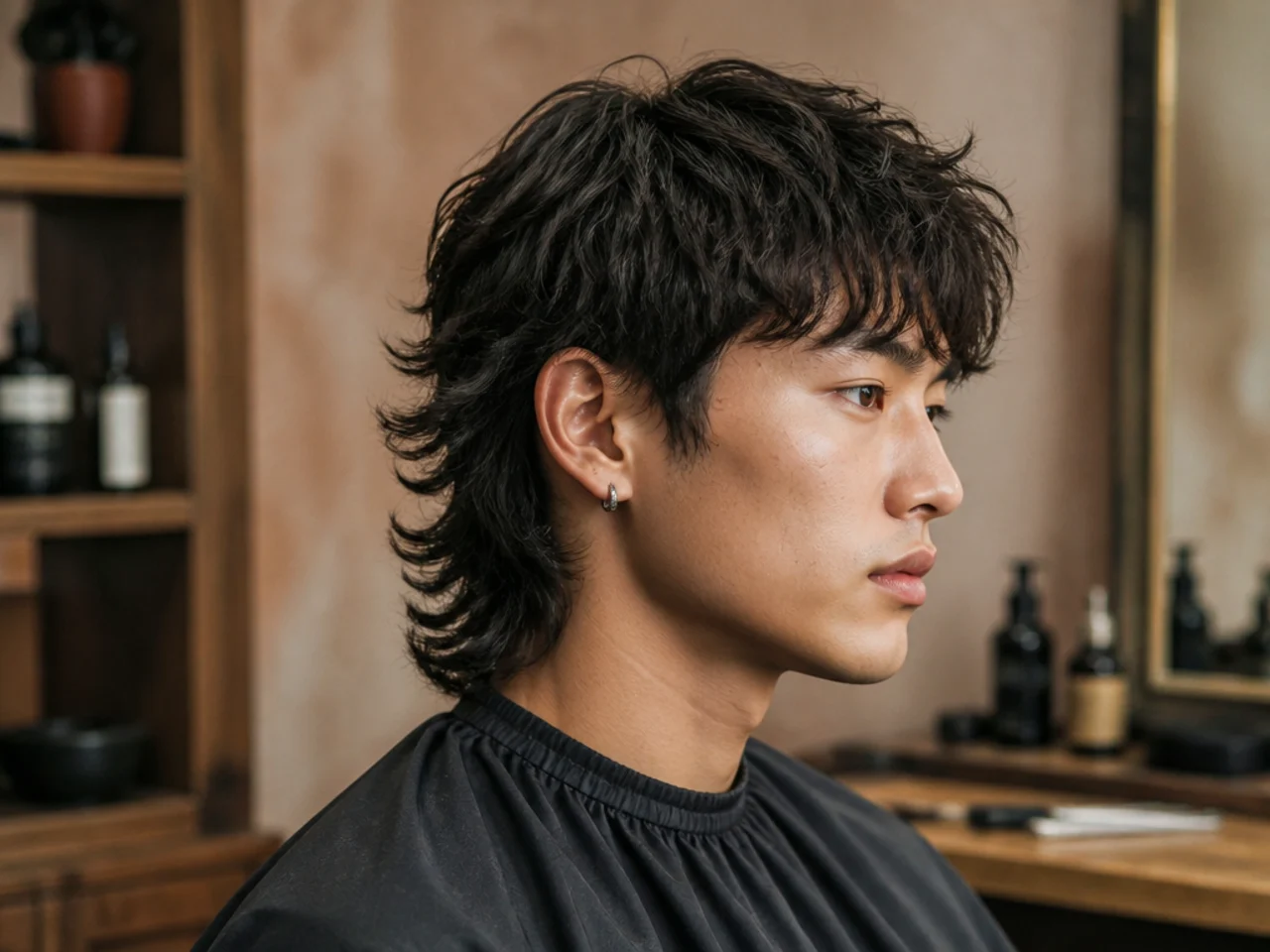
Wash and towel-dry to damp. Wet hair holds product on the surface where it drips or crunches; damp hair absorbs it. For straight hair, prime with a sea-salt spray for grip. For wavy hair, use a light styling cream or a mousse. For curly and coily hair, apply a leave-in conditioner while soaking wet and let hair reach damp naturally.
Rough-dry with fingers. Point the airflow the direction you want the finish — backward for a swept-back read, forward for a fringe, downward for the nape. The nape almost always wants to dry downward so the length hangs cleanly. For straight hair, spend an extra ten seconds lifting the roots at the crown with your fingertips — that root lift is what gives the layered shape its bounce.
Finish with a matte hold product for most variations. Matte clay for textured tops. Molding paste for structured tops. Cream pomade for retro versions with a shine. Skip anything glossy on modern and Aussie variations — those read best matte.
Re-cut the shape every six to eight weeks. The full mullet is more forgiving than the short mullet because the length ratio is bigger — one extra week of grow-out does not blur the shape. Fade or taper sides need re-cutting every two to three weeks to stay sharp. Between fade visits, run a beard trimmer over the neckline yourself to buy an extra week of clean edges.
Wash three to four times a week. Condition every wash — the nape's exposed ends show damage first, and dry nape hair reads as split ends from ten feet away. Sleep on a satin pillowcase to preserve texture and stop the nape from creasing overnight. For an even fuller silhouette, see our medium-length hairstyles men roundup or the mullet haircut for men pillar.
FAQ
How long does it take to grow out a full mullet?
Four to five months from a standard men's cut. You need three inches at the crown to build the top layers and four inches at the nape to build the back weight. Barbers can shape a soft version at three months of growth, but the full read needs the full length.
What is the difference between a full mullet and a wolf cut?
The full mullet keeps length concentrated at the nape with a defined two-length ratio between top and back. The wolf cut spreads length more evenly through the crown with face-framing layers at the cheekbones. If you want back weight, ask for a full mullet. If you want overall shag texture with face-framing, ask for a wolf cut.
Does a full mullet work with thinning hair?
It can, but only if the crown still holds density. The full mullet needs three inches of top length with visible internal layering — thinning crowns cannot carry that without patchy sections. If your crown is thinning, ask for the modern full mullet at three-inch length rather than the four-inch classic or retro versions.
Which full mullet is the least offensive to a conservative office?
The modern full mullet with a scissor-blended side and a feathered nape. Skip the Aussie (too blunt), the retro (too 80s), and any faded version (too statement). Even the modern version pushes traditional dress codes — the stylish mullet haircut men guide has quieter alternatives if the office is genuinely conservative.