20 Stylish Mullet Haircuts Worth Trying
A stylish mullet haircut men guide covering 20 elevated, Pinterest-worthy variations — editorial finishes, precise fades, and the exact ask for your barber.
In this article · 33
- What Is a Stylish Mullet?
- How to Choose Your Stylish Mullet
- The 20 Stylish Mullet Variations
- 1. The Editorial Textured Mullet
- 2. The Slicked-Back Fashion Mullet
- 3. The Curtain-Fringe Mullet
- 4. The Mid-Fade Precision Mullet
- 5. The Low-Taper Refined Mullet
- 6. The Burst-Fade Sculptural Mullet
- 7. The Two-Block Statement Mullet
- 8. The Wolf-Cut Hybrid Mullet
- 9. The Perm-Set Signature Mullet
- 10. The Side-Swept Runway Mullet
- 11. The Middle-Part Cinematic Mullet
- 12. The Comma-Fringe Mullet
- 13. The Feathered Face-Frame Mullet
- 14. The Long-Layered Rock Mullet
- 15. The Fluffy High-Volume Mullet
- 16. The Curly Editorial Mullet
- 17. The Compact Short Mullet
- 18. The Disconnected Undercut Mullet
- 19. The Choppy Point-Cut Mullet
- 20. The Blowout Textured Mullet
- How to Ask Your Barber
- Styling and Maintenance
- FAQ
- What makes a mullet look stylish instead of dated?
- Which stylish mullet suits a first-timer?
- Do stylish mullets work on straight hair?
- How do I keep the mullet back from spreading wide?
- What products should I use to style a mullet?
- How often do stylish mullets need a re-cut?
- Can I combine a stylish mullet with a beard?
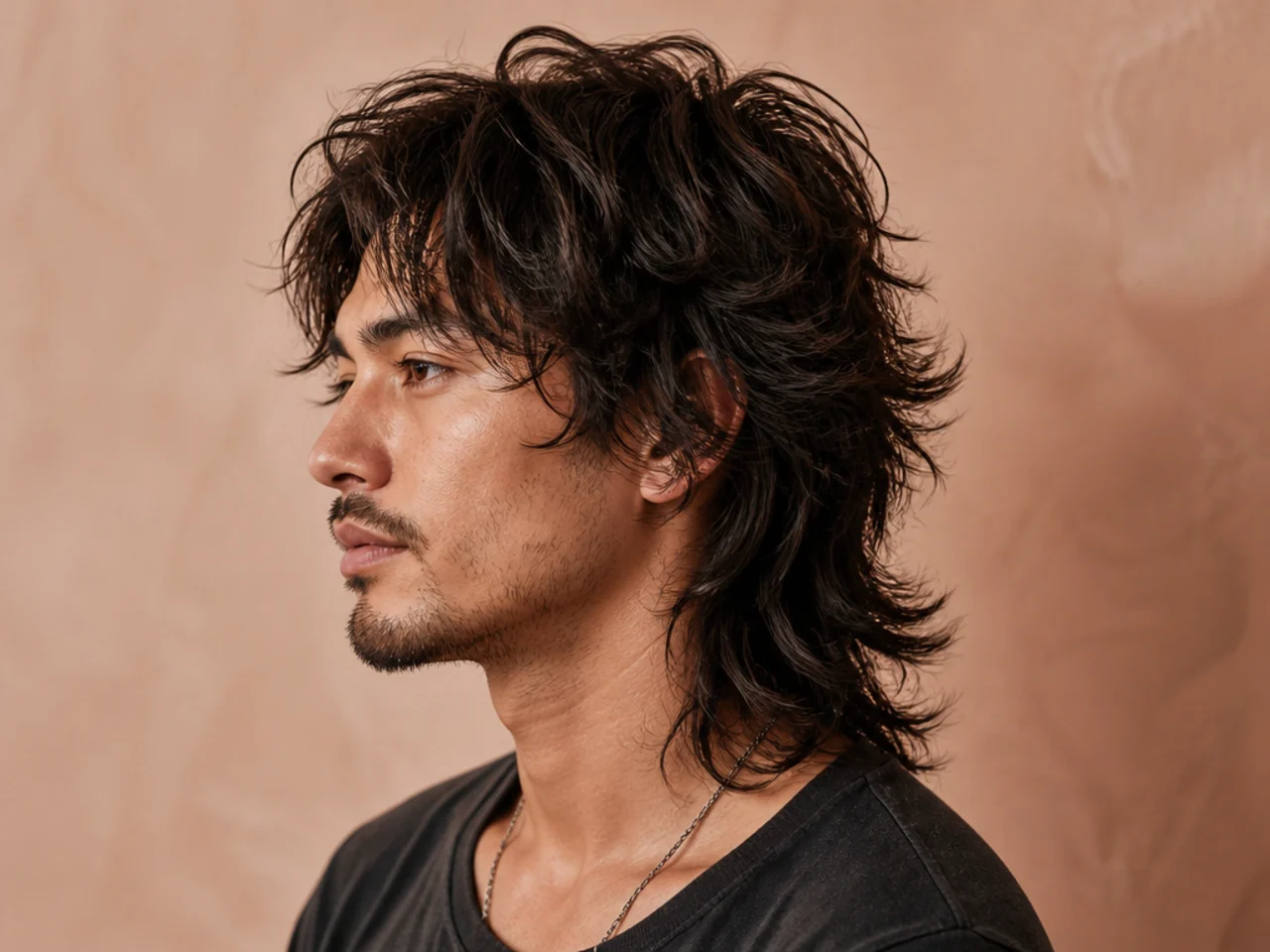
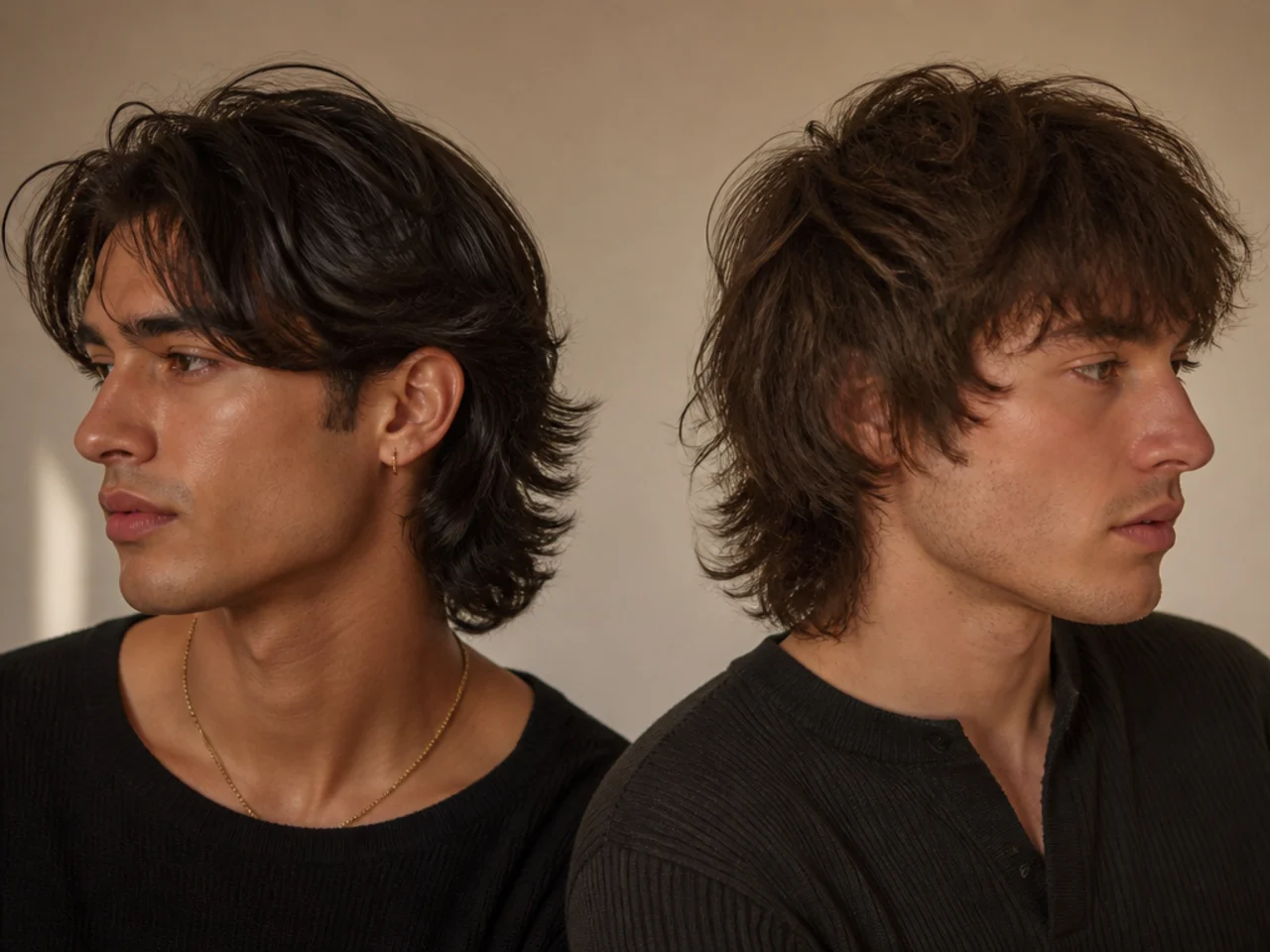
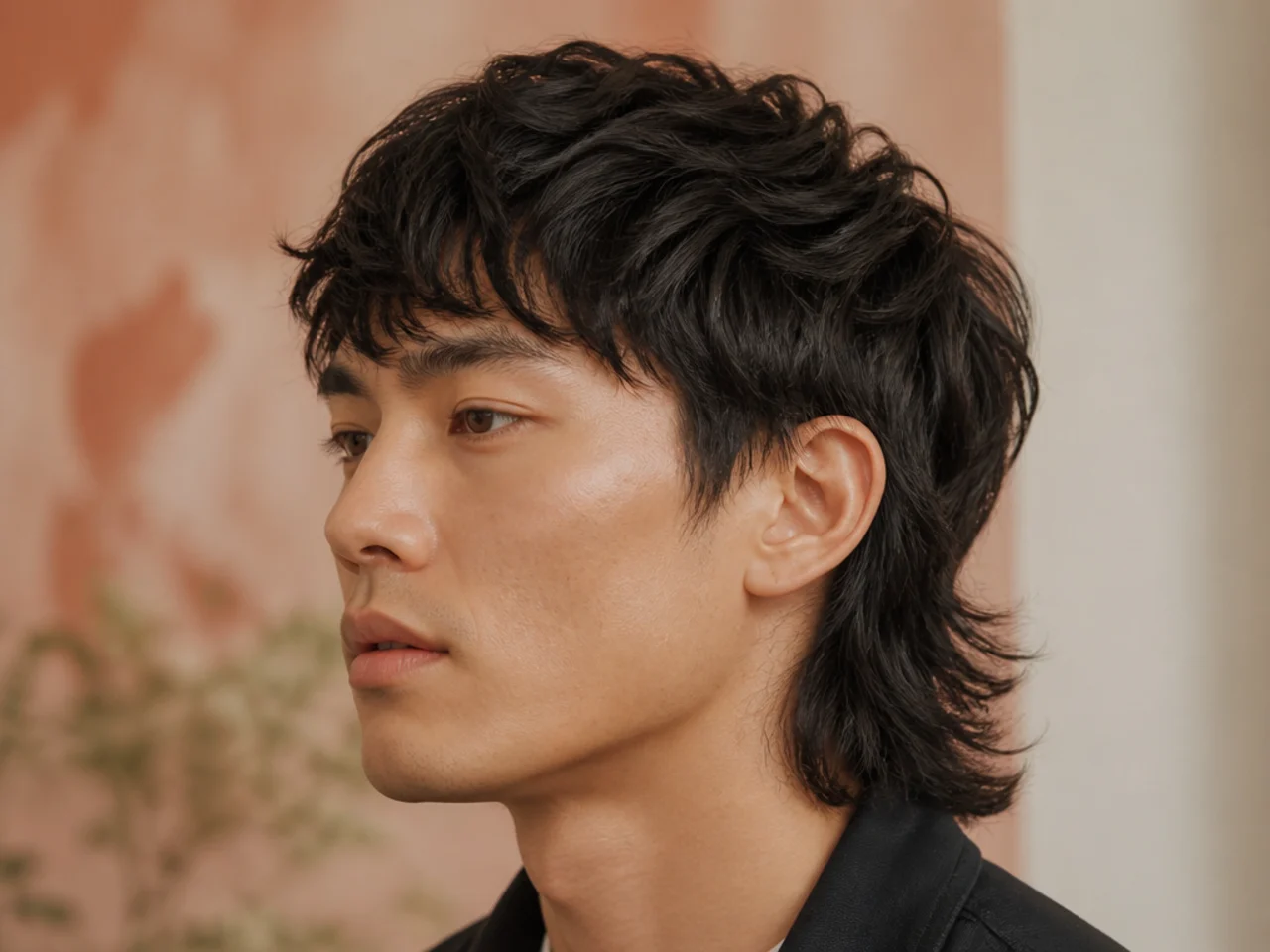
The stylish mullet is nothing like the mullet you're picturing. The back stops between the collar and the shoulder blade, not below it. Layers are engineered to move, and the sides are faded or scissor-blended so no part of the shape looks accidental. This guide covers the 20 elevated versions men are asking for right now — from editorial-clean to full runway — with face-shape notes, styling tips, and the exact language to hand your barber so you walk out with the version you had in mind.
What Is a Stylish Mullet?
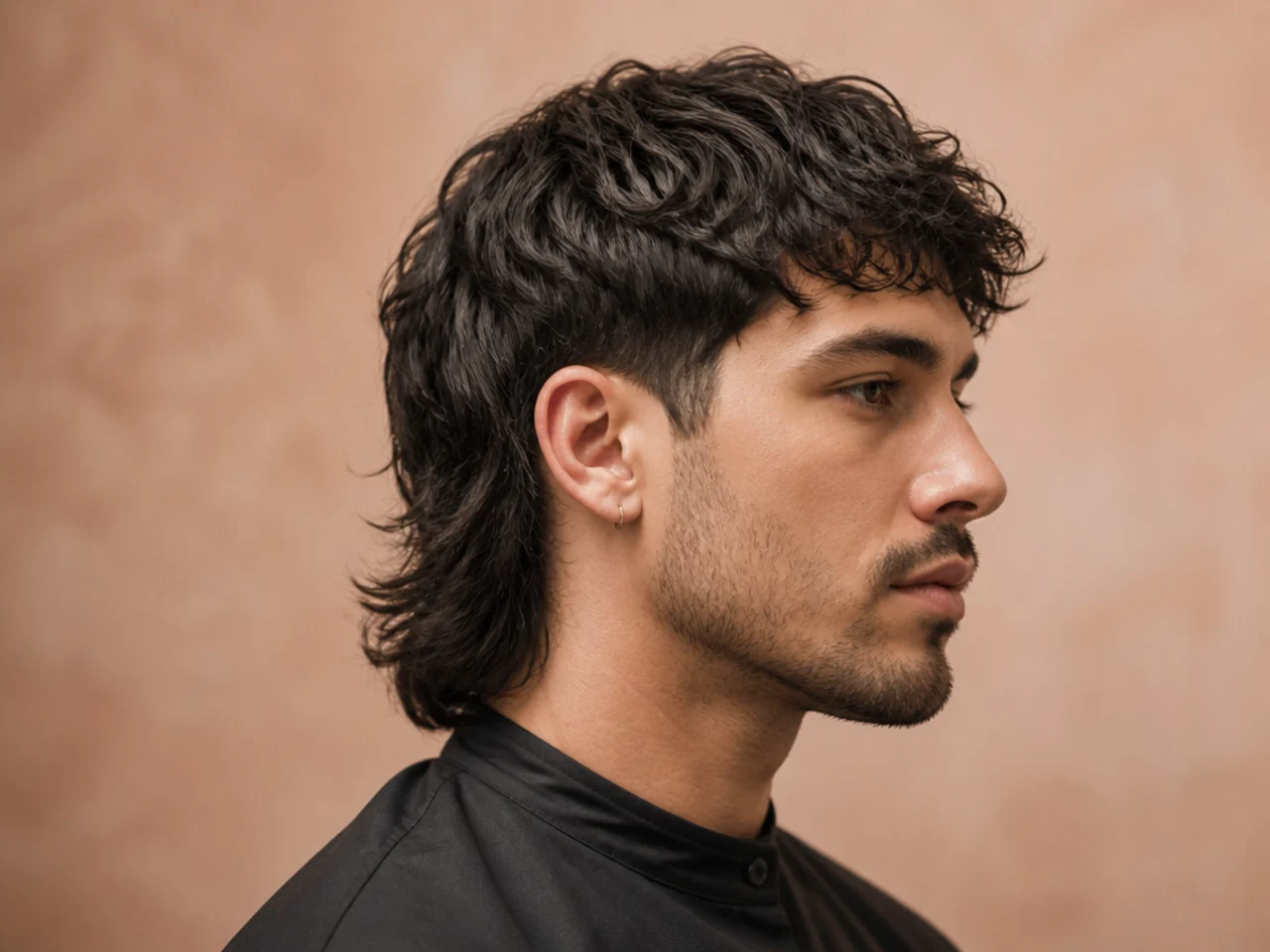
A stylish mullet is the modern mullet silhouette pushed a step past average — every detail cut for the photograph, not just for the reference. The back sits between two and five inches. The internal layers are point-cut instead of blunt so the shape reads as movement, not a curtain. The sides fade, taper, or scissor-blend into the top, and the fringe is deliberate — forward, curtain, side-swept, or comma-hooked — because the front frame carries as much of the cut as the length behind it.
The word stylish is the difference between a haircut a barber can do and a haircut a stylist can shoot. Same silhouette, sharper build. Cleaner perimeter. More precise layering ratios. Product choice tuned to the finish. That is what turns the shape from a reference on your phone into the version people ask about after they see it in person.
Every variation on this list stays inside that definition. What changes is the visual signature — a burst curving around the ear, a slick top over a mullet nape, a perm holding wave through every layer, a hook of fringe catching the eye. Twenty ways to build the same shape, each one edited for a different face, a different hair type, and a different level of daily effort.
How to Choose Your Stylish Mullet
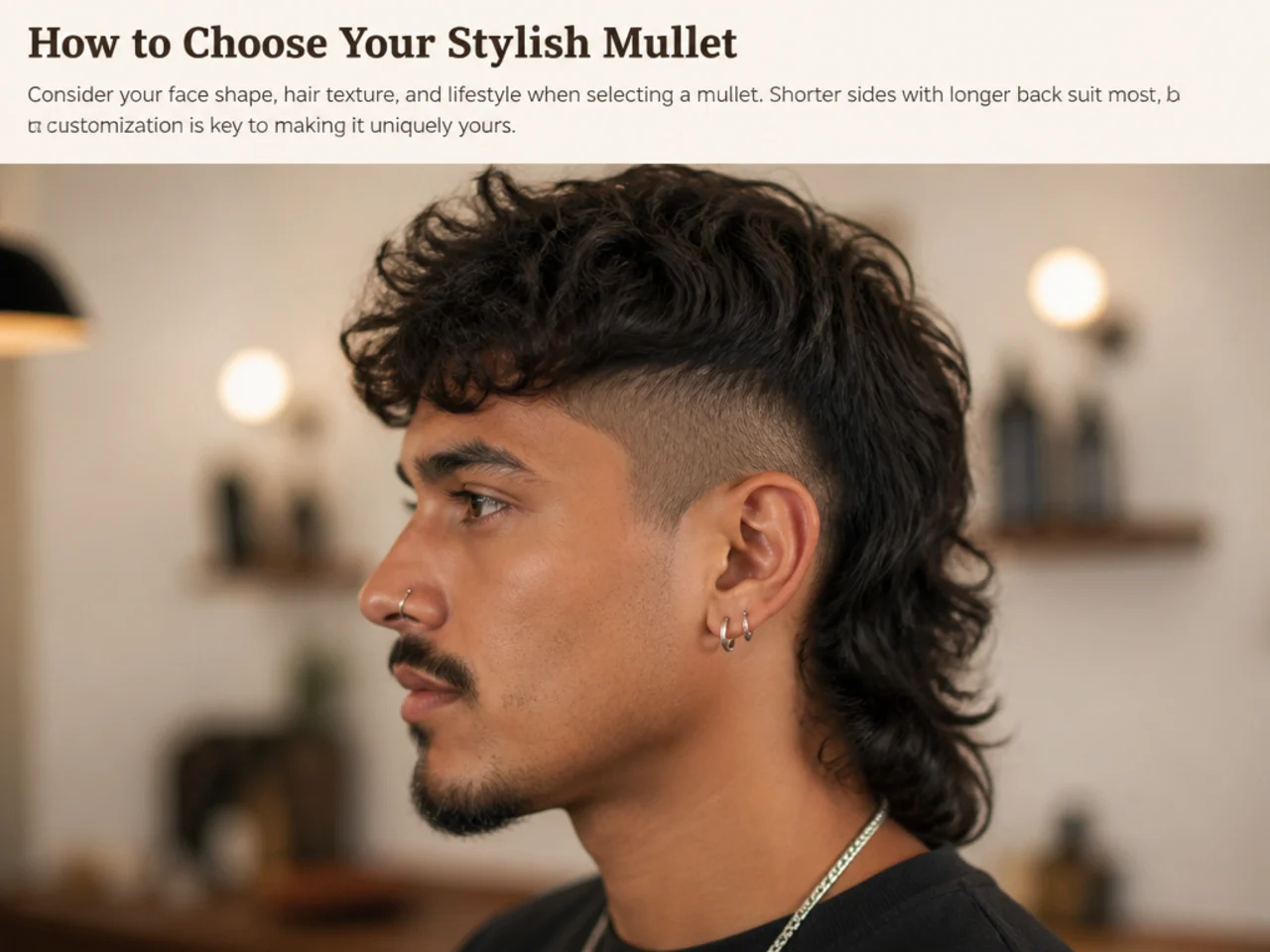
Start with the face. Oval faces get the widest menu — almost any variation on this list reads clean, so pick on hair type and lifestyle instead. Round faces need vertical lift at the crown and a forward or side-swept fringe pushed off center. Square and angular faces want soft edges — curtain fringes, feathered face-frames, and permed layers flatter more than blunt cuts and hard fades. Long or oblong faces stay shorter on top and heavier through the fringe to shorten the vertical read. Heart shapes get balance from longer back length and fuller sides.
Then hair type. Thick straight hair is the easiest canvas — layers show, the shag holds shape, and the perimeter photographs sharp. Fine hair wants the compact variations and heavier internal point-cutting for fullness. Wavy hair pairs with the curly, wolf-cut, and shag hybrids without any perm help. Coily and tight-curl textures build shape naturally — cut for weight removal rather than pattern creation.
Finally lifestyle. Book a fade version if you have time for a barber every three weeks. Pick a scissor-blended taper if you want a four-to-six-week cycle. Guys with two minutes for the mirror stay compact — the short mullet haircut men roundup has more low-effort versions of the same shape. For a fuller tour across the wolf-cut and shag family, browse the mullet and wolf cut hub before you book.
The 20 Stylish Mullet Variations
Each variation below reads as a distinct build — different fringe, different back length, different side treatment. Save two or three that speak to your face shape, then bring the numbers below with you. Barbers read numbers cleaner than adjectives.
1. The Editorial Textured Mullet
The magazine baseline — every stylish mullet starts here. Three to four inches on top with heavily point-cut ends, a soft forward fringe at the brow, and a three-inch feathered back that catches light through the layers. Scissor-blended sides finish the shape cleanly without a hard fade line. This is the version photographers cast for the Pinterest board — visible movement, no crunch, no volume tricks.
Best on straight-to-wavy hair with medium density. Oval, oblong, and heart faces.
Ask for: "Editorial textured mullet, three to four inches on top with point-cut ends, forward fringe at the brow, three-inch feathered back, scissor-blended sides."
Styling tip: matte cream through damp hair, rough-dry with fingers, finish with a mist of sea-salt spray. Air-dry the back — the dryer flattens the feathering.
2. The Slicked-Back Fashion Mullet
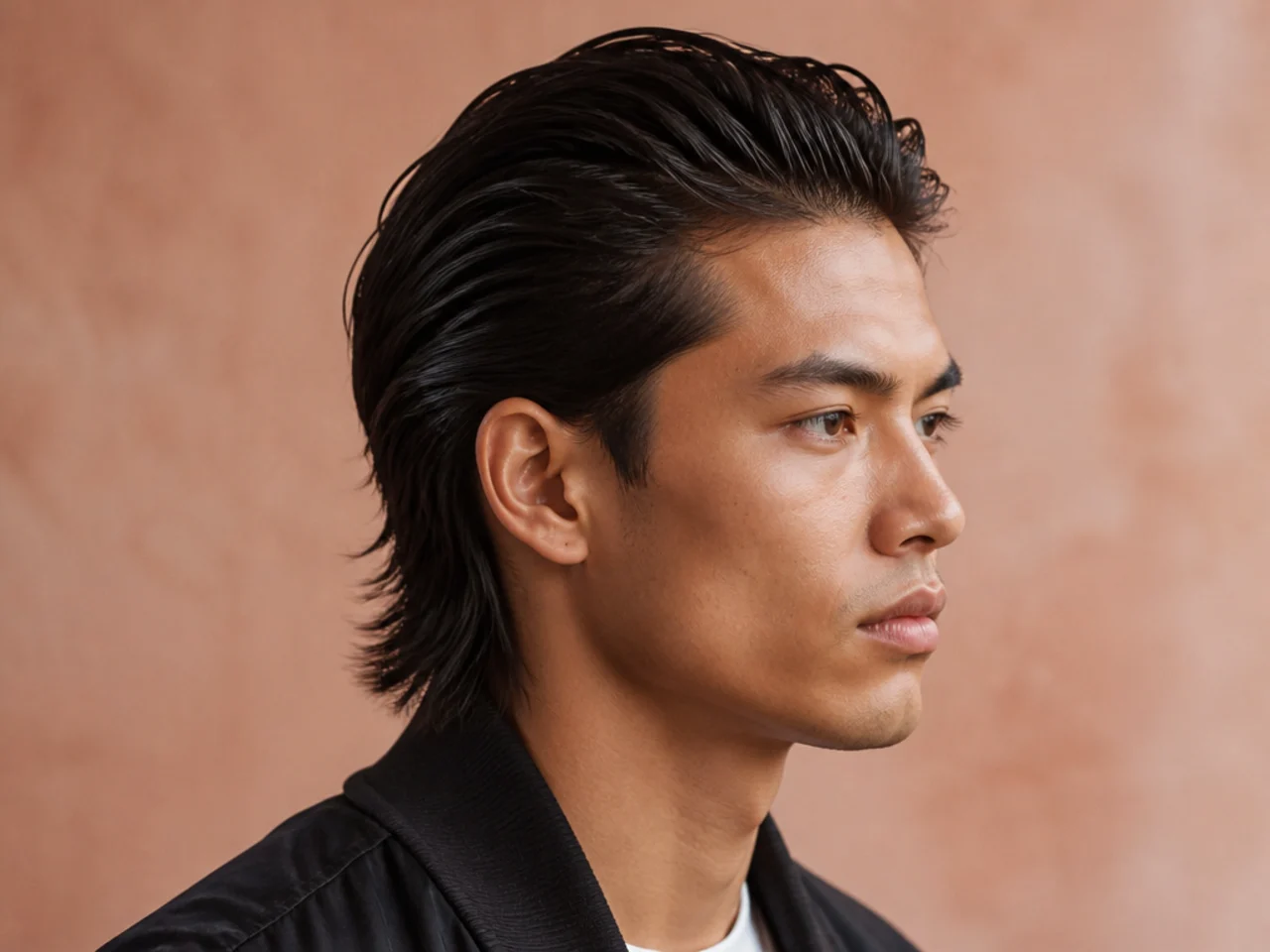
The runway edit — a long top swept straight back with a wet-look pomade, then a four-inch layered mullet nape trailing behind. Reads elegant and slightly aggressive at once, which is why fashion-week street-style shots keep landing on it. The finish is the star here, not the length. Every strand should show a comb line.
Best on straight hair with strong density. Angular, square, and oval faces.
Ask for: "Slicked-back mullet, five inches on top pushed straight back, hard part on the dominant side, four-inch layered nape, one-guard sides blended into the length."
Styling tip: heavy pomade to towel-dried hair, comb straight back and to the part, blow-dry cool from the front to lock the direction. Finish with shine spray.
3. The Curtain-Fringe Mullet
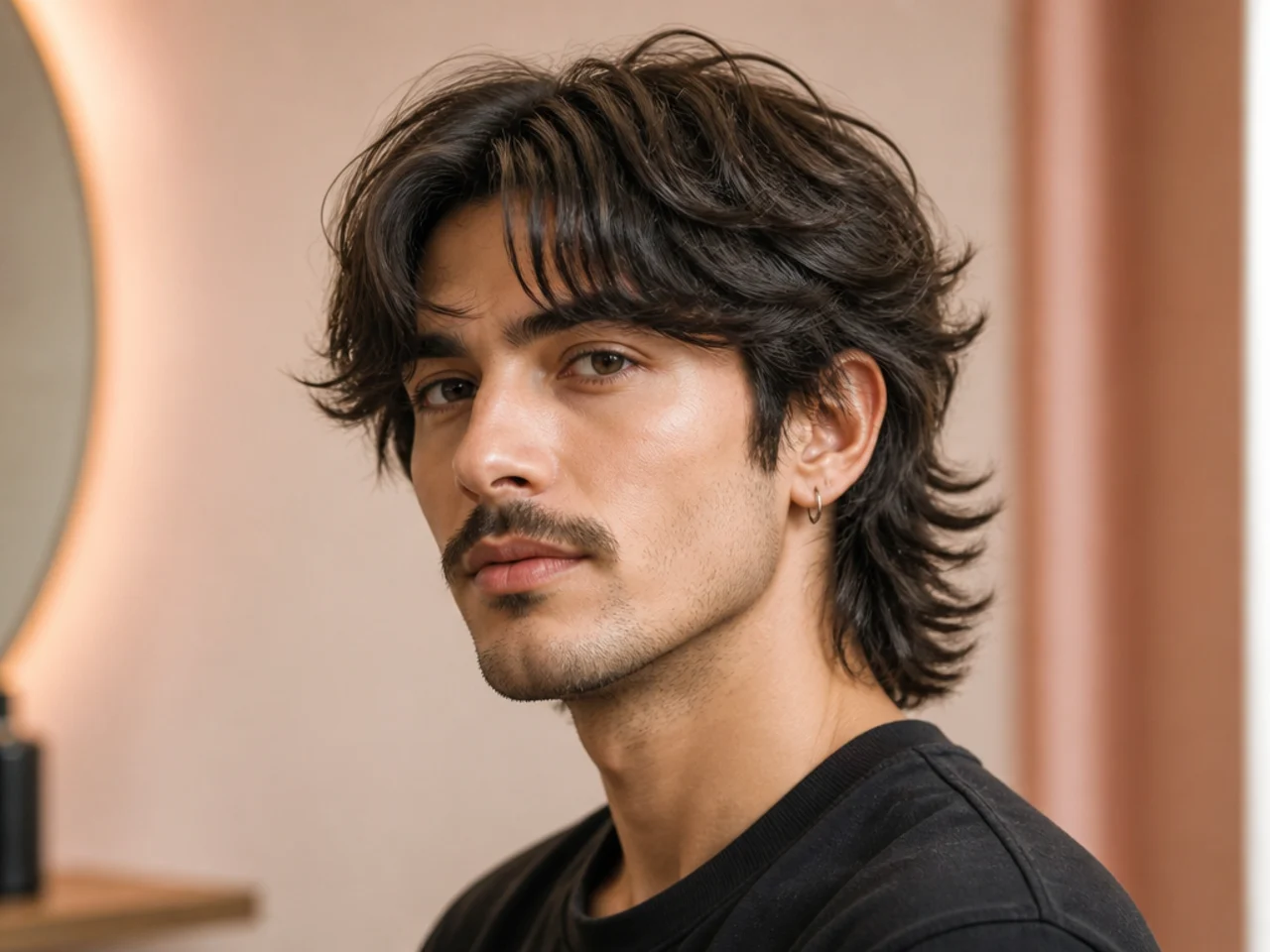
A soft center-parted fringe with two panels falling to the cheekbone, then wolf layers running through a collar-length shag back. Same DNA as the K-drama look, dressed slightly less styled. Reads romantic on camera and current in person, which is why it plays so well on Pinterest.
Best on oval, square, and heart faces. Round faces need extra crown volume added.
Ask for: "Curtain-fringe mullet, four inches on top with a soft center part, panels reaching the cheekbone, four-inch shag back, scissor-blended sides long enough to tuck."
Styling tip: round-brush each panel forward and slightly out from center, cool blast to set, pea of light cream through the mid-lengths. Recomb the part while wet.
4. The Mid-Fade Precision Mullet
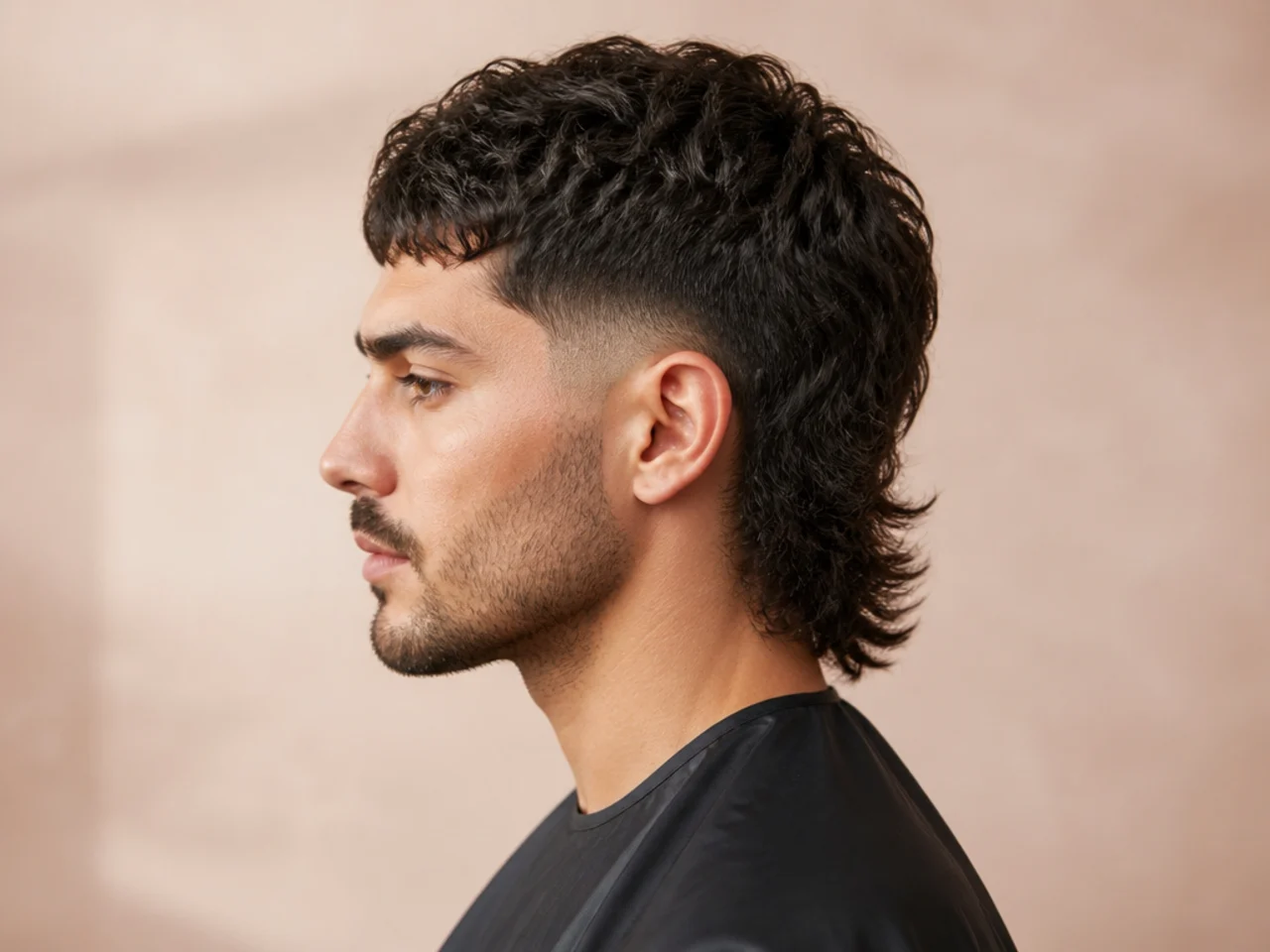
The architectural version — a sharp mid fade sits right at the temple, then all the visible weight moves into the top and back. Runs office-safe when the top length stays around three inches, and swings modern-editorial when it climbs past four. The mid fade is the safest first fade because it flatters almost every face shape.
Best on straight-to-wavy hair. Oval, round, square, and diamond faces.
Ask for: "Mid-fade precision mullet, mid fade at the temple, one guard at the bottom blended up, three to four inches on top, three-inch back with textured layers, define the sideburn line."
Styling tip: matte clay pushed forward and slightly up at the fringe, then a light hairspray to lock the top. Book a fade touch-up every two to three weeks.
5. The Low-Taper Refined Mullet
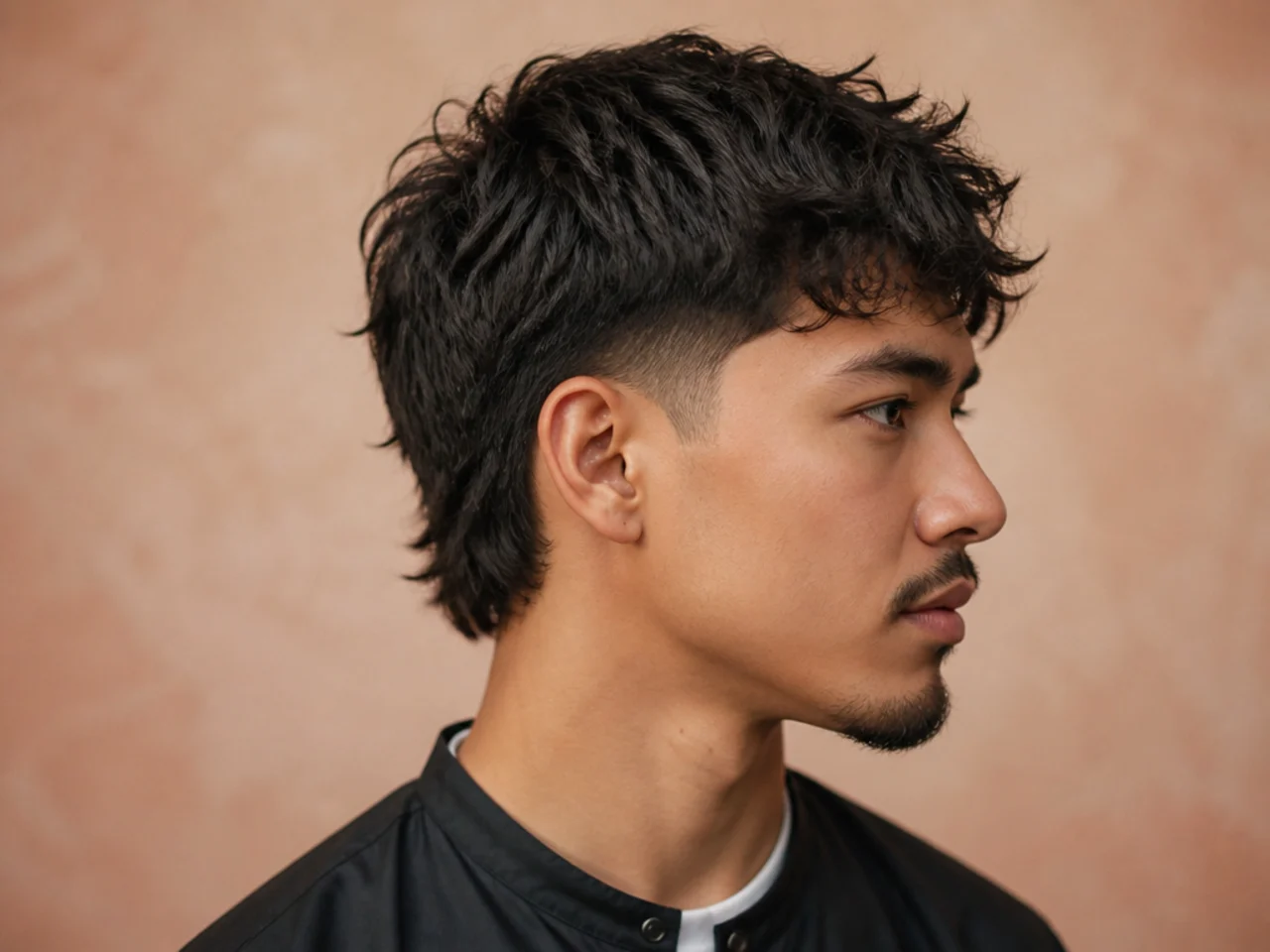
The most work-appropriate stylish version — a subtle low taper at the sideburn, three inches on top with a soft forward sweep, and a collar-length back with softer layers than the wolf-cut versions. The taper reads clean under a shirt collar, and the shape holds the mullet identity without shouting about it. Perfect first mullet if the office rules matter.
Best on every face shape.
Ask for: "Low-taper refined mullet, low taper ending at the sideburn, three inches on top with a soft forward sweep, collar-length back with soft internal layers."
Styling tip: sea-salt spray on damp hair, rough-dry with your fingers, finger-comb the top forward. Skip the dryer on the back — let it fall.
6. The Burst-Fade Sculptural Mullet
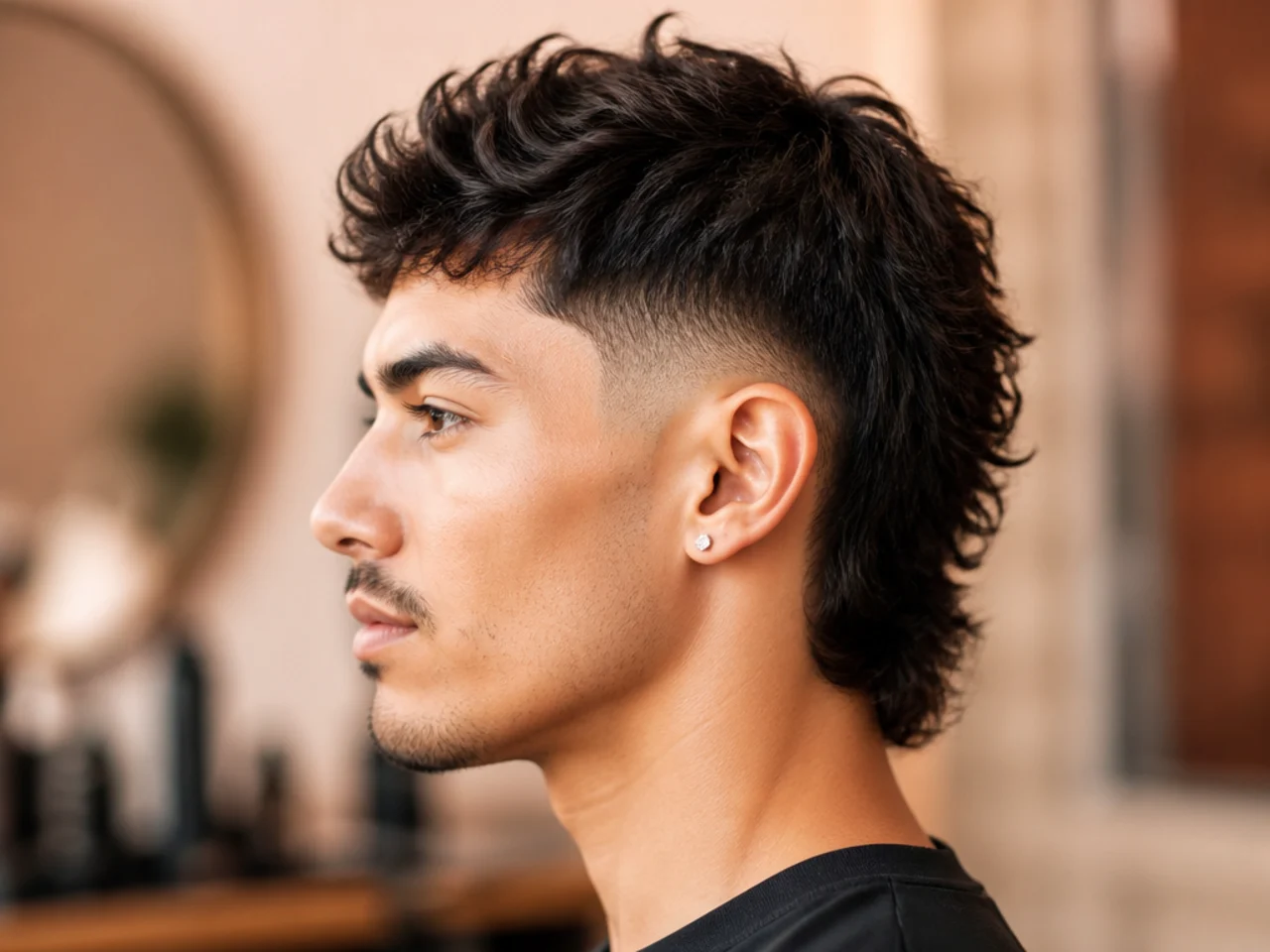
The most eye-catching side treatment on this list. A burst fade mullet curves around each ear in a semi-circle, leaving the length behind the ear untouched. That untouched length flows straight into the mullet back for a signature you do not see everywhere. The visual weight pulls back and out — great for narrow or long faces that need width.
Best on straight-to-wavy and curly hair. Oval, square, diamond, and long faces.
Ask for: "Burst-fade sculptural mullet, burst fade around each ear, four inches on top, four-inch layered back flowing behind the ear, keep the nape line feathered."
Styling tip: lightweight cream through the top for hold, leave the back to move on its own. Dry texture spray at the crown adds volume without weight.
7. The Two-Block Statement Mullet
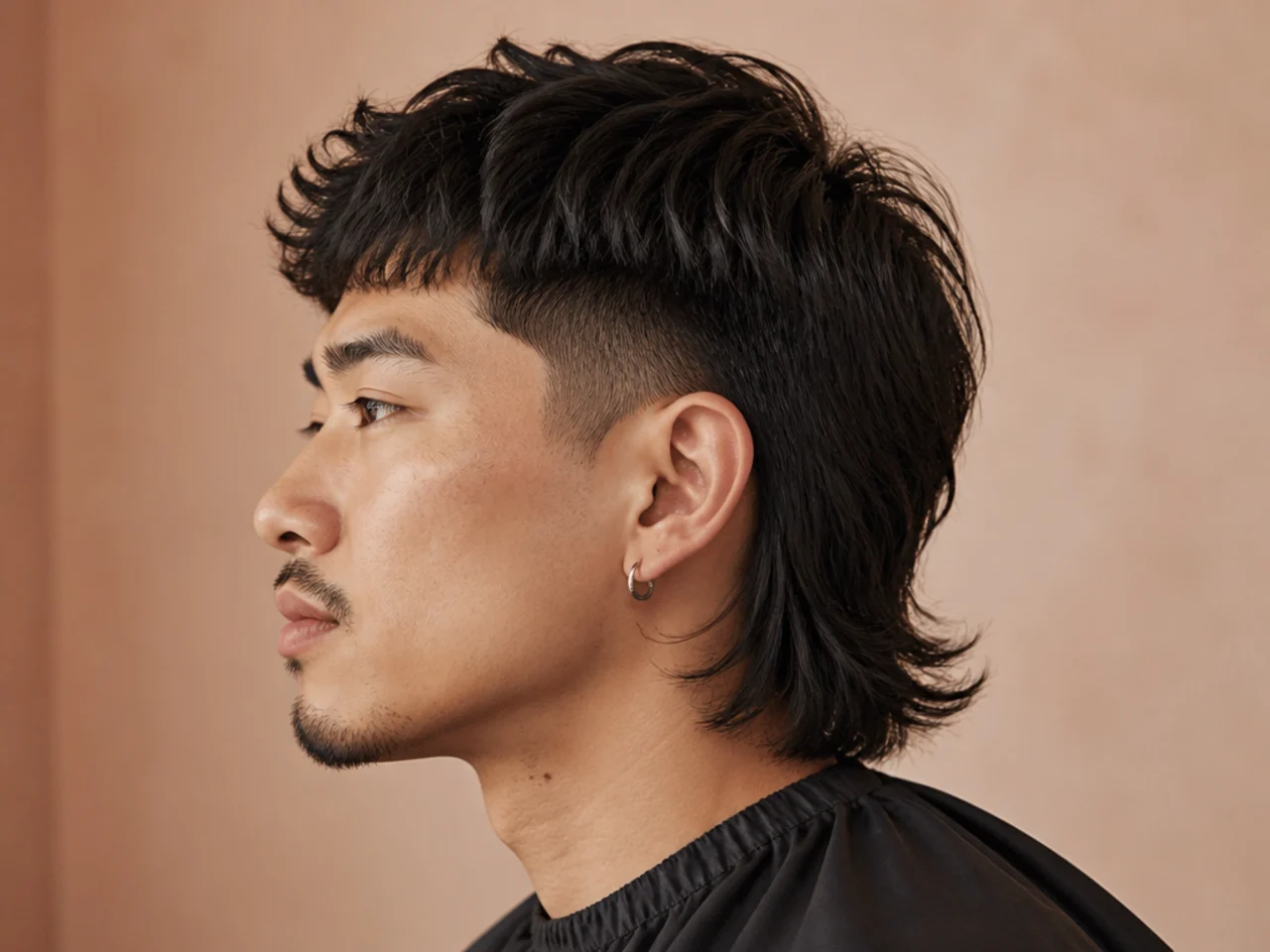
The two-block haircut crossed with a stylish mullet — hidden clipper-buzzed sides at the horseshoe seam, four inches on top connecting into a collar-length back. The two-block seam disappears when the hair sits at rest and appears when the top moves. Peak K-pop silhouette, and the most-requested mullet on Korean-owned barbershop menus in North America.
Best on straight hair with medium-to-thick density. Every face shape if the top length is tuned.
Ask for: "Two-block mullet, four inches on top connecting into a four-inch back, two guard on the hidden sides, horseshoe seam at the temple."
Styling tip: matte cream through damp hair, blow-dry with fingers pushing the top forward and back, let the mullet section air-dry.
8. The Wolf-Cut Hybrid Mullet
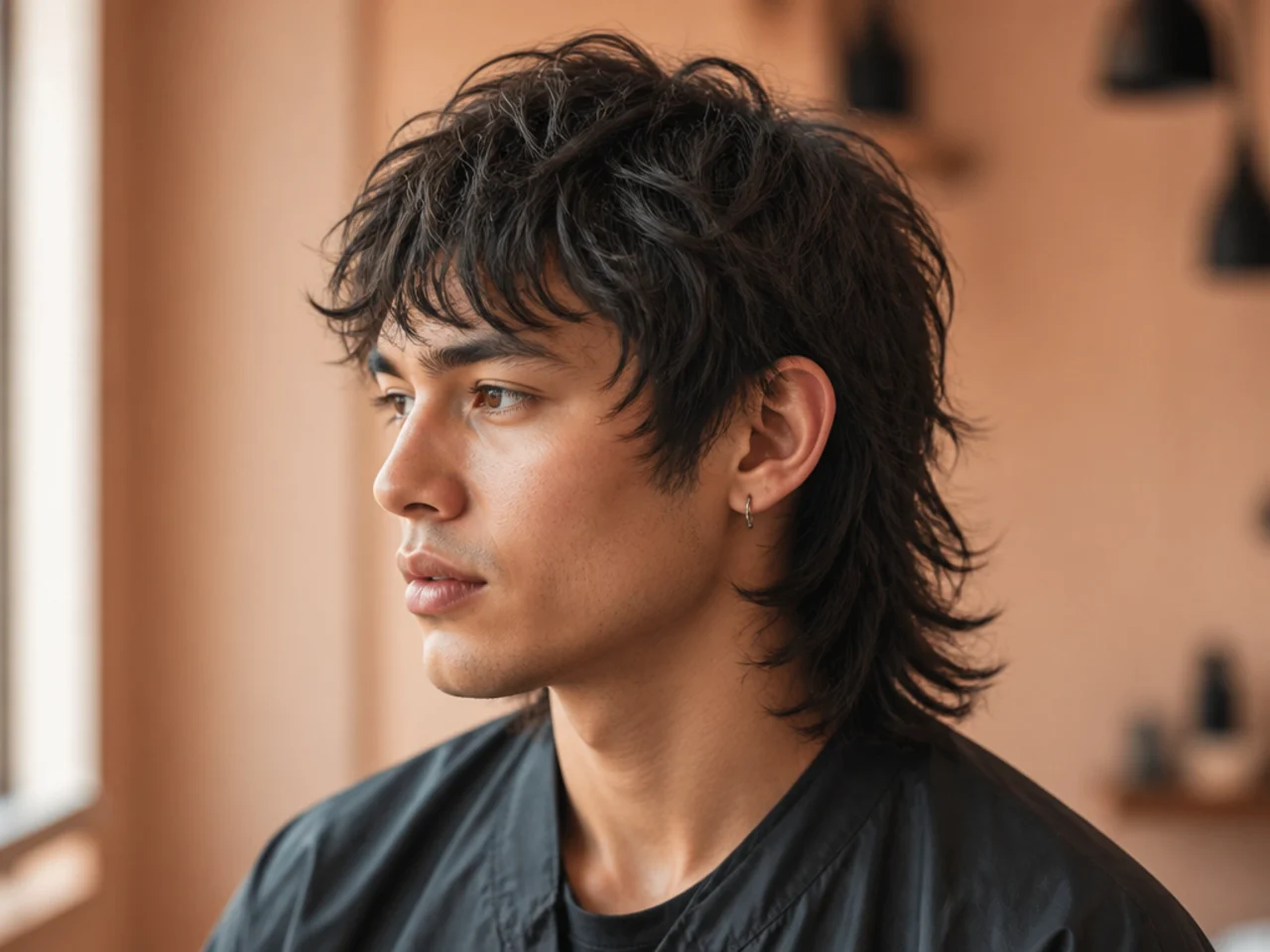
Heavier layering than a straight mullet — the men's wolf cut template applied to the mullet silhouette. Layers stack around the crown and cheekbone, face-framing pieces feather at the cheek, and a collar-length shag back finishes the shape. More texture than a K-mullet, less structure than a full shag. The most editorial 2026 variation on this list.
Best on straight-to-wavy hair with medium-to-thick density. Oval and heart faces.
Ask for: "Wolf-cut hybrid mullet, heavy layers stacked around the crown and cheekbone, four to five inches on top, four-inch shag back with feathered perimeter, scissor-blended or low-taper sides."
Styling tip: salt spray and leave-in conditioner on damp hair, rough-dry with your fingers, scrunch the back upward. Light matte pomade at the roots for lift.
9. The Perm-Set Signature Mullet
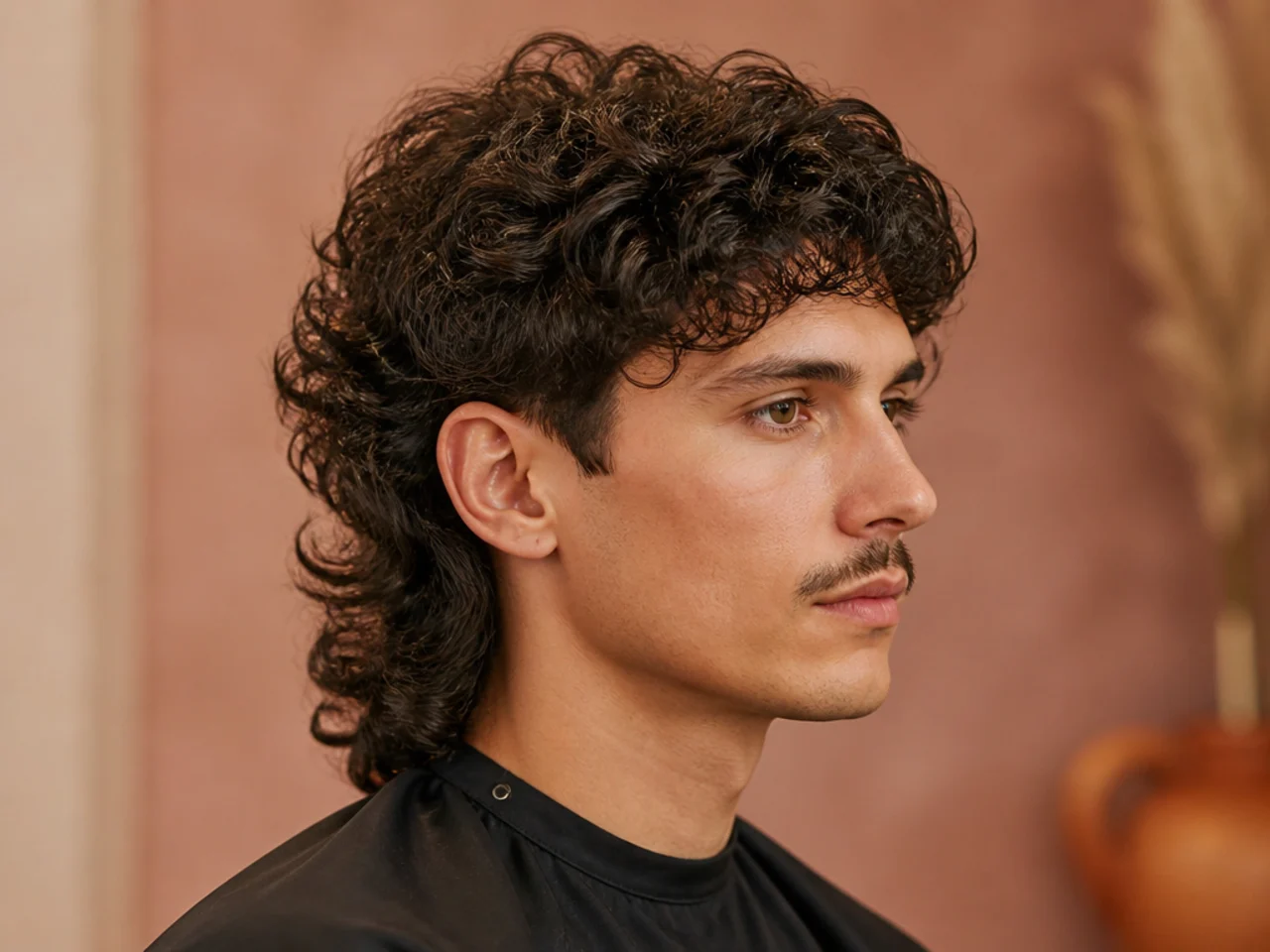
Perm is what turns this one from a haircut into a signature. A C-curl through the fringe, a body perm through the top layers, and a light wolf perm through the mullet back — the whole shape sits in a coordinated pattern from the hairline to the nape. Cuts daily styling to two minutes and locks the movement in for three to four months.
Best on straight hair with medium-to-thick density. Oval and heart faces.
Ask for: "Perm-set stylish mullet, four inches on top with a C-curl fringe, body perm through the mid-lengths, four-inch back with a light wolf perm through the layers."
Styling tip: leave-in conditioner on damp hair, diffuse on low heat, scrunch curl cream through the length. Do not brush after diffusing.
10. The Side-Swept Runway Mullet
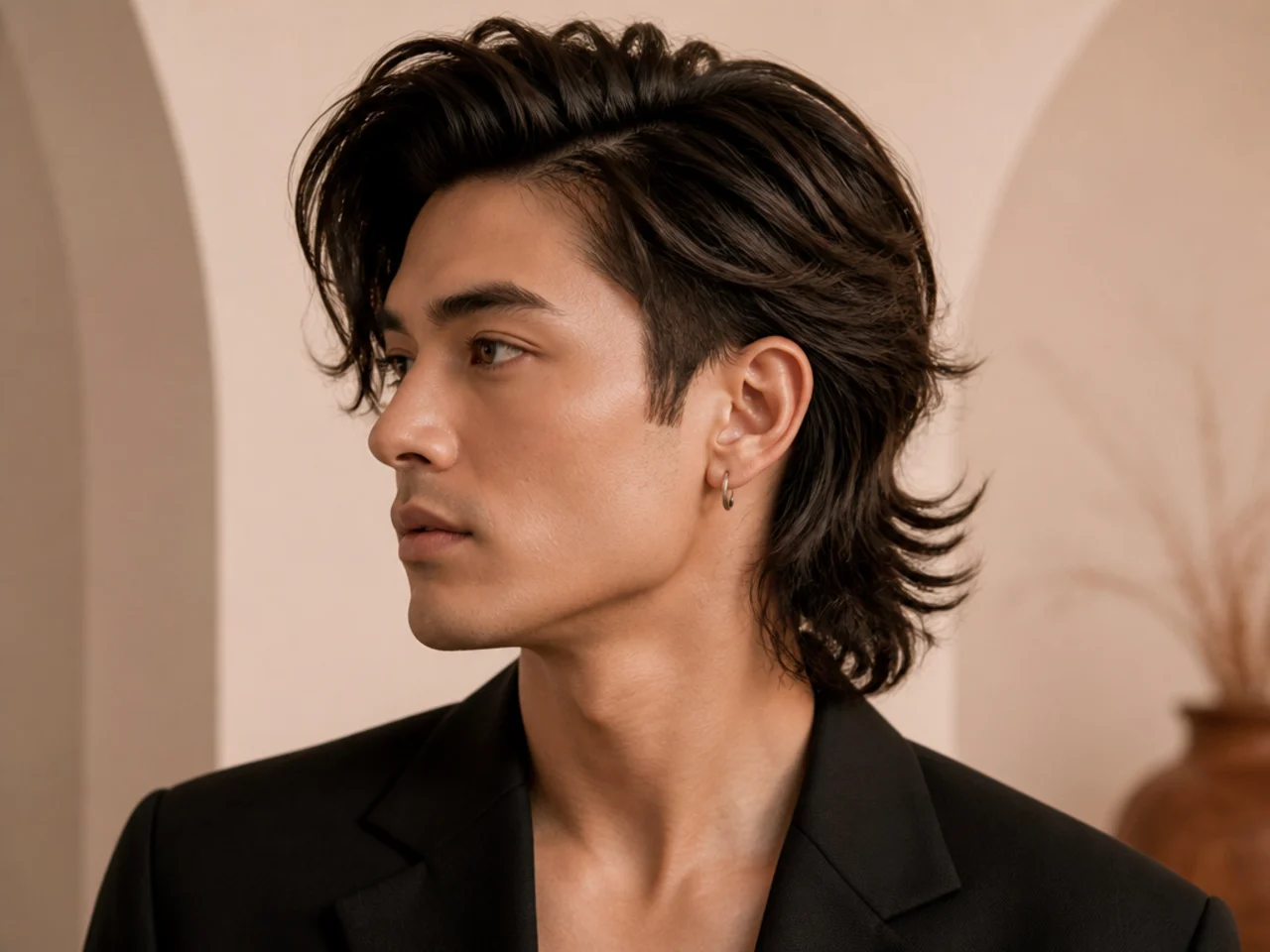
Asymmetry is the whole personality. The top sweeps hard from one temple across the forehead to the opposite side, then layers cascade back into a collar-length shag. Reads editorial and slightly dramatic — the kind of cut fashion photographers pick up first. Angled sides support the sweep instead of competing with it.
Best on straight hair with medium density. Oval, square, and heart faces.
Ask for: "Side-swept runway mullet, five inches on top swept from left temple across to right cheekbone, four-inch layered back, low taper on the shorter side, longer scissor-blend on the sweep side."
Styling tip: mousse at the roots, blow-dry the sweep across with a paddle brush, matte pomade to hold the direction, hairspray on the perimeter.
11. The Middle-Part Cinematic Mullet
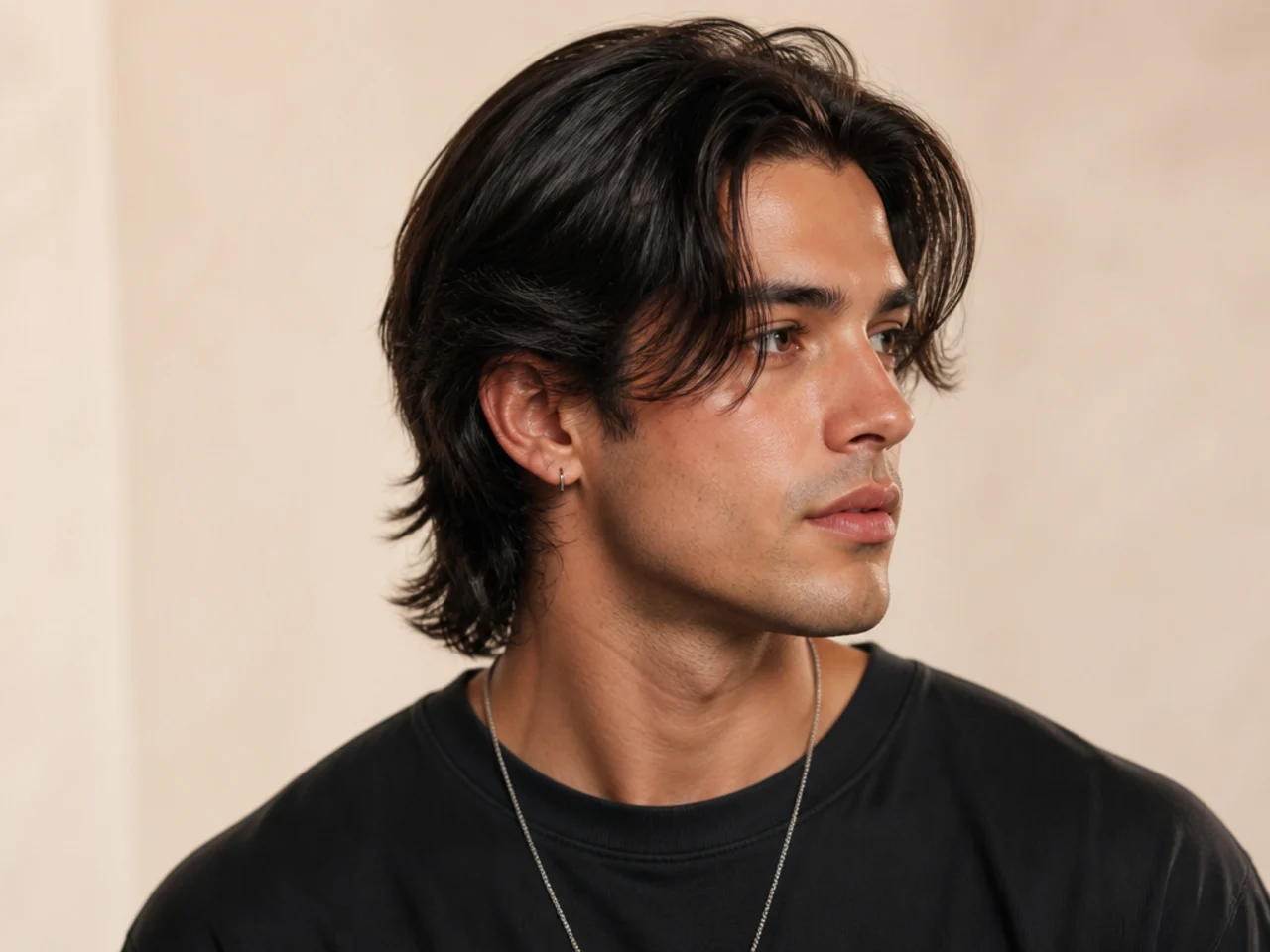
The clean center-parted version — a straight middle part, four inches on top with each side falling forward to frame the eyes, and a shag back at collar length. Sharper than the curtain-fringe variant because the part is cleaner and the panels sit blunter. K-drama leads and fashion editorial models cycle through it constantly.
Best on oval, square, and heart faces. Round faces need extra crown volume.
Ask for: "Middle-part cinematic mullet, four to five inches on top with a straight center part, four-inch shag back, scissor-tapered sides long enough to tuck behind the ear."
Styling tip: round-brush each side forward and slightly out from center, cool air to set, pea of light cream through the mid-lengths.
12. The Comma-Fringe Mullet
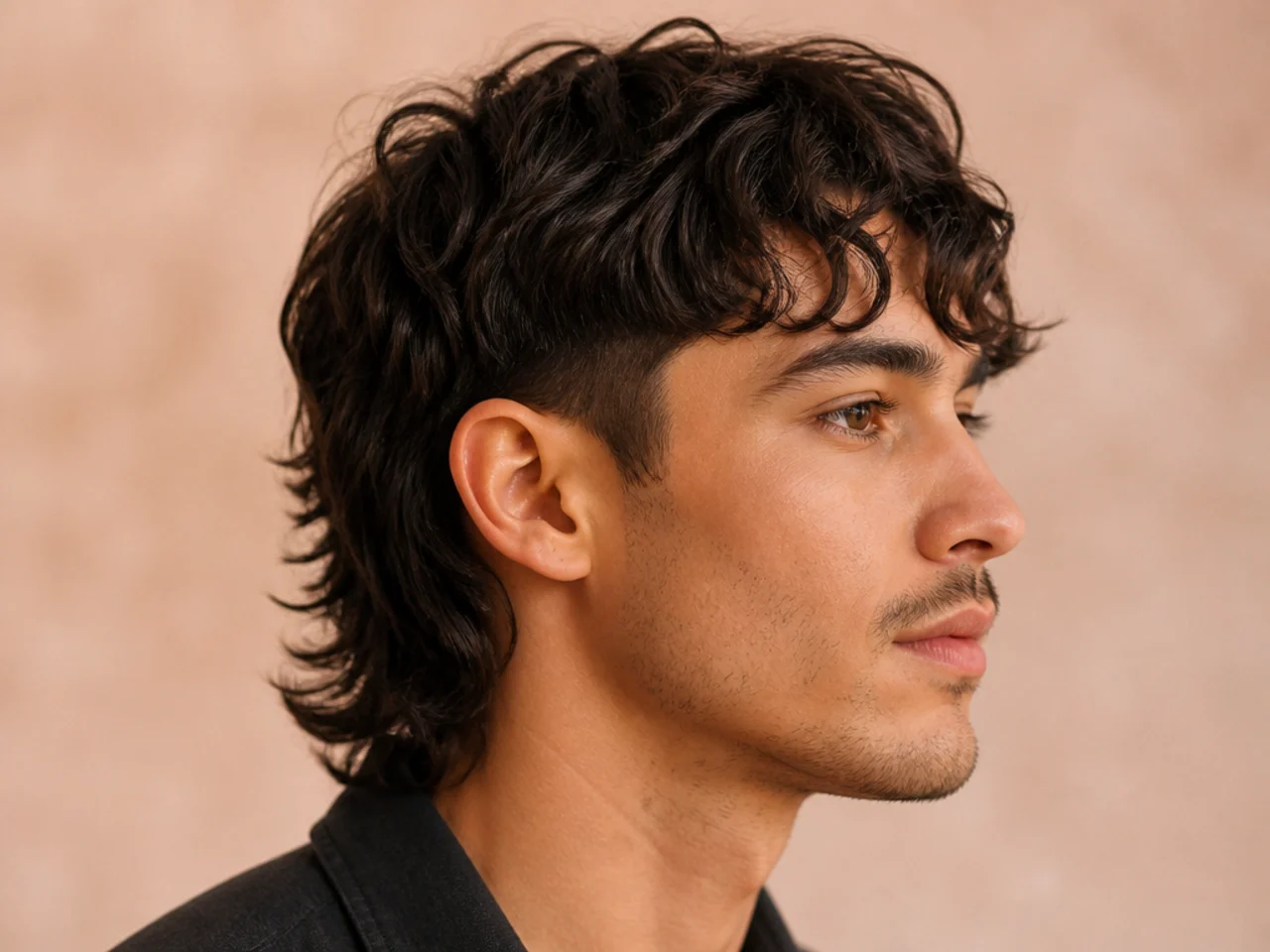
The comma-hair version — one curled front lock hooks toward the dominant eye, medium-length wolf layers behind it, and a soft-shag back at the collar. K-pop members from V (BTS) to Jungwon (Enhypen) have all worn versions. Reads photograph-ready up front and modern from every other angle.
Best on straight-to-lightly-wavy hair. Oval, oblong, and heart-shaped faces.
Ask for: "Comma-fringe mullet, four inches on top with the front cut long enough to hold a curl, four-inch shag back, soft-tapered sides, keep the fringe tapered to the tip."
Styling tip: point a one-inch round brush at your temple, roll the front section inward, cool blast to lock the comma. Pea of curl cream sets it.
13. The Feathered Face-Frame Mullet
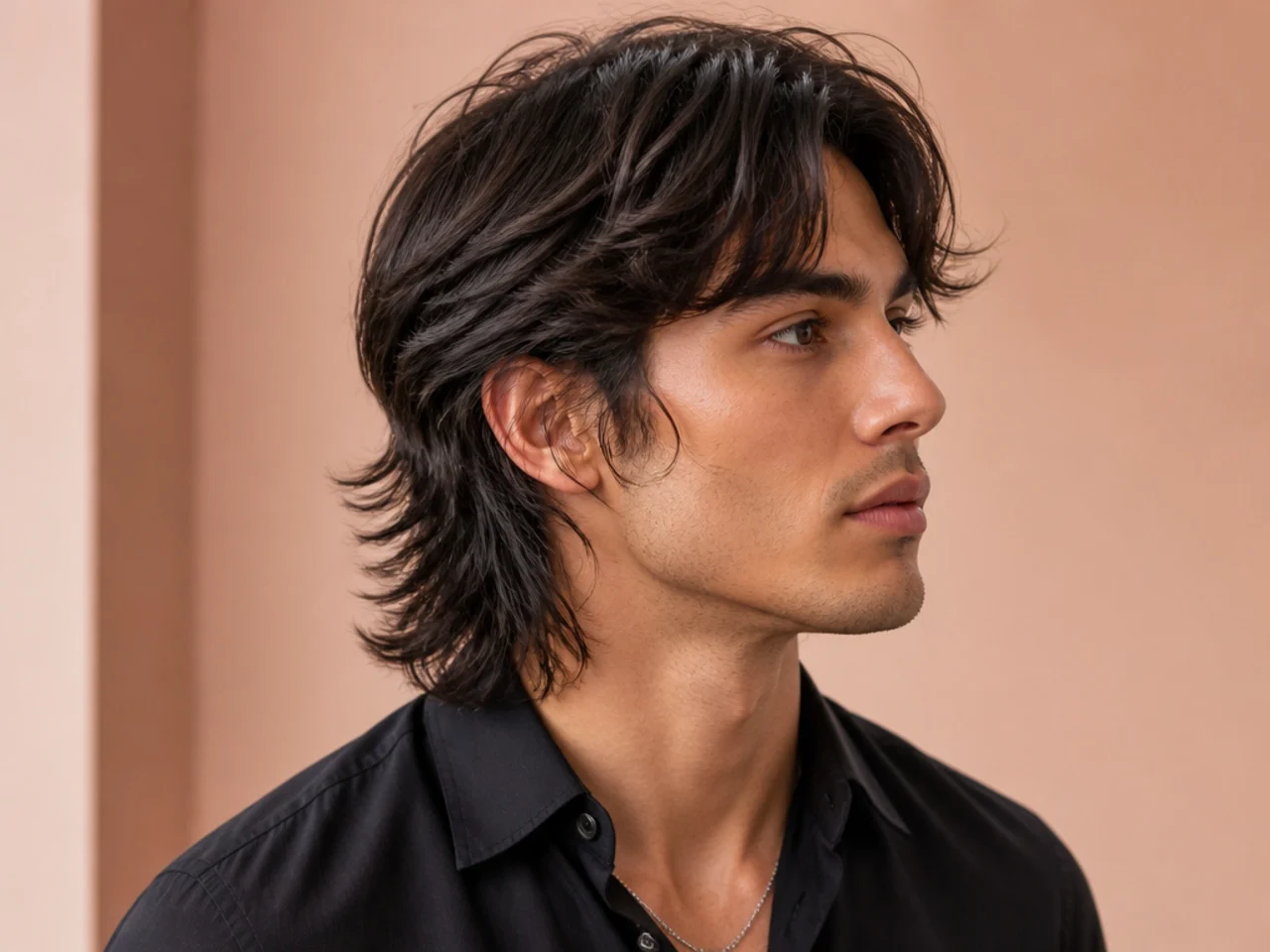
Soft and editorial — the front layers feather at the cheekbone in a way that opens the face, and the mullet back keeps the length at three inches so the movement sits balanced. The face-framing pieces are what earn the stylish label — they read as intention rather than accidental length. Great transition cut when growing out a two-block or textured crop.
Best on straight-to-wavy hair with fine to medium density. Oval, square, and long faces.
Ask for: "Feathered face-frame mullet, three to four inches on top with feathered pieces at the cheekbone, three-inch back with soft layers, scissor-tapered sides."
Styling tip: sea-salt spray on damp hair, air-dry to eighty percent, twist the face-framing pieces with a light touch of cream to define them.
14. The Long-Layered Rock Mullet
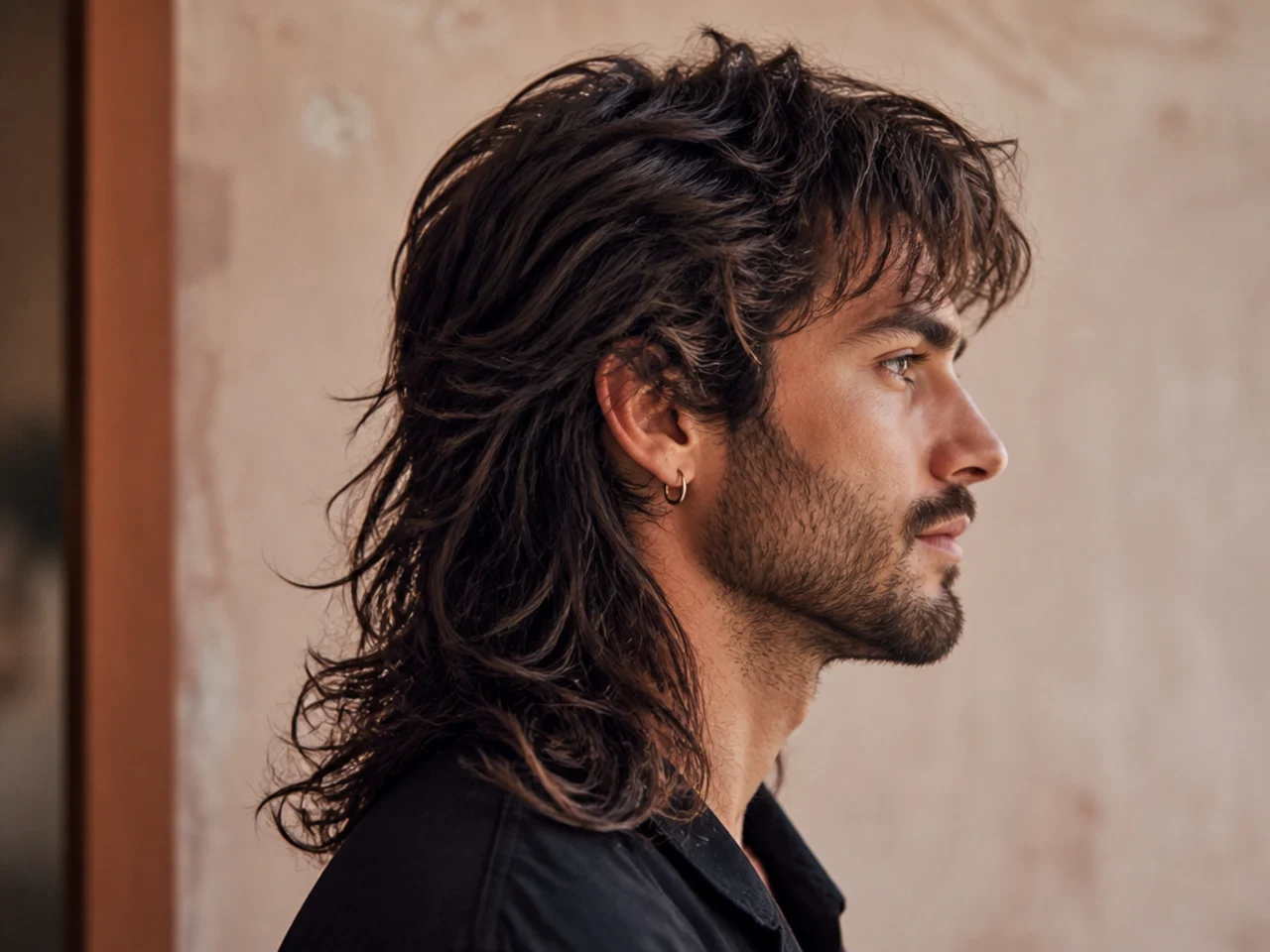
Length is the whole point — six to seven inches through the top, back running past the shoulder blade in a heavy shag, and a wolf perm through every layer for movement. Indie musicians, off-duty rock frontmen, and the editorial wolf-mullet crowd all wear it. Requires patience during the grow-out and a barber who has cut a wolf shape before.
Best on straight-to-wavy hair with heavy density. Oval, oblong, and heart faces.
Ask for: "Long-layered rock mullet, six to seven inches on top, back running eight to ten inches in a heavy shag, wolf perm through the layers, feathered perimeter."
Styling tip: curl cream on damp hair, diffuse on low heat, scrunch the back upward while diffusing. Refresh mid-day with a spray bottle of water and cream.
15. The Fluffy High-Volume Mullet
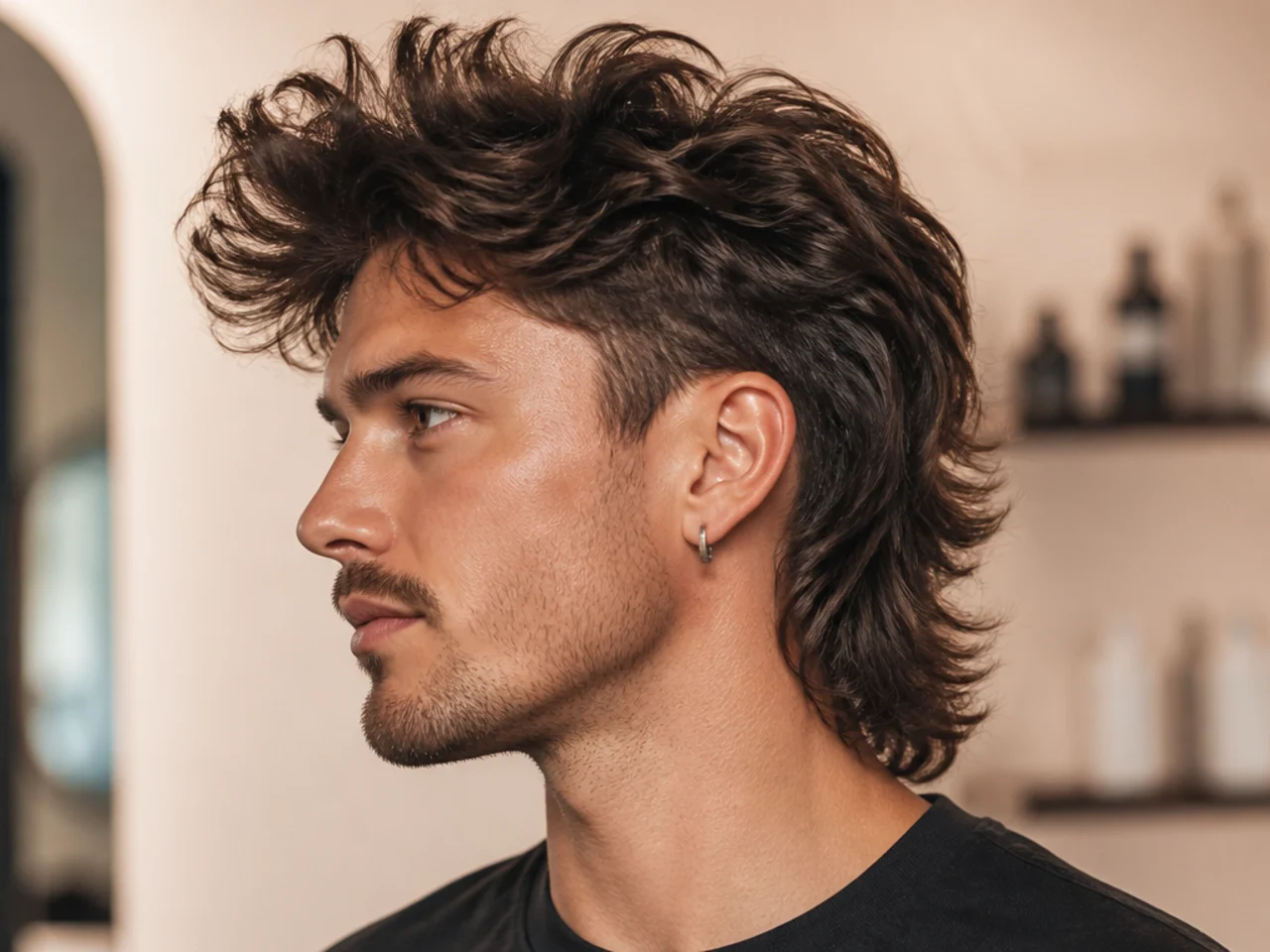
Volume takes over. The top stays long and stands up at four inches, the sides drop away in a sharp mid fade, and the mullet back sits shorter at two to three inches to keep the eye moving upward. Reads editorial on medium-to-thick straight or wavy hair. Round and heart faces get a length gain from the crown peak.
Best on thick straight-to-wavy hair. Round, heart, and oval faces.
Ask for: "Fluffy high-volume mullet, four inches through the top with a mid-length forward fringe, mid fade on the sides, back at two to three inches with texture."
Styling tip: mousse at the roots on damp hair, blow-dry upward with a round brush, then set with a strong-hold spray. Refresh volume mid-day with a dry texture spray.
16. The Curly Editorial Mullet
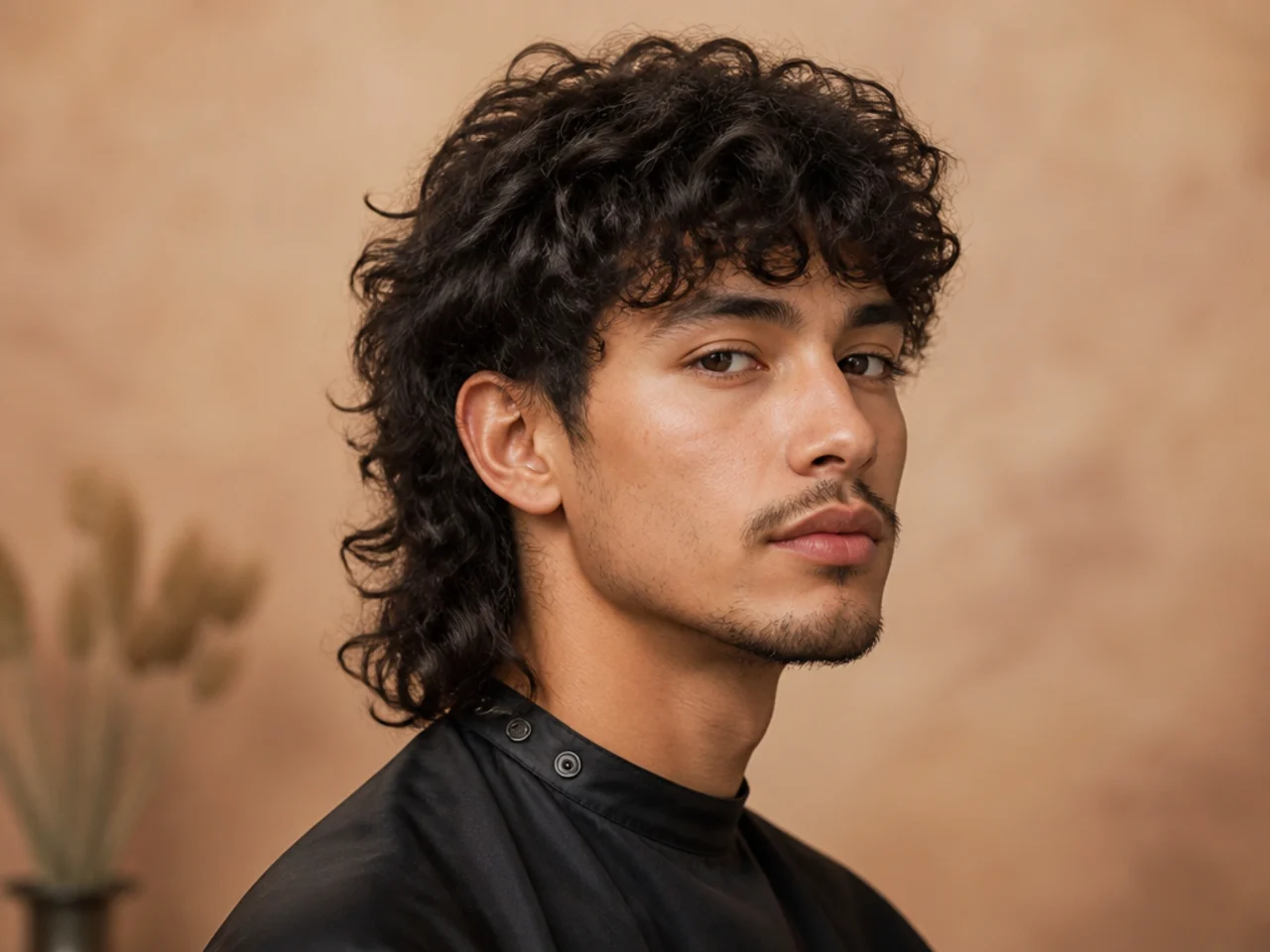
Natural texture doing most of the work — the curls build shape without any styling, so the cut focuses on lightening weight and shaping the perimeter. Deeper internal layers pull the bulk out of type-3 or type-4 hair, and the perimeter stays intact so the coils fall in defined pieces. The curly hair men haircut mullet guide runs deeper on the curl-specific detail.
Best on type 3 and type 4 curls. Every face shape.
Ask for: "Curly editorial mullet, dry-cut where possible, internal layers to remove bulk, perimeter intact, three-inch back, tapered sides that follow the curl pattern."
Styling tip: curl cream on soaking-wet hair, plop with a T-shirt for ten minutes, diffuse on low. Refresh day two with a spray bottle of water.
17. The Compact Short Mullet
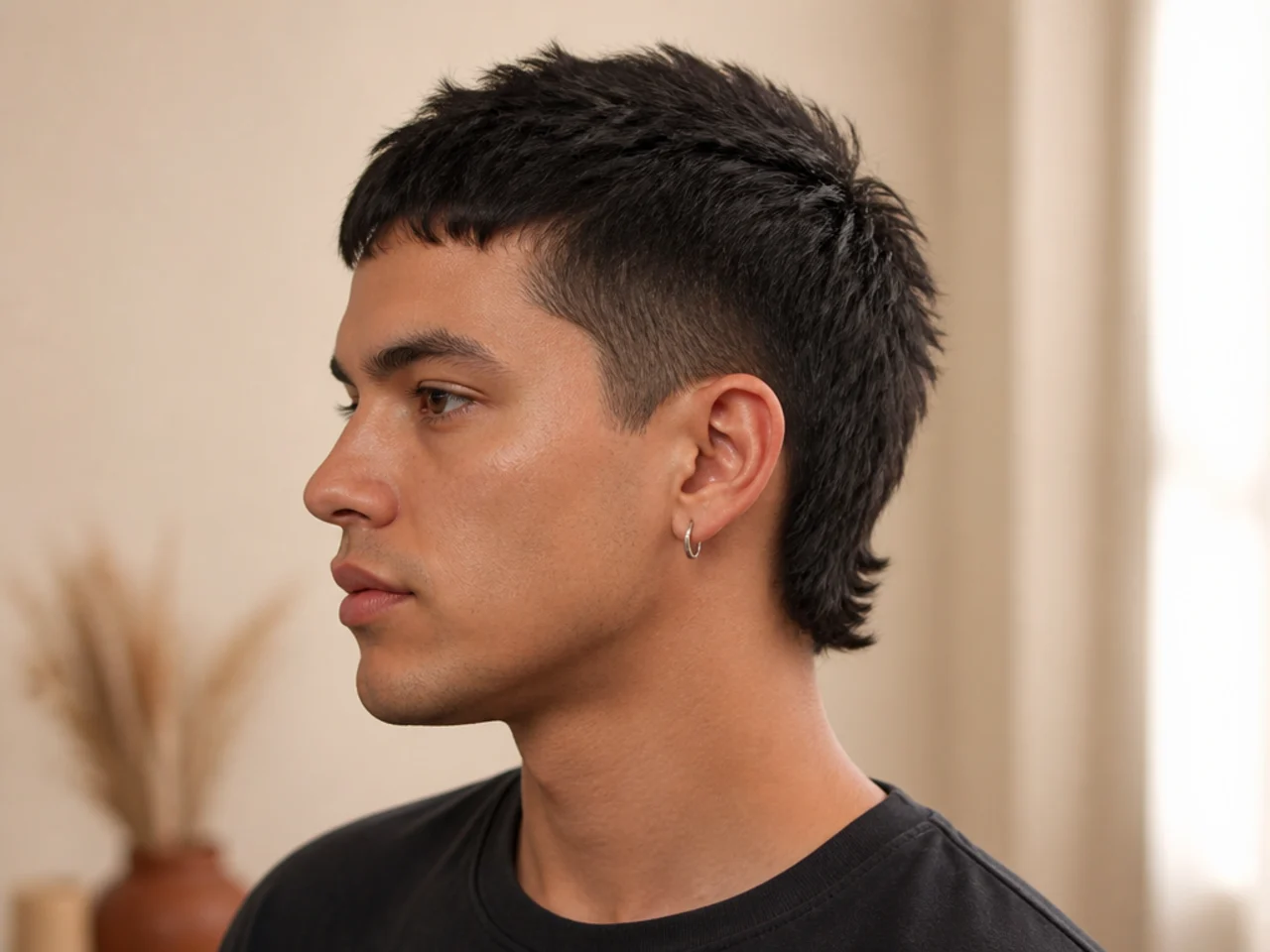
The workplace-ready stylish minimal — two inches on top with a soft side sweep, a two-inch nape, and scissor-blended sides. The mullet identity comes from the length ratio, not dramatic back length. Fine and medium hair benefits from the compact profile because point-cutting builds fullness the strands do not have. Grows out clean into any longer variation on this list.
Best on every face shape. Fine to medium hair benefits most.
Ask for: "Compact short mullet, two inches on top with a soft side sweep, two-inch feathered back, scissor-blended sides."
Styling tip: matte paste through damp hair, finger-comb backward, done. No dryer needed for the mullet section.
18. The Disconnected Undercut Mullet
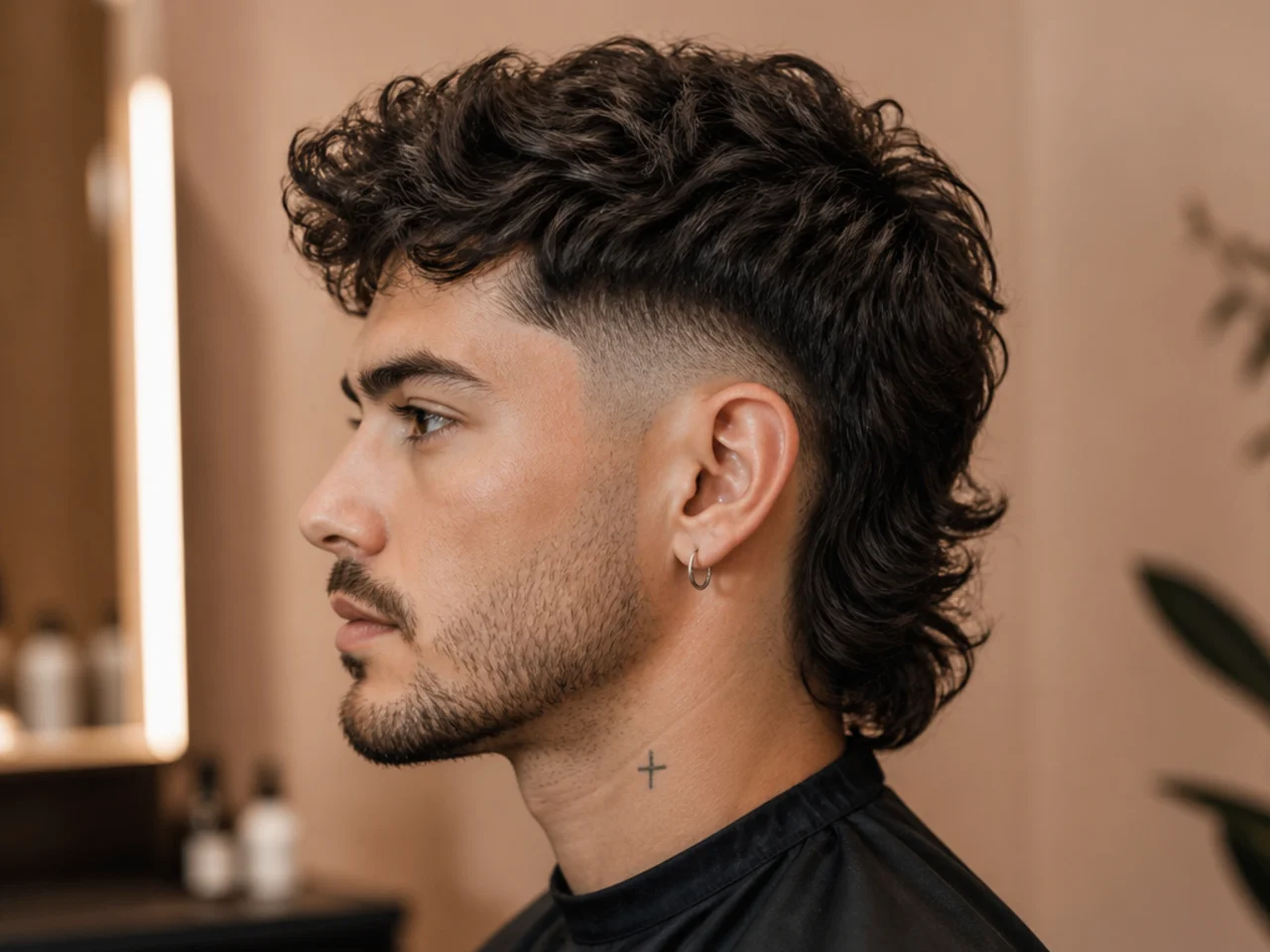
A hard disconnection — shaved undercut all the way around, and a long layered top that flows straight back into the mullet nape without any blend. The line between top and side is a visible visual break, which is what turns this from a mullet into a statement. Best worn confident, with a beard or clean shave to balance the top mass.
Best on straight-to-wavy hair with medium density. Oval, square, and diamond faces.
Ask for: "Disconnected undercut mullet, half-guard undercut on the sides and back-of-ear, five inches on top disconnected at the horseshoe, four-inch layered nape."
Styling tip: strong-hold clay pushed back with fingers, then a shot of hairspray to lock the direction. Trim the undercut every two weeks — the disconnect blurs fast.
19. The Choppy Point-Cut Mullet
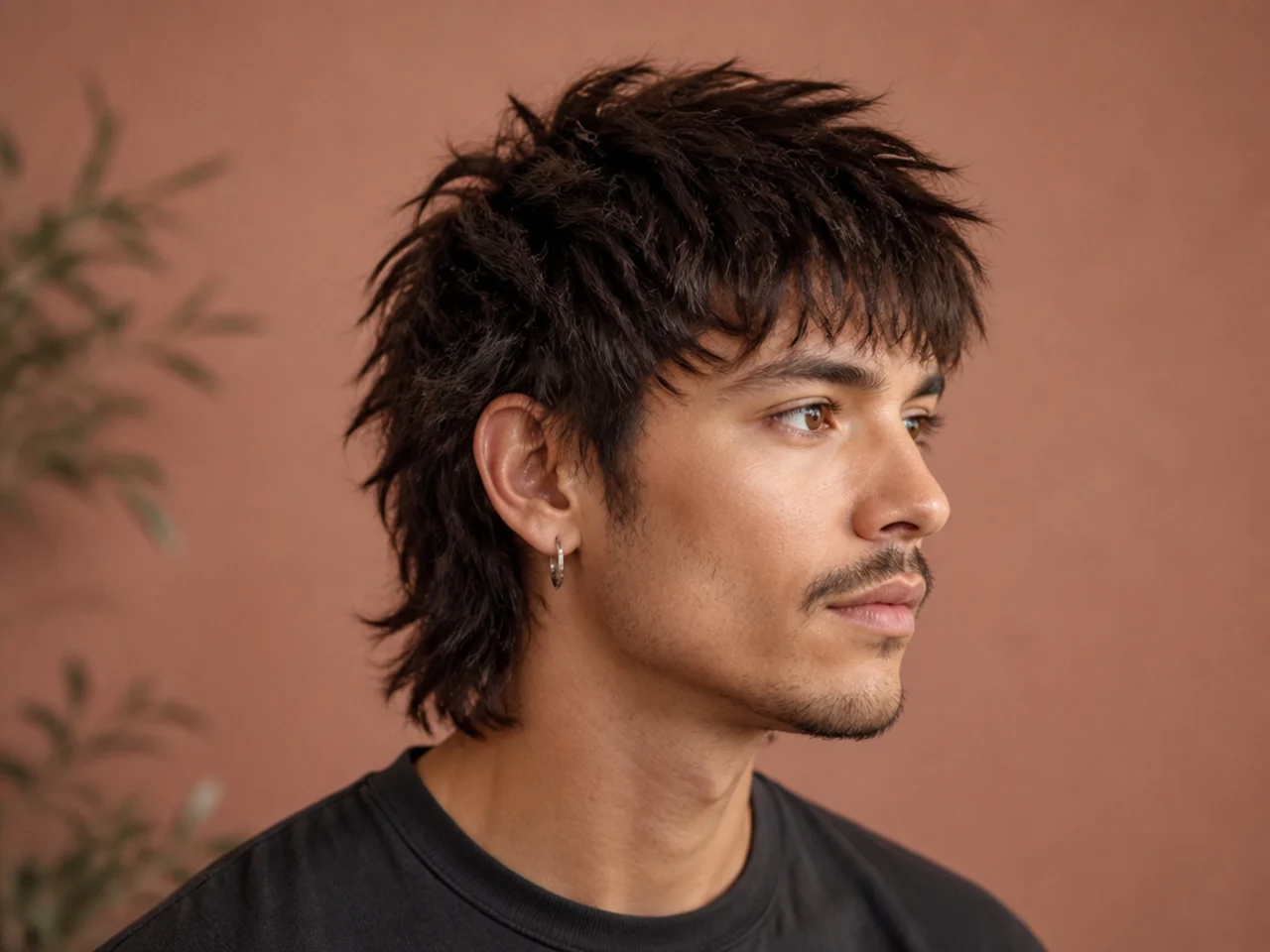
Piecey texture is the whole personality — no clean lines, everything moves. Choppy internal layers make the shape feel lived-in rather than styled, and an angled taper fade sharpens the sides so the texture reads intentional. Rock and skate-scene guys have carried this reference forward.
Best on wavy hair with medium density. Oval, heart, and long faces.
Ask for: "Choppy point-cut mullet, angled taper fade, shaggy fringe over the brows, three-inch back with heavily point-cut layers, disconnect the sideburns slightly."
Styling tip: salt spray, twist damp sections, air-dry, then finger-comb to separate. No brushes — a comb pulls the texture out.
20. The Blowout Textured Mullet
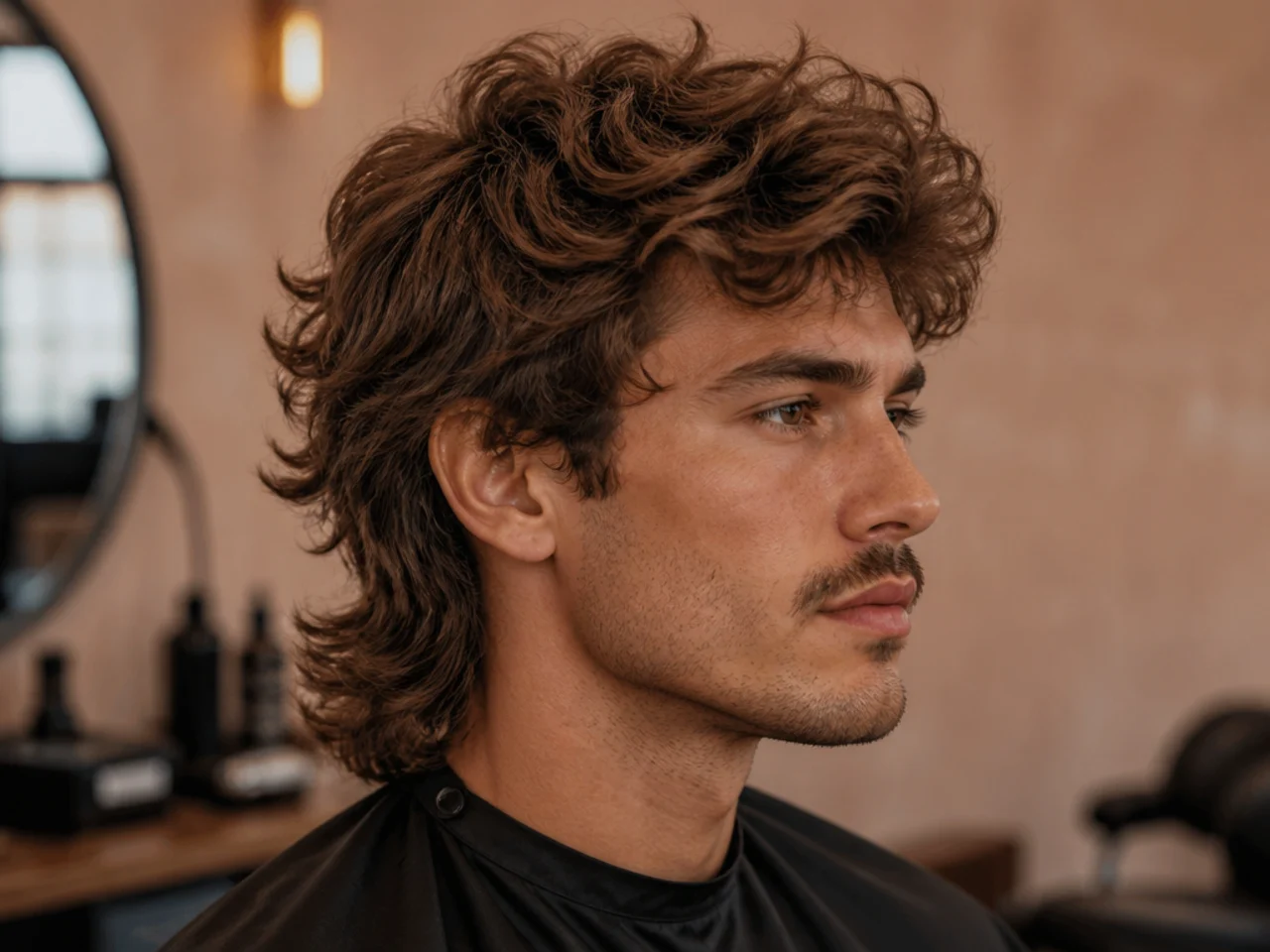
The blowout finish crossed with a mullet — a brushed-up top with the mullet back as a length trail. A blowout brings the whole top forward and up in a voluminous mass, and the mullet back trails behind at collar length. Common on East Coast barbershop menus and now spreading through Pinterest. Reads polished, high-volume, and unmistakably 2026.
Best on straight-to-wavy hair with medium-to-thick density. Oval, square, and diamond faces.
Ask for: "Blowout textured mullet, blowout finish through the top pushed forward, mid or low taper on the sides, four-inch back with soft internal layers."
Styling tip: sea-salt spray on damp hair, round-brush the top forward and up while blow-drying, matte pomade to hold the shape, hairspray on the perimeter.
How to Ask Your Barber
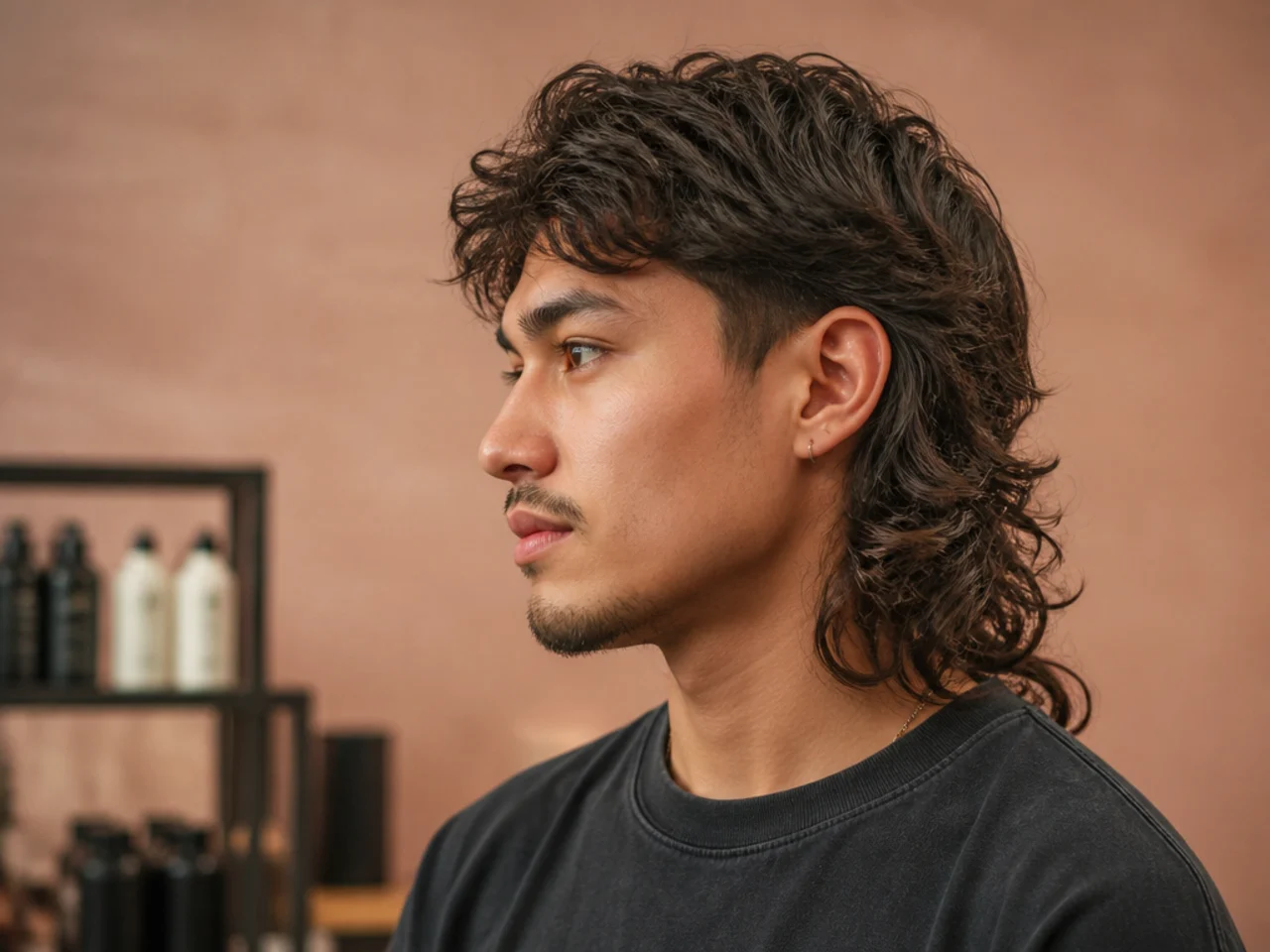
Stylish mullet vocabulary can drift when it hits an unfamiliar chair. Here is the script that gets you the shape you had in mind:
- Bring three photos. Front, side, and three-quarter. One photo lets the barber guess; three photos remove the guessing. Add a fourth from behind if you care about the nape line specifically.
- Use the variation name plus the shape descriptor. "Editorial textured mullet with a mid fade" or "wolf-cut hybrid with a low taper." The two-part label helps a barber who has not seen the exact reference before.
- Give inches on top, inches on the back, and a guard number on the sides. "Four inches on top, four-inch back, one-guard fade blended up" leaves no room for interpretation. "Medium mullet" leaves plenty.
- Say the fringe shape out loud. Forward, curtain, side-swept, comma-hooked, or blunt at the brow. The fringe carries as much of the cut as the length — call it out.
- Touch the head where you want the shape line. For any fade or disconnect, put a finger at your temple where the line should sit. Barbers respect a finger on the head more than a paragraph.
- Confirm the finish before they start. Matte, glossy, tousled, or slick. Stylist finish choices change which product line the cut is engineered around — better to align at the consultation than at the mirror.
- Book the follow-up before you leave. Every three weeks for a fade version, four to six for a scissor-blended taper, six to eight for the long-layered rock mullet. The shape softens faster than most people expect.
Styling and Maintenance
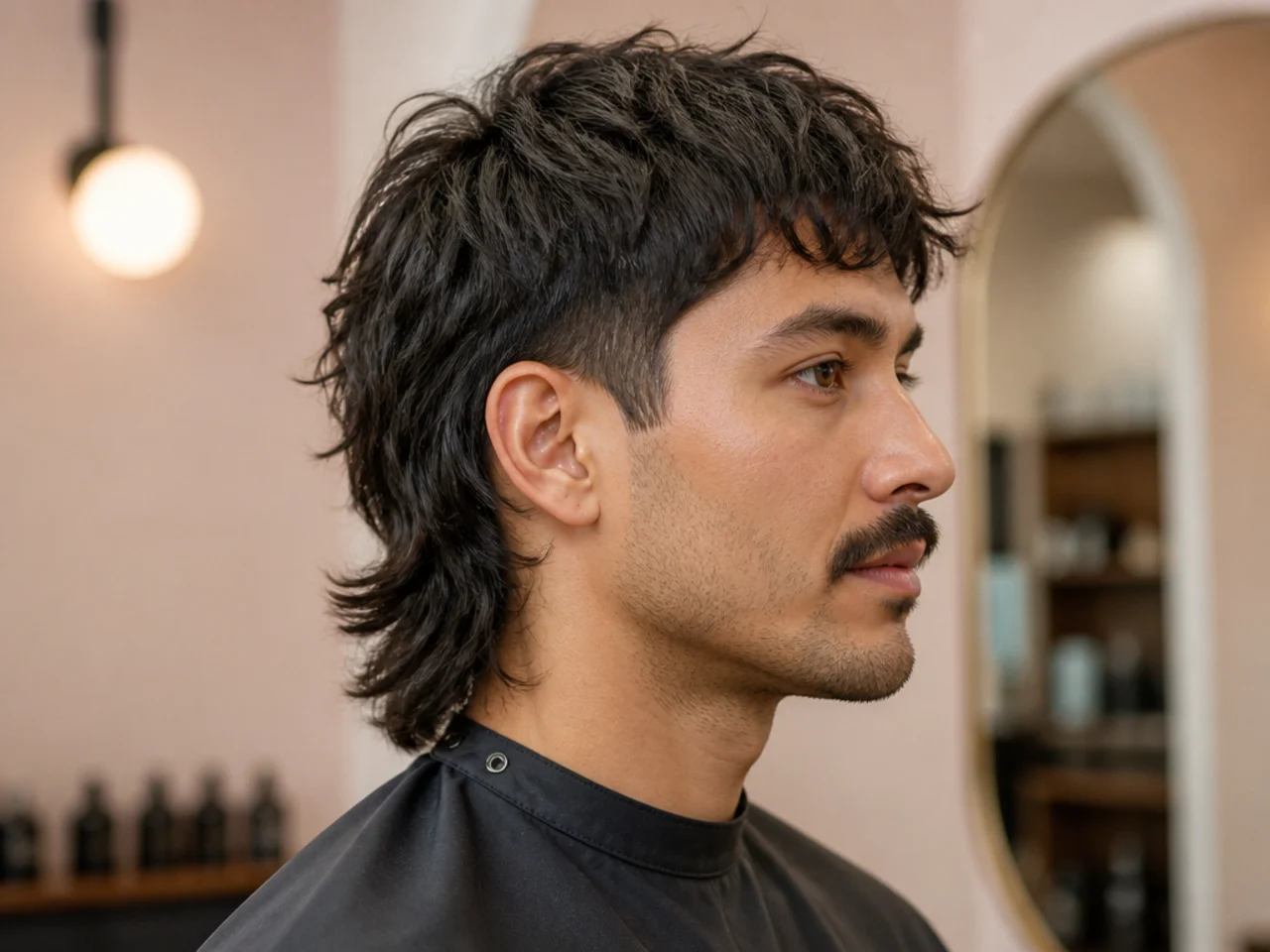
The stylish mullet rewards a short daily routine done consistently. Two to five minutes at the mirror in the right order builds the shape every time.
Rough-dry with fingers first. After the shower, blot with a towel, then rough-dry on medium heat with a blow dryer while lifting the roots at the crown and back with your fingers. This is the volume everything else sits on — skip it and the top falls flat by lunch.
Match the product to the finish, not the shape. A matte clay reads natural on the editorial textured, mid-fade, and low-taper versions. A curl cream defines the perm-set, curly editorial, and any wolf-cut hybrid. A wet-look pomade suits the slicked-back and side-swept runway variations. A sea-salt spray builds the feathered face-frame, choppy point-cut, and long-layered rock texture. One product per section, small amount — stylish mullets go subtractive, not layered.
Air-dry the back on non-permed cuts. The mullet nape wants to fall in defined pieces. Blowing it dry pushes it out wide and fluffs the shape from stylish to shaggy inside a week. Diffuse only if the hair is permed or naturally curly, and diffuse on the lowest heat setting with the dryer close to the scalp.
Wash with the finish in mind. Sulfate-free shampoo two or three times a week keeps color and perms holding. A weekly deep conditioner on any variation longer than four inches. Skip a wash before a big event — day-two hair holds shape better than day-one on almost every stylish mullet.
Sleep on a silk or satin pillowcase. The mullet back sees more overnight compression than most cuts, and cotton pulls the perimeter into fluff. A silk pillow saves the shape and cuts morning styling time in half. Guys with permed variations should also avoid running hands through the mullet section between washes — every hand-run drops the perm pattern a little. If you want a full styling toolkit walkthrough, browse the best wavy hair products roundup for the categories worth investing in.
Trim the perimeter monthly, cut the whole shape every six weeks. The mullet back does not need a full re-cut every visit, but the perimeter needs a monthly clean-up so the shag stays feathered instead of stringy. Book the trim before the shape starts to blur. The long-layered rock mullet stretches to eight weeks; every fade version tightens to three.
FAQ
What makes a mullet look stylish instead of dated?
Three details separate a stylish mullet from a 1980s throwback — a shorter back that sits between two and five inches, internal layers that move instead of hang, and a fade or scissor-taper on the sides so nothing looks disconnected. Skip any of the three and the cut slides backward into costume territory fast.
Which stylish mullet suits a first-timer?
The mid-fade precision mullet and the low-taper refined mullet are both easy starting points — the back only reaches the collar, the sides stay office-safe, and the shape reads intentional without a lot of length commitment. Grow into the wolf-cut or long-layered versions once you know how the silhouette sits on you.
Do stylish mullets work on straight hair?
Yes — most of the stylish variations were built for straight or lightly wavy hair. Ask for heavier internal point-cutting so the layers show up on flat strands, and consider a body perm or setting perm through the mid-lengths if the hair falls dead by lunch.
How do I keep the mullet back from spreading wide?
Book a monthly perimeter trim, air-dry the back instead of blow-drying it, and scrunch a small amount of texture cream through the length after washing. Blow-drying the shag section pushes it out wide and turns the shape from stylish to shaggy inside a week.
What products should I use to style a mullet?
Matte clay or paste for the top on medium-to-thick hair, sea-salt spray for the layered back, and a curl cream for any permed or naturally curly variation. A light-hold hairspray finishes the shape without making it crunchy. One product per section, small amount.
How often do stylish mullets need a re-cut?
Every four to six weeks for scissor-blended sides, every three weeks for a fade version. The mullet's shape depends on precise layering — the moment the back grows past the shape line, the cut loses the stylish edge and drifts toward the old mullet reference.
Can I combine a stylish mullet with a beard?
Yes — a full or medium beard balances the top mass on the disconnected undercut mullet, slicked-back mullet, and wolf-cut hybrid. Skip the beard on the compact short and feathered face-frame variations, which read cleaner with a shaved or short stubble line. For softer perimeter references browse the shag haircuts guide, or see the jellyfish haircut for the shape that sits next to the wolf on the family tree.