5 Reasons Comma Hair Pairs With a Mullet
The comma mullet pair works because two very different halves — a K-pop front hook and a modern mullet nape — share the same length, the same products, and the same fade underneath.
In this article · 17
- The Short Answer
- Reason 1: The Silhouette Reads as One Shape
- Reason 2: They Share a Grow-Out Schedule
- Reason 3: The Same Products Style Both Halves
- Reason 4: The Fade Solves Both Sides at Once
- Reason 5: The Cultural Timing Lines Up
- Comma vs Mullet vs the Pair — Side by Side
- Which Version of the Pair Should You Pick?
- How to Ask Your Barber
- The One Place the Pair Does Not Work
- FAQ
- Is the comma mullet pair a real named cut, or just a description?
- What is the difference between a comma mullet and a wolf cut?
- Can I get the comma mullet pair with a beard?
- Will this cut look good when it grows out?
- Does the pair work on Black or African hair textures?
- How is the comma mullet pair different from a comma haircut with a taper?
The comma hair and the modern mullet are two very different silhouettes on paper — one is Korean K-pop styling, the other is a Gen Z rework of an 80s rock look. Ask a barber to cut them together and they nod like it is obvious. Here are the five reasons the comma mullet pair keeps landing in barbershop chairs in 2026, plus how to ask for the version that suits your face and lifestyle.
The Short Answer
The comma mullet pair works because both halves ask for the same three things: about four inches of length on top, short sides underneath, and a product rotation that puts shine and shape on textured hair. That overlap is why the pair reads unified instead of stitched-together. No other Korean cut lines up with a mullet this cleanly, which is why barbers who cut one usually offer the other in the same visit.
If you want the base shapes on their own before pairing them, the comma haircuts primer covers the Korean front and the modern mullet haircut men breakdown covers the back. Both are in the same length neighborhood — that is not a coincidence.
Reason 1: The Silhouette Reads as One Shape
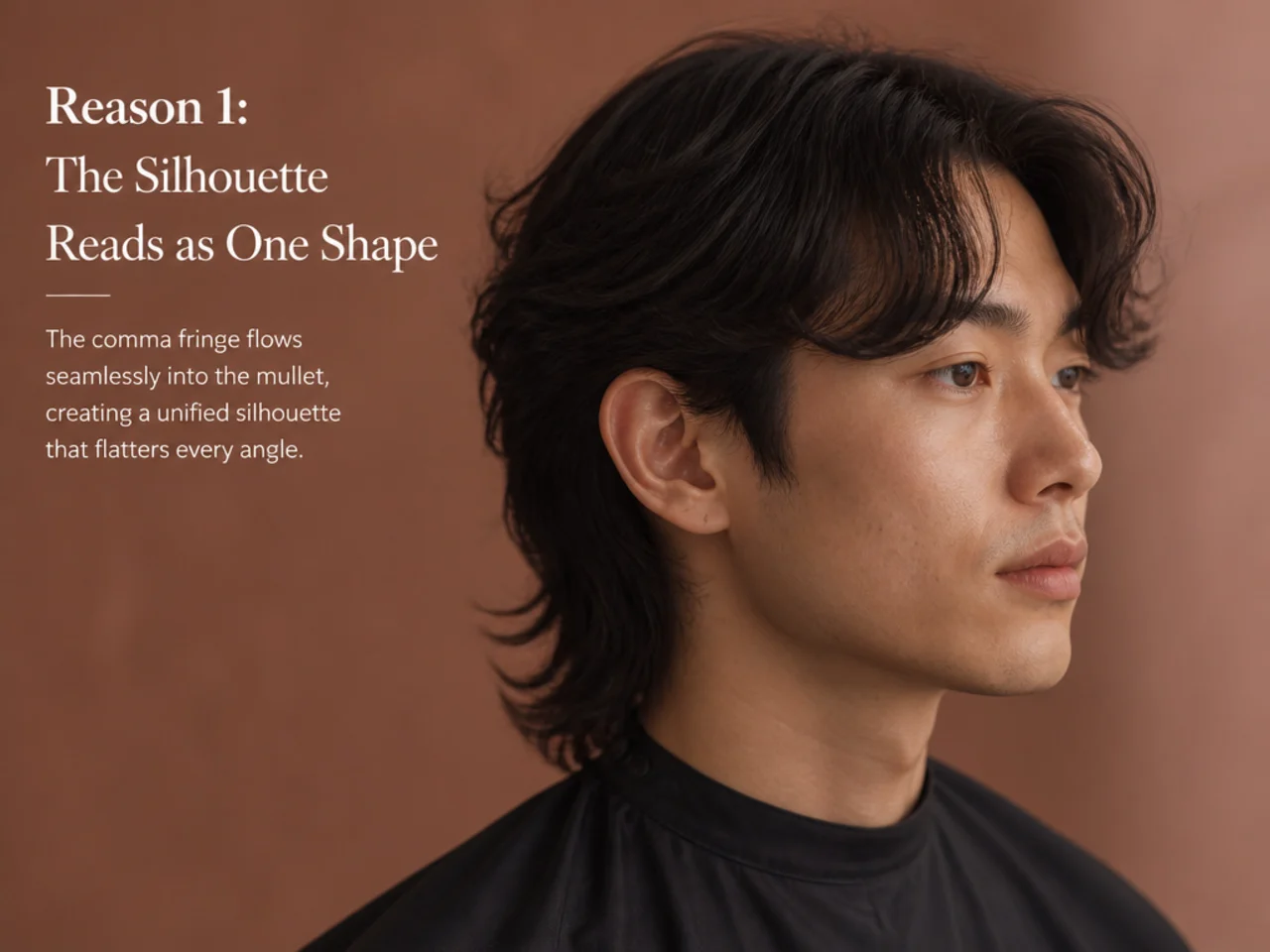
Look at the pair from the side and something obvious happens. The comma curl hooks inward against the forehead. The mullet drops backward past the nape. Both are curves — one leaning forward, one leaning back — and the eye reads them as two ends of the same arc. That is the visual glue.
Most hybrids fight themselves because the top and back come from different silhouettes. A slicked-back top on a mullet makes the back look wrong. A high-and-tight on a wolf cut makes the crown look bald. The comma mullet pair does the opposite — both halves want the same medium length, the same soft weight, the same finger-styled texture. The barber cuts one continuous shape, not two shapes glued at the crown.
That is why the pair photographs well from every angle. Front on, you see the comma. Three-quarter, you see the transition. Side profile, you see the mullet. A different feature at every angle, no repeat.
Ask for the balance: tell your barber "same length top to nape — around four inches — comma at the front, mullet at the back." Let them handle the internal blending.
Reason 2: They Share a Grow-Out Schedule
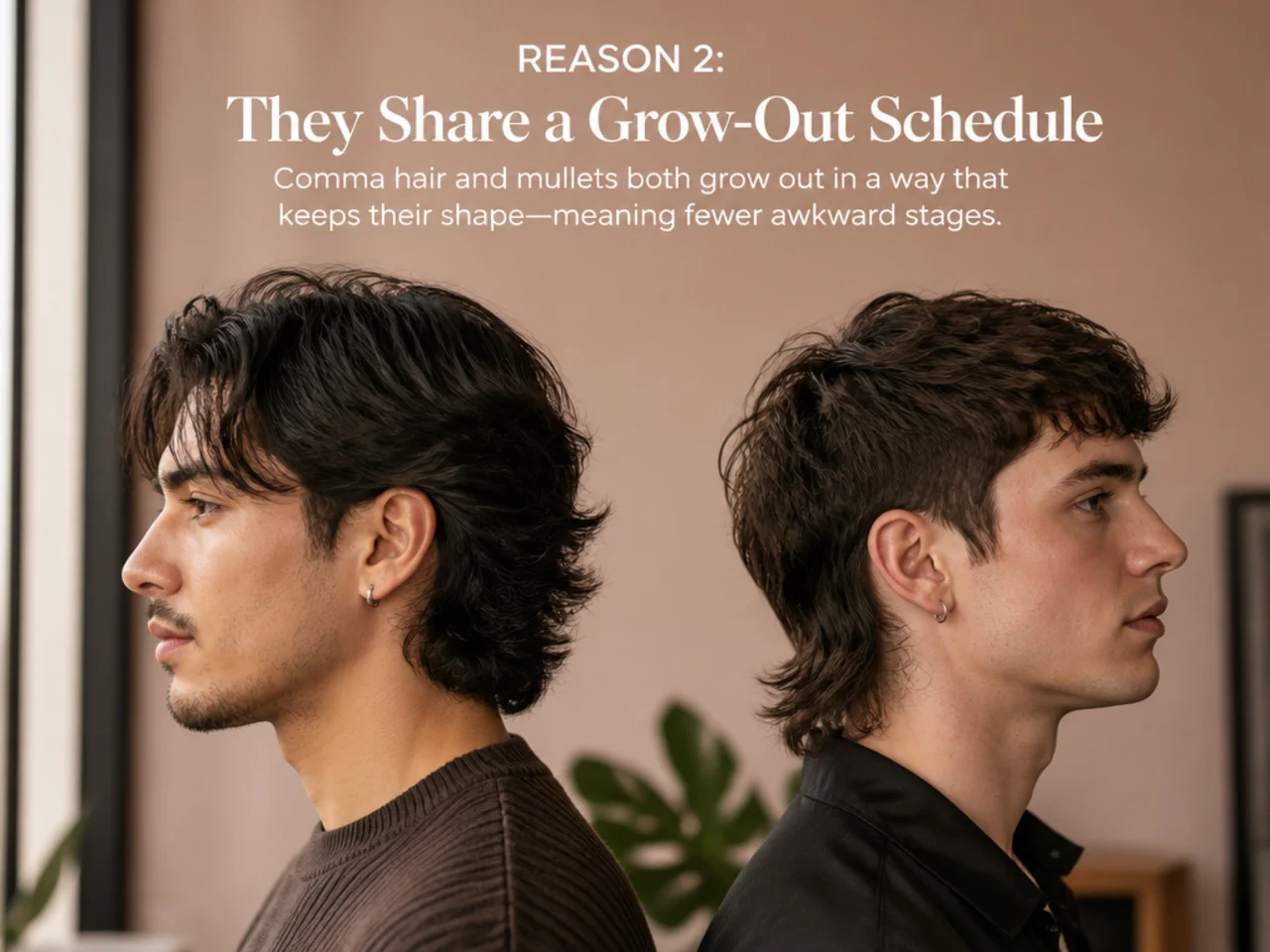
A comma haircut wants a re-cut every three to four weeks for short versions, five to six for the mid and long ones. A modern mullet wants a re-cut every four to six weeks depending on how sharp you want the sides. Those windows overlap almost perfectly. Book both halves at the same visit and you never have one growing out ahead of the other.
Compare that to pairing a comma with, say, a buzz cut on the sides. Buzz cuts want a refresh every ten days. The comma wants a refresh every month. You would be in the chair three times more often for the sides than for the top, and half the time you would leave with a fresh buzz that made the comma look shaggy by comparison. The rhythms fight each other.
The pair also grows out together. Miss a week and the comma softens, the mullet spreads a little, the sides feather. Nothing collapses. That tolerance matters when life does not cooperate with a strict grooming calendar — at week five, the pair still looks intentional.
Barber math: at $40 a cut every five weeks, the pair runs about $416 a year. Compare a comma with weekly buzz-cut sides and you are past $2,000 a year for the same top look.
Reason 3: The Same Products Style Both Halves
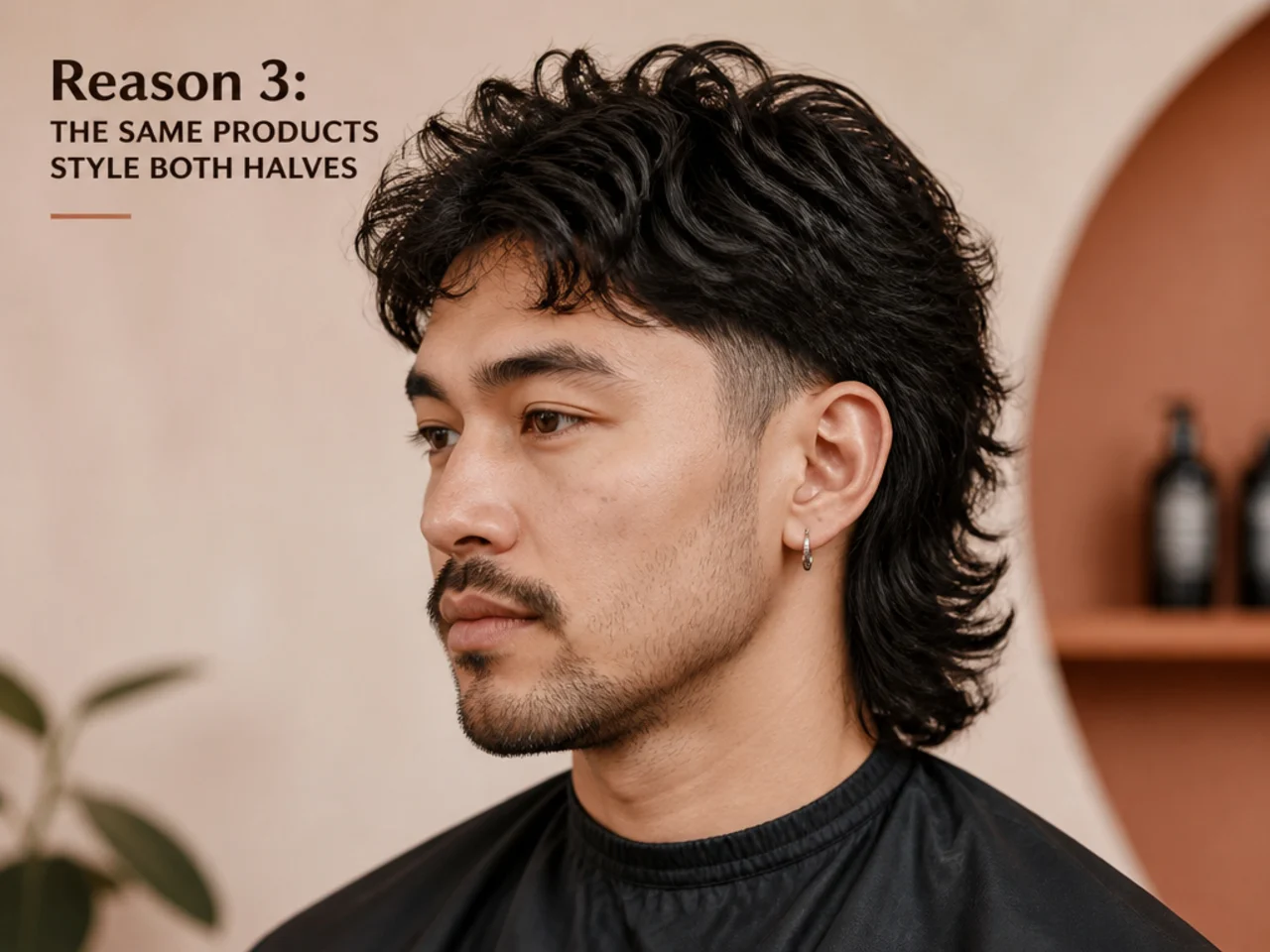
Styling a comma mullet pair takes three products, and those three products are the exact same ones you would already own if you had only the comma or only the mullet. Nothing extra. No mullet-specific wax, no separate mullet spray, no upgrade path.
The rotation:
- Sea-salt spray on damp hair. Lifts the roots at the crown so the comma has volume to curve into, and roughs up the mullet layers so they read textured instead of flat.
- Curl cream, worked through the front section. A pea-sized amount hooks the comma. Any extra runs back through the mullet and gives the length at the nape a soft, defined finish.
- Light setting mist across the whole head. Locks the comma so it does not flop by lunch, and holds the mullet's movement so it does not spread wide in the wind.
Total shelf real estate: three bottles. Total styling time once you have the routine: under two minutes.
Compare that to a slicked-back top with a mullet back — pomade for the top, cream for the back, two textures fighting one head. Product complexity is where most hybrids fall apart. The comma mullet pair does not.
Curly hair (3A–3C) swaps the curl cream for a stronger definer and skips the sea-salt spray — it dries out the pattern. Coily hair (4A–4C) usually needs a light front perm-relaxer to hold the comma, and the mullet layers itself into a natural drape. The pair adapts to hair type without changing the shopping list.
Reason 4: The Fade Solves Both Sides at Once
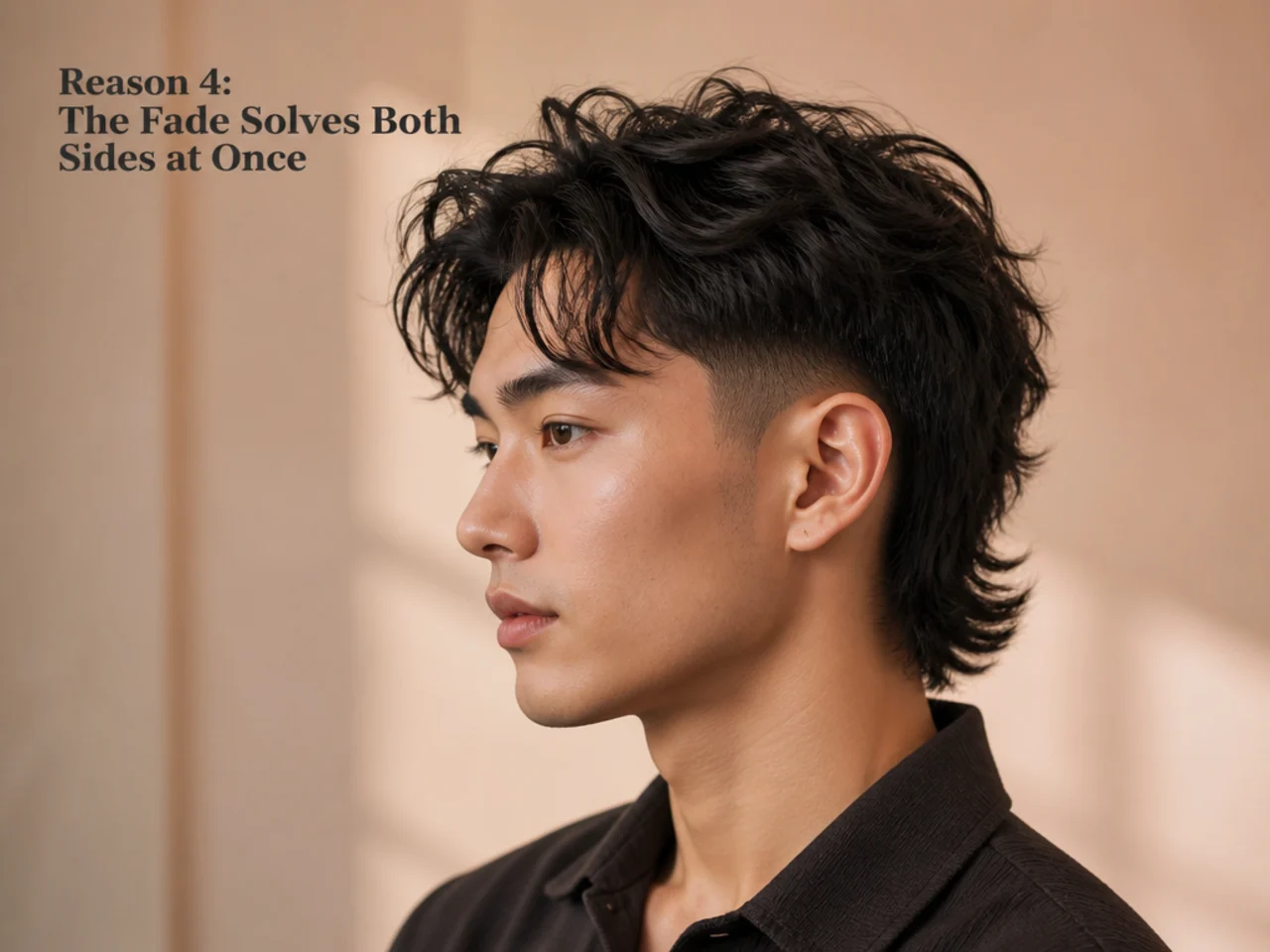
The sides between the comma up front and the mullet at the back can go one of three ways: fade, taper, or a hard two-block ledge. Whichever you pick, the same treatment works for both halves. You do not have to compromise on one to accommodate the other.
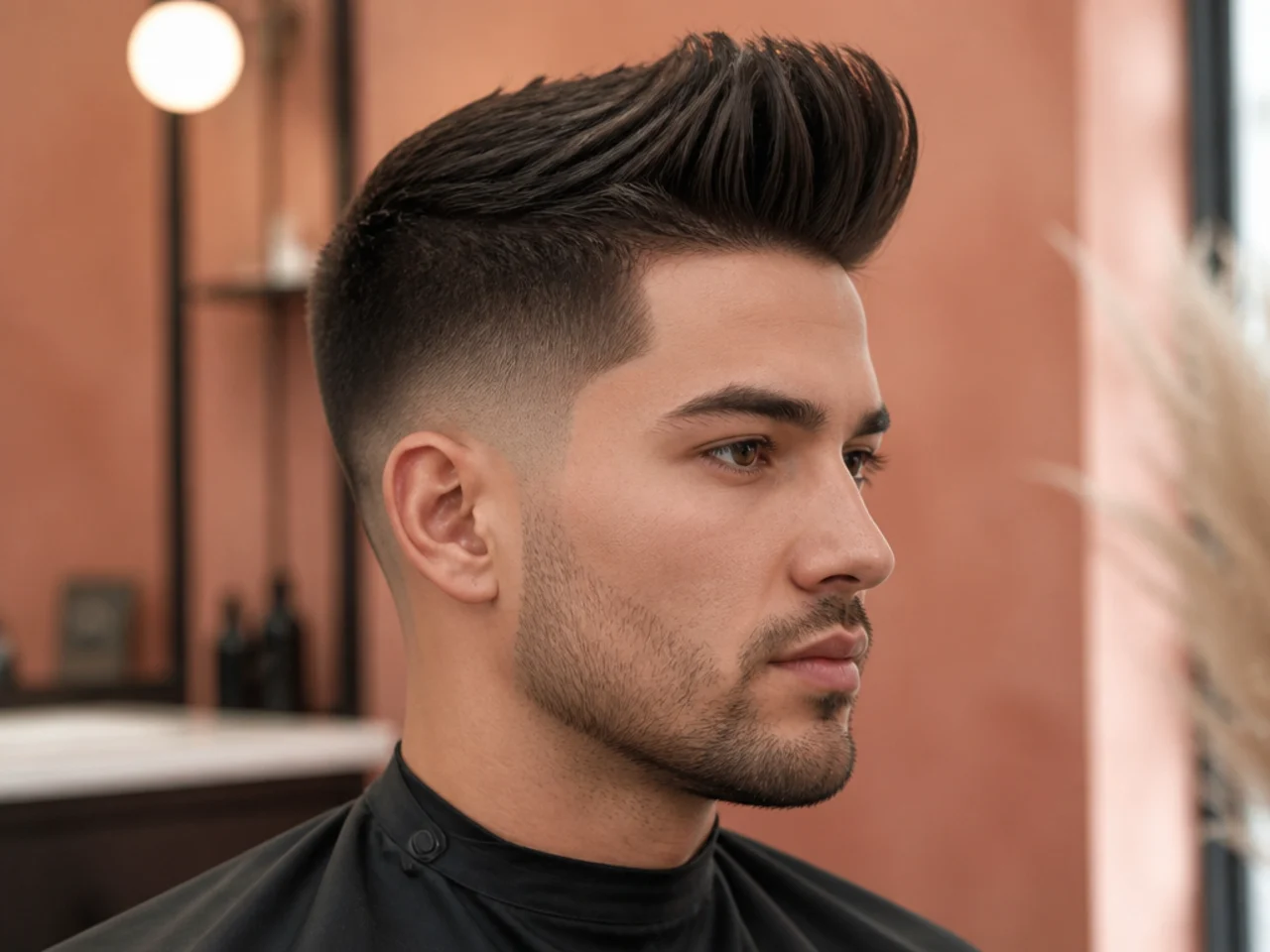
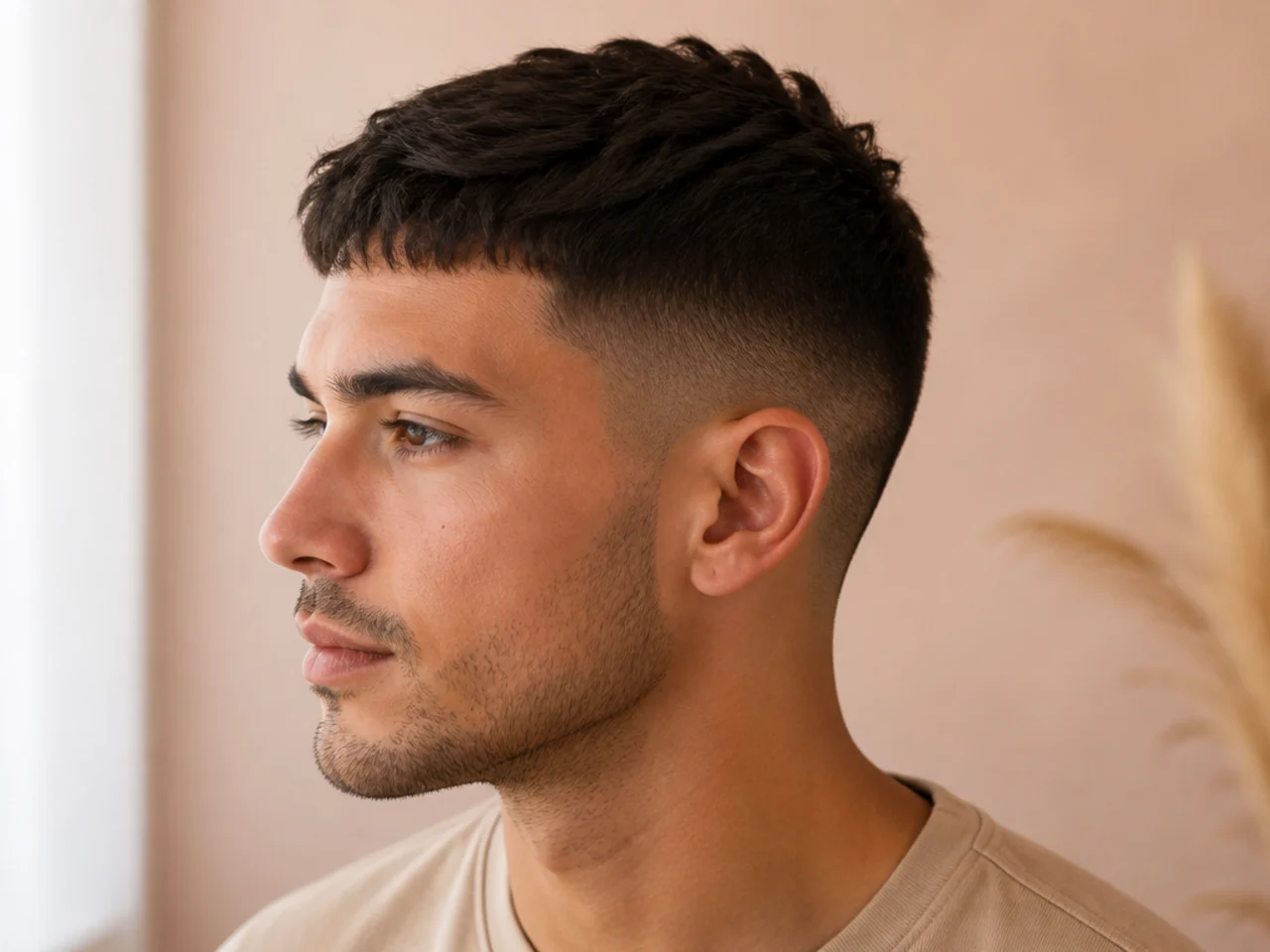
A low fade or low taper fade is the most common ask because it reads workplace-friendly and keeps both halves weighty. The fade starts above the ear, drops through the sideburn, and wraps around the back before flowing into the mullet's underside — one continuous perimeter.
A mid fade or a low fade haircut taken to the temple lifts the whole silhouette — good on round faces, less good on long faces. The burst fade mullet is the boldest option, wrapping the ear in a semicircle and leaving the mullet nape long past the arc.
A two-block ledge — hard clipper line at the horseshoe, no blend — is the K-fashion default and pairs well with a longer mullet drop. The two-block haircut primer covers the ledge on its own.
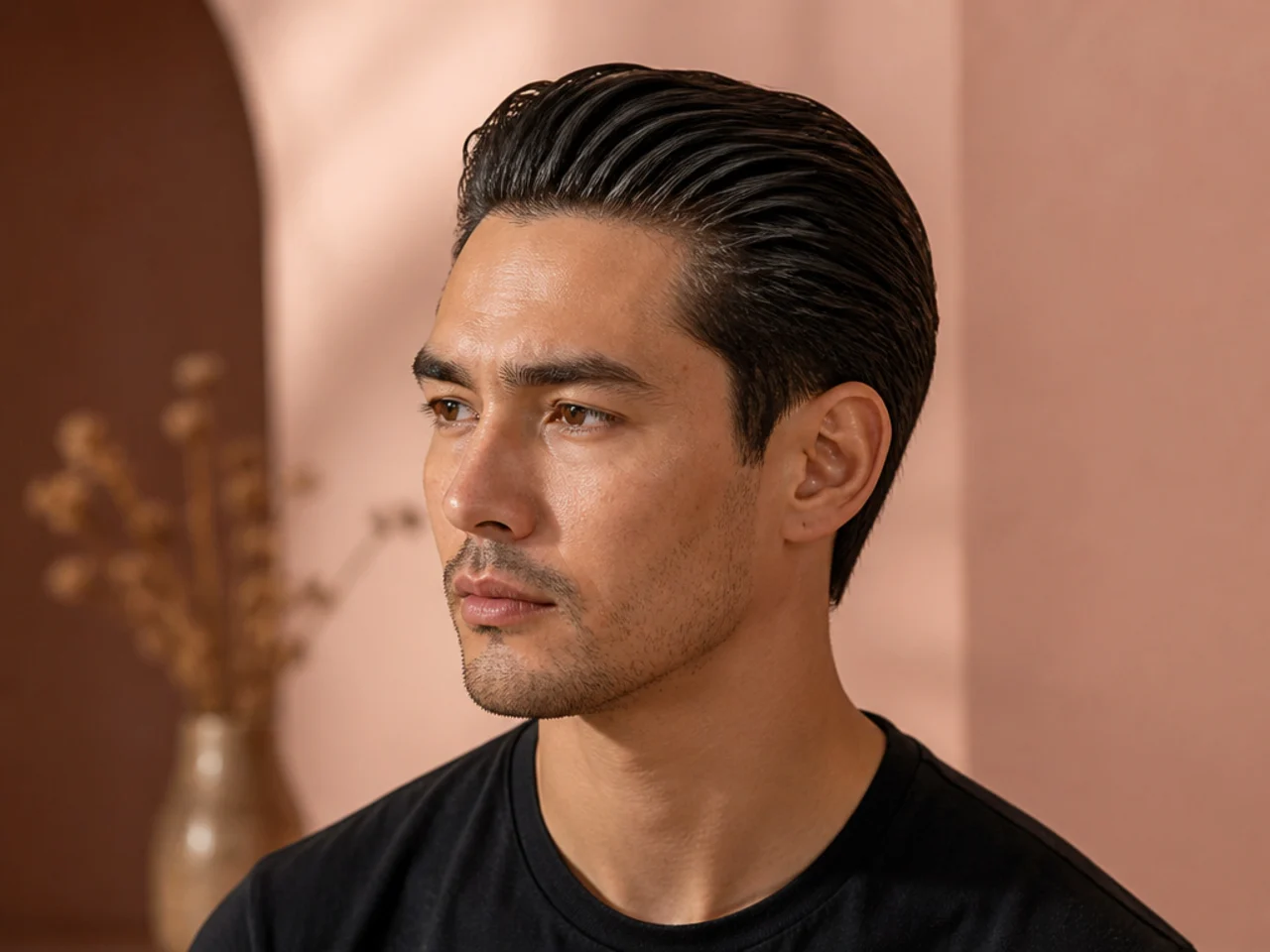
Scissor-blended sides — no clipper at all — soften the pair for older guys, thinner hair, or anyone who wants the cut to read grown-out on purpose. Closest to a classic K-drama lead haircut.
Whichever side treatment you pick, the barber cuts it once and it serves both halves. That efficiency is why the pair is a first-pass request for a lot of stylists — one geometry decision solves both frames.
Reason 5: The Cultural Timing Lines Up
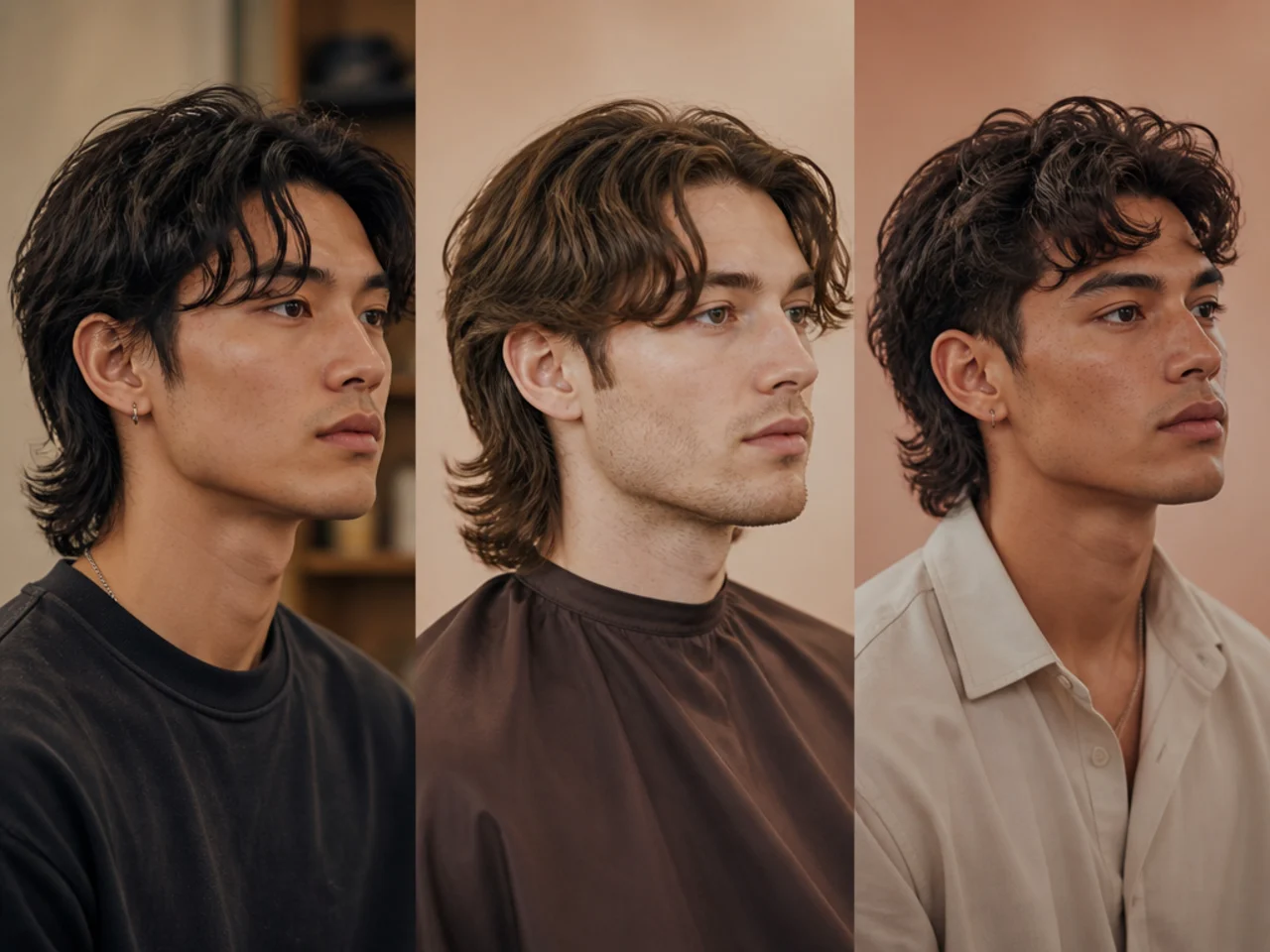
The comma landed globally around 2018 via K-pop and K-drama. The modern mullet — not the 80s original, the shorter, layered, indie version — went mainstream in 2021 through TikTok, Gen Z, and a wave of European footballers. Both had a year or two of separate identity, then Korean stylists in Seoul started merging them around 2022. By 2024, the pair had crossed over into K-drama leads, mainstream men's fashion editorials, and Pinterest search trends outside Asia. It hit barbershops in the West in real volume around 2025.
That timing matters because the comma mullet pair is neither dated nor experimental in 2026 — it is the current default request for a certain kind of stylish guy. Ask your barber for it and you get a nod, not a raised eyebrow. Google the exact term and you find recent editorials and Pinterest boards, not archive posts from three years ago. Ask a stylist under thirty about it and they can name the K-drama that popularized it in their region.
That cultural weight matters for two practical reasons. First, barbers know how to cut it — the reference photos in the shop are current, the technique is standardized, the sides read correctly on the first pass. Second, the cut ages with the culture rather than dating you to a specific season. The pair is old enough to be proven, new enough to still feel intentional.
The wider Korean haircuts for men family sets the K-fashion context if you want the historical read.
Comma vs Mullet vs the Pair — Side by Side
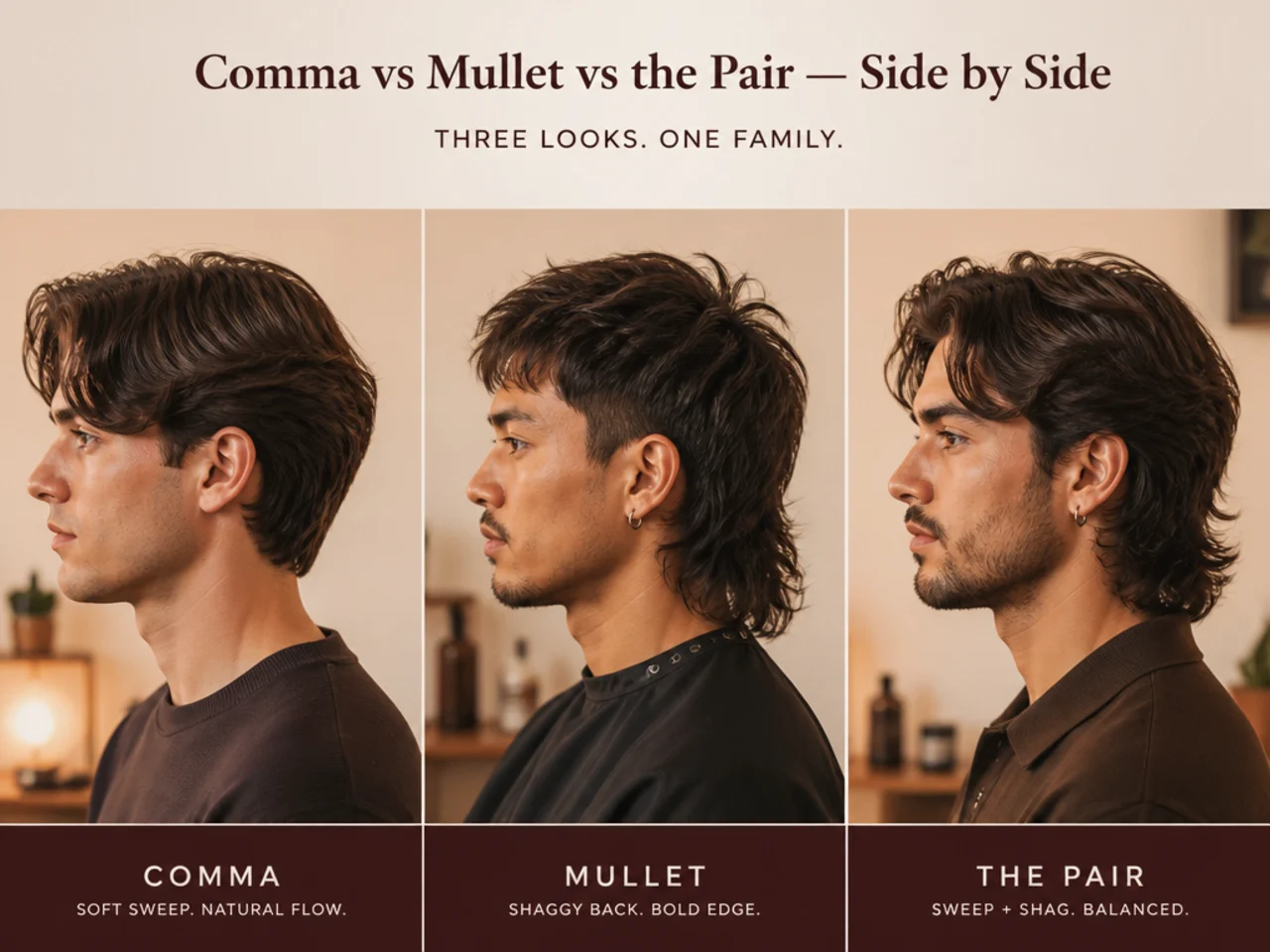
Here is the decision matrix, laid out plainly. The pair is not a compromise between the two — it is a stronger version of both when the constraints line up.
Two more numbers worth knowing.
Growing-in tolerance. The solo comma looks awkward at week five because the sides catch up to the top. The solo mullet looks unkempt at week six because the layers stack. The pair looks intentional at week five and still passable at week six because both halves grow together — the comma softens, the mullet spreads a hair, the sides feather. Nothing sticks out.
Cost per year. Solo comma at $40 every 4 weeks: $520. Solo mullet at $40 every 5 weeks: $416. Pair at $40 every 5 weeks: $416. The pair costs the same as a solo mullet in maintenance because you are already at the barber for one, and the second half comes free.
Which Version of the Pair Should You Pick?
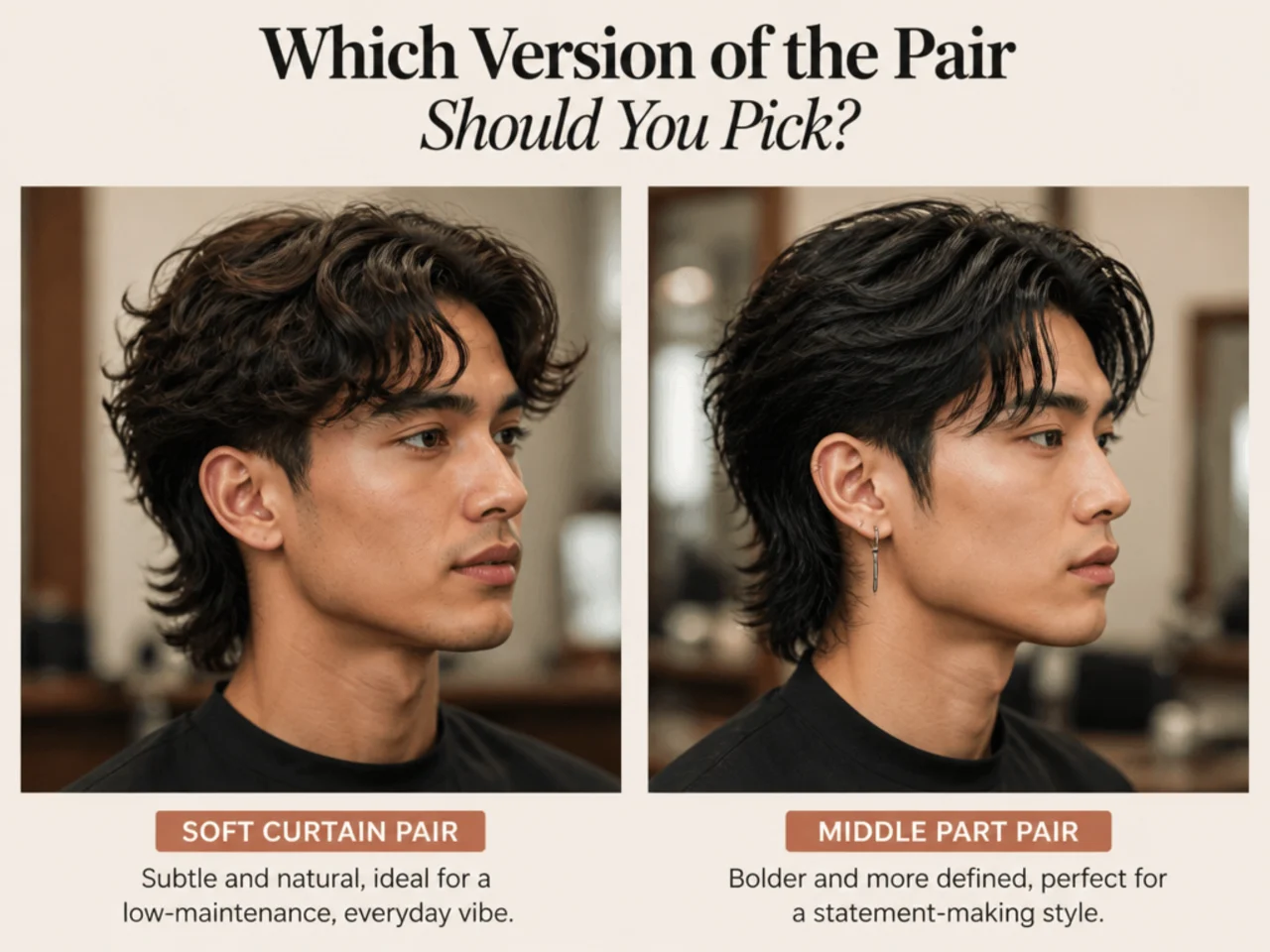
The pair lives in four practical registers. Pick the one that matches your constraints rather than the one that photographs sharpest.
The Low Fade Pair. Comma up front, mullet down back, low fade tying them. Workplace-safe. Reads styled without reading loud. Best for straight or wavy hair, most face shapes, modern office dress codes. Book every 4–5 weeks.
The Two-Block Pair. Hard clipper ledge at the horseshoe with no blend. Sharpest, most Korean. Best for straight hair with medium-to-thick density, oval and round faces, creative or entertainment settings. Book every 4 weeks — the ledge is the first thing to blur.
The Burst Pair. Semicircle burst around the ear, nape left long past the arc. Boldest, statement-piece. Best for curly and coily tops, heart and diamond faces, no-dress-code settings. Book every 2–3 weeks — the burst grows out fastest.
The Scissor Pair. No clipper at all. Softest and dressiest, reads grown-out on purpose. Best for older guys, thin hair, long faces, and traditional offices that would frown at a fade. Book every 6 weeks — the version that stretches longest.
Still stuck between the four? The comma hair mullet breakdown covers twenty specific hybrids across all four registers with the exact ask for each.
How to Ask Your Barber
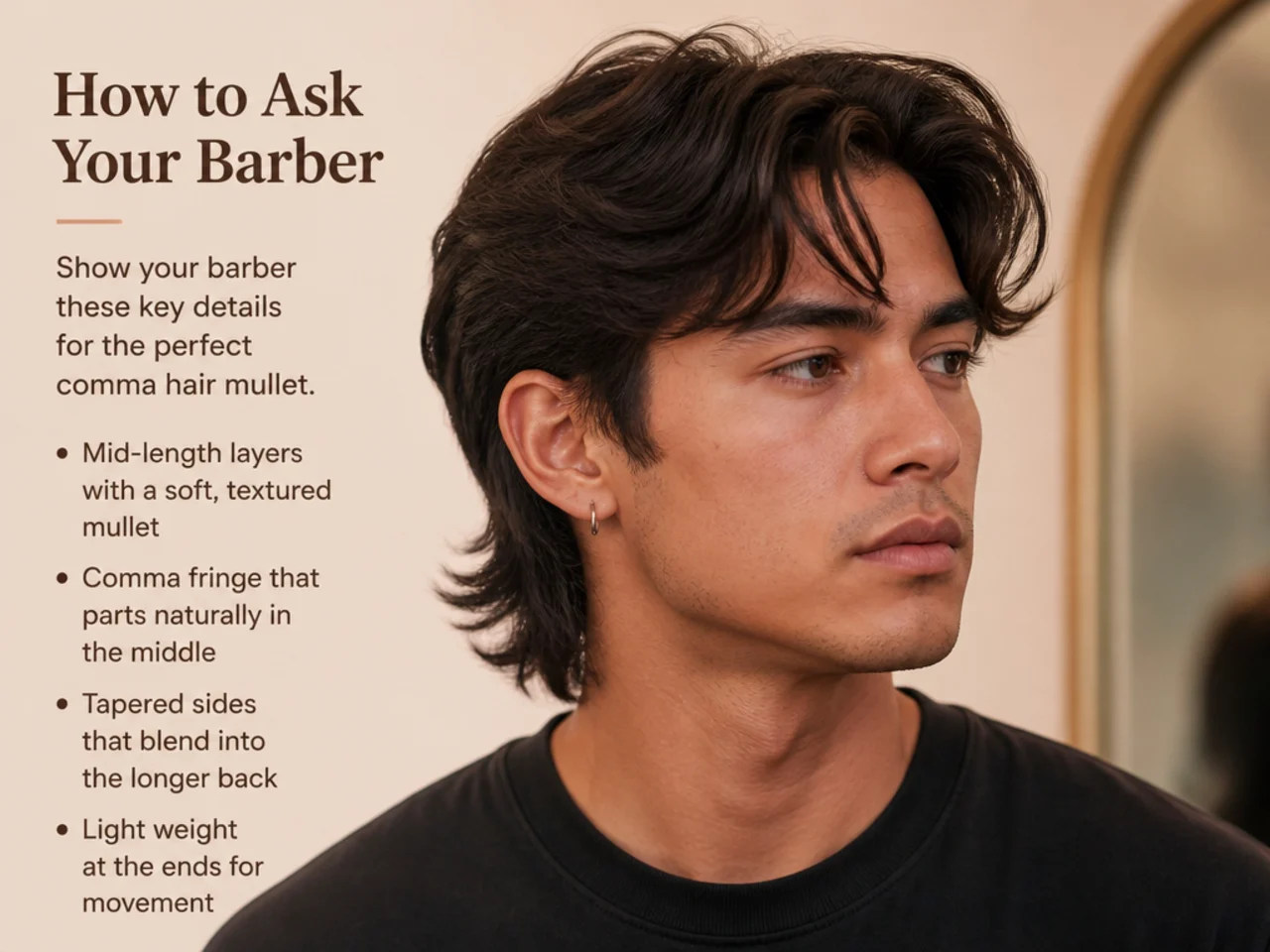
The five-number method works every time. Change one number and your barber knows exactly which register you want.
- Say the words "comma mullet." Not "comma haircut with long back," not "Korean mullet." The compound name is the one your barber pattern-matches to a photo. Say it clearly and hand over the phone reference in the same breath.
- Name the top length. In inches. Four inches on top is the sweet spot for a comma that holds a defined curl. Say the number out loud — do not let the barber guess.
- Name the back length. In inches. Two to three inches at the nape reads as a modern mullet. Four inches starts pushing toward wolf cut, six starts pushing toward 80s. Pick your target.
- Name the side treatment. Low fade, mid fade, burst, two-block ledge, or scissor-blended. This one word decides the whole cut's register.
- Name the curl direction. Touch your temple with a finger and draw the arc — inward toward your dominant eye, or split down the middle into twin commas. Show the direction rather than describe it. Barbers cut faster from a gesture than from a paragraph.
- Show the photo again at the end. After all the words, put the phone in the barber's line of sight for the second pass. A photo confirms what a description approximates.
Two mistakes to avoid. First, do not ask for "just a comma cut but leave the back long" — that phrase confuses barbers because "leave the back long" can mean anything from a rat-tail to a full mullet. Say "mullet" out loud. Second, do not skip the side treatment. The sides define whether the pair reads corporate, K-fashion, bold, or dressy. Pick one of the four registers before you sit down.
The One Place the Pair Does Not Work
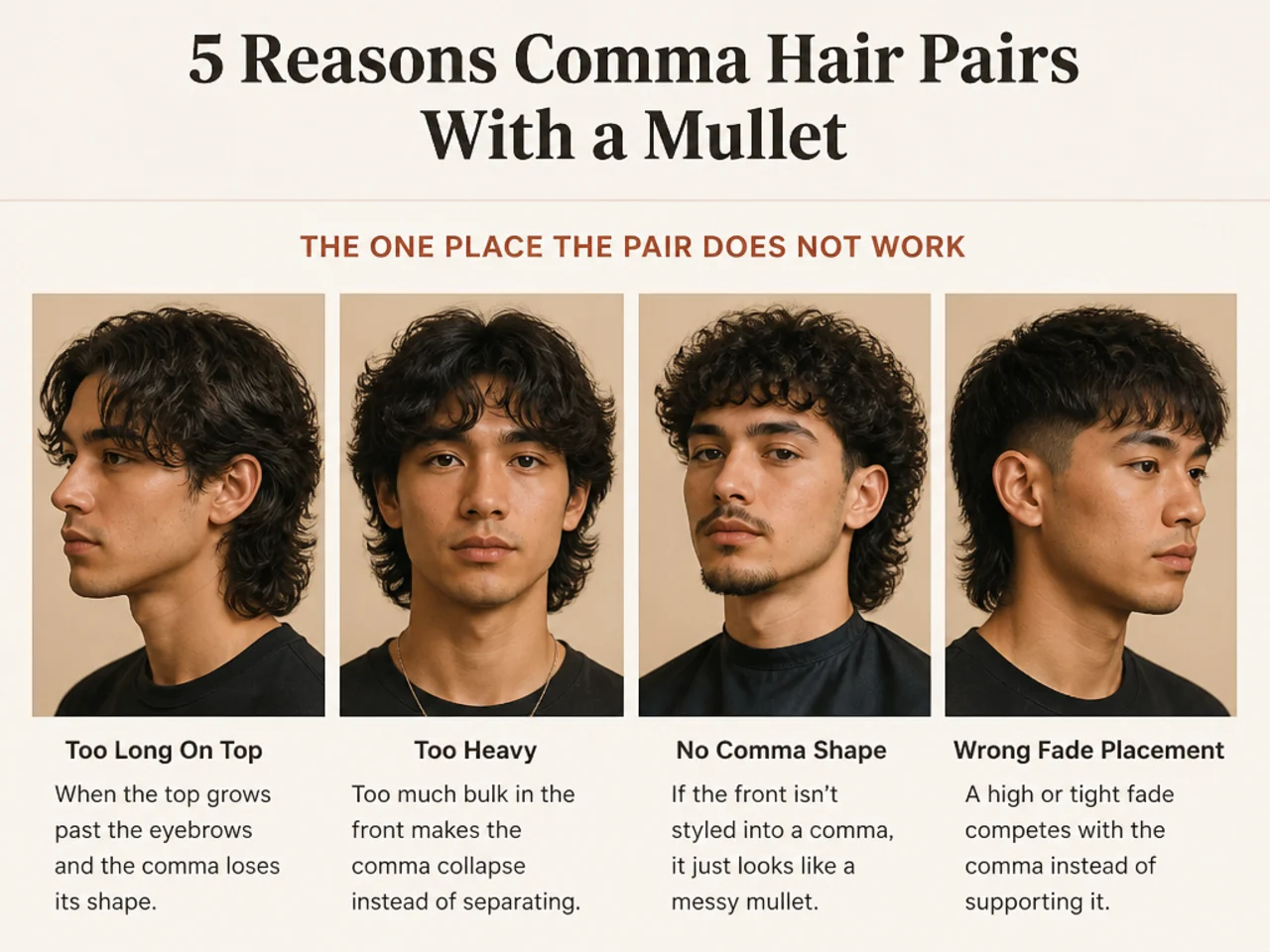
The comma mullet pair does not clear the strictest dress codes. Traditional finance, appellate law, private banking, C-suite corporate — a mullet at the nape reads too casual for the room, even in the low fade version. If your job asks you to look neutral rather than stylish, order a solo comma with a short back and blocked nape instead, or step down to a textured fringe men with a low taper for the K-fashion-lite read without the mullet weight.
The pair also fights fine or thinning hair at the crown. The comma needs weight on top to curve, and the mullet needs weight at the back to drape. Thin or receding hair on top delivers neither. If density is a concern, keep the mullet and skip the comma — the layered structure hides thinning better than a defined curl reveals it.
The honest read is not "the pair always works." It is "the pair beats either half on their own when your hair type, face shape, workplace, and calendar line up — and it punishes you when they do not." Pick your constraints, then pick your pair.
FAQ
Is the comma mullet pair a real named cut, or just a description?
Both. Barbers in Seoul, Tokyo, and increasingly the US and Europe recognize "comma mullet" as a specific request — they know the top length, the back length, and the side treatment options without needing to guess. Outside Korean-influenced shops, it may still read as a hybrid you have to describe. Bring a photo either way.
What is the difference between a comma mullet and a wolf cut?
A wolf cut layers all over — heavy face-framing around the crown, texture on top, length at the back. A comma mullet keeps the top clean enough to hook into a defined comma curve and drops length only at the nape, not around the ears or crown. Wolf cuts read shaggy; comma mullets read intentional. If you want the shaggier read, the men's wolf cut haircuts breakdown covers it in full.
Can I get the comma mullet pair with a beard?
Yes, but keep the beard trimmed short — a full beard competes with the mullet's weight at the back and the room ends up with two heavy focal points below the jaw. Stubble to a short beard (up to half an inch) reads best. Anything longer, and you lose the K-fashion register the comma sets up. Trim the neckline of the beard to match where the mullet starts at the nape, and the two elements read connected instead of stacked.
Will this cut look good when it grows out?
Yes, better than most hybrids. At week five, the comma softens into a curtain fringe and the mullet spreads into a soft shag — both are current, on-trend shapes that read intentional rather than transitional. If you decide to abandon the pair, growing it out gives you an asian mullet haircut men or a shag before you get to a full grown-out look. The pair has good exits.
Does the pair work on Black or African hair textures?
Yes, with adjustments. The mullet drapes beautifully on Type 3 and 4 hair — the natural pattern gives the back weight without any styling. The comma is the harder half; coily hair usually needs a light front perm-relaxer to hold the hook, or you can style the front as a defined twist rather than a smooth curve. Ask for a burst fade mullet as the side treatment — the arc echoes the coil pattern and the burst-nape geometry sits naturally on the shape.
How is the comma mullet pair different from a comma haircut with a taper?
A comma with a taper cuts the back short too — the length lives only on top, and the sides and back fade or taper down to the neckline. A comma mullet keeps length at the nape past the collar line, so the back has weight and movement. Same front, different back. The comma haircut breakdown covers the taper-back version among 25 variations if that is closer to what you want.