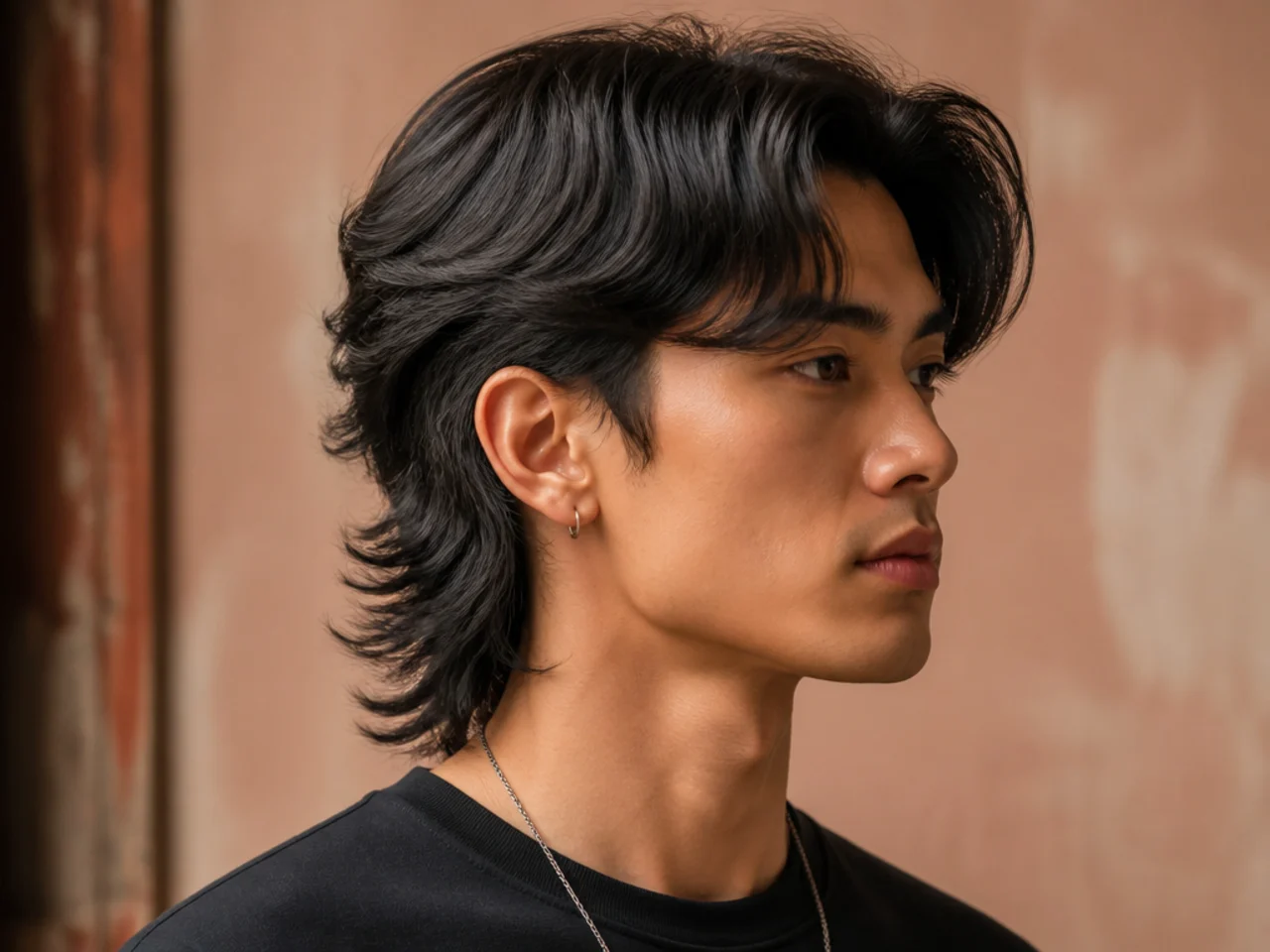
20 Comma Hair Mullet Styles Worth Trying
20 comma hair mullet styles worth trying — every K-fashion hybrid blending the curled comma front with a modern mullet back, with photos and the exact ask.
In this article · 33
- What Is a Comma Hair Mullet?
- How to Choose Your Comma Hair Mullet
- The 20 Comma Hair Mullet Variations
- 1. The Classic K-Comma Mullet
- 2. The Two-Block Comma Mullet
- 3. The Low Fade Comma Mullet
- 4. The Mid Fade Comma Mullet
- 5. The Burst Fade Comma Mullet
- 6. The Wolf Cut Comma Mullet
- 7. The Curly Comma Mullet
- 8. The Wavy Comma Mullet
- 9. The Straight K-Pop Comma Mullet
- 10. The Curtain Comma Mullet
- 11. The Long Comma Mullet
- 12. The Short Comma Mullet
- 13. The Textured Comma Mullet
- 14. The Disconnected Comma Mullet
- 15. The Blowout Taper Comma Mullet
- 16. The Fringe Comma Mullet
- 17. The Reverse Comma Mullet
- 18. The Side-Swept Comma Mullet
- 19. The Skin Fade Comma Mullet
- 20. The Shaggy Comma Mullet
- How to Ask Your Barber for a Comma Hair Mullet
- Styling and Maintenance
- FAQ
- What is a comma hair mullet?
- Is a comma hair mullet the same as a two-block mullet?
- Can I get a comma hair mullet with curly hair?
- How long does the back need to be for a comma hair mullet?
- How often should I re-cut it?
- Which comma hair mullet variation works in a corporate office?
- What products do I need to style a comma hair mullet?
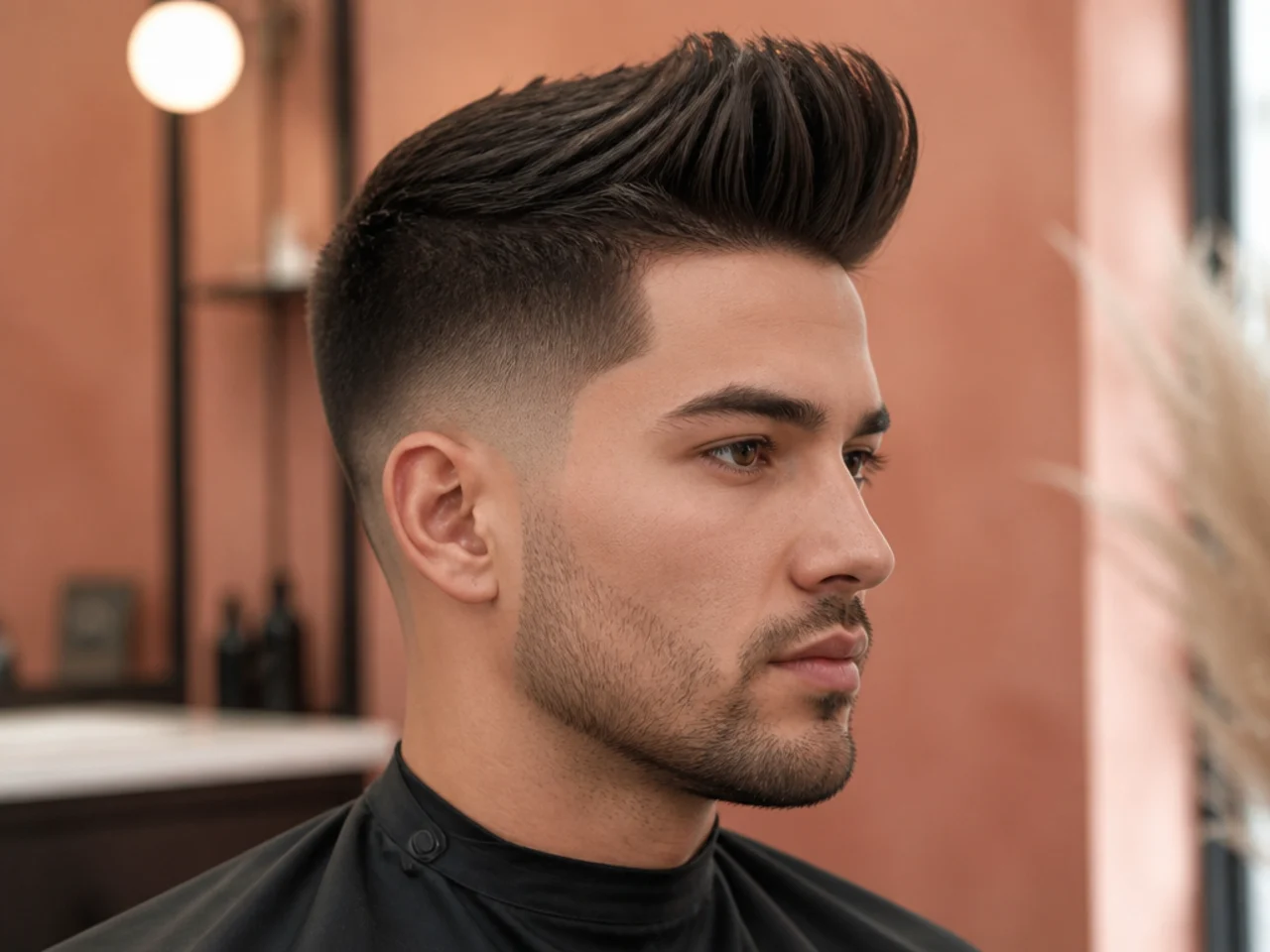
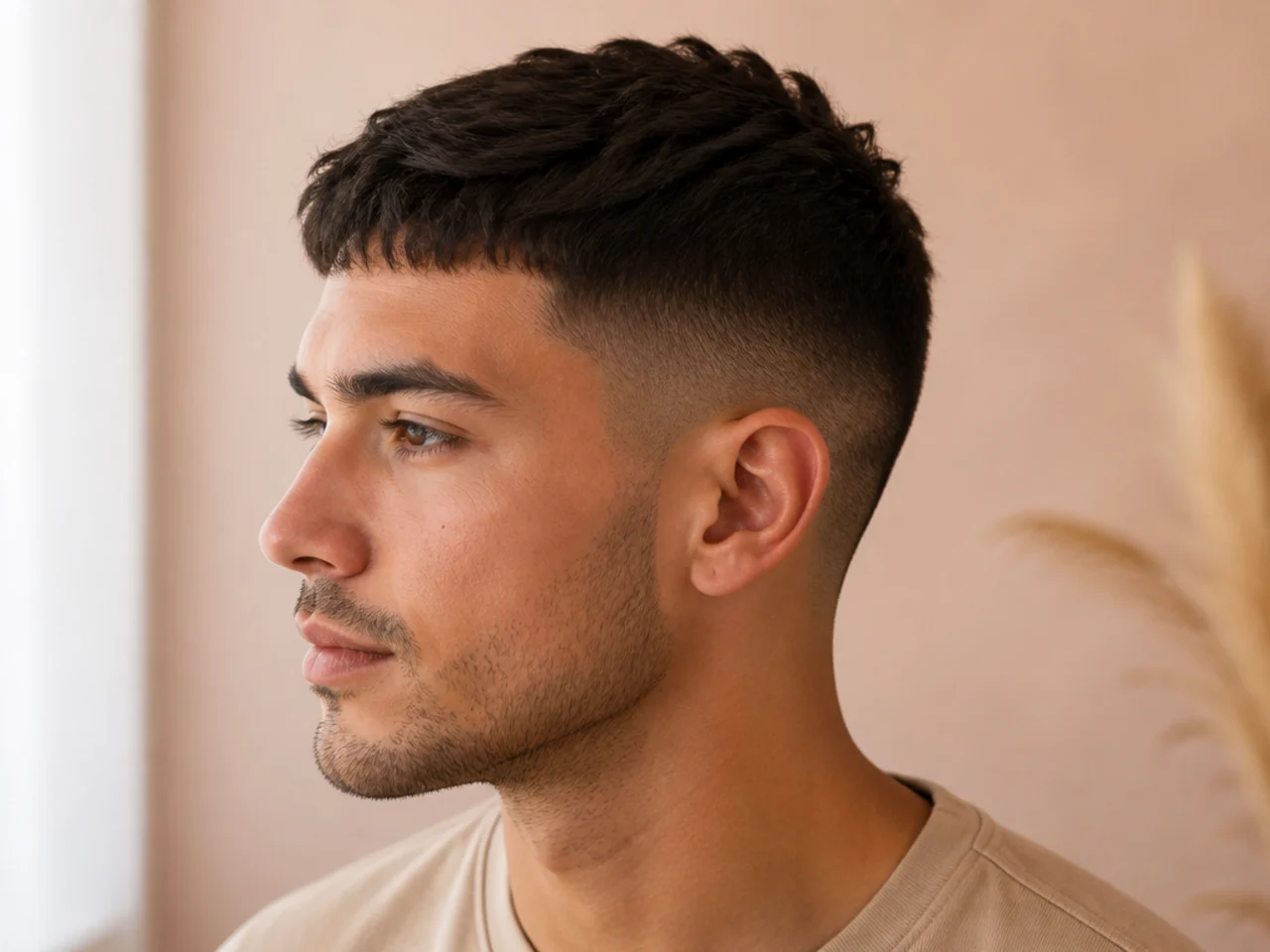
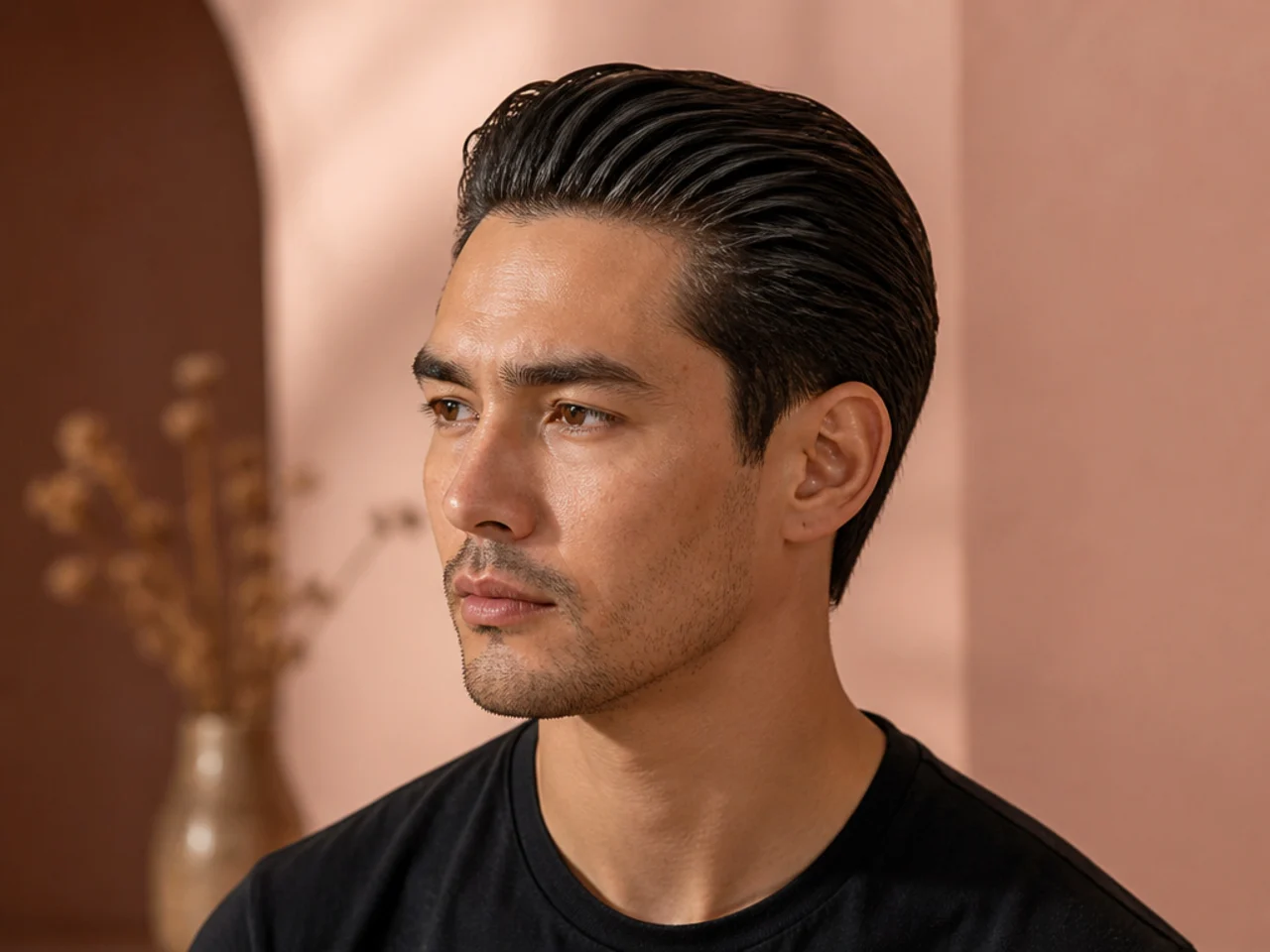
The comma hair mullet is the hybrid the K-fashion crowd has been quietly perfecting since 2022 — a Korean comma curl up front, a modern mullet drop at the nape, and a fade or taper tying the whole thing together. Two identities in one silhouette. This guide covers the twenty variations barbers are cutting most in 2026, with the exact language to hand your stylist — top length, back length, side treatment, and curl direction — so you leave with the version you had in mind.
What Is a Comma Hair Mullet?
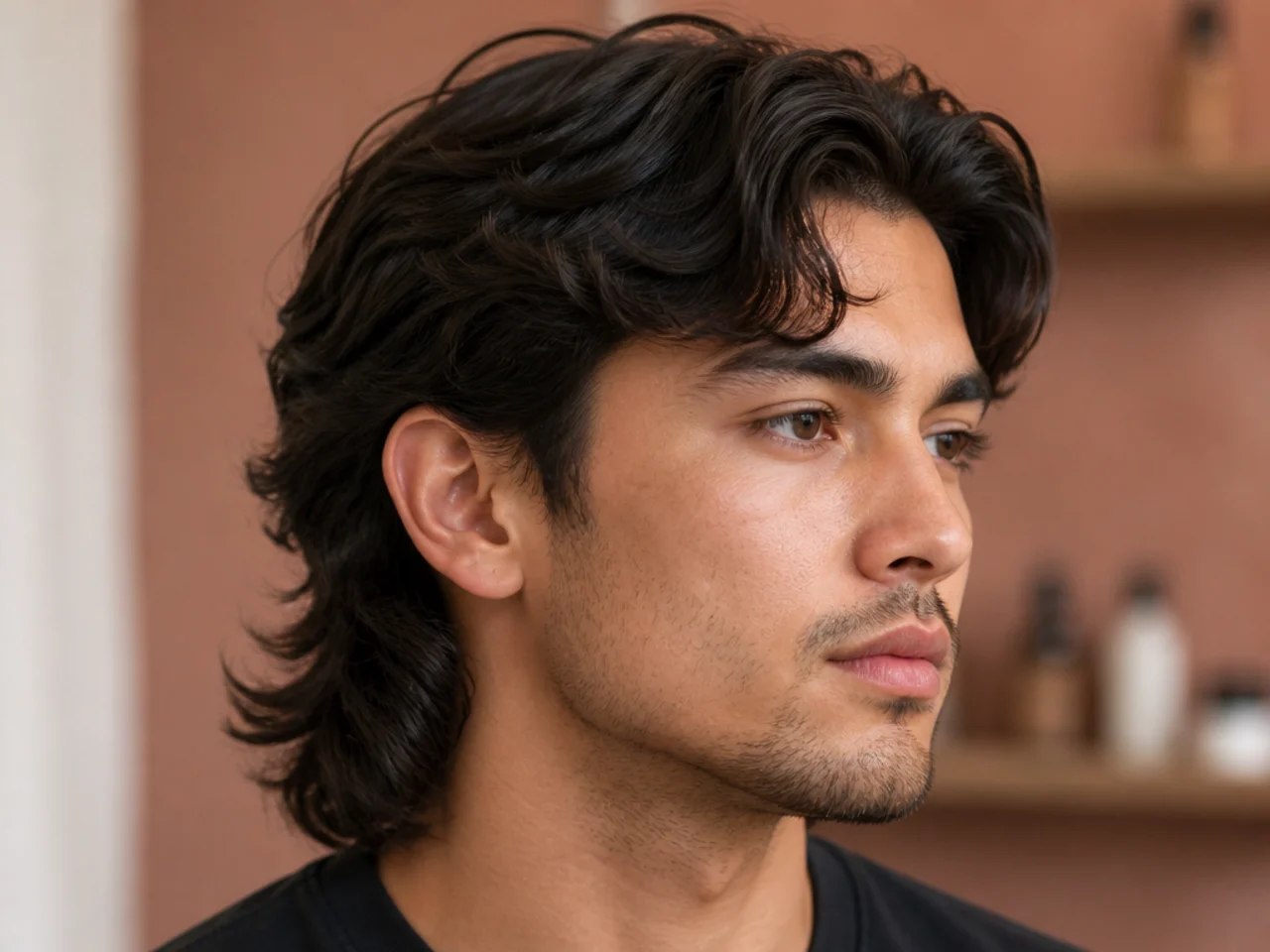
A comma hair mullet is a men's hybrid cut that pairs the curled comma front — the K-pop styling move where a defined hook curves inward against the forehead — with a mullet back that lengthens two to four inches at the nape. The top runs 3.5 to 5 inches so it holds the comma curve. The back is layered, textured, and long enough to move without stacking into a triangle. Sides run short: fade, taper, undercut, or two-block ledge, depending on how sharp you want the frame.
The look was born in Seoul in the early 2020s when Korean stylists started fusing the classic comma with the wolf-cut layering their clients had been asking for. It traveled through K-drama, K-pop group shots, and Pinterest inspiration boards. Straight and wavy hair are the natural canvas — the comma reads sharpest, the mullet layers cleanest. If you want the base shapes on their own before mixing them, the comma haircuts primer covers the Korean front, the modern mullet haircut men breakdown covers the back, and the wider Korean haircuts for men family sets the K-fashion context.
How to Choose Your Comma Hair Mullet
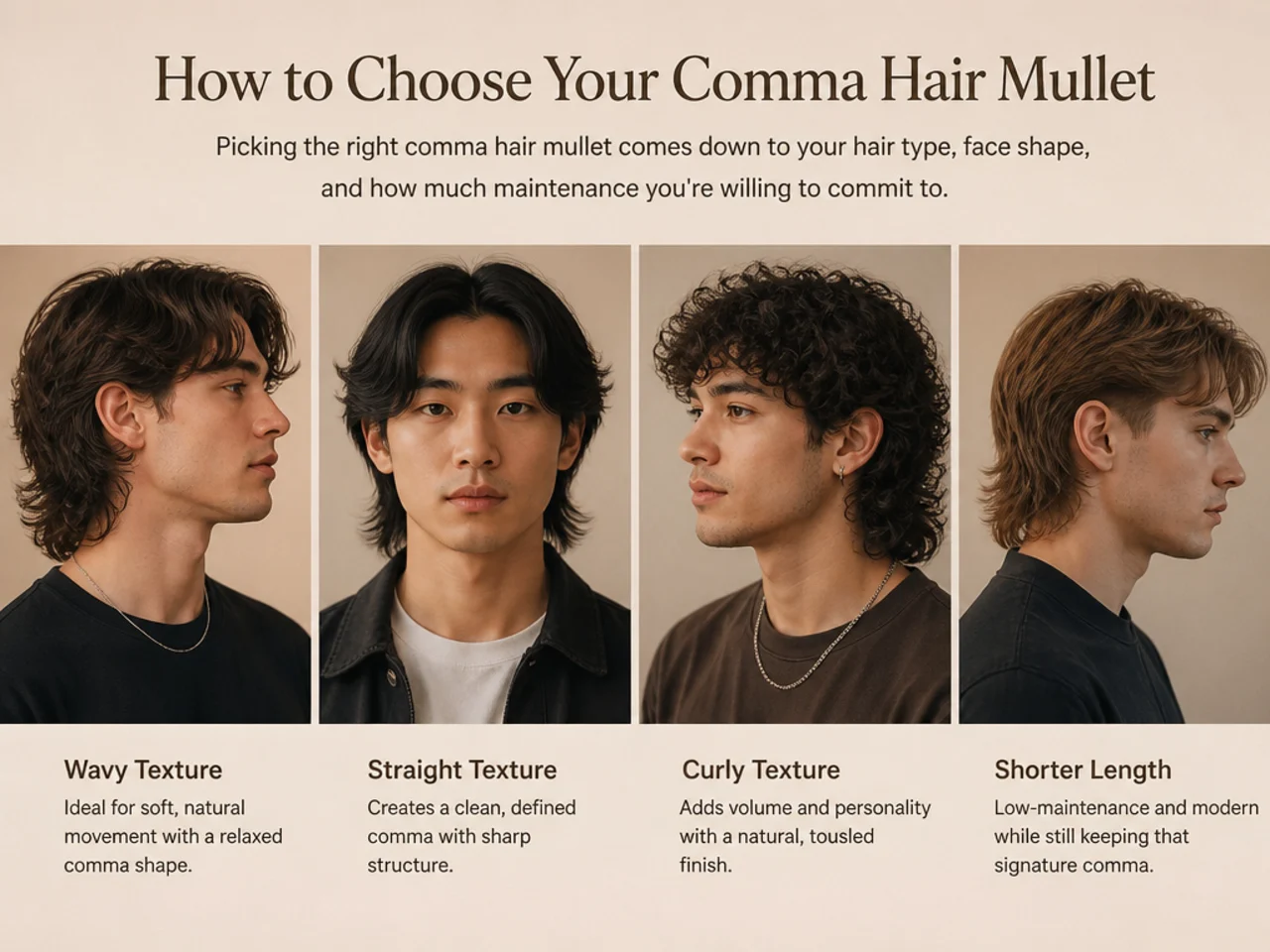
Three variables narrow the twenty versions down to your version. First, hair type — straight and wavy hair take any variation; curly hair (3A-3B) needs longer front layers and softer sides; coily hair usually needs a light front relaxer to hold the comma shape. Second, face shape — oval takes anything, round wants a taller comma and mid-to-high fade for vertical length, square wants a softer curl and scissor-blended sides, long wants a shorter back so the mullet does not stretch the face further. Third, styling time — the subtle, curly, and shaggy versions take under a minute; the blown-out, twin, and dramatic versions want a full two minutes at the mirror.
Workplace matters too. Corporate offices land clean with the low fade, subtle, short, and side-part versions. The disconnected, blown-out, and shaggy versions read confident but expressive — save them for a role or a scene where standout hair is welcome.
The 20 Comma Hair Mullet Variations
Each variation below is a distinct silhouette your barber can cut with one photo and a few numbers. Names track how the comma sits, how the mullet lengthens, and how the sides frame both. Bring inches — "four inches on top, three inches at the nape" beats "medium with some length in the back" every time.
1. The Classic K-Comma Mullet
The baseline hybrid. Top runs 4 inches with a defined single hook toward your dominant eye, sides on a soft scissor taper, back drops to 2.5 to 3 inches at the nape with light internal layers. Reads glossy, camera-ready, and unmistakably K-fashion. Best on straight-to-wavy hair with medium density; oval and heart faces suit it hardest. Ask for a low scissor taper, 4 inches on top, a 3-inch textured mullet at the nape, and demonstrate the curl direction by touching a finger to your temple. Style with a leave-in cream and a 1.5-inch round brush at the front, then finger-shape the mullet after air-drying.
2. The Two-Block Comma Mullet
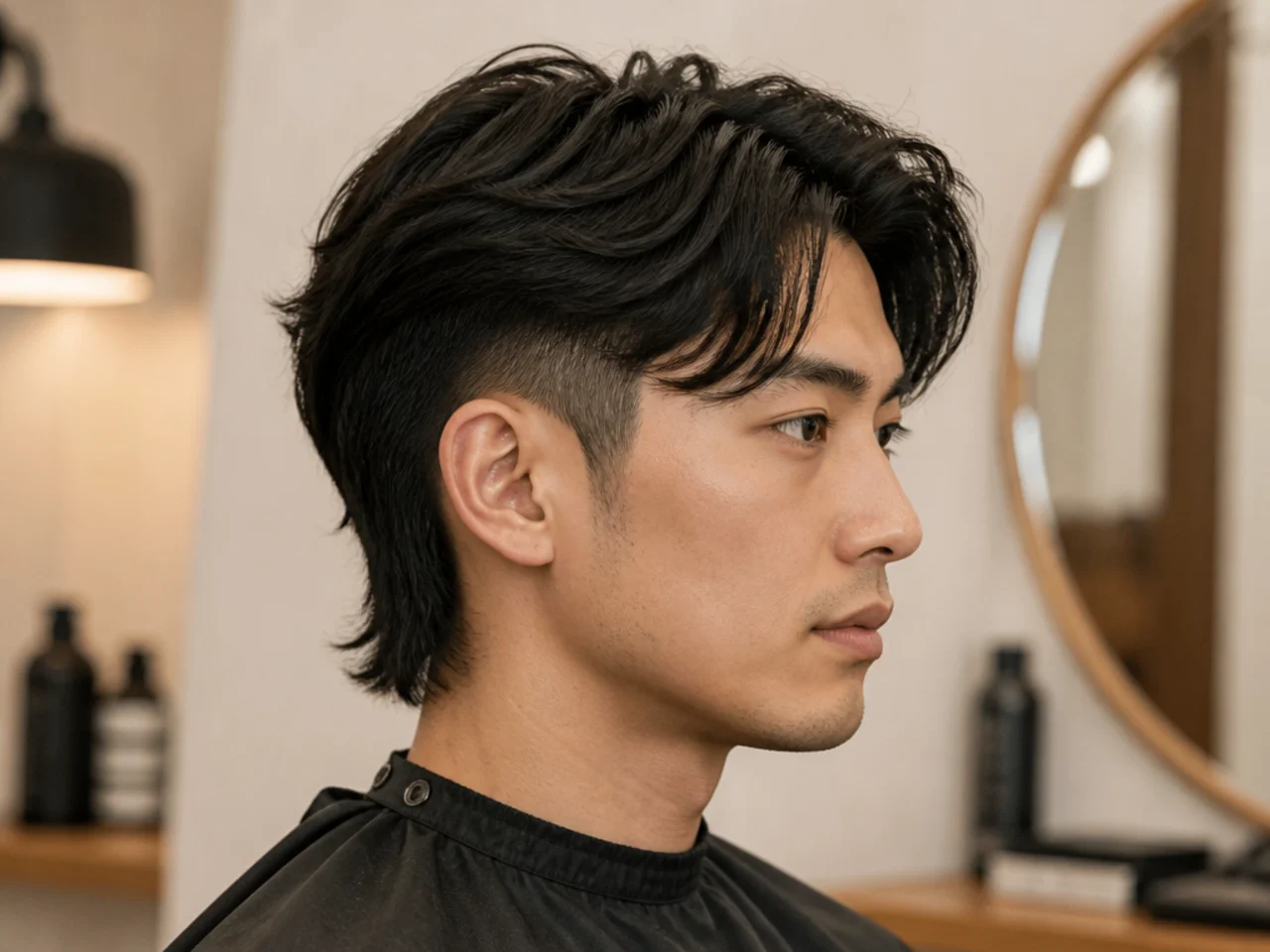
The two block haircut base coat under a comma and mullet. Sides run one clipper length — a 2 or 3 guard — with a hard ledge at the horseshoe line. Top runs 4 inches with a defined comma curl. Back drops 2.5 to 3 inches into a soft mullet. The sharpest, most Korean-reading version on the list. Best on straight hair with medium-to-thick density; fine hair loses the ledge. Ask for a 2 guard on the sides, a defined horseshoe ledge, 4 inches on top, and a 3-inch mullet at the nape. Style the front with curl cream and a round brush.
3. The Low Fade Comma Mullet
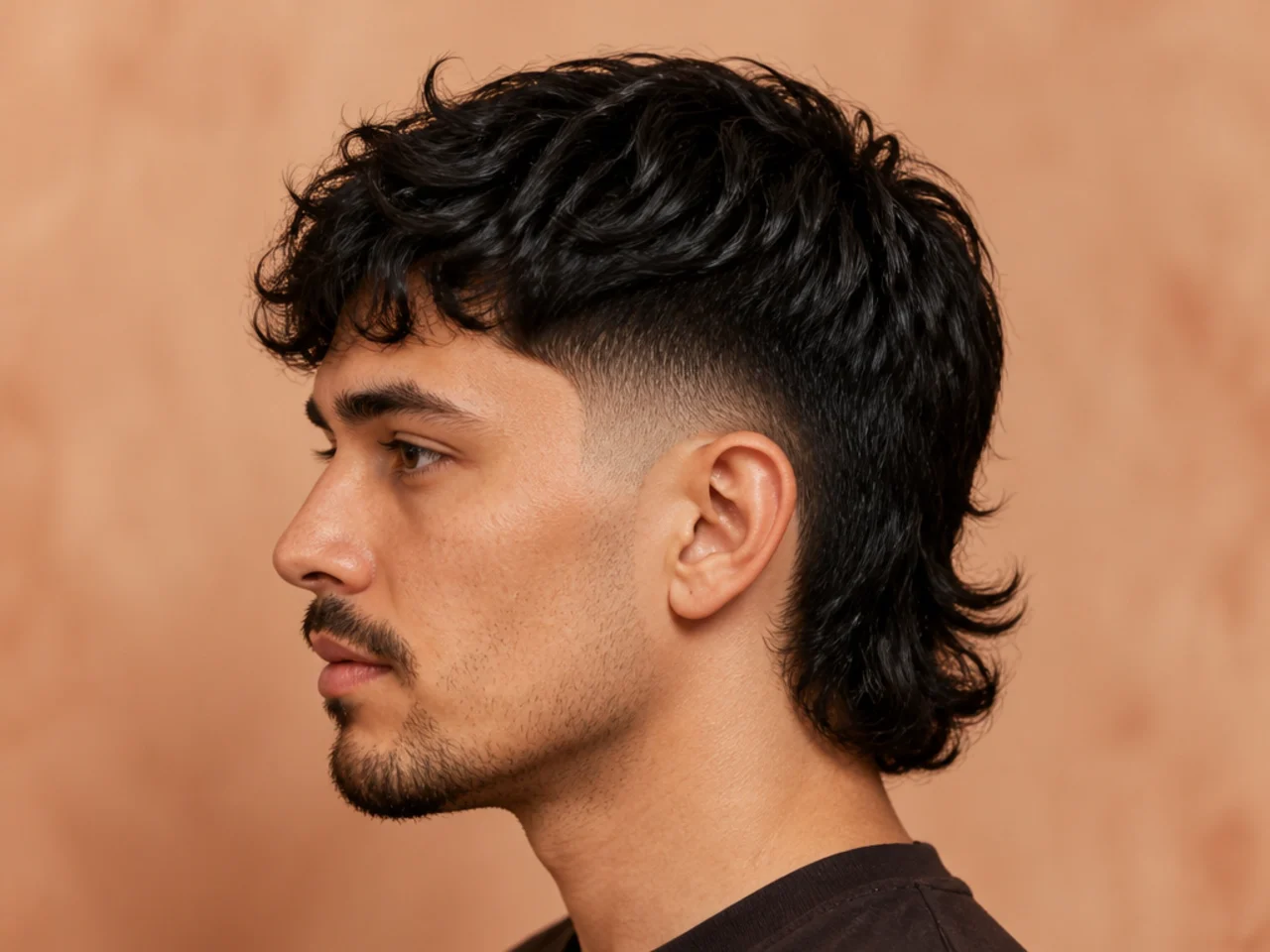
The most job-flexible version on the list. The low fade drops to skin near the neckline and starts just above the ear, keeping useful length above the fade line. The comma sits front and the mullet drops soft at the nape — subtle enough for a corporate desk, sharp enough for a Friday night. Best on straight-to-wavy hair, any density. Ask for a low fade to skin, 4 inches on top, a defined comma toward your dominant side, and a 2 to 2.5 inch mullet at the nape. Style with curl cream, a round brush at the front, and a light setting mist.
4. The Mid Fade Comma Mullet
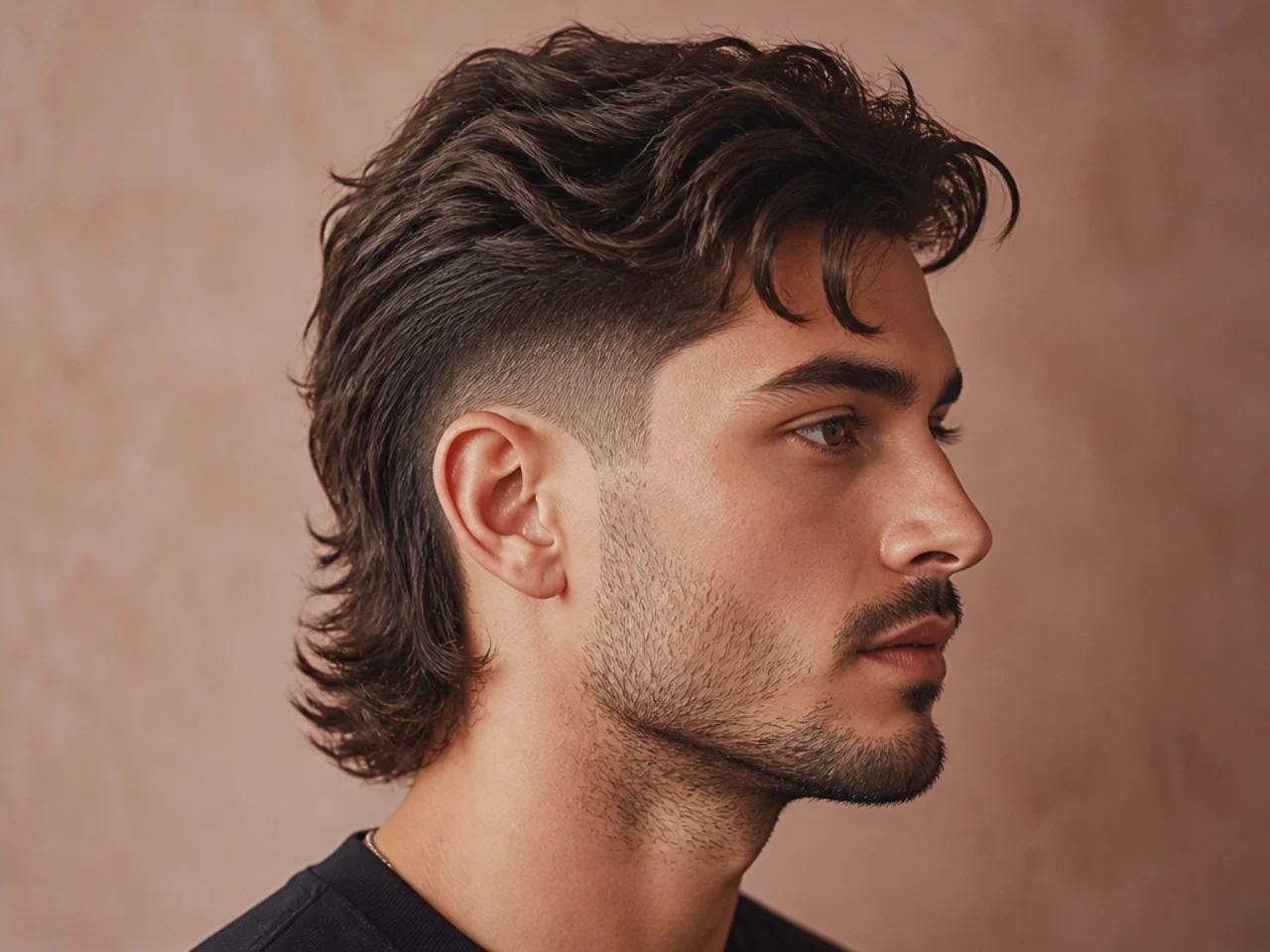
The mid fade starts at temple height, pushing visual weight up. Combined with a comma at the front and a mullet at the nape, the shape reads taller and more athletic than the low fade version. Perfect if a flat crown reads short against your face. Best on straight-to-wavy hair with medium density; round and oval faces read strongest. Ask for a mid fade to skin, 4 inches on top, a defined comma toward your dominant side, and a 3-inch textured mullet at the nape. Style with curl cream, a round brush from underneath the front, then finish with a setting mist.
5. The Burst Fade Comma Mullet
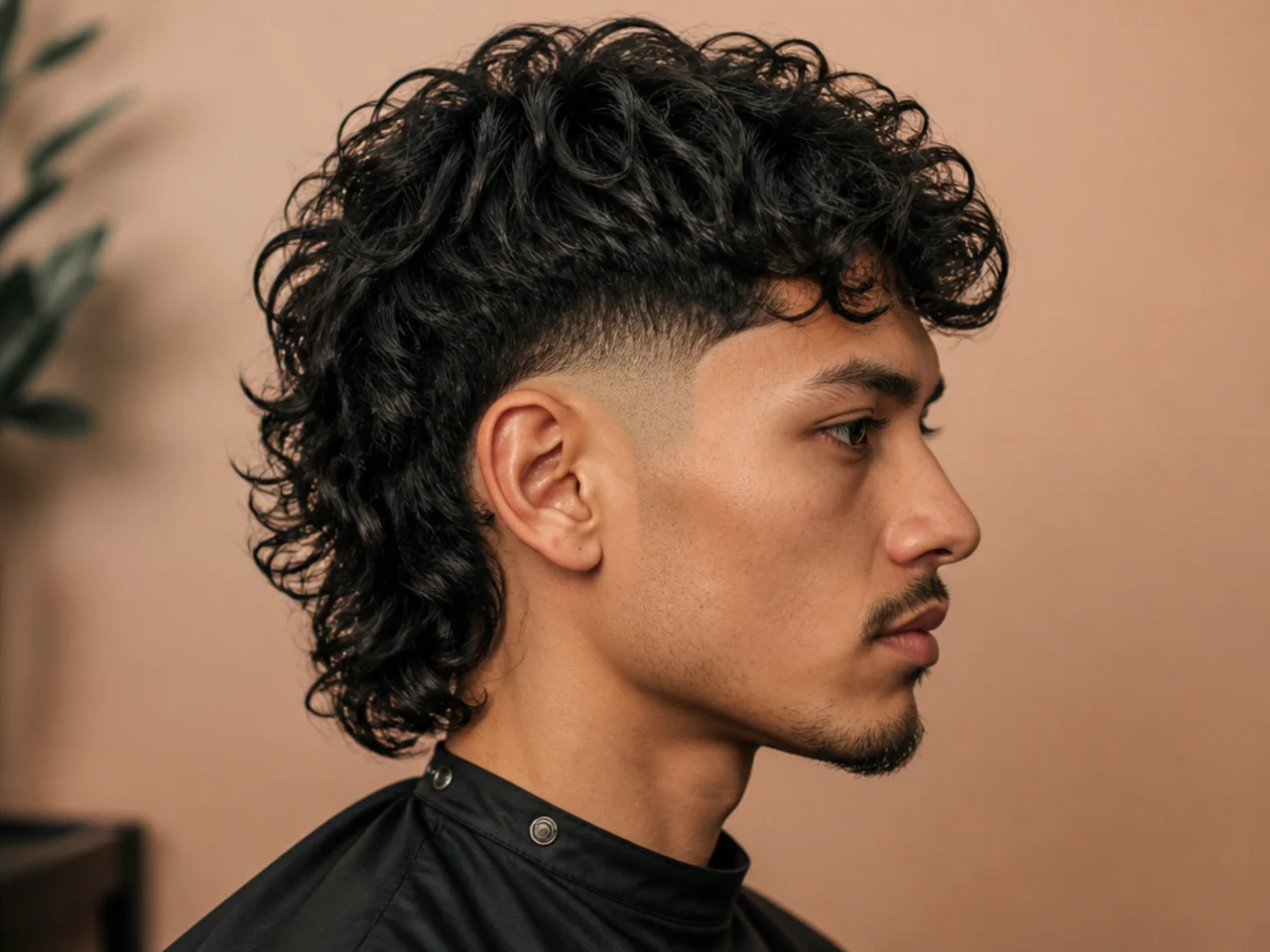
The burst fade haircut rounds in a semicircle around each ear, leaving weight untouched behind the ear that flows straight into the mullet's back section. The curve reads athletic and slightly edgier than a straight fade. The comma up front keeps the K-fashion identity. Best on straight-to-wavy hair with medium-to-thick density. Ask for a burst fade around each ear, 4 inches on top with a defined comma, and a 3-inch mullet at the nape connected to the fade behind the ear. Style with curl cream, a round brush at the front, and finger-shaping through the back.
6. The Wolf Cut Comma Mullet

The wolf-cut cousin. Heavy internal layers wrap the crown and face-framing pieces, top stays 4 to 5 inches with a defined comma curl, and the back drops 3 to 4 inches with feathered mullet layers. More textured and unfinished than the classic version. Best on wavy or curly hair with medium density; suits oval, heart, and diamond faces. Ask for a wolf-cut layered top, 4.5 inches on top, a comma at the front, and a 3.5-inch feathered mullet at the nape. Style with sea-salt spray on damp hair and finger-shape everything before it dries.
7. The Curly Comma Mullet
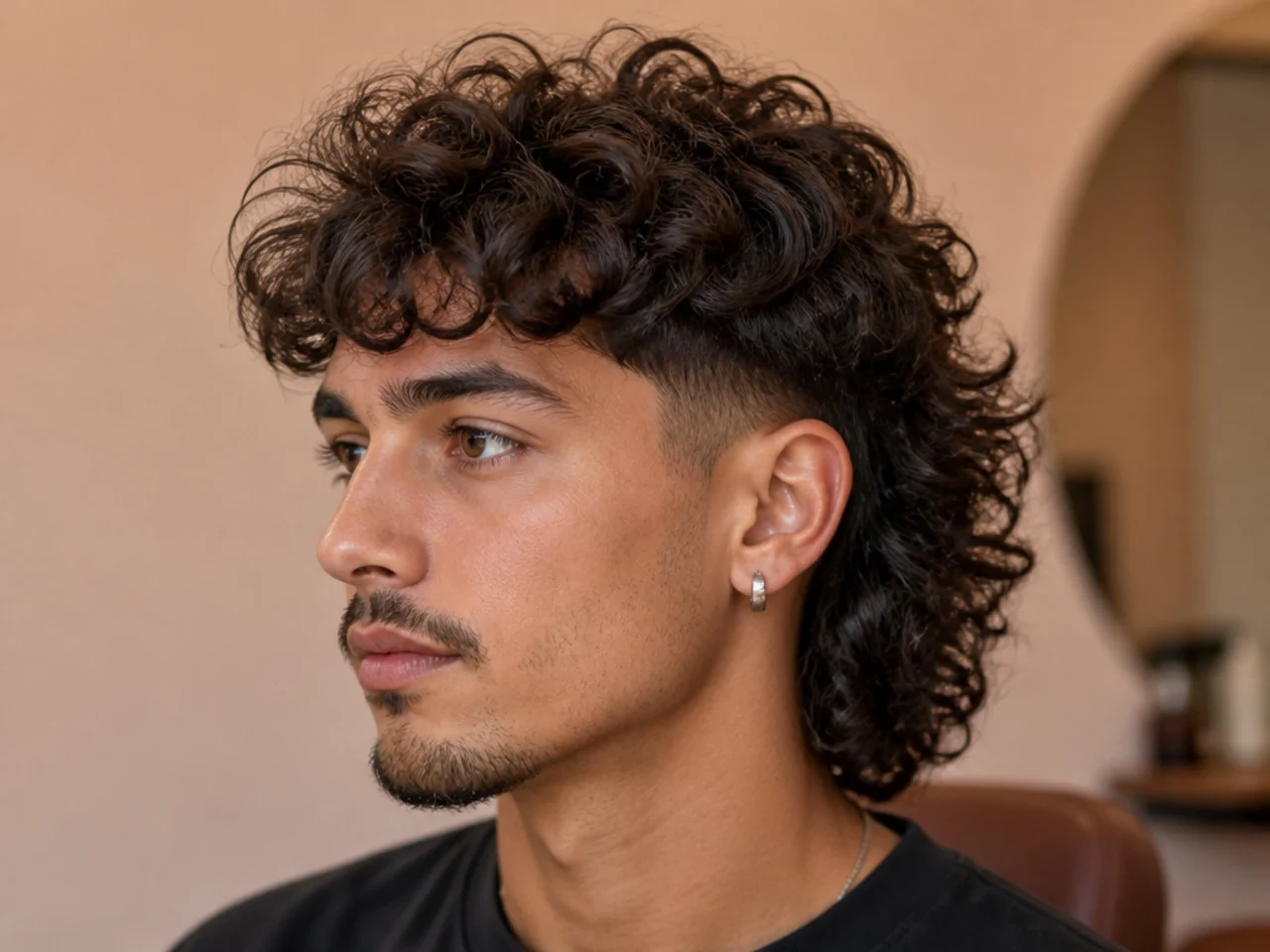
Curly hair does not want to curl inward on command — it curls every direction. This version works with the pattern rather than against it. Front layers run longer than the crown so gravity pulls the curls forward into a comma-like drape; the back layers itself naturally into a soft mullet. Sides run tight. Best on 2C-3B curls. Ask for a low fade, 4.5 inches at the front dropping to 3 at the crown, and a 3-inch layered mullet at the nape. Style with curl cream on damp hair, finger-shape the front curls forward, and diffuse on low heat. Skip the round brush — it fights the pattern.
8. The Wavy Comma Mullet
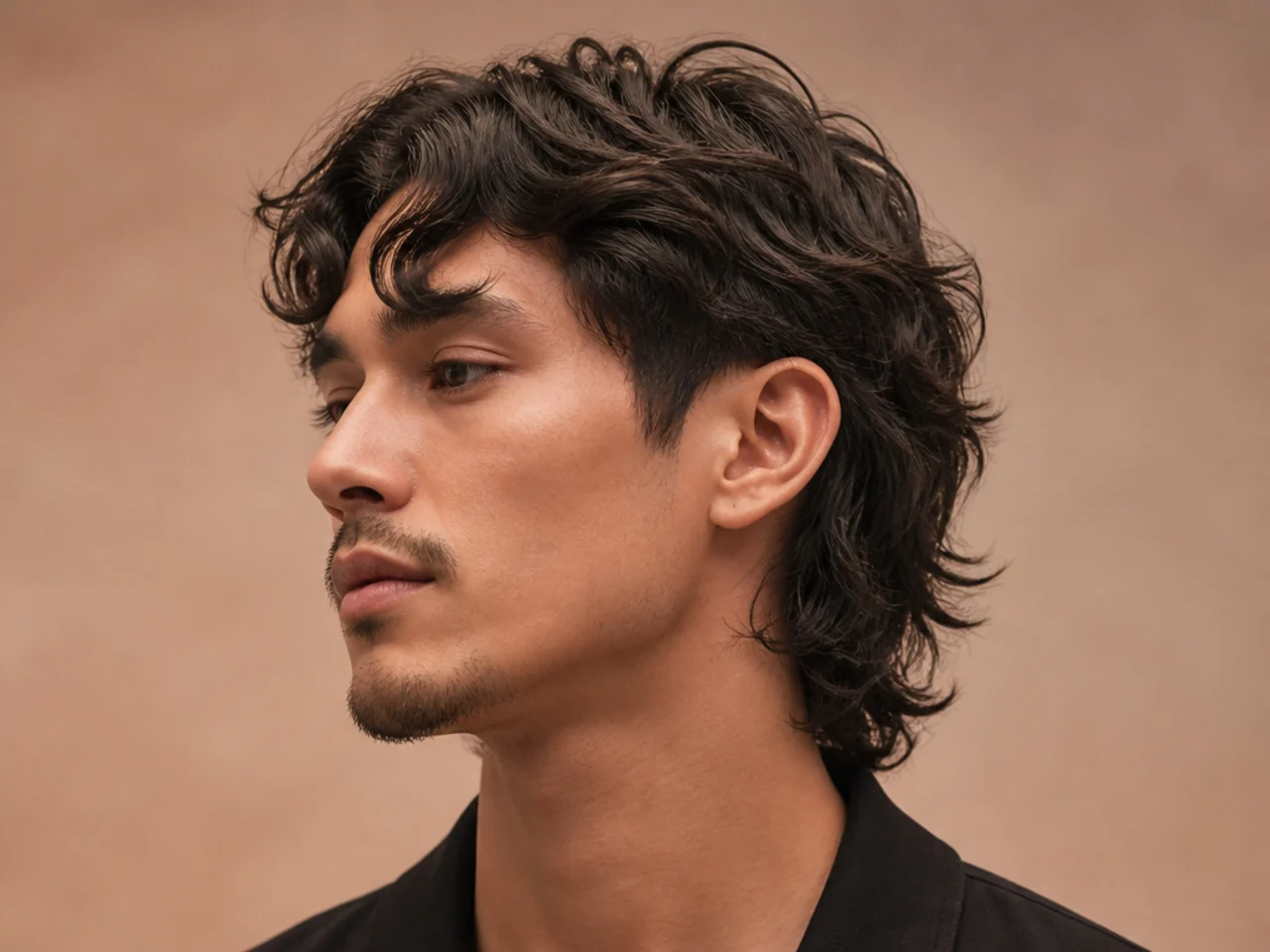
Wavy hair is the easiest texture for this hybrid — your hair already wants to bend and layer. The comma emerges with one brush pass, and the mullet back layers itself into natural movement. Top runs 4 inches, back drops 2.5 to 3 inches, sides on a low taper. Best on 2A-2C waves; oval and heart faces work strongest. Ask for a low fade or taper on the sides, 4 inches on top, a defined comma toward your dominant side, and a 2.5-inch mullet at the nape cut with the wave rather than against it. Style with leave-in cream while damp, round-brush only the front section, and air-dry the rest.
9. The Straight K-Pop Comma Mullet

Straight hair is the sharpest canvas for a K-pop stage version. The comma curl reads crisp, the mullet nape reads intentional, and every line stays exactly where you put it. Top runs 4 inches, sides on a low taper, back drops 2.5 inches with a blunt-cut perimeter. Best on straight hair with medium density; any face shape. Ask for a low taper, 4 inches on top with point-cutting to preserve straight ends, a defined comma, and a 2.5-inch mullet with a soft-blunt nape edge. Style with lightweight leave-in, round-brush from underneath the front, and finish with a shine spray. This is the version you see on group photo covers.
10. The Curtain Comma Mullet
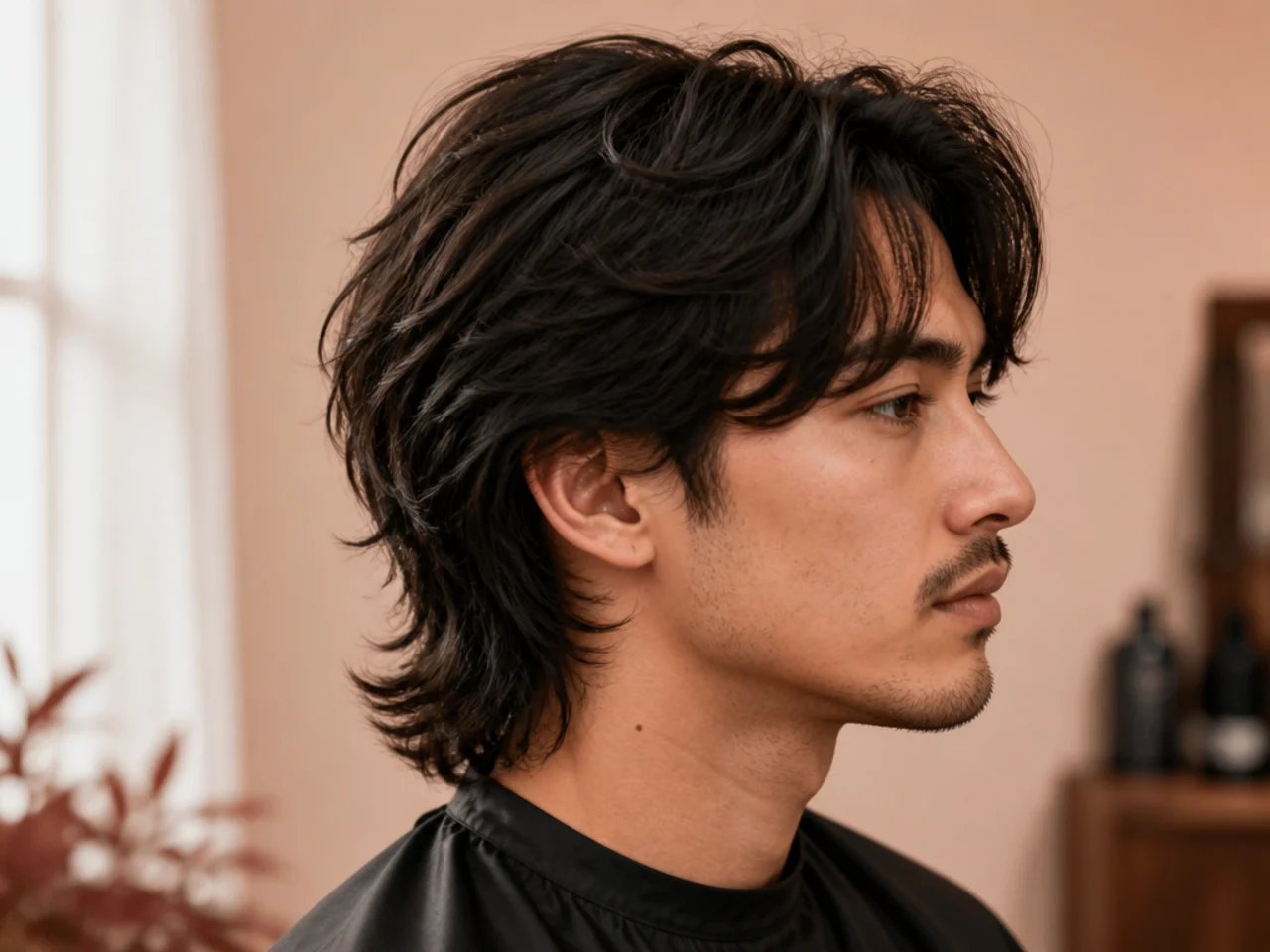
Curtain comma mullet splits the front down a soft middle part with both sides curling inward toward each other — two hooks mirrored across center. The rest of the top drapes softly to either side, and the back drops into a textured mullet. Best on straight-to-wavy hair with medium density; fine hair loses the twin definition. Ask for a low fade or scissor taper, a soft center part, 4.5 inches on top with equal weight on both front sections, and a 3-inch mullet at the nape. Style each front side with a round brush from underneath, curling inward. Balance is everything; lopsided twins read wrong immediately. See middle part haircut men for the flat curtain cousin.
11. The Long Comma Mullet
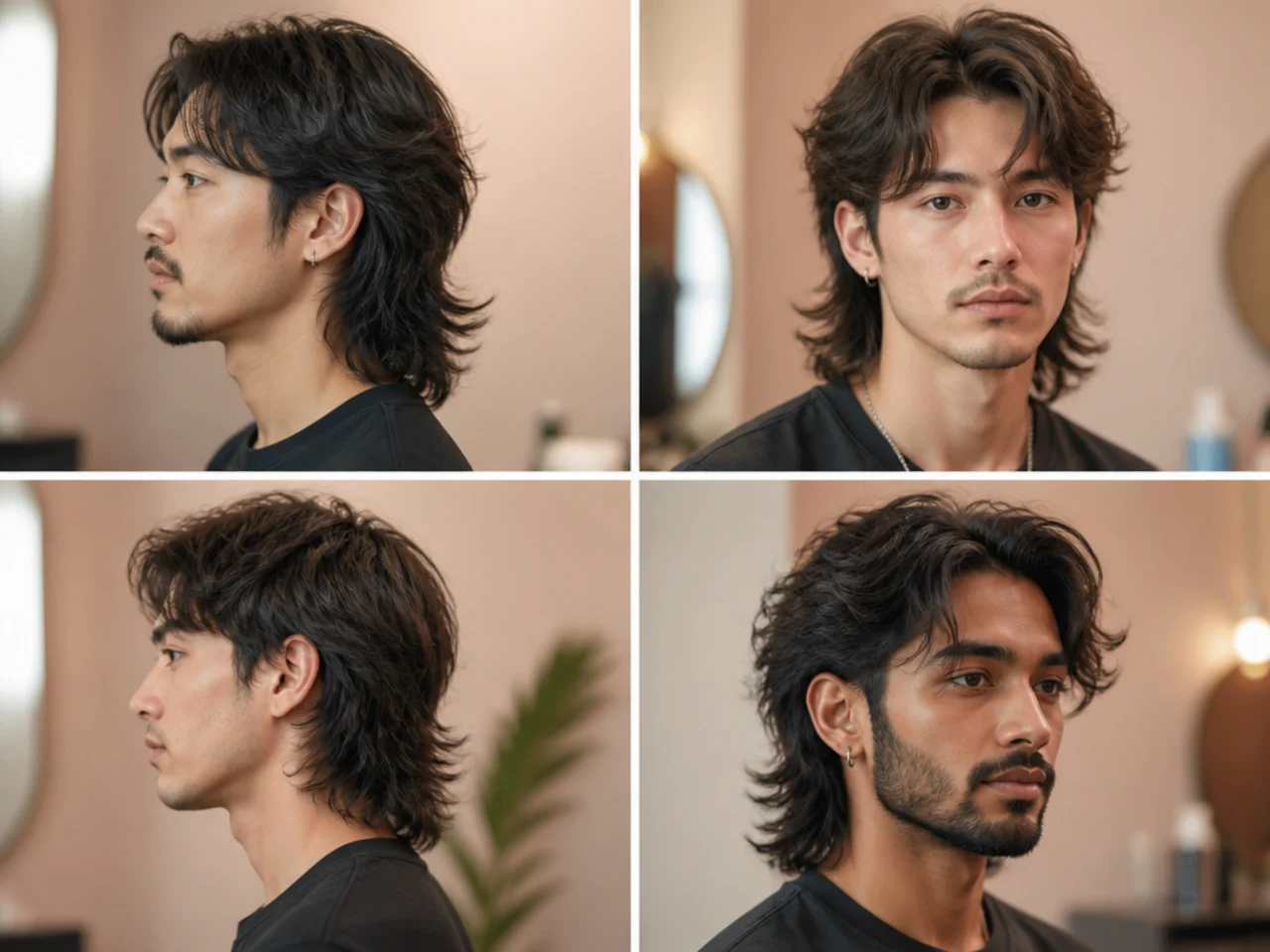
Long comma mullet pushes both ends of the hybrid. Top runs 5 to 6 inches with a wide, dramatic front hook. Back drops 4 inches with heavy internal layering so it swings rather than sits flat. Sides can run short for contrast or scissor-blended for a full flowing feel. Best on straight-to-wavy hair with strong density; long fine hair collapses under its own weight. Ask for a low fade or scissor-blended sides, 6 inches on top, a dramatic comma, and a 4-inch layered mullet at the nape. Style with leave-in cream, a large round brush at the front, and low heat throughout. Book the full two minutes at the mirror.
12. The Short Comma Mullet
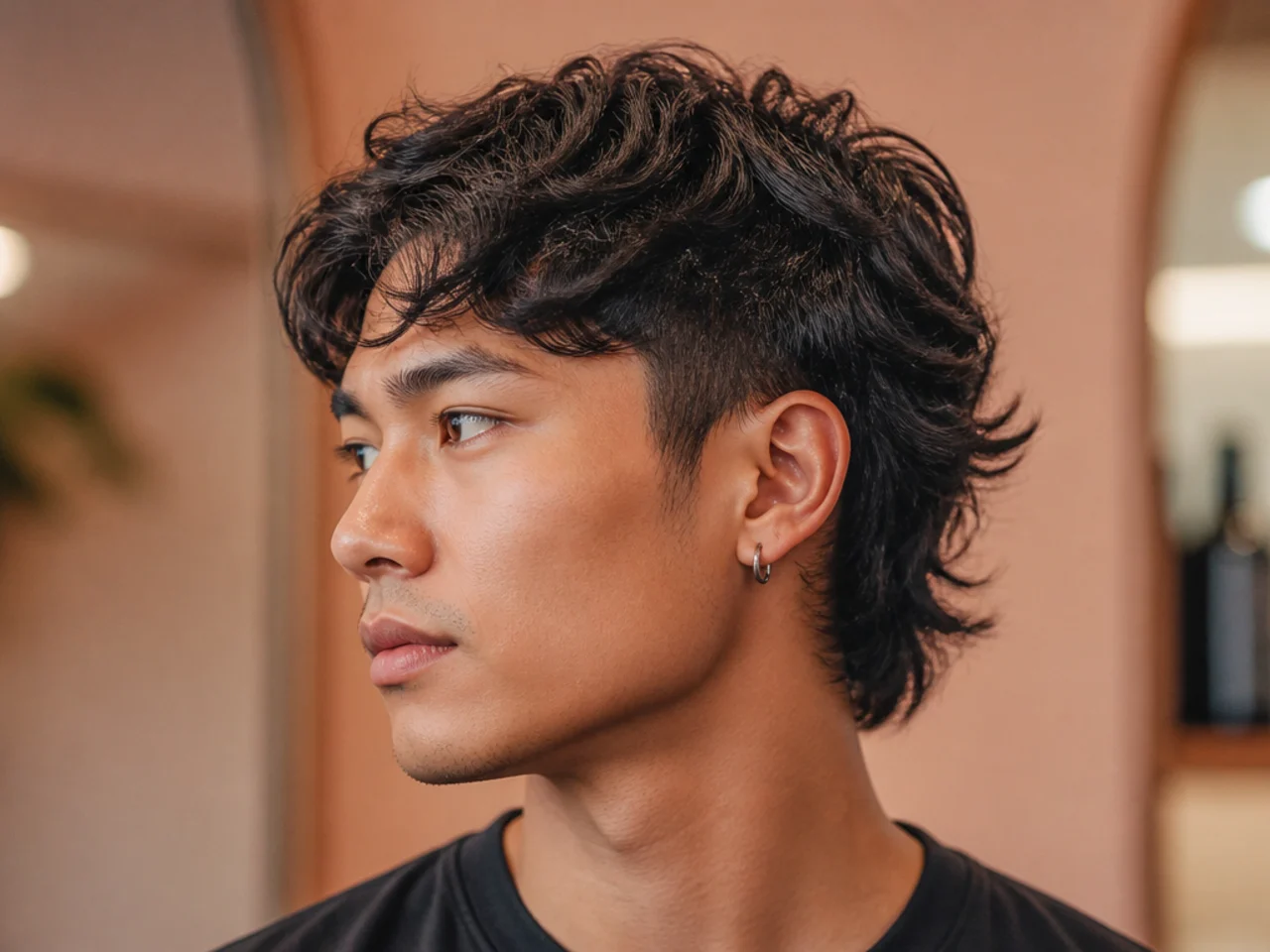
The compact version. Top runs 3 inches — the minimum length that holds a comma curl without collapsing. Back drops 1.5 to 2 inches into a subtle mullet that barely brushes the collar. Sides run short: scissor taper or low fade. The whole shape reads controlled and workplace-friendly. Best on straight hair; wavy hair at this length turns shapeless. Ask for a 2 or 3 guard taper on the sides, 3 inches on top, a soft comma, and a 2-inch mullet at the nape. Style with lightweight curl cream, a 1-inch round brush at the front, and low heat. Rushing the heat frizzes the ends.
13. The Textured Comma Mullet
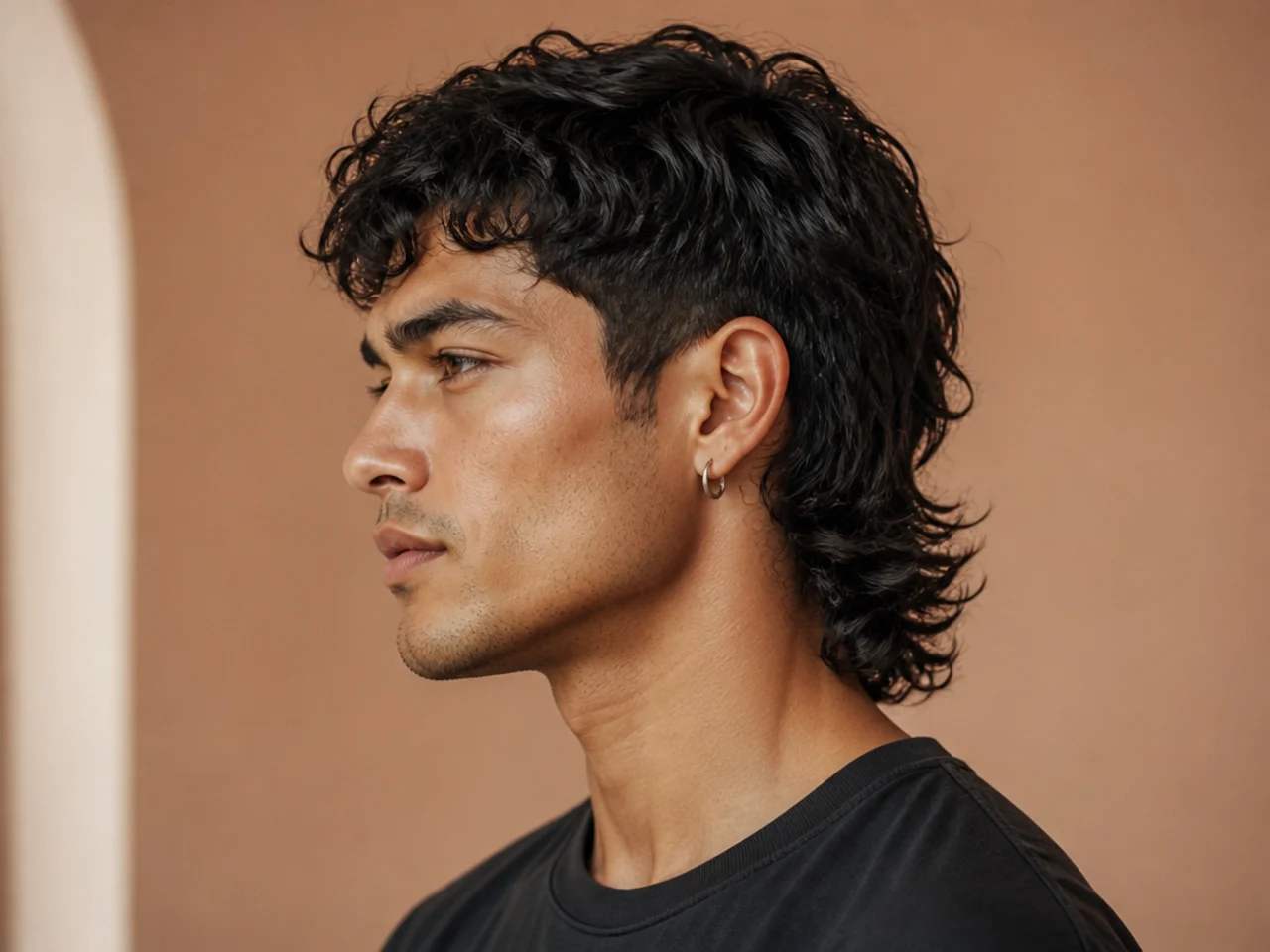
Textured comma mullet trades the glossy K-pop finish for a matte, broken-up feel. Chunky point-cut layers run through both the top and the back, so instead of a smooth surface you see individual pieces catching light. The comma still forms up front, the mullet still drops at the nape — just rougher. Best on straight-to-wavy hair with medium density; fine hair reads scattered rather than textured. Ask for a low fade, 4 inches on top with heavy point-cutting, a comma-length front, and a 3-inch point-cut mullet at the nape. Style with matte clay through the crown and back, then set the front comma with cream and a round brush.
14. The Disconnected Comma Mullet
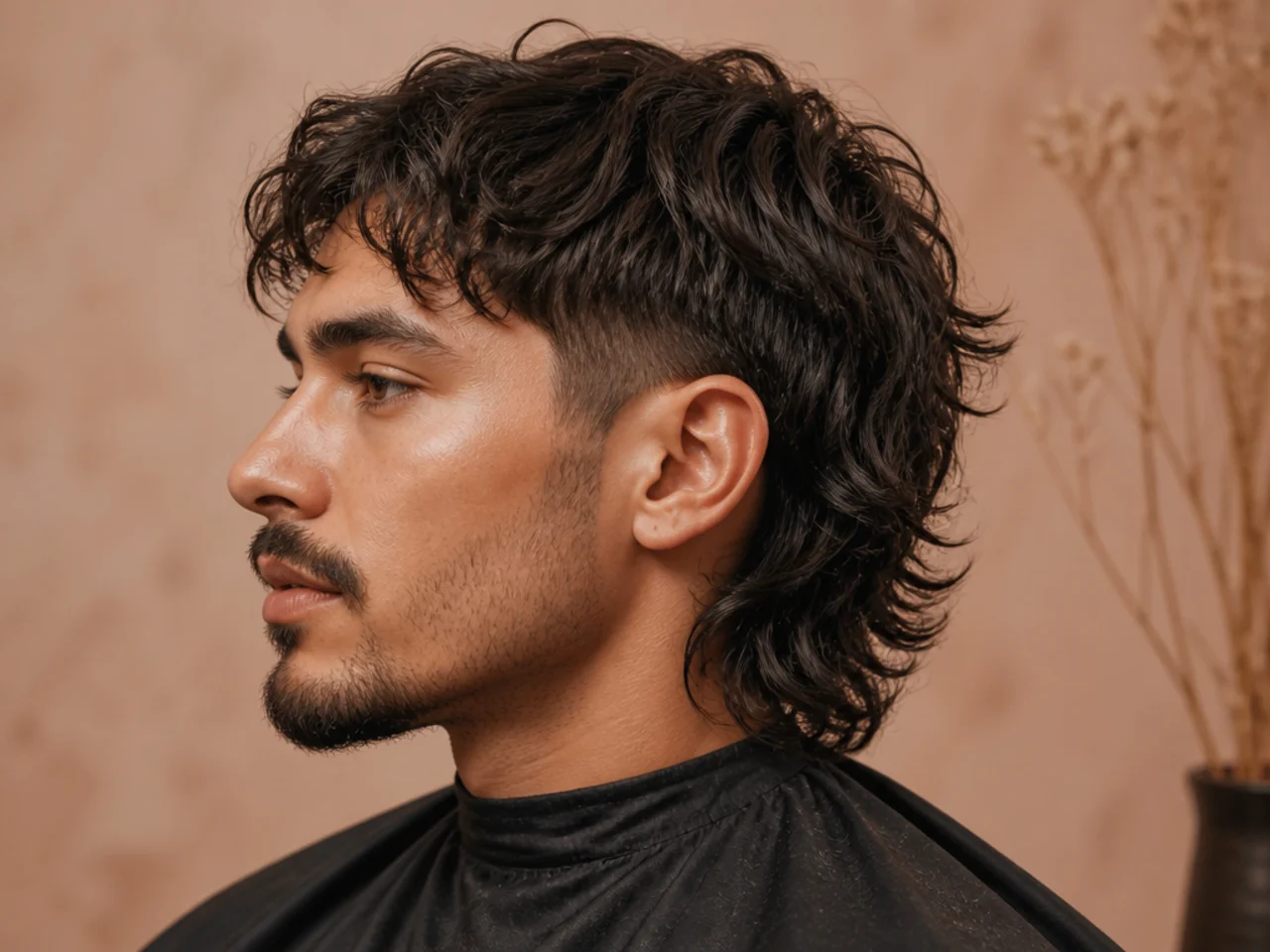
Disconnected comma mullet pushes the two-block idea to its edge. Sides get clipped tight — a 0 or 1 guard — and stopped at a hard disconnect line at temple height. No fade, no blend. Top stays 4 inches with a defined comma, back drops 3 inches with a sharp mullet. Reads aggressive, modern, unmistakably intentional. Best on straight hair with strong density; fine hair loses too much visual mass. Ask for a hard-line disconnect at temple height, 1-guard sides, 4 inches on top with a comma, and a 3-inch mullet. Style with matte clay for grip, then curl cream and a round brush on the front.
15. The Blowout Taper Comma Mullet
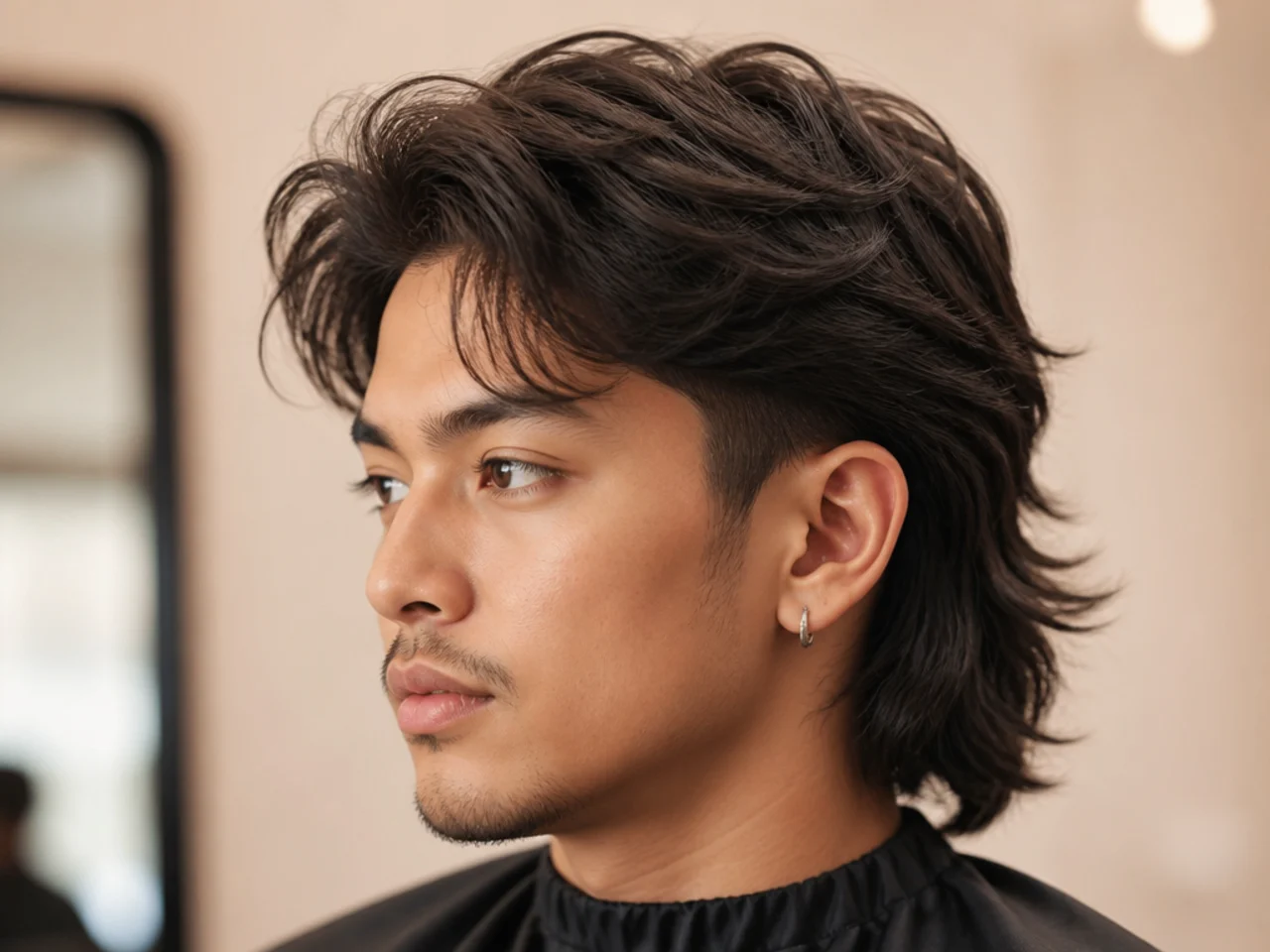
Blowout taper comma mullet leans on volume. Sides taper into a soft low blend, top gets rough-dried upside-down for maximum root lift, the front curls forward into a comma, and the back drops into a puffy layered mullet. Reads big, stage-ready, K-drama editorial. Best on straight-to-wavy hair with medium density; suits round faces because vertical volume lengthens the frame. Ask for a low taper, 4.5 inches on top with layers that support volume, a defined comma, and a 3-inch mullet at the nape. Style with volumizing mousse at the roots, blow-dry inverted, round-brush the front, and set with mist.
16. The Fringe Comma Mullet

Fringe comma mullet cuts a full soft fringe across the forehead, then curls the tips inward at the ends instead of leaving them flat. The comma reads gentler and younger than a single sharp hook. Back drops 3 inches into a textured mullet. Best on straight-to-wavy hair; suits long faces because the fringe shortens the vertical. Ask for a low fade, 3.5 inches on top, a soft fringe reaching the brow with tips left long enough to curl, and a 3-inch textured mullet at the nape. Style with matte clay through the crown, then curl the fringe tips with a round brush. See fringe haircuts for men for the fringe spec on its own, or the flat-fringe cousin edgar haircut for a hard-line alternative.
17. The Reverse Comma Mullet
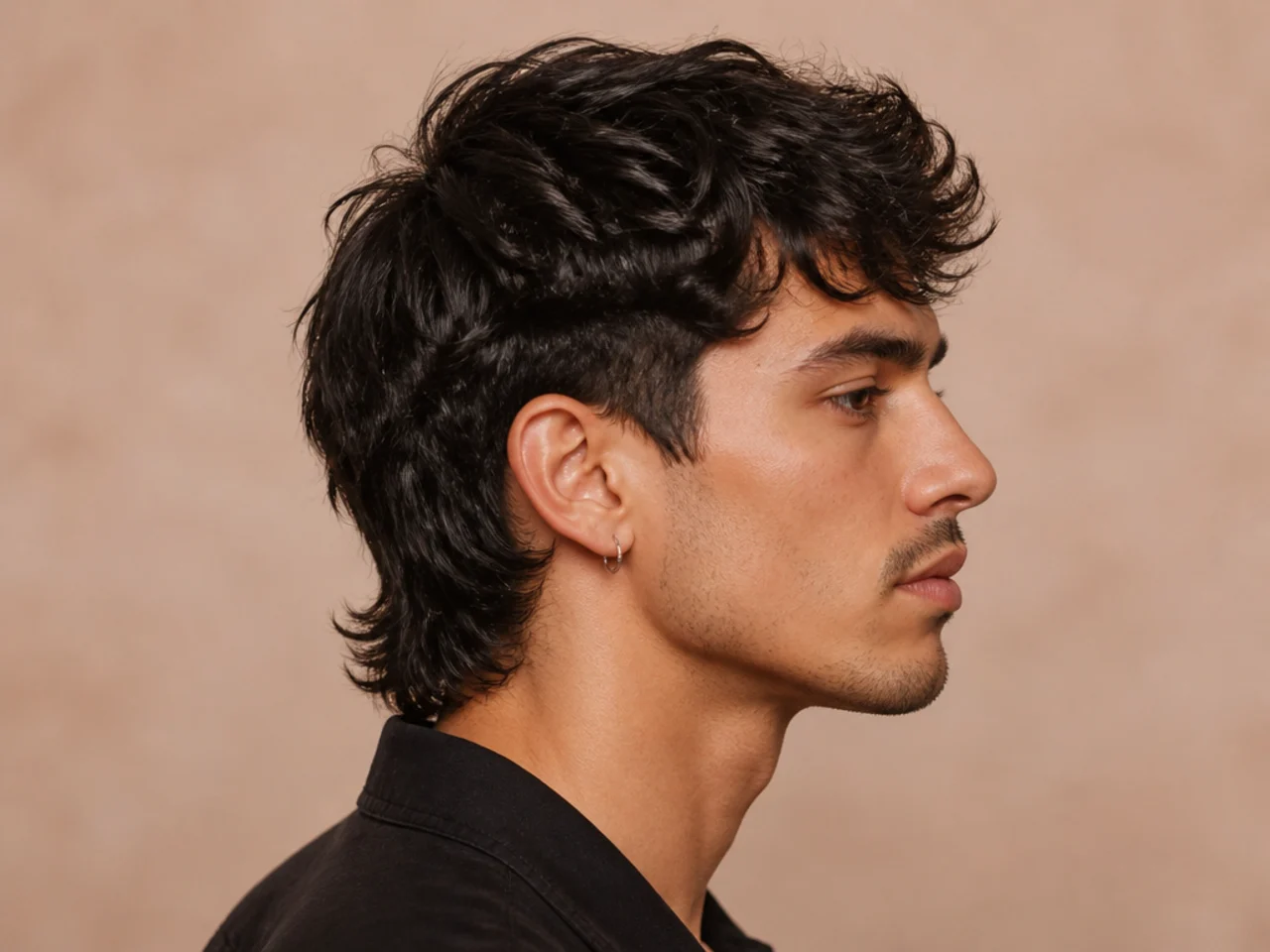
Reverse comma mullet flips the visual weight forward. The front runs longer and heavier — 5 inches with a bold, wide comma hook — while the back drops only 1.5 to 2 inches into a subtle mullet. Reads like the comma is doing the talking with the mullet as a whisper behind. Best on straight-to-wavy hair with medium density; suits square and heart faces where a heavier front softens the jawline. Ask for a low taper, 5 inches at the front dropping to 3 at the crown, a dramatic comma, and a 2-inch subtle mullet at the nape. Style with leave-in cream and a large round brush at the front.
18. The Side-Swept Comma Mullet

Side-swept version pulls the front curl across your forehead in one long directional sweep, ending at the opposite temple. Lower, wider, and softer than a vertical single hook. The back drops into a soft mullet that echoes the diagonal energy. Best on straight-to-wavy hair; suits heart-shaped and oval faces. Ask for a low fade or scissor taper, 4.5 inches on top with heavier weight on the sweep side, a side-swept comma across the forehead, and a 3-inch mullet at the nape. Style with a round brush pulling front-to-opposite temple, then set with cool air and a light mist.
19. The Skin Fade Comma Mullet
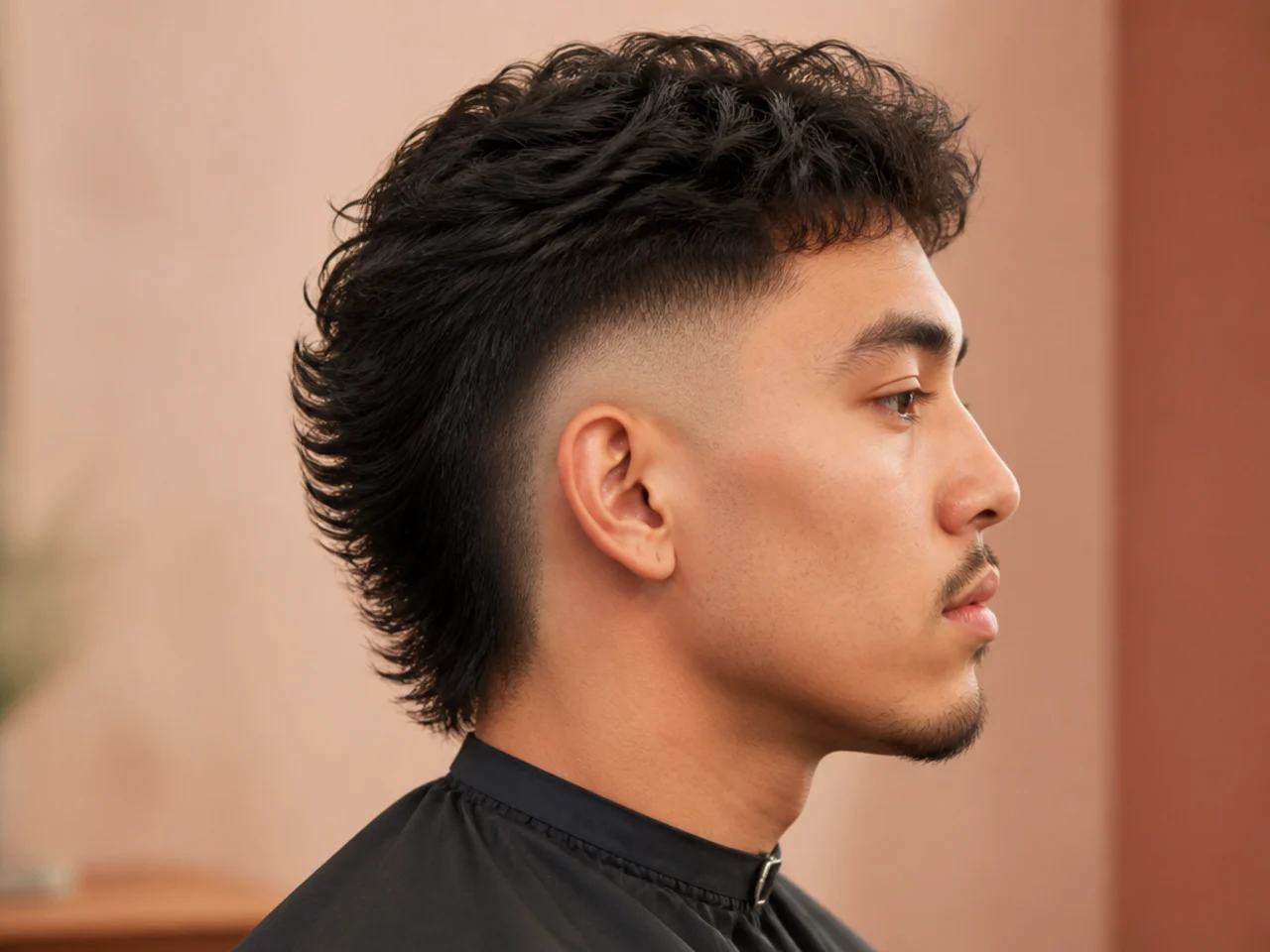
Skin fade takes the sides all the way to bare skin — no guard length preserved. Maximum contrast between skin-clean sides and the styled top-plus-mullet combo. Reads bold and modern. Best on straight hair with any density; suits oval, square, and heart faces. Ask for a low or mid skin fade, 4 inches on top with a defined comma, and a 3-inch textured mullet at the nape that runs disconnected from the skin fade. Style with curl cream, a round brush at the front, and a light mist. Skin fades reveal cowlicks — if you have one at the crown, ask for a low fade instead so the transition is less exposed.
20. The Shaggy Comma Mullet
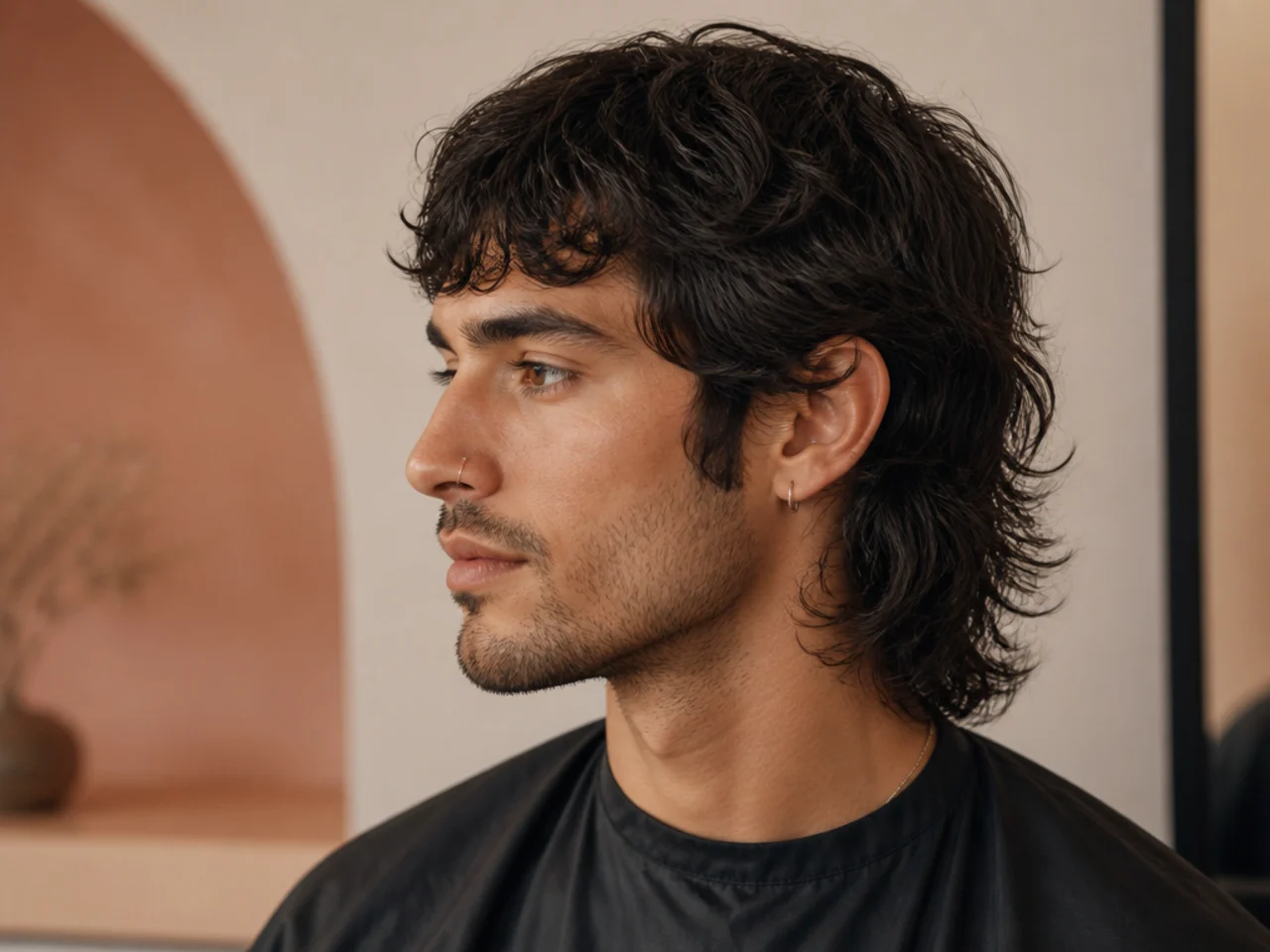
The most lived-in version on the list. Heavy face-framing shag layers merge into the comma curl at the front, the crown reads slightly disheveled, and the back drops 3.5 inches into a feathered mullet that flows into the shag rather than sitting apart. Best on fine or medium hair that needs body; suits oval and heart faces. Ask for a shag-style layered top, 4 inches at the front with a soft comma, feathered face-framing pieces, blended scissor sides, and a 3.5-inch feathered mullet at the nape. Style with sea-salt spray, scrunch, air-dry — skip the comb entirely. See shag haircuts for the base shag structure.
How to Ask Your Barber for a Comma Hair Mullet
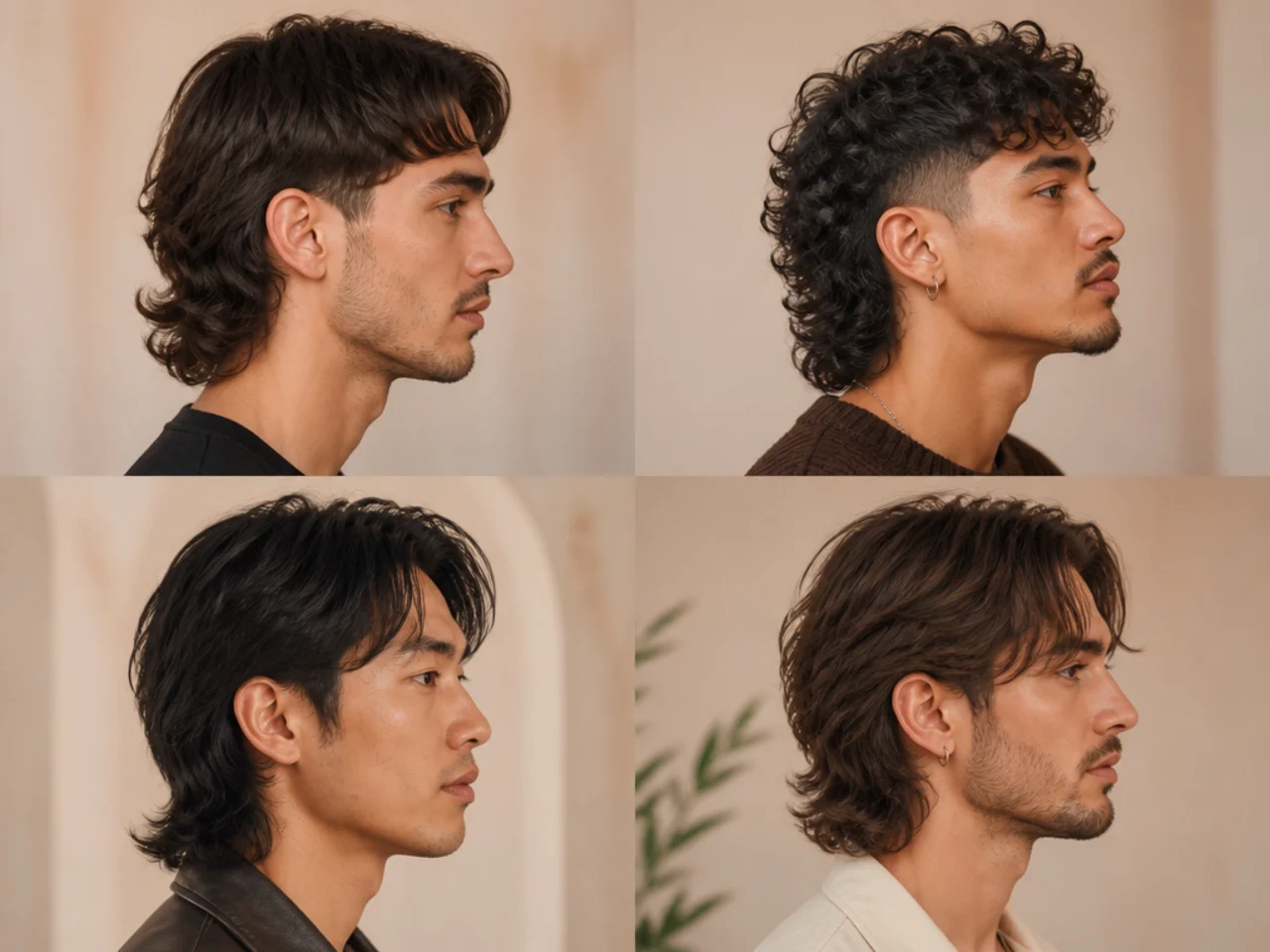
Any version of this hybrid lives or dies on the ask. Vague language sends your barber guessing across three different sections; specific language lands the shape you had in mind on the first pass.
- Bring three photos. One front, one side, one three-quarter from behind. A single photo hides the mullet; three photos remove the guessing on all three sections — front comma, side treatment, back mullet.
- Name the variation. "Low fade comma mullet," "two-block comma mullet," "wolf cut comma mullet" — the names on this list have crossed over on Pinterest and Instagram. Most Korean-trained and modern barbers recognize them.
- Specify three lengths in inches. Top length, back length, and side treatment. "Four inches on top, three inches at the nape, low fade to skin" is unambiguous. "Medium with some mullet" is a coin flip.
- Point to the disconnect or fade line. Touch your temple where you want the side line to start. Touch the back of your neck where you want the mullet to end.
- Demonstrate the comma direction. Draw the arc of the hook with a finger — toward your dominant eye, across the forehead, or split from a center part. Verbal descriptions do not survive translation.
- Confirm the mullet perimeter. Blunt, feathered, or point-cut — say which one. A blunt mullet reads sharper and more K-pop; a feathered mullet reads softer and more shag-influenced.
- Book the follow-up before you leave. Every 4 to 5 weeks for fades and tapers, 6 to 7 weeks for scissor-blended or shaggy versions. The moment either the sides lose their line or the mullet starts to spread wide, book.
Styling and Maintenance
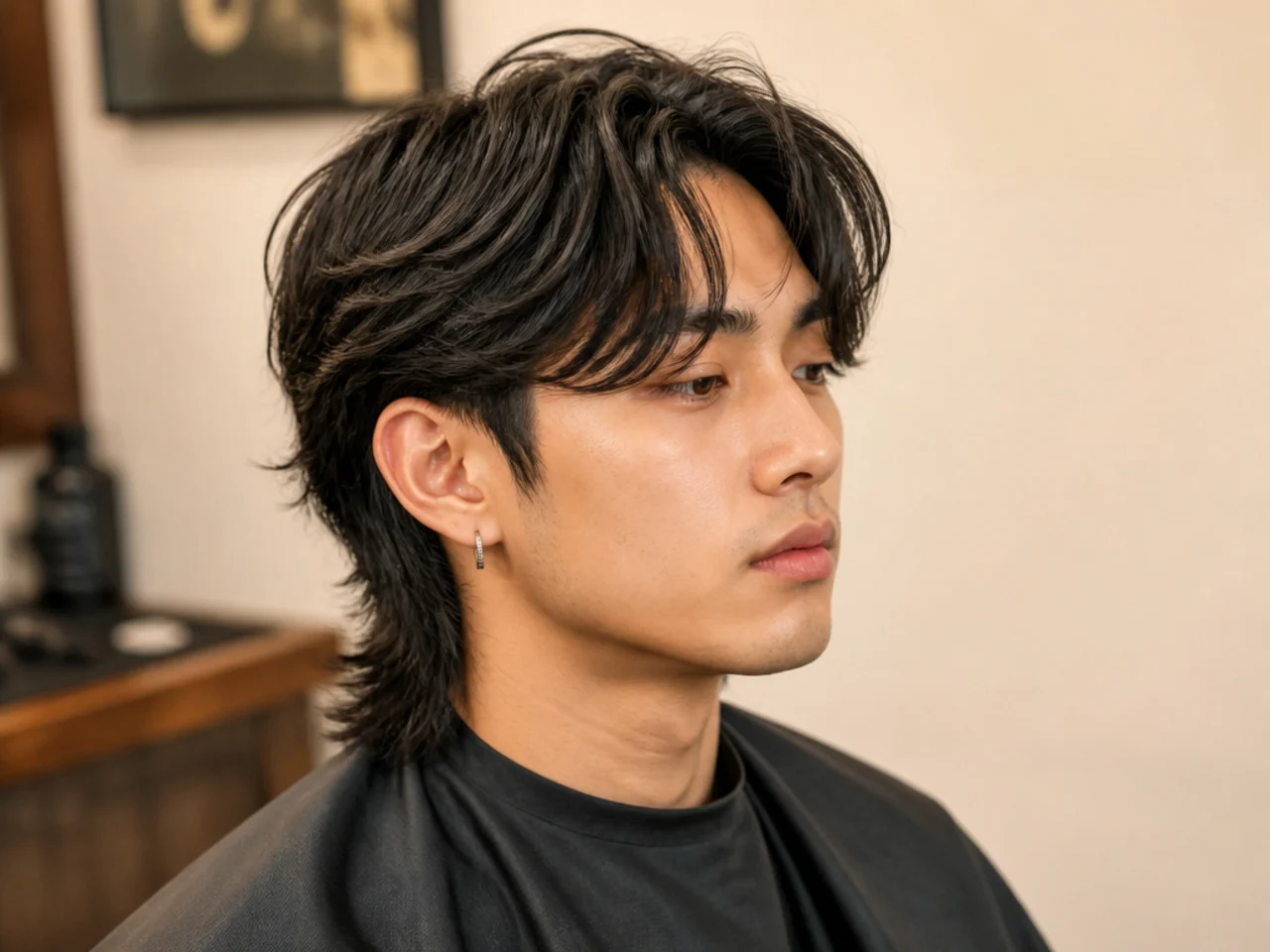
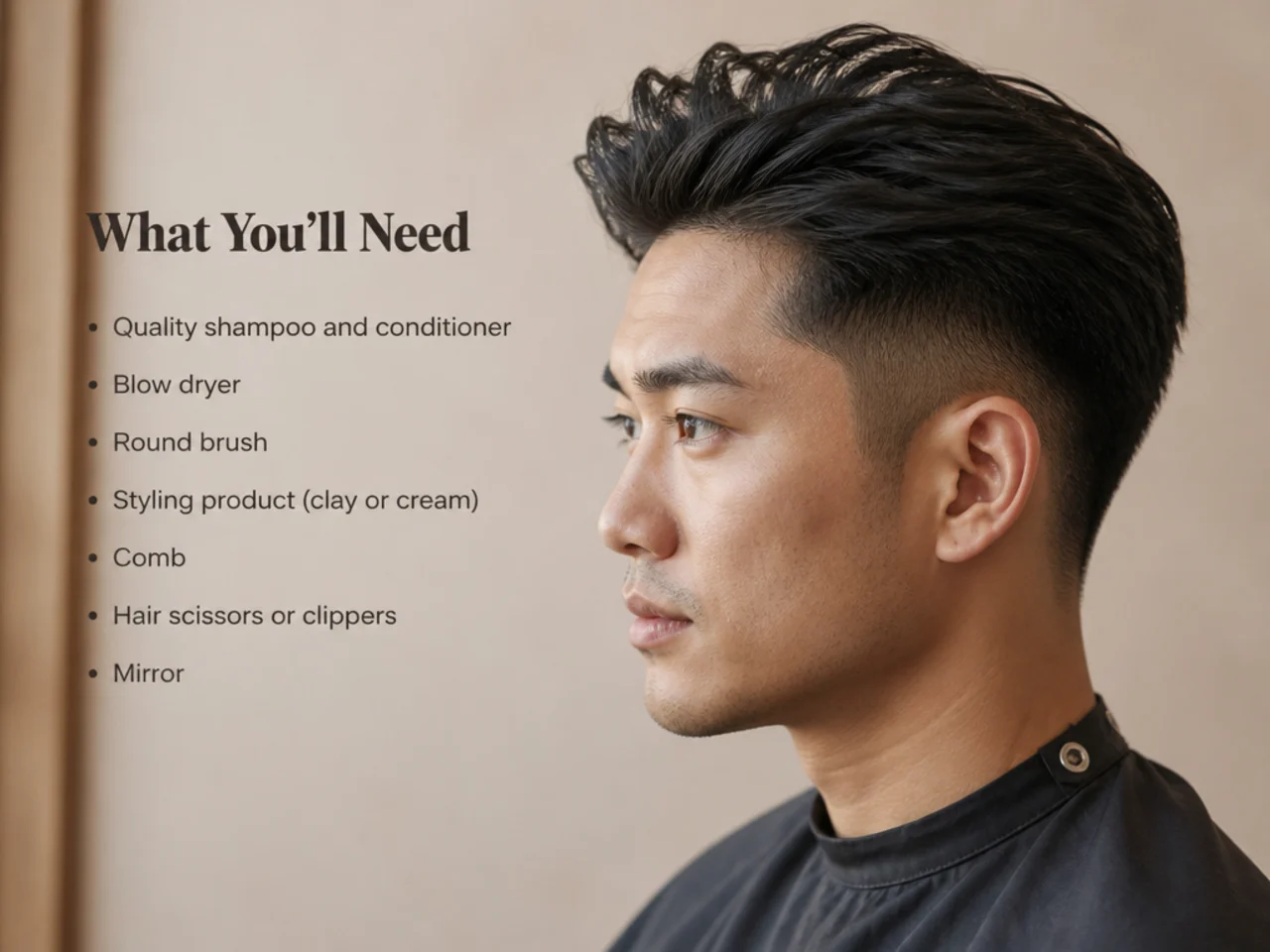
The comma hair mullet is a two-minute cut, not a zero-minute one. Your barber sets the shape; you set the curl and manage the mullet with three or four tools every morning. Skip the front work and the comma flattens by lunch. Skip the back work and the mullet stacks into a triangle.
Start damp, not dry. Wash, condition, and towel-blot to uniformly damp — no drips, no dry patches. Spray a lightweight sea-salt spray or volumizing mist through the top and back. Comb the front forward in the curl direction and the back straight down. Setting both directions now saves brush work later.
Roll the brush inward at the front. Take a 1.5-inch round brush. Slide it under the front section close to the roots. Aim medium heat at the brush, roll toward your face slowly while directing air along the brush length, hold two seconds at the end, release. That motion sets the comma. Repeat on the other side for a twin. Total front time: 90 seconds max.
Match the product to the finish. Curl cream is the primary product for the front — lightweight, flexible hold. Matte clay handles the textured, disconnected, or shag versions. A low-shine pomade suits the classic K-pop and side-part versions. A light setting mist locks the whole shape without the crunchy feel of hairspray. Two products handle most days; the third only enters when you want extra separation or shine.
Sleep protects both sections. A silk or satin pillowcase saves the comma curl and the mullet layers overnight — cotton roughens the front hook and creates cowlicks in the back. If you shower at night, blow-dry roughly first and re-style in the morning with a mist and one brush pass.
Book on cadence. Every 4 to 5 weeks for fades, tapers, and disconnected sides; 6 to 7 weeks for scissor-blended or shaggy versions. Fades grow out fastest — if you wait past week five on a skin fade, the shape softens and the mullet loses its frame. If either the sides spread wide or the mullet starts stacking into a wedge, book.
FAQ
What is a comma hair mullet?
A comma hair mullet is a hybrid men's cut that pairs a Korean-style comma curl at the front — a defined hook curving inward against the forehead — with a modern mullet back that lengthens two to four inches at the nape. Sides run fade, taper, undercut, or two-block ledge. The comma carries the K-fashion identity; the mullet carries the indie edge.
Is a comma hair mullet the same as a two-block mullet?
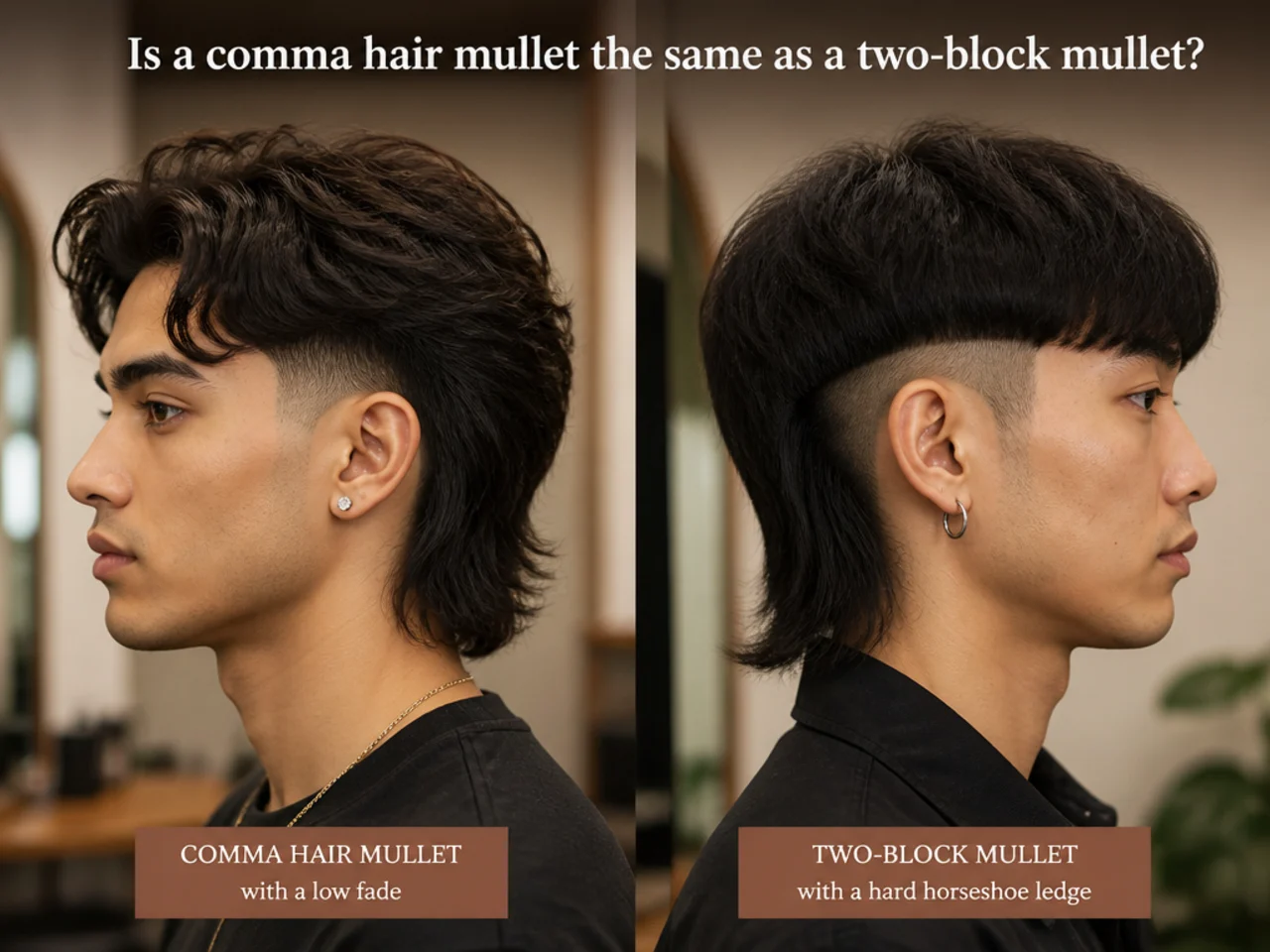
No. A two-block mullet uses buzzed sides with a hard horseshoe ledge — no fade, no gradient, a sharp break at the temple. A comma hair mullet defines the style by the front comma curl plus the mullet back, and the sides can run any treatment: fade, taper, disconnect, or the two-block ledge itself. The two-block comma mullet (variation 2 above) is where the two styles meet.
Can I get a comma hair mullet with curly hair?
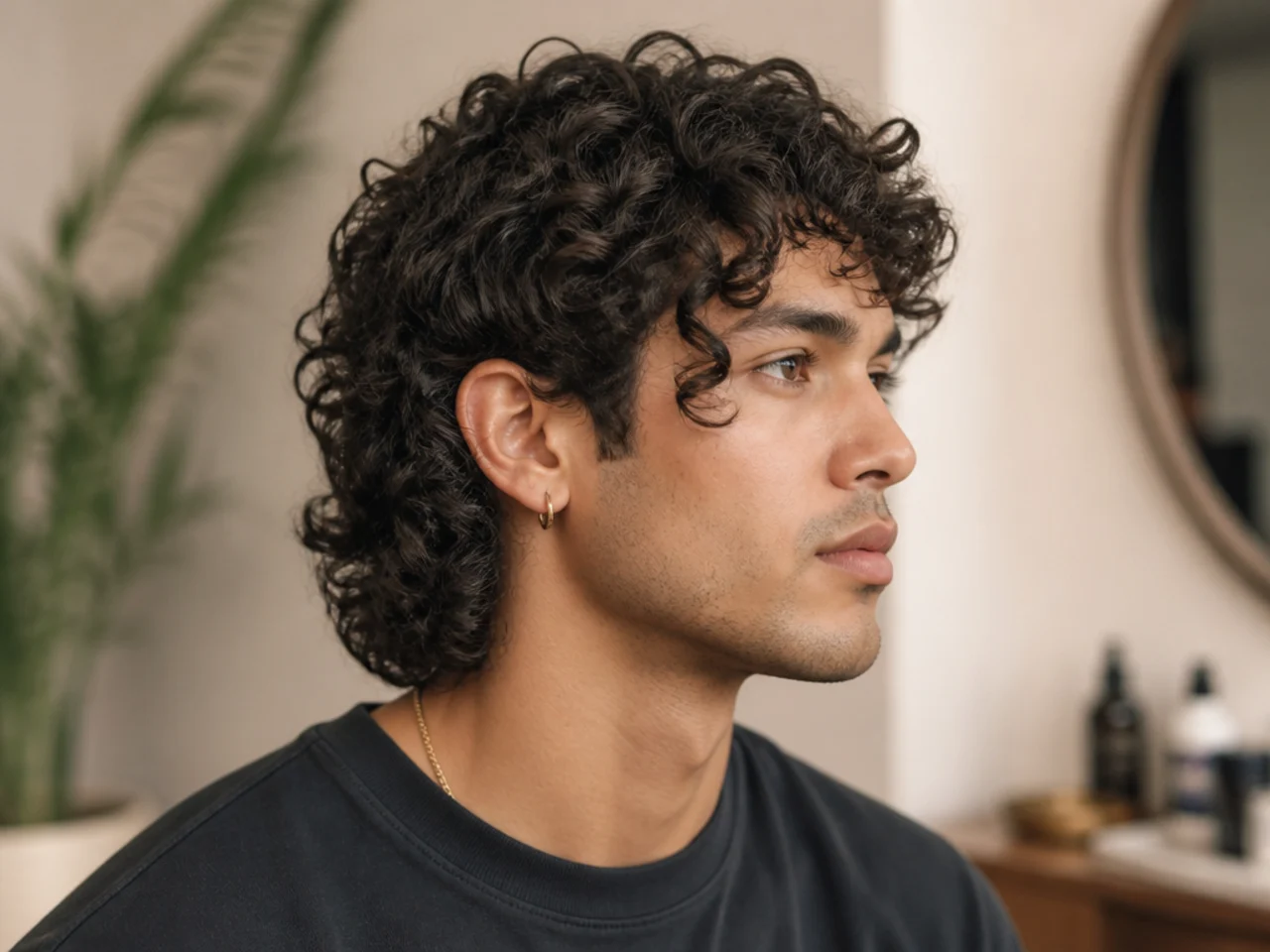
Yes. Wavy hair (2A-2C) is easiest — your hair already wants to bend, and the mullet layers into natural movement without extra work. Curly hair (3A-3B) needs longer front layers so gravity pulls the curls forward into a comma-like drape, and shorter internal layers in the back so the mullet does not stack into a triangle. Coily hair (4A-4C) usually needs a light front relaxer to hold the comma shape.
How long does the back need to be for a comma hair mullet?
Two to four inches at the nape is the modern sweet spot. Under two inches loses the mullet identity and reads like a plain comma haircut. Over four inches pushes into wolf-cut or full-length mullet territory. The front comma typically runs 3.5 to 5 inches — one to two inches longer than the crown so the hook holds its weight. Ask for both numbers when you book.
How often should I re-cut it?
Every 4 to 5 weeks for fades, tapers, and disconnected sides; 6 to 7 weeks for scissor-blended, shaggy, or wolf-cut versions. Fades grow out fastest, so a skin fade or mid fade needs the tighter cadence to keep the frame sharp. Wait past that window and the sides soften, the mullet loses its edge, and the whole hybrid stops reading intentional.
Which comma hair mullet variation works in a corporate office?
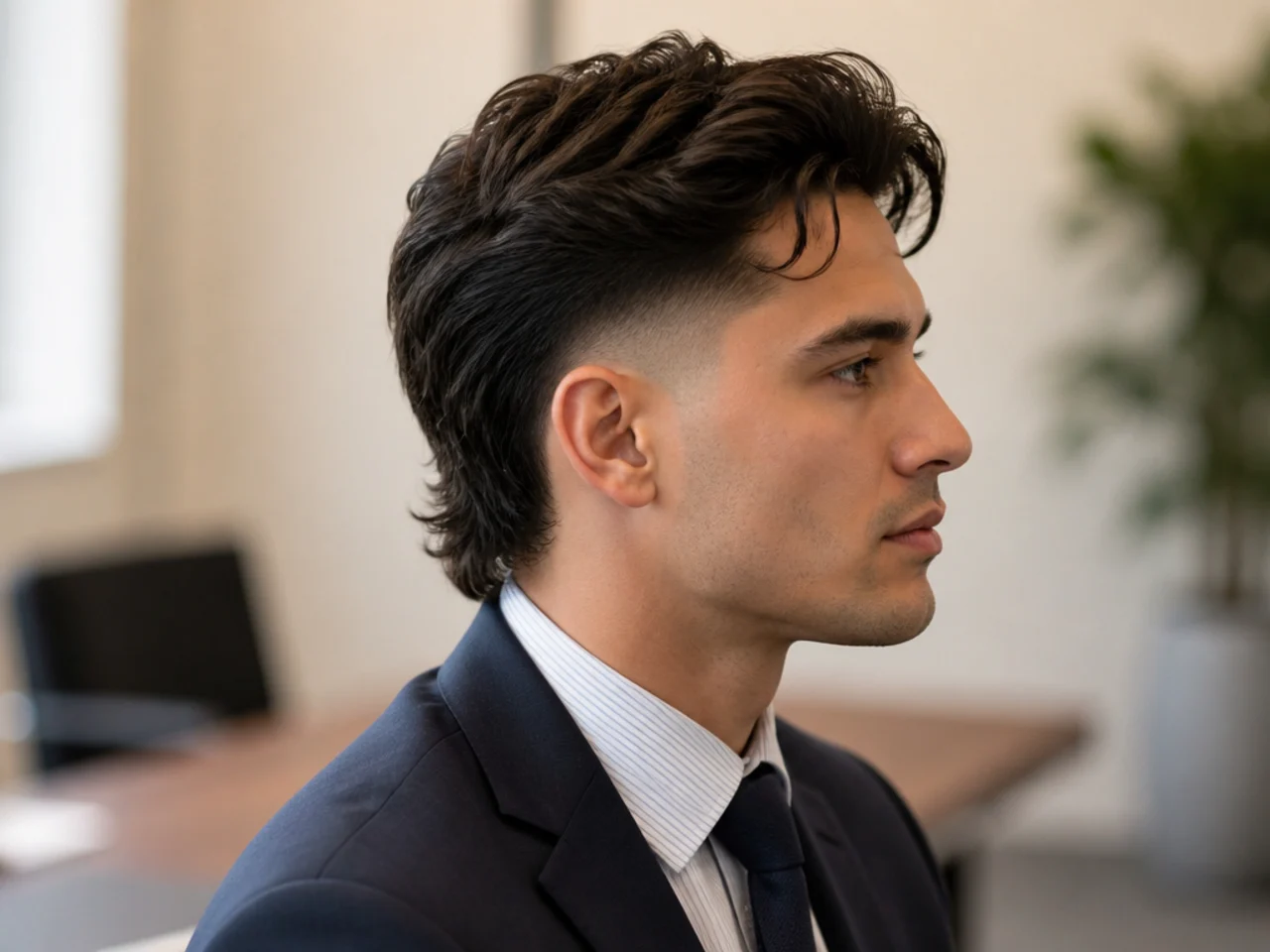
The low fade, short, subtle, and side-swept versions read office-safe. They keep the sides clean, the mullet subtle enough to sit just above the collar, and the comma styled rather than expressive. Skip the disconnected, blown-out, shaggy, and skin fade versions for strict corporate dress codes — those lean expressive and read stronger in creative or client-facing roles where standout hair is welcome.
What products do I need to style a comma hair mullet?
Three products handle most versions. A lightweight sea-salt spray or volumizing mist for prep on the top and back. A curl cream — light, flexible hold, no crunch — for the comma hook itself. A light setting mist to lock the finished shape without the crunchy feel of hairspray. Add a matte clay for textured, disconnected, or shaggy variations, and a low-shine pomade for the classic K-pop and side-part versions. Skip heavy waxes and daily dry shampoo — they flatten the comma and dull the mullet's movement.