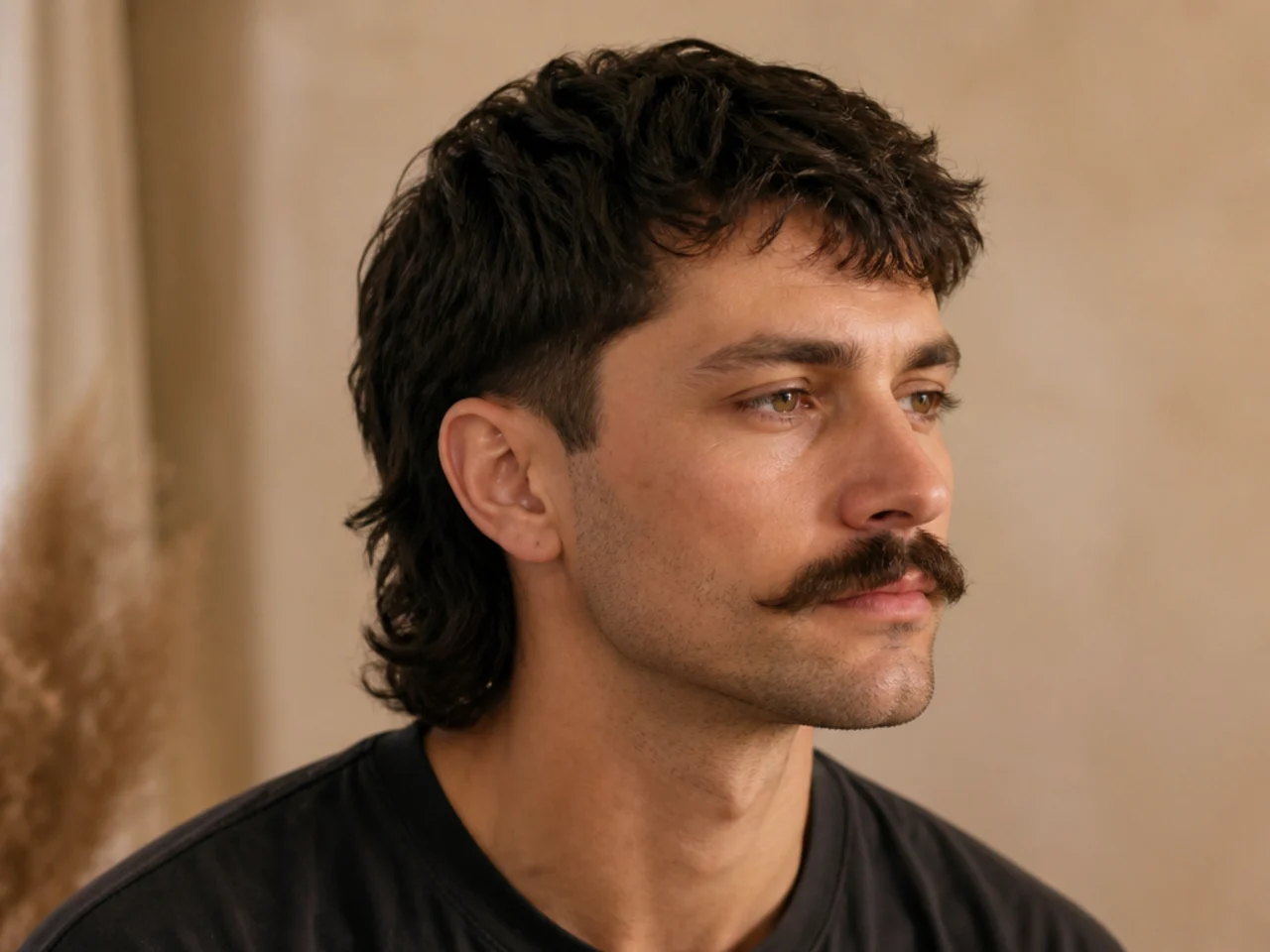
20 Mullet And Mustache Combos That Actually Work
Twenty mullet and mustache pairings, judged on the one thing that decides whether they work together — width. The mullet pulls weight to the back of the head and the mustache holds it at the centre of the face, and the two have to be scaled against each other.
In this article · 27
- How the Two Halves Balance
- Choosing Your Mustache Against Your Fade
- The 20 Mullet And Mustache Combos
- 1. Chevron Mustache With a Low Taper Mullet
- 2. Horseshoe Mustache With a Skin Fade Mullet
- 3. Walrus Mustache With a Long Mullet
- 4. Pencil Mustache With a Blunt Mullet
- 5. Handlebar Mustache With a Mid Fade Mullet
- 6. Natural Mustache With a Shaggy Mullet
- 7. Boxed Mustache With a Burst Fade Mullet
- 8. Mustache Connected to Stubble
- 9. Thin Mustache on a Wolf Mullet
- 10. Heavy Mustache on a Short Mullet
- 11. Bleached Mullet With a Dark Mustache
- 12. Salt and Pepper Mullet With a Grey Mustache
- 13. Curly Mullet With a Curly Mustache
- 14. Straight Mullet With a Trimmed Mustache
- 15. Coily Mullet With a Shaped Mustache
- 16. Hard Part Mullet With a Sharp Mustache
- 17. Low Fade Mullet With a Wide Mustache
- 18. High Fade Mullet With a Narrow Mustache
- 19. Blunt Nape Mullet With a Blunt Mustache
- 20. Grown Out Mullet With a Grown Out Mustache
- Styling and Upkeep
- Mistakes to Avoid
- FAQ
- Final Thoughts
Most mullet and mustache pairings fail on scale rather than on style, because the fade narrows the head and the mustache is then left as the widest thing in the picture.
A mullet moves weight to the back of the head. The fade strips the sides, the front sits short, and everything the eye has to hold onto is behind the ear.
A mustache holds weight at the centre of the face. Pairing them well is a question of width, so the mustache is scaled against the fade rather than chosen on its own.
How the Two Halves Balance
A fade removes width above the ear. Skin reflects light where hair absorbs it, so the head reads narrower the higher the fade climbs.
A mustache returns width at the mouth. It is the only feature on the lower face wide enough to answer a high fade, which is why the pairing became standard rather than accidental.
Length at the back adds depth, not width. A long tail changes the profile and does nothing to the front view, so it never balances a mustache on its own.
Contrast is set by the shortest point. A skin fade against a heavy mustache is the hardest version of this look. Dropping the sides to a number two, six millimetres, softens it without changing either shape.
Choosing Your Mustache Against Your Fade
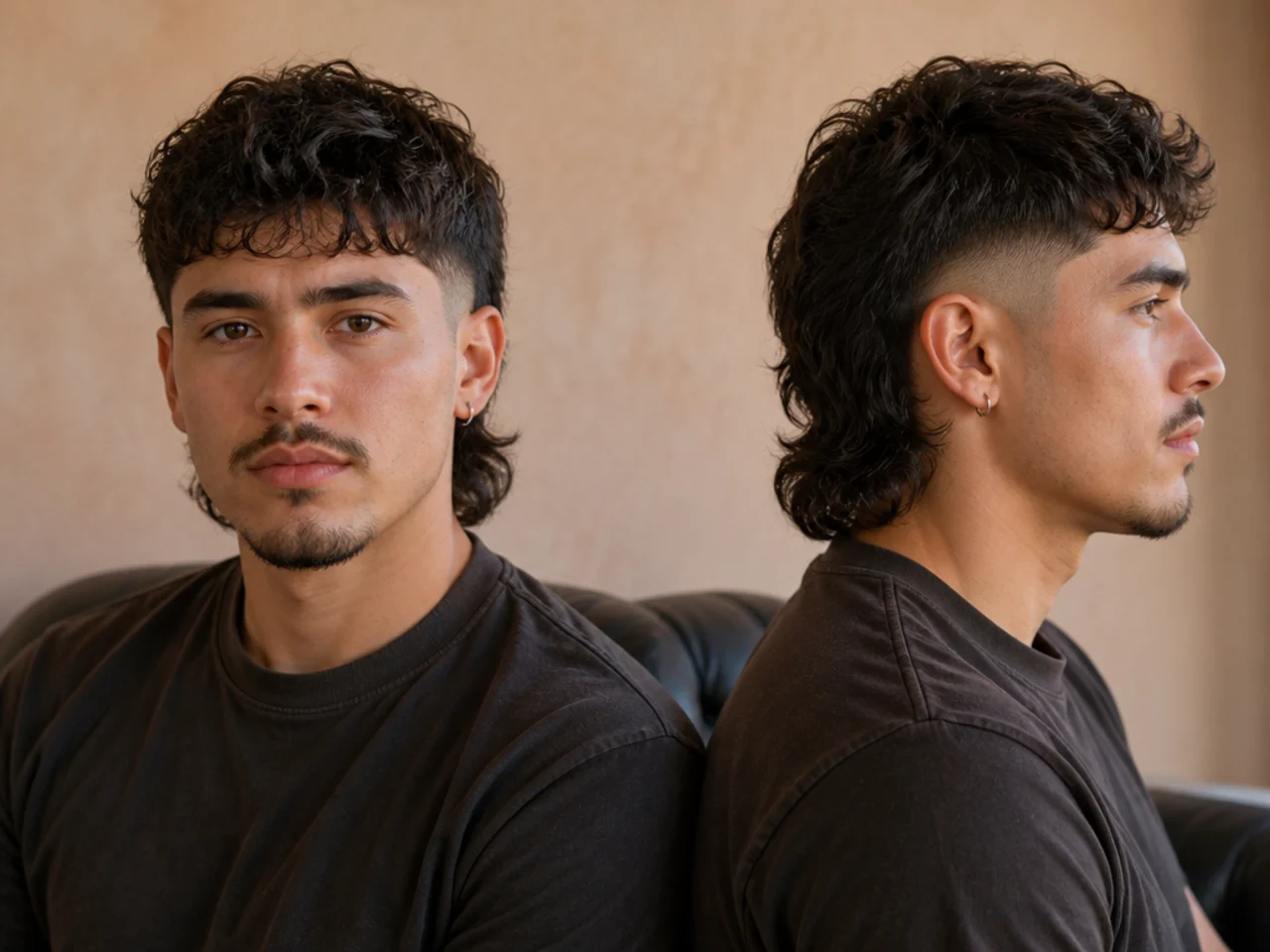
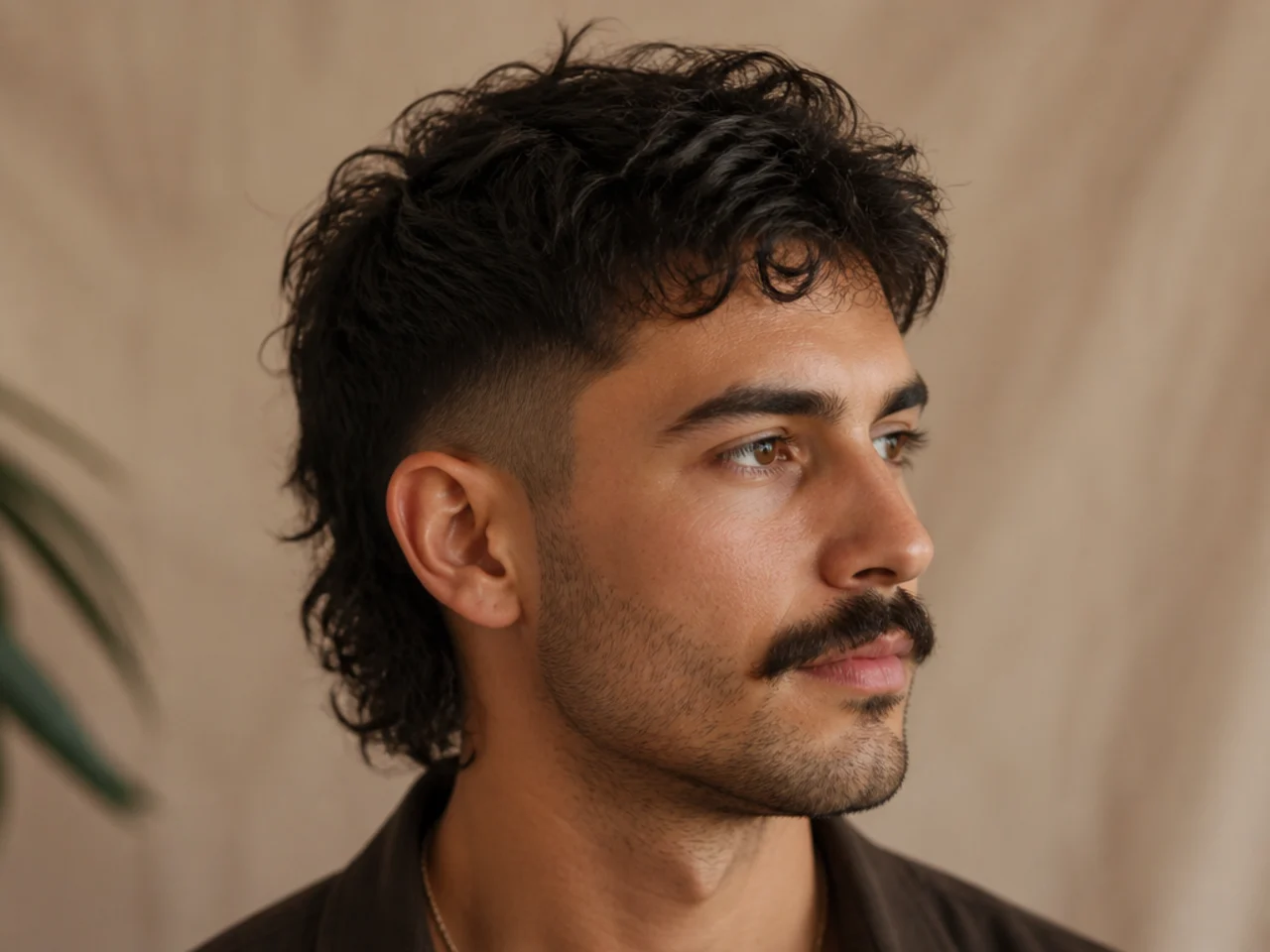
High fade, wide mustache. The higher the fade, the more width has been taken out and the more the mouth has to give back.
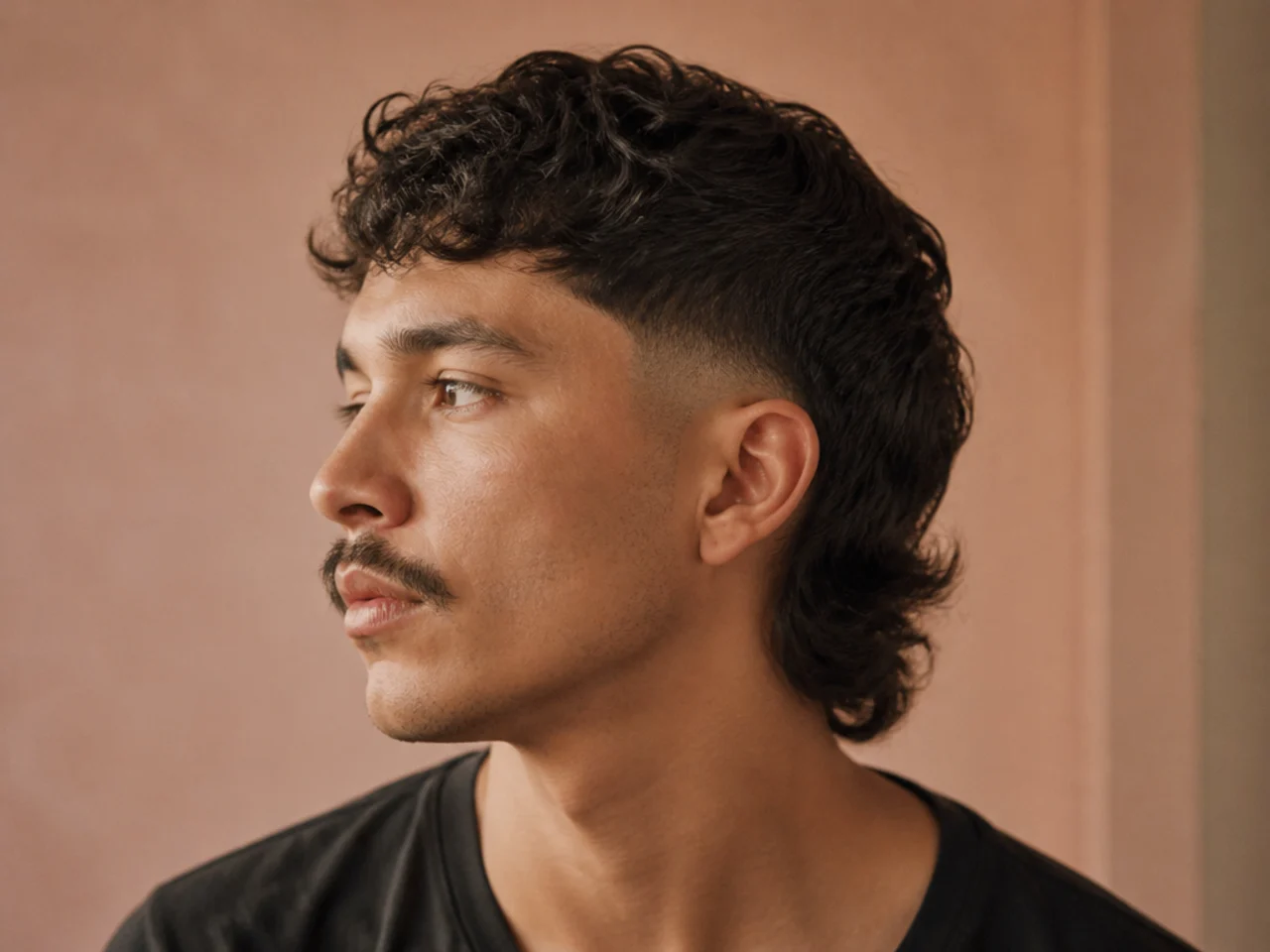
Low fade, anything. A low fade leaves the sides intact, so the face still has width of its own and the mustache is free to be narrow.
Match density to density. A thin mustache under a thick tail looks unfinished, because the eye reads the two as one grooming decision made twice.
Judge it from the front, cut it from the side. The pairing is a front view problem. Barbers work in profile, so ask to see the front before the fade goes any higher.
The 20 Mullet And Mustache Combos
1. Chevron Mustache With a Low Taper Mullet
The chevron spreads to the corners of the mouth and angles down slightly at the ends. Paired with a taper the sides keep length all the way to the neckline, so nothing about the head is narrowed and the mustache does not have to compensate for anything.
2. Horseshoe Mustache With a Skin Fade Mullet
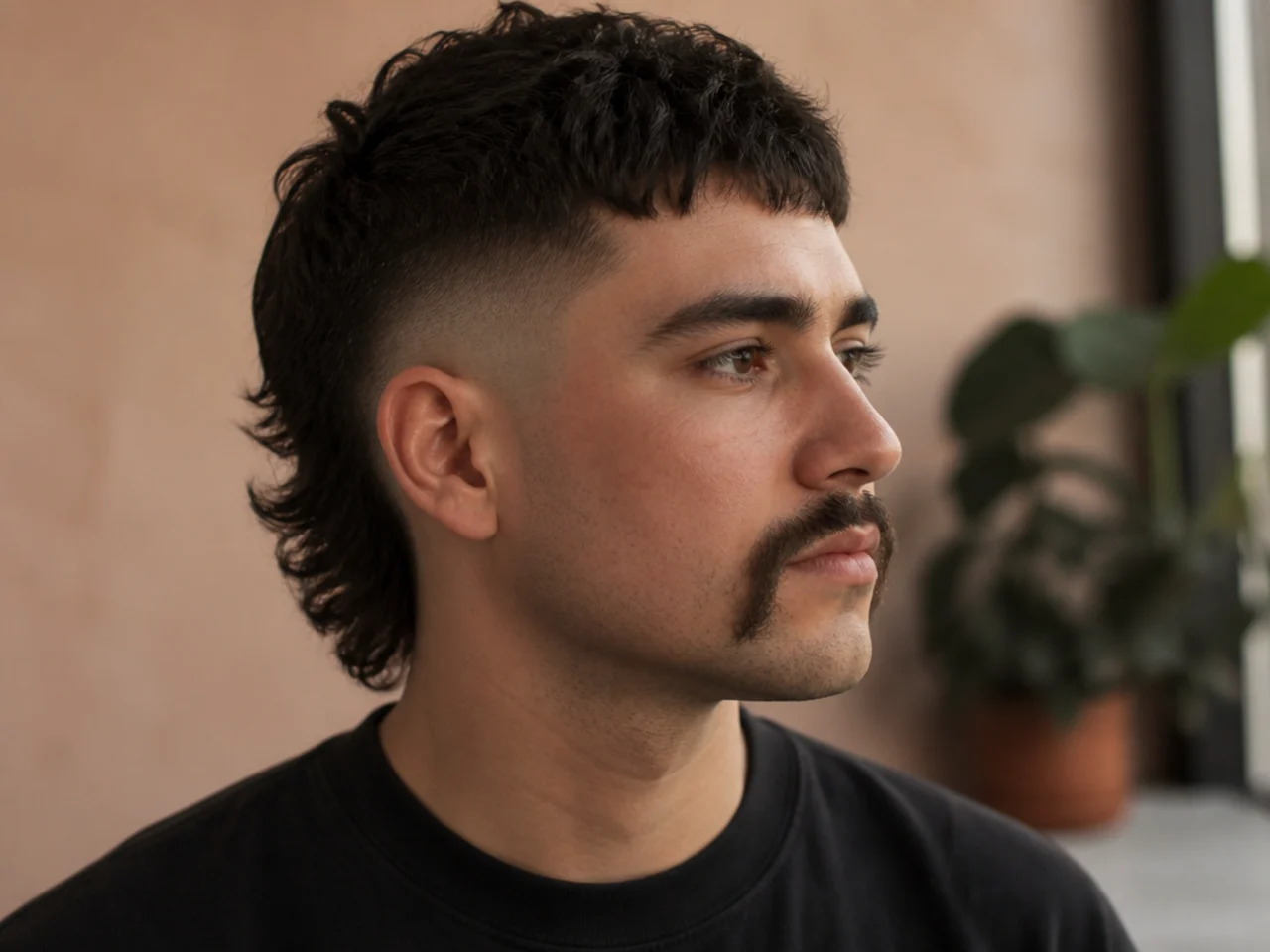
The horseshoe drops two vertical arms from the corners of the mouth toward the jaw. Those arms hang below the narrowest point of a skin fade and rebuild the lower face, which is why this is the pairing that carries the highest fade without looking top heavy.
3. Walrus Mustache With a Long Mullet
A walrus overhangs the top lip and carries real bulk. It answers a long tail because both are decided by volume rather than by line, and a mullet with a short back leaves the walrus as the only heavy thing in the frame.
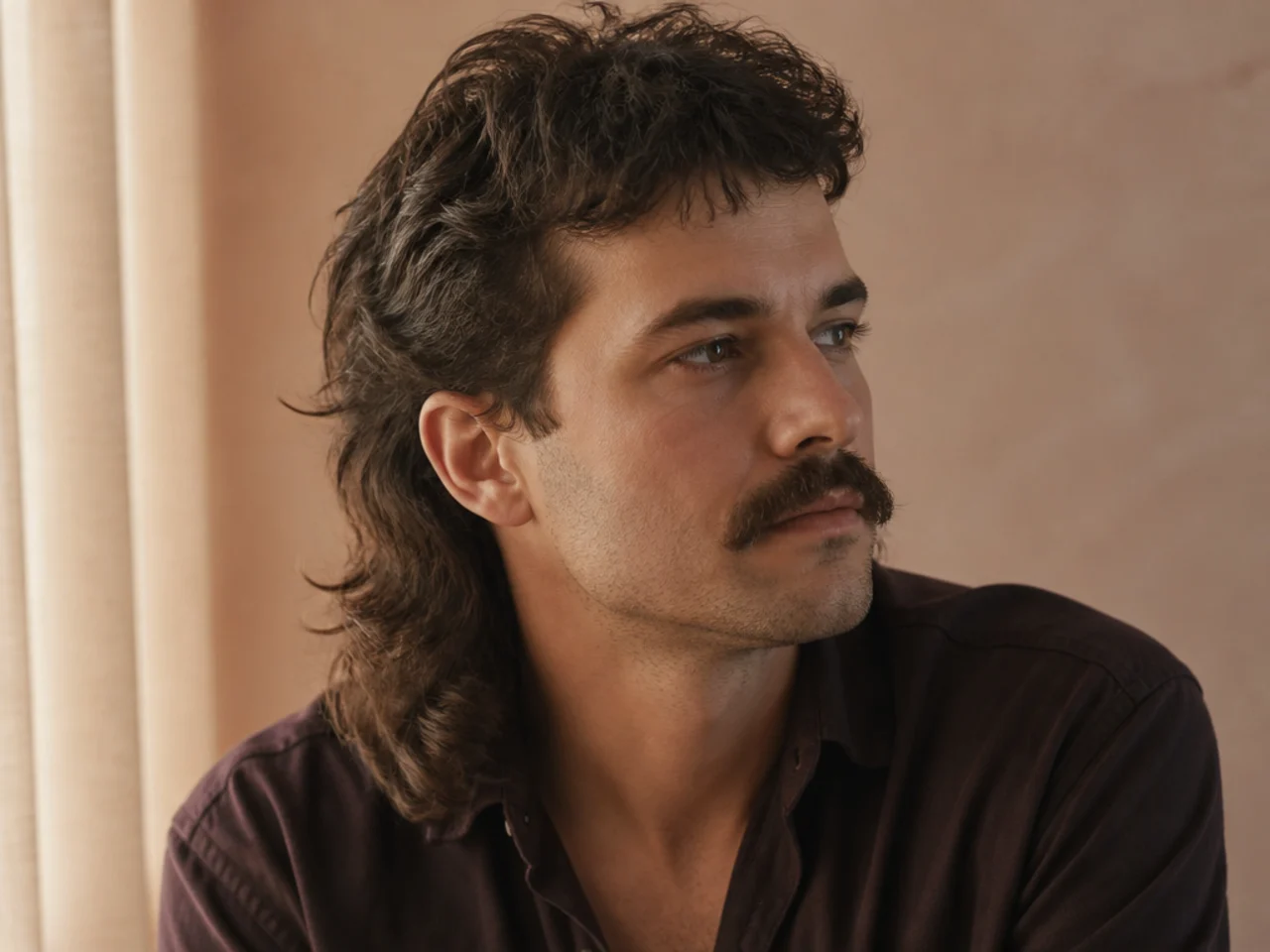
4. Pencil Mustache With a Blunt Mullet
A pencil is a line, not a mass, so it needs a haircut built on lines too. A blunt cut nape and a hard edged fringe give it two other straight edges to belong to, where a shaggy mullet would leave it looking drawn on.
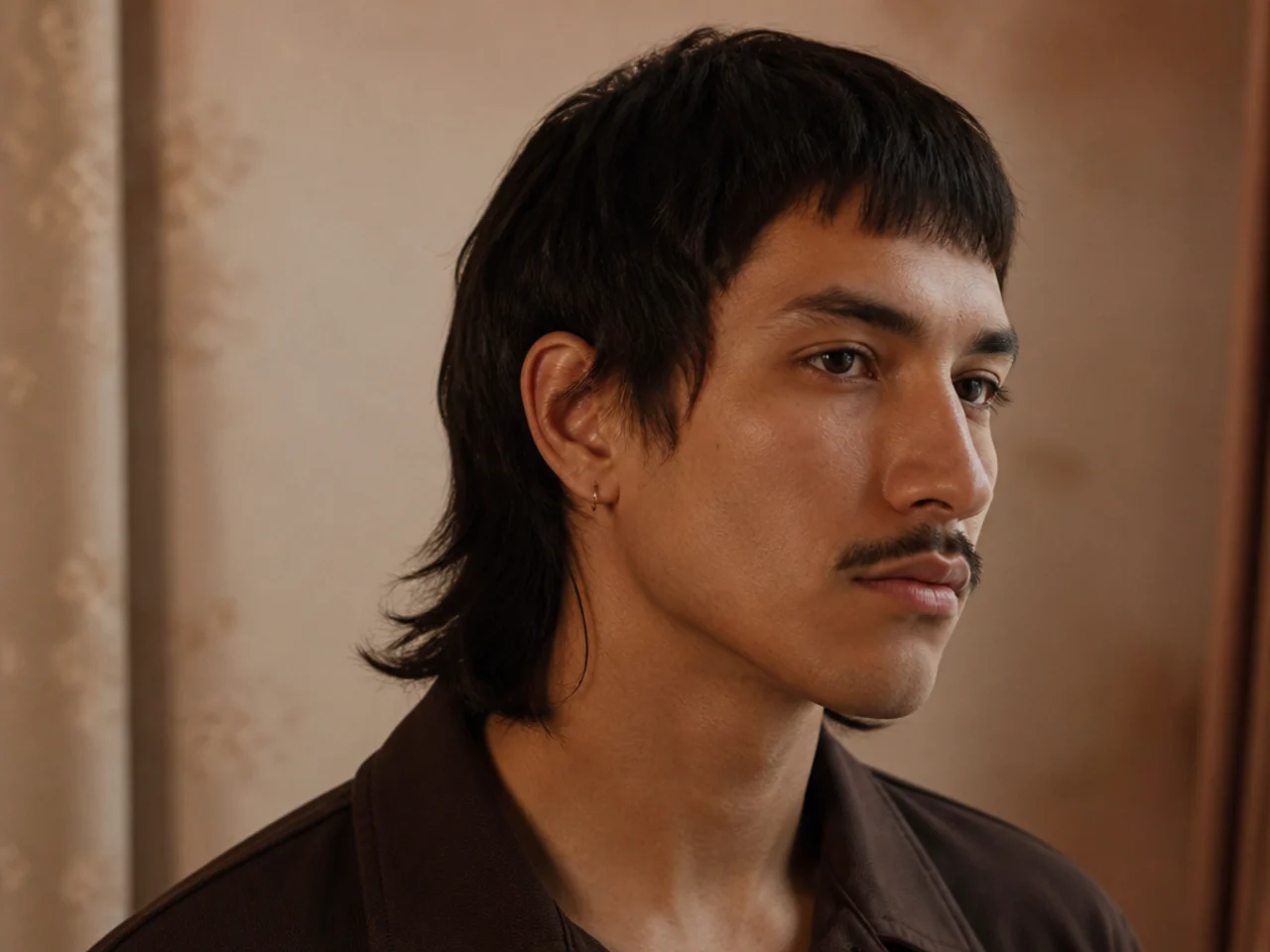
5. Handlebar Mustache With a Mid Fade Mullet
The waxed ends of a handlebar curl upward and outward, which puts the widest point of the face level with the mid fade line. That alignment is what makes the pairing look planned, and it disappears if the fade climbs any higher.
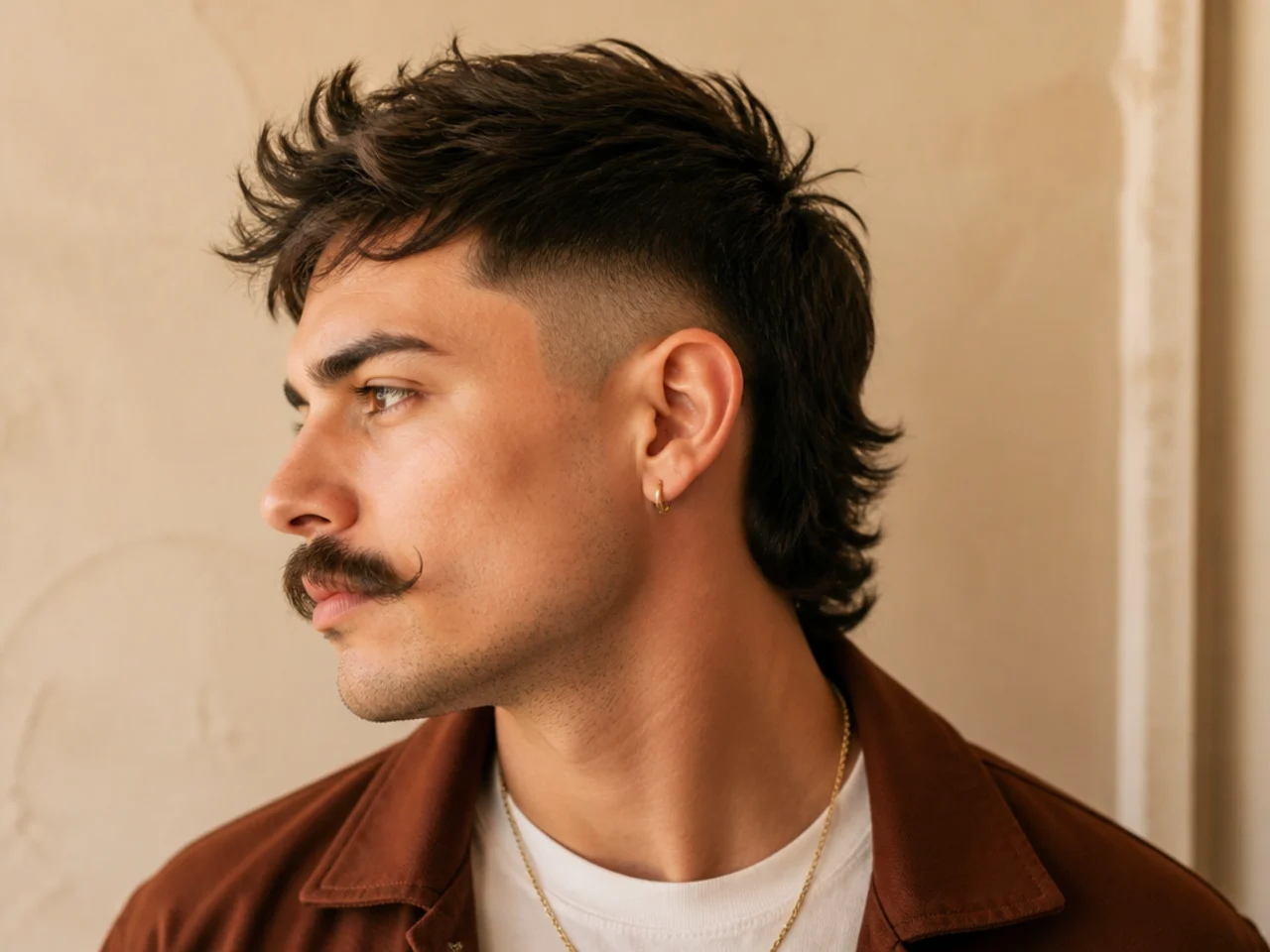
6. Natural Mustache With a Shaggy Mullet
Both left largely uncut, with the mustache trimmed only off the lip line. The look depends on the two growing at the same rate so they stay in proportion, which they roughly do, and it falls apart the moment one gets tidied and the other does not.
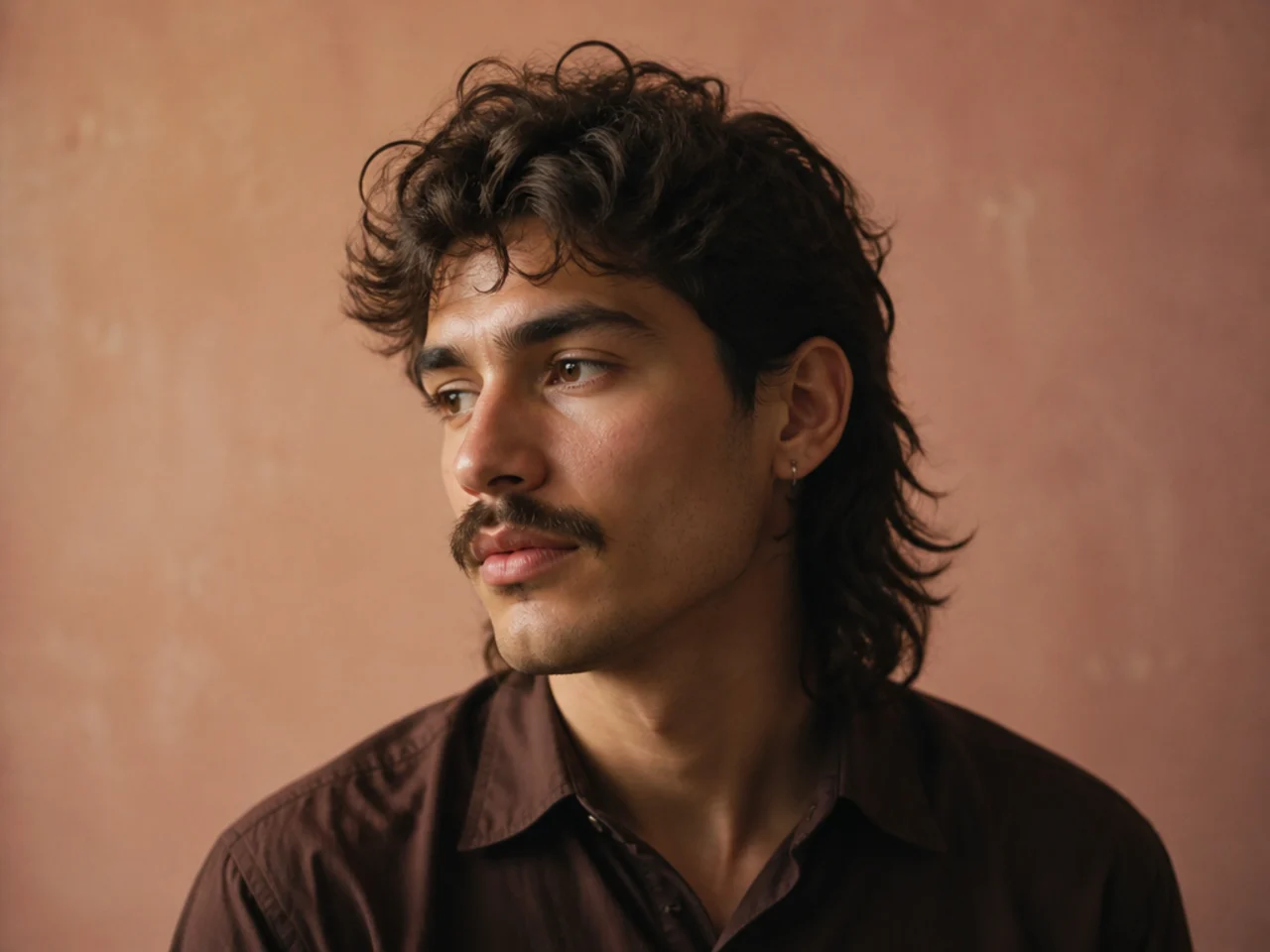
7. Boxed Mustache With a Burst Fade Mullet
A boxed mustache stops at the corners of the mouth with a squared edge. A burst fade arcs around the ear and leaves the back untouched, so both shapes are contained rather than spreading, and the head keeps a tidy outline on both halves.
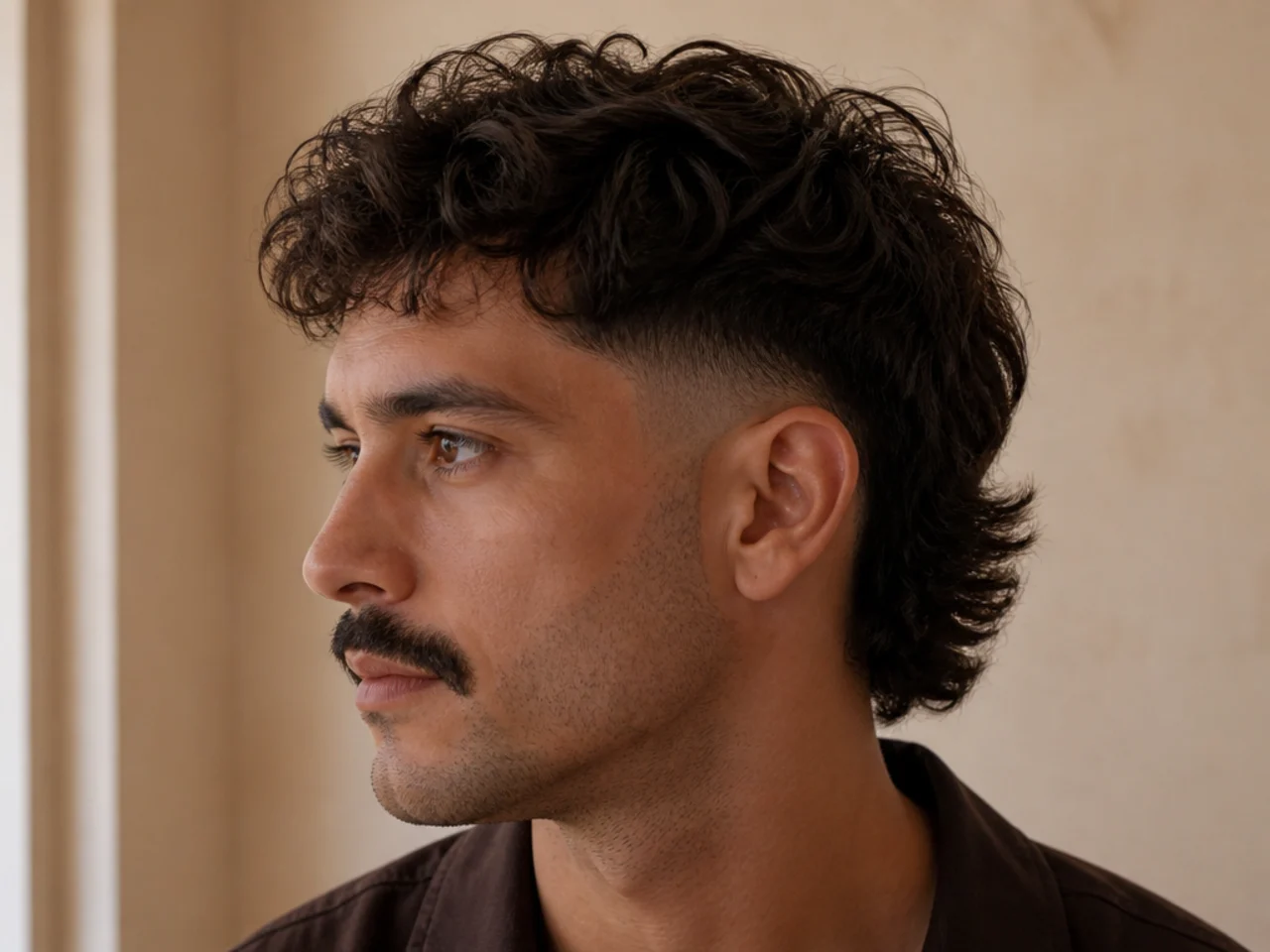
8. Mustache Connected to Stubble
The mustache left full and the rest of the face kept at short stubble. The stubble carries the tone across the jaw without adding bulk, so the mustache still reads as the feature while the face keeps a shadow under a high fade.
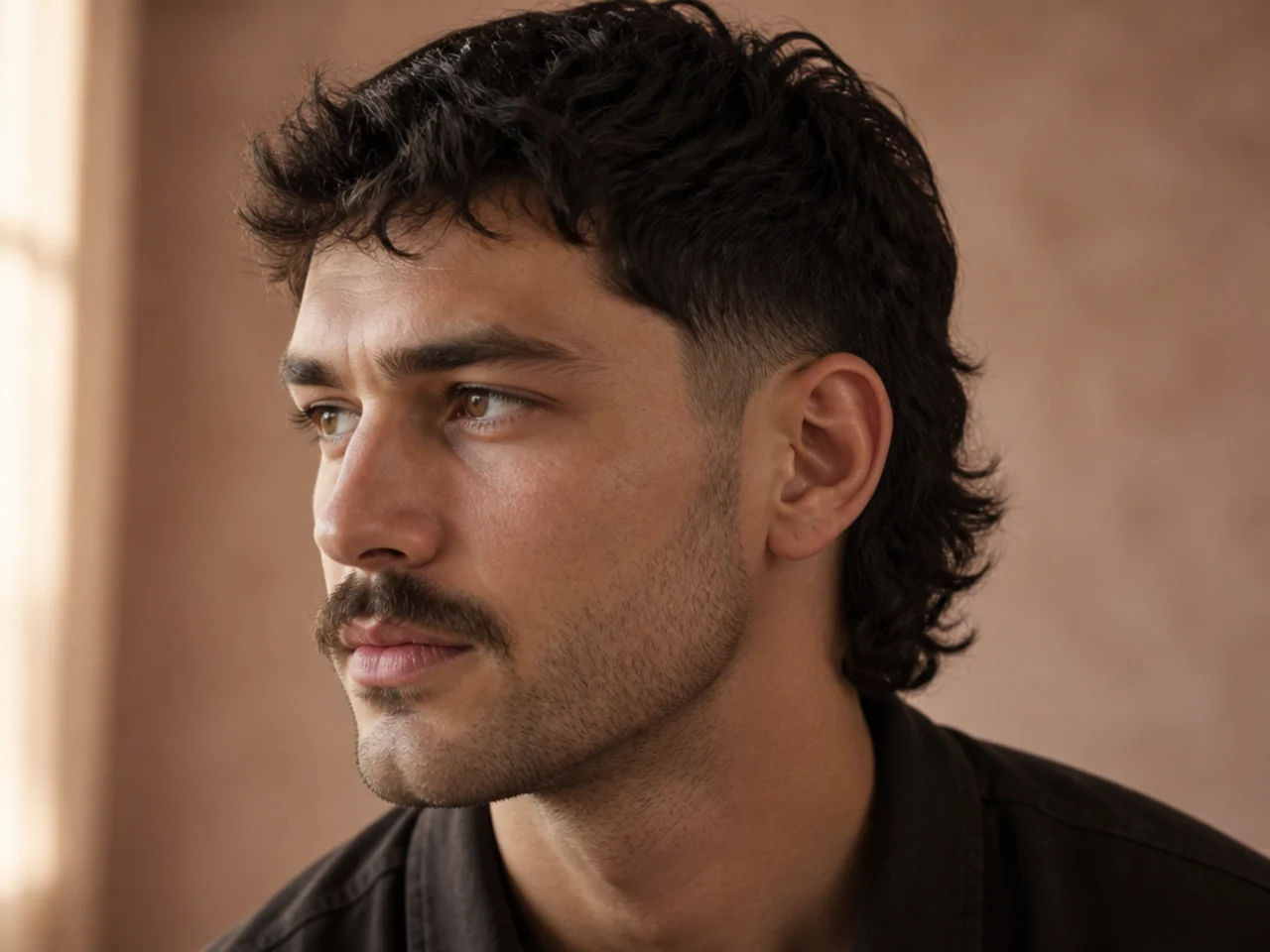
9. Thin Mustache on a Wolf Mullet
A wolf mullet keeps heavy texture through the crown as well as the back. All that visual noise up top means a heavy mustache would be a third busy area, so keeping the lip narrow gives the face one clean line to rest on.
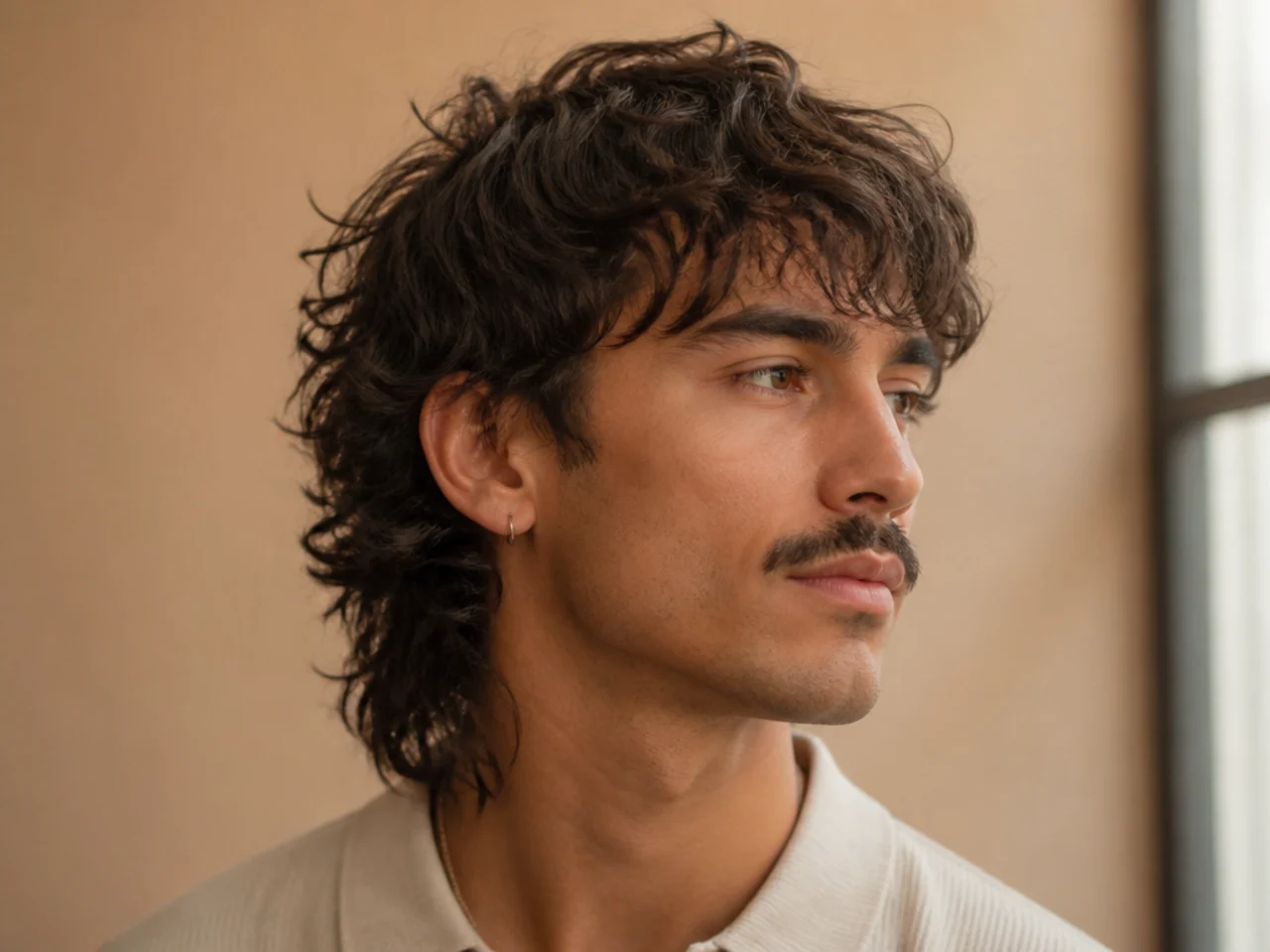
10. Heavy Mustache on a Short Mullet
When the tail is short there is very little weight behind the ear, so the mustache becomes the anchor of the whole look. Letting it grow past the lip line gives the face something substantial to hold, which a short mullet cannot supply on its own.
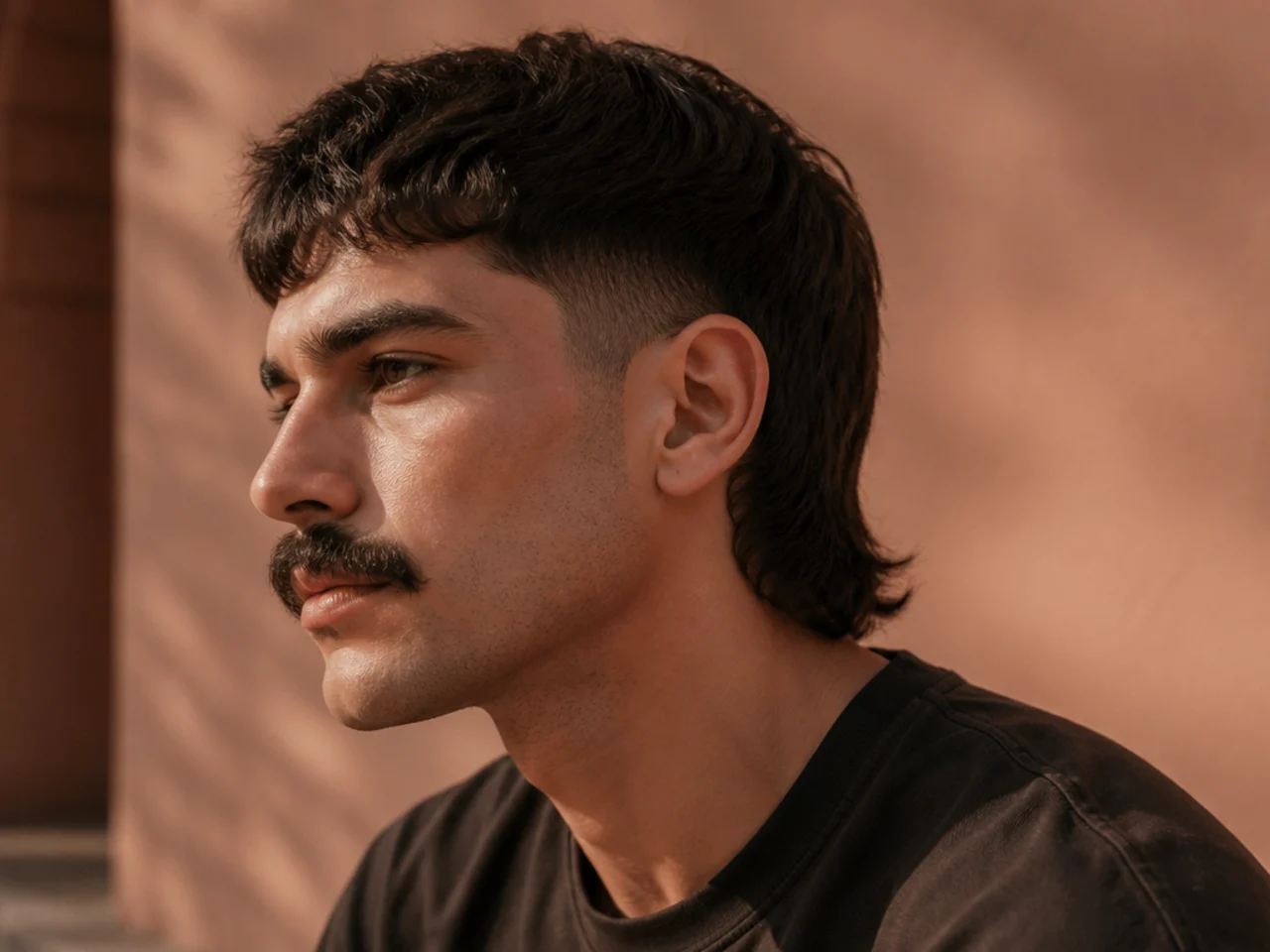
11. Bleached Mullet With a Dark Mustache
Lifting the hair and leaving the mustache at its natural depth creates a tonal split across the face. The eye reads the darkest thing in a picture first, so the mustache stays the focal point even with bright hair above it.

12. Salt and Pepper Mullet With a Grey Mustache
Grey hair scatters light rather than absorbing it, so a grey mustache reads lighter and less wide than a dark one of the same size. Growing it slightly fuller than you would when it was dark restores the width the colour change took away.
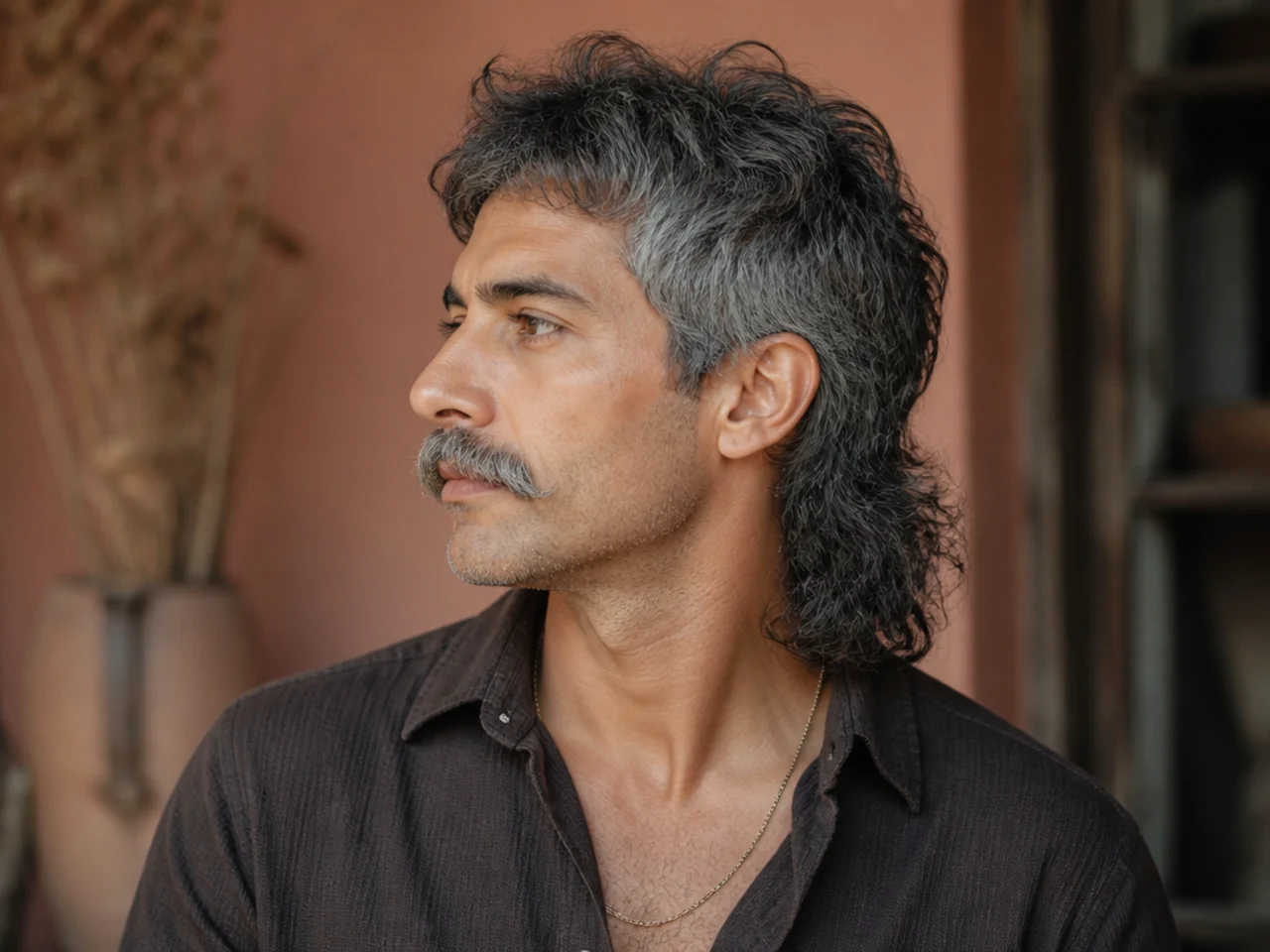
13. Curly Mullet With a Curly Mustache
Curl in the mustache lifts it off the lip and adds depth the way curl in the tail adds depth at the back. Trimming a curly mustache flat fights the texture, so shape it round and let both halves keep the same character.
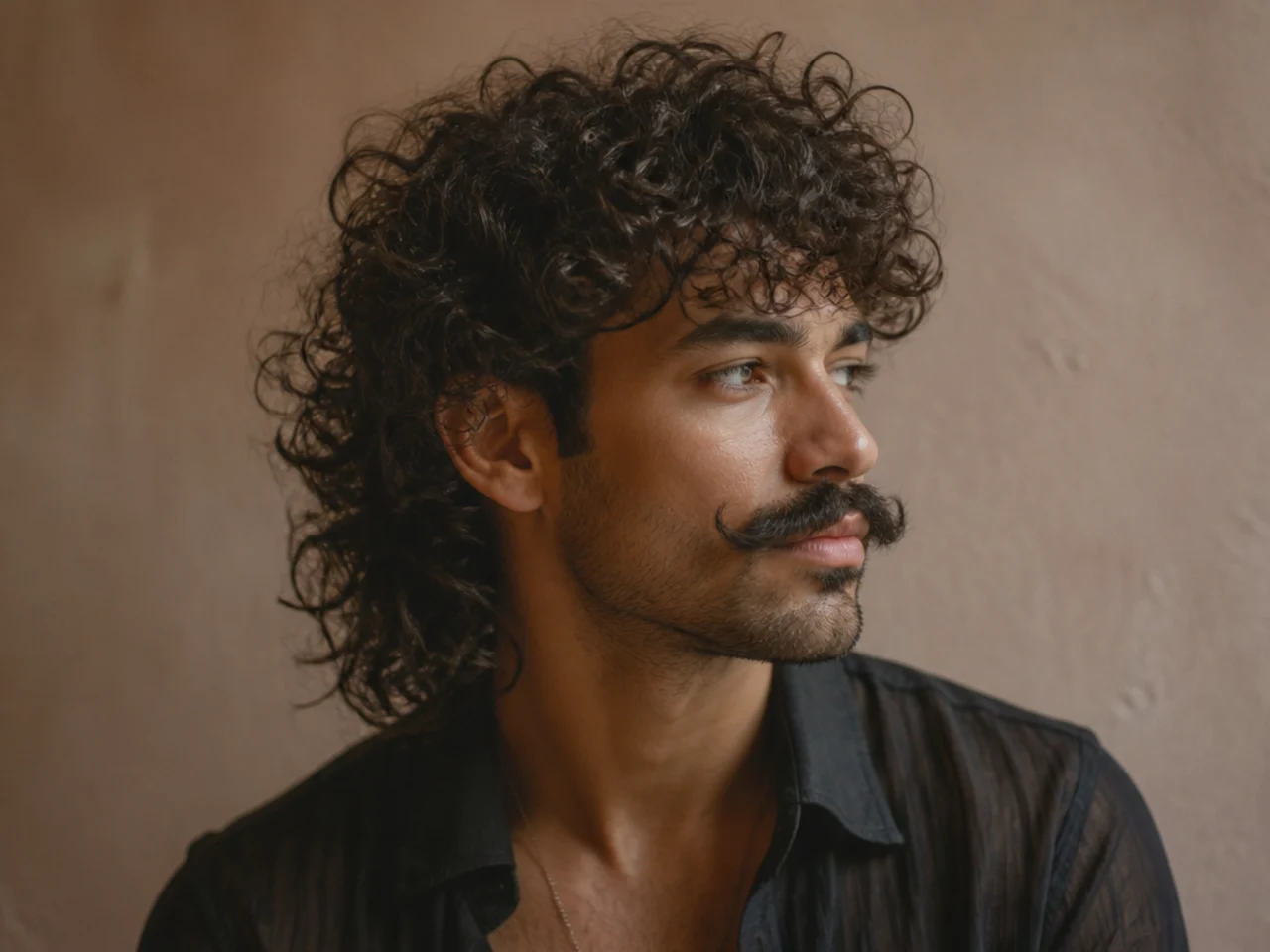
14. Straight Mullet With a Trimmed Mustache
Straight hair falls in a single line and shows every edge, so the mustache has to be cut with the same precision or the mismatch is obvious. Trim the lip line straight and keep both corners level to the millimetre.
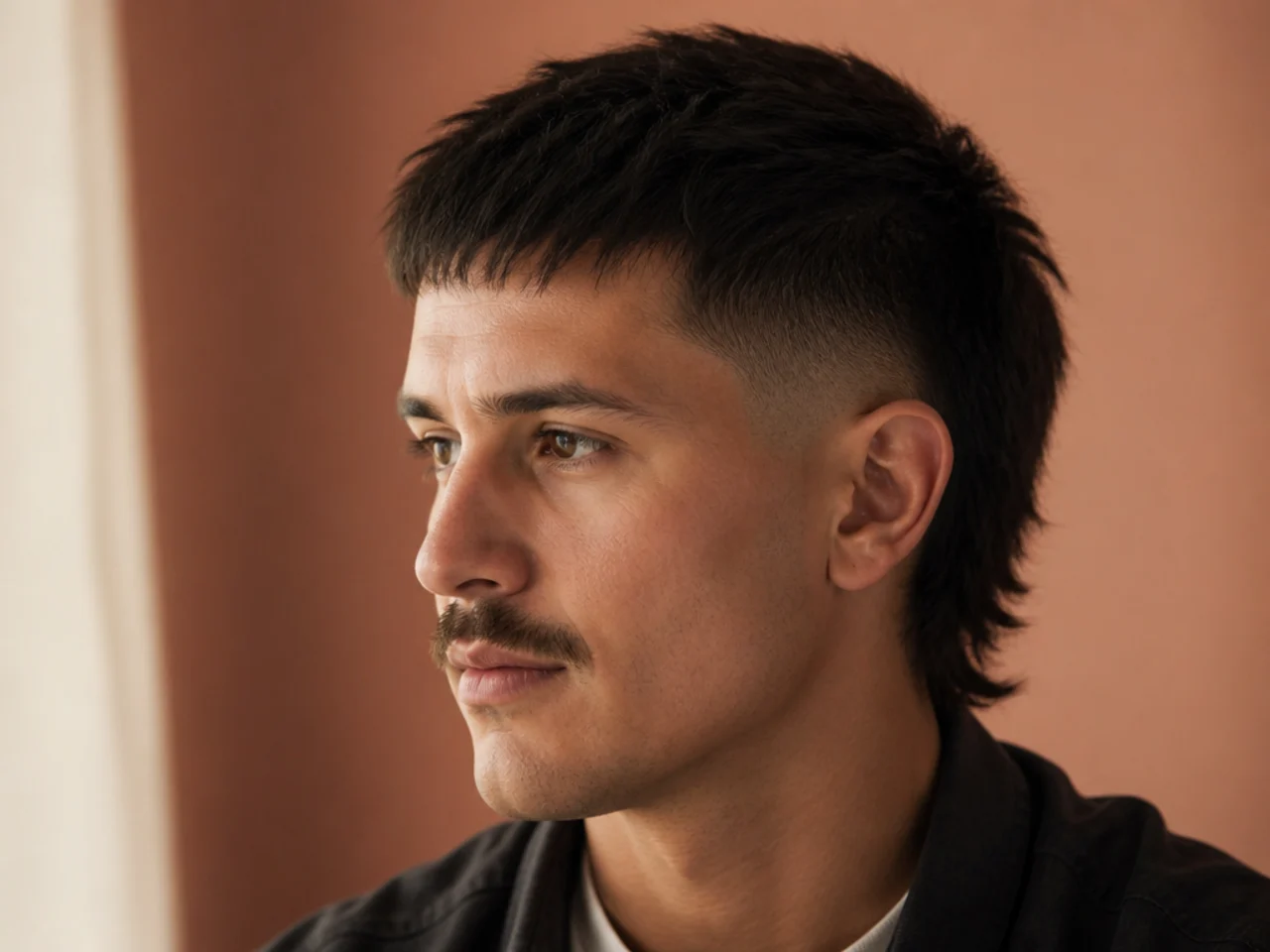
15. Coily Mullet With a Shaped Mustache
Coily hair holds its shape in every direction, which lets the tail sit out from the head rather than hanging down. The mustache should be shaped rather than left to grow, so there is one deliberate line against all that volume.
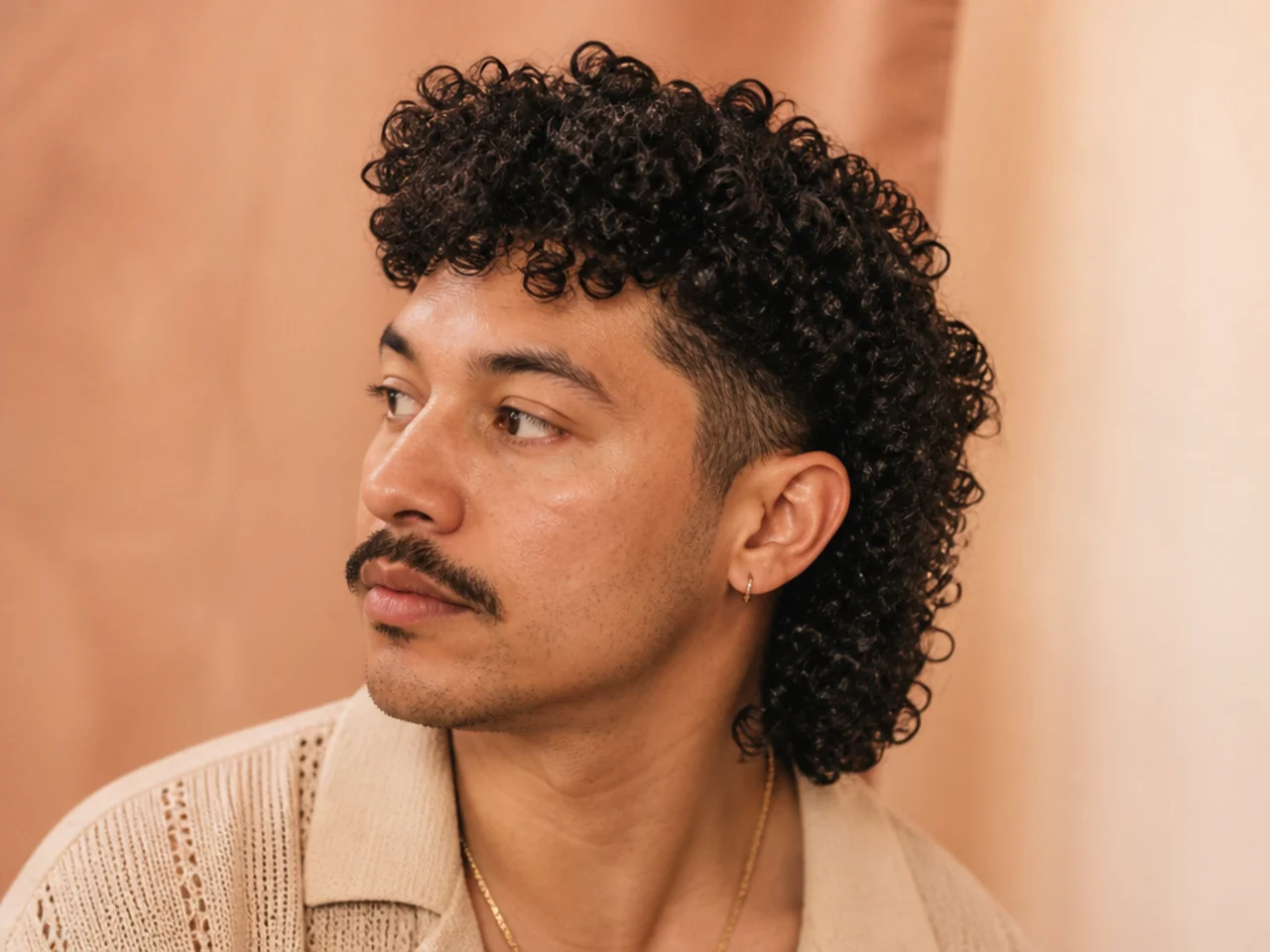
16. Hard Part Mullet With a Sharp Mustache
A hard part is a trimmer line cut along the parting, and it gives the head a vertical against the fade's horizontal. A sharply edged mustache repeats that vertical thinking lower down, so the two lines answer each other instead of competing.
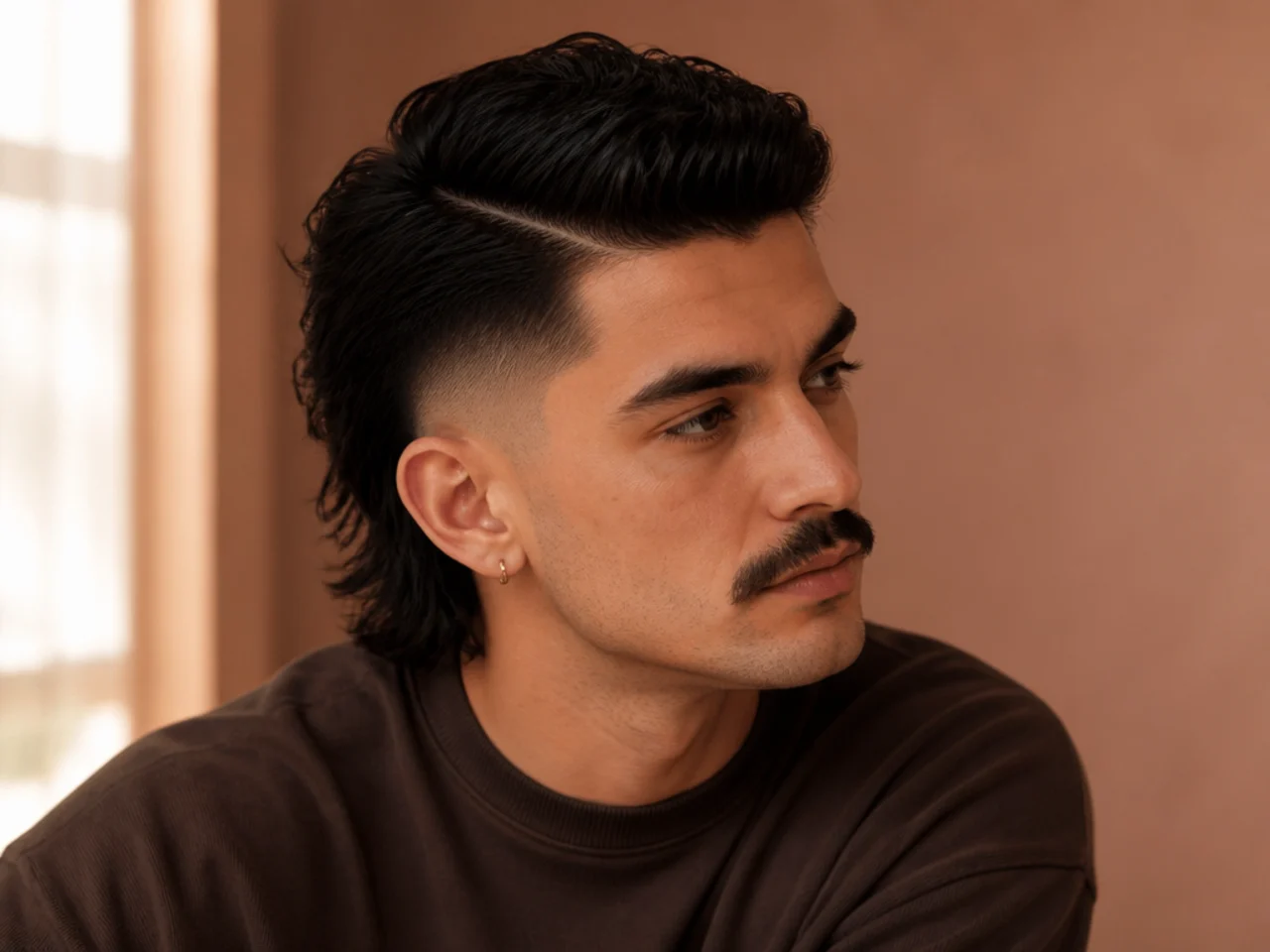
17. Low Fade Mullet With a Wide Mustache
A low fade starts around the top of the ear and leaves the widest part of the head untouched. A wide mustache then lines up under that width rather than exceeding it, which keeps the face rectangular instead of tapering to a point.

18. High Fade Mullet With a Narrow Mustache
The pairing to be careful with. A high fade cuts the width out at the temple and a narrow mustache adds none back, so the face reads long. It works on a wide face and only on a wide face.
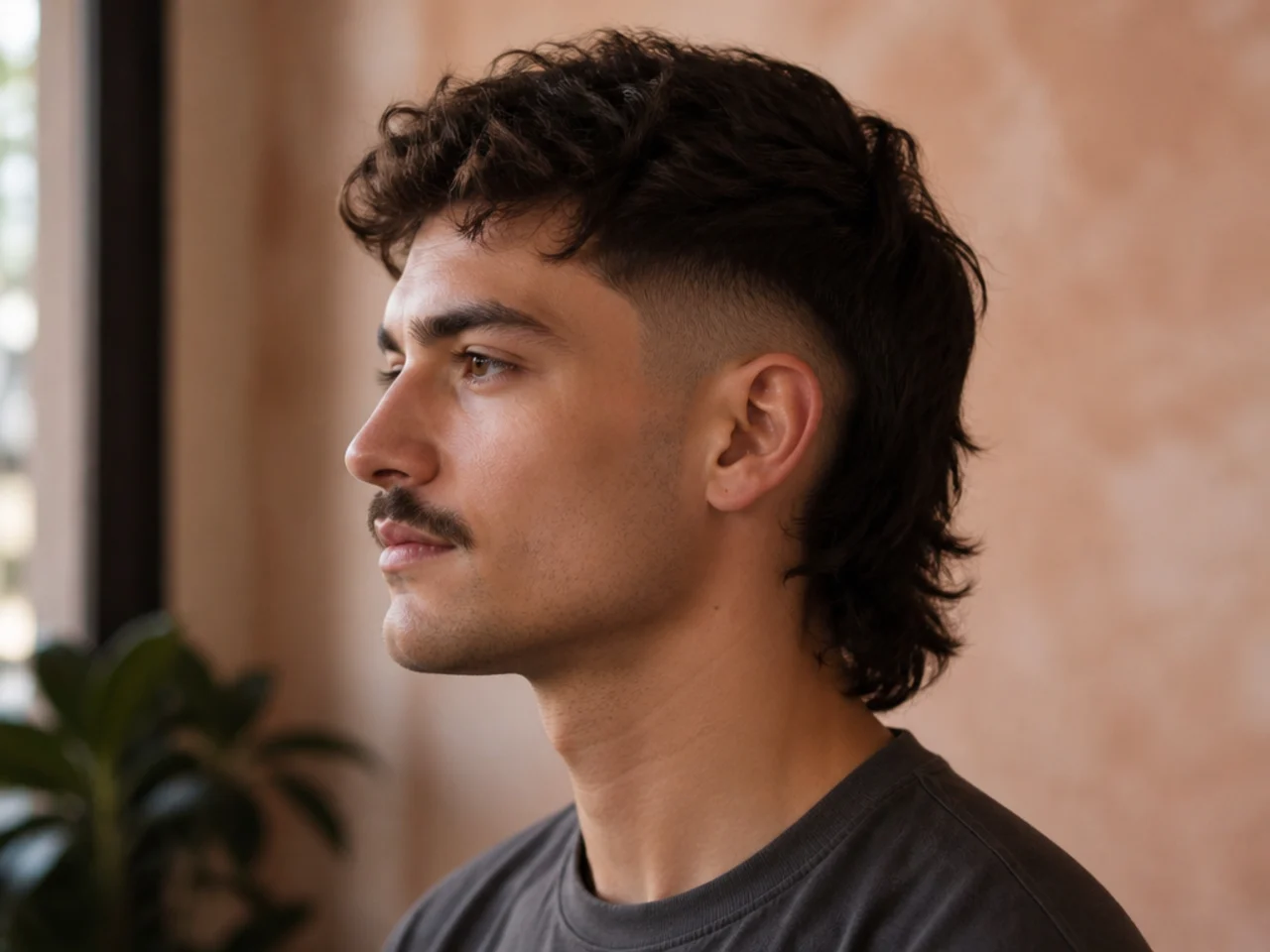
19. Blunt Nape Mullet With a Blunt Mustache
The tail cut straight across the bottom and the mustache cut straight across the lip. Two hard horizontals at opposite ends of the head bracket the face, and the repetition is what makes it look designed rather than merely uncut.
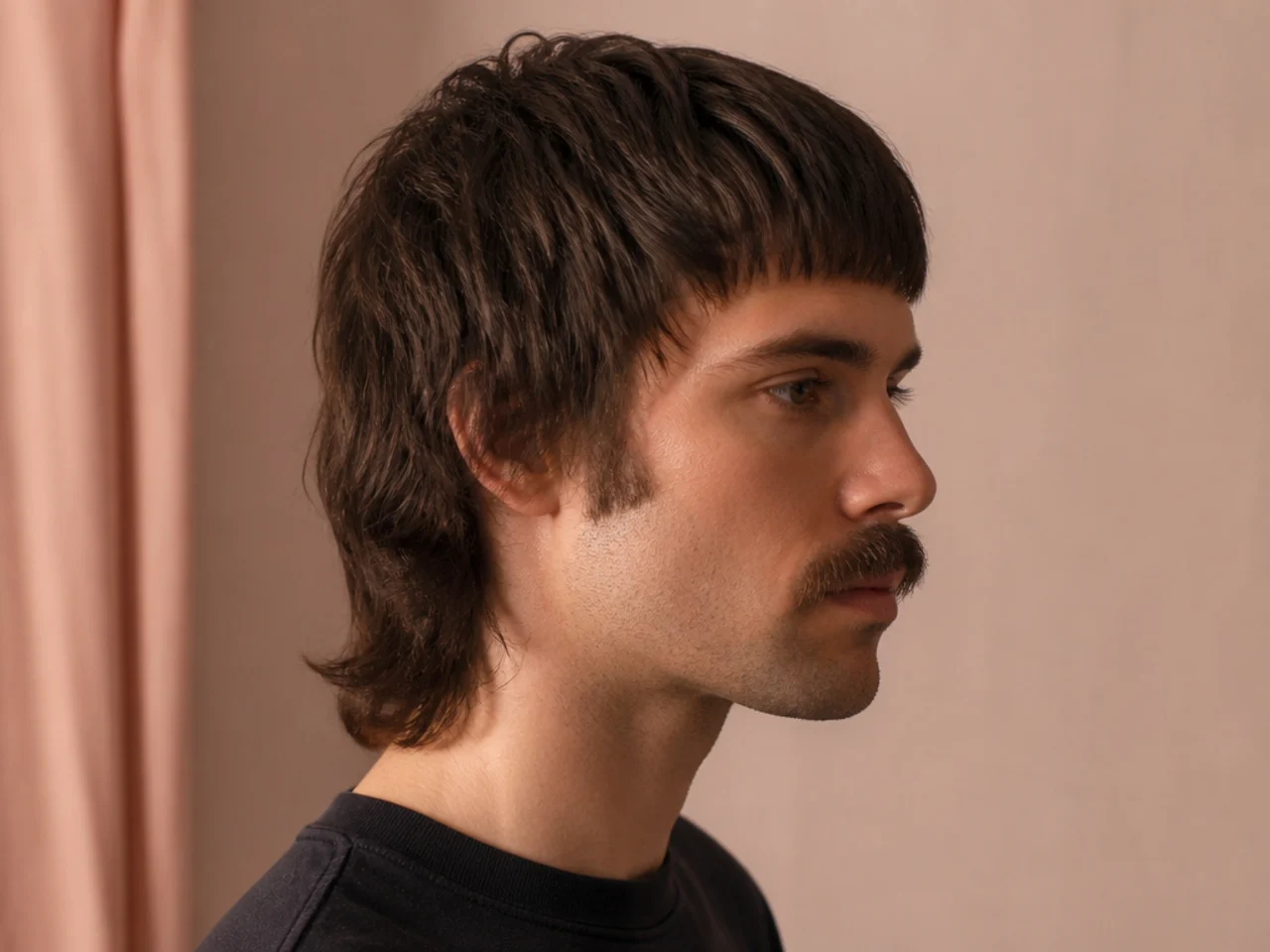
20. Grown Out Mullet With a Grown Out Mustache
Six weeks in the fade has softened and the mustache has crossed the lip line. The fade blurs slowly and stays acceptable, but the mustache reaches the mouth and becomes a daily nuisance, which is why the two need separate trim schedules.
Styling and Upkeep
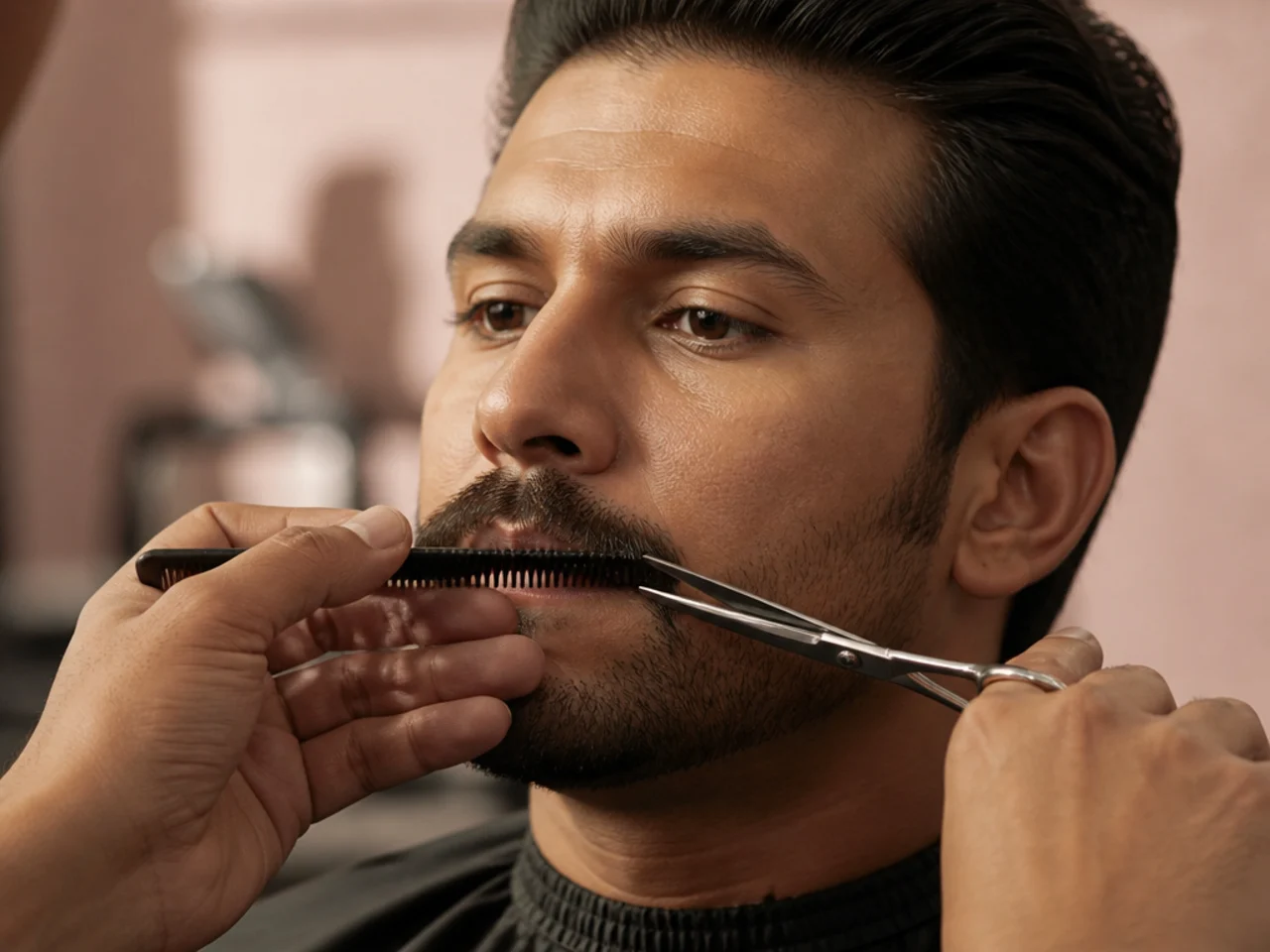
Trim the lip line weekly. It is the edge everyone sees and the first one to go untidy.
Keep the fade and the mustache on separate schedules. Two to three weeks for a skin fade, three to four for a taper, one to two for the mustache.
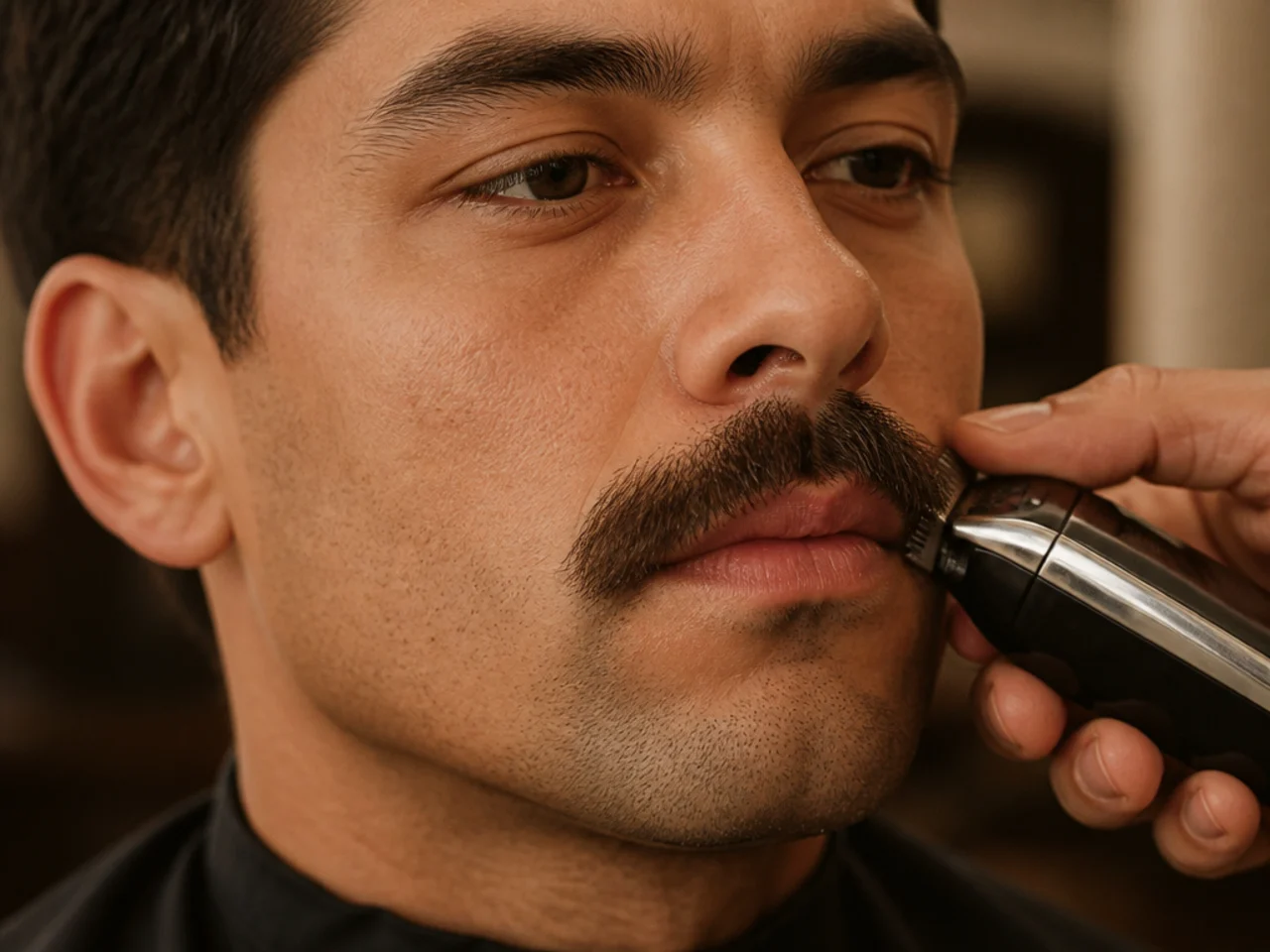
Comb the mustache down before cutting it. Cutting it in its resting direction is the only way the two corners end up level.
Wax only the ends of a handlebar. Wax through the middle flattens it against the lip and loses the width the style exists for.
Wash the tail less than the front. The back is the driest section on the head because scalp oil never travels that far down a long length.
Mistakes to Avoid
A high fade with a narrow mustache on a narrow face. Both remove width from the same face, and nothing puts it back.
Trimming the mustache while it is wet. Facial hair sits shorter wet, so it comes up shorter than intended once it dries.
Letting the mustache cross the lip. Past that line it stops being a shape and starts being an obstruction at every meal.
Matching the mustache to the tail length. They are at opposite ends of the head and never appear in the same view, so scaling one to the other achieves nothing.
Going to skin on the sides without checking the front. The fade is judged in the mirror from the side and lived in from the front, and the front is where the width disappears.
FAQ
Which mustache with a high fade? A wide one, chevron or horseshoe, to give the width back.
Connect it to the beard? Only with a low fade, or the face goes bottom heavy.
How often? Mustache weekly, fade every two to three weeks, tail every six to eight.
Final Thoughts
Decide the fade height and the mustache width in the same conversation. They are one shape seen from the front, and choosing them separately is how people end up with a face that narrows at the temple and stays narrow all the way down.
More combinations, fade heights and grow out timings in Fade Haircuts. See also mullet fade and mullet modern.