20 Mens Mullet Styles For Straight Flat Hair
Twenty mullets for straight hair that lies flat, and the reason most of them fail. Straight hair falls back to where it started within the hour, so the shape has to be cut into the outline rather than styled in every morning.
In this article · 27
- Why Straight Flat Hair Changes the Mullet
- How to Pick Your Version
- The 20 Mullet Styles for Straight Flat Hair
- 1. Blunt Classic Mullet
- 2. Disconnected Mullet
- 3. Tapered Mullet
- 4. Low Fade Mullet
- 5. Mid Fade Mullet
- 6. Burst Fade Mullet
- 7. Mullet With a Hard Part
- 8. Textured Crop Mullet
- 9. Comma Hair Mullet
- 10. Curtain Fringe Mullet
- 11. Blunt Fringe Mullet
- 12. Mullet With an Undercut
- 13. Wolf Cut Mullet
- 14. Rounded Tail Mullet
- 15. Squared Tail Mullet
- 16. Layered Mullet
- 17. Shaggy Mullet
- 18. Long Top Mullet
- 19. Mullet With Full Sideburns
- 20. Mullet at Week Six
- Styling and Upkeep
- Mistakes to Avoid
- FAQ
- Final Thoughts
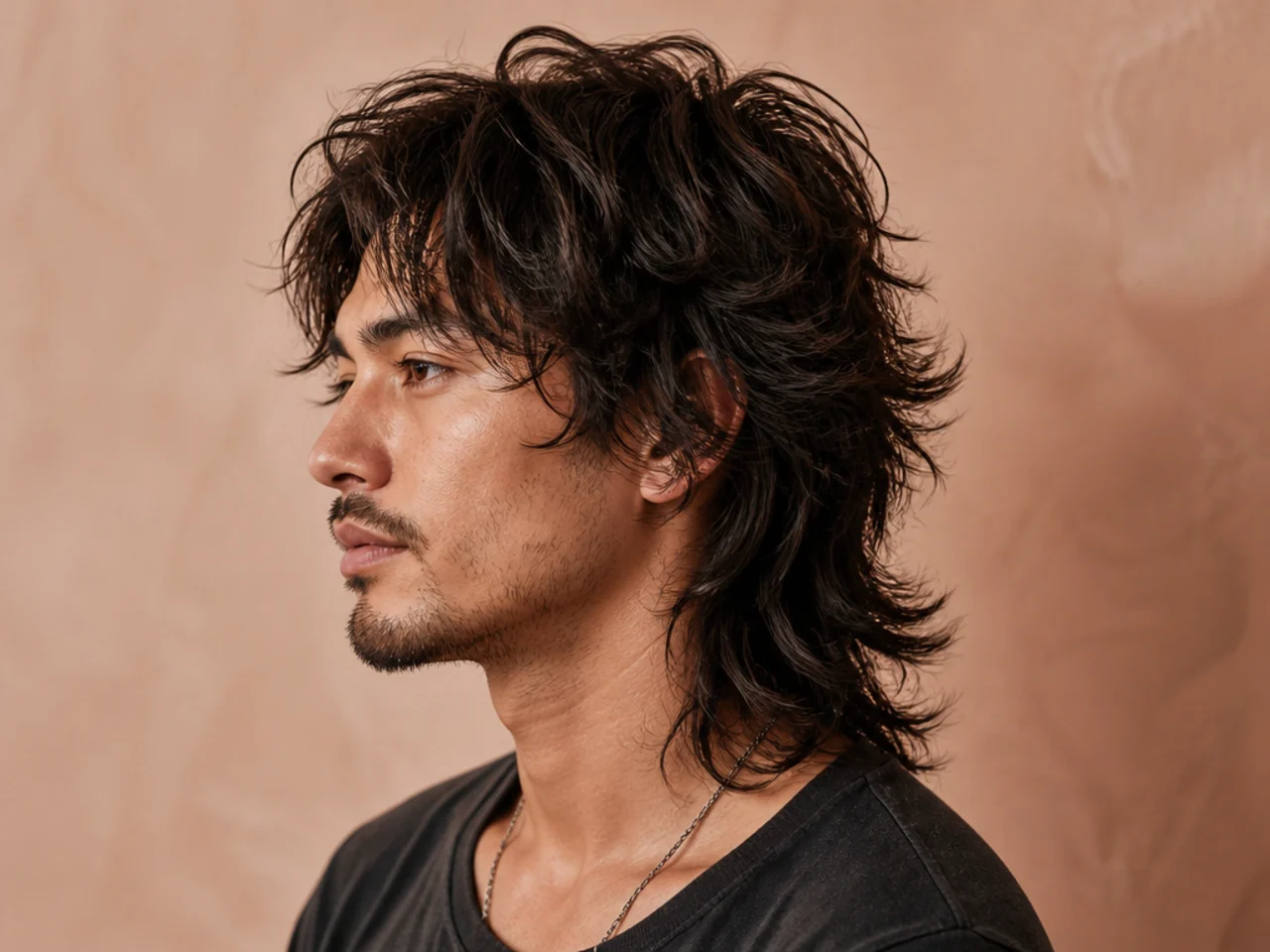
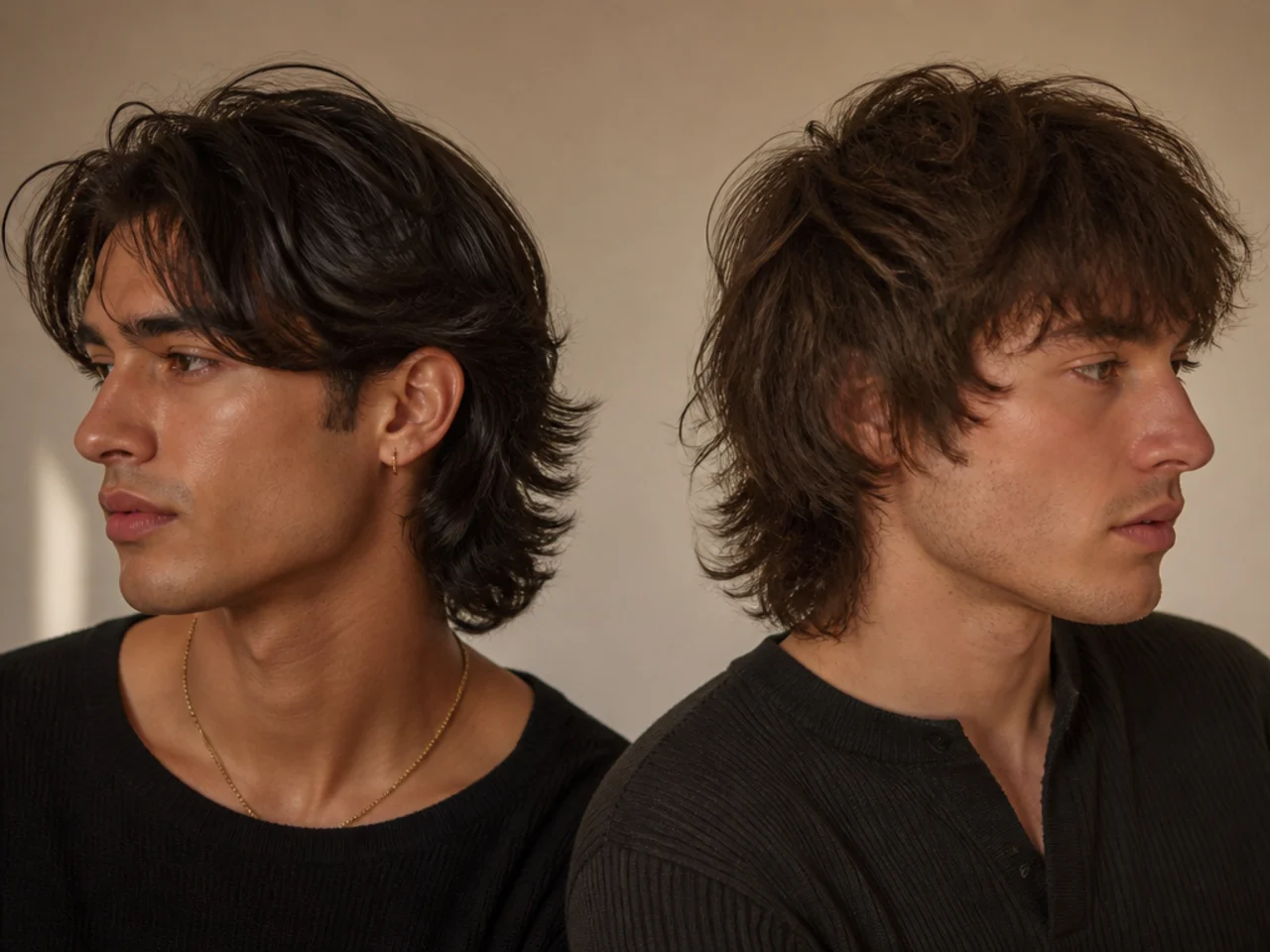
Straight hair that lies flat is the easiest texture to cut a mullet into and the hardest to keep looking like one, because it falls straight back to wherever gravity left it.
The outline is the whole cut. A mullet is a silhouette, not a texture, and straight hair holds a silhouette better than any other type because every strand hangs in the same direction.
Nothing about straight hair supplies volume. Whatever lift the cut needs has to be built in at the chair through length, layering and point cutting, not applied with product afterwards.
Why Straight Flat Hair Changes the Mullet
Straight strands lie parallel and reflect light as one plane. That single flat reflection is what the eye reads as thin, even when the hair is dense.
Every cut line stays visible. There is no bend to scatter light across a step, so a disconnection reads as a hard edge and a rushed fade reads as banding.
The hair returns to its growth direction within an hour. Product buys you the morning, not the day, so the shape has to survive the hair falling back to neutral.
Flat hair makes contrast do the work. Since texture cannot create interest, the ratio between the shortest side and the longest tail is the variable that decides how strong the cut looks.
How to Pick Your Version
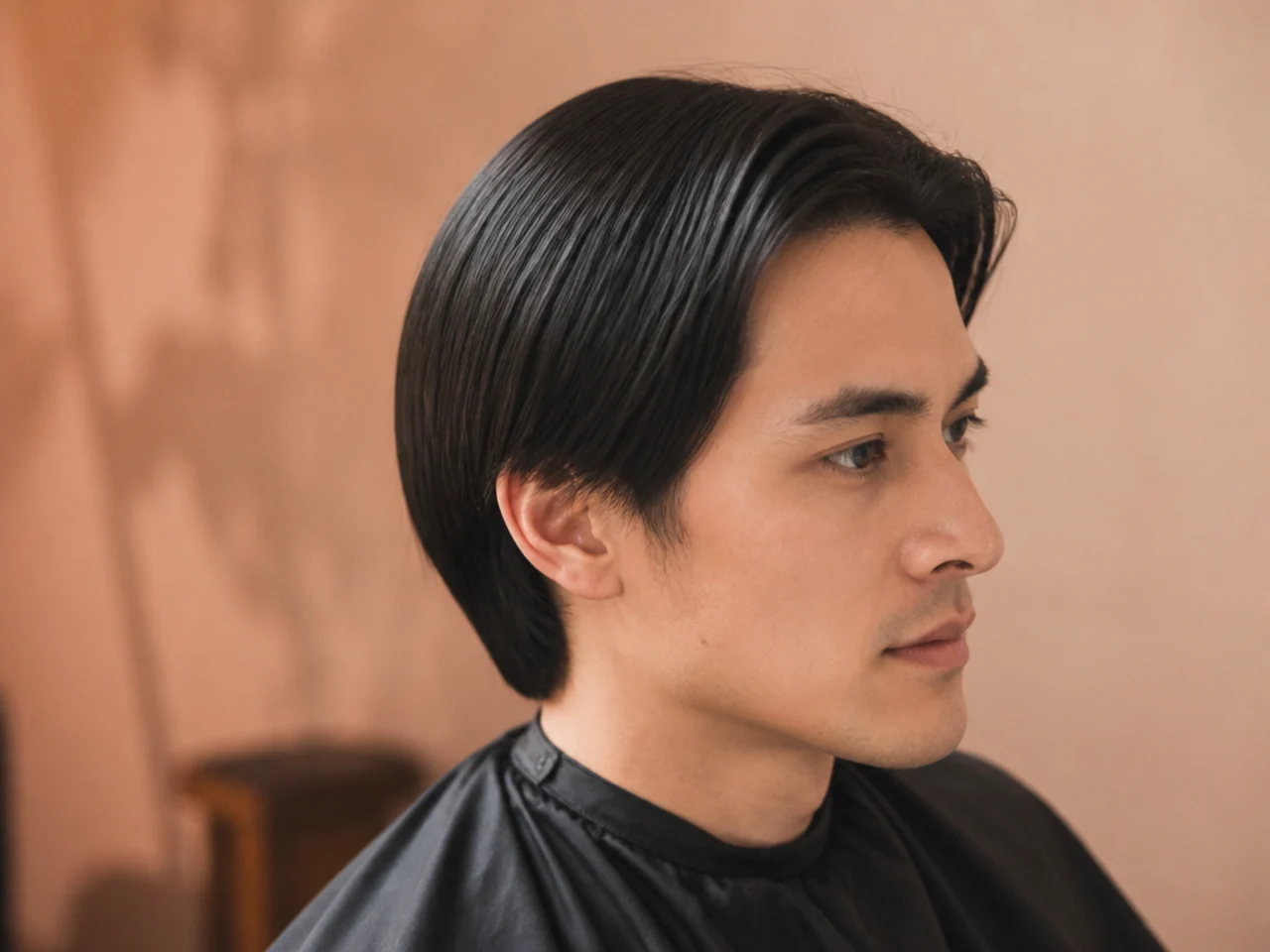
Choose the side finish first. A taper leaves hair at the bottom, usually a number one at three millimetres. A fade goes to bare skin. They are different cuts, not different words for one.
Match the finish to your trim schedule. A taper still reads correctly at three to four weeks. A skin fade blurs inside one to two, because bare scalp turns into visible stubble far faster than three millimetres softens.
Set the tail length by your collar. A tail finishing above the collar reads as a modern cut, one below it reads as a classic. Straight hair sits exactly where it is cut, so this is a precise decision.
Ask for the top to be textured, not thinned. Point cutting staggers the ends. Thinning shears remove bulk from the middle of the section, which on flat hair leaves the top lying even closer to the scalp. More on that in short straight mens haircuts.
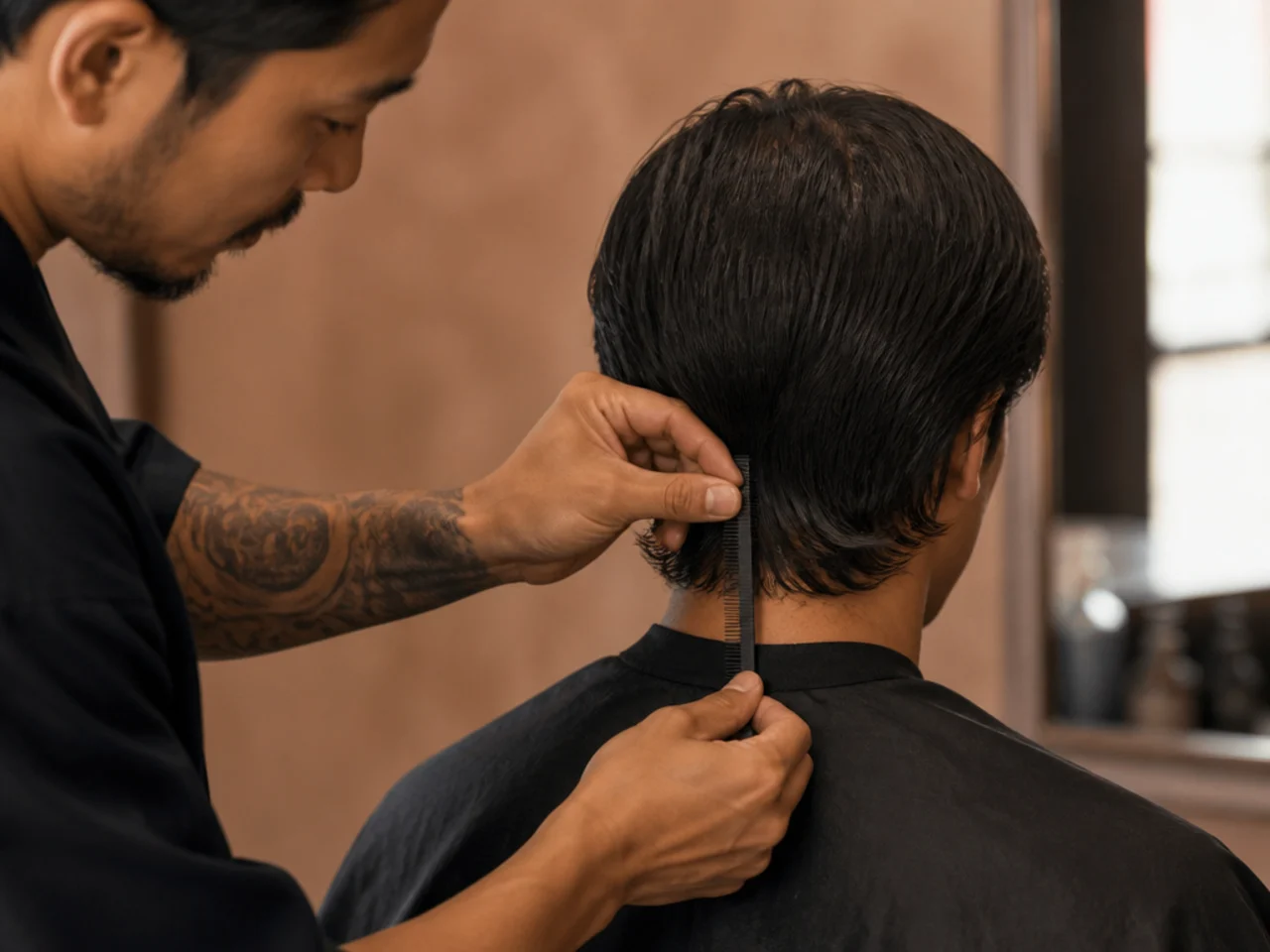
The 20 Mullet Styles for Straight Flat Hair
1. Blunt Classic Mullet
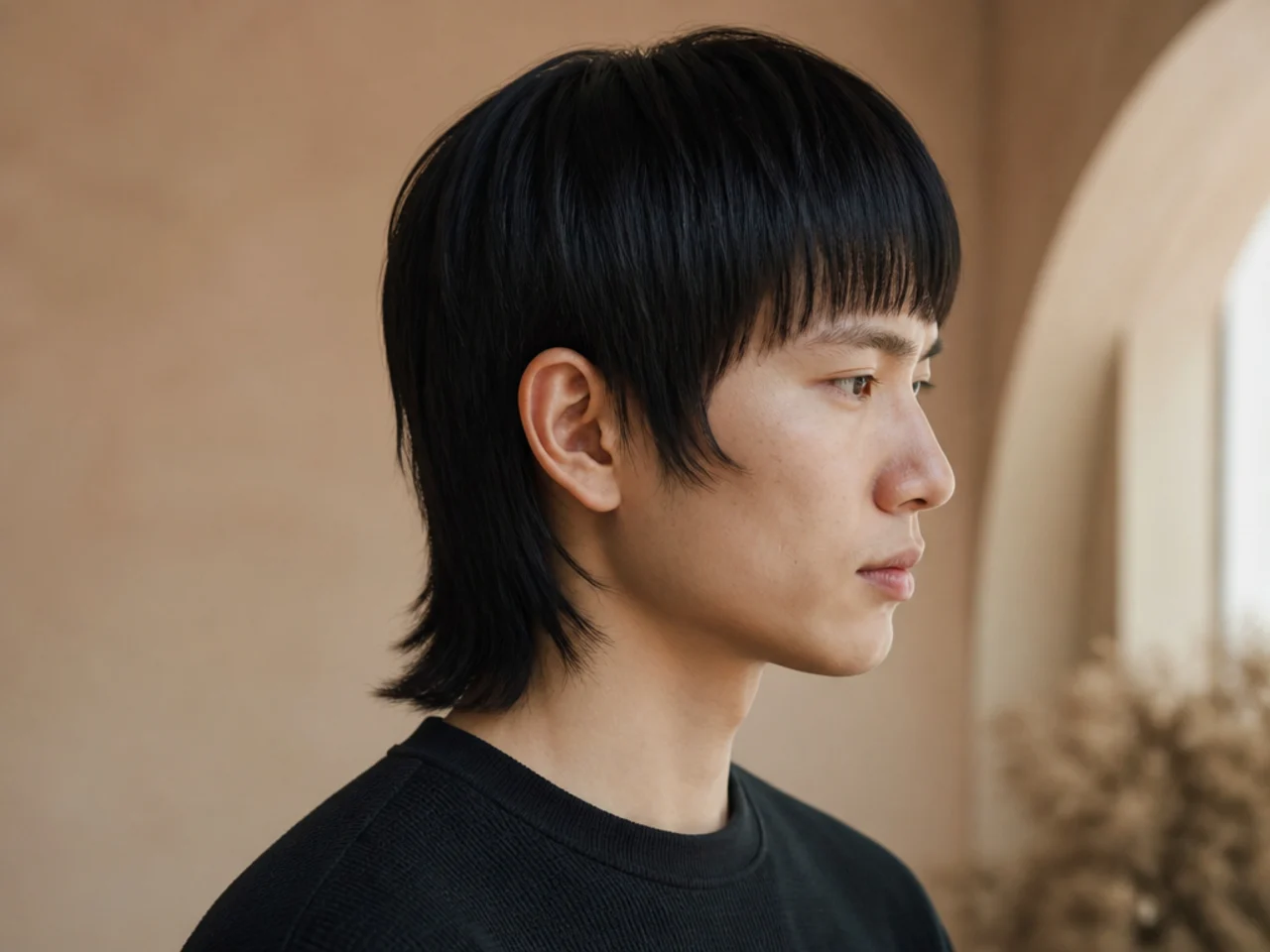
The tail cut straight across in one solid line. On straight hair a blunt edge is the only edge that stays readable, because parallel strands all reach the same point and the line holds. A graduated edge on the same head collapses into a scatter of loose ends.
2. Disconnected Mullet
Top and sides cut as two separate lengths with no blend between them. Straight hair shows that step cleanly, which is the point, but it also exposes scalp along the line, so the top section has to be long enough to fall over the edge and cover it.
3. Tapered Mullet
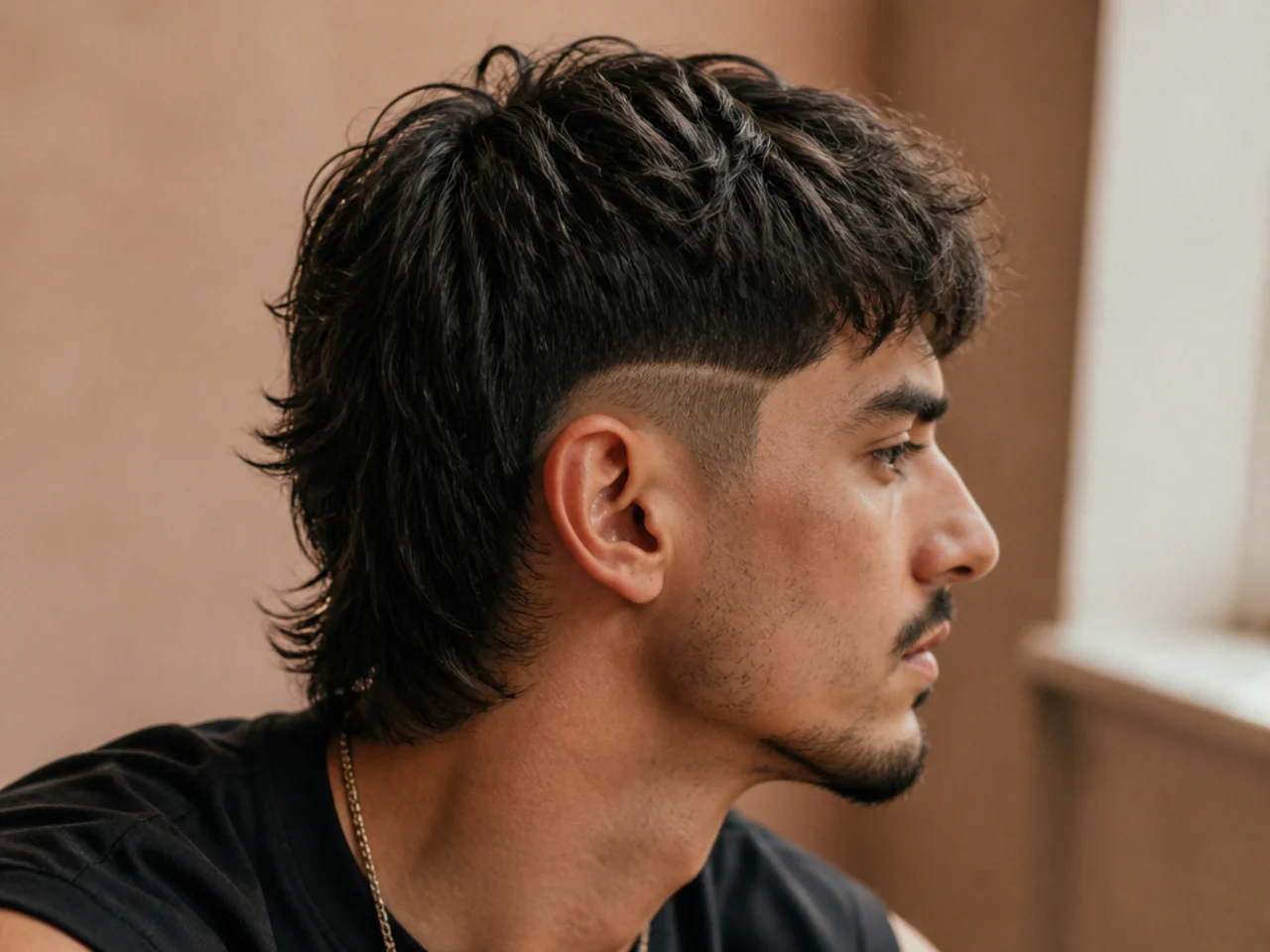
The sides shortened gradually and finished at a number one, leaving three millimetres rather than skin. That remaining length keeps the contrast moderate and buys time, since a taper still reads as the cut you asked for at three to four weeks. The wider family is covered in the mens mullet guide.
4. Low Fade Mullet
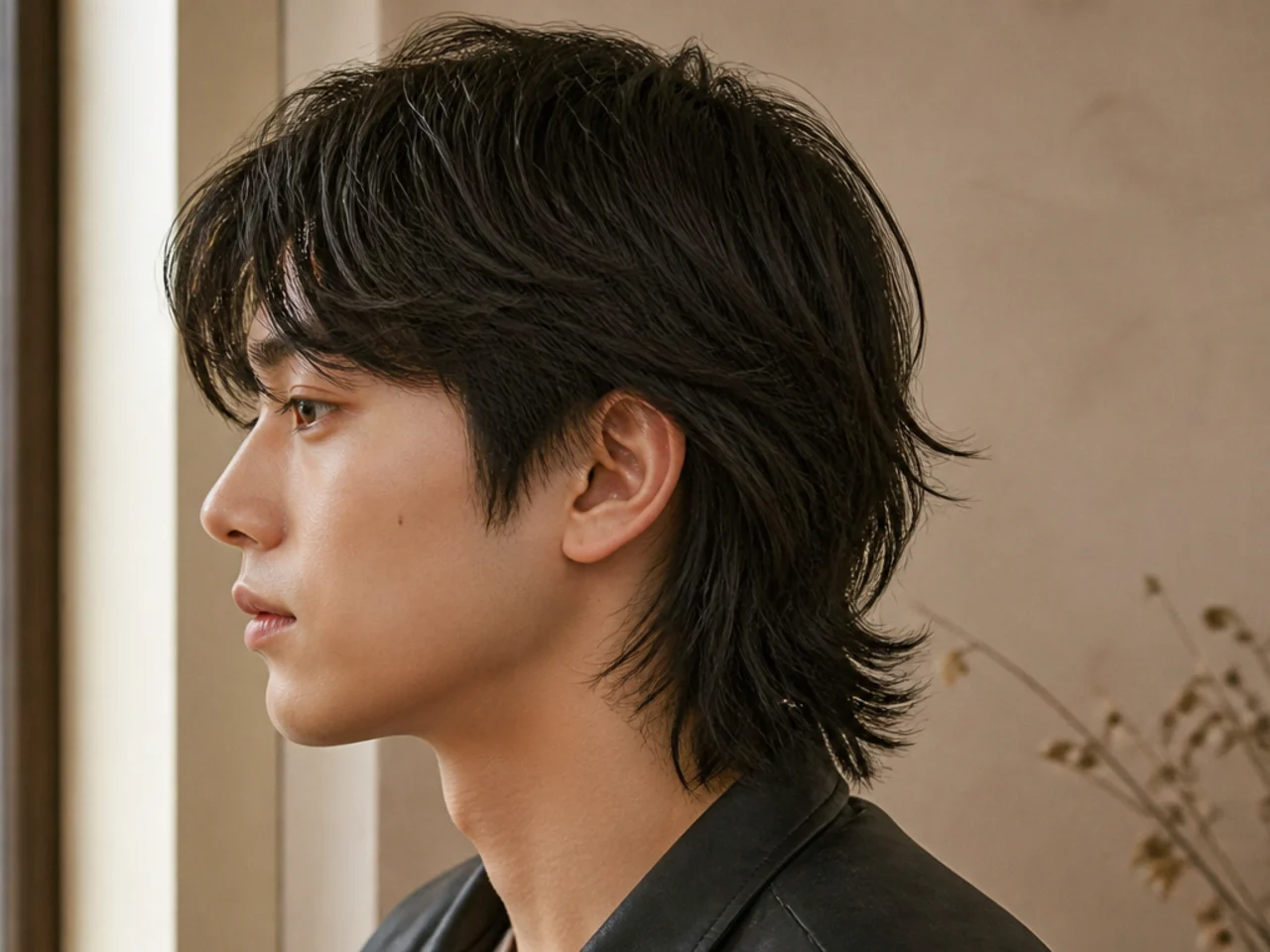
The fade starts at the top of the ear and runs to skin at the bottom. Putting the highest contrast low on the head pushes visual weight upward, which is a genuine help on a flat top. The cost is regrowth showing within one to two weeks.
5. Mid Fade Mullet
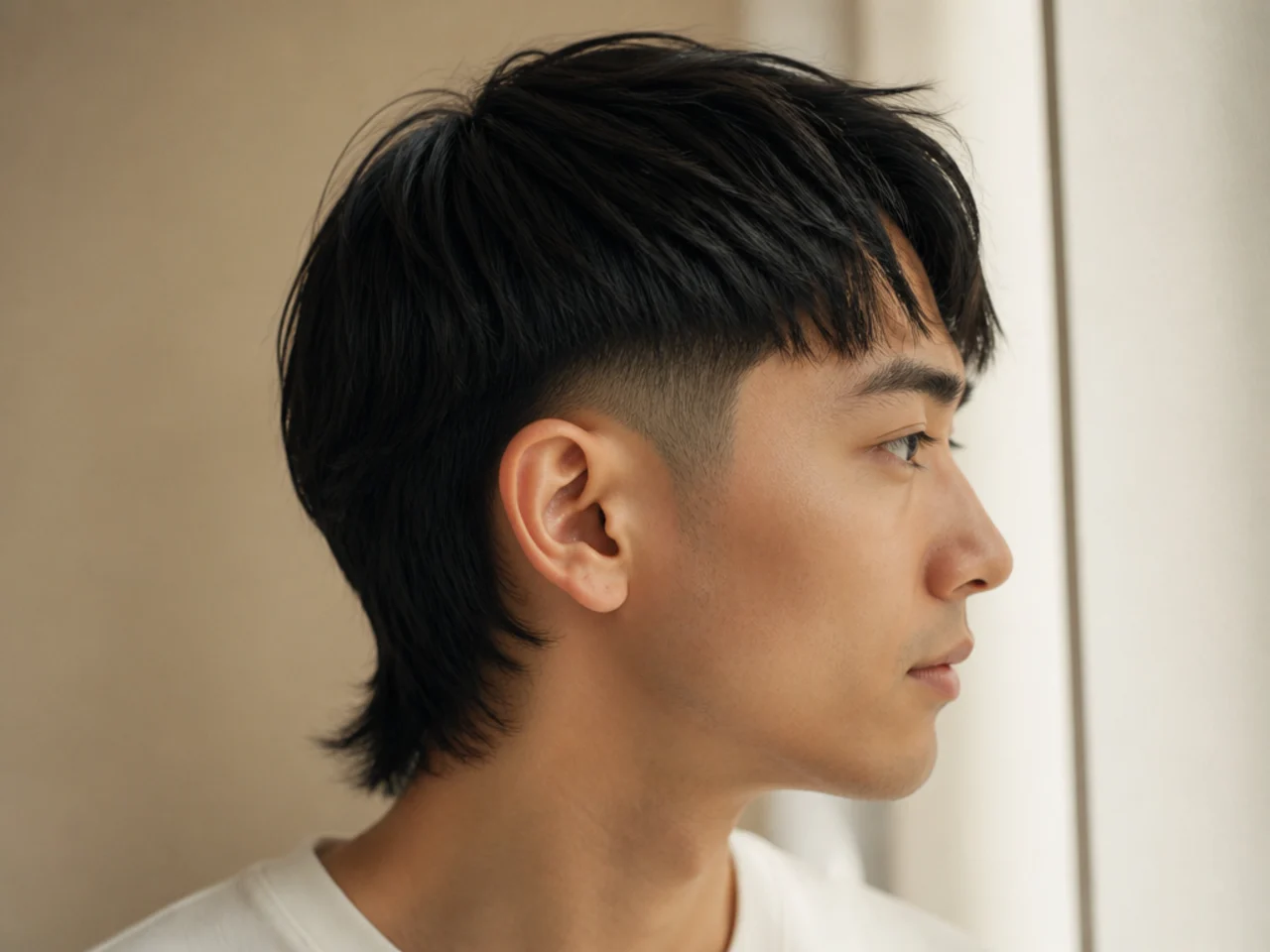
The line starts around the temple, so the gradient has further to travel and needs more passes to stay smooth. Straight hair is the least forgiving texture for this, because there is no bend to scatter light and an unblended pass reads as a visible band.
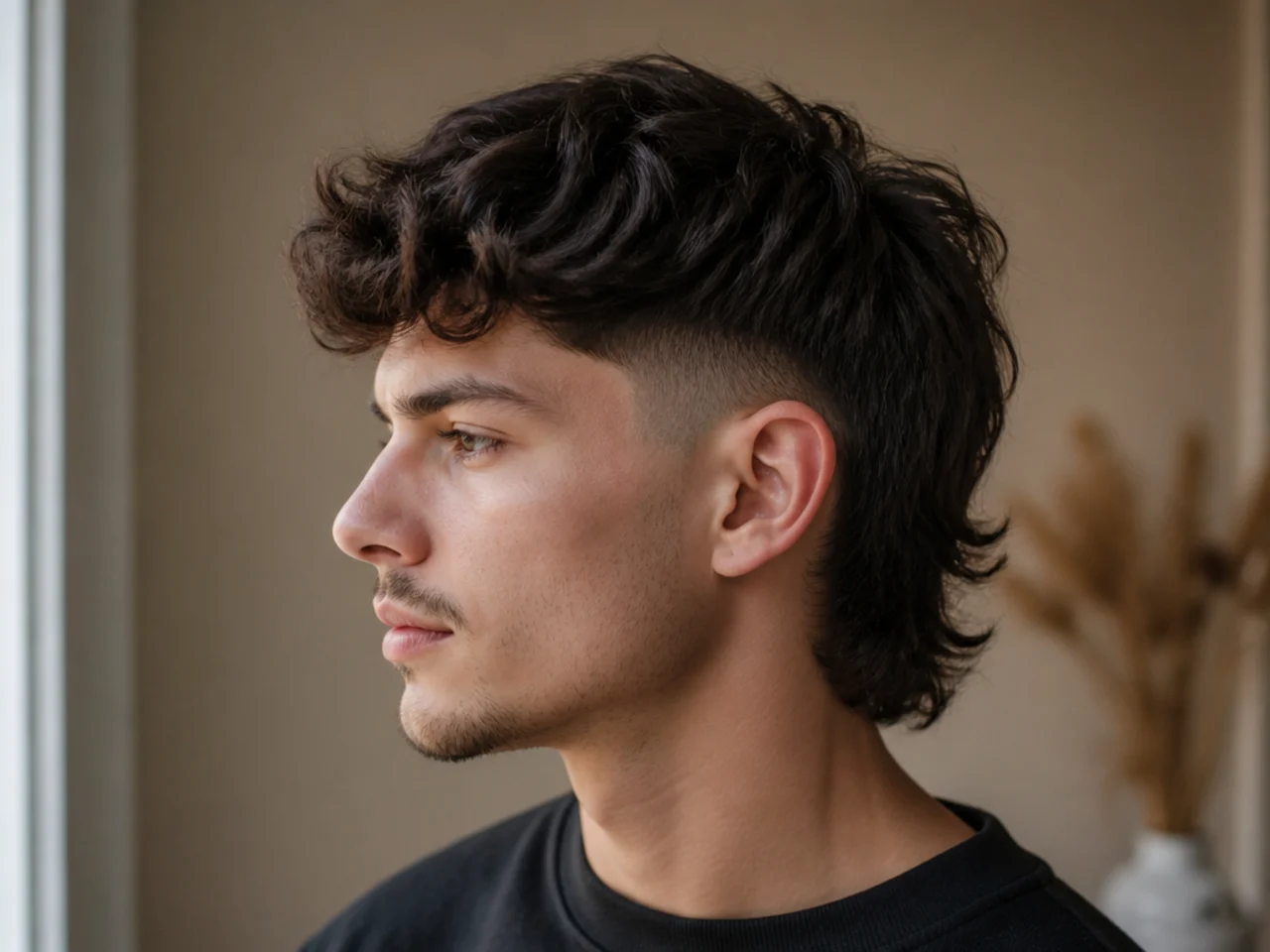
6. Burst Fade Mullet
The fade curves around the ear and stops before the nape, leaving the tail attached to a longer patch of hair. That curve gives the eye a shape to follow at the side of the head, which flat straight hair cannot generate on its own.
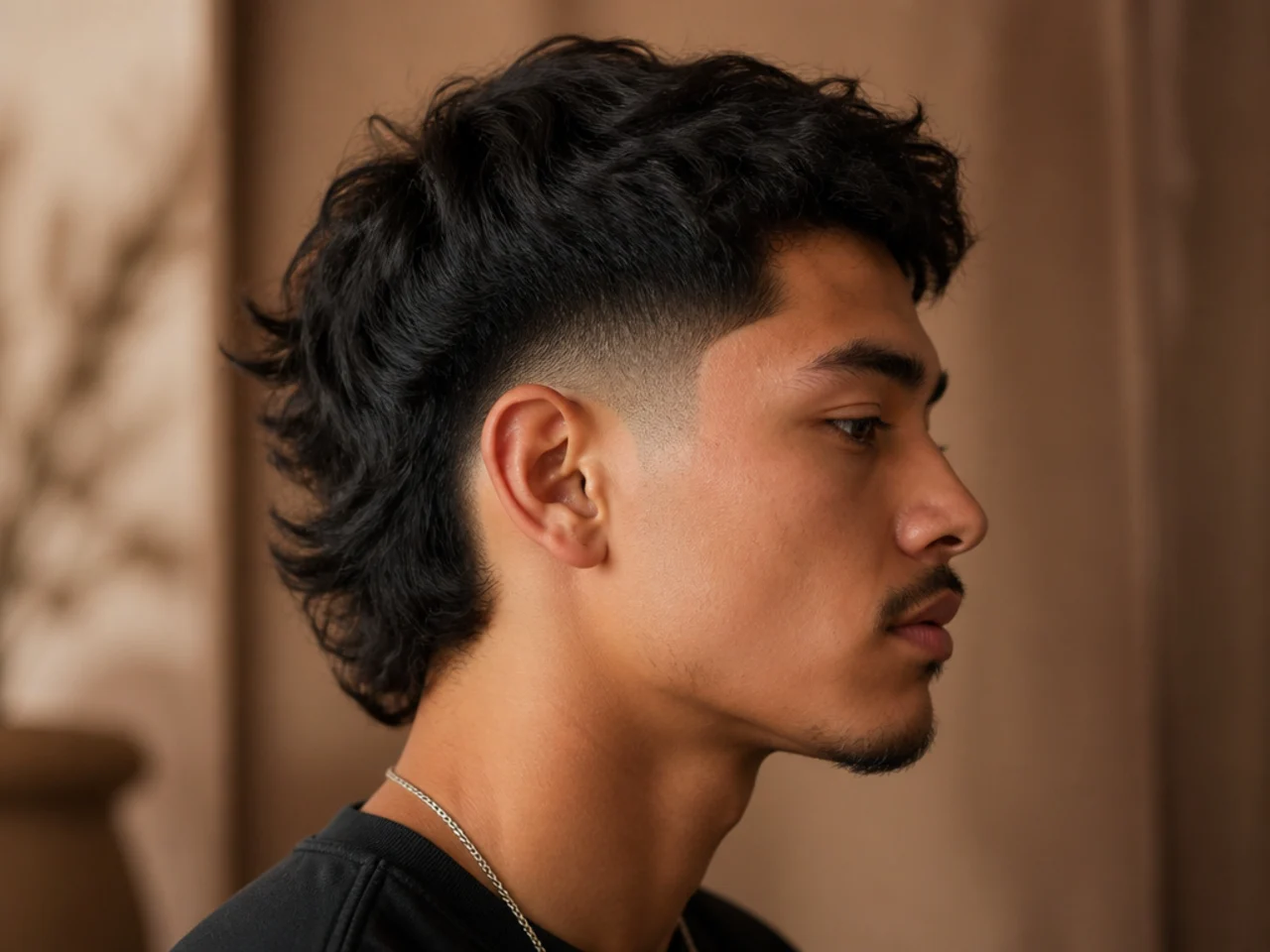
7. Mullet With a Hard Part
A trimmer line cut along the parting. On flat straight hair the top otherwise reads as one unbroken sheet, and a cut line breaks that sheet with a vertical the eye can rest on. It also gives the hair a defined edge to fall away from.
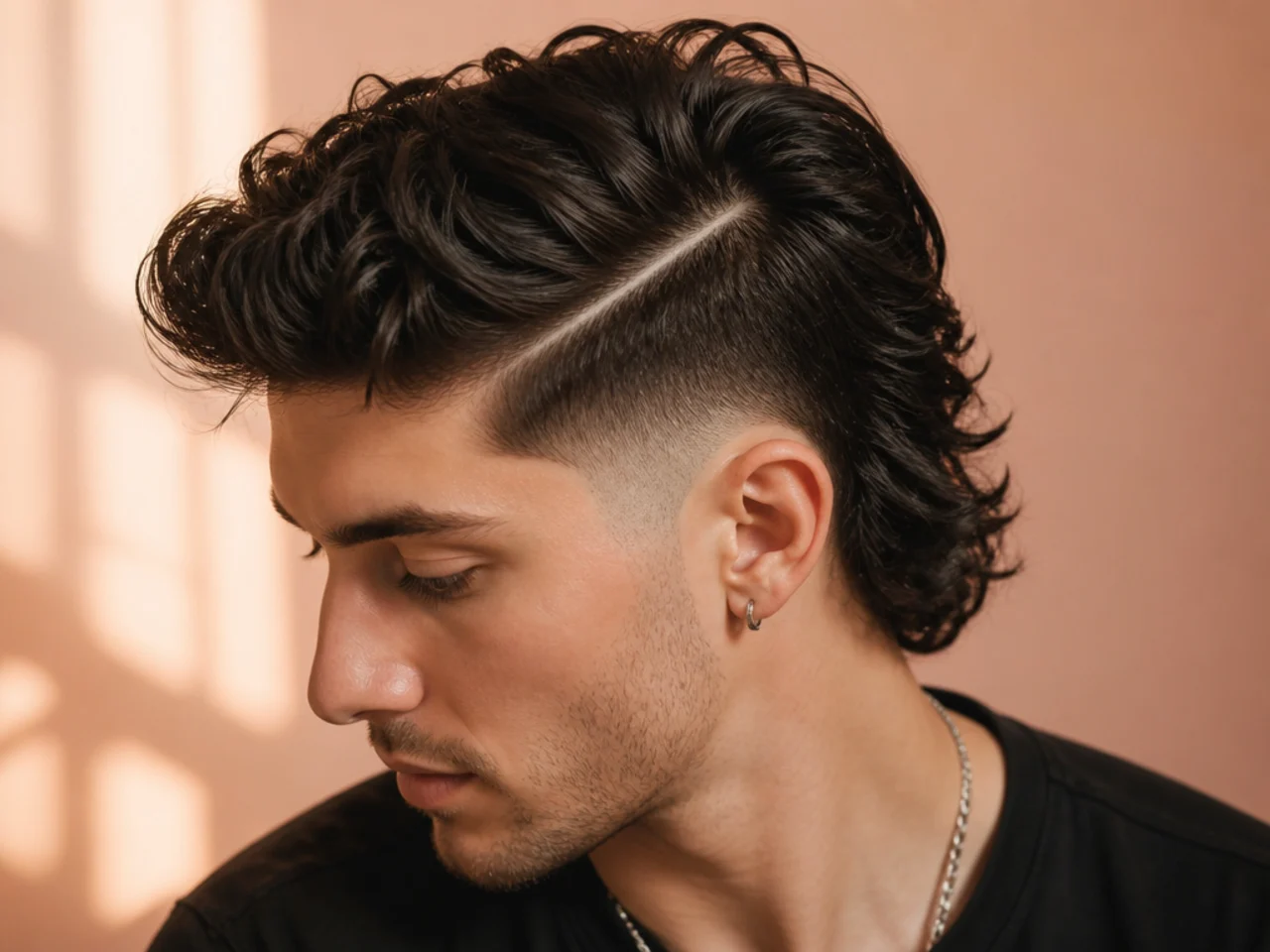
8. Textured Crop Mullet
The top point cut so the ends finish at staggered heights. Straight hair in one plane reflects light as a single sheet, and staggering the ends breaks that reflection into separate pieces. The separation the eye reads is what registers as thickness. See also thick mens short hair.
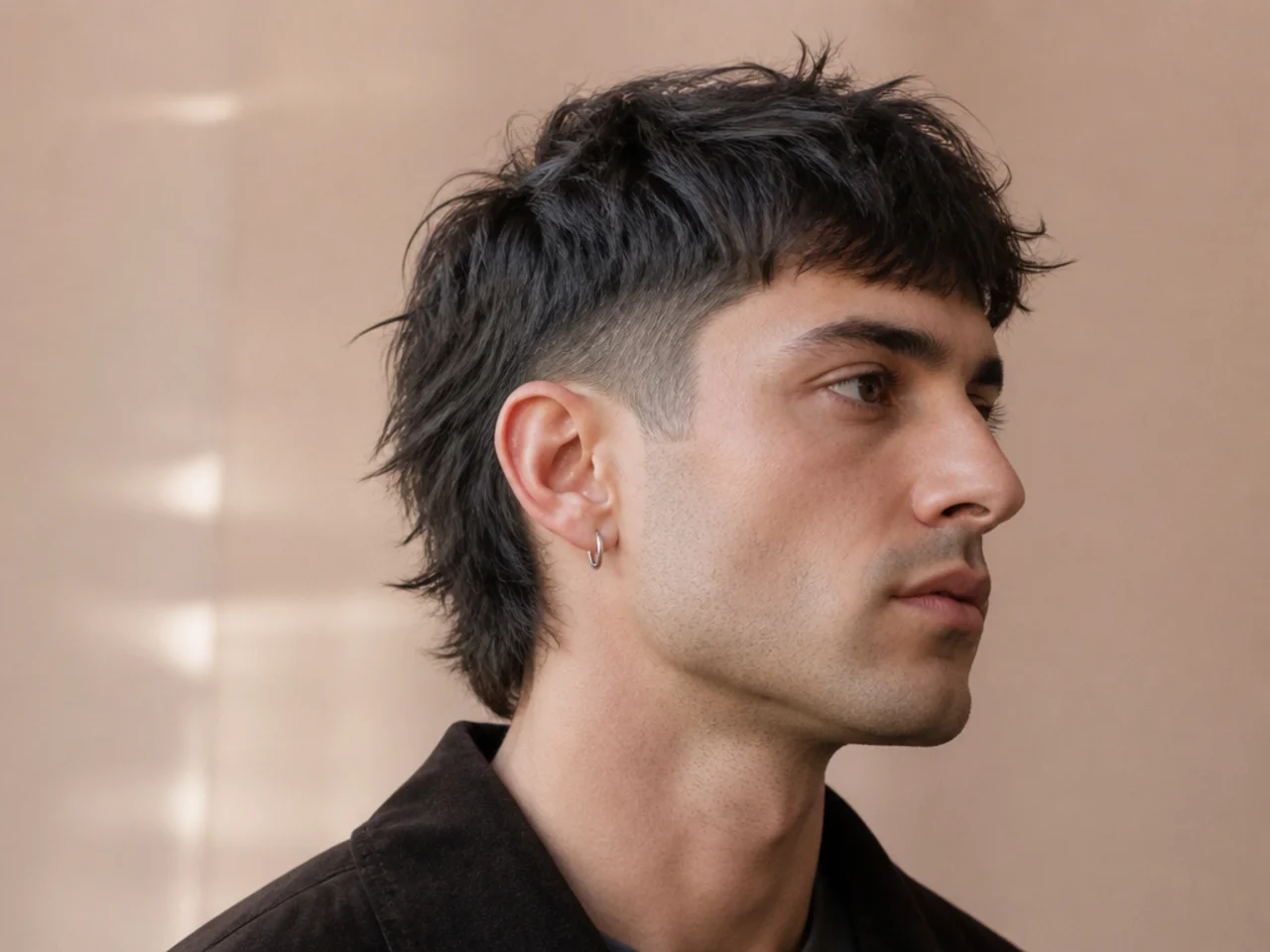
9. Comma Hair Mullet
The fringe curved forward and inward into a comma shape, with the tail left long behind. The curve is the only reliable way to get straight hair to hold a direction, because bending a strand over a round brush sets it against its own fall. The full version is comma hair with a mullet.
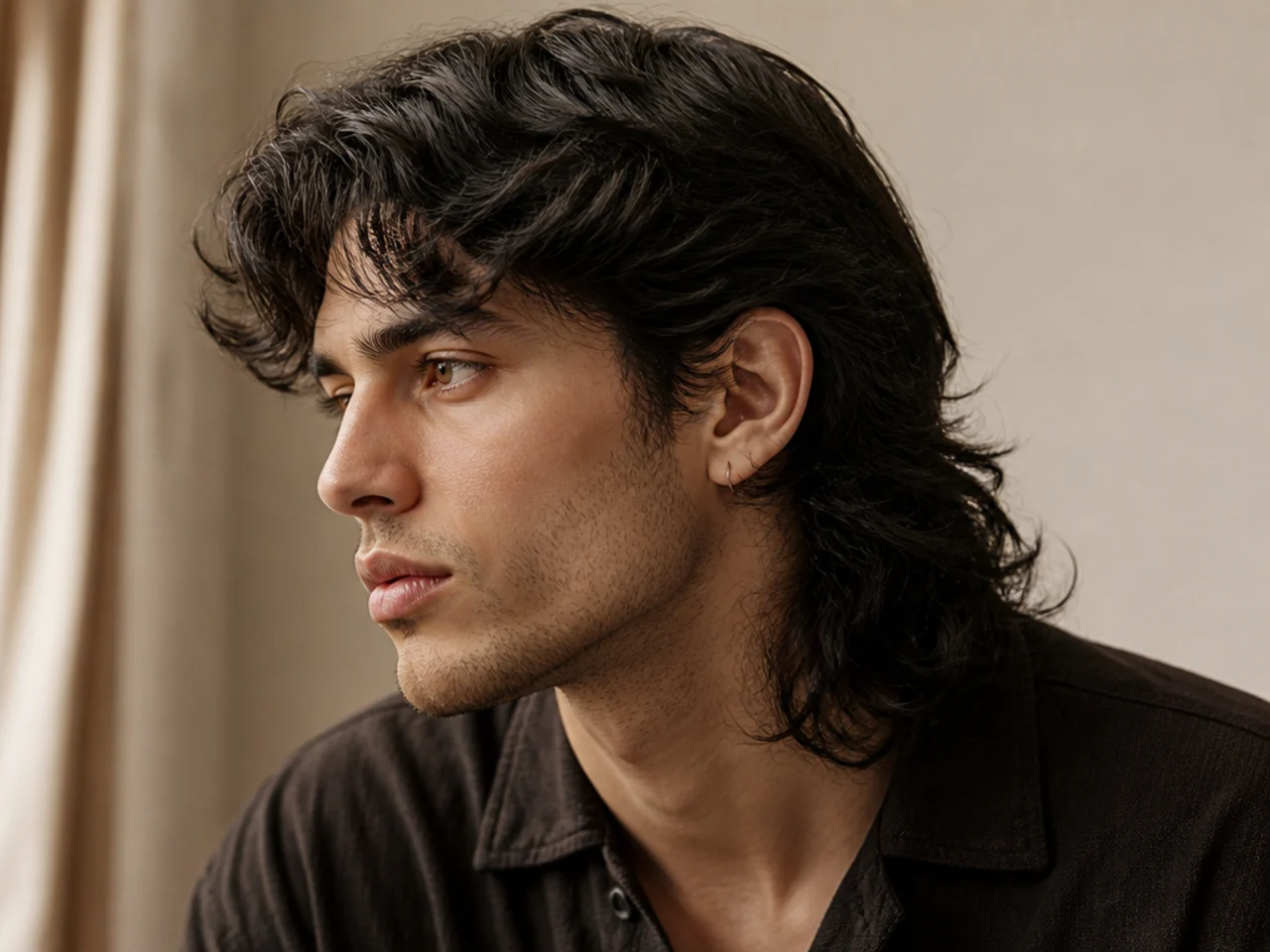
10. Curtain Fringe Mullet
The fringe split at the centre and swept to both sides. Hair pushed away from its growth direction stands off the scalp at the root, which makes the split the cheapest front volume available to straight flat hair. Related shapes appear in comma hair with mullet.

11. Blunt Fringe Mullet
A heavy straight fringe sitting at the brow. Straight hair is the one texture that can hold a hard horizontal line across the forehead without breaking out of it, so the fringe stays where it was cut instead of separating into pieces.
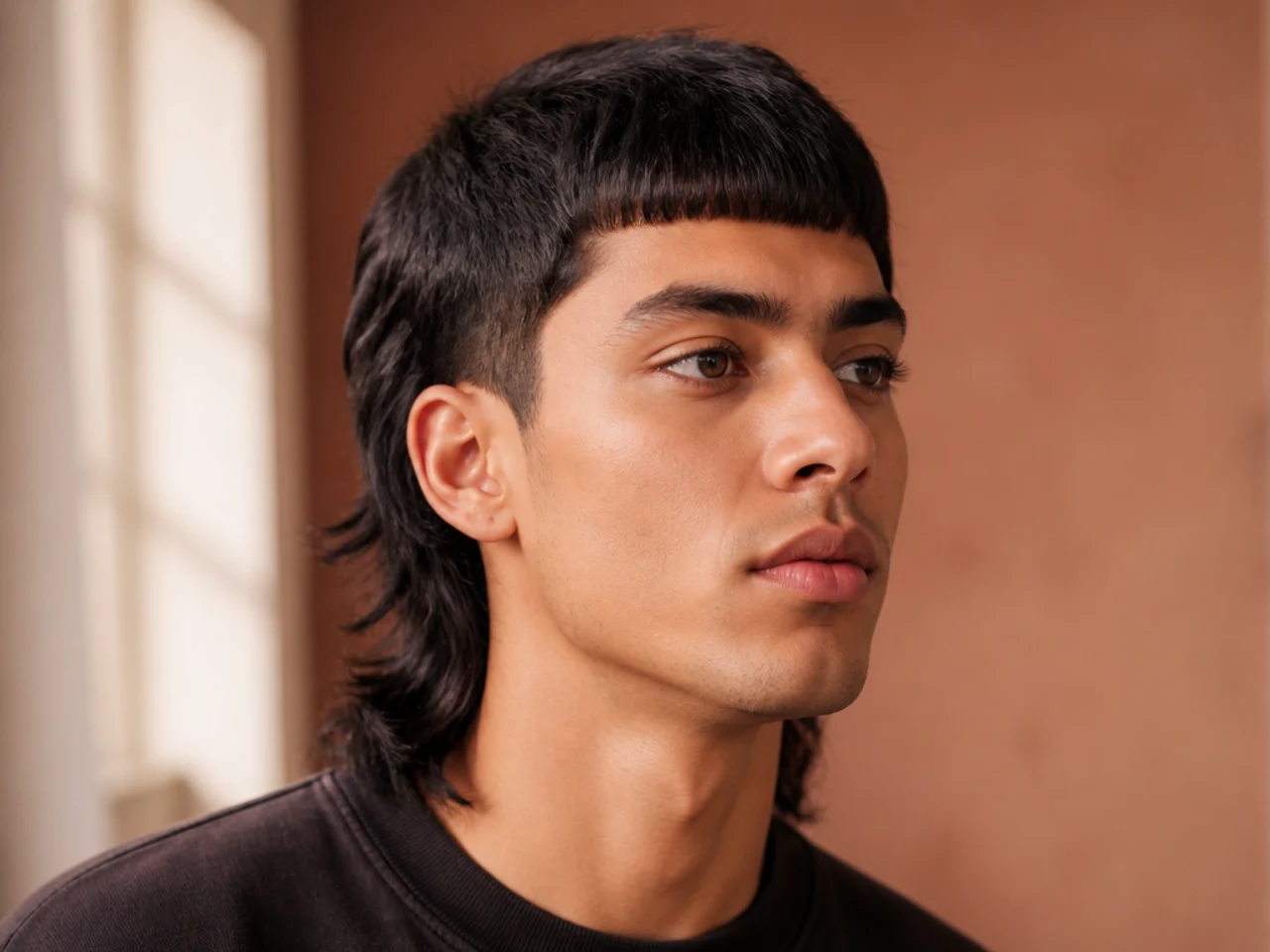
12. Mullet With an Undercut
The sides taken to one clipper length with no gradient at all. It is quicker and cheaper than a fade but unforgiving on straight hair, because the perimeter of the top sits as a hard visible edge over the short section with nothing softening the join.
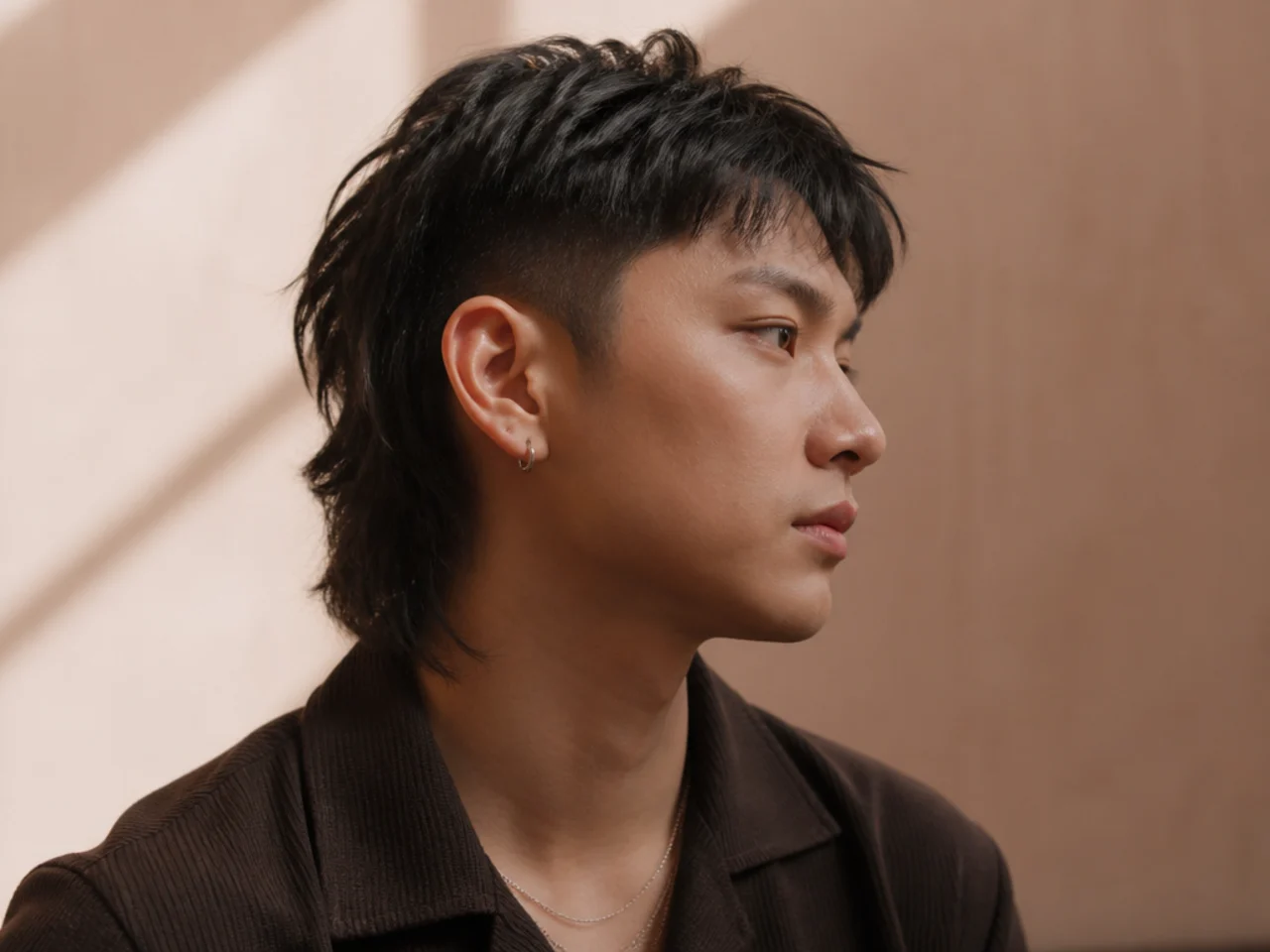
13. Wolf Cut Mullet
Layers cut through the top as well as length kept at the back. Each shorter layer rests on the one below and props it up, which is the only mechanical source of lift available to hair with no bend of its own.
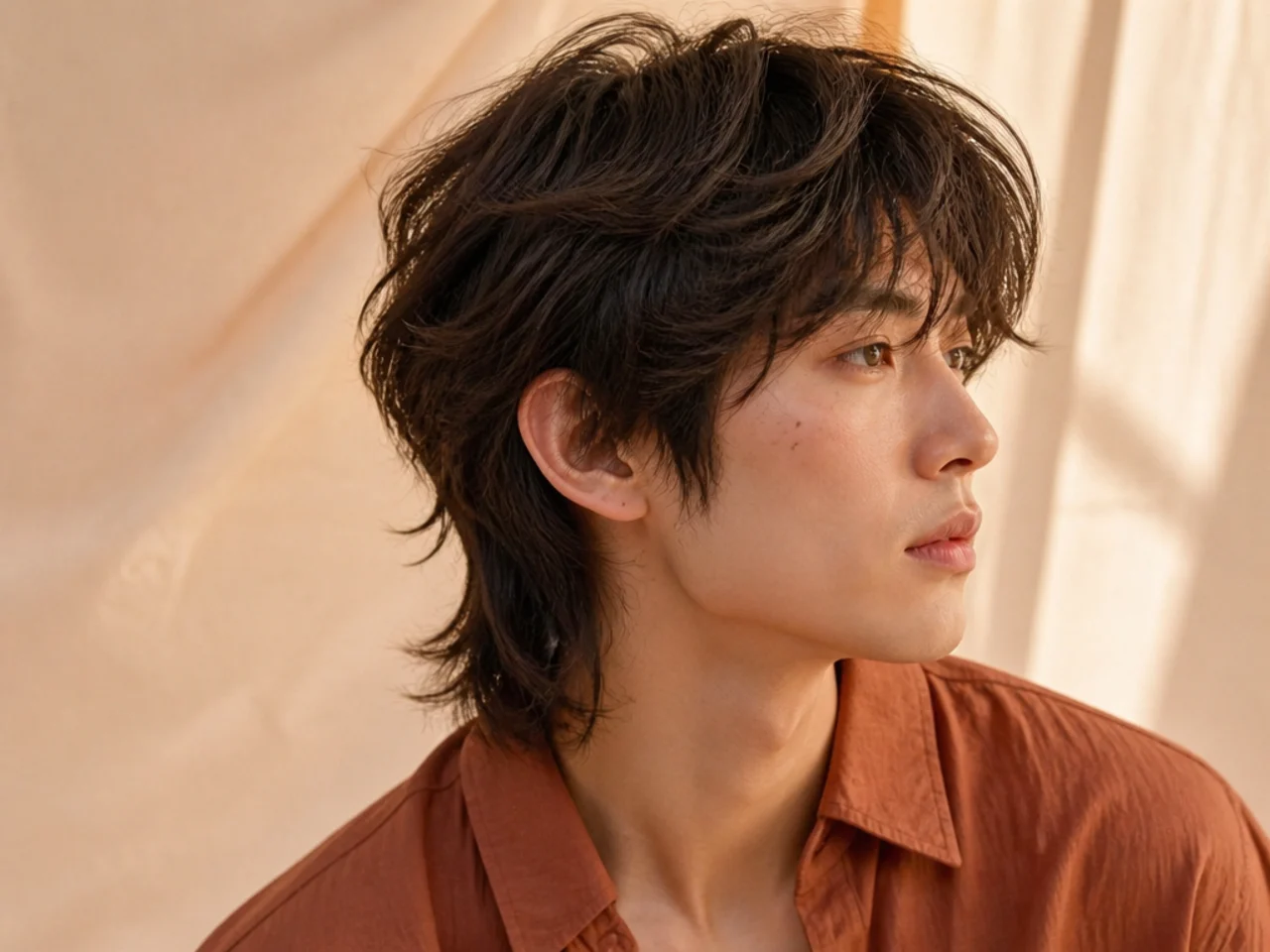
14. Rounded Tail Mullet
The bottom edge of the tail cut in a shallow curve. Curving it keeps the outside strands close in length to the centre ones, so the ends stay together as a mass rather than splaying apart at the corners the way a squared tail can.
15. Squared Tail Mullet
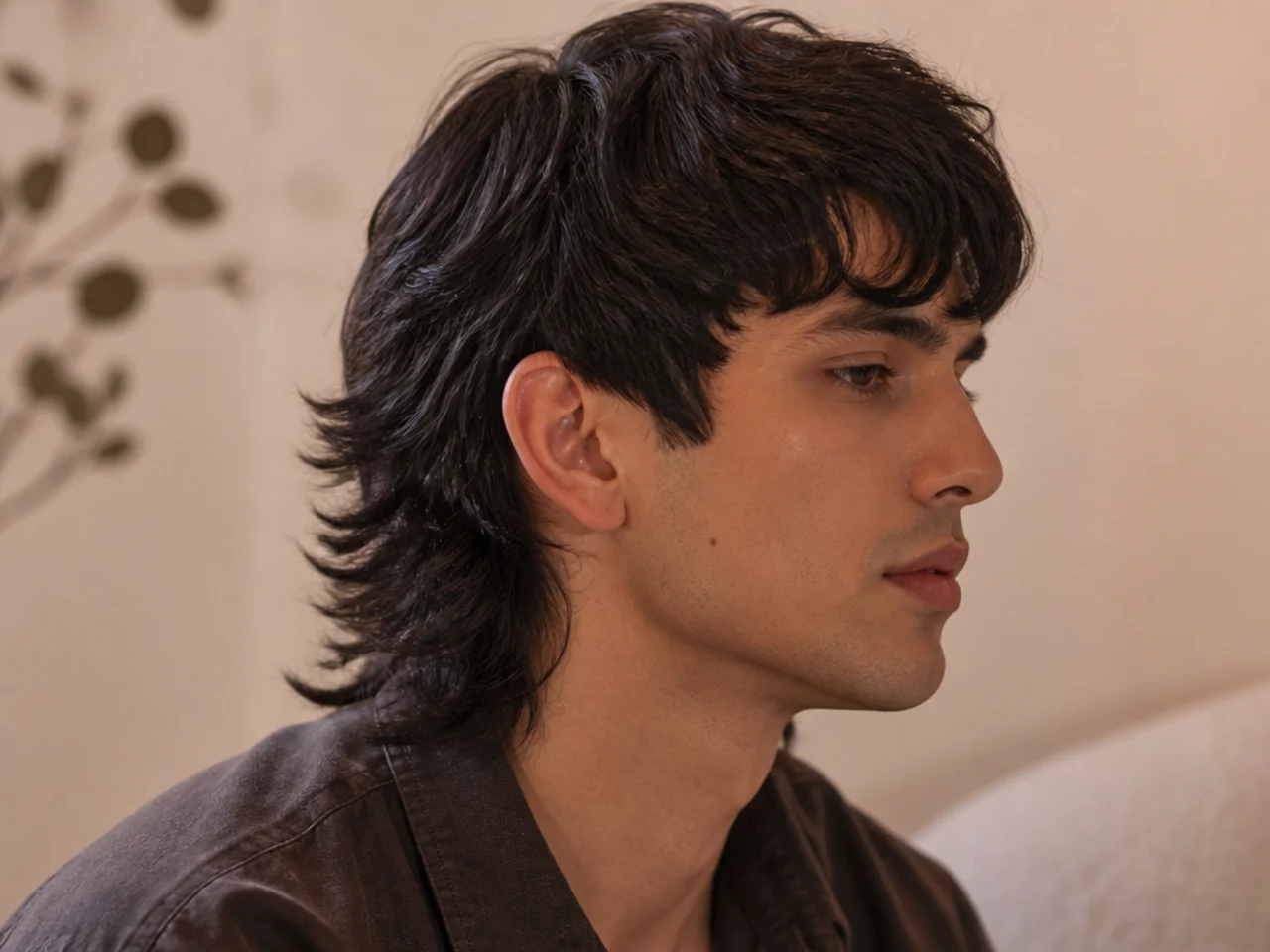
The tail cut flat across the nape. On straight hair the squared edge holds its line for weeks, because nothing in the hair pattern disturbs it. The same precision works against you at regrowth, when the neckline underneath becomes a visible second line.

16. Layered Mullet
Graduated layers taken through the back so the tail thins toward its end. It stops a long straight tail hanging as a solid block, and it makes the transition from side to tail gradual enough that the eye stops looking for the join.

17. Shaggy Mullet
Heavier layering everywhere and a deliberately soft outline. It is the most forgiving option for hair that will not hold a style, because with no single sharp edge in the cut there is nothing for the day to ruin.

18. Long Top Mullet
Four or five inches left on top so the length falls over the disconnection and covers it. It also adds weight at the crown, which on very flat hair works against you, so the top wants layering out through the middle to stay off the scalp.

19. Mullet With Full Sideburns
The sideburns left long enough to run from the top down toward the jaw. They give the side of the head a vertical line, which stops a flat straight cut reading as a smooth helmet with no features in it.
20. Mullet at Week Six
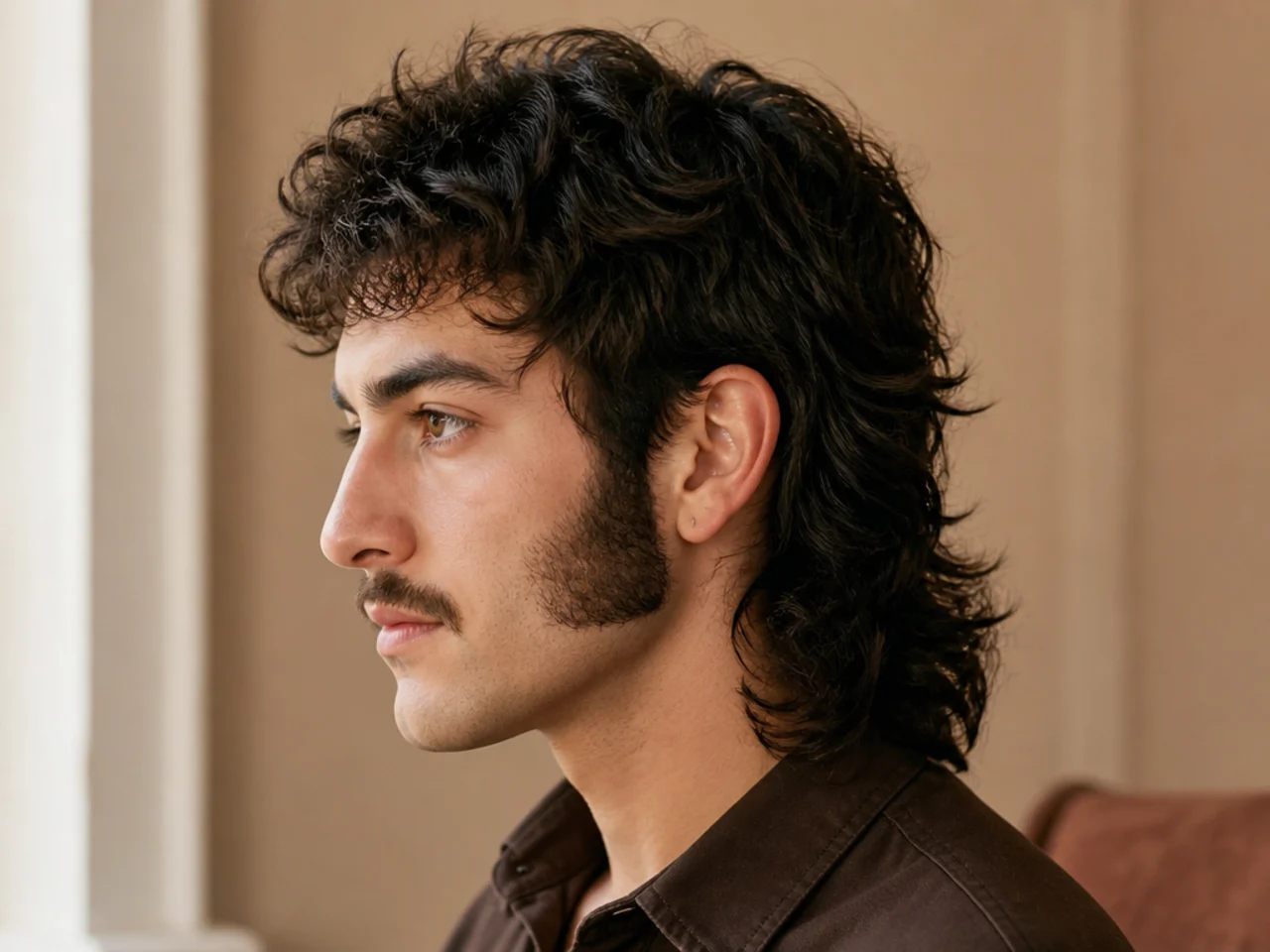
Useful to look at before you book. A taper is still legible at three to four weeks, but by six the gradient has closed up and the sides have caught the top, which flattens the contrast the entire cut depends on.

Styling and Upkeep
Dry the top before you touch product. Straight hair sets in the shape it dries in, so anything applied to wet hair is setting flat and no amount of paste afterwards undoes it.
Use a matte clay, not a cream. Cream products add water content and weight, both of which pull straight hair back down against the scalp within an hour.
Blow dry the fringe against its fall. Pushing the root the wrong way and then letting it cool is what holds direction. Heat sets the shape, cooling locks it.
Book a taper at three to four weeks and a skin fade at two. The tail can go longer between visits, but the sides are what the contrast is measured against.
Photograph the tail length at week one. Straight hair sits exactly where it was cut, so a photograph of the neckline is a specification a barber can reproduce.
Mistakes to Avoid
Asking for a fade when you mean a taper. A fade goes to skin, a taper finishes with length. Name the finish and the guard number rather than either word on its own.
Letting thinning shears near a flat top. They remove bulk from the middle of the section and leave the top lying even closer to the scalp. Point cutting the ends is the correct request.
Cutting the tail with a razor. A razor thins the ends as it cuts, which destroys the solid edge that gives a straight hair mullet its outline in the first place.
Going too short on the sides for the length on top. Contrast is a ratio. A number one against two inches on top reads far harder than the same sides against five, so decide both numbers together.
Waiting past five weeks with a taper. The gradient closes and the cut becomes a short back and sides with a long piece behind it, which is not the same shape at all.
FAQ
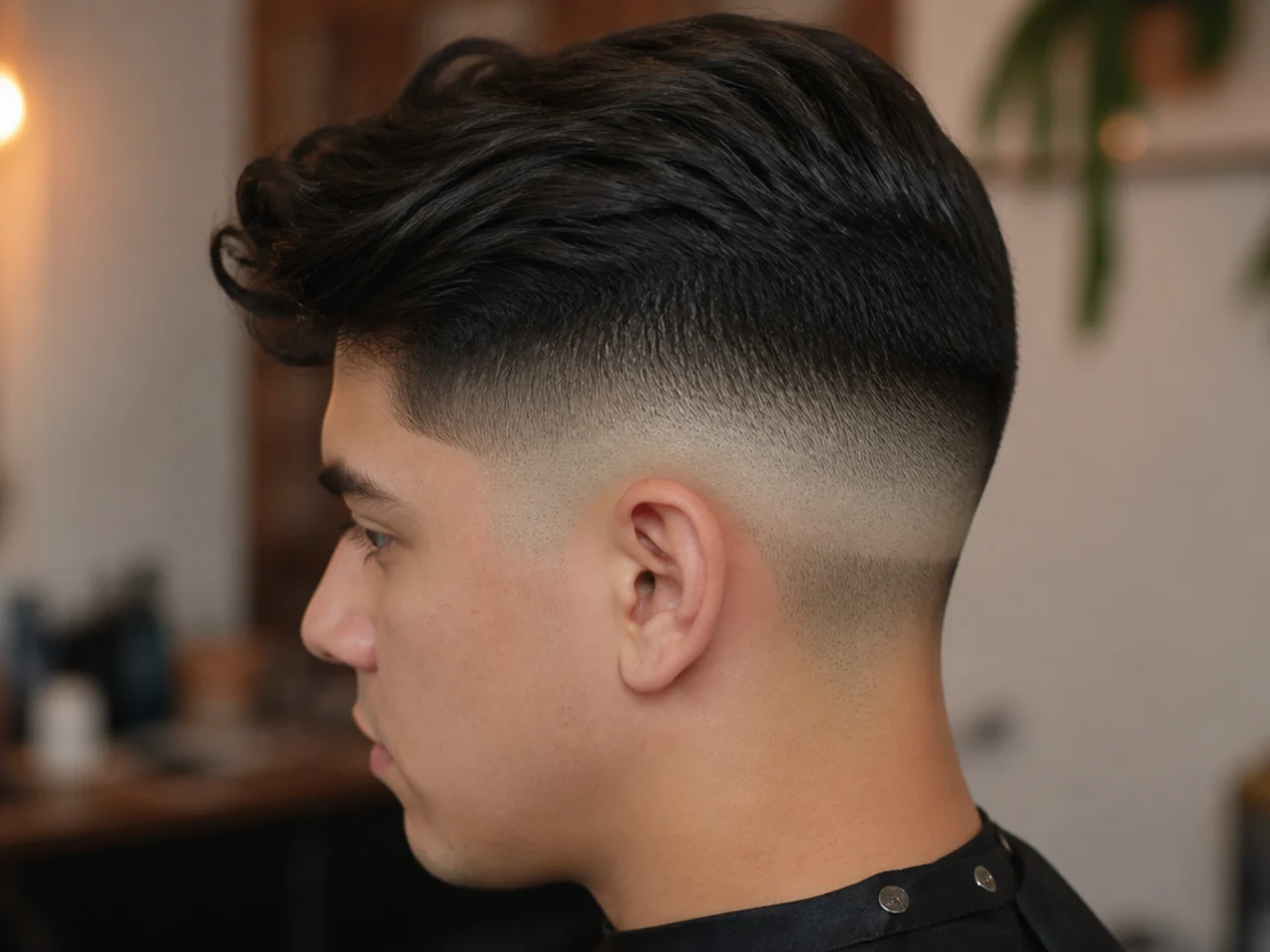
Taper or fade? A taper finishes at three millimetres and holds three to four weeks. A fade goes to skin and holds two.
How do you get volume? Point cut ends and a root dried against its fall. Product alone will not do it.
How long should the tail be? Above the collar for a modern cut, below it for a classic one.

Final Thoughts
Straight flat hair is not a limitation for a mullet, it is a constraint that tells you where to spend. Put the money into the outline, the taper height and the point cutting at the top, because those survive the hair falling back to neutral by lunchtime.
For the full range of the cut see the mens mullet guide, and for the shorter end of the same texture see short straight mens haircuts. More in Mullet & Wolf Cut.