20 Thick Men's Short Hair Ideas to Try
On thick hair the guard number is not the length you end up looking at, because density props every hair up off the scalp. What you are actually choosing is a silhouette, and short thick hair always builds one.
In this article · 27
- Why the Guard Number Lies on Thick Hair
- How to Choose Your Silhouette
- The 20 Thick Hair Silhouettes
- 1. The Square Box, and the Long Face It Suits
- 2. Flared Corners Over the Ears
- 3. The Mushroom Silhouette
- 4. A Rounded Crown on a Flat-Backed Head
- 5. The High Shelf at the Parietal Ridge
- 6. A #2 That Reads Like a #4
- 7. The Tall Front Block
- 8. The Wide Back That Competes With Your Shoulders
- 9. The Shape That Shortens a Long Jaw
- 10. The Silhouette That Makes a Round Face Rounder
- 11. Filling a Flat Occipital Bone
- 12. The Profile Nobody Checks in the Mirror
- 13. The Shape in Week One
- 14. The Same Shape in Week Four
- 15. The Triangular Outline
- 16. Why a Fade Narrows the Silhouette
- 17. Why a Taper Keeps It
- 18. The Guard Chart, Translated
- 19. The Closed Helmet
- 20. The Squared Neckline Corner
- Styling and Upkeep
- Mistakes to Avoid
- FAQ
- Final Thoughts
Thick hair does not give you the haircut you asked for. It gives you the shape your density builds out of it, and that shape is what everyone else sees.
The guard number is a length, not a height. A #2 is six millimetres on every head. On dense hair those six millimetres stand off the scalp rather than lying on it, so the outline sits where a #4 would on finer hair.
So you are choosing a silhouette, not a number. A square box, flared corners over the ears, a mushroom, a boxy back — short thick hair always builds one. This page is organised by the shape that comes out and the face it suits.
Why the Guard Number Lies on Thick Hair
Guards measure length, not height off the scalp. #1 is 3mm, #2 is 6mm, #3 is 10mm, #4 is 13mm, and that is all a number promises.
Density holds hair upright. Thousands of hairs supporting each other stand where a sparser head falls flat, so 6mm reads like 13mm.
One instruction makes two silhouettes. Which is why a reference photo shot on finer hair misleads you every time.
Pick the shape first, the guard second. Weight can also be taken out from underneath, but the outline is the decision that comes first.
How to Choose Your Silhouette
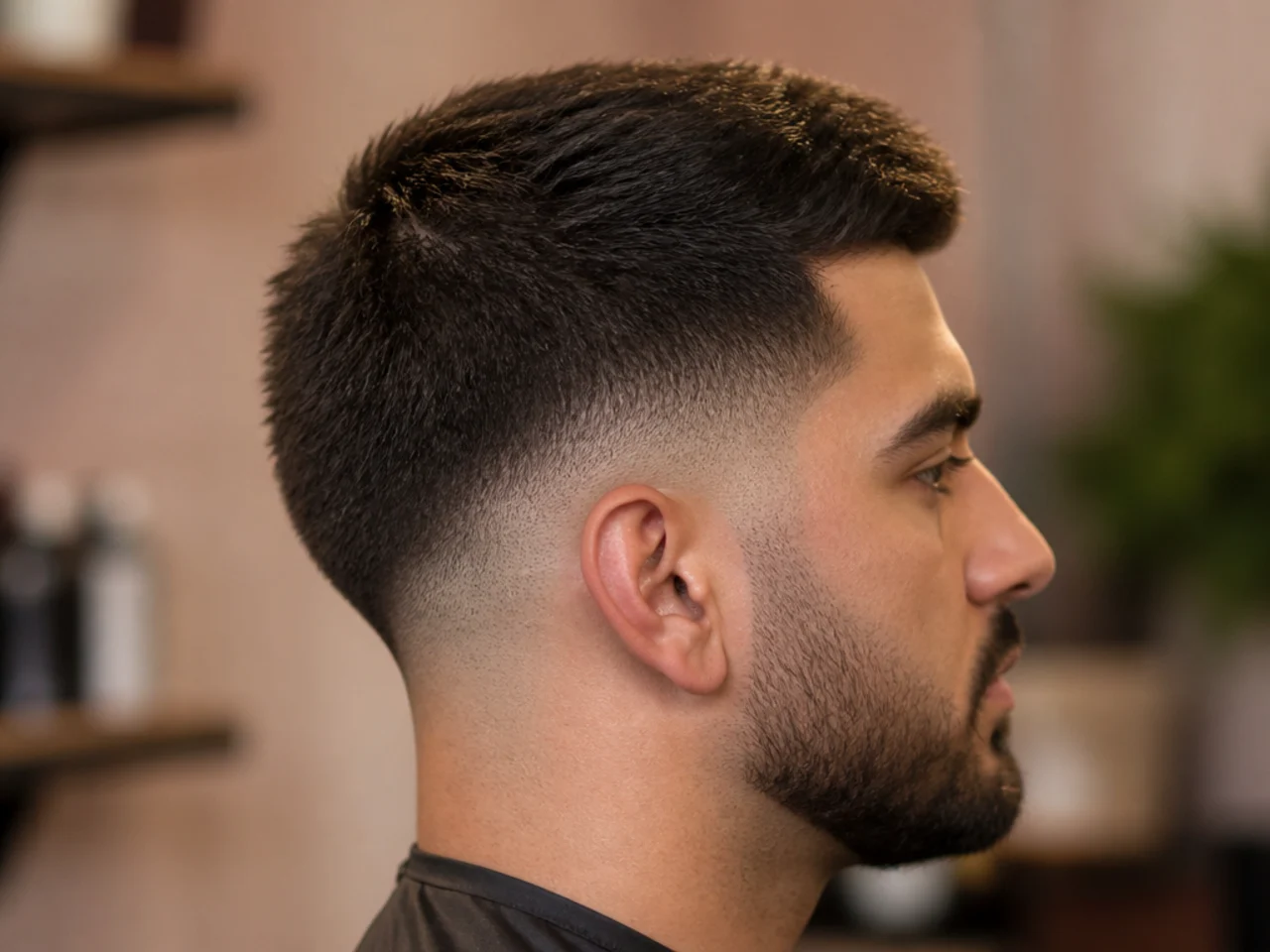
Look at your head from the side and above. A silhouette is an outline, and the front view is the one angle that hides it.
Match the widest point to your face. Round faces want width high and the sides close; long faces want it low and level with the temples.
Decide how much the sides should hold. A fade pulls the outline against the skull, a taper keeps it clear.
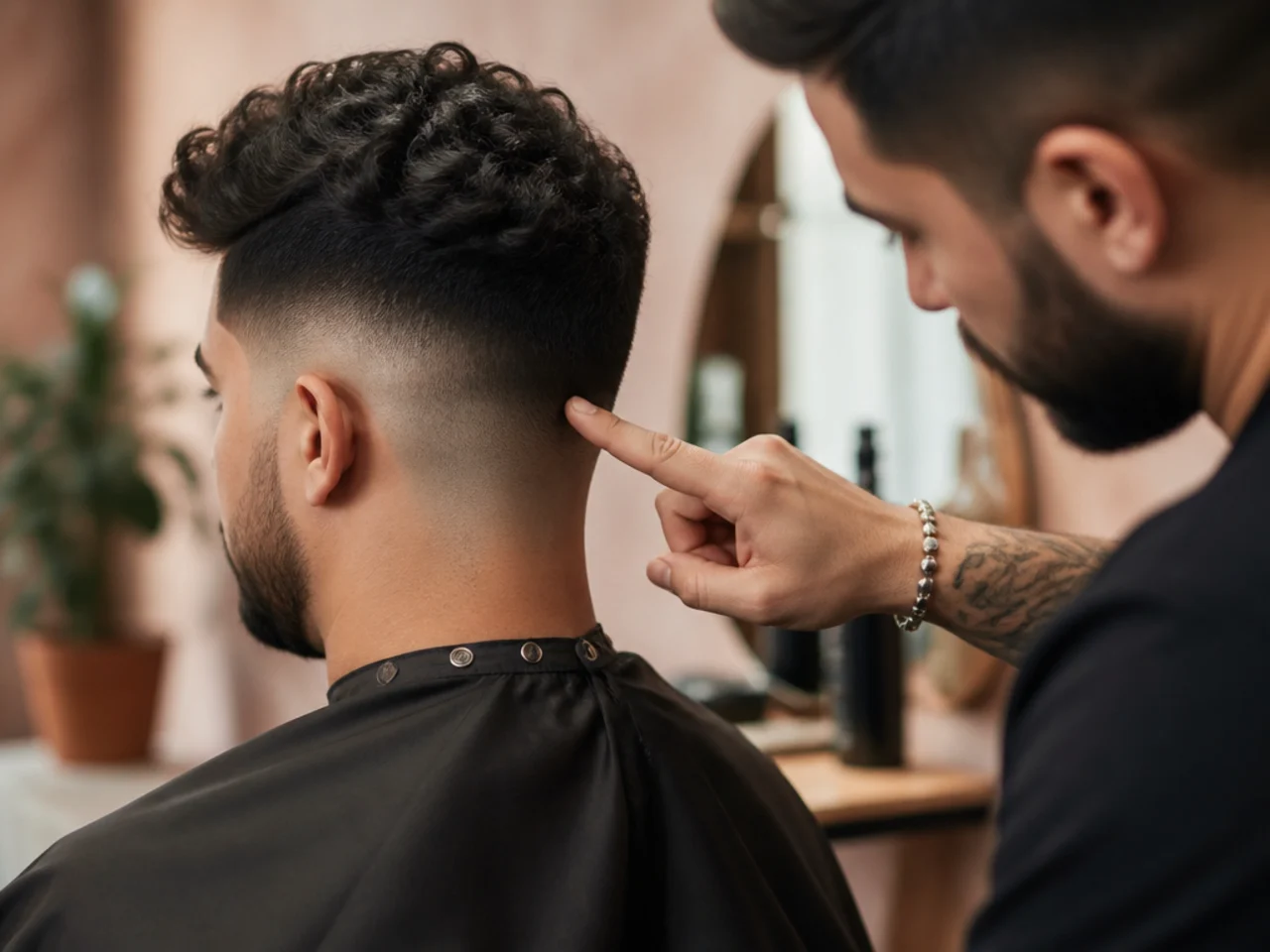
Say the shape out loud. "Square on top, corners taken in" gets you further than "a two on the sides."
The 20 Thick Hair Silhouettes
1. The Square Box, and the Long Face It Suits
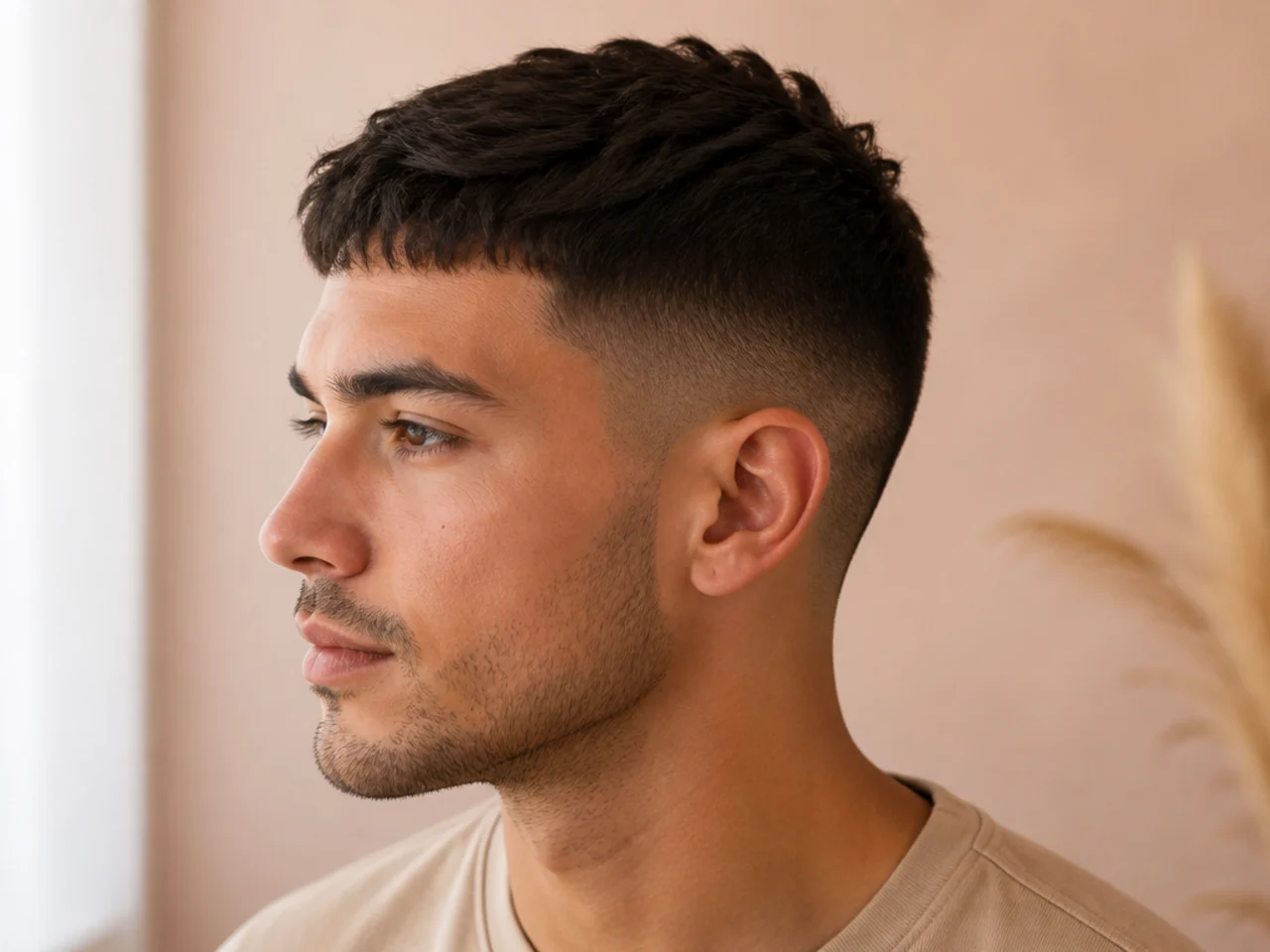
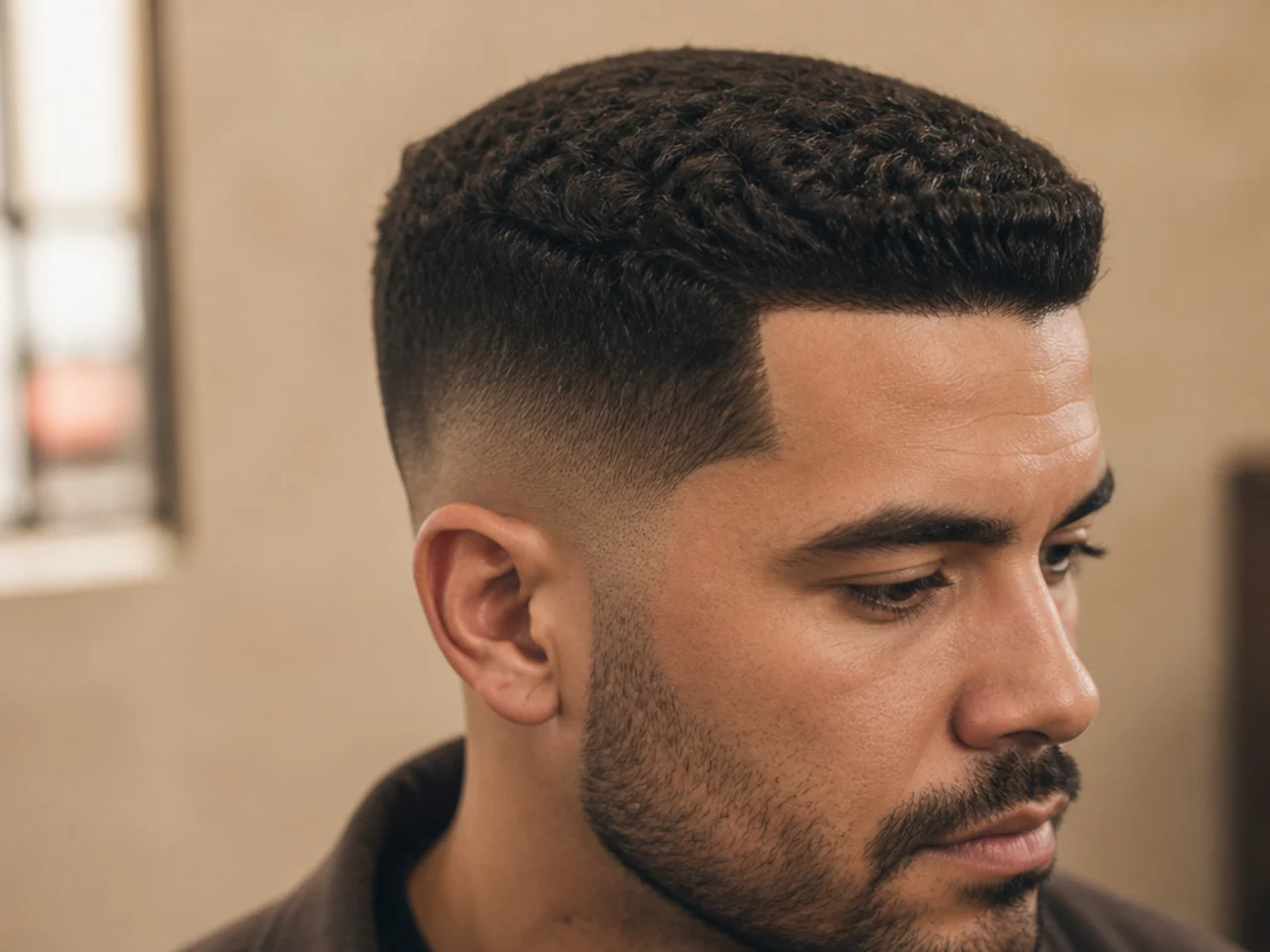
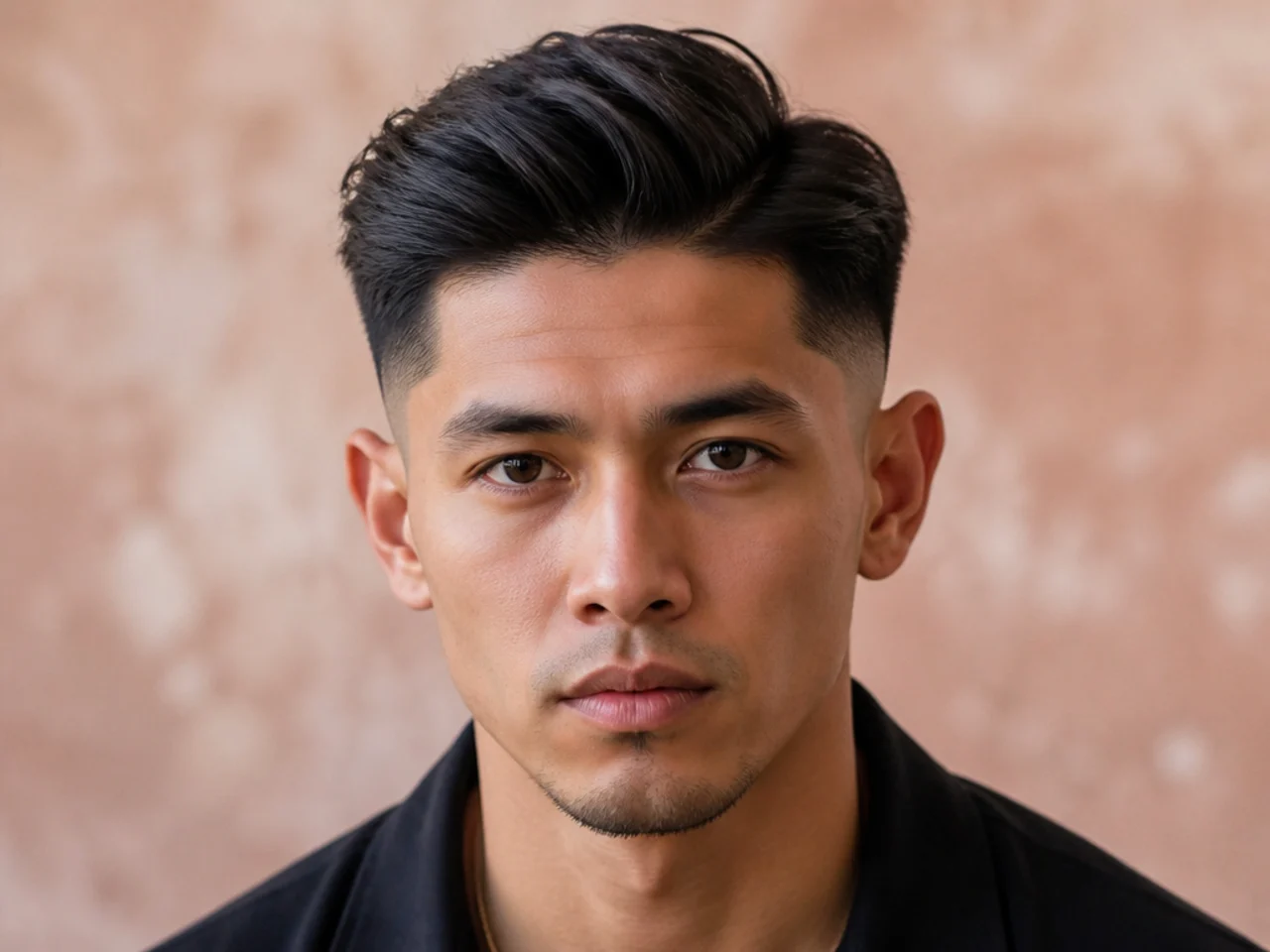
Cut to one short length above the parietal ridge, thick hair stands rather than falls, so the head reads as a box with four corners. That width gives a long face a horizontal to measure against, and the face reads shorter.
2. Flared Corners Over the Ears
The corners above the ears are where dense hair pushes out first, because the skull curves away there and the hair has nothing to lie against. On a round face that flare adds width exactly where the face is already widest.
3. The Mushroom Silhouette
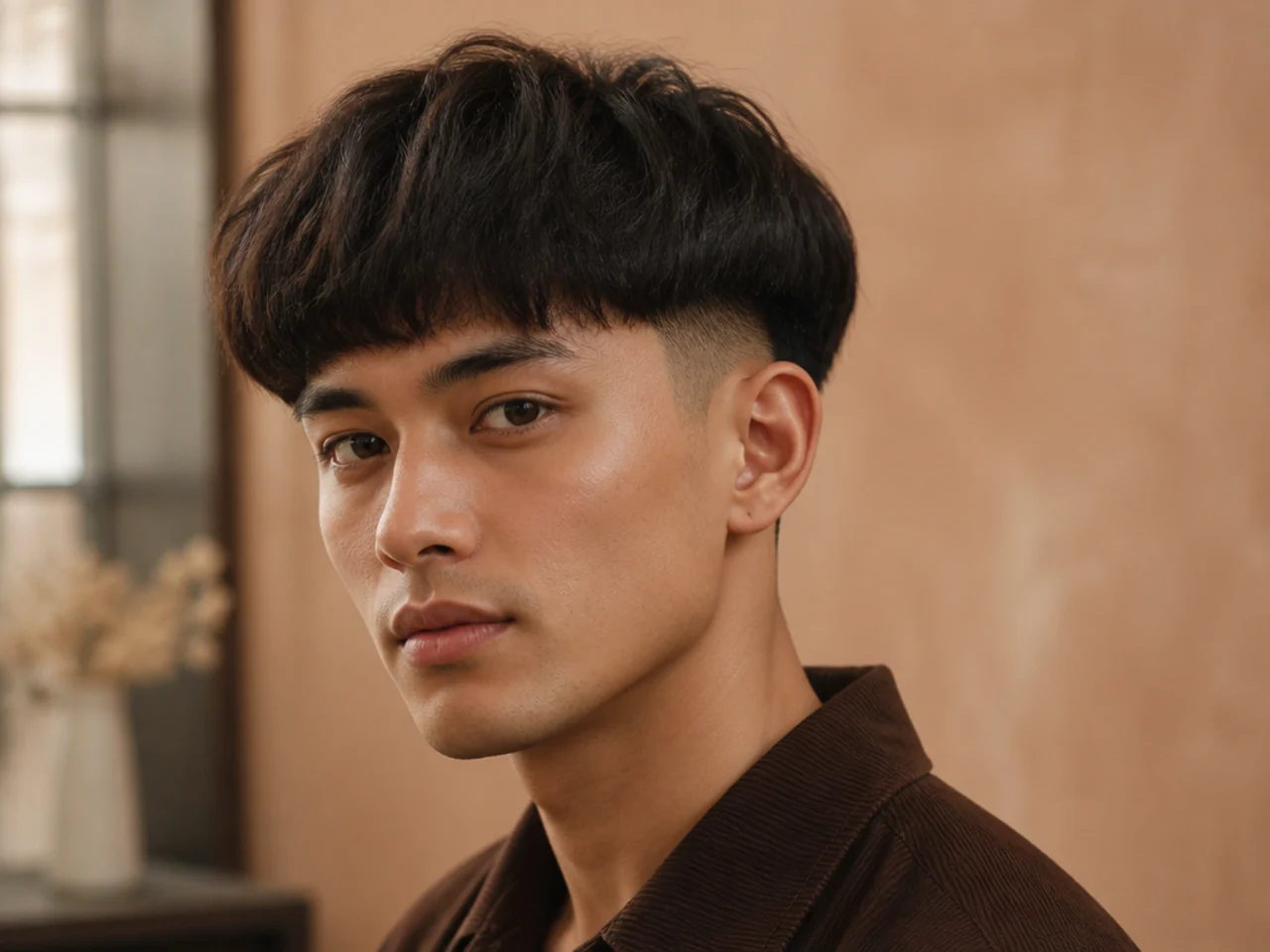
A mushroom appears when the top stays one length and the sides drop straight down beneath it. Fine hair collapses and hides the overhang by mid-afternoon; thick hair holds it, so the shape lasts all day.
4. A Rounded Crown on a Flat-Backed Head
Left a guard longer through the crown, thick hair builds a curve where the skull has none. It is the one place density is purely useful, because you are filling a hollow rather than fighting volume.
5. The High Shelf at the Parietal Ridge
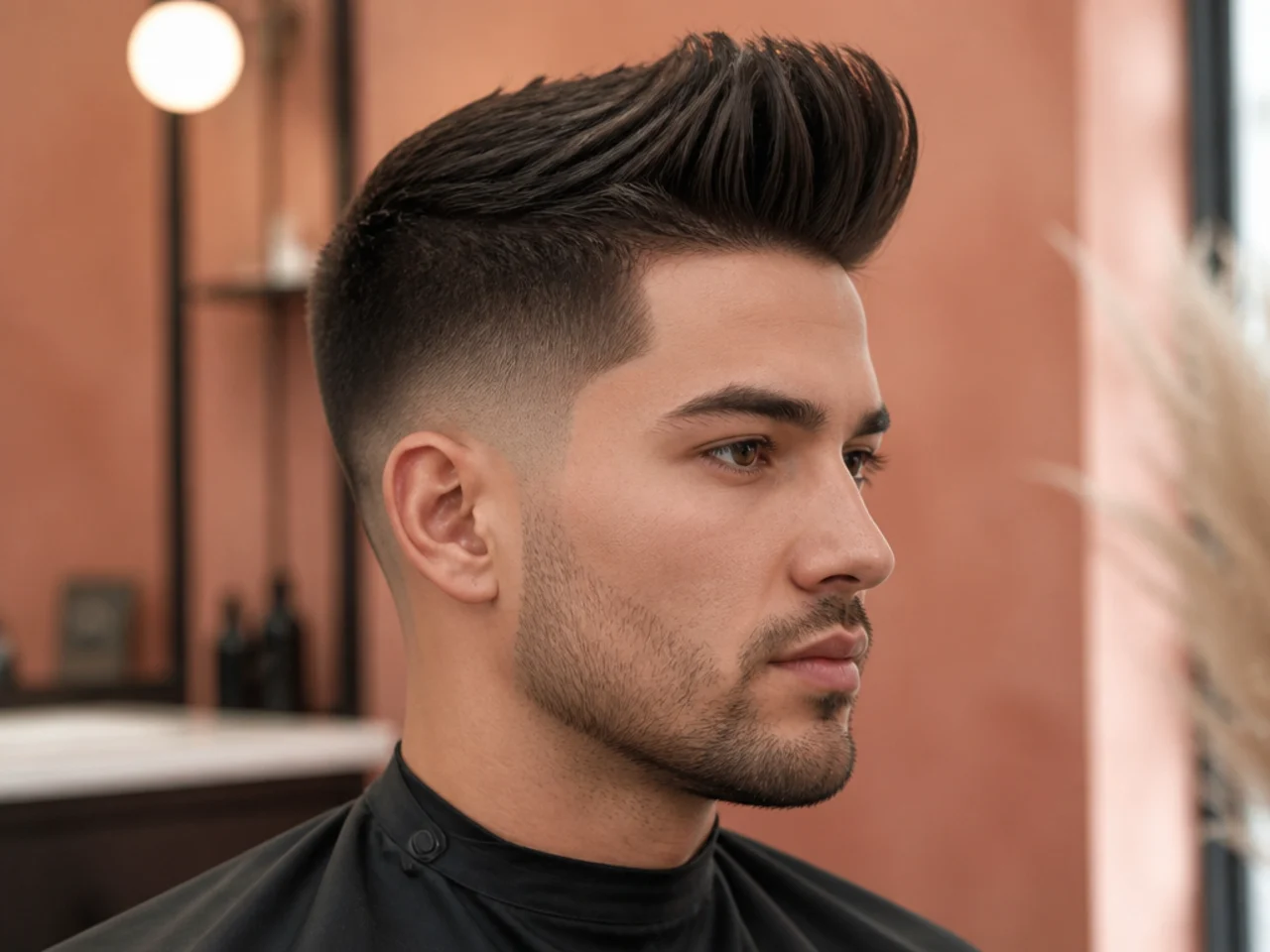
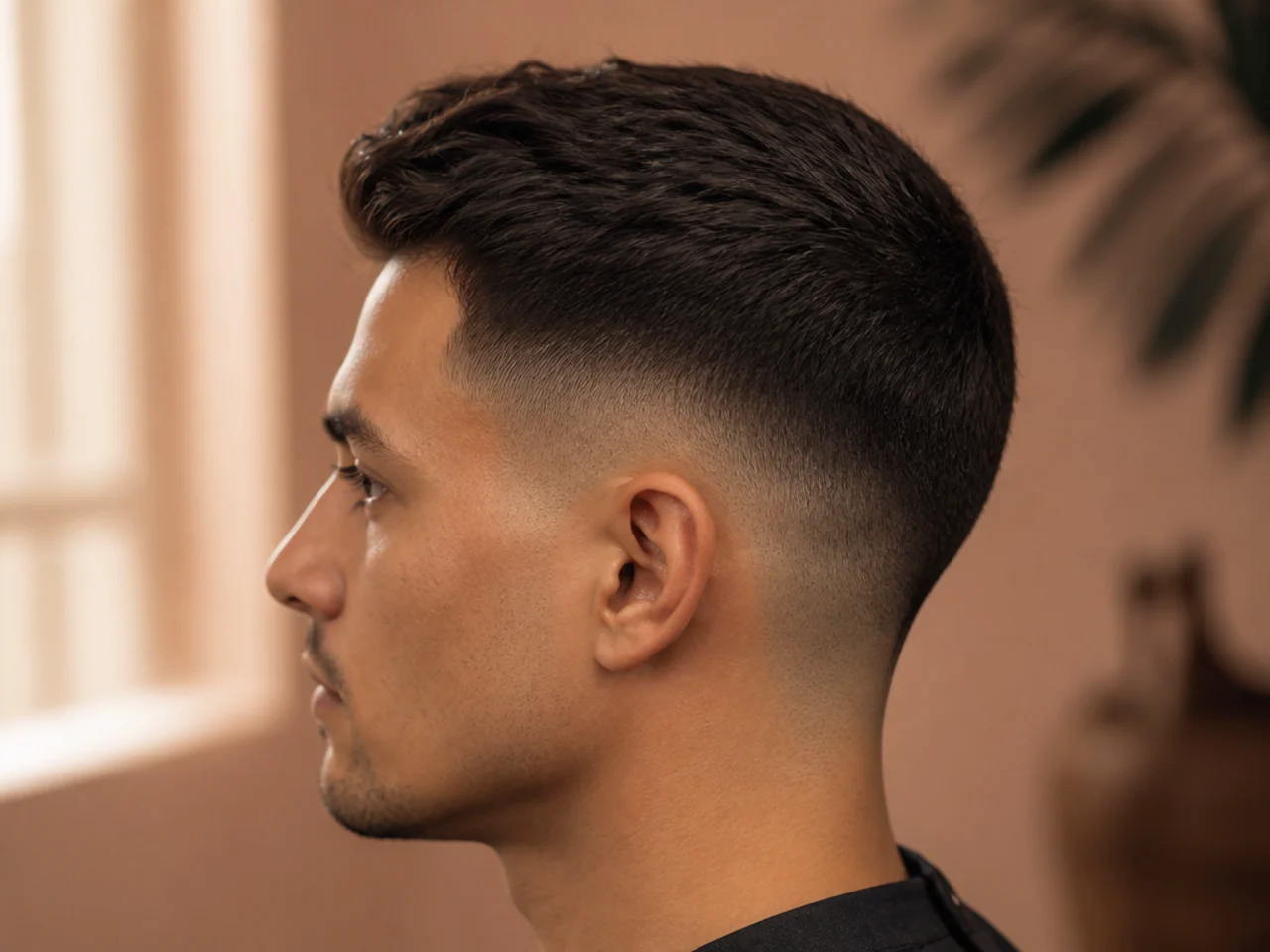
When the clipper work stops at the parietal ridge and the top stays long, dense hair forms a shelf where the two meet. That shelf is a horizontal halfway up the head, and the eye reads it as a step rather than a shape.
6. A #2 That Reads Like a #4
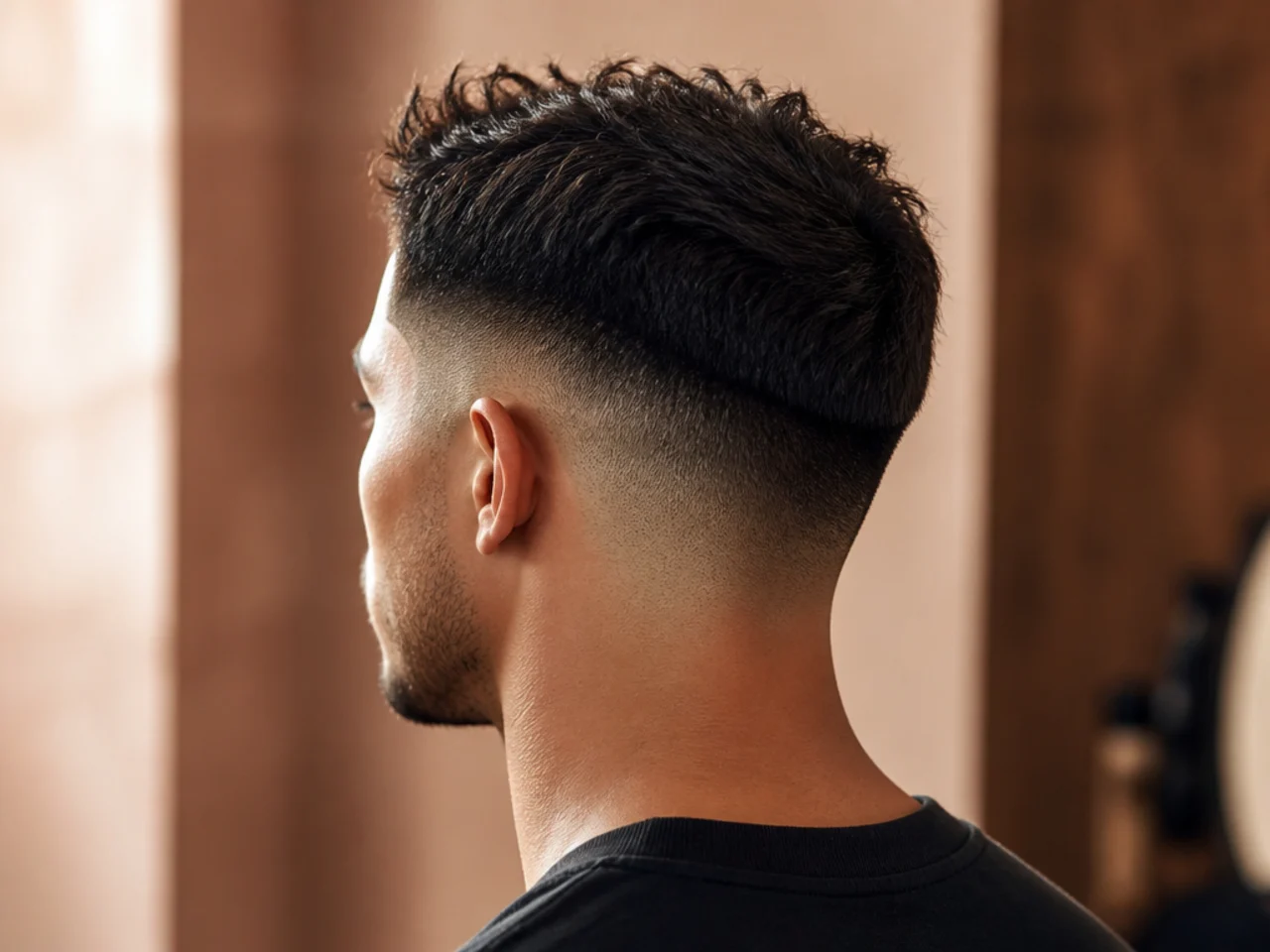
Six millimetres of dense hair sits off the scalp instead of on it, so the outline is further from the skull than the number implies. If you liked a #4 on finer hair, a #2 is the closer match on yours.
7. The Tall Front Block
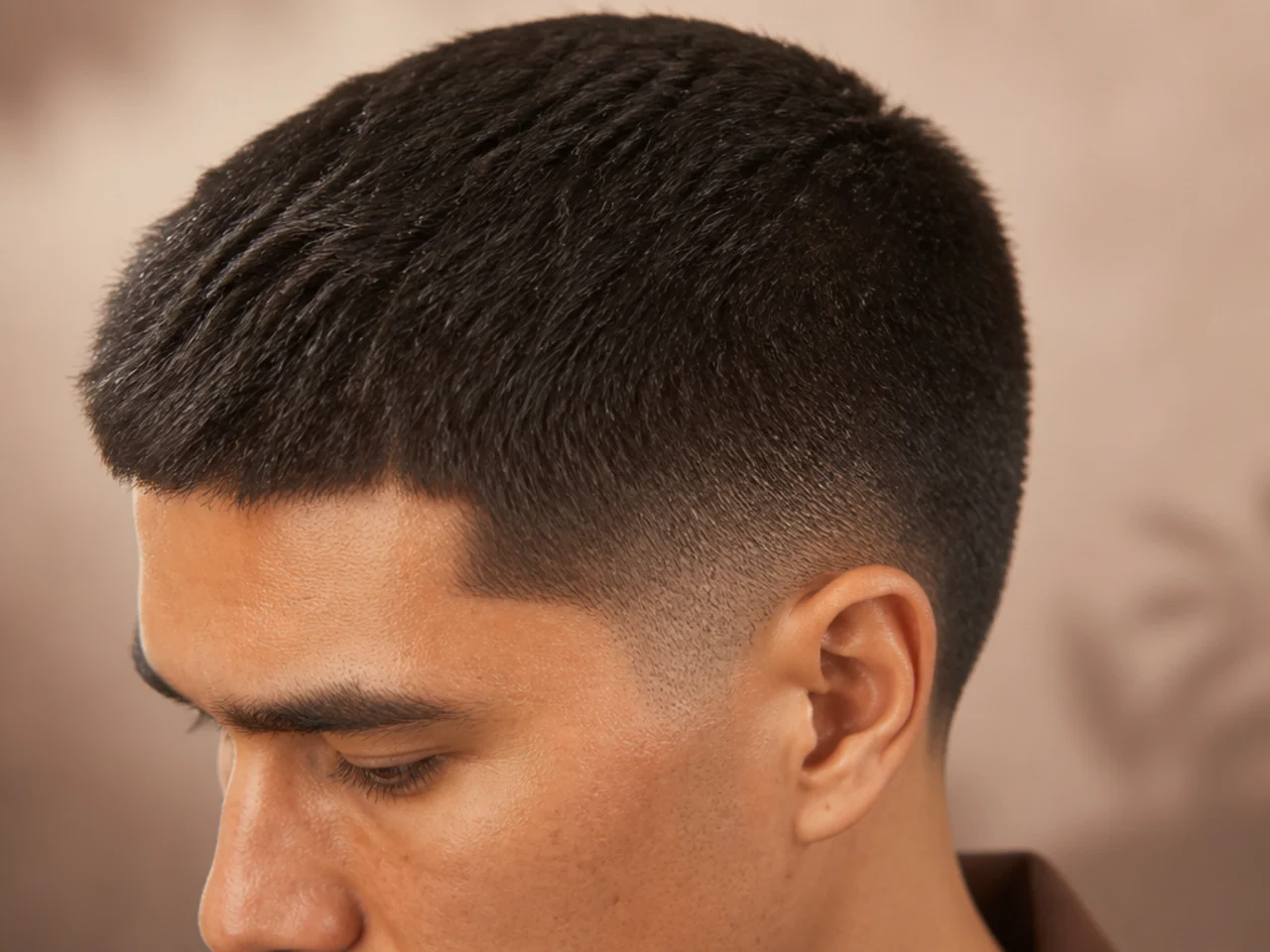
Thick hair at the front hairline supports its own height with no product, stacking a block of volume above the forehead. That block lengthens the face, so it rescues a short or wide one and works against a long one.
8. The Wide Back That Competes With Your Shoulders
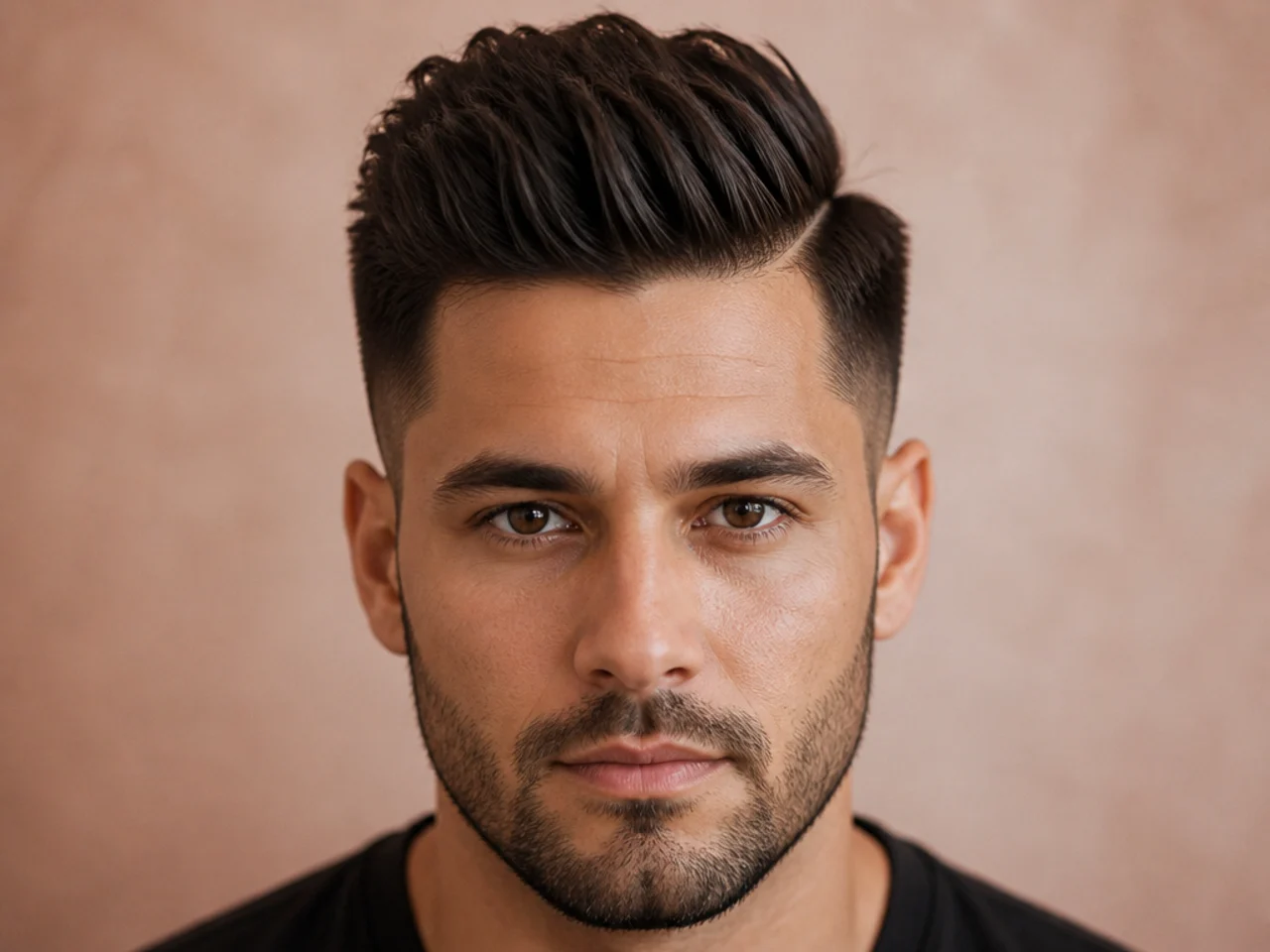
From behind, one length from neckline to crown makes the head as wide as the neck below it. On a narrow frame that reads as substance; on broad shoulders it stacks width on width and goes heavy.
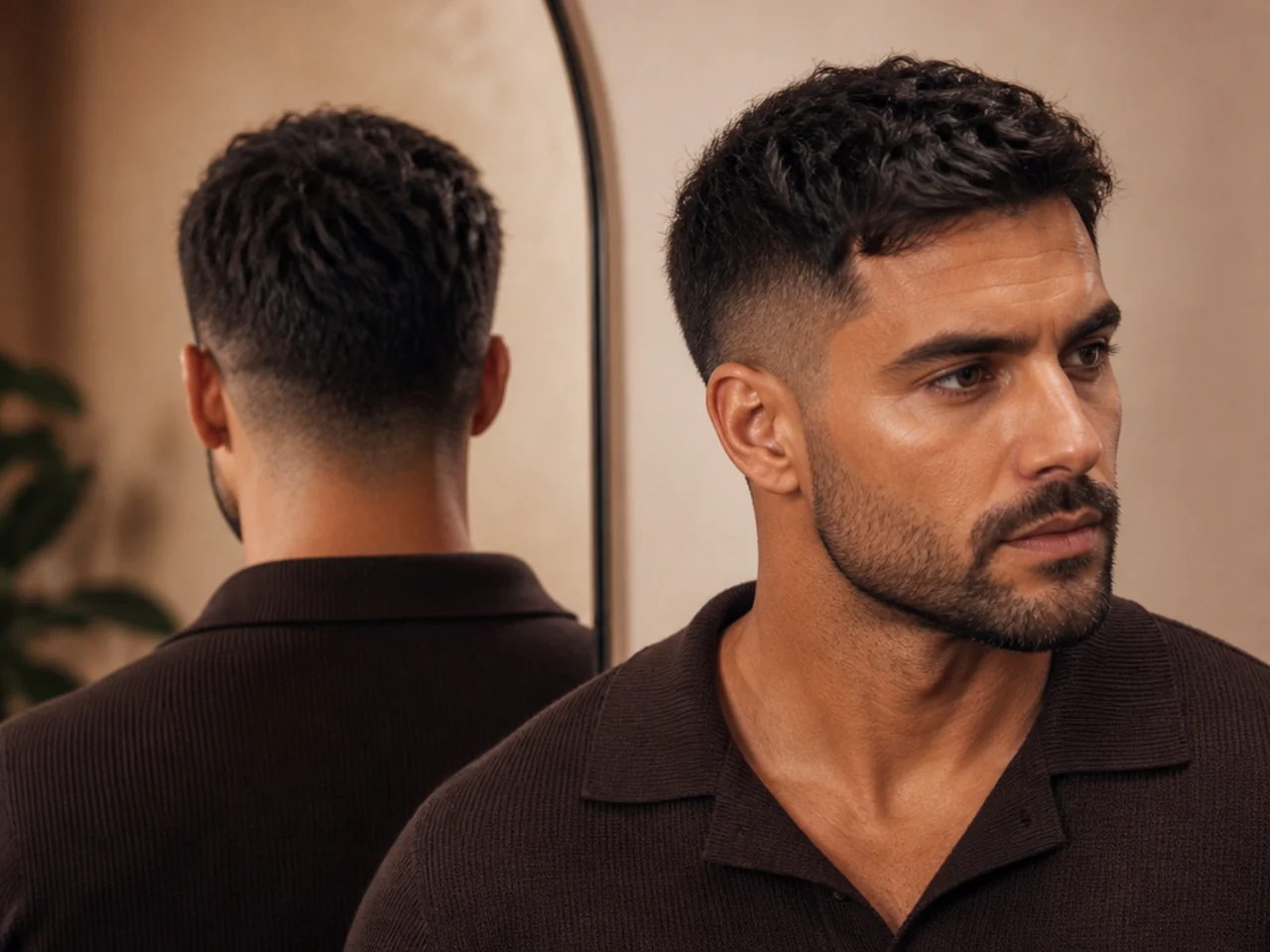
9. The Shape That Shortens a Long Jaw
Sides kept close from the temple down, with the weight held above it, puts the widest part of the silhouette high on the head. A long jaw reads shorter when the widest horizontal sits above it.
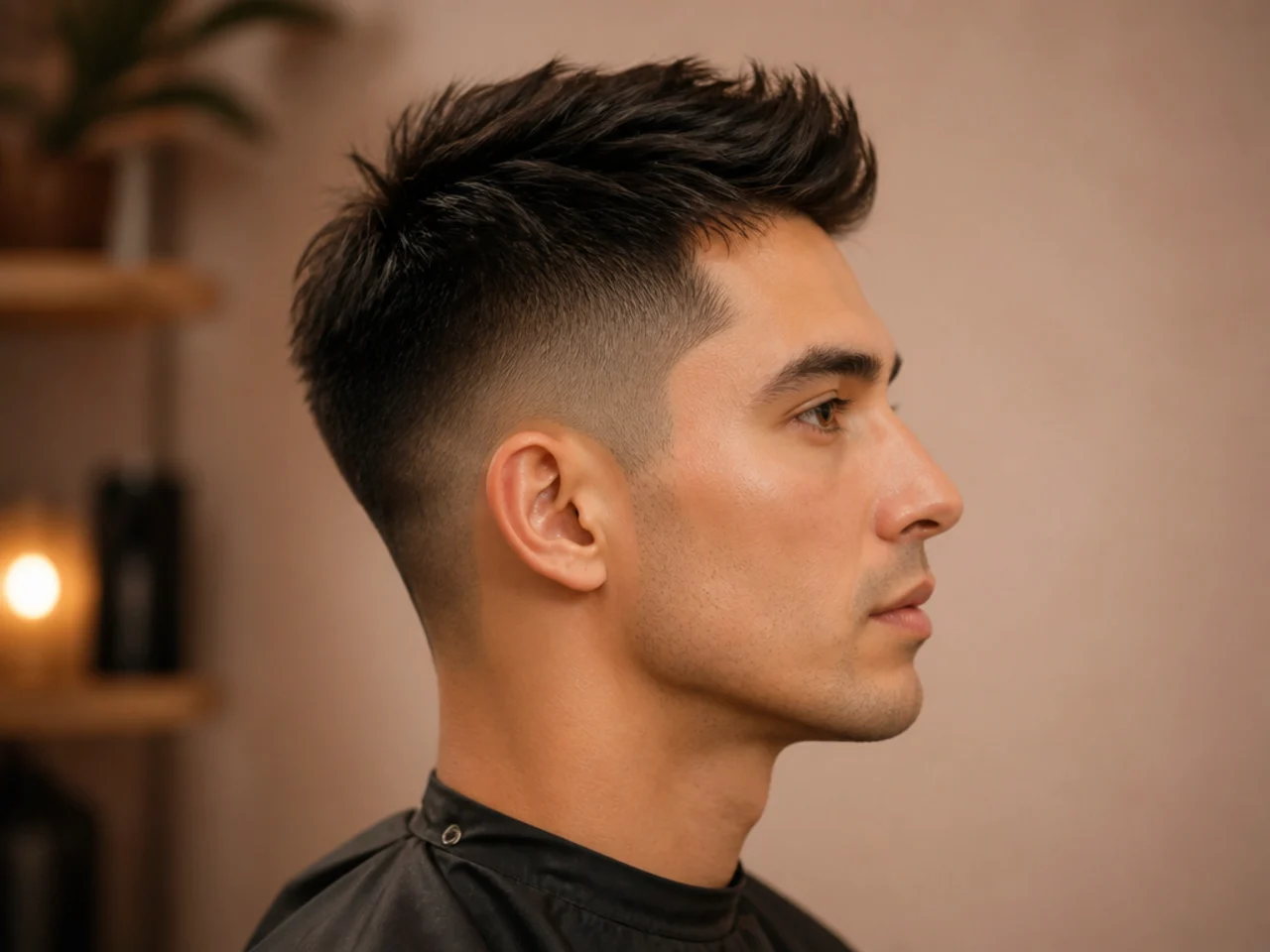
10. The Silhouette That Makes a Round Face Rounder
A uniform short length follows the skull, and dense hair follows it with extra height, so a round head becomes a rounder outline. The fix is height at the front and less width at the sides, not a smaller guard.
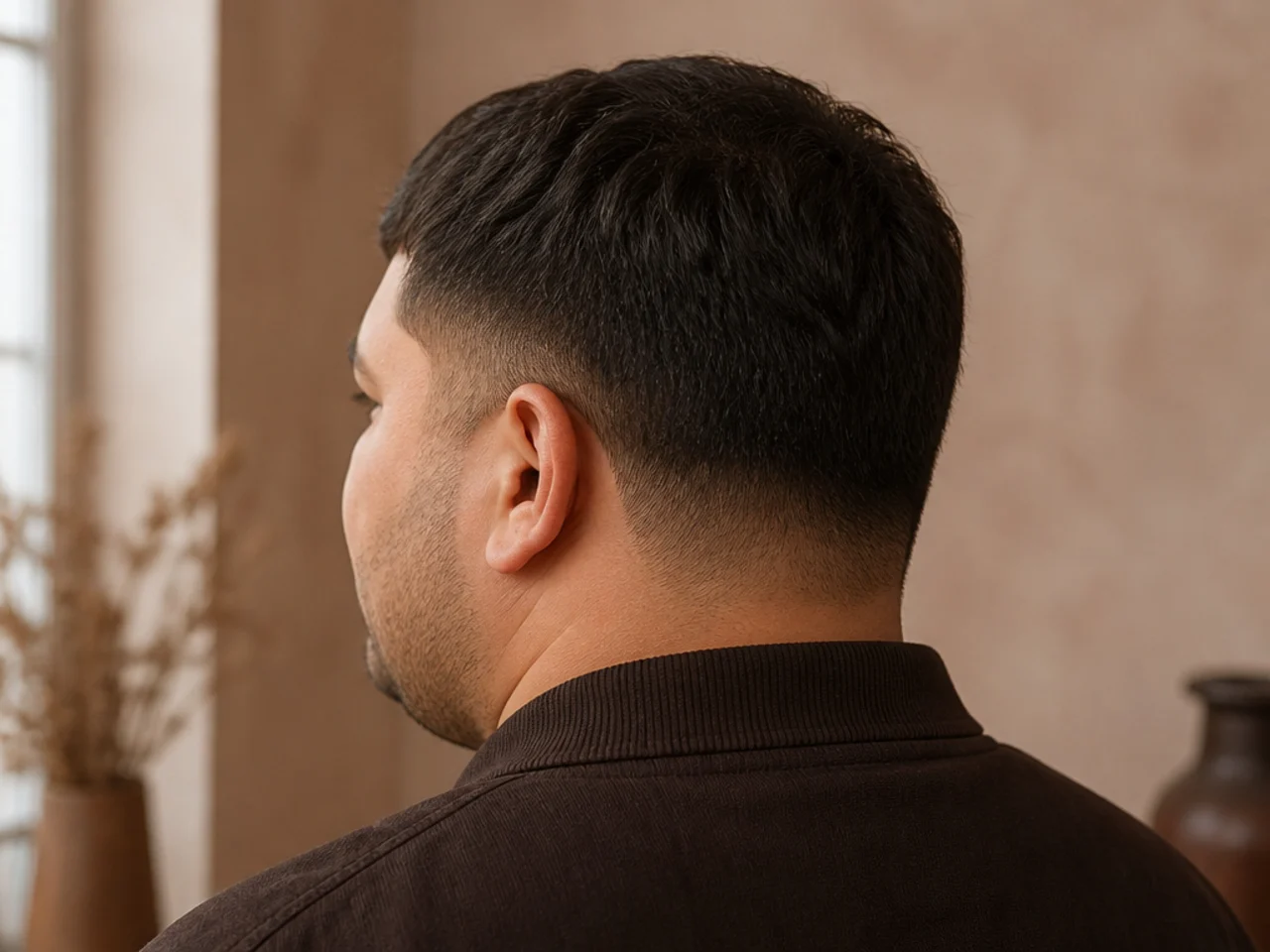
11. Filling a Flat Occipital Bone
The occipital bone is the curve at the lower back of the skull, and plenty of heads are flat there. A guard longer through that zone rebuilds it — invisible from the front, obvious in profile.
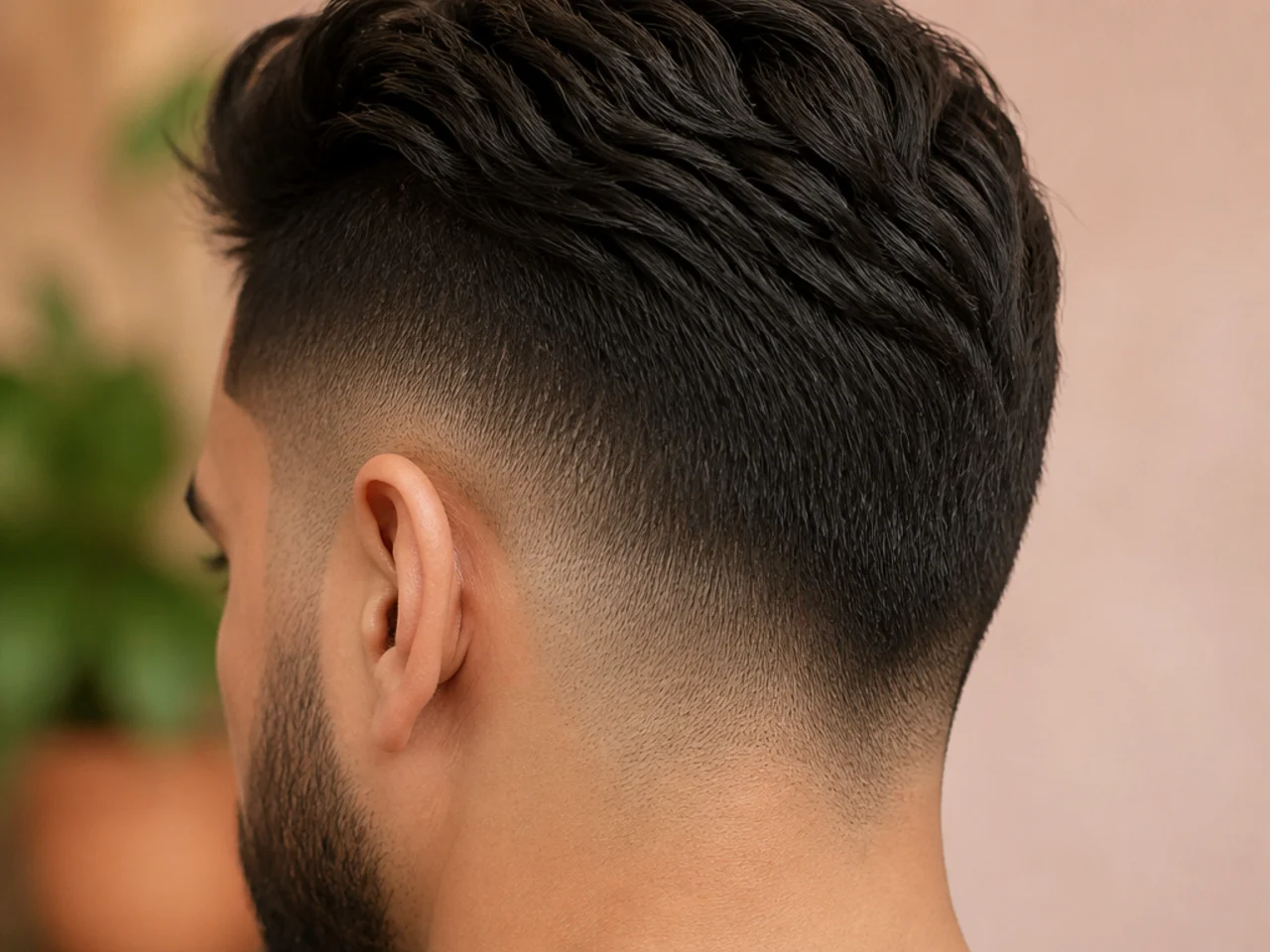
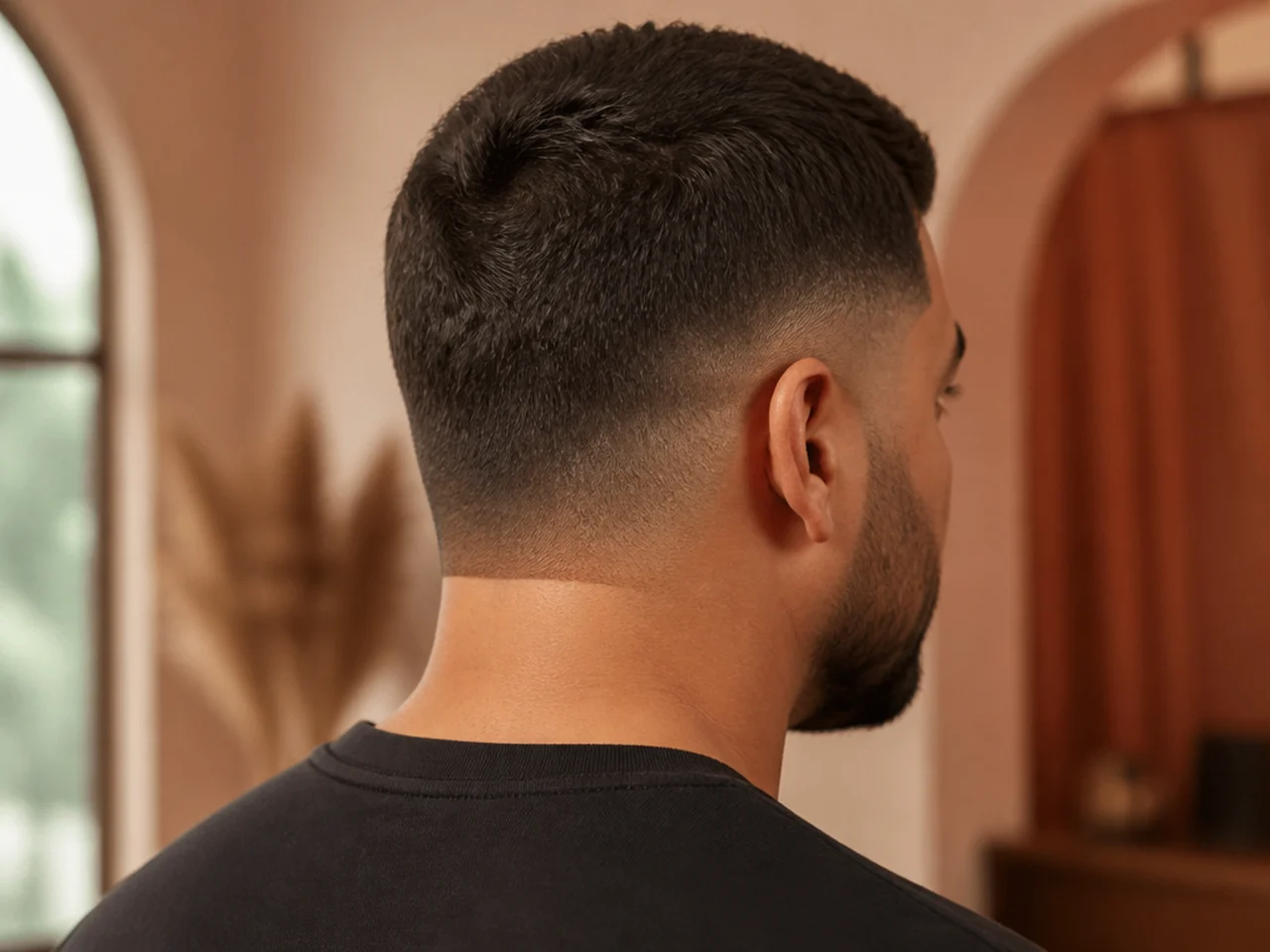
12. The Profile Nobody Checks in the Mirror
Every silhouette here is a profile shape, and a bathroom mirror only shows the front. Photograph your own side view the day after a cut, because that is the view other people actually spend time with.
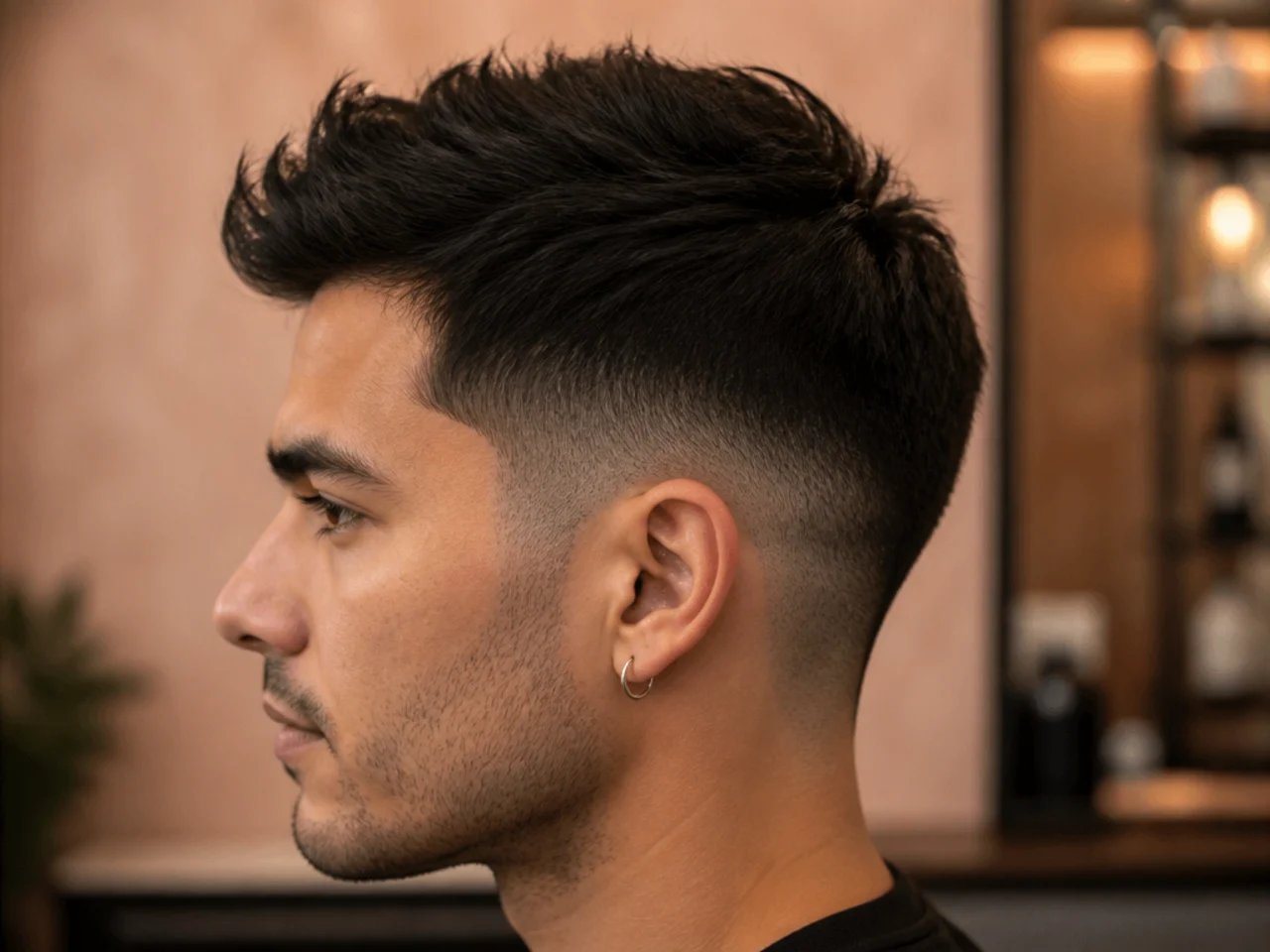
13. The Shape in Week One
Straight out of the chair, thick hair is at its most compact and the outline hugs the skull as closely as it ever will. This is the version you chose, and the shortest-lived one on the page.
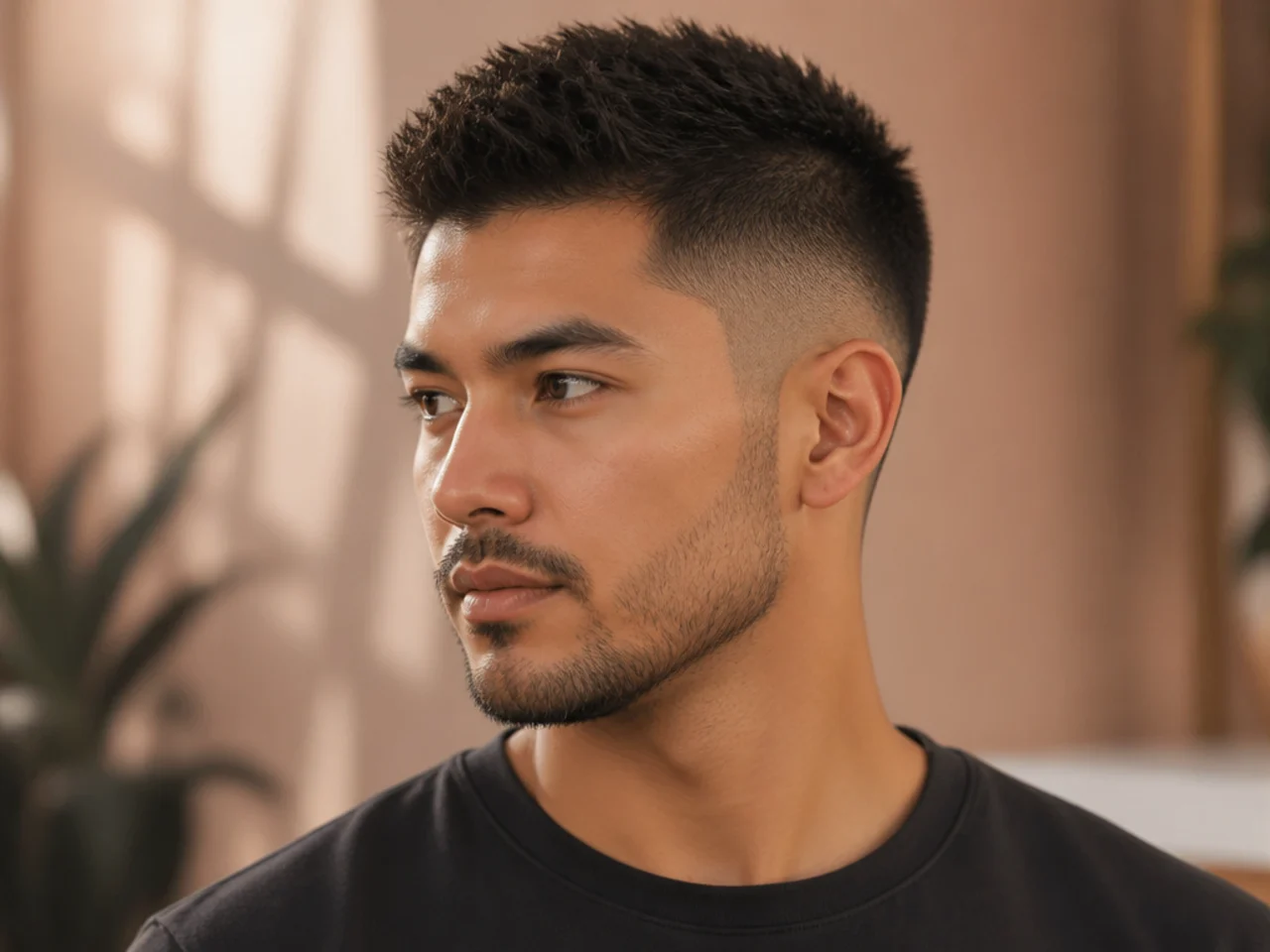
14. The Same Shape in Week Four
Three weeks of growth on dense hair adds height everywhere at once, so a square grows taller and the corners push further out. Book on the silhouette, because the shape distorts before the length looks wrong.
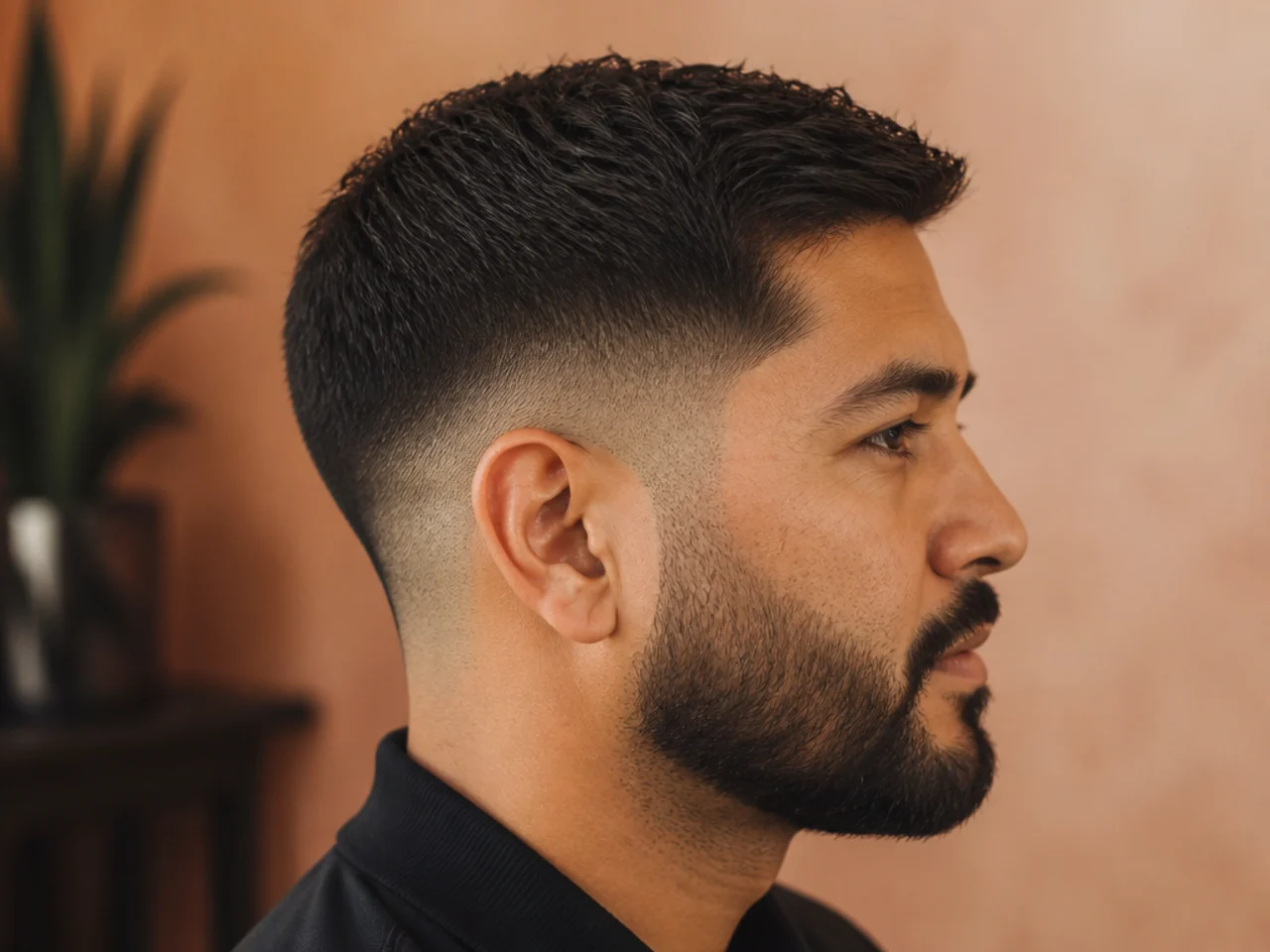
15. The Triangular Outline
A triangle appears when the sides go very short and the top keeps its full width. The narrow base inverts the head, and on thick hair it arrives faster because the top holds its width instead of drooping.
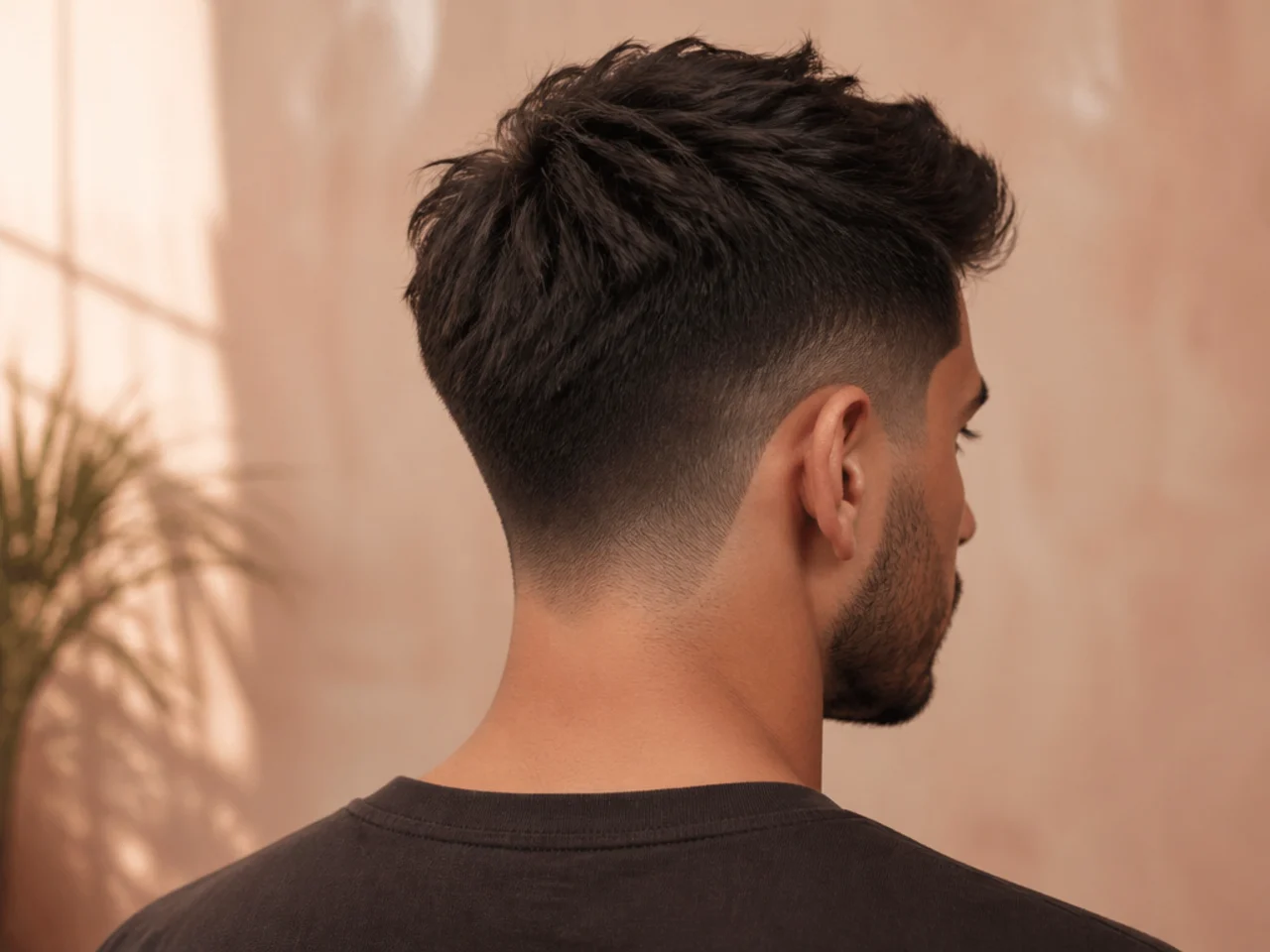
16. Why a Fade Narrows the Silhouette
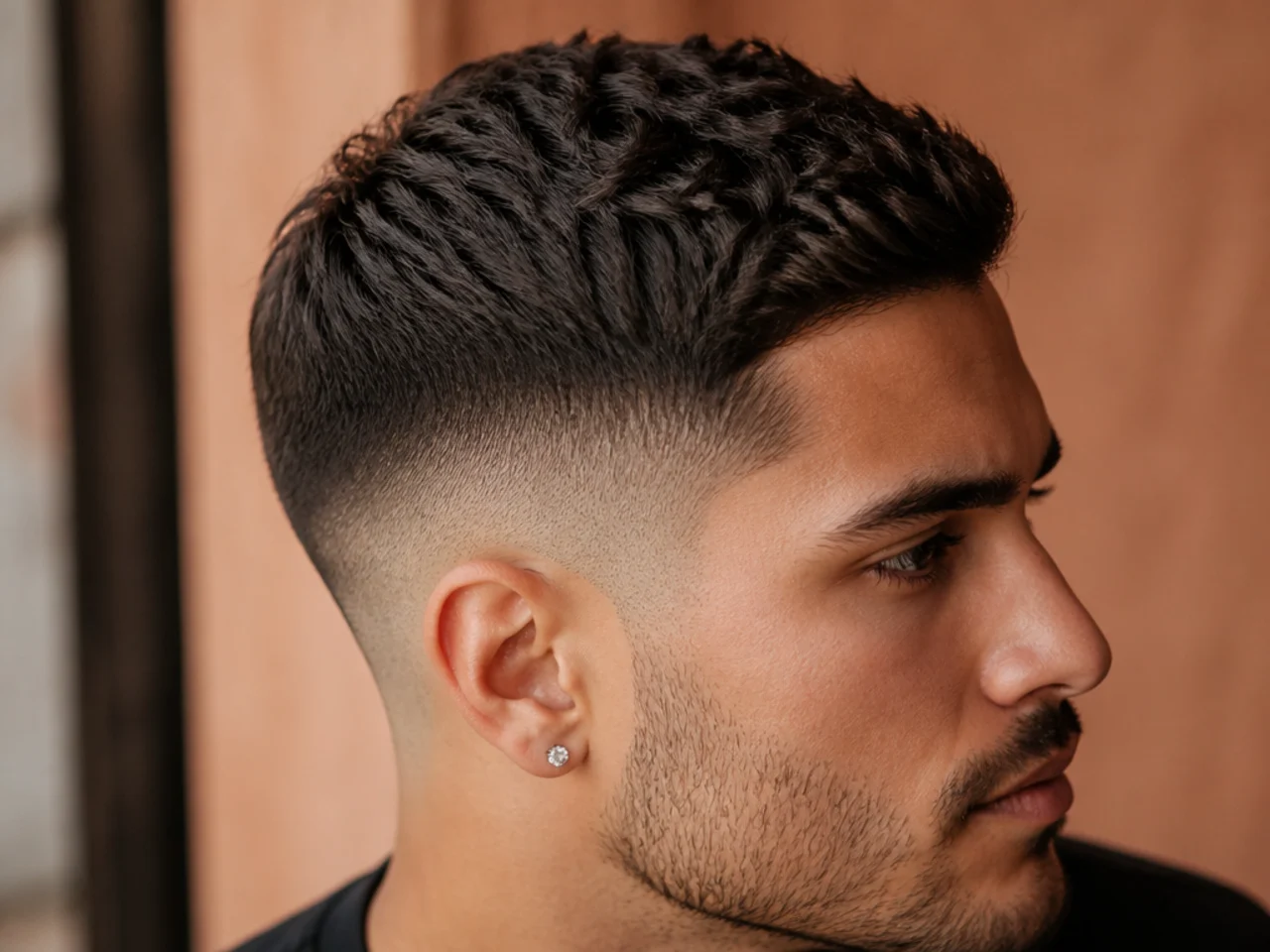
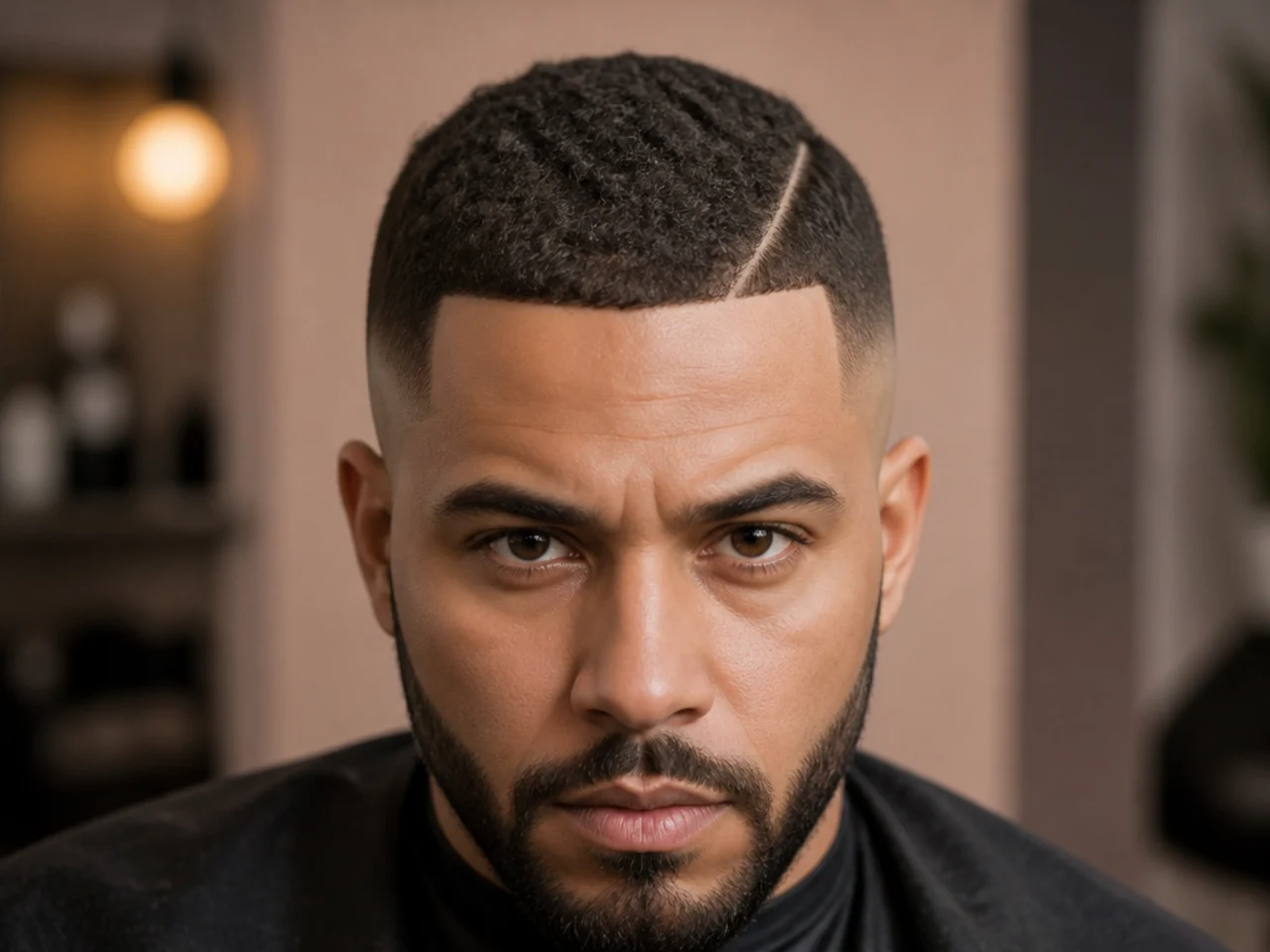
A fade takes the length down to bare skin, so the outline pulls in tight against the skull at the bottom of the head. That makes it right for a wide head and wrong for one that is already narrow. Starting the gradient near the ear keeps most of the width, which is why a low fade is the gentlest version of that pull.
17. Why a Taper Keeps It
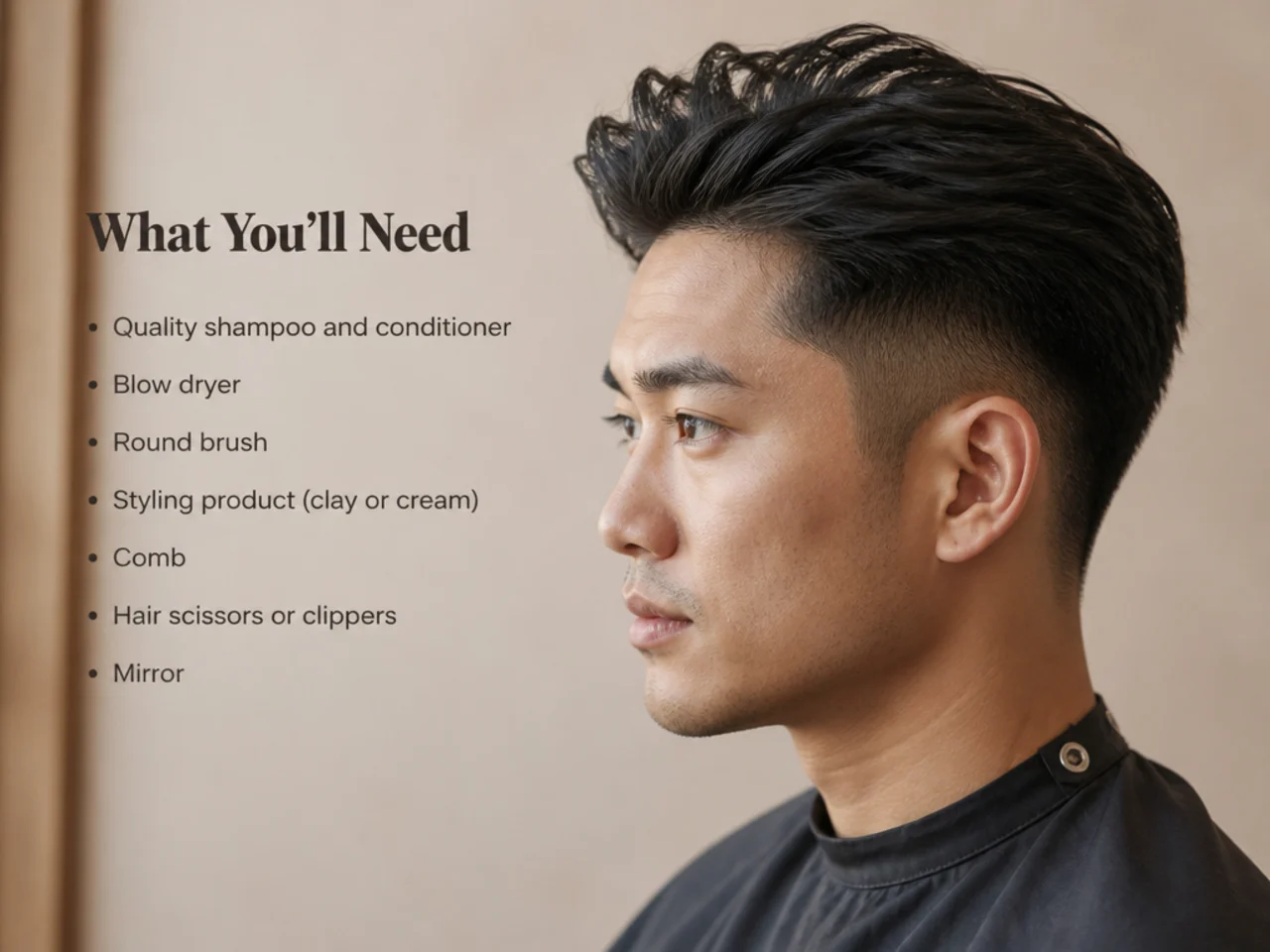
A taper always leaves length, usually a #1 at the neckline, so the outline stays a few millimetres clear of the skull. On thick hair that preserved width keeps a square shape square instead of pinching it into a wedge, which is the whole case for a taper haircut on a dense head.
18. The Guard Chart, Translated
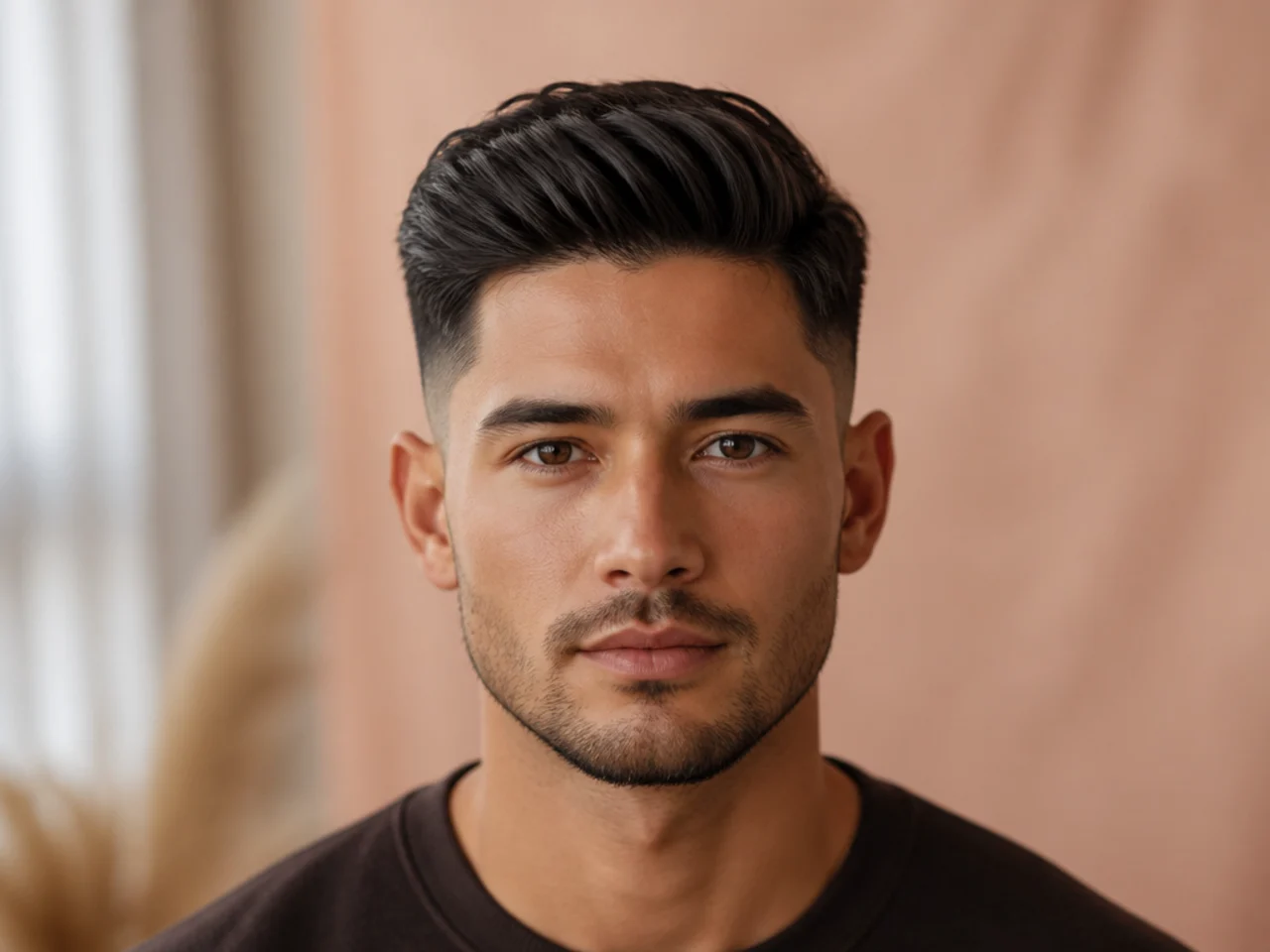
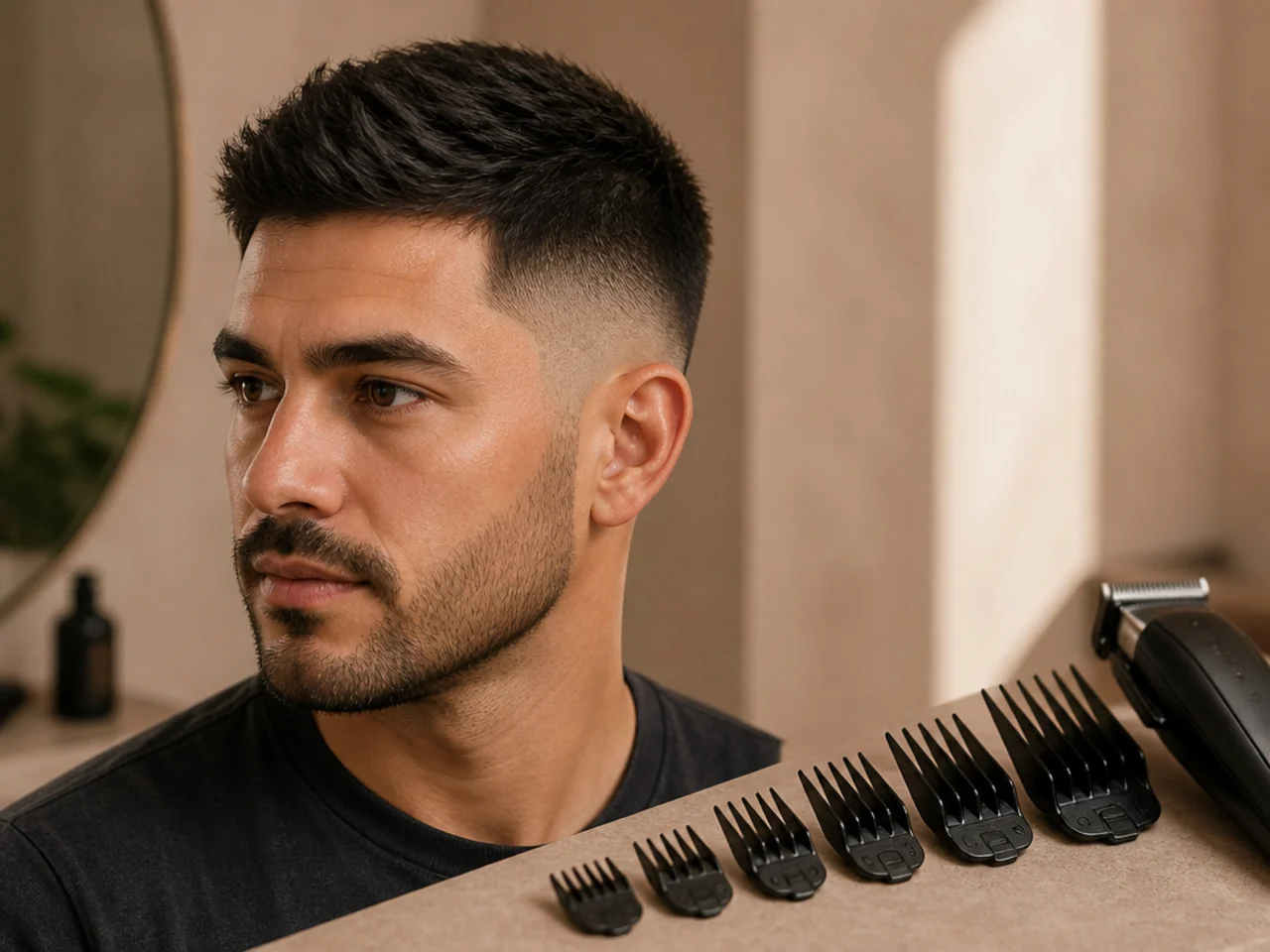
The chart is #1 at 3mm, #2 at 6mm, #3 at 10mm and #4 at 13mm. Drop one guard from any finer-haired reference, because it was the height you liked and your density delivers it at a smaller number.
19. The Closed Helmet
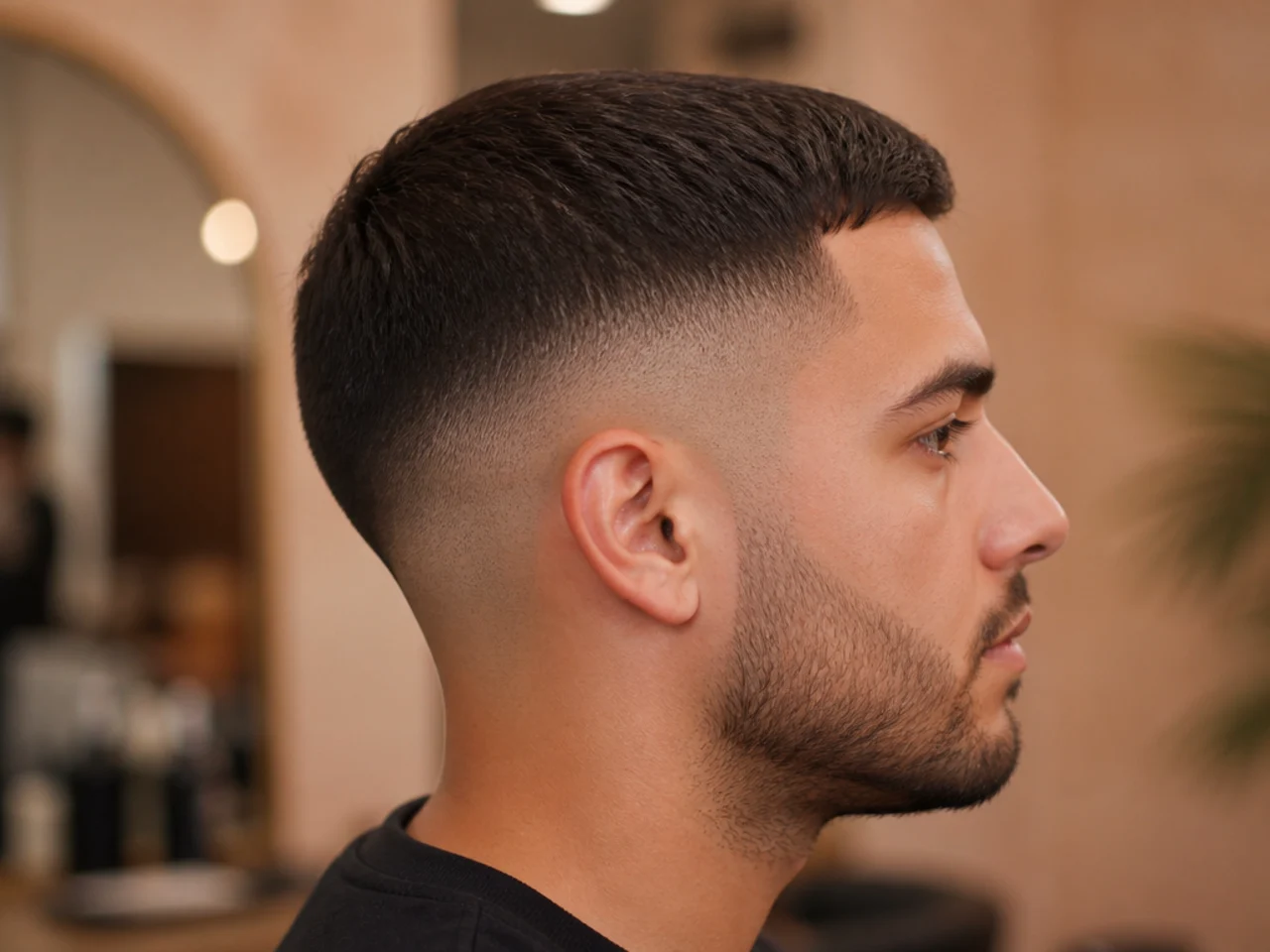
One guard from neckline to crown gives thick hair nowhere to break, so the outline closes into a solid dome. It is the most common accidental silhouette, and it comes from asking for a number instead of a shape. Taken deliberately shorter it stops being a dome and becomes a buzz cut on thick hair, which is a decision rather than an accident.
20. The Squared Neckline Corner
A blocked neckline puts two right angles at the base of the head, and the width above them makes the whole back read as a rectangle. Rounding the corners lets the silhouette narrow toward the neck.
Styling and Upkeep
Dry with the shape in mind, not the length. Rough-drying pushes dense hair wherever the towel went, and that sets the outline for the day.
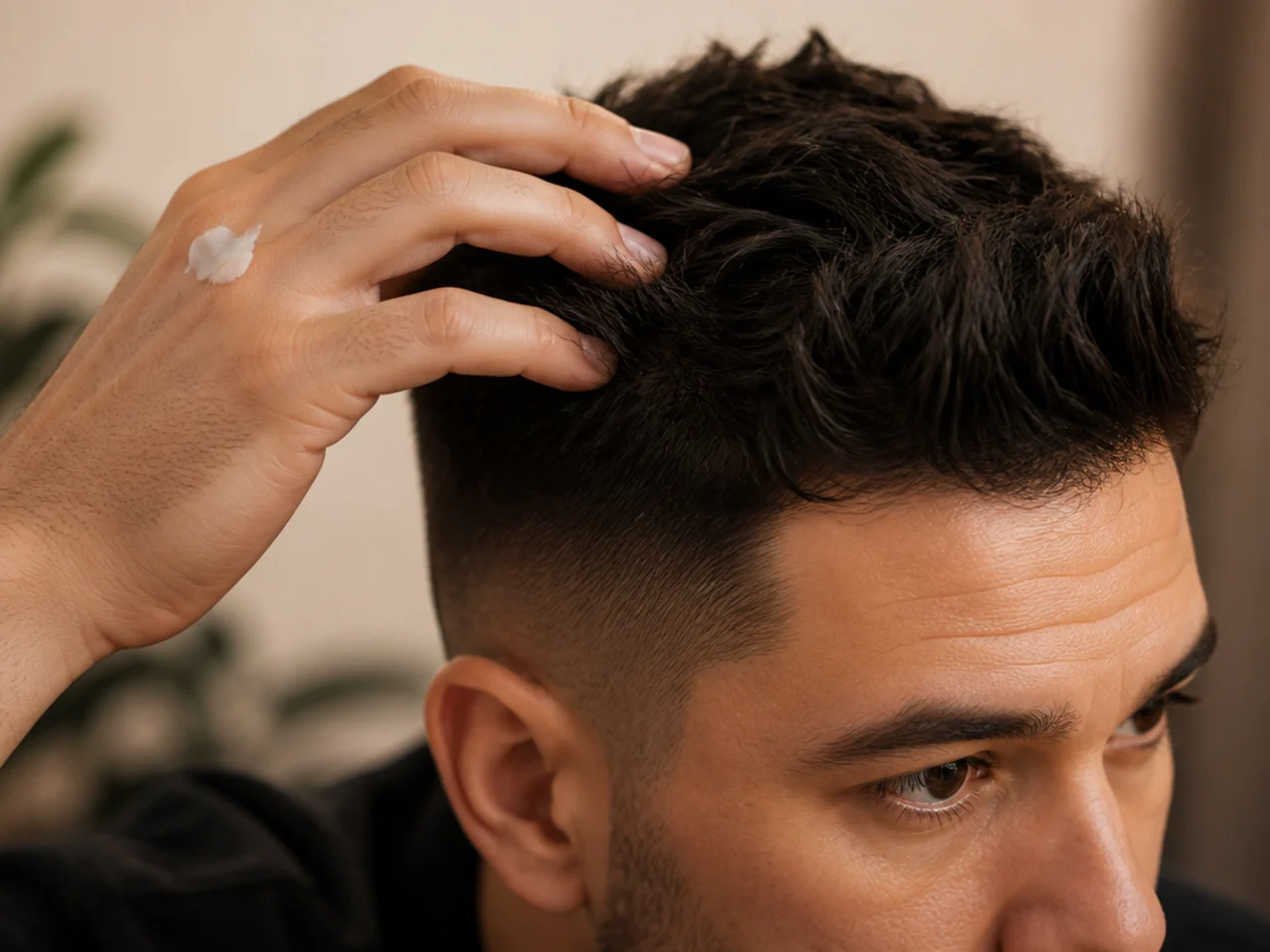
Matte product controls height without removing it. Clay weighs the corners down slightly, which narrows a silhouette that grew wider than you wanted.
Check the profile at week two. The outline moves before the length does, and that is when a square starts becoming a dome.
Book on the silhouette, not the calendar. Thick hair distorts a shape in about three weeks while the measured length still looks fine.
Keep a photo of the outline you liked. The side view, taken the day after the cut, in normal light.
Mistakes to Avoid
Asking for a number instead of a shape. The number produces a length; the shape is the part anyone sees.
Copying a guard from a finer-haired photo. The same millimetres sit higher on your scalp, so the outline comes out bigger.
Leaving the corners above the ears unmentioned. They flare first and widen the face before anything else misbehaves.
Fading the sides on an already narrow head. It pulls the outline in and turns a good square into a wedge.
Judging the result in the front mirror. Every silhouette question is answered in profile.
FAQ
Does thick hair look longer than the guard suggests? Yes — density holds it off the scalp, so a #2 reads closer to a #4.
How do I stop thick hair flaring over the ears? Ask for the corners to be taken in specifically, because width appears there first.
Fade or taper on thick hair? A fade narrows the silhouette, a taper keeps it — choose by the outline you want.
Final Thoughts
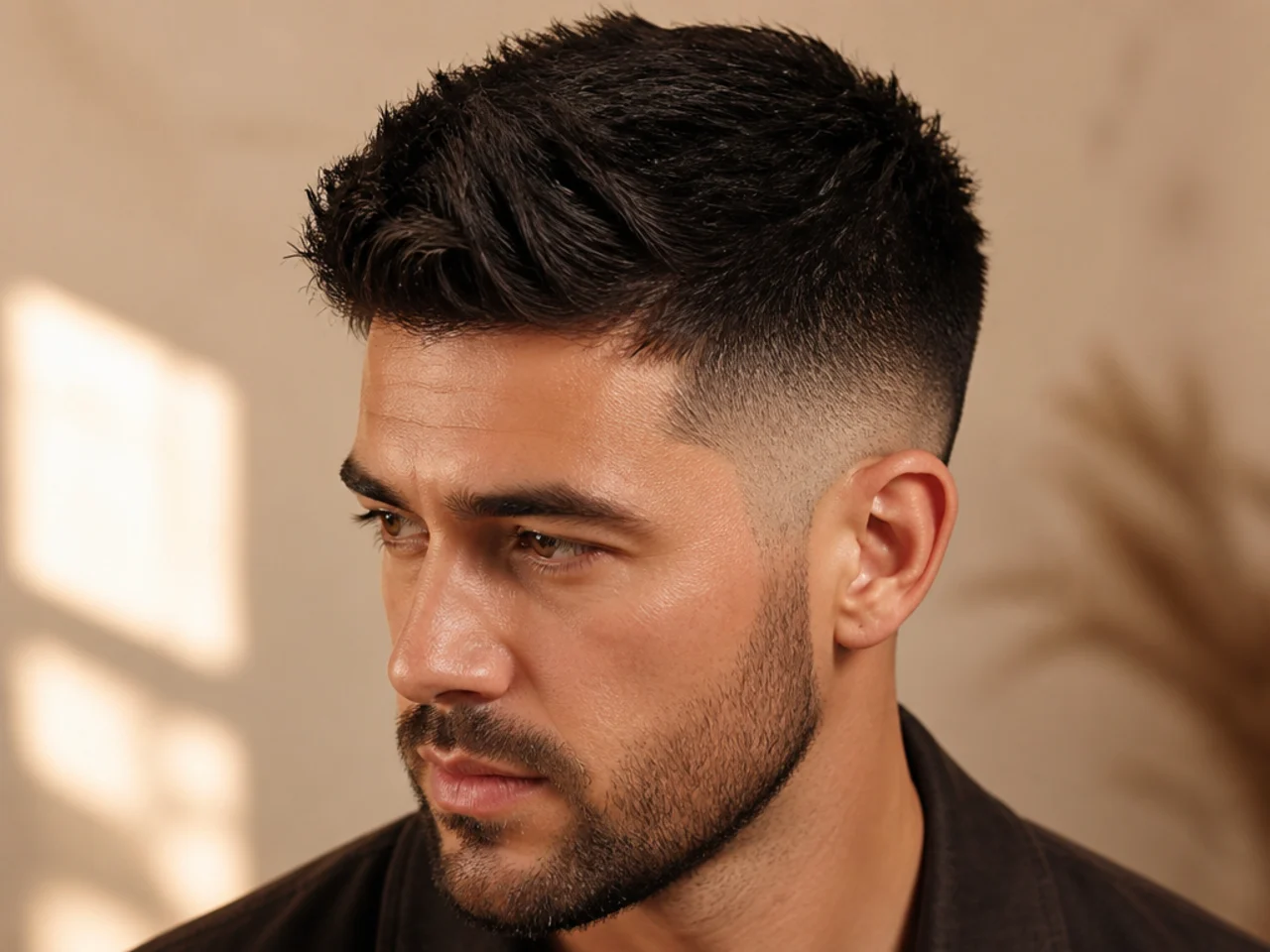
Decide the outline before anyone picks up a guard, look at it from the side, and treat the number as the last decision rather than the first. Density is not a problem to solve on thick hair — it is the thing building your silhouette, and it will build one whether or not you chose it.
For the named cuts that sit on top of these shapes see haircuts for men with thick hair, and to match an outline to your face see haircut ideas for men by face shape. More in Men's Haircuts.