5 Steps to Pick a Haircut for Your Face Shape
Pick the right haircut for your face shape in five steps — measure, identify, balance, filter, then walk into the shop with the language your barber needs.
In this article · 27
- What You'll Need
- Step 1: Measure Your Face
- Step 2: Identify Your Face Shape
- Oval
- Round
- Square
- Oblong (Rectangle)
- Heart
- Diamond
- Step 3: Know Which Shapes Balance Yours
- Step 4: Filter Cuts That Actually Work
- Filter for Round Faces
- Filter for Square Faces
- Filter for Oblong Faces
- Filter for Heart Faces
- Filter for Diamond Faces
- Filter for Oval Faces
- Filter by Hair Type Too
- Step 5: Ask Your Barber the Right Way
- Troubleshooting
- FAQs
- Does face shape matter more than hair type?
- What if my face is between two shapes?
- Can I fake a different face shape with a haircut?
- Do I need to remeasure my face over time?
- What about beards — do they change the rule?
- How long until a new cut settles into its shape?
Picking the right haircut for your face shape isn't guesswork. It's five steps: measure the face, name the shape, learn which shapes balance yours, filter cuts through that filter, and walk into the shop with the exact language your barber needs. Do it once and every cut for the next decade lands where you wanted it. This guide walks through all five with a tape measure, a mirror, and one honest read of your own reflection.
What You'll Need
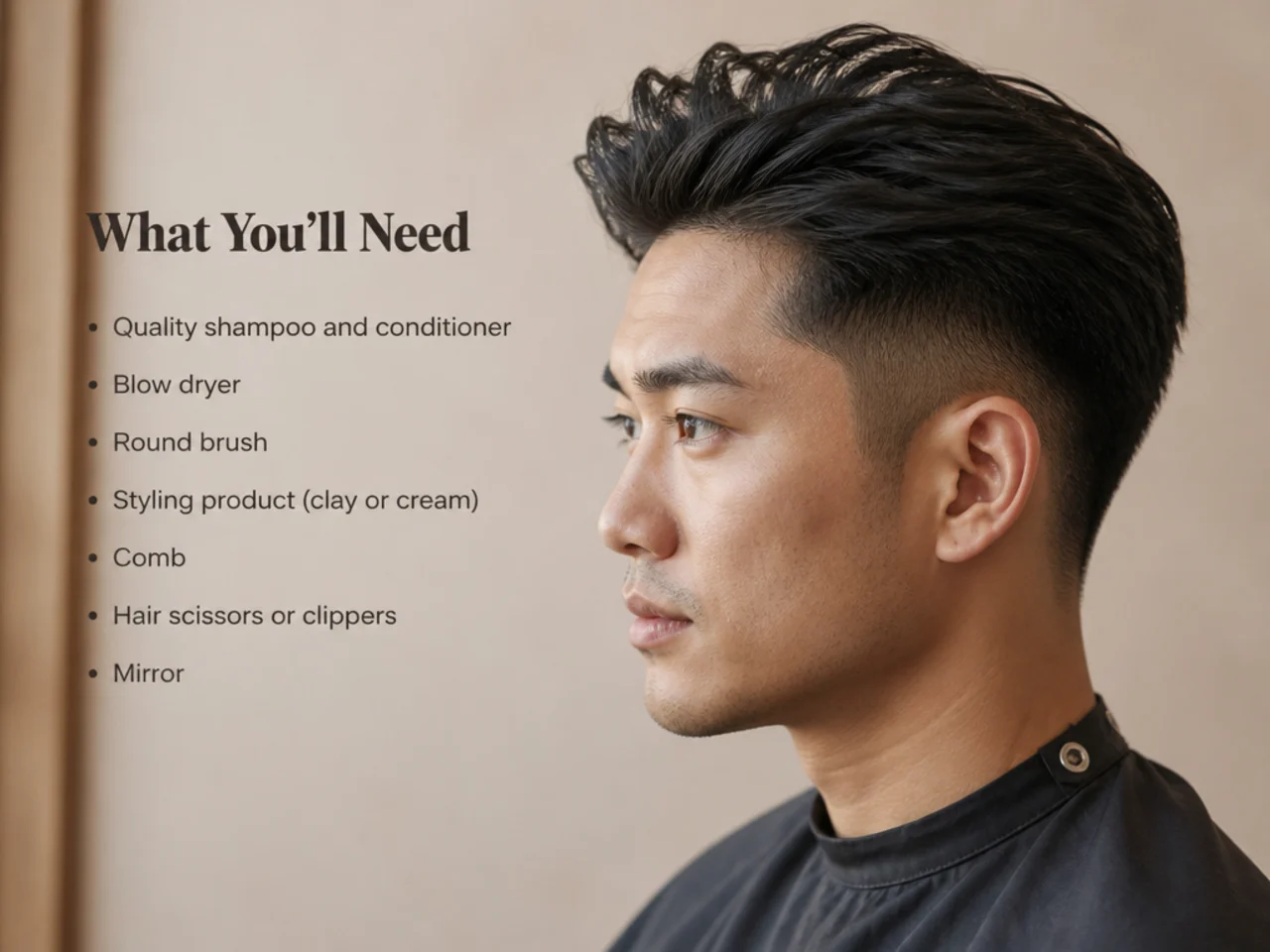
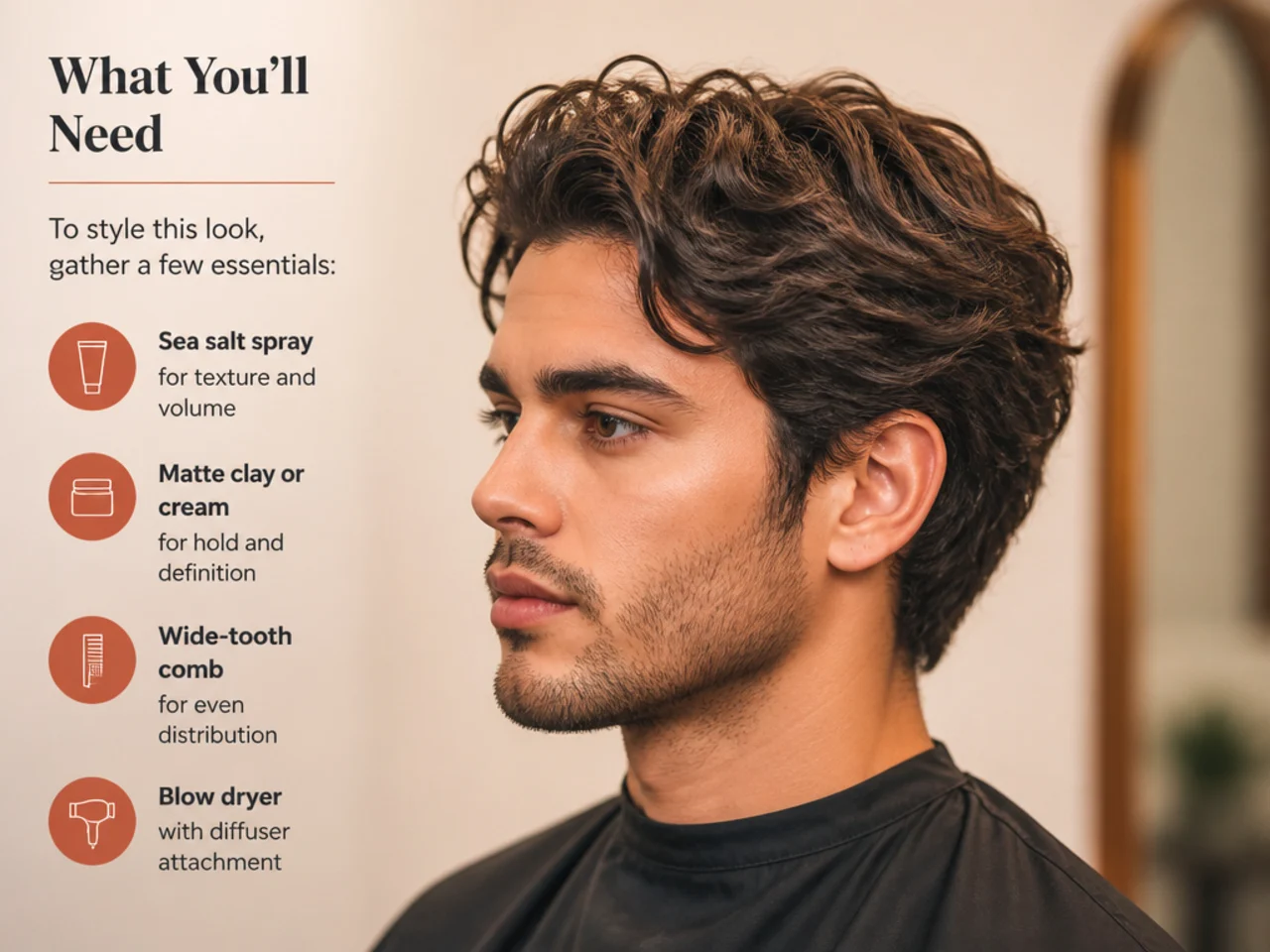
Nothing fancy. Grab five things before you start:
- A soft measuring tape (the fabric kind used for sewing). A ruler works if you're careful.
- A mirror at eye level, ideally one you can stand square to.
- A phone with a front-facing camera for a straight-on selfie.
- A pen and a scrap of paper for the four numbers you'll write down.
- A hair tie, headband, or two clips to pull every strand off your face.
Skip the online face-shape quizzes. They look at one photo, guess, and get it wrong about half the time. Your own tape measure and a level mirror are more accurate in three minutes.
Step 1: Measure Your Face
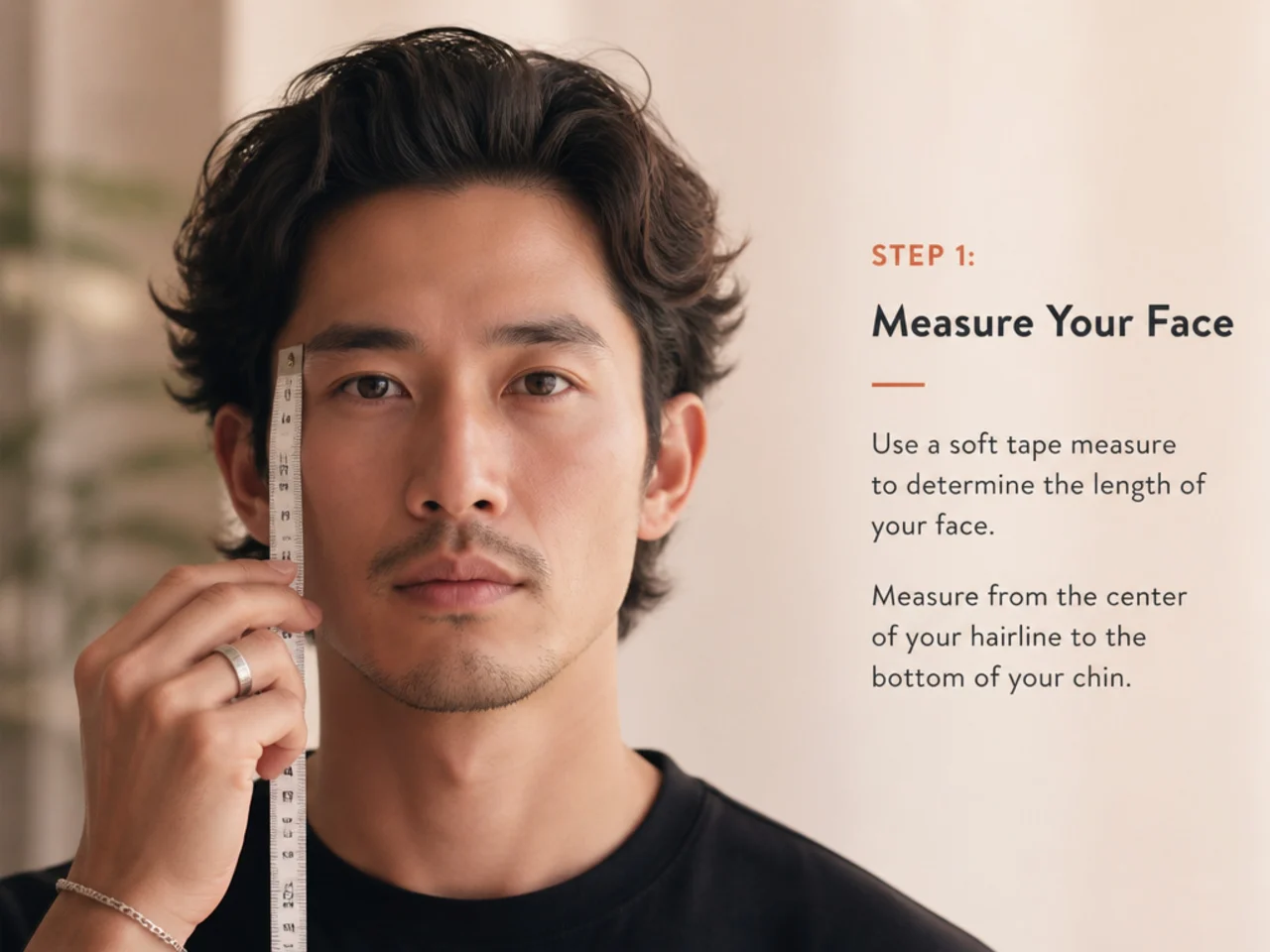
Pull all your hair back off your forehead and stand square to a mirror. You're going to take four measurements and write each one down. Don't skip any — the whole shape read collapses without the full set.
Forehead width. Measure across the widest part of your forehead, temple to temple. This usually sits about an inch above your brows.
Cheekbone width. Measure across your face at the top of the cheekbones, just under the outer corners of your eyes.
Jawline width. Measure from the corner of one jaw, along the underside of the chin, to the corner of the other. Then divide by two — you want a single side-to-side number, not the full curve.
Face length. Measure from the center of your hairline straight down to the tip of your chin.
The common mistake here is measuring the jaw around the curve instead of straight across. Do it wrong and every square face reads as diamond. Use a soft tape, keep it flat against the skin, and read the number where the tape meets the opposite corner — not where it wraps under.
Step 2: Identify Your Face Shape
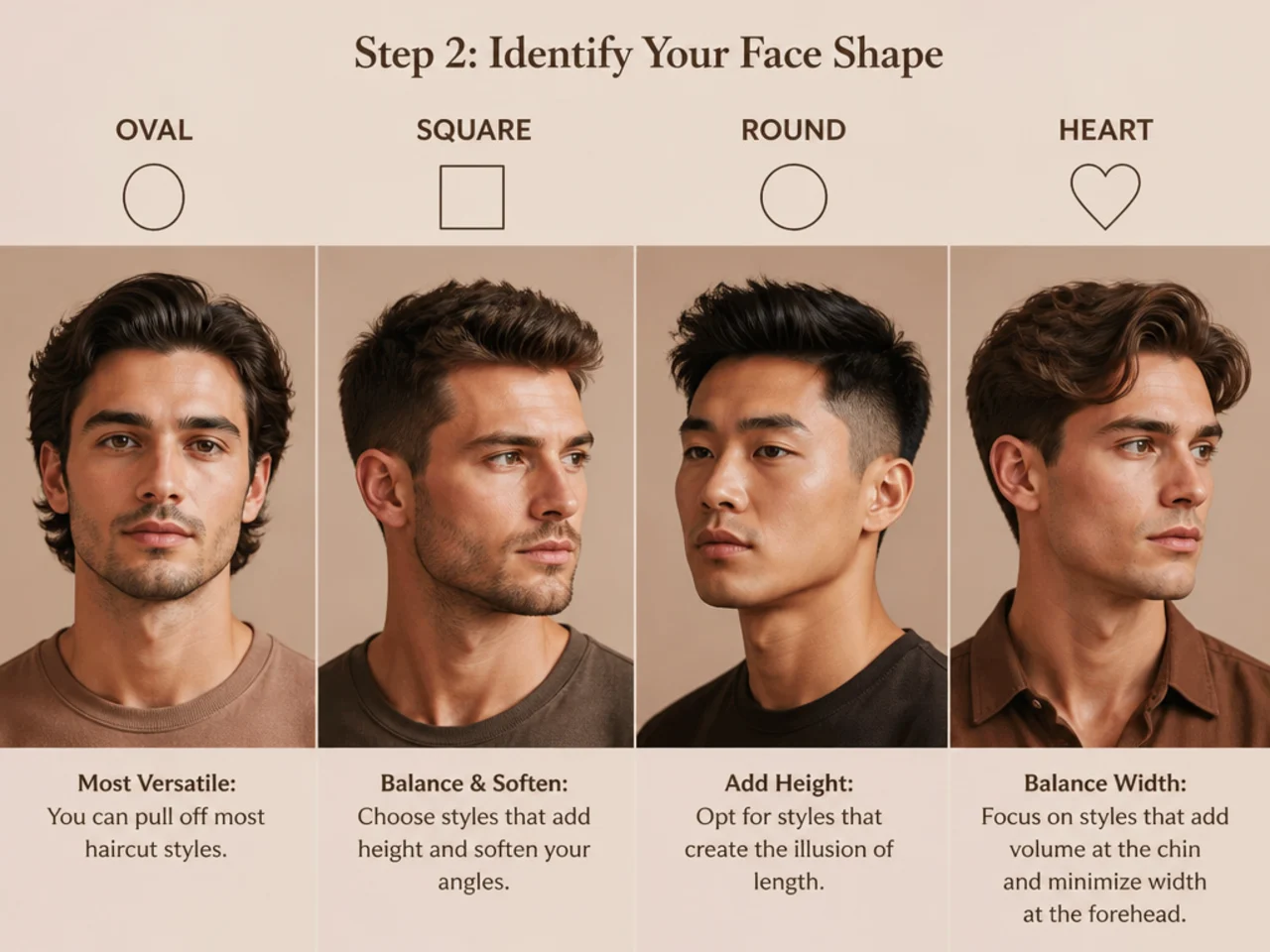
Your four numbers now do the work. Compare them and match to one of the six shapes below. Most men land cleanly in one category; a few sit between two — pick the closer match and note the second as a "borrows from" for later.
Six shapes cover about 95 percent of men. The ratios below assume you measured from the same reference points every time.
Oval

Face length is roughly 1.5 times the width across your cheekbones. Forehead is slightly wider than the jaw. The jawline is rounded, not sharp. This is the balanced, "no imbalance to fix" shape — it reads as the reference every other shape is compared to.
How to check: hold your palm flat under your chin and see if your face looks roughly egg-shaped from the front. If yes, oval.
Round
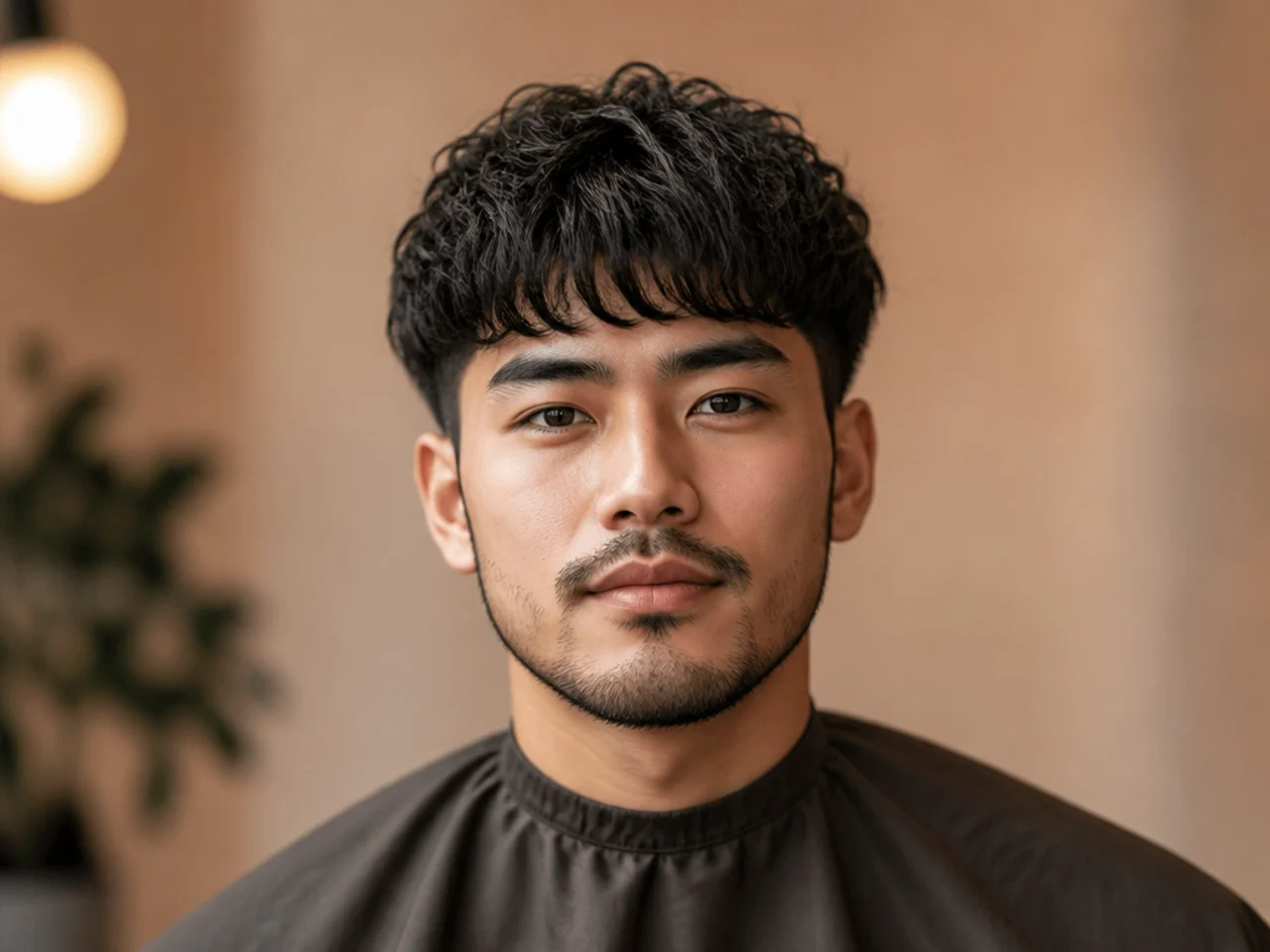
Face length is close to the same as your cheekbone width. The jawline is soft and curved. Cheekbones read as the widest point, and the whole face reads about as wide as it is tall.
How to check: if the four measurements are within an inch of each other and your jaw doesn't have a corner, you're round.
Square
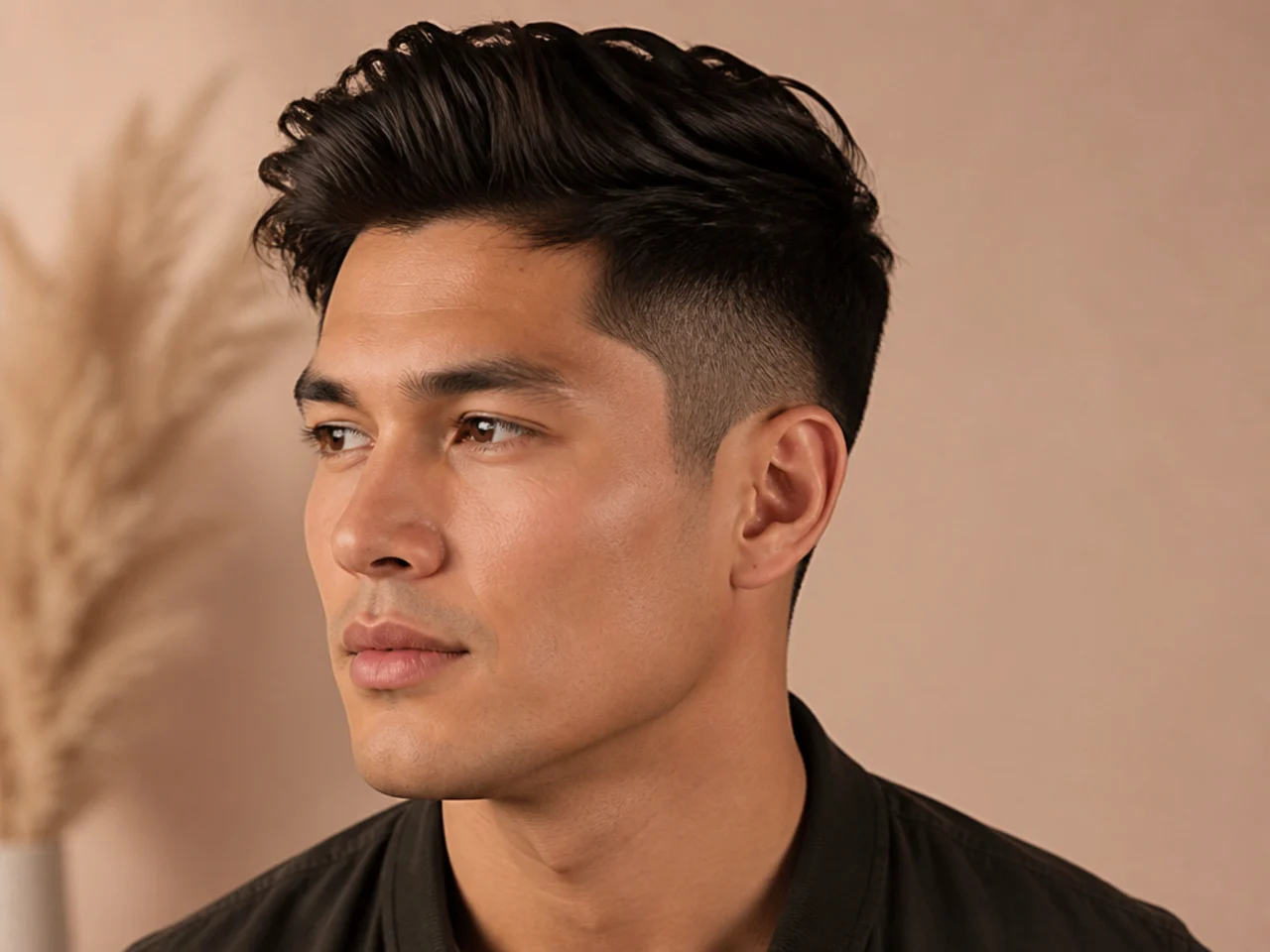
Forehead, cheekbones, and jaw are close to the same width. The jawline is sharp and angular, with visible corners. Face length is only slightly longer than the width.
How to check: if you can feel a clear corner where your jaw turns up toward your ear — like a right angle rather than a curve — you're square. Full breakdown lives in our roundup of haircuts for square faces.
Oblong (Rectangle)
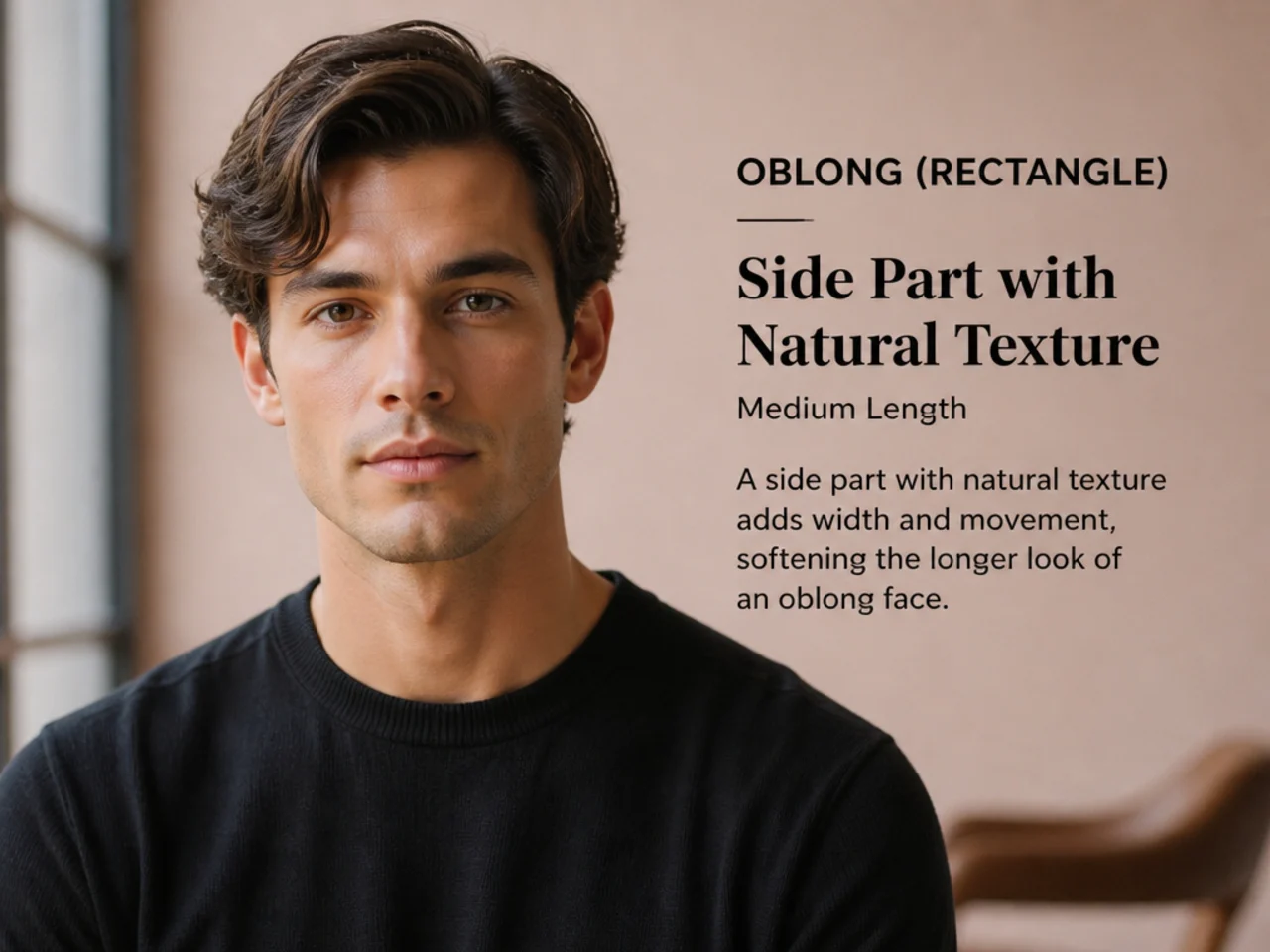
Face length is noticeably greater than any of the three width measurements — often 1.7 to 2 times the cheekbone width. Forehead, cheeks, and jaw are close to the same width, but the whole face reads long rather than balanced. Think of a square that got stretched vertically.
How to check: if the length measurement is dramatically bigger than the other three, you're oblong.
Heart
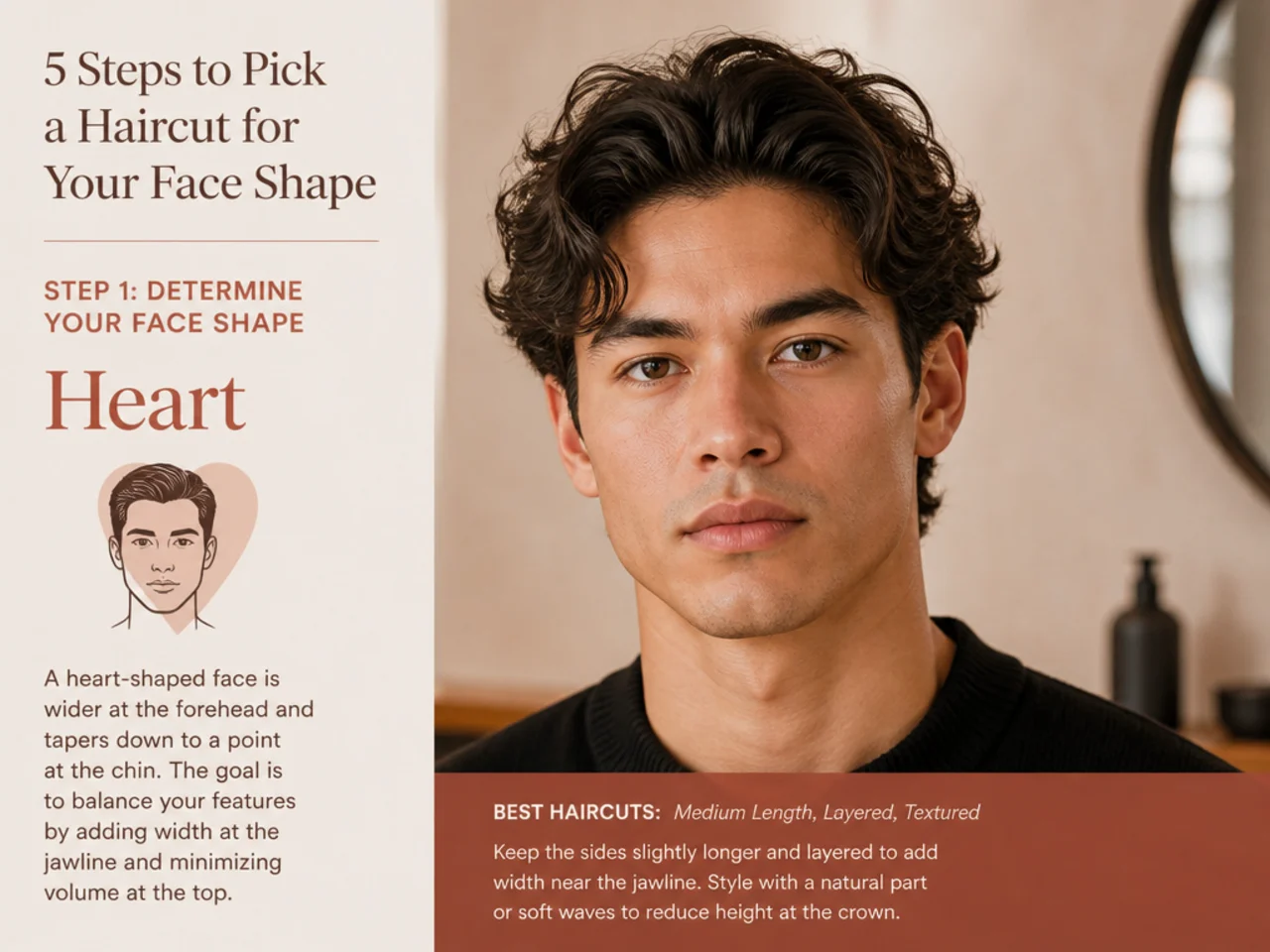
Forehead is the widest measurement — usually noticeably wider than the cheekbones. The face narrows down to a pointed or narrow chin. A widow's peak at the hairline pushes some heart faces further into the shape.
How to check: trace your face in a mirror with a bar of soap. If the outline looks like an upside-down triangle or a valentine, you're heart.
Diamond
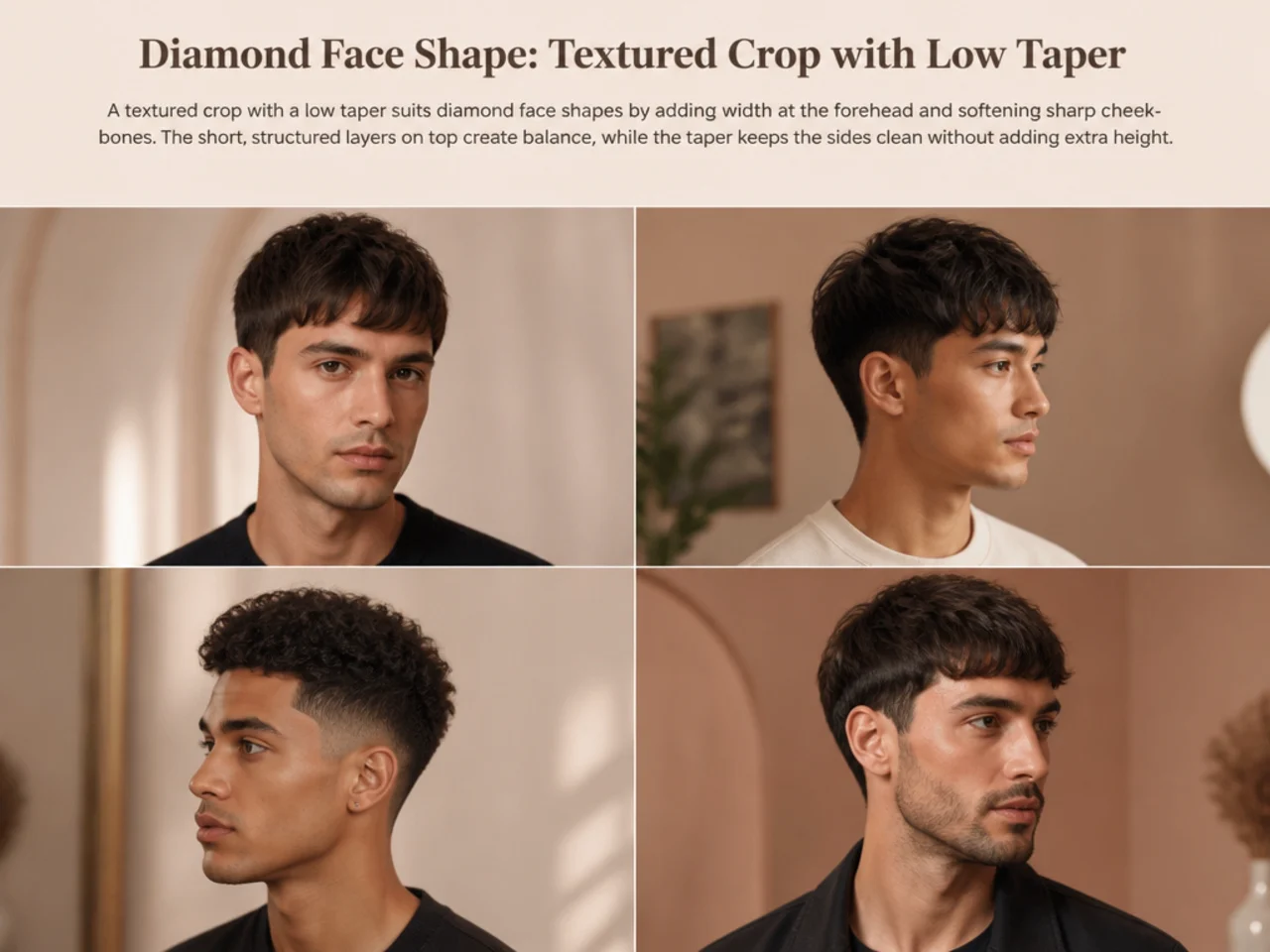
Cheekbones are the widest measurement. Forehead and jaw are both noticeably narrower than the cheeks. Face length is longer than width. Diamond is rare — around 5 percent of men — and often gets misread as either oval or heart.
How to check: if your cheekbones sit visibly wider than both your forehead and your jaw, and the face tapers at both ends, you're diamond.
Step 3: Know Which Shapes Balance Yours
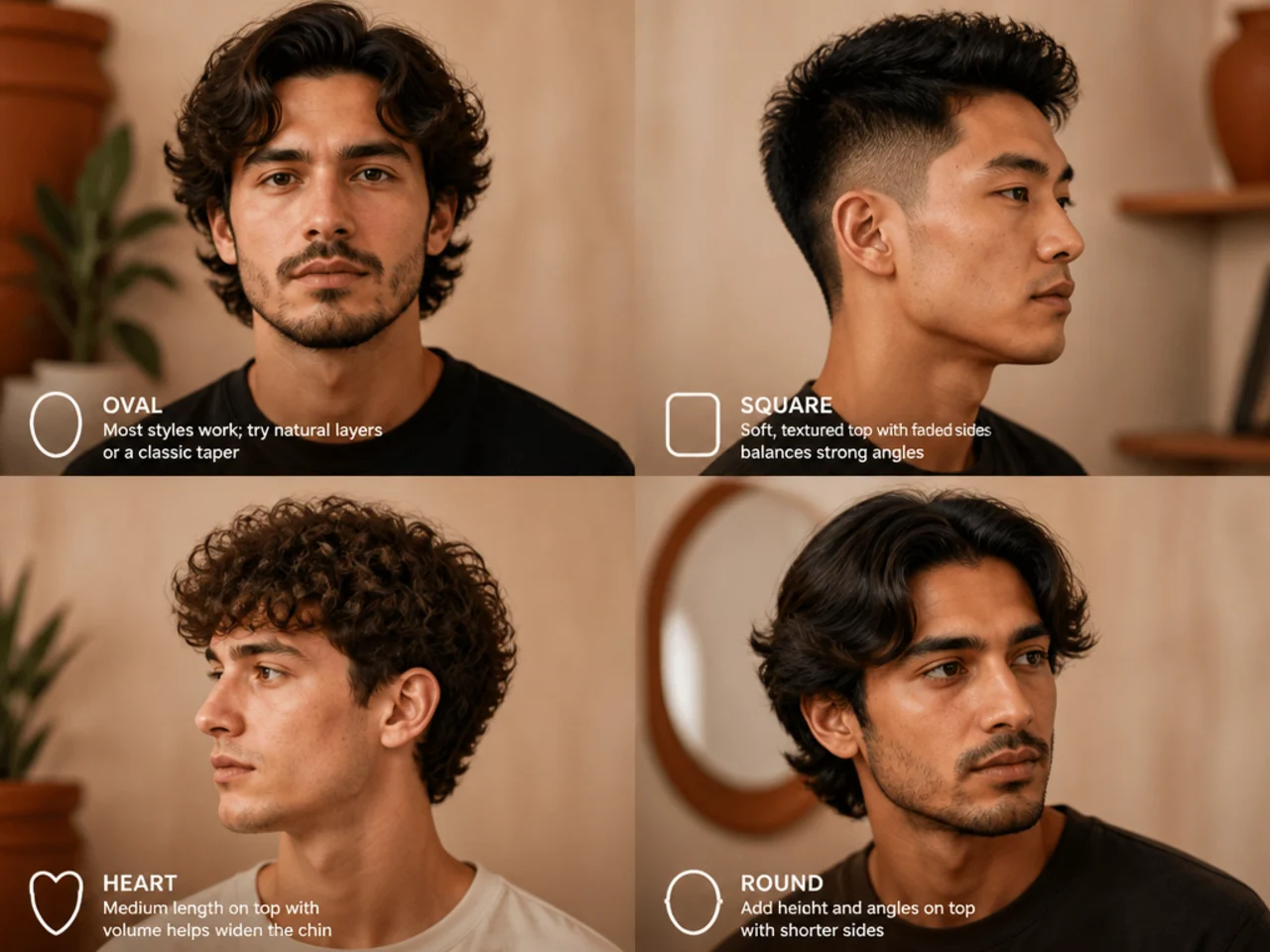
Every haircut is geometry. It adds width where you want width, adds height where you want height, and removes bulk where the face already carries enough. The goal for every shape except oval is to move the face toward oval — the shape that reads as balanced regardless of who's looking.
Here's the target for each shape:
- Oval: already balanced. Your cut can push in almost any direction without breaking the read. Style is the choice, not shape correction.
- Round: add height on top, narrow the sides, and pull the eye up. You want the face to read taller than wide.
- Square: soften the corners. Add height for length, texture for softness, and avoid horizontal lines at jaw level. Aim for a rounded oval read.
- Oblong: add width, not height. Fringe cuts the vertical length. Volume on the sides broadens the read. Skip anything that stacks height on top of an already long face.
- Heart: add fullness at the chin and jaw with a beard or longer length near the ears. Avoid volume at the crown — it makes the forehead look even wider.
- Diamond: add width at the forehead and jaw. A fringe fills the brow; a beard fills the chin. Keep the sides tight over the cheekbones so nothing widens the middle further.
The pattern: whatever the face lacks, the cut supplies. Whatever the face already carries, the cut leaves alone.
Step 4: Filter Cuts That Actually Work
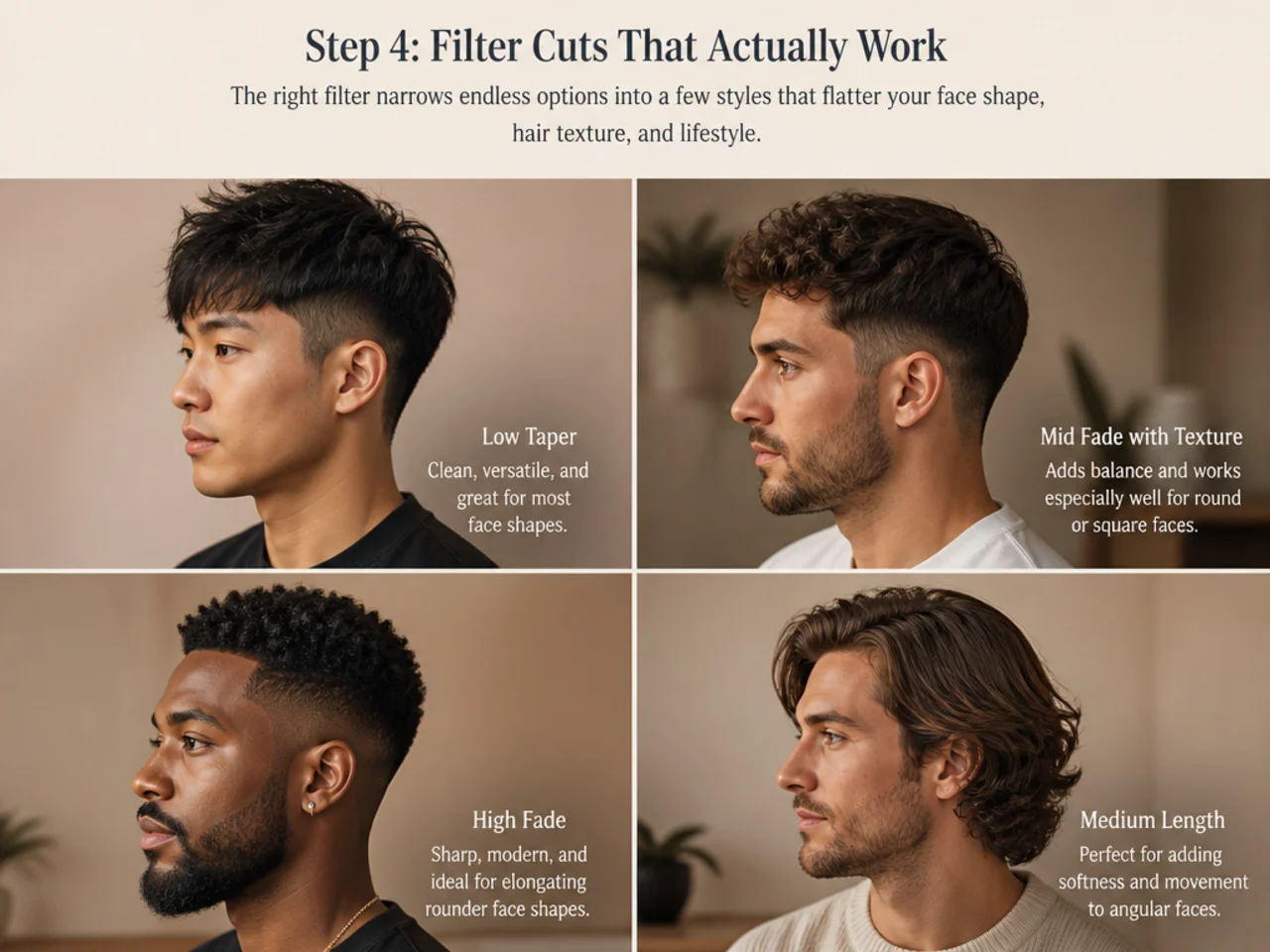
Now the fun part. You have a shape and a rule. Run every cut you're considering through the rule and cut the list in half in about thirty seconds. Below are the cuts that pass the filter for each shape — a starter list, not the last word. Full options live in the general haircut ideas for men roundup.
Filter for Round Faces
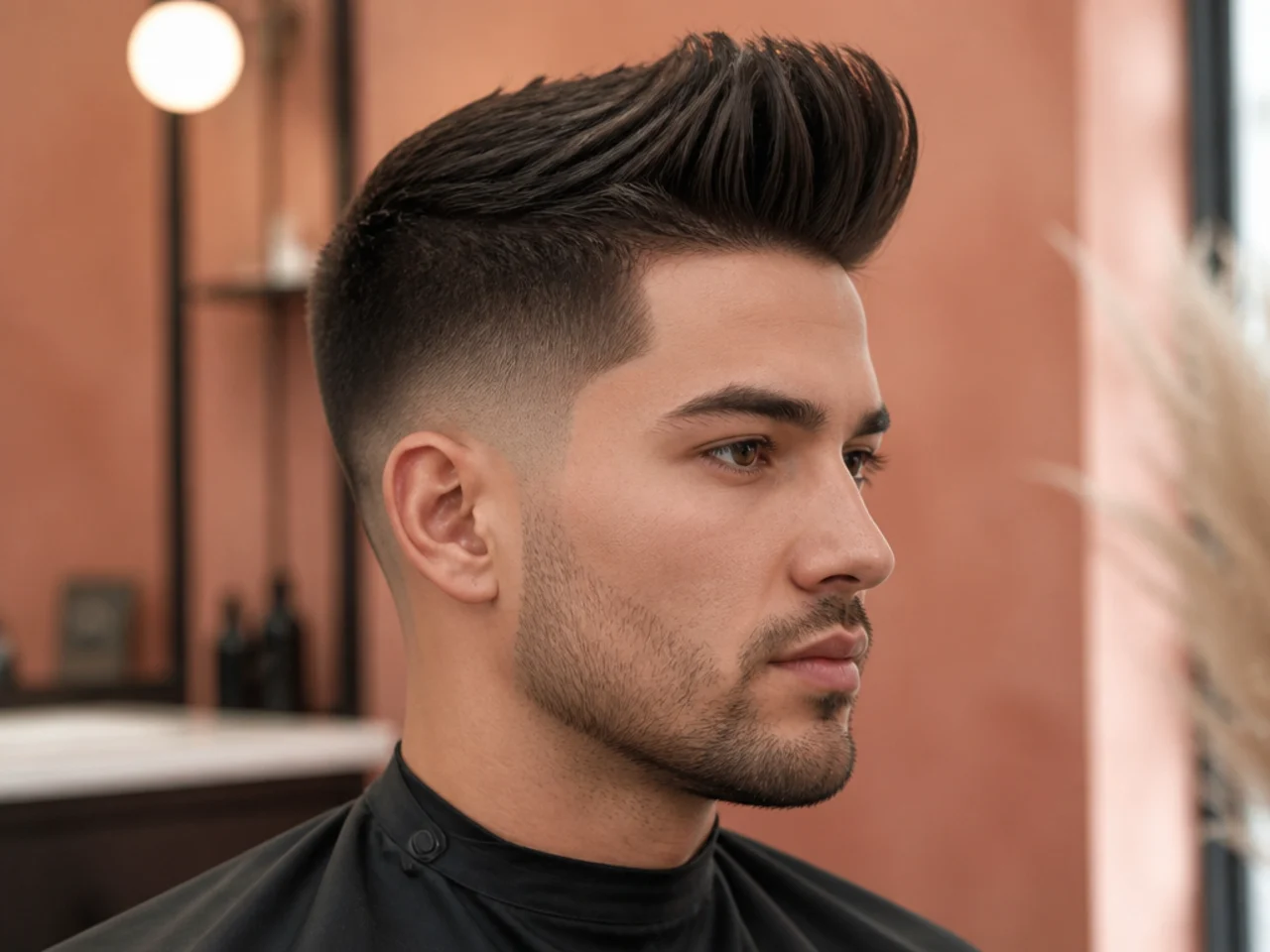
Add height, keep sides tight. Cuts that pass: pompadour, high quiff, textured crop with volume, side part with lift, and an undercut with 3 to 5 inches of length on top. Our full breakdown of quiff hairstyles for round faces walks through this specific pairing in more detail. Cuts to skip: bowl cuts, one-length medium hair with a middle part, and any style that hugs the sides of your head at ear height.
Filter for Square Faces
Add softness, avoid horizontal lines at jaw level. Cuts that pass: textured fringe, angular quiff, side-swept medium length, textured haircuts for men that break the perimeter, and a curly top with a taper. Cuts to skip: heavy blunt fringes, hard flat tops, and one-length bowl shapes that redraw the horizontal you're trying to soften.
Filter for Oblong Faces
Add width, avoid height. Cuts that pass: fringe styles (they cut the vertical), medium-length side parts with volume at the temples, and layered mid-length cuts that fall past the ears. The side part hairstyles for men collection has options that work here. Cuts to skip: tall pompadours, high quiffs, and any skin fade with lots of length on top — that combination stretches the face further.
Filter for Heart Faces
Add weight at the chin, don't pile height at the crown. Cuts that pass: medium-length hair that hits the jaw, side-swept fringe that softens a wide forehead, and shorter cuts paired with a full or medium beard. Cuts to skip: tall spiky tops, slicked-back styles that expose the full forehead, and shaved-clean chins with a heavy top.
Filter for Diamond Faces
Add width at forehead and jaw, keep the cheekbone area quiet. Cuts that pass: full fringe styles, side parts with fringe, chin-length beards, and medium-length cuts that soften the cheek line. Cuts to skip: exposed temples, hard skin fades that further narrow the sides, and slicked-back styles that pull all the volume up and away.
Filter for Oval Faces
Almost any cut works — the choice comes down to hair type, workplace, and how much maintenance you want. Our short-hair-for-oval-face guide covers the best short haircuts for oval faces if you want a curated shortlist. The one cut oval faces should skip: anything so severe it forces the face into a different shape (a very tall fauxhawk can push oval toward oblong).
Filter by Hair Type Too
Face shape is one filter. Hair type is the other. A tall pompadour needs medium-to-thick straight hair or the shape won't hold. A textured crop needs enough density to hold texture. Curly hair softens angular faces for free — if you're not sure what your curl pattern actually is, the curl types breakdown maps 2A through 4C so you can shortlist cuts your texture will hold. If you want a fade paired with any of these, the 15 trendy fade haircuts for every face shape roundup breaks down which fade heights suit which shapes.
Step 5: Ask Your Barber the Right Way
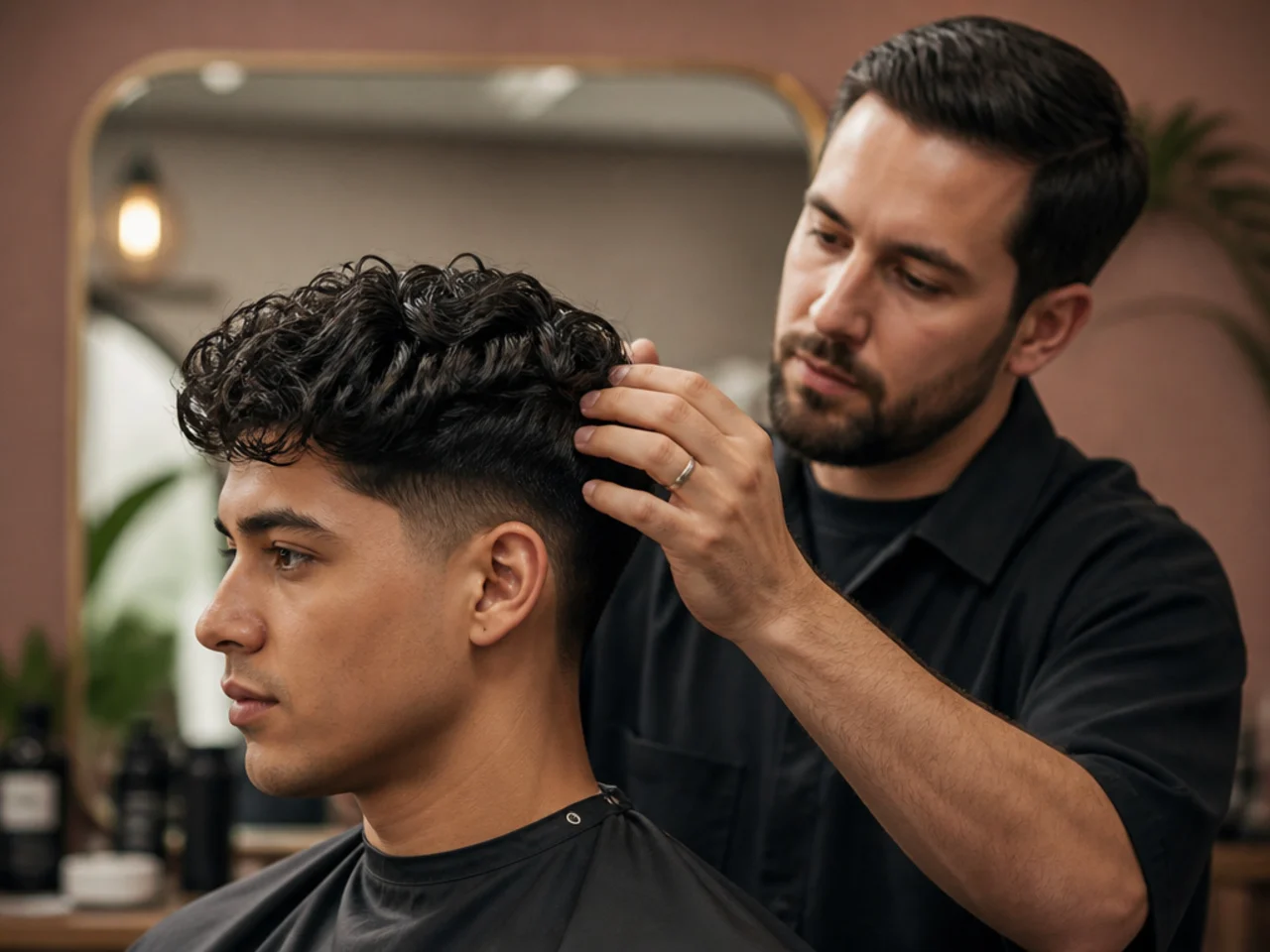
You did the work. Now the barber gets three sentences and two or three photos and does the rest. The conversation should sound like this:
- Name your face shape. "I have a round face" or "square jaw, oblong length." Barbers use these words all day — you'll get an immediate read on whether they agree.
- Name the imbalance you want to fix. "I want more height on top" or "less width at the jaw" or "a fringe to cut some of this length." One clear direction beats a laundry list.
- Show two or three photos. One front, one three-quarter angle. Photos beat words for the exact length and finish you have in mind.
- Give clipper numbers or inches for the length. "Number 2 on the sides, three inches on top" removes all ambiguity. If you don't know the numbers, say "as short as this on the sides" and point at the photo.
- Ask what they'd change. Good barbers know things you don't. If they say your face would take a shorter top or a different part than you asked for, hear them out — they see your bone structure in three dimensions and you're seeing it flat.
- Rebook the interval. Short cuts want a re-shape every 4 to 6 weeks. Anything with a fade or line-up loses shape in 10 to 14 days. Book the next appointment before you leave the chair.
Troubleshooting
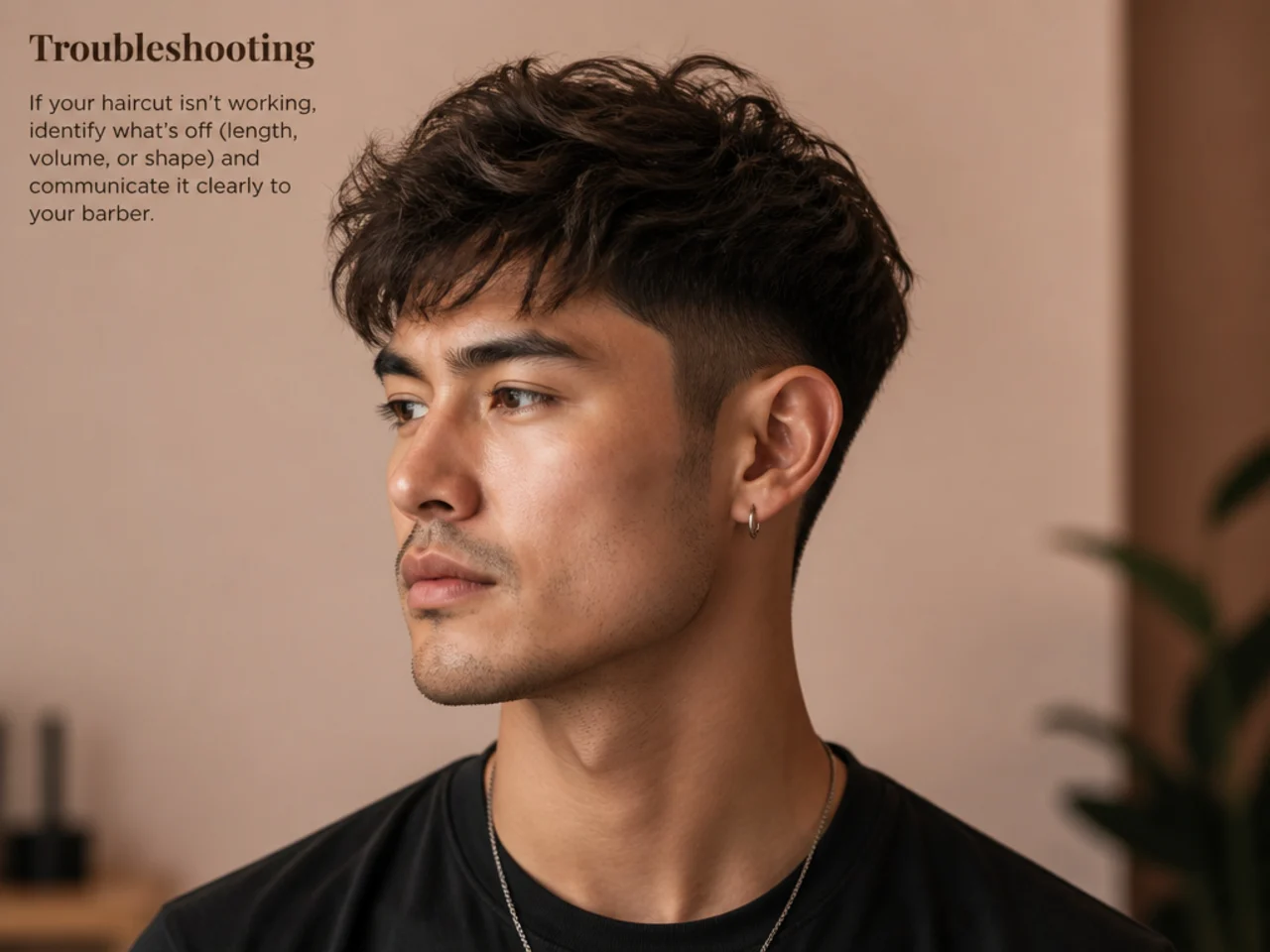
Even with the five steps done cleanly, something can miss. Here's how to read the mirror and course-correct.
The cut makes my face look wider. You probably added volume at the sides or ear height. On round or square faces that's the wrong direction. Ask for the sides to be taken shorter — a taper or low fade — and keep any volume on the top only.
The cut makes my face look longer. Height on top on an oblong face is the usual culprit. Ask for a fringe to cover part of the forehead, or drop the top length by an inch. Length near the ears also helps break the vertical.
My forehead reads too big. You either exposed too much of it (slicked back, no fringe) or picked a hairline shape that reads square. Add a soft, wispy fringe rather than a blunt one, and ask your barber to soften the hairline corners at the temples.
My jaw looks even sharper. You picked a cut with a hard perimeter — a heavy blunt fringe, a square-blocked nape, or a hard skin fade. Ask for a tapered nape (not a block), a textured fringe (not a blunt one), and a low fade rather than a skin fade.
Everything feels off but I can't tell why. Take a straight-on selfie in decent light. Print or open on a screen big enough to see the full outline. The problem usually shows up in one specific area — often a length that lands right at the widest or longest point of your face. Any length that ends at cheekbone level on a round face, or jaw level on a square face, will draw the eye exactly where you didn't want it.
The cut looks great in the shop, wrong in the mirror at home. Barber shop mirrors and lighting are designed to flatter — big mirrors, warm bulbs, freshly styled with product. The real test is day two, in your bathroom, at 7 a.m. If day two is worse than day one, ask your barber next visit for a lower-maintenance version of the same cut. See our low-maintenance men's haircuts guide for shapes that hold on their own.
My hair type fights the cut. If you asked for a slick pompadour and you have coarse curls, you're going to lose. Match the cut to the texture you actually have. Straight and fine hair does clean short cuts and side parts. Thick and wavy does volume-forward cuts. Curly does textured tops and shaped rounds. When in doubt, pick the shape the texture wants and rebalance the face with the styling — not the other way around.
FAQs
Does face shape matter more than hair type?
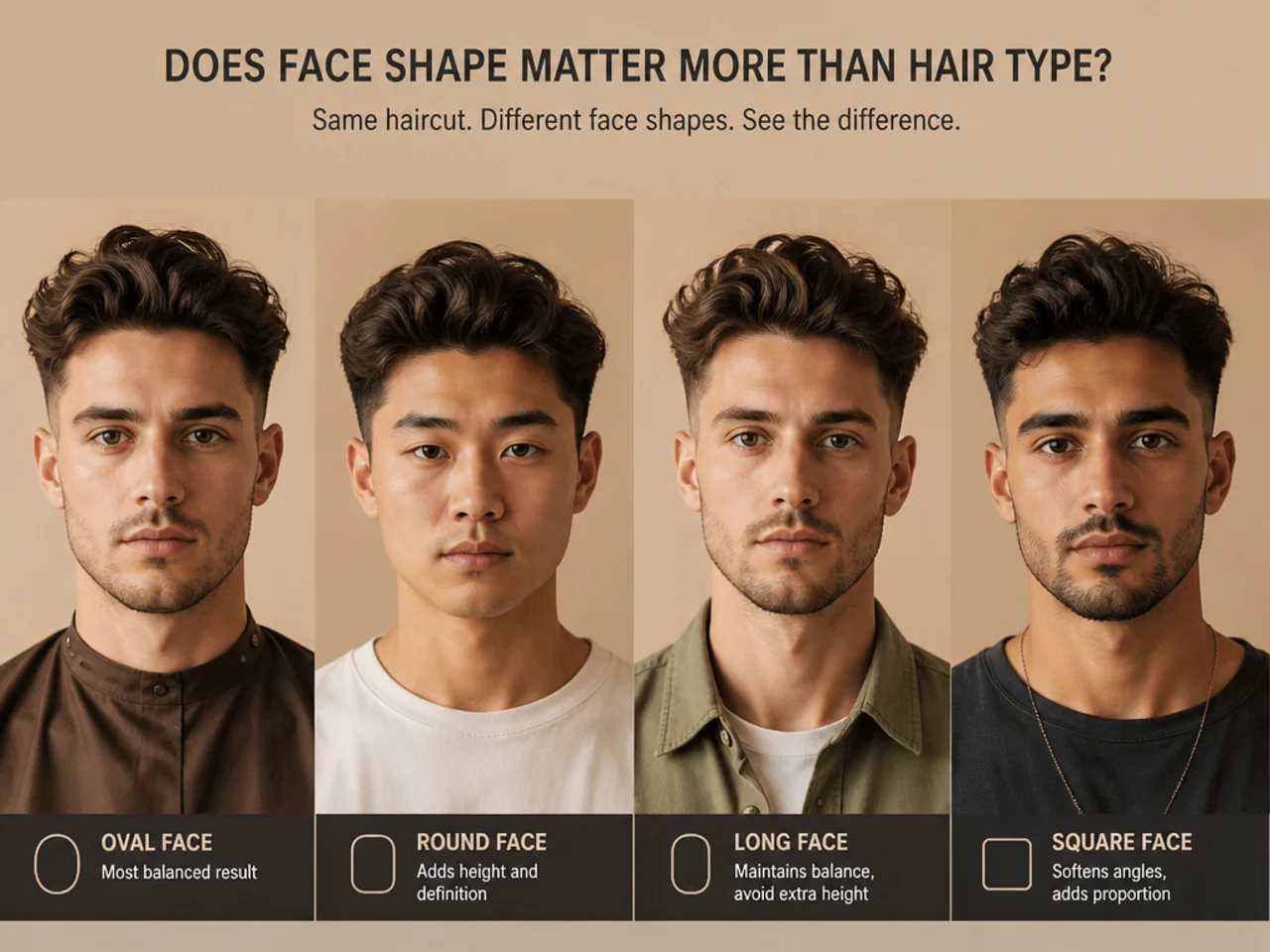
They matter equally. Face shape sets the target — where you want to add or subtract width. Hair type sets what's possible — a pompadour needs the density to stand, a curly top needs the pattern to show. Get the target right first, then narrow the cuts by hair type. Skip either filter and the cut fights you.
What if my face is between two shapes?
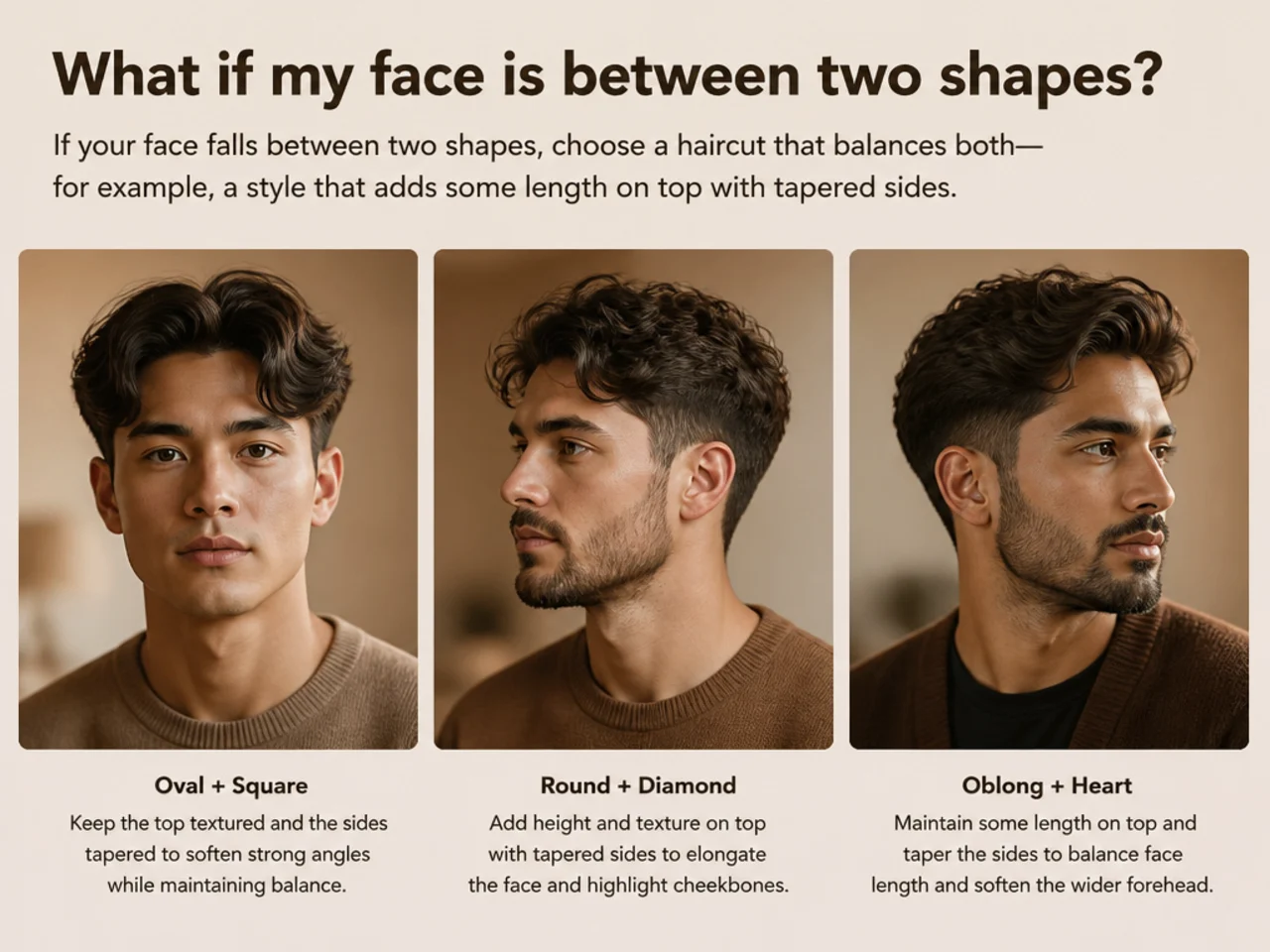
Most men are. Pick the dominant shape — usually the one your jaw and cheekbones match — and use its rules. Then borrow one styling tip from the secondary shape. An oval-oblong guy uses oval rules but adds a fringe (the oblong move) to cut length. A square-diamond guy uses square rules but keeps a fuller beard (the diamond move) for balance at the chin.
Can I fake a different face shape with a haircut?
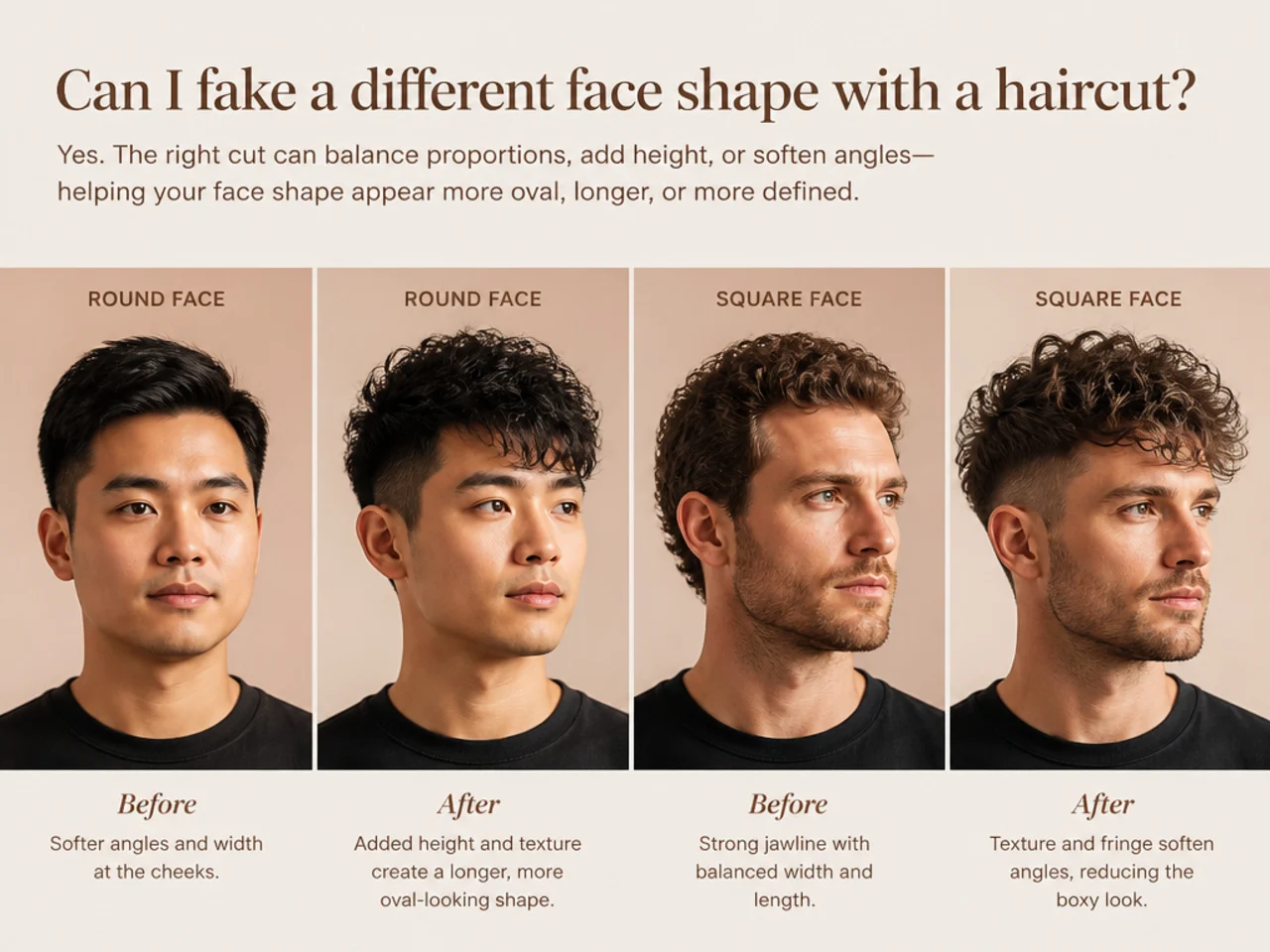
Not fake — rebalance. A haircut can visually shift your face by 10 to 20 percent toward oval by adding or hiding width and length in the right places. It can't turn a round face square. But a well-picked cut can make a round face read as balanced oval, which is usually the actual goal.
Do I need to remeasure my face over time?
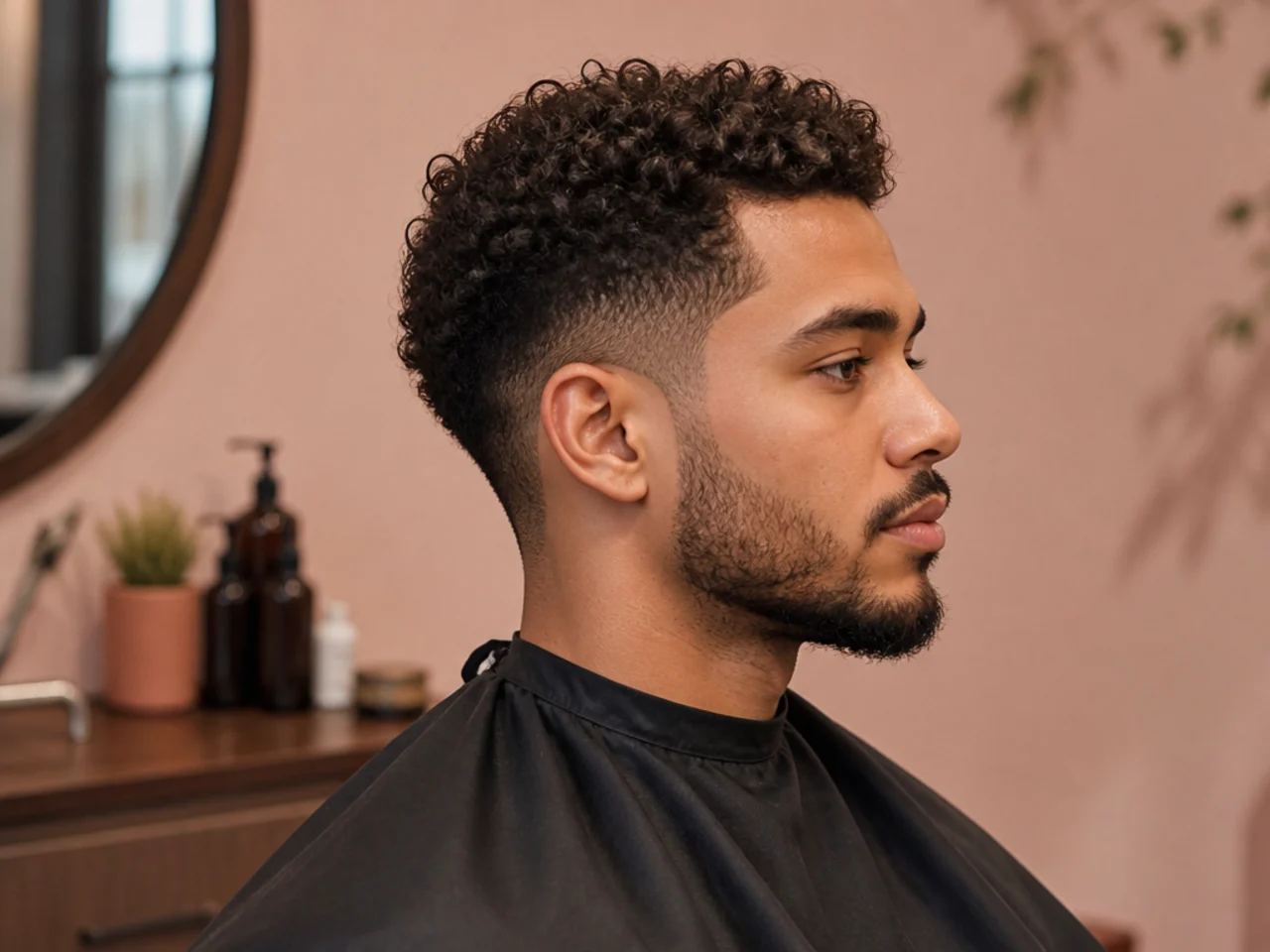
Once every five years, or after any big change. Significant weight loss or gain, a receding hairline, a full beard grown in, or aging in the jawline can shift your face's proportions enough to change the shape category. If a cut that used to suit you suddenly doesn't, remeasure before you blame the barber.
What about beards — do they change the rule?
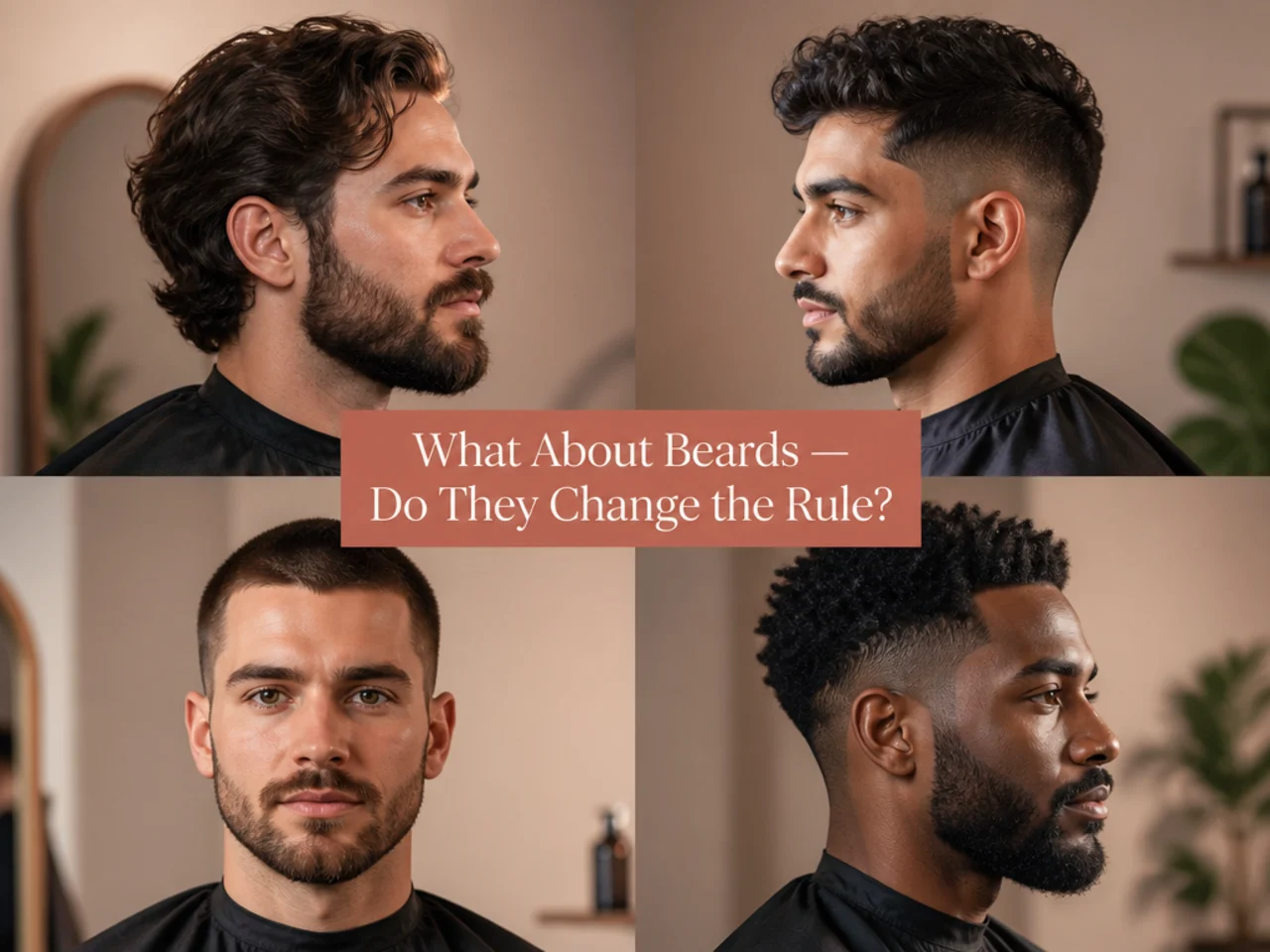
Yes. A beard is the second half of the face-shape equation. Round face — try a beard that's longer at the chin than the cheeks to add vertical length. Oblong face — keep the beard trimmed short so it doesn't extend the length further. Square face — soften the corners with a rounded beard line. Heart face — a fuller lower beard adds weight at the narrow chin.
How long until a new cut settles into its shape?
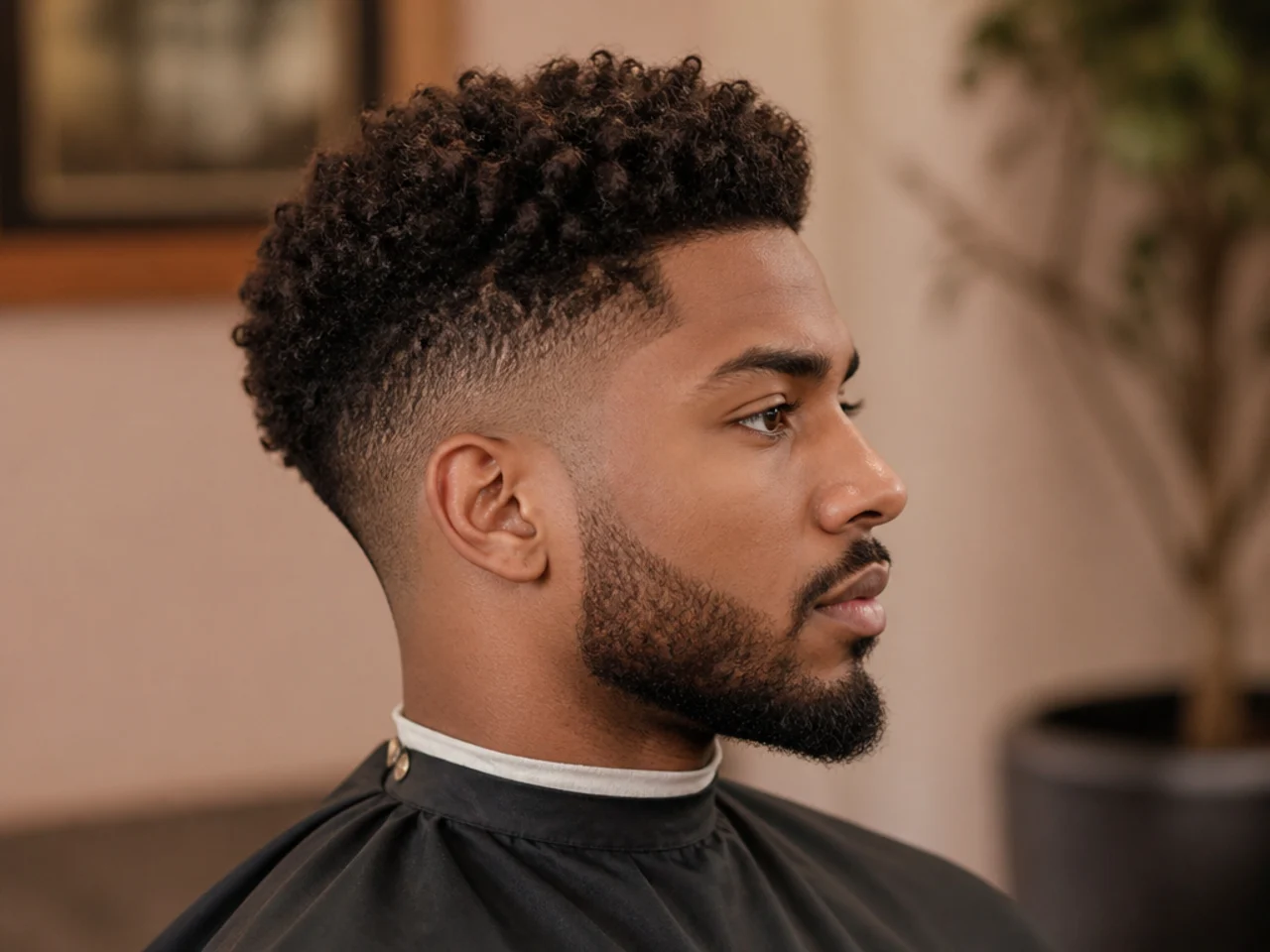
Seven days. Fresh cuts sit stiff from cutting tension and product residue. After a full week of normal washing, sleeping, and styling, the hair drops into the shape your barber built. Don't judge a new cut before day eight — most complaints in the first three days are about tension, not the shape.