5 Reasons a Quiff Suits a Round Face
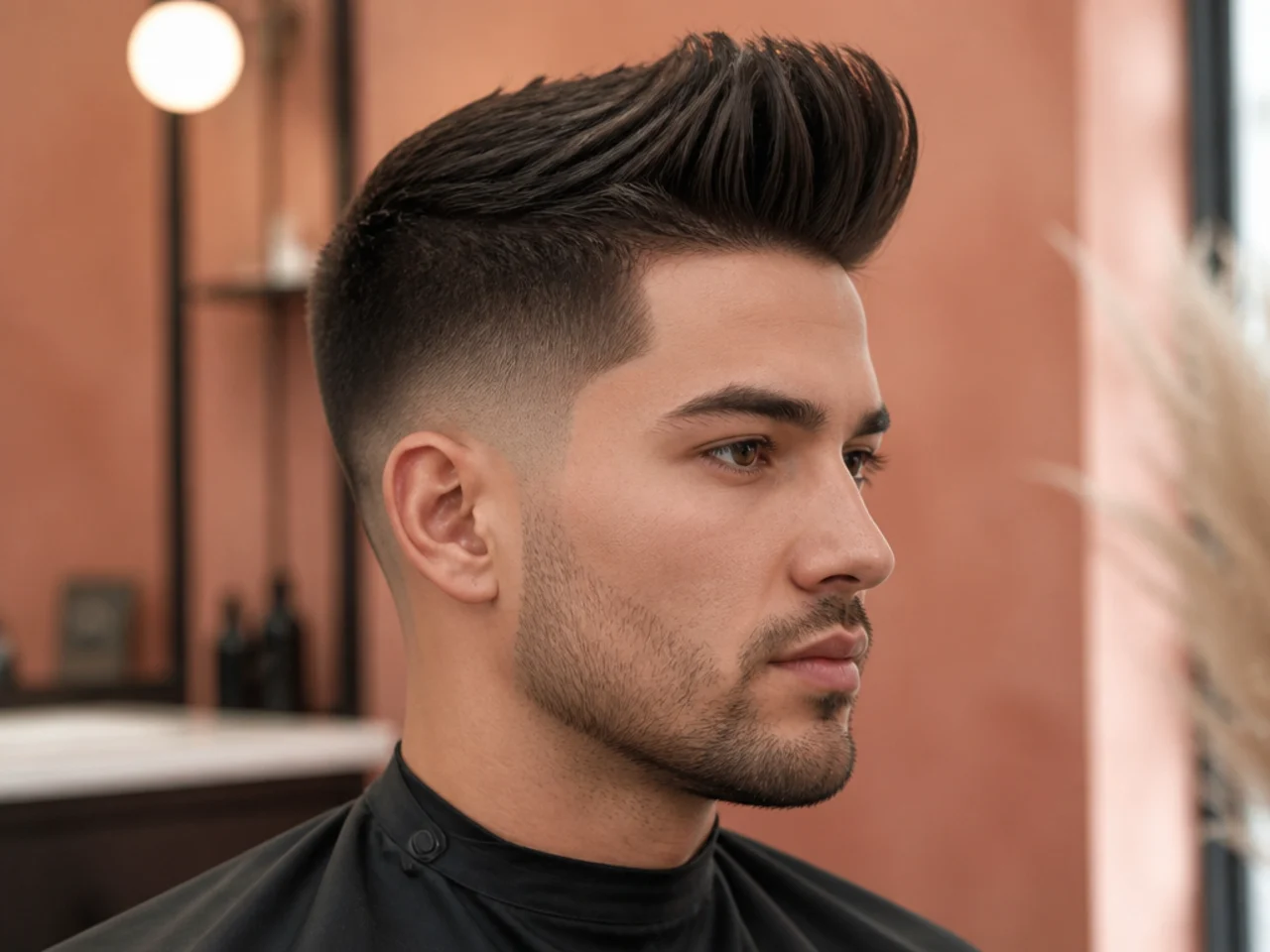
A quiff builds vertical height, slims the sides, and adds angle — three things a round face benefits from. Here are 5 reasons a quiff works on round face men.
In this article · 12
- Why a Round Face Reads Round
- What Makes a Quiff Work for Round Faces
- 1. Vertical Lift Counters the Face's Width
- 2. Faded Sides Slim the Cheek Line
- 3. A Deep Side Sweep Adds the Angle Your Face is Missing
- 4. Matte Texture Breaks the Round Outline
- 5. The Right Length Range Hides a Soft Jawline
- Which Quiff Variation Should You Pick?
- How to Ask Your Barber for a Round-Face Quiff
- Styling a Round-Face Quiff at Home
- Common Mistakes on a Round Face
- FAQ
Round faces and quiffs are one of those pairings barbers reach for because the math is clean — a circle needs height and angles, and the quiff hands you both. The lift at the front stretches your face vertically, the faded sides narrow the widest part of your head, and the sweep breaks the round outline. Below are five reasons the quiff works on a round face, the variation you should ask for, and how to style it so the slimming effect actually lasts past lunchtime.
Why a Round Face Reads Round
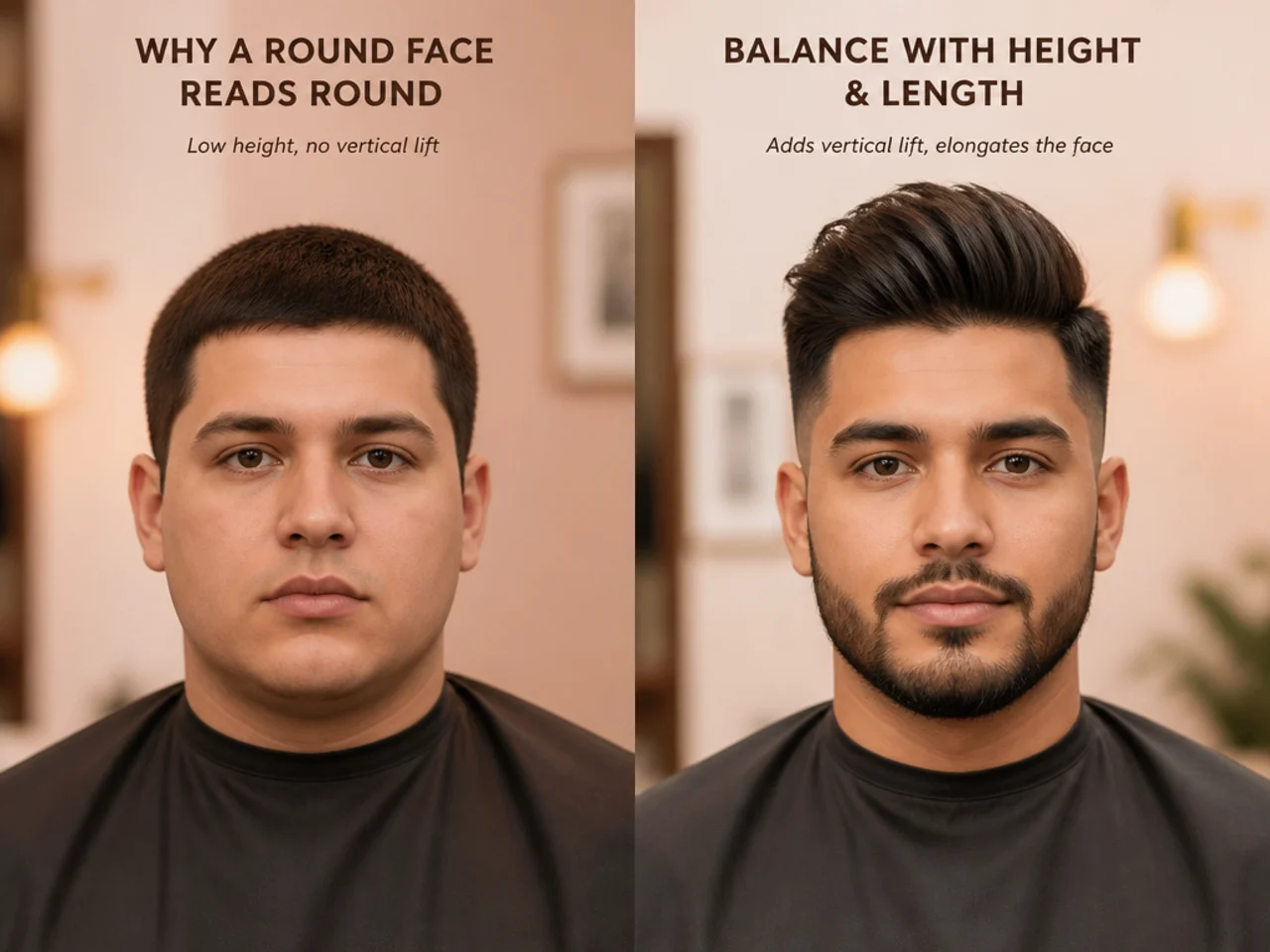
A round face has three defining traits, and all three matter for haircut choice. The width across the cheekbones is close to the length from hairline to chin — so the face reads as a circle rather than an oval. The jawline is soft and curved rather than square. And the cheeks carry visible fullness, which pushes the widest point of the face out to the sides rather than up to the temples.
None of that is a flaw — round faces read youthful and approachable, and a lot of leading men have them. The job of the haircut is just to balance the shape rather than reinforce it. That means adding vertical, subtracting horizontal, and introducing straight lines where the face is soft. Almost every good round-face cut comes back to those three moves.
The wrong cuts do the opposite. A center part, a flat top, a bowl, or a chin-length curtain style spreads the horizontal and flattens the vertical — round becomes rounder. A close buzz can work if the jaw is strong enough to carry it, but on most round faces it makes the head read even more spherical.
What Makes a Quiff Work for Round Faces
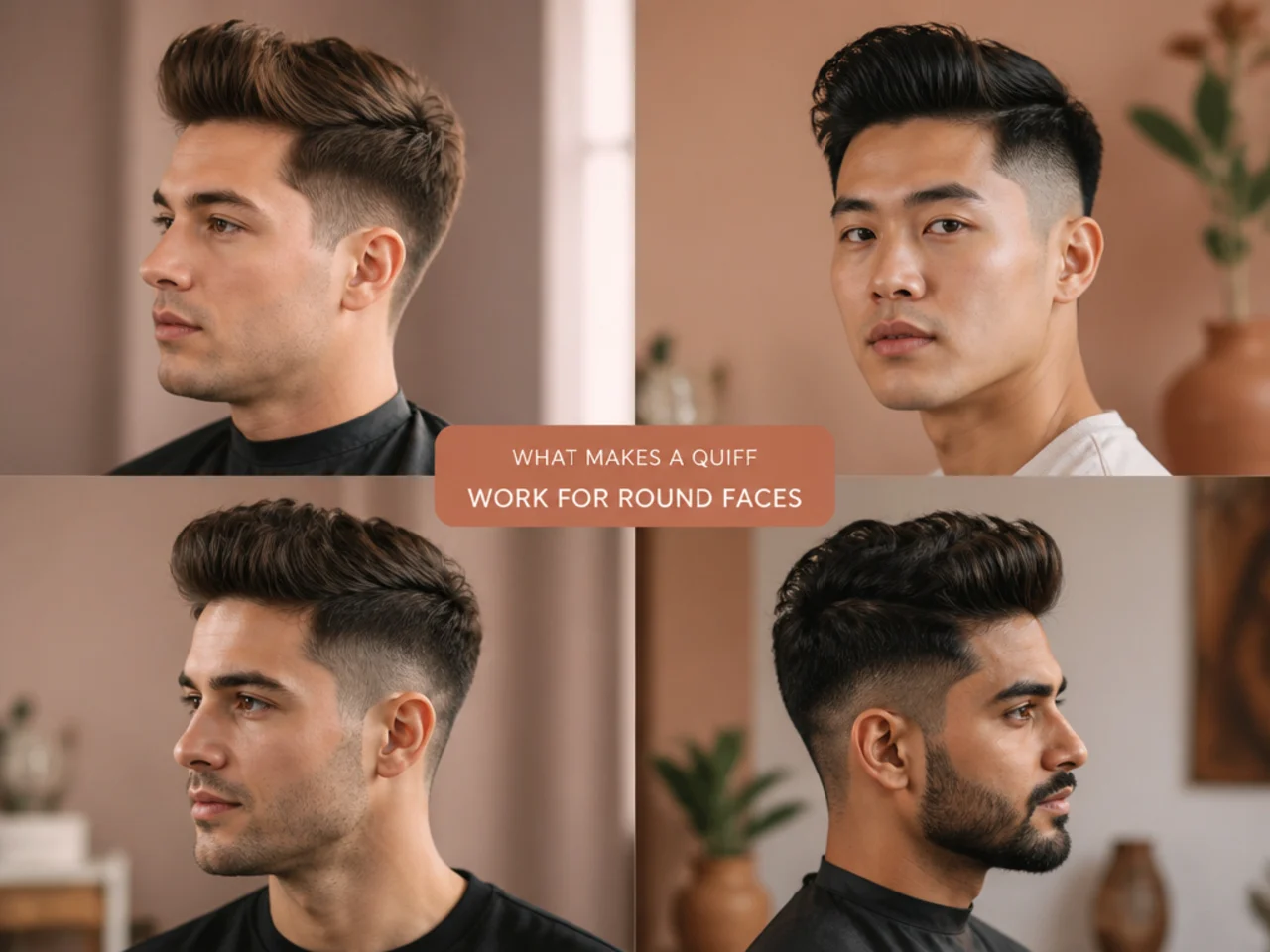
The one-line answer: a quiff stacks height at the front, keeps the sides tight, and finishes with matte texture instead of a smooth curved cap. That combination does the three things a round face needs — vertical lift, side narrowing, and outline break — in one cut. No other short men's style delivers all three at once as reliably.
The other cuts that come close have trade-offs. A slick back adds height but the glossy finish rounds the outline again. A side part adds angle but doesn't lift much at the front. A textured crop breaks the outline but keeps the height low. The quiff is the only one that hits all three notes cleanly, which is why it's the safest first recommendation when a round-faced client walks into the shop.
Now the five reasons in detail — with what to ask for, why it works, and where round-face styling goes wrong if you skip the step.
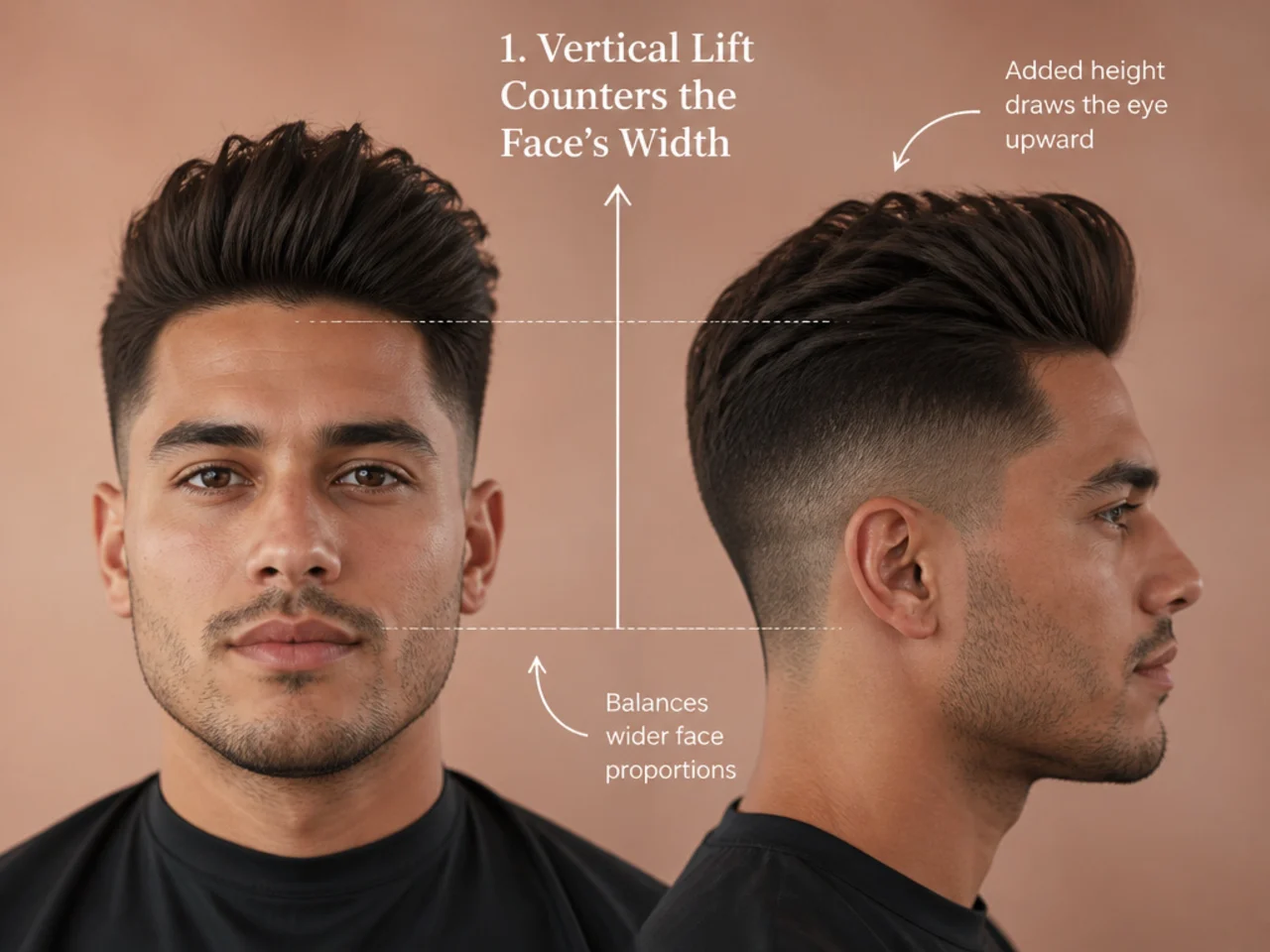
1. Vertical Lift Counters the Face's Width
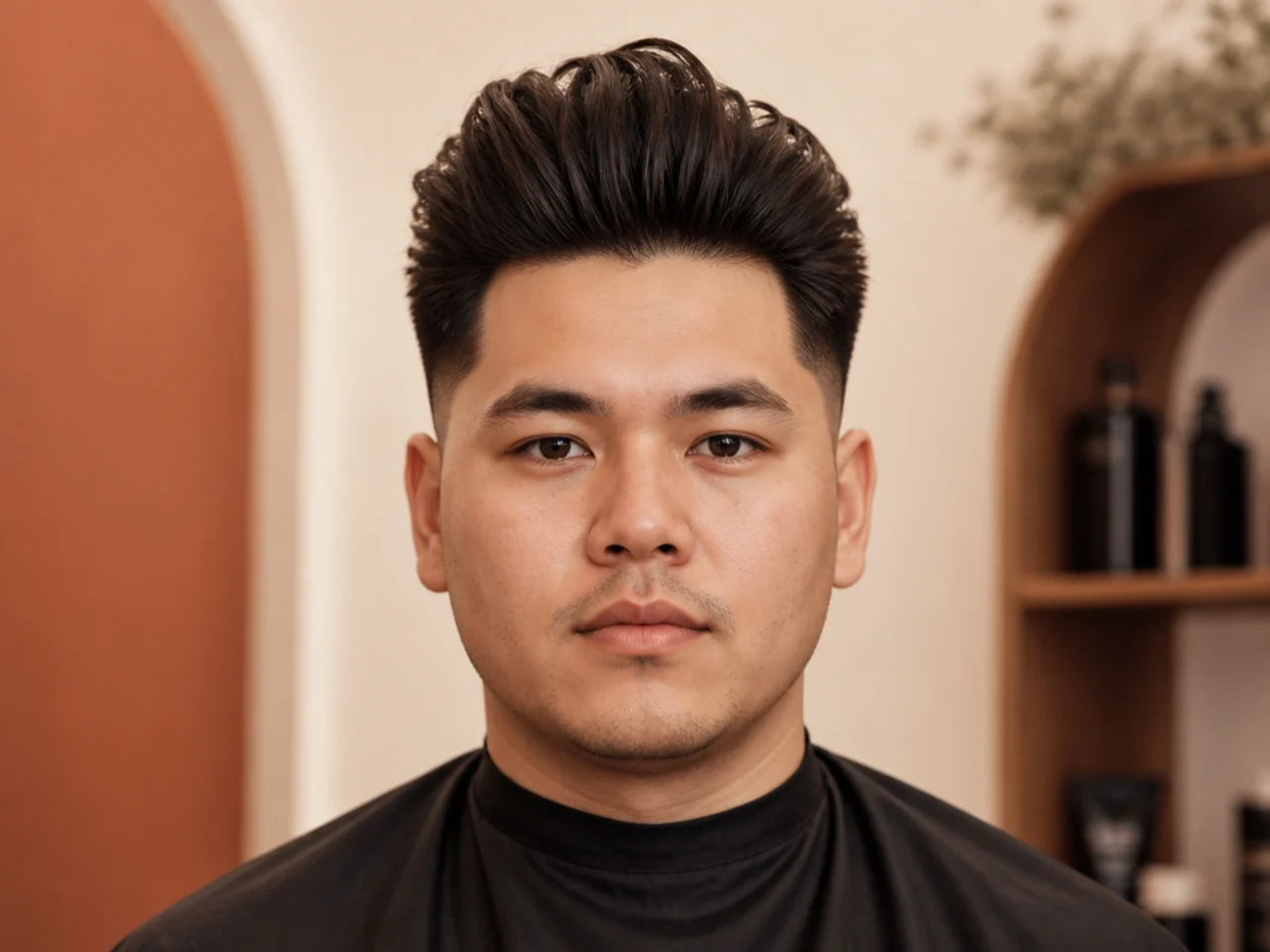
The single most important thing a round face gets from a quiff is height at the front. Adding 2 to 3 inches of visual lift above the hairline stretches the head vertically, which shifts the face's proportions toward oval — the shape most other cuts try to imitate. The taller the front sits, the narrower the face reads underneath.
Aim for 4 to 6 inches of actual hair length at the front. That's what it takes to build a lift you can see across a room. Under 3 inches won't stack tall enough. Over 6 inches starts flopping forward instead of standing up, and the lift collapses within an hour of leaving the house.
The lift also has to be sustained. A quiff that looks perfect at 8 a.m. and flat by noon isn't doing any face-shape work for the rest of the day. That's a styling and product problem — see the styling section below — but it starts with the cut. Ask your barber for scissor-cut layers through the front third, not razored or heavily thinned. Razored ends hold zero lift.
If your hair is fine or straight, a light texturizing thinning at the crown helps the front sit up without the crown adding competing volume. If your hair is thick or curly, no thinning — you want the density.
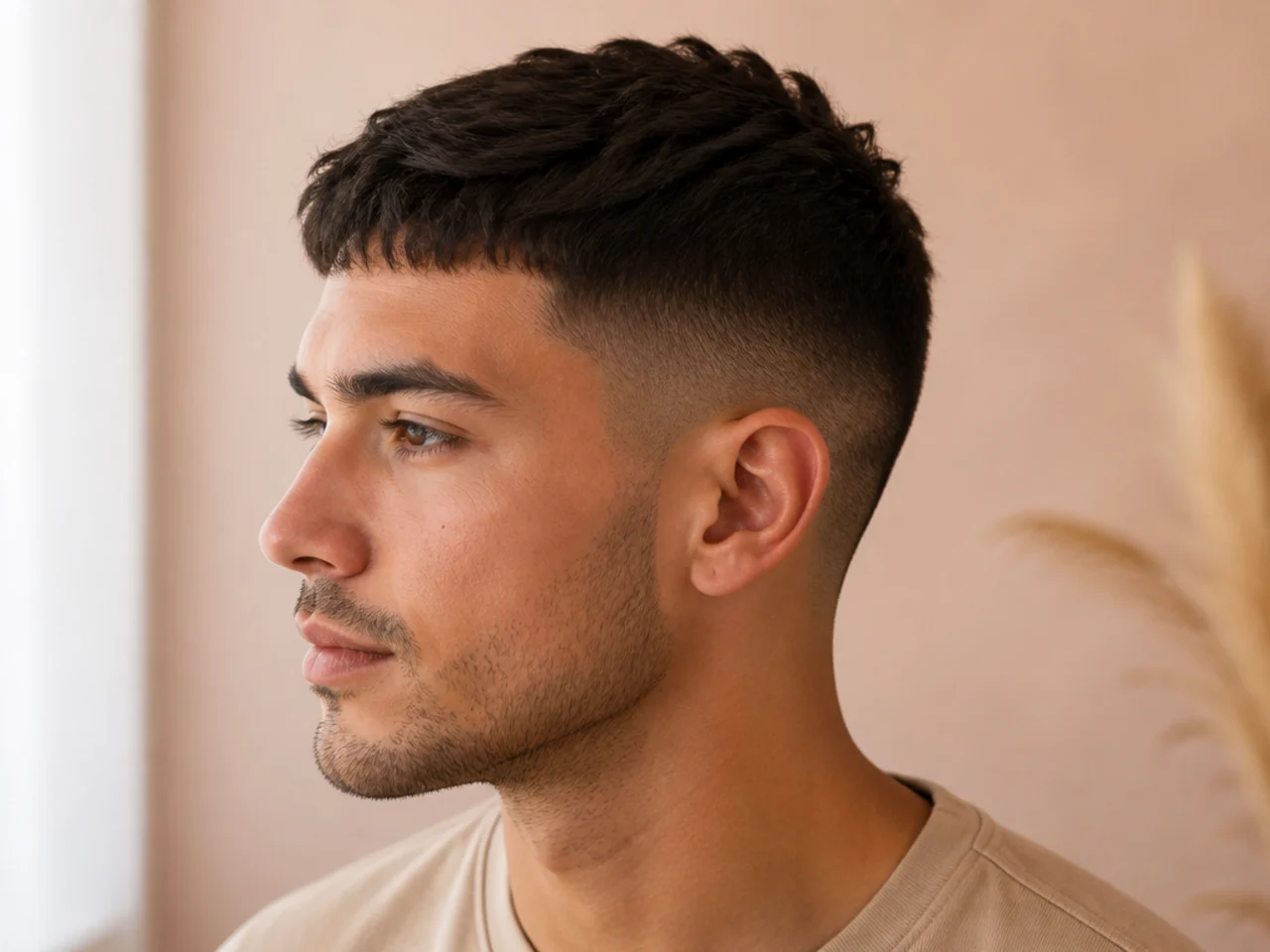
2. Faded Sides Slim the Cheek Line
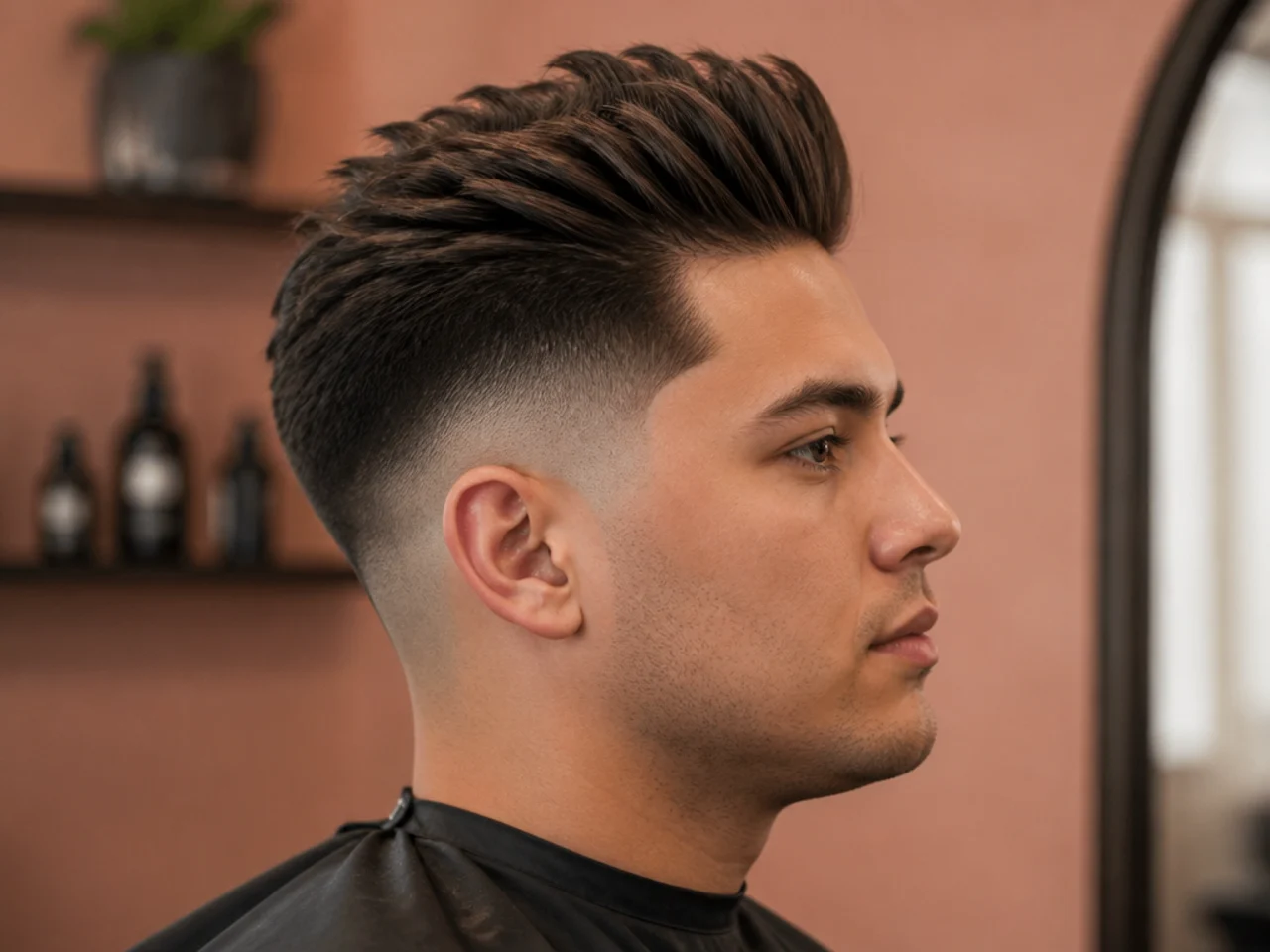
The widest point of a round face is the cheekbones. Any hair you leave sitting outside that line — even a quarter-inch of length at the temples — adds visible horizontal width to a face that already has too much of it. A tight fade at the sides pulls the visual outline in flush to your head, which narrows the cheek zone without touching your bone structure.
For round faces, a mid fade is the strongest default. The fade line sits at the temple, level with the eyebrow, which puts the skin panel at the exact height where your face reads widest. A high taper fade works even harder if you can commit to the 2-week maintenance schedule, because the skin panel stretches higher and creates more of a vertical stripe up the sides of the head.
A low fade is the softer option — fine if your workplace runs conservative, or if you want a quieter look — but it does less slimming work. The blend sits below the widest part of your face, so it doesn't intervene where the visual width is actually happening.
Skip a hard undercut as a first pick on a round face. The disconnection between top and sides creates a horizontal shelf where the two meet, which can widen the head at the temple line. If you love the look, ask for a disconnected fade instead of a flat undercut — you get the visual contrast without the shelf.
3. A Deep Side Sweep Adds the Angle Your Face is Missing
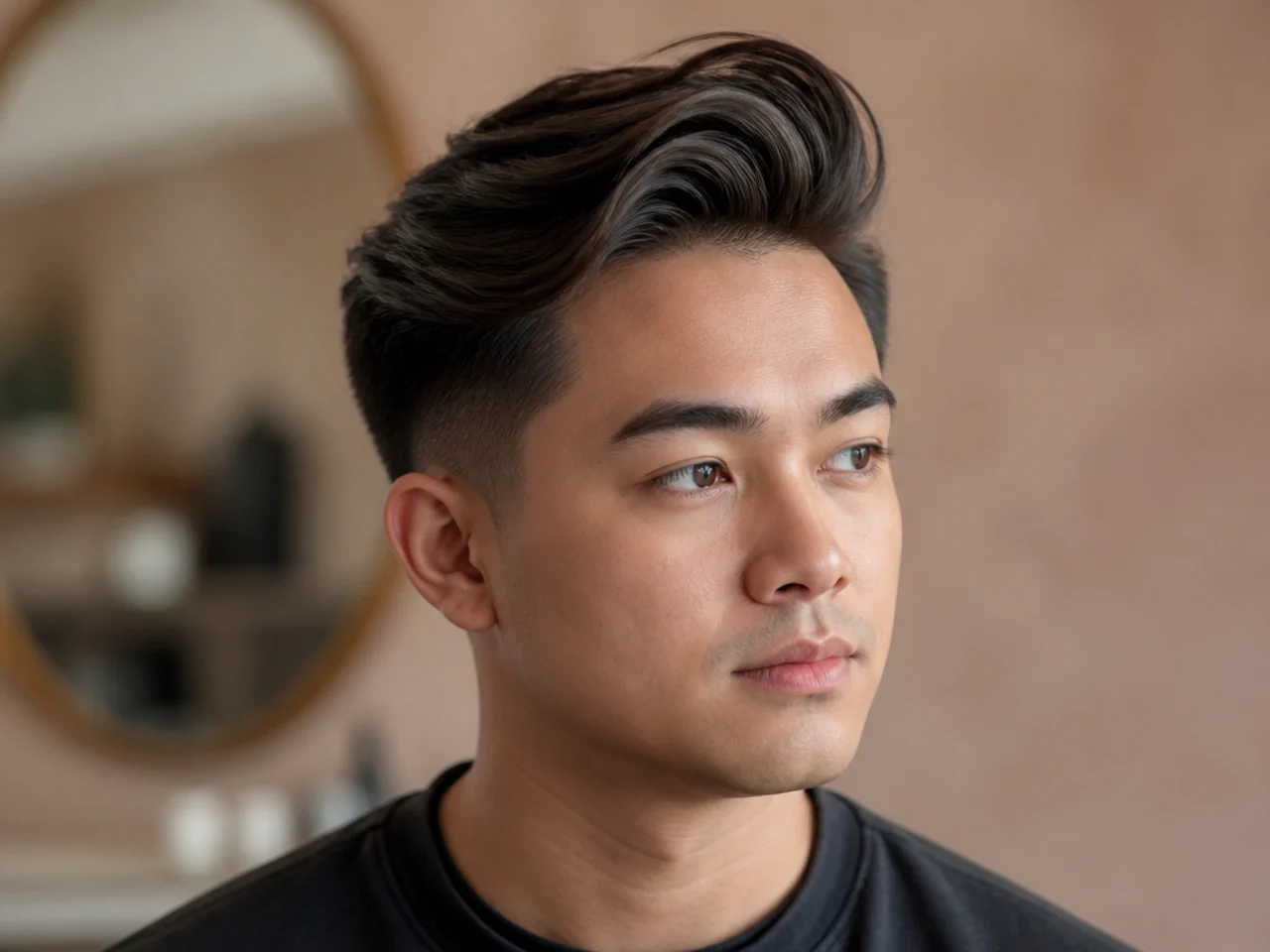
Round faces lack strong angles. The jaw curves, the cheeks curve, the hairline usually curves. Every good round-face quiff introduces a diagonal line somewhere in the styling to break that pattern — usually by sweeping the lifted front slightly to one side rather than straight back.
The angle doesn't have to be dramatic. A quiff swept 10 to 20 degrees off center creates a visible diagonal from your part line up to the peak of the lift, and that diagonal reads as an angle your face otherwise doesn't have. The eye picks it up and stops registering the underlying roundness as strongly.
Ask your barber for a soft part on your natural side — right or left, whichever side your hair naturally splits — and have them cut the top with slightly more length on the sweep side. That gives you a built-in bias so the styling falls into the diagonal without a fight. If you want a sharper line, ask for a scissor-cut soft part instead of a razored hard part. Hard parts on round faces sometimes read as a bald stripe rather than an angle, because there's no cheekbone shadow to frame the line.
The comb over family is basically the quiff-with-more-sweep, and it's a legitimate alternative if you want the angle to lead over the height. Between the two, the quiff still wins for most round faces because it prioritizes lift, but a lifted comb over is close cousin.
4. Matte Texture Breaks the Round Outline
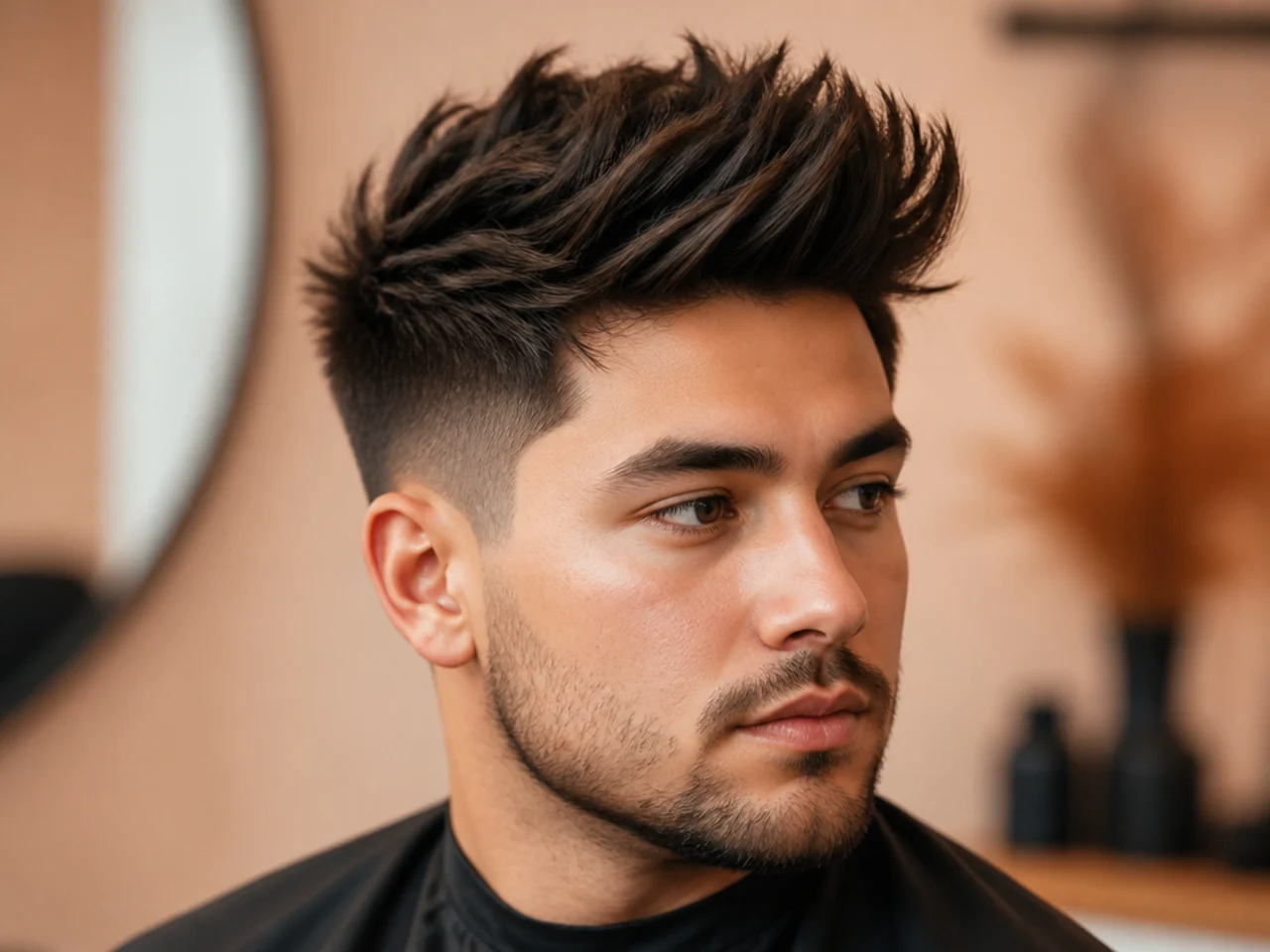
A smooth, glossy finish reads as a continuous surface — which on top of a round face reinforces the shape by making the whole head look like one uninterrupted curve. Matte, piece-y texture does the opposite. The separated ends break the outline into small angular fragments the eye reads as detail instead of shape.
That's why a textured quiff almost always beats a slick, wet-look quiff on a round face. Even the same cut styled two ways reads differently — the matte version narrows the face, the sleek version rounds it out.
Product does most of the work here. Use a matte clay or paste rather than a pomade, gel, or wax. A pea-size scoop, warmed between your palms until it disappears, worked from the ends of the front third toward the roots — never the other way, because product loaded at the roots kills the lift. Finish with your fingers pressing the ends into small separate pieces, not raking a comb through the whole top.
If you want a more polished vibe than a full matte, ask your stylist for a low-sheen cream — enough sheen to look intentional, not enough to round the outline out. Save the full pomade slick for square-jawed friends who can carry it.
5. The Right Length Range Hides a Soft Jawline
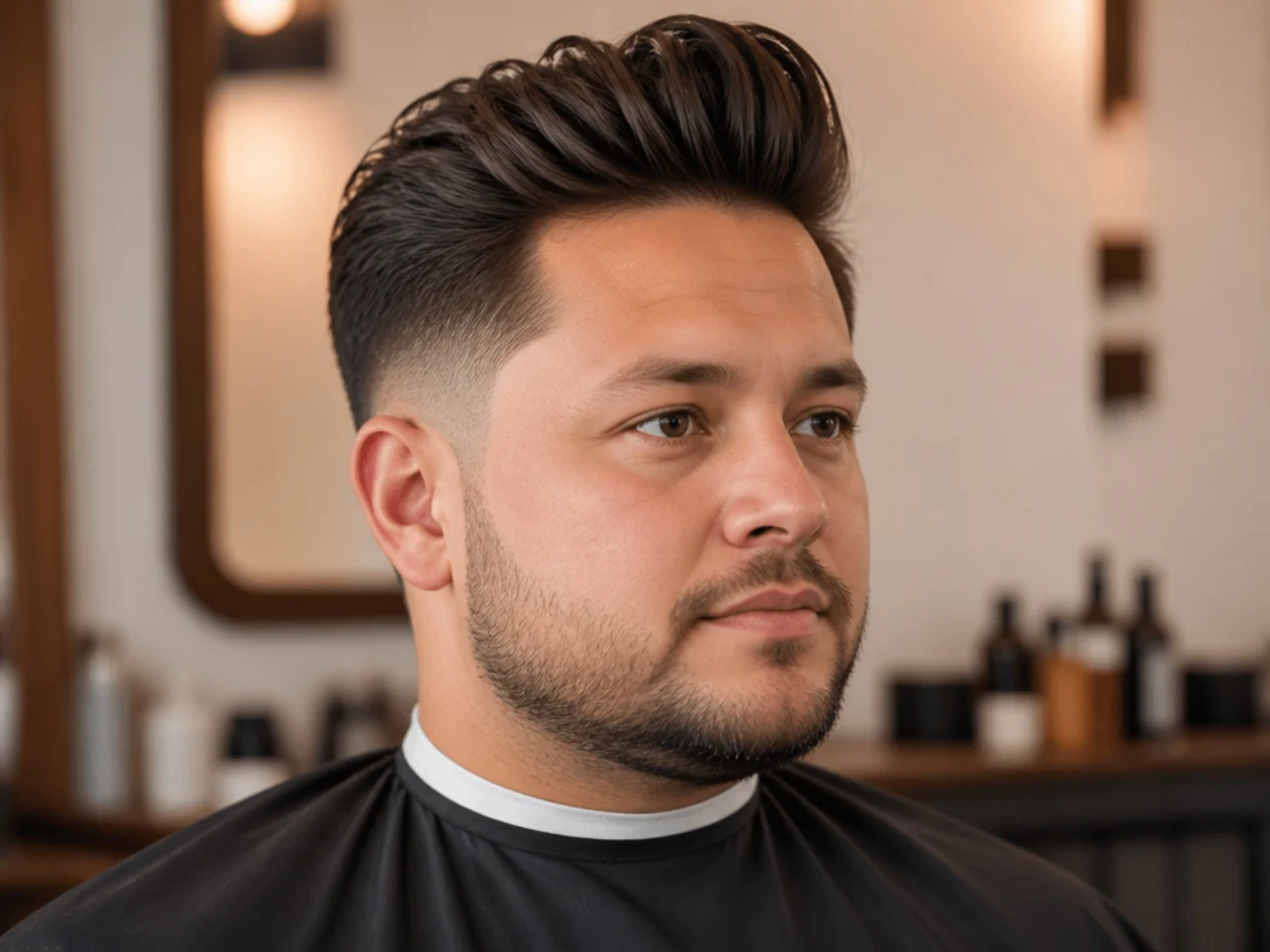
The last piece is jaw-adjacent. Round faces have soft jawlines, and any short haircut that ends abruptly at the ear or temple leaves the jaw exposed as the visual base of the head. A quiff's proportion — tall top, tight sides, hair stopping cleanly at the fade line — moves the visual weight up and away from the jaw, which reduces the pressure on the jaw to do structural work it isn't built for.
You can strengthen the effect further with a short, defined beard. A trimmed beard at 6 to 12 millimeters, tapered up into the fade at the sideburn, adds the angular jaw the face doesn't have naturally. The combination of a lifted quiff plus a squared beard is one of the most reliably flattering round-face looks going, and every good barber knows it — ask for the beard blend at the same appointment.
If facial hair isn't your thing, keep the sideburn detail sharp. A crisp line at the sideburn, dropped square rather than curved, gives the jaw a small angular anchor that does 20% of the work a full beard would.
Now the practical stuff — the exact variation to ask for, how to describe it to your barber, and how to style it at home.
Which Quiff Variation Should You Pick?
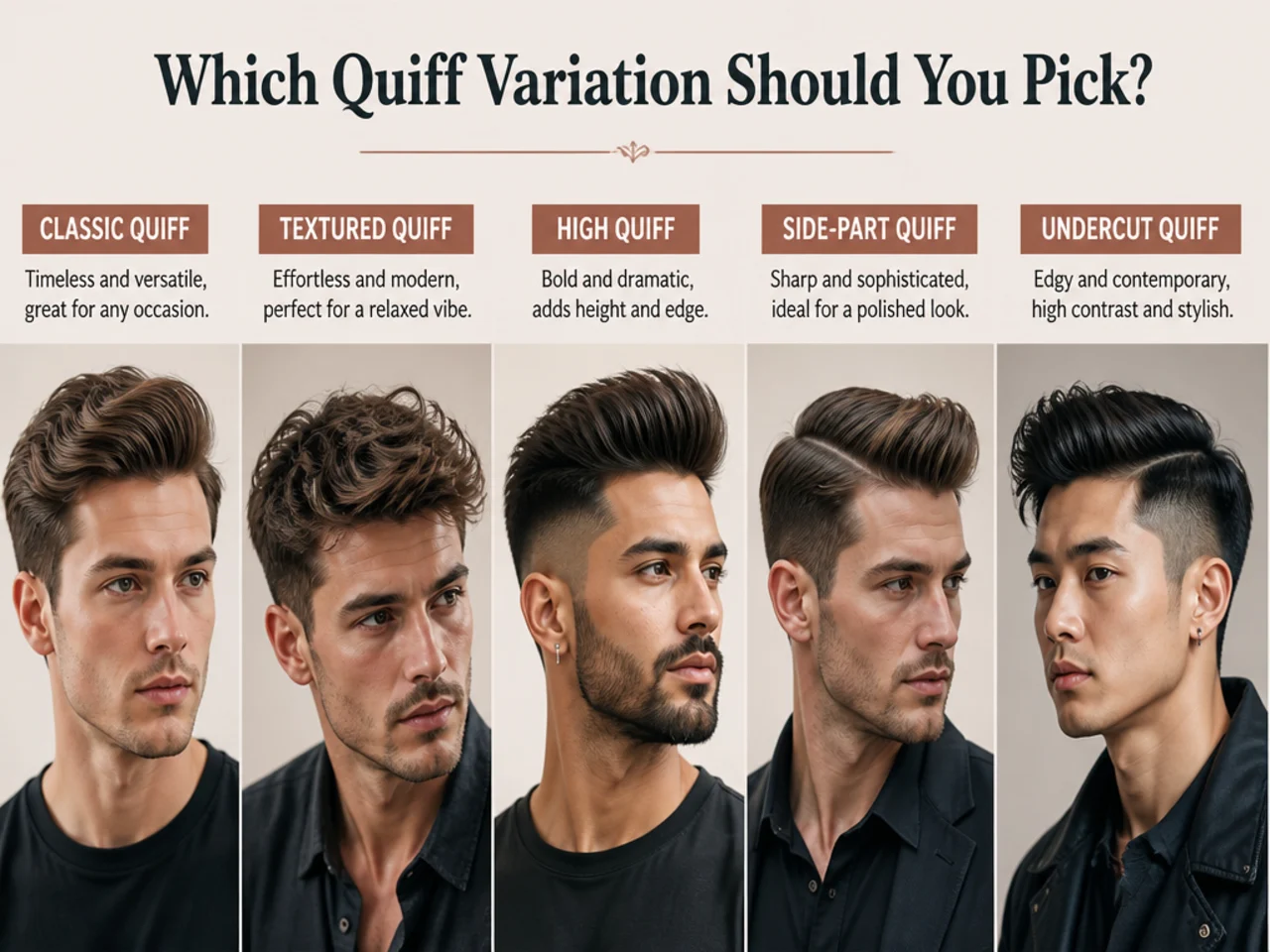
Not every quiff is a round-face quiff. Length, fade height, sweep direction, and finish all move the needle. Here's how the main variations compare when you're picking with a round face in mind.
If you want the one recommendation: the side-swept quiff with a mid fade is the round-face default. It stacks all five slimming moves — lift, tight sides, diagonal angle, matte texture, weight-up proportion — into one cut without demanding a 2-week maintenance schedule. The modern quiff is the runner-up if you want more visual drama and can commit to a skin fade every 14 days.
Skip anything labeled "flat quiff," "swept-back low quiff," or "long loose quiff." All three drop the lift or spread the top sideways, which cancels the whole point on a round face.
How to Ask Your Barber for a Round-Face Quiff
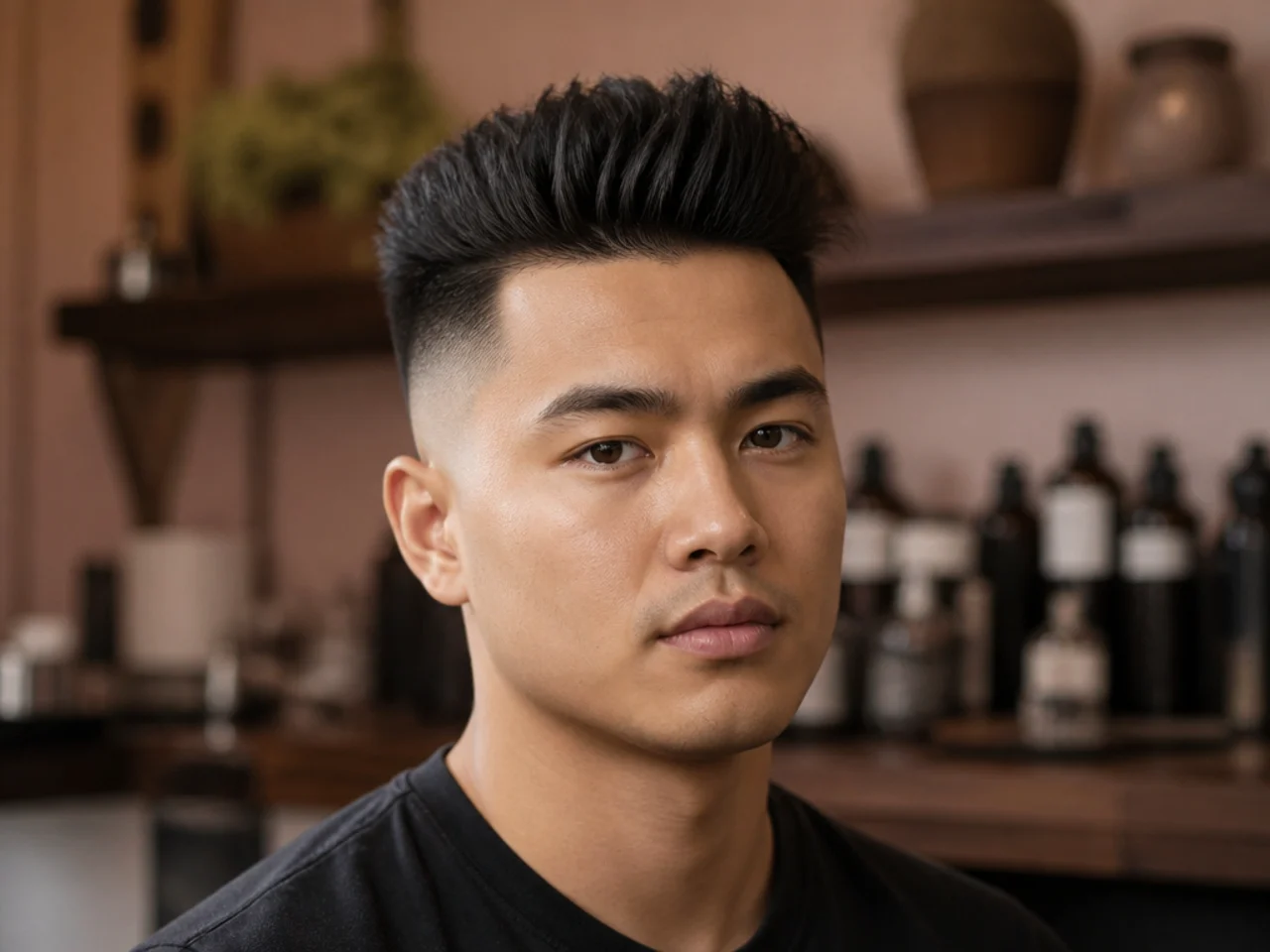
You'll get a better cut in fewer visits if you hand your barber the numbers instead of vibes. Here's the exact language.
- Lead with the face-shape context. Say "I've got a round face and I want a cut that adds height and slims the sides." Barbers hear this and immediately know the direction — they'll steer if a photo you show would work against that goal.
- Ask for a mid fade unless you specifically want the quieter low-fade version. Say "mid fade, starting at the temple, dropped to skin at the shortest point." If you want lower maintenance, ask for a low taper fade at the temple instead.
- Specify the length on top in inches. "5 inches at the front, tapered to 3 at the crown." That translates cleanly to any scissor. Avoid vague words like "medium" or "long-ish."
- Ask for scissor-cut layers, not razor cuts. Razored ends kill lift. Say "scissor layers through the front, no razor work."
- Request a soft side part on your natural side. Say "soft part on the left" (or right, whichever your hair naturally falls). Skip the razored hard part unless you specifically want a sharper look.
- Ask for a matte finish. Say "matte, textured — no pomade or shiny product on the finish." Your barber's post-cut style demo shapes how you'll style it at home, so you want it matte from the chair.
- Book the next appointment before you leave. A mid fade drifts in 3 weeks. If you don't rebook now, the slimming effect will fade before you notice.
If you want to see a fuller variation catalog before your appointment, our quiff hairstyles guide covers 25 versions with photos you can screenshot.
Styling a Round-Face Quiff at Home
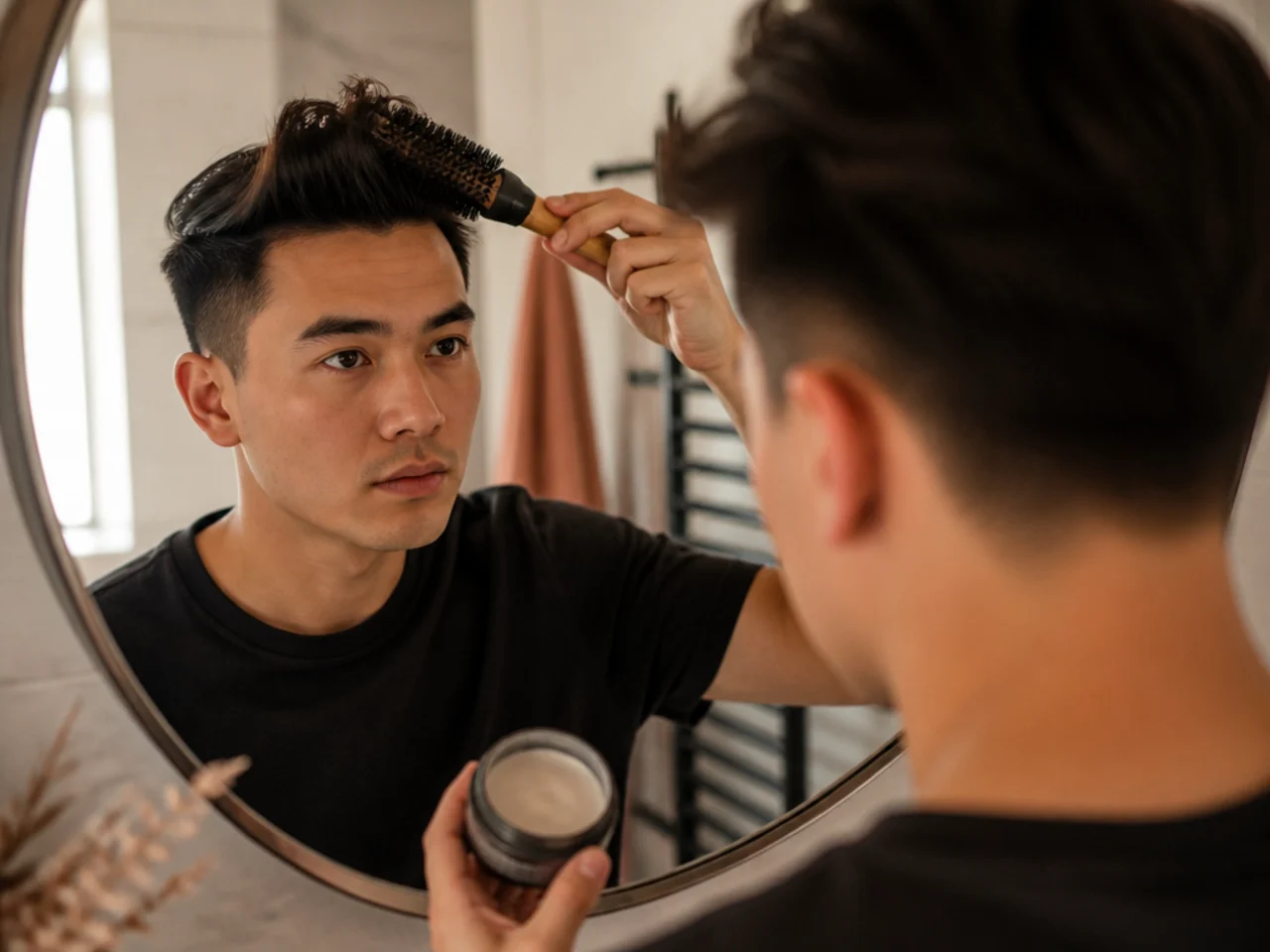
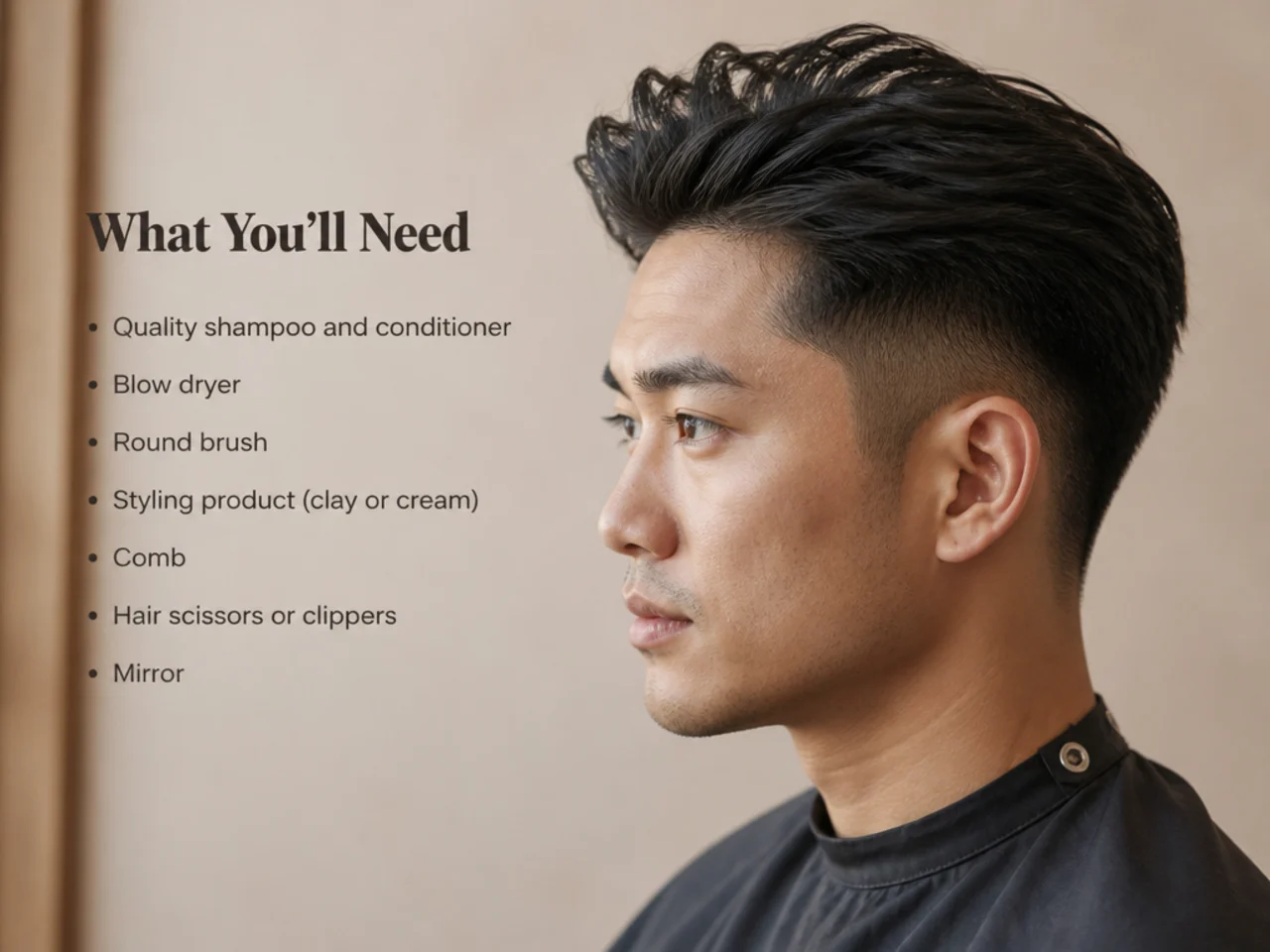
The barber gets you the shape. Your daily styling is what keeps the shape doing its face-shape job past 10 a.m. Here's the routine that actually holds.
Start with damp — not soaking — hair, straight out of the shower. Towel-dry until it's not dripping. Mist sea-salt spray from the roots to mid-length on the front third only. That builds the grip your lift needs.
Blow-dry with a round brush, lifting the front section up and slightly back at the same time. Direct hot air at the roots for 30 seconds, then hit the whole front with a cool-shot to lock the shape while it's still standing up. If you skip the cool-shot, the lift collapses within the hour.
Warm a pea-size scoop of matte clay between your palms until it turns transparent. Press it into the ends of the front section first — never the roots, or you'll flatten what you just built. Work back through the top with your fingers, then finish by pinching the ends into small separated pieces. That's the matte texture that breaks the round outline.
If you're going to be moving around all day, mist a flexible-hold hairspray from 12 inches away for one second. Overspraying is worse than underspraying — too much spray locks the top into a stiff cap that reflects light and rounds the outline.
Retouch at lunchtime if the front sags. Warm any remaining product on your palms, press it into the ends, and lift with your fingers. No comb, no water, no re-styling from scratch.
Common Mistakes on a Round Face
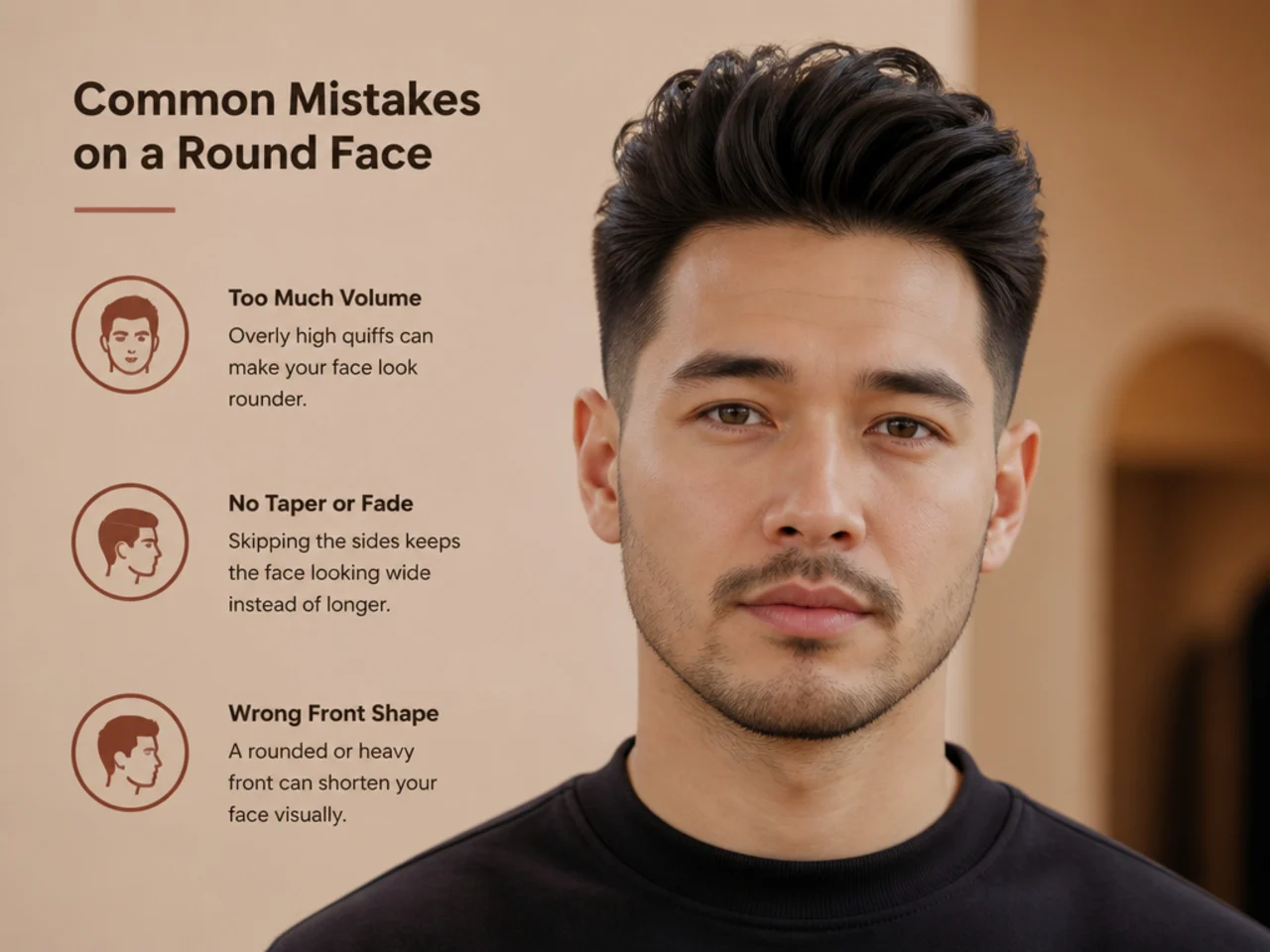
Even a good quiff can be styled or grown out in ways that cancel the round-face benefit. Watch for these:
- Letting the sides grow too long between cuts. As soon as the fade line blurs, the width returns. Book at 3-week intervals for the fade even if the top can go longer.
- Styling the front too far forward. A quiff pushed forward instead of up creates a horizontal weight above the forehead that widens the face. Always sweep up first, then back — never forward.
- Using a glossy pomade. Shine equals continuous outline equals rounder-looking face. Matte finish, every time.
- Wearing a center part with the quiff. A center part cuts the head into two equal halves and reinforces the symmetry a round face already has too much of. Always off-center.
- Skipping the beard entirely on a very round face. If you can grow a defined short beard, do — the angular jawline it creates does 30% of the slimming work by itself.
- Choosing a wide fringe front instead of a lifted quiff. A dropped fringe pushes weight to the forehead line and reads as a horizontal band across a face that already reads wide. Save the fringe for square or long faces.
The quiff isn't the only round-face cut worth considering — if you're leaning conservative or want a longer style, our round face slick back and side part writeups cover two more options with the same slimming logic. And if you're still narrowing down your overall shape, our square face haircuts guide shows the opposite end of the spectrum, so you can see the contrast in what makes each shape flatter.
FAQ
Does a quiff really suit a round face for men? Yes — a quiff is one of the most flattering cuts you can put on a round face. The vertical lift at the front stretches the head visually, the short sides narrow the cheek line, and the sweep breaks the circular outline. Every quiff variation in this guide is tuned for exactly that balance.
What length should a quiff be for a round face? Aim for 4 to 6 inches at the front, tapered shorter through the crown and back. That gives you enough height to lift the front and enough restraint that the top doesn't fall flat during the day. Under 3 inches won't stack tall enough to counter round-face width.
Should a round face pair a quiff with a low, mid, or high fade? A mid or high fade is the stronger call for a round face. Both create a vertical skin panel at the sides that visually narrows the cheekbones. A low fade still works if you want a quieter look, but you'll need more height on top to do the same balancing job.
What's the worst quiff variation for a round face? A short, flat, side-swept quiff with long, loose sides. That combination widens the head and shortens it at the same time — the opposite of what a round face wants. Keep the sides faded or tapered short, and the top lifted rather than combed sideways.
How often do I need to re-cut a quiff on a round face? Every 3 to 4 weeks for the sides, 6 to 8 weeks for the top. The sides are what do the slimming work, so keep them sharp — the moment the fade line blurs, your face starts reading rounder again. The length on top can grow between visits without hurting the shape.
Can I style a round-face quiff without a blow dryer? You'll get more lift with a dryer, but it's not required. Sea-salt spray on damp hair plus a matte clay works on wavy or thicker hair. Straight, fine hair needs the dryer to hold vertical height — otherwise the front collapses within an hour and the round-face slimming effect goes with it.