25 Beautiful Shag Haircuts With Bangs For Round Faces
Twenty five shags with bangs, chosen for round faces on one rule — a layer that ends at the cheekbone puts volume at the widest point of the face. Move the shortest layer above or below that line and the same haircut reads long instead of round.
In this article · 32
- What a Shag Does to a Round Face
- Choosing Your Fringe for a Round Face
- The 25 Shag Haircuts With Bangs
- 1. Curtain Bangs With a Long Shag
- 2. Wispy Bangs With a Soft Shag
- 3. Side Swept Bangs Shag
- 4. Curly Shag With Curtain Bangs
- 5. Narrow Blunt Bangs Shag
- 6. Bottleneck Bangs Shag
- 7. Deep Side Part Shag
- 8. Collarbone Shag With Bangs
- 9. Chin Length Shag With Bangs
- 10. Face Framing Bangs on a Long Shag
- 11. Curly Fringe Cut Dry
- 12. Wavy Shag With Curtain Bangs
- 13. Straight Shag With Wispy Bangs
- 14. Coily Shag With a Short Fringe
- 15. Money Piece Shag
- 16. Layers Started Below the Cheekbone
- 17. Textured Fringe Shag
- 18. Grown Out Fringe Shag
- 19. Shaggy Bob With Bangs
- 20. Middle Part Fringe Shag
- 21. Micro Bangs Shag
- 22. Heavy Crown Shag
- 23. Razor Cut Fringe Shag
- 24. Shag With a Longer Nape
- 25. Shag With Curtain Bangs and Highlights
- Styling and Upkeep
- Mistakes to Avoid
- FAQ
- Final Thoughts
A shag flatters a round face or widens it depending on one measurement, which is where the shortest layer stops.
Layers create volume at the point where they end. The cut ends spring away from the hair beneath them, so the fullest part of the shape sits level with the shortest layer.
A round face needs that fullness above the temple or below the jaw. Anything landing at the cheekbone adds width to the widest thing already there.
What a Shag Does to a Round Face
A shag is layered throughout, not just at the ends. The layering runs from crown to perimeter, which is what separates it from a long cut with a few face framing pieces.
Every layer is a decision about width. The volume shows up where each layer finishes, so a shag is essentially a set of instructions about where the face should look full.
Round faces are short and wide, not large. The goal is a vertical line rather than less hair, and a shag supplies verticals easily because the layers hang rather than curve.
The fringe carries most of the effect. It sits in the top third of the face where a round shape shows first, so it does more for the outcome than any layer further down.

Choosing Your Fringe for a Round Face
Curtain bangs open a vertical channel. The split at the centre lets a strip of face show from hairline to chin, and the eye reads that strip as length.
A side sweep makes a diagonal. A diagonal crosses a circle rather than following it, which is why an off centre part changes a round face more than any amount of layering.
Blunt bangs need to be narrow. Cut them no wider than the outer edge of each eyebrow. Beyond that they draw a horizontal across the widest part of the forehead.
Length matters more than shape. Bangs that finish below the cheekbone keep the eye travelling downward. Bangs that stop above it hand the eye a stopping point at the wrong height.

The 25 Shag Haircuts With Bangs
1. Curtain Bangs With a Long Shag
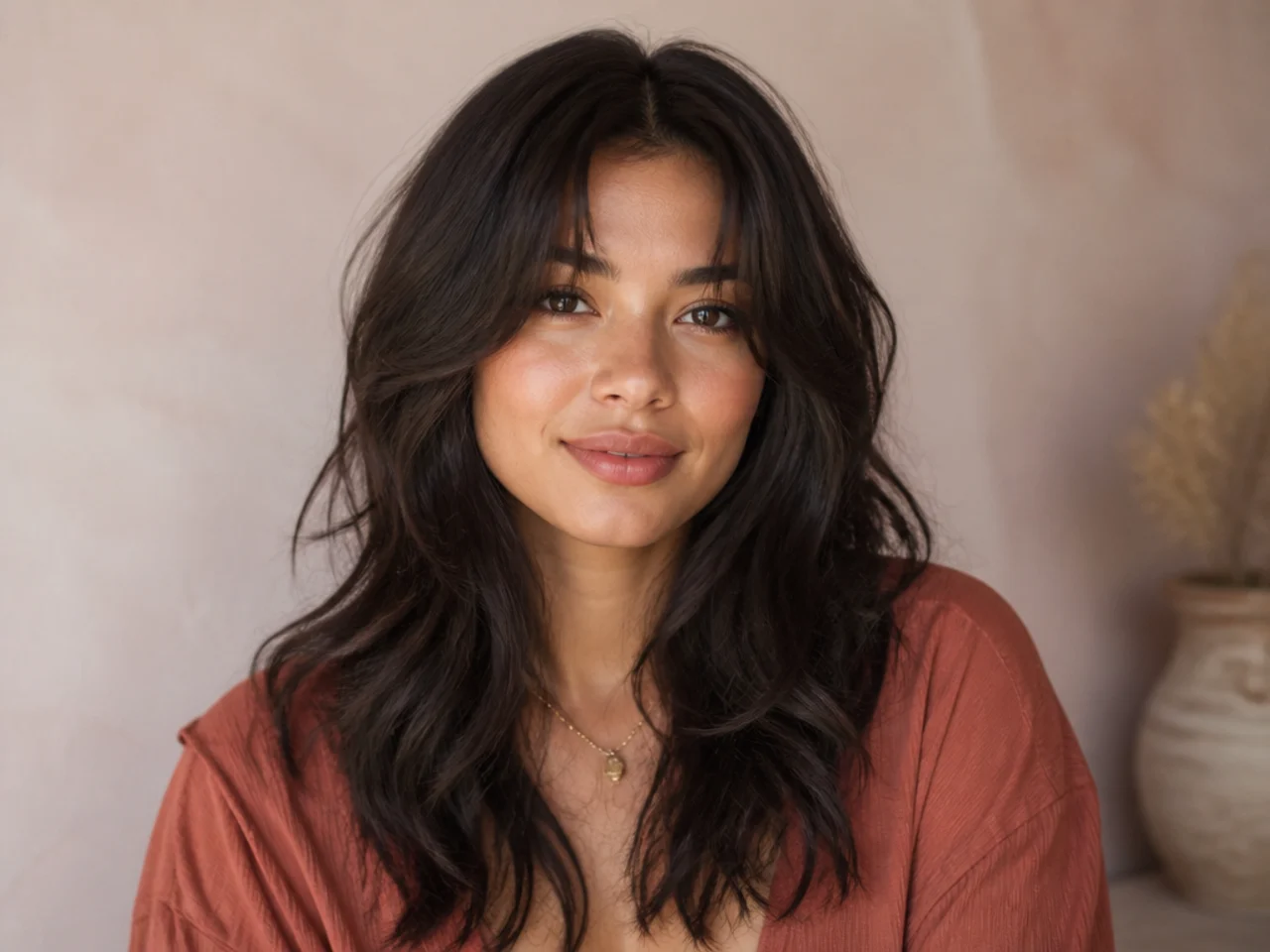
The fringe parts at the centre and sweeps outward, joining the face framing layers as it falls. The open centre gives the face a vertical strip and the sweep gives it two diagonals, which are the two lines a round shape lacks.
2. Wispy Bangs With a Soft Shag
A thin fringe taken from a shallow section, so the forehead still shows through it. Because the skin behind stays partly visible, the fringe never draws a solid horizontal line, and a solid horizontal is what makes a round face measure wider.

3. Side Swept Bangs Shag
The fringe cut on an angle and worn across the forehead from a deep part. The angle carries the eye from one temple down toward the opposite cheek, a diagonal that crosses the circle instead of tracing its edge.

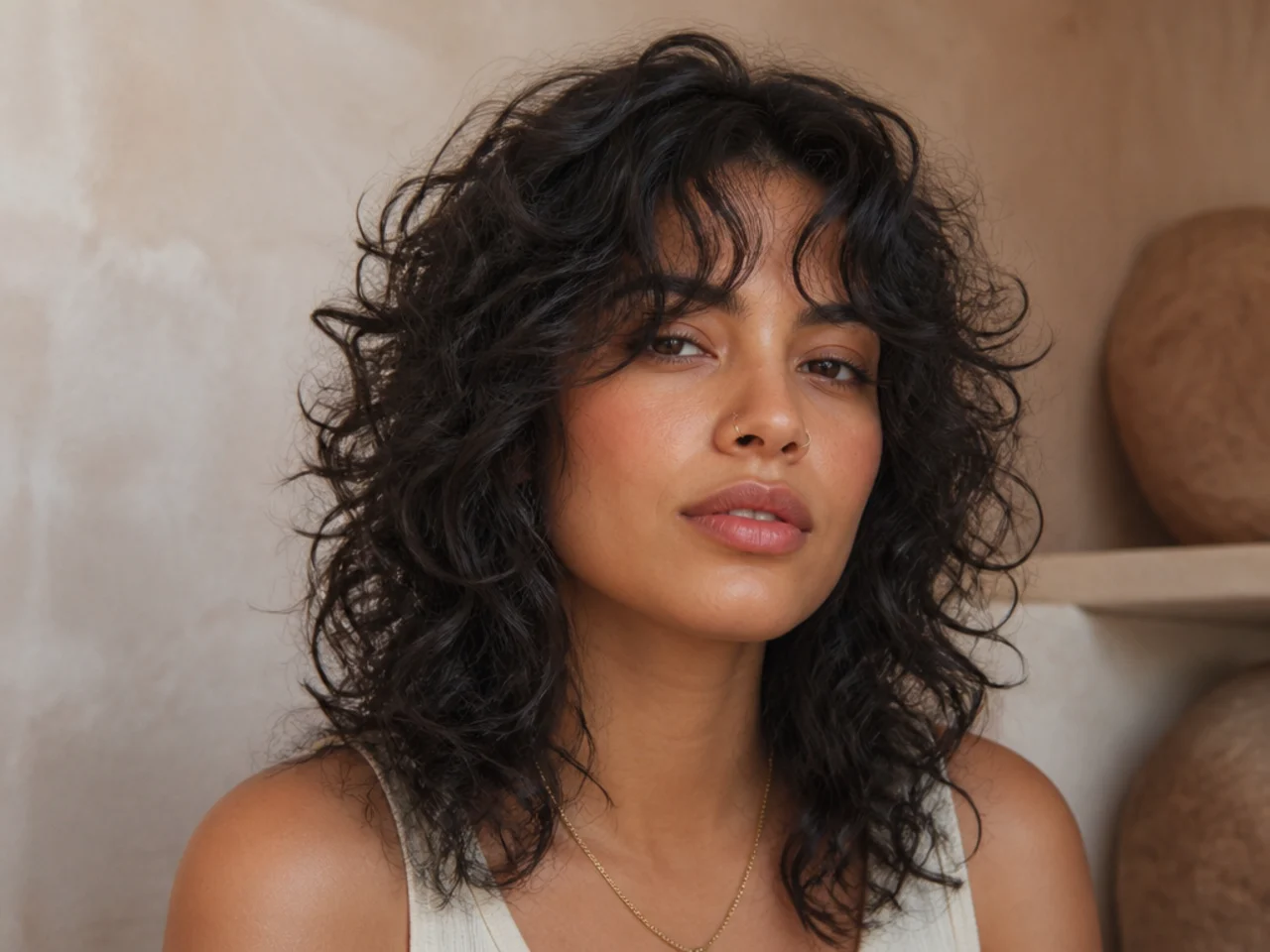
4. Curly Shag With Curtain Bangs
On curly hair the fringe has to be cut long, because a curl lifts as it dries and takes the fringe up with it. Cut to the cheekbone dry, a curly curtain fringe settles just under the eye rather than halfway up the forehead.
5. Narrow Blunt Bangs Shag
A blunt fringe kept inside the width of the eyebrows. The narrow section leaves the temples uncovered, so the widest part of the forehead stays visible and the horizontal line sits over the narrow centre instead.

6. Bottleneck Bangs Shag
Closed and narrow at the top, then widening sharply at the cheekbone. The narrow top hides the roundest part of the forehead while the flare joins the layers lower down, so the fringe reads as tapering rather than as a block.

7. Deep Side Part Shag
Moving the part three centimetres off centre pushes a whole section of hair across the head, and it arrives on the other side with lift already in it. That lift adds height, and height is the direct answer to a face that is wide relative to its length.

8. Collarbone Shag With Bangs
The perimeter cut at the collarbone with the layers stacked above it. The length finishes well below the jaw, so the outline of the hair keeps travelling downward after the face has stopped, which lengthens the whole silhouette.

9. Chin Length Shag With Bangs
The riskiest length for a round face, because the perimeter finishes exactly where the jaw is widest. It works only if the layers above are cut long and vertical, so the eye reads movement down the length instead of the line across the bottom.

10. Face Framing Bangs on a Long Shag
The fringe cut as one continuous piece with the face framing layers, so there is no join between them. A join is a visible step, and a step across the cheek draws a horizontal exactly where a round face cannot afford one.

11. Curly Fringe Cut Dry
Curl can shrink several centimetres between wet and dry, and it does not shrink evenly across the head. Cutting a curly fringe dry, curl by curl, is the only way to know where each piece will actually finish once it springs up.
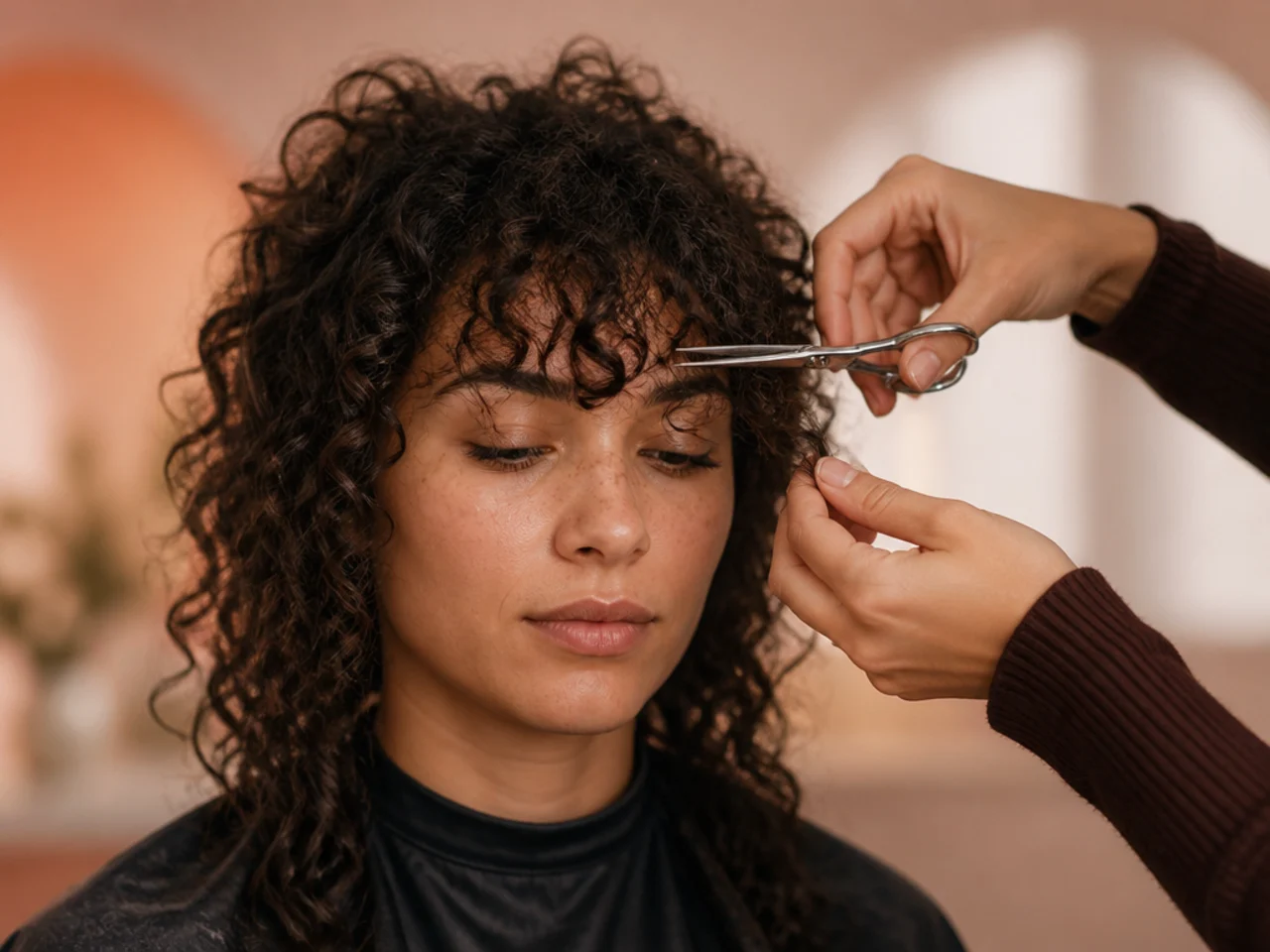
12. Wavy Shag With Curtain Bangs
Wave holds each strand off the one beneath it, which builds volume without any help from the cut. That means the layers can be kept longer and fewer, keeping the fullness low on the head instead of stacked at the cheekbone.

13. Straight Shag With Wispy Bangs
Straight hair falls flat against the head and shows every layer edge, so a heavy fringe becomes a solid block. Wispy bangs break that block into separated pieces and let some forehead show, which keeps the top of the face from reading wide.

14. Coily Shag With a Short Fringe
Coily hair grows outward before it grows down, so a fringe adds height at the front rather than covering the forehead. On a round face that height is useful, and it is one of the few textures where a short fringe lengthens rather than shortens the shape.
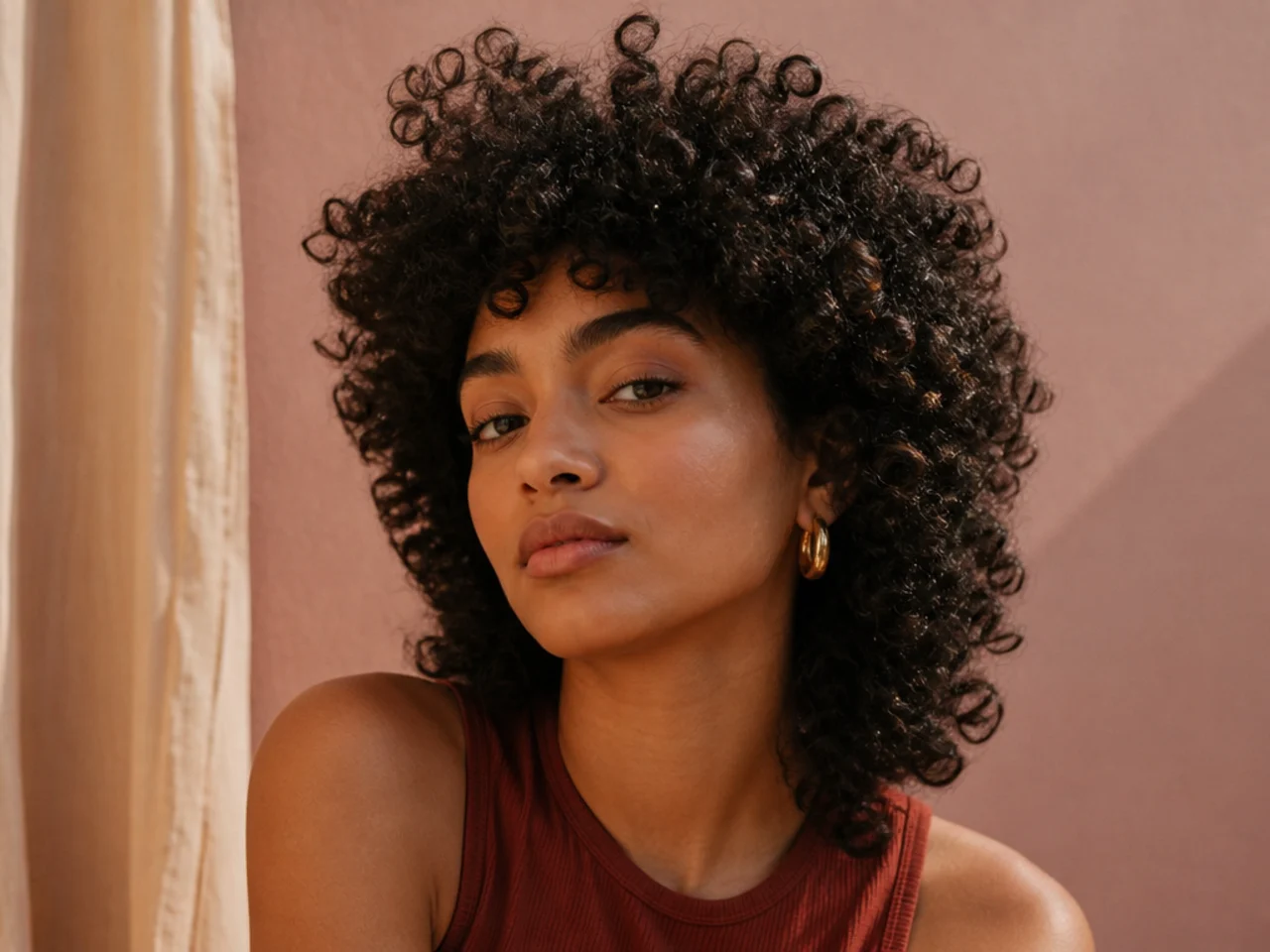
15. Money Piece Shag
Two lightened sections placed either side of the parting. Light draws the eye first, so two bright vertical strips running down the face create the impression of length before any shape is even registered.

16. Layers Started Below the Cheekbone
The shortest layer moved down so it finishes at the jaw. The volume drops with it, landing under the widest part of the face rather than on it, which is the single change that turns a widening shag into a lengthening one.

17. Textured Fringe Shag
The fringe point cut into an uneven edge instead of a straight line. An uneven edge has no single horizontal for the eye to measure across, so the fringe stops functioning as a width marker.

18. Grown Out Fringe Shag
At eight weeks a fringe has gained more than two centimetres and has usually reached the cheekbone, where it splits naturally into a curtain. Many people prefer it at this stage, which is a good reason to book the cut long and let it arrive.
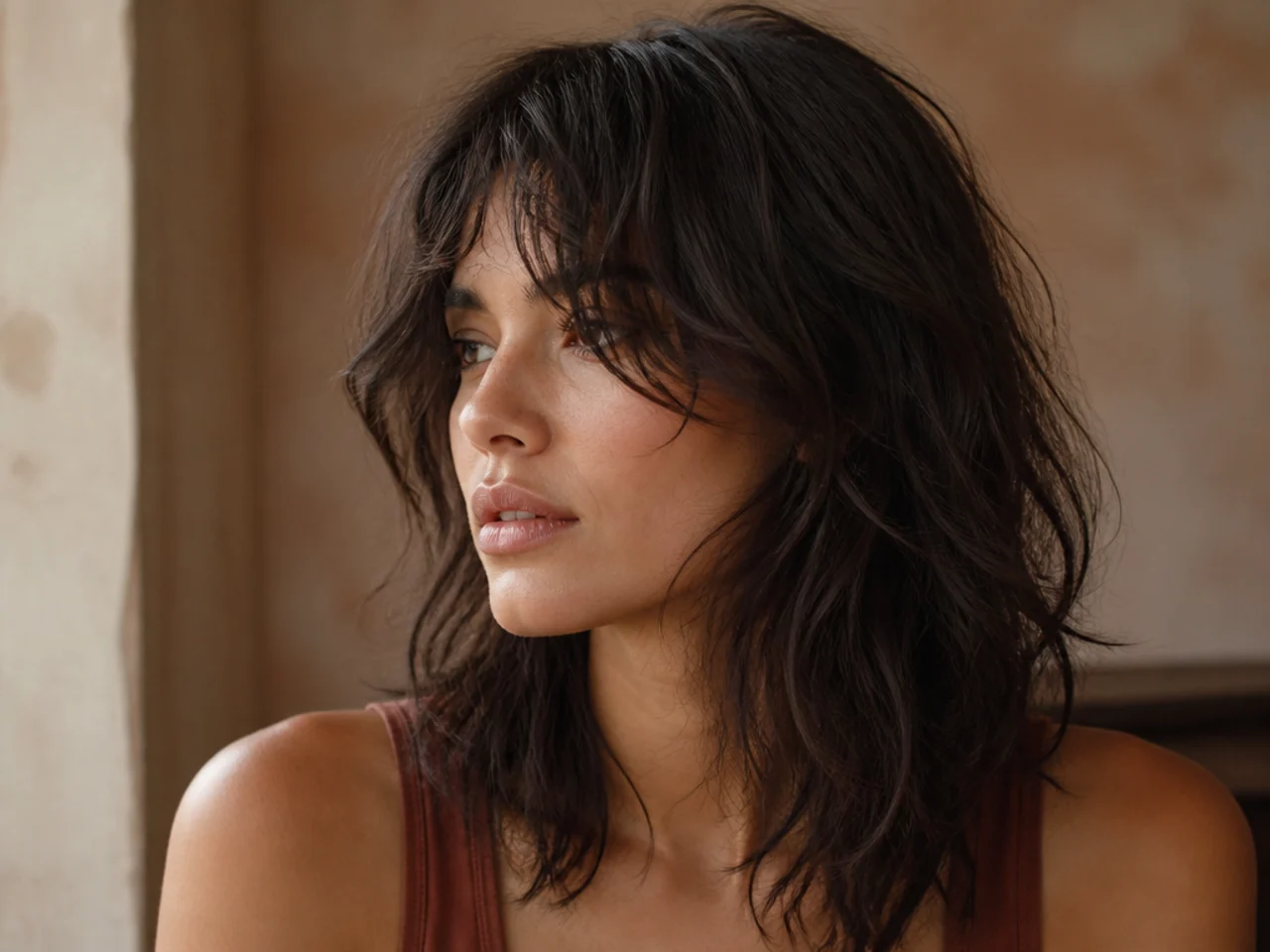
19. Shaggy Bob With Bangs
Short and round is the combination round faces are usually warned off, and the warning holds unless the bob is cut with a longer front than back. That forward slope pulls two vertical lines down past the jaw and rescues the shape.

20. Middle Part Fringe Shag
A centre part splits the fringe into two equal halves and leaves a straight line running from the hairline down. Symmetry costs volume at the root, so this works best on hair with enough natural body to hold height without help.

21. Micro Bangs Shag
A fringe well above the eyebrow. It exposes the whole forehead and shortens the visible face, which is the opposite of what a round shape needs, so it belongs on tall foreheads and long faces rather than here.

22. Heavy Crown Shag
The shortest layers concentrated at the crown so the volume sits on top of the head. Height at the crown adds to the vertical measurement of the whole head, which is the most direct way to change the ratio a round face is judged on.

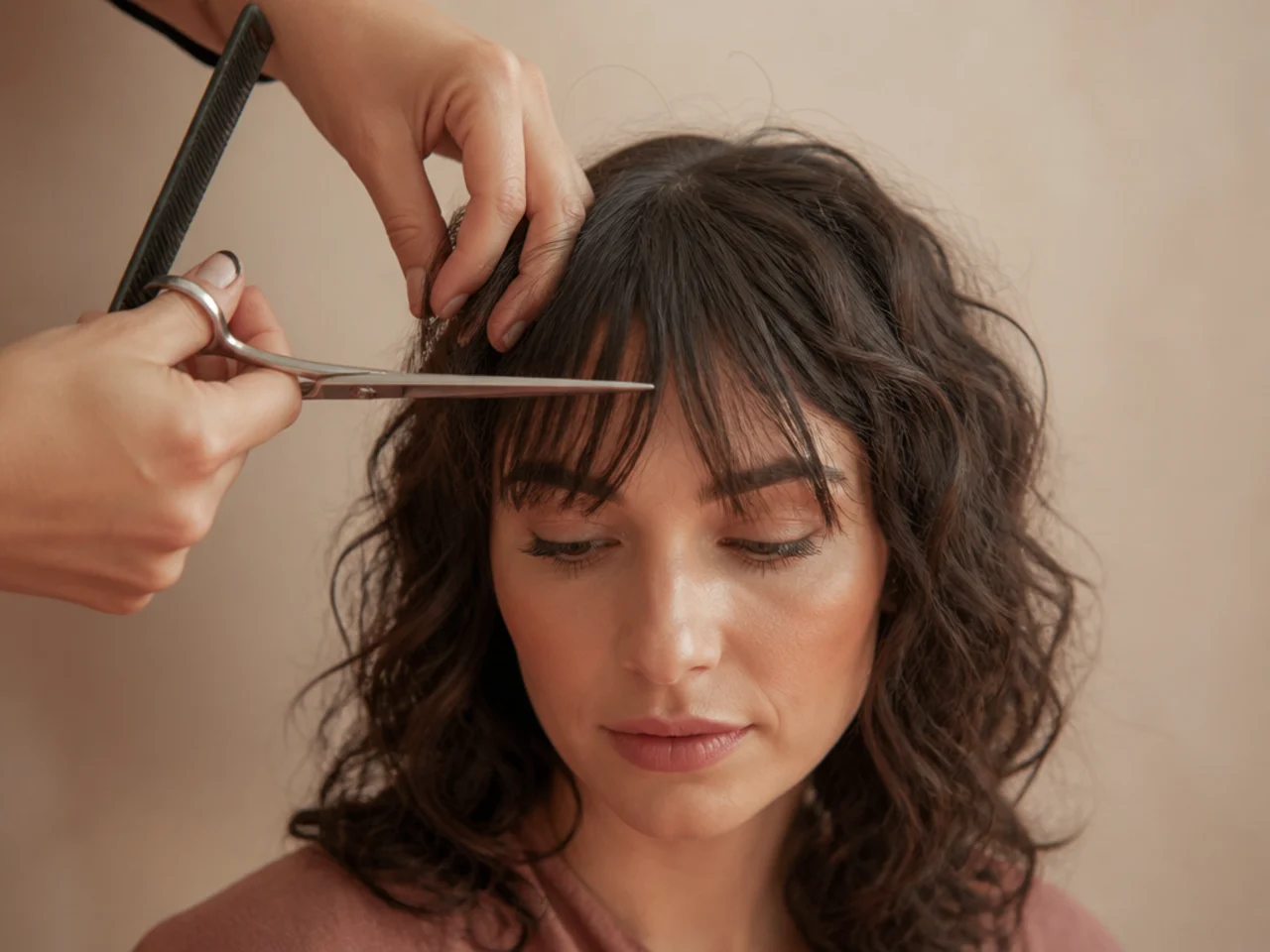
23. Razor Cut Fringe Shag
A razor tapers each strand to a point rather than cutting it square, so the fringe finishes finer and separates into pieces on its own. On fine hair the same tool can take out too much, leaving the fringe transparent and impossible to reverse.
24. Shag With a Longer Nape
The back left longer than the sides so the outline continues below the neckline. The extra length at the back is invisible from the front but changes the profile, adding to the head's overall length without adding any width.
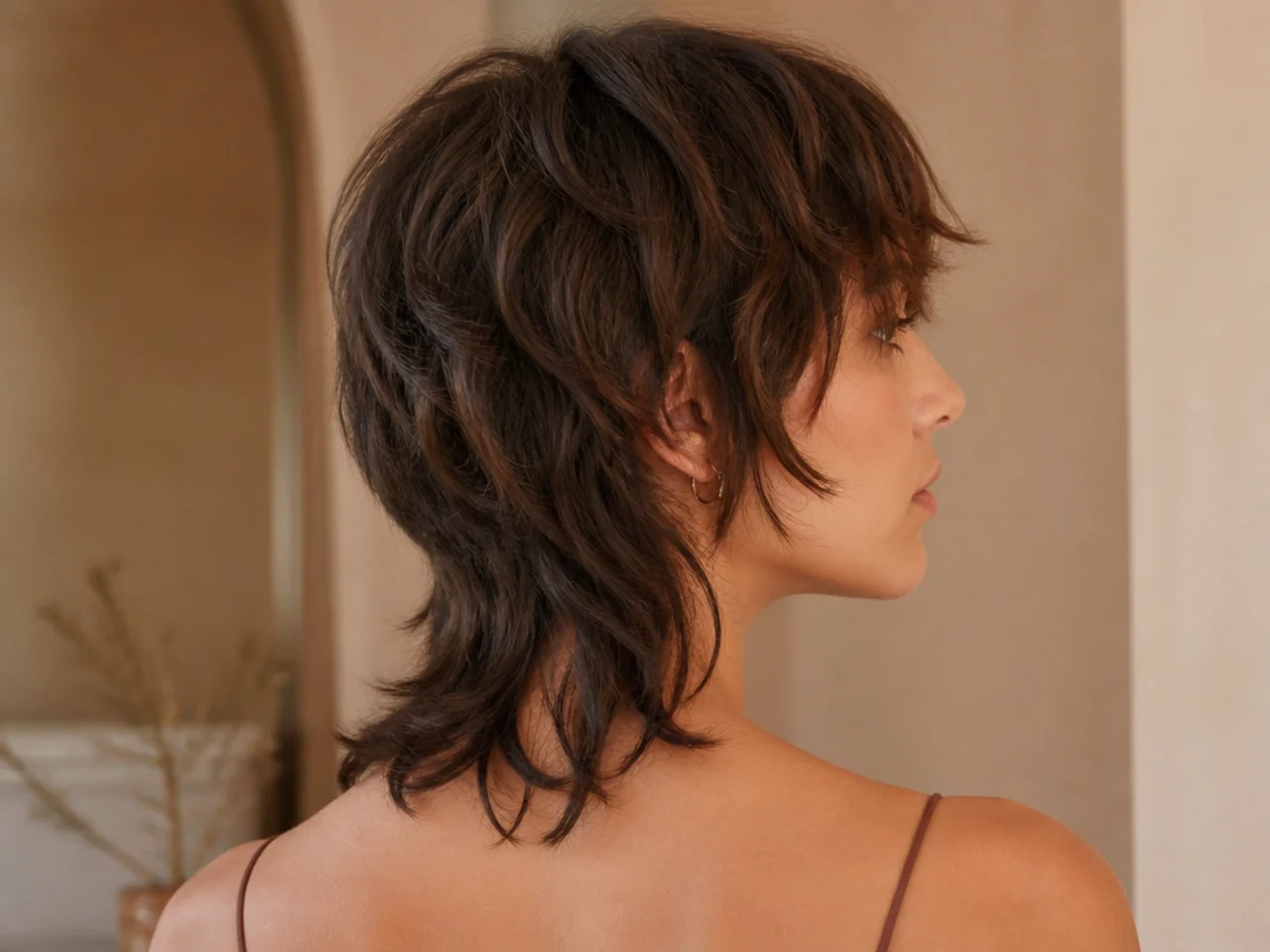
25. Shag With Curtain Bangs and Highlights
Highlights placed on the front and the interior layers only. Because lighter pieces sit forward of the darker bulk, the hair reads as having depth, and depth at the sides makes the outline look narrower than a single flat colour does.

Styling and Upkeep
Blow the fringe dry first. It sets within a minute or two of coming out of the shower and cannot be redirected once it has.
Dry the fringe side to side, not forward. Drying it straight down sets it in a solid line, which is the line a round face does not want.
Trim the fringe every four to six weeks. Hair grows about a centimetre and a quarter a month, so a fringe cut to the cheekbone reaches the jaw in two months.
Keep conditioner off the roots at the crown. The crown is where the height comes from and it flattens faster than anywhere else on the head.
Book the cut every ten to twelve weeks. Layers keep their proportion as they grow because the whole head grows at the same rate, so the shape lasts far longer than the fringe.

Mistakes to Avoid
Ending the shortest layer at the cheekbone. The volume lands exactly where the face is already widest.
A blunt fringe cut wider than the eyebrows. It draws a horizontal across the whole forehead and shortens the face.
Cutting curl wet. Curl shrinks as it dries, so every layer lands higher than the mirror showed at the basin.
Adding volume all over. A round face needs height at the crown and closeness at the sides, not fullness everywhere.
Keeping a centre part on flat hair. With no natural lift, a centre part sits the hair down against the head and hands the face its widest possible outline.

FAQ
Which fringe? Curtain or side swept, so there is a vertical or a diagonal.
Where should the shortest layer end? Above the temple or below the jaw, never at the cheekbone.
Curly hair? Cut it dry, or every layer lands higher than planned.

Final Thoughts
Bring one instruction to the appointment rather than a photograph. "Shortest layer at the jaw, fringe split at the centre and long enough to reach the cheekbone" is a cut a stylist can build, and it is the version of a shag that lengthens a round face instead of rounding it further.
For a softer, less layered take on the same fringe see Korean haircuts with bangs, and for the polished version of a face framing fringe see the old money haircut with bangs. More in Mullet and Wolf Cut.