20 Old Money Haircut Ideas With Bangs I Saved
Twenty old money haircuts with bangs, and the test that settles which fringes fit — if it needs trimming more often than your haircut does, it is too short for this aesthetic.
In this article · 27
- What Makes a Fringe Fit
- How to Choose Yours
- The 20 Ideas
- 1. Long Curtain Bangs
- 2. Cheekbone-Length Curtain
- 3. Jaw-Length Curtain
- 4. Long Side-Swept Fringe
- 5. Curtain Bangs Connected to Layers
- 6. Curtain Bangs on a Lob
- 7. Curtain Bangs on Long Hair
- 8. Curtain Bangs on a Bob
- 9. Grown-Out Fringe as Face Framing
- 10. Soft Framing, No Fringe
- 11. Curtain Bangs Air-Dried
- 12. Curtain Bangs Tucked Behind One Ear
- 13. Curtain Bangs on Fine Hair
- 14. Curtain Bangs on Thick Hair
- 15. Curtain Bangs on Wavy Hair
- 16. Fringe with a Low Ponytail
- 17. Fringe with a Simple Low Bun
- 18. Fringe at Week Eight
- 19. A Blunt Fringe for Comparison
- 20. A Fringe on a Three-Week Cycle
- Styling and Upkeep
- Mistakes to Avoid
- FAQ
- Final Thoughts
A fringe sits awkwardly in an aesthetic built on nothing announcing itself, because a fringe is inherently a visible decision.
There is a clean test for which ones fit. If it needs trimming more often than your haircut does, it is too short. A fringe on a three-week cycle is a maintained feature, and maintained features announce themselves.
Which leaves the long ones — curtain and long side-swept — and rules out anything blunt.
What Makes a Fringe Fit
It has to blend. A fringe that connects into the length reads as part of the haircut rather than as a feature.
It has to grow out gracefully. On the same schedule as everything else, ideally.
Long is the whole answer. Curtain and long side-swept both blend; blunt and micro do not.
No hard horizontal. A straight line across the face is a statement, and statements belong to a different aesthetic.

How to Choose Yours
Ask for it long enough to tuck. A useful test at the mirror before you leave.
Have it connected to your layers. Not cut as a separate piece.
Match its trim cycle to your haircut. If they diverge, it is too short.
Choose curtain if you are unsure. It converts to a side sweep and grows out invisibly.

The 20 Ideas
1. Long Curtain Bangs
Parted centrally, blending into the length. The best fit here. A curtain fringe has no single load-bearing measurement, so growth lengthens it rather than putting it out of proportion.
2. Cheekbone-Length Curtain
Short enough to read as a fringe, long enough to blend. The cheekbone is roughly the boundary — above it a fringe becomes a feature, below it becomes framing.

3. Jaw-Length Curtain
Longer still, and it barely reads as a fringe at all. Which is the point: at jaw length there is nothing to identify, and nothing to maintain on a schedule.

4. Long Side-Swept Fringe
Angled and long enough to reach the layers. The long end has to meet whatever is behind it, or the fringe sits on top of the haircut rather than in it.

5. Curtain Bangs Connected to Layers
Cut as one continuous line rather than as a separate piece. A connected fringe grows out as part of the cut, where a disconnected one develops a visible step within a fortnight.

6. Curtain Bangs on a Lob
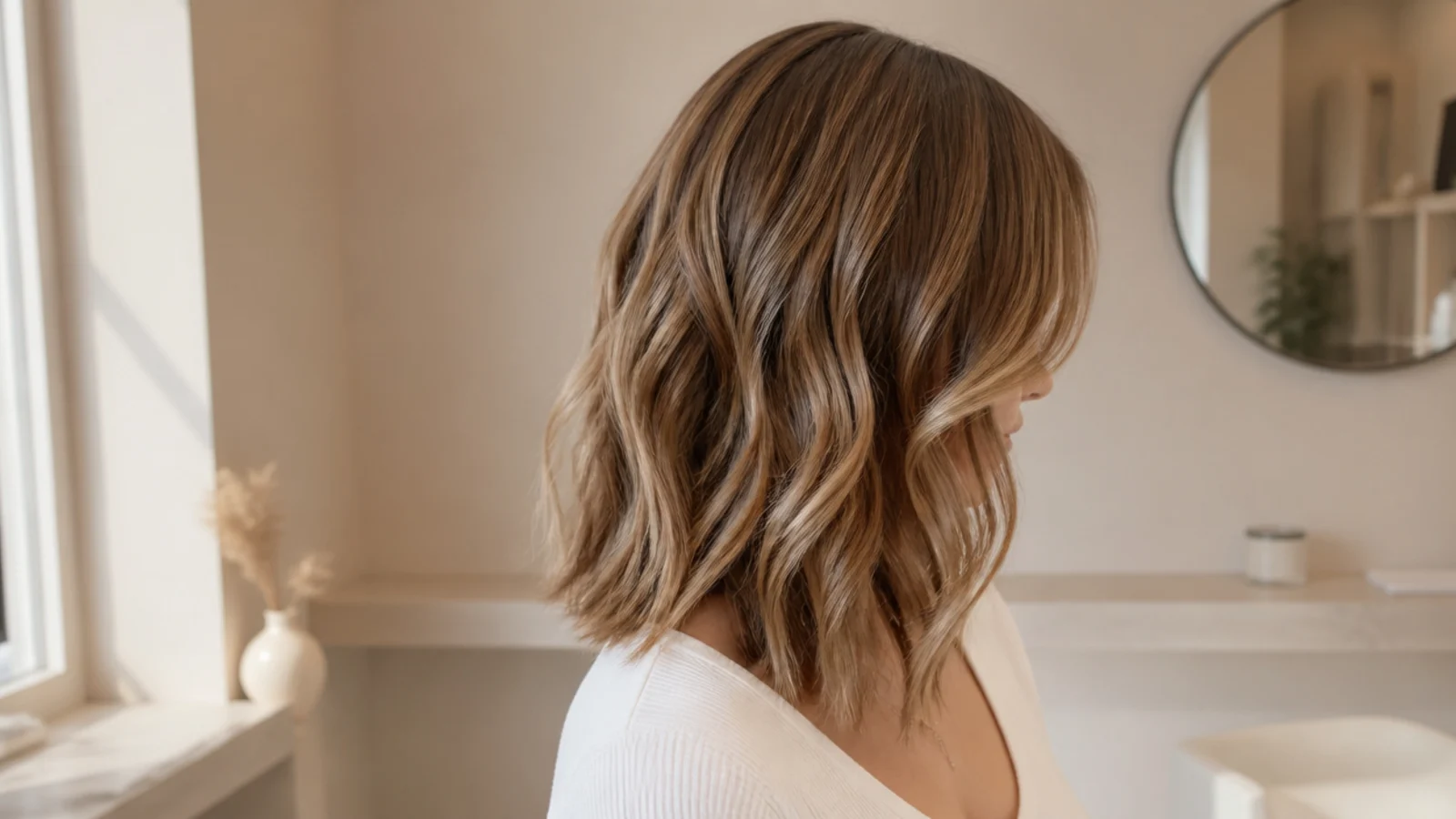
Collarbone length behind, soft framing in front. A lob gives the fringe somewhere to blend into at a length that is easy to keep in good condition.

7. Curtain Bangs on Long Hair
The most common pairing, and the easiest to maintain. Long hair gives the fringe the greatest distance to blend across, which hides an imperfect join.

8. Curtain Bangs on a Bob
Short behind, soft in front. Works better than it sounds. A bob has less length for the fringe to meet, so the connection has to be more precise.

9. Grown-Out Fringe as Face Framing
A fringe that has become framing. Entirely on-brief. Growing a fringe out is normally an awkward stage; here it is the destination.

10. Soft Framing, No Fringe
The safest version — framing without a fringe at all. Nothing shorter than the cheekbone means nothing that needs cutting on a separate cycle.

11. Curtain Bangs Air-Dried
Untouched, where the length lets them fall naturally. Long enough to fall under their own weight, which is why curtain bangs suit air-drying and blunt ones do not.

12. Curtain Bangs Tucked Behind One Ear
Possible only because they are long enough. A short fringe cannot be tucked, which is one more thing a long one does not need managing.

13. Curtain Bangs on Fine Hair
Fewer pieces taken, so density is not lost from the top. Every hair in the fringe is one fewer in the length, and fine hair cannot spare many.

14. Curtain Bangs on Thick Hair
Weight removed internally so they sit rather than stand. Thick fringe pieces spring away from the head unless weight comes out from underneath.

15. Curtain Bangs on Wavy Hair
Cut dry, where the bend does the shaping. Wavy hair lifts as it dries, so a fringe cut wet lands well above where it was placed.

16. Fringe with a Low Ponytail
The framing left out of an otherwise plain style. With everything gathered, the fringe is the only soft thing in the look — which is exactly enough.

17. Fringe with a Simple Low Bun
Soft at the front, gathered behind. The contrast between a soft front and a plain back is the whole styling decision here.

18. Fringe at Week Eight
Longer, softer, and still working. The durability test passed. Eight weeks with no trim and no loss of shape is the test every choice on this board has to pass.

19. A Blunt Fringe for Comparison
A hard horizontal across the face. A statement, not this aesthetic. A blunt fringe announces a decision every time someone looks at it, which is the failure mode here.

20. A Fringe on a Three-Week Cycle
Maintained, and therefore visible. The test, failed. A three-week cycle means a salon appointment is permanently implied, whatever the fringe itself looks like.

Styling and Upkeep
Trim it with your haircut, not separately. If it cannot wait, it is too short.
Air-dry it with the rest. A separately blow-dried fringe reads as a separate decision.
Let it grow past awkward. The grow-out stages of a long fringe are all wearable.
Keep it connected at every trim. Trimming the fringe alone pulls it away from the layers it was cut into.
Tuck it on days it will not sit. A long fringe can be; a short one cannot.

Mistakes to Avoid
A blunt fringe. It cannot blend, and blending is the requirement.
A fringe on its own trim cycle. It becomes a maintained feature.
Cutting it as a separate piece. It needs to connect to the layers.
Blow-drying it separately. It reads as a separate decision.
Cutting it short to "try" a fringe. Long is the version that fits here.

FAQ
Do bangs suit this look? Long ones do — curtain and long side-swept.
How do you know if it is too short? If it needs trimming more often than your haircut.
Can you have a blunt fringe? Not really. It is a statement by design.

Final Thoughts
Use the trim-cycle test before you commit. If the fringe you are considering would need its own appointment every three weeks, it belongs to a different aesthetic — and the long version that grows out alongside your haircut will give you the framing without the upkeep.
For the swept version in detail see 25 cute side swept bangs ideas, and for the layers a fringe should connect into see 20 layered old money haircut ideas. More in Women's Hairstyles.