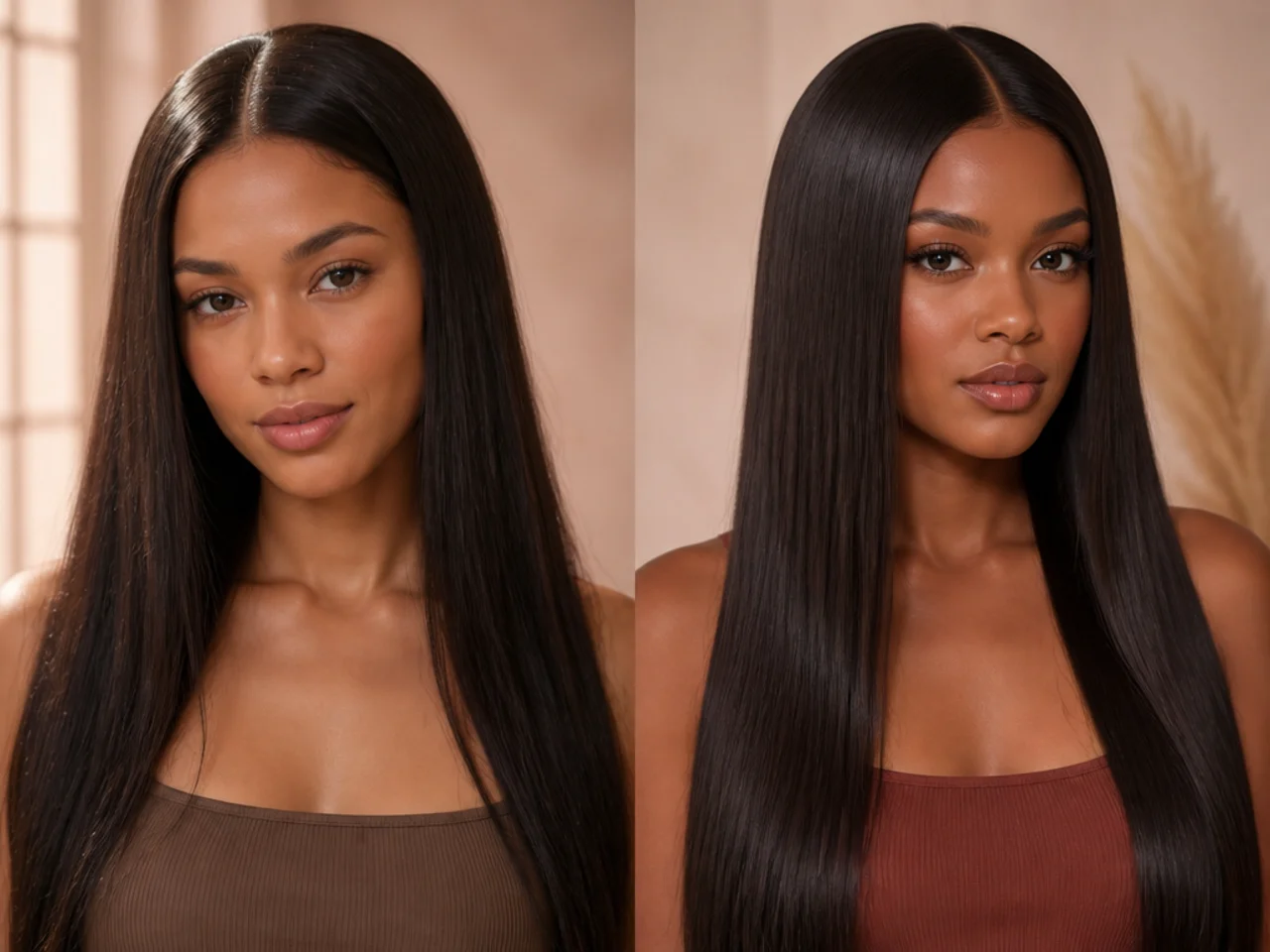
20 Layered Old Money Haircut Ideas We Adore
Twenty layered old money haircut ideas, and the rule that resolves the apparent contradiction — layers are allowed, visible layers are not. If you can point at where a layer starts, it is too short.
In this article · 27
- What Makes Layers Invisible
- How to Choose Yours
- The 20 Layered Ideas
- 1. Long Hair with Two Long Layers
- 2. Internal Weight Removal Only
- 3. Layers Starting at the Collarbone
- 4. Layers Starting Below the Jaw
- 5. Soft Curtain Framing
- 6. Mid-Length with Long Layers
- 7. Layered Lob
- 8. Layered Bob
- 9. Layers on Fine Hair
- 10. Layers on Thick Hair
- 11. Layers on Wavy Hair
- 12. Layers on Curly Hair
- 13. Layers with a Centre Part
- 14. Layers with a Soft Side Part
- 15. Layers Air-Dried
- 16. Layers with a Soft Wave
- 17. Layers at Week Ten
- 18. Layers Grown Out Six Months
- 19. A Layer Starting at the Cheekbone
- 20. Heavily Stacked Layers
- Styling and Upkeep
- Mistakes to Avoid
- FAQ
- Final Thoughts
The pillar rule for this aesthetic is no visible layering, which sounds like it forbids layers entirely. It does not, and the distinction is precise.
Layers are allowed. Visible layers are not. If you can point at the place where a layer starts, it is short enough to read as a technique — and technique that announces itself is the one thing this look avoids.
The practical version of that rule: the shortest layer should start below the jaw, and weight should come out from inside rather than off the top.
What Makes Layers Invisible
Length is the whole variable. A layer starting at the collarbone disappears; the same layer starting at the cheekbone announces itself.
Internal removal beats external cutting. Weight taken from inside creates movement without changing the outline.
Few layers, far apart. Two or three long ones rather than a dozen stacked.
The outline stays whole. Whatever happens inside, the perimeter should read as one line.

How to Choose Yours
Say "nothing shorter than my jaw". A single sentence that prevents most of what goes wrong.
Ask for internal weight removal by name. It is a different cut from layering, and the words matter.
Fewer layers than you think. Two or three long ones is usually the whole cut.
Ask to keep the perimeter blunt. Movement inside, one clean line outside.

The 20 Layered Ideas
1. Long Hair with Two Long Layers
Two layers, both below the collarbone. Nothing identifiable. Two long layers give movement without creating a step the eye can locate, which is the entire brief.
2. Internal Weight Removal Only
No external layering at all. Movement from inside. Weight removed from underneath changes how the hair falls while leaving the outline whole.

3. Layers Starting at the Collarbone
Low enough that the eye never finds the step. The collarbone is roughly the height below which a layer stops reading as a separate length.

4. Layers Starting Below the Jaw
The highest a layer should start in this aesthetic. Above the jaw a layer becomes a visible feature, and visible features are what this look avoids.

5. Soft Curtain Framing
The one piece of framing that blends rather than announcing itself. Curtain framing connects into the length rather than sitting on top of it, so there is no boundary to see.

6. Mid-Length with Long Layers
Shoulder length with movement and no visible steps. Shoulder length is short enough that layers show easily, so they have to start lower than instinct suggests.

7. Layered Lob
Collarbone length, layered internally only. A lob keeps its perimeter intact while the internal removal does the movement, which is the cleanest expression of the idea.

8. Layered Bob
Weight removed inside, perimeter kept blunt. The blunt line is the cut; the internal work is invisible support for it.

9. Layers on Fine Hair
Very few, very long. Layers thin fine hair fast. Each layer divides a fine head into progressively smaller amounts of hair, and there is not much to divide.

10. Layers on Thick Hair
Where internal removal does the most good. Thick hair has weight to spare, so removing it from underneath is all upside.

11. Layers on Wavy Hair
Cut dry, so the movement is judged in its own texture. Wavy hair lifts as it dries, so layers cut wet land somewhere other than where they were placed.

12. Layers on Curly Hair
Shaped into the curl rather than cut across it. Cutting across a curl leaves a blunt end that springs out of the pattern rather than settling into it.

13. Layers with a Centre Part
Symmetrical, with the movement below. A centre part draws no attention to itself, which lets the layering stay invisible.

14. Layers with a Soft Side Part
Gentle asymmetry over invisible layering. Shallow, so the part reads as how the hair fell rather than as a decision.

15. Layers Air-Dried
Where invisible layering shows its value most. With no styling to disguise anything, a badly placed layer is fully exposed the moment the hair air-dries.

16. Layers with a Soft Wave
Movement from the cut and the texture together. Two sources of irregularity rather than one, which is what stops either reading as deliberate.

17. Layers at Week Ten
Still unidentifiable, because they were long to begin with. Layers that started low simply grow lower, so there is no point at which they need correcting.

18. Layers Grown Out Six Months
Long layers simply become longer. Nothing to correct. That is the practical argument for this approach — it has no maintenance deadline built into it.

19. A Layer Starting at the Cheekbone
Identifiable immediately. Too short for this aesthetic. A layer at the cheekbone is a face-framing feature, which announces a salon appointment every time it moves.

20. Heavily Stacked Layers
A dozen visible steps. The opposite of this look. Every step is an edge, and every edge is evidence of a decision someone made.

Styling and Upkeep
Ask for the same instruction at every trim. Nothing shorter than the jaw, weight from inside.
Do not let layers creep upward. Each trim is where they get shorter without anyone deciding to.
Air-dry to check the layering. If you can see where a layer starts when it dries naturally, it is too short.
Skip texturising products. They make layers visible that were cut to be invisible.
Trim on condition, not on shape. Long layers hold their form for months.

Mistakes to Avoid
A layer starting above the jaw. Identifiable, and it dates fastest.
Asking for "layers" without qualifying it. It usually produces visible ones.
Letting layers shorten at each trim. They creep unless you say otherwise.
Layers on fine hair without care. They thin the ends quickly.
Texturising products. They reveal what the cut hid.

FAQ
Can it have layers? Yes — just not identifiable ones.
Where should the shortest start? Below the jaw, almost always.
Internal or visible? Internal removes weight without changing the outline; visible announces the cut.

Final Thoughts
Give your stylist one sentence — nothing shorter than my jaw, and take the weight from inside. It is the whole difference between a cut with movement and a cut that has obviously been layered, and it is a distinction most people have never been offered.
For the aesthetic in full see 25 elegant old money haircut ideas, and for the bob version see 15 old money bob haircut ideas. More in Women's Hairstyles.