15 Old Money Bob Haircut Ideas to Try
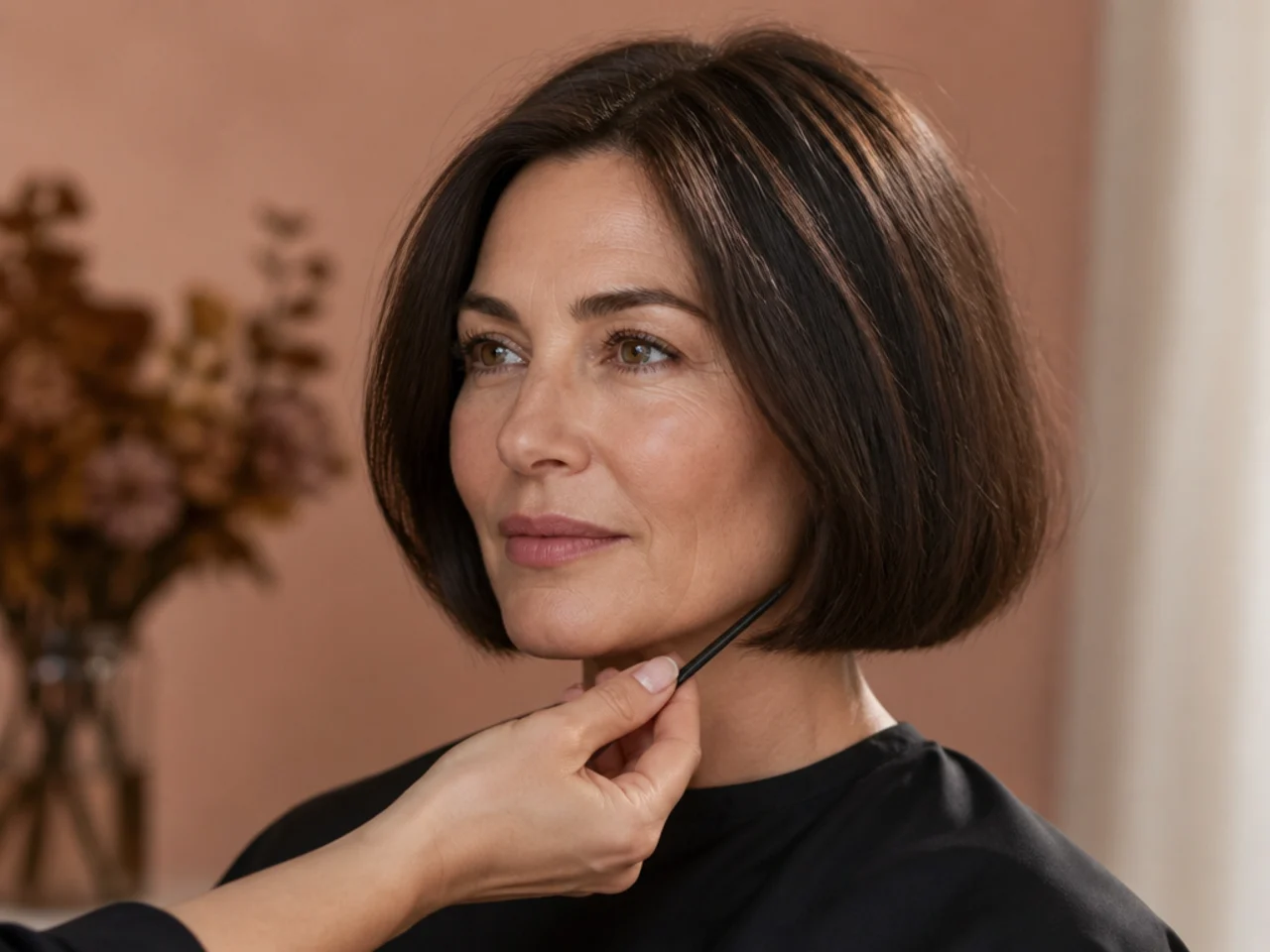
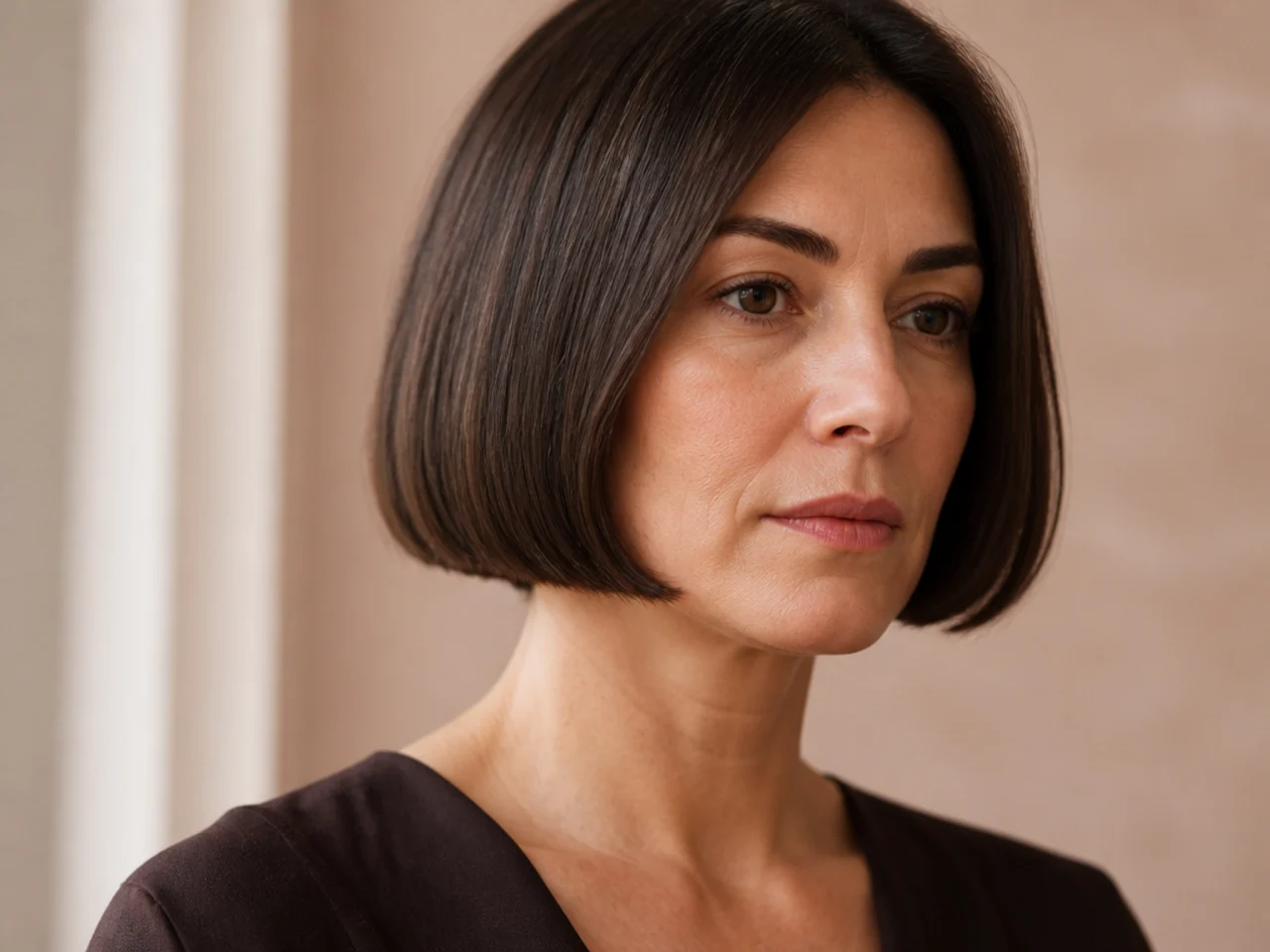
Fifteen old money bob ideas, and the one measurement that decides how yours reads — where the line sits relative to your jaw. Above it sharpens the jaw, on it echoes it, below it softens it.
In this article · 22
- What the Jaw Line Decides
- How to Choose Yours
- The 15 Bob Ideas
- 1. Bob Level with the Jaw
- 2. Bob Above the Jaw
- 3. Bob Below the Jaw
- 4. Collarbone Bob
- 5. Chin-Length Blunt Bob
- 6. French Bob
- 7. Bob with a Centre Part
- 8. Bob with a Soft Side Part
- 9. Bob Tucked Behind One Ear
- 10. Bob on Fine Hair
- 11. Bob on Thick Hair
- 12. Bob on Wavy Hair
- 13. Natural Silver Bob
- 14. Glossed Bob
- 15. A Bob Cut to a Measurement
- Styling and Upkeep
- Mistakes to Avoid
- FAQ
- Final Thoughts
A bob is the most technical cut in this aesthetic and it still reads as effortless. That is not a contradiction — it clarifies what the aesthetic is actually avoiding.
The rule is no ornament, not no skill. A blunt bob takes real precision to cut. What it does not have is decoration — no visible layering, no framing, no colour work. That is why it belongs here.
And within that, one measurement carries the whole cut: where the line sits relative to your jaw.
What the Jaw Line Decides
Above the jaw sharpens it. The line draws the eye upward and makes the jaw the strongest feature. Choose it if that is what you want, and avoid it if it is not.
Level with the jaw echoes it. Two parallel lines, which reads as very deliberate. It is the most precise-looking of the three and the least forgiving to cut.
Below the jaw softens it. The eye travels past the jaw rather than stopping on it. Nothing halts at the widest point, which is why this is the safe default.
Neck length matters as much as face shape. A shorter neck usually reads better with a longer bob, because more of it stays visible. A chin-length line cuts the neck short before it starts.

How to Choose Yours
Decide against your jaw, standing. Not in inches, and not sitting down. A seated damp cut lands higher than the same measurement standing dry.
Say which effect you want. Sharpen, echo or soften — a stylist can place the line from that alone. It is a more useful instruction than any number.
Consider your neck, not just your face. It changes the answer more often than people expect. Ask about it explicitly, because most consultations never raise it.
Ask for blunt. Softening the perimeter is a reflex, and here it is the wrong one. Say blunt out loud at every appointment, not just the first.
The 15 Bob Ideas
1. Bob Level with the Jaw
Two parallel lines. The most deliberate version. The cut line and the jawline run parallel, which is why this reads as considered rather than as a length that happened.
2. Bob Above the Jaw
Shorter, and it makes the jaw the strongest line in the face. Above the jaw the eye stops at the cut and then finds the jaw beneath it, so both lines compete.

3. Bob Below the Jaw
The eye travels past rather than stopping. Softest of the three. Nothing halts the eye at the widest point, which is what makes a below-jaw bob the most forgiving placement.

4. Collarbone Bob
The longest version, and the kindest to a shorter neck. Length below the jaw leaves the neck visually uninterrupted, where a chin-length line cuts it short.

5. Chin-Length Blunt Bob
The classic, cut hard and level. Level means level all the way round, and on a bob that is a genuinely demanding cut to execute.

6. French Bob
Chin length with a fractionally softer edge. The softening is measured in millimetres — enough to remove severity, not enough to lose the line.

7. Bob with a Centre Part
Symmetrical against a symmetrical line. Two symmetries reinforce each other, which is why a centre part is the default on this shape.

8. Bob with a Soft Side Part
Asymmetry from the part, not the cut. Keep the perimeter level and let the part do the asymmetry, or you end up with two competing angles.

9. Bob Tucked Behind One Ear
Exposes one side of the jaw and hides the other. It creates asymmetry without cutting anything, which is the cheapest adjustment available on a bob.

10. Bob on Fine Hair
Blunt and one length. The fullest a fine bob reads. Every strand ending at the same point reads as density, where tapered ends read as thinning.

11. Bob on Thick Hair
Internal weight removed so it hangs rather than flares. Thick hair springs outward at the perimeter unless weight comes out from underneath rather than off the ends.

12. Bob on Wavy Hair
Cut dry, so the line lands where it will actually sit. Wavy hair lifts as it dries, so a line cut wet ends up somewhere other than where it was placed.

13. Natural Silver Bob
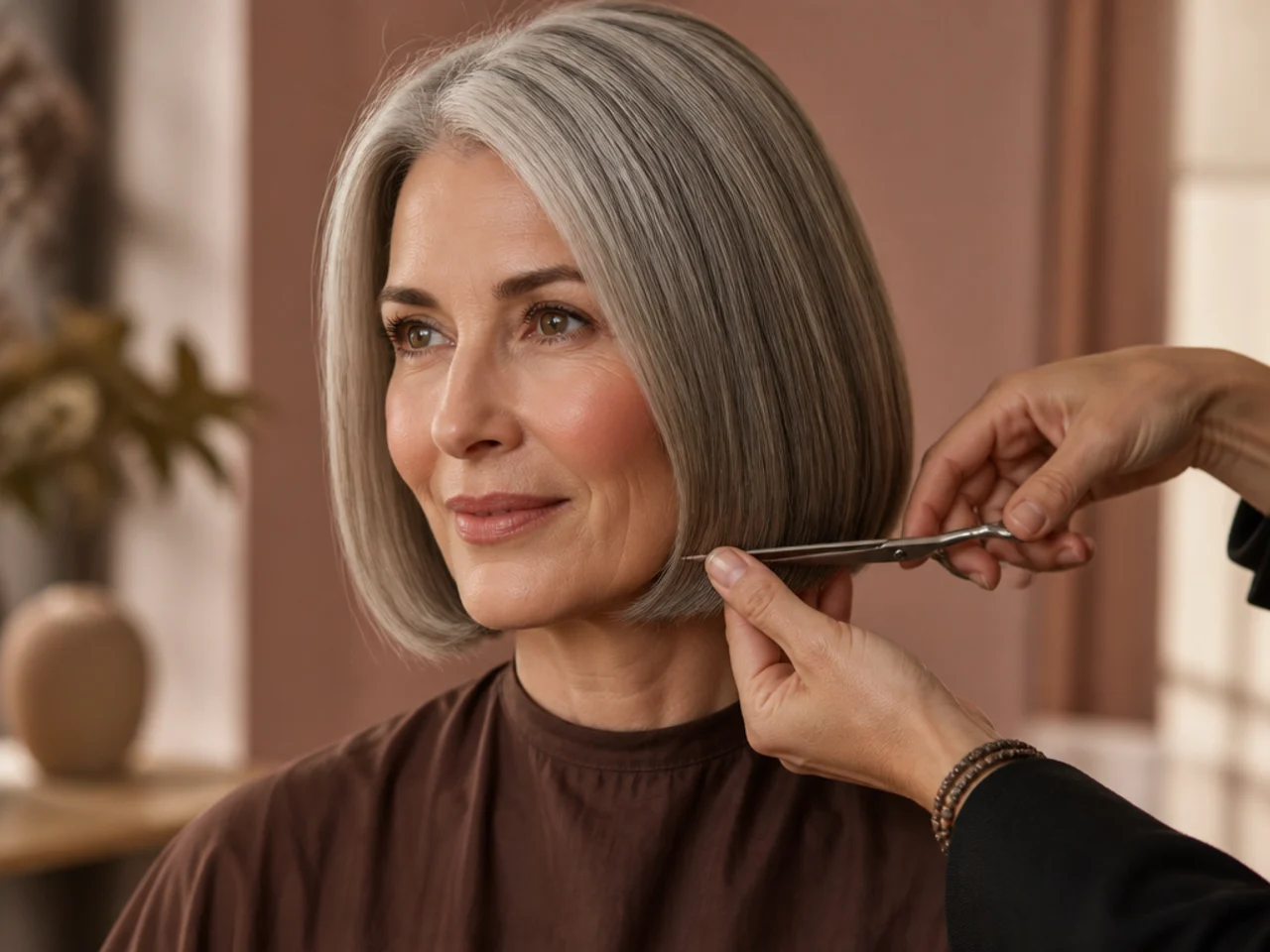
Grey worn plainly against a precise line. Grey has a coarser surface than pigmented hair, so it needs the cut to be sharper to read as deliberate.

14. Glossed Bob
Shine over a natural base, with the line doing everything else. A gloss adds shine without lift, which suits an aesthetic that puts its money into the cut.

15. A Bob Cut to a Measurement
Placed in inches rather than against the jaw. Landed wrong.
Styling and Upkeep
Trim every six to eight weeks. The line is the cut, and it goes soft before anything else does. Growth is uneven across the head, so a level line blurs rather than dropping.
Air-dry where possible. A well-placed bob does not need help. If it needs a round brush every morning, the line is in the wrong place.
Keep the perimeter blunt at every trim. Ask each time; it is a habit worth interrupting.
Skip texturising spray. It separates the line into pieces. A perimeter broken into pieces is no longer a perimeter.
Reassess the line if your weight or age changes your jaw. It is a relationship, not a fixed number.
Mistakes to Avoid
Choosing the length in inches. It lands differently on every face.
Accepting a softened perimeter. This is the one place a hard line is correct.
Ignoring your neck. It changes the answer as often as face shape does.
Cutting a wavy bob wet. The line will not sit where it was placed.
Texturising spray. It undoes the only line in the cut.

FAQ
Where should it sit? Against your jaw — above sharpens, level echoes, below softens.
Should it be blunt? Yes. This aesthetic avoids ornament, not skill.
Does it suit a short neck? A longer bob usually does better.

Final Thoughts
Go in with an effect rather than a length. Say whether you want your jaw sharpened, echoed or softened, and let your stylist place the line — it is a better instruction than any measurement, and it is the decision the whole cut turns on.
For short lengths generally see 20 short old money haircut ideas, and for how layers fit this aesthetic see 20 layered old money haircut ideas. More in Women's Hairstyles.