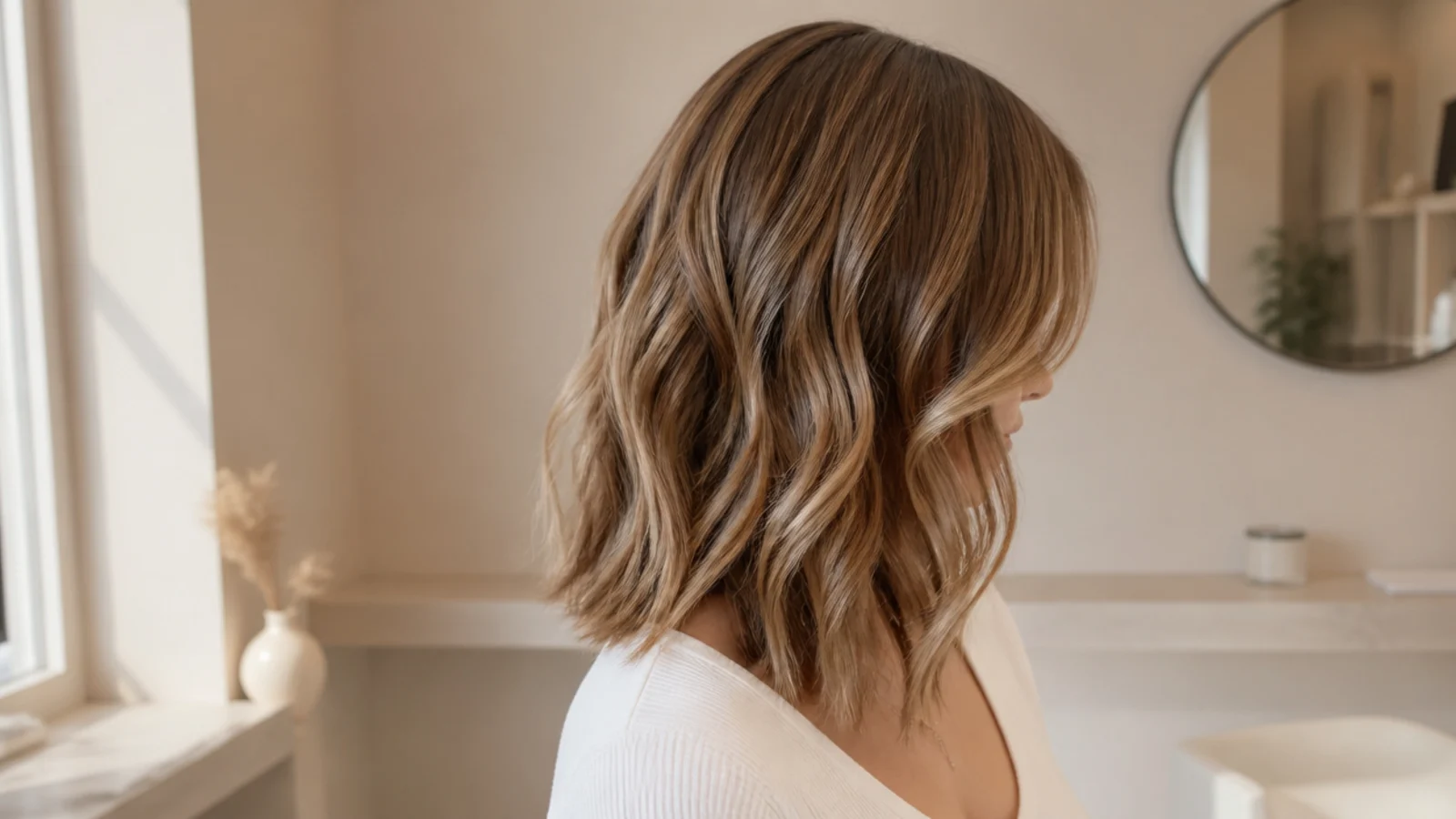
20 Shaggy Mid Length Haircut Ideas
Twenty shaggy mid length cuts, and the thing that separates a shag from a layered lob. A shag is graduated from the crown down, so the shape is built in — a layered lob is one length with movement added to it.
In this article · 28
- What Is a Shag
- Shag Versus Wolf Cut
- By Hair Type
- By Face Shape
- How to Ask for a Shag
- Styling and Grow Out
- The 20 Shaggy Mid Length Cuts
- 1. Collarbone Shag With Curtain Bangs
- 2. Soft Shag for Fine Hair
- 3. Seventies Rocker Shag
- 4. Shaggy Textured Lob
- 5. Wavy Shag on 2B Hair
- 6. Curly Shag on 3A Hair
- 7. Shag on Thick Hair
- 8. Bardot Shag
- 9. Shag With Bottleneck Bangs
- 10. Wolf Cut Shag for a Round Face
- 11. Boho Shag With Jaw Framing
- 12. Shaggy Bob Above the Collarbone
- 13. Razored Shag on Coarse Hair
- 14. Shag for a Square Face
- 15. Grown Out Shag With Invisible Layers
- 16. Middle Part Shag
- 17. Piecey Shag for a 2C Triangle
- 18. Shag on Gray and Silver Hair
- 19. Choppy Shag With a Money Piece
- 20. Air Dry Shag
- Final Thoughts
The most common complaint about a shag is that it grew out choppy, and the cause is almost always that it was never a shag to begin with.
A shag is graduated from the crown down. The shortest hair sits high, and every tier below it is longer, so the shape is cut into the hair rather than styled into it afterwards.
A layered lob is one length with movement added. The perimeter carries the weight and the layers decorate it. Both are good cuts, and they behave nothing alike after eight weeks.
What Is a Shag
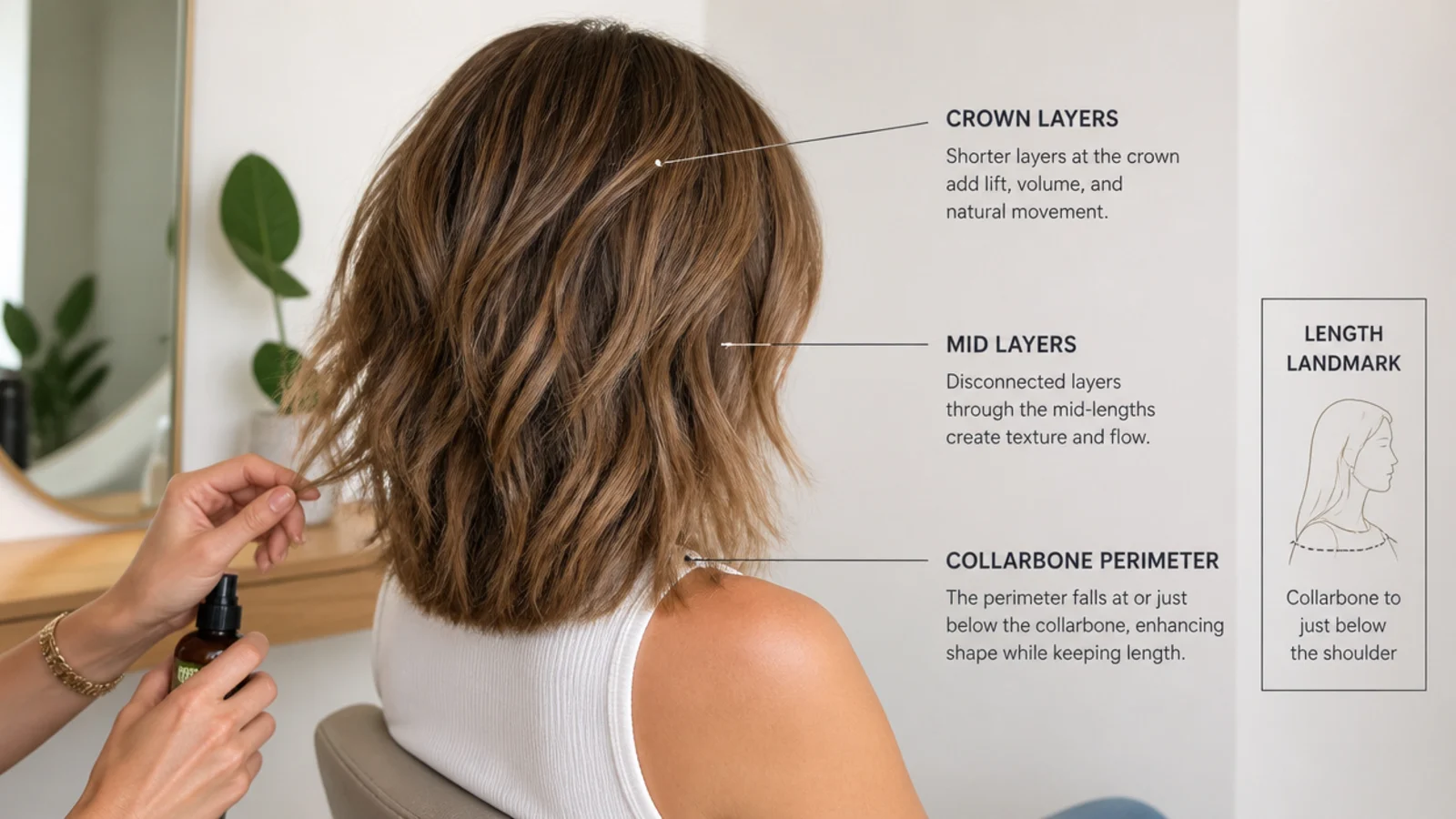
Graduation from the crown, not layers on top of a bob. The shortest section sits near the crown and everything below it gets progressively longer.
A fringe is part of the structure. In the original shape the fringe is the top tier of the same graduation, which is why a shag without one often looks unfinished.
The ends are cut into, not across. Point cutting or a razor diffuses the perimeter so it reads as movement rather than as a line.
Volume sits high, weight sits low. That is the whole silhouette, and it is why a shag lifts a flat crown that no amount of product will.
Shag Versus Wolf Cut
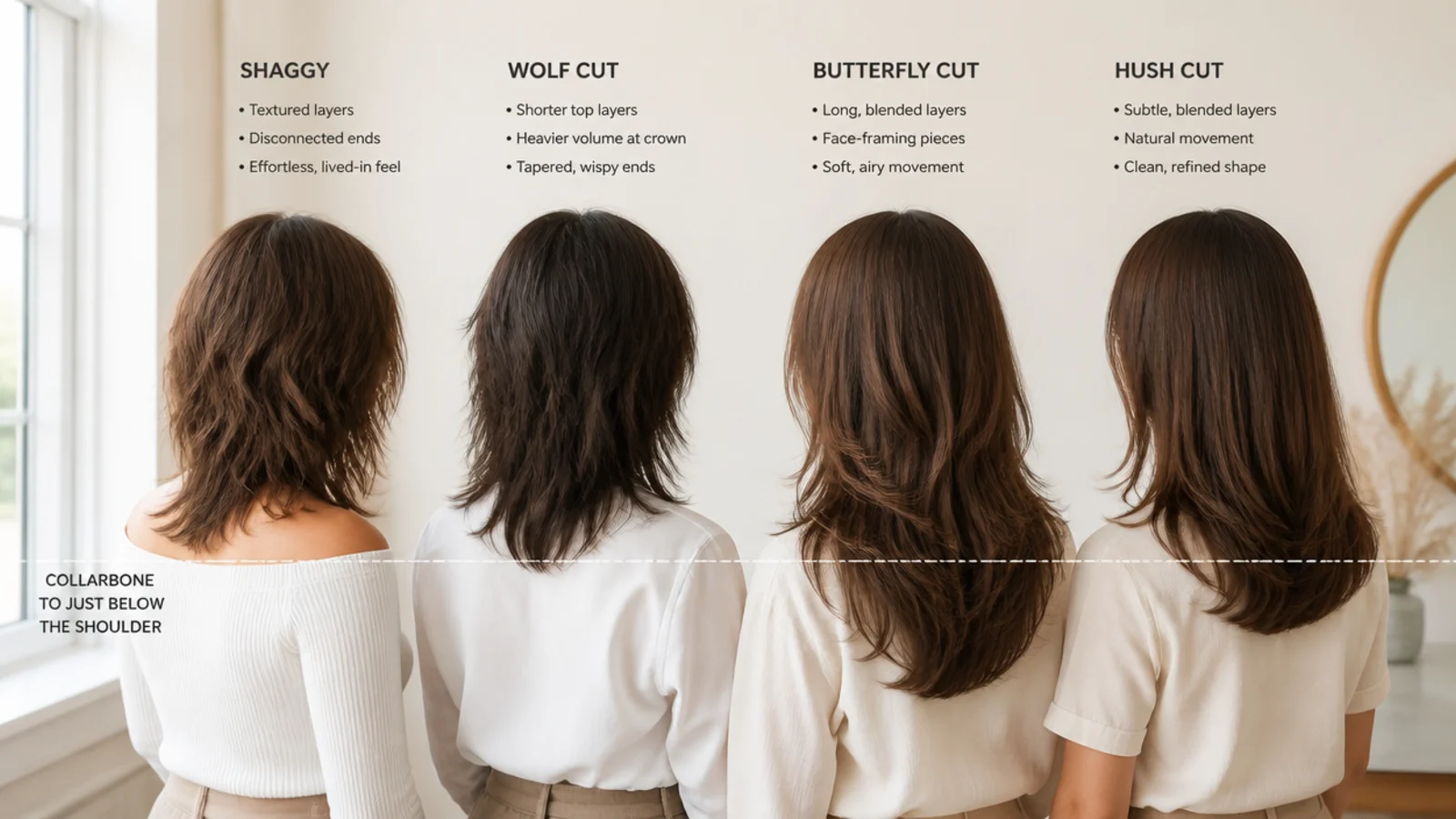
A shag blends its tiers. Each layer is close enough to the one above that the eye reads a gradient rather than a step.
A wolf cut disconnects them. Short crown layers sit above deliberately long ends with a visible gap, which is where the mullet reference comes from.
The wolf cut is the higher contrast of the two. More drama on day one, and a longer road back if you decide against it.
Grow-out separates them completely. A shag softens into long layers in about three months. A wolf cut has to grow the disconnection out, which takes considerably longer.
By Hair Type
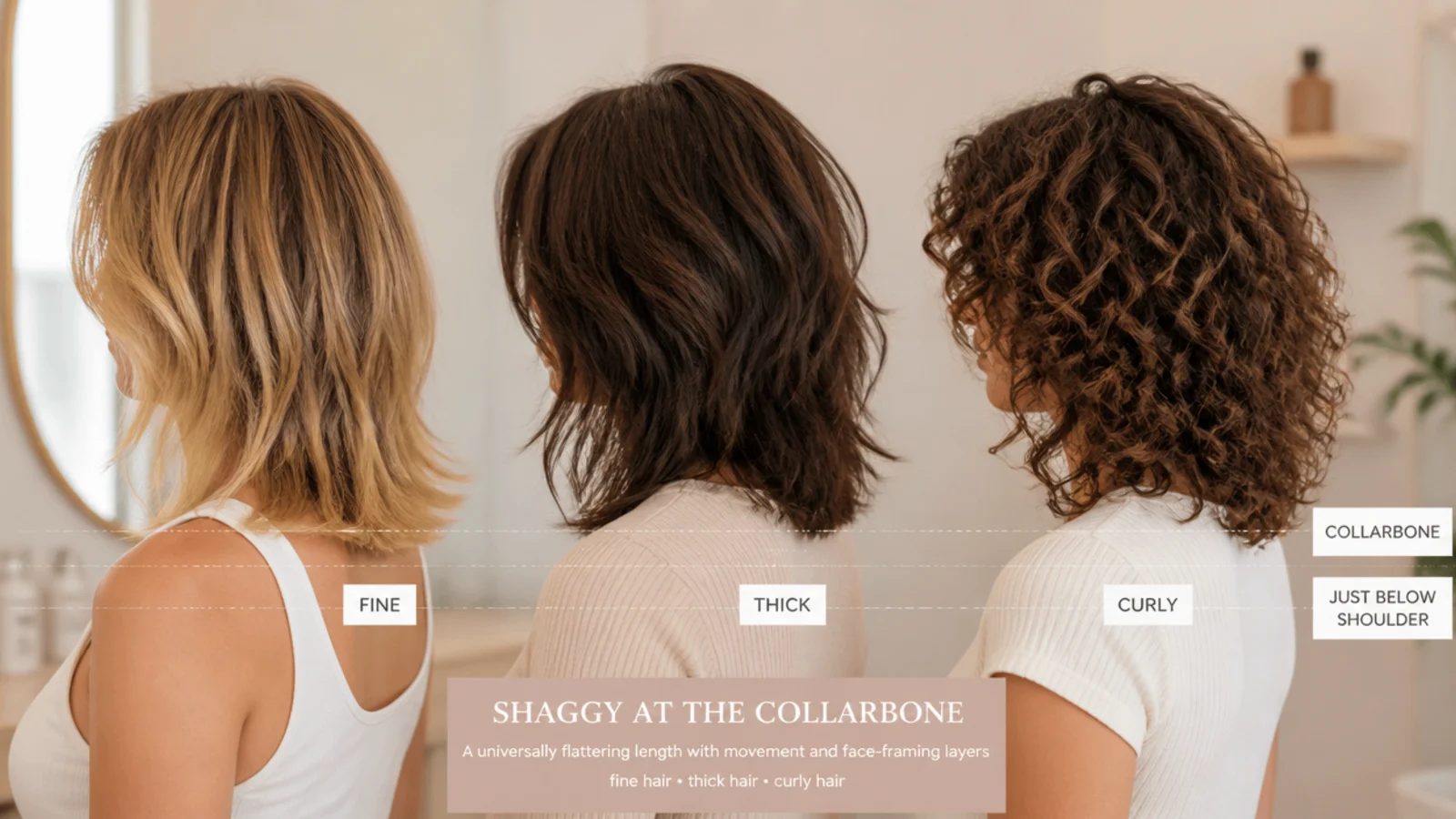
Fine hair takes fewer tiers. Three long layers, all starting below the cheekbone, or the perimeter goes see-through.
Thick hair needs interior work. The layering is there to remove bulk from underneath so the surface can lie down, not to add movement to the top.
Wavy hair should be cut dry. The S-bend on 2B and 2C hair moves as it dries, so a layer placed on stretched wet hair lands somewhere else entirely.
Curly hair is cut curl by curl. A 3A spiral gives back roughly a third of its stretched length, and only a dry cut accounts for that honestly.
By Face Shape
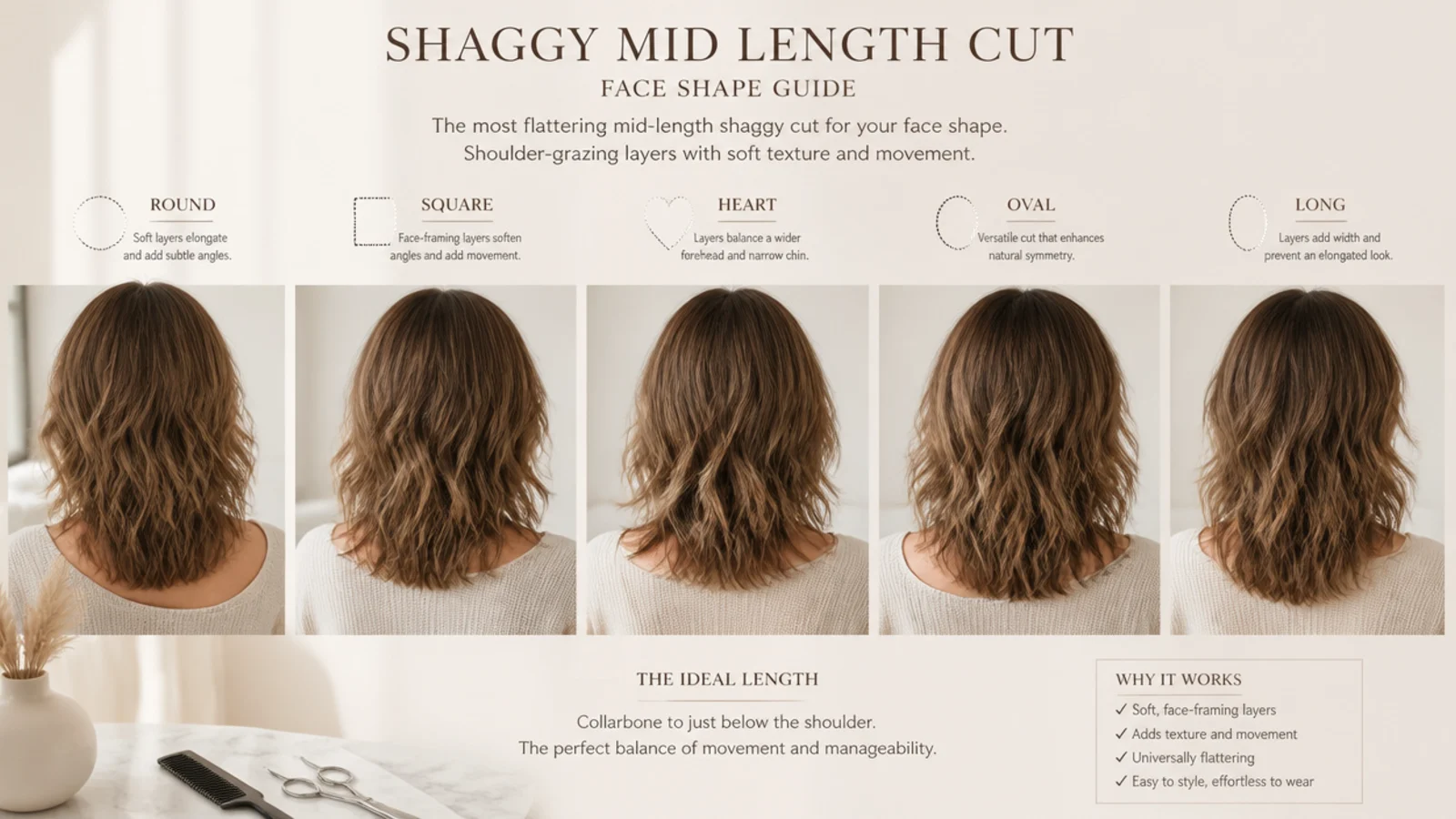
Round faces want height and a centre part. Short crown layers add vertical, and a centre part narrows the frame at the same time.
Square jaws want diagonals. Face framing that crosses the jaw breaks the line. Anything cut level with the jaw doubles it.
Long faces want the shortest layer at the cheekbone. That puts width where the face is narrowest and stops the shape stretching further.
Heart shapes want weight below the chin. Keep the lower tiers full so the shape does not taper to a point at the bottom.
How to Ask for a Shag
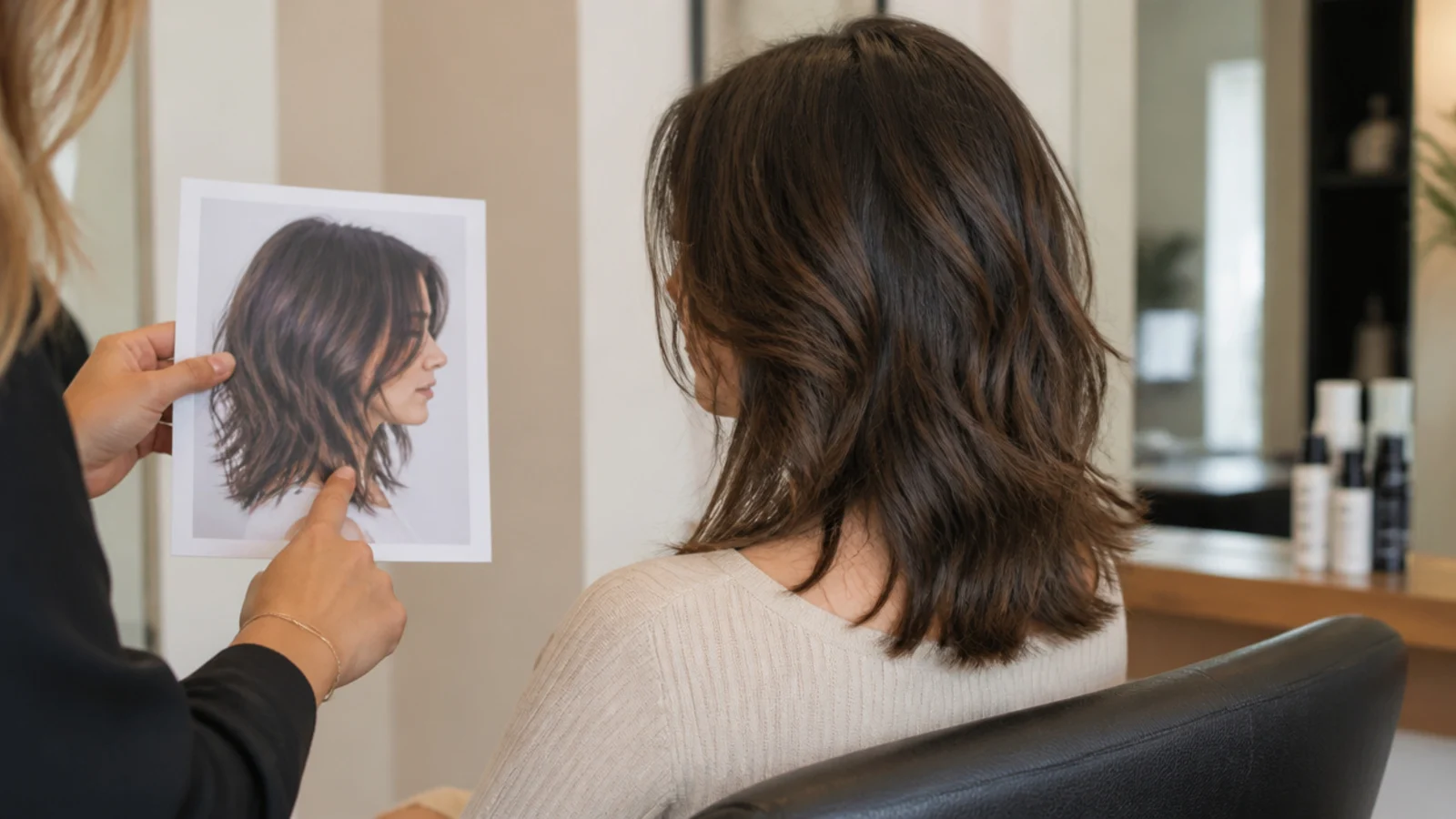
Say where the shortest layer starts. Crown, cheekbone or jaw. That one sentence decides more than any reference photograph will.
Say blended, or say disconnected. They are the two settings on this cut and stylists will otherwise pick for you.
Ask for the ends point cut rather than blunt. A blunt perimeter under shag layers fights the shape it is sitting beneath.
Bring the fringe decision with you. Curtain, bottleneck or full changes how the whole crown is cut, so it cannot be added afterwards without recutting.
Styling and Grow Out
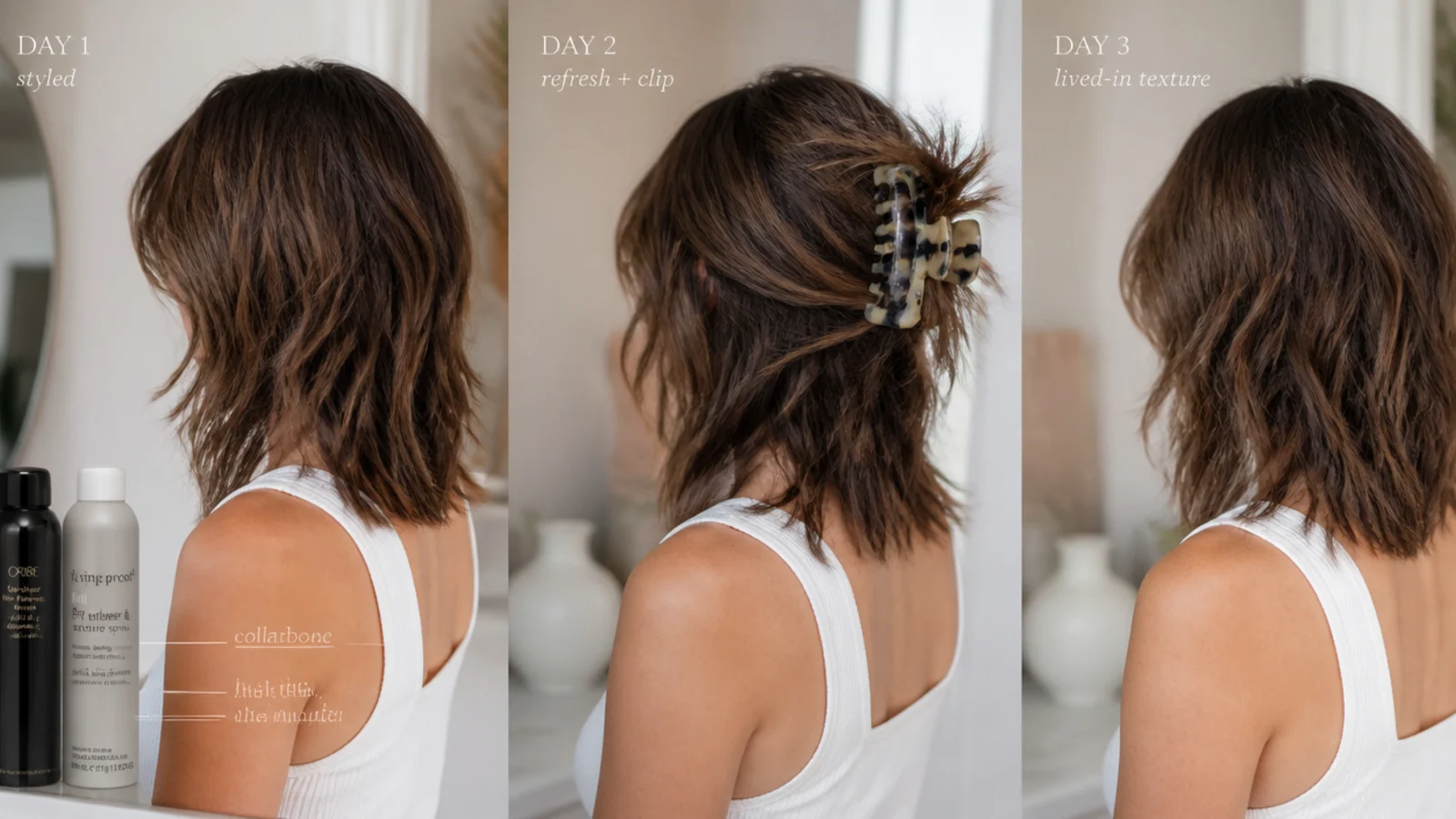
Air dry is the default finish. The cut supplies the shape a brush would otherwise have to build, so drying it flat undoes the reason you paid for it.
Product goes on soaking wet, not damp. A cream or mousse distributes evenly through water and unevenly through half dry hair.
Stop touching it while it dries. Every pass of a hand breaks the pattern at exactly the moment the hydrogen bonds are reforming.
Book at ten to twelve weeks. Growth blurs the steps between tiers before it lengthens the perimeter, so what you lose first is definition.
The 20 Shaggy Mid Length Cuts
1. Collarbone Shag With Curtain Bangs
Cutting the fringe as the top tier of the same graduation means it never reads as something added to the cut. It also grows into the face frame rather than over it, so at week ten you have longer face framing instead of a fringe in your eyes.

2. Soft Shag for Fine Hair
Fine hair has almost no interior weight to give away, so this version uses three long tiers instead of eight short ones, all starting below the cheekbone. The lift comes from where the layers sit rather than from how much is removed, which keeps the perimeter solid enough to still read as density.

3. Seventies Rocker Shag
The original proportions — short heavy crown layers, a full fringe, and a silhouette that sits round rather than flat. Those crown layers are short enough to support themselves, which is what produces the domed shape instead of a flat top with movement only at the ends.

4. Shaggy Textured Lob
The perimeter stays blunt at the collarbone and every bit of shag work happens inside it. That gives a solid line for apparent density and interior movement for shape, which is the version that carries into an office without announcing itself.
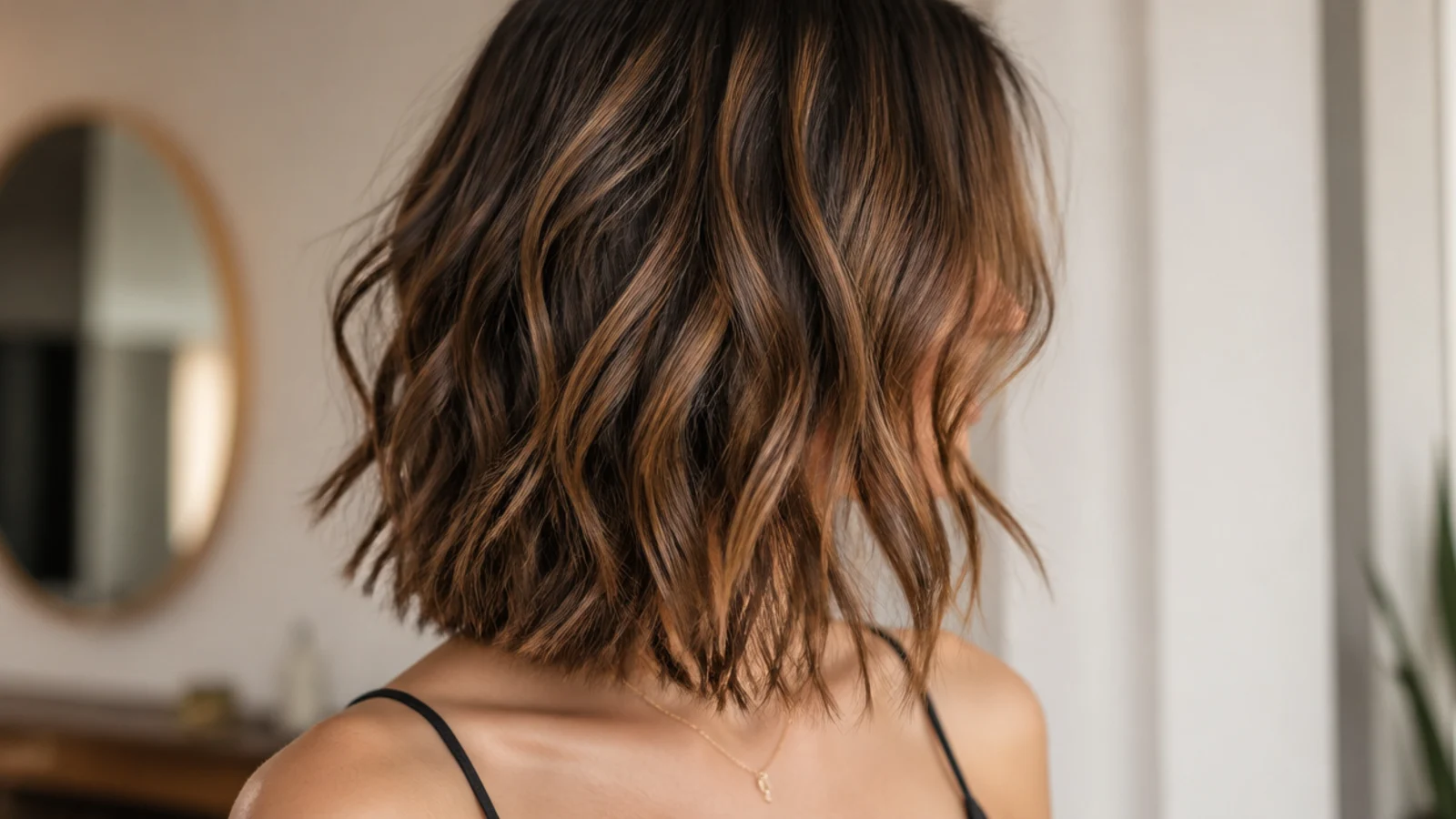
5. Wavy Shag on 2B Hair
A 2B wave forms its S-bend from around the mid-lengths down, so layers cut above that point release a wave that was previously held flat by the weight below it. Cut dry, because on stretched wet hair the bend is not where the comb says it is.
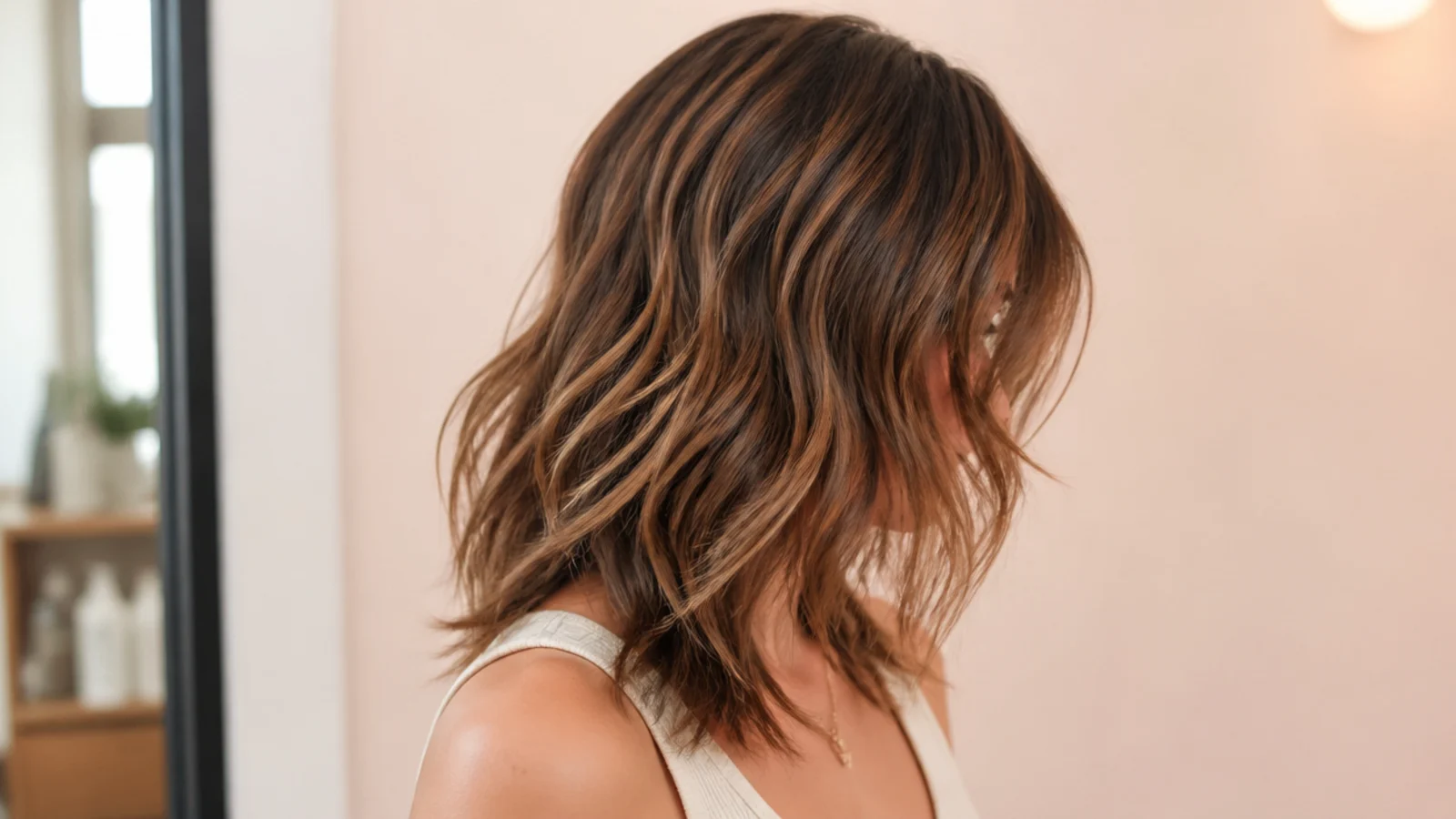
6. Curly Shag on 3A Hair
Each curl is cut where it sits, because a 3A spiral gives back roughly a third of its stretched length as it dries. The layers are placed so every curl clears the one beneath it, which lets the pattern stack upward instead of compressing into a solid wedge.
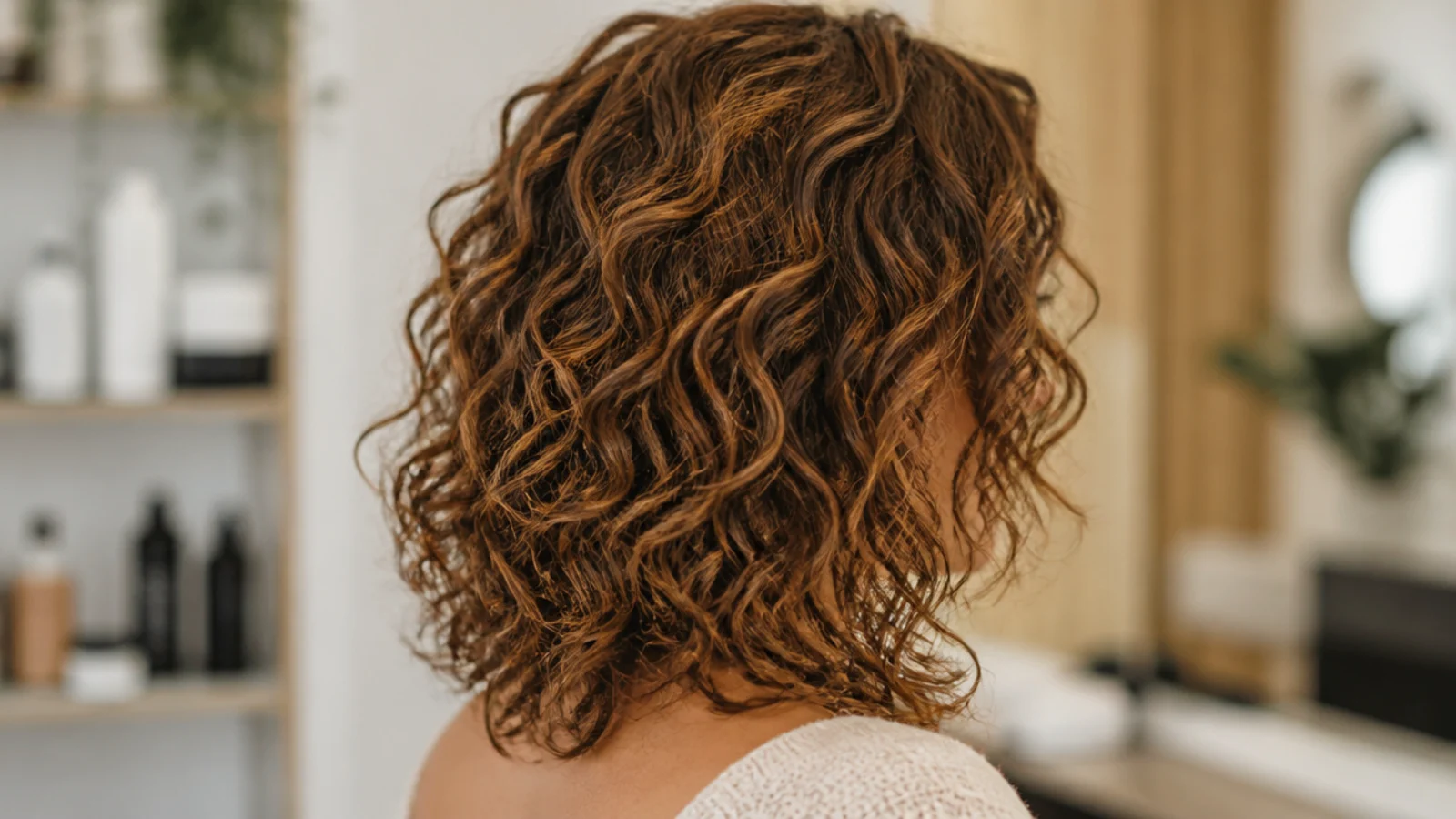
7. Shag on Thick Hair
Here the layering exists to remove interior bulk rather than to add movement. The work happens underneath, thinning the mid-lengths so the top tier can lie down against them; take the same amount off the surface instead and you get frizzy ends rather than a shape.

8. Bardot Shag
Volume concentrated at the crown and fringe with the length left comparatively heavy, so the silhouette is a dome sitting above a curtain. The crown layers have to be short and backcombed at the root, because the cut on its own will not hold that height through an evening.

9. Shag With Bottleneck Bangs
A bottleneck fringe is narrow at the top and flares out to the corners of the eye, which is where the name comes from. Against a shag it joins the fringe to the shortest face-framing layer with no visible step, so the whole front of the cut reads as one continuous curve.
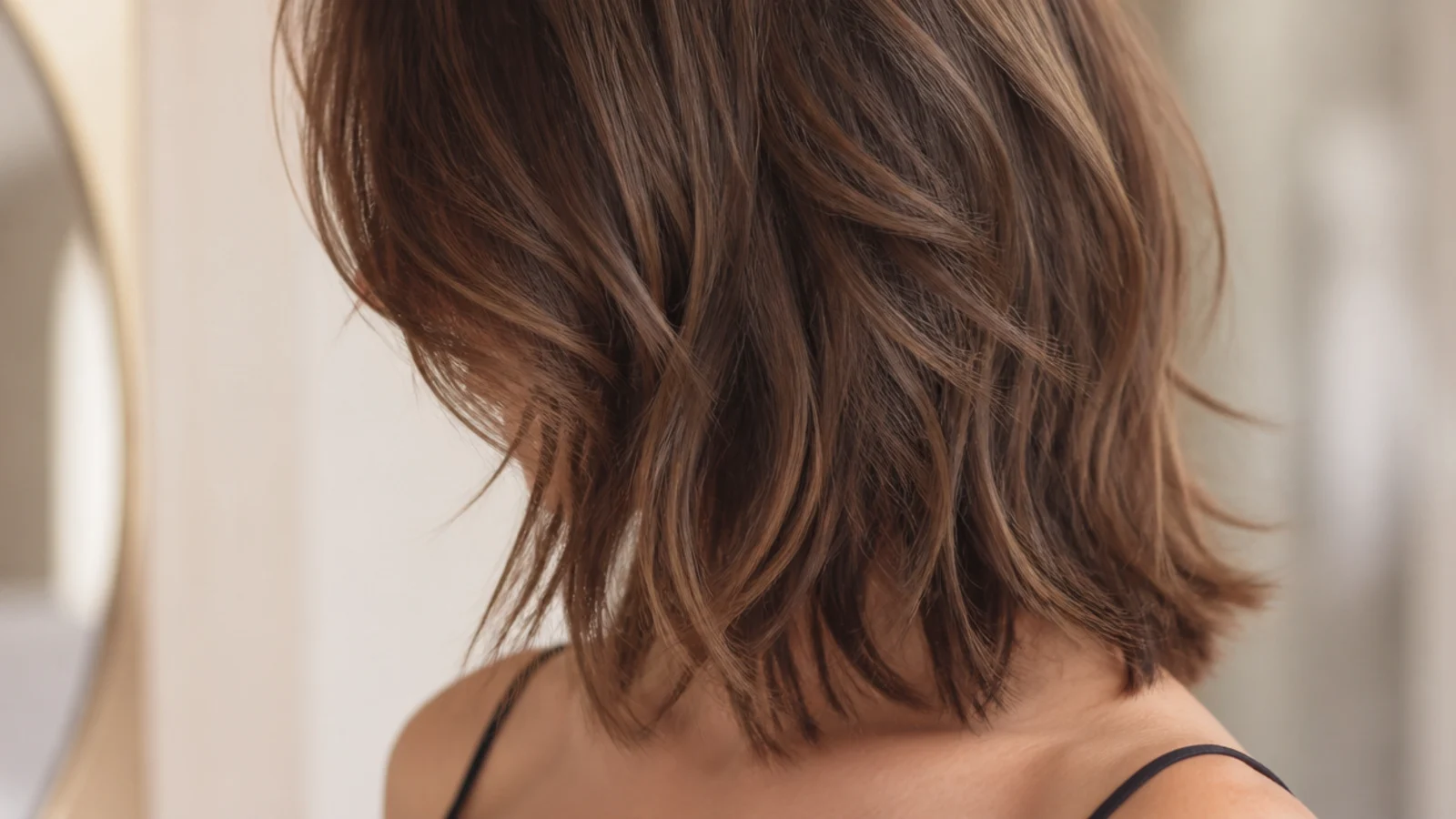
10. Wolf Cut Shag for a Round Face
Stacking the shortest layers at the crown and leaving the ends long puts height above the face and narrow length below it. On a round face that vertical is doing all the work, and adding a centre part narrows the frame at the same time so the two effects compound.

11. Boho Shag With Jaw Framing
Setting the shortest face-framing piece at the jaw rather than the cheekbone softens the shape without opening up the widest part of the face. It also grows through the chin over roughly two months, so there is no awkward stage to sit through.
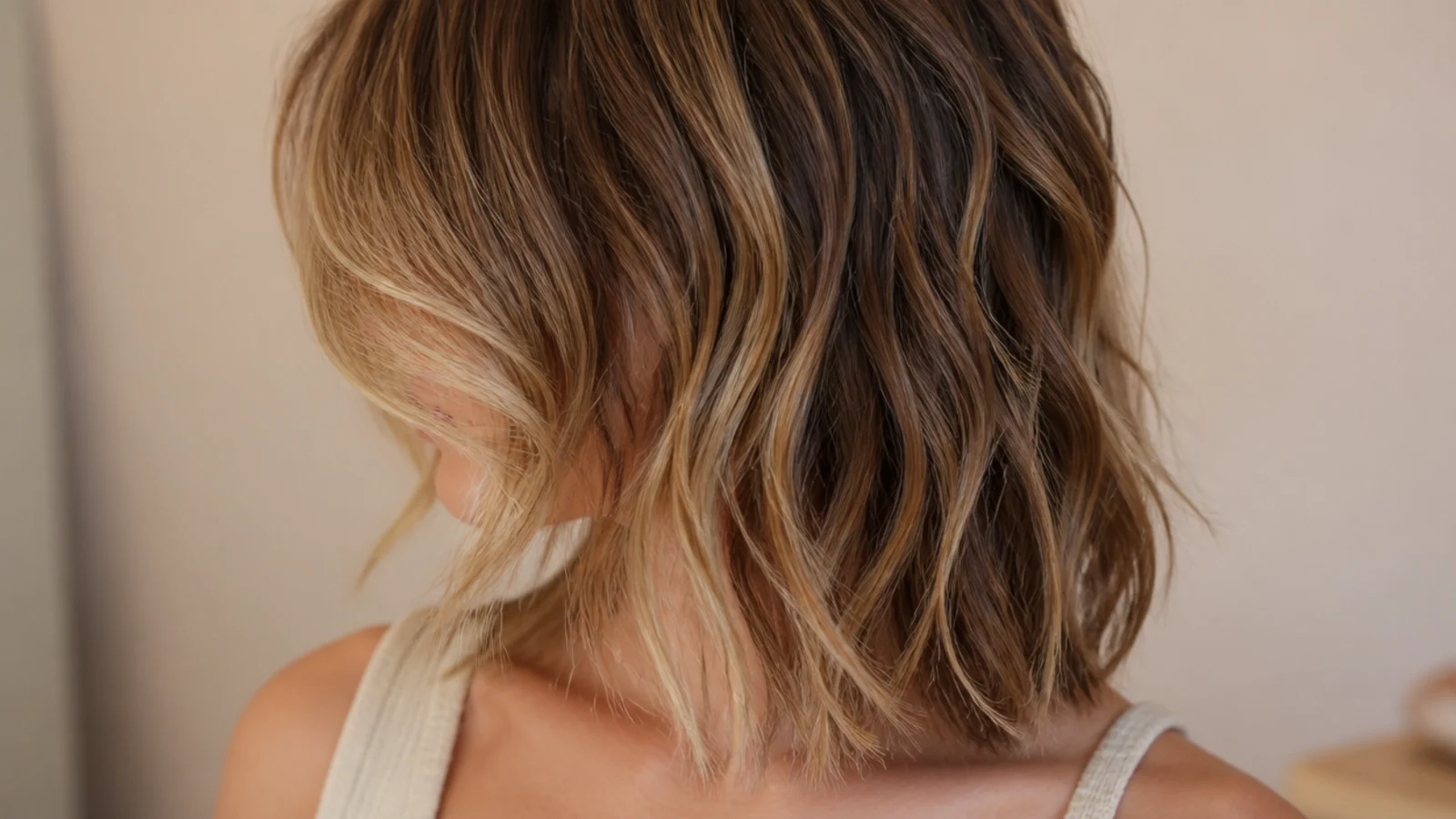
12. Shaggy Bob Above the Collarbone
Cutting the perimeter an inch or two above the collarbone keeps the ends clear of the shoulder, so nothing gets pushed up and flicked outward during the day. The interior layers still supply the movement, which is what stops it reading as a plain bob.

13. Razored Shag on Coarse Hair
A razor tapers each strand along its length rather than ending it square, which removes bulk without leaving the shelf a scissor layer creates. It has to be done on damp hair with a fresh blade — a dull edge tears the cuticle open and the frizz turns up about a week later.

14. Shag for a Square Face
Every layer and the perimeter stay off the jawline, because any horizontal landing level with the jaw draws a second one directly under it. Diagonal face framing that crosses the jaw rather than stopping at it breaks the line instead of repeating it.
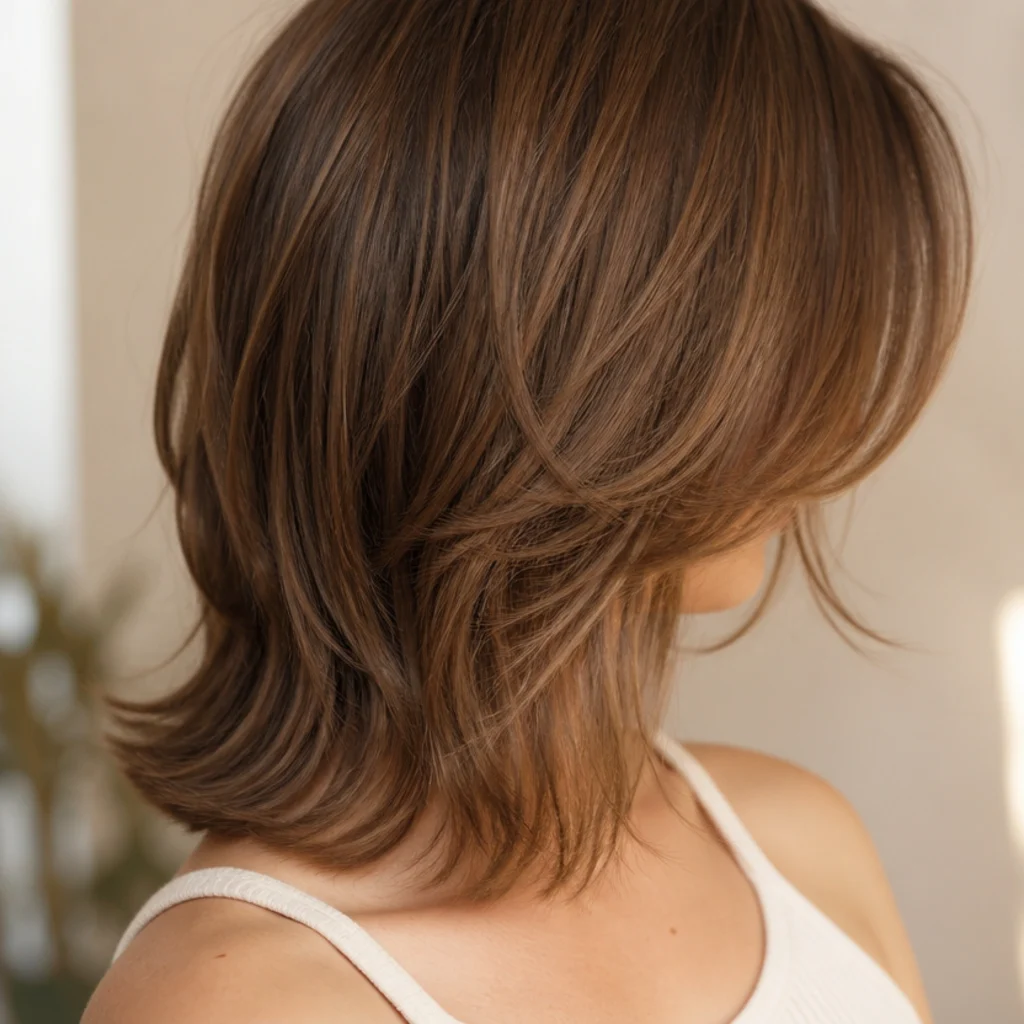
15. Grown Out Shag With Invisible Layers
Around three months in, the shortest tier has gained an inch and a half and the steps have blurred into one another. This is the stage where a shag reads as long layered hair, and it is the most wearable version for anyone who found the fresh cut too choppy.
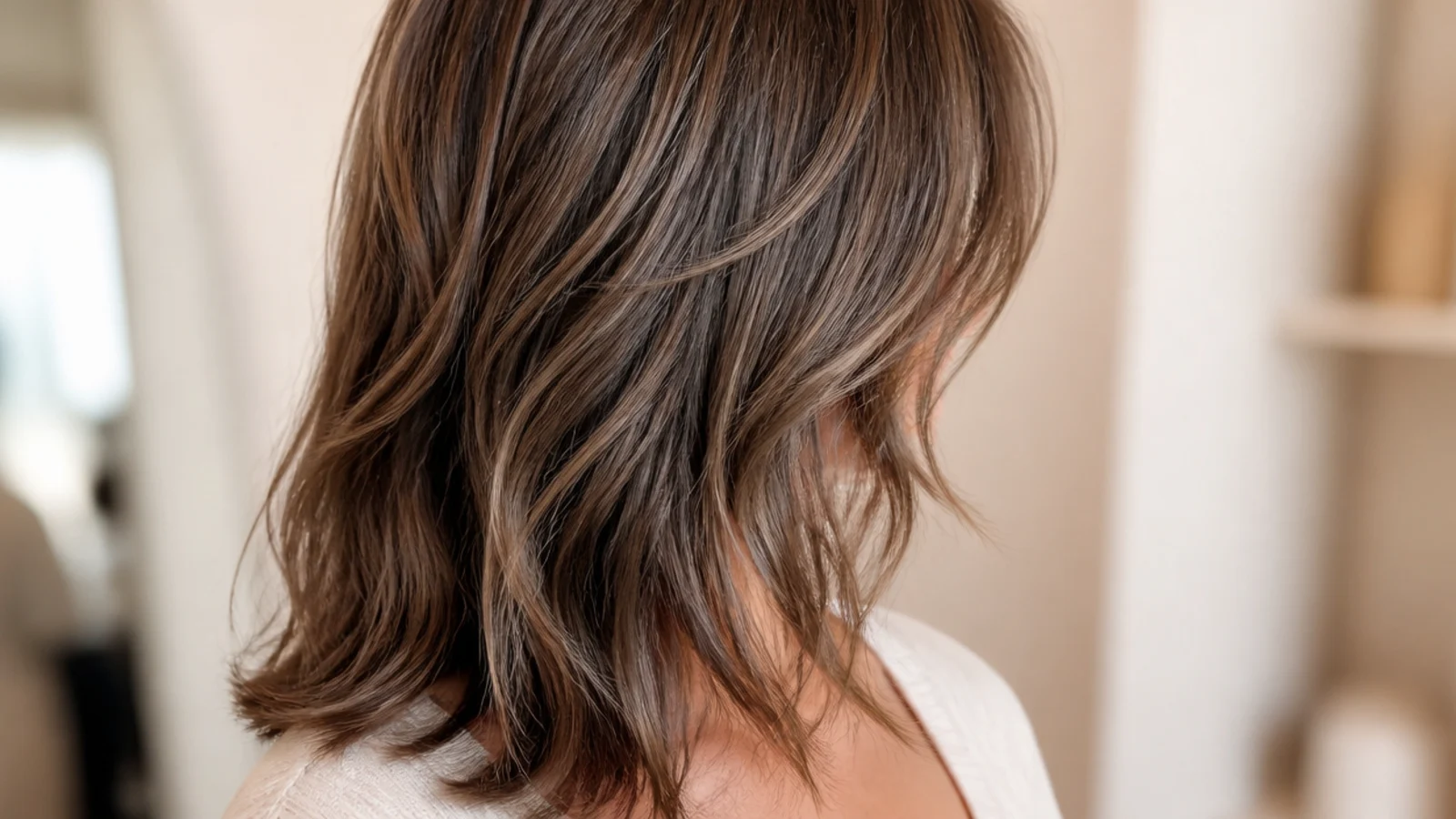
16. Middle Part Shag
A centre part splits the face frame into two matching diagonals, so both sides fall at the same angle and the shape stays symmetrical without styling. It also pulls the shortest layers forward onto the cheek, which is where the softening actually happens.
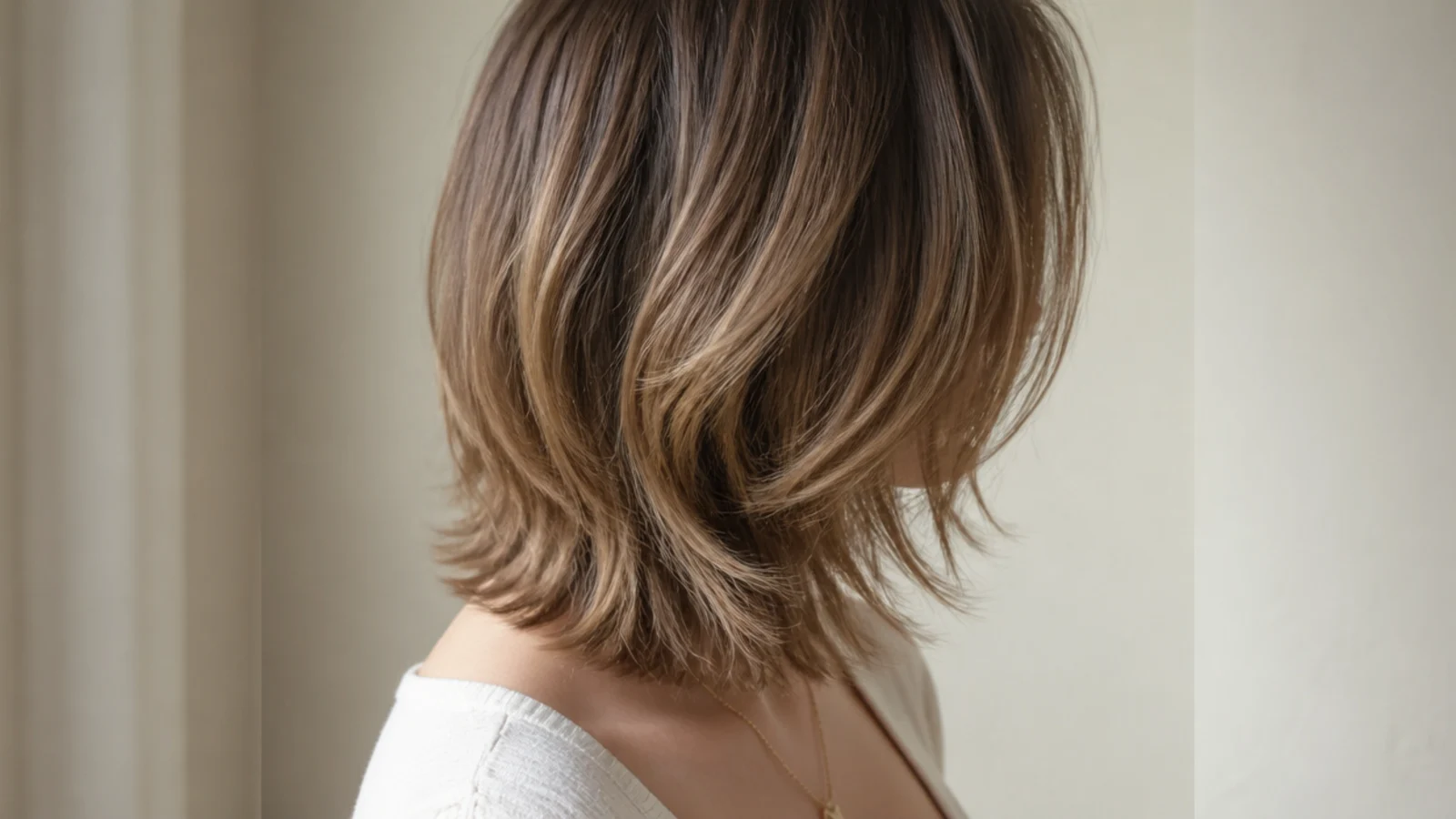
17. Piecey Shag for a 2C Triangle
2C hair is narrow at the root and widest through the mid-lengths, so a heavy perimeter parks that width beside the jaw. Removing weight from underneath in vertical sections narrows the bottom third and hands the volume back up to the crown where the shape wants it.
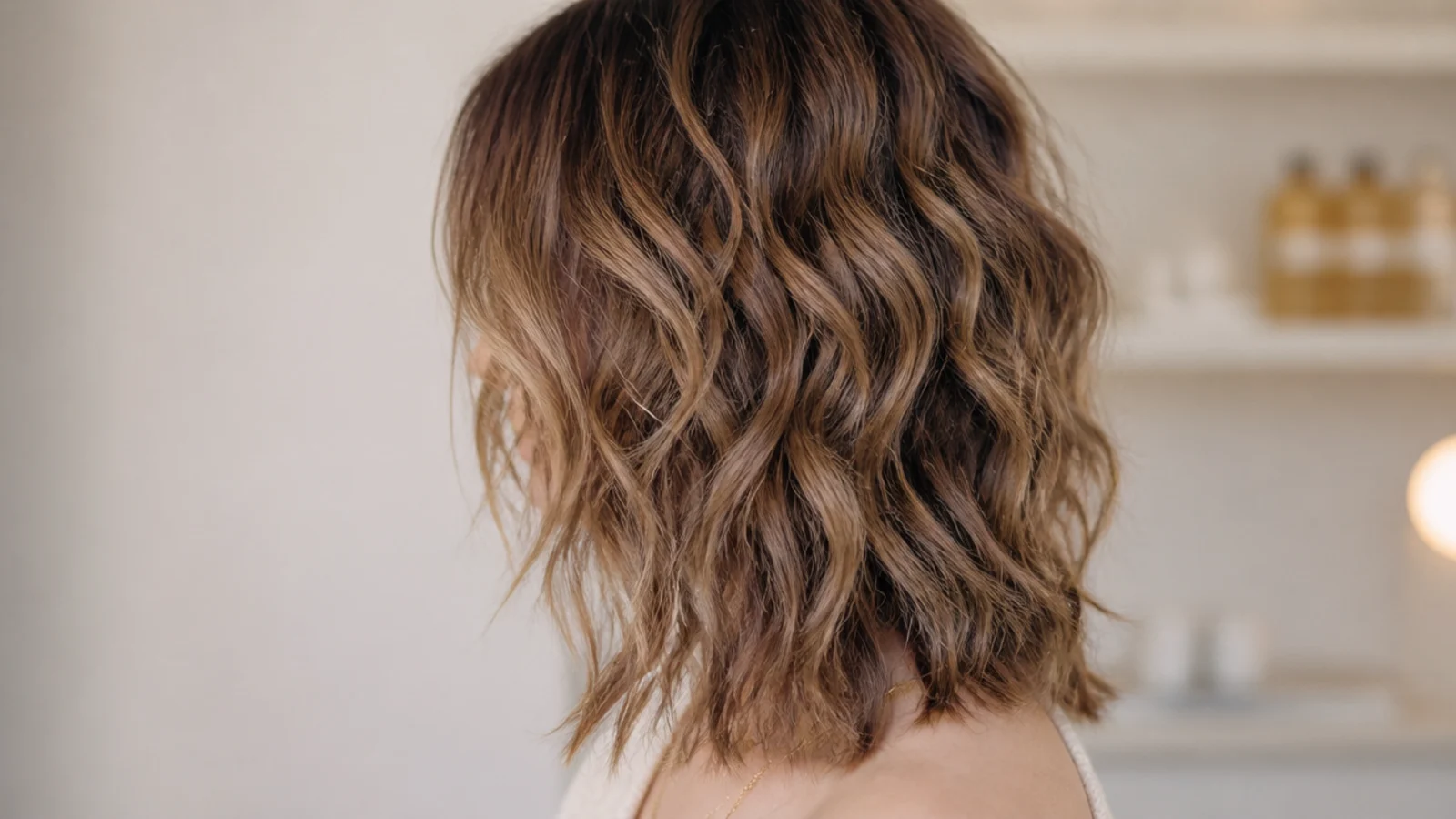
18. Shag on Gray and Silver Hair
Gray strands often grow in coarser and more wiry than the pigmented hair around them, which means they hold a layered shape better than a finer strand of the same length would. A shag turns that wiriness into deliberate texture instead of something to be flattened out every morning.
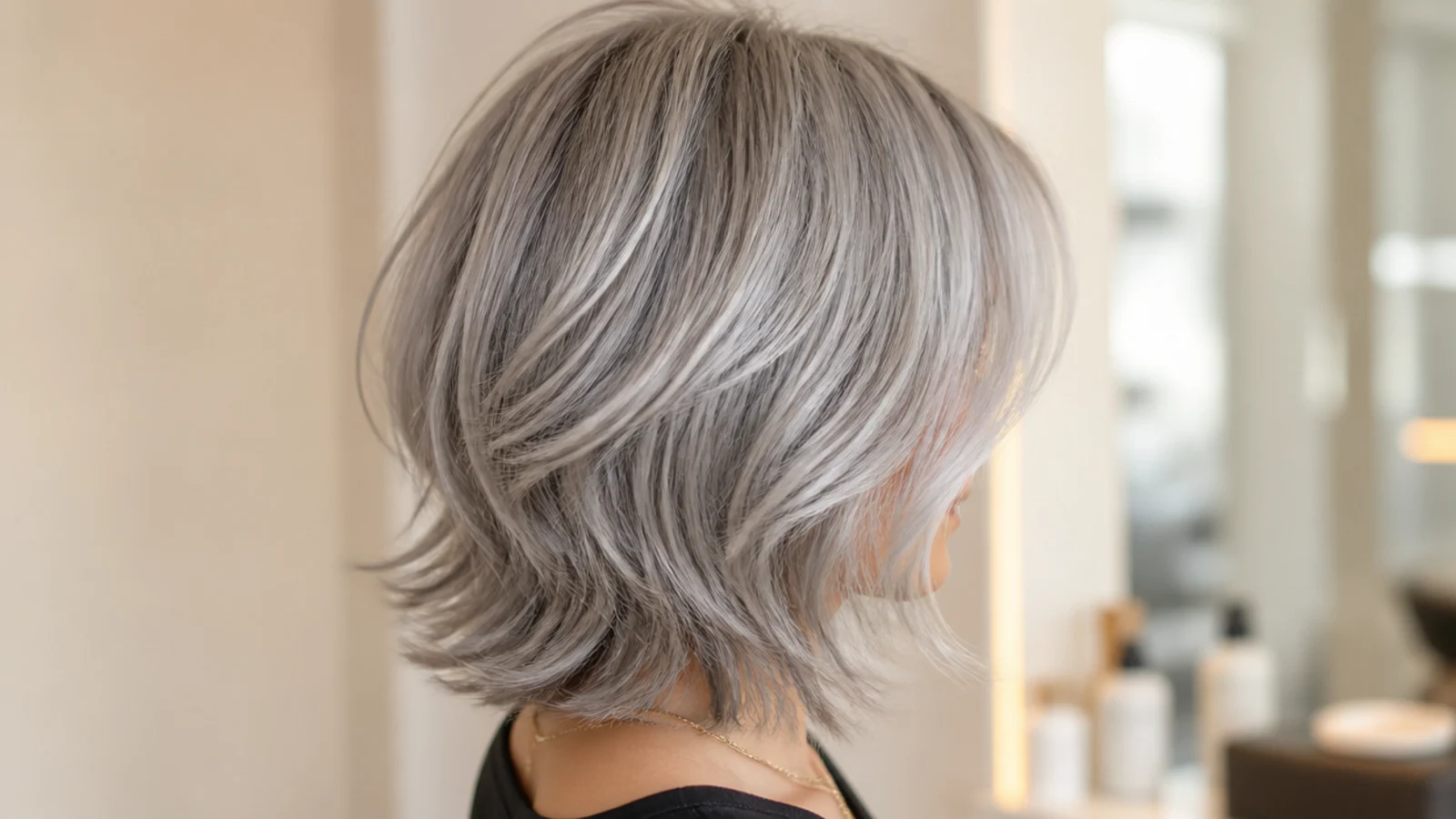
19. Choppy Shag With a Money Piece
Two lightened pieces at the front sit exactly where the shortest layers fall, so the colour follows the cut rather than cutting across it. Lightening that section also makes the layering readable from the front, which is the angle a shag is otherwise hardest to see from.

20. Air Dry Shag
This is the cut air drying was invented for, because the layers do the shaping a round brush would otherwise have to build. The only real technique is to leave it alone while it dries, since every pass of a hand breaks the pattern as the bonds set.

Final Thoughts
Ask for the shortest layer by name and by position, then say blended or disconnected. Those two facts produce a shag; a reference photograph on its own produces whatever the stylist habitually cuts. If you are unsure, start with the shortest layer at the cheekbone and blended, because that version can be taken shorter next time and cannot be put back this time.
After that the cut mostly styles itself. Product on soaking wet hair, hands off while it dries, and a trim at ten to twelve weeks to restore the definition between tiers rather than to take length off. For the same length worn on men see 7 tips to style medium length hair for men. More in Womens Hairstyles. See also the choppy version.